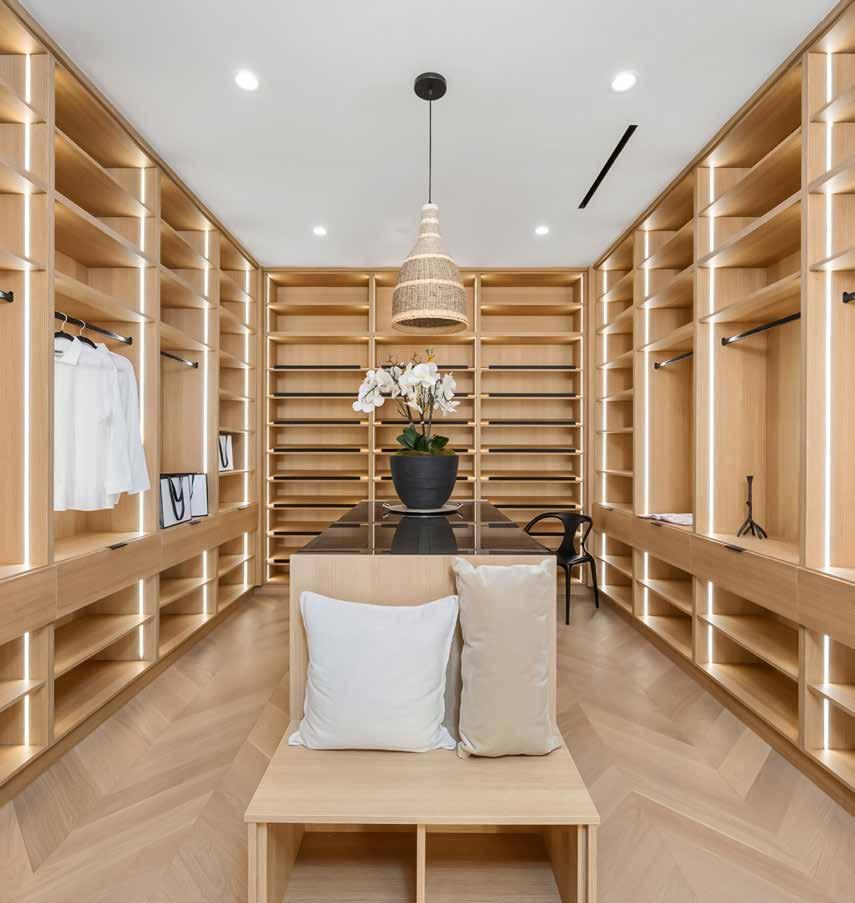
WHOLE HOME ORGANIZATION SYSTEMS | DESIGN & INSTALLATION
“Talk about a company that lives up to its name! Dream Closets’ client service is second to none. They offer thoughtful suggestions, work quickly to find solutions, and bring incredible creativity to every customization while still respecting budgets. Collaborating with Jen and Adam made the entire process seamless.”
-Jennifer Burgess, RETSY, on Project Homestead
623-263-0707 | dreamclosetsaz.com | v @dreamclosetsaz | b @DreamClosetsAZ
SPRING IN FULL BLOOM
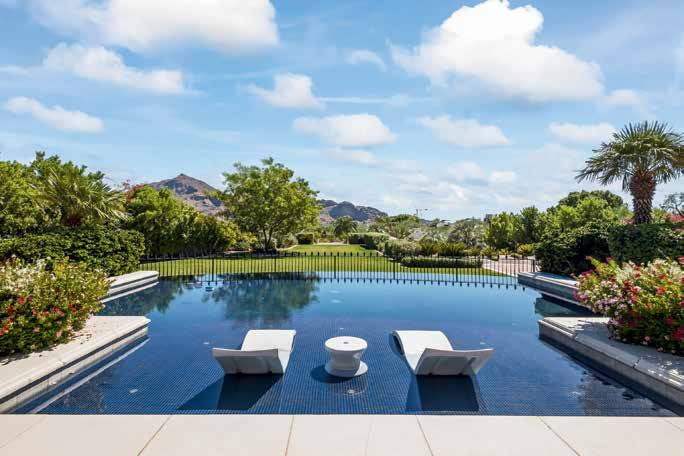
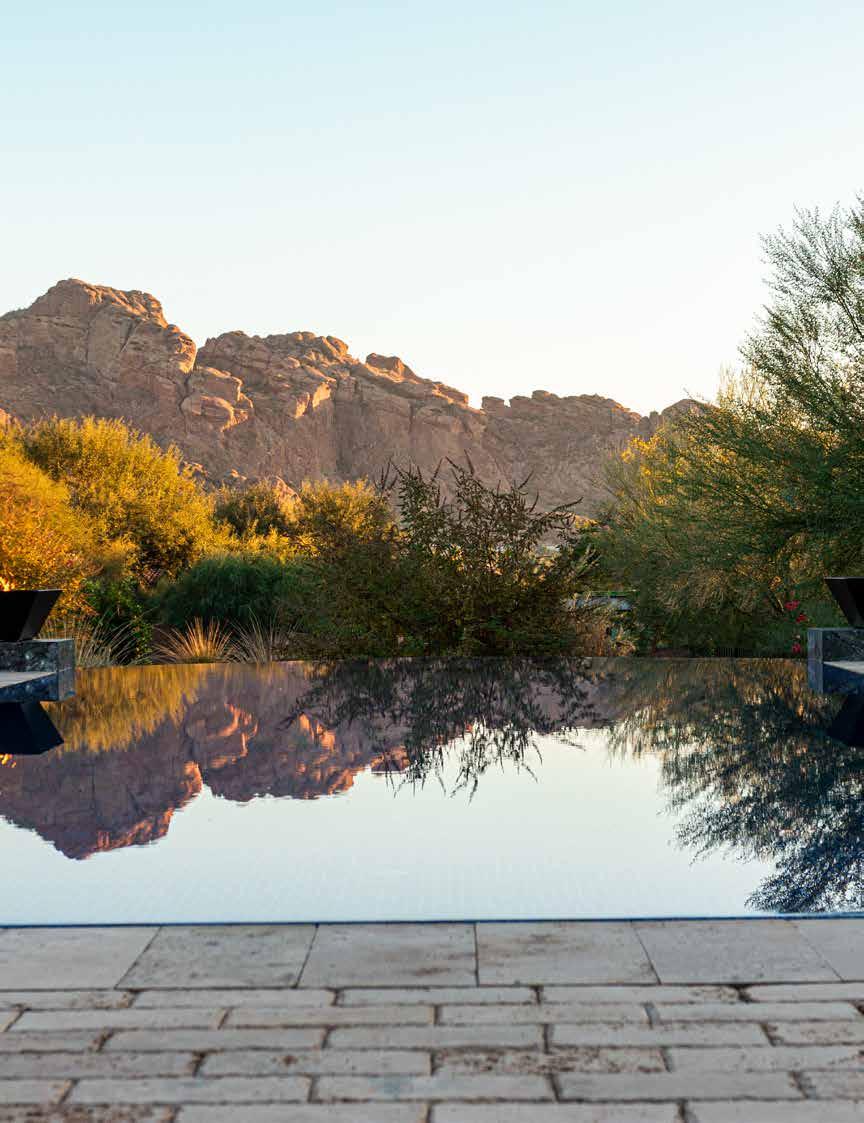
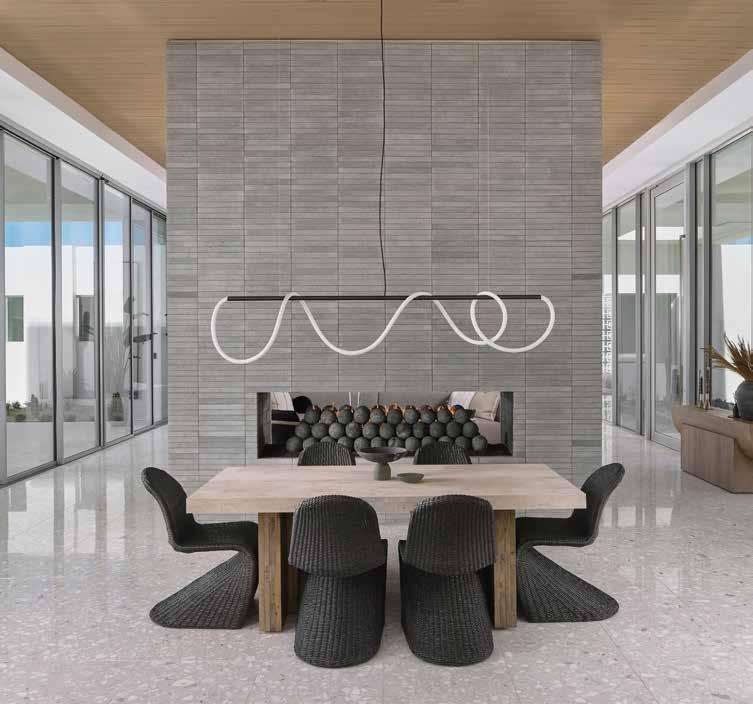
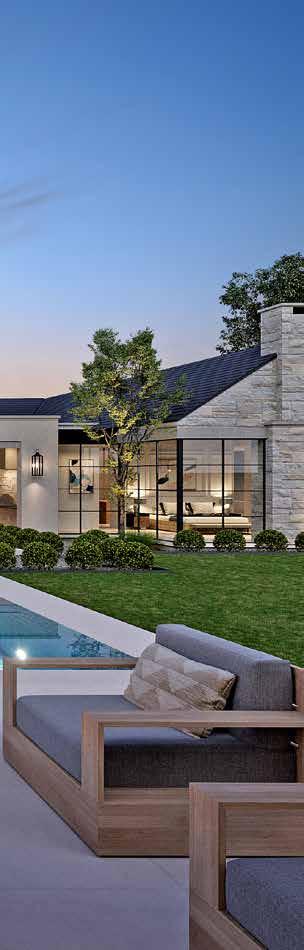
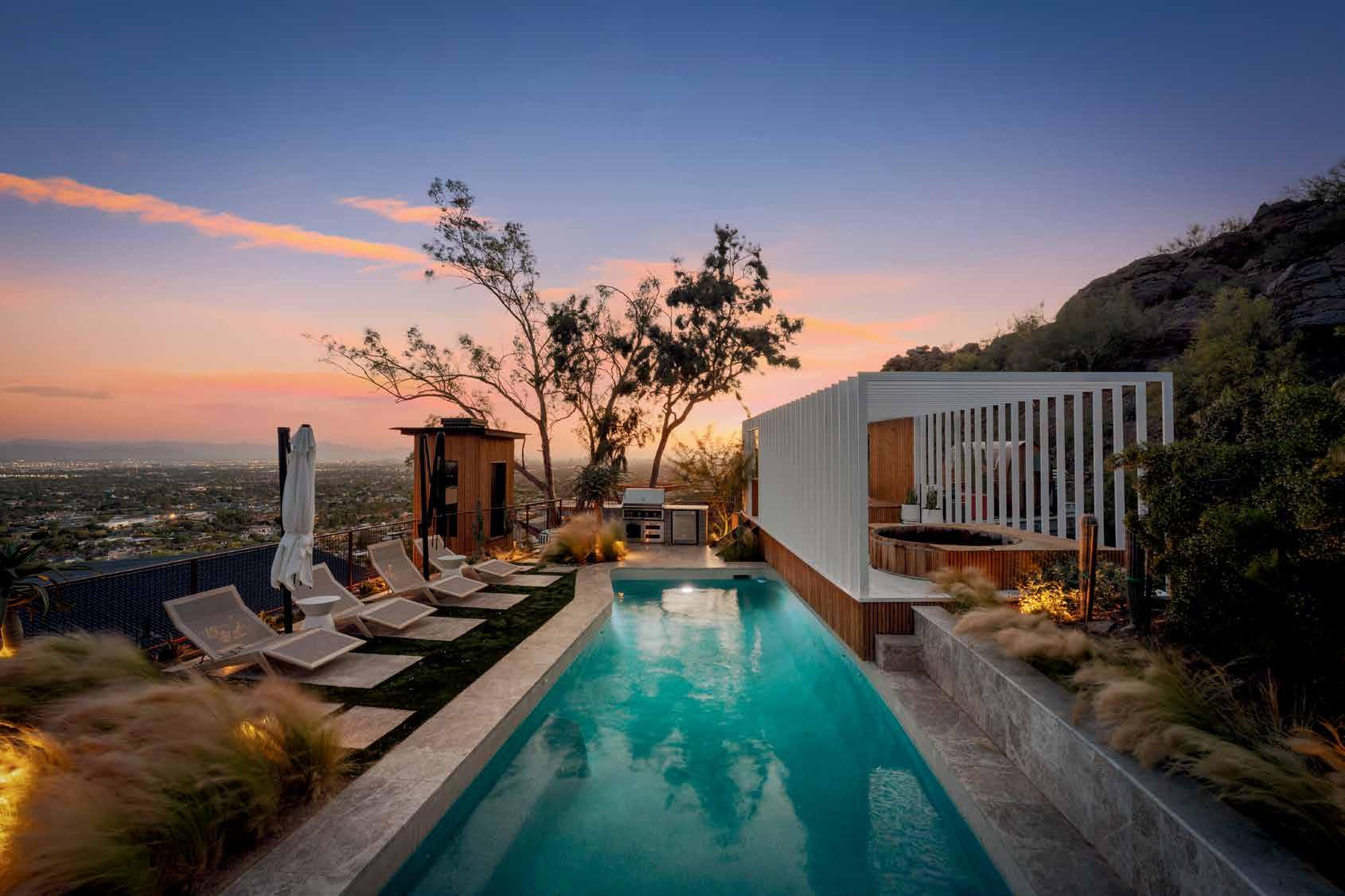
Spring arrives in Paradise Valley with Camelback Mountain as a dramatic backdrop. Set on more than three acres in one of the Valley’s most coveted locations, this exceptional estate captures sweeping mountain views and the tranquility of desert living.
Designed by renowned builder John Schultz, the residence blends timeless architecture with resort-inspired comfort. Soaring woodbeamed ceilings, expansive entertaining spaces, and a chef’s kitchen with butler’s pantry create an elegant setting for both everyday living and hosting.
6742 N 48TH STREET,
PARADISE VALLEY, AZ 85253
KATRINA
BARRETT OWNER, BROKER
CATCH KATRINA’S LOCAL LUXURY LISTING OF THE WEEK - THURSDAYS AT 9PM ON FOX10!
From Hotel California to the Heart of the Valley
As an avid road tripper, Hotel California is always on our playlist. And this month, I had the surreal privilege of connecting with the man who helped write it.
In our Business & Investing issue, we explore what it truly means to invest.
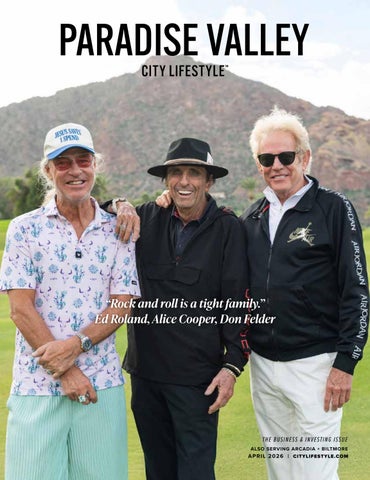
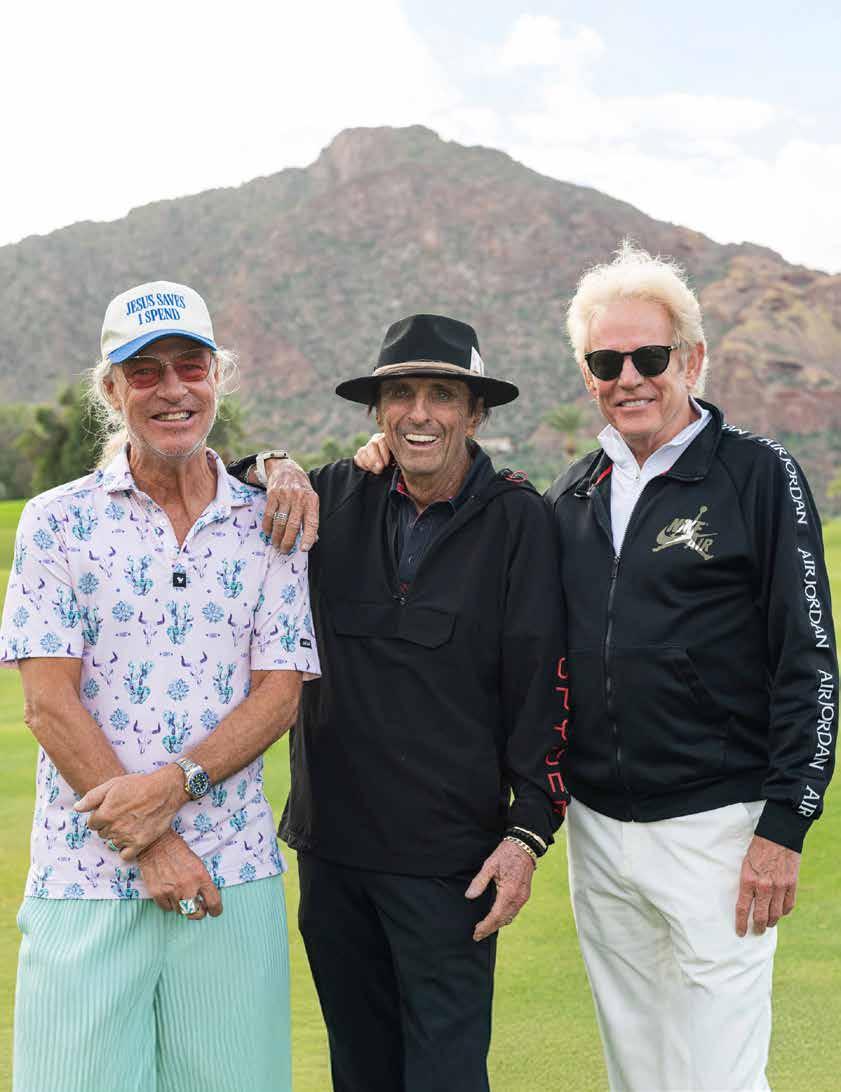
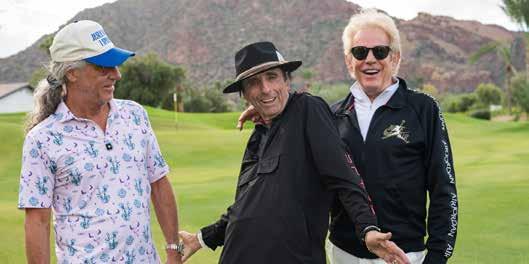
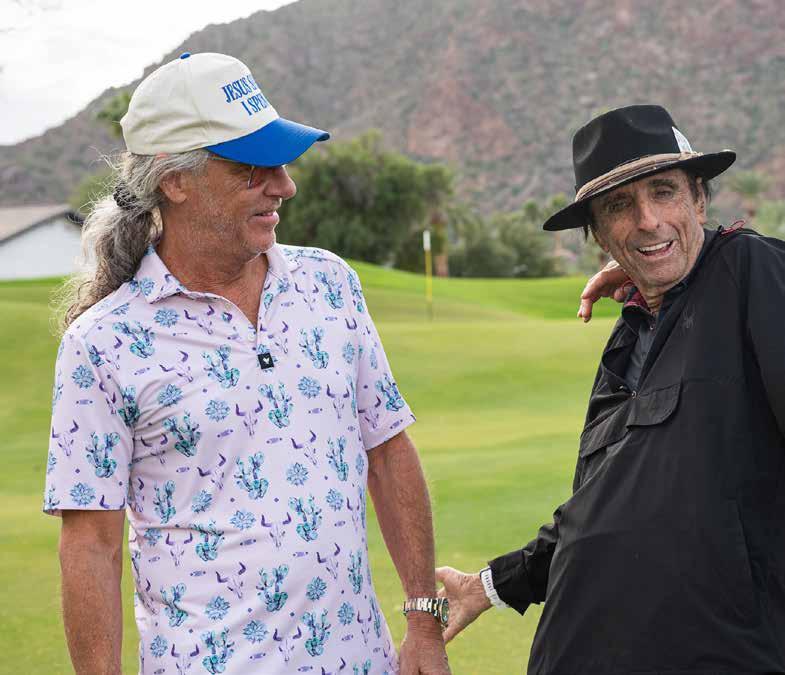
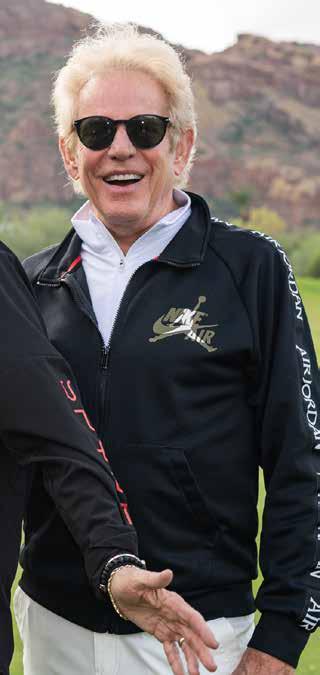
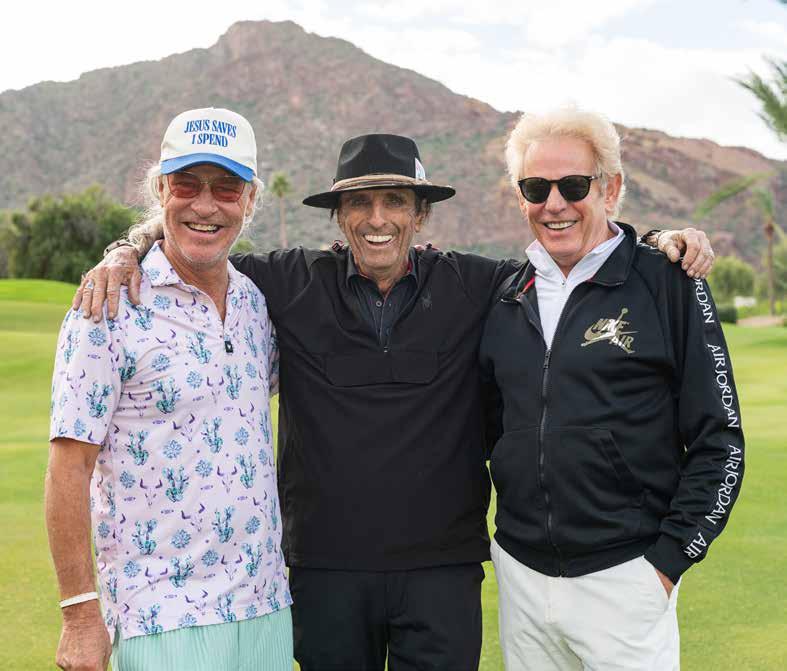
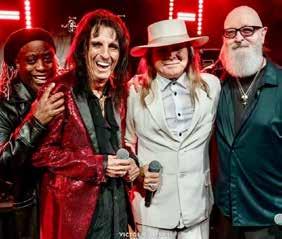
We had the honor and pleasure of getting to know Alice Cooper, Ed Roland, and Don Felder off stage. When the makeup comes off and when the mic drops, what remains is not just decades of music history. It is friendship. Loyalty. Three men who have weathered fame, reinvention, and life beyond the spotlight. A solid rock friendship built over time.
There is something powerful about longevity. About relationships that endure. In many ways, that is the purest form of investing.
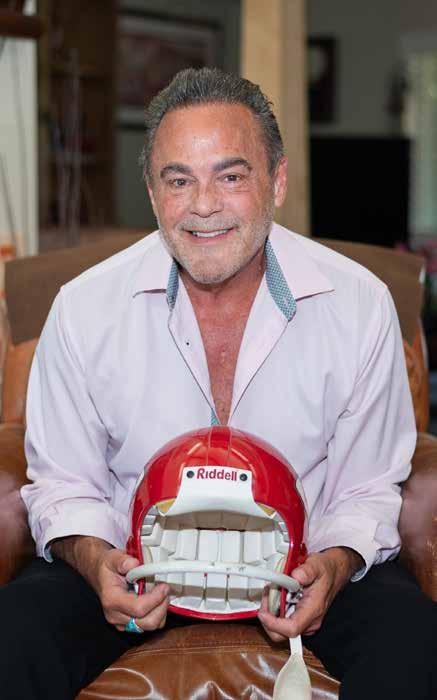
Inside this issue, we connect with Kevin Harrington, a pioneer in entrepreneurial investing whose career helped shape modern consumer product scaling. We also spotlight leaders reframing mental health as infrastructure rather than an afterthought, and examine the disciplined thinking that defines those building for the long term.
But as this issue unfolds, one theme keeps rising to the surface. Community.
Throughout these pages, we showcase what it means to invest in the ecosystem around us. What continues to inspire me most is how many of you are not simply writing checks. You are chairing events. Leading boards. Mentoring. Showing up consistently. Bringing your children alongside you so they can witness what commitment and responsibility look like in action.
It is not performative. It is personal.
You are building something that extends beyond business. You are modeling stewardship. You are choosing to actively shape the place we call home.
And speaking of home, I am incredibly grateful for our PVCL family. This month, our City Scene is dedicated to our anniversary celebration in February. Friends, partners, and community leaders gathered at Century Grand, and what a night it was. A heartfelt thank you to Century Grand for such a fun and memorable evening. It was a beautiful reminder we are a network grounded in trust.
And that trust is something I value deeply.
My philosophy in business is simple. I believe in showing up consistently. I believe in thoughtful alignment. I believe in creating value that feels meaningful, not transactional. I believe in partnerships rooted in mutual respect.
I care about relationships.
I care about reputation.
I care about building something that lasts.
That’s the return I’m after.
With Gratitude,
April 2026
PUBLISHER
Nadine Bubeck | nadine.bubeck@citylifestyle.com
PUBLISHER ASSISTANT
Maddox Cherry | maddox.cherry@citylifestyle.com
CONTRIBUTING WRITER
Miriam Le
CONTRIBUTING PHOTOGRAPHER
Barret Elengold
Corporate Team
CEO Steven Schowengerdt
President Matthew Perry
COO David Stetler
CRO Jamie Pentz
CoS Janeane Thompson
AD DESIGNER Zach Miller
LAYOUT DESIGNER Andi Foster
QUALITY CONTROL SPECIALIST Marina Campbell
No Passport Required
The Regenokine Program Has Arrived in Scottsdale
Once reserved for the world’s elite- from Kobe Bryant to Alex Rodriguez- the groundbreaking Regenokine Program is now available locally with Dr. Ashu Goyle, one of only a few U.S. physicians trained and approved to perform the procedure, and the only provider in Arizona.
Developed in Germany, this advanced treatment isolates powerful proteins that calm inflammation, protect joints, and promote natural healing helping patients return to work, travel, or train the very next day, often without surgery.
At Integrated Spine, Pain & Wellness, Dr. Goyle combines Cleveland Clinic-level expertise with a personalized, restorative approach to pain relief.
His mission: move patients beyond pain and back to life.
Curious if you’re a candidate?
Call 480-660-8823 or visit ispwscottsdale.com to schedule your consultation.
Dr. Ashu Goyle | Integrated Spine, Pain & Wellness
Magical moments lived daily.
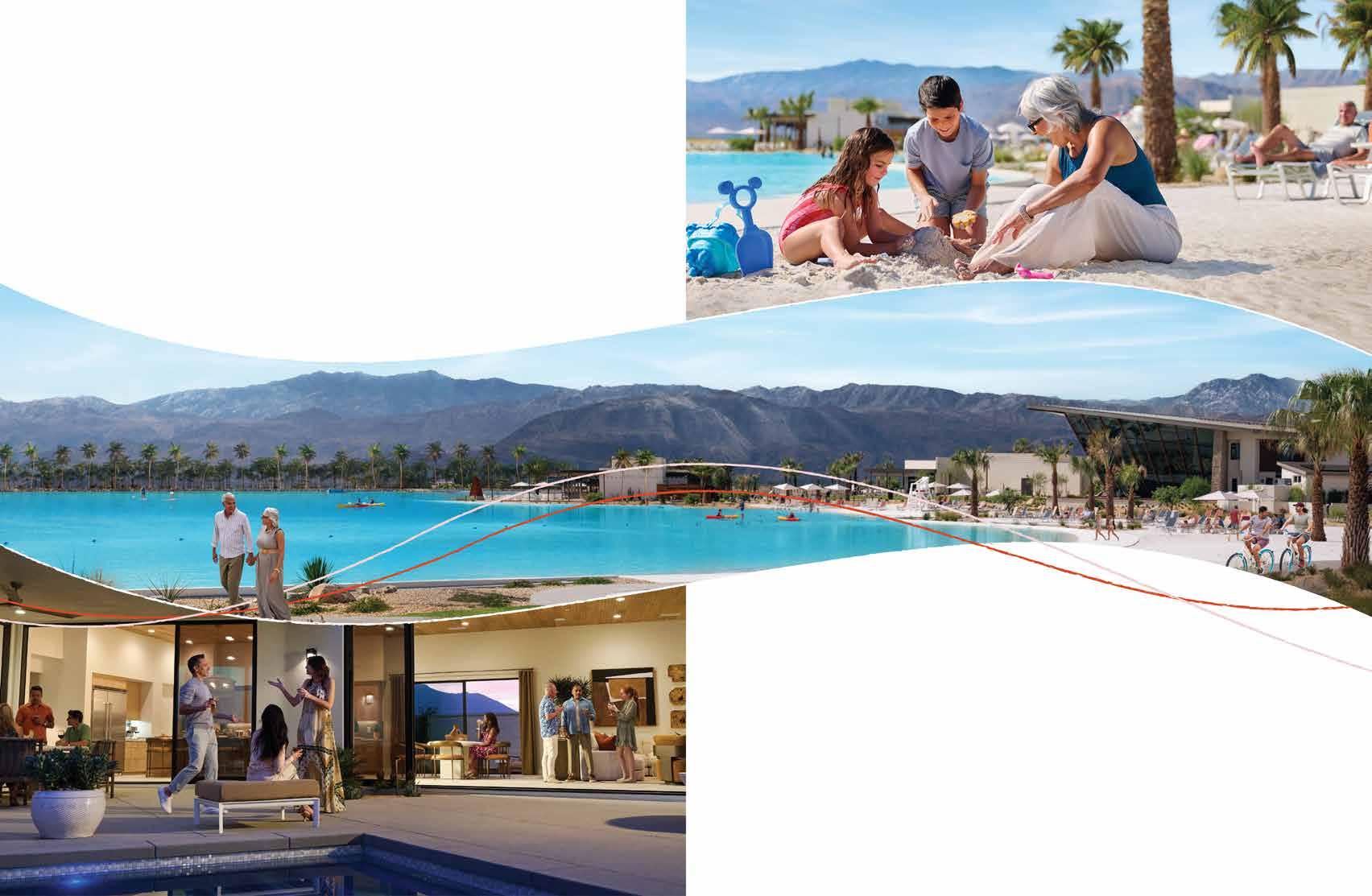
When you begin with a beachfront lifestyle in the heart of the desert, things are bound to become magical. Against the shimmering backdrop of Cotino Bay, awe-inspiring moments surround you. Live life in the home of your dreams. Feel sand between your toes at a voluntary club. Savor the breathtaking views as you stroll along the promenade leading to a vibrant shopping and dining destination.
This is a place where magic and wonder are waiting just for you in experiences that linger, memories that last and possibilities that feel limitless.
This is the moment. Make it yours now.
from
the
Silverleaf Realty, LLC
and
the mother’s day edit Season to Celebrate Her
Your table awaits
moms love burgers too the brunch she deserves
A gourmet delight
The party continues...!
city scene
WHERE NEIGHBORS CAN SEE AND BE SEEN
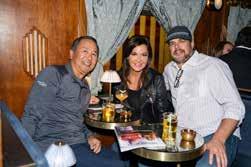
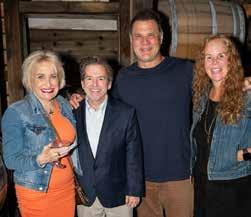
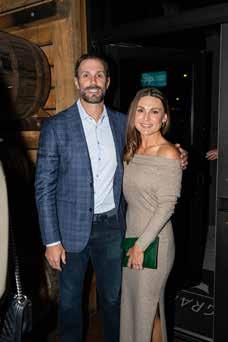
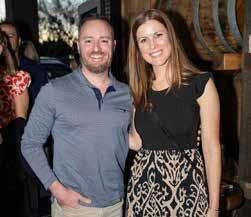
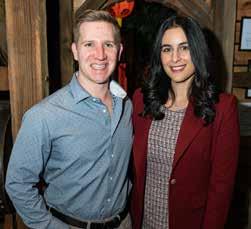
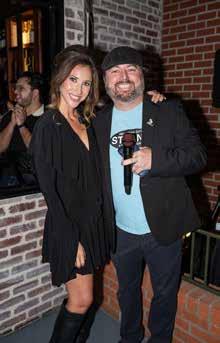
1: Robert Mulvin, All Pro Shades- PVCL Anniversary Party, Century Grand 2: Kevin Sonoda with ABC 15’s Kaley O’Kelley- PVCL Anniversary Party, Century Grand 3: Ashlyn Rowe (House of Savoir)- PVCL Anniversary Party, Century Grand 4: Truly Dermatology Team (Hope Pack) and PVCL’s Nadine Bubeck- PVCL Anniversary Party, Century Grand 5: PVCL’s Kicks by Kenna and Nadine Bubeck with NFL’s Nick LoweryPVCL Anniversary Party, Century Grand 6: MLB’s Miguel and Vanessa Montero with Nate and Nadine Bubeck- PVCL Anniversary Party, Century Grand 7: Katrina Barrett (Owner, Local Luxury | Christie’s International Real Estate)- PVCL Anniversary Party, Century Grand
Photography by Barret Elengold
Elevating Professional Success Through Persuasive Communication
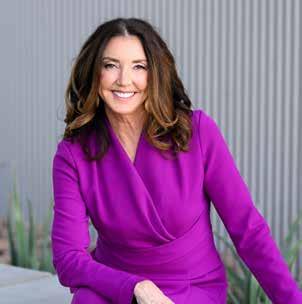
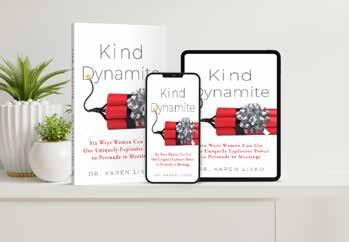
Dr. Karen Lisko is a dynamic speaker and debut author of Kind Dynamite, equipping professional women with persuasion strategies that move decision makers to action.
Sharp, practical, and engaging, she delivers tools audiences use immediately. It’s why organizations continue to invite her back.
Now booking speaking engagements and corporate trainings.
Dr. Karen Lisko
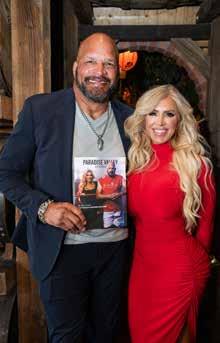
8: Jacquelyn Dahl (1UP Sports Marketing), PVCL’s Nadine Bubeck, Shari Shipley (REFFER)- PVCL Anniversary Party 9: Thank you, Century Grand Team, for such a fun, seamless and beautiful PVCL event! 10: Mark Kerr and Franci Alberding post with their February cover story 11: PV Mayor Stanton & wife Barb with Johnjay and Blake Van Es- PVCL Anniversary Party, Century Grand 12: Lolo Wood & PVCL’s Nadine Bubeck- PVCL Anniversary Party, Century Grand 13: Alzheimer’s Association Desert Southwest Chapter- PVCL Anniversary Party, Century Grand 14: CW7’s Brad Perry (Arizona Daily Mix) & PVCL’s Nadine Bubeck- PVCL Anniversary Party, Century Grand Photography by Barret Elengold
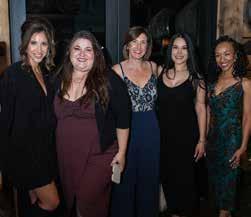
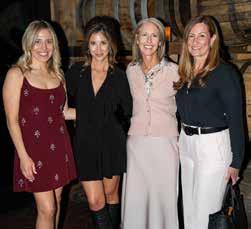
15: DJ Dave Leden, Groove Mobile DJs (keeping PVCL parties popping!) 16: Kara Roberts (Aine Healthcare) with MMA’s Mark Kerr- PVCL Anniversary Party, Century Grand 17: Jennifer Burgess (Retsy)- PVCL Anniversary Party, Century Grand 18: Lovely ladies at the PVCL Anniversary Party, Century Grand 19: NFL’s Donovan Mcnabb (Caris Sports Foundation) with MMA’s Mark Kerr- PVCL Anniversary Party, Century Grand 20: Dina Zell, Lisa Moore (Neiman Marcus) David and Carmen Cherry- PVCL Anniversary Party, Century Grand 21: Adrianna Baum (Grigg’s Group Powered By The Altman Brothers), Allie Brenner (Heart Ball), Nadine Bubeck
Photography by Barret Elengold
SANYA
DEAR MATCHMAKER
by Cat Cantrill
DEAR MATCHMAKER,
Discreet Advice on Love, Dating, and Partnership in PV
Q: I’ve built a beautiful life and home on my own. Why does dating still feel so unsettling?
A: Because success in life doesn’t automatically translate to success in relationships. Many accomplished people are excellent at investing in careers, homes, and opportunities, but relationships require a different kind of investment. You cannot manage them the same way you manage success. A relationship asks for emotional availability, patience, and the willingness to share space with someone else’s rhythms. The life you’ve built may be impressive, but a partnership grows when someone feels welcomed into it.
Q:What’s something people misunderstand about compatibility?
A: Compatibility isn’t just shared interests. It’s shared emotional pace. Two people can love the same restaurants, travel to the same places, and still struggle because they move through life differently. Real compatibility shows up in the ordinary moments. How you handle stress. How you communicate after a difficult day. How quickly you repair conflict. Relationships are long-term investments, and compatibility is the infrastructure that allows them to grow.
Q: Why do successful people often struggle more with dating?
A: Because success rewards control and strategy, while relationships require vulnerability. High-performing people are used to solving problems and directing outcomes. Love doesn’t operate that way. The strongest partnerships happen when two people allow the connection to evolve naturally instead of trying to engineer it. A healthy relationship is not about performance. It’s about presence.
Q: What should people ask themselves before inviting someone into their life?
A: Ask this: Does this person make my life feel more aligned with the future I want to build? The most valuable relationships aren’t about perfection. They are about mutual investment. Two people choosing, over time, to build something meaningful together.
Becauseattheendoftheday,loveisn’taboutfindingperfection. It’saboutinvestingintherightpartnership. Submit it anonymously to “Dear Matchmaker” at team@scottsdalematchmaker.com -your question could be featured in an upcoming issue! www.scottsdalematchmaker.com
HAVE A DATING QUESTION?
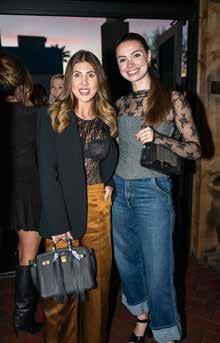
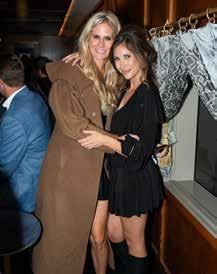
22: Katie Wilson (Garage Boutique & Concept Store) & PVLC’s Nadine Bubeck- PVCL Anniversary Party, Century Grand 23: PVCL Anniversary Party at Century Grand (Local Luxury | Christie’s International Real Estate) 24: With Mat Snapp, Partner at Barter & Shake, the group behind the acclaimed Century Grand 25: Ryan Nelson (Tinker Development)- PVCL Anniversary Party, Century Grand 26: Austin and Lindsay Bates (VIP Mortgage)-PVCL Anniversary Party, Century Grand 27: Sam and Brook Choulet, MD- PVCL Anniversary Party, Century Grand 28: Dave & Carmen Cherry with NBC 12’s Rachel Cole- PVCL Anniversary Party, Century Grand Photography by Barret Elengold
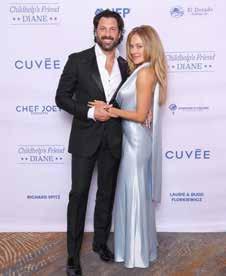
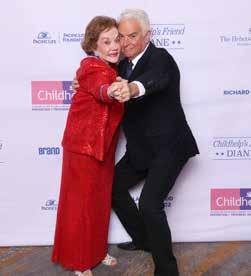
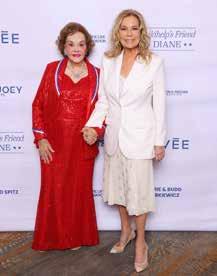
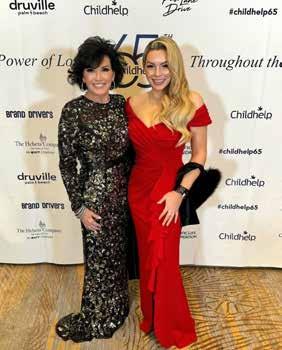
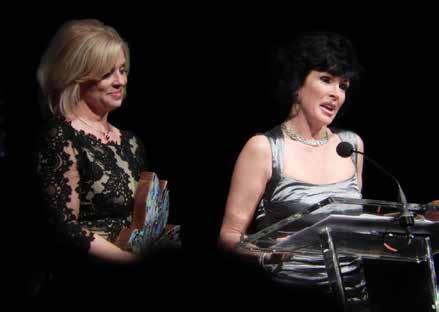
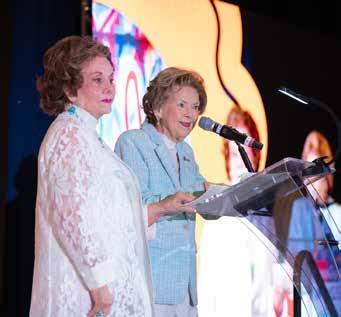
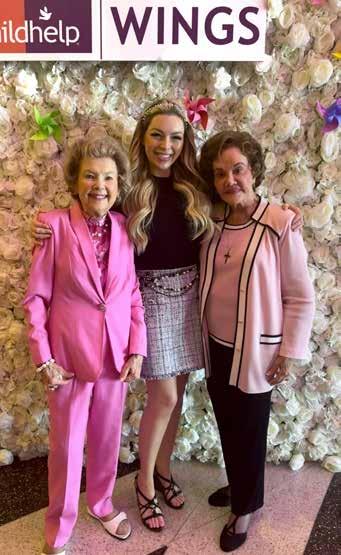
29: Professional Ballroom and DWTS dancers Maksim Chmerkovskiy and Peta Murgatroyd- Childhelp Drive the Dream Gala 30: Childhelp Co-founder Sara O’Meara and Actor John O’Hurley- Drive the Dream Gala 31: Childhelp Co-founder Sara O’Meara and Kathie Lee Gifford- Drive the Dream Gala
Photography by Phil Gudenschwager
Want to be seen in the magazine?
TAG YOUR INSTAGRAM PHOTOS WITH @PARADISEVALLEYCITYLIFESTYLE
Mary’s Market Report
PHOENIX REALTORS® February 11, 2025 to February 11, 2026.
LISTINGS
8,650
$445,000
February
February 2026: 34 days
February 2024: 82 days
February 2025: 114 days
February 2026: 120 days
THE SOUNDTRACK OF GENERATIONS
THREE ROCK ICONS. DECADES OF HITS. A FRIENDSHIP THAT BECAME THE ULTIMATE RETURN ON INVESTMENT.
ARTICLE BY NADINE BUBECK PHOTOGRAPHY BY BARRET ELENGOLD
Three men stand on our cover. No makeup. No stage lights. No alter egos. Don Felder. Alice Cooper. Ed Roland. Friends for decades.
You already know the soundtrack. “Hotel California” through the speakers of your first car. “Heavy” shaking Bank One Ballpark when Luis Gonzalez stepped to the plate. Alice’s unmistakable snarl cutting through late night radio.
Songs that became part of our lives.
What you don’t always see is what holds the men behind them together.
The phone calls.
The charity events.
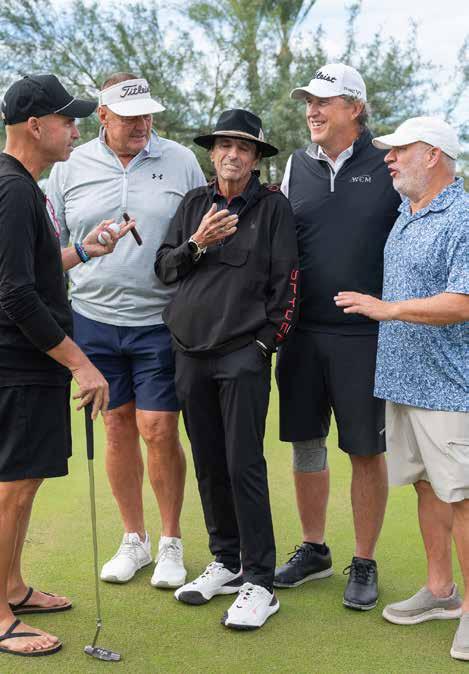
The golf tournaments.
The quiet years.
The showing up.
“You have to learn to be flexible. I was in one of the biggest bands in history, and then one day, I wasn’t.” -Don Felder
Alice Cooper’s Christmas Pudding Putting Tournament, Mountain Shadows
In our Investing Issue, this is the return that matters most.
They were not bandmates. They did not rise together. There was no built-in loyalty clause tying them to one another.
In fact, Alice admits there was no relationship at all in the beginning.
“The fact that they showed up in the first place was astounding. I had no relationship with either of them prior to Solid Rock’s events. They just answered the call perhaps out of curiosity. Since then we have become fast friends. There is a mutual admiration in artistry and you
must remember that rock and roll is a tight family,” Alice says.
That is how it began. Not with history. With presence.
Don remembers it just as plainly.
“I think my relationship with Alice is not based on the music business, it’s based on friendship, golf, charities, and doing things for people who need assistance in different walks of life. I remember meeting Alice briefly in the mid 70s but really started becoming closer friends once he started his Alice Copper’s Solid Rock Teen Centers,” Don says.
What binds them now has nothing to do with contracts or credits.
“You have to learn to be flexible. I was in one of the biggest bands in history, and then one day, I wasn’t. I had to pick myself up and start again. But this time, I was rebuilding under my own name, guided by my own artistry. I think if you can stay open, adapt to the changes, and keep doing it for the love of the music, you’ll keep playing for as long as you’re meant to,” Don says.
Reinvention humbles you. It strips away the illusion that anything is guaranteed. It forces you to decide what you are building for.
Ed, Alice and Don
For Don, it was always the music.
“It really comes down to the power of the songs. The Eagles’ catalog holds so many hits and chart-topping records because of the strength and timelessness of the songs we were able to create together. That song power is what carried everything, and still does,” Don says.
Ed understands that kind of staying power in a different way.
When he spoke with us, he reflected on the moment “Heavy” became more than a radio hit. When Luis Gonzalez chose it as his walk up song, the track became stitched into Arizona history. It wasn’t just Collective Soul’s song anymore. It was part of a championship run. Part of a city’s memory.
That is the strange and beautiful thing about music. It leaves you.
Don feels that every time he looks out into a crowd now.
“It wasn’t until much later that I truly understood it. Back in the ’70s, we were just living in the moment, writing and playing music together without really thinking about the legacy we were building. It was probably during Hell Freezes Over, and even still at my own solo shows now, that it really hits me. I’ll look out into the audience and see three, sometimes four generations of families sitting together. Parents, kids, even grandparents, all connected by the same songs. To know that our music has been passed down like that, woven into people’s lives, is something I never could have imagined back then,” Don says.
Songs travel and often outgrow their creators.
Friendships, when tended the same way, do too.
Alice’s life has taken its own arc. Fame. Excess. Sobriety. Stability. Purpose.
“First of all, if we are doing our job right the music will never quiet. Second, the plan that God had for my life included addiction and every kind of insanity that rock and roll could provide to use it to be able to talk to kids from first hand experience. I’ve been sober for 43 years, 50 years married to the most astounding woman, have three amazing children, and five incredible grandchildren. I’m still touring over 200 cities per year, and the word ‘retirement’ is not in my vocabulary. God works in mysterious ways,” Alice says.
He does not separate the chaos from the calling. He sees it as part of the same story.
And when asked why these friendships have endured, his answer is almost disarmingly simple.
“Possibly because I’m not egotistical nor isolated,” Alice says.
There is no mythology in that. Just maturity.
Solid Rock Teen Centers became one of the places where that maturity took shape publicly. What began more than three decades ago as a safe space for teenagers has grown into three Valley locations where youth can learn instruments, record music, build skills, and find belonging at no cost. It is not exclusive. It is not limited to one demographic. It is open to every teen who walks through the door.
Alice does not approach it casually.
“I’ve spent 50 years building and cultivating that name and character. If it can be used to promote charities, especially our own Solid Rock Teen Centers, well that’s a grand slam home run,” Alice says.
He is clear that it has to be real.
“You must first be lasting. I don’t take charities lightly. There are many people in need in so many different ways. I’ve always found out that rock and rollers are first at bat when it comes to volunteering time and talent,” Alice says.
Don has been one of those who shows up. Not for headlines. For consistency.
His love for performing mirrors that same approach.
“My relationship with performing hasn’t changed one bit. I still love it from the moment I walk out on stage to the final applause after the last song. It truly doesn’t matter whether I’m playing for 120,000 people at Wembley Stadium or doing a trio set for eight people at a small birthday party in a New York City studio. Yes, I’ve done that, too, and every kind of venue in between. I bring the same energy and the same gratitude every time. The size of the crowd has never been what defines the experience for me; it’s the connection. I simply love playing, and I love making people happy. That feeling has always been the heart of it all,” Don says.
And he’s not winding down.
“I plan to rock until I drop! The road ahead is long and busy, so buckle up. I’ll be touring across Canada and the United States this year, and the calendar just keeps growing. From private parties and corporate events to public shows at performing arts centers, casinos, festivals, and full-blown arenas, we’re always adding new dates. 2026 is shaping up to be another wonderfully wild, and very busy, year of rock and roll,” Don says.
When asked what matters most in the end, his answer comes back to feeling, not fame.
“Songs have power. I’ll look out into the audience and see generations of families. I plan to rock until I drop.” -Don Felder
Coopstock photo - Corey Glover (Living Colour), Alice Cooper, Robin Zander (Cheap Trick), Rob Halford (Judas Priest)
Don Felder, Former Lead Guitarist of the Eagles
“For me, it’s never really been about the accolades or everything I’ve released over the years. What means the most is that people remember the smile on my face and the pure joy I felt every time I walked on stage, and that those moments are intertwined with their own special memories of being there,” Don says.
Alice speaks in similar terms.
“I’m a very optimistic person. It follows that Solid Rock is an extension of that. I see positive growth in every direction and meaningful impact,” Alice says.
ALICE COOPER’S SOLID ROCK TEEN CENTERS
Alice Cooper’s Solid Rock Teen Centers were founded over 30 years ago to make an everlasting difference in the lives of teenagers.
With multiple Valley locations, the centers are open to any teen ages 12 to 20. Not limited by zip code. Not defined by background. If a young person needs a place to create, they are welcome.
Music rooms. Recording studios. Dance floors. Film equipment. Live sound and lighting. Open mic stages. Everything is free.
Randy Spencer helps lead the work.
“ALL teens need hope, encouragement, faith, hope, love, mental health improvement, community, friendships, job opportunities, skills to succeed in life and positive mentors,” Randy says.
Some teens walk in already confident. Others walk in unsure. What they share is the need for space to express themselves through the arts.
“That’s mental health improvement for a teen. Socialization, encouragement, inspiration, community,” Randy says.
Their work is sustained in part by Coopstock on April 11th, 2026 at Las Sendas Golf Club. The annual concert fundraiser features Alice Cooper and his touring band along with Roger Clyne & The Peacemakers, John Oates, Tommy Thayer, and Sixwire, all supporting the free arts programs that keep the doors open.
alicecoopersolidrock.com/ events/coopstock
INVEST IN INTEGRITY
Founded by Arizona native Cole Derosier, Integrity Custom Cabinetry designs and builds refined, one-of-a-kind cabinetry and millwork for discerning homeowners across the Valley.
For Cole, integrity isn’t just the name. It’s the standard.
Every project is fully custom. Every detail intentional. Every finish precise.
TANYA TALKS
The Most Important Investment You’ll Ever Make Isn’t an Asset — It’s Alignment
We often speak about investment in terms of property, equities, or private placements. But long before capital compounds, proximity does. The professionals you choose to advise you — your attorney, financial strategist, lender, and real estate representative — shape the decisions that quietly determine whether your wealth accelerates or erodes. Timing, negotiation strength, exposure, positioning. These are not small variables. They are multipliers. And multipliers compound. Experience alone is not a guarantee of excellence. A professional who was exceptional twenty years ago is not automatically equipped for today’s market dynamics.
The question is not how long someone has been in the business. The question is whether they have evolved with it.
For most families, real estate is the largest financial instrument they will ever hold. Selecting the right representation is not a transaction — it is an investment decision.
The right advisor sharpens pricing strategy, protects leverage, expands exposure, and negotiates with precision. The wrong one costs you in subtle ways — through missed positioning, soft execution, or limited reach.
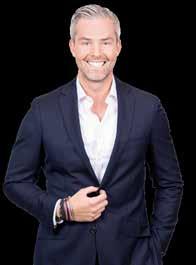
In a connected market, brand and distribution matter. Working with a national platform like SERHANT. means access to crossmarket relocation pipelines, media-driven storytelling, and a level of visibility that extends beyond a local MLS footprint. That kind of alignment is not cosmetic. It is strategic. We audit our portfolios regularly.We should audit our circle with the same discipline. Because the professionals around you are either appreciating assets — or depreciating ones.
Choose accordingly.
www.hausofreal.com | 623.680.6022
Ryan Serhant
Scan the QR code for my full notes on Believing, Behaving, Becoming Abundance.
Luxury isn’t defined by square footage - it’s defined by precision, trust and world-class execution. That’s the SERHANT. Standard.
A TABLE LIKE NO OTHER
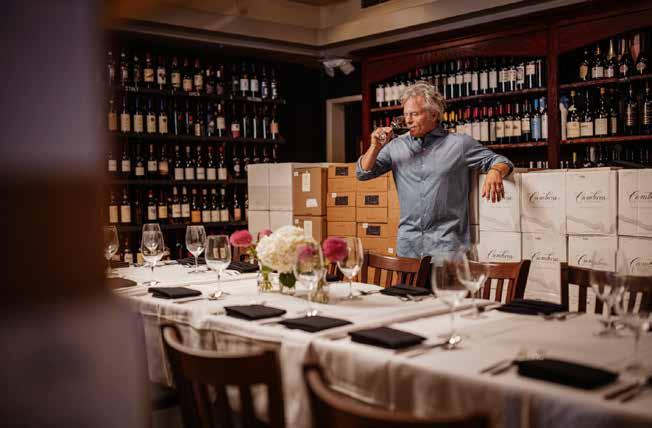
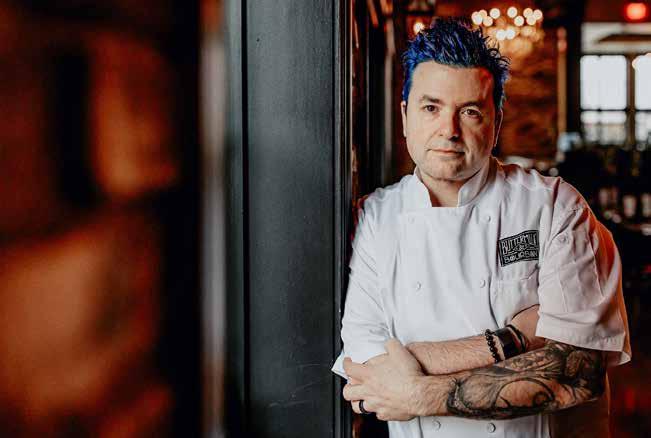
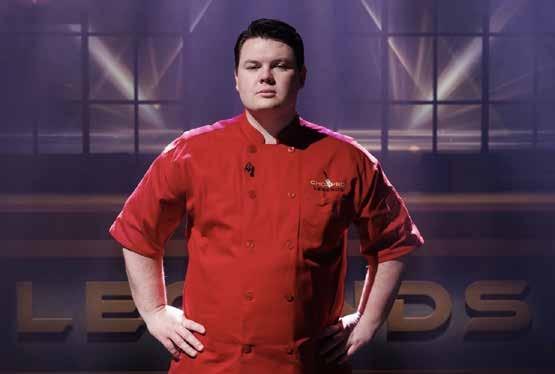
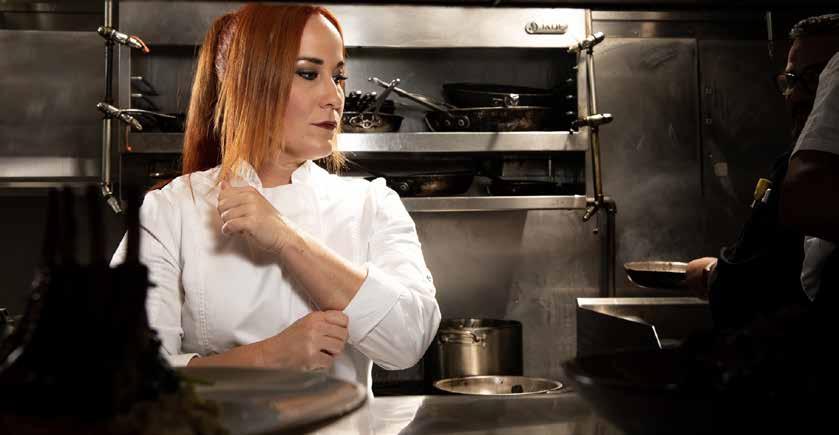
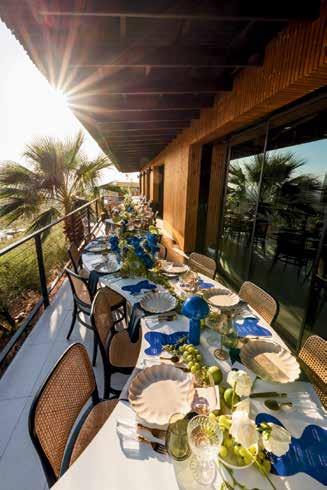
Six acclaimed chefs. Six courses. One private Paradise Valley estate, reimagined as a coveted dining destination.
PHOTOGRAPHY PROVIDED
This May, a private Paradise Valley estate becomes the most coveted dining room in Arizona.
Six courses.
A curated lineup of acclaimed chefs.
One night at Villa Noir.
With special performers woven into the evening.
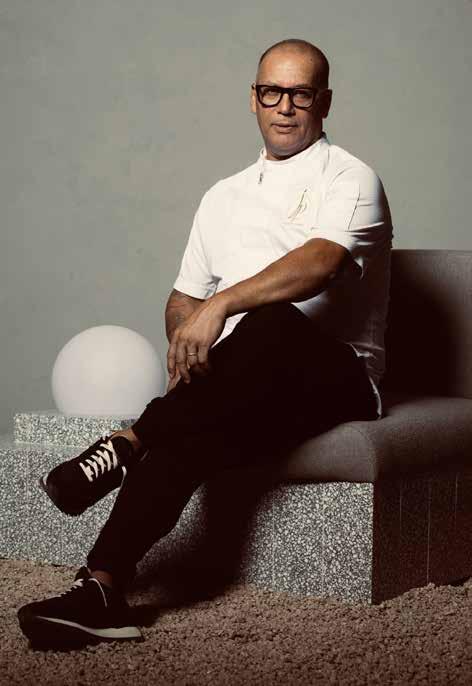
Chef J Perry is bringing the restaurant world behind the gates.
For the past eight years, Chef J Perry has built his reputation quietly as a private chef serving some of the Valley’s most refined homes.
“I was once a restaurant chef that strived for stars, likes, awards and reviews as well as putting together entertaining events and experiences,” Chef J Perry says.
Over time, his perspective shifted.
“I realized that what I do does not allow for reviews, photographers, foodies, trends but focuses solely on serving high level dishes, creating exceptional experiences, and engaging with some of the best people in the Valley,” Chef J Perry says.
This dinner feels like a collision of both chapters.
“Sometimes the hottest seat at a table is not only happening in the Valley’s growing restaurant industry with top level chefs, but behind closed doors in some of the most beautiful private kitchens and tables that most people do not get a chance to experience.”
When he approached homeowner Hillary Leto about hosting the event at Villa Noir, it was bold.
“It’s also a big ask. Something a private chef would never do,” Chef J Perry says.
Her response was immediate.
“When Chef Perry came to me with the idea of an amazing dining experience with multiple chefs and courses, I immediately thought YES!” Hillary says. “I love eating and love hosting, so why not make it a beautiful unforgettable experience all while staying home.”
Villa Noir becomes part of the design.
“The Leto home reminds me of a French Villa or estate with an amazing design,” Chef J Perry says.
There is no overarching theme for the six courses.
“Six courses. No theme,” Chef J Perry says. “It’s not about who is the better chef. It’s simply about cooking great food and connection.”
The evening will also include special guest performers, adding another layer to the experience. It will serve as a platform to spread awareness for Alice Cooper’s Solid Rock Teen Centers, a mission close to many involved.
And yes, the creative gene runs deep. Chef J Perry is the brother of legendary songwriter and producer Linda Perry. Storytelling, it seems, is simply expressed differently in this family.
We spoke with the participating chefs about the mindset and leadership they bring to their craft.
Chef J Perry
MARK TARBELL
FOUNDER, TARBELL’S HOSPITALITY
WHEN YOU LOOK AT RESTAURANTS THAT ENDURE VERSUS THOSE THAT DIDN’T, WHAT SEPARATES THEM?
The places that last understand they’re building community. Food brings people together, but it’s service, consistency, and genuine hospitality that turn a meal into a relationship. When guests feel known and cared for, they come back, not just for the food, but for how the place makes them feel.
WHAT DO YOUNGER OPERATORS MOST MISUNDERSTAND ABOUT BUILDING SOMETHING THAT ACTUALLY LASTS?
I think the biggest lesson is that longevity comes from patience. Success isn’t just about momentum and tenacity, it’s about creating rhythms that hold up over time, the kind guests can count on. The chefs and operators who endure tend to focus on fundamentals: taking care of their teams, honoring their guests, and staying curious. When you enjoy the process, the results tend to follow.
At some point, cooking stops being about you and that’s when it really gets good.
FOR THIS PRIVATE EVENING AT VILLA NOIR, HOW ARE YOU THINKING ABOUT FLAVOR AND RESTRAINT?
My foundation is classic French training and service, where balance is central. The goal is clarity, letting great ingredients speak without unnecessary noise. Cooking alongside peers like this feels less like performance and more like conversation. There’s a shared respect at the table, and that allows the evening to feel relaxed, thoughtful, and genuinely celebratory, the kind of meal you linger over.
CHEF JASON SANTOS
ESTEEMED CHEF
YOUR CAREER SPANS RESTAURANTS, TELEVISION, AND PUBLISHING, BUT RESTAURANTS REMAIN THE MOST UNFORGIVING BUSINESS. WHAT DID TV VISIBILITY NEVER PREPARE YOU FOR AS AN OPERATOR?
Haha, good question! TV never prepares you for payroll. Ever. Cameras don’t show you the real day to day whether it’s arguing with linen companies, getting a call a walk in went down over night and you lost a ton of product, staring at a P&L in January wondering how the h*** it swung that hard. On TV, it’s entertainment and drama. In real life, it’s systems, margins, and making sure 180 people get paid on Friday. Restaurants are brutal because they don’t care how many seasons you did, they care if your numbers work.
WHAT DID AUTHORSHIP TEACH YOU ABOUT LEADERSHIP THAT THE KITCHEN NEVER DID?
Writing forces you to slow down and explain why you do things. In kitchens, I may or may not bark orders and move on. In a book, you have to articulate philosophy. It made me realize leadership isn’t about being the loudest in the room, it’s about being honest and clear. If your team understands the “why,” they’ll run through walls for you. If they don’t, they’re just punching in.
WHEN YOU COOK IN AN INTIMATE SETTING LIKE VILLA NOIR, HOW DO YOU THINK ABOUT EXECUTION DIFFERENTLY THAN IN A RESTAURANT ENVIRONMENT?
In a restaurant, you’re cranking out food for numbers, consistency and obviously quality goes without saying but when it’s something intimate like Villa Noir, it’s a different game, tighter, and more dialed in. You can take bigger swings because you are personally in control. At the end of the day though, it always comes back to the plate. If the food delivers, everything else takes care of itself.
CHEF PETER MCQUAID VALLEY CHEF
WITH NATIONAL EXPOSURE THROUGH FOOD NETWORK AND YEARS SPENT WORKING IN VALLEY RESTAURANTS, HOW HAS YOUR PERSPECTIVE ON THIS MARKET EVOLVED COMPARED TO OTHERS YOU’VE EXPERIENCED?
Being on Food Network gave me a national lens and exposure to share my story and food, but Phoenix is different in the best way. The food culture here has grown tremendously. There’s real talent, diversity, and a tight knit chef community that genuinely supports each other. It feels more personal than other markets I’ve experienced. Chefs here want to share their stories, highlight local ingredients, and build something meaningful for the city, not just for headlines. Arizona has a unique voice, and I think we’re just getting started.
THERE’S A MOMENT WHEN RECOGNITION TURNS INTO RESPONSIBILITY. WHEN DID THAT SHIFT HAPPEN FOR YOU?
When I realized people were watching how I lead, not just what I cook. Recognition brings responsibility, to mentor younger chefs, to stay humble, and to uphold a standard every single night. Running restaurants taught me that accolades don’t carry a service. Your team does.
You have to build culture, consistency, and trust, because without that, recognition doesn’t mean much.
AS YOU LOOK AHEAD, WHAT DOES “NEXT” MEAN FOR YOU RIGHT NOW?
Right now, next is an open book for me. I made a big career shift and I’m building my private chef business, which has been incredibly rewarding and supported by this community. There are conversations happening about future restaurant projects, possibly something of my own, but at the moment I’m excited about delivering high level dining experiences in people’s homes. For a lot of guests, the best seat at a restaurant is their own table at home.
IN THIS COLLABORATION AT VILLA NOIR, HOW ARE YOU APPROACHING FLAVOR?
Cooking alongside strong chefs pushes all of us to elevate our game. I think the beauty of a night like this is that every plate reflects the chef behind it, real personality, real philosophy, real intention. The dishes will complement each other, but each one will stand on its own. It’s not just a coursed dinner. It’s a collection of individual stories told through food.
“BEING ON FOOD NETWORK GAVE ME A NATIONAL LENS AND EXPOSURE TO SHARE MY STORY AND FOOD, BUT PHOENIX IS DIFFERENT IN THE BEST WAY.”
“I ALSO LEARNED THAT THE MARKET REWARDS CONVICTION. IN UNCERTAIN TIMES, PEOPLE CRAVE CERTAINTY. THEY GRAVITATE TOWARD LEADERS WHO AREN’T APOLOGIZING FOR THEIR VISION.”
ADRIANNE CALVO ESTEEMED CHEF
YOU TRANSFORMED “MAXIMUM FLAVOR” FROM AN INSTINCT INTO A RECOGNIZABLE BRAND. WHEN DID YOU REALIZE IT WAS SOMETHING THAT COULD SCALE BEYOND YOU PERSONALLY?
“Maximum Flavor” started as rebellion.
I was 18, frustrated that so much food played it safe. I didn’t want safe. I wanted bold. I wanted the kind of flavor that makes you close your eyes and forget where you are for a second.
At first, it was instinct. Just how I cooked. But the shift happened when I began hearing guests use the words back to me. They’d say, “This is maximum flavor.” That’s when I realized it wasn’t just my style, it was a language.
OPENING AT 22 DURING A RECESSION WAS A RISK. WHAT DID IT TEACH YOU THAT STILL GUIDES YOU TODAY?
People think risk is about bravery.
It’s not. It’s about clarity.
When I opened my first restaurant at 22, the economy was collapsing. I had zero hedge fund backing; just grit, family belief, and a refusal to shrink. That period taught me that fear is loud, but numbers are honest. I learned to read a P and L like a survival manual. I learned that risk without discipline is gambling, but risk with preparation is strategy.
I also learned that the market rewards conviction. In uncertain times, people crave certainty. They gravitate toward leaders who aren’t apologizing for their vision.
The recession didn’t make me cautious. It made me sharp.
FOR THIS COLLABORATIVE DINNER AT VILLA NOIR, WHAT FLAVORS OR IDEAS FEEL MOST REPRESENTATIVE OF WHERE YOU ARE TODAY?
Right now, I’m drawn to contrast.
Power and restraint. Smoke and citrus. Heat softened by elegance. At Villa Noir, you’ll feel that tension. Bold proteins layered with bright acidity. Luxurious textures cut with precision. It’s Maximum Flavor, yes. But refined. Intentional. Composed. CONTINUED >
CHRISTIAAN RÖLLICH
AUTHOR, BARCHEF (W.W. NORTON) OWNER, GOLDEN EAGLE SPIRITS WHEN YOU’RE CURATING COCKTAILS FOR PRESIDENTS, FORMER PRESIDENTS, OR LUXURY HOUSES LIKE CHANEL AND PRADA, WHAT ARE YOU ACTUALLY DESIGNING?
Every client is different. Presidents, luxury houses, celebrities. But once they decide to work with me, they know what they’ll receive: farm-to-table cocktails that speak through color, flavor, and texture, always aligned with the food or the theme of the event. With political figures, the cocktail should never become the focal point. It supports the event rather than becoming it. Fashion houses are more visually driven. They work with themes and colors, sometimes even matching a lipstick or nail polish launch. It’s never just about the drink. It’s about the overall experience.
HOW DIFFERENT IS THE ENERGY BEHIND THE BAR WHEN YOU’RE SERVING SOMEONE LIKE GEORGE LUCAS VERSUS A FASHION HOUSE OR POLITICAL LEADER?
Every event carries a different energy. At celebrity events, you’re invited into their homes, which requires respect and awareness. It becomes personal, often one-on-one. With fashion houses, you become part of the brand. You wear their clothes, their jewelry. It’s about precision and detail. Political leaders bring a different level of structure. Security, background checks, controlled access. Once you’re inside, you’re inside. You can’t leave to grab a forgotten ingredient. Preparation and checklists are everything.
IN JAMES BEARD-RECOGNIZED RESTAURANTS LIKE LUCQUES, AOC, AND TAVERN, WHAT SEPARATES A TECHNICALLY STRONG COCKTAIL FROM A CULTURALLY RELEVANT ONE?
Guests in these restaurants have high expectations. Trends come and go. The restaurant has a strong vision, and the cocktails must align with it. They complement the food while standing confidently on their own.
For more information: nadine.bubeck@citylifestyle.com
“EVERY CLIENT IS DIFFERENT. PRESIDENTS, LUXURY HOUSES, CELEBRITIES. BUT ONCE THEY WORK WITH ME, THEY KNOW WHAT THEY’LL RECEIVE: FARMTO-TABLE COCKTAILS.”
Eye In The SKY FLY
“EYE IN THE SKY DID NOT REINVENT THE AIRCRAFT. IT RETHOUGHT THE COORDINATION AROUND THEM. SEATS THAT WERE INVISIBLE BECOME VISIBLE.”
Every month, more than 200,000 private flights depart across North America. Roughly 84,000 of them operate without a single passenger onboard.
Those empty legs are not anomalies.
They are a byproduct of how private aviation has always functioned.
Aircraft reposition for their next charter.
Owners return home after a trip.
Operators move planes to meet future demand.
The flight is happening regardless.
The seats simply go unused.
At the same time, travelers are chartering entire aircraft at full cost or defaulting to commercial first class, often unaware that a jet may already be flying the exact route they need.
THE ONLY PRIVATE AVIATION NETWORK OF ITS KIND.
The issue is not a lack of aircraft. It is a lack of coordination. Eye In The Sky, a Valley-based company, was created to address that gap.
It does not operate flights or broker charters. Instead, it functions as a private, invitation only marketplace where verified aircraft owners, operators, brokers, charter customers and flyers can connect directly. Hosts post empty seats or legs on flights already scheduled. Flyers search, communicate and transact within the platform. The aircraft were always in motion. What has been missing is visibility.
THE GAP
Private aviation has long been defined by exclusivity and independence. It has not been defined by efficiency.
“We are not an operator or a broker. We don’t create flights,” the company explains. “Our inventory is dependent upon our Members posting available seats and flights for trips they are actively taking.”
That distinction is intentional.
Traditional charter and broker models rely on commissions. The larger the transaction, the larger the intermediary’s incentive. Eye In The Sky removes that structure entirely. Hosts set the price. The platform charges a one time $10 verification fee and a $65 monthly membership. It does not take a percentage of flights or seats sold. By remaining financially agnostic, the company positions itself as infrastructure rather than intermediary.
THE MODEL
There are two types of members. Hosts and Flyers. Hosts include aircraft owners, operators, charter customers and brokers who are already flying and want to fill empty seats or repositioning legs. Flyers are members looking to purchase seats at a fraction of full charter cost.
A Host flying from Scottsdale to Napa logs in, enters departure and arrival airports, date, aircraft type, number of available seats and price per seat. Once saved, the flight is visible to the network.
Flyers search by route and date. If a match exists, they review aircraft details, communicate directly with the Host within the secure environment, confirm and pay. FBO details are provided. The process is direct and contained.
If no flight appears, a Flyer can post a Flight Interest specifying route, timing and flexibility. Other members with similar needs can join. Operators and Hosts see visible demand and can create flights accordingly.
“Let the demand create the supply,” the company explains.
THE ECONOMICS
The financial logic is straightforward.
A one way charter from New York to Los Angeles on a midsize or heavy jet can easily cost $40,000. That aircraft may have eight to ten seats.
If two seats are listed and sold at approximately $4,000 each, $8,000 in operating cost is recovered on a flight that was already scheduled. The aircraft, crew and safety standards remain identical. What shifts is the cost allocation.
For the travelers, two passengers gain private access for $8,000 rather than chartering the entire aircraft. For the Host, unused capacity becomes recaptured capital.
Scale that across roughly 84,000 empty flights per month. With a conservative average operating cost of $9,000 per flight, the industry faces hundreds of millions of dollars in underutilized capacity each month.
“That is structural inefficiency in a capital intensive industry,” the company notes.
Eye In The Sky is not creating new flights. It is optimizing existing ones.
VERIFICATION
Private aviation depends on discretion and trust. Eye In The Sky maintains that standard through controlled access.
Membership is invitation only. Applicants must submit an application, complete biometric verification and pass a background check before gaining entry. The monthly membership fee reinforces professionalism and compliance.
Direct communication between verified Hosts and Flyers replaces broker driven quote models. There are no anonymous inquiries. No public marketplace exposure. All engagement occurs within a secure environment.
“The biggest misconception is that travelers do not want to share planes,” the company explains. “Private aviation
is extraordinarily expensive. When given the opportunity to offset cost without compromising experience, people make that choice.”
Shared flights typically involve two to four highly vetted individuals in a cabin designed for eight to twelve passengers. The Host determines how many seats are offered. The experience itself does not change. Utilization does.
EFFICIENCY
Consider a common Scottsdale scenario.
An aircraft owner flies alone to Los Angeles. A charter customer books a separate jet for two passengers on the same route. An operator repositions an aircraft empty back to Southern California.
Three aircraft flying the same route on the same day.
With shared visibility, those travelers could consolidate onto a single flight already scheduled. Two aircraft remain grounded.
Multiply that logic across tens of thousands of monthly empty legs and the efficiency gains are significant, financially and environmentally.
BEHAVIOR
Eye In The Sky did not reinvent the aircraft. It rethought the coordination around them.
If Hosts habitually list unused seats and Flyers check the platform before defaulting to charter or commercial travel, consumer behavior shifts. When behavior shifts, industry economics follows.
Seats that were invisible become visible. Flights that were empty carry passengers. Demand that was fragmented becomes coordinated.
The aircraft were always there.
This Valley based company simply made access smarter.
True independence isn’t about doing it alone; it’s about having the right support to stay in control. Whether it’s post-surgical recovery, managing a new diagnosis, or aging gracefully at home, concierge care is a strategic investment in your “healthspan” – ensuring your quality of life matches your longevity.
Smart Ways to Invest in Future Care
Start Early: Compounding small monthly contributions into a dedicated health savings or high-yield account can bridge the gap for services insurance may not cover.
Flexible Planning: Private-pay models offer the freedom to design a clinical partnership at any age, removing insurance restrictions and waiting periods.
Prioritize Stewardship: Shifting the mindset from “managing a crisis” to “investing in leadership” preserves your family’s harmony & your own dignity.
The Team Select Concierge Advantage
RN‑Led Care: A dedicated Nurse Care Manager unifies your medical strategy and advocates for your specific needs.
Tailored Clinical Teams: Expert support for everything from complex wound care to 24/7 post-op monitoring.
Total Continuity: We bridge the gap from hospital to home, stabilizing transitions before a crisis can occur. Secure
Contact our concierge team for a confidential consultation.
Fighting for what’s right in Arizona Shine Lawyers
When life takes an unexpected turn - a crash on the road, a catastrophic accident, a dog bite in your own neighborhood, you deserve an advocate who won’t back down.
Kelley Durham is Arizona’s trusted personal injury attorney, leading the Shine Lawyers team with unwavering commitment and a track record of standing up for everyday Arizonans. From minor accidents to life - changing injuries, Kelley treats every case with the same mission: to secure the justice and compensation you deserve.
out how much your case is worth
To learn more about tinnitus and available treatment options, you can request a free copy of Dr. Darrow’s book Tinnitus is Treatable by visiting TinnitusisTreatable.com or by calling (623) 263-8918.
What That Ringing in Your Ears Might Really Be Telling You
When some people lose a limb, they can experience phantom limb syndrome, or pain in that limb they lost. Tinnitus, or ringing in the ears, is a similar phenomenon where there is damage in the auditory system. The ringing is your brain's way of alerting you that something is wrong.
Symptoms of tinnitus can vary from person to person and no two people experience it exactly the same way, which can make diagnosis and treatment difficult. One study found that tinnitus prevalence ranges anywhere from 5.2% to 45% of the population.
“Tinnitus is often the result of the nerves breaking down from the ear to the brain,” explains neuroscientist and clinical audiologist Dr. Keith N. Darrow.
While some people barely notice the sound, others find that tinnitus interferes with sleep, concentration, and daily life. Left untreated, it can also be associated with hearing loss, balance problems, and even cognitive decline.
The good news is that treatment options are available. Research over the past decade shows that proper hearing treatment and ongoing care from an audiology specialist can help restimulate the auditory system and reduce tinnitus symptoms. Prescription-grade hearing technology and sound stimulation therapies help the brain reorganize neural activity, which can significantly reduce or even eliminate the perception of ringing. Because tinnitus often signals underlying hearing damage, experts recommend seeking evaluation as soon as possible. Early treatment offers the best opportunity for relief and improved quality of life.
If left untreated, tinnitus will only get worse and could impact other aspects of your life. Knowing how detrimental it can be — and how much better life is after treatment.
"For anybody who's wondering if they should get treatment, specifically those who are suffering from tinnitus, I say do it," Steve, a current patient said. "Don't wait. It will change your life."
(623) 263-8918
10585 N. Tatum Blvd. Ste. D-135, Paradise Valley, AZ
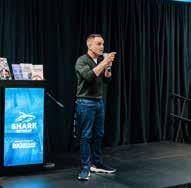
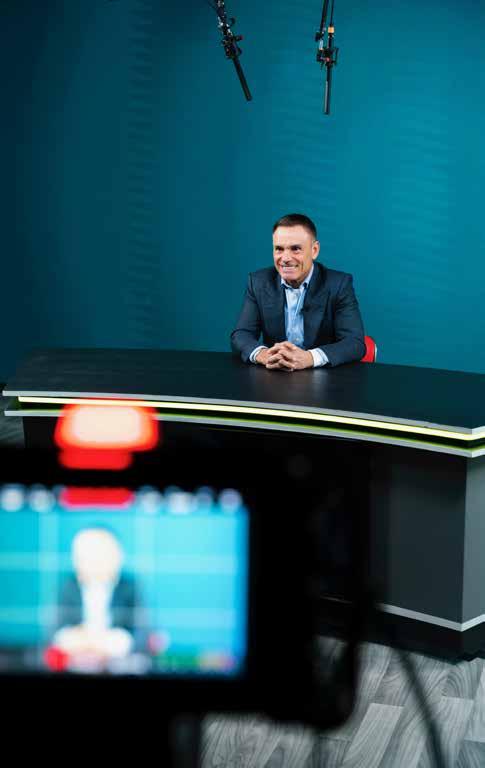
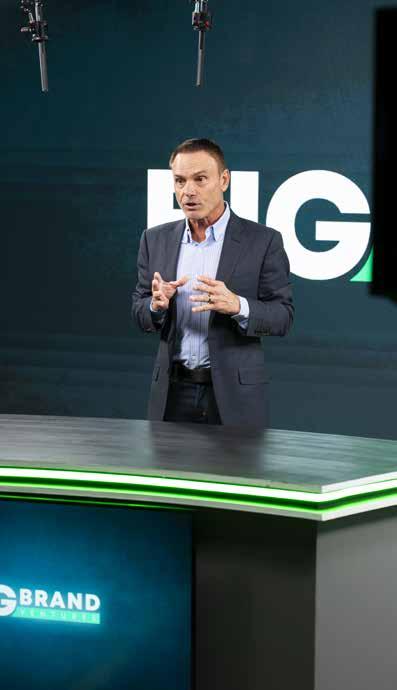
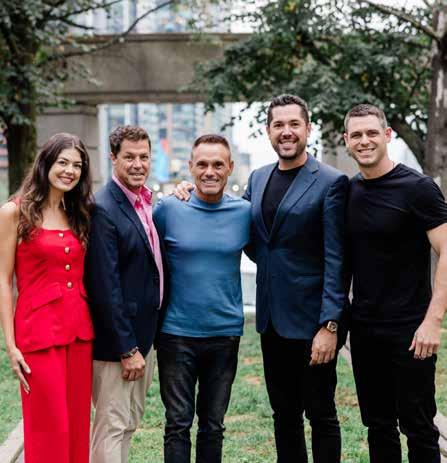
Kevin Harrington on Winning the Race
THE REAL BLUEPRINT BEHIND BILLION-DOLLAR BRAND BUILDING
ARTICLE BY NADINE BUBECK
PHOTOGRAPHY PROVIDED
For our April Business and Investing Issue, we go one-on-one with Kevin Harrington to talk capital, customer acquisition, scaling in the digital era, and what “winning the race” really means now.
Kevin Harrington remembers the exact moment the industry changed. It was 1980. He had just ordered cable television and was flipping through nearly 30 channels, something that felt revolutionary at the time. CNN was running 24 hours of news. ESPN was running 24 hours of sports. Then he hit one channel that was blank. Discovery Channel only aired 18 hours a day. 6 hours sat empty.
“IF YOU WANT TO MAKE THE MONEY, YOU NEED TO OWN SOMETHING. BUT WITHOUT ACQUISITION AND RETENTION, YOU DON’T HAVE A SCALABLE BUSINESS.”
“I called the cable company and asked why nothing was on. They said they didn’t have anything to fill it with. I said, ‘What if I do?’”
That question built an empire.
But long before cable, before Shark Tank, before billion-dollar exits, Kevin was a teenager washing dishes in his father’s bar.
His father, a World War II fighter pilot turned entrepreneur, opened Harrington’s Irish Pub after the war. Kevin started working there young. He watched. He listened. He learned.
“He’d say to me, ‘You worked 40 hours this week. You made $1 per hour. After taxes you take home $36. I’m the owner. I make the money. You’re washing dishes. If you want to make the money, you need to own something.’”
That lesson stuck.
By 15, Kevin had launched his own driveway sealing business in Cincinnati. He also remembers living in a nice neighborhood, but on the “poorer” side of it. Other kids were handed cars at 16. He bought his own.
“I was convinced I had to do it myself. I wasn’t going to let anybody give it to me.”
Ownership became the goal. Independence the expectation.
So when he saw 6 empty hours on a cable channel, he didn’t see dead air. He saw inventory.
From that moment, the infomercial industry was born. Ginsu knives. George Foreman grills. Tony Little fitness. More than 1,000 product launches. Tens of millions in sales. And eventually the phrase that would become a retail badge of honor: As Seen on TV.
But when I ask Kevin about legacy, he doesn’t talk about television. He talks about teams.
“Surrounding yourself with the right people and creating that dream team is everything. If you try to do it all yourself, good luck. It’s not going to be easy.”
Kevin has made more than 1,000 investments and helped take 23 companies past $100 million in revenue. Several have crossed the $1 billion mark. Yet he insists most entrepreneurs still misunderstand scale.
CONTINUED >
KEVIN’S FIVE RULES FOR BUILDING A BIG BRAND
Build the dream team
No one scales alone. Surround yourself with people who bring skill sets you do not have.
Raise capital strategically
You cannot build a billion-dollar brand without funding. Be intentional about how and when you raise.
Master customer acquisition
Hope is not a strategy. Know exactly how you will acquire and retain customers.
Focus on subscription and retention
Recurring revenue builds real enterprise value.
Stay ahead of the curve
Whether it was cable television, influencer marketing, or AI, the edge goes to those who move early.
kevinharrington.tv
“They tell me how big their industry is. Beauty is billions. Fitness is billions. If I get 1% I’ll have a $50 million dollar business. That’s not a strategy.”
What is a strategy, in his view, is less glamorous and far more disciplined. Build the right team. Raise capital. Create a real customer acquisition plan. Increase average order value. Focus on subscription revenue.
“If you don’t have acquisition and you don’t have retention, you don’t have a scalable business.”
He sees thousands of pitches every month. Most of them he walks away from. Not because the product is bad, but because the system is missing.
When he joined Celsius in 2013, the company did not have the budget for a traditional television blitz. Instead of forcing the old model, Kevin built a new one.
“Influencer marketing barely existed 13 years ago. We went to Flo Rida. We went to Khloe Kardashian. We structured smart partnerships. We didn’t throw piles of cash around.”
The strategy worked. Fitness influencers posted organically. The brand grew inside gyms before it exploded into mainstream retail. Celsius is now a $14 billion company.
Kevin does not romanticize Shark Tank either. In the early seasons, decisions were made in real time.
“I’d tell my wife I was going to Los Angeles for two weeks and I might invest a couple million dollars. And she’d ask, ‘In what?’ And I’d say, ‘I don’t know yet.’”
Today he invests differently. More selectively. Through Big Brand Ventures, he holds equity in more than 40 companies and acts as a strategic partner, often taking minority stakes and empowering founders to lead.
“You have to bet on the jockey, but the jockey needs a team.”
He talks about AI the same way he once talked about cable television. As an inflection point.
“We’ve created massive amounts of content using AI. It’s a game changer.”
He explains that AI now allows his team to produce creative, ad variations, landing pages, and product positioning concepts at a speed that would have required entire departments just a few years ago. Testing cycles shrink. Iteration accelerates. Campaigns scale faster.
But he is cautious about misuse. Fake endorsements. Fabricated videos. Manufactured authority.
“You’ve got to be careful.”
Still, he leans toward optimism. Every era creates disruption. Every era creates opportunity. The entrepreneurs who win are the ones who learn how to use new tools without letting the tools use them.
Now, nearly 50 years into building brands, he defines winning simply.
“Winning the race means staying ahead of the pack and building massive brands in a creative fashion.”
Then he adds the line that explains his entire career.
“If you have $10 million, it’s easy. Spend it. If you don’t, you have to be creative.”
Kevin may be known as the jockey who rides companies across the finish line.
But listening to him, it is clear he is something else entirely.
He builds the track.
AUSTIN BATES Licensed Mortgage Loan Officer
CLOSING LOANS.
The Bates Team serves all mortgage needs for purchasing or refinancing a home. We have the knowledge, tools and professionalism to ensure the best financing option for you and your family.
“Austin Bates and his team are the BEST! They made this experience move very smoothly and every one of them made me a priority. I truly appreciate Austin going above and beyond to make this actually happen.” - Gina F.
Soak up the sun at OH Pool, recharge in a newly renovated room, and enjoy vibrant dining and restorative spa experiences designed to balance energy with ease.
Located in the heart of Old Town Scottsdale, Hotel Valley Ho crafts every detail for an unforgettable escape. Book your staycation and rediscover this iconic destination.
ARTICLE BY NADINE BUBECK
PHOTOGRAPHY PROVIDED
Before Tipoff, The Real Work Begins
ELITE LEADERS ACROSS SPORTS AND MEDIA ON RESILIENCE, IDENTITY, AND WINNING THE MENTAL GAME
Before the Phoenix Suns face the Houston Rockets on April 7th, the conversation shifts from the hardwood to something less visible, yet equally decisive. The mind.
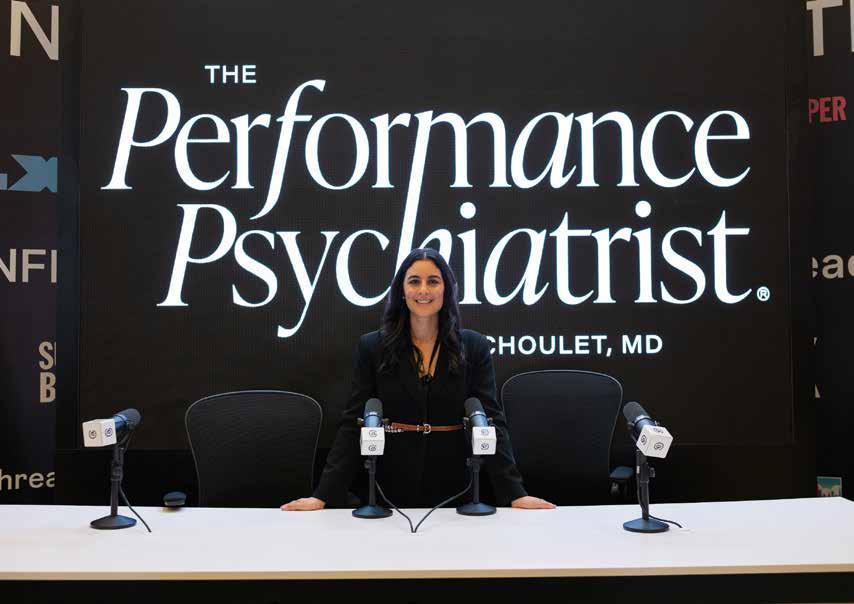
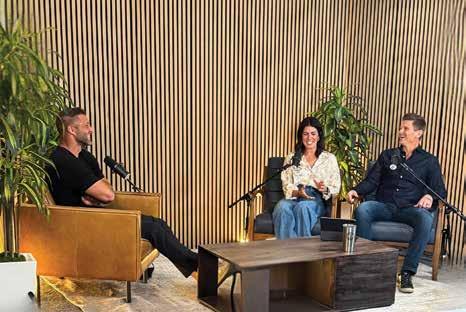
Training the Mind™ is not a typical pregame panel. Created and hosted by Scottsdale-based performance psychiatrist Dr. Brook Choulet, the nationally coordinated platform embeds clinically grounded conversations about mental health, resilience, and peak performance directly into a live professional sports environment.
“It reframes mental health from something reactive or crisis based into something proactive, strategic, and performance enhancing,” Dr. Choulet explains. “In doing so, it normalizes the conversation in the very environments where performance matters most.”
The series has appeared on game-day stages with the Arizona Cardinals, Los Angeles Rams, and Washington Commanders, bringing together sports psychiatrists, athletes, entertainers, clinicians, and nonprofit leaders. The conversations are not generic wellness discussions.
Coach Molly Miller
Dr. Brook Choulet
“Talent isn’t the first thing I evaluate. It’s effort and discipline. Mental toughness is daily discipline. Choosing preparation over panic and gratitude over fear.”
— COACH MOLLY MILLER
Three themes consistently resonate. First, the idea that resilience is trainable. Second, managing pressure at elite levels. Third, identity beyond performance. In professional sports especially, self worth can become intertwined with outcomes.
“Bringing the conversation to Phoenix is deeply personal and professionally meaningful to me,” Dr. Choulet says. “It’s where I’ve built my practice and where the early vision for integrating sports psychiatry into high performance systems began.”
Now, ahead of tipoff, join them for a group night where a dynamic panel of leaders across sport and media will explore what it truly means to invest in the mind. Different industries. Different arenas. One common denominator. Performance under pressure.
Here, we turn to the panelists themselves and how each of them invests in that competitive advantage.
MOLLY MILLER
Head Coach, ASU Women’s Basketball
With the 2025–26 season, Molly Miller takes the helm at Arizona State, bringing a culture of toughness, accountability, and championship expectation.
“Since I began my coaching career, talent isn’t the first thing I evaluate. It’s all about effort and discipline,” she says. “Before we ever talk about skill, I’m looking for relentless work ethic, competitive toughness, and team first accountability.”
She believes skill can be developed. Systems can be taught. Mindset is a choice.
“We want players who fall in love with the process, who compete in everything they do, and who hold themselves and their teammates to a championship standard. If you’re hungry, humble, and fearless, we can build something special together.”
In today’s Division I landscape, mental toughness extends far beyond the court.
“Pressure isn’t the enemy, it’s the privilege of competing at this level. Mental toughness today isn’t just about handling adversity on the court. It’s about managing your identity off it, especially with NIL and social media in the mix.”
Her approach is intentional. Anchor identity beyond basketball. Train the mind with the same precision as the body. Accountability over entitlement.
“We create a culture where they can be honest about the pressure but still held to a championship standard. At the end of the day, mental toughness is daily discipline. Choosing preparation over panic and gratitude over fear. That’s how you sustain excellence in today’s game.”
Ask her what separates good teams from championship teams and she answers without hesitation.
“The difference isn’t just talent. It’s alignment and belief. Good teams play well when things are going right. Championship teams hold their standard when they’re down, tired, or under pressure.”
Belief, she says, is a multiplier. But it must be earned.
“When your best players lead, your locker room polices itself, and your group refuses to let circumstances dictate effort, that’s when you move from good to championship level.”
As a female leader in a high visibility role, she understands that her athletes are watching more than strategy.
“My players watch how I lead. I model confidence by being prepared, decisive, and authentically myself. I model resilience by how I respond to setbacks, showing that persistence matters more than perfection.”
She speaks openly about balance. Wife. Mother. Coach. Leader.
“I want our athletes to see that you can be competitive and composed, driven and grounded, while balancing life’s responsibilities. Beyond basketball, it’s about standing by your values, prioritizing relationships, and leading with integrity and heart.”
And when the noise grows loud, media narratives, rankings, expectations, her reset is clear.
“My reset is simple. I focus on preparation, film, and pouring into the game to get us better. I teach our players to find their own center, whether it’s visualization or a routine. With so many eyes on women’s basketball right now, it’s more important than ever that they learn they can control their mindset, effort, and response, and compete with confidence no matter the noise.”
CONTINUED >
“Vulnerability doesn’t mean sharing everything. It means sharing honestly. What we normalize on air shapes how people feel about their own lives.” -Johnjay Van Es
Johnjay
JOHNJAY
VAN ES
Co-Host, The Johnjay & Rich Show
For decades, Johnjay Van Es has built a career in an industry that constantly reinvents itself. Formats shift. Platforms multiply. Attention spans shrink. Yet he has remained steady, relevant, and deeply connected to his audience.
His formula is disarmingly simple.
“I’ve never tried to outsmart the audience. I’ve tried to grow with them,” he says. “Radio changes, platforms change, but connection doesn’t. If you stay curious, humble, and willing to admit when you’re wrong, people stick with you.”
He has always approached the microphone as conversation rather than performance.
“When you evolve as a human, as a husband, a dad, a guy figuring life out, the audience evolves with you. Relevance isn’t about trends. It’s about truth.”
“Reality radio” demands vulnerability, but Johnjay has learned that authenticity requires boundaries.
“Vulnerability doesn’t mean sharing everything. It means sharing honestly. Early on, I thought being authentic meant total transparency. I learned a lot of lessons.”
Now he filters every story through one question.
“Is this helpful or just emotional? If it serves the listener, I’ll go there. If it’s something I still need to process privately, I keep it off the air.”
Therapy, faith, and his inner circle help him separate performance from personal healing.
When listeners trust him with heartbreak or mental health struggles, he feels the weight of it.
& Wife Blake
“When someone trusts you with their heartbreak or mental health struggle, that’s sacred. This job isn’t just entertainment. It’s impact. It’s intimate. We’re often part of someone’s morning routine during their hardest season.”
That awareness has shifted how he shows up.
“I’ve become more mindful about language, about tone, about not exploiting pain for ratings. Wellness isn’t just personal. It’s cultural. What we normalize on air shapes how people feel about their own lives.”
Off the mic, the reset is intentional and quiet.
“Quiet. Movement. And my wife, Blake. After high energy mornings, I need stillness. The first ninety minutes of every morning are all mine. I walk, lift weights, cold plunge, or just sit without input. No headphones. No noise.”
Over time, his definition of success has evolved. A later in life ADHD diagnosis gave him language for how his brain works and shifted how he approaches mental health.
“For years, I pushed through everything. Now I pay attention. I’m more compassionate with myself. I prioritize therapy, hormone balance, fitness, and real conversations with people who don’t care about ratings.”
What once defined achievement has softened.
“Success used to mean growth and syndication. Now it means stability, presence, and peace at home. If that’s solid, everything else works better.”
CONTINUED >
rachel@theviridianscottsdale.com 602-717-1691
theviridianscottsdale com
CURATED LUXURY BIOPHILIC DESIGN
“A missed field goal is a perfect analogy of striving to be successful. It is either good or no good. Nothing in between.” -Nick Lowery
NICK LOWERY
Former NFL Kicker, Author
Few positions in professional sports isolate pressure quite like a kicker. The stadium holds its breath.
Nick Lowery lived inside that reality for years in the NFL, navigating extraordinary highs and very public scrutiny. But long before he made it to the league, his identity was already being shaped elsewhere.
“Before making it in the NFL, I was a legislative aide three times in the U.S. Senate, working for Senators John Chafee and Bob Packwood,” Nick says. “The benefit of being rejected eleven times before making it was realizing how tenuous the job could be.”
Rejection became perspective. Balance came from stepping outside the sports world entirely.
“Working with children with cerebral palsy and spending off seasons in post Watergate era Washington kept balance by getting away from the sometimes narcissistic sports environment and focusing on helping solve problems for everyday Americans.”
In his new book, Nick speaks candidly about the emotional and psychological realities of professional sports.
“The big lie in our culture is the illusion that our heroes are perfect. There are indeed heroes in each of us, as we transcend our mistakes and failures precisely because we choose to pursue a special life.”
He often returns to the metaphor of a missed field goal.
“A missed field goal is a perfect analogy of striving to be successful because it embodies public failure. It is either good or no good. Nothing in between.”
Nick Lowery
Growth, he believes, comes from embracing those misses rather than denying them.
“A grounded journey of the hero is to honestly embrace our misses as humans and strive to consistently grow in self awareness, gratitude, and wisdom, and most of all, in the elusive sublime connection with others.”
As a kicker, the mental game was everything. Fear, focus, and self trust determine outcome long before contact with the ball.
“The magic lesson I learned was to not fight nervousness. Instead, own it and literally tell yourself, I want to be nervous. Butterflies are a sign you really care.”
Trying to suppress nerves only tightens the body and mind.
“Performance flow comes when you trust to attack the kick, knowing you cannot be perfect. You have prepared with a game like pressure, so now literally let it go. It is trying to be too perfect that we get in trouble. It is the non self conscious brain that plays the inner music of real flow that sparks our finest performance.”
That’s why Nick penned a tellall, Naked and Alone with 80,000 People.
“If silence around vulnerability means repressing your stress in a mental straightjacket, then we are headed for deeper issues. We sign up for mistakes the harder and higher we aim.”
Looking back, he would tell his younger self something simple yet profound.
“Enjoy the rich unpredictable journey, and keep loving yourself doing what you love. The secret for a lifetime is doing what you love with the people you love. Most of all, always find ways to help others find their own purpose through God’s unique gifts in them.”
“Putting them through challenging, controlled discomfort drills builds confidence and fuels resilience. -Vaughn Compton
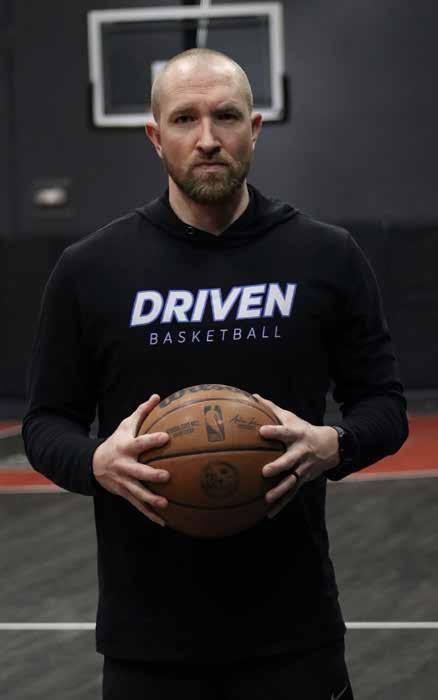
VAUGHN COMPTON Elite Basketball Trainer
Vaughn Compton is a respected basketball trainer, working with many of the region’s top athletes. In his gym, talent may open the door, but character determines who stays in the room.
“It’s all about character. They are who they say they are. They do what they say they’re going to do. Their ability to stay consistent with their routine habits, regardless of how they’re feeling that day, is what separates them.”
For Vaughn, consistency is the separator.
“They prioritize their development and are always looking for ways to gain an advantage.”
Training high level athletes presents a unique challenge. Many are praised constantly. Social media reinforces their status. Confidence can become external.
“Many high level players are constantly told how great they are. That kind of support is valuable, but it won’t provide the level of confidence required to perform at the highest level. It can also create complacency.”
So Vaughn creates controlled discomfort.
“Putting them through challenging, controlled discomfort drills builds confidence and fuels resilience. Hundreds and thousands of reps like this are elite preparation. And preparation builds confidence.”
When working with nationally ranked or highly recruited athletes, he begins with identity.
“They need to separate performance from identity. High level players, especially young ones, often tie performance to self worth. Their character, responses, behaviors, and work ethic must become the unbreakable foundation.”
He reframes pressure as privilege.
One of the most common mindset blocks he sees is role adjustment. A player who once led the offense suddenly plays fewer minutes.
“They must protect their joy and love for the game, because under those circumstances, it can slowly dissolve.”
Contact PVCL’s Nadine Bubeck, the event moderator, to reserve your spot: nadine.bubeck@citylifestyle.com
Vaughn Compton
FROM REAL HOUSEWIVES TO GREEN BERETS
A PRIVATE PARADISE VALLEY GATHERING OF PERFORMERS, FIGHTERS, AND SURVIVORS
ARTICLE BY NADINE BUBECK PHOTOGRAPHY BY BARRET ELENGOLD
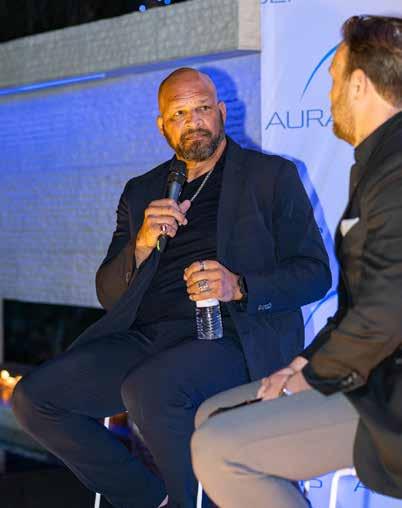
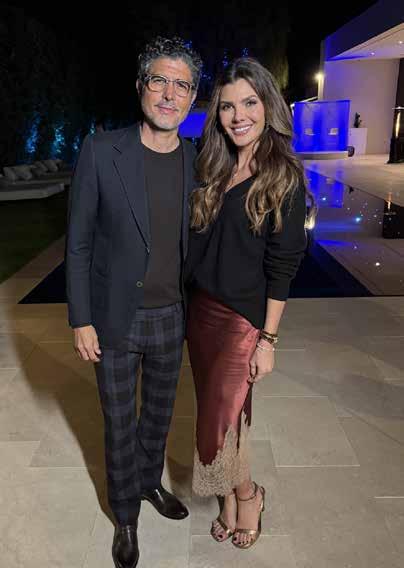
At a Paradise Valley private residence, Auragens welcomed patients for a private appreciation evening, and PVCL was granted exclusive media access.
The room was filled with many individuals who had traveled to Auragens in Panama seeking advanced regenerative medicine not currently available in the United States.
For Dr. Dan Briggs, CEO of Auragens, the night was not about spectacle. It was about validation.
“This is our chance to say thank you to the patients who entrusted us with their health,” Dr. Briggs shares. “Most of the people here have traveled with us. Tonight we get to see the long term benefits.”
Auragens operates in Panama by design. Dr. Briggs explains that regulatory frameworks there allow access to expanded biologics and advanced mesenchymal stem cell applications cultivated over an extended period, a distinction he believes separates serious regenerative science from domestic alternatives.
“Not all stem cells are the same. There’s a major difference between minimally processed material and biologics developed over 15 months for true anti-inflammatory and regenerative potential.”
For many in attendance, including notable public figures, privacy came first. Results came second. Advocacy came last.
“We never ask anyone to speak publicly. When they choose to share their story, it’s because they’ve experienced meaningful change.”
The broader conversation, however, was less about celebrity and more about capital.
As longevity becomes a global industry, high performers are viewing health not as maintenance, but as infrastructure, something to build, protect, and optimize.
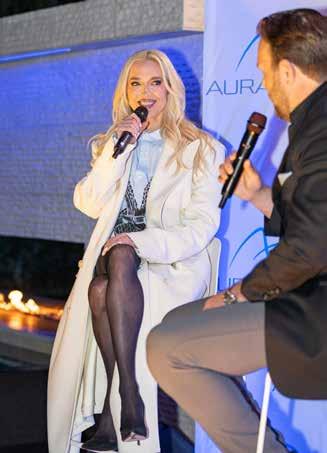
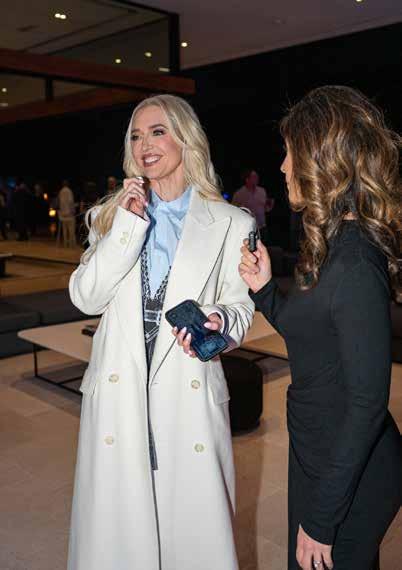
Erika Jayne
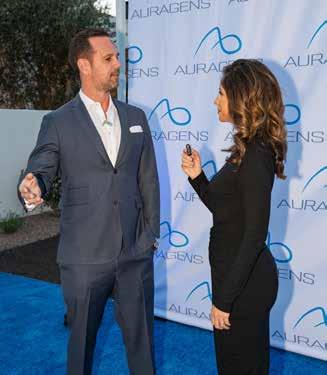
PVCL's Nadine Bubeck interviewing Dr. Dan Briggs
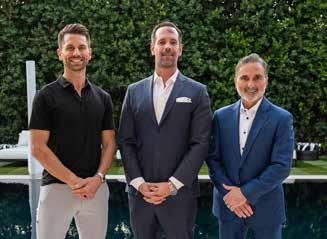
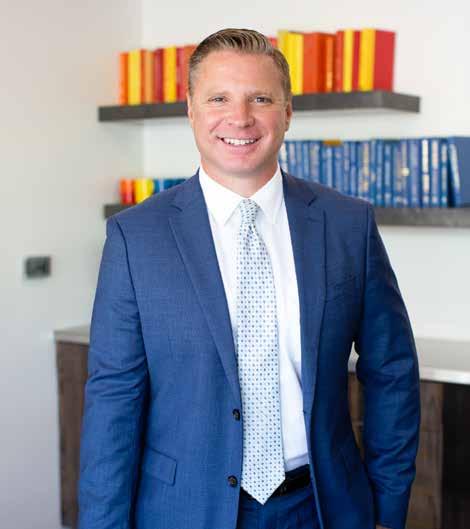
Dr. Adam Loiacono, Dr. Dan Briggs, Russ Scaramella (homeowner)
“Your quality of life has to match your lifespan. That’s what we’re trying to support.”
And that message resonated.
Because for those who understand investment, the most valuable portfolio may not be financial at all.
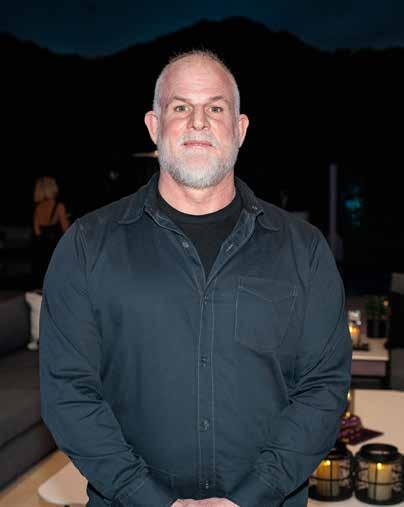
Enter John McPhee, a retired U.S. Army Special Operations Sergeant Major. A Green Beret. A career Ranger. A sniper whose work required precision most people cannot conceptualize. For more than two decades, his world was angles, distance, discipline, and consequence.
He’s also dubbed The Sheriff of Baghdad.
In person, he’s quick. Funny. Direct.
“What brings you here tonight?” we ask. “Stem cells.”
He smiles, but there’s no performance in it. When he traveled last year, he says he wasn’t chasing hype.
“I was trying to figure out how I feel now,” he shares. “So I have something to compare it to. Where am I at?”
That question becomes the pulse of the conversation.
After twenty years in the Army, pain had become background noise.
“I got knee pain. Shoulder pain. Broke my back before. It’s just pain every day. Not excruciating. Just there.”
He says something that stops us.
“You don’t really stop and ask how you feel. You just keep going.”
So we pivot asking what makes someone excel as a sniper.
“Math. No one wants to admit it. It’s trigonometry.”
Wind. Angles. Distance. Timing. Variables stacking on variables.
So we ask if he’s good at math.
“No,” he says, grinning. “I just know how it’s going to work. Once I figure out how it works, I know how it works.”
When we ask what kind of personality survives elite military life, he shrugs.
“I’m not a shrink. I’m just a regular guy.”
Then:
“I think guys like me are bored underachievers. We don’t do well in school until you give us something we want to do.”
He calls himself a “C” student. Says people joke that he breaks everything he touches.
“I’ve been adulting since I was a kid,” he says. “I hate that.”
He laughs.
After retirement, structure disappeared. The mission changed. He doesn’t sugarcoat that chapter.
“The VA gave me a bunch of pills. I laid on the couch. Watched TV. Got fat. Years went by.”
He doesn’t blame anyone.
“I realized that wasn’t the way to live.”
Positivity, he says, is not personality.
“It’s a choice.”
He remembers waking up one morning thinking, I’m just going to try to have fun today.
“I used to be fun. I had to figure out how to get that back.”
When we ask what he hopes people take from him now, he keeps it simple.
“It’s about honesty. Owning your stuff. There’s no magic to it.”
If John carries the stillness of a sniper, Erika Jayne carries a spotlight.
Before the confessionals, she was a performer. A dancer. A singer with nine #1 hits on the Billboard Dance Club chart. A woman who understands choreography, stamina, and the cost of high heels better than most.
Erika Jayne is a Bravo favorite and one of the defining forces of The Real Housewives of Beverly Hills, now ten years into one of the most dissected runs in reality television.
When we ask what brings her to Paradise Valley that night, she answers easily.
“I’m here to celebrate Auragens. I’m a patient. I’ve had incredible results.”
PVCL's Nadine Bubeck interviewing Erika Jayne
John McPhee
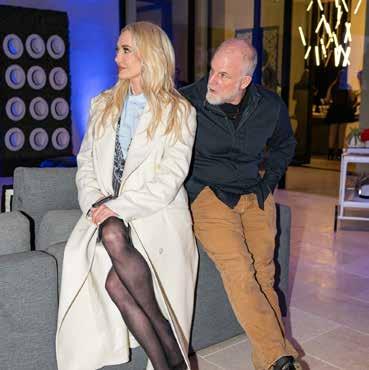
Erika Jayne & John McPhee
But the more interesting part of the conversation isn’t about treatment. It’s about wear and tear.
“I’ve had three knee surgeries,” Erika says. “I’m a professional dancer and singer. That kind of wear and tear on the joints is something you really can’t treat. It’s not just the absence of pain. It’s the absence of swelling.”
When we ask if she feels cured, she responds pleased.
“Cured is a strong word. But when I say I’m 90% better? That’s insane.”
Ten years on The Real Housewives of Beverly Hills means public evolution. Public friendships. Public fractures.
“I think what people gloss over is how deep these friendship ties really are,” she says. “When you fall out with somebody, it hurts. We’re all human. We’re showing our lives. Not necessarily the best parts.”
We ask what viewers don’t see.
“Every day of my life,” she says when we bring up being edited or misunderstood. How do you survive that?
“You don’t. You compartmentalize. You can’t fall in love with the good things said about you or the bad things said about you. You need to remain neutral. Yes, the show is edited. Yes, there are story arcs. And no, you may not look your best. But that’s part of the game.”
Then she smiles.
“Life goes on. Life goes on. Life goes on. You have to decide what kind of life you want to live.”
And right now?
“A really good one. I feel good.”
If John carries precision and Erika carries spotlight, Mark Kerr carries survival.
Former UFC heavyweight champion. PRIDE icon. The Smashing Machine. A man whose career was built on impact.
When we ask about the necklace resting against his chest, his entire posture shifts.
“It’s a Rudis,” Mark says. “When you’re a Roman gladiator and you earn your freedom, you’re given a wooden sword. It means you don’t have to fight anymore.”
“It’s my reminder.”
For decades, fighting was literal. Night after night.
“Where I sustained most of my injuries was my right side. Hip. Shoulder. Just bone on bone.”
Some days, he says, were unbearable.
David J. Dobrusin, CPA, CFP®
“Give yourself a toothache and see how happy you are. When you’re dealing with that level of pain every day, you’re not your best self. I just dealt with it. It made me cranky all the time. My mental health was suffering because of my physical pain.”
Five years ago, he hit a point of desperation. Surgeons offered more operations.
However, he turned to Auragens.
And today, he mountain bikes sixty to seventy miles a week.
“If I go out for ten miles, I don’t feel like I got enough in. I didn’t realize how much I missed working out. It does something for me that nothing else does.”
When Mark and his wife Francie graced our PVCL February cover, it marked more than a milestone. It marked a legacy. The Smashing Machine, a major motion picture based on his life and starring Dwayne “The Rock” Johnson, brings one of the most complex careers in combat sports to the big screen.
From their home in Scottsdale, the moment carries weight beyond Hollywood.
“This is my community,” Mark says. “These are my people.”
And while some legacies are built in arenas under bright lights, others unfold differently.
Ali Landry does not enter a room loudly.
Former Miss USA. The original Doritos Girl. Actress. Producer. Founder. A woman whose career spans Super Bowl commercials and independent film.
When we ask what brought her to Paradise Valley that night, she smiles.
“I’m really excited. A friend of ours told me about Auragens. We travel all over the world together, and he knows the issues I deal with… especially with my shoulder and neck. We’re always asking ourselves, are we actually going to get a good night’s sleep tonight, or are we going to be up because of the pain?”
Ali recently wrapped her first experience in Panama.
“If I can get out of pain, that’s a win.”
From the outside, she looks timeless. She laughs when she remembers the night her iconic Doritos commercial first aired during the Super Bowl, watching it live at a bar in Arizona.
Alejandro Gómez Monteverde and Ali Landry
Mark Kerr
“I remember hearing the music,” she says. “And then I saw myself on that huge screen and thought, oh my gosh.”
Today, the conversation turns to aging. Brain fog. Hormonal shifts.
“Age is not on our side. I’ve noticed forgetfulness. There are some things going on that I really need to look into. I did a treatment at Auragens that’s really for neurological issues. Hoping to get some results there.”
Then she smiles.
“And of course, while I’m there, I enjoyed some injections in the face.”
Because Auragens does it all.
After years of nonstop work, Ali made a decision.
“I heard someone say she didn’t want someone else raising her kids. And I realized I needed to be there. I made a choice to step back. That is my focus right now.”
Looking back on her career, one project still stands apart.
Bella , the award winning independent film directed by her husband, Mexican filmmaker Alejandro Gómez Monteverde. Ali has been married to Alejandro since 2006, and the film remains deeply personal to them both.
“To be part of something that had meaning, that gave people hope, that made them think, it made me ask, what do I want to put out into the world?”
When asked the key to a long marriage, she answers quickly.
“Patience.”
Then she adds,
“Personal growth. As you change individually, you change as a couple. You have to grow together.”
auragens.com
Lasting Wellness Center
THE #1 MISTAKE PEOPLE MAKE AFTER STEM CELL TREATMENT
BY DR. ADAM LOIACONO, PT, DPT, SCS, CSCS
Most people think stem cell therapy ends when they leave the clinic. But the truth is, your results are determined by what you do in the weeks after treatment. The biggest mistake I see? Treating pain relief as if it’s the same thing as being healed.
Here’s what happens: Stem cells arrive and immediately get to work calming inflammation. Within 7–14 days, many clients experience a dramatic reduction in pain. Swelling goes down. Movement feels easier. You wake up thinking, “I’m healed.”
This is the Danger Zone.
The absence of pain is not the same as structural healing. Your cartilage, tendons, and ligaments haven’t regenerated yet.
Pain relief is Step 1.
Tissue regeneration is Step 2.
And this second step takes time.
1. Surgery Without the Incision
Think of stem cell therapy like surgery, but without the scar. Your body is undergoing a massive regenerative process at the cellular level. Just because there’s no incision doesn’t mean you skip the rehab.
Goal: Treat your recovery like post-surgical rehab. Rest, protect the tissue, and resist the urge to “test it out” too soon.
The clients who see the best outcomes don’t chase pain relief, rather they respect the biology and give their cells time to rebuild.
MEET ADAM LOIACONO
Founder of The LEGACY Membership & host of Finding Small Wins
Dr. Adam Loiacono is a performance physical therapist with fifteen years across the NBA, MLS, and NWSL, including serving as Director of Rehabilitation & Performance for the Phoenix Suns. A Doctor of Physical Therapy and board-certified Sports Clinical Specialist, he merges movement, medicine, and precision systems to create measurable results.
Welcome to the next chapter in your LEGACY.
AMERICA’S FOREMOST AUCTIONTAINER TAKES THE STAGE FOR ALZHEIMER’S WITH A CAUSE CLOSE TO HOME
AUCTIONEER AND ADVOCATE
In the world of fundraising, few names carry the weight of Letitia Frye.
Known as America’s foremost “Auctiontainer,” Letitia is celebrating more than 20 years in the fundraising industry and over $1 billion raised for charities across the country. She has performed at more than 2,000 events worldwide. She has mentored 52 auctioneers. She is the only auctioneer to have worked with two different U.S. Presidents. During the pandemic alone, she pivoted to more than 65 virtual fundraisers across the globe, raising more than $15 million during an uncertain economy.
She has redefined what it means to fundraise. She has changed the way organizations entertain and connect with donors. She commands a room with energy, precision, and memory that feels almost superhuman.
But when Letitia steps onto the stage this spring as the auctioneer for the Era of Hope Alzheimer’s Gala this month, the cause is not simply another event on her calendar. It is personal.
“Yes, my grandmother, who was my absolute hero and one who I turned to through all of my childhood and young adult life, had Alzheimer’s,” Letitia shares.
“She called me crying during my final exams at USC in my senior year and told me she had two days to live, and I must drop everything and fly to her home in AZ to see her immediately. I dropped everything and went and spent 2 days immersed with her in every intimate detail of her life and mine.”
Those two days would become sacred.
“Three days later she did not die physically but rather Dementia kicked in and took her entire memories like lightning over the next few months. Within a year she would not even know who I was. Alzheimer’s was fast and furious with her and although physically she held on for several years, the woman I knew and loved did die after those two days and somehow, she knew it.”
The disease that would later define one of the most important events she will auction this year first entered her life inside a family home, during what felt like borrowed time.
But memory loss would not be a single chapter.
“Now, Alzheimer’s and dementia have worked in the opposite direction for me,” she explains.
“My mother, who has struggled all of her life with mental and addiction issues, who I was estranged from and did not speak to for over 10 years, has reappeared in my life as she can no longer remember why she hated me so much.”
CONTINUED >
There is no tidy way to explain that kind of reversal.
“We have repaired our relationship and now spend time together just holding hands and remembering the good that seems to be all her mind can remember these days. She is 88, incapacitated, and although dementia has taken many things, it has also allowed us to stop and smell the roses together based on what we both see in real time today.”
In one generation, Alzheimer’s took everything she knew. In another, it softened something that once felt permanently broken.
And then came a third experience.
“In addition to all of this, I was hit by a car while running on 11/27/14 and had my head split open and suffered a traumatic brain injury. I had no short term memory and struggled terribly the first year after the accident which left me with an enormous respect and compassion for those entering memory loss through Alzheimer’s and dementia.”
For someone whose profession depends on instantaneous recall, sharp timing, and total command of detail, losing short-term memory was more than a medical event. It was identity-shifting.
“Truth is anyone can walk out their door and have a life event that can enter them into this world regardless of age or diagnosis, and most believe it can not happen to them.”
It is that truth that gives weight to the upcoming Gala on April 24th.
When Letitia takes the stage at The Arizona Science Center for the Era of Hope Alzheimer’s Gala, she will do what she has done more than 2,000 times before: energize a room, move a crowd, and inspire generosity.
On stage, she can feel almost inhuman. The speed. The recall. The rhythm. The way she wraps a room with grace and pizazz and utter impressiveness. She memorizes names, stories, lot numbers, donor histories. She reads a crowd in seconds. She moves millions of dollars with voice and presence alone.
It is performance at the highest level.
But she is not a performance.
She is a granddaughter who watched Alzheimer’s arrive “like lightning.” She is a daughter who found reconciliation through memory loss. She is a survivor of traumatic brain injury who once could not rely on her own shortterm memory.
When Letitia Frye steps onto that stage in April, the audience will see the commanding Auctiontainer.
What they may not immediately see is the woman carrying every one of those stories with her.
And that is what makes her extraordinary.
Not simply the billion dollars raised… but the humanity behind the voice.
ERA OF HOPE GALA
Friday, April 24, 2026
The Arizona Science Center
The Era of Hope Alzheimer’s Gala returns this April for an unforgettable evening dedicated to advancing research, awareness, and critical funding in the fight against Alzheimer’s and dementia.
Hosted at The Arizona Science Center, the gala gathers philanthropic leaders, medical pioneers, families impacted by memory loss, and community advocates for a powerful night of purpose. The evening will be emceed by PVCL’s Nadine Bubeck, guiding guests through a program that blends compelling storytelling with meaningful fundraising.
The Duffy Mathias Group takes a different approach to wealth management – collaborative, comprehensive and customized to your needs and goals.
We guide high-net-worth individuals, corporate executives, and families through many market cycles, led by a thorough understanding of their unique situations and an unwavering commitment to their best interests.
Discover the difference of true partnership.
Mathias
Among the Wildflowers
ARTICLE BY NADINE BUBECK
KATIE COSMAS CARRIES HER DAUGHTER’S MEMORY INTO A BALLROOM BUILT ON HOPE
PHOTOGRAPHY PROVIDED- KATIE COSMAS
Katie Cosmas wears a small butterfly around her neck. It rests just below her collarbone, quiet and constant.
“That symbolizes who?” we asked.
“Taylor Paige, our firstborn,” she says. “She’d be 16 now. A sweet 16.”
In 2010, Katie and her husband Mark welcomed their first child. Taylor had blonde hair and her father’s deep blue eyes. The pregnancy was smooth. She was healthy. She hit every milestone.
“She was just a happy baby,” Katie remembers.
Five months and three days into Taylor’s life, Katie laid her down for a nap in her crib. The room temperature was right. The guidelines were followed.
“That day is forever etched in my memory,” she says. “Every second.” Three months later, the report came back: undetermined. SIDS. “They still don’t know what causes it,” Katie says. “Sixteen years later, they still don’t know.” Grief settled in slowly and completely. It was waking up and remembering. It was replaying details. It was asking impossible questions. “I would call the pediatrician asking, what did I do?” she says. There were no answers. What carried Katie and Mark forward was each other.
“I could be having the best day,” she says. “And if Mark says he’s having a sad day and missing Taylor, I have to stop. I have to just be there for him.”
Two years later, their son Cade was born.
“He filled a broken part in our hearts.”
Motherhood after loss comes with a different kind of awareness. Every sound matters. Every silence matters. But life continued.
Then Addy arrived.
Born six weeks early, Addy spent her first weeks in the NICU. After months of testing and uncertainty, doctors diagnosed her with Costello syndrome, a rare genetic condition with roughly 500 known cases worldwide.
“It took about two years to get a diagnosis,” Katie says.
There were more hospital transfers. More monitors. One day, her heart rate would not lower. Katie and Mark followed another ambulance.
“We thought we were going to lose another child,” she says quietly.
Addy is now 10, still in Kindergarten.
Baby Taylor
Cade & Addy modeling for PANDA
“She’s super tiny. She looks like she’s five. But man, that girl’s got spunk.”
Addy didn’t walk until nearly five. She continues to learn and grow at her own pace. And yet, as Katie describes her, none of that defines her.
“She lights the world on fire,” she says. “Her one-liners are better than mine.”
Addy knows about Taylor. Recently, while remodeling her bedroom, she made a simple request.
“She said, ‘Mom, I want a big picture of Taylor in my room like you guys have.’”
Katie smiled.
“Of course.”
Taylor’s angel day is April 18th.
Every year, the family visits her gravesite.
And this year, April 18th carries an added layer.
The 26th annual PANDA Fashion Show and Luncheon, one of the Valley’s most significant pediatric medical research fundraisers, will take place on Taylor’s angel day.
Baby Taylor
“I knew it was a sign,” she says. When Katie was asked to serve as one of this year’s PANDA chairs and later learned the event date, she paused. For Katie, PANDA has never been just a luncheon. It is the bridge between loss and action.
“PANDA is a women’s board set up to generate revenue for pediatric medical research,” she explains. “Given our history, it’s something I’m extremely passionate about.”
It was through PANDA that she was introduced to Dr. Ghishan at the Steele Children’s Research Center in Tucson, a pivotal connection in Addy’s medical journey. It was through PANDA that research became personal, not abstract.
This year’s theme, Among the Wildflowers, centers on resilience. On children who endure more than they should. On families who grow in places they never expected to.
And woven quietly into the event’s branding is a butterfly.
Her co-chairs suggested it.
“We have to add a butterfly for Taylor.”
So this April 18th, in a ballroom filled with wildflowers, research, and 1,200 people gathered in support of children they may never meet, Katie will stand in a room that exists because of hope.
The date is not lost on her.
A sign. A symbol. Something spiritual, probably.
Sixteen years after losing Taylor, Katie still carries her. Not just around her neck. But in the way she parents. In the way she advocates. In the way she shows up.
“Be kind to yourself,” she says, reflecting on what she tells other parents walking through loss or medical uncertainty. “You have to let yourself experience all of it.”
On April 18th, she will do what she has done every year since 2010.
She will say her daughter’s name.
And this time, an entire room will carry it with her.
azpanda.org/panda-fashion-show
Welcome to the practice of Sheridan James, MD
Dr. Sheridan James combines the best of western and functional medicine to uncover & address the root causes of health concerns.
Her concierge practice focuses on preventative and precision medicine, helping patients achieve optimal wellness through personalized, proactive care.
Members enjoy direct access to Dr. James via phone, text, email, or video visits—ensuring ongoing support and continuity of care beyond the traditional office setting
YOUR WORLD CLASS TEAM CLOSE TO HOME
CUTTING EDGE PLASTIC SURGERY AND AESTHETIC SERVICES
•
INTEGRATED SURGICAL AND ANESTHESIA CARE
Dr. Craft and Dr. Andersen work seamlessly to ensure your entire plastic surgery experience is as optimal as possible. We are one of the few plastic surgery practices in the nation that fully integrate ultrasound guided regional anesthesia blocks for patient comfort.
INTERNATIONALLY RECOGNIZED EXPERT IN FACIAL REJUVENATION
Dr. Craft is among a select group of plastic surgeons nationally recognized for expertise in advanced rejuvenation techniques, including deep plane facelifts, endoscopic brow and midface lifts, and croton oil-phenol peels. He is a sought-after educator, training physicians in these procedures and most recently presenting in New York City, London, and Dubai.
NATASHA PALMATIER, CFP®
This recognition reflects a commitment to delivering thoughtful, high-quality wealth planning and client experience built on clarity, trust, and long-term partnership. Natasha Palmatier is honored to be recognized among leading women advisors nationwide for excellence in service, leadership, and impact.
The Forbes Top Women Wealth Advisors Best-in-State rankings are developed by SHOOK Research and are based on a rigorous evaluation of both qualitative and quantitative factors. SHOOK Research identifies advisors who demonstrate best practices and deliver high-quality, comprehensive client experience.
• Over 51,000 nominations received nationwide
• 25,000+ interviews conducted by telephone, virtual, and in person
• Advisors evaluated on service models, investing approach, client impact, compliance history, and business excellence
a Reason RUNWAY WITH
Turning Children’s Style into Community Impact
PHOTOGRAPHY PROVIDED BY
PANDA
For more than two decades, Katie Wilson has been one of the Valley’s quiet constants when it comes to philanthropic fashion. She is the owner of Garage Boutique & Concept Store, often described as the Fifth Avenue of pint sized fashion, but the real story has never been about the labels on the racks. It has always been about what those racks can represent.
“I realized that the store could be more than a retail storefront,” Katie says. “It could be a platform for giving back to the community.”
That realization is what first drew her to PANDA more than 20+ years ago. The alignment felt immediate. “It was the OG clients who supported my business that I adored and appreciated, and the emotional alignment of ‘Children helping Children’ was immediate.”
She has continued to say yes ever since.
“The mission for several of the organizations I choose to support never becomes less urgent. I love the community connection. In addition, it has become part of Garage Boutique & Concept Store’s DNA.”
Giving back is not an afterthought at Garage. It is the pulse.
“I was raised to do as much as you can, for whomever you can, for as long as you can. I feel it is a responsibility and a privilege. Giving back is the most meaningful extension of Garage Boutique. It makes my heart smile to see the small role we can play in the community make a difference.”
There is also a deeper layer to her commitment. Ten years ago, Katie faced a personal crossroads that reframed everything.
“I realized I wouldn’t be blessed with the opportunity to raise my own children. I chose to be even more involved in the community at this time as a form of healing, as maybe this was God’s plan for me.”
Channeling that heartbreak into service shifted the way she saw her work. Hearing families share how an organization has changed their lives, she says, “makes it all worthwhile.”
When it comes to styling children for a charitable runway, the energy feels different than a typical day in the store.
“Fashion show fittings allow me to work with mini models one on one and really encourage them to wear something that might be a little out of the box from their day to day style. I always want them to still feel like what they are wearing reflects their own style and personality, although I always try to sneak in a little of my own twist on things for the runway. It’s storytelling, not just outfitting.”
And the transformation can be remarkable.
“Each child has a point of view, and it’s important that we honor it. I love seeing a child in a fitting that really is unsure if they will even make it down the runway. By the time we hit the stage, the confidence from their Garage Boutique outfit can be a tool for bravery. They stand taller on the runway and never want the day to end.”
Over the last 25 years, her eye has evolved alongside the children she styles.
“The early years, I would let vendors steer collections I purchased. Now I really focus on what I like, what I envision my clients reaching for in the store. I focus on individuality over trends.”
She has watched the industry shift dramatically. “There is a strong global influence due to the internet. Children, especially girls, want to grow up too fast and dress like mini adults.” At the same time, she notes, “Kids are collaborators in their own wardrobes. Parents can’t shop for their tweens anymore. They are the decision makers.”
CONTINUED >
Boys’ fashion, she says, has seen the biggest evolution. “They are wearing accessories, more into tailored pieces, and lots of layers. Prep is back.”
For spring and summer 2026, she is seeing “sets, lots of citrus, florals, sun washed pastels,” but always filtered through her buy less, buy better philosophy. Quality that can be handed down. Pieces not easily found elsewhere. Elevated everyday dressing.
When she begins building a look for a child, especially for an event like PANDA, she starts with purpose. “I always start with the occasion, theme and message, so the child understands why they are in the store for a fitting. This way we can discuss the child’s personality and find a way to merge the two and build around it.”
The difference between cute and elevated, in her view, is simple. “Confidence in their selection, and accessories. Lots of accessories.”
At the intersection of philanthropy and fashion, Katie hopes Garage Boutique leaves something lasting.
“I would hope that Garage Boutique has made generations of children feel seen and celebrated. And that we are a storefront rooted in generosity and giving back.”
Then she pauses, reflecting not on runways or racks, but on relationships.
“I have so much gratitude for growing up alongside my customers’ families. I see the store as a living, evolving love letter to childhood, style and giving back.”
In a Valley known for beautiful events and beautiful clothes, Katie Wilson continues to remind us that the most powerful thing you can put on a runway is purpose.
garageboutique.com
Life Is Sweeter with Cookies
Sugar & Chip AZ is a mom-owned bakery crafting gourmet cookies with premium ingredients and real intention. Every batch is thoughtfully made, every flavor carefully chosen, and every cookie baked to be shared.
From classic chocolate chip to seasonal favorites, these are cookies meant for gatherings, gifting, celebrations, and everyday moments that deserve something special.
INVESTING in Impact
When Philanthropy Becomes a Multi-Generational Investment
PHOTOGRAPHY PROVIDED
Long before they were chairing galas, they were little girls watching. Watching their mothers take late calls. Watching board meetings stretch into dinner. Watching women who believed that protecting children was not optional.
This year, at the Childhelp Wings Fashion Show, two of those little girls are now co-chairing alongside their mothers.
Not as a passing of the torch, but as proof that some legacies are meant to be carried together.
Missy Anderson and Jinger Richardson, sisters and longtime Scottsdale leaders, have spent decades helping shape both the city and Childhelp’s presence within it. Their daughters, Ashley Anderson and Janell Richardson Grady, grew up inside that world of service. This season, the four women stand side by side, two mothers and two daughters, leading one of the Valley’s most meaningful philanthropic traditions.
For Missy and Jinger, giving back was never performative. It was foundational.
Both were born and raised in Scottsdale during a time when the city still felt small enough to ride horses to the Soda Fountain and tie up at a hitching post. Their parents opened their first western clothing store on Main Street in 1962 and later launched Scottsdale’s first art gallery, helping define the Old Town character that still anchors the city today. Jinger and her husband have owned Legacy Gallery for 38 years and Scottsdale Art Auction for 21, continuing that legacy of art and culture in the heart of downtown.
Philanthropy ran just as deep as business.
“I was lucky to have such great role models in my parents, both in business and in philanthropy,” Missy says. “They taught us to give back however we could. They also showed us that it was the greatest joy to receive back in the process.”
Their connection to Childhelp began early and in parallel. Jinger and Missy’s mother trained some of the Childhelp therapists in the 1980s and 90s, while Missy met founders Sara O’Meara and Yvonne Fedderson in 1996 at the grand opening of their headquarters here in Scottsdale after relocating from California. She had already learned of their work alongside Nancy Reagan in launching the Vietnam Baby Airlift, saving thousands of babies abandoned on the streets, many of them half Asian and half white children of American servicemen.
Missy and Ginger
Childhelp
Founders Sara O’Meara and the late Yvonne Fedderson
“They have worked tirelessly and passionately for 65 years, helping hundreds of thousands of children here in Arizona and millions across the country,” Missy says.
The commitment deepened over time. Missy served on the boards of Florence Crittenton, AFW, and Childhelp. She chaired events for Florence Crittenton, AFW, and Childhelp, and served for years on the committees for Scottsdale Christian Academy and Heart Ball. Missy and Jinger also co-chaired Drive the Dream from 2008 to 2010 during some of Childhelp’s most challenging financial years. Jinger joined the board in 2008 and later served as president, implementing structural changes that still shape the organization today. Moving meetings to lunchtime allowed business leaders and elected officials to attend more consistently. Collaboration strengthened. Momentum grew.
“We all work together and it does not matter what party you affiliate with,” Jinger says. “We have one mission.”
While their mothers were building and leading, Ashley and Janell were absorbing.
Janell remembers volunteering as a sophomore in high school in 1998, blowing up balloons for the grand opening of the first Advocacy Center in Phoenix.
“I remember being struck by how beautiful the interior was,” she says. “On the wall, a simple but powerful message read, ‘All who enter here will find love.’”
Years later, that message became deeply personal. In 2018, Janell and her husband attended Drive the Dream and listened to a young boy share his story of abuse and eventual adoption supported through Childhelp’s services.
“As we listened, John and I looked at each other and knew we needed to be part of saving a child from that kind of pain and neglect,” she says.
They became foster parents in 2021 and adopted their daughter, Shea, in 2022.
“Giving back has never felt like an obligation,” Janell says. “It has always been a passion. It is simply part of who I am.”
Ashley’s connection to Childhelp is equally rooted, but spiritual in its beginnings. As a young girl navigating significant health challenges, she recalls being in The Little Chapel when Sara laid hands on her and prayed.
“The warmth I had always known, I now felt in every fiber of my soul,” Ashley says. “Their fierceness of faith and unwavering trust ignited something in me.”
She grew up watching her mother chair events for Florence Crittenton, AFW, and Childhelp, and serve on committees for Scottsdale Christian Academy and Heart Ball. She also volunteered alongside her mother at a young age, including at the crisis center at 12 and 14 years old. What appeared effortless from the outside was built on hours of work behind the scenes.
“I hope she saw that it was hard work, not all fluff and glamour, but also very fulfilling,” Missy says of those years.
When Ashley was asked to co-chair Wings, she had recently moved back to Arizona after nearly a decade in Colorado and Bavaria. She was raising her young daughter, rebuilding her life after a long season of personal transition, working within the family business, and formally launching her career as an artist, her lifelong passion.
Level Up Workshops
INVESTING IN ARIZONA’S FUTURE
With mentorship and guidance more important than ever, Rosaki Hilt, AI specialist, is making a meaningful impact on Valley youth through his Level Up Workshops, a program designed to empower students with tools they need to succeed both personally and professionally.
Built around leadership, goal setting, and personal development, these workshops provides students with real-world insight that often extends beyond what is taught in the classroom. Through engaging and interactive sessions, students are encouraged to think critically about their future while developing the mindset needed to pursue their goals with confidence.
“Level Up Workshops is about showing students what’s possible when they believe in themselves and commit to their goals.” -Rosaki Hilt
A major component of the program’s growing impact is its partnership with William, a collaboration expanding the reach of the workshops throughout the community. Together, Rosaki and William bring a dynamic energy to the program, sharing personal experiences and lessons that resonate with students navigating their own journeys.
“Working with William allows us to connect with students in a real way. When they hear authentic stories and experiences, it resonates with them.”
Recently, Rosaki and his workshops were featured on Arizona’s Family, highlighting the initiative’s mission to provide mentorship and leadership development opportunities for youth throughout Arizona.
The goal? To inspire the next generation to dream big, build strong character, and take ownership of their future, equipped not just for success but for leadership.
The timing was not simple.
But gratitude outweighed hesitation.
“There is no greater honor than for someone to trust you with their heart,” Ashley says. “And that is exactly what Childhelp is.”
Missy initially resisted stepping back into a chair role, believing it was time for the next generation. It was Ashley who reminded her how rare and meaningful it would be to serve together, alongside Jinger and Janell, with their granddaughters modeling on the runway and the fourth generation represented in their mother’s attendance and support. It is an honor to have all four generations involved in this year’s event.
That pride flows both directions. Jinger speaks of Janell’s leadership with steady confidence. Janell, in turn, credits her mother’s 17 years of board service as the blueprint she follows.
“I believe that the value of giving back is taught at home,” Janell says. “The generations in my family are a testament to that.”
One of the most powerful aspects of the Wings Fashion Show is its ability to engage young people in philanthropy early. It is, at its heart, kids helping other kids who need us most.
This year’s Wings Fashion Show also arrives in a season of transition following the recent passing of co-founder Yvonne Fedderson. The loss is felt deeply among families who have known her for decades. But even in change, the mission remains steady.
There are children to protect. Families to support. Work to continue.
When asked whether this moment feels like a passing of the torch, Ashley answers with clarity.
“I have watched generations of women before me pour so much fire into that torch it could only ever be carried side by side,” she says. “Flames fanned in tandem throughout the years, as we always have.”
On the day of the show, children will step onto the runway in carefully curated fashion. Nearby will stand co-chairs who once rode horses up Camelback Mountain after school, who once volunteered as teenagers blowing up balloons for a grand opening, and who later restructured board meetings so community leaders could find a seat at the table.
This is not simply a fashion show.
It is a living example of what happens when children grow up watching and choose to serve and stand beside their parents, not behind them.
19th Annual Childhelp Wings Fashion Show
Sunday, May 3, 2026 | 10AM–2PM
The Phoenician
The Childhelp Wings Fashion Show and Luncheon returns Sunday, May 3, 2026, to The Phoenician’s Camelback Ballroom for a fashion-forward afternoon with purpose. This year’s theme, America’s Future All Stars: We Play for a Purpose, celebrates sports, family, and the next generation, timed with the celebration of America’s 250th anniversary.
Emceed by PVCL’s Nadine Bubeck, the 19th annual event will honor founding mother Carol Hebets and the enduring legacy of Childhelp founders Sara O’Meara and the late Yvonne Fedderson. Organizers are inviting community leaders, athletes, public figures, and community members to model in this year’s runway, adding meaningful visibility and impact to the event.
wingsfashionshow.org
The Leadership Ledger
Inside the Strategy, Sacrifice, and Leadership Behind the Valley’s Most Powerful Fundraising
Events
Major fundraising events do not happen by chance. They require strategy, capital oversight, operational discipline, and leadership under pressure. In this issue, we explore the executives behind the scenes of philanthropy and the real investment required to move a mission forward.
Many chairs quietly give up family time and personal bandwidth. How has your family influenced your decision to keep saying yes?
My husband is incredibly supportive and knows that when I commit, I go all in. He never complains about the late nights or ordering dinners because I’m tied up with event planning. My kids see me volunteering and working with organizations. Knowing I’m leading by example and teaching them the importance of giving back makes it an easy yes.
When recognition isn’t the motivation, what keeps you committed through the hardest moments?
Knowing that big or small, we are making a difference. Seeing the funds we raise in action and watching them provide services and a sense of normalcy during an incredibly difficult time in someone’s life is what keeps me committed. That impact outweighs everything.
“Saying yes will test you and transform you and your family in many ways. It will demand your time, energy, patience, and sleep. But when you stand in the room and see the lives changed because you were willing to lead, you understand why it mattered.” “
What is the mental pressure of being responsible for an outcome that impacts a cause, a team, and a community?
I’m very Type A and don’t ask for help easily. Seeking such perfection can be emotionally draining. You want to raise as much as possible because this one night often funds organization for the year, and such funds benefit their give back mission. Knowing all of that rests on your shoulders can be scary.
How do you push forward when the weight feels heavy?
You just do. That’s how I’ve always been. You put your head down and push through task-bytask until the job is done. I remind myself who it’s for, and that perspective outweighs any insecurity or overwhelming emotion I may be feeling in the moment.
HILLARY LETO
CO-CHAIRED AND TABLE SPONSOR, CHILDHELP 2025
TABLE AND MODEL SPONSOR, PANDA 2025
AUCTION COMMITTEE, GENTRY FOUNDATION 2025
UNDERWRITER, AMANDA HOPE RAINBOW ANGELS 2025
SPONSOR OF GENTRY, AHRA, AND C4C FOR THE PAST 6–7 YEARS
2026: CHAIRING CHANCES FOR CHILDREN ANNUAL GALA (NOVEMBER) AND AMANDA HOPE RAINBOW ANGELS
ANNUAL GALA (OCTOBER)
Hillary Leto (right) with co-chair Leslie Duffy
MOLLY STOCKLEY
TGEN AND CITY OF HOPE RUNWAY FOR RESEARCH CO-CHAIR 2025
GATEWAY CELEBRITY FIGHT NIGHT COMMITTEE CO-CHAIR 2024
30TH CATHOLIC COMMUNITY FOUNDATION CROZIER GALA CHAIR 2018
TEEN LIFELINE CHAIR 2018
58TH AMERICAN HEART ASSOCIATION HEART BALL VICE CHAIR 2017
PHOENIX SYMPHONY SAVOR THE SYMPHONY CO-CHAIR 2017
ASSISTANCE IN HEALTHCARE CANCER ORGANIZATION SUPER BALL CHAIR 2017 AND 2015
CATHOLIC COMMUNITY FOUNDATION LEADERSHIP CIRCLE CHAIR 2016
ASSISTANCE IN HEALTHCARE CANCER ORGANIZATION PROJECT PINK CHAIR 2016 CANCER SUPPORT COMMUNITY PORCH PARTY CHAIR 2014
PHOENIX CHILDREN’S HOSPITAL WEST VALLEY ADVISORY 2013
49TH AMERICAN CANCER SOCIETY JEWEL BALL CO-CHAIR 2009
2026: AMERICAN HEART ASSOCIATION PUBLICITY CHAIR AND 11-YEAR MEMBER
Explain the demand of chairing an event. It will demand your time, your energy, and sacrifices most people will never see, but you do it anyway because it matters. You pour your relationships, your voice, and your hope into it, knowing your leadership can change someone’s life. It does mean less time with your family, which is why timing matters.
How do you balance family with philanthropy?
I was raised the Cajun way in Louisiana, surrounded by strong, faithful women, especially my beautiful mother, who taught me that kindness and grace can live powerfully alongside grit and resilience. That foundation guides me every day in my role at City of Hope Cancer Center, where my work is not just a career but a calling to expand access to exceptional cancer care and help patients find hope. My husband of 17 years lost his first wife to cancer, and that profound loss fuels our shared commitment to serve others facing the same fight. Giving back is woven into our marriage and our family life. We even call co-chairing events our date nights because showing up for others is both a privilege and a responsibility.
Recall a moment that has stayed with you. The moment it became real was when my husband Bob and I co-chaired the 49th Annual American Cancer Society Jewel Ball during the height of the recession. Many longtime donors were facing financial challenges, and the pressure of sustaining an event that funded patient lodging in Arizona felt overwhelming. That night, however, we reached our goal. It felt nothing short of a miracle and remains one of the most powerful moments of my leadership journey.
What
would you want someone to understand before chairing their first philanthropic event?
It can feel like a second full-time job, but when you chair as a family, something extraordinary happens. Your children see sacrifice in action. Your spouse becomes your teammate. You learn what it means to give your heart to something bigger than yourselves. Only say yes if the cause moves you to your core.
Advice I always give is to co-chair with women who share your passion but bring different strengths. Discover what ignites your passion. That is your real job here on earth.
DENA ZELL
CHAIRPERSON OF THE BOARD OF DIRECTORS, MAKE-A-WISH ARIZONA (2026)
VICE CHAIRPERSON OF THE BOARD OF DIRECTORS, MAKE-AWISH ARIZONA (2025)
CO-CHAIR, WISH BALL (2024 & 2025)
WISH BALL COMMITTEE MEMBER (2017–CURRENT)
Chairing an event is often unpaid, time-intensive, and largely behind the scenes. What does it actually require of you in real terms?
If I say yes to something, I’m all in. Co-chairing Wish Ball meant early mornings before work, late nights after, and filling the in-between moments to make sure nothing slipped through the cracks. It became part of my daily rhythm. I’ve always thrived in busy environments and enjoy the momentum of building something meaningful. When you care deeply about the outcome, you don’t see it as sacrifice.
Tell us about your family.
I was fortunate to grow up in Paradise Valley, and my parents still live in the home I was raised in. My family taught me that success isn’t just professional achievement; it’s about contributing to the place and people who shaped you. In my career, I operate in a fast-paced, high-performance environment. Chairing Wish Ball requires the same discipline and accountability.
There is usually a moment when the weight of chairing becomes very real. Can you share one that stays with you?
There’s a quiet moment before the event begins, when the room is empty and everything is finally in place. I remember standing there realizing how many people were depending on the outcome of that night. Later, spending time with the Wish kids and their families shifted everything. It stopped being about the black-tie event and refocused on the purpose. What we built over months wasn’t just one evening. It was hope.
When the event ends and the spotlight fades, what makes you feel the effort truly mattered?
It isn’t the event itself that stays with me. It’s knowing the impact continues long after the night is over. The funds raised translate into real wishes, real moments of joy, and real hope for families facing incredibly difficult circumstances. Being part of that is what makes it meaningful.
What would you want someone and their family to understand before saying yes to chairing their first philanthropic event?
Chairing will challenge your time and your energy, but it will also connect you more deeply to your community and to something bigger than yourself.
LESLIE DUFFY
2024 ALL SAINTS EPISCOPAL DAY SCHOOL AUCTION AND GALA CHAIR
2025 CHILDHELP FASHION SHOW AND LUNCHEON CHAIR WITH HILLARY LETO
2026 ALL SAINTS EPISCOPAL DAY SCHOOL AUCTION AND GALA CHAIR
2026: AMANDA HOPE GALA CO-CHAIR WITH HILLARY LETO
How demanding is chairing a fundraising event?
It’s a significant time commitment that begins long before anyone sees the final result. Planning can start nine months in advance, with weekly meetings to shape the vision, budget, fundraising strategy, and overall experience. As chair, you’re setting direction, keeping momentum, and ensuring nothing falls through the cracks. The hours can range from a few each week to nearly full-time as the event approaches. It is deeply rewarding, but it requires discipline, organization, and a willingness to sacrifice personal time.
How does your family shape your decision to step into leadership roles like this?
I’m a proud wife to Jake and mother to Landon and Ava. I serve as a full-time Director at a national medical device company, and while I value my career, I often tell my children that being their mom is my most important role. I first chaired the All Saints Gala to support their school and be more present on campus. What started as giving back quickly became a passion. Balancing business calls
with charity meetings can feel like a whirlwind, but I’m grateful to contribute both professionally and within our community.
Dive into the emotional pressure.
There is real pressure in knowing the outcome directly affects a cause and the people behind it. During my first gala as chair, I felt a strong need to prove to myself and to the organization that I was the right person for the role. When the mission centers around children, that responsibility carries weight. At the same time, it adds purpose.
What would you tell someone considering charing a fundraising event?
Understand both the commitment and the opportunity. It requires time, flexibility, and the support of your family, especially as the event draws near. There will be long days and moments of stress. But it is also energizing, relationship-building, and deeply impactful. You strengthen your leadership skills, connect more deeply with your community, and play a direct role in advancing a mission that matters.
Leslie Duffy (left) with co-chair Hillary Leto
KRYSTAL GROGAN
CO-CHAIR, NICU TEA 2023–2025
CO-CHAIR, CHILDHELP GALA 2024–2026
NICU TEA COMMITTEE MEMBER SINCE 2018 INCEPTION
CHILDHELP SUPPORTER SINCE 2015
2026: HONORHEALTH NICU TEA COMMITTEE, HONORHEALTH HONOR BALL COMMITTEE, AND NORTHRISE UNIVERSITY BOARD OF TRUSTEES
How does your family shape the reason you step into such leadership roles?
For our family, it has always been about children, long before we even had our own. Our drive comes from a passion to protect, teach, and love on the generations to come. We have three children and four godchildren, and anything advancing the most vulnerable is closest to our hearts. Our firstborn son arrived two months early in 2018 and spent his first month in the NICU at HonorHealth Shea. That same year, a friend launched the NICU High Tea event. My immediate yes grew into co-chairing for three consecutive years. Today, our seven-year-old understands that others paved the way for his story, and one day he will do the same for someone else.
When recognition isn’t the motivation, what keeps you committed through the hardest moments?
The mission is everything to us. If we are involved, the mission will remain the focus of the event. When you truly believe in the objective, recognition is not part of the equation. There will be hard moments, but you return to the roots. Re-centering on what brought everyone together re-energizes you to keep going.
What makes you feel the effort truly mattered?
If you did your job well, you will see it in the faces and hear it in the voices of the organization. Feedback, even constructive criticism, means people cared. Bringing together others who care deeply about a cause that matters to our family feels like an answered prayer. Good people working together for the greater good creates impact that lasts far beyond any single event.
Insight for those chairing their first philanthropic event?
A full family buy-in goes a long way. Having my husband’s support in my yes allows me to dedicate myself fully. We involve our children through dinner conversations, prayers for the events, and attending when possible. Even though they are young, it is never too early to show them the purpose and impact behind what we are doing.
21 QUESTIONS WITH THE MINDS BEHIND 40 LOVE
A Courtside Conversation on Vision, Risk, and Building a Championship Hospitality Brand
PHOTOGRAPHY BY ISSAC TORRES
In true PVCL fashion, every month we spotlight an esteemed Valley culinary force. For our April Business & Investing issue, we turn the lens to the business minds behind one of Scottsdale’s newest hospitality concepts.
Sean Mulholland and Avery Johnson Jr., Cofounders of 40 Love, are not simply opening doors in Old Town, they are engineering experience. Sean is the visionary behind the brand’s DNA, blending country club elegance with nightlife energy to create a space that feels curated, elevated, and magnetic. Avery, with deep roots in NFL and NBA marketing and years representing elite athletes, brings strategic positioning, cultural fluency, and high-level network influence that extends far beyond the dining room. Together, they identified Scottsdale as the ideal market for 40 Love’s next evolution. Here are 21 questions and answers with the duo behind the match.
1. WHERE DID YOU GROW UP, AND HOW DID THAT SHAPE YOUR RELATIONSHIP WITH HOSPITALITY AND NIGHTLIFE?
S: Originally from Ireland and moved to the United States in 2017. Hospitality has always been part of my story. My grandparents owned a pub and a pharmacy back home, and I grew up watching how those spaces became real gathering points for the community. That sense of connection and familiarity inspired me to create 40 Love. For me, it is about building places that feel personal and welcoming, while still offering a refined food, beverage, and design experience. I have carried those roots with me in shaping the brand, blending Irish hospitality with a modern, elevated approach in the U.S.
A: I grew up around professional sports culture, so excellence was the baseline. That environment shaped how I view hospitality. Preparation, discipline, performance. Every night is game night.
CONTINUED >
READY TO JOIN CLUB LARRY?
2. WHAT WERE YOU DOING PROFESSIONALLY BEFORE 40 LOVE?
S: I have spent my career building hospitality and nightlife concepts, developing venues that combine strong culinary identity with high energy atmospheres. I have always been focused on creating rooms that feel magnetic.
A: I have worked across branding, partnerships, management, and representation. I have always gravitated toward projects that live at the intersection of sport, entertainment, and lifestyle.
3. HOW DID YOU FIRST MEET, AND WHEN DID YOU REALIZE YOU WORKED WELL TOGETHER?
S: We met through hospitality circles in LA and shared the same instinct. We both care about experience over ego. We spoke at length about what a space should feel like, and then realized we could come together to bring 40 Love to Scottsdale.
A: What stood out was alignment. We both believe in building atmospheres, not just venues.
4. WHAT DO YOU BRING TO THE PARTNERSHIP?
S: I am big on vision and execution. How the space flows, how the guest moves through it, how it feels from the curb to the last cocktail. Avery brings precision, culture, and a deep understanding of brand resonance. It is a creative balance.
A: Brand clarity. Cultural instinct. I think about how something feels in the broader conversation, not just locally, but globally.
5. WHEN DID 40 LOVE MOVE FROM AN IDEA TO SOMETHING YOU KNEW HAD TO HAPPEN?
S: When we saw how people responded to the first conversations about it. The blend of sport, social club energy, and refined dining was not being done the way we imagined it.
A: When we realized our ideas and experience could inspire a hospitality concept without being literal. That is when it felt differentiated.
6. WHAT DID YOU HAVE TO BET ON YOURSELVES TO MAKE THIS REAL?
S: Reputation. Capital. Relationships. You do not build something at this level halfway.
A: Vision. And patience. We wanted to build something lasting, not trendy.
7. ARE EITHER OF YOU AVID TENNIS PLAYERS, OR IS THE INFLUENCE MORE CULTURAL THAN LITERAL?
S: I play tennis recreationally with friends on occasion, but the influence is more cultural. Tennis is global, stylish, competitive. It carries heritage but also modern relevance.
A: I appreciate the sport deeply. The inspiration is more about mentality than mechanics.
8. WHAT DOES 40 LOVE REPRESENT BEYOND THE SCORE?
S: Match point. That decisive, high stakes moment. It is confidence.
A: Precision under pressure. Style with discipline.
9. HOW DOES THE SPIRIT OF TENNIS SHOW UP IN THE RHYTHM AND VIBE OF THE SPACE?
S: There is momentum as the night builds. There is energy, tension, release, like a rally.
A: There is poised elegance within the space and it is set for a great match up with the quality of food, atmosphere, and socializing all in one.
10. WHAT DID YOU FEEL WAS MISSING IN OLD TOWN BEFORE 40 LOVE?
S: A space that merged elevated culinary execution with a true social club atmosphere. Not just dinner. Not just nightlife. Both seamlessly.
A: A concept that felt internationally inspired but locally rooted.
CONTINUED >
Sean Mulholland + Devin Booker
11. HOW INVOLVED WERE YOU IN SHAPING THE DESIGN AND ATMOSPHERE?
S: Extremely. We worked closely with world renowned interior architect John Sofio of Built, Inc. to bring this modern concept and character to life. Every material, every sightline, the way lighting hits a table, it all matters.
A: The space had to visually communicate our ethos immediately.
12. FAVORITE FOOD AND COCKTAIL ON THE MENU?
S: The Wagyu and a Scarlet Tempest. It is balance. Bold and refined.
A: Caviar Waffle and Love Potion No. 40. It captures playful luxury.
A: Elevated comfort. Familiar flavors executed with precision.
14. ARE THERE MENU ITEMS INSPIRED BY CLASSIC COUNTRY CLUB INDULGENCE BUT REIMAGINED?
S: Absolutely. Steak, seafood towers, caviar, but reimagined for today.
A: Yes, but modernized. We honor tradition without being stuck in it.
15. THE CAVIAR WAFFLE FEELS PLAYFUL YET ELEVATED. WAS THAT INTENTIONAL?
S: It is one of our elevated items that guests love and it sparks conversation. We love to see that.
A: Absolutely. It is a wink.
16. HOW DO YOU BALANCE REFINEMENT AND ENERGY ON THE MENU?
S: The food is disciplined. The room is vibrant. That contrast creates tension in the best way.
A: We do not separate them. They coexist.
17. WHAT ROLE DOES PRESENTATION PLAY IN CREATING THAT CENTER STAGE MOMENT?
S: It is center stage. When a dish lands, it should feel like an arrival.
A: It creates shareable moments, visually and socially.
18. HOW DOES THE SOCIAL LOUNGE TRANSITION THE ENERGY WITHOUT LOSING THE CULINARY IDENTITY?
S: The music shifts, the lighting lowers, yet the quality of food never dips.
A: The tempo changes, but the identity stays intact.
19. WHAT DISH FEELS LIKE YOUR CHAMPIONSHIP POINT?
S: The Wagyu steak plates. It delivers every time.
A: The Chilean Sea Bass. Understated but powerful.
20. WHAT DOES IT MEAN TO BUILD SOMETHING THAT RESONATES WITH HIGH LEVEL PERFORMERS?
S: They understand excellence. You cannot fake it.
A: They value preparation. We operate the same way.
21. IF 40 LOVE WERE A MATCH, WHAT KIND WOULD IT BE AND WHY?
S: Five set thriller. Elegant, intense, unforgettable.
A: A championship final. Sharp, stylish, and decided with confidence.
40lovegroup.com
At UdderlyCaptured, we bring the magic of the farm to you. Where Fuzzy Cows Are Not Just A Dream... But Reality.
Our iconic Highland cows are available for:
Weddings & Birthday Parties
Corporate Events
Professional Photo Shoots
•
•
•
•
Support Is Strength
Inside Arizona’s expanding crisis response system through Solari and 988
The strongest communities are not defined only by growth. They are defined by support. And in Arizona, support increasingly means investing in mental health infrastructure.
Mental health has moved from a taboo subject to an essential wellness priority. Since the 988 Suicide and Crisis Lifeline launched nationally in July 2022, crisis calls have climbed steadily each year, and not just from people in acute danger.
“People are reaching out earlier,” says Justin Chase, CEO of Solari Crisis and Human Services, which answers all 988 calls in Arizona twenty four hours a day, seven days a week.
“This tells us that individuals see mental health as something to value, monitor and seek support for, in the same way they would care for their physical health.”
That shift represents a fundamental change in how we approach overall well being. What was once rarely discussed is now recognized as central to quality
of life. Many people now seek support from counselors or therapists as part of routine self care.
Solari has been at the forefront of this evolution for nearly two decades. The organization provides crisis support via telephone, text, or chat through the 988 Suicide and Crisis Lifeline, with the option of dispatching mobile crisis units for in person support. Additional services include a warm line for peer support, a hotline for domestic violence survivors through SAFEDVS, and 211 Arizona, which connects individuals to local resources. All services are free and confidential, available around the clock in English and Spanish and, through real time translation assistance, in more than one hundred other languages.
“Solari has always been rooted in the belief that mental health is central to overall well being, and for nearly two decades we have been honored to serve as a trusted partner in crisis care in our state,” Chase says. “What has changed in recent years is the
environment around us. As public acceptance of mental health support has grown, our role has expanded dramatically.”
The numbers reflect that expansion. In 2024, Solari answered more than 500,000 crisis calls in Arizona, representing a 45 percent increase in volume since 988 became available.
“When in person services were disrupted, telehealth became a lifeline, and people who might never have considered therapy before suddenly had access to it from their own homes,” Chase says.
In joining Solari, Chase saw the chance to strengthen infrastructure that serves hundreds of thousands of Arizonans.
“Surveys show that more than 60% of adults feel comfortable discussing mental health publicly, and more than two thirds of Americans are aware of 988 services.”
For those looking to prioritize their mental well being, Chase recommends starting small.
“Consistent steps matter. Building routines of self care that include rest, exercise, healthy eating and time with supportive people can make a big difference. Reaching out early, whether it is talking to a trusted friend, using a warm line or connecting with a counselor, helps keep challenges from escalating into a crisis.”
The broader cultural conversation continues to evolve.
“Public education, media coverage and individuals and families who share their stories have helped normalize mental health as part of overall health,” Chase says. “No matter how heavy life feels, there is always someone ready to listen, to care and to help light the way forward. Reaching out for help is not a sign of weakness, but of incredible strength.”
In a state experiencing sustained economic and population growth, investing in mental health services is not only compassionate. It is foundational. Strong individuals strengthen families. Strong families strengthen communities. And strong communities sustain Arizona’s future.
crisis.solari-inc.org
Personalized Endocrinology for a Healthier, Brighter Life
Dr. Saran, one of the Valley’s Top Doctors, provides personalized endocrine and preventative care through direct memberships. She delivers long-term health solutions with her tailored approach and advanced diagnostic testing.
Dean Bloxom Principal
THE BUSINESS OF PERMANENCE
How Ross Rossin Turns Portraiture into Generational Capital and Institutional Legacy
PHOTOGRAPHY PROVIDED BY KINGSART
In a Business and Investing issue, we talk about what compounds. What lasts. What outlives the cycle. Ross Rossin works in that arena.
With more paintings in the permanent collection of the Smithsonian National Portrait Gallery than any living artist, Rossin holds rare institutional ground. Four of his portraits hang in the Smithsonian, including Maya Angelou, Hank Aaron, Andrew Young, and Morgan Freeman. His portrait of the Lebanese Patriarch hangs in the Vatican. The United Nations invited him to mount a solo exhibition at the Palace of Nations in Geneva. His nine foot bronze sculpture of Hank Aaron stands permanently behind home plate at the Atlanta Braves’ Truist Park. In 2025, he earned a GRAMMY as Co Producer of Jimmy Carter’s Last Sundays in Plains: A Centennial Celebration.
He has painted presidents. CEOs of the world’s leading companies. Political figures. Cultural icons. His work lives inside government institutions, museums, universities, and private collections across the globe.
That level of placement is not accidental.
Rossin was born in 1964 in Ruse, Bulgaria, along the Danube River, surrounded by Baroque and Viennese architecture. He began painting at six. By twelve, he was studying the classical techniques of the Old Masters.
At fourteen, he entered the National High School of Fine Arts in Sofia. He later graduated from the National Academy of Fine Arts, studying anatomy, portraiture, perspective, art history, and aesthetics with live models.
That classical training defines his edge.
“My years of training and accumulating deep knowledge and understanding of art history, anatomy, drawing, painting, and sculpting, all with live models, gives me a certain confidence,” Rossin says. The confidence, he explains, comes from understanding how the craft has worked for centuries.
“When I see a face, I know pretty much everything about the muscles, and the skull underneath and how the emotions work.”
His commission process remains rooted in that discipline.
“It’s a pretty classical approach. Pencil, sketching, capturing the proportions, going from the overall form to the details.”
The likeness must be exact.
But for Rossin, that is not the finish line.
“For me, the physical likeness is only the beginning of my work, not the final go.”
“If the biggest issue in life is that everything is impermanent, especially nowadays, faster than ever before, then paintings give us a sense of permanence.”
Once the resemblance is secured, he goes deeper.
“The likeness, the immediate recognition of who is my sitter, is where I start. My real work begins after that. It’s all about the hidden world of the sitter. The not so obvious aspects of one’s character. The complexity of one’s character. That’s what I really care about.”
He studies contradictions. The tension between public strength and private doubt. The calm exterior masking decades of ambition. The subtle sadness behind a composed smile.
“I want to capture, I want to feel the history of the sitter, the emotional complexity, to almost tell one’s story without one word.”
That depth is why families, institutions, and executives commission him.
Rossin’s portraits are not created in formal settings unless requested. A brief photo session or provided images are enough. Once size, pose, and background are determined, the structure is set and the painting begins. His portraits begin at $75,000 for a 48” x 48” contemporary portrait, a price point that reflects both institutional pedigree and long-term artistic value.
For many clients, the decision is not aesthetic. It is generational.
Rossin speaks often about impermanence.
“If the biggest issue in life is that everything is impermanent, especially nowadays, faster than ever before, then paintings give us a sense of permanence.”
Markets move. Companies merge. Digital images disappear into archives. Oil on canvas endures.
His portraits of Maya Angelou, Hank Aaron, Andrew Young, and Morgan Freeman will be viewed decades from now. His sculpture of Hank Aaron will stand as long as the stadium stands. His Vatican placement will remain long after current headlines fade.
That is the horizon he works within.
“Every portrait out there is, to a large extent, a self portrait too,” he says.
A painting is never mechanical. It is built through what he describes as a mental and emotional bridge between artist and sitter. That bridge gives the work vitality. It is why his portraits feel present rather than preserved.
Despite the Smithsonian holdings, the Vatican placement, the United Nations exhibition, the presidential collaborations, and the GRAMMY distinction, Rossin remains grounded.
“I’m just trying to be honest,” he says. “Time will decide.”
Ross, long celebrated as one of the world’s most acclaimed portrait painters, is unveiling New Works, a striking body of paintings that moves beyond traditional portraiture into something far more provocative. In this latest exhibition, he blends hyperrealism with surreal symbolism, placing classical technique alongside modern cultural questions.
Drawing inspiration from masters like Leonardo da Vinci and Vermeer, his paintings invite viewers into layered visual narratives where irony and sincerity, myth and modernity collide. The result is work that feels both timeless and unmistakably of this moment.
In a Business and Investing conversation centered on what appreciates and what survives, Ross Rossin occupies a category beyond trend.
He does not produce content.
He produces permanence.
And in the long arc of capital, permanence is the ultimate return.
Ross Rossin is represented exclusively by KingsArt. kingarts.co
“I want to capture, I want to feel the history of the sitter, the emotional complexity, to almost tell one’s story without one word.”
Longevity, Performance, and Harmony
“It’s rare to find a doctor who combines such personal touches and care for a patient as a person with outstanding quality of medical care.”
– Patient Testimonial
SWYSH SUMMER CAMP
Build skills. Boost confidence. Elevate your game.
Swysh Den Basketball Camp focuses on form shooting, ball handling, defense, and basketball IQ helping players become smarter, stronger athletes.
Starts June 1 | Mon–Thurs | 9 AM–3:30 PM
Half Day • Full Day • Weekly Options
Register: swyshden.com/summercamp
www.swyshden.com | (480) 685-8773 8212 E Evans Rd Scottsdale | v @swyshdenbasketball
Commission a Rossin Portrait
With more portraits in the permanent collection of the Smithsonian National Portrait Gallery than any living artist, Rossin is now accepting commissions for 2026. His works have graced the walls of museums, royal palaces, and private collections worldwide –now they can grace yours. Contact KingArts to commission a portrait.
The Nova Closing
Another Defining Transaction within Silver Sky’s Gated Enclave in PV
ARTICLE BY MIRIAM LE, LOCAL LUXURY | CHRISTIE’S INTERNATIONAL REAL ESTATE PHOTOGRAPHY PROVIDED
With the $20 million sale of Nova, Silver Sky has delivered another signal of strength within Paradise Valley’s $10 million plus market. The premier showcase residence inside the privately gated enclave recently closed in a transaction represented by Katrina Barrett and Sabrina James of Local Luxury | Christie’s International Real Estate, reinforcing sustained demand at the very top of the Valley’s residential landscape.
Over the past several years, Paradise Valley has seen increasing activity in its highest price tier, driven in part by affluent buyers relocating from coastal cities and other major metropolitan areas. The purchasers of Nova, represented by Kirk Linehan of Apex Residential, moved from out of state, drawn to the town’s rare balance of estate scale and everyday convenience. Proximity to premier dining and shopping, immediate access to Scottsdale Airport and Phoenix Sky Harbor International Airport, minimal traffic, and a year round warm climate continue to position Paradise Valley as a compelling long term destination for high net worth families.
Silver Sky was conceived specifically for that evolving buyer profile. When developer Jeremy Takas acquired the 18 acre parcel at the base of Mummy Mountain in 2021, he envisioned a private enclave composed entirely of brand new ultra luxury homes. In a municipality where much of the housing inventory consists of legacy estates built decades apart, the concept introduced architectural cohesion and controlled scale within a fully gated setting. Limited to just twelve residences, the community was designed to create a pocket of like minded homeowners who value privacy, craftsmanship, and elevated design.
“There simply isn’t enough land left in Paradise Valley to replicate a community like Silver Sky,” Jeremy says. “We created it for buyers who want privacy and exceptional design, but also want to live among peers who value the same things. That combination is what makes this community so special.”
Kohler Bathroom Design
Partner with the KOHLER® Signature Store design consultants to find innovative products, colors, materials, and finishes to bring your design dreams to life.
Located against the dramatic backdrop of Mummy Mountain, Silver Sky spans 18 acres and positions itself among the most exclusive new construction offerings in Arizona. Each estate is crafted by an elite team of architects, designers, and builders selected for their mastery and commitment to timeless execution. The result is a collection of homes intended to endure not only for their beauty, but for their functionality and detail.
With Nova now sold, only a limited number of opportunities remain within the enclave. The community’s second showcase residence, Aster, is nearing completion. The 8,565 square foot modern estate includes five bedrooms, eight bathrooms, a wine room, gym, theater, sauna, detached casita, resort style pool and spa, and a private backyard pickleball court set against panoramic Mummy Mountain views. Additional homesites remain available with fully designed plans in place, offering buyers the opportunity to customize their residences within the established architectural vision.
“The response to Silver Sky has been extraordinary,” Katrina says. “The sale of Nova demonstrates both the strength of Paradise Valley’s luxury market and the singular appeal of this community. As affluent families continue to move to Arizona, Silver Sky will remain one of the rarest new construction luxury communities in Paradise Valley, offering an opportunity that simply cannot be replicated.”
Local Luxury | Christie’s International Real Estate has surpassed $1 billion in sales volume, serving athletes, executives, and high profile clients across Arizona. The firm’s continued presence at this level reflects ongoing confidence in Paradise Valley’s most exclusive segment, where new construction at scale remains limited and demand continues to concentrate at the top.
silverskypv.com
Our jojoba is the purest you can find, grown and harvested on a local family farm with an uncompromising commitment to quality and sustainability.
From soil to skin, every step is intentional, delivering a clean, honest oil that supports your skin and the community behind it.
Architecting the Sun
How Luxury Homeowners are Turning Shade into a Performance Strategy
All Pro Shade Concepts has been serving Arizona homeowners for over 21 years. Founded by Arizona native Robert Mulvin in 2005, the company has grown alongside the state’s luxury real estate evolution. What drew Robert into the shade industry was simple but strategic.
“Shade isn’t just an accessory here. It’s transformational,” he says. “In Arizona, outdoor space is everything. When I saw how the right shading system could add usable square footage, protect an investment, and completely elevate the aesthetic of a home, I knew this wasn’t just another home services category. It’s lifestyle engineering.”
That mindset has kept him engaged for more than two decades. Luxury homeowners continue to push architectural boundaries. Expansive glass walls. Outdoor entertaining spaces. Motor courts. Custom steel and stone. Every estate is different. Every view matters. Every line must remain clean.
“I’m passionate about solving a complex comfort problem without disrupting the integrity of the design,” Robert explains. “When you can reduce heat by 20 degrees, preserve sightlines, and maintain a seamless aesthetic, that’s incredibly rewarding.”
When Robert steps onto a luxury property, he immediately studies what most homeowners never notice. Sun direction and seasonal shifts. Summer solstice versus winter angles. Reflection off pool water. Heat load from western-facing glass walls. He evaluates how UV exposure is quietly fading finishes and how afternoon glare is undercutting comfort.
Most affluent homeowners underestimate reflected heat. In Paradise Valley, expansive travertine, stone, water features, and large glass spans amplify ambient heat. Even when seated in shade, reflected UV can make a space unusable.
“Proper shade design controls direct sun, reflected glare, and heat load. Not just overhead sunlight,” Robert says.
At the highest end of the market, sophistication has moved beyond simple retractable solutions. The most advanced homes are investing in fully integrated, motorized shading systems that disappear architecturally. Recessed pocket installations.
Concealed housings. Wind sensors. Automation integrated into the home’s control system. The goal is performance without visual intrusion. The best systems feel as though they were part of the original architectural plan.
Ultra-private estates are adding even more discreet features. Hidden drop screens integrated into structural beams. Automated wind-responsive systems. Perimeter shading for entire motor courts and outdoor entertaining areas. Climate layering that combines shade with misting, heaters, and automated louver systems that adjust throughout the day. The estate remains open-air but functions like a private resort.
The difference between a basic installation and a fully engineered shading system comes down to precision.
“Engineering,” Robert says. “Load calculations for Arizona winds. Fabric tensioning that prevents waviness. Structural integration into steel beams. Electrical pre-wiring during construction. Sensor calibration.”
A basic installation blocks sunlight. A fully engineered system protects the structure, operates flawlessly for years, and feels permanent rather than added.
Automation has raised expectations even further. At the luxury level, manual operation is no longer acceptable. Homeowners expect one-touch or fully automated control from their phone or smart system. They expect the shades to respond before they even notice the sun shift. Shade has moved from reactive to proactive.
Material innovation has also accelerated. Advanced performance fabrics now reduce heat while maintaining transparency. Slimmer cassette housings conceal stronger internal motors. Integrated wind and sun sensors adjust in real time. Powder-coated aluminum systems are engineered specifically for Arizona’s UV intensity. Today’s systems are quieter, stronger, and more architectural than they were even five years ago.
Robert sees common mistakes in multi-million-dollar homes. Westfacing exposures are often underestimated. Beautiful retractable doors and expansive glass are installed without a simultaneous shade strategy. Roof overhangs are assumed to be sufficient, when in Arizona, vertical sun control is often more important than horizontal coverage.
The financial implications are significant. UV exposure fades hardwood flooring, artwork, custom cabinetry, and designer fabrics. Proper shading reduces UV penetration, lowers cooling costs, and preserves interior finishes. Over time, that protection directly impacts maintenance costs and long-term property value, particularly in seven and eight-figure homes.
“In Paradise Valley, shade is no longer a luxury addition,” Robert says. “It’s infrastructure. If you’re investing heavily in outdoor living, pools, outdoor kitchens, custom patios, shade is what makes it usable nine to ten months out of the year. Without it, even the most beautiful design underperforms.”
For those building or renovating at a high level, the most critical advice is timing.
“Plan for it early,” he says. “Integrate the shade strategy during architectural and structural design. Pre-wire for power. Plan for recessed pockets. Coordinate with steel and stucco crews. The most elegant systems are the ones that were never treated as an afterthought.”
In a market where design continues to elevate and outdoor living remains central to property value, shade has moved from accessory to asset protection strategy.
allproshadeconcepts.com
Robert Mulvin, Owner & PVCL Partner
There’s a big difference between a home that’s expensive and one that truly feels luxurious.
Beautiful materials and high-end finishes alone don’t create that experience. Without thoughtful design guiding every decision, even the most costly homes can feel disjointed or incomplete.
At our April Blueprints & Beyond gathering, Kevin Hunter will sit down with Kris Harline, founder of Powerhouse Interiors , for an inside conversation about what it really takes to design a luxury home that feels as remarkable as it looks.
With more than twenty years of experience shaping high-end residences across the Valley, Kris is known for orchestrating every detail—from cabinetry and materials to the subtle design choices that make a home feel seamless, intentional, and personal.
This conversation will pull back the curtain on insights many homeowners only discover after their home is already built.
Together, Kevin and Kris will discuss:
• When is the right time to bring an interior designer into a custom home build?
• What are the most common design mistakes homeowners make when building luxury homes?
• What truly makes a home feel luxurious rather than simply expensive?
If you’re planning a custom home, considering a major renovation, or curious about how thoughtful design transforms the way a home feels and functions, this is a conversation you won’t want to miss.
Hosted by Kevin Hunter of American Premier Builder and cohosted by Jason Monczka , Blueprints & Beyond is an intentionally intimate monthly series that brings together leading voices in architecture, design, construction, and lifestyle planning.
Each event is held inside the inspiring Design Within Reach showroom, creating a space for thoughtful discussion, expert insight, and the opportunity to ask the questions most homeowners don’t realize they should be asking until much later in the process.
Whether you’re actively planning a home or simply exploring what’s possible, Blueprints & Beyond offers a rare opportunity to gain insider perspective before the real decisions begin.
Come with questions. Leave with clarity. This is Blueprints & Beyond.
KRIS HARLINE, FOUNDER OF POWERHOUSE INTERIORS
Investing with Intention
Industry Experts Share Where Opportunity Is Emerging and How Smart Planning Protects Future Wealth
In this issue, leaders across lending, estate planning, education, aviation and AI share where smart capital is moving and how strategic planning today protects tomorrow.
INVESTING IN STRATEGIC FINANCING
Ryan Lehrman
Senior Mortgage Banker | Specializing in niche portfolio lending such as Jumbo, Super Jumbo, Physician, One-Time Close Construction, and Investment/Second Home Loans NMLS #235295
WITH MORE THAN 20 YEARS IN MORTGAGE LENDING, WHAT SHIFTS ARE YOU SEEING IN TODAY’S LUXURY AND CUSTOM HOME MARKET?
Buyers are more strategic and focused on equity building. Many leverage equity from prior sales and approach purchases with a long-term wealth mindset. Even in a higher rate environment, demand at the top end remains resilient because these clients buy based on lifestyle, tax strategy, and portfolio diversification, not just rate.
CONSTRUCTION LOANS CAN FEEL COMPLEX. WHAT SHOULD BUYERS UNDERSTAND ABOUT ONE-TIME CLOSE CONSTRUCTION FINANCING BEFORE THEY BREAK GROUND?
Work with someone who understands this loan type. Educate yourself on fees, terms, and qualification parameters before meeting with builders or purchasing land. Our One-Time Close Construction product converts to permanent financing without a second close, which simplifies the process, eliminates additional closing costs, and removes the need to re-qualify later.
PHYSICIAN LOAN PROGRAMS ARE OFTEN MISUNDERSTOOD. HOW DO THEY UNIQUELY BENEFIT DOCTORS?
Physician Loan programs are designed for MD, DO, DDS, and DMD professionals, including residents and fellows with signed contracts. The biggest benefit is flexible debt-to-income ratios, especially for student loans. Many allow high loan-to-value financing with little to no down payment and no PMI, which creates meaningful cost savings.
IN A MARKET WHERE JUMBO AND SUPER JUMBO LOANS ARE COMMON, HOW IMPORTANT IS STRUCTURING THE LOAN CORRECTLY FROM THE OUTSET?
The earlier the better. Proper upfront structuring ensures smooth underwriting and strong closings. Real estate agents, builders, and wealth advisors expect clean execution. If a Jumbo or Super Jumbo Loan is not structured correctly from the beginning, it can create delays or complications later.
MANY BUYERS FOCUS HEAVILY ON INTEREST RATES. WHAT ARE THEY OVERLOOKING IN TODAY’S MARKET?
Rate is only one piece of the strategy. Structure matters just as much. The right utilization of Conventional, Jumbo, Super Jumbo, Investment, Second Home, Refinance, or One-Time Close Construction Loans can significantly impact liquidity, tax positioning, and long-term portfolio growth. Sophisticated buyers understand that financing is not just about securing a home, it is about preserving capital and creating flexibility.
RyanLehrman.com
As a family-owned practice, we’ve been creating happy, healthy smiles for generations Our team treats your kids like our own- gentle, caring and committed to excellence With gratitude, Your Doctors at APDO
Affiliated Pediatric Dentistry & Orthodontics is a specialized dental practice offering pediatric care for children starting at one year of age, as well as orthodontic treatment for patients of all ages. For years, our team has been providing quality care and exceptional service, ensuring our patients a lifetime of dental health.
INVESTING IN ESTATE STRUCTURE
Elisabeth Pickle Founder, Mindful Counsel® | Estate Planning and Trademark Attorney
WHY IS ESTATE PLANNING ONE OF THE MOST IMPORTANT INVESTMENTS WHILE ACTIVELY BUILDING WEALTH?
Estate planning is not something you get around to. It is financial architecture. While you are building wealth, you are also building complexity and risk. The most successful people I work with understand that growth without structure creates vulnerability. A thoughtful estate plan aligns titling, beneficiary designations, business interests, and liquidity so that what you are building actually transfers the way you intend. It protects your time, your relationships, and your legacy. Wealth is not just about accumulation. It is about intentional preservation.
WHAT GAPS DO YOU COMMONLY SEE WITH HIGH NET WORTH INDIVIDUALS AND BUSINESS OWNERS?
How protected someone feels and how protected they actually are. Many assume an LLC shields everything, or that a revocable trust protects assets from creditors. Others have excellent documents that no longer match the size of their estate or the growth of their business. We also see liquidity blind spots, significant wealth tied up in real estate or closely held companies, with no coordinated strategy for taxes, equalization among heirs, or business succession. Structure must evolve as success evolves.
HOW DOES THOUGHTFUL PLANNING PROTECT MORE THAN ASSETS?
Clear planning prevents ambiguity, and ambiguity is where conflict begins. Defined roles, succession terms, and distribution standards protect family harmony before tensions arise. For business owners, continuity planning safeguards employees and enterprise value. For families, it creates guardrails so wealth becomes a catalyst for opportunity rather than division. Generational wealth does not happen by accident. It is built with intention.
themindfulcounsel.com
“A
thoughtful estate plan aligns titling, beneficiary designations, business interests, and liquidity so that what you are building actually transfers the way you intend. ”
Good Design is Always a Smart Investment
Crafted Quarters (480) 382-8459 www.craftedquarters.com Ready to love where you live? Scan to book your complimentary discovery call. To me, great design is about more than aesthetics. It is about creating spaces that elevate daily living while adding lasting value. Every detail, from finishes to furnishings, is an intentional investment in comfort, function, and longevity.
INVESTING IN AVIATION
Andrew Hopkinson President, Hopkinson Aircraft Sales
AT WHAT POINT DOES OWNING AN AIRCRAFT BECOME MORE INTELLIGENT THAN CHARTERING?
If you charter over 100 hours per year, you need to analyze your specific missions and determine if ownership makes more sense. Once you hit 150 to 200 hours of charter, ownership will most certainly be more effective long term.
WHEN CLIENTS ARE INITIALLY EXPLORING, WHAT SHIFTS THEIR MINDSET FROM CURIOSITY TO SERIOUS CONSIDERATION?
It is based on their usage, family and business preferences, and privacy. Once they are a sophisticated charter client, they already understand different aircraft types. When we conduct a mission analysis and break down both cost and time savings, that usually begins the process of acquiring an aircraft.
WHAT DO MOST FIRST TIME BUYERS REALIZE ONLY AFTER OWNING AN AIRCRAFT?
You will not be able to buy an aircraft for 100 hours of personal use and completely offset your cost by renting it out. It is possible, but the more common scenario is 150 plus hours of personal or business use and an additional 150 hours rented out to offset fixed costs annually.
hopkinson.aero
INVESTING IN EDUCATION
Steve Moses Founder, Swysh Den Academy
SWYSH DEN ACADEMY IS SET TO LAUNCH IN FALL 2026. EXPLAIN WHAT IT IS AND WHO IT’S DESIGNED FOR?
Swysh Den Academy is a purpose driven academic program designed for student athletes who want more than a traditional school experience. It’s built for families who value structure, accountability, men torship, and high standards, both on the court and in the classroom.
BASKETBALL IS THE ENTRY POINT, BUT NOT THE END GOAL. HOW DOES SPORT TRANSLATE INTO ACADEMIC FOCUS AND PERSONAL GROWTH?
Students learn that preparation drives performance, details matter, and account ability is non negotiable. Just as athletes review film and refine skills through repetition, students are taught to reflect, adjust, and take ownership of their learning. The structure of training schedules reinforces time management. Team culture reinforces communication and leadership. Adversity in sport becomes a model for overcoming academic challenges.
WHEN PARENTS THINK OF EDUCATION AS AN INVESTMENT, WHAT LONG TERM RETURNS DO YOU BELIEVE A SMALLER, MORE INTENTIONAL ENVIRONMENT CAN OFFER?
Students are known, supported, and challenged. The long term return is a confident, disciplined young adult who can manage time, handle pressure, communicate effectively, and lead with integrity, building skills that extend far beyond high school and into college, careers, and life.
swyshden.com/swyshdenacademy
INVESTING IN INTELLIGENCE
Rosaki Hilt AI Strategy Consultant
YOU WORK WITH INDIVIDUALS AND COMPANIES WHO DIDN’T GROW UP WITH AI. HOW DO YOU EXPLAIN WHAT AI ACTUALLY IS?
When I speak to business owners and leadership teams who didn’t grow up with AI, I don’t start with technical language. I start with leverage. AI processes massive amounts of information, recognizes patterns, and produces outputs at a speed and scale humans cannot match. It isn’t magic. It’s accelerated cognition applied to real business problems.
This isn’t about technology. It’s about relevance. Like the early internet era, early adopters gain advantage. AI doesn’t replace leadership. It replaces inefficiency. And inefficiency is expensive.
WHEN YOU CONSULT WITH BUSINESS OWNERS AND LEADERSHIP TEAMS, WHERE DO YOU SEE THE BIGGEST GAP BETWEEN WHAT THEY THINK AI CAN DO AND HOW IT CAN REALISTICALLY BE APPLIED TODAY?
The biggest gap is between hype and implementation. Some leaders assume AI requires massive capital investment and engineers. Others reduce it to a content tool that writes captions and emails. Both perspectives miss where AI is most powerful today.
AI’s true value is operational. It improves how a business thinks, decides, and executes, automating workflows,
strengthening forecasting, sharpening customer insights, and scaling internal expertise.
Most companies do not need to build custom AI. They need strategic implementation. When AI is embedded into daily workflows instead of treated as a marketing add-on, it transforms the company’s operating system.
FOR THOSE CONSIDERING WHETHER LEARNING AI IS WORTH THE INVESTMENT, WHAT TANGIBLE RETURNS DO YOU SEE FIRST?
The first return is time. High-level executives and investors understand leverage, and AI immediately creates it by handling high-volume cognitive tasks that traditionally consume executive hours. Drafted communications, research summaries, planning documents, reporting systems, and workflow optimization are often the earliest gains.
The second return is clarity. AI allows leaders to evaluate more scenarios, pressure test decisions, and analyze more variables before deploying capital. That leads to stronger decision-making and fewer costly errors.
Cost efficiency follows, particularly in operations and automation. But the most powerful return is long-term strategic advantage. Leaders who understand AI operate leaner, move faster, adapt quicker, and scale with fewer structural bottlenecks.
Sophisticated investors don’t buy tools. They buy positioning. AI is positioning. The risk isn’t moderate gains. It’s hesitation while competitors integrate it first.
risewith.ai
Redefining MVP: TIM TEBOW’S LIFE BEYOND FOOTBALL
An exclusive Q&A with City Lifestyle
ARTICLE BY ANGELA BROOCKERD
PHOTOGRAPHY PROVIDED
From championship trophies to global humanitarian impact, Tim Tebow’s journey has defied every standard playbook. In an exclusive conversation for the Share the Lifestyle podcast, Tebow pulls back the curtain on the moments that truly defined him, from a humbling middle school church retreat to the life-altering shift of fatherhood. This isn’t just a look back at a career; it’s an invitation into the heart of a man driven by purpose. Read the highlights below, then join us for the full, unfiltered experience by scanning the QR code at the end.
Q: WE ALL KNOW YOUR ACCOMPLISHMENTS ON THE FOOTBALL FIELD, BUT TELL US ABOUT THE CURL CONTEST.
A: I was competing for my future high school team (my brother’s team), and I pushed myself way past what was smart. I ended up collapsing and needing medical attention. But what stayed with me wasn’t the pain, it was the lesson. Would I be willing to do something that others aren’t? For much of my life, I strived to bring my best for a game, but I hope that I can say at the end of my life I was willing to do that for things that actually matter.
Q: YOU’VE ACHIEVED SO MUCH IN SPORTS. WHAT WOULD YOU SAY IS YOUR GREATEST ACCOMPLISHMENT NOW?
A: Becoming a dad. Nothing compares. From the moment I knew my wife was pregnant, I felt a new depth of love for our child, but when you bring your baby home, the responsibility hits you like nothing else. Suddenly, everything you see, every decision you make, you’re asking, “Is this corner too sharp? What happens if she reaches that drawer?” It changes how you see the world and how you see other people.
Q: YOU’VE SPOKEN OPENLY ABOUT DISAPPOINTMENT, ESPECIALLY AROUND FOOTBALL. HOW DID THAT SEASON OF LIFE SHAPE YOU?
A: I talked a lot about that very thing in my book Shaken . We all go through moments where our faith in our abilities and purpose feels rattled, but I believe it’s often in those storms when God can show us who we could become.
Q: YOU TALK A LOT ABOUT COMPARISON CULTURE. WHY DO YOU BELIEVE COMPARISON HAS BECOME SUCH A TRAP TODAY?
A: Because we’re comparing our real, everyday lives to someone else’s highlight reel. Social media shows people’s “best day,” often filtered and staged, and then we measure our reality against that. There’s a reason filters are so popular—it’s not real. We end up scrolling through images that don’t tell the full story, and without realizing it, comparison starts to steal our joy and our gratitude.
“We’re comparing our real, everyday lives to someone else’s highlight reel... comparison starts to steal our joy.”
Q: YOUR FOUNDATION FOCUSES ON THE “MOST VULNERABLE.” WHERE DID THAT CALLING BEGIN?
A: When I was 15, I met a boy in the Philippines who was treated as a throwaway because he was born with physical differences. That moment changed me. I realized God was calling me to pursue a different kind of MVP, not “Most Valuable Player,” but “Most Vulnerable People.”
Q: FINALLY, WHAT’S ONE THING PEOPLE MIGHT BE SURPRISED TO KNOW ABOUT YOU?
A: I have some weird coffee habits, which include protein powder, collagen, and cream all mixed together. I love golf dates with my wife. And every night, I bring snacks to bed to share with our dogs. It brings me more joy than it probably should.
This conversation barely scratches the surface. Tim goes deeper into the moments that rattled him, the joys of fatherhood, and one story he has never shared publicly until now. Scan the QR code for the full, exclusive City Lifestyle interview on Share the Lifestyle Podcast.
for the exclusive reveal and more with Tim Tebow unfiltered.
the first time ever, Tim shares the inspiration behind a project he’s been holding close to his heart.
Redefining MVP
FEATURING TIM TEBOW
Create & Cultivate x Zillow
Melin
Eye In The Sky connects you to the invite only network of verified private jet owners, operators, and flyers on one integrated platform. View or post available seats or empty legs on private planes and communicate directly with other members. As a valued member of the Paradise Valley City Lifestyle community, you are invited to join this exclusive network and bypass the existing waitlist.