

There truly is no place like home.
A home is made up of far more than walls and windows. It’s built from subtle moments—the way light moves through a room, the familiar creak of a floorboard, the objects that quietly carry our stories.
Homes evolve just as families do. They begin as blank canvases and slowly fill with life. Toys gather in corners. School photos line the walls. Bedrooms shift as children grow—first out of cribs, then into independence, and sometimes back again. A family home is never static; it changes and adapts with every chapter.

Our homes are also expressions of who we are. Décor matters, but not because it must be expensive or perfectly styled. What matters is meaning. Comfort. Personality. I was recently talking with Lilli, the owner of The Painted Ox, and mentioned that I was looking for a comfortable sofa. A few pieces in our home came with the house when we bought it, and honestly, I don’t love them. She was aghast. “That’s bad feng shui,” she laughed, clearly horrified that I was living with things I didn’t like. And she was right. Even the smallest details influence how we feel in our space.
One of my favorite pieces in our home is a wooden, rather crudely painted alligator I bought at a market in Edinburgh more than 30 years ago. It’s not valuable in any traditional sense, but it has traveled with us to every house we’ve lived in. Somehow, it always found its place. Today, it rests on our Florida porch—the perfect final home for an alligator—carrying with it memories of where it came from and everywhere it’s been. When I look at it, I can still picture its place in every home we’ve owned.
That’s the beauty of home. No matter the size or style, it’s about surrounding yourself with things that reflect who you are and where you’ve been.
Here in South Florida, there is no better place for that kind of self-expression. With diverse architecture and deeply personal design, our homes are anything but cookie-cutter. The most beautiful ones are those that truly reflect the people who live in them.
And that—the stories we live with and the pieces we carry forward—is what gives a space its soul.
Welcome Home.

March 2026
PUBLISHER
Denise Wood
denise.wood@citylifestyle.com
MANAGING EDITOR
Arsine Kaloustian arsine.kaloustian@citylifestyle.com
AREA DIRECTOR
David Wood | david.wood@citylifestyle.com
CEO Steven Schowengerdt
President Matthew Perry
COO David Stetler
CRO Jamie Pentz
CoS Janeane Thompson
AD DESIGNER Jenna Crawford
LAYOUT DESIGNER Lillian Gibbs
QUALITY CONTROL SPECIALIST Brandy Thomas


DELAUNAY-WOOD,PUBLISHER














1: Francine Katz and Beth Goldberg at MorseLife Health System’s 18th Literary Society Series “Breakfast with the Authors” 2: Victoria Hagan, Amanda Cummings and Laing Rogers at Cox Science Center's Smarty Party 2026 3: Lyndsey McMillan, Todd L’Herrou, Karen Swanson at Center for Family Services' appointment of Lyndsey McMillan as Chief Development Officer. 4: Cory Valentine and Tyler Ellman at Kravis Center Young Professionals season kickoff at Adrienne’s Pizzabar. 5: Kate Stamm and Farley Rentschler at the American Humane Society's Annual Hero Dog Awards gala 6: Sarah Wetenhall, Frederick Anderson, Valesca Guerrand Hermès at The Colony's poolside fashion show 7: Chef Jennifer Parker (center) at her Palm Beach Supper Club's Winter Garden Gala

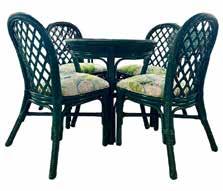


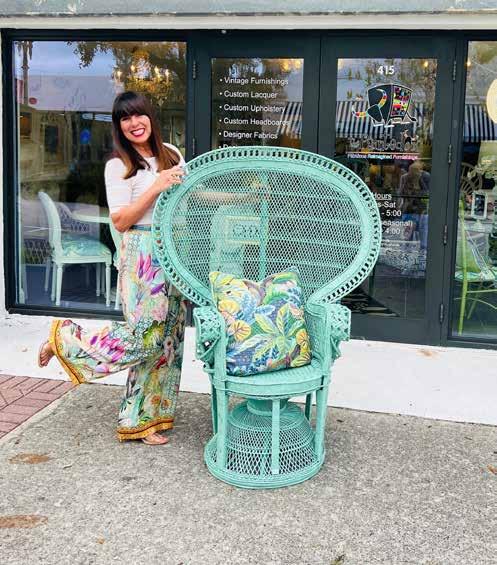
The Painted Ox in Northwood is quietly raising the bar with a rare, seasonal pricing event on its most coveted dining sets and chairs. Expect coastal-chic silhouettes in rattan, bamboo, and cane—elevated, timeless, and impeccably crafted. With new residential developments nearing completion across the area, demand is already accelerating as homeowners rush to furnish fresh spaces. Consider this a refined opportunity: beautiful pieces, exceptional value, and a moment that won’t linger for discerning buyers.
Scan to read more
Often overlooked until it fails, a home’s gutter system does quiet, essential work every day. Family Gutters approaches that responsibility with a calm, professional focus—handling everything from routine installs to more complex projects across South Florida. Fully permitted in Palm Beach County and certified as a Small Business by both the County and the City of West Palm Beach, the company emphasizes transparency and reliability. Led by founder Emanuel Russi, Family Gutters reflects a steady, community-rooted approach to protecting homes from the top down.
Scan to read more
In a climate where lawns struggle as much as schedules, SoFlo Turf offers a simpler answer: green that stays green. Serving homes and businesses from MiamiDade to St. Lucie County, the company specializes in turf, artificial grass, and paving designed to look polished year-round—without watering, mowing, or seasonal disappointment. With more than a decade of combined experience, SoFlo Turf is quietly reshaping outdoor spaces across South Florida, giving homeowners one less thing to worry about when it comes to their yard.
Scan to read more







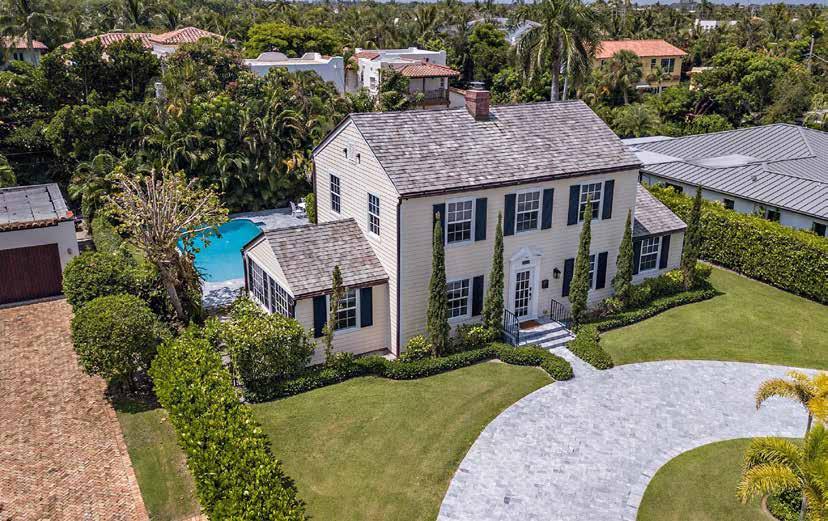
Vacation living, Palm Beach–style
ARTICLE BY ARSINE KALOUSTIAN
PHOTOGRAPHY COURTESY OF HOTEL HOME STAYS
You arrive late in the afternoon. The lights are already on. Coffee is set for the morning. There’s no scavenger hunt for paper towels or mental checklist of errands you forgot to run. You’re in — and you can settle.
That feeling, Rebekah Converti-Boley says, intentional.

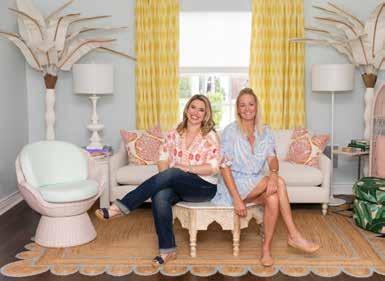
Rebekah entered the vacation rental world in 2020 after noticing a persistent disconnect: homes that photographed beautifully online but felt unfinished in real life. Beds looked good but didn’t sleep well. Kitchens were understocked. Maintenance lagged behind expectations — even at the luxury end of the market.
Together with her partner, Kelly Kirkpatrick, she founded Hotel Home Stays around a simple idea: vacation homes should operate with the same care and consistency as a well-run hotel, without losing the comfort and privacy that make a home appealing in the first place.
That approach has found traction in Palm Beach County, where demand continues to rise and options remain limited. Vacation rentals are still not permitted on the island of Palm Beach, pushing visitors into West Palm Beach or hotels that are often fully booked during season. Many guests arrive accustomed to spending $20,000 to $40,000 a month on accommodations — and they expect the homes they rent to meet that standard.
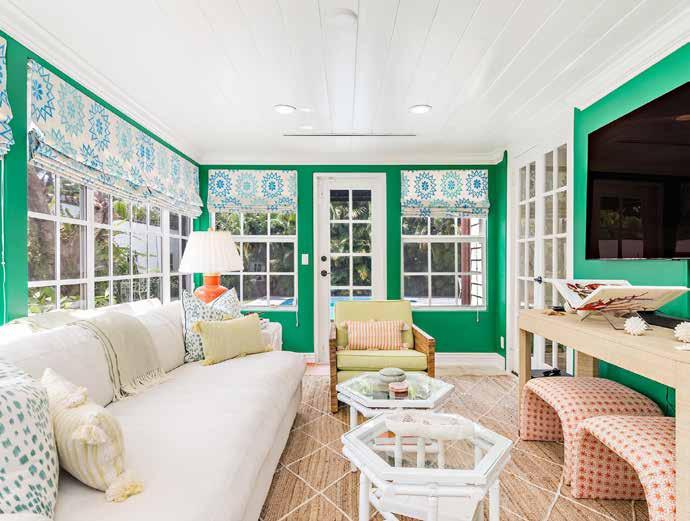
In Palm Beach, design signals value. Rebekah is pragmatic about it. Homes need to look and feel like what guests expect to arrive to, with a clear Palm Beach
sensibility and a cohesive aesthetic throughout. Not personal taste — market reality.
Function matters just as much. How many people a home can comfortably host directly impacts performance. Families gravitate toward homes because hotels simply don’t work well with kids. Anyone who has traveled with children understands that immediately.
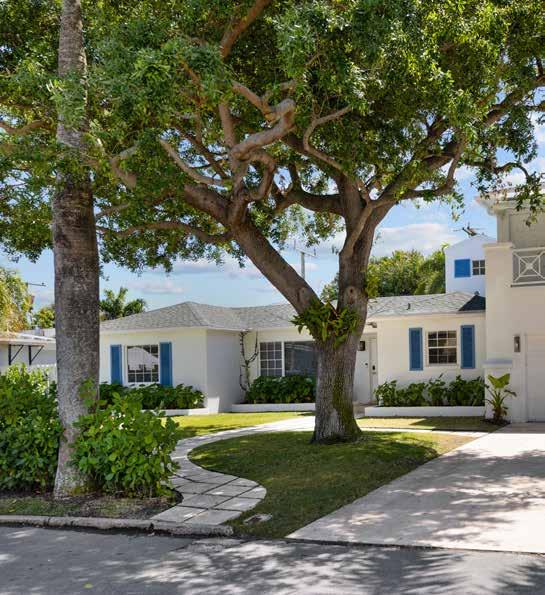
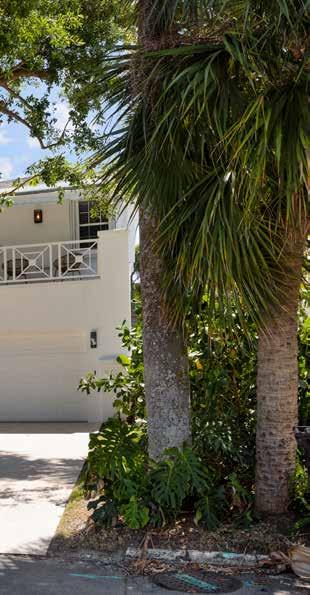
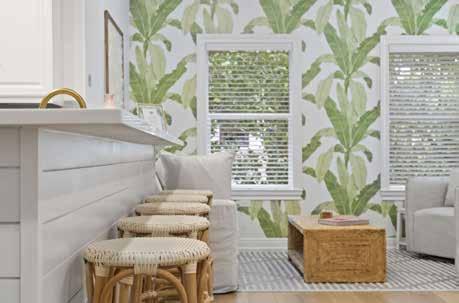
Hotel Home Stays properties are set up accordingly: fully stocked kitchens, cribs and high chairs available, furnishings chosen to be durable as well as attractive, and privacy built in. No shared walls. No endless hallways. Guests can actually live in the space.
The experience is shaped by details that remove friction. Bathrooms feel finished rather than purely practical, appointed with Paul Mitchell Signature shampoo and conditioner and eucalyptus-scented body washes. Thick towels are already laid out. In the kitchen, coffee is handled — Nespresso pods alongside Starbucks drip coffee, with teas, sugar, and creamers ready to go.
Supplies are generous. Dishwasher detergent, laundry detergent, trash bags, paper towels — all fully stocked. Pool towels are provided. In many homes, robes are
“Kitchens are stocked to the point where you could cook Thanksgiving dinner. That’s our standard.”
already hanging. Guests staying a few nights shouldn’t need to run to the store unless they want to.
Kitchens are designed to be used. Every home includes a full bar setup — shakers, strainers, stirrers, glassware for indoors and out — and enough cookware and serving pieces to host a real meal.
“Kitchens are stocked to the point where you could cook Thanksgiving dinner,” Rebekah says. “That’s our standard.”
Operationally, the homes are run with discipline. All linens, including duvets and mattress protectors, are professionally cleaned offsite. Between stays, each home undergoes a rigorous reset, including a more than 200-point inspection before any guest arrives.
“No one walks into a house we haven’t personally gone through,” Rebekah says. “That’s non-negotiable.”
If something goes wrong during a stay, support is straightforward. Guests have access to 24-hour customer support. Middle-of-the-night issues are rare, but they’re handled immediately, with follow-up addressed first thing the next morning.
What guests aren’t handed is a checklist of chores at the end of their stay. In an era where paying a cleaning fee often comes with instructions to strip beds and start laundry, checkout here is intentionally restrained: start the dishwasher if needed, turn off the lights, lock the door. Linens and towels stay put.
The reason is practical, not performative. The housekeepers inspect linens on
the beds, where stains are easier to identify and track, before everything is treated, washed, and rechecked.
For guests who want to personalize their stay, options are available — grocery delivery, childcare equipment, private chefs, hibachi nights, catered dinners, yoga sessions, balloon installations, celebration décor, curated gift baskets. Rental cars can be delivered before arrival. Everything can be arranged quietly in advance.
And for guests who don’t, the house already works.
“Everything is available,” Rebekah says, “but nothing is required.”
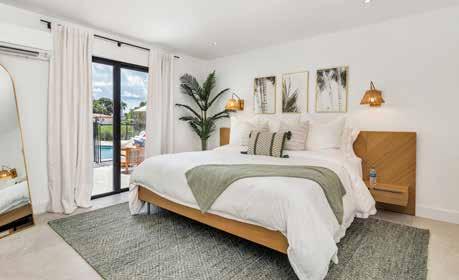
One area Rebekah refuses to compromise on is sleep. Every bed includes a high-quality mattress, a threeinch feather topper, Egyptian cotton sheets, feather duvets, and a mix of pillow types.
She personally stays in the homes to test them.
“You don’t actually know a space until you’ve slept in it,” she says. “If something disrupts rest, it gets fixed.”
Each Hotel Home Stays property is uniquely designed, but none feel accidental. Furnishings are updated regularly, outdoor spaces refreshed, and wear addressed as it appears. If a home ever differs from its photos, Rebekah says, it’s because it’s been improved.
Damage insurance is included with every stay so accidents can be handled without drama. Things break. Spills happen. The focus is always on resolution, not blame.
Rebekah sees this approach as part of a broader shift in how people travel — especially in Palm Beach County. Guests aren’t just looking for somewhere to sleep. They want a place that supports daily life, even temporarily.
In that sense, home is no longer just where you live — it’s how you live, even when you’re away.



ARTICLE BY ARSINE KALOUSTIAN

WHY A NEW CLASS OF HOMEOWNERS IS CHOOSING MOBILITY, DESIGN, AND EXPERIENCE OVER STAYING PUT

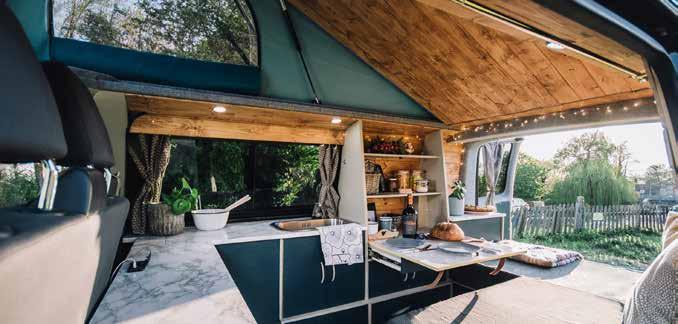
For decades, the American dream was anchored to permanence: a home rooted in one place, defined by ownership and square footage. Today, a growing group of design-minded, experience-driven individuals is quietly rewriting that script— not by giving up on home, but by refusing to let it stay still.
Across the country, more people are choosing to live in RVs full-time or for extended seasons—not as a compromise, but as a conscious lifestyle decision. This modern interpretation of RV living has little to do with escape or downsizing. Instead, it reflects a broader cultural shift: a prioritization of freedom, flexibility, and meaningful experiences over fixed addresses.
Nearly half a million Americans now live in RVs full-time, and the profile of who is making this choice has evolved dramatically. Today’s RV owners increasingly include professionals in their prime working years, entrepreneurs, creatives, and families who value autonomy and adaptability. Many maintain steady incomes, work remotely, and view mobility as an enhancement—not a disruption—to daily life.
For these homeowners, the appeal lies in optionality. Rather than returning from travel to a static house, they bring home with them—moving seamlessly from coastal mornings to mountain evenings, from one season to the next, without packing up their lives each time.
It’s not about having less. It’s about choosing differently.
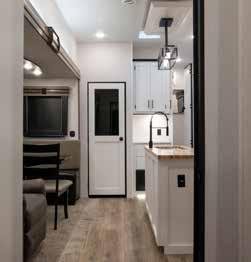
spaces. They are carefully curated homes designed to feel grounded, familiar, and deeply personal—no matter the setting outside the window.
Designers are approaching RV interiors much the way they would a high-end residence or boutique hotel, focusing on atmosphere as much as function. Warm, residential materials replace utilitarian finishes. Layered lighting creates a sense of rhythm throughout the day. Thoughtful layouts encourage openness and flow, reinforcing calm rather than movement.
Personal touches—artwork, sculptural lighting, textured surfaces—anchor the space emotionally. The result is an interior that feels consistent and comforting, even as the scenery changes.
The design philosophy is simple: home should feel like home everywhere.
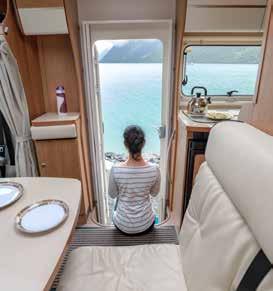
In a world where traditional homeownership often comes with rigid financial and geographic commitments, RV living offers a more fluid model. Instead of permanent costs tied to one location, expenses align more closely with lifestyle choices—where to go, how long to stay, and what experiences to prioritize.
But for those embracing this lifestyle, the financial equation is secondary to something more intangible: time. Time not spent maintaining a property. Time reclaimed for travel, family, and presence. Time measured not in commutes or renovations, but in sunsets, landscapes, and lived moments.
Luxury, in an era of remote work and flexible careers, is the freedom to choose how—and where—you live.
What truly distinguishes today’s RV lifestyle is the emphasis on design as a means of continuity. These are not temporary
This lifestyle resonates with people who value experiences over excess, movement over stagnation, and methodical living over inherited norms. It appeals to those who see travel not as an interruption to life, but as life itself—woven seamlessly into daily routines rather than reserved for vacations.
For some, this chapter lasts a few years. For others, it becomes a longterm way of living. In either case, the common thread is purpose. These homeowners are not opting out; they are opting in—to freedom, to flexibility, and to a more expansive definition of what home can be.
In this evolving vision of luxury living, home is no longer defined by permanence or place. It is defined by continuity, comfort, and choice.
The address may change. The view certainly will. But home remains constant—designed, curated, and carried forward.
And in a world that increasingly values experience over excess, that may be the most luxurious floor plan of all.
From California’s dramatic coastline and the redwoods of Big Sur to Wyoming’s Tetons and Montana’s Glacier National Park, the most coveted routes reward unhurried travel. Utah’s national parks, the Pacific Northwest, Alaska’s northern lights, the Florida Keys, and New England’s coastal byways invite travelers to linger.

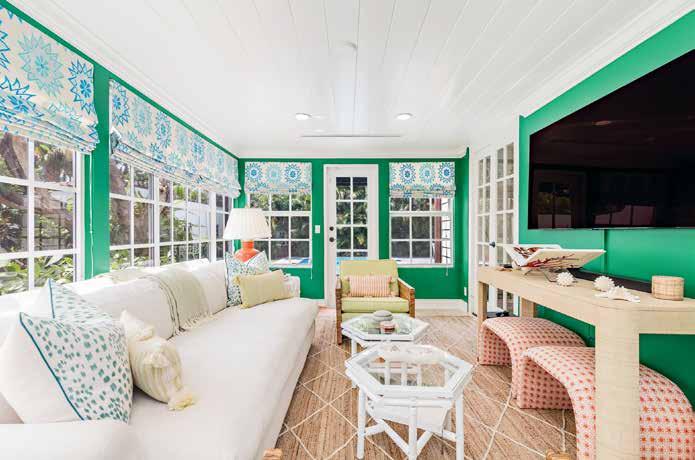

Amazing place and amazing hosts! The place is just as described and close to everything you would need! The house was packed with all the amenities you would need and the hosts go above and beyond to make sure you have a wonderful stay.
I’d recommend and am looking forward to staying with you again!
Moses - January 2025

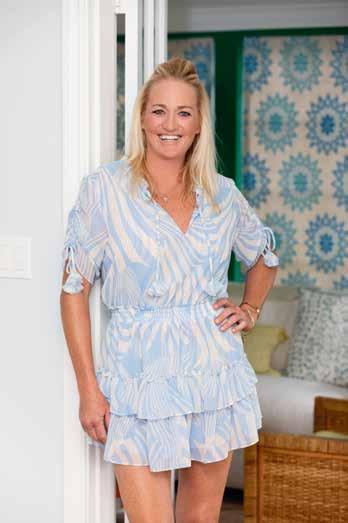




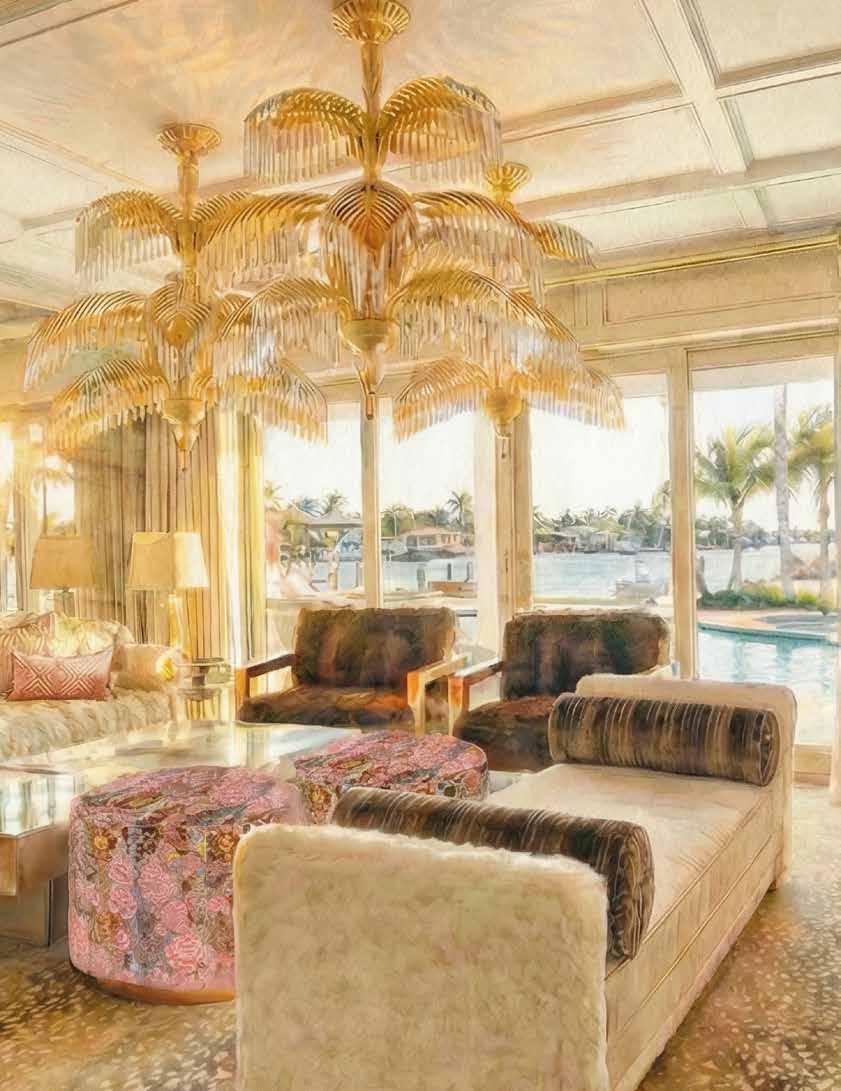
Each winter, Palm Beach welcomes the design world with open arms—and impeccable taste. Now in its ninth year, the Kips Bay Decorator Show House Palm Beach has become one of the season’s most anticipated cultural moments, where creativity, philanthropy, and coastal glamour quietly converge.
This year’s showcase unfolds across two neighboring properties on North Flagler Drive: the waterfront Intracoastal House at 3410 North Flagler Drive and the more intimate Palm Cottage just across the street. Together, they create a natural rhythm—grand and restrained, social and private—that shapes the experience as much as the design itself.
The journey begins, as it often does in Palm Beach, in spaces designed for gathering. Kitchens and sitting rooms feel less utilitarian here and more ceremonial—places where daily rituals are elevated into something worth lingering over. In one such space, Amy Young Designs transforms the kitchen and breakfast room into a softly glowing jewel box. Blush walls, white gold–leaf artistry, sculptural lighting, and a mirrored ceiling create a room equally suited to morning espresso or an after-hours martini—glamorous, layered, and meant to be lived in.
As you move deeper into the house, the mood softens. Emily Eerdmans’ sitting room imagines Palm Beach elegance through a lens of wit and tradition. A sky-blue painted ceiling floats above linen-wrapped walls, while
ARTICLE BY ARSINE KALOUSTIAN PHOTOGRAPHY COURTESY OF MAGRINO PUBLIC RELATIONS
wicker, shell details, and orchids nod gently to the tropics. Framed coral artworks and a Louis XVI sofa ground the space in civility, while a bold abstract painting keeps it present and fresh.
That sense of collected refinement continues ‘ The Champagne Conservatory ’ by the Lewis Gallo Design Group, whose work feels instinctively at home in Palm Beach. Soft color, layered texture, and gently tailored furnishings create a space that feels inherited rather than installed—timeless without formality, celebratory without excess, and quietly confident in its ease.
Entertaining soon reasserts itself. In The Royal Retreat by Lisa Erdmann Interiors, inspired by Mustique and Princess Margaret, the atmosphere turns more decadent. Vibrant tropical wallcoverings, bamboo trellis detailing, English antiques, and a well-appointed bar set the stage for evenings that stretch late, when music fills the room and the carpet becomes a dance floor.
From there, the house exhales. Terra Calma by Firefinish Interiors,
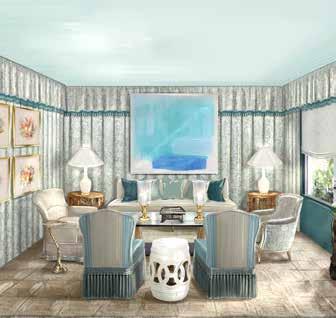
led by Rayana Schmitz, offers a moment of calm through soft mineral tones, expressive stone, and filtered light. A striking Patagonia Blue slab anchors the space, while sculptural lighting and subtle color moments keep serenity from feeling spare.
Outside, the experience continues with the Florida Garden Rooms by Lopez Group Inc. Native butterfly gardens, sculpted red cedars, soft grasses, and Florida-sourced stone invite movement and pause, gently dissolving the line between home and landscape.
What distinguishes this year’s show house isn’t any single room, but how they speak to one another—forming a narrative about Palm Beach living that is gracious but relaxed, elegant but never stiff.
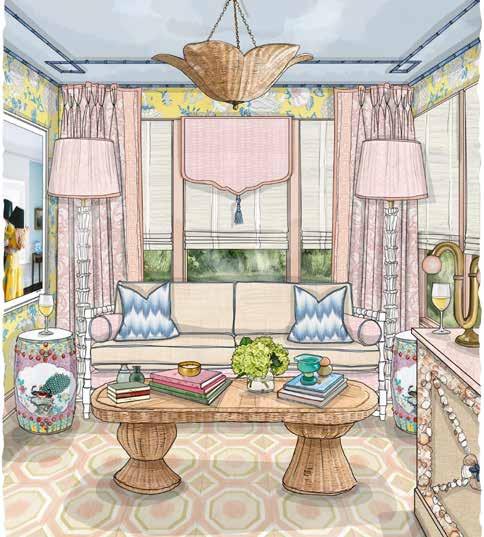
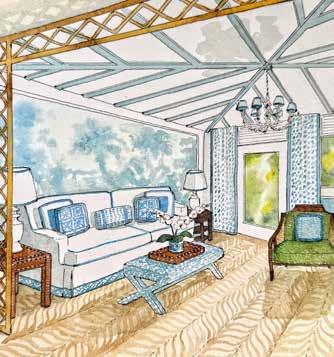
More than a design showcase, the Kips Bay Decorator Show House Palm Beach remains a powerful philanthropic force, supporting the Kips Bay Boys & Girls Club and the Boys & Girls Clubs of Palm Beach County.
This is not a house that demands attention. It rewards it—slowly, thoughtfully, and with style.
The Kips Bay Decorator Show House Palm Beach opens February 25, 2026, and remains on view until March 24th. Tickets, benefiting the Kips Bay Boys & Girls Club and the Boys & Girls Clubs of Palm Beach County, are available at www.kipsbaydecoratorshowhouse.org.












A REFINED
St. Patrick’s Day entertaining doesn’t have to lean on novelty or nostalgia. In fact, the most compelling celebrations take a quieter, more thoughtful approach — drawing inspiration from Ireland’s rich culinary traditions, natural beauty, and understated elegance rather than overt symbols. The result is a dinner party that feels timeless, welcoming, and subtly festive.
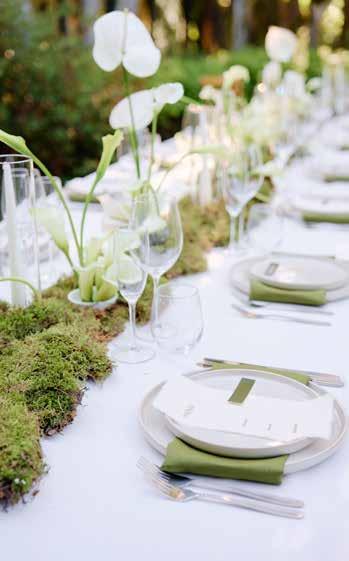
Skip the shamrocks and saturated emeralds. Instead, work within a restrained palette inspired by the Irish landscape: moss, sage, olive, and soft stone. Crisp white linens provide contrast, while touches of brass or antique silver add warmth.
Florals and greenery should feel organic and unfussy. Think loose arrangements of eucalyptus, hellebore, ranunculus, or even potted herbs placed down the center of the table. A scattering of moss-lined votives or low glass hurricanes creates texture without overwhelming the setting.

ARTICLE BY ARSINE KALOUSTIAN
THE TABLE: UNDERSTATED AND INTENTIONAL
Let the table feel layered but effortless. Linen napkins in muted greens or soft neutrals, simple place cards with calligraphy, and minimal tableware keep the focus on the meal and the company. Candlelight is essential — clusters of tapers and votives create an intimate glow that feels celebratory without spectacle.
If you want a subtle nod to the holiday, consider incorporating vintage Irish crystal, a single sprig of greenery at each place setting, or menus printed on textured paper in a soft green hue.
A refined St. Patrick’s Day menu honors tradition while embracing restraint.
Start with something light and seasonal — a leek and potato soup with a drizzle of herb oil, or a simple salad with shaved fennel and citrus. For the main course, braised short ribs with stout reduction, roasted lamb with rosemary, or seared salmon with buttered greens feel both appropriate and elegant.
Sides should be familiar but polished: colcannon made with Yukon golds, roasted root vegetables, or charred cabbage finished with lemon and olive oil. Dessert might be a dark chocolate tart with Irish sea salt or a delicate apple cake served with lightly sweetened cream.
Offer a curated selection rather than a novelty menu. A wellpoured Irish whiskey, a crisp gin and tonic with fresh herbs, or a classic Irish coffee served as a post-dinner moment all feel intentional.
For non-alcoholic options, consider sparkling water with cucumber and mint, or a chilled herbal tea served in stemware. The goal is inclusivity without calling attention to it.
Music should echo the spirit of the evening without becoming a performance. Think modern Celtic instrumentals, soft folk, or acoustic playlists that lend atmosphere while allowing conversation to lead.
Structure the evening loosely: a welcoming cocktail, a seated dinner that invites lingering, and a relaxed transition to dessert or coffee. There’s no need for games or programmed moments — the warmth of the table does the work.
St. Patrick’s Day, at its heart, is about togetherness. A refined celebration honors that spirit by creating space for conversation, comfort, and connection. When the palette is restrained while the menu and mood remain thoughtful, the holiday becomes less about the date on the calendar and more about the experience shared around the table.
In Palm Beach, where entertaining is an extension of how we live, a St. Patrick’s Day dinner done well feels less like a theme — and more like a tradition worth keeping.










We are building a state-of-the-art center that will transform our community - a landmark destination designed to nurture youth potential, advance healthy living, and strengthen the bonds that unite us.
This is more than a building — it’s a legacy for generations. We’d love for you to be a part of the YMCA of the Palm Beaches’ story today, and for generations to come.
Reach out to Stephanie Langlais at 561-508-4028 or slanglais@ymcapalmbeaches.org for a personal conversation about this opportunity.



In Palm Beach County, housing conversations have traditionally focused on families, how communities support them, where they live, and how homes are designed. But quietly, steadily, another group has grown large enough to demand its own seat at the table: non-family households.
They are single professionals, healthcare workers, hospitality staff, teachers, first responders, recent graduates, and residents at transitional moments of life.
While they represent a smaller share of the population, they make up a significant portion of households and nearly half of all renters countywide.
“It’s going to allow folks to save money, potentially use that as a down payment to get into ownership.”
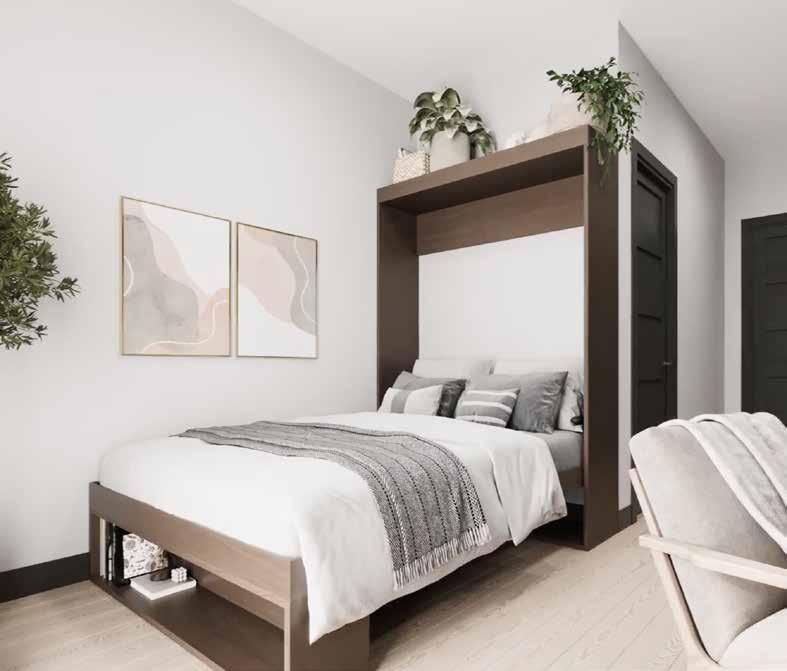
Neighborlee Living Westgate’s microapartment development is among the first local projects to acknowledge this reality, not as an afterthought, but as a guiding principle. Notably, it is the first development of its kind to receive approval for micro-style units in Palm Beach County, setting a precedent for how thoughtfully designed, right-sized housing can responsibly expand the county’s housing toolkit.
Led by Dr. Kurt Jetta and a multidisciplinary team of planners, architects, and housing professionals, the Westgate development reframes affordability through data, dignity, and design. Developed in
partnership with Delray Housing Group, the project brings together experience in workforce and attainable housing with a shared commitment to long-term community stability. It asks a simple but overdue question: What if housing policy actually reflected who lives here now?
Non-family households represent more than a third of Palm Beach County households and a significant share of renters, particularly at lower and moderate income levels. Yet housing policy, still anchored to family-based
income standards, often misrepresents what affordability looks like for single earners.
“The largest complaint we hear about affordable housing,” Dr. Kurt Jetta says, “is that parents of single, young adults say their children can’t afford to live in the area and be near their family.”
Rent burden may be discussed in abstract terms, but for many it is a daily reality shaped by rising housing costs. Neighborlee Living Westgate responds with rent targets developed through a more realistic lens, balancing affordability with dignity so residents can remain close to work and community without sacrificing financial footing.

“We never approached this as ‘small housing.' We approached it as intentional housing, designed with dignity, efficiency, and real daily life in mind.”
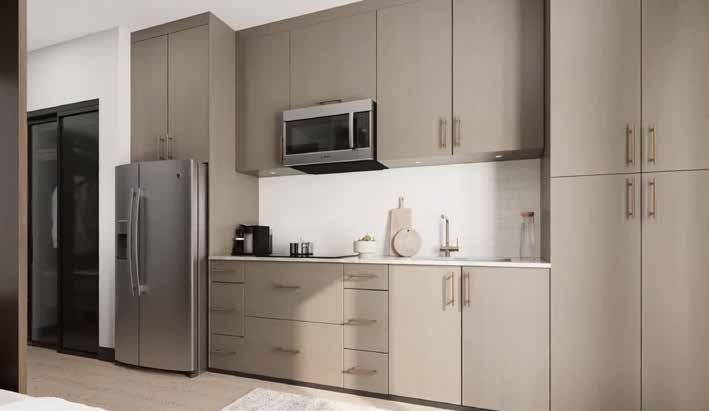
The micro units at Neighborlee Living Westgate, some as compact as 240 square feet, are intentional, not experimental. This is a model proven in cities around the world, from Tokyo to Copenhagen to New York, where right-sized living has expanded access without sacrificing quality of life.
“We never approached this as ‘small housing,’” Dr. Jetta explains. “We approached it as intentional housing, designed with dignity, efficiency, and real daily life in mind.”
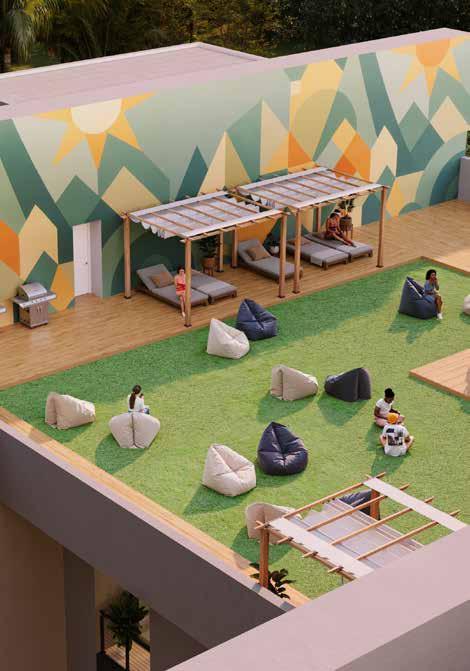
Each residence is thoughtfully planned, with full kitchens and bathrooms, private balconies, and layouts that maximize functionality. Shared amenities, including a rooftop deck and neighborhood-serving retail, extend livability beyond the apartment itself.
Micro living here is not about less; it is about efficiency, affordability, and freedom.
As Commissioner Greg Weiss noted during the project’s unanimous approval, “Small spaces, you can do a lot in. It’s going to allow folks to save money, potentially use that as a down payment to get into ownership.”
Neighborlee Living Westgate is designed for essential workers and young professionals
often priced out of the communities they serve. While micro units are intended for single occupancy, the commitment extends beyond lease terms: residents who welcome a child are transitioned into a larger unit with rent held steady, and families with young children qualify for a monthly childcare voucher. It is a rare example of housing that adapts to life, not the other way around.
The Westgate project is conceived not simply as development, but as a community-minded project, with ground-floor retail, proximity to transit and employment, and on-site management designed to support long-term stability.
It marks an important milestone, but also a starting point, demonstrating what is possible when housing is shaped by care, context, and community need.
In a county experiencing rapid growth and rising housing pressure, this offers something rare: a solution that feels both practical and hopeful. Not bigger homes, but a different approach to living. Not temporary fixes, but a recalibration of how we think about who housing is for.
And perhaps most importantly, a reminder that dignity is not measured in square feet.



















ARTICLE BY ARSINE KALOUSTIAN
In South Florida, value is shaped less by square footage and more by how a home responds to its environment. Climate, insurance realities, outdoor living, and lifestyle expectations all play a defining role. The upgrades below consistently move the needle in resale and luxury perception—not because they follow national trends, but because they are designed for how homes are actually lived in here.
High-Value Features
• Architectural screened enclosures (UltraVue or no-see-um mesh)
• Retractable or motorized screen walls
• Covered lanai with ceiling fans and integrated lighting
• Outdoor kitchen with premium appliances
• Weather-rated TV and built-in speakers
• Porcelain tile or Ipe decking
Why It Adds Value
Outdoor living in South Florida is foundational, not seasonal. A well-designed screened space adds meaningful, year-round living area while eliminating insects—one of the region’s most persistent deterrents.
High-Value Features
• Impact-rated windows and doors
• Reinforced or metal roofing
• Wind-mitigation upgrades
• Roll-down or architectural shutters
Why It Adds Value Buyers are increasingly insurance-conscious. Homes that demonstrate storm readiness and structural resilience inspire confidence, often sell more quickly, and signal responsible long-term ownership.
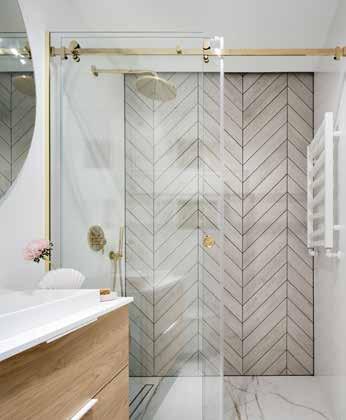
High-Value Features
• Quartz or stone countertops
• Frameless glass walk-in showers
• Coastal-neutral palettes
• Corrosion-resistant fixtures and hardware
Why It Adds Value
These remain the most scrutinized rooms in any home. In South Florida, buyers place particular value on finishes that withstand heat and humidity, rewarding renovations that balance visual appeal with durability.
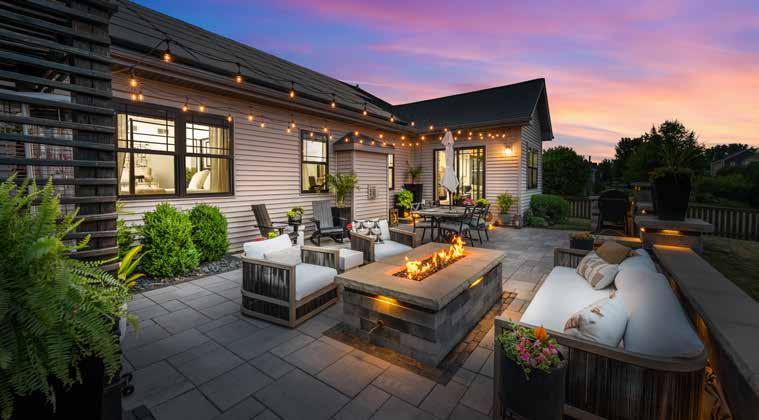
Features
• Screened pool decks with dining and lounge zones
• Fire features
• Ambient lighting
• Automated shade systems
Why It Adds Value
In higher-end homes, a pool paired with a thoughtfully designed enclosure is often expected. These spaces increase comfort, privacy, and usability throughout the year while reinforcing the resort-style lifestyle.
High-Value Features
• Precision temperature and humidity control
• Insulated walls with vapor barriers
• Glass-enclosed displays
• Custom racking and accent lighting
Why It Adds Value

Wine rooms signal permanence, sophistication, and a home designed for entertaining. When properly engineered for Florida’s climate, they serve as both functional amenities and visual focal points.
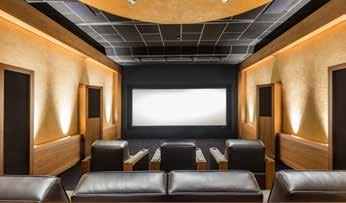
High-Value Features
• Acoustic wall and ceiling treatments
• Sound isolation
• Blackout lighting
• Immersive surround sound
• Tiered or luxury seating
Why It Adds Value
Purpose-built theaters provide an intimate counterbalance to expansive outdoor living. They appeal to entertainment-focused buyers and help distinguish homes at similar price points.
High-efficiency HVAC systems, smart thermostats, and zoned climate control are essential in Florida’s heat, while LED lighting and solar integration support efficiency. Porcelain tile or luxury vinyl plank flooring withstands humidity, and upgraded garages with functional storage or EV charging have become baseline expectations in higher-end homes.
If a northern home is judged by “Does it have a finished basement?”
A South Florida home is judged by “Can I live outside comfortably, entertain beautifully, and feel protected?”
That is where value lives here.







YOUR DIGITAL DESTINATION FOR LOCAL LIVING





In the most compelling homes, antiques do more than decorate—they tell stories. From refined design districts to insider markets, these Florida destinations offer distinctive pieces that bring warmth, patina, and individuality to interiors that feel collected, not decorated.
ARTICLE BY ARSINE KALOUSTIAN
St. Augustine | Historic streets anchor shops offering period furniture, maritime accents, and heirloom décor, ideal for adding depth and authenticity to traditional or coastal interiors homes.
West Palm Beach (Antique Row) | Designer-favorite Antique Row delivers European antiques, custom lighting, and investment pieces that elevate modern, transitional, and Palm Beach–style homes with gallery-level quality and polish.
Mount Dora | Renninger’s vast market makes Mount Dora ideal for sourcing furniture, textiles, and statement pieces when furnishing entire rooms or second homes with scale, variety.
Sarasota | Sarasota excels in mid-century modern furnishings, architectural salvage, and sculptural accents suited to design-forward coastal homes with clean lines and thoughtful material driven character.
Waldo | Waldo rewards serious hunters with rare furniture, lighting, and one-of-a-kind finds perfect for statement-making rooms and collected interiors that feel personal, layered, storied, enduring.
Micanopy | Micanopy offers soulful antiques, folk art, and architectural fragments that bring warmth, narrative, and Old Florida character into contemporary homes seeking restraint, charm, authenticity.


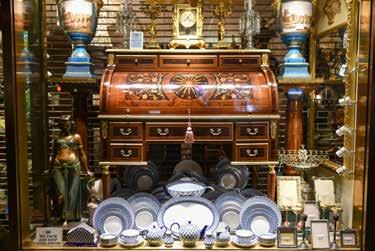
Shop with function in mind. Prioritize pieces that work hard in modern homes, such as mirrors, lighting, side tables, benches, and chests. Measure before you buy and photograph your space for reference. Look for solid construction and honest patina over perfection. One strong antique adds character without clutter and layers effortlessly with contemporary furnishings.