YOUR HOME, Upgraded





Hello, March!
There’s something about this time of year that gently nudges us back home. As winter fades and spring starts to peek through, I find myself noticing the little things—what’s working, what feels heavy and what could use a reset. Our March Home Issue always feels especially timely, and this one leans into the idea that home is not just about how a space looks, but how it supports everyday life.

Between my daughters’ busy schedules, sports and dance competitions, I’m constantly reminded how important it is for our home to function well while still feeling calm and welcoming. I’ll also be the first to admit that this doesn’t always come naturally to me. That’s exactly why I love bringing trusted experts to our readers—people who truly know how to simplify decisions and help homes work better in real life. In a community where homes range from historic farmhouses to newer builds tucked into open land, from long driveways to lived-in kitchens and well-used closets, how a space functions really matters.
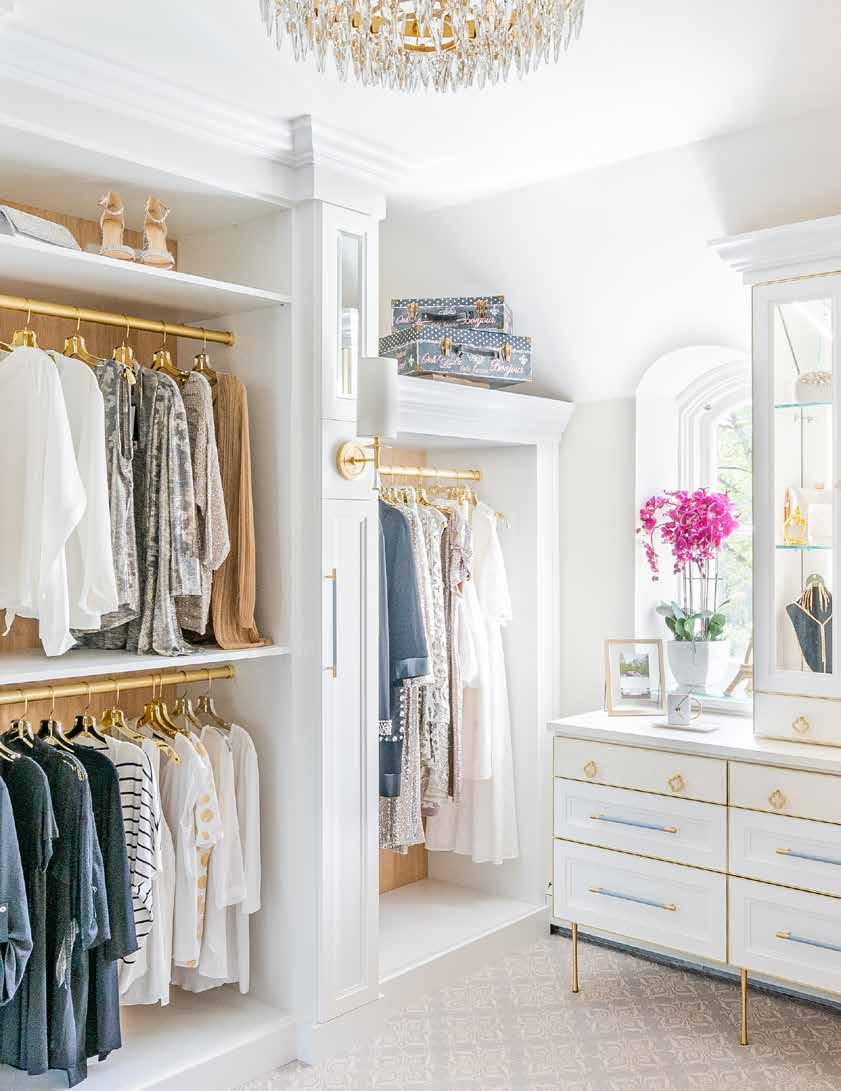
On the cover, turn to page 20 for What Does a Custom Closet Really Cost? This insightful feature breaks down the realities of custom closet pricing, explaining how design choices, materials and details impact the final investment. It’s a helpful, eye-opening read for anyone considering a custom space and wondering where to start.
You’ll also want to flip to page 14 for A Personal Touch, Decades in the Making. This story highlights the heart behind Tania Creative Touch Kitchen & Bath and nearly 30 years of experience rooted in trust, integrity and honest guidance. It’s a reminder that great renovations are about more than finishes—they’re about relationships.
I hope this issue inspires you to look at your home—and maybe even your routines—with fresh eyes. Here’s to spaces that support real life and welcome us back every day.

March 2026
PUBLISHER
Jake Slowinski | jake.slowinski@citylifestyle.com
CO-PUBLISHER
Tiffany Slowinski | tiffany.slowinski@citylifestyle.com
PUBLICATION DIRECTOR
Carly Mac Manus | carly.macmanus@citylifestyle.com
SALES DIRECTOR
Christopher Raisin | christopher.raisin@citylifestyle.com
ACCOUNT MANAGER
Jessie Fernandez | jessie.fernandez@citylifestyle.com
PUBLISHER ASSISTANT
Kristin Kowalewski | Kristin.Kowalewski@citylifestyle.com
INTERNS
Alaina Borgh, Sadie Brown, Riley Burns
CONTRIBUTING WRITERS
Mikaela Lewis, Wendy Scott, Chef David Burke
CONTRIBUTING PHOTOGRAPHERS
Gerri Perez, Tina Meerloo - Meerloo Photography, Jillian Spencer Studios, Rich J Weinberger, Frank DiGiovanni, Julian Huarte, Chef David Burke, Christopher Sztybel - That Werks Photography, The Hunterdon County Historical Society, Shelley Clark
CEO Steven Schowengerdt
President Matthew Perry
COO David Stetler
CRO Jamie Pentz
CoS Janeane Thompson
AD DESIGNER Andrew Sapad
LAYOUT DESIGNER Jamie Housh


QUALITY CONTROL SPECIALIST Hannah Leimkuhler Proverbs 3:5-6














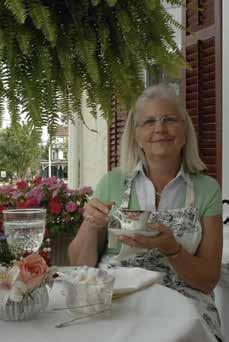





1: NHHS congratulated Teacher of the Year Rachelle Naples and ESP of the Year Cindy Peck. 2: North Hunterdon High School recognizes outgoing board members for service to the school community. 4: Spring Run Dairy hosted their 4th Annual Christmas with the Cows. 5: Teaberry’s Tearoom officially opens in Flemington, offering charming new destination for elegant afternoon tea experiences. 6:Publishers Jake and Tiffany Slowinski pictured with Tim Tebow during this year’s City Lifestyle conference. 7: Some of our Garden State City Lifestyle team connected, learned and represented New Jersey in Kansas City.
Want to be seen in the magazine?

The Doric House Provides a Glimpse of Flemington’s History
ARTICLE BY MIKAELA LEWIS PHOTOGRAPHY BY THE HUNTERDON COUNTY HISTORICAL SOCIETY
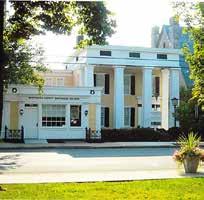
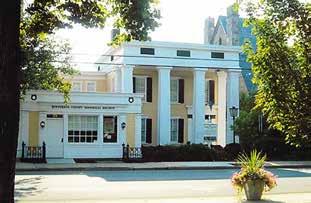
Tucked among homes and businesses on Flemington’s Main Street sits the Doric House. Built in 1845 by Mahlon Fisher, the Greek Revival structure has served many roles: Fisher’s home, Odd Fellows headquarters, a restaurant—where the Doric House got its name—and a Methodist Church School. In 1970, the building was acquired by Hunterdon County Historical Society and now serves as a museum and library, offering a glimpse into Flemington’s architectural history.
For the past five years, Janice Armstrong has served as the President of the Board of Trustees for the Hunterdon County Historical Society. Intersecting her passion for both history and architecture, the Hunterdon County native emphasizes the importance of preserving buildings such as the Doric House.
Among others in Flemington, the Doric House stands out for its Doric order columns out front, a clear display of Mahlon Fisher’s intention to build in the style of Greek Revival. Janice points out that the bright yellow paint and massive columns out front are not the only characteristics that make the 19th century work unique.

“It’s impressive because of the huge, huge columns, and also it’s set back from the street,” Armstrong says. “Today, most of the buildings are closer to the sidewalk. It’s set way back, and people do stop and look.”
While transforming the building into the museum it is today, the Hunterdon County Historical Society worked to preserve not only the exterior, but also the interior.
“Inside a beautiful sort of…curved staircase,” Armstrong explains. “It’s got [a] black marble fireplace with flecks of gold in the marble, cherry doors that are still there—really thick, thick doors, and we’ve had it painted the way it was supposedly painted inside, which was gold leaf in the main room, in the parlor.”
The Hunterdon County Historical Society is proud of the variety of Flemington’s architecture. Beyond the Doric House, Janice explains how the buildings tell the story of over two centuries of developing styles.
“In Flemington, you can see all kinds of architecture, mostly after the 1850s to the early 1900s,” she says. “Downtown has Italianates and Queen Annes and architecture styles like that from the 1880s or so. Then you go a couple blocks out of the center of town, and you see four squares and houses built in the early 1900s: Cape Cods and little craftsman style. Then on the edge are the ones built, probably in the 50s. So you really can get an idea of architecture styles through almost 200 years.”
Erected decades before Flemington would come to be recognized as a town, the Doric House exists alongside a variety of buildings that explain how the town came together. Sitting at 114 Main Street, this centrally located museum and library is worth a visit.
For more information on the Doric House and its history, visit hunterdonhistory.org/facilities/doric-house





Backed by over 20 years of experience, Protocol Electric delivers trusted comfor t with Carrier and Rheem’s reliable, energy-efficient systems. Our team makes it simple to keep your home cozy in the winter and cool in the summer, with skilled technicians who treat every client like family We install only the latest technology designed for long-lasting performance and effi ciency From fast service to guaranteed satisfaction, we handle every detail so you can relax and enjoy peace of mind




ARTICLE BY CARLY MAC MANUS
PHOTOGRAPHY BY CHRISTOPHER
SZTYBEL - THAT WERKS PHOTOGRAPHY
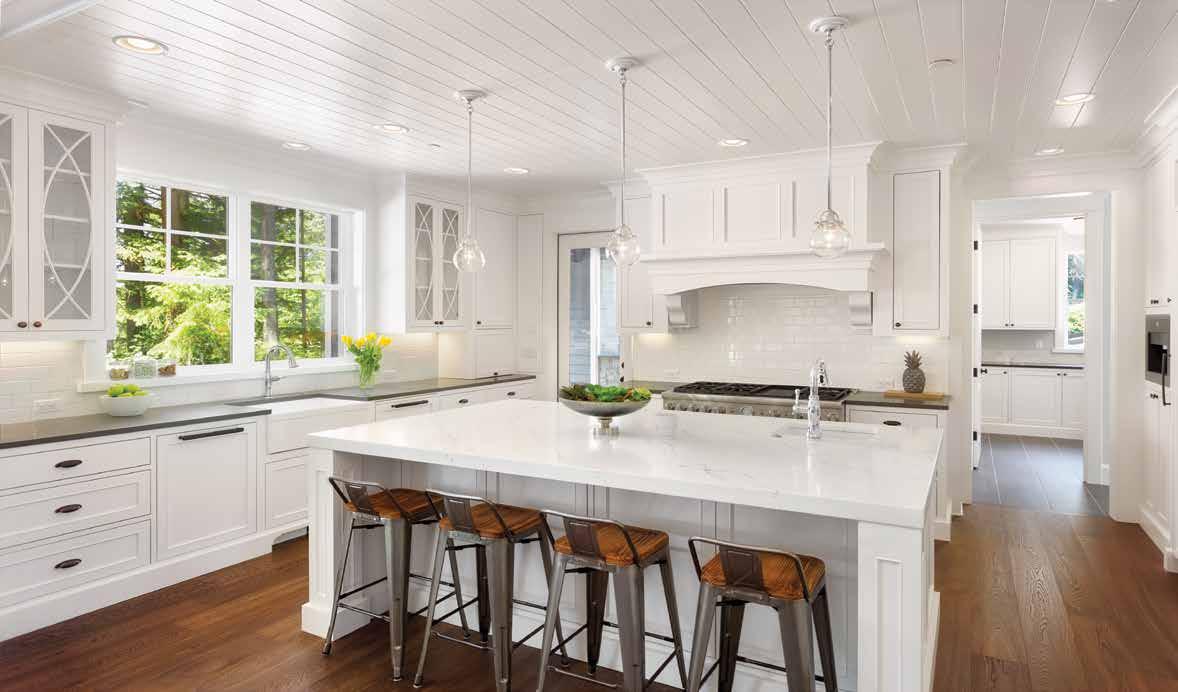
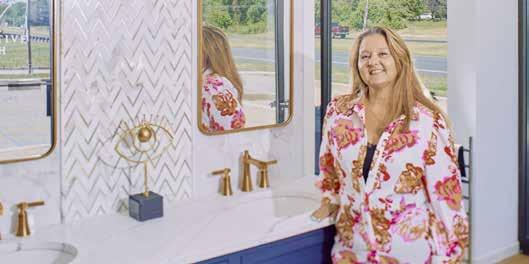
After nearly 30 years in the kitchen and bath industry, Tania Antunes still believes the most important part of any renovation isn’t the cabinetry, fixtures or finishes—it’s trust.
That belief is the cornerstone of Tania Creative Touch Kitchen & Bath, her Lebanon-based showroom serving homeowners throughout Hunterdon County and the greater Tri-State area. Opened in 2022, the business reflects a career built on experience, resilience and an unwavering commitment to helping people make informed, confident decisions about their homes.
“I’ve always loved working with people,” Antunes notes. “Even if someone doesn’t buy from me, I want them to leave knowing they were guided honestly.”
Antunes’ career began in the mid-1990s at a plumbing supply showroom, where she worked as a cashier. At the time, she noticed something that others overlooked—customers routinely walked out of the showroom without assistance.
“They would come back to the register and say there was no help,” she recalls. “I’d ask what they needed, grab a product book and walk them through options.”
Her instincts proved correct. Within months, Antunes was generating sales directly from the register, identifying inefficiencies and advocating for a more hands-on approach. By 1996, she had transitioned fully into sales and product education, beginning what would become a decades-long career in kitchen and bath design.
“I loved learning the products,” she says. “I loved making people’s dreams come true—whether it was a full renovation or just helping them replace a handle or a faucet.”
Antunes’ talent and work ethic quickly propelled her into leadership roles. After joining a major supplier, she was challenged to prove her worth by hitting six figures in monthly sales—an achievement she surpassed in just weeks. Within a year, she was promoted to showroom manager, overseeing operations and client relationships.
But despite professional success, the corporate environment never felt right.
“When the industry shifted toward a corporate model, it became less about helping people and more about following rigid systems,” she explains. “That just wasn’t me.”
She later entered into business partnerships that, while educational, proved personally and professionally taxing. One partnership dissolved after just seven months, leaving Antunes financially strained but supported by something far more valuable—her reputation.
“My customers and contractors kept calling me,” she shares. “That’s when I knew I had built something real.”
Working from home, Antunes continued selling and consulting independently, relying on longtime vendor relationships and years of trust. A subsequent partnership lasted 14 years, but by the time the pandemic arrived, she knew it was time to build something entirely her own.
In 2022, Antunes opened Tania Creative Touch Kitchen & Bath in Lebanon Plaza—a location suggested by a longtime client who promised to follow her wherever she went.
“I wasn’t even familiar with the area,” Antunes says with a laugh. “But once I got here, I knew it was the right place.”
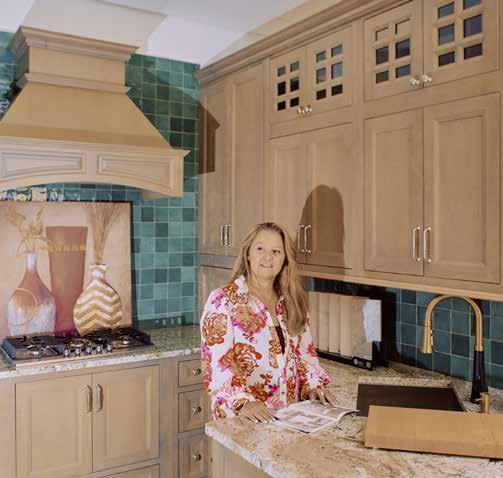
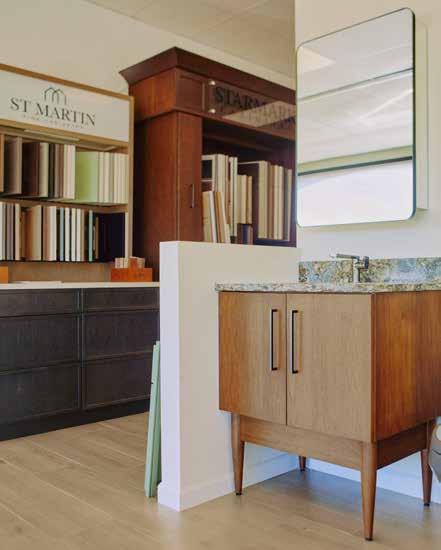
The showroom was designed to feel welcoming rather than overwhelming, with curated cabinetry lines, plumbing fixtures, hardware and design tools that support both full renovations and smaller-scale projects. Antunes works with homeowners directly, collaborating seamlessly with their chosen contractors—or referring trusted professionals when needed.
“I never step on anyone’s toes,” she shares. “I’m here for the client.”
In an industry often driven by trends and upselling, Antunes’ approach stands apart. She prioritizes long-term performance over aesthetics alone, educating clients on warranties, product lifespans and potential issues before a purchase is made.
“I don’t sell anything I wouldn’t put in my own home,” she emphasizes. “If there’s a problem with a product, I say it upfront. I don’t want headaches—for them or for me.”
She regularly attends manufacturer trainings, vendor workshops and industry events, including those hosted by the National Kitchen & Bath Association, ensuring her recommendations reflect both current design trends and proven reliability.
“Design is always evolving,” she says. “But quality never goes out of style.”
Antunes traces her philosophy back to her childhood. She immigrated from Brazil with her family at age seven, settling in the United States in 1980. Her father, who passed away when she was young, instilled in her the importance of integrity, kindness and service.
“He taught us to always be true to people,” she explains. “Help first. Everything else comes back.”
That lesson stayed with her through life’s challenges—raising children as a single mother, navigating difficult business relationships and building a career in a male-dominated industry. Years later, watching the film The Ultimate Gift brought clarity to what she now sees as her father’s lasting influence.
“All those experiences were gifts,” she says. “They shaped who I am.”
“I don’t sell anything I wouldn’t put in my own home. If there’s a problem with a product, I say it upfront. I don’t want headaches—for them or for me.” - Tania Antunes
“As long as I can keep doing what I love and helping people feel confident in their homes.” - Tania Antunes
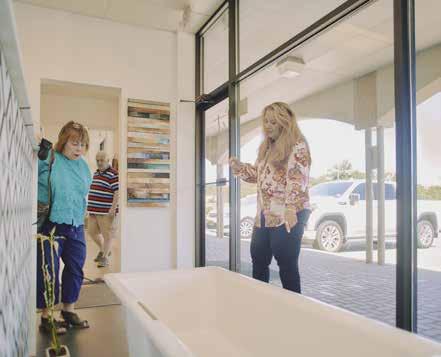

Today, Antunes balances business ownership with family life, supported by her husband and daughters. Her eldest is expecting a child, making Antunes a grandmother again—another milestone in a life defined by growth and perseverance.
Since opening her Lebanon showroom, she has grown increasingly connected to the Hunterdon County community, working with homeowners who value quality, transparency and long-term relationships.
“I’ve had clients come back years later and say, ‘I should have listened to you the first time,’” she shares. “That means everything.”
Looking ahead, Antunes hopes to continue growing organically—welcoming new clients, forming relationships with the next generation of contractors and remaining a trusted guide in one of the most personal investments a homeowner can make.
“As long as I can keep doing what I love and helping people feel confident in their homes,” she ends, “that’s success to me.”
Located in: Lebanon Plaza
Address: 1271 US-22 Suite N-1, Lebanon, NJ
Phone: (908) 840-4653
Website: taniacreativetouch.com




Most people think of chowder in terms of clam, fish or corn. That gives short shrift to a broader category of soup defined by its hearty, chunky character—often thick and creamy, though not always.
Consider tomato-based Manhattan clam chowder, which is relatively light compared with the robust creaminess of the New England version. What truly defines chowder is not the presence of cream, but its substantial texture.
Nearly any ingredient can be “chowdered,” from chicken and shrimp to pork, oysters, beef and vegetables. Even chili can be adapted to the form.
Chowder traces its roots to the 1700s, when English and French sailors prepared stews of fish, pork, onions, herbs and soaked biscuits for thickening. The word is believed to derive from the French chaudron, meaning cauldron, and the Old English term jowter, meaning fish peddler. These early stews were adopted by fishermen along the Atlantic coast of Canada and what would become the United States. Over time, chowder evolved into a cornerstone of American comfort food, often incorporating cream and potatoes, though neither is required. Regional variations followed local ingredients, from corn chowders in the Midwest to conch chowder in the Florida Keys.
The following recipe reimagines chili as a chowder, softening its traditional flavors while lending warmth and richness to the creamy base. The result is a cold-weather crowd-pleaser that bridges two classic comfort dishes.
• 2 tablespoons olive oil
• 1 medium onion, chopped
• 3 cloves garlic, finely chopped
• 3/4 pound ground beef
• 3/4 pound chuck beef, chopped
• 1 bell pepper, chopped
• 1 jalapeño, minced (or 1 teaspoon adobo)
• 2 tablespoons barbecue sauce
• 2 tablespoons tomato paste
• 1 1/2 tablespoons chili powder
• 1 teaspoon cumin
• 1 teaspoon smoked paprika
• 1/2 teaspoon dried oregano
• 1 tablespoon butter
• 1 tablespoon flour
• 1 can beef consommé
• 1 can cheddar cheese soup
• 2 cans water (use soup can to measure)
• 1 can pinto beans, drained
• 1 can whole-kernel corn, drained
• 1 cup roasted corn
• 1/2 pound Yukon gold potatoes, diced
• 1/2 cup heavy cream
• Salt and pepper to taste
• Splash of lime juice
1. Heat olive oil in a large pot over medium-high heat. Add onion and sauté until translucent and lightly golden. Add garlic and cook until fragrant.
2. Add ground beef, chuck beef, bell pepper and jalapeño. Cook, stirring, until beef is browned. Remove mixture from pot and set aside.
3. Drain excess fat, leaving about 2 tablespoons in the pot. Add tomato paste and cook until darkened. Stir in chili powder, cumin, smoked paprika and oregano and cook until fragrant, about 30 seconds.
4. Add butter and flour, stirring to form a roux. Gradually whisk in consommé, water and cheddar cheese soup. Add potatoes, beans and corn.
5. Stir barbecue sauce into reserved beef mixture, then return beef to pot. Bring to a gentle simmer and cook until potatoes are tender and broth has thickened, 45 to 60 minutes.
6. Stir in cream and season with salt and pepper. Finish with a splash of lime juice. Garnish with scallions, if desired, and serve with tortilla chips or oyster crackers.


When people ask, “How much does a custom closet cost?” I always smile—because the honest answer is: It depends. That is not a dodge. It is the reality of custom design.
In Episode 2 of my podcast, It’s Only a Closet, I pull back the curtain on why pricing varies so widely and what homeowners should consider when planning a custom space.
I often show clients the same closet layout priced seven different ways. One version may cost $4,500, while another with the same footprint can reach $15,000. The difference is never the size of the closet. It is the choices made within it.
A custom closet is not a commodity. It is a system designed to support daily life—how clothes are stored, folded and accessed. Each design decision carries a cost.
A straightforward layout with standard melamine shelving and basic hanging rods will always be more affordable than one featuring wood finishes, soft-close drawers, lighting and specialty accessories. Both closets may hold the same items, but the experience of using them will be very different.
One of the biggest drivers of cost is material selection. Melamine and thermally fused laminate, known as TFL, are engineered panels made specifically for closet environments. They are durable, easy to clean and consistent in color and finish.
That consistency is key, but not all panels are created equal. Thicker cores, higher-quality surfaces and superior edge banding cost more—and perform better over time.
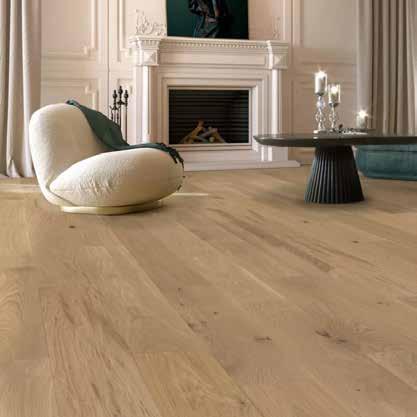
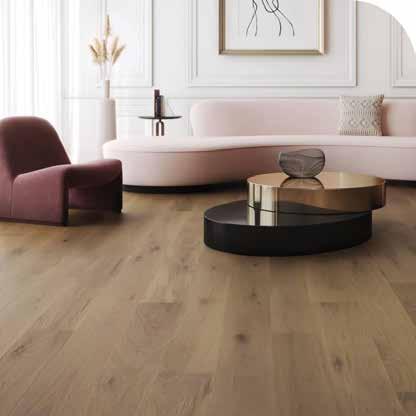
Wood systems, whether solid wood or veneer-wrapped panels, add warmth and richness but require additional labor, finishing and craftsmanship. As a result, they also come with a higher price tag.
Color can also influence cost. Standard whites and neutral tones are typically readily available. Specialty colors, textured finishes or deep stains may require custom ordering or additional finishing steps.
Dark wood finishes, high-gloss surfaces and textured materials take more time and care to achieve a uniform look, which can affect pricing.
TIMELESS CLOSET & CABINETRY
ARTICLE BY WENDY SCOTT PHOTOGRAPHY BY RICH J WEINBERGER, FRANK DIGIOVANNI, JULIAN HUARTE
Because custom closets are made to order, timelines vary. Lead times depend on material availability, factory schedules and design complexity.
A simple system may be completed quickly, while a design with custom veneers or specialty hardware may take longer. Longer lead times do not always mean higher costs, but they do impact when a project comes together.
If materials are the foundation, hardware is the finishing touch. Soft-close drawer slides, premium hinges, pull-out accessories, valet rods and integrated lighting elevate a closet from functional to refined.
I often compare hardware to tailoring. You can skip it, but you will notice the difference. High-quality brands such as Häfele offer smooth-gliding drawers and quiet-closing doors—details many homeowners find worth the investment.
Using professional design software allows clients to see how choices affect pricing in real time. Upgrading to wood drawers, adding lighting or changing finishes shows immediate budget impact.
This transparency builds trust. There are no surprises— only informed decisions.
One important—and often overlooked—part of planning a custom closet is being upfront about budget.
If you have a preferred price range, share it with your designer early in the process. Most closet designers offer complimentary consultations, but those consultations often involve hours of thoughtful design work, revisions and detailed pricing scenarios.
When a designer creates a custom plan and it is used solely to price-shop elsewhere, that time and expertise go uncompensated. A custom design is intellectual property, not a commodity. Respecting a designer’s time, talent and process leads to better collaboration—and ultimately, a better result for everyone involved.
Being transparent about budget allows your designer to guide you toward solutions that align with both your vision and your investment, without wasted effort on either side.
When planning a custom closet, start with how you live. Consider whether you need more hanging space, drawers, shelving or lighting. Decide what matters most—durability, aesthetics or staying within a defined budget.
A custom closet is not about choosing the most expensive option. It is about selecting the right combination of elements to support your lifestyle.
A closet is where each day begins and ends. It should simplify life, not complicate it. Understanding how pricing works allows homeowners to make choices that feel right—both functionally and financially.
At the end of the day, it really is “only a closet”—until you experience one designed just for you.
For more information or to check out the podcast timelessclosetsandcabinetry.com

ABOUT THE WRITER: WENDY
Wendy Scott, founder of New Jersey–based Timeless Closets and Cabinetry, brings 20 years of experience to award-winning closet design. A former kitchen designer, she became the state’s first ACSP Master Storage Designer, earning recognition as a leader and trailblazer in home organization.
TIMELESS CLOSET & CABINETRY
Phone: 908-975-9381
Website: timelessclosetsandcabinetry.com
Instagram: @timelessclosetsandcabinetry





















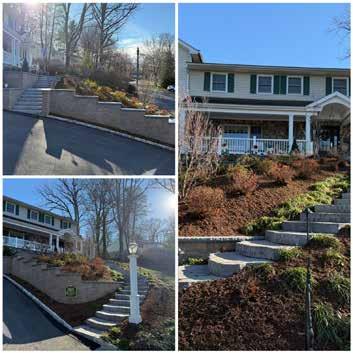
Hicks Paving Blends Generations of Craftsmanship With Modern Innovation

As the third generation to lead Hicks Paving, Sam Hicks carries forward a family legacy rooted in craftsmanship, integrity and hard work. Founded more than 65 years ago by his grandfather, the business has grown from a small local operation into a trusted paving company serving communities across north-central New Jersey. Today, as Hicks teaches his son the trade, that legacy is taking shape for a fourth generation.
Over the decades, Hicks Paving has steadily expanded its reach, now serving towns throughout Hunterdon, Somerset and Warren counties. Despite that growth, the company has remained grounded in the same principles that shaped its early success: skilled workmanship, hands-on leadership and a strong commitment to customer satisfaction.
For Hicks, being present on job sites is not optional—it is essential. He believes direct oversight ensures quality while building trust with homeowners and commercial clients alike.
“Having someone on site who is not only installing the work but also working directly with the customer gives us an edge,” Hicks says. “We’re able to understand exactly what they’re looking for and make sure the finished product meets that expectation.”
That personal involvement extends beyond customer interaction. Hicks makes a point to oversee installations firsthand, ensuring each project reflects the standards the family name represents.

Staying competitive in a changing industry also requires adaptability. Hicks Paving invests regularly in updated equipment and evolving techniques, embracing advancements that improve efficiency and results.
“Our equipment reflects the latest technology available—from paving machines to compactors and skid steers,” Hicks shares. “Even from the preparation stage to the final installation, the industry has changed a lot over the years, and we make sure we change with it.”
Those updates allow the company to handle a wide range of projects, from residential driveways to large-scale commercial work, without sacrificing quality or consistency.
While innovation plays a key role, family remains the backbone of the business. Hicks Paving prioritizes keeping operations within the family whenever possible, with each member overseeing a specific aspect of the company. Hicks’ nephews manage equipment maintenance, while his father focuses on project estimates and customer consultations.


“We never want to forget the residential homeowners who helped put us where we are today.”
“When family members are involved, there’s a deeper level of care,” Hicks explains. “Everyone has a personal stake in the outcome. Not that outside help wouldn’t care—but it’s different when it’s your name on the business and your family standing behind the work.”
That approach has helped foster long-term stability and accountability, qualities that clients often notice and appreciate.
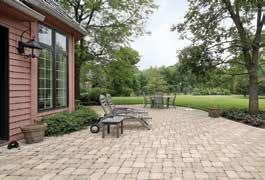
As the company continues to grow, Hicks remains mindful of the work that built its reputation. Although commercial projects have become a larger part of the business, residential paving remains a priority.
“Our company has grown, and we’ve taken on more commercial and large-scale jobs over the years,” Hicks notes. “But we never want to forget the residential homeowners who helped put us where we are today.” Driveways, he noted, are often the first impression of a home, and treating those projects with the same care as larger contracts is a point of pride for the company.
Hicks Paving’s deep ties to the region also play a role in how the business operates. The family lives and works in the same communities they serve, strengthening relationships built over generations.
“I love this area. My family loves this area,” Hicks emphasizes. “It’s where we live, it’s where we work, and it’s what built our business.”
Looking ahead, Hicks remains focused on maintaining the balance between tradition and progress—honoring the company’s roots while continuing to evolve.
“We want to remain one of the leading paving contractors in the area,” he says. “But more than that, we want to keep serving our customers the right way, the same way we always have.”
For more information about Hicks Paving and its services, visit hickspaving.com .







By the time Gerri Perez earned her real estate license in early 2000, she already understood property from the inside out.
Long before she ever showed her first home, Perez and her then-husband owned rental properties, and she helped grow their contracting business from residential projects into large commercial work using her marketing and sales background. But as a young mother of three, she knew she needed a career of her own—one that would allow her to build independent income and long-term stability.
So in December 1999, she answered an ad for a sales associate position at Weichert in Warren.
“I was told, like everyone else, that you could make $50,000 your first year,” Perez says. “I didn’t realize at the time that was considered a stretch goal.”
Her office manager recognizes her early promise and takes the unusual step of sponsoring Perez’s education and training. By the end of February 2000, she has her license. On March 1, she officially launches her new career.
By year’s end, she had earned $40,000—an impressive start that foreshadowed what would become a nearly 26-year trajectory of consistent top-tier performance.
Perez spent 18 years with Weichert before moving to Keller Williams in 2018, and later to Coldwell Banker Basking Ridge in 2022, where she says she has found her long-term professional home. Across every move, she has ranked in the top 5 percent of agents both within her companies and statewide for production.
But numbers alone do not define her reputation.
Perez has built her career around education, research and expectation-setting—ensuring clients fully understand both the financial and emotional dimensions of every decision.
“Real estate isn’t simply selling a product,” she explains. “A major part of my job is research and data analysis—interpreting market trends and explaining what they actually mean for each client’s situation. That’s what allows people to move forward with confidence.”
Her style is deeply consultative.
“I listen first,” Perez says. “I ask questions and really try to understand what my clients want and need, even when they’re not sure themselves yet. It’s truly a journey we take together.”
First-time homebuyers hold a special place in her business. Perez believes they are essential to the health of the broader housing market.
How Gerri Perez turned experience, transparency and trust into a top-producing real estate career
ARTICLE BY CARLY MAC MANUS
PHOTOGRAPHY BY GERRI PEREZ
“They are the engine that keeps real estate moving,” she says. “When first-time buyers are informed and supported, the entire market functions better.”
She invests significant time guiding them through financing, inspections and negotiations, empowering them with clarity rather than pressure. Early in her career, many buyers came with narrow search areas in mind. Perez often encouraged them to look beyond their initial boundaries, helping them see how expanding their options could unlock better value and opportunity. Her leadership extends beyond her own clients. Perez has long served as a mentor within the industry—from her time as a Weichert mentor to teaching through Keller Williams’ Agent Leadership Council. At Coldwell Banker, she founded a Top 25% Percent Mastermind Group, creating a forum for top producers to exchange strategies and raise professional standards. She was recently elected to the Coldwell Banker Agency Advisory Council, representing her office at the corporate level.
Though based in Somerset County, Perez’s roots in Hunterdon County run deep. Early in her career, she frequently worked with Somerset buyers seeking more space and value to the west.



“I fell in love with Hunterdon County—the landscape, the space, the pace of life,” she says.
Those early experiences helped shape her market expertise across Central and North Jersey, a perspective she continues to bring to clients navigating today’s complex housing environment.
After nearly 26 years in real estate, Perez remains driven not by production alone, but by the relationships formed along the way.
“My work has never been about sales numbers,” she says. “Every client has their own dreams and goals, and I’m grateful to be invited into that process.”
She often remembers people more than properties.
“I don’t always recall every home, but I remember the families and their stories,” Perez says. “For any good agent, it’s never really about money. I was guided early on by top female agents who taught me that if you focus on serving clients well, the rest follows.”
That philosophy has shaped a career built largely on repeat business and referrals, with many past clients becoming long-term friends.
After more than a quarter century in the profession, her passion remains undiminished.
“I still love what I do,” Perez says. “Every new client is exciting. Helping people through this process never gets old.”
For more information, visit gerriperezhomes.com
Thoughtful design and expert craftsmanship transform this bathroom into a serene escape
In a state where fast-paced days often begin before sunrise and end well after dark, New Jersey homeowners are increasingly rethinking how their homes can offer moments of pause. Bathrooms, once purely functional, are being reimagined as personal retreats— spaces designed to restore as much as they refresh.
One recent renovation by MSI Plumbing & Remodeling reflects this shift toward quieter luxury. The project emphasizes balance and restraint, favoring thoughtful design and precision over trend-driven statements.
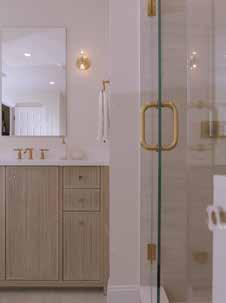
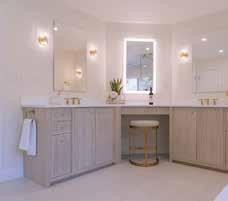
Soft light washes across warm white oak, catching the glow of gold fixtures and setting a calm, welcoming tone. The space feels composed rather than showy, a hallmark of MSI’s approach to residential remodeling. A white oak double vanity anchors the room with warmth and texture, while refined metallic finishes add subtle contrast.
“We focus on how a space needs to function first, then how it should feel,” says Audra Giese. “When those two things are aligned, the design holds up over time.”
The steam shower elevates the daily routine into a restorative experience, while a nearly invisible shower niche preserves the clean lines of the tilework. Behind the scenes, MSI coordinated plumbing upgrades and custom installations to ensure the space performs as seamlessly as it looks. Integrated storage solutions keep visual clutter to a minimum, reinforcing the sense of ease that defines the room.
The renovation reflects a growing preference among New Jersey homeowners for spaces that are not only beautiful, but deeply livable. Rather than chasing short-lived trends, MSI prioritized proportion, craftsmanship and longevity—principles that allow the bathroom to feel current today and enduring for years to come.
Photography by Tina Meerloo captures the interplay of texture and light, while a personal touch—custom wine bottles from Old York Cellars—adds warmth and individuality. More than a renovation, the project illustrates how thoughtful planning and skilled execution can transform a bathroom into a space that supports both daily life and well-being.
ARTICLE BY CARLY MAC MANUS
PHOTOGRAPHY
BY TINA MEERLOO -
MEERLOO
PHOTOGRAPHY

@msiplumbingremodeling msiplumbingandremodeling.com
1109B Route 31 South, Lebanon, NJ 908-735-4438
Design Christopher Scherer Designs @christopher_scherer_design
Photography Tina Meerloo Meerloo Photography @meerloophoto
@oldyorkcellars




























A SELECTION OF UPCOMING LOCAL EVENTS
MARCH 1ST
Hunterdon County parks | 2:30 PM
Hunterdon County parks host an easy guided hike for families and children to learn about local ecology and spring’s arrival. Exact trails are posted online. More information at co.hunterdon.nj.us
MARCH 3RD
Location TBD - Hunterdon County, NJ | 9:30 AM
Depart from a location selected by the Hunterdon Chamber. Join a guided trip to the iconic flower show featuring thousands of blooms and themed displays. Pre-registration required. Visit hunterdonchamber.org for details.
MARCH 7TH
Hunterdon County Complex, Building 1, 314 State Route 12, Flemington, NJ | 10:00 AM
Clean Communities Program and Rutgers Master Gardeners of Hunterdon County will present a free community event for all ages featuring hands-on activities, learning and exploration. Attendees can create native seed balls and tape and meet exhibitors focused on sustainability and environmental education.
MARCH 8TH
Hunterdon County Library North County Branch, 65 Halstead St, Clinton | 2:00 PM
Learn how to build and install wood duck nesting boxes while exploring local habitat in this hands-on nature walk. More: hunterdon-library.org
MARCH 11TH
Location TBD - Hunterdon County, NJ | 6:00 PM
Members and guests gather to reveal 2025 grant recipients supporting local nonprofits; networking and light refreshments included. For more information, visit impact100hunterdon.org
MARCH 14TH
Echo Hill Park, 42 Lilac Drive, Flemington | 10:00 AM
Explore the tradition of maple sugaring with costumed interpreters, demonstrations and storytelling at this free, family-friendly event. Sessions begin every 30 minutes. For more information visit: hunterdonparks.org