

I had a sassy smirk earlier this year because January always welcomes an influx of home design predictions—the new "it" color, the newest trends that will undoubtedly start popping up all over— and this year, all the noise is encouraging us to go bold with color, be asymmetrical with our design, and be messy with all things meaningful. I'm playful with these ideas because it's suddenly trendy to be oneself, and what a thing to be.
The theme that became so utterly apparent when pulling this issue together was intention . Each story just felt so purposeful, so much so that the people behind the work wouldn't be in business or contributing to our community if they didn't believe wholeheartedly in what they are doing. They aren't interested in selling something that doesn't sing to their vision, concept, or integrity. There are clear lines in the sand on what will be put forth into the world, born of creation, and it filled me with the warmest of feelings. Home, when done with intention, makes one feel that way.
Little Hinoki Designs and Mountain Maple Woodworks are such a treat to include in this issue. Phallon and Travis have such a contagious dedication to their ideals, and the work that stems from it is admirable. It's all in the details! Likewise, we have a talented team of creators who are bringing to life a new housing community, and it all came to be because of a longstanding friendship. In a world where a dollar sometimes screams louder than relationships, Missoula truly stands with family and friends and our community is better for it.
The issue evolves to a practical and necessary consideration: homeowner's insurance. You'll read a tidy and tasteful approach to spring cleaning from Ryan Sharkey, and you might check a very important thing off your springtime checklist. The final pages include a snapshot of my own DIY home addition and a passionate interview with Executive Director of the Humane Society of Western Montana, Marta Pierpoint. "Home" embodies so much more than the walls that surround us. It's a feeling, a destination, a nest. It's never finished, a story in the making. I hope this issue brings you the same sentiment of doing things with more intention, especially in the realm of all things home. It is my favorite place to be.

CHELSEA LYN AGRO, EDITOR @MVLMAGAZINE
March 2026
PUBLISHER
Mike Tucker | MTucker@Citylifestyle.com
PUBLISHER ASSISTANT
Amanda Tucker | Amanda.Tucker@CityLifestyle.com
EDITOR
Chelsea Lyn Agro | Chelsea.Agro@CityLifestyle.com
STAFF PHOTOGRAPHER
Rick Szczechowski | RrSzczechowski@Gmail.com
CONTRIBUTING WRITERS
Chelsea Lyn Agro, Julianne Bitely, Marko Capoferri
CEO Steven Schowengerdt
President Matthew Perry
COO David Stetler
CRO Jamie Pentz
CoS Janeane Thompson
AD DESIGNER Evan Deuvall
LAYOUT DESIGNER Kelsey Ragain
QUALITY CONTROL SPECIALIST Anna Minnick





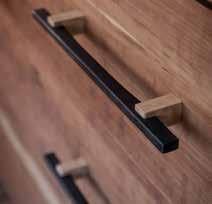
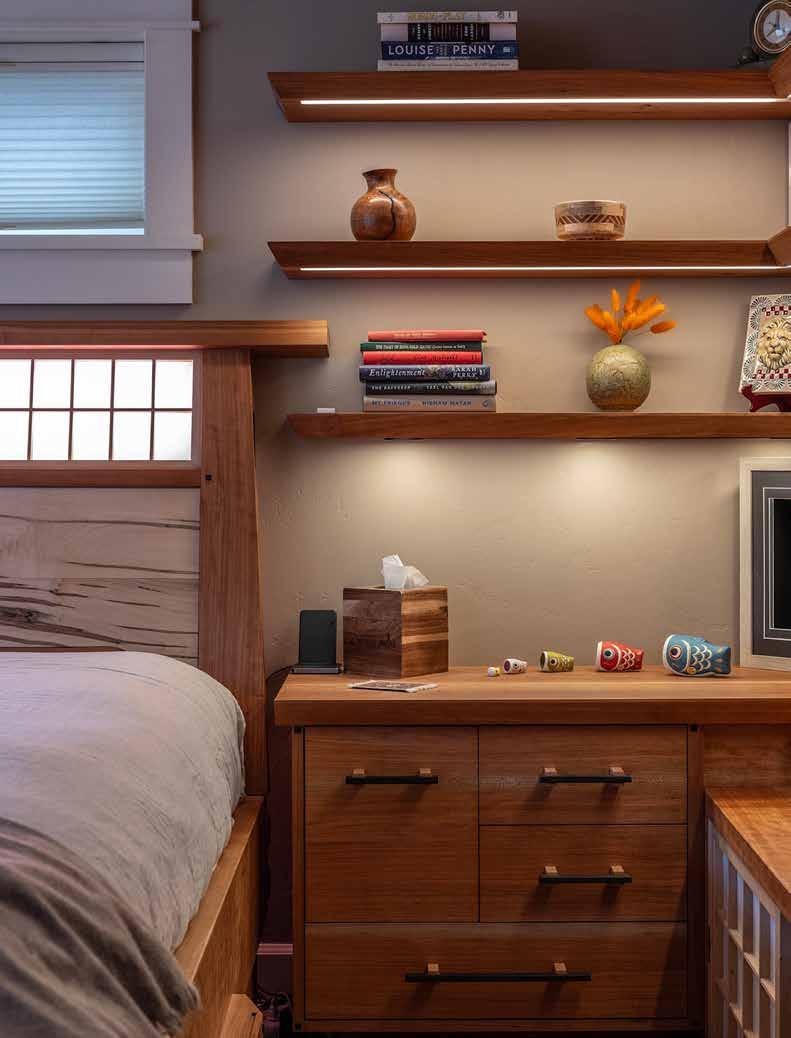
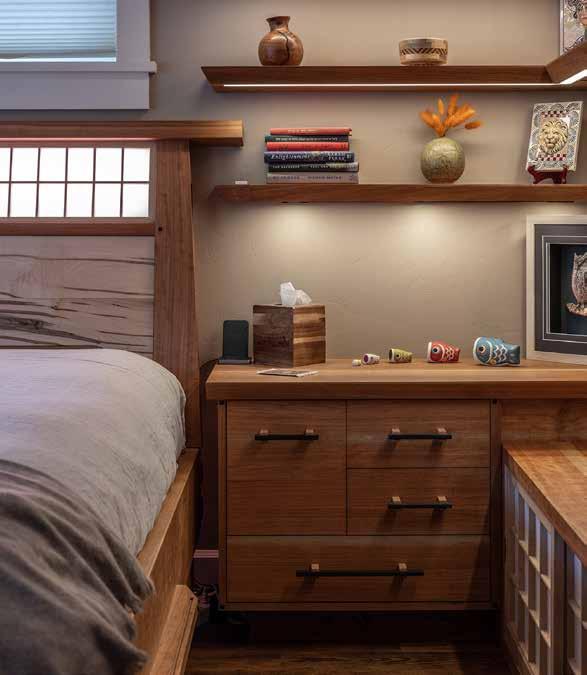
Little Hinoki Designs and Mountain Maple Woodworks showcase how design and material go hand-in-hand, just like the couple behind the companies.
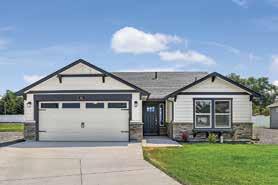
West End Farms takes a new approach to the development and home-buying process.
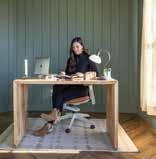
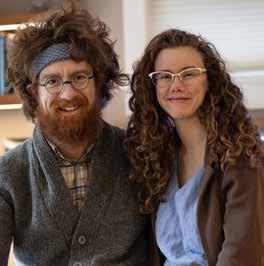
Phallon Arthun and Travis Orr are the husbandand-wife owners of Little Hinoki Designs and Mountain Maple Woodworks. Their style and work is never without a nod to nature. Read about their intentional design on page 8.


LITTLE HINOKI DESIGNS AND MOUNTAIN MAPLE WOODWORKS SHOWCASE HOW DESIGN AND MATERIAL GO HAND-IN-HAND, JUST LIKE THE COUPLE BEHIND THE COMPANIES
The practice of training bonsai trees is one that requires patience, slowness, and a fundamental respect for the tree and how it wants to exist. To grow and cultivate a successful bonsai tree, one must essentially become a collaborator with another living thing and its natural tendencies. A key word here is “natural.”
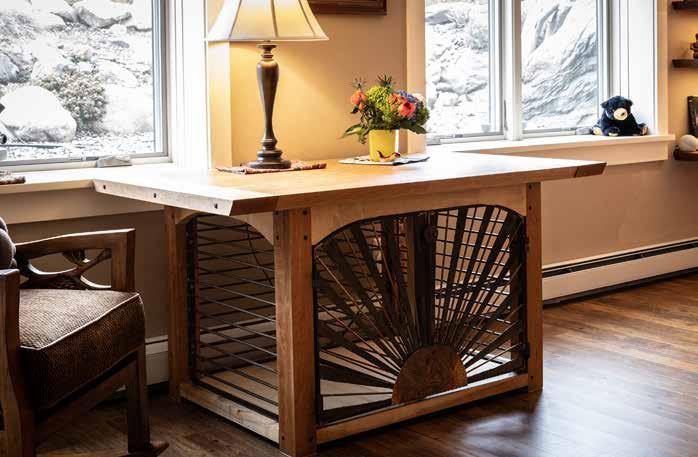
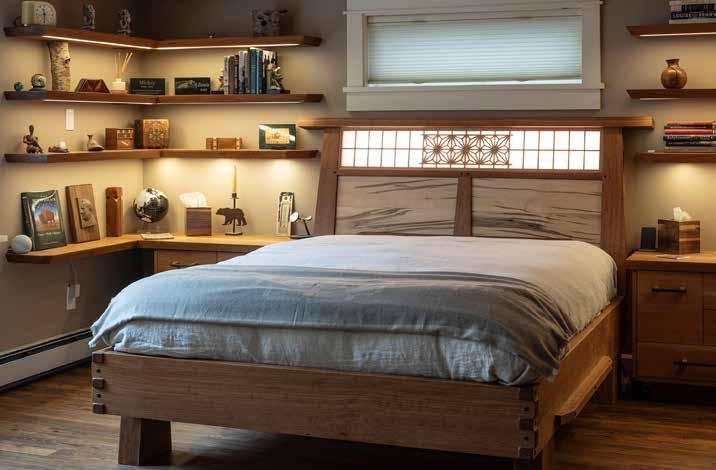
Travis Orr and Phallon Arthun are the husbandand-wife owners of Mountain Maple Woodworks and Little Hinoki Designs, respectively. In their businesses—wood working for Travis and interior design for Phallon—they place a huge emphasis on working with what is natural to achieve something holistic. This can mean anything from the materials they work with, how a room is composed and what is in it, or slowing down to give a project the time it needs to be fully realized.
In many ways, the work that Phallon and Travis do is a lot like having and nurturing a bonsai tree.
“I was so fascinated by bonsai because the concept is: you take this tiny baby tree and you essentially make it look like a big tree,” Phallon says. “And I really liked that concept because you’re the artist in that sense, you’re mimicking nature, but nothing’s ever going to be more beautiful than nature makes it. And I feel like that’s also a good way to describe what we do.”
They’ve spent time in Japan and Scandinavia deepening their skills, studying ways of building and design that are much older than what we see here in the States, methods that are often ancient, rooted in times of relative scarcity, where the materials used had their basis in the surrounding
“THAT WAS A BIG TAKEAWAY FOR US: UNDERSTAND YOUR MATERIALS.”
- TRAVIS ORR
environment and produced structures that have sometimes outlasted even the cultures that made them.
“I want to bring more natural materials back into our lives,” Phallon says. “Even our walls are not made of anything real now. I typically like to use lime wash paints, and using clay walls as accent walls. It requires more than your average building company, I think, because they’re not going to be interested in doing those specialty things.”
“Wood, of course, is an awesome material,” adds Travis. “It has so many benefits. Oftentimes today it’s seen as a nice thing to look at, but a poor material because it needs maintenance or has defects. It demonstrates a lack of understanding of the adaptability and versatility of wood. Especially when you see how Europeans have used wood and have structures that have lasted hundreds and hundreds of years. Thousands of years in some cases. Same thing in Japan.”
“One thing they do in Japan,” Phallon says, “if they find a piece of a home’s timber frame that’s rotting, they just take that piece out. Cut it out and join in a new piece and the whole structure is usable.”
“Environment” is another key word here. It’s a word that is often tossed around casually, but its deeper contexts and meanings tend to get obscured in everyday use.
“Building today in the United States is very wasteful,” Travis says. “On the one hand, it does build things quickly; they just don’t last very long. You see buildings starting to fail after 20 years, or maybe a 50-year life cycle, if you’re lucky. I don’t really care what type of certifications you have, LEED or otherwise. If you’re going to tear it down in 50 years or less, does it really matter? A building that’s built to last for hundreds of years, that’s really the so-called ‘green’ option.”
“In order to get, for lack of a better term, ‘environmental points,’ they’ll factor in, like, ‘Oh, we’ll be able to recycle x amount of the styrofoam insulation or metal studs.’ In practice, is that going to happen? Maybe, maybe not,” Travis says.
“Also, recycling takes a lot of energy,” Phallon says, “and oftentimes they just end up shipping [the material] overseas and it goes and sits in a lot. Who knows what they’re doing, if they’re burning it or what happens to it.”
“It’s a real big hope and wish,” Travis says, “whereas, if you were to just build with natural materials, you could actually have something that’s recyclable. Or at the very worst, it just goes back into the earth. But it’s not convenient, right? Or cheap. And that’s the rub. But then you have to kind of start evaluating what ‘cost’ really means.”
So, what does “cost” mean? Can it be measured, and how does this consideration manifest itself in the work that Phallon and Travis do?
Phallon has an anecdote of an experience they had in Japan that points toward their shared philosophy of respect and care.
“So [Travis’] teacher makes beautiful furniture,” she says. “He had a big block of wood in his house for like a year and a half because he didn’t know what to do with it, because it was so beautiful. He was waiting for the wood to tell him what it was supposed to be. They have
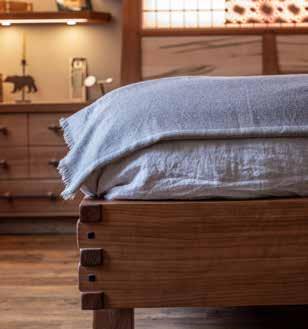
a lot of respect for even just the wood grain. We got back and he had made something with it. It was cool to see it finished, but he spent a lot of time thinking about it.”
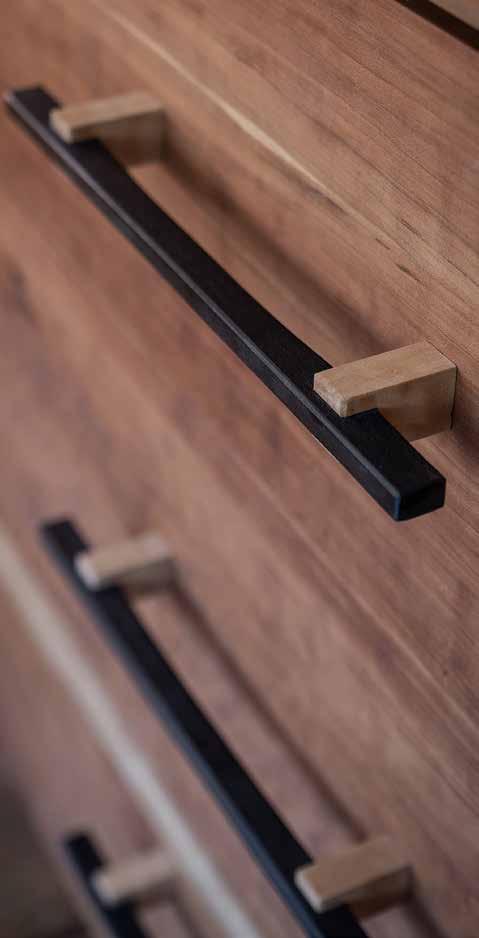
“That was a big takeaway for us: understand your materials,” Travis says. “If it’s not necessary and it doesn’t add anything, don’t do it. If it adds something, do it. Respect the materials. Understand the materials. Be honest with what you’re building.”
And, Phallon adds, from an interior design perspective, “it’s also a respect for what’s already there.”
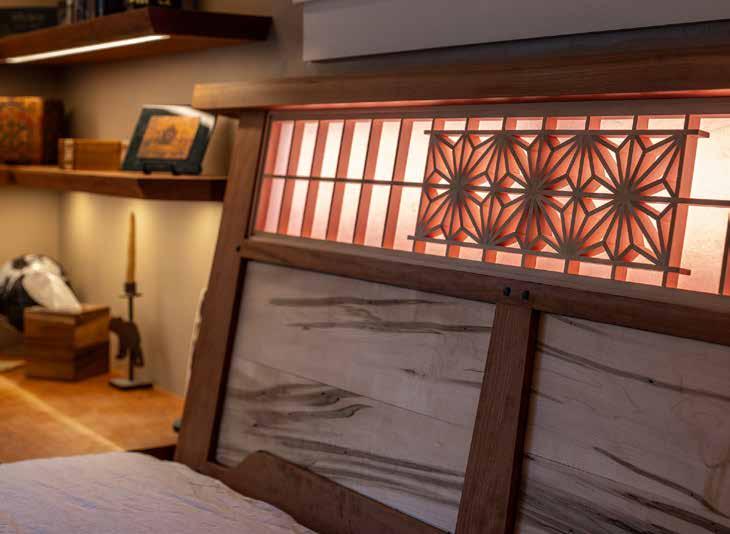
"NOTHING'S EVER GOING TO BE MORE BEAUTIFUL THAN NATURE MAKES IT. AND I FEEL LIKE THAT'S ALSO A GOOD WAY TO DESCRIBE WHAT WE DO.”
PHALLON ARTHUN
“When I go in and I look at somebody’s house, I want to look at what style this house is or what this house is trying to be and what the customer wants, because sometimes they don’t go together,” she says. “If I go into an English style house and somebody wants a minimalist kitchen, I can do that. That’s really easy to just do, but it doesn’t mean a couple months down the road they’re gonna look at it and still be happy with it. They’re probably not going to be.”
“Things have to make sense,” adds Travis.
It’s probably clear by now that Phallon’s and Travis’ respective
clienteles are most likely a self-selecting group, the kind of customers who want to trust what their builder or designer bring to the table as far as vision and expertise.
“We don’t want to betray our own philosophy,” Phallon says.
“If people are like, ‘it has to be exactly this way,’ it might not work for us, just because we have to have a little bit of creative direction, at a minimum,” Travis says. “Obviously, the client at the end of the day needs to get what they want, but we might not be the people to serve that person if it’s going to be completely antithetical to what we do.”













ARTICLE
WEST
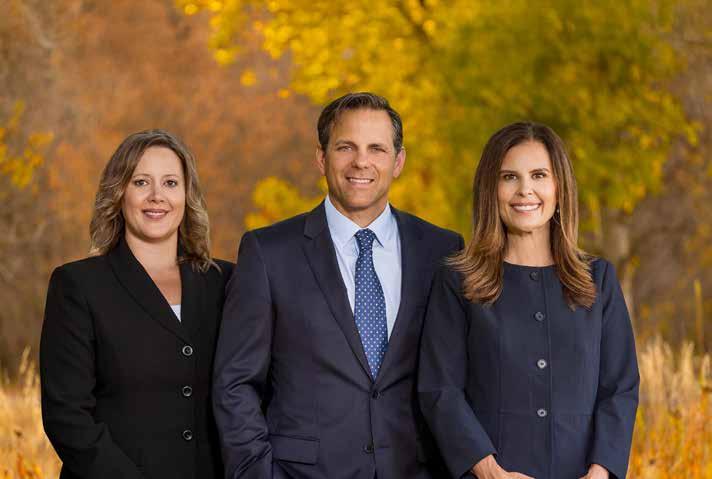
The team behind West End Farms—Justin Metcalf, Matt Brandt, Jason Shreder, and Rosalie Cates—aren’t just business partners. They’re true Missoulians—community-minded, nature-loving creators, and long time friends.
“The blueprints for this simply didn’t exist,” says Justin Metcalf, Co-Managing Partner of Collaborative Development and U of M graduate.
While most developers are hidden behind a web of thirdparty contractors and bidding wars, this team of developer (Collaborative Development) and builder (Northwest Community Builders/NWCB) is vertically integrated, meaning the developer and the builder are one and the same.
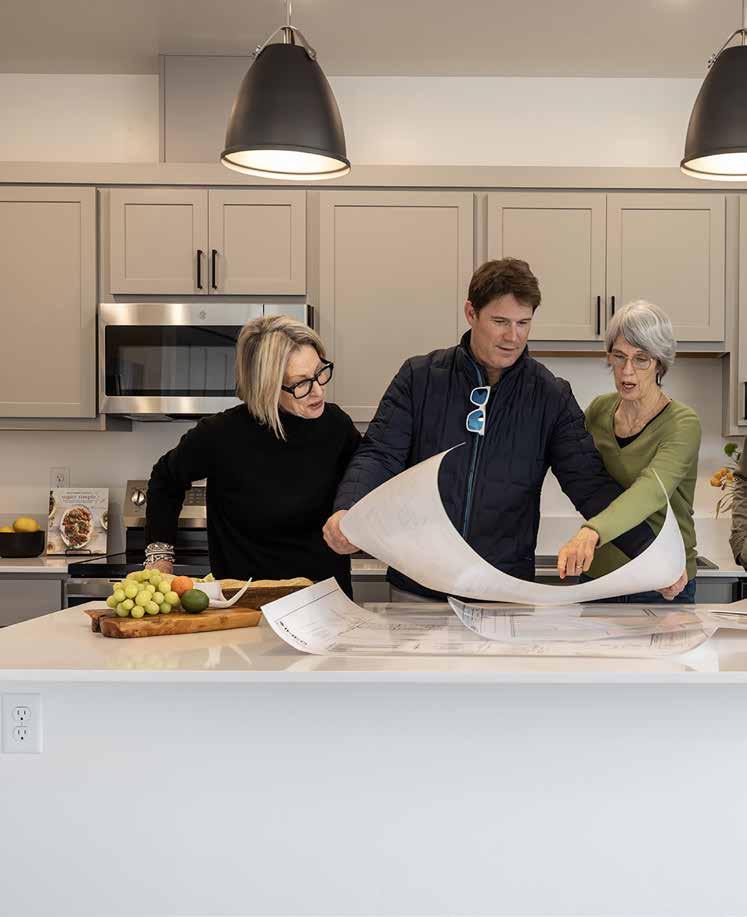
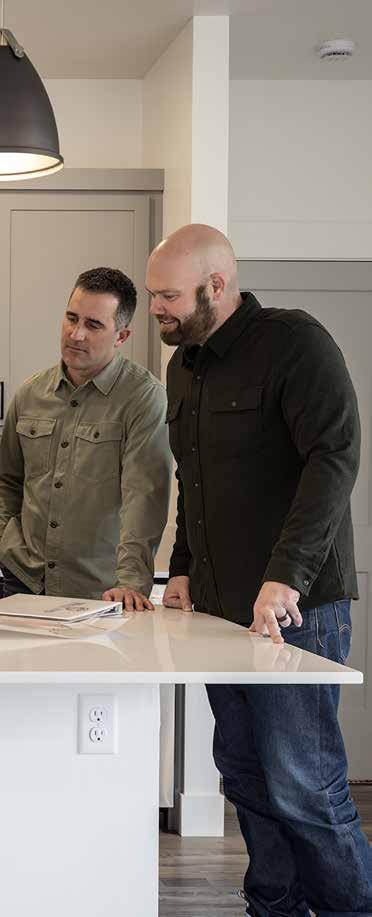
They share an office where the only thing separating the developer from the builder is a glass wall. If there’s a problem, the response isn’t an email chain—it’s an instantaneous conversation signaled by a wave to one another. Matt Brandt, President of NWCB who runs the construction side, says this is a huge part of their project’s success.
Matt and Justin met years ago when their kids both attended Clark Fork Preschool, and continue to see each other after office hours at flag football and soccer practices. “Life is too short to work with people who make you go (slight ‘ugh’) when their name pops up on your phone,” Matt says with a deep sigh, triggering a burst of laughter from the group. “They like us. We like them. They believe in doing a good job…Construction is very much a relationship business and it takes time to develop them, and then, when you do, you can do a lot.” Matt has been developing these relationships for over 20 years, and takes pride in being able to call former colleagues to get different inputs on solutions.
The design process was just as personal. Before settling on blueprints, Justin consulted three different architects, but the
plans still didn’t feel “right.” So, he took the lead and then put his designs through a gauntlet.
“My initial designs got audited heavily by a lot of family and friends,” Justin admits. “I started with what I thought people wanted, only to learn that Missoula doesn’t want condos, it wants single family homes.”
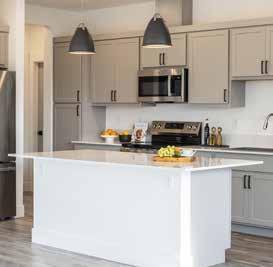
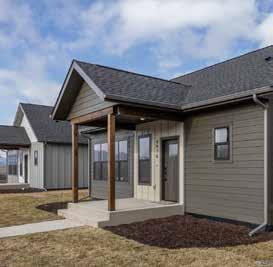
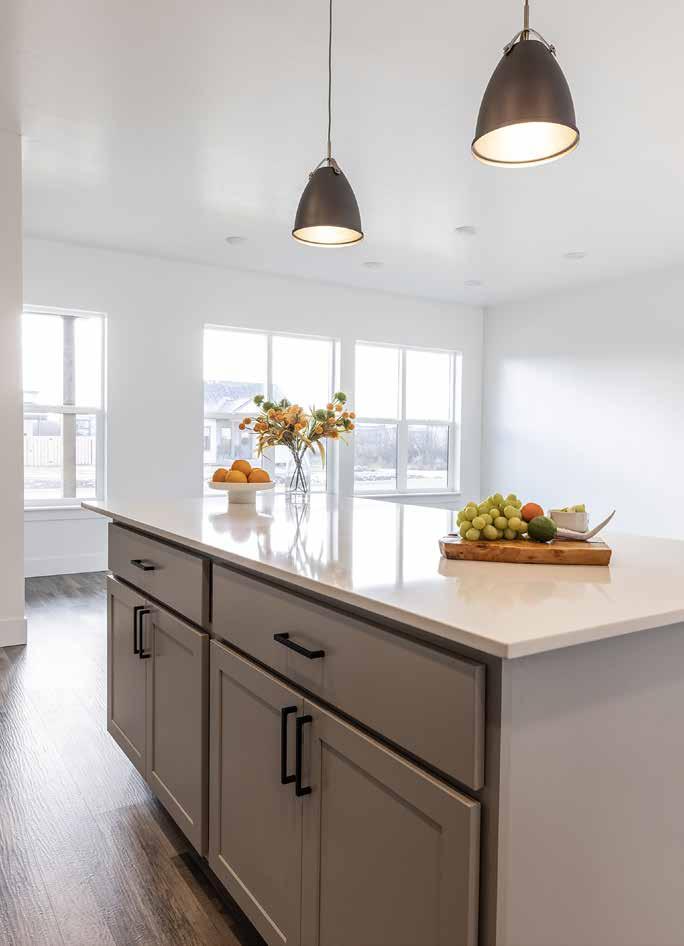
He ended up pulling features directly from his own house—like a geo-mat and insulated concrete foundation that endure the Missoula terrain well. He also incorporated 9’ ceilings and oversized windows to bring in lots of light and create an inviting space. To pull off the “Agri-hood” vibe (a mix of trails, green space, and a working farm), they hired a design firm out of Denver. But in a classic move of local humility, they made the City of Missoula the “client” for the park space and then stepped back to let the experts create a space the whole community could use.
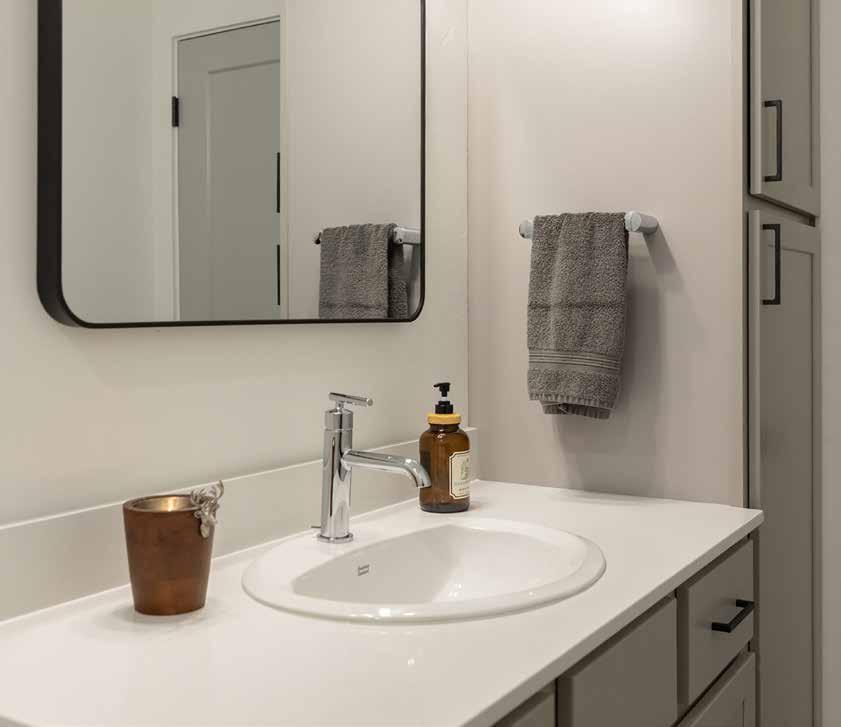
For the interior, Justin secured the interior design expertise of Donna Godert. “Donna went through and picked everything here especially—every door handle, every faucet. It’s all good quality, good fixtures, and she knows colors,” says Rosalie Cates, a longtime friend of Justin and consultant for this project.
Rosalie spent her entire career in community development finance, and aids the project when it comes to numbers. “Justin asked, ‘How can I take what I know about building houses and put good ones in Missoula that people can afford to buy?’”
Rosalie’s intrigue with the whole proposition got her on board, along with their commitment that regular people working in Missoula ought to be able to buy a house. “The fixed price model checked all the boxes for me. It is a combination of good land buy, good design, good materials, good build,” she says.
In Missoula, where the median home price has soared to $560,000, the “missing middle”—the teachers, nurses, and local professionals who earn the city’s average household income of $73,000—have largely been priced out. According to the Missoula Organization of Realtors, an income of $144,630 is now required to afford a median mortgage, a problem that the West End Farms team is working to remedy.
“The goal isn’t to build under market value—it’s to build as efficiently as possible and then give them to people [who] need them locally,” Justin explains. “One restriction we’ve even baked in is a two-year owner-occupancy requirement. This means these are all homeowners in this neighborhood, and investors are kept out... It’s really fun building housing for the local community.”
And there are homeowners who are eager to move in. Every home is sold to someone on the project’s waitlist the second it becomes available.
“Seeing people just steps away from trails, feeling safe—it’s why we’re doing this,” says Jason. Jason Shreder serves as the real estate broker for West End Farms. He and Justin go back 25 years to the early 2000s river community. Back then, Jason was a white-water guide and outfitter. When he decided to pivot to real estate, he didn’t just send a resume—he started showing up at the office every single day until it stuck.
It’s clear that West End Farms is more than a neighborhood of quality constructed houses with a large central green space and farm. It is friendships being poured into concrete and glass. It’s a community collaboration—proving that in Missoula, the best way to build the future is to do it with people you’d actually want to see on the sidelines of youth sports games or on the Clark Fork river.
"CONSTRUCTION IS VERY MUCH A RELATIONSHIP BUSINESS AND IT TAKES TIME TO DEVELOP THEM, AND THEN, WHEN YOU DO, YOU CAN DO A LOT.”
- MATT BRANDT
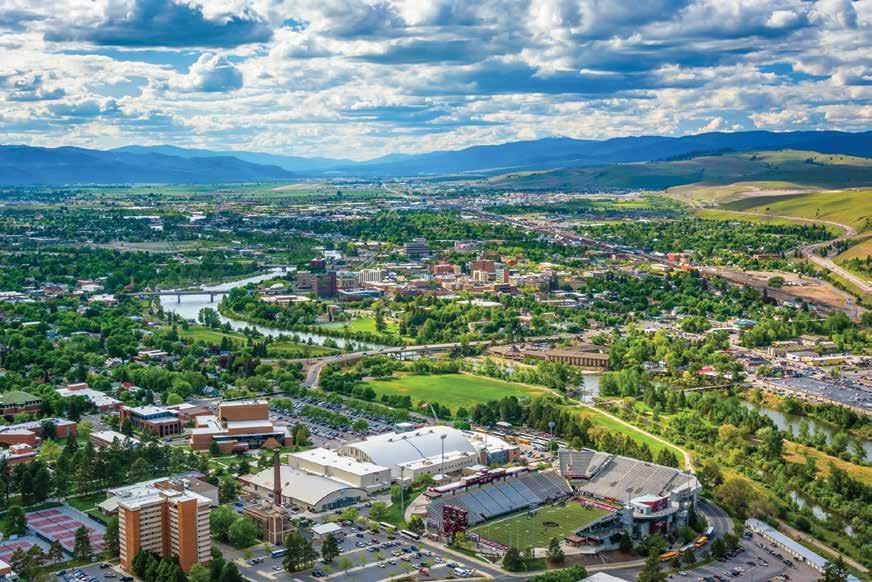
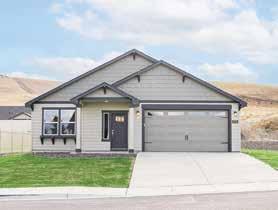
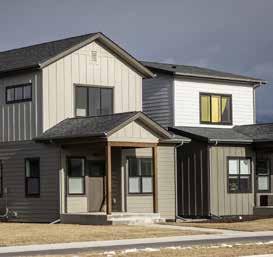
With homes becoming largely unattainable for a large portion of our working community, West End Farms was born as a result in 2022. The vision turned reality sits on 70+ acres adjacent to Hellgate Elementary, with 28 acres serving as a public park that will sit alongside the new community of 260 homes. In 2024, the project donated 16 acres of the park to the City of Missoula. The homes have good energy efficiency, are smart, functional, and made from better quality materials. They maximize contiguous outdoor space for pets, recreation, and garden practices. To learn more about this project and potentially sign up to be on their waitlist, visit WestEndFarmsMT.com








































Routine Vaccines for all ages!
Clinic Hours: 8:30 am - 4:30 pm
Open Monday through Friday Walk ins welcome!
*By appointment only on Wednesdays
Travel


PHOTOGRAPHY BY RICK SZCZECHOWSKI
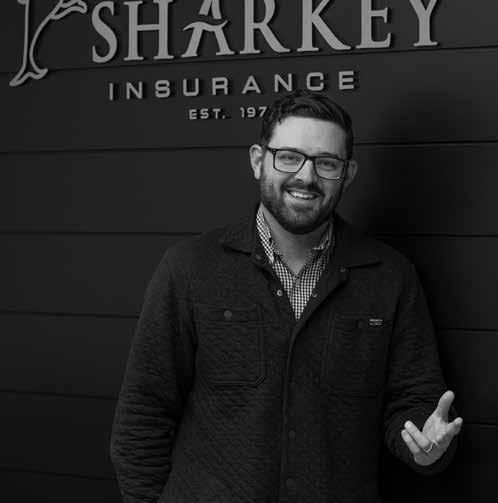
Spring in Missoula feels like a reset. The light lingers longer, projects start taking shape, and homeowners begin thinking about what the season ahead might bring. After several years of rapid change in the housing and insurance markets, there’s some good news: the homeowner’s insurance market is beginning to show signs of stabilizing.
That stability makes spring an ideal time for a routine check-in on your home insurance—not because anything is wrong, but because options are improving. Rates, underwriting guidelines, and carrier appetites shift over time, and what wasn’t available a year or two ago may look different today.
One advantage many homeowners overlook is working with an independent insurance agency. Unlike a single-carrier model, independent agencies work with multiple top-rated insurers admitted in Montana. That broader access can mean more competitive pricing, more coverage options, and better flexibility to match a policy to your specific home.
Think of it as part of your spring maintenance routine. Just as you’d review your home after winter, a policy review offers a chance to understand your coverage, ask questions, and explore what’s available in today’s market—without pressure or obligation.
Spring is about clarity, fresh starts, and making informed choices. Taking a moment to review how your home is insured can be a simple, practical way to step into the season with confidence. After all, home is where life happens—and spring is a great time to make sure everything is aligned for the year ahead.
“THINK OF IT AS PART OF YOUR SPRING MAINTENANCE
ROUTINE. JUST AS YOU’D REVIEW YOUR HOME AFTER WINTER, A POLICY REVIEW OFFERS A CHANCE TO UNDERSTAND YOUR COVERAGE, ASK QUESTIONS, AND
EXPLORE WHAT’S AVAILABLE IN TODAY’S MARKET— WITHOUT PRESSURE OR OBLIGATION.”
- RYAN SHARKEY
GIVE US A CALL, WE'RE HAPPY TO HELP. 406.728.0030


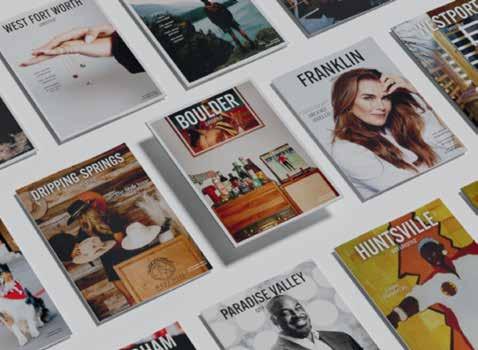



Behind each of our 200+ City Lifestyle magazines is someone who cares deeply about their community. Someone who connects people, celebrates businesses, and shares the stories that matter most. What if that someone was you?
Or maybe it’s someone you know. If this isn’t the right time for you, but you know someone who could be the perfect fit, we’d love an introduction.
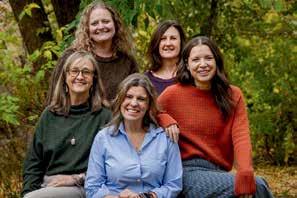




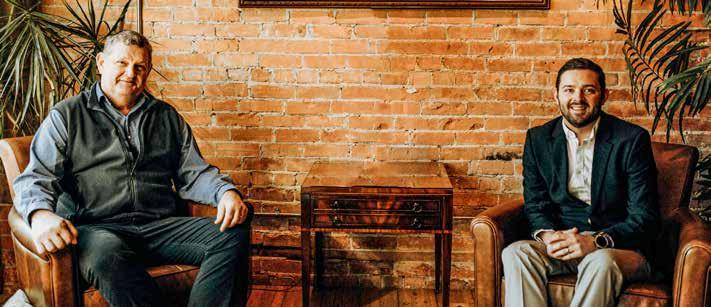



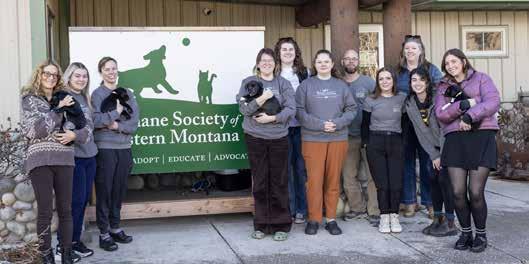
The Humane Society of Western Montana reflects what the community and beyond has done for pets all across Montana
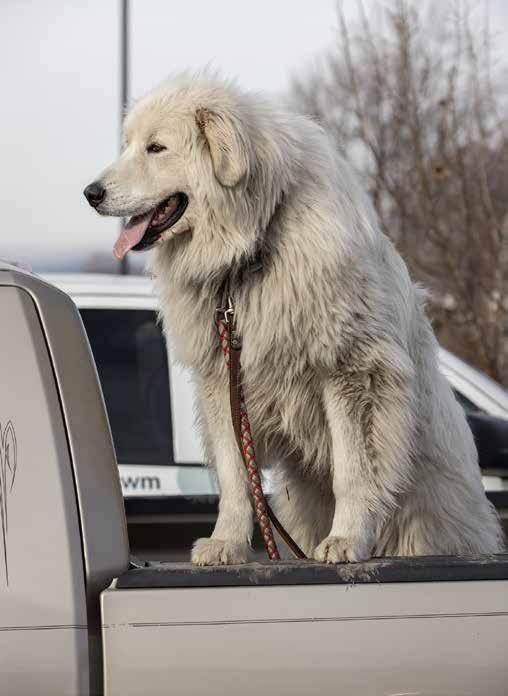
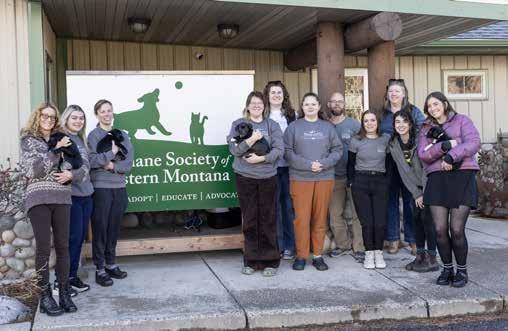
The Humane Society of Western Montana (HSWM) has maintained a 90% or above placement rate since 2009, classifying it as a no-kill shelter—an incredible level of success that saves lives by standard. Beyond that, their efforts have a direct impact on community and statewide pets: keeping them with their families, servicing their needs, and offering opportunities where there often are none. We took a deep dive of 2025 with Marta Pierpoint, the Executive Director of HSWM to get a closer look at the work they’re doing to get or keep animals home.
Let’s start with impact. What did 2025 look like for HSWM?
The year-end numbers confirm what we all knew anecdotally: 2025 was a year of significant impact. In total, we served 4,798 pets, administered 7,147 vaccines, and altered 2,176 animals. These numbers represent care in action. Each vaccine prevents disease. Each bag of food helps keep a pet with their family. Each spay or neuter prevents future suffering. That is where the real impact lives.
Outreach has become a big part of your work. Can you explain why that matters — not just locally, but statewide?
People sometimes ask why we travel outside of Missoula to engage in animal welfare work. The answer is simple: we are an animal welfare organization, and we go where animals need us most. In Montana, that often means going where people face the greatest barriers to care.
Missoula has approximately 13 to 15 veterinary clinics and hospitals, offering everything from routine wellness care to emergency and specialty services for a city of about 78,000 people. By contrast, the Rocky Boy Reservation and the Blackfeet Nation have no community veterinarian. Families on Rocky Boy often travel 25 miles or more to reach care in Havre. On the Blackfeet Reservation, residents may travel 40 to 50 miles to Cut Bank for even basic services. When cost, weather, transportation, and work schedules are added, “access” becomes largely theoretical.
"In total, we served 4,798 pets, administered 7,147 vaccines, and altered 2,176 animals. These numbers represent care in action. Each vaccine prevents disease. Each bag of food helps keep a pet with their family. Each spay or neuter prevents future suffering." - Marta Pierpoint, Executive Director of HSWM
This gap did not happen by accident. Tribal Nations have long been left out of the animal care movement, with little infrastructure, sustained investment, or local access to veterinary services. We will never solve animal welfare challenges in Montana, or anywhere, by relying on shelters and rehoming alone. Most people want to care for their pets. When given real access to veterinary services, families show up, ask questions, follow through, and do right by their animals. One of our quiet successes in 2025 reflects this reality: after five years of consistent support, our most recent clinics on Rocky Boy were slower. Fewer pets were in need, and open surgery slots went unfilled for the first time. The community has moved from crisis response to maintenance-level support.
Is there a 2025 adoption story that really stuck with you?
There are many stories that stick with me, but the ones that are most meaningful are the long-stay animals. Not because there was anything “wrong” with them, but because they needed more time, patience, and the right match. When one of those animals finally finds their person, it reminds all of us why we do this work.
I ran this question by our staff, and after a fun conversation sharing many special adoptions, we all landed on one standout: Spyro. Spyro had a rough start to life. He was born with a severe cleft palate that made it difficult for him to get adequate nutrition
early on and was bottle-fed as a baby after his mother and littermates rejected him. His slowed development manifested in one-of-a-kind quirks: easily startling, a fear of the dark, tricky behaviors with other dogs, and a love of hard boiled eggs. He needed to find the right adopter who cherished these oddities as much as we did.
Thankfully, his previous home was able to provide the extra time and care he needed to grow strong before he arrived at HSWM. While in our care, Spyro underwent surgery to repair his cleft palate. Because it was a complex procedure, we reached out to Dr. Felz at Missoula Veterinary Dentistry & Oral Surgery, who generously offered a significant discount to help make the surgery possible.
Thanks to an outpouring of community love and support, Spyro’s life-changing surgery was fully funded in under 24 hours.
Today, he is healthy, unique, and living his best life with an outstanding adopter.
What do you need most from the community right now?
Of course, we always need donations, supplies, and volunteers. All of that matters. But one of the most important things we need from, and for, our community is understanding. The no-kill movement has accomplished extraordinary things and fundamentally improved animal welfare. At the same time, it has created expectations that do not always

match today’s reality. Many of the animals entering shelters now have complex medical needs, behavioral challenges, or both. Supporting them and placing them successfully requires more time, expertise, and resources than ever before.
Maintaining a no-kill community also requires shared responsibility. Adopters, donors, veterinarians, and community partners all play a role, especially when it comes to animals who are harder to place. Not every medical or behavioral problem can be fixed by families or professionals. That is not a failure; it is the reality of this work, and when our community understands our reality, everything becomes stronger. Rehoming an animal into a situation where it is likely to fail or cause harm is neither compassionate nor responsible.
Also, our greatest limitation is space. The demand for spay and neuter services far exceeds our current surgical capacity. During Fix It February, we converted our education room into a temporary, field-style clinic on select days. It is not an ideal solution, but it reflects both the level of need in our community and the creativity required to meet it. Let’s think “larger space” for 2026.
What can the community expect in 2026? Any highlights you’re excited about?
I’m really excited about 2026. Our community showed up in such a meaningful way, especially on Giving Tuesday, that we were able to do something we’ve never done before.
The entire month of February was, as I said, “Fix It February,” and every spay and neuter surgery we performed was completely free of charge. This is the largest free spay/neuter effort we’ve ever offered, and it’s 100% because our community made it possible.
We’ll also continue our free monthly vaccine clinics, which are always incredibly well attended. And one of our favorite events, Pack the House at the Wilma, is coming back. It’s part celebration, part fundraiser with live music, snacks, signature cocktails, and a year-end video. Mark your calendars for March 5th!
We will also hold our second-annual conference in June that brings together animal welfare professionals from across the region to learn from one another and strengthen the work statewide. In 2025, the 127 attendees included animal control officers, sheriffs, lawyers, veterinarians, health department directors, tribal members from all seven reservations, volunteers and many more professionals from the entire state (and beyond).











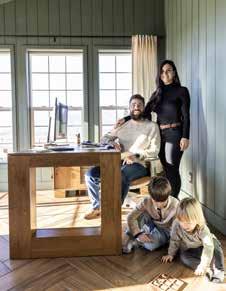
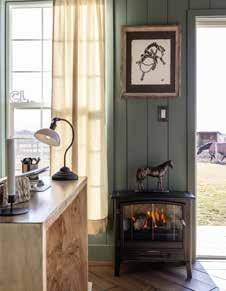
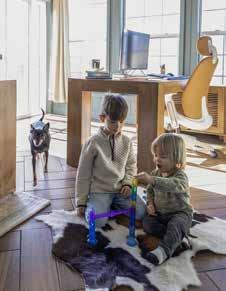
DIY WAS THE KEY TO ACHIEVING LUXURY VIBES ON A BUDGET
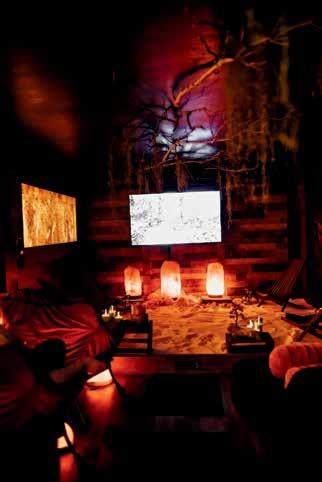
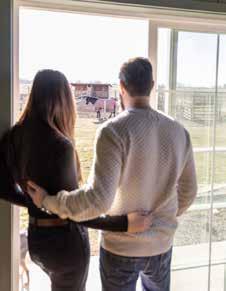
There’s one main factor that indicates whether your dream home addition is heading to the bank or burrowing down a DIY tunnel: what you’re not willing to compromise. For my husband Chris and I, it was the benefit of southern exposure—a naturally well lighted space. Two walls made almost entirely of windows was estimated to cost $25,000 if we hired out. That investment would essentially make it part of our house but still a long ways from being a livable room.
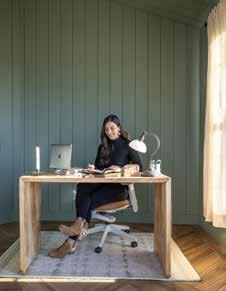
We had other visions: floor to ceiling (and ceiling!) shiplap, a herringbone tile floor, and a sliding glass door to make the backyard an easily accessible place for coffee or a work call. When you live where you work, the idea of an office space spills outside the box, where practicality meets embellishment. Doing it ourselves meant the ultimate compromise was time. It wouldn’t and couldn’t be done overnight, or even in a year, but we knew it would be a very near version of what we really wanted.
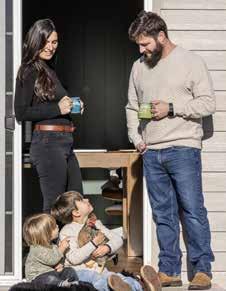
The once windswept and underutilized back porch is now 168-square-feet of productive work environment, complete with the frequent chaos of pitter-pattering paws and small hands and voices tinkering around. The entire project tallied up to $8,000, furnished. Now, we let time and taste adorn the walls, because great work takes time.