




After an accident, most people focus on their physical recovery. But one of the most important things you can do for your legal case is maintain open and honest communication with your attorney

Why is honesty with your attorney so important? Your attorney can only help with issues they know about. Being upfront allows them to prepare for challenges and protect your case before problems arise
What kinds of information should clients share?
Anything related to your injuries, treatment, work, finances, or recovery. If you ' re wondering whether something matters, it's best to mention it.
What happens if information comes out later?
Surprises can create challenges. It's always better for your attorney to learn about an issue from you rather than from an insurance company or opposing lawyer.
Why is following medical treatment so important?
Treatment helps you heal and creates a record of your injuries. Consistent care shows the impact the accident has had on your life
What if I miss appointments or struggle to follow treatment?
Let your attorney know Life happens, and there may be valid reasons We can often address concerns if we understand the situation.
What if I'm having financial difficulties because of my injury?
Tell your attorney Financial stress is common after an accident, and understanding your circumstances helps us better advocate for you.
What's the most important advice you give clients?
Keep communicating The more your attorney knows, the better equipped they are to help you navigate the process and pursue the best outcome possible.
Trust and communication are the foundation of every successful attorney-client relationship Being honest with your legal team helps them protect your rights and tell your story effectively.Transparency doesn't weaken a case,it strengthens it.
I think if I had to simplify my life into two words, it'd be kids and pets. My entire life revolves around them. If I'm not thinking up some craft I can do for my son's homeschool group, I'm outside feeding an animal, bathing an animal, or maybe tending to an animal in some form or another.
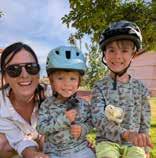
There's usually a horse trailer in my driveway with a manure pile that the chickens have spread out before I've had the chance to pick it up, my kids are typically zooming past on their bikes, my puppy is probably jumping up on the fence while the cat teases her, and did I mention the ducks who parade through the middle of our impromptu soccer games in the front yard? Kids and pets make up a beautiful (quite hectic) life.
The thing I love most about both children and furry friends is the workload. That might sound silly, because who loves work, right? But it's the delayed gratification part. I love putting in all those dirty miles—you know, the ones where you're in the thick of it, making the dinners the kids won't eat, or taking them to the swimming class that they don't want to go to—and then, maybe months or years later, having them help set the table or plucking certain veggies from the garden, and then seeing them splash with friends at a pool party. It's the same deal with animals. Mucking manure, carrying water, doing something as small as scratching an itch that your dog or horse can't get to—it's such a habit of kindness and selflessness. I love to practice selflessness, and kids and pets are the best teachers for this major life lesson.
This issue is brimming with all sorts of eye-catching content. We have tropical fish, horses, a llama named Pancake, music and bowling for kids. It's fun, fun, and more fun, and I hope the energy alone makes you want to bring home a new member of the family, or perhaps donate to a local resource like the Big Sky Horse Park, where the youths of Missoula are horsing around in big ways.

CHELSEA LYN AGRO, EDITOR @MVLMAGAZINE
August 2026
PUBLISHER
Mike Tucker | MTucker@Citylifestyle.com
PUBLISHER ASSISTANT
Amanda Tucker | Amanda.Tucker@CityLifestyle.com
EDITOR
Chelsea Lyn Agro | Chelsea.Agro@CityLifestyle.com
STAFF PHOTOGRAPHER
Rick Szczechowski | RrSzczechowski@Gmail.com
CONTRIBUTING WRITERS
Marko Capoferri, Shelby Humphreys
CONTRIBUTING PHOTOGRAPHER
Chelsea Lyn Agro
CEO Steven Schowengerdt
President Matthew Perry
COO David Stetler
CRO Jamie Pentz
CoS Janeane Thompson
AD DESIGNER Evan Deuvall
LAYOUT DESIGNER Kelsey Ragain
QUALITY CONTROL SPECIALIST Anna Minnick


Learn
Next Summit: N e x t S u m m i t : Mount Baker - 10,781' M o u n t B a k e r - 1 0 , 7 8 1 ' July 2026 July 2026 Baker T HA NK Y OU T HA NK Y OU to our S P O NS OR S! to our S P O NS OR S! for making the for making the summit accessible to all! summit accessible to all!
Our mission in 2026 is to inspire individuals of all Our mission in 2026 is to inspire individuals of all abilities abilities to exceed perceived limits by pursuing pursuing extraordinary goals, extraordinary goals, envisioning a world where disability is viewed as a envisioning a world where disability is viewed as a perspective that enhances achievement and perspective that enhances achievement and inspires others. inspires others.









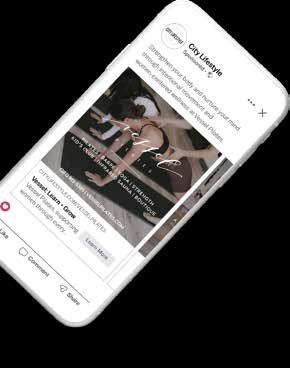

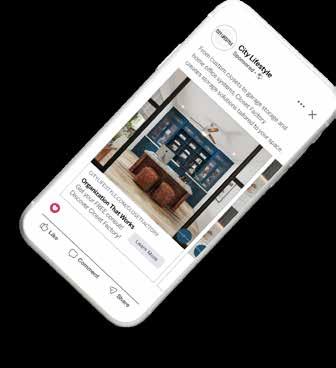
With City Lifestyle’s co-branded print + digital packages, your business captures attention wherever our community is looking. Build unmatched local credibility on the page, and drive immediate action online.
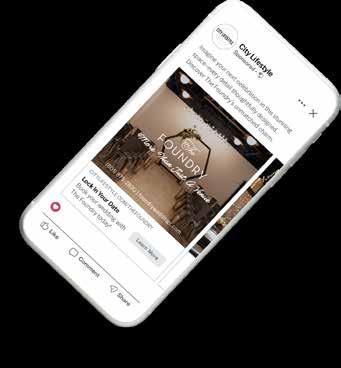
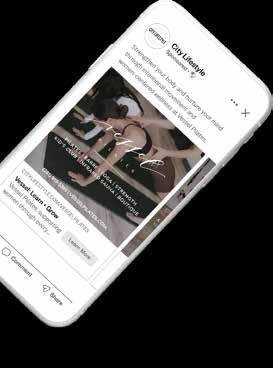

Contact your local publisher by scanning below.


ARTICLE AND PHOTOGRAPHY BY CHELSEA LYN AGRO
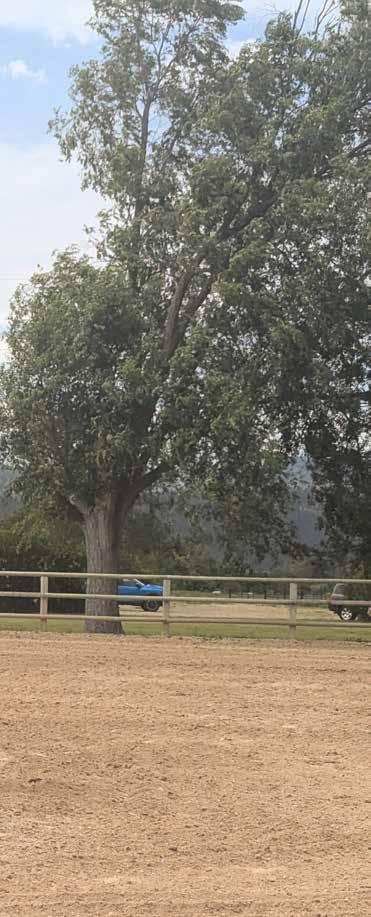
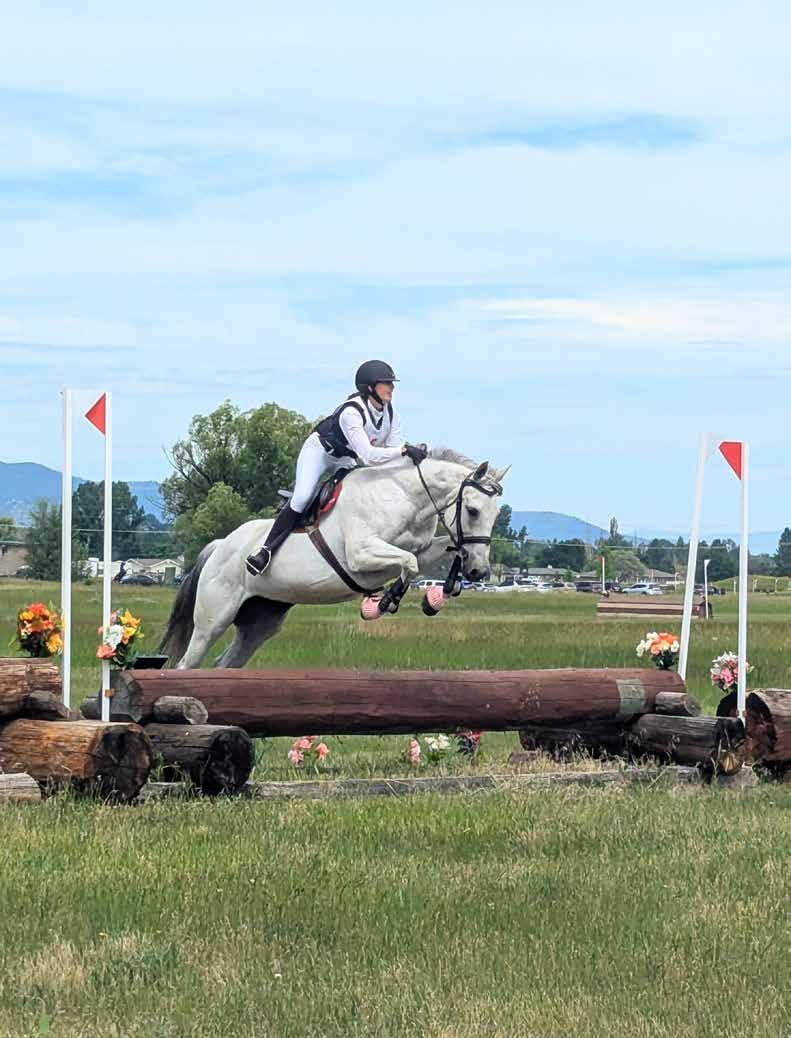
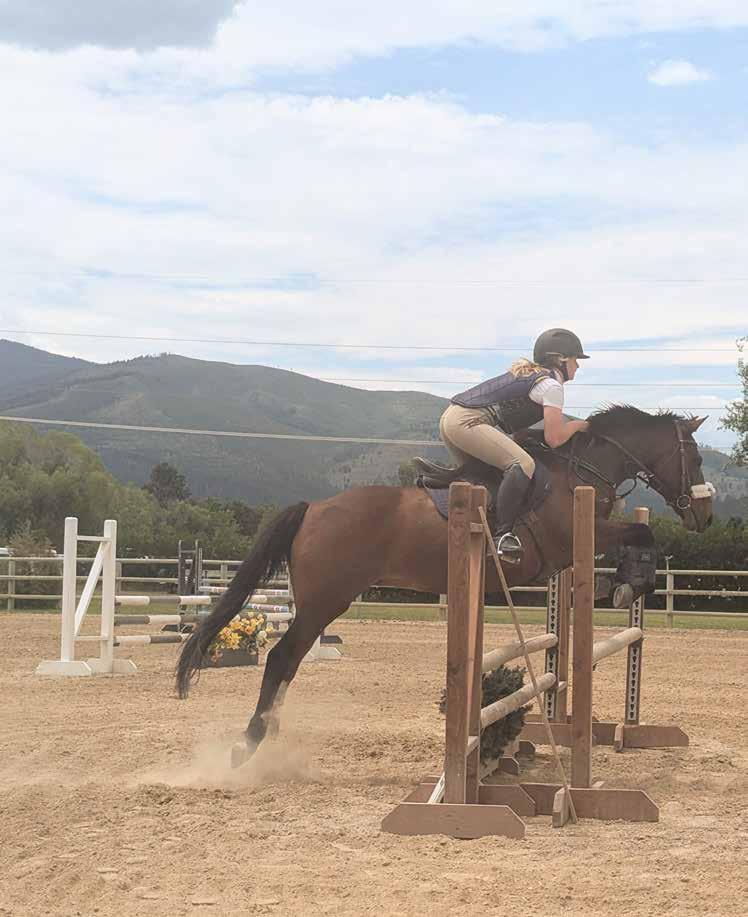
If you’ve ever ventured catty corner from a track meet at Big Sky High School to see where a galloping horse was going on a random Saturday in summertime, you might have been wonderfully welcomed to the Big Sky Horse Park.
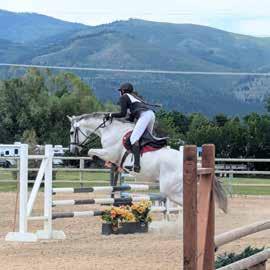
There truly is no greater invitation than hearing the thundering of horse hooves making way through a freshly mowed cross-country course, or seeing their glistening coat shine in the sun with a rider aboard. One could know nothing about horses and still, somehow, feel this rush of emotion upon seeing them, maybe even feel a swell of tears coming on. After all, this is Montana. Horses are part of the picture here. And in Missoula, this park is an epicenter for equine events for locals and travelers from all over the state and region. In fact, the youths of the Pacific Northwest have been frequenting events such as the Flying Colors Mini-Event and Open Dressage Show for so many years that kids are growing up right here at our hometown competitions—events that are ultimately made possible by our community.
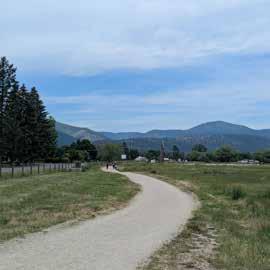
It’s very likely that someone may walk their dog at the Park every morning, maybe let them take a dip in the ditch that flows through its center and dry off their coats in the tall grass on the way home. They may pass mothers or fathers pushing baby strollers, kids riding their bikes along the 1.7 mile perimeter trail that was established in 1999 with the help of Susan Beyer and Big Sky Stewardship Committee, and it’s also possible that they may never see a horse at the Horse Park during all the hours they spend there. But what that diligent Park user doesn’t see is the little girl whose parents spend whatever spare money they have on their daughter’s athletic life. She takes lessons every week, for years, has to haul her horse here from states away, makes sure the horse feels comfortable in the stables at our Park, and that same little girl will compete here on a sunny Saturday morning because she’s been working all year to do well at this very particular opportunity. An
opportunity that has been carefully orchestrated by countless sponsors and volunteers. And where there is a story like hers, there are a hundred more just like it.
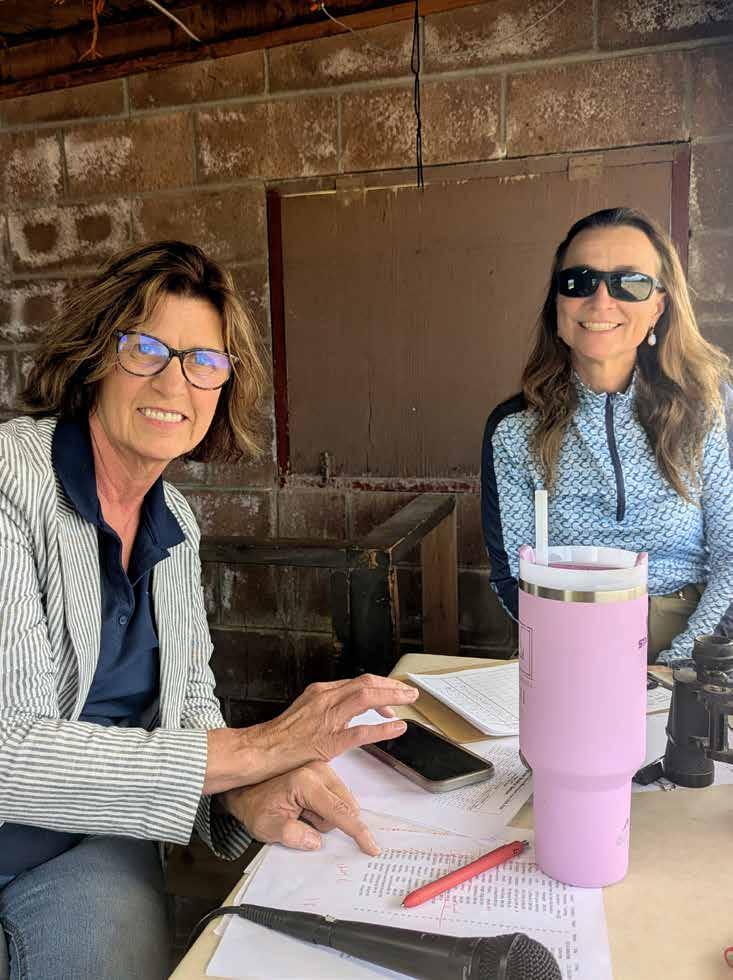
And that’s where President of the Big Sky Horse Park, Karla Nichwander, chimes in just before she spends the day announcing riders, pinnings, and overall, keeping the day’s events running smoothly when the Mini-Event starts up. “It’s an opportunity to engage with the horse and engage with your buddies—you’re out there and you’re just doing it…It’s such an easy, low-key way to experience competition, or observing someone else and setting a goal for yourself. It really comes down to giving our youth that opportunity.”
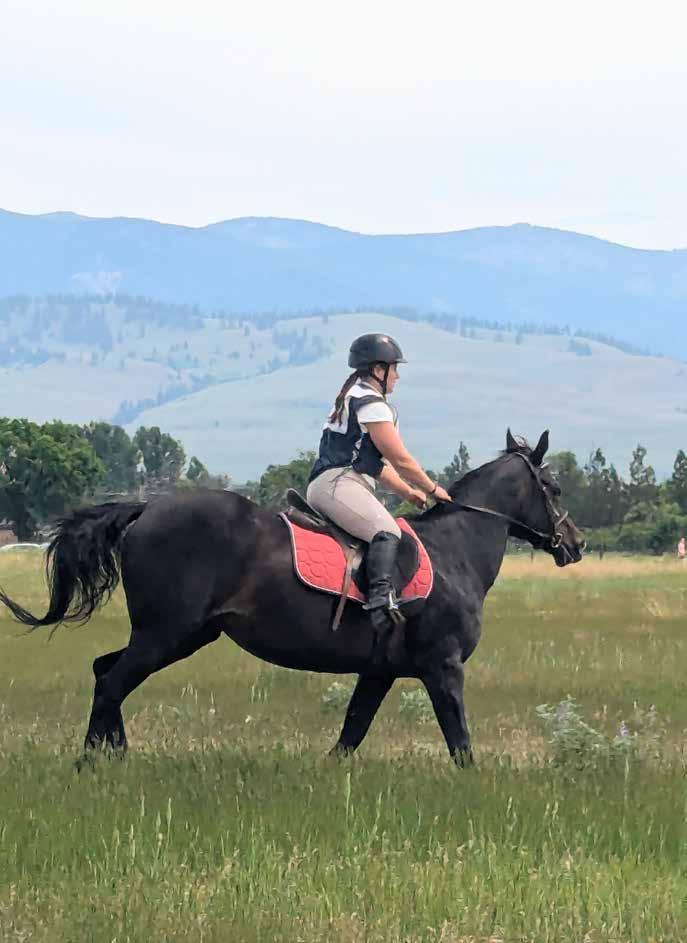
As her voice carries out into the breezy summer day, a woman pushing her toddler in a stroller on the perimeter trail stops and shields the sun from her face and several of us watch a dark pony canter out across the field—ears perked forward. It’s Alycia Nortz aboard Midnight. They come down to a trot for a few steps as her mount takes in the surroundings, nostrils flared, and Alycia reaches down, rein in hand, and calls out, “It’s ok, you know what to do.” They get their canter back and away they go toward the next fence and then they power off to several other fences out of our view. Cross-country is an exhilarating and challenging phase of the eventing discipline, and due to the nature of the widespread course, it’s a true treasure in our region for the equine community to use our Park as a training facility and competition grounds to further the education of horses and riders who want to explore that avenue. Accessibility is everything.
“Later this month we’ll have our third Family Fun O-Mok-See— we’ll have kids on ponies, all the way up to teens on their horses. They’re doing Western games and using the flags and learning how to navigate an arena, and we have the set up for that,” says Karla. “And then we have this Flying Colors Mini-Event, where they’re out using the other 90 acres of the Park. To have the ability to have all of that under one umbrella is such an amazing opportunity for any discipline, or even just for that nostalgic old lady like myself, or the little kid who’s dreaming and wants to go watch—to have it in our yard is so wonderful, but it doesn’t come cheap.”
As a realtor, Karla also knows that money talks. So how do we protect this vast open space like the jewel that it is? “If we properly manage the Park and we show, not necessarily profit, but show good stewardship, good improvements, a lot of use, then it’ll never go away, right?” says Karla. “But if we leave it fallow and let it be, then I think you run the risk.” On a day like the particular day of the MiniEvent, the Park is bustling with kids and their steeds. Some horses need an extra look at a fence before they take flight and some kids do, too. But they count their strides. If you’re close enough to the rail, you can hear them. Their cheeks are rosy with the heat of the day and everyone’s getting a bit sweaty as lunchtime rolls around.
“The beauty of the Park is that those entry fees or that membership—it’s so nominal that you can do it and still put food on the table or grain in their bucket,” says Karla, who had a pony once herself. Named Meatball. Her parents had a butcher shop over where Grizzly Grocery is and she’d walk her little self from the South Side of town to North Avenue, swing a lead rope over his neck, put a halter on him, and ride him all the way across town. “I think people are nostalgic for that. I think there’s something about the safety and security of pure enjoyment of your hometown. And we were city folk—it wasn’t like we were out on the farm, on the ranch or anything. It was right here in Missoula.”

"IT’S SUCH AN EASY, LOWKEY WAY TO EXPERIENCE COMPETITION, OR OBSERVING SOMEONE ELSE AND SETTING A GOAL FOR YOURSELF. IT REALLY COMES DOWN TO GIVING OUR YOUTH THAT OPPORTUNITY.”
“THE BEAUTY OF THE PARK IS THAT THOSE ENTRY FEES OR THAT MEMBERSHIP—IT’S SO NOMINAL THAT YOU CAN DO IT AND STILL PUT FOOD ON THE TABLE OR GRAIN IN THEIR BUCKET.”
- KARLA NICHWANDER


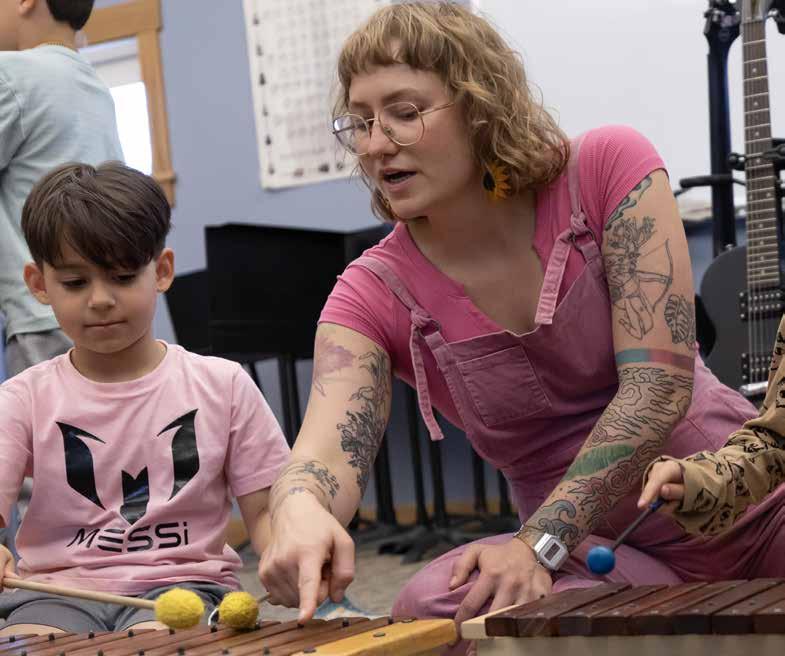
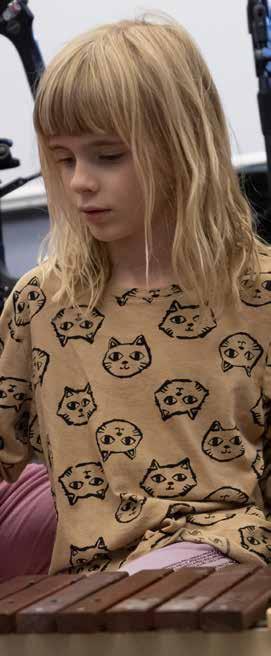
Children who get to experience music early in life are introduced to big concepts in exploration
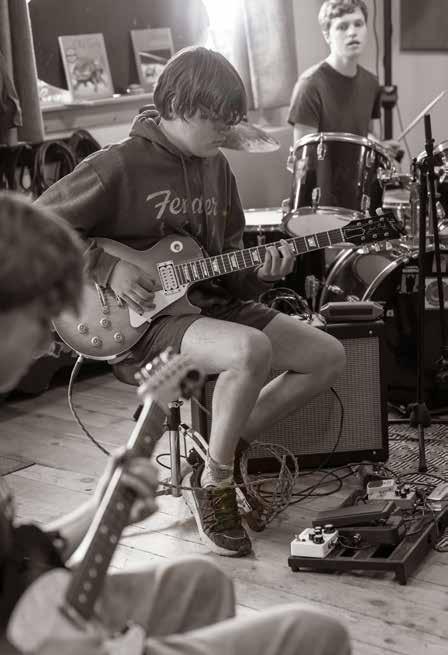
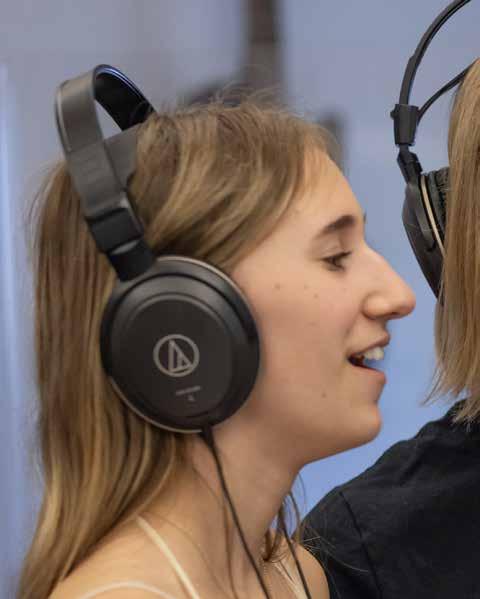
There’s a lot of science that shows the benefits of music lessons for kids. From increased brain function and cognitive development, to enhanced motor skills and pattern recognition, music can be an accelerant for a variety of nuts-and-bolts life skills.
You can read the studies and learn a lot, for sure. You can hear it straight from the people themselves who do this work day in and day out, who have made a life out of teaching music to kids, and you’ll probably learn plenty more; you might be surprised at the horizons music education can open up.
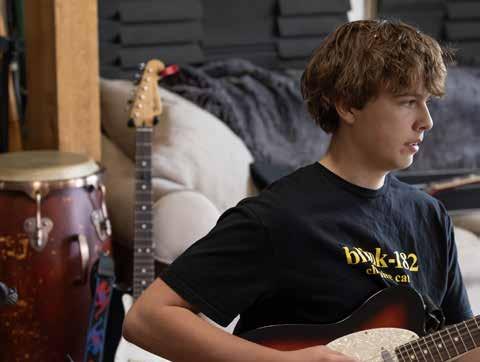
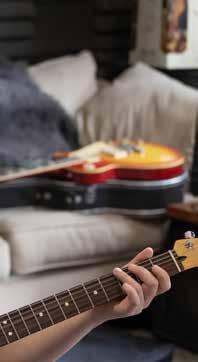
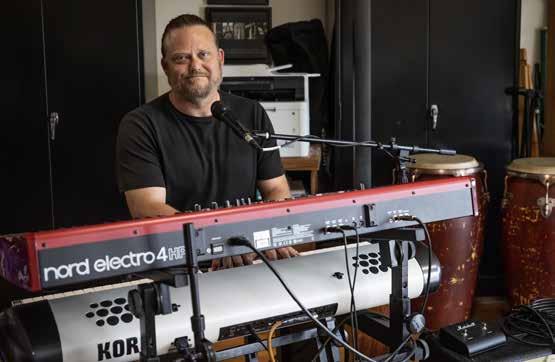
Ceci “Juni” Monroe and Matthew Nord—friends, bandmates, and fellow music educators—see music as a means of accessing all kinds of knowledge, well beyond the relatively simple act of placing notes in a sequence.
“Being that I work with youth of all ages and preschools a lot, I love how many things you can teach through music. It’s just this great conduit,” says Matthew, owner of Nord Studios and Tangled Tones Music Studio, teaching artist and father of four. “You could teach about culture. You could teach about geography, math. You could teach about any subject through music.”
“I would say my program at Sussex is almost entirely integrated with other subjects,” says Ceci, who is the K-8 music teacher at Sussex School as well as having her own private studio. “I could teach fractions through rhythm. I could teach spelling or magic ‘e’ words and vowel sounds based on note reading. I could teach relationships between units of measurement, either through frequency and hertz, or through relationships between different chords in a key.
“The framework that I see for education, in general, is not siloed,” she says.
And if music can be a pathway to tangible skills, it can be an even greater medium for bringing kids to an understanding of deeper and often more ambiguous—but by no means less integral—life skills.
Music has all sorts of other lessons baked into the learning of it, lessons that might not seem so obvious on the surface of notes and scales.
“I think [learning music] is about learning oneself,” says Matthew. “For a lot of my students, I’m there realizing what their block is, a creative block or a confidence block or something that is keeping them from doing what they wanna do. It’s having somebody not feel like ‘I’m not good at this.’ Because I felt that so much growing up, and it’s what kept me out of this for so long.
“I hope to teach anybody to be their own best teacher,” he continues. “A lot of that is just listening to intuition, listening to your heart.”
“It’s an opportunity to explore, as Matthew said, freedom, flexibility, self-expression and play, as much as it is to be able to explore structure, solidity, and repetition and iteration,”
Ceci says. “I think that’s one of the biggest lessons that we all are constantly having to learn: the balance of flexibility and structure, whether it’s relationally, whether it’s inside ourselves, with other people, with the world. Music is inherently collaborative. There’s so much connection and belonging that can be unlocked in just the simple act of active participation or active listening.”












































ARTICLE BY MARKO CAPOFERRI
PHOTOGRAPHY BY RICK SZCZECHOWSKI
Blue Reef is
tropical
and Travis
is the expert you want to know
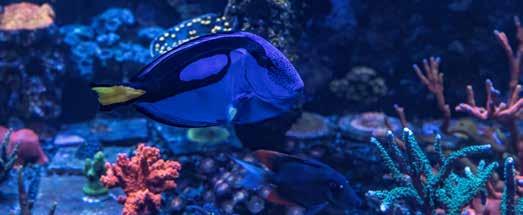
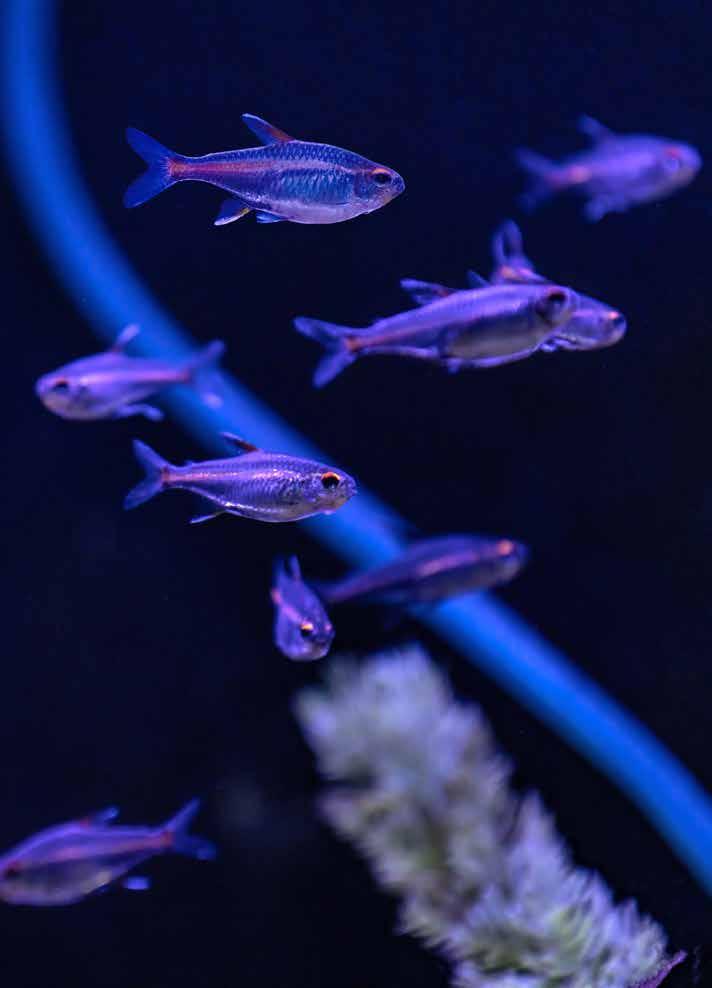
Of all the things to have a slightly unhealthy fixation on, keeping tropical fish is probably quite low on the list of something your friends and family will worry about. Be careful, though: it just may become a way of life.
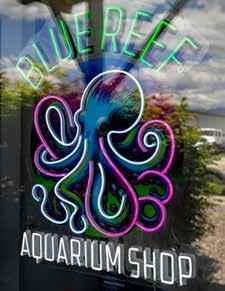
This is pretty much what happened to Travis Homme, owner and operator of Blue Reef, a shop on Missoula’s West Side that specializes in exotic fresh and saltwater fish, invertebrates, and coral.
“I ran another store here locally, The Blue Realm,” Travis says, “for a gentleman named Steve Rostik. I ran his store for about 15 years. I think he was just an interesting enough personality that I wanted to be around him more than the store. That’s how it all came about, and I’ve just been kinda doing it ever since.”
Blue Reef is set in an unassuming block of small warehouses just off West Broadway. Step inside and it’s like being transported to another world that belies the monochrome exterior. It’s a world of soft, blue light, aquariums lining the walls containing wildly colorful fish and corals that dazzle with their glowing hues. It’s no wonder that winter is a busy time of year, when folks could use a good dose of color in their lives.
“I talk to some of my comrades that live in places where they don’t really have seasons, and they say they’re busy all the time,” Travis says. “We slow down in the summer pretty good.
I think it’s because, you know, you’re stuck inside all winter most of the time here in Montana. It’s super cold, and it gets dark at 4:30 in the afternoon.”
Now, after three-plus decades in the business, Travis has paved the path from labor to labor of love. It might be a business, with all the ups and downs that would entail, but for him it’s worth any bumps in the road to get to spend hours each day with what he loves.
As he says, it’s not his job, but a way of life.
“It’s really just mind, body, and soul,” he says. “It’s very Zen to own an aquarium. I don’t have a TV in my house, I just watch my aquariums. It’s very addictive.”
“I have run a lot of businesses, but this isn’t my job, and I don’t look at it that way either,” he continues. “I’m not here for the money; I’m here because I love fish. My wife told me I couldn’t have any more aquariums at home. So the next day I rented this warehouse. It’s more my passion, my hobby, and I needed a place to take my hobby to the next level.”
What is it, then, that made Travis take such a leap, to put so much on the line in order to expand a hobby? Again, it doesn’t feel so much like a decision he made as it feels like a natural extension of his life.
“I spare no expense for the health of my animals, even if it costs me more money than they're worth.”
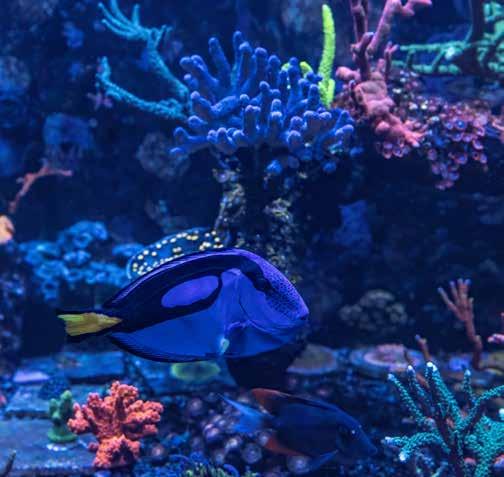
For one thing, he’s a farmer. It’s how he makes his living, and just like the animals he raises on his farm, he wants the animals in his store to have the best possible life.
“I just like to pass on my knowledge of the 35 years in the aquarium industry and try to help people understand that there is a better way to do things,” he says “Most people don’t know that other way. They just know the way we’ve been doing it forever: normal tap water, normal garbage food, and really it comes down to, ‘would you eat that stuff or drink that stuff?’ And the answer is ‘no.’ I don’t drink Missoula city water; I wouldn’t put my fish in Missoula city water. I want them to be as happy and healthy as they could possibly be. And I want you to want that too before I sell my animals.
“I see it every day. I have the conversation about health and happiness way more than I would like to. It almost wears on me, you know?”
And the fact that raising and selling fish and coral is not a money-making endeavor for him really sets Travis apart from those who appear to be in it for the payout and not the animals themselves.
“There’s just not a lot of really good fish stores out there. I’ve traveled all over and I go to the fish stores because it’s my hobby. There’s not a lot of good stuff,” he says. “You can tell most people don’t do it for the love of what they do. They do it for the profit.
“I spare no expense for the health of my animals, even if it costs me more money than they’re worth. It’s an ethical thing, right? And that is why I have a farm, so I can love my animals, just give them the best life I can. Same thing with all my animals here.”
“I just like to pass on my knowledge of the 35 years in the aquarium industry and try to help people understand that there is a better way to do things.”

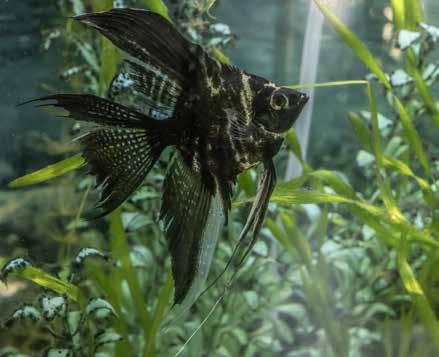
It’s probably pretty clear by now that Travis is heavily focused on doing things a certain way. He wants to carve a path of ethics and care through a society that often expects us to turn a blind eye to harm, in the interest of increased efficiency and profit.
Anything that Travis can do to be a more mindful steward, he will do.
“I do aquaculture a lot of my own coral,” he says. “I grow it, I frag it, so that I can do my part in helping not rip the oceans apart. We can’t do any more than that because that’s just industry. So I try to do my part by growing and making as much of it as I possibly can. It’s probably a speck in the eye of the ocean, what I am trying to do, but I gotta do my part, right?”











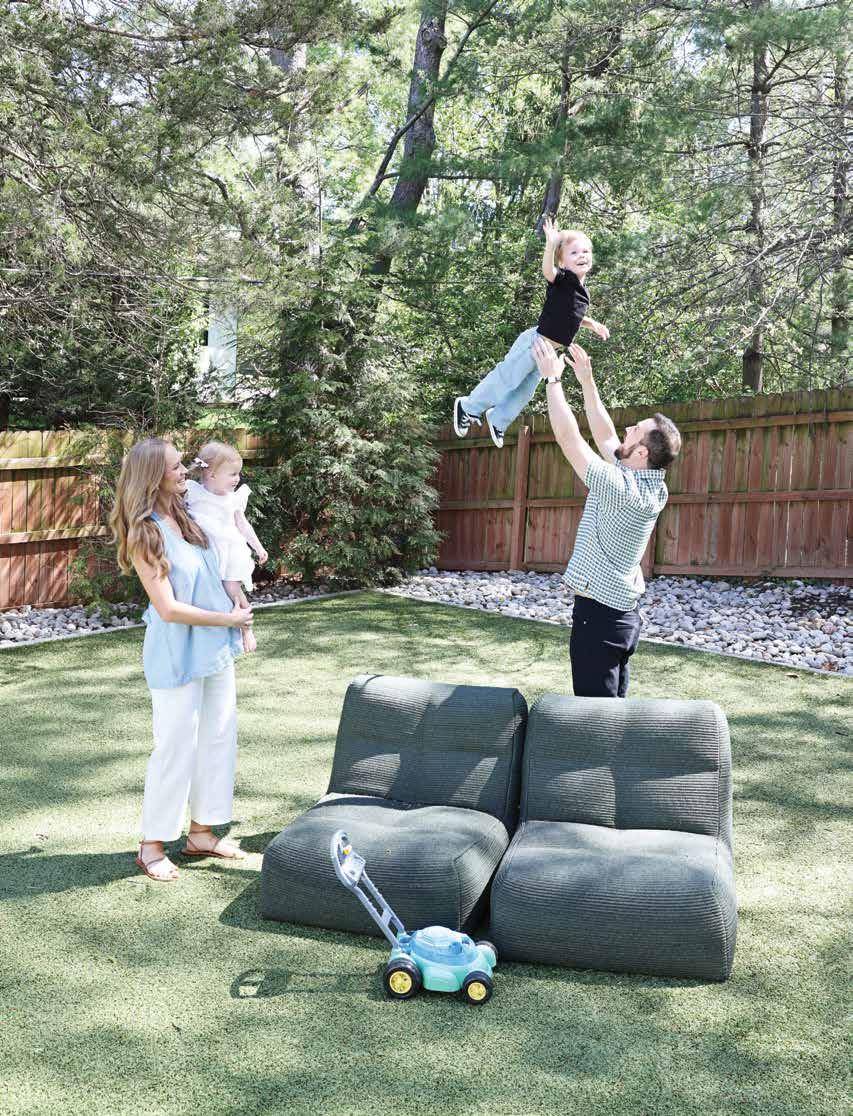
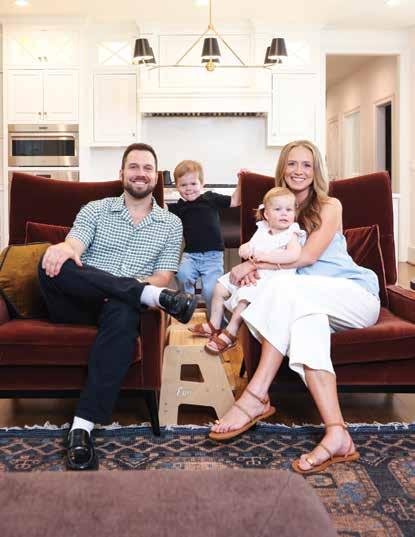
Trey Kennedy makes a living finding comedy in regular life. Marriage. Toddlers. Yoga pants. The Thursday-night scramble between school dropoffs, soccer practice, and whatever has to be done by morning. Twelve years in, it shows: millions of followers across every platform, three stand-up specials, a sold-out Relatable Tour, and a style of humor fans send each other captioned, “Are you watching me?” He delivers the kind of comedy that travels because everyone’s living some version of it.
Katie, his wife of six years, is a former biomedical engineer who also built a modeling career. She’s now raising their kids and co-hosting Correct Opinions alongside Trey — the show where the two of them swap takes on marriage, parenting, and whatever came up that week.
Trey has been at this longer than people realize. An Edmond, Oklahoma kid who grew up playing basketball described himself as a “shy kid who never thought he’d be an entertainer.” He started making videos while attending Oklahoma State University. After building millions of followers on Vine before the platform shut down, he gave himself six months on Instagram and Facebook to see whether he could rebuild from zero. He did. Stand-up soon followed. His first special, Are You For Real?, streams on YouTube; the second, Grow Up, on Amazon Prime; the third, built around the Relatable Tour, wrapped earlier this year. “I’ve been trying to be funny every week for like twelve years now,” he says. A slow climb, made one bit at a time.
ARTICLE BY KALI KASPRZYK PHOTOGRAPHY BY JANIE JONES
“I’ve been trying to be funny every week for like twelve years now.”
Most of what Trey writes lately starts in his own kitchen. Thomas is three and a half, and he is, in his father’s words, “a movie.” He narrates his own life from the moment his eyes open and mispronounces words in ways his parents now repeat to each other because no one else would believe them. His younger sister, Eva, is what Katie calls “the calm one.” With a third now in the mix, the Kennedys are officially outnumbered.
After six years of marriage, Trey and Katie have learned that the partnership runs best when it gets its own time on the calendar. So once a week, they leave the kids with a sitter and go out for coffee. “You need a system,” Katie says. “It’s about taking time to look each other in the eye. Not the kids. Not the cameras. Just each other.”
The same instinct shapes the work. Most of Trey’s trial and error happens onstage or on Instagram, but the first read is always Katie’s. “There’s only been one time ever I’ve had to be like, ‘you’re not doing that,’” she says. The rest of the time, she just laughs first.
FEATURING TREY & KATIE KENNEDY
Trey and Katie talk about marriage, parenting, and the moments that don’t make the Instagram feed.
Watch or listen to the full conversation wherever you get your podcasts.















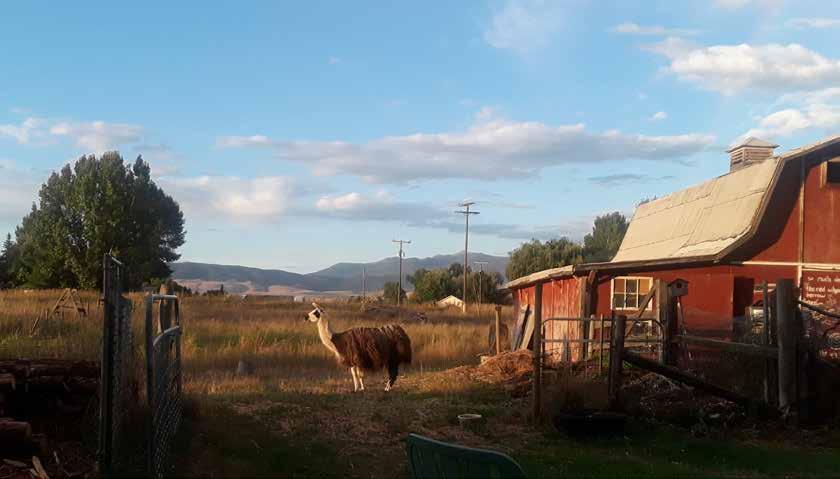
When my husband bought our home, the property came with some extras: a detached garage with a shop, a small barn, and a llama. That’s right, a female llama. Although we were the ones signing the deed, over the years we came to understand that we were just visitors on the land that she watched over for nearly 26 years.
We were told that the llama’s name was “Pancake.” I’m not sure how she got that name, but looking at her rough coat, it made sense. She hadn’t been sheared in a long time. Her hair had tangled into large, flat mats that draped her body like saddlebags. Since “Pancake” is also a comical term for dreadlocks gone wrong, it seemed like a good fit. To keep her company, my husband bought some chickens. I regularly lobbied for a pig. “Then we could have pancakes, bacon, and eggs,” I would joke.
After settling into our home, one of the first things we did was call a vet. A worn, sun-bleached halter dug into the front of Pancake’s long nose and, although we didn’t know much about llamas, we guessed that her toenails might be overgrown. These issues made sense. The previous owners cautioned that she had never let anyone close to her. We were told that she originally came from the old KOA petting zoo in Missoula and had been left traumatized. The day that the vet came, she proved them right.
ARTICLE BY SHELBY HUMPHREYS
That morning, somehow we got her into the barn. However, when we tried to secure her to a post, she kept thwarting us with big swings of her substantial behind. Trust me, you do not want to get hit by a llama’s butt or get a spring-loaded kick in the shin with those long toenails. When Dr. Rollett Pruyn arrived, we were grateful and in awe at what he did next. This burly man lassoed our obstinate llama, clipped her toenails, removed the halter, and got some inoculations in her, all in under two minutes. Dr. Pruyn had brought his young son along that day, and the boy stood far back watching his dad work while Pancake made prehistoric bellows and spit green goo in protest. The boy looked up and exclaimed,“She’s a monster!”
Traditionally, llamas have been valuable resources by providing both work and wool. After that vet visit, though, any ideas we had of collecting wool from Pancake were definitely dashed. If we were to try shearing, her evasion of people meant that she would need to be tranquilized—and her age indicated that she wasn't likely to survive that. So, we let Pancake be. That doesn’t mean she wasn’t of great use, though. Llamas act as a kind of early-warning system by making a distinct call when they spot predators nearby. Ranchers often add them to herds for guarding livestock. On our tiny ranch, all we had were a few
head of chicken, a goose, one cat, and two dogs. Still, Pancake did her job. I remember when I first heard that unique call. I jumped up in surprise at the odd sound. It wasn’t anything like that shriek we heard during the vet visit. For all the world, it sounded like the laughter of ducks. A picture formed in my head of a flock of ducks playing poker in the back field.
For many years, Pancake faithfully executed her self-appointed job by standing sentry in her back field. Eventually, we decided to open up the gate into our yard and let her retire in the green grass. She quickly took to her leisurely lifestyle. Several shade trees became good for sitting under while she chewed her cud. She also enjoyed the carefully chosen crop of perennial flowers I had planted. After much frustration, I surrendered to the idea that I was simply providing her with dessert. Even with these luxuries, though, she still kept a routine. In the mornings, Pancake sat in the front yard and watched as neighbors drove by on their way to work. Our neighborhood bus driver let us
know how much he enjoyed seeing her on his daily route. In the evening, she returned to her back field to watch the sunset. She stood there, facing west, until the golden light faded from her face and it was time, once again, for overnight patrol.
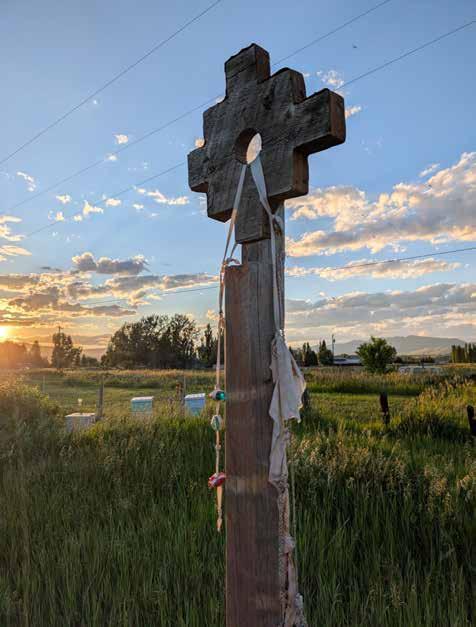
In 2022, Pancake saw her last sunset and passed away at the age of 26. A year earlier, we had looked up the Guinness World Record for the oldest llama. She was on track to take the title if she had lived only a couple more years. Still, we like to think that we gave her the best of her years on the acreage she called home for most of her life. Thankfully, we were able to honor her dedication by burying her in the back field that she watched over so diligently. My husband made an Incan burial icon to mark her grave. We decorated it with colorful ribbons and bells in the cultural traditions from the Andes mountains of South America where llamas originally lived and worked. Now, when the sun sets in the west, the golden light reflects off those ribbons and bells.
THANKFULLY, WE WERE ABLE TO HONOR HER DEDICATION BY BURYING HER IN THE BACK FIELD THAT SHE WATCHED OVER SO DILIGENTLY.

















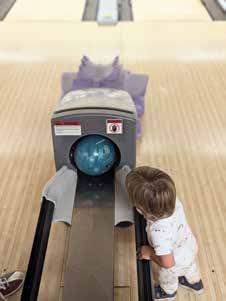
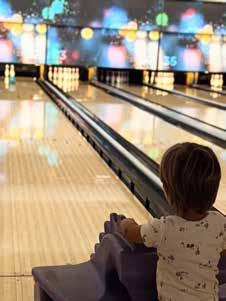

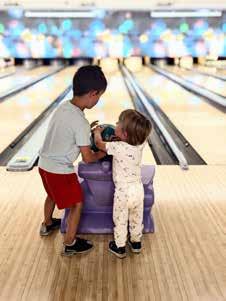
WESTSIDE LANES & FUN CENTER
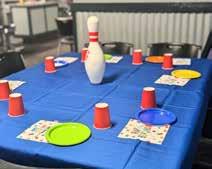
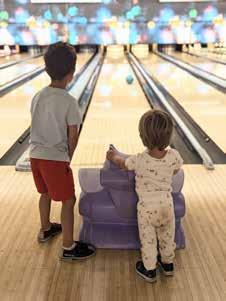
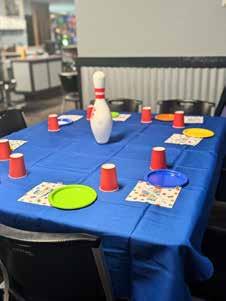
Sometimes you just need to beat the heat when that August heat sweeps low into the valley. Westside Lanes & Fun Center, if you’ve never been, hits you almost simultaneously with its dark entrance and cool air and you know already that you’ll want to stay put for a few hours. And if you have kids, all the better. Kids Bowl Free is a summer program that allows children ages 2 to 15 to play two free games daily throughout the summer months. Standard shoe rental fees still apply, and a Family Pass is available to encourage family members to bowl alongside their kids during the same session.
With 36 lanes, a full bar and grill (not to mention the arcade games for after your frames!), it’s a one-stop-shop for a day of indoor play. Westside Lanes has been family owned and operated for over 40 years, specializing also in birthday parties of all variety packages to cater to your specific needs.
Visit MissoulaBowling.com to view hours and party booking details.


Water Is Our Business

D i v e i n t o o u r s h o w r o o m a n d d i s c o v e r a n a r r a y o f w a t e r s u p p l i e s j u s t w a i t i n g f o r y o u !
L e t u s h e l p c r e a t e y o u r d r e a m o a s i s !
2 1 0 1 M U L L A N R D - M I S S O U L A
w w w . m o u n t a i n s u p p l y . c o m 4 0 6 - 5 4 3 - 8 2 5 5