

LOVE THE WAY YOU LOOK, FEEL, & LIVE IN EVERY SEASON.


LOVE THE WAY YOU LOOK, FEEL, & LIVE IN EVERY SEASON.
Hello Lincolnway,
Can you believe it's been a year since we started this conversation? I am so proud of (and grateful for) the Founding Partners who launched with me last April, the staff that started with me, and the residents and town leadership who believed in me. Because of all of you, we're sharing some of the best stories Lincolnway has to offer. Along the way, I've had residents call me directly expressing their gratitude. One of my favorite calls came from a 30 year resident who said "I've lived here for thirty plus years and never knew that ...(fill in the blank)......Can you please keep it up?" That is truly our intent.
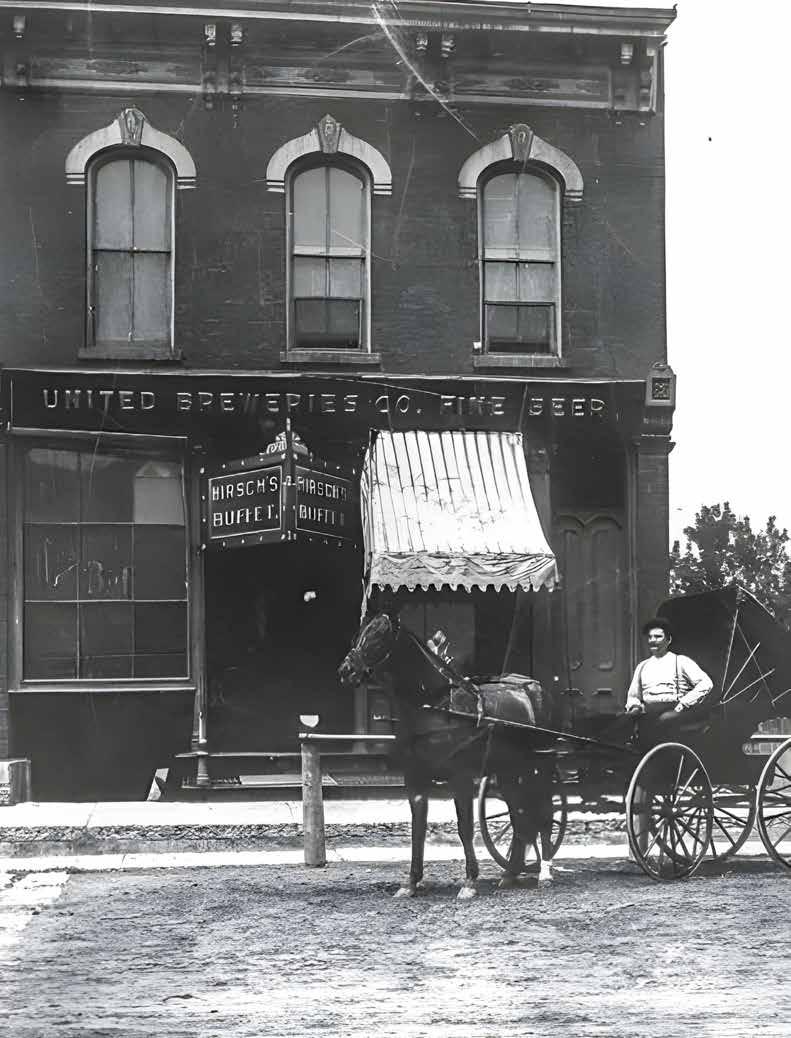
When we spoke about investment last year, we focused on why residents choose to invest in Lincolnway. This year, although we share how investments have grown in our community over the years (Don't you love that front cover?), we want to focus on investing in ourselves. This is something that can be so very hard to do for many of us. Whether it's our financial investments, our health and wellness investments, or our investments made in/for our loved ones, investing takes time, effort, energy and cash and hopefully returns well for us. How well do you invest in yourself and your future? Let these stories be a guide for your consideration. Speaking of investing, I'd like to introduce you to our newest Partners who have chosen to invest in helping to shape the story of Lincolnway. Welcome to Zoelife Psychiatric Services in Frankfort and Dirt Oval 66 in Joliet. It's great to have you with us.
Happy Anniversary, Lincolnway! I wish you all the best!

JANET VIANE, PUBLISHER @LINCOLNWAY_CITYLIFESTYLE
April 2026
PUBLISHER
Janet Viane | janet.viane@citylifestyle.com
EDITOR
Nicole Swanberg Wright
nicole.swanbergwright@citylifestyle.com
PUBLISHER ASSISTANT
Kenadee Berry | kenadee.berry@citylifestyle.com
SOCIAL MEDIA COORDINATOR
Meg Mueller | meg@socialbutterflysocialmedia.com
STAFF PHOTOGRAPHER
Jean Lachat | jean@jeanlachatphotography.com
CONTRIBUTING PHOTOGRAPHER
Chris Moran | cmoranphotgraphy@gmail.com
CEO Steven Schowengerdt
President Matthew Perry
COO David Stetler
CRO Jamie Pentz
CoS Janeane Thompson
AD DESIGNER Rachel Kolich
LAYOUT DESIGNER Kelsey Ragain
QUALITY CONTROL SPECIALIST Marina Campbell


Proverbs 3:5-6



















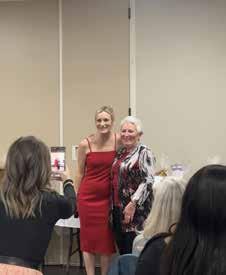
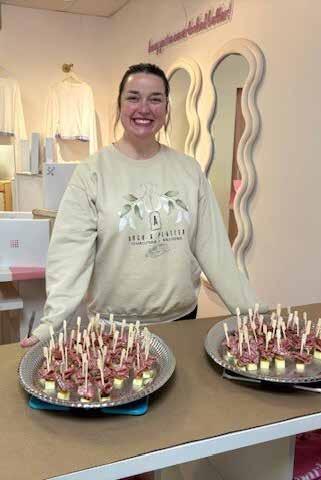

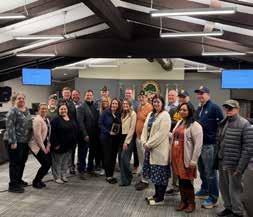

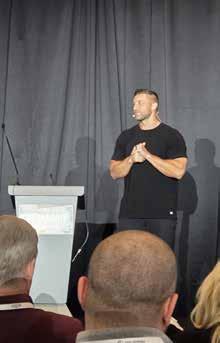
1: Kathy Miller celebrates an amazing 40 years as a member of the New Lenox Chamber. 2: Country Club Social recently had a ribbon cutting to celebrate their grand opening! 3: Keynote Speaker and philanthropist, Tim Tebow, spoke at the annual City Lifestyle conference. 4: Marian Village was presented an award from American Legion Post 2011 for their continued partnership. 5: Frankfort Chamber hosted its 6th Annual Bubbly & Chocolate Walk in downtown Frankfort. 6: Young violinist Arabella Alvarez received a restored family-donated violin at recent Illinois Philharmonic Orchestra’s concert. 7: Lincolnway City Lifestyle hosted a Marketing Strategy class for its Partners.
Want to be seen in the magazine?



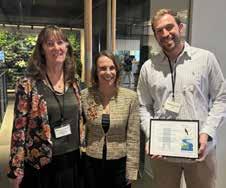
The Forest Preserve District of Will County received a Silver Ribbon Award from Friends of the Chicago River for the Lockport Prairie and Prairie Bluff Ecosystem Restoration Project. Presented at the 2026 Chicago-Calumet River Summit, the award honors projects protecting regional waterways. The six-year restoration enhanced more than 600 acres, restoring rare dolomite prairie and critical habitat for federally endangered species.
The Right Choice Home Care proudly celebrates 10 years of serving seniors with compassionate, non-medical home care. The company also marks recent industry award recognition and a strong Better Business Bureau rating, reflecting its commitment to excellence and integrity. Led by certified dementia practitioners Sharon and Johnathan Newman, the organization continues to provide personalized care that promotes dignity, independence, and quality of life for seniors in the community. For more information, visit rightchoicehomecare.com.
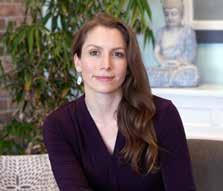
Ancient Roots Acupuncture is thrilled to welcome Rachel Rivers, L.Ac., MAcCHM, to the team. Inspired by the meditative martial arts of Wudang Mountains, rooted in Chinese medicine principles, Rachel first turned to acupuncture to avoid shoulder surgery. She later earned a master’s degree in acupuncture with a specialization in Chinese herbal medicine. As a practitioner, she continues to witness this medicine’s power to heal, harmonize mind, body, and spirit, and elevate overall wellbeing.
Want to be featured?

Several of Lincolnway City Lifestyle partners were nominated for Women in Business Awards, including Julie Gardner of Associated Orthodontists, Jean Lachat of Jean Lachat Photography, Sharon Newman of Right Choice Home Care, and Raven Fisher of Nave Wellness. Award categories include Behind the Scenes, Community Supporter, Family Business, Future Star, Mentor, Superwoman, and Sustainable Change Maker.

After a decade at Trinity Christian College coordinating major events and partnerships, Brooke Simkins stepped into a familiar new chapter as Development Director for the Illinois Philharmonic Orchestra. Formerly Trinity’s director of event services, she worked closely with IPO, helping establish it as orchestra in residence. That long-standing partnership, combined with her relationship-driven leadership style, made the transition feel like a natural continuation rather than a departure.

Lincoln-Way District 210 has approved the launch of girls flag football at Lincoln-Way Central, Lincoln-Way East, and Lincoln-Way West beginning in the 2026–2027 school year. One of the nation’s fastest-growing high school sports, the program expands opportunities for female student-athletes. The district has named inaugural head coaches: Sarah Willis (Lincoln-Wau Central), Blake Hammond (Lincoln-Way East), and Dominic DeLuca (Lincoln-Way West).


WHY

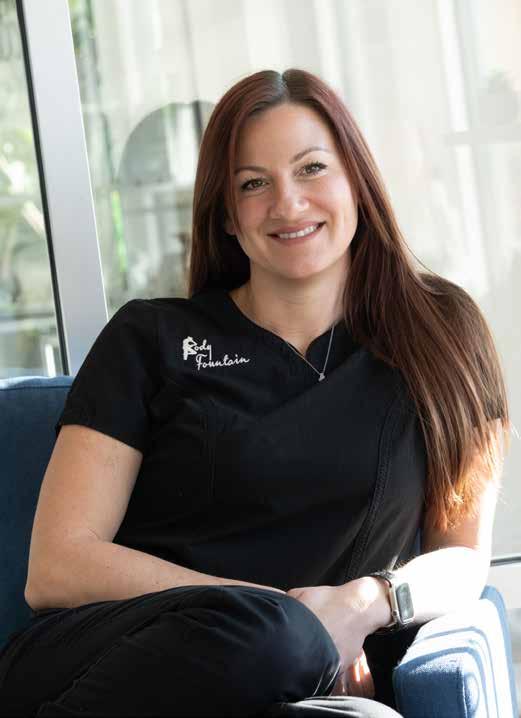
What rejuvenates you? When we hear the word rest, we often picture napping on the couch or finally getting a full eight hours of sleep. But what if rest is more than stillness? What if it’s about restoration — about filling your cup? Recently, I’ve come to understand rest as rejuvenation, especially in the midst of busy lives filled with work deadlines, morning school routines, math homework help, and the nightly decision fatigue of figuring out what’s for dinner. In that context, rejuvenation becomes just as essential as rest itself. For me, playing outside with my toddler is rejuvenating. Finding a new recipe (especially when it actually turns out) rejuvenates me. Time in nature, or quiet moments alone with a book, restore energy in ways sleep alone sometimes can’t. Rejuvenation doesn’t always look like stopping; sometimes it looks like choosing what gives back.
In a culture that glorifies hustle, productivity, and doing more with less, rest is often framed as indulgent — or worse, lazy. But according to Krystal Wilson, owner of Body Fountain, rest is neither a luxury nor a reward. It’s maintenance. And like any smart investment, its returns compound over time.
“Rest allows your body and brain to repair, recharge, and regulate essential functions,” Krystal explains. “Without enough of it, everything starts to suffer: your energy, your focus, your emotional balance.” Over time, that depletion shows up as chronic stress, burnout, and declining health. In other words, skipping rest is far more costly than prioritizing it.
For many high-achieving professionals and caregivers, self-care is still treated as something optional—something you squeeze in once everything else is done. Krystal challenges that mindset by reframing rest as preventative care. Just as you wouldn’t wait for a car to break down before changing the oil, you shouldn’t wait until exhaustion or illness forces you to slow down.
“When rest and wellness become part of a regular routine, people experience better sleep, clearer thinking, steadier moods, and stronger resilience,” she says. These benefits don’t just improve quality of life, they protect it. Preventative self-care helps regulate immunity, hormones, and the nervous system, reducing the likelihood of stress-related illness and long-term health issues.
Clients who begin prioritizing their well-being often notice changes quickly. Many report feeling calmer and more energized within weeks, better equipped to manage daily stressors without feeling overwhelmed. Over time, those small shifts add up to a greater sense of balance and control, something many people don’t realize they’ve lost until it starts to return.
That’s where the idea of return on investment becomes especially compelling. When it comes to rest and recovery, the ROI isn’t abstract. It shows up as higher energy, sharper focus, and improved productivity—without the burnout. “People often think rest will slow them down,” Krystal says. “But what we actually see is that they function better. They get sick less often. They recover faster. They sustain their pace instead of crashing.”
and emotional exhaustion. The body keeps score, even when we try to push through.
So why is rest so often the first thing to go? She points to deeply ingrained cultural messaging. “Rest is seen as unproductive or optional, especially in busy, high-pressure lives,” she says. Yet the irony is that rest restores the very qualities (focus, resilience, emotional regulation) that people rely on to keep up with their responsibilities.
Consistent wellness treatments, whether they focus on stress relief, recovery, or nervous system regulation, help bridge that gap. By reducing physical tension and calming the body, these practices support mood stability, mental clarity, and emotional resilience. Clients who stop viewing self-care as a luxury often notice fewer stress-related symptoms, improved sleep, and a renewed sense of agency over their health.
Rest isn’t just about stopping— it’s about choosing what restores your energy in the middle of everyday life.
In contrast, chronic stress quietly erodes health when left unaddressed. Living in a constant state of “fight-or-flight” places strain on the heart, disrupts sleep and digestion, weakens the immune system, and throws hormones out of balance. Over the long term, this increases the risk of anxiety, depression, cardiovascular disease, chronic pain,
At the center of all of this is the nervous system. Intentional rest helps shift the body out of constant alert mode and into a state where it can truly recover. “That’s when digestion improves, hormones regulate, sleep deepens, and emotional responses become more balanced,” Krystal explains. Rather than reacting from a place of depletion, people are better able to respond thoughtfully and sustainably.
Still, guilt is often the biggest barrier. Many people feel they haven’t “earned” rest, or that taking time for themselves means letting someone else down. Krystal is clear in her advice: “Rest isn’t a reward for finishing everything; it’s a requirement for functioning well.”
Letting go of guilt means reframing rest as responsible self-care. It’s not about doing less because you don’t care; it’s about protecting your energy so you can show up fully for the people and commitments that matter most. In financial terms, it’s the difference between spending recklessly and investing wisely.
In an investment-focused issue, it’s worth asking not just where we put our money, but where we put our energy. Rest may not come with immediate, flashy returns, but its long-term dividends are undeniable: better health, sharper focus, emotional stability, and a life that feels sustainable rather than constantly on the brink. The bottom line? Rest isn’t time lost. It’s value gained. And it may be the highest-yield investment you ever make.

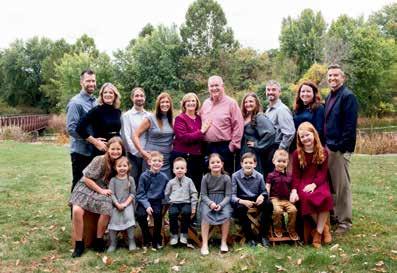


















ARTICLE BY NICOLE SWANBERG WRIGHT | PHOTOGRAPHY BY JEAN LACHAT

As market volatility, persistent inflation, and elevated interest rates continue to reshape the financial landscape, affluent families are reevaluating a fundamental assumption long taken for granted: that access to capital will always be available when needed. Even high earners with diversified portfolios are discovering that liquidity, flexibility, and certainty are not guaranteed. Increasingly, wealth-conscious individuals are asking deeper questions about where their money actually lives, who controls it, and whether their financial systems are designed to support opportunity—or quietly restrict it. In an environment defined by economic uncertainty and rapid policy shifts, the ability to deploy capital quickly and confidently has become just as important as long-term growth.
That search for control has fueled renewed interest in infinite banking, a strategy that applies traditional insurance tools in a highly intentional, nontraditional way. Rather than focusing solely on accumulation or market performance, infinite banking prioritizes ownership, liquidity, and certainty. It offers a framework for storing capital in a protected environment while maintaining access to it—without penalties, market timing, or reliance on outside institutions. For families and professionals who value autonomy, predictability, and long-term thinking, the strategy represents a quiet but meaningful shift in how wealth is structured, protected, and ultimately used.
“Infinite Banking is a strategy that uses properly structured whole life insurance to create your own private banking system,” says Randi Lynn Quigley, founder of Randi Lynn Wealth. “Instead of relying exclusively on traditional banks, you build guaranteed cash value inside a system you own—capital that continues to grow while remaining accessible for investments, opportunities, or life expenses.” Unlike conventional savings
“Infinite banking isn’t about chasing returns— it’s about control. When your money is guaranteed, accessible, and compounding uninterrupted, every financial decision becomes more intentional, flexible, and empowering.”
vehicles that force tradeoffs between growth and liquidity, infinite banking is designed to preserve both simultaneously, allowing money to work efficiently in multiple roles.
The concept was popularized by the late R. Nelson Nash in his book Becoming Your Own Banker, and interest in the strategy often increases during periods of economic instability. According to Randi Lynn, that pattern is no coincidence. “When interest rates change overnight and access to capital tightens, people start to notice how little control they actually have,” she explains. “Infinite banking restores that control by putting ownership back where it belongs—with the individual.”
At its foundation, infinite banking is not a product but a long-term process. It relies on dividend-paying whole life insurance issued by mutual insurance companies, which are owned by policyholders rather than shareholders. This structure aligns incentives, allowing profits to be returned to policyholders while providing contractual guarantees for cash value growth and access. Over time, those guarantees create a stable, predictable pool of capital that functions as a personal banking system—one that is insulated from market volatility and external lending decisions.
“One of the most misunderstood aspects is how capital is accessed,” Randi Lynn says. Policyholders can borrow against their cash value without triggering taxes or penalties, and—critically—without interrupting compounding. “Your money continues to grow as if untouched,” she explains. “You’re leveraging it, not depleting it. That distinction is what changes the math and the mindset.”
That mindset shift is central to the strategy’s appeal. Instead of viewing money as something to spend down, lock away, or wait on, infinite banking encourages individuals to think in terms of storing and leveraging capital. Money becomes a reusable resource—one that can cycle through opportunities while remaining anchored in a
protected environment. “It allows people to act decisively,” Randi Lynn says. “Whether it’s a real estate investment, a business expansion, a tax obligation, or an unexpected expense, timing no longer becomes an obstacle.”
The impact often extends beyond financial mechanics. For many, the most significant benefit is emotional. “Financial empowerment looks like calm,” Randi Lynn explains. “It’s knowing where your money is, knowing it’s growing, and knowing you have options. You’re no longer reacting to life—you’re prepared for it.” That sense of stability is especially valuable for entrepreneurs, investors, and commission-based professionals whose income may fluctuate but whose opportunities require speed and confidence.
Randi Lynn is also clear that infinite banking is not designed to replace traditional investing. “Investments are focused on returns,” she says. “Infinite banking focuses on control, liquidity, and certainty first.” By strengthening the foundation beneath an investment strategy, individuals are better positioned to take calculated risks without being forced to sell assets or borrow under unfavorable terms. “It creates flexibility,” she adds, “and flexibility is often what separates good decisions from rushed ones.” Over time, families who adopt this approach often report that the strategy transforms their relationship with money itself. Rather than feeling constrained or reactive, they feel empowered to make intentional choices, seize opportunities, and plan multi-generational wealth with confidence. The true value of infinite banking, she notes, lies not in any single transaction, but in the freedom and clarity it builds over a lifetime.
So what does becoming your own banker look like in real life? “It means your money lives in a system you own,” Randi Lynn says. “You finance your life through your own capital while preserving long-term growth. You control access. You control timing. You control the rules. And ultimately, you own the bank.”






ARTICLE BY KENADEE BERRY
PHOTOGRAPHY BY CHRIS MORAN
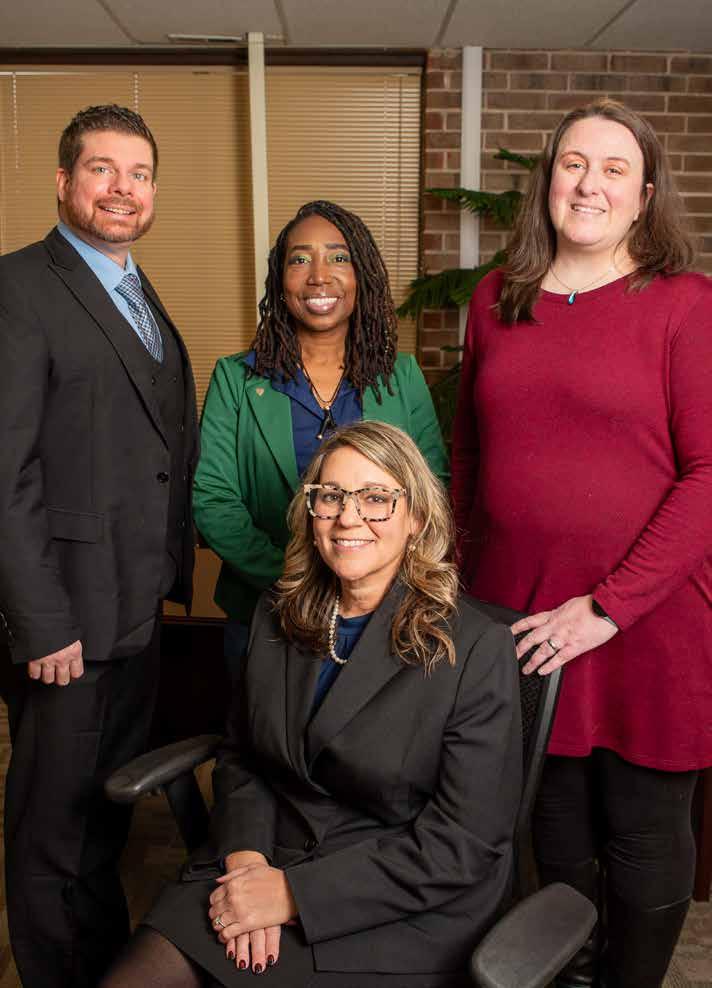
It’s rarely a topic people feel fully prepared to face. That’s why, in the Lincolnway area, a group of local professionals are working to change that narrative by transforming uncertainty into thoughtful planning and fear into clarity. The upcoming Four Pillars of Long-Term Care seminar, held on Tuesday, April 21 from 6:30-8 PM at Right Choice Home Care in Frankfort, brings together four leaders whose work intersects at one critical point: protecting families before crisis strikes.
At the legal forefront is Heather Voorn, partner at Voorn, Jaworski, & Preston, PLCC. As one of only ten Certified Elder Law Attorneys in Illinois, Voorn has built her career around helping families navigate the complexities of estate planning, guardianship, and long-term care planning. Heather sits on the Board of Directors for the National Academy of Elder Attorneys and the NAELA Foundation, while having co-authored Advising Elderly Clients and Their Families, a trusted national resource. She plans to address why having a plan in place is essential, and what happens when there isn’t one, often resulting in guardianship proceedings. She will also go through estate planning and paying for care, covering powers of attorney, wills, and trusts.
Financial strategy forms the second pillar. Rachel Ratliff, founder of Ratliff Accounting & Tax, specializes in proactive planning for individuals and small business owners. At this event, Rachel will break down the common tax and financial mistakes families run into when long-term care becomes a reality. She will also highlight something that’s often overlooked: the importance of working together. When an accountant and attorney operate
separately, plans can unintentionally clash. But when they collaborate, families receive clear, coordinated guidance that truly protects their long-term wellbeing.
The third pillar centers on compassionate, in-home support. Sharon C. Newman, founder and CEO of the Right Choice Home Care, has spent a decade serving families across the south suburbs. Her certified dementia-specialized agency focuses on helping individuals age with dignity, safety, and respect. Sharon understands that quality care is not simply about presence, it’s about partnership. During the seminar, she will guide attendees through how to choose the right home care agency, what excellence should look like inside the home, coordinating insurance, and provider relationships for seamless support.
Rounding out the panel is Ryan Mitchell, FIC, Financial Advisor at Limestone Financial. Ryan brings both professional insight and real-world perspective to his work, having transitioned into financial services after a 20-year career in restaurant management. His approach is especially focused on serving hardworking families who want straightforward strategies for protecting what they’ve built. He offers an informative overview of exploring the importance of planning ahead, when to begin these conversations, and the potential financial and emotional impact care needs can have on individuals and families.
Together, these four professionals offer more than expertise, they offer peace of mind. Because when planning begins early, families gain not just protection, but confidence in whatever comes next.
Long-term care conversations often begin quietly: at kitchen tables, after diagnoses, or when a parent's independence begins to change.




Ready to take the next step? Connect with us to begin your journey toward healing and personal growth.
Our specially trained pediatric therapists carefully monitor every child's growth and fine-tune their therapy programs along the way for faster progress and meaningful results. Families are always actively included in their child's unique therapy journey.
SPEECH THERAPY | PHYSICAL THERAPY OCCUPATIONAL THERAPY Helping Children Succeed at Every Step

Serving Families in the South Suburbs Since 1988 www.kidscando.org | (708) 478-5400 | info@kidscando.org 19100 S. Cresent Dr., Mokena, IL 60448 Providing both in-person and virtual mental health therapy services to Illinois and Indiana residents.

Nave Wellness Center provides mental health counseling services for adults and youth in Chicago and throughout Illinois and Indiana. Our aim is to support the community through both virtual and in-person therapy sessions. We’re committed to walking alongside you, and empowering your journey forward. EMPOWERING YOUR PATH ONWARD.
navecenter.com | 1-877-YAY-NAVE 8215 W. Lincoln Highway, Frankfort



For Brian Sewell, Producing Branch Manager at Guild Mortgage, financing a home has never been about rates, ratios, or rushing to the closing table. It’s about people—about listening closely, understanding nuance, and recognizing that every loan represents a life in motion. Behind each application is a family growing, a fresh start taking shape, or a longheld dream finally within reach.
Nearly 25 years into his career, Brian still approaches each client with the same belief: when you take the time to truly listen, better outcomes follow. That philosophy was crystallized by a client from Frankfort who came to him after being turned away by multiple lenders—including the bank where she worked. Others had reviewed her file quickly and said she didn’t qualify. Brian did something different. He sat down, asked questions, and listened.
Together, they talked through her full financial picture and her plan to pay off a vehicle lease. With a thoughtful approach and a lender willing to see beyond surface-level numbers, she was approved and closed on her home within weeks. The moment was meaningful not because of the speed or the paperwork, but because it reinforced a core truth Brian has carried throughout his career: every client is unique, and no two paths to homeownership look exactly the same.
That mindset has shaped a reputation built almost entirely on trust. Brian doesn’t pay for reviews or chase transactions. Instead,
ARTICLE BY NICOLE SWANBERG WRIGHT
clients share their experiences organically, because they felt heard, respected, and treated like family. For him, success isn’t measured by volume alone, but by doing the right thing when no one is watching, and by knowing that the people he helps feel confident long after the keys are handed over.
That people-first approach becomes even more critical when clients are navigating major life transitions. Whether someone is growing their family, relocating for work, starting over after a divorce, or purchasing their first home, Brian believes the most important part of his job is listening for what clients need beyond the loan itself.
Too often, buyers hear rigid advice: “You should always do a 15-year mortgage,” or “This is the only smart option.” Brian pushes back against that thinking. “Not every strategy works for every person,” he explains. “Some clients want to pay off their home aggressively. Others want flexibility, or the ability to leverage equity for future investments. My role is to help them design what makes sense for their goals, not what’s trendy.”
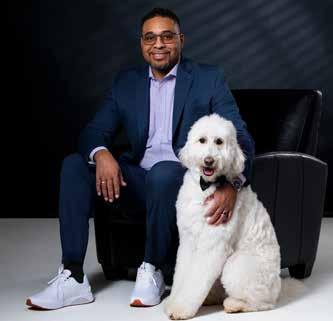
That philosophy is rooted in what Brian calls a servant’s heart. He offers guidance and expertise, but never at the expense of the client’s lived reality. Financial decisions don’t exist in a vacuum; they’re intertwined with family plans, career paths, and long-term aspirations. Understanding those layers allows him to help clients make decisions they feel good about—not just at closing, but years down the road.
Uncertainty is a natural part of the home-buying process, and Brian sees it every day. Nerves, questions, and what-ifs often surface once an offer is accepted. To combat that stress, his team operates on four core promises: close on time, no surprises at closing, treat clients like family, and provide weekly updates. Every Tuesday, Brian personally checks in with clients and their real estate agents, ensuring everyone stays informed and aligned.
Closing on time means families can confidently plan moves, school transitions, and life changes. Avoiding surprises at closing means clients know what to expect financially, often within a small margin of the original estimate. And treating clients like family—“the kind you like,” Brian adds with a smile—means clear communication, transparency, and genuine care. If an issue arises, it’s addressed head-on, with honesty and solutions.
Over time, those small, consistent actions build something larger: confidence. Clients move from uncertainty to trust, knowing their lender has their back.
For Brian, the impact of homeownership extends far beyond financial growth. While appreciation and equity matter, he sees a home as an investment in stability and belonging. Research consistently shows that children raised in stable homes often experience stronger academic outcomes and more consistent career paths. “A home is where families put down roots,” he says. “It’s where routines are built, memories are made, and peace of mind takes hold.”
When asked what success looks like years after closing, Brian doesn’t point to spreadsheets or interest rates. He talks about running into former clients at the grocery store, receiving a hug, or getting a Thanksgiving message expressing gratitude. He talks about clients sending their adult children his way years later. With roughly 70 percent of his business coming from referrals, those moments are the clearest affirmation of his approach.

In today’s evolving market, Brian encourages buyers to slow down and think long-term. The first step is building a realistic budget, then asking bigger questions: Is this a short-term or long-term home? What might life look like in five or ten years? In Illinois, long-term appreciation has historically averaged around four percent, making homeownership a strong investment for those planning to stay put. But numbers are only part of the equation.
Family growth, downsizing plans, tax considerations, and future investments all play a role. Different loan products can support different strategies, and a thoughtful plan can help buyers build equity while maintaining flexibility. “We plan weddings, vacations, and businesses,” Brian says. “Your mortgage deserves that same level of intention.”
Being local allows Brian to offer something many national lenders can’t: accessibility. Clients can walk into his office, sit down, and map out a real strategy together. Approval can happen quickly—but clarity and confidence come from taking the time to plan.
At the end of the day, Brian Sewell and the team at Guild Mortgage believes the true value of a mortgage isn’t found in the paperwork. It’s found in the lives it supports, the stability it creates, and the trust that continues long after the loan is signed.






At REBUILT Strength + Rehab, we’re redefining what it means to go to the chiropractor. This isn’t your typical quick adjustment and outthe-door experience. Here, every visit is personal, intentional, and built around movement, strength, and long-term results.
Founded by Dr. Kyle Richmond, REBUILT takes a modern, rehabdriven approach that blends chiropractic care with functional strength training, mobility work, and individualized recovery plans. Whether you’re a high-performing athlete or someone just trying to live pain-free,REBUILT gives you the tools to truly feel your best—and stay that way.

Being a good neighbor means being there for our communities As your local State Farm® agents, we’re ready to help whenever you need us. Give us a call.








Before the subdivisions, before the stoplights, before the morning rush down Route 30, there was open land and a decision to invest. Communities don’t grow by accident, there was a vision for the future. One that we now get to live happily and successfully in. The first investors in our towns weren’t corporations; they were families, farmers, and risk-takers.
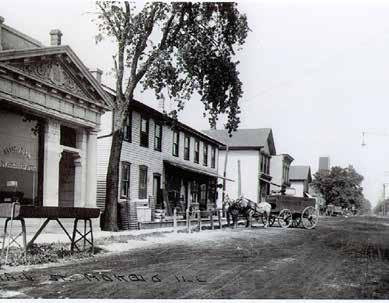
ARTICLE BY KENADEE BERRY PHOTOGRAPHY PROVIDED BY LINCOLNWAY'S HISTORICAL SOCIETIES
In what is now New Lenox, two fur traders Aaron Friend and Joseph Brown established an outpost along Hickory Creek in 1829 near present-day Gouger Road. They called their clearing “Hickory Creek Settlement”, one of the earliest settlements in Will County. The growing town was later known as “Van Horne’s Point” before being renamed New Lenox by township supervisor J. Van Dusen, who honored his hometown of Lenox, New York. For a brief moment, the village was renamed “Tracy” after a railroad superintendent, but the man himself asked that the honor be withdrawn.
Early settlers came mostly from Massachusetts, New York, New Jersey, and Pennsylvania. They endured the winter of 1830 and 1831, remembered as the winter of the Deep Snow. A killing frost came in September, and severe cold and heavy snow lasted for months. Many families were unprepared and livestock was lost. Yet they stayed.
The first post office in Will County stood at Gouger Crossing and was known as the “Young Hickory Post Office.” The Great Sauk Trail, one of the earliest transportation routes in the region, ran through the area and is reflected today in Haven Avenue. A school was first taught in around 1832. By 1899, New Lenox was home to the first rural telephone station in the United States. Electricity followed between 1900 and 1910. When Lincoln Highway was built in 1920, it signaled that this small settlement was becoming firmly connected to a wider world.
Around the same time New Lenox was taking shape, Mokena was rising just to the north. Incorporated on June 16, 1880, Mokena’s story is marked by both courage and community. Several homes served as stations on the Underground Railroad. When the Civil War began, thirty four of Mokena’s men joined the 100th Regiment of Illinois.
Faith and education were early investments. In 1855, the first school, a small frame building, was erected for $1,000. German immigrants founded St. John’s United Church of Christ in 1862. South of town on Wolf Road, St. Johns Cemetery began in 1863 for church members and later opened to the public. Pioneer Cemetery at Denny Avenue
and Wolf Road dates back to 1839, when Revolutionary War veteran Charles Denny was buried there.
Mokena invested in safety and infrastructure as it grew. Kerosene street lamps were installed in 1885, replaced by gasoline lamps in 1898, and electricity arrived in 1913. Gas service followed in 1927. The volunteer fire department organized in 1917 with an old hose cart and purchased its first truck engine in 1933. The State Bank, established in 1909 with a capital stock of $25,000, survived four robberies, including a successful theft of $4,000 in 1924.
In Frankfort, settlers from New England arrived along the Great Sauk Trail. During the Black Hawk War in 1832, residents fled to safety in Lafayette, Indiana. Families such as the Owens, Carpenters, Dotys, Bowens, Latts, Rices, Stephens, and Clayes returned and rebuilt. The railroad arrived in 1855, and most steam engines stopped in Frankfort to take on water, placing the village firmly on the map.
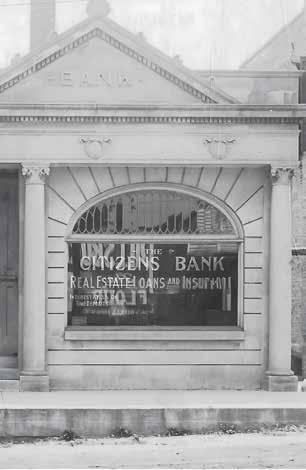
Frankfort organized its first bank in 1880 and continued expanding its financial institutions into the early twentieth century. Its first school was a one room log cabin taught by Lizzie Kent, replaced in 1870 by a two story building with three classrooms and an enrollment of 150 students. These were not small commitments. They were declarations of permanence.
Further south, Manhattan began as “FiveMile Grove”. Orin Stevens filed the first land claim around 1833 and operated a tavern for passing travelers. Farmers, stock growers, and dairymen shaped the township. A log cabin school was erected in 1852. The village itself did not formally exist until the Wabash Railroad passed through in 1880, the same year Manhattan was incorporated. Its first post office operated above a blacksmith shop, and its first general store served a community built on agriculture and ambition.
Each of these towns began with simple structures, dirt roads, and uncertain winters. They invested in rail lines, schools, banks, churches, telephones, and street lights long before growth was guaranteed. What we see today in New Lenox, Mokena, Frankfort, and Manhattan is not accidental. It is the result of generations who believed their small settlements were worth building, protecting, and connecting.
The open land is gone, replaced by neighborhoods and thriving downtowns. Yet the original investment remains. It lives in the roads we travel, the schools our children attend, and the communities we are proud to call home.
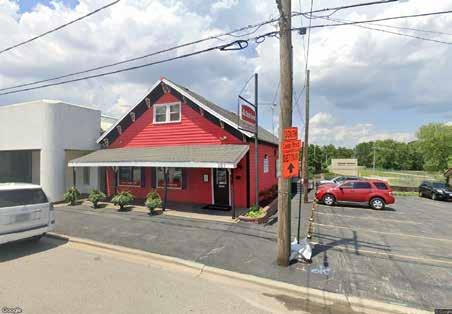
Frankfort State Bank Street View
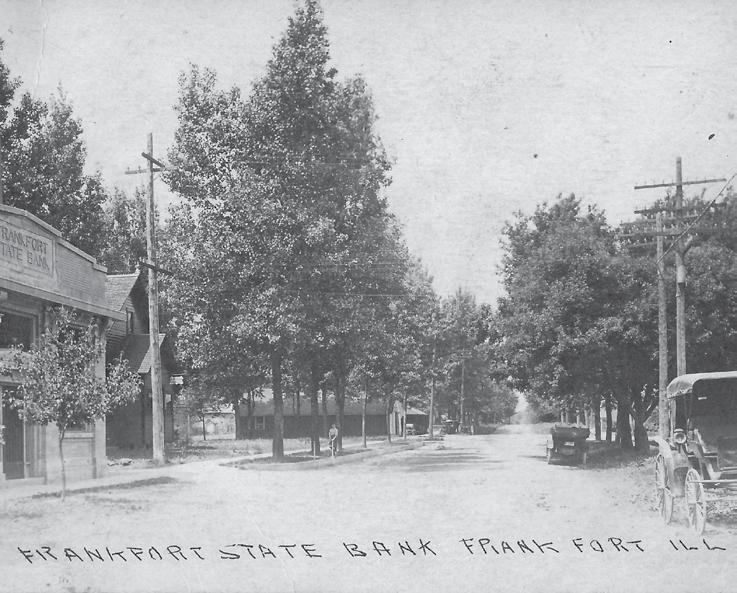


The story of our towns isn’t just about growth, it’s about the investments that made growth possible.
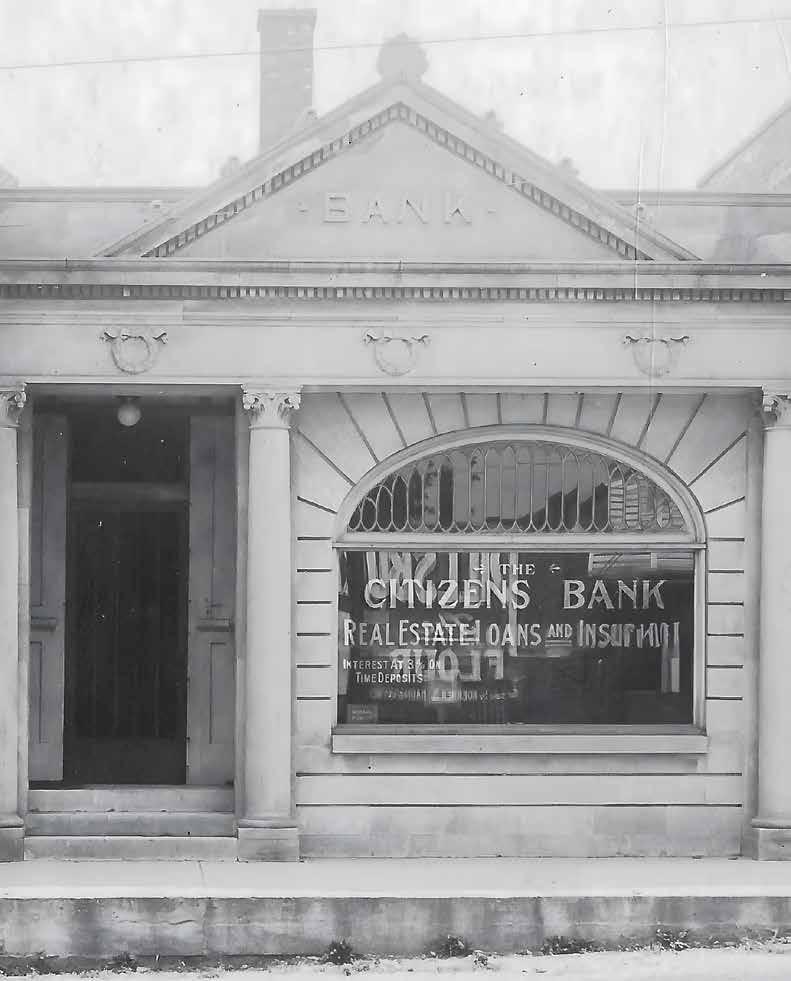
Communities don’t grow by accident, there was a vision for the future. One that we now get to live happily and successfully in. The first investors in our towns weren’t corporations; they were families, farmers, and risk-takers.






APRIL 1ST
Annual Family Fun Fly
Main Park (Locust St. Parking Lot) | 11:00 AM
Grab your kites and join the Frankfort Park District as they celebrate “Flying for Kids Month”, a statewide kite fly to promote park districts, recreation agencies, and the Park District Youth License Plate. Bring your own kite or borrow one from the Park District to fly. This event is FREE and open to the public!
APRIL 12TH
Spring Fling Craft Fair
Lincoln-Way Central Fieldhouse | 9:00 AM
Join the Lincoln-Way Central Athletic Boosters for their annual Spring Fling at the Knight's Garden craft fair on Sunday, April 12 from 9 AM to 3 PM!
APRIL 18TH
Harris Theater for Music and Dance | 7:30 PM
Step into the hauntingly beautiful world of Edgar Allan Poe—literary icon, cultural outsider, and spiritual seeker. Poe’s poetry and personal life collide on stage in a sweeping exploration of love, loss, madness, and faith. Featuring Ballet 5:8’s full professional company alongside stunning visuals and layered storytelling, this world premiere reimagines Poe’s legacy with power, precision, and pathos. Tickets at www.ballet58.org.
APRIL 21ST
Four Pillars of a Secure Senior Future
Right Choice Home Care in Frankfort | 6:30 PM
Join us for a free informative session designed to help seniors take control of their future! Gain valuable insights from trusted experts and discover practical strategies to protect your well-being and achieve peace of mind through the four pillars of care, estate, insurance, and tax. The event will run from 6:30-8 PM.


Your Local Multidisciplinary Care Clinic
Acu- Acupuncture and Chinese Herbs - Acupuncture
Rehab- Physical Therapy, Occupational Therapy & Speech - Rehabilitation Med- Independent Practice Nurse Practitioners - Medicine
WE ACCEPT INSURANCE and treat birth to 100 (or more)
We also provide Nutrition, Reflexology, Yoga, Meditation, Reformer Pilates, Sound Therapy & Reiki



•
•
•

•
• Options matched to care & budget
• Tours coordinated for you
• Confidence in the decision





CONTINUED
APRIL 24TH
Cancer Support Center
Annual Gala
Olympia Fields Country Club | 6:00 PM
Inspired by the magic of cherry blossoms, the evening celebrates blossoming into spring with an unforgettable night of style and excitement. Enjoy a lively cocktail hour with live music, explore our silent auction, and indulge in a full sit-down dinner paired with captivating entertainment. Tickets available at cancersupportcenter.org
APRIL 25TH
Bridge Thrift Home & Restoration | 10:00 AM
Shop an exciting selection of designer handbags and summer accessories, featuring brands like Michael Kors, Tommy Hilfiger, Coach, vintage leather styles, and more. Discover a collection of summer must-haves, including hats, jewelry, sandals, sunglasses, and seasonal clothing. This event is free to attend, ending at 1 PM. All purchases support the free programs at The Bridge Teen Center. Visit: bridgethrift.org.
MAY 2ND
Frankfort’s Breidert Green | 7:00 AM
Run for a great cause raising funds for Lincoln-Way high schools. Sign up by Tuesday, April 21 to secure your t-shirt. For more information and to register, visit raceroster.com/ events/2026/112261/lincoln-way-halfmarathon-and-10k
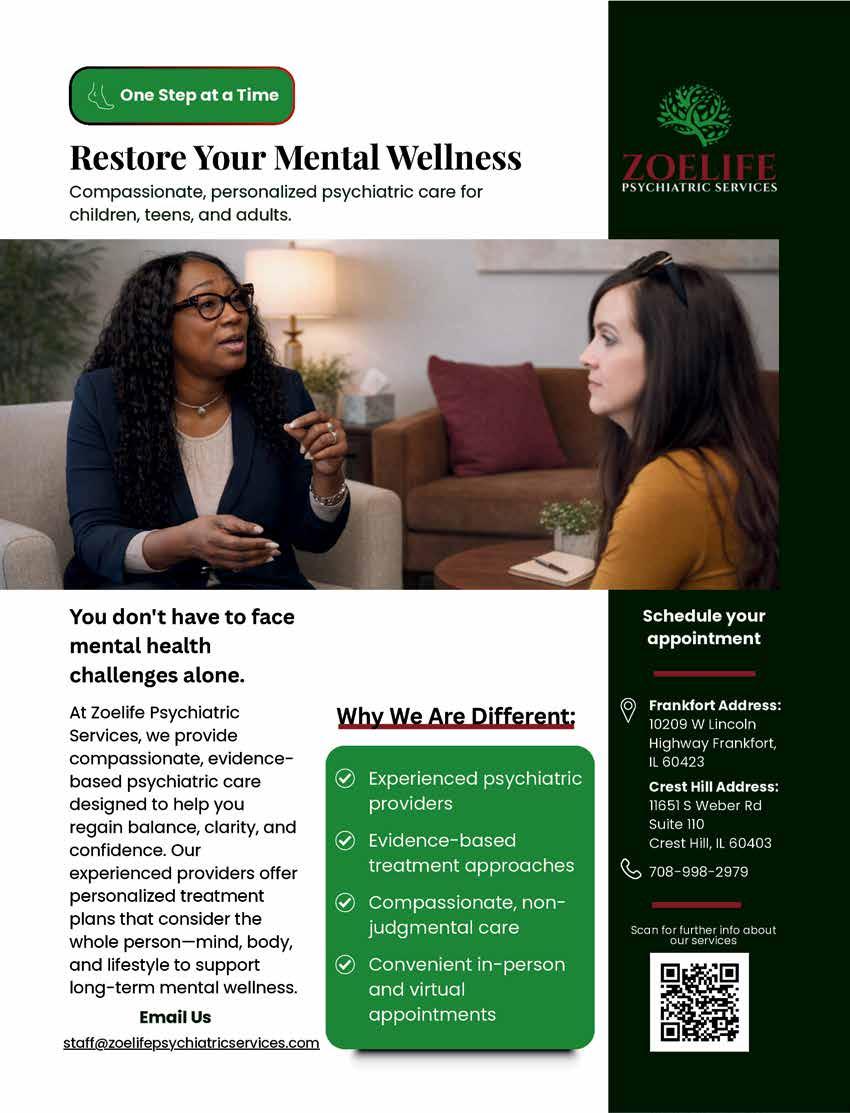
Want to be featured?

David Zaycek Mokena Branch



There’s nothing quite like the first swim of the year. Whether you’re planning family barbecues, relaxation, or evening swims, your pool is the centerpiece of summer. But before you dive in, your pool needs a proper opening to ensure it’s safe and running efficiently. Summer will be here before you know it. Don’t wait until your neighbors are already floating on rafts and hosting pool parties. Take the first step towards carefree afternoons.