


REFINED WELLNESS
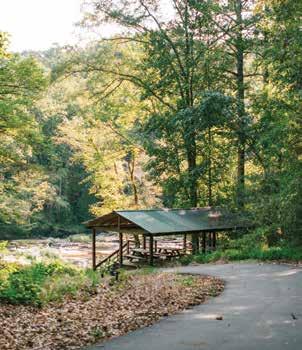
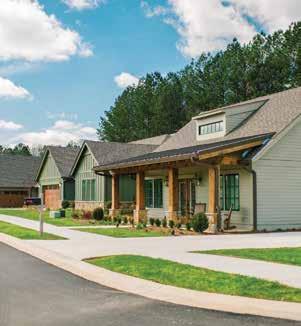

Luxury is being surrounded by 120 acres of riverfront forest.
Kirkwood ’s private, wooded campus along the Cahaba River offers walking trails, gardens, and natural spaces designed for outdoor wellness, reflection, and daily enjoyment. This is Independent Living shaped by nature itself, where each day invites peaceful movement, and every view brings a sense of calm that urban developments simply cannot replicate.
Here, luxury is measured in the space to breathe and an environment that nurtures vitality, independence, and well being. As a Life Plan community, Kirkwood provides peace of mind to age safely, knowing you have the support you need for the future.
kirkwoodbytheriver.com or Call
When Pantone announced that the color of the year for 2026 was white—well, Cloud Dancer, but you get the point—Birmingham feng shui consultant Katie Rogers got on Instagram Live, lit the paint swatch on fire, and selected a better one.
That feels right for Birmingham.
People and homes here tend to have a sense of style all their own—brimming with color, layered in story, and impossible to box in.

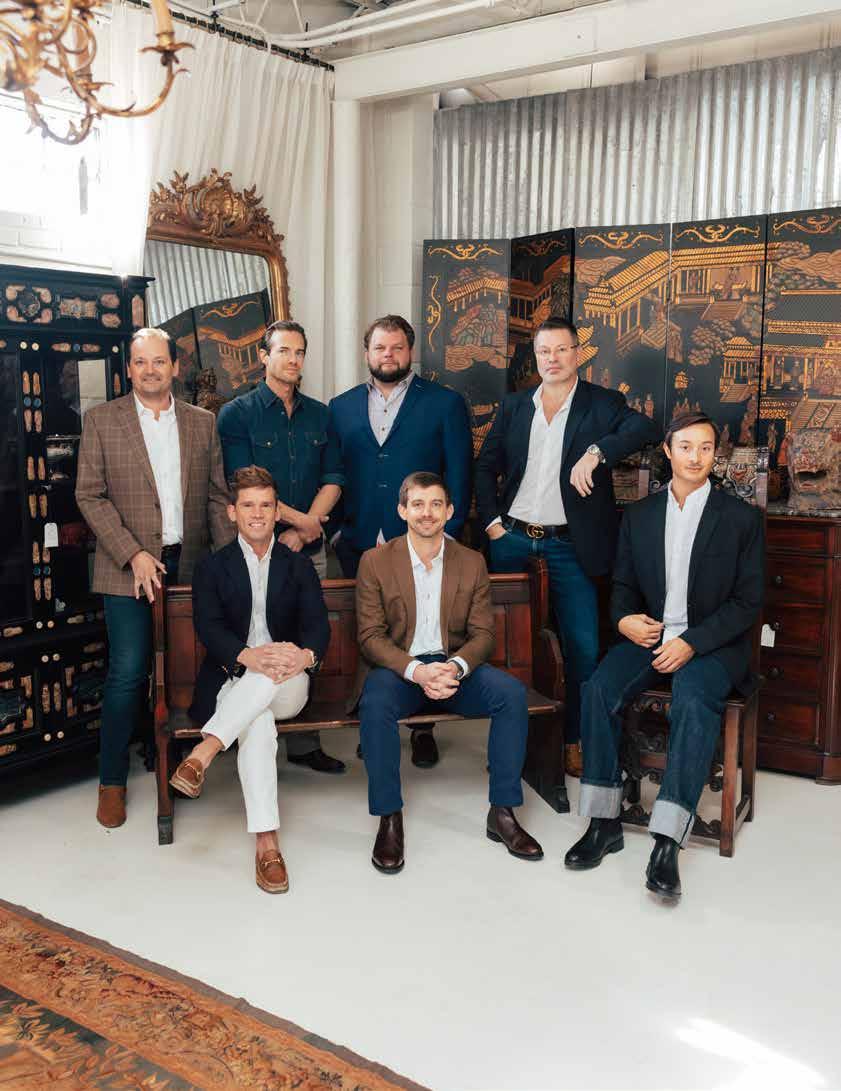
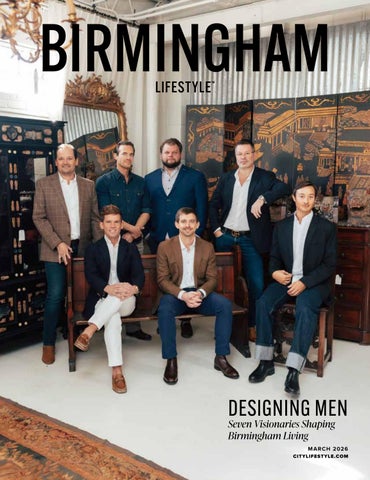
Disclaimer: You will not find design trends in this issue. Instead, you’ll get to know style-setters like the gentlemen featured in Designing Men , who—despite traveling the world—can’t imagine calling anywhere else home. You’ll step inside the home of a James Beard Award semifinalist who built a cocktail around sautéed garlic (yes, you read that right) for his architect wife. And you’ll spend a day with a realtor who understands that what matters most in a home can’t always be listed.
As someone who’s perpetually five minutes late and married to someone who is never, ever late, I’ve come to admire spaces that don’t rush to keep up. The homes in this issue feel timeless. They reflect the people who live in them, not the trends of the moment—full of personality and a touch of flair.
I hope you enjoy spending some time in them.
Warmly,
BLAIR MOORE, EDITOR
@BIRMINGHAM.LIFESTYLE
March 2026
PUBLISHER
Kali McNutt | kali.mcnutt@citylifestyle.com
EDITOR
Blair Moore | blair.moore@citylifestyle.com
PUBLISHER ASSISTANT
Shellye Andrus
CONTRIBUTING WRITERS
Kali McNutt, Katie Rogers
CONTRIBUTING PHOTOGRAPHERS
Mary Fehr, Ambre Amari
CEO Steven Schowengerdt
President Matthew Perry
COO David Stetler
CRO Jamie Pentz
CoS Janeane Thompson
AD DESIGNER Matthew Endersbe
LAYOUT DESIGNER Kathy Nguyen
QUALITY CONTROL SPECIALIST Hannah Leimkuhler


Learn how to start your own publication at citylifestyle.com/franchise.


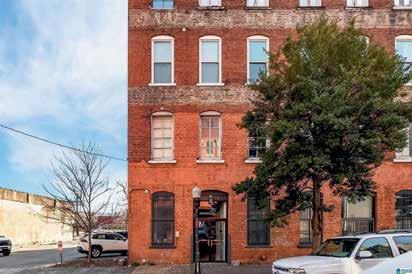
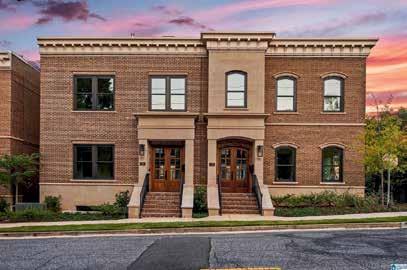
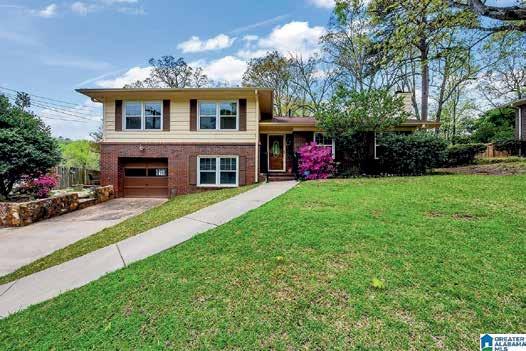
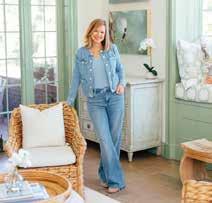
Lynlee strongly believes in and supports residential growth in Birmingham. Since obtaining her license in 2014, Lynlee has completed over 688 transactions totaling over $322 million dollars of real estate sold in the area. “I have made a huge effort to be intimately engaged in the central city and surrounding “city suburbs” from Forest Park to Homewood, Mountain Brook and Vestavia, so that I can provide the greatest benefit to my clients, which I strongly believe is market knowledge”. Her greatest motivation is her clients: She says, “Success to me is doing what I love every day and knowing my contributions positively impact my clients, my company and my city and that I have produced the highest quality of work.”





By
Your Side



Life is complicated. There are lots of moving parts, so it's easy to allow your finances to drift o point. Since 1986, Savant Wealth Management, an independent, fee-only firm, has been committed to helping our clients pursue peace of mind through our collective insight, wisdom, and perspective. Let us help you make your financial life less complicated with our Wise Counsel by your side.


Exceptional landscapes don’t happen by chance — they’re cultivated, season by season. This March, let Acre Group prepare your property for a flawless spring. acreoutdoors.com | 205.453.9367


A life centered around home and the things that matter most
PHOTOGRAPHY BY AMBRE AMARI
Lynlee Hughes has built her life from the inside out. At home, that means shared mornings and evenings gathered back together with those she loves. Beyond her front door, it means walking alongside others as they search for a place that feels right—a dream home that is less about square footage and more about creating space for a meaningful life to take shape. Here, she invites us into a day in her life, in her own words.
7–8 A.M.

7–8 A.M.
My day starts at home with hugs, backpacks, and a few quiet moments before the rush. Mornings with my kids are non-negotiable— full of encouragement, laughter, and love. Before stepping into business mode, I pour into what matters most: my family and the foundation we’re building together.
After school drop-off, it’s straight to the gym. With my trainer by my side, I prioritize strength—both physically and mentally. This time is about discipline, focus, and showing up for myself, knowing that taking care of my body fuels the energy I bring to my clients, friends, and family.
8–9 A.M.


9–11 A.M.
Next stop: strategy mode. I sit down with Talking Social, my marketing team, to review upcoming listings and recent closings and make sure every piece of content is aligned. Together, we plan with intention—telling each client’s story, highlighting every milestone, and making sure each property gets the attention it deserves.
11 A.M.–5 P.M.


5–7 P.M.
By afternoon, I’m either checking in on my listings or walking clients through potential new homes. From reviewing details and prepping properties to hosting showings, this is where preparation meets people. I take a hands-on approach, so every home shines, and every client feels informed, supported, and confident.

7–9 P.M.
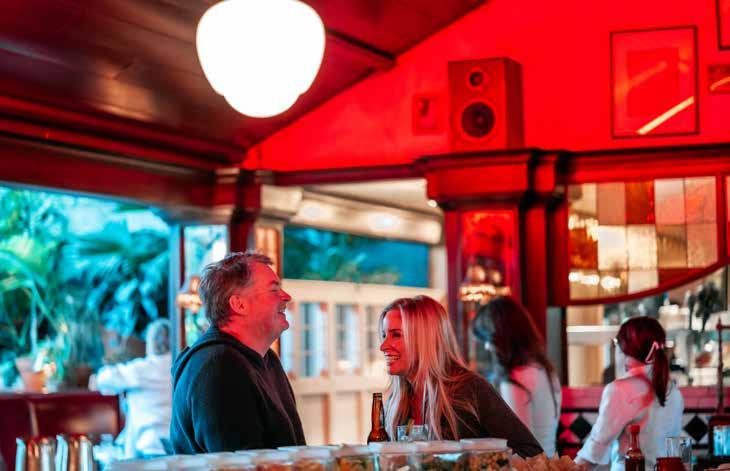
As the workday winds down, one night a week is reserved for date night. Most often, that means heading to El Royale, my husband’s restaurant, for great food and even better conversation. It’s our chance to reconnect, unwind, and celebrate life beyond business— because strong relationships are at the heart of everything I do.
My day ends right where it began—at home with my family. Bedtime stories, prayers, and sweet moments close out another full day. These moments remind me why I work so hard and why balance, faith, and family will always come first.













ARTICLE BY KATIE ROGERS
PHOTOGRAPHY BY MARY FEHR
My obsession with color started young. Mama kept an array of art supplies around to keep her four children entertained. Play-Doh, watercolors, crayons, Cray-Pas, construction paper, felt, embroidery thread, scissors, and paint brushes were always at hand.
By the time I was five, I could explain the ROYGBIV acronym to my friends with the precision of a chemist, doling out crayons from the treasured box of 64 I had organized by hue. I had the names memorized likely before I could read them: Magenta! Cornflower, Maize, Red Orange! Raw Sienna, Sea Green, Periwinkle! Silver and Gold!
I would create my own color wheels, tracing plates to make the circles, blending the watercolors well beyond the primary and secondary colors to achieve the perfect midnight-purple, the just-right turquoise, the most acid of yellow-greens.
In high school, it was acrylics and gouaches, and then, as a young adult, I discovered Feng Shui, which drove home the meanings of colors and their powerful impact.
It is no surprise that color affects us. Most people would easily describe red as “hot” and blue as “calm” or “peaceful.” Yellow is usually “cheerful.” And so on.
A kindergartener could tell you this.
But let’s take it further...
Could you sleep well in an all-red bedroom?
Would you wear black and orange outside of Halloween?
There is a reason we wear white as brides and dark colors for funerals.
Color tells a story. It communicates. It’s a literal frequency, by golly.
It tells us to stop when driving. Red is the first color the eye sees, so red for stop signs and stop lights is an intentional—and wise—choice. And in this Bama fan’s opinion, red gives us the advantage there, too!
It tells us if we are in a serious meeting... ...or at a baby shower.
As a Feng Shui consultant, interior designer, and filmmaker, all this color knowledge has obviously come in handy.
When I start a new film project, I get out my color cards (not paint chips!) and choose a palette that conveys the feeling I want. It’s not necessarily a literal palette, but a “mood,” a loose way to begin. When I show it to other crew members, it’s instant information.
Same with an interior design client. I spread out the colors on a large table, advising them not to think about their home—that I just want to get to know them better. What are their favorites?
Some colors light us up. Others repel us.
And the message is clear: we are here to play!
After all, a room is simply a world of its own made up of color, shape, and texture. It’s how you put these elements together that gives function, flow, and form, a.k.a. design
My love and deep study of color is why I was a little put off by Pantone’s 2026 Color of the Year.
White.
Yeah, yeah, they fluffed it by calling it “Cloud Dancer,” but it’s white...with the faintest hint of gray. Snooze!

“It is no surprise that color affects us.”
Please understand I am not against using white in decor or fashion! It's great for so many things. It's just not the right color for 2026. In backlash, many folks in the visual fields went online and chose a new Color of the Year. So I did too.
Here was my Instagram caption for my choice, which accompanied an image of Lady Liberty:
Patina Green is my pick for the “Better” Color of the Year for 2026.
The last slide on the reel reveals my muse, a special lady who carries light and knowledge, broken shackles at her feet, representing freedom for all.
The more I got acquainted with Patina Green, I realized how far a cry it was from #clouddancer #white .
It’s earthy, gritty, textured.
It’s alchemy, a literal chemical reaction.
It’s about the perfection of imperfection.
It shows age—gracefully, beautifully, surprisingly.
It unveils the mysterious unfolding passage of precious time.
It’s a return to nature—a gift from the elements.
It reminds us that a bit of wear and tear and texture offer character and truth.
Not everything has to be shiny and new. We don’t have to buy what they’re selling.
Patina Green can’t be put in a box or numbered, and it certainly can’t be manufactured.
So take your pick out of the array of blue-greens, my dears.
In 2026, slow down and appreciate Patina Green. Take yourself on a scavenger hunt in search of it. It may appear at the bottom of an old wishing well or covering the water fountain at the forgotten corner park; it could show up as lichen tucked into a fat tree’s bark…or on the weathervane at your uncle’s barn.
Patina Green is an invitation to play and a reminder of nature’s mysteries. I hope you enjoy getting to know this color in new ways in 2026.
Paint is a
“magic wand” in that it’s the most costeffective way to change a space dramatically. This being said, choosing the right color is an art unto itself.

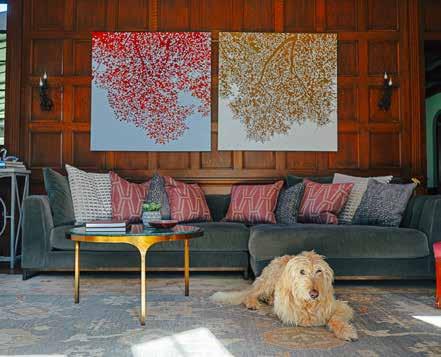

Paint is a “magic wand” in that it’s the most cost-effective way to change a space dramatically. This being said, choosing the right color is an art unto itself.
Trust yourself. Tap into your own personal self-expression. It’s your space.
Be aware that you may have “chromophobia.” Look it up. It’s cultural and needs to be overcome! Gather images. Flip through home magazines and search Pinterest and Houzz without overthinking it. Let the collection sit for a day or two, then look for consistencies.
Choose your color...then choose colors similar to it. Just because you like a color doesn’t mean it belongs on the walls. Consider the lighter or more muted options, too.
Use your intuition. Sometimes a room “calls for a color.”
Samples! Start by referring to paint chips, then choose about five samples. The light in the room hits each wall differently, so paint them on more than one wall! Live with the samples for a day or two, checking them out at nighttime too.
Have fun with it. And if it’s not feeling fun, hire a professional. Their expertise will save you in the long run!
Buy Katie’s e-Book Colors of the Feng Shui Elements on her website, where you can also sign up for her newsletter. Consider joining her for the annual Feng Shui Odyssey, a 9-month personal transformation program with the option to be certified in Feng Shui. katierogersfengshui.com and windhorseschool.com
Keke Donald, a Birmingham plant enthusiast, sees beautiful possibilities in every home’s landscape
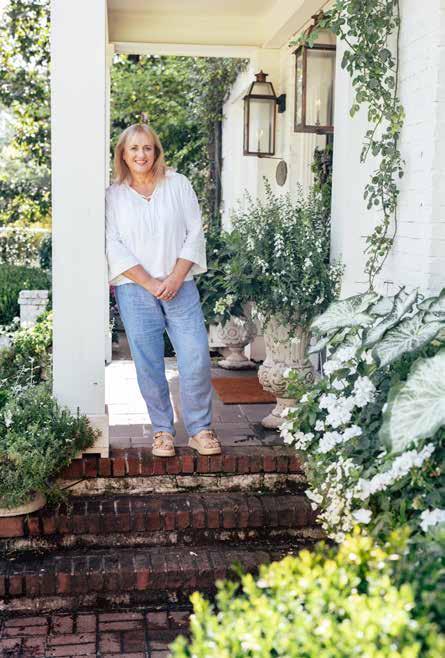
As magical journeys often do, Keke Donald’s began in a garden—the one she wandered through just outside her grandmother’s beauty shop as a little girl.
“It was very Steel Magnolias,” Keke says. The shop sat attached to her grandparents’ house on an expansive Blountsville farm, where conversation drifted through open windows and lingered in the air. “The women would sit around and talk about gardening and what they were planting.”
When the last client left for the day, her grandmother tied on a wide-brimmed hat and stepped outside. She planted flowers along each side of the driveway, then straight down the center, filling every open stretch of ground with intention and care. Wandering between the beauty shop and the drive, Keke first learned what a garden could be.
“Gardening has always been something I’ve loved,” she says. “I don’t necessarily have a green thumb—but it’s something I enjoy, so I’m going to figure out how to take care of it.” She likens gardening to cooking in that way. “I think it’s either something you love or you don’t. I’ll cook to eat something good, but I’ll sit and read gardening books all day the way some people study recipes.”
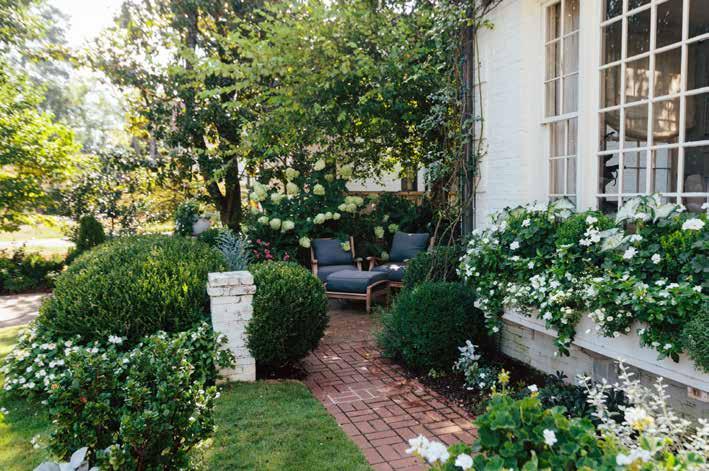
Though she is a master gardener who has spent more than 250 hours in the classroom, Keke believes her most valuable lessons have come from decades of getting her hands in the dirt. “Most of what I know has been trial and error over the years.” Birmingham, she says, offers gardeners a generous opportunity to savor the process. “I get to enjoy my window boxes from March all the way through November,” she explains. “Gardeners in many areas get such a short window.” Even with the occasional freeze, she considers the growing season to be a benefit of living in Birmingham. “Overall, our conditions here are pretty ideal.”
Winter, for her, is less about waiting and more about imagining. “It’s my planning season,” she says, thinking ahead to what might change, what might grow. It’s also when she finds herself returning to a favorite line from Audrey Hepburn: To plant a garden is to believe in tomorrow.
Keke is also an accomplished Birmingham realtor, where her passion for plants shapes the way she sees every property—each one full of possibility. You might spot her on an early morning walk through her own garden at 5:30, her Sheepadoodle, George , trotting alongside, or imagining floral transformations for homeowners across the city.
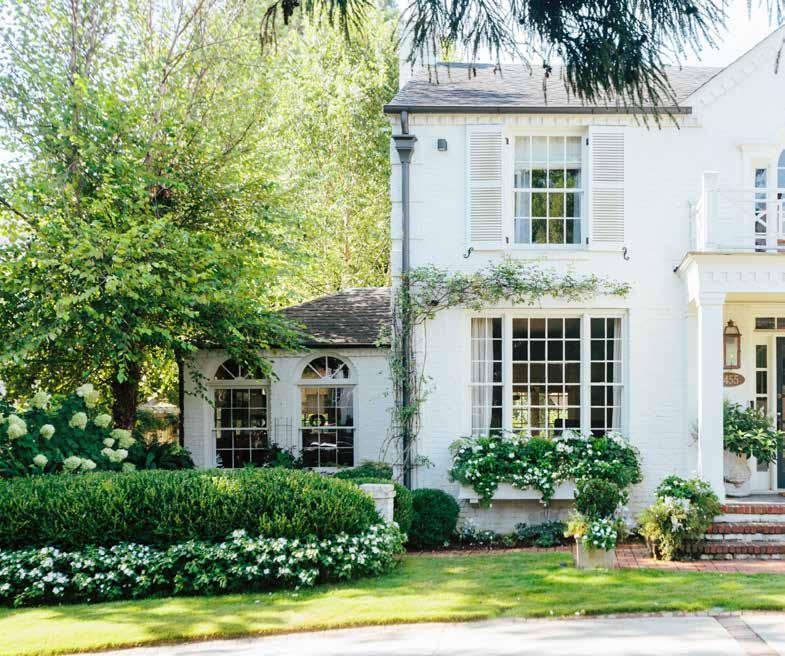
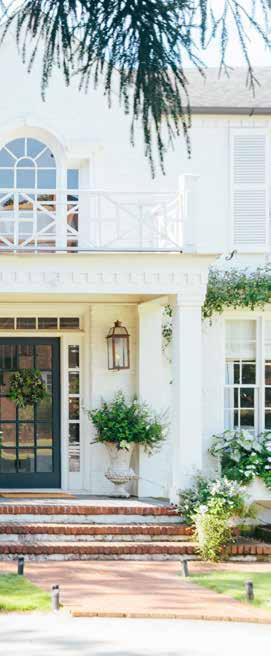
One of her specialties is container gardening, a practice that gives her both flexibility and creative freedom. Her own window boxes overflow with whites and evergreens, offering a sense of ease and continuity. Pots and boxes allow her to rearrange, rethink, and begin again. “I plant more than I should,” she admits. “Sometimes it gets overcrowded—but I like it full.” Her approach is generous and forgiving: begin with something structural, soften it with layers, then let something trail over the edge—the classic fill, thrill, and spill method.
At her home, the front garden remains restrained, anchored by whites and evergreens that set an elegant tone. “The front is calm and filled with pastels,” Keke says. “Then the back is kind of like Skittles—it’s where I like to have a party with all the different colors.” She tends two beehives that help her garden to thrive.
One of the great pleasures of gardening, she’s found, is watching each area change over time. She’s especially fond of dahlias. “They’re probably my favorite thing to grow,” she says. “They’re intriguing in our climate.” She recalls meeting a woman who plants more than 600 dahlias every year, digging up every tuber by hand. “I’m not there yet,” Keke says. “Maybe in ten more years I’ll join a dahlia society.”

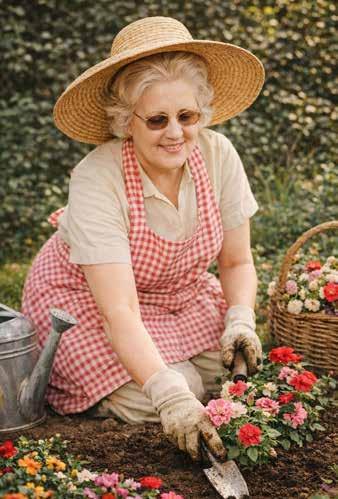
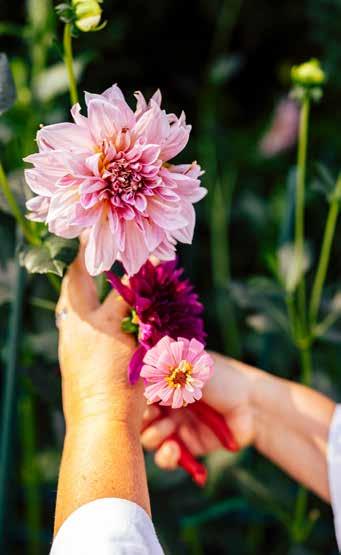
For those eager to add a bit more beauty to their own yards, her advice is simple: start with one large pot and plant something joyful. “Pop into one of our local garden shops and ask questions,” she says. “Everybody wants to help.”
From there, the possibilities for each area of the yard are endless—ready and waiting as you dream them up. That, she’s found, is the magic of tending a garden.
Follow Keke out into the garden on Instagram @Flowers_on_Fairway









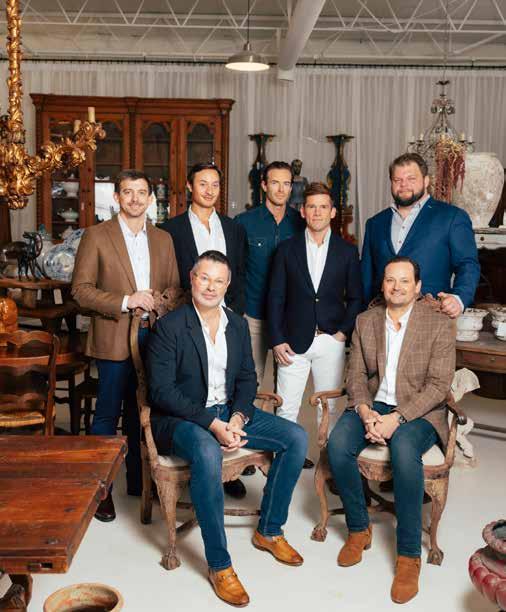
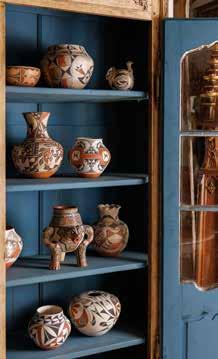
These Birmingham gents bring an impeccable sense of style to the home and beyond
Photos by Mary Margaret Smith

Collected for the Home; Proprietor and Principal Curator
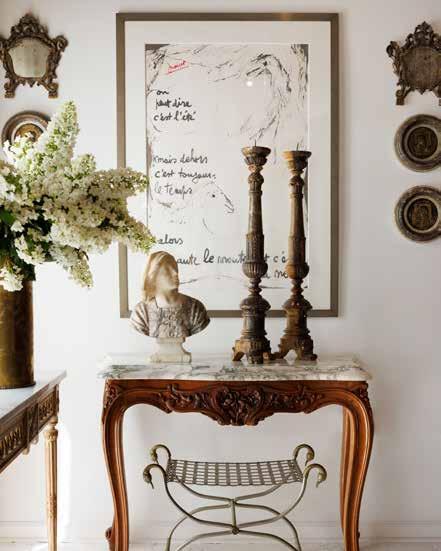
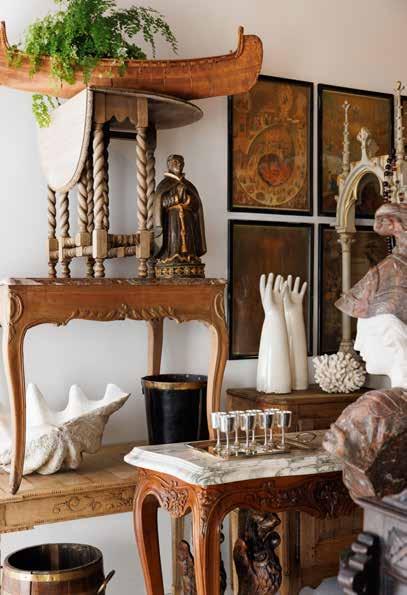
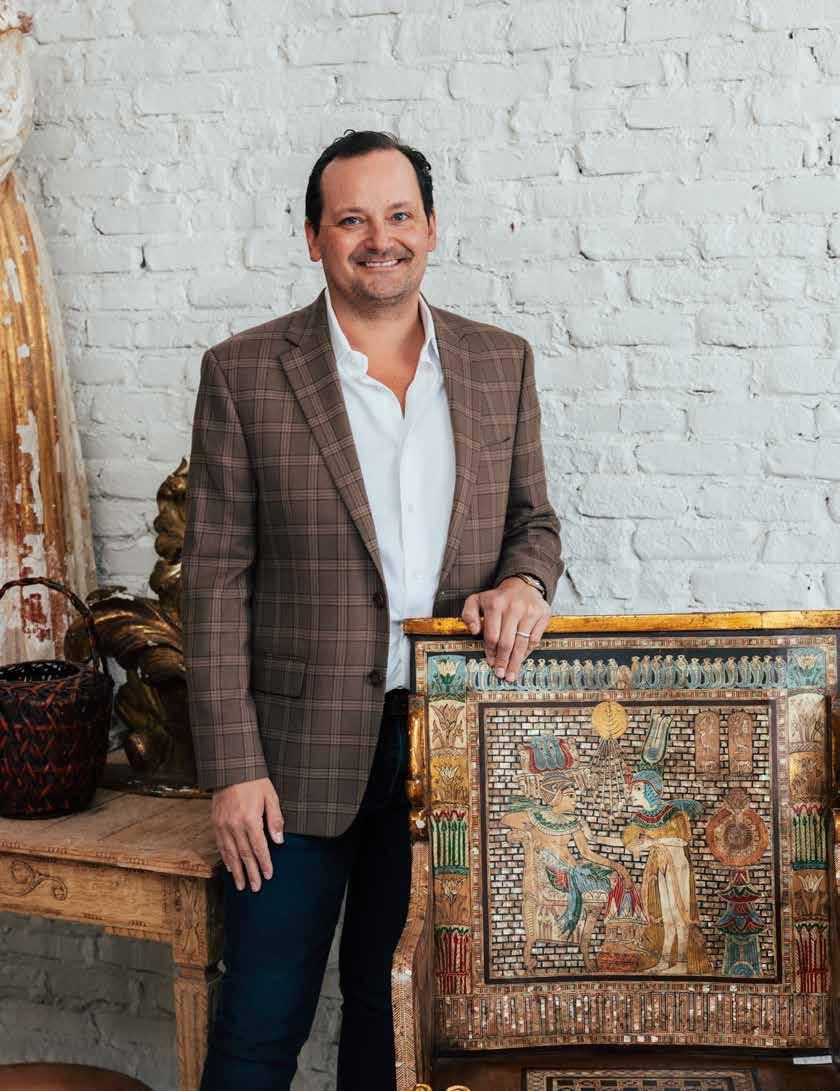
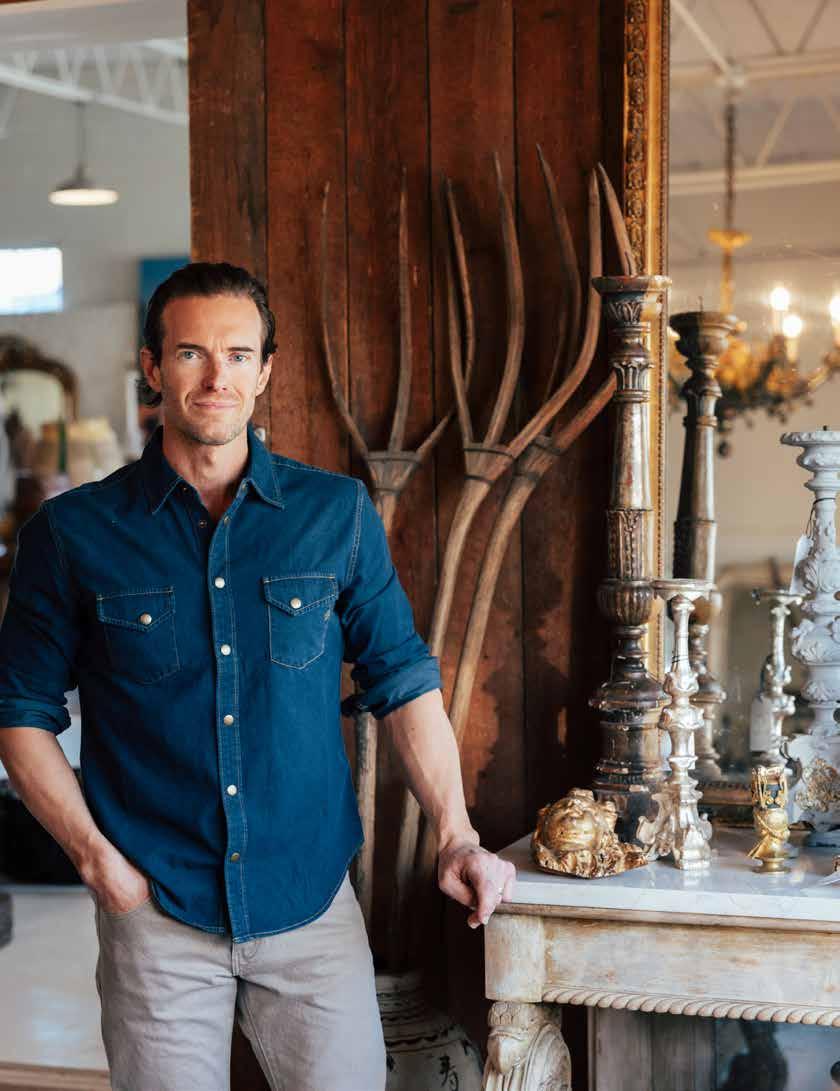
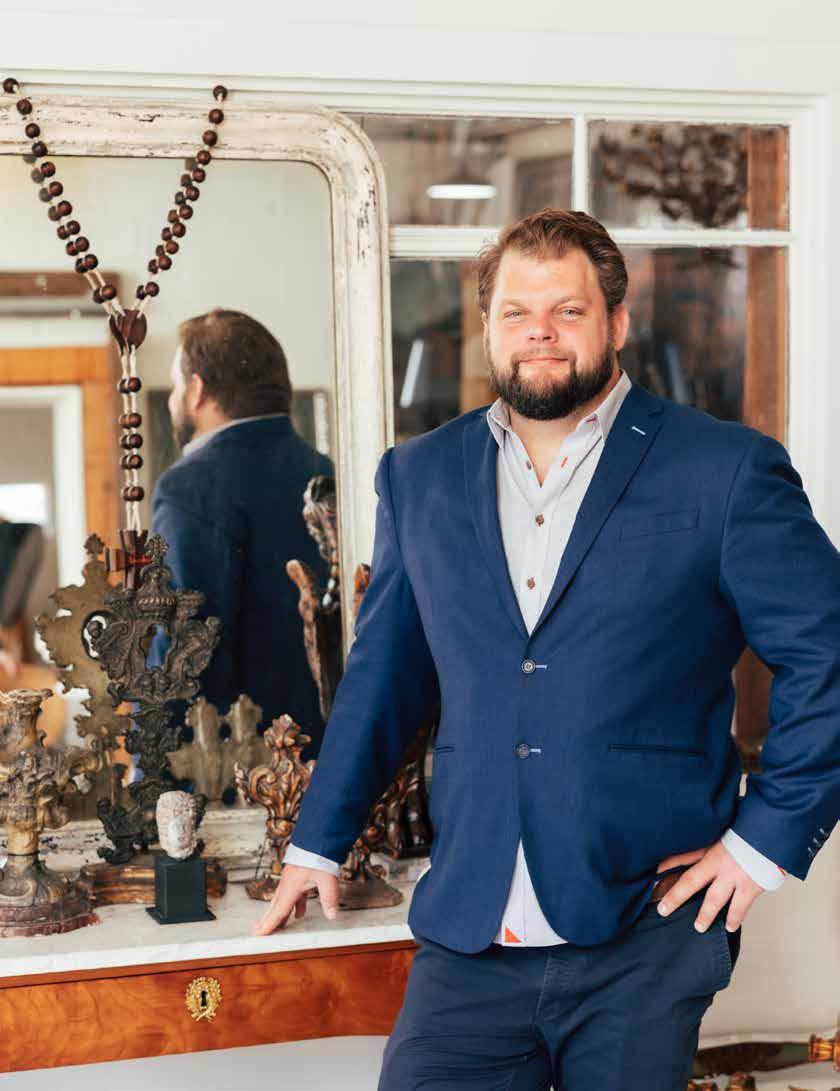
Deke Rogers has always loved to shop, but over time he found himself drawn to pieces that tell a story—antiques, vintage finds, and the unexpected. “I enjoy working those elements into a room,” he says. “It’s what makes a space feel collected instead of overly styled.”
What started as a visit to a friend’s antique booth in Destin has taken him all over Europe. He recently returned from Belgium and is soon to travel to the Mercanteinfiera in Parma, Italy. Travel influences his sense of style and the items he brings to Birmingham shoppers at Collected for the Home, the Irondale storefront he opened last year. “To me, travel means getting away and seeing things that I normally don’t—and that does not necessarily mean a trip to Europe. It could be stopping at a little antique store on a road trip just to explore,” he says. “It’s about seeing things that are out of my norm, seeing something unique that I don’t normally see. It’s always good to have a fresh perspective.”
During his ventures, Rogers finds things for his own home, of course. Favorites include a 1960s Lucite horse sculpture from Italy and a Louis Vuitton trunk. “I first fell in love with Louis Vuitton watching Delta Burke on Designing Women when she was busting through the door with her little roller. I didn’t know what it was, but I liked it.” Another recent treasure he found in France is an 18th-century table painted in a delicate floral print. “I’m absolutely obsessed with it. It’s got a light blue marble top, and it’s really beautiful. I’d keep it if I had a place for it.”
But the real joy comes whenever someone else claims a piece for their space. “When somebody walks in and finds something that’s perfect—whether it’s a small tchotchke or a big piece of furniture—it means the same to me,” Rogers says. “I’m just happy they found what they were looking for.”
@collectedforthehome
Photos by Mary Margaret Smith
Collected for the Home, Curatorial Associate
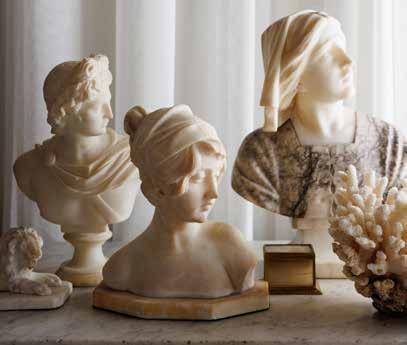
Marcus Collins likes to joke that when he first saw the volume of antiques Deke Rogers had amassed, he thought his partner might be a hoarder. “Beautiful things,” he says, “but there were storage units involved.” But each item had a purpose and a story. Collins encouraged Rogers to take the leap from collecting to curating, which led to the opening of Collected for the Home.
Collins’ design expertise lies in selecting accessories that perfectly finish a room. “Deke calls me the director of smalls,” Collins laughs. “Which sounds like I run a daycare, but really it’s about the little things that make a space feel finished.”
His eye was shaped by fashion long before interiors. “I’m always watching what people wear—at airports, restaurants—seeing patterns and repetition,” he says. “And I started thinking, what would that person’s house look like?” Clothing and interiors, he’s found, are closely linked.
His own style leans collected and personal: cottage-adjacent, layered, a little playful. “Think your grandpa’s house—if your grandpa had really great taste,” he says. “Ralph Lauren meets Nancy Meyers… something classic, but with contemporary art or a local artist mixed in so it still feels young.” He’s also a master of repurposing—vintage ashtrays become catch-alls; mementos add a sense of place. “I like having tokens,” he says. “Meaningful things that remind you of where you’ve been.”
Collins lights up when a customer recognizes the history behind a piece—like the time a visitor identified a pair of African chairs and immediately understood their significance. “Deke and I had just been to the Birmingham Museum of Art and seen pieces like those on display,” Collins says. “It’s exciting when someone comes in already knowing—or genuinely excited to learn—the history of a piece.”
When it comes to transporting fragile items to antique shows, Collins’ Air Force background proves helpful. He spent years working in ammunition logistics—storing, transporting, and protecting delicate cargo under pressure. “Antiques aren’t that different,” he says. “They’re fragile, and you certainly don’t want them damaged in transport.”
At Collected for the Home, Collins helps ensure every piece has both a past and a future. “Seeing that spark in someone’s eye when they find the right thing—that’s the best part,” he says. “It’s like matchmaking for furniture.”
@collectedforthehome
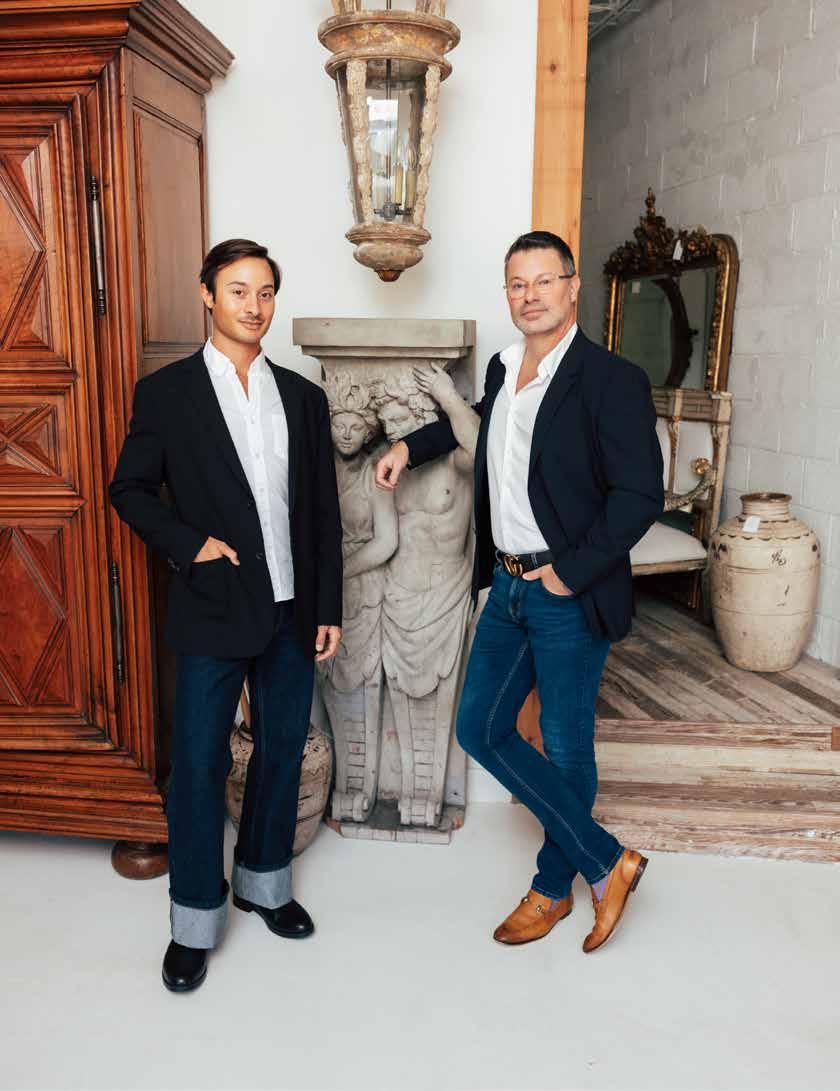
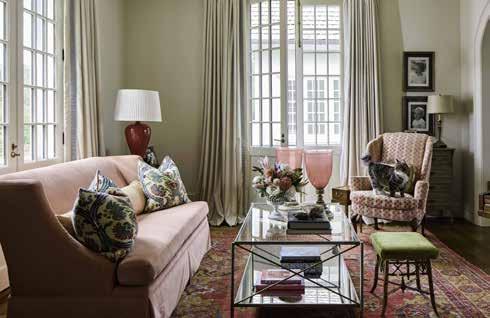
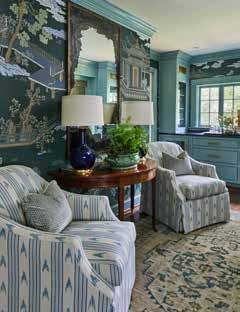
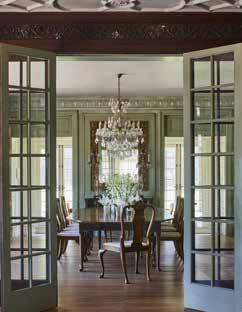
Mark Kennamer feels every interior should be as individual as the people living there. “No two houses will ever look the same,” he says. “Every one we do has its own personality. It’s not a carbon copy of the last client.”
Creativity has always been part of his story. He worked at a flower shop in high school, studied design after graduation, and spent a short time in Atlanta working for an event planner before an opportunity to design a home brought him back to Birmingham. One house led to another, and before long, he had built a career designing unique, livable interiors. He’s been at it for more than 23 years now—and still insists the reason he loves it is simple. “Because it’s fun.”
His personal style is reflected in his traditional English home. “Think Cotswolds,” he says. “I’m very traditional, but I like modern lighting, furniture, and art—so it’s eclectic, but classic.” His go-to color palette includes lots of blues and greens.
Kennamer enjoys getting to know each client’s personality and helping them discover their style. “A lot of our clients don’t know what they want at first,” he says. “Pinterest and Instagram are my worst nightmares,” he adds with a laugh, “because those ideas
don’t always translate well to people’s particular homes. “I stay in my lane so much it’s hard for me to even think about what’s trendy,” he says. He focuses on elements that last.
Travel influences Kennamer’s design approach, too—though not in the obvious way. He notices details others might overlook: the way a hotel handles scale, how materials are fabricated, the small choices that shape how a space feels.
Many of his clients return again and again, calling on him for edits, refreshes, and entirely new chapters. Second homes offer another kind of freedom, allowing clients to step outside the language of their primary residence and try something entirely different.
Even in his own house, Kennamer enjoys mixing things up. A room may stay in place for a while, but it’s always fair game to be his next playground. “I’m picking out fabric for new draperies in my guest room right now,” he says, laughing. More than two decades into the business, the pleasure still follows him home.
@markkennamer
MDM Design Studio
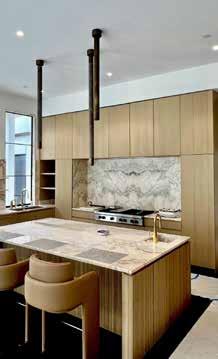
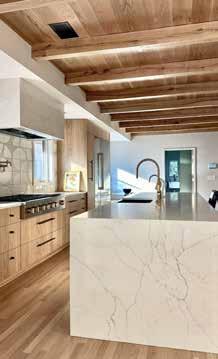
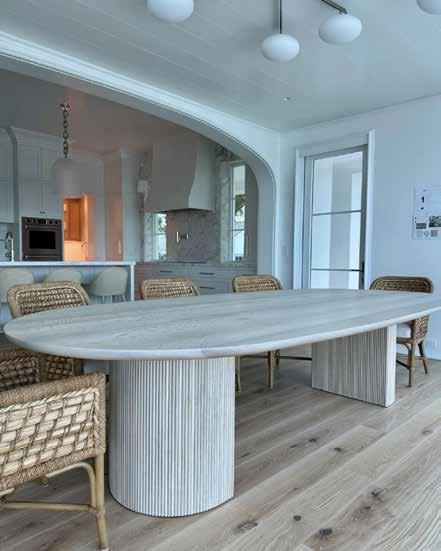
Step inside Michael Morrow’s workshop and it’s immediately clear that nothing here is standard issue. Custom furniture and cabinetry come together methodically, shaped by the hands and eyes of craftsmen who care about the artistry of each piece. At MDM Design Studio, Morrow works closely with very talented architects, designers, and homeowners to create work that feels as considered as the home it will live in. “What we create here are hopefully considered more works of art than standard pieces of millwork,” he says. “There are people behind the pieces, and no two are exactly the same.”
Morrow didn’t arrive at custom furniture by a straight path. In college, he moved between majors—business, medical, nutrition—before returning to what had always called to him: art. “People tried to steer me away from my creative side. They said you can’t get a job in art,” he says plainly. “But I don’t think I was meant to sit in a cubicle.”
After graduating and taking a string of early jobs—from galleries to an engineering firm testing concrete—he began making small pieces on the side. Designers took notice. One commission led to another, and in 2008, Morrow opened the doors of MDM Design Studio.
Today, a team of 15 craftsmen works alongside him, blending traditional woodworking with modern tools. No two pieces are alike, each shaped by the natural character of the wood itself. Morrow is drawn to many design styles but was initially inspired by European modernism—Bauhaus lines, Mies van der Rohe’s restraint, the steel-andglass buildings of mid-century Chicago.
What matters most to Morrow is the people—both those creating each piece and those for whom it’s being created. “It’s not just somebody punching buttons or a bunch of robots making things,” he says. “We have a great group of people who really care about the product we’re putting out and the craft itself.” That care is evident in every one-of-a-kind piece that leaves the shop.
@mdmdesignstudio

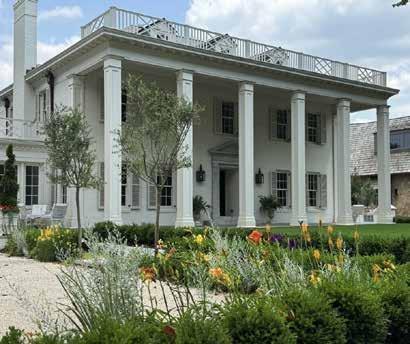
While some kids were waiting in line for theme park rides, Zachary Westall was wandering through historic homes, learning, without realizing it, how to pay attention. His father, an architect, made sure of that. Family trips revolved around estates, gardens, and places with stories layered into the walls. “We were more of a tour-Newport-mansions kind of family,” Westall says.
Even now, Westall notices what most people pass by—a boulder tucked into the woods along the highway, the way space opens or tightens, the spatial relationship between objects. His landscape designs start with that instinct. “I can tell where things fit,” he says. “I can feel when something’s off.” He believes a strong sense of spatial reasoning is essential to design.
Before he sketches a single idea, Westall listens. He wants to know how people live, what they remember, what they’re drawn to. “I want to hear what they’re dreaming up.” His work reflects a thoughtful merging of styles. Classical gardens might welcome a sleek modern bench. A formal space might feature romantic blooms. “You have to mix things,” he says. “That’s how it becomes timeless.”
Westall designs with the seasons in mind—paperbush blooming in winter with soft, golden bells; camellias carrying color through the cold months; Lenten rose gently following behind. In early spring, he loves the moment when saucer magnolias bloom on bare branches, buttery yellow flowers floating against silvery bark. “It’s absolutely magical,” he says.
His design philosophy centers on the significance of beauty in our sense of well-being. “Everyone should be surrounded by beauty and take pride in themselves and the places they live,” Westall says. “Beautiful things stimulate the mind. If you’re surrounded by things you love, it creates comfort and a sense of organization.” And there’s no better place to begin than in the garden—where beauty is ever-present and never stops growing.
@zacharyjwestall
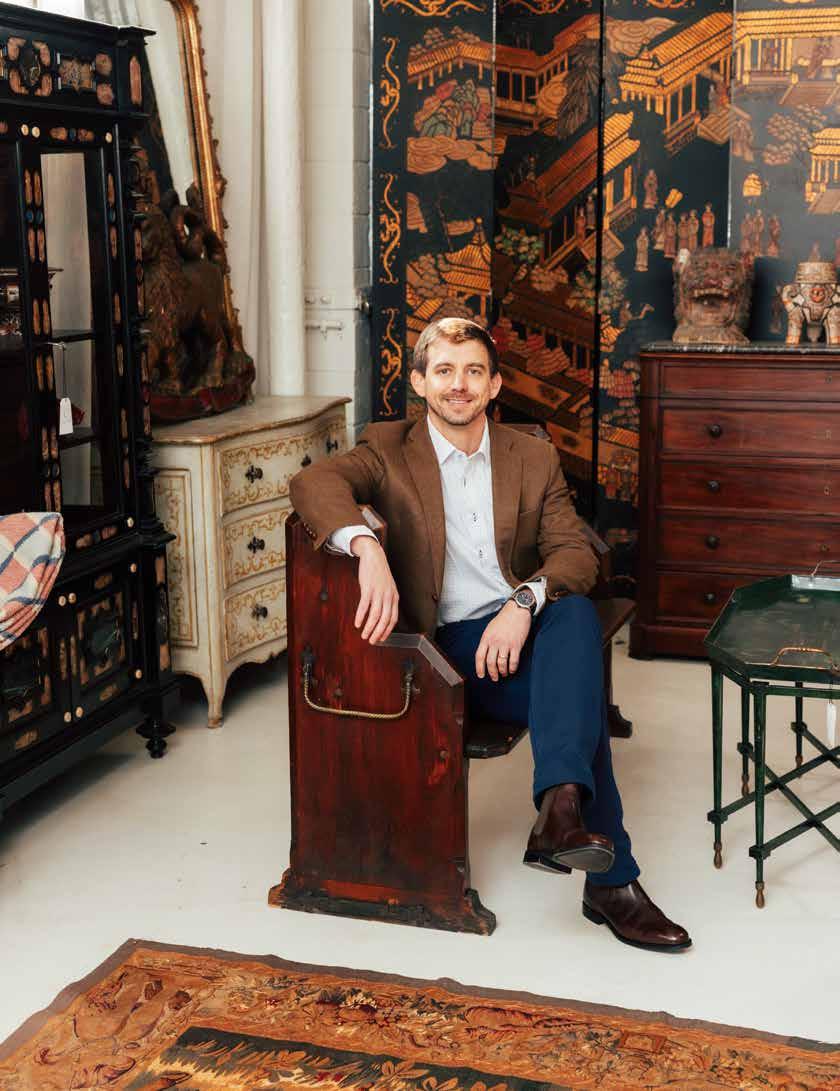
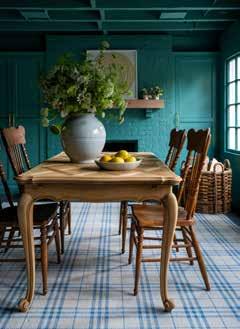
Some builders prefer to avoid remodeling old homes. Not Andrew Davis. He jumps at the chance to reimagine them.
“I love old houses,” he says, without hesitation. “I want pre–World War II. I want knob-and-tube. I love how they’re built.” For Davis, founder of Trestle Construction, the appeal lies in what’s revealed once a house is opened up. “When you start disassembling an older home, you can tell the level of care that went into it,” he says. “The people who worked on those houses took pride in what they did.”
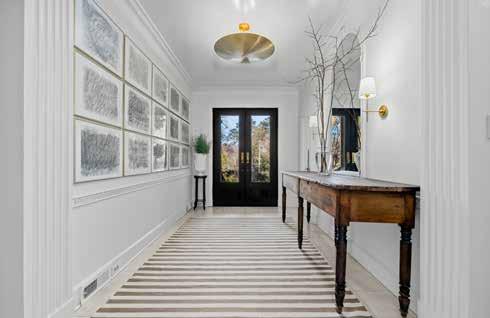
In Birmingham neighborhoods, where historic homes still anchor the streetscapes, Davis focuses on helping homeowners bring those houses forward without sanding off what made them special in the first place. The challenge lies in balancing modern expectations with architectural honesty. “I love thinking about how we bring a house up to today’s standards without taking away from what it was meant to be.”
Since launching Trestle in 2018, Davis’s projects have grown in size and complexity, from thoughtful renovations to a custom home
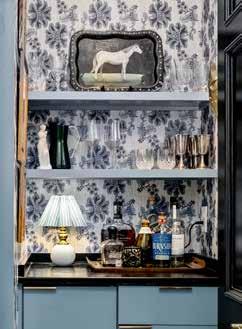
currently underway in Mountain Brook. Before ever discussing finishes or floor plans, he starts with questions about the long-term play: How long do you plan to stay? What do you want this house to give you over time?
“I take a pragmatic approach,” he says. If a homeowner plans to move in a few years, he’s candid about return and restraint. If they’re settling in for the long haul, the conversation shifts. “When you’re planning to be there ten years or more, you focus more on making it exactly what you want,” he says. “At that point, investing more starts to make more sense.”
His guiding philosophy is that every project is a team effort. “Collaborating with the client, the architect, the designer, and our vendors—that’s my favorite part of the process,” he says. “I really love getting to know a potential client and earning their trust as we create a home they’ll enjoy for years to come.”
@trestleconstruction
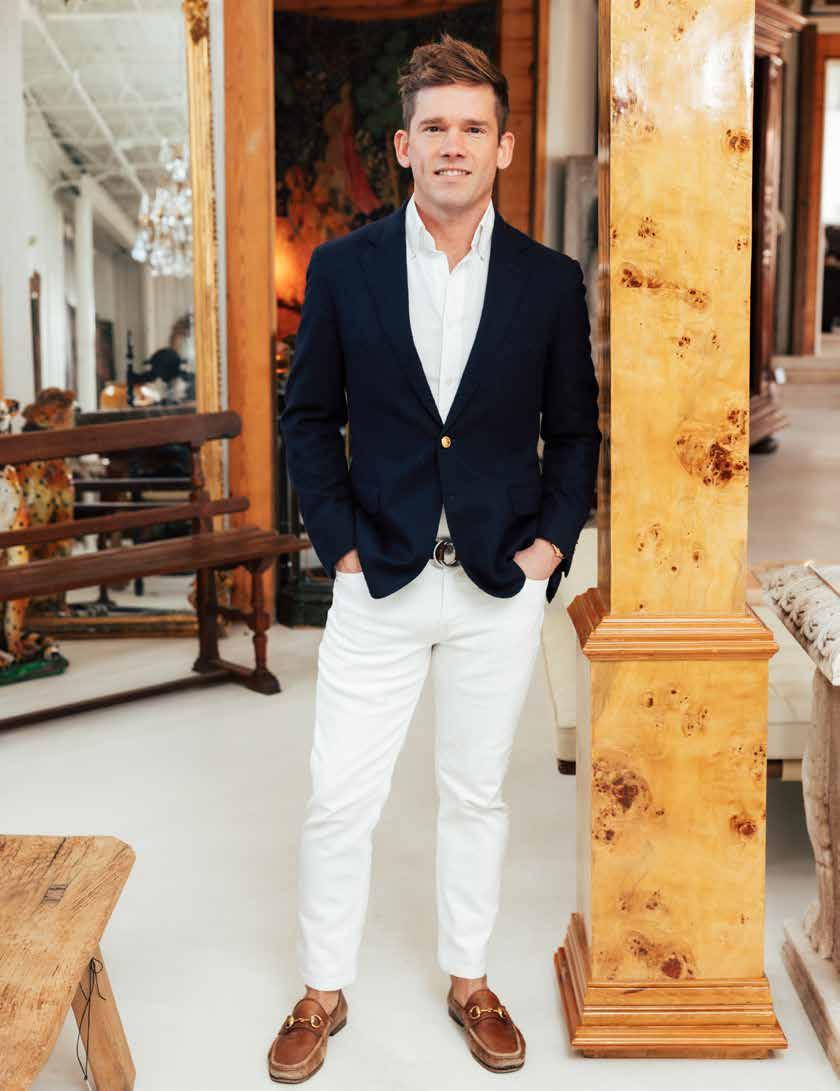
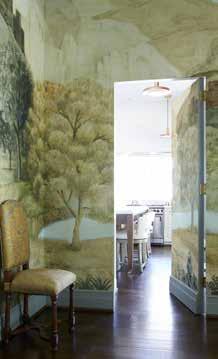
James B. Laughlin Residential Design
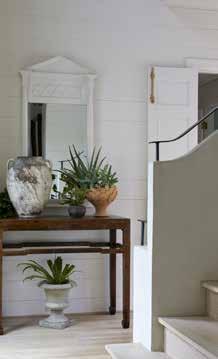
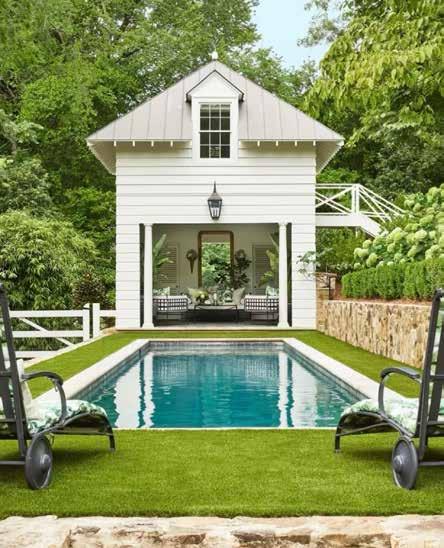
Jimmy Laughlin has been drawing houses since he was eight years old—floor plans, specifically. “I was sketching them as a child,” he says. “I’ve always had an appreciation for beautiful things, in the most humble way—cars, gardens, houses.” That early instinct eventually revealed itself as architecture, becoming not only his profession but his life’s passion.
“It’s an honor to be involved in what is often the largest investment of someone’s life,” Laughlin says. One project in particular still stands out: a home designed to resemble a centuries-old coastal structure, so successful it changed the course of its owner’s life. The client loved it enough to relocate full-time—and later hired Laughlin again to design a barn and guesthouse. “We joke that he’s a repeat offender,” Laughlin says. “But that’s always the highest compliment.”
While he’s been sought after to design homes across the country, Laughlin carries a particular affection for Birmingham and the South. He grew up in a house rooted in tradition, where meals, gatherings, and the way a table was set carried meaning from one generation to the next—and he sees those same inherited values reflected in Southern homes today. “People care deeply about their houses here,” he says. “In the South, entertaining is different because traditions are passed down.” It’s a joy, he says, to create what he calls “inheritable homes”—places designed to feel as relevant a century from now as they do today. In Birmingham especially, he senses an uncommon energy. “There’s an enthusiasm here that’s rooted in design—not just architecture,” he says. “There’s a unique collaborative spirit. People are invested.”
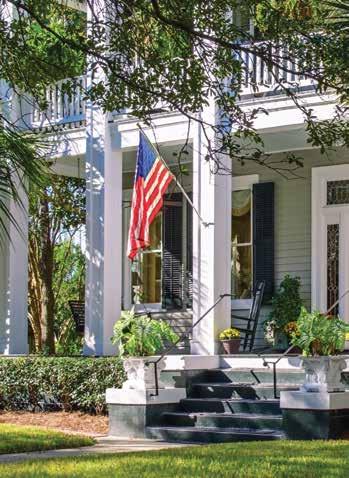
His own home reflects that same sensibility. A 100-year-old Georgian in a historic district, it required an exacting restoration—replicated moldings, stripped hardware, and careful decisions made within strict preservation guidelines. “Working in preservation teaches you restraint,” Laughlin says. “And restraint is vital if something is going to feel timeless.”
Whether designing a house perched along the coast of Maine or one nestled in the heart of Birmingham, Laughlin and his team handdraw every plan with the belief that a home should transport you. “It should fit into the neighborhood fabric,” he says, “but also take you to another world.”
@jamesblaughlin








How a Birmingham bartender and architect invest creatively in the city they call home

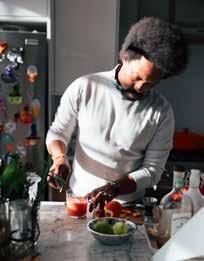
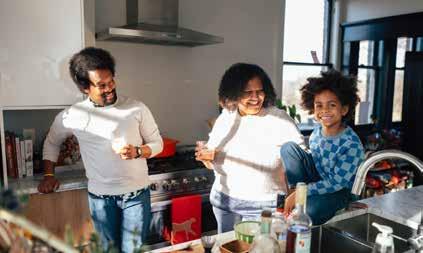
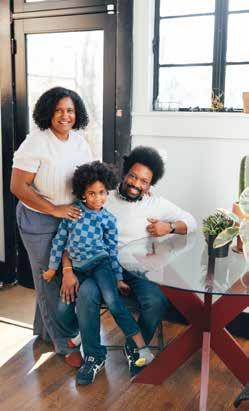
The other day, Jessica Bennett asked her husband, Eric, if he could make a mixed drink with garlic in it. For some, that might sound like a dare. For Eric, it was simply the next creative problem to solve. He’s a 2026 James Beard Award semifinalist for Outstanding Professional in Cocktail Service and the mind behind Birmingham’s Continental Drift—someone who has built a career around flavor, balance, and making unexpected elements work together.
“She likes garlic, so why not?” he says. That evening, while working at Drift, Eric worked through how to make it feel intentional—keeping it playful and drinkable—then prepped the finished version at home for Jessica, who was delighted by the result. Most nights, though, things are much simpler. “If it’s just us, it’s usually something like a Negroni,” Eric says. “When we have people over, I’ll do old-fashioneds and one drink that feels right for the occasion.”
ARTICLE BY BLAIR MOORE | PHOTOGRAPHY BY MARY FEHR
Eric’s path into food and beverage began, like many others, out of necessity while he was in college. Within a few years, he realized it was more than a job. “I love flavors and food and beverage—the physical act of eating and drinking, and how we do it,” he says. “But the idea of service is a huge draw, too. Serving friends and family, serving regulars—people who come to see you—that interests me.”
That curiosity has taken him far beyond Birmingham, from cocktail competitions to national recognition, including a segment on Jimmy Kimmel Live! during the pandemic focused on making inventive drinks at home with whatever people had on hand.
At home, Jessica brings her own creative energy to the mix. A partner at ArchitectureWorks and member of the Board of Directors at Birmingham Land Bank, she remembers sketching floor plans as a teenager—tracing over house plans in magazines and reworking them on her own. “I had tracing paper, and I’d sketch what I thought was a better arrangement,” she says.
Though much of her professional work focuses on civic and commercial projects, Jessica is deeply invested in Birmingham’s neighborhoods. “Anyone involved with the Land Bank will tell you that blight and abandoned housing is a public health issue,” she says. “It’s not good mentally, and it’s not good economically. If we can help create real neighbors again, that’s a win. Our goal is homeownership in the city, and we’re working hard toward that.”
Their Norwood home reflects that sense of purpose— and the joyful presence of their seven-year-old son, Sam, whose opinions and artwork are visible throughout the house. Art supplies live within easy reach, and his drawings appear everywhere, from walls to windows. “Neighbors can see his artwork because it’s taped up in the windows,” Jessica says. “I love that he feels a sense of ownership here.”
For Eric and Jessica, Birmingham has always been home, which is why they continue to invest their creativity and energy in the city. “We’re pro Birmingham,” Jessica says. “This is the community we want to impact for good.”
CONTINUED >



Eric created this cocktail for Jessica as an unexpected twist on a Boulevardier, named for their Norwood neighborhood.
Ingredients:
• 0.75 oz bourbon
• 0.75 oz aged Jamaican rum
• 1 oz Campari
• 1 oz garlic-rosemary coconut cream
Shake all ingredients. For a heartier, more viscous drink, stir instead. Pour over a large cube in an old fashioned glass. Garnish with a lime twist.
Combine 300 grams coconut cream and 300 grams cane sugar in a pan, stirring until fully incorporated. Add three roasted garlic cloves and sauté gently until golden, adding a small amount of water as needed. Remove from heat and add the leaves from four sprigs of rosemary. Use an immersion blender to fully incorporate, then strain out solids.
Alternate method: Roast garlic, combine all ingredients in a high-powered blender until fully incorporated, then strain.
For equally creative libations, check out Continental Drift, 2201 7th Avenue South, and follow @driftbham on Instagram.




ARTICLE BY KALI MCNUTT
After a mostly homebound 2024, my “resolution” for 2025 was to do the thing that brings me the most joy, inspiration, energy, and confidence–travel. And so it was. Fifteen new-to-me cities and some lifelong loves (read: Paris) left me with a thought: chic hotels abound, but a property that evokes a sense of true wellbeing in guests is more elusive.

Mexico City
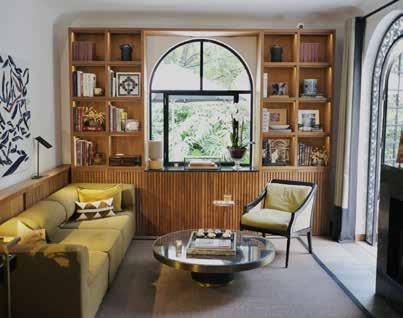
Upon arrival, hibiscus Mezcalitas. Stunning architecture and all the 5* perks (Clothes pressed? Check. Private airport shuttle? Check. Dyson Airwrap with all the trimmings? That, too.) What can be an overwhelming megacity is made extraordinarily peaceful behind the imposing iron gates and verdant entry at Casa Polanco, a Neocolonial mansion situated on Parque Lincoln in Mexico City’s upscale Polanco neighborhood. Discreet, airy, and bright, Casa Polanco is the ideal long weekend escape for friends or couples. It’s a serene and sophisticated stay, within walking distance of some of the city’s best shopping (check out Ikal Concept Store and Lago LATAM) and an eight-minute walk to dining mecca, Pujol.
Siem Reap, Cambodia
As first-timers to Southeast Asia, my childhood friend and I weren’t sure how much time to allot to each stop as we sojourned from Vietnam through Cambodia and on to Thailand. Knowing Cambodia was a favorite of a few trusted friends, we decided to make our stop in Siem Reap one of our lengthier ones. It wasn’t nearly enough time. A family home turned boutique hotel, Maison Polanka is the definition of quiet (literal and figurative) luxury. Traditional Khmer raised houses feature carefully curated collections of art, midcentury furniture, and local handicrafts, reflective of the French-Cambodian proprietors’ exquisite taste.
It isn’t any one quality, but rather–for me at least–a combination of scale, design, decor, ease, and a unique viewpoint that makes a hotel sing. Kind, accommodating staff, and that amenity most rare in modern hotels–abundant natural light–put a great stay in best stay territory.
Each of these smaller-scale properties evokes that coveted feeling of a luxe home away from home. Whether it’s a refreshing towel and homemade lemonade after a day of touring temples in Cambodia or a Calimero by a crackling fire after
Paris
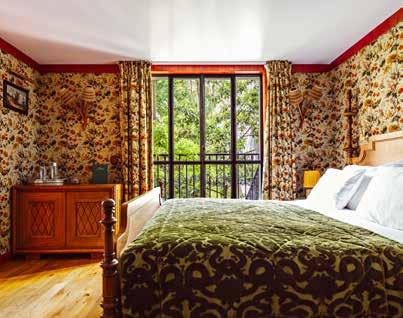
To my delight, I was once told by a born-and-bred Parisian that I know the city better than most locals. A badge of honor earned after a formative year spent in and around the city, exploring every off-the-tourist-path nook and cranny. One neighborhood I love is Batignolles. For me, it’s the perfect blend of convenience and authenticity. Forget about influencers and bucket list checking first-timers–Batignolles is local–you’ll likely be the only non-native French speaker when dining in L’Eldorado’s lush (and popular) courtyard restaurant. Spacious rooms drenched in House of Hackney floral wallpaper are maximalist perfection, enveloping and warm. Large balconies provide a private perch to enjoy morning coffee or apéro overlooking the courtyard, while soaking tubs beckon beneath windows that actually open, making this hotel a Parisian dream come true.
Courmayeur, Italy
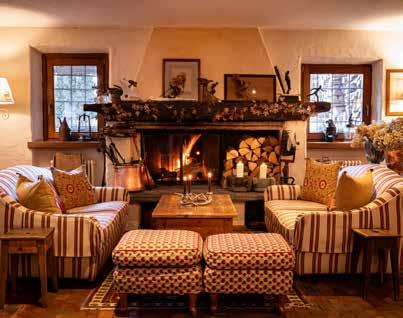
On the Italian side of Mont Blanc (Monte Bianco) lies the upscale foodie ski village of Courmayeur, and five minutes from the heart of Courmayeur rests the sleepiest of hamlets, Entrèves, where the star of the show–and perhaps all of the Aosta Valley–is the 33-room Auberge de la Maison. Layered Alpine-chic snugs create fairytale-cozy communal spaces where crackling fires glow aplenty. Excellent local wines and cheeses are a mainstay at the hotel’s renowned L’Aubergine restaurant, which serves standout fondues and polenta with a focus on local.
a day on the slopes in Courmayeur, these four properties prioritize absolute comfort, thoughtful design, delicious food, and an unmistakably warm character.
You won’t be searching for your key card to access elevator banks, and you can forget about navigating endless carpeted hallways. What to expect? Little moments like the property owner sitting down to note her favorite local boutiques and restaurants.
Budget for those pesky flight change fees–you’ll want to linger at these gems long past check-out.



Look for water stains on your ceilings. Are your gutters clean?
Notice any curled or missing shingles? Hearing leaks in your chimney?