
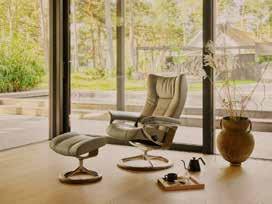
The Stressless® Wing Recliner features Paloma Mushroom Leather, Polished Metal, and Wenge Stain.

American Leather Versa Sofa
I once got teary-eyed during a photo slideshow at an event where I didn’t know a single person. It was one of those montages set to swelling music — baby pictures, childhood snapshots, proud parents in the background, the whole story of a life unfolding. I had no connection to anyone on the screen, but somewhere along the way I found myself blinking fast and hoping no one noticed. Apparently, I get emotionally invested.
My family finds this endlessly entertaining, but it happens more often than I’d like to admit. I’ll hear someone’s story, learn what they’re building or hoping for, and before long I’m rooting for them like I’ve known them for years. It happened again this month.
When we talk about being invested, we usually mean money, but the stories in this issue reminded me that the most meaningful investments around Birmingham often look a little different.
They look like someone building a vintage shop because they believed this city needed it. They look like designers who have trained their eyes to recognize beauty that will last for generations. They look like a couple building a medical practice and a family life shaped by the same values they grew up with. And they look like entrepreneurs bold enough to say, Our city needs this — and then doing the hard work of bringing that idea to life.
In other words, being invested is deciding that something matters — and trusting the return will be worth it.
And when the heart of the investment is building others up, the return absolutely is. Warmly,
MOORE, EDITOR
April 2026
PUBLISHER
Kali McNutt | kali.mcnutt@citylifestyle.com
EDITOR
Blair Moore | blair.moore@citylifestyle.com
PUBLISHER ASSISTANT
Shellye Andrus
CONTRIBUTING WRITERS
Elliott Harrell, Taylor Bowler
CONTRIBUTING PHOTOGRAPHERS
Ambre Amari, Mary Fehr, Olly Yung, Mac Dalton, Destination Augusta, Natalie Thompson
CEO Steven Schowengerdt
President Matthew Perry
COO David Stetler
CRO Jamie Pentz
CoS Janeane Thompson
AD DESIGNER Matthew Endersbe
LAYOUT DESIGNER Kathy Nguyen
QUALITY CONTROL SPECIALIST Hannah Leimkuhler


Proverbs 3:5-6

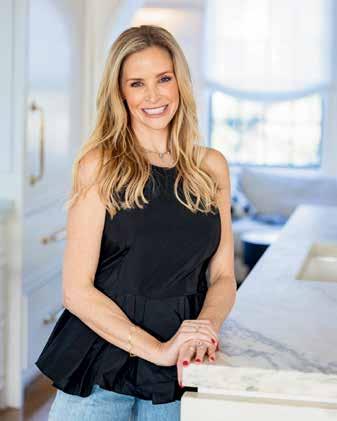
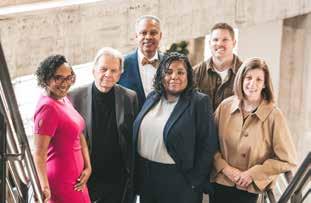
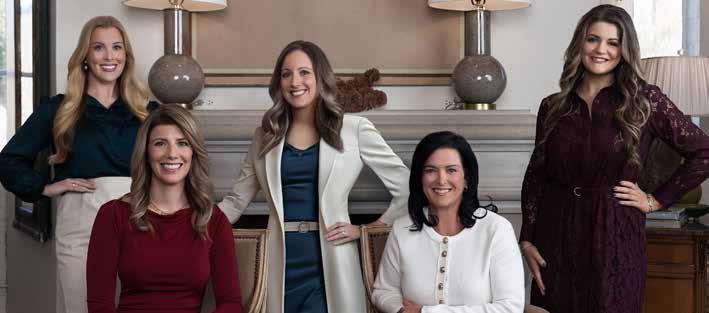
Lynlee strongly believes in and supports residential growth in Birmingham. Since obtaining her license in 2014, Lynlee has completed over 688 transactions totaling over $322 million dollars of real estate sold in the area. “I have made a huge effort to be intimately engaged in the central city and surrounding “city suburbs” from Forest Park to Homewood, Mountain Brook and Vestavia, so that I can provide the greatest benefit to my clients, which I strongly believe is market knowledge”. Her greatest motivation is her clients: She says, “Success to me is doing what I love every day and knowing my contributions positively impact my clients, my company and my city and that I have produced the highest quality of work.”





Where
Smith
Blake



ARTICLE BY BLAIR MOORE
PHOTOGRAPHY BY MARY FEHR
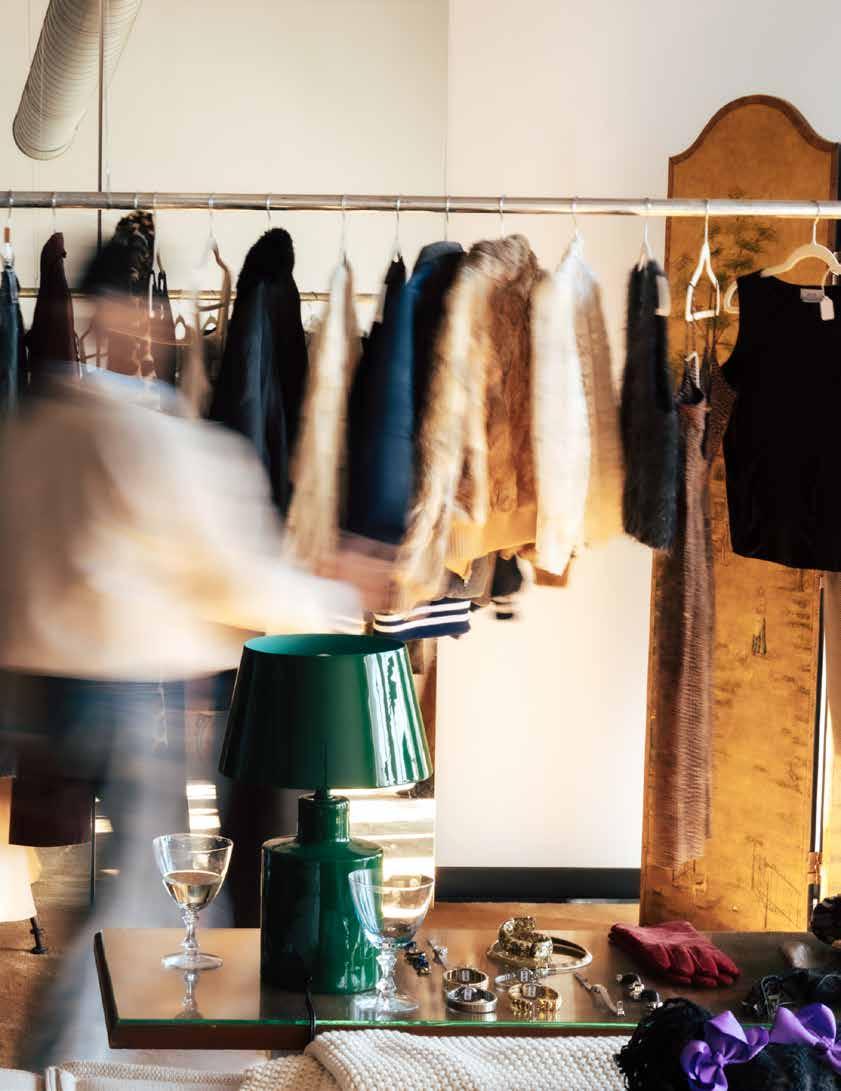
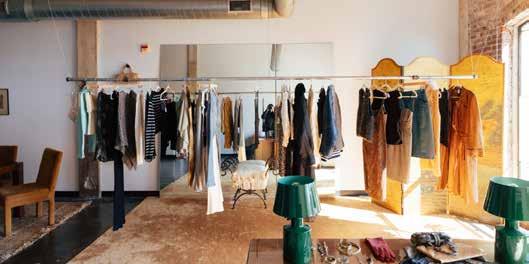
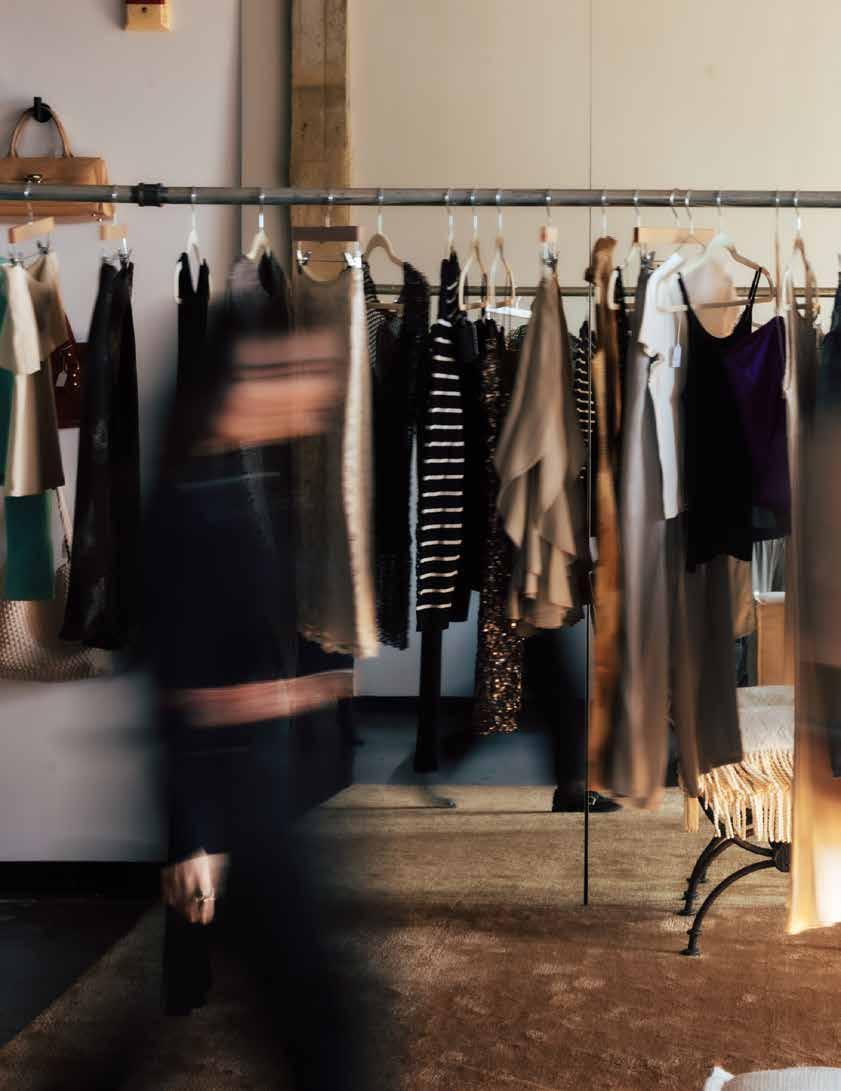
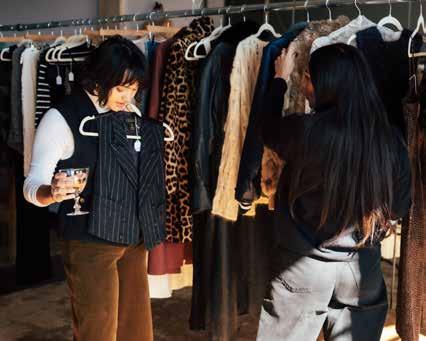
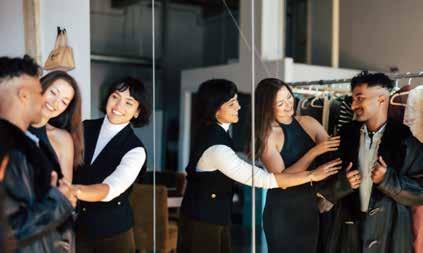
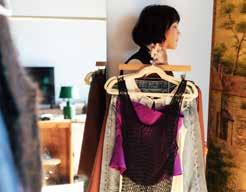
By 7:30 a.m., there’s already a line outside of Zephyr Barber Shop, where McCall Harwell is arranging carefully curated vintage clothing pieces and transforming the space for the day’s pop-up. When the doors open, the room fills fast — racks turning, hangers clinking, conversations rising over the racks. Strangers weigh in on silhouettes. Friends pass pieces under the curtain. Someone doubles back for a jacket they can’t stop thinking about.
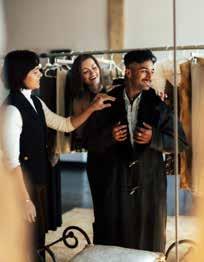
“Everyone is everyone’s stylist at a pop-up event,” Harwell says. “The dressing room becomes a social event.”
In Birmingham, Nan Curated has become something people plan their Saturdays around, occupying a space that didn’t exist before. “It felt like you either went thrifting or shopped at high-end boutiques,” Harwell says. “Nothing felt like the middle ground I wanted.” What she imagined was something cool and fresh — vintage, but curated.
“This is the type of place where I wanted to shop in Birmingham,” she says.
Before Nan Curated had a name, a following, or a line out the door, Harwell was collecting. “I was always collecting pieces for something I didn’t even know yet,” she says.
Eventually, she took the leap and tested the idea. She built an inventory and planned a pop-up.
“The first one went way better than I ever expected,” she says. “People kept saying, ‘This is amazing,’ and that’s when I knew.”
If it happened again, she promised herself, she would quit her job. It did.
“I just had a gut feeling,” she says. “Everything in my life started to make sense.”
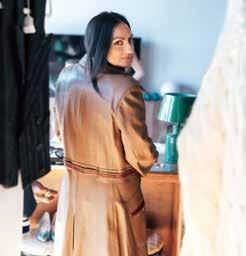
In addition to pop-ups, she now offers private shopping sessions in her showroom.
“Vintage clothing carries a sense of longing and familiarity,” she says. “It’s from someone else’s life entirely — and now you’re wearing it.” She finds inspiration in eras that prioritized craftsmanship and character. “A lot of vintage was made better than today’s clothing,” she says. “We’re very minimalist now, and I like that there used to be more fun with patterns and color.”
Harwell never knows when she may find the perfect piece — at an estate sale, on a trip, or somewhere else completely unexpected.
“I source very intrinsically with my life,” she says. “Sometimes I take sourcing trips, but I find things wherever I go.”
Experience has sharpened her eye. “I move fast when I source,” she says. “I can touch something and immediately know what it’s made of.”
What matters most comes down to three things: silhouette, material, and uniqueness. “People come to Nan Curated for pieces they can’t find anywhere else,” she says. Fit is non-negotiable. “I know how frustrating it is when something looks great on the hanger and terrible on your body.”
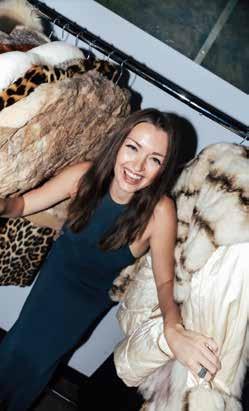
The moment she finds a perfect item, time stands still. She still talks about a reversible, floor-length fox fur coat — plush fur on one side, green corduroy with penny lane–style fur trim on the other. “It was a gem I found in the boonies,” she says, laughing. “Go figure.”
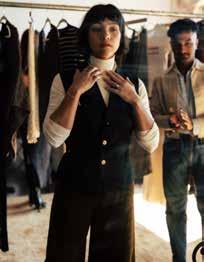
Then there is the Isaac Mizrahi set: a low-cut, scoop-neck black blazer paired with a matching black bra designed to peek just above the neckline. “It’s my favorite thing I’ve ever sourced,” she says. “It’s too small for me, or I would never sell it.”
“We shouldn’t all look alike. We’re not clones. We all have our own personality, and our clothing should reflect that sense of individuality.”
Harwell has no plans to expand; her heart is firmly rooted in Birmingham and its people.
A brief experiment with e-commerce confirmed what she already knew. “I realized that, for me, this was not about strangers across the country.” Nan Curated was built for Birmingham.
“Every decision I make is intentional and rooted in the local community,” Harwell says. Echoing a favorite philosophy, she adds, “You don’t change the world by being everywhere. You change the world by changing your five-mile radius.”
“I want to see faces,” she says. “I want it in person. Analog. Human.”
Harwell sees vintage as both a cultural and practical investment. “That level of craftsmanship just isn’t being made anymore,” she says. “The materials and details are disappearing.” Pieces endure because they were made to. “Everything was precious to that generation,” she says. “They kept things. They repaired things.” The pieces she selects are always in style and poised to grow in value.
It’s important to Harwell that no two looks are the same. “We shouldn’t all look alike,” Harwell says. “We’re not clones. We all have our own personality, and our clothing should reflect that sense of individuality.”
For Harwell, Nan Curated is about connection as much as it is fashion. “I want it to feel personal, intentional, and human,” she says. “It represents humanity to me.”
Watch for the next pop-up or schedule a private shopping session at @nan.curated on Instagram.

Luxury is being surrounded by 120 acres of riverfront forest.
At Kirkwood, luxury is measured in the space to breathe and an environment that nurtures vitality, independence, and well-being. As a Life Plan Community, Kirkwood provides Independent Living with peace of mind to age happily, safely, and fulfilled. Visit kirkwoodbytheriver.com or call 205-956-2184 to schedule a personal tour today.



ARTICLE BY TAYLOR BOWLER PHOTOGRAPHY BY OLLY YUNG
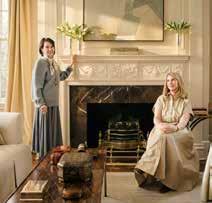
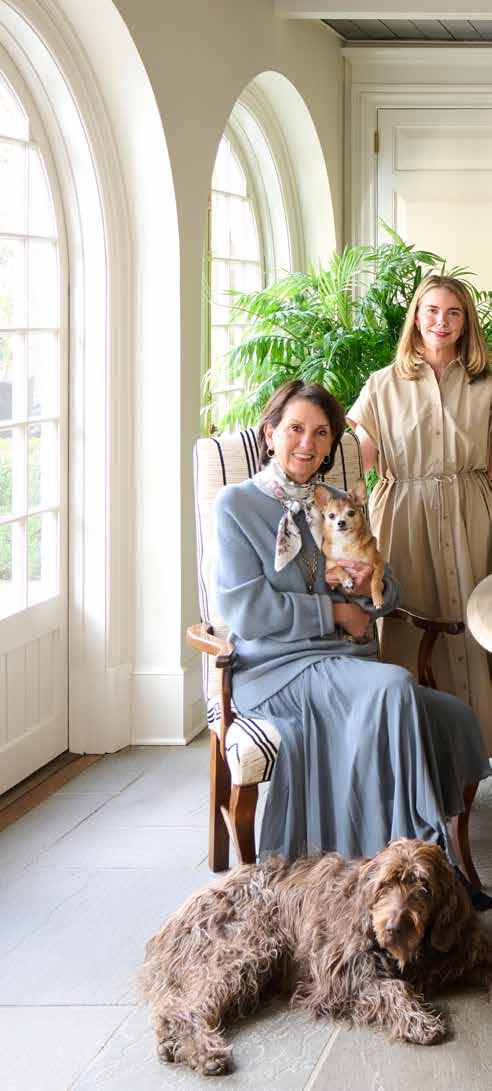
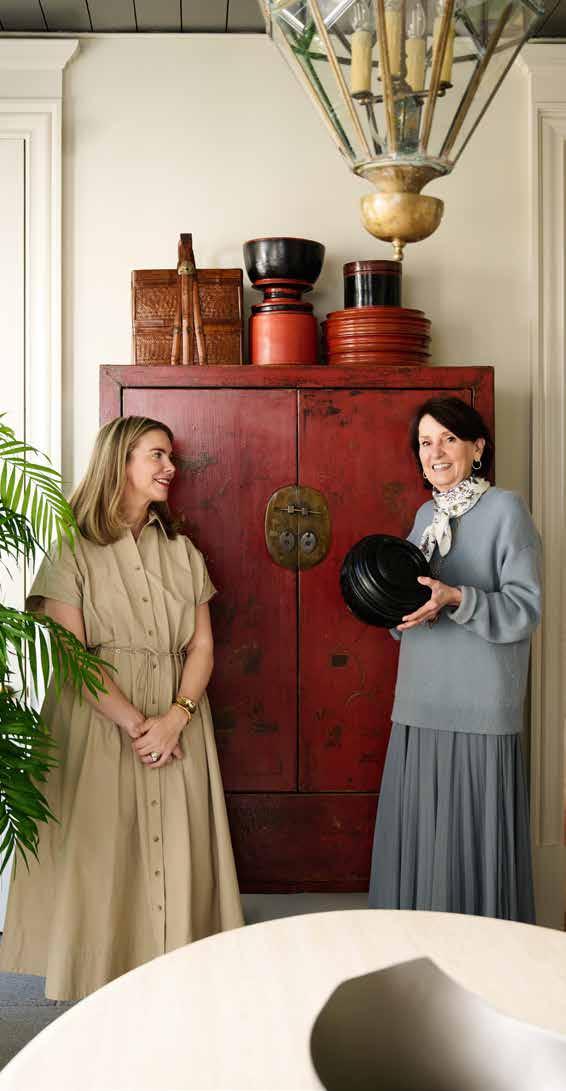
Cindy Smith and MK Smith Boykin have designed some of the South’s most stunning home interiors, building a reputation for blending European treasures with modern design. Together, they run Smith Interiors in Charlotte, North Carolina.
The creative mind behind the Circa family of shops, Cindy also owns CIIRCA Antiques with lead curator Virginia Christianson. Cindy’s daughter, Whitney, owns Circa Interiors & Antiques in Mountain Brook.
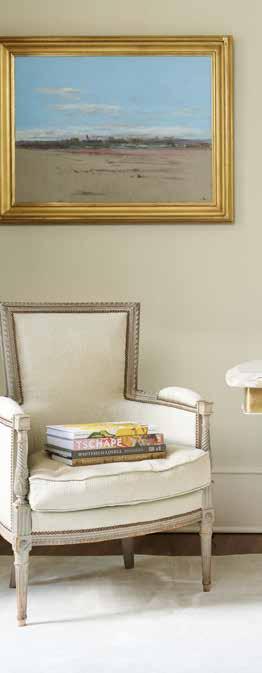
“THE MORE ORNATE OR BAROQUE A PIECE IS, THE MORE STRIKING IT CAN APPEAR IN A CLEAN, MODERN ENVIRONMENT.”
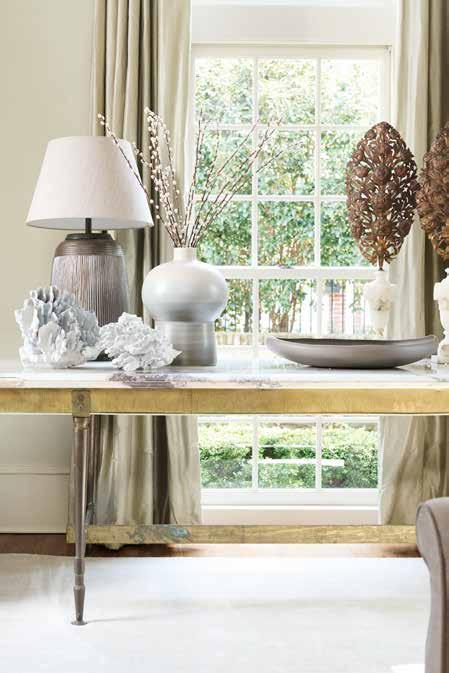
“Years of experience have helped me quickly eliminate the ordinary,” Cindy says. “I’ve developed a strong understanding of furniture periods, which allows me to distinguish a true period piece from a later reproduction.”
We caught up with the tastemaker to talk tips, tricks, and the art of integrating antiques into everyday spaces.
Some of the best finds don’t always show up in a curated shop. They’re out in the wild, waiting to be noticed. Cindy has stumbled upon incredible pieces in the back of a truck, tucked away in someone’s garage, or quietly sitting in a private home.
Reproductions almost always give themselves away with a detail that’s just… off. Knowing the history and culture behind each period makes those inconsistencies impossible to miss.
With antiques, budget and quality don’t always go hand in hand. When searching for something exceptional, quality comes first. A truly remarkable piece justifies its place, and often its price.
When you find an antique you truly love, consider stretching your budget to make it yours. Pieces made with integrity and CONTINUED >
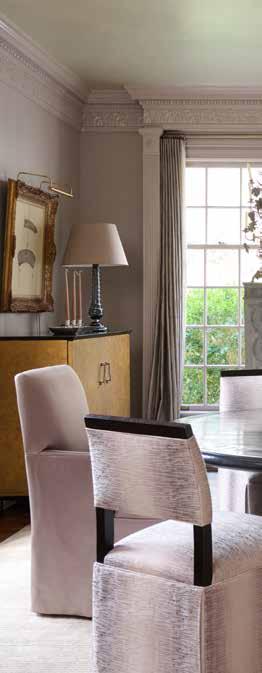
“A BEAUTIFULLY MADE PIECE WITH STRIKING PATINA, STRONG LINES, AND BALANCED PROPORTIONS WILL ALWAYS STAND THE TEST OF TIME.”
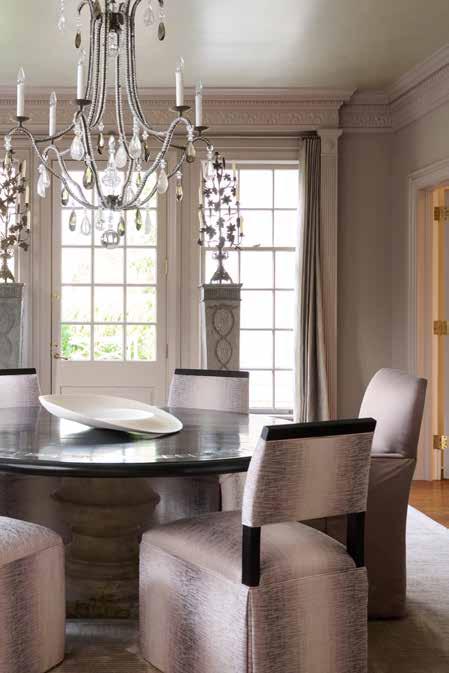
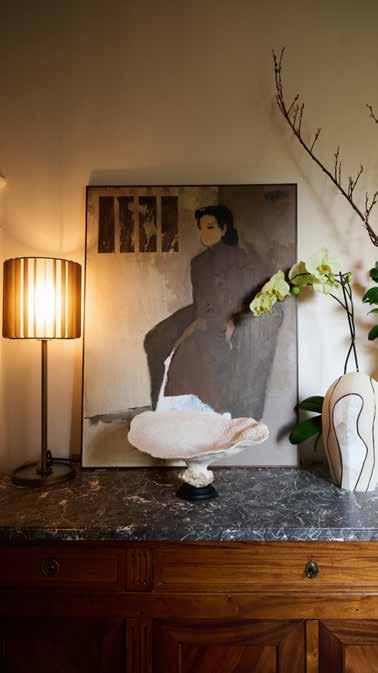
beautiful proportions are the ones you won’t tire of. Do a little homework and learn the basics of styles and periods so you can shop with confidence.
Think about where a piece has been, who used it, what their lives might have looked like, and why it was made the way it was. Each antique had a life before us, and that’s part of its romance. A rustic farm table tells a very different story than a 17th-century Spanish commode. Understanding the historical context, how people lived, and what they valued adds depth and meaning to the piece.
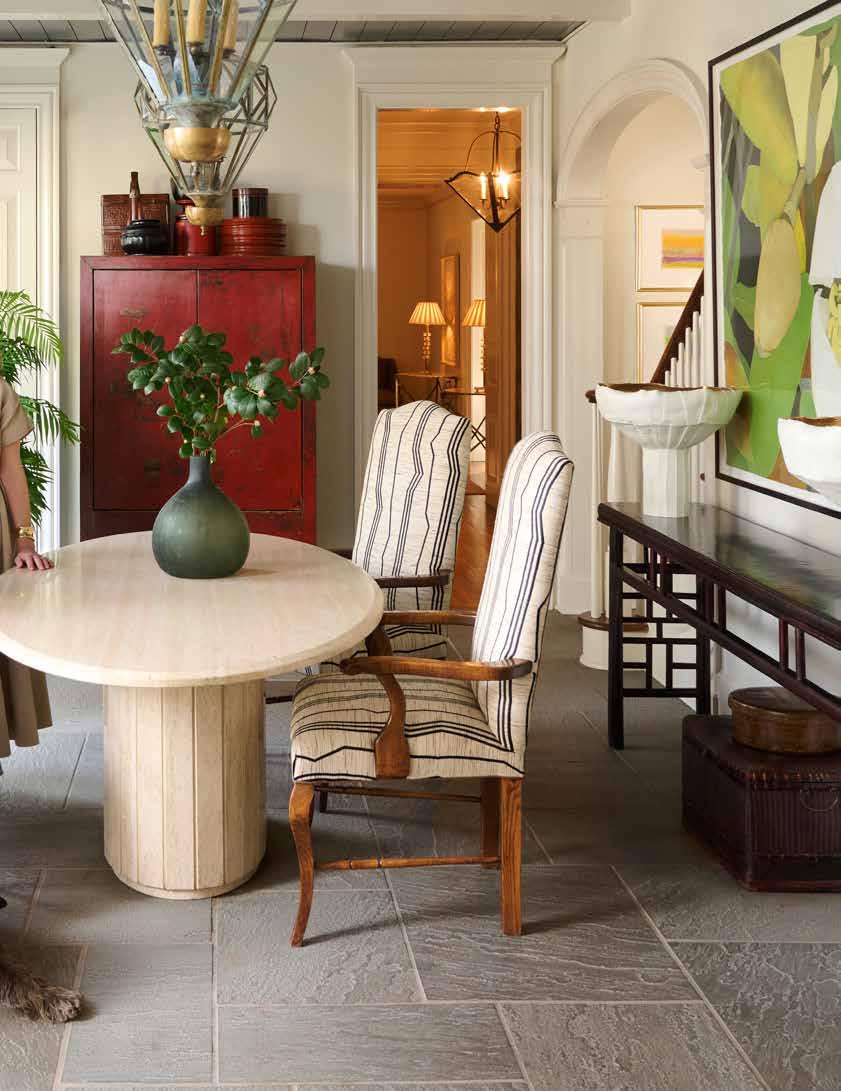
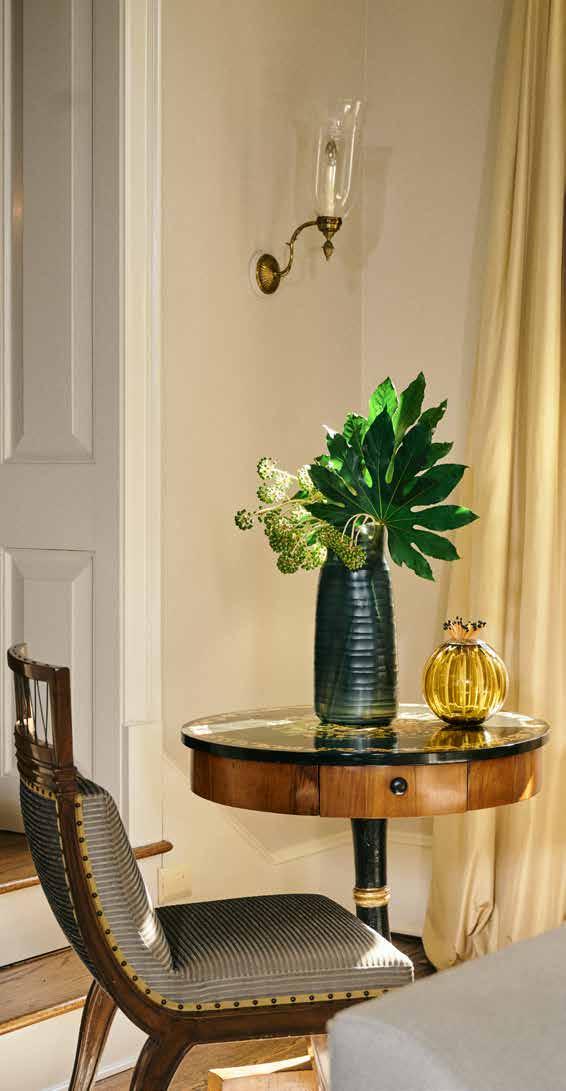
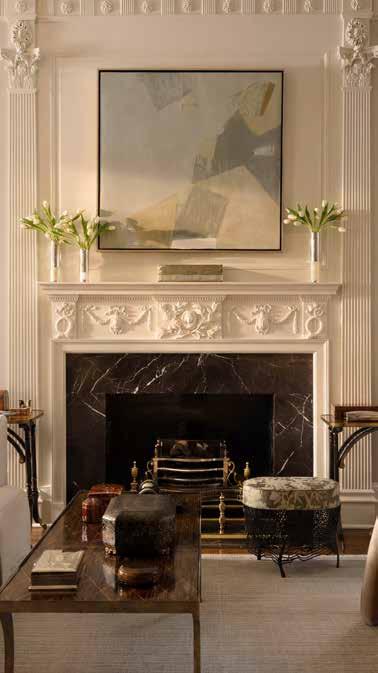
A space filled entirely with antiques can feel heavy or predictable, while an all-modern interior can fall flat without something that carries some history and soul. When thoughtfully combined, they create beautiful contrast and tension. The more ornate or Baroque a piece is, the more striking it can appear in a clean, modern environment.
A beautifully made piece with striking patina, strong lines, and balanced proportions will always stand the test of time. It has already endured, and that longevity is part of its value.
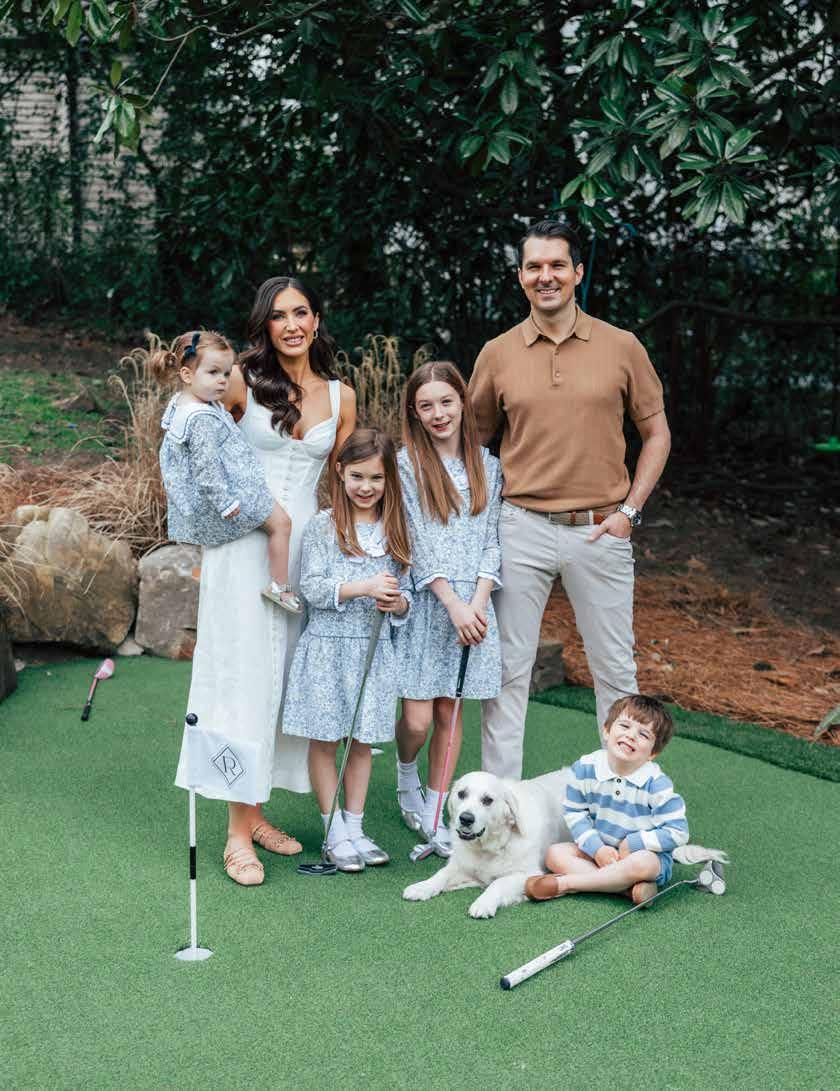
BLAKE AND KRISTIN RAGGIO ARE ALL IN ON BIRMINGHAM — BUILDING A LIFE SHAPED BY FAMILY, COMMUNITY, AND PURPOSE
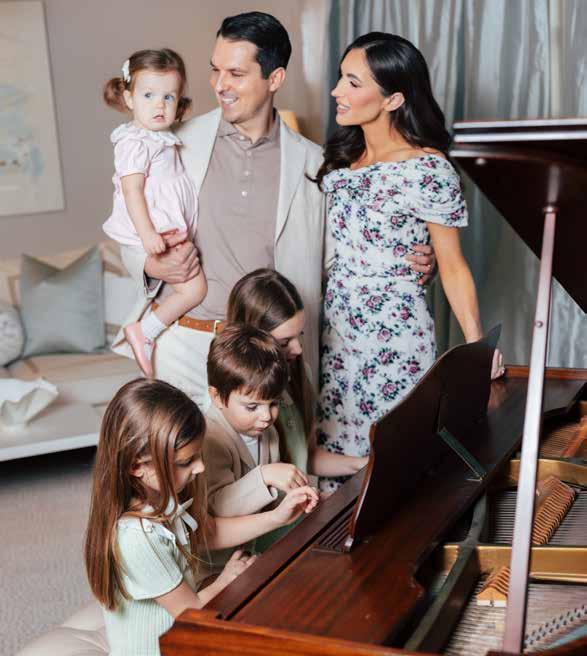
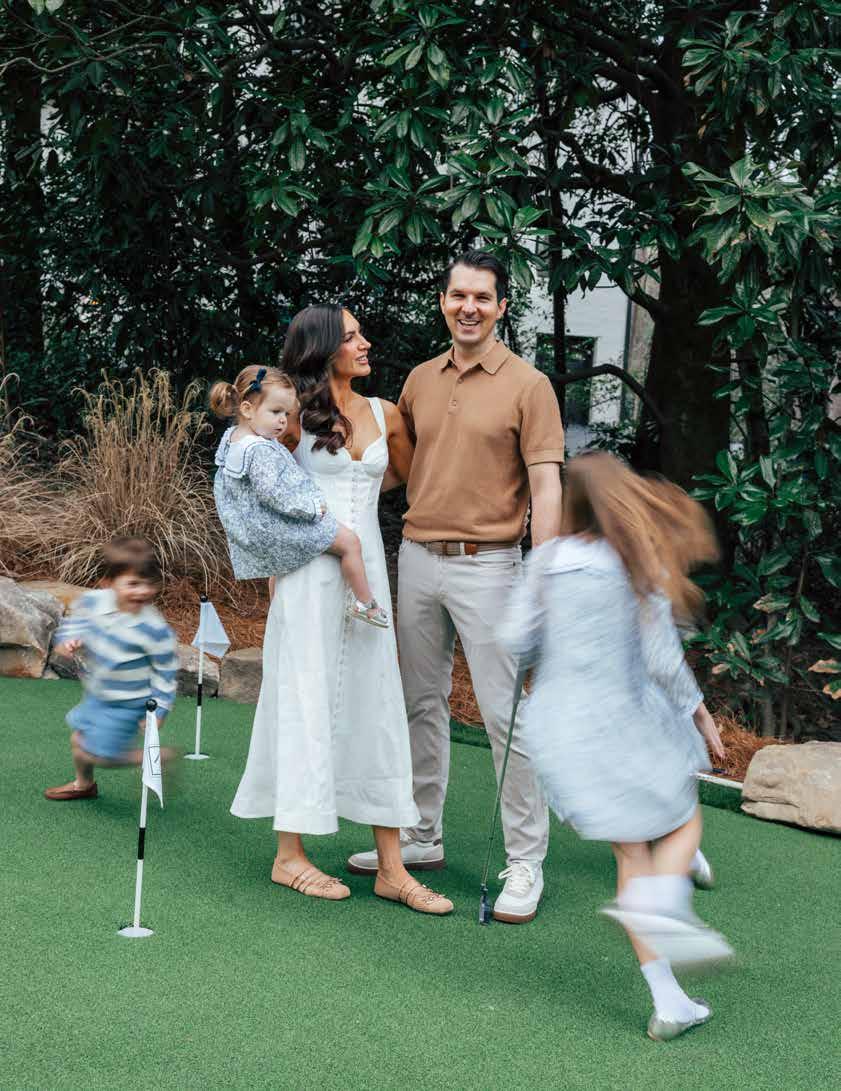
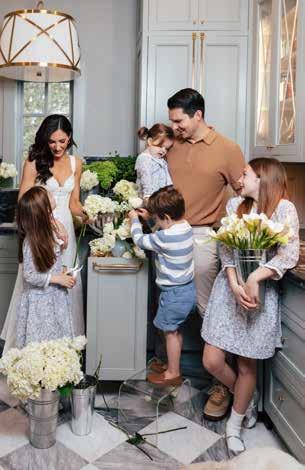
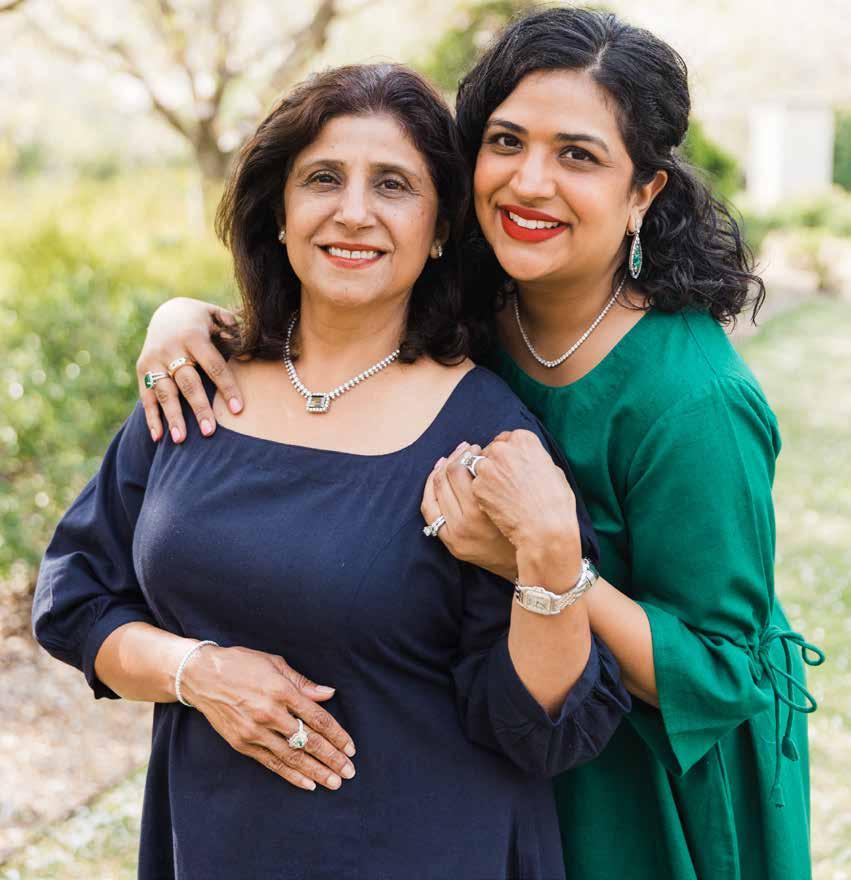
Some say high school romances never last, but Blake and Kristin Raggio would just smile at that. Four children and a shared business later, they’re still writing the story they started as teenagers. “She invited me to her sweet sixteen, and the rest is history,” Blake says.

They were both raised in New Orleans, shaped by Catholic schools, Southern hospitality, and families who taught them to hold doors, say “yes, ma’am” and “no, sir,” and put other people first. “The culture we grew up around was really about family and just enjoying each other’s company,” Blake says. “I wasn’t brought up having fancy things, but that didn’t matter. Our lives were centered around people and family.”
After high school, both attended LSU, then returned to New Orleans for advanced training — Blake to medical school and surgical residency, Kristin to nursing school. They married during those demanding years. By the end of residency, they already had two children and a growing belief that their future would be something they built together.
Blake’s path became clear early on. “I feel like facial plastic surgery kind of chose me,” he says. “I’ve always loved medicine — the fact that it’s ever-changing and very dynamic, but also very rewarding. I love interacting with people and helping them. My personality is detail-oriented and meticulous — facial plastic surgery
is a perfect fit. It’s a great outlet for creativity and artistry as well, and again, it’s just extremely rewarding.”
A fellowship year in Toronto broadened their perspective and made one thing obvious. “We realized that we wouldn’t be as happy living without family close by,” Kristin says. They knew then they would return to the South and build a life rooted in family, faith, and community — the same kind of life they had always loved.
Initially, Alabama wasn’t even on the list. Plans had been pointing toward Dallas, but when COVID disrupted
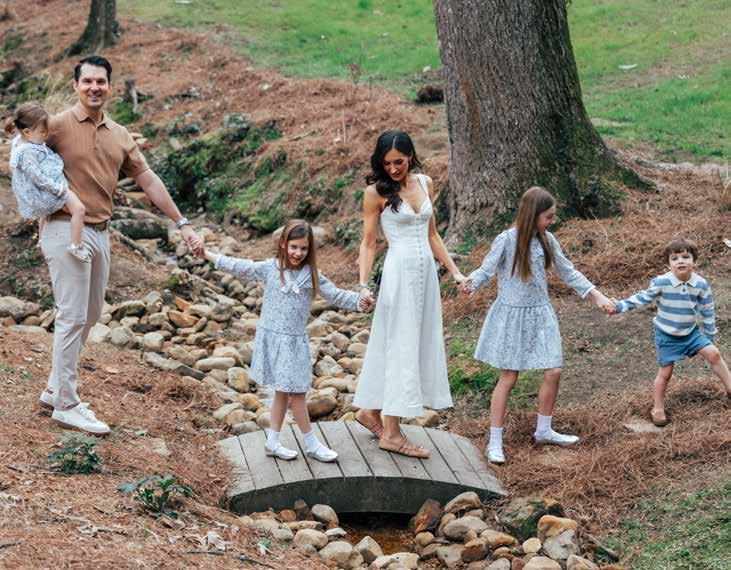
“WE BELIEVE IN TRYING TO SEE THE BEST OF EVERY SITUATION, CONSTANTLY BRINGING EACH OTHER UP AND SUPPORTING EACH OTHER.”
elective surgeries, an opportunity opened in Montgomery. They took the leap sight unseen, as they often do — together. “We did everything virtually,” Kristin says. “Found a house online and signed everything without even visiting the city.”
The risk paid off. Their time in Montgomery was brief, but they think about it fondly. Blake gained invaluable surgical experience as the only facial plastic surgeon in the region, but, more importantly, their vision for the future became crystal clear: if they wanted to create the elite facial plastic surgery practice they envisioned, they would have to build it themselves.
The question became where. Dallas? Atlanta? Charleston? Or Birmingham?
When they first drove through Mountain Brook, Kristin knew immediately. “This is where we’re going to live,” she told Blake in the car. He laughs, remembering it now, because her instincts, as they often are, were spot on. They studied the schools, the community, and the city’s growth — and didn’t look back. About three years ago, they planted roots here, building Raggio MD Facial Plastic Surgery from the ground up and connecting with the community they now call home.

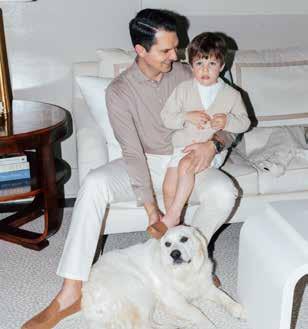
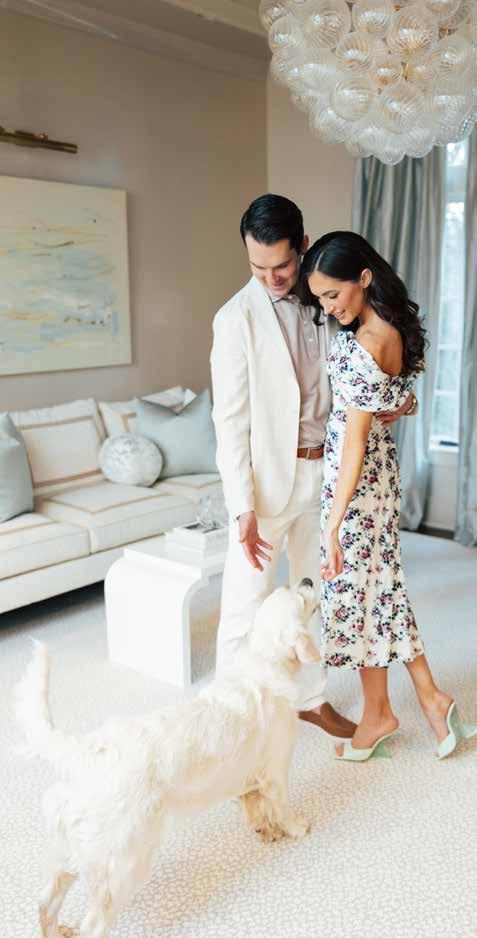
Today, their life runs on precision and positivity. They are raising four vivacious children: Mary Kate (9), Leighton (7), Grant (3), and Margot (1) — along with a golden retriever named Summer, while also running a rapidly growing practice they built together. Their partnership thrives because they view everything in life, from running the practice to cooking dinner, as a team effort. “We both pick up the slack for each other,” Kristin says. “There’s no outline for what I have to do at home or what he has to do. We just do what needs to be done.”
Blake agrees. “We believe in trying to see the best of every situation, constantly bringing each other up and supporting each other,” he says. “For us, there’s no other option than to succeed.”
Kristin, a registered nurse by training, is the steady hand behind the scenes, overseeing everything from the details of their on-site surgical suite to the daily work of growing a team. Blake jokes that the real question is not what she does, but what she doesn’t. “She literally does everything,” he says. “And she’s the one who will tell me what I need to hear — even if it’s just that my tie clashes with my suit.”
Their practice feels nothing like a typical medical office. The team of 12 who work alongside them sees it daily. “Because they built this practice together, it just feels different,” says Natalie, who joined the team last year as marketing director. “You’re not just seeing a surgeon and a practice manager. You’re seeing a husband and wife who are growing this as a team, and patients feel that warmth the second they walk in the door.”
From the beginning, they committed to offering the safest and most sophisticated techniques in all aspects of facial plastic surgery. “We aim to be the premier destination for rhinoplasty and facial rejuvenation in the Southeast,” Kristin says. “Our approach is grounded in trust and patient advocacy. We only bring services into our practice that carry the highest level of evidence. We will never chase hype or trend.” Even their earliest investments reflected that philosophy. “The first piece of equipment we purchased wasn’t to generate profit,” she explains. “But rather, we invested in a hyperbaric oxygen chamber to help our facelift patients recover more quickly and reduce risk. Patient outcomes and safety will always come first.”
Blake approaches every procedure with the same discipline and creativity that drew him to the specialty in the first place. “It really is a combination of art and science,” he says. “And the best part is getting to know each patient and seeing that improved confidence in them.”
These days, free time looks different from how it once did for the Raggios. Blake says that he used to love golf but doesn’t miss it. Most afternoons and weekends are spent at dance, tennis lessons, and T-ball games. “It’s just fun,” he says. “Watching the kids grow, whether it’s through successes or struggles. We just enjoy being involved in every part of their lives.”
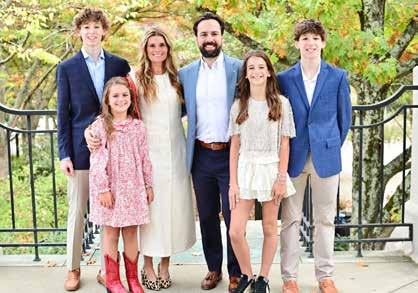
A family-centered life is at the heart of why they chose to invest themselves in Birmingham. For the Raggios, investment has always meant people first — their patients, their children, and the community they’ve chosen to grow alongside.
And while the Raggios’ Birmingham chapter began only a few years ago, it’s quickly becoming the best one yet. “We have so many big plans,” Kristin says. “And they all revolve around us staying here.” Blake nods. “This is just the beginning.”












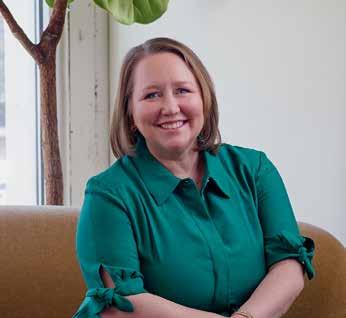
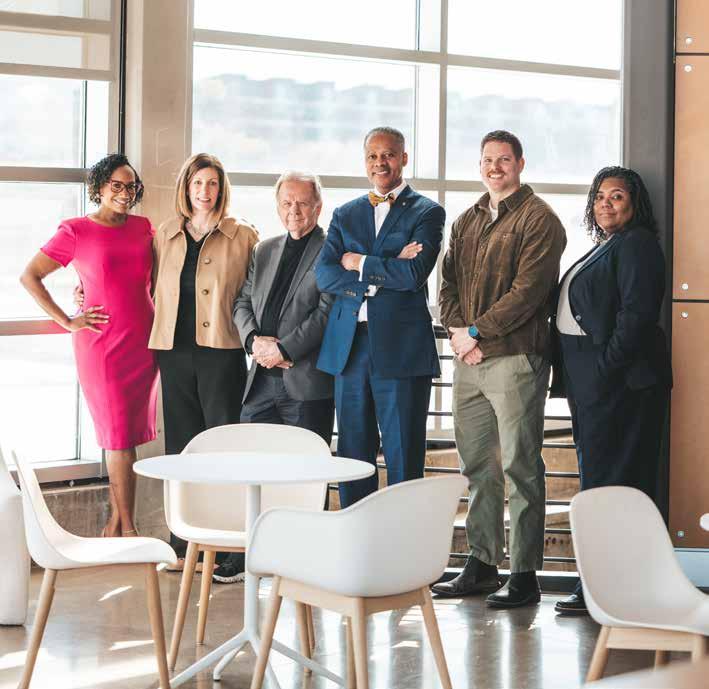
How Goldman Sachs’ 10,000 Small Businesses program is helping Birmingham founders offer the city more
Many small business ideas begin with a simple thought: Our city needs this. Or maybe, I wish Birmingham had this. When someone is bold enough to take the risk and build it, those ideas often become the businesses that give a city its character.
That entrepreneurial instinct is one of the qualities that caught the attention of Goldman Sachs when the firm expanded its 10,000 Small Businesses initiative into Alabama as part of its focus on fueling businesses in rural communities. From across the state, 26 founders were selected for the inaugural cohort, each bringing a company shaped by that same spark and determination. Over 12 intensive weeks, they studied, planned, and tested new strategies for growth—an experience many describe as a crash-course MBA grounded in real-world business challenges.
Now, a year and a half later, their stories offer a revealing look at what happens when bold local ideas meet national investment—and what those entrepreneurs are building next.
To Christy Staubach, owner of Top Dog, Birmingham needed a more personal kind of dog daycare. After leaving a health care career and struggling to find a place she trusted for her own dog, she decided to build one herself. “I had a vision and knew I could do it better than anyone else,” she says with a laugh.
Today, Top Dog cares for 60 to 90 dogs a day, from energetic puppies to post-surgery and end-of-life care she calls “doggy hospice.” “We know each dog individually. We know their parents,” Staubach says.
The Goldman Sachs program helped her step back from the daily grind and focus on growth. With stronger financial fluency and deeper trust in her team, expansion began to feel possible. As Top Dog approaches its fifth anniversary, Staubach is preparing to open a second location in Homewood. “At the time when I graduated, expanding was not in my growth opportunity, but it sure is now,” she says. “Goldman Sachs taught us to dream big and look beyond our current scope of business.”
Princess Jennings built her business on a promise to go where others won’t and to listen. A public health entrepreneur known as a “data bounty hunter,” she conducts focus groups and interviews in prisons, homeless camps, and rehabilitation centers so that the voices of underserved communities are actually heard.
“I go where researchers can’t or won’t go,” she says.
She applied to the Goldman Sachs program after years of doing the work largely on instinct alone. “I didn’t think I would be chosen,” she admits. “But I said, ‘This is my year of yes,’ and went for it.” The experience helped her see her company with fresh clarity after 13 years in business.
What drives her is impact that can’t be measured on a spreadsheet. She recalls once searching for a program
participant who had disappeared from treatment. At the end of his treatment, he was asked what part of the program made the biggest difference in his life. He didn’t mention the services or resources provided. “He pointed toward me and said, ‘She came looking for me,’” Jennings says. “Moments like that make everything I do worth it.”
Kerry Grinkmeyer built his business around a different kind of investment: teaching people how to take charge of their financial futures. What began as a YouTube channel filmed in his basement quickly grew into a paid subscription service reaching more than 1,000 investors each month.
“Goldman Sachs taught me that if I was going to grow my business, I had to find a growth opportunity,” he says. That lesson pushed him to refine his offerings, raise prices with confidence, and expand his reach through new technology, including AI-driven portfolio tools.
For Grinkmeyer, the impact shows up most clearly in the people he serves. He recalls a letter from an Alabama school bus driver who, after following his guidance, paid off her home and began redirecting that money toward retirement. “She said it changed their life,” he says. “And I’m happy to say I’ve got about 1,000 people whose lives have changed as well.”
At 81, Grinkmeyer speaks about the program with the excitement of someone at the beginning of a career. “I have a new life,” he says. “I have a purpose, and that is to change the world. Goldman Sachs has shown me that I have the ability to do that.”
For Dr. Calvin Briggs, the program prompted a shift in how he understood his own work. An educational consultant focused on strategy and STEM initiatives, he had spent years immersed in day-to-day execution. The coursework pushed him to zoom out and examine the larger architecture of his business—what it could become, not just what it produced.
“You should be working on your business, not in your business,” he says. “If you’re just doing the daily grind, you don’t have a growing business—you’ve just created another job for yourself.”
That reframing changed how he allocates his time, energy, and resources, treating them as investments rather than expenses. The 10,000 Small Businesses Summit, which brought together thousands of program alumni in Washington, D.C., only reinforced that mindset. There, he heard directly from leaders like Martha Stewart, Kevin O’Leary, Michael Bloomberg, and Ken Langone, all sharing how they scaled their ideas into enduring companies. “It takes you from the ground and puts you into the stratosphere,” he says.
Josh Cosio’s business runs on a very different kind of fuel. “At Cala Coffee, we roast, we brew, and we bring the passion,” he says. With two Birmingham cafés, a third on CONTINUED >


the way in Mountain Brook, and a central roastery powering wholesale and online sales, Cosio has built a hands-on brand that stays closely connected to the community through everything from daily service to mobile pop-ups and private events.
For him, the greatest return on the Goldman Sachs program was not just strategy but solidarity. “Running a small business can be incredibly lonely,” he says. “It was so refreshing to trade stories with other founders and realize we are all grinding through the exact same struggles.” Just as important was a shift in perspective about growth itself. “Growth is not just about driving maximum revenue,” Cosio says. “It is about building a company that fits into your actual life, supporting your family and your mental health.”
Kimberly Blackmon, who leads the Southeast region of Goldman Sachs’ 10,000 Small Businesses program, spends much of her year on the road, sitting across from founders as they talk about the work they have poured their lives into. When she meets a potential participant, she is not scanning financials first.
“I tell people, speak to me and help me fall in love with your business,” she says. “I want to see your passion for it. I want to feel what you feel.”
For 12 weeks, those founders step back from the daily rush of running a company and take a clearer look at how it actually works—the numbers, the hiring, the contracts, the capital they might be leaving on the table. Many drive to Birmingham for the in-person sessions at Jefferson State, their travel and meals covered so they can focus on the work instead of the logistics.
“The whole goal of going through this program is to make a positive impact on your community,” Blackmon says.
That investment shows up in ways Birmingham residents recognize: in storefronts that stay open, in new jobs created close to home, and in businesses built by people who saw a need in their city and decided to meet it.
The next Alabama cohort is slated to begin this fall, with applications open through April. Small business owners interested can learn more at 10ksbapply.com



When Birmingham’s work crosses state borders, we’re there to help. And as our city grows, so does our commitment to its people, its progress, and its future.







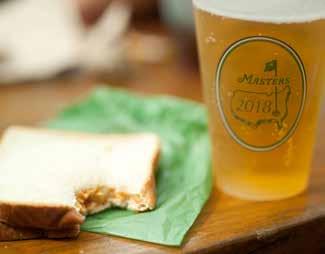
Ask someone what they know about Augusta, Georgia, and you’ll probably hear two words: The Masters.
And yes, while the idyllic Southern city is home to arguably the most famous golf tournament in the world, that’s not all the city has to offer. At just over four hours from Birmingham, the city is perfectly situated for a long weekend getaway.
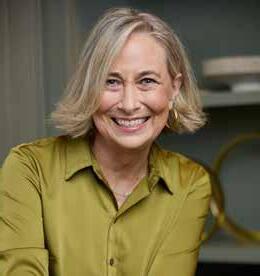
Lauren Robbins is a local interior designer and owner of the popular home decor and lifestyle shop The Shoppe at Lauren Robbins Interiors. As someone who has lived in Augusta for nearly 15 years, we asked her to give us the inside track on what makes visiting a hole-in-one.
“The Masters is what gets people to Augusta,” she says, “but when they meet the people and learn more about the city, that is when they begin to fall in love with it.”
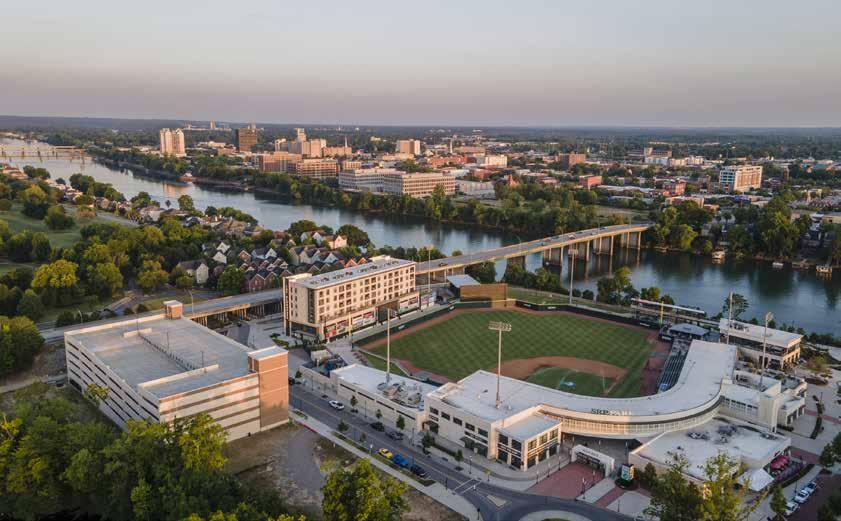
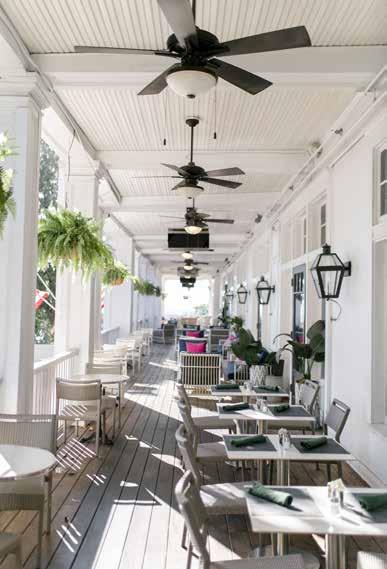
Robbins recommends staying at The Partridge Inn, a historic hotel opened in 1910 and now part of the Hilton portfolio. It’s the closest hotel to the Augusta National Golf Course, but Robbins says she loves it for its proximity to the Summerville neighborhood, known for its historic homes and walkability.
“The Masters is what gets people to Augusta,” she says, “but when they meet the people and learn more about the city, that is when they begin to fall in love with it.”
She also suggests the Crowne Plaza in North Augusta, which is across the river in South Carolina. It’s walking distance to some great restaurants and bars, and a two-minute walk to SRP park, home to the city’s Minor League Baseball team, the Augusta GreenJackets.
Start your day by visiting Trellis Coffee Bar, a short stroll from The Partridge Inn. You’ll find expertly crafted specialty lattes as well as handmade focaccia bread, and other pastries.
For lunch, Robbins recommends Farmhaus Burger. The restaurant sources beef from local farmers for its burgers and offers spiked milkshakes as a sweet, tipsy treat. Emil’s is also a favorite of Robbins for their small plates and dips.
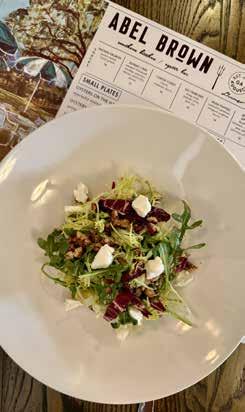
And for dinner, she says that trying Abel Brown, a Southern-inspired restaurant located in the popular Surrey Center, is a must. The restaurant recently received the city’s first James Beard Award nomination for its fresh fare.
“The Masters tournament is all about tradition, and going to Luigi’s afterwards is definitely one of them.”
“I love hopping over there for a delicious martini and oysters,” Robbins says. “The menu is constantly updating based on what Todd and his team are finding fresh and inspiring.”
If you find yourself in town during The Masters, it’s also imperative that you make a stop at Luigi’s, she says. The Italian-Greek restaurant has a retro vibe with checkered tablecloths and photos of sports legends who have stopped by over the past seventy years.
“The Masters tournament is all about tradition, and going to Luigi’s afterwards is definitely one of them,” she says. “Not much has changed with the restaurant since it opened in 1949, and you will see golfers, patrons, and locals alike eating as a final farewell to the tournament.”
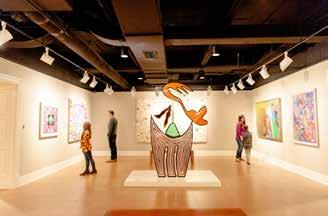
Don’t miss the Morris Museum of Art. The exhibits focus on Southern art and artists, with over 6,000 works. One of this year’s special exhibits runs through August and features artist John Petrey’s sculptures of everyday objects fashioned into 1960s-style dresses.
The Greeneway is also a popular destination for families. Named after former North Augusta mayor Thomas Greene, it’s a seven-mile paved trail great for walking, running, and bike riding.
Robbins also notes that Augusta has several fun annual events, such as the Rock Fore! Dough concert that takes place on the Tuesday before The Masters. The Arts in the Heart Festival, a multi-day celebration featuring more than 150 arts and crafts vendors, music, and global eats, typically takes place in late September. The twoday acoustic music festival known as the Guitar Pull typically takes place in November.
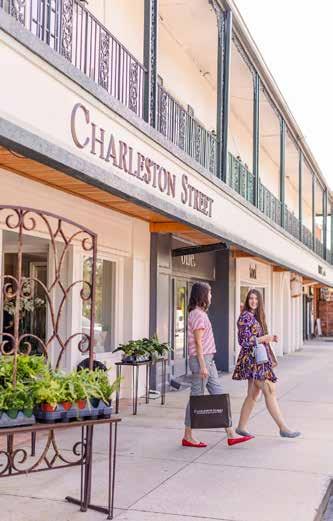
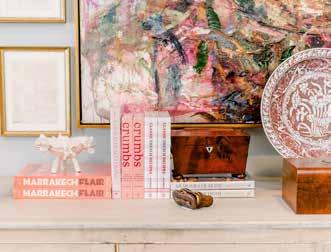
Make time to shop on your visit, too. Robbins suggests Charleston Street for home goods and West End Collective for antiques. For clothing, try Shoes at Surrey, Freshwater, and Capsule.
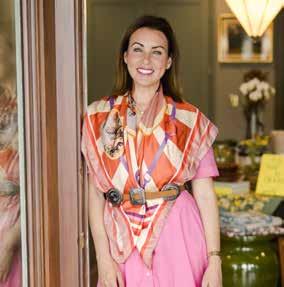
Lauren Robbins started her interior design business in 2018 and works with clients across the Southeast and around the country, blending traditional design with a modern touch. In April 2025, she opened her own storefront in Augusta’s historic Summerville neighborhood.
“We strive to bring lines and products to Augusta that aren’t typically around,” she says of her curated display. “One of the biggest compliments is when someone walks into the shop and says, ‘Oh my gosh, I’ve never seen these things before,’ or ‘Everything you sell is so unique.’”
If you come for The Masters, Robbins recommends avoiding Washington Road, the main thoroughfare, if at all possible. Make sure to wear comfortable shoes, pack a hat and sunscreen, she says, and remember you’ll have to leave your cell phone at home.
Robbins says if you want to buy merch at the tournament, expect long lines. But one perk at Augusta National is that women’s restrooms don’t typically have a wait. And don’t forget to swing by Luigi’s after the tournament for the ultimate see-andbe-seen experience.







Elevate









An exclusive Q&A with City Lifestyle
ARTICLE BY ANGELA BROOCKERD
PHOTOGRAPHY PROVIDED
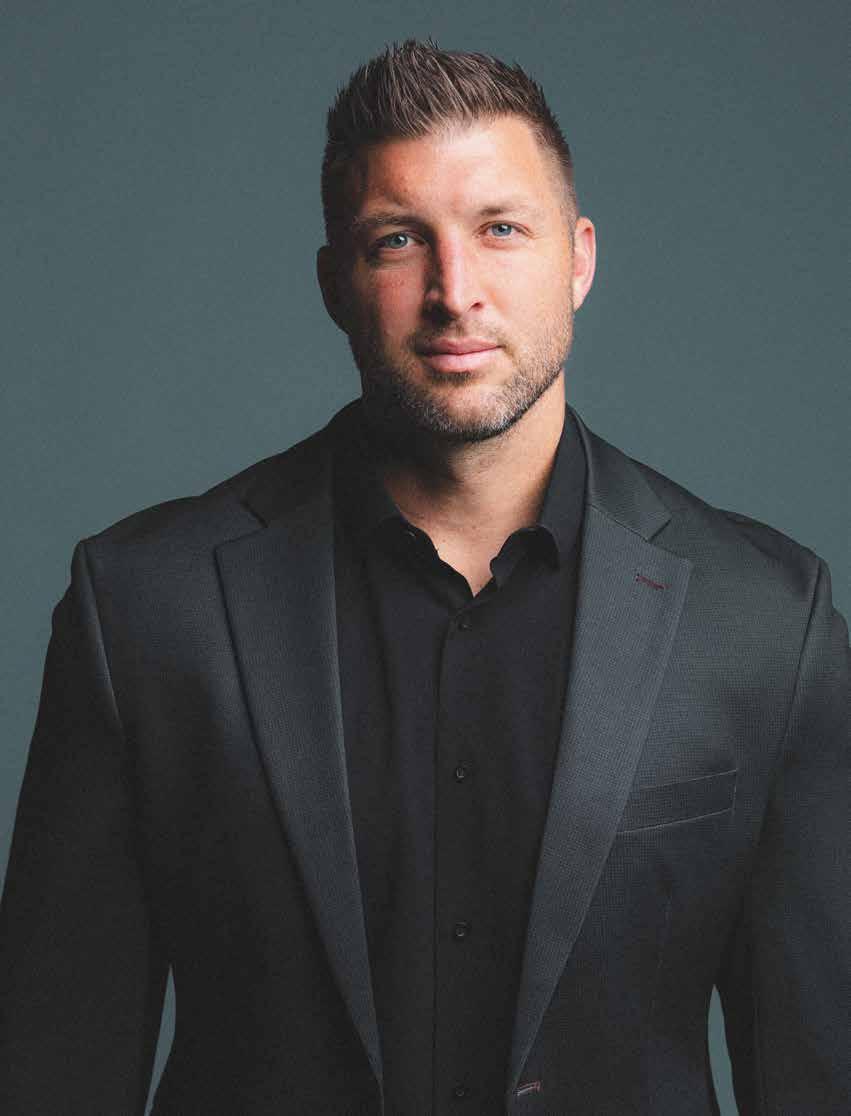
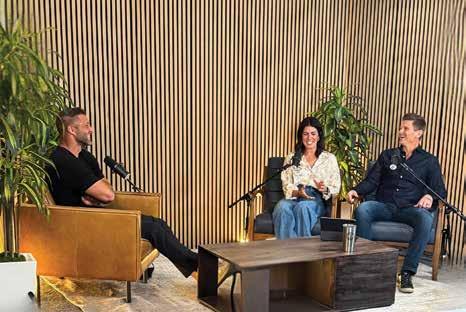
From championship trophies to global humanitarian impact, Tim Tebow’s journey has defied every standard playbook. In an exclusive conversation for the Share the Lifestyle podcast, Tebow pulls back the curtain on the moments that truly defined him, from a humbling middle school church retreat to the life-altering shift of fatherhood. This isn’t just a look back at a career; it’s an invitation into the heart of a man driven by purpose. Read the highlights below, then join us for the full, unfiltered experience by scanning the QR code at the end.
Q: WE ALL KNOW YOUR ACCOMPLISHMENTS ON THE FOOTBALL FIELD, BUT TELL US ABOUT THE CURL CONTEST.
A: I was competing for my future high school team (my brother’s team), and I pushed myself way past what was smart. I ended up collapsing and needing medical attention. But what stayed with me wasn’t the pain, it was the lesson. Would I be willing to do something that others aren’t? For much of my life, I strived to bring my best for a game, but I hope that I can say at the end of my life I was willing to do that for things that actually matter.
Q: YOU’VE ACHIEVED SO MUCH IN SPORTS. WHAT WOULD YOU SAY IS YOUR GREATEST ACCOMPLISHMENT NOW?
A: Becoming a dad. Nothing compares. From the moment I knew my wife was pregnant, I felt a new depth of love for our child, but when you bring your baby home, the responsibility hits you like nothing else. Suddenly, everything you see, every decision you make, you’re asking, “Is this corner too sharp? What happens if she reaches that drawer?” It changes how you see the world and how you see other people.
Q: YOU’VE SPOKEN OPENLY ABOUT DISAPPOINTMENT, ESPECIALLY AROUND FOOTBALL. HOW DID THAT SEASON OF LIFE SHAPE YOU?
A: I talked a lot about that very thing in my book Shaken . We all go through moments where our faith in our abilities and purpose feels rattled, but I believe it’s often in those storms when God can show us who we could become.
Q: YOU TALK A LOT ABOUT COMPARISON CULTURE. WHY DO YOU BELIEVE COMPARISON HAS BECOME SUCH A TRAP TODAY?
A: Because we’re comparing our real, everyday lives to someone else’s highlight reel. Social media shows people’s “best day,” often filtered and staged, and then we measure our reality against that. There’s a reason filters are so popular—it’s not real. We end up scrolling through images that don’t tell the full story, and without realizing it, comparison starts to steal our joy and our gratitude.
“We’re comparing our real, everyday lives to someone else’s highlight reel... comparison starts to steal our joy.”
Q: YOUR FOUNDATION FOCUSES ON THE “MOST VULNERABLE.” WHERE DID THAT CALLING BEGIN?
A: When I was 15, I met a boy in the Philippines who was treated as a throwaway because he was born with physical differences. That moment changed me. I realized God was calling me to pursue a different kind of MVP, not “Most Valuable Player,” but “Most Vulnerable People.”
Q: FINALLY, WHAT’S ONE THING PEOPLE MIGHT BE SURPRISED TO KNOW ABOUT YOU?
A: I have some weird coffee habits, which include protein powder, collagen, and cream all mixed together. I love golf dates with my wife. And every night, I bring snacks to bed to share with our dogs. It brings me more joy than it probably should.
This conversation barely scratches the surface. Tim goes deeper into the moments that rattled him, the joys of fatherhood, and one story he has never shared publicly until now. Scan the QR code for the full, exclusive City Lifestyle interview on Share the Lifestyle Podcast.

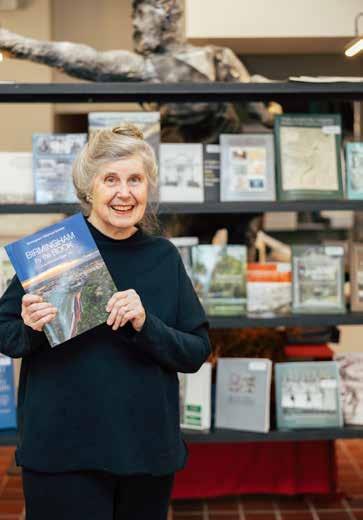
Pennsylvania native and former UAB faculty member Marjorie White may not have been born in Birmingham, but few people know its history as thoroughly.
“I was not trained as a historian,” she says. “I did not come into this field with a perception about what we’re supposed to find.” What she does bring has carried her much farther. “I’m driven by curiosity,” White explains. “I love to go out and explore. If you have an open mind about what you’re looking for, you find all kinds of interesting things.”
That curiosity has shaped more than 50 years of work with the Birmingham Historical Society, which recruited her at age 31 as the organization was being revitalized. “With the audacity of a 31-yearold, I set out to write a guidebook to Birmingham,” she recalls. That early ambition grew into decades of research and publication — nearly a book a year — culminating most recently in Birmingham by the Book: A Guide to the Magic City, which began as a goal half a century ago.
“We always call the latest research project a ‘history mystery’ until we figure out all the pieces,” she says. “One of the most fun discoveries was ‘the bridge,’ which is not a bridge at all.” Ross Bridge, she explains, turned out to be a Civil War–era railroad culvert built before the railroad even reached Birmingham, a structure that raised an irresistible question: why was it “out there in the middle of nowhere?” Solving puzzles like that remains among the most defining works of White’s career.
Equally memorable was her decade documenting civil rights sites alongside leaders, including the Reverend Fred Shuttlesworth. “The most meaningful project that I’ve worked on was helping these civil rights leaders tell their story,” she says.
White understood something early: if a city is going to value its past, it must first capture the imagination of its children. For 35 years, she led the Downtown Discovery Tours for school groups, placing young Birmingham residents in front of the buildings that shaped their story. Standing downtown, she would point to architectural details and say, “Look at that. Look at this.” The children leaned in. “Then even their parents started looking and buying and renovating the dilapidated old buildings.”
Today, Birmingham by the Book — featuring more than 360 photographs and 60 maps — stands as our city and region’s most comprehensive guide. “There is more in our backyard than you can imagine that might be worth your attention,” White says.
After five decades of following every clue, walking every block, and asking every question, White has given Birmingham a gift: a way to see itself more clearly. Birmingham by the Book invites readers to look again at the place they know — and to discover, as she has, that the city still has plenty of stories to tell.
Discover the book and learn more about Birmingham’s storied past and present at birminghamhistoricalsociety.com.
Marjorie White’s decades of curiosity continue to uncover Birmingham’s layered history