







FIND YOUR happy place YOUR FIRST CLASS IS $15.

FIND YOUR happy place YOUR FIRST CLASS IS $15.

Life really is all about choices. Choosing where and how we spend our time. Choosing what to lean into—and what to leave behind. Choosing the present moment or the long game. Investment is about far more than dollars; it’s choosing what matters most to us. What we stand behind.

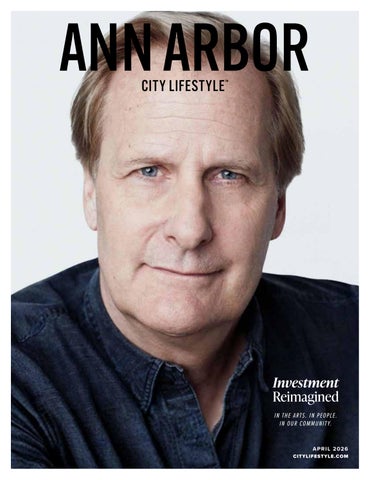
We begin our “Investment Reimagined” issue by chatting with Jeff Daniels, a Chelsea native who has made his community proud on a national scale, earning two Primetime Emmy Awards and multiple nominations across Tony, Golden Globe, and Screen Actors Guild Awards. Most recently, you may have seen him on Apple TV’s Shrinking alongside Harrison Ford and Jason Segel. Yet in his everyday life, Jeff is right where it all began—in Chelsea, often at The Purple Rose Theatre, which he founded in 1991. Dedicated to Midwestern voices and original plays, the intimate Purple Rose Theatre is well worth the drive from Ann Arbor—and a lasting investment in the Michigan community Jeff calls home.
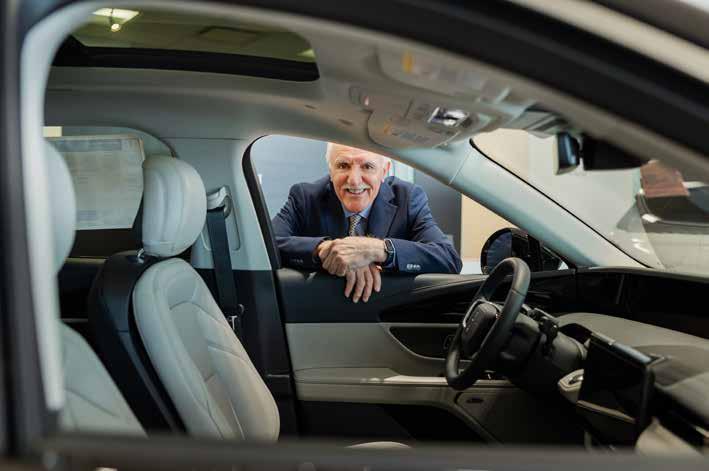
From Chelsea, we head east to Jackson Road to meet Joe Sesi, president and owner of Sesi Lincoln, Volvo, and Mazda. Now in its 80th year, the dealership is one of the oldest Lincoln dealerships in the United States, founded with the support of Henry Ford himself. But the real story isn’t longevity alone—it’s Joe’s unwavering investment in people. Through long-tenured teams, genuine relationships, and a belief that trust is built over time, Joe has shaped a business where reputation matters, customers return, and integrity leads. Ask anyone who owns a car from Sesi—this place is different, in the best possible way.
In our nonprofit feature this month, we highlight the incredible work of Ronald McDonald House Ann Arbor, which provides a home away from home for families with hospitalized children. While difficult to imagine, extended hospital stays are a daily reality for many families, making the ability to “be near” a lifeline during the hardest moments. Donations support the operations; volunteers bring the House to life.
With Art Fair only a few short months away, we also chat with a Kansas City–based gallery owner who reminds us that art bringing joy and personality to a home is an investment in yourself. Finally, we close with a spotlight on Ashley Schafer of the Main Street Area Association, whose work connects downtown with the community and gives Ann Arbor that “small-town charm, big-city energy” we know and love. What a joy it is to stand behind and invest in this community.
MARIA KARPIEL, PUBLISHER @ANNARBORCITYLIFESTYLE
April 2026
PUBLISHER
Maria Karpiel | maria.karpiel@citylifestyle.com
EDITOR
Rebecca Voigt | rebecca.voigt@citylifestyle.com
CONTRIBUTING WRITERS
Megan Hoban, Emily Klimas,
Susan Lanier-Graham, Ashley Schafer
CONTRIBUTING PHOTOGRAPHER
Stacy Anderson
CEO Steven Schowengerdt
President Matthew Perry
COO David Stetler
CRO Jamie Pentz
CoS Janeane Thompson
AD DESIGNER Jenna Crawford
LAYOUT DESIGNER Lillian Gibbs
QUALITY CONTROL SPECIALIST Brandy Thomas


Proverbs 3:5-6




DGY Dentistry delivers Ann Arbor’s most elevated cosmetic and comprehensive dental experience through exceptional artistry, precision, and personalized care.
From smile design and veneers to implants and full-service dentistry, every treatment is tailored to achieve refined, natural, and truly remarkable results.


Schedule a consultation today.

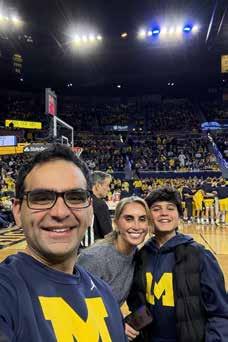

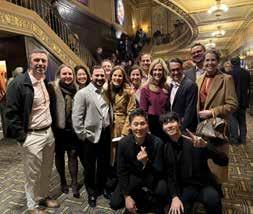


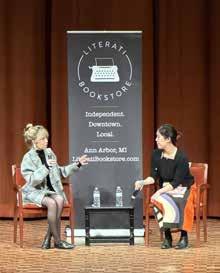
1: University Flower Shop helped over 1,000 customers show their love on Valentine's Day. 2: Hunã, a modern reimagining of the tiki tradition, opened beneath Echelon Kitchen & Bar in February. 3: The Polar Plunge for Special Olympics Michigan returned to HOMES Campus on February 22. 4: Under Music Director Earl Lee, A2SO welcomed Danny Koo for “Lunar Love,” a concert celebrating Valentine's Day and Lunar New Year at the Michigan Theater. 5: Dr. Zerrin Yilmaz, brother Osman Yilmaz, and nephew Zihni Yilmaz courtside at the Michigan basketball game. 6: Amos Lee performs during the 49th Ann Arbor Folk Fest at Hill Auditorium. 7: New York Times bestselling author Jennette McCurdy in conversation with Lillian Li, presented by Literati Bookstore.



Photography by Alpha Smoot
Something’s afoul on the private golf course at Merlinville-Sur-Mer—namely the body of Hercule Poirot’s newest client. The famed Belgian detective comes to life to solve one of Agatha Christie’s most intricate whodunits. With a fast-paced plot, colorful suspects, and a cast of six Michigan-based actors playing multiple roles, this clever production delivers suspense, humor, and theatrical fun. The play runs April 2–May 31 at The Purple Rose Theatre Company. purplerosetheatre.org
Scan to read more
Literati Bookstore is proud to present bestselling author Emma Straub on April 18 at 7 p.m. at Rackham Auditorium, celebrating her new novel American Fantasy. This witty, warm story follows a woman rediscovering herself aboard a nostalgic cruise featuring a ’90s-era boy band and the fans who have worshipped them since childhood. Straub is a New York Times bestselling author, Guggenheim Fellow, and co-owner of Brooklyn’s Books Are Magic. Tickets include a signed copy. literatibookstore.com
Scan to read more
KC Runciman Landscapes marks 80 years in business, underscoring a remarkable legacy as one of Ann Arbor’s oldest landscape design firms. Founded in 1946 by the area’s first registered landscape architect, KC Runciman has become synonymous with timeless craftsmanship, naturalistic design, and sustainable gardens. For eight decades, the firm has shaped enduring outdoor spaces through thoughtful horticulture, reclaimed materials, and a deep respect for place—creating landscapes that evolve beautifully across seasons. kcrunciman.com
Scan to read more





Curator, creator, and Pulitzer Prize-winning visionary: Giddens takes the Hill Auditorium stage with her latest musical explorations for this capstone concert following her inaugural residency with the U-M Arts Initiative.
UMS.ORG
734-764-2538




ARTICLE BY REBECCA VOIGT
A theater is so much more than a building. It’s a home for artistic exploration, a place where old friends and strangers come together for a communal experience that’s new every time the house lights dim and the curtain rises. It’s a place that transports audiences to a different world through the story unfolding onstage. A place to laugh, cry—and learn something new about the human condition that connects us all.
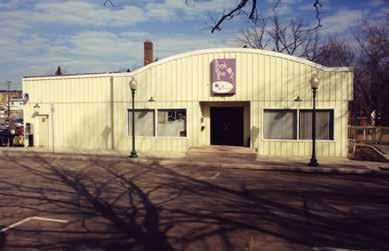
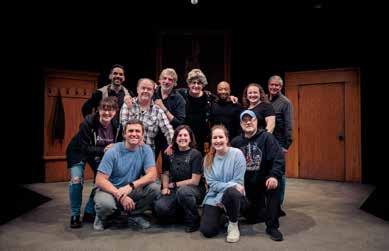
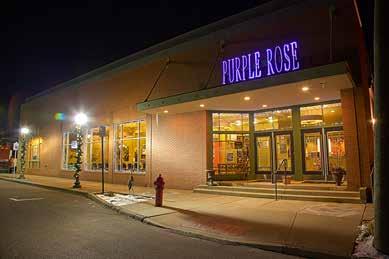
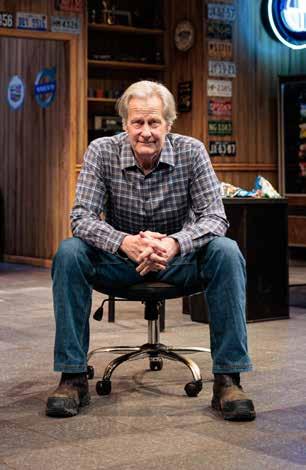
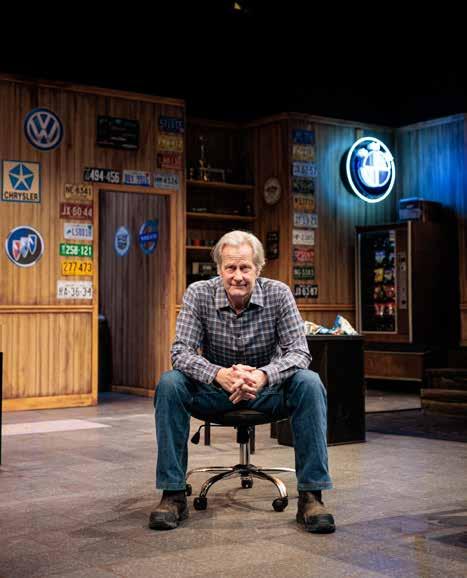
The Purple Rose Theatre Company, located in historic downtown Chelsea, has been that place since opening its doors in 1991. The theater’s founder—acclaimed actor, playwright, musician, and Chelsea native Jeff Daniels— could have started a theater anywhere. He’s won two Primetime Emmy Awards and three Tony Awards, has been nominated for multiple Golden Globe and Screen Actors Guild awards, and has appeared in a diverse collection of films and television series, including Terms of Endearment, The Purple Rose of Cairo, The Newsroom , The Squid and the Whale, Godless, and, most recently, Apple TV’s Shrinking with Harrison Ford and Jason Segel.
But he chose to start a theater here, investing in the arts in Michigan.
From the beginning, Daniels has been committed to presenting original work and supporting emerging talent—and the Purple Rose has earned the respect of the national theater community while centering the Midwestern voice. Here, we talk with Daniels about creating a space for the arts in the most important place of all—home.
The Purple Rose Theatre Company was born in a building your grandfather once owned as a car and bus garage. What did it mean to return that space to the community as a home for the arts?
In the ’40s, my grandfather used the wooden warehouse to store cars during the winter. Nice connection, but when it was for sale, I started imagining creating a theater company much like the one Alan Ayckbourn, a British playwright, had started in the small town of Scarborough, England. Personally, while sitting in Michigan waiting for my next acting job, I wanted to live a creative life with other like-minded, Michigan-based creatives that I gambled were out there. Turns out, they were.
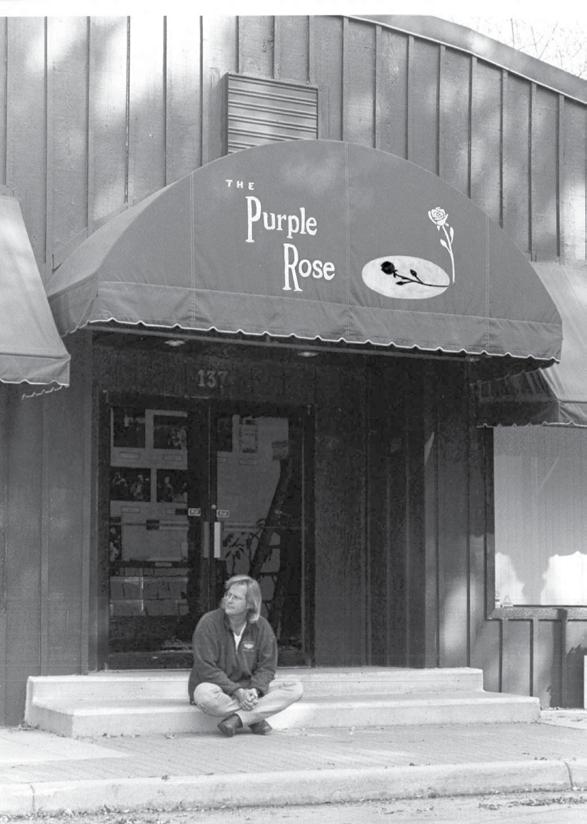
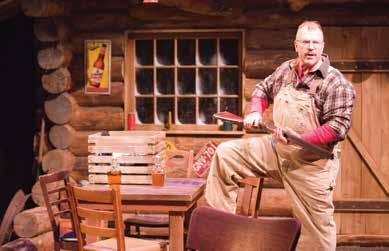
At a time when you could have built a theater almost anywhere, why did Chelsea feel like the right place—and why does that choice still matter today?
Building it anywhere other than 10 minutes from my house wasn’t even considered. I may have sensed that if it worked, it might help make Chelsea a destination but there was no plan other than buying the building and holding auditions to see who was out there. Six months after we opened, Craig Common opened the Common Grill, and between the two of us, suddenly 40,000 people a year were coming to our small town to see a play and eat in his restaurant. Rocco Landesman, then the Chairman of the National Endowment For The Arts, came to Chelsea to visit the Purple Rose and said, “You’re the poster child for what the arts can do for a local economy.” Thirty five years later, we have entire runs that sell out by opening night. They’re not only still coming, they’re coming more than ever.
The theater takes its name from The Purple Rose of Cairo, a film that marked an early turning point in your career. What did that story symbolize about the kind of theater you wanted to build here?
I didn’t want to put my name on it, so I picked the one movie that I considered to be a turning point in my career. When we shot the film in 1985, Woody Allen was one of the top American film makers. When I finished that film, I remember thinking I was now going to be able to make a living in this business because if I was good enough for Woody, I was good enough for anybody, which is exactly what Mike Nichols said when I asked him if he wanted me to read a scene at my audition for the film, Heartburn
You made a very deliberate decision to live and work full-time in Chelsea rather than Hollywood. How did that choice shape not only your life, but the values and culture of the Purple Rose?
There’s something about living in the Midwest that helps me retain the wonder I had when I embarked on this crazy career. Because I live here, when I go out to LA and
walk onto the lot at Warner Brothers to shoot an episode of Shrinking, it’s not lost on me that I’m standing on the same sound stage where Henry Fonda and Jack Lemmon shot scenes for Mister Roberts.
Acting has never been a job—it’s who I am, what I do, what I have to do. Same thing applies to those who work at the Purple Rose. We provide a place for professional theater people to make professional theater. They just happen to be doing it in a small town in the Midwest. Everything I’ve ever learned I’ve tried to give to those who work at the Purple Rose. Thirty five years later, what’s most gratifying to me is knowing that what we do and how we do it can play on any stage in the country.
You’ve written and premiered more than 20 full-length plays at the Purple Rose. How has wearing both the playwright and founder hats influenced the kinds of stories this theater tells?
In Michigan, we need to build, attract and sustain an audience. To do that, I believe regional theaters should produce stories that reflect where they live. It’s why I wrote Escanaba in da Moonlight. The Purple Rose is proof that if you write about who you are and where you live, they’ll come. And our audience isn’t just people who are regular theater-goers. During a recent weekend of previews, we asked how many people in our audience were here for the first time. At each performance, more than half the audience raised their hands.
The Purple Rose has long been committed to original work. Why was it important to you that new plays and new voices—particularly Midwestern voices—remain at the center of the mission?
When I joined New York’s Circle Repertory Company in 1976, they only produced new plays. Nearly every film I’ve done is from an original screenplay. I’ll always be more interested in creating something no one’s seen. What I discovered is that people like being able to relate to the stories we tell. As artistic director, finding writers who can write about this part of the country with a sense of humor is what I’m interested in. And so is our audience.
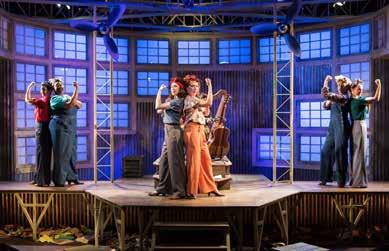

“THE PURPLE ROSE IS PROOF THAT IF YOU WRITE ABOUT WHO YOU ARE AND WHERE YOU LIVE, THEY’LL COME...PEOPLE LIKE BEING ABLE TO RELATE TO THE STORIES WE TELL.”
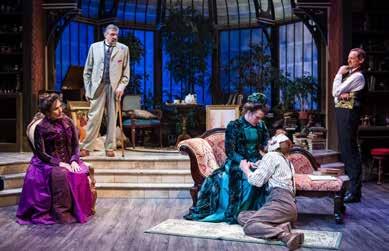

The theater’s intimate scale means every audience member is close to the stage. How does that closeness change the relationship between the story, the actors, and the audience?
For the audience, it’s like being inside the play. For the actors, it’s film acting on stage. We designed the Purple Rose to feel like a medium closeup. On our stage the audience can see what you’re thinking. In a bigger theater, you have to send it out. At the Purple Rose, we pull them in.
Looking ahead, are there one or two upcoming productions that you feel especially capture the heart and spirit of this theater?
Any play we’ve done, are doing, or will do in the future that is set in the Midwest, written by one of our Midwestern playwrights, designed by our Midwestern designers and performed by Midwestern actors qualifies. The more of those kinds of plays we can develop, find, and produce, the better.
For someone walking through the doors for the first time, what do you hope they feel—or come to understand—about the Purple Rose?
I want first timers to discover live theater. I want them to marvel at the creativity and imagination, be impressed by the high quality of the set, lights, sound and execution of a story that’s being performed just for them. And when they’re walking out, I want them thinking about coming back.
Lastly, what’s your favorite part about living in Michigan?
It’s home.
Learn more and see what’s onstage next at purplerosetheatre.org


THE QUIET LEADERSHIP BEHIND SESI MOTORS’ ENDURING LEGACY

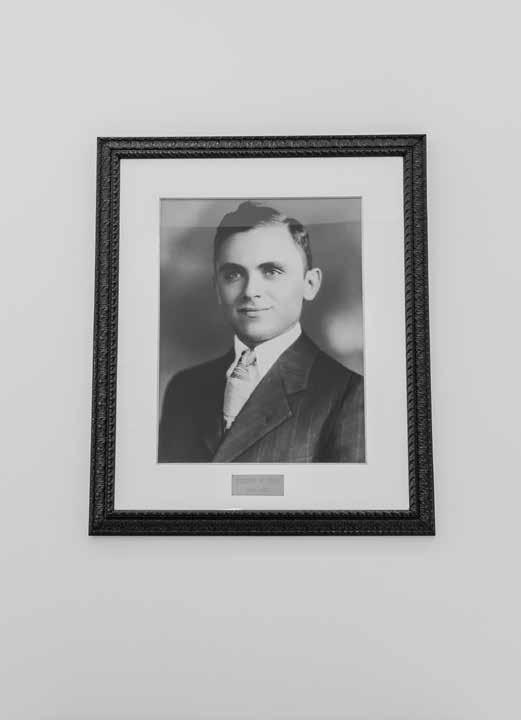
Walk inside the doors, and you’ll feel it. Talk to someone who works there, and you’ll experience it. Ask someone who purchased a car there, and you’ll hear it.
Things are different at Sesi Lincoln, Mazda, and Volvo.
Not louder. Not flashier. Just more deliberate and intentional. Nearly 80 years after opening as one of the original LincolnMercury dealerships—backed by Henry Ford himself—the business has endured in an industry defined by constant change. But longevity isn’t really the point. What sets Sesi Motors apart is an old-school commitment to doing things the right way: taking time with people, investing in relationships, and treating service as something personal, not transactional.
It’s the kind of difference you don’t need explained—you feel it. And once you do, it’s hard to imagine trusting your car to anyone else.
That feeling goes back generations.
Current owner Joe Sesi’s uncle—also named Joe and often referred to as “Uncle Joe”—immigrated from what was then Mesopotamia to the United States shortly after World War I when he was 16 years old. He began delivering produce through Detroit’s Eastern Market, learning business from the ground up before opening his own grocery store, New Center Market, in 1932 at the height of the Great Depression. There, his work ethic and magnetic presence drew people in and led to a lifelong friendship—and eventual business partnership—with Alan Chapel. Through that relationship, Uncle Joe was introduced to Henry Ford, who saw something exceptional not just in the business, but in the man behind it. In postwar America, as demand for cars surged, Ford looked for trusted leaders to carry the brand forward, resulting in Uncle Joe and Chapel being awarded one of the original seven Lincoln-Mercury dealerships, which opened in Ypsilanti in 1946.
CONTINUED >
Nearly two decades later, in 1963, Uncle Joe once again paved the way, helping his brother’s family come to the United States amid political instability in Iraq. The younger Joe Sesi arrived with his parents and seven siblings; the eighth was born just 10 days after they arrived in the U.S. It was a moment defined by hard work, resilience, and family—one that quietly set the foundation for how the business would continue to grow.
In Ypsilanti, the Sesi family became known not for selling cars, but for how they treated people. The dealership became more than a place to buy a car—it became a gathering place, built on generosity, consistency, and a deep commitment to the community.
Sesi reflects on the lessons passed down from his uncle and his father, describing them as “very simple,” yet foundational to how Sesi Motors has operated for nearly 80 years, making it one of the longest-standing dealerships of its kind. It begins with a strong work ethic—“You’ve got to get up every day and do what you’re supposed to do, and do it well,” he says—paired with a clear understanding of the business itself.
says, “we do things a little differently around here.”
For Sesi, buying a car is never a one-and-done transaction. “If it were just a transaction,” he says, “you wouldn’t need dealerships.” Instead, he sees it as a long-term commitment on both sides. Cars are complex machines. “Something is going to go wrong at some point,” he says. What matters most is what happens next.
Those moments—when expectations are tested— are where trust is either reinforced or lost. At Sesi Motors, the results speak for themselves. “We have customers who’ve bought 50, 75, even 100 cars,” Sesi says. “That doesn’t happen without trust.”
“When the right people are in the right place, and they support each other, that’s when the magic happens.”
“We sell cars,” Sesi says, “but at the end of the day, we’re in a service business. And service is built on relationships.”
That perspective stands in quiet contrast to an industry often driven by sales volume, inventory turn rates, and constant pressure to move faster. When asked how his approach holds up in that environment, Sesi gives a gentle smile. “Well,” he
But trust, he’s quick to note, isn’t something you ask customers for. It’s something you build from the inside out.
In an industry known for high turnover, where as many as 70 to 80 percent of employees change each year, Sesi Motors looks markedly different. Employees who’ve been with the company for 15, 25, 35-plus years are the norm, not the exception. Sesi traces that stability back to a simple belief: people aren’t interchangeable. “Employees have families. They have lives,” he says. “You have to honor that.”
That belief has shaped meaningful decisions over time, including the choice to close on Saturdays—an uncommon move in automotive retail. “For years, this was a six-day-a-week business with long hours and no balance,” Sesi says. “That’s one of the reasons turnover is so high.” The shift required conviction, but it paid off: deeper expertise, stronger continuity, and a cohesive
sales, finance, and service team—one that works in unison and is invested in more than just the next sale.
That cohesion shows up most clearly in the service drive. Customers are greeted by name—and just as often, employees are too. They know one another’s families. They remember details. Over time, those everyday interactions turn into something deeper. Customers bring employees donuts, check in on milestones, and show up for weddings and graduations.
Sesi pauses when he talks about it, almost amused. “That’s when you know you’ve got a great business,” he says—not because everything goes perfectly, but because people care enough to show up for one another.
That kind of connection doesn’t happen by accident. It’s built by employees who stay—who know one another well and feel supported enough to invest in the people they serve. And when something does go wrong—as it inevitably will with a machine— customers aren’t passed between departments or handed off to strangers. They’re met by familiar faces who understand the full picture and feel accountable for the outcome. “When the right people are in the right place, and they support each other,” Sesi says, “that’s when the magic happens.”
That mindset reveals how Sesi defines excellence—not by volume or velocity, but by how the work gets done. Showing up. Following through. Making decisions that hold up over time. It’s an approach that traces back to Uncle Joe, whose ambition was never simply to grow a business, but to build one that could endure for a hundred years. “To do what you do really well, consistently, for that long,” Sesi says, “that’s the mark of excellence.”
That long view extends beyond the dealership. For Sesi, investing in the community isn’t separate from how he leads—it’s part of the same responsibility. Over decades, that commitment has taken many forms, from supporting the arts and education to helping steward long-standing community institutions. “The community makes you successful,” he says. “You have to support it—consistently.” It’s the same principle that guides every part of the business: take responsibility, do the work, and think long-term.
And perhaps that’s what sets Sesi Motors apart—the reason it feels different the moment you walk in. Excellence here isn’t claimed. It’s earned through consistency, relationships, care, and the steady practice of doing things the right way.
Learn more at sesimotors.com.
ARTICLE BY EMILY KLIMAS
RONALD MCDONALD HOUSE ANN ARBOR ENSURES FAMILIES ARE NEVER FAR FROM THEIR HOSPITALIZED CHILDREN
“We hope you never need a Ronald McDonald House. But if you do, it’s here.”
Picture this: it’s late within the hospital walls. Children feel the anxiety of nightfall—not of sleep, but of separation. Of watching parents leave amidst the unknown. Of leaving a sibling behind in the hospital. A family with an infant hospitalized at C.S. Mott Children’s Hospital huddles beside two LED lamps. They carry one lamp to the window and their toddler son hugs his mom, who will remain by the baby’s bedside, goodbye. He and his father walk the 900 feet to the Ronald McDonald House sitting steadfast across the street. They move quickly to their room and scan the hospital windows until they find it: a small, steady glow. They place their lamp on the windowsill in reply, reuniting the family with a gentle beam of light.
Shared by CEO Kim Kelly, this story reflects a profound truth: Ronald McDonald House Ann Arbor does more than provide lodging. It provides
comfort and the assurance that families are never far from their hospitalized children. “It isn’t necessarily the nice-to-have to be close—it’s the necessity to be close,” Kelly says.
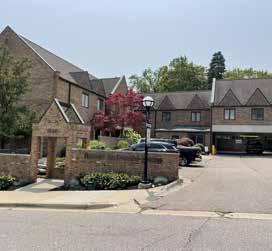
Located steps from Mott, the House is a home-away-from-home for those navigating life’s most uncertain moments. One of 390 programs worldwide, its mission is rooted in care, comfort, and closeness. In Ann Arbor, the House has 43 rooms—an expansion from its original 23—including 12 rooms within Mott for acute cases. Over 40 years, more than 32,000 families have passed through its doors. While the average stay is 43 nights, one family remained for 450. Each number reflects more than occupancy; it reflects the resilience of these families. This isn’t temporary lodging, but sustained support during prolonged crisis.
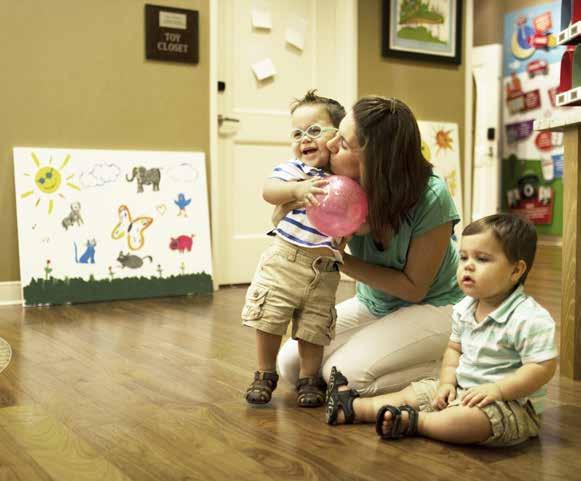
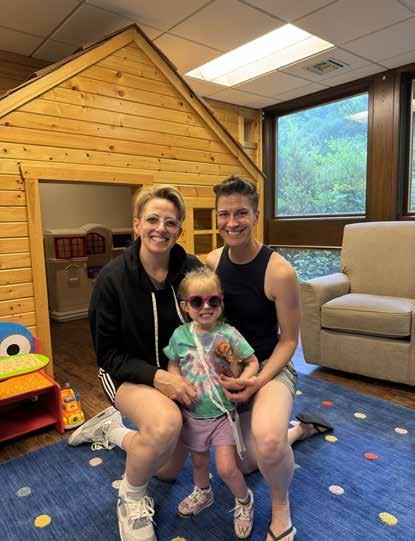
While parents move between appointments and long hours bedside, the burdens of life are lifted. Families return to stocked pantries, clean rooms, and prepared meals. It’s a simple but profound relief: not having to think of where to rest, or how to sustain themselves through uncertain days. The playroom and donated toys offer siblings space to let go. Through the Heroes of Hope program, kids choose superhero capes before heading to visit their brother or sister—small costumes carrying big courage. The House marks holidays with activities so families don’t feel they’re missing out while life is paused. Behind it all is trauma-informed care: staff members are trained to meet guests where they are, mindful that “good morning” doesn’t always fit. Instead, it’s: What do you need today?
For Kelly, the impact is found in small moments. She recalls a mother arriving distraught as her child prepared for heart surgery. Kelly asked, “Do you need a hug?” The mother collapsed into her arms. Later, she told Kelly, “I don’t know what I would do without all of you.” The outcomes aren’t always easy, but the mission remains: to stand alongside families, step by step, when they’re carrying more than they ever imagined.
Meeting that mission requires constant adaptation, and time has revealed a difficult truth: there isn’t enough space for every family who needs it. When rooms are full, the organization funds hotel stays. This January alone, over 120 hotel nights were provided. The House has stretched every available space, yet the need remains. Kelly and her team are exploring ways to meet greater demand and better serve families.
Community support is the engine. Donations fund operations, while volunteers bring the House to life— stocking snacks, preparing meals, knitting, lending an ear. The organization operates two hospitality carts at Mott, bringing comfort items directly to the bedside. Support extends beyond the House, including close to 1,000 Comfort Care Bags distributed to NICU families at Trinity Health over the past three years. For those who want to help, Kelly encourages starting simply: come learn the mission or explore the “How to Help” section of the website. Whether through giving, volunteering, or hosting a fundraiser, the goal is the same: remove barriers so families can stay close.
Over time, many families return as volunteers. Kelly has watched fragile patients grow into thriving people who stop by just to say hello. “They become a part of our family,” she says. Kelly often thinks of a message from one grateful member of a family who stayed at the House: “We hope you never need a Ronald McDonald House. But if you do, it’s here.” For thousands of families, that promise— waiting just across the street—has made all the difference. Learn more, donate, or sign up to volunteer at rmhcannarbor.org
JOIN RONALD MCDONALD HOUSE ANN ARBOR FOR THE 14TH ANNUAL RED SHOE AFFAIR
On April 25, Ronald McDonald House Ann Arbor invites the community to step inside its mission through the Red Shoe Affair, its signature fundraising event. The evening features a cocktail reception, dinner, auction, and a moving program centered on a family story, offering a firsthand look at the House’s impact. The event raises critical funds to provide lodging and support for families of hospitalized children. Open to all, the Red Shoe Affair serves as both an introduction and an invitation, helping ensure families never face their child’s medical journey alone. Sponsorship and individual tickets are available now at rmhcannarbor.org/redshoeaffair

















ARTICLE BY MEGAN HOBAN
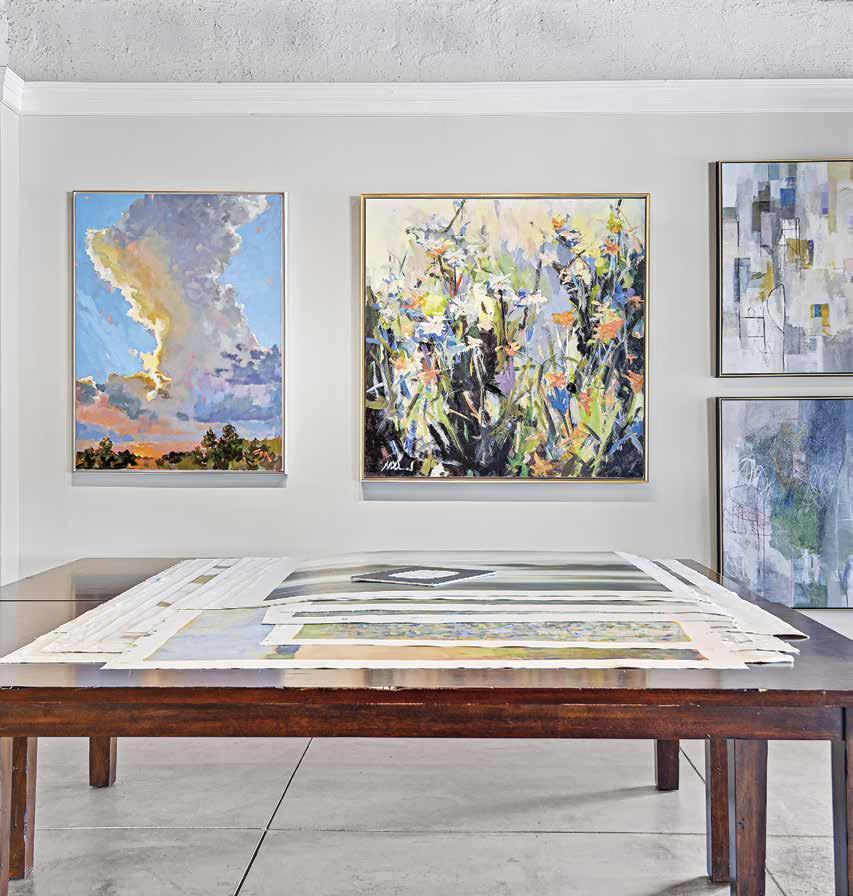

As consumers, we are constantly being enticed to buy. Whether it’s the jewelry we can’t live without, concert tickets to a show we don’t want to miss, or that favorite pair of shoes calling our name, we buy what we love, and art should be no different.
If you are new to acquiring original art, you may find it daunting, but it shouldn’t be. It is a special purchase that forces you to dig deep and discover a bit more about yourself. At first, many people shy away from buying original art because of the commitment. It’s a big decision after all, and how do you really know when it’s the “perfect” piece? Because art is subjective, part of the process is learning what style of art is the best fit for you. Is it colorful and energetic abstracts, or soothing landscapes that catch your eye? Maybe you are drawn to local photography, or even figurative works. There is no wrong answer, and maybe it’s a mix of several styles that creates your unique collection. The best way to find out your “art personality” is to get out and visit your local galleries. Consider making it a tradition to visit galleries while traveling or buy a piece of art as a gift on special occasions. In the gallery setting you can explore various art styles, mediums, and even learn more about the talented artists who create those works.
With the purchase of original art comes other considerations. Often, we have clients who need direction figuring out what size of art they need and its placement in the design of their space. If you find a piece of art you love, you will always find a spot for it. Ask the gallery if they offer in-home art consultation services to see the piece in your setting. Great custom framing is key, and well-designed framing is the jewelry to a great piece of art. Quality archival framing protects your art from UV rays that can damage a piece over time. Original art should last generations.
I’m often asked, should I buy art for investment? There is a place for investment art, but I don’t believe in buying art with the pretense that it will go up in value. There is no guarantee it will and to me, good investment art brings different riches to your life. Art that brings you joy, adds personality to your space, and makes your home original is an investment in you. The best art investment should be the feeling you experience gazing into an oil painting that perfectly captures a warm sunset over the prairie, or the texture created by a palette knife on the abstract that seems to pop off the canvas. That is what makes investing in original art priceless.
Art that brings you joy, adds personality to your space, and makes your home original is an investment in you.
THESE INVESTMENT BOOKS CAN HELP YOU STAY UP-TO-DATE ON THE LATEST FINANCIAL TRENDS

ARTICLE BY SUSAN LANIER-GRAHAM
PHOTOGRAPHY BY SIMON AND SCHUSTER
Investing in your future is critical yet complicated. While reaching out to qualified professionals is vital—whether you’re building your business, investing in your financial security, or planning for retirement—doing some of your own research is often helpful.
We checked out some of the top investment books that help you better understand how to invest in your future and build wealth.
1 2 3 4 5
One Up On Wall Street: How to Use What You Already Know to Make Money in the Market by Peter Lynch with John Rothchild. Peter Lynch explains average investors’ advantages over professionals and how they can use these advantages to achieve financial success.
How to Invest: Navigating the Brave New World of Personal Investment, part of Economist Books, by Peter Stanyer, Masood Javaid, and Stephe Satchell. A dynamic new guide to personal investment for the era of cryptocurrencies and personal trading platforms.
Power Your Profits: How to Take Your Business from $10,000 to $10,000,000 by Susie Carder. While not a traditional book on investments, Power Your Profits helps you discover how to take your business from startup mode to the multi-million-dollar mark.
The Wealth Decision: 10 Simple Steps to Achieve Financial Freedom and Build Generational Wealth by Dominique Broadway. A roadmap for becoming a millionaire and building the foundation of generational wealth from a self-made, first-generation multimillionaire.



How to Invest: Masters on the Craft by David M. Rubenstein. This book is a master class on investing, featuring conversations with the biggest names in finance. Brought to you by the legendary cofounder of The Carlyle Group, David M. Rubenstein.











APRIL 7TH
Literati Bookstore | 6:30 PM
Literati is thrilled to welcome bestselling author Camille Pagán to celebrate the release of Dog Person. In this delightfully heartwarming novel, an elderly dog named Harold is determined to help his grieving owner, Miguel, find a reason to go on after loss. Now if only Miguel would stop getting in Harold’s way by being so very…human. Learn more literatibookstore.com/upcoming-events
APRIL 8TH
Dixboro House | 6:00 PM
Join Dixboro House for a Golden Hour Wine Tasting, featuring a curated selection of pours from Chappellet. This 45-minute experience is thoughtfully guided by a wine expert, offering insight, storytelling, and exceptional wines. Reserve tickets and book a table for dinner before or after the tasting at thedixboroproject.com
APRIL 10TH & 12TH
Downtown Ann Arbor
Don't miss Ann Arbor’s beloved public art tradition, FestiFools and FoolMoon. On April 10 from dusk to midnight, FoolMoon brings a light-filled spectacle to Washington Street, with fantastical luminary sculptures created by U-M LSWA students and community members. The fun moves to Main Street on April 12 for a daytime celebration featuring giant puppets, crazy costumes, and fun for all ages. Learn more at lsa.umich.edu/lswa
APRIL 16TH
Jonathan Adler: Finding Your Voice
Michigan Theater | 5:30 PM
Part of U-M’s Penny Stamps Speaker Series, iconic designer Jonathan Adler brings his deft humor, impeccable style, and skilled craftsmanship to Ann Arbor. In his talk, Adler will shed light on how he synthesizes disparate inspirations into a varied yet distinctive voice, and he’ll offer advice on how young designers and artists can develop their own signature styles in a chaotic visual landscape. Learn more at stamps.umich.edu.
APRIL 18TH
UMS Presents: The Complete Philip Glass Piano Etudes
Hill Auditorium | 7:30 PM
One of the most influential composers of our time, Philip Glass conceived his collection of 20 etudes as way to improve his own performance technique. His most personal body of work is a self-portrait of a life’s practice, representing some of the most intimate and inventive music of Glass’s oeuvre. This distinctive concert features 10 pianists onstage, each offering a unique musical tribute to this masterful composer. Learn more at ums.org
APRIL 18TH
Midwest Literary Walk
Downtown Chelsea | 10:00 AM
A celebration of literature, reading, and the Chelsea community, the Midwest Literary Walk features nationally recognized authors and the small-town charm of Downtown Chelsea. This year, attendees can see one of Chelsea’s most iconic venues and experience a play reading at the Purple Rose Theatre, while engaging with the actors and playwrights. Learn more at chelseadistrictlibrary.org/midwest-literary-walk










CONTINUED


APRIL 25TH
A2SO Season Finale: Holst’s The Planets
Hill Auditorium | 7:30 PM
The A2SO and Music Director Earl Lee round out an extraordinary ‘25-’26 concert season with Holst’s towering celestial masterpiece The Planets, plus Elgar’s poignant cello concerto with in-demand German virtuoso Maximilian Hornung. Opening the concert is a new work by Fulbright Foundation-awarded American composer Caroline Mallonée as part of a special co-commission partnership with the New York Philharmonic. Learn more at a2so.org
APRIL 25TH
Michigan Theater | 8:00 PM
David Sedaris, the renowned author and humorist, brings his sharp wit and keen observations on everyday life to Ann Arbor on April 25. Sedaris will engage the audience with his humorous essays and captivating storytelling. This event promises to deliver an evening filled with laughter and insight, perfect for fans of his work and newcomers alike. Tickets available at ticketmaster.com
APRIL 26TH
Michigan Theater | 6:00 PM
The beloved fairy tale comes to life in a spectacular production that delights all ages, blending humor, romance, and the timeless majesty of classical ballet. World Ballet Company’s Cinderella features a dazzling cast of 40 international dancers and choreography by Marina Kesler. From the mischievous evil stepsisters to the breathtaking ballroom scenes, every moment is filled with charm, wonder and magic. Learn more at marquee-arts.org.
Clarendale Ann Arbor 2830 South Main Street Ann Arbor, MI 48103
OFFICE 734-318-1700 LIFE@ClarendaleAnnArbor.com



ARTICLE BY ASHLEY SCHAFER

Vibrant. Welcoming. Connected.
As Executive Director of the Main Street Area Association, I work to keep Downtown Ann Arbor vibrant, welcoming, and connected. From signature events to business advocacy, my role focuses on supporting local merchants while creating experiences that bring the community together year-round.
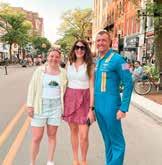
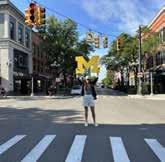

At its core, MSAA exists to support the independent businesses that make Ann Arbor unique, helping to create a downtown where entrepreneurs thrive and visitors feel welcomed at every turn.
From Galentine’s Day and The Street Art Encounter to Midnight Madness and Summer Streets, each event is designed to bring people downtown and support local businesses, while celebrating Ann Arbor’s creativity.
MSAA helps transform downtown streets into welcoming community spaces. From outdoor dining and pop-up programming to pedestrian-friendly events, these efforts encourage people to linger, connect, and experience Ann Arbor beyond the sidewalk.
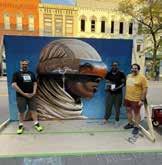

Downtown Ann Arbor blends smalltown charm with big-city energy. Walkable streets, creative storefronts, amazing food, and a strong sense of community make it a place people love to gather, explore, and celebrate—no matter the season.
Learn more at mainstreetannarbor.org