
New showroom. Same uncompromising standards.
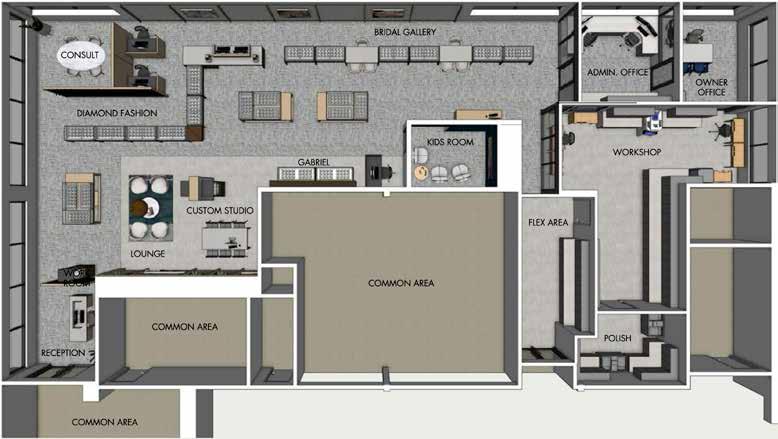

New showroom. Same uncompromising standards.
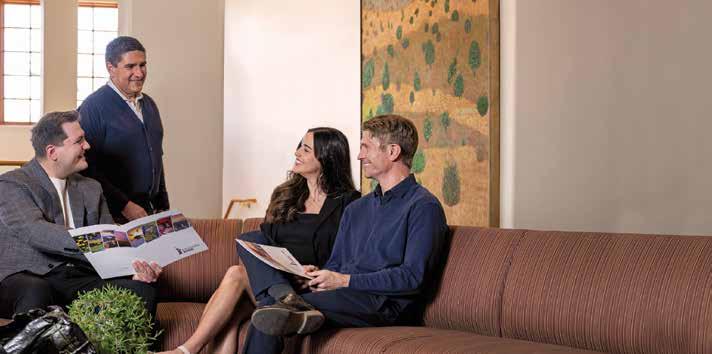
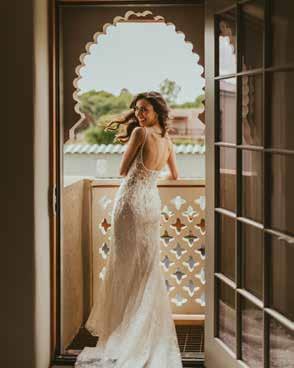
This spring, John Thomas Jewelers unveils a new showroom designed for one thing: unforgettable moments. A space where craftsmanship, intention, and time-honored design come together—just as they always have From private bridal galleries to an elevated custom design studio, every detail has been considered. Every experience, personal.
Home. Just four letters, yet it holds so much meaning. It's our sanctuary, our foundation, and the place where life unfolds. Home is where we begin and end each day, where our lives take shape, and where our hearts find rest. While the specifics of what "home" looks like vary for each of us, its significance is universal.

Author Wendy Wunder captured it perfectly: "The magic thing about home is that it feels good to leave, and it feels even better to come back." With that in mind, this month's issue focuses on what makes home special-from the warmth of shared meals and thoughtfully designed spaces to the people who bring it all to life.
Many of our readers tell us they hold onto this magazine long after the month on its cover, treasuring it as a piece of home-whether as coffee table art or a source of inspiration. That's a tradition we're proud to uphold, and we remain committed to delivering the value you expect each month.
Thank you for welcoming us into your homes. Here's to making this March a celebration of the spaces and people that matter most.
Happy March!
RICH
RINGROSE, PUBLISHER @ABQCITYLIFESTYLE
March 2026
PUBLISHER
Rich Ringrose | rich.ringrose@citylifestyle.com
EDITOR
Richard Lakin | richard.lakin@citylifestyle.com
PUBLICATION DIRECTOR
Anthony Deleon | anthony.deleon@citylifestyle.com
STAFF PHOTOGRAPHER
Autumn Ogelsby
STAFF WRITERS
Jill Robbins, Rudy Carrillo, Regan Bervar, Keri Bridgwater
CONTRIBUTING WRITERS
Rudy Carrillo, Keri Bridgwater, Regan Bervar, Jill Robbins, Richard Lakin
CONTRIBUTING PHOTOGRAPHERS
Elijah Rael, Courtesy of Abiquiú, New Mexico True, Bill Burrell, Julia Gutierrez
CEO Steven Schowengerdt
President Matthew Perry
COO David Stetler
CRO Jamie Pentz
CoS Janeane Thompson
AD DESIGNER Andrew Sapad
LAYOUT DESIGNER Kathy Nguyen
QUALITY CONTROL SPECIALIST Marina Campbell












- Kendall Harris











www.designalliancenm.com
GET YOUR KICKS: HOW TO CELEBRATE THE ROUTE 66 CENTENNIAL IN ALBUQUERQUE
ARTICLE

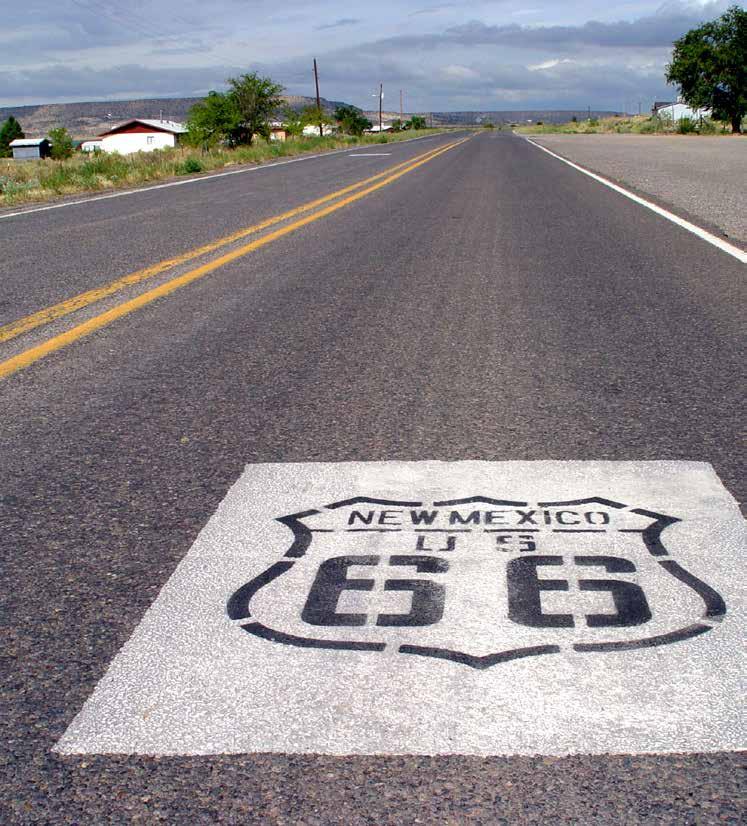
Route 66 doesn’t just pass through Albuquerque; it is Route 66. The glow of neon signs, the bustling hum of Central Avenue, and catching sight of a classic lowrider rolling down the street all add up to that Albuquerque vibe, like an old friend who always has a great new story. While much of the Mother Road elsewhere leans heavily into throwback nostalgia, Albuquerque’s take is a living, breathing stretch of culture where past and present happily hold space together at the same bar.
Route 66 turns 100 this year. While travelers can hit the road to toast other stretches of the Mother Road in person, here’s how to celebrate its milestone birthday without ever leaving Albuquerque.
Anyone who knows and loves ABQ doesn’t need a reminder that Central Avenue is Route 66, but it’s worth pausing to appreciate just how much of the road’s spirit still lives here. This long, continuous stretch remains one of the most intact urban sections of the Mother Road anywhere, and it’s as functional as it is iconic. Neon signs still glow, fresh new murals appear regularly, and longtime institutions sit comfortably alongside breweries, music venues, and coffee shops.
It’s not curated; it’s lived in. Central still carries the city’s daily rhythm: late-night diners, weekend traffic, and that quiet hum of reinvention that’s uniquely Albuquerque.
Nob Hill is where Burqueños have shopped, grabbed tacos, and lingered over cocktails beneath neon lights that have been glowing for as long as most of us can remember. Route 66 feels polished here, but it has kept its heart and soul. Historic façades house chef-driven restaurants, indie boutiques, and patios buzzing with locals and visitors, making this stretch feel both comfortably familiar and ever-evolving.
Long before boutique hotels and Airbnbs were a thing, motels were the original road-trip luxury, with elements today’s traveler rarely gets to savor: parking just outside your room and trekking through the parking lot under the blaze of neon to fill your metal ice bucket from the machine. Albuquerque embraced motel culture early, and unlike many Route 66 towns, the city never fully let it go. What drive-through visitors might label “nostalgic” or “retro” is simply part of the stay here.

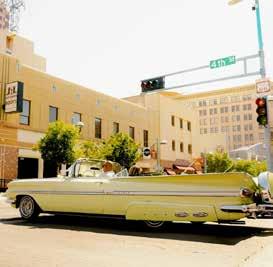
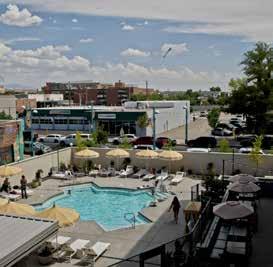

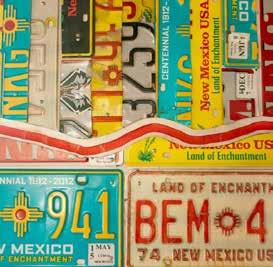

Whether you show up at El Vado Motel for an evening of live music jams or book a staycation at the Monterey Motel, embracing motel culture means leaning into Albuquerque’s motor-court roots: updated with thoughtful design, luxe linens, and modern comforts.
Opened in 1937 and meticulously restored, El Vado blends original adobe details with clean, modern interiors. What sets it apart is its role as a gathering place: food trucks line the courtyard, live music fills the evenings, and locals rub elbows with tourists.
Best for: Travelers who want to socialize and grab drinks and tacos without walking far.
The vibe here is midcentury modern cool. With its classic roadside sign and minimalist rooms, the Monterey offers a quieter, design-forward take on the Route 66 experience.
Best for: Couples and solo travelers who crave that Instagrammable vintage aesthetic but also want quiet and privacy.
Set within a reimagined motor lodge near Central Avenue, ARRIVE pairs boutique-hotel sophistication with roadside roots. Color-blocked balconies and a striking lowrider mural nod to Route 66 heritage, while refined interiors, an on-site restaurant, and a polished cocktail bar bring the experience firmly into the now. With easy access to both Downtown and Old Town, it balances style, comfort, and a strong sense of place.
Best for: Design-forward travelers who want the sense of Route 66 history combined with modern, elevated amenities.
If your idea of celebrating a milestone birthday involves clinking glasses filled with quality bubbles, a 2026 visit to Gruet Winery is in order. Gruet is the third-largest producer of traditionally made Champagne in the U.S. and a great place to learn the difference between Champagne and sparkling wine. To mark the Route 66 centennial, they’re rolling out a special sparkling wine aptly named Brut 66.


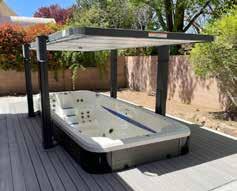

For years, Albuquerque Handyman LLC has been your go-to for top-notch handyman services. With 20 years of construction experience, we handle everything from yard work to home repairs. Just hand us your manchores list! Our Services:
• Tenant Improvement Projects
• Property Preservation
• General Maintenance
• Power Washing
• Drywall Repair
• Painting
• Honey do lists ABQHM.COM 505-239-3255

Set your schedule. Make an impact. Build a life you’re proud of.
Behind each of our 200+ City Lifestyle magazines is someone who cares deeply about their community. Someone who connects people, celebrates businesses, and shares the stories that matter most. What if that someone was you? Or maybe it’s someone you know. If this isn’t the right time for you, but you know someone who could be the perfect fit, we’d love an introduction.





















ARTICLE BY KERI BRIDGWATER | PHOTOGRAPHY COURTESY OF ABIQUIÚ
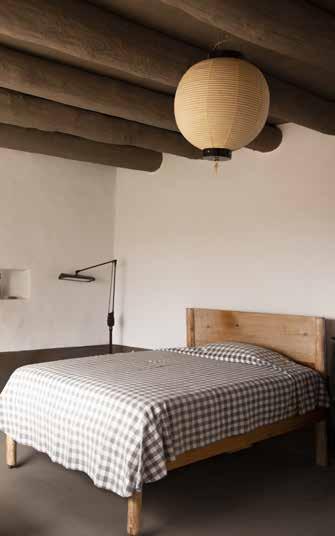
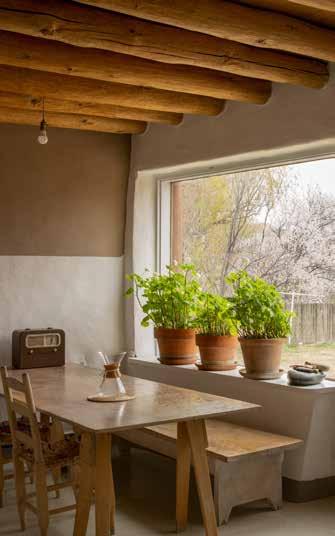
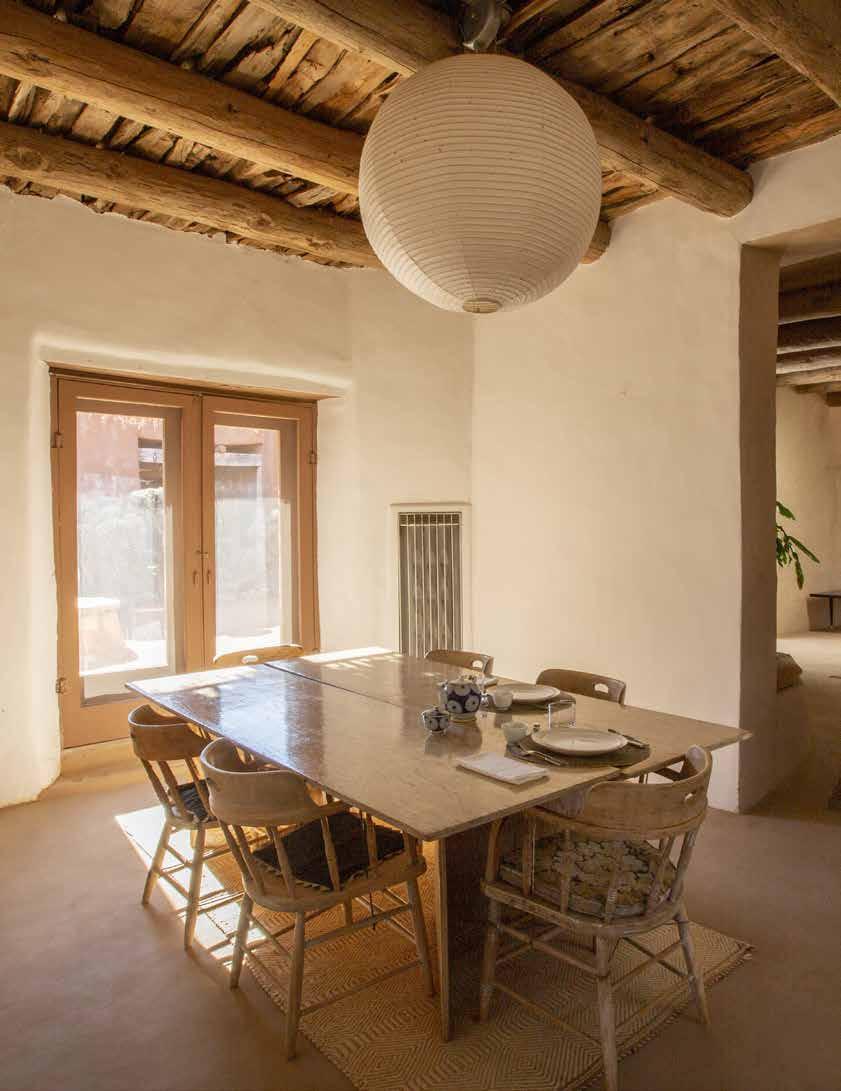
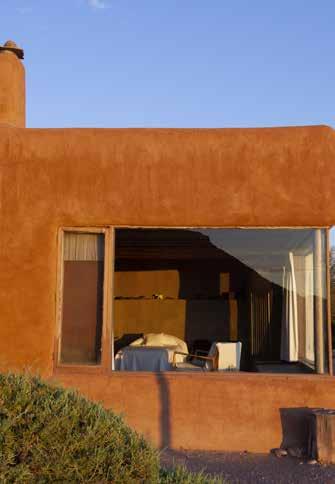
Sitting on lands long stewarded by Pueblo peoples, whose traditions still shape this place, Georgia O’Keeffe’s Abiquiú home and studio make a quiet first impression. Adobe walls soften sound and regulate temperature. Courtyards turn inward, and windows frame the landscape. “When visitors first walk in, they say it looks like an O’Keeffe painting come to life,” says Giustina Renzoni, director of historic properties at the Georgia O’Keeffe Museum. “They’re blown away by the size and don’t realize how large it is.”
CONTINUED >
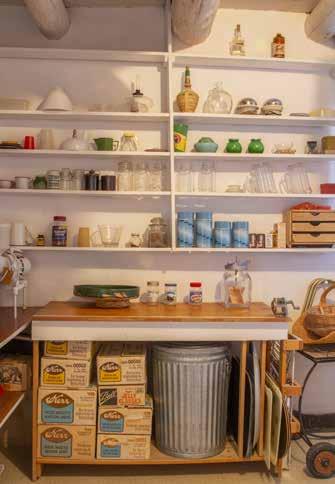
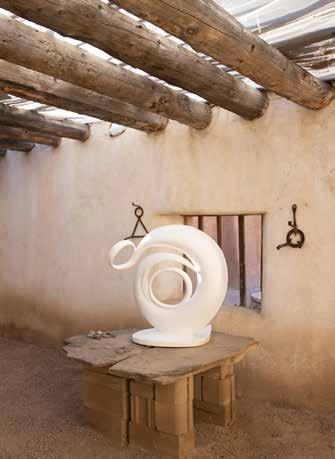
O’Keeffe came to Northern New Mexico in the late 1920s, drawn by its vastness and solitude—what she called “the Faraway.” While in the Taos area, she searched for new landscapes to paint. “She would take her Model A Ford out looking for a good place to set up,” Renzoni explains. Friends soon encouraged her to visit Abiquiú and Ghost Ranch. When O’Keeffe first saw the Abiquiú property in 1935, it was vacant and in disrepair. Yet one detail captivated her. “That wall with a door in it was something I had to have,” she is said to have recalled. “The house itself held close to two centuries of history before O’Keeffe made it her own,” Renzoni says. The Adobe Hacienda’s earliest rooms date to the 1740s, first used as a shepherd’s hut before becoming a residential compound.
When O’Keeffe finally bought the property a decade later, it required major reconstruction. Local community members were hired to restore it using traditional building methods. Original features were preserved where possible, and more than 22,000 adobe bricks were handmade from nearby earth to expand the house into a pueblo-style hacienda. O’Keeffe also introduced subtle contemporary additions. “She made some pretty modern changes,” Renzoni notes, “including large landscape windows and skylight features you wouldn’t typically see in a traditional Northern New Mexico adobe home.”
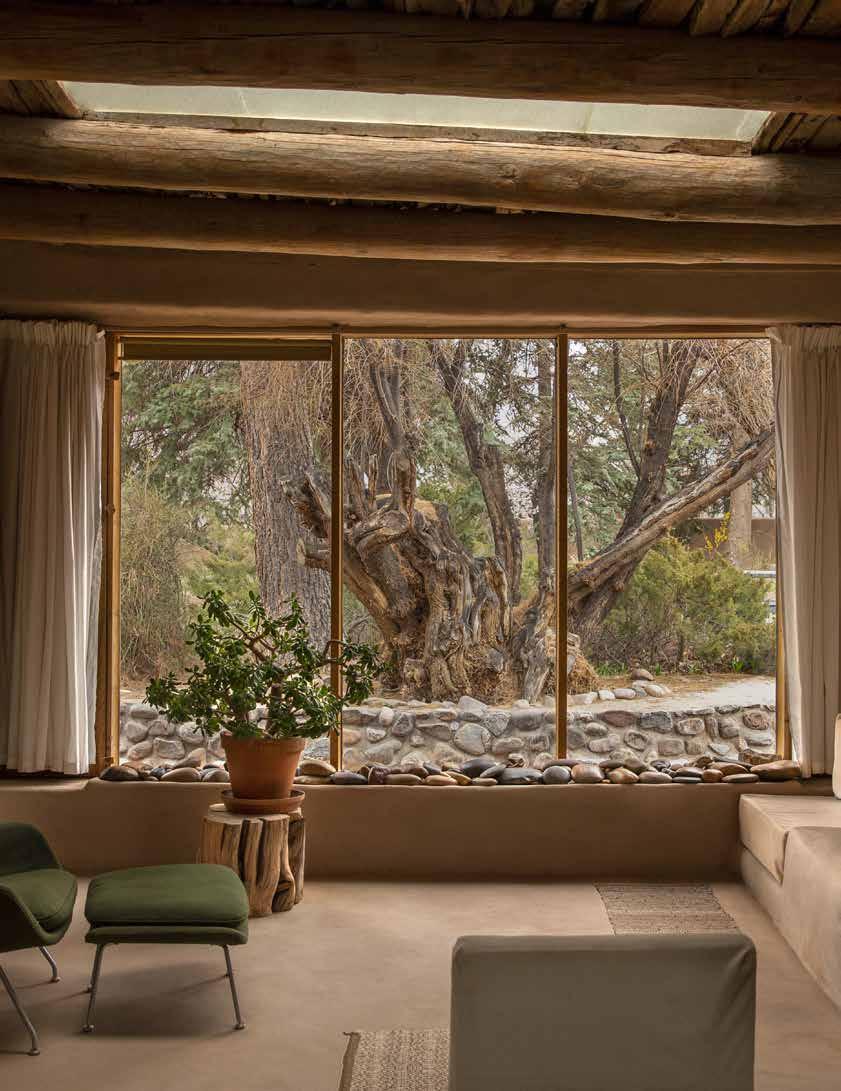
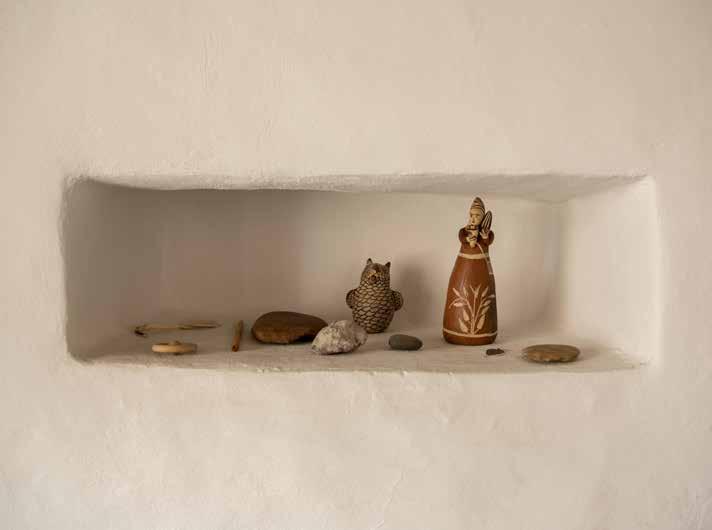
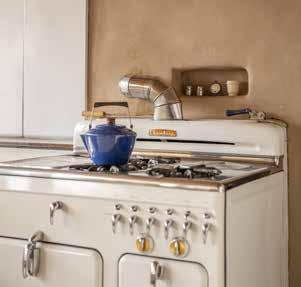
Despite its size, Abiquiú feels incredibly intimate. Thick walls, enclosed courtyards, and limited exterior openings create privacy and quiet. There are neighbors on only one side, and the property turns inward. “For O’Keeffe, home was really having a place of her own,” Renzoni says, “where she could create an environment that helped facilitate her creative process.” Her bedroom and studio sat inside a separate building, far from the road. Each morning, O’Keeffe passed through her studio on the way to the kitchen for breakfast, ensuring her first moments were with light and landscape. “She used architecture the way she used composition,” Renzoni says. “Framing exactly what she wanted
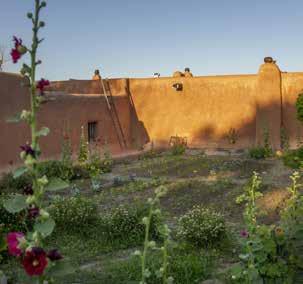
to see, and nothing more.” The garden at Abiquiú also drew O’Keeffe. The property has held water rights since the 1700s, which remain active today through the acequia system. Each summer, hundreds of pounds of fruits and vegetables are grown and shared or donated among staff, local high school students, and area non-profits.
Abiquiú was O’Keeffe’s primary home from 1949 until her move to Santa Fe in 1984, and the setting inspired roughly 60 works. She often returned to the cottonwood trees outside her window and the patio door in the courtyard, where the house itself became part of the composition. “It’s not just about the landscape here,” Renzoni notes. “It has a lot to do with the architecture as well.”
“FOR

DENVER TO LAS VEGAS
SEPTEMBER 21 – 26, 2026
ITINERARY
DAY 1
Day in Denver with a visit to the Denver Art Museum and welcome reception.
DAY 2
Board train to Glenwood Springs via Moffat Tunnel, and Byers Canyon.
DAY 3
Glenwood Springs to Moab on train including Debeque Canyon and Ruby Canyon.
DAY 4
Tour of Moab includes Arches and Canyonlands National Parks.

DAY 5
Moab to Bryce Canyon National Park including Capitol Reef National Park.
DAY 6
Bryce Canyon to Las Vegas via Zion. Journey ends in Las Vegas, Nevada.


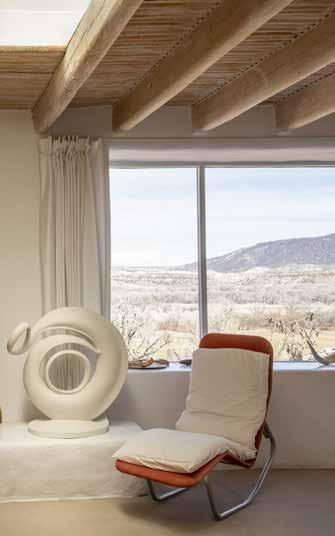
Tours are limited to eight guests per group and curated with great care. When they end in late fall, the home shifts to preservation mode. Adobe walls and earthen floors are repaired by hand each winter using traditional methods. Resuming in March this year, the museum offers a new Closet Visit, using fashion to explore O’Keeffe’s life and work. “Many people have come to recognize Georgia O’Keeffe as a style icon,” Renzoni says. The experience includes a walk through the home and concludes with a dive into her wardrobe, featuring some of the most iconic pieces from the museum’s collection while exploring her place in fashion history.
An Evening Tour also returns this summer, ending with a garden reception. Renzoni notes that tour dates can sell out months in advance, but encourages visitors to explore the Welcome Center and visit Ghost Ranch for hiking and horseback riding in the same landscapes O’Keeffe painted. “People leave Abiquiú understanding this wasn’t just where O’Keeffe lived,” Renzoni says. “It was how she lived.”
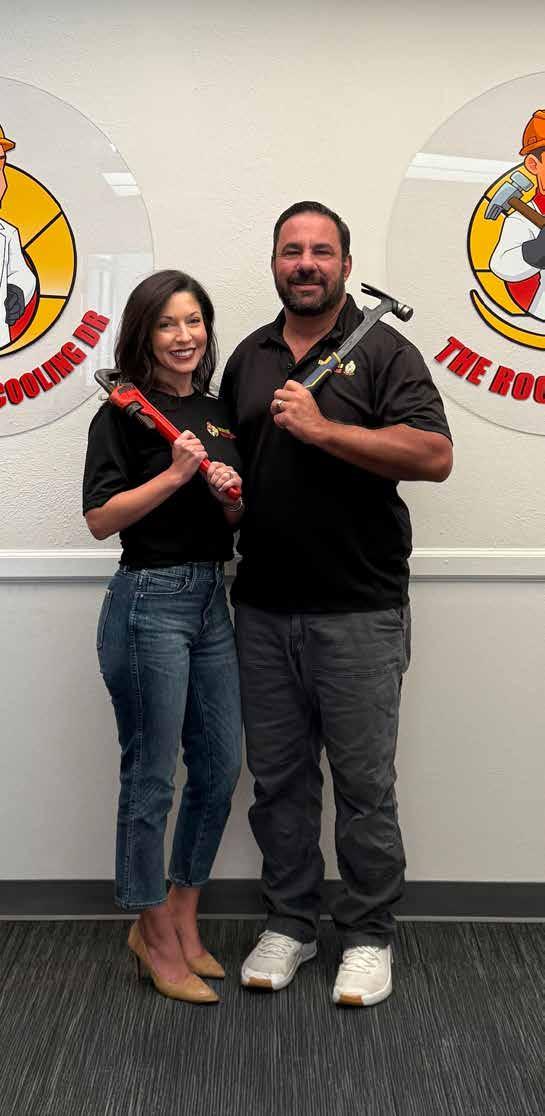
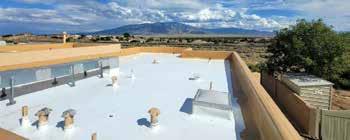
Enchanted Mechanical and Enchanted Roofing operates under the same ownership umbrella, both owned and guided by David and Dominique Baca. While each company functions as an independent, specialized team, they share a unified commitment to professionalism, quality craftsmanship, and customer trust. Together, they form a locally owned network dedicated to enhancing building comfort, efficiency, and performance throughout Central New Mexico.








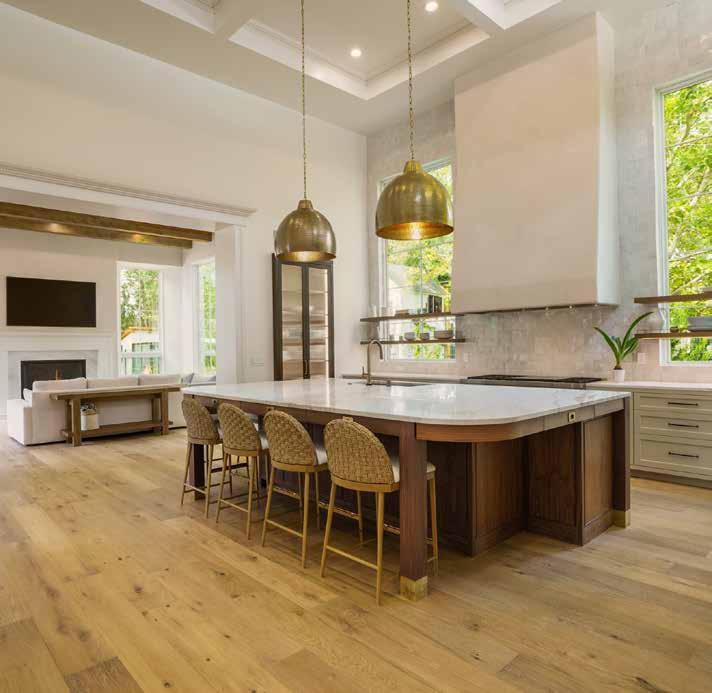
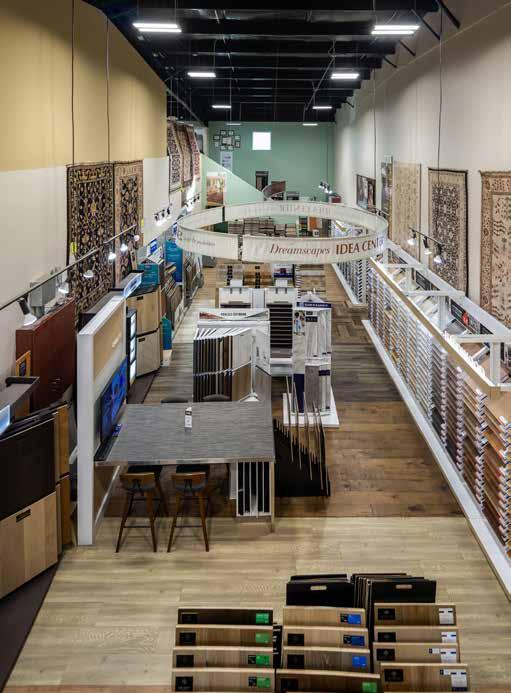
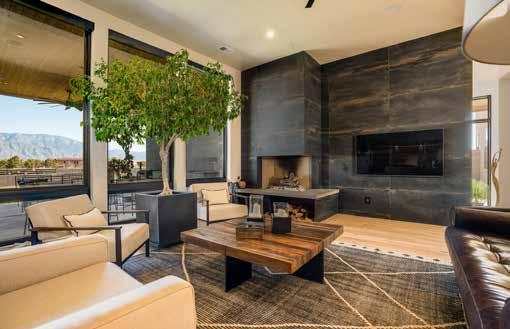
As you’re driving through town looking for the best place to stop in your latest quest to get that next home improvement project started, you might recognize Bill Burrell as he drives past you on the way to his office at Floorscapes.
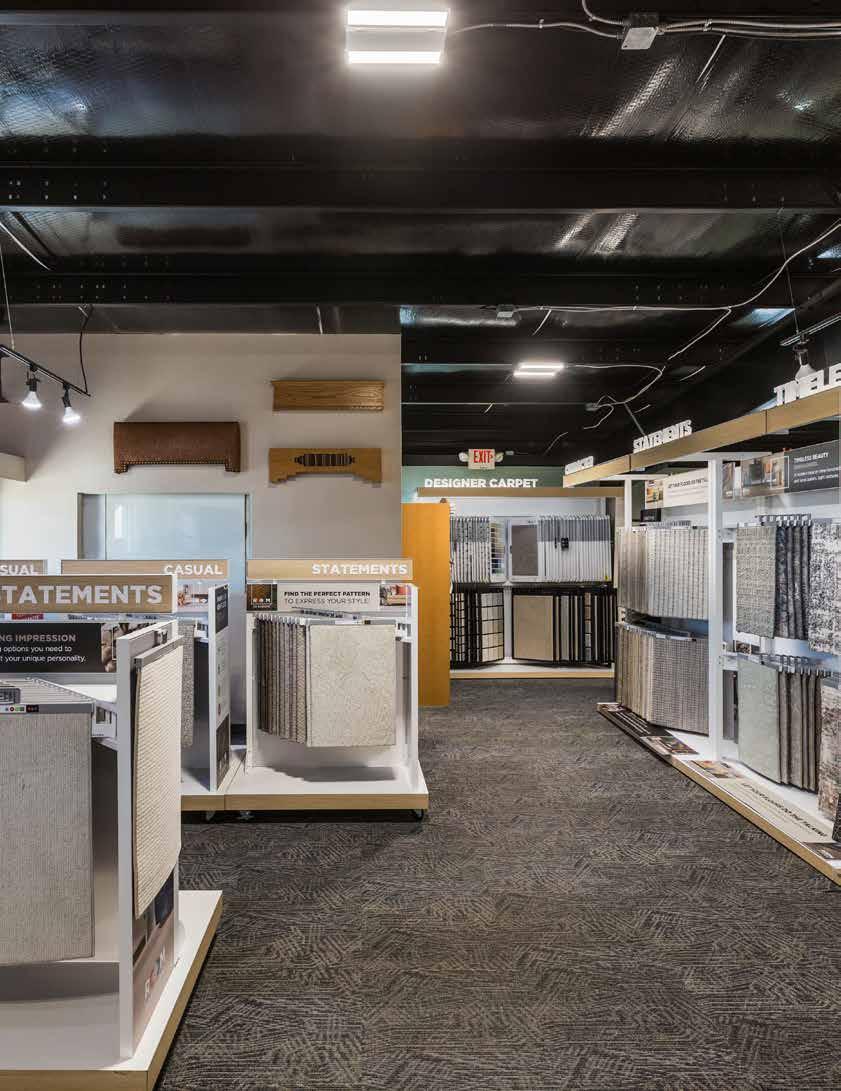
As you pull in behind him at the huge Floorscapes showroom at 8515 Paseo Alameda and go inside, you might be thinking to yourself, ‘I know that guy.' That might happen as you realize how awesome the retail space Burrell has created in North Albuquerque really is, expansively filled with visions of what a home or office can be.
That’s because Burrell is one of us, a longtime Albuquerque citizen and entrepreneur. Burrell certainly knows what he’s doing; he’s got the vision thing down. He’s been in the interior design business for more than 40 years. In that time, the Albuquerque native and local business leader has grown a formidable reputation for success in all of his business endeavors. That includes Floorscapes.
Albuquerque City Lifestyle Magazine sat down with Bill Burrell to find out more about the man behind the carpeted, color-coordinated myth. What we found was a confident master of Burque business, full of historical knowledge, names, and keen insight into the market that he serves. More importantly, Burrell demonstrates a deft, artistic touch fashioned especially for clients. Since those clients range from manufacturers to contractors to weekend warriors, you might say that Burrell is a man of the people, able to work with anyone who enters the world of Floorscapes.
“I
We conducted a wide-ranging, story-filled interview with the man. Here are the highlights of a conversation with a truly authentic Albuquerque leader.
Burrell told us that his interest in home interiors began when he was younger, recalling that “the story that got me into this industry starts right out of high school. My dad was the president of Blue Cross/Blue Shield of New Mexico. One of his best friends was a carpet and flooring installer. He was at our house one Friday afternoon in 1973 when I had just graduated. I had come home, and he was out front, drinking a beer. I sat down with him for a minute; his name was Bill Madsen. He asked me what I was going to do with my diploma.” When Burrell professed that he had no idea what was next, his father’s friend told him, “You’re gonna start installing floors with me on Monday morning!” It was a good deal. Madsen, it turns out, was the best installer in the state, responsible for projects like the flooring in the state capitol building in Santa Fe.
That humble yet auspicious beginning led to more opportunities for the interested and highly focused Burrell. Three years after high school, he took on UNM, getting a degree in marketing before resuming his life’s work at House of Carpets, a legendary Albuquerque business. Burrell said, “They hired
me as an assistant manager. I spent the next 17 years there. We were a big deal in New Mexico; we had eight stores, and I had risen to the position of sales manager.”
After that sort of success, Burrell made a big decision that would change and expand his professional life. “I decided I wanted to get involved with the manufacturing side of the home improvement industry,” he told us, reasoning that, “I wanted to get out of retail, to learn about the manufacturing and distribution process.” When Burrell secured a position with a leading flooring manufacturer, “It was a big deal. We packed up everything and moved to Phoenix.”
Three years later, Burrell was back in Albuquerque, brimming with the knowledge and experience he had sought out and ready to re-engage a wide variety of businesses and employers, from his former employers at House of Carpets to the nationwide manufacturer, Mohawk Industries, where Burrell served as a regional manager with 14 sales representatives in his ken. In the next few years, he built his resume and his reputation in this town. “I had a pretty solid background at that point, the installation side, the retail side, manufacturing … a lot of common ground with the people that I called on.”
CONTINUED >
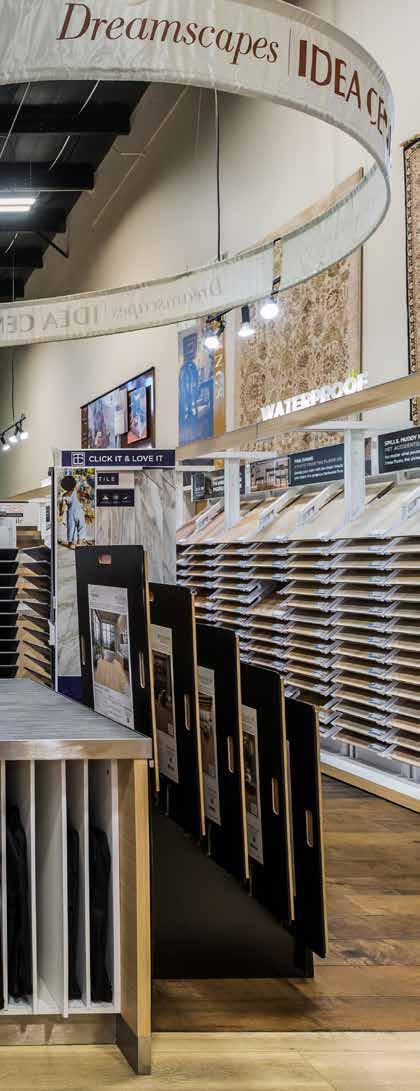
And by 2000, Floorscapes began to take shape. When Burrell dived back into the Albuquerque business world, he got involved with the longtime and legendary dean of Albuquerque interiors, Phil Raby, a fellow local entrepreneur who owned the ever-expanding Raby Carpets. Raby asked him straight up what Burrell thought about opening a Floorscapes retail outlet in Albuquerque. Floorscapes was the name of a division of Mohawk Industries that stressed solid design and constructive client relationships for an upscale home improvement market. “Even before Phil came to me with an offer, it was always in the back of my mind. Floorscapes would work great in Albuquerque. So we entered into a partnership.”
The partnership persisted until 2002, when Burrell and his wife Debbie decided that the best path forward would be on their own. They bought out Raby’s interest in Floorscapes and the small storefront that was part of the deal, and proceeded to land a huge contract with Charter Homes, a large-scale builder invested in Albuquerque’s growing westside, securing their success and paving the way for the future of Floorscapes. In the next 20 years, the business would continue to grow, eventually settling into an expansive, beautifully designed headquarters and showroom on the north side of town.
“It’s an appreciation thing; it’s a big deal. We’ve got a caterer coming in, I want to honor these folks.”
Burrell summarized his amazing story and the continued success of Floorscapes calmly, almost casually as he concluded, “I’ve survived, we’ve survived because we take care of our customers, we take care of the manufacturers that serve our clients, we take care of our staff. That’s the reason we’re here today. Whenever I meet with my staff, I always convey to them that there is one really important thing to remember in business: Treat people the way you want to be treated.”
As I prepared to leave, Burrell got up from behind a desk overlooked by two of his father’s heirloom Kachina dolls, politely said goodbye, and headed out for a celebratory company dinner. That dinner, that part of his life, he told me as he left, was all about honoring the installation crews that are at the heart of Floorscapes and its Albuquerque success story: “It’s an appreciation thing; it’s a big deal. We’ve got a caterer coming in, I want to honor these folks.”
Floorscapes - 8515 Paseo Alameda NE, Albuquerque, NM 87113 (505) 224-9316 - floorscapesnm.com


Weight Loss | Peptides | IV Infusions
Joint Injections









St ep into a world where every jewel t ells a story
For two days only, discover an extraordinary trunk show of antique, vintage, and estate jewelry each piece chosen for its beauty, rarity, and history. From Art Deco sparkle to Victorian charm, explore one‑of‑a‑kind designs you won’t f ind anywhere else.
Step into the past… and take home a treasure.
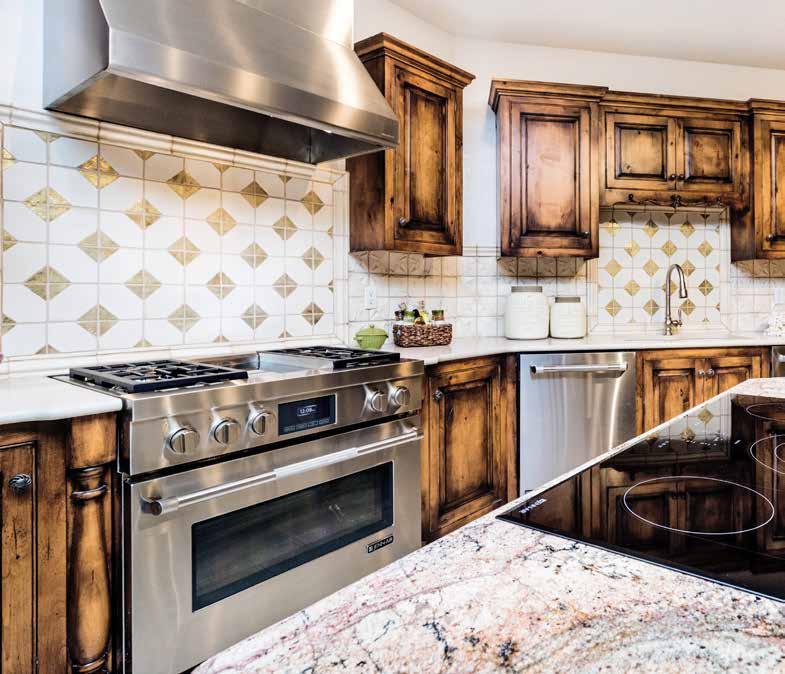
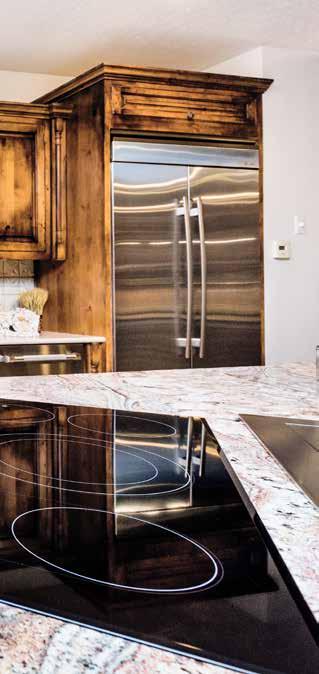

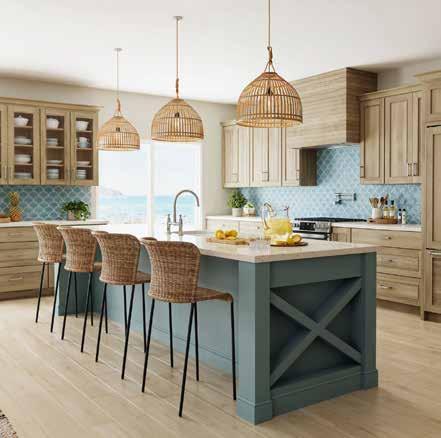
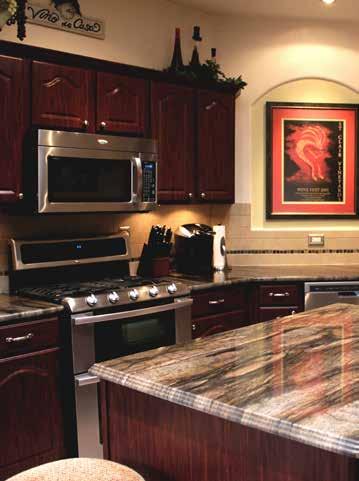
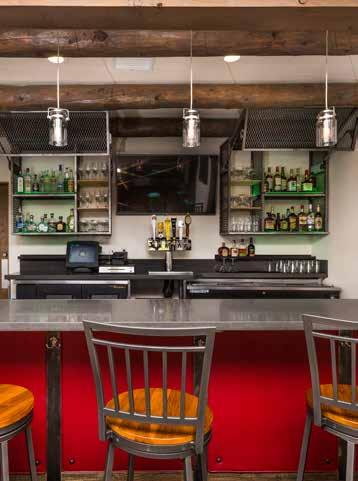
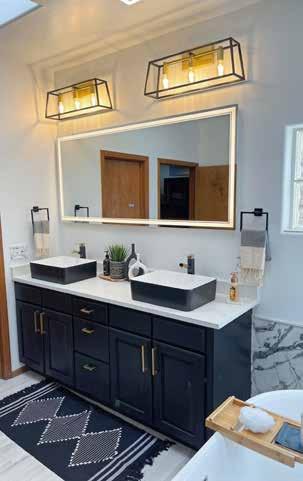
Julia Gutierrez, the CEO of Design Alliance, tells us that, “We design with intention. We believe that your space should reflect your story. Since 2011, we've been a kitchen and bath design studio, which means that we specialize in the design of kitchens and bathrooms. We also are a cabinet dealer and installer, so we provide cabinets for kitchens and bathrooms...actually for the whole house and anything interior. We do countertops. We have a fabrication shop where we fabricate engineered quartz and natural stone, and then we also have our crew who installs for us, so start to finish anything.”
“Most of our clients like to keep the feel of the Southwest.”
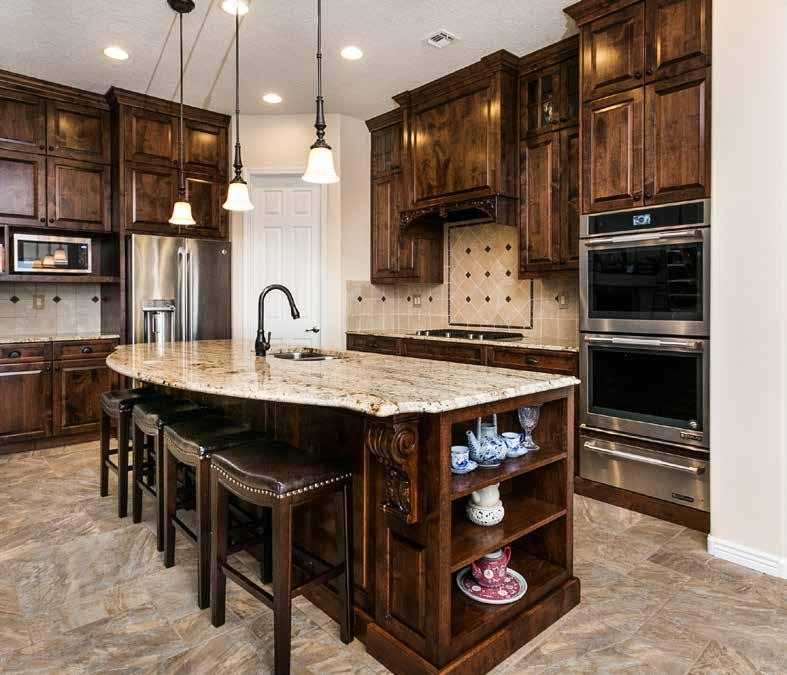
Design Alliance is a 100% womanowned business. Julia says, “We meet with the client and try to get a really good understanding of what their goals are and take all that information and turn it into life for them. We will draw it in a 2D drawing so we get the space planning correct, and then we elevate those into 3D drawings for our final presentation with all the textiles and finishes for the project. Then we present it to them, and we basically do everything from start to finish, from conceptual drawings all the way to installation at the end.”
We asked Julia what do customers see as the advantage in coming to Design Alliance? “We are a one-stop shop so they come here, and we can handle small projects all the way to large projects. We can do everything from start to finish, so it takes away the legwork for them. We hold their hand throughout the entire process. We help them with selections for plumbing, electrical, and paint from beginning to end. If we don't do the work in-house, we have people in our alliance and our team, hence the name Design Alliance, to assist in getting everything completed
from start to finish, so we act as a project manager from start to finish. I've been doing this since the early 2000s, and we've done projects from small remodel projects where we're just refreshing the space and changing out what's already there, and updating all the way to commercial. We've done Starbucks countertops and flooring, we've done all the Menchie's and Domino's here in town. We've also done large commercial projects for apartment buildings with 300 units, so we can handle anything from a small remodel to a largescale project.”
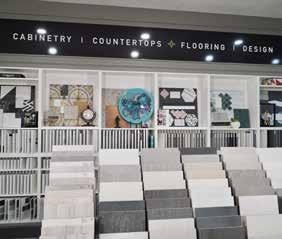
“We’re making sure that the client is getting something that’s going to last a lifetime for them.”
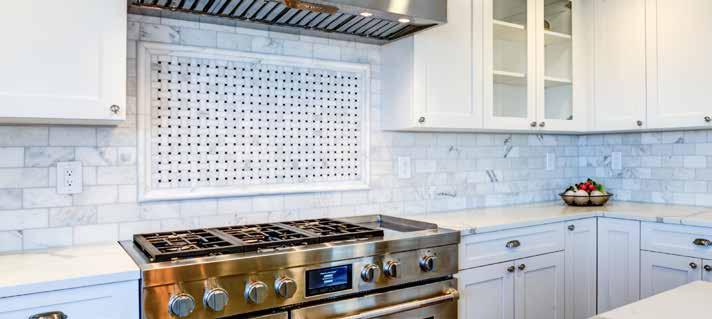
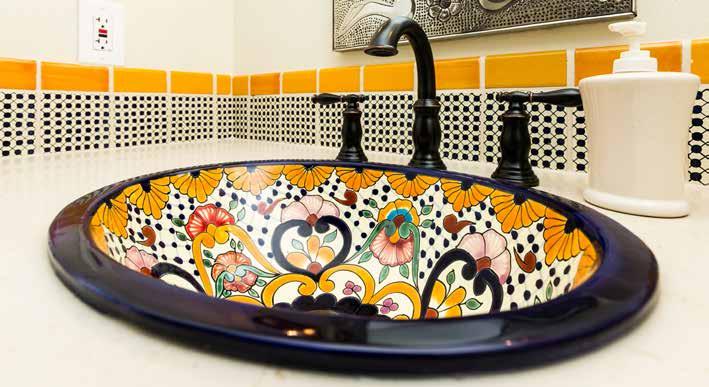
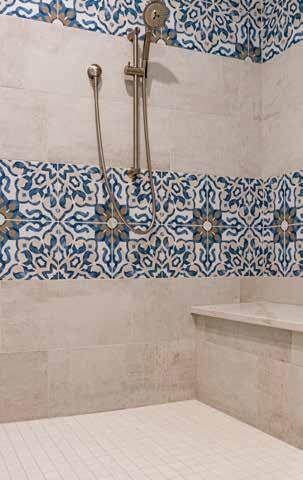
We asked Julia about the styles that customers ask for. “Most of our clients like to keep the feel of the Southwest. However, we're seeing a lot of people want it to look more elevated and modern, but still a nod to our Southwest design and architecture, because we still have the vigas, we still have the bull nose doorways and corners, but we streamline that by adding a little bit of the Southwest into everything that we do. We can add a backsplash design where we use a more patterned tile, and then we modernize more on the cabinets.”
She says, “We do a lot of work all over New Mexico, so we are statewide and the architecture, say from Santa Fe to Nob Hill to High Desert to Rio Rancho, it all varies, so we're very well versed in all styles. We really listen to our clients to really try to understand who they are
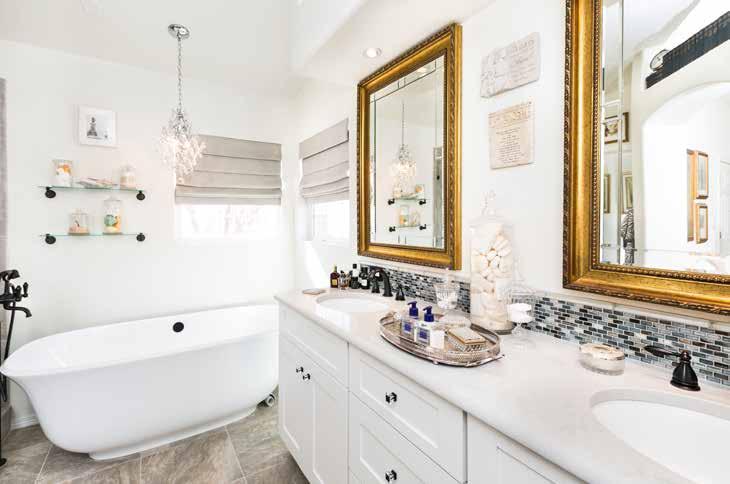
on a personal level and what it is that they enjoy and what they want for mostly functionality but also aesthetic, and a lot of times when we do remodels our clients are not doing the entire house they're just doing a portion of their house, so for it to have cohesive design we make sure that we fully understand the project. We visit the site, and we talk about the things that are important, such as functionality and aesthetics, and then we take our designs from there. We have interior designers on staff who truly do understand design. We're making sure that the client is getting something that's going to last a lifetime for them.”
Design Alliance’s phone number is 505.856.2939. Their website is designalliance.com. They are located at 1130 Juan Tabo Blvd NE.


“Love
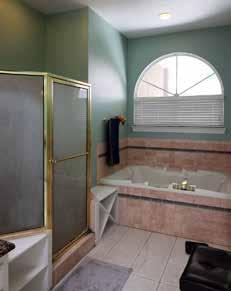
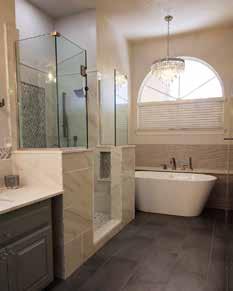
Let’s bring your vision to life! We believe that all successful Albuquerque bathroom remodeling and restoration projects are a combination of planning, communication, and execution. Since 1989, we strive on building trustworthy relationships with our clients from start to finish.
Are you ready for a new look, or just wanting to freshen up what you already have? Schedule a FREE estimate with Yourson Construction now!



The Happy Cat Hotel in Albuquerque is not “cat boarding,” but rather a full-service cat care experience featuring individually themed premium hotel rooms, full-day enrichment activities, a variety of thoughtful amenities, and full-service grooming. But don’t take our word for it… Check out our reviews and come take a tour! (505) 333-9868 | 3900 SAN MATEO BLVD NE | ALBUQUERQUE, NM 87110









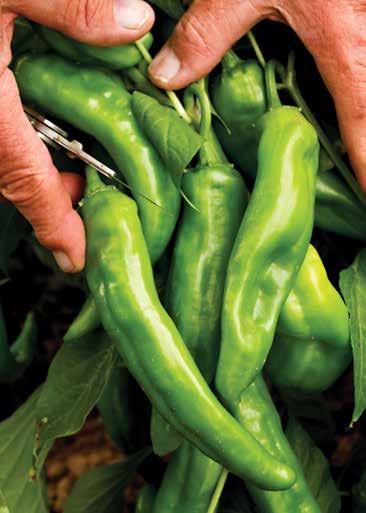
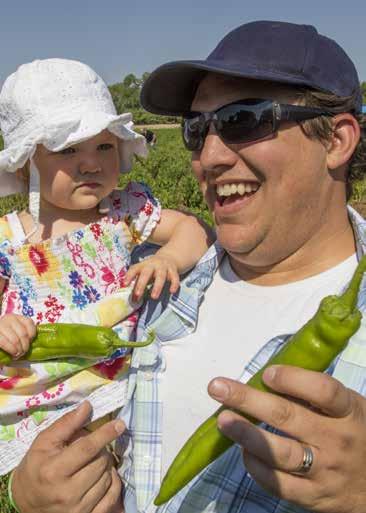
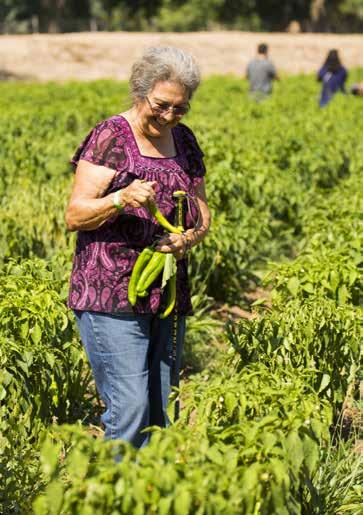
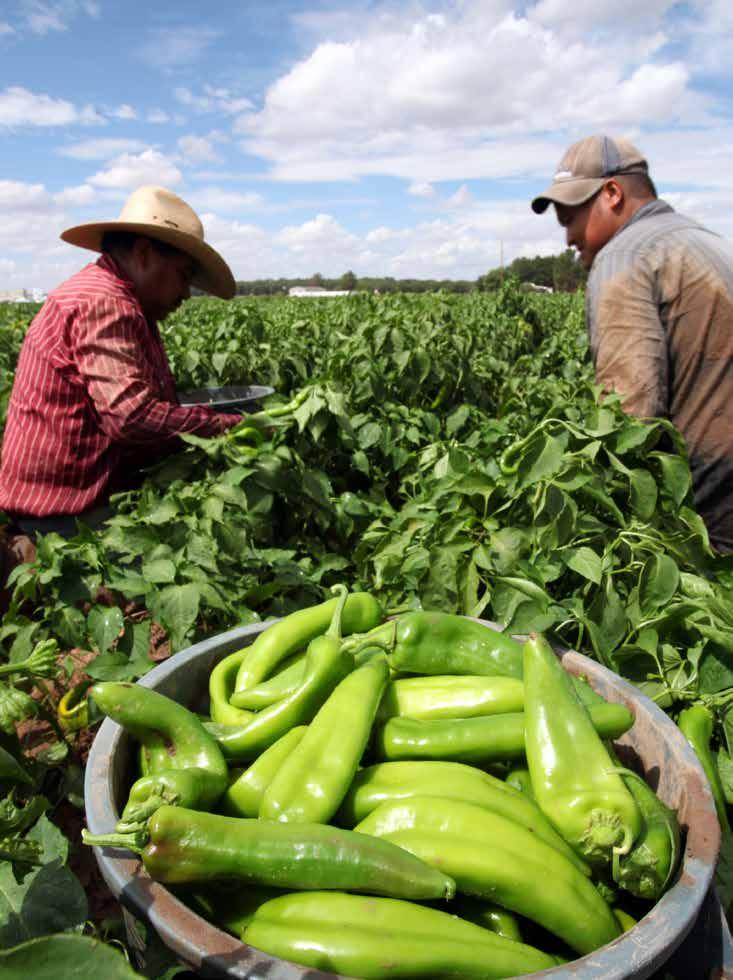
In Hatch, New Mexico, chile is more than something on your plate; it is woven into the people, the culture, and the rhythm of daily life. It has cultivated not just crops, but an identity: an unspoken understanding of how chile should be grown, roasted, shared, and revered. Across the state, one familiar question echoes from restaurant tables and kitchen counters alike: Red, green, or Christmas? In and around Hatch, it’s less a question of preference and more a declaration of heritage.
Judy Berridge is a direct descendant of Joseph Franzoy, widely regarded as the original Hatch chile farmer in the Hatch Valley. In 1905, Judy’s grandparents immigrated from Austria to the United States, eventually settling in New Mexico. Like many early settlers, they cleared land by hand and laid the groundwork for what would become one of the most celebrated agricultural traditions in the region. Judy carries on this tradition today with her own farm, and through her grandson, Preston Mitchell, who started the Hatch Chile Store by selling Hatch chiles in his free time in high school.
“I'm a farm girl through and through,” Judy said. “And I'm proud of my history of being a farm girl here, and I'm proud of my grandson. That was our start by hauling our chiles up to Santa Fe [to sell].”
Her grandson, Preston, started selling chiles at a young age, and then developed a whole online storefront to get them shipped fresh across the country, so the tradition of chile roasting could be shared. “It's like a 100-year-old business that he's carrying on, and that means the world to me,” Judy said. “I'm very proud of him, and I'm proud of all of the descendants that still want to be farmers and are still making a successful living at it. It's harder in this day and age to not sell out to the big companies.”
The foundation of Hatch chile farming, like so many enduring legacies, began with a dream. Judy’s grandfather came to America with a singular goal: to own land and build a farm of his own. When Judy’s grandfather first tasted chile, he thought he had been poisoned, shocked by the intensity of the heat. But something about that experience stayed with him. Having never encountered chile before arriving in New Mexico, that initial moment of surprise soon turned into fascination and ultimately, devotion. From that first fiery bite forward, he never looked back, helping shape a tradition that continues to define Hatch and its people today.
“I think the identity of New Mexico is ingrained in the farming community,” Judy said. “I realize the town of Hatch has a lot of other things going for it, but really, being the market of the Hatch chile is what made the area what it is today. I don't think it would have succeeded after different floods, if it hadn't been for the continuation of the farmers in this valley.”
According to Judy, the land and valley in the Hatch region is unlike any other, and give a certain terroir of the land to the specific taste of chiles. This is why they are so adamant that Hatch chiles should be grown only in Hatch, and why they are the best chiles on Earth.
The land in the Hatch Valley used to be covered by water until it was eventually dammed and irrigated. Because of this, the soil carries all those nutrients from once being covered in an aquascape, with a whole ecosystem thriving on top of it, lending to its own natural fertilizers. Then add the beautiful climate of New Mexico into it, with its 300 days of sunshine, it’s hard for chiles not to thrive.
Pam Rowell is the Marketing Director of The Hatch Chile Store and has witnessed firsthand how chiles are ingrained in the New Mexican way of life. “Hatch chile is kind of like a cult, and it has a cult following,” Rowell
CONTINUED >
“I think the identity of New Mexico is ingrained in the farming community.”
“It’s the spice. It’s the tradition. It’s sitting around the table. That’s when you think about New Mexico and its food, and that’s around the table with your friends and your loved ones.”
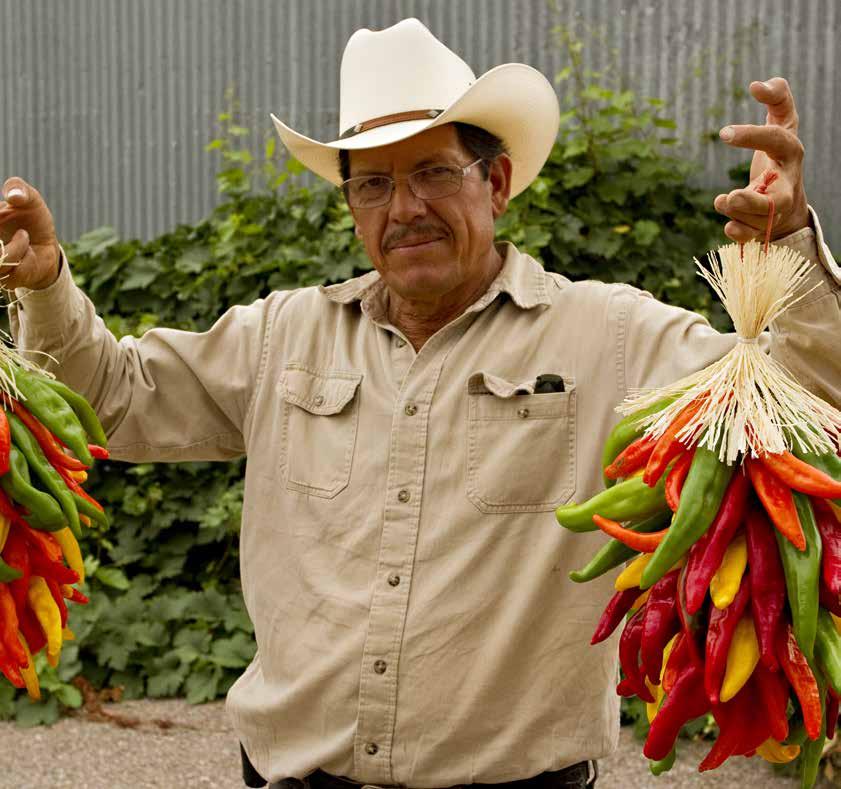
said. “If you've ever been through Hatch and tried Hatch chile, or if you've lived in New Mexico and you experienced Hatch chile, it just becomes part of you, and you have to have it.”
Hatch chile is also rooted in tradition, and the tradition of getting together with your friends to roast it is also a huge part of what makes it so special to New Mexico.
“It’s the spice. It’s the tradition. It's sitting around the table,” Rowell said. “That's when you think about New Mexico and its food; and that's around the table with your friends and your loved ones.”
If Hatch chiles have any representation of New Mexico, it’s that they like it a little spicy around here, especially in the Hatch Valley. Chiles are a part of everyday life and usually on the table in all different shapes and forms.
“I have a plaque on my kitchen wall that says, ‘Give us this day our daily chile,’” Judy said. “And that's pretty much the way it is.”
CONTINUED >

“HATCH CHILE IS ALSO ROOTED IN TRADITION, AND THE TRADITION OF GETTING TOGETHER WITH YOUR FRIENDS TO ROAST IT IS ALSO A HUGE PART OF WHAT MAKES IT SO SPECIAL TO NEW MEXICO.”










ARTICLE BY ANGELA BROOCKERD
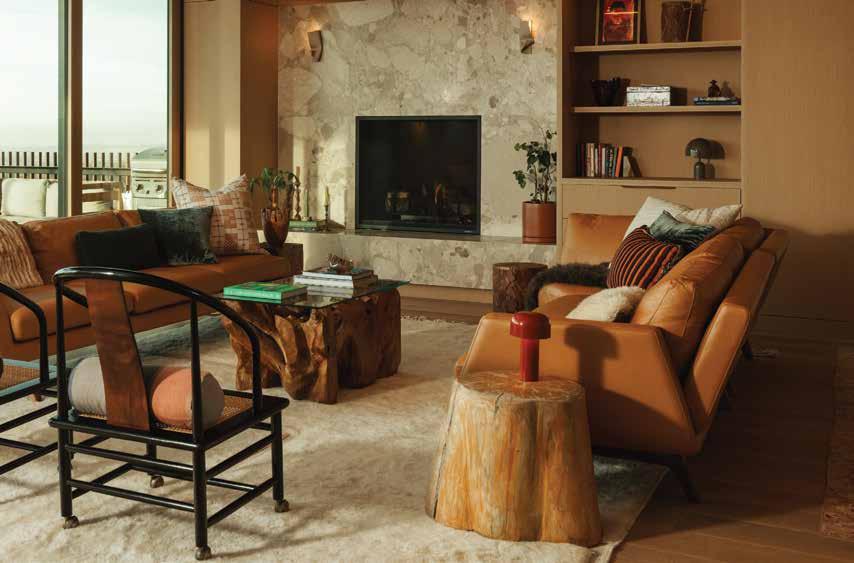
There’s a certain moment when a house stops feeling new and starts feeling like home. It isn’t marked by square footage or finishes alone. It is something quieter, more emotional. In this home, designer Kate Manz set out to do exactly that: give a newly built home a heartbeat and a soul.
Rather than treating the house as one sweeping statement, she approached each room as its own story, layered with meaning, memory, and texture. The result is a home that feels collected, personal, and deeply lived-in.
“Tackling each space and room as its own story and concept is how to make a new space feel personal,” Manz explains. “But bringing it all together cohesively is always the challenge.”
Her solution? Warmth, intention, and a strong belief in the power of people. In new builds it can take years for a home to shed its newness. For this project, the goal was to fast-track that sense of belonging by layering in pieces with history and heart. Vintage market finds, local artists, and meaningful objects play a starring role throughout the home.
“My love for design goes hand in hand with the people and stories that bring it to life,” she says. “I absolutely love seeing the evolution from concept to completion and all the elements and people that help bring those ideas to reality.”
That philosophy becomes especially important in the home’s expansive open-concept living area, where scale could easily overpower intimacy.
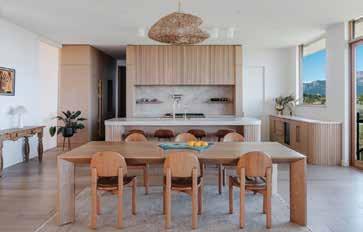
The entryway sets the tone with a simple but powerful goal: Welcome to my home.
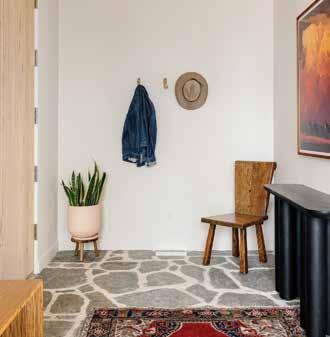
Natural stone underfoot grounds the space, while a soft vintage rug and living greenery immediately soften the experience. Art with personal meaning invites guests to linger rather than rush through.
MATERIALS:
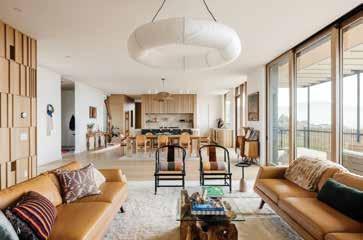
Santa and Cole Tekió Light, Vintage Rainer Draumiller Chairs, American Leather custom couch in Bison Butterscotch, Flos Bellhop lamp, BZippy Vase, Plush Moroccan rug
DESIGN TAKEAWAY:
In large rooms, architectural details like niches, built-ins, or material changes can create visual rhythm while giving meaningful objects a true home.
The main living space is defined by bringing the outside in with sweeping outdoor views and generous proportions. Rather than fighting that openness, embrace it.
“The big open concept room really highlights the expansive outdoor views,” she says, “but making intimate spaces within that open room was really important.”
A layered niche wall, created in collaboration with the interior architect Nick Flower, brings both structure and softness to the room. It introduces texture, depth, and a place for unique objects and family heirlooms to live, turning negative space into a personal gallery.
MATERIALS:
Luca split stone pavers, Vintage Turkish rug, Plants, Virginia Sin Wall hook
DESIGN TAKEAWAY:
An entryway doesn’t need to be loud to be memorable. Combine tactile materials with one or two meaningful elements to create an instant emotional connection.




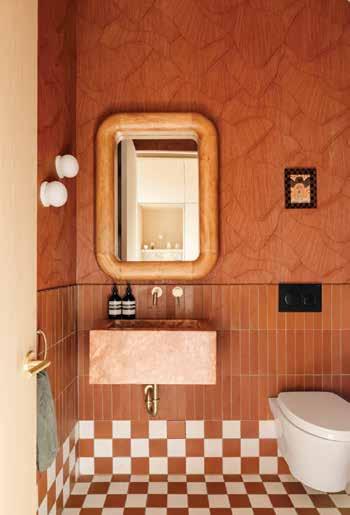
If there’s one place Manz encourages clients to take risks, it’s the powder room. Here, she leaned into terracotta earth tones, layering textures and tile sizes for visual interest and warmth. Patterned and solid tiles work together, while textured wall coverings and a sculptural stone sink elevate the space from functional to delightful.
MATERIALS:
Particular Tile in Satin Terracotta and Vanilla Bean, Arté Wallcovering Shards in Brick Red, Red travertine sink, Rachel Donath chunky mirror, Playful art work by Olivia Fields
DESIGN TAKEAWAY:
Small spaces are ideal for experimentation. Mix patterns, finishes, and textures within a tight color family to create depth without overwhelm.
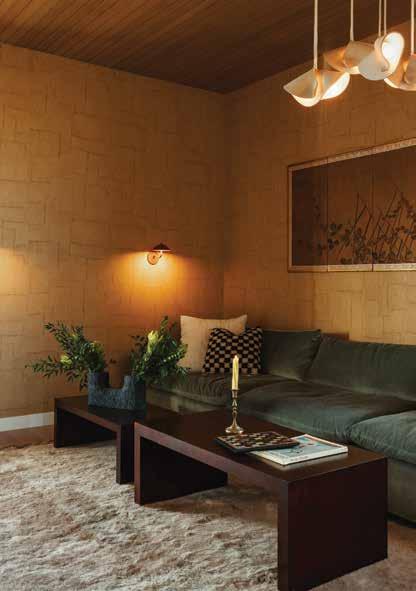
Designed as a counterpoint to the openness of the main living area, the lounge is a cocoon, both peaceful, layered, and deeply versatile. It’s a place for reading, movie nights and slow mornings. Rich tones and varied textures do the heavy lifting here, creating depth without heaviness. Soft lighting and custom upholstery make the room feel both intentional and effortless.
MATERIALS:
Virginia Sin pendant light, In Common With sconce, Arté Oblong wall covering in Ochre, Particular Tile in Vapor, Custom sage velvet sofa, Plush Vintage Moroccan rug
DESIGN TAKEAWAY:
When a room serves many purposes, let texture and tone create cohesion. A restrained palette with varied finishes keeps the space flexible and serene.
At its core, this home is a reminder that design isn’t about perfection, but rather it’s about feeling. By treating each room as its own narrative while weaving in warmth, history, and human connection, a space was created that already feels loved.
PROJECT CREDITS
Builder - Buildwell
Architect and Interior ArchitectFlower Architecture
Designer - Kate Manz


ARTICLE BY RHIANNON JOHNSON
Find inspiration in these four gorgeous books.
It takes a lot of work to make a house a home. A home reflects your personal style, functions to meet your goals, and provides relief from the outside world. However, unless you are a design professional, you likely need a bit of guidance to turn your thoughts and ideas into reality. One way is to immerse yourself in the advice and visions of award-winning architects and designers.
Flip through the gorgeous, glossy, photo-filled pages of these beautiful books and apply their lessons to your own home.
LEGEND ON LAKE COMO
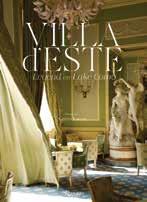
In 1568 Tolomeo Gallio commissioned a grand villa overlooking Italy’s magnificent Lake Como. After two centuries in the Gallio family, Villa d’Este became home to multiple members of the aristocracy before being transformed into an elegant five-star resort in 1873. After 150 years of catering to an endless array of famous guests wishing to immerse themselves in “la dolce vita,” Villa d’Este stands as an example of blending tradition and modernity to create absolute luxury.
THE ARCHITECTURE AND ADVOCACY OF JOHN AND JANE VOLK
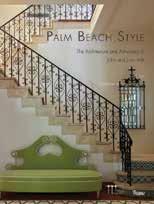
In the 1920s, American royalty wanted to establish a winter retreat and show off their newfound wealth. Building grand homes inspired by European palaces, they created one of the world’s most famous resort towns. Commissioned to design over 2,000 projects during his sixty years of practice, John Volk’s legacy as one of the “big five” architects of Palm Beach, can now be seen on almost every street.
Learn how to integrate elegant timelessness, celebrate bold colors and eclectic patterns, or embrace the past while living stylishly in the present.
Whether you’re building a new home, planning a renovation, or your home is simply a constant work in progress, these four new releases are sure to provide the inspiration you need to transition your house into your dream home—whatever that may look like and wherever that may be. Enjoy!

THE RESIDENTIALARCHITECTURE OF D. STANLEY DIXON
Atlanta-based architect Stan Dixon has received tremendous media attention since the founding of his firm D. Stanley Dixon Architect, Inc. in 2006. His highly-anticipated debut book showcases thirteen projects from across the country. From a relaxed Jupiter Island coastal retreat to an elegant English-manorinspired South Carolina home, each project varies geographically and stylistically, highlighting a variety of different aesthetic components.
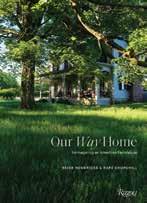
REIMAGINING AN AMERICAN FARMHOUSE
The defined style of cozy and simple living has led to a rise in American farmhouse design in recent years. Interior designer Heide Hendricks and architect-builder Rafe Churchill show how they have brought twenty-first-century living to their late nineteenth-century New England farmhouse. This husband-and-wife team combined their talents to create a historic home that is both a personal retreat designed for everyday life and a constant source of inspiration for their other projects.







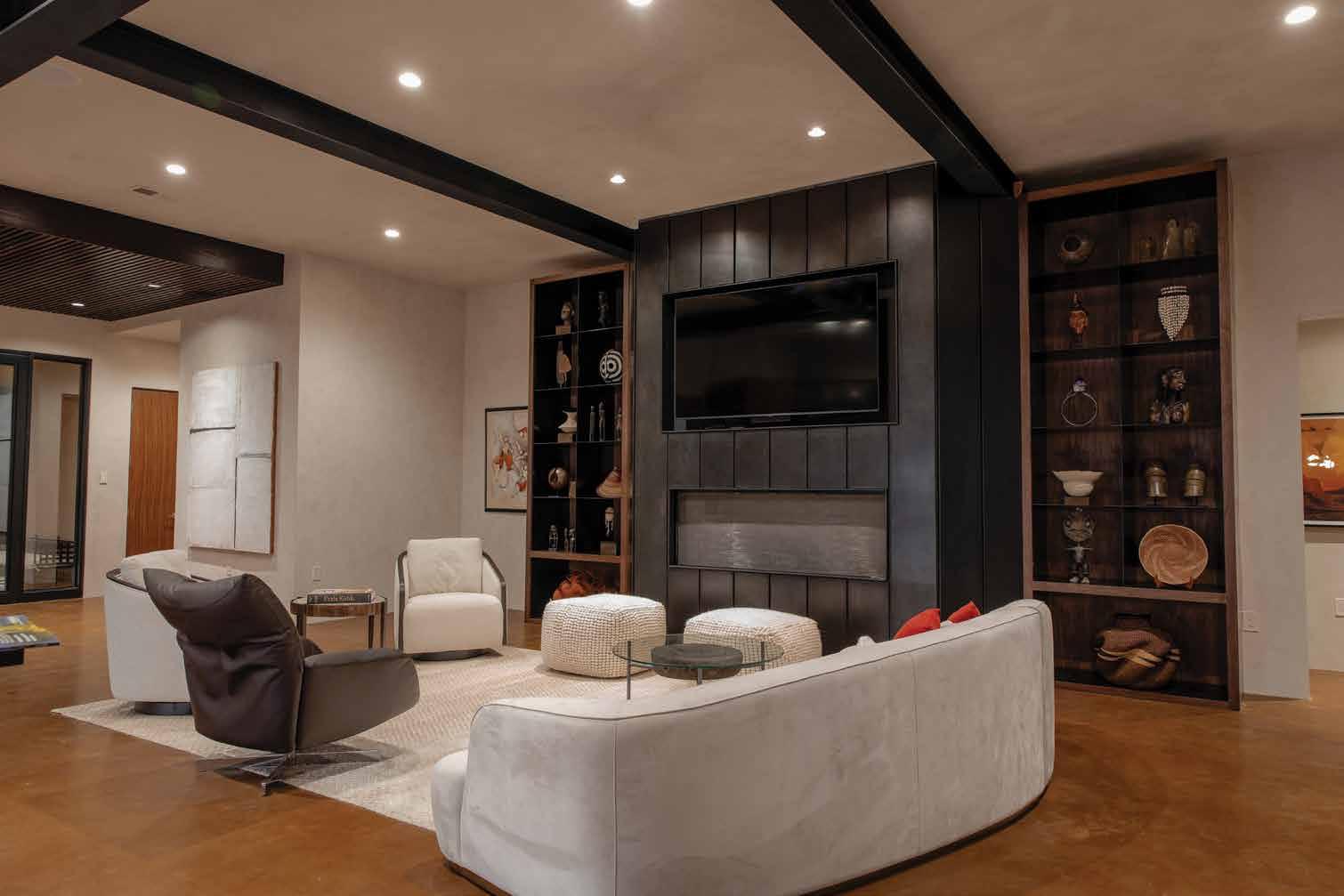

DESIGN-FOCUSED METALWORK THAT ELEVATES YOUR SPACE. fireplaces • doors • cabinets • hoods • furniture • railing






in
fraud. A Large majority attributed to staged auto accidents causing property damage, and costly medical bills. Don’t be a victim of insurance fraud, come to Accessories Unlimited to have us install a Garmin Dash Cam Tandem. A pocket size dash camera features two 180-degree field of view lenses that record in tandem. View footage from your smartphone, add an optional parking mode that records motion in front and inside the car when parked and unattended. Give yourself peace of mind that you won’t become a victim of fraud.








The new AMP PowerStep™ Vision represents the latest and greatest in PowerStep™ technology by combining the ease and convenience of a power retracting step with built-in full-length lighting. During regular step operation, AMP PowerStep™ Vision provides effective ground illumination only to transform to customizable accent lighting anytime. Step up with ease and confidence with AMP PowerSteps from Accessories Unlimited.
www.accessoriesunlimited.com 505-888-5811 2322 Candelaria Rd NE, Albuquerque, NM




C. Nathaniel Roybal, MD PhD is a vitreoretinal surgeon and native New Mexican who specializes in treating complex retinal disease. He and his team of specialists aim to provide timely, world-class surgical and medical retinal care to the people of New Mexico. Don’t let retinal disease rob you or a loved one of vision. Come visit our team so that we can work together to preserve and restore your vision.
ARTICLE BY SHANNON ROBERTS
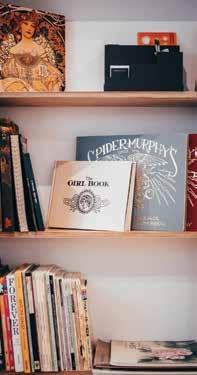
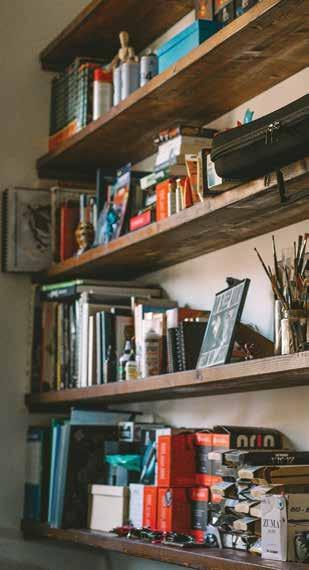
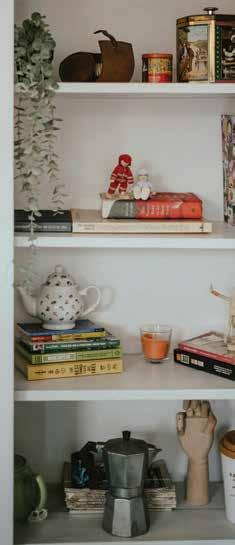
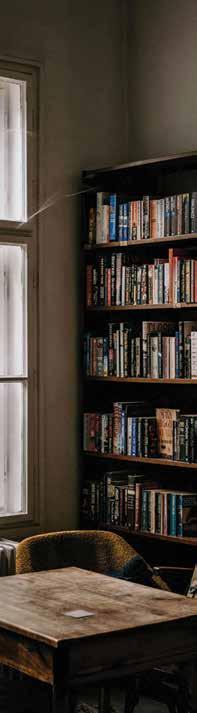
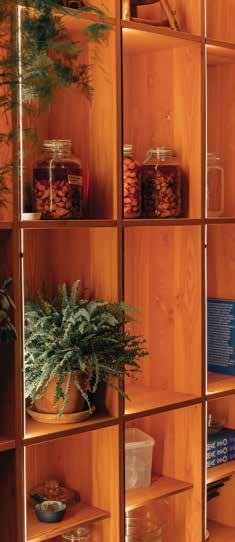
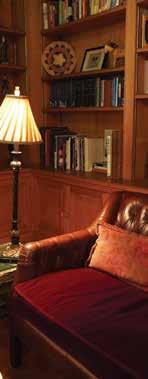
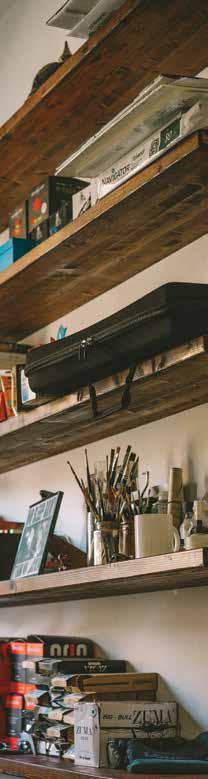
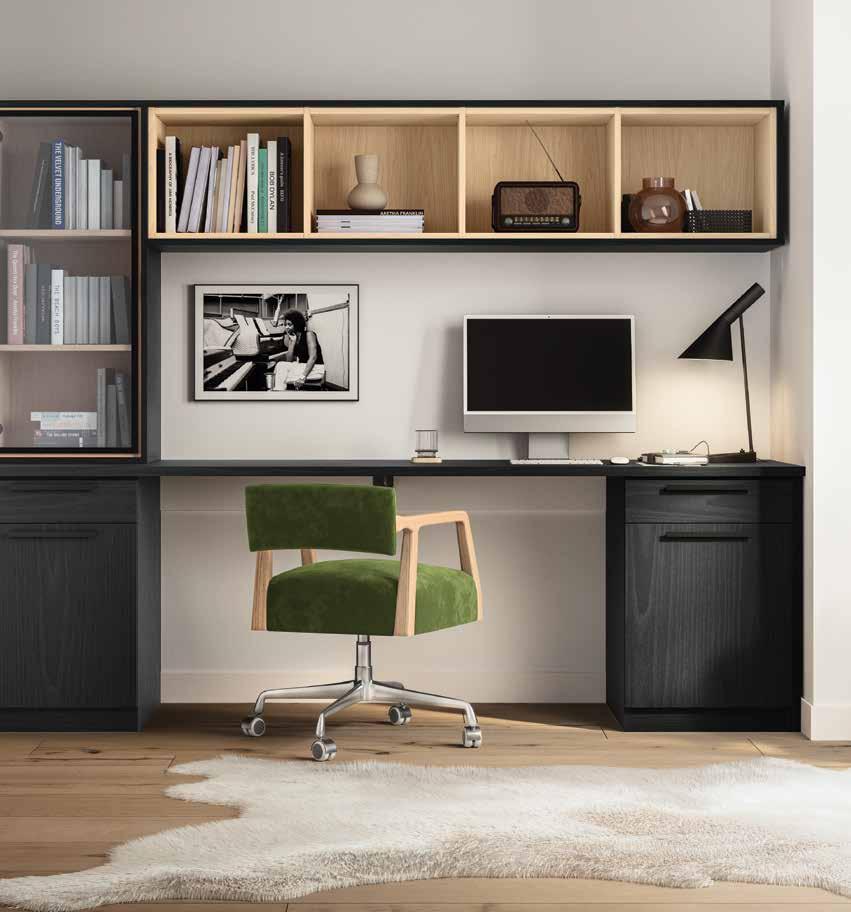
A bookcase is often more than just a storage unit for books; it’s a focal point of a room that can enhance the overall decor and reflect personal style. Styling a bookcase can be a rewarding endeavor, allowing you to showcase your literary collection and curate a space that feels inviting and visually appealing. Here are some tips to help you achieve a beautifully styled bookcase.
Styling a bookcase is a creative process that combines practicality with aesthetics. By using these tips, you can transform an ordinary bookshelf into a stylish, engaging focal point that complements your home’s decor while showcasing your personality and interests.
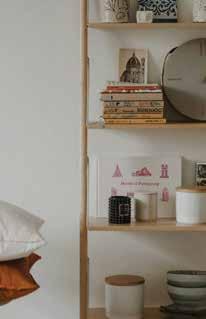
Strategically Place Books on the Bookcase While Incorporating Decorative Elements.
When placing books back on the shelves, think about the arrangement, vertical stacks are more traditional, horizontal stacks more modern, or both for more visual interest. Adding decorative elements such as picture frames, vases, or sculptural objects to break the monotony. Incorporating items with varying heights can create a dynamic arrangement. Use larger items like art pieces or baskets on lower shelves and smaller decorative objects higher up. Aim for a balanced look while avoiding perfect symmetry. This creates an organic flow, drawing the eye naturally across the shelf. Incorporate asymmetrical groupings for added interest, mixing textures, colors, and shapes.

Use Color Wisely and Add Natural Elements.
Color plays a role in styling a bookcase. You can opt for a monochromatic palette for a sophisticated look or introduce pops of color for a more energetic vibe. If your books are of various colors, pick a few colorful decorative pieces that complement or contrast them effectively. Integrating plants or natural elements can breathe life into your bookcase. Small potted plants can add color and texture.
Create Zones and Add Personal Touches.
If your bookcase has multiple shelves, consider creating zones or themes for different sections. Infuse your personality into the bookcase through memorabilia, travel souvenirs, or personal artwork. These pieces add a storytelling dimension and make the space uniquely yours.


Locally owned. Locally loved. Visit us today.

Locally owned since 1945, Harris Jewelers is New Mexico’s award‑winning destination for custom design, expert jewelry restoration, professional appraisals, hand‑selected Antwerp diamonds, and a showroom filled with brilliance. Discover why generations of locals trust us with their most meaningful moments.

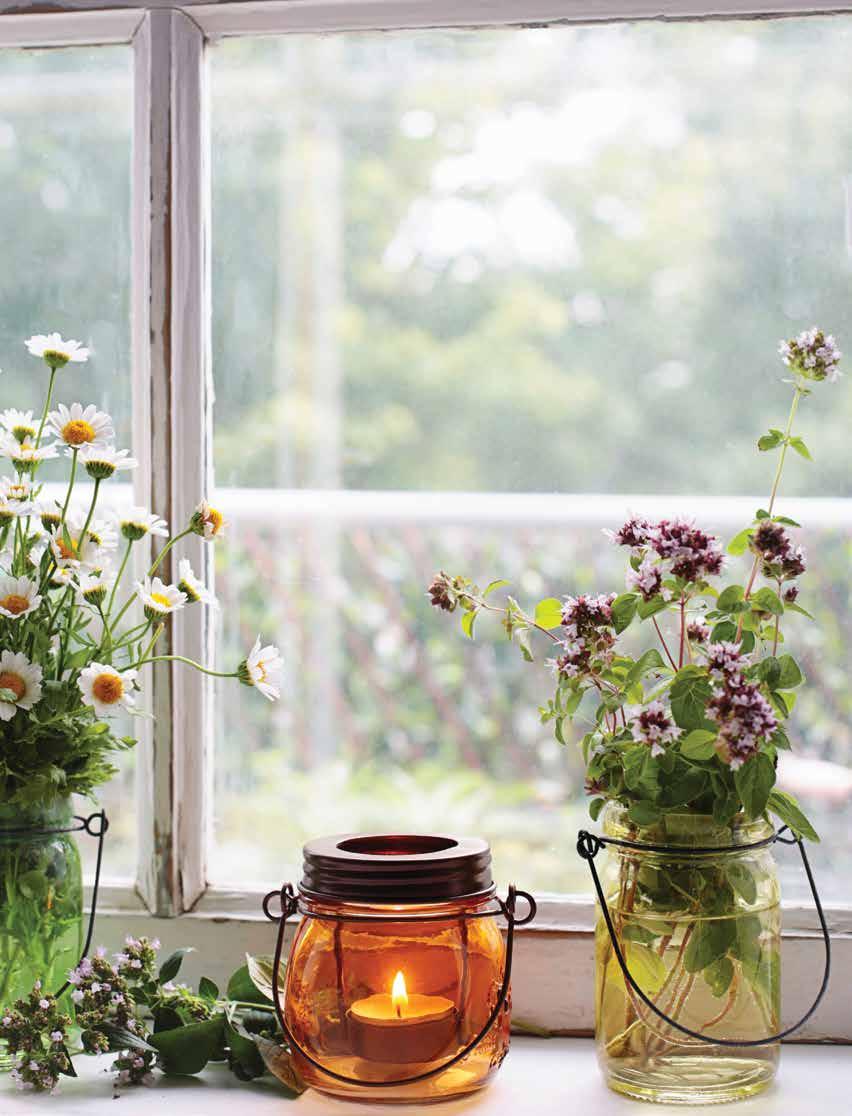
There’s something about this fresh, ethereal feeling that not only melts away the last traces of winter but also sparks a quiet urge to refresh our surroundings. The cupboards that need decluttering, the baseboards that have gone untouched for months, the unworn clothes that no longer serve us—it all calls for renewal. This is the essence of spring cleaning: clearing out the old to make space for the new, both in our homes and in our minds.
For some, the idea of cleaning feels anything but peaceful. The thought of tackling clutter and dust can be overwhelming, turning what should be a refreshing transition into a dreaded chore. That’s why we’ve created a simple, practical guide to help you navigate spring cleaning with ease, turning it into a rhythmic, intentional process that mirrors the calm of the season itself.
Week 1: Refresh and Declutter
• Open windows for fresh air and let the natural light in.
• Declutter surfaces—countertops, coffee tables and shelves—removing anything unnecessary.
• Go through kitchen cabinets and toss expired pantry items and mismatched containers.
• Sort through closets, donating or repurposing clothes you haven’t worn in the past year.
• Wipe down baseboards and dust ceiling fans, light fixtures and vents.
Week 2: Deep Clean and Rejuvenate
• Wash windows and mirrors to welcome in the sunlight.
• Deep clean the fridge and pantry, wiping down shelves and organizing items.
• Launder curtains, cushion covers and throw blankets.
• Vacuum and shampoo rugs and carpets for a fresh start.
• Rotate and flip mattresses; wash all bedding, including pillows.
Week 3: Outdoor and Seasonal Transitions
• Sweep porches, patios and outdoor furniture, preparing for warm-weather gatherings.
• Check gutters and downspouts to ensure proper drainage.
• Tidy up gardens and potted plants, removing dead leaves and refreshing the soil.
• Store winter coats and boots, making space for lighter spring essentials.
• Replace seasonal decor—bring in fresh flowers, soft pastels and airy textures.
• Touch-up scuff marks on walls and doors.
• Stock up on cleaning supplies to maintain a fresh environment.
• Set a simple weekly cleaning routine to keep your home feeling refreshed.
• Light a scented candle or diffuse essential oils to celebrate your clean, peaceful space.