March






March




“The best estate plans are the ones your family never has to struggle with.”

For families who want clarity, care, and confidence in their future.
Life is full of transitions—growing families, new homes, changing careers, or simply the desire to protect what matters most. Estate planning doesn’t have to feel complicated or intimidating.
As a firm with experience in estate planning, probate, trust administration and conservatorship matters, we create plans that are thoughtful, clear, and tailored to your life. Our goal is to help your family move forward with ease, knowing your wishes are honored and your a airs are secure.

Iusually don’t mind the winter months, but this year I was ready for a change. That 20-day stretch of heavy fog cured me of any desire to ever move to the Pacific Northwest. I realized pretty quickly that people’s seasonal depression is real, and that I had been taking our blue skies for granted.
Now that the sun is back and the days are longer, my perspective has shifted. I’m focused on gratitude for the basics, the things that are right in front of me but easily overlooked. I had a teacher who used to drill it into us to “wake up and smell the flowers.” That is exactly the mindset I’m taking into this season.
We wanted this issue to help you do the same. Whether it’s seeing the incredible work at the Woodlake Botanical Garden, checking out the talent of our local artists, or just finding a new spot for an afternoon picnic, there is plenty to appreciate right here in the Valley.
Enjoy the issue, and get out in that sunshine!


SAM JUSTICE
Co-founder | Root Creative Marketing
Creative Editor | Lifestyle Magazine

April March20252026

Stephanie Steelman EXECUTIVE EDITOR
William Yamauti GRAPHIC DESIGNER

Marissa Carpenter CONTENT EDITOR

Chelsi Stark EDITORIAL & ADVERTISING COORDINATOR

Sue Burns CONTRIBUTOR

Daniel Borgatto GRAPHIC DESIGNER

Terry Ommen HISTORIAN

Carly Vagim PHOTOGRAPHER
Have a story to share? From local makers to meaningful moments, we love collaborating with creatives who can capture our community. Scan the code and get in touch!
Dakota Jacobi-Stephenson PHOTOGRAPHER






With deep roots in the Central Valle y, our advisors are committed to helping you work toward your family wealth goals.
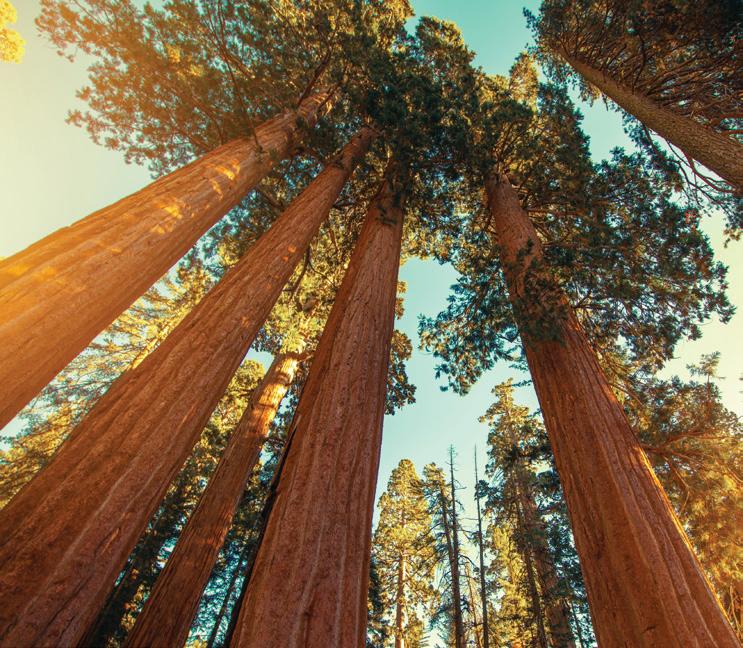
Just as the ancient sequoias stand strong through the seasons, the Gateway Family Wealth team brings steadfast commitment and thoughtful guidance to your multi-generational wealth planning needs.
We understand that family wealth is more than assets—it’s your values, your legacy, and your vision for the future. Our team develops comprehensive family wealth strategies designed to help address preservation while exploring opportunities aligned with your goals.
while working to identify pathways to new possibilities for your family’s future.
Begin your family’s journey


For those of us who have spent enough time in the Central Valley, we know how fleeting spring can be.
One moment our cities are hidden in a dense and chilling fog, and the next, we’re begging for a breeze.
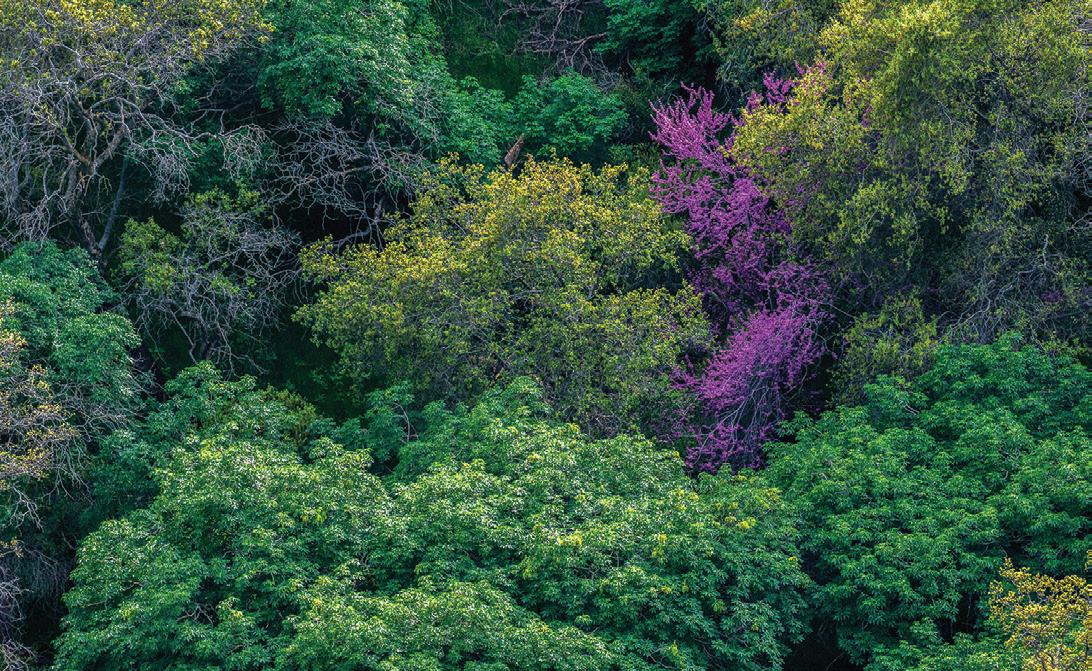
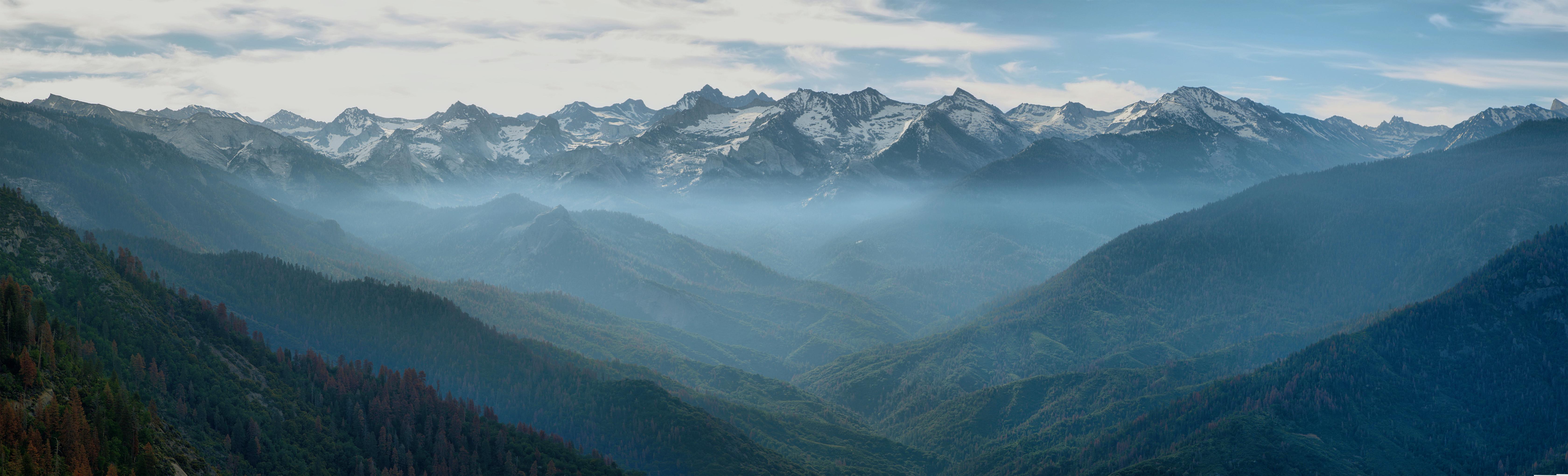
But, if you pay close enough attention, you’ll notice the subtle changes of March. The air loses its bite, and in floats a soft breeze, carrying the songs of the house finches and mourning doves. Before you know it, the hillsides are painted in greens and speckled with blossoms of color.
Spring is undeniably a season of natural beauty, and rightfully demands the attention of creative eyes. This month, we connected with three local artists to learn about their process and see how they frame the season in their own medium. Through their eyes, we discovered new ways of understanding how spring interacts with our landscape.
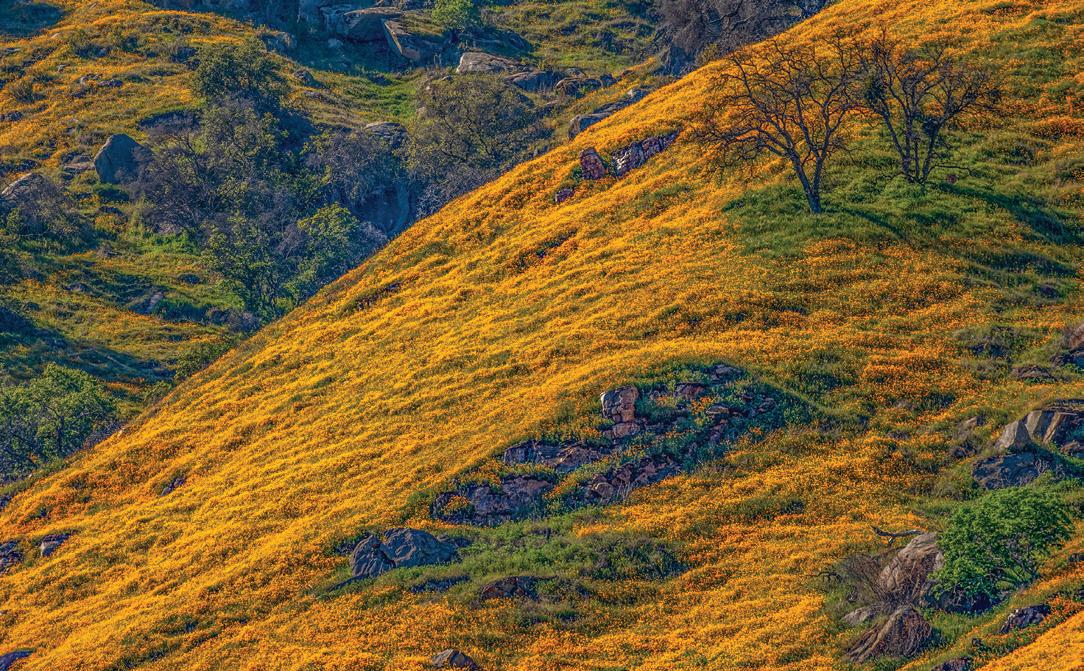
For Larry, a landscape isn't just a view, it's a composition. An architect by trade, Larry looks for the underlying structure of our local wild spaces.
Architects are trained to find order and structure in design. How does your background influence how you build a photograph?
Larry: “As an architect, I guess you can say it has influenced my photography, in both how I see things and in the field. When I design a home, I can visit an empty lot where this building is to be built and, in my mind, I see it on the lot. I can see a photographic opportunity and, also in my mind, I visualize what the photograph will look like when I finish it.”
Landscape photography is often a battle against the elements. Do you have a photograph you would consider a beautiful failure?
“I’ve had failures, sure. What photographer hasn’t? Never because of the weather. Only because I screwed up in my camera settings or timing. Weather has never been a problem. It’s usually an asset. Some of the best photographs have been taken in the fog, i.e., lousy weather. You use what you have been given, and you use it to your advantage: you look for the beauty in all circumstances.”
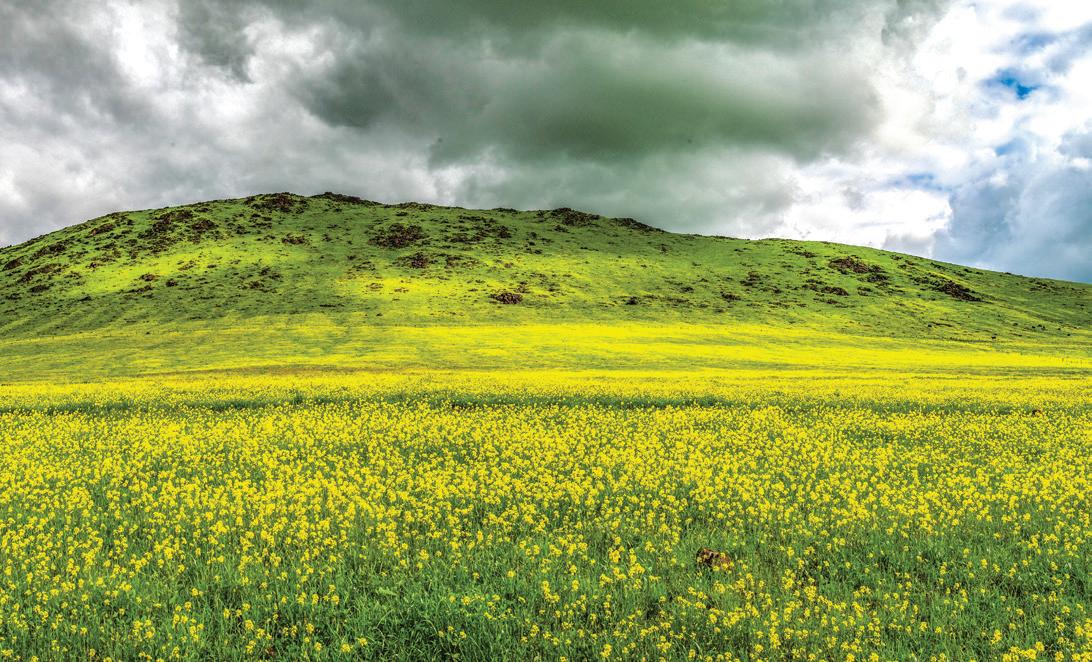
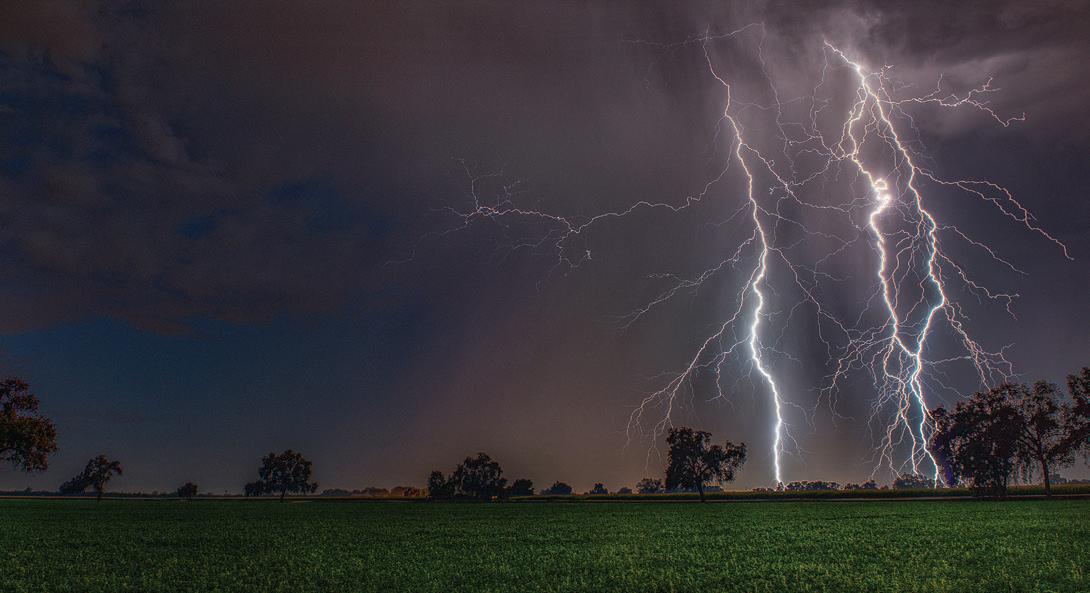
You’ve mentioned in an interview before that you have hiked the Sierra backcountry for over 60 years, and now share those trails with your grandkids. Do you find yourself looking for different subject matter when you have company in nature versus when you are alone?
“In my younger days, much of my back country trips were done alone. When I married, my wife and I made a deal: I do not head for the backcountry alone, and she does not take walks at night alone. So, for 50 years I’ve never packed in the Sierra, or anywhere else, alone. Did that change anything that affected how or what I photographed? Not really. I’ll still pause to remove my bag and bring out my camera to capture that shot and arrive in camp late.”
Speaking of your time hiking in the area, you must be pretty familiar with how the landscape changes each season. Is there a specific spot that you photograph every spring?
“Two of my favorite places to photograph locally are Dry Creek in the spring and Yokohl Valley Road at all times of the year. Conditions change constantly. I can photograph the same spot one day, and I go back just a few days later and the photograph will be totally different. Luckily, I’ve only come across two rattlesnakes.”
For our readers, where would you suggest a person visit to experience an ideal spring outing for photography?
“The safest, and in many ways the most beautiful, is the Blossom Trail, a drive up the Dry Creek Road or the Yokohl Valley Road.”
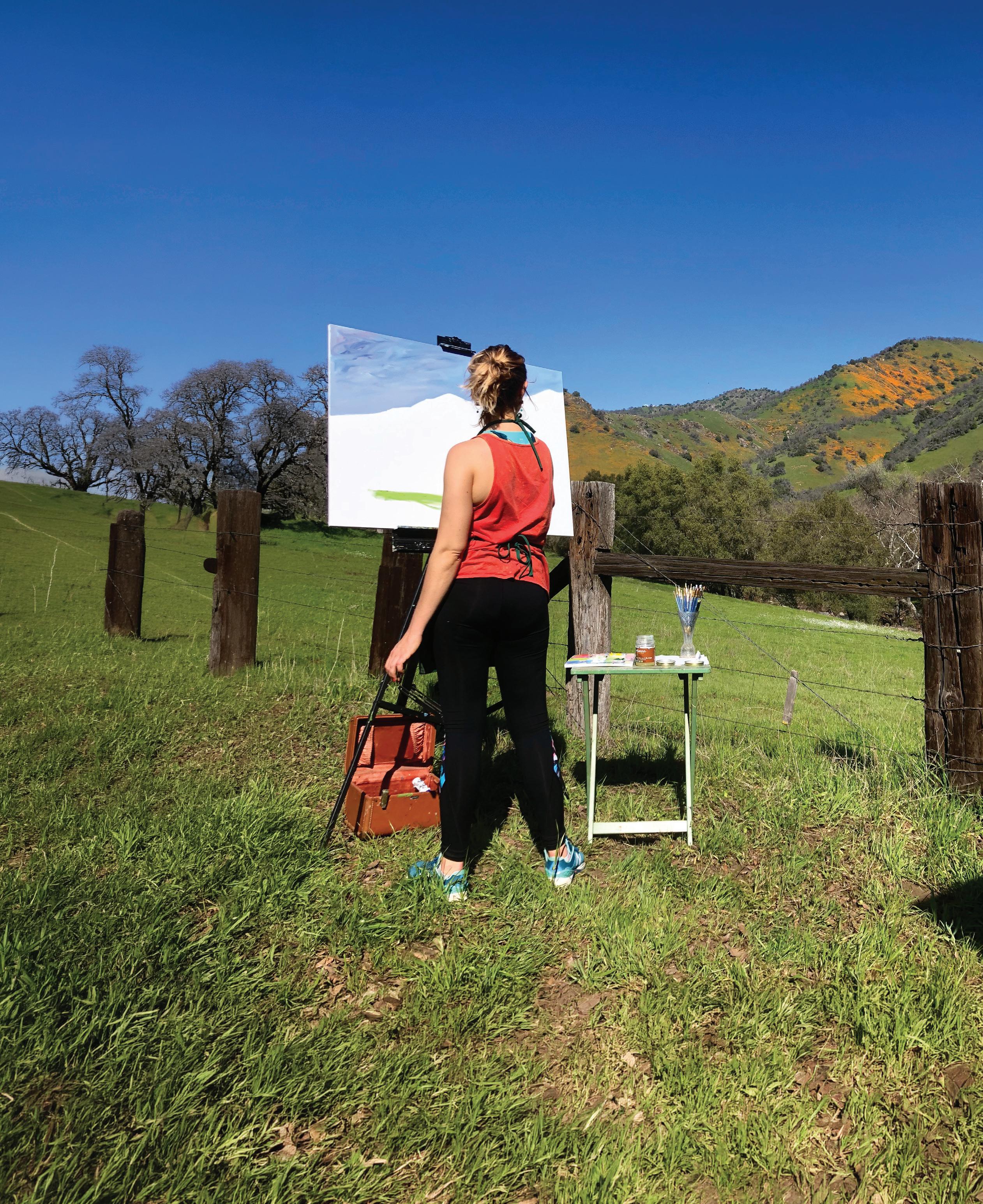
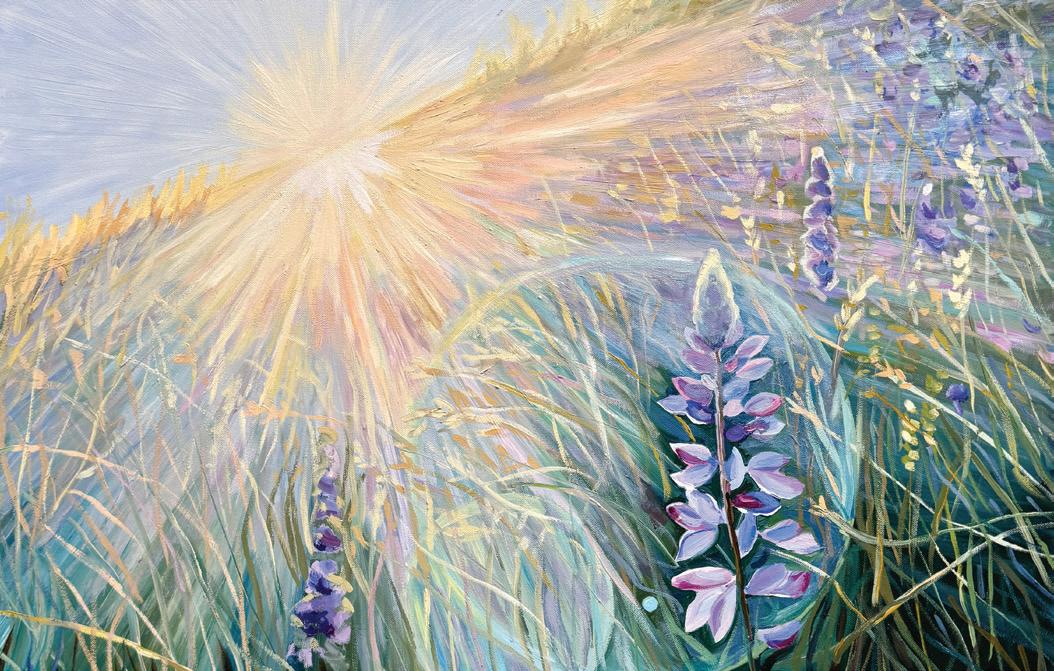
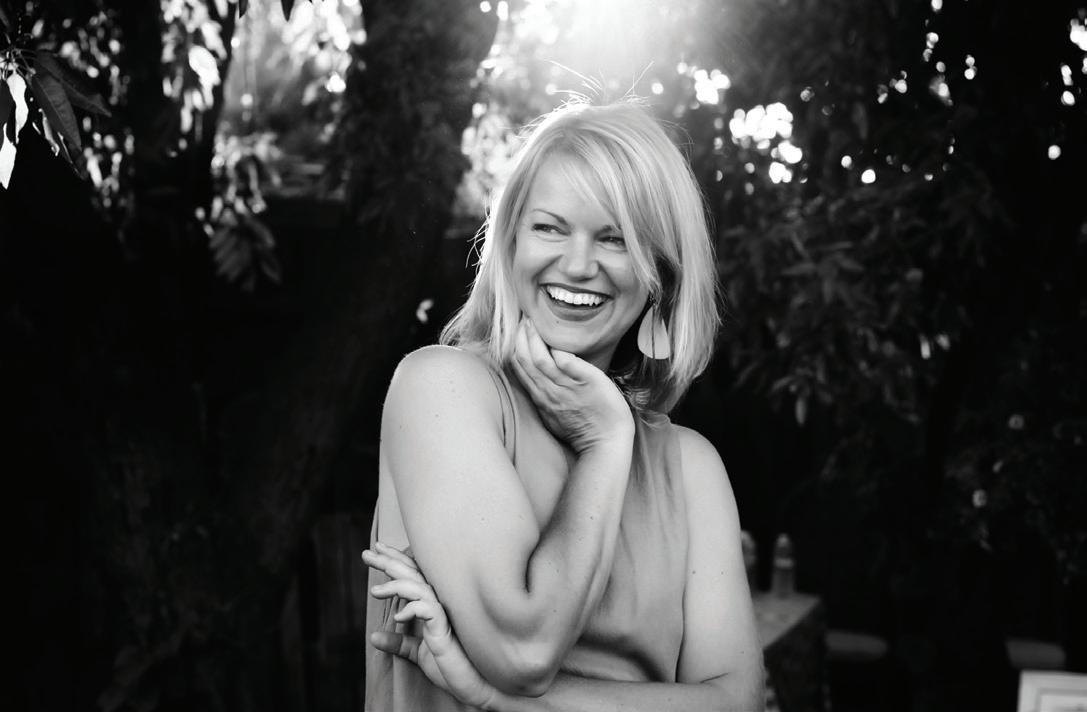
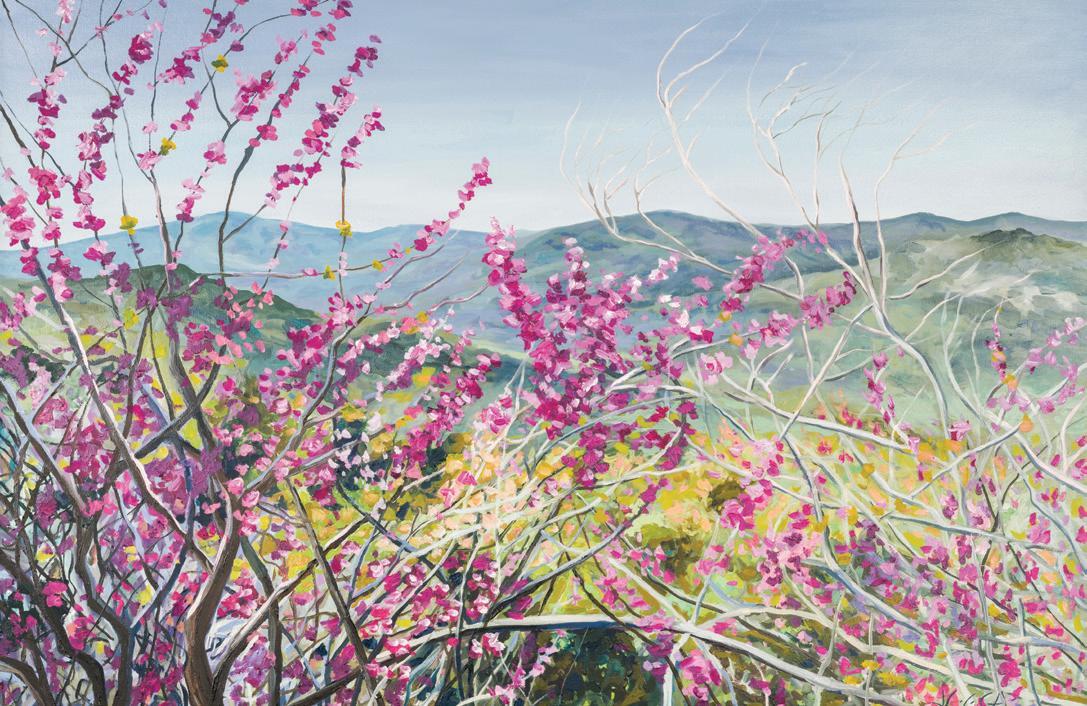
For Visalia native Heidi Steinman, spring is an explosion of light and texture. Working primarily in oils, Heidi captures the vibrancy of the season.
Heidi, you’ve seen many springs in the Valley. During this time of year, what aspects of our local landscape make you want to reach for your palette?
Heidi: “After a storm, the air is crisp, and the colors are more vibrant. Being able to see the snowcapped mountains, the rolling green foothills, and the wildflowers are some of my favorite aspects of our local landscape in the spring.”
Your recent work, such as the 'Light, As I See It' exhibition, explores the transformative power of light. How does the light of a spring day change the way you approach the colors and textures compared to other seasons?
“Spring usually brings with it a feeling of revival for me. After the cold dark winter, spring temperatures are especially inviting to be outside. The birds are always singing, and new spring colors emerge each day. There’s simply more color for me to work with. I’m always full of inspiration in the spring.”
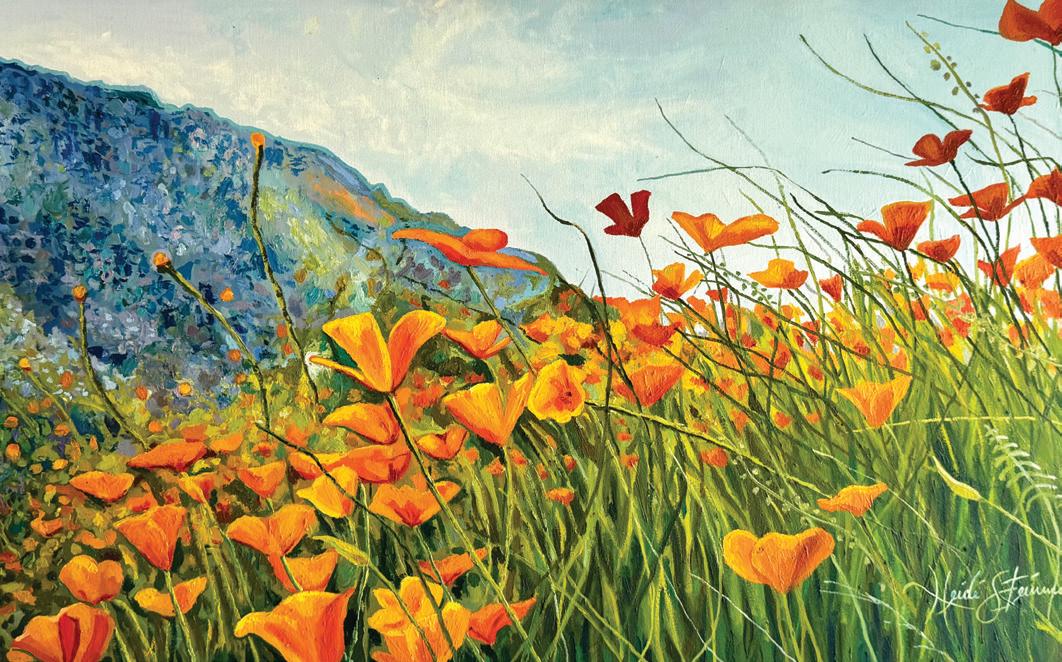
Spring in Visalia is famously beautiful but short-lived. Since oil painting can be such a slow, deliberate process, what makes something stand out as a subject for a potential painting?
“I love to be outside and move my body. I go on jogs in the foothills and hikes in the mountains. And I am constantly stopping to take pictures whenever something in nature captivates my attention. I usually end up picking a subject to paint because I can’t get it off of my mind. I’ll become obsessed with wanting to linger in a specific moment to observe and capture all the details that captivate me. I’ll work either from a photograph or from real life if I can.”
For readers who want to experience the beauty you paint, do you have a favorite local trail or spot in the area where spring feels most vivid to you?
“I was born and raised in Visalia, but I recently moved 30 minutes away to the foothills of Elderwood. There’s plenty of inspiration where I live that I could paint and paint and paint. But I also gather inspiration from going on walks, jogs, and drives around Rocky Hill, Yokohl Valley, Kaweah Oaks Preserve, Dry Creek Road, Three Rivers, Sequoia National Park, Mineral King… Trails that I often frequent are Skyline drive, Marble Falls, The Lakes trails, Alta Peak, Morrow Rock, Tokapah Falls, Weaver Lake, Big Meadows, Monarch Lake, Whitechief, Franklin Lake. (Just to name a few.)”
For Matthew, art is as much about science and history as it is about creativity. Matthew doesn’t simply draw the land; he maps it.
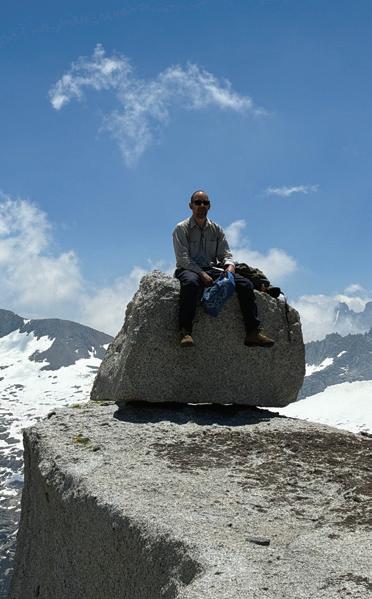
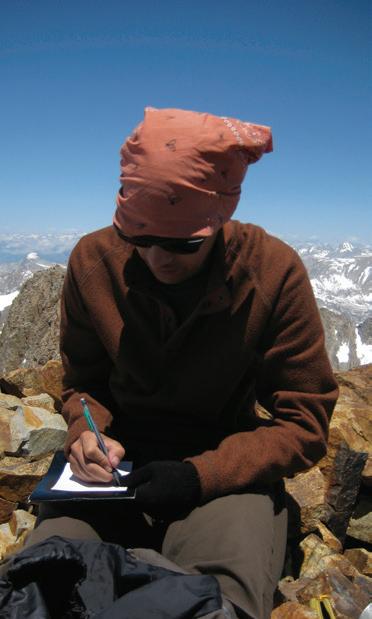
As a young artist, Matthew often visited the local foothills, wanting to capture the mountaintops ahead. One day, he sat on a boulder and peered at the far away landscape. Looking through his binoculars, he did his best to draw the view. During a later conversation with a park ranger, Matthew learned that he was likely viewing the Kaweah Peaks. “It was a completely different view to what I was looking at,” Matthew told us. “I had to decipher the visually encoded language of the map and look for similarities in my own drawing.” At that moment, he thought, “I can go there, how do I get there?” Thus began Matthew’s journey in developing the artistic style he practices today.
Over time, Matthew developed a love for backpacking, as it allowed him to step foot onto the faraway landscapes that caught his eye. He became drawn to the layers of knowledge that live in our geography. Much like the layers of printmaking, he began to see how each one impacted the next. So, he took up studying the indigenous groups and the settlers that lived here, their relationship with natural resources, the geology, and more. What began as curiosity, is now a “multilayer voice,” which Matthew credits to helping him feel like a “rich human being that understands the world around him.”
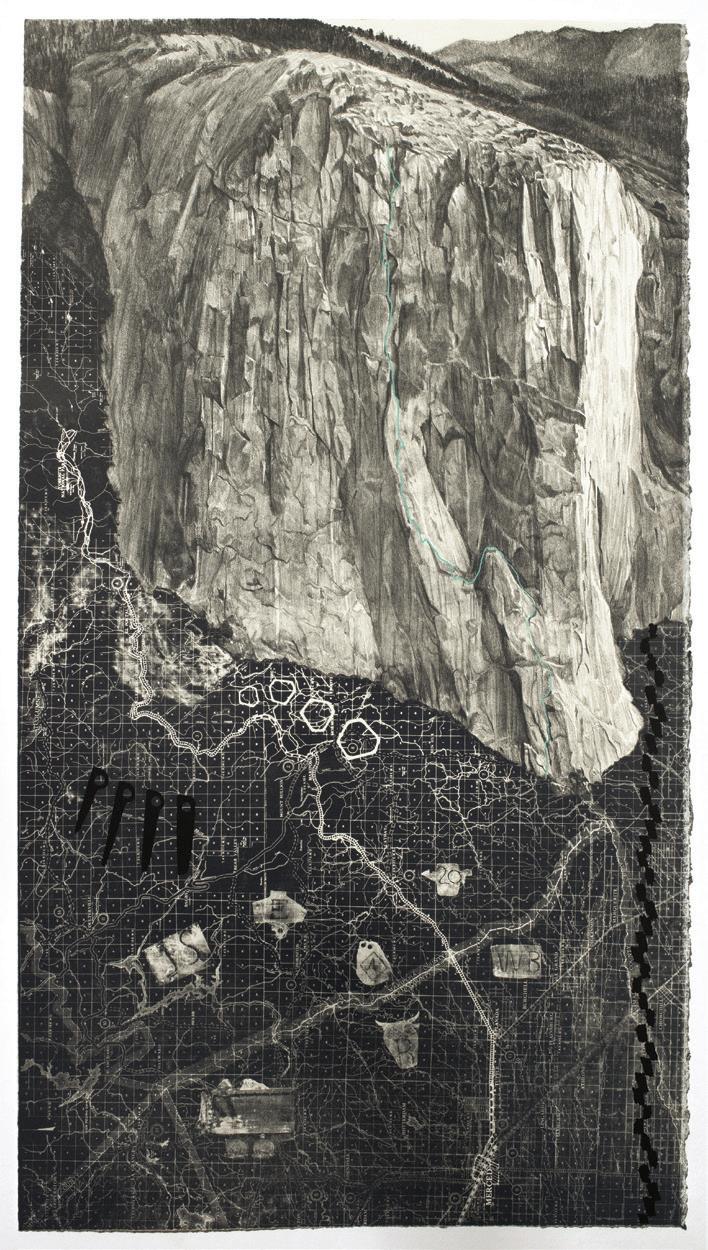
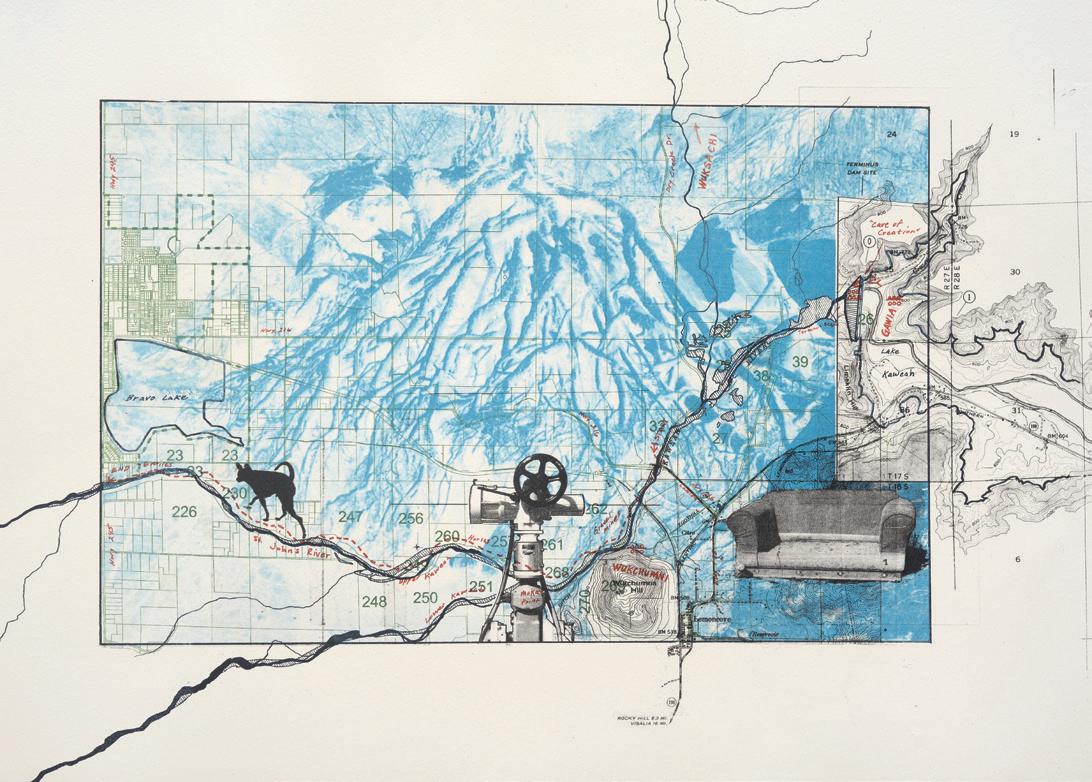
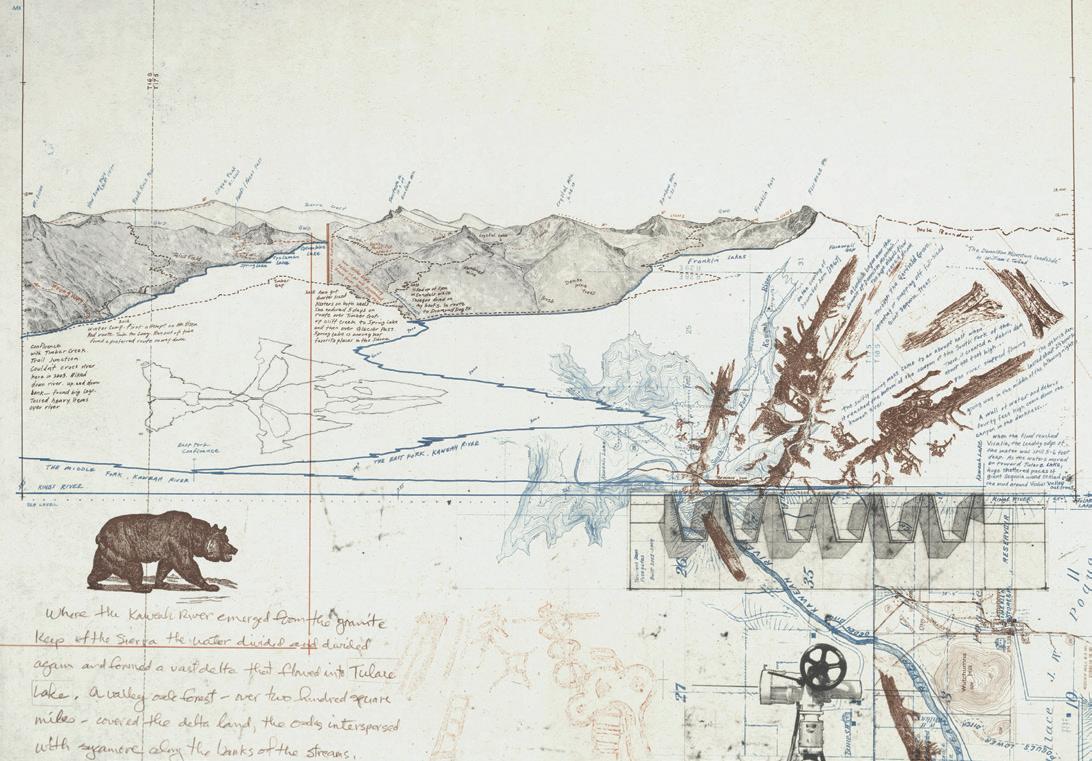
During our conversation, Matthew recounts discovering artifacts about the Central Valley's natural ecology that no longer exist, like the Tulare Lake. And while he is not particularly drawn to the blossoms or greenery of spring, he is inspired by the ever changing shapes and forms of our landscape. Each year, he wonders if the winter was wet enough, or if the spring run-off will be enough, to bring the lake back. His piece, Tulare Lake, is a message on the loss of such an abundant source of life and resources that the lake once offered. Matthew's artwork speaks on the value of natural ecology in an area of booming agribusiness. He encourages the viewer to ask, “Why can't we have both?”
As an artist and avid backpacker, Matthew tells us that he can’t make art without an epic experience to inspire it. “You have to have a life to make art,” he says. But for an early spring trip, Matthew suggests taking a joyride. Boyd’s Grade past East Orosi, Highway 245, and the back roads from Sultana to Woodlake, are a few local drives that offer accessible views of the landscape. Closer to early May, he suggests Morro Rock.









Words by Kelsey Ormonde
Photos by Dakota Jacobi-Stephenson
Working with returning clients on this Grover Beach home was a truly special milestone. For me, reimagining this beach house had to be a nod to the coast: calm, layered, and created to feel fresh well beyond the moment. I wanted it to feel like their ultimate home away from home: A place for effortless indoor-outdoor living where they could soak in the California coast and entertain family with ease. My goal was to explore color, texture, and layered details to create a home that reads as elegantly seaside, while maintaining a relaxed, everyday ease. It’s all about creating an escape that’s refined, relaxed, and meant to be lived in.


“EVERY ROOM FEELS INTENTIONAL, COMPLETE, AND DEEPLY CONNECTED TO THE COASTAL LANDSCAPE.”


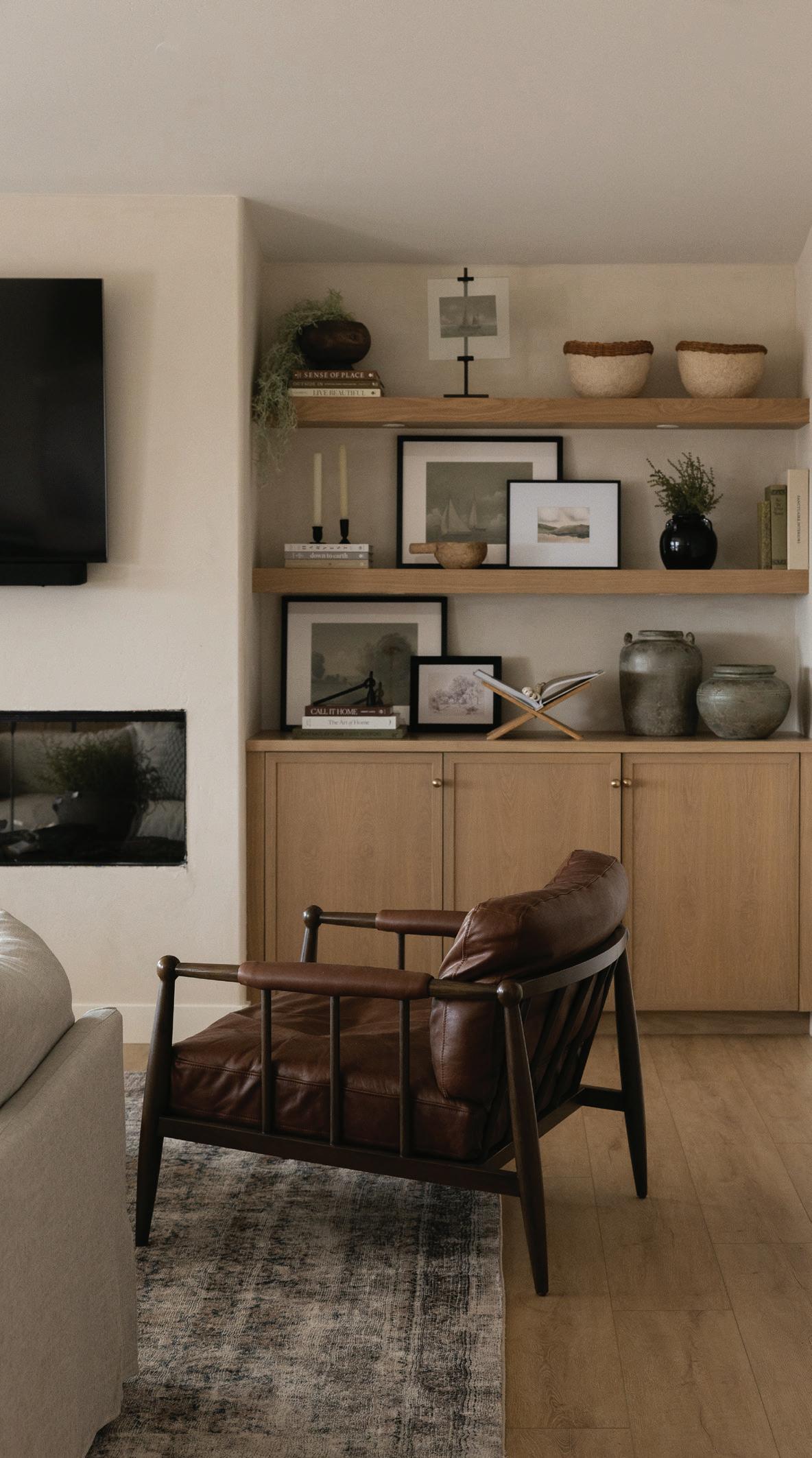
Whether I’m designing a vacation home or a primary residence, I believe the space should always feel like an extension of the person living there. I wanted my clients' personal style to shine while still honoring the local architecture and environment. For this project, we aimed for a relaxing beach escape, without ever letting it feel kitschy or overdone. I played with texture and color to create those “little moments” that make a big difference, using creamy limewashed walls for soft, organic movement, rattan lighting details to bring in natural warmth, and layered materials that keep the aesthetic fresh but functional. I particularly loved designing the bathrooms; I treated each one as a unique, playful discovery that still flows seamlessly with the rest of the home’s feel.
In the guest bathroom, I chose handmade blue zellige tiles to introduce texture and personality. These subtle nods to the sea feel playful without being literal; the mix of color and pattern gives the room a sense of depth. I chose every detail to ensure that when my clients are hosting, their guests feel like they have their own private retreat.

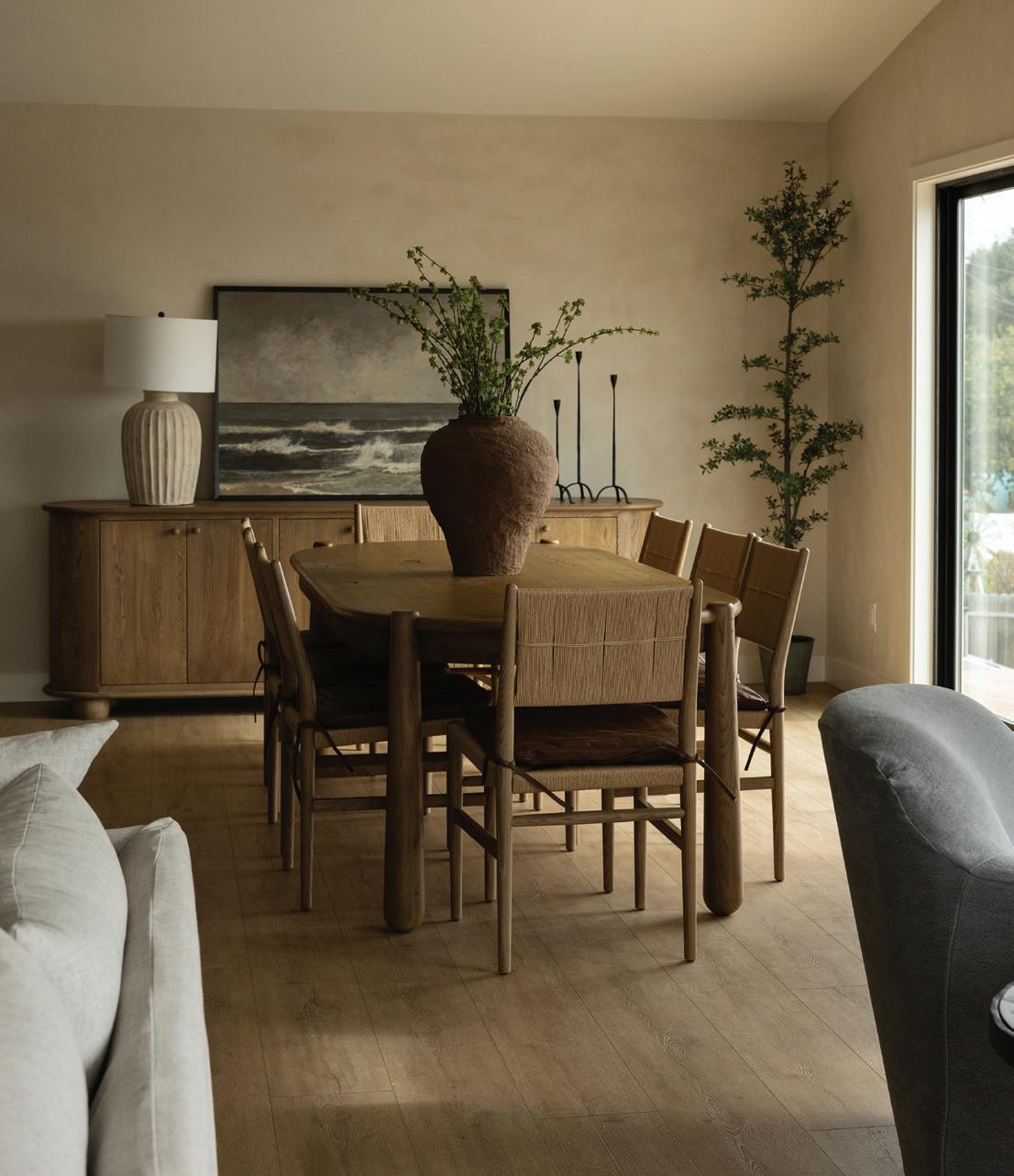
I used color to create emotional shifts throughout the house. In the powder bath, a deep blue Roman clay adds a sense of drama, while a sea-sage lime wash in the primary bath keeps things serene and balanced. These choices ensure that every room feels intentional, complete, and deeply connected to the coastal landscape.
Since my clients love to entertain, I had the pleasure of fully furnishing the remodel and obsessing over the finishing touches. I curated a mix of layered textures for tactile comfort, seascape watercolors to pull the horizon indoors, and even a vintage sailor mirror in the powder bath for a touch of history. Every piece was chosen to feel personal and easygoing. The result is a home that works just as well for a quiet Tuesday morning as it does for a large family gathering. It’s a space that feels comfortable, welcoming, and most importantly, completely theirs.





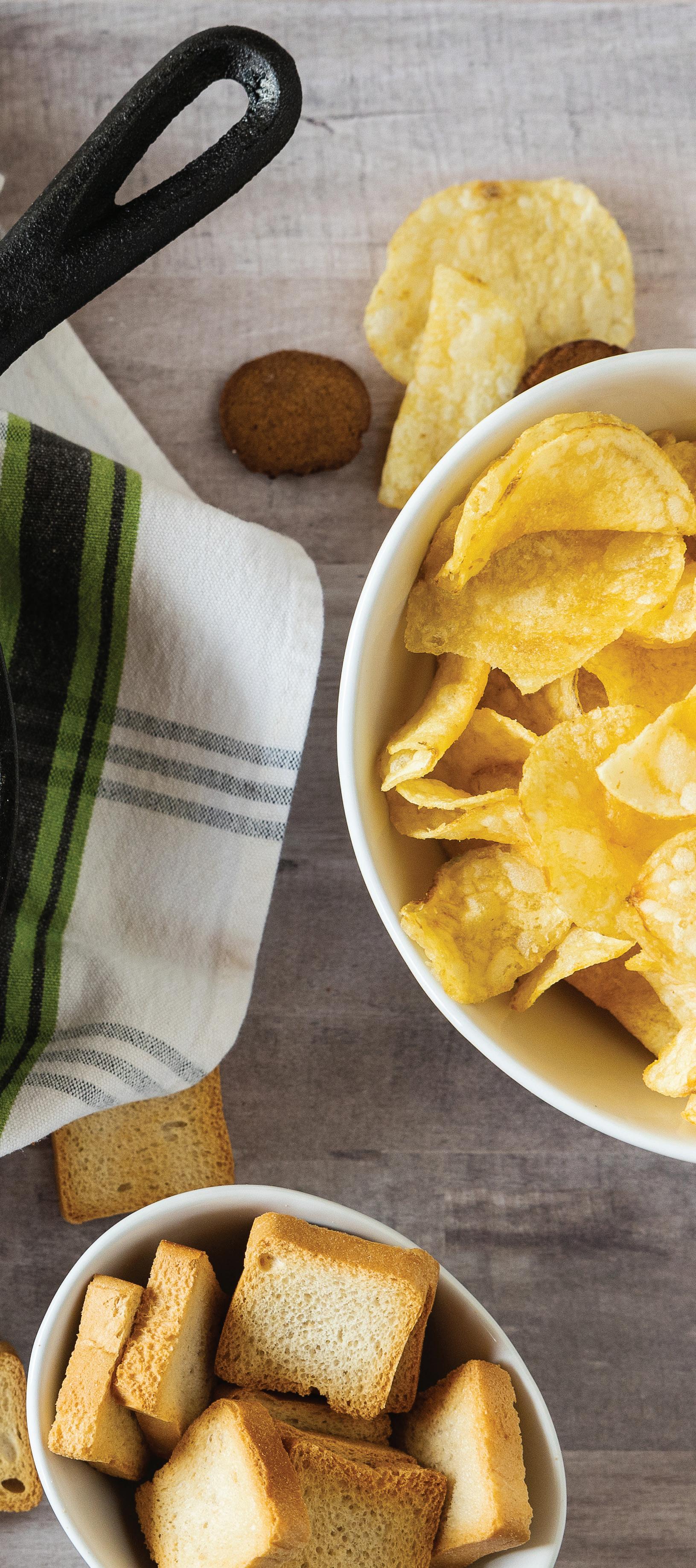
Hot Corned Beef Dip is a deliciously perfect way to use leftover corned beef. A new take on a 1960s recipe for Hot Crab Dip, it mixes together quickly and adds savory, cheesy, creamy flavors to any cocktail party, game day, or game night spread. While it was traditionally served warm in a chafing dish, this casual variation is rustic and fun when presented in a cast iron skillet. Make it in advance and refrigerate until you’re ready to bake for even easier prep!
1½ cups (12 oz. container) whipped cream cheese
1 cup sour cream
1/4 cup mayonnaise
2 teaspoons Dijon mustard (or spicy mustard if preferred)
1/2 teaspoon garlic powder
splash of dry white wine
1 cup roasted or braised corned beef, chopped
1 cup plus 2 tablespoons shredded Swiss cheese, divided
2 teaspoons snipped chives, plus 1 teaspoon for garnish
salt and freshly cracked pepper, to taste
1. Preheat the oven to 350F.
2. In a bowl, whisk together the cream cheese, sour cream and mayonnaise until smooth. Add the mustard, garlic powder and wine and mix again. Fold in the corned beef, 1 cup of the cheese, 2 teaspoons chives, salt and pepper. Transfer to a cast iron skillet or baking dish.
3. Evenly sprinkle the reserved 2 tablespoons cheese over the top.
4. Cover and bake 15-20 minutes, until hot. Uncover and bake 10 minutes more, or until the cheese on top is melted and golden.
5. Garnish with 1 teaspoon chives. Serve with rye crackers or cocktail bread, cocktail toasts, or potato chips. Leftover dip may be covered and stored in the fridge for 3-4 days.

Prep time: 15 minutes
Cook time: 20 minutes
Serves: 12
Total time: 35 minutes (plus chilling)
March is a month for dual celebrations, and we’ve found the perfect way to honor both. While March 14 (3.14) marks Pi Day, a tribute to the infinite mathematical constant, the month also brings the vibrant greens of St. Patrick’s Day. To bridge the gap between science and spirit, we’re serving up a zesty key lime pie—as brilliant as it is delicious. With its refreshing tang and buttery crust, this dessert is the ultimate way to get lucky in the kitchen this spring. Grab your fork and get ready to calculate just how quickly a single pie can disappear!
Note
“In my opinion, a true key lime pie should have a zing. By swapping bottled juice for a full cup of fresh-squeezed lime juice and adding vanilla to the custard, the flavors become much more vibrant. It’s the perfect refreshing treat for a March afternoon!”
For the Crust:
1½ cups graham cracker crumbs (about 12–14 full sheets)
6-8 tablespoons unsalted butter, melted
1/4 cup granulated sugar
pinch of sea salt
For the Filling:
2 (14 oz.) cans sweetened condensed milk
1 cup fresh lime juice (key limes preferred for authentic tang)
4 egg yolks
2 teaspoons lime zest (plus more for garnish)
1/2 teaspoon vanilla extract
For the Topping:
1 cup heavy cream, chilled
3 tablespoons powdered sugar
1 teaspoon vanilla extract
1. Preheat your oven to 350°F. In a medium bowl, stir together the graham cracker crumbs, melted butter, sugar, and sea salt. Press the mixture firmly into the bottom and up the sides of a 9-inch pie dish.
2. Bake the crust for 10 minutes until golden brown. Let cool for 10 minutes.
3. In a large bowl, whisk together the sweetened condensed milk, fresh lime juice, egg yolks, zest, and vanilla extract until smooth and fully combined.
4. Pour the filling into the warm crust. Bake at 350°F for about 10 minutes. The center should still have a slight jiggle.
5. Cool on a wire rack for 20 minutes, then refrigerate for at least 4 hours (or overnight) to set.
6. Whip the heavy cream, powdered sugar, and vanilla to stiff peaks. Top the chilled pie and garnish with extra lime zest before serving.








Words by Lifestyle Staff


Mark your calendars: March 20th officially ushers in the Spring Equinox. While the calendar gives us the date, your home usually gives you the signs—the low-angle sunlight hitting the dust on the bookshelves or that lingering “closeness” of a winter spent indoors.
Spring cleaning isn't just about aesthetics; it’s a psychological reset. To help you tackle the transition without the overwhelm, we’ve broken down the essential tasks for every corner of your home.

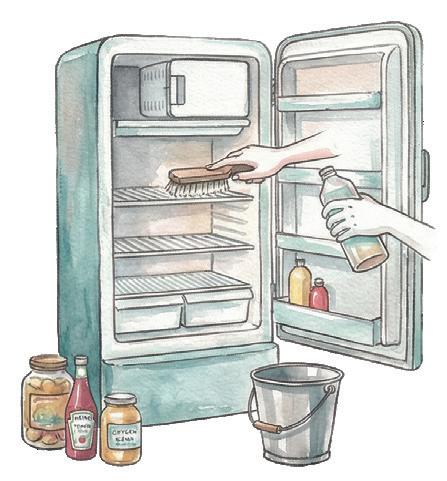
This is usually the most time-consuming room, so break it into zones.
• The Fridge Reset: Pull everything out, toss expired condiments, and scrub the shelves.
• Oven & Stovetop: Use a heavy-duty degreaser on the range hood filter and deep-clean the oven interior.
• Cabinet Interiors: Empty one cabinet at a time, wipe the interior, and reorganize.
• Sanitize the Sink: Clean the garbage disposal with lemon peels and baking soda.

Focus on moisture-related buildup and refreshing your daily essentials.
• Scrub the Grout: Use a stiff brush and oxygen bleach to bring the sparkle back to your tile lines.
• Shower Curtain/Door: Wash the fabric liner or treat glass doors for hard water stains.
• Medicine Cabinet: Safely dispose of expired medications and old skincare products.
• Deep-Clean the Fan: Vacuum the dust out of the exhaust fan to ensure proper ventilation.

The high-traffic hub of the house needs a deep refresh rather than just a tidy-up.
• Dust the “Invisible” Spots: Wipe down ceiling fan blades, the tops of picture frames, and door frames.
• Sanitize Electronics: Clean remotes, game controllers, and wipe down the TV screen with a microfiber cloth.
• Upholstery Care: Vacuum under couch cushions and use a fabric steamer or cleaner on sofas and armchairs.
• Wash Textiles: Launder throw blankets and cushion covers.

Focus on creating a sanctuary by removing allergens that accumulated during the cold months.
• Rotate the Mattress: Flip or rotate your mattress to ensure even wear.
• Bedding Deep Clean: Wash your pillows, duvet covers, and mattress protectors.
• Baseboard Blitz: Wipe down the baseboards behind the bed and nightstands.
• Window Treatments: Dust the blinds or take down curtains for a gentle wash.

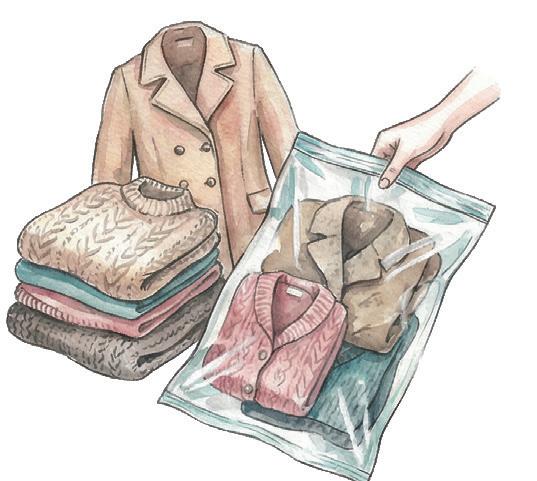
Don't just move clothes around—evaluate them.
• The Seasonal Swap: Pack away heavy wools and coats in vacuum-sealed bags.
• The “One Year” Rule: If you didn't wear it last spring or summer, it’s time to donate or sell it.
• Wipe Down Shelves: Before putting your spring clothes back, wipe down the empty shelves and racks.
• Shoe Care: Clean the soles of your shoes and reorganize your footwear rack.
(THE “FORGOTTEN” LIST)

• Light Fixtures: Bugs and dust love to settle in globes and shades.
• Air Filters: Replace your HVAC filters to improve air quality as the pollen count rises.
• Entryway: Power-wash the front porch and shake out the welcome mat.
• Utility Room: Clean the lint trap and the area behind the dryer to prevent fire hazards.
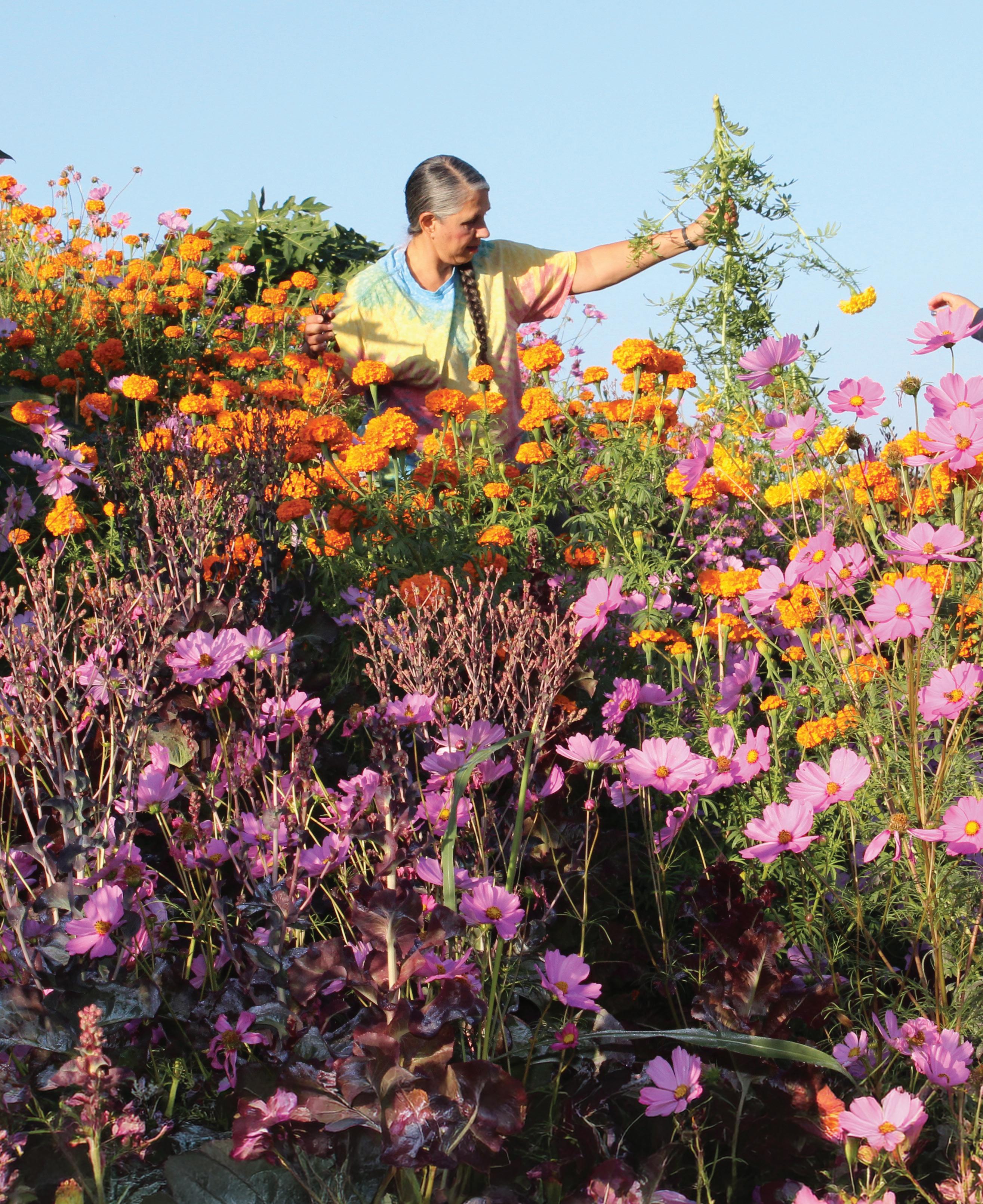
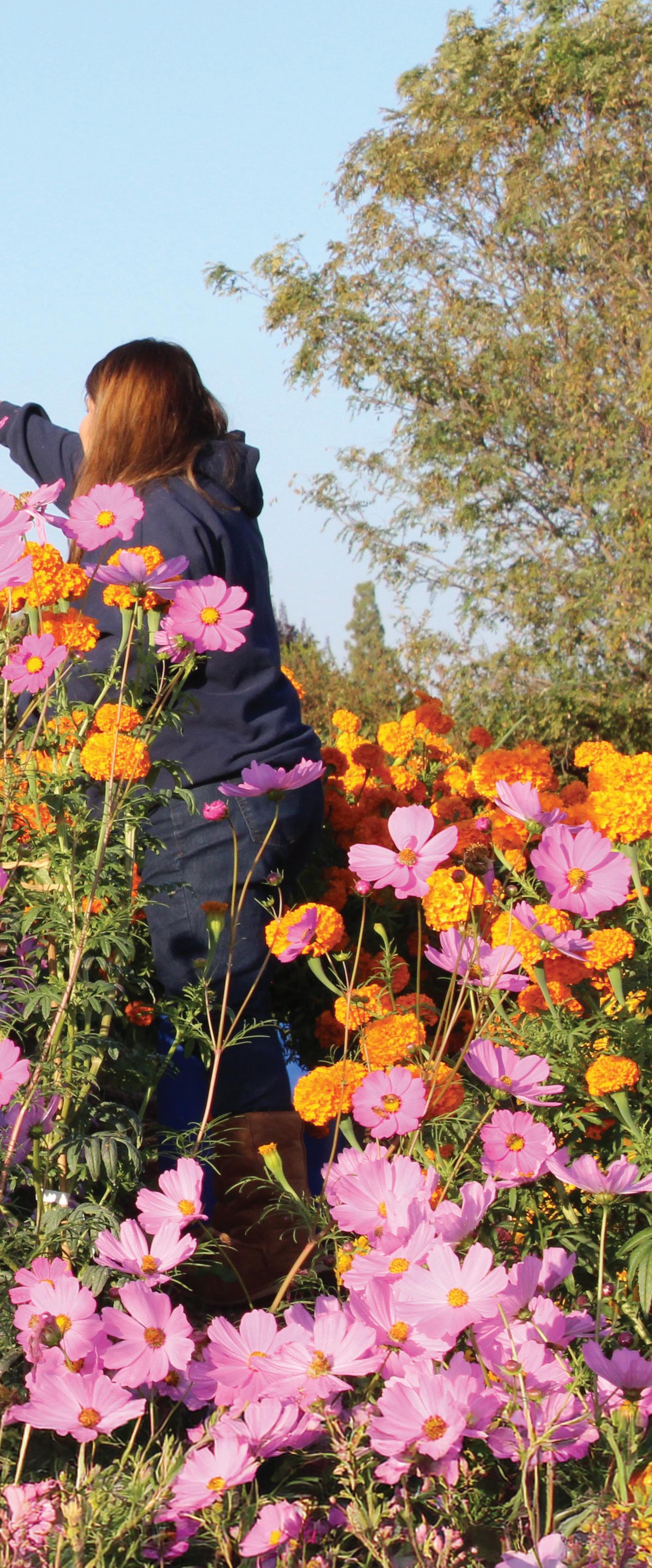
Wecan’t deny that spring is a season of growth, renewal, and reconnecting with nature. This year, we want to do more than stop to smell the roses. So here, we highlight those who work all four seasons to keep our communities beautiful, healthy, and connected.
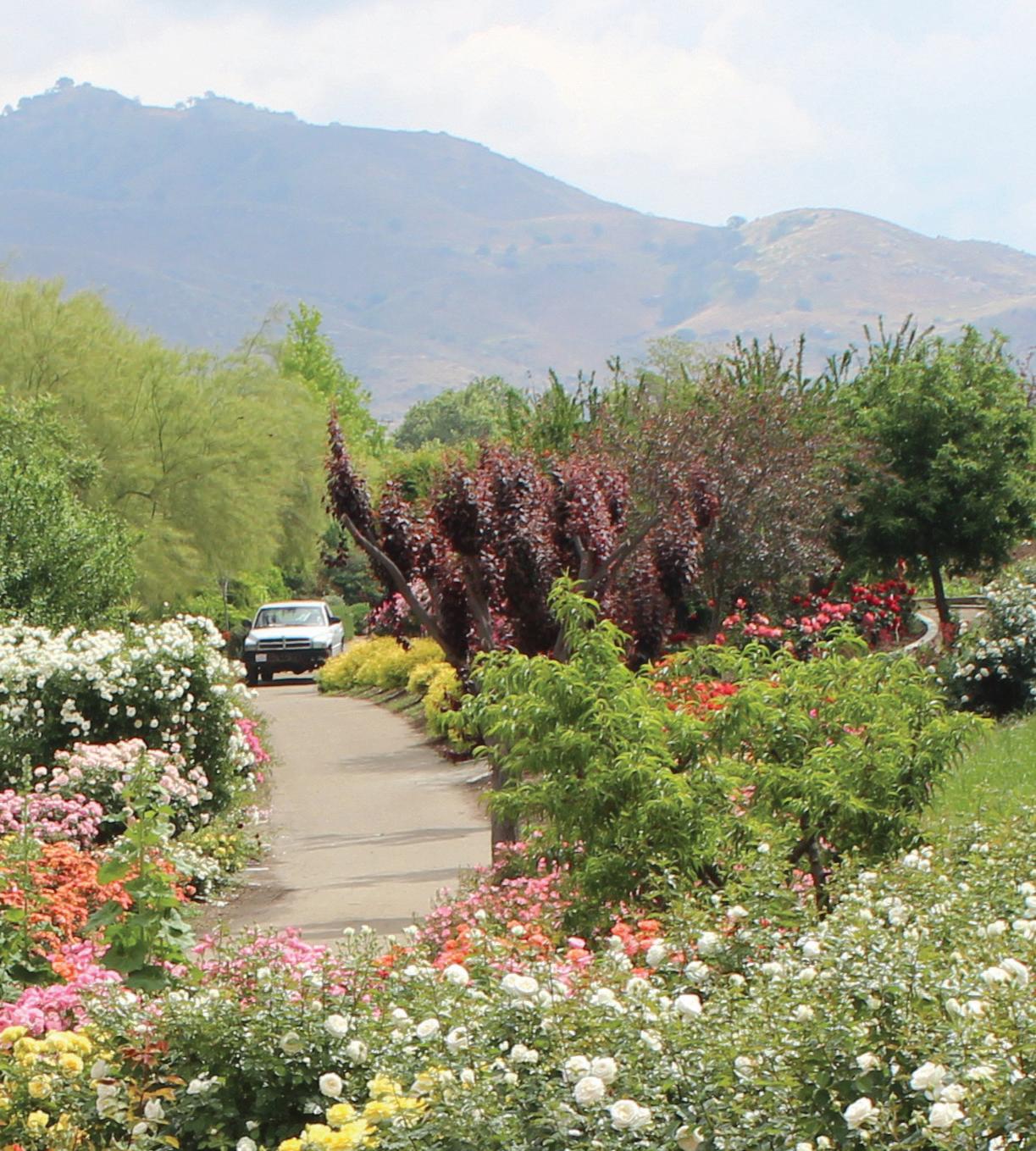
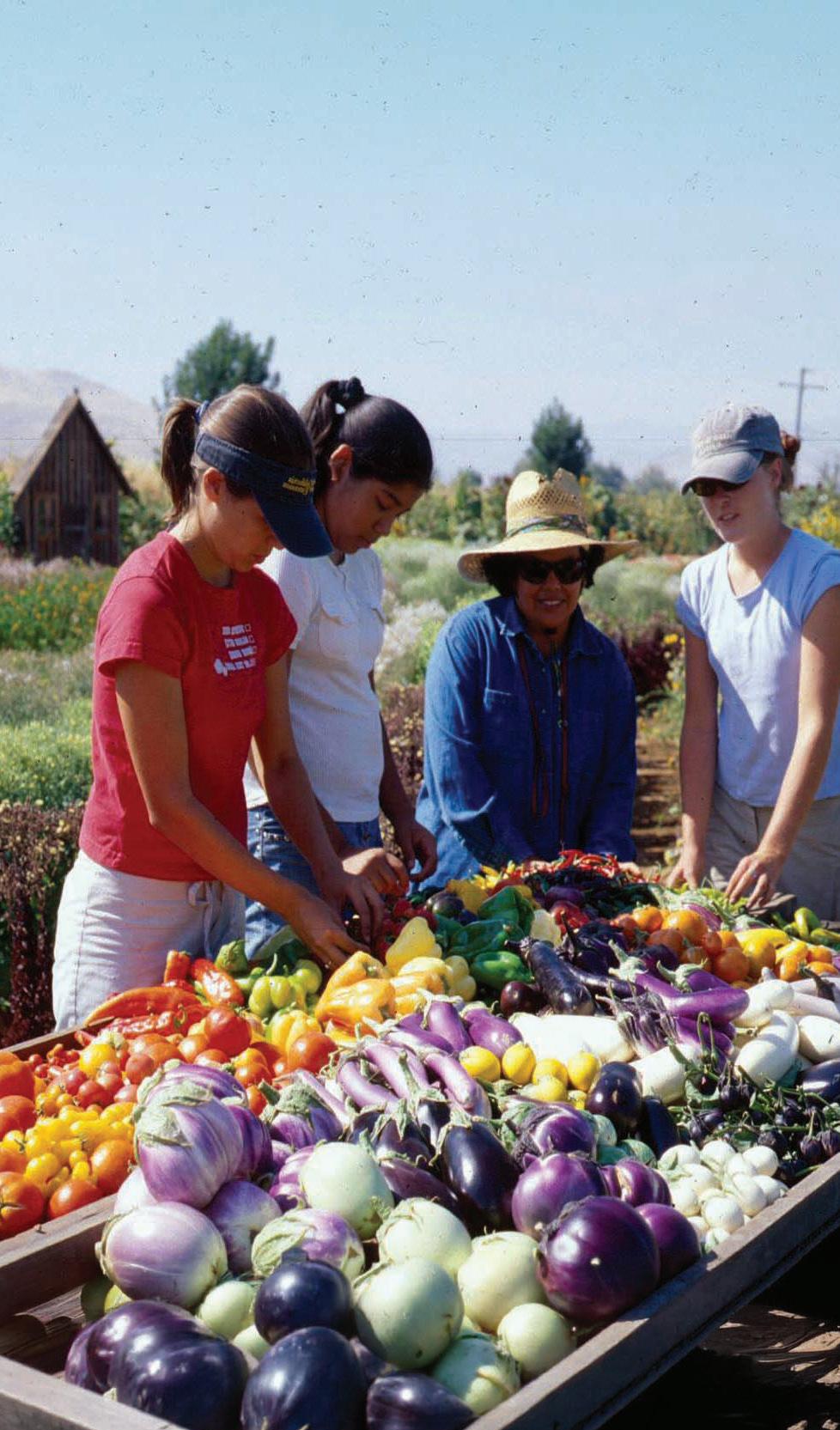
As the Valley shakes off the rest of its winter chill and the first blossoms begin to peek through the soil, the Woodlake Botanical Garden transforms into something beyond a simple, scenic walk. It becomes a living classroom and a testament to the power of volunteers.
At the heart of this blooming garden is Woodlake Pride, the non-profit organization that proves “growing a community” is truly a hands-on, year-round mission.

For founders Manuel and Olga Jimenez, the Woodlake Botanical Garden has become home. Volunteers are seen as family, and visitors are welcomed with open arms. Even the wildlife is cared for here: by being closed to the public four days out of the week, they give the local critters unlimited access to fresh food and shelter. And if you tour the Garden with Manuel, he’ll tell you stories about frogs, foxes, birds, and more. He’ll remind you that the animals call this land home too, and we must share our growth with them, or we lose them.
Before the couple retired, they hadn’t planned to spend every day of the week in the Garden. But as it grew, they started getting calls every day. The children would ask, “What are we doing in the garden today?” Not wanting to disappoint them, Manuel and Olga spent more and more time tending to it—and now spend six days a week caring for the plants and working with volunteers. Some of those children now have kids of their own, and visit the garden as a family.
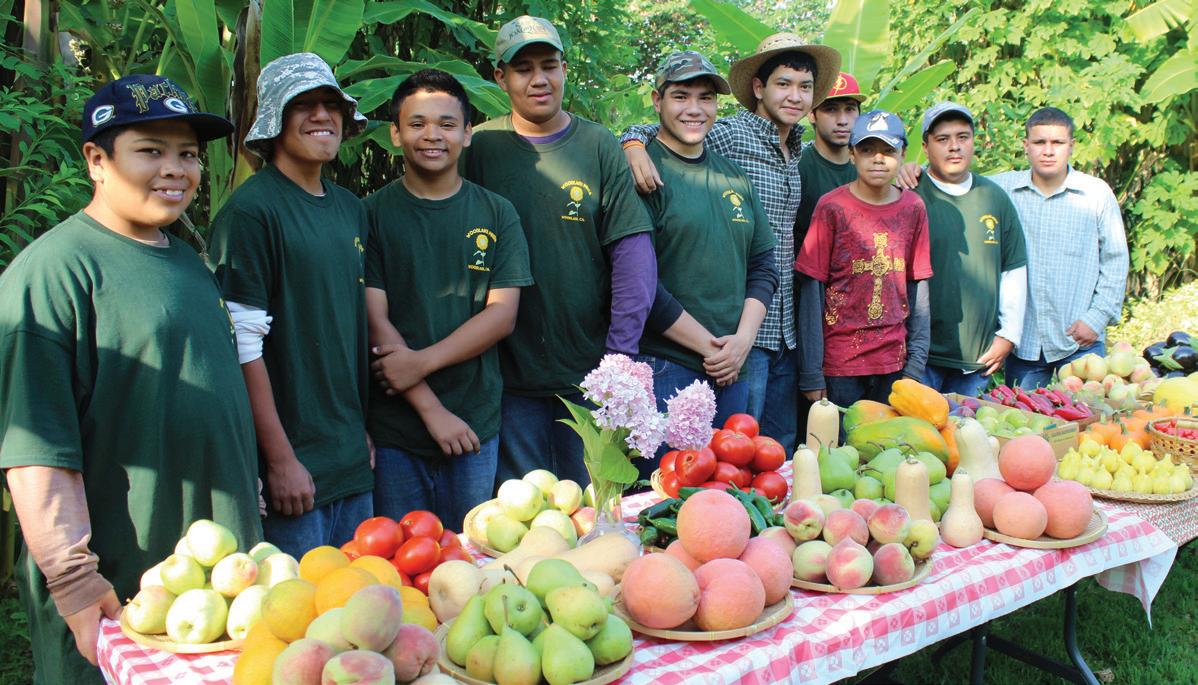
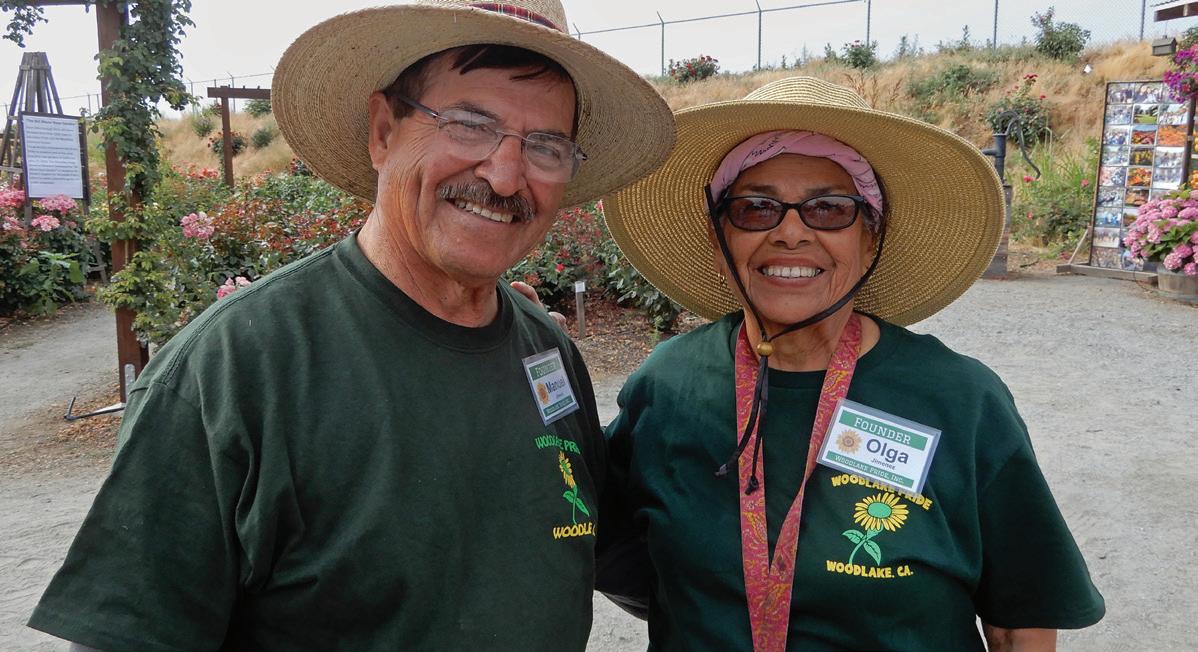
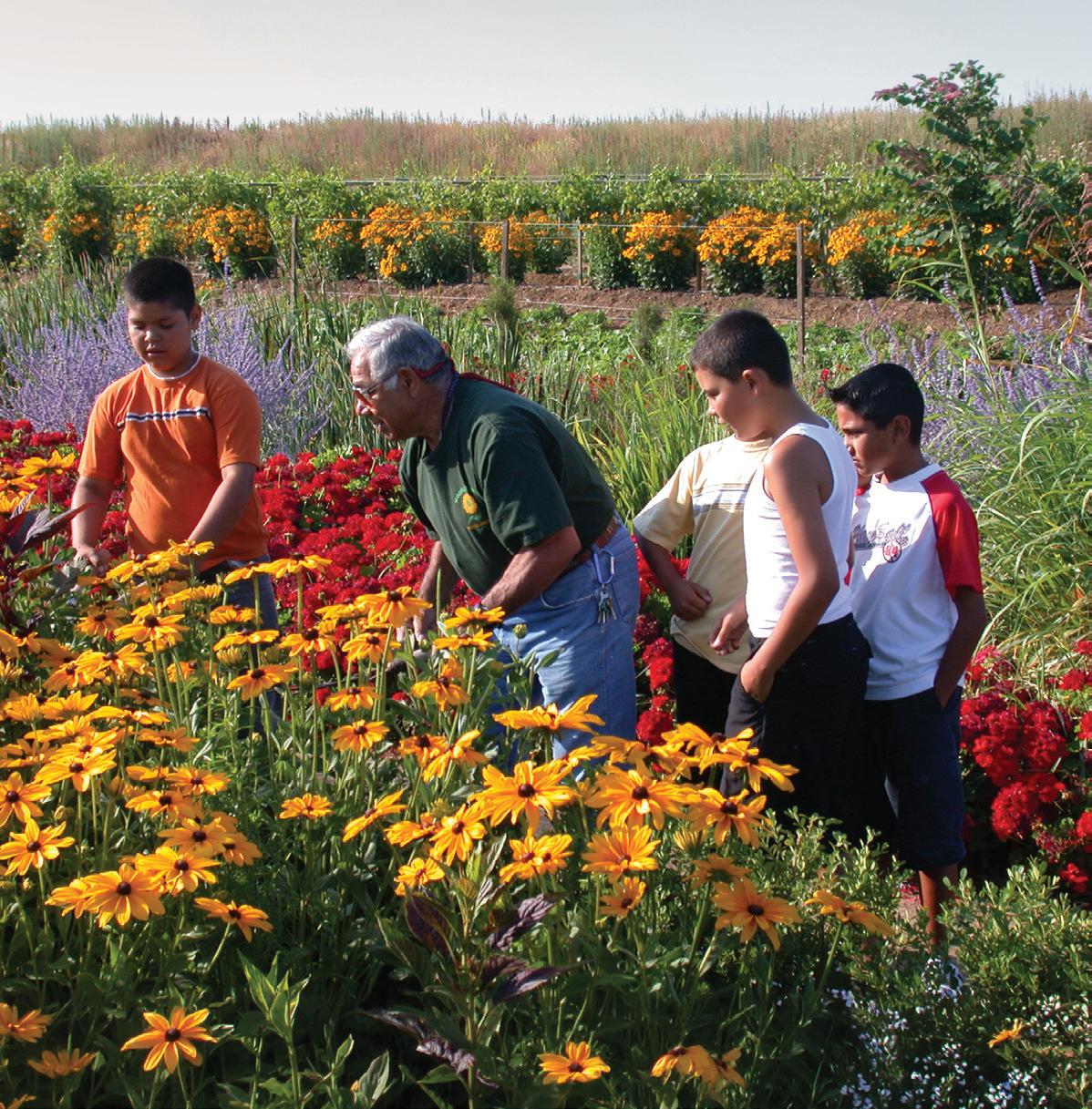
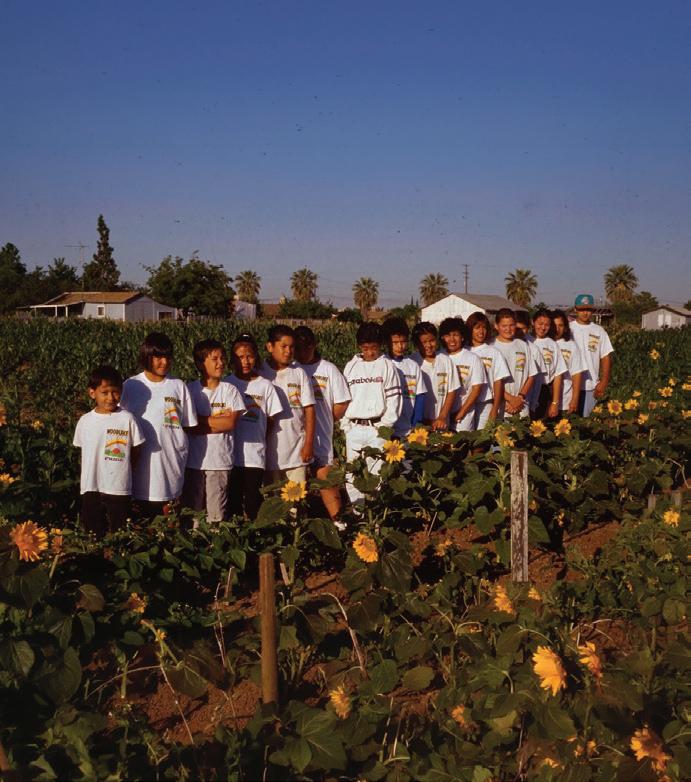
High school sweethearts, Manuel and Olga (pictured, center photo on left) have been caring for their community for over three decades. In 1993, they established Woodlake Pride Inc, a 501(c)(3) non-profit volunteer organization, that worked to beautify the city. With volunteers, they cleared graffiti, established murals, and organized many small gardens throughout Woodlake. Their goal was to show the community that Woodlake was a home to be proud of, and they weren't scared of ruffling a few feathers to do it.
Their first project did just that. When the owner of a local bar allowed the couple to paint over a heavily graffitied wall, they enlisted the help of kids and teens to paint their own murals. Many of these kids depicted farm workers and symbols of their Hispanic heritage. Before the mural was finished, Woodlake City Hall ordered a cease-anddesist. As the group had not pulled a permit, the mural would need to be removed. With legal help, Manuel was able to work with City Hall, and the mural was finished.
In 2003, they founded the Woodlake Botanical Gardens—the last of their many gardens that stands today. Since then, they have been mentoring local children, sharing fresh fruits and vegetables with the community, and standing strong against any threat the Garden faces.
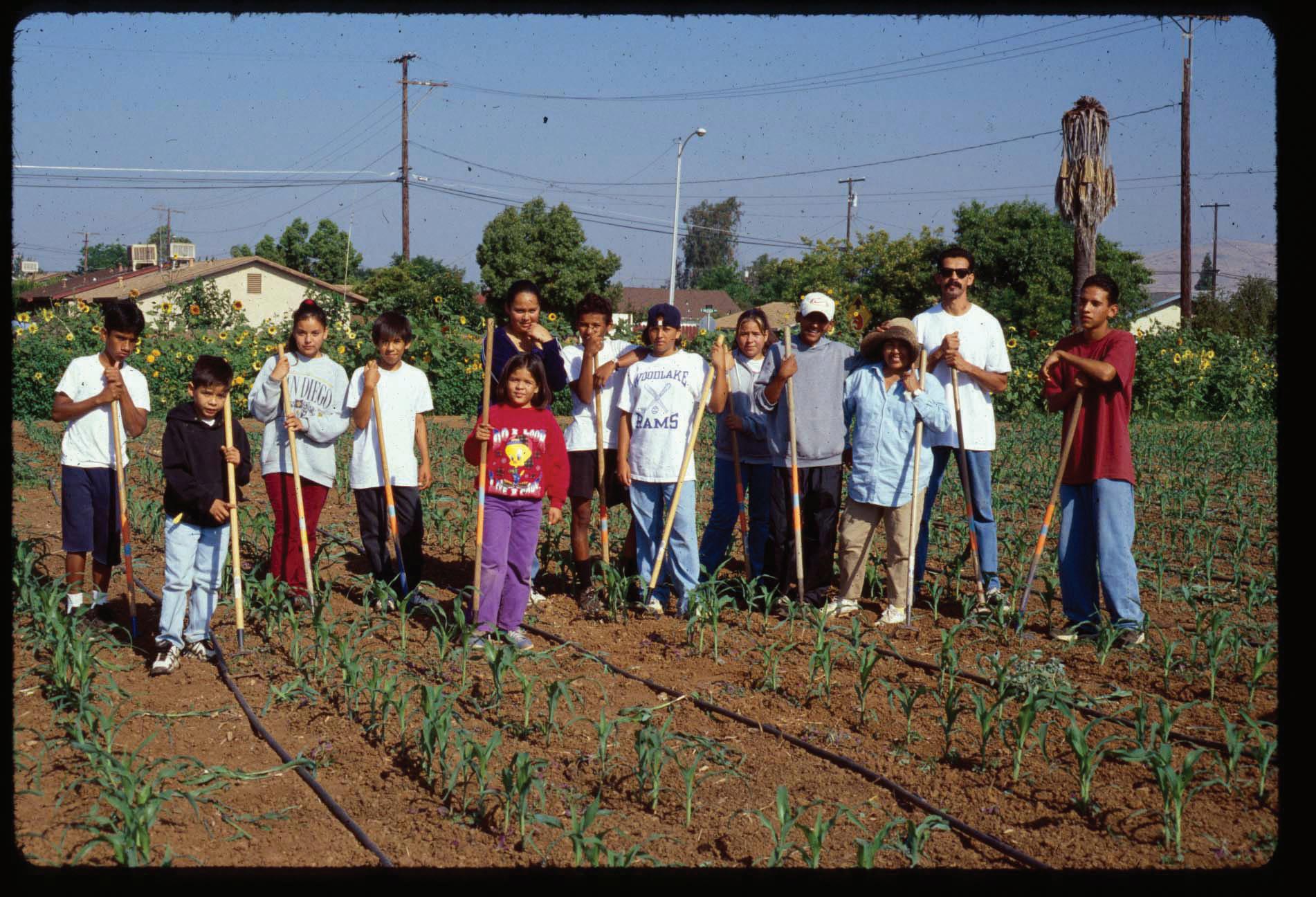
When the Garden was established, Manuel remembers how most of the children and teens came to volunteer: “They walked by and stuck their heads over the fence, asking what we were doing.” Through word of mouth, more kids joined, and would spend most of their free time outside of school at the garden. On occasion, community members would bring treats. Over time, the couple received grant money to provide lunches and snacks while the kids gardened. Now, students are able to gain volunteer hours for school and college applications.
Over the years, the Garden faced more challenges. From theft, to land acquisition, to being shut down during the pandemic, Woodlake Pride has fought to keep the Garden open and accessible to the community.
When asked how he finds the power to fight against these challenges, Manuel will tell you that there are many people in the area without access to fresh fruits and vegetables, or the means to garden at home. Here, they are free to eat almost anything that is grown. The Garden encourages community members to spend time working together, to get outdoors and off the streets. The children learn to be proud of their community while developing hands-on skills.
Manuel tells us that no matter what the Garden faces, “you just have to get out and work mija, otherwise nothing will ever get done.”
The Woodlake Botanical Garden spans a mile of narrow land between E Naranjo Blvd and Bravo Lake. If you haven’t already been, there is no better way to experience it than a tour by Manuel or Olga themselves. We were lucky enough to walk the entire expanse with Manuel, while he explained everything from the botanical sections to the historic displays.
Manuel started in the tropical section of the garden, where the expansive banana tree grove opens to a gathering area. They also grow green papayas, jujubes, guavas, and his favorite, mangos.
Near the stone fruit trees, Manuel stops to listen to birds singing. Pointing to halfway barren trees, he says the buds are their favorite snack. He describes how they learned to work with the hungry birds to make pruning easier. The birds like to eat the blossom buds at a certain stage, and start at the tops of the trees. So, the volunteers wait until they have pecked their share, then tend to the remaining blossoms. Manuel laughs at the obvious line of where the buds have grown too old for the birds.
When touring the citrus grove, he pulled off fruit for us to try. A wave of fresh citrus scent floats off of the trees. Just like the birds, he notes which trees are obvious favorites, and have been picked clean by visitors and volunteers.
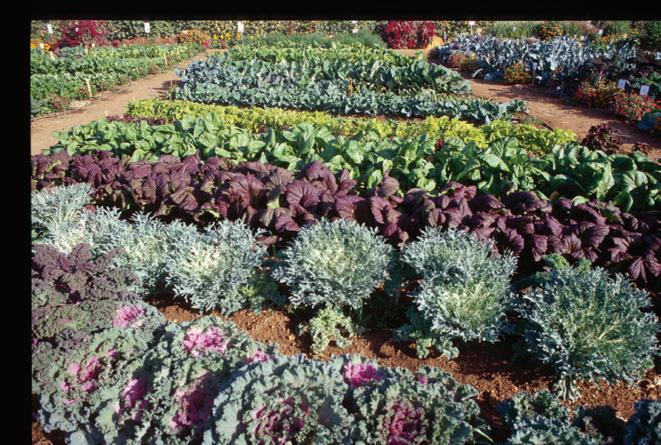
We walked through the vegetable garden too. It’s already lush, with daikon radishes, kale, bok choy, cauliflower, and a growing vertical garden.
Next, he stopped by the blueberry bushes, which have, in fact, the “best tasting blueberries in the world.” Manuel knows because he's tried every variety out there, during his research for University of California. His criteria for a good blueberry? Crunchy and sweet, with a good tang of bitterness. Manuel doesn’t approve of a mealy blueberry.
Towards the end of the garden is the desert display. Here, the blossoming cacti have attracted crowds of visitors, but also thieves. Manuel points to several holes in the ground where large and heavy cacti used to be. He notes how much effort someone must have gone through to steal them, and wonders how they avoided such pokey spines.
The Garden also has two large water fountains, made from old tools that have been welded together. Manuel and Olga commissioned these features to honor farm workers, the tools of agriculture, and the history of gardening. You can also walk through a house made from empty raisin sweat boxes: a replica of what their families would build each season they worked in the fields. On the walls are photos from Manuel’s childhood, his ancestors, and Olga with their children after a raisin grape harvest in 1985.
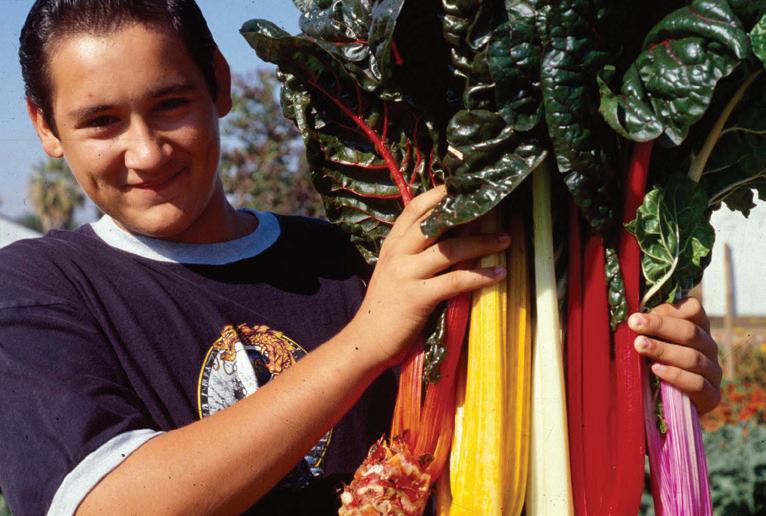
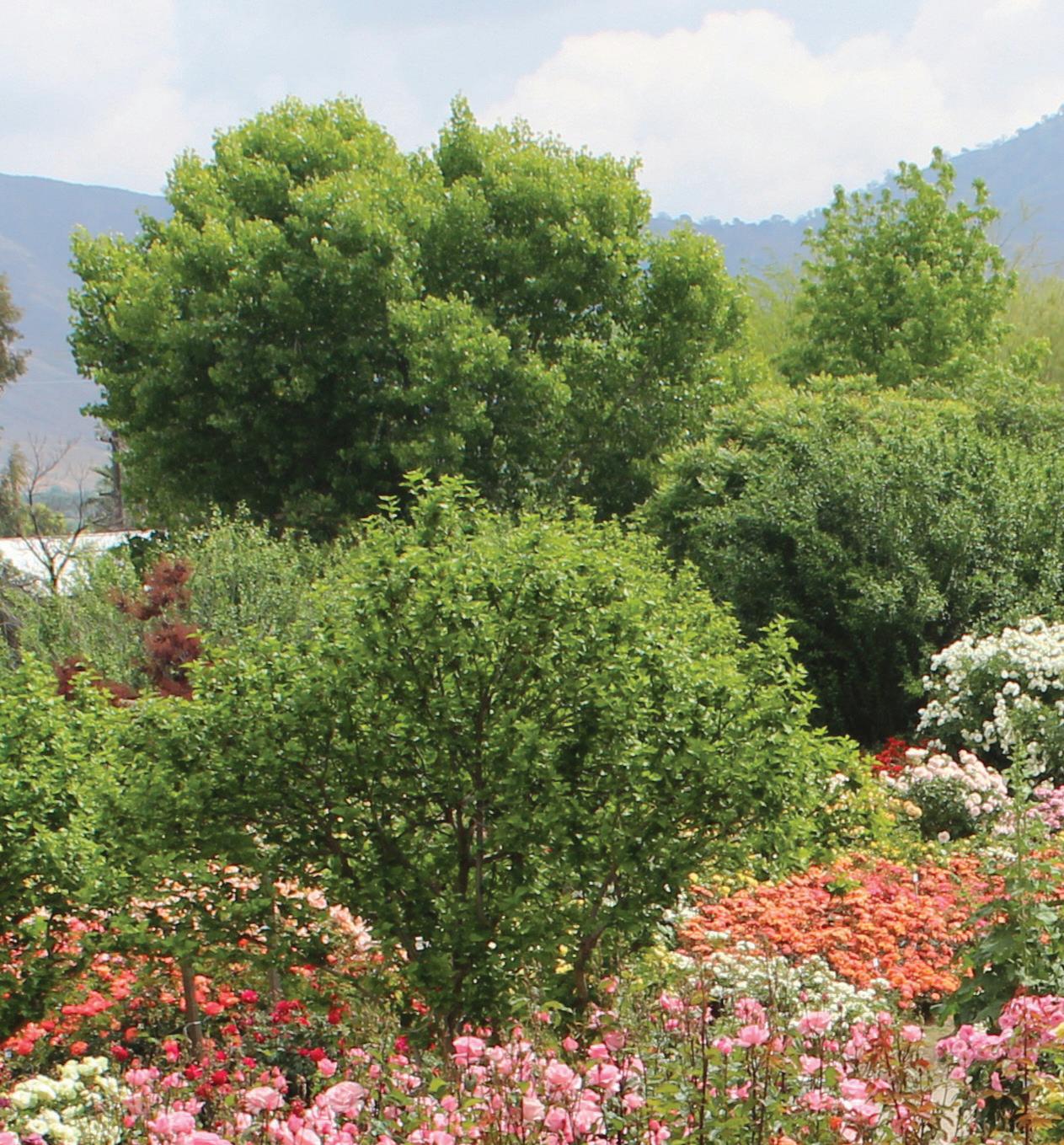
Woodlake Pride reminds us that a community is like a garden: it requires patience, working together, and—most importantly—consistent care. This spring, as the petals of the Woodlake Botanical Garden unfurl, take a moment to look past the flowers and see the hands that planted them.
By focusing on non-profit work, Woodlake Pride ensures that the garden remains a free, accessible resource for everyone. Whether it's a veteran finding peace in the quiet of the roses or a student discovering their love for botany, the service provided here is invaluable.
Woodlake Pride is always welcoming volunteers at the Garden and accepting donations for future projects and expansion.
The Woodlake Botanical Garden is open Thursday through Saturday from 9am-3pm.
To contact the site stewards, reach them at: Manuel and Olga Jimenez, 559-280-2483
Woodlake Pride, City of Woodlake, 559-564-8055
To donate, visit their website at woodlakebotanicalgarden.org/donate

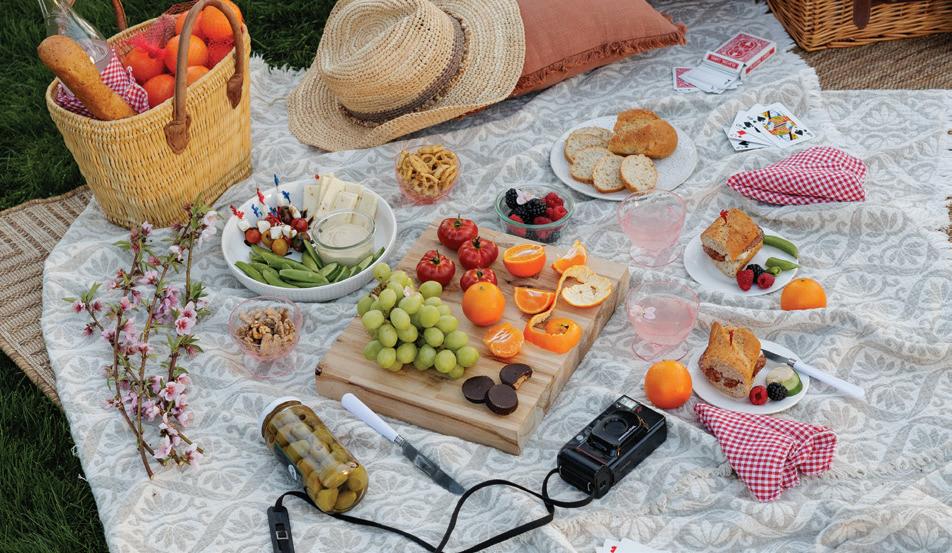
After a long, foggy winter, nothing sounds better than a brilliant afternoon outdoors. But before the summer heat has us lounging by the pool, pack a picnic and spend some time enjoying the spring breeze. Here are some picnic essentials to inspire your next lunch - with a side of sunshine.

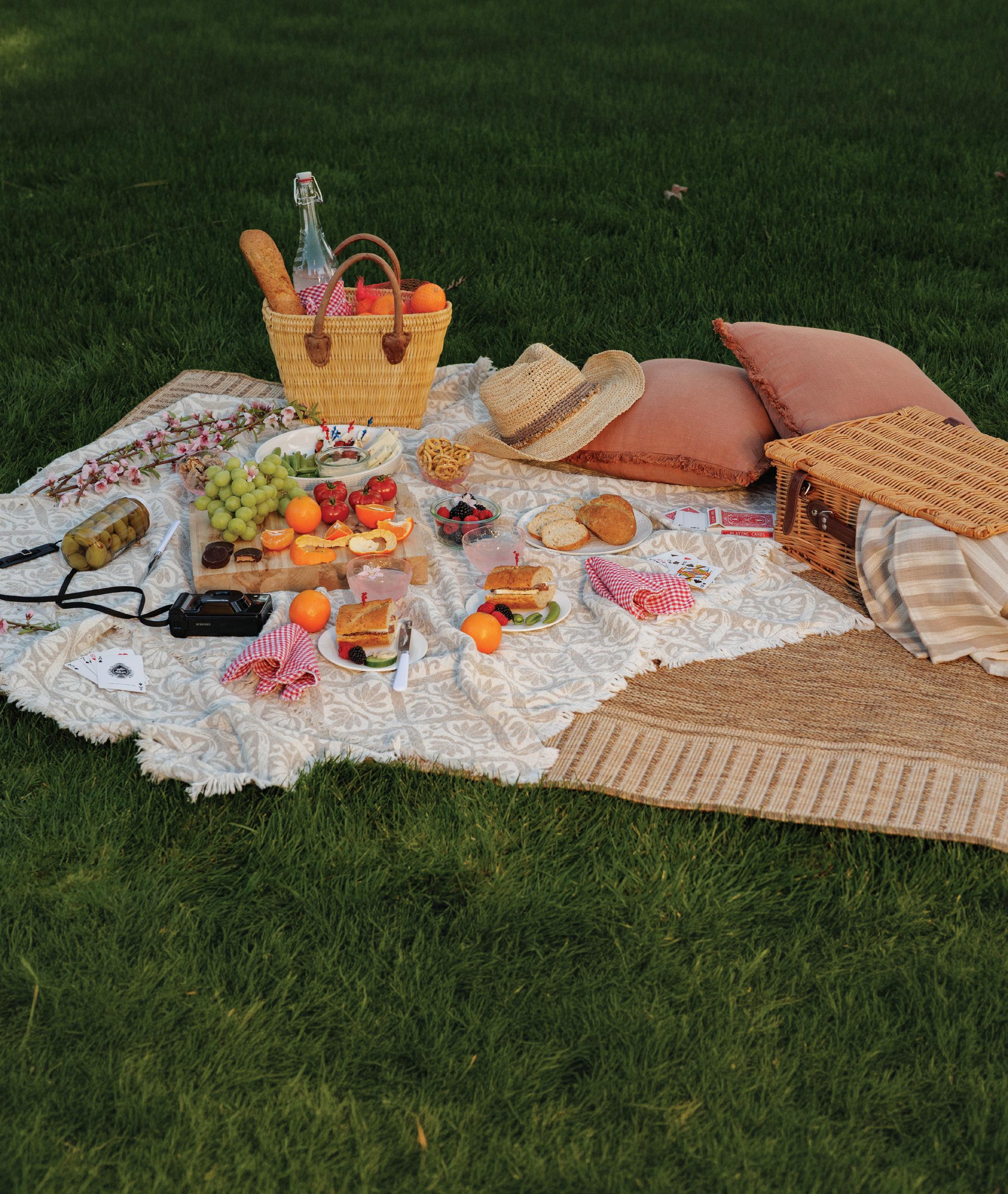
• Blanket (choose one that can double as a tablecloth)
• Finger foods—sandwiches, chips, sliced veggies
• Flowers
• Sparkling water or soda
• Hat and/or sunscreen
• Bonus: Playing cards and a film camera to capture springtime memories
• Olives from Haas Olives
• Flowers from Juicy Fruit Farms
• Sugar Snap Peas from Mao Farms
• Cucumbers from Mao Farms
• Page Mandarins from Agnew’s Sweet Acres
• Maple Bourbon Walnuts from 3B Farms G-Nuts
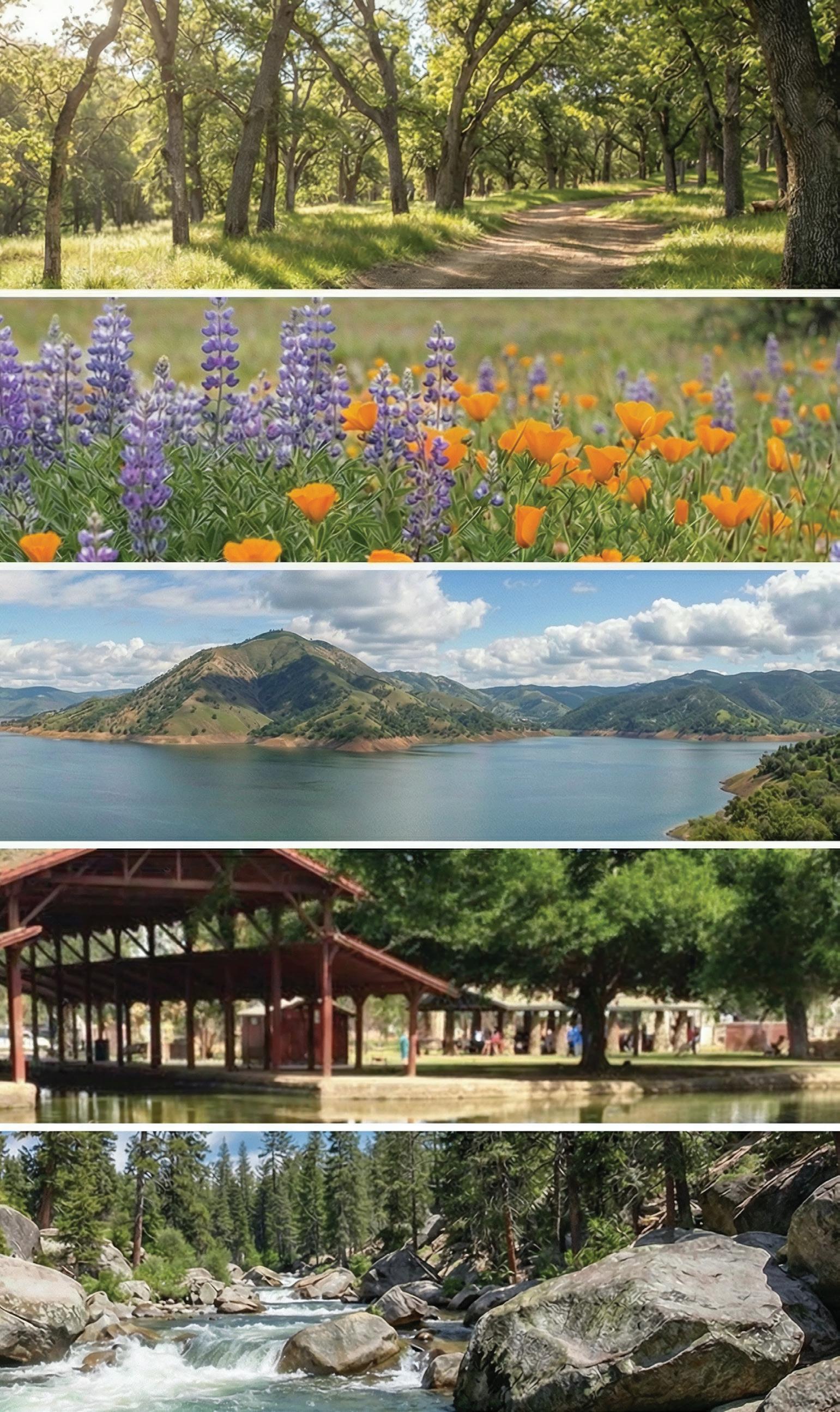
1 2 3 4 5 1 2 3 4 5 For the nature lover: Kaweah Oaks Preserve To see local wildflowers: Dry Creek Preserve Views of the water: Lake Kaweah / Lemon Hill A classic Central Valley spot: Mooney Grove Park Escape to the mountains: Hospital Rock Picnic Area







A playlist to put a spring in your step
We hope this issue has inspired you to slow down and enjoy the beauty of spring. Whether you’re picnicking under an oak tree, deep cleaning your sock drawers, or taking a drive through the foothills, set the mood with some fresh tunes—just scan and hit play!
Moveover winter, spring is here! And we’re ready to get some dirt under our fingernails.
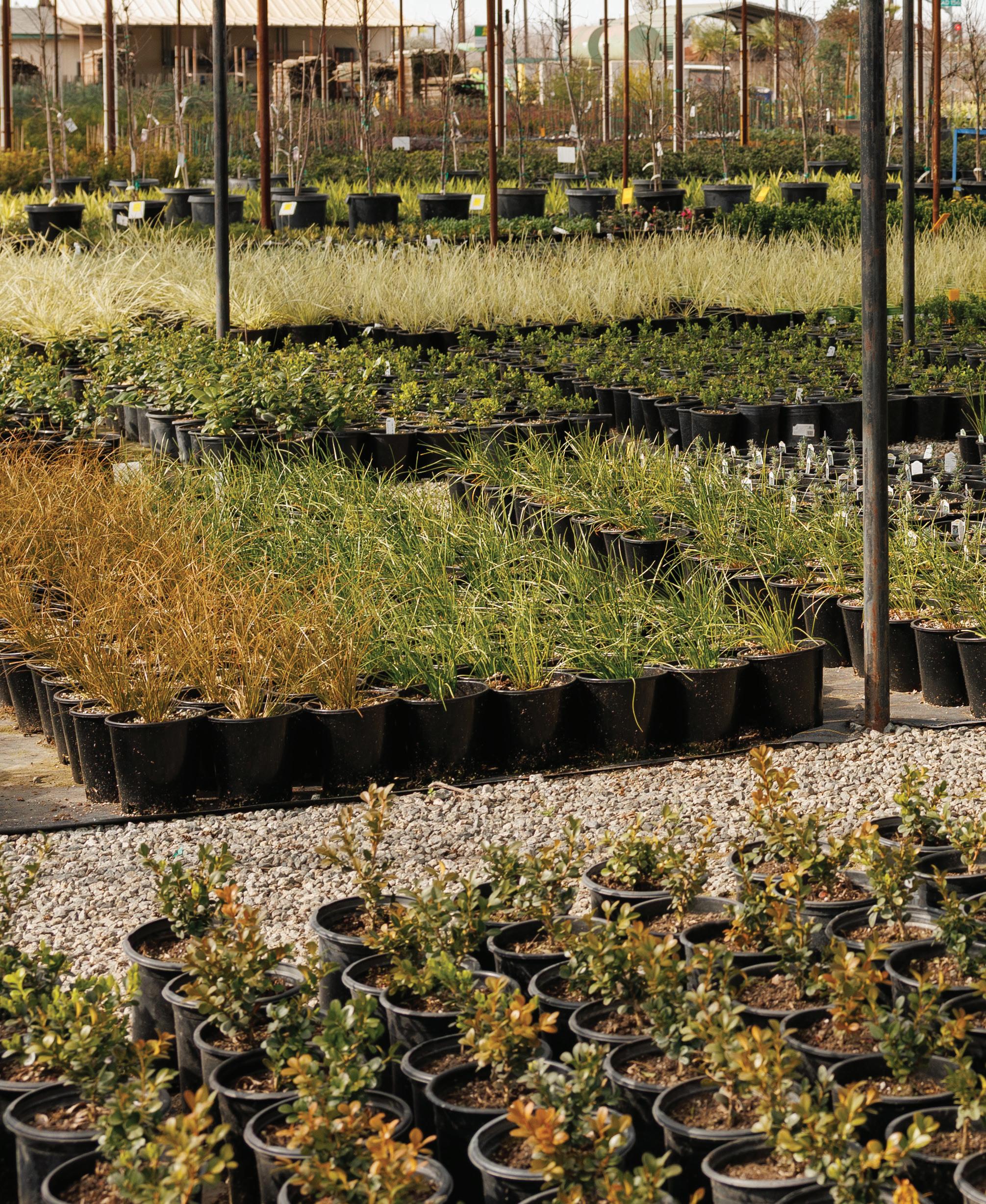
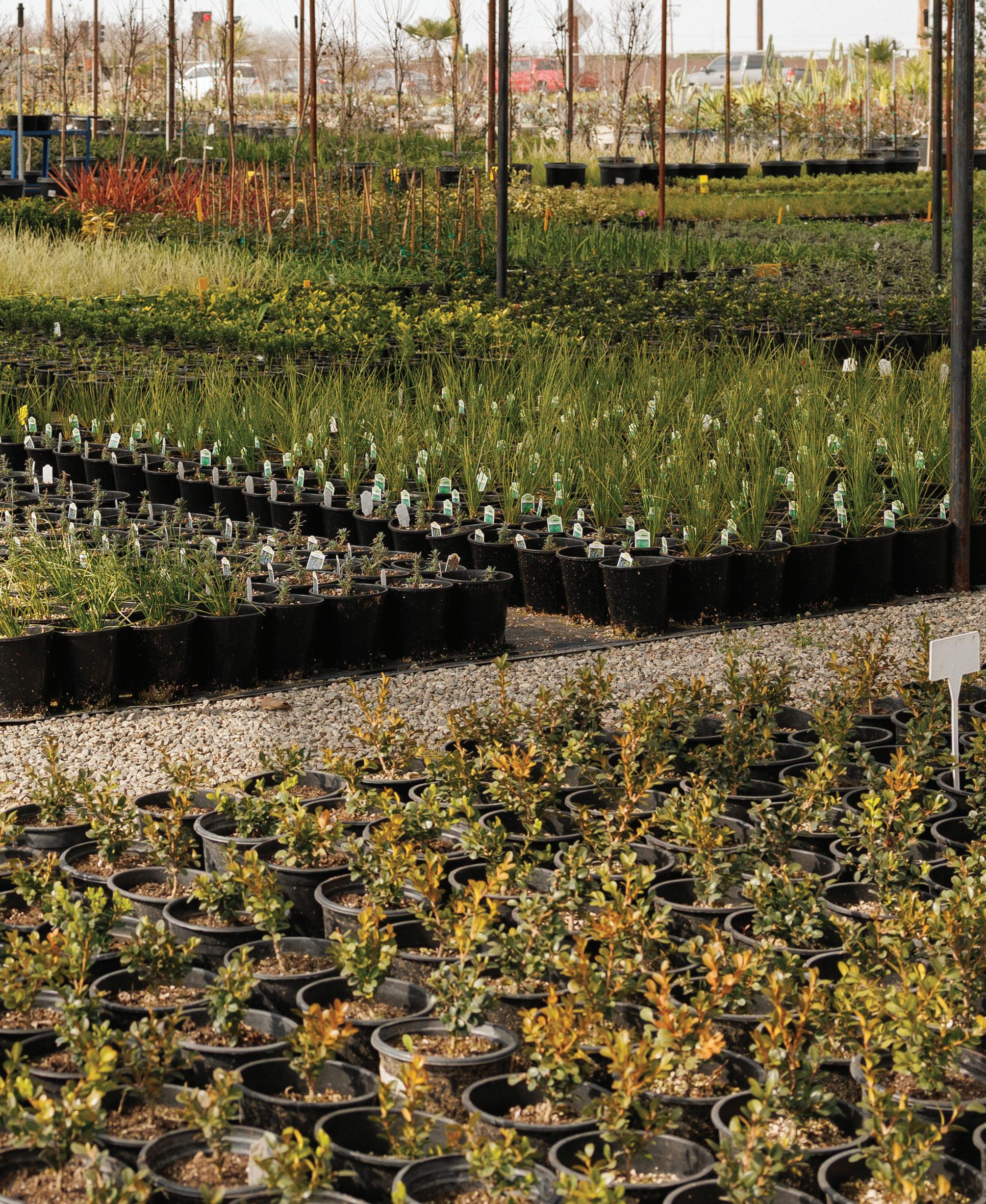
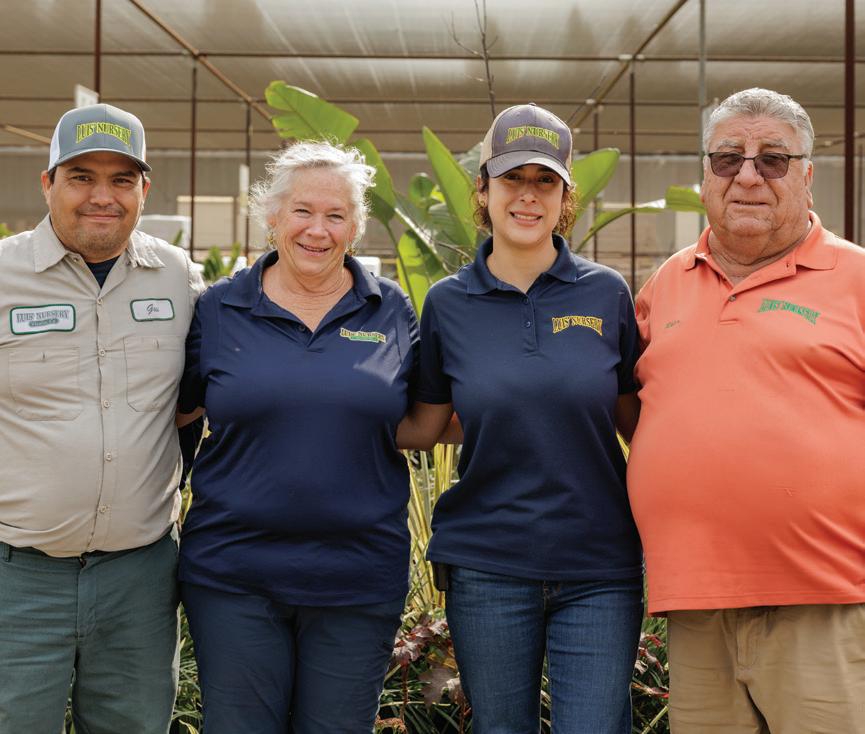
We sat down with local experts from Luis’ Nursery to dig into the essentials of the garden. From soil prep to supporting our local pollinators, read what general manager Larry Espinoza and native and pollinator expert Leslie Fry had to say about getting prepped for a thriving spring season.
If someone is wanting to start a garden right now, what advice would you give them?
Larry: “Enjoy the journey and try not to be overwhelmed. A garden is an ongoing relationship that will make you happy and disappointed sometimes. Your garden is a living and evolving place that will change over time.”
What are the most important factors in prepping for a garden?
Larry: “The most important factors for starting a garden are to identify the area, consider the irrigation style that works best for you, try to understand the type of soil you have, and consider the sun exposure.
First: Start with your irrigation system. (The most vital factor for a successful garden.) For me, an automatic water system is essential. If you cannot tie in your current water system, separate battery timer systems can help you isolate specific water areas.
Next, check your soil. Is it heavy? Clay-like? Or is it loose or sandy? These conditions will determine the type of soil amendments to plant with.
Finally, when it comes to plant selections, I always say to choose things you like first. Remember that you have to see them every day. Work with your nursery professionals to determine whether or not these plants can handle the soil and sun exposure levels in your garden.”
If a customer wants a garden that is still vibrant and lush in the heat of summer, what should they be putting in the ground right now?
Larry: “Our summers are usually long and hot. Thankfully, there are many new perennial hybrid varieties that can handle our climate. Lantana hybrids are fun and full of color in the summer and there are new dwarf and semi-dwarf types.” (Larry also suggested the Salvia family for flowering color.)
Leslie: “Knowing if your gardens are in full sun, part shade, or heavy shade will help determine which plant varieties will be successful and thrive when summer hits. Regular watering is the most crucial. We have a list of great varieties to plant now, and not in the heat of summer. Wait until fall to plant natives.”
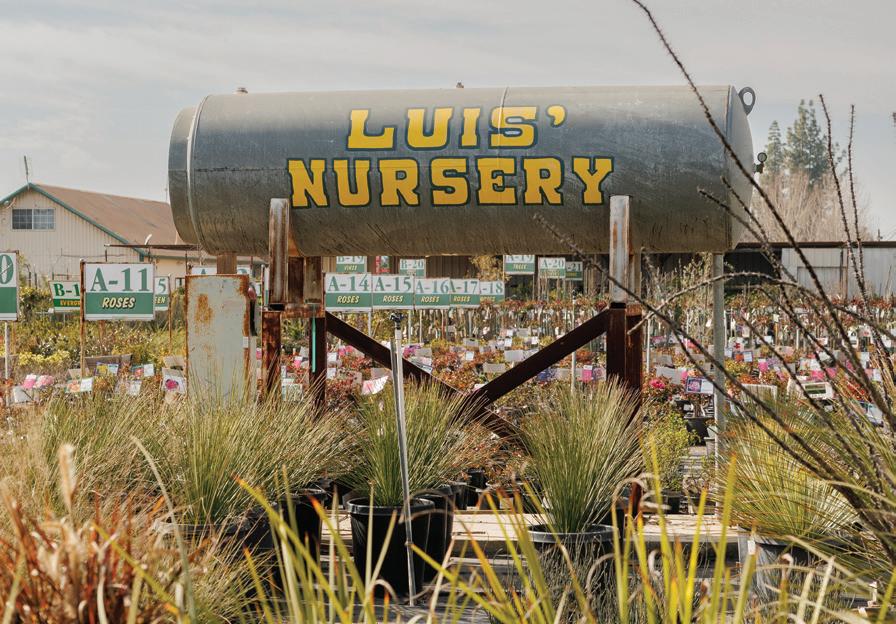
“ENJOY THE JOURNEY AND TRY NOT TO BE OVERWHELMED. A GARDEN IS AN ONGOING RELATIONSHIP THAT WILL MAKE YOU HAPPY AND DISAPPOINTED SOMETIMES.”
Why is a local nursery a better resource for a beginning gardener than a big-box hardware store?
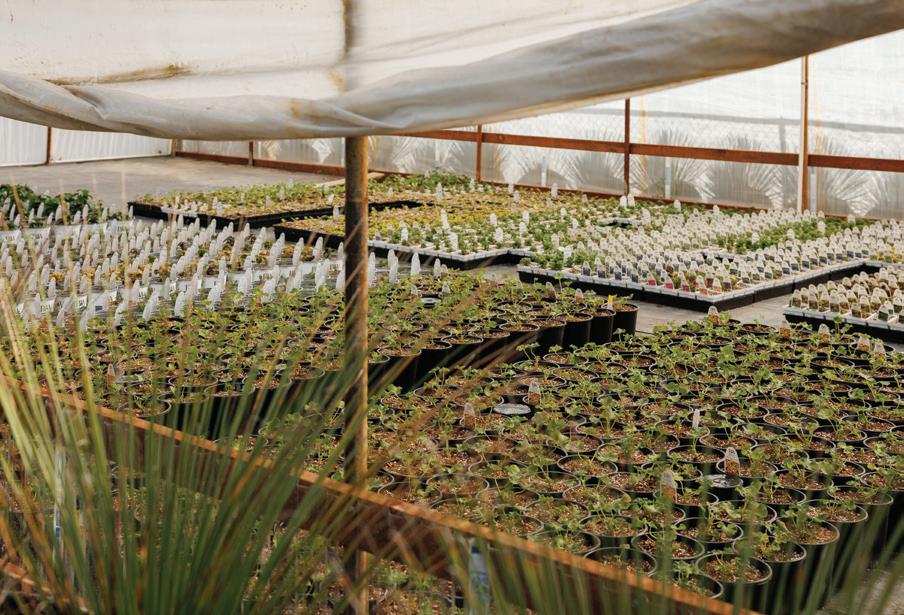
Larry: “Local nurseries focus on plant quality and variety. Our staff is experienced with plant varieties that thrive in our area and many of us have personal planting experience. Most of our plants are grown on site, so they are already acclimated to our unique climate. Service, dependability, and a knowledgeable team keep people coming back.”
Have you seen the community’s gardening interests shift over the last few years? What are people most interested in—beauty or functional planting?
Larry: “The pandemic renewed interest in our industry. People who had never gardened before learned that having a garden can be therapeutic: there is something about watching and caring for plants that nourishes our soul. I have seen a shift with our new gardeners as people have realized that their homes should be places that bring them peace and joy. Plants that provide gardeners with something tangible and useful like fruit, vegetables, or cut flowers have all reemerged as the 'crown jewels' in home gardens over the past 4-5 years.”
If a gardener only has a small patio or balcony, what are the top three plants that will attract the most butterflies or hummingbirds?
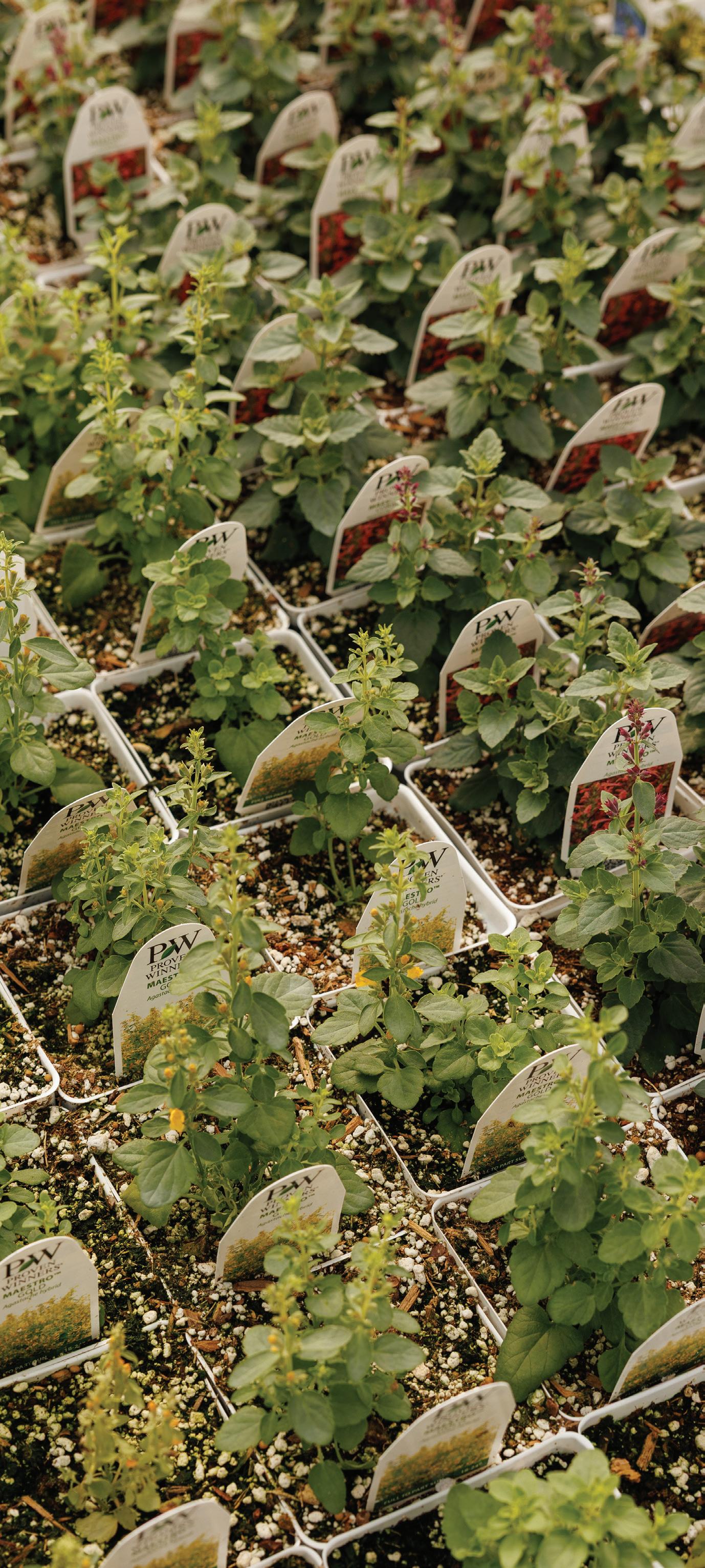
Leslie: “You can bring butterflies and hummingbirds to a small garden space by planting in containers, hanging baskets, or a small garden area. Look for dwarf salvias, agastache, cupheas, coreopsis, profusion zinnias, and many more. Always add some sweet alyssums to your containers as well. If you have an herb garden, let some go to flower; mint blossoms and others will bring in a host of visitors! Most importantly, do not use chemicals! This will harm any of the wonderful creatures you're trying to attract. And remember: Caterpillars will turn into butterflies.”
How does a pollinator-friendly garden change the health of the rest of the landscape (like vegetable yields or pest control)?
Leslie: “It completely changes the overall health of a garden. Pollinator gardens provide pollinators with plants that give nectar and pollen, along with safe places to hide and lay their eggs. Bringing pollinators into your gardens will give you better yields on vegetables and fruits, and your flowers will do better as well. A pollinator garden will also attract and provide a safe home for many beneficial insects that keep the pests in check. Pollinators also bring in so much entertainment! Just watching them is always so amazing. A chemical-free garden will always provide a healthier habitat for yourself and the ecosystem.”
Is there a native plant that is often overlooked, but actually a magnet for local wildlife?
Leslie: “Native plants are great for your gardens, and bring in a diverse variety of pollinators and wildlife to the garden. One of the very best is an oak tree! Oak trees support hundreds of species of insects, birds, and wildlife. Native buckwheats are another overlooked plant. They provide cover and habitat for small wildlife, and are a host plant for a multitude of butterflies, bees, and beneficial insects. Other examples of underused natives are grasses, sages, toyon, and rhamnus bushes.”
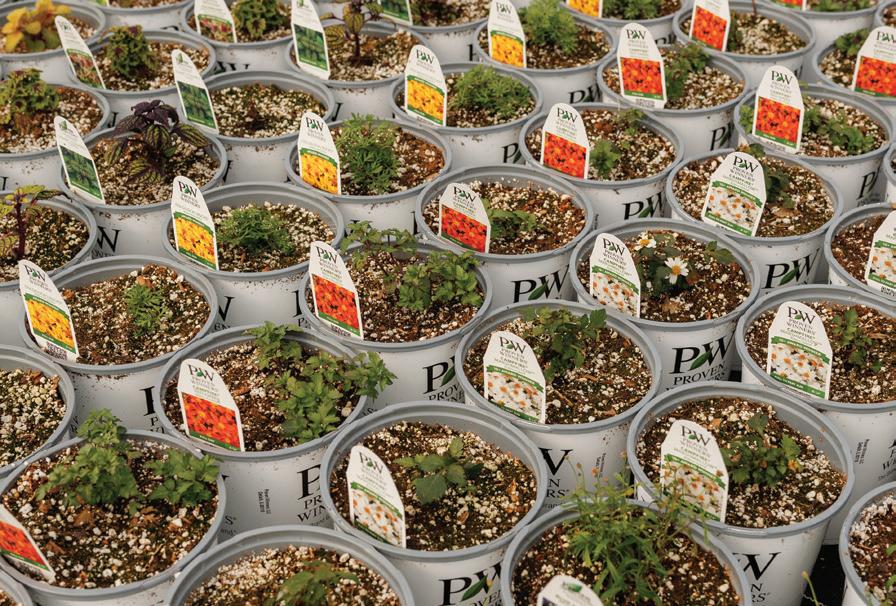
Are there any underrated garden plants in your nursery that often go unnoticed?
Larry:
• Westringia ‘Wynnabie Highlight’
• Cotinus coggygria ‘Winecraft Black’
• Mahonia eurybracteata ‘Soft Caress’
Leslie: Shrubs
• Westringia
• Teucrium
• Gauras Grasses
• CA natives
• Lavender
Perennial Hybrids for flowering color
• Salvia nemorosa ‘Rose Marvel’
• Salvia greggi ‘Mirage Purple’
• Salvia hybrid ‘Rockin Blue Suede Shoes’
Foliage for non-flowering color
• Loropetalum chinense ‘Jazz Hands Pink’
• Ligustrum sinense ‘Sunshine’
• Dianella revoluata ‘Little Rev’
• Lomandra longifolia ‘White Sands’
Visit them online and in-person: luisnursery.com | IG: @LuisNursery (559) 747-5015
139 S. Mariposa Ave, Visalia, CA 93292 Monday - Saturday | 7am - 5pm Sunday | 9am - 3pm
Cattlehave been roaming Tulare County almost since the county was formed in 1852. A number of early pioneers brought herds of cattle with them when they settled here, like J.D. Keener, who in 1853, drove the first herd into the Visalia area from Texas. He continued to add to his cattle number over time—and his Texas cattle were said to have started the famous Miller & Lux herds. And cattle made perfect sense for the area, as the land was well-suited with plenty of water, grass, and wide open spaces for unrestricted grazing.
To manage their herds, cattle owners—often in the spring— gathered their animals to a centralized area where they could examine, count, and brand them. This practice began in Mexico and was called a “rodeo,” a Spanish word that means “to surround.” Mexican cowboys called vaqueros would round up the cattle for these rodeos and the practice spread to American cattle ranches.
Some of the earliest rodeos in Tulare County were conducted at Cross Creek Ranch (west of Visalia), Buzzard’s Roost (Waukena), Kings River (Kingston), Sentinel Buttes (Red Banks) and Mooney Grove.
Sometimes these rodeos included a “whiskey wagon” which allowed the working cowboys to get a drink. In 1865, it is said that Henry Miller (of Miller & Lux fame) at one time bought each of the 200 cowboys a drink of whiskey at the Cross Creek rodeo. Eventually, as might be expected, whiskey wagons were banned when excessive drinking became a problem.
There were plenty of rodeos around Visalia. In 1859, the Visalia Weekly Delta newspaper commented on one of the nearby events, “Every few days there is a rodeo somewhere on the plains…We were present at one of these on Saturday last and witnessed the novel performance to us, of ‘cutting out’…cattle.”
Wrangling or gathering cattle was difficult and dangerous, so cowboys would often incorporate some light moments into their work. They would show off the fancy footwork of their horses and put on displays of amazing rope tricks. Out of this fun, the modern day rodeo was born.
Today, action-packed rodeos as a sport are popular throughout the country, drawing thousands of fans to watch professional and amateur cowboys and cowgirls show off their skills.

In as early as 1921, Visalia had a wild west show that was called a rodeo. It was held at the town’s baseball park. But Visalia’s first official rodeo as entertainment was held in 1927 on land that is now Recreation Park. Oscar Warren originated the one-day event, and it proved to be so popular that almost yearly rodeos followed.
In 1932, a group called the Visalia Rodeo Association was formed. That same year, the group purchased the McSwain property south of Tulare Avenue and west of Court Street. This land became Visalia’s second rodeo grounds.
For some unknown reason, in 1940 the property was sold and the rodeo moved back to Recreation Park. Then the war years caused an interruption to this annual event and public interest declined.
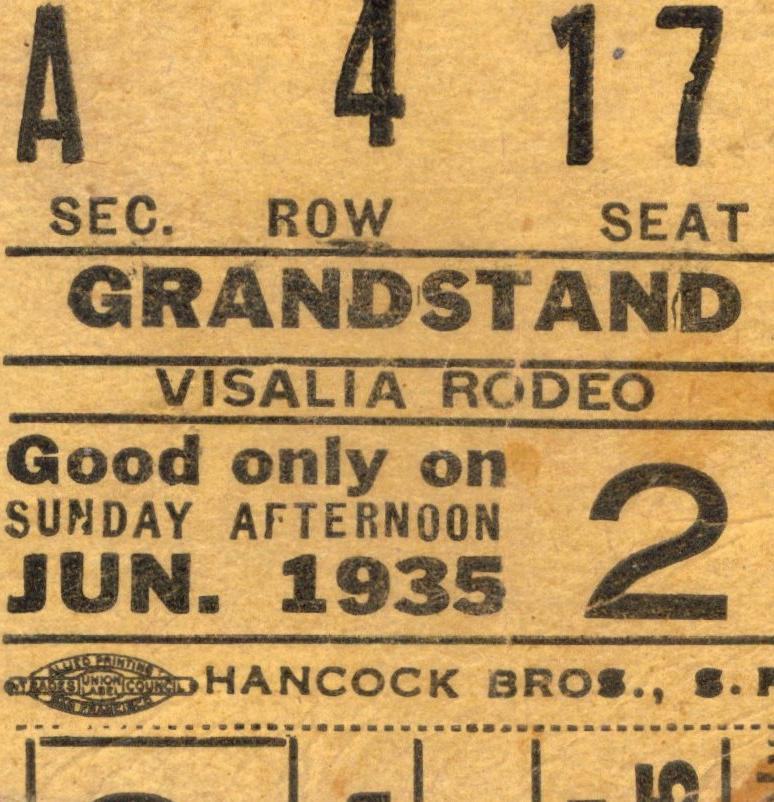
In 1947, a group interested in revitalizing the Visalia event began looking at 40 acres of city-owned land on the east side of the airport. The location offered plenty of space with ample room for spectators, their vehicles, and livestock pens. The Visalia City Council supported the plan and Visalia had another rodeo location.
In 1948, rodeo association chairman Charlie Hammer organized a volunteer work force, and within six weeks the new airport rodeo grounds was complete. Bleachers to seat 5,000 spectators were rented just in time for the May rodeo.
The next year, Hammer again recruited volunteers, purchased equipment, and began an aggressive plan for upgrading the grounds. The main effort for the upgrade was the construction of permanent grandstand seating. A huge pile of dirt was created and tightly packed to form tiered seating. A wire frame was placed on top for reinforcement, then a coat of gunite or concrete was applied over the top. The result was a multi-level series of concrete benches that formed a grandstand capable of seating 5,000.

Improvements and modifications to the grounds continued to be made over the years and thousands of people enjoyed the rodeos there. The sport was so popular that at one time it was reported that the Visalia rodeo was the sixth largest in the country.
It is unclear as to when the last rodeo was held in town, but records indicate that the 1986 event was predicted to be the last.
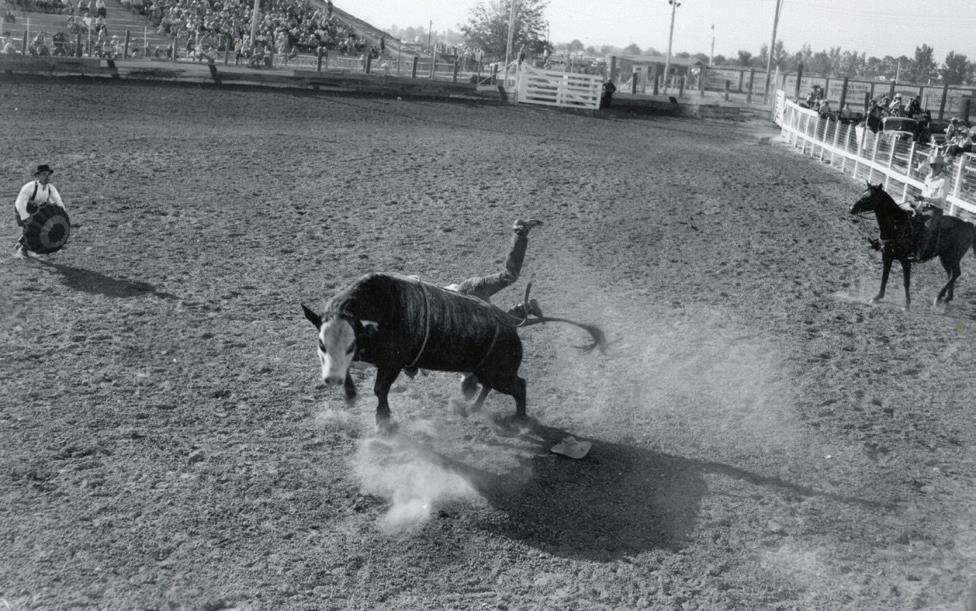
Throughout Visalia’s rodeo years some amazing and talented performers gave the fans a wonderful show. But there is one man who is legendary. His name is Francisco “Chico” Martinez. Chico was born in the state of Sonora, Mexico in about 1812. He came to California in the 1850s and settled in the Valley. The talented horseman captured wild horses for a living and earned the title “King of the Mustang Runners.” After he caught the animals, he would tame them by riding them. He never performed as a rodeo entertainer, but if he had, his talent would have sold out the arena. He called Visalia home for many years, so when he died near Coalinga in 1876 of pneumonia, his friends took his body by wagon to Visalia for burial.
Other local rodeo talent includes Clay Carr, a multi-year world champion cowboy in the 1930s. Visalians Willie Clay and the Mendes brothers also dazzled local fans and did their part to put Visalia on the rodeo map.
Even though Visalia is no longer a rodeo town, Tulare County still has them to enjoy. Woodlake has 70 years of rodeo history. The 71st rodeo is scheduled for May 2026. Springville has been holding rodeos since 1949. Called the Springville Sierra Rodeo, the 76th annual event is scheduled for April 2026.
In Fresno County, Clovis has had a rodeo since 1921. Still active today, the wildly popular event draws thousands of fans. Clovis’ next one is scheduled for April of this year.
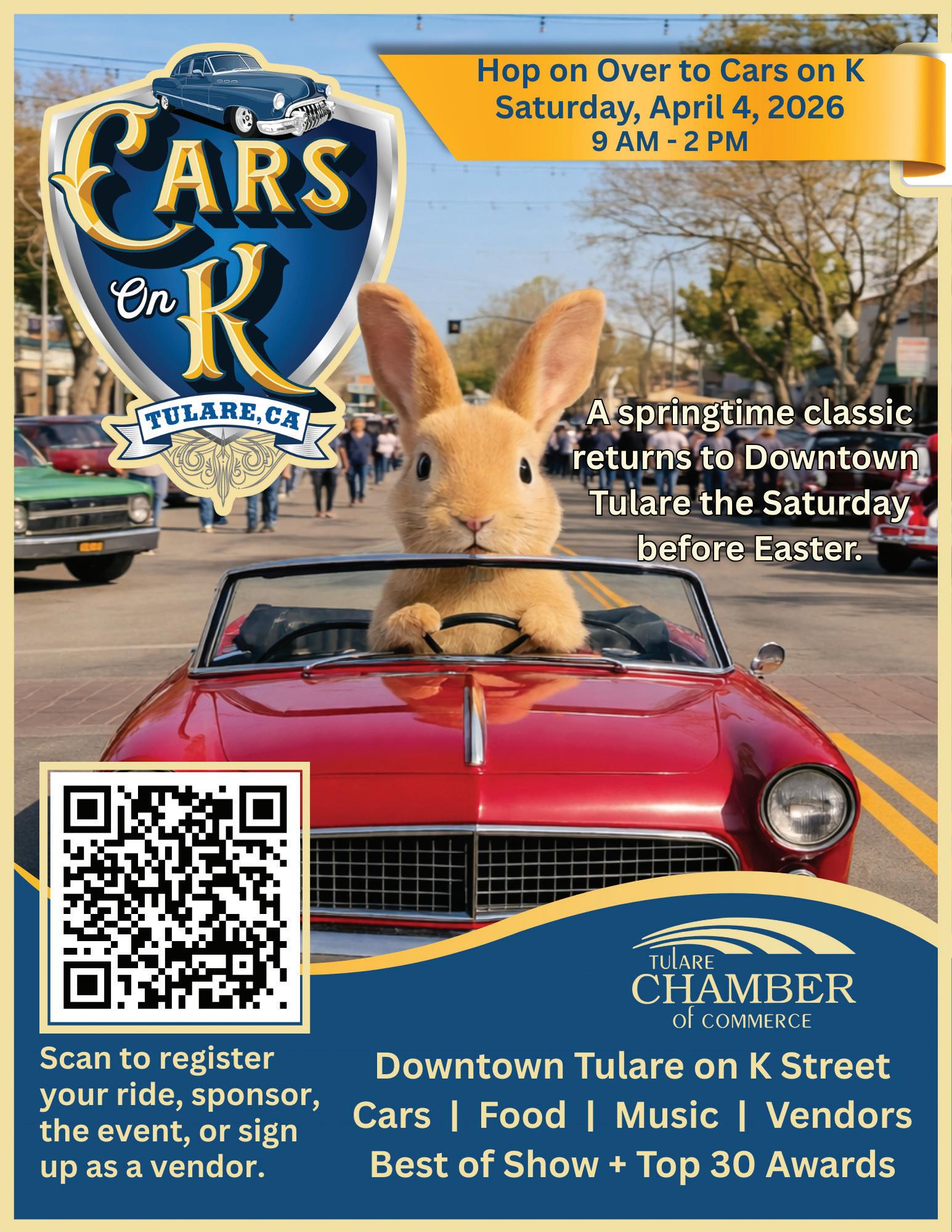
Bloom where you’re planted—enjoy community fun this spring!

MARCH 7
Saturday
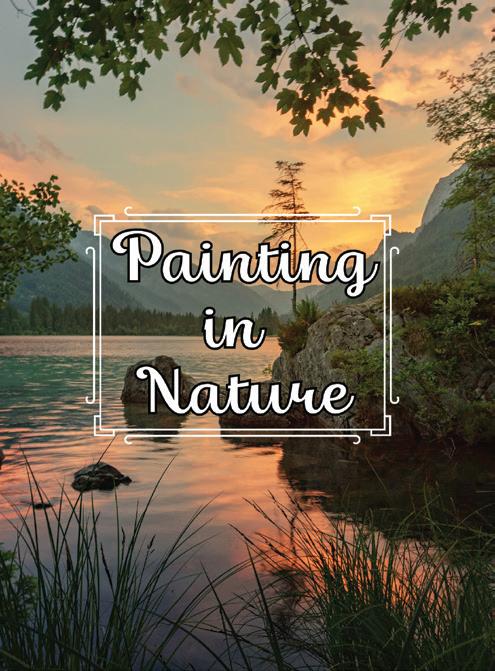
Painting in Nature Fundraiser
When: 11am-4pm
Where: Kaweah Oaks Preserve
Hosted by: Psychology for Geeks psychologyforgeeks.com

MARCH 20-22
Friday-Sunday
2026 FlightFest
When: 10am
Where: Downtown Lemoore
Hosted by: City of Lemoore lemoore.com
MARCH 14 MARCH 21
Saturday Saturday
Irish Fest
When: 1-5pm
Where: Visalia Recreation Park
Hosted by: Visalia Breakfast Lions Club https://shorturl.at/ByCbx

Donut Run/Walk
When: 10am
Where: Mooney Grove Park
Hosted by: Downtown Visalia Kiwanis Club https://shorturl.at/CKVYZ
MARCH 14-15
Saturday-Sunday
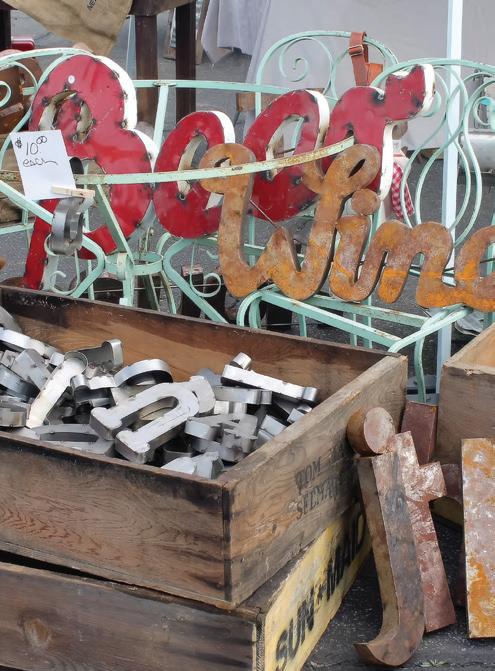
Rusty Roots Show
When: 9am-3pm
Where: Tulare County Fairgrounds
Hosted by: Rusty Roots Show www.rustyrootsshow.com
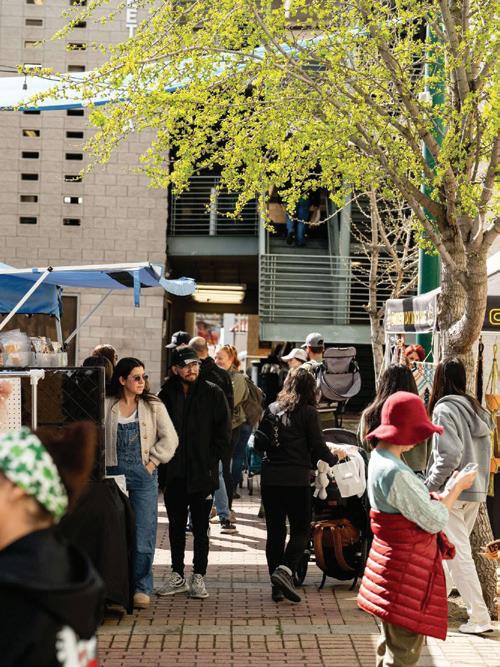
MARCH 21
Saturday
DTV Spring Market
When: 11am-2pm
Where: Downtown Visalia, Garden St Plaza
Hosted by: Downtown Visalians downtownvisalia.com

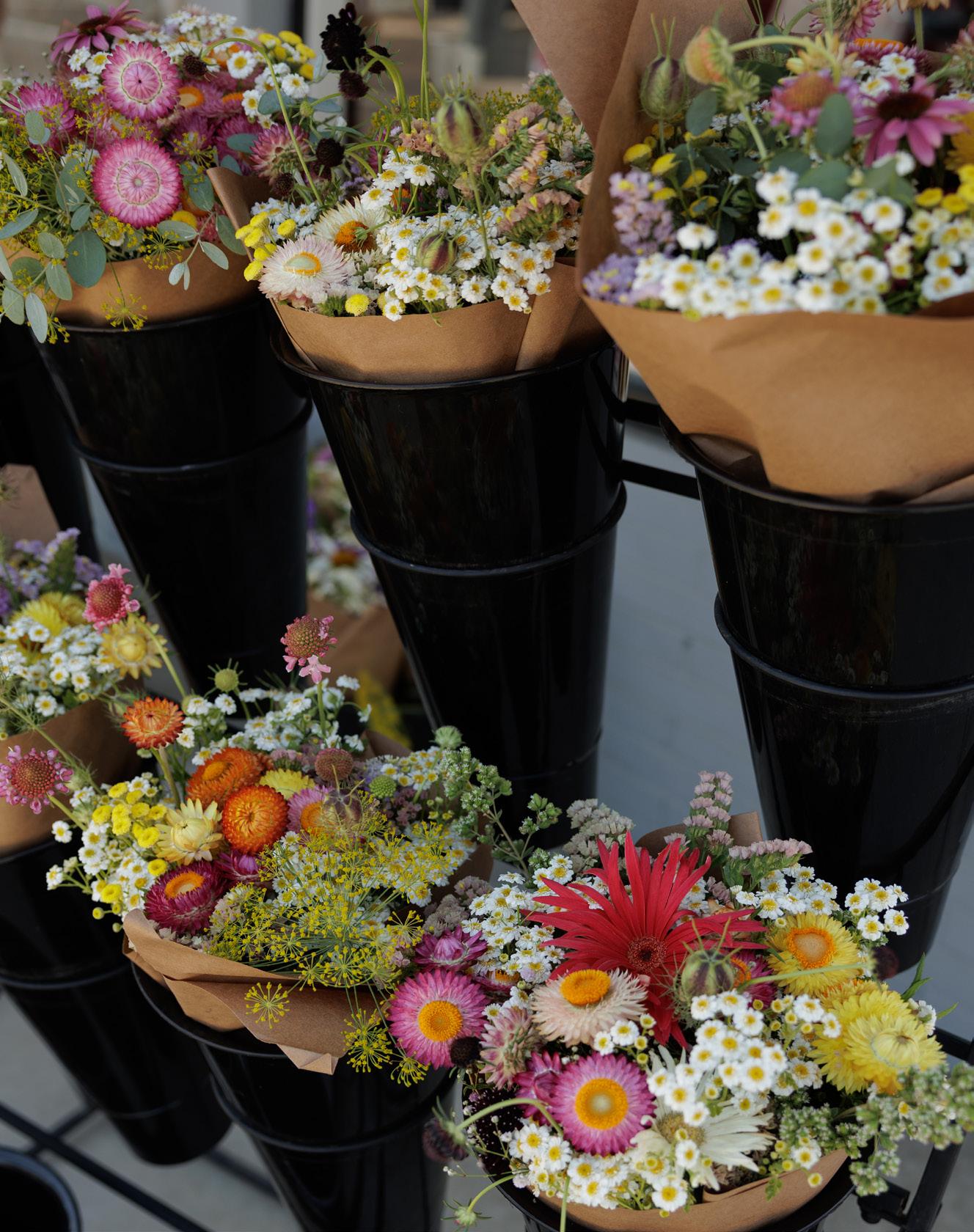
Dig in with us as we look ahead to our “Locally Grown” issue—it’s just beginning to take root! This upcoming edition shines a light on the people and projects blooming right in our own backyard. Explore alongside us the stories of growth and homegrown passion of our beautiful, interwoven community.

Executive Editor Stephanie Steelman
Creative Editor Sam Justice
Editorial & Advertising Coordinator Chelsi Stark
Content Editor Marissa Carpenter
Designers Daniel Borgatto, William Yamauti
Photographers Carly Vagim, Dakota Jacobi-Stephenson
Visalia’s Lifestyle Magazine is published monthly and is distributed via direct mail to homes in Visalia. Additional copies are distributed at various rack and countertop locations around Visalia, Tulare, Exeter, Three Rivers and Kingsburg. Distribution is subject to change. Views expressed in articles and on advertisements are those of the writer and advertiser and not necessarily those of Lifestyle Magazine or Root. Every effort is made to avoid errors, misspellings, and omissions. If an error is found, please accept our sincere apologies and notify us of the mistake. © 2026 Root Creative Marketing Published by Root Creative Marketing, 6759 N
Advertising and General Inquiries lifestyle@root.marketing
Sales