The Future Emerges at the Edge: Interview with Markus Petzl Pages 10–11
A Kingdom for the Moment Page 12
Eberhard Schrempf on Design: Disruption –The Controlled Tremor Page 14
STYLE:
10 Questions Page 15
The Space That Pauses Pages 16–19
Making Cities Great Again? Pages 20–23
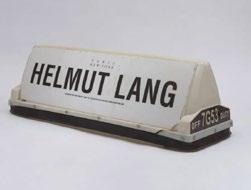
The Margiela Folders: Open Archive, Open Thinking Pages 24–26
Lifestylehotels™ Selection:
PalmaÏa – The House of AÏa Page LH-Cover 01
Lifestylehotels™ Directory Page LH 02
ElisabethHotel Page LH 03
Gradonna Mountain Resort**** Page LH 04
Küglerhof Page LH 05
Boutique Hotel Badhaus and Arthotel Lasserhaus Page LH 06
Hotel MOTTO Page LH 07
Refugium Lunz Page LH 08
PalmaÏa – The House of AÏa Page LH 09
Bergwiesenglück Page LH 10
Agrad Chalets Page LH 11
OLM Nature Escape Page LH 12 Impressum Page 2
Panta Rhei
Disruption is a grand word – one that easily hardens into gesture, obscuring what it actually names: the moment when orders begin to fray, when systems lose their air of inevitability, and something else starts to take hold. Not a clean break, but a shift. Often quiet, yet irreversible. It may be precisely this kind of movement that can be observed across architecture, design, and culture today. Less the radically new than a fundamental questioning of what long passed as given comes to the fore. Spaces slip their singular functions, disciplines bleed into one another, and even the everyday suddenly appears as an open field.
This issue approaches disruption not as a buzzword, but as a condition – and as a method. In conversation with Markus Petzl, the focus turns to the productive potential of doubt: not on perfecting systems, but on rendering them visible in the first place. An essay that deliberately evades familiar forms follows this line of thought, unsettling expectations of what a text might be and do. The projects we present likewise move within this tension. The archives of Maison Margiela make clear how rigorously deconstruction can operate as a design principle. On the Vitra Campus, the Doshi Retreat opens a perspective on withdrawal. And with California Forever, a project enters the frame that renegotiates the very idea of the city – hovering somewhere between vision and disquiet.
Disruption rarely declares itself in the obvious. It begins in the detail, in doubt, in the subtle shifting of meanings. And perhaps that is its defining quality: that it compels us to see again.
MINDFUL ESSENTIALS
Carrie Portable Lamp by Audo Copenhagen
Why should light remain fixed in one place? The Carrie lamp quietly dissolves that rule. With its soft, warm radiance, it moves from living room to balcony, from dinner table out into the night. It creates atmosphere where none existed before – independent, understated, intuitive. An invitation to rethink space, and to leave the familiar behind. approx. €185, audocph.com
A NEW GLOW
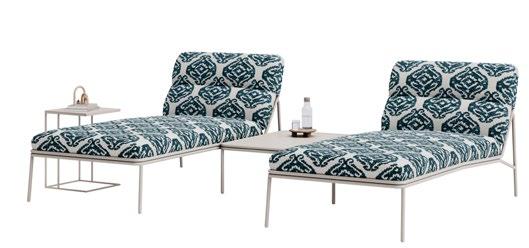
Sedda Outdoor Double Lounger Gibraltar
Who says relaxation must be a solo act? The Gibraltar double lounger reimagines comfort: generous, open, almost architectural. Here, the outdoors becomes an extension of the living room; time stretches, conversations linger, thoughts loosen. It is a place that invites not only repose, but reconsideration – of how much space we are willing to grant ourselves. approx. €3200, sedda.at
A NEW LATITUDE
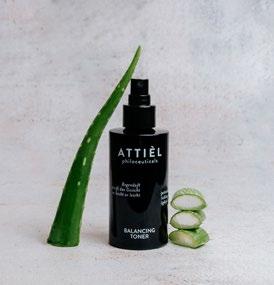
Attièl Toner
Between cleansing and care lies a fleeting gesture – and yet it is often here that something shifts. Attièl’s toner transforms this in-between into a deliberate ritual: cool on the skin, calming, almost meditative. It restores balance to what the day has unsettled, offering a quiet counterpoint to excess. Less product, more effect. Less noise, more you. approx. €42, attiel.com
A MOMENT OF CLARITY
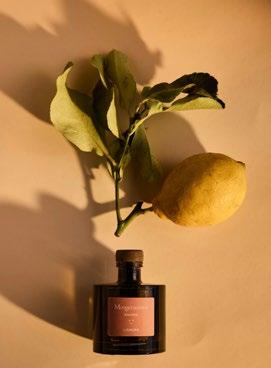
Looops Diffuser “Morning Sun” – Spring Edition
Sometimes change does not announce itself with a grand gesture, but with a scent. “Morning Sun” captures precisely that moment – when light slips through curtains, the air still carries a trace of coolness, and the day feels newly negotiable. Citrusy brightness meets warm, gentle notes, and together they become an olfactory reset that quietly unsettles habit. In place of autopilot comes attention; in place of routine, a sense of departure. approx. €39, looopsmoments.com
A NEW BEGINNING
Ray-Ban Sunglasses
The nineties were never well-behaved, and that is precisely what makes their return so compelling. This slim-cut Ray-Ban is more than an accessory; it is a stance – pared down, self-assured, faintly defiant. It filters not only sunlight, but expectation. Suddenly, everything appears sharper, more direct, a touch more daring. Here, retro becomes a small rebellion in the present. approx. €140, zalando.at
A DIFFERENT ANGLE
Burlington Palm Tree Socks
Between gray asphalt and crowded calendars, palm trees suddenly appear. These socks are a playful disruption – unexpected, lighthearted, and all the better for it. They are a reminder that it is often the smallest details that alter the rhythm: a motif that refuses to blend in, a pattern that resists conformity. Everyday life, with a hint of getaway. approx. €18, burlington.de
A SMALL ESCAPE
HOW WE MIGHT UNLEARN COHERENCE
DIS
Text: Nina Prehofer
SPACE AS A DISPOSITIF WITHOUT CENTER
WE NO LONGER MOVE IN SPACES.
WE MOVE THROUGH STATES.
Space, too, loses its ordering function.
Architecture long served as a medium of stabilization: structuring social relations, coding hierarchies, organizing movement and sight. Spaces were legible because they were functionally clear.
That legibility is fading.
With Henri Lefebvre, one might say that space is not given, but produced – a social product composed of practices, representations, and imaginaries. As these layers drift apart, space itself loses coherence.
The architect Rem Koolhaas described this condition as a form of indifference, as “generic space,” resistant to specific meaning.
Yet indifference here is not a lack of design. It is a symptom.
A symptom of spaces no longer capable of producing stable distinctions: between inside and outside, private and public, work and intimacy.
The home is no longer a retreat, but a node.
The city no longer a center, but a field of overlapping intensities.
THE BREAK
Perhaps it does not begin with a rupture, but with its absence – with the quiet irritation that nothing quite ends anymore, and nothing quite begins. Transitions without thresholds. States without duration. A present that slips the grasp of its own form.
What we commonly call “disruption” can no longer be contained as a singular event. It is not a cut, not an interruption of a stable continuum. It is closer to a structural shift in which the very idea of continuity has become questionable.
The modern age, one might say with Zygmunt Bauman, has lost its solid state. What remains is a fugitive, “liquid” order – one that cannot stabilize without, at the same time, dissolving again. And even this diagnosis now feels insufficient.
For it is no longer simply a matter of instability, but of the loss of any expectation of stability. Disruption, then, is not a disturbance within a system. It has become the condition of the system’s very possibility.
RUP
AND IT IS PRECISELY HERE THAT THOUGHT ITSELF BREAKS: FOR IF DISRUPTION IS NO LONGER AN EVENT, IT CANNOT BE OVERCOME.
THERE IS NO POINT AT WHICH A NEW ORDER STABILIZES.
NO SYNTHESIS THAT RESOLVES CONTRADICTION. ONLY ITERATION. ONLY DISPLACEMENT. ONLY CONTINUATION. (WITHOUT RESOLUTION)
AESTHETICS AS AN UNSTABLE CATEGORY
The classical notion of disruption presupposes an outside – something that enters a system from beyond and alters it.
That notion has become obsolete.
There is no outside left from which disruption might operate. Systems have become so permeable, so entangled, that every disturbance is already part of their own logic.
Here, one might turn to Gilles Deleuze, who dissolved the primacy of fixed structures in favor of processes, flows, and relations. Systems are not closed units, but assemblages – dynamic, shifting, never complete. In this sense, disruption is not interruption. It is a mode of continuity.
A continuity defined not by stability, but by permanent transformation.
As the subject destabilizes, so too does the status of the aesthetic.
What once functioned as a regulative ideal – proportion, harmony, closure – loses its normative force. Not because it is actively negated, but because it forfeits its selfevidence.
The gesture of the avant-garde, as articulated by Marcel Duchamp, sought to unsettle the boundary between art and non-art. Context became decisive in rendering an object legible as art.
Today, even that context appears unstable. There is no longer a reliable frame that determines what counts as aesthetic. Instead, fragments, citations, ruptures circulate – detached from any stable system of reference.
Here, the present brushes against what Jean Baudrillard described as “simulation”: an order of signs that no longer point to a real referent, but only to one another. Aesthetics becomes self-referential.
In this context, the unfinished is not a conscious refusal of perfection. It is the expression of a world in which the promise of completeness has become obsolete. The fragment no longer points to a lost whole. It circulates without origin.
AND PERHAPS
DISRUPTION WITHOUT AN OUTSIDE
THIS IS WHAT UNSETTLES MOST: THAT EVEN RUPTURE IS NO LONGER EXPERIENCED AS SUCH,
BECAUSE THERE IS NO WHOLE LEFT FROM WHICH IT MIGHT STAND APART.
TION
ONE IS NO LONGER SOMETHING. ONE IS ITERATIVE.
THE SUBJECT AFTER UNITY
The idea of a coherent subject – an inner core unfolding over time, consistent, expressive – remains one of the most powerful narratives of Western modernity. It does not collapse. It erodes.
Judith Butler described the subject as an effect of repetition: something constituted performatively, and therefore never fully identical with itself. Identity appears not as origin, but as result.
What has changed today is not this insight, but its intensification under the conditions of digital and social acceleration.
Repetition itself has become unstable. It loses its rhythm and tips into perpetual variation. The subject is no longer what stabilizes through repetition, but what sustains itself through constant deviation. Here, one might also turn to Michel Foucault, for whom the subject is always already embedded in relations of power – produced by discourses, norms, and practices. Yet where these once generated a measure of coherence, they now overlap in ways that no longer allow for a singular position of the subject.
The result is not liberation in any emphatic sense, but a shift: from identity as being to identity as version.
WHAT REMAINS IS NO NEW ORDER. NO STABLE NOTION OF IDENTITY. NO RELIABLE AESTHETIC. BUT A SHIFT IN HOW WE INHABIT UNCERTAINTY: LESS URGENCY TO RESOLVE, MORE TOLERANCE FOR AMBIVALENCE, A DIFFERENT RELATION TO OUR OWN INCOMPLETION.
AND PERHAPS THAT IS NOT A WEAKNESS, BUT A FORM OF PRECISION. WE ARE NOT LOST. WE ARE SIMPLY NOT FINISHED.
Perhaps this condition calls less for new answers than for another kind of attention – one that does not rush to impose coherence on what resists it. One that understands contradiction not as deficit, but as structure.
Here, one might cautiously recall Theodor W. Adorno, for whom the non-identical names that which eludes conceptual capture – gaining significance precisely in its refusal to fully coincide.
Disruption, then, would not be a problem to be solved, but the condition under which meaning can still emerge at all.
If you had to rethink a traditional company from the ground up today, what is the one thing you would immediately ban?
Without hesitation: I would forbid starting transformation in the core business. That is precisely where most efforts fail. Cultural resistance is immense; the organization defends itself, and suddenly years pass without anything truly changing. Far more effective is to begin “on the edge”: to build small, radical units outside the existing structure, working with new technologies and new ways of thinking. That is where the future takes shape – and only later does the legacy business migrate toward it. If you begin at the core, you are fighting the past. If you begin at the edge, you are building the future.
Disruption is often used as a buzzword. When is a company truly disruptive –and when merely good at marketing?
Disruption is not measured in language, but in impact. A company is disruptive when it creates something others deliver far worse, at higher cost, or with less value – when a genuine competitive advantage emerges.
Everything else is often little more than a well-staged smokescreen. Many brands speak of innovation, but their products tell a different story. Not every company needs to be disruptive at all times. But if it claims to be, it should be visible – not just audible.
Many companies aspire to innovate, yet fail in execution. Why?
A lack of courage – and a lack of honesty. Neither can be purchased. Many believe innovation can simply be acquired, through start-ups, for instance. But if the internal culture is not ready, the new is immediately absorbed – consumed – by the old. Innovation is not a project. It is a matter of mindset, culture, and spirit.
Text: Nina Prehofer
DISRUPTION IS AMONG THE MOST OVERUSED TERMS OF OUR TIME – AND, AT THE SAME TIME, AMONG THE LEAST UNDERSTOOD. IN THIS CONVERSATION, TRANSFORMATION CONSULTANT MARKUS PETZL REFLECTS ON CULTURAL RESISTANCE, THE ILLUSION OF INNOVATION, AND WHY COMPANIES MUST LEARN TO RELINQUISH CONTROL. A DISCUSSION ABOUT COURAGE, CHAOS, AI, AND WHAT MAY BE THE DEFINING OPPORTUNITY OF OUR GENERATION.
Do classical industry logics still exist, or are platforms and AI dissolving them?
Traditional industry logic is increasingly being replaced by data and algorithms –and with that, it becomes interchangeable. At the same time, new meta-logics are emerging, operating across industries. Particularly compelling are so-called self-learning organizations: systems that evolve in real time through feedback. They no longer wait for strategy meetings; they optimize themselves continuously. We are only at the beginning, but the rules of the game are already shifting in fundamental ways.
When a company says, “We’ve always done it this way” – is that a warning sign? It is everything at once: a warning, a death sentence, and an opportunity. Because the statement also reveals that something has worked for a long time. And that is precisely the point of departure: what happens if we radically rethink this “always”? If we break it down into its underlying principles and reassemble it? Often, true disruption emerges right there – not despite the past, but out of it.
How much chaos does innovation require? Chaos is like a primordial soup –necessary, but difficult to endure. Companies are designed to create order. Innovation, however, often arises in moments that cannot be fully controlled: through chance, through unusual perspectives, or through the subconscious.
The best ideas rarely emerge in meetings; more often, they surface in the shower. The challenge is to enable such moments without allowing everything to dissolve into chaos.
Are traditional corporate structures still compatible with disruption?
Not really. But they will not simply disappear – they will transform.
What is fascinating is how large tech companies manage to reinvent themselves repeatedly. At the same time, AI fundamentally challenges the very concept of the “company.”
If a single individual, supported by thousands of AI agents, can run a billiondollar business – what, then, is a company?
You speak of “next practices” rather than “best practices.” What do you mean by that?
Two things are central right now.
First: letting go. Leaders must accept that AI will make decisions they can no longer fully comprehend.
Second: clarity. AI requires clear goals –not strategic fog. Half-hearted directives no longer work.
This is especially challenging in cultures that thrive on ambiguity. But without clarity, the potential of the technology remains untapped.
If AI takes over strategy, analysis, and creativity, what role remains for consultants?
In the short term, they are needed more than ever. In the long term, far less –at least in their current form.
The crucial question is: what human quality remains? Perhaps it is twofold: craft, and a particular mode of perception – what some might describe as neurodivergent thinking. Everything else, AI often does better. And within that realization lies an enormous opportunity to redefine consulting.
How important are aesthetics and storytelling in transformation?
They are essential. Stories are the most powerful tool we have for change. For millennia, humans have organized themselves around narratives – and companies are no exception.
Transformation does not succeed through numbers and strategies alone, but through meaning. Through stories that move people.
And perhaps AI itself is the greatest story of our time. We are at the beginning of a new era – comparable to the advent of electricity.
Seen optimistically, today may be the worst day.
Because tomorrow already holds the possibility of being better.
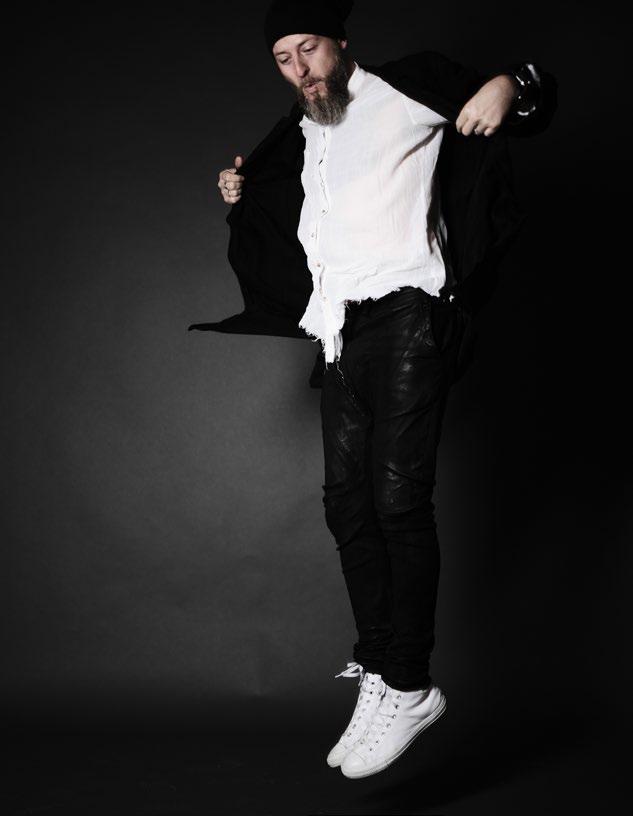
ABOUT MARKUS PETZL
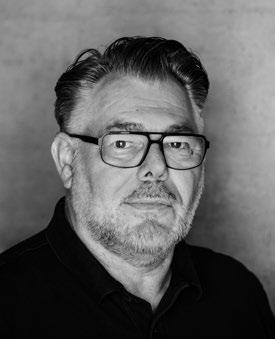
Markus Petzl is a transformation consultant and the founder of disruptive, an approach situated at the intersection of strategy, technology, and culture. Working across industries – from retail and finance to industrial sectors – he supports organizations in not only envisioning radical change, but in realizing it. His work centers on new organizational forms, the application of artificial intelligence, and the development of so-called “next practices.” Petzl understands disruption not as a trend, but as a structural necessity – and as an opportunity to rebuild companies from the ground up. disruptive.wtf
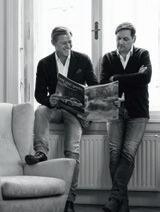
PETZL
Photos: Philipp Horak
“THE FUTURE EMERGES AT THE EDGE NOT IN THE BOARDROOM”
Text: Christina Wetter-Nohl
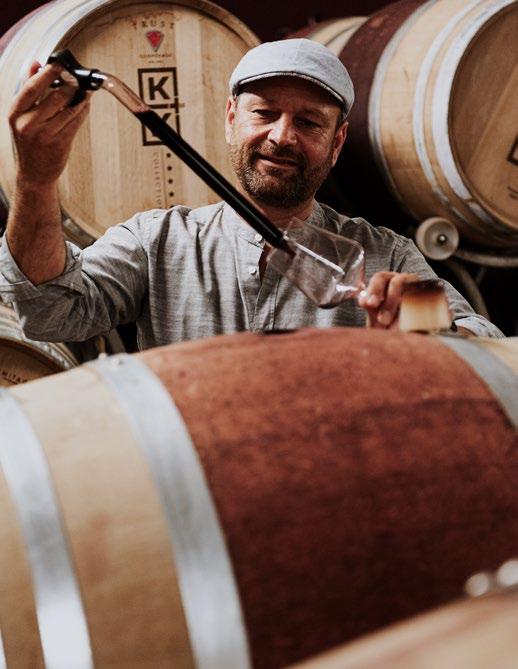
IN MITTELBURGENLAND, K+K DOES NOT NECESSARILY MAKE ONE THINK OF THE MONARCHY AS K. U. K. (KAISERLICH UND KÖNIGLICH) REFERS TO THE INSTITUTIONS OF THE AUSTRO-HUNGARIAN EMPIRE. EVEN THOUGH THE K+K KIRNBAUER WINERY PRODUCES “IMPERIAL AND ROYAL” WINES, THE INITIALS STAND FOR MARLENE AND MARKUS KIRNBAUER, WHO, INCIDENTALLY, EVEN SHARE THE SAME FIRST LETTERS OF THEIR FIRST NAMES.
For around 350 years, the Kirnbauer family has been rooted in Deutschkreutz, between Pannonian vastness and a touch of Tuscan lifestyle. For Markus, the Blaufränkisch grown here is not just a grape variety, but a character in its own right. Marlene shapes the world around the wine with a sense for aesthetics and the necessary drama. Their shared signature is more than worthy of any “k. u. k.” association.
On about 45 hectares, careful work is carried out. Organically. And with a clear view toward the future.
The focus is Blaufränkisch. At K+K Kirnbauer it is interpreted in all its facets, from approachable to profound, pure and as a key component of great blends. Just as distinctive as the wines are the names they bear.
The Phantom is an iconic Blaufränkischbased cuvée that blends four grape varieties and, with its deep red color, has appeared almost every year since 1987.
The Forever Cuvée is aged for 38 months exclusively in new French barrique barrels and is characterized by exceptional longevity.
The Houdini Zweigelt unleashes vitality. It is a wine like an illusion. You think you know it – and yet it proves you wrong. And then comes the moment when a bottle – or two – is opened. At the winery, whose façade glows the same deep red as the wine in its glasses, everything seems to fall perfectly into place.
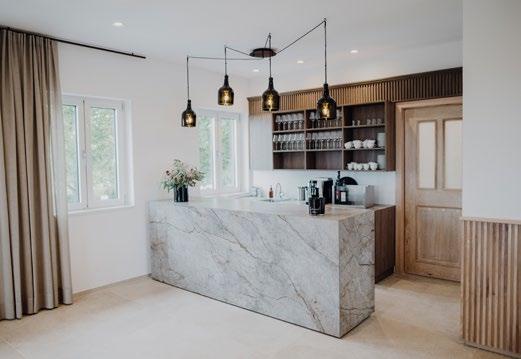
Situated high above the vineyards, the view opens wide onto the landscape. The winery combines Mediterranean lightness with Burgenland clarity. With Rooftop 7301,
A Kingdom for the Moment
a space has been created that embodies exactly this feeling. Here, architecture meets nature, wine meets light, people meet each other. A sundowner here quickly becomes one of those evenings you do not forget.
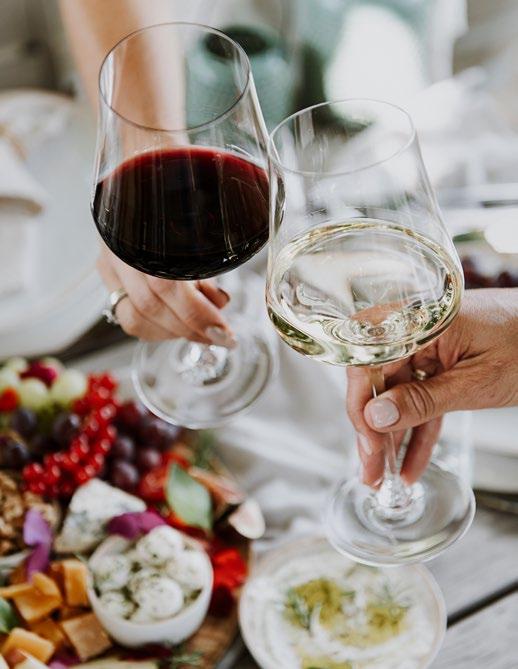
The K+K Kirnbauer wines are companions of special moments. They tell stories of evenings that last longer than planned, of conversations that stay, and of memories that linger. They are wines for the right moments – and for those that become right because of them.
Photos: Carletto Photography, Anna Schober
The Shape of Taste
EBERHARD SCHREMPF
DIS RUP TION
The Controlled Tremor
WHY WE CRAVE CHANGE YET AVOID RUPTURE – AND WHY REAL DISRUPTION HAS MORE TO DO WITH MINDSET THAN
TECHNOLOGY.
We like to talk about disruption – with a certain fascination, almost indulgently. As if it were a promise of renewal, a creative big bang that sweeps away everything that came before. And yet, on closer inspection, something else emerges: we want the tremor – but not the collapse. From a design perspective, a paradox comes into view. Disruption is treated as a prerequisite for radical change, while at the same time we operate within a remarkably narrow corridor of what we are willing to tolerate. We accept upheaval – so long as it does not fundamentally unsettle our coordinates. The dynamics surrounding artificial intelligence make this particularly visible: a technology with the capacity to reorder entire value chains and creative processes, and yet one that is adopted in ways that allow it to slot seamlessly into existing systems. Not because it is harmless, but because we render it so. Within the creative process, disruption is not an exception – it is the point of departure. Any serious act of design begins with a break. Without it, design remains decoration; with it, it becomes transformation.
Yet this form of disruption is rarely loud. It operates with precision, often quietly –less a spectacular overthrow than a slow shifting of tectonic plates.
What we now tend to frame as disruption often follows a different logic. The term has hardened into a buzzword, charged with expectation yet emptied of consequence. Disruption is declared before it has occurred. But genuine disruption resists planning. Truly radical disruptions are rare, not because they are impossible, but because systems are built to absorb them. Markets regulate, users hesitate, institutions stabilize. Systems are designed to persist –not to question themselves. What remains is often evolution dressed as revolution.
Many so-called disruptions are, in fact, linear continuations – faster, more efficient, more digital. They transform tools, but not necessarily ways of thinking. The deeper disruption would be a shift in mindset, in values, in perspective – and that form is far less common.
As designers, we operate in the tension between radical ambition and stable systems. The challenge is not to mistake disruption for a spectacular exception, but to understand it as a deliberate intervention.
The truth is uncomfortable: we want change – but controlled. Progress – but without loss. Disruption – but only insofar as the core of our lives remains intact. And yet, it is precisely here that its potential lies. For every act of relinquishment opens space: for new perspectives, for alternative forms of value, for an expanded understanding of what design can be. Perhaps true disruption does not begin with a bang, but with a stance.
ABOUT EBERHARD SCHREMPF
Eberhard Schrempf is a design strategist, cultural manager, and consultant with extensive expertise in the cultural and creative industries. He is one of the leading voices in Austria’s creative economy, working at the intersection of design, innovation, and economic development, and is embedded in a highly effective international network. As Director of Creative Industries Styria (2007–2025), he initiated the Designmonat Graz Festival and led Graz to its designation as a UNESCO City of Design. Today, he advises companies and institutions, teaches as Professor at FH Joanneum – University of Applied Sciences – and leverages design as a strategic driver of economic and societal transformation.
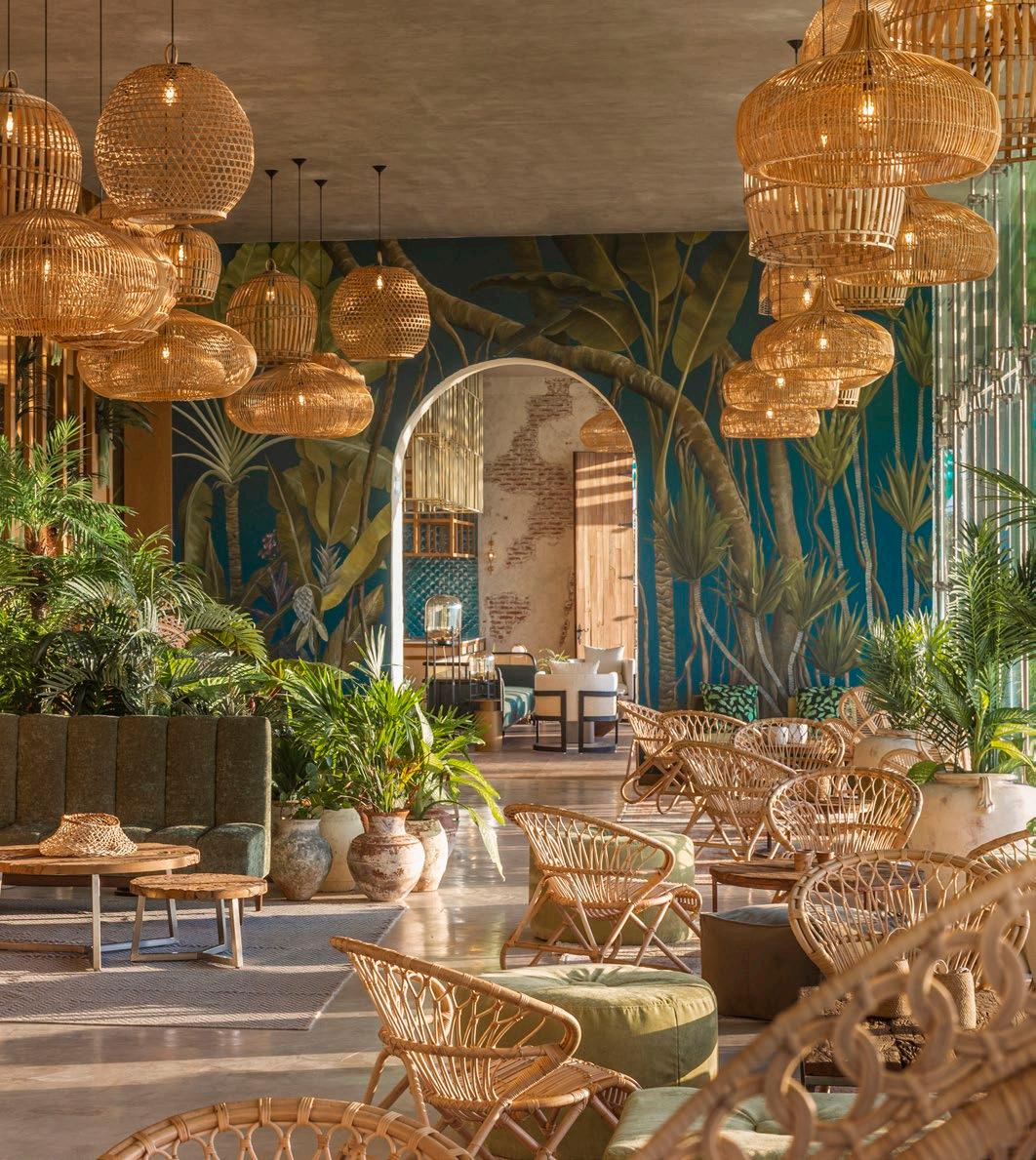
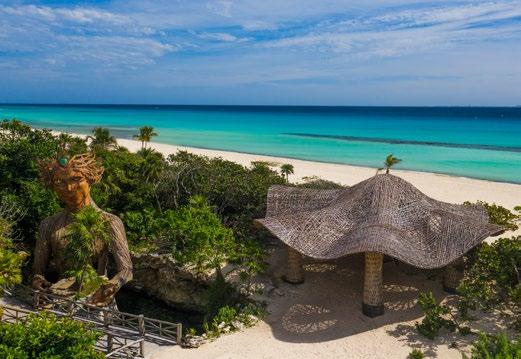
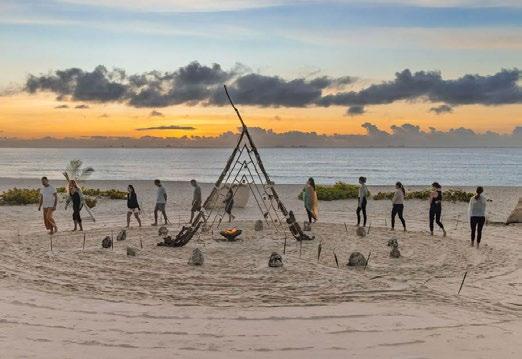
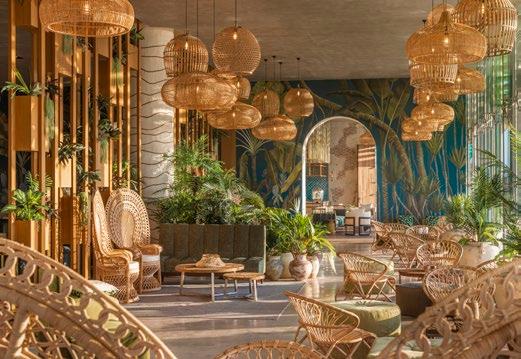
Nestled between lush tropical jungle and the turquoise waters of the Caribbean Sea, Palmaïa –The House of AïA is not simply a resort, but an immersive space for personal evolution, conscious living and holistic wellbeing.
PALMAÏA – THE HOUSE OF AÏA Mexico / Playa del Carmen thehouseofaia.com
Sanctuary Between Jungle
Ocean.
Lifestylehotels™ Directory
AUSTRIA
FÜGEN Mia Alpina Zillertal Family Retreat
GRAZ Aiola Living
GRAZ Augarten Art Hotel
GRAZ Kai 36
GRAZ Schlossberghotel
GROSSARL Hotel Nesslerhof
HALLSTATT Hallstatt Hideaway
KALS AM GROSSGLOCKNER Gradonna Mountain Resort
KALTENBACH Das Kaltenbach
KITZBÜHEL Alpenhotel Kitzbühel am Schwarzsee
LEOGANG Puradies Naturresort
LUNZ AM SEE Refugium Lunz
MARIA ALM Hotel Eder
MARIA ALM Hotel SEPP
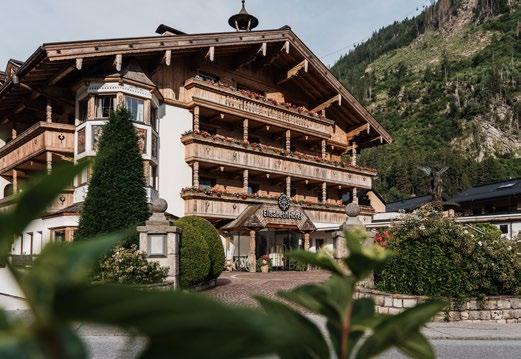
MAYRHOFEN ElisabethHotel Premium Private Retreat
SAALBACH HINTERGLEMM Alpin Juwel
SALZBURG Hotel Goldgasse
SALZBURG Hotel Stein
SCHLADMING Stadthotel Brunner
SEE Bergwiesenglück
SEEFELD/MÖSERN Nidum Casual Luxury Hotel
UDERNS Sportresidenz Zillertal
UDERNS The Green
VIENNA Hotel Das Tyrol
VIENNA Hotel MOTTO
VIENNA Hotel Zur Wiener Staatsoper
BELGIUM
ANTWERP August
ANTWERP Hotel Julien
BRUGES Everelmus Boutique B&B
CROATIA
BRAČ Hotel Lemongarden
STARI GRAD/HVAR Maslina Resort
ElisabethHotel, Mayrhofen (LH 03)
Gradonna ****s Mountain Resort, Kals am Großglockner (LH 04)
Küglerhof, Dorf Tirol (LH 05)
Arthotel Lasserhaus und Boutique Hotel Badhaus, Brixen (LH 06)
Hotel MOTTO, Vienna (LH 07)
Refugium Lunz, Lunz am See (LH 08)
Palmaïa – The House of AïA, Playa del Carmen (LH 09)
SANTO STEFANO DI SESSANIO Sextantio Albergo Diffuso
SICILY Zash Country Boutique Hotel
ST. LEONHARD Farmhouse Torgglerhof
VENICE Hotel Heureka
JAPAN
TOKYO Hotel K5
KYOTO Genji Kyoto
BACALAR Boca de Agua
PLAYA DEL CARMEN Palmaïa – The House of AïA
PORTUGAL
ALENTEJO Sublime Comporta Country Retreat & Spa
ALGARVE Vila Valverde
AZORES Santa Bárbara Eco-Beach Resort
AZORES White Exclusive Suites & Villas
LISBON Torel Palace Lisbon
PORTO Torel Avantgarde
PORTO Torel Palace Porto
PORTO Torel 1884 Suites & Apartments
SPAIN
FIGUERAS Vestige Palacio de Figueras
MALLORCA Es Racó d’Artà
MALLORCA Hotel Can Simoneta
MALLORCA Pleta de Mar
MALLORCA Vestige Miramar
MENORCA Vestige Santa Ana
MENORCA Vestige Son Vell
MENORCA Son Ermità & Binidufà
TENERIFE Ecohotel El Agua
SWEDEN
LAPLAND Treehotel
SWITZERLAND
LUCERNE Hotel des Balances
VALLÉE DE JOUX Hotel des Horlogers
ZERMATT Matterhorn Focus Design Hotel
MEXICO USA
ARIZONA AmbienteTM Sedona
Refined storytelling:
We spell out a night between alpine rooms and mountain silhouettes, between craftsmanship and devotion, between anticipation and afterglow… at Restaurant FEIN in the ElisabethHotel in Mayrhofen.
F for Fine Dining
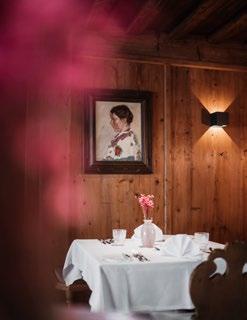
F stands for the quiet excitement of a refined evening – no dress code, no formal etiquette. Just take a seat and let the night unfold in one of six distinctive “Stuben.” Whether Heart, Rose, Hunting, Sissi, Cutlery, or Clock Room, each space feels intimate rather than exclusive, traditional yet quietly contemporary. Warm, but never rustic in the cliché sense.
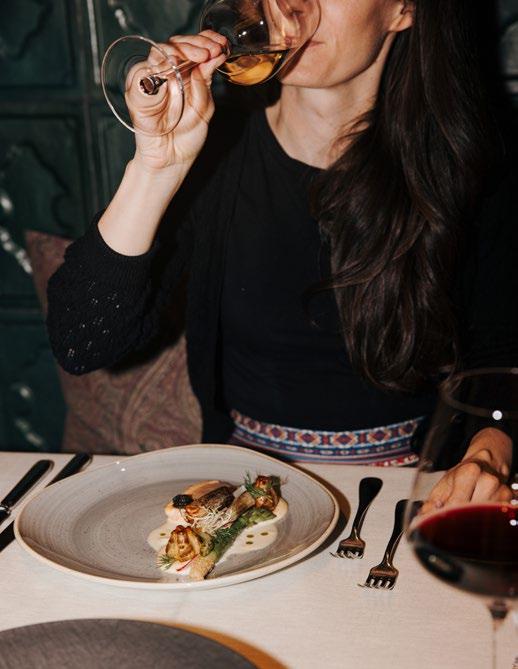
On the plate: honest ingredients, thoughtfully prepared and artfully composed. À la carte rather than a rigid tasting menu. Open not only to hotel guests, but to anyone who seeks something genuinely crafted.
I for Intuition
Or inspiration. For chef Alexander Hönigsberger, both are essential.
Cooking here is not bound to rigid plans, but guided by instinct, experience, and a refined sense for timing. What is in season is given space. What surprises is allowed to stay. Tradition forms the foundation; creativity moves quietly alongside it.
N for Note
N lingers long after the evening has ended. A subtle sense of satisfaction that doesn’t need to announce itself.
A taste that returns in memory. A painted scene that has stayed in mind. Beneath the Zillertal night sky, something between the stars feels like a quiet note. One that says: you will come back.
E for Essence
E is as honest as the ingredients it represents: regional vegetables, meat from the hotel’s own farm, char from alpine streams, wild herbs, game from the surrounding forests. Here, classic Alpine cuisine is reinterpreted with a modern sensibility without losing its rooted identity. The essence remains unmistakably local, yet elevated with clarity and restraint.
An evening in the Zillertal
that Moves Mountains
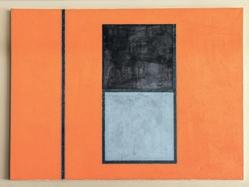
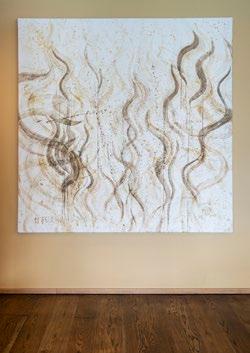
LOIS SALCHER
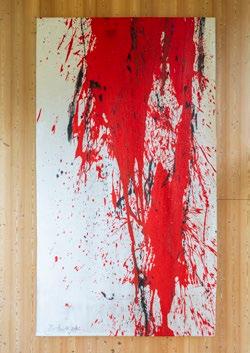
What emotions are triggered by viewing certain fields of colour – and conversely, which colours are able to express specific emotions?
The artist, based in Lienz, thinks and paints in chromatic spaces where emotion and surface merge.
Untitled Tempera on canvas
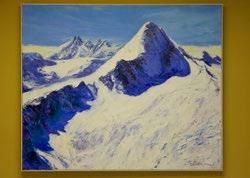
HELENE MARIA SCHORN
From her childhood home, she already looked out onto the Hohe Tauern. It was therefore only natural to engage artistically with the mountains. Through her palette-knife technique and atmospheric colour choices, her paintings possess a unique radiance.
The Kitzsteinhorn (2012)
Window to the Hohe Tauern National Park Oil on canvas
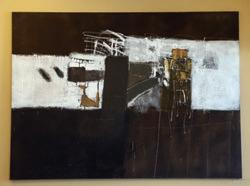
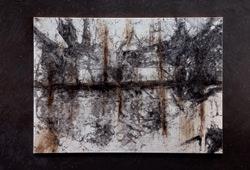
GISELBERT HOKE
Black, brown, white: the colours of this work, displayed in the lobby, harmonise beautifully with the natural tones of the Gradonna. It is by Giselbert Hoke, who became famous in 1956 with the station frescoes in Klagenfurt.
City Oil on hardboard 170 × 260 cm
BIRGIT SCHRÖTTNER-THURNER
Warmth, strength, and transformation are key themes associated with the fire salamander in the numerological cycle of natural beings. The painting of the same name is created using self-made natural pigments such as marigold, mahonia, and petunia, and is one of a series of twelve works.
Fire Salamander
Plant-based pigment and egg on canvas
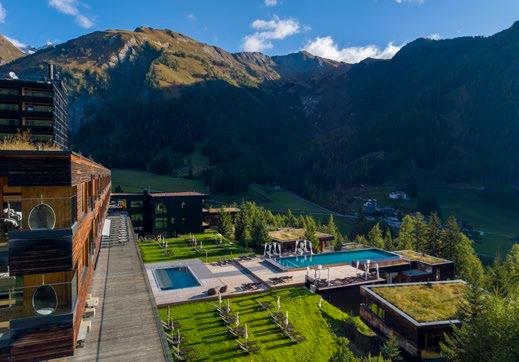
When the majestic peaks of the Hohe Tauern are reflected in the glass façades of the Gradonna Mountain Resort, one might think they are standing before a work of art. A work of art created through the interplay of nature and humankind. It is a subtle hint at what awaits at the Gradonna Mountain Resort at the foot of the Großglockner: a curated selection of artworks that brings the magic and power of the alpine world indoors. Exhibited in a place that naturally completes their impact. Join us on this page for a small, refined vernissage featuring seven selected works:
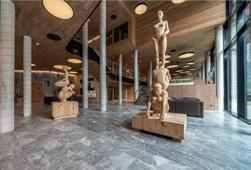
PETER NIEDERTSCHEIDER
As far back as antiquity, the importance of bathing culture was well understood – a tradition also celebrated at the Gradonna. Sculptures made of Swiss pine, artfully stacked and shaped in the style of classical figures, welcome guests in the entrance – an understated reference to the wellness area.
Entrance hall, sculptures
Pair, Swiss pine, 2012
Group of three, Swiss pine, 2011–2012
WOLFGANG BÖHMER
The Innsbruck-based artist creates naturebased imagery that expresses existential experiences such as joy, sorrow, and happiness. With “Naturalized,” works emerge directly in and with nature, inspired by places of power such as the Gradonna rock – a site of exceptional calm and strength.
Power Place #7
Nature on canvas
125 × 90 cm
HELMUT STROBL
With the design of the Maximilian Chapel at the Gradonna and the suspended fragment of his “World Image of Peace,” Helmut Strobl has created a quiet yet powerful place of remembrance.
In the chapel: World Cloth of Peace Acrylic on canvas, 2003
( + )
GRADONNA****S MOUNTAIN RESORT
Austria / East Tyrol / Kals am Großglockner gradonna.at Here,
A View Full of Promise
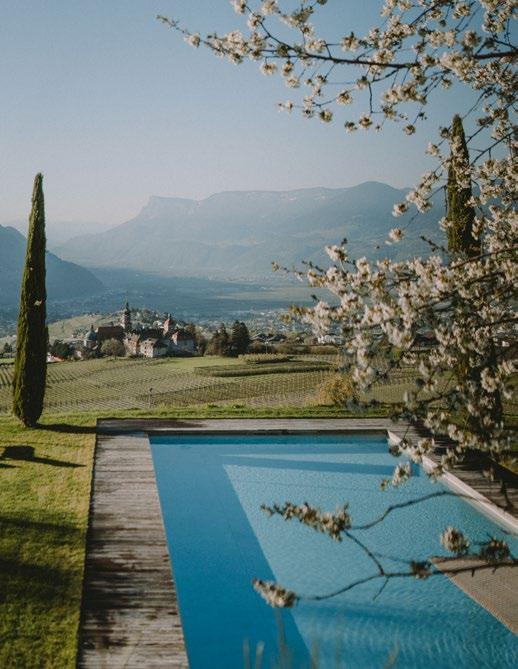
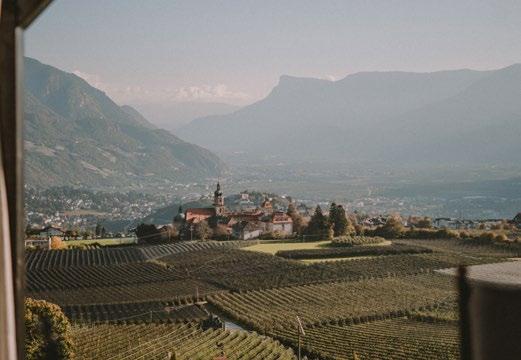
Even for South Tyrol, the view is extraordinarily rich. It draws soft gasps and quiet “ahhs” from anyone standing on the terrace. Perhaps it is a view made for words like this.
You look out over the Adige Valley, across apple orchards and finely drawn lines of vineyards, toward the church steeple of Dorf Tirol, with mountains stacked one behind the other as if placed there with effortless precision. A cable car drifts through the postcard-perfect scene, gently setting it all in motion –together with the clouds that add depth to the panorama.
And what does a view full of promise feel like as a holiday?
The promise of an endless 3.5-hectare meadow – a green island offering everything one might need: a game of bocce, and then another in quiet revenge. A swim in the pool, followed by the weightless stillness of resting at its edge. A picnic in the grass, simply because there is no reason not to.
The promise of discovering not only the outdoors at Küglerhof, but also what lies within: a carefully curated collection of interior pieces, coffee-table books, and artworks by people with a deep eye for beauty and the unexpected.
The promise of conversations with host Karoline and her mother, who can speak at length about this special place, about playlists, good pasta recipes, unusual furniture, thoughtful chess moves, and meaningful encounters.
The promise of conversations with strangers that never quite feel like they are strangers, because you may choose to sit at the same table – casually, unforced, whenever it feels right.
The promise of a morning cornetto, pasta al pomodoro or a club sandwich, of cappuccino and homemade cake, or a Negroni at aperitivo hour. Dolce vita, South Tyrolean style.
Here, the horizon seems to disappear and yet with every visit, it quietly expands a little further. A feeling that captures the quiet optimism of a view full of promise.
KÜGLERHOF Italy / South Tyrol / Dorf Tirol kueglerhof.it
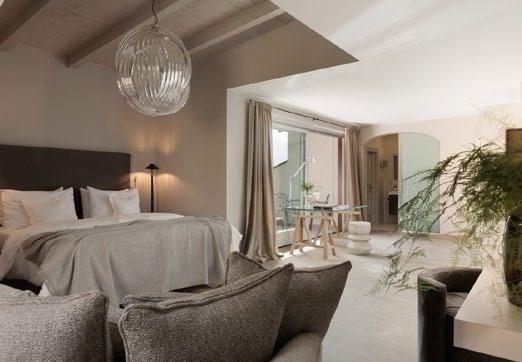
A boutique hotel high above Merano that celebrates the small things in life –surrounded by lush greenery, refined interiors, contemporary art, a refreshing pool, and a generous sense of Dolce Vita. ( + )
There is a quiet optimism in this phrase – one that suggests openness, abundance, clarity, and hope. Up here at Küglerhof in Dorf Tirol, above Merano, that promise becomes real.
Garage
When people talk about hotels, they rarely mention the garage. In the case of Boutique Hotel Badhaus and Arthotel Lasserhaus, however, it would be a pity to relegate it to a mere footnote.
For guests of the two houses in Brixen, it is not simply a place to park their cars – it is an entry point into art. A deliberate deceleration, inviting visitors to leave the everyday behind and ease into a carefully staged spatial experience that marks the beginning of their stay.
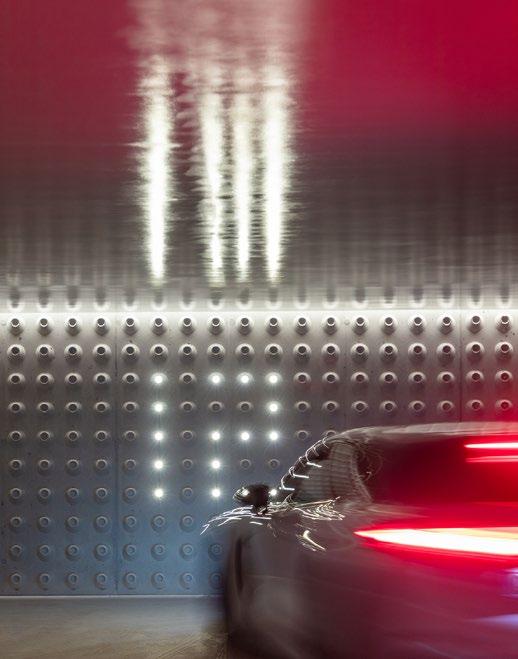
Upon arriving in the Viertel Garage, designed by artist Harry Thaler, one almost drives into a new, futuristic dimension. A dimpled relief cast in concrete stretches across the entire width of the wall. Embedded within this structure is an innovative LED guidance system that intuitively leads visitors to their parking spaces, where numbers appear digitally. The subtly shimmering concrete floor blends seamlessly into the atmosphere, as does the mirrored ceiling above. The result is a cinematic moment that dissolves the boundary between function and mise-en-scène. The garage becomes a drive-in artwork. A drinking water fountain emerges as a living source –fitting for a city shaped by water. A touchscreen guides guests onward to the hotels.
ABOUT ARTHOTEL LASSERHAUS
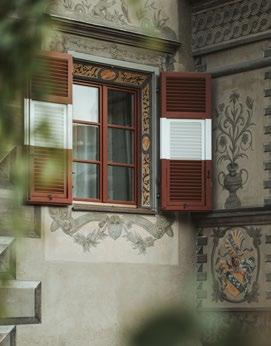
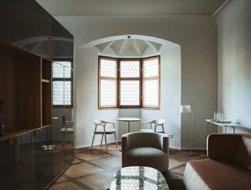
Near Brixen’s old town lies Arthotel Lasserhaus – an aristocratic residence dating back to the early 15th century, nestled within the historic artists’ quarter of Stufels and recognizable by its unique façade paintings. Behind its walls unfolds a quiet, almost intimate world with just ten rooms and suites, where past and present flow into one another. Classical paintings meet significant contemporary works, weaving through rooms and corridors and turning the guesthouse into a place of both reflection and repose.
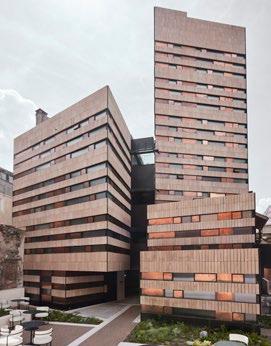
In the heart of the old town, at a site steeped in history where a small stream once flowed and people gathered, a special retreat now lies hidden. A narrow alley leads into a calm inner courtyard – a green oasis in the middle of the city. A modern quartzite fountain recalls the bathhouses of the past and invites guests to linger. The hotel blends contemporary architecture with historical references: two towers in warm copper tones engage in a striking dialogue with the nearby White Tower just steps away. In the stylish Viertel Bar, with its terrace facing Weiße Turmgasse, every drink carries a touch of dolce vita.
ARTHOTEL LASSERHAUS
Italy / South Tyrol / Brixen lasserhaus.it
Historic residence in Brixen’s old artists’ quarter near the town center, offering space for art and exchange.
(
ABOUT BOUTIQUE HOTEL BADHAUS
BOUTIQUE HOTEL BADHAUS
Italy / South Tyrol / Brixen badhaus.it
Boutique hotel in Brixen’s old town featuring a striking tower structure and an inner courtyard with a drinking water fountain.
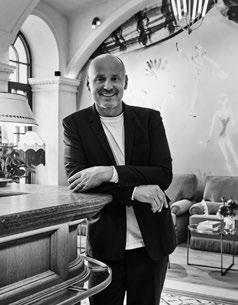
Bernd Schlacher is a fixture of Vienna’s gastronomic scene. He knew Falco and Elton John, owned his first restaurant at just 22, and seems unshakable… “So, what shall we do?” he asks in a relaxed tone as we take our seats in his hotel restaurant. I hope for a conversation about the nature of hospitality – with questions he hasn’t already answered countless times.
Avec
HOTEL MOTTO Austria / Vienna / Mariahilf hotelmotto.at
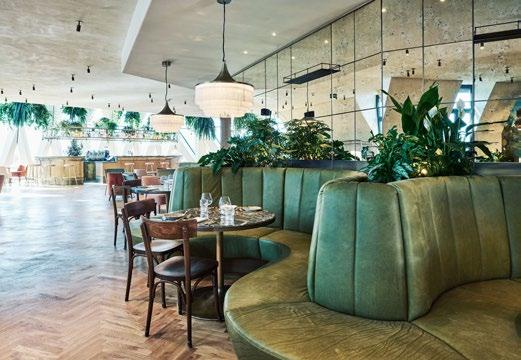
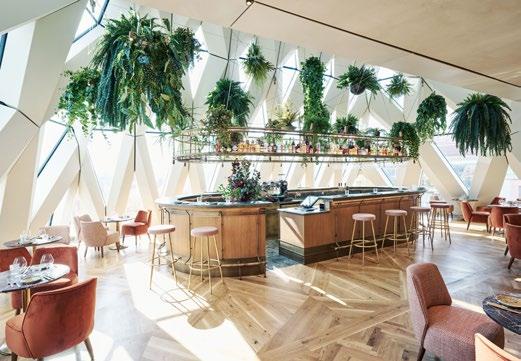
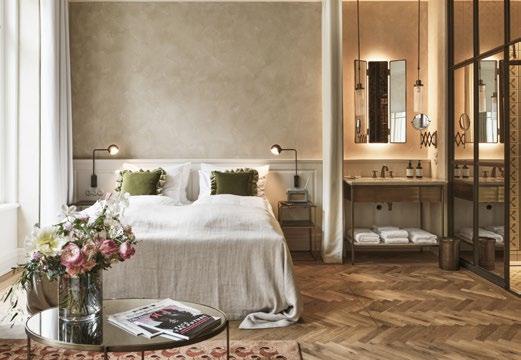
An elegant boutique hotel set in a historic building, where Paris and Vienna enter into a refined liaison – complete with a rooftop restaurant and a French bakery. ( + )
Plaisir
CHEZ BERNARD – we are, in a way, at your home now, perhaps in the French version of your living room. Is that a fair impression?
Yes, one hundred percent. Eleven years ago, I asked myself: what will I do with the old Hotel Kummer? I love Paris, I love Vienna. The 1920s were a time of optimism, of celebration. One day, over coffee with a dear friend, the idea took shape. From there, it was realized down to the finest detail. I don’t follow trends. When I design something, it has to endure – it has to be lasting. And it must have charm, and feel comfortable.
In your hotel, French finesse meets Viennese charm. How well do these two worlds come together for you? They fit together beautifully – especially when you think of what Vienna was like before the Second World War. We still use many French terms: bel étage, trottoir, plaisir. And the croissant, after all, evolved from the Viennese Kipferl.
With this hotel, you’ve elevated hospitality beyond restaurants and catering to a new level – how did that transition feel? It was always a quiet wish of mine. And then, it simply happened. It was important to me that the reception is staffed, that there are people here – that it doesn’t feel anonymous. My role as a host hasn’t changed, it has simply expanded. Before, guests would come to eat and drink. Now, they stay the night as well.
How does your private role as a host differ from your professional one?
I enjoy hosting both at home and in my establishments. I care about details – napkins on the table, freshly cooked meals, candles lit, fresh flowers arranged. Of course, you adjust your role depending on whom you’re welcoming.
What encounters have turned into memorable anecdotes over the years?
In 44 years, there have been quite a few. But the truly amusing ones fall under confidentiality. I’ve always loved working
with guests – whether Falco, Fendrich, Elton John, tourists, or students. So many people have met through my places. Today, guests in their seventies and eighties return with their grandchildren. Three generations have celebrated with me – that’s something special.
You’ve said you don’t like boredom. How do you ensure guests never feel it in your restaurant?
With music! It can hum softly in the background, then gradually grow louder. There has to be a sense of life. Life itself is demanding enough – people should be allowed to enjoy themselves.
A bedtime treat, remembering guests’ names… what, for you, is the cerise sur le gâteau of hospitality?
Kindness. A personal connection with the guest – like in the countryside inns of old, where the servants already knew exactly how you liked your coffee before you even ordered it. That’s an important cultural treasure.
A final question that almost asks itself: is there a guiding motto you follow when it comes to hospitality?
For me, being a host means always being honest with people. Meeting them eye to eye. Whether president or student – it makes no difference. One is just as important as the other.
Interview: Christina Wetter-Nohl
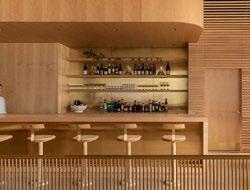
A bustling shopping street in Vienna, just before nine. Many stores and coffee shops are still closed, yet the day’s momentum is already in the air. It may come as a surprise that this renovated corner building even houses a subway entrance – because the moment you step through the adjacent door into Hotel MOTTO, you are transported to a world suspended somewhere between 1920s Paris and Vienna. Soft French lounge music, playful wallpapers, ornamental tiles, brass details – and a host who has long since mastered the art of hosting.
On the Church Square of Time
Its owners have changed many times, its purpose hardly at all. Then as now, it has been a place for guests. A place of hospitality. A place of encounter.
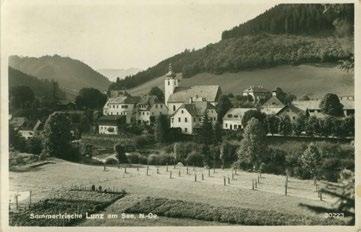
Here, in the house next to the church, stockmen once ensured that merchants travelling along the former Iron Road were supplied with food. In return, they received iron for tools and nails. From this simple concept of hospitality, a new idea emerged at the end of the 19th century: people no longer came only to work or to continue their journey – they came to stay.
And then, for a long time, silence settled over the house on the church square in Lunz am See. Almost too much silence.
Until, on a winter night in 2019, Joachim and Heinz caught sight of something in the abandoned house.
Something that, in essence, had never truly disappeared. And they had an idea of how what remained could be brought back to life. Together with partners from their newly founded cooperative FORMDEPOT, a special place was created – a refuge that looks to the future without forgetting the history of this unique setting.
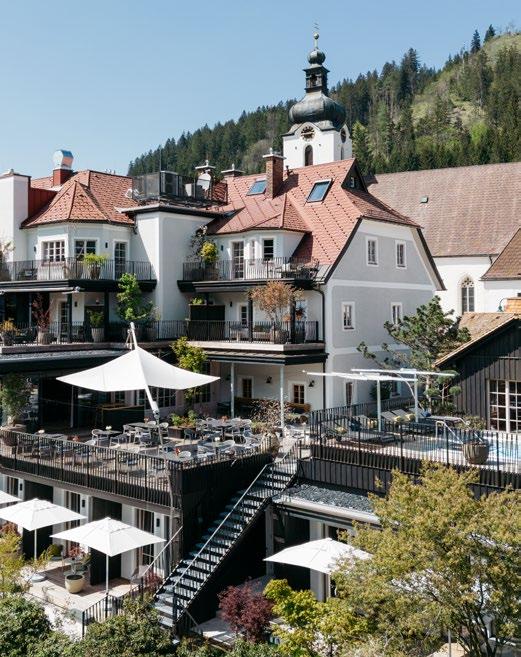
Even the walk across the old bridge lets fragments of past times flicker back into view. The house itself, with its layered façades and architectural traces, tells the story of how something new was continuously added over the years. Like a faithful companion, it has stood for centuries between the picturesque village church and the green shimmer of the Ybbs river. As a central place, the Refugium was deliberately opened toward the church square, becoming not only a welcoming meeting point for guests, but also for locals and passers-by.
One can only imagine who, over the years, has heard the bells ringing here and let their gaze drift across the water.
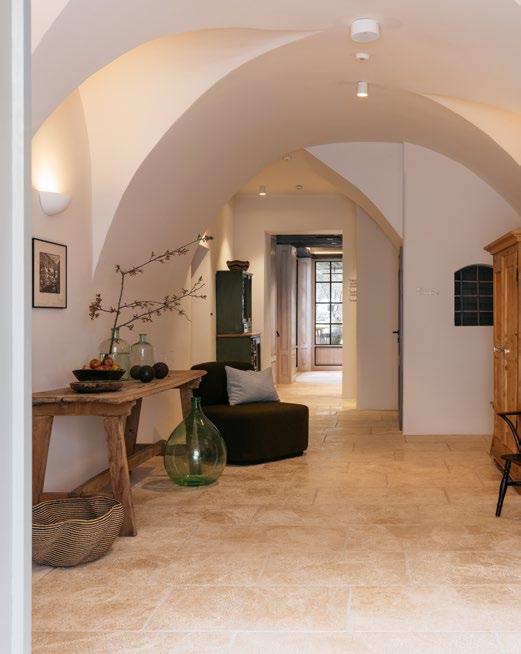
Certainly also those who once stood beneath the still-preserved vaulted entrance hall, waiting for their rooms or a meal. The former Salettl and winter garden now house the restaurant. Even the layout of the rooms echoes those that existed before.
But the strongest sense of the house’s history is found in the parlour, carefully restored by Joachim and Heinz. It begins with the scent of times long past and leads upward to the carved wooden beam bearing the year 1661.
REFUGIUM LUNZ
Austria / Lower Austria / Lunz am See refugium-lunz.at
A centuries-old guesthouse on the church square of Lunz, stylishly transformed and brought back to life – looking toward the future, while always honouring its history. ( + )
1661 is not only a palindrome that reads the same forwards and backwards. It is also the year carved into an old wooden beam, linked to the origins of the Refugium Lunz – or at least the oldest recorded date that confirms its existence.
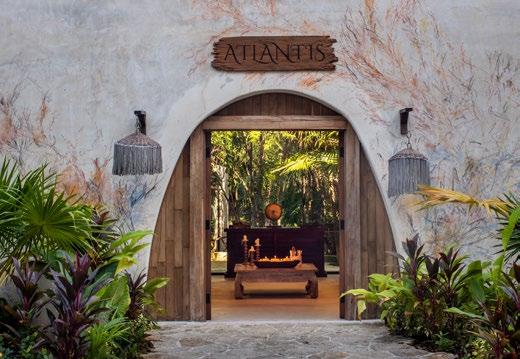
The Mexican jungle moves softly, while the Caribbean Sea answers in waves. Somewhere between lush green density and turquoise openness, something begins to take shape, something not easily translated. Here, it is called AïA.
Between Jungle
PALMAÏA – THE HOUSE OF AÏA Mexico / Playa del Carmen thehouseofaia.com
A resort on the Riviera Maya between jungle and sea with a holistic, spiritual approach spanning nourishment, movement, and inner transformation. ( + ) and Ocean
Palmaïa – The House of AïA is set on sacred ground, where a holistic approach to wellbeing unfolds through nature, space, and experience.
At its center, AïA\Wellness brings together a series of interconnected expressions, each reflecting a different way of engaging with balance, awareness, and restoration.
The Nourishing Biome brings a plant-forward approach to dining. Ingredients remain close to their origin, flavors feel clean and precise. Food becomes more than nourishment, it supports a quiet realignment within.
The Portals of Practice create space for movement and awareness. Yoga, breathwork, meditation, and rituals led by resident practitioners. No performance, no fixed outcome, only the freedom to engage in your own way.
As the day shifts, the Rituals of Sound begin. Rhythm deepens, tones expand, and connection forms naturally. There is no program to follow, only the experience as it unfolds.
The Restorative Temple unfolds within the jungle, where spiritual guidance and bodywork come together through ancient healing practices. Stone, humidity, and shadow shape an environment that feels both grounding and still.
Over time, the sense of beginning and end softens. What remains is the space in between, where the rhythm of the sea meets the quiet of the jungle.
“EXCESS IS EASY, BUT HARMFUL RESTRAINT IS DIFFICULT, BUT FORTIFYING.”
PALMAÏA – THE HOUSE OF AÏA Mexico / Playa del Carmen
noun [neologism, lifestyle hotel term]
Bergwiesenglück
Definition 1:
A state of heightened inner harmony, brought about by the interplay of the scent of grasses and wildflowers, expansive silence, crisp mountain air, and the profound calm presence of the Alps.
Definition 2:
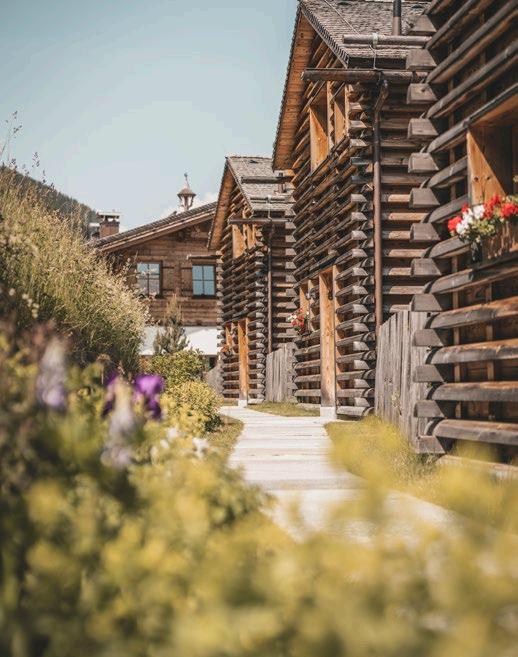
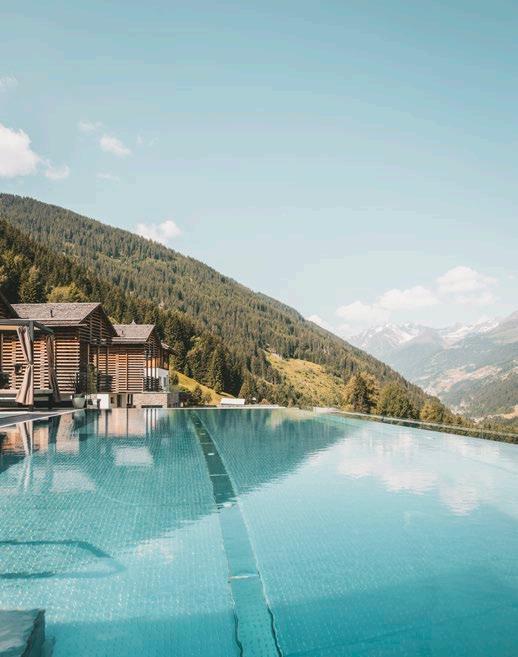
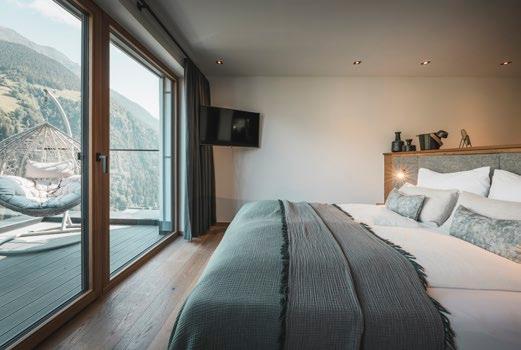
A boutique hotel in the Paznaun Valley at 1,250 meters above sea level. Bergwiesenglück consists of chalets and suites whose contemporary architecture draws inspiration from traditional Tyrolean hay barns used in alpine farming. Guests enjoy tranquility and privacy without sacrificing the comfort and luxury of a high-end hotel. Amenities include private saunas, an infinity pool with sweeping mountain views, and a dedicated play lodge featuring a slide, climbing wall, and chillout areas for children. Thanks to its location, Bergwiesenglück serves as an ideal base for both winter skiing and summer hiking. The hotel also offers two culinary highlights: the gourmet restaurant Jagdstube, serving refined tasting menus, and the à la carte restaurant Hermanns Kitchen, featuring regional specialties such as Kaiserschmarrn as well as Tyrolean-style sushi. Bergwiesenglück is a member of Lifestylehotels.
BERGWIESENGLÜCK Austria / Tyrol / Paznaun bergwiesenglueck.at
Chalets and suites in the Tyrolean Alps, immersed in nature, with an infinity pool, boundless views, and culinary peaks. ( + )
USAGE EXAMPLES:
I’m staying at Bergwiesenglück. / At Bergwiesenglück, I had the best Kaiserschmarrn. / At Bergwiesenglück, you pick wildflowers while practicing the Tyrolean pronunciation: Bleamilein. / A stay at Bergwiesenglück stands for a mindful experience of scent and openness in an alpine landscape.
Photos: DavidJohansson
A Home for a While
Germany
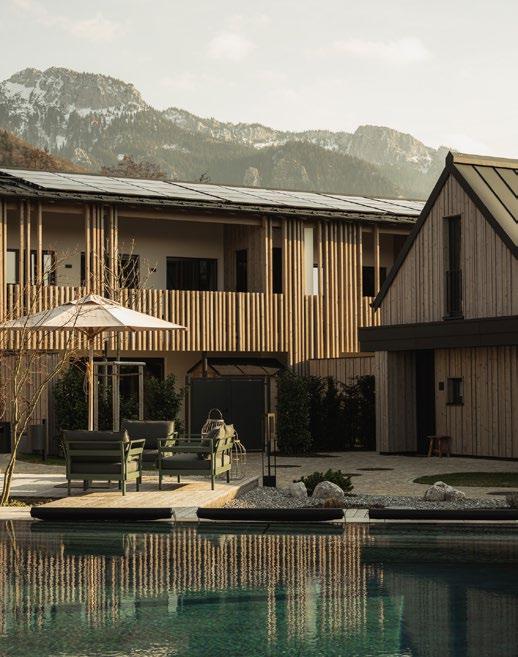
Designed by Brüderl Architektur, the ensemble includes a main house and twelve chalets that reinterpret alpine tradition through a contemporary lens. Built from local spruce and stone, they radiate warmth and natural simplicity. Yet anyone expecting a rustic aesthetic will be pleasantly surprised: the two-story chalets, complete with open galleries, impress with generous ceiling heights, timeless design, refined materials, and a remarkable sense of openness.
At the same time, they offer exactly the sense of grounding one hopes for in a retreat. Each chalet features a private garden – perfect for quiet moments – equipped with its own Weber barbecue, a spacious sauna, and a hot tub that can be enjoyed warm or refreshingly cool, depending on your mood.
Whether you’ll even want to leave the chalet is another question entirely. There’s really no need.
At dawn, a lovingly prepared breakfast basket is placed at your door, filled with homemade juice, still-warm sourdough bread, and cheese from the neighboring village. In the evening, fondue beckons – whether with melted cheese or a hearty beef broth. Those in the mood for something else can opt for a traditional Bavarian Brotzeit or choose from an à la carte menu featuring dishes like goulash, gnocchi, or pasta. And for those who prefer to take matters into their own hands, curated grill packages turn cooking over fire into an effortless pleasure. How to spend the rest of the day? Reading, perhaps. Custommade bookshelves are stocked with children’s stories, novels, crime fiction, hiking guides, and coffee table books – maybe even that one title you’ve secretly been meaning to read. Your own music drifts through Marshall speakers, while the inviting sofas gently remind you that happiness can be as simple as sitting still and letting time pass.
And should you decide to step outside, there are possibilities in every direction: a stroll through the village, a few leisurely laps in the pool, a yoga session, a workout, or perhaps a restorative massage. The surrounding moorlands, too, invite slow, contemplative walks through vastness and quiet. And yet, each of these moments leads you naturally back – to your Bavarian home away from home.
A chalet opens doors without moving them; points the way without asking you to follow; and offers peace, even when the world outside is anything but.
AGRAD CHALETS Germany / Bavaria / Aschau im Chiemgau
AGRAD CHALETS
/ Bavaria / Aschau im Chiemgau
A chalet village of modern alpine architecture set in the Bavarian moorlands – warm, authentic, and serene.
Chalet – a beautiful word, isn’t it? It conjures images of comfort, of quiet, of mountains, and of that rare feeling of being exactly where you’re meant to be. Agrad, as they say in Bavaria. With its soft sound and strong sense of place, the name feels perfectly suited to a chalet village set in the idyllic moorlands of Aschau in Chiemgau.
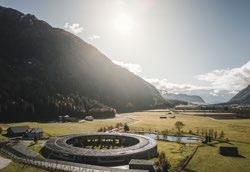
A circular, energy-autonomous eco-aparthotel in South
If you were to reinterpret a dish from your childhood in a modern fine-dining concept, what would it look and taste like?
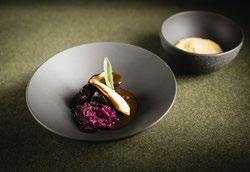
I have fond memories of my grandfather’s Brennsuppe. This simple soup – made from browned flour, butter, water, salt, and a touch of caraway – was served every morning for breakfast. In my kitchen, I replace the water with a rich beef stock and finish it with browned butter. Add black bread crisps, shaved raw porcini mushrooms, and chive oil – and it’s a dream.
Which ingredient do you love that might put some guests off?
I love offal, but I’ve almost entirely removed it from the menu. Many guests tend to reject it nowadays. However, upon request – and for true aficionados – we’re happy to prepare it.
Which South Tyrolean ingredient tells the most compelling story for you?
Ahrntal grey cheese. Once considered a poor man’s food, it has evolved into a culinary highlight. It’s incredibly versatile and protected by Slow Food.
Which dish do you see as universal –something every culture can understand? Great pasta with fresh ingredients makes everyone happy, young or old, anywhere in the world.
Which dish did you create just for fun that never made it onto the menu?
A Viennese schnitzel in dumpling form, filled with potato salad. Some classics are best left untouched.
If you had to create an entire menu from just one ingredient, what would it be?
Asparagus. From raw asparagus salad to a creamy soup or risotto – or simply asparagus with Bozner sauce.
TASTE MATTERS
Is there a part of an ingredient you used to waste but now consider “sacred”?
Even during my apprenticeship, I learned to treat food responsibly, as a sign of respect for the producer. Trimmings are used to create the best sauces and stocks.
Chef and sous-chef – how does your hierarchy work?
Egon is brilliant; I couldn’t wish for a better right hand. We’re not just colleagues, we’re close friends. He supports and motivates me, and I trust him completely. His opinion is crucial in decision-making.
A smile, a special spoon, a favorite cup –what are the seven “ingredients” that must not be missing in your kitchen?
Humor, mutual respect, appreciation, a good chat with the team, an espresso, enjoyment of the work, and a forward-looking mindset.
And which “ingredients” are sometimes missing?
Time, patience, and occasionally the necessary composure.
Pizza, mochi, arancini – which round dish do you like most?
Pressknödel. My favorite dish – and fittingly, their shape reflects the circular architecture of the OLM.
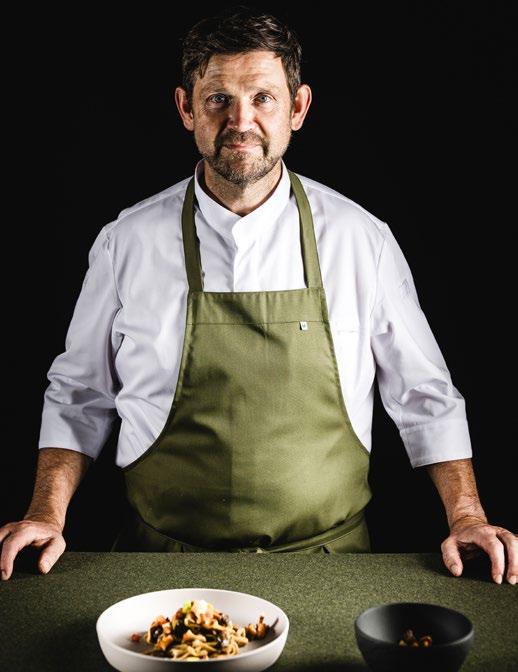
His menus are exceptional. So are our questions. Berni Aichner is head chef at the in-house restaurant PRENN° at the OLM Nature Escape, and is known for his warmth, creativity, and down-to-earth approach. In conversation with THE Stylemate, he reveals which unusual creation never made it onto the menu, which South Tyrolean ingredient tells a story, and which round dish he loves most.
OLM NATURE ESCAPE Italy / South Tyrol / Sand in Taufers olm.it
Tyrol’s Ahrntal Valley, combining striking architecture with visionary regional cuisine.
Interview: Christina Wetter-Nohl
WHEN DOES OPTIMIZATION TURN INTO A QUIET STEP BACKWARD?
WHERE DOES DISRUPTION BEGIN: IN THE DESIGN PROCESS, OR IN EVERYDAY LIFE?
WHO DECIDES TODAY WHAT A SPACE IS SUPPOSED TO DO – AND WHO BENEFITS FROM THAT DECISION?
WHICH THINGS WOULD DISAPPEAR IF WE RADICALLY RETHOUGHT DESIGN FROM THE PERSPECTIVE OF THE USER?
WHICH SYSTEMS ARE WE STILL DEFENDING SIMPLY BECAUSE WE KNOW THEM WELL?
WHAT REMAINS OF DESIGN WHEN CONTROL IS REPLACED BY OPENNESS?
ARE WE CERTAIN THAT THE FUTURE SHOULD BE BUILT AT ALL – OR IS IT SOMETHING TO BE ENABLED INSTEAD?
IS STABILITY TRULY A GOAL, OR MERELY A HABIT WE ARE UNWILLING TO QUESTION?
WHAT ROLE DOES ARCHITECTURE STILL PLAY WHEN LIFE IS NO LONGER LIVED IN SPACES, BUT BETWEEN THEM?
WHAT HAPPENS WHEN FUNCTION IS NO LONGER A VALID ARGUMENT?
Text: Nina Prehofer
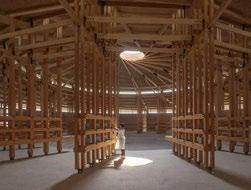
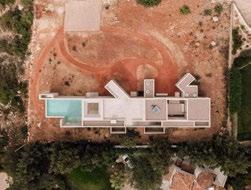
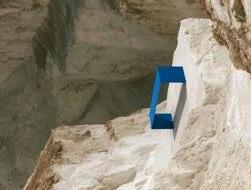
FOR YEARS, THE VITRA CAMPUS HAS BEEN A SITE WHERE ARCHITECTURE IS PLACED IN RELATION – WHERE DISTINCT POSITIONS OF MODERNISM COEXIST WHILE REMAINING LEGIBLE IN THEIR DIFFERENCES. WITH THE ADDITION OF THE DOSHI RETREAT, A NEW INTERVENTION HAS ENTERED THE FIELD, ONE THAT ELUDES THIS ORDER IN A PARTICULARLY SUBTLE WAY. THE STRUCTURE LEADS BELOW THE SURFACE, TRANSLATING MOVEMENT INTO SPATIAL EXPERIENCE. WHAT EMERGES IS AN INTERVENTION THAT EXTENDS THE CAMPUS’S ONGOING DISCOURSE WITH A QUIET YET RIGOROUS PERSPECTIVE.
SPACE
It is a terrain where divergent architectural attitudes stand side by side, commenting on one another. Industry, exhibition, and landscape do not form a unified whole in any classical sense, but rather a spatial constellation that continuously recomposes itself. Since the early interventions of Frank Gehry with the Vitra Design Museum, Zaha Hadid with the Vitra Fire Station, and Tadao Ando with the Vitra Conference Pavilion, the site has evolved into an architectural laboratory – one in which buildings appear less as discrete objects than as contributions to an ongoing conversation.
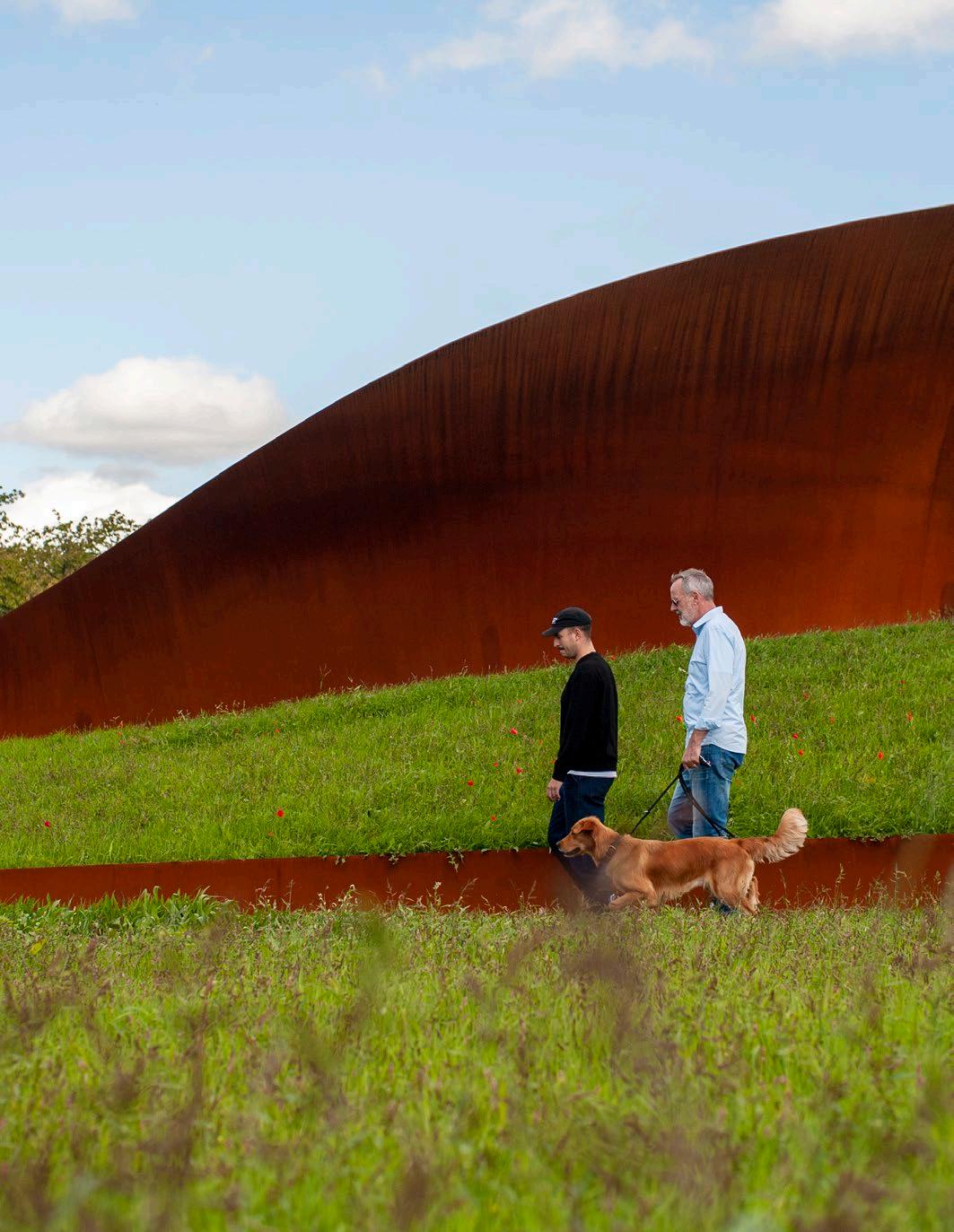
Within this logic, the Doshi Retreat is not a “building” in the conventional sense, but rather a shift: a minimal, almost subterranean gesture that asserts little and invites much. In doing so, it aligns precisely with the campus’s DNA – while quietly altering it.
A CAMPUS AS ARGUMENT: ARCHITECTURE AS DISCURSIVE SPACE
What makes the Vitra Campus so singular is not the accumulation of prominent names, but the way those names speak to one another. Divergent architectural languages – deconstruction, minimalism, high-tech, spirituality – are not reconciled here, but juxtaposed like voices in an ongoing intellectual debate.
The campus is also an expression of Rolf Fehlbaum’s vision: architecture as a cultural practice that extends beyond function and form. As he has emphasized in conversations around the Doshi project, it is precisely the “spiritual dimension” of architecture that drew him to Balkrishna Doshi – an aspect long marginalized in Western discourse, and here deliberately reintroduced.
The site itself thus operates as a dispositif of interruption. One does not simply walk through a park, but through a sequence of propositions.
THE DOSHI RETREAT: A PATH RATHER THAN AN OBJECT
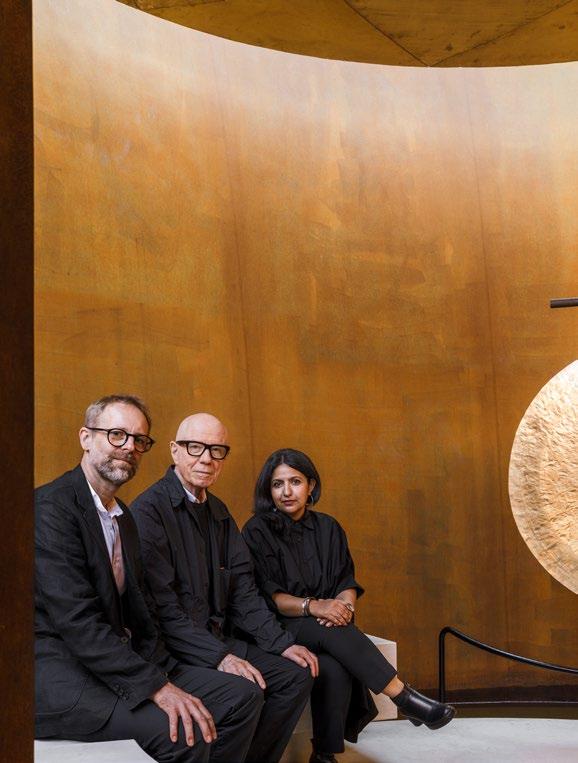
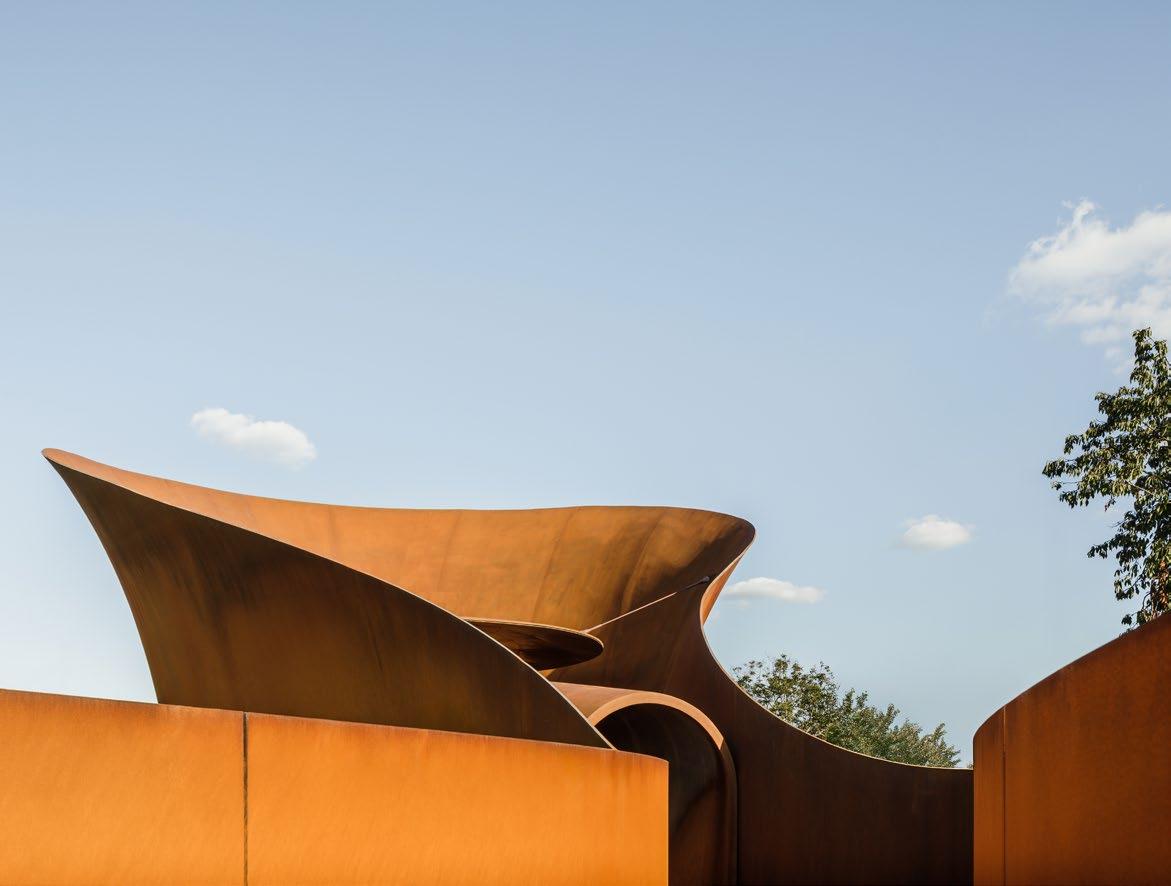
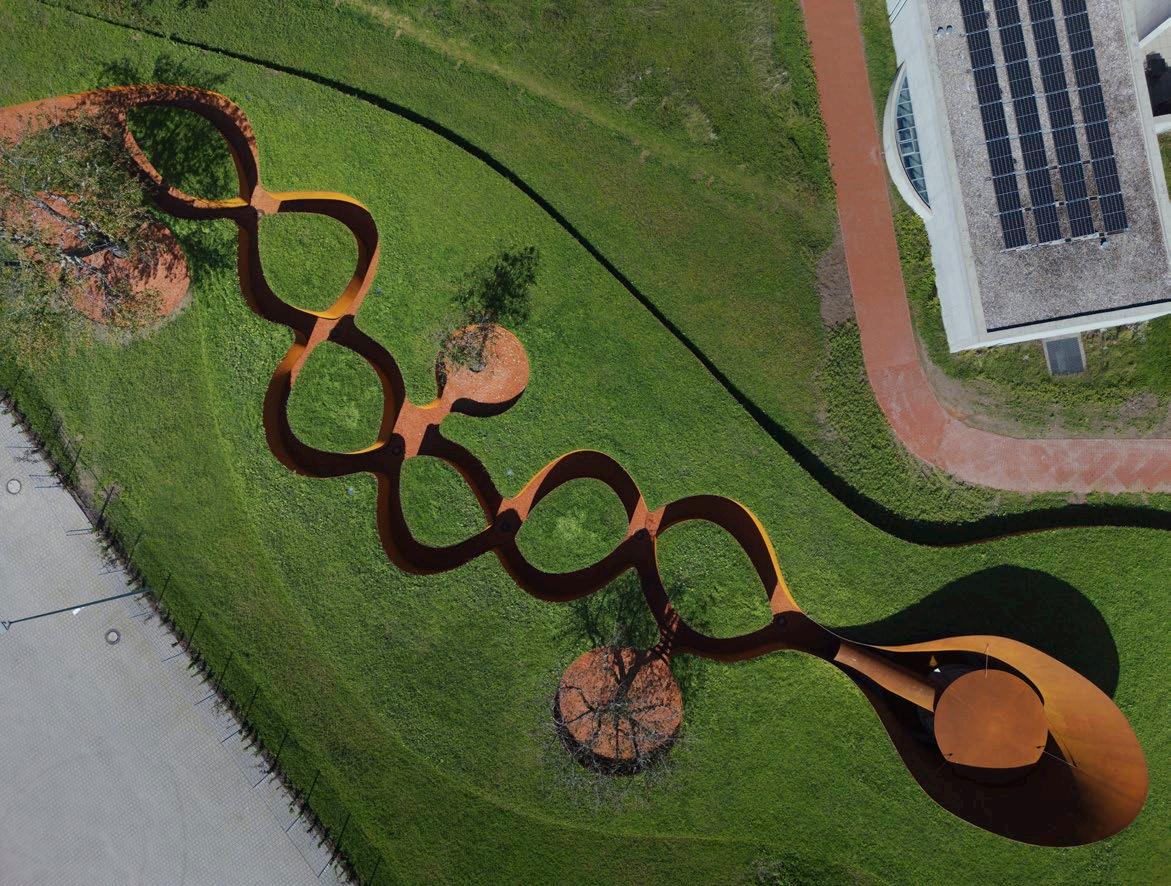
Against this backdrop, the Doshi Retreat reads as a radical condensation. Developed by Balkrishna Doshi and continued by Khushnu Panthaki Hoof and Sönke Hoof, it is neither pavilion, nor house, nor sculpture, but a process.
A winding path cuts beneath the surface of the site, accompanied by sound that is not decorative but constitutive. Gong and flute tones are less heard than registered through the body. Architecture becomes a resonance chamber.
“It is the sound reverberating through the visitor’s body that dissolves the boundary between self and structure,” the project description notes.
Photos: Julien Lanoo
At the end of this path, there is no conventional destination, but a contemplative space – a kind of condensation of what preceded it. The transition is decisive: not arrival, but the gradual uncoupling from the external world becomes the true event.
DISRUPTION AS AESTHETIC PRINCIPLE: INTERRUPTION RECONSIDERED
The Doshi Retreat offers a remarkably precise architectural response to disruption – though not in terms of technological acceleration, but rather as its inverse: a deliberate slowing down. Here, disruption does not mean destruction, but the withdrawal of the takenfor-granted. The campus itself is already a sequence of such interruptions: Gehry fractures form, Hadid unsettles geometry, Ando reconfigures light. Doshi, in turn, disrupts the very notion of the building. In place of an object, a situation; in place of a program, a field of possibility; in place of a viewpoint, a movement.
SPIRITUALITY AS COUNTERPOINT TO ACCELERATION
What is particularly striking is that this disruption arises not from a technological,
but from a spiritual logic. Doshi – shaped by Indian architectural traditions and the concept of Kundalini, the “coiled energy” within the body – understands space not as a container, but as a process of inner transformation.
In this shift, the role of architecture changes as well: it is no longer merely designed, but experienced; no longer simply used, but traversed like a state.
The Vitra Campus, often read as a European showcase of architectural avant-gardes, opens here to another interpretation: as a site of deceleration at the heart of a highly industrialized landscape.
FEHLBAUM’S PROPOSITION:
ARCHITECTURE AS AN EXPANSION OF PERCEPTION
Within this perspective, Vitra’s broader stance appears almost programmatic. Rolf Fehlbaum has repeatedly described the campus as a place where architecture, landscape, and perception intertwine – a space that “lifts beyond the everyday.”
The Doshi Retreat radicalizes this idea. It is not an extension of the campus, but a condensation of its central question: how much experience can architecture generate when it recedes?
A QUIET CODA: THE ARCHITECTURE
OF PAUSE
What remains is a paradox: an architecture that nearly dissolves in order to intensify. A place that feels not monumental, but intimate. A path that does not lead, but slows.
Perhaps this is the retreat’s true disruption: that it does not transform the visitor through spectacle, but by briefly releasing them from the logic of constant movement.
And in that, it finds its own, precise form of modernity.
The campus is open to visitors; further information is available at vitra.com
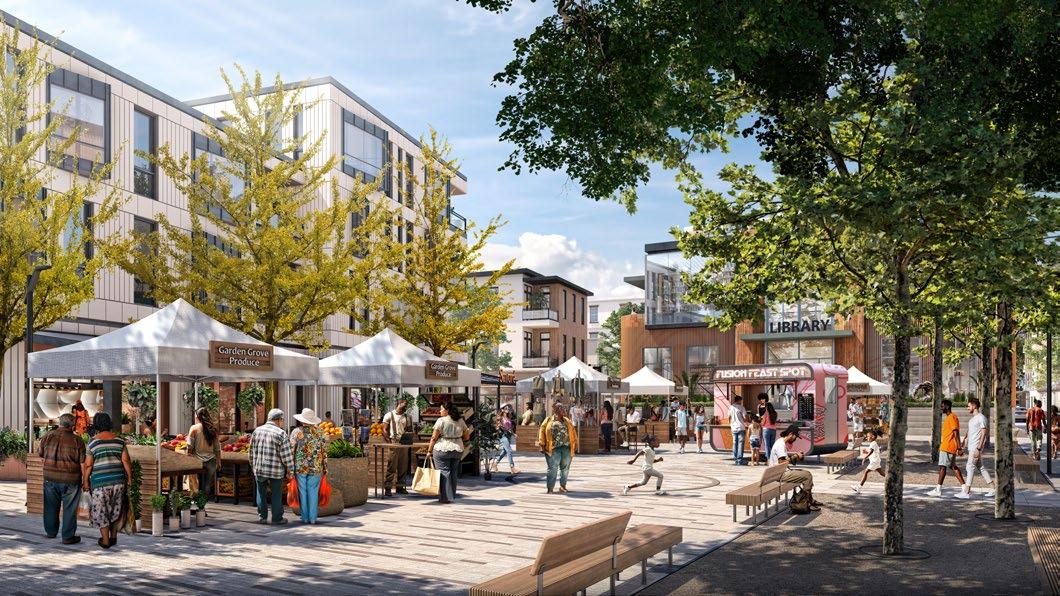
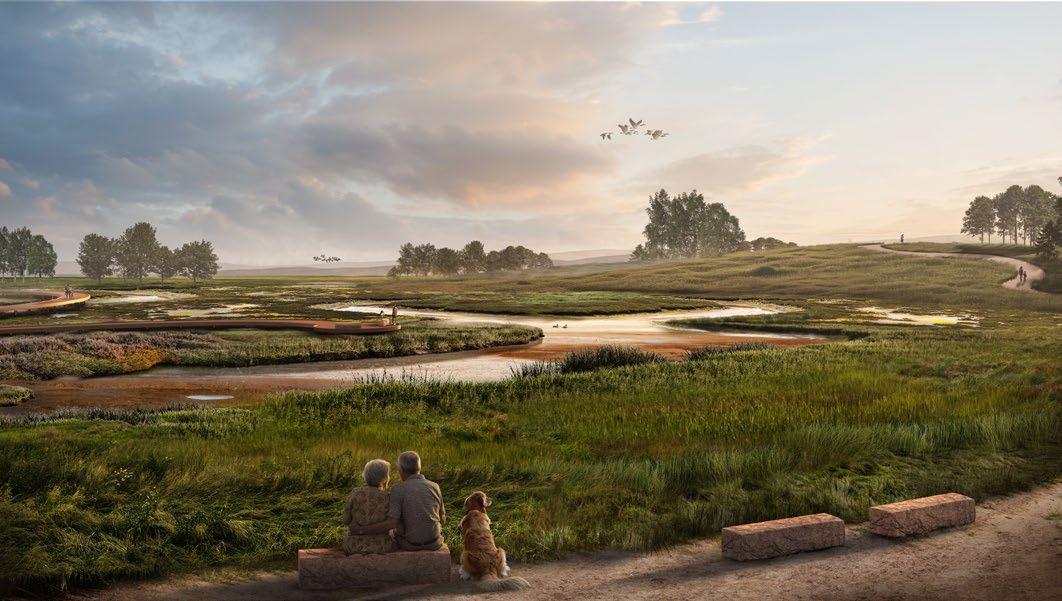
Making Cities Great Again?
IN THE NORTHEASTERN REACHES OF CALIFORNIA, A PROJECT IS TAKING SHAPE THAT CHALLENGES THE VERY PREMISE OF URBAN PLANNING.
CALIFORNIA FOREVER
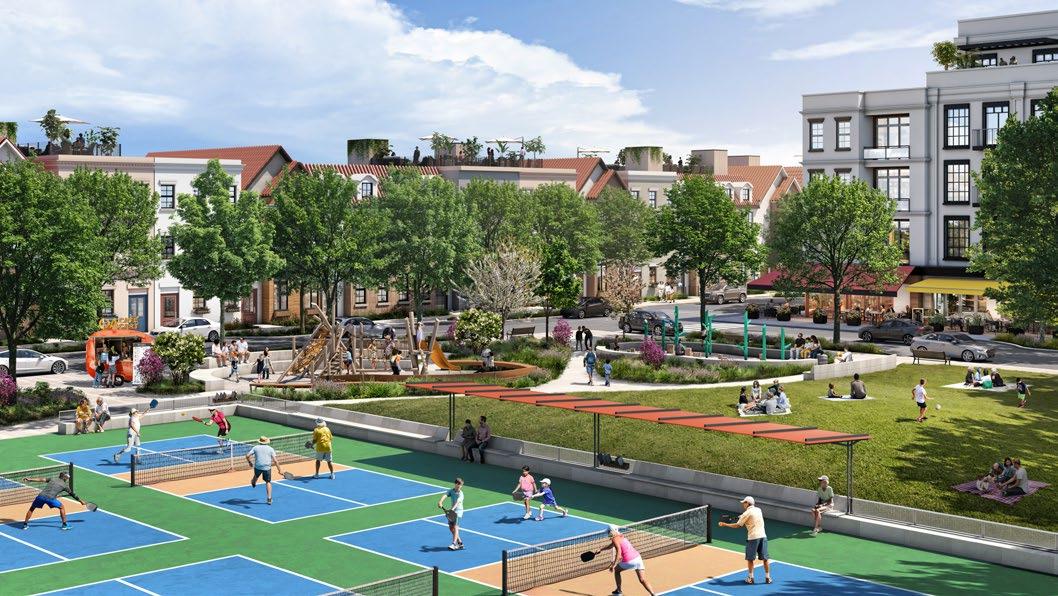
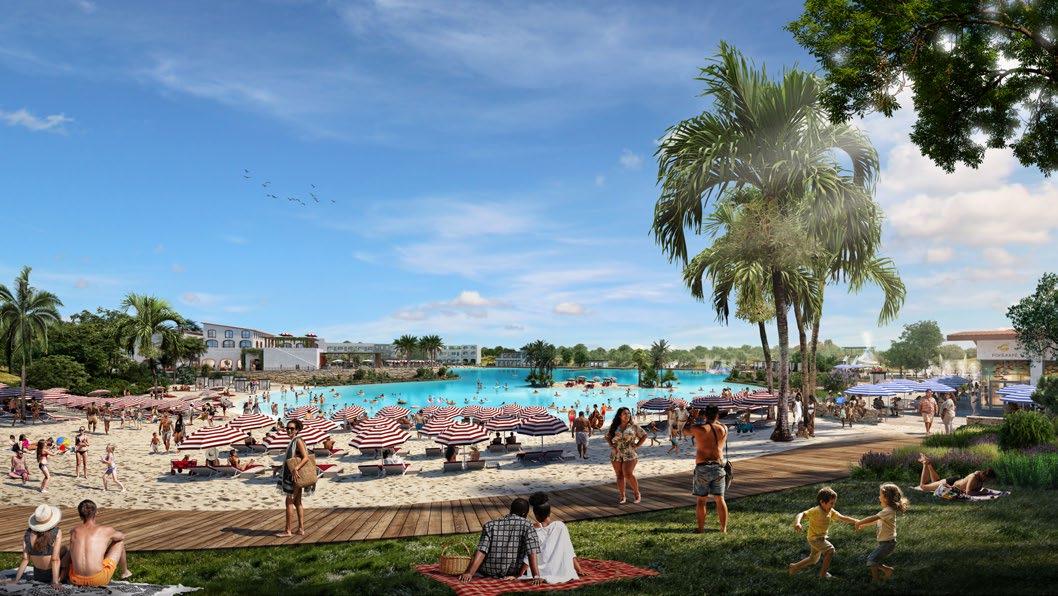
PROPOSES AN ENTIRELY NEW CITY ON FORMER AGRICULTURAL LAND –ONE DESIGNED FOR HUNDREDS OF THOUSANDS OF RESIDENTS. POSITIONED BETWEEN AMBITIONS OF SUSTAINABILITY, AFFORDABLE HOUSING, AND ECONOMIC INNOVATION, THE INITIATIVE SITS AT THE UNEASY INTERSECTION OF VISION AND CONTROVERSY. IT RAISES FUNDAMENTAL QUESTIONS: HOW MUCH SPACE MAY PRIVATE OWNERSHIP CLAIM IN THE NAME OF PUBLIC INTEREST? AND HOW DOES ONE DESIGN A CITY THAT NO ONE YET INHABITS, BUT THAT ALREADY DIVIDES OPINION?
In an era in which California functions both as an ideas laboratory and a crisis reactor – strained by housing shortages, climate extremes, and political fragmentation – this project is too large to ignore, yet too contingent to celebrate uncritically. What began with the quiet, billion-dollar acquisition of farmland in Solano County has evolved into one of the most polarizing urban developments in the country: a project whose ambitions, contradictions, and frictions illuminate broader questions of power, planning, and collective futures.
A UTOPIA BETWEEN FARMLAND AND INDUSTRY
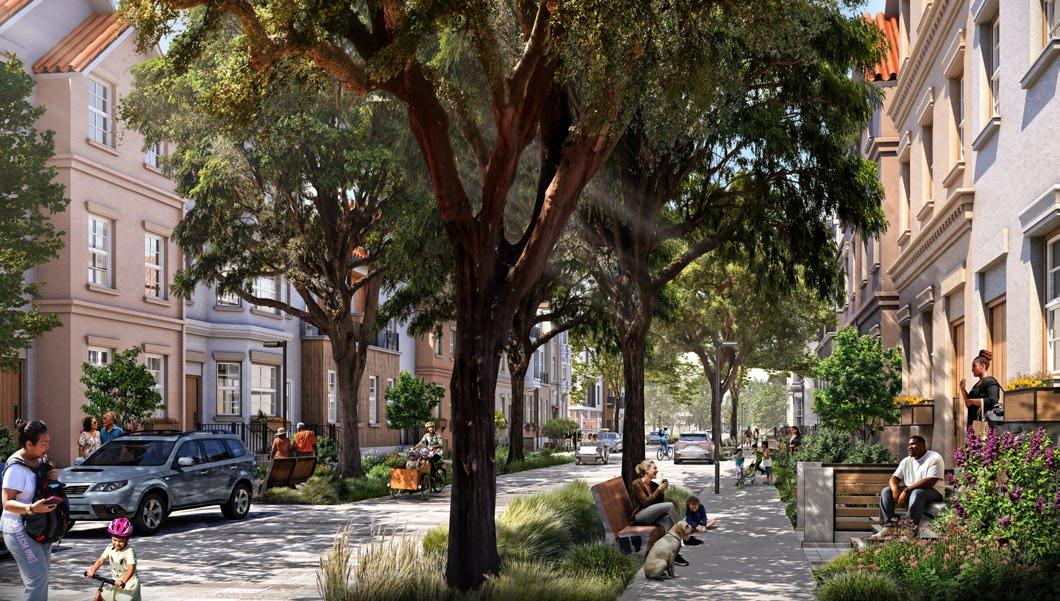
California Forever presents itself as an answer to a seemingly intractable Californian triad: affordable housing, high-quality jobs, and ecological sustainability. Its official narrative describes a “complete city plan,” combining well-paid employment in emerging industries with accessible housing and clean energy, embedded within walkable, mixed-use neighborhoods. Parks, transit systems, and urban connectivity are envisioned as the driving forces of this planned environment – conceived over decades, and intended as a dynamic complement to existing communities in Solano County. Jan Sramek, the project’s founder and
CEO, framed it in a joint statement with the county: California, once a place of opportunity and optimism, has “stopped building” – and here, he suggests, a new chapter might begin, for both present and future generations.
RETHINKING THE URBAN MODEL
At the level of theory, the approach is undeniably ambitious: density, mixed use, public space, and alternatives to car dependency take precedence over endless suburban subdivisions. Sustainability is framed as a core value, with the ambition of achieving some of the lowest per-capita CO₂ emissions among major U.S. developments, positioning the city as “climate-resilient.”
Yet it is precisely the tensions between theory and local reality that drive the discourse.
One fact remains difficult to overlook: California Forever is unfolding not with, but often against local consensus. Surveys have indicated that a clear majority of registered voters in Solano County view the project negatively, with many stating they would oppose it in a referendum. Notably, the more informed respondents are about the project, the stronger the opposition tends to be.
These numbers reflect more than resistance – they signal a deeper mistrust. A discomfort that exceeds familiar NIMBY reflexes. Many residents criticize that plans were introduced from the outside long before there was any shared understanding of what was actually being
proposed. Public meetings have, accordingly, become arenas of friction, where even carefully framed presentations by the project team meet sharp rejection.
LAND, POWER, AND PUBLIC AUTHORITY
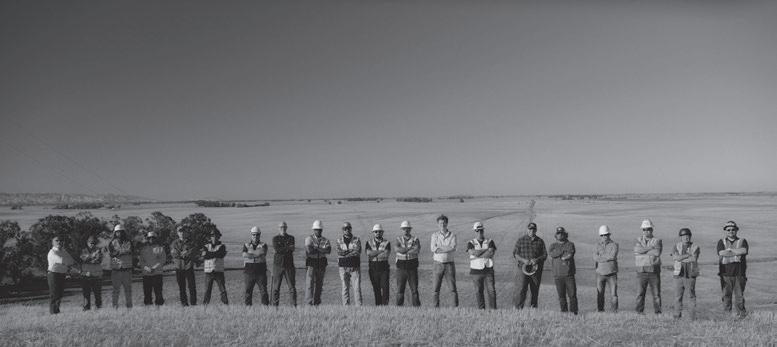
At the center of the controversy lies the method of land acquisition. Over years, the group behind California Forever quietly purchased vast stretches of farmland – raising questions not only about intent, but about transparency and democratic legitimacy.
Critics ask whether a private consortium should wield the authority to shape an urban landscape that will affect decades and generations to come.
This leads to a broader philosophical dilemma: can private capital, even when it promises to address social challenges, act as an autonomous agent of urban planning? Or does it undermine collective
decision-making in the public sphere?
For many residents, the answer is clear: a city belongs not only to its investors, but first and foremost to the people who live in it.
Defenders of the project point to California’s structural challenges – stagnant construction, soaring housing costs, and a steady outflow of labor. Studies cited by the project forecast thousands of jobs, ecologically stable planning, and a broader economic boost for the region. Yet even within progressive and urbanist circles, uncertainty persists. Some view California Forever as a potential blueprint for future cities; others argue that densifying existing urban areas and investing in infrastructure would be a more effective use of resources than building anew on undeveloped land. The debate has even fractured parts of the YIMBY movement: those advocating for more housing now question whether a greenfield megaproject is the right path forward.
CALIFORNIA FOREVER
Project: California Forever
Founder: Jan Sramek
Goal: A new city for up to 400,000 residents in Solano County
Vision: A sustainable, walkable city combining housing, jobs, parks, and modern infrastructure
Status: 2024 ballot initiative withdrawn; revised strategy via annexation of existing municipalities
Controversies: NIMBY opposition, environmental concerns, transparency, land acquisition practices
More information: solano.californiaforever.com
NEW STRATEGIES, OLD RESISTANCE
Following the withdrawal of a statewide ballot initiative in 2024, the project has shifted strategy. Rather than imposing a new municipal structure outright, it now pursues annexation through existing jurisdictions – particularly Suisun City and Rio Vista.
This tactical pivot underscores the extent to which political realities shape development in California – and how the project seeks to navigate institutional constraints rather than confront them directly.
A LABORATORY OF URBAN FUTURES
What can be learned from California Forever? It is more than a real estate venture. It is a testing ground for debates around land use, democratic legitimacy, ecological responsibility, and the conditions of urban futures.
At a moment when California faces simultaneous crises – housing scarcity, climate risk, infrastructural strain – such a vision may appear almost necessary. Yet its success will depend on more than design or capital. It hinges on the ability to forge a shared language between investors, communities, experts, and the broader public.
Without that consensus, California Forever remains above all one thing: a mirror –reflecting our hopes and anxieties about cities, power, and the future.
“CALIFORNIA,
ONCE A PLACE OF OPPORTUNITY AND OPTIMISM, HAS STOPPED BUILDING. AND HERE, HE SUGGESTS, A NEW CHAPTER MIGHT BEGIN, FOR BOTH PRESENT AND FUTURE GENERATIONS.”
JAN
FounderandCEO
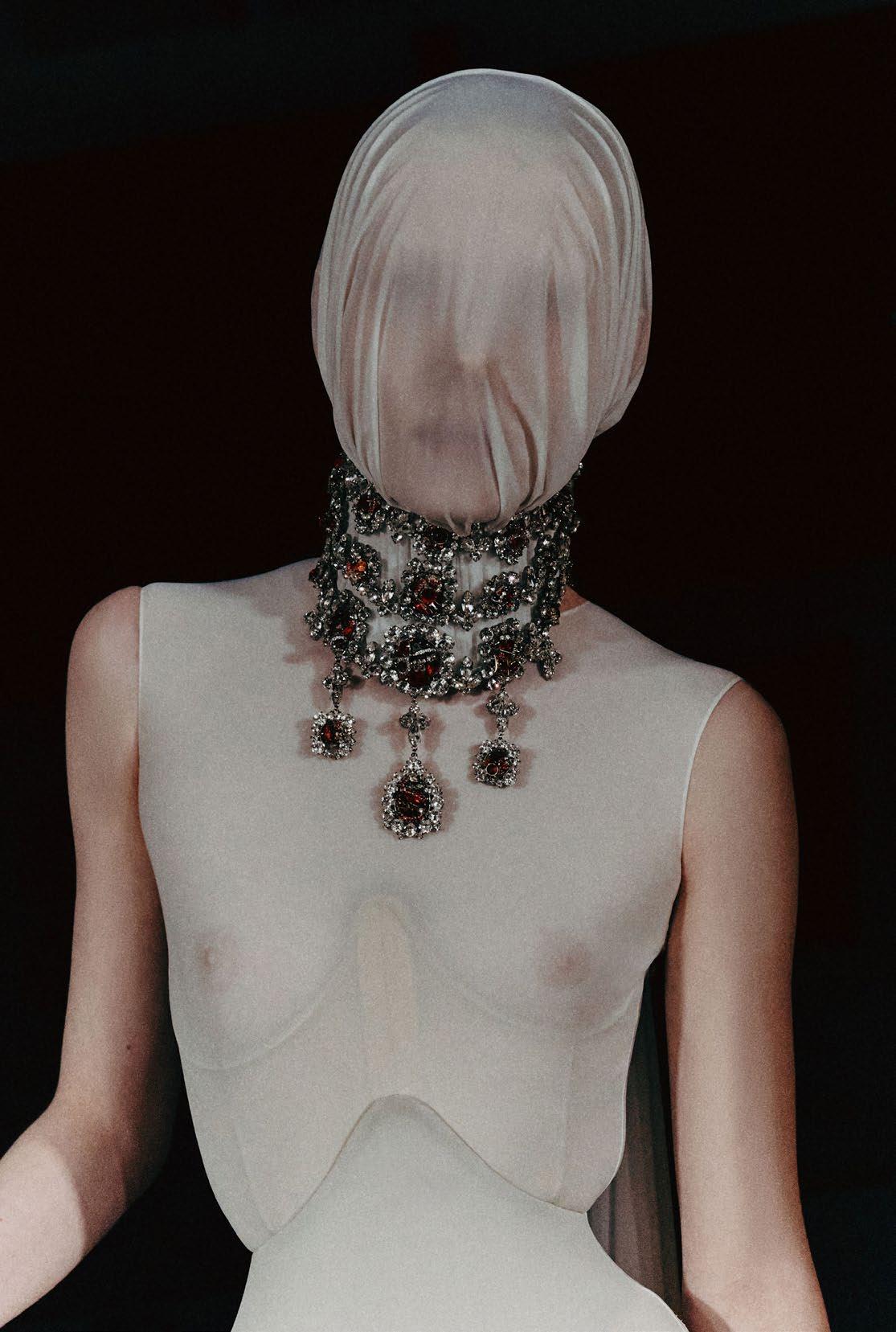
MAISON MARGIELA HAS NEVER DEFINED ITSELF THROUGH VISIBILITY – RATHER THROUGH THE DELIBERATE MANIPULATION OF IT. WHICH MAKES ITS LATEST MOVE ALL THE MORE STRIKING: THE COMPLETE OPENING OF ITS VISUAL ARCHIVE VIA A PUBLICLY ACCESSIBLE DROPBOX. WHAT AT FIRST GLANCE APPEARS TO BE A PRAGMATIC ACT OF DIGITIZATION REVEALS, UPON CLOSER INSPECTION, SOMETHING CLOSER TO A PROGRAM. IN AN INDUSTRY THAT TENDS TO CURATE, FILTER, AND MYTHOLOGIZE ITS OWN HISTORY, MARGIELA OPTS FOR RADICAL TRANSPARENCY – WHILE SIMULTANEOUSLY INVITING A REASSESSMENT OF ITS LEGACY.
OPEN
ARCHIVE
Maison Margiela has never defined itself through visibility – rather through the deliberate manipulation of it. Which makes its latest move all the more striking: the complete opening of its visual archive via a publicly accessible Dropbox. What at first glance appears to be a pragmatic act of digitization reveals, upon closer inspection, something closer to a program. In an industry that tends to curate, filter, and mythologize its own history, Margiela opts for radical transparency – while simultaneously inviting a reassessment of its legacy.
The gesture aligns seamlessly with the house’s DNA. Since its founding by Martin Margiela, Margiela has stood for deconstruction – for making visible what others conceal. Seams were turned outward, linings elevated to surfaces, the unfinished declared an aesthetic. Now, this logic extends to the archive itself: campaign imagery, runway documentation, detail shots, and visual fragments appear not as a museologically ordered chronology, but as an open system. It is less an archive in the traditional sense than a tool – an invitation to stylists, curators, students, and enthusiasts to construct their own readings.
At the same time, 2026 is shaping into a moment of renewed physical engagement with Margiela’s work. A series of exhibitions explores different facets of the house, translating digital openness back into spatial experience. While some institutions focus on the early years and conceptual runway presentations, others turn toward materiality: textiles, techniques, and the quiet radicality of craft interventions.
What becomes evident is a shift in curatorial perspective. Where retrospective narratives once dominated,
–
MAISON MARGIELA EXHIBITIONS & ARCHIVE (OUTLOOK) from May 2026 onward
No fixed dates announced
– The “MaisonMargiela/folders” format operates as a modular, evolving system, responsive to context and opportunity
– Further physical activations to be announced at short notice, with a particular focus on Asia and hybrid formats (archive + installation)
– The digital archive remains permanently accessible as a global, open platform for research and inspiration
The concept reflects Margiela’s core principles: transparency, fragmentation, and a dynamic reception of fashion history. Exhibitions become situational and interactive; archives, public.
fragmentary, thematic approaches now come to the fore. One exhibition might focus exclusively on white – as color and concept – from the iconic atelier coats to the anonymized labels. Another might explore the relationship between garment and body: volume, displacement, concealment. This specialization reflects not only the complexity of the house, but also a changing audience – one less interested in linear history than in layers of meaning. Equally compelling is the interplay between digital archive and exhibition practice. Curators increasingly draw on the Dropbox not merely as a research tool, but as an integral component of staging. Projections, screens, and interactive installations embed the material directly, creating a kind of “expanded space” in which physical artifacts and digital images enter into dialogue. The boundary between original and reproduction is deliberately blurred – in keeping with Margiela’s long-standing view of authenticity as a negotiable category. For the fashion industry at large, this move may mark a subtle turning point. At a time when archives have become strategic assets, Margiela’s openness feels almost subversive. It disrupts the logic of exclusivity and restricted access, replacing it with collective appropriation. At the same time, it generates a different kind of value: visibility as cultural capital, one
that unfolds not through possession, but through use.
Perhaps most significantly, the initiative reshapes how fashion is remembered. In place of fixed narratives emerges a dynamic memory – fed by individual perspectives and contexts. The images housed in the archive are not merely documents of the past, but building blocks for future stories: in editorials, exhibitions, and digital formats yet to be imagined. The project can thus be read as a quiet statement: fashion is not a closed chapter, but an ongoing conversation. Maison Margiela opens not only its archive, but the space of interpretation itself –suggesting that relevance today arises less from control than from accessibility. Within this tension – between intimacy and publicness, material and image –a new form of luxury begins to emerge: the freedom to construct meaning.