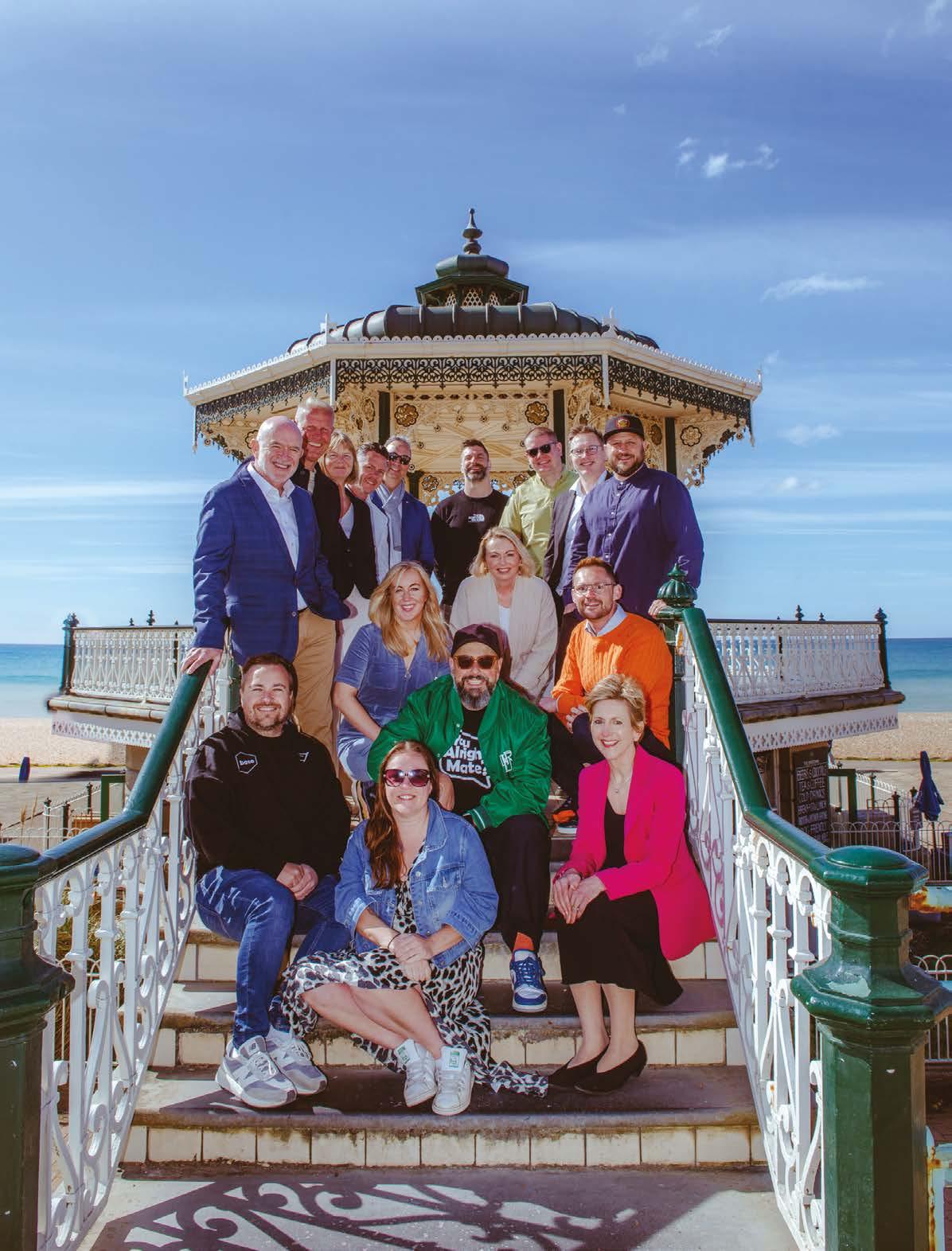






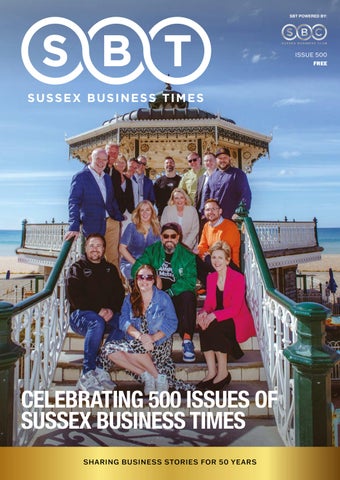
This is more than just another edition of the magazine. It’s a moment.
A moment to pause… reflect… and recognise what this platform has become over the past 50 years. From its beginnings in 1975, Sussex Business Times has always been about one thing at its core, people.
The people behind the businesses. The stories behind the success. The community that connects it all.
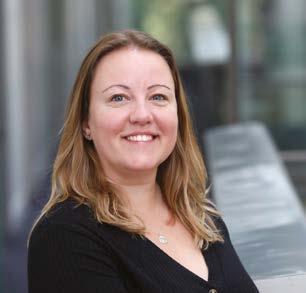
And 500 issues later… that has never been more true. As I step into my role as Managing Director, I do so with a deep sense of responsibility, not just to continue what has been built, but to help shape what comes next.
Because while this milestone is about legacy…
It’s also about evolution. This issue captures that perfectly. You’ll find stories of growth, resilience, innovation and change, from established businesses navigating transition, to new ideas challenging the status quo.
From finance and leadership insights… to powerful reflections on storytelling, community and purpose. And at the heart of it all is something that has always defined SBT:
• Real stories.
• Real people.
• Real connection.
In a world that is moving faster than ever… where content is everywhere and attention is scarce…what cuts through is authenticity. That’s why platforms like this matter more than ever. Because behind every business… is a human story worth telling.
I’d like to take a moment to thank everyone who has contributed to this journey, our readers, partners, contributors, and the wider Sussex business community. You are what makes this magazine what it is.
And as we celebrate 500 issues…
I’m incredibly excited for what comes next. Because this isn’t the finish line. It’s just the beginning of the next chapter.
Here’s to the next 500.
Jackie Irving Managing Director & Publisher
Sussex Business Times



22 — 500 Issues. One Community. A Personal Reflection 26 — 26 Years of Making the Show Go On: H2 Productions
28 — Brighton Hive: Building Business




Managing Director/Publisher
Jackie Irving jackie@countybusinessclubs.co.uk 07727 243202

Chairman/Chief Storyteller
Sam Thomas
sam.thomas@countybusinessclubs.co.uk 07894 762304
Production & Design
Kim Butler kim@lifemediagroup.co.uk
All material in this publication is strictly copyright and all rights reserved. Reproduction without permission is prohibited. The views expressed in Sussex Business Times Magazine do not necessarily represent the view of The Business Group Sussex Ltd. Every care is taken in compiling the contents but the publishers of Sussex Business Times Magazine assume no responsibility for any damage, loss or injury arising from the participation in any offers, competitions or advertisement contained within Sussex Business Times Magazine. All prices featured in Sussex Business Times Magazine are correct at the time of going to press.
Copyright The Business Group Sussex Ltd. 2024 ©

























Combining dog welfare, mental wellbeing and community sport, the new App helps owners run safely alongside their dogs.
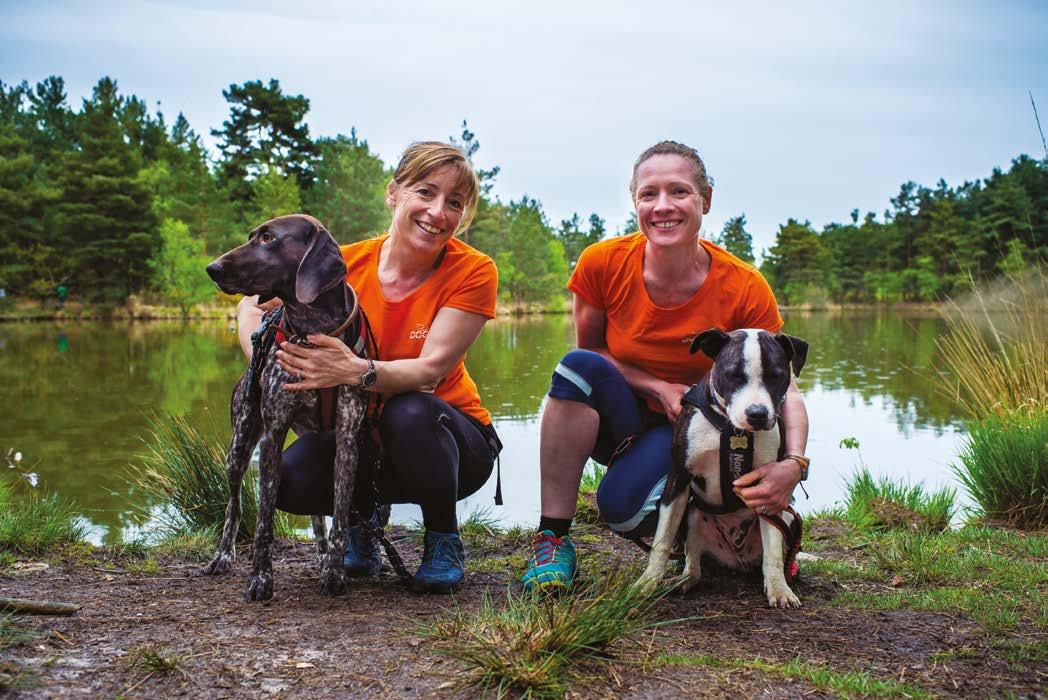
Award-winning UK brand DogFit International Ltd is celebrating its 10th anniversary with the launch of the first dedicated Canicross training App, designed to help dog owners start running safely and confidently with their dogs.
Founded and run by two women passionate about health, wellbeing and responsible dog ownership, DogFit’s latest innovation arrives during International Women’s Month, marking a decade of female-led leadership in a fast-growing outdoor sport.
What is Canicross?
Canicross is hands-free trail running with your dog. The dog wears a specially designed harness and the owner wears a running belt, with the two connected by a bungee line that allows them to run together comfortably and safely.
Canicross provides:
· A social, community-led sport
· A powerful way to improve fitness for both dog and owner
· A unique bonding experience
Over the past decade, DogFit has helped introduce thousands of people across the UK and internationally to the sport,
always with dog welfare at its core.
The First Dedicated Canicross Training App
The new DogFit App has been created to make structured, responsible Canicross training accessible to more people nationwide, particularly those who cannot attend in-person classes.
The new DogFit App centres around a structured Beginners Canicross Course, which includes a progressive Couch to 5K training programme designed to help owners and their dogs build fitness safely and gradually. Alongside the running plan, the course provides practical

guidance on running technique, warmup exercises and the verbal commands commonly used when running with dogs. It also includes clear advice on correct equipment, dog welfare and best practice, ensuring owners understand how to introduce Canicross responsibly.
While DogFit has a network of certified Canicross Trainers across the UK and overseas, the App has been created to support people who cannot attend a class in person. It removes barriers such as location, time or confidence, helping more dog owners get started safely.
Importantly, this is not simply a running app adapted for dog owners. It is an education-led programme designed around the needs of both human and canine athletes, reflecting the responsible approach that has defined DogFit over the past decade.
Core principles include:
· Dog welfare always comes first
· Correct, properly fitted equipment is essential
· Training must be progressive and suitable for the individual dog
· Rest, hydration and surface awareness are critical
By embedding these principles into the

App, DogFit continues to set the standard for safe and ethical Canicross participation.
Canicross offers benefits that extend beyond physical fitness. Participants regularly report improved mental wellbeing, increased confidence and stronger bonds with their dogs. As a social sport, it also creates community connections, something DogFit has nurtured for 10 years through classes, events and education.
The App now enables even more dog owners to experience those benefits in a structured and supported way.
Launching during International Women’s Month adds further significance. As a female-led business operating in the outdoor and sporting space, DogFit has grown from a grassroots concept into a respected international training provider.
Gail Walker, Director of DogFit International Ltd, said:
“When we started DogFit ten years ago, many people had never even heard of Canicross. Our mission was simple, to help people get fitter alongside their dogs, safely and responsibly.
Launching the first dedicated Canicross training App is a natural next step. It allows us to support people who can’t access a class while still ensuring dog welfare remains the priority.
As a women-led business, we’re incredibly proud to be marking this milestone during International Women’s Month. It shows what can be achieved when passion, purpose and community come together.”
DogFit’s 10-year milestone reflects sustained growth in a sport that is now firmly established within the UK’s outdoor fitness scene.
With certified trainers delivering classes across the UK and overseas, and now a fully structured digital training pathway, DogFit continues to lead, educate and grow the Canicross community both nationally and internationally.
For more information about the DogFit App or to start the Beginners Canicross Course, visit the website
To find a certified DogFit trainer near you, visit their website


When people talk about the future of IT, the conversation usually centres around artificial intelligence, cybersecurity and cloud technology.
These developments are undoubtedly reshaping how organisations operate. Yet there is another part of the technology landscape that often receives far less attention – despite sitting at the heart of almost every business process. Documents.
From contracts and invoices to HR records, compliance files and client communications, documents remain fundamental to how organisations function. Even in highly digital environments,
businesses still rely on a mix of digital files, scanned records and printed materials to keep operations moving.
At IT Document Solutions, we often see that while organisations are investing heavily in new technologies, their document processes have not always evolved at the same pace.
Many organisations have embraced digital tools over the past decade. Cloud storage, collaboration platforms and remote working technologies have made it easier than ever to share information.
However, this shift has also created new challenges. Documents are now frequently stored across multiple locations – email inboxes, shared drives, cloud platforms and physical files. Over time, this can lead to fragmented systems where information becomes harder to track, retrieve or secure.
When businesses cannot easily locate the information they need, productivity suffers. Employees spend time searching for files, duplicating work or relying on outdated versions of documents.
For IT leaders, the challenge is not

simply storing information – it is ensuring that it can be accessed securely, quickly and reliably when needed.
Security Extends Beyond the Network Cybersecurity continues to dominate IT agendas, and rightly so. Yet while organisations invest heavily in protecting networks and systems, document workflows can sometimes be overlooked.
Printers and multifunction devices process a significant amount of sensitive information every day. Legal agreements, financial data, payroll reports and confidential client documents often pass through these machines.
Without appropriate safeguards, documents can be left unattended, accessed by unauthorised users or stored within device memory.
Secure printing, user authentication and controlled access to scanning and document workflows are therefore becoming increasingly important parts of a wider security strategy. Protecting information means considering the entire lifecycle of a document, from creation through to storage and disposal.
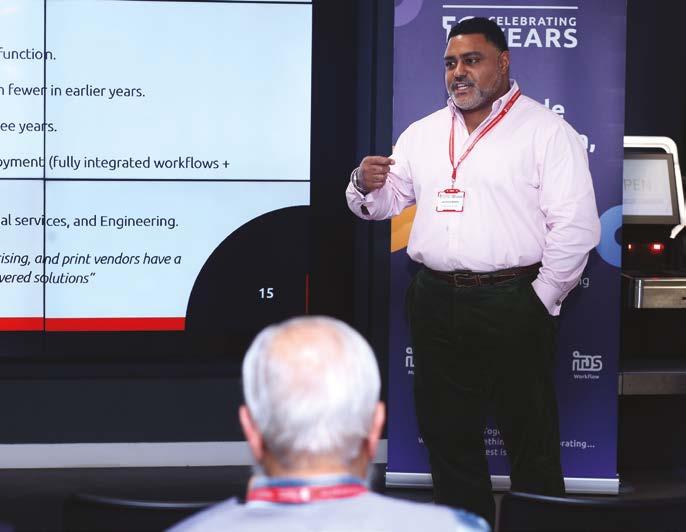
As Jermaine Weedon, Managing Director of IT Document Solutions,
explains: “In many organisations, documents still sit at the centre of everyday business activity, but the systems around them haven’t always kept up with the pace of digital change. When businesses take the time to review how information is captured, shared and secured, they often uncover opportunities to improve efficiency, strengthen security and simplify the way their teams work.”
Another major shift in recent years has been the move towards hybrid working. Teams now expect to access information seamlessly whether they are working from the office, at home or travelling between locations.
This flexibility has placed greater emphasis on cloud-based document
systems and integrated workflows. Employees need to be able to scan, retrieve and share documents securely from multiple environments without adding complexity to their daily tasks.
For organisations operating across multiple offices or supporting distributed teams, modern document infrastructure has become a critical enabler of productivity.
Alongside security and accessibility, businesses are increasingly looking at document strategy through the lens of sustainability and operational efficiency.
Reducing unnecessary printing, digitising paper archives and optimising device usage can significantly lower costs while supporting environmental goals. In many cases, small improvements to document workflows can deliver meaningful operational benefits.
Bringing Document Strategy Back Into the IT Conversation.
Digital transformation is not just about adopting new technologies. It is about ensuring that the systems supporting everyday business activity are working effectively.
Documents remain central to how organisations operate, communicate and maintain compliance. As a result, document strategy should be considered an important part of the broader IT discussion.
At IT Document Solutions, we believe that reviewing how information flows through an organisation – from capture and storage to printing and security – can often reveal opportunities to simplify processes and strengthen information control.
For many businesses, the question is not whether documents are still relevant in a digital world. It is whether their document systems are keeping pace with the demands of modern work.
www.itdocumentsolutions.com
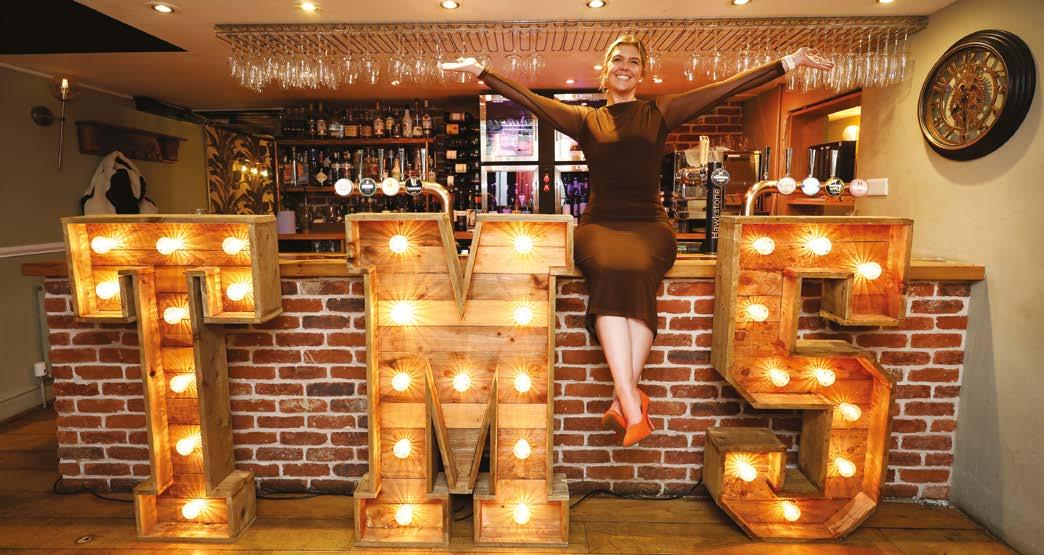
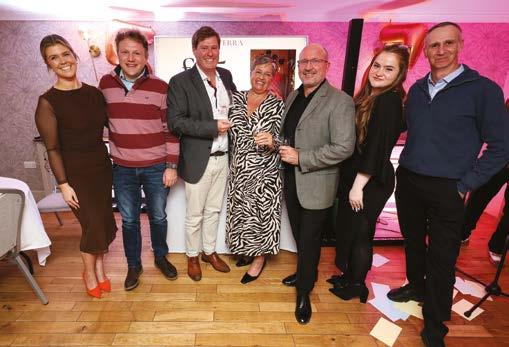
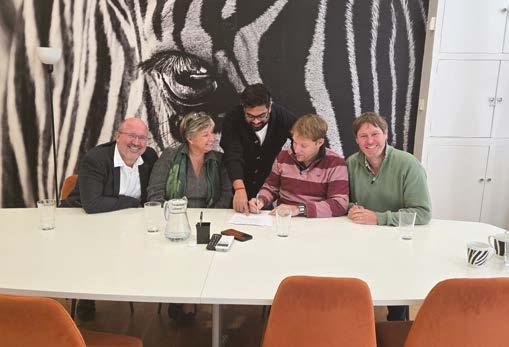
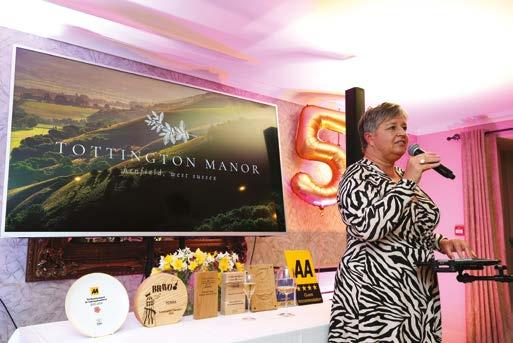
On 17th March 2021 the Directors of Crowns Venues Ltd, Helen & Steve Pomery, Philip Fossey & Jamie Kensettacquired the keys to Tottington Manor Hotel near Henfield.
They negotiated an entry deal securing a 5 Year option and fixing the freehold price with the balance deferred until 17th March 2026. On 11th March this year the Freehold was purchased in full transferring 100% ownership to Crowns Venues Ltd T/A Tottington Manor Hotel.
The Hotel, now completely transformed and re-invigorated through enormous investment and vision has built up an enviable reputation within Sussex and beyond as well as creating the standalone TERRA Restaurant which is entirely focused on championing the best Sussex Produce, Wines and Spirits all from the heart of the South Downs.
Since their arrival, the 12 Bedroomed Guest Accommodation has been
recognised by the AA as 4 Star and they’ve gone on to be awarded numerous awards and accolades from THE BRAVO’s, The Beautiful South Awards for Best Restaurant in South East (2), Best Wedding Venue (Bronze), Gold Ribbon Good Food Guide, OpenTable, has recently been featured as one of the Top 50 Restaurants in the UK by OpenTable and received their first AA Rosette.
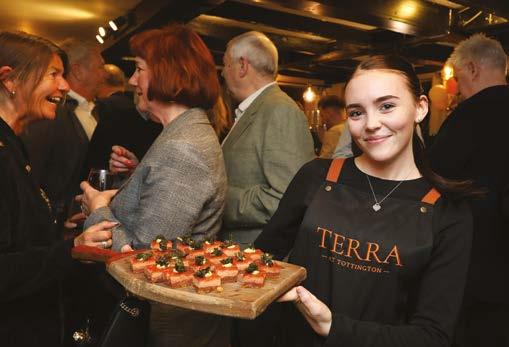
Now employing a local team of 40, Tottington Manor Hotel hosts business retreats & meetings, private dining, family celebrations and 50 Weddings every year and they hold events throughout the year including Live Music and Special Menu nights and have become well known frothier community Christmas events and the Hotel & TERRA Restaurant are open every day.
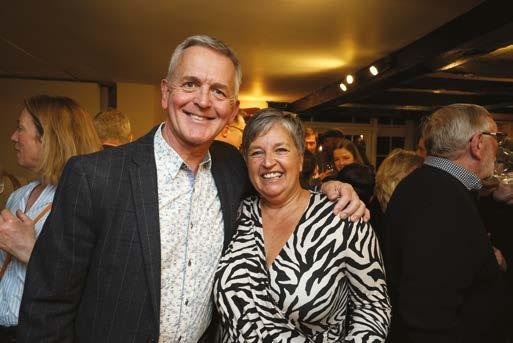
Director Helen Pomery said “On
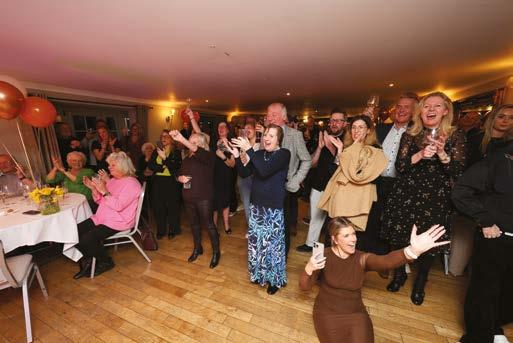
the night of our 5th Anniversary we celebrated with 150 guests to announce our purchase was complete and we were joined by the local Sussex business community, guests, suppliers, friends and neighbours. We are so proud, especially during this very difficult time for the Hospitality Industry to have got the required funding to complete the purchase of Tottington Manor and secured its future for years to come. We continue to work hard and smart and thank all the guests, our wonderful suppliers and our team and look forward to many more happy years here in the heart of the South Downs National Park.
Tottington Manor Hotel, Edburton Rd, Henfield, West Sussex, BN5 9LJ
helen@tottingtonmanor.co.uk
www.tottingtonmanor.co.uk
01903 815757

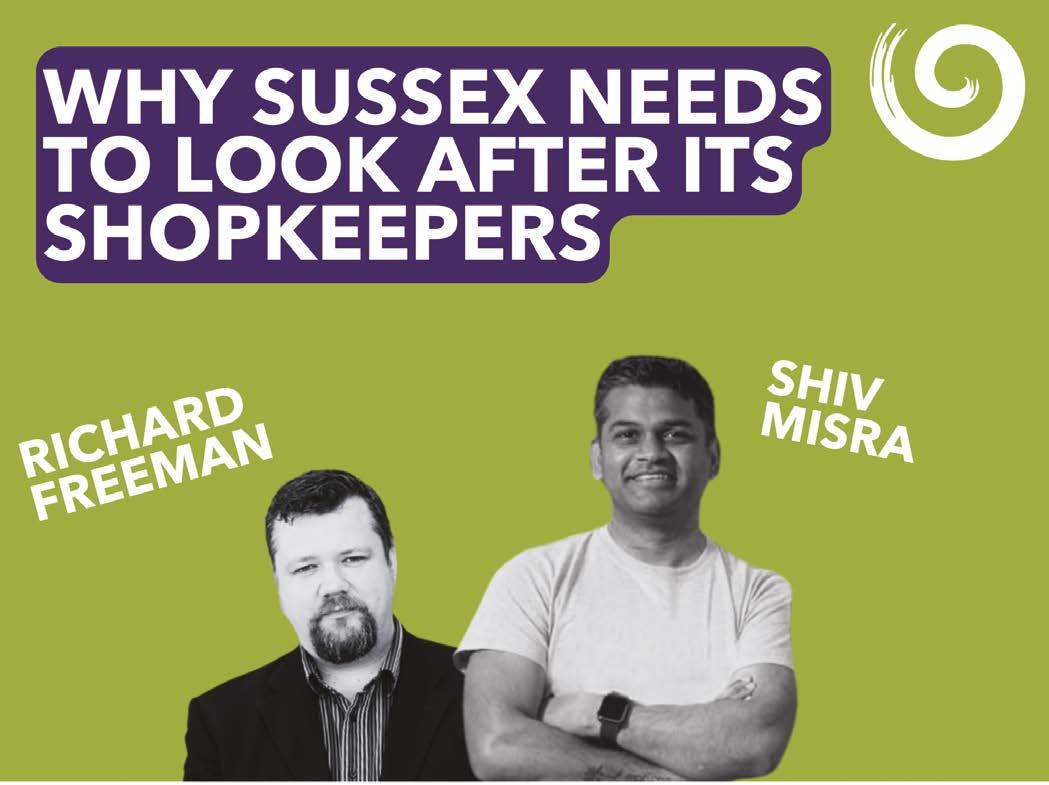
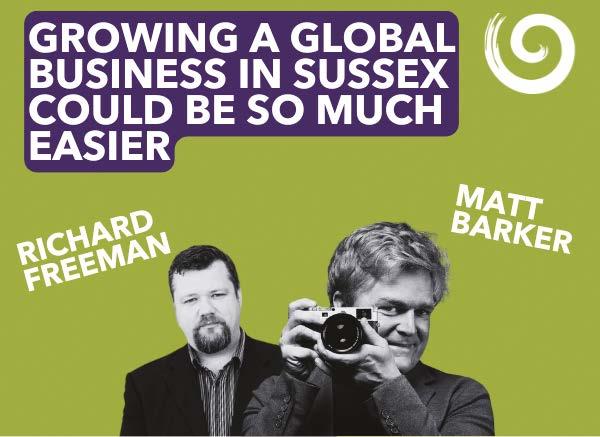
Sussex says it wants growth. It talks about entrepreneurship, innovation, creativity, sustainability and local pride. It likes the language of bold ideas and future industries. But when you listen closely to two very different founders in Brighton, a more awkward question starts to emerge: what kind of business does Sussex actually know how to back?
Because not every important business fits neatly into the categories local systems tend to recognise.
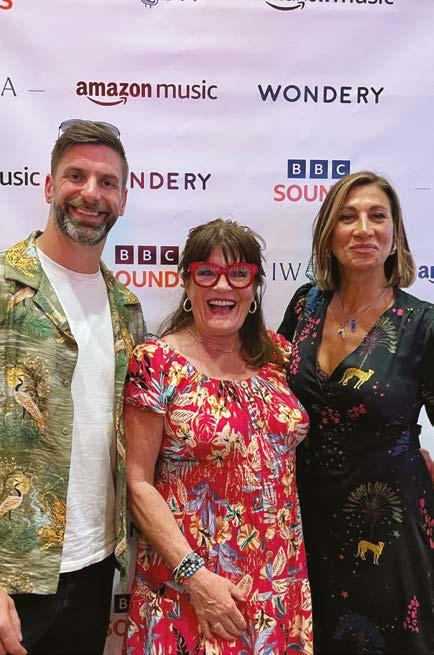
On the Sussex And The City podcast, Matt Barker of MPB and Shiv Mishra of Kindly of Brighton describe businesses that, in very different ways, are rooted in Sussex, shaped by Brighton, and valuable well beyond the city.
One is a global scale-up in the circular economy (a tech platform for reused camera equipment), now employing more than 500 people across Brighton, New York and Berlin, but still with more than half its workforce based here. The other is a zero-waste, plant-based supermarket trying to make ethical retail feel normal, convenient and mainstream
rather than niche and worthy. Together, they tell a bigger story about what Sussex is good at producing, and what it still struggles to support.
Barker’s point is that MPB is exactly the sort of company most regions would proudly hold up as proof that their economy works. It started small, grew fast, built real jobs, attracted investment, expanded internationally and stayed in Sussex. But his argument is that Brighton did not really notice it for years. The city helped shape the business culturally, through its creativity, diversity and
general refusal to be boring, but not necessarily structurally.
Office space has been a recurring battle. Commercial buildings are poorly maintained. Growing firms fall into an odd gap between start-up celebration and serious economic planning. Sussex likes the idea of entrepreneurial energy, but is less confident when that energy needs floorspace, transport, long-term networks and joined-up attention.
Mishra, from a very different corner of the economy, actually lands somewhere similar. Kindly is not a venturebacked scale-up. It is an independent retailer built around low waste, refill and sustainable consumption. But his frustration is also about systems that still make too much happen business by business, shop by shop, workaround by workaround.
Small firms are expected to build websites, market themselves, organise logistics, source locally, absorb higher costs and somehow still compete with businesses that already enjoy scale, supply chain power and delivery infrastructure. His answer is that practical coordination: shared delivery hubs, county-wide loyalty schemes, better networks between farms and retailers, and incentives for businesses doing things in a more sustainable way.
That is connected to devolution, because both conversations expose the same underlying weakness. Sussex does not simply need more growth. It needs better ways of
connecting the assets it already has. That might mean transport that reflects where people actually commute from, including the many workers travelling in from Shoreham, Worthing and Mid Sussex. It might mean support structures for firms that are too big to be treated like plucky start-ups, but too locally invisible to shape policy. It might mean recognising that independent retail is not a lifestyle extra for nice high streets, but part of the social and economic fabric that gives places their distinctiveness. And it might mean treating sustainability not as a boutique concern, but as part of how Sussex wants to define competitive advantage.
There is also a wider cultural challenge here. Both founders describe a region that can be timid about its own success. Barker talks about a lack of belief. Mishra talks about the need to make better choices feel mainstream. Neither is asking for special treatment, but for regional economic leadership that notices, convenes and builds the
conditions for more of this kind of business to thrive.
That is where a future Sussex mayor, and the new local structures forming around devolution, could matter. Someone needs to be responsible for seeing the whole picture. The independent economy. The scale-up economy. The sustainable economy. The awkward bits between Brighton and the rest of Sussex. The practical barriers that stop good ideas becoming ordinary parts of regional life.
To listen to the interviews in full, alongside many others, visit www.sussexandthecity.info


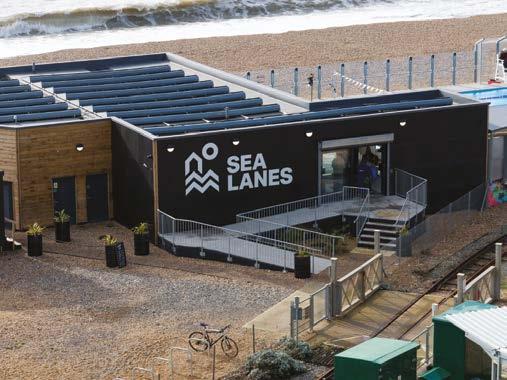
Tell us your Story?
Sea Lanes creates National Open Water Swimming Centres that inspire safe outdoor swimming, open to everyone from first-time swimmers to elite athletes. Sea Lanes Brighton was the first of its kind and the beginning of our journey, created by Sussex-based businesses and individuals passionate about open water swimming, including Brighton swim coach Andy White, Copsemill Properties, QED Sustainable Urban Developments and SwimTrek. This year, two further centres will open: Hilsea Lido in Portsmouth and Sea Lanes Canary Wharf. We transform underused waterfront and coastal spaces into vibrant destinations centred around swimming, health and wellbeing. Each site combines a safe swimming environment with coaching, training programmes, saunas and social spaces, helping people build confidence in open water while enjoying its physical and mental health benefits. Beyond the water, we’re rooted in community engagement, education and environmental responsibility, redefining how the UK experiences outdoor swimming.

What has been your biggest business challenge to date?
Sea Lanes Brighton was five years in the making. From the original concept of a 50m swimming pool on Brighton beach to opening, there were many challenges. Navigating the planning process with the local council, balancing heritage, community needs and financial viability, required careful collaboration and was a complex, delicate process.
What has been your greatest or proudest business achievement to date?
Opening Sea Lanes Brighton in June 2023 as the UK’s first National Open Water Swimming Centre was a huge moment for us, but just as important is the vibrant community it has created. With two further sites opening this year, it also reflects how far the team and concept have progressed.
What type of clients do you currently work with and who are you looking to meet?
Sea Lanes Brighton is a thriving seaside
hub, home to a range of partner health and wellness businesses. Our audience spans swimmers, local residents and those visiting for food, drink and wellbeing experiences. We offer a unique setting for meetings and team building days, with epic sea views and wellbeing experiences built in. We love working with local, likeminded businesses with shared values.
Tell us a story/fact about yourself that people might not know?
Previously, Brighton had just 44% of Sport England’s recommended swimming pool provision, much of it in ageing facilities. Sea Lanes was created to help meet this need. As a founding team, we bring together expertise in development, swimming and coaching, united by a belief in the power of water to improve lives.
Success is creating places where people feel confident, connected and inspired in the water, while delivering meaningful regeneration, strong community engagement and lasting social impact.
https://www.sealanesbrighton.co.uk/



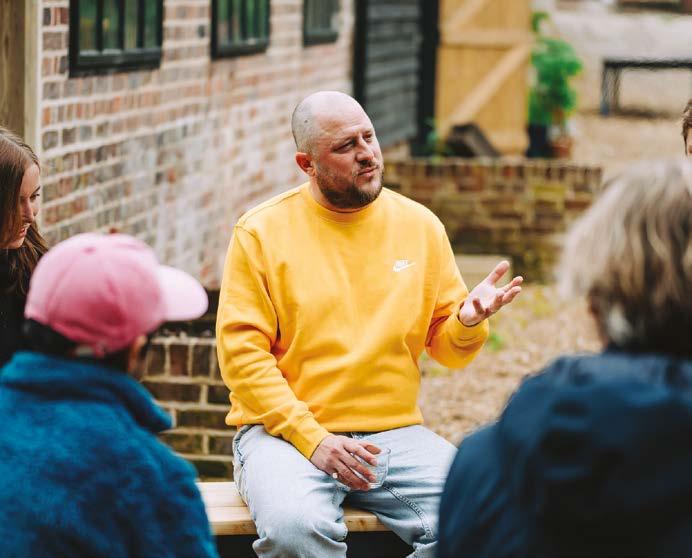
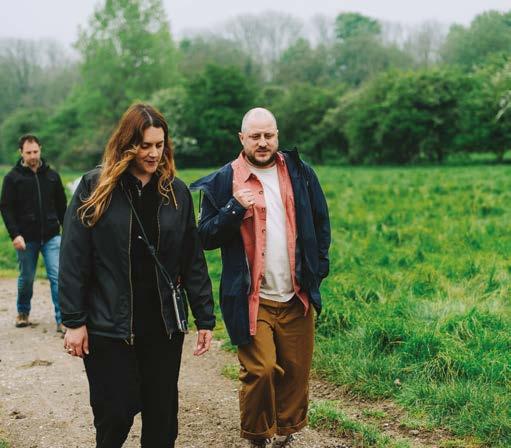
By Joel Lawton – The Founder Transition Expert
Founder Transitions
“As long as I bring some money in by the 18th of May, then I am ahead.”
I paused and waited. The work we’d done together meant they might just hear it themselves.
The words of a founder I work with. Someone handed the rarest of things: a genuine opening. Space. Runway. The chance to build something new from values rather than urgency.
And there it is. “By the 18th of May”
It’s the sound of an old narrative quietly reasserting itself, dressed up in practicality, just as everything new is beginning. Spring is the most wonderful time for established founders. The light returns, energy rises, opportunities start appearing. But we must be wary of the old wiring, the doing, the winning, the filling of every gap to feel productive, it can blinker us to the potential of the change we are committed to.
That’s what makes this beautiful season so dangerous. Not the opportunities. The timing for those who are building new foundations to make a transition that lasts.
The Chapter Before
When this founder came to me six months ago, it was autumn. The picture was heavy.
Five years of low energy. Floating. Distant. Lacking patience with the kids. The life force, their words, slowly being sucked out of them. A six-monthly cycle that never really broke, good start,
difficult by spring, summer reset, tough again by Christmas.
Winter, for them, had always been more of the same. This time we used it differently, slowing down deliberately to look clearly at what was actually happening. To let go of the narratives that were no longer serving them. To create the space that spring would eventually need to grow into.
What we built was something underneath the challenges, small practices and habits, which enabled them to shift the story they were telling themselves, reconnect them to their partner, protect their energy and understand their own needs.
The visible work was modest: Monday morning journalling. One prompt. A
commitment to keep up their running, to protect time for themselves, sea swimming in community or saunas with friends.
What happened underneath was not modest at all.
When a major unplanned transition arrived, the kind that rewrites everything, they didn’t default to relentless action, as they had six years earlier when a previous transition had them solving everything in 36 hours flat. This time, they asked for help. They allowed the feelings in rather than outrunning them. They had honest conversations about what they needed at home, not just what they could manage to solve the immediate pressure.
That is not a small thing. That is the thing.
The foundations they’d built created
an unexpected opportunity. Now with real runway and warm conversations gathering momentum, they have the chance to design what comes next around what actually matters. Spring arrived, and for once, the roots were ready for it.
“By the 18th of May”. The founder caught it. Not me.
The Old Narrative Has Perfect Timing
What was dangerous wasn’t the transition, the uncertainty, or even the financial pressure, which, examined honestly, wasn’t a crisis at all. It was that the old narrative sounds entirely reasonable.
“Bring some money in by 18th May”. Who could argue? It’s responsible. Pragmatic. The head screwed on straight.
Six years ago, when the previous unplanned transition hit, the founder solved it in 36 hours. Everything in hand before the dust settled. And then what? Five years of low energy, cycles, depletion. The relentless action worked, in the narrowest sense. The cost arrived later. Quietly. Cumulatively.
“By the 18th of May” is the same pattern in a different costume. Urgency dressed as clarity. When urgency is driving, you

take the first available thing rather than the right thing. You fill the gap rather than design the future. You begin the next chapter by reverting to the last one.
The season has changed. The story hasn’t.
Nature doesn’t rush spring. The ground has been preparing since autumn, releasing what’s finished, drawing energy inward, building the conditions for what comes next. When growth arrives, it comes from something real underneath.
Founders too often skip that process and the foundations never get built.
The founders who build something lasting are the ones who used the quieter months to get clear, about what they need, how to overcome what is holding them back, the way to protect their energy and what chapter they’re actually trying to write. Most don’t. And the moment they’re in a new environment, with new demands and pressures, an old pattern reasserts itself. The filling of gaps. The putting of themselves last. By autumn, they’re wondering why they’re back in the same cycle.
“By the 18th of May” isn’t a plan. It’s a symptom.
Before spring carries you forward, before you respond to the next opportunity, take an honest look at where you actually stand.
Not with a business plan, but a human one.
You are your greatest asset; it is time to start treating yourself that way.
I’ve built a short Founder Foundation Health Check for exactly this moment. Ten minutes. A clear picture of where your foundations are strong and where the cracks will show before a next chapter has a chance to create success.
Founder Foundation Health Check: https://www.inyourcorner.co/founderhealth-check
Not because the answers are comfortable. Because knowing them is the difference between building something new that lasts and repeating a chapter you’ve already lived.



Nikki Martin, Associate Director, Carpenter Box
Navigating the complexities of taxation can be challenging, especially for UK expats. Whether you’re working abroad or have relocated for retirement, understanding your tax obligations is crucial. This 2026/27 guide will help you understand how tax works for UK expats, including personal tax
allowances, residency rules, as well as the latest tax rates.
How does tax work for UK expats?
As a UK expat, your tax obligations depend on your residency status. The UK tax system operates on the basis of residency rather than citizenship. This means that if you are UK tax resident, you may be liable to pay
UK taxes on your worldwide income. However, if you are non-UK resident, you will generally only be taxed on your UK-sourced income.
Determining your residency status involves the Statutory Residence Test (SRT), which considers factors such as the number of days you spend in the UK, your ties to the country, and your overall lifestyle. It’s essential to establish
whether you’re a UK resident or nonUK resident to understand your tax obligations fully.
What is the personal tax allowance for expats in the UK?
For the 2026/27 tax year, the UK personal tax allowance remains a critical aspect of tax planning for expats. The personal tax allowance is the amount of income you can earn before you start paying income tax. For most individuals, including expats, the personal allowance for 2026/27 is £12,570.
This allowance is applicable to UK residents and non-UK residents who are British citizens or EEA/Swiss nationals. However, certain conditions may affect your eligibility, such as the level of your income or eligibility under a double taxation agreement with the country in which you reside. It’s important to note that the personal allowance may reduce if your income exceeds £100,000.
Will I be liable for tax in two jurisdictions?
The UK has double taxation agreements with many countries to ensure that the same income is not taxed twice. These agreements determine which country has taxing rights over certain types of income and may allow you to claim foreign tax credits or exemptions.
How long can an expat stay in the UK without paying tax?
The amount of time you can spend in the UK without becoming liable for tax on worldwide income and gains depends on your residency status. Generally, if you spend fewer than 183 days in the UK within a tax year, you may be non-resident for tax purposes. However, the SRT also takes into account your connections to the UK,
such as having a home or close family in the country.
For example, if you have strong ties to the UK, even spending less than 183 days in the country could result in being UK tax resident, triggering tax obligations on your worldwide income. Therefore, understanding and accurately calculating your days in the UK is crucial for tax planning.

A UK day under the SRT can be any day where you are present in the UK at midnight at the end of the day, with some exceptions for days spent in transit.
What is the UK tax rate for 2026/27?
For the 2026/27 tax year, UK income tax rates remain consistent with previous years. The tax rates are:
• Basic Rate: 20% on income between £12,571 and £50,270.
• Higher Rate: 40% on income between £50,271 and £125,140.
• Additional Rate: 45% on income above £125,140.
Different rates apply for unearned income such as dividends, interest and rents.
These rates apply to UK residents on their worldwide income and to nonresidents on their UK-sourced income. Understanding these rates is vital for effective tax planning, especially if you have a mix of UK and foreign income.
For expats, tax planning can be complex, requiring a deep understanding of both UK and international tax laws. Our international services team can provide expert guidance to help you navigate these challenges and ensure compliance with all relevant tax obligations. For further information, contact a member of our team on 01903 234094 or visit www.carpenterbox.com
Nikki Martin
Nikki Martin is a Chartered Tax Adviser working primarily in the private client tax space advising on tax matters impacting internationally mobile and high-networth clients. Nikki advises on all areas of taxation impacting individuals.
As part of the International Tax team, Nikki advises individuals on personal tax residency, domicile, global mobility, and inheritance tax planning including the use of trust structures and family investment companies.
www.carpenterbox.com


Many business owners have a simple plan: build a successful company, sell it, and use the money to retire.

However, many business owners are told, “Unfortunately, the current value of your business isn’t enough for you to retire.” It’s a difficult conversation for both sides.
For many business owners in Sussex, this reality often becomes clear too late. After years of building a company, they expect a future sale to fund retirement. But when it’s time to value the business, there may be a gap between what it’s worth and what’s needed to support their desired lifestyle.
Understanding your financial freedom figure
Before you think about selling your business, it’s important to know what you want to achieve.
Firstly, do you know how much you need to support your lifestyle without working? This is often called your ‘financial freedom figure’. It can just mean the amount needed to keep up a certain standard of living. Or it could be what you need to help your family, support children with buying a home, or leave a legacy.
Secondly, it’s essential to know what your business is really worth. Many owners have an idea of their business’s value, often based on industry comparisons or headline figures.
These can be helpful, but they rarely show the full picture.
In reality, a business’s value depends on many factors, such as:
• how reliant the business is on the owner
• the concentration of clients or revenue
• the level of recurring or contracted income
• strength of management and operational systems
• current market conditions and buyer demand
For example, a business that relies heavily on its owner is usually less attractive to buyers than one with a strong management team.
Without a clear and realistic valuation, it’s hard to plan well. Without this clarity, important decisions may be delayed or made under pressure.
It’s common to find a gap between what a business is worth now and what’s needed for retirement. The sooner you spot that gap, the more options you’ll have.
If it means you need to raise your business’s value, it will usually take time. This might mean improving profits, diversifying income, strengthening processes, or making the business less dependent on you.
These changes rarely happen overnight. Rushing a sale can limit your results, especially if the business isn’t ready. On the other hand, taking a structured approach over several years can make your business more appealing to buyers.
Looking beyond the sale price
It’s also important to remember that the sale price is just one part of the story. Tax, how the deal is structured, and what you do with the money afterward can all affect the final result.
For example:
• the way a sale is structured may affect the level of tax payable
• timing can influence both valuation and demand
• proceeds may need to be invested to generate sustainable income

If you focus only on the sale price, you might miss these other important factors.
Personal and business finances are often closely connected yet planned separately.
A better way is to look at the whole picture and bring together:
• the value of the business
• other personal assets such as pensions or investments
• income needs in retirement
• tax efficiency and estate planning considerations
This can help you see if your business alone can fund your retirement, or if you’ll need to, build wealth outside your business.
Exit planning usually can’t be done in just the last year before retirement. Often, it takes several years to strengthen your business, align it with your financial goals, and get it ready to sell.
Starting early gives you more flexibility, more choices, and often better results. It also helps you move forward with more confidence, knowing if you’re on track or if changes are needed.
For business owners, a company often stands for years of hard work, risk, and dedication.
Making sure your business can support your retirement takes more than just hope. You need to know its value, understand your future needs, and have a plan to close any gap.
With the right preparation, you can often get closer to your goal, and sometimes even surpass it. www.southoverwealth.co.uk

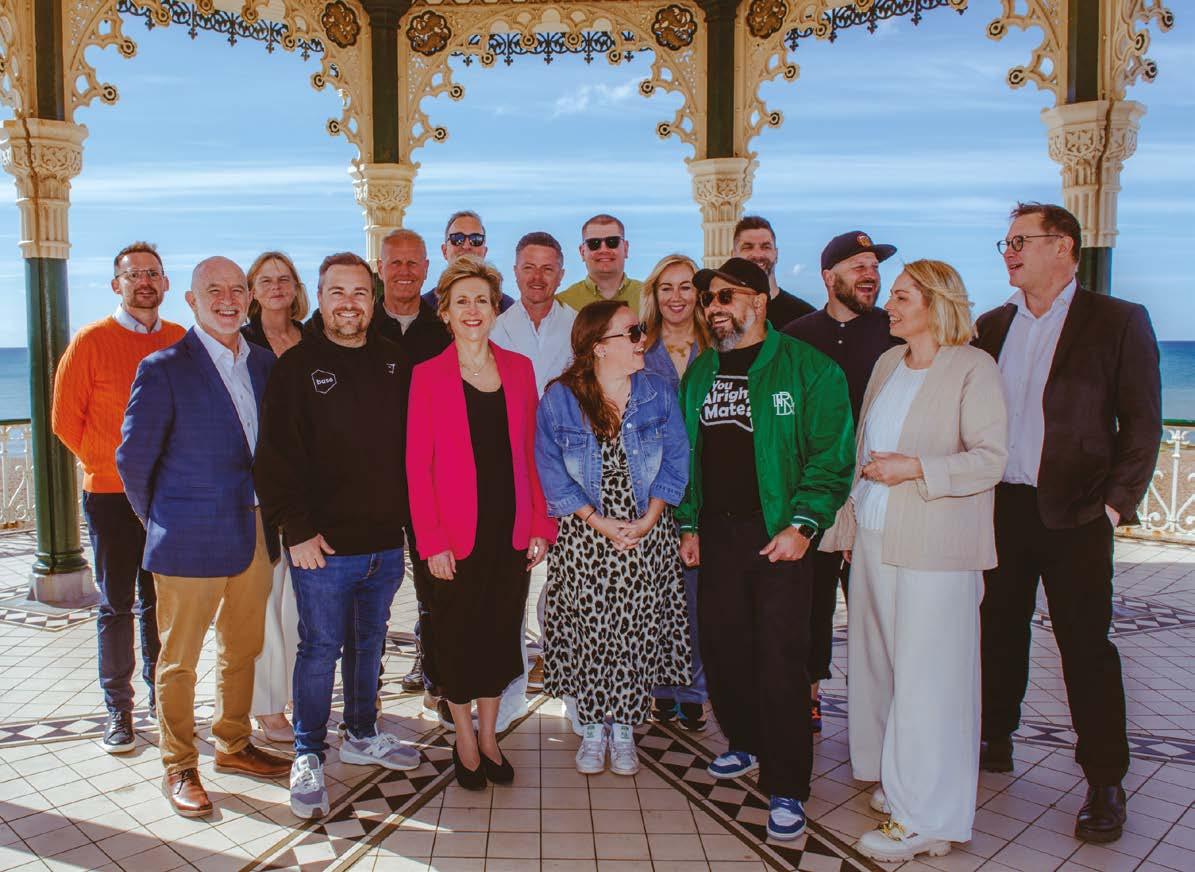
There are moments in life and business where you’re invited to pause… Not to look back with nostalgia, but to reflect with perspective.
This is one of those moments.
500 issues of Sussex Business Times.
Half a century of stories. Thousands of businesses.
Countless conversations, connections, and collaborations.
And for me… nearly a decade of being a custodian of something much bigger than myself.
Taking the Baton (2017)
Back in December 2017, I was given the opportunity to take on Sussex Business Times.
If I’m honest… I don’t think I fully appreciated what that meant at the time. This wasn’t just a magazine.
It was, and still is, the beating heart of the Sussex business community. My first issue was Issue 418, the
Rockinghorse 50th anniversary edition. A charity that remains incredibly close to my heart.
And since then…
82 issues later…
I’ve had a front-row seat to some of the most inspiring stories this county has to offer.
Entrepreneurs. Leaders.
Start-ups.
Scale-ups.
Family businesses.
Purpose-driven organisations. People who, every single day, are showing up… building something… and often doing it against the odds.
If there’s one thing this journey has taught me, it’s this:
☛ Stories are everything.
Not the polished versions. Not the highlight reels. The real stories.
The setbacks. The pivots.
The moments of doubt. The quiet wins no one sees. Because that’s where connection lives.
“In a world full of noise, stories are what make us feel… and feeling is what makes us connect.”
Over the years, I’ve seen first-hand that business isn’t built on transactions… It’s built on relationships. And relationships are built on understanding. And understanding comes from storytelling.
When I took this on, I didn’t just see SBT as a publication. I saw it as a platform.
A platform to bring people together. A platform to create conversations. A platform to move beyond traditional “networking”…
Into something more human. That thinking led to the creation of business clubs, events, and communities that sit around the magazine today.
Because the truth is…
People don’t remember adverts. They remember how you made them feel. They remember the story. They remember the connection.
We’re now living in a world powered by AI. Content is everywhere. Information is instant. And noise is constant.
But here’s what I believe more than ever:
☛ The more digital the world becomes… the more human connection matters.
AI can write content. It can generate ideas. It can even tell stories.
But it can’t replace lived experience. It can’t replicate genuine emotion. And it can’t build real relationships. That’s why storytelling isn’t becoming less important…
It’s becoming everything. Because in a world of automation… Authenticity is the differentiator.
If SBT has taught me anything, it’s this:
☛ You don’t build a business alone.
Behind every cover story… Every feature… Every issue…
There is a community. A community that supports each other. Champions each other. Challenges each other. And most importantly… Shows up for each other.
That’s what Sussex has always done brilliantly.
And it’s what makes this magazine so special.
“SBT has never just been about business… it’s always been about people.”
Over the past few years, something shifted for me.
Through the stories I’ve had the privilege to share…
Through the conversations I’ve been part of…
Through my own journey… I found something deeper.
A sense of purpose.
A mission that now sits at the centre of everything I do:
☛ To change the narrative around success.
☛ To create spaces for honest conversation.
☛ To remind people that it’s okay to not be okay.
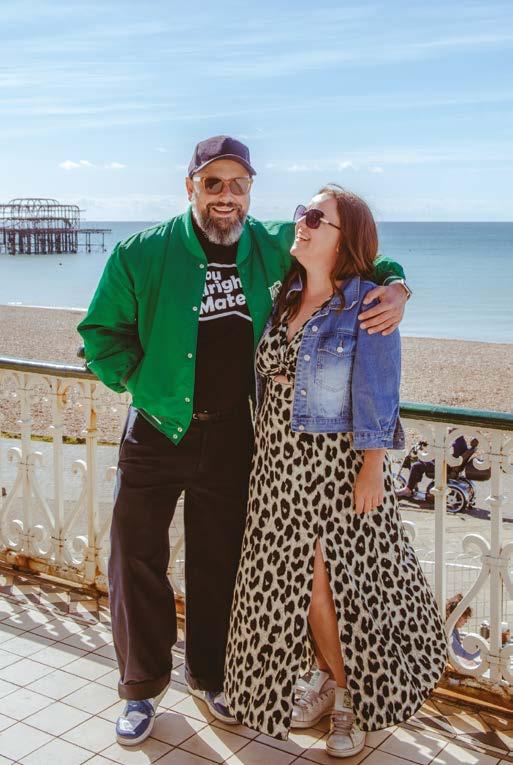
That path has led me to build Different Hats and the You Alright Mate? movement.
And it’s changed how I see everything. Including this magazine.
Because at its core…
SBT has never just been about business. It’s always been about people.
And that brings me to this moment. As we celebrate 500 issues, a milestone we’ll also be marking together at our Soho House celebration, I also find myself at a personal crossroads.
After nearly a decade as custodian… I’ve been reflecting on what the next chapter looks like, both for me, and for SBT.
Over the coming months, I’ll be stepping back slightly to focus more deeply on the mission and work that sits at the heart of everything I do.
But this isn’t an ending… It’s an evolution.
One that I’m incredibly excited about. We have some exciting announcements to share soon about what’s next for SBT, how it continues to grow, evolve, and serve this incredible community in new and meaningful ways.
And alongside that… I’m proud to continue this journey with Jackie Irving as Managing Director. Jackie plays a vital role in the continued growth of SBT and the wider business
community we are building.
Her energy, integrity, and passion for people are a huge part of what makes this all work.
And I’m excited for what we will continue to build together.
Thank You
To everyone who has been part of this journey…
Contributors. Partners. Sponsors. Readers. Friends. Thank you.
This magazine only exists because of you. And every single story shared has added to something far bigger than any one issue.
From Alan Harvard’s vision…
To Lee Mansfield’s stewardship… To the chapter I’ve been fortunate enough to play a part in… And now to Jackie’s leadership… SBT continues to evolve.
But its purpose remains the same:
☛ To tell the stories that matter. ☛ To bring people together.
☛ To celebrate the human side of business.
500 issues is a milestone. But it’s not the destination. It’s just another chapter… In a story that’s still being written.
Here’s to the next chapter. Here’s to the power of story. And here’s to the community that makes it all possible.
By Sam Thomas SBT Chief Storyteller

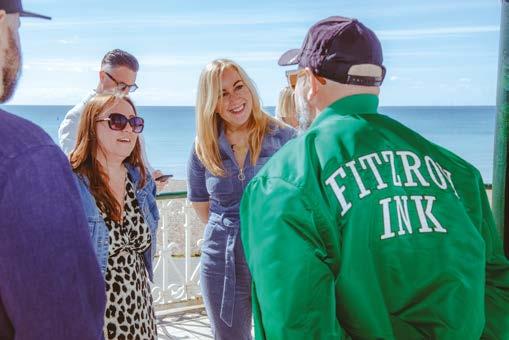
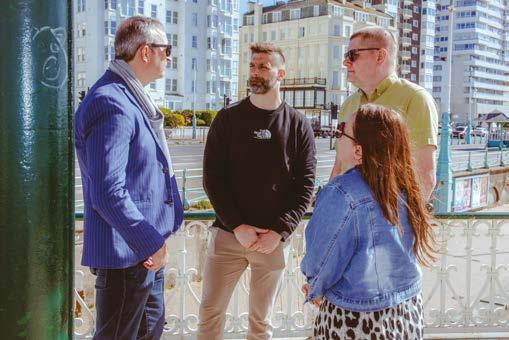

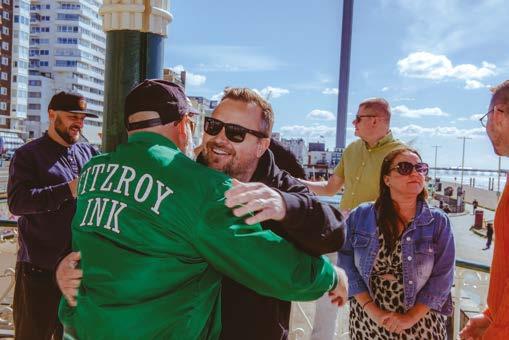
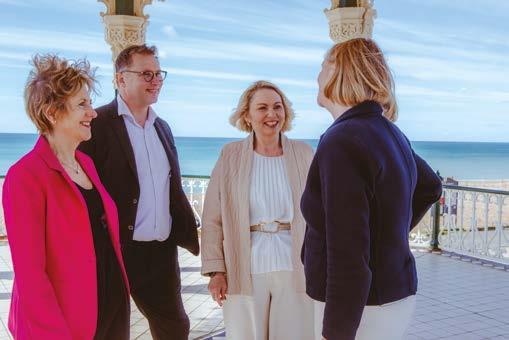
For over a quarter of a century, H2 Productions has been quietly and expertly turning ambitious visions into unforgettable realities. This year, we are incredibly proud to celebrate our 26th anniversary. It is a milestone that naturally prompts reflection on the journey behind us and the horizon ahead.

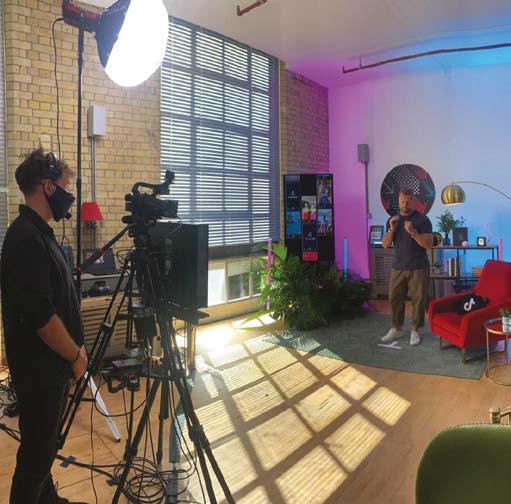
Over the past two and a half decades, we have been involved in projects spanning local, national, and international stages, delivering on both intimate and grand scales. Yet, no matter how far our technical and creative endeavors take us, our foundation, our heart, and our home have always remained firmly rooted right here in Brighton. We love this city, we have been a staple of its vibrant business ecosystem for 26 years, and we eagerly look forward to being a staple for many more.
Reaching a 26-year milestone in the fast-paced, ever-evolving production
and events industry is no small feat. Our journey has not been without its hurdles, both global and deeply personal. Over the decades, we have navigated incredibly turbulent business times, weathering national recessions, severe economic downturns, and the unprecedented challenges of a global pandemic.
But perhaps the most significant turning point occurred 14 years ago when my personal situation changed, and I became disabled. Suddenly, I wasn’t just navigating a shifting economic landscape; I was learning to navigate new mobility issues while at the helm of a highly physically demanding business. The events and production world is heavily hands-on, fast-paced, and demanding of stamina. Figuring out how to continue operating and leading in that
environment with a new physical reality was a monumental hurdle.
Surviving these eras required a combination of sheer grit, adaptability, and unwavering determination. When operating the business through tough times, the guiding thought has always been a simple but powerful truth: “If it was easy, everyone would do it.” We work in an industry defined by everchanging technological advances and shifting client needs. Looking back even just eight years ago, I could not have predicted exactly what we would be doing today. Survival has meant constantly diversifying, innovating, and embracing the philosophy that the show must go on. We are showmen at heart, and our internal motto demands that we make things happen, regardless of the external—or internal—obstacles.
Ours is very much not a 9-to-5 industry. We go where people need us, exactly when they need us, navigating complex timelines, rigid budget constraints, and highly specific site requirements.
We often view ourselves as “dream makers.” Clients approach us with incredible visions, and it is our job to deliver those grand ideas, even when the available budgets do not necessarily reflect the scale of the dream. Whether we are producing a large corporate event or facilitating a small community fundraiser, our dedication to worldclass customer service and production remains exactly the same.
If there is one core value that has sustained H2 Productions through the years, it is our deep-seated belief in collaboration. We have always maintained that great things happen when businesses work together, particularly on a local level. Keeping it local and nurturing strong working relationships yields the best possible results.
We have enjoyed deeply successful commercial collaborations with stellar local organizations such as the Sussex Business Show and the renowned Brighton Festival. We also rely on fantastic collaborative partners to support our own business operations. Organizations like Connected Brighton play a vital role in our local visibility and engagement, while the excellent team at Preston Insurance Brokers has seamlessly taken care of our specialized insurance needs for the last few years.
Our collaborative spirit extends far beyond commercial enterprise into
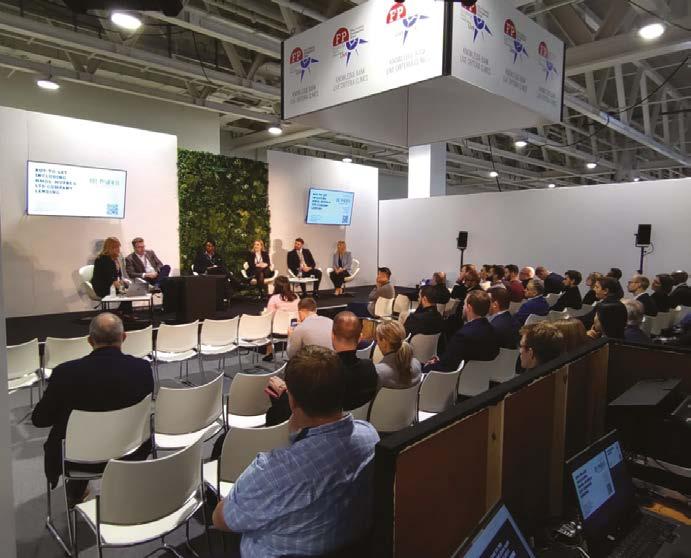
the heart of the community. We are passionate about giving back and have partnered with numerous charities both locally and nationally. Our portfolio includes impactful work with The Big Help Out, the Brighton Anti-Racism Coalition, the King’s College Hospital Trust, the Heart of Kent Hospice, and Hospice in the Weald.
When I look back at personal highlights, the list is wonderfully diverse. It ranges from delivering multiple, highly rewarding community arts projects in and around Brighton to the sheer thrill of working alongside Fatboy Slim (Norman Cook) on the iconic Brighton seafront.
No reflection on our local partnerships would be complete without acknowledging our incredible relationship with Sussex Business Times (SBT) and Sam Thomas. One of our standout recent projects was producing and broadcasting Sam’s grueling 24hour podcast challenge across the web. It was an honor to help raise awareness
for the podcast while simultaneously raising vital funds for Rockinghorse, a brilliant children’s hospital charity based right here in Brighton.
As we celebrate our own 26-year milestone, we also want to take this opportunity to recognize SBT. We are incredibly proud of Sam and the entire team for reaching the monumental achievement of their 500th issue. It is a testament to their own grit and dedication to the Sussex business community. We look forward to continuing our deeply valued collaborative relationship with them for years to come.
As H2 Productions steps into its 27th year, we do so with immense gratitude for the partners, clients, and community that have supported us. The technology will undoubtedly continue to change, and the specific demands of the industry will evolve, but our core mission remains steadfast. We will keep innovating, we will keep collaborating, and we will keep ensuring that, right here in Brighton and beyond, the show will always go on.

What if the most valuable businesses of the future are not standalone companies, but ecosystems?
That question sits at the heart of Brighton Hive, a multi-venture ecosystem founded by Kyriakos Baxevanis and May Chunladecha. Built over 18 years, Brighton Hive challenges the traditional notion of business as a standalone, profitmaximising entity and instead positions it as an interconnected force for economic, social, and human value.
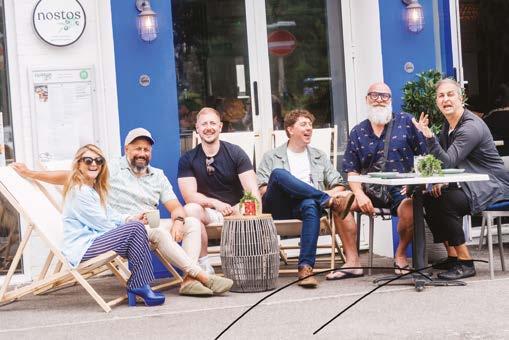
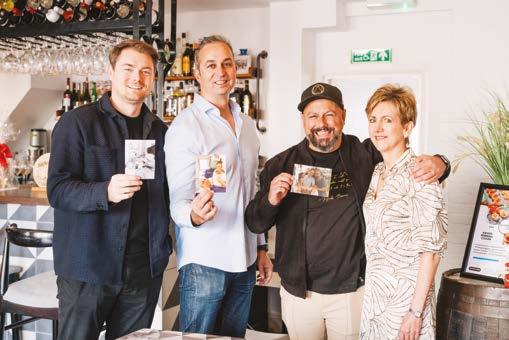
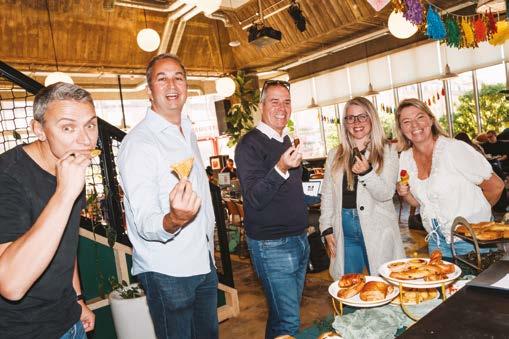
The journey began in 2008, at a time of financial uncertainty, when Kyriakos and May launched Little Jasmine Therapies & Spa from their home. It was not just a business decision, it was a necessity. What followed was not simply growth, but a redefinition of what growth could look like. Today, Brighton Hive encompasses Little Jasmine Therapies & Spa, Nostos Restaurant, Nostos Catering UK, Be Well Live Well, and The Big Fat Greek Club, five ventures operating across wellbeing, hospitality, and community engagement.
The structure is intentional. Each business exists independently, yet none operate in isolation. Together, they form a system designed to create connection between people, sectors, and ideas. In an era where many businesses are becoming increasingly transactional, Brighton Hive has doubled down on relationships as its primary currency.
This is a direct response to a wider shift. Consumers, employees, and communities are no longer satisfied with businesses that simply deliver a product or service. They expect contribution. They expect responsibility. Increasingly, they expect leadership.
Brighton Hive has positioned itself at the intersection of these expectations.
Its ventures are built around a core principle of improving physical and emotional wellbeing at scale. Whether through a treatment at Little Jasmine, a shared meal at Nostos, a corporate activation through Be Well Live Well, or a networking experience at The Big Fat Greek Club, the intention is consistent. The aim is to create environments where people feel better, think better, and connect more meaningfully.
The ambition extends beyond commercial activity. Brighton Hive actively invests in the wider ecosystem through partnerships that range from independent founders to multinational organisations. Over nearly two decades, these collaborations have contributed to a more connected and resilient local economy. Its ongoing support for charities such as Rockinghorse and The Starr Trust reflects a belief that businesses should not sit adjacent to social impact but be fully integrated within it.
This philosophy also extends into education. As Chair of the Advisory Board for the University of Brighton’s School of Business and Law, Kyriakos contributes to shaping how future leaders think about business. By bridging academia and industry, the aim is to embed entrepreneurial thinking, real-world awareness, and a stronger sense of purpose from the outset.
Sustainability is approached in the same way. It is not treated as a layer of marketing, but as an operational responsibility. From responsible sourcing and waste reduction within Nostos Restaurant to broader environmental considerations across the group, Brighton Hive recognises that long-term success and long-term responsibility are inseparable.
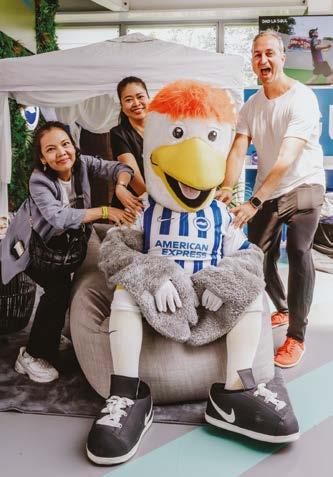
At its core, Brighton Hive represents a different model. One that moves away from fragmented thinking and towards a more integrated, ecosystem-driven approach. It asks not only how a business grows, but what it contributes.
And it challenges others to rethink the role their businesses play within the systems around them.
As Kyriakos Baxevanis puts it: “We are entering an era where business as usual is no longer enough. The most valuable businesses will not be the ones that operate in isolation, but the ones that build ecosystems around them. Profit is the outcome.
Contribution is the strategy.”
https://brightonhive.co.uk/



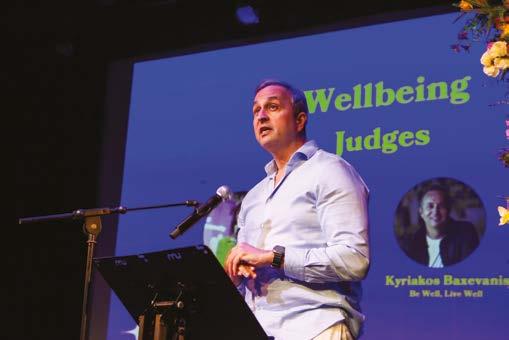

When Sussex Business Times was first published in 1975, Britain was a very different place, and the idea of a local business magazine becoming a 500-issue institution would have seemed an ambitious dream.
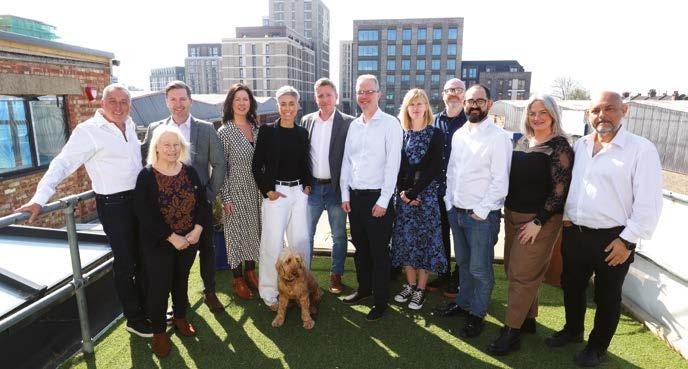
For an SME like Seico Group, who have been partnered with SBT Magazine for four years, reaching milestones alongside SBT is especially resonant. As the magazine marks its extraordinary half-century of chronicling the Sussex business community, it offers a natural moment to reflect on Seico’s journey, one that began in 1990 and has since spanned over three decades of navigating economic storms, technological shifts and market disruption. Surviving is one thing, evolving to remain genuinely relevant to clients and the wider business community, that is the real achievement for SMEs.
Rob Starr founded Seico Insurance and Mortgages in 1990 with a clear purpose: to provide businesses and individuals with straightforward, expert financial guidance. From those early days, the emphasis was always on relationships, understanding clients’ needs, earning their trust and delivering advice that genuinely made a difference.
Over thirty-five years on, that founding philosophy remains at Seico Group’s core, even as the business itself has grown considerably. What started as a local enterprise has expanded to encompass three offices in Hove, London and South Africa, reflecting both the ambition of the team and the increasingly international nature of the clients they serve.
But growth in this sector is never straightforward. The financial services landscape has been transformed
beyond recognition since 1990, from sweeping regulatory change and digital disruption to the upheaval of a global pandemic and volatile property markets. For any SME operating in this space, the challenge is not simply to survive these shifts, but to use them as a catalyst for smarter, more client-focused ways of working. Seico Group has consistently done exactly that across more than three decades in business.
Today, the business offers a comprehensive range of mortgage, commercial finance and insurance services, supported by a team whose expertise spans those same decades. Whether working with individuals navigating complex mortgage decisions or businesses seeking robust commercial lending or insurance cover, the Seico approach remains personal, considered and thoroughly professional.
“We are incredibly proud to be a partner of Sussex Business Times and to be part of this landmark 500th issue cover feature. SBT has always been more than just a
magazine; it is the heartbeat of the Sussex business community, and it has been a privilege to grow alongside it over more than three decades. I want to extend my heartfelt congratulations to Sam Thomas and Jackie Irving-Wilkinson for building something truly special. Sustaining a business community publication to 500 issues takes vision, dedication and a genuine passion for the people and organisations that make this region thrive. We raise a glass to that, and look forward to many more issues to come.”
Rob Starr MBE, CEO, Seico Group
To speak to a specialist broker about your residential mortgage or commercial finance needs, please get in touch to arrange a chat.
Residential: Mortgages@seicogroup.com
Commercial Finance: Commercial@seicogroup.com
01273 778888 www.seicogroup.com

Fifty years ago, storytelling in business looked very different.
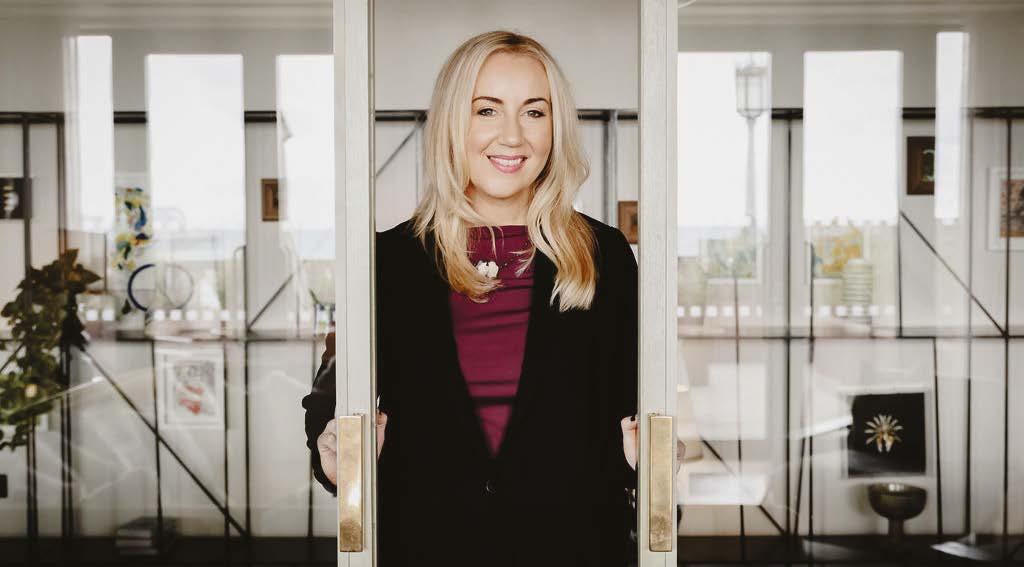
It lived in print you could hold in your hands, in gathered rooms, and in conversations. It travelled more slowly, was shaped carefully and delivered deliberately. And crucially, it was rooted in human relationships, reputation and trust built over time.
Today, we are surrounded by more content than we could ever possibly consume.
AI can generate words and ideas in seconds. Messages are faster, louder and more frequent. And yet, for all this acceleration, something fundamental hasn’t changed.
We are still wired for story, the primary way we make sense of the world. And in business, that process is happening all the time, in how people interpret your message, your brand, your leadership and your intent.
The moment it clicked
This is something I learned the hard way. Earlier in my career, I had ideas and insight. And yet, there were many moments where I didn’t say what I really thought. I softened the edges of my words, held back and second-guessed myself. Somewhere along the way, I had learned that it was safer to stay measured than to fully speak up.
And that came with a cost, for me, and for the people I was trying to influence, lead and support. That experience is a big part of why I do the work I do now, helping leaders and business owners communicate in a way that is both authentic and impactful.
The challenge ahead
If the last fifty years were about access to information, the next fifty will be about trust. The more content there is, the harder it becomes to know what is real, what is relevant, and what to believe.
And this is something I’m seeing more and more with business owners across Sussex and beyond. People have incredible ideas and a wealth of expertise. But they are often unsure how to communicate it in a way that lands. In this environment, polished messaging alone won’t cut through. In fact, the more perfect something looks, the more people question it. What people are looking for now is something that feels human and real.
Storytelling in business is moving away from performance and entertainment, and back towards impact and connection, and communicating clearly in the moments that matter.
A video, presentation, talk or meeting. A difficult conversation, pitch or piece of content.
This is where story becomes a genuine

advantage. The businesses and leaders who stand out don’t have to be the loudest or the most polished.
They are the ones who can:
• explain what they do in a way that makes sense
• communicate decisions clearly and confidently
• create connection, trust and meaning through their words
• and leave people with a shared understanding
The story that actually connects
There’s a temptation, particularly in business, to make things more complex than they need to be. More strategy, structure and layers between what we do and how we talk about it.
But if we look at how humans have always used story, the direction of travel is actually the opposite. Long before brands and messaging frameworks, story was shared around firelight. It was a real moment, experience, warning, or vision. Something that helped others understand what mattered.
And that’s the thread that still runs through the most powerful communication today.

Over the years, I’ve worked in the worlds of TEDx and ideas worth spreading, as well as in corporate environments helping leaders communicate with impact. And when small tweaks are made, something big happens.
It could be someone sharing a poignant moment, a challenge they faced or a mistake they made. It might be a significant turning point. Or a vision for what could be different.
When this happens, people lean in, connect and understand. And most importantly, it sticks.
So if we’re thinking about storytelling for the next fifty years, the opportunity is in stripping things back, and communicating in a way that reflects how we naturally understand the world. That might look like:
• explaining your work through a real example rather than a polished summary
• sharing the journey, not just the outcome
• being open about what didn’t work, not just what did
• articulating a clear, optimistic vision of where things could go
These are the building blocks of trust. The ability to say something that feels
grounded, lived and real. And in many ways, that means going back to our roots. To the way we have always used story to connect, to teach, to influence and to bring people with us.
As we move into an increasingly digital and AI-driven world, the businesses that thrive will be the ones who understand how to communicate in a way that feels human.
Who can create clarity in complexity, build trust in uncertainty and connect in a way that goes beyond information. While technology will continue to evolve, the way we make meaning has not. Story is not going anywhere.
If anything, it is becoming more important.
Helen Packham
Leadership Communication & Storytelling Specialist
Linkedin: https://www.linkedin.com/ in/helenpackham/ Web www.helenpackham.com
Podcast Words That Change Lives: https://podfollow.com/words-thatchange-lives

By Matt Cheney | Brown Bear
AI is reshaping search, automating workflows and generating content at scale. But there’s a trust recession quietly spreading through the business world and the antidote isn’t more automation … It’s you.
We’re living through a trust recession
AI is not here to replace people. It’s here to optimise them. But in doing so, it’s created a new challenge. People are more sceptical than ever about where they spend their money and who they choose to work with. They’re surrounded by automated responses, AI-generated slop and faceless systems. The result? A trust recession.
This is where content becomes your most powerful business tool. Not content for the sake of volume. Not content churned out by a tool with no thought behind it. But content that demonstrates your personality, your values and your expertise in a way that makes people feel something and ultimately choose you over the next person offering the same service.
The search game has changed … and that’s good news
SEO isn’t dead. 13.7 billion searches still happen on Google every single day. But how search works is evolving fast. AI language models are no longer just looking for keyword-stuffed pages. They’re looking for authority, credibility and expertise. They want
contextual, natural language and they want to cite reliable sources.
This means that the modern content strategy is not to rely on AI to do it all for you. It’s to become the kind of source AI wants to cite.
When someone searches a question relevant to your business and an AI summary appears at the top of the results, the links it references are the ones that carry real weight. Those citations go to content with genuine depth: longform articles, podcast transcripts, video content, and thought leadership. That’s where your energy should go.
Showing up in AI summaries on Google, ChatGPT, Perplexity, Claude and Copilot
is one of the biggest opportunities available to Sussex businesses right now. Most are still sleeping on it.
Think long-term, not just viral
Here’s the trap many fall into. They see AI tools and short-form content making it look easy to produce huge volumes quickly, and they assume that quantity alone will solve the problem. It won’t.
No one writes a twelve-month business plan and calls it done. We think in three-year, five-year, and even ten-year horizons. Your content strategy deserves the same thinking. If your business is going to exist for the next five years, those five years are also the opportunity to build an engaged, connected audience that trusts you.
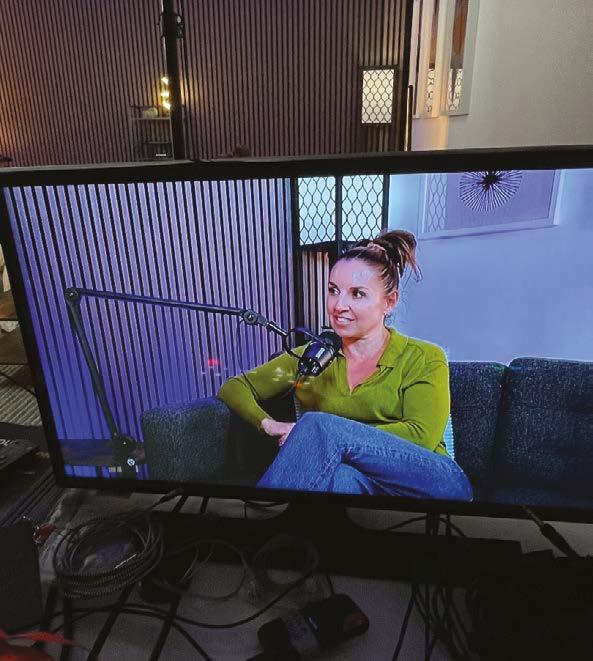
That takes consistency, not perfection. It’s about starting simply. A YouTube channel that educates and informs. A podcast that leverages your network and shares insights people can’t get anywhere else. A LinkedIn presence that reflects how you actually think, not just your wins.
The competition isn’t as fierce as you think
Here’s a stat worth thinking about: only 1–3% of LinkedIn’s one billion users actively post content on a regular basis. The rest are lurking, browsing and passively maintaining their profile. The platform, and most others, are far less crowded than they feel from the outside.
500 hours of footage goes to YouTube every minute. Podcasts are growing and building deeply loyal audiences. And yet most businesses haven’t started. The barrier to entry has never been lower. The overwhelm, though, can still be high, and that’s where having a clear strategy makes all the difference.
Used well, AI can help you generate ideas, refine copy, improve design and automate the admin around content. That’s genuinely useful. But it can’t replicate the years of experience, the hard lessons and the emotional reality of building something from scratch. That’s yours. That’s what people want to hear.
We tend to post the wins online. The failures, the pivots, and the moments of doubt, rarely make it. Yet that’s exactly what AI can’t replicate and exactly what builds the deepest trust with the people who matter most to your business.
The antidote to AI isn’t to ignore it. It’s to use it smartly, while doubling down on the one thing it can never truly produce: you.
Take a moment to think about who your ideal customer is, what challenges they face beyond just the service you provide, and how you could build a body of work that serves them, grows your authority and brings new people into your world.
If this sparks some thinking about how you show up online and what your content could be doing for your business and personal brand, I’d love to have that conversation. I’m Matt Cheney at Brown Bear Studios, and this is what I help Sussex leaders build.
Contact: matt@brownbearstudios.co.uk www.brownbearstudios.co.uk

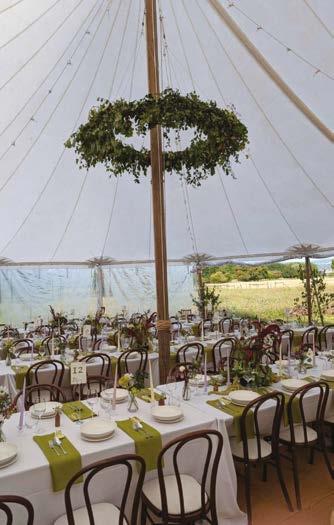
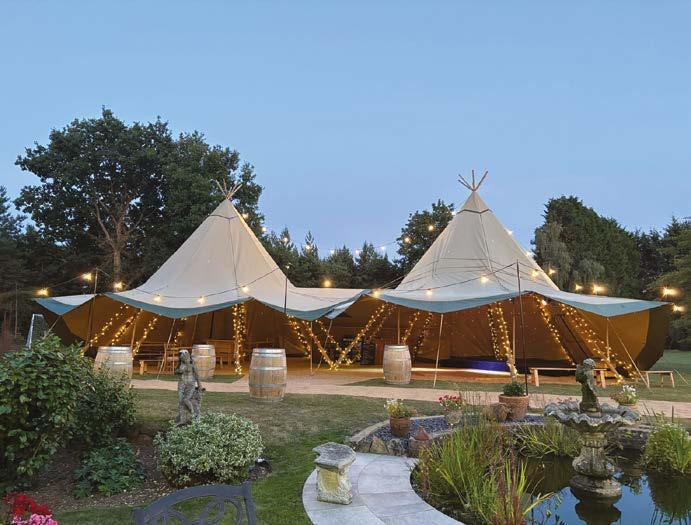
There’s been a noticeable shift in the events world over the past decade. Traditional hotel ballrooms and conference suites are no longer the default choice—today’s clients are looking for something more immersive, more flexible, and more memorable. Outdoor events are stepping into that space in a big way.
For corporate clients especially, the appeal is clear. An outdoor setting offers a sense of freedom and creativity that indoor venues often can’t match. Whether it’s a company summer party, brand activation, product launch, or team-building retreat, businesses are increasingly recognising the value of creating an experience rather than simply hosting an event.
Natural light, open space, and a connection to the surroundings all contribute to a more relaxed and engaging atmosphere. And with modern structures like giant tipis and sailcloth marquees, you don’t have to sacrifice comfort or practicality to achieve it. Instead, you get the best of both worlds: the beauty of the outdoors, combined
with the infrastructure needed for a seamless, professional event—spaces that can be thoughtfully tailored to reflect each client and their goals.
One of the most exciting aspects of outdoor events is the transformation. What begins as an empty field can become a fully realised event space— complete with dining areas, bars, stages, lounges, and dancefloors.
Behind that transformation is careful planning and experienced execution. Ground conditions, access, layout, lighting, power, and weather contingencies all play a role. It’s not just about installing a structure; it’s about designing a space that works effortlessly for guests and organisers alike.
This is where experience really matters. With over a decade in the industry, Beau & Bell has seen firsthand how every event is different. No two sites are the same, and no two clients have identical needs. The ability to adapt—to create something bespoke each time—is what turns a good event into an unforgettable one.
From the first site visit to the final finishing touches, it’s a collaborative process. Working closely with each client, the aim is always to shape a space that feels considered, purposeful, and completely aligned with the occasion.
Another major influence on the events industry is the rise of festivalstyle celebrations. What started as a wedding trend has quickly crossed over into the corporate world, where
businesses are embracing a more relaxed, experiential approach.
Instead of a single-room format, events are now designed as a series of spaces: areas to eat, drink, network, relax, and be entertained. Guests can move freely between zones, creating a more dynamic and engaging experience.
For corporate events, this format works particularly well. It encourages interaction, supports different types of activities, and allows brands to showcase their personality in a more authentic way. It also creates opportunities to design environments that feel distinctive and personal, rather than uniform or expected.
Add in elements like live music, street food, outdoor bars, and even overnight accommodation, and the result is something far more memorable than a standard event.
Structures like giant tipis and sailcloth marquees are perfectly suited to this style. Their flexibility means they can be configured in countless ways— whether that’s a single striking space or a connected layout that forms an entire event village.
At the heart of it all is a simple idea: people remember how an event makes them feel.
For corporate clients, that’s increasingly important. Events are no longer just about logistics—they’re about brand perception, employee engagement, and creating moments that resonate long after the day itself.
Outdoor structures offer a unique opportunity to shape that experience from the ground up. From the height and openness of a sailcloth canopy to the warm, intimate feel of a giant tipi,
the structure itself becomes part of the atmosphere.
With over ten years of experience, Beau & Bell understands how to balance creativity with practicality— delivering spaces that not only look impressive but function seamlessly. It’s about more than just providing cover; it’s about helping clients create environments that truly reflect who they are and what they want to achieve.
In a world where attention is hard to capture, a well-designed outdoor event does something powerful: it brings people together in a way that feels natural, memorable, and genuinely different.
That’s exactly what drives us. We love what we do — creating spaces that are thoughtfully tailored to each client. Designing environments that reflect your business, your celebration and your personality is what we enjoy most.
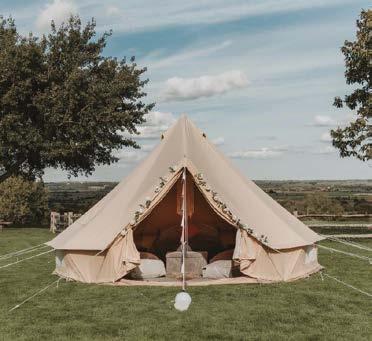
All our events, be it weddings or corporate, are complemented by the option for guests to stay in our furnished bell tent accommodation. Our personalised booking platforms make the admin and guest experience informative and seamless.
We can provide bespoke glamping villages offering guests a chance to unwind, connect, and fully immerse themselves in the event atmosphere.
Each bell tent is thoughtfully designed with comfort and style in mind, featuring high-quality furnishings, cosy bedding, and elegant finishing touches that elevate the outdoor experience. Whether set against a countryside backdrop or within a dynamic event space, our glamping village becomes a destination in itself—inviting guests to relax, recharge, and enjoy a memorable stay.
Modified for robustness, style and practicality the bell tents are our own branded version and we have sourced and branded our own furnishings including a range of soft furnishings such as our unique felt floorings, floor cushions and bed cushions.
At the heart of our service is our amazing team, whose attention to detail and commitment to excellence ensure every element is delivered seamlessly. From initial planning to on-site setup and guest support, we focus on quality and comfort at every step. We understand that corporate events require both professionalism and creativity, and we pride ourselves on striking that perfect balance.
For businesses that want to provide an extraordinary event with the option for guests to stay long into the evening the bell tents are ideal. Retreats, teambuilding events, charity galas and small to large scale corporate festival benefit from this stylish, practical, and engaging accommodation solution.
info@beauandbell.co.uk 07980 226234
https://beauandbell.co.uk/


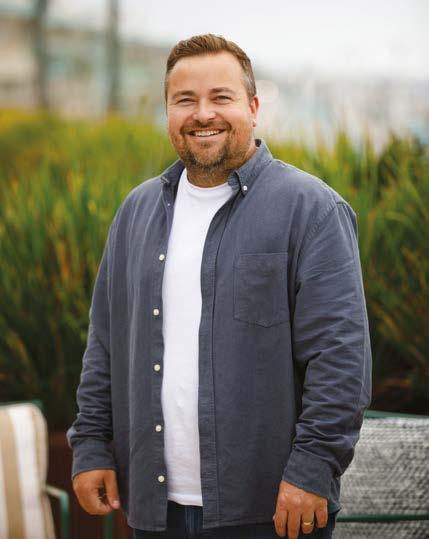
Insurance might not strike most people as the most exciting profession, but then again, most people haven’t met Daniel Stoner and the entrepreneurial team behind base Insurance Brokers.
As founder and managing director, Dan represents a new generation of insurance leaders reshaping one of the UK’s oldest industries. In just a few years, he has built a fast-growing, award-winning brokerage from the ground up, one that blends technical expertise with a refreshingly modern, client-first approach.
Still in his 30s, Dan’s journey began with over fifteen years in the city, advising global brands including Dyson, Ricardo and Sony. It was here he saw both the sophistication of high-level risk management and the gap in how it was delivered; “I learnt a huge amount about complex risks,” he explains, “but also how impersonal the experience could feel. There was a clear opportunity to offer that same level of expertise, but with genuine personality, accessibility and care.”
That insight became the foundation for base, launched in 2021 from a home
office in Sussex. From day one, the vision was clear: to create a next-generation brokerage that speaks the language of modern businesses, from fast-growth start-ups to established firms, as confidently as it does traditional sectors.
Four years on, that vision has translated into tangible success. The business has moved into new premises, expanded its team, and gained national recognition for outstanding client care - all while maintaining the personal touch that underpins its growth.
At its core, base operates across three key divisions: Business Insurance, Private Client, and Influencer / Content Creator Insurance - the latter becoming one of the firm’s defining specialisms.
In a market that has historically struggled to keep pace with digital industries, base has carved out a reputation as a go-to adviser for content creators and online businesses, also
exclusively partnering with influencer specialist accountants Starbox. The team now supports some of the UK’s most prominent influencers, arranging cover for everything from production and intellectual property through to largescale live events; including a recent sell-out Wembley Stadium charity match hosted by the world’s biggest YouTube group, a key client of base Insurance.
“It’s an area the industry had barely touched,” Dan says. “But creators are running serious businesses with studios, staff, merchandise and brand partnerships. They need the same level of protection as any SME. We just deliver it in a way that feels more relevant and responsive.”
This progressive thinking sits at the heart of the company’s ethos: “Inspired by the need to be different.” Whether supporting a technology start-up with cyber insurance, advising property investors on complex portfolios, or structuring professional indemnity for creative agencies, the focus remains
consistent - clarity, trust and tailored advice, without unnecessary jargon.
Building a brokerage from scratch is no small task; particularly against the backdrop of a pandemic-era economy. “Those first two years were relentless,” Dan reflects. “Early starts, late finishes; doing everything possible to build momentum. But it reinforced something important: clients buy people, not policies.” That belief has shaped the culture and client experience at base, and it is one of the reasons the firm was awarded the Outstanding Client Care Award, sponsored by Allianz. For Dan, it remains a defining moment. “It validated what we set out to do. Insurance can be complex, but trust is simple. If you get that right, everything else follows.”
Internally, base is equally focused on challenging industry norms. While many traditional brokerages rely on long-established structures, Dan has built a team that is deliberately young, ambitious and diverse. “The industry has a legacy issue - not enough young people coming through,” he says. “We wanted to change that. We invest in people, give them responsibility early, and create an environment where they can grow. They’ll be the ones shaping the future of insurance.”
Although base now works with clients across the UK, its Sussex roots remain central to its identity, including supporting local partner charities, such as The Russell Martin Foundation and This is Village.
From its Sussex headquarters, the firm supports a broad mix of sectors including technology, media, retail, property, hospitality, and private clientscombining national capability with local accessibility. “Being approachable really
matters,” Dan says. “Clients want to pick up the phone and speak to someone who understands their business - not navigate a faceless portal.”
This approach has helped position base as something of a “fixer” within the market - a brokerage known for resolving complex insurance challenges, negotiating fair outcomes, and stepping in quickly when clients need support most. It has also driven growth the right way: through referrals, long-term relationships and genuine advocacy, rather than heavy reliance on advertising.
Beyond the business, Dan measures success in more personal terms. “For me, it’s about buying back time,” he says. “Having the freedom to be present with my wife and three kids. Building a business that enables that - that’s what really matters.”
As Sussex Business Times celebrates its 500th edition, base Insurance Brokers is proud to be part of a thriving regional business community - and to play its role as a trusted adviser within it.
Looking ahead, the opportunity is clear. Businesses are facing increasingly complex risks; from cyber threats and regulatory pressures through to evolving working models and digital exposure. At the same time, expectations around service, speed and clarity have never been higher. base is well positioned to meet that challenge!
With continued investment in its people, technology and insurer relationships, the firm is focused on scaling its impact
without losing the personal approach that defines it. Its growing specialisms; particularly within media, influencer and emerging industries; place it at the forefront of where insurance is heading, not where it has been.
At a local level, the ambition is equally strong: to be recognised as Sussex’s go-to independent insurance broker - not just for placing cover, but for providing genuine advice, advocacy and long-term partnership.
“We’ve built strong foundations,” Dan says. “But this is just the start. Our goal is simple - to continue raising standards, supporting our clients properly, and proving that insurance can be done differently.”
Daniel Stoner
Founder / Managing Director base Insurance Brokers 01273 101380
Daniel@baseinsurance.co.uk
www.baseinsurance.co.uk

Brighton has always backed new ideas. It attracts creative people, celebrates ideas and turns side projects into serious businesses.
But growth rarely happens alone. Founders need practical support, trusted networks, and the confidence that comes from being part of a community that understands what building a business really involves.
VAP Special
That is why NatWest Accelerator is investing in Brighton and Sussex, and why we are proud to sponsor EVOLVE in partnership with Silicon Brighton. Our goal is simple: to help more local founders through a free membership, access the tools, connections and opportunities that bring their bright ideas to life, driving growth across the city.
A new hub at the heart of the University of Brighton, open to the whole ecosystem
This partnership brings NatWest Accelerator closer to where innovation is happening, with a new hub opening within the University of Brighton’s Moulsecoomb campus at Elm House. It is designed to be a practical, welcoming space where local founders, small business owners, and student entrepreneurs can come together to learn, connect, and build, all for free.
The aim is simple. Make it easier to start, easier to scale and easier to feel part of a community that understands what it takes to grow a business.
The NatWest Accelerator Community is here to help you take the next step.
“If you are building in Brighton, you belong in the NatWest Accelerator Community.”
The NatWest Accelerator Community is designed for founders at every stage, from early ideas to established SMEs, all focused on growth.
As a member, you will benefit from free access to:
1. Dedicated workspace through the hub, giving you space to focus and collaborate

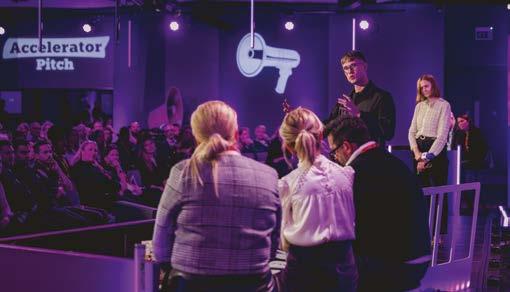
2. Expert-led masterclasses and tailored programmes built around real challenges
3. Mentoring to guide key decisions as you scale
4. Networking that leads to partnerships and opportunities
5. A supportive community that lifts you up and keeps you moving forward
It is about turning ambition into a plan, and a plan into progress.
A powerful partnership for Brighton’s economy
When more local businesses scale, the impact spreads. More jobs. More investment.
Together with the University of Brighton we are creating a hub that can act as a focal point for Brighton’s founder community, a place to meet, learn, and move forward, all for free.
This is a long term commitment to strengthening the local business ecosystem, with the University and NatWest working side by side to back
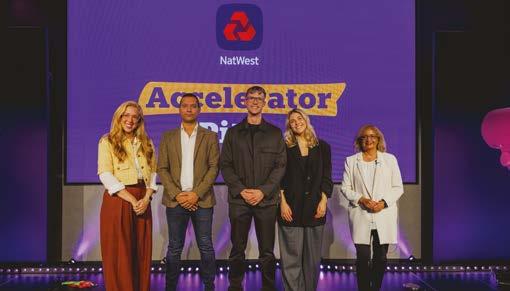

enterprise, unlock growth and create the next generation of entrepreneurs.
The partnership brings deep local roots, academic expertise, and direct access to emerging talent. NatWest Accelerator brings a track record of supporting entrepreneurs across the UK and a commitment to helping businesses grow sustainably.
“Brighton is full of ambition. This hub is here to turn that ambition into sustainable growth.”
Brighton is full of people with the skills, curiosity, and drive to build something new. But for many students, the gap between a great idea and a real business can feel huge.
The new hub within the University of Brighton makes that leap possible. If you are a student founder, a recent graduate, or part of the wider university community, the Accelerator Community can help you build confidence, find support, and connect with people who have done it
before, without costing you a penny.
You do not need to have everything figured out. You just need to be ready to start, ask questions, and keep learning.
Founder ecosystems grow when knowledge is shared, success is visible, and new founders can see a path forward.
EVOLVE in collaboration with Silicon Brighton, helps make that happen. That is why NatWest is proud to sponsor this edition. We want more people building in Brighton and Sussex to discover the NatWest Accelerator Community and access free support designed for growth.
Whether you are starting out or scaling up, this is a chance to learn new skills, grow your business and be part of something bigger.
Join the NatWest Accelerator Community today and bring your bright idea to life, with a whole community behind you.
Only Accredited Chamber in
Sussex Chamber of Commerce is the only British Chamber accredited business membership organisation in Sussex & Brighton. That matters more than you might think. Accreditation isn’t a badge — it means the Chamber meets rigorous national standards set by the British Chambers of Commerce (BCC) and is held accountable to them.
Town chambers and local networking groups play a valuable role at community level, giving businesses meaningful choice.
Sussex Chamber, as one of 51 accredited Chambers in the UK, and over 75 British Chambers globally, is part of a network that directly serves not only its member businesses but the wider business community. That network has been built over hundreds of years on one guiding principle: businesses are stronger together. “Connect Locally, Compete Globally and Succeed Together”.
A Chamber That Works Across the Whole County
Sussex Chamber operates across the entire county. Its policy and advocacy work, international trade services, local skills improvement plans, networking events, business training courses, dropin hubs and sector forums, as well as promotional and business services, span East Sussex, West Sussex and Brighton & Hove. Whatever your business, wherever you’re based, the Chamber is built to work for you.
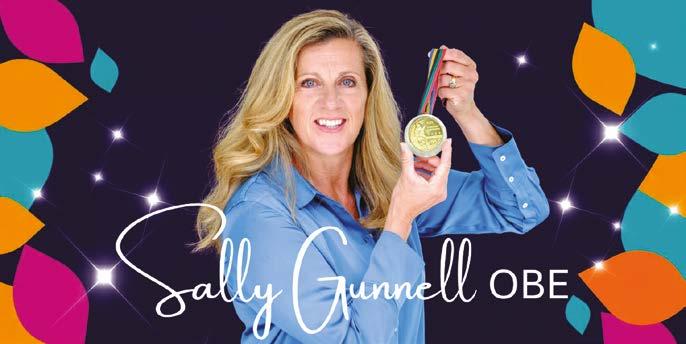
That county-wide scale creates a genuinely diverse community of businesses from different sectors, sizes and locations — all under one membership. Packages are flexible too, with options designed for businesses of every size — from start-ups to major organisations — along with bolt-ons that let you tailor your membership to exactly what your business needs.
https://www.
sussexchamberofcommerce.co.uk/ sussex-chamber-membership.html
Connections to 51 British Chambers in the UK & 75 British Chambers Globally
When you join Sussex Chamber, your network doesn’t stop at the county border. Membership gives you access to the UK’s most influential business community and connections to over 50,000 businesses nationwide and the British Chamber network globally. That’s the power of being part of the BCC’s accredited network — referrals,
relationships and opportunities that extend across the whole country.
World-Class Support for International Trade
If your business trades — or wants to trade — across borders, this is where Sussex Chamber truly stands apart. Sussex Chamber is the leading provider of import and export documentation and customs services in the region, supporting businesses of all sizes. From export documentation and customs compliance to international trade training, or CBAM consultancy, the expert guidance is right here on your doorstep.
https://www.
sussexchamberofcommerce.co.uk/ global-trade/cbam-carbon-boarderadjustment-mechanism.html
And it reaches far beyond Sussex. With global links to over 75 international markets, the Chamber simplifies trade, provides expert export guidance, and opens doors to new opportunities — empowering your organisation to thrive
locally, nationally and internationally. This is made possible through the BCC’s worldwide network of accredited British Chambers, giving you a trusted point of contact in markets from the Americas to Asia-Pacific.
The power of the business network continues to evolve, with new services launched in partnership with the Foreign, Commonwealth & Development Office, and Department for Business & Trade, such as the BCC Diplomatic Advisory Hub and the BCC Trade Accelerator (Singapore Life Sciences) which offer tools to succeed overseas.
Membership of Sussex Chamber is a genuine investment in your business growth. Alongside a packed calendar of networking events, you’ll have access to a wide programme of professional training — covering leadership, management, customer service, marketing, Microsoft Excel and workplace wellbeing, among others. There are specialist sector forums for manufacturing and engineering, digital technology and construction, a flagship annual Business Expo with 60+ exhibitors, a prestigious Business Awards programme (where businesses can win locally, regionally and nationally), the bi-monthly Business Edge magazine, and AI-powered marketing support through Reveela.
https://reveela.com/register/?ref_ code=1243
Whether you want powerful networking, expert training, greater brand visibility or opportunities to showcase your business, membership gives you the tools, platform and community to succeed.
One of the most compelling reasons to join is influence. Sussex Chamber
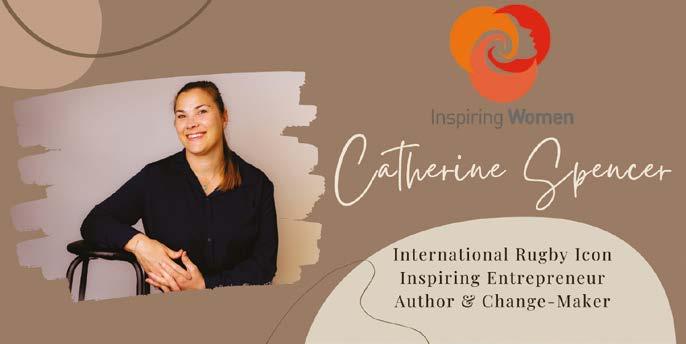
doesn’t just support your business — it speaks up for it. Accredited Chambers exist to make a difference in business, ensuring views are heard within Government, opening new business opportunities in local, national and international markets, and providing critical business advice, services and skills development.
The BCC responds regularly to Government on the issues that affect your bottom line — employment law, trade policy, inflation, interest rates and skills. Those responses are shaped by intelligence gathered from members just like you. When you raise a concern through the Chamber, it feeds into national debate and policy.
The BCC’s policy work focuses on five areas that reflect the real challenges businesses face today: Global Britain, People and Work, the Local Economy of the Future, Green Innovation, and the Digital Revolution. As a member, your voice is part of those conversations.
Don’t just take our word for it. Members consistently highlight the breadth of the network, the quality of events across the county and the responsiveness of the team. One
member sums it up well: the Chamber offers an affordable price point, a warm and effective team, and contact opportunities that are multiplied many times over by being part of the national network. Another notes that new faces are always in the room — and that the Chamber has delivered excellent clients as a direct result.
Connect Locally, Compete Globally, Succeed Together
That’s the Sussex Chamber difference. It’s not simply a club for local businesses — it’s your gateway to one of the world’s most established and respected business networks. From your first local networking event to exporting into new international markets, the Chamber is with you at every stage, with the infrastructure, expertise and connections to help you grow.
Ready to find out more? Visit www. sussexchamberofcommerce.co.uk or contact one of the team on 01444 259259.


As Sussex Business Times celebrates its 500th edition, Rivervale reflects on a journey of growth, change and community impact, and on the role SBT and County Business Clubs have played in helping share that story.
A partnership built on shared values
Some brands do more than report on business. They help shape the conversation around it. For Rivervale, Sussex Business Times has been exactly that.
Over the years, we have been proud to be a partner of Sussex Business Times and County Business Clubs, and to watch the brand grow into something far bigger than a magazine. What Sam and Jackie have done with Sussex Business Times in recent years feels genuinely special. From the Different Hats Podcast and its honest, inspiring stories, to Top Table events that bring people together in a meaningful way, and a magazine that continues to evolve with its audience, SBT has become a powerful platform for the Sussex business community.
That is something we admire hugely because it reflects what great business should be about. Not just transactions or headlines, but people, relationships and shared stories.
For Rivervale, that focus has always resonated. We have grown and changed a great deal over the years, but at heart we have always wanted to be a business that is trusted, useful and rooted in the communities we serve. SBT and CBC have been there to help tell that story, not just when things are easy, but through milestones, partnerships, growth and change. That kind of support matters.
Growing with clarity and purpose
Rivervale has entered an exciting new chapter in recent years.
Our business has continued to grow and evolve, strengthening its specialist offer across car and van leasing, fleet management and minibuses. Most recently, that journey has included our move from Victoria Road in Portslade to a new base in Shoreham. It is a move that reflects where the business is today and where we are heading next.
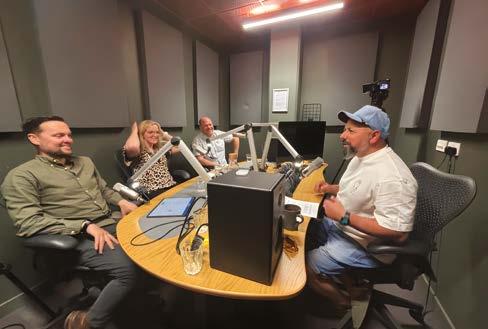
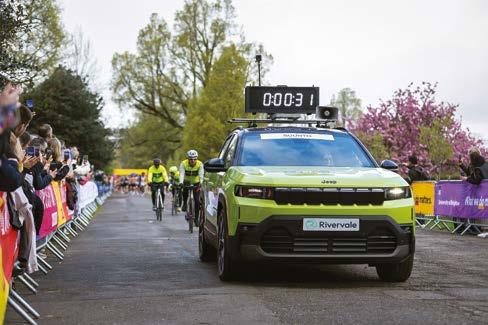
The relocation gives us a more practical operational base, with space for new offices, future growth, and the ability to prepare and manage vehicles more effectively for our fleet customers. It marks an important milestone in the Rivervale story, but it is also part of something bigger. It is about building a business that is fit for the future while staying true to the values that have helped us get here.
As we have grown, one thing has remained consistent. We have always
believed that success should be measured by more than commercial performance alone.
Supporting the communities around us Community has long been part of Rivervale’s DNA.
One of the clearest and most recent examples of that is our ongoing involvement with Brighton Marathon Weekend. Over the years, that support has grown into a major partnership, with Rivervale helping keep one of the city’s biggest events moving. From lead and logistics vehicles to practical
support behind the scenes, it is the sort of involvement that reflects who we are as a business. We like to show up, get involved and make a difference in a practical way.
That same approach runs through our wider community work. In 2024, Rivervale chose Chestnut Tree House as its charity partner, with a fundraising target to help pay for a day of care each year. It was a cause that meant a great deal to our team and one we were proud to support.
Alongside that, our broader community and ESG activity has included planting 500 trees with the Field Studies Council, supporting the Russell Martin Foundation in Brighton & Hove, raising more than £10,000 for Rockinghorse Children’s Charity, and helping FareShare Sussex & Surrey through food packing and distribution. These are not isolated moments. They are part of a wider commitment to do business responsibly and to play an active role in the communities around us.
Some of the most meaningful work we have been involved in has come through long-term partnerships.
A great example is our support for Charlton Athletic Community Trust. Rivervale has worked alongside CACT for many years, supplying vehicles that support practical outreach in the community. That has included a fully maintained minibus, specialist outreach vans, and vehicles that helped deliver food to vulnerable families during the Covid-19 lockdowns.
What makes that partnership so powerful is the real-world impact behind it. The vehicles are not just assets. They help people access support, stay
connected, and benefit from services that can genuinely change lives. From youth engagement work to food delivery and wider outreach, it shows how the right business support can go far beyond the obvious and become part of something much more meaningful. Those are the kinds of stories we are proudest of because they say a lot about what Rivervale stands for.
As conversations around sustainability and responsibility have become louder, businesses are rightly expected to show substance behind what they say. At Rivervale, that is something we take seriously. Our ESG work is not about box-ticking. It is about making considered choices, being transparent about what we are doing, and continuing to improve. Achieving Ethy verification was an important step in that journey because it helped validate our efforts and hold us to account.
For us, trust has always mattered. Whether that is in the way we support our customers, the way we work with partners, or the way we contribute to our communities, we know that actions count more than claims.
Proud of the journey, excited for what comes next
As Sussex Business Times reaches its 500th edition, this feels like the perfect moment to reflect and say thank you. Thank you to Sam, Jackie and the wider team for continuing to champion Sussex businesses in a way that feels warm, human and authentic. Thank you for creating spaces where stories can be shared, connections can be made, and businesses of all sizes can feel part of something bigger.
Rivervale is proud of how far it has come. Proud of the growth. Proud of the community impact. Proud of the partnerships. And proud that Sussex Business Times and County Business Clubs have been part of that journey along the way.
We are excited about what comes next, and grateful to be telling that story alongside a publication that has done so much to celebrate business in Sussex.
www.rivervale.co.uk


Some businesses are built to be sold. Others like the Agora Clinic are built to become a legacy; a place devoted to creating families, and to endure as one.
Nearly twenty years ago, Dr Carole Gilling-Smith made a decision that would shape the future of fertility care in Sussex. Having built a distinguished career as an NHS Consultant Gynaecologist, academic researcher and pioneer in reproductive medicine, she chose to step away from a system she believed could no longer deliver the deeply personal, innovative and compassionate care patients deserved.
Instead, she built something different. Founded in Hove in 2006, the Agora has grown into Sussex's largest independent fertility centre, supporting thousands of people across Sussex and beyond on their path to parenthood through a model that combines world-class science with warmth, honesty and patient-centric care.
In an era when the NHS is increasingly stretched, and private fertility healthcare is growing exponentially but becoming increasingly corporate, the Agora has remained proudly independent, clinicianfounded and values-led.
The UK's only Family Led IVF Clinic
Today, it is also something rarer still: believed to be the UK's only Family Led IVF Clinic, with the next generation now helping shape its future.
Carole's daughter Michèle, Director of Operations, plays a central leadership role across the business. Her older son Sebastian oversees marketing, digital strategy and patient communications,
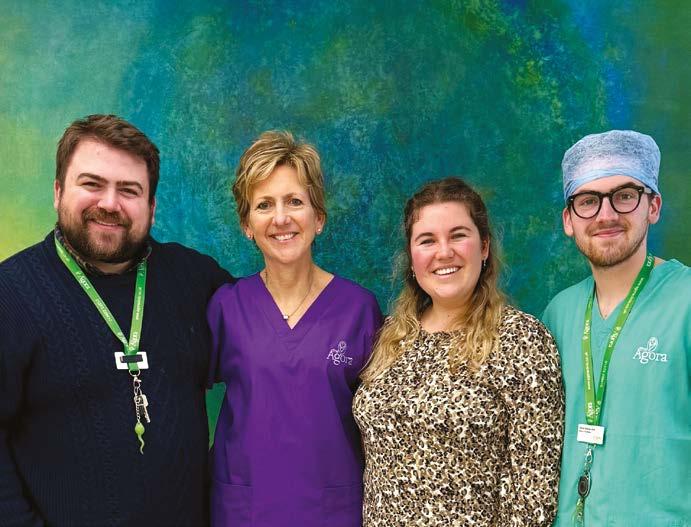
helping patients find trusted information in a crowded online world. Her youngest son Chris, as Finance Manager, brings a fresh perspective to the next chapter of growth while pursuing his ambition to study medicine. Behind the scenes, Carole's husband Stephen Ulph has led the design and construction of each clinic site over the years.
All this gives the Agora something few healthcare organisations can claim; succession rooted not in sale value, but in shared purpose.
The clinic's growth has never come through heavy advertising, but through word-of-mouth reputation. Former patients recommend it to friends. GPs recommend it to patients. Families return for siblings. Trust, built quietly over almost two decades, has become one of the organisation's greatest assets, recognised publicly through verified reviews and the Doctify Certificate of Excellence, alongside local recognition
including CEO of the Year and Large Company of the Year at the 2024 Sussex Business Awards, and MD of the Year at the 2025 Dynamic Awards.
Yet the Agora's success has never relied on sentiment alone. Its reputation is underpinned by serious medicine.
World-class fertility care, genuinely on your doorstep
The Agora Brighton flagship houses one of the most advanced fertility laboratories in the South of England, affectionately known to the team and their patients as the Rainbow Suite. Every stage of treatment, from consultation to ultrasound monitoring, egg collection, embryology, embryo transfer and aftercare, is carried out here in Sussex, by the clinic's own 70-strong team, in its own state of the art laboratory.
The Agora offers IVF, ICSI, donor conception, surrogacy, fertility preservation and advanced genetic
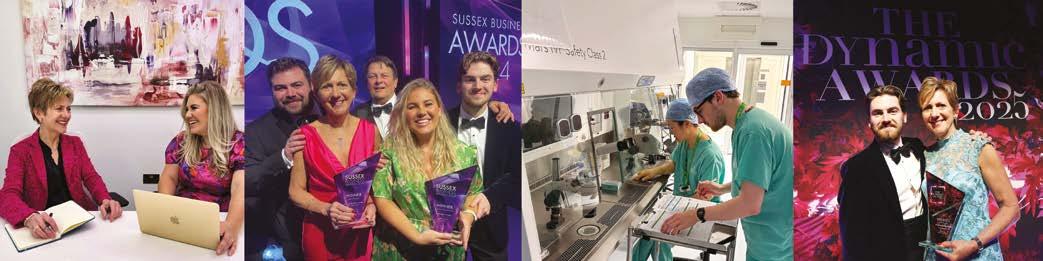
pathways, delivered by an experienced multidisciplinary team using the latest evidence-based techniques.
Where clinically appropriate, the clinic offers advanced genetic screening.
PGT-A (Pre-implantation Genetic Testing for Aneuploidy) can help identify embryos with the correct number of chromosomes, supporting informed decisions for patients whose circumstances make it valuable.
PGT-M and PGT-SR (testing for specific inherited conditions) allow families who carry a serious genetic disease to reduce the risk of passing it on. These are tools that empower patients, offered thoughtfully, ethically and individually.
That same principle shapes the clinic's approach to pricing. While many clinics present beneficial laboratory technologies as costly extras or ‘addons’, the Agora has chosen a more transparent model, including ‘advanced embryology’ such as blastocyst culture, time-lapse embryo monitoring (the Embryoscope) and EmbryoGlue within all of its IVF packages, whether NHS or privately funded. The guiding principle is simple: patients should understand clearly from the outset exactly what they are paying for, and why.
Just as importantly, the Agora remains committed to equitable access. Alongside self-funded treatment, the clinic has long delivered substantial
NHS-funded fertility care to the same standards, reflecting Carole's belief that the chance to build a family should never depend solely on wealth or postcode.
from the beginning
At a time when many of those trying to build families felt overlooked, the Agora was already creating thoughtful pathways for same-sex couples, solo parents, donor conception families, surrogacy journeys, trans and nonbinary patients, and others whose circumstances may once have left them feeling excluded elsewhere. Their first experience at the Agora goes beyond clinical expertise. It is the feeling that, for the first time, someone really understands and cares.
technology and the next chapter
That human focus extends well beyond patients. Carole has long believed that exceptional care can only be delivered by teams who themselves feel respected, supported and able to flourish. Workplace wellbeing, flexible working, leadership development and staff continuity have therefore become strategic priorities within the business.
That thinking is now shaping the clinic's next phase of innovation. The Agora is embracing carefully chosen new technologies, including artificial intelligence and smarter digital systems, not to replace its people but to elevate their experience. AI is being implemented to reduce administrative
burden, support precision in the laboratory and clinical workflows, and free highly trained professionals to spend more time where they add greatest value - with patients.
At the Agora, innovation is embraced only if it helps both those seeking a family, and those helping them create one.
A Sussex legacy
Over four decades in medicine and nearly twenty years in business, Carole has held firm to one belief: that values and performance are not opposites; the strongest organisations achieve both.
Recent awards have acknowledged that the Agora has done just that. But perhaps the most meaningful measure cannot be displayed in a trophy cabinet. It is found in nursery rooms, school gates and family homes across Sussex and beyond.
Over 5,000 children have begun their story at the Agora. Thousands more will follow in their footsteps as its next chapter is written by the family who built it.
The Agora Clinic
Brighton | Eastbourne | Worthing www.agoraclinic.co.uk 01273 229410 info@agoraclinic.co.uk

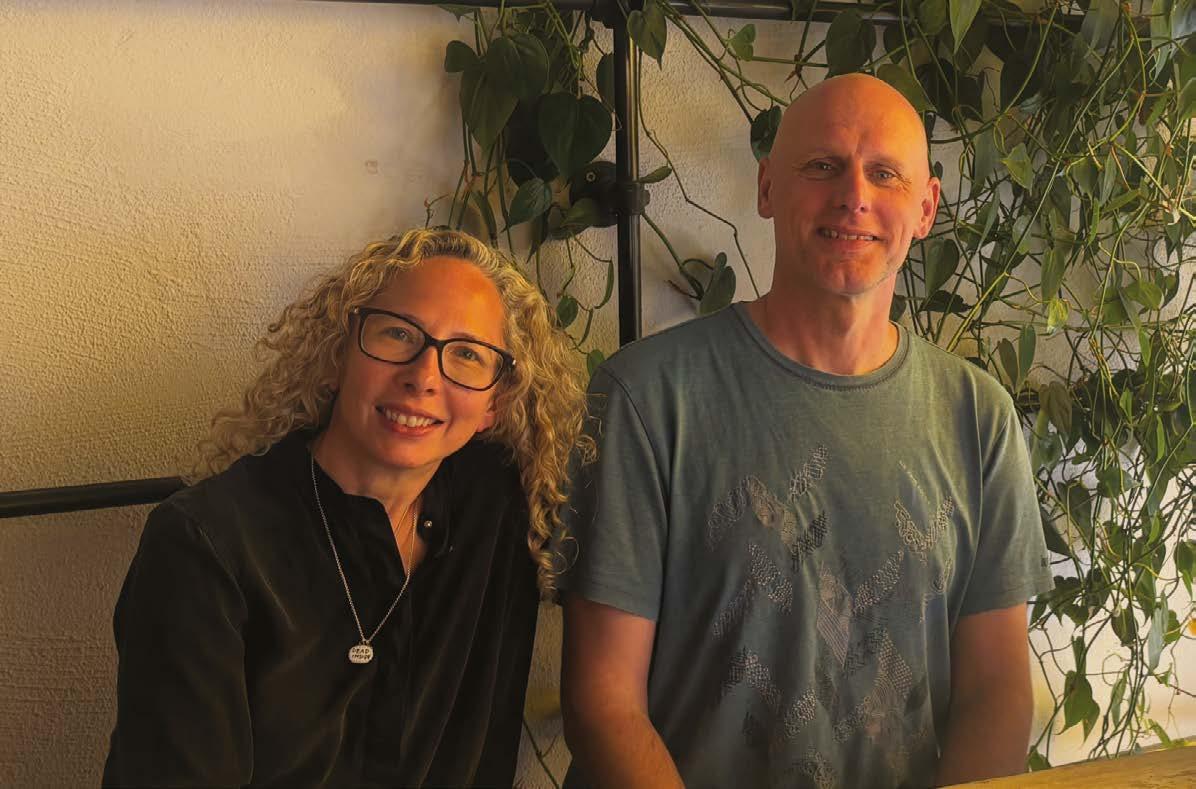
At Boxless, we believe meaningful social and environmental progress does not come from one-off workshops, recycled statements or surface-level box ticking. Real change takes time, honesty, leadership and a willingness to look closely at how an organisation operates, communicates and shows up for its people, community and wider impact.
That is exactly why we created our Year of Change Programme.
Designed to support organisations over a sustained period, the programme helps businesses and institutions embed progress across the areas that matter most - from ESG and DEI to policy, culture, leadership, brand alignment
and accountability. Rather than offering generic solutions, we work collaboratively with every client to understand where they are, where they want to go and what practical, credible change looks like. That means the work always reflects the realities of their sector, their challenges and their ambitions.
One of the most rewarding parts of the programme has been seeing how this
approach translates across very different industries. From sport to digital, creative services to the charity sector, the need is the same: organisations want to do better, but they need the right support, structure and challenge to make that happen in a way that lasts.
Basketball England, a national governing body at the heart of sport, is one example of how sector context really matters. In

sport, culture, representation, access and leadership all play a powerful role in shaping the experience of participants and stakeholders. Working with an organisation like Basketball England means understanding both the opportunities and responsibilities that come with influence. Throughout working together, the focus wasn’t simply on intention, but on helping create stronger foundations for inclusive practice, clearer strategy and meaningful progress that can ripple across the wider sporting ecosystem.
In a very different space, Web Trends Optimize, a digital agency and platform business, reflects the growing appetite in tech and digital industries to align innovation with responsibility. Fastmoving sectors often face pressure to prioritise pace above all else, but increasingly, businesses are recognising that sustainable growth also depends on culture, values and trust. For digital organisations, the conversation around impact is no longer separate from

commercial success, it is part of it. Our role is to help translate social and environmental ambition into something actionable and relevant, making sure the internal culture and external positioning develop hand in hand. Clockwise, operating in the creative video and photography agency space, highlights another important truth: creative businesses shape narratives as much as they deliver services. They do not just respond to culture - they influence it. For agencies working in visual storytelling, questions around representation, responsibility, team culture and valuesled decision making carry real weight. The Year of Change Programme creates space for these conversations to become embedded into business practice, not treated as an afterthought. In a sector built on ideas and perception, authenticity matters, and clients increasingly expect the organisations they work with to reflect that.
Then there is Justlife, a charity working to support people facing some of the most complex and urgent social challenges in our communities. In the charity sector, social impact is already at the centre of the mission, but that does not mean the internal work is done. Charities, like all organisations, benefit from the chance to strengthen policy, culture, leadership and long-term resilience. Often working under significant resource pressure, they need support that is thoughtful, practical and aligned to purpose. For us, supporting organisations like Justlife is a reminder that responsible practice is not about optics, it is about making the structure behind the mission as strong as the mission itself.
What connects all of these organisations is not their sector, size or business model. It is their willingness to engage seriously with change.
That is the difference between a shortterm intervention and a year-long journey. The Year of Change Programme is built to move beyond performative action
and towards something more honest, more strategic and more useful. It allows organisations to assess where they are, identify the gaps, set priorities and build momentum over time. Just as importantly, it helps leaders stay connected to the bigger picture: how people, planet and purpose can be better aligned with profit, performance and long-term value.
At Boxless, we know there is no single blueprint for responsible business. A national governing body does not need the same approach as a digital agency. A creative business will have different challenges from a charity. But that is precisely why our work is collaborative and tailored. We meet organisations where they are and help them build from there.
Across every client partnership, our belief stays the same: generic tick-box exercises are harmful to culture and brand, while strategic, values-led support creates the conditions for meaningful progress. The organisations that will stand out in the years ahead are not the ones making the loudest claims. They are the ones doing the work with consistency, humility and intent. Congratulations to our clients who have completed their Year of Change programme.
These stories from Basketball England, Web Trends Optimize, Clockwise and Justlife show that meaningful change is possible in every sector — when organisations commit to it properly.
And that is what the Year of Change Programme is all about: helping organisations turn good intentions into lasting action.
https://www.boxless.uk/


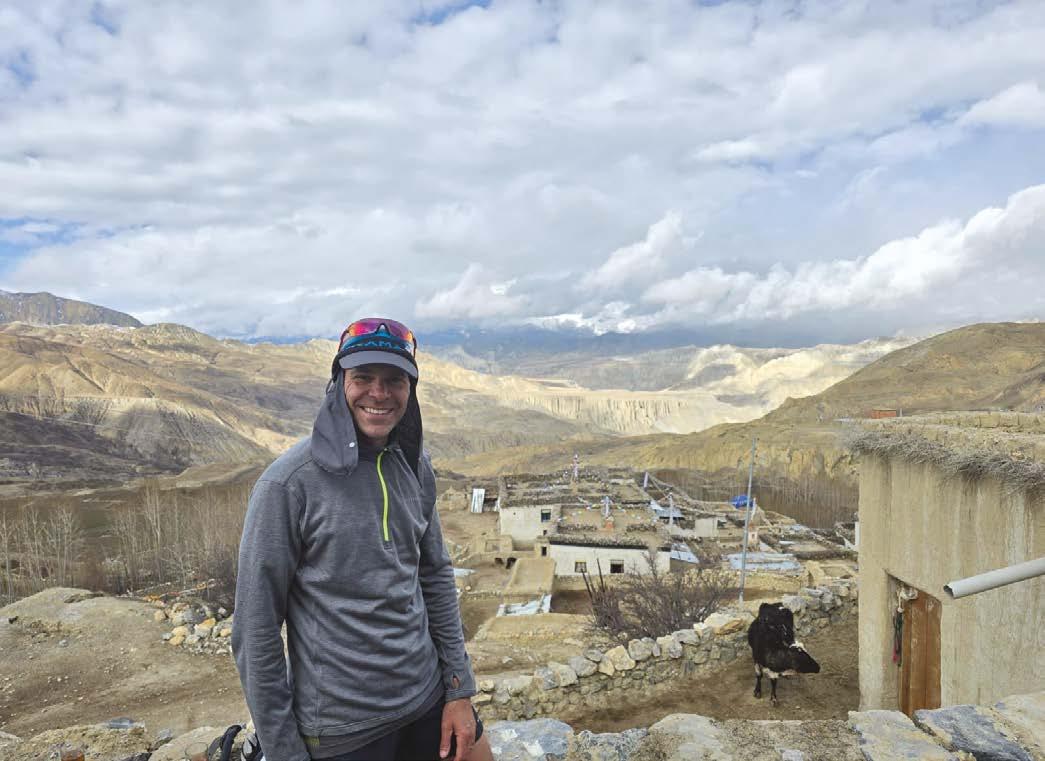
Across Sussex, individuals and businesses are stepping up to raise vital funds for disadvantaged young people in our community.
Mark Archer conquers the 200k Mustang Trail Race in the Himalyas
Retired fireman and Starr Trust cycling event team leader Mark Archer has completed his biggest challenge to date: the Mustang Trail Race, an 8-stage, high-altitude trail race through the trans-Himalayan region of Nepal. Covering 200km with over 10,000 metres of climbing in a gruelling 27 hours and 13 minutes, Mark finished an outstanding 7th out of 34 participants.
Having previously taken part in bike ride challenges organised by the Starr Trust, Mark felt this extraordinary Himalayan adventure deserved its own fundraising effort and has so far raised over £800, with fundraising still ongoing.
Property Moves lights up Brighton Marathon Day
Hove-based letting agents Property Moves, who have chosen the Starr Trust as their charity of the year, brought fantastic community spirit to Brighton Marathon Day. Joint Directors
Graham and Warren served up BBQ food to spectators taking donations for The Starr Trust and other team members gave out free water to runners. Property moves also staged a selfie competition with a Big Brighton Day Out prize, kindly gifted by The Avenue in Hove. The day raised a brilliant £340 for the Starr Trust.
EMC’s Mike Gibbs takes on the London Marathon
Having run last year’s Vienna Marathon for the Starr Trust, Mike Gibbs, Partner


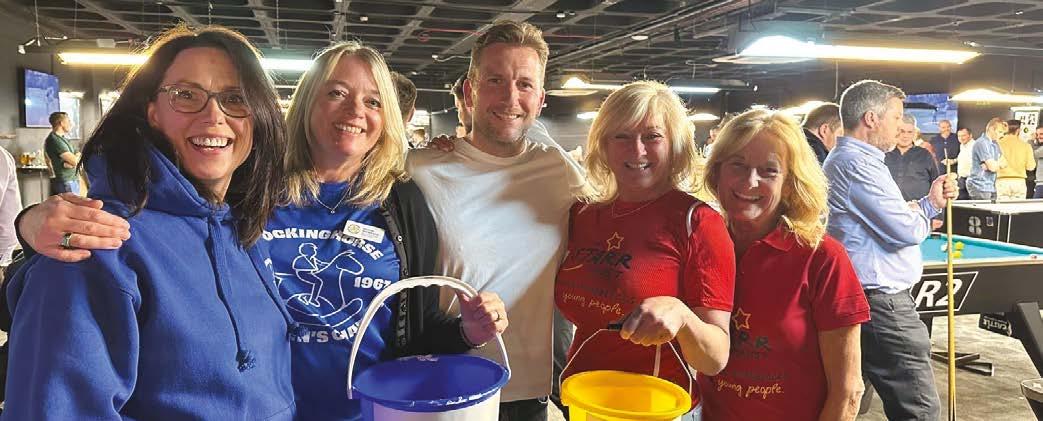
at EMC Corporate Finance, is back for an even bigger challenge: the London Marathon. As Mike says: “We are huge supporters of the great work that the Starr Trust undertake in the local region. We are delighted to be able to support such important causes.”
This year Mike is running for both the Starr Trust and Rockinghorse Children’s Charity, donating £500 to each.
Networking with Balls Pool League raffle raises £635 for local charities
The Starr Trust is proud to be a beneficiary of the Networking with Balls Pool League Tournament, run by David Quinton of Metro Bank. A raffle held at the April tournament
raised a fantastic £635, to be split equally between the Starr Trust and Rockinghorse Children’s Charity. On top of this, corporate teams taking part in the tournament are also given the option to donate their prize winnings directly to the two charities, going even further to do good in the local community. A wonderful example of the Sussex business community coming together for a truly worthwhile cause.
Tracey Starr, Partnerships Liaison for The Starr Trust said:
“A heartfelt thank you to everyone who has supported us so far this year, and a special good luck to Mike Gibbs for the London Marathon; we will be rooting for you every step of the way! We are receiving more
and more applications from young people reaching out for help. We need individuals to take on challenges and businesses to get creative with their teams to find fun and innovative ways to fundraise. Please do reach out as we are here to support you with your fundraising ideas. Together, we can reach even more disadvantaged young people across Sussex.”
To find out how you can support the Starr Trust please email: tracey@starrtrust.org
Or visit: www.starrtrust.org

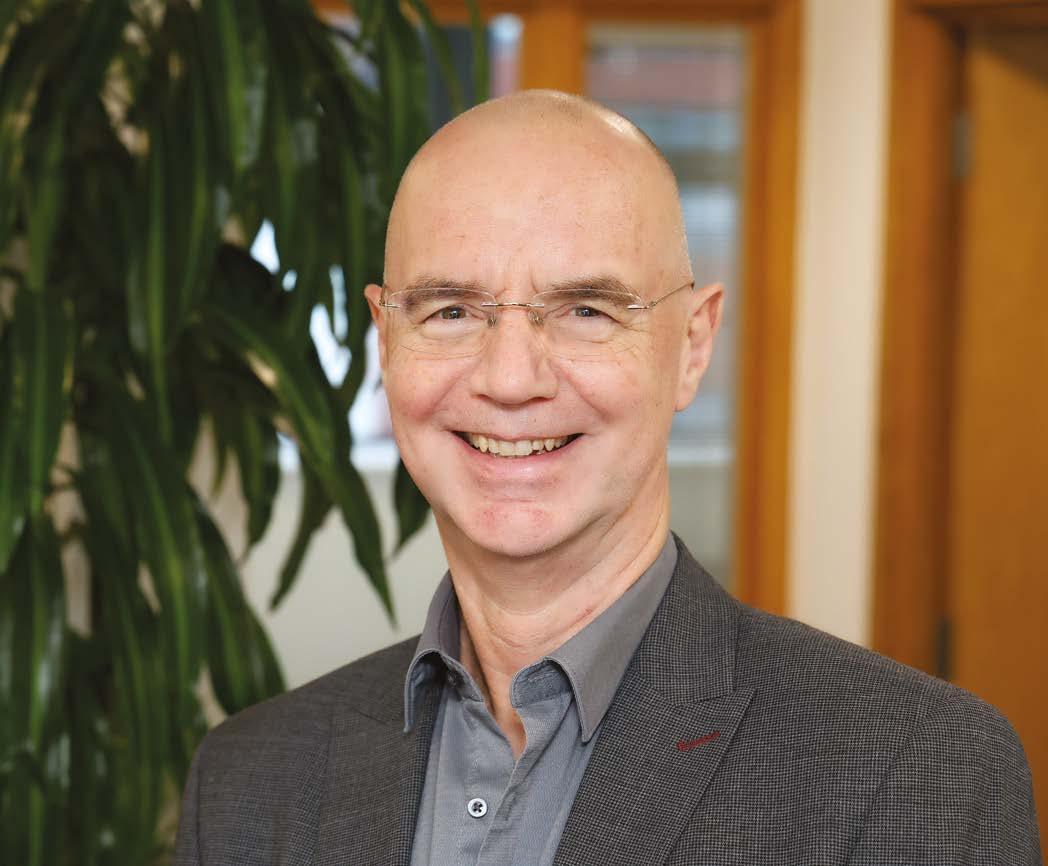
It is often the people in a place - more than the place itself - that shape how it evolves and what it becomes.
As Sussex Business Times commemorates its 500th issue, it is an opportunity to reflect on the people who have shaped business life across our region - and on Mayo Wynne Baxter’s
long-standing connection to Brighton and the wider Sussex community.
We have been a part of Sussex for more than 150 years. In that time, Brighton has grown into one of the most dynamic and diverse business centres in the South East.
Through that change, one thread has remained constant - people sit at the centre of everything.
Brighton - A place shaped by movement
When I think about the ‘faces of Brighton,’ I think about a city that is always in motion. People building careers, starting businesses, changing direction, returning, beginning again.
There is a sense of possibility herealmost palpable - hard to define, but easy to recognise.
We see this in our own business. Some colleagues have been with us for many years, shaping who we are through experience and relationships.
Alongside them are those who have joined more recently, bringing fresh perspectives and energy. That balance keeps us grounded while we continue evolving.
This past year has seen steady progress for the firm, with revenue increasing by 7% to more than £13.5 million. That figure matters, but what sits behind it matters more - the decisions that shape how we grow, who we hire, and where we invest our energy.
A good example of that is the appointment of our employment partner Nicole Humphreys. She brings significant experience and a practical approach to complex workplace matters, strengthening a team that supports both businesses and individuals through change.
Alongside external appointments, some of the most meaningful moments are ones that happen internally. Our promotions last year reflected a wide range of journeys. Some colleagues returned to the profession after time away, others brought experience from entirely different sectors, and many grew into leadership over time. These moments quietly shape culture.
We also see this reflected in specialist recognition. The accreditation of private client partners Matt Parr, Tracy Rowden, and Rebecca Louis as Lifetime Lawyers stands out.
Their work with older and vulnerable clients requires technical knowledge, along with patience, judgement, and care. It is a reminder of the responsibility that sits within many areas of our profession.
Where community becomes part of the work
Some of the most rewarding work we do now sits outside traditional client relationships.
Through our partnership with the Dare to Dream initiative, colleagues work with students at Hove Park School to help build confidence and broaden their sense of what is possible.
These conversations serve as a reminder of how early perceptions of opportunity are formed - and how important it is that they are not limited.
We are also proud of our support for Air Ambulance Charity Kent Surrey Sussex, having raised more than £10,000 to date. This partnership is driven by colleagues who want to contribute to something tangible in the communities we live in.
As a certified B Corporation and part of the Ampa Group, we are part of a wider movement that encourages businesses to think carefully about their impact.
For us, that means being deliberate about how we treat people, how we operate in our communities, and how we plan for the future.
That is also reflected in how we are structured across the region. With offices in Brighton, Chichester, Crawley, Eastbourne, East Grinstead, Lewes, Seaford, Storrington, London, and Royal Tunbridge Wells, our footprint is deliberately local. Each office reflects the character of its community.
The legal sector has changed significantly in recent decades. There
are those within our community who started their careers in the mid-1980sarriving in Sussex at a time before the internet. Even the ability for solicitors to advertise felt like a step into new territory - the excitement of a first Yellow Pages advert marked a very different era of communication.
Since then, the pace of change has accelerated. Technology, client expectations, and working patterns have evolved.
The firms that endured are those that have combined the best of their heritage with a willingness to adapt – retaining a strong professional service ethos while embracing new tools, including AI.
Yet for all that transformation, what remains steadfast is the nature of the work itself. At its heart, it is about understanding people and helping them through moments that matter.
The next chapter of Mayo Wynne Baxter will be shaped by a new generation of ‘faces of Brighton’ - those entering the profession, building their careers, and bringing new thinking into established ways of working. Their energy, combined with experience, will define what comes next.
As Sussex Business Times marks this milestone, it is worth returning to something that has always felt true in our own journey - businesses change but meaning comes from people.
And in a region as varied and alive as Sussex, that will always endure.
www.mayowynnebaxter.co.uk dorgill@mayowynnebaxter.co.uk
Most UK businesses have AI open in a browser tab. A smaller number have moved past that, and the work is starting to look different. Here is where AI actually helps today, and what is coming next.
By Gareth Kemp, AI Potential
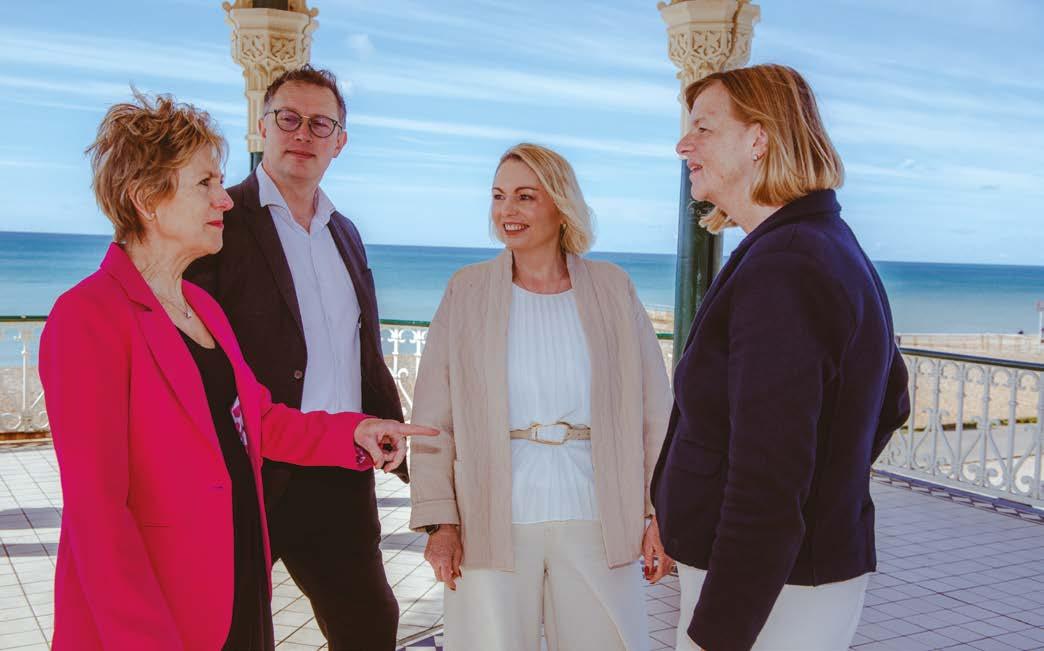
It is 10.15pm on a Sunday. A managing director in Sussex is writing the opening paragraph of a client report for the fifth time. The laptop is on the kitchen table. The coffee has gone cold. Somewhere in the house, the children are asleep.
Her team uses AI every day. It is open in a browser tab. It has rewritten her emails all week and cleaned up a few summaries. What it has not done is put the words on the page that will land this
client on Monday morning. That is still her job, and the weekend has gone.
A week later, the same report is drafted before she sits down on Sunday evening. She reads it twice, edits two paragraphs, and has the evening back. Not because she has swapped one AI tool for another. Because the way her business uses AI has changed.
Where most businesses are today
For most organisations, AI at work means the same few things: rewriting emails in a browser tab, the occasional
summary, a handful of prompt templates the team reuses. Useful. It speeds up individual work. But the AI is a better pen, not a different way of working. Modest gains, spread unevenly. Real, but not the story changing the market.
Where the leading edge has moved to
The businesses opening a gap have done something simple. They have stopped asking AI to help with the task, and started teaching it to do the task at their standard, using real finished work.
Every business already has hundreds
of finished deliverables sitting on its computers: client reports, pitch documents, matter letters, proposals, board papers. Each took hours of expert work. Each is now doing nothing. Those documents are not the evidence of the work. They are the recipe. Hand one to the right kind of AI, and you do not have to explain your standards. Your standards are on the page.
At a Brighton law firm, a partner handed over last year's best client update on a Tuesday. By the following Monday, the firm's weekly updates were writing themselves at that standard, in that voice. The associates had their afternoons back.
Used this way, AI stops being a pen and becomes an assistant that has read everything you have written. Whole categories of work that used to take half a day take minutes.
What
There is a word appearing more often in AI conversations: agents. It is the next step, and closer than most businesses realise.
An agent is not software you buy, and not the "agent" button in AI tools (a generic web assistant on someone else's
servers). It is a small set of plain files on your own computer that you can read in English: what the agent does, the worked example it is matching, the steps, the inputs, a quality check. Nothing hidden. Any manager can audit how the work is being done.
Agents take about seven minutes to build from a finished document. They run on your systems. Your data stays in your environment. They get sharper each time they run.

The interesting part is what happens when several work together. By the night before a 10am client meeting, one agent has pulled the client's history, another has scanned the past fortnight of sector news, a third has surfaced relevant examples from the archive. A one-page briefing is in the inbox with the sharp questions flagged. The human still has the conversation. Everything behind it is ready.
This was economically impossible last year. It is routine now, in the businesses that have built it.
The businesses moving now are setting the standard their clients will expect next year. Twelve months of delay is real hours: your best people assembling reports a competitor drafts in minutes. Client meetings walked into half-prepared. What gets gained back is concrete too: the half-day released for the conversation the client actually wants, the evening returned, the Sunday kitchen table no longer a workstation. The Sussex MD is not alone on that.
You did not build your business to spend Sundays on spreadsheets.
If you are at the browser-tab stage, the practical next step is to pick one piece of work your best people spend hours on. That becomes the first finished example, and the raw material for everything else.
To mark this 500th edition, my gift to Brighton and Sussex readers is your own agent. Free. A 30-minute session where we build one with you, live, on your machine. You bring a process you would like to stop doing manually. You leave with a working agent that belongs to you, running on your systems. No data touches ours. Yours to keep, edit, and extend.
Slots are limited to this edition, and go quickly.
Book your 30-minute build
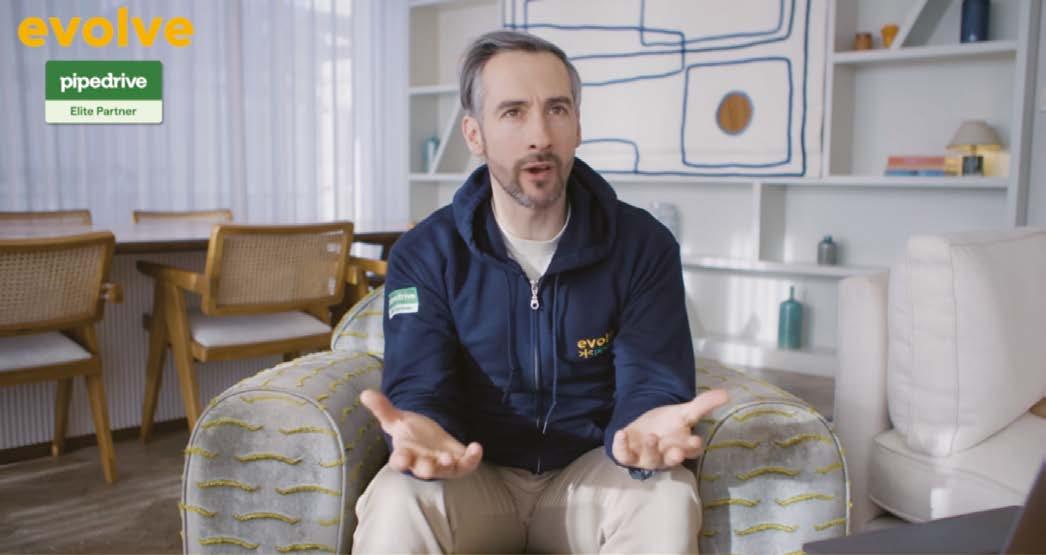
(And why the software alone won't solve it)
By Bruce Bignell, Founder of Evolve - Elite Pipedrive Partner
Over the last six months I've sat in a lot of discovery calls. Founders, sales directors, operations leads. Different sectors, different team sizes, remarkably similar stories. Leads falling through the gaps between marketing and sales. Follow-ups that rely on somebody remembering. Spreadsheets that three people maintain in three subtly different ways. A pipeline number the team nods along to on a Monday morning but nobody quite believes. Top performers whose method can't be replicated because nobody has ever written it down.
Different businesses. Same underlying story. And a similar cost: across scaling B2B companies, weak follow-
up, stalled deals and poor CRM adoption quietly leak somewhere between 3% and 8% of annual revenue every year, and for a £10m business, that is £300k to £800k walking out of the door before anyone has noticed it's gone.
But here is the thing I want you to take away from this piece:
Businesses don't move to a CRM because they want software. They move to a CRM because they want clarity instead of guesswork, consistency instead of dependency, and confidence instead of surprises.
Treat a CRM as a software project and you'll end up with software that no one uses.
Five signals it might be time - distilled from hundreds of conversations
1. You don't trust your own pipeline. The pipeline always looks healthy. It always has. But the month ends and the number doesn't match the optimism. You're surprised too often. Forecasts feel closer to hope than arithmetic. "Qualified" means something different to each salesperson. "Warm" is an emotion, not a stage.
2. Sales success lives in one or two people's heads. A couple of top performers carry the number. They "just get it." Nobody can quite explain what they do differently, and the knowledge hasn't been translated into anything replicable. A well-designed CRM turns tribal knowledge into a shared operating model
3. Deals fade rather than get rejected. This is the quietest killer of revenueand, in my experience, the single biggest contributor to that 3–8% revenue leakage. Deals don't get a firm "no"they just stop. The follow-up happens, then it doesn't. A prospect gets back in touch three months later asking if the quote is still valid. Somebody forgets. Momentum dies in silence. Follow-up is not a motivation problem. It is about business standards & systems.
4. Growth is exposing cracks that used to be hidden. What worked at four salespeople doesn't work at twelve. Enquiries slip between the gaps between marketing and sales. The same lead gets contacted twice while another gets contacted by nobody.
5. You've tried a CRM before, and it didn't stick. This is the one that stings. Budget spent, platform chosen, training delivered - and six months later, the team are back to their spreadsheets and the CRM is a graveyard of out-of-date records. The real cause is almost always that nobody takes ownership and the system wasn't designed to reflect how the business actually runs.
In a world increasingly obsessed with AI and automation - Most CRMs record activity. They don't control revenue behaviour. The technology doesn't solve business problems. People and systems do. Technology accelerates them.
Where to start (before you buy anything)
If anything in this piece is uncomfortably familiar, resist the urge to go straight to a demo. Instead, spend a quiet afternoon with three honest questions.
One: what does our sales process actually look like today, not in theory but in practice? Walk through your last ten won deals and your last ten lost deals, step by step. Where did the friction show up?
Two: what would have to be true for me to genuinely trust our pipeline number on a Monday morning? Write it down. That becomes the design brief for the system you actually need - whether that's Pipedrive, something else, or a rethought spreadsheet for now.
Three: who owns the system once it's live? A CRM without an internal owner drifts back into chaos within months. Someone needs to own it and give a damn.
Answer those honestly and you're already ahead of most of the businesses we meet.
Clarity, consistency, confidence
You're not actually trying to buy software. You're trying to buy three things: clarity about where every deal genuinely stands, consistency in how your team operates regardless of who's in the room, and confidence in the number at the top of the pipeline.
A well-designed CRM gives you all three. A badly designed one gives you none and charges a monthly fee for the privilege. That is the choice worth thinking about - long before you decide which platform to buy.
Bruce Bignell is founder of Evolve, an Elite Pipedrive CRM Partner based in Sussex, helping B2B teams stop revenue leaking through their pipelines. He'll be at Evolve [26] in June - visit weevolvebusiness.com or call +44 (0)1273 011187.

March’s Big Business Breakfast Club proved, once again, why over 100 business owners are willing to get up at the crack of dawn on the third Friday of every month.
Set against the backdrop of Brighton’s iconic Grand Hotel, this month’s event brought together 105 attendees - with an impressive 70% being business owners - for a morning of conversation, connection, and a few meaningful shifts in how the BBBC will operate moving forward.
From the moment guests arrived, coffee in hand and conversations already flowing, there was a noticeable buzz in the Pavilion. By 8:20am, the room was called to order and attention turned from networking to what has become a staple of the BBBC experience - a structured but relaxed format designed to spark opportunity.
This month, however, marked more than just another successful gathering.
It marked a changing of the guard.
March was the first official event with Alex Ryan of Marketing 101 stepping into the role of BBBC co-host.
And what a debut it was.
Taking the reins with confidence, energy, and a touch of showmanship, Alex brought a fresh dynamic to the room. His first task - a head-to-head interview with guest speaker Sarra Hawes - set the tone for what’s to come.
Sarra, Managing Director of Hawes
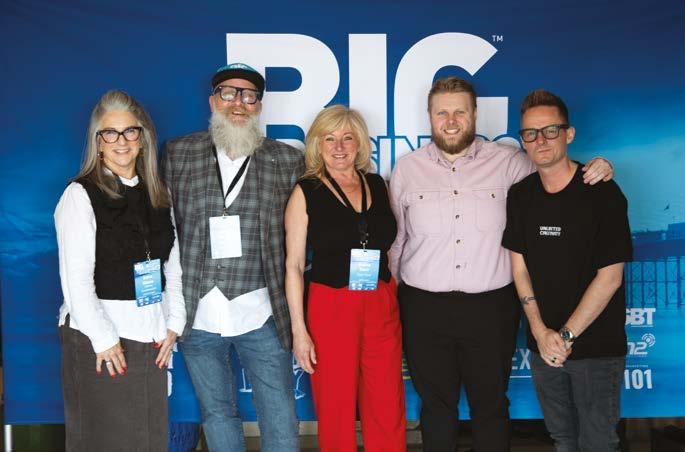
Construction, delivered a compelling conversation around leadership, resilience, and her role in championing women in construction. It was the kind of real-world insight that BBBC prides itself on - honest, grounded, and genuinely useful.
While the bacon rolls and coffee certainly help, BBBC has always been about more than just a good breakfast.
This month saw 20 ‘Fresh Meet’ attendees - individuals new not just to BBBC, but in many cases, new to networking altogether. That’s a stat worth pausing on.
In a world where many businesses still operate in isolation, BBBC continues to attract those who’ve never stepped into a networking room before - and gives them a reason to come back.
Alongside the newcomers, six attendees were welcomed into the ranks of BBBC Ambassadors - recognised for their consistency, contribution, and presence within the local business community. With over 160 ambassadors now active across Brighton and Sussex, this growing group plays a vital role in maintaining the welcoming, inclusive atmosphere the BBBC is known for.
Each BBBC event aligns with both a commercial sponsor and a local charity partner - a model that continues to deliver impact beyond the room.
March’s sponsor, Acumen Law, supported the event while also spotlighting their upcoming Acumen Business Convention, offering attendees further opportunity to connect and learn at scale.
Meanwhile, charity partner The Starr
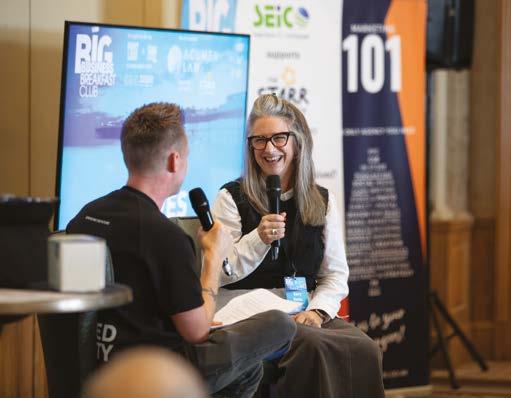
Trust reminded everyone why business communities matter. Represented by Tracey Starr and Alex Lawson, the organisation shared its mission of removing barriers for young people across Sussex.
The result? £217 raised on the day, contributing to a running total of over £9,000 donated to local charities through BBBC events.
Not bad for a breakfast meeting.
Evolving the Format
Perhaps the most significant development from March’s event was the introduction of a refreshed format - designed to keep BBBC relevant, engaging, and genuinely valuable.
The long-standing marketing slot has now been reimagined as “Big Steps for Small Business” - an open opportunity for attendees to deliver short, TED-style talks to the room.
The brief is simple: educate, inspire, or entertain - but no selling.
This shift does two things. First, it gives the stage back to the community. Second, it ensures the content remains varied, practical, and rooted in real business experience.
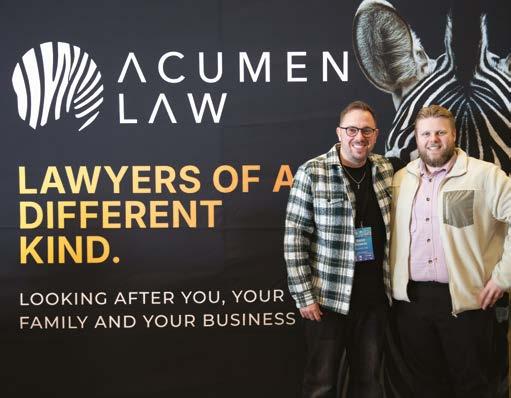
Alongside this, the guest speaker slot will now welcome nominations from attendees, opening the door to a wider range of voices and stories.
In short, BBBC is doubling down on what works - community-led value.
One of the recurring themes throughout the morning was simple: networking doesn’t happen in two hours once a month.
To support that, BBBC continues to build out its ecosystem beyond the event itself.
A growing WhatsApp community aims to keep conversations, referrals, and introductions flowing between meetings - turning what could be a one-off interaction into an ongoing relationship.
At the same time, the introduction of a BBBC AI assistant signals a move towards smarter, more responsive event support. From answering attendee questions to potentially managing bookings and connections in the future, it’s an early step into blending technology with community.
And importantly - it’s being introduced with a sense of humour intact.
What makes BBBC work isn’t just the numbers - although consistently selling out events for three years straight is no small feat.
It’s the consistency.
Same time, same energy, same commitment to showing up.
As Jim Cunliffe, founder of the Big Business Breakfast Club, often reminds the room - networking is a long game. You don’t win it in a day. You build it over months, years, and countless cups of coffee.
March’s event at The Grand was a perfect example of that philosophy in action.
Familiar faces, new introductions, evolving ideas - all under one roof, before most people have even opened their laptops.
And with the next event already lined up at the Amex Stadium, one thing is clear.
The BBBC isn’t slowing down anytime soon. bigbusinessbreakfastclub.co.uk

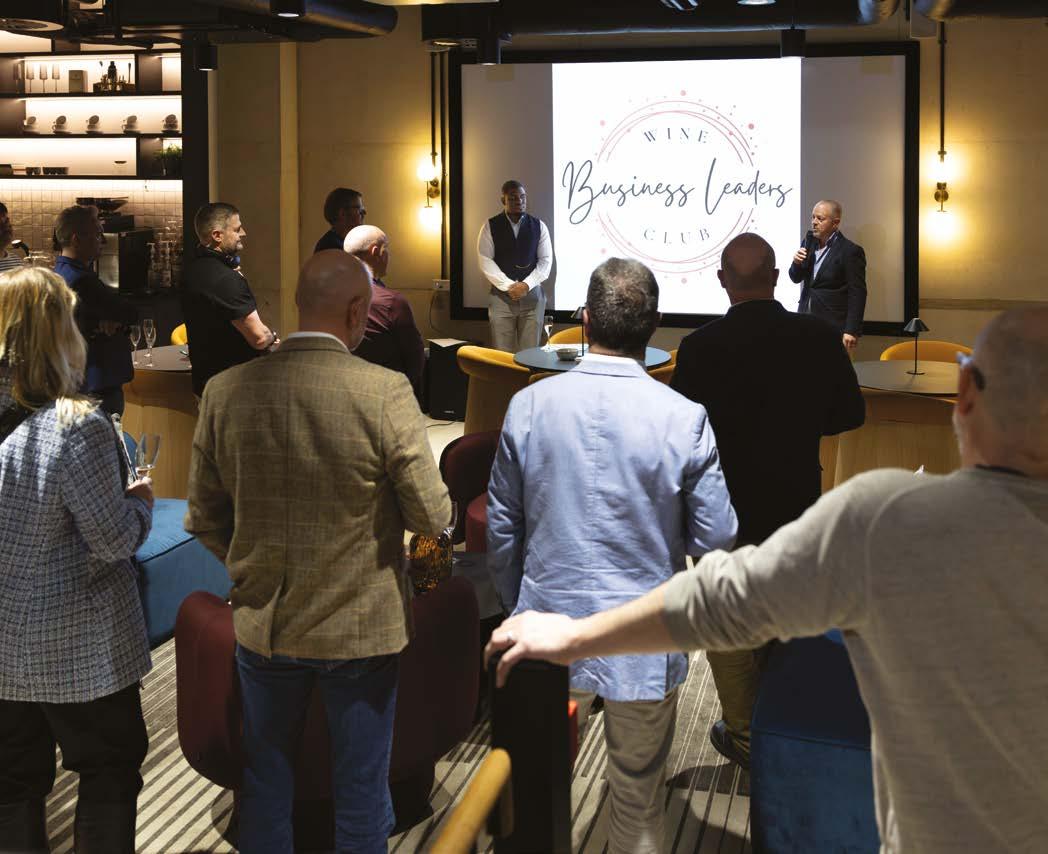
On Wednesday 18th March, I was invited along to The Business Leaders Wine Club. It was a great evening and brilliant to have such a strong mix of people in the room.
The March Burgundy tasting from The Business Leaders Wine Club was a really enjoyable night, with a relaxed atmosphere, great wine, cheese and conversation. Held at Flex @ Tide in London, with Silverstone Communications as event sponsor, it was a warm and welcoming setting from the start - the kind of event where you could simply enjoy yourself without
needing to be an expert in Burgundy wines. With a clear intention of bringing Sussex and London businesses together, the evening balanced discovery and connection, using wine as a natural way to spark conversation and build meaningful connections.
The evening was kindly supported by Silverstone Communications as our event sponsor, Flex @ Tide as our venue sponsor, and Michael Cheetham who
captured these fantastic photos on the night. The event also raised just under £400 for the BLWC London charity partner, Prept Foundation.
The tasting itself was a real highlight of the evening. We began with a glass of Champagne Daniel Leclerc et Fils Tradition Brut NV, which was light, fresh and easy to drink. It paired beautifully with the Dorstone goat’s cheese and Yoredale Wensleydale, both of which


provided a gentle and welcoming start to the evening.
The white wines that followed were both excellent in their own way. The St Romain La Perrière 2020 was crisp and refreshing, while the Pouilly-Fuissé 1er Cru La Marchande 2020 offered a richer, smoother style. Both worked particularly well with Baron Bigod, which stood out that night as a favourite: rich, creamy and an ideal match for the white Burgundy styles.
The reds each brought something different to the table. The Côtes de Nuits-Villages 2019 was light and fruity, the Givry Vieilles Vignes 2019 was very approachable and easy drinking, and

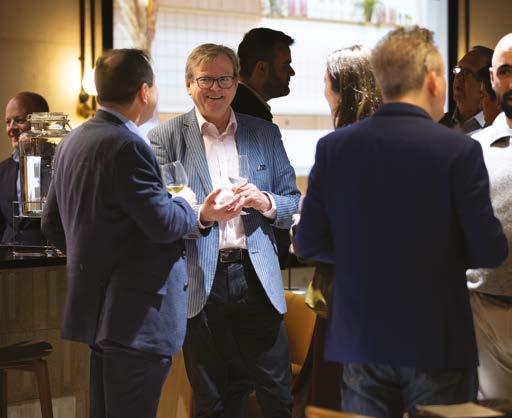
the Marsannay Les Mogottes 2020 showed a bit more depth and structure. The stand-out red of the evening was the Gevrey-Chambertin Vieilles Vignes 2010, noticeably more complex and elegant, and it paired especially well with the stronger cheeses, particularly the Cashel Blue.
The cheese selection from Neal’s Yard Dairy added a huge amount to the experience. Dorstone was fresh and light, Yoredale Wensleydale brought a subtle tang, Baron Bigod was rich and indulgent, and Cashel Blue provided a stronger, more expressive element. Having suggested pairings made it easy to experiment and find combinations you actually preferred.
What really made the night work was the balance of a well organised but still relaxed and social networking event. There was a great mix of people chatting, tasting and exploring without any pressure, whether you were deep into Burgundy already or just curious.
Upcoming events from The Business Leaders Wine Club (BLWC)
• 29th April - Henfield, West Sussex
• 14th May - Online tasting
• 26th June - Hove
For more information about upcoming events and how to get involved with The Business Leaders Wine Club, visit www.businessleaderswine.club.
In the UK there are few winemakers that have such a well regarded reputation as Dermot Sugrue and his wife Ana who together create the Sugrue South Downs brand. Both come from respected wine producing backgrounds with Dermot having worked in Champagne, Nyetimber and then moving on to running Wiston winery as well as assisting many other wineries across England to create their fine vintages. Ana originally from Croatia was head wine maker at Plumpton College helping train the next generation of wine makers that go on to grow wines across the globe. This husband and wife team has attained the highest rated English wines on the market which means they have a cult following for their sparkling and still wine creations.
Appearance – Attractive Gold with slight glint of rose.
Nose – There is a richness on the nose with stone fruit and honey suckle, a golden richness and white pepper, it is very inviting.
Palate – There is good acidity and texture due to the oak ageing of this wine, it has structure with tannins that come through from two years of French oak aging.
The wine has a citrus backbone
with lemon sherbet at the fore. We also have a little sweetness with kiwi and desert gooseberries that follow. There is a lingering caramel note on the end of the journey.
Vintage – 2021 was a challenging year for English wine with cold start and frost which impacted some producers. A boost of fine sunshine in September and October resulted in a small crop of excellent fruit. For this wine Sugrue South Downs have added 60% reserve wines (from 2011, 2017, 2018, 2019, and 2020), which have been built up over the past two decades.
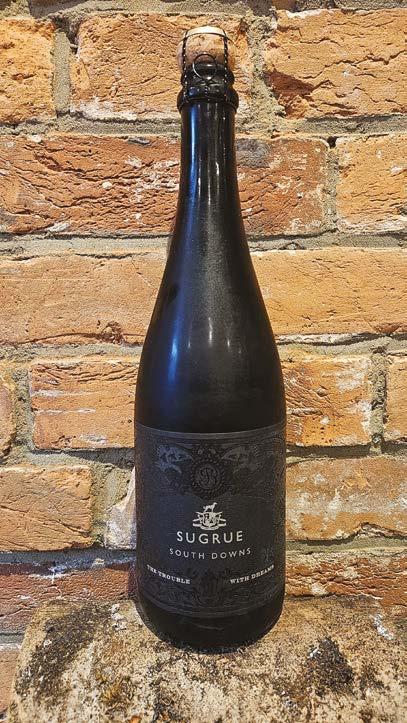
When to drink – This wine is fresh and exuberant now but I feel it would be at it’s best in around another five years or so, to build further complexity, also bringing more of the caramel notes and richness to the wine.
This wine is great on it’s own as an aperitif or for a celebration. With its richness and complexity it is food friendly and would work well with more flavoursome seafood such as Oyster Kirkpatrick or with Harisa Scallops.
Where to buy?
This wine can be purchased online at
www.sugruesouthdowns.com for £49 a bottle or at local vintners or at Spirit of the Downs Distillery at Bolney.
Written for County Business Club by Michael Yeoman, English Wine Specialist and producer of Spirit of the Downs, award winning local artisan Sussex Grape based Brandies, Vodkas and Liqueurs www.spiritofthedowns.co.uk
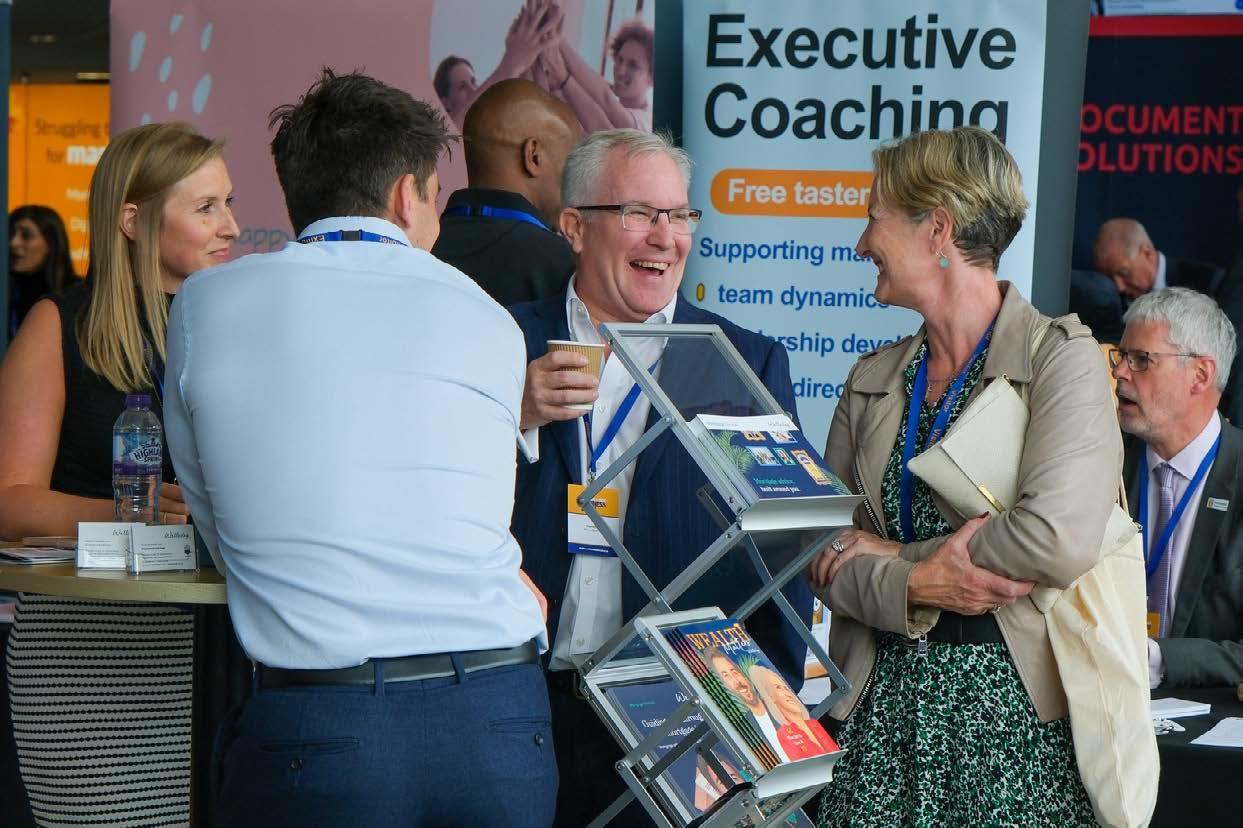

From impactful keynote sessions, to engaging workshops and a wide range of exhibitors, there’s something for everyone at this unmissable event.
Brighton 10:00 AM - 3:00 PM Thurs, 4 June 2026 th
The Amex Stadium
SECURE YOUR PLACE TODAY