
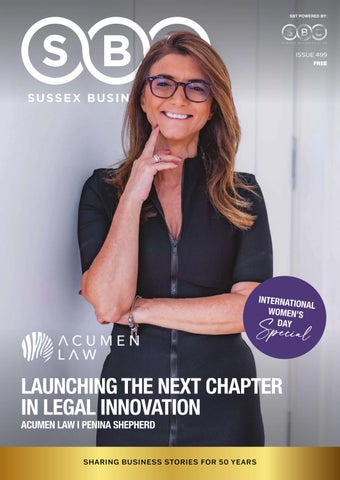
ACUMEN LAW I PENINA SHEPHERD

Zebra HR is a dedicated HR support service for growing businesses.
Our experienced HR consultants work as an extension of your business, whether you need ongoing support or help with specific ad-hoc issues.
What sets Zebra HR apart is that every service is underpinned by specialist employment law solicitors.
Your business receive the commercial, hands-on support of an HR consultancy, strengthened by legal oversight and expertise, all at HR consultancy rates.
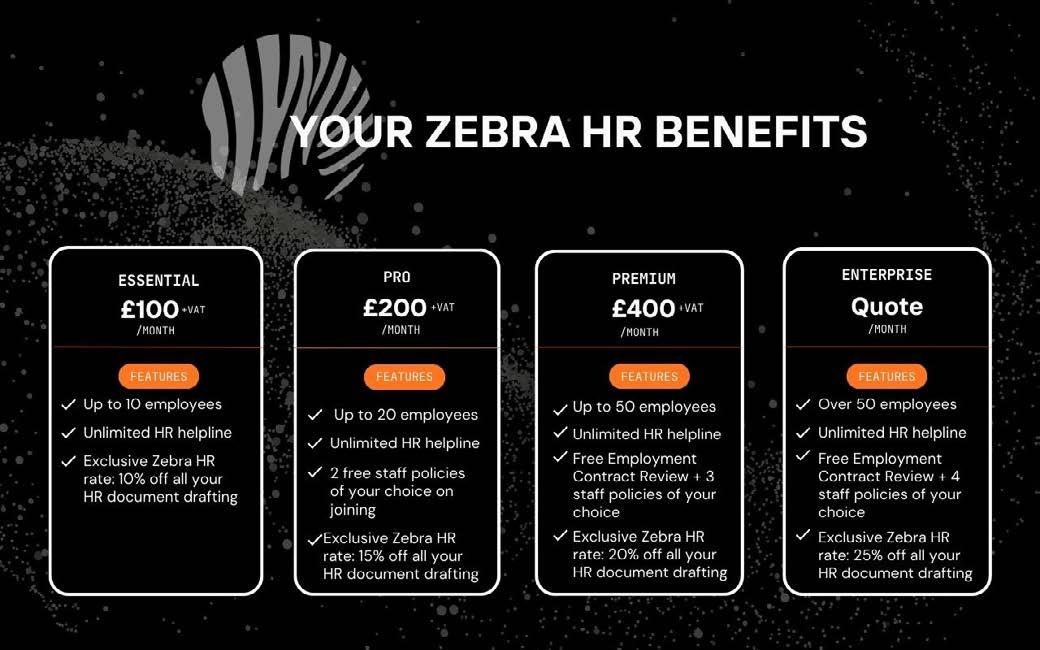
We offer four Zebra HR schemes and, whichever you choose, you will have access to our unlimited HR helpline.
An experienced HR Consultant or Employment Law Solicitor will always be available at the end of the line, providing responsive, practical support whenever you need it.













Managing
Jackie Irving jackie@countybusinessclubs.co.uk 07727 243202

Chairman/Chief
Sam Thomas sam.thomas@countybusinessclubs.co.uk 07894 762304
Production
Kim Butler kim@lifemediagroup.co.uk

All business is symbiotic in nature. You can be inspiring your peers one day, learning from them the next. In the end, people buy people. That makes sharing our stories the most compelling way to connect with one another.
What’s needed is a platform to embrace and empower our regional business ecosystem. Where varied backgrounds and perspectives provide new context. Harnessing potential, enabling growth. And at the heart of it, a dedicated team of curators unlocking insights for the good of us all.
So we’re changing the way people think about networking. Because we believe in self reflection, rather than self promotion. We’re far more interested in the tell, than the sell. By demystifying the art of storytelling, we deliver authentic thought leadership through events, publishing and broadcast media.
We come together to discover, share and grow. But we won’t be limited by geography, or our imagination. Instead, we’ll seek out local leaders, visionaries and experts, wherever great business thrive. Growing communities, in partnership with the businesses that power them. And nurturing the entrepreneurial spirit in everyone.
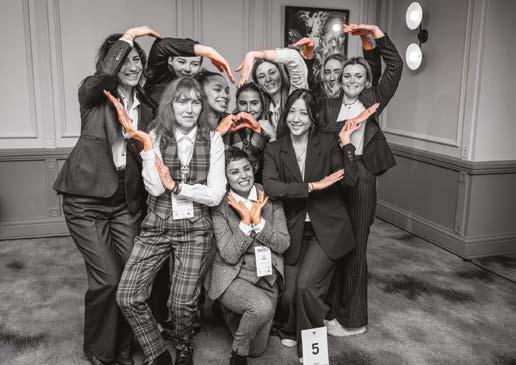
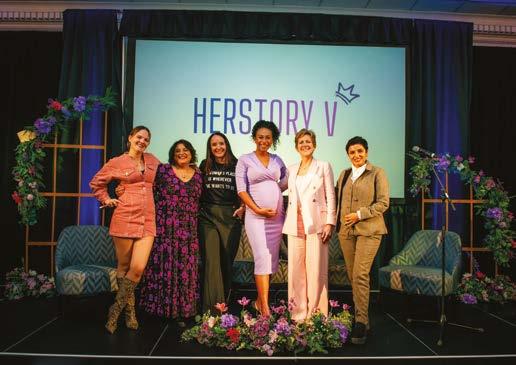
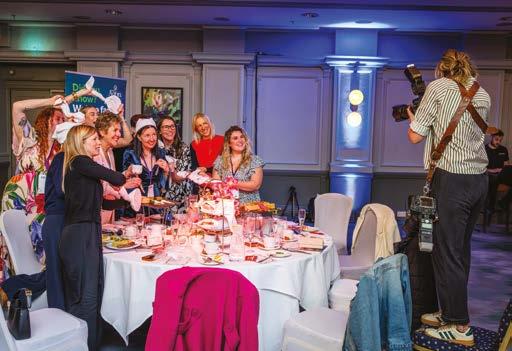
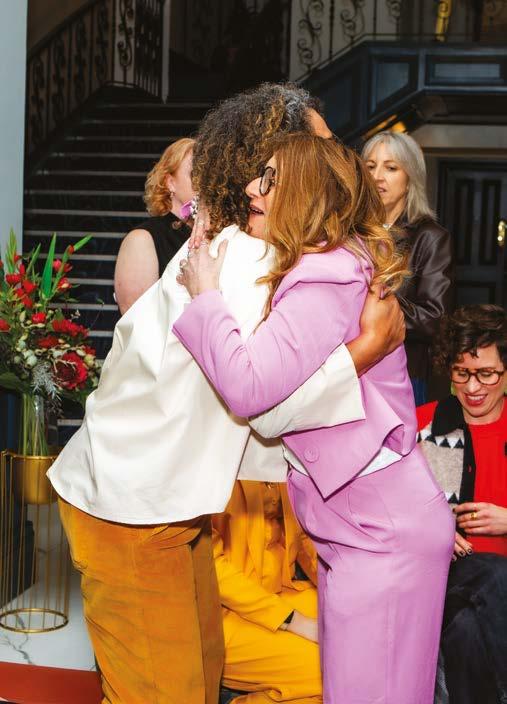
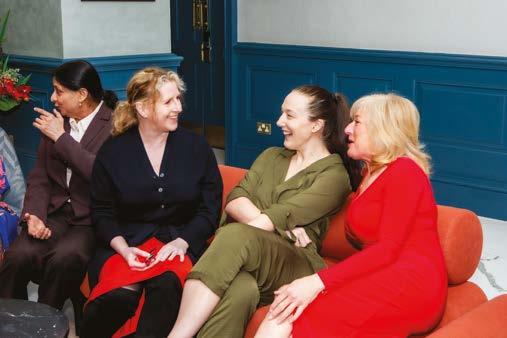
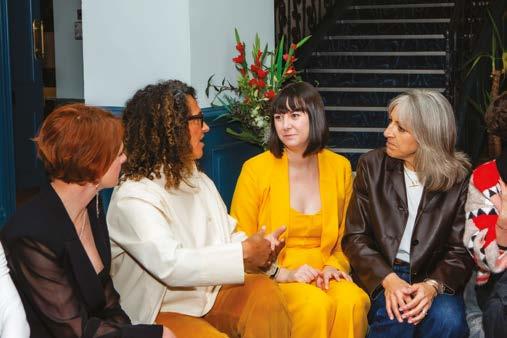
Over 140 business leaders, entrepreneurs and community members gathered at the iconic DoubleTree by Hilton Brighton Metropole for what became Brighton’s largest International Women’s Day event, Herstory V.
Hosted by local business leader
Stephanie Prior, the event was already shaping up to be a significant moment for the city’s business community. What made it even more remarkable, however, was that Prior organised and hosted the entire event while eight months pregnant.
Some questioned whether it was the right moment to take on such a major undertaking so close to maternity leave. But for Stephanie, the decision to continue the annual event was intentional.
Stephanie Prior, Founder of Prior Media & Marketing said: Herstory, exists to showcase the power of women leading change and to demonstrate that motherhood and leadership do not have to be mutually exclusive.
With the right support around her on the day, that belief proved true. The result
was the most successful Herstory event to date, bringing together more than 140 attendees for an evening focused on the theme “Leading with Purpose.”
At the heart of the event was a powerful panel conversation featuring women from very different sectors, healthcare, fashion, property and inclusion, each bringing a unique perspective on leadership.
The Panel Featured:
• Carole Gilling-Smith – founder of the Agora fertility clinic
• Fal Blake – creative force behind Brighton fashion brand Gresham Blake
• Mo Kanjilal – diversity and inclusion leader and co-founder of Edge of Difference
• Lucy Dawe – property entrepreneur and industry advocate (Property Fusion & Lawton & Dawe Properties)
Despite their very different industries, a number of common themes emerged during the discussion: authenticity, resilience and the courage to challenge existing systems.
Rather than presenting polished success stories, the panel spoke candidly about the realities behind leadership, from imposter syndrome and exclusion to illness, criticism and the loneliness that can accompany entrepreneurship.
Several speakers reflected on how adversity became the catalyst for growth and clarity.
“Confidence was something I had to learn. It was a craft,” said Dawe, describing her journey from receptionist to business owner in the property sector.
Kanjilal highlighted the importance of systemic change rather than symbolic gestures, particularly when it comes to equality in the workplace. Meanwhile, Gilling-Smith spoke passionately about improving fertility access and education, emphasising that the chance to build a family should not depend on income, postcode or background.
For Blake, identity and authenticity were
central themes. “My suit became my armour,” she reflected, describing how fashion helped her embrace her identity and leadership with confidence.
The evening also featured a powerful performance from Brighton platinum recording artist and cancer survivor Abi Flynn.
Flynn shared the story behind her music, explaining how a cancer diagnosis at just 26 forced her to reconnect with her voice and purpose. During treatment, she wrote an album, using creativity as a way to process adversity and reclaim her artistic identity.
“Those adversities really have become my greatest gift,” she told the audience. Her story added a deeply emotional dimension to the evening, reinforcing one of the panel’s strongest themes: leadership and authenticity are often forged through challenge.
Another key element of the event focused on the importance of being seen.
Professional photographer Claire Bond led a powerful visual initiative as part of the Herstory experience, capturing striking portraits of women attending the event.
The photography project was designed not simply as a creative activity but

as a statement about representation, highlighting the importance of women stepping forward, owning their achievements and being visible as leaders.
Complementing this visual storytelling, the room itself was thoughtfully styled by Sarah King, whose design helped bring the atmosphere of the event to life. Through carefully curated styling, the space reflected the visual power, femininity and celebration at the heart of International Women’s Day, creating an environment that felt both inspiring and welcoming.
The images created throughout the event will form part of the ongoing Herstory narrative, celebrating the women shaping business and community life across Sussex.
HerStory V was supported by a strong network of partners from the local business community, including The GelBottle Inc, Latest TV, Bennett Oakley Solicitors and IT Document Solutions Limited.
The event also created space for meaningful networking and conversation, with attendees from across Sussex sharing experiences and building new professional connections.
While International Women’s Day events often focus on celebration, Herstory V aimed to go further.
The conversation repeatedly returned to the idea that leadership is not just about personal success but about changing systems, improving opportunities and supporting others to rise.
Speakers discussed everything from fertility equality and property regulation to representation, identity and workplace inclusion.
Perhaps the strongest message of the evening, however, was the importance of community.
Across the panel and the audience there was a clear sense that progress rarely happens in isolation. It is built through collaboration, mentorship and women championing one another.
In a city known for its entrepreneurial spirit, Herstory V demonstrated the power of bringing those voices together.
And for its founder, the event delivered an additional message: that leadership, business and motherhood can exist side by side.
As the evening concluded, one theme remained clear, purpose-led leadership is not just about individual success, but about creating space for others to be seen, heard and empowered.
For more information regarding Prior Media & Marketing, please visit their website
Brighton draws visitors and tourists from across the globe, but the first impression of the city when you leave Brighton Station leaves a lot to be desired.
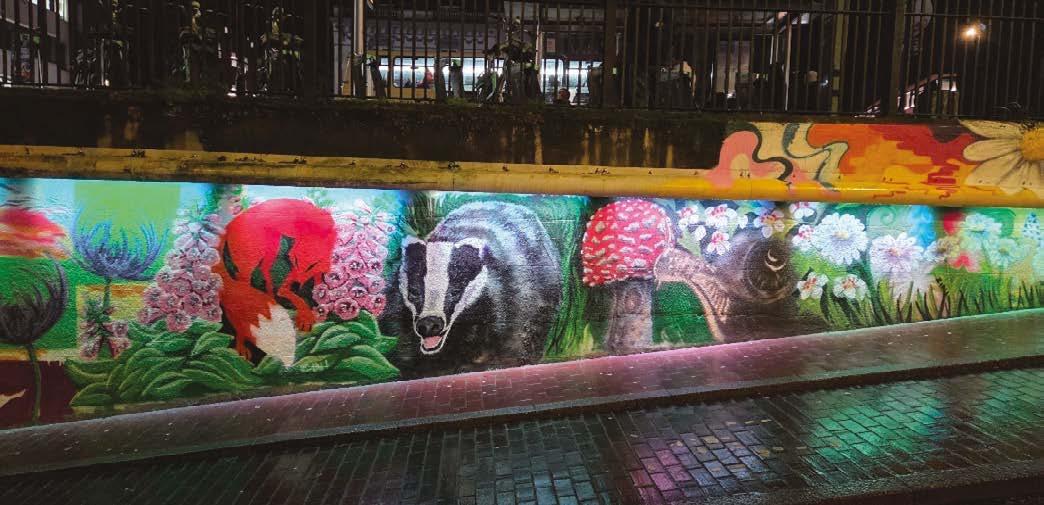
This is especially true if you head straight into the vibrant North Laine via the Trafalgar Street underpass.
Although only a few steps before you reach the bars, cafes and shops, the gloomy walk under the station has not been the most welcoming entrance.
Jan Etches, General Manager at the Brighton Toy and Model Museum, has been on a mission to brighten up the area (sometimes literally cleaning up graffiti and vandalism), and her work has been hugely successful.
The museum has invested heavily in its façade and doorway to enhance the area – and the latest project has been to create a beautiful new mural opposite the station entrance.
Train company Southern has partnered with the Royal Botanic Gardens, Kew, artist
SinnaOne and the Brighton Toy and Model Museum to create a large-scale mural at the top of Trafalgar Street, underneath Brighton station, in a bid to bring more foot traffic to the city’s cultural district.
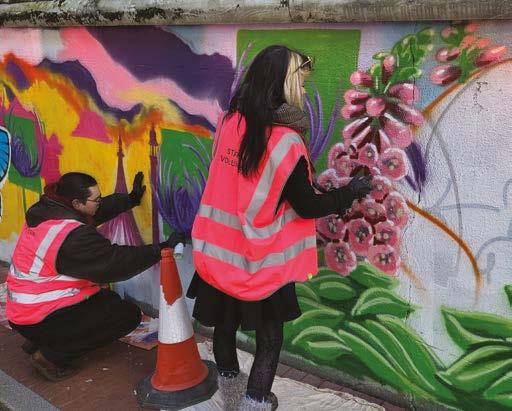
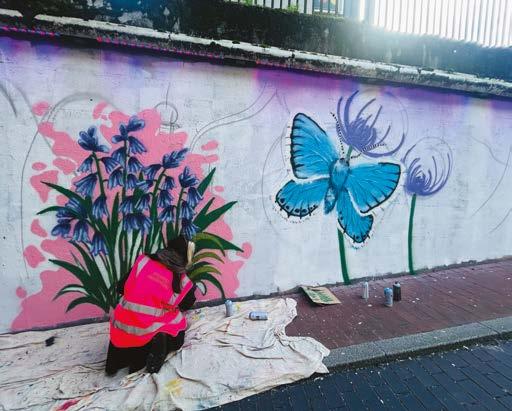
The eye-catching 10-metre-long mural features local fauna and flora, wildlife and attractions – best representing the city’s identity and biodiversity, painted by a group of young people from across the city.
The project was part of Grow Wild on the Railway, aiming to build connections between local young people and station partner groups along the Southern Rail network, whilst championing UK native plants and fungi. Supported by Grow Wild, the national outreach programme of the Royal Botanic Gardens, Kew.
Tom Easdown, Southern’s Head of Stations, said: “Our partnership with Kew through the Your Station, Your
Community scheme is a great way to celebrate communities like those in the vibrant North Laine, and this mural does just that – adding a splash of colour which will not only look fabulous but hopefully encourage people to take the scenic route to the sea.”
Kew’s Grow Wild on the Railway scheme was made possible through Southern’s Your Station, Your Community fund, having received £27,250 to support a range of creative projects led by young people at stations across the Southern network, including at nearby Haywards Heath, Hove and London Road stations where artists Esther Lower and Mia Jones have spruced up a disused hut on the platform with colourful floral spray paint, forming part of a newly created “pocket park” at the station.
Artist SinnaOne (Daryl Bennett), who has recently worked on a huge mural at
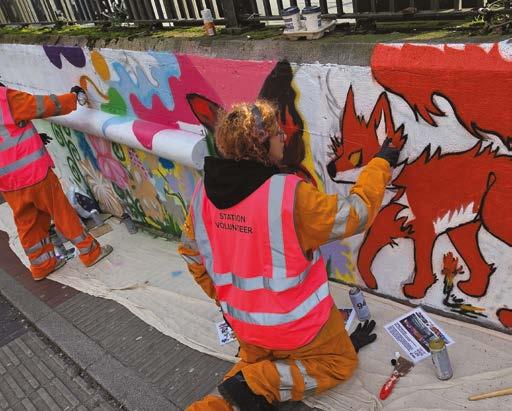
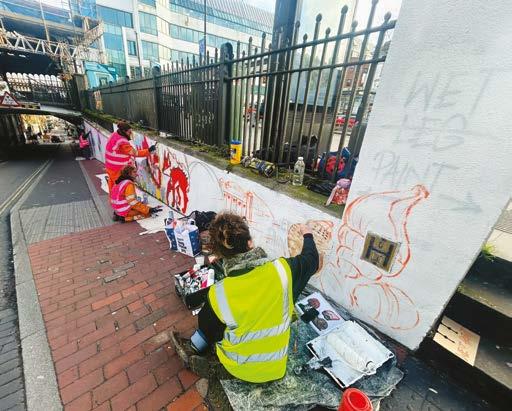
the front of the Brighton Youth Centre, worked with a group of young people aged 18-26 through several workshops teaching key spray paint and mural techniques. For some of them, like 19-year-old Reggie Rai Lace, it is their first project in public.
The work coincides with the Toy Museum’s huge project, also partfunded by Southern, to revamp the main entrance and underpass with improved lighting and a much brighter, more open entrance to the museum.
The museum submitted the project bid to RBG Kew’s Grow Wild on the Railway programme, and also received an additional £1,000 from the Community Rail Network to make the plans a reality.
Brighton Toy and Model Museum Manager Jan Etches said: “This project is about inspiring local pride and creativity while continuing to brighten the area.
“The new mural complements the wider regeneration of the museum frontage and underpass beautifully. It will make the station approach a place that feels alive, positive and welcoming.”
Peter Wingate-Saul, Trustee of the North Laine Community association added, “As we celebrate fifty years since our neighbourhood was saved from wholesale demolition to make way for a flyover, it is cheering to see this colourful mural taking shape at the portal to the North Laine, at the top of what
has historically been a rather gloomy underpass, now much-improved by the Toy Museum’s new facade and lighting.”
The mural was completed on Friday, February 13 after three weeks of painting by Daryl Bennett and his team of young artists.
If you haven’t visited the Brighton Toy and Model Museum recently, it is well worth a visit.
It is also an amazing venue for corporate and private events. Contact Jan at jan@brightontoymuseum.co.uk for more information.
Tel: 01273 749 494 brightontoymuseum.co.uk
International Women’s Day reminds us that progress doesn’t happen in isolation – it happens when women support, guide and champion those coming behind them
Francesca White (Wyatt), Director and Owner, Porky Whites Ltd
International Women’s Day is a moment to celebrate progress, but it’s also a moment to reflect on how that progress happens in the first place.
In my experience, it rarely happens alone.
Having recently celebrated a birthday milestone, I’ve found myself looking back on my own journey in business. When I first stepped into the role of Managing Director at Porky Whites, I’ll admit I felt like a rabbit in headlights. Leading a family business with a long heritage is both a privilege and a responsibility, and in those early days I often had to think fast, ask questions later and learn as I went.
Fast forward to 2026 and I’m incredibly proud of what we’re continuing to build at Porky Whites Ltd. The business has grown and evolved, but when I reflect on those early years, I often realise just how important the people around me were.
I was fortunate to have some incredible mentors. Sometimes their support came in the form of practical advice; other times it was reassurance during moments of doubt. Often it was simply the confidence that comes from knowing someone understands the challenges you’re facing.
That kind of support can be invaluable, particularly in industries like the UK meat sector, where female leadership hasn’t always been the most visible.
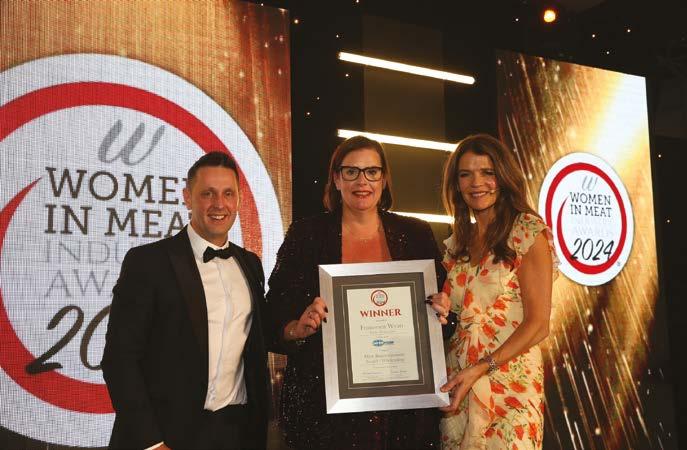
International Women’s Day is not only about recognising the achievements of women today, but also about creating opportunities for those who will lead tomorrow. Mentorship plays a huge role in that.
And mentorship doesn’t have to be formal. Often it’s simply about creating space for honest conversations: somewhere to share a challenge, test an idea, or even just vent after a difficult day.
I was lucky enough to have people who did that for me. Now, at this stage in my career, I feel a responsibility to do the same for others.
So whether you’re part of my network or not, I’d like to extend an open invitation. If you’re starting out in business, stepping into leadership, or navigating the realities of working in a generational company or the food
industry, please feel free to reach out.
If you need advice, perspective, or simply someone to listen, I’d be delighted to share what I’ve learned along the way as a woman in meat, in business and in a family-run company.
Spoiler alert: I won’t have all the answers. But those who know me well will tell you I’m a good listener, and I’m rarely shy about speaking my mind.
Because if International Women’s Day stands for anything, it’s the idea that when one woman succeeds, she has the opportunity to help others succeed too.
And that’s something truly worth paying forward.
For more news and insights regarding Fran and Porky White Ltd, visit their website (www.porkywhites.co.uk/news)

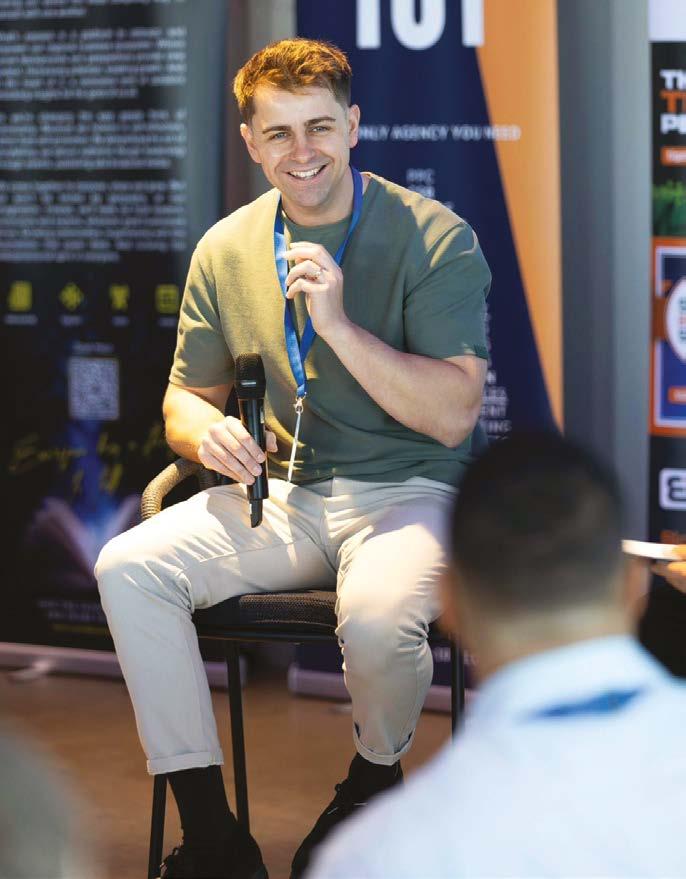
By Max Marshall, Founder and Teacher of LIFE Education
Let me start by asking you a few simple questions…
What’s been more important in your life - the ability to remain calm under pressure, or the ability to add a semi-colon into the correct place of a sentence?
Now you know what the real-world is like, would you rather be confident at pushing yourself out of your comfort zone, or confident at multiplying fractions?
Which has helped you overcome the difficult moments in your life - knowing the Roman Numerals and the year of The Battle of Hastings, or understanding your feelings and how to manage them so they don’t manage you?
These were just some of the questions bothering me as I walked into school day-after-day to teach my incredible Year 6 classes. Until, one day, something clicked.
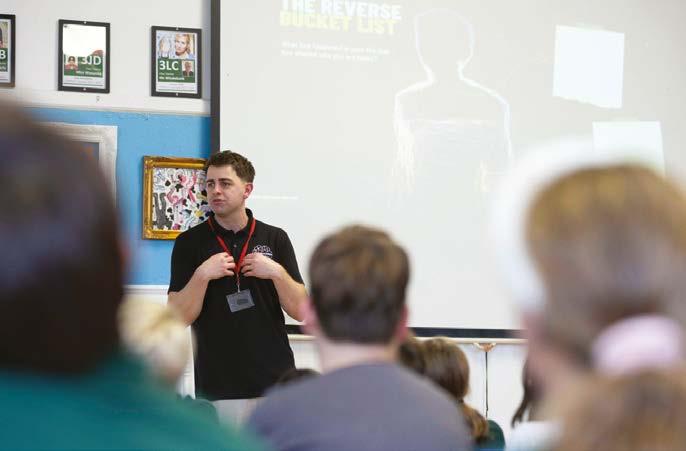
Over the past 12 years of teaching the younger generation, I’ve noticed how unprepared they feel for the emotional, personal and psychological demands of modern life.
Working with thousands of young people, I’ve noticed children paralysed by the fear of fitting in, getting questions wrong, or even just the school setting, teenagers giving up as soon as something feels slightly uncomfortable, and countless young people who appear confident on the surface but are battling relentless negative self-talk underneath.
And the most difficult thing of all?
These behaviours don’t simply disappear with age.
The children fearing fitting in or failure become the adults who stay in safe, but unfulfilling, situations. They avoid applying for opportunities, pursuing meaningful goals, or trying anything new. Not because they lack ability, but
because the emotional cost of “getting it wrong” or “feeling different” feels too high.
The young person who cannot regulate difficult feelings will later struggle in everyday adult life. Small unexpected setbacks will trigger disproportionate stress responses, and conflict in friendships may feel intolerable - not to mention later work pressure.
The child who defines themselves through comparison may grow into the adult who never feels “enough.”
The teenager with limited resilience may latter struggle to handle loss, rejection, change or uncertainty.
The list goes on.
However, it’s not all doom and gloom!
Because these are life skills that can be explicitly taught and developed before they become an adult.
If young people are taught how to grow self-confidence, how to develop emotional resilience, how to build a strong sense of self, and how to manage their emotions in a healthy way, they won’t be able to just cope with how hard life can be, they will push themselves out of their comfort zones and live an extremely fulfilling life.
This idea led me to create LIFE Education: an education system that puts young people’s happiness, mentalresilience and self-confidence first. One that prioritises the building blocks for success in ANY area of life, rather than just school, because I believe this type of education is the one that is needed to shape the next generation.
The pressures facing this generation are immense. Social comparison is constant. Academic expectations are high. Distraction is everywhere. The emotional load many young people carry is heavier than it appears from the outside.
LIFE Education stems from a simple belief - more than ever, young people need an education that is meaningful and essential for life. It should equip young people, not only with academic knowledge, but with the emotional knowledge, internal skills and healthy habits required to navigate life confidently and independently.
As adults (and business owners), we understand resilience.
We understand delayed gratification, discomfort, determination and learning through failure. We build systems. We reflect on mistakes.
We regulate ourselves in high-stakes environments or challenging life experiences.
These are not accidental traits - they are learned and strengthened over time.
And they can all be taught from a young age.
This is exactly what I do at LIFE Education.
Focusing on four key themes - Identity, Emotional Intelligence, Self-confidence, and Resilience - LIFE Education purposefully teaches children, teenagers, and young adults practical tools, strategies and habits for…
• understanding, processing and managing emotions, growing emotional tolerance, and handling pressure (from school and exams to home life and the workplace)
• building a strong sense of self and selfbelief, whilst staying internally motivated, instead of seeking external validation
• shifting their mindset and perspective in times of challenge or pursuit and seeing
setbacks as learning experiences
• stepping out of their comfort zones and becoming comfortable with the uncomfortable
• staying present and regulated in a highly digital, stress-filled world
As parents and business leaders, we think strategically about succession, growth and sustainability so I think the same is worth applying to the internal foundations we are helping our children build too.
After all, confidence, resilience, emotional regulation and self-leadership often become the very qualities that define success in adulthood.
If this resonates - as a parent, an education leader, or simply someone who cares about the younger generations and wants to positively impact them - I’d love to properly connect with you!
Max Marshall max@lifeeducationcoaching.co.uk
Website - lifeeducationcoaching.co.uk
Instagram - instagram.com/ lifeeducationwithmax
LinkedIn - linkedin.com/in/maxmarshall-life-education
When people talk about devolution in Sussex, the conversation often focuses on cities, transport networks and coastal economies. But step away from the seafronts and business districts and another Sussex appears: vineyards climbing chalk hillsides, dairy farms and horticulture businesses, forestry, tourism and environmental management.
These activities are not marginal to the Sussex economy. They shape the county’s identity, landscape and a significant part of its economic output. Insights from contributors to the Sussex
And The City project suggest that understanding this rural economy will be essential if devolution is to succeed.
The rural economy in Sussex is often misunderstood. Agriculture and landbased industries are sometimes portrayed as traditional sectors in slow decline. In reality they are changing rapidly and becoming increasingly technology driven.
On the Sussex And The City podcast, Jeremy Kerswell, Principal and Chief Executive of Plumpton College, describes these industries as dynamic and innovative, despite facing national skills shortages. From robotic milking
systems to data-controlled greenhouses, modern agriculture depends as much on digital analysis and engineering as it does on traditional farming skills.
Viticulture offers a clear example. Sussex has become one of the UK’s most significant wine-producing regions. But producing world-class sparkling wine requires expertise in soil science, climate modelling, global marketing and advanced production techniques.
The rural economy, in other words, is no longer low-tech. Yet policy and public perception often lag behind the reality.
Devolution could help close that gap.
A recurring theme in Sussex And The City conversations is the relationship between skills and economic growth.
Land-based sectors, such as agriculture, horticulture, environmental management and food production, face persistent skills shortages across the UK. At the same time they offer strong potential for productivity growth and innovation.
Institutions like Plumpton College sit at the centre of this transition. Located on an 800-hectare estate in the South Downs, the college operates as both an education provider and a working commercial enterprise. Its estate includes a dairy farm, a vineyard and winery, horticultural facilities and apprenticeship programmes linked directly to industry.
Students are not learning in simulated environments. They are working in real businesses and real supply chains, from producing wine to selling food products.
This approach reflects a wider point. If Sussex wants to grow its rural economy, education and economic strategy must be closely aligned. Skills development is not a side issue. It is one of the main drivers of productivity in sectors like food production, agriculture and land management.
Infrastructure and access
However, aligning skills with economic opportunity requires addressing a more practical challenge: access.
Transport remains a major barrier across rural Sussex. Colleges, training providers and employers are often difficult to reach without a car. For young people especially, this can limit access to education and employment.
Colleges outside of city centres spend significant resources simply helping students get to campus. That reflects a
wider structural problem rather than an isolated challenge.
A devolved Sussex mayoralty could begin to address this disconnect. By linking transport planning with economic development and education policy, it could improve access to opportunities across rural areas.
Without better infrastructure, the rural economy will struggle to attract the workforce it needs.
Another tension often raised in discussions about Sussex is the relationship between economic growth and environmental protection.
The county’s landscape, from the South Downs to its coastal ecosystems, is one of its defining assets. Yet these landscapes are also working environments supporting farming, tourism and environmental innovation.
For Kerswell, the challenge is not choosing between growth and conservation but managing both together. Food production, environmental stewardship and economic development must operate in balance.
This balance will require new approaches to sustainable agriculture, climate adaptation and land management. It will also require strong collaboration between education institutions, research bodies, businesses and policymakers.
Sussex already has many of the ingredients needed for this transition. What is often missing is coordination.
The rural perspective also highlights a deeper point about Sussex itself.
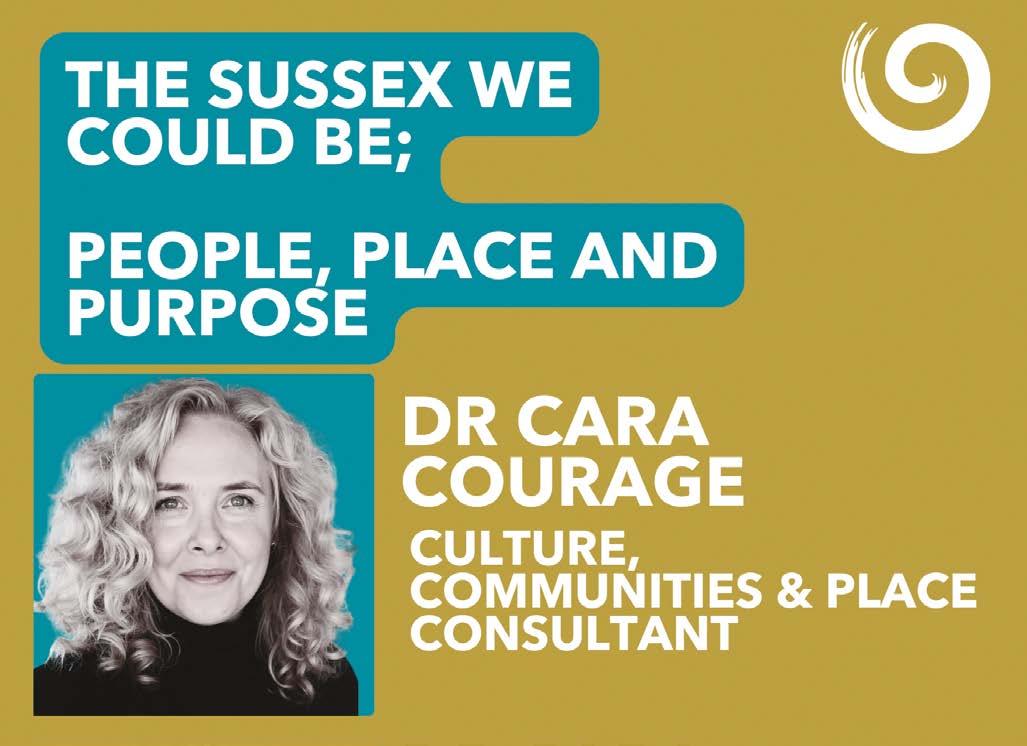
As placemaking expert Dr Cara Courage argues in her expert blog for Sussex And The City, Sussex should not be understood as a single place but as a
network of interconnected communities. Coastal towns, villages, cities and rural landscapes all have distinct identities.
Devolution therefore needs to recognise this complexity. Rather than imposing a single model of economic development, it should build connections between these different communities.
A place-based approach sees Sussex as a system of relationships: communities of place, communities of interest and communities of impact. Farmers, small businesses, creative organisations and environmental groups are all part of the same ecosystem.
In rural areas especially, economic, environmental and social issues are closely linked. Decisions in one area inevitably affect the others.
The rural test for devolution
In many ways, the rural economy will be the real test of Sussex devolution.
If a new mayoral authority focuses only on urban growth strategies, it risks overlooking the industries and landscapes that define much of the region. But if it recognises the rural economy as a site of innovation and opportunity, Sussex could become a national leader in areas such as sustainable food production and environmental technology.
The building blocks already exist. What devolution offers is the chance to connect them.



By Joel Lawton - Founder Transition Expert Founder Transitions
Last month, we explored the constant transitions founders face both the planned ones (idea to launch, solo to team, stepping back to exit) and the unplanned disruptions that blindside you (co-founder leaving, market shifts, health crises).
This month, let’s go deeper into one of the most spoken of transitions: stepping back from your business.
Not selling. Not exiting. Just removing yourself from the day-to-day operations while the business continues to thrive.
Why do founders step back?
Whether planned or forced, the reasons are rarely simple.
Sometimes the company outgrows what you’re naturally brilliant at. You built from nothing—created, innovated, took risks. But now 50 people need operational efficiency and financial discipline. Skills you never claimed to have.
It can be the realisation your body telling you what your mind won’t admit. Years of 24/7 intensity have left you exhausted. You want balance without losing equity and influence.
Deep down you come to find you just miss the work you love. Somewhere between startup and scale-up, you got pulled away from product and customers into HR issues and procedures. Stepping back could mean stepping back into what matters.
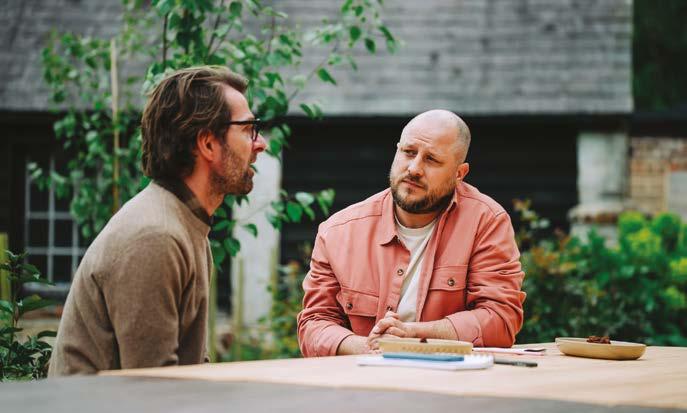
The choice isn’t always yours. Boards push for operational rigour. Investors want a “professional CEO.” The pressure builds.
One of the most common is that you admit you’ve become the bottleneck. Every decision flows through you. Growth has stalled because you’re holding on to control you should have released months ago.
Whether you’re choosing this or it’s being chosen for you, the work ahead is the same.
The 5 business must haves... These are non-negotiable, you will find support in creating these from the majority of business consultants.
1. Clear Vision & Direction – 3-5 year clarity that enables positive conflict and empowers the team.
2. Documented Systems & Processes – Knowledge from your head made
explicit through SOPs and frameworks.
3. Defined Decision Rights – Who makes which decisions at what thresholds. Stops constant upward questions.
4. Accountable Leadership Team –Clear roles with Directly Responsible Individuals and success metrics.
5. Performance Metrics & Feedback Loops – Real-time visibility without micromanagement.
Get these in place, hand off the reins, and you’re done, right? Wrong.
The secret that nobody talks about... Here’s what most business advisors won’t tell you:
The business structures are the easy part. Systems can be built in 90 days.
But if you haven’t addressed your internal architecture, the human side of stepping
back, you will become the hinder the business performance and your own position in the future of the organisation.
You’ll have perfect systems that you constantly override. A strong leadership team you don’t trust. Clear decision rights you ignore when you’re anxious.
This is where most founders get stuck. Not because they don’t know what to do, but because they haven’t done the personal reflection and work that makes stepping back possible.
The 5 founder must haves...
1. Your Identity Fusion - Your energy built this business; it’s part of your identity. Business challenges trigger physical threat responses, flooding you with cortisol and pulling you back into control mode.
The work: Separate “who you are” from “what you built.” Create identity anchors outside the business.
Ask yourself: When someone asks “what do you do?” can you answer without mentioning your business? If not, who are you beyond founder?
2. Your Attachment PatternsAttachment experiences in early life created neural patterns that show up at work. Anxious attachment means you’ll struggle to trust. Avoidant means you’ll distance too quickly.
The work: Map your attachment style. Notice when you’re triggered— micromanaging signals anxious attachment, ghosting signals avoidant.
Ask yourself: When do I step in unnecessarily? When do I disappear when things get uncomfortable? What pattern am I repeating?
3. Your Cognitive Bias - Your brain runs invisible programmes that protect your ego, not your business. Overconfidence makes you think you’re irreplaceable.
Confirmation bias makes you only see evidence you’re needed.
The work: Before decisions, ask yourself what you’re not seeing and what would prove you wrong.
Ask yourself: What am I not seeing right now? What evidence would prove that I’m wrong about this?
4. Your Nervous System Dysregulation
- When you’re chronically in fight-orflight, your strategic brain goes offline. The amygdala takes over. You make fearbased decisions and can’t access clarity.
The work: Build daily regulation practices, meditation body scans, breathwork. Recognise when you’re dysregulated, what are the triggers and masking actions.
Ask yourself: Am I making this decision from clarity or from fear? What does my body feel like right now?
5. Your Unprocessed Needs & Fears
- Your ambition often masks unmet needs for validation or worth. If being “not needed” feels like being “not enough,” you’ll unconsciously find ways to stay essential.
The work: Get honest. Journal on what it would mean if the business ran perfectly without you.
Ask yourself: What would it mean if the business ran perfectly without me? What am I really afraid of losing?
When to start this work?
The founders who transition successfully don’t wait until the the process is happening. While business systems, processes, decision matrics can be put in place in months, the human side, well that is a different story.
Business strategy without internal work can be considered expensive procrastination.
Rewiring decades-old neural pathways? That takes time. Unlearning childhood attachment patterns? That takes time. Building a regulated nervous system after years in fight-or-flight? That takes time.
The most successful founders? They start 12-18 months before they want to step back.
They do this work while the business is thriving. While they still have energy. While they can think clearly.
If you’re reading this and thinking “I’ll need to step back someday” that’s your signal.
Start now.
‘Your Away Day’ - the work begins here...
An invitation to all founders out there, you are the humans of the business world.
Lay the foundations of your next transition at our unique ‘Your Away Day’ experience in the glorious Sussex countryside, join a community of founders investing in their main asset, themselves.
Our first edition of 2026 saw founders navigating critical transitions: exiting and planning what’s next, rediscovering passion, exploring new ventures, discovering commercial angles, building sales capacity, aligning with life’s mission.
This work doesn’t get done with clarity when you’re stressed, rushed, or hustling.
Next Your Away Day: Monday 19th May 2025
Learn more about this unique and impactful experience: www.inyourcorner.co/your-away-day
The human work is hard. But it’s the only work that actually sets you free.
www.inyourcorner.co

Exhibition Addressing Brotherhood, Creativity and Male Mental Health.
As suicide remains the leading cause of death for men under 50, Brighton artist uses Fringe platform to spark urgent conversation.
Mental Health
Brighton-born artist and Royal College of Art alumnus Simon David Eden MA (Dist.) returns to the city this May as part of Brighton Fringe 2026 with his first solo exhibition in nearly two decades, Shadow Light: Songs My Brother Taught Me.
More than an art exhibition, Shadow Light opens an important cultural conversation about men’s mental health, brotherhood, grief, and the
urgent need for connection in the face of rising male suicide rates in the UK.
According to the O0ice for National Statistics, suicide remains the leading cause of death for men under 50 in the UK, with men accounting for around three quarters of all suicide deaths. Despite growing awareness, stigma and isolation continue to prevent many men from seeking support.
Eden’s exhibition explores themes of memory, masculinity, vulnerability and resilience through abstract fine art, autofiction and visual storytelling. The work reflects on the formative influence of brotherhood, both literal and symbolic, and the emotional
inheritance passed between men.
Born and raised in Moulsecoomb, Eden began creating comics at just ten years old before progressing into surrealist poetry, songwriting and performance art. In 1979, he collaborated with guitarist Patrick Coghlan on the cult record PS: Surrealism, which attracted the attention of Royal College of Art professor Richard Ross and British surrealism pioneer Roland Penrose. This led to an invitation to attend the first UK screening of Luis Buñuel and Salvador Dalí’s once-banned cinematic masterpiece L’Age d’Or at the ICA in 1980.
Eden went on to study at the Royal College of Art film school on a Goldcrest
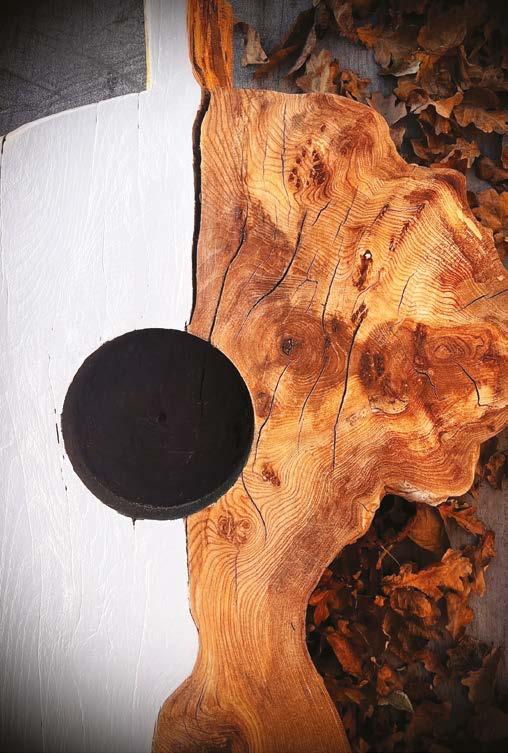
Films scholarship, producing several 16mm short films including La Boule, which won a BAFTA. Encouraged by legendary director Fred Zinnemann, he pursued a career in screenwriting, later collaborating with J.G. Ballard and writing award-winning television drama and feature films commissioned by Warner Bros. and Paramount Pictures.
A true creative polymath, Eden’s work spans fine art, theatre, literature, film and music.
He has also dedicated significant time to mentoring young creatives from underrepresented communities through Creative Access, teaching playwrighting at Chichester Festival Theatre, and delivering free creative writing workshops to Brighton’s rough sleeper community through Word on the Street.

With Shadow Light, Eden reflects on how the arts can provide men with a vital language for expression, one that goes beyond traditional expectations of stoicism. Creative practice, whether visual art, writing, music or performance, can o`er men space to process emotion, connect with others, and build supportive communities.
Simon David Eden comments: “Art allows us to confront what we struggle to articulate. Creativity can be a form of survival, a voice to breach the silence, a way of making meaning from loss, and a powerful tool to foster connection by shining a light into the darkest shadows.”
As part of Brighton Fringe, England’s largest open-access arts festival, the exhibition aims not only to showcase powerful new work, but also to encourage dialogue about men supporting one
another and seeking help from charities and peer networks when needed.
Shadow Light: Songs My Brother Taught Me marks Eden’s first solo exhibition since 2006. His abstract fine art is held in private collections worldwide, with previous exhibitions including Square One Gallery (London), Cloisters (London), Art International (Bahamas), and the Tsinghua Academy of Arts (Beijing).
Event Details & Tickets
Shadow Light: Songs My Brother Taught Me will take place this May as part of Brighton Fringe. Members of the public are encouraged to attend, experience the work first-hand, and join the wider conversation about men’s mental health, creativity and connection.
Free tickets and full event details are available via Eventbrite here.

On Tuesday 10th March something quite special happened at Projects in Brighton.

Mental Health
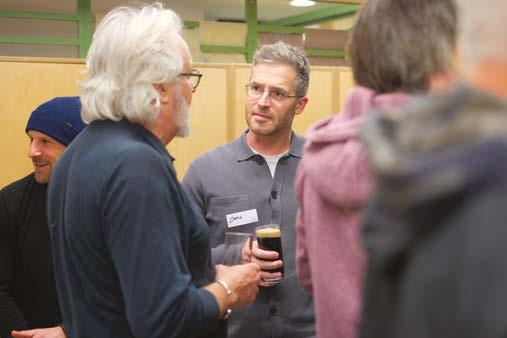
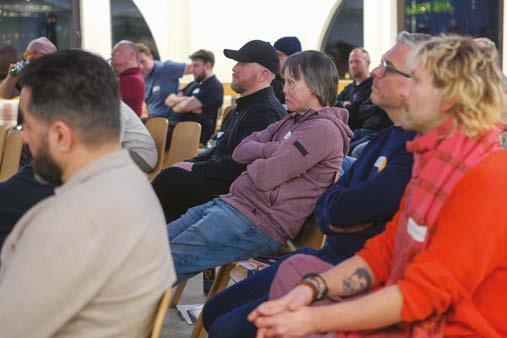
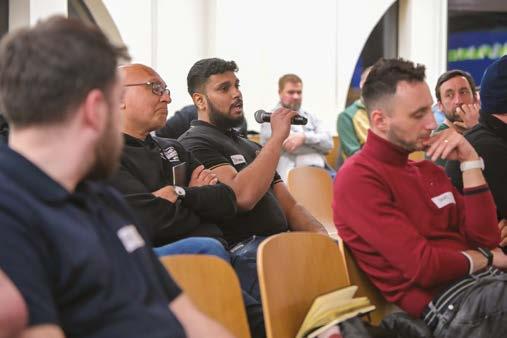
More than fifty men gathered in a room to talk about mental health.
Just pause on that for a moment.
Fifty men.
Openly talking about how they feel, the pressures they carry and the importance of connection.
One attendee later reflected online:
“Imagine this a generation ago – fifty men in a room talking about mental health.”
And he’s right.
Not that long ago, a room like that would
have been almost unthinkable.
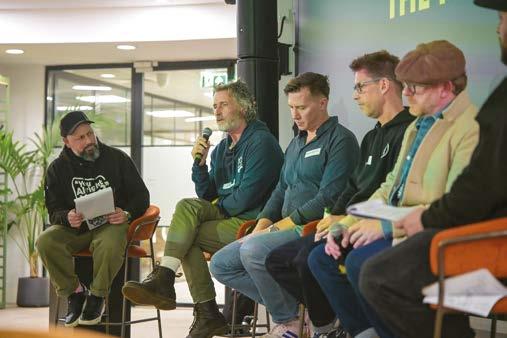
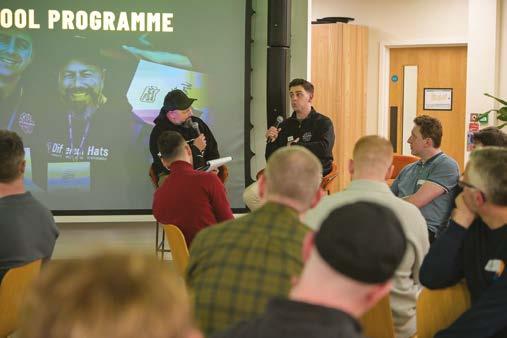
But that’s exactly what happened at the latest You Alright Mate? Sussex Gathering, hosted at Projects in Brighton.
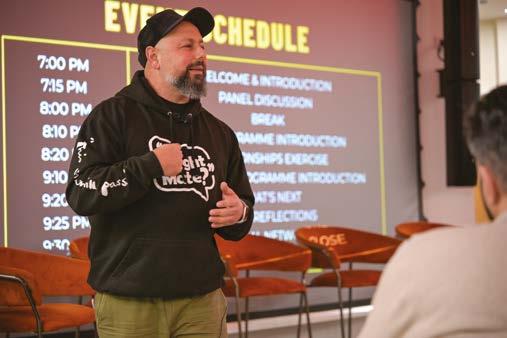
The purpose of the evening was simple: to bring men together, open up honest conversations and share practical tools that help people build stronger connections, better wellbeing and a healthier definition of success.
The event also brought together several local organisations doing brilliant work to support men across Sussex.
The panel included:
• Paul Jukes, Outta Puff Daddy’s
• Dan Flanagan, Dad La Soul
• Seb Royle, Ice Breakers
• David Eakins, Talk Club
Each of them shared openly and vulnerably about their own experiences and the work they’re doing in their respective communities.
What struck me most during the conversation was just how many different paths have led men into this space.
Some through personal struggle. Some through loss.
Some through recognising that the traditional narratives around masculinity simply aren’t serving men, or the people around them, particularly well.
Yet despite their different journeys, there was a shared theme running through every story.
Connection matters.
Many of the men in the room had reached a point in life where they had started to question the foundations they had built their lives on.
Careers.
Success. Expectations.
The quiet pressure to always appear strong and capable.
For some, that realisation arrives later in life.
For others, adversity forces that reflection much earlier.
But eventually many people reach a moment where they begin to ask deeper questions about who they are, what really matters and how they want to show up in the world.
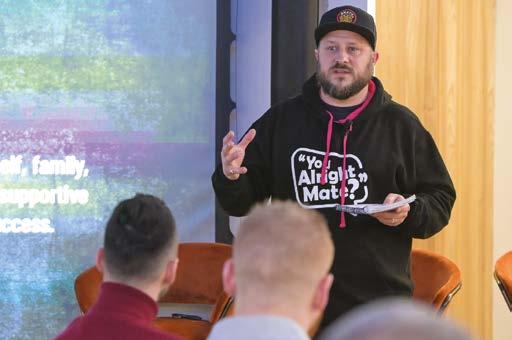
The aim of You Alright Mate? is to create spaces where those conversations can happen earlier, more openly and without judgement.
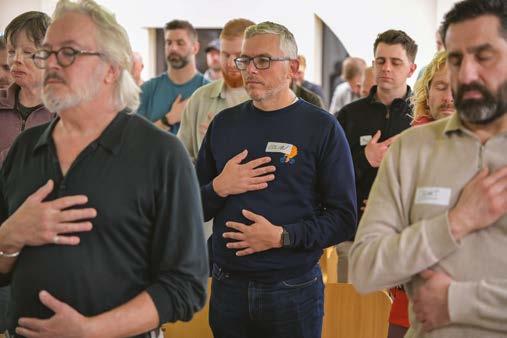
During the evening we shared a small exercise taken from the You Alright Mate? Conversation Starter experience, which is built around the Five Pillars of Success framework.
On this occasion we focused on one pillar in particular: Relationships.
Attendees were invited to pause and reflect on a simple question.
Who are the people in your circle of trust?
And perhaps more importantly: Where do they sit in that circle?
The conversations that followed were powerful.
Men speaking honestly about friendships, family, the people they rely on and, in some cases, the realisation that they may not have nurtured those relationships as much as they would like.
One of the most interesting reflections from the evening came from an attendee who observed that many of the men present were middle-aged or older, with only a scattering of younger faces in the room.
That observation raised an important question.
What happens during the years between childhood and adulthood?
Those formative years in the late teens and early twenties when identity is still forming, life accelerates and many people are quietly trying to figure out who they are.
It’s a period that can shake people.
But it can also be a period that quietly builds resilience and self-awareness if the right support systems are in place.
This is one of the reasons we have recently started delivering the You Alright Mate? schools programme in partnership with local organisations.
The aim is simple.
To help young people develop emotional literacy, self-awareness and healthier definitions of success earlier in life, before many of the pressures and challenges they will face fully take hold.
Because prevention is always more powerful than cure.
But perhaps the most important lesson from Tuesday evening was something much simpler.
When people are given a safe space to speak honestly, something shifts.
Walls come down. Masks slip.
And the conversations become more human.
As one attendee reflected afterwards: “When we understand ourselves better, the space between us and other people becomes lighter, more honest and more human.”
That sentiment captures the heart of what this movement is about.
You Alright Mate? isn’t just about men.
And it isn’t only about mental health.
It’s about creating spaces where people can reconnect with themselves and with each other.
Because when that happens, the ripple effect extends far beyond the room.
Families feel it. Workplaces feel it. Communities feel it.
And slowly, the narrative around what success really looks like begins to shift. And perhaps that’s where the real change begins.
By
Sam Thomas Founder You Alright Mate? www.different-hats.co.uk
Be the first to hear about upcoming YAM experiences and programmes. Stay connected with the You Alright Mate? movement.


Chancellor Rachel Reeves previously committed to limiting tax changes to one major fiscal event each year following her first Budget in October 2024. The Spring Statement on 3 March kept to that promise, with no new tax announcements.
Instead, it focused on the latest economic outlook from the Office for Budget Responsibility (OBR). The OBR has slightly reduced its forecast for UK economic growth in 2026 from 1.4% to 1.1%, although stronger growth is expected thereafter. Government borrowing is forecast to fall, but risks
remain, including geopolitical instability and rising fuel prices.
Despite the lack of new announcements, a number of previously confirmed tax changes will take effect over the coming years which businesses should begin preparing for now.
While headline tax rates remain unchanged, the continued freeze on income tax bands and allowances means many taxpayers will pay more as incomes rise. This “fiscal drag” is expected to generate significant additional revenue for the government. Several specific tax changes will take
effect from April 2026. Dividend tax rates will increase, with the basic rate rising from 8.75% to 10.75% and the higher rate from 33.75% to 35.75%. Capital Gains Tax reliefs are also tightening, with the rate on gains qualifying for Business Asset Disposal Relief increasing to 18%, while the annual CGT exemption remains at £3,000.
Inheritance Tax reforms will also come into force. From April 2026, 100% relief for agricultural and business property will be limited to £2.5 million of qualifying assets, with 50% relief above that threshold. In addition, shares listed on the Alternative Investment Market and similar markets will qualify for only 50% relief.
The government is also continuing its move toward digital tax administration. From April 2026, Making Tax Digital for Income Tax will become mandatory for self-employed individuals and landlords with annual gross income above £50,000, requiring digital records and quarterly updates to HMRC.
Business taxation and investment Businesses will see several changes affecting investment and compliance. From April 2026, the main rate writingdown allowance for capital allowances will fall from 18% to 14%, slowing the pace at which tax relief can be claimed where upfront allowances are not available. The £1 million Annual Investment Allowance remains unchanged, allowing immediate relief on qualifying plant and machinery.
Support for investment in innovative companies is also expanding. Limits within the Enterprise Investment Scheme (EIS) and Venture Capital Trust (VCT) regimes will increase, enabling larger companies to qualify and raise more investment. However, income tax relief for individuals investing in VCTs will reduce from 30% to 20%.
Corporation tax rates remain unchanged at 25% for larger companies and 19% for those with smaller profits. Penalties for late filing of corporation tax returns will double from April 2026.
Business rates and employment costs
The next business rates revaluation will take effect from April 2026, based on property rental values as at April 2024. A new system of five multipliers based on property value and sector will be introduced. Transitional relief will cap annual increases, helping businesses manage significant rises in rates bills following revaluation.
Employment costs remain another key
consideration. Employer National Insurance increases introduced in April 2025 continue to affect payroll costs, and the threshold above which employer NICs become payable is currently frozen until 2031.
Meanwhile, the National Living Wage will increase again from April 2026, rising to £12.71 per hour for workers aged 21 and over.
From April 2027, tax rates on savings and rental income will increase by two percentage points, taking the basic, higher and additional rates to 22%, 42% and 47% respectively. At the same time, unused pension funds and certain pension death benefits will be brought within the scope of inheritance tax, fundamentally changing long-standing estate planning strategies.

including a requirement for VAT invoices to be issued electronically by April 2029.
With many of these measures taking effect over the next two to three years, early planning and professional advice will be essential to ensure that businesses and individuals remain well prepared for the evolving tax environment.
Changes to Individual Savings Accounts (ISAs) are also planned from April 2027, with a new restriction limiting the amount that can be invested in cash ISAs to £12,000 of the £20,000 annual allowance for most investors.
Further measures are planned later in the decade, including a new mileagebased duty for electric vehicles from April 2028, a High Value Council Tax Surcharge on residential properties worth over £2 million from the same year, and restrictions on pension contributions made through salary sacrifice arrangements from April 2029.
The government is also planning further digitalisation of the tax system,
If you would like more detailed one-toone advice on any of the above topics, you can get in touch with a member of our award-winning* tax team by calling 01903 234094 or visit www.carpenterbox.com
*Carpenter Box were named national ‘Tax Team of the Year’ at the 2024 Accounting Excellence Awards.
Information correct as of 4 March 2026.

With tax thresholds frozen and the changes from recent Budgets, many people are seeing their tax bills likely to rise each year. Even if your finances seem to be stagnating, you may still be paying more tax.
That is why it is so important to make the most of your pension and ISA allowances. When used properly, these are still two of the best ways to protect your money from extra tax and help you keep more of what you earn.
Why are more people paying higher tax?
As each year passes, HMRC figures show that hundreds of thousands more people are becoming higher-rate taxpayers compared to a few years ago. This is not because people are getting
big pay rises. Instead, it is happening because wages are going up to match inflation, but income tax thresholds are staying the same.
The hidden impact on savings
This is why pensions and ISAs are so useful. Both let your money grow without being reduced by income tax Finance
With the income tax threshold freeze now lasting until 2031, more people will move into higher tax bands as their salaries rise. This gradual tax increase, called fiscal drag, has a larger effect than many expect. Moving into a higher tax band does not just change the tax on your salary; it also lowers the tax-free allowances on your savings and investments. That is why careful planning matters more than ever.
When you become a higher-rate taxpayer, your personal savings allowance drops from £1,000 to £500. If you move into the additional rate band, you lose this allowance completely. Starting in April 2027, the tax on savings interest outside tax-efficient accounts will also go up, making it more expensive in the long run to keep cash or investments without protection.

or capital gains tax each year. Making full use of these allowances can really improve your tax situation, especially as the tax year ends.
People often see pensions just as a way to save for retirement, but they are also a great tool for managing income tax now. When you pay into a personal pension, you get tax relief at your highest tax rate. For higher or additional rate taxpayers, this can make saving much more affordable.
When you pay into a personal pension, you automatically get basic-rate tax relief. If you are a higher or additional rate taxpayer, you can claim extra relief through your tax return, which lowers your total tax bill. Pension contributions also reduce your adjusted net income. This can help you keep important allowances, like the personal allowance or tax-free childcare, which you lose if your income goes over certain limits.
The annual pension allowance is quite generous at £60,000 for most people, though it can be reduced for higher earners. Often, you can also carry forward unused allowances from the past three tax years. This means you might be able to make bigger contributions after a good year.
Pensions are meant for long-term saving, and you cannot access them until at least age 55, which will rise to 57 from April 2028. This rule can actually help by encouraging steady saving and letting your investments grow without tax. When you take money out, you can usually withdraw up to 25% tax free, and the rest is taxed as income.
ISAs work well alongside pensions because they are tax-efficient and much more flexible. The annual ISA allowance

is currently £20,000 for everyone, and if you do not use it by the end of the tax year, you lose it. That is why making regular contributions is important.
The main benefit of ISAs is how simple they are. You do not pay income tax on interest, no capital gains tax on growth, and no tax when you take money out. You can access your money whenever you need it, so ISAs are great for medium-term goals or as a flexible backup to your pension savings.
Do not forget about Junior ISAs. Each child can have up to £9,000 saved for them each year, tax free. This is a great way to build long-term savings for children or grandchildren. For families who use these allowances fully, the total tax-free savings can really add up.
For most people, it is not about choosing just one. Using both pensions and ISAs together often works best. Pensions are usually the most taxefficient for long-term saving, especially for higher earners. ISAs offer flexibility and easy access, making them good for shorter-term needs or as part of a balanced plan.
Having both pensions and ISAs lets you spread your money across different types of accounts, so you have more control over when and how you take income later on. This flexibility is especially helpful in retirement, when managing your tax is as important as earning income.
Tax rules are complicated and always changing. What is right for one person might not work for someone else. A financial adviser can help you understand your options and make sure you use pensions and ISAs in the best way for your needs.
www.southoverwealth.co.uk
Southover Wealth is an Appointed Representative of and represents only St. James’s Place Wealth Management plc (which is authorised and regulated by the Financial Conduct Authority) for the purpose of advising solely on the Group’s wealth management products and services, more details of which are set out on the Group’s website www.sjp.co.uk/products
The ‘St. James’s Place Partnership’ and the titles ‘Partner’ and ‘Partner Practice’ are marketing terms used to describe St. James’s Place representatives.

Rising labour costs and rents are placing real pressure on businesses across Sussex.
According to a recent Flagstone Poll, 53% of financial advisers believe labour costs will be the biggest factor influencing how SMEs manage their cash in 2026. A British Chamber of Commerce study supports this, with 73% of SME respondents citing labour costs as their greatest pressure - and even modest wage increases can directly impact monthly liquidity.
For businesses feeling the squeeze, speaking to a commercial finance broker could make a real difference.
A business may benefit from speaking to a broker if it is:
• Experiencing cash flow gaps due to rising wage bills or rent
• Struggling to meet operating costs between payment cycles
• Needing to invest in equipment, vehicles or technology
• Waiting on outstanding invoices to free up funds
• Looking to review existing borrowing arrangements
Many business owners associate commercial brokers with mortgages or development finance. In reality, the range of solutions is far broader - and often more immediately relevant to everyday business needs.
Seico Group’s commercial finance team can help businesses explore options including:

• Cash flow and liquidity fundingshort-term facilities designed to bridge gaps caused by rising costs
• Revolving credit facilities - flexible access to funds that can be drawn on and repaid as needed
• Asset finance - spreading the cost of essential equipment, machinery or vehicles
• Invoice discounting - unlocking cash tied up in unpaid invoices for immediate access to working capital
Whole-of-Market Access - and the Experience to Use It
“Working across the full spectrum of lenders means we know what is available, which lenders are most competitive, and what criteria they are applying - market intelligence that most business owners simply do not have.”
Andrew Page, Head of Commercial Finance, Seico Group
This is particularly relevant now
that fewer SMEs have a dedicated bank manager to turn to. Seico Group’s brokers bring many years of commercial finance experience, offering impartial guidance tailored to each business’s circumstances. Whether a retailer, hospitality business or professional services firm, the team understands the local landscape and can identify the right solution - quickly and efficiently.
For businesses that do not want to wait until cash flow becomes a crisis, Seico Group’s commercial finance specialists are on hand to help find the right borrowing solution.
Contact Commercial Finance Manager, Andrew Page to start the conversation:
Andrew@seicogroup.com or 01273 778888
** Flagstone Poll, 2025. British Chamber of Commerce Business Survey, 2025.

The founder of Acumen Law did not just break the glass ceiling; she dismantled the entire building.
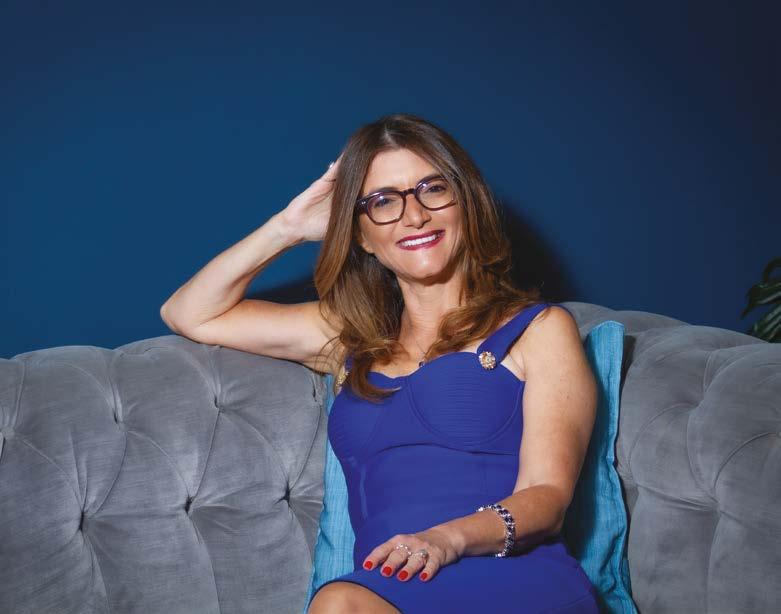
International Women’s Day is a celebration of resilience, but few stories embody that spirit quite like Penina Shepherd’s. The founder of Acumen Law did not just break the glass ceiling; she dismantled the entire building and rebuilt it with a focus on transparency, innovation, and happiness. Today, she is an awardwinning entrepreneur, author, a trustee of Rockinghorse Children’s Charity and a mother of three. But to understand the magnitude of her success, you have to look back to the moment it nearly never happened.
Cover Story
The Impossible Foundation
Most entrepreneurs wait for a green light
from the economy before they launch. In September 2007, the light was a flashing red. The global economy was sliding into the worst recession.
“I was with a nine-year-old and a sixyear-old, having just returned from maternity leave after the birth of my third child. My family depended on my income and, as if that weren’t enough, the worst recession had just hit the economy and I did not have a single client to my name.” Then, Penina recalls, came the most devastating news of all “I was diagnosed with a rare and aggressive form of cancer and was told I was unlikely to survive.”
What followed would have broken most people.
“I was faced with a choice: retreat or revolutionise. I chose the latter”
What Penina lacked in budget, she clearly made up for with an abundance of passion for making a difference.
While the birth of the firm was unconventional, it was built on a formidable professional foundation. Penina has been in the legal profession since 1996, having previously worked for top 100 UK Law Firms as both a Partner and Head of Department.
Penina is a Commercial lawyer advising on commercial contracts, company documentation, Intellectual Property and Data and Compliance matters. She

is also a recognised regional expert on Shares, Incentives and Benefits Schemes, advising on both HMRC Approved and Unapproved schemes. Her commitment to the community extends beyond the office; she served as the honorary solicitor and sits on the board of several local nonprofit organisations, most recently Penina joined as a trustee of Rockinghorse Children’s Charity.
“I was with a nine-year-old and a six-year-old, having just returned from maternity leave after the birth of my third child. My family depended on my income and, as if that weren’t enough, the worst recession had just hit the economy, and I did not have a single client to my name.” Then, Penina recalls, came the most devastating news of all “I was diagnosed with a rare and aggressive form of cancer and was told I was unlikely to survive.”
The legal industry is historically
famous for its ivory tower mentality, but Penina held a vision for a firm that was democratically run, innovative, and unpretentious. Moving away from traditional and rigid structures; Acumen focus on providing top notch support from a team of lawyers who speak the language of business and private individuals.
This approach proved remarkably successful, with the Financial Times listing Acumen Law as a top 50 groundbreaking law firm in the UK and Europe.
True to her entrepreneurial spirit, in 2017 Penina expanded this culture into the private client sector, specialising in Family Law, Wills, Probate and Residential Conveyancing. This unification ensures that whether a client is seeking business advice or personal legal support, they receive the same experience. The firm is there to support themselves, their family or their business.
Her journey and philosophy are captured in her book, The Freedom Revolution. In its pages, she shares the tools to help others escape the rat race, overcome fear, and be truly remarkable.
“The book is about finding the courage to be free,” she explains. Her transition from a hospital bed to the head of a groundbreaking law firm is proof that when you love what you do, you become unstoppable.
Behind the accolades is a woman driven by a simple set of values. When asked what she loves, Penina’s list is clear: “Doing Happy, my family, the sun, and changing lives through meaningful experiences.” At the heart of it all is Acumen, the living proof of her vision.

As we look toward the future, Penina Shepherd remains a beacon of what is possible when you refuse to accept the status quo. We continue to lead the way, not by following the already paved way, but by writing our own!
One of Penina’s strongest advice to anyone leading in business: “True leadership requires the courage to silence the noise, because feedback is often just a reflection of someone else’s fears, not your potential. Listen selectively and trust your vision fully.”
From placement students to partners: Ben Rose and James Sheath rise through the ranks at Acumen Law.
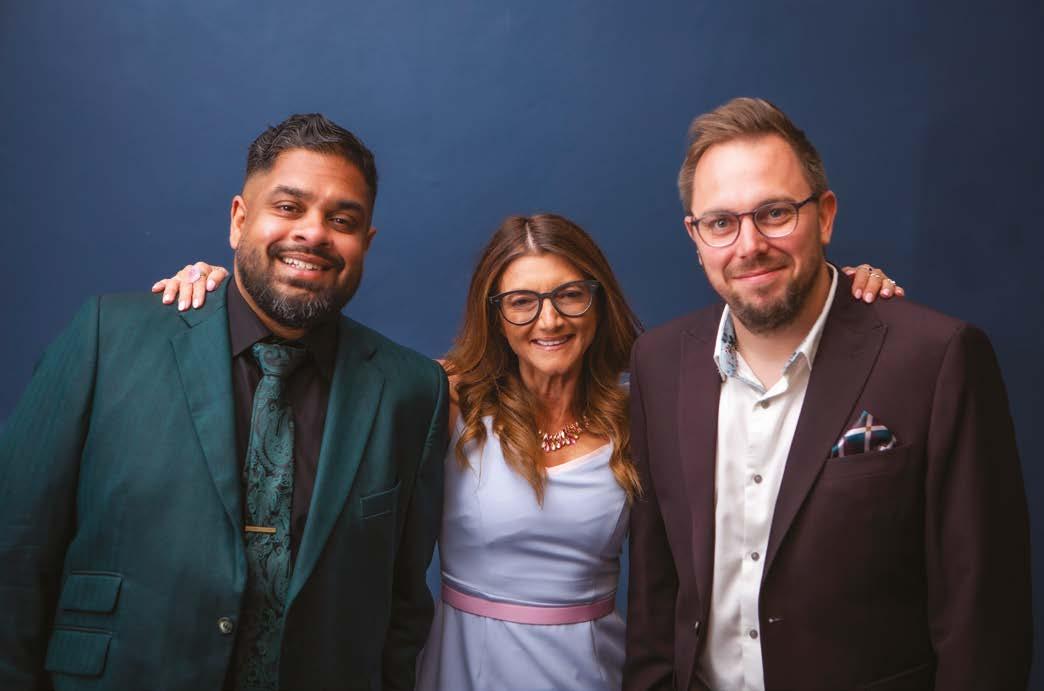
A career journey that reflects dedication, growth and a commitment to developing talent from within.
For this award winning and dynamic firm, investment starts with the people who walk through the door every morning. By providing a space where everyone is given space to express their views, without the constraints of traditional hierarchy. The firm provides the freedom and authority for individuals to innovate, create, and truly leave their mark and, in doing so, they have created a company of a different kind.
Everything about Acumen is designed to stand out. Their iconic zebra
branding is a deliberate choice that marks them as “lawyers of a different kind.” As Penina Shepherd, the firm’s Founder & CEO explains: “The zebra is a head turner among the brown and grey of the savannah, and we like to think we stand out in the legal world in much the same way.”
The firm has moved away from the rigid, stuffy structures of the past to create a democratically run environment. At Acumen, culture comes before hierarchy. “We don’t do corporate announcements,” Penina says. “Everyone sits around the table, whether you are a placement student or a senior lawyer. Everyone’s part of the conversation.”
“People want to grow, but they also want to belong,” Alvin Ittoo notes. “We create space for both.” When a business gives its people the keys to the building, they not only help strengthen the foundation, but they also help to & build the next floor up.
The greatest proof of this “people first” philosophy is the opportunity for individuals to grow within the firm. Two of the firm’s Partners, Daniel Richards and Alvin Ittoo, began their journeys as placement university student and paralegal respectively and, through their talent and the firm’s commitment to their

growth, they now stand as equity partners.
Following in their footsteps are Ben Rose and James Sheath.
Like those before them, Ben and James started as placement students. In a move that celebrates this commitment to internal talent, Acumen is honoured to publicly announce for the first time that Ben and James are set to become Acumen Law Partners this April 2026.
“People want to grow, but they also want to belong,” Alvin Ittoo notes. “We create space for both.” When a business gives its people the keys to the building, they not only help strengthen the foundation, but they also help to & build the next floor up.
“Let me be clear” Penina points out “none of our achievements would have been possible without these great people.”
“I genuinely believe” Daniel Richards adds, “that just like a rocket shedding its boosters as it rises, not everyone is built for your next altitude. But those who are, will be the ones you reach the next level with.”
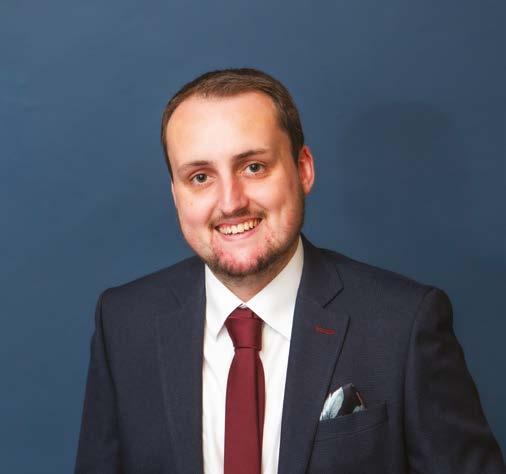
New Partners’ outlook to the future
In 2007 Acumen Law broke the mould in the legal industry. In 2026, they are shaping its future!
Ben and James bring a fresh generational perspective alongside advanced AI capabilities, enabling a delivery of legal advice that is more precise, efficient and proactive.
Together, they are launching the next chapter in legal innovation, working handin-hand with businesses and their AI.
With fresh ideas, deep experience and intelligent technology, Acumen are building a law firm designed for the challenges of modern business.
By investing in the team, the firm is inherently investing in its clients. A team that is happy, empowered, and free from corporate red tape is a team that provides truly personal and approachable support. They speak the language of business and handle personal legal matters with the same innovative spirit. At Acumen you deal directly with your lawyer, on a personal level.
This approachable nature extends to
the digital world. Many know Penina as Little Miss Legal on TikTok, where she breaks down complex law myths and offers one minute wisdom. “You’re not trying to teach everything in 60 seconds,” she explains. “But you are giving helicopter view for complex legal matters as well as showing people you’re here to help.” This ensures the firm remains as relevant on a smartphone screen as it is in a commercial negotiation.
The Acumen model is a blueprint for the future of the legal profession. In an industry that often prioritises process over personhood, Acumen has proven that the heart of any business is the human spirit. By building a firm on a foundation of trust, happiness, and authentic connection, they have created more than just a legal practice. They created a community where everyone has a seat at the table and a stake in the future and everyone is very excited for the future with these two new partners on board!

When 300 decision makers gather in the same room, you know it’s the right room to be in!
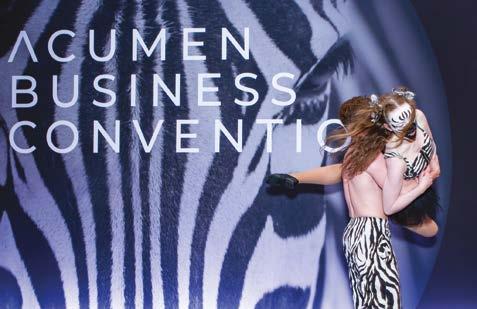
Join the local business community this May for a day of ‘Acumen magic’, featuring top inspirational speakers, live entertainment, networking and opportunities to make meaningful business connections.
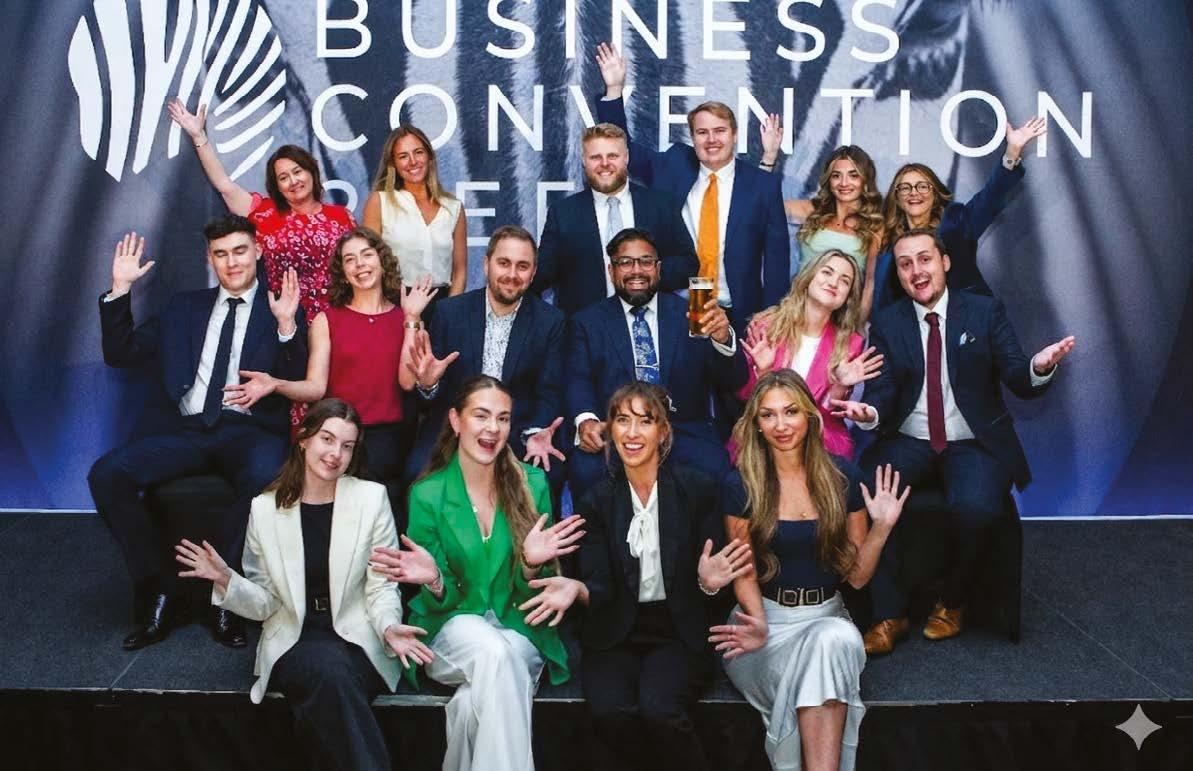
For many, a business conference is a predictable affair of death by PowerPoint and rehearsed pitches. But for those in the Sussex business community, the Acumen Business Convention is something else entirely.
Now in its sixteenth year, this landmark event has become a cornerstone of the annual calendar, bringing together up to 300 local CEOs, founders and decision makers for a day that prioritises meaningful connection over corporate monotony.
A Business Convention Where Acumen Magic Comes to Life.
The Convention is a testament to the firm’s spirit where every detail is meticulously planned by the team themselves, infused with their signature sense of fun and originality.
“The Convention is very close to my heart,” Penina points out. “It’s a huge undertaking, organised totally in house and it supports a different local charity every year.”
This year, they are proud to support The Starr Trust. This incredible charity helps young people in the local area to fulfil their potential by providing the financial support and mentoring they need to overcome hurdles and achieve their goals.
The day is designed to break the mould. It is about getting together to enjoy great entertainment and inspiration without being tethered to a single, rigid theme. From a lovely sit-down lunch to live entertainment and some surprises, the event is designed to allow the best collaborations to happen naturally.
“Every year, guests say they met their best client or supplier at the convention, or new collaborations were made.” Penina is observing “This year will be no exception! I am sure of that!”
The 2026 line up brings a wealth of diverse wisdom to The Grand.
Heading the stage is Nick Hewer, who will reflect on forty rewarding years in business. From the dawn of the computer age to a decade as the trusted aide on The Apprentice, Nick shares the anecdotes that defined a generation of commercial success.
Joining him is Mike Turner, Co-founder of Bird and Blend Tea. Mike will share the honest, unvarnished story of building a thriving retail and e commerce empire from a spare bedroom to thirty stores across the UK. His journey is a
masterclass in building a fiercely loyal community and navigating the pivotal moments that shape a national brand.
Perhaps the most profound story of the day comes from Marcos Jarvis. Faced with an incurable cancer diagnosis and told he had just 91 days to live, Marcos refused to accept the prognosis. With only a 1% chance of survival, he transformed his mindset and approach to health. Now five years cancer free and an ultra-athlete, Marcos stands as living proof that resilience can rewrite even the bleakest of stories.
The stage will also feature prominent voices from the local business community, including Matt Turner MBE (Founder of Creative Pod), Rob Starr MBE (Founder of the Starr Trust and SEICO Mortgages and Insurance), and Mike Lawrence (Founder of global WealthMap), each bringing insight, leadership and real-world experience from our thriving business community.
This year promises to be the most ambitious yet. It is an opportunity for the business community to step out of the daily grind and into a space defined by “Acumen magic.” The revolution that Penina Shepherd started in 2007 has grown into a community that celebrates the bold, the innovative, and the authentic.
The Convention is simply the stage where that community comes to life.
Date: 6 May 2026
Time: 10:30am-5:30pm followed up by networking
Venue: The Grand, Brighton Secure your ticket here: acumenbusinessconvention.co.uk
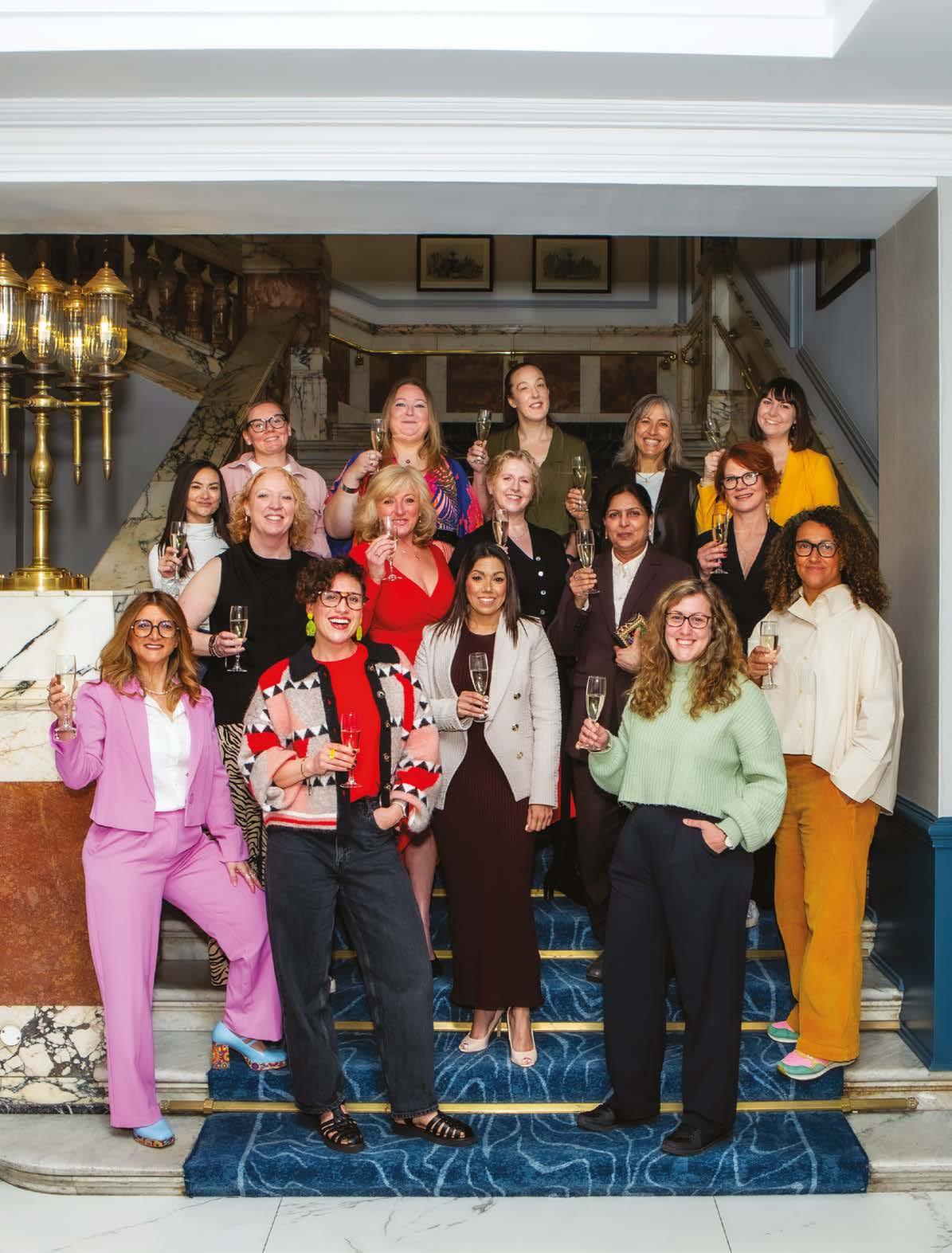
CELEBRATING SUSSEX WOMEN AND PROGRESS
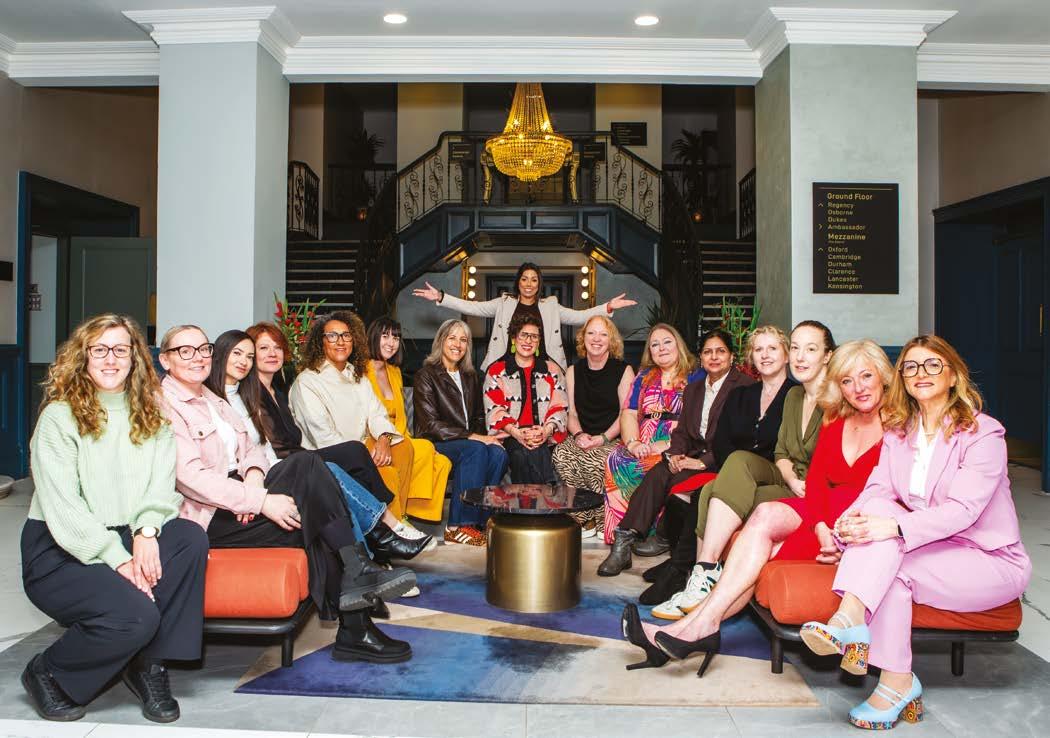
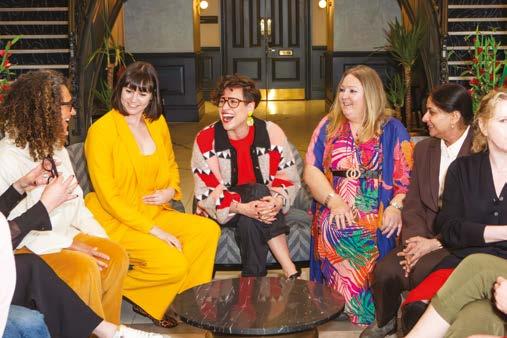
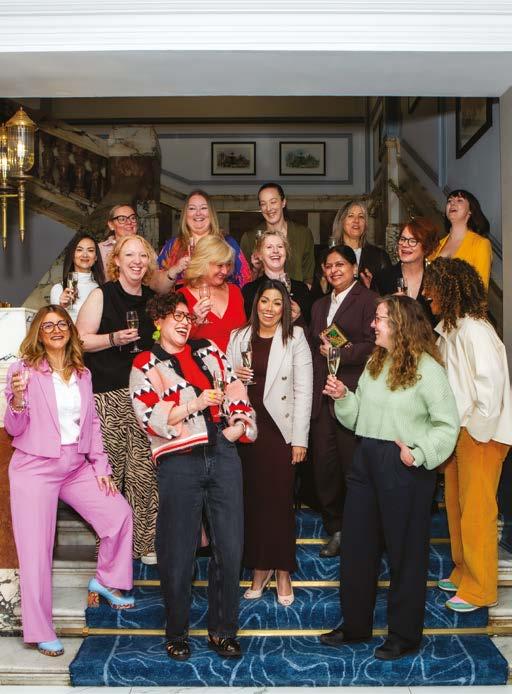
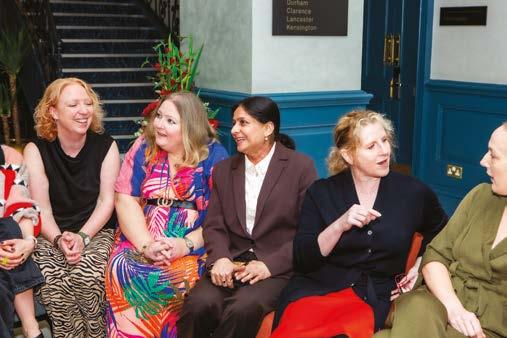
International Women’s Day is more than a date in the calendar; it is a powerful moment to recognise the achievements, resilience, and impact of women across every part of society. Observed each year on March 8, it serves as both a celebration of progress and a reminder of the work that still lay ahead in achieving true gender equality. Within the business world, International Women’s Day is particularly significant, as it shines a light on the incredible contributions women make as leaders, innovators, creators, and entrepreneurs.
Across industries, women continue to break barriers, challenge expectations,
and redefine what leadership looks like. Their ideas, determination, and perspectives strengthen organisations and drive meaningful progress. From founding start-ups to leading global companies, female entrepreneurs shape markets, built communities, and inspire future generations to believe in what is possible. Their journeys are often marked by resilience, creativity, and the courage to pursue opportunities despite obstacles.
Equally important is the spirit of entrepreneurship that many women bring to organisations and industries around the world. Female entrepreneurs are known for their ability to spot opportunities, solve problems creatively, and build businesses that deliver real
value. Their leadership encourages collaboration, fresh thinking and a strong sense of purpose. By recognising and supporting women in business, organisations help create environments where talent can thrive and where diverse perspectives lead to better outcomes for everyone.
International Women’s Day also reminded us of the importance of continuing to support and empower women in the workplace. Celebrating success is essential, but so is committing to actions that ensure equal opportunities, encourage leadership development and create pathways for the next generation of female entrepreneurs.

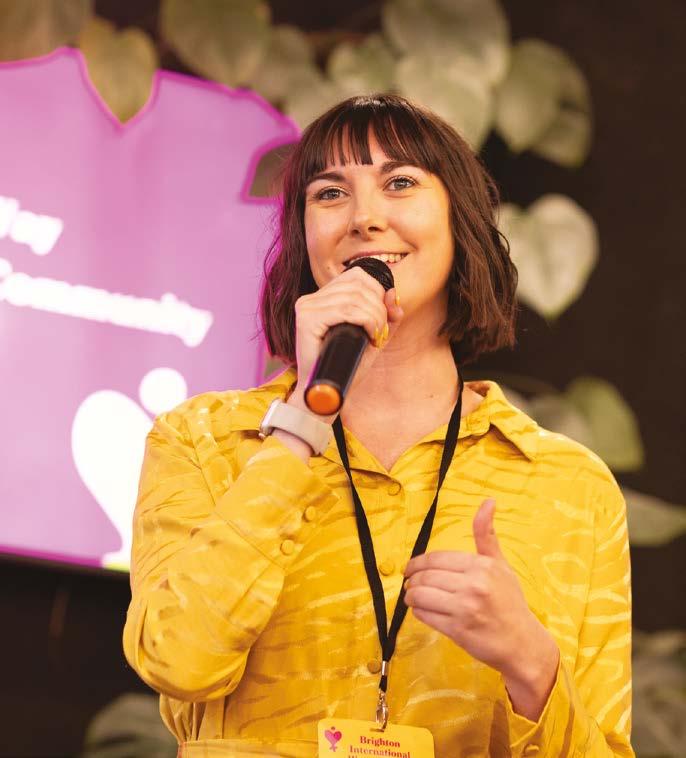
Ten years ago, I made a decision that changed my life and the lives of thousands of people across the country.
I decided to host a coffee meet up for women living in Brighton who were looking for friends, housemates, travel companions and local guides. All the many different types of relationships that make a city feel like home.
IWD Special
I moved to Brighton from Milton Keynes at 22, having spent much of my life wishing to be a Brighton Girl. I was swept up in the romance of living in a seaside city abundant with independent shops, writers, poets, artists and musicians on every street corner.
Yet, when I moved here – journalism degree in one hand and piano in the other – that sense of “home” didn’t come.
The seed for that life-changing decision was planted in October 2015 when I created an online magazine called Brighton Girl. It was inspired by a walk along the beach where I saw a girl who looked like me and wondered whether she was struggling to feel at home too.
I went home that night and built a wordpress site on my bedroom floor, reaching out to local bloggers to help write content. It was a great distraction, but something was missing.
The decision to create that fateful coffee meet up came when I realised I hadn’t met any readers (or, rather, potential readers) in person. That resulted in a quick sign up to MeetUp and the creation of the Brighton Girl Coffee Meet Up, dated five days from then. Thankfully, I didn’t have the events experience then to know that giving a
five day lead time is a terrible idea.
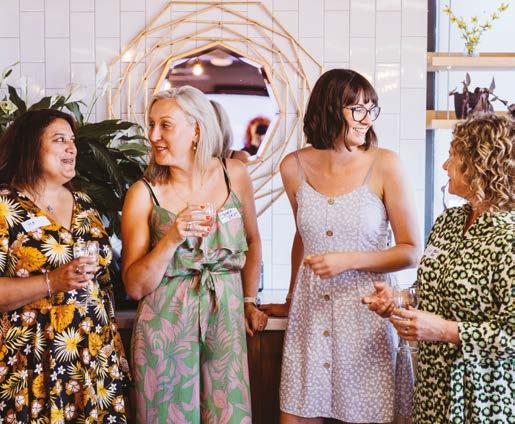
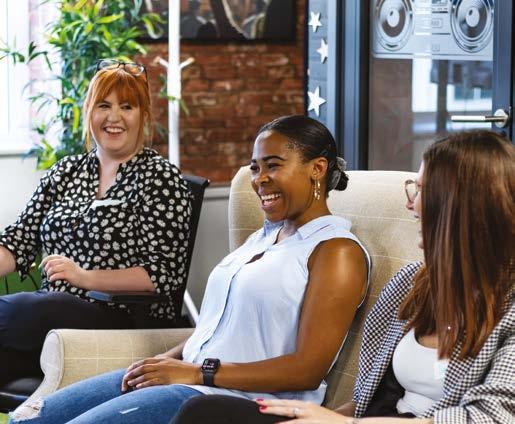
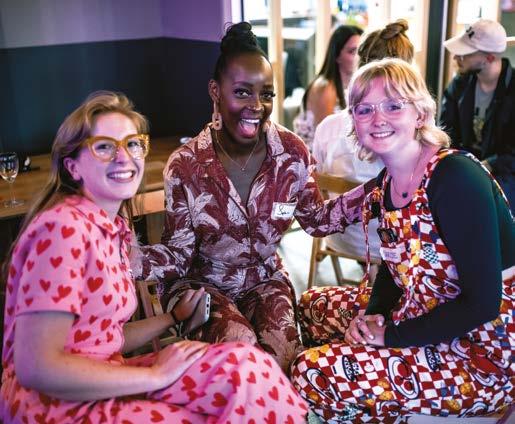
Seventeen girls turned up that day. All alone. All wanting to feel at home. These days, we would call it a space for connection, community and belonging. Back then, it was just 17 girls in a coffee shop figuring out if they could be friends. Many of them are still friends today.
That coffee meet up happened again every month, interspersed by drinks, book clubs, walks, runs, crafts, dinners and an abundance of other social activities. By the time we got to 1000 members, two of them approached me to set up the same thing in the
cities they were moving to – Edinburgh and Berlin. And with that, the City Girl Network was born.
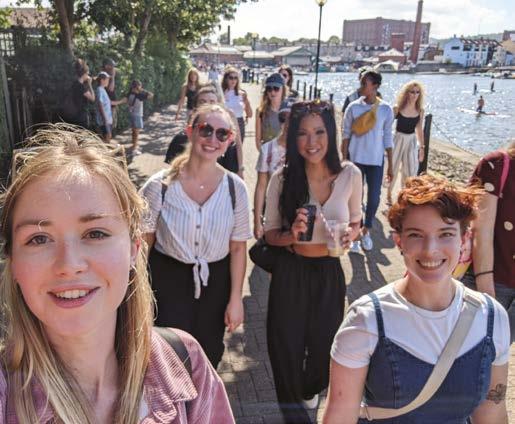
There’s a very good chance you know most of that origin story. You may also know that we’re now in 27 locations, run 50 events a month, have 160 volunteers and reach over 250,000 people (60,000 people in Sussex). You’ll also hopefully know that we have developed a business directory, advertising offering, awards and a jobs board.
As I hit this 10 year milestone, I’m struggling to comprehend quite how it all happened.
There have been so many chapters of this journey: realising I’d accidentally created a business, quitting my full time job to focus on it, freelancing to make ends meet as I hadn’t worked out a revenue structure, sofa surfing on Brighton Girl sofas after a relationship breakdown when I had no money for a deposit. That’s all in the first 18 months.
I understand now that I was in a unique position of having customers without the product. Community businesses weren’t a thing back then; for many, I helped iron out the blueprint with all of the mistakes I made. It was always going to be a wild ride.
It’s no secret that it took years for me to
take a salary from the business, caused by a serious lack of self confidence and crushing imposter syndrome. It was only two years ago that I stopped the cycle of working part time to fund the business; which was mostly spent on paying other people to do the work that I could do.
If I’m honest, I think it’s taken me the whole decade to truly believe I’m the right person for this role. I blame the patriarchy for that, by the way.
What’s held me up for all these years is the very reason why I’m here writing this: community.
Not just the one that I built, but the Sussex business community that we all
belong to. For starters, I am one of the many people who our very own Jackie and Sam have platformed over the years, which has opened doors upon doors of support.
I realised long ago that the real reason that the City Girl Network exists is because I was lonely. I just didn’t have the literacy for it at the time; I thought ‘lonely’ was reserved for much older people.
The business world is very lonely too, without people like you in it.
To every person that I’ve had the privilege of connecting with over the last decade: thank you for showing me what it means to be home.
By Vicky King, Plus Accounting
When I joined Plus Accounting in 2005 I was in my early twenties, answering the phone at reception and learning the rhythms of a small, busy practice. Back then we were a tight-knit team of 14. Two decades later we’re around 50 people strong, B Corp certified, and still rooted in Brighton, but the constant through every change has been people: clients, colleagues and the community.
IWD Special
It’s a privilege to be part of the firm’s story. Over the years I’ve moved through
roles, administration, client support, and finally marketing and leadership and every job taught me something different about how to build a business that truly serves people. That’s been the theme of my 20-year reflection: success happens when you put relationships, curiosity and values at the centre of what you do.
Working closely with clients across industries, such as Tech & Creative, Hospitality and Property, has shaped who we are. We don’t just file accounts; we help founders build long-lasting businesses.
Whether it’s advising on tax reliefs, supporting early-stage raises, or guiding studio owners through cashflow and forecasting, our team loves the detail work that gives clients confidence to take risks.
That client focus has driven cultural decisions inside Plus too. We’ve invested in training programmes (from apprentices and postgrads in accounting to CIPD and CIM for our people team and marketing), management coaching, and better HR systems. We want everyone here to learn, progress and feel supported, because motivated people do better work for clients.
Community and purpose - becoming a B Corp
A big achievement for the team was achieving B Corp certification. That didn’t happen in a boardroom; it happened through conversations with clients, through feedback from the team and a shared desire to do business in a way that contributes to Brighton and beyond. Our work supporting local initiatives, from financial literacy in schools to arts projects like Dreamy Place and Oska Film Festival, is part of that commitment.
Being a B Corp forces you to ask better questions about supply chains, procurement, and the real impact of your decisions. For a small firm, it’s a stretch. But it’s also an opportunity: we now look at every project through a broader lensnot just profit, but positive outcomes for people and place.

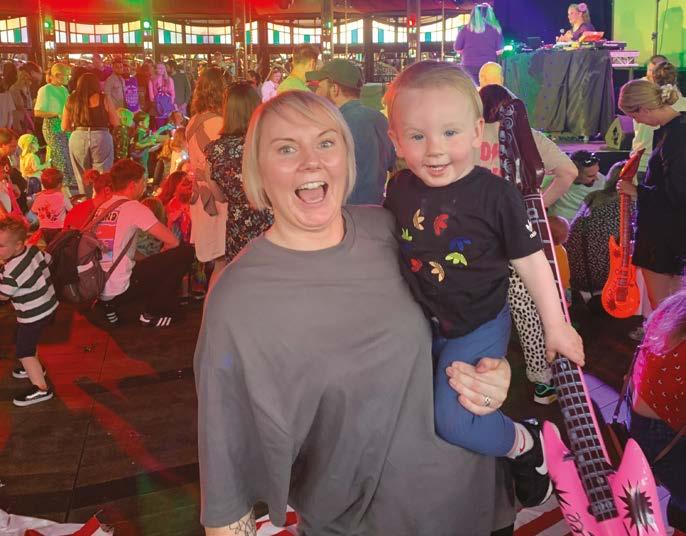
If there’s another theme across 20 years, it’s how fast things change. Cloud accounting, Xero, Dext and daily task automations have transformed how we work. I remember when cloud software was cutting-edge; now it’s essential. Our Plus Advisory team exists because clients want real-time insight, not quarterly surprises. We’ve matched that demand with a tech stack that supports forecasting, payments, approvals and document flows, freeing our people to give higher-value advice.
Alongside tech, we’ve prioritised learning. Everyone at Plus has access to training and development, because the more skilled the team, the better the outcomes for clients. Management coaching, external leadership training and mentoring have been gamechangers for how we manage, support and retain talent.
purpose
On a personal note - twenty years in any job changes you. I arrived ambitious,
a little uncertain, and very “on” all the time. I worked long hours and treated networking as a way to learn everything I could. That energy helped me grow, but it also taught me the hard lesson that being effective long-term needs boundaries. Becoming a mum five years ago shifted everything. I’m more purposeful now, selective about commitments, and clear that presence at home matters as much as presence at work.
I’ve also learned to ask for help. Investing in coaching and mental wellbeing has been transformative. It made me a better leader, colleague and parent. I’m proud of the person I’ve become, not in spite of the challenges, but because of them.
As I look to the next twenty years, I’m excited, not for growth alone but for what we can do with what we’ve built: better advisory, deeper community impact, and using technology to make expert support more accessible. My thread through it all is simple: keep putting people first. If we do that, everything else follows.
By Sam Adams

I am a Black, gay woman in business. Statistically, that doesn’t put me at the front of the starting line.
We know the data. Black women are underrepresented in senior leadership roles across the UK. LGBTQ+ professionals are more likely to experience discrimination at work. Mental health disparities are well documented. The odds, on paper, are not neutral.
And yet here I am, not in spite of that, but shaped by it.
Resilience is often spoken about as if it’s a personality trait. Something you
either have or you don’t. My experience tells a different story. Resilience is built. Sometimes the hard way.
2020 was one of the toughest years of my life. I went through a divorce. My dad died. The foundations I thought were solid shifted beneath me. I was holding grief, identity change, uncertainty, and doing my best to keep functioning. From the outside, I was still capable. Still delivering. Still the strong one.
But strength without support has a cost.
In 2022, I was diagnosed with a brain tumour. It was another moment where life didn’t ask for my permission before it changed. Around that time, I also faced
a period of deep mental health struggle that forced me to confront how much I had been carrying alone.
I had already been a coach for a decade by then. I understood mindset. I understood behaviour change. I knew how to set goals, create strategy, challenge limiting beliefs. What I hadn’t fully grasped, until my body made it impossible to ignore, was the role of the nervous system.
You can know what to do and still not have the internal capacity to do it. That realisation changed everything.
I had been practising breathwork for several years, but it was during this
period that it stopped being a tool and became a lifeline. Conscious Connected Breathwork helped me process grief that talking alone couldn’t shift. It helped regulate anxiety when my thoughts were loud. It helped me reconnect to my body when I felt detached from it.
It didn’t remove the pain. It helped me stay present with it.
Out of that experience, Life and Breath was born, a methodology that blends coaching, breathwork and nervous system regulation. Because insight without capacity doesn’t create change. And pressure without regulation leads to burnout.
Today, I work with senior leaders, highperforming professionals and athletes who look successful on paper but feel stretched behind the scenes. Many are women navigating visibility and expectation. Many are people carrying responsibility for teams, businesses and families. Many are operating in environments where vulnerability feels risky.
I’ve delivered sessions for Netflix, contributed as a breathwork expert within Fearne Cotton’s Happy Place community, led experiences at festivals, appeared on podcasts, and worked with professional athletes who understand performance at the highest level. Across all of those environments, one truth remains consistent: we cannot outperform our nervous system forever.
In corporate settings, I blend coaching, breathwork and nervous system education to help leaders build sustainable resilience. We work on emotional regulation, imposter syndrome, decision-making under pressure and increasing capacity so that success doesn’t come at the expense of wellbeing. Businesses benefit through clearer leadership, reduced burnout, improved communication and
cultures where people can perform without constantly operating in fight-or-flight.
Alongside that work, I run standalone Conscious Connected Breathwork sessions locally in Sussex. These are some of the most meaningful rooms I hold. People arrive carrying stress, grief, ambition, exhaustion, hope, and for an hour, they are given permission to breathe and feel. The transformation that happens in those spaces is quiet but profound. It reminds me why this work matters beyond titles and corporate strategy.
Resilience, I’ve learned, is not about pushing through. It’s about building capacity. And capacity is built through regulation.
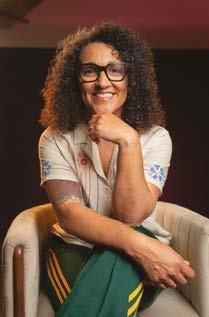
what this work is about: rising, even when you know what it is to fall.
As a Black gay woman, I know what it feels like to walk into rooms aware of perception. To navigate systems that were not designed with you in mind. That reality has sharpened me, but it has also taught me the importance of self-trust and internal safety. When you cannot always control the external environment, you must strengthen the internal one.
That is what I now teach.
Not hustle. Not performance at any cost. But regulated, sustainable power. On 21 March, I will be hosting Rise: Breathwork in the Sky at the Brighton i360, a three-hour immersive experience 450 feet above the ground, with a live DJ and a three-phase breathwork journey designed to elevate physically and emotionally. It’s a bold, one-off event, and intentionally so. For me, it represents
International Women’s Day often celebrates achievement, and rightly so. But I believe we must also celebrate capacity. The ability to feel, to process, to regulate, to lead from a grounded place. Especially for women who have had to work twice as hard to be seen as half as capable.
My story is not one of overcoming adversity neatly. It is one of continuing, with awareness, with support, and with responsibility.
Resilience built me the hard way.
Now I help others build it with intention.
Because it starts with you. And when you strengthen yourself from the inside out, the impact reaches far beyond you, into your business, your community and the generations watching.
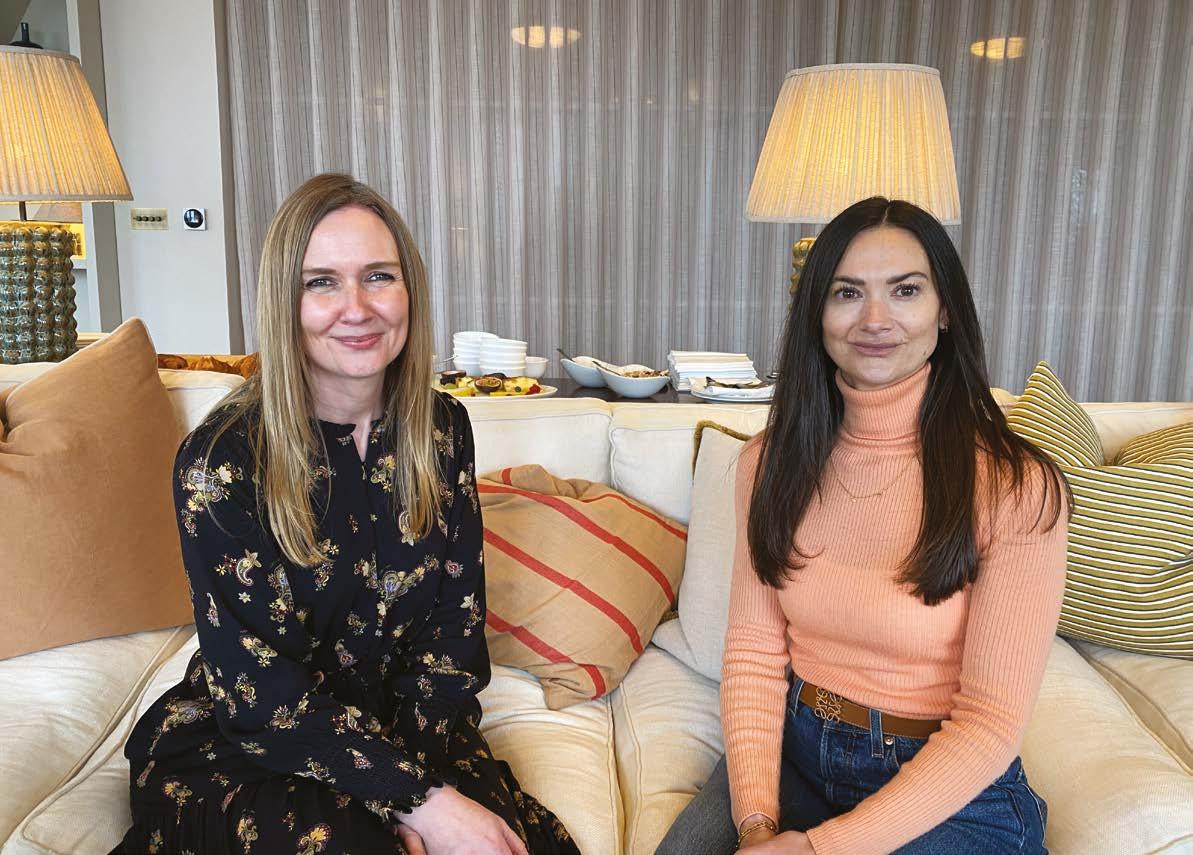
Ceres Jenkins - Founder of Better Days Recruitment and Women in Tech Brighton and Hove Group championing Women in tech and digital across the South.
I’ve worked in tech and digital recruitment for over 10 years and throughout that time one thing has consistently stood out, it’s hard to build truly diverse shortlists when women are still so underrepresented in these industries. I firmly believe diverse teams build better businesses. They’re more innovative, more balanced and ultimately more successful.
In 2023, during our annual placement review at Better Days Recruitment, we were genuinely shocked by how few
women had applied for the roles we’d advertised and even fewer had actually secured them. Naturally, we questioned ourselves. Were we doing enough? Was our process inclusive? But after reviewing everything, it became clear the issue wasn’t the recruitment process, it was the pipeline. There simply weren’t enough women applying for tech and digital roles in the first place.
When I looked deeper into the wider statistics, it really hit home. Women make up just 25% of the UK STEM workforce, despite 9.4 million people
working in the sector. After more than a decade in this space, I was surprised and disappointed at how little progress had actually been made.
I wanted to do something practical to help. I started looking for local Women in Tech events where I could connect with others and talk about these challenges. This was a struggle as there weren’t any locally focused specifically on women in tech and digital. So I decided to create one.
That’s how the first Women in Tech
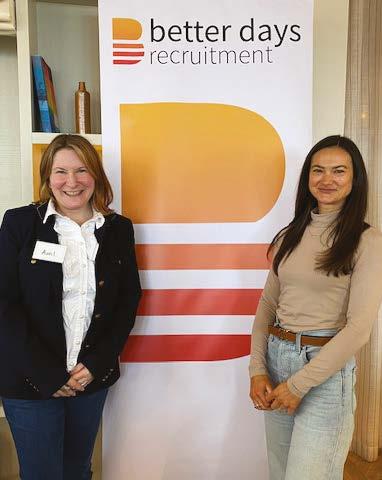
Brighton and Hove event was born. I’ll be honest it was quite out of my comfort zone from recruitment to events and a huge learning curve. I had no idea if anyone would show up! But the first event, Empowering Tomorrow’s Tech Leaders, sold out. That was the moment I realised how much this space was needed and that these events could help make a real difference.
Since then, we’ve run regular events covering topics like diversity in the workplace, supporting women through menopause, building confidence, and why the world needs more women in AI. We’ve been lucky to host some incredible speakers, including Avril Chester (named one of the most influential women in UK tech by Computer Weekly) and Kat Mitchell, Co-Founder and CTO at MPB.
I’ve intentionally kept the events small and informal. They’re not about someone talking to you, they’re about real conversations. I want women to feel comfortable sharing experiences, asking questions and walking away with practical advice they can actually use in their careers.

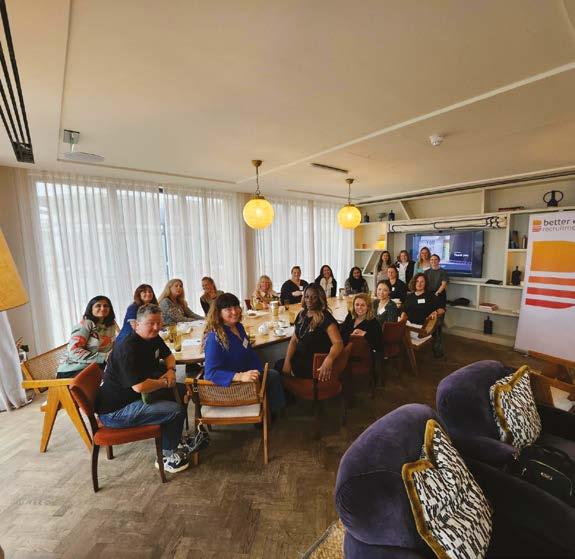
It’s been amazing to see familiar faces returning each time, as well as welcoming new ones. What has amazed me is the powerful stories that attendees share with one another, meaningful connections made, and peer to peer insights that are shared which are useful not just in the workplace but also outside too.
To keep the momentum going, we’ve also launched a Women in Tech Brighton and Hove LinkedIn community where people can continue conversations, share advice, post opportunities and support one another. We also share insights and tips from our events online so that even those who can’t attend can still benefit. It’s still early days but I’m hopeful that this will grow and become an extension to the events.
For me, this isn’t just about events, it’s about creating long-term change. Through the work that Better Days Recruitment does on an ongoing basis and through building this community, I want to help make tech and digital more inclusive, more representative
and a space where women truly feel they belong.
At Better Days Recruitment our aim is to support businesses to attract diverse talent in technology, digital and business change roles ensuring that both the company and candidates continue to grow and thrive.
We are always looking for inspiring women to speak at our events. So if you would interested in speaking at one of our future events then please get in touch or if you would like to attend future events then please visit connect on linkedIn www.linkedin. com/in/ceresjenkins/ or you can join the Women In Tech Brighton and Hove community group https://www.linkedin. com/groups/15642041/
If you would like to find out more about how Better Days Recruitment can help you attract more diverse talent please visit https://www. betterdaysrecruitment.com


Since launching my personal styling business four months ago, I have realised I wasn’t simply starting a new career, I was stepping into a mission.
For years, I watched incredibly capable, intelligent women walk into boardrooms dressed in the same uniform: black blazers, black trousers, black dresses. Practical? Yes. Professional? Certainly. But often it also felt like a quiet surrender to a longstanding corporate expectation: blend in, don’t stand out, keep it safe. I was guilty of wearing this uniform as well! And yet, the women wearing these uniforms were anything but invisible.
They were founders, directors, consultants, leaders, creatives and decision-makers. They were building businesses, raising families and driving change in their industries and communities. But their wardrobes often didn’t reflect their energy, their expertise or their individuality.
That disconnect is the reason for my mission. I want to help busy professionals rediscover their confidence through personal style. My clients are often juggling demanding careers, leadership
roles and personal lives. Getting dressed has become a functional task rather than an empowering one. Black becomes the default because it feels easy, safe and neutral.
But when everyone is wearing the same thing, personal identity can slowly disappear.
The truth is, colour is powerful. It communicates confidence, approachability, authority and creativity before you even say a word. The right
shade can brighten your complexion, lift your mood and shift the way others perceive you. Yet many women have been conditioned to believe that colour is “too much” for professional environments.
I believe the opposite.
My mission is to help women break free from the corporate uniform and rediscover how powerful their presence can be when their wardrobe truly reflects who they are. Styling isn’t about chasing trends or building an influencer wardrobe. Instead it’s about alignment between your personality, your professional identity and how you present yourself to the world.
Often the transformation starts small. A navy suit instead of black. A cobalt blouse under a blazer. A bold scarf, a statement shoe or a vibrant dress paired with neutrals that feels both professional, polished and personal. When women start experimenting with colour and shape in a way that suits their lifestyle, something remarkable happens: their confidence grows.
I’ve had the pleasure of seeing clients walk into meetings differently after we’ve worked together. Shoulders back. Head higher. They feel seen and they feel like themselves.
Starting a business has been both exhilarating and humbling. The past four months have been a crash course in entrepreneurship: building a brand, connecting with clients, refining my services and learning how to articulate a vision that feels deeply personal. But the most rewarding part so far has been the moment when a client looks in the mirror and says, “I would never have picked this, but I love it”.
The moment they realise their wardrobe can work for them instead of against them.
The moment they see that professional
style doesn’t have to mean hiding.
That’s why contributing to this International Women’s Day edition of Sussex Business Times feels particularly meaningful. International Women’s Day is a moment to celebrate women’s achievements, leadership and progress, but it’s also a reminder that empowerment can show up in many forms, including the confidence to present yourself authentically.
For many women, the workplace still comes with unspoken rules about how to dress in order to be taken seriously. Plain colours, safe silhouettes and a quiet approach to personal style have often been seen as the “professional standard”.

that getting dressed can be an act of confidence, creativity and self-expression rather than a daily compromise.
But as more women step into leadership, build businesses and shape the future of work, those old rules are beginning to shift.
Professionalism doesn’t have to mean uniformity. There is room for colour in the boardroom. There is room for personality in leadership.
And there is room for women to define their own version of professional style. This International Women’s Day is a powerful reminder that progress is not just about the positions women hold, but also about the freedom they feel to show up fully as themselves.
As my business continues to grow, my goal is simple: to help more women realise
Because when women stop dressing to blend in and start dressing to show up as themselves, something shifts not just in their wardrobe, but in how they carry their voice, their ideas and their presence into the world.
Four months in, I’m only at the beginning of this journey. But if the response from the women I’ve worked with so far is anything to go by, there’s a real appetite for change.
And perhaps the future of professional style won’t be defined by a sea of black suits after all.
Lissie Squires, Founder, Senaya Styling hello@senaya.uk www.senaya.uk

Donna Holland, Chief Executive of Rockinghorse Children’s Charity
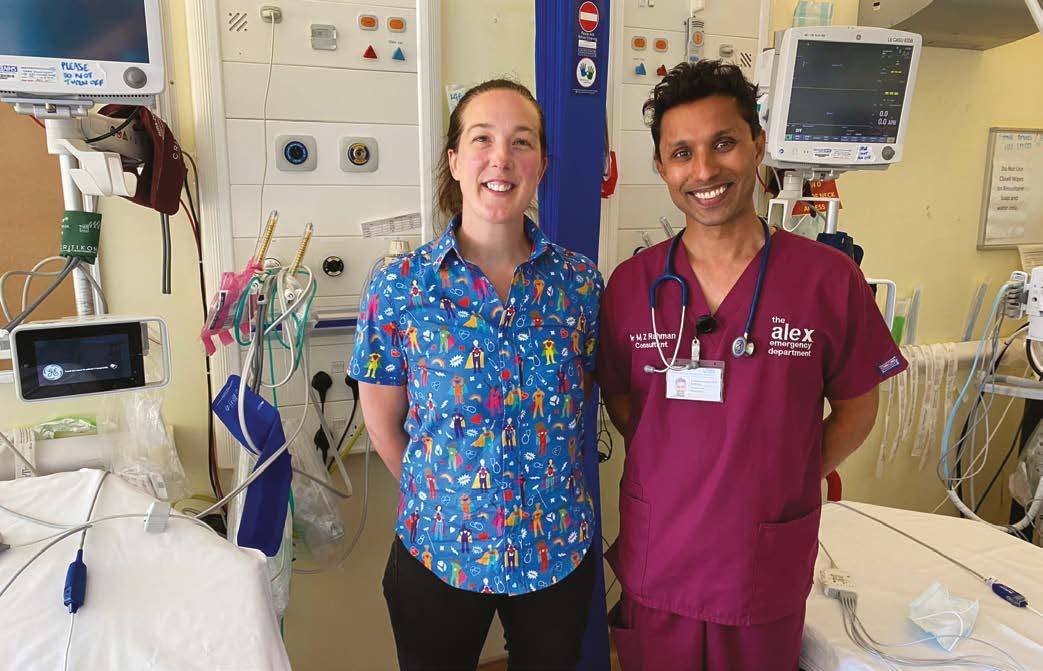
International Women’s Day is an opportunity to reflect on the progress women have made, but also to recognise how that progress has been achieved. No woman succeeds in isolation. Every step forward has been built on the encouragement, advocacy and courage of women supporting women. It’s built on the shoulders of all those women who’ve gone before.
That idea, for me, sits at the heart of this year’s theme “Give to Gain”.
When women share knowledge, champion one another’s achievements and create opportunities for others, we
don’t lose anything by giving. Instead, we gain stronger organisations, and more inclusive workplaces and communities.
At Rockinghorse Children’s Charity, this shapes the way we support the people who make our work possible. Every day I am surrounded by talented, compassionate and resilient women and that carries a responsibility: to create an environment where women can thrive professionally, personally, emotionally and physically.
Because supporting women at work means recognising that women’s lives are complex. Experiences such as pregnancy, menstruation, reproductive health, miscarriage, (peri)menopause
and wider wellbeing don’t sit neatly outside the working day. They influence energy, confidence, health and capacity, often at pivotal moments in a woman’s career. Too often workplaces downplay or ignore these realities.
Creating a culture of dignity, equity and belonging
At Rockinghorse, we believe these experiences are acknowledged, understood, and supported. That means creating an inclusive culture where women are supported through different life stages and where conversations about health, wellbeing and work-life balance are normalised rather than avoided, or worse, stigmatised.
Women experience a range of health challenges that are still too often misunderstood or overlooked in the workplace. Conditions such as endometriosis, fertility treatment, miscarriage or hormonal fluctuations can affect attendance, comfort and performance. Instead of expecting people to quietly “push through”, we aim to create an environment where colleagues feel able to speak openly and receive the support they need.
For us, that is part of what real inclusion looks like.
Making menopause a workplace conversation and concern
One of the most significant, yet frequently overlooked, issues facing women at work is the menopause. For many women, this phase coincides with the peak of their professional careers, when they hold senior roles and carry significant responsibilities. Yet symptoms such as fatigue, anxiety, migraines, concentration difficulties, sleep disruption and loss of confidence can make daily working life incredibly challenging.
Silence and stigma have historically surrounded this topic. At Rockinghorse, we actively encourage open conversations about menopause and provide staff with the space, understanding and support to talk about what they are experiencing.
Practical support matters too. We offer a range of reasonable adjustments, including flexible working arrangements, rest breaks, desk moves, fans and time for medical appointments. Small changes can make an enormous difference to someone’s comfort, confidence and ability to continue contributing at their best. By embedding empathy and flexibility into our workplace culture, we ensure that women can continue to thrive even during periods of significant physical change.
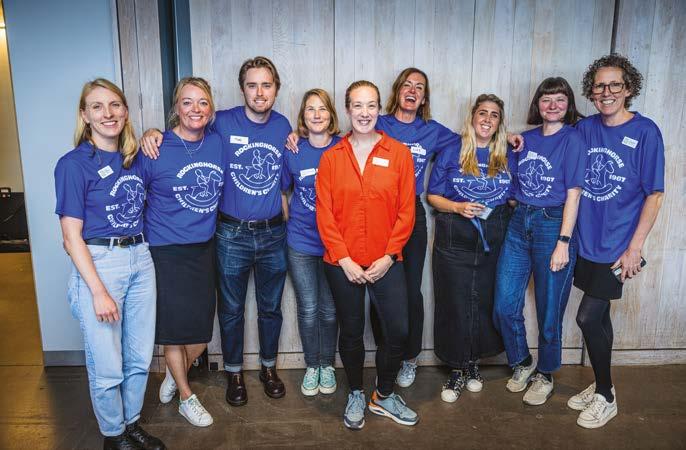
Why supporting women strengthens organisations
At Rockinghorse, our mission is to support the Royal Alexandra Children’s Hospital and specialist paediatric services across Sussex, helping babies, children and young people receive the best possible care when they are unwell. We are the local children’s hospital charity and the work we do is rooted in compassion, collaboration and community.
Those same values shape how we support our team. In a small charity like ours, every individual plays a vital role, every voice matters. When staff feel respected, supported and trusted, they can bring their energy, creativity and commitment to the work we do. That strengthens our fundraising, our partnerships and ultimately the impact we can deliver for children and families across Sussex.
Supporting women also creates a ripple effect far beyond our organisation. When women are empowered in the workplace, they become visible role models for others. They demonstrate what confident, compassionate leadership and teamwork looks like. They open doors, share opportunities and help create pathways for the next generation of women to step forward.
That ripple effect is the essence of Give to Gain.
Standing on shoulders and becoming them
Every woman working today benefits from the courage and determination of those who came before us. We stand on the shoulders of women who challenged barriers, fought for equality and expanded what was possible.
Our responsibility now is to become those shoulders for others. That means mentoring younger colleagues, championing each other’s achievements and building workplaces where women are not simply accommodated, but truly supported to flourish.
At Rockinghorse, we champion the lives of children every day. But we also champion the women (in the office and in the hospital) whose talent, empathy and dedication make our work possible.
Because when we support women to thrive, when we support each other: everyone benefits and that feels like the meaning of this year’s theme.
www.rockinghorse.org.uk
This year, the theme for International Women’s Day is “Give to gain”.
On first glance, it could sound like a contradiction. Because if we are honest, most of us have been trained to believe that gain comes from adding: more activity, more output, more offers, more hours.
More. More. More
That was certainly how I approached my first business.
On paper, we were growing. We had more visibility, more projects, and more clients. From the outside, it looked like momentum. From the inside, though, it felt… tight. Every event we hosted still needed my input, every tricky situation with a client found its way back to me, and every new idea hovered until I had the time to give it the green light.
At the time I told myself that was leadership. Looking back, it wasn’t. It was dependency. The business worked because I was holding it all together, which meant if I wasn’t giving it my 100%, it would wobble.
And that is not growth. That is pressure.
The shift, when it eventually came, didn’t come from doing more. It came from being much more deliberate about what I was willing to give. Not sacrifice exactly, but reallocation. Small choices at first, but ones that slowly changed the shape of the business.
I gave clarity to the problem we solved, and almost immediately, we gained consistency.
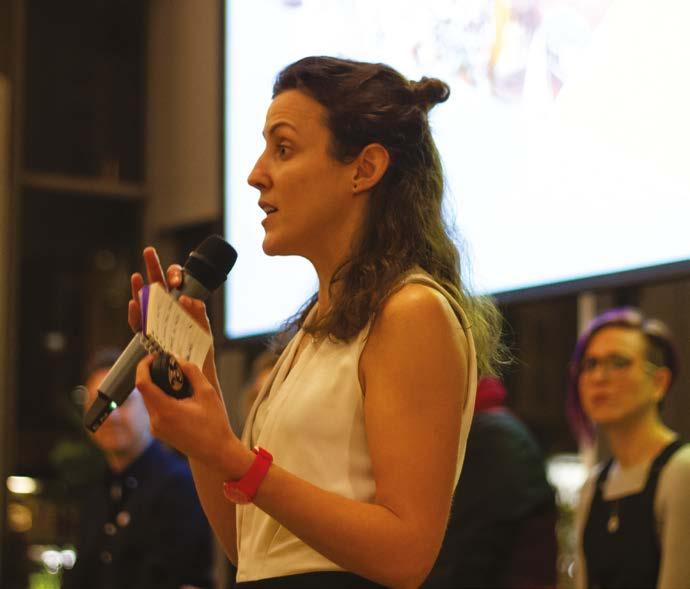
Content stopped feeling like a scramble, messaging stopped drifting depending on the day, and the right people began recognising themselves in the work without us having to convince them.
I gave proper time to defining our ideal client, and suddenly, we gained traction.
No more endless calls with “maybe” clients, and far fewer proposals bent out of shape to make something fit. Conversations became cleaner, decisions moved faster, and alignment was easier to spot.
I gave our sales process a rhythm, and the pressure dropped almost overnight.
Instead of dragging people towards a yes, we created space for them to experience
the work and decide for themselves. The pressure in those conversations dropped almost immediately. The quality of clients improved, and the process itself became something we actually enjoyed. No, really!
We gave more thought to the rooms we stepped into, and we gained relevance. That meant saying no to quite a few things that once felt difficult to turn down. Fewer events, fewer panels, fewer “it’ll be good exposure” conversations. But the rooms we chose were the right ones.
We gave new team members real focus at the start, and we gained autonomy later.
That meant slowing down onboarding, sharing context rather than just tasks, and allowing people to make decisions before I felt completely comfortable
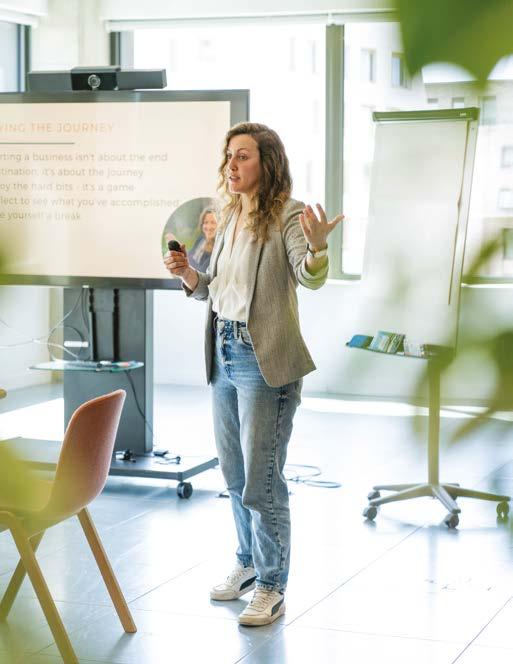
stepping back. Months later, the impact was clear. I was no longer the automatic escalation point.
We gave the team real control within clear boundaries, and we gained better work.
When people felt trusted to make decisions, they stepped forward. They stopped waiting for instructions, and the standard of the work lifted. I stopped finding myself reviewing things late in the evening, wondering why I was still carrying so much of the load.
And personally, I had to give things up too.
I stopped drafting every social post and stepped away from many of the day-today operational details. Instead, I began spending more time on sponsorship conversations, partnerships and longerterm opportunities for the business. In other words, I slowly swapped busy work for business-building work.
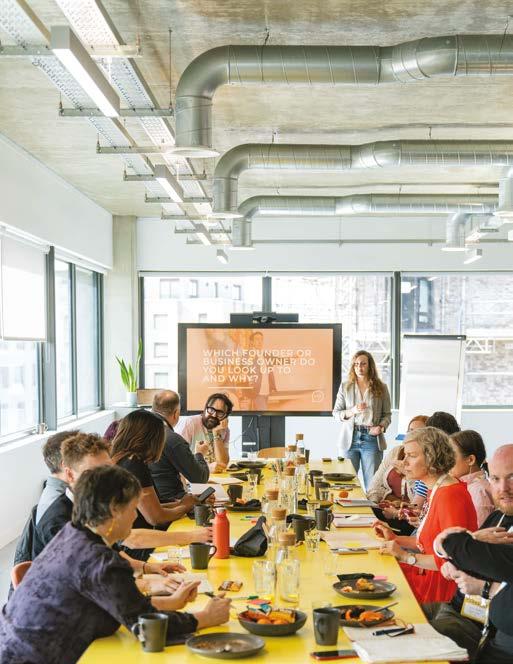
Which sounds obvious when you say it out loud. But if you’ve ever built something yourself, you’ll know how hard the shift can feel.
And I am aware that none of this is dramatic. Revenue didn’t suddenly spike, and the work didn’t suddenly become effortless. But something important shifted in how the business felt. It stopped feeling like it was one difficult week away from chaos. The feast-and-famine cycles softened, decisions moved without constant prompting, and the team stepped forward instead of waiting to be briefed.
There was more breathing room in the system.
That is what “give to gain” means to me now. Not sacrifice or martyrdom, but a more intentional allocation of energy.
Giving clarity so other people can carry weight.
Giving focus to fewer priorities so they can actually move properly.
And sometimes giving up the work that keeps you busy so you can spend more time doing the work that actually builds the business.
It is always easier to add. Adding feels productive and reassuring in the moment. But stepping back and asking“what needs to be given so the business can become stronger” - is often the more important, but harder, question.
If growth in your business feels exciting but slightly fragile, if stepping away still feels risky, or if momentum depends on you being “on” all the time, then pushing harder probably isn’t the unlock.
It might just be time to give differently.
Because sometimes the fastest way to gain stability…
is to stop adding more and start choosing.

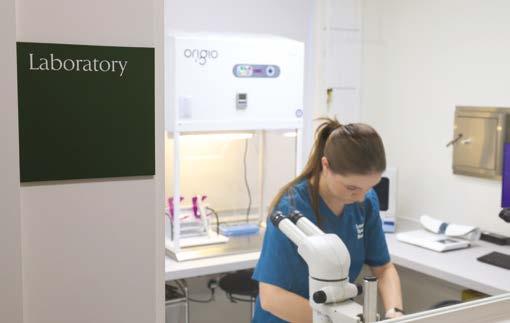
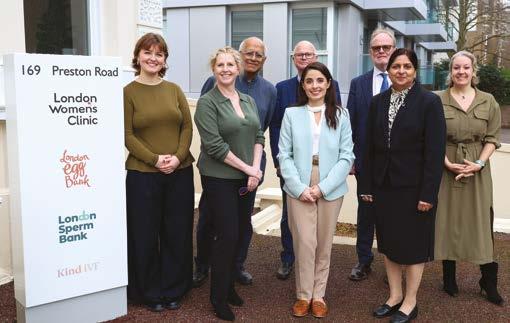
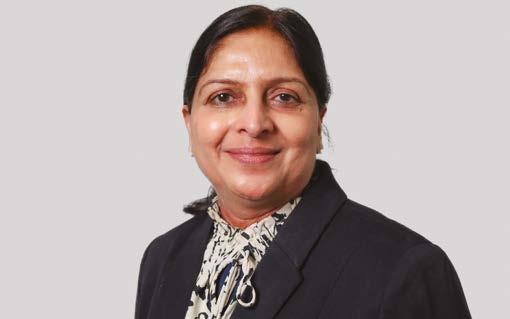
Having moved to a beautiful new, larger home in Preston Park in February 2026, London Women’s Clinic Brighton shares their vision for providing women and couples in Sussex access to world-class fertility care close to home.
40 years of experience and over 40,000 families created
Established in 1985 London Women’s Clinic is a UK fertility provider with over four decades of experience and over 40,000 families created. Our flagship Harley Street centre in London provides treatment procedures and laboratory services supported by expert clinical teams.
Alongside our flagship clinic, London Women’s Clinic operates a growing
network of strategically located treatment centres and satellite clinics across the UK. Our satellite model enables patients to access consultations, investigations and monitoring closer to home in 20 locations throughout England and Wales including Sussex, Kent and Surrey. Procedure stages, such as egg collection, embryology laboratory work and embryo transfer are delivered through LWC’s full-service clinics, operating 7 days a week. All our centres are strategically located with easy access to public transport offering a seamless journey from satellite to treatment centre.
London Women’s Clinic Brighton
LWC Brighton’s new space located at 169 Preston Road has been thoughtfully designed to be warmer, more spacious and truly patient-friendly clinic, helping us meet the growing demand for fertility care across Sussex and the South Coast. Our next chapter builds on the wonderful community we’ve grown in Sussex over the past three years. From first consultations and investigations to ultrasound monitoring and ongoing support, patients can now access even more of their care locally in Brighton, with treatment procedures continuing
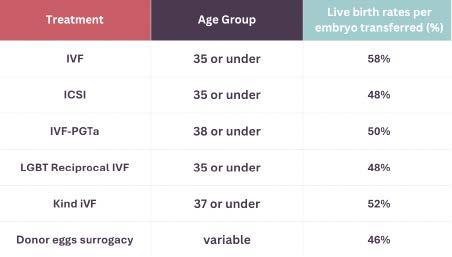
at our Harley Street centre in London, supported by our expert laboratory and clinical teams.
Patients can access key stages of fertility care locally, including:
• Initial fertility consultations and treatment planning
• Fertility investigations
• Ultrasound monitoring and cycle tracking
• Ongoing care navigation and patient support
Treatment procedures including egg collection, embryology, and embryo transfer are performed in Harley Street, London and patients can expect to achieve consistently high levels of success (see table above).
Our satellite pathway makes it simple for patients to complete consultations, monitoring and investigations in Brighton, travelling to London only for treatment. This ensures convenience without compromising access to world-class care at our Harley Street centre.
Every fertility journey is different, and our Brighton team is here to offer personalised, compassionate care close to home –working hand in hand with our colleagues
in London to ensure patients feel supported at every step. We’re so proud to continue expanding access to care for modern families in Sussex and beyond, and we look forward to welcoming patients into our new Preston Park centre.
Led by an experienced team of female clinicians and business managers, LWC Brighton provides an expert level of clinical care in a space designed to make our patients feel welcome, comfortable and reassured.
Dr Suman Dadhich, Consultant in Reproductive Medicine, is a highly experienced fertility specialist with over 20 years in obstetrics, gynaecology, and reproductive medicine. She offers inclusive, evidence-based care to individuals and couples on their path to parenthood. Her clinical interests include fertility preservation, advanced maternal age, and personalised treatment planning.
“Bringing Harley Street excellence to your doorstep, our new Brighton clinic delivers seamless, personalised fertility care right in the heart of the Sussex community. Patients can access expert consultations, investigations, and monitoring locally, while benefiting from the world-class standards and specialist procedures at our flagship
Harley Street centre—ensuring the highest quality support throughout every step of their journey.”
Melanie Collenette, Director of Clinical Services, began her nursing career working in emergency surgery and gynaecology before specialising in women’s health and fertility. Since then, she has gone on to train in HyCoSy and aquascans, day case surgery, gynaecology and early pregnancy ultrasound, inseminations and embryo transfers. Joining London Women’s Clinic in 2021, Melanie uses her expertise to manage and support clinical teams and services within the clinic, achieving excellent results and standards of care in her role as Director of Clinical Services for LWC Brighton.
“At LWC Brighton you will experience optimal fertility care with personalised, local, one-on-one support from our expert female clinicians during the consulting and scanning stages of treatment, as well as benefitting from the advantage of having the final insemination, egg collection or embryo transfer performed by our skilled and experienced team of doctors, nurses and scientists in London, thus ensuring the highest standard of care throughout every step of your journey.”


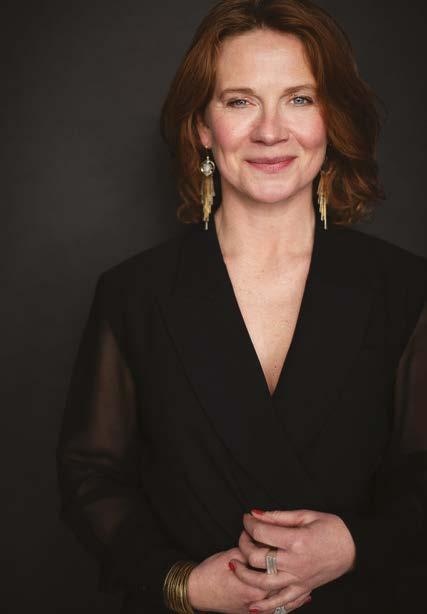
What my career has taught me about women, work and the gap between potential and performance
When I was asked to contribute to this International Women’s Day special, my first reaction was hesitance. I’ve never really defined myself or the work I do by my gender.
IWD Special
I’ve been a journalist. An editor. And now a psychologist and high-performance coach. But I’ve never considered, wanted or needed a female prefix. The only thing I want to be defined by is my work.
But then I started thinking. And realised gender is far more nuanced and complicated than that.
Because when I look back over my career, it’s impossible to ignore that being a woman has both helped and hindered me along the way.
I started out in journalism in the late 1990s, writing about technology at a time when very few women were doing so. In fact, I was one of the original female tech journalists. At one point I was nicknamed the Gadget Goddess – a slightly tonguein-cheek label that reflected both the novelty of a woman covering technology and the way media loved to frame female expertise through a different lens.
The truth is, being female helped me
stand out in a male-dominated industry — I got work because of it, I made my mark because of it. But it also meant navigating a world where inappropriate comments, awkward advances and endless debates with male editors about whether (scantily clad) women belonged on the cover of men’s magazines, were part of the job.
I also knew I needed to work that bit harder to prove my worth – that I actually knew what I was talking about.
At the time, I accepted all of this as the price of working in a male-dominated environment. I never felt it held me back
personally. Perhaps it did in ways I didn’t recognise, but it certainly didn’t stop me building a career I loved.
Looking back, those early experiences taught me something important: the difference between what’s visible and what’s really going on beneath the surface.
Which is exactly the territory my work now explores.
After 25 years in journalism, I retrained as a psychologist and high-performance coach. And the central theme of my work — the thing I come back to again and again with every client — is what I call the gap.
Not the pay gap or the leadership gap — although those are real, and they really matter.
I mean the internal gap.
The one between knowing and doing. Between how capable you are and how capable you feel. Between what you believe about yourself in your best moments, and what your inner critic is whispering (shouting?) at 3am.
Most of us know the behaviours that support performance and wellbeing. We know we should set boundaries, communicate clearly, manage stress, prioritise recovery, ask for help.
Yet knowing something and doing are very different things.
That space in between — the gap — is where people get stuck.
There are other gaps too: the gap between how we really feel and how we present ourselves to the world. The gap between our values and how we behave when we’re tired, stressed or under pressure. The gap between our potential and our performance.
My work is about helping people recognise those gaps — and learning how to bridge them. Or at least shimmy across.
And I see this gap disproportionately in women.
The women I work with — in business, in leadership, in sport — are almost always extraordinarily capable. Capability isn’t the problem.
What holds them back is the invisible weight that often sits alongside it.
The pressure to be perfect before putting their hand up – or putting themselves up for a new job.
The reluctance to delegate because it feels easier — and safer — to just do it themselves.
The difficulty saying no, setting boundaries or having the conversation they’ve been rehearsing in their head for weeks.
High standards can be a superpower. But perfectionism is often a trap.
And a lot of very brilliant women are stuck in that trap — working twice as hard and enjoying it half as much.
International Women’s Day rightly shines a light on the structural barriers that still shape women’s careers. Those conversations matter.
But what I’m really interested in, is the internal work that happens once those doors begin to open. This is where my superpower lies.
Because the most powerful shift I see in my clients isn’t external. It’s the moment someone realises the gap between where they are and where they want to be isn’t a sign they’re failing.
It’s simply the place where growth begins.
Are you ready to grow?
Charlotte Ricca is a psychologist and high-performance coach. As the founder of Kinda Brilliant, her work explores what she calls ‘the gap’ — the space between knowing and doing, and between potential and performance — helping individuals and organisations manage pressure, navigate change and thrive at work and beyond.
kindabrilliantwellbeing.co.uk


Why Herstory V became my most meaningful event yet
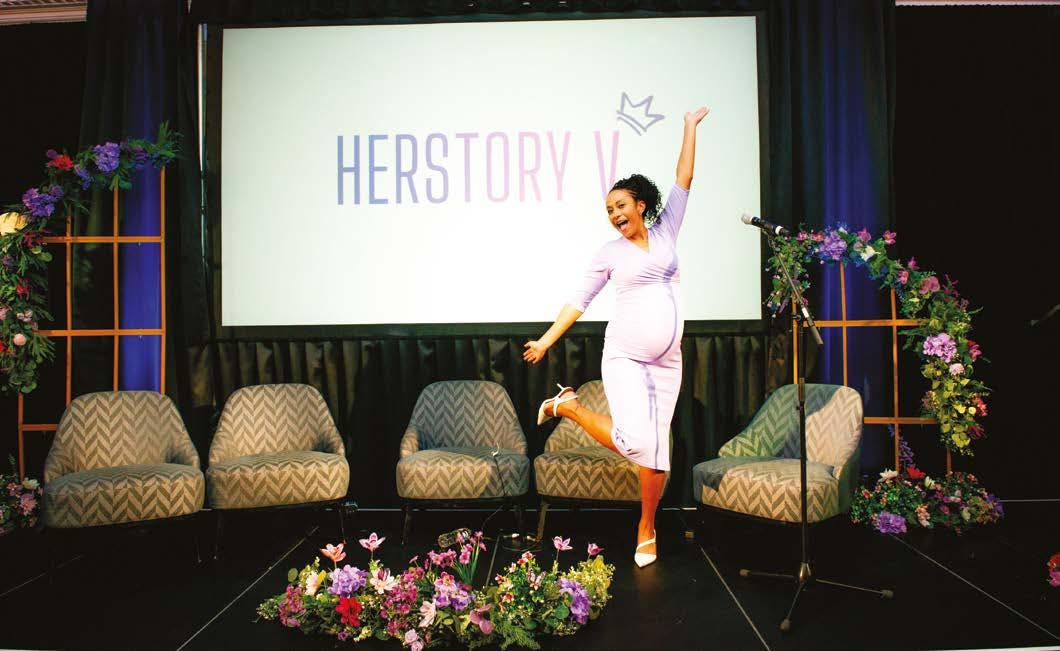
Over the past seven or eight months, I have faced some extremely challenging moments of my professional and professional life.
Preparing for motherhood should be a joyful time, yet it has also been a period filled with questions, both from others and, at times, from myself. I have heard comments about what I should or should not be doing at this stage in my life and career. Some of those conversations made me question what was possible, and what society often expects women to do at this point in their lives.
One thought weighed heavily on me:
that I might have to pause or undo the career I have spent years building.
That was not an option I wanted to accept.
When I discussed continuing my annual International Women’s Day event, Herstory, with my coach April Baker, her reaction changed everything. She loved the idea and encouraged me to see it as something positive to focus on, a way to close this chapter of my life with purpose and momentum.
That conversation gave me hope.
The lesson that stayed with me
At Herstory III, international motivational speaker Harry Singh shared a lesson that
has stayed with me ever since.
As business leaders, he said, we often talk about providing services or selling products. But that is not the same as serving. To serve is to follow your purpose.
When we align with that purpose, there is an energy that carries us forward. Some people call that faith. Others call it intuition, or even God.
Whatever we call it, I believe it is the same force that has helped many of history’s greatest leaders deliver on their vision. It doesn’t remove the challenges, those are inevitable, but faith and selfbelief are powerful things.
Sometimes I wonder what would have
happened if I had allowed the limited expectations of others to cloud my belief in what I could achieve.
Running Herstory V while eight months pregnant was not something everyone thought I should do.
Additionally, I lost a couple of clients after announcing my pregnancy. It wasn’t due to performance or results, but rather a lack of confidence in how I planned to commercialise my business moving forward. It was difficult to process, but something unexpected also happened, new opportunities emerged.
By leaning into a new strategy, being visible and sharing my journey openly, I began attracting new clients and connections who resonated with the message I was sharing. Herstory became part of that shift.
This year’s event was my most successful to date. For the first time, the Herstory panel consisted entirely of female founders. Collectively, there were millions of pounds worth of businesses represented on that stage, created and led by women.
To me, that represented the rise of what is often called the ‘purple pound’, the economic power and influence of women-led enterprise.
These women believed in the vision of Herstory and invested their time and trust in the event. I feel incredibly fortunate to now be in a position to promote and celebrate them.
Why International Women’s Day still matters
I know some women choose not to actively promote International Women’s Day because they are tired of the burden appearing to fall on women to push for equality and change.
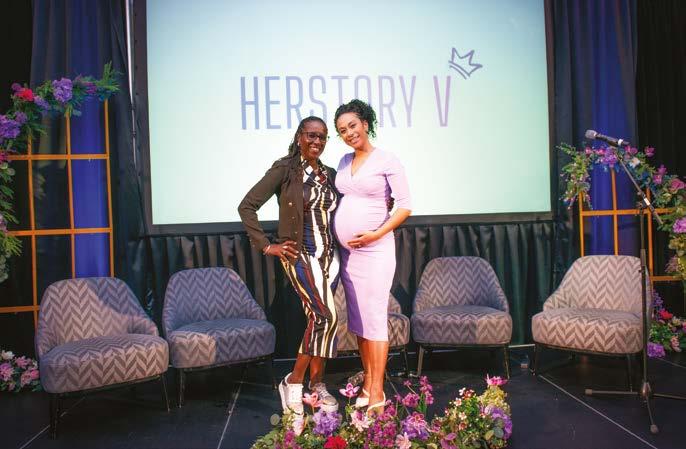
I understand that perspective. But for me, the day carries a deeper meaning.
As a descendant of the Windrush generation, raised in a humble workingclass family, I am constantly reminded of the sacrifices made by my mother, my grandmother and the generations before them. Their courage and resilience created the opportunities and freedoms I have today.
Because of that, I feel a deep sense of gratitude, and responsibility, to continue celebrating women and creating spaces where their achievements can be seen.
Next year’s HerStory will be a difficult act to follow.
But I am incredibly grateful for the opportunity to work towards that challenge.
If this year has taught me anything, it is that purpose, faith and community can carry us further than we might imagine. Sometimes the most powerful thing we can do as leaders is simply to keep showing up, even when others doubt what is possible.
And especially when they do.
by Claire Bond
“Visibility isn’t vanity, it’s connection. If people can’t really see you, they can’t connect with you. And if they can’t connect with you, they choose someone else.
So many brilliant business owners show up visible, but not truly seen, hidden behind their services and products.
But people don’t buy what you do. They buy who you are.
My job as a photographer isn’t just to take photos. It’s to help people relax, stop performing and allow the real version of themselves to show up — because that’s the version people trust.
And especially as we celebrate International Women’s Day, this matters even more.
The world doesn’t need more women playing small. It needs more women being visible, owning their expertise and taking up space as the leaders they already are.
Visibility is leadership.
When women stop seeing themselves through a self-critical lens and start seeing themselves the way others see them, confidence rises and the imposter voice gets quieter.
That’s the moment everything changes.”
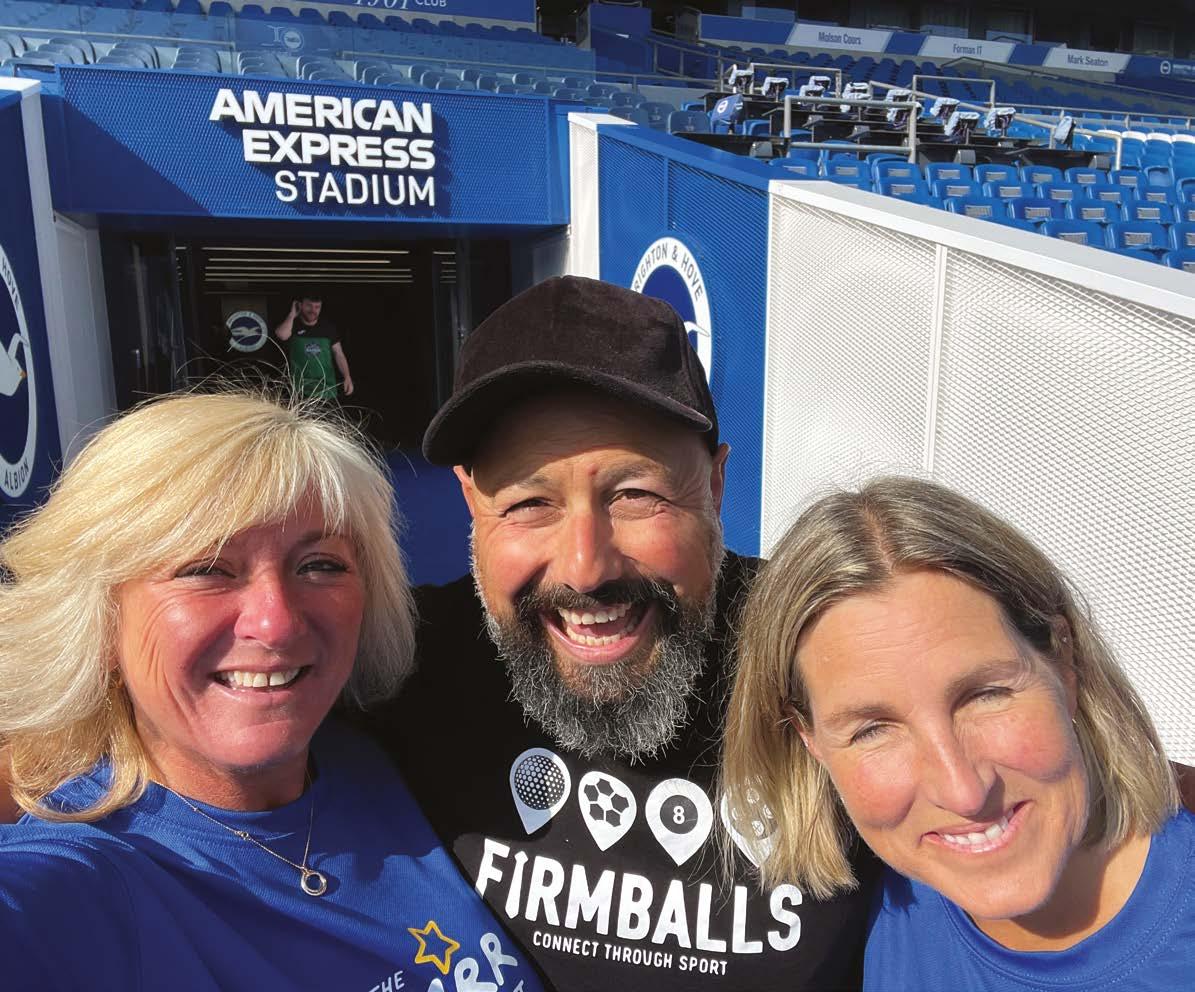
My name is Tracey Starr and supporting young people through my work with The Starr Trust is not just something I do, it is part of who I am.
I understand how important it is for children and young people to feel supported and believed in. Not every child grows up with the same opportunities, and that is exactly why the work we do matters so much.
IWD Special
We are a family run charity, founded and funded by my brother, who is not only the driving force behind the organisation
but also my rock in both work and life. We feel like we are an accidental charity, it was started after we lost our Dad and initially wanted to do something in his memory and to make us feel better. Being part of that journey, and playing a hands on role in fundraising and community engagement, is something I am incredibly proud of.
My role within Starr Trust centres largely around fundraising and building
relationships within the local community. From race days and black tie balls to sporting tournaments and smaller grassroots events, I help organise and promote fundraising initiatives that enable us to continue supporting young people. Every raffle prize sourced and business that agrees to sponsor or donate all add up to real, tangible help for a child or family who needs it.
Fundraising is about far more than

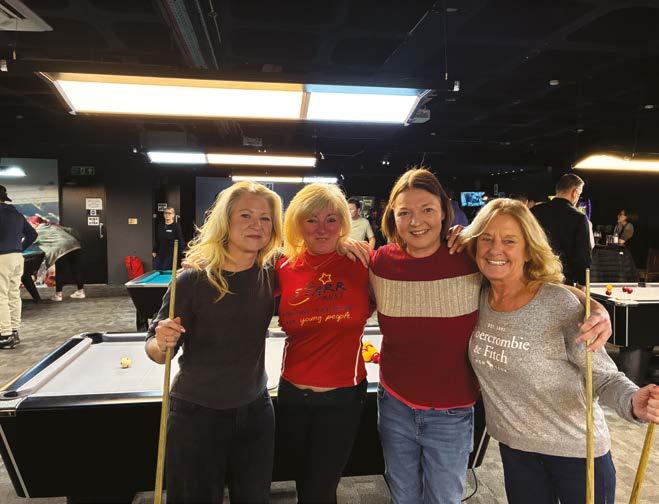
asking for money. It is about storytelling, connection, and trust. It means helping people understand that their contribution, whether large or small, can directly impact a young person’s future. I spend a great deal of time speaking to local businesses and supporters sharing the stories behind the applications we receive and explaining how their generosity can fund opportunities that might otherwise be out of reach.
We support young people in many ways- often they are incredibly talented and hardworking but lack the financial backing or network to take the next step. Sometimes what they need most is not just funding, but the knowledge that someone believes in them.
As a single mother, this part resonates with me deeply. I have three boys of my own and I see every day how important encouragement and stability are in shaping a child’s outlook and ambition. I know how much of a difference it makes when children feel safe, valued and supported. I also know that I am fortunate. Not all children are as lucky as mine.
I understand the pressures families can face and I know that pride can sometimes
stop people from asking for help. That is why we work hard to ensure The Starr Trust feels approachable and supportive. Because we are a family run organisation, everything we do feels personal. Decisions are not made in a detached boardroom but through genuine discussion and careful consideration. My brother’s vision and generosity have created something very special and working alongside him is both a privilege and a responsibility. His belief in giving back has inspired me to constantly look for new ways to grow our impact.
The community plays a huge role in everything we achieve. The businesses that donate prizes, the individuals who attend events and the volunteers who give up their time are all part of The Starr Trust story. Fundraising events may look glamorous on the surface, but behind the scenes there is a lot of hard work and I embrace that challenge because I know what the outcome means. The bonus is that I now have friends who started as business contacts and so their involvement is not just ticking boxes but is genuine.
The most rewarding moments are when we see the results of that work
- when a young person writes to say thank you or parents tell us that the support lifted a weight from their shoulders, those moments remind me why I do what I do.
The reason I love my role in the charity is that it is about showing young people that their dreams are valid and that someone is willing to invest in them. It is about creating a ripple effect, because when you support a child today you influence the adult they become tomorrow. For me, this work is not just a role. Backing young people when it matters most, because young people matter. If we can help even one young person feel seen, supported and empowered to pursue their future, then every event organised, every call made and every hour invested is worth it.
Tracey Starr
Partnership Liaison
Tel: 01273 715882
This International Women’s Day, Rivervale is proud to celebrate #GiveToGain, a message that reflects how the business supports, develops and empowers people. Across Rivervale, women give their time, knowledge, leadership and encouragement every day. In return, confidence, growth and a stronger business are gained. By giving opportunities and believing in potential, an environment is created where everyone can succeed together.
When she first started, Alice had very little knowledge of vehicles. However, through her apprenticeship she steadily developed both practical experience and technical skills. Over time, she became confident completing routine services and carrying out some repairs independently.
Alice consistently demonstrated strong attention to detail, reliability, and an
eagerness to learn. She successfully replaced an alternator pulley and a faulty starter motor with minimal assistance—achievements that reflected how quickly she was developing in the role. She also highlighted that modern technicians worked with far more than just tools. Diagnosing faults, interpreting data, understanding vehicle systems, and adapting to new technology were all key parts of the job. Throughout her journey, she credited the encouragement and belief
of her mentor and manager as being vital to her progress.
Alice was also passionate about encouraging more women to consider technical careers. She often shared the same advice with those considering an apprenticeship: “Go for it. What’s not to like about being paid while gaining vital experience and qualifications? You don’t have to know everything on day one—you just need to show up and be willing to learn.”
By the end of the year, Alice had set herself the goal of completing more complex work, such as a cambelt change or clutch replacement, as she continued building her skills and confidence.
As Head of Pricing at Rivervale, Habeeba led the team responsible for ensuring the company’s vehicle offers remained competitive, accurate, and transparent. While many people assumed pricing was simply about adding vehicles to the website, the reality of the role was far more complex.
Her team monitored comparison sites, analysed enquiry and conversion data, refined internal processes, and ensured key deals were positioned prominently on the website. Much of this work happened behind the scenes

and often went unnoticed outside the department, yet it played a vital role in Rivervale’s commercial success.
A key part of Habeeba’s leadership focused on developing her team. She shared both technical and commercial knowledge, providing guidance and support while helping individuals manage their time effectively, access the right resources, and grow in confidence and independence.
One of her proudest achievements came from seeing the positive impact of that leadership. By building trust and encouraging ownership, she helped team members develop the confidence to make decisions and take initiative in their roles.
Habeeba balanced competitiveness with fairness by using a clear and structured pricing framework. She also embraced data and technology
to improve visibility and efficiency, introducing dashboards and automation that helped the team respond more quickly to market changes.
For Habeeba, leadership was closely aligned with the company value of Give to Gain. As she explained: “Give to Gain meant showing up with generosity—sharing your time, knowledge and support with others. When you did that, you gained a stronger, more capable team and a better work environment for everyone.”
What motivated her most was the opportunity to solve problems and make a positive difference for colleagues and partners across the business.
www.rivervale.co.uk
As the Founder of The WomenHood and NeuroCurious, I get outspoken about the unspoken.
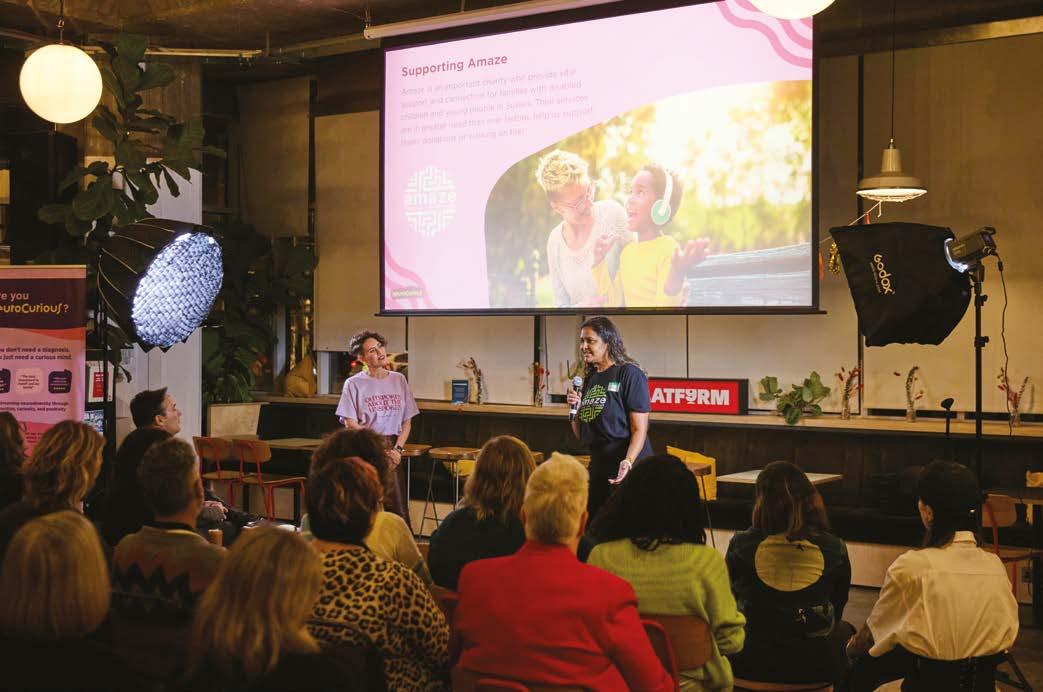
I’m also a proud Parent Carer. Solo mama. Late identified neurodivergent. National awardwinning speaker and facilitator. Community creator. Ambassador for Amaze Sussex. Business mentor. Sea swimmer. And secret raver. Yes, I don’t sit still for long!
It Started With Loneliness
12 years ago, I moved to Port Hall near Seven Dials. Not finding the community I craved as a new mother, I brought nine women together one evening at The Chimney House. Ten years later, that gathering has grown organically to over 400 women across the county. An inclusive hive mind designed to support women across all ages and
stages, and alleviate the loneliness of womanhood. We champion female-led local businesses and have apparently been credited with driving half of Brighton and Hove’s economic activity through the sheer volume of our recommendations!
But as the group grew online, the physical meetups diminished. It perplexed me that we were confusing digital interaction for human connection. So in 2019, when my period suddenly stopped, I listened to my body. I quit my job with nothing to go to, collated a team of seven volunteers, and The WomenHood was born through an event series called The Unspoken Sessions. I had no idea what I was building. With consistent sell out events I followed the energy.
Channelling Pain Into Purpose
The years that followed were a rollercoaster. COVID. Divorce. Premature menopause. My mum’s ovarian cancer. Years of relentless advocacy for my children to secure schools and EHCP support. Behind tired smiles, I kept building. Determined to shine a light on what society was cloaking in shame and stigma.
In 2024 I was recognised at the National Diversity Awards as a Positive Role Model for Gender, out of 90,000 nominations. In 2025, a People’s Honours Award for my contribution to British society. Both still feel surreal. I really feel I’m only just getting started.
Then came the night I discovered I too am neurodivergent. At 41. Grief ensued,
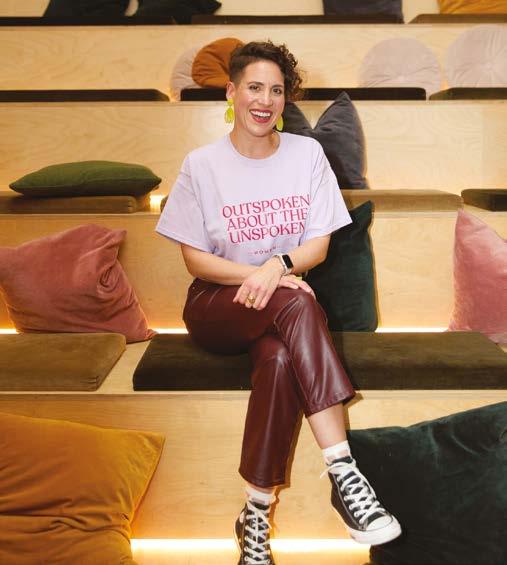
but also liberation. And with that, a vision: to bring people back together in person and make neurodiversity something to celebrate rather than hide.
In 2025, NeuroCurious was born. A not-for-profit hybrid event series supported by businesses across the city, including PLATF9RM, LUSH and Sussex Business Times, helping people understand and celebrate neurodiversity. To unmask and feel pride where there had once been shame. Too often that ‘fear of getting it wrong’ is preventing people from learning and uniting. So crucially, it also invites those who don’t identify as ND but want to better understand someone they live, love or work with.
I’m proud to support organisations to close their gender gaps, increase allyship and celebrate neurodiversity. Through candid, uplifting programmes, workshops and talks, I help change minds and shift cultures through the power of 1% micro-actions. Always with an intersectional lens, from neuroinclusion to menopause and beyond.
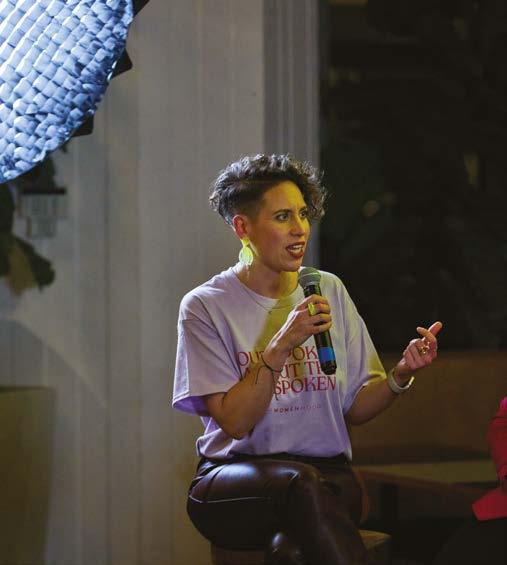
Male allyship is one of my most requested areas of work right now. Businesses are recognising that gender unity is not a women’s issue. It belongs to all of us. This month I interviewed the CEO of Depop for what became their biggest ever company event, Allyship in Action. I’m now regularly integrating senior internal voices into my work, which feels vital for psychological safety and lasting change.
I’ll be honest. This International Women’s Day feels heavier than ever. Gender equality is facing one of its most challenging periods in decades. Women’s rights are being redacted globally. Our future in AI is being built with bias. But I always remain hopeful. At its core, this work is about invoking greater empathy, compassion and connection between all genders. Including all brilliant Trans women and those born female still seeking acceptance to just be themselves.
This City
I feel so proud to call Brighton and Hove my home. A city that truly allows you to be yourself.
I believe we are not only the Pride Capital of the UK, but the Neurodivergent Capital too. The EHCPs, SEN registers and diagnosis waitlists all support this. I see it as an opportunity. I want to put Brighton on the map and build spaces that plug the gaps in support, positivity and connection, (and rebrand autism along the way!).
NeuroCurious returns in June 2026 and we are seeking values-aligned sponsors and partners to build a team to bring it to life again. If you want to align yourself or company with something the city genuinely needs, get in touch.
The WomenHood delivers bespoke programmes, workshops and talks on menopause, allyship and neurodiversity. Visit thewomenhood.com or connect with Jess Rad on LinkedIn.
If ever there was a time to unite and build something positive, this is it.
Cygnus Events is a boutique event management agency aimed at providing professional and bespoke event management perfection.
Sonia Stray and Sarah Whitehead first met back in 1986 at just 11 years old. 40 years later and their company, Cygnus Events has just celebrated its one year anniversary.
One of the keys to planning a successful event, we believe, is the people. Cygnus Events is about Sarah and Sonia who have been delivering outstanding events over 10 years.
Together as Cygnus Events they bring positivity and knowledge, creativity and excellence to all manner of events.
Powered by determination, bravery and a drive to excel, they have become a part of a wide spectrum of client teams!
The company is thriving, new clients, new locations, new challenges, new adventures!
That’s the company spiel but the real story we want to share, as we celebrate International Women’s Day, is how did we get where we are now?
Rewind a year or two and on a return flight from another successful conference pre-Cygnus, and as we approached a milestone birthday year,
both of us began to wonder what was next. As Sarah says ‘the previous few years had been challenging as we navigated the fall out in the events industry from the Covid years, perimenopause and the daily juggle of being a working Mum. After 25 years working as an event professional I was ready to jack it all in.’ Sonia continues ‘We both needed something more, something that would reignite a passion, a career for the next chapter of our lives with our stamp on it.’
Working on conferences around the world is hugely rewarding and exciting. We get to see months of hard work and
ideas come to fruition, meet new people from all walks of life and see the world but it also comes with its own stresses and challenges. Long days of travelling and long working hours constantly being the ‘go to’ person, being away from home and managing all that comes with that can be challenging and dare we say it perhaps not as easy as 20 years ago! So, having people around you that support you, lighten the mood and generally have your back is vital. Sonia sums it up when she says, ‘Sarah and I have such a great relationship, we just get each other, the good, the bad and the ugly, that’s what comes of knowing someone for so long! It just works!’ With such a strong foundation and a glass of wine or two the seed was sown that it was time to do something for ourselves, to believe in ourselves and make the most of the skills we had gleaned from years working in Event Management and Training agencies.
So why not set up a company at 50! Once that spark was ignited our enthusiasm was renewed and the journey began!
The real beginning wasn’t the return
flight, but when we first met at secondary school and became fast friends. Over the years we kept in touch on and off until finally rekindling our friendship when our children were small. We became part of each other’s all important female support network in those challenging first years of parenthood.
Eventually we started working together in a small local Event Management agency, working in a great teamtravelling the world supporting clients with the logistics management and delegate wrangling for a variety of conferences, exhibitions, award ceremonies and more.
Time went by, adventures were had, Covid happened, mid-life arrived and then the new chapter began! Our lives have now opened up to a whole new world of opportunities and independence that we never really would have thought possible a few years ago.
‘Setting up Cygnus as a female led partnership has reignited my love for my job and I am immensely proud of what we have achieved in the last year.’ says Sarah. ‘I firmly believe that what
is meant for you won’t pass by you, it is just about timing and this is what is meant for us. We just had to be in the right place in our lives. Partnering with Sonia and taking on this journey together has been inspiring and so much fun and why not! We have earnt it!’.
Sonia concludes ‘We are flourishing in this decade of our lives, and with that comes a new confidence. Starting Cygnus has truly been a joy, a challenge yes, but what better way to enter your 50s with renewed enthusiasm for a career you love and a strong focus. Juggling the demands of a busy family life is still very real, but working the way we do offers the ultimate in flexibility. I can be all the things I need to be for everyone but most importantly I finally feel that I can be myself and that is good enough.’
For more information about Cygnus Events visit www.cygnusevents. co.uk or drop us an email at info@ cygnusevents.co.uk
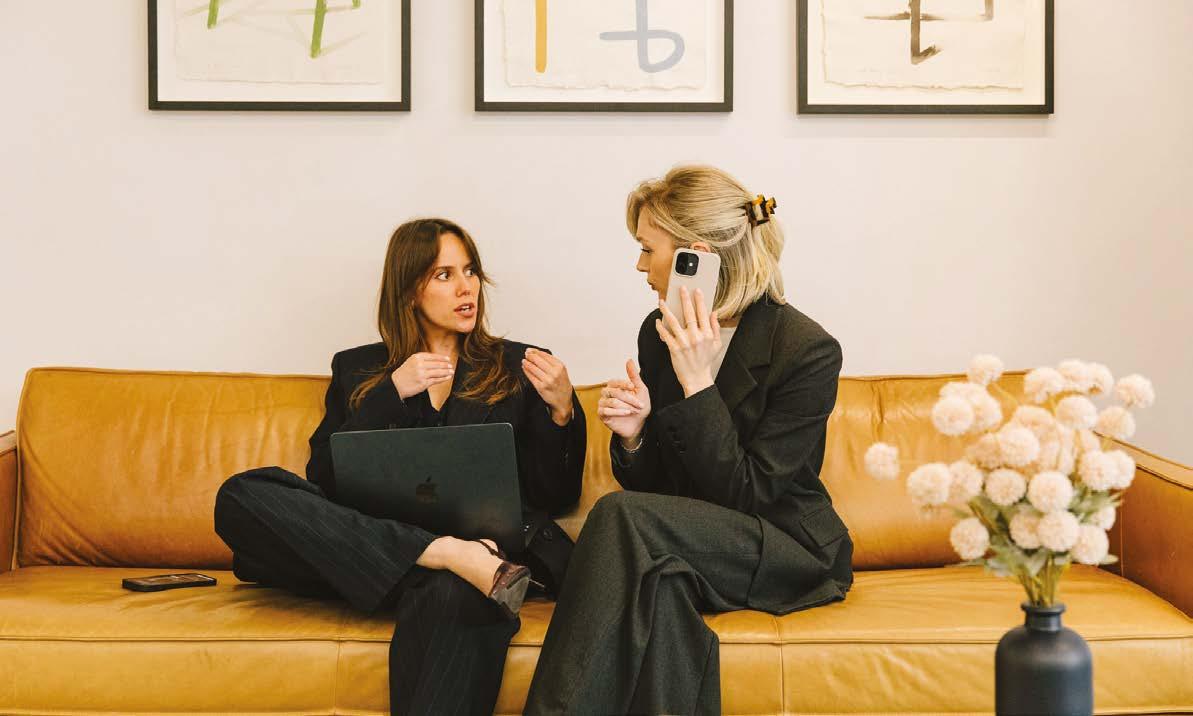
International Women’s Day offers an important opportunity to celebrate women’s achievements, reflect on progress and recognise the women who have shaped our lives, careers and communities.
But it should also ask something more of us. It should challenge us to look honestly at the environments we are creating every day and whether they are truly built for women to succeed in, lead within and feel at home in.
IWD Special
Because better workplaces for women are not created through one-off campaigns, panel events or wellmeaning statements. They are built through the everyday decisions that shape culture, opportunity, leadership and belonging. They are built in who gets listened to, who gets promoted, who gets paid fairly, who gets flexibility without penalty and who feels able to show up as themselves without fear of being diminished for it.
For all the progress that has been made, many workplaces are still designed around outdated assumptions. Assumptions about what a leader looks like. Assumptions about whose ambition is celebrated and whose is questioned. Assumptions about who gets heard in meetings, who is expected to carry emotional labour and who is asked to quietly absorb the invisible work that keeps teams functioning. Too often, women are still expected to adapt to structures that were never designed with them in mind.
If we are serious about creating better workplaces for women, we have to move beyond visibility alone. Representation matters, of course. Seeing women in leadership matters. Hearing women’s perspectives matters. But visibility without
structural change can quickly become performance. The real question is not just whether women are present, but whether workplaces are changing in ways that allow women to flourish once they are there.
That starts with culture.
A better workplace for women is one where respect is not earned through over-performance. It is a baseline. It is a place where women do not have to shrink themselves to be seen as collaborative, or harden themselves to be seen as credible. It is a place where different leadership styles are valued, where empathy is not mistaken for weakness and where decisiveness is not only recognised when it comes in the loudest voice in the room.
Too often, women are still navigating impossible double standards. Be confident, but not too confident. Be warm, but authoritative. Be ambitious, but not threatening. Be committed, but always available in precisely the right way. Speak up, but do not dominate. Be emotionally intelligent, but never emotional. These contradictions are exhausting and they do not just affect individual women. They affect the quality of our organisations. They limit talent, narrow leadership and reinforce cultures where too much energy is spent managing perception rather than making meaningful progress.
Building better workplaces means designing cultures where women can spend less time translating themselves and more time contributing fully.
It also means recognising that support for women cannot be reduced to a single policy or initiative. Flexible working matters. Parental support matters. Fair pay matters. Clear progression routes matter. Protection from discrimination and harassment matters. But so too do the less visible things: who is mentored, who is sponsored, who is trusted with stretch opportunities, who gets useful feedback, who is encouraged to lead and who is invited into the rooms where the most important decisions are made.
Some of the biggest barriers women face are not always dramatic enough to make headlines. They are often cumulative. They sit in patterns, not moments. They show up in interrupted ideas, uneven recognition, assumptions around care, slower promotion tracks, fewer second chances and cultures that praise inclusion without examining who still feels like an outsider. They show up in praise for reliability without investment in progression. In expecting women to be endlessly capable, while offering little protection from burnout.
This is why real progress requires leadership, not just intention.
Leaders have a responsibility to ask harder questions. Are women progressing at the same rate as men? Who leaves, and why? Who is carrying the emotional and cultural load in the team? Are women being developed into leadership positions, or simply expected to prove themselves over and over again? Are we rewarding presenteeism, confidence theatre and traditional power signals, or are we creating space for a broader, healthier model of contribution and leadership?
Building a better workplace also requires a willingness to redesign what good leadership looks like. For too long, leadership in many environments has been shaped by narrow definitions of authority, often rooted in visibility, dominance and certainty. But modern leadership requires more than that. It requires self-awareness, clear communication, sound judgement, empathy and the ability to bring others with you. These are not soft extras. They are essential. And many women have long embodied these qualities, even when the systems around them have failed to reward them properly.
There is also a wider opportunity here. Building better workplaces for women does not only benefit women. It benefits everyone. When workplaces become more thoughtful, flexible, fair and human, they become better places to work full stop. Men benefit from healthier models of leadership. Parents and carers benefit from better support. Teams benefit from greater trust and psychological safety. Businesses benefit from stronger retention, broader thinking and more sustainable performance.
The point is not to create workplaces where women are merely accommodated. It is to create workplaces that are more
intelligent because they reflect the realities of modern life and the full range of human talent.
And that requires a shift in mindset.
We need to stop treating women’s experiences at work as a niche conversation or a side initiative that gets attention once a year. The way women experience work tells us a great deal about the health of our organisations. If women are thriving, progressing and leading well, it is often a sign that the culture is working. If they are burning out, being overlooked or quietly opting out, that tells us something too.
International Women’s Day should encourage us to celebrate women, yes, but also to interrogate the systems around them. Not with cynicism, but with ambition. Not with blame, but with honesty. Because better workplaces are possible, and many organisations are already showing what it looks like to build them. Workplaces where women are trusted, supported, listened to and paid fairly. Workplaces where leadership is not modelled on outdated norms, but redefined through integrity, clarity, emotional intelligence and courage.
That is the kind of progress worth pursuing.
Building better workplaces for women is not about optics. It is about design. It is about choice. It is about whether we are willing to create cultures, policies and leadership models that reflect the world as it is and the world as it could be.
This International Women’s Day, the question is not whether we value women. Most organisations will say they do. The question is whether we are building workplaces that prove it.
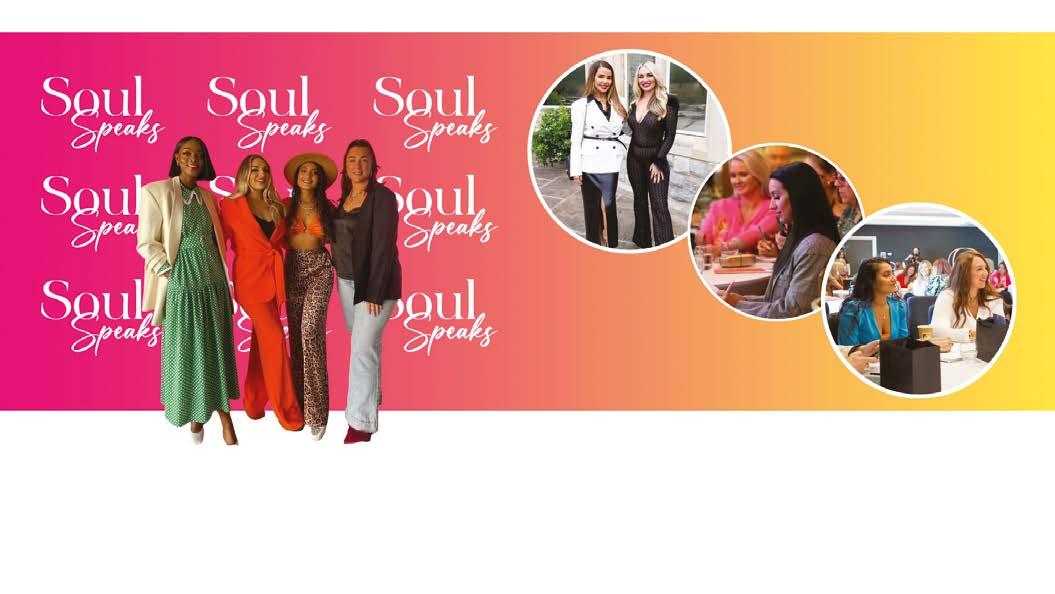
How women can stop undervaluing their story and start using it to build authority, visibility, and wealth
By Laura Beddoe-Collins • Founder of
Soul
Speaks
• Speak to Sell Expert
IWD Special
Before you read another word, I want you to think about every version of yourself that got you here. Every chapter, including the ones you never talk about. Because those are the ones that matter most.
Here is something I know to be true after twenty years in sales, marketing, and now helping women get paid to speak: your story, told right, is not a soft skill. It is your most valuable business asset. And most women are sitting on a goldmine they have never been taught to use.
We are conditioned to downplay what we have been through. To skim over the hard parts, tidy up the messy chapters, and lead with qualifications instead of lived experience. But after building a community of over 18,000 entrepreneurs and helping women step onto stages around the world, I can tell you this: it is never the polished CV that moves a room.
It is the moment you tell the truth. The woman who shares how she rebuilt after everything fell apart. The woman who admits she was terrified the first time she raised her prices. The woman who says out loud what everyone else is thinking but nobody will say. That is the woman people remember. That is the woman who gets booked, gets paid, and creates real change.
I know because I have been her. After experiencing domestic violence and losing my home, I had to decide whether my story would define me or become the foundation for everything I built next. I chose the latter. And I have spent every year since showing other women they can do the same.
This idea is not new. Women have been turning their voice into a force for generations, often at extraordinary personal cost.
Sojourner Truth stood before a crowd in 1851 and reshaped the conversation
about race and gender with nothing but her words. Emmeline Pankhurst endured imprisonment and force-feeding because she understood that a woman’s voice, once raised, could change the law of a nation. Millicent Fawcett spent over fifty years in quiet, relentless campaigning, her statue now standing in Parliament Square as proof that persistence is its own kind of power. Harriet Tubman risked her life leading hundreds to freedom. Funmilayo Ransome-Kuti fought for Nigerian women’s rights decades before gender equality entered mainstream conversation.
Every one of these women, across different eras and continents, understood the same thing. Their voice was not just worth using. It was the vehicle for everything they wanted to change.
The stakes may look different now, but the pattern is the same. And the question it raises is uncomfortable: if our voices carry that much power, why are so many of us still staying quiet?
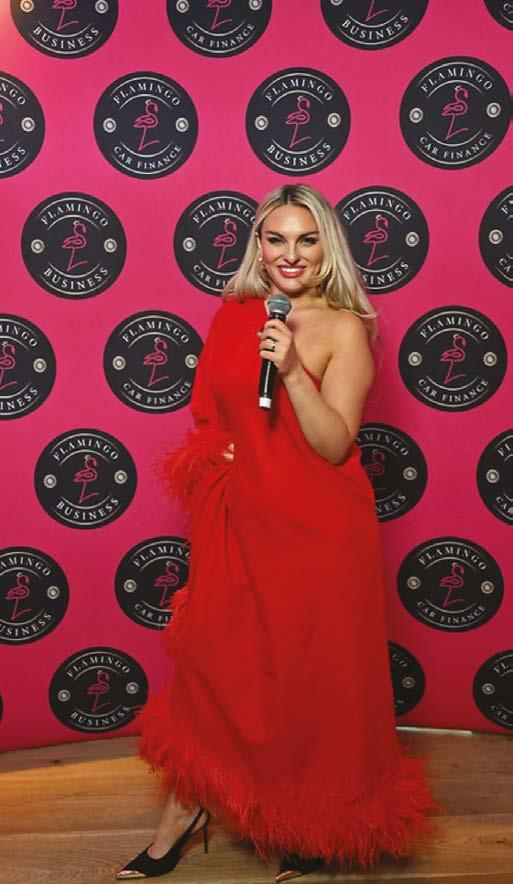
In my experience, it comes down to three things. Women share their story but are afraid to charge to speak. They do not know how to structure their message in a way that creates authority and income. Or they have been conditioned to play small and never given permission to take up that much space.
That is exactly what I built Soul Speaks to solve. Through my Story Alchemy Formula, the 7-Pillar Visibility System, and my Sales From The Stage framework, I help women turn lived experience into a talk that positions them as the expert, builds trust with an audience, and converts into real revenue without feeling salesy, pushy, or inauthentic.
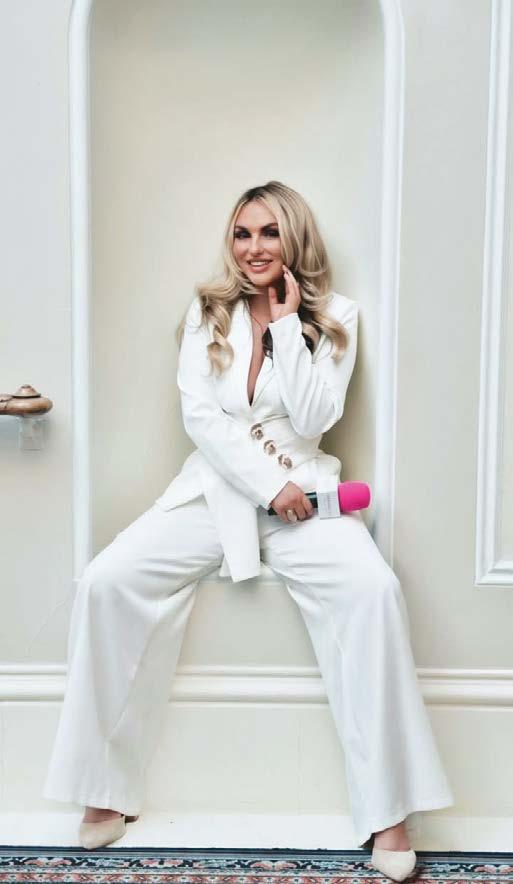
Because selling from the stage is not about manipulation. It is about connection. And connection starts with your story.
People ask me what International Women’s Day means to me. Honestly, every day I am surrounded by incredible women who have decided to go all in on building their passion from their purpose. It has become normal to me for women to stand in their power and have the uncomfortable conversations that change things. It would be easy to take that for granted.
But I do not. Because it is the identity work and the therapy I have done on myself that broke the chain of
generational trauma and changed my daughter’s trajectory. International Women’s Day is a day we celebrate every woman who came before us and used her voice and her actions to create meaningful change. It is also a reminder that the work is not finished.
Your voice matters. And it is worth more than you think.
If you know you have a message inside you but you are not yet getting paid to share it, my free guide “9 Reasons You’re Not Getting Booked as a Paid Speaker” will show you where to start. Download it at laurabeddoe.com/9steps-to-getting-booked-and-paidas-a-speaker
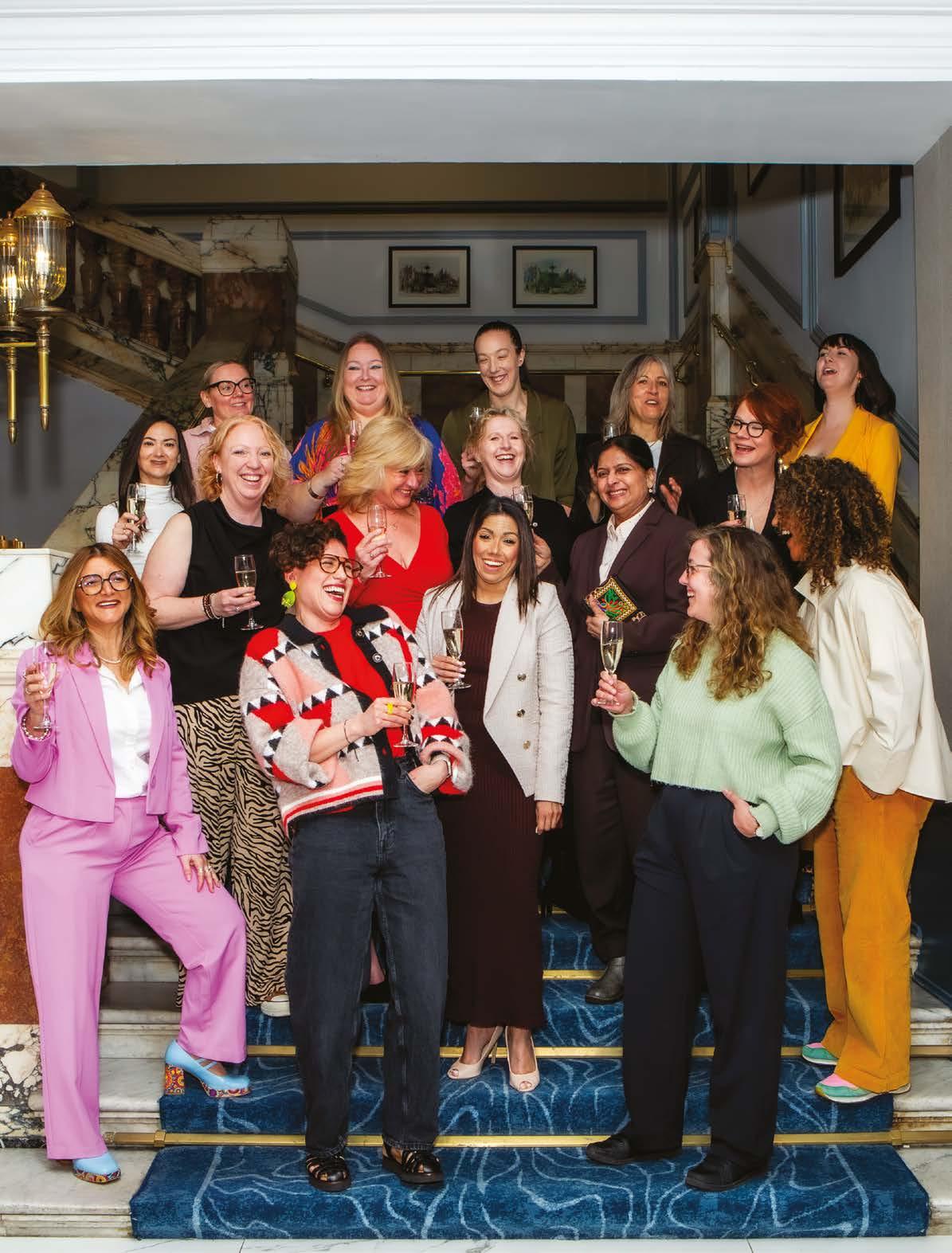
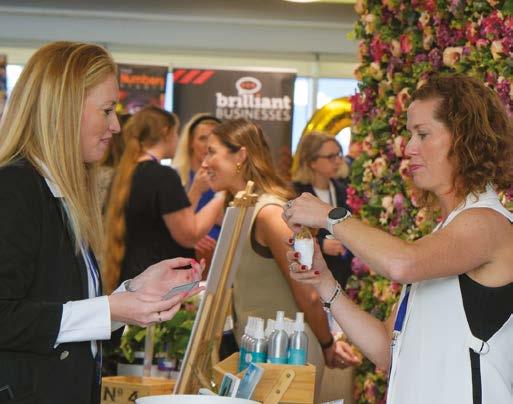
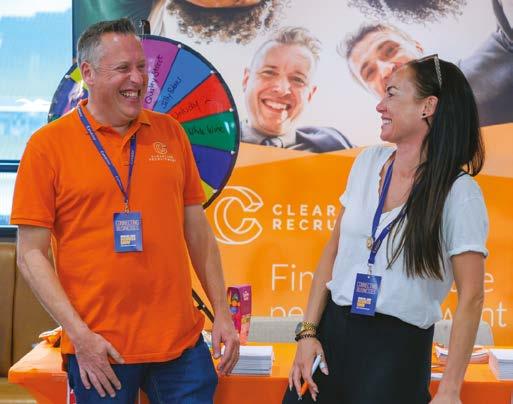
Brighton stands selling fast, Gatwick expanding, and a lightning strike for Eastbourne.
Three shows. Three distinct locations.
One clear focus: creating powerful platforms for regional business growth.
Brighton & Hove Business Show
Thursday 4th June 2026 | 10am – 3pm
The Amex Stadium, Brighton
The Brighton & Hove Business Show is coming back to the Amex Stadium this June, confirming its spot as a key event in the Sussex business calendar.
Brighton has become known for offering more than just crowded exhibition aisles. It draws decision-makers, founders, professional services, and ambitious small businesses who come with clear goals. Exhibitors often mention the valuable conversations and real business opportunities that happen during the event.
Eastbourne Business Show
Wednesday 9th September 2026 | 10am – 3pm
The Kings Centre, Eastbourne
Lightning Fibre Announced as New Headline Sponsor
The Eastbourne Business Show is also looking strong this year, thanks to the news that Lightning Fibre is the headline sponsor.
Lightning Fibre has established itself as one of the region’s leading fullfibre broadband providers, investing heavily in infrastructure across East Sussex. Its commitment to supporting local homes and businesses makes it a natural fit for the Eastbourne Show, which continues to champion regional enterprise and collaboration.
This partnership shows confidence in the show’s growth and influence. Having a respected, forward-thinking local brand as sponsor adds more credibility and helps boost promotion and engagement in the area.
Gatwick Business Show
Thursday 8th October 2026 | 10am – 3pm
Lingfield Park Resort, Pavilion Suite
The Gatwick Business Show enters an
exciting new chapter in 2026 with a significant venue upgrade.
This year’s show will take place at the Pavilion Suite at Lingfield Park Resort – a premium exhibition and conference space set beside the famous racecourse. The move represents a major step up in scale, facilities and overall visitor experience.
The new venue has great transport links, plenty of exhibition space, and a modern, professional atmosphere. It is set up to help people have longer conversations and build better connections.
Each show has its own regional focus, but they all aim to bring businesses together in a well-organised, businessfocused setting that helps people make real connections.
With stands selling fast, it is set to be another standout year for business networking in Sussex and the South East.
For stand bookings and visitor information: brightonandhovebusinessshow.uk

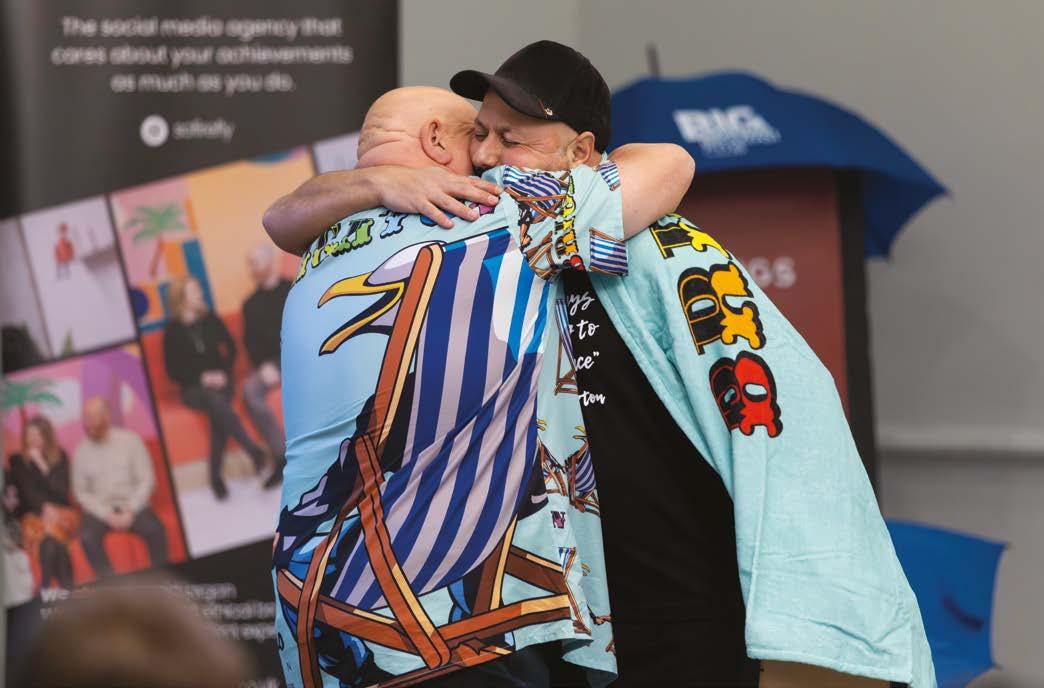
February’s Big Business Breakfast Club brought another packed room of Brighton business leaders together at the Leonardo Royal Hotel - but this month’s event carried an extra moment of significance as co-host Sam Thomas delivered his final appearance after four years helping to build the BBBC community.
Approx 100 business owners, founders and professionals gathered for the February event, with around a quarter of attendees experiencing BBBC - and in some cases business networking itself - for the very first time. The mix of seasoned regulars and “Fresh Meet” newcomers
continues to be a defining feature of the club’s format, creating an environment where experienced networkers sit alongside those taking their first steps into the local business scene.
The event was sponsored by Unleashed Exec, founded by Chris Cheeseman, who spoke about the organisation’s work helping leaders unlock performance through challenge and adventure. Cheeseman also introduced the upcoming White Gold Expedition in September 2026 - an ambitious leadership adventure alongside explorer Neil Laughton.
As part of the sponsorship, Unleashed Exec selected REACT as the event’s charity partner. REACT is a UK-based
rapid response humanitarian charity that deploys volunteer teams to disasters and emergencies both in the UK and internationally. The BBBC community continues to support a different charity partner each month, with fundraising efforts now approaching £9,000 since the initiative began.
A highlight of the morning was the guest interview with public speaker Oly Newton, who shared his personal mission to positively impact one million young people by 2030 while raising awareness around OCD and neurodiversity. Newton’s candid discussion resonated strongly with the room, particularly among parents and business leaders navigating similar challenges in their own lives.
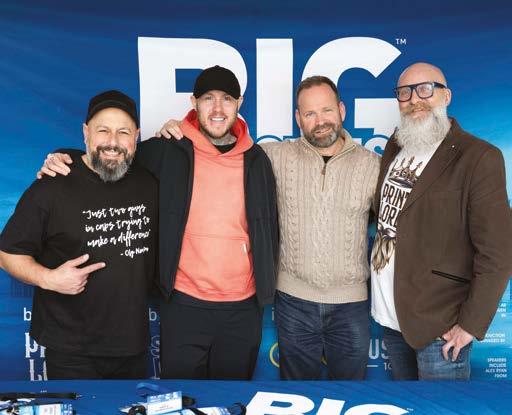
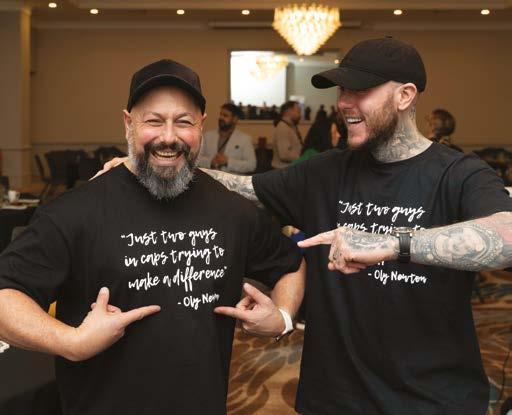
The popular “Big Steps for Small Business” segment was delivered this month by James Armstrong of Social Firefly, stepping in for regular contributor Alex Ryan. Armstrong’s session focused on how businesses can get more value from LinkedIn, sharing practical guidance on navigating the platform’s evolving algorithm and improving engagement.
February’s event also paused to recognise a group of long-standing BBBC ambassadors - regular attendees who have each participated in over 30 events. Ten ambassadors were celebrated during the meeting, reflecting the consistency and loyalty that underpin the club’s community spirit. With more than 160 ambassadors
now active across Brighton’s networking scene, the BBBC continues to build a strong core of advocates who help welcome new members into the room.
But the biggest moment of the morning came at the close of the event, when the room acknowledged the contribution of Sam Thomas.
For four years Thomas has helped shape BBBC’s tone and energy as co-host, bringing humour, perspective and thoughtful conversations to the stage. His departure marks the end of a chapter as he moves forward to focus on his work tackling male suicide and challenging traditional ideas of success. While the farewell carried a note
of nostalgia, the message from founder Jim Cunliffe was clear: BBBC continues to evolve.
The next event takes place on 20 March at The Grand Hotel Brighton, with Acumen Law sponsoring the morning and supporting The Starr Trust as the chosen charity partner.
With tickets continuing to sell out month after month, the Big Business Breakfast Club remains one of the South Coast’s most vibrant business networking communities - proof that in a digital world, the power of real conversations over breakfast is still hard to beat.
bigbusinessbreakfastclub.co.uk
The Starr Trust is a Brighton and Hove-based charity dedicated to supporting young people who are facing disadvantages such as mental health challenges, poverty or disabilities that are holding them back in life.
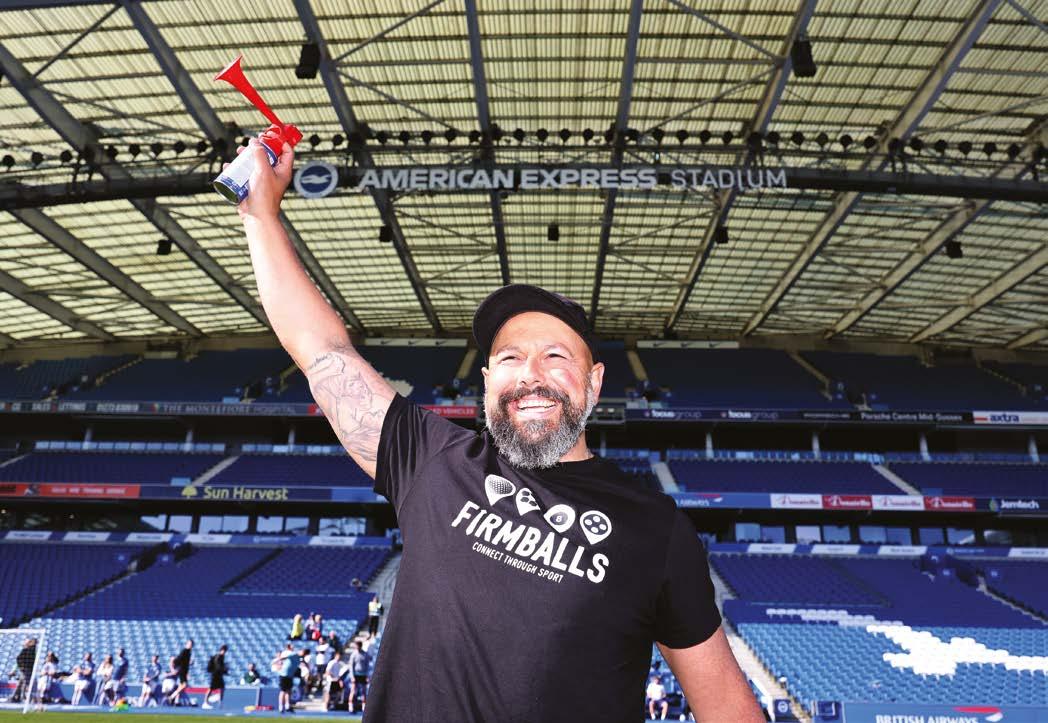
Networking & Events
The operations of the Starr Trust are fully funded by Seico Mortgages, meaning every single pound raised through fundraising goes directly to the young people who need it most. This year there are some fantastic opportunities for local businesses to get behind the cause. From sporting challenges to glamorous evenings out, there is something for everyone and every team entered, table booked, and pound raised makes a real difference.

DoubleTree by Brighton Hilton - PreLoved Clothing Sale, 9th May, 9-12pm
The DoubleTree by Brighton Hilton is hosting a pre-loved clothing sale in aid of the Starr Trust. If you have quality items you would like to donate, the charity would love to hear from you. Please get
in touch to let them know what you would like to contribute, and arrange to drop donations off at the Starr Trust office in Hove ahead of the event.
Firm Balls Football Tournament - 3rd June 2026
Hosted by Sam Thomas, the Firm Balls Football Tournament takes place on 3rd June at Brighton & Hove Albion’s home ground, the American Express Stadium. This event is now open for teams to enter, whether you are a seasoned five-a-side squad
or just looking for a great day out with colleagues, this is your chance to pull on your boots and play for a brilliant cause alongside other local businesses.
Licence To Thrill - The Gala Royale, 10th October 2026
Brighton Regency 10 Round Table are hosting their annual ball on Saturday 10th October 2026 at the DoubleTree by Hilton Brighton Metropole, and the Starr Trust is inviting local businesses to take a table in support of the charity. Tickets are priced at £90 per person and include a drinks reception from 6pm, a three course meal, a welcome drink, half a bottle of wine, and fantastic entertainment throughout the evening. The night will also feature a raffle, silent auction, virtual horse racing and more. Book early to avoid disappointment!
Networking with Balls host an annual pool league tournament which is held every month at the Castle Pool Club and the Starr Trust is inviting local businesses to enter a team and nominate the charity as their chosen cause. It is a brilliant way to enjoy some friendly competition while supporting young people in the community. Get your team together and be part of this fun networking event - a few team spaces are still available!
The Starr Trust is also on the lookout for prizes and auction lots to be

donated ahead of these events. Experiences, tickets, hampers, products, or any raffle or auctionworthy items would be gratefully received and will help maximise the funds raised for the young people the charity supports. If you or your business can donate something special, the Starr Trust would love to hear from you.
Could your team take on a challenge or host an event?
If your business is planning its own event or your team is taking on a sponsored challenge this year, why not choose the Starr Trust as your beneficiary charity? The charity would be delighted to hear from you to discuss and support your ideas.
Tracey Starr, Partnership Liaison at the Starr Trust, said: “We are truly overwhelmed by the generosity and support of the local business community this year. To every business hosting an event, entering a team, or fundraising on our behalf, we cannot
thank you enough. Your support means everything to us. We would like to extend a very special thank you to Acumen Law for choosing the Starr Trust as their charity for the Acumen Business Convention on 6th May, and to Best of British Events for their wonderful support through their upcoming race day and Tunbridge Wells events. Together, we can make a real and lasting difference to young people whose lives are being held back through no fault of their own, and it is the generosity of businesses like yours that makes that possible.”
To find out more about any of these events or to get involved, please email Tracey@starrtrust.org
www.starrtrust.org/updates-events




Silicon Brighton started from a small, simple idea: to create space for Brighton’s tech community to learn together, share openly and feel connected to something bigger than their own roles or companies. A few meetups turned
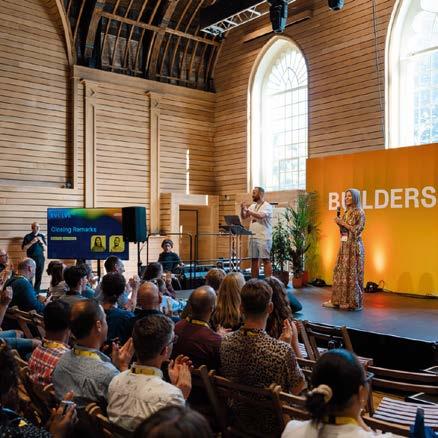

into a thriving community committed to growing the tech landscape in the region. A place where people from different backgrounds and experience levels stand side by side with the same sense of belonging and willingness to
share knowledge. When EVOLVE launched last year, it was a milestone the city will look back on for a long time. It had that rare feeling of a community stepping fully into its identity. It proved that the tech scene in Brighton & Hove is genuinely becoming something special. Not only that, it showed that the community is ready for more.
That is why EVOLVE [26] is taking yet another step forward. It will take place at Brighton Centre, a bigger venue with the space to host more people and deliver more impactful content. The programme is being built around the themes that resonated most last year: AI and applied innovation | Product leadership and delivery excellence | Emerging technologies and future trends | Sustainability in tech | Investment, growth and scaling | Community, careers and the future of work.




New elements are also being introduced, shaped directly by community feedback, including more space for practical sessions, real world case studies and voices that do not often have a platform. Moving to the Brighton Centre is more than just a venue upgrade – it’s a sign that people want to invest in Brighton as a place to work, grow and build. It reflects the ambition heard


from companies, founders, investors, universities and professionals at all stages of their careers.
Brighton has always had creativity, curiosity and heart at its centre. With EVOLVE, that energy is being given a stage, one that is becoming bigger, louder and more inclusive as the community grows.
When Silicon Brighton launched, the founders’ hope was that the community would one day grow beyond themselves; that it would have its own gravity, its own energy and its own sense of direction.
EVOLVE [25] was the moment that happened.
EVOLVE [26] is the next chapter.
Scan the QR code to secure your ticket (use the code SBT for a special 20% discount code) and be part of the EVOLVE journey.
If you’re interested in exhibiting, sponsoring, or collaborating in any other way, reach out to the team at evolve@siliconbrighton.com
A huge thank you to the amazing sponsors already onboard:












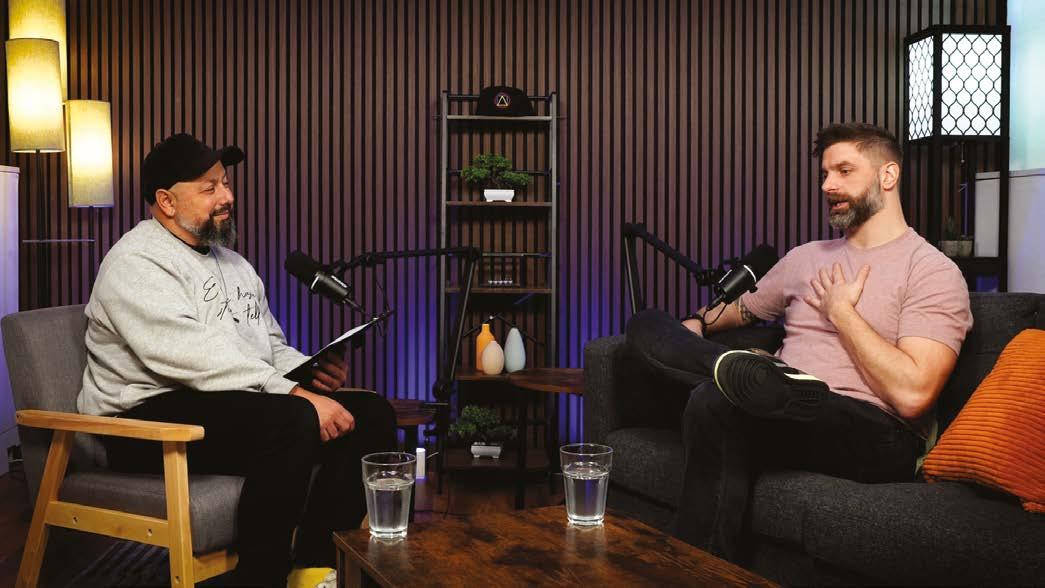
Could you be overlooking the most significant growth opportunity in your business?
By Matt Cheney
|
Brown Bear Studios.
Partnerships & Growth
Many businesses still pour money into cold outreach and paid ads while treating content as a “nice to have”. If that’s you, there’s a strong chance you’re leaving trust, visibility and revenue on the table. With a simple, media-minded content strategy, you can turn your personal brand and business into the obvious choice for your ideal customers – without a TV-sized budget.
The 4 ways to grow – and the one everyone underuses
Broadly, there are only four ways to grow your audience and win new customers: cold outreach, warm referrals, paid advertising and content creation. Most
businesses double down on the first three and treat content as “something marketing will sort when we have time”, when in reality it’s the piece that makes the other three work better – including website copy, blogs and search-led articles that quietly pull the right people in.
Take cold outreach. You can send another “quick intro, can we jump on a call?” message, or you can send a useful checklist, a short video, a podcast episode or an article that actually solves a problem. The second approach changes the energy of the interaction; you’re giving value first, not asking for time out of the blue.
Referrals are similar. When someone recommends you, their contact will Google you, look at your LinkedIn, check your
website and social media. If they find a thin site and a quiet feed, they have to take a leap of faith. If they find a body of work that shows how you think, what you care about and how you help people like them, the referral feels obvious rather than risky.
Even with paid ads, content is the smart starting point. If a post, video or article has already landed well organically (including through search), that’s your clue of what to put spend behind, instead of guessing with fresh creative every quarter.
Think like a media brand, not a brochure
In most sectors, your competitors are selling something that looks very similar on paper. The real differentiator is how clearly and consistently you communicate.
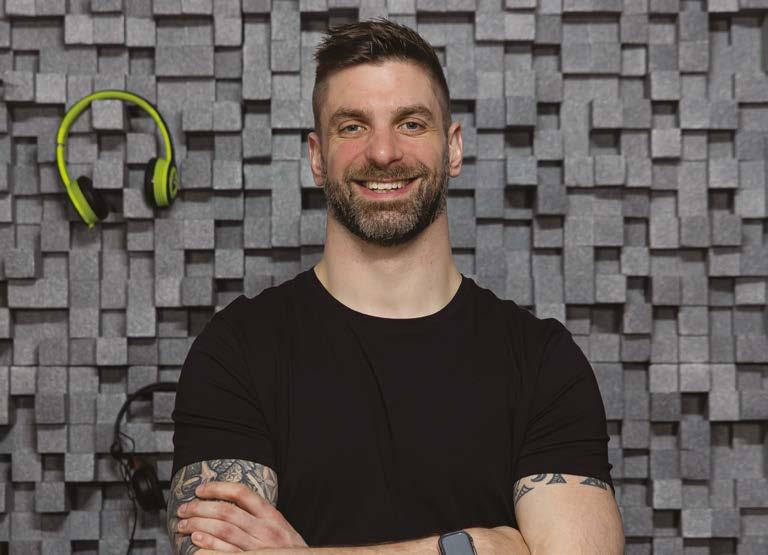
The businesses that win will act more like media brands than static brochures. That means building a body of work over time, creating content that answers real questions your buyers are already asking, and guiding people on a journey from stranger to acquaintance to friend to super-fan.
That journey is really one of trust. Helpful, thoughtful content lets people spend time with you before they ever speak to you. By the time they’re ready to buy, you’re no longer “some company I found online”; you’re the familiar voice that’s been helping them for months.
Content is more than just a weekly podcast
When leaders hear the word “content”, many immediately picture a weekly podcast they’ll never keep up with or posting every day across five platforms. It doesn’t need to look like that.
Content can be short-form social video, a small number of focused podcast or video episodes, articles that answer specific, high-intent questions, webinars
and live events, internal podcasts that keep your team aligned, or collaborations with other businesses and creators.
A simple four-part evergreen series that answers the key questions people ask right before they need you can quietly work in the background, capturing demand at exactly the right moment.
Content can also stay behind the scenes. Sitting your founder or leadership team down to record the story of the business and the lessons learned can become a goldmine, to be transcribed into articles, turned into website copy or even used as the basis for a chatbot that speaks in your voice on your site.
A few decades ago, every serious business needed to be in the phone book. Now, every business has a website, and you can spin one up in a day – the real question is what you put on it.
Your content should quickly show who you are, what you do, why you do it, what it’s like to work with you, and who
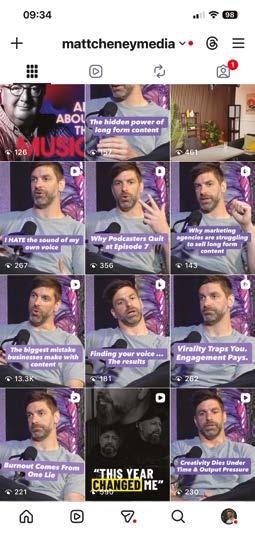
you’ve helped. Strategic content helps the right people trust you.
Content should sit alongside your logo and pipeline as a core asset, not a “when we remember” activity. One strong piece of long-form content can become dozens of assets – clips, email copy, short posts, LinkedIn articles and more – increasing the number of places people can encounter and start trusting you, even when you’re in a meeting or asleep.
If any of this lands with you, treat it as a nudge, not a lecture. You don’t need a TV studio – just a first, intentional step towards content that truly serves your audience and reflects who you are. If you’d like a sounding board on where to start, I’d love to chat.
Contact:
matt@brownbearstudios.co.uk www.brownbearstudios.co.uk

With over two decades of recruitment experience, Placr Recruitment is dedicated to delivering a personalised, high-quality service to both employers and candidates.
Based in Sussex, our reach extends nationwide, and our mission is simple: we place the best candidates into the best companies, fostering growth and success for both
Our Services
Permanent Recruitment
We specialise in permanent recruitment, ensuring long-term
Salary: Basic up to £35,000 + £10,000 bonus
Location: Worthing
A high-impact leadership role where you’ll lead a successful lettings team, drive growth, and actively win new business and clients. This is a hands-on opportunity with clear progression to Area-level roles.
• Lead, motivate and develop a high-performing lettings team
• Drive market share, revenue, and new business opportunities
• Proactively win new landlords and instructions
• Build and maintain strong client relationships
• Oversee day-to-day lettings operations, valuations, and compliance
• Deliver outstanding service in a fast-paced, targetdriven environment
• Senior Negotiators ready to step up are encouraged to apply.
success for both businesses and candidates. Our team is committed to understanding your specific needs and finding the perfect fit.
Though we’re based in Sussex, our recruitment services extend across the UK. Whether you’re looking for talent locally or across the country, we’ve got you covered.
Our expertise spans multiple sectors, allowing us to match toptier candidates with leading companies in various industries.
• Proven experience in senior or managerial lettings
• Strong leadership, coaching and peoplemanagement skills
• A clear track record of winning new business and clients
• Commercially focused, organised, and resilient
• Full UK driving licence
Basic salary up to £35k
• Performance bonus up to £10k (uncapped earning potential)
• Car allowance
• Structured career progression to Area roles
• Industry-leading training and ARLA support
• Comprehensive benefits package
If you’re ambitious, commercially driven, and confident in growing a lettings portfolio, wed love to hear from you.
Location: Portsmouth or Bognor Office (some hybrid) • Hours: Full time
Our client is seeking a highly motivated and experienced Block Property Manager to join our team on a full-time, permanent basis. The successful candidate will be responsible for managing a portfolio of properties, ensuring that they are well-maintained and that all legal and financial obligations are met.
Key Responsibilities:
• Manage a portfolio of properties, including residential and commercial buildings, ensuring they are wellmaintained and meet all legal requirements
• Act as the main point of contact for tenants
• Conduct regular property inspections and ensure that any necessary repairs or maintenance are carried out
• Prepare and manage budgets for each property
• Liaise with contractors and suppliers to obtain quotes and oversee any work being carried out
• Keep up-to-date with industry regulations and ensure that all properties are compliant with laws and regulations
• Prepare and distribute reports to clients
• Attend meetings with clients and stakeholders
• Develop and maintain positive relationships with
Administrator
We are seeking a highly organised and efficient Lettings Administrator to join our team. The Lettings Administrator will be responsible for assisting with all aspects of the lettings process, from initial inquiries to lease agreements and move-in/move-out procedures. The ideal candidate will have excellent communication and customer service skills, as well as a strong attention to detail.
Key Responsibilities:
• Respond to initial inquiries from potential tenants and schedule property viewings
• Conduct property viewings and provide information about the property and surrounding area
• Process tenant applications and reference checks
• Create and maintain tenant files and ensure all necessary documentation is completed accurately
• Prepare tenancy agreements and other legal documents
• Collect and process rent payments and security deposits
• Coordinate move-in and move-out procedures
clients and tenants
• Assist with the recruitment and training of new property management staff
• Keep accurate records and documentation
Requirements:
• Minimum of 3 years of experience in property management, preferably in a block management role
• Strong knowledge of property laws and regulations
• Excellent communication and interpersonal skills
• Strong organizational and time-management abilities
• Ability to work independently and as part of a team
• Proficiency in Microsoft Office and property management software
• Experience managing budgets and financial records.
• Competitive salary and benefits package
• Opportunities for career growth and development
• Supportive and collaborative work environment
• Working with a diverse and dynamic team
• Exposure to a wide range of properties and clients.
Hours: Part time
• Respond to tenant inquiries and resolve any issues or concerns in a timely manner
• Maintain accurate and up-to-date records of all tenancies and rental payments
• Assist with marketing and advertising of properties
• Collaborate with property managers to ensure smooth operation of all rental properties
• Keep up-to-date with any changes in lettings legislation and ensure compliance with all regulations
Qualifications and Skills:
• Previous experience in a similar role, preferably within the property/lettings sector
• Excellent communication and customer service skills
• Strong organizational and time-management skills
• Ability to work independently and as part of a team
• Knowledge of relevant lettings legislation and regulations
• Proficiency in Microsoft Office and relevant software
• Attention to detail and ability to maintain accurate records
• A valid driver’s license and access to a vehicle is preferred

Wuthering Heights leans heavily into atmosphere—windswept hills, brooding skies, and a sense of emotional unrest that never quite settles. The film captures the bleak beauty of the Yorkshire moors well, creating a setting that mirrors the turbulent inner lives of its characters. Visually, it’s striking, with wide, lonely landscapes and dim interiors that feel appropriately raw and untamed.
The story itself, however, feels less compelling in this adaptation. While the core themes of obsession, revenge, and destructive love remain intact, the emotional connection doesn’t always land with the force it should. The relationship at the heart of the film often feels distant rather than consuming, making it harder to fully invest in the tragedy unfolding.
The performances are solid but uneven. There are moments of genuine intensity, particularly in the more confrontational scenes, but the emotional arc sometimes feels restrained to the point of detachment.
Heathcliff’s rage and Catherine’s volatility are present, yet they don’t always reach the level of rawness the story demands.
The cinematography is easily the film’s greatest strength. The moors are filmed with a haunting beauty that gives the story a constant sense of isolation. Wind, rain, and open space become characters of their own, reinforcing the bleakness that defines the narrative.
Pacing is where the film struggles most. The deliberate rhythm occasionally drifts into sluggishness, especially in the middle stretch where scenes linger without adding much emotional progression. What should feel brooding sometimes feels stalled.
Still, Wuthering Heights has moments that work—quiet, haunting ones that capture the novel’s spirit even if the adaptation never fully ignites. It’s a visually powerful interpretation that understands the mood of the story, but not always its emotional intensity.
Cinematography: 4.5/5
Score: 3.5/5
Plot: 3/5
Dialogue: 3/5
Pacing: 2.5/5
Ending: 3/5
Overall: 3/5