It’s Pretty Simple Actually . . .
Do we believe that everything we do is selfish?
If not, are we open to the possibility that we might be wrong?
And if we’re not open to being wrong… it might be worth going back and revisiting the 1-10 scale again.
Now, take your journal and list everything you believe you do purely out of selflessness.
Take your time.
How many did you come up with?
Now ask yourself: Were they truly selfless - or did they also meet a need inside you?
Approval. Purpose. Belonging. Identity. Control. Avoidance.
This isn’t about shame. It’s about awareness.
If everything we do contains some element of self-interest, then perhaps the real question is this:
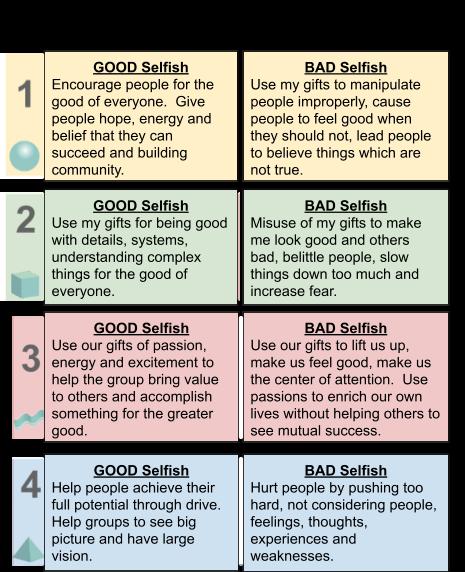
Is there healthy selfishness… and unhealthy selfishness?
What’s the difference?
And how do we choose the kind of self-interest that serves others while also strengthening ourselves?
Let’s start with a simple exercise.
If you were sitting down with two individuals and allowed yourself to be completely, unapologetically selfish, what would you truly want?
Don’t filter it. Don’t edit it. Just be honest.
You are not required to share your answer with anyone—though you may if you choose. This is simply an opportunity to get honest with yourself.
If I could be totally selfish, I would . . .
5. Imagine … being part of a group of friends who are seeking to be humble, thankful and take personal ownership. What would that be like? “Your Voice In My Headset” group of people is all about learning how to have more intentional, deeper and more connected friendships. It’s free and takes less than 3 minutes to register.
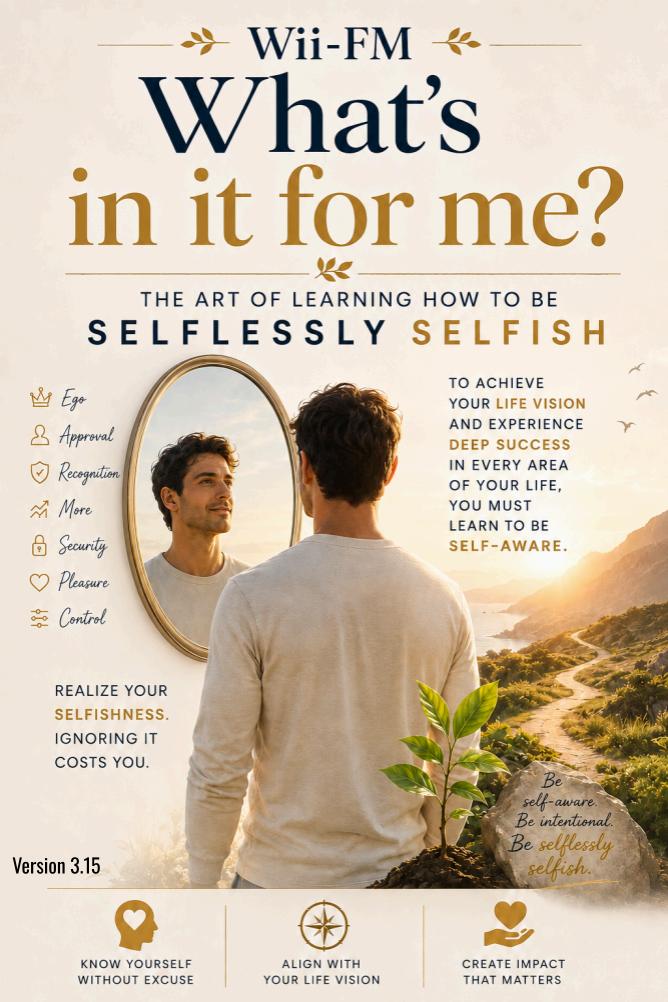
It seems that the issue may not be, us being selfish and knowing it, but us being selfish but thinking we’re not. Understanding how different frequencies / personalities tend to be selfish without even realizing it, is a great place to start.
So … what are your thoughts thus far?
What’s interesting is that we often like people who are like us but we tend to fall in love with people who are very different from us.
Why is that?
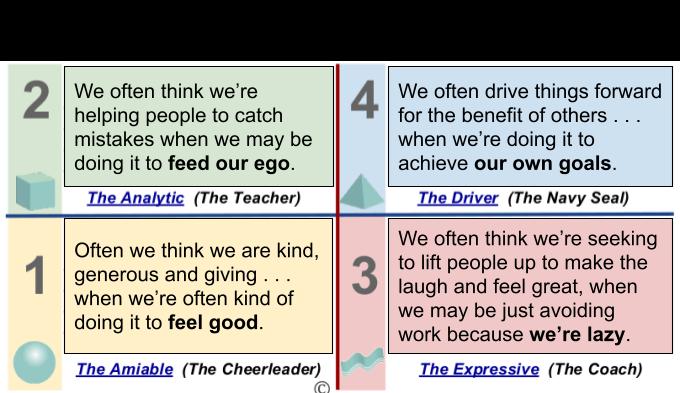
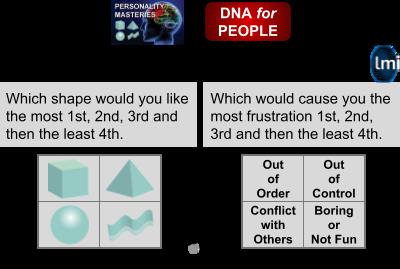
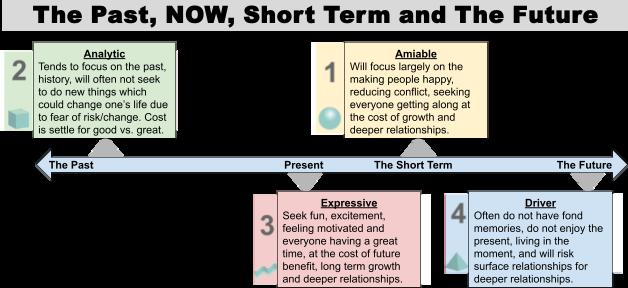
In many ways, it comes down to our natural self-interest. We’re drawn to what feels good and avoid what doesn’t. For example, we may love to have fun and enjoy life (Expressive), but avoid tasks like managing finances (Analytic). Or we may thrive on driving results (Driver), yet feel drained by constant interaction—leading us to be drawn to those who genuinely enjoy working with people (Amiable).
We aren’t just attracted to others we’re often attracted to what they carry that we don’t.
Recognizing this “selfishness” is powerful. And it’s important to understand—it isn’t inherently bad. It only becomes harmful when it operates without intention or self-awareness.
When we begin to understand our natural tendencies—our personality, our strengths, our “frequency” we gain the ability to direct that self-interest in a constructive way. Instead of it serving only us, it becomes a tool to create value for others as well. It shifts from being self-serving to mutually beneficial.
What’s even more interesting is how often we mislabel our motives. Sometimes we call something selfless when it’s actually self-serving. Other times, we assume something isn’t selfish at all when, at its core, it is.
One of the clearest indicators lies in our reaction to being questioned. If someone challenges whether our actions are rooted in healthy or unhealthy selfishness and we immediately become defensive, that response is worth paying attention to. Defensiveness can be a signal that, at some level, we recognize our motives may not be as aligned as we’d like—and we’re uncomfortable being seen clearly. Awareness is what changes everything. When we understand ourselves, we can move with intention. And when intention is present, what once looked like selfishness becomes a powerful force for creating outcomes that benefit everyone involved.
Q&A
Q1: Delusional
~ How do you deal with someone who believes they are not selfish but likely are more than they realize?
A: Have they read the white paper booklet? If not, start there invite them to read it.
If they’ve read it and still don’t recognize how they may be acting, there are a couple of possibilities. They may genuinely not see it yet. Or, they may see it—but feel uncomfortable knowing that you can now see it too.
When awareness increases, accountability increases. Not everyone welcomes that.
If someone responds with, “I don’t agree with 100% of what’s in the booklet,” a helpful follow-up might be: “Do you feel like you fully understand everything being communicated?”
Because sometimes, disagreement isn’t really about the content it’s about the depth of understanding.
Q2: How does short and long-term thinking play into this?
A: We often pursue what brings us immediate value Wii-FM in the short term—without recognizing that what feels good now can come at a cost later. One of the greatest challenges is helping people see that many of the things we chase won’t actually bring lasting happiness or fulfillment once we achieve them.
At the same time, while the long term is undeniably important, we can’t ignore the short term—because if we don’t navigate today effectively, we will never reach tomorrow.
The key is learning to balance both.
When we develop the ability to operate across all four frequency perspectives within ourselves and across a team we create alignment. And in that alignment, we’re able to generate true Wii-FM, not just for ourselves, but for everyone involved
Assignment:
What frequency am I and what can I do to learn to be more sensitive to other personalities / frequencies around me? What can I do to create more Wii-FM not only for me but also for those around me?
Q3: Questioning motive.
~ What if someone becomes upset or angry when their motives, choices, or words are questioned?
A: Often, when someone becomes upset, it can reveal an internal awareness that their motives may not be as pure as they—or others might believe.
The white paper Success – Self Vaporization is a powerful resource for examining oneself more honestly and gaining clarity about underlying motives.
If something you shared triggers someone’s anger, ask yourself: Were you aware it might?
Those operating at what we call
Expressive or Driver
Personalities are often willing to risk discomfort to pursue truth and growth. Still, anger can signal many things. That’s why it’s crucial to pause and ask: Why am I feeling what I’m feeling?
People often become upset, angry, or fall into one of the “9 D’s to Disaster” because, at some point, those reactions served them well. Anger might have made others retreat; defensiveness might have avoided accountability. Over time, these responses become habitual tools.
The real leadership question becomes: Should we back down—or move forward?
There are moments when pressing forward is necessary. There are moments when wisdom calls for restraint. Pushing when we should pause causes damage. Avoiding when we should act ensures the problem will resurface.
When someone reacts strongly, it’s easy to blame the person who “triggered” them. But often, it was just words. So why do words provoke such powerful reactions? That question alone is worth reflecting on.
For those who find themselves reacting with anger—or slipping into one of the 9 D’s:
Distract. Divide. Defer. Deflect. Defend. Deny. Destroy. Deceive. Disguise.
Success – Self Vaporization provides a framework for honest self-examination and meaningful growth.
Q4: Being taken advantage of.
~ What If I think someone else is taking advantage of me and/or just interested in the money?
A: It’s always wise to remember the Mirror Principle when we find ourselves judging someone else. Often, when we make assumptions about another’s motives or character, we’re really reflecting our own perceptions and that can be a risky place to stand.
The Grandpa Boersma Principle reminds us that there is usually some percentage of truth in what is said about us. It might be 1%, it might be 99%, but rarely is it 0%. Our responsibility is to own whatever portion of truth exists, even if it is small. Growth begins with ownership.
Lazy communication tend to speak in absolutes:
“You are . ” “This is . ”
Very little in life is 100%. Human motivation is layered and complex—both ours and others’. Often, what we see in others is a reflection of something within ourselves. When we recognize this, we can respond with curiosity instead of defensiveness. And in doing so, we begin to see that what others say often reveals as much about them as it does about us.
We are naturally wired for “Wii-FM”. Learning to recognize different “frequencies” helps us understand that while we may interpret someone’s motives one way, their internal drivers could be very different. Even if our interpretation is correct, the better question becomes:
● How can we create a win-win?
● How can we model “selfless selfishness” - where doing good for others also creates healthy benefits for everyone involved?
Amiables naturally love to serve, and in doing so, they gain significant benefits themselves often without even realizing it. Expressives and Drivers notice the joy Amiables brings and may encourage even more giving. This dynamic, however, can create problems. Amiable individuals can easily be taken advantage of: they enjoy short-term fulfillment, but over time, this can lead to burnout.
But don’t think of the amiables as weak though. Trust us they know how to take care of themselves. They will often tell people what people want to hear and as a result people will tend to like them and will do what the Amiable wants them to do.
So … when you think about it, the Amiable can often take advantage of others emotionally / relationally and no one may even realize it fully. This is not healthy for the Amiable or anyone around them.
Q5: Giving far more than receiving.
~ What if I feel like I’m giving much more than I’m receiving, and that others might be taking advantage of me?
A: It is natural for all human beings to be far more sensitive to what we give than what we receive. Often, due to frequencies, we don’t even SEE what is being given by a different personality type / frequency, much less appreciate it.
Try this exercise: On a sheet of paper, draw a large “T” down the center. On the left side, list everything you believe you do for the people around you at work, at home, or in your community. On the right side, list everything others do for you. Then invite those same people to do the exercise from their perspective.
This simple activity can be eye-opening. We’re usually very aware of our own contributions but far less aware of what others consistently do behind the scenes. Seeing both sides together provides perspective and balance.
Intentionally recognizing the contributions of others grows gratitude. Appreciation has a multiplying effect. People naturally bring more value when they feel seen, valued, and acknowledged.
WARNING: Often those who talk the most about giving, often give the least and often those who talk the least, give the most.
Q6: How do I know good selfishness vs. bad?
A: That is a great question and one of the hardest to answer.
Go back to the top where you listed the things you’d choose to be selfish about. Take time to thoughtfully consider how each of these could be transformed into win-wins for everyone involved.
This requires intentional mental effort.
If we aren’t actively noticing where selfishness shows up in our thinking, it often means some unhealthy selfishness is operating unnoticed. What we fail to examine, we tend to justify. What we examine, we can refine.
The goal isn’t to eliminate desire - it’s to elevate it.
● How can what you want also benefit others?
● How can personal gain create shared gain?
When selfishness aligns with mutual benefit, it stops dividing and starts multiplying value for everyone.
Q7: Selfless and clueless.
~ Can two people both believe they’re being selfless toward each other and still create a negative outcome?
A: Yes. People often justify selfish behavior by calling it “being true to myself” or saying “we both enjoy this.” When everyone benefits in the short term, it can feel harmless but short-term agreement doesn’t guarantee long-term health.
Humans naturally gravitate toward those who affirm their choices. The problem is that when a group normalizes unhealthy behavior, honest self-reflection becomes harder. What feels validating in the moment may actually reinforce patterns that harm everyone over time. Co-dependency can appear as loyalty or shared enjoyment, but it’s often a mutual exchange of short-term comfort at the expense of long-term growth. Without self-awareness and accountability, these dynamics quietly deepen.
Q8: What if I feel that I have outgrown my group?
A: This is a difficult question because every situation is different.
It’s common to gain tremendous value from a group at first. Over time, growth can feel slower or less exciting, and our instinct is often to move on—to a new group, a new environment, a new spark. Sometimes that’s appropriate, but other times we’re just repeating a cycle.
Before you leave, it’s worth asking a harder question:
“Have I truly exhausted what this group has to offer - or have I stopped stretching myself within it?”
Breakthroughs often come just after the point when quitting feels tempting. Growth can feel uncomfortable even boring before it becomes transformational. Many “dimensional breakthroughs” happen when we stay engaged a little longer, contribute more deeply, and choose to be a better student rather than a critic.
Honesty matters—especially with the group leader. Share your thoughts respectfully. Others may feel the same, and your courage can strengthen the whole group.
A humbling truth: sometimes feeling stuck comes from shifting into consuming rather than contributing. Growth groups thrive on participation, ownership, and humility. Before leaving, consider giving it another month or two, intentionally. Show up fully. Contribute more. Engage deeper. Then evaluate. Sometimes leaving is the right choice. Sometimes staying is the breakthrough.
Q9: Children & challenges
~ My spouse and I invested decades into raising our children to be selfless. Now that they’re adults, some seem not only selfish but unaware of it. What can we do now?
A: Great question. Raising children is one of the few investments where the return may come decades later - and not always in the form we imagined. Many thoughtful, intentional parents eventually ask some version of this question. Some give everything. They create experiences, teach values, model generosity, and invest deeply in shaping their children’s character. And then, at some point, they pause and wonder: Did it make a difference?
That sense of “epic failure” can feel very real—but it’s not the full picture. Once children become adults, they make their own choices. Growth in maturity, empathy, and values often comes through hardship, relationships, work, and consequences areas parents can influence, but no longer control.
Even the best parenting does not override freewill but you can still model it.
Community Events
Coffee Connection Weekly Virtual Meeting (30 minutes)
LIVE: First Saturday of every month
• 8 AM – Amish segment
• 10 AM – Open to all 7720 W 200 N, Shipshewana, IN
Breakfast provided: RSVP: Elaine 574-312-5318
Rosanna 630-649-4059
“What is your BIGGEST Challenge?”
Monthly brainstorming/discussions on:
● Gaining more free time & life balance
● Aligning employees with your vision
● Scaling up without risking business or family life
Phone / Zoom Meetings www.RavingFan.net
Tue. 4 pm (et) // Thu. 6:30 am (et)
Zoom: www.RavingFan.net
Zoom Phone Number is: 312-626-6799
Meeting ID: 874 9858 7993
Thanks To Our Sponsors
● Handling problem employees, clients, or family members
Share FREE 3-minute personality survey with others: > https://synergytools.net/md3/SurveyLink.aspx
Use QR code for 17-second Life GPS Personality >>> So … if someone or anyone could help you in any area of your business and/or your life, what would you love help with?