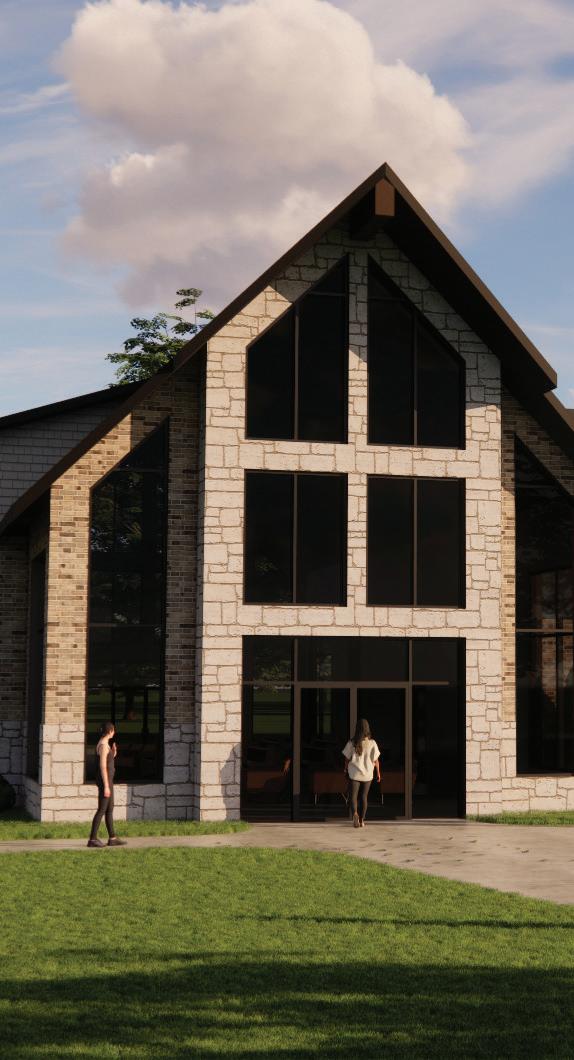



HOW COMMUNITY RESPONDS TO BREAK CYCLE OF ADDICTION
JUNE 2026
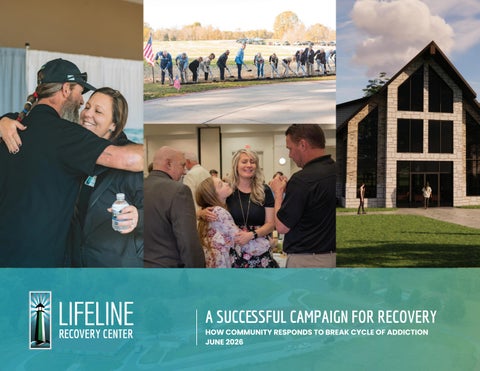
HOW COMMUNITY RESPONDS TO BREAK CYCLE OF ADDICTION
JUNE 2026
WHETHER IT’S A NEIGHBOR, A COWORKER,
A SPOUSE, OR A SIBLING, WE ALL KNOW
SOMEONE WHO HAS STRUGGLED WITH ADDICTION. ADDICTION KNOWS NO RACE, NO CLASS, NO RELIGION, NO GENDER.
GENEROUS COMMUNITY PUTS US OVER GOAL!
Throughout Scripture, a period of seven years is often associated with renewal, spiritual completeness, and the fulfillment of God’s work. As I reflect on the last seven years at Lifeline, I see those themes woven throughout our story. What began as a season filled with uncertainty has become a testimony of restoration, growth, and God’s faithfulness.
When I transitioned into the executive director role in 2020, I knew we faced enormous challenges. We were operating with limited resources, aging facilities, financial uncertainty, and a community that, in many ways, still did not fully understand who we were or the life-changing work happening through our recovery programs.
What I could not fully see then was God’s vision to guide, strengthen, and provide in such miraculous ways.
Today, our team has grown to 50 employees, many of whom have walked their own recovery journey and returned to serve others. We have strengthened our systems, achieved accreditation, expanded our services, and continued raising the standard of care for every individual who comes through our doors. These changes were not simply about organizational growth. They evolved thanks to key leadership, planning, faith, and philanthropy which helped systematically build a new foundation strong enough to serve more clients and many generations to come.
God brought the right people alongside Lifeline at the right time. Families, churches, businesses, foundations, volunteers, board members, and individual supporters chose to believe in what Lifeline can do. They saw the ripple effect that occurs when one life is restored – children regain parents, families find healing, workplaces regain employees, and communities become stronger. They gave their time, expertise, and philanthropic resources.
Because of that generosity, we are honored to share that A Campaign for Recovery has officially exceeded its historic $14.5 million fundraising goal. This milestone is far more than a number. It represents people who said “yes” to hope. It represents a community that chose to invest in helping Lifeline clients heal. And in many ways, it feels like the completion of one important chapter as God prepares Lifeline for the next.
Campaign success has positioned Lifeline not only as a trusted recovery organization in our region, but as a model of Christ-centered recovery care that can influence communities across the state.
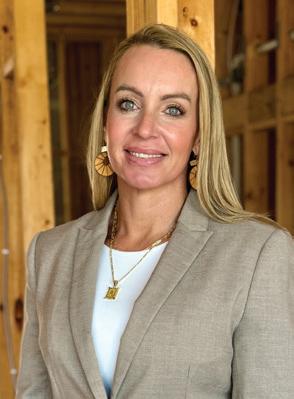
FROM THE EXECUTIVE DIRECTOR
Ashley Miller
2014 Graduate of Lifeline
As we look toward the future, our commitment remains the same: to continue raising the standard of care, to continue meeting people in their darkest moments with compassion and truth, and to continue creating spaces where transformation is possible.
Thank you for believing in recovery. Thank you for believing in Lifeline. And thank you for helping make this season of transformation possible.
In business, in our organizations, and in our own lives, I’ve long been a believer in the adage, “To whom much is given, much is required.”
At Lifeline, we feel this calling to stewardship deep in our hearts. Financial sustainability is one of Lifeline’s five strategic plan focus areas. Every gift entrusted to Lifeline is used to help those battling addiction, with the goal that no one is turned away from the opportunity to experience restoration and new life.
Time and again, we have been blessed to grow our mission of addiction recovery, from our most humble beginnings to the current season of celebration.
Through prayer, perseverance, and the generosity of our supporters, Lifeline is celebrating the completion of a $14.5 million comprehensive campaign, overjoyed and grateful for the response that resulted in donations that exceeded our goal, coming in at $15 million.
This remarkable milestone has made possible two new campuses, expanding our capacity to welcome those seeking freedom from addiction and a new life. For both the men’s and women’s campuses, we have added staff and invested heavily in their professional skills, credentialing, and expertise to create an accredited program.
In addition, the campaign established a $3 million operating endowment, creating a lasting foundation to sustain this work for years to come. The endowment strengthens our ability to serve with consistency and excellence, equipping our staff, strengthening our programs, and allowing us to respond to the needs set before us. It enables Lifeline to remain a beacon of
hope – grounded in truth, guided by faith, and sustained by what has been provided.
We are deeply grateful for each donor, partner, and advocate who has answered the call to support this mission. Your generosity brings light into places of darkness and hope into lives that need it most.
On behalf of the Board of Directors, thank you for walking in faith with us. We believe that “He who began a good work” in Lifeline will carry it to completion, and we look forward with confidence to all that God will continue to do through Lifeline.
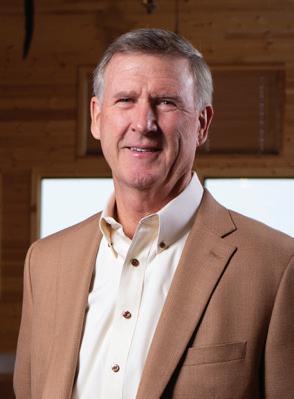
Steve Powless Former Chair & CEO of CSI
The following Board of Directors donate considerable time and expertise to Lifeline.
• David Bailey
• Rev. Dr. Bernice Belt
• Dr. Casey Brantley
• Carla Berry
• Tony Copeland
• Missy Eckenberg
• Terry Haas
• Robert L. Hill
• Ken Hunt
• Ashley Miller
• Steve Powless
• Bonnie Schrock
• Matt Snow
• Dr. Jeffrey Taylor
• Todd Trimble
The following community members served on a campaign committee during A Campaign for Recovery. Their time and talents were extraordinarily valuable to raising awareness, enhancing donor relationships, and soliciting campaign donations.
• Missy Eckenberg, Campaign Co-Chair
• Steve Powless, Campaign Co-Chair
• Doreen Hahn, Honorary Campaign Co-Chair
• John A. Williams Sr., Honorary Member
• Carla Berry
• Jamey Brown
• Terry Haas
• Jeff Holland
• Kenny Hunt
• Bill Jones
• Marty Nichols
• Terrye Peeler
• Todd Trimble
2023-2026
Ashley Miller, Lifeline executive director since 2020, knows the value of the organization inside and out. The daughter of addicts, she took her first pills at 12 and suffered her first overdose at 14. Her addiction worsened, even after her marriage and the birth of her daughter. After multiple felony charges and jail time, she ended up in 2013 on the women’s campus of what is now named Lifeline Recovery Center. It had opened 10 years earlier, following the start of the men’s program in 2004.
After she and her husband Eric completed the longterm residential treatment, each became involved here to help others, like many other graduates before and since. Research shows those who have been in addiction themselves make effective counselors for others in the same battle; and the graduates feel compelled to pay forward the love and grace they received here.
And, like many other successful graduates who have become productive members of our community, Eric has since opened his own contracting business, and Ashley became Lifeline’s leader.
“As one who came to this place in my darkest hour, it is my greatest honor and privilege to serve it now,” she said.
“By the grace of God, Lifeline has grown from that vision that started nearly 20 years ago,” she said, “and we are committed to continuing that growth until we reach our ultimate goal – that no one who wants to get sober will be turned away because of a lack of resources.”
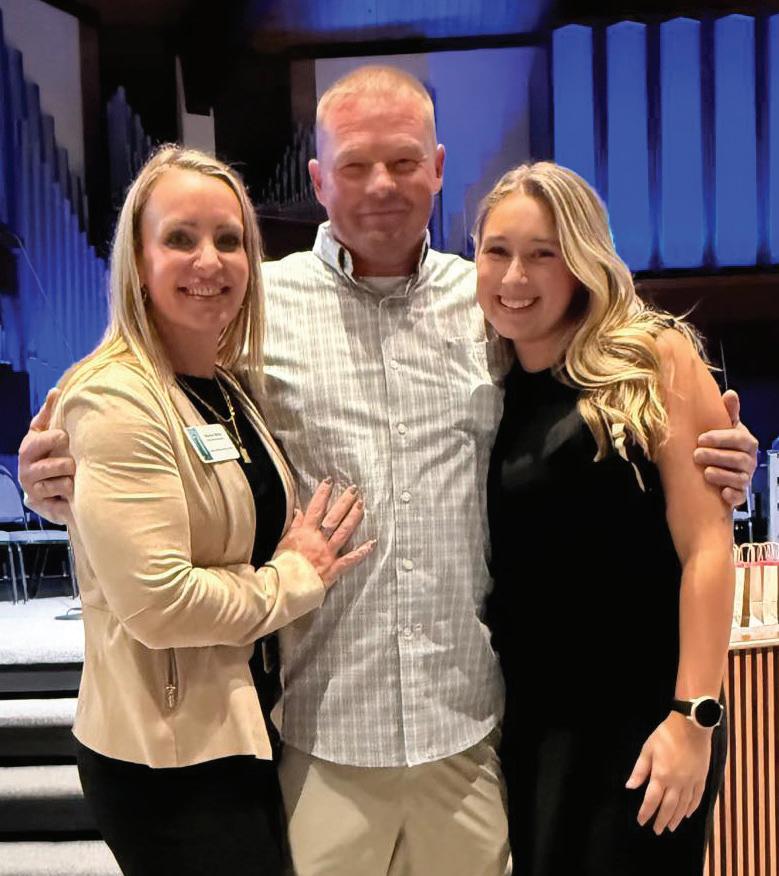
“My vision has always been that we could help more people than we’re helping now and not turn anyone away.”
- Ashley Miller
2023-2026
$14.5M CAMPAIGN GOAL
$15M TOTAL RAISED:
Lifeline Recovery Center began almost a quarter century ago with the lofty goal to be a lifeline for those battling addiction, but often needed a lifeline itself to overcome growing pains and meet its community’s needs.
In the early 2000s, Kentucky was in the nation’s top 10 for drug addiction and overdoses, and addiction had ravaged Paducah. The local community knew a solution was needed, but the efforts were fragmented and struggling.
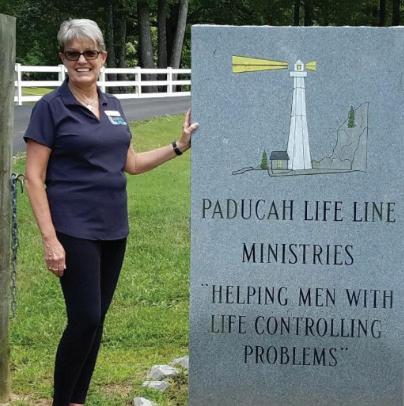
“Those beginning days were tough, and there were times I wanted to give up,” said Terrye Peeler, Lifeline’s first executive director. “Only by the grace of God were we able to keep going. Financial needs were met 100 percent by donations.”
Lifeline began in 2004 as Paducah Lifeline Ministries for men and Ladies Living Free (2006) for women. They joined forces in 2006 to offer residential substance abuse treatment at separate campuses for men and women, and the need was substantial – only one in five applicants could be accepted due to space and resource limitations. Leaders were determined to make a difference and decided on a unique approach:
• Compared to a standard 30-day residential substance treatment program, Lifeline offered a nine-month, three-phase program with at least six months of residential treatment followed by three months of outpatient after care.
• It was more affordable. While a standard 30-day program typically charged $14,000-$27,000, Lifeline charged $1,800, broken into two $900 payments, with the rest of the cost covered by donations.
• Curriculum included the 12-step Celebrate Recovery program, structured lifestyle changes, Bible study, counseling, volunteer service at community organizations, and job skills training and employment. “Clients received the comprehensive treatment they needed not just to face their addictions,” Peeler said, “but also to truly transform their lives.”
However, Lifeline’s facilities and capacity were severely lacking.
Billie Preston, Lifeline’s director of operations, remembers her early days as a new Lifeline employee: “We lived off of nickels and dimes for so long,” she said. “We were very, very frugal in everything we did and in every decision we made.”
Frugality helped keep the program afloat, but staff and clients faced many challenges.
Half a dozen clients shared a bathroom during their six-month residential treatment, and limited, rotating spaces for classes and offices frequently complicated the process. Maintenance problems were common on both campuses.
“We’d fix one issue,” Preston said, “and 10 more problems would spring up.”
The staff was small – one per 21 women, and one per 45 men – and salaries were low and benefits were few for long hours. Volunteers outnumbered staff, and clients had little one-on-one time with either.
“You really had to have a passion for what was being done at Lifeline,” Preston said. “Despite all the financial stress and everything else, we were seeing clients set free from addiction and families being restored.”
For many years, that was enough.
“We lived off of nickels and dimes for so long. We were very, very frugal in everything we did and in every decision we made.”
- Billie Preston
Then in the late 2010s, as more graduates made it through the program and their healing began to make an impact on their families and communities, the team realized they needed a new vision for the future.
Ashley Miller, Lifeline’s current executive director, recalls this time well. “I always envisioned that if more people knew what this program does and could do,” she said, “more people would want to help.”
By 2019 the success attracted new board members like Steve Powless, current board chair. “Lifeline was already doing incredibly meaningful work in our community,” he said. “It felt like an organization with incredible potential in a community with incredible need, but it needed resources to execute a bigger vision and fully step into what it could become.”
Before rebranding as Lifeline Recovery Center, the men’s and women’s programs used this combined logo.

With an empowered board, Lifeline’s leadership set a long-range plan in 2020 for:
• Expanded facilities and services to accommodate the region’s growing demand.
• Accreditation to meet the highest quality standards of the industry.
• Sustainability to ensure that, as this new vision came into being, Lifeline would have the resources, capacity, and community support to keep it going.
An early part of the transformation was a new name, Lifeline Recovery Center, merging the legacy of Paducah Lifeline Ministries and Ladies Living Free, while adding “recovery” to capture the transformation and success Lifeline’s target audience sought in treatment.
Armed with a new name and new direction, Powless said the team started asking, “What could Lifeline look like if we had the resources to do more? If you took away the financial constraints, what was really possible?”
Those questions led to the Lifeline today – a thriving place for recovery that few involved at the beginning could have imagined: new campuses, accredited programming, growing staff and hundreds of lives being changed through recovery.
Peeler marvels at what she has witnessed. “The stories I could share, the miracles I have witnessed, the tears I have cried over the years,” she said. “Those beginning days were tough, and there were times I wanted to give up; but then we would witness miracle after miracle of how God worked things out for us, and our faith and our trust in Him strengthened.”
“What could Lifeline look like if we had the resources to do more? If you took away the financial constraints, what was really possible?”
- Steve Powless
By the 2020s, even with the onset of the COVID-19 pandemic, Lifeline Recovery Center was making a major impact, graduating an average of 50 clients each year from its threephase recovery program. Still, there was a strong feeling within Lifeline that the community needed more.
At the time, six people a day were dying in Kentucky of drug overdoses, yet Lifeline could only accept half of the clients who applied each year. Lifeline’s leadership, including new Board Chair Steve Powless and new Executive Director Ashley Miller, had a vision to expand Lifeline’s life-saving work, but it would be no small task.
First, they had to build the new brand of Lifeline Recovery Center.
Enter Anthony Rupard, a nonprofit consultant who was recommended to Lifeline by a local nonprofit leader. He was curious how well the nonprofit brand was positioned in the community. Rupard met with eight community leaders in November 2019 to learn about the perception of Lifeline. Based on what he learned from these conversations and an initial assessment of Lifeline’s fundraising, the team committed to working the plan outlined by Rupard.
Over the next two years, the goal for Lifeline was to get ready for a future capital campaign which included an urgent need to build more community awareness of the organization’s mission and services and create a culture of major-gift philanthropy.
Then, Dona Rains, a communications consultant with media, public relations and marketing experience in the Paducah market, joined the team, immediately working on content for its new website, launching a regular publication of its LifeLINE


LifeLINE magazine, published twice yearly since 2020, is developed to increase community awareness.

magazine, and sharing regular press releases and social media posts.
Having heard Lifeline’s earlier funding pitches in her previous jobs, she knew they had a long way to go. “There had been confusion with the two names and two campuses, a poorly articulated purpose and no coordinated media plan,” she said. “We had to show we had professional leadership united with one mission. Our communications became intentional and transparent on Lifeline’s methods and results, so word spread among community influencers of the good work going on at Lifeline.”
This work was essential for Lifeline’s goal of engaging more people in the mission. As engagement increased, more people battling addiction found Lifeline, more volunteers stepped up to help and more people gave generously to keep Lifeline affordable and accessible.
Simultaneously, Lifeline’s leadership team was pursuing plans to expand the program’s capacity by building two new dormitories on the Morgan Lane campus (then the men’s campus). Peeler Hall and Hunt Hall provided efficient, modern housing for 50 men in different phases of their treatment.
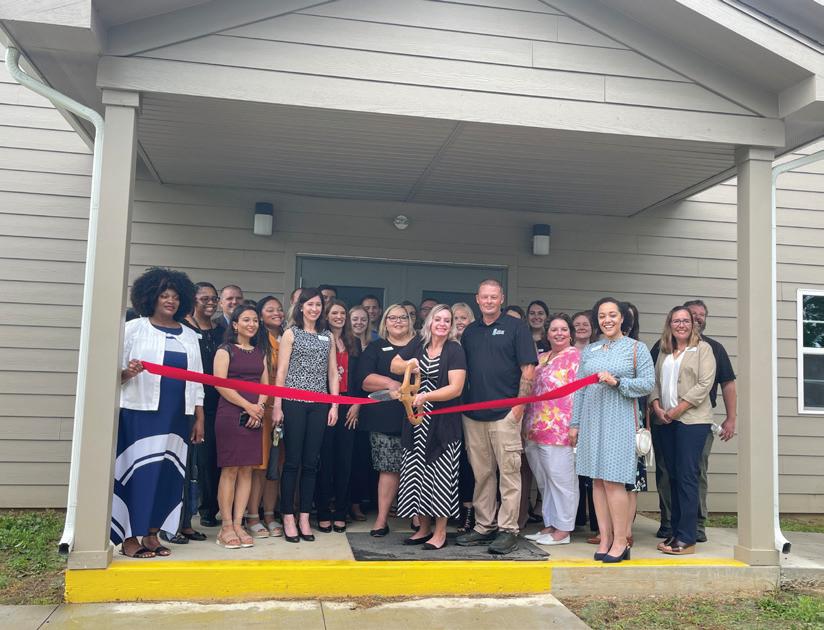
With a combined cost of around $800,000, this undertaking was a serious challenge that helped take Lifeline to the next level. It required the leadership team to ask Lifeline supporters to consider much larger gifts to the organization than they were accustomed to giving, all the while building awareness of Lifeline’s brand.
“There had been confusion with the two names and two campuses, a poorly articulated purpose and no coordinated media plan.”
- Dona Rains
Ultimately, more than 126 individuals, businesses, and churches donated to the two projects, helping Lifeline celebrate its best fundraising year in its history. The excitement of new buildings and the organizational courage to solicit greater levels of philanthropic support began to build tangible momentum.
Success begets success. Lifeline’s board and staff realized they could raise more money by reaching more people who were eager to help Lifeline grow and reach more clients.
Missy Eckenberg, a Lifeline board member, remembers this time well. After joining the board in 2020, she had worked with the team on a campaign to fund their vision for Lifeline’s future. Even with the recent success of Peeler and Hunt Halls in mind, her background in
Paying staff appropriate wages and providing essential benefits supported talent attraction and retention. By properly caring for the people who directly fulfilled the mission, Lifeline would ensure clients always received the very best care.
To provide for future Lifeline clients, their families, and the community and to steward the investments of Lifeline supporters far into the future, a long-term, endowed fund of $3 million would create roughly $150,000 annually for facility maintenance.
fundraising told her they first needed an understanding of what was possible.
Lifeline conducted a campaign feasibility study to bring more clarity and structure to the proposed campaign vision and to see what level of philanthropy might be available to support it.
Lifeline’s dedicated board of directors and tireless staff had built a solid and ambitious strategic plan to help them achieve the growth necessary to expand their impact, which led to four key investments totaling $9 million:
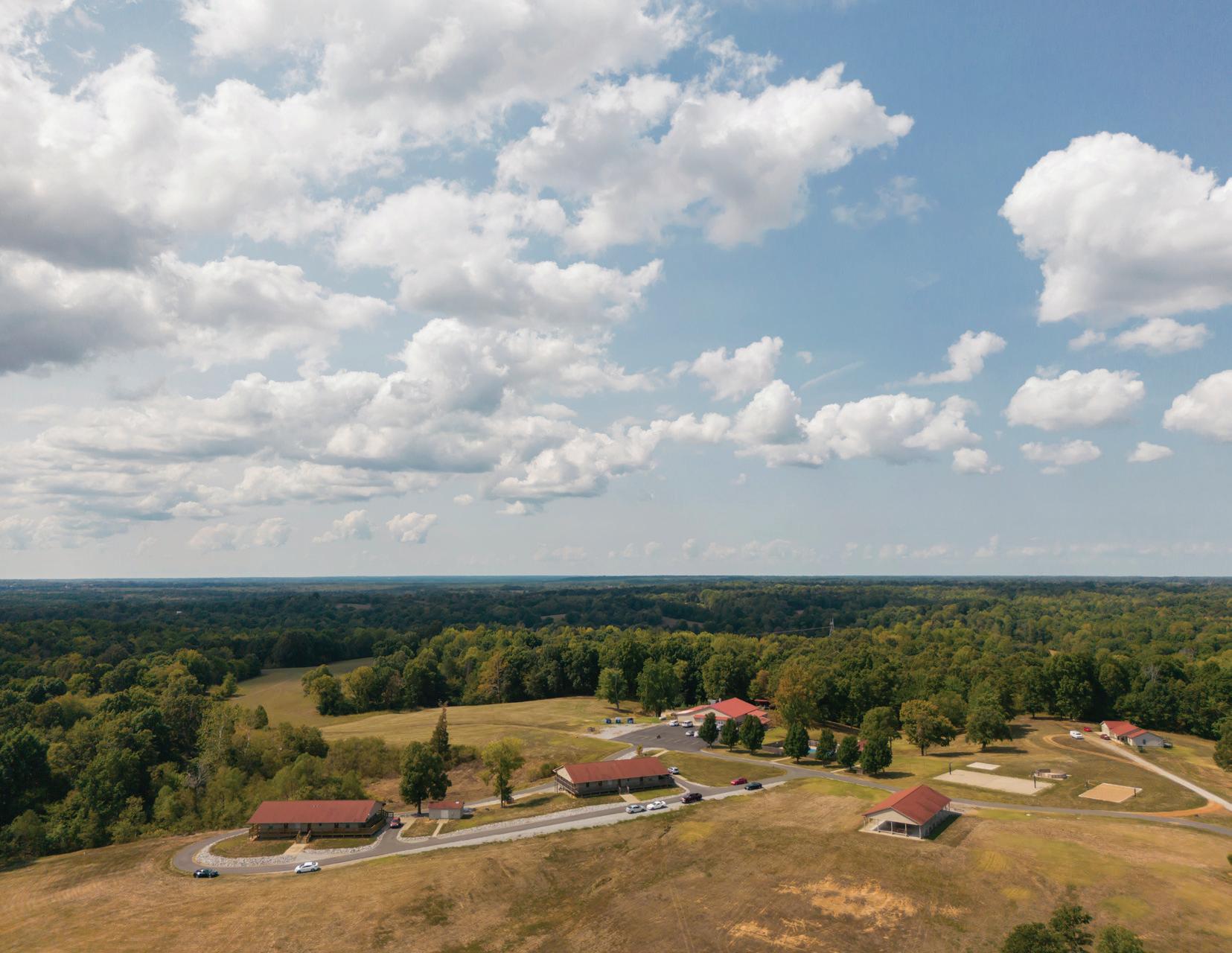
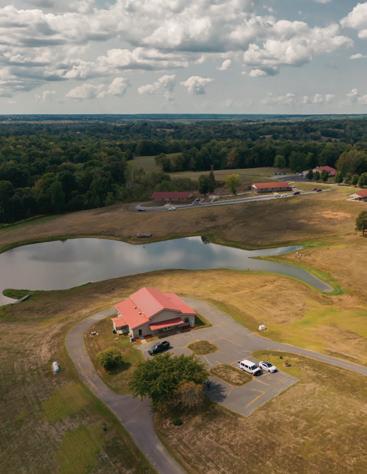
Lifeline found a dream property in Kevil listed for $1.5 million, with the buildings and space needed for a new men’s campus. “It really seemed almost like a divine gift,” Eckenberg said.
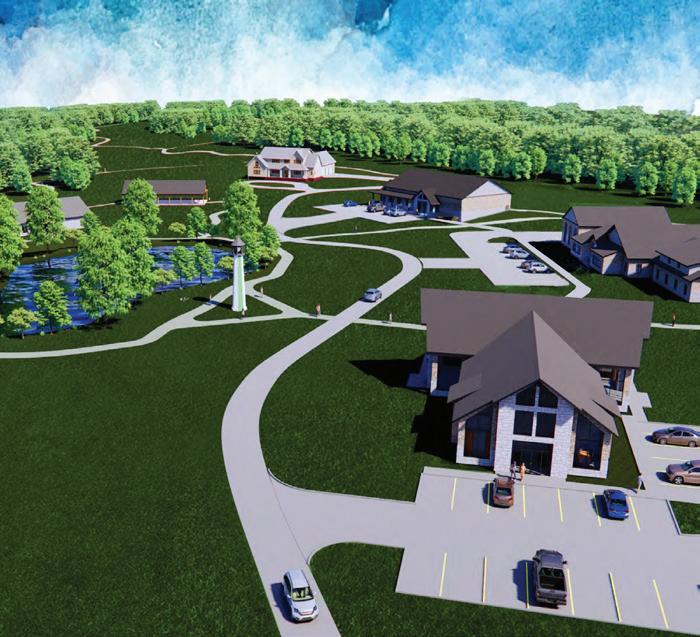
With needs growing at the Women’s Campus, Lifeline envisioned a new campus with adequate classrooms, offices, meeting rooms, counseling offices, housing, dining and spaces for holistic program support.
Success in those four areas would allow Lifeline not only to grow, but also to expand its impact by:
• Increasing the number of clients annually by 50 or more.
• Expanding counselors and support staff to reduce staff-to client ratios and provide better one-on-one support to clients.
• Building new facilities to expand housing capacity to include transitional housing and provide additional client programs.
• Establishing an operating endowment fund to cover annual maintenance and utilities expenses, allowing Lifeline to weather changing economic conditions.
With the board’s blessing, Rupard took this plan into the community for feedback. “The feasibility study first tested a $9 million campaign fundraising goal,” he said, “and the reaction was positive.”
In fact, through 15 stakeholder interviews and a board of directors survey, the feasibility study identified roughly $8 million in potential campaign gifts. “We were blown away and humbled by this great news,” he said, “but it was also a bit surprising, as Lifeline had never received a million-dollar gift.”
Eckenberg remembers her reaction: “Really, we could raise all that?’”
Powless agreed, noting the biggest challenge was getting people to believe in what didn’t yet exist. “You’re asking people to invest in a vision, before the buildings are there and before the results are visible,” he said. “There were moments where we wondered, ‘Can we really pull this off?’ But over time, as people began to lean in, that belief started to grow – and momentum followed.”
LIFELINE ULTIMATELY DECIDED TO PURSUE A $13 MILLION CAMPAIGN GOAL – LATER ADJUSTING IT TO $14.5 MILLION IN 2025 DUE TO RISING CONSTRUCTION COSTS FOR THE WOMEN’S CAMPUS – AND CALLED IT A CAMPAIGN FOR RECOVERY: BREAKING THE CYCLE OF ADDICTION, ONE LIFE AT A TIME.
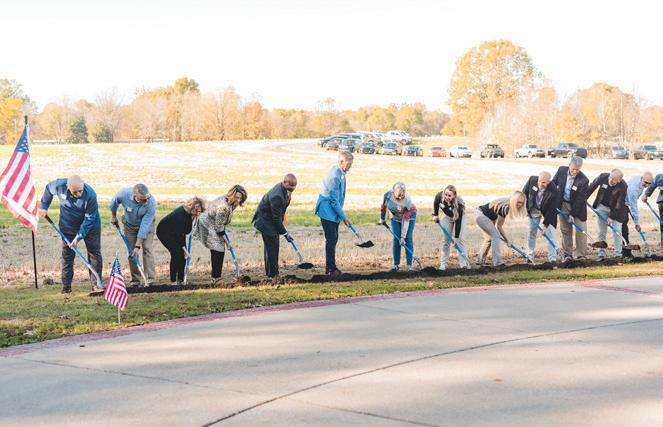
The campaign began quietly in 2023 and went public in June 2024 at Lifeline’s Annual Banquet, aiming to finish construction and celebrate the completion of the campaign by 2026.
The plan was set and everyone involved was excited, but now the real work would begin.
“The feasibility study first tested a $9 million campaign fundraising goal and the reaction was positive.”
- Anthony Rupard
For years, Lifeline Recovery Center leaders had a dream –more space, more professional staff and more of an impact to change lives and transform the community.
The evolving plan, A Campaign for Recovery: Breaking the Cycle of Addiction, One Life at a Time, provided a roadmap to turn that vision into reality.
The campaign would require millions of dollars in fundraising – much more than Lifeline had ever raised before – and that meant having the right leadership and campaign team in place.
A major piece of that leadership was Lifeline’s new board of directors. In the years leading up to the campaign, the board underwent a major transformation, with a new board chair and many new board members joining to lend their expertise. And incredibly, it all goes back to a simple breakfast.
Ashley Miller, executive director, remembers: “One board member invited some friends to breakfast to learn more about Lifeline. One of those friends then became a board member, and that board member recruited another. Soon, those new board members were reaching out to other community leaders, creating the expert panel of 15 individuals we’ve now assembled.”
Campaign Timeline
These 15 community volunteers bring a variety of professional expertise as executives, ministers, financial wizards, builders and communicators. They represent Lifeline in many different sectors of the community, from churches to golf courses, from businesses to professional offices, all of them reaching different circles of friends through their contacts to help tell Lifeline’s story.
Some of them have personal ties to addiction, having seen firsthand the struggles of loved ones or associates. Knowing the toll addiction takes on families and the community, they are committed to Lifeline’s mission to help people recover from addiction.
Miller said the board’s leadership has helped Lifeline supercharge its efforts to:
• Expand to serve more people.
• Develop a staff of professional counselors.
• Earn accreditation.
• Get insurance reimbursements for clients.
• Find donors to offset costs.
• Change the lives of graduates.
With backing from the board, Lifeline assembled a campaign team of several board members and community leaders. Board Chair
Campus Construction and Campaign Public Phase Continues 2023 Additional Staff Hiring, Employee Benefits Program Begins, Campaign Quiet Phase
Begin Campus Construction Projects, Campaign Public Phase
Campus Construction Projects Completed, Campaign Celebration
Steve Powless headed the team and recruited fellow board member Missy Eckenberg as co-chair.
Eckenberg was unsure at first but knew she couldn’t pass up the opportunity to help more people through Lifeline’s mission. “It’s the children reunited with their parents and the people that really need that second chance,” she said, “that really drew me to it.”
Kenny Hunt, another Lifeline board and campaign team member, had similar uncertainty early on but was quickly convinced he couldn’t turn it down.
“THERE ARE A LOT OF DIFFERENT OPPORTUNITIES TO BE INVOLVED IN NON-
PROFITS,” HE SAID, “BUT
WHAT ATTRACTED ME TO LIFELINE WAS
ITS
STORY AND THE PEOPLE. THERE WAS SOMETHING DIFFERENT ABOUT THESE FOLKS, SOMETHING THAT MADE YOU WANT TO HELP. I COULD SEE THEIR PASSION AND THEIR DRIVE TO MOVE LIFELINE FORWARD. THEY DRAGGED ME IN KICKING, BUT I’M SO GLAD THEY DID!”
Carla K. Berry, another Lifeline board member, felt called to the campaign from her family’s personal experience. She and her husband, John, lost their son, Rob, from a fentanyl overdose in 2019. “Honestly, it took me several weeks before I could give an answer when I was asked to join the board,” she says. “But once I visited the campus and met several of the teammates, I knew that it was the right decision. The visit brought me to my knees and I knew that it was meant to be.”
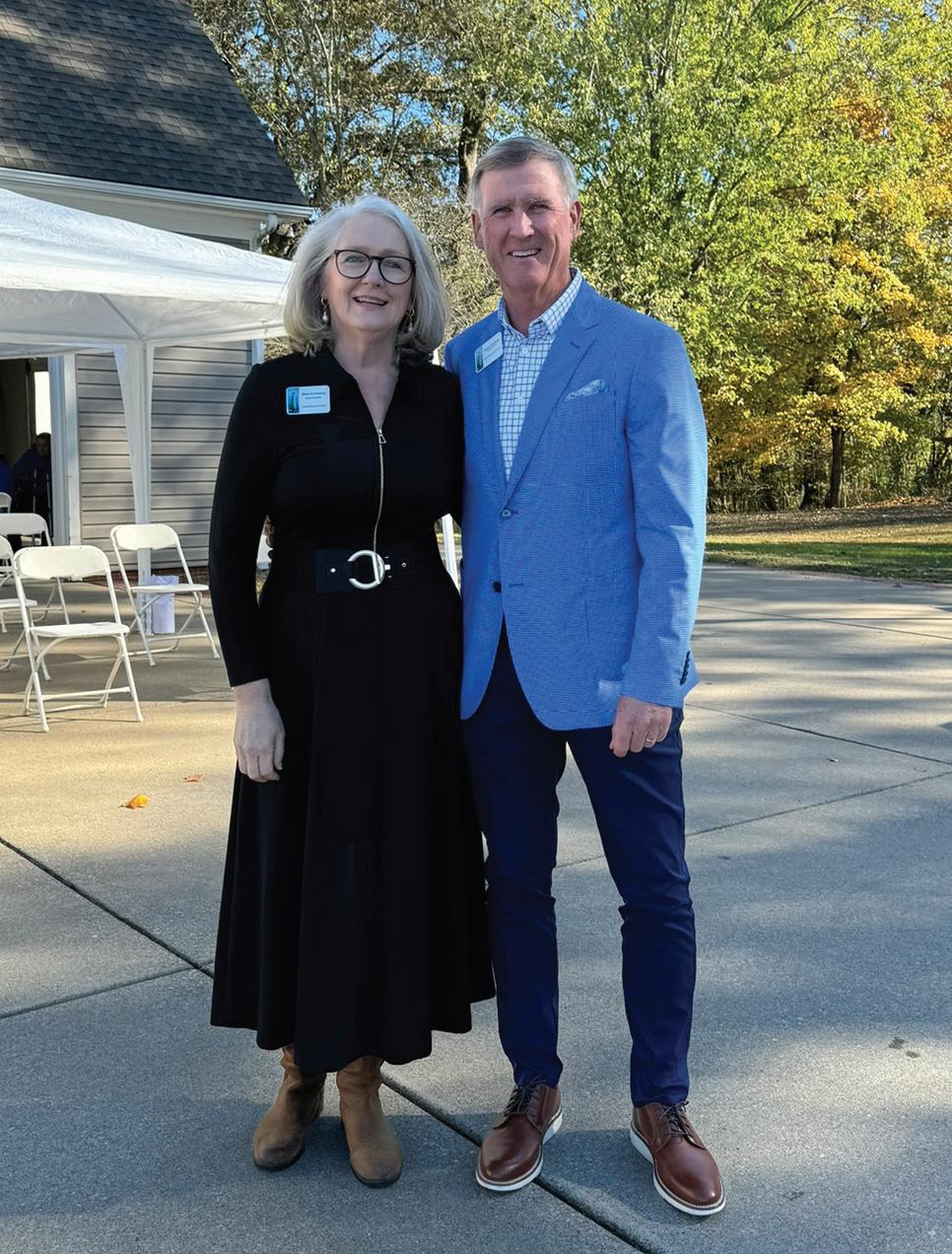
Co-chair Eckenberg said the campaign team drew inspiration from Miller. “What fascinates me about Ashley is she doesn’t have the same kind of background that many of us have in past leadership positions,” she said, “and, in a way, I think that benefits Lifeline.”
With an undertaking as big as the campaign, Eckenberg said some people might have thought it was too big a burden to bear. “But not Ashley. She’d just say, ‘Okay, that’s what we need to do, let’s do it.’ And she’d just move forward.”
Miller became adept at taking the Lifeline story to individuals, groups, businesses and churches. Her approach was critical to Lifeline’s evolution, including everything from expanding the campuses to receiving accreditation. “I saw really strong leadership in Ashley,” Eckenberg said.
Fundraising was under way, and the generous response was nothing short of overwhelming. Among those leading the way were two foundations whose generosity has long reflected a commitment to faith and community.
The Carson-Myre Foundation was established by Jane Carson Myre and her husband Dr. Louis Myre in memory of her father, philanthropist Luther F. Carson, who started bottling Coca-Cola in Western Kentucky in 1903. The foundation primarily supports Christian ministry, education, and outreach. Lifeline has been blessed by years of support from the Foundation.
Lifeline is deeply grateful to the Ray & Kay Charitable Trust for supporting our mission of providing a Christ-centered path to recovery. Ray and Kay established their family foundation in 2005 to strengthen families, assist those in need, and support Catholic and Christian initiatives.
In addition, several families stepped forward with seven-figure campaign pledges.
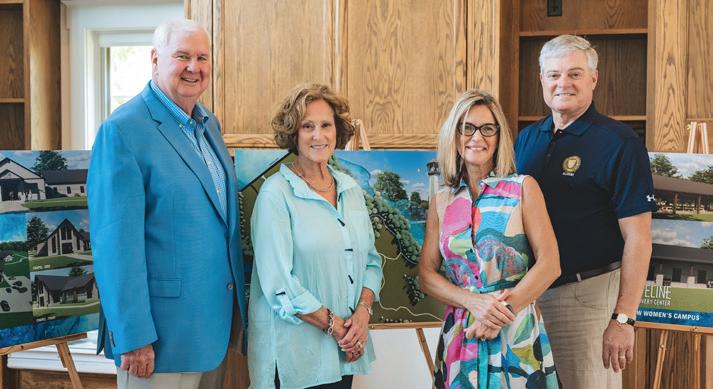
committee members Bill
Powless said the early gifts were instrumental in the campaign’s success. “Those gifts did more than provide funding – they created confidence,” he said. “They told the rest of the community, this is real. This is worth investing in. From there, you could feel the shift. It went from ‘if’ to ‘when.’”
Some gifts came from donors already familiar with Lifeline’s work, while others were entirely new to the mission. But in every case, Lifeline’s impact made the difference.
Joe Framptom, CEO at Paducah Bank for more than 50 years, had seen many local fundraising campaigns, some successful and some not. He admits he was skeptical about Lifeline’s campaign initially because he had limited knowledge about the organization.
“That changed when I visited the campuses,” he said. “When you see and hear the stories of recovery, it’s amazing.”
Parallel to this enormous campaign, Lifeline was hard at work scaling up its staff size and expertise.
“In three years, we increased our staff from 13 to 42, including more licensed and credentialed professionals than ever before,” Miller said.
That included bringing on more counselors, a staff nurse, targeted case managers, and building a C-Suite team that could continue to help Lifeline grow its impact.
With more staff came more training. “We set out to make them the best-trained staff in recovery,” Miller said.
That meant offering more hours in continuing education and looking for ways to grow leaders among the staff, many of whom are former clients who decided to stay at Lifeline and help others fighting the same battles they once fought.
With more staff, Lifeline was able to change staff schedules from multi-day 12-hour shifts to more traditional 8-hour shifts. “This was an enormously positive change for staff members,” Miller said, “allowing them to be home with their families every day, reduce their stress, and improve their productivity, all adding up to better experiences for Lifeline’s clients.”
Looking back at this time of growth, Powless said he was humbled by the way the community came together to help Lifeline make its vision come true. “This wasn’t carried by a few people,” he said. “It was carried by many – individuals, families, churches, foundations – all stepping in to be part of something meaningful. That’s what makes it special.”
As Lifeline got closer to its ultimate goal of $14.5 million, the campaign team met and expected it would take several more months to secure the final gifts needed. Eckenberg recalls the urgency she felt at the time. “There was something that really clicked in me and went, ‘No, it can’t be that long,’” she said. Over the next month, several generous Paducah families came together to make campaign closeout gifts.
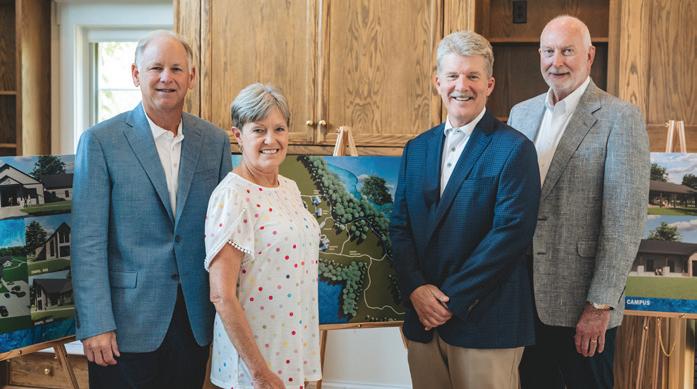
Lifeline had set out with a goal that many might have considered impossible, but completing it showed everyone involved what this effort meant to the entire community.
“As it has always been with Lifeline,” Powless said, “this campaign was not just about raising funds; it was about building a community of support, united in the belief that every life is worth saving. It was about faith that inspires us to dream bigger, reach higher and strive harder in our quest to save lives and restore hope for those struggling with addiction and seeking a new life in sobriety.”
Powless remains in awe of the number of people who brought this campaign to fruition. “There are so many people who said yes when it would have been easy to wait, or to watch from a distance,” he said. “Because of that, lives are going to be changed for years to come. We’re incredibly grateful.”
And Miller, the executive director who started long ago as a client at Lifeline, marvels at the outcome. “What happens in these buildings will be around for generations to come. Families are going to be changed for generations to come, and lives are going to be changed for generations to come.”
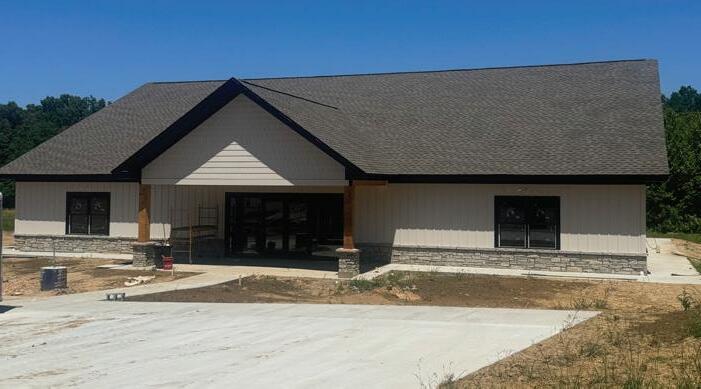
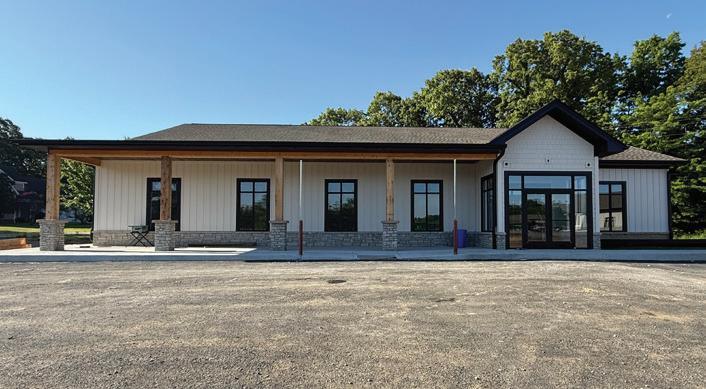
Goal met, case closed, right? Not exactly.
Exceeding our campaign goal of $14.5 million – the joyful announcement of our 2026 annual banquet – is cause for celebration! Your gifts have set our mission on course to meet many of the area’s needs for addiction recovery.
It feels like a miracle! Yet, it’s not the end.
“This milestone isn’t the finish line,” said Steve Powless, Lifeline board chair and co-chair of the campaign. “It’s really the foundation for what’s ahead.”
The campaign success puts Lifeline in a strong position with:
• PROGRAMS, more structured and intentional than ever before.
• STAFF, stronger and better trained to support our clients.
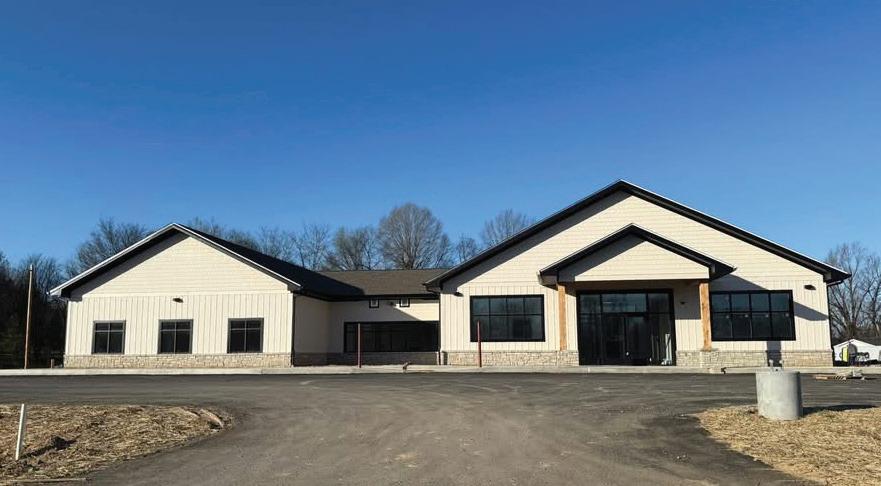
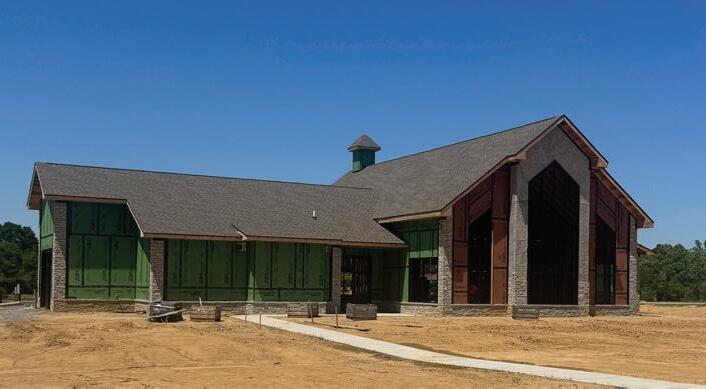
• FACILITIES, fit to offer the dignity and care our community deserves, with the recent expansion of the men’s campus and the opening of our women’s campus this fall.
With this strong foundation and the need for recovery services ever growing, Lifeline will not stop innovating to meet new needs..
Many Lifeline graduates lack close friends or family members who can help them when they need a safe place to live, while they get back on their feet. That’s why our next major focus is to develop our original campus on Morgan Lane into transitional housing for men.
Once complete, this project will offer a safe place to live for as long as needed, an essential step in successful integration back into the community.
Ashley Miller, Lifeline’s executive director and 2014 graduate of the program, remembers how it felt to have no one to lean on. “This will create an environment,” she said, “where our clients know that we’re here for them at the end of the day.”
Lifeline also is exploring how we can open our doors to the community, which has given so much to us, by offering outpatient services, such as family counseling.
Such services will allow Lifeline to reach more people with new opportunities for treatment, Miller said. “There are many outpatient needs in recovery,” she said, “for people who have completed residential treatment, or for families of those in treatment.”
Just as history has shown us, expansion won’t be easy, fraught with unexpected challenges, no doubt. Also, just as history has shown us, we believe our community will come together to meet the challenge.
We have witnessed one miracle after another and believe we can again, when we face the impossible together.
“This milestone isn’t the finish line. It’s really the foundation for what’s ahead.”
- Steve Powless
We would like to thank the following donors who made gifts to Lifeline Recovery Center during A Campaign for Recovery, January 1, 2023 - May 15, 2026. Your generosity was part of a triumphant effort to raise $14.5 million to transform Lifeline and we are so very thankful for your support.
Households
Jean Abanatha
Elizabeth Adams
Danny and Renee Allen
James and Barbara Allen
William and Beth Allen
Amanda Anderson
Anonymous (4)
Rick and Tonya Archer
Brenda S. Ardebili
Phillip and Sandra Bagwell
Cindy Bailey
David and Janice Bailey
Leigh Ann Ballegeer
Timothy and Cheryle Barenie
John and Ashley Barret
Forrest and Cheryl Baugus
Jeff and Gayle Bean
Ron and Teresa Beavers
Kent and Dianne Beckman
Debra Bell and Walter D Malis
Jason and Becky Bell
Robert & Carol Bell
Rev. Dr. Bernice Belt
Wayne and Jo Ann Belt
John and Paula Benton
John and Carla Berry
Scott and Carol Berryman
Larry and Carol Beyer
Carl and Elaine Bivin
Christopher and Nancy Black
Ben and Natalie Blackmon
Mark and Lisa Bladon
Joseph Blagg
Lars and Molly Blythe
David and Katherine Boswell
James Boswell
Jennifer Bouldin
Heath Bowling
Jennie S Boyarski
Charlie Brantley
Dr. Casey and Erin Brantley, MD
Sid and Cathy Brantley
Mayor George and Angela Bray
John and Mary Jo Brazzell, MD
Ed and Susan Bredniak
Winford and Mary Brewer
Rep, Randy and Carla Bridges
Dr. James and Jen Brien, MD
William and Julie Brigance, MD
Steven and Anita Bright
James and Brenda Brown
Brian and Rebecca Brown
Jefferson Brown
Mark and Sue Bryant
Gregory and Paula Bugg
Linda and Thomas Bush
Rodney and Debbie Bushong
Harlan and Bobbie Calhoun
Mike and Caroline Cappock
Cynthia Carden
Candy Cardin
Gary and Brenda Cardin
Jeffrey and Patricia Case
Greg and Charissa Cates
Keith and Marilyn Chapman
Carrie Childers
Nancy Chilton
Will Ed and Sheila Clark
Joseph (J.W.) Cleary
John Mark and Mary Demetra Coohon
Gene and Marilyn Cole
Andrew and Haley Collins
Sharon Comb
Christina Combs
James and Jackie Conn
Larry and Carol Conway
Bill Conyer
Randle and Sherry Cope
Tony and Angela Copeland
Jess and Angela Correll
Jennifer Coursey
Lisa Courtney
Chris Crawford
Judi Crider
John and Teresa Crowder
David and Peggy Culbertson
Constantine Curris
Stephen Dannenmueller
Marshall and Alberta Davis
Naomi Dawson
Mason DeJarnett
Hunter DeMumbree
Kevin and Jennifer DeMumbree
David and Ann Denton
Stephen and Debbie Dew
Chris Dick
Trenton Dierkes
Carrie Dillard
Dan and Vicki Donaldson
Barry and Lisa Driver
Edward and Linda Duff
Marinel Dunigan
Steve Duperrieu
Lawrence R. and Geraldine Durbin
Gary and Kathy Eckelkamp
Stan and Missy Eckenberg
Janette Edwards
Mark and Karen Edwards
Nicole Edwards
Nancy Effinger
Patrick and Sheri Englert
Debbie Etheridge
Chris Evans
Robert and Lauri Ezell
Janice Fairhurst
Rick and Crystal Farlee
Justin C. Farris
Jean Fenwick
Risa Flamm
Pilar Fondaw
Cade and Callie Foster
John and Janet Foster
Joseph and Jeane Framptom
Glenda Freeman
Ashley French
James & Amy Garrett
Chris and Emily Garrison
Kevin and Jennifer Gaunce
Deborah Ann Gilbert
William and Susan Gilland
Sara Gipson
David and Laurie Glass
Angie and Charley Glisson
Jeffrey Golightly
Wayne and Sherry Golightly
Rickie and J.D. Goode
Ronald Goode
Jeffrey and Vicki Gough
Mike Gourley
Kim Grafel
John and Andrea Grant Charitable Fund
Don and Patti Gregory
Lt. Col. Herb and Doris Gregory
Tina Griggs
Eric and Morgan Grogan
Barry and Dettye Ann Grooms
Brenda Grooms
Paul and Librette Grumley
Terry and Laura Haas
Bruce and Doreen Hahn
Millie Hahn
Brandon Hall
Chuck and Cindy Hall
Reva Harper
Oscar and Zulema Harrell
Rodger and Cheryl Harrison
Cindy Hart
Virginia Hawthorne
Robert Healey
Debbie Heater
Leslie Heath
Raynarldo Henderson
Erin Hendley
Deanna W Henschel
Cory Hicks
Andrea Higdon
Bob Hill
Nathan and McKell Hillebrand
Kenneth and Joyce Hines
Mrs. R Jeffrey Hines
Robert and Carla Hobgood
Jeff and Terri Holland
James (J.B.) and Priscilla Hollowell
Lynda and Troy Holshouser
Daniel & Keisha Hopkins
Bill and Judy Hopwood
Mike and Frances Hovekamp
J. William Howerton
Dann T Hughes
James and Denise Humphreys
Kenny and Beth Hunt
James and Claire Hunt
Hilary Hunt
Brent and Pamela Hurst
Ines Rivas-Hutchins
Jan and James Hylko
Heather Jackson
Sue James
Martin and Gail Jameson
Darren and Lisa Jarvis
Larry and Roxie Jarvis
Ken and Jamie Jerrell
Charles and Suzanne Johnson
Michael and Ashley Johnson
William and Kelly Johnson
Allen Wayne and Cynthia Jones
Eddie Jones
Bill and Teresa Jones
Jeanette Jones
Keith and Kim Jones
Tyler and Olivia Jones
Judge Deanna W Henschel
Travis Kahre
Austin Kennady
Ronald Kent and Sheila Koster
Dr. Thomas R. and Lynda P Kerley
Steve and Michelle Kersey
Franklin and Daythel Kilgore
Bruce and Jeanna Kimbell
Shell Kindred
Jessy King
Jonathan King
Greg Kingston, MD
Julie A Kleet
Mark and Sloan Knecht
Penny Knott
Tim Kopischke
Caroline Korte
Rene M Kreps
Glenda K. Lafferty
Dawn Lamb
Jeff and Tracy Lambert
Mark and Kathryn Lankton
Gerren and Crystal Lawson
Randy Lee
Tucker Lee
Robert and Gina Leeper, MD
Jim and Susan Lewis
Mark and Patricia Link
Jesse Lipson
William Litchfield
Sarah Litton
Mike and Barbara Livingston
Kenneth Long
Rick and Lynn Loyd
Kerry and Melinda Lynn
Michael Marberry Family Fund
Steve Marberry
Jeffrey and Krista Marcotte
Sherry Martin
Frank and Marisa Martire
Larry and Mitzi Mason
David and Sandra Massey
Jimmy Massey
Ronald Mays
Kristina McDowell
Bradley and Brenda McElroy, MD
Barbara W McGinty
Larry and Mary Ann McIntosh
Mary Ann McIntosh
Al and Mary McKeown
Natalie McLaughlin
Thomas and Pam McLelland
Lupe McMillan
Beverly Meeks
Drs. Landen & Van Meeks
Michael and Lori Meredith
Mark and Brenda Metzger
Louis and Sally Michelson
Ashley & Eric Miller
Frankie Sue Miller
Mary K Miller
Nathan & Ginny Miller
Anthony and Lucy Milliano
Melissa Millikin
Chaynne Minter
Brad and Nancy Moore
Matthew and Makayla Moore
Brandon Morgan
Jared Morgan
Mike and Ronda Morris
Nicholas and Morgan Morris
Melanie Myers
Mary Neikam
Jason and Elizabeth Neelley
Brianna Neukomm
William and Tammy Newton
Edward & Teresa Nichols
Ike and Kelly Nichols
Rickie and Annette Nimmo
Kathi Norrington
Gwen O’Brien
Snookie Oglesby
Baccus and Jennie Oliver
Pauline Owsley and Jennifer O'Neil
Danny and Rudele Orazine
Darrell and Shirley Orazine
Doug and Sherry Orazine
Randy and Andrea Orr
Christian & Mary Orsborn
Scott and Sonia Osman
Thomas and Joan Oster
Preston Overstreet
Corey and Heather Pace
Don and Belinda Page
Kevin and Mary Paschall
Jim and Mindy Paxton
Foster Pearson
Don O and Martha Peck
Glenn and Terrye Peeler
Sharon Pegram
Scott and Kattie Penick
David R and Carolyn K Perry
William and Carol Petty
Dixi Phifer
Sara Pickard
Jeffrey and Sharolette Pierce
Kay Pinkley
Jack and Anne Powless
Peggy Powless
Ryan Powless
Steve and Nancy Powless
Jack and June Poyner
Mark and Teresa Prude
Rachelle Puckett
Dona Rains
Tony and Cheryl Raspberry
Sherry Reagan
Brandy Reed
Jason and Karen Reichart
John Randall and Trina Resser
Robert and Nancy Reynolds
Kaylee Rhodenbaugh
Kathryn Riley
Mark and Debbie Riley
Greg and Heather Roberts
Roberts Family Giving Fund
William and Elaine Robertson
Mary Robins
Walter and Connie Rodgers
Greg and Traci Rodulfo
Spencer and Bethany Romine, MD
Amy Roof
Kenny and Nicki Roof
Nicole Rooyakkers
Tommy Joe Rothrock
Craig and Susan Rothwell
Fred and Denise Rouse
Gregory and Traci Rudolfo
Darrin B and J Marie Rudolph
Robbie and Lisa Rudolph
Matt Rule
Anthony and Natalie Rupard
Buddy and Ann Rushing
Alan and Nancy Sanders
Jane Scelzi
Michael Scheer
Priscilla and Steve Schiff
Bill and Carlene Scillian
Richard Schonscheck
Fletcher and Bonnie Schrock
Meredith Schroeder
Brittany Seibert
Steve and Donna Seltzer
Roberta Sewell
James and Kay Sexton
Lisa and Howard Shafer Charitable Trust
Thomas and Nedra Shemwell
Peyton Sherrill
Suzanne and Steven Shidal
Charlie and Linda Shields
Bryan Shumate
Jason and Leigh Ann Siener
Terry Sills
Robert Simpson
Richie Slack
Drs. Kathy and Kinney Slaughter
Jerry and Donna Smith
Karen Smith
Robert and Jane Smith
Stephen and Claudia Smith
Matt and Keisha Snow
Roy and Jane Snyder
Richard and Tammy Souder
Charles and Brenda Spees
Mike and Carrie Spissinger
David and Rebecca Stanley
Paul and Rhonda Steele
Lucas Stinnett
David Stokes
Larry and Phyllis Stovesand
Shaun Sullivant
Kurt and Joni Sutton
Larry and Cynthia Swope
Carolyn Talbert
Sarah Talbert
Cameron Hooman Taleban
James D. Tankersley
Janel Tate
Jeff and Heather Taylor, MD
Richard and Janis Taylor
Otis and Melissa Thaxton
Michele Thomas
Pat Ellen Thompson
Darren and Magen Tinsley
Gregory and Danielle Tipton
Glen and Linda Titsworth
Britton and Rayla Trigg (R.B. and D.B.)
Todd and Pam Trimble
Dorothy Truitt
Lee Tucker
Wayne and Mary Upshaw
Joe and Tamarah Vance
Thomas and Anita Vance
Joy Vasseur
Kenny Vasseur
Autumn Vaught
Jessica Waggoner
Bob and Jill Wagner
Robert and Jill Wagner
Bill and Joanie Walden
Mike and Debra Walker
Robert and Shirley Walker
Robert and Susan Walker
Clay and Lauren Wallace
Morris Wallace
Norman and Patricia Wallace
Lannis and Jean Walters
Danny and Nancy Webb
Leslie Weber
Alan Whitaker
Jeremy and Sharon White, CPA PLLC
Mike and Meg Wiersema
Cari Wildharber
Anita Williams
John and Kristin Williams
John and Vivian Williams, Sr.
Lee & LaVonna Willingham
John D. Willoughby
Ed and Sandra Wilson
Patrick Withrow, MD
Jim and Karen Wittman
Bryan and LaCretia Womack
Anita Wood
Marlen Wood
Bill and Robin Woods
Dr. James and Vicki Woods
Jason Woods
Linda Woodward
Barbara Worthen
Steven Wright
Sharon Yates
Marianne Yontz
James and Karen Younger
Eric Ziegler
Businesses
3 C’s Concrete Work, LLC
AAA Stowaway
Alford Law Office
Alpha Delta Kappa Lambda Chapter
Anonymous (2)
Atmos Energy Corporation
Robert W. Baird & Company, Inc.
Bacon Farmer Workman Engineering and Testing
Ballard County Board of Education
Ballard County Fiscal Court
Banterra Bank
Baptist Health System Services
Baptist Healthcare System, Inc.
Beyond Uganda
Big River Electric
Blue Horizon Travel
Blythe CPAs and Advisors
Bryant Law Center
Cape Electrical Supply
Carson-Myre Charitable Foundation Trust
CCS Real Estate Holdings, LLC
CFSB
Charity League, Inc.
Commonwealth of KY KYOAAC
Community Christian Academy
Community Foundation of West Kentucky
Country Chevrolet
CSI, Inc.
Dairyman's Supply Co., Inc.
Danny Carroll Campaign Fund
Delta Regional Authority
Denton Law Firm, PLLC
Marshall W. Davis Drugs, Inc.
Ray & Kay Eckstein Charitable Trust
Edward Jones, Inc.
RE Fairhurst Reality
Fairways Management dba Paxton Park
Fellowship of Christian Athletes
Flying Pig LLC
FNB Bank, Inc.
Four Rivers Nuclear Partnership
Funeral Directors Life Insurance
Gipson Farms, LLC
Sara Gipson Group- EXP Realty
Give Lively
Graceland Management Services, LLC
Graceland Portable Buildings
H.T. Hackney Company
Healthworks Medical, LLC
Honorable Order of Kentucky Colonel Hutson, Inc.
I5 Design Group, Inc.
Independence Bank
Independence Foundation, Inc.
Innovative Ophthalmology
Jackson Purchase Energy
Jim Smith Contracting
Kelso Electric, LLC
Labor of Love, Inc.
Lake Chem Credit Union
Leeper Family Foundation
Life Care, PLLC
Linwood Motors
Little Tractor & Equipment, LLC
Lone Oak Lion’s Club
M & P Remodeling
Marquette Transportation Company, LLC
Marshall W. Davis Drugs, Inc.
McCracken County Board of Education
McCracken County Fiscal Court
Mercy Health
Mid America Machine
Millano Audiology LLC
Miller Hahn, PLLC
Millwork Products
Milner & Orr Funeral Home
Neil's Catering
Nesbitt's Docks and Lifts
New Life Associates
Nikao Institute, Inc.
P&L Employee Charity Fund
Paducah Area Chamber of Commerce
Paducah Bank and Trust Company
Paducah Breakfast Club
Paducah Insurance Agency
Paducah Board of Education
PayPal Giving Fund
Peck Flannery Gream Warren Inc.
Purchase Ear Technology
Renewed Performance, LLC
The River Foundation
Robertson Hill, Inc.
Robison's Top Quality Consignment
Rotary Club
Rudolph’s Inc.
Samsil and Holland, LLD
Signet Federal Credit Union
Sutton Investment and Retirement Partners
Swift & Staley, Inc.
The Solvent Group
Total Life Care
Triangle Enterprises, Inc.
Turner Land Title & Escrow Services, LLC
United Fund of Calvert City
United Way of Western Kentucky
Waterfront Services, Inc.
West Kentucky Memorial Group
Western Kentucky Regional dba
Four Rivers Behavioral
Wells Fargo
Whitlow, Roberts, Houston and Straub, PLLC
Williams Heating & Air, Inc.
Williams, Williams and Lentz
Woodmen Life- Chapter 2
Wyatt Bell & Co.
Churches and Ministries
Abundant Life Worship Center
Arcadia United Methodist Church
Bandana Community Church
Bandana United Methodist
Bethel Cumberland Christian Church- s/b
Bethel Christian Church
Bethel Cumberland Presbyterian Church
Brookport Church of God
Christian Community Church
Christian Fellowship Church
Community Christian Church
Community Life Church
Community Ministries
Concord United Methodist Church
Concord United Methodist Church Women
East Baptist Church
Faith Center of Paducah
Faith Life Class
First Assembly of God
First Baptist Church of Paducah
Free Spirit Motorcycle Ministry
Gospel Mission Worship Center
Grace Baptist Church
Grace Fellowship Church
Heartland Church
Highland Cumberland Presbyterian Church
Immanuel Baptist Church
Joppa Missionary Baptist Church
LaCenter Christian Church
Lone Oak First Baptist Church
Massac Methodist Church
Mt Zion Baptist Church of West Paducah, Inc.
New Covenant Fellowship
New Harmony Missionary Baptist
New Hope Missionary Baptist Church
New Hope Primitive Baptist Church
Newton Creek Baptist Church
Olivet Baptist Church
Pryorsburg Baptist Church
Rosebower Baptist Church
Sanctuary Church of God
Shady Grove Baptist Church
Shiloh Baptist Church
Southland Baptist Temple
Trace Creek Missionary Baptist Church
Trinity Methodist Women's Mission Fund
Trinity United Methodist Church
Twelve Oaks Baptist Church
Way of Christ Bible Fellowship
Wickliffe First Baptist Church
TOGETHER WE HAVE INVESTED IN LIFELINE RECOVERY CENTER’S PEOPLE, PROGRAMS, FACILITIES, AND LONG-TERM SUSTAINABILITY. IN DOING SO, WE HAVE HELPED RESTORE MEN AND WOMEN TO FULL HEALTH, SERVING THEIR COMPLETE SPIRITUAL, MENTAL AND PHYSICAL NEEDS.