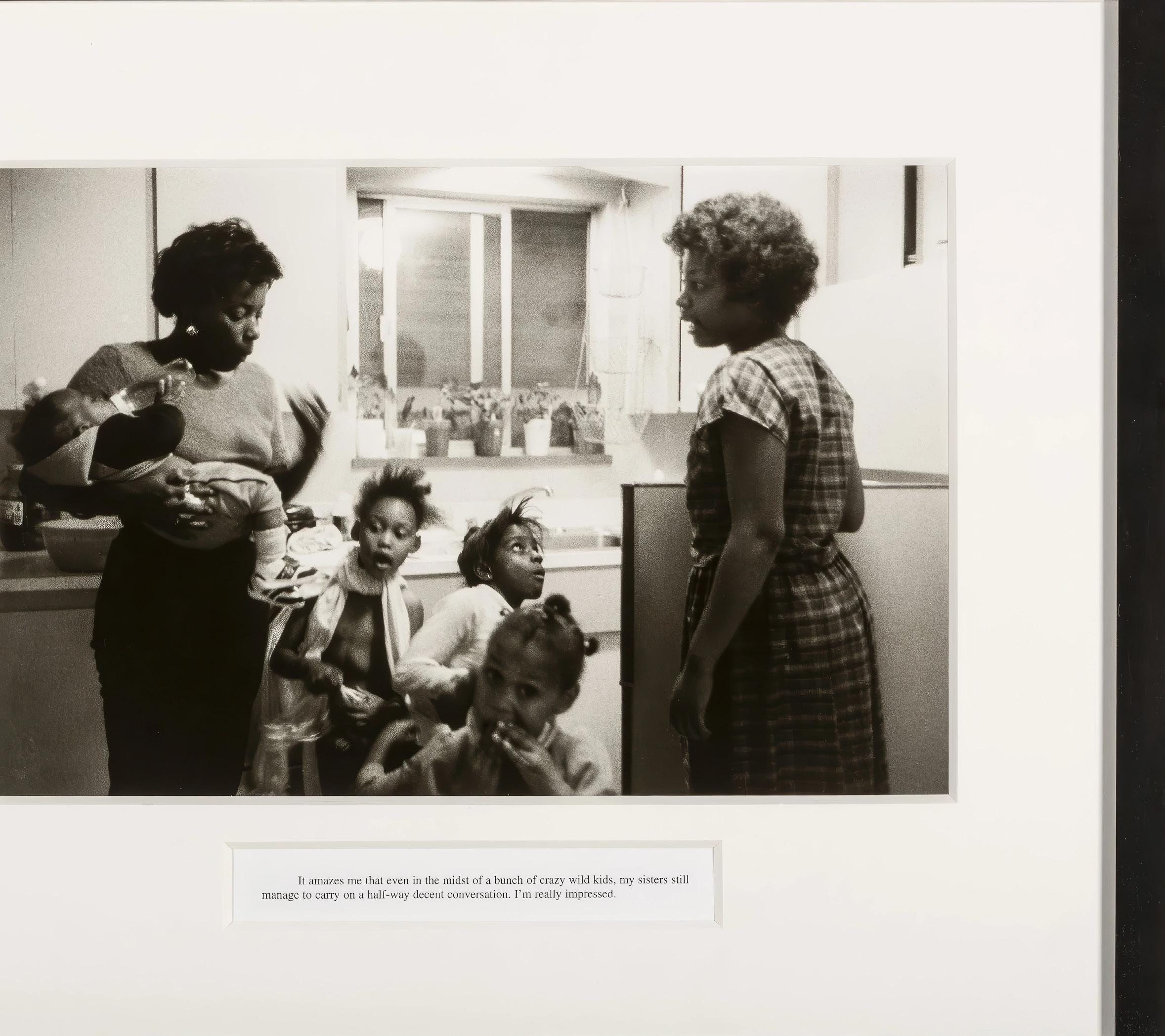

Kathryn Paige Harden’s
Visions of Sin, P.28

Thursday, May 7, 2026, 12pm Moody Center
The phrase “liberal arts” comes from the Latin artes liberales, meaning the arts (or skills) of the free person. That etymology isn’t just a historical curiosity. It gets at something essential about what we’re doing here. A liberal arts education is a liberating education. It frees the mind from rigid, unexamined ways of seeing the world. It opens doors you didn’t know were there and gives you the means to walk through them.
Consider what our faculty and students are up to in this issue alone. Our undergraduate researchers are exploring the largely untold history of Italians in Texas, adding new texture to the story of our state. Classicist Sean Gurd is reconstructing the sounds of the ancient world, asking what music meant to civilizations whose voices we can no longer hear. In an excerpt from her new book, Original Sin, psychologist Kathryn Paige Harden examines how advances in genetics are complicating some of our deepest assumptions about moral responsibility and sin. And philosopher Harvey Lederman’s essay explores, with both courage and trepidation, how artificial intelligence might threaten our sense of what it means to live a meaningful human life.
A proper liberal arts education doesn’t hand you a fixed set of answers, but rather gives you the tools, the habits of mind, and the intellectual courage to think freshly and honestly about hard problems. That’s what liberation looks like in practice: the freedom to boldly encounter the unfamiliar and the capacity to revise what you thought you knew.
That’s never been more essential than it is right now. In a period of rapid technological and cultural change, the most valuable thing we can offer our students is training in how to be free thinkers in the fullest sense.
I hope this issue gives you a feel for the extraordinary range of work happening across the College of Liberal Arts and a sense for how that range is itself a kind of argument for what the liberal arts are and what they do. Please don’t hesitate to reach out with your thoughts, and I look forward to being in conversation with you.
Yours,

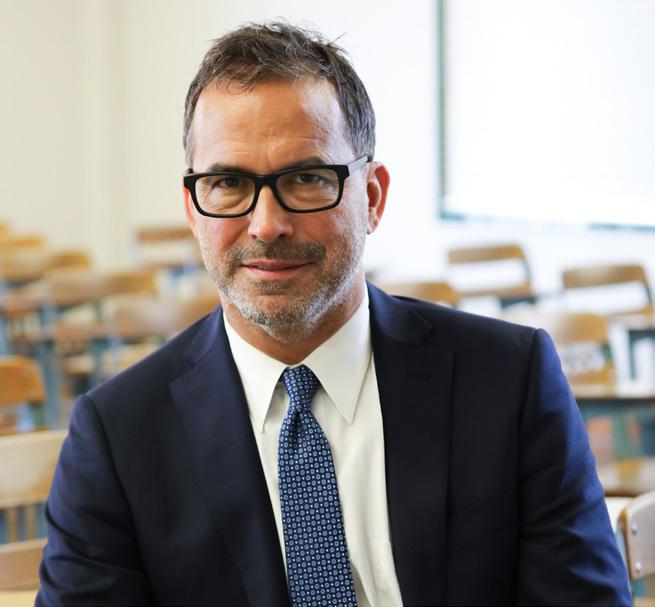
David Sosa, Interim Dean
David Bruton, Jr. Regents Chair in Liberal Arts
A
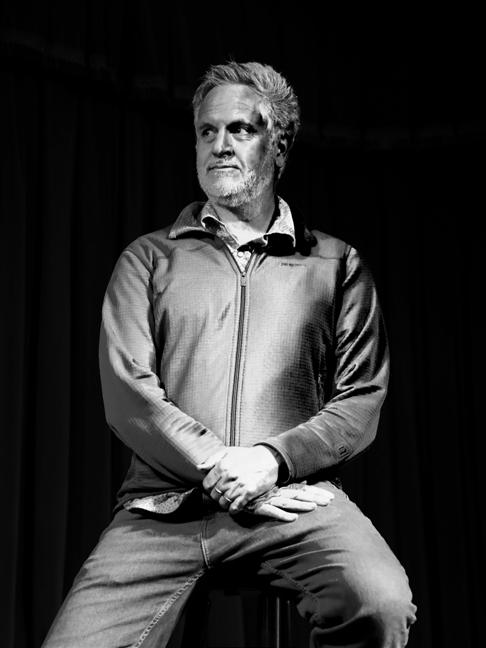
Harvey Lederman
Plan II Celebrates 90 Years and Plans for 90 More
At the celebrated honors program’s recent anniversary celebration, there was a clear message: There’s more where this came from By Kaulie Watson

Lauren Macknight
RaMell
Alex Reshanov
In her new book, psychologist Kathryn Paige Harden explores how genetics complicates our notions of blame, punishment, and moral responsibility

Cold War Crate Digging
A digitized resource offers a glimpse of the Eastern Bloc By Alex Reshanov

Figures in the Firmament
A popular signature course explores the millennia-old relationship between religion and the cosmos
By Leora Visotzky
Let the Ancients Play
Want to understand ancient Greek music and theater? Perform it By Kaulie Watson
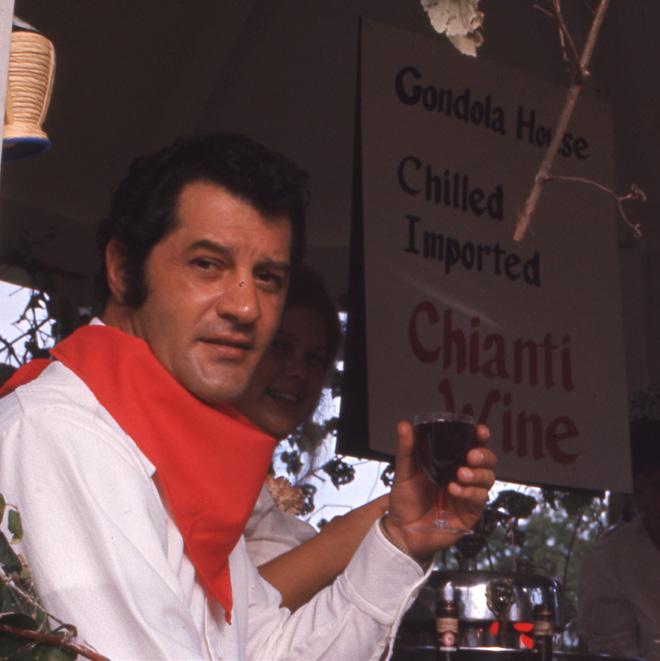
Italians in Texas
A faculty-led team of student researchers explores the rich history of Italian Texans By Maureen Turner
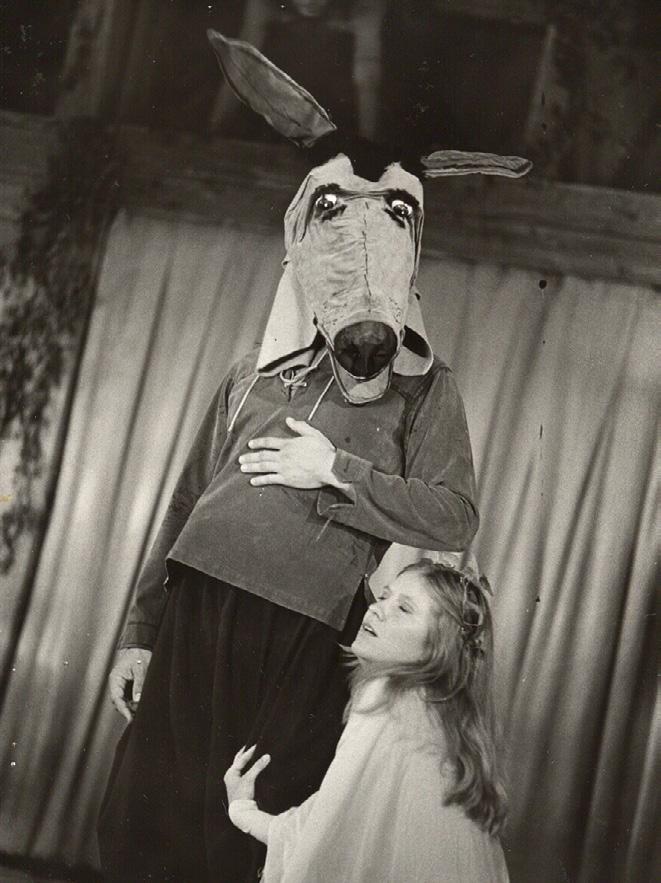
Because of Winedale
Bruce Meyer wants the show to go on forever By Kaulie Watson

Surrender to God Across Languages: Multilingual Intellectual History of Premodern India
Manasicha Akepiyapornchai
Oxford University Press April 2026
States Without Armies: Why They Exist and How They Survive
Zoltan Barany
Oxford University Press March 2026
Force Without Authority: America’s Wars in the Middle East and South Asia
Jason Brownlee
Oxford University Press January 2026
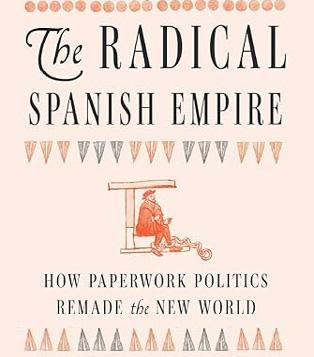
The Radical Spanish Empire: How Paperwork Politics Remade the New World
Jorge Cañizares-Esguerra and Adrian Masters
Harvard University Press March 2026
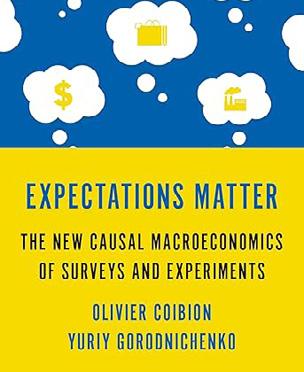
Expectations Matter: The New Causal Macroeconomics of Surveys and Experiments
Olivier Coibion and Yuriy Gorodnichenko
Princeton University Press March 2026
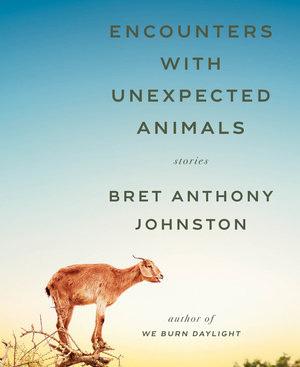
Encounters with Unexpected Animals: Stories
Bret Anthony Johnston
Random House
February 2026
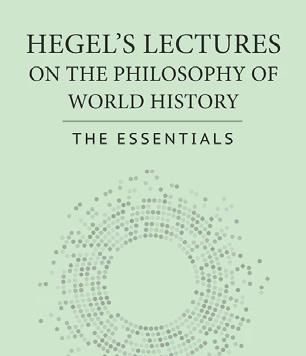
Hegel’s Lectures on the Philosophy of World History: The Essentials
Thomas Pangle
Cornell University Press
January 2026
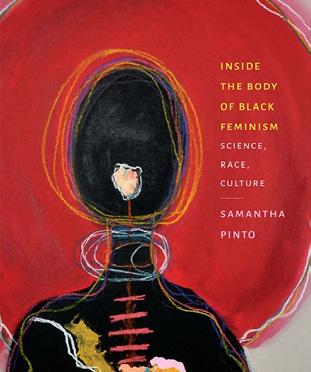
Inside the Body of Black Feminism: Science, Race, Culture
Samantha Pinto
Duke University Press
July 2026
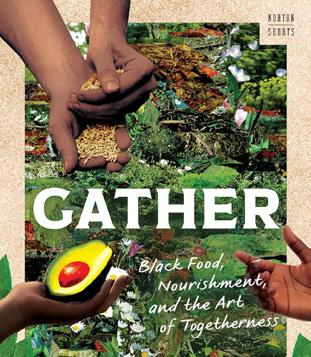
Gather: Black Food, Nourishment, and the Art of Togetherness
Ashanté M. Reese
W.W. Norton & Company
April 2026
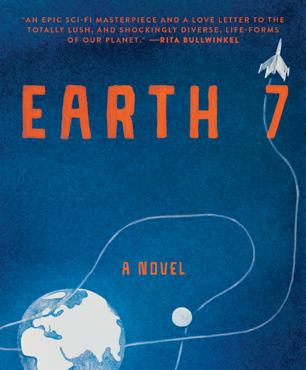
Earth 7: A Novel
Deb Olin Unferth
Graywolf Press
June 2026
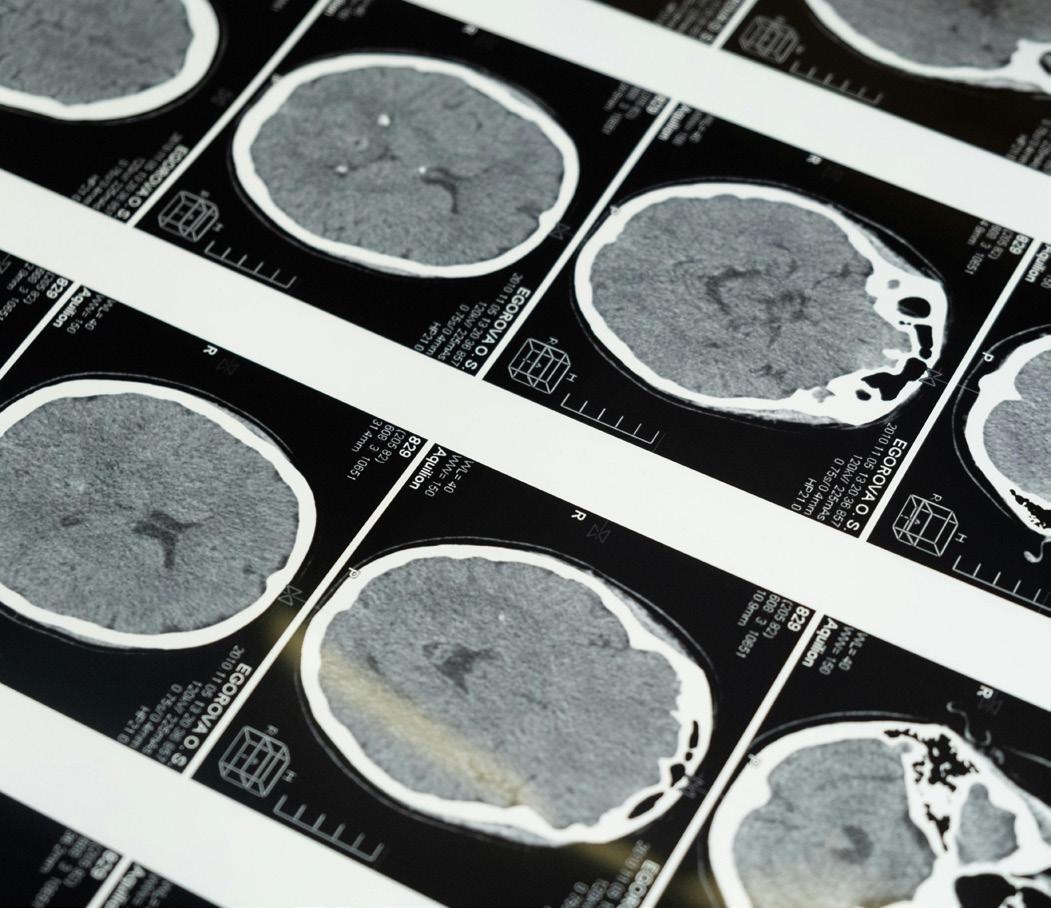
When Texans voted in November to establish the Dementia Prevention and Research Institute of Texas (DPRIT), College of Liberal Arts faculty were already leading the charge in dementia research breakthroughs. Among more than 100 UT researchers tackling dementia from every angle, College of Liberal Arts faculty are examining how sleep, diet, education, and social factors influence cognitive decline and brain health. Researchers ranging from psychology professors Audrey Duarte, Alexandra Clark, and Andreana Haley to sociology professors Chandra Muller and Debra Umberson and Texas Aging and Longevity Consortium director Karen Fingerman — all with the backing of the nation’s leading science funders — are driving this interdisciplinary effort to address one of society's most pressing health challenges.
The AI+Human Objectives Initiative at The University of Texas at Austin has received funding from Coefficient Giving to research AI alignment, ensuring artificial intelligence serves human values and goals. Co-led by linguistics professor Kyle Mahowald, philosophy professor Harvey Lederman, and computer science professor Brad Knox, with several other COLA faculty collaborators, the project examines AI through engineering, social science, and humanities perspectives. The initiative seeks to establish a permanent center positioning UT as a leader in AI safety research.
The Geological Society of America awarded professor of geography and the environment Sheryl Luzzadder-Beach the 2025 Rip Rapp Archaeological Geology Award for her contributions to hydrological geoarchaeology. The award recognizes LuzzadderBeach’s lifetime of research and findings on water and land use among the Ancient Maya and other past societies and her pursuit of questions of societal and environmental resilience. She joins distinguished UT scholars Karl Butzer and Arlene Rosen as recipients of this honor.
LLILAS Director Adela Pineda Franco Named Distinguished Mexican of 2025
The Mexican Ministry of Foreign Relations honored Adela Pineda Franco as Distinguished Mexican of 2025 for her outstanding academic trajectory and leadership fostering cross-border collaboration between UT Austin and Mexico. As director of the Teresa Lozano Long Institute of Latin American Studies, Pineda Franco has championed cultural and educational exchange, positioning UT as a leader in research and academic partnerships with Mexico and Latin America.
Assistant professor of Middle Eastern studies Emily Drumsta received the Modern Language Association’s Scaglione Prize for Middle Eastern Studies for her book Ways of Seeking: The Arabic Novel and the Poetics of Investigation (University of California Press). The award recognizes her innovative analysis of detective narratives in Arabic fiction that theorizes a “poetics of investigation.” The committee praised her work for enabling readers to look beyond a narrowly defined Arab literary center and rethink critical categories. Kirsten Cather, professor of Asian studies, received an honorable mention from the MLA in its East Asian studies category for her book Scripting Suicide in Japan (University of California Press).
UT Author: Andreana P. Haley, professor of psychology
Publication: Metabolic Brain Disease
The study:
Patients with an early-stage fatty liver disease linked to changes in brain metabolism that can contribute to cognitive symptoms were randomly assigned to adopt either a low-calorie or low-carbohydrate diet for two weeks. They were then screened to see if their brain metabolism markers had improved.
Key findings:
Subjects on both diets exhibited decreases in levels of markers linked to inflammation and memory problems after just two weeks.
97 percent of participants experienced a decrease in liver fat.
Up to 77 percent of participants experienced a measurable decrease in neurometabolites linked to cognitive symptoms.
Why it matters:
“Even short-term, achievable dietary changes may reduce brain processes that contribute to cognitive decline,” said Haley. “We hope this motivates both clinicians and individuals to take early action on metabolic health, not only to protect the liver but also to support long-term brain function.”
UT Researcher: Charles Koenig, assistant professor of anthropology
Site: The Hueco Tanks State Park & Historic Site near El Paso, Texas
The study:
An ongoing four-year survey of the Hueco Tanks site, co-led by Koenig, is using GPS tracking and high-resolution cameras to uncover Native American pictographs in West Texas’ mountainous terrain.
Key findings:
The research team has identified almost 300 previously unrecorded rock paintings in their first two years, far exceeding expectations.
The revealed images span several thousand years of human history, including depictions by hunter-gatherers, the Jornada Mogollon farmers (A.D. 600–1450), and later Native American groups such as the Tigua, Kiowa, Comanche, and Mescalero Apache.
Why it matters:
“This survey is rewriting the archaeological record of Hueco Tanks,” Koenig said. “We’re uncovering a density of ancient art far greater than anticipated, and we’re ensuring these cultural treasures are preserved for generations to come.”

UT Authors: Rebecca Lewis, professor of anthropology, and Domenic Romanello, UT affiliate researcher
Publication: Biotropica

Researchers analyzed satellite imagery of Madagascar’s Kirindy Mitea National Park (KMNP) taken over a 30-year period to examine how effective protected areas are at preserving tropical dry forest.
Key findings:
The protected area is helping to conserve the park’s dry forest, but not well enough to prevent deforestation.
While KMNP is losing less forest than a non-protected zone surrounding it, the park is still losing 2.1 percent of its forest every year.
If conditions in and around the KMNP don’t change, the park is projected to lose all its forest cover in less than 50 years.
Why it matters:
“Our paper uses this national park as a test case to study whether the foundation of global conservation strategies — protected area systems — is working,” said Lewis. “And we find that it is not. It is better than no protection, but barely. Our findings underscore the prescience of calls to prioritize protected area effectiveness over protected area expansion, globally.”
UT Author: Chandra Muller, professor of sociology
Publication: Journal of the American Medical Association Network Open
The study:
Researchers analyzed data from 4,340 participants of a long-term cohort study who provided blood samples at around age 58 to assess whether Alzheimer’s Disease (AD) biomarkers are consistent across racial and ethnic groups.
Key findings:
AD blood biomarker concentrations were similar across Black, Latino, and white subjects when adjusted to be population representative.
Associations between AD biomarkers and medical conditions such as type 2 diabetes, high cholesterol, and high BMI did not differ between racial and ethnic groups, meaning that these comorbidities have comparable impacts on AD outcomes across populations.
Why it matters:
“Being able to use blood-based markers of Alzheimer’s Disease and related dementia is a recent innovation,” said Muller. “This is the first time that researchers can be confident that the sample of people represents the U.S. population and is not selected on characteristics that could also impact any possible observed disparities. That means that physicians will be in the position to monitor their patients much more easily and access to care will improve.”
By Daniel Oppenheimer
Consider two images, or visions, of the study of the liberal arts. One is of a bright young student looking intently at a beautifully burnished bookshelf. On the shelves are rows of books that are obviously part of a carefully curated series, all the same size and spun off from the same design template.
The other is that same student but in a big library. She’s looking up in wonder at a forest of brightly colored books surrounding her, each volume a portal into a wholly different world.
The first image we might call the “great books” vision of studying the liberal arts. The texts have been carefully chosen by the wisdom of the ages and the elders to provide the student a single curriculum she must absorb in order to become a cultivated and educated citizen of our society.
The second is what we might call the “abundance” vision of studying the liberal arts. The student is given access to the whole wide world of texts, cultures, ideas, and narratives, then encouraged
to craft from these riches her own curriculum, a remix of her own tradition, guided by various mentors each offering a distinct perspective.
There’s a temptation to plot each of these visions on the contemporary partisan spectrum, with abundance on the left and great books on the right, but that framing confuses more than it clarifies. The great texts of the past aren’t so easily shoehorned into any contemporary political framework. That’s true whether you’re talking about major thinkers of the Western canon, many of whom were radical deconstructors of the orthodoxies of their era, or major thinkers of the non-Western canons. Was Karl Marx a conservative? Was the Buddha a liberal? Darwin? Nietzsche? Freud? Borges? Achebe? Naipaul?
Abundance, similarly, is not intrinsically a left-wing approach to learning, but rather a liberal one in the classical sense of the term. It’s opened up the curriculum to a lot of texts, courses, perspectives, and departments that have a more leftish flavor to them. It has also,
however, been a conduit through which a more consumerist or free-market orientation toward education has seeped into the university.
For the university communications professional, the question isn’t which vision is better in the cosmic sense but rather which story, at any given moment, better captures the essence of what the university is doing. After World War II, for example, it’s easy to see why the abundance vision of the liberal arts made marketing sense. Thanks to the GI Bill and post-war economic expansion, the numbers and kinds of Americans going to college dramatically increased. This was mirrored in the expansion and diversification of the people who were teaching college and devising the curricula.
What had been an elite endeavor, oriented toward white men of means, became a mass phenomenon, encompassing more middle- and workingclass people, more people of color, and more women. In this context, liberal arts abundance made marketing sense. It spoke
to people’s optimism. It aligned, conceptually, with the expansion of the consumer markets. It created space to accommodate people and populations who had been excluded from the old story. And in the context of material abundance, in an era when the prestige of the liberal arts remained high, this kind of expansion didn’t require a rejection of the great books approach to liberal arts education. It encompassed it. Students of all disciplinary and demographic stripes still enrolled in big survey courses on Shakespeare, ancient philosophy, American history, political theory, and the like, and many of them chose to major in traditional humanities disciplines with fairly traditional curricula.
When I was an undergraduate liberal arts student in the mid-1990s, this was the vibe. We enrolled in the big survey courses to get our informal core curriculum of the great books and thinkers, and then we spread out to our respective disciplines where we got more specialized knowledge. Even the STEM majors, most of the time, wanted to get their Shakespeare and Plato on the side. There didn’t seem to be a conflict between the two visions.
It feels different now, for a few reasons. One is that there are simply fewer students taking humanities courses. Another is that the cultural expectation that graduates of elite colleges should have at least a facsimile of knowledge of Moses, Plato, Shakespeare, Austen, Ellison,
Morrison, and Rawls seems to have diminished below some critical threshold. An English professor at Duke told me last year that the department can’t fill their Shakespeare lecture survey courses anymore, so they’ve been eliminated. You can still study Shakespeare at Duke, but it will be in a small seminar room, seated almost exclusively next to other English majors, of whom there are many fewer than there used to be.
Instead of abundance, then, there is scarcity. And instead of the great books regime that preceded it, with its elite product developed for an elite customer base, there is fragmentation. And then, of course,
there are the politics. Every choice being made, right now, about what and how to teach in the liberal arts is occurring within an intensely polarized, politicized context, with a lot of different actors with different agendas fighting to have influence.
We’re in a period of transition, in other words. Who are we? Who do we want to be? What should we hold on to, or go back to, and what should we move past and let go? Who will we be allowed to be?
And what tableau should we be painting? The burnished bookshelf? The vast library? A tiny free library? The cloud?

By Harvey Lederman
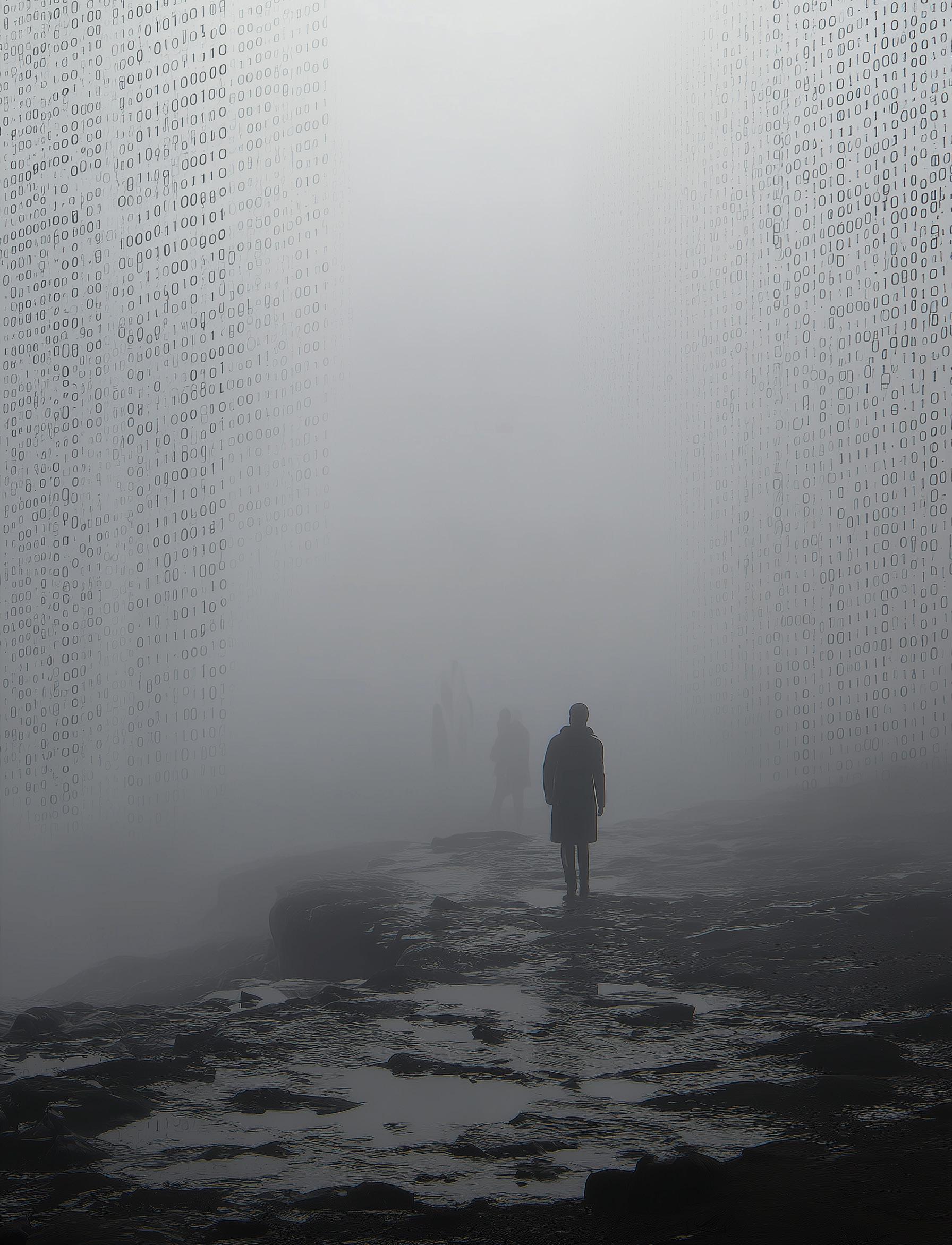
For the last two and a half years, since the release of ChatGPT, I’ve been suffering from fits of dread. It’s not every minute, or even every day, but maybe once a week I’m hit by it — slackjawed, staring into the middle distance — frozen by the prospect that someday, maybe pretty soon, everyone will lose their job.
At first, I thought these fits were just a passing thing. I’m a philosophy professor; staring into the middle distance isn’t exactly an unknown disease among my kind. But as the years have begun to pass and the fits have not, I’ve begun to wonder if there’s something deeper to my dread. Does the coming automation of work foretell, as my fits seem to say, an irreparable loss of value in human life?
The titans of artificial intelligence tell us that there’s nothing to fear.
Dario Amodei, CEO of Anthropic, the maker of Claude, suggests that “historical huntergatherer societies might have imagined that life is meaningless without hunting” and “that our well-fed technological society is devoid of purpose.” But, of course, we don’t see our lives that way. Sam Altman, the CEO of OpenAI, sounds so similar the text could have been written by ChatGPT. Even if the jobs of the future will look as “fake” to us as ours do to “a subsistence farmer,” he says, Altman has “no doubt they will feel incredibly important and satisfying to the people doing them.”
Alongside these optimists, there are plenty of pessimists who, like me, are filled with dread. Pope Leo XIV has decried the threats AI poses to “human dignity, labor and justice.”
Bill Gates has written
about his fear that “if we solved big problems like hunger and disease, and the world kept getting more peaceful: What purpose would humans have then?”
And Douglas Hofstadter, the computer scientist and author of Gödel, Escher, Bach, has spoken eloquently of his terror and depression at “an oncoming tsunami that is going to catch all of humanity off guard.”
Who should we believe?
The optimists with their bright visions of a world without work, or the pessimists who fear the end of a key source of meaning in human life?
I was brought up, maybe like you, to value hard work and achievement. In our house, scientists were heroes and discoveries grand prizes of life. I was a diligent, obedient kid who eagerly imbibed what I was taught. I came to feel that one way a person’s life could go well was to make a discovery, to figure something out.
I already had the sense then that geographical discovery was played out. I loved the heroes of the great Polar Age, but I saw them — especially Roald Amundsen and Robert Falcon Scott — as the last of their kind. In December
1911, Amundsen reached the South Pole using skis and dogsleds. Scott reached it a month later, in January 1912, after ditching the motorized sleds he’d hoped would help and man-hauling the rest of the way. As the black dot of Amundsen’s flag came into view on the ice, Scott was devastated to reach this “awful place... without the reward of priority.” He would never make it back.
Scott’s motors failed him, but they spelled the end of the great Polar Age. Even Amundsen took to motors on his return: in 1924 he made a failed attempt for the North Pole in a plane and, in 1926, successfully flew over it in a dirigible. Already the skis and dogsleds of the decade before were outdated heroics of a bygone world.
We may now be living in a similar twilight age for human exploration in the realm of ideas.
Akshay Venkatesh, whose discoveries earned him the 2018 Fields Medal, mathematics’ highest honor, has written that
the “mechanization of our cognitive processes will alter our understanding of what mathematics is.”
Terence Tao, a 2006 Fields Medalist, expects that in just two years AI will be a copilot for working mathematicians. He envisions a future where thousands of theorems are proven all at once by mechanized minds.
Now, I don’t know any more than the next person where our current technology is headed, or how fast. The core of my dread isn’t based on the idea that human redundancy will come in two years rather than 20 or, for that matter, 200. It’s a more abstract dread, if that’s a thing: dread about what it would mean for human values, or my values, anyway, if automation “succeeds” and all mathematics — and indeed all work — is done by motor, not by human hands and brains.
A world like that wouldn’t be good news for my childhood dreams.
Venkatesh and Tao, like
Amundsen and Scott, live meaningful lives, lives of purpose. But worthwhile discoveries like theirs are a scarce resource. A territory, once seen, can’t be seen first again. If mechanized minds consume all the empty space on the intellectual map, lives dedicated to discovery won’t be lives that humans can lead.
The right kind of pessimist sees here an important argument for dread. If discovery is valuable in its own right, the loss of discovery could be an irreparable loss for humankind.
What matters, I now think, isn’t being the first to figure something out but the consequence of the discovery: the joy the discoverer gets, the understanding itself, or the real-life problem their knowledge solves.
A part of me would like this to be true. But over these last strange years, I’ve come to think it’s not. What matters, I now think, isn’t being the first to figure something out but the consequences of the discovery: the joy the discoverer gets, the understanding itself, or the real-life problem their knowledge solves. Alexander Fleming discovered penicillin, and through that work he saved thousands, perhaps millions, of lives. But if it were to emerge, in the annals of an outlandish future, that an alien discovered penicillin thousands of years before
Fleming did, we wouldn’t think that Fleming’s life was worse just because he wasn’t first. He eliminated great suffering from human life; the alien discoverer, if they’re out there, did not. So, I’ve come to see, it’s not discoveries themselves that matter. It’s what they bring about.
But the advance of automation would mean the end of much more than human discovery. It could mean the end of all necessary work. Already, in 1920, the Czech playwright Karel Čapek asked what a world like that would mean for the values in human life. In the first act of his R.U.R. — the play which introduced the modern use of the word “robot” — Čapek has Henry Domin, the manager of Rossum’s Universal Robots (the R.U.R. of the title), offer his corporation’s utopian pitch. “In ten years,” he says, their robots will “produce so much corn, so much cloth, so much everything” that “there will be no poverty… everybody will be free from worry and liberated from the degradation of labor.” The company’s engineer, Alquist, isn’t convinced. Alquist (who, incidentally, 10 years later, will be the only human living when the robots have killed the
In a “post-instrumental” world where people are comparatively useless and the bots meet all our important needs, there would be no needed work for us to do, no suffering to eliminate, no diseases to cure.
rest) retorts that “there was something good in service and something great in humility, some kind of virtue in toil and weariness.”
Service — work that meets others’ significant needs and wants — is, unlike discovery, clearly good in and of itself. However, we work — as nurses, doctors, teachers, therapists, ministers, lawyers, bankers, or really anything at all — because working to meet others’ needs makes our own lives go well. But, as Čapek saw, all such work could disappear. In a “postinstrumental” world where people are comparatively useless and the bots meet all our important needs, there would be no needed work for us to do, no suffering to eliminate, no diseases to cure. Could the end of such work be a better reason for dread?
The hardline pessimists say that it is. They say that the end of all needed work would not only be a loss of some value to humanity, as everyone should agree. For them it would be a loss to
humanity on balance, an overall loss, that couldn’t be compensated in another way.
I feel a lot of pull to this pessimistic thought. But, once again, I’ve come to think it’s wrong. For one thing, pessimists often overlook just how bad most work actually is. In May 2021, Luo Huazhong, a 31-year-old ex-factory worker in Sichuan, wrote a viral post entitled “Lying Flat is Justice.” Luo had searched at length for a job that, unlike his factory job, would allow him time for himself, but he couldn’t find one. So he quit, biked to Tibet and back, and commenced his lifestyle of lying flat, doing what he pleased, reading philosophy, contemplating the world. The idea struck a chord with overworked young Chinese who, it emerged, did not find “something great” in their “humility.” The movement inspired memes, selfies taken flat on one’s back, and even an anthem.
That same year, as the Great Resignation took off
in the United States, the subreddit r/antiwork played to similar discontent. Started in 2013 under the motto “Unemployment for all, not only the rich!”, the forum went viral in 2021, starting with a screenshot of a quitting worker’s texts to his supervisor (“No thanks. Have a good life”) and culminating in laboractions as members first supported striking workers at Kellogg’s by spamming their job application site and then attempted to support a similar strike at McDonald’s. It wasn’t just young Chinese who hated their jobs.
In Automation and Utopia: Human Flourishing in a World Without Work , the Irish lawyer and philosopher John Danaher imagines an antiwork techno-utopia, with plenty of room for lying flat. As Danaher puts it: “Work is bad for most people most of the time. We should do what we can to hasten the obsolescence of humans in the arena of work.”
The young Karl Marx would have seen both
Domin’s and Danaher’s utopias as a catastrophe for human life. In his notebooks from 1844, Marx describes an ornate and almost epic process in which, by meeting the needs of others through production, we come to recognize the other in ourselves and through that recognition come at last to self-consciousness, the full actualization of our human nature. The end of needed work, for the Marx of these notes, would be the impossibility of fully realizing our nature; the end, in a way, of humanity itself.
But such pessimistic lamentations have come to seem to me no more than misplaced machismo. Sure, Marx’s and my culture, the ethos of our post-industrial professional class, might make us regret a world without work. But we shouldn’t confuse the way two philosophers were brought up with the fundamental values of human life. What stranger narcissism could there be than bemoaning the end of others’ suffering, disease, and need just because it
What stranger narcissism could there be than bemoaning the end of others’ suffering, disease, and need just because it deprives you of the chance to be a hero?
deprives you of the chance to be a hero?
The first summer after the release of ChatGPT — the first summer of my fits of dread — I stayed with my in-laws in Val Camonica, a valley in the Italian alps. The houses in their village, Sellero, are empty and getting emptier; the people on the streets are old and getting older. The kids that are left — my wife’s elementary school class had, even then, a full complement of four — often leave for better lives. But my in-laws are connected to this place, to the houses and streets where they grew up. They see the changes too, of course. On the mountains above, the Adamello, Italy’s largest glacier, is retreating faster every year. But while the shows on Netflix change, the same mushrooms appear in the summer, and the same chestnuts are collected in the fall.
Walking in the mountains of Val Camonica that summer, I tried to find parallels for my sense of impending loss…
To read the rest of Lederman’s essay, visit Shtetl-Optimized, the blog of UT Austin computer science professor Scott Aaronson.



At the celebrated honors program’s recent anniversary celebration, there was a clear message: There’s more where this came from
BY KAULIE WATSON
For almost a century, UT Austin’s Plan II Honors Program has been working a kind of educational alchemy. In go some of the nation’s brightest and most promising young minds — about 175 a year, give or take — full of ideas and ambition and ready for shaping. Spun through a challenging four-year curriculum that spans the arts, humanities, and natural sciences, students emerge transformed not into jewels or gold but into something infinitely more precious: well-rounded human beings, the culmination of a true liberal arts education.
Once transformed, they tend to transform others and the world around them. Plan II alumni include Pulitzer Prize winners, tech leaders, NFL coaches, Texas Supreme Court justices, members of Congress, and more. Their variety speaks to the diversity of the human project and to the incredible effectiveness of the program that unites them.
They also know how to enjoy a great party.
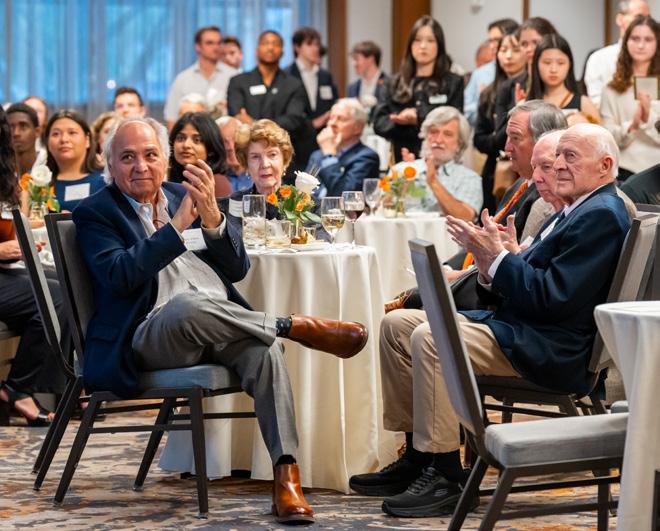
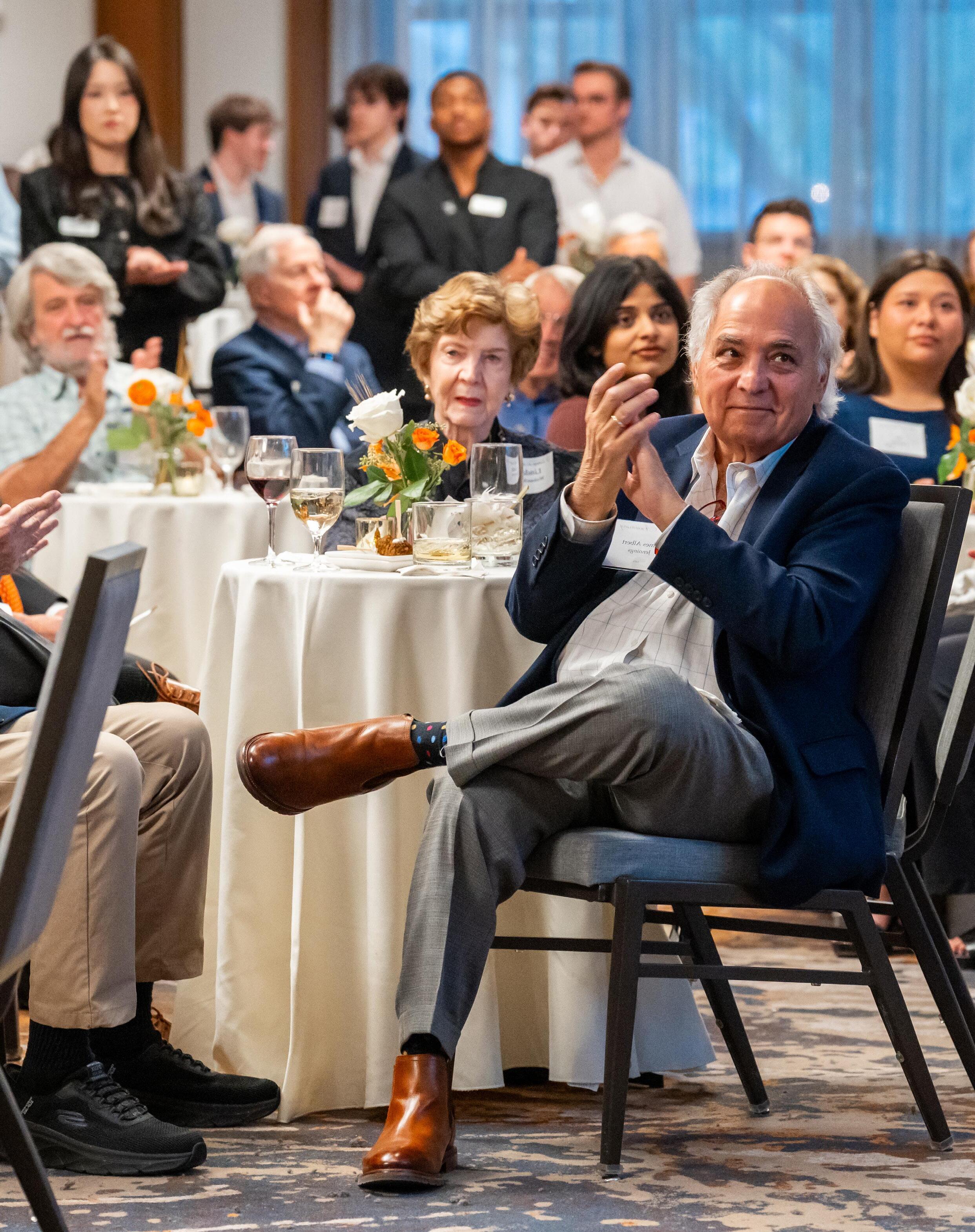
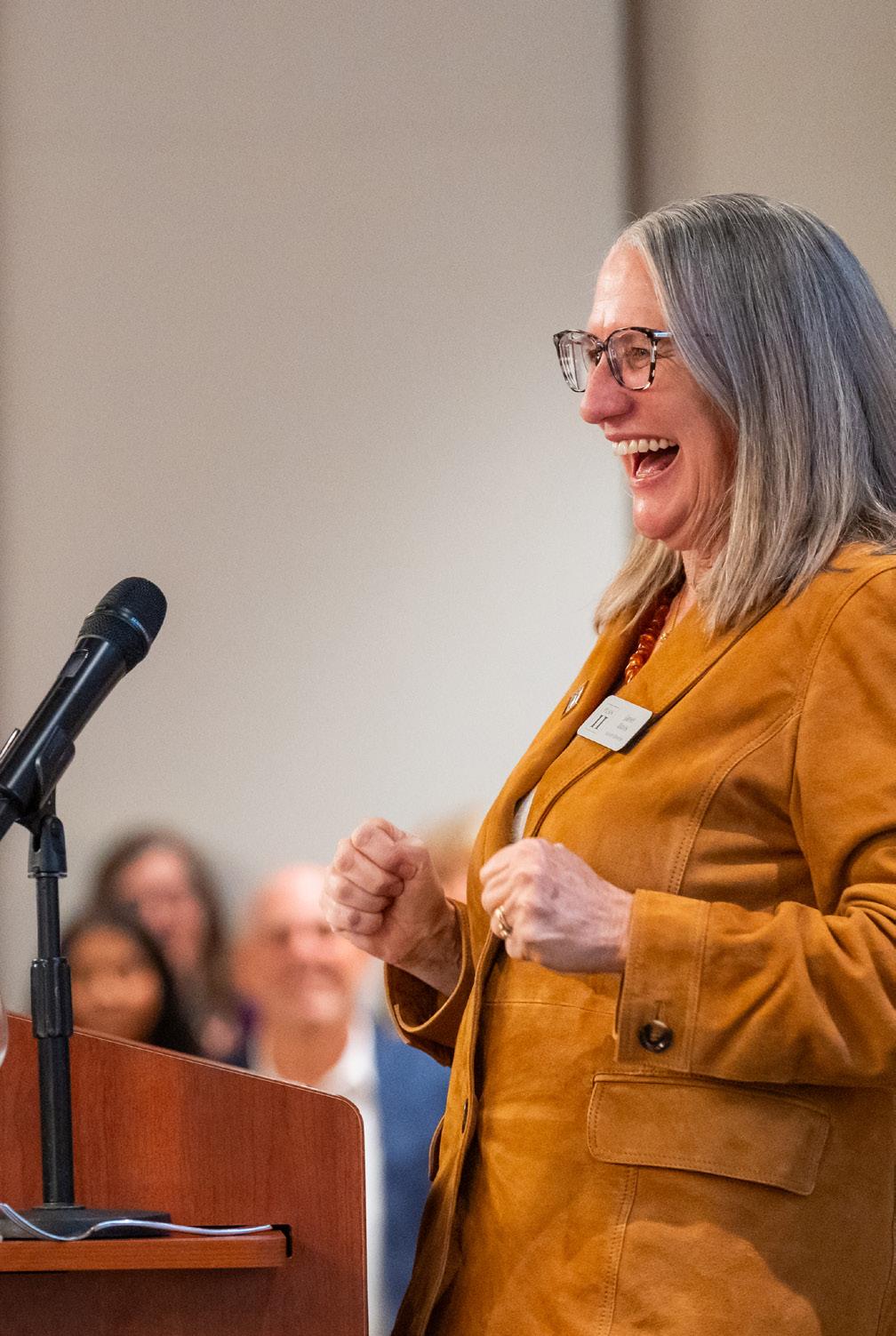
On a Thursday evening in October, Plan II students, staff, and faculty past and present gathered to celebrate the program’s 90th anniversary. Over sparkling drinks and platters of hors d’oeuvres, the crowd enjoyed music from a three-piece band before university leadership took a moment to praise
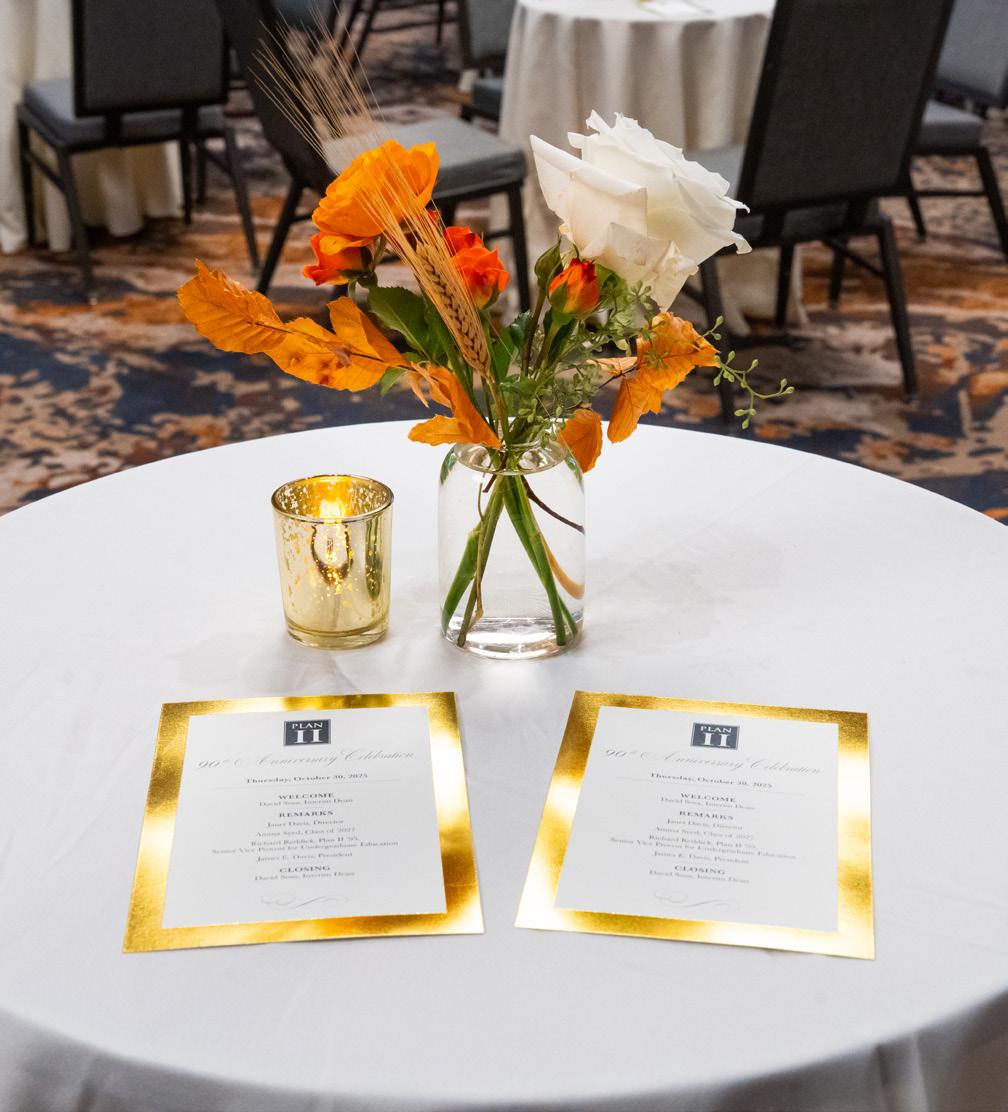
Plan II’s storied history and continued success. Speakers, including program director Janet Davis and interim dean David Sosa, referenced the Texas Constitution, the Barnum & Bailey circus, and their own liberal arts experiences to help explain what it is that makes Plan II so unique.
But the ultimate argument for the program — and the best explanation for its 90 years at the heart of the College of Liberal Arts — could be found not behind the podium but at the cocktail tables where alumni young and old traded memories and updates, united by a shared dedication to learning in general and the honors program in particular.
“Plan II is a program, but it’s also a community,” Davis says, “and one of its amazing aspects is its ability to foster intergenerational conversations through this interdisciplinary experience.” Watching graduates from the 1950s through the 2020s swap stories of seminars and language courses, it was easy to see what she means.
To understand today’s Plan II, one first has to consider its origins in the mid-1930s. “We were born as a program during a period of extraordinary divisiveness,” Davis says, “full of unrest, financial catastrophe with the Great Depression, the rising tide of militarism in the world, and the looming shadow of war.”
It was in this extremely challenging context that H.T. Parlin, then dean of UT’s College of Arts and Sciences, launched his “new plan” for higher education. In contrast to what Parlin saw as the university’s over-emphasis on specialization and professional training, Plan II would draw on an older model of liberal education, one that would prepare students not for any specific job but instead to face a rapidly changing world. Almost a century on, that mission hasn’t changed.
“Anniversaries are points for us to stand back and think about everything that’s happened over the course of this 90-year period, which is an incredible period in our history,” Davis says. “And we can say now that the blueprint Dean Parlin created has truly stood the test of time.”
That’s not to say that the blueprint hasn’t been slightly tweaked over the years — Parlin likely couldn’t have imagined the sheer range of courses, internships, and other opportunities that Plan II students can now access — but the heart of the program has needed no adjustments.
“It’s about intellectual delight,” says staff director Anne McCreary, one of the organizers of the 90th anniversary event, when asked what’s at the core of the program. Joshua Russell, a recent Plan II graduate and the program’s new alumni coordinator, has a similar definition: “It’s giving students both the structure and the malleability to incubate curiosity — specifically curiosity, not just aspiration.”
At the 90th anniversary, Davis joked that this curiosity was a constituent part of “PlanIIiness,”

“the inexplicable ‘you know it when you see it’ essence of being a Plan II student, marked by indefatigable curiosity, creativity, expansive interests, and a passion for jumping in and participating in everything.”
Take Russell as an example. When he first applied to UT, he thought he wanted to study physics and English. Instead he ended up in Plan II, where he was encouraged to pursue all his diverse interests and to explore new and creative ways to bring them together.
“I was writing poetry in my biology class, I wrote a love poem in my physics class,” he remembers, “and the professors were always excited to talk about that intersection.”
But curiosity, expansive interests, and a passion for learning don’t mean that all Plan II students and graduates are experts imbued with the wisdom of the ages. If anything, they can often be left feeling acutely aware of all that they still don’t know. It’s a mark of “PlanIIiness” that this is experienced not as a crushing ignorance but instead as the beginning of a never-ending process of discovery.
“Plan II showed me that no matter how much you know, there’s infinitely more to learn,” current Plan II student Amina Syed told the crowd of her peers at the 90th anniversary celebration. She then quoted the poet C.P. Cavafy’s “Ithaka”: “As you set out for Ithaka / hope your road is a long one… Don’t hurry the journey at all. / Better if it lasts for years.”
the natural sciences, the social sciences, and the fine arts works beautifully, so we want to preserve it,” says Davis. “Having said that, we’re also reckoning with the incredible challenges of our current historical moment, and our program has the flexibility to be capacious and to grapple with all of these challenges. I see us always being both forward thinking but also deeply rooted in what has worked for decades.”
As students past and present moved around the AT&T Center ballroom greeting old friends and making new connections, photos from across Plan II’s decades playing on a slideshow behind them, it was clear that the journey has no end in sight. The devotion Plan II alumni show their program is well known — as Sosa pointed out to the crowd, Plan II alumni are generous donors, overrepresented on college advisory boards, and constant presences on campus as informal advisors and course instructors. Some families have seen generations pass through the program, and many alumni continue to count fellow graduates among their closest friends and colleagues.
“We have incredible alumni who are very engaged,” says McCreary, and the 90th anniversary event was, in large part, an effort on the part of the program to communicate to alumni and students alike that their beloved program is going strong.
“How do you show every one of your students, your faculty, and your alumni that you’re still committed to excellence in education?” she asks. “Part of the answer is this anniversary event, which is not just a party but a moment of community, of bringing all these people together.”
And if anniversaries are an excellent time to look back and appreciate how far you’ve come, they’re equally profound moments to consider what lies ahead. What does Plan II look like at its 100th anniversary? Its 180th?
“We’ve had 90 years of evidence that this interdisciplinary education in the humanities,
In his address to the 90th anniversary gathering, interim dean Sosa shared a similar answer. “There’s no question that we can look back on the past nine decades and see a glorious record of accomplishment and significance,” he said. “It is also, fortunately, easy to look at both our present and future and say with confidence that Plan II is and will continue to be great.” And we can all raise a glass to that.
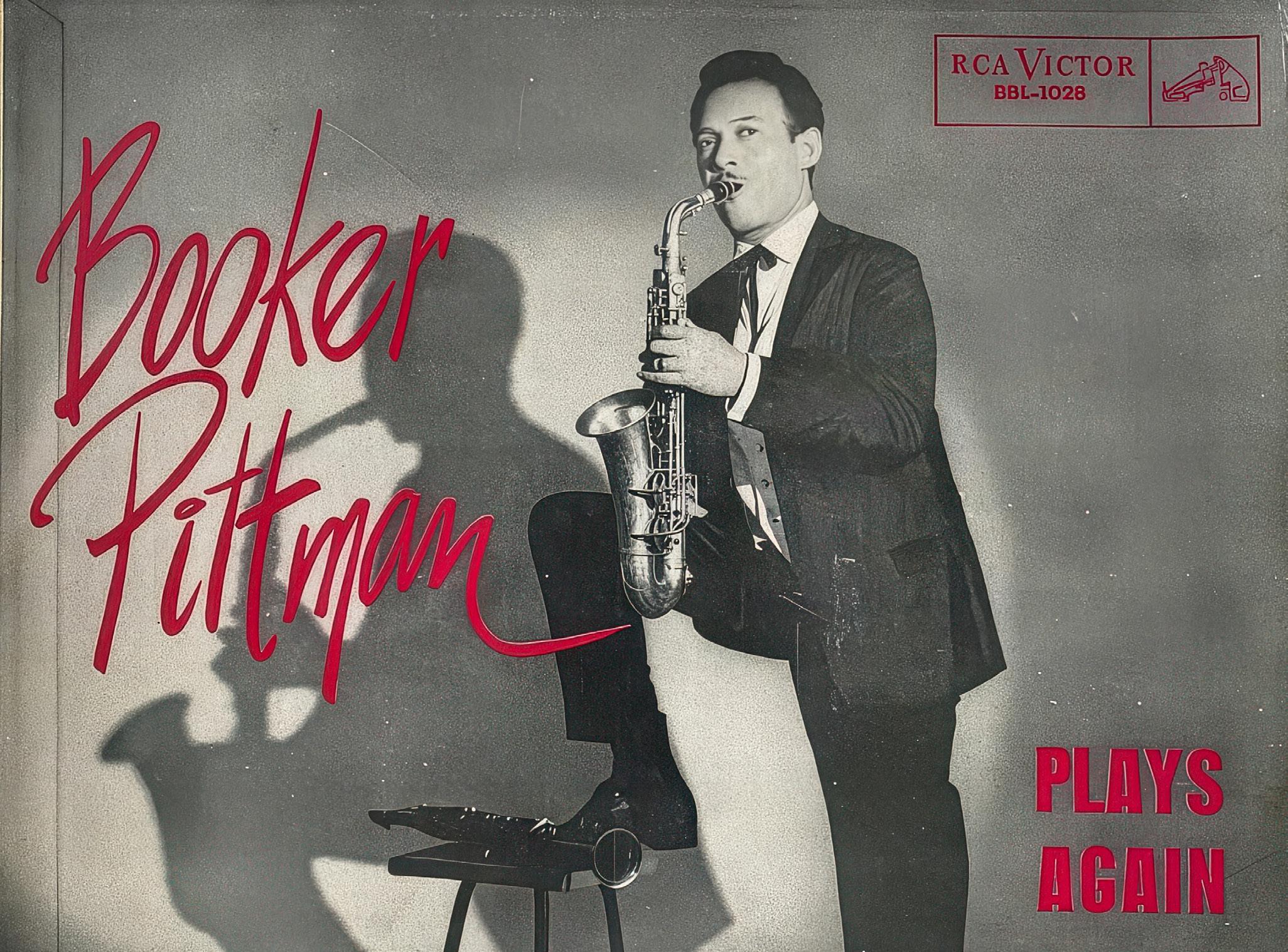
Jason Borge chases down the memory of jazz virtuoso Booker T. Pittman
BY LAUREN MACKNIGHT
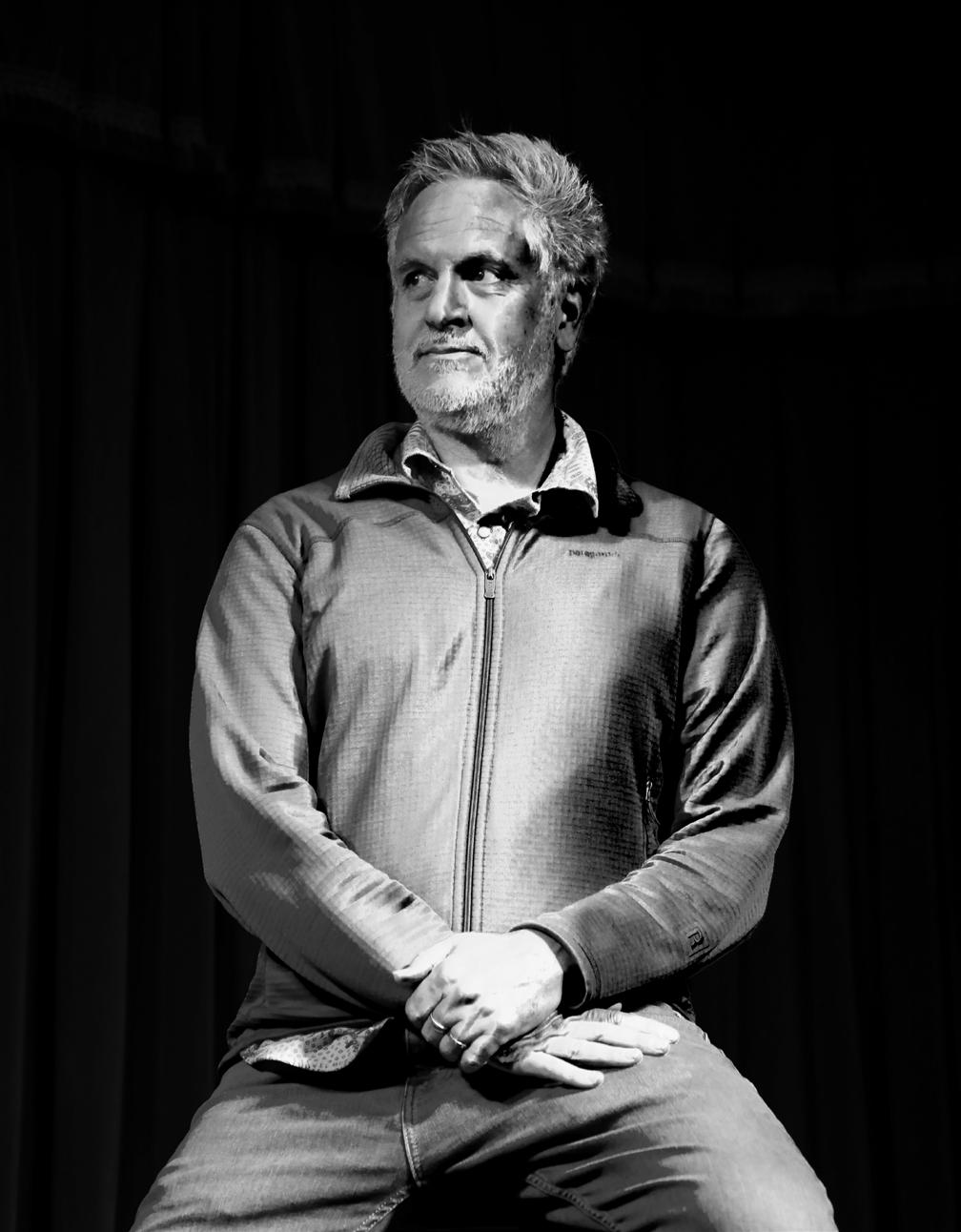
In 2018, Jason Borge arrived in Rio de Janeiro to deliver a paper on the American jazz musician Booker T. Pittman. He sent an invitation to Pittman’s stepdaughter, Eliana, to attend the panel. It was a shot in the dark, a courtesy. Borge, a professor of Latin American literary and cultural studies at The University of Texas at Austin, never imagined
that Eliana would show up, or that she would offer him the opportunity to burnish Pittman’s legacy.
Pittman, the grandson of Booker T. Washington, died in 1969 in São Paulo, Brazil, and was soon forgotten by most of the jazz world, his name appearing only in scattered footnotes and his recordings gathering dust
in archives from Kansas City to Buenos Aires. It was in these archives and footnotes that Borge repeatedly came across Pittman’s name during the research and writing of his previous book, Tropical Riffs: Latin America and the Politics of Jazz, a wide-ranging examination of the various ways that jazz, a fixedly American artform, had been received, assimilated, and rejected throughout Latin America.
Intrigued, Borge began chasing fragments of Pittman’s life, trying to resurrect a man who had spent decades as one of South America’s most accomplished saxophonists before slipping into obscurity. “I ran into his name a lot, but everyone said something different about him,” Borge recalls. One source said Pittman arrived in South America in the late 1940s; another placed him there a decade earlier. Some called him a clarinetist, others a saxophonist. The biographical sketches contradicted each other in basic ways. “I felt like I had to put the record straight,” Borge explains. “And that if I didn’t write it, nobody else would.”
The fragments of Pittman’s life suggested something remarkable. By all accounts, he could play. In 1933, a prominent Parisian jazz critic named him one of the top three alto saxophonists in the world. He had jammed with Count Basie in Kansas City nightclubs and later led bands in Buenos Aires and Montevideo. For the better part of two decades, Pittman was more than a fixture in Rio’s music scene; he was, writes Borge, “the single most influential jazz musician working in South America … he was the Satchmo of another universe.” And he carried a name that should have guaranteed him a place in history: He was the grandson of Booker T. Washington, one of the most significant Black intellectuals of the early 20th century. How does someone like that simply vanish?
Borge wanted to know, and no sooner had he arrived in Rio than he received a phone call from Eliana, Pittman’s stepdaughter and a well-known Brazilian singer and actress. She invited him to dinner that same evening and within hours was showing him photographs, sharing memories, and insisting with the certainty of someone who believed in fate that “you are meant to write this.” For Borge, the moment represented something rarer than scholarly good fortune:
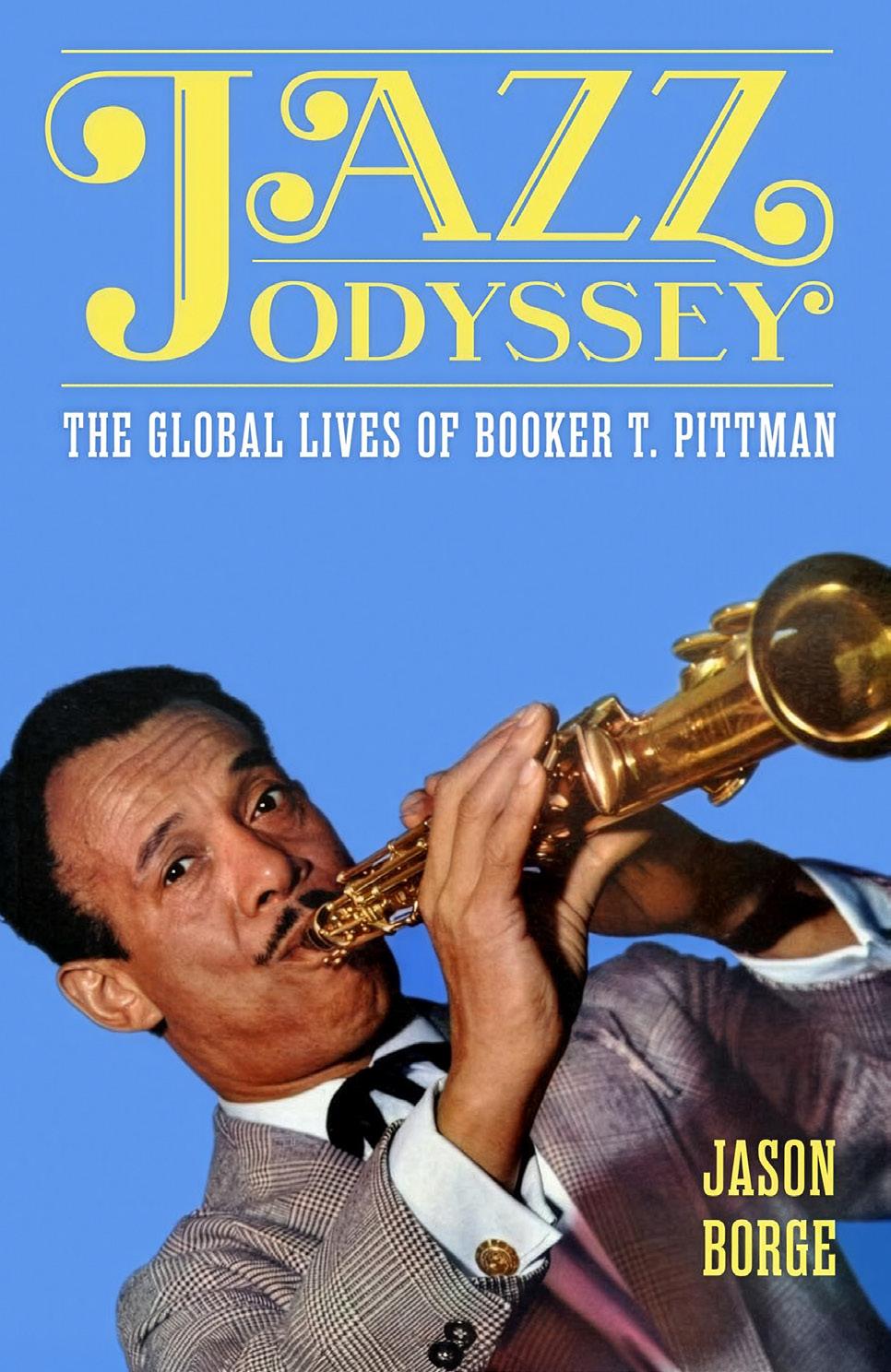
It was access to living memory. That resource, with all its complications, would become the foundation for his new biography, Jazz Odyssey: The Global Lives of Booker T. Pittman.
Borge’s task, which was to understand how a musician of such talent and influence could vanish from jazz history, would require him to exhaustively dig through archival documents housed all over the world. He’d also have to look beyond the music and the archives to consider who gets remembered and why.
A big part of the answer, Borge learned, was geography. Pittman’s career unfolded thousands of miles from the places, like New York and Paris, that mattered most to jazz historians. While other Black American musicians — including luminaries like Sidney Bechet and Josephine Baker — fled Jim Crow America for Paris, Pittman chose Latin America, a region largely invisible to the critics and record executives who built jazz’s canon. It was a good choice in
terms of the influence he could have on the regional scene — “Black American musicians of Booker’s talents could dazzle and flourish as local celebrities,” Borge writes — but distance from New York and Europe meant distance from the magazines, record labels, and other mechanisms that transform musicians into legends.
The answer was also personal. Pittman’s family history, Borge says, proved an immense burden to him. His grandfather’s legacy, of course, but also that of his father, William Sidney Pittman, who was a prominent Black architect in Texas and a lessthan-ideal dad. In his biography, Borge documents how the younger Booker grew up under his father’s “anger, alcoholism, and imperiousness.” The toll was profound. Booker Pittman inherited not just a famous name but also “the insidious pressure to carry on his
grandfather’s legacy [and] his mother Portia’s lofty expectations for him to study classical music just as she had,” Borge writes, all while navigating his father’s volatility and “the routine injustices of growing up Black in the Jim Crow South.”
Booker T. Washington’s famous 1895 Atlanta
Compromise had offered Black Americans a strategic path forward during a particularly low point of American race relations: stay put, work hard, build economic power, and prove your worth through contribution rather than confrontation. “Cast down your bucket where you are,” he famously said.
Pittman, however, cast down his bucket in Kansas City, then Paris, then Rio, then Buenos Aires, then Montevideo, then rural Brazil, then Rio again. He was always moving, driven by what Borge describes as Pittman’s “centrifugal force.” If Washington preached rootedness, Pittman embodied perpetual outward motion, forever pulling away from home, family, nation, and expectation. As Borge describes it, it was exile layered upon exile, each move taking him further from any recognizable center.
Pittman fled and kept fleeing. He became the opposite of everything his grandfather represented: bohemian where Washington was disciplined, peripatetic where Washington was rooted. For years, Pittman battled addiction, disappearing into small Brazilian towns for months at a time and nearly dying twice from alcohol abuse. It wasn’t until the 1950s, when he married Ofélia Pinto Lima in Rio de Janeiro, that Pittman finally found stability. Ofélia had a teenage daughter, Eliana, and Pittman embraced the role of stepfather with unexpected devotion. As Borge writes, “he took her under his wing as much artistically as paternalistically, mentoring her not just as a father figure but as a fellow musician, shaping her into the celebrated performer she would become.”
While life with Ofélia and Eliana brought Pittman much-needed consistency, it was during his most turbulent period that he produced some of his most remarkable music. “He had this kind of fast-talking, flighty, almost errant quality to his solos,” Borge says. “There’s a romantic quality in those solos, but
there’s also a restlessness.” When Borge tracked down Pittman’s early recordings, which were scattered across YouTube and tucked into obscure compilations, he heard something extraordinary. The solos had a quality he kept trying to describe, an unsettledness, as if Pittman’s perpetual movement had embedded itself in the notes themselves.
For his own part, Borge wanted to understand that quality from the inside, so he did something unusual for a scholar: He bought an alto saxophone and tried to learn the instrument. The experiment had mixed results, but it taught Borge to read the fragmentary descriptions in Pittman’s memoirs about playing in Dallas nightclubs or Buenos Aires theaters differently. “There were a couple of times when I could imagine a scene more fully because I had learned how to play,” he says.
In 2019, Borge also traveled to Argentina and Uruguay, visiting archives and concert halls where Pittman had performed decades earlier. He pored through Brazilian newspapers from the 1950s and ‘60s, building a chronology one clipping at a time. He interviewed Eliana repeatedly, though he learned in some instances to trust the written record more than family memory. The hardest parts were the gaps, entire years when Pittman essentially disappeared, holed up in rural Brazil or wandering through small towns. The archive couldn’t follow him there.
Instead, Borge had to engage in what the scholar Saidiya Hartman calls “critical fabulation,” or responsible speculation, armed with the information he did have. Hartman’s method allowed Borge to bridge the gaps, connecting what was known about Pittman before he vanished with glimpses of the remote Brazilian towns he’d fled to, informed by Borge’s own understanding of the music Pittman was playing and the landscapes he was inhabiting.
By 2020, Borge thought he understood Pittman intellectually. He was writing chapters about Pittman’s relationship with Eliana — describing how, in the late 1950s, the musician had become a father figure and artistic mentor to her — when the COVID-19 pandemic hit and Borge found himself parenting his
own Brazilian niece who was stranded with him and his wife during lockdown. As the past and present bled together, Borge began to understand Pittman’s experience of surrogate fatherhood not just intellectually but emotionally. “It helped me understand,” he explains, “how he might’ve felt and how these sorts of paternal instincts really start to kick in.”
The woman at the center of that original fatherdaughter dynamic had become central to how Borge could tell the story of Pittman’s life. Eliana was an essential collaborator for Borge, and her participation raised questions central to the work of biographical recovery. At 80, she remains a vital presence in Brazilian cultural life, a celebrated performer who recently starred in a Netflix series about the Bossa Nova era. And for her, Booker Pittman is more than history: He was an important part of her own life story.
For Borge, a cultural historian accustomed to working with documents and secondary sources, the collaboration represented both opportunity and methodological challenge. “Eliana invariably proved willing to provide me with all the documents and memories at her disposal,” Borge says. “She clearly wished the book to be written as much as I did, not as a hagiography but rather as an honest portrayal of the flawed but talented and dedicated man who had helped to raise her and served as her artistic mentor.”
The University Press of Mississippi published Jazz Odyssey in January, and for Borge that represents something more than an academic milestone. Whatever popular recognition may or may not come, Pittman’s life is now part of the permanent record, saved from the oblivion that nearly claimed him.
On a research trip to Brazil, Borge and his wife visited the cemetery where Pittman is buried. “We have a house that is just right over the hill from it, and so we went there just to look at it,” he says. The grave is modest and few people visit. The tombstone inscription reads simply: “Booker Pittman / Famoso músico americano / Jazz aqui.” As Borge notes in the biography, Eliana and her mother embedded a pun in that final line: “jazz aqui” means “there is jazz here,” but it also hints at “jaz aqui,” “he lies here.”
Ross on the importance
By Alex Reshanov
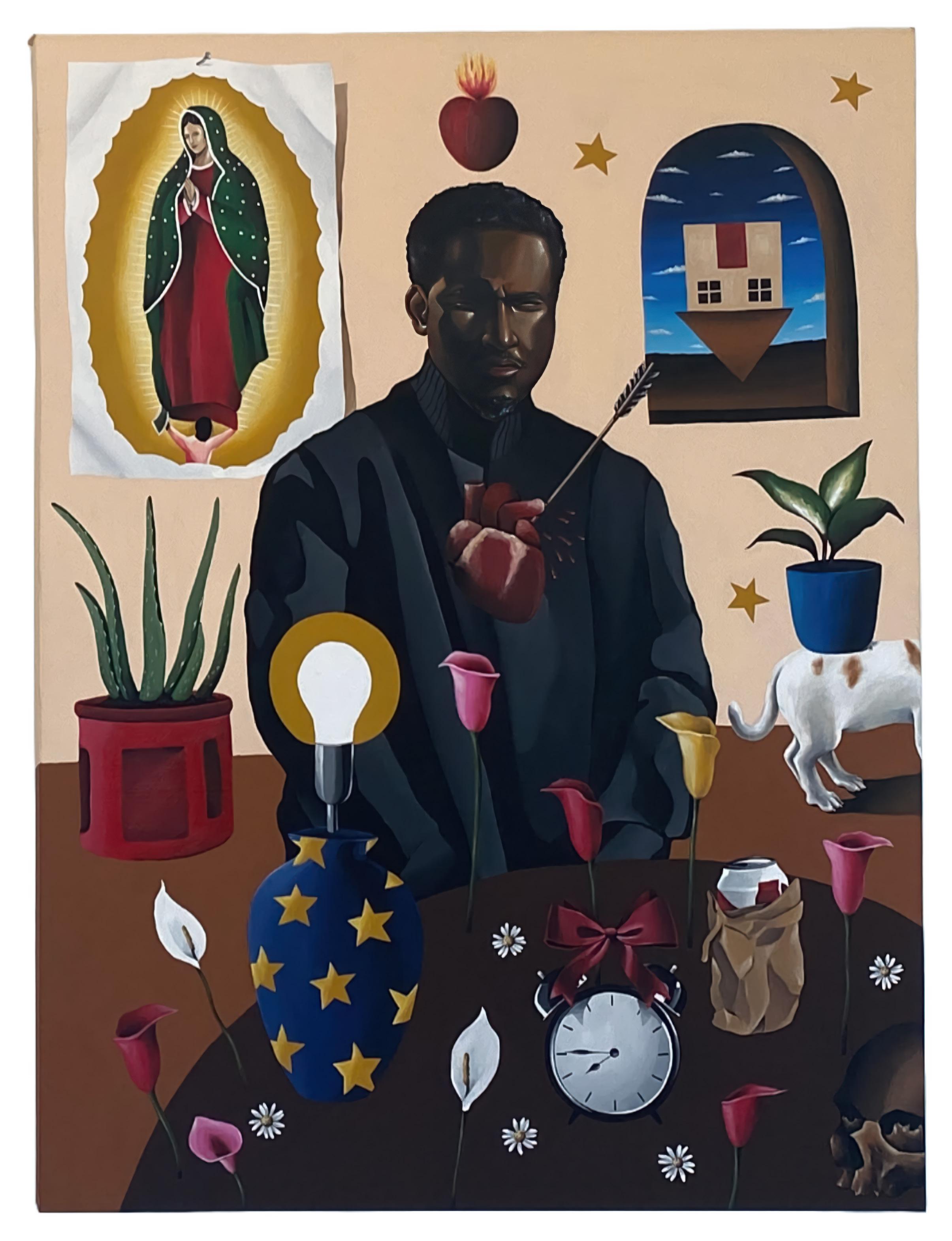
Sylvia Wynter and RaMell Ross have never met, but if they did, they would have plenty to discuss. It’s difficult to describe the work of either using discrete professional categories. During her long career, Wynter authored novels, plays, and critical essays, all of which are informed by her earlier vocation as a dancer and actor. Ross is a writer, photographer, and director of two critically acclaimed feature films Nickel Boys and Hale County This Morning, This Evening. Both are artists and thinkers who merge theory and practice with the goal of creating authentic representations of Black life.
It was Bedour Alagraa, an assistant professor of African and African diaspora studies at UT Austin, who noticed the intellectual convergence between the two. She then invited Ross to be the first guest in a yearlong residency series at UT titled Rethinking Aesthetics: Sensation as Form. Organized by Alagraa and her colleague Rikki Byrd, the residency uses Wynter’s essay “Rethinking Aesthetics: Notes Towards a Deciphering Practice” as a launching point to discuss Black expressive culture.
“In order for there to be any chance at altering our conditions, we need to address aesthetics,
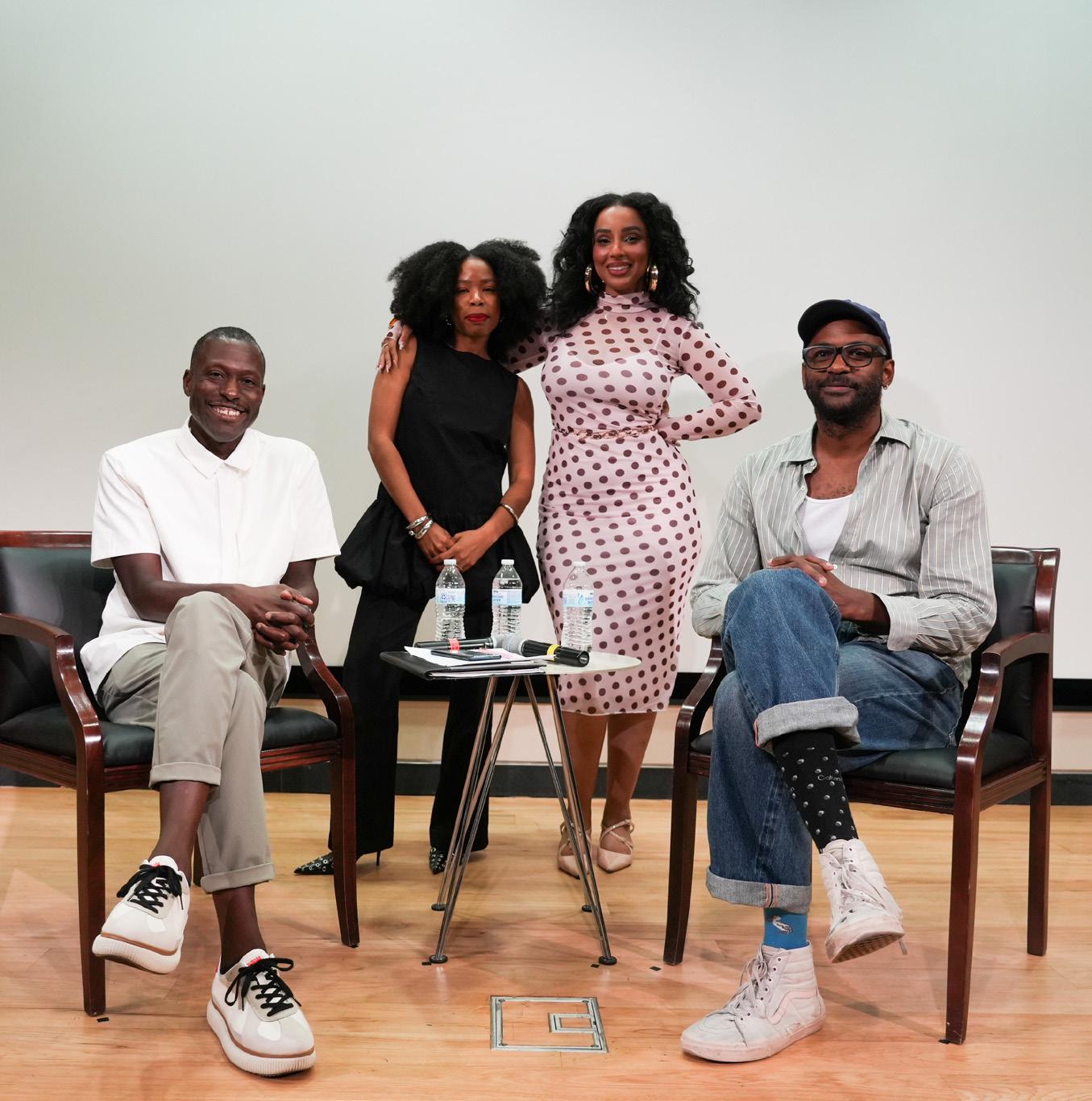
since it not only makes our social worlds coherent but also makes our own understanding of who we are — inside of, and enclosed by these social scripts — coherent. The aesthetic, in this way, is everything,” Alagraa says. “So, I decided that if ever given the opportunity, I would try to initiate a series that invited artists to consider Wynter’s essay specifically.”
“Rethinking Aesthetics” is both cultural theory and call to action. In it, Wynter argues that traditional aesthetics have mistakenly equated rational, secular European man with the universal human
experience and that this belief system is replicated through the conventions of art and culture. She calls on Black artists to disrupt this process of replication — like scientists disrupting old ways of thinking with revolutionary new models of the universe — by creating art that deviates from European traditions and expresses a more pluralistic view of humanity.
Continue reading at: lifeandletters.la.utexas.edu/2026/02/ looks-matter/
Read the full story on our website:

In her new book, psychologist Kathryn Paige Harden explores how genetics complicates our notions of blame, punishment, and moral responsibility

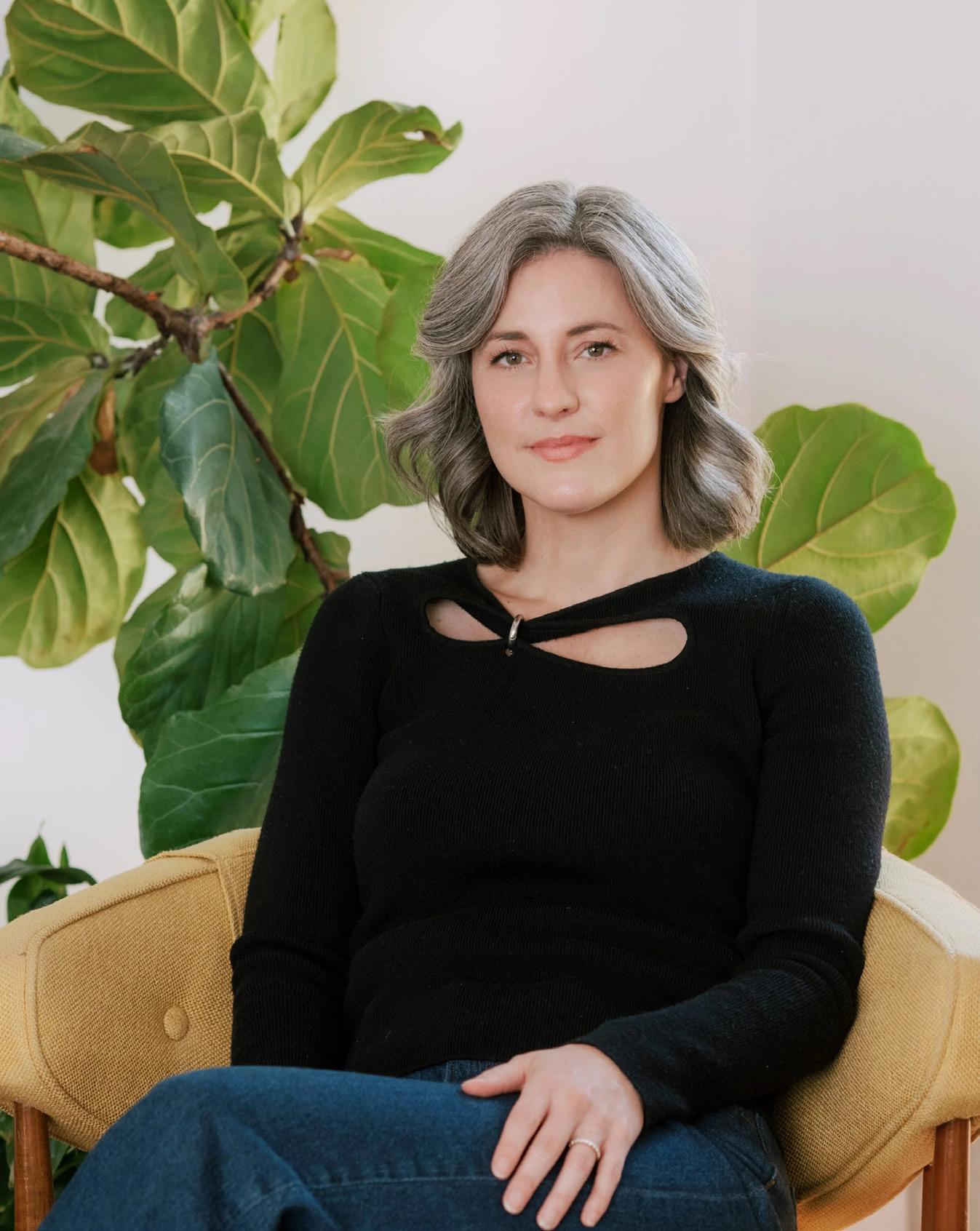
In the fall of 2021, I received a letter in my university mailbox from a man imprisoned in the J. Dale Wainwright Unit, formerly known as the Eastham Unit, one of the oldest prisons in Texas. The prison is isolated, rural, enormous — a “God-forsaken hole.” Clyde Barrow, of Bonnie and Clyde, was its most famous detainee.
The land occupied by the prison complex was originally cleared by enslaved men and women. After the Civil War, the family after whom the prison was initially named, the Easthams, ran their farm by leasing convict labor from the state of Texas. Even today, the Wainwright Unit remains a large-scale agricultural operation, with cattle, hogs, laying hens, and hundreds of acres of crops, all powered by unfree labor. The man wrote in his letter that he had been in Wainwright since he was 16 years old.
Several cartoons and illustrations were taped to the letter, and I couldn’t help but laugh at the dark wit that selected them. In one, a bearded caveman lies on a couch, talking to the psychoanalyst behind him: “Now that I have a prefrontal cortex I worry about everything.” In another, a white tiger on the psychoanalyst’s couch says, “They train me to perform, then when I try to show off what I really do best, everybody goes
ballistic.” The third was an abstract graphic, a cubist-esque collage of facial features overlaid with dots and dashes and bar codes that suggested something about humanity being atomized, automatized, analyzed. It was from an article in Texas Monthly magazine about me.
The article described the research we conduct in the Developmental Behavior Genetics lab that I run as a professor of clinical psychology at The University of Texas. “Developmental”: We primarily study children and adolescents, who are still growing and changing. “Genetics”: We study people’s DNA sequences (their genomes), as well as chemical tags attached to their DNA that affect how their genomes work (their epigenomes). “Behavior”: As psychologists, we are interested in how people’s genes combine with their environments to affect their thoughts, feelings, and actions in the world. He wrote that he agreed with the premise of our work. He thought that genetics had insights about human behavior that many people chose to ignore. He had 10 questions he hoped I could answer. One made me catch my breath:
Why would a young boy of 16 attack a total stranger, a female, at knife point in broad daylight at a busy intersection and make the female drive against her will to sexually assault her? What would drive a boy to do such a thing?
I looked him up online. My correspondent had been sentenced to 35 years in prison for aggravated kidnapping, aggravated robbery, and aggravated sexual assault.
His crime is unimaginable to me. As in, I literally cannot imagine committing such an atrocious, violent act. When I force myself to think about it, I can instead only feel hints of what his victim must have felt. I can readily sympathize with what it feels like to be hurt by male physical violence; I cannot readily imagine what it feels like to hurt someone like that.
His question, however, feels achingly familiar: Why? What would drive me to do such a thing? Who has not asked this very question about some action we have come to rue? The question “Why?” is not always a mere request for information. “Why?” can be a search for absolution, or at least for compassion. In a previous age, he might have posed his question to a priest in the confessional or saved it for his prayers to an unseen god. Only recently have scientists been expected to answer questions about why people do horrible things to each other.
⁓
That same fall, a few weeks before I received the letter, my colleagues and I published a paper in a scientific journal, Nature Neuroscience, that described results from a project we had been working on for nearly four years. Publishing any scientific paper is an ordeal that
His question, however, feels achingly familiar: Why? What would drive me to do such a thing?
involves repeated caustic rejection, and this paper was no exception.
After one such rejection, one of my co-authors sent a dejected email: “I’m seriously at a loss.” She had just gotten the anonymous critiques back from three people the journal had asked to be reviewers. They didn’t like it. One reviewer complained: “The main text goes through a seemingly endless list of prediction analyses . . . substance use/disorder, psychiatric illness, suicide, criminal convictions, diabetes, liver cirrhosis, condomless sex, and so on.”
What we were using to predict this “endless” list of behaviors and addictions and medical diseases and personal tragedies and criminal records was people’s DNA. We first pooled together data on the DNA of 1.5 million people, and then we analyzed it for patterns: Which DNA sequences were more common in people who smoked pot or smoked cigarettes or abused alcohol or had a lot of sex or described themselves as more impulsive and risk-taking? We then took the patterns we had discovered, applied them to DNA collected from new samples of people, and tested whether their total genetic “score” could predict their life outcomes. And we found
that it could: Less than 20 percent of people with a low genetic score were ever arrested for a crime, for example, compared to nearly 40 percent of people with a high genetic score. (All the people in the study had genetics most similar to people whose recent ancestors lived in Northern Europe, and all identified, socially, as white.)
My husband calls this my Minority Report paper, after the Philip K. Dick novella and the Steven Spielberg movie of the same name, in which three “precogs” see into the future and predict crimes before they happen. I admit he’s right that the project does seem like something from a science fiction dystopia: Here, spit into this tube, and a machine will read part of your DNA sequence from the cells in your saliva, and based on that DNA we will make a prediction about the odds of you being arrested for a crime, becoming addicted to alcohol, or using opiate drugs.
The precogs could peer into the future, but sometimes they disagreed about what was to come. Similarly, DNA cannot definitely say that you will commit a crime. We can say whether, based on your DNA, you are in a high-risk group, whose probability of being arrested
Less than 20 percent of people with a low genetic score were ever arrested for a crime.
for a crime is twice as high as that of people in the low-risk group — but that probability is still far from 100 percent. There’s a yawning gap between being able to say that genetics makes a difference for violent crime rates and being able to say that this person will commit a crime because of their genes. You could find that gap frustrating or relieving.
Our reviewer didn’t object to our paper on the grounds that it had
Minority Report –esque dystopian elements. They were just frustrated by its “nonspecificity.” They couldn’t see the scarlet thread that connected the many behaviors that we analyzed in a single paper: crime and addiction and sex and suicide. What was the theory, they wanted to know, that connected these analyses?
The reviewer couldn’t see: We were studying the genetics of sin. Or, rather, we were studying
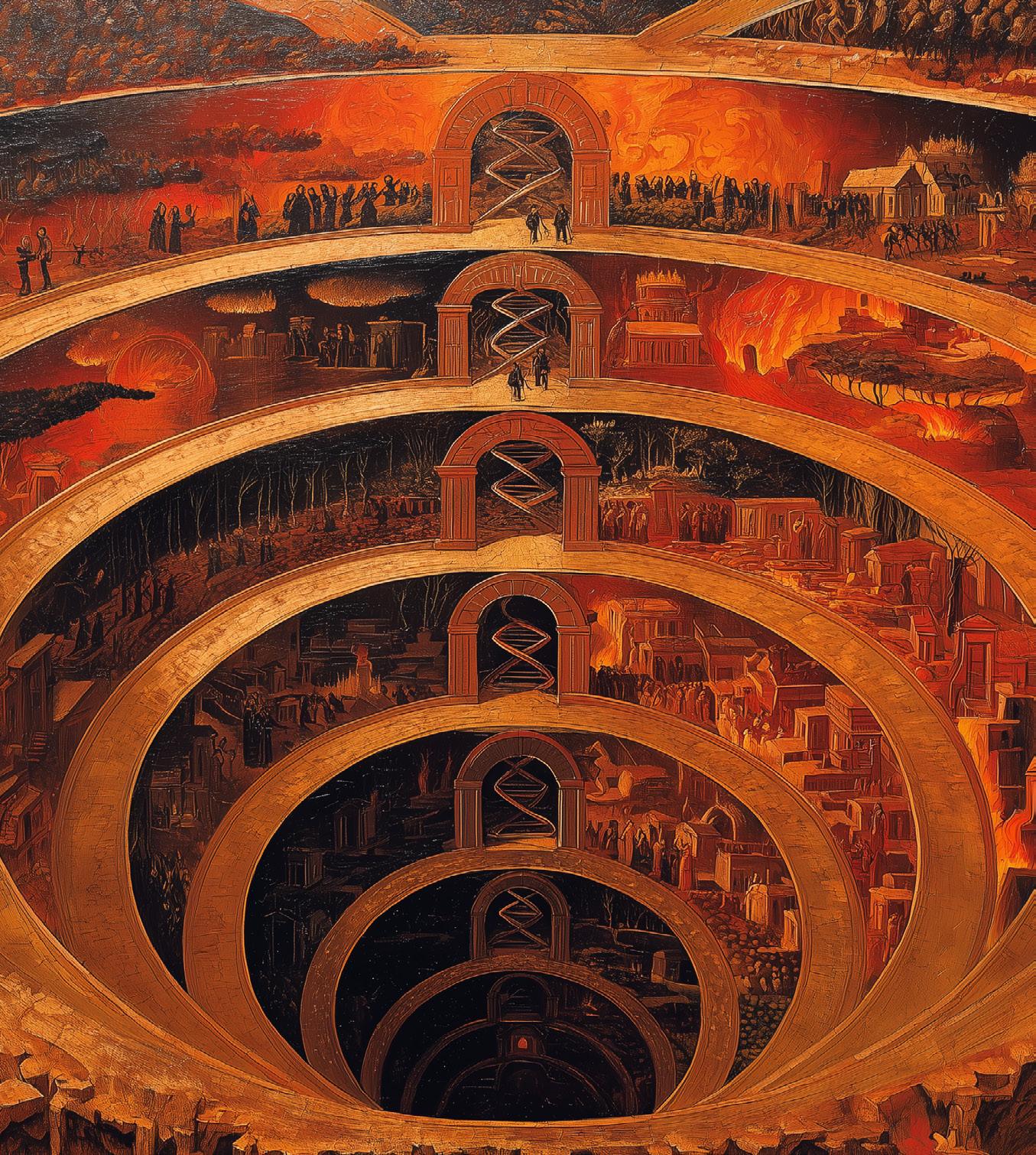
the genetics of behavior that Christianity calls sinful. Rather than presenting an “endless” list of genetic prediction analyses, we could have simply enumerated the circles of Hell.
Not that the terms we use in a scientific paper would necessarily be recognizable to Dante. The language of modern scientific psychology studiously avoids any whiff of moralizing. We didn’t talk about “the vice of lechery”; we just presented statistics on how one’s DNA is related to the “number of self-reported sexual partners.” We didn’t name “those who by violence do injury to others”; we added up how many symptoms of conduct disorder a person has, according to the American Psychiatric Association’s Diagnostic and Statistical Manual.
But every single analysis in our paper could be mapped to The Inferno. In the Second Circle, the sexually licentious and wanton are blown around endlessly by whirling vortex winds. In the Third Circle, the gluttonous, who ate too much and drank too much and who placed their addictions above all else, slosh around in a putrid stew, clawed by the threeheaded dog Cerberus. In the first part of the Seventh Circle, a scalding river of blood torments those who were violent against others; the suicidal are in the second part of the Seventh Circle, transformed into gnarled trees whose limbs are broken off by tormenting Harpies.
And in the Eighth Circle, the fortune tellers, prophets, and diviners, such as myself, who try to predict the future from earthly signs and wonders — and what is genomics but an earthly wonder? — must walk through eternity with their heads fixed on backward: “Because he aspired to see too far ahead / He looks behind and treads a backward path.”
My colleagues and I decided not to try and convince the skeptical reviewer; instead, we sent the paper to another journal. The editor of that journal made
But every single analysis in our paper could be mapped to The Inferno.
suggestions about the title. Like our skeptical reviewer, she thought the title needed to be clearer about why all the behaviors we studied go together: “I think it would be good to include something about how you’ve identified a shared genetic factor among various traits.”
Sin is not a word you can use in Nature Neuroscience.

“We wanted everything in each folder, even if it’s a weird slip of paper saying the memo is on the next page.”
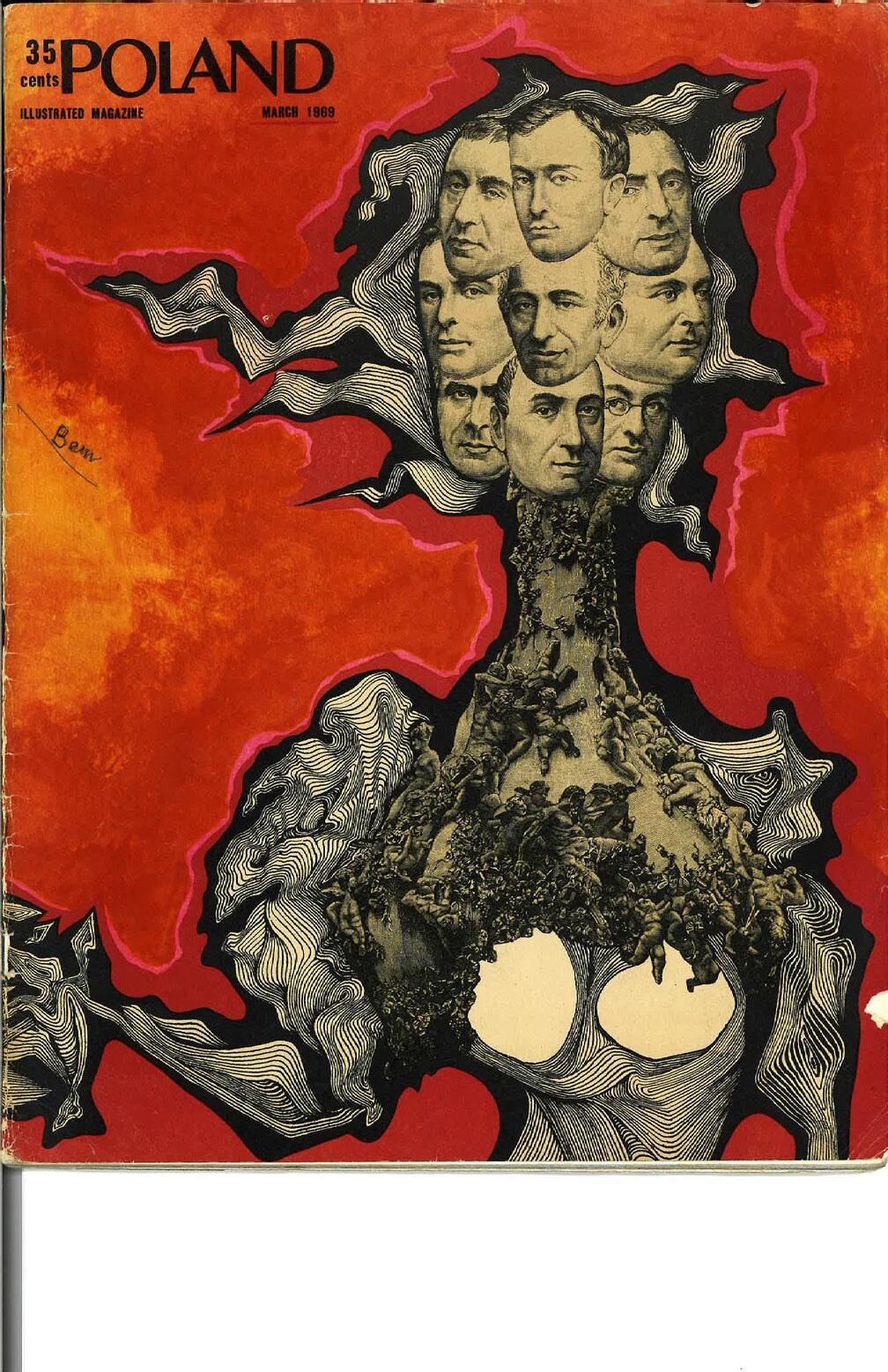
These and other details about Jordan’s case have long been buried among the official U.S. files housed in the LBJ Presidential Library. Now, thanks to an ambitious new digitization effort, they can also be accessed by anyone, anywhere, at any time through an online archive called the Cold War Chronicles.
Spearheaded by Mary Neuburger, a professor of history and chair of UT Austin’s Department of Slavic and Eurasian Studies, this project has digitized tens of thousands of documents created during Lyndon Johnson’s presidency and related to the Soviet Union and Eastern Bloc countries. They include embassy communications, CIA reports, national security memos, letters, telegrams, and even handwritten notes created during LBJ’s presidential terms. Scanning and cataloging them has been the labor of a decade and a revolving team of UT students and staff, led throughout by Neuburger.
“We wanted everything in each folder, even if it’s a weird slip of paper saying the memo is on the next page,” Neuburger says, noting that other digital archives are often curated to include only what their creators deem to be the most important documents. The Cold War Chronicles’ approach, however, “makes you feel more like you’re in the archives,” she says. “A given page might be irrelevant to most people, but it might be interesting to you.”
The Chronicles’ archive recently went live with documents on all but two Eastern European countries fully digitized. The resource offers a glimpse into Johnson’s six-year stretch of the Cold War to students, scholars, and anyone unable to visit the LBJ library in person.
global politics in the second half of the 20th century. Neuburger characterizes the LBJ years of the Cold War as a period of “uneasy thaw” in the superpowers’ relation. Johnson’s attempts to open up communications were periodically undercut by the U.S. escalation of the Vietnam War and the 1968 Soviet invasion of Czechoslovakia. Despite such diplomatic setbacks, however, it was an era of illuminating exchanges between communist and capitalist nations.
“The Cold War was always a conversation between the two sides,” Neuburger says. “Both sides were watching each other very closely, competing, and reacting.”
For Eastern European historians like Neuburger, who do most of their research in archives abroad, observing the Cold War from the U.S. side is vital for filling in the other half of that conversation. However, because Neuburger’s research focus is cultural — she’s written books on culinary history and the tobacco
By the time Lyndon Johnson took office in 1963, the United States and the Soviet Union were almost two decades into the tense rivalry that dominated
industry in Bulgaria — it didn’t occur to her to explore the LBJ archives during her first decade at UT. But with the library located just across campus, she eventually decided to have a look. At the time, she had been researching international trade fairs in Bulgaria and other Eastern European countries, and her visit to the presidential archive was rewarded with the discovery of numerous government documents detailing U.S. participation in those fairs and its implications.
According to the documents Neuburger unearthed, the U.S. had been instructed by fair organizers not to include anything political in their pavilions, but there were no restrictions on consumer goods. The instructions, she explains, were “You can’t talk about freedom of speech or freedom of religion, but you can bring a microwave oven, and a powerboat, and a motorcycle. You can bring stuff.”
So, while the U.S. couldn’t directly evangelize democracy to all of Eastern Europe, they could create displays showcasing the spoils of capitalism. These turned out to be quite popular and had the desired effect of influencing political priorities as communist countries scrambled to appease a population that had glimpsed the American standard of living. Reading the U.S. documents about these trade fairs, which included detailed travel notes, Neuburger realized that the presidential files contained not just memos and reports but “real human stories.”
The volume and subject of these stories vary by country depending on the level of diplomacy between nations and on how much was happening on the ground during the LBJ years. Albania, which had no U.S. embassy at the time, has all of one document in the library. On the other extreme, the Soviet Union is so well represented — 15 boxes with over 10,000 files — that its documents are among the last to be processed and posted to the online archive.
Czechoslovakia boasts the second-largest set of files thanks to the 1968 “Prague Spring,” a period of political reform and partial democratization that came to an abrupt halt with the August invasion
of Czechoslovakia by the Soviet Union and three other Warsaw pact countries. These were the first documents digitized by Neuburger’s team and led to the “The Prague Spring Archive,” an online exhibition of documents curated by Ian Goodale, currently the European Studies librarian for the University of Texas Libraries. The bulk of the Czech files are from 1968 and paint a detailed picture of the U.S. navigating its response to the developing crisis in Czechoslovakia and its aftermath.
While the U.S. couldn’t directly evangelize democracy to all of Eastern Europe, they could create displays showcasing the spoils of capitalism.
Hungary’s files are dominated not by an event but by a person: Cardinal József Mindszenty, leader of the Catholic Church of Hungary. An outspoken critic of fascism and communism, Mindszenty had the distinction of being imprisoned by both regimes. Briefly freed by the 1956 Hungarian revolution, he was granted political asylum by the U.S. and spent the next 15 years living in the American embassy in Budapest. Housing someone considered to be an enemy by Hungary’s government was, as one can imagine, a delicate situation for the U.S., and many of the Mindszenty documents focus on how to get the cardinal out of Hungary without him being re-arrested.
Mindszenty wrote numerous letters to Johnson, which were answered indirectly through local chargé d'affaires due to protocol. They were often about his living situation, but not always. Some of his letters also concerned larger issues such as the safety of Hungary’s crown jewels, which Mindszenty had helped to rescue from the Nazis and which he now sought to keep out of the hands of Hungary’s communist leadership.
“There are gems like that that one can find,” Neuburger says, noting that Mindszenty is a national hero in present day Hungary. “I could picture a whole movie being made out of that.”
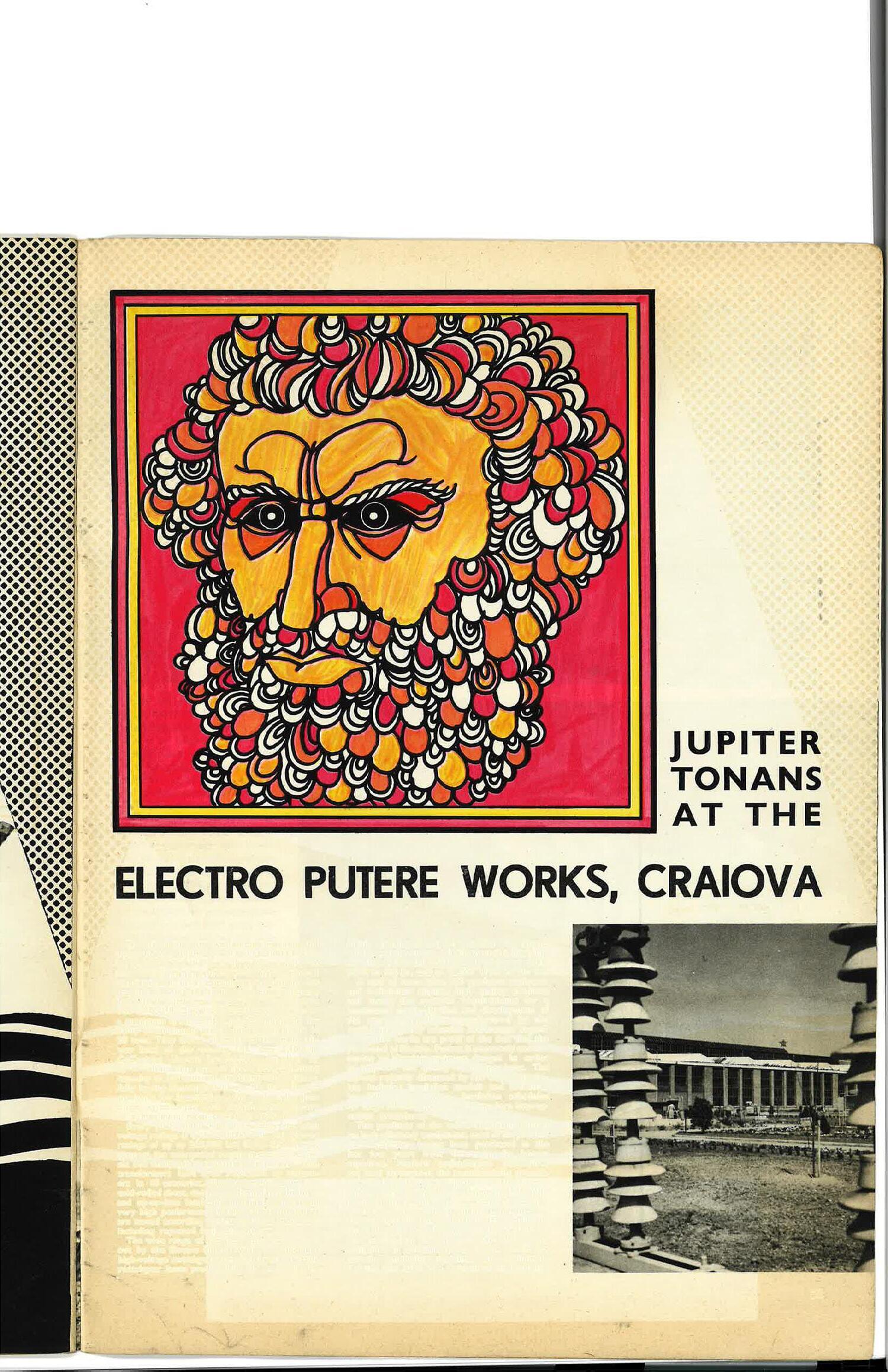
archives, Neuburger has observed some amusing differences. U.S. archives like the LBJ library have careful procedures to ensure the safe handling of their materials, but they don’t always provide much explanation of what the archive houses, expecting researchers to consult with librarians for information. Meanwhile, in Eastern Europe, scholars pore over precious original documents with food and coffee in hand but are aided by detailed guides. She hopes the Cold War Chronicles can bring some of that organizational rigor to the LBJ materials, minus the snacks.
That’s partly why, while each country’s files in the Cold War Chronicles can be perused piece by piece to replicate the experience of digging through the
archives, Neuburger and her team also took pains to ensure that users looking for specific documents would have a well-organized, searchable database with documents and folders carefully labeled with descriptions of their contents.
Neuburger sees the Cold War Chronicles as a potential resource for both original research and teaching. The site offers educational materials, including assignments from her undergraduate “Cold War Eastern Europe” course, designed to help students navigate archives and identify the stories that they want to explore further.
She describes the process of archival work as “starting broad with a research interest and narrowing it to a research topic, then figuring out why it matters.” From there, students do what scholars do: find other primary and secondary sources that can contextualize the document or documents that sparked their interest and then figure out how they can contribute something original to the scholarship.
It’s important to remember that the reliability of any single source should be carefully evaluated, Neuburger says. This is most obvious for something like a memoir but is also true of state documents like those found in the LBJ library.
“With any document you have to read between the lines, but there’s a lot of good information in there,” she says.
On both sides of the Cold War, archival documents have a certain amount of spin and even propaganda, so being able to compare the two helps researchers get closer to an unbiased account. But Neuburger also notes that both U.S. and Soviet/Eastern Bloc state files contain self-criticism and an awareness of what isn’t working in one’s own nation and where their rivals are succeeding.
“There’s a lot of really honest assessment and analysis of what’s going on there,” she says of the U.S. documents about Eastern European nations. “It isn’t just ‘they’re evil.’”
Want to understand ancient Greek music and theater? Perform it
By Kaulie Watson
The ancient world was like ours: loud. People crowded into city centers, haggling in marketplaces and chiding their children. Armies in bronze armor clashed on battlefields. Traveling performers sang or chanted the works of Homer from memory to captivated audiences. And on stage at Athens’ religious festivals, performers in the great tragedies similarly sang or chanted the lines we still read today. This was no silent world of white marble and philosophical contemplation. Sound, and that closely related phenomenon, music, was everywhere.
But it’s one thing to know that the distant past was full of people who spoke, sang, beat drums, and strummed instruments — people who thought carefully about the sounds they heard and the sounds they created — and another thing entirely to experience what they experienced. What did it sound like, exactly? When a musician sat down to his lyre or his pipe, what did he play?
“We know a lot about ancient music theory,” says Sean Gurd, Floyd A. Cailloux Centennial Professor in Classics and chair of the classics department at UT Austin. “We know less about music practice. We know very precisely how ancient thinkers who thought about music constructed it as a theoretical entity. What we don’t know is the degree to which performers obeyed the rules.”
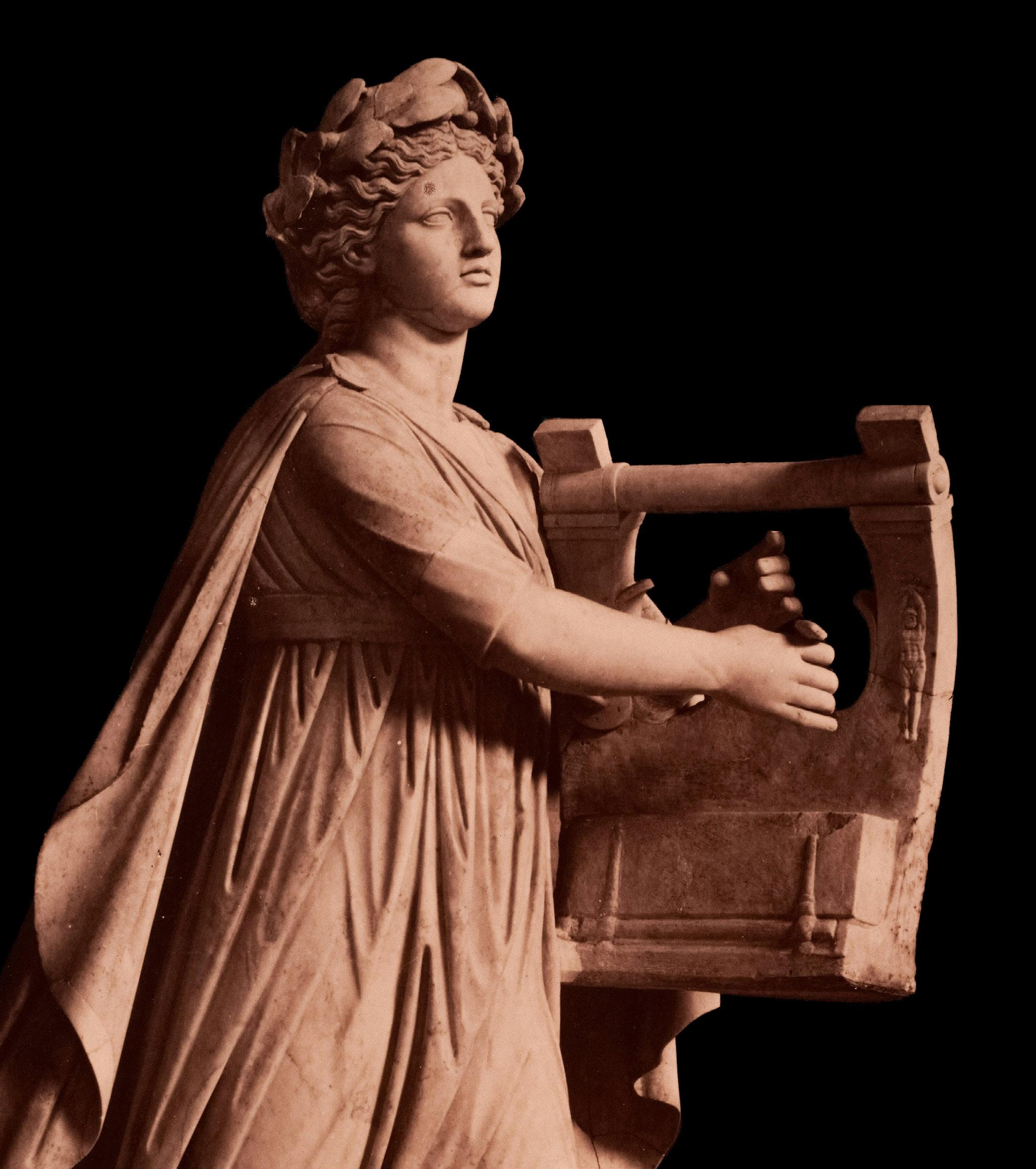
Gurd has spent much of his career thinking about how the ancients thought about music and performance. In his recent books, including 2016’s Dissonance: Auditory Aesthetics in Ancient Greece (Fordham University Press) and the forthcoming God’s Lyre: Music Naturalism in Greek Thought (Oxford University Press), Gurd connects ancient Greek sound to questions and theories of physics, theology, and the avant-garde. For classical thinkers, he argues, many of the categories we now use to separate and define various kinds of knowledge wouldn’t hold. Music was sound, art, math, something both natural and something to be controlled. It was political. It was part of what made you who you were.
The context is important here. “When tragedy is invented as an art form in the late sixth century BCE, it drives musical innovation,” Gurd says. “Tragedy and comedy become the prestige musical forms in Athenian culture, and they’re strongly associated with the democracy.”
As Athenian democracy evolved, wobbled, fell, and was restored, it lost some of its shine, at least in the eyes of philosophers like Plato and Aristotle. So, too, did the music of Athens’ great theatrical forms.
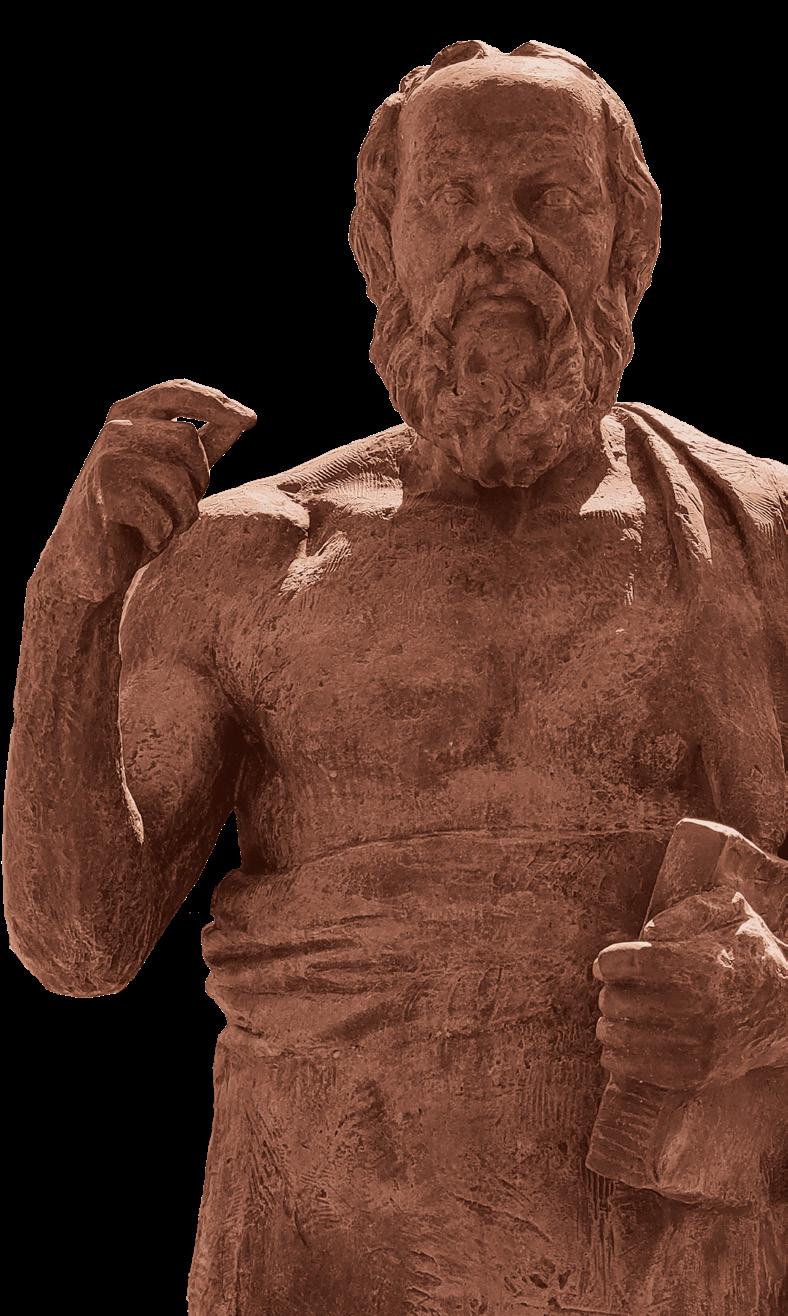
“These folks were committed to the intellectual project, suspicious of the senses for other reasons, and suspicious of Athenian democracy,” Gurd explains. “So they started to ask questions about everything
Music was sound, art, math, something both natural and something to be controlled.
Music could shape the core of who a person, or a state, could be.
associated with it, including this music. And it’s in that context that you start to see explicit conversations about what music is, what it is for, when it’s good for people and when it’s not.”
At some point relatively early on, ancient thinkers realized that the concords — sets of musical notes that sound pleasing together, such as an octave or a perfect fifth — were mathematically related.
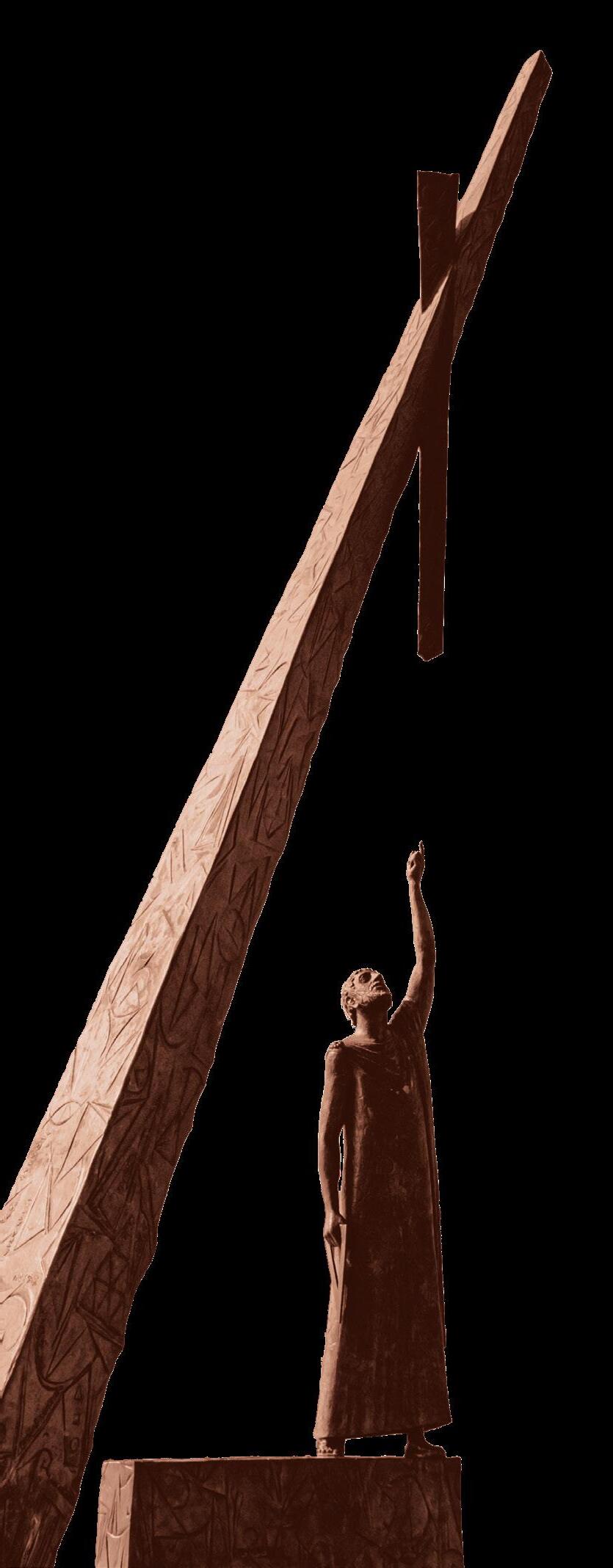
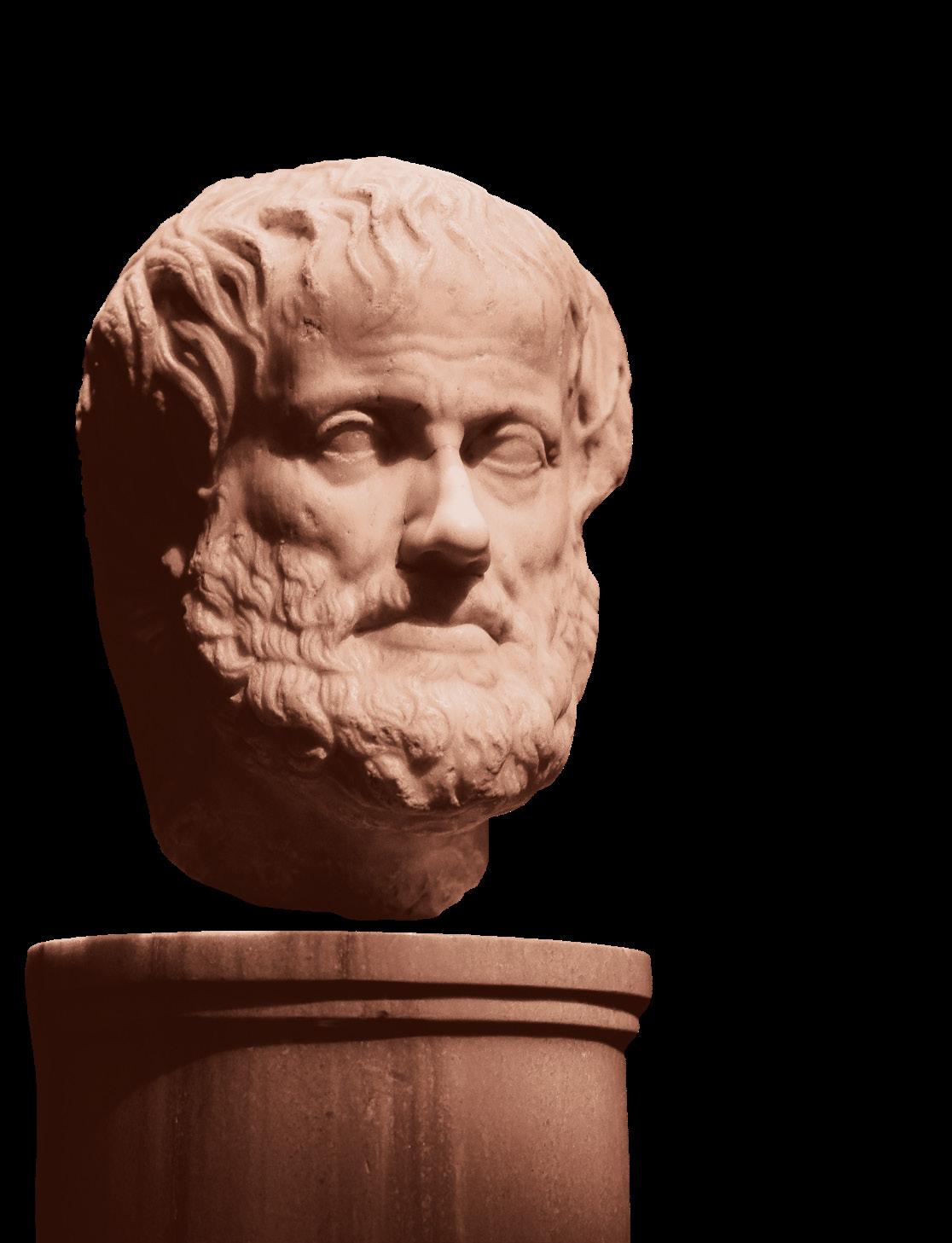
These early theories of music ascribed a surprising amount of power to the art. Thinkers like Plato argued that exposure to certain kinds of music could fundamentally shape a human personality, and not just in its tastes. If some types of music are democratic, this argument goes, then it stands to reason that others are oligarchic or even tyrannical. If you expose someone to the wrong music, you may permanently damage their soul; you may make them a little tyrant, or someone happy to live under tyranny. By this logic, what someone listened to was more than an expression of their aesthetic preference. Music could shape the core of who a person, or a state, could be.
Eventually, Gurd says, this line of thought was joined by others. “By the end of the fourth century, there are voices who basically say there’s good music and there’s bad music, but it doesn’t really make you a better or worse person,” he says. “It’s just inherently, or from an aesthetic point of view, better or worse.”
But though “good music” and “bad music” may suggest a certain simplicity, ancient music was anything but simple. This is where the math and astronomy come in.
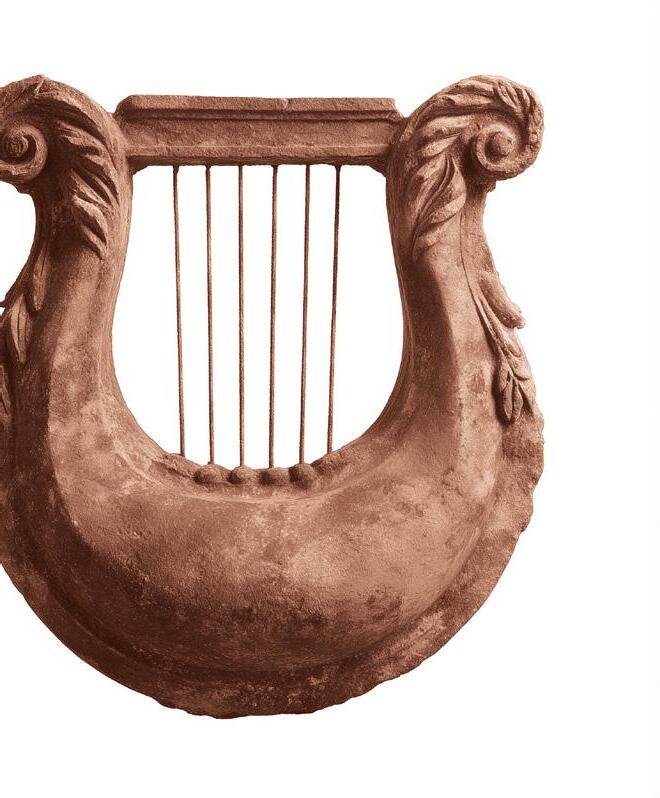
Gurd explains it like this: Pretend for a moment that the ancients played guitar, if only because a guitar is easier to envision than a lyre and the principle is the same. If a player tightens a certain length of string along the guitar and strums it, they get one note, and if they then press down on the very center of that string, at the 12th fret, they get a second note an octave higher. If they then press two-thirds of the way up the string, at the seventh fret, and strum, they get a fifth, and they get a fourth three-quarters of the way up the string, at the fifth fret. It’s music, but it’s also ratios: two to one, three to two, and four to three.
“The major concords are string lengths that are in simple, natural number relationships with each other. That’s already pretty mind boggling,” Gurd says. “But if you take those numbers and add them up, you get the number 10, so this connects with the base-10 number system as well. And if you lay the numbers out as pebbles, you get an isosceles triangle. There’s all these little numerological things that come out of the concords that just blew their minds.”
From these mathematical relationships, early thinkers like Pythagoras extrapolated
a model that they then projected onto the heavens. This is the source of the famous “music of the spheres,” “the idea that if the planets are moving in some kind of simple mathematical ratio to each other, then maybe there’s concords up there,” Gurd explains, “and then you get a debate over whether you can hear them.” Later astronomers like Ptolemy, author of both Almagest and The Harmonics, continued to pursue mathematics, astronomy, and music theory, seeing them not as highly differentiated fields but as a continuation of the same questions and reasoning.
Setting aside the music of the spheres for a moment, there’s still an obvious question. The math is all well and good, but what did this music actually sound like?

“The best analogs are probably classical Indian music and what is sometimes called classical Middle Eastern music,” Gurd says. “There are these traditions in India and the Near East that are like the ancient Greek approach to music, and what they have in common is that they have a large number of possible tunings, whereas Western music has one.”
We don’t have to be content with analogs, though. Enough written Greek music survives — a surprising amount, mostly on scraps of papyri the Victorians recovered from mummy wrappings — that scholars have been able to recreate and perform it. Now, in spaces like Gurd’s
Ancient Music and Performance
Lab, modern musicians can use reconstructed ancient instruments to breathe new life into music not heard for millennia. We may not be able to hear the music of the spheres, but we can hear the Platonic modes and hymns to Apollo much as they were originally intended to be played.
Performing this music is important not just for the experience of listening to it but for the experience of performing itself. As anyone who’s ever played an instrument or worked a craft knows, there are things you can only learn by doing. Music is one, Gurd says, and its highest Greek form, tragedy, is another.
The math is all well and good, but what did this music actually sound like?
“I’ve really convinced myself that the only kind of knowledge about a tragedy that matters to me is the ability to perform them in a coherent way,” he says. “This has had a couple of consequences, and one is that when I teach tragedy, it’s 100 percent performance.”
This model of teaching the classics of Greek theater — think Aeschylus and Sophocles, The Trojan Women and Antigone — is a significant departure from the norm. The standard course on Greek tragedy has students reading at home, coming to class to hear their professor lecture or lead a discussion, and then writing an essay or series of essays analyzing the texts as literature. Gurd’s courses look nothing like this, but they do look a little bit like SNL. Using an improv curriculum, “the same they use at Second City,” he says, he teaches his liberal arts students the foundations of collaborative performance. Then they focus
on working together to bring the tragedy to life.
The point isn’t to stage a professional play. Stages aren’t involved at all, in fact, and there are no audiences looking on, hoping to be transformed or at least entertained by art. Instead, the emphasis is placed squarely on the students’ experience and knowledge of the play as communicated through their performance. Over a semester they proceed through the improv curriculum and table reads of the tragedies until they’re ready
for their final project: an entire tragedy, acted out in their classics classroom.
“The point is to get into this world and to tell a story in that space,” Gurd says. “I believe very strongly that that is a legitimate kind of knowing. In order to understand tragedy, you have to think performatively.”
Both Gurd’s work on ancient music and ancient tragedy privilege “what’s beyond the words,” he says. Beyond the ancient musical theory lives
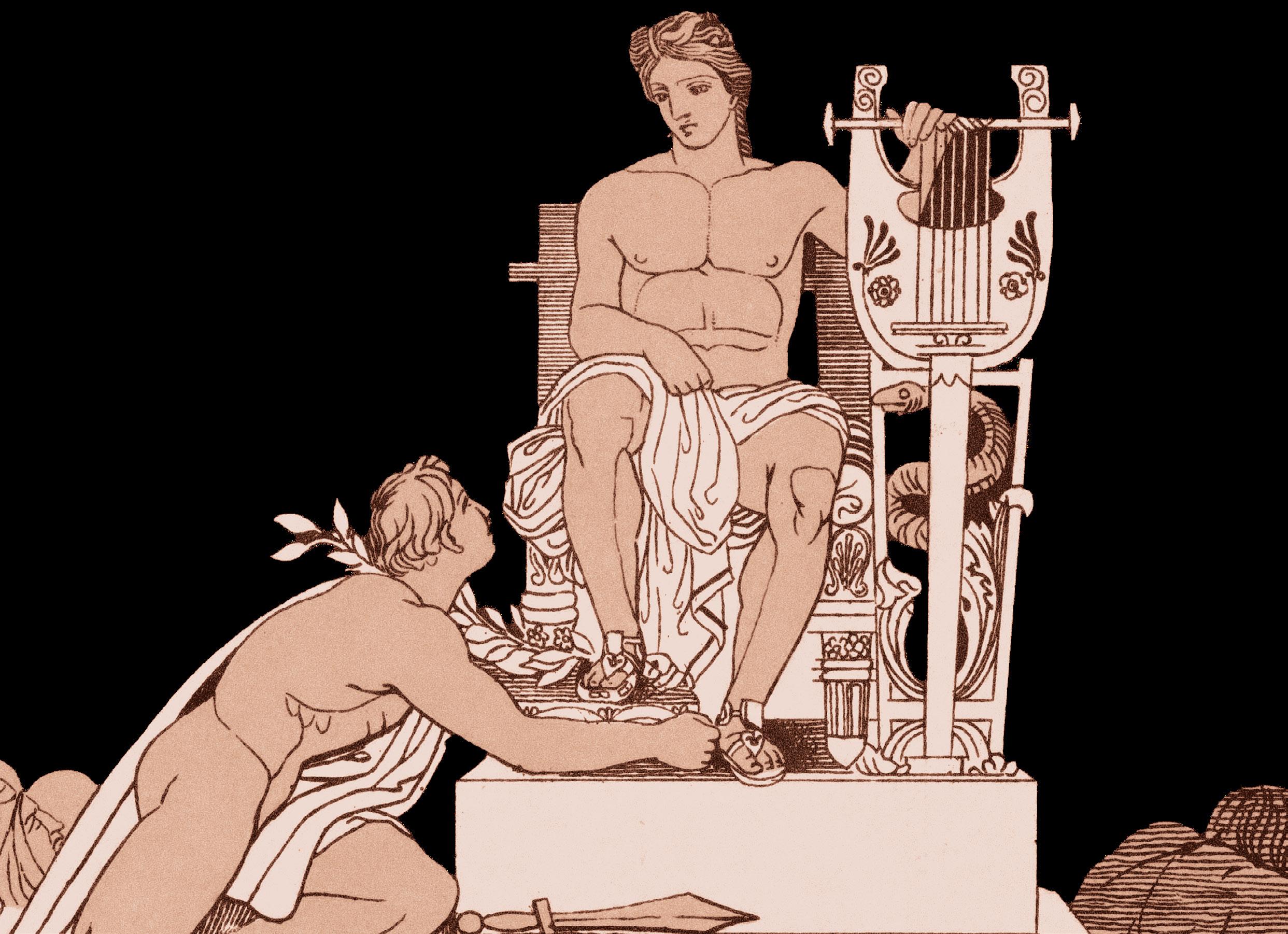
something realer than the theory itself. Beyond the text of a play there is the play. The music and theater that emerge from the words are composed of all the little nuances of our lives — the nerves of the performer, someone’s good hair day, the tuning that’s gone just a little flat. Or, in the case of modern musicians playing ancient music or undergraduate students playing Medea, the lifetime of training and self-belief (or selfdoubt) that has to be adapted or overcome.
This process is largely, though by no means exclusively, a physical one. The hand plays the lyre, the breath fuels the flute and the voice. And to some ancient thinkers, Gurd says, this link between the musical and the physical was even more profound. It became not just an explanation of the mechanics of sound — though it was that, too — but a kind of theology, a theory of how the human and the divine interact. This is the subject of his upcoming book God’s Lyre, in which Gurd sets aside questions of modern performance to examine the connections ancient thinkers drew between music and physical or physiological events.
“It takes off from the idea that music is a physical modulation,” he explains. “There was a physiological model that was circulating in the ancient world that basically said that when you had emotions, your body heated up; that the feeling of having an emotion was a thermodynamic process. They also didn’t really understand pitch, or why some vocalized sounds were
higher or lower. Then somebody connected these two ideas to argue that the human voice heating the air in your vocal tract would lead to higher pitches.”
This connection led to “a physiology of music,” Gurd says, “which basically said ‘music is what happens when your body heats up.’” The implications of this physiology are significant. It suggests that music isn’t an art one studies or develops but instead is something that happens naturally under certain conditions. A great singer isn’t just somebody who’s spent a lifetime practicing and honing their craft, these thinkers might say. They’re also someone who is able to control the heat of the air in their lungs and throat by managing their emotions.
The thinkers Gurd follows in God’s Lyre continue to develop this physiological model of music and connect it to the theological discus sions prevalent at the time.
“It is fair to say that some of these figures are actually saying that music brings you closer to God in ways that we still hear today,” Gurd says. “I like that idea because it’s natural philosophy, physiolog ical science, but it’s also theology. We tend to keep those two things separate, but this is a tradition in which they go together. Here you’ve got a physical theory of the universe that becomes a theory of music and then becomes a theory of how making music can connect you with divinity, and it’s all physics.” And if you can play it for yourself, even better.
It suggests that music isn’t an art one studies or develops but instead is something that happens naturally under certain conditions.
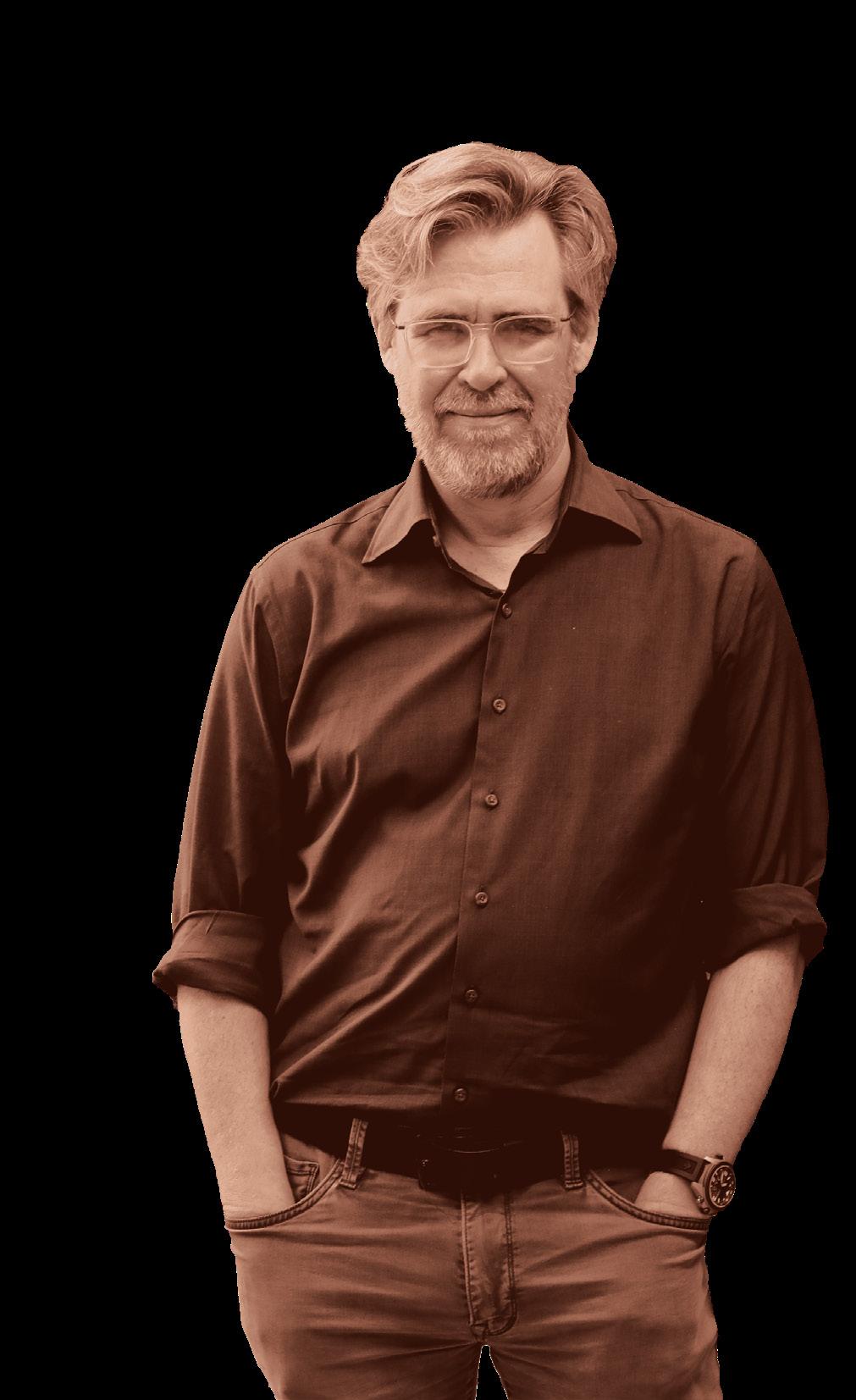
A popular signature course explores the millennia-old relationship between religion and the cosmos
BY LEORA VISOTZKY

I WAS GIVEN SOMETHING WONDERFUL, SOMETHING THAT CHANGED ME FOREVER...
A VISION OF THE UNIVERSE THAT TELLS US, UNDENIABLY, HOW TINY AND INSIGNIFICANT AND HOW RARE AND PRECIOUS WE ALL ARE.
A VISION THAT TELLS US THAT WE BELONG TO SOMETHING THAT IS GREATER THAN OURSELVES, THAT WE ARE NOT…ALONE.
-Jodie Foster as Dr. Eleanor Arroway in the 1997 movie Contact

Most evenings after dark, you can find religious studies associate professor of instruction Brent Landau in his backyard with his binoculars, looking up at the stars.
It’s a hobby. It’s also preparation. In his ever more popular signature course, “Religion and Outer Space,” Landau introduces first-year students to the ancient connections between the cosmos and earthly religious practices.
The class began in 2020 and was inspired by the interdisciplinary nature of UT’s signature courses, which are required for all freshmen and deliberately designed to introduce students to a range of fields and ways of studying them. The courses’ unique format and purpose got Landau thinking about how he could blend his academic focus on early Christianity and apocryphal texts with his lifelong interest in the cosmos, which he cultivated while growing up near and visiting the Lowell Observatory in Flagstaff, Arizona; attending lectures at his church about astronomy; and, like any good ‘80s kid, by watching Indiana Jones and Star Wars movies.
Landau wrote his dissertation on the apocryphal retellings of the 12-verse story of the Magi, the Gospel of Matthew narrative about the men who followed the appearance of a star because they somehow knew it signified the birth of Jesus, and since then Landau has been researching the origins, historicity, and influence of Bible stories. After years collecting relevant scholarship, he knew he had plenty of fodder for a class that would be interesting to new students. He also knew that he could combine his interests in religious texts and astronomy to help new students adjust to life on campus.

“I take very seriously that my responsibility as a signature course instructor, particularly as one who always teaches in the fall, is to introduce students to the college experience,” he says. “New students are able to meet friends through their discussion sections, and with the assignment to observe the night sky, they go out and explore the campus. The class also introduces students to a range of fields of study and to what the field of religious studies explores.”
Landau describes his approach to the religious studies aspects of the class as “rigorously skeptical,” one that questions the nature of belief while also teaching religious literacy. One way he does this is by teaching about how different religions have approached questions of outer space for thousands of years.
Landau likes to remind students, for instance, that the magi story provides little actual detail — we don’t know how many magi there were, where they were from, how they knew the appearance of the star signified Jesus’ birth, or what happened to them after they left with this astral knowledge — and that early believers filled in the blanks with their own interpretations.
He also points out that the word “magi” had multiple meanings, one of which is simply “astrologers,” a group that would have been viewed with suspicion by orthodox Christians. Add to that the fact the magi seemed to be non Greco-Roman, and you get a sense of how complex the story must have been for early Christian believers. “Early Christians were trying to hammer out whether magic or astrology is okay
THE WORD “MAGI” HAD MULTIPLE MEANINGS, ONE OF WHICH IS SIMPLY “ASTROLOGERS.”

under any circumstances, and they were also trying to figure out who these individuals were,” he says. “You can think of some of the apocrypha almost as ancient Christian fan fiction, in the sense that there was a whole bunch of stuff that they were curious about that wasn’t really spelled out in the official writings.”
Landau’s class also goes back to Genesis 1 in the Hebrew Bible to unpack the text’s description of the “firmament” in the creation story. “I read Genesis out loud to the students and then invite them to come up and draw on the chalkboard what they think it actually looks like,” he says. What students inevitably figure out is that the description of the night sky in the Bible is totally pre-scientific, with two sections of water divided by a kind of solid sky dome. “If that was really how the universe was structured, space exploration as we know
it would be impossible,” Landau notes. Students also probe what it means that so many translations of the Bible refer to the sky as the “heavens,” exploring our human associations with that word as referring to what happens after we die and how we might have come to associate the sky with that concept.
The class also looks at how Islam uses astronomical observation through its lunar calendar, and at the inherent ambiguity of marking a new month by the sighting of the new crescent moon. “How easy is it to see a super-thin crescent?” Landau asks his students. This question has caused controversies throughout Muslim communities around the world about when a new month actually starts, because the gold standard for hundreds of years has been visual confirmation of this thin crescent. “Now that we can say, scientifically, in terms of our astronomical calculations, we know when that crescent should be there,” says Landau, “it raises questions about human perception versus mathematical precision — do we trust what we see, or what the numbers tell us?” This conundrum, he says, is a great reminder to students that religious communities are not monolithic and that saying anything about “what a given religion believes” tends to lead to gross overgeneralization about many diverse and dynamic groups.
“Religion and Outer Space” is now in its sixth iteration, and since its inception Landau has tweaked the course to make sure it remains both academically rigorous and a lot of fun. During the pandemic he added what has come to be the course’s signature assignment: having students look up at the night sky with a pair of binoculars for 30 minutes per week and write about what they see. Not only does it teach students how to identify the constellations and planets (something many students have reported to be a fun party trick when they return home on winter break), but it also introduces first-year students to the UT campus.
For an additional fun factor, the class also begins the semester watching movies, including Contact and Interstellar, which, Landau says, gives students an evocative lens on the vastness of outer space and

questions of extraterrestrial contact. A common thread in those two films is, of course, occasional UT Austin professor Matthew McConaughey. “I’ve tried emailing a few people to get him in to guest lecture,” says Landau, “but no luck yet.”
One of Landau’s favorite parts of the course is talking about UFO phenomena, which he describes as having a built in “giggle factor.” He likes to point out that whether one thinks these are actually alien spacecraft or something else entirely, there’s something going on in our night sky that can’t all be chalked up to hallucinations and classified military aircraft. “Human beings have seen weird stuff in the night sky for thousands of years, and it seems to be a fundamental reality of our human experience,” he says.
Beyond religious studies, “Religion and Outer Space” introduces students to the ethical dimensions of astronomy. They discuss issues like light pollution and how the proliferation of satellites limits our ability to see they sky. “I can tell you where to look for the Andromeda Galaxy,” Landau says, “but it’s harder to see now than ever before. The night sky itself is being markedly transformed by human activity.” This realization also points students toward religious, moral, and ethical implications involved in space exploration.
Zooming further out, Landau’s favorite part of teaching the class is just getting students to look up. “It helps us recognize our ‘planetariness,’” he says — “reminds us we’re on a spinning orb, which is easy to forget just going about daily life.”
He calls out Deneb, a star 1,500 light years away in the constellation Cygnus. “It looks fainter than other stars
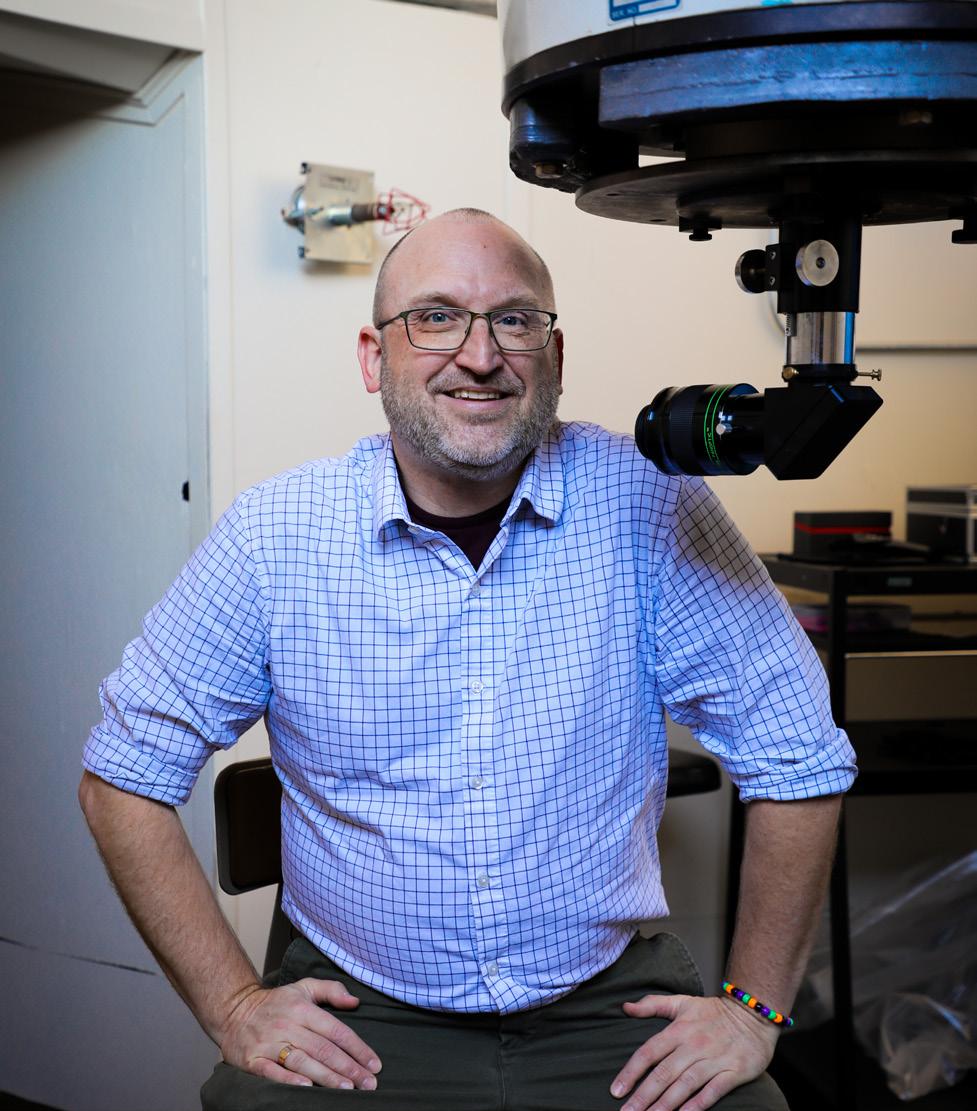
around it, but only because it’s much farther away. If it were closer, it’d be as bright as the moon. The universe is vast beyond comprehension — and yet, the fact that we’re here, aware of it, makes us incredibly rare.”
That duality — insignificance and preciousness — is what keeps Landau gazing skyward. “Outer space is fundamentally religious,” he says. “It’s the abode of the gods, of mystery, of salvation.” Whether in scripture, science, or science fiction, the course brings its students to the same question: What does it mean to be human beneath the stars?


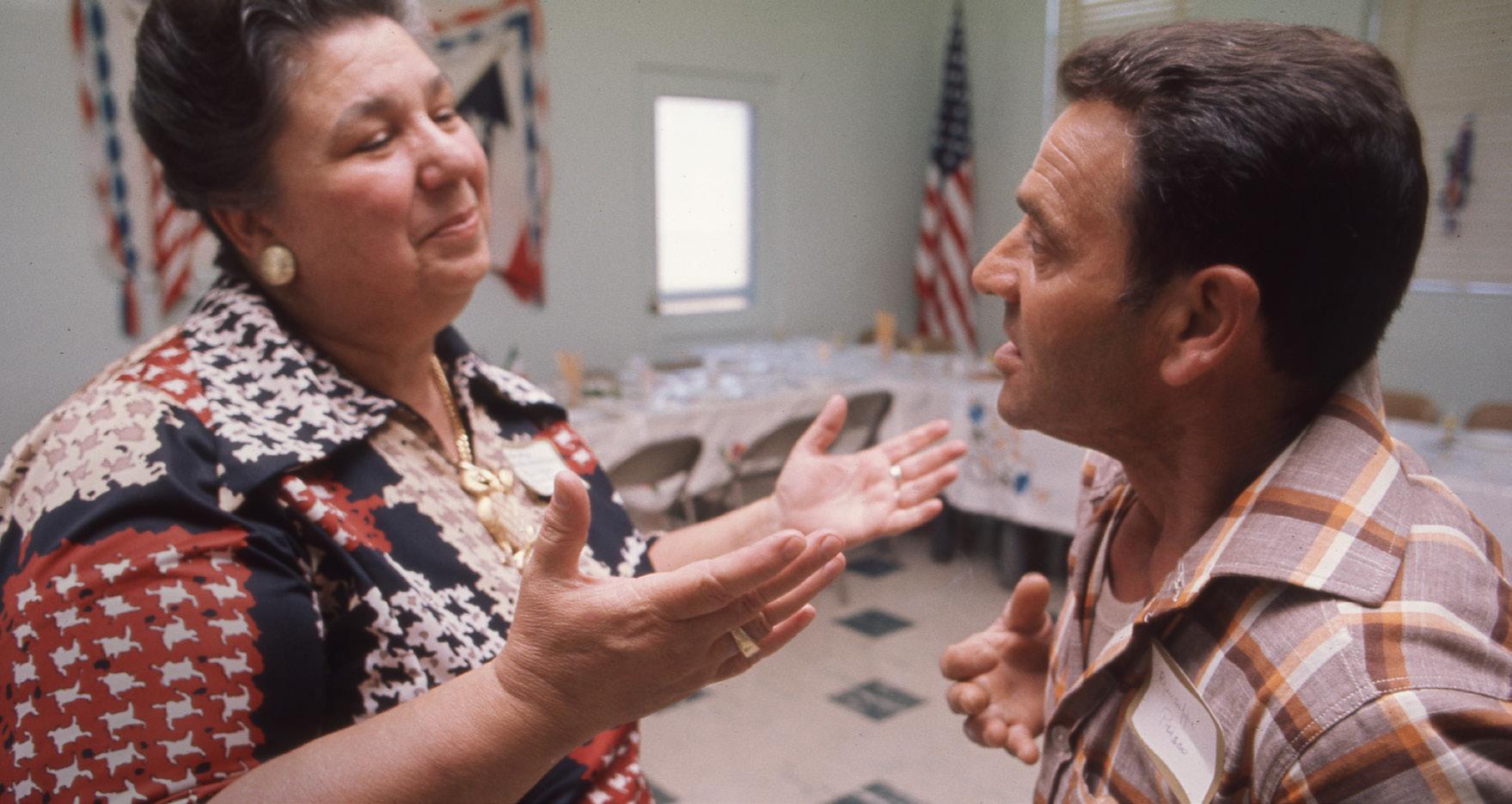
ByMaure
for the past three years, downtown Bryan, Texas, has transformed into a one-day Italian street festival, with crowds turning out for pastaeating contests, live music, gelato, and the promise of “true New York pizza.”
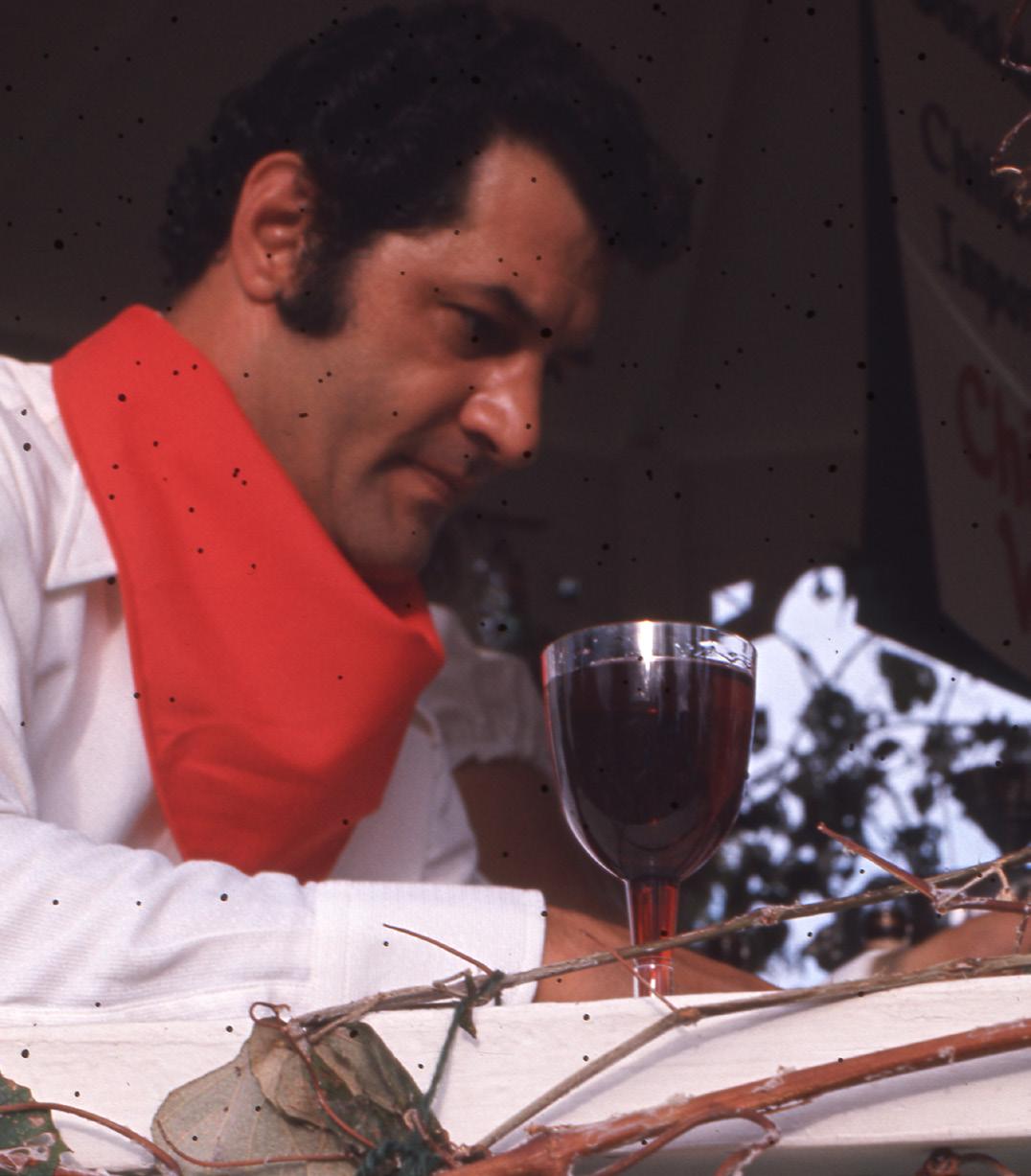
To outsiders, an Italian festival in the heart of the Brazos Valley might be unexpected. But Bryan’s Festa Italiana is, in fact, a window into the often overlooked story of the Italians who settled there and in other parts of Texas beginning as early as the 16th century and peaking in the 19th, when they filled a need for cheap labor.
That story is the focus of an oral history project that launched at The University of Texas at Austin’s College of Liberal Arts last fall. “Italians in Texas,” led by Paola Bonifazio, chair of the Department of French and Italian, and Valerie McGuire, associate professor in the Italian studies program, examines the experiences of Italians and Italian Americans in Texas in the 20th century. The research team is collecting interviews from people who came to Texas from Italy or whose family did. The researchers began their work in the Brazos Valley during the fall 2025 semester and will expand to other counties over the next year or two. The interviews, which will be posted on a project website, will serve as a valuable resource for future researchers studying Texas’ Italian population.
The project also offers an invaluable opportunity for undergraduate students: “Italians in Texas” is part of the College of Liberal Arts’ Undergraduate Research Apprenticeship Program, or URAP, which allows students to spend a semester getting hands-on experience in research under the mentorship of experienced faculty. Last fall, 64 College of Liberal Arts undergraduates took part in one of URAP’s 14 cohort projects.
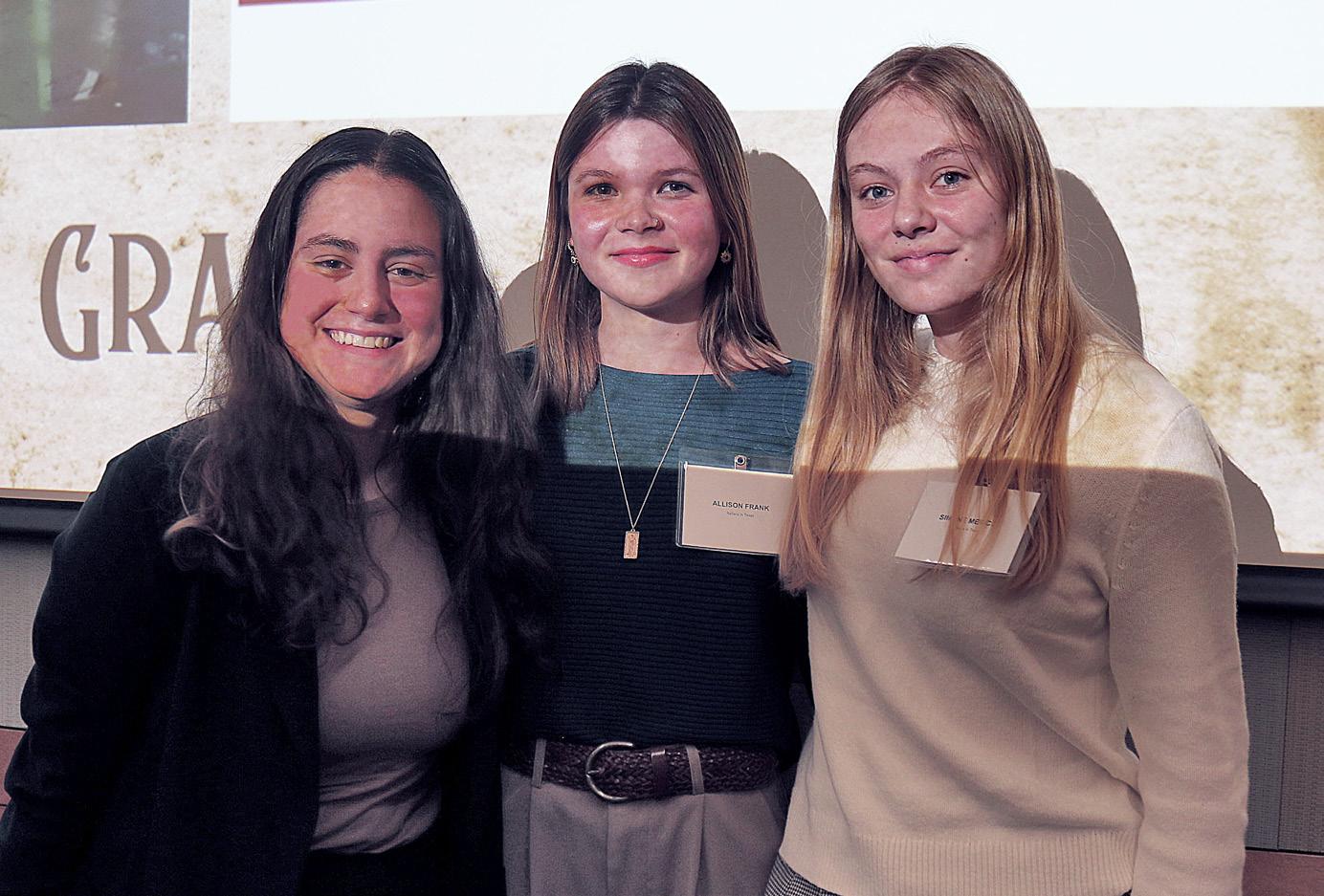
In addition to their project work, all URAP participants attend a weekly seminar on research methodology in the liberal arts. That structure benefits both students and professors, Bonifazio says, with the students gaining skills that they can apply both to their specific project and to future research work.
Simone Mericle, a junior with double majors in Italian studies and in radio, television, and film, was one of three undergraduates in the inaugural “Italians in Texas” cohort, which also included a graduate assistant. She learned about the project when McGuire discussed it in a class and was immediately intrigued. “I’ve never done research before, and I didn't know anything about Italians in Texas,” Mericle says.
The project was also an opportunity to gain experience in documentary filmmaking, one of her interests. Mericle, who recorded and edited interviews for the project, notes that filmed records of the interviews reveal things about the subjects’ personalities that transcripts alone could not. “I've learned that part of oral history is not just what they say but also watching their dynamics,” she says. “Sometimes a husband and wife are interviewing together, and it's interesting to see their relationship.”
Mericle was also struck by the enthusiasm so many interview subjects have for genealogy. For many first- and second-generation Italian immigrants, who met significant discrimination in their new home, the goal was to assimilate even at the expense of their cultural heritage, she notes. “But now there’s this resurgence in people going back and tracing down their families and genetic history” as those immigrants’ descendants find pride in that heritage, she says. That pride was on full display at the
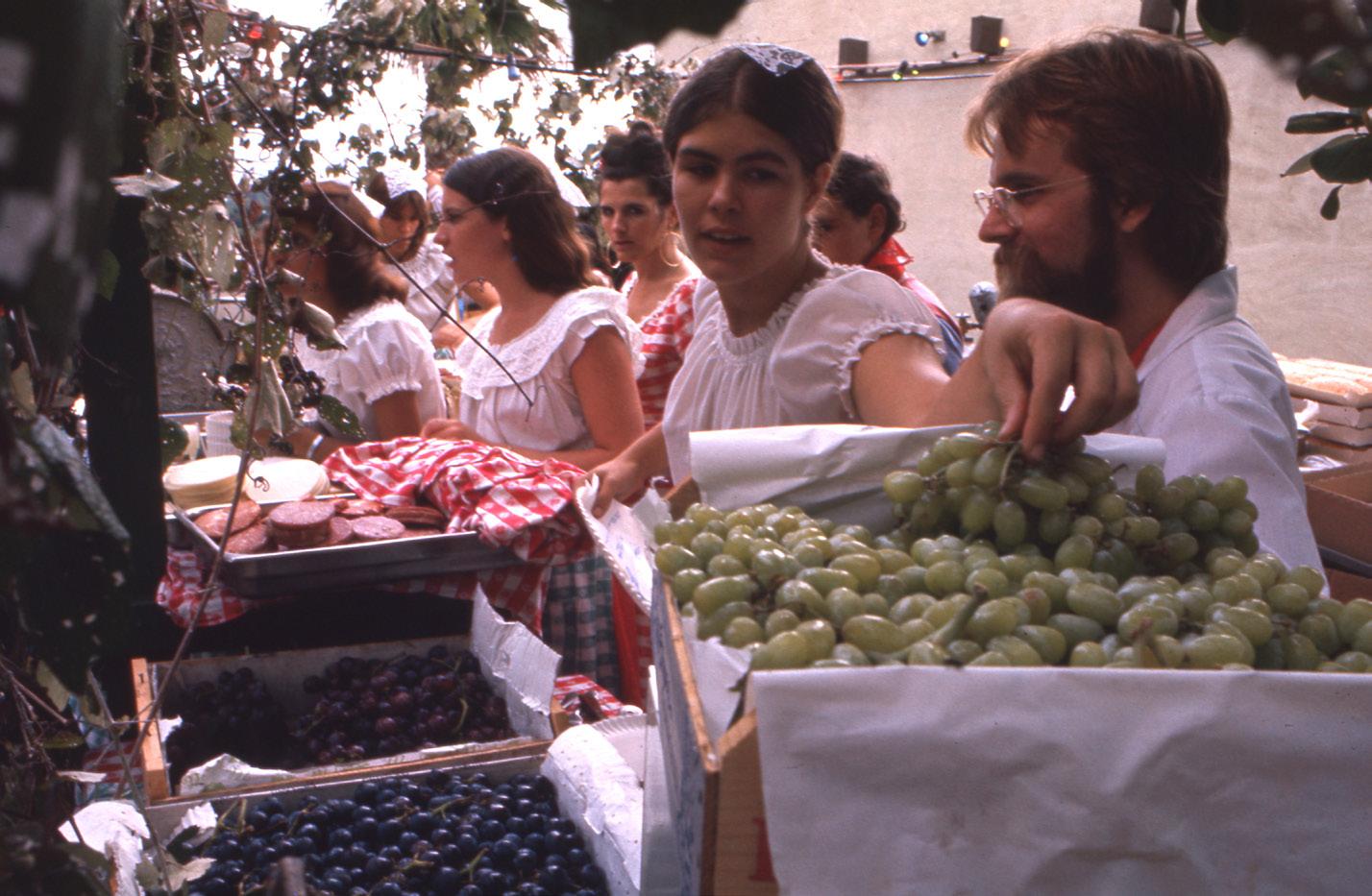
Bryan Festa Italiana, where the team found many people eager to share their families’ stories, she says. “That, and people just really like talking about themselves.”
Bryan saw an influx of Italians in the 19th and early 20th centuries, the majority of them Sicilians looking to escape the turmoil of post-unification Italy. Many came to the U.S. in response to ads placed in European papers by landowners looking for cheap farm labor, Mericle explains. Initially, many settled in the New Orleans area, where they faced harsh discrimination and violence. So they continued west to Texas, where land was cheap and the hot weather was similar to what they were used to in Sicily. By the early 1900s, Sicilians made up 60 percent of Bryan’s total population of 5,000, Mericle found in her research.
Ilaria Cielo, a senior with double majors in Italian studies and biomedical engineering who also worked on the “Italians in Texas” project last fall, was attracted to the project in part due to her personal background: She was born in Vicenza, Italy, and moved to the United States as a young child. Her family lived in New York and Washington before settling in Texas.
“I was really interested in learning more about Italian history and Italian migration to the United States,” Cielo says. “I think that a lot of people who immigrate feel the sentiment of not belonging to either country. Since I moved to the U.S. at such a young age, I don't feel Italian enough to be Italian, but I also don’t feel American enough to be American. There’s this very intricate balance, not really associating with either identity.”
This question of identity can also be complicated for many Italians and Italian Americans, Cielo has learned through her work. “I didn't know that there was such a difference between being from Northern Italy versus being from Sicily,” she says. When the research team was canvassing for interview subjects at the Bryan festival, Cielo says, many of the people they approached would ask, “Oh, do you accept Sicilians?”
“They would almost never refer to themselves as Italians,” Cielo explains. “That was something that I didn't realize before, that being born in different regions reflects how you feel about yourself and how you feel about your country. There are a lot of cultural differences.”
While her URAP course ended in December, Cielo is continuing to work on “Italians in Texas” as an independent project in the spring semester and will use material from the project in her Italian honors thesis. She plans to go on to graduate school, although she’s not sure yet whether that will be in Italian or engineering.
Whichever field she pursues, Cielo will bring to it valuable skills gained from URAP. “Being a part of this project has taught me how to work with other people
and exchange ideas and be able to share different opinions and observations about the same thing, since we all come from different experiences,” she says. It’s also taught her about the differences between research in STEM and in the humanities. “This project has expanded the way that I think about people, the way that I think about stories, and how I think about gathering data. It’s very eye-opening.”
The URAP structure, McGuire says, offers humanities students the kind of lab-like experience typically associated with STEM fields. That’s worked particularly well for “Italians in Texas,” she notes. “Oral history is extremely time consuming. There are the interviews, the editing, the transcripts, the recruitment.” And before any of that work could even begin, the team needed to apply to the university’s Institutional
Review Board for the required approvals to proceed. Because the students have been involved every step of the way, McGuire says, “they have better sense of what it means to do actual research in the humanities,” unlike the more typical undergraduate experience of writing papers that rely on research done by others. “Most of the time, those essays don't capture an important step of the research process, which is the collecting of the materials and the thought that goes into developing key research questions,” she says.
The URAP cohort model also offers a counterpoint to the “old-fashioned image of the scholar in the humanities as a lone wolf: working alone in the archive, writing your book, doing research on your own,” Bonifazio says. While that stereotype isn’t completely off base, she continues, collaborative research — including oral history projects — are becoming increasingly common in the field. In the case of “Italians in Texas,” it’s not just students who benefit from this approach. “It creates space within the college for valuing and giving visibility to collaborative work within the humanities,” she says. “That’s very important.”
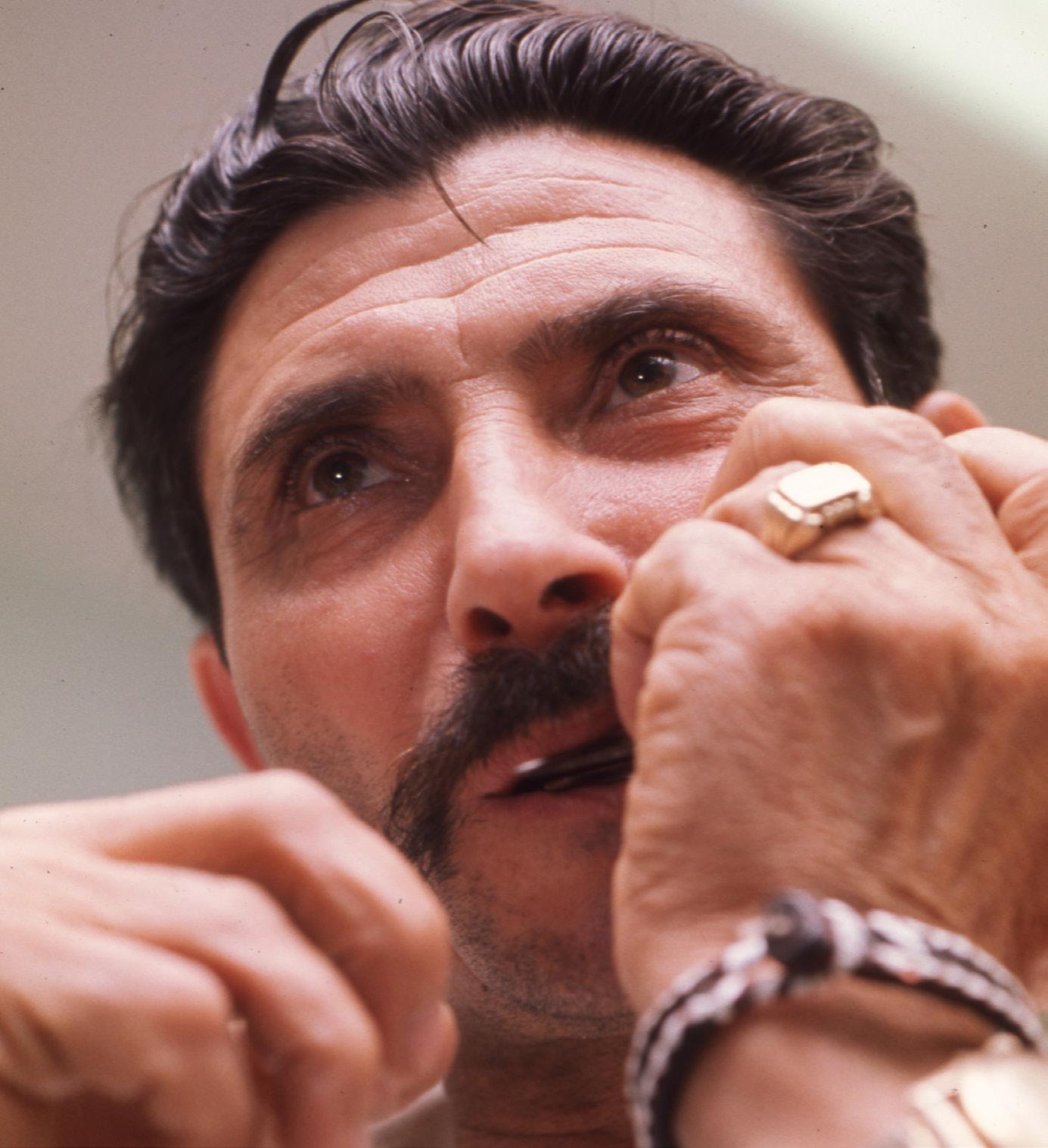
Bruce Meyer wants the show to go on forever
BY KAULIE WATSON
Bruce Meyer is an awardwinning physician and nationally respected hospital administrator. Over his more than 10 years as a tenured professor at UT Southwestern Medical Center, Meyer rose to become the center’s executive vicepresident for health system affairs. Later he served as the president of Jefferson Health, one of the country’s fastest-growing academic medical centers, before becoming the chief population health officer at Highmark Health, a $30 billion health organization headquartered in Pittsburgh. And it all started, he says, with Shakespeare.
“I was not a fantastic candidate to get into medical school,” Meyer says. “I’m pretty sure I got into medical school, honestly, because of Shakespeare at Winedale.”
The story goes like this: The son of a Holocaust survivor and physician, Meyer was born into a medical family — his father was a sixth-generation doctor, a tradition that has since continued a few generations further. But Meyer didn’t immediately want to become a physician. Instead, he spent his high school years in
Texas performing Shakespeare in University Interscholastic League (UIL) dramatic interpretation and duet acting competitions, eventually landing an internship with Shakespeare in the Park in New York City.
After a year at another university, a combination of factors brought Meyer to The University of Texas at Austin as a transfer student. He was too late to join the celebrated Plan II program, which only accepts incoming freshman, so instead he pursued a degree in the English department, where his years of UIL Shakespeare made him a natural fit for the Winedale program. After being introduced to the legendary program director James “Doc” Ayres, Meyer went on to spend several semesters performing in the converted hay barn that serves at the center of the Shakespeare at Winedale universe, including memorable turns as Edgar / “Mad Tom” in King Lear, Touchstone and Jaques in As You Like It, and a very near-sighted drunk in Twelfth Night.
So, when he decided he wanted to join the family profession and become a doctor after all, Meyer
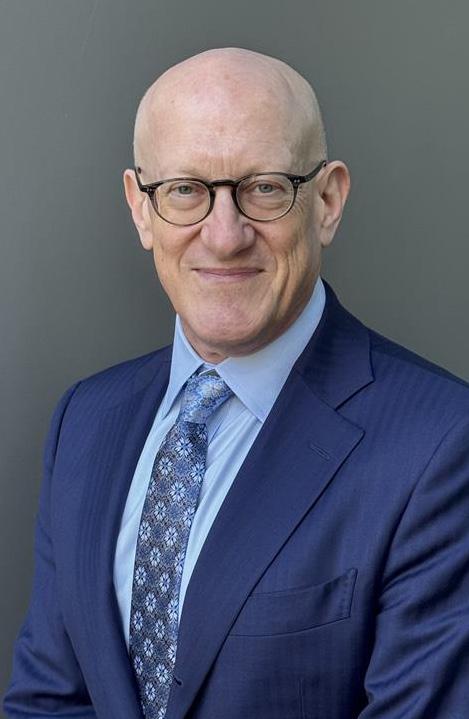
“I PROBABLY WOULDN’T HAVE GOTTEN INTO MEDICAL SCHOOL IF HE HADN’T SEEN SOMETHING IN MY SHAKESPEARE EXPERIENCE THAT WOULD MAKE ME A GOOD DOCTOR.”
spent his admissions interview at UT San Antonio talking not about medicine or anatomy but about his time studying the Bard.
“The faculty member that I interviewed with was a pathologist named William White,” Meyer remembers. “He happened to love Shakespeare, and he saw on my application ‘Shakespeare at Winedale.’ He didn’t know what it was, but he asked me about it, and we spent 45 minutes talking about Shakespeare plays. Even after I got in, he and I would periodically have lunch together and talk about Shakespeare. I probably wouldn’t have gotten into medical school if he hadn’t seen something in my Shakespeare experience that would make me a good doctor.”
Founded by Ayres in 1970, Shakespeare at Winedale is best known for its summer program. Admitted students spend the hottest months of the Texas year at the rural Winedale Historical Center, about 90 minutes from UT Austin’s main campus, studying and performing a set of three plays in the program’s famous barn-cumShakespearean-stage. Over the years the program has expanded to include Camp Shakespeare, a two-week camp for 10- to 16-year-olds, and an outreach program for elementary school students in the Central Texas region.
Every iteration of the program has a tendency to foster deep

loyalty, with alumni — including Meyer — regularly returning to catch a new performance or even step back onstage themselves at reunion shows. And like all great traditions, the Winedale experience sometimes runs in families. Several alumni’s children, including Meyer’s, have participated in Camp Shakespeare, and his youngest hopes to join as soon as he’s old enough.
But it isn’t just the fun of Winedale that keeps alumni like Meyer committed to the program. Nor, in his case, is it gratitude for helping him with that admissions interview all those years ago. It’s something both deeper and simpler: Shakespeare at Winedale is an intensive and immersive experience, almost like bootcamp, that can be transformative for some participants, and it transformed Meyer.
“Part of what I learned was how to meet people where they are and feel comfortable in my own shoes doing that,” says Meyer, a self-identified introvert. “I’ve had progressively larger leadership roles at multi-billion dollar institutions and won teaching awards at five different institutions. I’m certain none of that would’ve occurred without Shakespeare at Winedale.”
By giving Meyer and his fellow players the encouragement to take big risks and to experiment with their characters, Winedale also gave Meyer tools that have been instrumental in his medical career. To this day Meyer sees
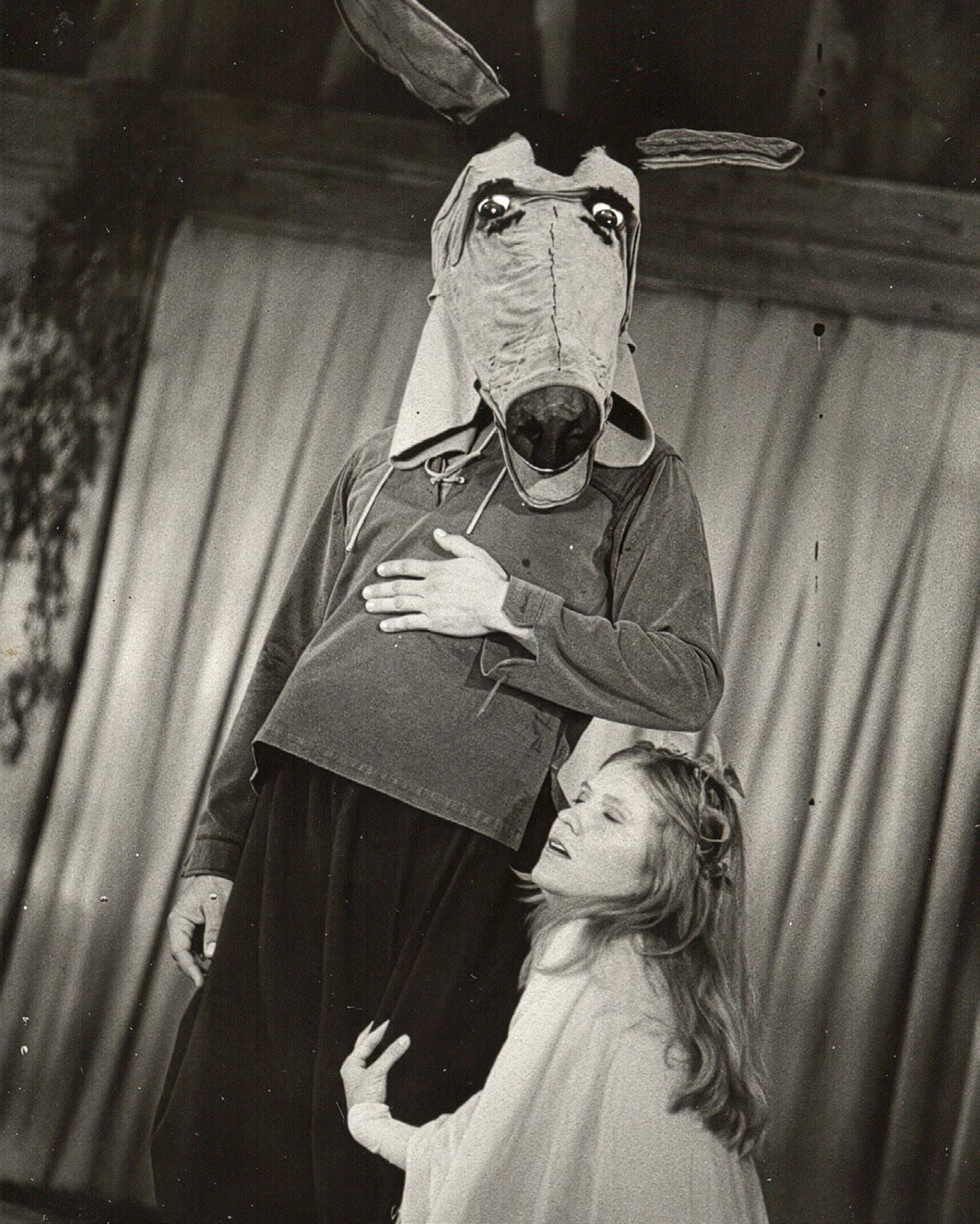
the interaction between physician and patient as analogous to that between performer and audience. Just as a player on stage needs to know the backstory and motivations for their own character, they also need to understand their relationships to all the other characters in the play for the whole performance to make coherent sense to an audience. The same can be said of a good doctor, who must both understand a patient’s needs and their family and community context and be able to
communicate with them in a way that they understand.
“I say this all the time to medical students, but at the end of the day as a doctor, you’re a storyteller,” Meyer says. “But if the people you’re telling that story to don’t believe it, they’re not going to follow your advice, and your advice is the treatment regimen. Medicine is a science, but healing is an art, and the art is understanding the person who’s coming into your room, their family dynamic, their
support system, and their level of education, so that you can talk in a way that people can relate.”
Meyer’s story is, he says, proof that the kind of liberal arts education exemplified by the Shakespeare at Winedale program is necessary not just for what it can offer students professionally but for what it can offer them as people.
“To me, one of the tragic things in the world is that we de-emphasize liberal arts to a tremendous degree,” Meyer says. “And I say that as somebody who’s a doubleboarded MD and has an MBA. I’ve run a $9 billion health system, a $7 billion health system. I’ve done healthcare as a business, and if it weren’t for my liberal arts background, I wouldn’t be good at what I do.”
Now Meyer and his family are deepening their support for the Winedale program by making a significant gift commitment in its support. When asked “why now?” Meyer’s answer is simple.
“I have a 9-year-old,” he says, “and I want to make sure that Camp Shakespeare’s available to him when he turns 11. But I also want to make sure that other kids get that opportunity too. Our goal with liberal arts programs shouldn’t be to make the wealthy the only people who have access. Giving back is the idea here; I’m trying to give back at the level of our means, and I would like to encourage my peers to do the same.”
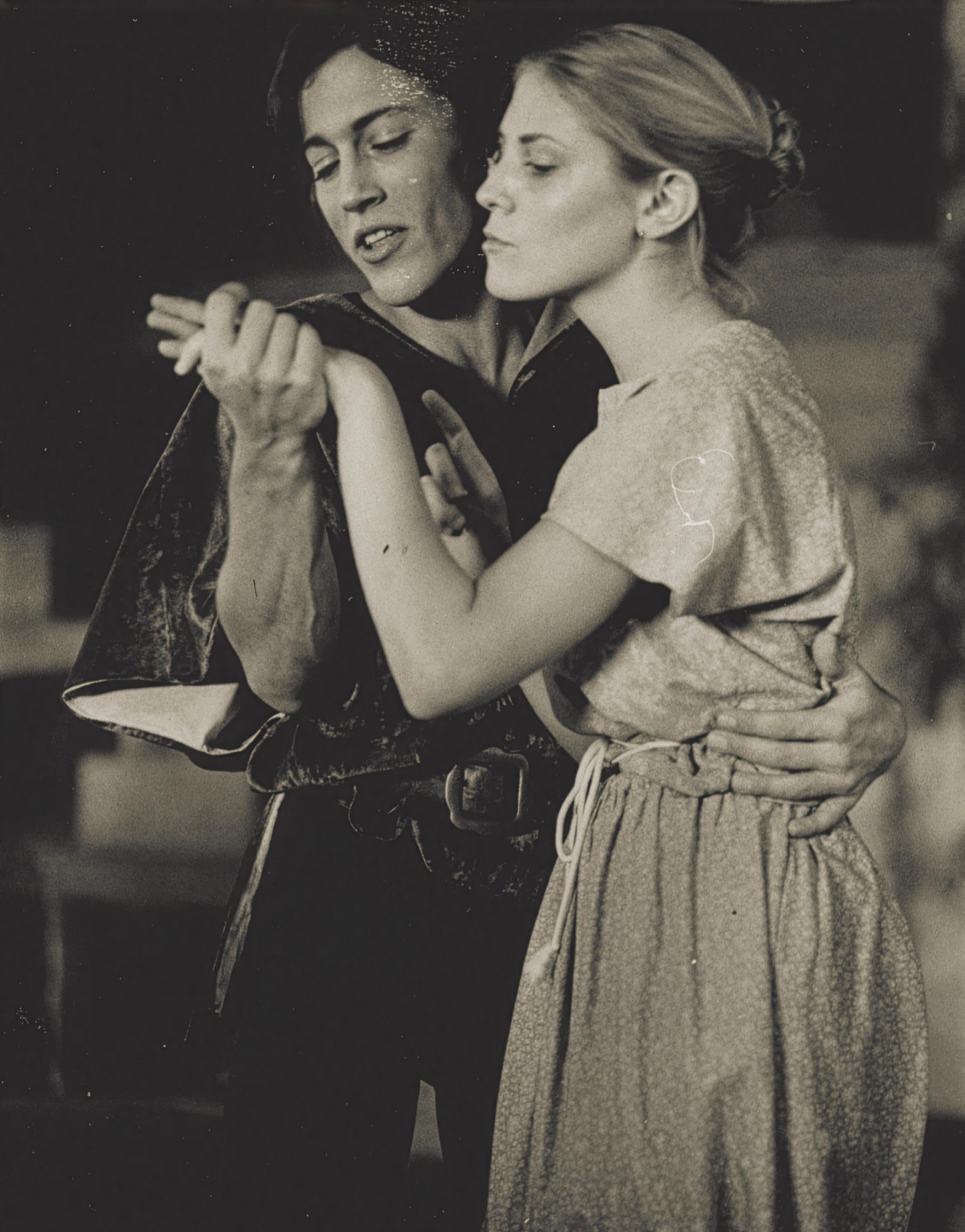
The Pro Bene Meritis award is the highest honor bestowed by the College of Liberal Arts at The University of Texas at Austin. The purpose of the award is to honor individuals who are committed to the liberal arts, who have made outstanding contributions in professional or philanthropic pursuits, or who have participated in service related to the College of Liberal Arts. In addition to expressing appreciation to those distinguished individuals so honored, the College of Liberal Arts, through this award, is seeking to heighten public awareness of the critical role played by the liberal arts in education and society today.
The award is presented annually. The alumni, faculty, students, and staff of the college take pride in these individuals and the legacy of their character and achievements.
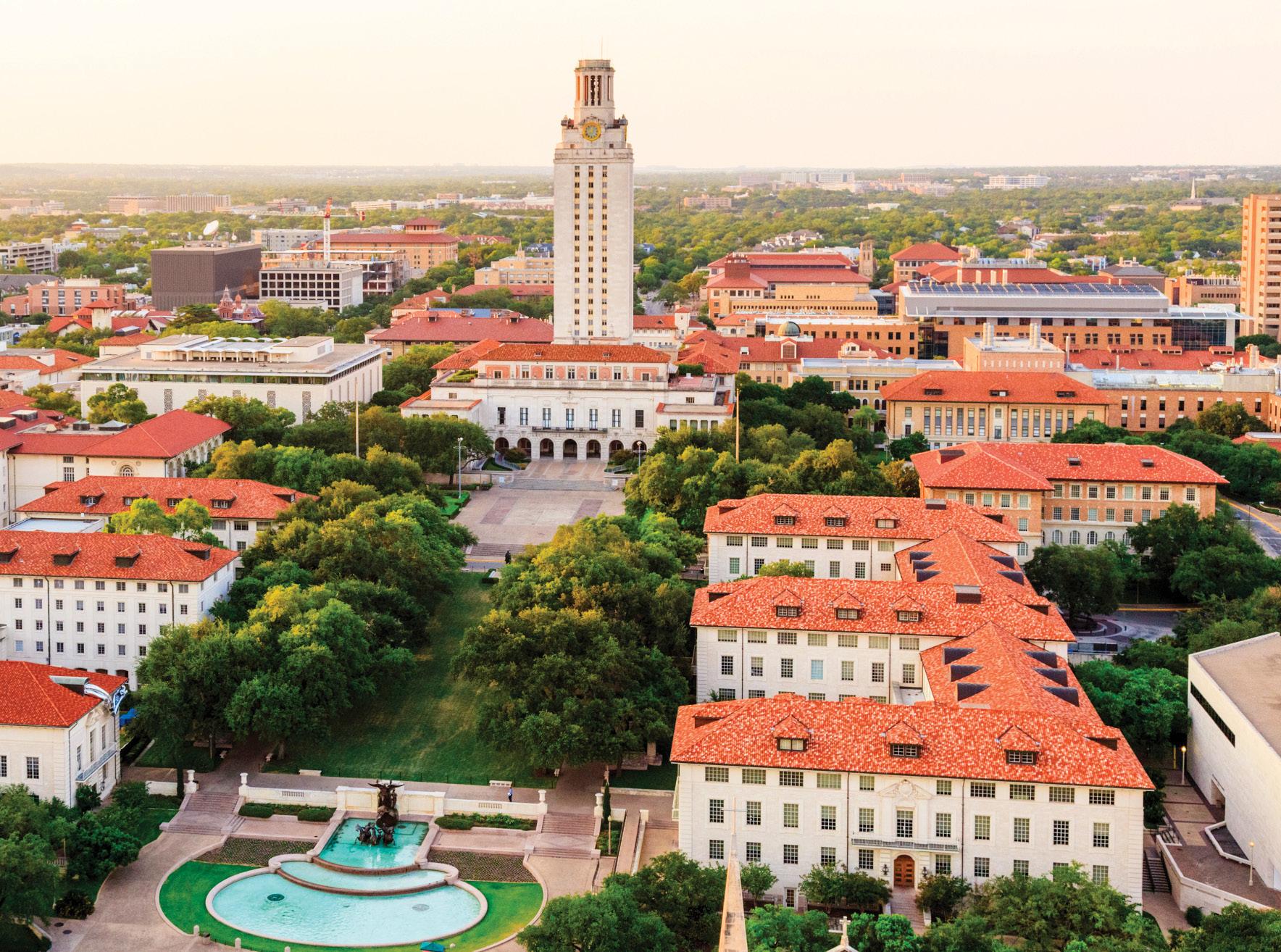
The college is honored to present the 2025-26 Pro Bene Meritis Awards to:
Scott Cohen
With more than three decades of experience in the financial industry, Scott Cohen has built his career on thoughtful leadership, long-term perspective, and service to others.
He founded CD Wealth Management in 2014 as a Dallas-based independent wealth advisory firm serving families, corporate executives, closely held businesses, and nonprofit institutions. Today the firm oversees more than $1.5 billion in assets under management through a highly personalized, relationship-focused approach.
CD Wealth has been recognized multiple times by the Dallas Business Journal as a Best Place to Work, and Cohen has been recognized nationally with annual inclusion on Forbes’ Best-in-State Wealth Advisors list and Barron’s Top 1,200 Financial Advisors.
Cohen has been an active leader and volunteer in the Dallas community for many years, including serving as Chairman of the Board at the Aaron Family Jewish Community Center from 2013 to 2015. He also has spent two decades as co-chair of the center’s annual golf tournament, raising more than $3 million for programs for children and seniors. He and his wife Barbi served as event chairs of the 2025 Hope for Humanity dinner benefiting the Dallas Holocaust and Human Rights Museum, attracting 1,300 people and raising $1.9 million in support of its mission.
He has held advisory and philanthropic roles for the Parish Episcopal School, the Shelton School, and the Da Vinci School in Dallas, as well as serving on the Chancellor’s Parent Leadership Council at the University of Denver.
A proud graduate of The University of Texas at Austin, Cohen earned his degree in economics, a discipline he credits with shaping his analytical and big-picture thinking. During his time on campus, Cohen was active in student leadership, including the Zeta Beta Tau fraternity and the Silver Spurs.
Cohen remains deeply engaged with the University of Texas community, serving on the UT Economics Advisory Committee, the UT Development Board, the Liberal Arts Advisory Council, and the Longhorn Foundation Advisory Council. He mentors Silver Spurs members and alumni, advises Zeta Beta Tau, and has established two endowed scholarships, one in the College of Education and one for economics students in the College of Liberal Arts.
Through CD Wealth and Kestra Financial, Cohen created formal internship programs that have supported more than 20 students, reinforcing his commitment to education, mentorship, and developing the next generation of Longhorn leaders.
Lorraine Pangle is a professor of government at The University of Texas at Austin. Her research and teaching focus on the political, moral, and educational thought of the ancient Greeks, including Homer, Thucydides, Plato, Xenophon, and Aristotle, and of the American founders.
She holds a B.A. in history from Yale, a B.Ed. from the University of Toronto, and a Ph.D. from the University of Chicago Committee on Social Thought. She is recipient of the Raymond Dickson Centennial Endowed Teaching Award at The University of Texas at Austin and of fellowships from the Social Sciences and Humanities Research Council of Canada, the Earhart Foundation, and the National Endowment for the Humanities.
She is author of five books, Reason and Character: The Moral Foundations of Aristotelian Political Philosophy (Chicago, 2020); Virtue is Knowledge: The Moral Foundations of Socratic Political Philosophy (Chicago, 2014); The Political Philosophy of Benjamin Franklin (Johns Hopkins, 2007); Aristotle and the Philosophy of Friendship (Cambridge, 2003); and The Learning of Liberty: The Educational Ideas of the American Founders, co-authored with Thomas Pangle (Kansas, 1993).
Pangle’s current research projects include studies of the relation between Plato and Homer, focusing on the moral psychology presented in the Iliad and Republic and the “old quarrel between philosophy and poetry”; developments in evolutionary psychology and the way they confirm and shed new light on ancient
claims about human nature; and Aristotle’s moral psychology, including his claim that human beings are political animals and its implications for modern liberal democracy.
From 2009 to 2025 Pangle was founding co-director with Thomas Pangle of the Thomas Jefferson Center for the Study of Core Texts and Ideas at UT Austin, a program in the great books and ideas that have shaped Western civilization and the American republic. This program provides a pathway through UT’s core curriculum for undergraduates in every college and major, helping to prepare them for thoughtful lives as citizens and leaders.
Most recently she has been engaged in several projects to promote academic freedom, civil discourse, and constructive civic engagement in the academy.
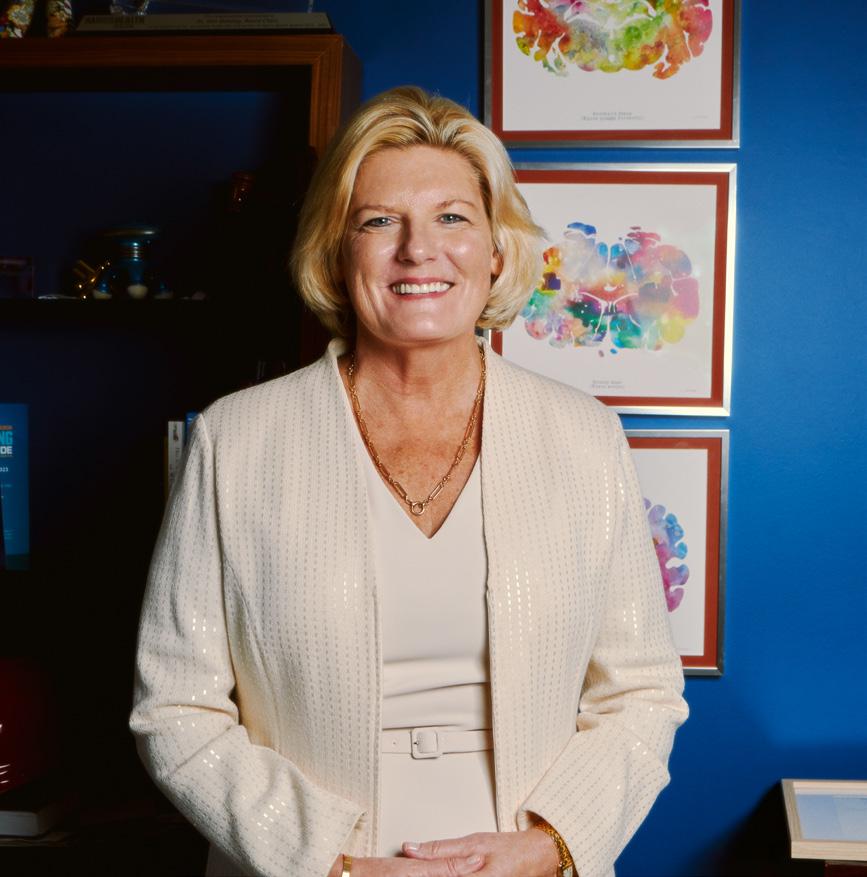
Kimberly E. Monday
Kimberly E. Monday, M.D., is an associate professor in the Department of Neurology at McGovern Medical School at The University of Texas Health Science Center at Houston (UTHealth) and serves as the vice-chair of clinical operations for the Department of Neurology and Chief Medical Officer at UT Physicians.
Dr. Monday is fellowship trained and board certified in general neurology, clinical neurophysiology, and sleep medicine. She sees adult general neurology patients with a special interest in epilepsy and movement disorders.
Prior to joining McGovern Medical School’s Department of Neurology, she was in private practice at the Houston Neurological Institute, which she cofounded. Monday has been repeatedly recognized in “Top Docs,” an annual listing based on physician peer votes.
Her career exemplifies her values of caring for others, both as a physician, leader, and advocate for the less advantaged. She has served as chair of the Harris Health System Board of Trustees, president of the Texas Neurological Society, president of the Harris County Medical Society, and president of the Houston Academy of Science. She is currently chair of the Texas Medical Association Board of Trustees, having served on the association’s councils of socioeconomics and legislation and co-chair of the DEI task force.
Monday enjoys spending time with her family, traveling, reading, and politics.
Sundeep Addy, BA 2000, Plan II
Fields Alexander, BA 1987, English; JD 1992
Byron Anderson, BA 1988, Government
Michael Appleman, BA 1990, Plan II; JD 1993
Gordon Appleman, BA 1959, Economics; JD 1962
Morton Baird, BA 1971, Plan II; JD 1975
Stephen Ballantyne, BA 1972, Economics; MBA 1974
Steven Baron, BBA 1986; JD 1988
Hailey Bechtol, BA 1992, History
Katherine Burk, BA 2011, History
Stephen Butter, BA 1993, Plan II; BBA 1993; JD 2003
Cindy Carter, BBA 1973
Coby Chase, BA 1986, Government
Scott Cohen, BA 1993, Economics
James Cook, BA 1982, Economics
Christi Craddick, BA 1991, Plan II; JD 1995
Christina Crain, BA 1988, Government; JD 1991
Scott Crutchfield, BA 1989, Economics; JD 1991
Gregory Curran, BA 1990, Economics
Hilda Curran, BA 1990, Economics
Shirley Dannenbaum, BA 1961, English
Barry Dauber, BA 2005, Economics
William Davidson, BA 1960, Plan II; JD 1963
Clarice Davis, BA 1962, Government; MA 1964; JD 1968
Sallie Davis, BA 1965, Plan II
Maureen Decherd, BA 1973, English
Carolyn Denham, BA 1966, Plan II
Adrienne Draper, BA 1988, Plan II
Robert Dupree, BA 1986, Government
Mary Edwards
Robert Egan, BA 1963, Economics
Becky Ferguson, BS 1976, Radio-TV-Film
Susanna Finnell
Craig Fisher, BA 1992, History
Richard Frankel, BA 1980, Law; JD 1983
Mary Ann Frishman, BA 1988, Government
David Garza, BS 1970, Pharmacy
Lawrence Germer, BA 1963, Plan II; JD 1966
Michael Gilbert, BA 1996, Government
Julius Glickman, BA 1962, Plan II; JD 1966
Bianna Golodryga, BA 2000, Post-Soviet and East European Studies
Erika Griffith, BA 1992, Linguistics
Courtney Grigsby, BA 1993, Journalism
Michael Grigsby, BA 1992, Government
Katherine Hackerman, BA 1980, English
Choquette Hamilton, BA 2003, Ethnic Studies
Mary Dell Harrington, BA 1978, Plan II; MBA 1982
Judye Hartman, BA 1964, Math
Jeffery Hayes, BBA 1962
Barbara Hinds, BA 1962, Plan II
Stephen Houston, BA 1989, Economics; MBA 1992
Robert Hunter, BA 1963, Plan II
Nomaan Husain, BA 1994, Government; JD 1997
Sylvia Jabour, BA 1990, Plan II; JD/MBA 1993
Melinda Jackson, BA 1989, Plan II; William Jackson, BA 1989, Government; MBA 1993
Vaishali Jadhav, BA 1999 , Sociology
William Joor, BA 1961, Plan II; LLB 1966
Lenoir Josey, BA 1964, Plan II; LLB/JD 1966; MBA 1968
Frances Kemp, BA 2000, Psychology
John Kerr, JD 1972
James Key, BA 1966, History
Sue Knolle, BA 1961, Plan II; MD 1969
Richard Krumholz, BA 1989, Psychology
Adam Lampert, BA 1988, Plan II
Whitney Lancaster, BA 1995, Economics; MBA 2002
Ryan Latham, BA 2005, Plan II; JD 2009
Sergio Leal, BA 2003, Economics
Gregory Lipscomb, Bachelor of Law 1966; MPA 1978; MA 2000
Patrick Lutts, BA 1962, Economics
Mike Lyons, BA 1995, Psychology; JD 1999
Paul Martin, BA 1971-73, Plan II
Daniel Matheson, BA 1971, American Civilization
Charles Matthews, BA 1967, Government; JD 1970
William Matthews, BA 1963, Plan II; LLB 1963
Tara McCown, BA 1971, Liberal Arts
Richard McGaughy, BA 1994, Plan II; MBA 1998
Brian McLaughlin, BA 1983, Plan II; JD 1986
Richard McMillan, BA 2003, History; JD 2006
Christopher Meekins, BA 1993, Plan II; MBA 1997; JD 1997
Max Miller, BS 1957, Physics; MA 1963; PhD 1966
Mildred Miran, BA 1959, History and International Studies; MA 1970; PhD 1975
Dax Mitchell, BA 1999, History
Kimberly Monday, BA 1988, Plan II; MD 1992
Bradley Morgan, BA 2000, Plan II; BBA 2000
Lauren Morgan, BA 2000, English
Roderick Morris, BA 1995, Philosophy; BBA 1995; MBA 2002
Damon Munchus, BA 1992, Plan II;
Luke Musselman, BA 1983, History
Albert Nance, BA 1987, English
William Nes, BA 2001, Government; MA 2002; JD 2005
Milam Newby, BA 2000, Government; JD 2003
Howard Nirken, BA1993, Government; MPA 1997; JD 1997
Dudley Oldham, BA 1964, Chemistry; LLB/JD 1966
Susan Palombo, BA 1980, Plan II; MBA 2001
Robert Patton, BBA 1985, Finance; JD 1988; LLM 1989
Jeane Pendery, BA 1967, German
Maureen Perea, BA 1995, History
Russell Post, BA 1991, Plan II; MA 1992; JD 1996
Bethel Quander, BA 1993, History
Vasu Raja, BA 1998, Humanities
Lisa Ramirez, BA 1998, Psychology
William Reynolds, BA 1972, Architecture; MBA 1983
Matthew Ridewood, BA 2007, Government; MA 2015
Nancy Roberts, BA 1961, Plan II & History
Richard Roberts, BA 1988, Plan II; MBA 1989; JD 1992
Brett Robertson, BBA 1987, Finance; MBA 1989
Amy Robinson, BA 1989, Plan II; MBA 1996; CIMA 2004
Melanie Rubin, BA 1989, Plan II; MPA 1991
Tolly Salz, BA 1992, Plan II; MLA 2006
Lawrence Sampleton, BA 1991
Laura Sands
Lisa Sarvadi, BBA 1989, Engineering
Stefanie Scott, Bachelor of Journalism, 1987
Brian Seitz, BA 1995, Psychology; MA 1998
Randi Shade, BA 1988, Plan II; MBA 1992
Leslie Shaunty, BA 1990, Government
Aaron Simpson, BA 1997, Government; JD 2002
Sandra Snyder, BA 1961, Plan II
William Snyder, BA 1989 , Plan II; JD 1992
Stuart Stedman, BA 1979, Plan II; MBA/JD 1985
Steven Stodghill, BA 1983, Government; JD 1987
William Stutts, BA 1973, English; JD 1976
John Tatum, BA 1989, Economics
Laura Temple, BA 1956, English; MA 1990
Linda Thomas, BA 1958, English
John Thompson, BA 1983, Economics & Political Science
Eileen Tobias, BA 1992, Plan II
Peyton Townsend, BA 1962, Government & History
Carl Tricoli, BA 1977, Psychology
Linda Van Bavel, BA 1990, Plan II
Richard Vigness, BA 1977, History
Allison Wagner, BA 1983, English
James Ward, BA 1954, Government
Marilyn White, BA 1959, Mathematics
Patrick Williams, BA 1997, Psychology
Don Wukasch, MD 1962; MFA 1999; BA 2017; PhD 2013
James Wynne, BA 1993, English
John Young, BA 1991, Plan II
Traci Young, BA 1993, Spanish
Karin Zaner, BA 1991, Plan II
Office of the Dean
116 Inner Campus Drive, G6000 Austin, TX 78712-1257
Something Grander Still
Art Galleries at Black Studies/ Christian-Green Gallery
Curated by Ariel Evans
On view January 30–May 9, 2026
Carrie Mae Weems Van and Vera with kids in the kitchen, from Family Pictures and Stories, 1978-84
Silver gelatin print, size variable