
This report examines the state of LGBTQI+ rights across Spain, Greece, Lithuania, Cyprus, and Ireland, focusing on policy design, implementation, and inclusion of transandintersexindividuals. Thefindingsareintendedtosupportpolicymakers,institutions,andadvocatesinadvancingequality andpromotinginclusion.
This report aims to understand the challenges faced by trans and intersex communities in accessingappropriatehealthcareservicesandequalopportunitiesinthelabormarketthrough a combination of detailed interviews and stakeholder engagement. The report aims toprovidean overviewoftheparticipatingcountries'existingpolicies,legalframeworks,andinitiatives.The project consortium conducted an in-depthanalysisoftheexistingpoliciesandlegalframeworkson LGBTQI+rightsandtheinclusionoftransandintersexindividuals.Thisanalysisexaminedtheextent towhichthesepoliciessafeguardtherightsandwell-beingofthesecommunities,includingaccessto healthcare services, labour market opportunities, and protection against discrimination and inequality Inadditiontopolicyanalysis,thereportassessedtheimplementationofexistingpolicies in practice. It also considered the role of relevant institutions, organizations, and stakeholders responsible for policy implementation The mapping exercise enabled a comparative analysis of policiesandpracticesacrossthefivecountries.
Key findings
Significant progress has been made in the participating countries, with Spain standing out as a leader in LGBTQI+ rights Spain's Trans Law (2023) allows self-identification for transgender individuals,whiletheZeroloLaw(2022)guaranteesanti-discriminationprotections.Similarly,Greece hasintroducedgroundbreakinglegislation,includingthelegalizationofsame-sexmarriage(2024) and bans on conversion therapy. Lithuania has pioneered a structured approach to transgender healthcarewithits2022medicalguidelines,thoughbroaderprotectionsarestilllacking.Cyprushas criminalized conversion therapy and initiated awareness campaigns, while Ireland’s robust legal framework explicitly protects gender identity and expression, ensuring inclusion across employment,healthcare,andeducation.
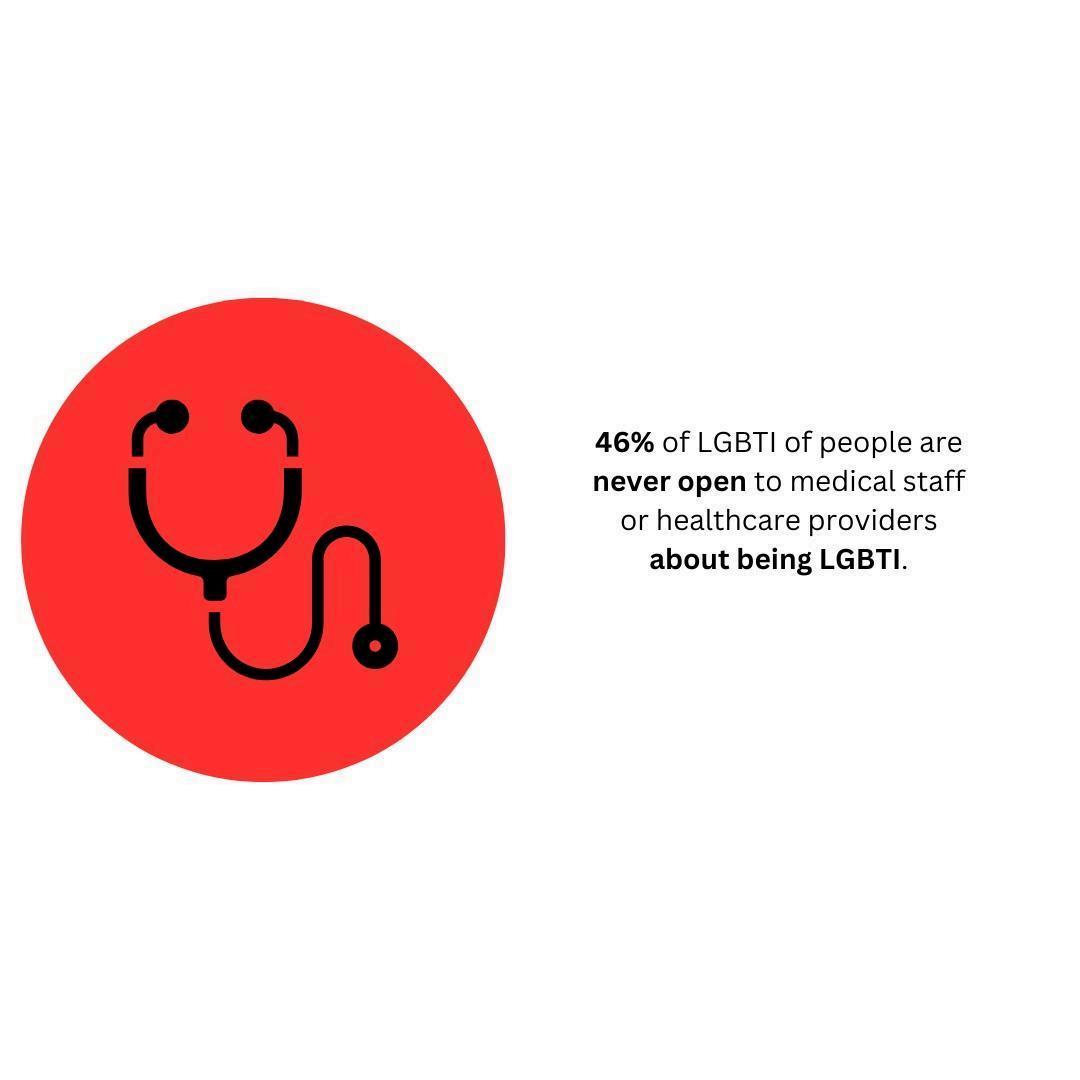
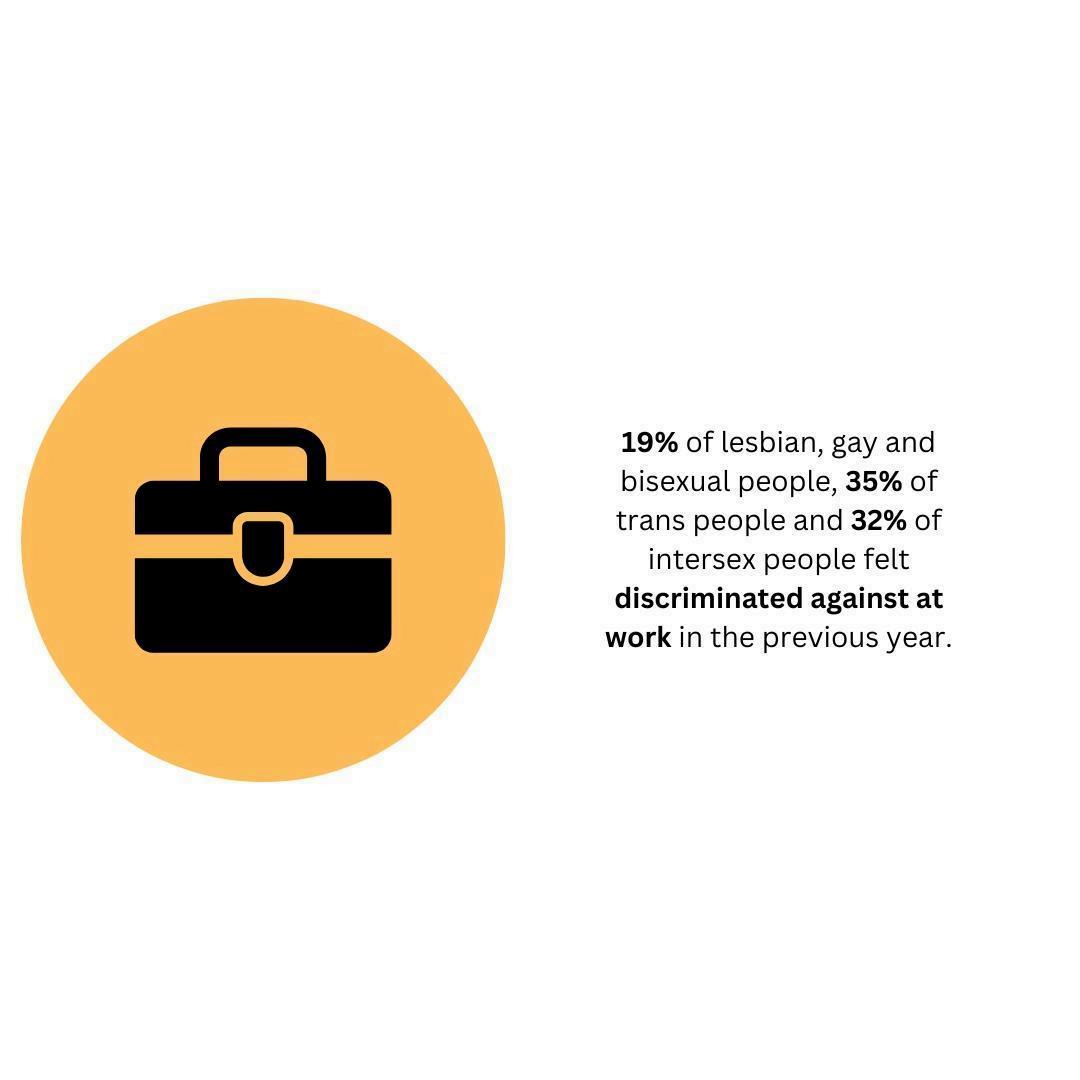
Despite these advancements, challenges remain. Policy enforcement is inconsistent, particularly in rural and conservative regions. Trans and intersex individuals facesystemicbarrierstoaccessing healthcare,exacerbatedbydiscriminatoryattitudesandresourceshortages Additionally,legislative gaps persist, especially in recognizing non-binary and intersex individuals and addressing intersectionalformsofdiscrimination
The findings highlight the importance of leveraging cross-country learning Spain and Ireland’s progressive legal frameworks can serve as blueprints for enhancing protections, while Greece’s inclusive reforms demonstrate practical approaches to marriage equality and intersex rights Harmonizing legal frameworks across countries could help create shared standards for self-identification,healthcareaccess,andanti-discriminationmeasures Capacity-buildingeffortsare crucial, including training for healthcare providers, policymakers, and law enforcement. These initiativeswouldensureagreaterunderstandingofLGBTQI+rightsandimprovepolicyenforcement. Public awareness campaigns should also be prioritized to combat stigma and promote societal acceptance,creatinganenvironmentconducivetoinclusion.
LGBTQI+ rights have gained increasingrecognitionacrossEuropeasessentialtofosteringinclusive societies that uphold human dignity and equality. While many European countries have made significant progressinadvancingLGBTQI+protections,challengesremain,particularlyfortransand intersex individuals, who often face unique barriers to accessing rights, healthcare,andprotection fromdiscrimination.Addressingtheinclusionofthesegroupsisnotonlyamatterofequitybutalso ofaligningwithfundamentalhumanrightsprinciples.
The European Union (EU) plays a pivotal role in safeguarding human rights and combating discrimination, providing a framework for member states to protect LGBTQI+ individuals. EU directives and strategies, such as the LGBTIQ+ Equality Strategy 2020–2025, aim to share efforts , ensuring that policies address the needs of all individuals regardless of gender
identity, sexual orientation, or sex characteristics Participating countries, including Spain, Greece, Lithuania,Cyprus,andIreland,contributetothissharedvisionbyimplementingpoliciesthatprotect LGBTQI+communitieswhileaddressingpersistentgapsinenforcementandsocietalacceptance
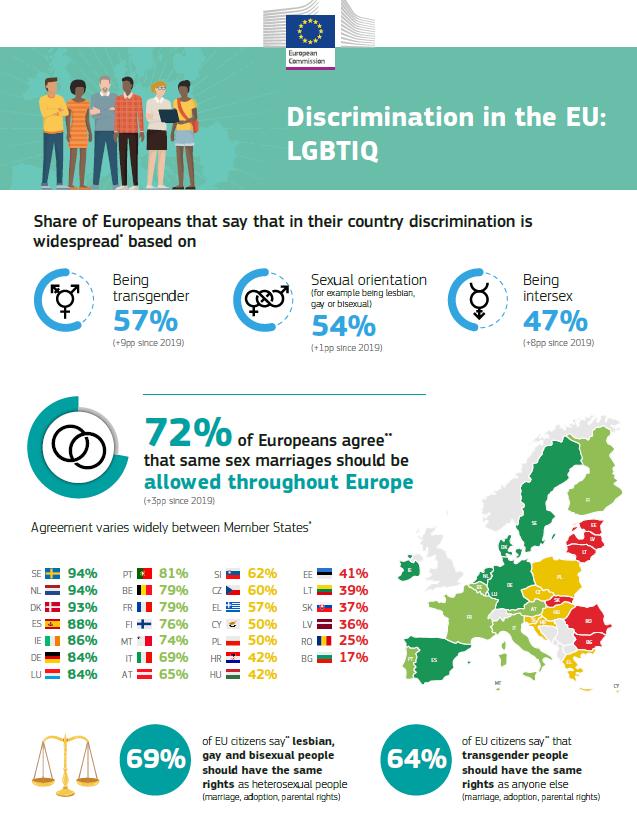
Source:SpecialEurobarometer535:DiscriminationintheEU,Infographics.https://europa.eu/eurobarometer/surveys/detail/2972
This report isparticularlytimely,giventhegrowinginternationalrecognitionofLGBTQI+issuesand the pressing need for inclusive policies that reflectdiverserealities.Byfocusingontheinclusionof trans and intersex individuals,itseekstohighlightareaswhereadditionalactionisneededtoclose thegapbetweenpolicyandpractice.
This deliverable provides a comprehensive overview of LGBTQI+ rights and policies in the participating countries, with a focus on trans and intersex individuals. The mapping exercise conducted for this task involved a thorough review of legislativeframeworks,policyinitiatives,and their implementation in practice It examined the extent to whichexistingmeasuressafeguardthe rights and well-being ofLGBTQI+individuals,particularlyincriticalareassuchashealthcareaccess, workplaceprotections,andfreedomfromdiscrimination
By analyzing these findings, the report identifies common challenges, opportunities, and best practices, enabling a comparative analysis of policies and practices across countries. The ultimate goal is to support cross-country learning and harmonization efforts, providing a roadmap for strengthening LGBTQI+ inclusion while addressing the specific needs of marginalized groups. This deliverablealignswiththebroaderobjectivesoftheproject,whichaimtofosterequalityandensure thatnooneisleftbehind.
The report is organized into several key sections to guide the reader through its findings and recommendations. Following this introduction, the Methodology section outlines the research approach, including desk-based policy analysis and insights from stakeholder interviews. The Country-Specific Analysis delves into each participating country's policies and legal frameworks, examining their strengths, gaps, and implementation challenges. AComparativeAnalysisidentifies cross-country similarities, differences, and opportunities for harmonization, while the Recommendations section provides targeted proposals for improving LGBTQI+ rights and protections. The report concludes with a summary of key findings from the interviews with stakeholdersandavisionforadvancingLGBTQI+inclusionacrossEurope Byprovidingastructured andin-depthexplorationofthetopic,thisreportaimstocontributetotheongoingeffortstoensure equalityanddignityforLGBTQI+individualsinallparticipatingcountries
Theresearchforthisreportwasconductedthroughacombinationofdesk-basedpolicyanalysisand stakeholder interviews The desk-based research involved an extensive reviewofexistinglegal frameworks, policies, and initiatives relevanttoLGBTQI+rightsintheparticipatingcountries. This included examining anti-discrimination laws, healthcare access provisions, workplace protections, and mechanisms for gender identity recognition. Additionally,country-specificreports, academic studies, and governmental publications were analyzed to provide a thorough understanding of each nation’s legislative and policylandscape.Adetaileddatacollectiontemplate was developed to systematically gather information on policies, legal frameworks, and initiatives across the participating countries to support the mapping exercise. This structured tool ensureda consistent approach to data collection and analysis, enabling the identification of gaps, strengths, and opportunities for harmonization. The template included eight key sections, each focusing on specific aspects of LGBTQI+ policy design and implementation. It facilitated the documentation of essentialdetailssuchaspolicyobjectives,enforcementmechanisms,stakeholder feedback, and measurable outcomes. For example, Section 2 focused on summarizing policies, including their provisions, target populations, and implementation timelines Sections 3 and 4 evaluated inclusivity, effectiveness, and the scope of policies, incorporating insights into intersectional discrimination and regional disparities Furthermore, the template emphasized stakeholder perspectives, requiring partners to document feedback from LGBTQI+ communities, and institutions. This qualitative input added depth to the analysis, highlighting
practical challenges andsuccessesinpolicyimplementation Quantitativedata,suchasstatisticson reported discrimination and case resolutions, was alsoincludedinSection7toprovidemeasurable insightsintotheimpactofexistingframeworks
Using this comprehensive template, the consortium ensured that data collection was thorough, standardized, and aligned with the project's objectives. This approach allowed for a robust comparativeanalysisacrosstheparticipatingcountries,formingthefoundationforthefindingsand recommendationspresentedinthisreport.
Stakeholder interviews complemented the desk research by offering qualitative insightsintopolicy implementation and societal attitudes. Key stakeholders included government officials, representatives from LGBTQI+ organizations, healthcare providers, legal experts, and community advocates.Theinterviewsexploredtopicssuchaspolicyenforcement,challengesfacedbytrans and intersex individuals, and best practices for fostering inclusion. The format included semi-structured interviews, which allowed participants to share detailed perspectives while addressingkeyareasofinterest.Thepartnershipcreatedarobustinterviewframeworkfortransand intersex individuals, medical professionals, and employers The framework focused oncapturing everyday narratives of intersectional discrimination and inequality to mobilize stakeholders for systemic change Clear guidelines ensured informed consent, and interviewers adopted an intersectionallenstoengageparticipantseffectively.Theinterviewsprovidedfirst-handinsightsinto thechallengesfacedbytransandintersexindividualswhilefosteringstakeholderengagement.
Targeted questions explored healthcare access, discrimination, employment barriers, and societal attitudes. Focus groups facilitated discussions to identify strategies for inclusivity. Each partner conducted three group interviews with ten stakeholders per session, including trans and intersex individuals,medicalprofessionals,andemployers.Interviewslastedanhour,withregistrationforms, consent agreements, and post-meeting questionnaires completed. Sessions employed facilitated discussions, visual aids, and action planning for deeper engagement. A total of 225 stakeholders participated, divided among trans and intersex individuals, medical professionals, and employers. Each partner will host a focus group to refine project goals and contribute to policy analysis. An intersectional approach ensured race, socioeconomic status, and other identitieswere considered
Interview topics varied by stakeholder group. Trans and intersex individuals discussed healthcare ognition, employment, and societal pressures. Medical professionals addressed
policies, barriers to care, and biases, while employers examined workplace inclusivity, hiring challenges,andmisconceptions.
Interviewerswereencouragedtoadaptandexpanddiscussionsbeyondthepredefinedquestionsto capture more profound insights. Flexibility allowed for organic conversations, uncovering valuable perspectivesthatmighthaveotherwiseremainedunexplored.
This research aimed to provide a comprehensive overview of LGBTQI+ rights and policiesinSpain, Greece,Lithuania,Cyprus,andIreland.Whilesignificanteffortsweremadetoincludeawiderange of data and perspectives, certain limitations should be acknowledged. First, data availability varied across countries, with some regionslackingdetailedinformationonthelivedexperiencesof LGBTQI+ individuals or policy outcomes. This posed challenges in creating an equally detailed analysis for all countries In addition, Spain and Greece had more organisations intheconsortium andreceivedmoreinformationanddatafromtheirside.
Additionally, the scope of the research focused on trans and intersex inclusion within broader LGBTQI+ policies. While this emphasis was necessary, it may have limitedthedepthofanalysisfor otherLGBTQI+subgroups.Geographicdisparitiesalsoemergedasaboundary,withruralareasoften underrepresented in data and interviews Despite these limitations, the findings provide a robust foundation for understanding the current state of LGBTQI+ rights and identifying actionable pathwaysforprogress
LGBTQI+individualsdonotexperiencediscriminationinisolation manyfacecompoundedbarriers duetointersectingidentitiessuchasrace,ethnicity,disability,socioeconomicstatus,ormigrant status.Theseoverlappingfactorscansignificantlyshapeaccesstorights,services,andsafety.
RacialandEthnicMinoritieswithinLGBTQI+communitiesoftenfacedoublemarginalization For example,racializedtransindividualsmaybesubjecttoadditionalstereotypinginemploymentor healthcarecontexts,especiallyincountrieswheresystemicracismremainsunderaddressed.Insome cases,racialorethnicbackgroundmayexacerbatesocietalrejectionorinvisibility,particularlyin regionswithlimitedanti-racismframeworks.
Migrantandasylum-seekingLGBTQI+individualsfaceparticularlyacutechallenges.Legalgender recognitionmaynotbeaccessibleforundocumentedmigrants,andasylumproceduresoftenfailto adequatelyassesstherisksfacedbyLGBTQI+claimantsintheircountriesoforigin.Language barriers,fearofdeportation,andinconsistentlegalprotectionsfurthercompoundtheirexclusion, especiallywhenhealthcareaccessandlegalrecognitiondependonresidencystatus.
PersonswithdisabilitieswhoarealsoLGBTQI+mayexperiencecompoundedbarrierswhenseeking appropriateservices Discriminationinhealthcareoreducationisoftenintensifiedbyableist assumptions,creatingexclusionevenwithinsystemsnominallydesignedtoprotectminorities. Inclusivetrainingforserviceprovidersrarelyaddressesbothdisabilityandgender/sexualdiversity, leavingsignificantgapsinintersectionalcareandrecognition.
Currently,fewcountriessystematicallycollectdisaggregateddataontheseintersectingidentities Thislackofvisibilityimpairspolicydevelopmentandhindersthecreationoftargeted,equitable interventions.Toaddressthis,nationalstrategiesmustincorporateintersectionalindicators,ensure accessibilityinservices,andactivelyengageorganizationsrepresentingmultiplymarginalized communities.
KeyRecommendations:
● IncorporateintersectionalcategoriesinnationalLGBTQI+datacollectionandmonitoring systems.
● Includemigrant,disability,andracialjusticeorganizationsinLGBTQI+policymakingand consultations.
● FundtargetedoutreachandservicesforLGBTQI+individualsfrommarginalizedsubgroups.
While this report strives to provide a comprehensive and accurate representation of the lived experiencesoftransandintersexindividualsacrossthefiveparticipatingcountries,severaldataand ethical limitations must be acknowledged. First, the availability and granularity of data related to intersex individuals remain notably limited In many contexts, intersex populations are not recognized as a distinct demographic group in official statistics, and their experiences are often conflated with those of other LGBTQI+ identities, obscuring specific vulnerabilities and healthcare needs.
Moreover,thestigmatizationofintersexandtransidentities,combinedwithfearsofdiscriminationor outing, may have led some individuals to opt out of participation or to underreport personal experiences. This introduces the potential for response bias,particularlyinregionswhereLGBTQI+ rightsarelessrecognizedorwhereinstitutionaltrustislow
From an ethical standpoint, great care was taken to ensure voluntary participation, informed consent, and confidentiality, especially in interviews involving marginalized orlegallyunrecognized groups.Nonetheless,ethicalconstraintslimitedaccesstosomehighlyvulnerablesubgroups,suchas undocumentedmigrantsoryouthwithoutguardianconsent.Theseabsencesmayhavecreatedgaps intherepresentativenessofthequalitativedata.
Lastly,duetodisparitiesinthenumberandcapacityofpartnerorganizationsacrosscountries,data volumeanddepthwerenotequallydistributed.SpainandGreececontributedmoreextensivelydue togreaterinstitutionalsupportandhigherstakeholderengagement.Thesedifferencesarereflected intherelativerichnessofthecountry-specificanalyses.

Spain has madesignificantstridesinadvancingtherightsoftheLGBTQI+communityoverthepast fewdecades,becomingoneofthemostprogressivecountriesinEuropeintermsoflegalprotections andsocietalacceptance.In2005,Spainlegalizedsame-sexmarriagethroughLey13/2005,makingit one of the first countries in the world to do so The GenderIdentityLaw(Ley3/2007)followedin 2007, allowing individuals to change their gender legally without the requirement of surgery or sterilization, a major step forward for transgender rights. The Comprehensive Law on Equal TreatmentandNon-Discrimination(Ley15/2022),alsoknownastheZeroloLaw,enactedin2022,is a landmark anti-discrimination lawthatprotectsLGBTQI+individualsfromdiscriminationinvarious areas, including employment, education, housing, and access to public services. It also includes provisions for addressing hate crimes against the LGBTQI+ community. Additionally, Spain has introducedimportantreformsaimedatprotectingandsupportingLGBTQI+individuals,includingthe Democratic Memory Law (Ley 20/2022), which acknowledges and compensates LGBTQI+ people persecuted during the Francoist regime,andtheTransLaw(Ley4/2023),whichallowstransgender individualstoself-identifyandaccessgender-affirminghealthcare.
PolicyName/Legalframework:ComprehensiveLaw15/2022(LeyIntegralparalaIgualdaddeTrato ylaNoDiscriminación)
DateofEnactment:July12th,2022
ResponsibleInstitution:SpanishParliament
TargetPopulation:LGBTQI+individuals
OverviewandObjectives
TheComprehensiveLaw15/2022,knownastheZeroloLaw,isalandmarkpieceoflegislationaimed at ensuring equaltreatmentandprotectionagainstdiscriminationforLGBTQI+individualsinSpain. The law prohibits discrimination in various spheres of life, including employment, education, housing, and public services, and introduces harsher penalties for hate crimes against LGBTQI+ individuals.Itsobjectiveistofosteramoreinclusiveandequalsociety,ensuringthatLGBTQI+people can live without fear of persecution, discrimination, or violence The law also emphasizes the importance of raising public awareness to combat societal prejudice. This law prohibits discrimination based on sexual orientation and gender identity across various sectors, including employment, education, housing, and access to public services. It treats hate crimes targeting LGBTQI+ individuals as aggravated crimes with stricter penalties. It aims to provide stronger legal protection and promoteequalityforLGBTQI+individuals,raisingpublicawarenessandfosteringan inclusivesociety.
Policy Name/Legal framework: Ley 3/2007onGenderIdentityandSexualOrientation(Ley3/2007 sobreidentidaddegéneroyorientaciónsexual)
DateofEnactment:July,2007
ResponsibleInstitution:GovernmentofSpain
TargetPopulation:Transgenderindividuals,intersexindividuals
OverviewandObjectives
Ley 3/2007, enacted on July15,2007,representsatransformativemilestoneinSpain’scommitment toadvancingtransgenderrights.Thislawgrantslegalrecognitiontotransgenderindividuals’gender identitywithoutrequiringinvasivemedicalproceduressuchassurgeryorsterilization aprogressive approach unparalleled in many parts of Europe at the time. Byfocusingonself-determination,the lawhassignificantlyimprovedthesocialintegrationandqualityoflifefortransgenderindividualsin Spain Its objectives include safeguarding equality, preventing gender-based discrimination, and fostering societal acceptance of diverse gender identities. Ley 3/2007, known as the "Trans Law," marksasignificantstepinrecognizinggenderidentitybyallowingtransgenderindividualstoamend theirpersonaldataonofficialdocumentswithoutrequiringgender-affirmingsurgeryorsterilization. This groundbreaking provision upholds the principle of self-determination, ensuring that legal identity aligns with livedexperience.Attheconstitutionallevel,thelawenforcesanti-discrimination measures, extending protections inemployment,education,andpublicservicestoguaranteeequal treatment and inclusion. It also addresses gender-based violence by implementing protective measures and support programs, particularly for intersex individuals who are vulnerable to discrimination. In the labor market, the lawmandatesequalityplansinlargecompaniestoremove barriers faced by transgender and intersex individuals in recruitment and career advancement. Additionally,itpromoteseducationandculturalawarenessthroughprogramsthatdismantlegender stereotypes and foster acceptance in schools and media. Healthcare accessibility is also a priority, ensuringcomprehensivecare,includinggender-affirmingtreatmentswhilecombatingdiscrimination within medical institutions. To safeguard individuals reporting unequal treatment, thelawincludes retaliation protections, particularly in workplaces, guaranteeing legal recourse and impartial proceedings. Furthermore, Ley 3/2007 enhances cultural representation by encouraging gender balanceindecision-makingbodieswithintheartsandmedia,increasingthevisibilityandinclusionof transgenderandintersexindividualsinsociety.
PolicyName/Legalframework:TransLaw(Leyparalaigualdadrealyefectivadelaspersonastrans yparalagarantíadelosderechosdelaspersonasLGTBI,Ley4/2023)
DateofEnactment:February,2023
ResponsibleInstitution:SpanishParliament
TargetPopulation:Transgenderindividuals
The Trans Law (Ley 4/2023) passed in March 2023 in Spain is a transformative piece of legislation aimed atensuringtherightsandprotectionoftransgenderindividuals.Itallowsindividualsover16 to self-identify their gender and change it on official documents without the need for medical approval.Minorsaged14to16canalsoself-identifywithparentalconsent.Thelawfacilitateseasier access to gender-affirming healthcare, such as hormone therapy, and bans harmful practices like conversiontherapy.Additionally,itenhancesprotectionsagainstdiscriminationinkeyareassuchas employment, education, and public services, while still excluding non-binary recognition and imposing limitations on younger minors. The law ensures equal rights fortransgenderindividuals, includingtheabilitytoself-identifytheirgenderonofficialdocumentswithoutmedicalapproval(for thoseover16).Itprovidesminorsaged14to16therighttoself-identifywithparentalconsent.The law also facilitates access to gender-affirming healthcare, such as hormone therapy, without the need for parental consent for individuals over 16 It bans conversion therapy and strengthens anti-discrimination protections in employment, education, and public services. While significant, it doesnotallowfornon-binaryrecognitionandimposeslimitationsonminorsunder14
Policy Name/Legal framework: Law 2/2016, of 29 March, on the protection, effective equality and non-discriminationoftranssexualandintersexpeopleintheCommunityofMadrid
ResponsibleInstitution:PresidencyoftheAutonomousCommunityofMadrid
TargetPopulation:Mainlytransandintersexindividualsaswellastheirfamiliesandsupportnetworks.
OverviewandObjectives
The Law establishesmeasuresdirectedtoguaranteetherespecttoidentityandgenderexpression, including the gender recognition in administrative documents without medical or psychological requirements Italsofosterstheimplementationofspecificprogramsincertainareassuchashealth, education and employment in order to ensure equal opportunities and to prevent discrimination situations.ThisLawalsoforcespublicinstitutionstodevelopsensibilizationandtrainingactivitiesin order to guarantee its enforcement and to promote a coexistence based on respect. Guarantees access to health services tailored to the specific needs of trans and intersex individuals, including gender-affirmingcare.
PolicyName/Legalframework:Ley20/2022,de19deoctubre,deMemoriaDemocrática
DateofEnactment:2022
ResponsibleInstitution:SpanishState(statelegislation)
OverviewandObjectives
The Law on Democratic Memory serves as a crucial legislative framework aimed at recovering, safeguarding, and disseminating Spain's historical memory. Its primary objective is to promote knowledgeandawarenessofthestrugglesfordemocraticvaluesandfundamentalrightsthroughout
Spain's contemporary history The law fosters cohesion and solidarity among generations by emphasizingconstitutionalprinciples,sharedvalues,andthedefenceoffreedoms. Atitscore,thelawrecognizesandaddressestheinjusticessufferedbyindividualsandgroupsduring the Spanish Civil War (1936–1939) and the subsequent Francoist Dictatorship (1939–1978). This period witnessed widespread persecution and repression for political, ideological, religious, or personal beliefs, including violence against those based on theirorientationorsexualidentity.The law officially acknowledges these wrongs, offers reparations to the victims, and preserves their legacyaspartofSpain'shistoricalconscience.

Greece has taken significant steps toward improving the legal and social standing of LGBTQI+ individuals through a series ofprogressivelawsaddressingcrucialareassuchasmarriageequality, adoption rights, workplace protections, and the autonomy of intersex minors, demonstrating a growing commitment to equality and humanrights.TheLawonCivilMarriageEquality(LawNo. 5,089,2024)legalizedsame-sexmarriage,grantingLGBTQI+couplesthesamerightsandrecognition as heterosexual couples. This law also opened the door to joint adoption for same-sex couples, correcting a longstanding inequality and affirming the legitimacy ofLGBTQI+families.Additionally, parental benefits, such as maternity allowances, were extended to same-sex couples, providing essentialsupportforthesefamilies.Thebanon"conversiontherapies"underthe2022Healthfor All Law protects LGBTQI+ individuals, particularly minors and vulnerable adults, fromharmfuland discreditedpracticesaimedatalteringtheirsexualorientationorgenderidentity Similarly,theLaw onMedicallyAssistedReproductionReforms(LawNo.4,958,2022)restrictsnon-essentialmedical interventions on intersex minors, ensuring that suchdecisionsaredeferreduntiltheindividualcan provideinformedconsent.Workplaceprotections,establishedunderLawNo.4808/2021,safeguard LGBTQI+ employees from discrimination, harassment, and unequal treatment in employment,vital forfosteringinclusivityandensuringthatLGBTQI+individualscanparticipatefullyandequallyinthe workforce.
Law No.4808/2021isanimportantstepforwardinprotectingindividualsinGreecefromworkplace discrimination It explicitly includes sexual orientation, gender identity, and gender characteristics among the protected categories, ensuring equal treatment and rights for all public and private employees
Thelawguarantees:
● Equalaccesstojobopportunities,recruitment,andpromotions.
● Fairtreatmentinsalaries,dismissals,healthandsafetymeasures,andre-employment.
● Inclusioninvocationaltrainingandapprenticeships.
● Therighttoparticipateinlaborunionsandprofessionalorganizations
● IndividualswhoexperiencediscriminationcanfilecomplaintswiththeGreekOmbudsmanorthe LaborInspectorate.Thesebodieshavetheauthoritytoinvestigateclaimsandimposepenalties.
● Thelawdefinesharassmentasanyunwantedbehaviorrelatedtoprotectedcharacteristics(eg, sexual orientation, gender identity) that creates an intimidating, hostile, or humiliating work environment.
● Employersmustprovidereasonableaccommodationsforemployeeswithspecificneeds,suchas disabilities,unlessdoingsocreatesanexcessiveburden.
ThislawisespeciallysignificantforLGBTindividualsasitensurestheirrighttoequaltreatmentinthe workplace. Addressing sexual orientation and gender identity directlyhelpscombatdiscrimination, harassment, and unequal opportunities that LGBT employees often face. It also provides precise mechanisms for addressing violations, giving LGBT individuals a way to seek justice and hold employersaccountable.
Article62ofthe2022lawexplicitlyprohibits"conversiontherapies,"definedasanytreatmentaimed at changing or suppressing an individual's sexual orientation or gender identity/expression. The prohibition applies to both professionals and non-professionals performing or promoting such practices The law was enacted in 2022, marking a critical step in protecting the rights of LGBT individualsinGreece.
The legislative framework criminalizes the provision and promotion of conversion practices for vulnerable persons, which include Minors (children under 18) and vulnerable adults,suchasthose underjudicialguardianship.
Conversion practices, which have been widely discredited by medical and psychological organizations, are deemed harmful and unethical. The law ensures that noindividualcanundergo suchpracticeswithoutexplicitconsent.Evenwithconsent,conversiontherapiestargetingminorsor vulnerableadultsremainprohibited.
Banned Practice isanypracticethatattemptstoalterorsuppressanindividual’ssexualorientation, gender identity, or gender expression without explicit consent Banned Practitioners are licensed professionals, unlicensed individuals, and those promoting or advertising conversion practices, regardless of their professional status. Penalties include imprisonment, fines, disciplinary and administrative sanctions. Repeated violations are treated as aggravating circumstances, leading to stricterpenalties.
Additionally, professionals are prohibited from promoting, displaying, or advertising conversion practicesforthemselvesorothers.Theyarealsobarredfromencouragingorreferringindividualsto conversionpractices
ThislawisasignificantadvancementforLGBTrightsinGreece,asitacknowledgesandaddressesthe conversion practices. Bybanningthesepracticesforminorsandvulnerableadults,
thelawprotectsindividualsfromcoercive,abusive,andpseudoscientifictreatmentsthatundermine theirwell-being.Prohibitingpromotionandadvertisingfurtherensuresthattheseharmfulpractices arenotnormalizedoraccessible
As of 2024, marriage is legal for same-sex couples. Civil Unions, which offer comparable rights to marriage,havebeenavailablesinceearlierlegislation
The law was enacted on February 16, 2024, after passing in Parliament and being immediately signed by the President. This legislation, known as the Law on Civil Marriage Equality, grants same-sex couples the right to marry under the same terms as heterosexual couples, marking a milestoneinLGBTequalityinGreece.
The journey toward marriage equality began in 2008 when twosame-sexcouplesweremarriedby the mayor of Tilos, exploiting a legal loophole. This sparked legal and social controversy, with the marriages ultimately annulled by the Supreme Court in 2017, citing "Greek societal values" and "moraltraditions."Civilunionswereintroducedasacompromise,offeringsomelegalprotectionsto same-sex couples but stopping short of full equality. A draft bill for marriage equality, including adoptionandco-parentingrightsforsame-sexcouples,wasproposedin2021butstalled.
In 2023, renewed political support emerged, with the Prime Minister advocating for marriage equalityafterre-election PublicconsultationswereheldinJanuary2024 Thegovernmentintroduced the marriage equality bill on February 1, 2024, which passed in Parliament by 175 votes to 77 on February15,2024
The enactment of Law No. 5,089 representsahistoricadvancementintherightsofLGBTpeoplein Greece.Bygrantingsame-sexcouplestherighttomarry,thelawprovides:
● Fulllegalrecognitionofrelationships
● Equalrightstoadoptionandco-parenting
● Protections for transgender individuals within marriage, removing previous discriminatory requirements(e.g.,forceddivorces).
While the law reflects significant progress, it follows decades of resistance rooted in societal conservatism and opposition from influential entities such as the Church of Greece. Its successful passage signals a shift in societal attitudes, though challenges remain in fostering full acceptance andeliminatingstigma.
LawNo.5,089(2024)andtheLegalizationofJointAdoptionforSame-SexCouples
JointAdoptionwaslegalizedforsame-sexcouplesin2024
● February16,2024:ActingtheLawonCivilMarriageEquality(LawNo.5,089)madejointadoption possibleforsame-sexcouples.
● April2024:Parentalbenefitswereextendedtosame-sexcoupleswhoadoptchildren
Article 1545 of the Civil Code previously restricted joint adoption to married couples, effectively excludingsame-sexcouplesduetotheabsenceoflegalmarriagerights.WiththepassageofLawNo. 5,089,same-sexmarriagebecamelegal,automaticallygrantingsame-sexcouplestherighttoadopt jointly. In 2018, the Child AdoptionLaw(LawNo.4538)allowedsame-sexcouplestofosterchildren butnottoadoptthem.Fosteringwaspositionedasanaltruisticact,withthechildmaintainingtiesto theirnaturalparents.Adoptionremainedlimitedtomarriedcouples,excludingsame-sexcouplesdue to the lack of legal marriage recognition. In 2021 and 2022, theoppositionpartySYRIZAproposed billstolegalizesame-sexmarriageandextendadoptionrights,buttheseeffortsstalled.In2023,the governmentandPrimeMinisterendorsedmarriageequality,leadingtopublicconsultationsandthe eventualpassageoftheLawonCivilMarriageEqualityinFebruary2024.
Jointadoptionrightsweregrantedtosame-sexcouplesaspartofthebroadermarriageequalitylaw. Parentalbenefits,includingmaternityallowances,wereextendedtosame-sexcouplesinApril2024, ensuring financial and social support for adoptive families. The legalization of joint adoption is a transformative milestone for LGBT families in Greece. It recognizes the equalcapacityofsame-sex couplestoprovideloving,stablehomesforchildren.Thischange:
● ItaffirmsthedignityandlegitimacyofLGBTfamilies.
● Provides adopted children of same-sex couples with the same legal protections and parental benefitsasthoseinheterosexualfamilies.
● EnhancessocialacceptanceandreducesstigmaagainstLGBTparenting.
Despite legal advancements, societal attitudes and resistance from conservative groups, including theChurch,maycontinuetochallengefullacceptance Continuedeffortsareneededtoeducatethe publicandensurethesmoothimplementationoftheserights.
LawNo.4,958(2022)andRestrictionsonNon-VitalMedicalInterventionsforIntersexMinors
Thelawprohibitsmedicalinterventionsaimedatmodifyingthesexcharacteristicsofintersexminors unless the following conditions are met: The minor must be at least 15 yearsold.Theminormust providefree,prior,andfullyinformedconsent
For minors under 15, non-deferrable interventions require authorization from a local Magistrate Court.ThecourtmustconsidertheopinionsoftheminorandtheInterdisciplinaryCommitteebefore granting permission. Immediate medical interventions areallowedwithoutcourtpermissionifthey arenecessarytopreventlife-threateningorseverehealthrisksthatcannotbedelayed.Penaltiesfor Violations:Doctorswhoperformunauthorizedsurgeriesfacecriminalconsequences,includingfines and imprisonment. This law seeks to protect intersex minors from non-vital, irreversible medical procedures performed without their informed consent Historically, intersex individuals have faced surgeries or treatmentsaimedataligningtheirphysicalcharacteristicswithsocietalexpectationsof male or female bodies, often resulting in long-term physical and psychological harm The 2022 reforms prioritize the bodily autonomy and rights of intersex minors by delaying non-urgent interventionsuntiltheyareoldenoughtomakeinformeddecisionsabouttheirbodies.
Thislegislationisasignificantstepforwardinprotectingthehumanrightsofintersexindividualsin Greece.Keyaspectsinclude:
● Recognizingintersexminors’righttodecideaboutmedicalproceduresinvolvingtheirbodies.
● Limiting unnecessary surgeries reduces the risk of psychological trauma and physical complications.
● By involving intersex minors and an Interdisciplinary Committee in decisions, the law ensures theirvoicesareheardinmedicalandlegalprocesses
Thelaw'ssuccessdependsonitsenforcementandtheproperfunctioningofthejudicialandmedical systems. However, social stigma and a lack of awareness about intersex issues may hinder full implementation. This legislation shows Greece's commitment to aligning its policies with international human rights standards, particularly for vulnerable and historically marginalized groups Letmeknowifthisworksforyouorifyouhavethefollowinglaw!
PolicyName/Legalframework:Anti-DiscriminationLegislation(Law4443/2016)
DateofEnactment:2016
ResponsibleInstitution:MinistryofLabourandSocialSecurity
TargetPopulation:Groupsthatmayfacediscrimination,includingtransandintersexindividuals
OverviewandObjectives
Law 4443/2016 represents a significant legislative step toward fostering an inclusiveandequitable societyinGreece ByincorporatingEuropeanDirective2000/78/EC,thelawensuresequaltreatment regardlessofracialorethnicorigin,religionorbeliefs,disability,age,sexualorientation,andgender identity Its comprehensive scope covers various sectors, including healthcare, employment, education,andaccesstogoodsandservices.Thelaw’sobjectivesincludeprotectingworkers'rights, combatingmarketabuse,andestablishingmechanismsforinvestigatingarbitraryconductwithinlaw enforcementanddetentionfacilities.
PolicyName/Legalframework:Anti-HateCrimeLegislation(Law4577/2018)
DateofEnactment:2018
ResponsibleInstitution:MinistryofJustice,Transparency,andHumanRights
TargetPopulation:Individualstargetedbasedonrace,ethnicity,religion,gender,sexualorientation, disability,andotherpersonalcharacteristics
OverviewandObjectives
Enactedin2018,Law4577/2018enhancesGreece’slegalframeworkforaddressinghatecrimesand hate speech. This legislation imposes stricter penalties for crimes motivated by bias, expanding protectionstoincluderace,religion,sexualorientation,disability,andotherprotectedcategories.By criminalizing both violent actsandspeechincitinghateorviolence,thelawseekstoproviderobust
protection for marginalized and vulnerable groups It also focuses on offering victim support and creatingasafer,moreinclusivesociety.
PolicyName/Legalframework:BanonConversionTherapies(Lawof2022)
DateofEnactment:2022
ResponsibleInstitution:[Governmentagency,ministry,ororganization]
Target Population: LGBTQI+ individuals, specifically those who may be subjected to conversion therapypractices
OverviewandObjectives
In2022,GreecetookasignificantsteptowardprotectingLGBTQI+rightsbyenactingalawthatbans conversion therapies These harmful practices aim to change or suppress an individual’s sexual orientation or gender identity and are widely regarded as pseudoscientific and dangerous. By criminalizingconversiontherapies,thelawseekstosafeguardthementalandphysicalwell-beingof LGBTQI+ individuals while reinforcing their human rights. Specific provisions target healthcare professionals, psychologists, and counselors, prohibiting their involvement in these interventions andintroducingprisonsentencesforviolators.
Thelawexplicitlybansconversiontherapypractices,recognizinganytreatmentaimedatalteringor suppressing a person’s sexual orientation or gender identity as a violation of human rights. This prohibition applies across all healthcare settings, ensuring that such harmful interventions are eradicated. To reinforce the seriousness of the offense, the law criminalizes participation in conversion therapy, subjecting health professionals, psychologists,religiouscounselors,andothers involved to prosecution, including prison sentences and other legal consequences. Additionally, it establishessupportmechanismsforvictims,enablingthemtoreportincidentsandaccessnecessary servicesforjusticeandrecovery.
PolicyName/Legalframework:LegalGenderRecognitionLaw(Law4491/2017)
DateofEnactment:2017
ResponsibleInstitution:MinistryofJustice,TransparencyandHumanRights
TargetPopulation:Transgenderindividuals
OverviewandObjectives
Enactedin2017,theLegalGenderRecognitionLaw(Law4491/2017)markedasignificantmilestone for LGBTQI+ rights in Greece. The law allows individuals to change their legal gender based on self-determination without requiring invasive medical procedures, such as surgeries or hormone treatments, or undergoing psychiatric evaluations. This legislative framework aligns with international human rights standards, emphasizing personal autonomy and dignity. Applicable to individuals aged 15 and older, it includes provisions for minors under specificconditions,ensuring thatyoungerindividualsalsohavetheirgenderidentityrespected.
Thelawallowstransgenderindividualstoamendtheirgendermarkeronofficialdocuments,suchas ID cards and passports, through a judicial process, eliminating previous requirements for medical interventionsorinfertilityandaffirmingtheirautonomywhilereducingstigma However,thejudicial process can be costly and time-consuming, creating accessibility challenges for marginalized individuals, particularly those from low-income backgrounds. Advocacy groups have called for simplifying this process and introducing financial support mechanisms to address these barriers. Additionally, the law's binary framework, recognizing only male or female genders, excludes non-binary and intersex identities, highlighting the need for future legislative efforts to ensure comprehensivegenderidentityrecognition.

Lithuania has taken incremental but meaningful steps to address transgender healthcare and combat discrimination, primarily through institutional reforms and policy initiatives. Key actions include the establishment of a standardized diagnostic and treatment framework for transgender individuals,developmentofhatecrimeinvestigationprotocols,andtheformationofagovernmental workinggrouptoimprovelegalstatusandprotectionsfortranspeople. However, systemic gaps persist. Legal frameworks still fail to explicitly recognize gender identity, expression, and sex characteristics as protected grounds, leaving transgender and intersex individuals vulnerable to discrimination. The Equal Opportunities Action Plan (2024–2026) and broaderequalitylawsfallshortofcreatingcohesiveorenforceablestandardsforLGBTQI+inclusion, especially in healthcare, education, and employment. Non-binary and intersex individuals remain particularlyunprotectedundercurrentpolicyframeworks.
Civil society plays a pivotal role in advocacy, but fragmented implementation, a lack of long-term strategies, and insufficient institutional capacity hinder progress. Lithuaniamustnowmovetoward codifyinggenderidentityprotections,standardizinginclusivehealthcareaccess,andclosingthelegal gapsaffectingthemostmarginalizedLGBTQI+groups.
Initiative Name: Order on Approval oftheDescriptionoftheProcedureforDiagnosisandTreatmentof GenderIdentityDisorder(Transsexuality)
LeadOrganization:MinistryofHealthoftheRepublicofLithuania
Target Population: Adult individuals with suspected or diagnosed gender identity disorder (transsexuality)
OverviewandObjectives
This policy is Lithuania’s first comprehensive framework specifically addressing transgender tablishes standardized procedures for diagnosing and treating gender identity
disorder, ensuring a multi-disciplinary approach involving psychiatrists, endocrinologists, psychologists, and other healthcare specialists. The policy focuses on creating a clear pathway for accessing hormone therapy and other gender-affirming treatments while setting consistent guidelinesforhealthcareinstitutionsacrossthecountry.
The policy establishes clear diagnostic and treatment procedures through a multidisciplinary approach,involvingpsychiatrists,endocrinologists,andpsychologistsinevaluating,diagnosing,and managing treatment plans.Standardizedguidelinesensureconsistencyininitiatingandmonitoring hormone therapy, while healthcare facilities must maintain detailed records and conduct regular follow-upstoassesspatientoutcomes.Topromoteequitablehealthcareaccess,thepolicymandates that all institutions adhere toitsprovisionsregardlessofownership,aimingtoreducedisparitiesin healthcare delivery for transgender individuals. However, while it provides a structured medical framework,thepolicydoesnotexplicitlyaddressLGBTQI+rightsorbroadersocialissues.Itsfocuson binarytransitionsleavesgapsinrecognizingnon-binaryidentitiesandthespecificneedsofintersex individuals. Advocacy groups have called for a more inclusive approach that acknowledgesgender diversitybeyondmedicalinterventions.
InitiativeName:MethodologicalRecommendationsonInvestigationofHateCrimesandHateSpeech
LeadOrganization:OfficeoftheProsecutorGeneraloftheRepublicofLithuania
Target Population: Law enforcement officers, prosecutors, and investigators handlinghatecrimes andhatespeechcases
OverviewandObjectives
ThisframeworkrepresentsLithuania'smostthoroughapproachtoaddressinghatecrimesandhate speech, incorporating detailed procedures for law enforcement. ItalignswithEuropeanUnion(EU) standards and OSCE/ODIHR guidelines, ensuring adherence to national and international best practices. The framework emphasizes victim protection, detailed protocols for online hate speech investigation,andsystematiccasemonitoring.Itsoverarchinggoalistoenhanceaccesstojusticefor marginalized groups, particularly those targeted based on sexual orientation, gender identity, or intersectingcharacteristics.
Initiative Name: Order on the Formation of Working Group forImprovingLegalStatusofTransgender Persons
LeadOrganization:MinistryofJusticeoftheRepublicofLithuania
TargetPopulation:TransgenderpersonsinLithuania
OverviewandObjectives
An official ministerial order in Lithuania has established a multi-stakeholder working group to develop proposals for improving the legal status of transgender individuals This group unites representatives from key government ministries, human rights institutions, and civil society organizations By addressing the legal and social challenges faced by transgender persons, the
working group aims to align Lithuania’s policies with European standards on human rights and LGBTQI+protections.
The working group adopts a multi-stakeholder approach, bringing together representatives from government institutions, human rights bodies, and civil society organizations. Participants include the Ministry of Justice, Ministry of Health, and Ministry of Social Security and Labor, alongside the Office of the EqualOpportunitiesOmbudspersonandtheSeimasOmbudsmen’sOffice Civilsociety groupssuchastheLithuanianGayLeague,HumanRightsMonitoringInstitute,andTransAutonomy contribute valuable insights This diverse representation ensures a well-rounded examination of transgenderrights,fosteringbalancedandinformedpolicyrecommendations.
InitiativeName:EqualOpportunitiesImplementationActionPlan2024-2026
LeadOrganization:MinistryofSocialSecurityandLabouroftheRepublicofLithuania
Target Population: All residents of Lithuania, with fragmented attention to protected groups includingLGBTIQ+persons,ethnicminorities,personswithdisabilities,andothervulnerablegroups
OverviewandObjectives
Lithuania’s current policy framework promotes equal opportunities by introducing measures addressing LGBTQI+ rights and combating intersectional discrimination. However, the initiatives remain fragmented, appearing as isolated interventions rather than components of a cohesive, sustainable strategy for systemic change. The framework focuses on healthcare access, public awareness, and institutional capacity building but lacks a strategic vision to achieve long-term impact.
The policy only partially includes LGBTQI+ rights, with limited provisions under Objective 7. While basichealthcaremeasures,suchasone-offtrainingprogramsforproviders,areintroduced,thereis no comprehensiveapproachtoLGBTQI+inclusion.Publicawarenesseffortsareshort-termandlack sustainablefunding,reducingtheirlong-termeffectiveness Transgenderandintersexrightsreceive minimal attention, with limited healthcare training but no systemic reforms or legal gender recognition framework, leaving intersex protections absent Intersectional discrimination is acknowledged but lacks concrete implementation measures and sustainable funding. Additionally, protectionsagainstdiscriminationincriticalareasremainfragmented,withlimitedhealthcareaccess, alackofinclusiveeducationpolicies,weakworkplaceprotections,unevenpublicserviceaccessibility, andinadequatemechanismsforensuringjusticeaccessforLGBTQI+individuals
PolicyName:LawonEqualOpportunities(consolidatedversionfromJanuary1,2024)
LeadOrganization:ParliamentoftheRepublicofLithuania
TargetPopulation:AllresidentsofLithuania,butwithsignificantgapsinprotectedcharacteristics
OverviewandObjectives
Lithuania’s primary legal framework for equalityaimstoaddressdiscriminationandpromoteequal opportunities across society. However, it significantly underrepresents LGBTIQ+ protections,
recognizing only “sexual orientation” as a protected ground The absence of explicit provisions for gender identity, gender expression, and sex characteristics leaves transgender and intersex individuals particularly vulnerable to discrimination This limited scope undermines the law’s effectivenessinaddressingsystemicinequitiesandensuringcomprehensiveprotections.

Cyprus has begun laying a foundation for LGBTQI+ inclusion through a mix of legal reforms and community-driven initiatives. The landmark 2023 law banning conversiontherapymarkedapivotal step in protecting LGBTQI+ individuals from harmful practices, aligning Cyprus more closely with international human rights norms. Complementary efforts, such as the SAFE-R and Health4LGBTI initiatives, focus on improving inclusive healthcare access, professional training, and public awareness.
Civil society organizations, particularly Accept LGBTI Cyprus, have led innovative projects like “ColorfulMeetings”and“PerformtoReform,”whichempoweryouth,buildcommunityresilience,and promote LGBTQI+ visibility through creative engagement. These projects demonstrate the transformativepotentialofgrassrootsactivisminchallengingstereotypesandfosteringinclusion.
Nonetheless, the national policy framework remains fragmented. There is alackofcomprehensive protections for trans and intersex individuals, particularly in areas such as healthcare policy, workplace inclusion, and legal gender recognition. Most reforms rely on temporary funding or isolated initiatives without systemic enforcement or continuity. To ensure lasting change, Cyprus must strengthen institutional accountability, create nationwide inclusion strategies, and integrate LGBTQI+rightsintoitspublicpolicyinfrastructure.
InitiativeName:SafeguardingLGBTIQ+People’sRighttoHealth OverviewandObjectives
The SAFE-R project is a groundbreakinginitiativeinCyprusdesignedtopreventandaddresshealth discriminationandstigmaagainstLGBTIQ+individuals Bypromotingequitablehealthcarepractices, the project aims to prioritize the rights and well-being of all individuals, regardless of sexual orientation or gender identity SAFE-R aligns with the CERV call’s core objectives, particularly in challenginggenderandsexualitystereotypes.
The project aims to improve LGBTIQ+ healthcare by assessing knowledge gaps, training professionals, raising awareness, and promoting best practices It will evaluate existingknowledge and experiences through interviews and surveys with healthcare professionals and LGBTIQ+ individuals to identify barriers and discrimination in healthcare access To enhance professional t 100 healthcare providers and 75 medical and nursingstudentswillreceiveaccredited
training on inclusive care The project also seeks tocombatstigmabyreaching500,000individuals through targeted social media campaigns andpublicevents,highlightingtransgenderandintersex experiences in healthcare Finally, training packages and best-practice guidelines willbedeveloped and distributed to ensure long-term impact, fostering sustainable improvements in LGBTIQ+ healthcareservices.
PolicyName/Legalframework:Prohibitionoftheconversiontherapy
DateofEnactment:2023
ResponsibleInstitution:CyprusGovernment
TargetPopulation:LGBTQIA+community
OverviewandObjectives
ThenewlyenactedlawinCyprusmarksasignificantmilestoneinprotectingtherightsanddignityof LGBTQ+ individuals by explicitly criminalizing conversion therapy practices. By amending thepenal code, the legislation aims to shield vulnerable populations from harmful interventions, hold practitioners accountable through legal penalties, and enhance safeguards by banning the advertising of such practices and ensuring legal guardianscannotsubjectindividualstothem.This progressive framework reinforces Cyprus’s commitment to LGBTQ+ rights and aligns with internationalhumanrightsstandards.
The new law in Cyprus takes a firm stance againstconversionpractices,explicitlycriminalizingany techniques aimed at altering or suppressing an individual’s sexual orientation, gender identity, or genderexpressiontoprotectindividualsfromcoerciveinterventions.Italsoprohibitstheadvertising or promotion of these practices, preventing their spread and normalization. Additionally, legal guardians who refer individuals to conversion therapy can be held accountable, reinforcing protections for minors and vulnerable individuals. Strict penalties are outlined, with general violations punishable by up to two years in prison and/or a €5,000 fine, while offenses involving minorscarryincreasedpenaltiesofuptothreeyearsinprisonand/ora€10,000fine.Thislegislation marksasignificantadvancementinLGBTQ+rightsandprotections
InitiativeName:Health4LGBTI-ReducingHealthInequalitiesExperiencedbyLGBTIPeople
OverviewandObjectives
This initiative aims to bridge significant gaps in healthcare access and equality for LGBTQI+ individuals by equipping healthcare providers and policymakers with the knowledge and tools needed to support diverse communities. By addressing the unique health challenges faced by LGBTQI+ individuals, the initiative fosters inclusivity and improves public health strategies across participatingcountries,includingCyprus.
A key aspect of the initiative is the development of user-friendly training modules for healthcare providers, equipping them with practical knowledge on LGBTQI+ health concerns, strategies to combat biases and tools to create safe and inclusive environments for patients. Theinitiativealso eLGBTQI+healthneedsintobroaderpublichealthstrategiesbycollaboratingwith
policymakers to prioritize equality in healthcare access and address specific challengeslikemental health disparities and barriers to preventive care. Additionally, collaborations with local advocacy groups, such as Accept LGBTI Cyprus, ensure that training tools are culturally relevant, refined throughcommunityfeedback,andusedtoadvocateforsystemicchangesinhealthcarepoliciesand practices.
LeadOrganization:AcceptLGBTQ+Cyprus
OverviewandObjectives
"ColorfulMeetings"byAcceptLGBTQ+Cyprusisacommunity-driveninitiativedesignedtoempower LGBTQ+individualsandtheiralliesbyfosteringself-acceptance,resilience,andmentalwell-being.It provides a safe, inclusive space for open discussions on personal and community issues, ensuring confidentiality and mutual respect. The initiative focuses on empowering LGBTQ+ individuals by promotingself-acceptanceandstrengtheningresilienceinareaslikecomingoutandmentalhealth. It also works on strengthening family relationships through specialized sessions that help parents better understand and connect with their LGBTQ+ loved ones. Additionally, community education and social connections are enhanced through experiential exercises, expert-led discussions, and externalactivities,fosteringvisibility,awareness,andsolidarityamongLGBTQ+individualsandallies.
"Colorful Meetings" provides safe and inclusive self-help groups, led by trained facilitators, where participants can openly share experiences whileensuringmutualrespectandconfidentiality.These sessions focus on resilience, mental health, and coming out, fostering support and understanding among attendees. To strengthen family relationships, the initiative offers specialized sessions for parents, guiding them on how to foster acceptance and communication with their LGBTQ+ loved ones. Additionally, experiential exercises and expert-led discussions enhance awareness of mental healthandcommunityissues,promotingvisibilityandacceptancewithintheLGBTQ+community.
OverviewandObjectives
This initiative merges performing arts with LGBTQI+ activism to foster inclusion, acceptance, and awareness among youth By equipping youth workers and artists with innovative tools, itexplores creativewaystoaddressgenderandsexualidentitytopicswhilepromotingdiversity.Incollaboration withAcceptLGBTICyprus,theprojectfollowsthe“NothingAboutUsWithoutUs”principle,ensuring that the LGBTQI+ community remains central to its design and impact. Key objectives include capacity building, helping youth workers and artists creatively engage with LGBTQI+ issues, and raisingawarenessbyexpandingoutreachbeyondactivistcirclesthroughperformances.Theinitiative also fosters collaboration amongactivists,artists,andyouthorganizations,developsauser-friendly toolkit forintegratingdiversityintoperformingarts,andempowersemergingactiviststoengagein LGBTQI+andhumanrightsadvocacy.
The initiative successfully expanded awareness beyond traditional LGBTQI+ advocacy spaces, reaching diverse audiences and fostering greater understanding among individuals previously uninvolvedinLGBTQI+issues Acomprehensivetoolkitwasdeveloped,equippingyouthworkersand artists with practical exercises, creative methodologies, and discussion tools to address diversity, inclusion,andintersectionaldiscrimination.Throughcapacitybuilding,participantsgainednewskills in performing arts techniques and soft skillmethodologies,enablingthemtotacklecomplexsocial issueseffectively.Theprojectalsostrengthenedcollaborationsbetweenorganizations,activists,and artists,fosteringasustainednetworkforadvocacy.Byintegratingartsandactivism,itdemonstrated thepowerofcreativeexpressionininspiringempathy,challengingstereotypes,andpromotingsocial cohesion. Additionally, the initiative empowered emerging activists, equipping them with tools for effective LGBTQI+andhumanrightsadvocacy.Itsintersectionalapproachensuredthatoverlapping formsofdiscrimination relatedtogender,race,sexualorientation,andsocioeconomicstatus were addressed,fosteringanuancedandinclusiveunderstandingofmarginalization.

IrelandstandsoutforitsstronglegalprotectionsforLGBTQI+individuals,particularlyintheareasof gender recognition and anti-discrimination.TheGenderRecognitionAct(2015)wasamongthefirst inEuropetopermitlegalgenderchangebasedonself-identification,andtheEqualityActsexplicitly protectagainstdiscriminationonthegroundsofgenderidentityandexpression.Theseframeworks contributetoIreland’sreputationasaprogressiveleaderinLGBTQI+rights.
The LGBTI+ Youth Strategy has also addressed historic inequalities by expanding survivor pension rights and providing a strategic vision forsupportingLGBTI+youth.However,gapsremaininareas such as intersectional discrimination, healthcare equity, and workplace inclusion Healthlegislation like the Risk Equalization Act supports general equity but does not directly address LGBTQI+ healthcaredisparities
Ireland’s existing policies do not yet fully address the compounded challenges faced by LGBTQI+ individuals who also belong to other marginalized groups. Further reforms should prioritize intersectionality, enhance inclusive healthcare strategies, and extend targeted protections beyond youthdemographicstoensurethatalltransandintersexindividualsexperienceequalityinbothlaw andpractice
InitiativeName: Equality(MiscellaneousProvisions)Act2015
DateofEnactment:December2015
LeadOrganization:DepartmentofJusticeandEquality,Ireland
TargetPopulation:Allindividuals,withspecificprovisionsaffectingLGBTI+individuals
SummaryofProvisions
ThisActamendsexistingequalitylegislationtoprohibitdiscriminationonvariousgrounds,including gender identity and expression, thereby strengthening protections for LGBTI+ individuals in employmentandtheprovisionofgoodsandservices
OverviewandObjectives
The Gender Recognition Act 2015 enhances Ireland’s equality framework by explicitly protecting individualsagainstdiscriminationbasedongenderidentityandexpression.Itsprimaryobjectiveisto enable transgender individuals to self-declare their gender identity without requiring medical intervention or assessment, thereby facilitating changes to official documents such as birth certificates and passports. Individuals aged 18andovercanself-declare,whilethoseaged16to17 can apply with a court order. The Act aims to promote dignity, autonomy, and inclusivity for transgenderindividuals.
InitiativeName:GenderRecognitionAct2015
LeadOrganization:DepartmentofSocialProtection,Ireland
TargetPopulation:Transgenderindividuals
OverviewandObjectives
The GenderRecognitionAct2015enablestransgenderindividualsinIrelandtohavetheirpreferred gender legally recognized by the state. This landmark legislation facilitates changes to official documents such as birth certificates and passports, emphasizing dignity and inclusivity. Legal recognitionisbasedonself-declarationforindividualsaged18andover,whileminorsaged16to17 canapplywithacourtorder.
The Act acknowledges intersectional discrimination but does not explicitly address overlapping inequalities related to gender, race, and socioeconomic status, leaving gaps in tackling systemic marginalization. While it includes anti-discrimination measures in employment and education and promotes inclusive healthcare, it lacks specific provisions for individuals facing multiple forms of discrimination. Advocacy groups have called for a more comprehensive intersectional approach to ensureequitablepolicyimplementationandaddresscompoundedchallengeseffectively.
InitiativeName:HealthInsurance(Amendment)Act2013
LeadOrganization:DepartmentofHealth,Ireland
TargetPopulation:Allindividualsaccessinghealthinsurance
SummaryofProvisions
The Actprimarilyfocusesonadjustmentstoriskequalizationinthehealthinsurancemarketcontributing toamoreequitablehealthinsurancesystem.
OverviewandObjectives
The Risk Equalization Act aims to ensure fairness in the health insurance market byimplementing risk equalization measures. These measures are designed to promote equitable access to health citizens, fostering inclusivity and reducing healthcare disparities. While the Act 27
emphasizes fairness in healthcare access, it does not explicitly address specific groups such as LGBTQI+individuals.
The Act indirectly promotes equity byencouragingequitablehealthcareaccess.Still,itlacksexplicit measures to addresssystemicinequalitiesrelatedtogender,race,orsocioeconomicstatus,limiting itseffectivenessintacklingcompoundedvulnerabilities.Additionally,whileitaimsforgeneralequity, it does not explicitly address LGBTQI+ healthcare challenges, creating a gap in comprehensive inclusivityformarginalizedgroups.
InitiativeName:LGBTI+YouthStrategy
LeadOrganization:DepartmentofChildrenandYouthAffairs
OverviewandObjectives
Thislegislationaddresseshistoricalinequalitiesbyensuringthatsame-sexcoupleshaveequalaccess tosurvivorpensions Itrecognizescommittedrelationshipsthatpredatemarriageequality,providing financial security and acknowledging the legitimacy of these partnerships. The legislation aims to advanceequalityandinclusivitywithinthesocialwelfaresystembyaddressingthesedisparities
The legislation partially addresses overlapping forms of discrimination, such as those based on gender, race, and socioeconomic status. However, implementation mechanisms remain limited, leavingsomeindividualswithoutadequateprotectionoraccesstoresources.
Thefivecountriesstudied Spain,Greece,Lithuania,Cyprus,andIreland shareseveraloverarching similarities in their efforts to promote LGBTQI+ rights. All countries have adopted legislative measures to protect LGBTQI+ individuals, reflecting broader alignment with European Union directives and international human rights frameworks. These efforts include laws addressing anti-discrimination in employment, healthcare, and education, as well as protections against hate crimes. Spain and Ireland, in particular,havebeenfrontrunnersinembeddingLGBTQI+protections intotheirlegalsystems,whileGreecehasmaderapidprogressinrecentyearsbypassinglandmark legislationonsame-sexmarriageandbanningconversiontherapy.
Despitethesesharedcommitments,therearenotabledifferencesinthescope,implementation,and culturalreceptionofLGBTQI+rightsacrossthesecountries.Spain’spositionasatrailblazerisevident throughitsprogressivelaws,suchastheTransLaw(2023),whichgrantstransgenderindividualsthe right to self-identify without medical approval. Ireland has taken a similarly progressive approach, withanti-discriminationprotectionscoveringabroadspectrumofgenderidentitiesandexpressions. Incontrast,LithuaniaandCypruslagbehind,withmorelimitedprotectionsforLGBTQI+individuals, often confined to narrow policy areas like healthcare or anti-hate crime measures. Greece, while making strides, continues to face resistance in conservative regions, where societal acceptance of alsremainsinconsistent.
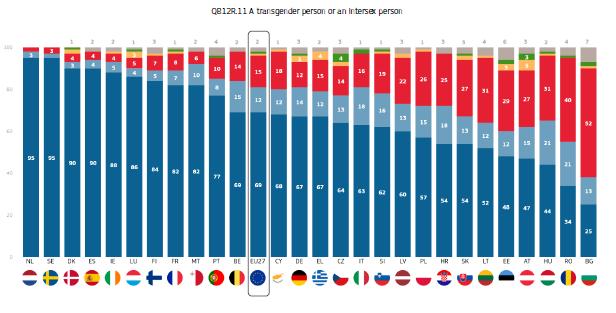
Source: Discrimination in the European Union, Summary Report, Special Eurobarometer 535, April-May 2023 https://europa.eu/eurobarometer/surveys/detail/2972
One critical similarity across all countries is thegapbetweenpolicyandpractice.Eveninnations with advanced legal frameworks, such as Spain and Ireland, the implementation of policies often falls short due to resource constraints, regional disparities, or insufficient public awareness. For instance, autonomous regions in Spain sometimes struggle to enforce national-level LGBTQI+ protectionsuniformly,reflectingbroaderchallengesindecentralization.Similarly,GreeceandCyprus face significant hurdles in enforcing anti-discrimination laws, particularly in rural or religiously conservativeareaswherestigmaagainstLGBTQI+individualsremainspervasive.
Institutional capacity is another area of divergence. Countries like Ireland and Spain benefit from robustequalitybodies,suchasIreland’sEqualityAuthority,whichmonitorscomplianceandenforces anti-discriminationlaws.Incontrast,LithuaniaandCyprushavefewerresourcesandlessestablished institutions to oversee policy implementation, leading to inconsistent outcomes This institutional disparityisfurthercompoundedbyvariationsinpublicattitudes,withLithuaniaandCyprusreporting higherlevelsofsocietalstigmacomparedtoSpainandIreland Greeceoccupiesamiddleground, withprogressiveurbancentersshowingincreasedacceptancebutruralareasstillstrugglewith entrenchedbiases.
Cultural and religious factors also play a significant role in shaping these differences For instance, the influence of the Catholic Church in Spain has waned significantly in recent decades, allowing for the advancement of LGBTQI+ rights without substantial opposition Conversely, the OrthodoxChurchinGreeceandCypruscontinuestoexertconsiderableinfluenceoverpublicopinion and policymaking, often impeding the implementation of progressive LGBTQI+ measures In Lithuania, the legacy of Soviet-era conservatism and limited public discourse on LGBTQI+ issues contributetoslowerprogressinsocietalacceptanceandpolicydevelopment.
Despite these differences, there aresharedopportunitiesforcross-countrycollaboration Countries pain’s and Ireland’s legislative successes, such as Spain’s genderself-identification
law and Ireland’s robust anti-discrimination framework Similarly, Greece’s reforms in intersex protectionsandbansonconversiontherapycouldserveasmodelsforLithuaniaandCyprus,where theseissuesremainunder-addressed ParticipatingcountriescanworktogethertoadvanceLGBTQI+ rightsacrossEuropebyleveragingthesecommonalitiesandaddressingdisparities.
Although significant progress has been made, several critical gaps persist across the five countries, undermining the realization of full equality for LGBTQI+ individuals. One of the most pressing gaps is the lack of comprehensive healthcare access for transgender and intersex individuals. While Lithuania has introduced structured guidelines for gender-affirming healthcare, theseprovisionsarelimitedtoadultsanddonotadequatelyaddresstheneedsofminorsorprovide psychologicalsupport.IncountrieslikeCyprusandGreece,accesstogender-affirmingcareremains sporadic, with few specialized providers and inconsistent funding Even in Spain, where gender self-identification is legally recognized, practical barriers such as long waiting times and regional disparitieshinderaccesstocare
Another significant gap lies in workplace inclusion. While anti-discrimination laws exist in all five countries, enforcement is uneven, and LGBTQI+ individuals often face workplace stigma and limited opportunities for advancement In Cyprus and Lithuania, the absence of widespread employer training and monitoring mechanisms further exacerbates these challenges. Greece has takenstepstoaddressworkplacediscriminationthroughLawNo.4808/2021,butsocietalbiasesand insufficientreportingmechanismscontinuetohinderprogress.Belowintheimages,youcanseethe place of Greece, Cyprus, as well as Lithuania, when it comes to trans and intersex people in the working environment. People believe that being trans and intersex is a disadvantage for hiring someone,accordingtotheECreport“DiscriminationintheEuropeanUnion”.
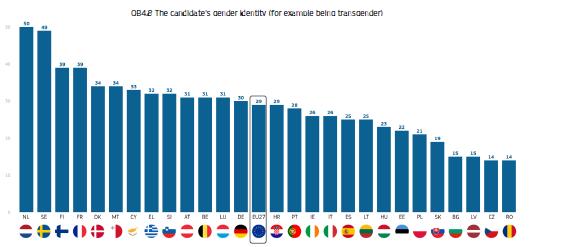
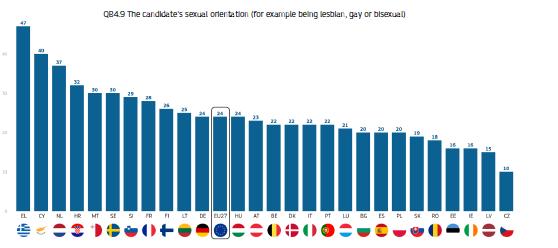
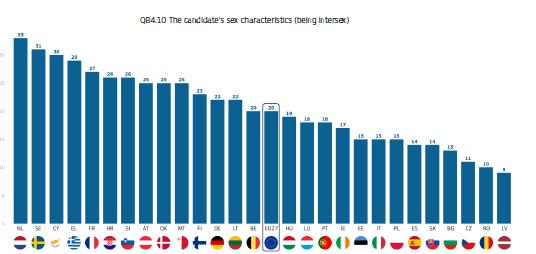
Source:DiscriminationintheEuropeanUnion,SummaryReport,SpecialEurobarometer535,April-May 2023.https://europa.eu/eurobarometer/surveys/detail/2972
Protectionsforintersexindividualsalsoremaininadequateacrosstheboard.Greeceisoneofthefew countries to have enacted specific protectionsforintersexminors,banningnon-essentialmedical interventions. However, other countries lack similar measures, leaving intersex individuals vulnerable to unnecessary surgeries and societal stigma. Public awareness campaigns on intersex rightsarescarce,furthercompoundingthisissue.
Intersectional discrimination is another area that requires urgent attention. While countries like Ireland and Spain have adopted broad anti-discrimination frameworks, few explicitly address the compounded challenges faced by LGBTQI+ individuals who belong to other marginalized groups, such as ethnic minorities,peoplewithdisabilities,orlow-incomecommunities.Theabsenceofdata onintersectionalexperiencesfurtherlimitspolicymakers’abilitytodeveloptargetedinterventions.
Implementation gaps are a pervasive issue across all five countries. Even in nations with comprehensive legal protections, such as Spain and Ireland, enforcement mechanismsareoften underfunded or understaffed, leading to uneven application of the laws. Regional disparities exacerbatethisissue,particularlyindecentralizedstateslikeSpain,whereautonomousregionsvary
in their capacity to enforce national-level protections In Lithuania and Cyprus, limitedinstitutional capacity and societal stigma create significant barriers to effective implementation, leaving many LGBTQI+ individuals without recourse when their rights are violated Finally, public attitudes and societal acceptance remain significant challenges. In Lithuania and Cyprus, conservative cultural norms and religious influence contribute to widespread stigma against LGBTQI+ individuals, deterring them from accessing rights and protections. While Spain and Ireland have made considerable progress in reducing societal prejudice, pockets of resistance persist, particularly in ruralareas.Greecefacesasimilardivide,withurbancentersdemonstratinggreateracceptancethan ruralcommunities.
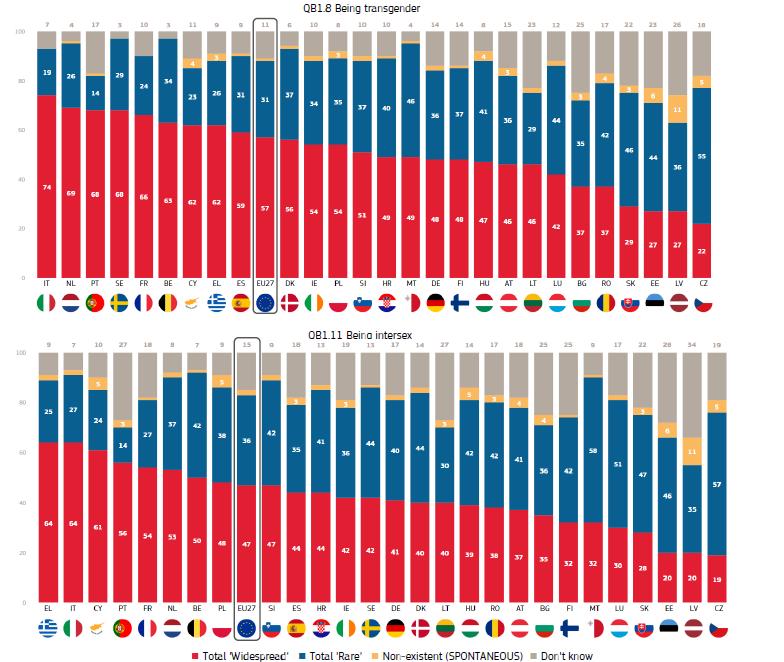
Source: Discrimination in the European Union, Summary Report, Special Eurobarometer 535, April-May 2023 https://europa.eu/eurobarometer/surveys/detail/2972
Addressing these gaps will require targeted action in several areas. Strengthening enforcement mechanisms, increasing funding for implementation, and expanding public education campaigns are critical first steps. Additionally, improving data collection on intersectional discrimination and creating tailored interventions for marginalized subgroupswillhelpensurethat nooneisleftbehind.Bytacklingthesegaps,participatingcountriescanmoveclosertoachievingfull equalityforLGBTQI+individuals.
TheEuropeanUnion’sLGBTIQ+EqualityStrategy2020–2025outlinesacomprehensiveroadmapto promoteequalityforlesbian,gay,bisexual,trans,intersex,andqueerindividualsacrossallMember States.Itskeypillarsincludefightingdiscrimination,ensuringsafety,buildinginclusivesocieties,and advancingLGBTIQ+rightsglobally.Thestrategyemphasizestheneedforlegalrecognition, inclusivehealthcare,anti-discriminationenforcement,anddatacollection allbenchmarks againstwhichnationalprogresscanbeevaluated.
Acrossthefivecountriesinthisreport,alignmentwithEUframeworksvariessignificantly, particularlyinthelegaltreatmentofgenderidentityandintersexprotections:
● SpaindemonstratesstrongadherencetotheEUstrategy’sgoals,especiallywithitsTransLaw (2023),ZeroloLaw(2022),andprotectionsforintersexindividualsundervariousnationaland regionalframeworks SpainalsoexemplifiestheEU’semphasisonself-identification, healthcareaccess,andanti-discrimination.
● Greecehasmadenotablestridesthroughitsbanonconversiontherapy,legalrecognition ofsame-sexmarriage,andprotectionsforintersexminors—aligningcloselywithEU standards.However,challengespersistinenforcementandruralacceptance,particularly regardinginstitutionalsensitivityandaccesstoservices
● IrelandlargelyalignswithEUstandardsintermsoflegalgenderrecognitionandyouth protection.However,intersectionalityandhealthcareequityremainunder-addressed, leavinggapsincomprehensiveinclusion,particularlyforadults,migrants,orracialized individuals
● Lithuaniademonstratespartialalignment,notablythroughhealthcarereformsfortrans individualsandlegalinitiativesliketheworkinggroupongenderstatus.However,itfalls shortinfulfillingtheEUstrategy’scallsforcomprehensiveanti-discriminationprotection, particularlybyexcludinggenderidentityandsexcharacteristicsfromnationalequality laws
● Cyprushastakenstepstowardalignment,includingthecriminalizationofconversiontherapy andtheSAFE-Rproject,butlacksacohesivenationalLGBTQI+strategy.Itdoesnotyetfully meetEUexpectationsonlegalgenderrecognition,comprehensivehealthcareprovision,or institutionalaccountability.
Additionally,theEmploymentEqualityDirective(2000/78/EC)andRacialEqualityDirective (2000/43/EC)requirememberstatestoprohibitdiscriminationinemploymentandvocational training.Whileallcountrieshaveintroducedsomeformofanti-discriminationlaw,implementation gapsremainsubstantial,especiallyfortrans,non-binary,andintersexindividuals
KeyGapsinEUCompliance:
● Lackoflegalgenderrecognitionfornon-binarypersons(allcountriesexceptpartiallyinSpain andIreland)
● Limitedorabsentintersex-specificprotections(exceptGreece)
● Unevenenforcementofanti-discriminationlaws
● Insufficientintersectionaldatacollectionanddisaggregatedreporting
FortheEUstrategytorealizeitstransformativepotential,nationalgovernmentsmustgobeyond basiccomplianceandembedtheseprinciplesintocoordinated,well-funded,andenforceable nationalactionplans backedbycivilsocietyparticipationandindependentoversight.
To close identified gaps in policy frameworks and implementation, participating countries must prioritize revising and expanding their legal protectionsforLGBTQI+individuals Policymakers should ensure that trans and intersex individuals are explicitly included in anti-discrimination laws and that legal recognition of gender identity encompasses non-binary and intersex individuals CountrieslikeCyprusandLithuania,wherelegislativeprogresshasbeenslower,canadoptmeasures inspired by Spain’s Trans Law (2023), which allows for self-identification without invasive requirements. Comprehensive healthcare reform is another critical area. Governments should establish national guidelines for gender-affirming care, incorporating best practices such as Lithuania’s multidisciplinary framework for transgender healthcare. These guidelines must include accesstopsychologicalsupport,hormonetherapy,andsurgicalinterventions,aswellassafeguards againstunnecessarymedicalinterventionsforintersexminors.Specialattentionshouldalsobegiven to addressing regional disparities, ensuring equal access to healthcare services in rural and underservedareas.
Inclusivity in the labour market should be improved by implementing robust workplace anti-discrimination policies Countries should consider mandating diversity andinclusiontraining for employers, with specific modules on LGBTQI+ issues. To support LGBTQI+ employees, governments could incentivize businesses to adopt inclusive policies, such as providing workplace benefitsforsame-sexcouplesandaccommodatingtransemployees’needsduringgendertransition.
Building institutional capacity is essential for ensuring the effective implementation of LGBTQI+ policies. Governments shouldallocateresourcestostrengthenthecapacitiesofequalitybodiesand human rights commissions tasked with monitoring and enforcing anti-discrimination laws. For example, Spain and Ireland, which have well-established equality institutions, couldofferguidance on creating or enhancing similar bodies in Lithuania and Cyprus. Training programs for public officials, healthcare providers, educators, and law enforcement officers should be expanded to address gaps in understanding LGBTQI+ rights. These programs should focus on reducing bias, promoting cultural competency, and equipping institutionswiththetoolstoaddressdiscrimination effectively. Greece’s recent initiatives in banning conversion therapy could serve as a model for trainingmentalhealthprofessionalsonthedangersofharmfulpractices
Additionally, governments should establish monitoring and accountability mechanismstotrackthe enforcement of LGBTQI+ policies. This includes collecting disaggregated data on discrimination cases, healthcare access, and workplace inclusion. Transparent reporting systems will enable
institutionstoidentifygapsinimplementationandrespondmoreeffectivelytotheneedsofLGBTQI+ communities.
Cross-countrycollaborationpresentsavaluableopportunitytosharebestpracticesandalignpolicies across the region. Spain’s leadership in self-identification laws and Ireland’s comprehensive anti-discrimination framework are examples of legislative models that could be adopted by other countries. Similarly, Greece’s intersex protections and Lithuania’s healthcare guidelines highlight specific areas where collaborationcouldyieldpositiveresults.Regionalworkshopsandconferences can facilitate knowledge-sharing among policymakers, advocates, and institutions. These events should focus on exchanging strategies for addressing shared challenges, such as improving healthcare access andreducingsocietalstigma TheEUcouldplayacoordinatingroleinorganizing such initiatives, leveraging its LGBTIQ+ Equality Strategy 2020-2025 to encourage alignment with Europeanstandards
Digitalplatformscouldalsobedevelopedtoconnectstakeholdersacrosscountries.Theseplatforms could include resource libraries with case studies, legislative templates, and training materials, enabling countries to learn from each other’s successes and avoid common pitfalls. Cross-border partnerships among NGOs andcommunityorganizationscouldamplifyadvocacyefforts,creatinga unifiedvoiceforLGBTQI+rightsinEurope
Further research is essential for addressing gaps in data and informing evidence-based policy development Governments and research institutions should prioritize studies on the lived experiences of LGBTQI+ individuals, particularly trans and intersex persons, in areas such as healthcare, education, and employment. Comparative studies examining the effectiveness of different legal frameworks and implementation strategies across countries would provide valuable insightsforharmonizingpolicies.
Intersectionality should be a focal point offutureresearch Understandinghowfactorssuchas race, disability, socioeconomic status,andgeographiclocationintersectwithLGBTQI+identitieswill help policymakers design targeted interventions to support the most marginalized groups Additionally, more data on intersex individuals’ experiences and needs is crucial for developing inclusivepoliciesandhealthcareprotocols.
Pilot programs and longitudinal studiescouldbeconductedtoassesstheimpactofnewpoliciesor initiatives,providingevidencetosupportscalingupsuccessfulmodels.Forinstance,pilotprojectsin ruralareascouldteststrategiesforimprovinghealthcareaccessorcombatingstigma,withfindings informing national strategies. Governments should also invest in developing tools for monitoring andevaluatingpolicyoutcomes,ensuringthatprogressismeasurableandsustainable
InIreland,UniversityCollegeDublinimplementedtheinterviewssuccesfully.Irelandreportexplores key insights on workplace inclusion, healthcare access, legal recognition, and broader societal experiencesoftransandintersexpeopleinIreland. Intheworkplace,experiencesweremixed.Interviewparticipantsworkinginthetechsectorreported positiveexperiencesandrelativeeaseinchangingemployment.However,severalchallengespersist, especially outside of progressive industries Some questionnaire respondents described indirect discrimination, such as colleagues misgendering others orexpressingsubtletransphobicattitudes. Inmanyworkplaces,inclusivelanguageexists,butthisisoftennotmatchedbytangiblesupportlike pay equity or clear anti-discrimination policies. Employers in Ireland reportedagenerallypositive outlook on diversity, but a closer look reveals substantial gaps in practical support and inclusion policiesfortransandintersexstaff.
Bothintervieweesandsurveyparticipantshighlightedsignificantissuesinaccessingcompetentand respectfulhealthcare Theseincludelongwaittimes(upto15years)evenwithprivateinsurance,and inadequate geographicalaccess especiallyinruralareas.ManyparticipantscriticizedtheNational Gender Service (NGS) for gatekeeping essential care. One individual resorted toself-administered hormonetherapyforoveradecadeduetosystemicbarriers,puttingtheirhealthatrisk.Interviewees stressed the need for general practitioners and therapists to receive more training and called for policy-basedreformstodismantlesystemicbarriers.Thesurveyofhealthcareprofessionalsshoweda general awareness of the importance of inclusivity, but also highlighted critical shortcomings in training,guidelines,andinstitutionalsupport.
Participants acknowledged progress in legal gender recognition, particularly for adults. However, there was a notable absence of provisionsfortransandintersexyouth.Somevoicedconcernsthat shiftsinUKandUSlegislationcouldnegativelyinfluenceIrishpolicies.Thereisalsoapressingneed to update bureaucratic processes such as name changes on housing deeds and inheritance documents,whichcontinuetopresentbarriers
● Positivetech-sectorexperiences,butbroadersectorsshowimplicitdiscrimination.
● 57%facedhiringorjobretentionbarriers.
● 71%unsureiftheirworkplaceistrulyinclusive.
● 86%experienceddifficultyaccessingcare
● Longwaits,gatekeepingbyNGS,andDIYhormonetherapycommon.
● 71%reportedmentalhealthserviceswereinadequate
● 57%saidprofessionalswerenottrainedintranshealth.
● Recognitionforadultsimproving;youthexcluded
● Bureaucraticsystemslaginaccommodatingname/genderchanges.
● Peernetworksmorehelpfulthanformalinstitutions.
The interviews conducted in Spain by 3 different organisations (Somos, Instituto Ikigai and Solidaridad Sin Fronteras) provided insightful perspectives from 35 employers, 32 health professionalsand50trans/intersexindividualsregardingworkplaceinclusion,healthcareaccess,and broader societal challenges. This report synthesizes insights from interviews and questionnaires conductedinSpainwithemployers,healthcareprofessionals,andtransandintersexindividuals.The findings explore the state of workplace inclusion, access to healthcare, and broader structural challengesfacingtransandintersexcommunities.
This report synthesizes insights from interviews and questionnaires conducted in Spain with employers, healthcare professionals, and trans and intersex individuals. The findings explore the stateofworkplaceinclusion,accesstohealthcare,andbroaderstructuralchallengesfacingtransand intersexcommunities.
Employers generally characterized their workplaces as inclusive environments, attributing this mainly to generational values rather than formalized diversity policies While many expressed a genuine commitment to inclusivity, this commitment often relied on personalgoodwillratherthan structured, institutional support. Inclusivity was frequently assumed rather than actively cultivated, with most employers admitting they hadneverknowinglyemployedatransorintersex person.Nevertheless,therewasaclearopennessandwillingnesstolearn,withmanyrecognizingthe need for leadership, regular training, and clear anti-discrimination protocols. The questionnaire responses echoed this, showing that only a minority of organizations had specific procedures addressing the needs of trans and intersex employees. Actions taken to promote inclusion were typicallyinternalandinformal,withfeworganizationsengaginginpartnershipswithLGBTQI+groups or offering targeted communication or education initiatives Knowledge gaps also emerged, particularly around legal procedures such as updating name and gender markers in employment records,highlightinganeedforbetterlegalliteracyandstructuredguidance
Incontrast,transandintersexindividualspaintedamoredifficultpictureoftheirlivedrealities Many reportedsignificantbarrierstoemployment,withsometurningtosexworkduetoalackoflegal recognition or job opportunities Submitting resumes often yielded no responses, and social integration programs led by NGOs were sometimes the only pathways to employment. Respect in bothhealthcareandtheworkplacewasdescribedasinconsistent,oftenperceivedasamatterofluck rather than a guaranteed right. In healthcare, participants described challenges such as misgendering, judgmental attitudes particularly concerning sex work or sexuality and limited access to gender-affirming care. Migrants faced even more significant obstacles, including the inabilitytoobtainhealthcarecardsorlegallyupdatetheirgendermarkers.
The questionnaires reinforced these narratives A large majority of trans respondents reported having experienced discrimination during hiring or at work, and many avoideddisclosingtheir identity out offear.Awarenessoflegalprotectionswaslow,withtwo-thirdsofparticipantsunaware of their rights or how to pursue them. Many expressed hesitation or fear about seeking legal recoursefordiscrimination.Thosewhodidfindworkwereoftenininformalorprecariouspositions, and mental health support was eitherinadequateorinaccessible.Afewindividualsreportedbetter experiencesinNGO-affiliatedclinics,butaccesstosuchcarewasinconsistent.
Interviews with healthcare professionals revealed a strong commitment to providingcarefortrans and intersex patients but also exposed widespread institutional unpreparedness. Many professionalsacknowledgedhavingreceivedlittletonotrainingontrans-specificissuesduring their medicaleducationorintheircurrentroles.Thislackofstructuredtrainingandguidanceoften led to uncertainty and unintentional exclusion or harm. While intentions were often positive, the absenceofclearprotocols,inclusivetools,andcontinuingeducationresultedincarethatfrequently failed to meet the needs oftransandintersexpatients.Questionnairedatashowedthatonlyatiny percentageofrespondentsfelthealthcareprofessionalswereadequatelyinformedabouttheneeds oftransandintersexindividuals.
Despite these challenges, the overall tone of the interviews was one of resilience and cautious optimism. Trans participants emphasized that their experiences, though difficult, had fostered strength and a strong sense of identity.Theycalledforsystemicreforms,includingearlyeducation about trans identities, mandatory training for healthcare and HR professionals, and better coordination across public institutions to ensure that trans rights are consistently upheld. Both employer and healthcare professional interviews revealed a growing cultural openness and willingness to support trans and intersex inclusion. Still, this shift in attitudeisnotyetmatchedby policy or infrastructure The assumption of inclusivity without concrete action may actually hinder progress,asitcancreateafalsesenseofaccomplishment.
The findings from thisstudyhighlighttheurgentneedforstructuredandsustainableinclusion strategies. In both employment and healthcare, meaningful progress will require not only open attitudes butalsotheimplementationofcomprehensivepolicies,inclusivetraining,andbetterlegal and institutional support to bridge the gap between good intentions and the lived experiences of transandintersexindividuals.
● InclusivityPerception:Generallyperceivedasinclusiveduetogenerationalvalues,not formalpolicies.
● PolicyGaps:Feworganizationshadspecifictrans/intersexinclusionpoliciesorHRprotocols.
● KnowledgeGaps:Lackofunderstandingaboutlegalgender/namechangesinemployment records.
● Engagement:LimitedcollaborationwithLGBTQI+organizationsorstructuredtraining.
�� TransandIntersexIndividuals
● EmploymentBarriers:Highunemployment,experiencesofdiscrimination;someresortedto sexwork
● LegalAwareness:2/3unawareoflegalrightsorhowtoexercisethem.
● HealthcareExperiences:
o Misgenderingandstigmaprevalent.
o NGOsprovidedbetterexperiencesbutwereunevenlyaccessible.
● MentalHealth:Inadequate,inaccessiblesupport;strongdemandforspecializedcare.
�� HealthcareProfessionals
● Training:Verylimitededucationontrans/intersexissues
● Readiness:Willingtoimprovebutneedstructuredprotocols,tools,andguidance.
�� KeyTakeaways
● Inclusivityoftenassumedratherthaninstitutionalized.
● Structuralreformsandeducationneededinemploymentandhealthcare
The interviews conducted with professionals acrosstheemploymentandhealthcaresectorsaswell as trans and intersex people in Greeceshedlightonthechallengesandopportunitiessurrounding theinclusionoftransandintersexindividuals SocialinnovandProlepsisimplementedinterviewswith No 24 employers, 24 health professionals and 13 trans/intersex individuals regarding workplace inclusion,healthcareaccess,andbroadersocietalchallenges
Healthcareprofessionalsreportedawidespreadlackofspecializedtrainingontransandintersex healthcareneeds.Mosthaveneverreceivedformalinstructionongenderidentityissues,andmany are unfamiliar with appropriate protocols or inclusive communication practices This lack of preparation often results in misgendering, discomfort, or outright denial of appropriate care. Structural obstacles, such as the exclusion of gender-affirming procedures from public health coverage and bureaucratic mismatches afterlegalgenderchanges,furthercomplicateaccess to necessary services. There is also a strong need for mental health services that are specifically tailoredtotheexperiencesoftransandintersexindividuals.
Employers,ontheotherhand,oftenoperatewithbroadnon-discriminationpoliciesbutlacktargeted strategiesforgenderdiversityandinclusion Transandintersexindividualsremainlargelyinvisiblein the workplace, and their absence is sometimes misunderstood as a lack of interest or her than a result of systemic exclusion Employers pointed to a lack of staff
awareness, societal stigma, and uncertainty about how to support trans employees as key challenges. Despite this, there is increasing openness to receiving training, developing inclusive policies,andworkingwithLGBTQI+organizationstobuildmorewelcomingworkenvironments
Overall, thefindingsemphasizetheneedforstructured,ongoingeducation,practicalsupporttools, and meaningful collaboration between institutions and communities. Building inclusive systems in Greece will require coordinated efforts across healthcare, employment, and public policy sectors, groundedinempathyandexpertise.
Beyond institutional limitations, the personal stories collected reveal the emotional, physical, and social toll of navigating everyday life as a trans or intersex personinGreece.Severalparticipants recountedexperiencesofblatantdisrespectinhealthcaresettings frombeingmisgenderedto having their identities questioned or dismissed by professionals. The lack of affordable gender-affirming procedures, as well as untrained or unwilling healthcare staff, often forces individualstoseekcareabroadordelaynecessarytreatment Othersdescribedhowdeeplyingrained social stigma prevents them from using basic public facilities or compels them to conceal their identity in professional environments Intersex voices expressed profound frustration at being misunderstood by both the publicandmedicalprofessionalsalike,highlightinganeedforvisibility, education, and acceptance Despite these challenges, many participants also voiced a desire for change emphasizing the importance of family support, education, and legal reforms thatrespect theiridentitiesandensureaccesstodignifiedhealthcareandequalemployment.
● Policies:Broadanti-discriminationpoliciesexist,butgenderdiversitystrategieslacking.
● Awareness:Employerslackedunderstandingofspecificneedsoftrans/intersexstaff.
● Willingness:OpentotrainingandcollaborationwithLGBTQI+groups
�� TransandIntersexIndividuals
● HealthcareChallenges:
o Misgenderinganddenialofservicesiscommon
o Costbarriersforprocedures;travelabroadforcare.
● SocialStigma:Leadstoconcealmentofidentity,especiallyatwork.
● MentalHealth:Lacksspecializedservices;feelingsofinvisibility
�� HealthcareProfessionals
● TrainingDeficits:Littletonoformaltraining.
● Barriers:Bureaucraticmismatchespost-transition;publiccoveragegaps.
�� KeyTakeaways
● Institutionsareopenbutunderprepared.
● Needforeducation,visibility,andlegalclarity.
In Cyprus, Wisefour implemented interviews with 10 employers, 10 health professionals and 9 trans/intersex individuals regarding workplace inclusion, healthcare access, and broader societal challenges
This report presents findings from interviews and questionnaire responses gathered in Cyprus, offering insight into the current state of workplace inclusion and healthcare access for trans and intersex individuals. It reflects the experiences of both employers and healthcare professionals, as wellasthelivedrealitiesoftransandintersexpeoplenavigatingthesesystems.
In the workplace, efforts to foster inclusion remain inconsistent and often superficial. While some companies do organize diversity and inclusion workshops, participation is voluntary, which significantly limits their overall impact. Structured systems for addressing discrimination are largely absent, meaning that employees who face harassment or exclusion often have no safeor effective means of reporting these issues. This gap in accountability creates a climate of silence, where many individuals are reluctant to speak out due to fear of retaliation or being further marginalized.
Psychological support services are generally available in some organizations, but they are not tailored to the specific needs of LGBTQ+ employees. As a result, trans and intersex individuals oftenfinditdifficulttoaccessappropriatementalhealthcare.Thesituationisevenmorelimitedin small and medium-sized enterprises (SMEs), which typically lack formal inclusion policies or awareness-raisinginitiativesaltogether.Whilelargercompaniesmayhavesomepoliciesonpaper, they frequently struggle to implement these measures in ways that truly support their trans and intersexemployees.
When asked about their commitment to recruiting diverse talent, employers offered varied responses, suggesting a spectrum of engagement with LGBTQI+ inclusion. While 60% of organizationsreportedhavingconductedsomeformofdiversityandinclusiontraining,40%hadnot. Thesefiguresrevealaclearopportunityformoresystematicandwidespreadimplementationofsuch training,particularlywithafocusongenderdiversity.
The healthcare sector in Cyprus faces parallel challenges. Healthcare professionals report receiving little to no formal training on trans and intersex health needs once they begin working. Although some may have encountered relatedtopicsduringtheirstudies,thesesessions were often optional and not integrated into the core curriculum. Medical guidelines on trans and intersex care do exist, but they are frequently neglected or underutilized, leaving many professionalswithouttheknowledgeorconfidencetoprovidecompetent,affirmingcare.Beyondthe clinical knowledge gap, thereisalsoalackofawarenessregardingthelegalrightsoftransand intersexpatients,whichfurthercompromisesthequalityofcare
Healthcarefacilitiesthemselvesareoftennotdesignedtobeinclusiveorrespectfulofdiversegender identities. Many lack the necessary resources, infrastructure, or private spaces to ensure patients feel safe and respected. This lack of inclusivity contributes to widespread negative icularly for those seeking gender-affirming care or support in mental health
settings When asked about training on the specific health needs of transandintersexindividuals, 80% of healthcare workers reported never receiving any formal instruction. However, the vast majority expressed a strong desire for more training, recognizing the need to improve their understandingandservicedelivery.
Transandintersexindividualscontinuetofaceseverelimitationsinemploymentopportunities.Many encounter discrimination during the hiring process, where stereotypes and biases often lead to immediaterejection.Forthosewhodomanagetofindemployment,wagedisparitiesareacommon issue, with trans and intersex employees earning noticeably less thantheircisgenderpeers Inthe absence of clear and enforceable legal protections, they remain highly vulnerable to mistreatment and inequality in the workplace While some employers express good intentions and a willingness to foster inclusive environments, they often cite broader societal resistance as a significantbarriertoenactingmeaningfulchange.
Healthcare access is similarly fraught with obstacles A substantial majority 778% of trans and intersex respondents reported difficulties in accessing the services they need. These experiences range from denial of care to lack of understanding from medical staff The data also suggests a widespread perception that existing mental health services are not adapted to the realitiesof trans and intersex people, further underlining the urgent need forspecializedsupportstructures andtraining.
ThefindingsfromCyprusrevealsystemicshortcomingsinbothemploymentandhealthcarecontexts. While there are individual examples of commitment and interest in inclusion, these are not yet supported by the institutional structures, legal frameworks,ortrainingprogramsnecessarytoturn intent into impact Moving forward, a stronger focus onmandatoryeducation,thedevelopmentof inclusive workplace and healthcare policies, andtheestablishmentofclearlegalprotectionswillbe essentialinaddressingthesedeep-rootedgaps
�� Employers
● D&IPrograms:Workshopsexist,butmostlyvoluntary.
● LackofPolicies:SMEsoftenhavenoformalinclusionstructures.
● Recruitment:60%conductedsomediversitytraining;40%hadnot.
�� TransandIntersexIndividuals
● WorkplaceDiscrimination:Commoninhiringandwageinequality.
● MentalHealthAccess:Existingservicespoorlyadaptedtoneeds.
● HealthcareBarriers:778%reporteddifficulties;misgenderingandpoorunderstanding
�� HealthcareProfessionals
● Training:80%hadnoformaltrainingontrans/intersexissues
● LegalKnowledge:Limitedawarenessofpatientrights.
�� KeyTakeaways
● Goodintentionsnotmatchedbypolicies.
● Mandatorytrainingandlegalprotectionsurgentlyneeded.
InLithuania,LGLimplementedinterviewswith33employers,healthprofessionalsandtrans/intersex individualsintotalregardingworkplaceinclusion,healthcareaccess,andbroadersocietalchallenges. This report presents anoverviewofinclusioneffortsintheworkplaceandhealthcaresectorsbased on responses from employers, healthcare professionals, and trans and intersex individuals. The findings indicate positive developments alongside persistent challenges that continue toaffectthe well-beingandequitabletreatmentoftransandintersexpeople.
Several employers reported active engagement in diversity and inclusion initiatives in the employmentcontext.Asignificantmajority 75% confirmedthattheirorganizationhadconducted diversity and inclusion training, though the remaining 25% indicated "maybe," suggesting uncertainty about how systematic or formal these trainings are. Encouragingly, 75% of employers also reported having actively hired or promoted trans and intersex individuals within their organizations. This reflects a meaningful level of commitment to inclusivity, even if it is not yet universal.
Despite these efforts, other findings revealed variability in how consistently LGBTQI+ inclusion is prioritized. When asked whether their organizations prioritize the recruitment of diverse talent, responses ranged across the scale, revealing thatwhilesomecompaniesareproactive,otherslack structured policies or a clear focus on this goal. A similar pattern emerged in assessments of leadership awareness: Scores varied when participants were asked whether their management teams were well-informed about the specificchallengesfacedbyLGBTQI+individuals.Thesemixed resultssuggestthatwhileinclusionisvaluedinsomespaces,leadershipacrosssectorsstillrequires moreeducationandengagementtoensureaconsistentandinformedapproachtodiversity.
In the healthcare sector, inclusion remains limited by a lack of formal training. Two-thirds of healthcare professionals reported that they had not received any structured education on the healthcare needs of trans and intersex individuals. Only 33.3% had received such training, underscoring a significant gap in professional development. This deficit contributes to inconsistencies in care, with some professionals lacking essential knowledge on gender-affirming practices and the rights of trans and intersex patients. Nevertheless, most healthcare workers expressed a strong desire for further training. Ratings were consistentlyhighwhenaskedwhether additionaleducationwouldhelpthembetterunderstandtheneedsoftransandintersexindividuals, signalingawillingnesstogrowandimprove,evenwheretraininghassofarbeenlacking.
From the perspective of trans and intersex individuals, access to healthcare continues to present serious challenges. A significant 80% of respondents reported having faced difficulties accessing medical services. These difficultiesoftenstemfromdiscriminatorybehaviors,misgendering,ora lack ofknowledgeonthepartofhealthcareproviders.Inparticular,mentalhealthserviceswere perceived as poorly adapted to the unique needs of trans and intersex people. Respondents generallyratedtheseservicesunfavorably,indicatingastrongneedformentalhealthsupportthatis bothinclusiveandaffirming.
In terms of broader community and peer support, responses were mixed. While some individuals ving access to community networks or LGBTQI+ organizations, others indicated
limitedornovisibilityofsuchresourcesintheirarea Thisunevenaccessreflectsdisparitiesbetween different regions or communities and reinforces the importance of expanding and promoting community-basedservices
Together, the data points to a complex picture. On one hand, there are promising signs of institutional openness, with many employers and healthcare professionals demonstrating interest and effort in supporting LGBTQI+ inclusion On the other hand, significant gaps persist—in leadership awareness, consistent training, and infrastructure that prevent this inclusion from beingfullyrealized Addressingtheseissueswillrequireacoordinatedeffort,includingimplementing mandatory training programs, greater leadership accountability, and investment in inclusive communitysupportsystems
�� Employers
● InclusionEfforts:75%hadtraining;75%hadhiredtrans/intersexindividuals.
● LeadershipGaps:Variedawarenessamongmanagement.
�� TransandIntersexIndividuals
● HealthcareAccess:80%facedbarriers;misgenderinganddiscriminationcommon.
● MentalHealthServices:Ratedpoorly;lackofculturalcompetence.
● CommunitySupport:InconsistentvisibilityofLGBTQI+resources.
�� HealthcareProfessionals
● Training:66.7%receivednostructurededucation.
● Willingness:Stronginterestinfurthertraining
�� KeyTakeaways
● Opennessexistsbutimplementationgapsremain
● Investinleadershiptraining,infrastructure,andcommunitysupport.
This report highlights significant progress madebySpain,Greece,Lithuania,Cyprus,andIrelandin advancing LGBTQI+ rights while identifying persistent gaps and challenges Key findings underscore the importance of robust legal frameworks, such asSpain’sTransLawandIreland’s anti-discrimination measures,aswellastheneedforimprovedimplementation,particularlyinrural or conservative regions. Common barriers, such as limited institutional capacity and insufficient healthcare access for trans and intersex individuals, demonstrate the critical need for continued action.Cross-countrycollaborationisessentialtoaccelerateprogress.Sharingbestpractices,suchas Greece’s intersex protections and Lithuania’s structured transgenderhealthcareguidelines,offersa pathtowardharmonizedapproaches.RegionalcooperationcanfosteralignmentwithEUstrategies, enablingcountriestoaddresschallengescollectivelyandamplifytheirimpact.SafeguardingLGBTQI+ rights requires sustained commitment from policymakers, institutions, and society. By prioritizing policy improvements, strengthening institutions, and fostering public awareness, participating countries can build a more inclusive Europe where all individuals, regardless of their identity, are powered.
Spain -Enshrineprotectionsfornon-binary identities
-Addressregionalinconsistenciesinlaw enforcement
Greece -Expandprotectionsforintersexindividuals beyondcurrentmedicallaws
-Tackleconservativesocietalresistancein ruralareas
Lithuania -Includegenderidentity/expressionin equalitylaws
-Addresslackoflegalgenderrecognition fornon-binary/intersexindividuals
Cyprus -DevelopanationalLGBTQI+inclusion strategy
-Improvelegalrecognitionofgender identityandworkplacerights
Ireland -Enhanceintersectionalityinexistinglaws
-Improveaccesstoinclusivehealthcarefor adults,notjustyouth
-Expandtrainingforhealthcareand publicsectorstaff
-Improvecoordinationbetween autonomousregions
-Trainhealthprofessionalson trans/intersexneeds
-Collaborationbetweentrans/intersex communitiesandemployment companies
-Strengthenenforcementof anti-discriminationlaws
-Increasethecapacityofequality bodies
-Provideconsistent,state-supported training
-Makeinclusiontrainingmandatoryin healthcareandpublicservices
-Establishreportingandaccountability mechanisms
-Expandtargetedtrainingfor healthcareprofessionals
-Strengthenmonitoringofworkplace discrimination