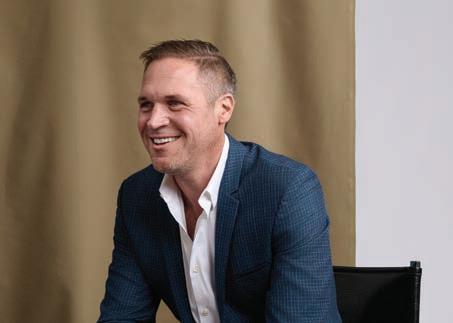
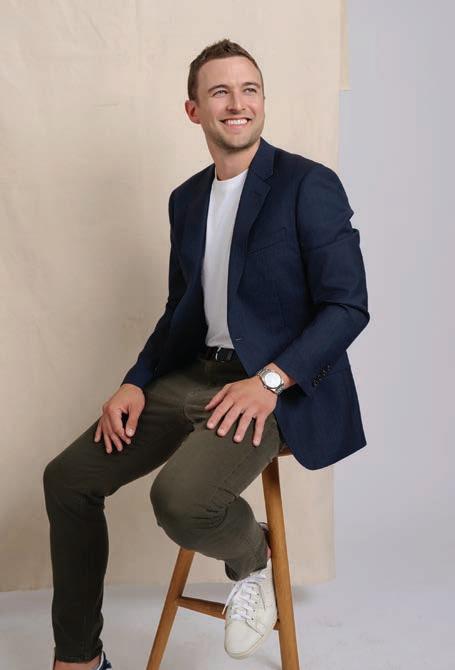
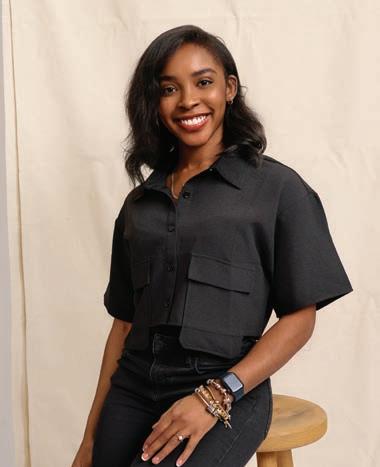
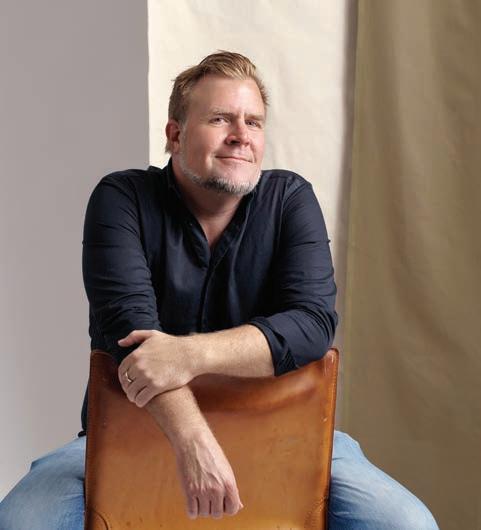
Twenty years doesn’t happen by accident. It happens because you keep asking the right questions and you keep showing up to find the answers.
When we started planning this anniversary edition, we kept coming back to one question: What are we actually celebrating? The projects? The growth? The numbers? All of that matters, but it’s not the story. The story is about what happens when you build something that lasts— not just structures, but relationships, trust, and a way of working that people want to be part of.
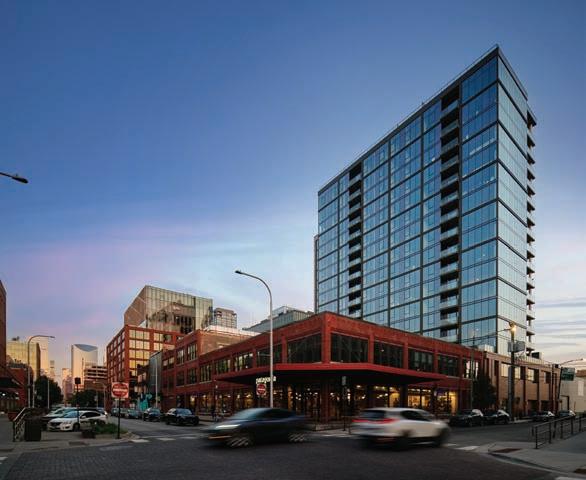
We started in Chicago. Now our work spans the country. We started with single-family homes and grew to restaurants, retail, and 29-story residential towers. The scale changed. The question we ask ourselves didn’t: What are we putting into the world?
For us, that question has always been about quality, integrity, and treating people right. Your product is your reputation.
We deliver buildings that work—that last, that perform, that honor every dollar invested. The work itself, how clients feel, what people say about you. That’s the business we’re actually in.
This Field Report isn’t a victory lap. It’s the story of what it takes to stay standing in an industry that doesn’t give second chances. You’ll hear from the founders who started this, the leadership driving it forward, the partners who helped shape it, and see the projects that define it.
Twenty years in, we’re not just looking back— we’re using this moment to reflect on what got us here and what’s worth carrying forward. There’s power in understanding where you’ve been before you write what comes next.
Our deepest thanks to everyone who’s been part of building this with us. The best work is always collaborative, and this milestone belongs to all of you.
Here’s to the next chapter.
BUILT FROM SCRATCH
How LG Group was founded on quality and craftsmanship, growing from single-family homes to high-rises.
12 TIMELINE 06 20 YEARS OF BUILDING WHAT MATTERS
20 FOR 20
Twenty projects that define twenty years, the work that pushed us forward and the buildings that tell our story.
PORTRAIT OF A COMPANY
The people behind LG Group reflect on contribution, collaboration, and what defines us.
BUILT FROM SCRATCH
20 Years of Building What Matters
For two decades, LG has built more than structures— it’s built community, trust and a culture that keeps growing.
LG’s story starts the way many Chicago originals do: small, scrappy and fueled by sheer determination. In the early days, the company worked out of a cramped townhome where ambition expanded well beyond the square footage. Founder and CEO Brian Goldberg laughs when he remembers his wife calling down about tools left in the garage as the small team hustled to turn a makeshift home office into a functioning company.
“It wasn’t easy,” Goldberg says. “But it made sense. All we wanted to do was work hard, make clients happy and keep moving.”
What LG lacked in resources, it made up for in drive. The firm spent its early years taking on any residential job it could get. Chicago’s condo boom placed three construction signs on every block, and LG was determined to be part of that momentum. Then the financial crisis hit, wiping out much of the industry. But LG stayed. And grew. And kept building.
Those first years weren’t glamorous. Yet they shaped the company’s identity: relationships first, transparency always, and a willingness to solve whatever challenge stood in front of them.
THE TURNING POINTS
Every long-lasting company has turning points, moments that prove the vision is bigger than the circumstances. For LG, one such moment was a townhome development on Diversey Parkway that arrived at the height of disruption. “It was chaotic in every
direction,” recalls Managing Partner Matt Wilke, who joined in 2011 as the market struggled to recover. “We had to phase construction, troubleshoot systems that weren’t designed for half-finished buildings and navigate banking relationships that could have shut the whole thing down.”
Instead, the project became a case study in grit. LG didn’t walk away; they finished it and returned investor capital at a time when many developers couldn’t.
Meanwhile, on the hospitality side, Chicago’s restaurant renaissance was taking off. LG leaned in. Early projects like Girl & The Goat and GT Fish & Oyster taught the team how to deliver high-caliber creative work at high speed. By the time Momotaro arrived—with its world-class design team—the firm wasn’t just executing: it was shaping.
“That project forced us to formalize systems and structure,” says President Alex Dyer. “It marked the beginning of the LG people know today: creative, process-driven and collaborative across every discipline.”
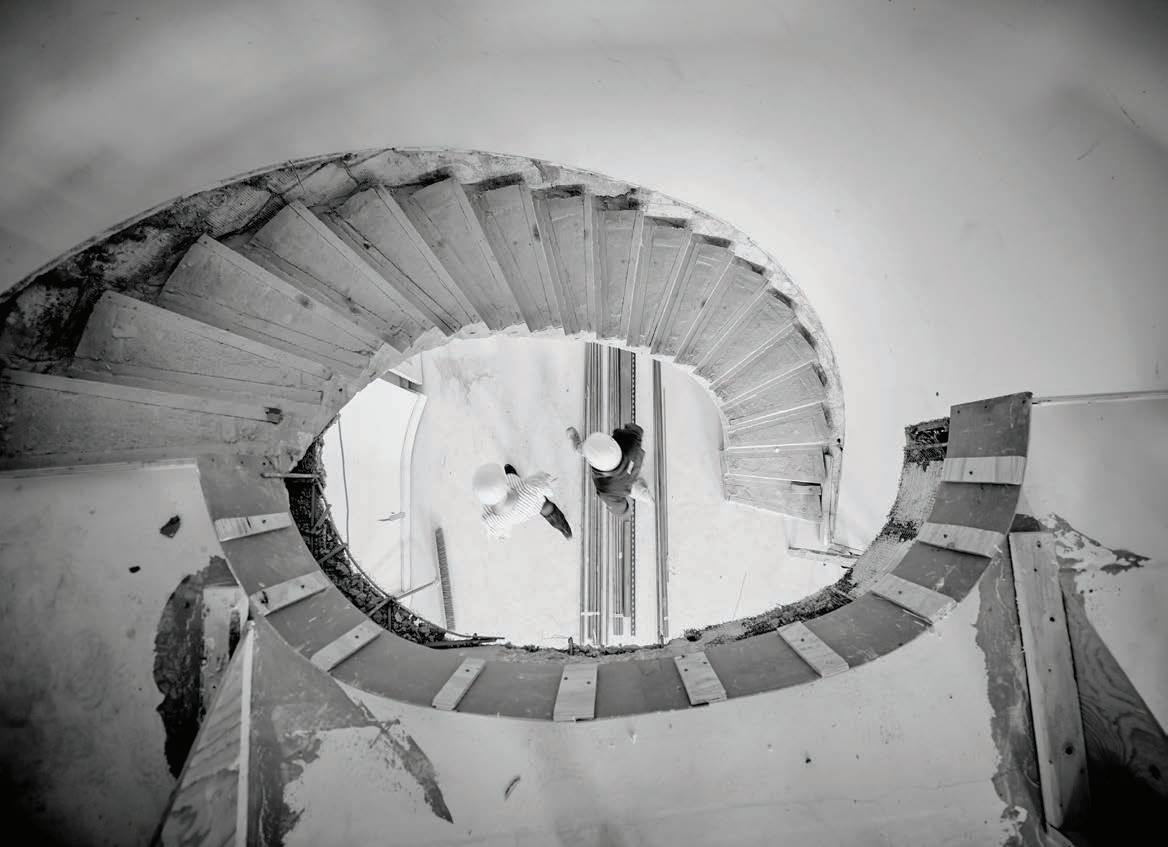
Then came The Ronsley, a dilapidated warehouse Goldberg had admired for years. The redevelopment required vision, tenacity and no small amount of nerve. LG served as developer, designer and contractor, setting a model for vertical integration that continues to define the company.
“That’s when I knew,” Goldberg says. “If we can do this, we can do anything.”
A VERTICAL COMPANY BUILT ON TRUST
Today, LG operates across development, construction and creative services. Yet the true foundation is built on trust, both within the team and with clients across the city.
“Transparency is one of the biggest differentiators in our industry,” Wilke says. “A lot of firms avoid hard conversations. We get in front of them.”
The leadership team—Goldberg, Wilke and Dyer—functions as a complementary triangle. Goldberg pushes vision and scale. Dyer grounds the work through systems and creative discipline. Wilke unifies the people and the message, galvanizing teams and bringing clarity to complex projects.
You can see their values in how the work gets done. They follow through on what they promise, communicate openly even when the news is tough, and build win-win relationships with everyone involved, which includes trades, designers, investors and neighbors alike. They handle client dollars with care and create project environments where teams feel supported, trusted and able to do their best work.
In an industry defined by risk, egos and shifting markets, LG remains grounded in something refreshingly human.
CULTURE FIRST, ALWAYS
As the company has grown, culture has remained its defining strength. LG’s ethos is part family, part creative studio and part entrepreneurial lab. People stay because they feel invested in and can see the impact of their ideas.
The firm’s evolution from luxury residential to mixed-use developments, hospitality projects and large-scale commercial work didn’t dilute its approach. If anything, it strengthened it.
“When clients work with us, they’re getting a team that actually cares about the result, not just the contract,” Dyer says. “And that’s only possible because the culture inside the company is strong.”
IMPACT BEYOND THE JOBSITE
LG’s commitment to Chicago extends far beyond construction. Over the years, the firm has participated in Habitat for Humanity builds, youth programming, mental health initiatives and urban agriculture efforts. Recent developments have delivered dozens of affordable units and created pathways for local hiring.
“Being a builder in Chicago means you have the ability and responsibility to contribute to the city’s future,” Goldberg says. “There are so many ways to give back beyond writing a check. You can create opportunities.”
The impact is visible across the neighborhoods they’ve touched. LG has created spaces where communities gather, housing that expands access and schools where students sign the walls before they’re closed up. Their work includes restaurants that help shape Chicago’s cultural identity, each project leaving a distinct mark on the city’s fabric.
After 20 years, LG’s fingerprints are everywhere.
THE SECOND CHAPTER BEGINS
Turning 20 isn’t a finish line, it’s the start of a new arc. LG is evolving its voice, sharpening its vision and embracing the future with clearer intention.
“It feels like we’re reinventing ourselves,” Wilke says. “Not in what we do, but in how we talk about who we are and how we lead.”
The portfolio speaks for itself: hundreds of thousands of square feet developed, nearly 80 iconic restaurants built and projects ranging from boutique spaces to half-billion-dollar developments.
“And we’re just getting warmed up,” Goldberg says.
Turning
20 isn’t a finish line, it’s the start of a new arc. It feels like we’re reinventing ourselves. Not in what we do, but in how we talk about who we are and how we lead.
WILKE “
MATT
ON ALIGNMENT, EXECUTION & RETURNS
“With all disciplines under one roof, we eliminate disconnects and make faster, better decisions. The result: a superior physical asset.”
JACK RYDEN DIRECTOR OF DEVELOPMENT
Timeline
LG Homes is founded, establishing itself as a premier luxury residential builder in Chicago.
LG Homes rebrands as LG Construction + Development, reflecting a commitment to growth and expanding into development.
Girl & the Goat opens in Fulton Market, marking LG’s entry into hospitality and commercial construction.
These are the moments that shaped LG Group. The projects that expanded our capabilities. The strategic decisions that changed how we operate. The partnerships that define how we build.
This timeline captures key turning points over two decades. Each entry represents a significant step forward—new markets, growing scale, expanded expertise, and the vision that continues to drive us.
2012
Row 2750 is completed, LG’s first multi-family development combining construction and development expertise.
2014
LG Builders completes Momotaro in Fulton Market, one of the first restaurants to anchor the area’s transformation into a dining destination.
2018
The company reaches 50 employees, reflecting sustained growth across development and construction.
2019
After delivering Big Blue Swim School’s Chicago location, LG Builders earns preferred builder status for their national expansion.
2020
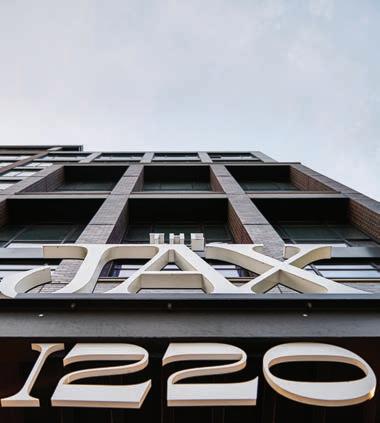
The Jax opens in the West Loop, a 166-unit development marking an early collaboration with architecture firm Norr.
2023
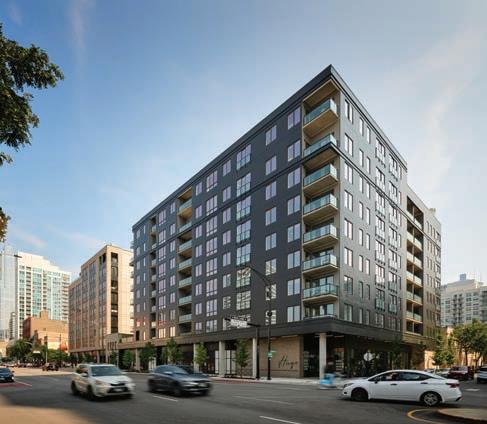
Hugo is delivered, marking LG Builders’ largest project and first tower crane installation, demonstrating expanded construction capabilities.
2022
The company rebrands as LG Group, unifying Development, Construction, and Design to create a fully integrated approach.
2024
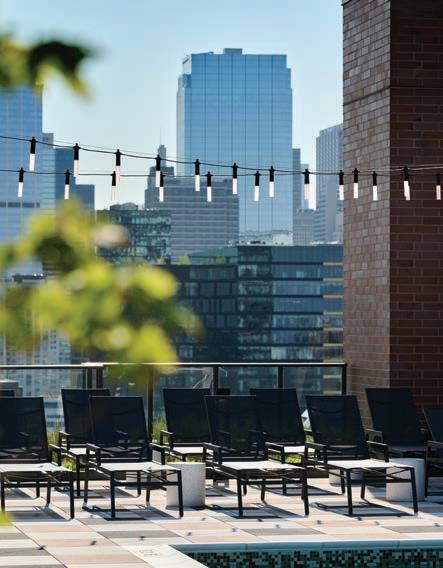
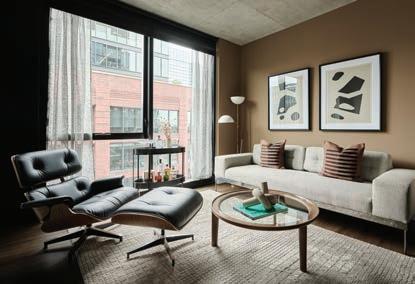
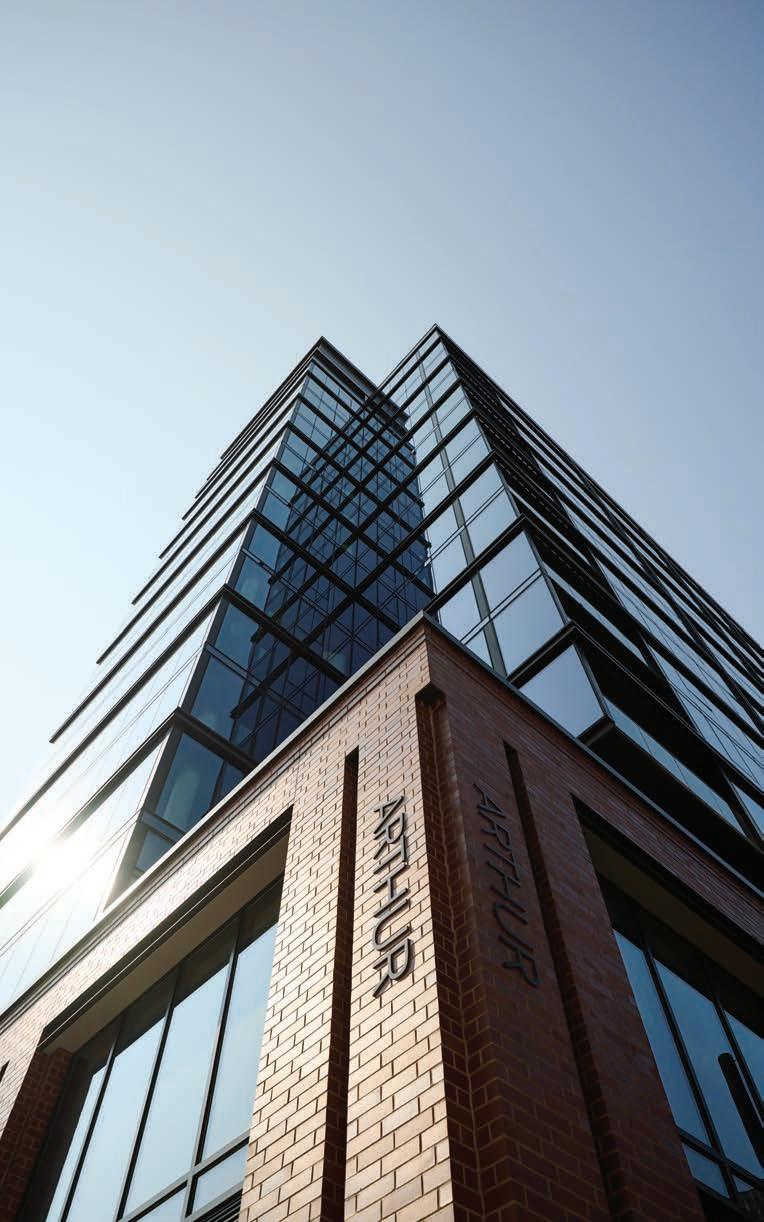
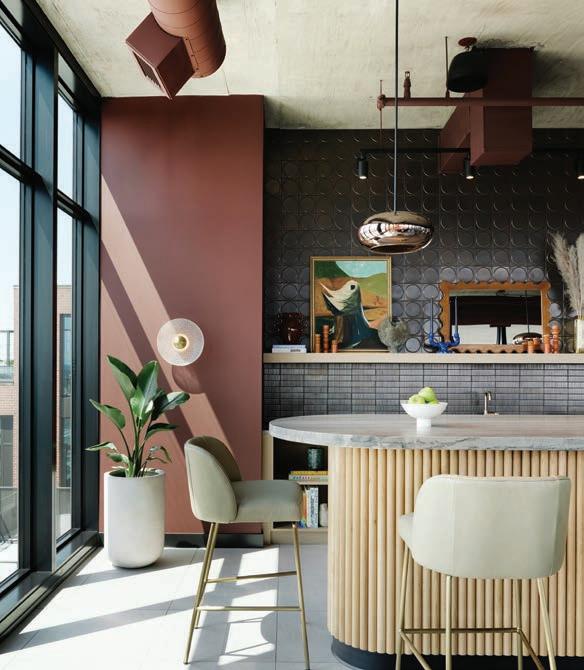
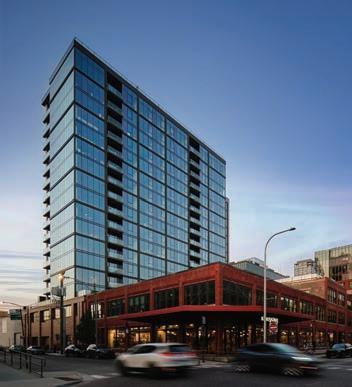
Arthur on Aberdeen is completed in the West Loop, a 19-story, 363-unit tower featuring adaptive reuse of a historic bow truss building.
2022
The company surpasses 75 employees as expansion across all divisions accelerates.
2023
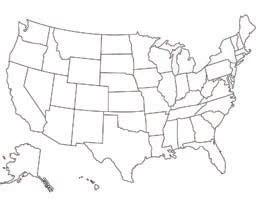
LG Group delivers its 25th project beyond Chicago, reflecting the company's expanding footprint nationwide.
2023
LG Group designs and builds its new headquarters, showcasing the integrated capabilities of Development, Construction, and Design working together
2025
LG Design relaunches as Offshoot Creative, becoming an independent studio and expanding the company’s creative reach beyond internal projects.
2025
LG Group delivers Wolf & Co., the first project showcasing our Design-Build model with Offshoot Creative and LG Builders working in-house.
2025
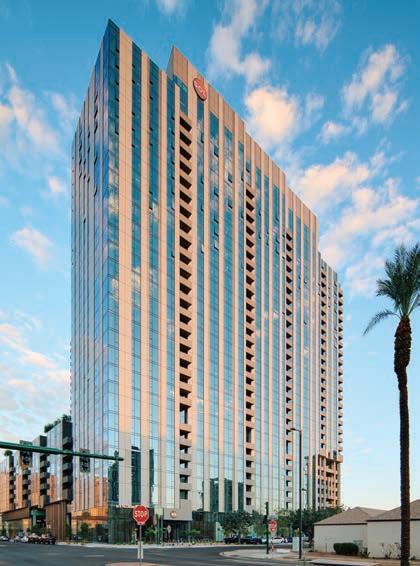
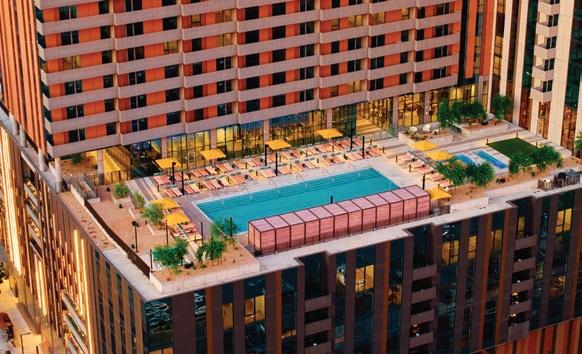
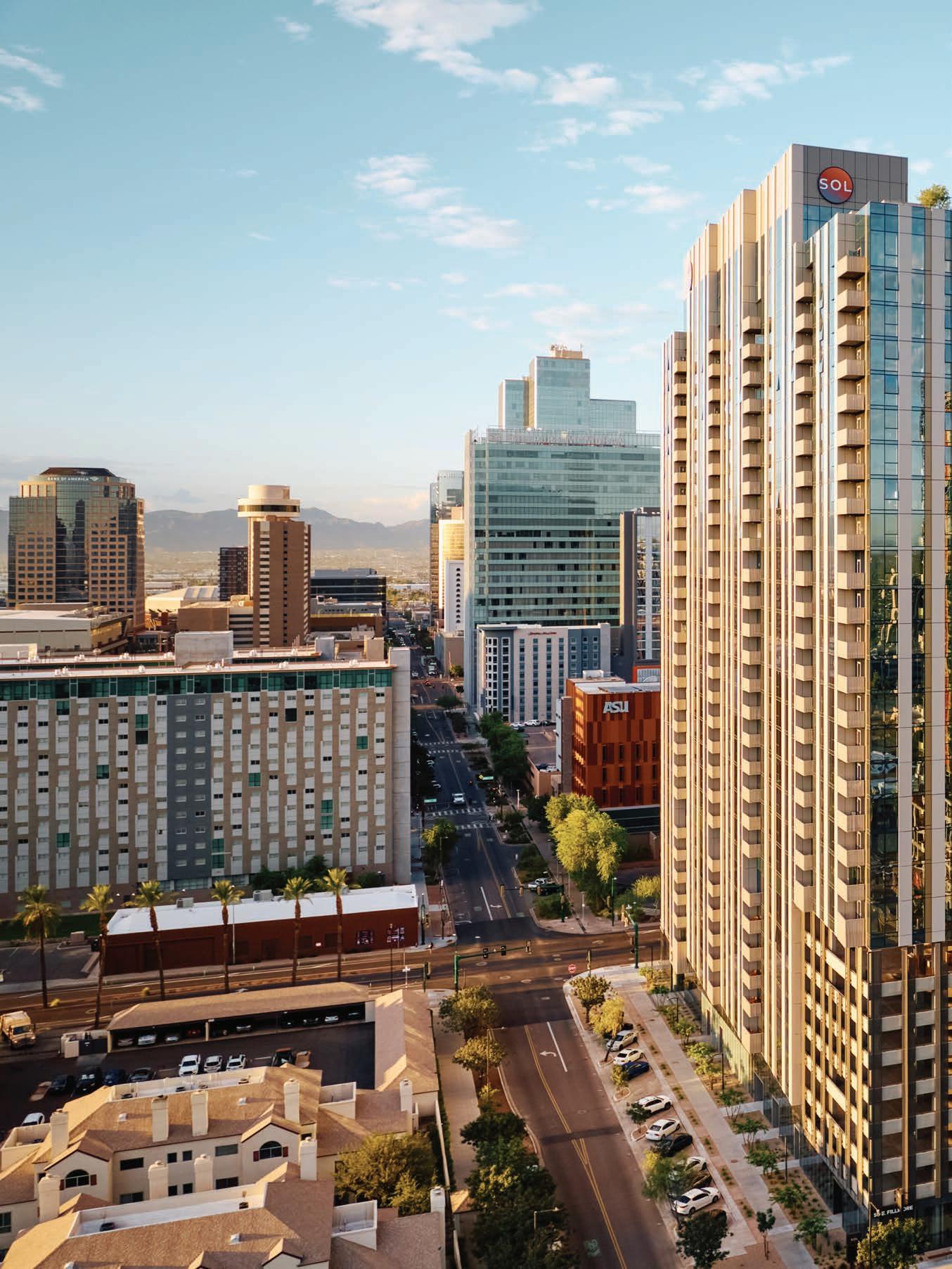
LG Development delivers Sol Modern in downtown Phoenix, a 747-unit tower marking the company’s largest development to date with bKL Architecture.
ON
RISK,
INTEGRATION & COMPETITIVE ADVANTAGE
“Development can be summarized as taking outsized risks for razor thin pro ts. Our true vertical integration allows us to squeeze every drop out of any opportunity.”
GABE LEAHU DIRECTOR OF PROGRAMMING
THE LONG GAME
The Trust to Push Further
As LG marks 20 years, the company is spotlighting the long-standing partnerships that have shaped its growth. Few collaborations illustrate that evolution better than the one with NORR—rooted in trust, shared problem-solving, and a willingness to push each other toward better design and better buildings. Brian Goldberg of LG and George Sorich of NORR sat down to reflect on where it all began, how their teamwork has evolved, and what they see ahead.
How did the partnership between LG and NORR first begin?
BRIAN (LG): When we first met George, he was actually at a different firm. He shepherded us through some tough early projects, and we loved working with him. When he moved to NORR, the partnership came with him. Our partnership goes back more than a decade.
GEORGE (NORR): Those early days blur together, but we worked on a mix of construction and multifamily projects, and even renovated the space that ultimately became [Molson] Coors’ offices. I still remember a dinner at Gibson’s where my former team basically questioned if LG knew what they were doing—maybe not in so many words. (Laughs) But even then, we saw their drive and creativity.
What made the collaboration feel like the right fit?
BRIAN: George is a true problem solver. He cares about keeping people aligned and moving forward. That openness—being able to talk through ideas without ego—set the tone for everything we’ve done since.
GEORGE: We saw early on that we could actually collaborate with LG in a non-traditional way. It wasn’t “client here, architect here, builder over there.” Everyone contributed ideas across disciplines. That shared approach created a real learning environment for all of us.
Was there a moment when you realized this was a long-term partnership?
GEORGE: From the beginning, honestly. Issues come up on every project, big or small. Our ability to talk through the hard stuff—respectfully and constructively—made it clear this was the right team to keep working with.
BRIAN: There’s always been an attitude of being responsible to each other and to the project. No one throws their hands up. That mindset made the partnership feel solid right away.
What project best captures how you work together?
GEORGE: This building [Arthur on Aberdeen] we’re sitting in was incredibly challenging. The concept changed multiple times—from two towers to hotel and office, then to residential. There were historical considerations, city hurdles, and countless redesigns. It was exhausting at times, but coming back to it now, the “cream rises to the top.” You remember what made the collaboration work.
BRIAN: Once COVID hit and we pivoted from office to residential, the process moved faster. But still— five years, historic reviews, shifting entitlements— it demanded constant teamwork.
NORR brings design expertise and LG brings development vision. How do those strengths complement each other?
GEORGE: It’s never been a binary “designer versus developer” dynamic. We’ve grown together. Early on, we didn’t have the design depth we have today, but LG’s ambition pushed us. We hired talent to meet the level of work they were envisioning.
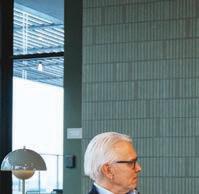
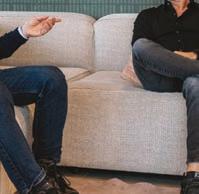
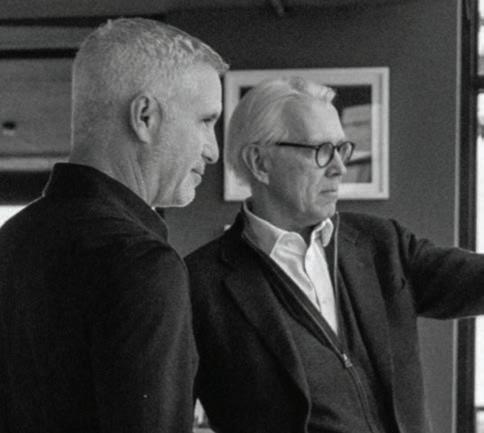
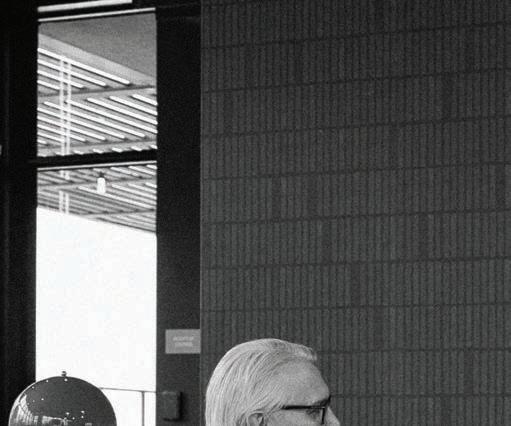
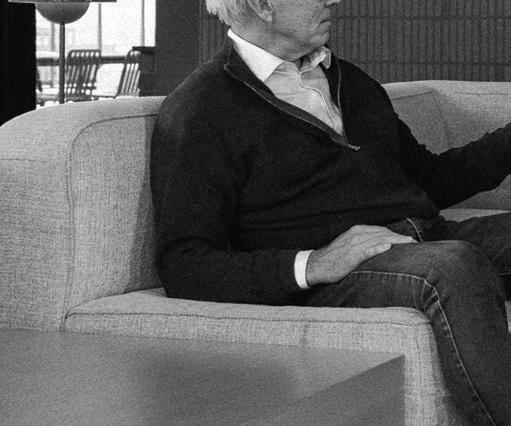
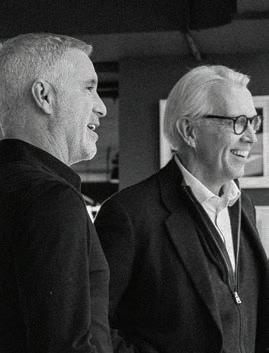
PICTURED: Brian Goldberg (left), and George Sorich (right)
We could actually collaborate with LG in a non-traditional way. It wasn’t ‘client here, architect here, builder over there.’ Everyone contributed ideas across disciplines.
GEORGE SORICH NORR
BRIAN: We’re always searching for ways to improve aesthetics while staying on budget. NORR helps us get more out of every design move—efficiently and thoughtfully.
GEORGE: And to their credit, LG’s own design studio has grown tremendously. We’ve collaborated closely with them on interiors and branding. We learn from each other on every project.
As your work together has grown more complex, how do you approach problem-solving?
BRIAN: Very collaboratively and informally. Yes, there’s structure, but everyone feels comfortable raising concerns, giving opinions, or asking for help. Our teams know they can speak freely.
GEORGE: And Brian has my cell number—he uses it when needed. We also do debriefs: what went well, what didn’t, and what we learned. That honesty keeps us aligned.
Trust is a major theme of LG’s 20th anniversary. What does trust look like in this partnership?
GEORGE: I’ve gone to investor meetings with Brian. That says a lot. LG trusts us not just as designers, but as collaborators who represent the project well.
BRIAN: Trust is earned, and NORR has earned it. They show up, no matter what. And in a city like Chicago—where permitting and approvals are no joke—you need partners you know will get things done.
A &Q
How have trends like adaptive reuse and new residential design shaped your work together?
GEORGE: We both follow and lead the market. We’ve completed pure adaptive reuse projects, tax credit work, and complex integrations like the warehouse space incorporated into this building. Amenity trends have shifted too. Before COVID, amenities were getting excessive. Now it’s about right-sizing and delivering what residents actually want.
How has NORR influenced LG’s approach to design?
BRIAN: NORR brings a level of sophistication that we didn’t have early on. We’ve learned from how they run meetings, how they structure the design process, and how they communicate. It’s helped us elevate our entire operation.
Looking ahead, what does the future hold for this partnership?
GEORGE: We’re thrilled to still be working together and growing together. It feels like each new project is going to be our best yet.
BRIAN: We’re always looking for bigger, better, more exciting work. We’re growing, they’re growing, and we’re trying to keep up with NORR half the time. I’m excited for the next 10 or 20 years—and for taking the partnership into new cities.
Where Hospitality Begins
More than 15 years ago, in the middle of the worst fi nancial crisis in decades, two up-and-coming Chicago companies took a chance on each other. The result was a partnership that helped shape some of the city’s most iconic hospitality spaces—introducing nationally recognized restaurants, transforming neighborhoods and establishing a creative rhythm that continues to evolve today.
In this Q&A, Rob Katz, Co-Founder of Boka Group, joins Matt Wilke and Alex Dyer of LG Group to reflect on their shared journey: the leap-of-faith beginnings, the culture that binds them, the projects that changed everything, and what they look for in each other as they build the next decade of restaurants and hospitality destinations.
Rob, take us back. How did your partnership with LG begin?
ROB (BOKA): It all started with Brian Goldberg, the backbone of this young construction company called LG. We’d all become friends, and one day they approached me about bidding for The Girl & The Goat back in 2009.
We sat together, and it was clear we shared something important: hospitality. LG had hospitality in their DNA—how they communicated, how they cared. It felt like a natural fit. So we gave this spunky upstart a shot and the rest is history.
What made LG feel like the right partner for the restaurants you were creating?
ROB: Every business, no matter the industry, needs hospitality at its core. You have to make people feel cared for. That’s the backbone of what we did, and it turned out to be the backbone of LG too. That alignment set the foundation for everything that followed.
working on the sidewalk, scrambling toward the finish line. I loved that energy.
And then there was Momotaro. I remember walking into the building before construction. In the middle was this massive, makeshift wooden column basically holding up the entire structure. And we’re all standing there saying, “Yep, this is going to be a huge Japanese restaurant.” It was wild.
ROB: And yet the moment I walked into that space, I knew instantly—this is it. Sometimes the building speaks to you.
Back then, the neighborhood was just waking up. It was raw. And opening a restaurant in 2010? That was unheard of. It was the worst financial crisis in 75 years. Nothing was opening. Everything was closing.
But I had never been so sure of anything, even though I was terrified. It was a calculated leap. And the magic of that moment brought everyone together.
MATT: That restaurant changed the trajectory of so many people and companies.
looked at me like, “No chance I’m paying $700,000 for teak.”
So we brought samples from a small millworker we’d worked with for years. We saved a massive amount of money and still delivered an incredible design. It taught us a lot about problem-solving and navigating design conversations with finesse.
ROB: That’s the kind of collaboration I love. Don’t just say: “We can’t do this.” Show me alternatives. Matt and Alex did that. And Momotaro remains one of my favorite restaurants we’ve ever built.
What says the most is this: 90% of restaurants don’t make it past year five. But the restaurants LG and Boka built together—Momotaro, The Girl & The Goat—they’ve stood the test of time. In a business with no mercy, that consistency is remarkable.
You’ve built some legendary Chicago restaurants together. What early project moments still stand out?
MATT (LG): Finishing one of our early restaurants; I was so young at LG. It was chaos in the best way: people painting,
Both of your companies are known for their strong culture. What moments capture the spirit of your partnership?
MATT: Momotaro again, because it was our first time working with a major design firm. They specified teak everywhere, and Rob just
ALEX (LG): For me, as a young project manager, being welcomed into that creative process was transformative. Sitting with Rob, Kevin [Boehm], AvroKO and seeing how they collaborated shaped how I saw our role. We knew we had creativity in our DNA, but those early projects refined how we used it.
And we took big risks. We literally removed a whole corner of the building with trains rattling the structure overhead. We’d never do it that way now, but back then, we were scrappy and fearless.
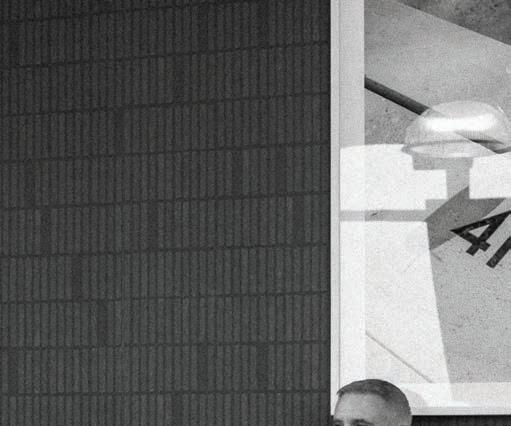
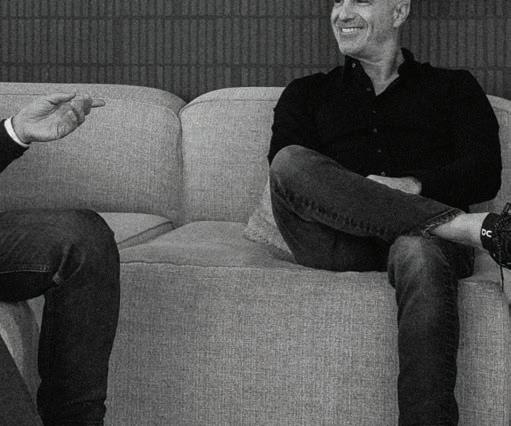
PICTURED: Matt Wilke (left), and Rob Katz (right)
PICTURED: Rob Katz (left), Alex Dyer (back) and Matt Wilke (right)
Rob, what qualities in LG have kept you coming back for more than a decade?
ROB: They’re experts now. Building restaurants isn’t like building condos or office space—it requires a specific intuition and understanding.
After 15 years, LG speaks our language. They know how a restaurant needs to function, breathe, operate. That fluency is invaluable.
LG, what has Boka brought that has shaped your approach as builders?
MATT: The industry shifted from chef-driven investment to landlord-driven deals. So Rob and I started talking more strategically about how to get deals done—not just how to build them.
What I appreciate is the transparency. We want to be more than builders—we want to be knowledgeable partners who add value early, even before contracts exist. And long-term relationships are far more important to us than chasing volume.
ROB: And LG helps us evaluate deals incredibly fast. When developers are paying for buildouts, we need to know quickly whether a space is even feasible. LG can walk in, assess infrastructure, and deliver a rough estimate that saves us months—sometimes a full year—on deals that would never pencil out. That insight is priceless.
As both companies grow—Boka nationally and LG into larger, more complex projects—what do you look for in each other going forward?
MATT: We want to stay the most trusted partner we can be. What we do isn’t unique— lots of companies build restaurants. What’s unique is how people feel working with us.
There will always be tough conversations and problems to solve, but we’ll stand by the work and own mistakes. We’re in it for the long haul. There is no finish line.
ROB: There’s no expiration date on this partnership. We keep getting pregnant with deals and then have to birth them—and we do it because it feeds our souls.
At this point, we grow because we love imagining something and then watching the LG team bring it to life. I’ve been doing this a long time, and it still inspires me.
From where you started to where you are now—what does this partnership represent today?
ROB: Pride. Immense pride. I drive past LG’s building every day—it’s incredible to see how far they’ve come. Their reputation, their team, their presence in the city.
Together we’ve navigated two of the toughest industries on the planet, and we’re still here, still creating.
MATT: Our partnership with Boka is foundational. We truly wouldn’t be here without the trust Rob and his team placed in us early on.
Through the ups and downs, it fills your soul. Otherwise, why do it?
“
Through the ups and downs, it lls your soul. Otherwise, why do it?
MATT WILKE LG GROUP
Craft, Trust, and the Art of Building It Right
The collaboration with JJ Woodwork stands as a defining part of LG’s journey, rooted in trust, intuition and a shared respect for craft. Over more than a decade of working together on some of Chicago’s most iconic restaurants and commercial spaces, LG and JJ have developed an intuitive collaboration that allows complex ideas to become beautifully executed details.
LG VP of Construction Kirk Bacastow and JJ Woodwork Project Manager Bogdan “Boogie” Leja sat down to refl ect on how the partnership began, the problem-solving that defi nes their work together and what it means to truly let the artisan lead.
Take us back to the beginning. What do you remember about working together on early projects like Tortoise Club and Momotaro?
BOOGIE (JJ): Tortoise Club was a first for us in terms of scale and design. The red gloss panels with gold inlay were not common at the time, and it was challenging. But seeing it come together made a strong impression on me. It showed what LG was capable of and I wanted to keep a healthy working relationship so we could continue doing projects like that in the future.
KIRK (LG): Momotaro came at a moment when we were still learning how far millwork could really push a space. JJ wasn’t just fabricating, they were helping us solve design problems in real time. It set the tone for how we’d work together going forward.
How has the partnership evolved from those early days to the wide range of restaurants, offices, and community spaces you’ve built since?
BOOGIE: The beginning was tough; that’s always the case. I had spent many years working mostly on residential projects. When we started working with LG, they introduced us to new, exciting and more demanding work. I’m sure there was some hesitation on their end too, trusting us with larger projects. Over time, that trust grew, and we’re grateful they continue to bring us opportunities.
Wood is versatile. People love it. Designs change over time — wood gets combined with metal and glass — but the goal is always to create something timeless. We’re thankful to be part of that evolution and to help bring LG’s designs to life.
KIRK: We were learning alongside each other. When I came on board, restaurants really started to become a focus and millwork quickly became one of the most complex and defining elements. What worked on one project became a foundation we could build on and refine, again and again.
You’ve been collaborating for over a decade. How would you describe the trust and shorthand that’s developed between your teams?
BOOGIE: Easier isn’t quite the right word, but we understand each other better. We know what’s expected. As new people join LG and JJ, they bring fresh perspectives, but our long relationship helps ease tension and cut through unnecessary steps. We’re a small shop and our focus is manufacturing, not paperwork. LG understands that and works with us.
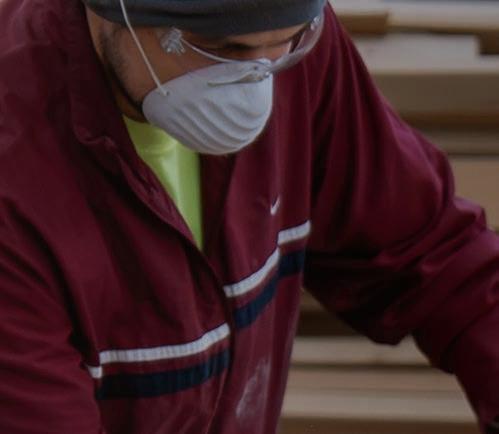
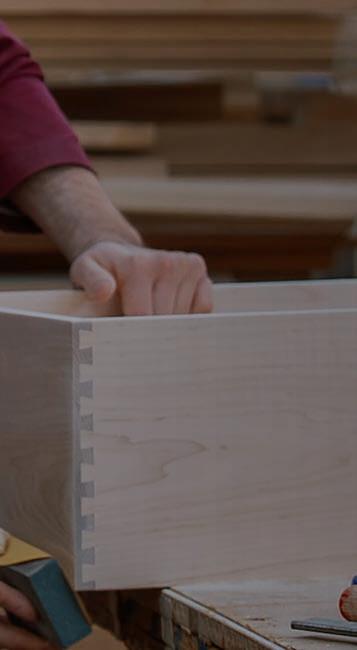
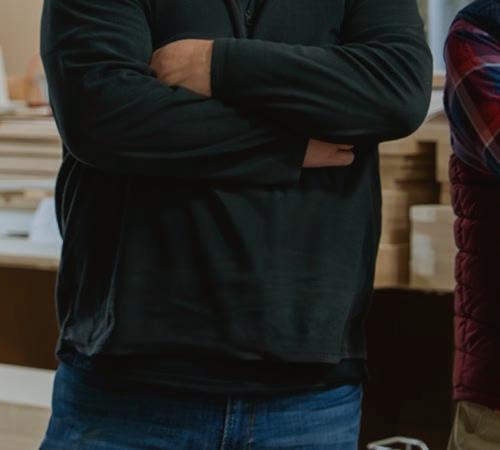
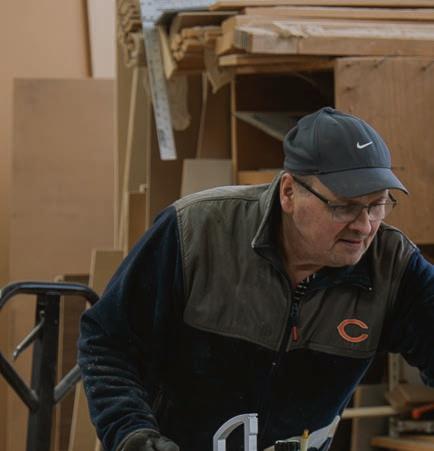
PICTURED: Craftsman
Joan Arturo Soto in the JJ Woodworking shop
KIRK: At the end of the day, millwork can make or break a project. If it fails, everyone notices. Trust comes from watching someone deliver, over and over again, under intense pressure. JJ has proven they can do that and it allows us to move faster and smarter together.
Millwork often defines the character of a restaurant. How do you bring intricate details from drawings to life in the field?
BOOGIE: For me, a lot of it happens in my head first like how joints come together, how pieces connect. We sketch things by hand, adjust proportions, and figure out what will actually work. Taking raw lumber and turning it into something functional and beautiful is a great feeling. Seeing people enjoy it is priceless.
KIRK: There’s a real intuition involved. It’s not just technical skill, it’s instinct. Boogie has an incredible ability to stay calm under pressure, even when timelines are tight and expectations are high. That steadiness is rare and incredibly valuable on restaurant projects.
Every build has surprises. Can you share a moment where that intuitive understanding helped solve a challenge on-site?
BOOGIE: Every project teaches you something. There was one job where a countertop material was specified and we didn’t raise a flag early enough. Within weeks, the material failed. We talked it through with
LG and came to an understanding; we’re in this together. If we see a potential issue, we speak up. That experience helped us prevent similar problems in the future.
KIRK: That moment really reinforced our cadence. We learned how to de-risk projects together, identifying durability issues before they become real problems, while still respecting design intent. That trust makes a huge difference.
You’ve worked on everything from bold restaurants to a synagogue to LG’s own office. How does your approach shift depending on the space?
BOOGIE: The goal never changes: deliver something that exceeds expectations. Whether it’s residential, commercial, or retail, we want the millwork to make people smile and to last.
KIRK: Commercial projects demand precision and speed. There’s no flexibility around opening dates. JJ understands that pressure and still manages to deliver bespoke work that feels anything but rushed.
Of all the projects you’ve tackled together, is there a piece of millwork you’re especially proud of?
BOOGIE: The Katana floating beams. They were very demanding in figuring out how to build them and how to install them. Good times.
KIRK: Katana is incredible, but Duck Duck Goat still blows me away. Every room had
a different identity, different materials, different moods. The ceiling work alone was extraordinary. I’d put JJ up against any millworker in the country for that project.
How do you balance beauty with durability in high-traffic restaurant spaces?
BOOGIE: It starts with quality materials and proper moisture control. But more importantly, it’s about people. Skilled millworkers who care about what they’re building, not just collecting a paycheck. When people care, they use the right fasteners, enough glue and finish the work with real craftsmanship.
KIRK: We also know when to push for alternative solutions, especially around water exposure and surfaces like bar tops. JJ helps us achieve the same look in a way that will hold up long-term.
Looking ahead, what excites you most about continuing this partnership?
BOOGIE: Designs change. Tastes change. Wood remains constant and it can still be shaped into unimaginable things. I’m hopeful for what’s next and excited to see how LG continues to innovate with wood. We hope to be part of that journey.
KIRK: For me, it’s watching new project managers experience that moment of awe and realizing just how complex and impressive this work really is. Knowing it’s in good hands makes all the difference. That’s why we keep coming back.
Designs change. Tastes change. Wood remains constant and it can still be shaped into unimaginable things.
BOGDAN “BOOGIE” LEJA JJ WOODWORK
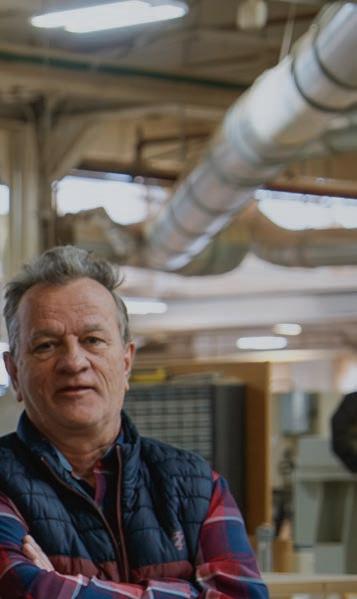
ABOVE: Jakub Skwarek (left), Bogdan Leja,and Janusz Kas (right)
LEFT: Karol Torba
ON CAPABILITY, INNOVATION & CULTURE
“Our intergenerational leadership team brings new perspectives and fresh ideas—a drive for business that goes beyond ‘the way it’s always been done’ and challenges the status quo.”
KASSIE CHAPEL DIRECTOR OF PEOPLE & CULTURE
20 FOR 20
CLIENT The Roof Crop
BUILD TYPE
SQUARE
ARCHITECT Perimeter Architects
CONTRACTOR LG Builders
INTERIOR DESIGN Bureau Gammell & WDA
LOCATION Fulton Market, Chicago
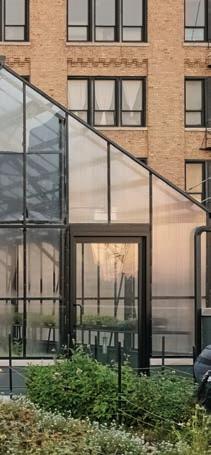
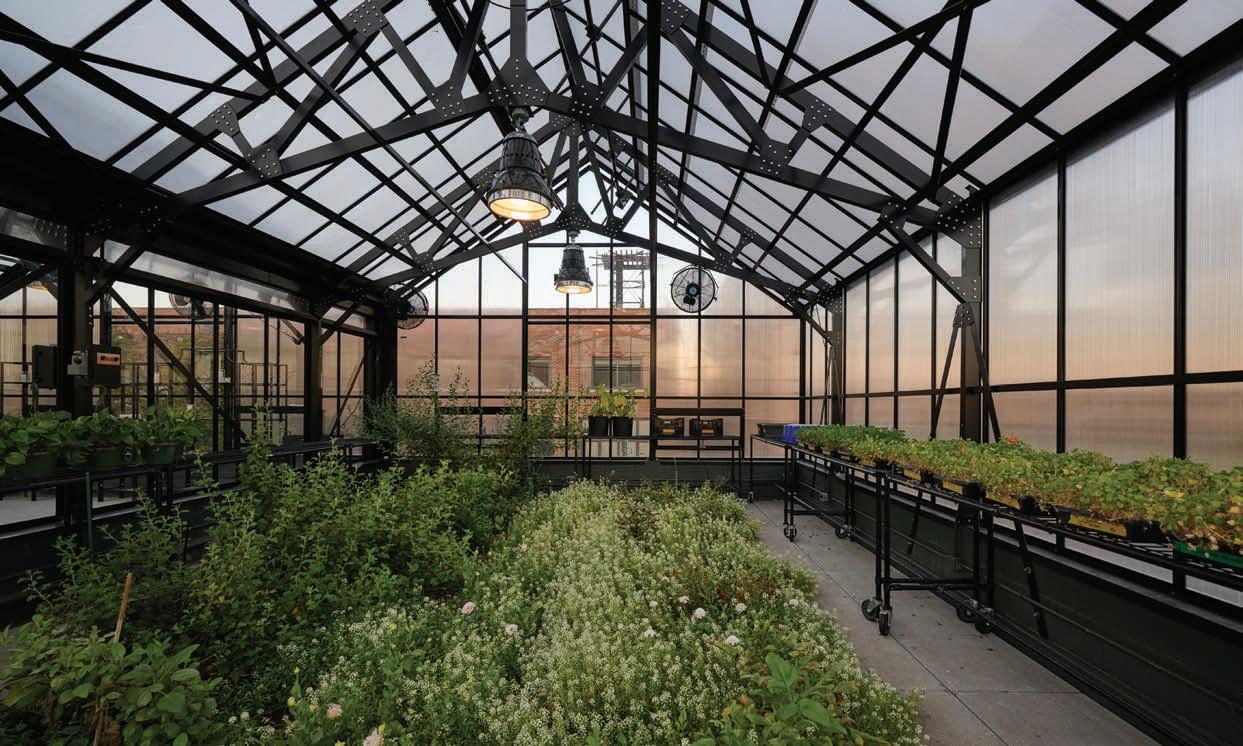
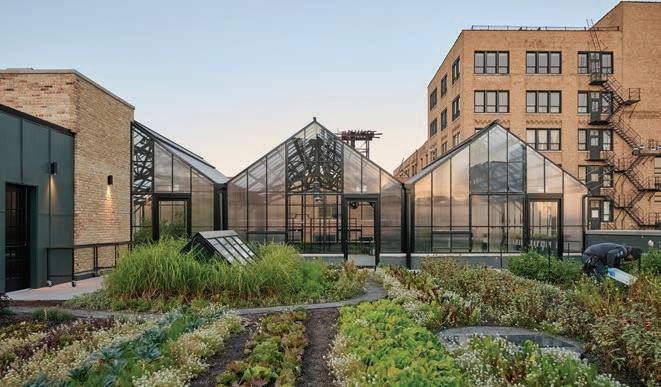
A greenhouse. An event space. A Michelin Guide restaurant. All under one roof, all built by LG Builders, all in service of something bigger than any single use.
The Roof Crop Foundation isn’t just a client— they’re a partner in building stronger communities through urban agriculture. At 1516 Carroll, we brought their vision to life: a state-of-the-art greenhouse supporting their Urban Agriculture Plant Start program, a versatile event space for community gatherings, and Maxwell’s Trading, the Underscore Hospitality restaurant that would go on to earn its place in the 2024 Michelin Guide.
This project required balancing three distinct programs—agriculture, events, hospitality— each with its own technical demands. LG Builders VP of Construction Kirk Bacastow has been particularly passionate about The Roof Crop’s mission, even joining their board.
“They’re building real community connections through urban agriculture,” he says. “It’s not just about growing food—it’s about creating spaces where neighbors can come together, where local businesses can thrive, and where people can learn new skills.”
Mixed-use doesn’t just mean multiple tenants. It means creating an ecosystem where each element strengthens the others. Urban agriculture supporting a restaurant. An event space activating the community. A development that serves both commerce and connection.
This is what happens when construction meets mission.
20 FOR 20 02
CLIENT LG Development
TYPE New Construction
SQUARE FEET 44,000
UNITS 11
ARCHITECT Hartshorne Plunkard Architecture
CONTRACTOR LG Builders
INTERIOR DESIGN Project Interiors
LOCATION Lakeview, Chicago
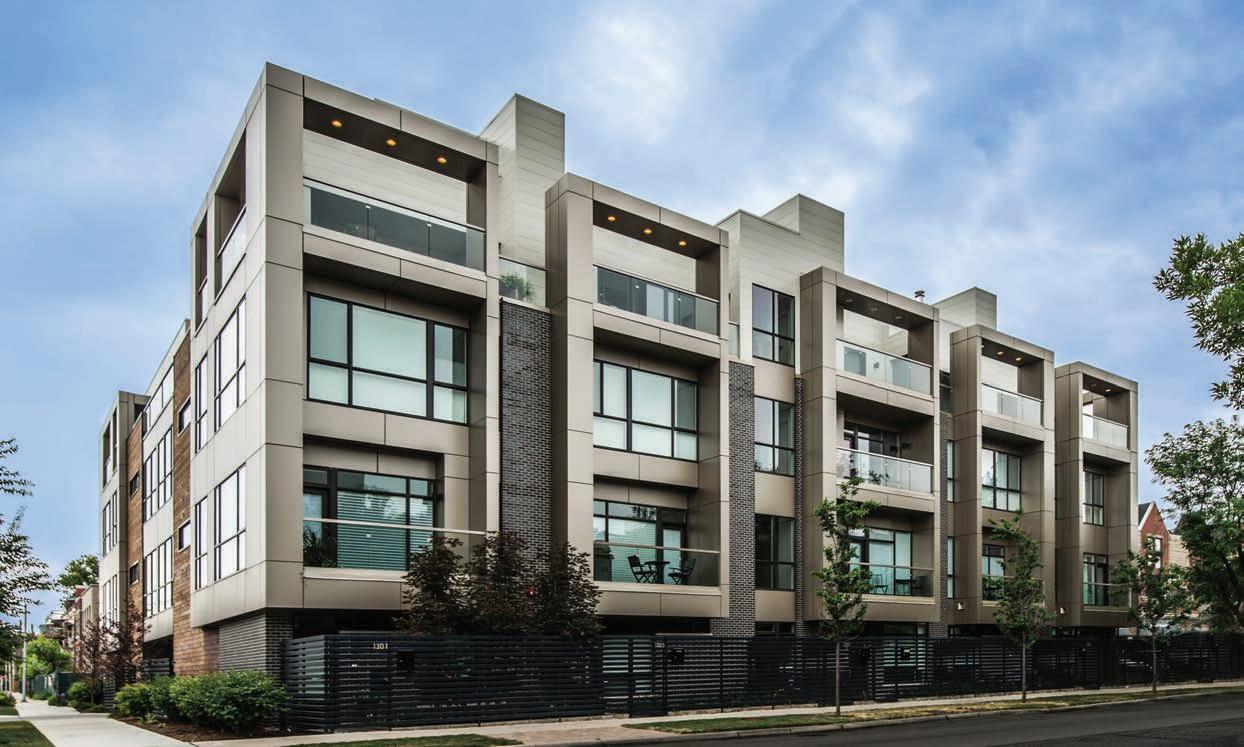
Eleven residences on one of Lincoln Park’s most prestigious streets. Nine townhomes and two duplex condominiums with extra-wide floor plans, rooftop terraces, and city skyline views. Modern design with brick, metal, and wood-clad exteriors that broke from the neighborhood’s traditional aesthetic.
Row 2750, developed by LG Development in 2010 with Hartshorne Plunkard Architecture, was a pivotal project. Not because of its size—though 11 luxury residences priced from $699,000 to $1.499 million was ambitious— but because of what it proved.
LG Development could conceive, design, and deliver a cohesive luxury development in one of Chicago’s most competitive markets. Each home ranged from 3,500 to 4,100 square feet with high-end finishes: 10-foot ceilings, oversized windows, chef’s kitchens with Sub-Zero and Wolf appliances, spa baths with heated floors and steam showers. Multiple living areas including penthouse-level media rooms. Private rooftop terraces.
The contemporary design stood out against Lincoln Park’s traditional rowhouses, and the market responded. This wasn’t just another development—it was a statement that LG Development had arrived as a serious player in luxury residential.
Some projects define what comes next. Row 2750 was the foundation for everything LG Development has built since.
ARCHITECT
LOCATION
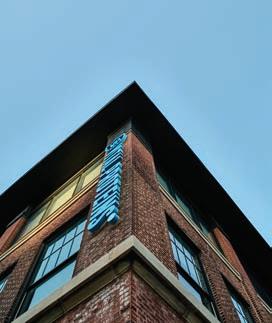
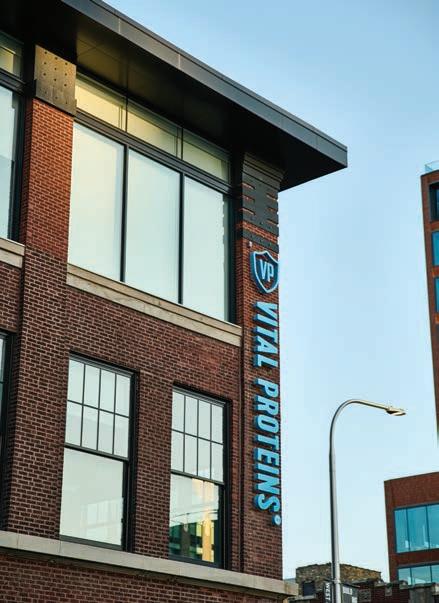
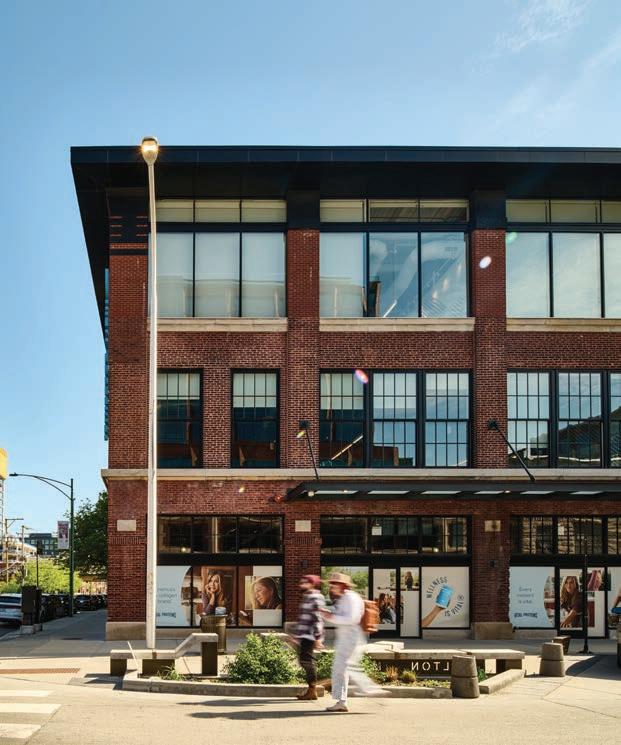
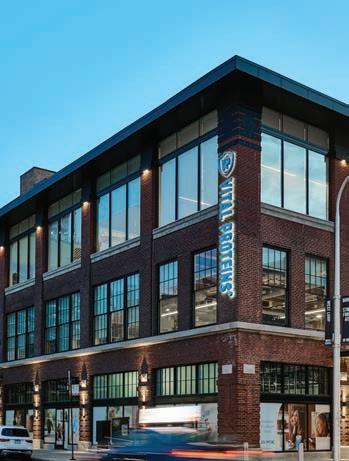
939 W FULTON
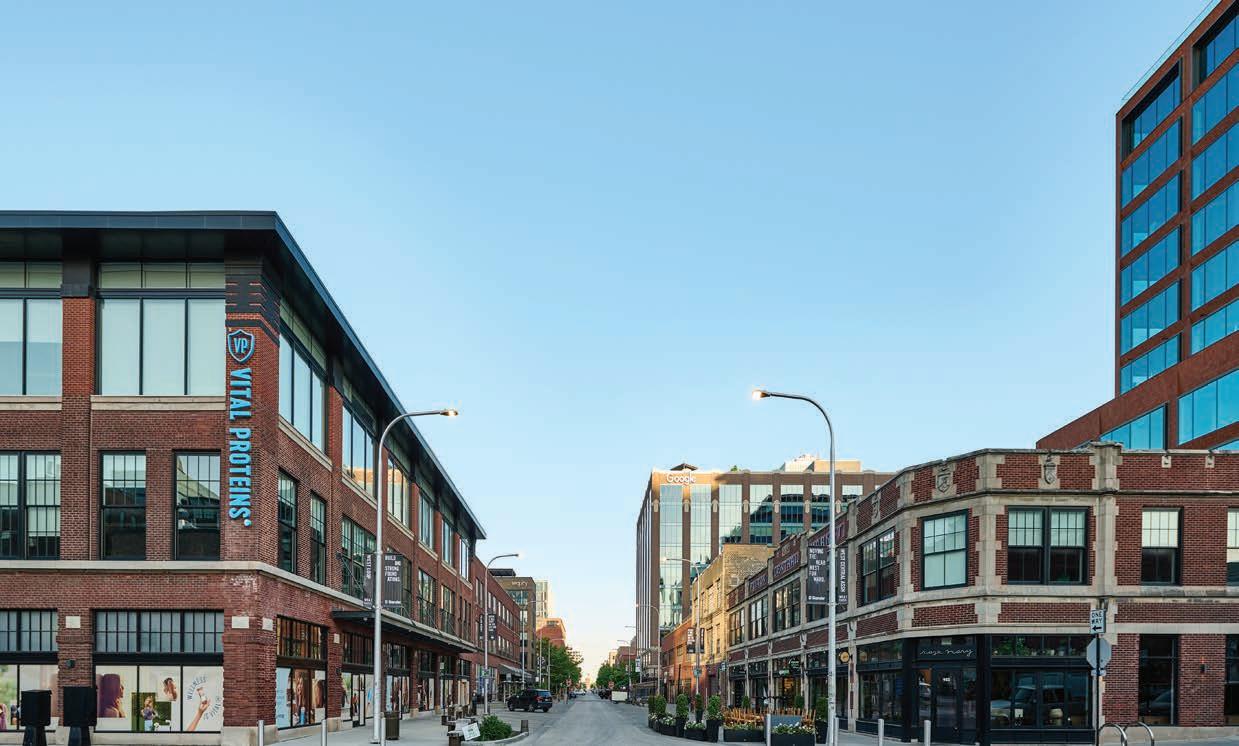
A century-old meatpacking building where Economy Packing Company once advertised “Bacon, Sausage Links & Patties, Ham, Corned Beef.” Brick and timber construction from 1917. No loading docks. Workers unloading trucks with forklifts, battling Chicago weather. A building that had outlived its original purpose but held the story of Fulton Market’s industrial roots.
In 2017, LG Builders took on the adaptive reuse—core and shell construction that would prepare this landmark structure for its next chapter. Working within strict historic preservation guidelines, the project required adding a third floor to a two-story building, installing a vintagestyle cornice, and executing extensive masonry restoration that matched original materials as closely as possible.
This wasn’t cosmetic renovation. It was a full gut rehab: repairing and upgrading structural components, retrofitting contemporary systems into a historic shell, restoring traditional masonry walls inside and out. The challenge was honoring what came before while creating a structure capable of supporting modern office use—now home to California-based Vital Proteins.
Adaptive reuse demands builders who understand that preservation isn’t about freezing a building in time. It’s about respecting its bones while giving it new life. Bold brickwork, steel details, soaring windows—all honoring Fulton Market’s industrial heritage while enabling what comes next.
The project took home a Bronze Medal in Historic Renovation at the 2022 Brick in Architecture awards. Some builds preserve more than structure— they preserve neighborhood identity.
20 FOR 20 04
BUILD
SQUARE FEET 1,306,900
ARCHITECT bKL Architects
SOL MODERN
CONTRACTOR Layton Construction
INTERIOR DESIGN Offshoot Creative & bKL
LOCATION Phoenix, Arizona
FORM, FUNCTION, PHOENIX
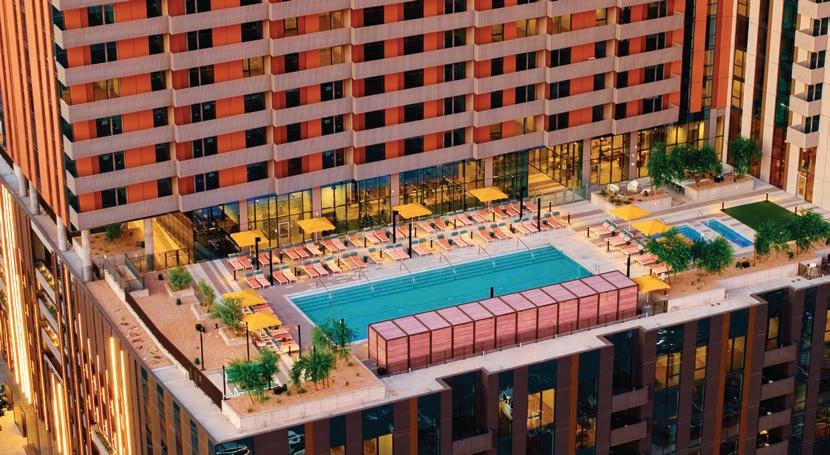
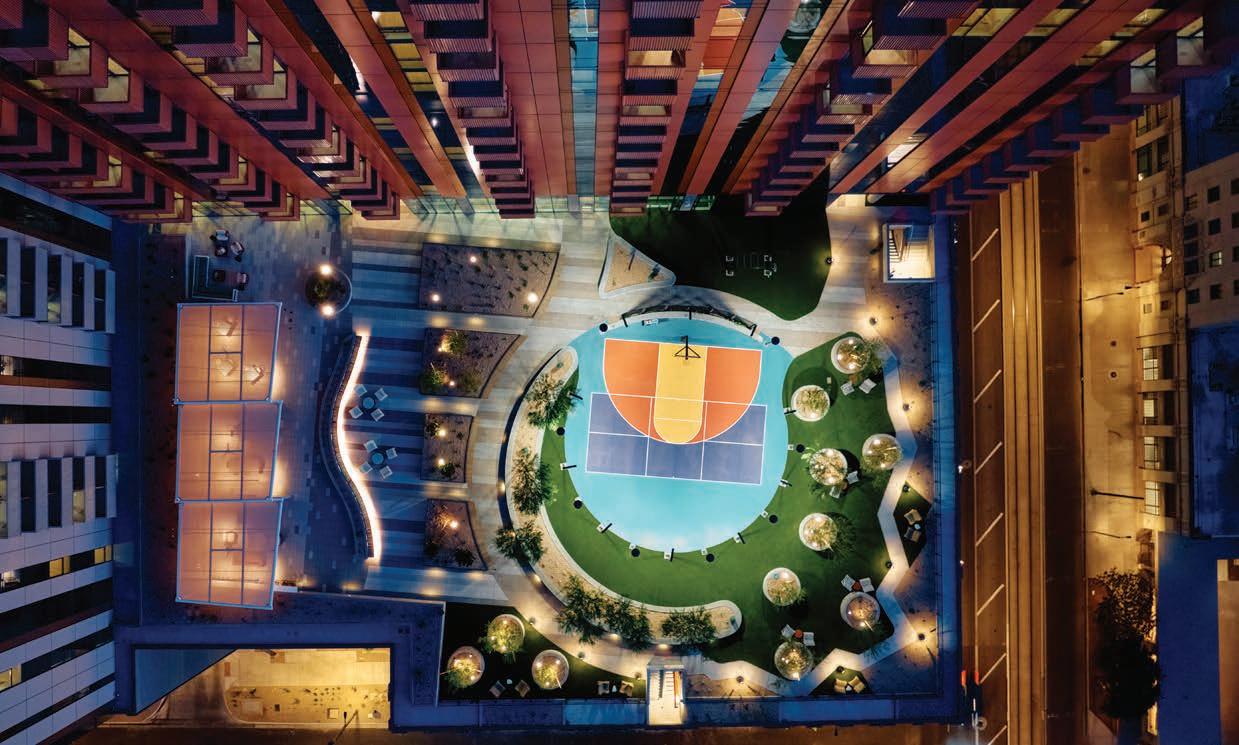
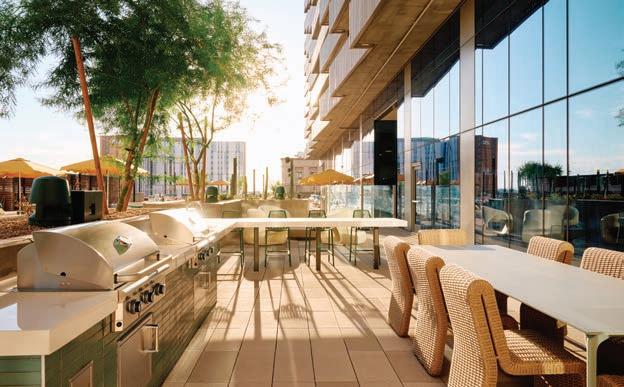
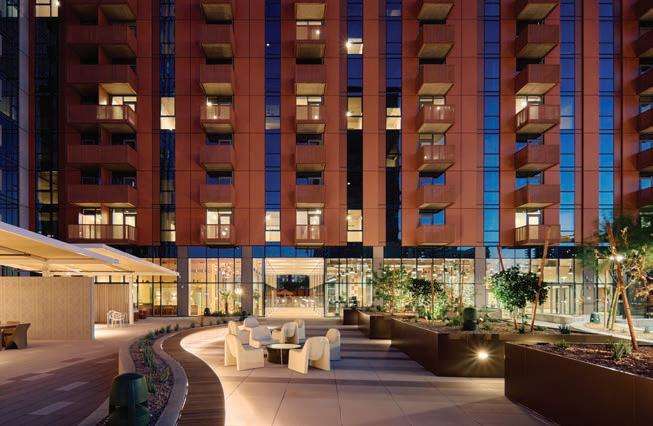
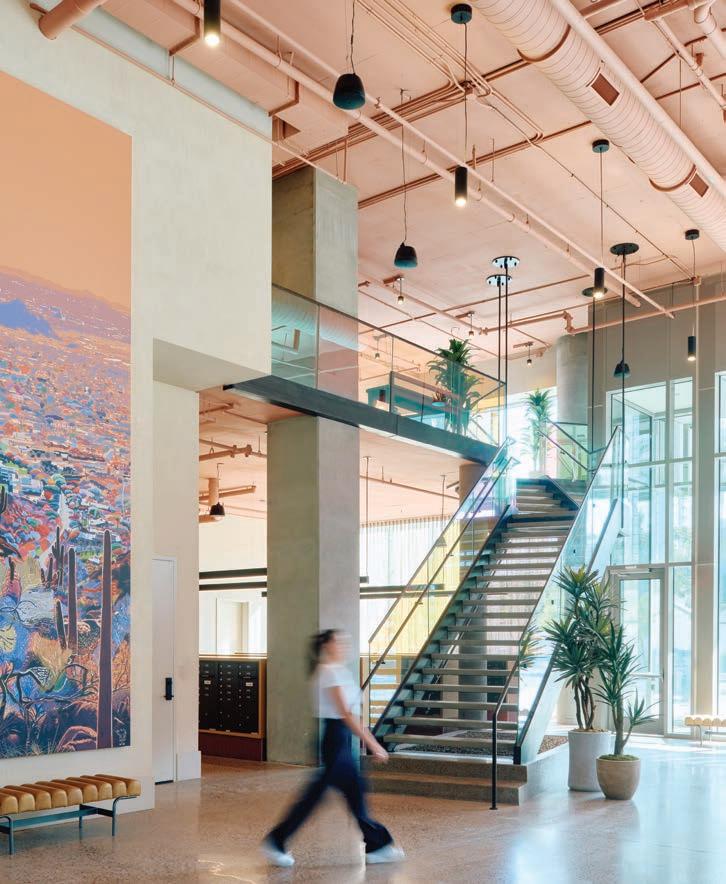
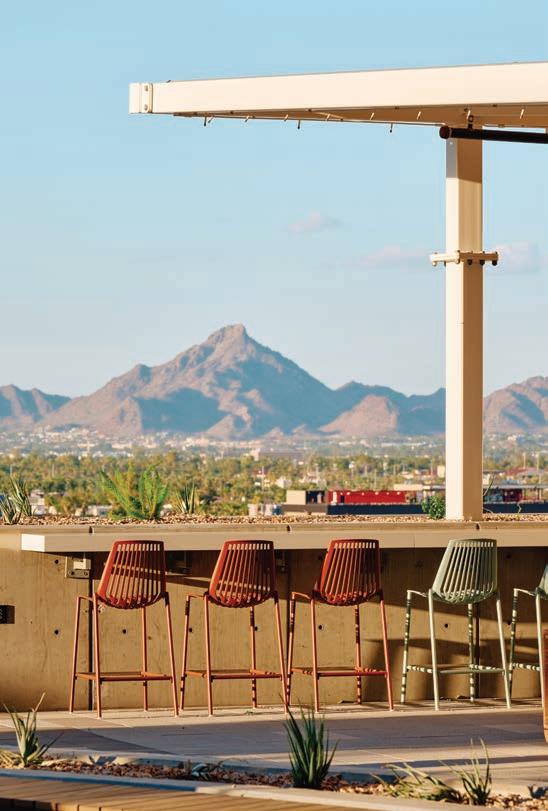
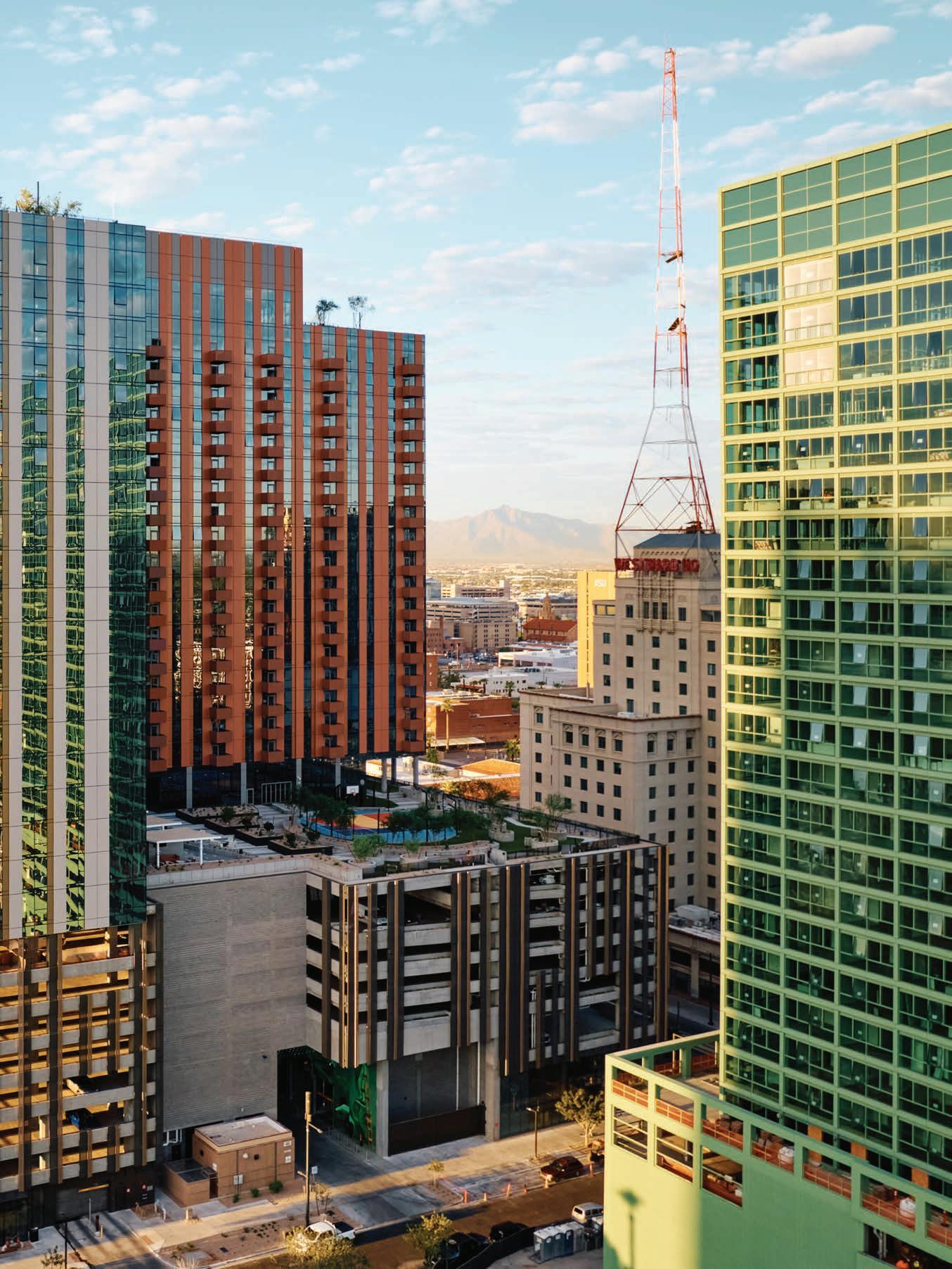
The site couldn't be more exciting. In the heart of downtown Phoenix's revitalized core, anchored by the ASU campus and surrounded by the energy of new residents and historic architecture, Sol Modern needed to respond to its context—and to the desert itself.
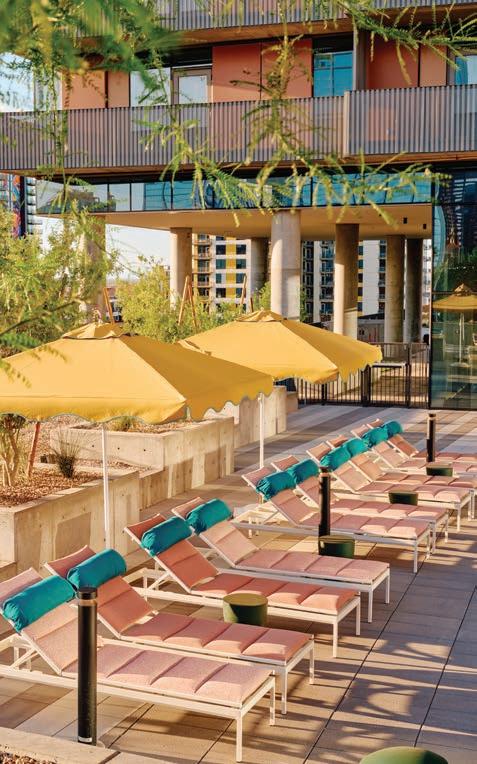
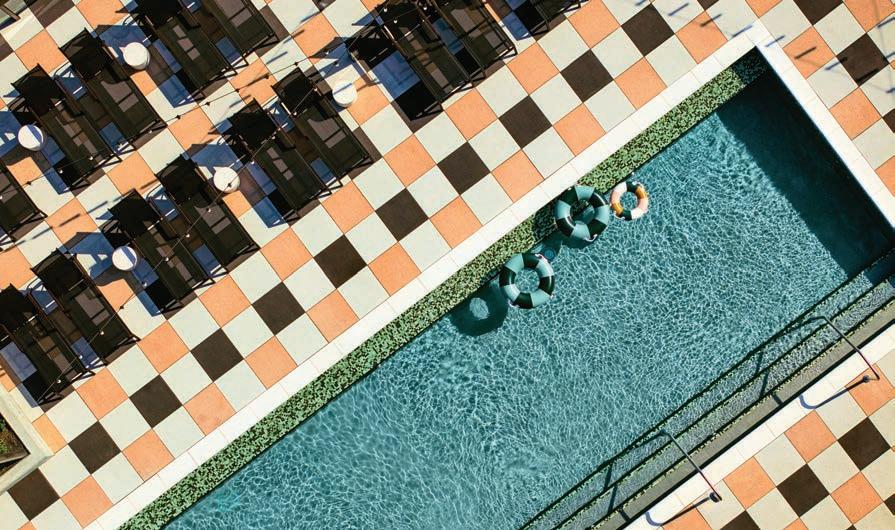
The form of the building was generated by understanding sunlight: abundant, powerful, and the reason people move to Phoenix. The massing creates expansive outdoor amenity space where residents can choose sun or shade any time of day, with amenities at the podium level and rooftop designed to maximize that choice.
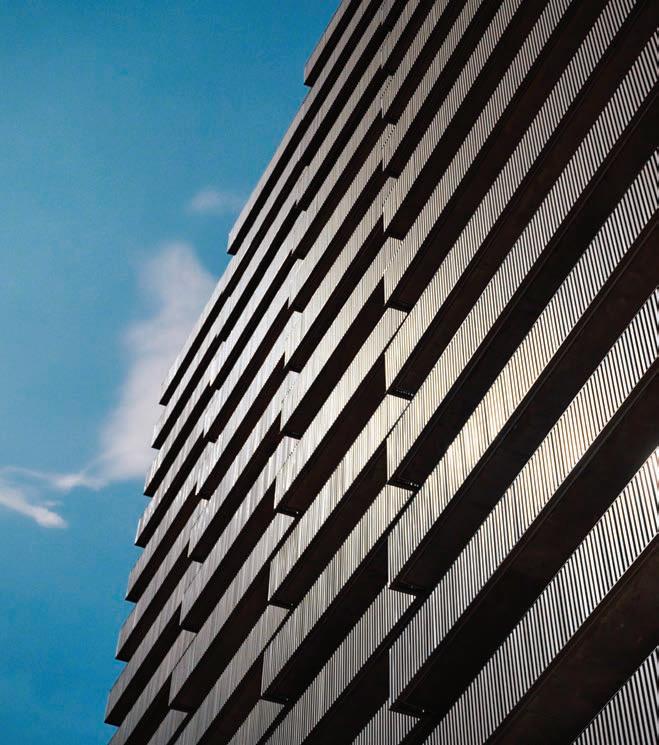
The facade reflects the desert landscape through color and materiality. A unitized window wall system allows for glazing and metal panels that are energy-conscious while still providing incredible views and natural light. On the southern facade, long linear balconies provide extensive outdoor space for units while serving as shading devices for direct sunlight—form following function in every decision.
BUILT AS ONE
For LG's first ground-up development in Phoenix, we partnered with bKL Architecture to create more than a building—we created a blueprint for how sophisticated design-build collaboration should work. Here, bKL Founding Principal Tom Kerwin takes us inside the design process that shaped Sol Modern.
“This is a true collaboration. LG's sophistication in this building type combined with bKL's expertise led to a very robust exchange of ideas and a creative process where we worked almost like one out t.”
TOM KERWIN FOUNDING PRINCIPAL, BKL ARCHITECTURE
BREAKNECK SPEED, SEAMLESS PARTNERSHIP
The project needed to happen fast. From day one, LG and bKL met several times a week during the first two to three months, sketching alternative massing back and forth, making quick decisions that kept the project moving at breakneck speed.
What made it possible? LG’s expertise in the product type and construction pricing allowed for faster decision-making. Their in-house design team—combined with Offshoot Creative on interiors—created a seamless collaboration between firms.
“The decision-making process is oftentimes one of the most difficult things on a large project,” Kerwin notes. “LG’s developers have construction expertise in-house and can make informed decisions based on reasonable budget and schedule parameters. That makes for a more efficient process. Organization is liberty—if a team is organized and we can make decisions, it frees up the creative process. It allows time to explore.”
The result: a building that feels completely of its place, from the exterior down to the interiors. The palette, materials, and generous spaces connect seamlessly to the outdoors, with a variety of amenity spaces unparalleled in this building type.
“Organization is liberty. If a team is organized and we can make decisions, it frees up the creative process and allows time to explore.”
TOM KERWIN FOUNDING PRINCIPAL, BKL ARCHITECTURE
“We’d
love to continue to work with LG for years to come,” says Kerwin. “The vision is to continue to get better, understand each other’s goals, and look for ways to leverage technology and new tools to make the work product more ef cient.”
LG has a real appreciation for design and doing things that contribute positively to the built environment. That shared vision, combined with the speed and sophistication both teams bring, sets the stage for what’s next.
20 FOR 20
CLIENT Aesop
BUILD TYPE Tenant Improvement
SQUARE FEET 980
05
ARCHITECT Griskelis Young Harrell & Range Architects
CONTRACTOR LG Builders
LOCATION River North, Chicago
AESOP
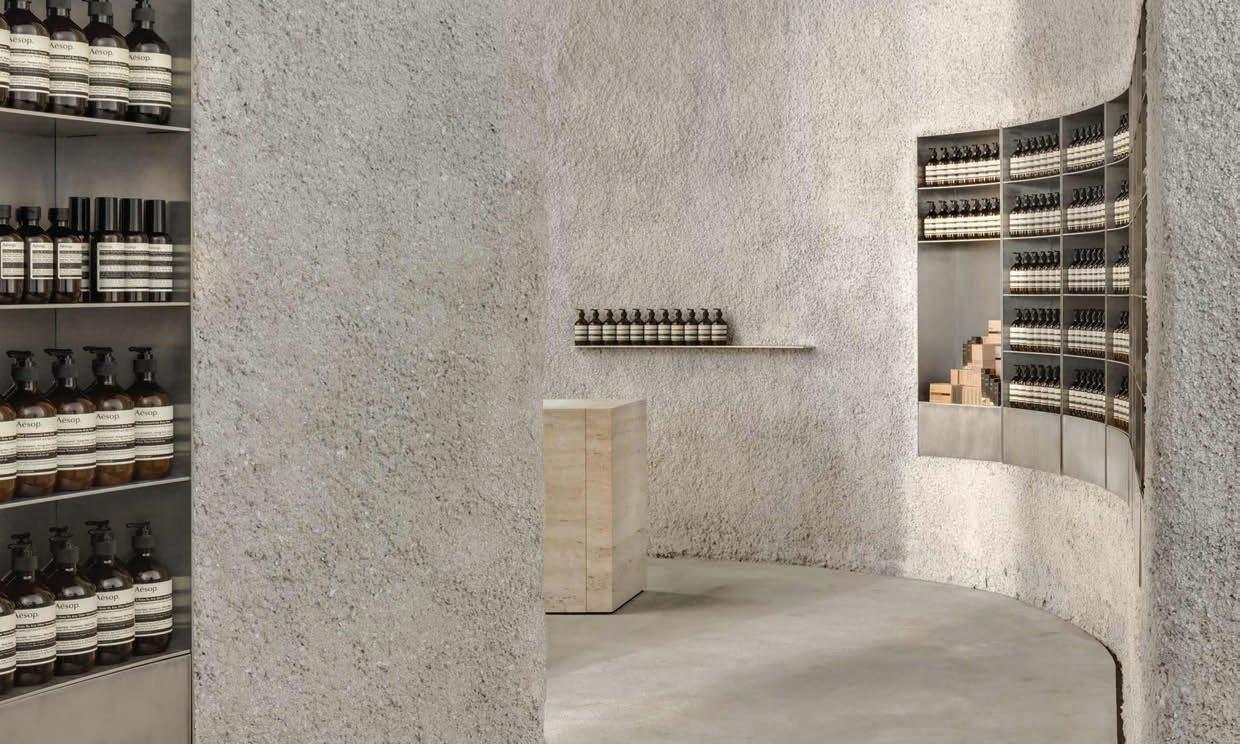
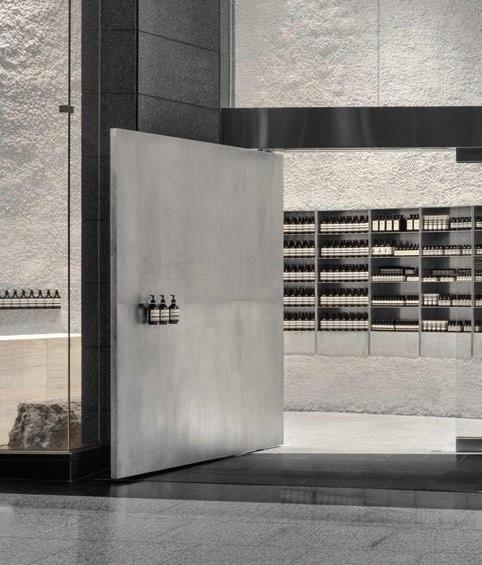
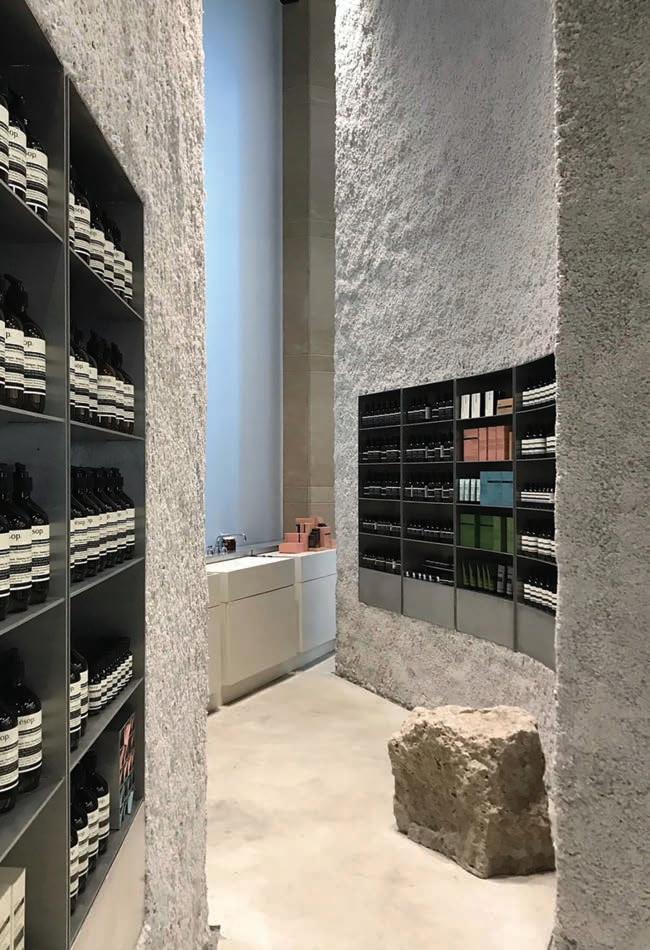
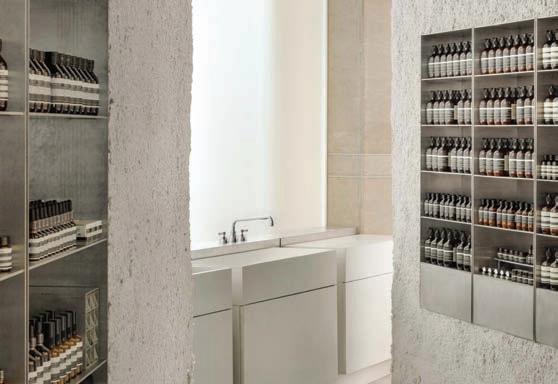
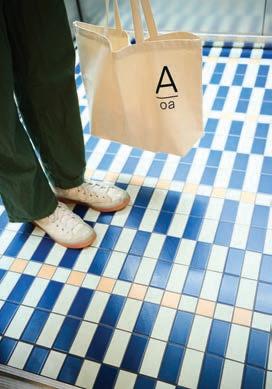
An untreated aluminum door that pivots asymmetrically. Sheer walls embedded within one another, wrapped in sprayed recycled paper fiber. Recessed aluminum shelves following a precise arc. Glacial concrete floors and solid concrete sinks. Downlights tracking across the ceiling like skates on ice.
Aesop stores have a design language all their own—minimal, materialdriven, unforgiving. There’s nowhere for a misstep to hide when every surface is intentional and every detail exposed.
LG Builders has built out multiple Aesop locations, including the North Bridge store on Chicago’s Magnificent Mile. These projects pull from our experience in highend residential and hospitality work, where precision and craft aren’t optional. Boutique retail like this requires builders who understand that “simple” doesn’t mean easy—it means flawless execution.
The North Bridge location draws inspiration from Chicago’s winter and Lake Michigan, creating what Aesop calls a “frosted sanctuary” within the urban retail center. Achieving that vision meant perfect alignment, seamless finishes, and an understanding that minimal design amplifies mistakes rather than concealing them.
Projects with strong design vision demand builders who can execute without compromise. That’s the work we’re built for.
20 FOR 20
ARCHITECT NORR Architects
CONTRACTOR Power Construction
INTERIOR DESIGN Offshoot Creative
LOCATION Fulton Market, Chicago
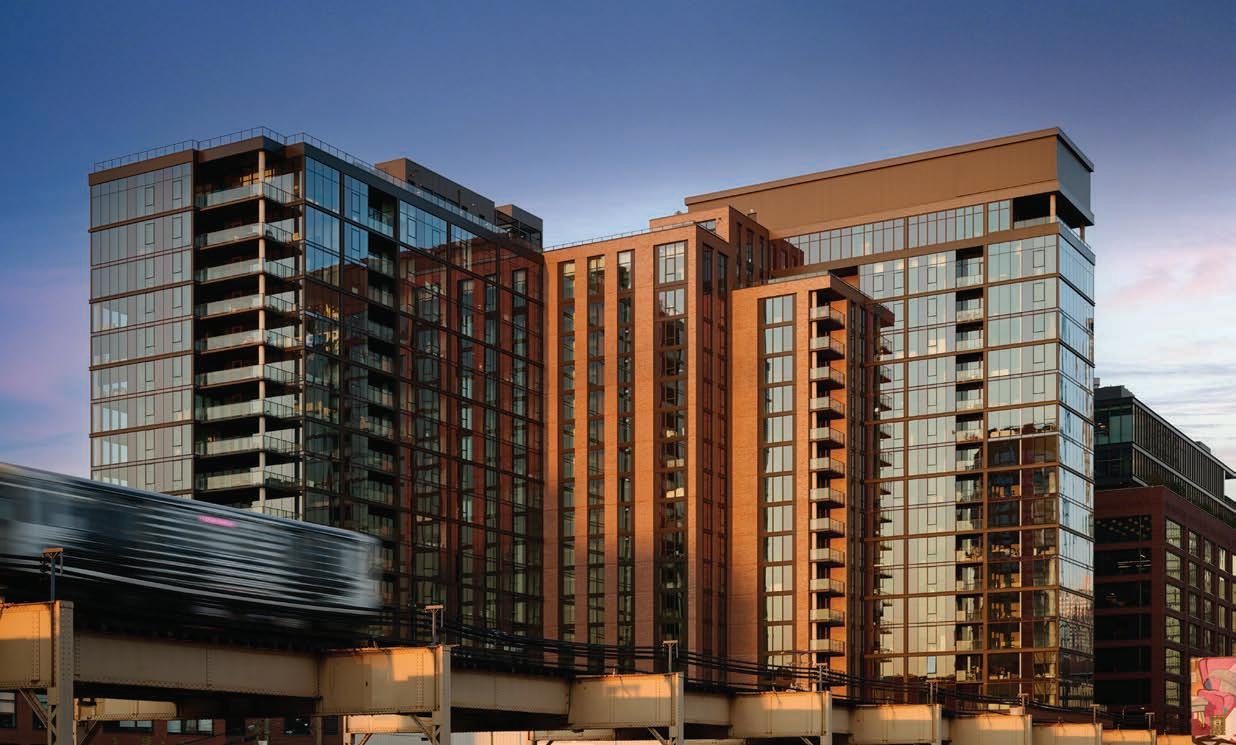
ARTHUR ON ABERDEEN
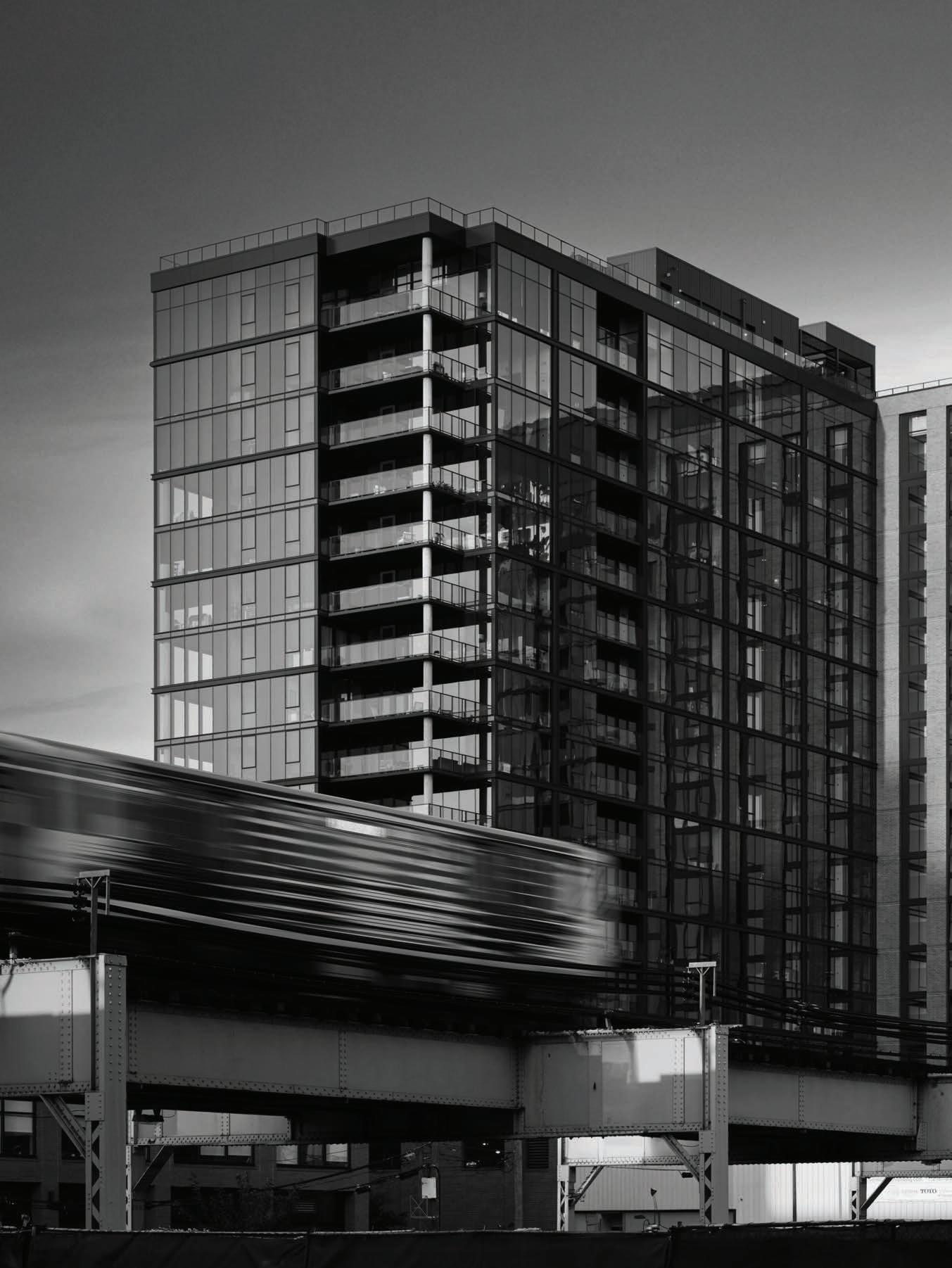
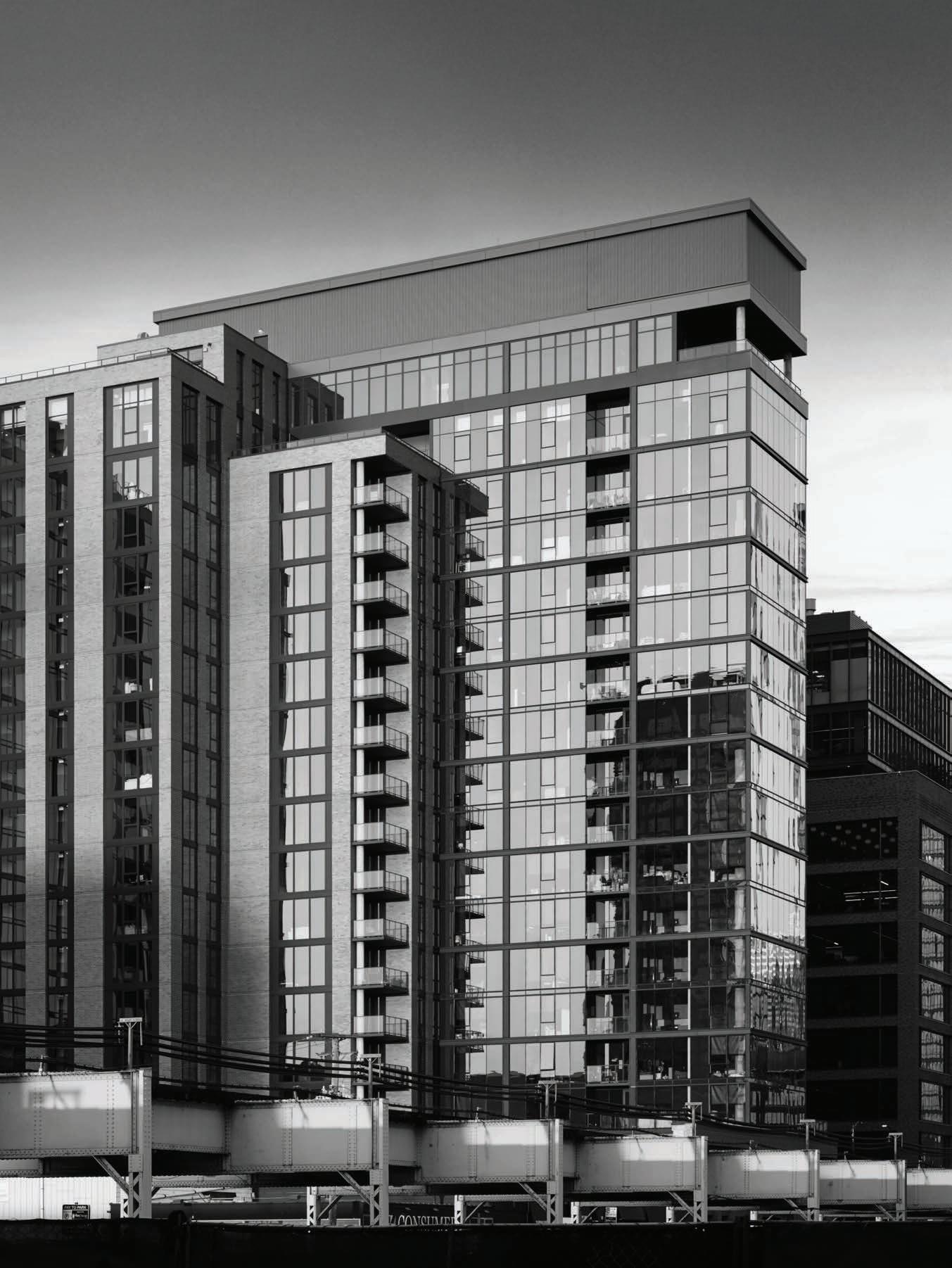
LG Group’s largest Chicago project to date, Arthur on Aberdeen takes its name from the Arthur Harrison Company—the metal fabrication shop that originally occupied the site. Rather than erase this piece of Fulton Market’s industrial heritage, the design weaves historic elements into a modern residential tower.
The challenge? Navigate preservation requirements while delivering contemporary luxury living. The result: A building that honors its past while defining the neighborhood’s future—delivered two months ahead of schedule.
This is the kind of complexity we thrive on: adapting, problem-solving, delivering. Different projects, different markets, all rooted in Chicago.
20 FOR 20 07
CLIENT
BUILD
ARCHITECT Norr Architects
CONTRACTOR LG Builders
LOCATION National
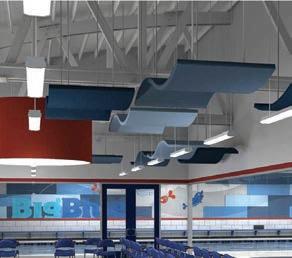
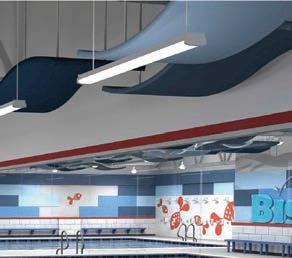
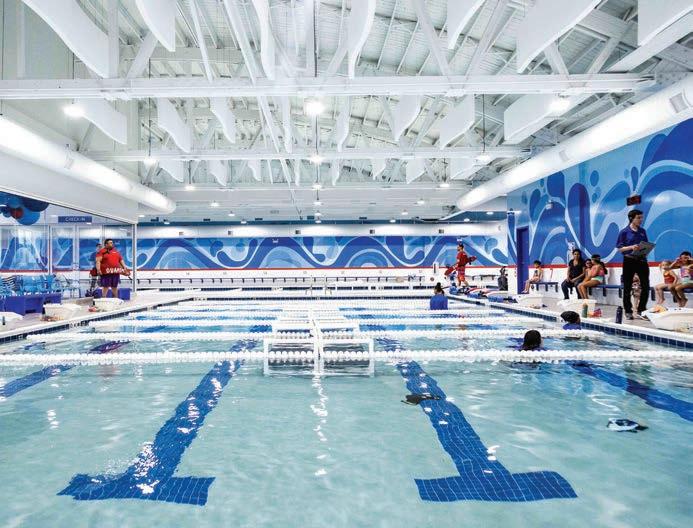
BIG BLUE SWIM SCHOOL
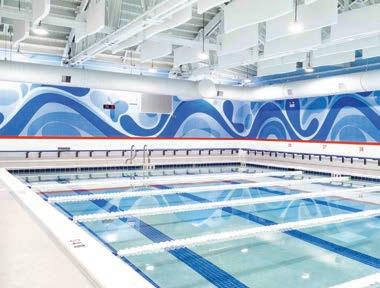
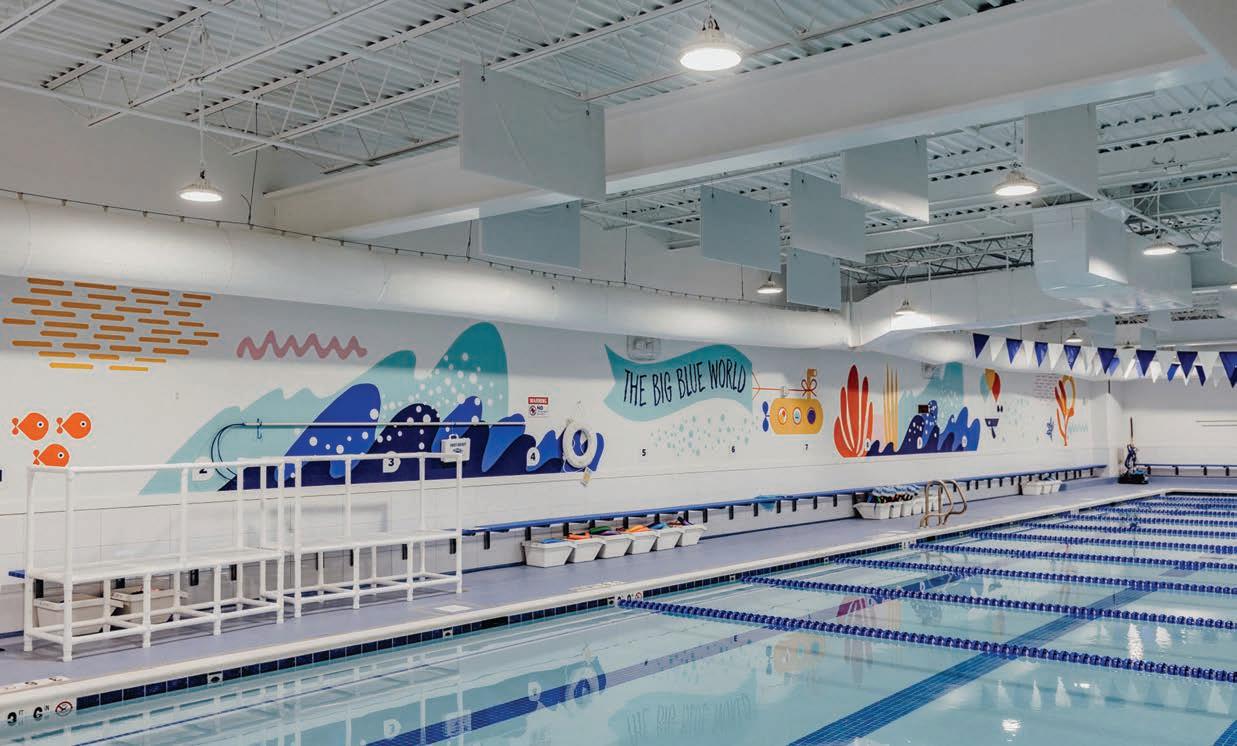
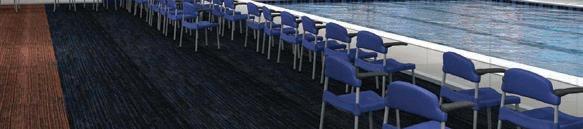
Thirteen-lane, 90-degree temperatureregulated pools. Carpeted floors throughout to prevent falls. Ample changing rooms and parking. State-of-the-art swimming facilities designed for students as young as six months.
Big Blue Swim School has grown from one location to a rapidly expanding national franchise. LG Builders built multiple facilities and earned something more valuable than a single contract: we became a preferred builder as they expand nationally.
When you execute well and gain a client’s trust, partnerships expand in ways you never anticipated. Big Blue calls on LG Builders for locations across the country, trusting us to replicate the same precision with every build: pools that maintain exact temperatures, flexible layouts that accommodate high-volume class schedules, infrastructure that supports families and instructors alike.
Repeat clients don’t happen by accident. They happen when you deliver consistently, understand the model, and prove you can replicate success anywhere. Big Blue trusted us once. Now they trust us nationwide.
Some partnerships start with one project. The best ones keep building.
CLIENT
ARCHITECT Space Architects + Planners
CONTRACTOR LG Builders
INTERIOR DESIGN Studio K
LOCATION Fulton Market, Chicago
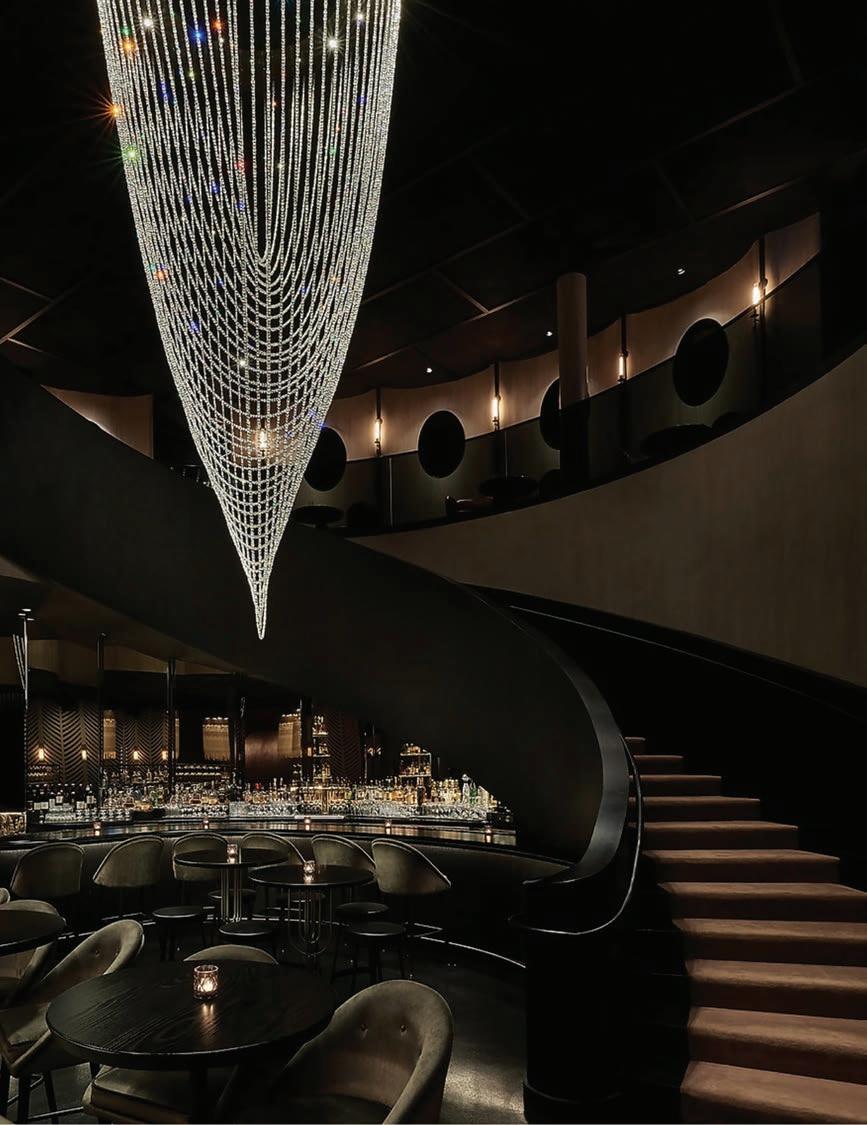
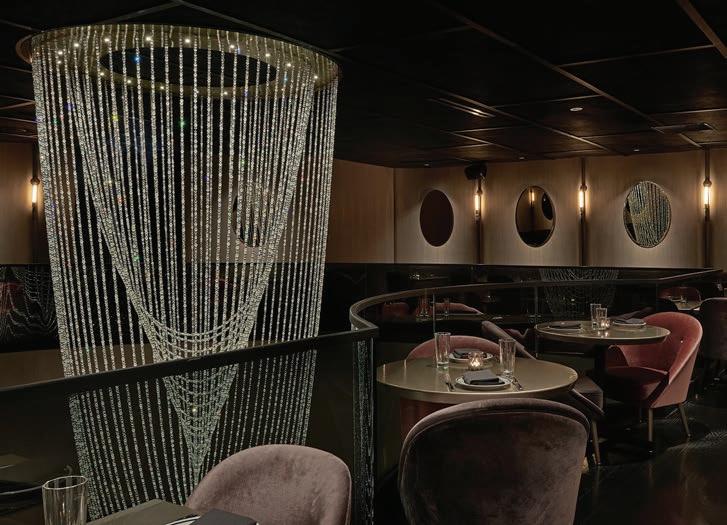
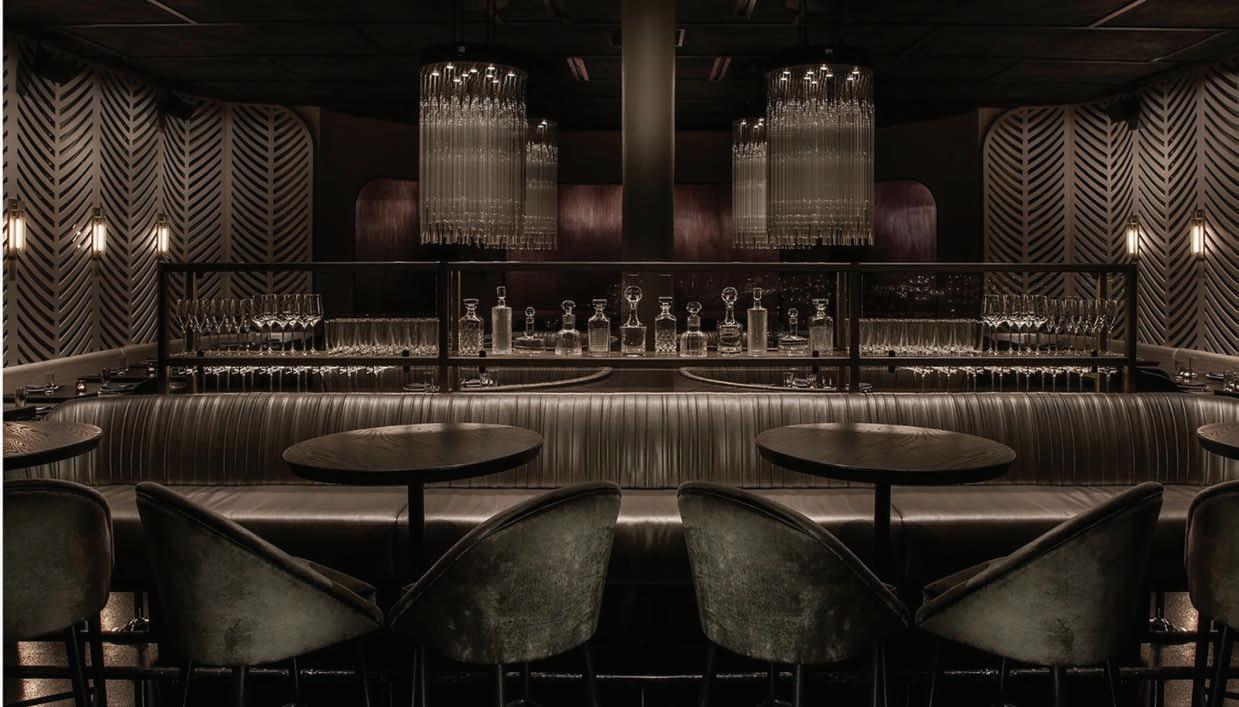
A sweeping ribbon staircase curves around a two-story crystal chandelier. Gold mirrors. Luxe fabrics. Glimmering lighting that makes guests want to arrive in their finest. Ten thousand square feet of 1950s Hollywood glamour dropped into Fulton Market.
BLVD opened in 2017 as the first restaurant from what’s now known as Day Off Group, and it immediately made a statement. Eater Chicago named it Design of the Year. The space, designed by Karen Herold of Studio K Creative with Space Architects + Planners, evoked Sunset Strip landmarks and The Great Gatsby’s art direction— ”scenery, evoking glamour and luxury without sacrificing sophistication and class.”
LG Builders brought that vision to life across two floors. The challenge wasn’t just scale—it was precision. Installing a dramatic staircase that could anchor the space. Hanging the two-story crystal chandelier and installing the lighting fixtures that would create the exact shimmer and glow the design demanded. Creating an environment where every detail, from the crystal installations to the fabric selections, had to hit the mark.
High-design hospitality requires builders who understand that atmosphere is everything. A restaurant isn’t just functional space—it’s theater. BLVD needed to transport guests the moment they walked in, and the construction had to support that illusion flawlessly.
The result: a space where, as one reviewer put it, The Rat Pack would feel welcome. Some projects set the bar for what hospitality can be in a neighborhood. This was one of them.
20 FOR 20 09
CLIENT Bottega Veneta
BUILD TYPE Tenant Improvement
SQUARE FEET 4,4000
BOTTEGA VENETA
ARCHITECT PFA Architects
CONTRACTOR LG Builders
LOCATION Gold Coast, Chicago
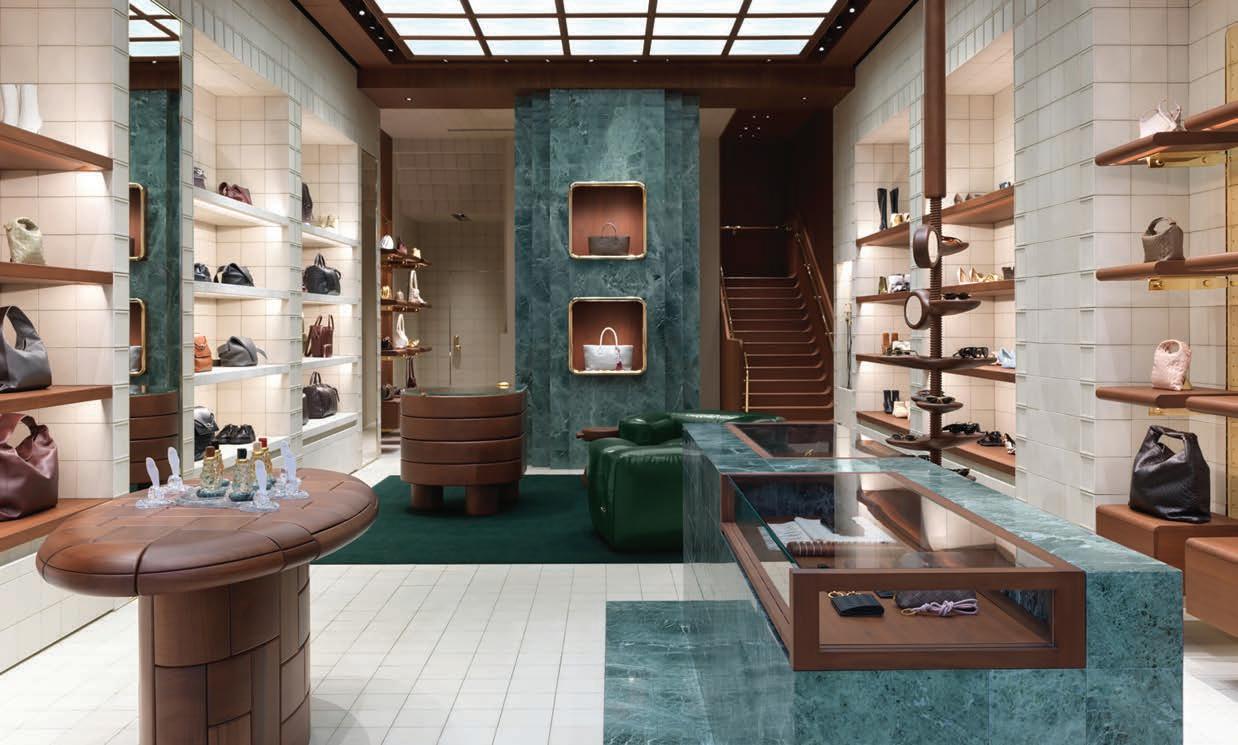
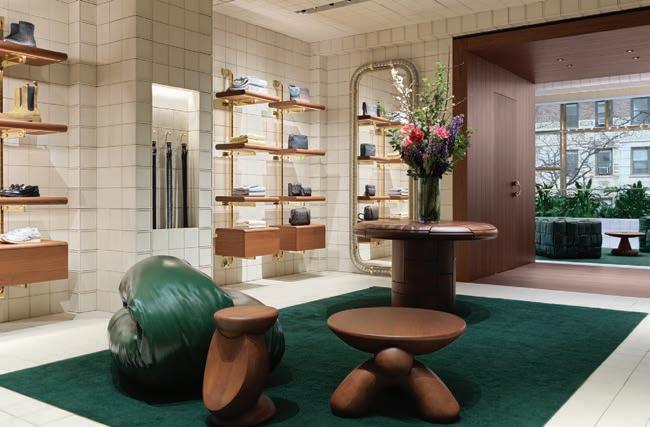
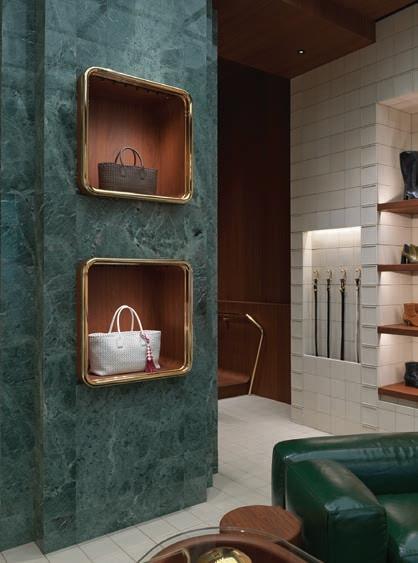
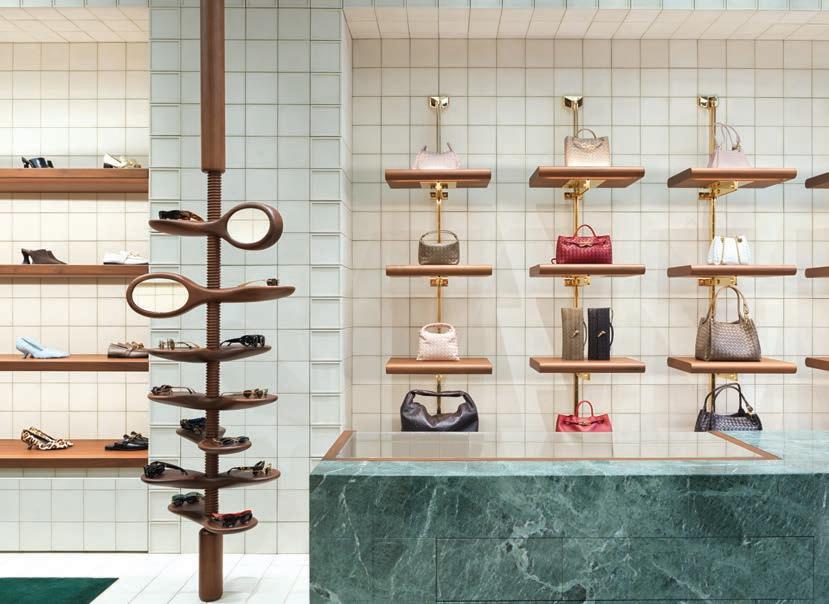
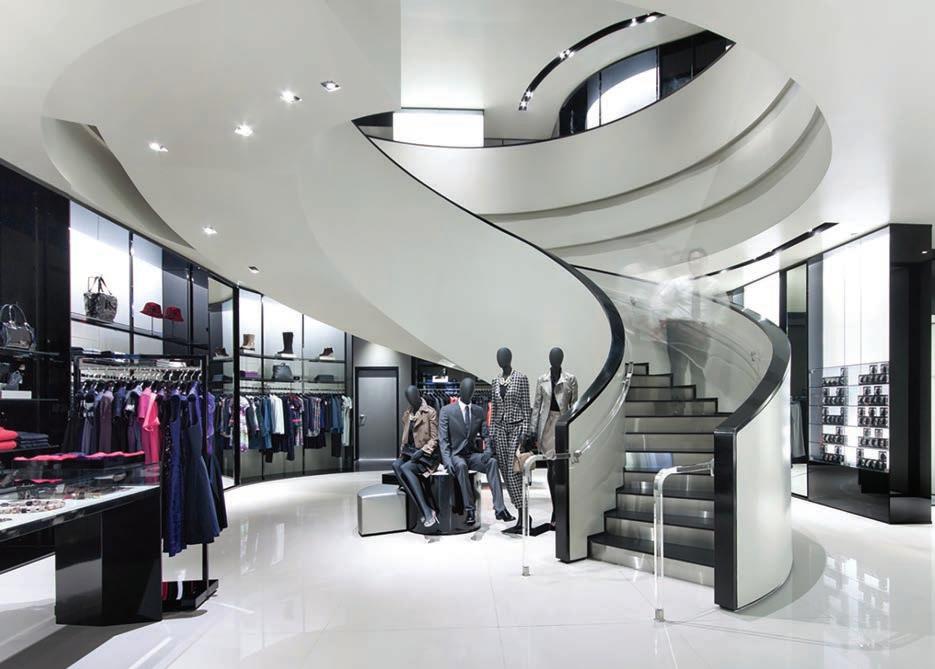
A 10-meter-high facade combining glass, brass, and stone. Verde Saint-Denis marble displays. Custom walnut elements throughout. A sculptural wraparound staircase leading to a skylit upper level with a VIP suite.
Bottega Veneta’s two-story flagship on East Oak Street demanded the kind of precision LG Builders has built a reputation on. Luxury retail construction leaves no room for error— every material, every detail, every sightline has to be executed flawlessly.
The exterior creates an expansive street view into both floors. Inside, cement tiling across floors and walls. Italian marble accenting display units and vitrines. Walnut craftsmanship defining the space. The upper level: greenery, natural light, a private consultation area for the brand’s most discerning clients.
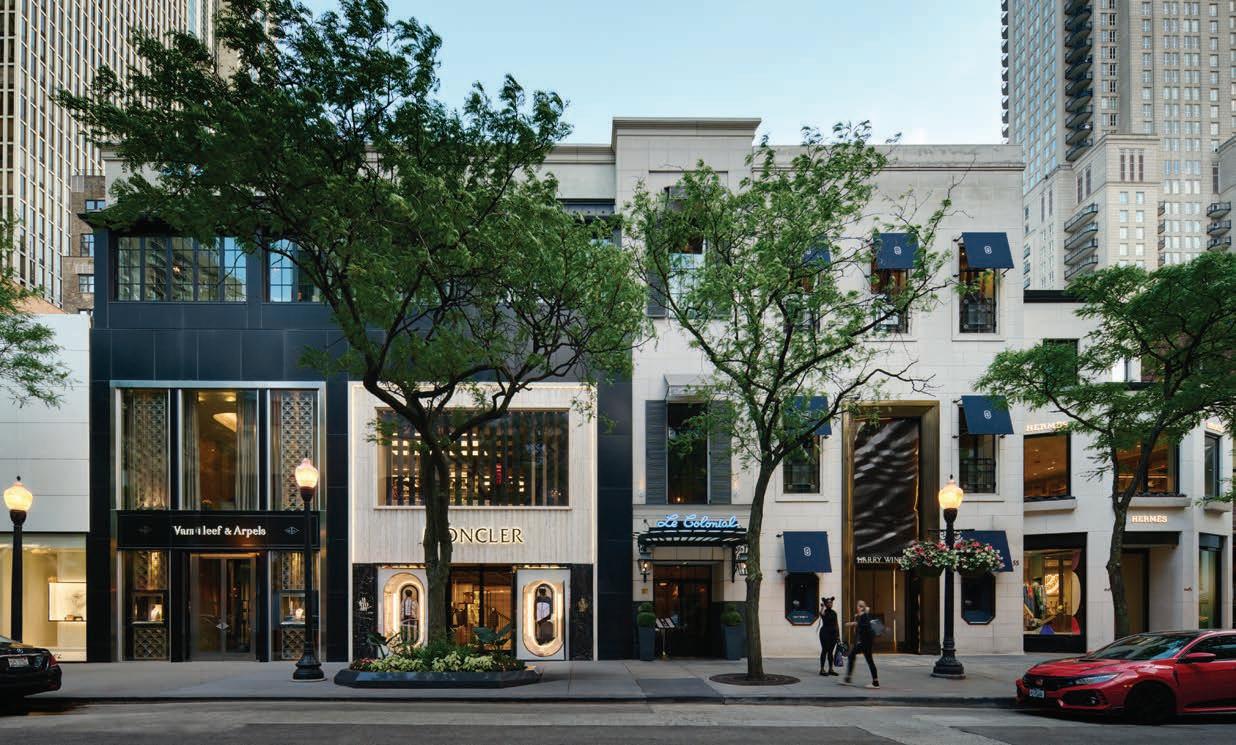
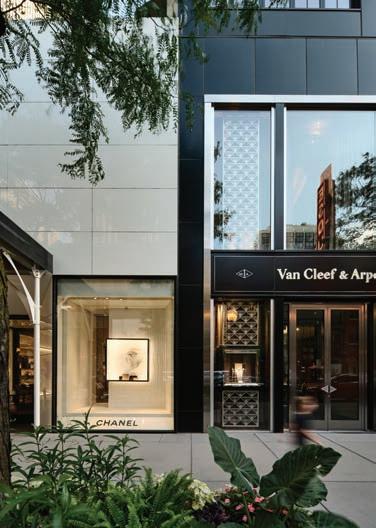
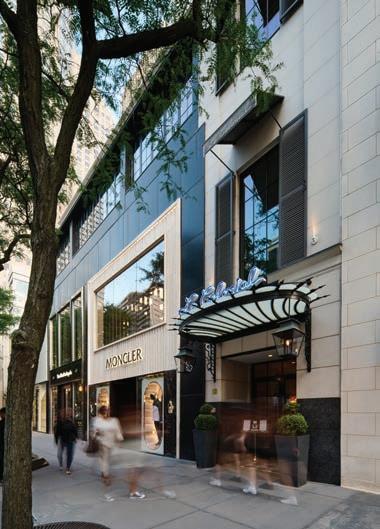
LG Builders has become Oak Street’s go-to for luxury retail—Chanel, Moncler, Hermès, Prada, and now Bottega Veneta. These brands don’t choose builders based on price. They choose based on who can execute their vision without compromise.
High-end retail is where craft meets timeline, where beauty can’t sacrifice function. LG Builders speaks that language.
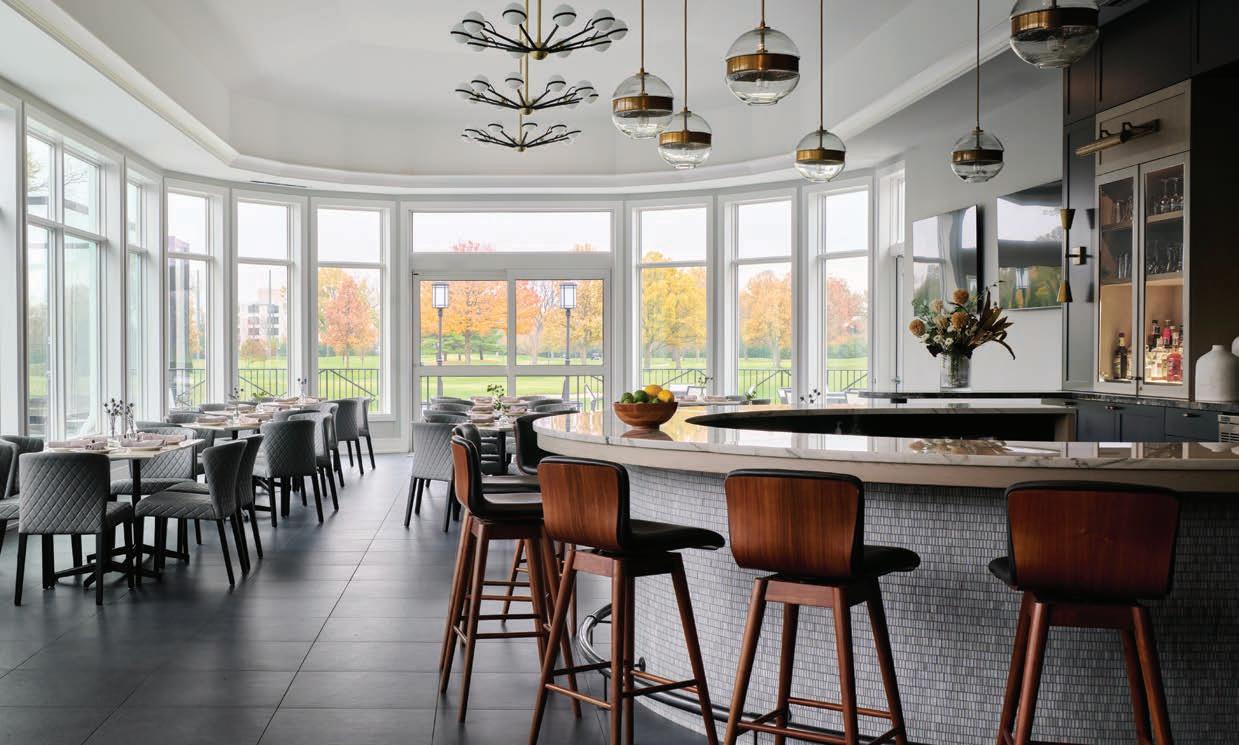
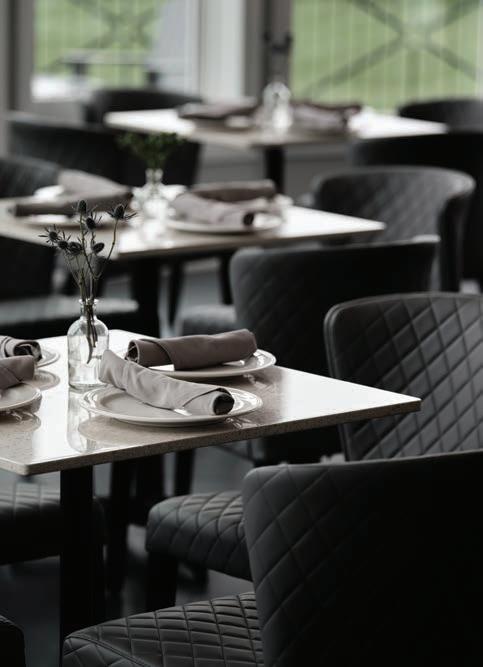
Not every project is straightforward, and Bryn Mawr Country Club proved it. When LG Group stepped in mid-construction to replace another general contractor, the challenge was clear: undo, redo, and keep moving forward— all without missing a beat.
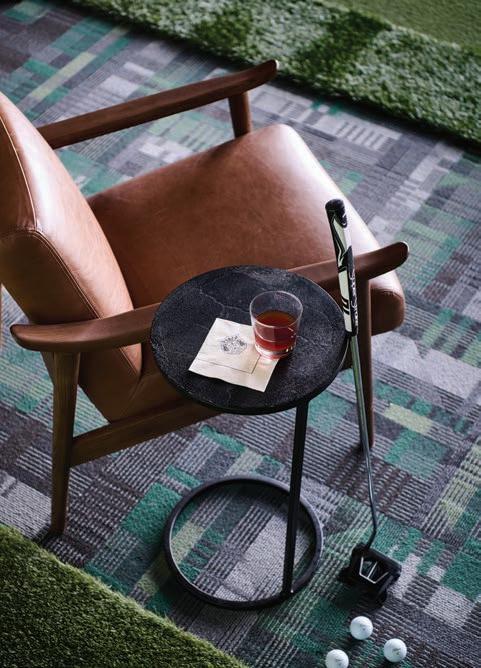
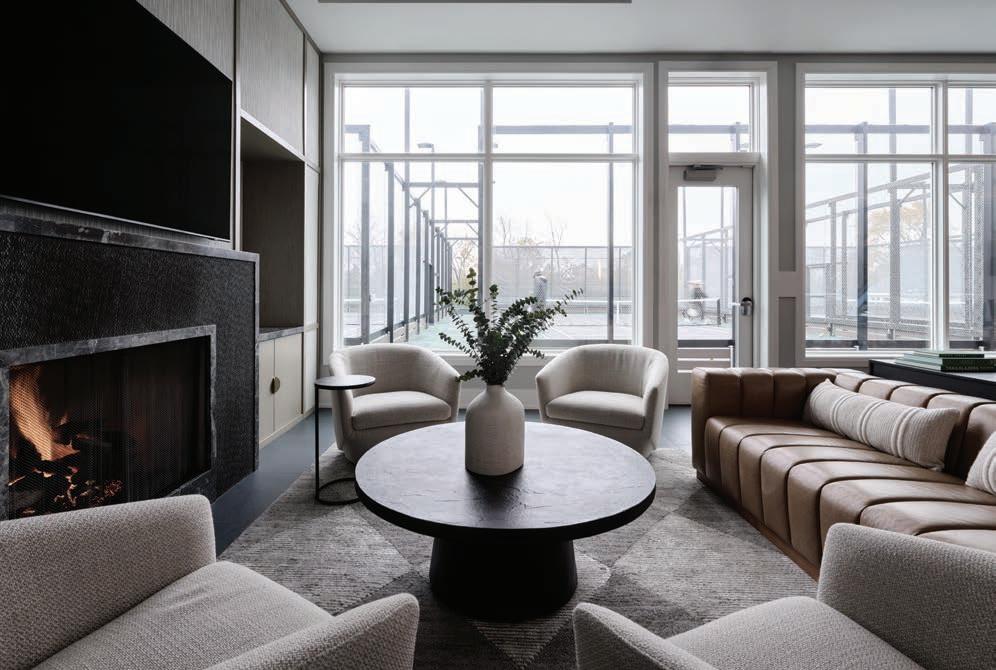
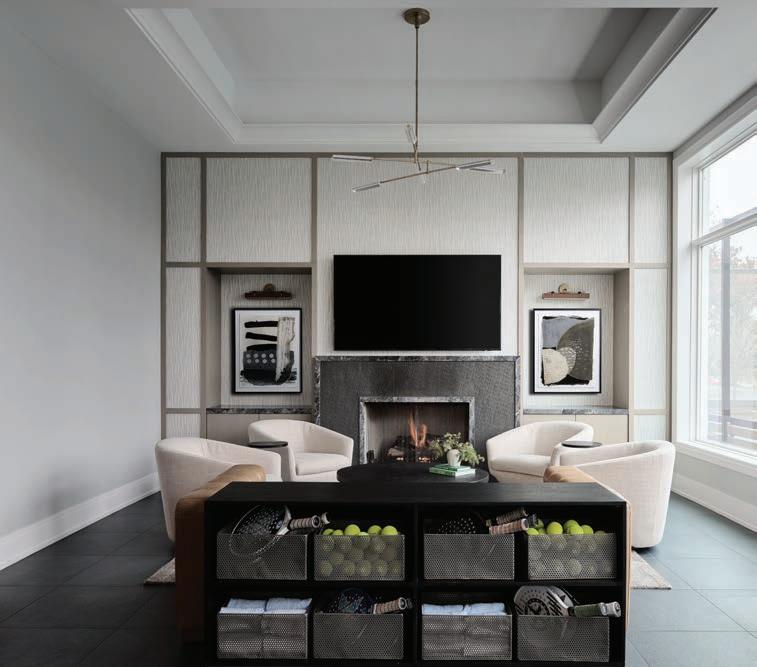
The scope? An expansive bar and dining entertainment space with indoor-outdoor seating, a lounge with a fireplace, brand new paddle courts overlooking the tennis system, two full golf simulators, and a putting green. The kind of unique, high-end spaces most people never get to experience, let alone build.
This is where design-build becomes essential. With architecture, engineering, and construction under one roof, LG Group navigated the complexities of a mid-stream takeover without losing momentum. It wasn’t just one team—it was a company-wide effort, bringing together every aspect of what we do in a single project.
We know how to handle the complicated ones. And each milestone points forward, building excitement for what’s next.
20 FOR 20
BUILD
ARCHITECT Johnathan Splitt Architects
CONTRACTOR LG Builders
INTERIOR DESIGN 555 Design
LOCATION Fulton Market, Chicago
GIRL & THE GOAT
Quality design. Quality execution. From the chef’s vision to the construction details, Girl & The Goat showcased what LG Group could do—even early in our history.
The project had real challenges: a complex construction site, exacting design standards, and a world-class chef with a clear vision. That’s exactly why this collaboration stands out. Everyone brought their A-game, stayed focused on creating something exceptional, and the result speaks for itself.
Girl & The Goat remains one of our proudest achievements—proof that even in our early years, we could rise to the occasion and deliver excellence.
20 FOR 20
ARCHITECT NORR Architects
CONTRACTOR LG Builders
INTERIOR DESIGN Offshoot Creative
LOCATION River North, Chicago
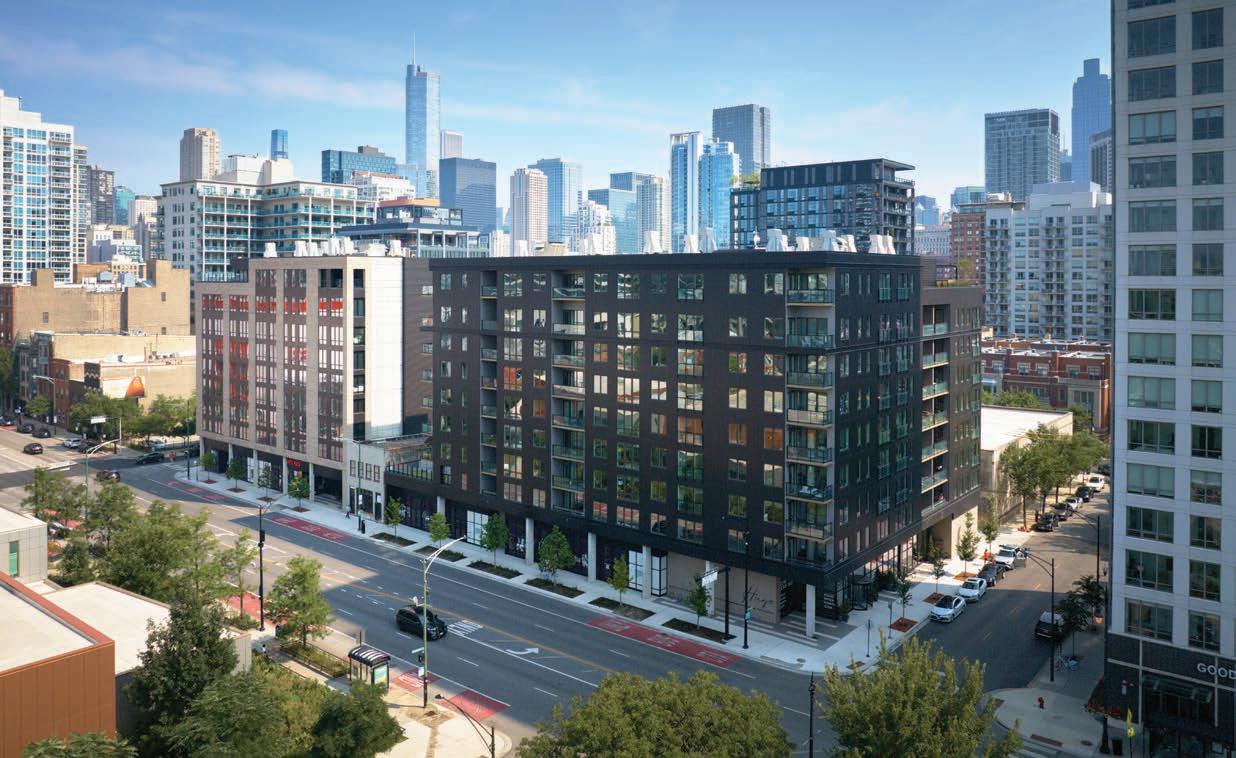
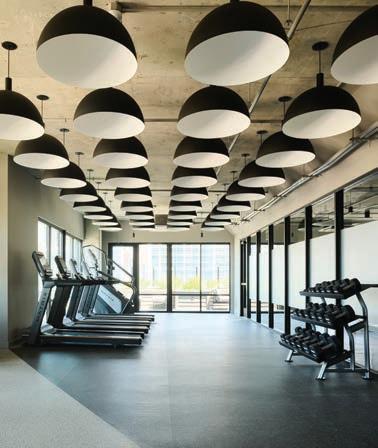
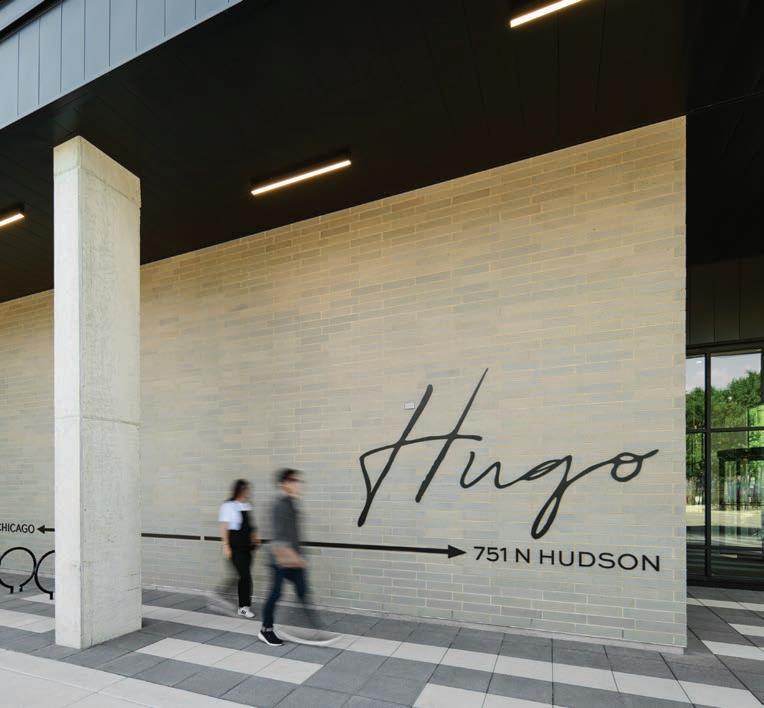
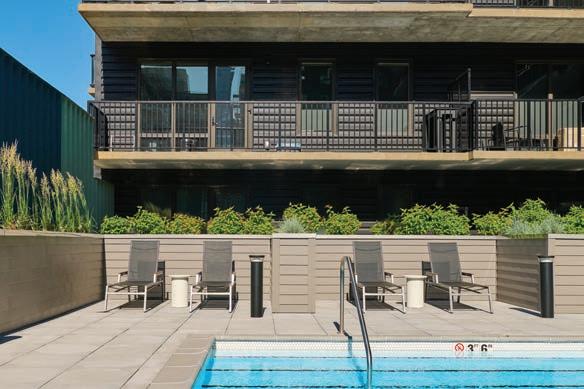
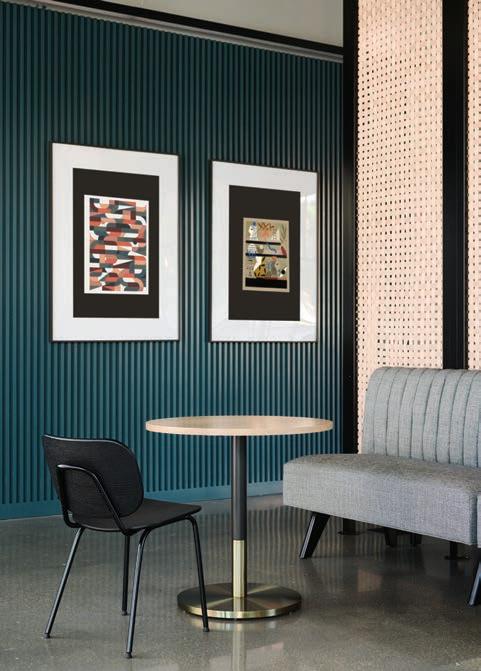
Everything LG Group has grown internally was built for a project like Hugo.
Our largest example to date of what happens when we put it all together: design it, build it, develop it, market it. Hugo is the ultimate showcase of our collective capabilities— and it taught us how to excel at high-rise construction as a firm.
LG Group was uniquely suited for this project because we didn’t need to coordinate across multiple companies. Every discipline was already here, working as one team toward a single vision.
Hugo represents what makes us different: we bring every capability under one roof, and we execute at the highest level.
“We took two asphalt parking lots and put multi-family housing on them— densifying the urban core in a way that makes sense. These are real homes for people, functional spaces that rethink how we live, play, and relax.”
GEORGE SORICH VICE PRESIDENT NORR
ARCHITECT N/A
CONTRACTOR LG Builders
INTERIOR DESIGN Offshoot Creative
LOCATION River North, Chicago
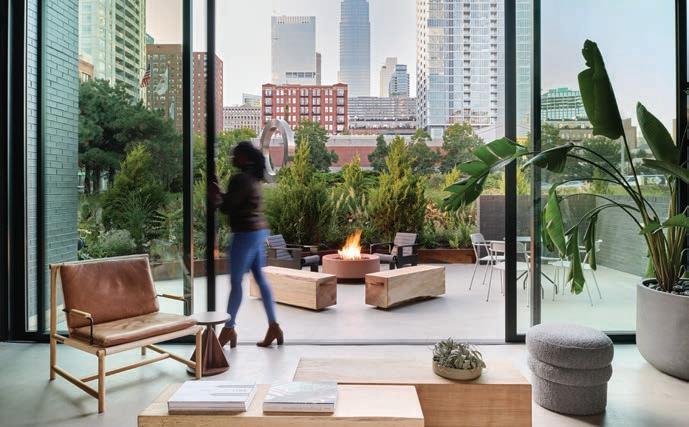
LG GROUP HEADQUARTERS
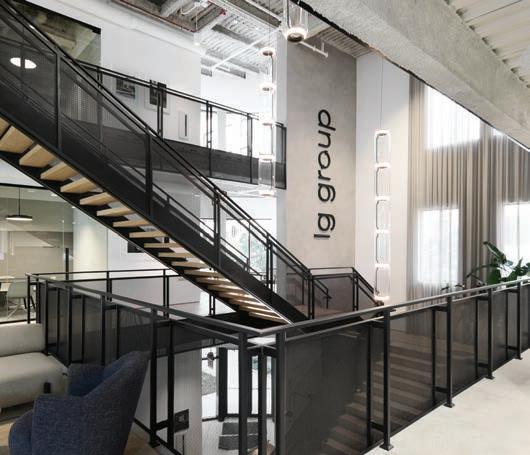
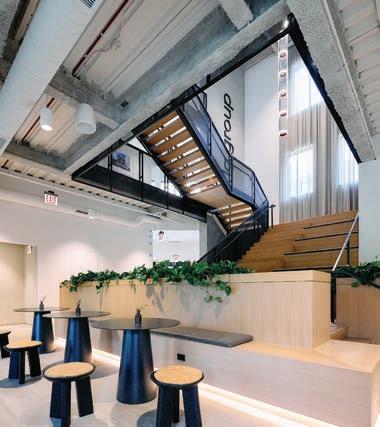
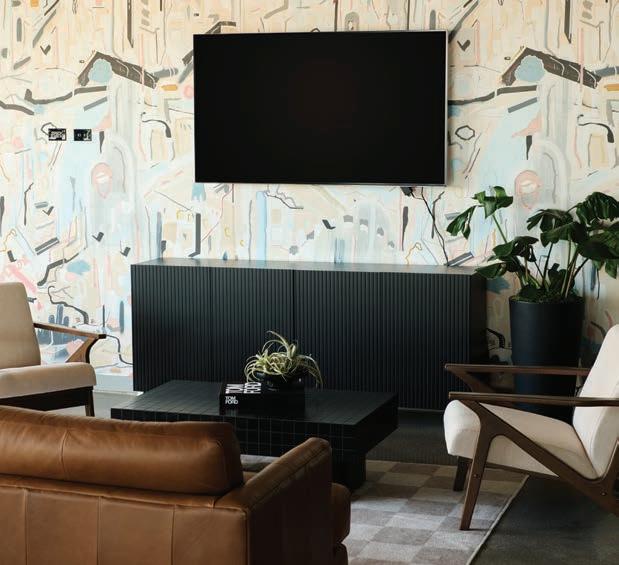
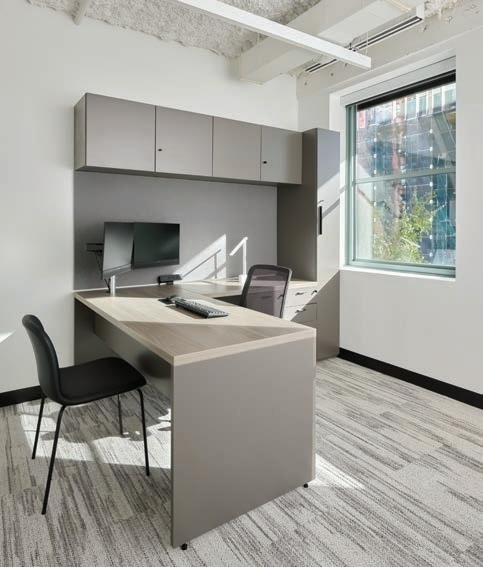
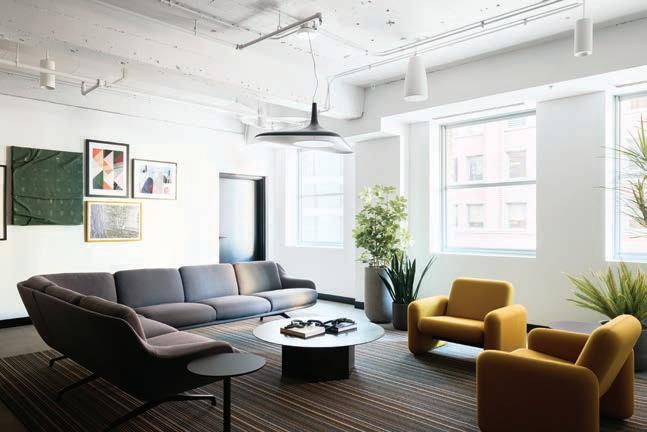
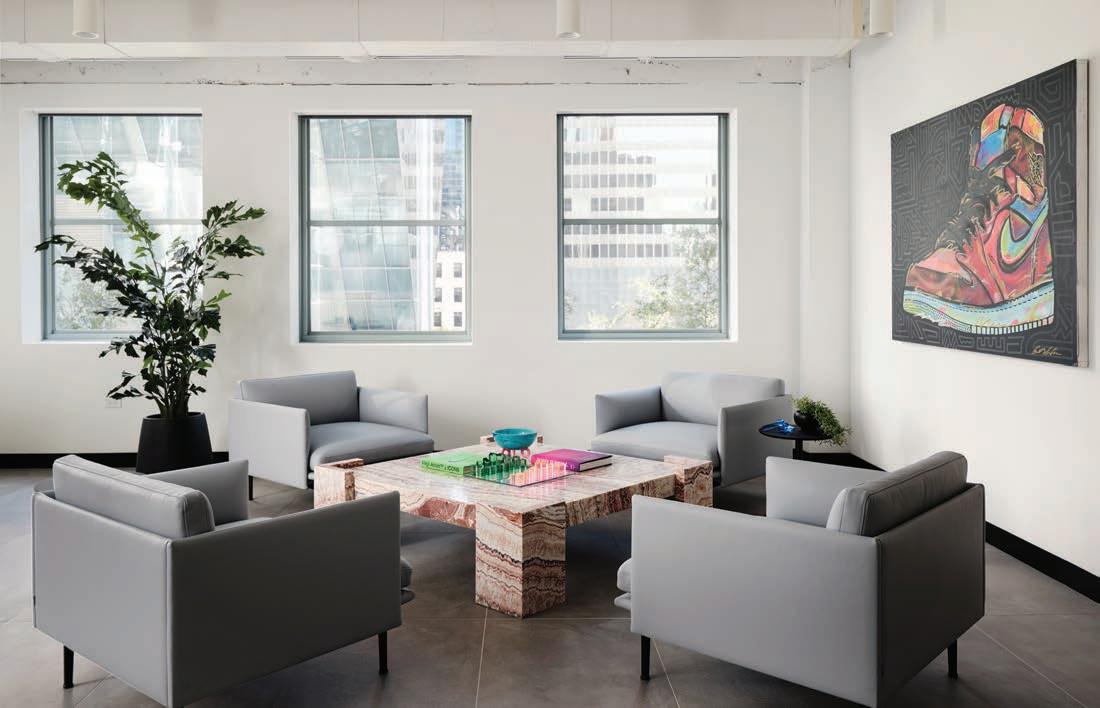
With our own design-build division at our disposal, we had the rare opportunity to create our workspace from the ground up. No guessing what we needed—we already knew.
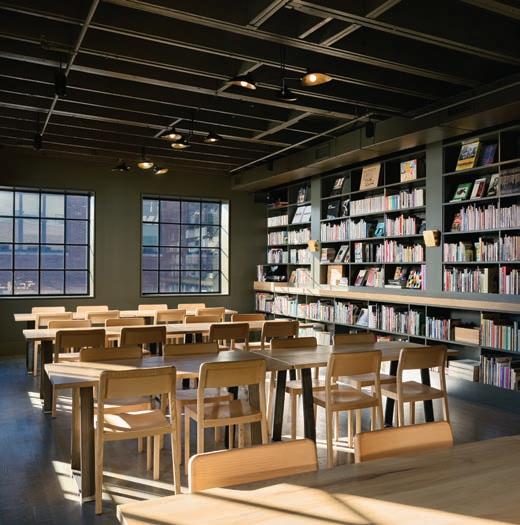
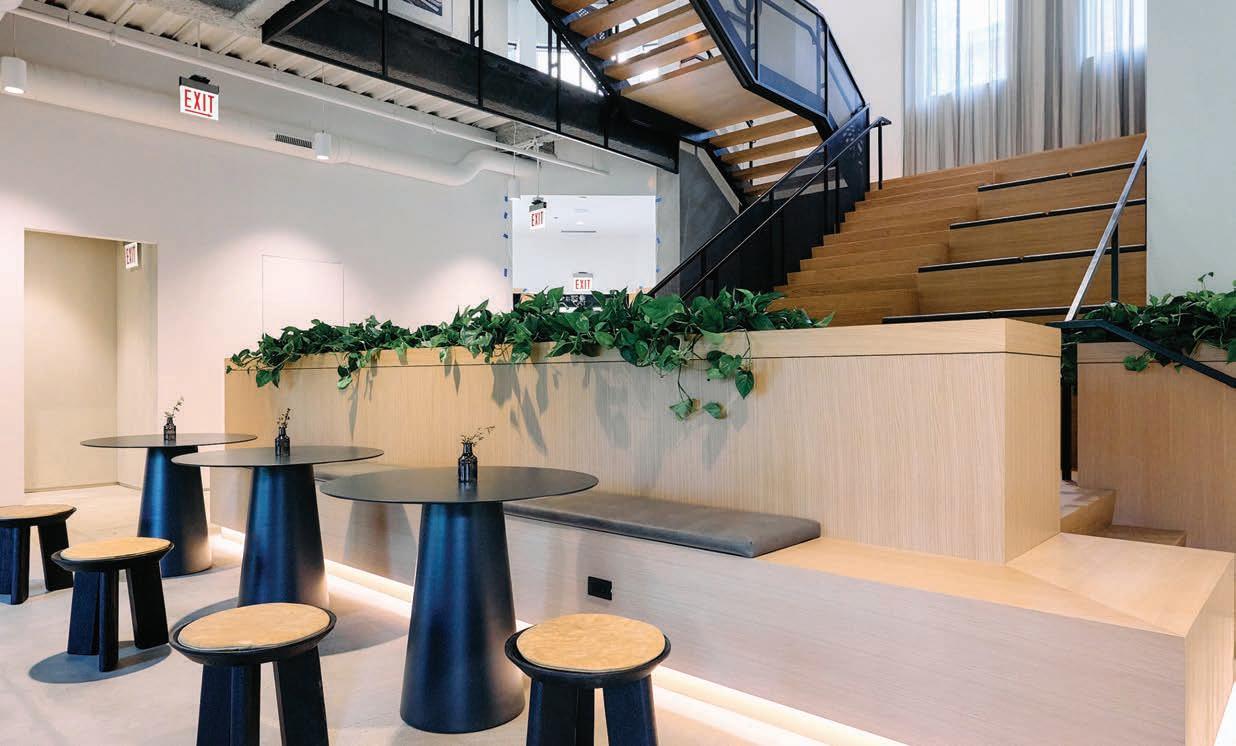
At the heart of the space is a grand staircase— both a physical connection between floors and a ceremonial representation of how we work. It’s where divisions meet, where knowledge gets shared, where collaboration happens naturally instead of being scheduled into a conference room.
“This move to the LG headquarters was an investment in our people and our ability to create space for collaboration. This building represents where LG’s going—the potential and capability of where we can truly go.”
KASSIE CHAPEL DIRECTOR OF PEOPLE & CULTURE
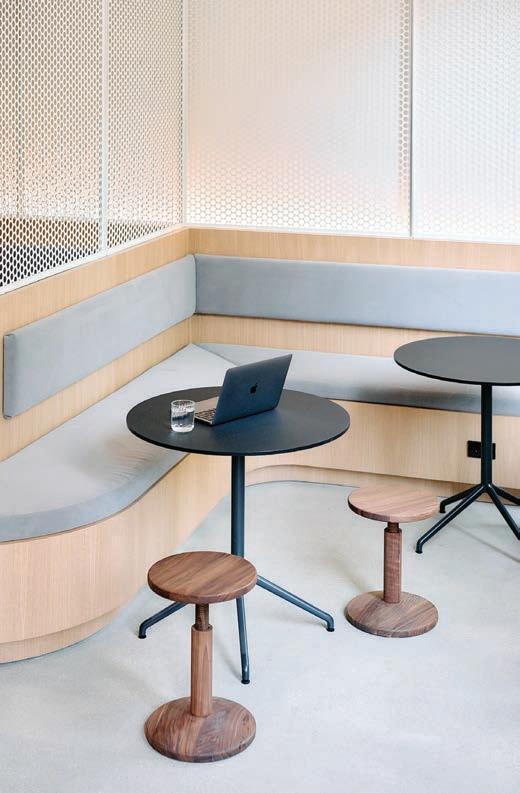
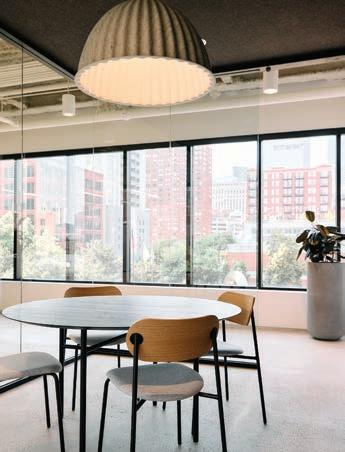
This building adapts to whatever we need it to be. Morning project dives with clients and partners. Lunchtime conversations across teams. After-work gatherings where coworkers become people. It’s social and technical, professional and personal—a space that understands we do our best work when we’re connected, not siloed.
We know what we need: a place to work together, learn together, celebrate together. So we built it. This headquarters isn’t just where LG Group works—it’s how we work.
20 FOR 20
ARCHITECT
CONTRACTOR LG Builders
INTERIOR DESIGN WDA
LOCATION Fulton Market, Chicago
MAXWELLS TRADING
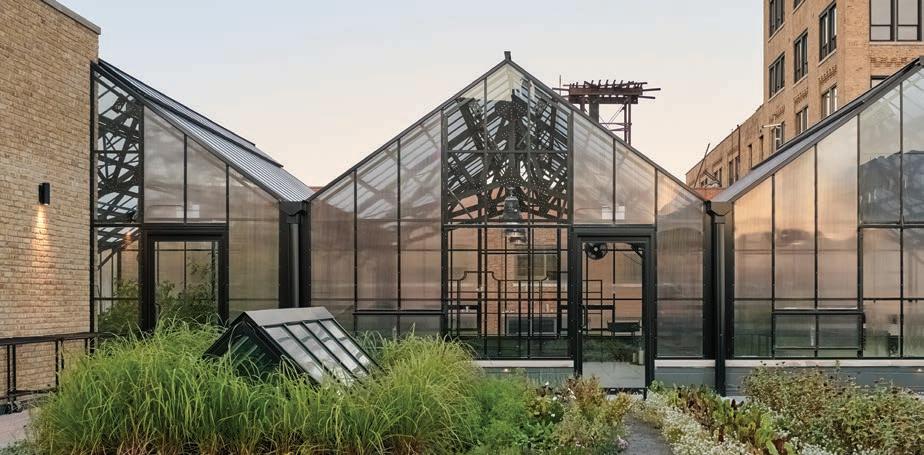
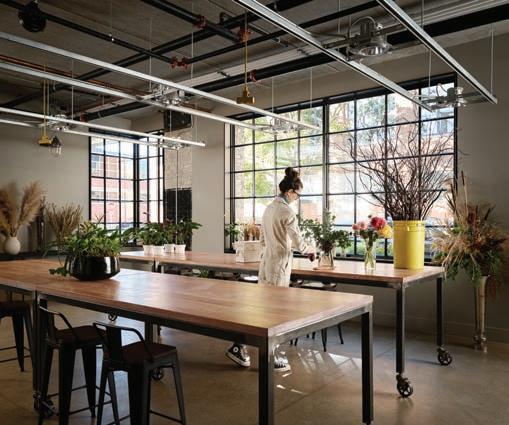
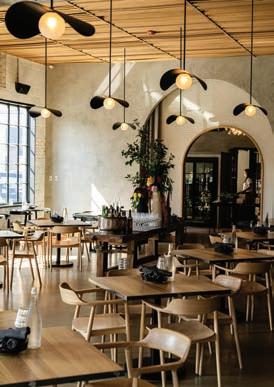
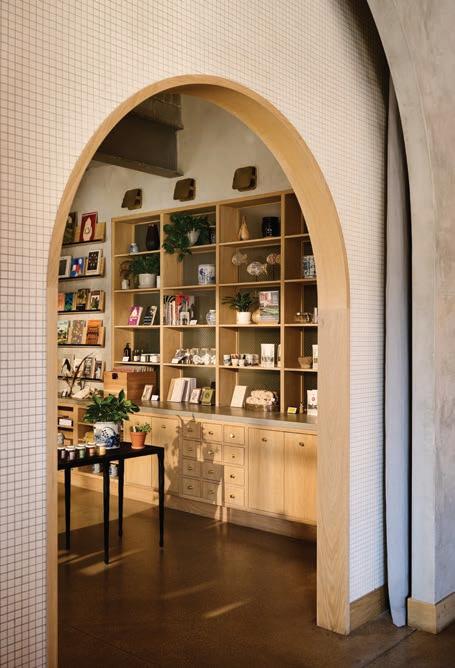
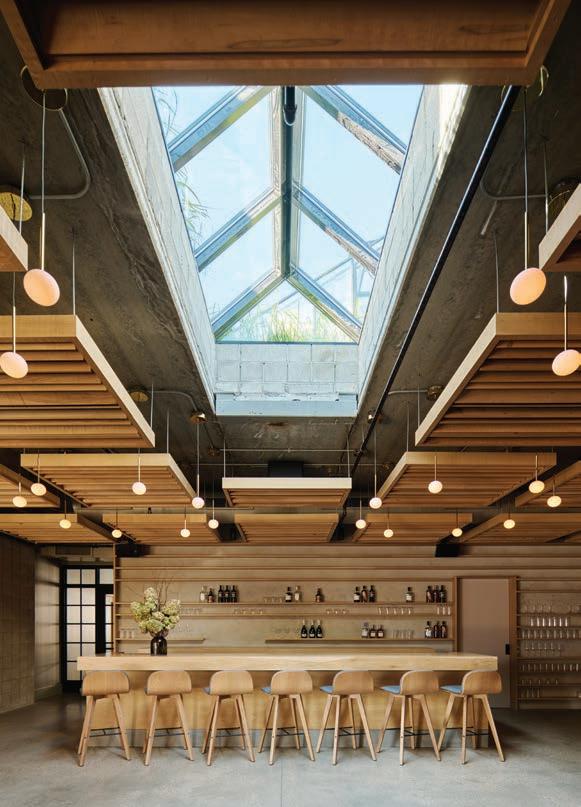
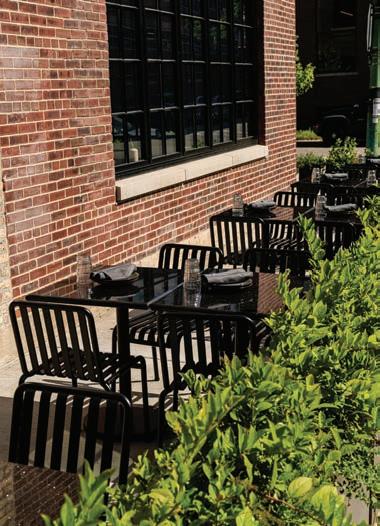
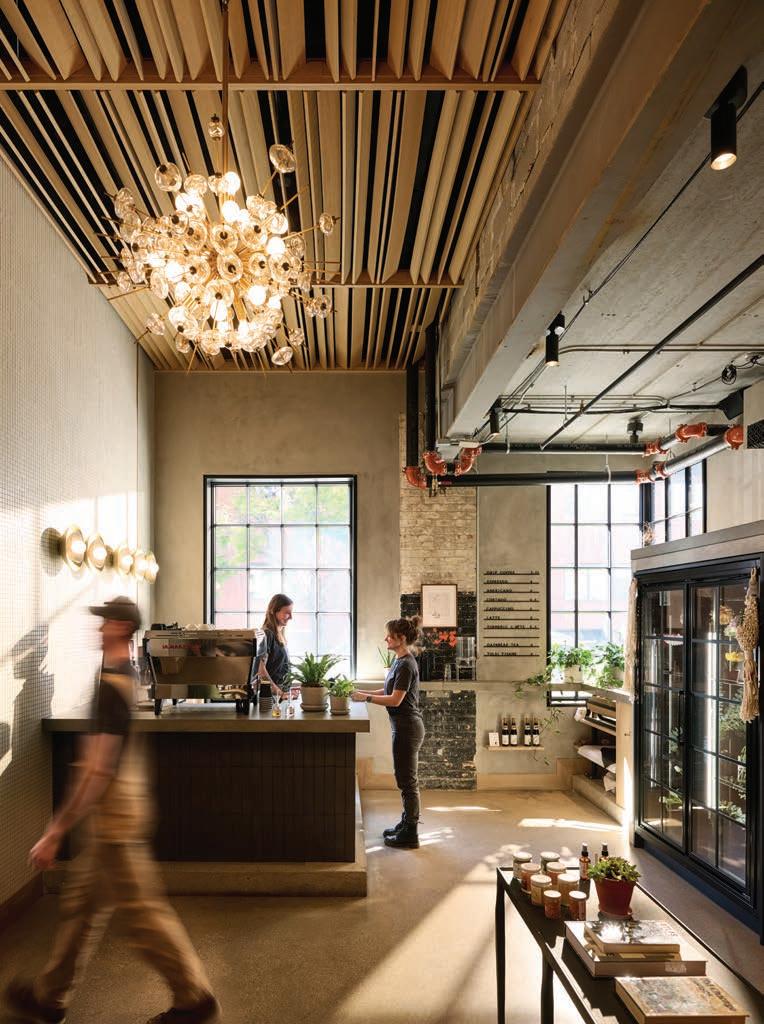
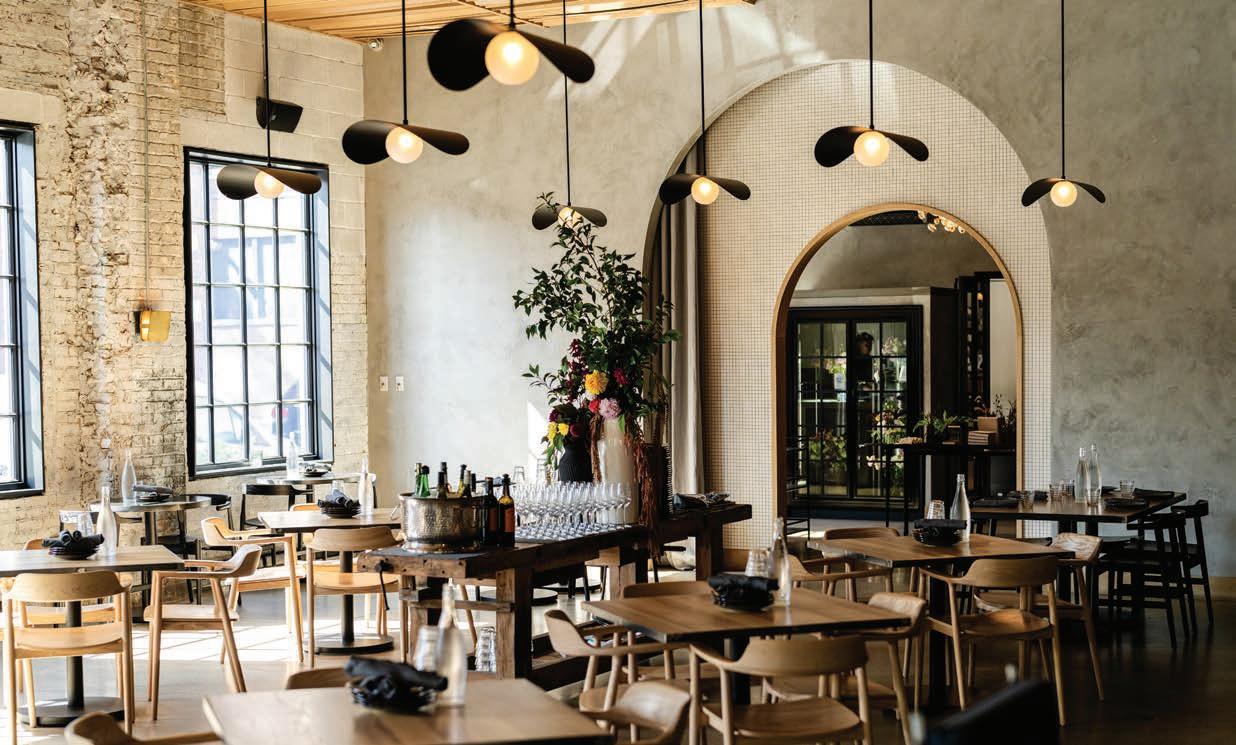
There’s no other place like it in Chicago. Maxwell’s Trading combines a restaurant, coffee shop, and floral studio—all connected by rooftop greenhouses where they grow the arrangements sold below.
Rehab projects are some of the most difficult in construction. Discovered conditions are inevitable, and Maxwell’s was a nonstop problemsolving exercise that required complete trust in our team and trade partners.
The core challenge of adaptive reuse: expose and celebrate the existing masonry structure while integrating new construction. Marrying old materials with new systems, historic character with modern function—these details required constant innovation and careful execution.
Maxwell’s Trading showcases the depth of LG Group’s experience—the kind of project that pulls from every lesson learned. It’s a staple in Chicago, and proof of what’s possible when you know how to honor what came before while building for what’s ahead.
ARCHITECT PBD Architects
CONTRACTOR LG Builders
INTERIOR DESIGN Offshoot Creative
LOCATION River North, Chicago
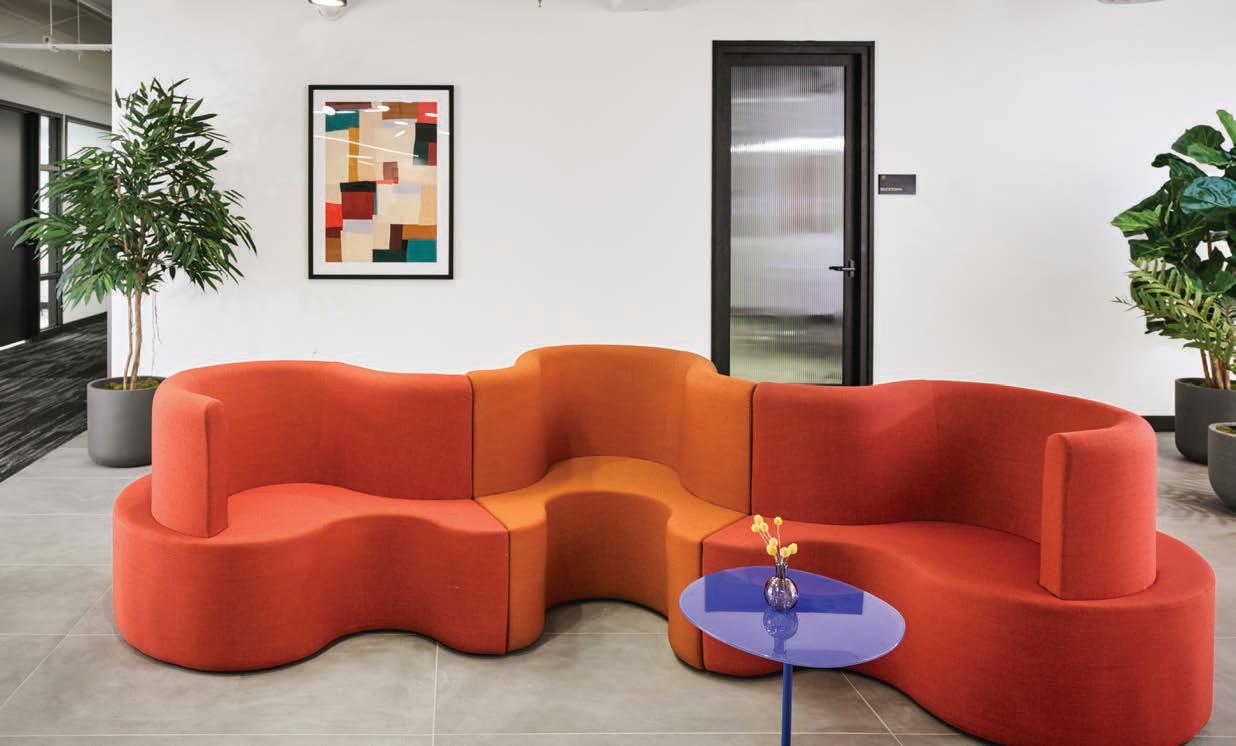
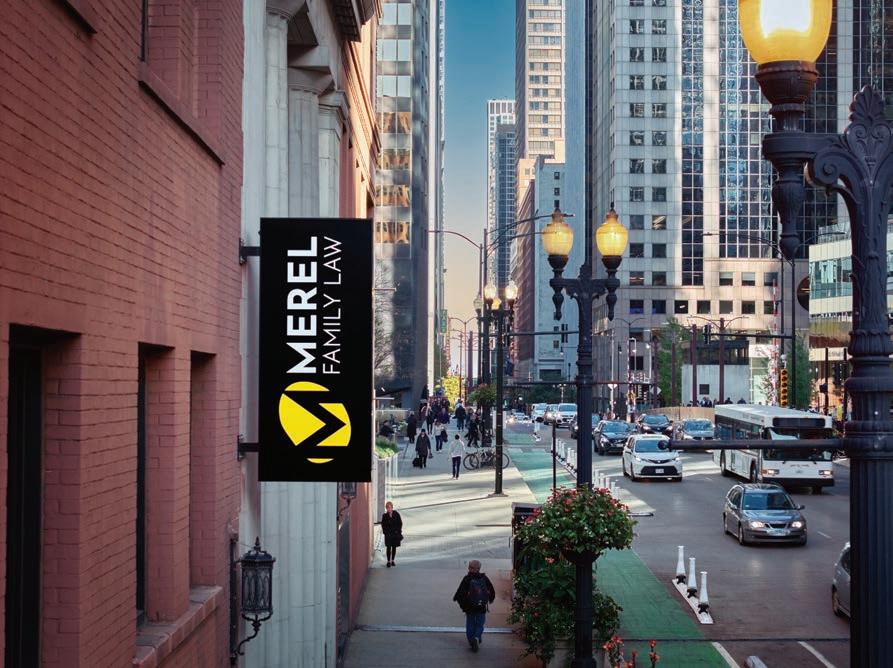
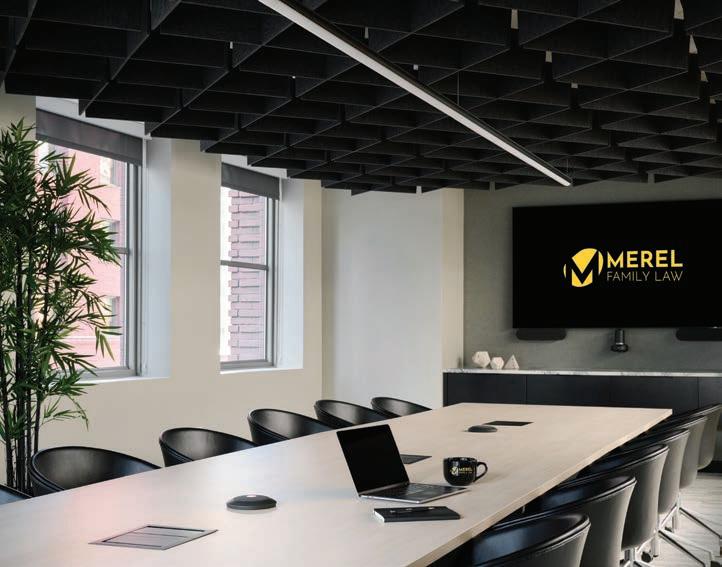
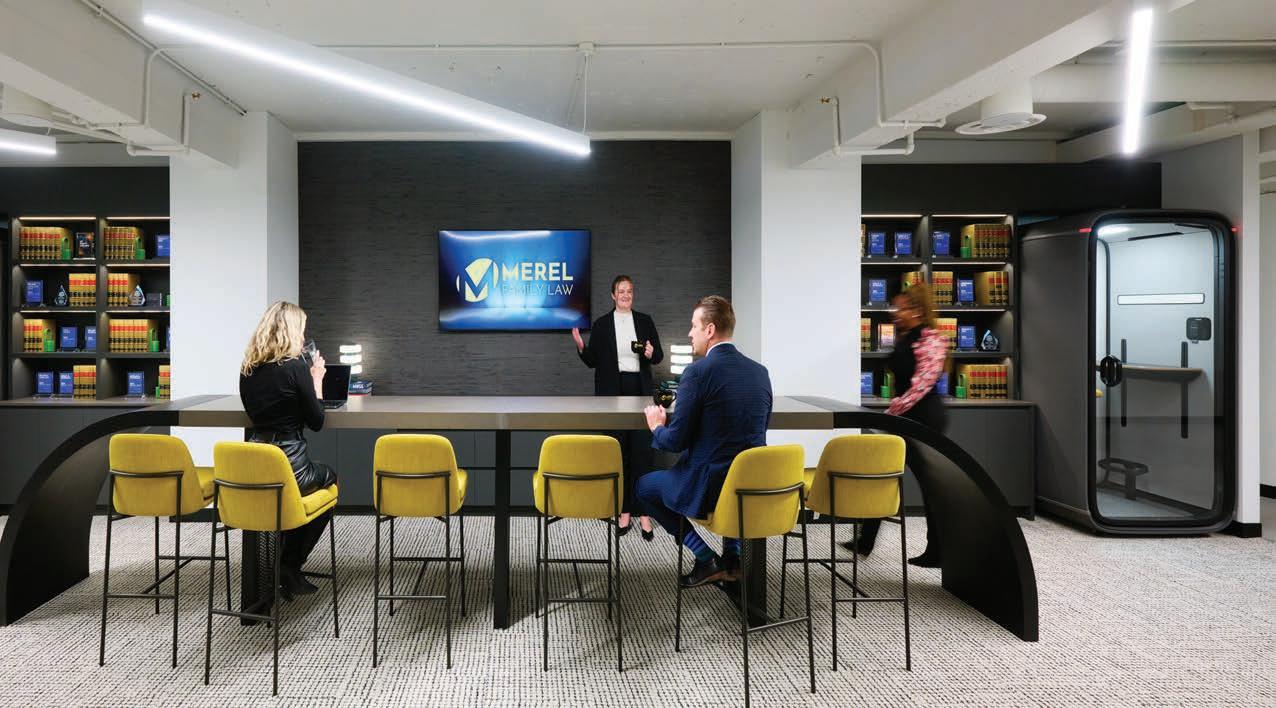
Most law offices feel like law offices. Merel Family Law in the West Loop does not.
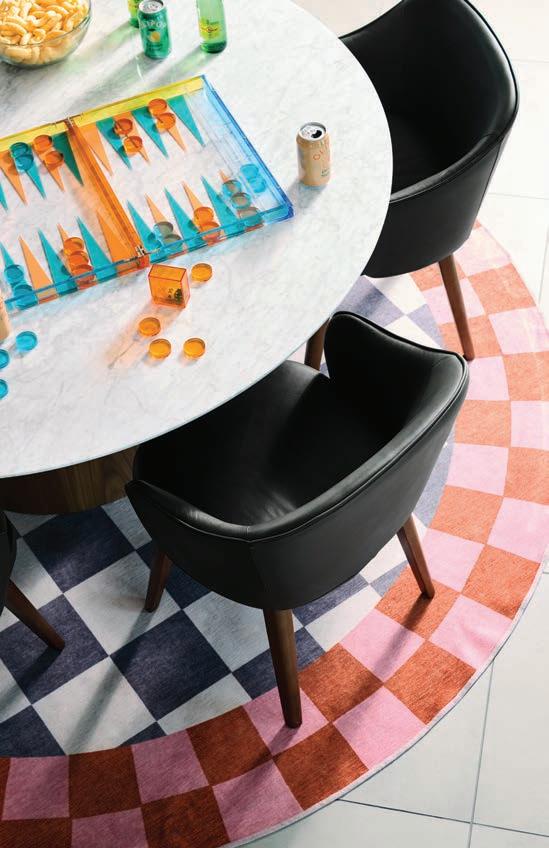
This century-old space became a full designbuild project for Offshoot Creative, LG Group’s in-house design studio, and LG Builders— a chance to prove that serious work can happen in an environment with serious personality. The client, a risk-taking attorney, wanted his practice to reflect his bold, joyful spirit. No neutral grays. No corporate restraint.
The challenge was balance: create a space that functions flawlessly for legal practice while never losing the uplifting energy that makes it memorable. Function and flow had to support client meetings, case strategy, daily operations. But the art program, the furniture selections, the color palette—all of it worked to inject playfulness and spirit without sacrificing sophistication.
Design-build allowed us to solve problems in real time, turning obstacles in the historic space into opportunities. The result is a workplace that blends hospitality, bold visual identity, and the functionality a law office demands.
Some clients trust you to execute their vision. The best ones trust you to push it further.
20 FOR 20
CLIENT Boka Restaurant Group
BUILD
SQUARE
ARCHITECT Johnathan Splitt Architects
CONTRACTOR LG Builders
INTERIOR DESIGN Avroko
LOCATION Fulton Market, Chicago
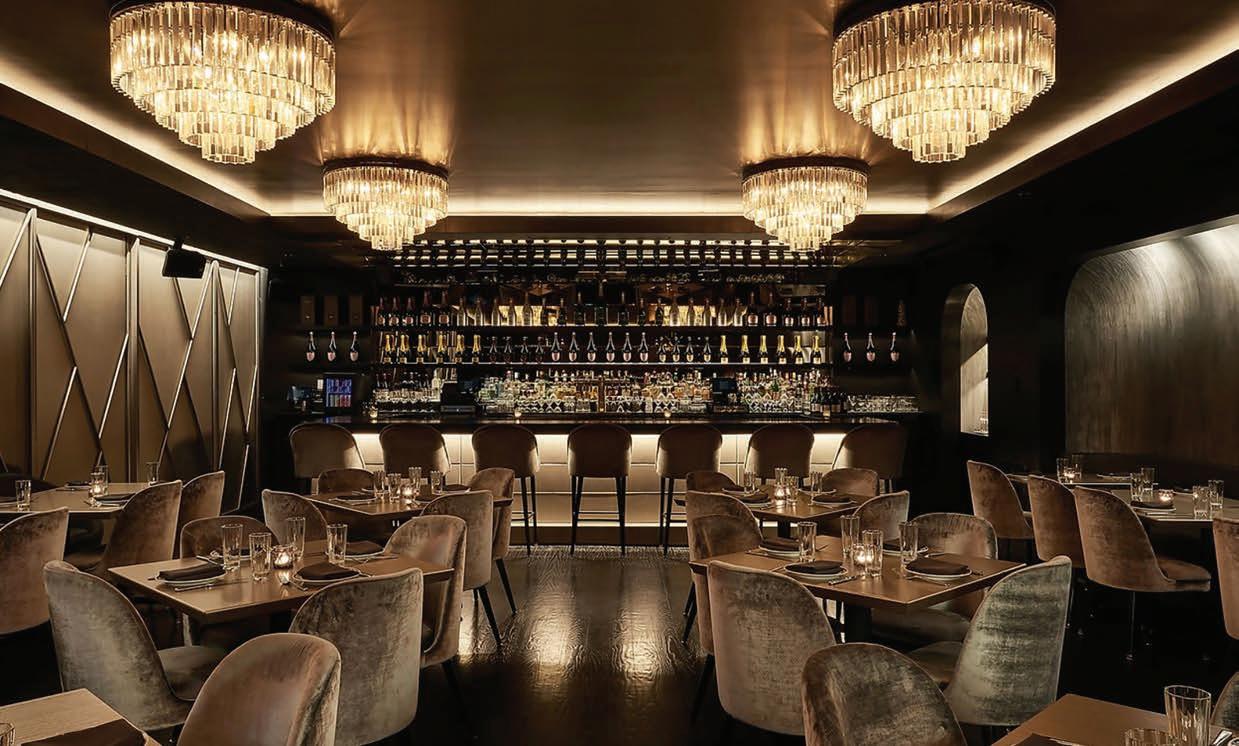
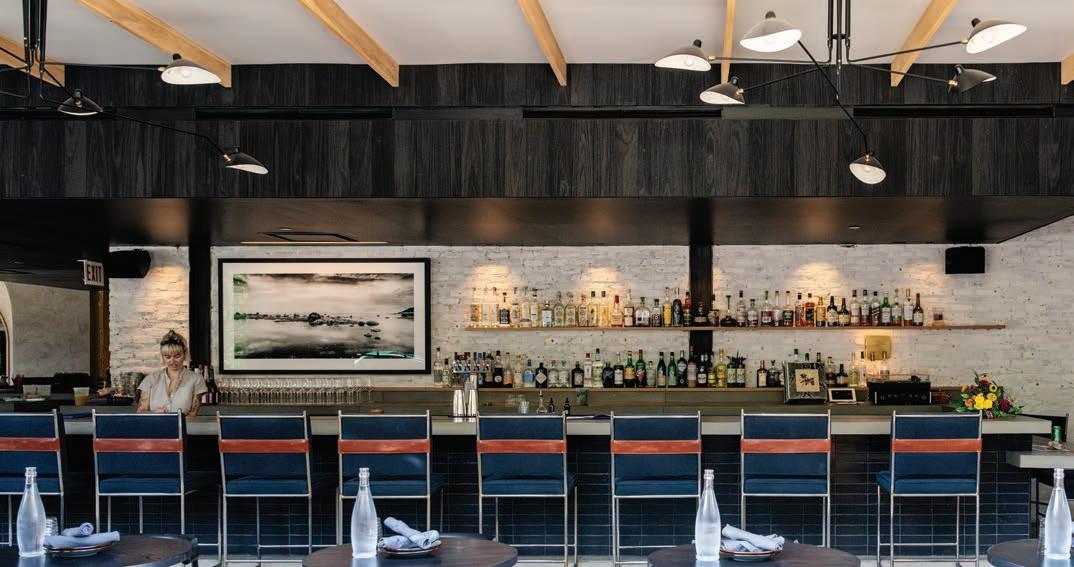
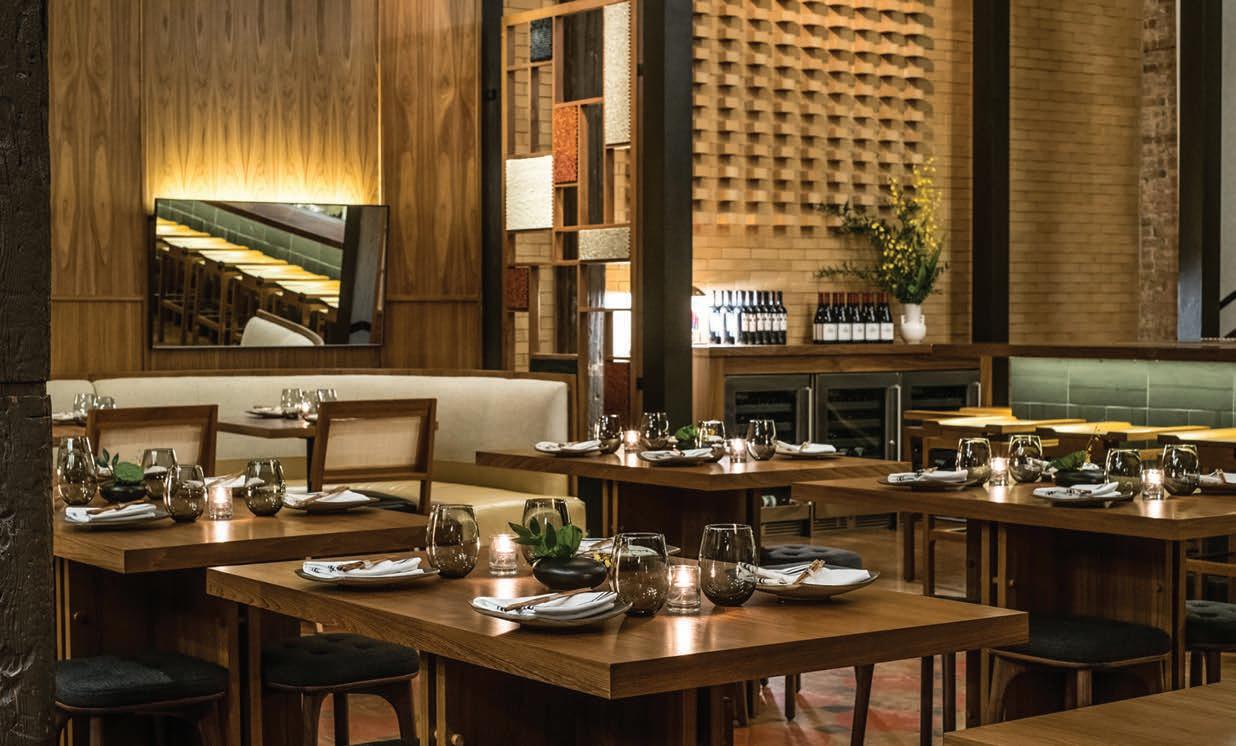
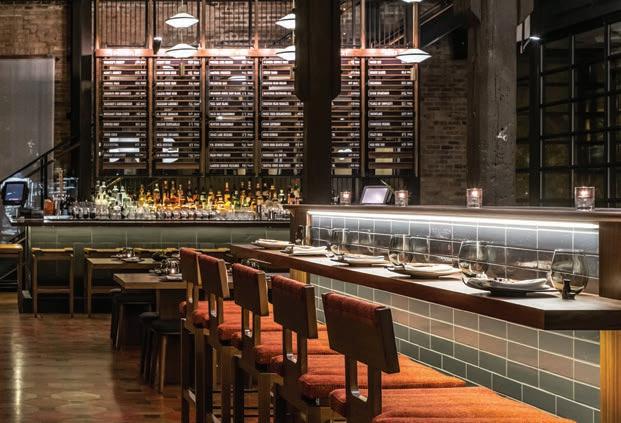
Picture an old warehouse in the middle of Fulton Market—gritty bones, industrial history. Now layer in mid-century modern design and high-end Japanese sensibility. That’s Momotaro, one of the most uniquely designed restaurants in Chicago.
This project represents a continuation of LG Group’s deep expertise in restaurant construction. With 60 to 70 restaurants built across the city, we’ve developed a specialized understanding of what it takes to create exceptional dining spaces. Momotaro stands out even within that portfolio—a testament to what’s possible when design vision meets construction precision.
Everything we’ve built becomes the foundation for what comes next.
Gold Coast Retail represents Chicago’s pinnacle of luxury—home to Hermès, Prada, Moncler, Chanel, and Loro Piana. Over the years, LG Builders has become a trusted builder in this prestigious corridor, delivering everything from ground-up core and shell development to full tenant buildouts and pop-up installations.
Our portfolio includes Bottega Veneta, Stadium Goods, Ganni, Lalique, Oliver Peoples, Emporio Armani, and Goop. We’ve transformed the former Barneys building at 25 E Oak into a multi-tenant luxury destination.
We’ve developed new construction at 57-65 E Oak and 67 E Oak. Each brand unique, each space distinct, all executed with the same philosophy.
Here’s what sets retail construction apart: we’re not building a space to showcase our work. We’re creating a backdrop that lets the client’s product shine. The construction should disappear, leaving only a beautiful environment that elevates what’s being sold. And after years of working in Gold Coast, we’ve mastered it.
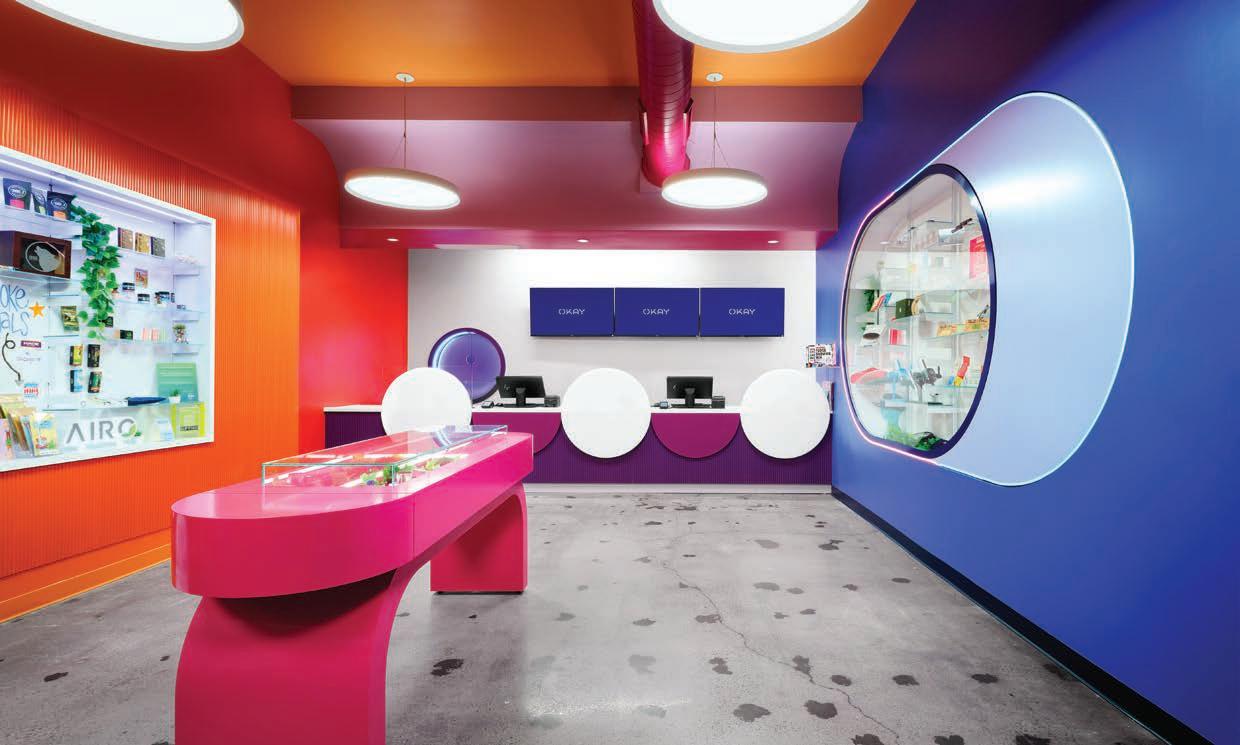
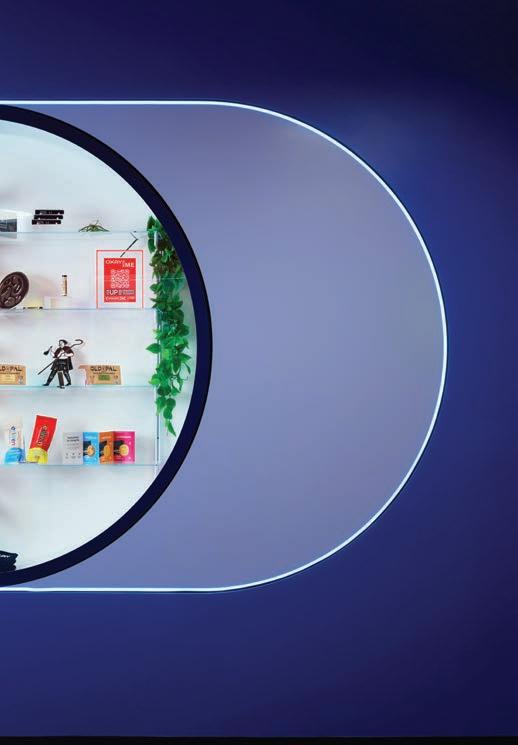
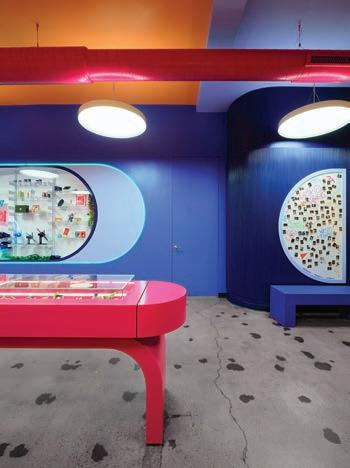
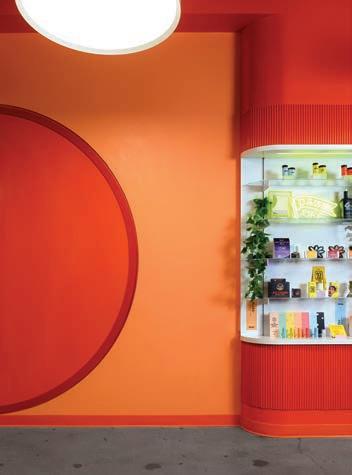
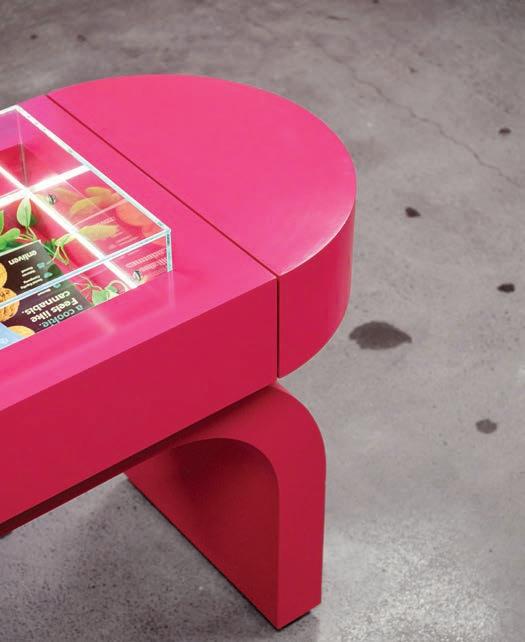
Most dispensaries felt sterile and transactional when OKAY Cannabis opened in West Town— customers ushered in, ushered out. OKAY wanted something different.
This wasn’t just retail cannabis. It was a hospitality concept, a community hub for craft growers, a colorful departure from the clinical dispensary model. The vision: create a space where customers feel comfortable whether they’re seasoned enthusiasts or curious first-timers. Where events happen.
Where craft cannabis gets the same treatment craft beer received a decade ago.
LG Builders brought that vision to life for FIFTY/50 GROUP, working alongside GENIANT + EASTLAKE STUDIO to build a space that balances approachability with functionality. Bright, colorful branding. Layout designed for lingering, not rushing. A retail environment that integrates hospitality rather than just moving product.
Located next to FIFTY/50’s West Town Bakery and Roots, OKAY Cannabis became part of a larger neighborhood ecosystem. Not another cookie-cutter dispensary, but a destination that reflects the community around it.
20 FOR 20
ARCHITECT
CONTRACTOR
INTERIOR
SHERIDAN RESIDENCE
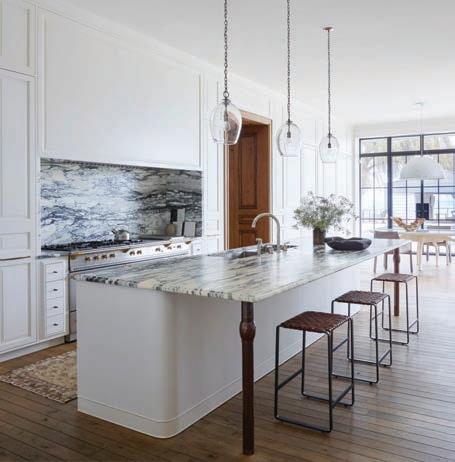
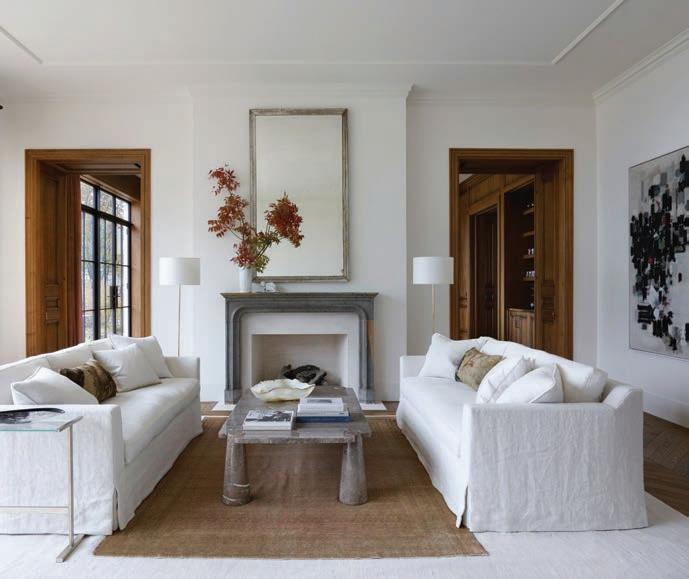
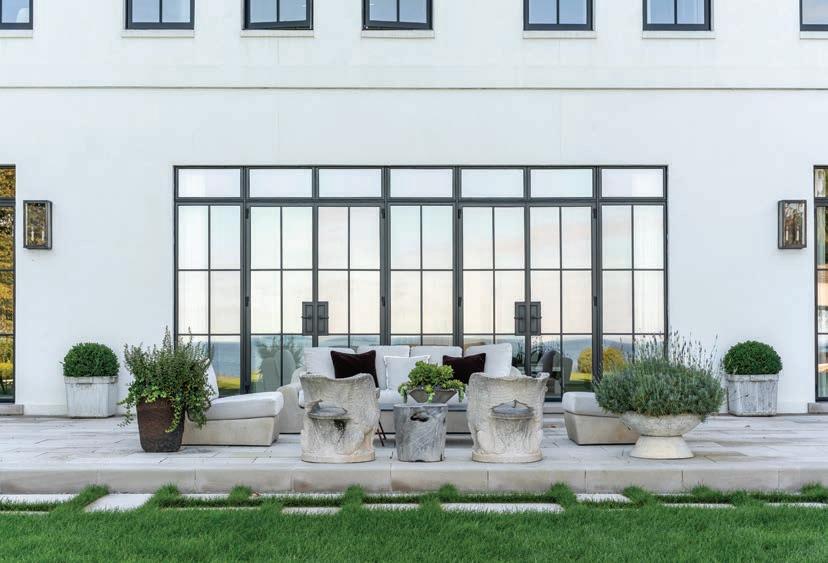
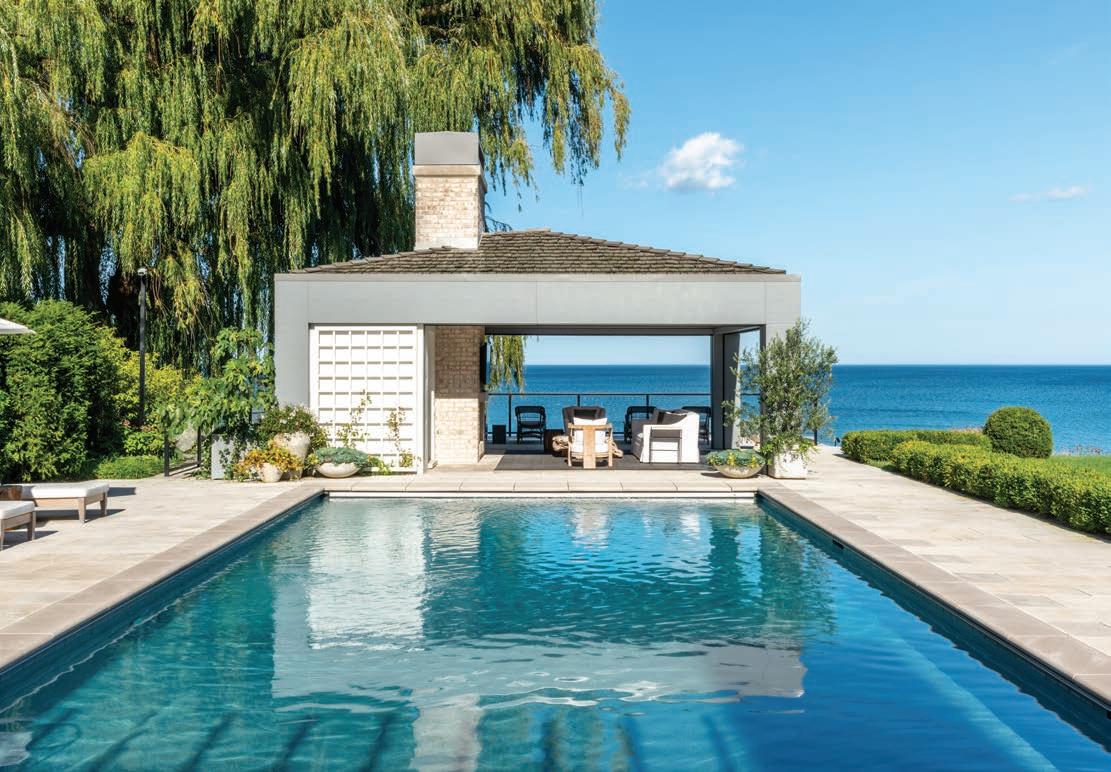
Sixteen thousand square feet on Lake Michigan, and not a nautical cliché in sight.
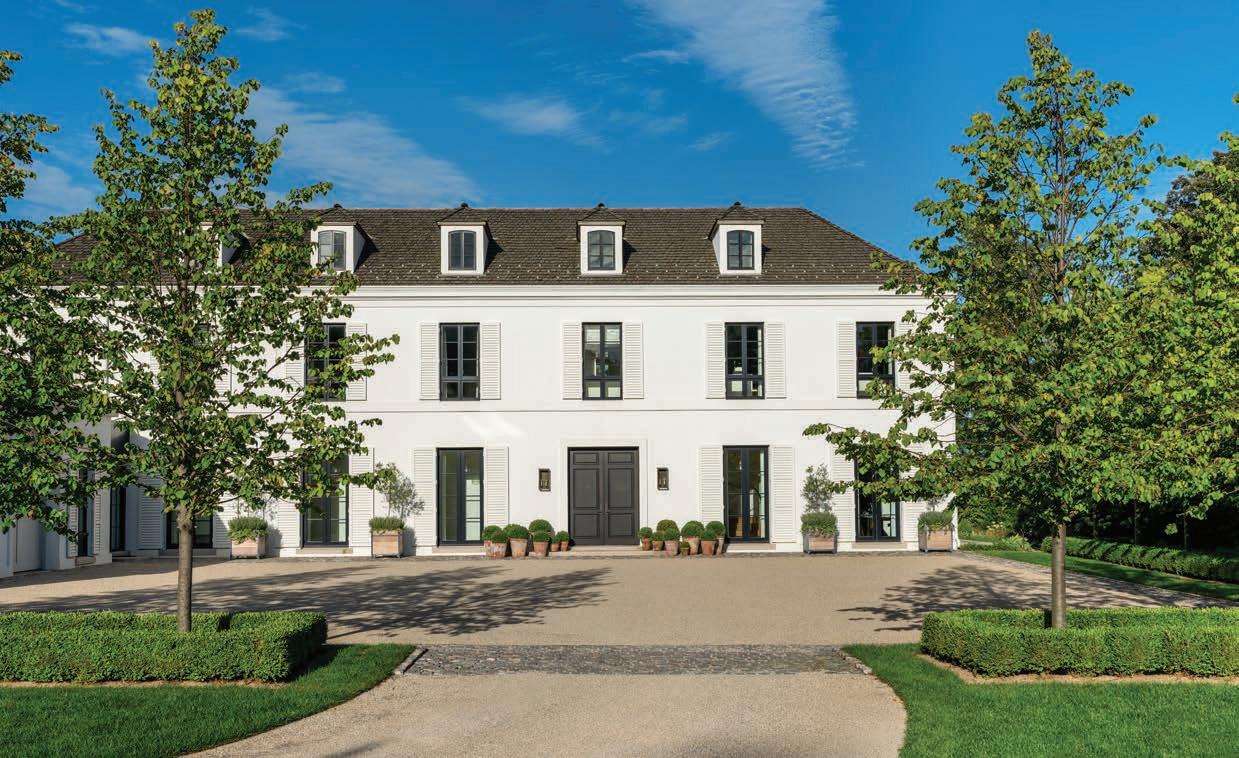
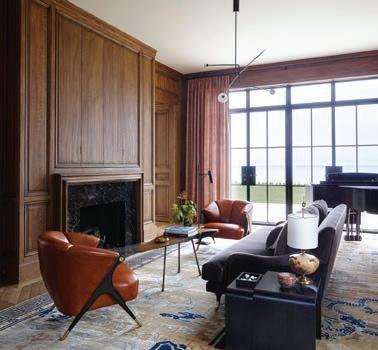
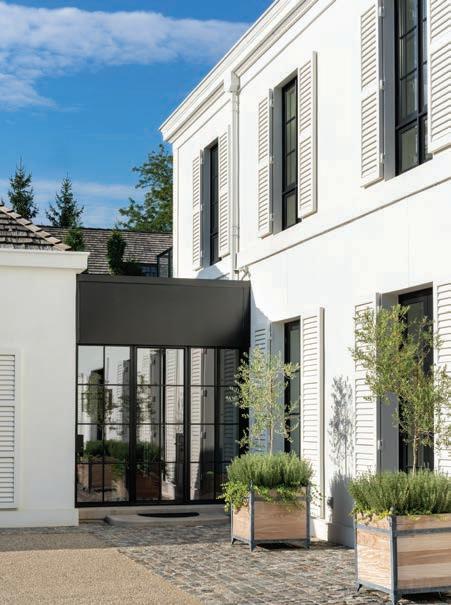
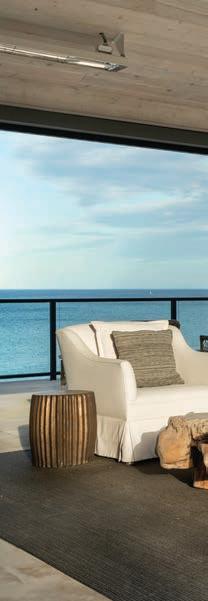
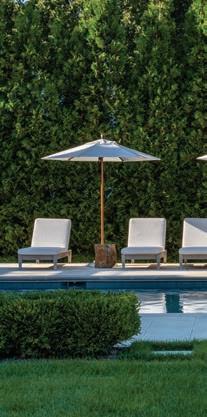
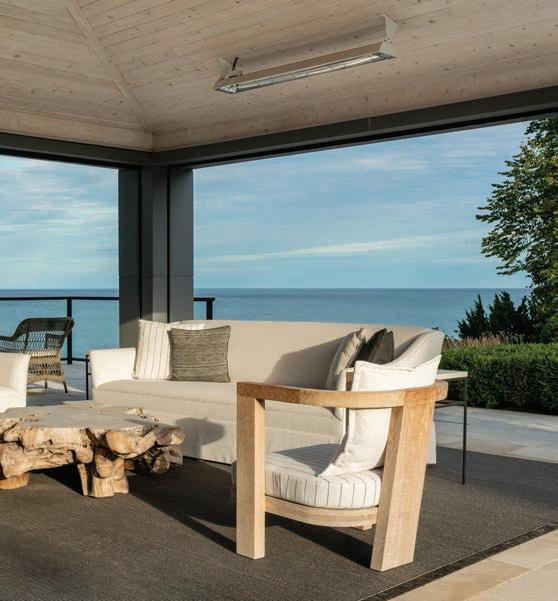
This five-bedroom Winnetka home, designed by Kara Mann with Northworks Architecture, breaks every lake house stereotype. No anchors. No weathered oars. Instead: plaster walls, Belgian oak floors, and a classic French aesthetic executed with restraint. New construction that feels like it’s been standing for generations.
LG Builders brought this vision to life, navigating the complexity of high-end residential construction where every detail matters. Custom cabinetry installed flush with walls to create the illusion of elegant paneling. Paonazzo marble with earthy green and gray tones reminiscent of the lake itself. Hand-painted plaster walls in a shade the designer describes as “there but not there.”
The result isn’t trendy or of-the-moment— it’s a Georgian-style home that will stand the test of time. Traditional room layouts with distinct character. A mix of vintage and contemporary furnishings. Sophisticated execution at every turn.
High-end residential demands precision, patience, and partners who understand that timeless design can’t be rushed.
20 FOR 20
ARCHITECT DSPACE
SQUARE FEET 6,000
ZINC HOUSE
CONTRACTOR LG Homes
INTERIOR DESIGN Project Interiors
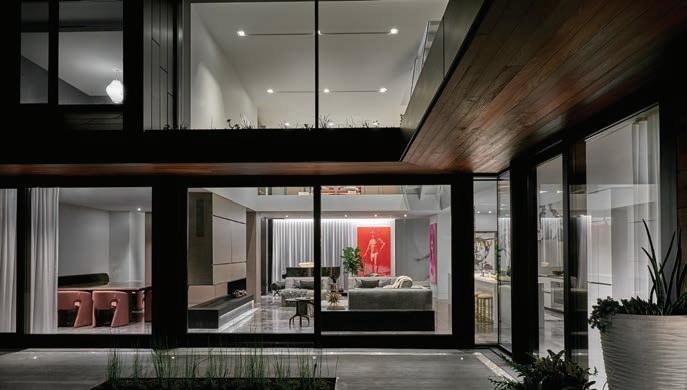
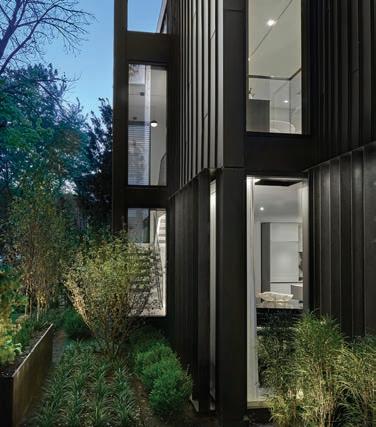
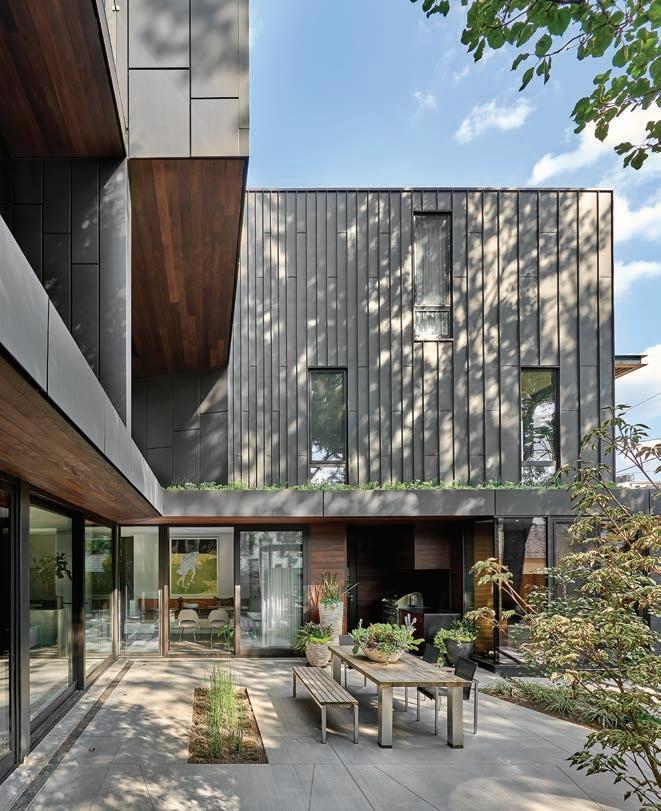
Three parallel zinc planes stepping back from the street. A steel ribbon staircase suspended over a double-height great room. Floor-to-ceiling windows positioned to flood the interior with light while maintaining privacy in a dense urban neighborhood.
This 6,000-square-foot Lakeview home, designed by dSPACE Studio with interiors by Project Interiors, wasn’t a typical residential build. The architecture demanded precision— zinc cladding with inset glass corners that create the illusion of peeling back the facade, floating wood treads on a switchback staircase, slab-on-grade construction to eliminate the threshold between indoor and outdoor living.
LG Builders executed every detail. Beveled portals. Deep overhangs for passive solar control. A two-story window wall overlooking a landscaped yard. Trapezoidal concrete scoring that flows from exterior patios into interior spaces. A rooftop spa with skyline views. Green roof systems. Protecting and relocating existing trees during construction.
The collaboration between dSPACE and Project Interiors required a builder who could translate ambitious design into reality—from structural complexity to the textured, layered
interiors that defined the finished spaces. High-design residential requires builders who can speak the language of architects and designers, and deliver on their vision without compromise.
This home is proof that we could handle complexity and craft at the highest level. Some projects announce what you’re capable of. This was one of them.
ON PROBLEM-SOLVING, INTEGRATION & EVOLUTION
“A louder voice doesn’t always equal a better idea. You can respect the expertise around you while still trusting your own instincts.”
MELODY
MCLEOD
INTERIOR DESIGN DIRECTOR
PORTRAIT OF A COMPANY
PORTRAIT OF A COMPANY
Project managers with architecture degrees.
Estimators with engineering backgrounds. Developers with design training. Accountants who understand construction timelines. Marketers who grasp financial models.
This isn’t typical for a real estate development and construction firm. LG Group is anything but typical.
The diversity of expertise isn’t just organizational structure—it’s the culture. When your project managers have architecture backgrounds, they speak the language of the design team. When your team has engineering training, they understand structural realities. That knowledge doesn’t replace the actual experts—it makes collaboration with architects, engineers, and consultants faster, clearer, and more effective.
“You’ll have a financial analyst from the Development team helping an Assistant PM from the Construction team on an issue they need support in tackling,” one team member explains. “A Site Superintendent talks through a specific work detail with a member of the Design team. We share our knowledge across all platforms.”
“LG Development has the advantage of housing development, construction and design under one roof, supported by a team of people who bring genuine passion to every project,” says a member of the development team. “This shared commitment creates a smoother, more aligned process for our partners and results in a better, more thoughtfully executed product.”
That cross-pollination isn’t policy—it’s what happens when the structure enables it and the culture enhances it. People don’t stay in lanes because the best solutions rarely come from one perspective.
A CULTURE OF CARE THAT EXTENDS OUTWARD
The way LG Group treats its people shapes how they treat everyone else. Clients feel it. Investors see it. Trade partners experience it. When an unforeseen challenge hits a project, everyone jumps in. Leadership doesn’t point fingers—they help solve it. “Phone calls are made, solutions are presented, and the project moves right along without recrimination,”
one team member notes. “You learn from the event to help future projects.”
This culture of addressing tough conversations head on, of being proactive rather than reactive, of taking care of things before they become problems—that’s what clients are buying when they hire LG. Not just buildings. A team that cares about outcomes and treats their commitments seriously.
“We don’t just build structures—we build relationships,” says one project manager. That hospitality mindset runs through everything. The temp hire who becomes a manager. The subcontractor who gets treated like a collaborator. The investor who knows their capital is being stewarded carefully.
Transparency isn’t a buzzword here— it’s operational. When there’s bad news, you hear it early. When there’s a decision to make, the right people are in the room. When something goes wrong, it gets owned and fixed. “Although there are always ebbs and flows in the industry, one thing remains constant: strong communication, attention to detail, and effective collaboration are key to doing excellent work and succeeding,” notes a team member.
SAFE SPACE FOR DEBATE
With this many disciplines working together, disagreement is inevitable. And that’s the point. The culture creates space for debate— respectful, constructive discourse where the best idea wins, not the loudest voice. “A louder voice doesn’t always equal a better idea,” observes one longtime team member. “You can respect the expertise around you while still trusting your own instincts.”
Engineers challenge designers. Developers push builders. Accountants de-risk decisions. Everyone asks the hard questions because the goal isn’t to be right—it’s to get it right.
“Being successful here requires an ability to be both engaging with others who can help you and humility in knowing you personally don’t have all of the answers,” one employee explains. “Couple those qualities with curiosity and engagement with your colleagues’ lives outside of the normal workday experience and you’ll go very far here.”
That blend of confidence and humility, of expertise and openness—it’s what allows LG to tackle projects others avoid. The complicated ones. The ones with no obvious answer. The ones that require multiple disciplines working in lockstep to solve.
PEOPLE WHO STAY, PEOPLE WHO GROW
At LG Group, people don’t just build buildings - they build careers. People stay because they’re challenged. Because they’re trusted. Because they see their ideas matter.
One employee came in as a temp receptionist with no construction experience, “very intimidated” by an industry she didn’t know. Over six years, she’s grown into People Operations Manager. “LG has allowed me to develop professionally,” she says, “but has supported me through my growth as an individual as well—as fiancée, to wife, and more recently a mom.”
Another path looks different. One team member started as a Project Coordinator on the Builders side during Chicago’s restaurant boom, architecture degree in hand, drawn to the fast-paced construction world and the high-design spaces taking shape across the city. He loved meeting everyone— subcontractors, architects, tradespeople, owners, operators, designers, chefs. That energy fueled him. He worked his way up to project managing a small ground-up
space in Fulton Market, then realized: this wasn’t the right fit. He missed being in the design weeds.
So he left. Explored. Learned. But leadership didn’t just become former bosses—they became mentors. When an opportunity emerged to return as Creative Director, he jumped. LG Group was in the middle of a major transition: rebranding, taking on bigger projects, designing and building their new headquarters. He was there for all of it. “Leadership saw me completely fresh in this new role,” he says. “I could step fully into being Creative Director. That trust meant everything.” The culture proved itself: a place where you can leave, grow, and come back to something better. Where you feel both nurtured and challenged. Where if you win, everyone wins.
Another joined because of LG’s hospitality portfolio and the chance to work alongside the internal design studio. “It’s so exciting to be part of building places that give Chicagoland its character.”
The company has grown from small residential projects to 747-unit towers. The people have grown with it—in responsibility, in expertise, in confidence. “Over the last 10 years, the evolution that stands out is the growth in both project scale and in how we operate,” says a 10-year veteran. “But our shared pride in the work itself has remained constant.”
BUILDING TOGETHER
What makes LG Group different isn’t the org chart. It’s the people who show up every day hungry to do better work, humble enough to collaborate across disciplines, smart about relationships, energetic about execution, creative in problem-solving, and resolute in seeing things through.
They unite around shared goals. They adapt when markets shift. They stretch to continuously improve. They show grit when timelines compress. They uplift each other and everyone they work with. And they trust each other to do what they say they’ll do.
“What brought me to LG was the feel that this was a young and diverse group,” says one team member, “which is something that is hard to find in the construction world.”
People from different backgrounds, with different expertise, all choosing to be here. All pushing each other to level up. All committed to doing more than expected.
Together, they’ve built something rare: a company where being impressive is a collective effort, where excellence is the baseline, and where taking care of people— employees, clients, partners, communities— is simply how things are done.
After twenty years, that culture isn’t just intact. It’s stronger than ever.
NO CEILING
NO CEILING
A Future Built on Scale, Stewardship and Vision
After two decades of grit, growth and some of Chicago’s most recognizable built environments, LG is entering its next era with a sharper sense of purpose than ever before.
“There’s a massive housing shortage nationally and globally,” says LG Founder and CEO Brian Goldberg. “The need is enormous. We want to be part of the solution.”
As the firm looks ahead, three themes define LG’s future: scale, responsibility and intention.
A MARKET FULL OF OPPORTUNITY
While capital markets remain unpredictable, one truth is clear: development isn’t slowing, it’s shifting. Demand for housing continues to outpace supply, and commercial users are seeking partners who can execute complex buildouts with speed and clarity.
LG is positioned squarely at that intersection.
Over the past decade, the company has evolved from building million-dollar restaurant projects to managing $30 million hospitality spaces, multimillion-square-foot developments and skyline-defining mixeduse buildings.
“There’s no limit to how large a project we can take on,” Goldberg says. “The key is staying best-in-class as we grow.”
That growth is multidimensional—through more ambitious developments, expanded construction capabilities and deeper integration of LG Studio, the company’s creative arm.
NAVIGATING CHALLENGES WITH INTENTIONALITY
Even with opportunity on the horizon, the path forward includes headwinds.
“Uncertainty in the capital markets is the biggest challenge right now,” says Managing Partner Matt Wilke. “When people hesitate, projects pause, whether it’s tenants delaying leases or investors delaying deployment.”
But the leadership team remains pragmatic.
“For 20 years, LG has survived by being steady, conservative and strategic,” Wilke says. “We trust that if we stay consistent with our values and work ethic, we’ll continue to thrive.”
A WORKPLACE BUILT FOR THE NEXT GENERATION OF BUILDERS
As LG expands, its leaders are adamant about what shouldn’t change: the culture.
“We don’t want to become a bureaucratic machine,” Goldberg says. “If we ever turn into a place where red tape slows down ideas, we’ve lost who we are.”
The vision is a company where people can grow into leadership roles, where young talent is encouraged to ideate and innovate, and where collaboration remains the natural way of working. It’s an environment designed to meet complexity with clarity—not hierarchy— so ideas move quickly and teams feel empowered to build boldly.
“We’re not chasing a finish line,” Wilke says. “We’re building a place where people can do their best work for a long time.”
OWNING WHAT MAKES LG UNIQUE
Perhaps the most powerful element of LG’s future is the part that already exists: its integrated model.
“Development, construction and creative services under one roof is incredibly rare,” says President Alex Dyer. “It lets us bring ideas to life in ways most firms can’t.”
That strategic advantage will shape the next decade, allowing LG to deliver more comprehensive solutions, pursue groundbreaking developments and partner with clients earlier in the process.
“Celebrating 20 years is exciting,” Dyer says. “But in the big picture, we’re still early. The foundation is set, and we’re ready to build on it.”
THE NEXT 20 YEARS
What does success look like going forward?
“A stronger Chicago,” Goldberg says. “More housing, more great spaces, more opportunity for the communities we serve. And a company that stays true to its values as it grows.”
That commitment extends beyond Chicago. From Phoenix to Nashville and markets across the country, LG Group is bringing the same integrated approach to housing, hospitality, and commercial projects nationwide— expanding reach while maintaining the quality and partnership that built the company.
If the first 20 years were defined by determination, creativity and resilience, the next 20 will be shaped by vision. LG is stepping into its anniversary year with clarity, momentum and what feels like an endless runway of possibility.
Just like in those early days in Goldberg’s townhome office, the team is still looking ahead, only now the scale is much bigger.
“We’re excited to see what happens next,” Dyer says. “Because we know we’re ready for it.”
“The foundation is set, and we’re ready to build on it.”
ALEX DYER PRESIDENT
WITH GRATITUDE
Creating this edition gave us something we don’t often take time for—the chance to look back.
We slowed down and had some meaningful conversations. We pulled projects from the archives, looked through old photos, opened folders we hadn’t touched in years. Revisiting where you started, remembering that early energy and hunger while standing in awe of how far you’ve come, is humbling and energizing at the same time.
Looking back reminded us of lessons we had tucked away. The way certain projects pushed us. The people who showed up when it mattered. The decisions that felt instinctive at the time. What we see now is that all of it was building something—the values, the approach, the foundation that carries us forward. We were shaping who we’d become, even when we didn’t realize it.
What these conversations reinforced is that the best work happens when you’re surrounded by the right people. Plans matter, but it’s the trust, the collaboration, and the shared commitment that turn good projects into great ones.
Thank you for being part of this. For the work, the partnership, and for making 20 years worth celebrating.