Autorenverzeichnis
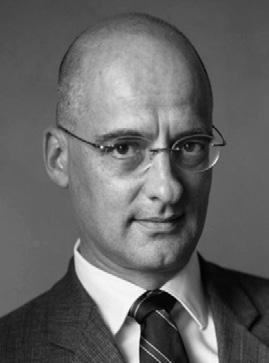
Mag. iur. et Mag. phil. Franz J. Heidinger, LL.M. (Virginia) ist ausgebildeter Jurist und Anglist/Amerikanist und verfügt über mehr als 25 Jahre Erfahrung im internationalen Wirtschaftsrecht. Er ist als Wirtschaftsanwalt und Senior Partner der Alix Frank Rechtsanwälte GmbH in Wien tätig. Darüber hinaus ist er als Lektor für den Bereich angloamerikanische Rechtssprache an der Juridischen Fakultät der Universität Wien verantwortlich. Er ist allgemein beeideter und zertifizierter Gerichtsdolmetscher für Englisch.
Alix Frank Rechtsanwälte GmbH, Schottengasse 10, 1010 Wien
Tel.: +43 (1) 523 27 27, Mobil: +43 (0) 676 88 52 32 02
E-Mail: f.heidinger@alix-frank.co.at, Web: www.alix-frank.co.at
Andrea Hubalek ist staatlich geprüfte Übersetzerin (München) und allgemein beeidete und zertifizierte Gerichtsdolmetscherin für Englisch. Sie hat über 25 Jahre Praxiserfahrung auf dem Gebiet der Fachsprachübersetzung juristischer Texte und ist geschäftsführende Gesellschafterin der von ihr gemeinsam mit Franz J. Heidinger gegründeten Translex Büro für juristische Fachübersetzungen GmbH in Wien.
Translex Büro für juristische Fachübersetzungen GmbH
Siebensterngasse 16, 1070 Wien
Tel.: +43 (1) 526 84 78, Fax: +43 (1) 526 84 89
E-Mail: translex@translex.at, Web: www.translex.at
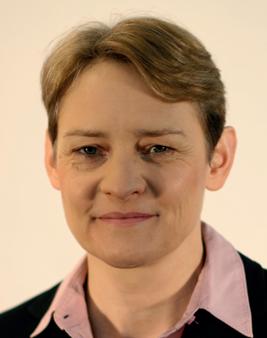
Mag. Norbert Abel ist geschäftsführender Partner der ABEL & ABEL Rechtsanwälte GmbH. Er ist auch als Rechtsanwalt in Deutschland zugelassen und seit über 20 Jahren insbesondere im Insolvenzrecht als Insolvenzverwalter, Sanierungsberater und Gläubigervertreter tätig. Er ist Lektor an der Wirtschaftsuniversität Wien und für den Bereich Insolvenzrecht im Rahmen des Wirtschaftsrechtsstudiums tätig.
ABEL & ABEL Rechtsanwälte GmbH, Stubenring 18, 1010 Wien
Tel.: +43 1 533 52 72, Fax: +43 1 533 52 72-15
E-Mail: office@abel-abel.at
Dr. iur. et Mag. phil. Astrid Ablasser-Neuhuber ist Partner bei bpv Hügel Rechtsanwälte OG in Wien und Brüssel und Leiterin der Praxisgruppe Kartellrecht. Ihre Beratungsschwerpunkte sind europäisches und österreichisches Fusionskontroll- und Kartellrecht einschl. Vertretung vor österreichischen und europäischen Gerichten und Wettbewerbsbehörden. Sie ist Vorsitzende der Studienvereinigung Kartellrecht in Österreich sowie Vorstandsmitglied der Studienvereinigung Kartellrecht e.V. (Deutschland, Österreich, Schweiz), Vizepräsidentin der Competition Law Commission/UIA und Vorstandsmitglied der Österreichischen Vereinigung für gewerblichen Rechtsschutz und Urheberrecht.
bpv Hügel Rechtsanwälte OG
Ares-Tower, Donau-City-Straße 11, 1220 Wien
Tel.: +43 (1) 260 50-205
E-Mail: astrid.ablasser@bpv-huegel.com, Web: www.bpv-huegel.com
Richard Calnan is a partner at Norton Rose Fulbright LLP in London. He joined the firm in 1975. Apart from three years teaching law at the University of Auckland in the early 1980s, the whole of his professional life has been spent at the firm. He is a Visiting Professor at University College London and a member of the City of London Law Society’s Financial Law Committee. He is the author of Taking Security (Jordans, third edition 2013), Proprietary Rights and Insolvency (Oxford University Press, 2010) and Principles of Contractual Interpretation (Oxford University Press, 2013).
Norton Rose Fulbright LLP
3 More London Riverside, London SE1 2AQ, England
Phone: +44 (0)20 444 3475, Mobile: +44 7767 646600
E-Mail: richard.calnan@nortonrosefulbright.com, Web: www.nortonrosefulbright.com
Christian Darge, Rechtsanwalt und Notar, trat 2001 in die Sozietät Ahlers & Vogel ein und ist dort seit 2005 Partner. Als Fachanwalt für Arbeitsrecht und Fachanwalt für Insolvenzrecht berät er Arbeitgeber und Insolvenzverwalter nicht nur im Individualarbeitsrecht, sondern vertritt sie u.a. auch in Interessenausgleichs-/ Sozialplan- oder Tarifvertragsverhandlungen. Die Gläubigerberatung bildet einen weiteren Schwerpunkt seiner Tätigkeit. Darüber hinaus ist er für verschiedene Veranstalter als Referent in diesen Bereichen tätig.
Ahlers & Vogel Rechtsanwälte PartG mbB
Contrescarpe 21, 28203 Bremen, Deutschland
Tel.: +49 421 33 34-272
Fax +49 421 33 34-111
E-Mail: darge@ahlers-vogel.de
Raymond T. Diamond is the Jules F. and Frances L. Landry Distinguished Professor Law and James Carville Alumni Professor of Law and currently serves as Vice-Chancellor for Faculty Development and Institutional Advancement. He received his B.A. from Yale College in 1973 and his J.D. from Yale Law School in 1977.
Paul M. Hebert Law Center
Louisiana State University
Baton Rouge, Louisiana 70803-1000, USA
E-Mail: Raymond.Diamond@law.lsu.edu
Eric L. Dobberteen is a shareholder at Clark & Trevithick, PC. As a former Assistant United States Attorney, his practice is focused on white collar criminal defense, regulatory enforcement matters, and internal corporate investigations in addition to commercial litigation and trials.
Clark & Trevithick, PC
Suite 1200, 800 Wilshire Boulevard, Twelfth Floor
Los Angeles, California 90017
Phone: ++1 213 629-5700
Fax: ++1 213 624-9441
E-Mail: edobberteen@clarktrev.com
Heidinger/Hubalek (Hrsg.), Angloamerikanische Rechtssprache, Band 3, LexisNexis/BDÜ
Alisa S. Edelson is an associate at Clark & Trevithick. Her practice focuses on general business and intellectual property litigation in state and federal courts. As part of her practice, she also prepares applications for registration of trademarks in the United States Patent and Trademark Office and drafts various website agreements including terms of use, privacy policies, and video and personal appearance releases.
Clark & Trevithick, PC
Suite 1200, 800 Wilshire Boulevard, Twelfth Floor, Los Angeles, California 90017
Phone: +1 213 629-5700, Fax: +1 213 624-9441
E-Mail: aedelson@clarktrev.com
Mag. iur. Peter A. Eschig, LL.M. (it-law), LL.M. (UCL) ist ehemaliger Rechtsanwalt und hat auch die Zulassung als Solicitor (England and Wales) (derzeit nicht praktizierend) und die Eignungsprüfung für die Zulassung zur Rechtsanwaltschaft in der Bundesrepublik Deutschland bestanden. Er hat sich mit seinem Unternehmen auf juristische Übersetzungen spezialisiert. Gemeinsam mit Erika Pircher-Eschig hat er das Allgemeine Bürgerliche Gesetzbuch in die englische Sprache übersetzt.
T-Lex Ltd
Mobil: +44 (0)7852 153 155
E-Mail: peter@tlex.co.uk, Web: www.tlex.co.uk
Caroline C. Fuller practices in all aspects of commercial bankruptcy and outof-court debt restructuring. Caroline regularly represents secured creditors, landlords, business debtors, creditors’ committees, trustees, and indenture trustees in business reorganization and liquidation proceedings in bankruptcy court throughout the country. She also represents receivers in state and federal court receivership proceedings. Caroline routinely advises clients in anticipation of bankruptcy, including clients who are attempting to resolve their own financial difficulties without the need for a bankruptcy filing and clients who are creditors of companies that may be insolvent. She also has significant appellate experience, having represented clients in numerous bankruptcy appeals before federal district and appellate courts. Caroline also represents lenders and borrowers in real estate and asset-based lending transactions and workouts, and landlords and tenants in the negotiation of commercial leases. Caroline is a trained mediator and has been named to a panel of mediators selected by the Faculty of Federal Advocates to provide mediation services in disputes arising in bankruptcy proceedings.
1801 California Street, Suite 2600, Denver, Colorado 80202, USA
Phone (303) 894-4475
E-Mail: cfuller@fwlaw.com
Dr. Carsten Heuel, LL.M. (Harvard), is a partner at Ahlers & Vogel, a law firm with more than 50 professionals at four locations covering the whole region of North Germany. He is admitted to practice as a German Rechtsanwalt and as attorney-at-law (NY); furthermore, he is a currently non-practicing solicitor in England and Wales. His focus is on national and international commercial, corporate and transactional law. He has extensive experience in representing companies and individuals in German and cross-border commercial issues, corporate transactions (incl. M&A, restructurings, private equity and distressed situations), ship construction, acquisition and financing, capital investments (inter alia, closed-end funds, in particular shipping funds), private office and finance.
Ahlers & Vogel Rechtsanwälte PartG mbB
Contrescarpe 21, 28203 Bremen, Germany
Phone: +49 421 3334-212
Fax: +49 421 3334-111
E-Mail: heuel@ahlers-vogel.de, Web: http://www.ahlers-vogel.com
Daniel A. Hoffman joined Moses & Singer as an associate in 2014 after working as a summer associate with the firm in 2013. Daniel graduated Cum Laude from Benjamin N. Cardozo School of Law, where he was an Alexander Fellow working for the Honorable Colleen McMahon of the U.S. District Court for the Southern District of New York, and judicial intern for the Honorable Bernice D. Siegal of the New York State Supreme Court. During law school, Daniel interned for the New York Police Department’s Civil Enforcement Unit in addition to participating in the Holocaust Claims Restitution Externship Clinic assisting the estates of Holocaust survivors seeking restitution for stolen property.
Moses & Singer LLP
The Chrysler Building, 405 Lexington Avenue New York, NY 10174-1299
Phone: (212) 554-7867, Fax: (212) 377-6076
E-Mail: dhoffman@mosessinger.com, Web: www.mosessinger.com

David Hutchins is a Solicitor of the Senior Courts of England and Wales. For over 25 years he was the senior partner of his own firm of solicitors in London, dealing with a range of general practice areas including conveyancing, probate, wills, personal injury claim litigation, contract law, family law and crime. During the last 13 years he has been teaching English law to civil code lawyers and legal translators and interpreters, with a strong emphasis on the English legal system and basic common law concepts and terminology, including civil liability and criminal law and procedure. He runs his own courses in London and Nice, and by Skype, and has taught courses for translator associations in numerous European countries. He has presented courses for the European Court of Human Rights in Strasbourg and the European Commission in Brussels, and has presented an annual course for the DeutscheAnwaltAkademie of Berlin since 2002. He has been a guest lecturer at the City University in London and Kingston University in Surrey. In 2008 he was approved by Le Burreau de Luxembourg for Formation Professionelle Continue (CPD).
Lexacom English Law Courses
Phone: +44 (0)7885 722 529
E-Mail: dhutch3694@aol.com, Web: www.lexacomlegal.com
Alan Kolod is Chairman of Moses & Singer's Management Committee and a partner in the Business, Reorganization, Bankruptcy and Creditors' Rights, Litigation and Banking and Finance groups.
Alan has over thirty years experience in business law matters, with particular emphasis on banking, bankruptcy, reorganization, insolvency law, unfair competition and litigation. He also has substantial experience in inter-creditor disputes, Chapter 15 and cross-border insolvency proceedings and the laws governing the fiduciary duties of directors of insolvent corporations.
Heidinger/Hubalek (Hrsg.), Angloamerikanische Rechtssprache, Band 3, LexisNexis/BDÜ
Alan is rated AV® Preeminent™ in his field by Martindale and has repeatedly been listed in Law & Politics’ New York Super Lawyers®
Moses & Singer LLP
The Chrysler Building, 405 Lexington Avenue
New York, NY 10174-1299
Phone: (212) 554-7866, Fax: (917) 206-4366
E-Mail: akolod@mosessinger.com, Web: www.mosessinger.com
Becket McGrath, M.A (Cambridge), LL.M. (Universität Hamburg), is an antitrust and competition law partner at Cooley (UK) LLP, with over 20 years of experience in both private practice and at a senior level in the UK’s Office of Fair Trading (now the Competition and Markets Authority). He is recommended in the current edition of the UK Legal 500 and recognised as a notable practitioner by Chambers UK
Cooley (UK) LLP
Dashwood, 69 Old Broad Street, London EC2M 1QS, UK
Phone: +44 (0) 20 7556 4125
Mobile: +44 (0) 78 1387 8256
E-Mail: bmcgrath@cooley.com, Web: www.cooley.com
Dr. Florian Neumayr, LL.M. is a Vienna based partner at bpv Hügel Rechtsanwälte OG. He advises on all aspects of Austrian and European anti-trust, abuse of market dominance, merger control and procurement law. A special focus of his is dispute resolution and, in particular, private enforcement. He has authored numerous publications on competition law and dispute resolution and, inter alia, is honorary fellow of the Centre for International Legal Studies.
bpv Hügel Rechtsanwälte OG
Ares-Tower, Donau-City-Straße 11, 1220 Wien
Tel.: +43 (1) 260 50 206
E-Mail: florian.neumayr@bpv-huegel.com, Web: www.bpv-huegel.com
Mag. iur. Erika Pircher-Eschig, LL.M. (LSE) ist ausgebildete Juristin und verfügt über mehr als 10 Jahre Erfahrung im internationalen Wirtschaftsrecht. Sie ist als Wirtschaftsanwältin in London bei Wragge Lawrence Graham & Co LLP tätig. Gemeinsam mit Peter A. Eschig hat sie das Allgemeine Bürgerliche Gesetzbuch in die englische Sprache übersetzt.
Wragge Lawrence Graham & Co LLP
4 More London Riverside, London SE1 2AU
Mobil: +44 (0)7920 582 194
E-Mail: erika.pircher-eschig@wragge-law.com, erika.pircher@gmail.com
Univ.-Prof. Dr. iur. Hermann Pünder, LL.M. (Iowa) ist Inhaber des Lehrstuhls für Öffentliches Recht, Verwaltungswissenschaft und Rechtsvergleichung an der Bucerius Law School, Hochschule für Rechtswissenschaften in Hamburg. Wichtige Werke: Allgemeines Verwaltungsrecht (15. Aufl. 2015, De GruyterVerlag, 1200 Seiten, hrsg. mit Dirk Ehlers); Besonderes Verwaltungsrecht, Bd. 1 – 3 (3. Aufl. 2012/13, C.F. Müller Verlag, hrsg. mit Dirk Ehlers und Michael Fehling, 4126 Seiten); Debates in German Public Law (2014, Hart Publishing, 356 Seiten, hrsg. mit Christian Waldhoff); Vergaberecht, Handkommentar (2. Aufl. 2015, Nomos Verlag, hrsg. mit Martin Schellenberg).
Bucerius Law School
Jungiusstraße 6, 20355 Hamburg, Deutschland
Tel.: +49 (0)40 30706 260/261
E-Mail: hermann.puender@law-school.de, Web: www.law-school.de
David Rabinowitz, Co-Chair of Moses & Singer’s Litigation and Labor, Employment & Employee Benefits practice groups, has been a partner with the firm since 1985.
Within a broad commercial litigation practice, David has focused in the substantive areas of financial industry litigation, including trusts and estates, letters of credit and corporate trusts, and intellectual property and unfair competition and antitrust law.
David is recognized as a New York Metro Super Lawyer. He is an AV® Preeminent™ Rated lawyer and one of New York’s Top Rated Lawyers in his field according to Martindale-Hubbell.
Moses & Singer LLP
The Chrysler Building, 405 Lexington Avenue, New York, NY 10174-1299
Phone: (212) 554-7815, Fax: (212) 554-7700
E-Mail: drabinowitz@mosessinger.com, Web: www.mosessinger.com
Trupti Reddy, LL.B. (Durham), LL.M. (Universität Mannheim), is an antitrust and competition law associate at Cooley (UK) LLP. She has wide-ranging experience advising on all aspects of EU and UK competition law, and has acted for companies across a range of sectors.
Cooley (UK) LLP
Dashwood, 69 Old Broad Street, London EC2M 1QS, UK
Phone: +44 (0) 20 7556 4531, Mobile: +44 (0) 74 6908 3654
E-Mail: treddy@cooley.com, Web: www.cooley.com
Frédéric Gilles Sourgens is an Associate Professor of Law at Washburn University School of Law. He received a candidates magisterii from the University of Oslo in 2000, M.A. in Political Philosophy (The Idea of Toleration) from the University of York (UK) in 2003, and J.D. from Tulane University Law School in 2005.
Washburn University School of Law
1700 SW College Avenue, Topeka, KS 66621, USA
E-Mail: freddy.sourgens@washburn.edu
Univ.-Prof. Dr. Manfred Stelzer ist Universitätsprofessor für Verfassungs- und Verwaltungsrecht am Institut für Staats- und Verwaltungsrecht der Universität Wien.
Universität Wien
Institut für Staats- und Verwaltungsrecht
Schottenbastei 10-16, Stiege 1, 6. Stock, 1010 Wien
Tel.: +43 1 4277 35 431
E-Mail: sekretariat-stelzer.staatsrecht@univie.ac.at
Heidinger/Hubalek (Hrsg.), Angloamerikanische Rechtssprache, Band 3, LexisNexis/BDÜ
Univ.-Prof. Dr. Karl Stöger, MJur studierte Rechtswissenschaften an den Universitäten Wien, Paris II und Oxford. 2008 habilitierte er sich an der Universität Wien mit einer Arbeit zum österreichischen Krankenanstaltenrecht. 2009 war er mehre Monate als Rechtsanwaltsanwärter in einer Wiener Wirtschaftsrechtskanzlei tätig. Seit Oktober 2009 ist er Universitätsprofessor am Institut für Öffentliches Recht und Politikwissenschaft der Karl-Franzens-Universität Graz. Zu seinen Forschungsschwerpunkten zählen das Verwaltungsverfahrensrecht und das Recht der Verwaltungsgerichtsbarkeit, das Medizinrecht, das Energierecht und Fragen an der Schnittstelle zwischen EU-Recht und nationalem Recht. Institut für Öffentliches Recht und Politikwissenschaft
Karl-Franzens-Universität Graz
Universitätsstraße 15/C3, 8010 Graz
Tel.: +43/316/380-3384
E-Mail: karl.stoeger@uni-graz.at
Web: https://oeffentliches-recht.uni-graz.at/de/stoeger/
Mag.a Dr.in Alexia Stuefer ist Strafverteidigerin und Partnerin bei Soyer Kier Stuefer mit Schwerpunkt Wirtschaftsstrafrecht, Unternehmensstrafrecht, Finanzstrafrecht, Prozessführung, Grundrechtsschutz. Sie ist Vorstandsmitglied der Vereinigung Österreichischer StrafverteidigerInnen (VÖStV) sowie Mitglied der European Criminal Bar Association (ECBA), Redaktionsmitglied der Zeitschrift Journal für Strafrecht (JSt), Autorin zahlreicher Fachpublikationen und Vortragende auf nationalen und internationalen Tagungen. Sie ist überdies Lektorin an der juristischen Fakultät der Universität Wien.
Rechtsanwaltsbüro Soyer Kier Stuefer
Kärntner Ring 6, 1010 Wien
Tel.: +43 (1) 503 24 04
E-Mail: stuefer@anwaltsbuero.at, Web: www.anwaltsbuero.at
Jasper Graf von Schlieffen ist Rechtsanwalt und Fachanwalt für Strafrecht in Berlin und seit 1996 in Berlin zu gelassen. Er ist seit 2001 Geschäftsführer des Organisationsbüros der Strafverteidigervereinigungen, dem Dachverband der regionalen Strafverteidigervereinigungen in Deutschland. Seit 2013 ist er Mitglied des Fachausschusses für Strafrecht der Rechtsanwaltskammer Berlin. Er ist Mitautor im Anwaltskommentar StPO (2. Aufl. 2010) und im Anwaltkommentar StGB (2. Aufl. 2014).
Rechtsanwalt Jasper Graf von Schlieffen
Fanny-Zobel-Str. 11, 12435 Berlin
Tel.: +49 (30) 53 21 76 60
Fax: +49 (30) 53 21 76 62
E-Mail: info@ra-schlieffen.de, Web: www.ra-schlieffen.de
Michael H. Whincup LL.B., LL.M. practised as a barrister for five years. He began lecturing in law at Aston University, and later went to Keele University, where he became Director of Continuing Legal Education. He has taught for two years at New Zealand universities, and has been visiting professor at several Continental universities. His books include Contract Law and Practice, Product Liability, and Modern Employment Law.
13 Springpool, Keele, Staffordshire ST5 5BN, England
Fotonachweise:
Foto Heidinger: Stephan Huger, Wien
Foto Hubalek: privat
Foto Abel: ABEL & ABEL Rechtsanwälte GmbH
Foto Ablasser-Neuhuber: bpv Hügel Rechtsanwälte OG
Foto Calnan: Norton Rose Fulbright LLP
Foto Darge: Ahlers & Vogel
Foto Diamond: Louisiana State University
Foto Dobberteen: Clark & Trevithick, PC
Foto Edelson: Clark & Trevithick, PC
Foto Eschig: Peter A. Eschig/Doris Kucera
Foto Fuller: Hartmann Photography
Foto Heuel: Ahlers & Vogel
Foto Hoffman: Taylor Hooper Photography
Foto Hutchins: David Hutchins
Foto Kolod: Taylor Hooper Photography
Foto McGrath: Cooley (UK) LLP
Foto Neumayr: bpv Hügel Rechtsanwälte OG
Foto Pircher-Eschig: Erika Pircher-Eschig/Doris Kucera
Foto Pünder: Bucerius Law School
Foto Rabinowitz: Taylor Hooper Photography
Foto Reddy: Cooley (UK) LLP
Foto Sourgens: Washburn University
Foto Stöger: Foto Furgler, Graz
Foto Stuefer: Soyer Kier Stuefer
Foto von Schlieffen: privat
Foto Whincup: privat
Heidinger/Hubalek (Hrsg.), Angloamerikanische Rechtssprache, Band 3, LexisNexis/BDÜ
I.A Constitutional Law in the United States
by Raymond T. Diamond & Frédéric Gilles Sourgens
The United States Constitution is artfully brief and exceptionally old. The Constitution spans less than 4,500 words. By comparison, an English translation of the Austrian Constitution and the German Basic Law well exceed 25,000 words in length. The principal provisions of the United States Constitution have been in force for well over 200 years. By comparison the oldest written European constitutions currently in force have a constitutional history of little over one hundred years.
1. Interpretation
Both the length and the age of the Constitution make interpretation uniquely important. Current constitutional jurisprudence in the United States is meaningfully split on the appropriate method of how the Constitution should be interpreted. The most well-known positions currently in use are originalism and living constitutionalism.
1.1 Originalism
Originalism posits that the Constitution should be interpreted as an historical document. It became most famous in the opinions of an Associate Justice of the U.S. Supreme Court, Antonin Scalia. The key question is what the United States citizenry would have understood the Constitution to mean when it was ratified. This approach to interpretation most immediately makes relevant the socio-economic conditions and political problems the constitutional drafters addressed. The first step for an originalist interpretation is to ask what solution for a then current day problem the constitutional drafters could have intended.
Originalism at heart is a critical method. The key technique of originalism was to show that existing jurisprudence was deeply ahistorical, i.e., would have struck the immediate audience for the Constitution as not reflecting the bargain they had struck. When an originalist modality of interpretation was used constructively to support new jurisprudence on behalf of a majority of the court, the majority’s own historical assumptions came to be questioned – as was the case for instance in Heller v. District of Columbia, 554 U.S. 570 (2008).
1.2 Living Constitution
The chief rival of theory of interpretation is living constitutionalism. Its chief root lies in the common law. The common law relies not chiefly upon the historical interpretation of a text, but rather upon rule establishment by reference to the factual similarity of a current case or controversy to prior judgments. The common law thus develops inductively and gradually by linking the solution of any given problem to the solutions worked out in past problems. constitution
jurisprudence citizenry to ratify constitutionalism common law
judge, justice precedent to overrule, rule of law, to reaffirm conservative progressive separation of powers executive branches of government enshrined legislative process bicameralism
While originalism is critical in nature, an account of the living constitution is inherently traditional and maybe even traditionalist. It is deeply committed to conserving the constitutional learning prior generations of judges and justices expressed in their judgments. It moves jurisprudence by accepting, whenever this possible, that past generations correctly resolved the narrow case before them and seeking to understand how this problem resolution in past cases helps to determine the appropriate outcome for the case at bar. This commitment is most clearly expressed in the commitment to constitutional stare decisis et quieta non movere (or short “stare decisis”). Stare decisis requires that the Court follow its own earlier opinions in relevantly similar cases. Compare Citizens United v. Federal Election Commission (noting as potential factors to depart from stare decisis that the decision is no longer workable, the precedent in question is comparatively young, there are very limited reliance interests at stake or the decision is poorly reasoned) with Planned Parenthood v. Casey, 505 U.S. 833, 855 (1992) (“[W]hen this Court reexamines a prior holding, its judgment is customarily informed by a series of prudential and pragmatic considerations designed to test the consistency of overruling a prior decision with the ideal of the rule of law, and to gauge the respective costs of reaffirming and overruling a prior case”).
1.3 Methodological Conclusions
From an outsider’s perspective, the methods of interpretation used in U.S. jurisprudence appear surprising. First, neither position of originalism or commitment to a living constitution are applied in a pristine manner. Justices rely typically on both techniques. The consequence of this reliance on rival techniques is that U.S. constitutional law does not follow a discernible method of interpretation recognizable as such to a historian or civil lawyer. Instead, it complements an interpretation of constitutional text with an application of constitutional tradition. Second, the methods of interpretation belie their ideological moniker; thus, originalism is associated with a conservative position and living constitutionalism with a progressive position. Ironically, originalism in application is anti-traditionalist and thus precisely not “conserve-ative.” Similarly, living constitutionalism is ultimately traditionalist and as such the antithesis of progressive. The usage of “conservative” and “progressive” typically employed in United States constitutional commentary therefore refers to outcomes rather than method – politics rather than law.
2. Separation of Powers
One of the key features of the Constitution, no matter how interpreted, is that it separates power between different branches of government, congress, the executive and the courts. This separation of powers between the various branches of government represents one of the “checks and balances” enshrined in the Constitution.
2.1 The Legislative Process
2.1.1 Bicameralism
A pillar of the legislative process in the Constitution is bicameralism. Article I, section 1 of the Constitution provides that “all legislative powers
herein granted shall be vested in a Congress of the United States, which shall consist of a Senate and a House of Representatives.”
The historical causes and theoretical reasons for the adoption of bicameralism in the Constitution remain a matter of debate. It is doubtlessly true that the historical experience of the former American colonies was marked by British bicameralism of the House of Commons and House of Lords, each drawn from facially different social classes and each serving a cognizably different purpose. At the same time, the American colonies and then the newly independent American states had experience with unicameral legislatures before and around the time of the drafting of the Constitution. It is thus not historically accurate to surmise that bicameralism in the U.S. constitution was entirely the work of historical habituation or accident.
One compelling functional explanation for the bicameralism used in the Constitution looks to the different manner of election for the members of the House of Representatives and the Senate. Article I, section 2 of the Constitution provides that members of the House of Representatives are elected “by the people of the several states.” Article I, section 3 provides Senators are “chosen by the legislature” of the respective states which they come to represent. The House of Representatives thus would appear to be the People’s chamber and the Senate the States’ chamber.
Functionally, bicameralism would thus foreshadow another axiom of U.S. constitutional law – federalism. Bicameralism would serve to transplant federalism concerns – giving due deference to the voice of the several States – into the very mechanics of legislative government. This view is strengthened when considering the role of the Senate in foreign affairs and advising the executive in its appointments of federal officers.
This functional explanation coincides with the roots of the Constitution in mixed government theory. Mixed government theory draws upon classical Greek and Latin sources describing the key to success of the Roman constitution. These classical sources extol that the balancing of monarchic, aristocratic and democratic rule in a single government was a key virtue supporting the longevity – and outward power – of such constitutional experiments. The Italian Rinascimento reinvigorated this classical patrimony in modern constitutional thought. As J.G.A. Pocock argued in his Machiavellian Moment, The Atlantic Republican Tradition, this tradition became deeply influential in the development of the American constitutional ideal. Yet, problematically, the Americas did not have a long-standing “aristocracy” – or landed class of nobility. The traditional mixed government theory therefore did not work in a comparative young country lacking the prerequisites of an aristocratic class. The bicameral approach enshrined in the U.S. constitution thus represents both a historical continuation of Renaissance mixed government heritage and a break with that tradition in light of the particular circumstances in which the young American Republic found itself.
2.1.2 Presentment
The federal legislative process is completed upon the presentment of a bill passed by both chambers of Congress to the President of the United States. Article I, section 7 of the Constitution provides that the bill becomes law
unicameral legislature drafting historical habituation accident election people federalism deference
foreign affairs appointment mixed government theory to extol presentment, bill chamber
abide by (to)
Constitutional Law Glossary
befolgen abridge (to) einschränken, kürzen abuse of power Missbrauch von ausführender Gewalt accident Zufall accountable rechenschaftspflichtig accused (the) Angeklagter, Beschuldigter adjournment Vertagung adjudicate (to) Sache entscheiden, Streit beilegen administration Regierung; Verwaltung affordable care leistbare Pflege alien registration law Ausländerregistrierungsgesetz/-recht amendment to the constitution Verfassungsänderung/-zusatz appeal Rechtsmittel appointment Bestellung arbitrary willkürlich attendance allowance Sitzungsgeld
backbencher (UK)
Abgeordneter mit geringfügigerem Einfluss, “Hinterbänkler“ ballot Abstimmung bicameralism Zweikammersystem bill Gesetzesvorlage, Gesetz branches of government staatliche Gewalten budget Haushalt bylaw Verordnung byelaw(s) Satzung
Cabinet Kabinett censorship Zensur challenge (to) anfechten, bestreiten chamber Kammer circuit Gerichtsbezirk, Sprengel citizen Staatsbürger citizen army Bürgerarmee citizenry Bürgerschaft, Bürger, Volk citizenship Staatsbürgerschaft, Staatsangehörigkeit classified geheim/vertraulich codified law kodifiziertes Recht coercive monopoly Zwangsmonopol collective right Kollektivrecht commission Auftrag, Bestellung committee Ausschuss common law (system) “Common Law”; auf Rechtsprechung beruhendes, d.h. nicht kodifiziertes Recht; Fallund Präzedenzrecht Englands und der USA u.a. complainant Beschwerdeführer complaint Beschwerde, Klage
compliance
Einhaltung, Erfüllung conflict preemption (US)
Zuständigkeitsvorrang, Kompetenzvorrang conservative konservativ Conservative (UK)
Mitglied der Conservative Party consideration Erwägung constituency Wahlkreis
constitution
Verfassung
constitutional convention Verfassungskonvent constitutional monarchy konstitutionelle Monarchie constitutional right verfassungsmäßiges/in der Verfassung verankertes Recht
constitutionalism
Konstitutionalismus constitutionality Verfassungsmäßigkeit constraint Einschränkung, Beschränkung cost of proceedings Verfahrenskosten Court of Appeal (UK) Berufungsgericht, Rechtsmittelgericht court of appeals Rechtsmittelgericht criminal offence Straftat
declaration of incompatibility Unvereinbarkeitserklärung defence Verteidigung, Abwehr deference Berücksichtigung delegated legislation delegierte Gesetzgebung, Ermächtigungsgesetzgebung
deliberation
democracy
Beratung
Demokratie department of state (UK) Ministerium devolution of powers Übertragung von Befugnissen/Rechten discretion Ermessen displace (to) verdrängen dissenting opinion abweichende(s) Stellungnahme/Gutachten doctrine of obligatory precedent Grundsatz der Bindung an Vorentscheidungen; Stare-decisis-Doktrin doctrine of Parliamentary privilege Grundsatz der parlamentarischen Immunität domestic tranquility Ruhe im Inland double jeopardy doppelte Verfolgung/Bestrafung drafting Ausarbeiten, Erarbeiten eines Entwurfs due process of law ordentliches/rechtsstaatliches Verfahren
elected member gewähltes Mitglied election Wahl electoral system Wahlsystem enact (to) erlassen
encroachment Eingriff endorse befürworten, unterstützen enforce durchsetzen enjoin (to) untersagen enshrined verankert
establishment clause (US) Klausel der US-Verfassung, die es dem Kongress untersagt, eine Staatskirche zu gründen
Heidinger/Hubalek (Hrsg.), Angloamerikanische Rechtssprache, Band 3, LexisNexis/BDÜ
executive
Exekutive executive order (US)
Dekret des US-Präsidenten executive power
Exekutivgewalt, Vollzugsgewalt, ausführende Gewalt
extol (to) rühmen
fair hearing
rechtliches Gehör federal officer Bundesbeamter federal preemption (US) ausschließliche Gesetzgebungskompetenz des Kongresses federalism (US) Bezugnahme auf Bundesangelegenheiten im Gegensatz zur den Angelegenheiten der Einzelstaaten der USA field preemption (US) ausschließliche Gesetzgebungskompetenz des Kongresses/Bundes in einem bestimmten Regelungsbereich, (Bundes-) Kompetenzvorrang in einer Querschnittsmaterie
Finance Bill Haushaltsvorlage 'first past the post’ system Mehrheitswahlrecht foreign affairs auswärtige Angelegenheiten freedom of assembly Versammlungsfreiheit freedom of speech
Redefreiheit, Recht auf freie Meinungsäußerung freedom of the press Pressefreiheit frustrate (to) vereiteln, verhindern
general election allgemeine Wahl grievance Beschwerde, Beschwer (A) gun violence Waffengewalt
habeas corpus writ
gerichtliche Anordnung der Anwesenheit des Häftlings bei einem Haftprüfungstermin hear a case (to) eine Causa verhandeln held in suspense im Unklaren gelassen hereditary peer Mitglied des britischen Oberhauses mit erblichem Adelstitel
High Court (UK) Oberes Zivilgericht, Zivilgerichtshof historical habituation historische Gewohnheit
impartial unbefangen, unparteiisch impeachment (process) Amtsenthebungsverfahren impediment Hindernis implement a law (to) ein Gesetz durchführen implication (by) implizit impoundment (US) Nichtausgeben bzw. Kürzen von vom Kongress bewilligten Geldern im Rahmen des Haushaltsvollzugs seitens des Präsidenten
inaction Untätigkeit individual right Individualrecht inferior court unteres Gericht infringement Verletzung
Dieser dritte Band des Praxis-Handbuches „Angloamerikanische Rechtssprache“ ergänzt die umfassende Überblicksdarstellung des angloamerikanischen Wirtschaftsrechts und der angloamerikanischen Rechtssprache um wichtige weitere Fachgebiete wie das Verfassungsrecht (Constitutional Law), das Verwaltungsrecht (Administrative Law), das Strafrecht (Criminal Law), das Strafprozessrecht (Criminal Procedure Law), das Insolvenzrecht (Insolvency Law) und das Kartellrecht (Antitrust/Cartel Law). Beiträge aus dem US-amerikanischen, dem englischen, dem deutschen und dem österreichischen Rechtssystem geben einen fundierten Überblick über das jeweilige Fachgebiet in englischer bzw. US-amerikanischer Fachsprache. Den jeweiligen Facheinführungen folgen gebietsspezifische Glossare und Mustertexte für die praktische Arbeit. Zielgruppe für dieses Buch sind Rechtsanwälte, Wirtschaftsjuristen, Wirtschaftstreuhänder, Übersetzer und Studierende der Rechts-, Wirtschafts-, Sprach- und Translationswissenschaften sowie all jene, die mit englischsprachigen Rechts- und Wirtschaftstexten zu tun haben. Dieses Buch kann sowohl als Nachschlagewerk als auch als Lehrbuch oder als Behelf zum Selbststudium verwendet werden.
Gemeinsam mit Band 1 und Band 2 der Angloamerikanischen Rechtssprache dient dieses Buch auch der Vorbereitung auf die Gesamtprüfung zur Erlangung des Vienna Legal Language Proficiency Certificate (Vienna LLP).
Mag. iur. et Mag. phil. Franz J. Heidinger, LL.M. (Virginia) ist ausgebildeter Jurist und Anglist/Amerikanist und verfügt über mehr als 25 Jahre Erfahrung im internationalen Wirtschaftsrecht. Er ist als Wirtschaftsanwalt und Senior Partner der Alix Frank Rechtsanwälte GmbH in Wien tätig. Darüber hinaus ist er als Lektor für den Bereich angloamerikanische Rechtssprache an der Juridischen Fakultät der Universität Wien verantwortlich. Er ist allgemein beeideter und zertifizierter Gerichtsdolmetscher für Englisch.
Andrea Hubalek ist staatlich geprüfte Übersetzerin (München) und allgemein beeidete und zertifizierte Gerichtsdolmetscherin für Englisch. Sie verfügt über reiche Praxiserfahrung auf dem Gebiet der Fachsprachübersetzung für juristische Texte und ist seit 20 Jahren geschäftsführende Gesellschafterin der von ihr gemeinsam mit Franz J. Heidinger gegründeten Translex Büro für juristische Fachübersetzungen GmbH in Wien.
ISBN 978-3-7007-6181-5