















This year’s Sentinel food magazine focuses on the culinary traditions that span generations in the Juniata Valley. For some families, Pennsylvania Dutch delicacies have been part of the dinner table for hundreds of years. Depending on ancestry, your plate might have family recipes passed down from the Old World, whether Italy, Scandinavia, Germany or any other part of the globe. As you’ll read within this magazine, one local family started a new family
food tradition that has deep meaning because it brings them together. And that’s what food is supposed to do. Food makes connections- to a childhood memory, to a family gathering over a kettle or to the tradition of that certain restaurant you visit each year on vacation. Keep your family’s food traditions alive- make sure to write down those recipes now so those precious culinary traditions don’t fade away.
Ruth Eddy .......................................................
Matt Bolich ...... Advertising Director/Magazine
Makayla Byers....................................................
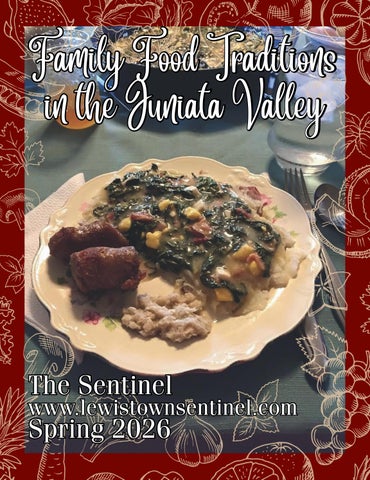
On the Cover:
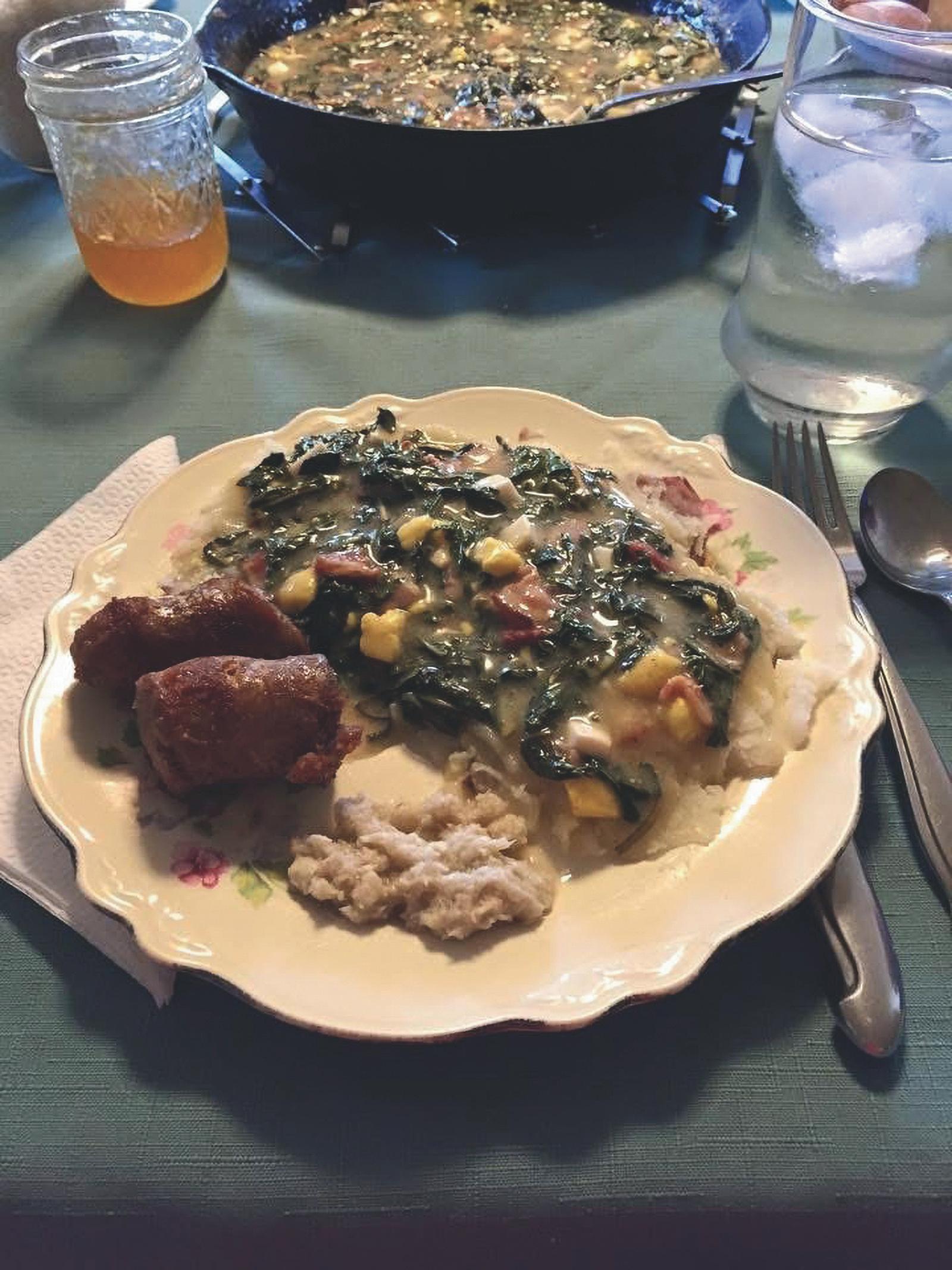
Every Spring, my grandmother would prepare meals of freshly picked dandelion greens over sausage and potatoes. She called it a Spring tonic. It was especially delicious because it included her secret ingredient- love. Photo courtesy of Sue Ritter









BY GREG WILLIAMS Sentinel reporter gwilliams@lewistownsentinel.com
MOUNT UNION —
Some recipes are written down. Others are memorized. And a rare few are lived. This pickled beet and egg recipe belongs firmly in that last category.
It is a dish made long before modern kitchens and conveniences, carried to the United States by immigrants in the early 20th century, and still prepared today — more than 100 years after it first took root in American soil.
The tradition traces back to Rhonda (Nickoloff) Jenkins’ grandparents who emigrated from Eastern Europe, from Poland and Russia, during a period of upheaval and opportunity. Born in Poland in 1898, her grandmother Mary Mazur, fled Poland as a young teen with her two sisters into Austria. In 1912, she and her two sisters left Austria and came to America.
Her grandfather Crist Nickoloff, was born in Russia in 1890. At some point

he fled Russia to Bulgaria. In 1915, he left Bulgaria and came to America.
“My grandma was a housekeeper at a boarding house near Pittsburgh,” Rhonda shared. “My grandpap worked in the steel mill in Pittsburgh and stayed in the boarding house where my grandma worked. That’s where they met, fell in love and got married.”
Crist and Mary Nickoloff eventually made their way to Mount Union where they settled down. The town was shaped by industry,
where the Brickyards provided work and demanded strength, discipline and persistence. Her grandfather found work there.
Like many immigrant families, they brought little with them except what mattered most: language, customs and food knowledge refined over generations. Cooking was not decorative or experimental. It was essential. Meals had to be filling, economical, and familiar in a new and often difficult environment.
See Beet / Page 5

























Continued from Page 4
Polish food anchored the household and shaped family life. The table regularly featured baked ham, kielbasa, halupki (stuffed cabbage), halusky (fried cabbage, noodles and bacon), and pierogi made by hand. Alongside these dishes, jars of pickled eggs — stained a deep, unmistakable pink from beets — were a constant presence.
As granddaughter Rhonda, who lives in Mount Union, recalled, “There was a lot of Polish food.” These meals were not reserved for special occasions; they were daily sustenance, cultural memory made edible.
At the center of this tradition were the pickled
eggs. They were prepared days ahead of time, especially for holidays such as Easter, Thanksgiving and Christmas. The method was deliberate and patient: eggs preserved with beets, vinegar, sugar and time. The result was dependable food that could be counted on when families gathered and tables grew crowded. Everything else came second.
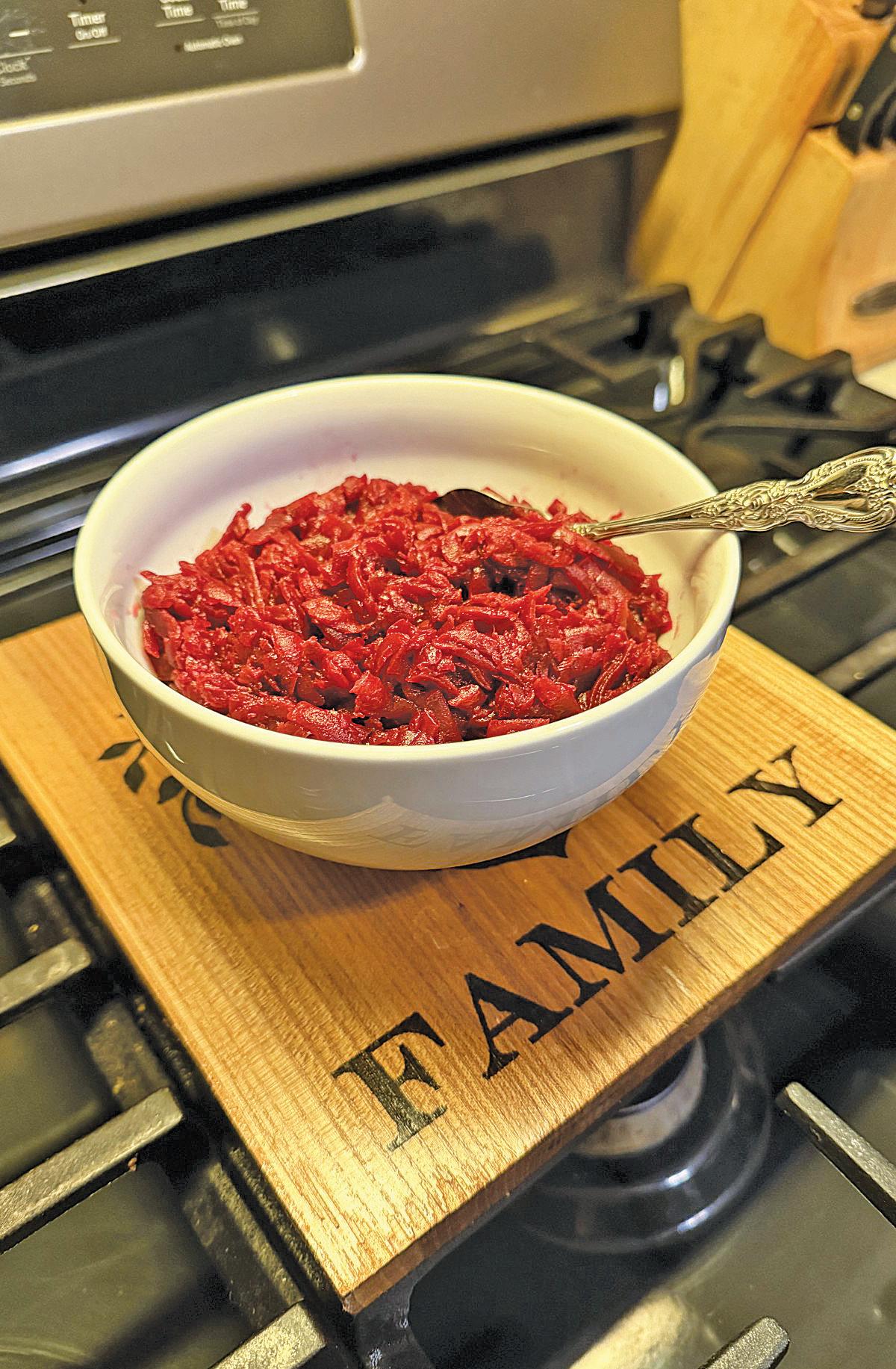
In kitchens shaped by thrift and respect for labor, nothing useful was ever wasted. Once the eggs had been eaten, the beets remained — deeply colored, flavorful and far too valuable to discard. Those beets were shredded and transformed into a vivid, sharp condiment known in Polish households as Ćwikła (pronounced chveek-wah), or
See Beet / Page 6
















Continued from Page 5
beet relish.
The relish was simple but bold. Prepared horseradish was mixed in gradually until the flavor struck the right balance—bright, pungent, and unmistakable. There were no fixed measurements. Taste determined when it was finished, just as it always had. The relish was served cold alongside ham, turkey or sausages, cutting through rich meats with confidence.
This two-part tradition — first the pickled eggs, then the beet relish —reflected a way of life built on practicality and intention. What began as necessity became habit. What became a habit turned into tradition. “To

prepare grandma’s beet relish, start by first making pickled eggs with beets,” Rhonda shared.
The recipe was never formally written down in its early years. It was passed the way many heirloom recipes are: by watching, helping and repeating the process until it became second nature. “Beet Relish should be prepared just before serving the meal,” Rhonda added.
Knowledge moved from grandma Nickoloff to her son, Lou, onto his daughter Rhonda, and onward to another generation with her children with families of their own. Each custodian of the recipe added nothing and removed nothing, understanding that consistency itself was a form of respect.
“I remember my daddy (Lou) always saying, “It could use a little more horseradish!” Rhonda laughed. “No matter how much horseradish we added, it was never enough.”
Even after the passing of the original cook, the ritual remained. The hands preparing the food changed, but the steps did not. The jars still appeared at family gatherings in Mount Union, unannounced and unquestioned. Their presence alone signaled continuity.
For more than a century, this pickled beet and egg recipe has endured because it still serves its purpose. It feeds. It connects. It remembers.
This is not simply a recipe. It is immigration preserved in vinegar, resil-
ience sealed in glass, and history kept alive through repetition. Every time a jar is opened, it affirms that some of the strongest family stories are not written in books — they are shared at the table, one careful batch at a time.
The Foundation of the Tradition
Prep Time: 30 minutes
Resting Time: 4–5 days
Yield: 1 dozen pickled eggs
Keeps: Up to 2 weeks, refrigerated
Ingredients
• 1 dozen eggs
• 2 cans red beets (sliced or quartered, with juice)
• 1 cup white vinegar
• ½ cup water
• ½ cup sugar
• Optional: whole
See Beet / Page 7












cloves or 1 cinnamon stick Instructions
• Hard-boil the eggs. Allow to cool, then peel carefully.
• Place the peeled eggs into a clean jar or container that seals tightly. “I prefer to use a glass jar but plastic will work if that’s all that’s available,” Rhonda said.
• In a saucepan, combine beets, beet juice, vinegar, water, sugar, and optional spices.
• Bring the mixture to a boil, stirring until the sugar is fully dissolved.
• Carefully pour the hot beet mixture over the eggs, ensuring they are completely covered.
• Seal the jar tightly and refrigerate for 4–5 days before serving.
Serving Notes
• Eggs may be served whole or sliced.
• Commonly served alongside holiday meals such as Easter, Thanksgiving, and Christmas.
• Best enjoyed within two weeks.
The Second Gift from the Same Jar
Prep Time: 10 to 15 minutes
Timing: Prepare just before serving Ingredients
• Pickled beets from the egg recipe
• Prepared horseradish, to taste (approximately one 4-oz. jar) Instructions
• Remove the beets from the pickling liquid.
• Shred the beets using a grater, food processor, or meat grinder.
• Gradually mix in prepared horseradish, tasting












Continued from Page 7
as you go until the desired sharpness is reached.
• Place in a covered glass dish and refrigerate until ready to serve.
Serving Suggestions
Serve chilled. Rhonda added, “It is a popular, pungent addition to roasted meats like turkey, ham, beef, sausages and sandwiches.” A small portion goes a long way.
This recipe should be prepared in sequence.
Pickled eggs always come first.
The beet relish is made afterward using the same beets—honoring a tradition of thrift, care, and respect for ingredients that has endured for more than 100 years.
“What is a favorite food or dish that has been passed down or become a tradition in your family?”
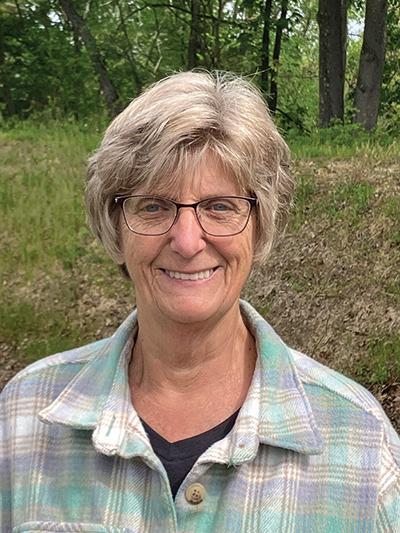
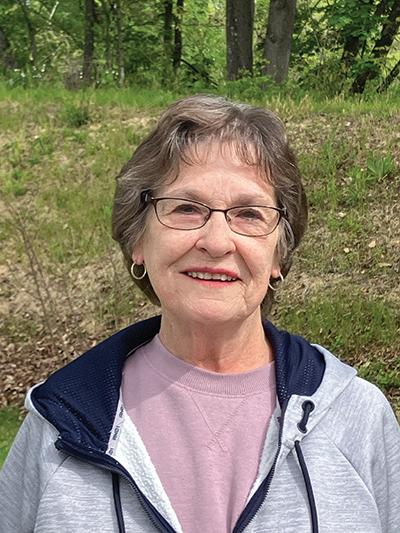

“Beef potpie with potatoes”
“Ham and bean potpie using Great Northern beans. But it has to be with homemade potpie noodles.”









“Tomato gravy on homemade buttered bread”





“Pigs in a blanket stuffed cabbage rolls”- Michelle Liska Jones
“My wild berries and cream French toast bake, homemade baked mac and cheese, grilled honey mustard chicken salad oh the list could go on and on”- Brittany Rachal Jones
“Pineapple glazed ham loaf is a family favorite! Served with either baked or scalloped potatoes”- Bev Graybill Kauffman
“My gram’s baked goulash”- Jeanette Burns




“Pizza casserole”Wendy Benson
“Homemade apple pie or baked mac n cheese with toasted bread or cracker crumb topping”- Lisa Hoskavich
“Hamburg gravy and mashed potatoes- the best comfort food of all time.” - Kurtis Lee Smith
“Chicken corn soup! My grandmother used to make it in Lewistown. Our grandkids in Ohio now love it too! Ham pot pie is a favorite, too!”- Steven Dean








The following first four recipes and the accompanying stories about the dishes are republished from The Sentinel’s “Mom’s Best Meals” edition that originally printed on May 27, 2009. The remaining four recipes come from The County Observer’s “Grandma’s Cookbook” that published on Sep. 8, 2004.
Helen M. McKee, McAlisterville:
One of my mother’s favorite meals for company was roast pork and roast beef, mashed potatoes, gravy, home canned corn, creamed lettuce, pickled beets, peaches, with whipped cream and chocolate cake with caramel icing. My mother was Hattie Sausman Miller.
Chocolate Cake
1/2 cup shortening
1 1/3 cup sugar
3 square baker’s chocolate (melted)
2 whole eggs
1 cup milk
1 teaspoon baking soda
2 cups flour
1 teaspoon vanilla
Cream sugar and shortening, add melted chocolate, add 2 eggs and beat. Add milk alternately with flour and baking soda. Add vanilla. Bake in a 9x13-inch loaf pan at 350 degrees for 30 minutes or until done when checked with a toothpick.

Caramel Icing
1 cup brown sugar
1/2 cup granulated sugar
1/2 cup buttermilk
1 tablespoon buttermilk
Cook to a soft ball stage. Very good on chocolate cake.
Marj Maunder, Lewistown:
This is a meal my mother-in-law made. She came from Cornwall, England, in 1926 with her family of eight children. She made Cornish Pasties that were soooo gooood. We had them twice a week and no one complained if it was oftener. She made her own dough, using lard, and it was always good and flaky.
Rolled the dough into about 8-inch rounds, chipped potatoes finely onto the middle, added sirloin cut into quarter-inch pieces, added onion or parsley, salt and pepper and then neatly pinched the sides together (like a half moon pie), leaving a small opening at the


top to add a little water (about a tablespoonful) then pinched it shut.
Poke a hole in the middle and lay a thin piece of fat over it.
This baked in the oven about ¾ hour or until slightly browned. I ate mine with pickled beet juice or sweet pickle juice. Some liked gravy, but usually the gravy in the pasty was enough for me.
Stacy A. Mitchell, Lewistown:
We grew up in Paintersville on Guss Road. There were five of us kids in my family and with my dad the only one working, my mom was always struggling to make big enough meals to feed all of us. I’m not sure if she made this up or where the recipe actually came from, but we all loved it and my kids still request that I make Mock Turtle Soup, even though they have their own families.
I don’t remember my mom ever measuring anything, but everything seemed to turn out good.
That is why I don’t have actual measurements.
Mock Turtle Soup
1 to 2 pounds hamburg
Carrots, sliced, diced, or baby whole, frozen or raw (I’ve always used either a whole bag of frozen or about 6 whole raw)
1/2 of a big onion, diced
Enough peeled and diced potatoes to fill the pot you are using to three quarters
Eggs, however many you can spare (I usually put 5 or 6 in a 5-quart pot)
Celery seed, salt and pepper, and parsley, to taste
Combine ground beef, onion and seasonings, make into 1-inch balls or just mix it up and crumble. Boil ground beef combo and carrots in about 4 inches water for a half hour.
While it is boiling, peel and dice potatoes. Add potatoes to ground beef, bring to a boil.



Continued from Page 10
When it comes to a boil, drop in eggs. You can either leave them whole by not stirring, or if your kids (like we always did) fight over the whole yolks, stir so the eggs are broken and mixed through.
At this time, I add more celery seed, salt and pepper. Turn down to a slow boil, cover, cook until potatoes are done to your liking, about 10 to 15 minutes.
When potatoes are done, turn off heat and fill pot with milk. Stir in and let sit for a minute or two until milk is heated.
I have heard of people using hard-boiled eggs instead of raw, but I’ve never tried it that way.
We always had home-canned applesauce with our meals. The color of the applesauce sometimes varied with what holiday was nearest.
Linda Partner, Port Royal:
Grammy Lauver’s Baked Beans
Our mother, Larue C. Lauver, with our dad, Harry (Toad), raised
five kids with little money, but lots of love – and always plenty of hearty meals to satisfy us. She was never a “gourmet” cook, but everyone who knew Larue was sure to be greeted with a tasty snack or meal if she got you into our “family” room – a small kitchen filled with wonderful aromas and tastes. She rarely used written recipes –she cooked from her heart, from her favorite foods – and always catered to us kids and our dad.
She left us suddenly in 1994, with very few “recipes” written down for us. We four girls try our best to duplicate the dishes she prepared, but her measure of love is missing. One dish that I am required to bring to every family meal is her baked bean recipe - a fair amount of work compared to today’s “fast” cooking style, but –Oh So Worth It!!
I’m not sure where the recipe came from – perhaps from one of the many folks with whom she and Daddy both worked at Arrow Shirt Factory in Lewistown. These beans are certainly worth every calorie and every gram of fat invested. What memories these and other dishes from Mom’s collection of foods served bring back. If your Mom is still alive, take time now to have her jot down any recipes – or just ideas of how she
does things – before it’s too late to capture those memories in writing.
1 pound dried large lima beans
1 pound brown sugar
1 small bottle ketchup
1/2 pound bacon, sliced in fine pieces.
Soak dried limas in water overnight. Slowly boil beans in water until tender. Don’t over cook to mushy stage. Drain beans. Mix beans with brown sugar and ketchup. Place in sprayed dish.
Place sliced bacon over the top of mixture. Bake in 300-degree oven, covered with foil for 2 hours. Uncover dish. Bake approximately 45 minutes to 1 hour longer, until bacon is cooked and sauce has thickened.
-In loving memory of Larue C. Lauver
This lady was never a Grandma but was a favorite aunt to about 16 assorted cousins in the J.C. Wilson family who migrated to Mifflin Co. from Indiana Co. in 1928 until 1996.
This was Miss Elay Wilson’s I Hate to Cook recipe. She did not hate to cook. She cooked for










Meals on Wheels at least 16 years and volunteered in Lewistown Admitting for the same 16 years with over 2000 hours. This stew grows with the cook and it fits who ever wants to grow with it. I think this is reasonable healthy too for anyone.
1 lb. Good ground beef
2-3 potatoes, chopped 2-3 onions, chopped 1-2 sweet peppers, diced Canned-frozen tomatoes or juice
1 cup prepared biscuit or 1 tube 1 box cornbread, optional Spice: salt, pepper, garlic, oregano (my choice)
In a heavy iron skillet brown beef and spoon off fat. When brown and there’s a crust in the skillet, add potatoes, onions, peppers, spices and a little water. Cook slowly until veggies are tender, turning often. Add tomatoes, juice, sauce, paste or frozen and liquid as desired. If you want a soup, make soup. Otherwise when well simmered together, mix 1 cup Biscuit Mix and drop on top of stew. Bake uncovered in 370 degree oven or cover stew and
See Recipes / Page 12




Continued from Page 11
simmer gently about 12-15 minutes. Makes dumplings. If using cornbread on stew, bake at recommended heat, uncovered. Chopped zucchini can be hidden in this stew or any other.
Submitted by Cleda M. Wright
339 Woods Road Headland, AL 36345 formerly of 333 E. walnut St.
Lewistown
Sugar Cookies
5 Cups granulated sugar
3 Cups butter flavored shortening
5 Eggs
3 Cups milk or buttermilk
1 Tablespoon baking soda
2 Tablespoons baking powder
2 Tablespoons vanilla
12 to 14 cups flour
Mix and chill overnight. Cookie dough should be soft so flour can be used when rolling out the cookies. Roll out cookie dough on well floured surface approximately 1/4 inch thick. Bake at 350 degrees. Makes approximately
100-4 inch cookies.
These cookies are very nice to decorate or frost with a powdered sugar frosting. This recipe was tripled and we use it at Belleville Mennonite School for elementary birthday cookies and for special occasions when we want decorated cookies.
Molasses Cookies
2 cups unsulphured baking molasses
1 Cup shortening
1/2 Cup brown sugar
2 Cups buttermilk
1-1/2 Teaspoon ginger
1 Tablespoon baking soda
Mix and chill dough. Roll out on a well floured board and cut out in desired shapes. Bake at 350 degrees. This cookie recipe makes very nice ginger bread boy cookies.
Both of these recipes came from Marie Byler’s maternal Grandmother. The molasses cookies Marie’s mother always baked at Christmas when she was growing up, and she used them with milk for bedtime snacks.




• Perennials
• Shrubs
• Dogwood Trees
• Fruit & Shade Trees
• Flowering Trees
• Rose Sharon Trees
• Knockout Rose Trees
• Hydrangea Trees
• Topiary Shrubs
Mema-Mary Alverna
Mitchell’s Ham Loaf
Marinate:
1-1/2 cups vinegar
1-1/2 cups water
3 cups brown sugar, packed
1-1/2 teaspoon dry mustard
combine all ingredients, pour over prepared ham loaf and baste while baking.
Ham Loaf:
6 pounds ham, smoked & cooked, ground fine
6 pounds fresh ground pork
9 eggs
5-1/4 cups milk
5-1/4 cups graham cracker crumbs
1 teaspoon salt
1/2 teaspoon ground black pepper
Combine all ingredients and put in 3 loaf pans. Bake at 350 degrees for about one hour.
Note: Baste often
Aurand Lawhead Reedsville
5 Cup Salad
Ingredients
1 8oz. Bar of Philadelphia cream cheese
1 large tub of Cool Whip
2 cups of miniature marshmallows
3 cans of mandarin oranges
(well drained)
1 large can of pineapple chunks
(well drained)
1/2 cup of sugar
1 teaspoon of vanilla
In a large bowl with the mixer cream the cream cheese. Add the sugar and 1/2 the tub of Cool Whip and the 1 teaspoon of vanilla, beat with the mixer until smooth. Add your miniature marshmallows, fruit. Stir together and keep in the refrigerator until serving (or if taking to a picnic put in a cooler to keep cool).
This recipe was my mother’s Catharine “Cass” Snyder. It was one of the first recipes my mother taught me to make. God blessed me with our mother and I miss not being able to tell her about my grandchildren and her great-grandchildren. Some day when I go to be with our Lord, I will have lots to tell her.
Sarah Esh Lewistown






• Spring Hanging Baskets
• Bird Feeders
• Wind Spinners










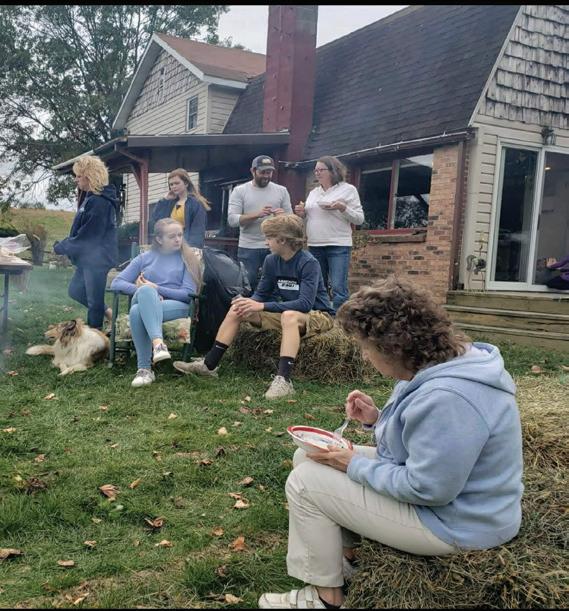
The Sentinel asked its Facebook followers about family food traditions and one unique reply came from Lorrie Wilson and involved a newer tradition her family strarted involving ham and bean soup with rivels, cooked in a kettle. We wanted to know more about this tradition, so Lorrie answered some questions about their special family day over the kettle.
How long has your family been making this food tradition?
We started this tradition in the fall (October) of 2020.
Tell us where you hold the tradition and how


many family members are involved with the kettle?
We get together at my parents’ farm (Bob and June Wilson) near Belltown. They live on Ertley Road. There are at least 20 family members of all ages who are invited, [although] not all make it every year. They may not
















































Continued from Page 13
be there all day but will usually stop in for a bowl of soup at lunch time. We also invite any friends of the family members that they want to invite. Can you share details about the making of the soup? Is this an all-day event?
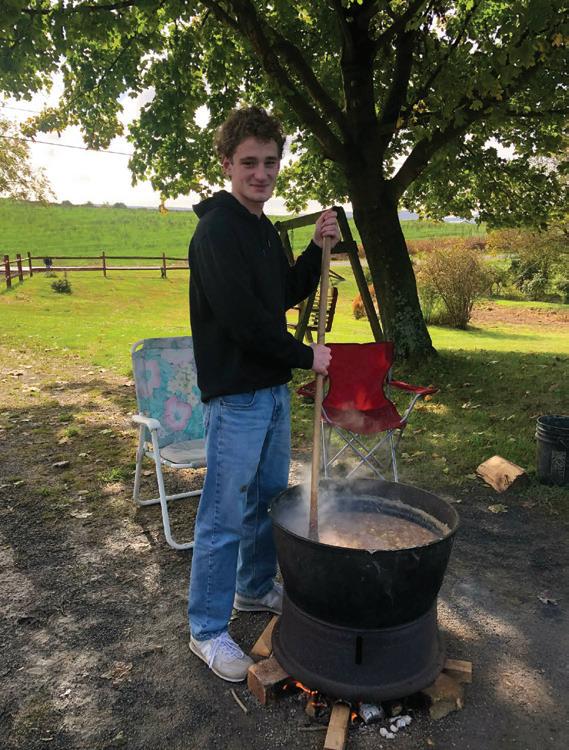
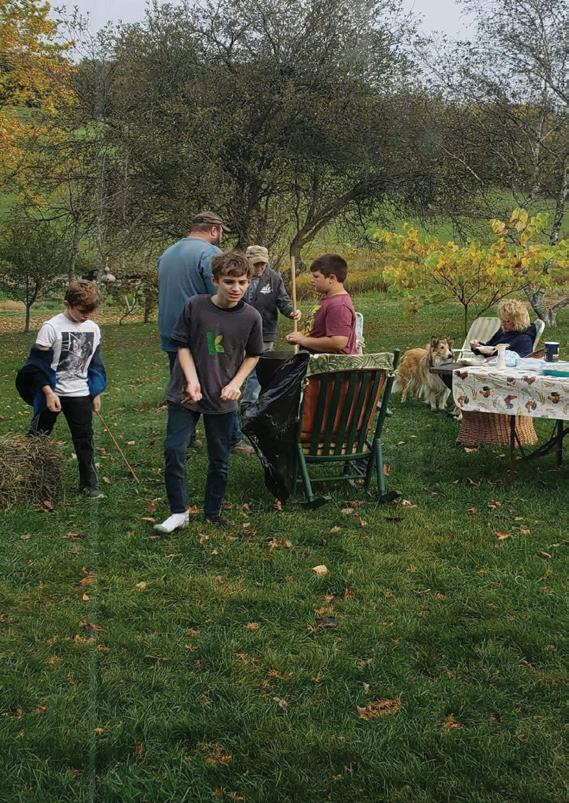
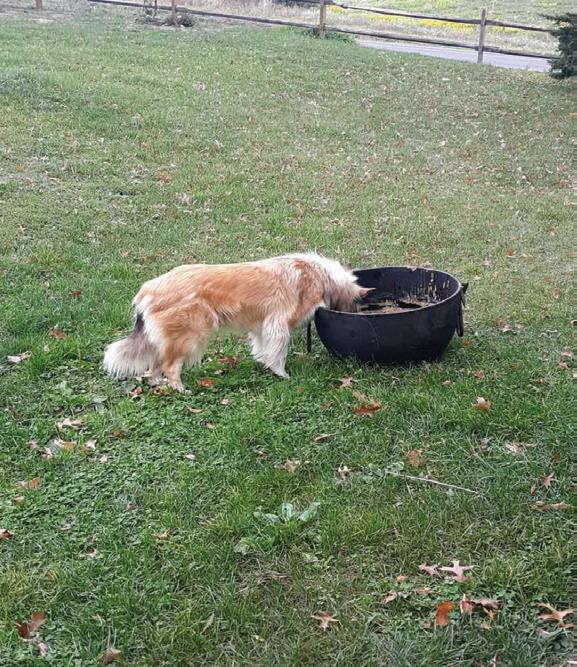
We start in the morning around 8 a.m. My dad sets up the kettle over the fire. The kettle and the stir stick we use to stir the soup belonged to my grandmother. (my mom’s mother – Sarah Sigler). We get the ingredients into the kettle and begin cooking it. It takes a couple of hours until it’s ready. During that time, you have to keep constantly stirring it so it doesn’t burn. Different family member start showing up and take their turn stirring and helping set up the rest of the food. Everyone usually brings a covered dish to share along with the soup. We set up tables and lawn chairs and hope for good weather. A year or two it has rained, but that didn’t stop us- we set up canopies and keep
going.
What do you like most about this food tradition?
I love that it brings my family together back at the place I grew up at a time different than the usual Easter, Thanksgiving, and Christmas get togethers. It’s a unique tradition and something I feel connected to with my parents.
If it’s not a secret, can you share the recipe? Our recipe is pretty simple. It begins with ham that I have already prepped and cut into chunks. That goes into the kettle first. Then we add the beans. My mom has already pre-cooked them. Water and ham broth are added until we think it looks like enough and then we start stir-
ring and cooking. Once it has cooked for a couple of hours, we add salt and pepper. (we always argue about how much pepper to add, mom always says not too much). We also add rivels. (if you don’t know what they are, they’re basically flour and egg mixed together and dropped into the boiling soup and they make a little chewy “rivel”). That’s usually another fun argu-
Tradition / Page 15

































ment as Dad likes a lot of them and whether they’re big enough or not. Tell us about your family that holds the kettle tradition and some of those pictured: My Mom and Dad – Bob and June Wilson, McClure. This is where we hold the event. Myself (Lorrie Wilson) and my grandson Brayden Sain. Also my son Shane Dodson and his family Stefanie Powell and their children Skylin, Nova, Ivory, and Rheena Dodson. My brother Tim Wilson and his wife Pam. His daughter Britini Wilson and her family (husband Brad, children Bailey and Bentley). My brother Daniel Wilson and his family (children Andrew
and his wife Samantha and their child Abel his other two children Jack and Grace). I send out a group text message usually at the beginning of October reminding everyone and we choose a date toward the end of October that works for everyone. I also include out-of-state family members even if they can’t make it.