
Catalog of the 2022 edition

Page 1

13

ARLES 2022

LES RENCONTRES DE LA PHOTOGRAPHIE

INSTITUTIONAL PARTNERS

MAIN PARTNERS

MEDIA PARTNERS

THE RENCONTRES D’ARLES IS ALSO ORGANIZED WITH SPECIAL SUPPORT FROM PRIX PICTET, FONDATION JAN MICHALSKI POUR L’ÉCRITURE ET LA LITTÉRATURE, LËT’Z ARLES (LUXEMBOURG), FONDATION LOUIS ROEDERER, TECTONA, ADAGP, SAIF, ACTES SUD, DEVIALET, FNAC, LUMA ARLES, COMMUNAUTÉ D’AGGLOMÉRATION ARLES CRAU CAMARGUE MONTAGNETTE.

SUPPORT FROM CONFÉDÉRATION SUISSE, ÉDITIONS LOUIS VUITTON, EURAZÉO, FONDATION SWISS LIFE, MALONGO, CHAMMAS & MARCHETEAU, RIVEDROIT AVOCATS, JEAN‑FRANÇOIS DUBOS, LIBÉRATION, POLKA, FISHEYE, AMA, LOUIE MEDIA, FUJIFILM, MÉTROBUS, PICTO FOUNDATION, PROCESSUS, CIRCAD, DEUXIÈME ŒIL, ATELIER SHL, ANITA SAXENA INTERPRÉTARIAT.

AND THE ACTIVE COLLABORATION OF ACADEMY OF FRANCE IN ROME – VILLA MEDICI, RYERSON IMAGE CENTRE, C/O BERLIN, CENTRE NATIONAL DES ARTS PLASTIQUES, INTERNATIONAL CENTER OF PHOTOGRAPHY, MUSÉE D’ART CONTEMPORAIN DE LA HAUTE‑VIENNE – CHÂTEAU DE ROCHECHOUART, INA, INSTITUT POUR LA PHOTOGRAPHIE, ÉCOLE NATIONALE SUPÉRIEURE DE LA PHOTOGRAPHIE, MUSÉE RÉATTU, MUSÉE DÉPARTEMENTAL ARLES ANTIQUE, ABBAYE DE MONTMAJOUR, ASSOCIATION DU MÉJAN, MONOPRIX ARLES, LE PRINTEMPS, AEENSP, FONDATION MANUEL RIVERA‑ORTIZ, DELPIRE & CO, MUSÉE DE LA CAMARGUE, PARC NATUREL REGIONAL DE CAMARGUE, ATELIER LUCIEN CLERGUE, CARRÉ D’ART –MUSÉE D’ART CONTEMPORAIN DE NÎMES, CENTRE D’ART CONTEMPORAIN DE CHÂTEAUVERT, CENTRE D’ARTS PLASTIQUES FERNAND LÉGER,

CENTRE DE LA PHOTOGRAPHIE DE MOUGINS, MUCEM, CENTRE PHOTOGRAPHIQUE MARSEILLE, CHÂTEAU LA COSTE, COLLECTION LAMBERT AVIGNON, FRAC PACA, MUSÉE ESTRINE, MUSÉE GRANET –AIX‑EN‑PROVENCE, VILLE DE TOULON, ESPACE CULTUREL DÉPARTEMENTAL 21, BIS MIRABEAU, MAISON EUROPÉENNE DE LA PHOTOGRAPHIE, RECTORATS DES ACADÉMIES D’AIX‑MARSEILLE ET DE NICE, DIRECTION RÉGIONALE DE L’ALIMENTATION, DE L’AGRICULTURE ET DE LA FORÊT PROVENCE ALPES CÔTE D’AZUR, FONDATION VINCENT VAN GOGH  ARLES, MUSEON ARLATEN, VII ACADEMY, COFEES.

8

The 53rd Rencontres d’Arles is dedicated to Olivier Etcheverry (1952–2022), scenographer of the festival’s exhibitions in 1986 and 1987 and from 2002 to 2022.

9
Olivier Etcheverry, Arles, July 2022 [photo: Marjorie Sardanne].

CONTENTS

P. 15

WORD FROM THE PRESIDENT

P. 16

VISIBLE OR INVISIBLE, A SUMMER REVEALED

P. 18

CURATORS OF THE EXHIBITIONS

P. 22

PERFORMING

P. 24

A FEMINIST AVANT-GARDE PHOTOGRAPHS AND PERFORMANCES OF THE 1970S FROM THE VERBUND COLLECTION, VIENNA

P. 34

BABETTE MANGOLTE CAPTURING MOVEMENTS IN SPACE

P. 44

SUSAN MEISELAS AND MARTA GENTILUCCI CARTOGRAPHIES DU CORPS

P.

48

EXPERIMENTING

P. 50

NOÉMIE GOUDAL PHOENIX

P. 56

BETTINA GROSSMAN BETTINA. A POEM OF PERPETUAL RENEWAL

P. 64

FRIDA ORUPABO HOW FAST SHALL WE SING

P. 70

SANDRA BREWSTER BLUR

P. 74

LUKAS HOFFMANN EVERGREEN

P. 80

SONGS OF THE SKY PHOTOGRAPHY & THE CLOUD

P. 86

EMERGING

P. 88

SATHISH KUMAR TOWN BOY

P. 92

WANG YIMO THEATRE ON EARTH

P. 96

PIERFRANCESCO CELADA WHEN I FEEL DOWN, I TAKE A TRAIN TO THE HAPPY VALLEY

P. 100

ARASH HANAEI AND MORAD MONTAZAMI SUBURBAN HAUNTOLOGY

P. 104

CASSANDRE COLAS, GAËLLE DELORT, MAXIME MULLER SPECIAL ATTENTION

P. 110 2022

LOUIS ROEDERER DISCOVERY AWARD

DEBMALYA ROY CHOUDHURI A FACTLESS AUTOBIOGRAPHY

RAHIM FORTUNE

I CAN’T STAND TO SEE YOU CRY

OLGA GROTOVA

OUR GRANDMOTHERS’ GARDENS

DANIEL JACK LYONS LIKE A RIVER

SEIF KOUSMATE

WAHA (OASIS)

CELESTE LEEUWENBURG FROM WHAT SHE TOLD ME,  AND HOW I FEEL

GAL CIPRESTE

MARINELLI & RODRIGO

MASINA PINHEIRO

GH. GAL & HIROSHIMA

AKEEM SMITH ALTARPIECE

MIKA SPERLING

I HAVE DONE NOTHING WRONG

MAYA INÈS TOUAM REPLICA

10

P. 172

EXPLORING AND TESTIFYING

P. 174

IF A TREE FALLS IN A FOREST

P. 182

BRUNO SERRALONGUE WATER PROTECTORS

P. 188

JULIEN LOMBARDI THE LAND WHERE THE SUN WAS BORN

P. 194

LÉA HABOURDIN IMAGES FORESTS: WORLDS IN EXPANSION

P. 200

RITUAL INHABITUAL GEOMETRIC FORESTS. STRUGGLES ON MAPUCHE LAND

P. 206

IMAGINED DOCUMENTS

P. 216 BUT STILL, IT TURNS

P. 224

ESTEFANÍA

PEÑAFIEL LOAIZA CARMEN (REPETITIONS)

P. 230 REVISITING

P. 232

LEE MILLER LEE MILLER, PROFESSIONAL PHOTOGRAPHER (1932–1945)

P. 236

A WORLD TO HEAL. 160 YEARS OF PHOTOGRAPHY FROM THE COLLECTIONS OF THE RED CROSS AND THE RED CRESCENT

P. 242

ROMAIN URHAUSEN IN HIS TIME

P. 248 MITCH EPSTEIN IN INDIA, 1978–1989

P. 256 ARLES BOOKS

2022 BOOK AWARDS

2022 LUMA RENCONTRES DUMMY BOOK AWARD

P. 260 ASSOCIATED ARLES

P. 262

LUMA JAMES BARNOR STORIES. PICTURES FROM THE ARCHIVE (1947–1987)

P. 266

PERNOD RICARD ARTS MENTORSHIP FIRST EDITION SANDRA ROCHA AND PERRINE GÉLIOT

P. 270

DELPIRE & CO BARBARA IWEINS KATALOG

P. 274 FISHEYE IMMERSIVE THE INTERPOSED VEIL

P. 278

ASSOCIATION DU MÉJAN KATRIEN DE BLAUWER THE PICTURES SHE DOESN’T SHOW TO ANYONE

JOAN FONTCUBERTA AND PILAR ROSADO DÉJÀ VU

KLAVDIJ SLUBAN SNEG

JULIA GAT, JULIEN GESTER “48 VUES ” COLLECTION

P. 294

FONDATION MANUEL RIVERA-ORTIZ DRESS CODE

P. 298

MUSÉE RÉATTU JACQUELINE SALMON THE BLIND SPOT. PERIZOMAS: STUDY AND VARIATIONS

P. 302

MUSÉE DE LA CAMARGUE LIONEL ROUX PASTORAL ODYSSEY

11

P. 306

GRAND ARLES EXPRESS

PP. 308–309

AIX EN PROVENCE

MUSÉE GRANET

BERNARD PLOSSU, FRANÇOIS-MARIUS

GRANET

ITALIA DISCRETA

ESPACE CULTUREL

DÉPARTEMENTAL

21, BIS MIRABEAU THE SILENT LANGUAGE

AVIGNON

COLLECTION LAMBERT

WELCOME TO THE DESERT OF THE REAL

CHÂTEAUVERT

CENTRE D’ART

CONTEMPORAIN

DE CHÂTEAUVERT

LÉNA DURR

WILD HABITATS

PP. 312–313

LE PUY SAINTE RÉPARADE

CHÂTEAU LA COSTE

MARY M c CARTNEY

A MOMENT OF AFFECTION

MARSEILLE

CENTRE

PHOTOGRAPHIQUE

MARSEILLE

THOMAS MAILAENDER

PASSION LIGHT

FRAC PROVENCE-

ALPES - CÔTE D’AZUR APICHATPONG

WEERASETHAKUL

FIREWORKS (ARCHIVES)

MUCEM

MATHIEU PERNOT THE ATLAS IN MOTION

PP. 316–317

NÎMES

CARRÉ D’ART

NAIRY BAGHRAMIAN

PARLOR

SAM CONTIS

TRANSIT

JULIEN CREUZET CLOUD CLOUDY GLORY

MOUGINS

CENTRE DE LA PHOTOGRAPHIE DE MOUGINS

TOM WOOD

EVERY DAY IS SATURDAY

PORT DE BOUC CENTRE

D’ARTS PLASTIQUES

FERNAND LÉGER

CATHERINE

CATTARUZZA

I AM FOLDING THE LAND

PP. 320–321

SAINT RÉMY DE PROVENCE

MUSÉE ESTRINE JOHN STEWART STILL LIFE

TOULON

MAISON DE LA PHOTOGRAPHIE, GALERIE DES MUSÉES, CABINET D’ART GRAPHIQUE –MUSÉE D’ART DE TOULON LUCIEN CLERGUE, THE MEDITERRANEAN

P. 322 OPENING WEEK

NIGHTS DAYS

P. 328

EDUCATION TRAINING

PHOTOGRAPHY WORKSHOPS

IMAGE EDUCATION

P. 334

CREDITS

PARTNERS

ACKNOWLEDGMENTS

BOARD OF DIRECTORS

TEAM

12
13
14

WORD FROM THE PRESIDENT

HUBERT VÉDRINE PRESIDENT OF THE RENCONTRES D’ARLES

The 52nd Rencontres d’Arles was a success despite the health crisis. Attendance surpassed our highest hopes. We would like to thank our loyal partners, whose support over the past two years allowed us to bring all our projects to fruition.

We are delighted to welcome you to the 53rd Rencontres d’Arles, with forty very different exhibitions on the program, in addition to those proposed in the Grand Arles Express. This is a destination: first, the city of Arles, of course, but also a whole region, across which the wind of photography blows.

In these unnerving times, the festival takes its social role to heart more than ever, by engaging unemployed people to work as reception staff.

We are also strengthening our commitment to social responsibility by joining the Collectif des Festivals Écoresponsables et Solidaires en Région Sud (COFEES). Our eco-responsible approach had already taken shape with, among other things, recycling our exhibition sets year after year.

Above all, I would like to salute the memory of Olivier Etcheverry, who died on March 3. He was the Rencontres d’Arles exhibition designer in 1986 and 1987, and from 2002 to 2022. with elegant modesty and joyful generosity, Olivier embodied the soul and the values upheld by the festival. He reinvented the photography exhibition with bold, innovative installations. He loved Arles and showed the city in its best light by staging exhibitions in unlikely or forgotten places. He occupied spaces; he now lives in the hearts of the festival’s team. The 53rd Rencontres d’Arles is dedicated to him.

15

VISIBLE OR INVISIBLE, A SUMMER REVEALED

Saying that the summer of 2022 will be one of revelations seems almost like stating the obvious. How can we be made to see what is staring us in the face, but takes so long to appear, as if the revelation could only be a forced birth? Photography, photographers, and artists who use the medium are there to remind us of what we want to neither hear nor see. Yet, as Emanuele Coccia says, “It is to the visible, to images, that humanity turns for a radical testimony of their own being, their own nature.”

Every summer, the Rencontres d’Arles seizes a condition, demands, criticizes, rebels against established standards and categories and shakes up the way we look at things from one continent to another, reminding us of our absolute need to exist.

Photography captures our existence in all its aspects, but it has not always mirrored the incredible richness and diversity of the artists. A long process of recognizing women photographers has been underway for some forty years. Continuing the festival’s commitment, this year many venues will host shows reflecting their influence and creativity, from historic figures to forgotten or little-known artists and today’s emerging talents.

A Feminist Avant-Garde, an exhibition at the Mécanique générale of the verbund collection, which has never been seen before in France, features performative practices common worldwide. The result of eighteen years research, it focuses on women who used photography as a major means of expression and emancipation to, as Lucy Lippard says, revolt “against the cult of male genius or the hegemony of painting for a radical reinvention of the image of women by women.” From Cindy Sherman to ORLAN, Helena Almeida, and Martha Wilson,

a whole generation of female photographers paved the way for consciousness and recognition.

Dance and performance from 1970s New York meet in Église Sainte-Anne. Filmmakerphotographer Babette Mangolte documented this exciting scene, where works by Trisha Brown, Richard Foreman, Lucinda Childs, Robert Wilson, and Simon Forti, to name just a few, were performed. She developed a language based on the camera’s subjectivity, where the viewer plays a key role in the work and in the body’s relationship to space. Closer to us, another performance unfolds in front of Susan Meiselas’s camera: captured gestures of fragments of aging bodies meet the music of Marta Gentilucci. In this composition for four hands, energy and beauty transcend the passage of time.

This summer, visitors again make their way to places like the Salle Henri-Comte, where they can see the singular work of Bettina Grossman, who lived in the legendary Chelsea Hotel from 1970 until shortly before her death in 2021. Bettina has based her shape-shifting work on a complex self-referencing system integrating photographs, videos, sculptures, paintings, and textile design revealed by Yto Barrada at her side.

The experimentation continues with Frida Orupabo’s strange, poetic repertoire of figures. Denouncing the brutality of the depiction of Black bodies throughout history, she deconstructs stereotypes by reappropriating images downloaded from the internet and integrating them into her family archive. The young curators of Untitled Duo continue this critical perspective with If a Tree Falls in a Forest, which investigates the individual and collective memory of colonialism and the trauma of being othered. For the first time in France, the James Barnor retrospective

16

at LUMA reveals a selection of iconic images and archival documents. At the end of the colonial era, Barnor opened his first studio in his hometown of Accra, before moving to London and then traveling back and forth between the two continents.

The human is at the heart of the festival, but so is nature: it is impossible to imagine one without the other. Ritual Inhabitual sounds the alarm over the dizzying expansion in Chile of industrial forestry and the planting of geometric forests to supply an increasingly voracious paper industry. Meanwhile, the Mapuche people are being pushed further and further away from their land, cutting them off from their culture so closely linked to nature. In the United States, Bruno Serralongue documents the Sioux people’s ongoing struggle to protect their ancestral lands from the expansion of the oil and gas industry. The Rencontres also supports creativity with many tools developed over the years with our public and private partners in France and abroad. This year, for the first time, works by the winner of the grant created with the Serendipity Arts Festival in Goa are being exhibited at Cloître Saint-Trophime, while those of the artists preselected for the Louis Roederer Discovery Award are shown at the Église des Frères-Prêcheurs, in the heart of the city, curated by Taous Dahmani.

Our reading of history continues with two exhibitions that strangely resonate in this terrible period, when war is raging in Europe. Gaëlle Morel offers a new look at the career of Lee Miller, a photographer beyond the muse she is often seen as. The show spans the years 1932 to 1945, from her studio work to commissions and her wartime photography,

until the liberation of the German concentration camps. Coproduced with the International Red Cross Museum, A World to Heal, the outcome of two years of research in the museum’s archives, takes a critical look at 160 years of humanitarian photography. This year, Mitch Epstein’s photography headlines the festival. His exhibition In India, 1978–1989 can be seen at Abbaye de Montmajour.

17

CURATORS OF THE EXHIBITIONS

RAVI AGARWAL

Born 1958 in New Delhi, India. Lives and works in New Delhi, India.

Ravi Agarwal has an interdisciplinary practice as a photographer, artist, environmental campaigner, writer, and curator. His work has been shown widely, including at the biennials of Sharjah (2013), Kochi (2016), Yinchuan (2018), and Havana (2019), and in exhibitions such as Documenta XI (2002) and Indian Highway (2009). He co-curated the Indo-European public art projects Yamuna-Elbe (2011) and Embrace Our Rivers (2018), and was photography curator for the 2018 and 2019 Serendipity Arts Festival. He also organized New Natures: A Terrible Beauty Is Born at Goethe Institute Mumbai (2018). He writes and publishes regularly on art and sustainability. He is also the founder of the environmental NGO Toxics Link.

EXHIBITION: IMAGINED DOCUMENTS — P. 206

YTO BARRADA

Born 1971 in Paris, France. Lives and works in New York, United States.

Yto Barrada is an artist recognized for her multidisciplinary investigations of cultural phenomena and historical narratives. Engaging with the performativity of archival practices and public interventions, her installations reinterpret social relationships, uncover subaltern histories, and reveal the prevalence of fiction in institutionalized narratives. Her work has been exhibited at Tate Modern, MoMA, The Metropolitan Museum, the Walker Art Center, Whitechapel Gallery, and the 2007 and 2011 Venice Biennales. She was the 2011 Deutsche Bank Artist of the Year, the 2013 Robert Gardner Fellow in Photography, and the winner of the 2015 Abraaj Group Art Prize and the 2016 Canon Tiger Awards for Short Films. She is also the founding director of the Cinémathèque de Tanger.

EXHIBITION: BETTINA GROSSMAN—

BETTINA. A POEM OF PERPETUAL RENEWAL — P. 56

TAOUS DAHMANI

Born 1990 in Paris, France. Lives and works between Paris and Marseille, France, and London, United Kingdom.

Taous Dahmani is a French, British, and Algerian art historian, writer, and curator specializing in photography. Her academic research focuses on the photographic representation of struggles and the struggle for photographic representations. Her projects mainly involve the links between photography and politics such as the visual culture of protests, migratory narratives, and intersectional feminist discourses. She has published in various scientific journals and art magazines. She regularly presents papers in academic conferences and holds public conversations with photographers. Taous Dahmani is also an editor and content advisor at The Eyes Publishing, a trustee of the Photo Oxford Festival, and on the editorial board of MAI: Visual Culture and Feminism.

EXHIBITION: 2022 LOUIS ROEDERER DISCOVERY AWARD — P. 110

PAUL DI FELICE

Born 1953 in Differdange, Luxembourg. Lives and works in Luxembourg, Luxembourg.

Paul di Felice has been an art critic, artist, and contemporary photography exhibition curator since the 1970s. He holds a PhD in the arts and has taught the history of modern and contemporary art and art education at the University of Luxembourg. He coedits Café Crème, a magazine he cofounded in 1984. He is codirector of the European Month of Photography in Luxembourg and chairs the network of the European Month of Photography, which he cofounded in 2006. Since 2003, he has been a consultant-curator at the Arendt Art Collection. The cofounder and vice-president of Lët’z Arles, he is a founding member of lacritique.org magazine’s editorial board and a member of the International Association of Art Critics (AICA) Luxembourg and of the IACCCA board of directors.

EXHIBITION: ROMAIN URHAUSEN—IN HIS TIME — P. 242

18
Portrait Courtesy of the curator. Portrait Romain Girtgen. Portrait Benoît Peverelli. Portrait Lynn S.K.

SERGIO VALENZUELA ESCOBEDO

Born 1983 in Santiago, Chile. Lives and works between Arles, France, and London, United Kingdom.

Artist, researcher, and publisher Sergio Valenzuela Escobedo holds a PhD in Photography from the École Nationale Supérieure de la Photographie in Arles. After a year at the National School of the Arts in Johannesburg (NSA), he earned a photography degree in Chile and completed his MFA at the Villa Arson in Nice. He has curated the exhibitions Mapuche at the Musée de l’Homme in Paris and Monsanto: A Photographic Investigation at the Rencontres d’Arles. He has been invited to teach at various schools and institutions, including Parsons Paris, ISSP, and Atelier Noua. He also collaborated in 1000 Words and cofounded Double Dummy, a platform for critical reflection about documentary photography.

EXHIBITION: RITUAL INHABITUAL—GEOMETRIC FORESTS.

STRUGGLES ON MAPUCHE LAND — P. 200

PAUL GRAHAM

Born 1956 in Stafford, United Kingdom.

Lives and works in New York City, United States.

In 1981, Paul Graham completed his first acclaimed work, photographing life along England’s primary arterial road in color, a series titled A1: The Great North Road. His use of color in the late 1970s and early 1980s was transformative, at a time when British photography was dominated by black-and-white social documentary. Since then, unwilling to repeat the same works, he has made images in Northern Ireland with Troubled Land; Japan with Empty Heaven; Western Europe in New Europe; and, for the past eighteen years, the United States with A Shimmer of Possibility. He has been the subject of more than eighty exhibitions worldwide, including a solo show at the Museum of Modern Art, New York. He is the recipient of numerous awards, including the 2012 Hasselblad Foundation International Award.

EXHIBITION: BUT STILL, IT TURNS — P. 216

HE GUIYAN

Born 1976 in Shehong, China. Lives and works in Chongqing, China.

He Guiyan is an art critic and curator. He holds a PhD in Fine Arts from the School of Humanities, China Central Academy of Fine Arts. He is currently a professor at the School of Arts and Humanities at the Sichuan Fine Arts Institute, as well as the director of its Art Museum and its Contemporary Visual Arts Research Center.

EXHIBITION: WANG YIMO—THEATRE ON EARTH — P. 92

NATHALIE HERSCHDORFER

Born 1972 in Neuchâtel, Switzerland. Lives and works in Locle, Switzerland.

Nathalie Herschdorfer is an exhibition curator, photography historian, and director of the Musée des Beaux-Arts du Locle, Switzerland, where she has shown works by many photographers, including Henri Cartier-Bresson, Noémie Goudal, Todd Hido, Alex Prager, Viviane Sassen, and Hiroshi Sugimoto. She is also a teacher and the author of many books, such as Body: The Photobook, Mountains: By Magnum Photographers, The Thames & Hudson Dictionary of Photography, Afterwards: Contemporary Photography Confronting the Past, and Coming into Fashion: A Century of Fashion Photography at Condé Nast, which accompanied an exhibition that traveled to fifteen countries.

EXHIBITION: A WORLD TO HEAL. 160 YEARS OF PHOTOGRAPHY FROM THE COLLECTIONS OF THE RED CROSS AND THE RED CRESCENT — P. 236

19
Portrait Courtesy of the curator. Portrait  Estefania Meana. Portrait Julien Chavaillaz. Portrait Nicola Noemi Copolla.

GREGOR HUBER

Born 1978 in Zurich, Switzerland. Lives in Zurich, Switzerland, and New York, United States.

Gregor Huber works at the intersection of design, art, and research. He runs the design studio Huber/Sterzinger together with Ivan Sterzinger, and the publishing initiative Edition Hors-Sujet. Besides many self-initiated projects, he engages in ongoing partnerships with artists, researchers, curators, architects, and institutions. He has taught, lectured, and held workshops at numerous schools including ECAL, ZHdK, Harvard University, Rhode Island School of Design, and HfG Karlsruhe. He has twice received the Swiss Award for Design from the Swiss Federal Office of Culture and his books have been awarded both nationally and internationally.

EXHIBITION: BETTINA GROSSMAN— BETTINA. A POEM OF PERPETUAL RENEWAL — P. 56

PASCAL HUFSCHMID

Born 1980 in Aubonne, Switzerland. Lives and works in Geneva, Switzerland.

Pascal Hufschmid is director-general of the International Museum of the Red Cross and Red Crescent (IMRC). As an art historian specializing in photography, he believes that art and museums allow us to better understand current events. He draws on his experience in the museum sector, the art market, and international organizations to develop large-scale, multidisciplinary cultural projects. To date, he has been active in over forty countries. Before joining the IMRC, he worked at Photo Élysée in Lausanne, where he launched the Prix Élysée in support of international photography.

EXHIBITION: A WORLD TO HEAL. 160 YEARS OF PHOTOGRAPHY FROM THE COLLECTIONS OF THE RED CROSS AND THE RED CRESCENT — P. 236

GAËLLE MOREL

Born 1976 in Paris, France. Lives and works in Toronto, Canada.

Gaëlle Morel was guest curator of Montreal Photo Month in 2009 (Les Espaces de l’image). Since 2010, she has curated exhibitions at the Ryerson Image Centre (RIC) in Toronto, Canada, including Berenice Abbott: Photographs (2012), Zanele Muholi: Faces and Phases (2014), Burn with Desire: Photography and Glamour (2015), The Scotiabank Photography Award: Suzy Lake (2017), and Meryl McMaster: As Immense as the Sky (2019). She is currently preparing an exhibition and catalogue (coming out from Steidl in 2022) on Mary Ellen Mark’s Ward 81 project.

EXHIBITIONS: SANDRA BREWSTER—BLUR — P. 70 LEE MILLER—LEE MILLER, PROFESSIONAL PHOTOGRAPHER (1932–1945) — P. 232

ALONA PARDO

Born 1974 in London, United Kingdom. Lives and works in London, United Kingdom.

Alona Pardo has been a curator at the Barbican Art Gallery in London for nearly fifteen years. With a focus on photography and film, she has curated and edited numerous exhibitions and publications including most recently Masculinities: Liberation through Photography (2020); Trevor Paglen: From Apple to Anomaly (2019); Dorothea Lange: Politics of Seeing (2018); Vanessa Winship: And Time Folds (2018); Another Kind of Life: Photography on the Margins (2018); Richard Mosse: Incoming (2017); and Strange and Familiar: Britain as Revealed by International Photographers (with Martin Parr; 2016). She has a particular interest in work that exists at the intersection between activism, aesthetics, and identity.

EXHIBITION: NOÉMIE GOUDAL—PHOENIX — P. 50

20
Portrait Zoé Aubry. Portrait Jenny Lewis. Portrait Courtesy of the curator. Portrait Courtesy of the curator.

MARÍA INÉS RODRÍGUEZ

Born 1968 in Zipaquirá, Colombia. Lives and works between São Paulo, Brazil, and Paris, France.

María Inés Rodríguez is adjunct curator at MASP, Museu de Arte de São Paulo Assis Chateaubriand, where she has conceived exhibitions dedicated to Dominique González Foerster, Ana Pi, Babette Mangolte, Laure Prouvost, Laura Huertas, Mathilde Rosier, and Letícia Parente. Since 2018, she has also been artistic director at Tropical Papers, an inclusive and active digital platform, dedicated to projects by cultural practitioners from and in the tropics. She was previously the director of CAPC Musée d’Art Contemporain of Bordeaux, chief curator of the MUAC in Mexico City, chief curator at the MUSAC in Castilla y León, and guest curator at Jeu de Paume in Paris.

EXHIBITION: BABETTE MANGOLTE— CAPTURING MOVEMENTS IN SPACE — P. 34

KATHRIN SCHÖNEGG

Born 1982 in Konstanz, Germany. Lives and works in Berlin, Germany.

Kathrin Schönegg is a photography historian, recipient of the DGPh History of Photography Research Award of the German Photographic Association (2018). She holds a PhD in Art and Media Studies from the University of Konstanz and followed the Alfried Krupp von Bohlen and Halbach Foundation’s program “museum curators for photography.” A permanent curator of C/O Berlin since 2019, she leads the funding program for emerging artists, the C/O Berlin Talent Award, and codevelops C/O Berlin’s exhibition program. Recent curating projects include the thematic exhibitions Songs of the Sky. Photography & the Cloud and Send Me an Image: From Postcards to Social Media (both 2021) alongside solo shows.

EXHIBITION: SONGS OF THE SKY. PHOTOGRAPHY & THE CLOUD — P. 80

GABRIELE SCHOR

Born 1961 in Vienna, Austria. Lives and works in Vienna, Austria.

Gabriele Schor is curator and founding director of the verbund collection in Vienna. Started in 2004, the collection has two thematic concentrations: “1970s Feminist Avant-Garde” and “Perceptions of Spaces and Places.” Schor has published widely, including on Birgit Jürgenssen (2009, with Abigail Solomon-Godeau), Francesca Woodman (2014, with Elisabeth Bronfen), Renate Bertlmann (2016, with Jessica Morgan), and Louise Lawler (2018), as well as a catalogue raisonné of Cindy Sherman’s early work (2012). In 2015, she published the book Feminist Avant-Garde of the 1970s, a term she coined in order to recognize the pioneering achievements of female artists of that era.

EXHIBITION: A FEMINIST AVANT-GARDE. PHOTOGRAPHS AND PERFORMANCES OF THE 1970 s FROM THE VERBUND COLLECTION, VIENNA — P. 24

UNTITLED DUO

Soukaina Aboulaoula (born 1993 in El Jadida, Morocco) and Yvon Langué (born 1987 in Acha-Tugi, Cameroon).

Founded in 2017 in Marrakech, Morocco, Untitled Duo functions as a curatorial platform and an editorial design and art direction agency, in an effort to contribute to the progress and development of cultural production in Morocco while remaining in communication with the world at large. It is alumnus of RAW Academie session 4, and the recipient of the Rencontres d’Arles and the Institut français second Africa projects curatorial research grant for If a Tree Falls in a Forest.

EXHIBITION: IF A TREE FALLS IN A FOREST — P. 174

21
Portrait Romina Häner. Portrait Katharina Gossow. Portrait Danh Vo. Portrait David von Becker.

PERFORMING

Birgit Jürgenssen. Ohne Titel (Selbst mit Fellchen)

[Untitled (Self with Fur)], 1974. Courtesy of the Estate Birgit Jürgenssen / Galerie Hubert Winter / Bildrecht / VERBUND COLLECTION, Vienna.

22

A FEMINIST AVANT- GARDE

PHOTOGRAPHS AND PERFORMANCES OF THE 1970S FROM THE VERBUND COLLECTION, VIENNA

Helena Almeida (1934–2018), Emma Amos (1938–2020), Sonja Andrade (1935), Eleanor Antin (1935), Anneke Barger (1939), Lynda Benglis (1941), Renate Bertlmann (1943), Tomaso Binga (1931), Dara Birnbaum (1946), Marcella Campagnano (1941), Elizabeth Catlett (1915–2012), Judy Chicago (1939), Linda Christanell (1939), Veronika Dreier (1954), Orshi Drozdik (1946), Lili Dujourie (1941), Mary Beth Edelson (1933), Renate Eisenegger (1949), Rose English (1950), VALIE EXPORT (1940), Esther Ferrer (1937), Marisa González (1945), Eulàlia Grau (1946), Barbara Hammer (1939–2019), Lynn Hershman Leeson (1941), Alexis Hunter (1948–2014), Mako Idemitsu (1940), Birgit Jürgenssen (1949–2003), Kirsten Justesen (1943), Anna Kutera (1952), Ketty La Rocca (1938–1976), Leslie Labowitz (1946), Suzanne Lacy (1945), Katalin Ladik (1942), Suzy Lake (1947), Natalia LL (1937), Lea Lublin (1929–1999), Karin Mack (1940), Dindga McCannon (1947), Ana Mendieta (1948–1985), Annette Messager (1943), Rita Myers (1947), Senga Nengudi (1943), Lorraine O’Grady (1934), ORLAN (1947), Gina Pane (1939–1990), Letícia Parente (1930–1991), Ewa Partum (1945), Friederike Pezold (1945), Margot Pilz (1936), Howardena Pindell (1943), Ingeborg G. Pluhar (1944), Angels Ribé (1943), Ulrike Rosenbach (1943), Martha Rosler (1943), Brigitte Aloise Roth (1951–2018), Victoria Santa Cruz (1922–2014), Suzanne Santoro (1946), Carolee Schneemann (1939–2019), Lydia Schouten (1955), Elaine Shemilt (1954), Cindy Sherman (1954), Penny Slinger (1954), Annegret Soltau (1946), Gabriele Stötzer (1953), Betty Tompkins (1945), Regina Vater (1943), Marianne Wex (1937–2020), Hannah Wilke (1940–1993), Martha Wilson (1947), Francesca Woodman (1958–1981), Nil Yalter (1938), Jana Želibská (1941).

Simone de Beauvoir once observed: “One is not born, but rather becomes, a woman.” The international exhibition A Feminist Avant-Garde, including over two hundred works by seventy-three female artists, addresses constructions of femininity, investigating what it meant to be a woman in the 1970s, while also unmasking clichés and stereotypes. It reveals how, for the first time in the history of art, female artists created an entirely new “image of woman,” presented in a radical, subversive, ironic way.

Gabriele Schor, the founding director of the verbund collection, coined the term “Feminist Avant-Garde,” which underlines the pioneering achievement of the artists in this movement. Their works attacked sexism, social inequality, and patriarchal power structures: “The personal is political!” The exhibition title refers to “an” avant-garde, one containing a multitude of feminist movements, diverse in age, nationality, and culture. Feminisms are also considered in intersectional terms because some of those female artists have experienced, and continue to experience, multiple forms of discrimination, including racism, classism, and gender.

Founded by the Austrian energy group verbund in Vienna in 2004, the verbund collection was established as part of an eighteen-year research project, one which takes a more European view of the 1970s. At that time, many female artists distanced themselves from painting, seen as a male-dominated medium, turning instead to new media such as photography, video, and performance.

The exhibition is divided into five themes: women’s reduction to “wife, mother, and housewife”; their resulting feeling of “being locked-up”; the questioning of “dictates of beauty and representations of female bodies”; explorations of “female sexuality,” as well as “identities and female roles.”

24
Wallpaper Processus, Paris. Publication Une avant-garde féministe. Photographies et performances des années 1970 de la COLLECTION VERBUND, Vienne, delpire & co, 2022.
Venue Mécanique générale. Curator Gabriele Schor.
25
VALIE EXPORT. Die Geburtenmadonna (The Birth Madonna), 1976. Courtesy of the artist / Gallery Thaddaeus Ropac / Bildrecht / VERBUND COLLECTION, Vienna
27
Opposite Renate Bertlmann. Zärtlicher Tanz (Tender Dance), 1976. Courtesy of the artist / Bildrecht / VERBUND COLLECTION, Vienna. Above Helena Almeida. Estudo para dois espaços (Study for Two Spaces), 1977. Courtesy of the artist / VERBUND COLLECTION, Vienna.
28
Ana Mendieta. Untitled (Glass on Body Imprints), 1972. Courtesy of the Estate of Ana Mendieta Collection, LLC / Galerie Lelong / VERBUND COLLECTION, Vienna.
29
Annegret Soltau. Selbst (Self), 1975. Courtesy of the artist / Bildrecht / VERBUND COLLECTION, Vienna.
30
Lorraine O’Grady. Untitled (Mlle Bourgeoise Noire), 1980–1983. Courtesy of the artist / Alexander Gray Associates / Artists Rights Society (ARS) / Bildrecht / VERBUND COLLECTION, Vienna.
31
ORLAN. Tentative pour sortir du cadre à visage découvert (Attempt to get out of the frame into the open), 1966. Courtesy of the artist / Gallery Ceysson & Bénétière / Bildrecht / VERBUND COLLECTION, Vienna.
32
Francesca Woodman. Face, Providence, Rhode Island, 1975–1976. Courtesy of the Woodman Family Foundation / Artists Rights Society (ARS) / Bildrecht / VERBUND COLLECTION, Vienna.
33
Cindy Sherman. Untitled (Murder Mystery People) series, 1976. Courtesy of the artist / Hauser & Wirth / VERBUND COLLECTION, Vienna.

2022 WOMEN IN MOTION AWARD WINNER

BABETTE MANGOLTE CAPTURING MOVEMENTS IN SPACE

Babette Mangolte

Born 1941 in Montmorot, France. Lives and works in New York, United States.

Babette Mangolte is an internationally renowned experimental filmmaker and photographer. Her essays on the practice of filmmaking and the impact of digital technology on it since the end of the twentieth century were gathered in Babette Mangolte: Selected Writings, 1998–2015, edited by Luca Lo Pinto and published by Sternberg Press in 2018. In 2019, a retrospective of her work in film, photography, and installation was shown at the Musée d’Art Contemporain de la Haute-Vienne – Château de Rochechouart in France. Her most recent feature film Calamity Jane & Delphine Seyrig: A Story (16mm 2K video, 87 min) was completed in 2020.

An exhibition celebrating the work of a major artist: experimental filmmaker and photographer Babette Mangolte. Based in New York from the 1970s, Mangolte documented its avant-garde theater, dance, and performance art into the late 1980s.

By rendering the work of important figures, such as Yvonne Rainer, Trisha Brown, Richard Foreman, Lucinda Childs, Simone Forti, Joan Jonas, Robert Morris, Robert Wilson, Sylvia Palacios Whitman, Robert Whitman, and Merce Cunningham, the artist participated in defining and carefully building an archive of the performance arts. The works selected here are excerpts from this vast corpus, demonstrating the connection between performance and documentation in all its complexity. A series of photographs portraying New York architecture is also shown, providing historical context. Throughout her career, Mangolte developed a photographic and cinematic language based on the subjectivity of the camera and the human body’s relationship to space. Her dance-related photography and film are the result of collaborations with choreographers the film Water Motor (1978), for one, exhibits choreography by Trisha Brown. Created from the perspective of the dancers, her work introduces a new approach to engagement with the camera, putting the viewer at the center.

“Everything I’ve done in the performance art world involves examining how we look at what we see, and the position of the observer is central to performance as an art form.”

Mangolte strives to capture movements in space, exploring diverse temporalities. Her work testifies to the sensibility of an artist interested in the experience of time and reflects on history.

In addition, an exclusive series of portraits of Georges Perec and his wife Paulette Perec are shown, attesting to their long-standing friendship and closely associating the exhibition with the city of Arles.

María

Venue Église Sainte-Anne.

Curator María Inés Rodríguez.

34
With the collaboration of the Musée d’Art Contemporain de la Haute-Vienne –Château de Rochechouart. Babette Mangolte received the 2022 Women In Motion Award for Photography from Kering and the Rencontres d’Arles. Framing Circad, Paris. Wallpaper Processus, Paris. Portrait Courtesy of the artist.
35
Lucinda Childs dancing her solo Katema in her loft on Broadway, 1978. Courtesy of the artist [for all photographs].
36
Trisha Brown rehearsing Line Up in her loft on Broadway with, from left to right, Wendy Perron, Judith Ragir, Trisha Brown, Mona Sulzman, and Elizabeth Garren, 1977.
37
38
Pandering to the Masses by Richard Foreman (in the foreground, John Erdman, and Stuart Sherman on his bicycle), 1974.
39
40
Einstein on the Beach by Robert Wilson and Philip Glass, act IV, scene 3: “Spaceship, ” with Philip Glass and the musicians of his orchestra on scaffolding, Avignon, 1976.
41
42
Yvonne Rainer dancing her solo “Trio A,” in the performance this is a story about a woman who…, Theater for the New City, Jane Street, New York City, 1973.
43

SUSAN MEISELAS AND MARTA GENTILUCCI CARTOGRAPHIES DU CORPS

Susan Meiselas

Born 1948 in New York, United States. Lives and works in New York, United States.

Susan Meiselas is a documentary photographer and member of Magnum Photos since 1976.

She is the author of Carnival Strippers, Nicaragua, Kurdistan: In the Shadow of History, Pandora’s Box, Encounters with the Dani, A Room of Their Own, and has coedited four collections: El Salvador: Work of 30 Photographers, Chile from Within, Tar Beach and Eyes Open. Her photographs are included in American and international collections. In 1992, Meiselas was made a MacArthur Fellow. She is the President of the Magnum Foundation which supports and mentors the next generation of in-depth documentary photographers, to increase the impact of both historical and contemporary photography.

Marta Gentilucci

Born 1973 in Gualdo Tadino, Italy. Lives and works in Paris, France.

Marta Gentilucci is a composer of instrumental, vocal, and electronic music. She pursued a master’s in Vocal Art as a soprano in Italy and a master’s in Composition and computer music in Germany. She holds a PhD in Composition from Harvard University. Her music has been internationally performed by renowned ensembles. She was in residence at IRCAM, at the Experimentalstudio Freiburg, and at the Harvard Radcliffe Institute. Among her most recent works, two joint commissions by IRCAM and Neue Vocalsolisten for the MANIFESTE Festival 2020 and the ECLAT Festival 2021, and a commission by the Venice Biennale 2021. In 2021–2022, she is in residence at the French Academy in Rome – Villa Medici.

hands reveal the vital force resist loss of purpose and the passage of time

Hands are a metaphor for the whole body. They reveal the stratifications of life’s stages; they are the medium of actions, of the doing. Cartographies du Corps traces a map of the skin, of wrinkles, of gestures that speak about an engaged life, still filled with energy. We see an aging woman’s body as full of beauty, a beauty that comes from the layering of experience—the experience that can be etched into her face or the history beneath her skin as wrinkles form.

We partnered to capture in images and sound the vital force that inhabits these bodies, the intensity of their past lives and the enduring hope of the life that remains to be lived. We wanted to transmit force that opposes illness, loneliness, deprivation, and hardship. Our installation hopes to create an affirmative feeling toward the potential of passing years, against the representation of old age as the absence of opportunity. Moving through the exhibition, one may feel that the passing of time is not necessarily a loss, but rather an opening of possibilities, of strength, of confidence to live well with the time that we have. We can imagine that the layers of expression resemble the multiple voices of a polyphony: an inseparable set of threads that weave together a coherent whole. Within the Église Saint-Blaise we wanted to create a sense of closeness and intimacy—to present a choral image that draws on and shares our collaboration with each woman. We have imagined an immersive landscape that transforms spatial relationships in time, shaping a site-specific approach into a collective experience. Susan Meiselas and Marta Gentilucci

Venue

Église Saint-Blaise.

Editing Jessica Bal.

Computer music design

Emmanuel Jourdan.

With the collaboration of the French Academy in Rome – Villa Medici.

With the collaboration of Devialet (acoustics consultants and equipment providers).

With support from Kering | Women In Motion Susan Meiselas received the 2019 Women In Motion Award for Photography from Kering and the Rencontres d’Arles for her entire career.

44
Portrait of Susan Meiselas Meryl Levin. Portrait of Marta Gentilucci Courtesy of the artist.

Market , still from Cartographies du Corps , Gualdo Tadino, Italy, 2022. Courtesy of the artists [for all pictures].

45
46
E.A.S.P. Gualdo Tadino , still from Cartographies du Corps , Gualdo Tadino, Italy, 2022.
47 Costanza , still from Cartographies du Corps , Gualdo Tadino, Italy, 2022.

EXPERIMENTING

48
Lukas Hoffmann. Street Picture XXVII , 2019. Courtesy of the artist.

NOÉMIE GOUDAL PHOENIX

Noémie Goudal

Born 1984 in Paris, France.

Lives and works in Paris, France.

Noémie Goudal graduated from the Royal College of Arts, London, in 2010. Her work has been shown in solo exhibitions at LE BAL, Paris (2016), Hayward Gallery, London (2017), Finnish Museum of Photography, Helsinki (2018), Musée des Beaux-Arts du Locle (2019), and Grand Café, Saint-Nazaire (2021). She was resident artist at Manufacture de Sèvres from 2018 to 2022, and selected for the Mondes Nouveaux public commission in 2021. Her works are held in numerous collections (including Centre Pompidou, CNAP, David Roberts Art Foundation, FOAM, KADIST). She is represented by Galerie Les Filles du Calvaire in Paris and Edel Assanti Gallery in London.

Anchored in ideas around “deep time” (broadly defined as an epic geological history of the planet), paleoclimatology (the study of past climates), and relational geographies, Noémie Goudal’s complex and performative series of films and constructed photographs reflect on the interconnectedness of human and nonhuman life. Knitting together lush vegetation, rocky coastlines, snow-capped mountains, and swamplands, her latest body of work explores spatiotemporal vastness and post-anthropocentric modalities of belonging.

Deconstructivist strategies are central to Goudal’s expanded approach to photography. In the series Phoenix, deconstructed images of palm groves explode across the frame. Goudal deploys trompe l’oeil effects and altered realities to question photography’s indexicality as a marker of truth, whilst positioning the natural world as being in a permanent state of flux.

Symbolically presented in the nave of the Église des Trinitaires in Arles, Goudal’s single channel film Below the Deep South (2020) fuses paper craft with optical engineering, or the analogue with the technological, in a series of carefully sequenced archetypal tropical scenes, before setting each tableau ablaze. As the scenery crackles and combusts revealing yet another layer, the work interrogates the possibility of renewal that fire affords while also calling to mind its destructive qualities.

Meanwhile, Inhale Exhale (2021), which was shot in an unspecified equatorial landscape, uses the arctic environment of the Bering Strait as its conceptual springboard; drawing on the theory that humans migrated to North America across a land bridge known as Beringia when lower ocean levels exposed a wide stretch of the sea floor around 18,000 years ago. As the film breathes in and out, 3-meter-high photographic stage flats of banana trees and other flora slowly rise and fall, accompanied by sounds from the site and the mechanical noise of the backdrops being hoisted in and out of the murky swampland. The title Inhale Exhale underscores Goudal’s philosophical position that Earth is a living organism with its own temporal geo-logic that runs counter to the temporality within which humankind structures life experience: notably past, present, and future.

Alona Pardo

50
Venue Église des Trinitaires. Curator Alona Pardo. With the collaboration of Galerie Les Filles du Calvaire, Paris, and Edel Assanti Gallery, London. Prints Cyclope, Paris. Portrait Alexandre Guirkinger.
51
Phoenix VI, 2021. Courtesy of the artist and Galerie Les Filles du Calvaire [for all pictures].
52 Above and opposite Stills from Inhale Exhale, 2021.
53
54 Above and opposite Stills from Below the Deep South, 2021.
55

BETTINA GROSSMAN

BETTINA. A POEM OF PERPETUAL RENEWAL

Bettina Grossman

Born 1927 in New York, United States. Died 2021 in New York, United States.

Starting in the 1950s, Bettina Grossman lived and traveled for ten years in Europe, where she produced a remarkable body of work including photography, painting, printmaking, sculpture, film, drawing, and text-based art. Following the loss of her work in a fire that destroyed her studio in 1966, she moved to the legendary Chelsea Hotel until shortly before her death in 2021. She has been the subject of several films, including Bettina (Sam Bassett, 2008) and Girl with Black Balloons (Corinne van der Borch, 2010), and more recently appeared in Dreaming Walls (Maya Duverdier and Amélie van Elmbt, 2022).

This is the first solo exhibition of Bettina Grossman, who went by just her first name, Bettina: a unique survey of the American artist’s life in New York City. Whether in photographs, film, painting, sculpture, or textile design, her works are serial, modular, and rigorous—each part of her application of a larger system; self-referential, with repetitive geometric forms that have a transcendental, almost shamanic dimension.

Born in Brooklyn in 1927, she spent the early years of her career as an artist in Europe, returning to the United States in the 1960s. Shortly after, Bettina’s life and career was upended when a traumatic fire destroyed much of her work. She moved into the legendary Chelsea Hotel in 1970, and, recovering from the loss, worked prolifically.

After years of producing in isolation, Bettina was featured in two documentary films, which led to her meeting with Yto Barrada. “She created a whole world in her work and life, and you felt very privileged if, by some chance, you were let in,” said Barrada. “The more I saw, the more shocked I was that she had been overlooked, like so many female artists of her generation.”

In recent years, Bettina’s work started to be more widely seen. Her first exhibition in decades was alongside Barrada’s work in The Power of Two Suns (Lower Manhattan Cultural Council, 2019) curated by Omar Berrada in New York. At the time of her death, in November 2021, at the age of ninety-four, Bettina’s work was included in the major survey of living American artists Greater New York at MoMA PS1, as well as at MoMA in an exhibition organized by Barrada herself, Artist’s Choice: Yto Barrada—A Raft. Yto Barrada and Gregor Huber

Venue Salle Henri-Comte.

Curators

Yto Barrada and Gregor Huber.

Project winner of the Luma Rencontres Dummy Book Award 2020. With support from Kering | Women In Motion, as part of its LAB.

Framing Circad, Paris.

Wallpaper Atelier SHL, Arles.

56
Publication Bettina, L’Atelier EXB, 2022. Portrait © Bettina Grossman, courtesy of Yto Barrada.

From the series Phenomenological New York / Urban Energy Strategies, Traffic Patterns, photograph, New York, 1976–1986.

© Bettina Grossman, courtesy of Yto Barrada [for all works].

57

Above

From the series Photographs / Wallforms, collage, circa 1978.

Top opposite Evolution of an element, compressed in Paris, photocopy, 1970.

Bottom opposite Drawing notebook, undated.

Pages 60–61

58
From the series Two hours in the life of one hair photographed in the sink at one-minute intervals while agitated by running water Extending the experience with line drawing, New York, 1974.
59
60
61

Finite Structures: Orthogonal Series (French Keys), wood, Paris, 1970.

62
63 From the series The Fifth Point of the Compass, 1977.

FRIDA ORUPABO HOW FAST SHALL WE SING

Frida Orupabo

Born 1986 in Sarpsborg, Norway. Lives and works in Oslo, Norway.

Frida Orupabo has shown her work in solo exhibitions at the Fotomuseum Winterthur (2022), Museu Afro Brasil, São Paulo (2021), Kunsthall Trondheim, Trondheim (2021), Portikus, Frankfurt am Main (2019), and Kunstnernes Hus, Oslo (2019). She participated in the 34th São Paulo Bienial (2021) and the 58th Venice Biennale (2018). Her first monograph was published by Sternberg Press in 2021.

In Frida Orupabo’s distorted collages of human figures, Black women stare back at us. Subverting their historical objectification, as countless others like them, they refuse to be invisible. Constructed through a careful process of layering images from digital archives, Orupabo’s practice prompts dialogues about who is seen and what remains unseen.

In her recent body of work, How fast shall we sing (2022), the artist explores the visual and literary narratives aimed at salvaging Black female bodies from dominant histories of violence. Created on a human scale, the collages are composed of enlarged and distorted figures, their bodies spliced with dismembered limbs and random objects. Here, the immediate violence of collage as a gesture of cutting and cropping images becomes apparent when we realize that these images originate from the depths of the colonial archive—each figure an embodiment of the trauma, yearning, and survival of Black bodies.

Based in Oslo, Orupabo began her professional life as a sociologist, eventually turning to art as a space to explore issues of race, sexuality, and violence. Drawing from her carefully observed readings of historical archives, her collages challenge traumatic and repetitive images seen in popular portrayals of Black women. They often mirror the physical brutalities associated with the experiences of sexual violence and trauma endured by real and fictional beings. Rather than try to conceal this violence, however, these works ask questions about how the body remembers. Unearthing the social lives of the oppressed, they demonstrate a silent knowledge—a visual understanding of history that speaks beyond words. Through her collages, Orupabo explores generations of suffering represented in a singular body, which is both protagonist and witness of history. As a form of visual testimony, her works create a space for new narratives in which the archive’s haunted bodies are brought to light.

Osei Bonsu

64
Venue Mécanique générale. With the collaboration of Galerie Nordenhake, Stockholm. With support from KADIST. Portrait Kyrre Skjelby Kristoffersen.
65
Two heads, collage with paper pins, 2022. Courtesy of the artist / Galerie Nordenhake  [for all works].
66
Top left Horse girl, collage with paper pins, 2022. Top right Girl with pillow, collage with paper pins, 2022. Bottom center Dog, collage with paper pins, 2022.
67 Above
Woman with knife, collage with paper pins, 2022.
68
Big split, collage with paper pins, 2022.
69

SANDRA BREWSTER BLUR

Sandra Brewster

Born 1973 in Toronto, Canada. Lives and works in Toronto, Canada.

Sandra Brewster is a Canadian visual artist who explores the themes of identity, visibility, memory, and Black representation. The daughter of parents born in British Guyana, she is especially interested in the experiences of Caribbean communities and their relationships to their places of origin. Brewster uses drawing, video, and photography in installations that incorporate the exhibition venue’s architecture. Her work has recently been exhibited at the Ontario Museum of Fine Arts, Toronto (2021–2022) and the Or Gallery, Vancouver (2019). In 2022, she will be an artist-in-residence at the Loghaven Artist Residency, Knoxville, Tennessee, and her work will be presented at the Hartnett Gallery in Rochester, New York.

In her series Blur, Canadian artist Sandra Brewster creates larger-than-life photographic portraits of friends, family members, and cultural icons of Black culture. Using her signature strategy of photo-based gel transfers, Brewster applies the prints directly to the wall and then scrubs the paper away, leaving the ink behind. The process leaves signs of abrasion, creases, and tears on the wall that become integral parts of the unique site-specific installation. Employed as a metaphor of movement and change, the blurred photographic portraits allude to the artist’s personal history: the daughter of Guyanese-born parents who immigrated to Canada at the end of the 1960s, Brewster suggests the fragility and instability of representation and memory in a transient diasporic context.

With a slow shutter speed, Brewster also directs her sitters to voluntarily move while taking their picture, making their faces and expressions unrecognizable, in order to explore complex, layered and fluid experiences of identity. In her own words, “Blur plays with and was inspired by movement and how the effects of migration may influence and inspire the formation of one’s identity. The intention of the blur is also to not see people solely in one dimension; and to be aware that a person is made up of both who they are tangibly, and so many other intangible things, which includes their experiences with time and location—whether they access this on their own or through generational storytelling.”

Gaëlle Morel

70
Venue Mécanique générale. Curator Gaëlle Morel. With the collaboration of the Ryerson Image Centre, Toronto. Portrait Jalani Morgan.

Next pages

71
Untitled (Blur), 2017–2019. Photo-based gel transfer on wall. Courtesy of the artist / Art Gallery of Ontario.
Above Detail.
73

LUKAS HOFFMANN EVERGREEN

Lukas Hoffmann

Born 1981 in Zug, Switzerland. Lives and works in Berlin, Germany.

Swiss-Australian artist Lukas Hoffmann earned a degree from the Beaux-Arts de Paris in 2007, taught by Patrick Faigenbaum and Marc Pataut. From 2009 to 2011, he participated in the research program La Seine (ENSBA, Paris). Workshop grants have taken him to Antwerp (2008–2009), Berlin (2011), and New York (2016). His photography, self-printed with an enlarger, is regularly shown in solo and group exhibitions. His most recent monograph, Untitled Overgrowth, was published by Spector Books in 2019.

Lukas Hoffmann’s exhibition features several series of large-format images showing peeling letters on a scrapped container owned by EVERGREEN Marine Corporation, scratches on a painted black wall in the Bronx, New York, or a hedge overhanging a lake lined by concrete slabs on the outskirts of Berlin. Dividing the motifs over the surfaces of different images results in a precise, calculated photographic process using a photographic chamber and individual film shots. The letters’ typography and the serial order of the concrete slabs determine where the subject appears in the image. However, although the referent remains recognizable, the composition’s rigor and the almost tactile drawing of the surfaces lead the subject to fade behind its representation. The texture of applied paint or eroded stone resemble traces of time in the profusion of details. The images’ abstract formal qualities bring to mind the American modernism of Aaron Siskind and Clyfford Still.

Hoffmann takes street photography into a completely different direction. Unlike the traditional approach, which grew with the development of small cameras, Hoffmann still uses a photographic chamber, but without a tripod. He captures the subject freehand, spontaneously, and very closely, without looking into a viewfinder. His series of shots on pedestrian streets in central Berlin freezes fleeting, contrasting poses, precisely draws textures of skin and clothing, and reveals traces of the ephemeral in a light beam or windswept hair, without showing faces.

Hoffmann’s works thus reveal the complex representations of temporality characteristic of the photographic medium.

Johanna Schiffler

74
Venue Monoprix. Portrait Courtesy of the artist.
75
Street Picture XIII, 2019. Courtesy of the artist [for all photographs].
76 Bronx River Avenue, New York, 2016.
77
78 Street Picture XVII, 2019.
79 Schönholz I, Berlin, 2017.

SONGS OF THE SKY PHOTOGRAPHY & THE CLOUD

Claudia Angelmaier (1972), Sylvia Ballhause (1977), Marie Clerel (1988), Raphaël Dallaporta (1980), Noémie Goudal (1984), Louis Henderson (1983), International Meteorological Organization, Noa Jansma (1996), Stefan Karrer (1981), Almut Linde (1965), NASA, Lisa Oppenheim (1975), Trevor Paglen (1974), Simon Roberts (1974), Evan Roth (1978), Mario Santamaría (1985), Adrian Sauer (1976), Andy Sewell (1978), Shinseungback Kimyonghun (Shin Seung Back, 1979, Kim Yong Hun, 1980), Louis Vignes (1831–1896) & Charles Nègre (1820–1880).

Thinking about photography today entails a consideration of the infrastructures that form and organize networks. Regardless of whether images are generated by surveillance cameras or satellites, or consist of digitized archival material or personal vacation photographs on our smartphones and laptops, almost all photographs are saved as digital data on the cloud. As zeros and ones, they have seemingly moved immaterially into the sky. But the cloud is not a romantic place up there. It is a network that constantly relocates our data. It is a machine through which artificial intelligences learn. It is also a techno-capitalist system that is lent material form by hard drives, servers, routers, fiber-optic cables, monitors, and computers. The cloud is an invention of privately owned Western corporations.

Similar to the way that clouds resonated in the beginning of abstraction in photography a century ago, the way artists today interact with the cloud reflects the twenty-first century’s visions of the future. Juxtaposing historical and contemporary photographs, the exhibition Songs of the Sky. Photography & the Cloud mirrors the consequences of cloud-computing technology on climate change and geopolitics. What stories can photographs relate about the “soul of the sky” in the digital age? Will commercial enterprises that maximize their earnings by evaluating and using our cloud data end up buying all of the clouds in the sky? Will the immense carbon footprint of the technical cloud accelerate global warming to such an extent that it will be rare in the future to see many-faced cloud creatures floating by in the sky?

Kathrin Schönegg

Venue Monoprix.

Curator

Kathrin

Wallpaper Picto, Paris.

Publication Songs of the Sky. Photography & the Cloud, Spector Books, 2021.

80
Schönegg, winner of the 2019 Rencontres d’Arles curatorial research fellowship. With the collaboration of C/O Berlin and the Kulturstiftung des Bundes. The Rencontres d’Arles curatorial research fellowship receives generous support from Jean-François Dubos.
81
Shinseungback Kimyonghung. Cloud Face, 2012. Courtesy of the artists.
82 International Meteorological Organization. International Cloud Atlas, Paris, 1930. Private collection.
83
Trevor Paglen. CLOUD #865 Hough Circle Transform, 2019. Courtesy of the artist and Pace Gallery.
84
Louis Henderson. All That is Solid, 2014. Courtesy of the artist and LUX.
85
Noa Jansma. Buycloud, 2020–2021. Courtesy of the artist.

EMERGING

86
Pierfrancesco Celada. When I feel down I take a train to  the Happy Valley series, Hong Kong, 2016. Courtesy of the artist.

2020 SERENDIPITY ARLES GRANT WINNER

SATHISH KUMAR

TOWN BOY

Sathish Kumar

Born 1986 in Kanchipuram, India. Lives and works in Chennai, India.

Sathish Kumar was brought up in the small town of Kanchipuram in South India. He has been taking photographs since the age of sixteen, when his uncle gifted him a point and shoot film camera. From that time, he has carried his camera everywhere, from school picnics to playgrounds to faraway mountains, photographing and recording his family, his friends, and his everyday existence.

SERENDIPITY ARLES GRANT

Serendipity Arts and the Rencontres d’Arles have relied on the vitality of Franco-Indian cultural ties to spur regional cooperation and launch an important grant for photography, video, and new media in South Asia, an initiative backed by the Institut français in India. The jury received hundreds of applications for the first Serendipity Arles Grant in 2020, which is being renewed in 2022. The winner will receive an INR 1,200,000 (about €15,000) grant to develop a project and present it at the Rencontres d’Arles in 2023.

Town Boy is a collection of ordinary moments plucked from the flow of time, sensitive to the slow pulses and rhythm of everyday life in South India. From my teens to this day, I have been recording the essence of every new experience—roaming around the neighborhood, meeting old friends and many times making new ones.

At some point, like many others, I had to leave my hometown to move to a large city in search of new opportunities. As my life in a large city became suffocating, I began to seek relief by going back to photograph my hometown or by going on treks, to take a deep breath. In this constant movement, which is part of human existence, we leave behind the humbleness of our beginnings, losing our innocence in a small way. Recording this movement of life—connecting back with nature and my roots—has been a way to reconcile with the sudden shift of environment in my life.

I believe this world is a series of chain reactions and it is becoming clearer that every life on this planet is interrelated and every piece of life affects another, mildly or strongly, like the butterfly effect. Town Boy is about boyhood—an observation of the gradual transformation of my life from a small town to a cosmopolitan city.

Sathish Kumar

88
Venue Cloître Saint-Trophime. With support from the Institut français in India. Prints Inspire Madras, Chennai. Framing Circad, Paris. Portrait Shankar.
89
Portrait of a boy near my hometown , Town Boy series. Courtesy of the artist [for all photographs].
90
Guest outside home stay inside the forest , Town Boy series.
91 Somewhere in the village ,
Town Boy series.

2021 JIMEI × ARLES DISCOVERY AWARD WINNER

WANG YIMO THEATER ON EARTH

Wang Yimo

Born 1996 in Chongqing, China. Lives and works in Chengdu, China.

Wang Yimo is an independent artist. She graduated with a master’s degree from the School of Experimental Art at the Sichuan Fine Arts Institute, and is currently teaching at Sichuan University Jinjiang College. Her principal creative interest is experimental video, with works using animation, installation art, and photography. Her current research pursuits involve exploring the interactive relationship between film and animation, looking to extend the boundaries between them, and discussing social change and new subjects. Her works have recently been exhibited in China, at the LAB Art Museum, Chongqing; He Duoling Art Museum, Chengdu; and Yuelai Art Museum, Chongqing.

JIMEI × ARLES INTERNATIONAL PHOTO FESTIVAL THE RENCONTRES D’ARLES IN CHINA

The Jimei × Arles International Photo Festival has presented over two hundred exhibitions from China and the rest of Asia since its inception in the Jimei district near Xiamen in 2015. So far, the festival has attracted 400,000 visitors. In 2021, nearly 50,000 people came to see thirty shows, four of which traveled from Arles. Jimei × Arles aims to assert its role as a photography platform in Asia. The festival has created its own Discovery Award, presented each year in Arles, and China’s first women’s photography award. The Curatorial Award for Photography and Moving Image was also launched in 2021.

An abandoned power plant serves as backdrop for Wang Yimo’s project. For a long time, the plant not only reflected achievements of China’s industrialization, but also the struggle of an entire generation and its socialist dream. The artist invited workers to return to the power plant for a performance imbued with memory. Combing photography and computer-generated images, another world for the workers is opened up in animation, with a filmed conversation between the artist and her mother, a former worker.

Wang Yimo’s memories of familiar childhood environments, such as workshops, factories, and relatives’ courtyards, became unique creative resources that carried special emotion. However, they are no longer fields in the physical sense, but have become visual symbols that carry the imprint of their times and the previous generation’s pursuit of industrialization and modernization. In this context, the artist’s conversation with her mother is profoundly meaningful. Because it happens in this distinctive setting, what would have been an ordinary conversation gains a sense of ritual. As for the workers’ performance, it is collective, as is the production of the past. It is ephemeral, but also has a certain ritualistic quality. The presence of the workers seems to be a reminder that the youth and ideals of one generation fade away. The performance transforms this site into a boundless theater, as well as a temporary one. However, the dialogue and the gaze between the two generations, and their lives and dreams are revealed to varying degrees. The work is like an elegy that floats over the ruins and haunts the theater. He Guiyan

92
Venue Abbaye de Montmajour. Curator He Guiyan. Prints, framing, and wallpaper Atelier SHL, Arles. Portrait Courtesy of the artist.
93 Above and next pages Untitled, Rhapsody on Earth series, 2021.
the
Courtesy of
artist.

PIERFRANCESCO CELADA

WHEN I FEEL DOWN I TAKE A TRAIN TO THE HAPPY VALLEY

Pierfrancesco Celada

Born 1979 in Varese, Italy. Lives and works in Hong Kong, China.

After a PhD in Biomechanics (2010), Pierfrancesco Celada has been focusing on a series of personal long-term photographic projects documenting life in modern cities. His work has been published and exhibited internationally (notably in Fotografia Europea, at the Nobel Peace Center, Wyng Foundation, and Deichtorhallen). He has been recognized by the Guernsey Photography Festival International Competition (2020), Happiness ONTHEMOVE Award (2017), EPEA’03 (2015), the Photolux Leica Award (2014), and the Ideastap and Magnum Photos Photographic Award (2010). Instagrampier, his first monograph, was published by Muddyisland Books in 2021.

One of the most densely populated cities in the world, Hong Kong is a place of strong contrasts, a claustrophobic urban environment surrounded by water and unconstrained nature, where the cost of housing is high and the lack of social mobility and socioeconomic inequalities are ever growing. Occasionally, while walking in the city, you could spot a tram go past, its destination sign reading “Happy Valley,” an anonymous neighborhood on Hong Kong Island, its terminal stop. In those moments, when you feel overwhelmed by the city’s weight on your shoulders, I like to imagine that it does offer a sense of hope, even if for just a short period of time.

I moved to Hong Kong in October 2014, a few days after the beginning of the Umbrella Revolution. At the time, thousands of protestors, mostly students, took the streets and occupied Hong Kong’s major intersections, bringing the city to a standstill for seventy-nine days. Those sentiments exploded again in the summer of 2019, when a long series of protests, lasting for several months, erupted in various parts of the city. These protests, while gaining global media attention, have contributed to further dividing public opinion, deepening Hong Kong’s enduring identity crisis.

The images of occupations, peaceful marches, tear-gas, and violence were widely disseminated, but there were long periods of calm and quietness, in between the two major events, when you could actually breathe the city as it is, with all its problems.

During these seven years, with the aid of visual metaphors, I have analyzed my own relationship with the city, with the intent of drawing a portrait of Hong Kong, its people, and its complex realities.

Pierfrancesco Celada

96
WINNER
2021 PHOTO FOLIO REVIEW
Venue Croisière. Prints, framing, and wallpaper Atelier SHL, Arles. Portrait Courtesy of the artist.
97
When I feel down I take a train to the Happy Valley series, Hong Kong, 2019. Courtesy of the artist [for all photographs].

When I feel down I take a train to  the Happy Valley series, Hong Kong, 2016.

98
99
When I feel down I take a train to  the Happy Valley series, Hong Kong, 2019.

ARASH HANAEI AND MORAD MONTAZAMI SUBURBAN HAUNTOLOGY

Arash Hanaei

Born 1978 in Tehran, Iran.

Lives and works in Paris, France.

Artist Arash Hanaei was raised and educated in Tehran. Combining different media and methods, his work has progressively shifted away from documentary toward intermedia speculation and post-internet strategies.

Morad Montazami

Born 1981 in Paris, France.

Lives and works in Paris, France.

Morad Montazami is an art historian, editor, and exhibition curator. He was Middle East and North Africa research curator for the Tate Modern, London, from 2014 to 2019. He has since developed the publishing and curating platform Zamân Books & Curating, which studies and promotes Arab, African, and Asian modernities.

The exhibition Suburban Hauntology is presented by artist Arash Hanaei and curator Morad Montazami, the first duo chosen for the BMW ART MAKERS program. They propose a rethinking of our relationship to forms of utopian architecture from the 1960 and 1970s, and the peripheral ecosystems of the suburbs that welcome them, by immersing them in the virtual world of the metaverse.

An innovative installation offers a poetics and politics of spectatorship, and its emancipation, in an era of image capture, big data, and other forms of algorithmic warfare. Composed of still, moving, and dematerialized images, it considers digital culture using “ghosts” of suburban architecture from the 1970s, which we no longer look at yet rest in our unconscious. Destined for destruction, this architecture is progressively erased from suburban memory in favor of a post-internet memory that offers new modes and “forms of life.” The metaverse also advocates for an “augmented” archaeology of forms of the past. Thus, the metaverse finds a speculative double, a trick mirror of its standardized landscapes in the suburban space; and the suburbs find in the metaverse a time machine, the unexpected, perhaps indecipherable, extension of its vanished utopias.

100
Venue Cloître Saint-Trophime. Exhibition produced by BMW ART MAKERS. Portrait of Arash Hanaei Victoria Tomaschko.
2022
PROGRAM WINNERS
Portrait of Morad Montazami The Mosaic Rooms.
BMW ART MAKERS

I begin to see , Suburban Hauntology series, 2022. Courtesy of Arash Hanaei / BMW ART MAKERS [for all pictures].

101
102
Sketch for video and drawings (work in progress), Suburban Hauntology series, 2022.
103
Sketch for video and drawings (work in progress), Suburban Hauntology series, 2022.

CASSANDRE COLAS, GAËLLE DELORT, MAXIME MULLER SPECIAL ATTENTION

Cassandre Colas

Born 1995 in the Paris suburbs, France. Lives and works in Arles, France.

Gaëlle Delort

Born 1988 in Aurillac, France. Lives and works between Arles and Lozère, France.

Maxime Muller

Born 1997 in Lyon, France. Lives and works in Arles, France.

The exhibition Special Attention gives three 2022 graduates of the École Nationale Supérieure de la Photographie the opportunity to show their work in the context of the Rencontres d’Arles. This year’s jury, composed of Christoph Wiesner, Marta Gili, Lukas Hoffmann, and Estefanía Peñafiel Loaiza, chose three works that examine the relationship between bodies and their environment.

Cassandre Colas looks into urban life spaces, obsessively analyzing the ways in which our bodies inhabit, traverse, and perceive these transitional places, caught between fascination and repulsion.

Gaëlle Delort exhibits part of her work Karst, about the limestone plateaus of the Grands Causses region. Characteristic spaces of the karst’s relief, caves and abysses shelter the history of their explorations. They are also thresholds where the landscape changes.

Lastly, Maxime Muller exhibits a selection of silver prints from the self-published DYSTOPIA IV: Pallas. In this work, produced during the COVID-19 pandemic, Muller questions the sensitive relationship between the queer community and the unprecedented event, which due to the closure of clubs and other venues, considerably altered the ways in which we interact.

104
Lieu Ground Control. Exhibition coproduced by the École Nationale Supérieure de la Photographie and the Rencontres d’Arles. Portrait of Cassandre Colas Courtesy of the artist. Portrait of Gaëlle Delort Maeghan Leith Mourier. Portrait of Maxime Muller Courtesy of the artist.
105
Top Cassandre Colas. From the series Story Board Bottom Cassandre Colas. From the slide-show Impasse. Courtesy of the artist.
106 Above and opposite
Maxime Muller. Untitled, from DYSTOPIA 4: Pallas, 2020. Courtesy of the artist.
108
Gaëlle Delort. Nameless sinkhole, in the process of being cleared, Karst series, 2021. Courtesy of the artist.
109
Gaëlle Delort. Offraous sinkhole, Karst series, 2021. Courtesy of the artist.

2022 LOUIS ROEDERER DISCOVERY AWARD

Since its creation, the Rencontres d’Arles has promoted photography and all its stakeholders, from photographers to artists, curators, and publishers. With this in mind, the Rencontres d’Arles associates the Louis Roederer Discovery Award with all exhibition spaces: through their trailblazing work, galleries, art centers, nonprofits, independent venues, and institutions are often the first to support emerging artists.

This year, ten shortlisted projects are featured in a single show, curated by Taous Dahmani. She and scenographer Amanda Antunes showcase the emerging scene in an innovative and sustainable manner, at one of the festival’s signature sites, the Église des Frères-Prêcheurs.

During opening week, a jury will announce the Louis Roederer Discovery Award, which comes with an acquisition worth €15,000, for the artist and the project’s supporting organization, and the public vote for the Public Award, which carries with it an acquisition worth €5,000.

PHOTOGRAPHY FROM THE BREATH

“The closer attention I pay to my ‘particular,’ the better chance I have of reaching you in yours.”

Kae Tempest, On Connection, 2021

“The personal and political are not only inextricably linked, but equally worthy of our critical attention.”

Nathalie

The 2022 Louis Roederer Discovery Award is not focused on a particular theme or sole genre, but on the attitudes of the selected photographers toward image creation, taking a “pre-photographic” viewpoint on what drives or gives rise to a project. The ten invited artists are thus united by common creative behavior: they start out, each in their own way, from the intimate, or from what is unique to them, in building their projects. If the spectrum is fairly broad on the individual level—ranging from trauma and grieving to (re)defining an artistic self—the exhibited photographers share an approach according to which experience is expertise. Thus, a “phenomenology of soul,” in French philosopher Gaston Bachelard’s terms, models the genesis of the works on display.

Shaped at the threshold of being, the works resonate beyond the particular to forge ties with collective circumstances.

“Inside” and “outside” meet as subjectivities exist as part of the social fabric. The photographers allow for the creation of a space where the multiple facets of their private selves echoes with our plural communities. Thus, the intimate becomes a means for a critical exploration of our society. Who the photographers are informs what they look at and what they decide to show. They are “concerned,” but differently. This is a proposal for an examination of the relationship between the self and the world, between them and us.

Taous Dahmani

110
Olah, Steal as Much as You Can, 2019 Venue Église des Frères-Prêcheurs. Curator Taous Dahmani. With support from the Louis Roederer Foundation and Polka.
111
Gal Cipreste Marinelli and Rodrigo Masina Pinheiro. Sculpture of the Gesture of Fit, GH, Gal and Hiroshima series, 2019. Courtesy of the artists.

THE ORGANIZATIONS SUPPORTING THE PROJECTS

SPACE STUDIO VADODARA, INDIA

Space Studio is an independent, nonprofit organization dedicated to supporting emerging artists. Founded by Krupa Amin in Vadodara, it offers studio space, resources, and support to artists to nurture their creative practice. It has supported more than 250 artists over the years. Along with neighboring spaces at Alembic City, it hosts residencies, exhibitions, talks, workshops, music concerts, and festivals.

FEATURED ARTIST: DEBMALYA ROY CHOUDHURI.

SASHA WOLF PROJECTS NEW YORK, UNITED STATES

Sasha Wolf Projects is a private art space that specializes in the advocacy and placement of photographic art by some of the most exciting emerging, mid- and late-career photographers and process artists, all featuring in important private and public collections in the United States. In addition to sales, it focuses on traveling exhibitions, book publications, and various collaborations.

FEATURED ARTIST: RAHIM FORTUNE.

PUSHKIN HOUSE LONDON, UNITED KINGDOM

Pushkin House is a dynamic nonprofit art organization in London, founded with a focus on emerging Russian and Eastern European artists and writers, particularly female queer activists, and those who would struggle to show their work in their home countries because of censorship and political pressure. Since 2020, Pushkin House has been led by Elena Sudakova and Denis Stolyarov. Pushkin House also runs research residencies, cultural exchange programs, and an annual book prize.

FEATURED ARTIST: OLGA GROTOVA.

ENSEMBLE MARSEILLE, FRANCE

Founded by publisher Loose Joints, Ensemble is a bookshop and gallery dedicated to contemporary photography in Marseille. It incorporates a studio, a public bookshop, and an exhibition space, presenting a carefully selected range of titles by independent art and photography publishers from across the world, alongside Loose Joints’ own books and editions.

FEATURED ARTIST: DANIEL JACK LYONS.

MUSÉE ABDERRAHMAN SLAOUI CASABLANCA, MOROCCO

Musée Abderrahman Slaoui was established in Casablanca in 2012, by the foundation of the same name, that of a businessman and art collector who passed away in 2001. It holds temporary exhibitions featuring Moroccan contemporary artists and offers many art workshops.

FEATURED ARTIST: SEIF KOUSMATE.

JULIO PARIS, FRANCE

Julio is an artist-run space that produces and distributes contemporary art. Founded in 2014, by artists Maria Ibanez Lago and Constanza Piaggio, it connects Latin-American artists to those on the local scene. Since 2016, it has also been running a space in Paris.

FEATURED ARTIST: CELESTE LEEUWENBURG.

ATELIÊ ORIENTE RIO DE JANEIRO, BRAZIL

Established in Rio de Janeiro in 2010, Ateliê Oriente is a platform for contemporary Brazilian photography. It organizes exhibitions, fairs, residencies, workshops, and book launches. Since 2021, it has also served as a publishing house and production company.

FEATURED ARTISTS:

GAL CIPRESTE MARINELLI AND RODRIGO MASINA PINHEIRO.

112

HEIDI BERLIN, GERMANY

Heidi is a newly established contemporary art gallery in Berlin, dedicated to forward-thinking works that push the boundaries of the current artistic landscape. The gallery represents artists that subvert traditional mediums through their multidisciplinary practices, with the aim of questioning contemporary culture on empirical, aesthetic, and anthropological levels.

FEATURED ARTIST:

AKEEM SMITH.

AHOI LUCERNE, SWITZERLAND

Ahoi offers space for visual arts, but also cross-disciplinary projects incorporating design, music, architecture, or culinary arts. Situated in Lucerne’s old town, it has the spatial typology of a shop, with two characteristics: intimacy and openness. Ahoi relies on the experiential space as the igniting moment and conveys content to the interested public as well as to passersby.

FEATURED ARTIST:

MIKA SPERLING.

FONDATION H ANTANANARIVO, MADAGASCAR / PARIS, FRANCE

Established in 2017, the Fondation H is a private institution from Madagascar focused on the art scene in Africa and its diaspora. At its venues in Antananarivo and Paris, the foundation produces temporary exhibitions, holds events for artists, and organizes outreach and educational programs.

FEATURED ARTIST:

MAYA INÈS TOUAM.

FONDATION BLACH È RE APT, FRANCE

Established in 2004, Fondation Blachère is a company foundation supporting contemporary artists in Africa and its diaspora. Two exhibitions are presented each year at its art center in Apt, and artist’s residencies are organized in France and Senegal. The foundation also builds its collection and publishes monographs.

FEATURED ARTIST: MAYA INÈS TOUAM.

113

ARTIST PRESENTED BY SPACE STUDIO

DEBMALYA ROY CHOUDHURI A FACTLESS AUTOBIOGRAPHY

Debmalya Roy Choudhuri

Born 1991 in Kolkata, India. Lives and works in New York, United States.

Debmalya Roy Choudhuri is an Indian artist. Adopting the form of a diary, he confronts personal trauma, mental health issues and the “queerness” of identity, body, and space. Over time, his creative practice has naturally flowed from finding a sense of belonging in one place, to connecting to people by establishing proximity to one person at a time. These dual conversations open new perspectives on the relationship between the self and the other. Currently, he is working on long-term collaborative projects that engage an interdisciplinary approach toward image-making, engaging photography, performance, and text.

Since he was a teenager, Debmalya Roy Choudhuri has been using photography as others use “I” in a diary. He became a professional photographer upon arrival in America, but his work took on new meaning after his partner, who had remained in India, committed suicide in 2018. Expatriated and now grieving, Choudhuri changed his attitude toward the medium. Photography became a tool of introspection as well as discovery, a visceral back-and-forth between self and other. Originally from India where heterosexuality is the norm, and based in the United States where whiteness is predominant, over the past three years Choudhuri has been exploring a multiplicity of margins thanks to his photographic archive. His photographs convey a deeply personal narrative in which snapshot and staged photography, black and white, color, portrait, and self-portrait come together.

Through a melancholic atmosphere, born from the pain of separation, the artist shows fleeting moments of intimacy in balance with details from everyday life. A factless autobiography—in reference to the Portuguese poet Fernando Pessoa—introduces three profiles based on a multitude of portraits illustrating the singularity of kaleidoscopic identities. The plural portraits acknowledge fragile lives lived in the margins of America. The photographer becomes an observer of the precariousness of self-affirmation in a society riddled with violence. Intending to stay close to his subjects, he turns his images into a collaborative choreography, between dreamlike moments and spaces of authenticity.

114
Portrait Nora Lowinsky.
115
Tony looks at me, Home , A factless autobiography series. Courtesy of the artist [for all photographs].
116 Insomnia, Manhattan, New York , A factless autobiography series.
117 Entrapped, Stamford, Connecticut , A factless autobiography
series.
118 Freedom in America? , A factless autobiography series.
119
Behind the veil, Rockaways , A factless autobiography series.

RAHIM FORTUNE

I CAN’T STAND TO SEE YOU CRY

Rahim Fortune

Born 1994 in Austin, Texas, United States. Lives and works in New York, United States.

Rahim Fortune uses photography to raise fundamental questions about American identity. Focusing on the narratives of individual families and communities, he explores shifting geographies of migration and resettlement, and the way that these histories are written on the landscapes of Texas and the American South.

I can’t stand to see you cry begins at a dying father’s bedside and ends with a bed left vacant. I can’t stand to see you cry starts with Rahim Fortune’s return to Texas to take care of his ailing father and goes on despite the burden of grief. I can’t stand to see you cry was born as the world started to experience the pandemic, and the United States witnessed the uprisings in the wake of George Floyd’s murder. While autobiographical events determine the depth and clarity of the photographer’s vision, the complexity of his work lies at the intersection of personal wound-healing and the urgency of mending a fractured country.

Against this background, the young photographer draws on the courage of vulnerability to create an intimate and unique body of work. In spite of everything, Fortune chooses to initiate a dialogue with those around him—friends, family, neighbors, and passersby—even though the pain of the ordeal could have tipped him into withdrawal. In search of solace and acceptance, he chooses the path of care for his subjects, and by extension, his community. While Fortune’s work is rooted in documentary tradition, it is with the desire to redefine and update image-making: sincerity and contact are central to his approach. Here, for the first time, he incorporates objects alongside his photographs, items from a vernacular Texan heritage, and moving images as a tribute to the VHS of his childhood, adding a new dimension to his tear-stained oeuvre.

120
ARTIST PRESENTED Publication I can’t stand to see you cry, Loose Joints, 2021. Portrait Miranda Barnes.
121
Billy & Minzly, I can’t stand to see you cry series, 2020. Courtesy of the artist and Sasha Wolf Projects [for all photographs].
122 Gem’s Arm, I can’t stand to see you cry series, 2020
123
Portrait of a wheat field, I can’t stand to see you cry series, 2020.
124 Main Street, I can’t stand to see you cry series, 2020.
125 Brothers after wake, I can’t stand to see you cry series, 2020.

ARTIST PRESENTED BY PUSHKIN HOUSE

OLGA GROTOVA

OUR GRANDMOTHERS’ GARDENS

Olga Grotova

Born 1986 in Chelyabinsk, Russia. Lives and works in London, United Kingdom.

Olga Grotova is a Russian-British interdisciplinary artist. Her practice uncovers women’s histories that have been erased from the established narratives. Grotova goes on journeys to collect first-hand information from communities and families in order to not rely on male- and power-centric “official” records. The artist begins the works in the darkroom and employs intricate camera-less processes to hand the agency over to plants, soils, and objects closely intertwined with women’s lives. Grotova juxtaposes problematic propaganda photographs from Soviet Russia with her images of the debris and the cast-offs that are akin to the female voices discarded within the patriarchal structures.

Our Grandmothers’ Gardens is a transgenerational and transcontinental story using three different media: film, historical magazines, and two works on paper. Both narrator and protagonist Olga Grotova begins her story with her return to the Urals—land of her childhood, located a two-day train ride from Moscow. Accompanied by her mother, she goes in search of a plot of land that belonged to her great-grandmother and grandmother. What they find is a lush garden abounding in flowers. The plot was once part of the “Friendship” cooperative, as the story of the grove really begins in the 1960s, when the Soviet government granted plots of land to working-class families to help them provide for themselves during a food shortage. Survivors of the Akmolinsk Camp for the Wives of Traitors to the Motherland, Grotova’s grandmother, Marina, and her great-grandmother, Klavdia, cultivated the plot for three decades.

The cooperative later turned into a supportive community of women whose mutual aid allowed for an alternative economy and ensured the survival of families. Grotova’s perspective on the gardens, true spaces of self-determination, is a tribute to these women’s agency. Women working the land have also been the subject of propaganda efforts, notably in two publications: Peasant woman and Gardening, which mostly covered up the extractivist abuses of Soviet politics. The story ends with two works on paper that use a technique invented by Grotova based on superimposing materials and objects from the gardens, in a process that starts in the darkroom, passes through photograms and drawings, and finishes with reused soil from her ancestors’ garden.

Taous Dahmani

126
With support from the Garage Museum of Contemporary Art, Moscow. Portrait Courtesy of the artist.
127
Zemlya (The Soil), work detail, Our Grandmothers’ Gardens series, 2022. Courtesy of the artist [for all pictures].
128
Sadovodstvo (Gardening), magazine, USSR, 1965, Our Grandmothers’ Gardens series, 2022 (the artist’s personal archive).

Top Auntie Anya in her garden, 8mm film, Our Grandmothers’ Gardens series, 2022.

Center Apples in Tonya’s Garden, 8mm film, Our Grandmothers’ Gardens series, 2022.

Bottom Women in Druzba cooperative, 8mm film, Our Grandmothers’ Gardens series, 2022.

129

Sadovodstvo (Gardening), magazine, USSR, 1965, Our Grandmothers’ Gardens series, 2022 (the artist’s personal archive).

130
131
Korni (The Roots), work detail, Our Grandmothers’ Gardens series, 2022.

DANIEL JACK LYONS LIKE A RIVER

Daniel Jack Lyons

Born 1981 in Los Angeles, United States. Lives and works in Los Angeles, United States.

Daniel Jack Lyons is an American artist and anthropologist whose work focuses largely on marginalized youth, whether occupying spaces on society’s periphery or in the face of conflict. He has exhibited his work internationally, most recently in Los Angeles, New York, Milan, Amsterdam, Warsaw, London, and Mozambique. His work has appeared in numerous publications including The New York Times, i-D, The New Yorker, and Vogue Italia

With a background in social anthropology, photography is at the heart of Daniel Jack Lyons’s work. However, his knowledge of the sociopolitical stakes of representing the Other has regularly pushed him to reinvent both himself and his photography.

Like a River was born from an invitation to join a youth center in Brazil, in the middle of the Amazon rainforest. On site, he met young people torn between hope and disillusion. Trapped under the weight of tradition—embodied by the conservative politics of Jair Bolsonaro—and the daunting task of defending an ecosystem in danger, young queer and trans people struggle to assert their difference within their community.

Encouraged by his reception, Lyons offered to take their portraits. They quickly spread the word and his phone number: requests were enthusiastic and solicitations numerous. Lyons, who speaks Portuguese, engaged in a lengthy dialogue with the Amazonian youth, taking the time to get to know them and them him. The portrait sessions were understood as a “carte blanche”: the subjects could choose the location, their clothing, and their pose. The final photographs can thus be considered as collaborative creations. Himself a member of the LGBTQ+ community, Lyons was able to create a safe space, instill trust, and transform the sessions into moments of freedom, opening the field of possibilities for exploring how to represent oneself. Like a River—named in tribute to Amazon-born poet Thiago de Mello—can be seen as an emancipatory space for a queer youth that struggles to live its own truth.

Taous Dahmani

132
ARTIST
ENSEMBLE
PRESENTED BY
Publication Like a River, Loose Joints, 2022. Portrait Nino Muñoz.
133
Wendell in Drag, July 2019, Like a River series. Courtesy of the artist and Loose Joints [for all photographs].
134 Above Leo on the Line, July 2019, Like a River series. Opposite Violeta, June 2021, Like a
River series.
136
Pet Crocodile, August 2019, Like a River series.
137
Paulo, June 2019, Like a River series.

ARTIST PRESENTED BY MUSÉE ABDERRAHMAN SLAOUI

SEIF KOUSMATE

WAHA (OASIS)

Seif Kousmate

Born 1988 in Essaouira, Morocco. Lives and works in Tangier, Morocco.

A cofounder of the collective KOZ, Seif Kousmate is a self-taught photographer who has developed a visual vocabulary between documentary and fine art photography. After a career in the civil engineering sector, he turned toward photography in 2016. Since then, he has worked on various projects in Africa, including the immigration of sub-Saharan Africans on the land border between Morocco and Europe, traditional slavery in Mauritania, young people in Rwanda, and the ecosystem of the oasis in Morocco. A National Geographic Explorer since 2018, he was selected as a 6×6 Global Talent Program by World Press Photo in 2020 and as a Foam Talent in 2022. His work has been exhibited in Europe and Africa, and published in international newspapers and magazines.

When Seif Kousmate began his project Waha (“oasis” in Arabic), he quickly came up against the layered complexity of his subject, in light of which the documentary approach alone seemed insufficient. As a former civil engineer and self-taught photographer, today Kousmate is distancing himself from the journalistic impetus that led him to work in different countries throughout the African continent. In Waha, he considers his home country, Morocco, shifting his practice for the first time to explore the creative potentials of photography.

Previously sites of agricultural production, trade hubs, and nature reserves, oases now suffer from the overexploitation of their raw materials: they are ravaged by cycles of drought, and their surface area is progressively shrinking. Discouraged, the new generation is deserting them. Born in Essaouira, Kousmate feels affected by this transformation. In order to symbolize and materialize the degradation of these once fertile and green areas, he stained his images with acid and corrupted them using remnants of the local flora. Thus, content and form, subject and materiality merge to question issues of representation. Both in the photographer’s practice and on the surface of the image, poetry and politics flicker to tell the story of the ecological, economic, and social reality of today’s oases.

138
Portrait Lamiae Skalli.
139
Portrait of Mustapha [responsible for water distribution in the oasis], Tighmert, Morocco, January 2021, Waha series. Courtesy of the artist [for all photographs].
140
Harvest of nonconsumable dates, and farmers’ clothing hanging in a tree, Akka, Morocco, February 2021, Waha series.

Hassan and Abderrahman [Hassan (left) and Abderrahman are brothers from the Tighmert oasis. After the death of their father in 2013, Hassan left school and took on the responsibility of the family. Abderrahman, the youngest brother dreams of leaving the oasis to join his two older brothers, abroad. He sees his future elsewhere and considers that the land of the oasis does not repay the effort you put into it], Tighmert, Morocco, September 2020, Waha series.

141
142
Portrait of Ali [a builder and one of the last in the Akka oasis to continue traditional cob construction], Akka, Morocco, February 2021, Waha series.
143
Detail of Zayna’s hands, Akka, Morocco, February 2021, Waha series.

ARTIST PRESENTED BY JULIO

CELESTE LEEUWENBURG FROM WHAT SHE TOLD ME, AND HOW I FEEL

Celeste Leeuwenburg

Born 1986 in Paris, France. Lives and works in Paris, France.

French-Argentine artist Celeste Leeuwenburg trained alongside other artists in Argentina before returning to France for a residency. In her work, she tries to revive the memory of the art movements of the 1970s and 1980s, especially dance and performance, paying particular attention to the direction of bodies. The series From what she told me, and how I feel marked her start as a video artist. For ten years, she has worked on a documentary project about an Argentine dancer, Marcia. Her work has been exhibited in Paris, Buenos Aires, Madrid, and New York.

From what she told me, and how I feel is the result of a family collaboration, of a dialogue between a mother’s past and a daughter’s present. The artist’s discovery of a film depicting her mother, Argentinian visual artist Delia Cancela, inspired her to create a present-day response. The original video, a piece of alternative punk and feminist cultural history, created in the 1970s at Parisian nightclub, The Palace, features choreography and costumes created by Cancela. However, this film is not the subject of our attention, but rather its contemporary reinterpretation. The daughter-artist’s gesture confronted with her artist-mother’s legacy considers questions of lineage, navigating between cultural and family heritage.

Thus, through absence and appropriation, Leeuwenburg pays homage to this moment in her mother’s career. Part parade, part performance, part dance, the piece was produced with the help of a dozen nonprofessional dancers, among whom are Cancela and Leeuwenburg themselves. In From what she told me, and how I feel, Leeuwenburg plays with the limits of documentation, of what is and what remains. Produced in Buenos Aires, where her mother was born and Leeuwenburg was raised, the work seeks to bring history into the present, with the young artist taking her turn at a choreographed performance. For this restitution, Leeuwenburg enacts the porosity between movement and stasis, film and photography. From what she told me, and how I feel is about bodies carried by family memories, historical awareness, and their multiple interpretations.

Taous Dahmani

144
Musical composition Chloé Thévenin. Portrait Xavier Schwebel.
145
145–149
Pages
Stills from the video From what she told me, and how I feel, Buenos Aires, Argentina, 2019. Courtesy of the artist.
146
147
148
149

GAL CIPRESTE MARINELLI & RODRIGO MASINA PINHEIRO

GH. GAL & HIROSHIMA

Gal Cipreste Marinelli

Born 1998 in São Gonçalo, Brazil.

Rodrigo Masina Pinheiro

Born 1987 in Rio de Janeiro, Brazil. Live and work in Rio de Janeiro, Brazil.

Gal Cipreste Marinelli is a nonbinary trans visual artist, musician, and photographer. Their research addresses themes such as the inauguration of gender narratives, the fictionalization of reality, and monstrosity.

Rodrigo Masina Pinheiro is a visual artist and educator. They use various mediums in their work, such as photography, film essays, and literature. Their research addresses LGBTQIA+ childhood and the ontologies of the body disobeying its gender despite heterosexist regimes, incarcerated subjectivities, and the various processes of narrative mutilation.

Along with Rodrigo Masina Pinheiro, they were awarded with the PhMuseum 2021 Photography Grant.

G and H are the initials of artist duo Gal (Cipreste Marinelli) and Hiroshima (Rodrigo Masina Pinheiro). Rodrigo received their nickname as a child, born on the same day as the “Little Boy” atomic bomb was dropped on the Japanese city. Indeed, their mere presence stood out in the suburbs of Rio de Janeiro, where they grew up in the 1990s: not enough of a “boy,” too “girly,” they broke with convention. Today, Rodrigo bears this name with pride, as a homage to Marguerite Duras. A matter of chance or coincidence, Gal shares their birth date with Harry S. Truman, the president who issued the attack order. If this tragic episode from recent history wasn’t enough to unite the duo, Gal and Hiroshima also share the courage for self-determination, and use the symbolic power of images to keep trauma at bay. Rodrigo overcame stonings in their youth for troubling gender norms. Gal is trans nonbinary. Together, they fight to free their pasts from shame, and proudly choose life in a country where violence against LGBTQIA+ people is still taking its toll.

GH. Gal & Hiroshima is a collection of visual clues, whose common thread is appropriated, manipulated, and tortured heels—the symbol of supposed “femininity.” The duo dissects this motif from a quasi-forensic point of view, turning it into evidence for the crime of not performing one’s assigned gender. They tell the stories of their wounds—with the need to speak out and the need to testify—and aren’t afraid to flout society’s demands. Through a constellation of objects and gestures, they find a balance between the tenderness of their storytelling and the violence of their topic.

Taous Dahmani

150
ARTISTS PRESENTED
ATELI Ê
BY
ORIENTE
With the help of Ioana Mello. Portrait Nana Moraes.
151
GH, GH, Gal and Hiroshima series, 2020. Courtesy of the artists [for all photographs].
152 Fence, GH, Gal and Hiroshima series, 2021.
153 Bait, GH,
and
series, 2020.
Gal
Hiroshima
154
Sculpture of fabric and rubble, GH, Gal and Hiroshima series, 2019.
155 Gal, GH, Gal and Hiroshima series, 2020.

ARTIST PRESENTED BY HEIDI

AKEEM SMITH ALTARPIECE

Akeem Smith

Born 1991 in New York, United States. Lives and works in New York, United States.

Raised in the Waterhouse district of Kingston, Jamaica, Akeem Smith is a multimedia artist working in sculpture and video. Throughout his career, he has flattened the distinctions between conceptual art, fashion, and anthropology, in a pursuit to push up against the ideals of Western cultural iconography. At the core of his practice is an interest in the economy of image production—in its political, social, and commercial forms—and the role of the artist as archivist, intervening in the circulation of knowledge and cultural preservation.

What stories do we have the right to tell? How do we tell them?

Who has the power to tell them? Such questions are often elicited by Akeem Smith’s work. Smith grew up between Brooklyn, New York, and Waterhouse, Kingston, Jamaica, amidst his family’s studio and fashion collective OUCH, which played an essential role in the city’s burgeoning dancehall community in the late 1980s through the early 2000s. While still a teenager, Smith began forming his now expansive archive, gathering photographs from relatives, friends, and local personalities from the vibrant dancehall scene. By coupling artifacts from his archival collection with salvaged architectural remnants from his childhood neighborhood, Smith’s constructions pay homage to the golden era of Jamaican dancehall. The artist-archivist transforms these formal constructs into contemporary reliquaries that preserve an evolving collective memory. By documenting a visual culture that emerged in the 1970s—after decolonization and the formation of an indigenous national identity—Smith’s work also pays tribute to a certain Afro-Caribbean aesthetic.

With Altarpiece, Akeem Smith crafts his devotion around some of the archive’s earliest images, highlighting the demure beginnings of the growing dancehall movement and furthering his interest in establishing a new iconography that venerates the powerful women of his youth. Fashioned from his expanding Shadow Archive, Smith’s work is an attempt to bridge and circulate evanescing experiences of vernacular cultures. Ultimately, the artist’s act of collecting also alludes to the need of preserving other unknown subjects of black history.

156
Portrait Thuan Tran.

Above Altarpiece (detail).

Next pages

157
Altarpiece, color photographs, salvaged metal, steel, 2020. Installation view of No Gyal Can Test at Red Bull Arts, New York, 2020 (photo by Dario Lasagni). Courtesy of the artist, New Canons, and Red Bull Arts.

MIKA SPERLING

I HAVE DONE NOTHING WRONG

Mika Sperling

Born 1990 in Norilsk, Russia

Lives and works in Hamburg, Germany.

Mika Sperling is a photo-based artist. She was born the last of eight children in the mining city of Norilsk in northern Siberia, where her family lived for twenty years before moving to Germany, when she was one. She studied photography and book design at the Hochschule Darmstadt, FH Bielefeld, and the San Francisco Art Institute, where she earned an MFA in 2018 thanks to Fulbright and DAAD scholarships. Her work is based in photography and writing, engaging questions she draws from her childhood with the goal of facing inner fears and overcoming trauma.

How does one break a family and social taboo? Presumably through speaking out, or alternatively, by taking photographs: probably both and neither at the same time. In any case, Mika Sperling seeks to address this paradox in I have done nothing wrong. The work’s terribly evocative title is multifaceted: on the one hand, it cites a grandfather’s denial of accusations, and on the other hand, it gives voice to a confused child. Today, armed through vulnerability and braced by resilience, Sperling refuses shame by surrounding it with images and words. Maintaining a keen awareness of the facts and weaving a visual and textual tapestry, Sperling speaks out to extinguish shame and expose the crimes of her grandfather. The courage of truth is never comfortable, but it is vital to the mission of prevention that the artist entwines into her will to heal.

I have done nothing wrong takes several forms. First, five photographs produced in collaboration with the artist’s daughter on the road from her childhood home to that of the perpetrator. The tenderness of the gestures and the innocence of details work here as a ritual to deflect any harmful influence. Next are family photos, meticulously cut out, as if to turn violence inside out, or as a means to take back power over the past. Finally, the text is a fictional scenario between a deceased grandfather and an artist searching for answers. The project takes place alongside two evocative objects—a handkerchief and pieces from a chess set—which work as a symbolic and spectral presence of a grandfather called to court.

Taous Dahmani

160
ARTIST PRESENTED BY AHOI
Portrait Courtesy of the artist.

In my room, 2000, I have done nothing wrong series. Courtesy of the artist [for all works].

161
162
Maria, mom, dad, grandma, 1995, I have done nothing wrong series.

With you, 55 m away, 2021, I have done nothing wrong series.

163

I don’t want to keep your secret, 245 m away, 2020, I have done nothing wrong series.

164

Cutouts of my grandfather I don’t want to look at, 2021, I have done nothing wrong series.

165

ARTIST PRESENTED BY FONDATION BLACHÈRE AND FONDATION H

MAYA INÈS TOUAM REPLICA

Maya Inès Touam

Born 1988 in Paris, France. Lives and works in Paris, France.

Born to Algerian parents, Maya Inès Touam takes the perspective of a daughter of immigrants to build her work between the shores of the Mediterranean, engaging an identity both intimate and foreign. A 2013 graduate of the École des Beaux-Arts de Paris, her anthropological and dreamlike experiments are based on various media (photographs, drawings, sculptures, etc.) and personal or symbolic objects. In 2017, she won an award from the Fondation Alliances in Morocco. During a 2021 fellowship at the Fondation H in France, she extended her research to the country’s African diaspora, offering a postcolonial look at immigration.

Trained as an artist in France, Maya Inès Touam takes the measure of patrimonial heritage and questions her place in the canon. What creative spaces are available to a woman and daughter of Algerian immigrants? This question leads Touam to study her forebears, as well as her peers. She begins with an investigation, conducting research and observing. For Replica, the artist immersed herself in the oeuvre of French painter, illustrator, designer, and engraver Henri Matisse (1869–1954), whom she borrows from or “samples,” to use musical vocabulary, and overturns convention. Ananas et Joujou (Pineapple and toy, 2020) refers to his Ananas et Anémones (Pineapple and anemones, 1940), Icare, le revenant (Icarus, the phantom, 2020) echoes Icarus (1943–1947), and L’Enfance, la mer (Childhood, the sea, 2020) recalls Polynésie, la mer (Polynesia, the sea, 1946).

Touam considers Matisse’s simplification of form and stylized motifs, and weaves them together with mentions of Africa, her “continent of origin,” producing many impertinent homages. She makes connections between Charles Baudelaire’s The Albatross and Egungun ceremonies. Creolizing references is at the heart of her practice: Replica is structured by hybridization. As in classical still lifes, each element is the subject of meticulous study: wax print, raffia, fez, or zellij tile work all have a thoughtful place in her compositions. The artist creates a new and playful visual vocabulary, conceived as a rhizome, at the intersection of history, the present moment, and our imagined future.

Taous Dahmani

166
Portrait Clément Brelet.
167
Icarus, the Ghost, Replica series, 2020. Courtesy of the artist [for all photographs].
170 Previous pages Childhood, the Sea, Replica series, 2020. Above LV & Protea Flowers, Replica series, 2020.
171 Mask & Agate, Replica series, 2020.

EXPLORING AND TESTIFYING

172
Julien Lombardi, Kauyumari, the blue deer (detail), The land where the sun was born series, Mexico, 2017–2021. Courtesy of the artist.

IF A TREE FALLS IN A FOREST

Rahima Gambo (1986), Wiame Haddad (1987), Amina Kadous (1991), Belinda Kazeem-Kami ski (1980), Mahmoud Khattab (1991), Jansen van Staden (1986).

The exhibition brings together ways of documenting silences and gaps. In doing so, it offers a critical look at various strategies ranging from reflecting on the photographic process, redefining the contours of the subjects, or breaking down the very semantics of photography.

Mahmoud Khattab’s photo-diary sheds light on the behind-the-scenes of a conscription year. The Dog Sat Where We Parted compensates for the restriction of photographing with text, only to reach pure poetry between the sense of individuality, and duty to the homeland.

In a photographic essay that feels like a personal and familial psychoanalysis, Jansen van Staden walks us through the impenetrable interstices of a father-son relationship. An incomplete puzzle, Microlight forces a suspension of the viewer’s judgment at the limits of photography, truth, and healing.

Wiame Haddad’s intertemporal work À propos d’une chambre occupée (vision d’une soirée d’octobre 1961), unveils the off-screen of a repressed demonstration whose victims were protesting against two months of racist curfew. An implied narrative where fiction and facts overflow to remind us of the evocative power of the fragment.

Further, in White Gold, Amina Kadous weaves the tales of family, colonialism, and economic relations. Somewhere at the cotton field and its spatial and mental surroundings, we are invited to engage with transmission and the (un)remains of memory.

Belinda Kazeem-Kamiński’s meta-position as a performer in Unearthing. In Conversation is an attempt to excavate the specter of colonialism, negotiate new spaces of representation, and address the traumas of certain alterity.

Finally, Rahima Gambo approaches image-making as a deviation from old patterns through careful cartography of our predetermined schemes, in an attempt to craft a new horizon of the subject.

Through these works, If a Tree Falls in a Forest invites the viewer to a mindful observation of the frontiers of visibility and the tropes underneath them.

Untitled Duo

174
Venue Croisière. Curator Untitled Duo, winner of the Rencontres d’Arles and Institut français curatorial research fellowship – Africa projects. With support from the Picto Foundation. Prints Picto, Paris. Mounting Atelier Deuxième Œil, Paris. Framing Circad, Paris.
175
Belinda Kazeem-Kami ński. Unearthing. In Conversation, 2017. Courtesy of the artist.
176 Above and opposite Wiame Haddad. Off-Title, 2021. Courtesy of the artist.
177
178
Top Amina Kadous. White Gold, 2020–2022. Courtesy of the artist. Bottom Rahima Gambo. A Walk landscape IV, Abuja, 2018. Courtesy of the artist.

Next

179
Above Mahmoud Khattab. The dog sat where we parted, 2020. Courtesy of the artist. pages Jansen van Staden. The story of Pa’s chickens, the neighbor’s dog, and Oupa’s gun, Microlight, 2017–2020. Courtesy of the artist.

BRUNO SERRALONGUE WATER PROTECTORS

Bruno Serralongue

Born 1968 in Châtellerault, France. Lives and works in Pantin, France.

Bruno Serralongue studied art history and attended the École Nationale Supérieure de la Photographie in Arles and the Villa Arson in Nice. As a freelancer covering major newsworthy events in the 1990s, he grew interested in photography’s power to inform and its impact on our daily lives. He calls the medium’s objectivity into doubt, asserts that photographers have a duty to provide truthful images, and questions the production process of the media image. His work has been featured in several major monographic exhibitions, including at Wiels in Brussels (2009) and the Jeu de Paume (2010), the Centre Pompidou (2019), and the FRAC Île-de-France (2022) in Paris.

In the face of reality’s transformation into spectacle by the mass media, Bruno Serralongue counters with the slow and the lag in relation to news. He counters information overload with frugality and long-term projects. In the face of very high speeds defining information creation, commerce, finance, and economic processes, he responds with persistence. He portrays figures of resistance and tenacity, minority figures who’ve managed, in spite of everything, to access public opinion and appropriate media space. In Chiapas, Cuba, Washington, and Calais, Serralongue has been following the development of the alter-globalization movement since the mid 1990s. For the artist, photography does not serve to illustrate the news, nor supply an open archive to the media; it’s a way of presenting a counternarrative—knowledge production that participates in resistance.

For the project Water Protectors, begun in 2017, Serralongue follows residents of the Sioux people’s sacred land, residents whose livelihoods are endangered by the Dakota Access Pipeline construction project at Standing Rock Reservation in North Dakota. At their sides during rallies, protests, and investigations, Serralongue makes visible the asymmetric combat against the blind, brutal greed of extractive capitalism. Suspended by President Barack Obama, construction resumed under Donald Trump. The artist pursues his investigation, documenting the toxic effects of oil pipelines and the polluting industries they serve with a total disregard for all forms of life. Serralongue’s approach to photography is rooted in an ecosophy. It thinks about relationships among three ecosystems: the environment, mental and physical health, and social functioning, tied together in the struggle for life that is being represented here.

182
Venue Jardin d’été. With the collaboration of the Centre National des Arts Plastiques. With support from the Ministry of Culture. Prints Initial Labo, Boulogne-Billancourt. Portrait Pierre Even.
183
Gil Kills Pretty Enemy III in front of his house, posing with his weapons. McLaughlin, South Dakota, August 21, 2017. Water Protectors series, 2017, ongoing. Courtesy of the artist and Air de Paris [for all photographs].

“Teach as we Fight,” L’Eau est la Vie Camp against construction of the Bayou Bridge Pipeline, Rayne, Louisiana, July 7, 2018. Water Protectors series, 2017, ongoing.

184

Louisiana, July 5, 2018.

Water Protectors series, 2017, ongoing.

185
Mark chained to an excavator with Cherry and Lisa. Direct action against the Bayou Bridge Pipeline at a construction site. Atchafalaya Basin,

During an afternoon of “Art and Structure Build for L’Eau et la Vie Camp” against the Bayou Bridge Pipeline, Houma Nation Tribal Council member Monique Verdin teaches volunteers how to make traditional decorations for rafts. New Orleans, Louisiana, August 12, 2017. Water Protectors series, 2017, ongoing.

186
187
Pastor Harry Joseph of Mount Triumph Baptist Church in front of his church. Saint James, Louisiana, August 7, 2017. Water Protectors series, 2017, ongoing.

JULIEN LOMBARDI THE LAND WHERE THE SUN WAS BORN

Born 1980 in Marseille, France. Lives and works in Marseille, France, and Mexico City, Mexico.

Julien Lombardi, who has a master’s degree in ethnology, is freely inspired by his training to lead visual investigations based on long-term immersions in countries, notably Armenia, Mexico, and Egypt, before pursuing his formal research in the studio. He seeks to scramble the codes of photographic authenticity by experimenting with image layouts that offer new narrative forms. His first book, L’Inachevé, was published by Le Bec en l’air in 2017. His work is part of the collections of the Centre National des Arts Plastiques, the Bibliothèque Nationale de France, and the Château d’Eau.

In 2017, with photography and anthropology as tools, Julien Lombardi traveled to a landlocked area in a desert valley in central Mexico to set up an experimental visual laboratory. For the Huichol people, who go there annually on pilgrimage to honor the birth of the sun and fire in shamanic ceremonies, Wirikuta is a land of foundation myths and many divinities. This sacred land is now threatened by mining, agriculture, and tourist industries. All the wounds of unrestrained colonization and globalization are visible in this border zone replete with resources for extractive capitalism.

How do we survive in today’s conditions of production, where human activity leads to subjugation and irreparable destruction? How can these phenomena be represented with a camera that is itself, technologically and chemically, linked to the extraction of minerals and other natural resources? Rather than idealizing or exoticizing Mexico and its inhabitants, conscious of the risks of cultural appropriation, the artist must go beyond denouncing catastrophe to create a new space, combining documentary and poetic elements to offer a new narrative of the world with a decolonial logic. Thus, the artist multiplies tools and photographic processes, from taking samples to making observations, using the graphic advantages of image corruption by the sun, dust, and the site itself.

Gaining distance from the supposed objectivity of documentary language, Lombardi infuses his images with a fantasy realism, providing a glimpse of what escapes representation: magic and the invisible, or all that unites the diverse forms of life connected to a place whose endangerment exposes their inherent fragility. Such paradoxical poetics awakens the eye to look at natural and social landscapes as living actors within a world in friction.

Pascal Beausse

Mounting

Framing

188
Venue Croisière. With the collaboration of the Centre National des Arts Plastiques. With support from the Ministry of Culture. Prints and wallpaper Picto, Paris. Atelier Deuxième Œil, Paris. Circad, Paris. Portrait Courtesy of the artist.
189
Loss, The land where the sun was born series, Mexico, 2017–2021. Courtesy of the artist [for all photographs].

Top

Tunnel, The land where the sun was born series, Mexico, 2017–2021.

Bottom

After the ceremony, The land where the sun was born series, Mexico, 2017–2021.

190

Top Cabinet of curiosities (extract),

The land where the sun was born series, Mexico, 2017–2021.

Bottom Analysis, The land where the sun was born series, Mexico, 2017–2021.

191
Images from others [compilation of photo archives from Marino Benzi and Alexandre Rouhier], The land where the sun was born
193

LÉA HABOURDIN IMAGES ‑ FORESTS: WORLDS IN EXPANSION

Léa Habourdin

Born 1985 in Lille, France. Lives and works in Paris, France.

Léa Habourdin studied printmaking at the École Estienne in Paris and photography at the École Nationale Supérieure de la Photographie in Arles. With a keen eye for the diversity of life forms, she observes our relationship with other animals and landscapes and summons up the notions of survival, fracture, and reconstruction to develop a vision of what we call “the wild.” She explores the fields of ethology, applied science, and botany to create drawings and photographs where the book and printed material play a key role. She received the Carte Blanche PMU-LE BAL in 2015, the CIPGP grant in 2019, and support for documentary photography from CNAP in 2020.

Considering the irreparable collapse of species, Léa Habourdin observes life, the end of worlds, and the search for means of survival. Her Images-forests came of an awakening: old-growth forests are endangered—they already no longer exist in continental France. These trees, which appeared on the planet 380 million years ago, harbor an essential biodiversity of flora and fauna. Once human beings appeared, they started to vanish. Habourdin visited France’s surviving untouched forests, located on protected nature reserves created in the past few decades.

To present this subject, she chose a nontoxic, eco-friendly printing technique. The anthotype makes it possible to produce images using plant substrates, revealed by light without any chemical derivative. By crushing plant matter, the artist extracts photosensitive chlorophyl. For an image that respects the environment it is representing, the anthotype is unstable, continually reacting with light and destined to disappear.

Habourdin invites us to change the way we see the living world. Her images of forests, set in boxes, will fade a little more each time we look at them. Combining knowledge and sensitivity, Habourdin subverts the charm traditionally associated with the landscape as a genre. Here, it’s a matter of confronting the consequences of human eyes and actions. We can decide to see these images and participate in their slow erasure, grasping the ephemerality of all things, or decide not to look in order to preserve them. Supplementing these impermanent prints, large, perennial but evanescent silkscreens made with natural pigments, from the bright yellow of birch leaves to the pale pink of poppy petals, invite us to temper ecological anxiety and help us invent new relationships to other ways of being alive.

Framing

194
Venue Croisière. With the collaboration of the Centre National des Arts Plastiques. With support from the Ministry of Culture. Silkscreen prints Frenchfourch, Paris. Mounting Atelier Deuxième Œil, Paris. Circad, Paris. Portrait Romy Alizée.

Images-forests: worlds in expansion , silkscreen print, white mulberry, St. John’s wort and Persicaria pigments. Courtesy of the artist [for all photographs].

195
196
Images-forests: worlds in expansion , silkscreen print, birch leaf pigments.

Images-forests: worlds in expansion , anthotype, anisescented sage (flower calyxes).

197

Images-forests: worlds in expansion , silkscreen print, poppy and madder pigments.

198

Images-forests: worlds in expansion , anthotype, nettle (leaves).

199

RITUAL INHABITUAL GEOMETRIC FORESTS: STRUGGLES ON MAPUCHE LAND

Ritual Inhabitual

Tito González García

Born 1977 in Clamart, France. Lives and works in Paris, France.

Florencia Grisanti

Born 1983 in Santiago, Chile. Lives and works in Paris, France.

Tito González García and Florencia Grisanti founded the Ritual Inhabitual collective in 2013. Using different formats and media, their work reflects on the place of ritual in the world today. In their narratives, they create new ways of representing nature that becomes language and terrain for human communities facing environmental conflicts. Their work has been acquired by the Fonds d’Art Contemporain, Seine-Saint-Denis, France, Fondation Rothschild, Switzerland, and private collections in South America. In 2021, they were finalists for the Luma Rencontres Dummy Book Award.

Chile has one of the world’s largest cellulose genetic production laboratories. The temperate rainforests of Araucanía, in the south, have been gradually replaced by monocultures of pine or eucalyptus, resulting from cloning on a massive scale in order to develop the paper pulp industry.

The Mapuche (“People of the Earth” in Mapudungun) lived in the place where this industry is located today long before the foundation of Chile and Argentina, long before the fires caused by colonists in the nineteenth century, and long before the development of the forestry industry. In these vast forests—now the source of wealth for an industry that is supposedly more ecological than plastic—two worldviews clash: one based on the free-market economy and the exploitation of natural resources, the other for which the relationship with the environment is a spiritual matter.

The Mapuche shamans’ medicinal plants have borne witness to a cycle of struggles beyond the desire for identity or territorial recognition. Illegal wood trafficking now fuels violence between the Chilean army’s anti-terrorist special forces, ethnic-nationalist Mapuche organizations, and industrialists’ private militias. But most Mapuche communities are fighting to save biodiversity.

Their land is the epicenter of the political and environmental struggles that Chileans and Mapuche are going through today, of which medicinal plants, threatened with extinction, are the first victims. Ritual Inhabitual reveals the ecological consequences of forest monoculture, opening a debate on our consumption and forces the world of photography itself to become aware of its environmental impact.

Venue

Chapelle Saint-Martin du Méjan.

Curator Sergio Valenzuela Escobedo.

With the collaboration of Ricardo Báez, graphic designer, Serge Bahuchet, professor of ethnobiology, and Flora Pennec, ethnobotanist.

With support from the Ministry of Cultures, Arts and Heritage of Chile and the DIRAC – Division for Cultures, Arts, Heritage and Public Diplomacy of the Ministry of Foreign Affairs of Chile.

Prints Picto, Paris, Processus, Paris, Atelier SHL, Arles. Wallpaper Atelier SHL, Arles.

Framing Circad, Paris, Atelier SHL, Arles.

Publication

Forêts géométriques. Luttes en territoire Mapuche, Actes Sud, 2022.

Portrait Courtesy of the artists.

200
201
Ana Millaleo [left] and Paul Filutraru [right], members of the rap music group Wechekeche ñi Trawün, Santiago, Chile, 2016. Courtesy of the artists.
202
Foki kochkilla (Lapageria Rosea Ruiz & Pav), Araucanía, Saavedra municipality, Chile, collected on March 18, 2016. Courtesy of the artists and Muséum National d’Histoire Naturelle, Paris.
203
Geometric Forests series, Chile, 2018. Courtesy of the artists.
204 Above and opposite Biotechnology series, Chile, 2019. Courtesy of the artists.
205

IMAGINED DOCUMENTS

Bani Abidi (1971), Azadeh Akhlaghi (1978), Dia Mehta Bhupal (1984), Sharbendu De (1978), Sukanya Ghosh (1973), Krishen Khanna (1925), Yamini Nayar (1975), Prajakta Potnis (1980), Vivan Sundaram (1943), and Munem Wasif (1983).

The idiom of photographs can reach far beyond the world as we see it. Images that escape an indexicality to the “real,” can play between fact and fiction to re-present a hyperreal, abstract, imaginary, or even deeply social or political moment. The reference to “fact” of such images may have been interrupted, yet they act as complex commentaries of our times—revealing a temporal continuity—in the “now” though not fully of it. They present another kind, and possibly a more enduring reflexivity. Marking an exhaustion/extension with/of documentary, they engage with a simulacrum of reality as a condition of the world where all truth is mediated through techno-images.

The artists here, by controlling each element of the frame, predetermine the image. Recreating scenes from memory, constructing elaborate sets, staging selves, or retelling personal encounters, they address a range of immediate issues and concerns from lost personal histories and memories, political landscapes of violence, sustainability, questions of futures of marginalized communities, the drudgery of women’s lives, urbanization, and consumerism. Delving into techniques and histories of theater, cinema, performance, literature, poetry, and fiction, the mises-en-scène produced may be populated with found objects or sculpted elements, reimagined as real topographies, or as conceptual narratives. The final image is thus only a closing act of a play. Many times the original set is dismantled or destroyed, leaving the image as its only trace. Such practices, which gesture a postmodern turn in photography since the early 1970s, have been less marked out as a genre in South Asia. Showcasing contemporary staged/constructed photographic works from this geographic area and its neighborhood, the exhibition reflects the universality of an artistic moment.

206
Venue Ground Control. Curator Ravi Agarwal. With the support of Serendipity Arts Festival. Prints Processus, Paris, Initial Labo, Boulogne-Billancourt. Mounting Atelier Deuxième Œil, Paris. Framing Circad, Paris.
207
Sukanya Ghosh. BK, Untitled, 2016. Courtesy of the artist.
208 Top and bottom
Munem Wasif. Kheyal, 2015–2018 [film stills]. Courtesy of the artist.
209
Top Sharbendu De. Waiting in the Forest, Imagined Homeland series, 2018. Courtesy of the artist. Bottom Sharbendu De. Children explore the mythical forest, Imagined Homeland series, 2018. Courtesy of the artist.
210
Bani Abidi. Karachi series, III, 2009. Courtesy of the artist / Experimenter.
211
212
Dia Mehta Bhupal. Waiting Room II, 2019. Courtesy of the artist.
213
Yamini Nayar. Come to Rest, 2017. Courtesy of the artist / Jhaveri Contemporary / Thomas Erben / Gallery Wendi Norris.
214
Azadeh Akhlaghi. Mirzadeh Eshghi, 3 July 1925, By an eyewitness series, 2009–2012. Courtesy of the artist.
215

BUT STILL, IT TURNS

Emanuele Brutti (1984) & Piergiorgio Casotti (1972), Richard Choi (1982), Curran Hatleberg (1982), Gregory Halpern (1977), Kristine Potter (1977), RaMell Ross (1982), Vanessa Winship (1960), Stanley Wolukau-Wanambwa (1980).

Through photographs, the prism of time is illuminated and breaks to clarity. We see the components and how they fit together. They take us on unexpected paths, they bring us to other lives we could know if life were to turn another way; they foster empathy. They allow us to recognize that life is not a story that flows to a neat finale; it warps and branches, spirals and twists, appearing and disappearing from our awareness. This exhibition presents photography attuned to this consciousness, photography from the world, from life as it is—in all its complicated wonder—in the twenty-first-century United States, from Vanessa Winship’s peripatetic vision in She dances on Jackson through Curran Hatleberg’s gatherings of humankind in Lost Coast; Richard Choi’s meditation on the differences between the flow of life and our memory of it in What Remains; RaMell Ross’s images of quotidian life from South County; Gregory Halpern’s luminous Californian journey in ZZYZX; Piergiorgio Casotti & Emanuele Brutti’s Index G work on the delicate balance between economic theory and lived fact; Kristine Potter’s reexamination of the Western myth of manifest destiny in Manifest; and Stanley Wolukau-Wanambwa’s braiding the power of images with the forces of history in All My Gone Life

This photography is post-documentary. No editorializing or reductive narrative is imposed. That there is no story is the story. For these artists, all is in play and everything matters—here is a freedom, hard won, sometimes confusing, but nonetheless genuine: a consciousness of life and its song. The world’s infinite consanguinity lies here: each of us and all of this exist in the fulsome now.

The title of this exhibition, But Still, It Turns, is inspired by the words Galileo Galilei allegedly mumbled after he was forced to recant his observation that the earth orbits around the sun.

Exhibition produced by the International Center of Photography, New York, in collaboration with the Rencontres d’Arles.

Prints and wallpaper Picto, Paris.

Mounting Atelier Deuxième Œil, Paris.

Framing Circad, Paris.

Publication But Still, It Turns, Mack / ICP, 2021.

216
Venue Musée Départemental Arles Antique. Curator Paul Graham. 217 Vanessa Winship. From the series She dances on Jackson, 2013. Courtesy of the artists and MACK for all photographs.
218
Curran Hatleberg. From the series Lost Coast, 2016.
219
Stanley Wolukau-Wanambwa. Southside, 2015, from the series All My Gone Life, 2014, ongoing.

Untitled

220
Top RaMell Ross. Here, from the series South County, 2018. Bottom Richard Choi. (Baseball Glove), from the series What Remains, 2012.
221
Emanuele Brutti & Piergiorgio Casotti. From the series Index-G, 2018.
222
Gregory Halpern. Untitled, from the series ZZYZX, 2016.
223
Kristine Potter. Drying Out, from the series Manifest, 2018.

ESTEFANÍA PEÑAFIEL LOAIZA CARMEN

(REPETITIONS)

Estefanía Peñafiel Loaiza

Born 1978 in Quito, Ecuador. Lives and works in Paris, France.

Estefanía Peñafiel Loaiza, who graduated from the École Nationale Supérieure des Beaux-Arts (ENSBA) in Paris, was part of its La Seine research program and participated in the postgraduate program at the ENSBA in Lyon. Her work has been shown in many exhibitions in Europe and the world. She was a fellow at the French Academy in Rome – Villa Medici in 2020–2021.

This exhibition features various kinds of works that chart the artist’s journey from Ecuador to Italy, like pages torn from an unfinished script or rehearsals for a film, following the ghost of a woman who disappeared shortly after joining a revolutionary movement in the early 1980s.

It is based on the true story of Myriam, the artist’s aunt, who took the name Carmen when she joined the insurgency. The starting point is the false clues she left behind to conceal the fact that she had gone underground (notably a series of letters suggesting that she had left to study in Europe). At the same time, the exhibition explores the possible destinies of this double woman, at once real and imaginary, and sows confusion by recreating her fake journey and summoning up, in reality, her fictional story.

Like mirrors reflecting each other, the artist weaves a poetic and personal mise en abyme of an eminently political subject: the memory of a generation who led social struggles whose echoes still resonate today.

The exhibition combines videos, photographs, objects, and archival documents like unsorted scenes to configure a necessarily spotty, fragmented narrative wavering between different times, languages, and geographies, between the investigation and the essay, between the real and the imaginary.

As part of the École Nationale Supérieure de la Photographie’s fortieth anniversary, Carmen (Repetitions) grew out of the teaching residence that Estefanía Peñafiel Loaiza led this year with seven students (Ludivine Fernandes, Juliette Fréchuret, Loïsà Gatto, Basile Lorentz, Iris Millot, Christiane Rodrigues-Esteves, Beatriz de Souza-Lima) and a teacher, Nicolas Giraud.

224
Venue École Nationale Supérieure de la Photographie. Exhibition coproduced by the Academy of France in Rome – Villa Medici, Galerie Alain Gutharc, and the École Nationale Supérieure de la Photographie. Portrait Courtesy of the artist.
225 Pages 225 —229 Carmen (repetitions), 2021–2022.
Courtesy of the artist.
226
227
228
229

REVISITING

230
Romain Urhausen. Untitled, Luxembourg , 1960s. Courtesy of the artist / AUTAAH, Collection of the Centre National de l’Audiovisuel.

LEE MILLER

LEE MILLER, PROFESSIONAL PHOTOGRAPHER (1932–1945)

Lee Miller

Born 1907 in Poughkeepsie, United States. Died 1977 in Farleys House, Muddles Green, United Kingdom.

Lee Miller began her photographic career as a top fashion model for American Vogue and Vanity Fair. In 1929, she became the lover and collaborator of Man Ray in Paris, and within a year ran her own Paris studio, in Montparnasse. In October 1932, she returned to America and set up Lee Miller Studios Inc. in Manhattan, New York, which despite the Depression managed to operate at a small profit in its first year of trading. She closed the studio in mid 1934 to live in Egypt with her husband Aziz Eloui Bey. Her surrealist images from this period are among her most famous, which along with her extraordinary Second World War fashion and combat photographs have earned her a key place in the history of art.

This exhibition explores one of the most intense and productive chapters in the professional life of American photographer Lee Miller. Between 1932 and 1945, Miller was at once a renowned portrait photographer running her own studio in New York (1932–1934), a photographer for perfume and cosmetics brands in fashion and advertising (1932–1945), and a war correspondent, known for her images of German concentration camps at Dachau and Buchenwald, published in the English-language edition of Vogue (1942–1945).

The tight chronology encloses a rich history in which the photographer moves between and links her diverse professional practices. Miller’s ease in stepping from one context to another and the diversity of her professional activities reveal a photographer whose work was primarily defined by exchange and use value. Lee Miller, Professional Photographer follows the inner workings of managing a dynamic career and attempts to paint a richer portrait of this figure, mostly known for her collaboration with American artist Man Ray and her close ties to the Surrealist movement of the 1920s.

232
Venue Espace Van Gogh. Curator Gaëlle Morel. In collaboration with the Lee Miller Archives. With the help of Condé Nast. Portrait Self-portrait, 1932.
233
Petersham on wool, Vogue Studio, London, England, 1944. © Lee Miller Archives, England, 2022 [for all photographs].
234
Women accused of being Nazi collaborators, Rennes, France, 1944.
235
Bruce Howard as St. Teresa II, Four Saints in Three Acts, Lee Miller Studios Inc., New York, USA, 1933.

TO HEAL A WORLD

160 YEARS OF PHOTOGRAPHY FROM THE COLLECTIONS OF THE RED CROSS

AND RED CRESCENT

Humanitarian images entered our lives more than a century ago and are now a regular feature in the news. They often convey a sense of immediacy and certainty, setting a scene that allows for only one interpretation. We think we fully understand the event in question without considering what might lie just outside the frame. But the reality on the ground is always more complex than its representation, which is by nature incomplete.

To Heal a World is the result of over two years of research within the archives of the International Red Cross and Red Crescent Movement and includes more than six hundred images dating from 1850 to the present.

The exhibition taps into a little-known photographic heritage to reveal official photos taken to inform the public about urgent humanitarian issues and others intended for internal use. Work by some of photography’s biggest names—such as Magnum Photos’ Werner Bischof, Robert Capa, Paolo Pellegrin, and Jérôme Sessini—is presented alongside images taken by Movement workers themselves. The exhibition ends with a project by Alexis Cordesse, who collected personal photos from men and women who fled Syria. Multiple points of view converge in an exploration of humanitarian imagery and of the complexity of work in the field beyond its photographic representation.

Venue

Palais de l’Archevêché.

Curators

Nathalie Herschdorfer and Pascal Hufschmid.

Collections International Red Cross and Red Crescent Museum (MICR), International Committee of the Red Cross (ICRC), International Federation of Red Cross and Red Crescent Societies (IFRC).

Exhibition coproduced by the International Red Cross and Red Crescent Museum and the Rencontres d’Arles.

With the support of the Swiss Confederation, the Republic and Canton of Geneva, and the City of Geneva.

Wallpaper Picto, Paris.

Publication

To Heal a World: 160 Years of Photography from the Collections of the Red Cross and Red Crescent, Textuel, 2022.

236
237
Boris Heger. Food distribution site, Abata, Sudan, 2006. © ICRC.

Top Anonymous. Gas defense exercises, Europe, 1933. ICRC Archives (ARR).

Center Anonymous. ICRC-led repatriation of Egyptian prisoners of war during North Yemen Civil War, 1965. © ICRC.

Bottom Anonymous. Civilians fleeing bombardment, Second Sino-Japanese War, Shanghai, China, 1937. © ICRC.

Top Anonymous. Red Cross “junior” volunteers, Spanish-American War, 1898. ICRC Archives (ARR).

Center Anonymous. Ambulance convoy, Pas-de-Calais, France, 1917. © IWM. Courtesy of MICR.

Bottom Anonymous. Red Cross ambulance team, Sumatra, Indonesia, 1873. Courtesy of MICR archives (ARR).

238

Top left

Anonymous. Poster: Annual fundraiser, 1962. MICR Archives (ARR). © CICR.

Top right

Anonymous. Poster: Help, 1960. Archives MICR (DR). © CICR

Bottom right

Anonymous. Poster: Cents for the centenary 1863–1963: Stamp out hunger, 1963. MICR Archives (ARR). IFRC collection.

239
Next pages Charbel Barakat. Lebanon, 2020. © ICRC.

LËT’Z ARLES

ROMAIN URHAUSEN IN HIS TIME

Romain Urhausen

Born 1930, Rumelange, Luxembourg. Died 2021, Luxembourg, Luxembourg.

Between 1950 and 1970, Romain Urhausen was among the most innovative photographers in Luxembourg. Influenced by the French humanist movement and German subjective photography, he participated in Edward Steichen’s Postwar European Photography exhibition at MoMA, New York, in 1953. His work was also shown at other pioneering exhibitions of the 1950s, such as Subjektive Fotografie 1 and 2, curated by Otto Steinert in Saarbrücken, at the Grand Palais, Paris, and the Folkwang Museum, Essen. He collaborated with poets on several books, including Les Halles with Jacques Prévert in 1963. In parallel to his career, he taught photography in Germany and France. He was also architect, designer, and graphic artist.

Prolific but little known in France, Luxembourg photographer Romain Urhausen stands out for his singular style, spanning the French humanist school and the German subjective school of the 1950s and 1960s, to which he actively contributed. His photographs, often a pretext for formal and poetic exploration, and tinged with humor, go beyond a classic depiction of reality. The exhibition shows how Urhausen took an experimental approach to daily life, working people, the city, the nude, and the self-portrait. The subjective aesthetic he learned from Otto Steinert influenced his formal language, treatment of contrasts, framing, and way of seeing the world differently. The show highlights this vision, setting up a dialogue between Urhausen’s photographs and those of his peers by creating new “elective affinities.” The other photographers presented are: Monika von Boch, Kilian Breier, Edith Buch-Duttlinger, Henri Cartier-Bresson, Roger Catherineau, Charles Ciccione, Lucien Clergue, Robert Doisneau, Bernard Grasberg, Heinz Hajek-Halke, Siegfried Lauterwasser, Joachim Lischke, Otto Steinert. Paul di Felice

Venue

Espace Van Gogh. Curator

Paul di Felice.

Exhibition produced by Lët’z Arles, in collaboration with the Centre National de l’Audiovisuel, Luxembourg.

Wallpaper Atelier SHL, Arles.

Publication

Romain Urhausen, delpire & co, 2022.

242
Portrait Michel Medinger.
243
Untitled, Esch-sur-Alzette, 1950s–1960s. Courtesy of the artist / AUTAAH, Collection of the Centre National de l’Audiovisuel.
244
Untitled, 1960s. Courtesy of the artist / AUTAAH, Collection of the Centre National de l’Audiovisuel.
245
Untitled, 1950s. Courtesy of the artist / AUTAAH, Collection of the Centre National de l’Audiovisuel.
246
Untitled, 1950s–1960s. Courtesy of the artist, Romain Urhausen Collection.
247
Untitled, 1950s–1960s. Courtesy of the artist, Romain Urhausen Collection.

MITCH EPSTEIN IN INDIA, 1978–1989

Mitch Epstein

Born 1952 in Holyoke, United States.  Lives and works in New York, United States.

Mitch Epstein has photographed the landscape, culture, and psyche of America for half a century. His awards include the Prix Pictet, the Berlin Prize, and a Guggenheim Fellowship. He was recently inducted into the National Academy of Design. Numerous collections hold his work, including the Museum of Modern Art and Tate Modern. In 2013, the Walker Art Center commissioned a theatrical rendition of his American Power series. His monographic books include Family Business (2003), American Power (2009), Berlin (2011), New York Arbor (2013), Sunshine Hotel (2019), In India (2021), Property Rights (2021), and Silver + Chrome (2022).

“It is impossible to encapsulate in a sentence or two what India taught me, but I can say that my life there gave me a humility I hadn’t learned as a white middle-class man born in postwar America. I learned it from photographing and meeting people throughout that vast country, but also from collaborating closely with Indians. In 2020, during the enforced stillness of the pandemic, I revisited my contact sheets. I had to be back in America for several decades before I could really see the India I had photographed.”

Mitch Epstein

Between 1978 and 1989, Mitch Epstein made eight trips to India and shot thousands of photographs.

The result is an extensive body of work that shows Epstein’s unusual dual vantage in an extraordinarily complicated culture: through his Indian family life and work, he was both an insider and outsider. The photographs, many of which are exhibited here for the first time, show a wide swath of subcultures that Epstein was able to enter, showing a deep and extended experience of India, where separate worlds converged.

The installation at Abbaye de Montmajour features remastered prints from this body of work and is presented alongside two of the films Epstein collaborated on in India with his then wife, Indian-American director Mira Nair: India Cabaret (1985), for which Epstein was the cinematographer, and Salaam Bombay! (1988), for which he was the production designer, coproducer, and second unit cinematographer. “There were the women in the documentary India Cabaret who made their living doing strip tease and talked to me about the moral ambiguities of their profession,” Epstein recalls, “and the nonactor street children of Salaam Bombay! whom I sometimes sheltered and parented.”

These works recall a time that feels both distant and immediate, complicated with politically fraught codes of caste, class, and religion, but simpler without the intrusion of digital technology.

Venue

Extension of the exhibition at the Avignon TGV station,

Prints Griffin Editions, New York.

Wallpaper Atelier SHL, Arles.

Framing Bilderrahmenwerkstatt Olaf Wissdorf, Cologne.

248
Abbaye de Montmajour. Exhibition coproduced by the Rencontres d’Arles and Galerie Thomas Zander, Cologne. with support from SNCF Gares & Connexions.
Publication In India, Steidl, 2021. Portrait Nina Subin.
249
Shravanabelagola, Karnataka, India , 1981. Courtesy of the artist / Black River Productions, Ltd. / Galerie Thomas Zander [for all photographs].

Cafe, Bombay, Maharashtra, India , 1983.

250

251
Ganpati Festival, Bombay, Maharashtra , India, 1981
252
Bollywood Mural Painter, Bombay, Maharashtra, India , 1983.
253
Rekha and Lovina, Meghraj Cabaret, Bombay, Maharashtra, India , 1984.
254
Juhu Beach, Bombay, Maharashtra, India , 1983.
255
1981.
Ahmedabad, Gujarat, India ,

ARLES BOOKS

British Museum staff cleaning books in the library , London, England, 1932. Courtesy of Imagno/Roger-Viollet.

256

THE 2022 BOOK AWARDS

The Rencontres d’Arles Book Awards were created to support the publishing of photography books, a swiftly growing domain, and to help these publications reach a broader public. There are three categories of awards: Authors’ Books, Historical Books, and Photo-Text Books. The Fondation Jan Michalski pour l’Écriture et la Littérature backs and encourages the latter, which celebrates the relationship between words and images.

Each award comes with a €6,000 prize and singles out the best photography book in its category published between June 1, 2021 and May 31, 2022.

A pre-jury and a jury of photography experts choose the shortlisted works and the winners.

Each book submitted is deposited in the library of the École Nationale Supérieure de la Photographie.

The shortlisted books are presented to the public in a dedicated space throughout the festival, and the winners are announced during opening week.

258
Venue Espace Van Gogh. Main partner: Fondation Jan Michalski pour l’Écriture et la Littérature. With support from FNAC for the Authors’ Book Award.

2022 LUMA RENCONTRES

DUMMY BOOK AWARD

Since 2015, the Rencontres d’Arles has offered an award supporting the publication of a dummy book. This prize, with a production budget of €25,000, is open to any new photographer or artist using photography, submitting a previously unpublished dummy book. Special attention is paid to experimental and innovative publication forms.

The recipients of the award were Moe Suzuki for Sokohi in 2021, Yto Barrada and Bettina Grossman for Bettina in 2020 (the work is exhibited this year as part of the festival), and Chow and Lin for The Poverty Line in 2019.

The 2022 winner is announced during opening week.

259
Venue Espace Van Gogh. With support from the LUMA Foundation.

SATELLITES ASSOCIATED ARLES

260
Perrine Géliot. Chiapas , Mexico, 2022. Courtesy of the artist.

LUMA JAMES BARNOR STORIES. PICTURES FROM THE ARCHIVE (1947–1987)

James Barnor

Born 1929 in Accra, Ghana. Lives and works in London, United Kingdom.

James Barnor opened his first photographic studio in Accra, Ghana, in 1949. Also active for the press, he photographed the movement that led the country to independence in 1957. Living in England from 1959 to 1969, he documented the experience of the diaspora in the Swinging London of the 1960s. He trained in color photography, then returned to Ghana in 1970 to spread the technique. Spanning social documentary, advertising assignments, to government photography in the 1980s, James Barnor has remained a tireless, never partisan witness to the movement of national history. In 2021, the Serpentine Gallery in London devoted a major retrospective to him.

The exhibition by James Barnor, which is presented at LUMA as part of the Rencontres d’Arles, features a selection of previously unseen images, selected in collaboration with the artist. The creation of this portfolio, which will become part of the LUMA Foundation’s collection, is part of its Living Archives Programme. From Accra to London and back, from the end of the colonial era to the early 1990s, from studio portraits to press commissions, the exhibition offers a kaleidoscopic look at the work of the Ghanaian photographer, already present in major international collections. In addition to the best-known images, visitors will discover a large number of documents and vintage prints that provide a broader and deeper understanding of the importance of James Barnor’s work in the history of world photography and support the portfolio’s archival status. As the first retrospective of James Barnor in France, this exceptional exhibition offers a privileged look at a transcontinental career that continues to inspire new generations of artists.

262
Venue La Tour (Parc des Ateliers). Portrait Renaud Monfourny.
263
Constance Mulondo, Drum model, at London University Weekend with the band The Millionaires, London, 1967. Courtesy of the artist [for all photographs].
264
Peter Dodoo, Yoga student of “Mr. Strong,” Ever Young Studio, Jamestown, Accra, circa 1955.
265
Sophia Salomon, daughter of James Barnor’s landlord, Accra, circa 1972.

FIRST EDITION OF THE PERNOD RICARD ARTS MENTORSHIP

SANDRA ROCHA PERRINE GÉLIOT

Sandra Rocha

Born 1974 in the Azores, Portugal. Lives and works in Boulogne-Billancourt, France.

Photographer Sandra Rocha is fascinated by the four elements. For several years, she has developed a poetic work on the relationship between bodies and nature. Her images of underwater worlds, empty landscapes, and fake landscapes are inhabited by beardless youths or strange animals.

Perrine Géliot

Born 1994 in Colombes, France. Lives and works in Paris, France.

Perrine Géliot treats photography like a material, offering photographic objects that evoke travel and dreams in a physical and contemplative approach. In 2018, she exhibited in Bangkok after a fellowship at Silpakorn University. In 2021, she participated in the Abès Fabès Kartoflyabès exhibition at the Palais des Beaux-Arts in Paris and was nominated for a fellowship at the Fondation Tara Océan.

Two artists, a common territory. Two visions, one exhibition. Sandra Rocha (mentor) explores the image in all its dimensions (photography, collage, video) and Perrine Géliot (mentee), designs three-dimensional photographic objects. They form the first duo in Pernod Ricard’s arts mentorship program. This multidisciplinary pair traveled to Chiapas, Mexico, where they drew parallels between the history of the Mayan people and the contemporary Anthropocene era. The collapse of one of the most powerful societies of the ancient pre-Columbian civilization at the dawn of the ninth century is believed to have been the consequence of overpopulation. In order to meet their food needs, the Mesoamerican people are thought to have carried out massive deforestation, furrowing the soil and cultivating the hills. This intensive farming, to the detriment of the tropical forest, wreaked havoc on the region’s environment. The two artists embarked on a journey to the heart of a rich heritage, now overgrown by lush vegetation. As the aquatic element is central to their respective practices, they decided to focus their exploration on the surroundings of the city of Palenque and its magnificent waterfalls. Both a point of arrival and a new beginning, these waterfalls represent a continuous flow of energy, and strongly embody the idea of perpetual motion. The sumptuous site of the cataracts of Agua Azul thereby symbolizes the beginning of a new natural cycle, a form of infinity that touches on transcendence and the sacred. It is in this spectacular and ritualized setting where humans, animals, plants, and minerals coexist that Sandra Rocha and Perrine Géliot constructed a poetic narrative that does away with the course of time. Their immersive exhibition on display at the Commanderie Sainte-Luce brings together photography, video, sound, and sculpture, offering a visual, sensory, and philosophical experience.

266
Venue Commanderie Sainte-Luce. Artistic director Fany Dupêchez. Produced as part of the first edition of the Pernod Ricard Arts Mentorship. Portrait of Perrine Géliot Courtesy of the artist. Portrait of Sandra Rocha Ze Albergaria.
267
All photographs are from the first Pernod Ricard Arts Mentorship program. Top Perrine Géliot. Rê, solid beechwood gilded with gold leaf, 2020. Courtesy of the artist. Bottom Sandra Rocha. Chiapas, Mexico, 2022. Courtesy of the artist.
268 Top and bottom
Sandra Rocha. Chiapas, Mexico, 2022. Courtesy of the artist.
269
Perrine Géliot. Chiapas, Mexico, 2022. Courtesy of the artist.

DELPIRE & CO

BARBARA IWEINS

KATALOG

Barbara Iweins

Born 1974 in Brussels, Belgium. Lives and works in Brussels, Belgium.

A self-described neurotic collector, Barbara Iweins is a Belgian photographer who began her art career in Amsterdam. Sophie Calle is among her influences. She is fascinated by human fragility and spends her time pushing the boundaries of the personal. For the series Au coin de ma rue, she went step-by-step into the private life of strangers. In 7AM/7PM, she invited the same strangers to sleep in her home, capturing their innocence and fragility as they awoke. Back in Brussels, for the first time she made her private life a case study, with Katalog

Barbara Iweins has moved eleven times in her life and, each time, the number of objects she packed up terrified her. Over two years, at fifteen hours a week, she staged and photographed the 12,795 objects in her house, without filter or preselection. Next, using a rigorous system of classification, she arranged them according to their material, color, or degree of use (weekly, monthly, daily, never, and such), separating out the essential. These she presents to us accompanied by carefully written short stories, as funny as they are moving, in a sensitive self-portrait of a modern woman; self-exposure pushed to its paroxysm.

270
Publication Katalog,
Portrait
Venue Photosynthèses. Curator Emmanuelle Kouchner. Scenography Anna Toussaint.
delpire & co, 2022.
Courtesy of the artist.
271
Bathroom, Katalog series. Courtesy of the artist [for all photographs].
273 Trench coat, Katalog series.

FISHEYE IMMERSIVE

THE INTERPOSED VEIL

Since 2016, Fisheye has been exploring the immersive image in all its dimensions at the Rencontres d’Arles. When the terms “metaverse” and “NFT” exploded in the media in 2021, it seemed clear to us that these notions and their connection to reality should be analyzed. The Interposed Veil challenges our capacity to identify the boundary between reality and the virtual. The title quotes French author François-René de Chateaubriand: “Time is a veil set between ourselves and God, even as our eyelids are interposed between our eyes and the light.” It also alludes to the work of William S. Burroughs, notably Naked Lunch, in which boundaries are blurred through the use of alcohol and psychotropics. With new works by Joan Fontcuberta, the collective Obvious, and the duo Pussykrew, The Interposed Veil asks into the promise of evolving immersive technologies and what we really want from them.

274
Joan Fontcuberta and Pilar Rosado, Obvious (Hugo Caselles-Dupré, Pierre Fautrel, Gauthier Vernier), Pussykrew (Ewelina Aleksandrowicz, Andrzej Wojtas). Venue Couvent Saint-Césaire. Curator Benoit Baume.
275 Above and next page
Page 277
Joan Fontcuberta and Pilar Rosado. Beautiful Agony series, 2021. Courtesy of the artists. Pussykrew. The Bliss of Metamorphing Collapse, 2018. Courtesy of the artists.
276
277

DU MÉJAN KATRIEN DE BLAUWER

THE PICTURES SHE DOESN’T SHOW TO ANYONE

Katrien De Blauwer

Born 1969 in Ronse, Belgium. Lives and works in Belgium.

After painting studies in Ghent, Katrien De Blauwer studied fashion for two years at the Royal Academy of Fine Arts in Antwerp, before starting her first collage books. For more than twenty years, she has been building up an important and powerful body of work, which is now internationally recognized. She is represented by Galerie Les Filles du Calvaire in Paris and Gallery Fifty One in Antwerp.

Whatever you do, don’t tell Katrien De Blauwer that she makes collages: “Let’s say I’m a photographer without a camera. For me, cutting is comparable to clicking on the shutter release.” She snips, glues, assembles, violates, colors, and handles photographs from the old magazines she collects. Close to photomontage or film editing, her works conceal an intense narrative charge. They are linked to memory and personal history, but, paradoxically, as intimate as they are anonymous, they become the possible scenario of everyone.

“What Katrien De Blauwer unearths in her black and white images is the archaeology of an ambiguity. This ambiguity of desire, she doesn’t cut it with a raging cutter. On the contrary, it interests her. She works with it as much as possible. She refines it, sharpens it” (Philippe Azoury). The Pictures She Doesn’t Show to Anyone brings ten years of creation together in a book and an exhibition on an unprecedented scale.

278
ASSOCIATION
Venue Croisière. Publication Les Photos qu’elle ne montre à personne, Textuel, 2022. Portrait Millie Grace Horton.
279
Beginning (62), 2020. Courtesy of the artist, Galerie Les Filles du Calvaire and Gallery Fifty One [for all works].
280 Beginning (68), 2020.
281 Sleeping Beauties (55), 2021.

ASSOCIATION DU MÉJAN JOAN FONTCUBERTA AND PILAR ROSADO

DÉJÀ‑VU

Joan Fontcuberta

Born 1955 in Barcelona, Spain. Lives and works in Barcelona, Spain.

Joan Fontcuberta has developed a dual activity, both artistic and theoretical, focused on the conflicts between nature, technology, photography, and truth. Recently, he has explored new visual culture in light of the impact of technological tools and artificial intelligence.

Pilar Rosado

Born 1965 in Barcelona, Spain. Lives and works in Barcelona, Spain.

Pilar Rosado holds a PhD in Fine Arts and a Master’s in Biology. She is interested in how new technologies can change our perception of the world, but also in the creative possibilities that are within our reach.

When algorithms and artificial intelligence start replacing the camera and the eye, it will be time to rethink the role of the images that have so far helped to forge our sensibilities. Produced in 2021, during a residency as part of the Planches Contact festival in Deauville, Déjà-Vu consists of applying generative neural network technology to a dataset composed of works from the collections of the Franciscans in Deauville. An algorithm then determines the most repeated patterns in the collections and becomes capable of creating new works. This process questions the notions of “artist,” “conservator,” and “curator.” But the most interesting thing about it are the errors of the system itself: the failed tests, the intermediate steps, and the technological unconscious that emerges from accidents. We find the old desacralizing paradigm of creativity and art: the meaning of an image does not lie in its origin but in its destination. Thus, to a certain extent, everything is “déjà-vu,” already seen.

282
Venue Croisière. Portrait Mar Sorribas.
283
283–285
Pages
Joan Fontcuberta and Pilar Rosado. Déjà-Vu series, 2021. Courtesy of the artists.
284
285

ASSOCIATION DU MÉJAN KLAVDIJ SLUBAN SNEG

Klavdij Sluban

Born 1963 in Paris, France. Lives and works in Paris, France. Klavdij Sluban works on long-term cycles, often imbued with literary references, on the fringe of the immediate news. From the Balkans to the Kerguelen Islands, his vision comes to life in deserted or even uninhabitable places. Since 1995, he has been working in prisons for adolescents. Winner of numerous awards (Niépce Prize in 2000, Artist of the Year in South Korea in 2017), he has exhibited in major institutions (Centre Pompidou, Maison Européenne de la Photographie, Tokyo Metropolitan Museum of Photography), and published, among others, Balkans-Transit (text by François Maspero), and East to East (text by Erri De Luca).

Snow sneg in his mother tongue, Slovenian can be found across all of Klavdij Sluban’s work like a recurring character, a traveling companion with whom the photographer carries out a tireless dialogue during his walks. Sluban’s present, living, organic portrait is an ode to snow, a mirror of someone who grew up with it. “The photographer misses the snow of his childhood that fell on his patch of ground,” writes Erri De Luca about the link that connects these two beings. “Snow became a white hare. It didn’t cover the ground but gnawed away at it. Its silence became oppressive.” This tribute brings together nearly twenty-five years of images nourished by what the word arouses in the imagination as the countries are traveled across: China, Estonia, Finland, Japan, Latvia, Lithuania, Mongolia, Poland, Russia, Slovenia, and Sweden.

286
Venue Croisière. Portrait Tereza Kozinc.

Above Kiev, Ukraine, 2000, Around the Black Sea Winter Journeys series.

Next pages Poland, 2005, East to East series. Courtesy of the artist [for all photographs].

287
288
289

ASSOCIATION DU MÉJAN JULIA GAT JULIEN GESTER “48

VUES” COLLECTION

Julia Gat

Born 1997 in Jerusalem, Israel. Lives and works in Marseille, France.

At the crossroads of documentary and portraiture, Julia Gat explores human interaction in her work. Exhibited at the Nederlands Fotomuseum (2021–2022), the series Khamsa khamsa khamsa won the ISEM Young Photographer Award (2020) and the Steenbergen Stipendium Public Award (2021).

Julien Gester

Born 1986 in Strasbourg, France. Lives and works in New York, United States.

Julien Gester has written extensively about images, notably for the past ten years in the daily newspaper Libération, before beginning to publish his own photography. His World Cut series was presented as part of the Night of the Year at the 2019 Rencontres d’Arles. Cette fin du monde... is his first book.

The new collection “48 Vues” from Actes Sud reflects a desire to break free from the codes of the traditional coffee table book, to imagine light objects. It explores changing formats adjusted to each work, in order to reveal unique writing and a sensitive, intimate look at the world. It enters a field of contemporary photography combining experimentation, continuous research, and travel without a destination.

Since the age of thirteen, Julia Gat has built a body of photographic work at home by training her lens on the people around her: Khamsa khamsa khamsa is an autobiographical visual narrative in the form of a family archive.

With Cette fin du monde nous aura quand même donné de beaux couchers de soleil, Julien Gester constitutes enigmatic diptychs in the indecisiveness from one captured moment to another, spawning a host of possible narratives and fictions.

290
Venue Croisière. Portrait of Julia Gat Welmoed Bosch. Portrait of Julien Gester Mahka Eslami.
291
Julia Gat. Michael, France, 2016. Courtesy of the artist.
292
Julia Gat. Michael, Israel, 2019. Courtesy of the artist.
293
Julien Gester. Untitled. Courtesy of the artist.

FONDATION

MANUEL

RIVERA-ORTIZ DRESS CODE

Liza Ambrossio (1993), Michela Benaglia (1980), Delphine Blast (1981), Robin Block de Friberg (1995), Manon Boyer (1993), Elina Brotherus (1972), Daniel Castro García (1985), Bruno Cattani (1964), Antonio d’Ambrossio (1955), Sanne de Wilde (1987), Alexandre Dupeyron (1983), Amin El Dib (1961), Benoît Feron (1962), Jeanne Frank (1984), Hsu Ching-Yuan (1956), Sara Imloul (1986), Phumzile Khanyile (1991), Bénédicte Kurzen (1980), Lawrence Lemaoana (1982), Lila Neutre (1989), Frédéric Noy (1965), Mathieu Richer Mamousse (1989), Torsten Schumann (1975), fiVe collective, Tendance Floue, Ukrainian artists in residency.

Dress Code brings together around forty artists offering unique views of identity and clothing around the world, from New York drag queens to twins in Nigeria, voodoo rituals in Benin and Togo, Zapotec women in Mexico along with more personal photographic investigations. Clothes can arouse desire by sublimating the human body, reveal codes and norms, and be a vector of emancipation or vindication. From rites to gender markers, some twenty exhibitions question the relationship between apparel and identity on the individual and collective level. Dress Code is complemented by Sein und Schein (Being and appearing), a show proposed by Fotohaus, and Fragiles, a choral project by Tendance Floue inhabited by the tremors rocking our times.

294
Venue Fondation Manuel Rivera-Ortiz. Artistic director Florent Basiletti. Curators Marc Barbey, Anne-Marie Beckmann, Christel Boget, François Delvoye, Émilie Demon, Agathe Kalfas, Klaus Kehrer, Chiara Ruberti, Enrico Stefanelli, Yi-Hua Wu.
295
Daniel Castro García. Catania, Sicily, Italy, August 2017. Courtesy of the artist.
296
Bénédicte Kurzen and Sanne De Wilde. Land of Ibeji, 2018. Courtesy of the artists.
297
Bruno Cattani. Voodoo Egungun Masquerade Dance Costume, Benin, 2019. Courtesy of the artist.

MUSÉE RÉATTU JACQUELINE SALMON THE BLIND SPOT. PERIZOMAS: STUDY AND VARIATIONS

Jacqueline Salmon

Born 1943 in Lyon, France. Lives and works in Paris and Lozanne, France.

Jacqueline Salmon has devoted herself to photography since 1981. Her work questions the relationships between history, architecture, art in general, and philosophy. She has published numerous books in collaboration with philosophers and writers (Hubert Damisch, Jean-Louis Schefer, Michel Poivert). In parallel to her artistic commissions and residencies, she teaches at the Université Paris 8 and in the schools of architecture of Saint-Etienne and Lyon. She also regularly curates exhibitions. Her photographs can be found in numerous public collections (Musée National d’Art Moderne, Fonds National d’Art Contemporain, Musée Réattu).

The perizoma is the type of loincloth worn by Christ on the Cross in countless depictions. Its imagery was codified by theology, influenced by civil fashion, or invented from scratch by artists, who have come up with endless variations. It is therefore a significant yardstick of how Western attitudes evolved toward the representation of the body of Christ, human and divine at the same time. Yet it is a “blind spot” in art history, overlooked compared to other attributes of the Passion. Jacqueline Salmon took photographs and collected pictures before classifying them by type of drapery to create a dizzying documentation on the perizoma crossing ten centuries of painting, sculpture, drawing, and engraving, guided only by her eye. Framing and composition were her main analytical tools and confer a new status on photographs of artworks, no longer considered a tool of reproduction, but a medium of interpretation.

298
Venue Musée Réattu. Curator Andy Neyrotti. Exhibition produced by the City of Arles. Portrait Didier Michalet.
299
Bellini, The Blind Spot series. Courtesy of the artist [for all photographs].
300 Fra
, The Blind Spot series.
Angelico
301

MUSÉE DE LA CAMARGUE

LIONEL ROUX

PASTORAL ODYSSEY

Lionel Roux

Born 1970 in Arles, France. Lives and works in Arles, France.

Self-taught photographer Lionel Roux has been investigating the pastoral world, where he comes from, since the mid 1990s. He published Odyssée Pastorale (2009), Transhumance (2013), and Pasteur Paysage (2016), before making his first documentary film for television, Les Bergers du Futur (2018). He is presently involved in archeological photography projects with the CNRS and the Centre Camille Jullian, at Maison Méditerranéenne des Sciences de l’Homme.

The son and grandson of shepherds, photographer Lionel Roux captures the quiet power kept alive by current forms of pastoral life, a vital force forged in the contact between people and animals sharing the same condition. Through the link that connects us to our distant origins, when humanity measured time only by the passage of seasons and the nearness of nature and animals, he documents his native land, the place called “Provence” or “pays d’Arles.” It is full of colors and contrasts white, green, ochre, empty, swampy, flat, steep where the Alpilles, Crau, Camargue, the coast, urban areas, and industrial zones rub up against each other.

302
Venue Musée de la Camargue. Portrait Sunghee Lee.

Top Carpathians, Romania, 1998, Pastoral Odyssey series.

Bottom Gulf of Lava, Corsica, France, 1999, Pastoral Odyssey series.

Next pages Suburbs of Madrid, Spain, 1995, Pastoral Odyssey series.

Courtesy of the artist [for all photographs].

303
305

SATELLITES GRAND ARLES EXPRESS

306
Lucien Clergue. Draga in a Polka Dot Dress, Saintes-Maries-de-la-Mer , 1957. Courtesy of the Atelier Lucien Clergue.

MUSÉE GRANET BERNARD PLOSSU / FRANÇOIS-MARIUS GRANET

ITALIA DISCRETA

Bernard Plossu’s photographs are known worldwide for their singular beauty and for ceaselessly asking us questions. The globetrotting photographer has stopped over in Italy many times, as though it were his home port. The Musée Granet is featuring Plossu’s pictures of Rome and its environs alongside paintings by François-Marius Granet (1775–1849), after whom the museum was named, who was head-over-heels in love with the Eternal City and Italy in general. Comparing their views, over two centuries apart, reveals a similar sensibility and similar interests in landscape, the treatment of light, framing, and subjects. Granet’s washes and watercolors reveal Rome in chiaroscuro, while Plossu’s black and white or color photographs are bathed in a unique light specific to the charcoal printing process that he favors.

ESPACE CULTUREL DÉPARTEMENTAL 21, BIS MIRABEAU THE SILENT LANGUAGE

Diane Arbus, Harry Callahan, Donigan Cumming, Philip-Lorca diCorcia, Rineke Dijkstra, Nan Goldin, Emmet Gowin, Bertien Van Manen, Robert Mapplethorpe, Ralph Eugene Meatyard, Helmut Newton, Martin Parr, Man Ray, Bettina Rheims, Alice Springs, Henry Wessel. The Silent Language is an exhibition of some fifty iconic twentieth-century works from the Maison Européenne de la Photographie, which explores various kinds of relationships between photographers and models. It includes intimate photographs, collaborative works, commissioned portraits, and even candid shots by photographers from different places and periods to show the encounters and singular stories that form the basis of the representation of the Other.

Curator: Clothilde Morette. Exhibition organized by the Bouches-du-Rhône Departmental Council and the Maison Européenne de la Photographie.

308
AIX-EN-PROVENCE

AVIGNON COLLECTION LAMBERT

WELCOME TO THE DESERT OF THE REAL

With this sentence, pronounced early in the film The Matrix (largely inspired by the philosophy of Jean Baudrillard: “the simulacrum is true”), Morpheus invites Neo to grasp the reality of a world that he had until then only perceived through its distorted representation, created from scratch by the Matrix. More than twenty years after the film’s release, at a time when information is diffused under the pressure of uncontrolled digital data invading our daily lives, the question of reality and its representation has become a major issue in modern life. By penetrating processes and narratives from the world of mass imagery (cinema, news, modern myths, and so on), by creating works whose multiple readings suggest we take a critical distance from the representation of reality, or by focusing on reality in its rawest form, the artists in this exhibition, with undeniable poetry, invite us to doubt the nature of the image we encounter.

Curator: Stéphane Ibars.

CHÂTEAUVERT

CENTRE D’ART CONTEMPORAIN DE  CHÂTEAUVERT LÉNA DURR WILD HABITATS

While there is no established definition, the idea of wild habitats, the term Léna Durr has chosen to describe the living spaces of the people she met, encompasses the complexity of her approach and the diversity of the situations she observed. The idea of wildness is the opposite of the notion of the conventional home and attests to a desire to lead an unconventional lifestyle. The wild is what we do not know, what has not been domesticated. In her portraits of people living in wild habitats, Léna Durr relies on ethnographic and documentary work to tell an intimate, caring story featuring pathways and non-mainstream lifestyles that are out of step with and run counter to imposed norms, unstable places where the ideas of wealth, happiness, and free time are questioned.

309
310
Top Rineke Dijkstra, Hilton Head Island, S.C., USA, June 24, 1992 [The Silent Language exhibition]. Courtesy of the artist. Bottom Bernard Plossu. Island of Capraia, 2014. Courtesy of the artist.
311
Slater Bradley. My Doppelganger as Ian Curtis in Charlatan Pose (Cigarette and Tree), 2000 [Welcome to the Desert of the Real exhibition]. Courtesy of the artist.

RÉPARADE

CHÂTEAU LA COSTE MARY M c CARTNEY A MOMENT OF AFFECTION

A Moment of Affection is the first solo exhibition in France of British photographer Mary McCartney. Following the very challenging time of lockdowns, devoid of touch, the exhibition brings together works that span a thirty-year period and reveal an enduring motivation at the heart of McCartney’s practice: to make sensitive but persistent enquiries about intimate instances of deep connection. From dancers to horses, from footsie to unmade beds, her lens magnifies a moment of affection but never disrupts. Treading a fine line between voyeurism and celebration, the results of her investigations manage at once to be self-contained and invitations to the viewer.

MARSEILLE CENTRE PHOTOGRAPHIQUE MARSEILLE THOMAS MAILAENDER LIGHT PASSION

Thomas Mailaender is known as an exhibition maverick, a pirate of technique, a collector of oddities, and a bandit on art’s highways. Here, he wears two hats: that of the hard-working artist and the foreman. He coats, sticks, cuts, glues, pulls, binds, projects, plunges, recycles, destroys, and, in the same movement, exposes all these gestures. His studio in the middle of the Centre Photographique Marseille is like a factory running full time and at full speed. While museums have at least one day off, Mailaender and his team relentlessly work 24/7 in a joyful mess organized by the artist and named like one of these photo stores in the Glorious Thirty Years after the war: Light Passion. Altogether, it feels like a carnival, the lab of a budding chemist or the busy garage of an amateur mechanic.

Guillaume Blanc

Curator: Erick Gudimard. In partnership with Réserve des Arts, Marseille.

312
LE PUYSAINTE-

FRAC PROVENCEALPES - CÔTE D’AZUR

APICHATPONG WEERASETHAKUL FIREWORKS

(ARCHIVES)

In 2021, the FRAC acquired Fireworks (Archives), a 2014 short film of an installation where, as is often the case in the Thai director’s cinema, memory mingles with other ephemeral elements, such as light or ghostly apparitions. As a counterpoint to Cemetery of Splendour (2015) a slow, melancholic full-length film, Fireworks (Archives) functions like a hallucinatory memory machine. Night covers the screen. Fantastic, gigantic sculptures of animals, hybrid creatures, and divinities living in Sala Keoku Park in Nong Khai in northeast Thailand go by in bright flashes against a background of crackling pyrotechnics. For Weerasethakul, the statues are a form of revolt against the country’s long history of oppression, commemorating the land’s destruction and liberation.

MUCEM MATHIEU PERNOT THE ATLAS IN MOTION

The Atlas in Motion presents work Mathieu Pernot has been carrying out with migrants for over ten years, creating a new perspective on their representation. Astronomy, botany, anatomy, cartography, the history of writing, and the subject of housing are all addressed in this atlas, as common knowledge for humankind. Combining photography, video, manuscripts, cards, and found objects, Pernot proposes a new form of narrative in which shared history is expressed through multiple voices. From Mosul to Aleppo, from Lesbos to Calais, via Paris, The Atlas in Motion travels the times and places of exile and opens out to meet the people whose strength is hope.

Publication: L’Atlas en mouvement , Mucem/Textuel, 2022.

313
314
Mary McCartney, Hugging Trees, Sussex, 2021. Courtesy of the artist.

Top Apichatpong Weerasethakul. Still from the video installation Fireworks (Archives), 2014. FRAC Provence-Alpes-Côte d’Azur Collection.

Bottom Mathieu Pernot. Mória Camp, Lesbos, Greece, 2020. Courtesy of the artist.

315

NÎMES CARRÉ D’ART NAIRY BAGHRAMIAN PARLOR

Over the past two decades, Nairy Baghramian has produced sculptures, photographs, and drawings that examine relationships between architecture, everyday objects, and the human body. Her work addresses preconceived notions of functionality, decoration, abstraction, domesticity, and feminism. For her first solo exhibition in a French museum, Baghramian combines historical and recently created works. Arranged along a path, the rooms of Carré d’Art seem to have been scanned and measured to be analyzed for their specific architectural function and representative form. Works are installed in corners, serve to separate parts of the room, and make relatively peripheral rooms entirely inaccessible. Each of the eight showrooms remains distinct in the individual positioning of observer and object in consideration of spatial dynamics.

SAM CONTIS TRANSIT

Sam Contis’s first solo exhibition in a French institution, Transit, presents recent works from three series, including large-scale color photographs, intimately scaled gelatin-silver prints, and a two-channel video projection. It shows the artist’s recurring interest in the body in motion through the landscape and transitional states of identity.

JULIEN CREUZET CLOUD CLOUDY GLORY

Julien Creuzet’s work offers a glimpse into painful stories, both personal and universal, without leaving a clear distinction between the two. His installations emphasize the connection between identities and economies, whether through transatlantic journeys of Antilleans or those of migrants from the Global South. Creuzet’s works are also offerings, representing the world’s unexpected possibilities. The video Cloud Cloudy Glory is a trance, a tale in which different imaginaries meet. The artist subtly and poetically probes another side of colonialization, that of commerce: the exploitation of natural resources, living things, flora and fauna, men and women.

316

MOUGINS CENTRE DE LA PHOTOGRAPHIE DE MOUGINS

TOM WOOD EVERY DAY IS SATURDAY

Between 1978 and 2001, Irish-born photographer Tom Wood, whose family had moved to England, walked the streets of Liverpool with a 35mm Leica. He captured the city and its inhabitants, the little people, simple people, with no other goal than to snap them going about their daily business. But he was also one of them an actor aware of the emancipating role of photography. Nothing predisposed him to take up photography. Fascinated at first by experimental cinema, he discovered the medium on his own. The self-taught Wood remained faithful to chemicals, paper, and the darkroom, creating a unique personal voice, between distanced analysis and empathy, document and art. His is an instinctive photography that mixes harsh scenes with fondness for his subjects.

Curators: Yasmine Chemali, François Cheval, Jérôme Sother. Exhibition coproduced with the Centre d’Art GwinZegal, Guingamp.

PORT-DE-BOUC

CENTRE D’ARTS PLASTIQUES FERNAND LÉGER CATHERINE CATTARUZZA I AM FOLDING THE LAND

In I am folding the land (France, Lebanon, 2022), Catherine Cattaruzza considers her relationship to upheavals in the world, with Lebanon as their epicenter. Through the course that led her along the three major seismic faults in the country, she presents a translation of these landscapes. Her work is rooted in land, tracks, identity, and memory. She explores the political and poetic dimensions of the landscape, what it tells us about the world, the transformations of physical space, and the thought uniting visible and invisible. Lebanon’s permanent instability induced the artist to work with expired film starting in 1992. This was a critical year, at the end of the civil war begun in 1975, which witnessed the establishment of the political, economic, and social system that led to the eventual collapse of the state. The film’s degradation highlights the intangible, the uncontainable, powerful conceptual axes that participate in the shift and erasure of these landscapes and describes their liminal status.

317
318
Top Nairy Baghramian. Portrait (The Concept-Artist Smoking Head, Stand-In), 2016. Photo by Timo Ohler. Courtesy of the artist/Marian Goodman Gallery/ Kurimanzutto. Bottom Sam Contis. Trust Exercise, 2018. Courtesy of the artist and Klaus von Nichtssagend Gallery.
319
Tom Wood. Not Miss New Brighton, Brighton, 1978–1979. Courtesy of the artist.

SAINT-RÉMYDE-PROVENCE

MUSÉE ESTRINE JOHN STEWART STILL LIFE

Born in London and raised in Paris, John Stewart fought for the British in the Second World War, during which he was detained for three years by the Japanese. Henri Cartier-Bresson, whom he met by chance, encouraged him as an artist after seeing his portraits, taken with his first camera, of Picasso, Braque, and Matisse. In 1951, in New York, he worked for Harper’s Bazaar, published in Fortune Magazine,

and various fashion magazines, and photographed famous figures such as Andy Warhol and Muhammad Ali. After providing technical support for the 1957 film The Bridge on the River Kwai, he often returned to capture Asian landscapes, before moving to France in 1965, and working for Vogue and Elle. In 1976, he abandoned fashion and advertising to devote himself to a personal study of photographic still lifes, which he pursued until the end of his life. Many exhibitions have been held in his honor across the globe.

320
John Stewart. Cotton and Ivy, 2000. Private collection.

TOULON MAISON DE LA PHOTOGRAPHIE, GALERIE DES MUSÉES, CABINET D’ART GRAPHIQUE –

MUSÉE D’ART DE TOULON

LUCIEN CLERGUE THE MEDITERRANEAN

Hailing from Arles, Lucien Clergue began his career at an early age. Meeting Picasso and Cocteau led to numerous collaborations and opened doors for him. As early as 1957, he published his first book: Corps mémorables. In 1961, he exhibited at the New York MoMA. In 1969, alongside Jean-Maurice Rouquette and Michel Tournier, he established the Rencontres Internationales de la Photographie d’Arles.

With around one hundred prints, shown at the three main exhibition venues of Toulon, Lucien Clergue, the Mediterranean offers a new perspective on the work of the first photographer to be admitted to the Institut de France, in 2006. It’s an opportunity to enter into the artist’s world and decode his black and white, poetic language through the lens of his connection to the Mediterranean region.

Curator: Anne Clergue.

321
Lucien Clergue. Cocteau with the Wings of the Sphinx, Testament of Orpheus, 1959. Courtesy of Atelier Lucien Clergue.

OPENING WEEK

Foire du Trône parad e, Paris, France, April 24, 1953. Courtesy of Roger-Viollet/Roger-Viollet.

322

NIGHTS SCREENINGS, MUSIC, PERFORMANCES

The Rencontres d’Arles stands with the Ukrainian people as they fight for their freedom. All week, the festival pays tribute to the artists and photographers whose lives are threatened by Russia’s aggression.

MONDAY JULY 4 BANKS OF THE RHÔNE COLLÈGE MISTRAL GRAND OPENING NIGHT

The 53rd Rencontres d’Arles opens with a big party featuring music and images from the Indian subcontinent and nearby countries. The quays of the Rhône go all out to whisk us off to the banks of the Ganges.

TUESDAY JULY 5 THÉÂTRE ANTIQUE HOMAGE TO OLIVIER ETCHEVERRY

For twenty-two years, Rencontres d’Arles scenographer Olivier Etcheverry, who died on March 3, reinvented photography exhibition design with atypical, offbeat installations. He loved Arles and showed the city off to its best advantage, working in places that are often forgotten or considered unsuitable for exhibitions.

BOOK AWARDS PHOTO TEXT, HISTORICAL, AUTHOR’S

The winners of the awards for the best photography books published during the year.

Main partner: Fondation Jan Michalski pour l’Écriture et la Littérature. With support from FNAC for the Author’s Book Award.

THE WOMEN IN MOTION AWARD FOR PHOTOGRAPHY

BABETTE MANGOLTE

Kering and the Rencontres d’Arles are bestowing the fourth Women In Motion Award for photography on Babette Mangolte. In the 1970s, the experimental filmmaker and photographer lived in New York, where she documented the dance scene. She has actively participated in defining and building a performance archive, which she shares during the evening.

THE KHARKIV SCHOOL

The Kharkiv Photography School (Харківська Школа Фотографії) is a Ukrainian art movement that emerged in the 1970s, in opposition to Soviet socialist realism. One of its founding members talks about the invention of a visual language and the group’s commitment to Ukrainian identity.

QUINZEQUINZE@ARLES

A tempestuous concert by QuinzeQuinze at the Théâtre Antique offers a unique musical experience based on the program of the 53rd Rencontres d’Arles. Ennio, Julia, Marvin, Robin, and Tsi Min perform “climate” music combining traditional percussion instruments, ori deck a style created by young underground Tahitian musicians and ancestral orero. They dig a volcanic well from which the fertile power of the dialogue between images, music, and stories erupts.

WEDNESDAY JULY 6 CROISIÈRE ARTE, 30 YEARS

ARTE, a loyal Rencontres d’Arles partner, celebrates photography from every angle on the air and on its online platform. The Franco-German channel presents a new documentary during an evening screening to mark its thirtieth anniversary.

324

THURSDAY JULY 7

THÉÂTRE ANTIQUE THE LUMA RENCONTRES DUMMY BOOK AWARD

The award for the best dummy book. With support from the LUMA Foundation.

SALLY MANN/PRIX PICTET

Sally Mann is the winner of the ninth Prix Pictet, whose theme this year is fire, for her Blackwater series. She traveled around the Great Dismal Swamp in the United States, a place teeming with dense vegetation, snakes, insects, and predators. Many runaway slaves sought refuge there on the road to freedom. She photographed a landscape consumed by flames, which seems to echo the resurgence of racial tensions. More broadly, Blackwater allowed the artist to explore her practice of landscape photography.

PHOTO SLAM, A NEW GENERATION

To celebrate the fortieth anniversary of the École Nationale Supérieure de la Photographie (ENSP), the Rencontres d’Arles offers an unprecedented photography show reflecting the diversity of students from the school with a performance by around ten young graduates. A large part of the show focuses on Ukraine’s contemporary photography scene with two young artists talking about their commitments and everyday challenges since Russia invaded their country.

325
Sally Mann. Blackwater 13, Blackwater series, 2008–2012. Courtesy of the artist, Gagosian, and Prix Pictet.

FRIDAY JULY 8

THÉÂTRE ANTIQUE JAMES BARNOR

LUMA hosts the great Ghanaian photographer’s first retrospective in France, at the Tower in the Parc des Ateliers.

THE MADAME FIGARO ARLES PHOTO AWARD

This is an award for women photographers on the Rencontres d’Arles program.

THE LOUIS ROEDERER DISCOVERY AWARD

The Rencontres d’Arles connects the Louis Roederer Discovery Award with galleries, art centers, associations, independent venues, and institutions. This year’s guest curator is Taous Dahmani. Her selection is not focused on a particular theme or sole genre, but on the photographers’ attitudes toward image creation, taking a “pre-photographic” viewpoint on what drives or gives rise to a project. Here, all the artists start out from the intimate.

With support from the Louis Roederer Foundation and Polka

LIVE MAGAZINE

Live Magazine is a crazy idea, a unique, ephemeral show. That is undoubtedly the key to its success. By inventing a living newspaper and putting photographers, journalists, and artists up on stage, Live Magazine restores all the power of true stories and their ability to transmit emotion and entrance an audience. In images, sounds, and their own words, they take the stage of the Théâtre Antique to tell stories about an unforgettable encounter, a consuming passion, or an exclusive investigation. The stories are 100% unprecedented, 99% true.

SATURDAY JULY 9 PAPETERIES ÉTIENNE, TRINQUETAILLE NIGHT OF THE YEAR

Opening week’s unmissable festive event is back after a two-year hiatus. Visitors can take a visual promenade on the abandoned industrial site of the Étienne paper mills, opened especially, to see over forty photographic proposals projected in a loop on giant screens (including one dedicated to Ukraine) or in the form of installations. This big photography party offers favorites, cartes blanches to institutions, performances, concerts, DJ sets, food trucks, and bars.

JULY 5 → 8 COUR FANTON TËNK

Tënk, an online documentary platform, and the Rencontres d’Arles transform the Cour Fanton into an outdoor cinema with new films, documentaries, and rare finds.

JULY 8 → 16 COLLECTION LAMBERT, FESTIVAL D’AVIGNON ANIMA

Noémie Goudal and Maëlle Poésy propose an installation-performance based on the work Post Atlantica. The Earth has undergone radical changes during its 4.5 billion years of existence. The observation of the past by paleoclimatologists is essential to consider the future of the human species in its fragile ecosystem.

ANIMA was created for the 76th Festival d’Avignon at the Collection Lambert, in collaboration with the Rencontres d’Arles and with support from the Kering Foundation.

326

DAYS MEETINGS, CONFERENCES, DEBATES

Across the city, photographers and curators on the program meet the public at exhibition tours, conferences, debates, book signings, portfolio readings, and other events.

EXHIBITION TOURS

Photographers and curators present their exhibitions onsite.

CONFERENCES AND DEBATES

Panel discussions on, among other things, the author’s status, emerging productions, experimental practices, and photography’s role in questioning the state of the world, take place at the Cour Fanton and Croisière.

ARLES BOOK FAIR

At the invitation of the Rencontres d’Arles, the France PhotoBook association organizes a fair at the Capitole and the Collège Saint-Charles focusing on the diversity of publishing practices in France and abroad.

Main partner: Fondation Jan Michalski pour l’Écriture et la Littérature.

PHOTO FOLIO REVIEW

Photo Folio Review has offered portfolio readings for over fifteen years. The event is aimed at professional photographers, photography school students, and passionate amateurs who already have an advanced level of photography. The readings are given by experts from the world of photography: publishers, curators, directors of institutions or agencies, gallery owners, collectors, critics, artistic directors in the press, etc. Participants receive constructive feedback and invaluable advice in private one-on-one conversations. Every year, some of the meetings lead to exhibitions, acquisitions and/or publication projects. This year, nearly one hundred and thirty international experts meet over three hundred photographers from about thirty countries.

327

EDUCATION TRAINING

328
Montessori School Pupils , Munich, Germany, 1972. Courtesy of Rudolf Dietrich/Ullstein Bild/Roger-Viollet.

PHOTOGRAPHY WORKSHOPS

Exchanges between leading professionals and practitioners at all skill levels have been a standard since the beginning of the Rencontres d’Arles. For over fifty years now, photography workshops have reflected this during each edition, helping amateur and professional photographers carry out their personal projects in relation with aesthetic, ethical, and technical issues from the field of photography. The Rencontres d’Arles is a center for continuing professional education. Depending on their background, participants can receive funding from companies or organizations (AFDAS, FAFCEA, professional skill development plans, and so on).

With technical support from Fujifilm.

WEEKENDS

MARCH → OCTOBER

Throughout the year, short workshops are offered on weekends, focusing on different subjects: light, the city, portraits, reportage, etc. Direction of the workshops is entrusted to: Romain Boutillier, Nicolas Havette, Aurore Valade, Florent Demarchez, among others.

LONG-DISTANCE COACHING

YEAR ROUND

An exciting two-month experience to develop a personal  practice, alternating individual and collective exchanges online alongside Bertrand Meunier, Yann Rabanier, Julien Pebrel, and others.

SPRING WORKSHOPS

APRIL → MAY

Diverse subjects are treated: portraits, reportage, personal experience, narrative, light, producing photography books, etc. Arles is an ideal work environment and background for photographers, who also benefit from the beautiful landscape of the Camargue and its light during this season. Participants create their own series, day by day, alternating shooting sessions and image analyses. With: Antoine d’Agata, Jane Evelyn Atwood, Paulo Nozolino, Patrick Le Bescont, Bertrand Meunier, Jean-Christophe Béchet, Jérôme Bonnet, Claudine Doury, Frédéric Stucin, Pierre de Vallombreuse, Klavdij Sluban, and Julien Pebrel.

SUMMER WORKSHOPS

JULY → SEPTEMBER

An intense program is run throughout the summer, bringing together major photographers, many of whom have also exhibited at the Rencontres d’Arles. Outstanding photographers and educators, some returning from previous years, honor us with their presence again this summer.

Among them, notably: Jérôme Bonnet, Denis Rouvre, Antoine d’Agata, Jane Evelyn Atwood, Klavdij Sluban, Léa Crespi, Denis Dailleux, Jean-Christian Bourcart, Patrick Le Bescont, Françoise Huguier, Bertrand Meunier, Vee Speers, Yohanne Lamoulère, Jean-Christophe Béchet, Claudine Doury, Yann Rabanier, Olivier Metzger, Diana Lui, Ronan Guillou, Marguerite Bornhauser, Ljubiša Danilović, Charlotte Abramow, Matthieu Gafsou, Fabienne Pavia, Ludovic Carème, Sylvie Hugues, Ambroise Tézenas, Aurore Valade.

PARTICIPANTS’ GALLERY

The Rencontres d’Arles presents a selection of works produced by participants of the spring and summer workshops, to showcase new perspectives and share inspired projects resulting from a photographic immersion in Arles.

330
331

IMAGE EDUCATION SHOW

AND LEARN HOW TO SEE

With various tools and methods, the Rencontres d’Arles is deeply committed to offering an ever-growing and curious public the keys to understanding the world, at a time when images are everything. Year round, numerous activities for teaching photography and practical workshops take place, notably through two comprehensive programs: “Back to School in Images” and “A Year in Images.” In parallel, mobile educational tools such as the game Pause Photo Prose and the visual education platform Observe-See have been designed to help carry out this mission across the country, in the city, and overseas territories.

INSTITUTIONAL PARTNERS:

Ministry of National Education, Youth and Sports, Ministry of Culture, Provence-Alpes-Côte d’Azur Regional Department of Cultural Affairs, Provence -Alpes - Côte d’Azur Regional Council, Bouches - du - Rhône General Council, City of Arles.

YOUTH EVENTS AND ACADEMIC PROJECTS

BACK TO SCHOOL IN IMAGES

SEPTEMBER 5  →  23, 2022

Our back-to-school youth event returns in 2022 for some 10,000 students. Each of the participating classes benefits from a personalized program with three activities:

— guided tours of selected festival exhibitions,

— a meeting with an image professional,

— an activity developed through active collaboration with the event’s cultural partners.

The classes are supported by professional photography facilitators and a specially trained student staff. The students are encouraged to form opinions about the images that surround them daily, building curiosity and developing analytical skills. The large variety of themes addressed by the exhibitions, their multiple readings, and the diversity of presented genres, offers teachers the opportunity to weave the content into the disciplines they teach following the event.

A YEAR IN IMAGES SCHOOL YEAR 2021/2022

At the opening of the school year, the Rencontres d’Arles goes out to ten schools and twenty classes in Aix-Marseille and Nice to offer a school-based program of visual education in line with both the festival’s program and arts and culture education. In its first year, the program was based on two exhibitions from the 2021 festival: A Photographer’s Life on Sabine Weiss, and How do we want to live? Politics of photomontage about Charlotte Perriand. In close collaboration with teachers, three photographers have been at work since October to finalize the project in May. Thus, around three hundred students have expanded their knowledge of photography as well as their creativity by examining, creating, retouching, and cutting out a large collection of images. Each class has worked on conceiving a photographic object (a fold out or a booklet), which was printed and distributed in the different participating institutions in May and June.

Presenters: Aurore Valade, Léa Sotton, and Florent Basiletti.

Schools: Lycée Fabre, Carpentras, Collège Ampère, Arles, Collège Sophie Germain, Aix-en-Provence, Collège Édouard Manet, Marseille, Collège du Pays de Sault, Sault, Lycée du Cours Maintenon, Hyères, Lycée Sainte-Marthe, Cuers, Lycée Dumont-d’Urville, Toulon, Lycée Beaussier, La Seyne-sur-Mer, Lycée Agricole des Calanques, Marseille, Lycée Agricole Pétrarque, Avignon. With support from EURAZEO.

332

RESOURCES AND PILOT PROJECTS

OBSERVE-SEE THE IMAGE EDUCATION PLATFORM OF THE RENCONTRES D’ARLES

The digital platform Observe-See, developed by the Rencontres d’Arles, offers free educational material and resources related to photography. Specifically, it offers students and educators a collection of photographs, with information about the authors, thoughts for reflection, and concrete ideas for fun workshops to run using the collection. A forum is also available for discussing experiences in running the workshops. The platform thus invites users to go behind and beyond the image, analyzing the context of their production as well as their diffusion. It also offers the general public numerous resources and content that help in the understanding of photography and its history.

DIGITAL WORKSHOP AND EXPERIMENTATION

Since 2021, the Rencontres d’Arles and the Institut pour la Photographie in Lille have been producing a digital youth workshop, available in schools and at home. It is an immersion into photography rich in discovery, with an opportunity to use different points of view. The workshop will be tested on several hundred students for the event Back to School in Images 2022, and will be available on the platform Observe-See starting in fall.

Three photographers are project participants: Matthieu Gafsou, Charlotte Abramow, and Jean-Louis Schoellkopf.

PAUSE PHOTO PROSE A GAME FOR OBSERVING, LISTENING, DEBATING, AND WINNING AS A TEAM

Created by the Rencontres d’Arles as an experiment, in consultation with professionals in the fields of photography and education, the Pause Photo Prose game asks questions about the origin of photographs, their multiple readings, and uses. The game fosters curiosity, expressiveness, attention, and collective intelligence, calling upon a wide variety of skills: speed, observation, and team spirit!

FOR (FUTURE) PROFESSIONALS

7TH ANNUAL MEETING FOR IMAGE EDUCATION PROFESSIONALS

SEPTEMBER 22  →  24, 2022

Each year, the Rencontres d’Arles invites stakeholders from the worlds of art, education, culture, and anybody interested in image education, to come together for three days of meetings, round table discussions, and exchanges.

IMAGES IN AN INNOVATE PROFESSIONALIZATION AND SUPPORT PROGRAM

ACADEMIC YEAR 2021/2022

Alongside LE BAL and Jeu de Paume, the Rencontres d’Arles is pleased to take part in the Imagesin program, initiated by École Nationale Supérieure de la Photographie (ENSP), in response to the CulturePro call for projects issued by the Ministry of Culture. The project’s goal is to train and aid graduates of the ENSP in creating and prototyping projects related to image education, collaborating with pilot classes in elementary, middle, and high schools in Arles and Port-Saint-Louis-du-Rhône, thanks to invaluable support from the Aix-Marseille Board of Education. Five schools have welcomed five graduates of the ENSP chosen for the project since winter 2021.

333

CREDITS

334
Mathilde Kshessinskaya (1872–1971), Russian dancer, wife of Grand Duke Andrei, with her students , Paris, France, circa 1925. Courtesy of Studio Lipnitzki/Roger-Viollet.

LUMA

Maja Hoffmann established the LUMA Foundation in Switzerland in 2004. LUMA focuses on the relationships between arts, culture, human rights, environment, education, and research, striving to create a space where different disciplines can meet, interact, and influence one another.

This vision manifests in the interdisciplinary creative campus LUMA Arles: a cultural center that provides artists opportunities to experiment, produce, and present new work in close collaboration with other artists, curators, scientists, innovators, and audiences.

Since 2010, LUMA has commissioned and presented the work of over one hundred artists, thinkers, and innovators at venues across Arles. Since 2013, it has overseen the transformation of the Parc des Ateliers, an 11-hectare former industrial site, located by the celebrated UNESCO World Heritage sites of Arles.

Deeply rooted in the region, LUMA’s initiative generates and provides for a thriving dynamic, and has earned solid recognition over the years for its various projects and programs in the arts. The Parc des Ateliers includes seven historic industrial buildings, five of which have been renovated by New York-based German architect Annabelle Selldorf. The Tower, designed by architect Frank Gehry, is the finishing touch to the varied spaces, whose modularity allows for the production and reception of interdisciplinary programs. The surrounding gardens and public park have been designed by Belgian landscape architect Bas Smets. The Parc des Ateliers opened to the public in summer 2021.

BMW

With its prestigious BMW, MINI, Rolls-Royce and BMW Motorrad brands, BMW Group is the world’s leading premium manufacturer of automobiles and motorcycles, present in more than 140 countries, and also provides premium financial and mobility services.

BMW Group consistently makes sustainability and efficient resource management central to its strategic direction, from the supply chain through production to the end of the use phase of all products, according to the principles of the circular economy: rethink, reduce, reuse and recycle. That is why the company offers a wide range of electrified and connected premium cars and motorcycles.

BMW Group has celebrated 50 years of cultural commitment, during which it supported hundreds of projects around the world in the fields of modern and contemporary art, jazz, classical music, architecture and design. BMW Group is also the inventor of the BMW ART CARS, a collection conceived by the French auctioneer Hervé Poulain, with renowned artists such as Alexander Calder, Jeff Koons, Andy Warhol, Roy Lichtenstein, and many others.

In France, BMW Group has been a patron of photography for 20 years alongside Paris Photo and the Rencontres d’Arles. As a Major Partner, the group patrons the festival, provides a fleet of electrified cars for VIPs, and produces each year the exhibition of emerging artists, winners of the BMW ART MAKERS.

“In these unpredictable times, the BMW ART MAKERS program opens up an emotional conversation with our society and takes an alternative look through experimentation. The human-machine relationship, creativity and innovation, support and commitment are all key BMW Group values.” Maryse Bataillard, Head of Corporate Communication and CSR, BMW Group France. BMW Group France has also been partnering with the Prix de la Photo Madame Figaro since its creation with the festival to support women photographers.

The partnership between BMW Group France and the Rencontres d’Arles is part of this spirit of long-term commitment and transmission.

BMW ART MAKERS

Dedicated to emerging creation in the field of visual arts and contemporary image-making, the BMW ART MAKERS program offers a grant to an artist-curator duo as well as a budget for research and production, leading to the completion of a visual art project.

This year, the artist Arash Hanaei and the curator Morad Montazami, winners of the BMW ART MAKERS, present Suburban Hauntology at the Cloître Saint-Trophime in Arles.

SNCF GARES & CONNEXIONS

Faithful to the Rencontres d’Arles, SNCF Gares & Connexions is supporting the festival for the thirteenth consecutive year with four exhibitions in resonance with its program, on show at the stations Paris Gare de Lyon, Marseille Saint-Charles, Arles, and Avignon TGV.

In 2021, travelers at Avignon TGV station were able to discover a new extension of the exhibition by photographer SMITH, from the Desideration series. Over the years, the stations have thus extended the Rencontres d’Arles through a photographic journey from Paris to the southeast, an invitation to travel and discover the festival in situ.

From design and operations to marketing, SNCF Gares & Connexions is the train station specialist. Its strategic vision is to make stations desirable in order to make trains desirable. With 3,000 stations in France, SNCF Gares & Connexions is committed to modernizing, improving the use of its stations, and providing new services to its 10 million daily travelers and visitors.

Since its creation, SNCF Gares & Connexions has chosen to put the cultural life of regions and cities at the center of stations: art is essential to life, personal enrichment, and living together. In close association with institutions and local cultural life, train stations become transports to new territories, with each station reimagining the ideas of exchange, travel, and movement. A main partner of major institutions and events in photography, such as Jeu de Paume, LE BAL, Portrait(s) Vichy, ImageSingulières, and La Gacilly, SNCF Gares & Connexions is also dedicated to contemporary art and music. Today, over one hundred stations across the country inspire the daily lives of travelers and residents year-round.

Photo by David Paquin.

KERING | WOMEN IN MOTION

A global Luxury group, Kering manages the development of a series of renowned Houses in Fashion, Leather Goods and Jewelry: Gucci, Saint Laurent, Bottega Veneta, Balenciaga, Alexander McQueen, Brioni, Boucheron, Pomellato, DoDo, Qeelin, as well as Kering Eyewear. By placing creativity at the heart of its strategy, Kering enables its Houses to set new limits in terms of their creative expression while crafting tomorrow’s Luxury in a sustainable and responsible way. We capture these beliefs in our signature: “Empowering Imagination.”

In 2015, Kering launched Women In Motion at the Festival de Cannes with the aim of shining a light on women’s contribution to cinema, both in front of and behind the camera. Since the struggle for equality is not limited to the film industry, Women In Motion was soon extended to other fields of culture and the arts, and photography in particular.

In March 2019, with its Women In Motion program, Kering partnered with the Rencontres d’Arles to recognize women photographers and to promote gender equality in the field. While continuing to support talented young women through the Prix de la Photo Madame Figaro Arles that it has supported since 2016, Kering launched the Women In Motion Award for Photography at Arles. The award celebrates the career of an emblematic woman photographer and includes €25,000 in prize money for the purchase of her works for the festival’s collection. The award went to Susan Meiselas in 2019, Sabine Weiss in 2020, Liz Johnson Artur in 2021, and Babette Mangolte in 2022.

Kering and the Rencontres d’Arles have also created the Women In Motion LAB, an initiative that provides concrete support to any project focusing on women in photography. The first LAB, which took place from 2019 to 2021, was devoted to the recognition of the contribution made by women photographers to the history of the field and led to the publication of Une Histoire mondiale des femmes photographes, by Éditions Textuel. The English language version of the book (A World History of Women Photographers), also supported by the LAB, was published by Thames & Hudson in June 2022. The second round of the LAB, begun in 2021, focused on promoting the archives of Bettina Grossman, under the direction of artist Yto Barrada. This research led to a book published by L’Atelier EXB in July 2022.

In 2022, Kering proudly announces the extension and consolidation of its partnership with the Rencontres d’Arles, committing to five more years with the festival as a major partner, starting 2024.

For eight years, Women In Motion has been a platform of choice for changing mindsets and thinking about women’s place and the recognition they receive in all the arts.

PERNOD RICARD

Pernod Ricard, the world’s second largest wine and spirits company, is continuing its support for creativity with a new artistic mentoring program designed to promote dialogue between artists from different cultures and generations in collaboration with the Rencontres internationales de la photographie d’Arles. This artistic dialogue leads to a multidisciplinary exhibition during the 53rd edition of the festival at the Commanderie Sainte-Luce, an old Provençal house from the Middle Ages.

Pernod Ricard’s long-standing commitment to contemporary art is a legacy of its founder, Paul Ricard, whose passion for creation and art drove his philanthropy. In 2010, Pernod Ricard Group chose contemporary photography for its annual artistic “Carte Blanche” campaign. Twelve leading names in international photography (Marcos Lopez, Denis Rouvre, Eugenio Recuenco, Olaf Breuning, Vee Speers, Li Wei, Omar Victor Diop, Martin Schoeller, Kourtney Roy, Stéphane Lavoué, Sanja Marušić, and Olivier Culmann) rose to the challenge brilliantly, depicting employees of the group with complete freedom.

This year, Pernod Ricard Group is opting for a new approach to its artistic sponsorship, launching a long-term program, further encouraging interactions, sharing knowledge, pooling expertise, and experiencing emotions. This new program is at the heart of what we are: “creators of conviviality,” driven by the desire to transmit, innovate, and bring people together. Each year, an artistic committee will select a major figure in contemporary photography to serve as a mentor who, in turn, will select an artist whose practice may differ from photography to develop, hand in hand, a project of international scope. The duo will receive a grant, a production budget, and artistic direction, as well as tailor-made support for one year. It will culminate in an immersive exhibition at the Rencontres d’Arles.

Pernod Ricard Group is proud to be working with the Rencontres d’Arles and to benefit from the expertise of this honored custodian of photographic creation and practices. It hopes that as many people as possible will have the opportunity, with this exhibition, to experience the conviviality that embodies its corporate vision.

LA FONDATION JAN MICHALSKI POUR L’ÉCRITURE ET LA LITTÉRATURE

In 2004, Vera Michalski-Hoffmann set up the Fondation Jan Michalski pour l’Écriture et la Littérature in memory of her husband as a way of continuing their shared commitment to writers.

Designed as a small community in the heart of an inspirational natural setting, the foundation develops diverse activities, aiming to foster creative writing and encourage reading. The library multicultural, multilingual, and open to all has nearly 75,000 works of modern and contemporary literature. The auditorium also hosts diverse cultural events: literary discussions, readings, projections, plays, concerts, performances... In addition, every year the foundation stages temporary exhibitions showing writing, literature, and books from different perspectives: the world of writers, the history of movements and genres, and the works of artists that bring together image and word are made available.

The writers-in-residence program, conceived to offer a conducive environment for creativity, has welcomed novice and established writers of all backgrounds who are beginning, continuing, or completing a project. Furthermore, the Jan Michalski Prize for Literature, awarded annually, strengthens the foundation’s actions by honoring an outstanding work of world literature. The foundation also provides grants for numerous literature-related projects.

The Fondation Jan Michalski offers a unique cultural space, open to the world, where writers, artists, and members of the public mix.

LËT’Z ARLES (LUXEMBOURG)

Since 2016, Lët’z Arles has brought a bit of Luxembourg’s creativity to the Rencontres d’Arles. Each year, the organization, which backs and promotes photography relating to Luxembourg, offers artists a chance to show their work at the festival accompanied by a dedicated book. The artists also receive a grant allowing a curator to provide them with support for over a year, hold events to widely disseminate their work and bring the project across Luxembourg.

An international jury chaired by Florence Reckinger-Taddeï and composed of Marguy Conzémius, Paul di Felice, Anne Lacoste, Thomas Seelig, Sam Stourdzé, and Michèle Walerich has selected artist Romain Urhausen (1930–2021).

The curator, Paul di Felice, is joined by an artistic committee including Thomas Seelig, Michèle Walerich, and Christoph Wiesner.

Romain Urhausen, a pioneer of Luxembourg photography, delighted at being selected and receiving recognition for his work, built up a fruitful dialogue with the curator that continued until his death in July 2021. The exhibition, part of the Rencontres d’Arles official program, and the accompanying book, published by delpire & co, will surely pay him a vibrant tribute, as well as all the projects organized in Luxembourg.

Lët’z Arles receives funding from: the Luxembourg Ministry of Culture; the Centre National de l’Audiovisuel (CNA); l’Œuvre; LuXembourg–Let’s make it happen; the City of Luxembourg; and Kultur lx–Arts Council.

The organization is placed under the High Patronage of Her Royal Highness the Hereditary Grand Duchess of Luxembourg.

LOUIS ROEDERER FOUNDATION

The Louis Roederer Foundation was founded in 2011, with the purpose of perpetuating Louis Roederer’s sponsorship activity, which followed on from its discovery of the photography collection of the Bibliothèque nationale de France (BnF) in 2003.

Since being awarded the title of “Major Patron of Culture and Arts”, the Foundation has continued to demonstrate its commitment to art through its proactive partnership with the Grand Palais, and has more recently drawn alongside the French Academy in Rome –Villa Medici and the Jeu de Paume.

Through its Photography Research Grant to the BnF, its Rising Star Award at the Cannes Semaine de la Critique, its Revelation Prize at the Deauville American Film Festival, and its Discovery Award at the Rencontres d’Arles, the Louis Roederer Foundation plays its favorite role in supporting and nurturing talented up-and-coming artists.

“There’s a reason that the strong affinity between the Foundation and the art of photography should culminate in Arles. Once again this year, in the Théâtre Antique, we will give the Louis Roederer Discovery Award to artists we are delighted to bring to light.”

Frédéric Rouzaud, President of the Louis Roederer Foundation

LOUIS VUITTON CITY GUIDE

In their role as unique and influential trendspotters with an eye on the changing faces of the world’s cities, the Louis Vuitton City Guides have been exploring the most stylish cities for the past twenty years. The guide put thirty cities under the microscope, offering unique insights into fashion, design, contemporary art, food, and culture. In Paris, New York, London, and Tokyo, a team of authors and guest contributors from a wide range of fields take readers on a highly personal tour, selecting the finest hotels and restaurants, the most fashionable venues and the historical sites that no visitor should miss.

To celebrate the 2022 Rencontres d’Arles photography festival, the Louis Vuitton City Guide is alighting in Arles with a special edition that pays tribute to the Camargue city and its world-famous festival. Featuring original photography, the guide will be on sale in bookstores, with a digital version available free from the App Store during the festival. Éditions Louis Vuitton is a pioneering publisher with a catalogue of some one hundred titles. The different series center on travel, art, and fashion, including city guides, books of drawings, photography books, art books, and literary works. Travel is also about the art of fine living, and Éditions Louis Vuitton is setting up a pop-up bookstore at wine bar and delicatessen Le Buste et l’Oreille in Arles throughout the festival. The venue will host a series of events, including signing sessions with authors and photographers.

SWISS CONFEDERATION

Since the beginning of Switzerland’s partnership with Rencontres d’Arles, this year’s exhibition is arguably the most topical and pertinent. To Heal a World. 160 Years of Photography From the Collections of the Red Cross and the Red Crescent, which was produced by the International Red Cross and Red Crescent Museum in association with Rencontres d’Arles, brings together photography what it has to say about our world to help us question it and the humanitarian tradition of Switzerland, in particular Geneva, in a fitting partnership.

The exhibition doesn’t simply evoke the past but refers first and foremost to the present. It sets out to question what we take for granted by searching for the purpose behind the image, hidden or not. It also explores our humility when faced with our absolute certainties of the moment, with the deep conviction that just being right does not get you very far. This is also in Switzerland’s DNA: a global space for debate where all people can converge, regardless of where they are from or what they have to say a vital breathing space for the common good. And a space to reflect on the challenges of tomorrow’s world, which are also at the heart of International Geneva.

Photography has the capacity to question content and form in an immediate and universal way. This is why Switzerland is in Arles; to watch, listen, and share.

CHAMMAS & MARCHETEAU

CONTRIBUTOR OF LABOUR LAW SKILLS

Chammas & Marcheteau, an independent, multidisciplinary law firm specializing in business law, is firmly committed to the world of images and, more broadly, to artistic creation. A number of photography enthusiasts are members of the firm, which has decided to join the Rencontres d’Arles in a skills sponsorship program by making its lawyers’ know-how available to the festival.

ABOUT CHAMMAS & MARCHETEAU

Founded over fifteen years ago in Paris, Chammas & Marcheteau is a reputable law firm that today has about fifty attorneys. The firm offers a wide range of expertise, including corporate law (mergers and acquisitions, private equity, fund structuring, company law), tax law, employment law, insolvency law, new information technology law, personal data and intellectual property law and related litigation.

It handles French and international cases on behalf of a diversified clientele (entrepreneurs, investment funds, institutions, and large groups), relying on its partners’ international profile and a solid network of foreign partners.

RIVEDROIT AVOCATS

SKILLS SPONSOR IN INTELLECTUAL PROPERTY

Since its founding, the firm Rivedroit Avocats has taken an active role in supporting arts and culture in all its forms. It has been providing professional legal advice to the festival since 2015.

The firm’s art law team has gained recognition over the years for its practice of intellectual property law, especially in the field of author’s rights and neighboring rights.

“We’re proud and honored to have been supporting the festival now since 2015. The Rencontres d’Arles is among today’s key cultural players in France and abroad,” says Nicolas Maubert, founding partner of the firm.

ABOUT RIVEDROIT A.A.R.P.I.

In 2009, lawyers from several major firms founded Rivedroit Avocats, a flexible and dynamic organization with a reputation for distinction and commitment to clients.

Accustomed to multicultural work environments, the firm’s lawyers develop close ties with their clients in France and abroad, helping them with all legal aspects of their projects. Clients include French and international corporations as well as SMEs.

The multidisciplinary firm is principally active in the following areas: mergers/acquisitions, corporate law, foreign investment law, intellectual property law art law, real estate law, labor law, and complex commercial disputes.

TECTONA

OUTDOOR FURNITURE MADE FOR LIFE

After its creation in 1977, Tectona rapidly established itself as the leading maker of outdoor furniture in France. The brand’s guiding principles were laid down from the outset: a quest for obviousness and simplicity of forms; rigorous selection of materials; proficiency in traditional techniques and modern technology.

Tectona was a trailblazer in opening its doors to designers in the 1990s. Inspiration by British chic of the early days gave way to new creations in sync with changing outdoor lifestyles. Since then, the repertoire of forms has been enriched by attending to qualities such as lightness, ease of use and optimization of spaces; at all times, the overarching criterion has been durability.

The iconic “contemporary classic” style of Tectona furniture has revitalized the art of outdoor living. Discreet and sober, it blends gracefully into natural spaces such as parks and gardens; elegant, it brings a human dimension to inorganic urban landscapes; welcoming, it lends itself to hours of idleness, at the seaside or poolside; generous, it reaffirms the joys of outdoor living, season after season.

Open your senses to the spellbinding light of Provence: Tectona furniture, provided to the Rencontres d’Arles, invites visitors to slow down, relax, and absorb the marvelous encounters of this festival.

MALONGO COFFEE

Since 1934, Malongo has sold individuals and businesses fine coffee grown by small producers using traditional farming methods (hand-picked, high-altitude Arabica) in the world’s best producing areas.

From plantation to cup, Malongo lavishes care on its coffee, performs regular quality inspections, and does slow, traditional roasting “in twenty minutes.” Respecting the earth and the people who cultivate it is a fundamental value of the brand. That is why Malongo innovates for sustainable development, organic agriculture, and fair trade, an area where it is France’s leader.

The brand is also committed to passing on noble knowledge about coffee through its training centers and corporate foundation.

ADAGP

THE PHOTOGRAPHER’S EYE IS PRICELESS. THIS IS NOT A REASON FOR THEM TO WORK BY SIGHT!

In 1953, a group of artists set up ADAGP, which today represents over 200,000 creators from all countries in all the visual arts: painting, sculpture, photography, architecture, design, comics, manga, illustration, graffiti, digital art, and video.

With a global network of nearly fifty affiliated branches, ADAGP manages all the artists’ resale, reproduction, representation, and collective rights for every medium, from books to the press, advertising, derivative products, exhibitions, auctions, gallery sales, television, video on demand, and websites.

ADAGP’s cultural action program encourages creativity by launching and funding projects that promote the visual arts nationally and internationally. ADAGP offers artists several forms of aid to help and support them at key times in their careers:

— Every year, Révélations ADAGP encourages emerging talents in the visual arts, digital/video art, urban art, comics, design, artists’ books, children’s books, and photography. The winners receive an endowment and a film will be made about them and broadcast on the Arte website.

— The ten annual Collection Monographies grants help fund the first monograph about mid-career ADAGP members.

— ADAGP and FreeLens have created the Transverse grant to allow photographers to design a work with an artist from another discipline.

— The Fanzine grant promotes the experimentation inherent to this alternative medium and fosters its creativity.

— The Ekphrasis grant meets the need for artists to have a reference text about their work. In association with AICA France, these ten annual grants enable ten ADAGP artists to benefit from a critical text, published in Le Quotidien de l’Art.

ADAGP, which has stood alongside the Rencontres d’Arles for fifteen years, will be at professionals’ week to answer artists’ questions. Through its information stand in the Cour Fanton, a round table on NFTs, and a group portrait of guest photographers and curators, ADAGP puts itself at the heart photography to defend photographers’ rights.

Join ADAGP and receive your royalties.

SAIF

TO MAKE THE ARTIST’S VOICE HEARD

Created in 1999, the Société des Auteurs des arts visuels et de l’Image Fixe (Saif) is the youngest of authors’ societies in France. Established by artists who wished to collectively defend their rights, Saif is a visual artists’ rights management organization whose mission is to defend, collect, and distribute the rights of visual arts authors. It now has 8,500 authors in all the visual arts such as architects, designers, photographers, cartoonists, illustrators, graphic designers, painters, sculptors… including 5,500 photographers.

Saif members benefit from collective rights. Legislation has set up the collective management of certain rights because of the impossibility for an author alone to control the many uses that are made of their work.

There are currently four collective rights:

— Private audiovisual and digital copyrights: created in 1985, this remuneration covers copying of a work intended for private use.

— Reprography rights: payment collected for photocopies of works published in print media or books.

— Cable broadcasting rights: payment collected for broadcasting television programs on cable networks.

— Public lending rights: payment for books lent by libraries. These uses generate additional revenues that are paid to artists’ by a collective management organization: Saif!

Saif can also manage artists’ individual rights, such as reproduction and public presentation rights. It can negotiate general agreements with broadcasters (television, internet, etc.) on artists’ behalf and has been approved by the Ministry of Culture to manage resale rights (payment on the public resale of original prints or works by auction houses and galleries).

Saif also plays an important role in the artistic and cultural vitality in France through its cultural actions. Twenty-five percent of the total amount of remuneration for private copyrights goes toward funding cultural events in the public interest. Therefore, Saif is proud to have been supporting the Rencontres d’Arles for fourteen years!

Since its creation, Saif has worked to defend and protect authors’ intellectual property rights and kept up an ongoing dialogue with broadcasters, as well as national and international institutions (the Ministry of Culture, CSPLA, European Union, etc.) to make authors’ voices heard.

ARTE

CELEBRATES TALENT

ARTE regularly offers a wide range of novel documentaries about photographers remarkable for their singular universes. This year, ARTE will showcase three major figures who have irrevocably made their mark on photography: Latif Al Ani, Steve McCurry, and Guy Bourdin.

Guy Bourdin, Image Maker

Guy Bourdin is widely considered one of the greatest image creators. Renowned for his suggestive and often sexually charged stories, flawless decors, and surrealist aesthetic, he dramatically shattered the conventions of advertising photography with his uncompromising perfectionism and sharp wit. Through unprecedented access to his archives, including images shot by Guy Bourdin himself, this film unveils the life and legacy of one of the most influential artists.

Director: Sean Brandt

Coproduction: Falling Skies Pty. Ltd./ZDF in collaboration with ARTE

Running times: 52 min – cinema version 90 min

Iraq, invisible beauty

Latif Al Ani (1932–2021) lived through the country’s three seminal periods: the Republic of Iraq from 1958 to 1968, Saddam Hussein’s era from 1968 until the 2003 invasion, and from 2003 until the present day. His work, a priceless and iconic hidden treasure of international photography, is a unique source of visual archives documenting his country at its zenith.

In this film, the photographer dives into his pictures, reforges his lost link with his oeuvre, and once again travels his country, sharing his photographs with Iraqis who rediscover the beauty of a vanished homeland.

Director: Sahim Omar Kalifa

Coproduction: ARTE France, Faites un voeu/La Belgas

Running times: 52 min and 80 min

The colours of love and war: Steve McCurry

A prolific photographer with a unique gaze, American Steve McCurry offers a novel insight into his work and photographic approach. Together with filmmaker Denis Delestrac, he revisits those journeys that forged him, from India, which he left, young and penniless, to Afghanistan, which made of him a war photographer. Now seventy-one, he is beginning a new chapter in slightly calmer waters, after having experienced fatherhood at sixty-seven. Some of his travel companions, including his sister Bonnie, add the finishing touches to the portrait of this modest, tenacious adventurer, who always takes care to approach others with respect.

Director: Denis Delestrac

Coproduction: Polar Star Films, Intrepido Films, Steamroller Media A.I.E., in collaboration with Dogwoof and SWR/ARTE

Running times: 54 min

Photo by Guy Bourdin. Courtesy of the Guy Bourdin Estate.

FRANCE CULTURE

As a central actor of cultural life, France Culture examines a broad spectrum of ideas and opinions, and diffuses a diversity of original productions via news, current affairs, debates, insights, fictions, and documentaries.

France Culture seeks to use varying media and the best adapted format, whether radio, podcasts, web, or public events, to give as many people as possible access to French cultural life.

KONBINI

Konbini is a phenomenon that reaches an audience of over 27 million people a month in France! Created in 2008, by Lucie Beudet and David Creuzot, it proved successful among the youth, then grew to become the point of reference on pop culture, national and international news, music, cinema, art, food, and sports. Present on every platform, from TikTok to Instagram, Snapchat, YouTube, Pinterest, and of course, Facebook, Konbini is for all ages. It’s for a youth involved in its future, committed to the planet, enthusiastic, and curious about the world. From Emmanuel Macron, to Kendall Jenner, Catherine Deneuve, Adèle, Selena Gomez, and Amélie Nothomb, all the figures making headlines choose Konbini to express themselves.

With a novel approach to journalism and formats allowing creativity to serve content, today the growing number of young users who share and comment on video and other media cite Konbini as “the base.”

LCI

LCI, France’s first-ever news channel, has from the outset supported the biggest events on the French cultural circuit — at the forefront of which is the Rencontres d’Arles photography festival.

For the 2022 edition, the TF1 group’s news channel has once again given its support to this iconic event, a magnet for the world’s photographers and photography enthusiasts. Founded in 1994, LCI has built its reputation as the home of topical debate and politics, fronted by big-name presenters such as David Pujadas, Ruth Elkrief, Darius Rochebin, and Elizabeth Martichoux, backed by a team of well-known journalists.

Since the summer of 2021, LCI has set the pace in coverage of the French presidential elections, with high-profile event programming consistently attracting big audiences.

LCI is now a familiar brand across all media, with its online version TF1info.fr one of France’s premier news websites.

LE POINT

Le Point boasts over two million weekly readers as well as a web readership of nine million. Proud of backing the Rencontres d’Arles since 2007, it offers visitors to this magnificent event a supplement, specially written by its journalists.

Since 2016, Le Point ’s editorial team and the various desks have led the spirited, open-to-the-public Rencontres/Le Point, offering a journalistic, cultural, societal, and geopolitical perspective every day on work by the photographers exhibiting at Arles.

Le Point, which always backs, and sometimes anticipates, innovations, is also delighted to join forces with the program devoted to virtual reality.

For the 53rd Rencontres d’Arles, Le Point will publish special issues all summer, available with the weekly and on all its digital platforms.

ACKNOWLEDGMENTS

The Rencontres d’Arles would like to thank the Ministry of Culture, Ministry of National Education, Youth and Sports, Provence-Alpes-Côte d’Azur Regional Department of Cultural Affairs, Provence-Alpes-Côte d’Azur Regional Council, Bouches-du-Rhône General Council, City of Arles, and all its public partners, whose long-term support has been reaffirmed this year.

Like every year, the festival is pleased to partner with major national and international institutions: the Academy of France in Rome –Villa Medici, Lee Miller Archives, C/O Berlin, Verbund Collection, Centre National des Arts Plastiques, École Nationale Supérieure de la Photographie, Institut français, International Center of Photography, Jimei × Arles, Musée d’Art Contemporain de la Haute-Vienne - Château de Rochechouart, International Red Cross and Red Crescent Museum, Palais Galliera - Musée de la Mode de la Ville de Paris, Pinault Collection, Ryerson Image Centre, Serendipity Arts Festival, and Three Shadows Art Centre.

The Rencontres d’Arles is extremely grateful to all the partners who have made their venues available to host the exhibitions, in particular the City of Arles, the urban community of Arles Crau Camargue Montagnette, LUMA Foundation, SNCF Immobilier, Monoprix Arles, Association du Méjan, Musée Départemental Arles Antique, and Abbaye de Montmajour.

The Rencontres d’Arles would like to express its gratitude to its sponsors and private partners for their generous support and continuously renewed trust.

This year, the festival is delighted to welcome Pernod Ricard and unveil an artistic mentorship project between two multidisciplinary artists.

The Rencontres d’Arles warmly thanks its long-standing partners: LUMA; BMW France, with its new BMW ART MAKERS program; SNCF Gares & Connexions; Kering, which strengthens and prolongs its commitment to women photographers through Women In Motion; Fondation Jan Michalski pour l’Écriture et la Littérature; the Prix Pictet; Lët’z Arles (Luxembourg); the Louis Roederer Foundation; the Swiss Confederation; Éditions Louis Vuitton; Tectona; Malongo; Devialet; and many other invaluable sources of support for the creation and dissemination of art.

The festival welcomes EURAZEO, which backs the educational program “A Year in Images.” Finally, the Rencontres d’Arles would like to thank its media partners, which convey the festival’s image to all: France Culture, ARTE, Konbini, LCI, Le Point, and Madame Figaro.

THE BOARD OF DIRECTORS

The Rencontres d’Arles is a nonprofit organization whose budget consists of 32% public funding, with 16% coming from private partners and 52% from receipts (principally ticket sales and derivatives).

COMMITTEE

Hubert Védrine, President

Françoise de Panafieu, Vice-President

Marin Karmitz, Treasurer

Constance Rivière, Secretary

HONORARY MEMBERS

City of Arles

Patrick de Carolis, Mayor

Provence-Alpes-Côte d’Azur Regional Council

Renaud Muselier, President

Bouches-du-Rhône General Council

Martine Vassal, President

Ministry of Culture

François Quintin, Deputy Director for Visual Arts, General Direction of Creative Arts

Bénédicte Lefeuvre, Regional Director for Cultural Affairs, Provence-Alpes-Côte d’Azur

Institut français

Erol Ok, General Director

École Nationale Supérieure de la Photographie

Marta Gili, Director

Centre des Monuments

Nationaux

Philippe Belaval, President

SUITABLY QUALIFIED MEMBERS

Maja Hoffmann

Françoise Nyssen

Florence Reckinger-Taddeï

THE TEAM DIRECTION

Director

Christoph Wiesner

Deputy Director

Aurélie de Lanlay assisted by Camille Delalle, Margaux Hannart

ADMINISTRATION

Administrator

Agnès Benichou

Administrative officer

Asnate Simane

EXHIBITION PRODUCTION

Head of exhibition production

Cécile Nédélec

Exhibition production managers

Annaëlle Veyrard, Juliette Riou, assisted by Miriam Smadja, Solène de Saint-Louvent, Johanna Teston

Manager of photography book projects

Elorah Connil assisted by Christiane Rodrigues-Esteves, Antonio Del Vecchio

Manager of the works

Audrey Mot

Scenographer

Amanda Antunes assisted by Clara Lassudrie-Duchêne, Diego Zavala Lizarraga

EDITORIAL PRODUCTION

Head of communication and evening events production manager

Aurélien Valette assisted by Carla Beccaria, Michelle de la Rosa

Vargas

Editorial manager

Julien Chapsal

Digital communication manager

Alexis Lecomte

Graphic design and production

ABM Studio

Carole Amrane, Fanny Bisiaux, Sophie Cornet, Manon Ferré, Nicolas Ledoux, Jean-Luc Lemaire, David Longuein, assisted by Louise Pertusier

Website development

Timothée Rolin

App design and development

ABM Digital

Olivier Körner, Vincent Piccolo

Translation and proofreading

Émilie Audigier, Sophie Beaulieu, Charlotte Faraday, Aude Fondard, Joséphine Gross, Brian Hanrahan, Sophie de Kayser, Elaine Krikorian, Fanny Lami, Bronwyn Mahoney, Glenn Naumovitz, Juliane Nivelt

OPENING WEEK EVENTS

Opening week coordinator

Una Duval assisted by Maud Le Roy

Photography Nights producers

Laurent Perreau, Carole Le Page, assisted by Maryse Poulvet, François Labarthe

Recording of the evenings

Workflow

Florent Demarchez

Simultaneous translation

ILO interprétariat et traduction

Anita Saxena and her team

EDUCATION TRAINING

Head of educationtraining

Fabrice Courthial assisted by Marie Couteux

Photography workshop participant manager

Alice de Parscau assisted by Diane Herpin, Sophie Heldt

Assistant training supervisors

Doriane Bellet, Audrey Deygout, Davide Fecarotti, Marine Pistien, Morgane Ubaldi

Photo Folio Review manager and young people’s workshops designer

Marie Andrieu assisted by Lucie Vaussard

Educational project coordinator

Marianne Li

assisted by Emma Hasse

Teacher seconded by the Ministry of Education

Elsa Acosta

Mediators

Amélie Blanc, Florence Cuschieri, Naïma Lecomte, Mathilde Zabiegala

TICKETING AND SHOPS

Head of visitor relations, ticketing, and shops

Alice Charraix-Tullot

Administration and ticketing manager

Emmanuelle Ducreu

Ticketing assistant

Françoise Miclot

Logistics assistant

Vincent Johner assisted by Simon Samama, Natasha Guy, Clara Nathan-Hudson, Anna Tardy, and a staff of 24 cashiers

VISITOR RECEPTION

Reception manager

Olivier Colladant assisted by Aurélie Chanel, Samuel Margalet, Wilfried Cocheteux, Dylan Moumard, Yamina Spillemaeker, and a staff of 81 reception workers and 20 SSIAP1 security officers

Secretary and reception

Valérie Canavaggia, Marlène Fisseau

Maintenance

Joanna Boncolas, Samira Boudik, Lydia Tilloi, Sabrina Regis, Aïcha Remal

PRESS RELATIONS

Agence Claudine Colin Communication

Claudine Colin, Anne-Sophie

Decronumbourg, Anne Monéger-Laval, Alexis Gregorat, Marine Maufras du Châtellier, Cyril Bruckler

PROTOCOL AND GUEST RECEPTION

Protocol manager

Camille Delalle assisted by Estefania Henriquez, Nelly Reffet and a staff of reception hosts

Accommodation and transportation

Manuel Dos Santos assisted by Farah Chikhaoui

Driver coordination

Gwenaël Missire assisted by Marine Tarabola

ACCOUNTING

Head accountant

Anna Tetzlaff assisted by Alexia Chirouse

Head cashier

Nicolas Marbeau

SPONSORSHIP AND PARTNERSHIPS

Head of sponsorship and partnerships

Edwige Henry

Sponsorship and partnership managers

Caroline Brun, Juliette Collomb, Margaux Hannart, assisted by Mathilde Bouichou, Marine Stéphan

Partner manager

Matthieu Prin

TECHNICAL

Technical director

Antoine Cochain

General manager

Patrice Falcot

Administrative officer

Maxime Potigny

Rencontres d’Arles teams and service providers Nawak & Ventilo, Idzia, Sud Side, Tchookar, Les 3 peintres:

Managers

Mathieu Hengeveld, Safa Bourzami

Workshop coordinator

Alexandre Cassata

Carpentry

Marine Lepeltier, Sophie Dones, Daniele Garri, Frederic Valls

Assembly

Mario Bilella, Emilio Cerda, Mathieu Challier, Guillaume Lapeze, Christophe Mineau, Victor Mineau, Denis Brailleur, Alexis Doussaint

Painting

Véronique Ferré, Russell Child, Pierre Mathon, Gaël Monnereau, Sarah Tourniaire, II’aya Ascencio, Philippe Guillaud, Sébastien Abot, Thomas Hunninghaus, Baptiste Lacombe, Franck Grossir, Mathieu Daval, Pascal Vallée, Lucille Fabre, Claire Robert, Géraldine Blin, Emilie Ballif

Inventory of the works

Pierre-Emmanuel Nyeborg, Christine Sibran, Riccardo Vecchiarelli, Camille Amoros, Gaël Sillère, Louise Mutrel, assisted by Elsa Martinez, Diane Hymans, Emma Riviera, Adrien Julliard

Installation

Françoise Perronno, Cécile Peillon, Anne-Sophie Lemagny, Aurélie Jacquet, Quentin Carrière, Clémence Delabre, Marion Abeille, Morgan Quirion, assisted by Tal Yaron, Lexane Laplace, Marine Pistien, Juliette Sibran, Mia DuchaufourLawrance

Wallpaper installation

Juliette Barat, Sonia Mondon, Julie Sorel, Sacha Ertel, assisted by Eliott Lenan, Jean Dericaud, Léo Paul Bardaut

Transport of the works

Louis Perruchaud, Léo Aupetit

Audiovisual installations

Didier Herbert-Guillon, Benoît Camus, Pascal Schmitt

Lighting

Étienne Esnault, Jean Marc Remal, Fabrice Valenza, Sylvain Arrighi

Locksmithing

David Benifla, Eric Proust, Bruno Gallix

Signage

Gaël Rodier, Christophe Laure, Diego Maraboli, Stéphane Brisset, Philippe Salomon

Handling

Tomas Wirobnik, Serge Lombardon, Samuel Carle, Lucas Martinet

Runner

Rémi Fernandez

Evenings and events

Pascal Letenneur, Vincent Butori, Christophe Laure, Thierry Betbeder, Pierre François Brodin, Guillaume Lapeze, Philippe Cacoye, Diego Maraboli, Martin Juhles

Cover photo Mitch Epstein. Ahmedabad, Gujarat, India, 1981 (detail).

Courtesy of the artist / Black River Productions, Ltd. / Thomas Zander Gallery.

Photo credits for pages 1–6, 331, 352–353, 356–360 Philippe Chancel, Manon Ferré, Anaïs Fournié, Nicolas Ledoux, Marjorie Sardanne, Jeremy Suyker, Chanwei Tang, Rémy Tartanac, Maxime Vacchino, Aurore Valade.

Design ABM Studio.

Photoengraving Caroline Lano / Terre Neuve.

Printed in June 2022 by EBS, Verona, for Actes Sud, Le Méjan, place Nina Berberova, 13200 Arles.

© Actes Sud 2022 / Les Rencontres d’Arles 2022 for this edition. Legal deposit July 2022.

13

BANI ABIDI

AZADEH AKHLAGHI

HELENA ALMEIDA

BRIGITTE ALOISE ROTH

LIZA AMBROSSIO

EMMA AMOS

SONJA ANDRADE

CLAUDIA ANGELMAIER

ELEANOR ANTIN

DIANE ARBUS

NAIRY BAGHRAMIAN

SYLVIA BALLHAUSE

ANNEKE BARGER

JAMES BARNOR

MICHELA BENAGLIA

LYNDA BENGLIS

RENATE BERTLMANN

MARY BETH EDELSON

TOMASO BINGA

DARA BIRNBAUM

DELPHINE BLAST

ROBIN BLOCK DE FRIBERG

MANON BOYER

SANDRA BREWSTER

ELINA BROTHERUS

EMANUELE BRUTTI

HARRY CALLAHAN

MARCELLA CAMPAGNANO

PIERGIORGIO CASOTTI

DANIEL CASTRO GARCÍA

ELIZABETH CATLETT

BRUNO CATTANI

CATHERINE CATTARUZZA

PIERFRANCESCO CELADA

JUDY CHICAGO

RICHARD CHOI

LINDA CHRISTANELL

GAL CIPRESTE MARINELLI

MARIE CLEREL

LUCIEN CLERGUE

CASSANDRE COLAS

SAM CONTIS

JULIEN CREUZET

DONIGAN CUMMING

ANTONIO D’AMBROSSIO

RAPHAËL DALLAPORTA

SHARBENDU DE

KATRIEN DE BLAUWER

SANNE DE WILDE

GAËLLE DELORT

PHILIP‑LORCA DICORCIA

RINEKE DIJKSTRA

VERONIKA DREIER

ORSHI DROZDIK

LILI DUJOURIE

ALEXANDRE DUPEYRON

LÉNA DURR

RENATE EISENEGGER

AMIN EL DIB

ROSE ENGLISH

MITCH EPSTEIN

VALIE EXPORT

BENOÎT FERON

ESTHER FERRER

COLLECTIF FIVE

JOAN FONTCUBERTA

RAHIM FORTUNE

JEANNE FRANK

INGEBORG G. PLUHAR

RAHIMA GAMBO

JULIA GAT

PERRINE GÉLIOT

MARTA GENTILUCCI

JULIEN GESTER

SUKANYA GHOSH

NAN GOLDIN

MARISA GONZÁLEZ

NOÉMIE GOUDAL

EMMET GOWIN

FRANÇOIS‑MARIUS GRANET

EULÀLIA GRAU

BETTINA GROSSMAN

OLGA GROTOVA

LÉA HABOURDIN

WIAME HADDAD

GREGORY HALPERN

BARBARA HAMMER

ARASH HANAEI

CURRAN HATLEBERG

LOUIS HENDERSON

LYNN HERSHMAN LEESON

LUKAS HOFFMANN

CHING‑YUAN HSU

ALEXIS HUNTER

MAKO IDEMITSU

SARA IMLOUL

BARBARA IWEINS

DANIEL JACK LYONS

NOA JANSMA

BIRGIT JÜRGENSSEN

KIRSTEN JUSTESEN

AMINA KADOUS

STEFAN KARRER

BELINDA KAZEEM ‑ KAMIŃSKI

KRISHEN KHANNA

PHUMZILE KHANYILE

MAHMOUD KHATTAB

SEIF KOUSMATE

SATHISH KUMAR

BÉNÉDICTE KURZEN

ANNA KUTERA

KETTY LA ROCCA

LESLIE LABOWITZ

SUZANNE LACY

KATALIN LADIK

SUZY LAKE

CELESTE LEEUWENBURG

LAWRENCE LEMAOANA

ALMUT LINDE

NATALIA LL

JULIEN LOMBARDI

LEA LUBLIN

KARIN MACK

THOMAS MAILAENDER

BABETTE MANGOLTE

ROBERT MAPPLETHORPE

RODRIGO MASINA PINHEIRO

DINDGA MCCANNON

MARY MCCARTNEY

RALPH EUGENE MEATYARD

DIA MEHTA BHUPAL

SUSAN MEISELAS

ANA MENDIETA

ANNETTE MESSAGER

ORLAN

LEE MILLER

MAXIME MULLER

RITA MYERS

YAMINI NAYAR

CHARLES NÈGRE

SENGA NENGUDI

LILA NEUTRE

HELMUT NEWTON

FRÉDÉRIC NOY

OBVIOUS

LORRAINE O’GRADY

LISA OPPENHEIM

FRIDA ORUPABO

TREVOR PAGLEN

GINA PANE

LETÍCIA PARENTE

MARTIN PARR

EWA PARTUM

ESTEFANÍA PEÑAFIEL LOAIZA

MATHIEU PERNOT

FRIEDERIKE PEZOLD

MARGOT PILZ

HOWARDENA PINDELL

BERNARD PLOSSU

PRAJAKTA POTNIS

KRISTINE POTTER

PUSSYKREW

MAN RAY

BETTINA RHEIMS

ANGELS RIB.

MATHIEU RICHER MAMOUSSE

RITUAL INHABITUAL

SIMON ROBERTS

SANDRA ROCHA

PILAR ROSADO

ULRIKE ROSENBACH

MARTHA ROSLER

RAMELL ROSS

EVAN ROTH

LIONEL ROUX

DEBMALYA ROY CHOUDHURI

JACQUELINE SALMON

VICTORIA SANTA CRUZ

MARIO SANTAMARIÁ

SUZANNE SANTORO

ADRIAN SAUER

CAROLEE SCHNEEMANN

LYDIA SCHOUTEN

TORSTEN SCHUMANN

BRUNO SERRALONGUE

ANDY SEWELL

ELAINE SHEMILT

CINDY SHERMAN

SHINSEUNGBACK KIMYONGHUN

PENNY SLINGER

KLAVDIJ SLUBAN

AKEEM SMITH

ANNEGRET SOLTAU

MIKA SPERLING

ALICE SPRINGS

JOHN STEWART

GABRIELE STÖTZER

VIVAN SUNDARAM

TENDANCE FLOUE

BETTY TOMPKINS

MAYA IN È S TOUAM

ROMAIN URHAUSEN

JANSEN VAN STADEN

BERTIEN VAN MANEN

REGINA VATER

LOUIS VIGNES

MUNEM WASIF

APICHATPONG WEERASETHAKUL

HENRY WESSEL

MARIANNE WEX

HANNAH WILKE

MARTHA WILSON

VANESSA WINSHIP

STANLEY WOLUKAU WANAMBWA

TOM WOOD

FRANCESCA WOODMAN

NIL YALTER

WANG YIMO

JANA ŽELIBSK

48 € TTC FRANCE ISBN 978-2-330-16784-4

Turn static files into dynamic content formats.
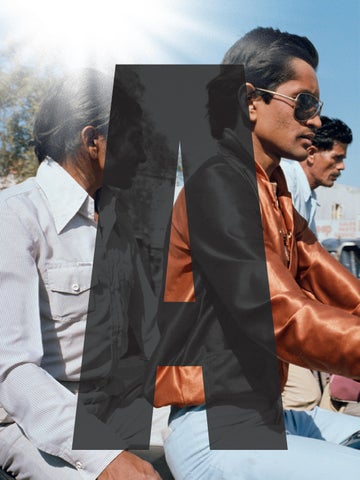
Create a flipbook
Catalog of the 2022 edition by Les Rencontres de la photographie, Arles - Issuu