Printingautumnleaves

Harvest baskets
Thick white paper (such as Canson)
Protective smocks
Paint tubes: yellow, orange, red, brown
At least one container per color (more depending on the number of children)
To start, I encourage you to talk about autumn with the children. At 3 or 4 years old, their understanding of time is very vague You can have fun describing the current season using concrete examples from the children’s surroundings: fallen chestnuts, orange leaves, morning mist, the call of deer, etc
It’s best to speak to young children in an imaginative way: “This morning, I noticed that the trees had lost something… Did you notice it too? They’ve lost their leaves! Maybe we could help them find them again? And print them to create a beautiful decoration that we can admire until they grow new ones. And that way, it’ll feel a little like autumn inside the house too! What do you think?”
Remember the child’s constant need to be immersed in a world of images that connects their inner world to the tangible world of Nature!
Gather all sorts of leaves in different shapes and colors.
Did you know?
When chlorophyll (the green pigment) stops renewing itself, it makes way for other pigments: carotenoids produce the orange color, as seen in carrots, while anthocyanins create the red color, as found in red fruits.
Place your gathered leaves in the center and observe them You can help the children describe what they see or feel: color, shape, texture, size, etc.
Make sure to explain clearly not to mix the colors.
Spread a small amount of paint on a surface and show your group how to apply the paint to the leaf and press it onto the paper The atmosphere should be calm enough for the movements to be deliberate The children will have fun experimenting with the shapes of the leaves and the colors provided.
Let the prints dry and display them!
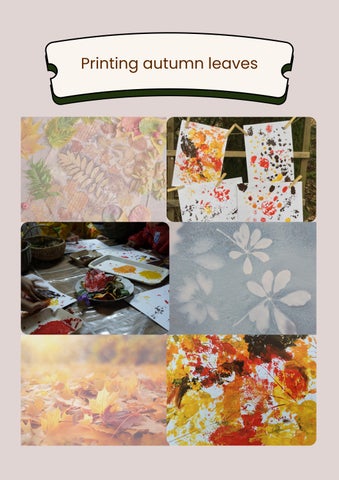
The four paintings on the next page were created by three children aged 3–4 and one child aged 6: you can see a clear difference We must be mindful of the “expected outcome”: the most important part is the process and the experimentation the children experience.