In this issue, we take a look at the fern craze that gripped Victorian society, ponder over the mystery of the seven missing Fabergé eggs, explore a new era of creative direction for the big luxury houses, and discover three substantial museum renovations that have captured international attention. In addition, guest contributor Rufus Bird delves into the question of whether historic art is in demand again, and furniture restorer Jamie NevilleYoung of Dealing in Design gives us a tour of his workshop.
We hope you enjoy these stories and many others from our specialists and contributors.
features
Portraits
Preserving the Past, Designing the Future
In Conversation: Fifty Years of Art Patronage with Richard Frolich Artist Profile: Troy Emery
Fabergé’s Vanished Masterpieces: The Ultimate Easter Egg Hunt
Rewrite the Rules, Wear Your Jewellery
Contemporary Photography: Looking Twice
Are We Seeing a Resurgence of Interest in Historic Art?
Pteridomania: Victorian ‘Fern Fever’
Is it a Coin? Is it a Watch?
Looking Back is the New Looking Forward
in focus
From the Workshop: Restoring the Rare, with Jamie Neville-Young
Five Minutes with Patrick Curtis
22nd Report: New Dogs Join Anti-poaching Unit to Protect Rare Rhino
A Last Look join us
Connect Value, Sell & Buy
The Terence Lane Collection, Part I Auction 3 May, 11am, Melbourne
APRIL –MAY 2026
The Auction Salon
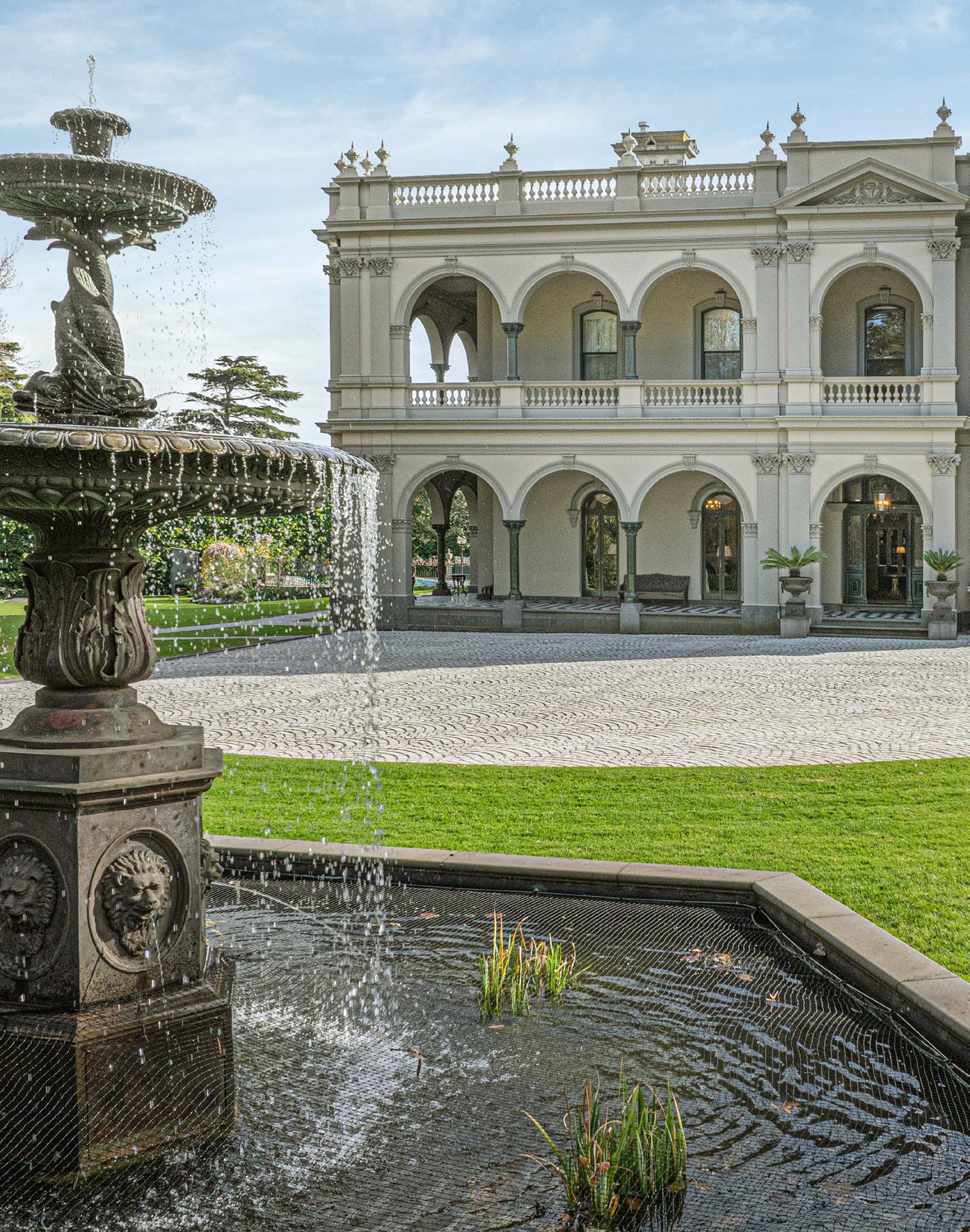
'Coonac', Toorak –
Selected Fine Art, Furniture, & Objects
Mon 20 Apr, 10am
Melbourne
Fine Jewels Sydney Tue 21 Apr, 6pm
Sydney
Prints & Multiples
Wed 22 Apr, 10am
Melbourne
The Terence Lane Collection, Part I
Sun 3 May, 11am
Melbourne
Sidney Nolan, Works from the Artist's Studio
Thu 7 May, 10am
Melbourne
The Sydney Jewellery Edit Thu 7 May, 10am
Sydney
A Rare Complete Set of Penfolds Grange
Tue 12 May, 10am
Melbourne
Centum, Contemporary Art Mon 18 May, 6pm
Melbourne
Luxury Tue 19 May, 10am
Melbourne
Furniture & Interiors
Objects & Collectables
Jewellery
Art
Every Thu from 10am
Melbourne
Portraits
by john albrecht, managing director & head of important collections
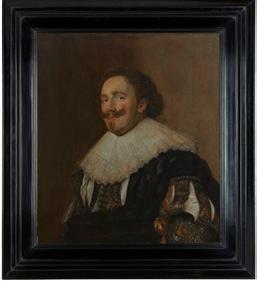
below left to right: After Frans Hals
(Dutch, c.1580-1666)
Portrait of a Bearded Gentleman, Half Length Sold for $15,000
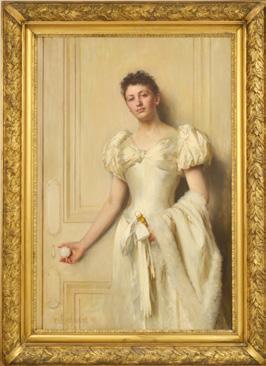
Tom Roberts (1856-1931)
Portrait of Lady Coghlan 1919 (also known as Untitled, Portrait of a Lady)
Sold for $240,000
William Ewart Lockhart (Scottish, 1846-1900)
Portrait of Rebecca Sold for $16,470
Jan Nelson (born 1955)
Walking in Tall Grass: Gracie II 2011 Sold for $18,750
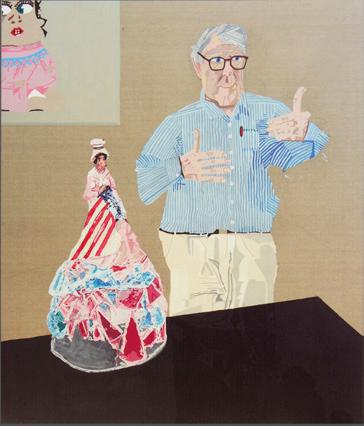
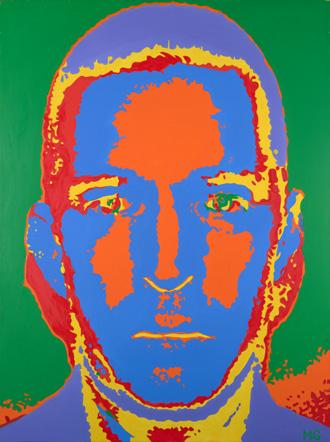
Lisa Reid Not titled (Portrait of Peter Fay) 2007 Arts Project Australia Permanent Collection
Matthys Gerber (Dutch/Australian, born 1956) Self Portrait 2002 Sold for $8,750
Sidney Nolan (1917-1992) Mask 1980 Sold for $45,000
this genre of fine art fascinates me. Not so much the period works, that by their very subject matter exude an atmosphere and feeling that comes with their detachment from how we now present ourselves amongst contemporary surroundings. Some period works do appeal to me; particularly naive representations of jockeys and their horses. They no doubt appeal to Ralph Lauren shop-fitters too! But the post-war ones, particularly those in the more traditional manner, present an intriguing suite of challenges for the seller, that all essentially revolve around what in a portrait remains attractive to the viewer, as time goes on and inevitably tastes change.
Family or corporate portraiture, for example, presents as exceedingly hard to resell. Portraits of seated men in dark suits are of little to no appeal beyond the club wall or the board room, while family portraits, those that seemed to boom as an industry from the 1950s to the 70s, are of little more value than their frames. But there are the exceptions. When the portrait takes on a grand and classical flavour and is expertly executed, this can be the “X” factor that draws bidding. Or when the portrait “doesn’t look like anyone you might know”. This is how I explain it to clients anyway. Period portraits tend to have that quality but in more contemporary examples it might come from the use of tone, light, shade, and the setting within the portrait, making it feel less personal and more story-like. Edward Hopper achieved this masterfully, while closer to home, a portrait by a Meldrum-school artist would be a good reference point.
It’s no surprise to me that as I make these observations, I find myself next referring to the level of abstraction that might occur in a portrait. Unquestionably, the more abstract the portrait, the more saleable, the more attractive to the viewer it becomes. A portrait by Howard Arkley would be a good local reference point. And finally, just to confuse things, a hyperrealist portrait; so perfect, so lifelike, so photographic in nature, can also create an unworldliness that, despite its realism and familiarity, attracts the viewer. But unfamiliarity, typically achieved through degrees of abstraction, is what I have observed attracts the viewer and underpins successful resale most often.
Internationally, this finds its ultimate expression in those rare moments when a Picasso “portrait” presents for public auction. In 2026 we find ourselves in a time when commission portraiture has waned. Quite possibly because the taste for the contemporary in art, and abstraction, occupies much of that demand, and it is not an obvious bedfellow of portraiture. But in Northcote in Melbourne, abstraction and portraiture dance together with ease and I speak of Arts Project Australia (APA). There, not every artist, but a good many, will interpret the sitter with a freedom from reality that is the very essence of the abstract portrait. My first encounter with APA was Lisa Reid's portrait of Peter Fay that was to appear as an advertisement in a Leonard Joel catalogue many, many years ago. It is as complex as it is striking and remains one of the great portraits to emanate from this important Melbourne institution. So where am I going with this simple walk-through of portraiture that ends with Arts Project Australia? Well, I’ve decided to commission an artist from APA to render my portrait, and I look forward to marvelling at its bold and uninhibited abstraction. When complete, I will share it with you all and then? Well, then I’ll invite you to consider a few things; to put self-importance aside and to visit Arts Project Australia and commission a portrait, knowing little of what will be the fruits of that artist’s vision of you. And for those that take up my offer, I’d suggest framing it unconventionally, and a few things will be achieved. You will have played a tiny part in reviving an ancient artistic tradition, you will have supported an important Melbourne art studio and finally, I guarantee your work will hold its own amongst your collection and be a conversation-starter for visitors!
by madeleine mackenzie, head of decorative arts & art, sydney
in recent years, some of the world’s most respected cultural institutions have embarked on ambitious renovations. These grand projects signal not only a commitment to preservation, but an acknowledgment that historic museums must adapt to remain relevant in a rapidly changing cultural landscape.
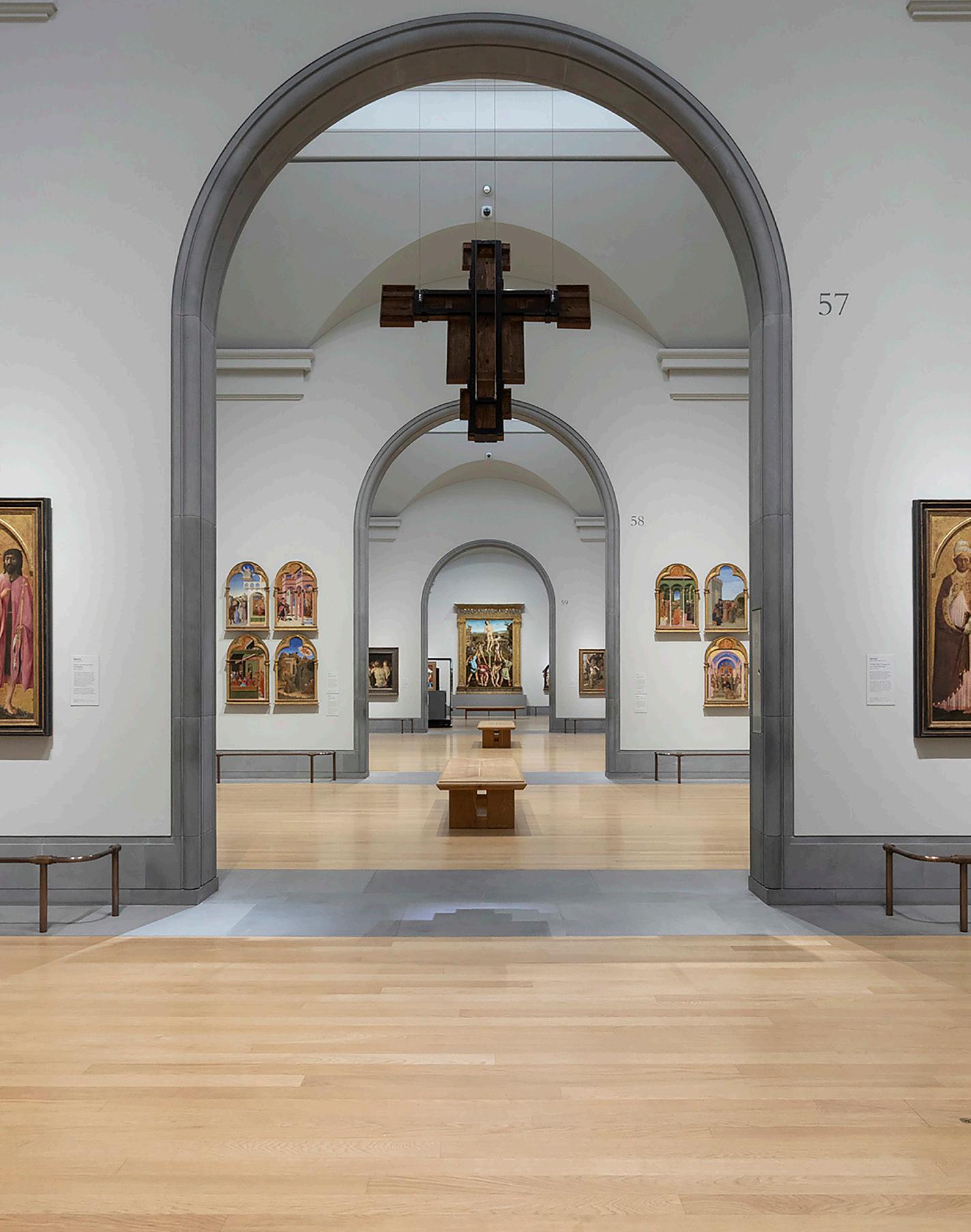
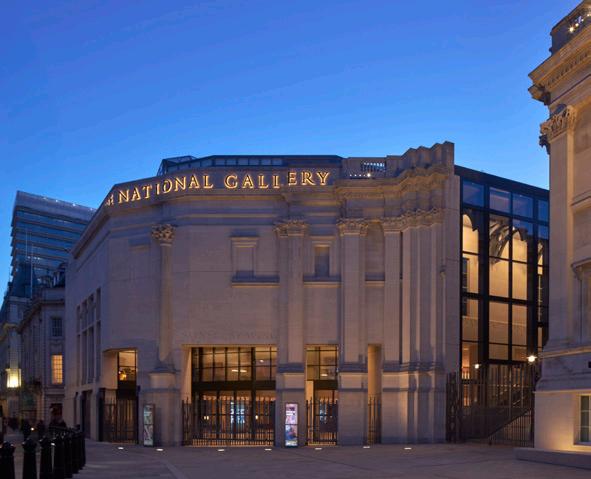
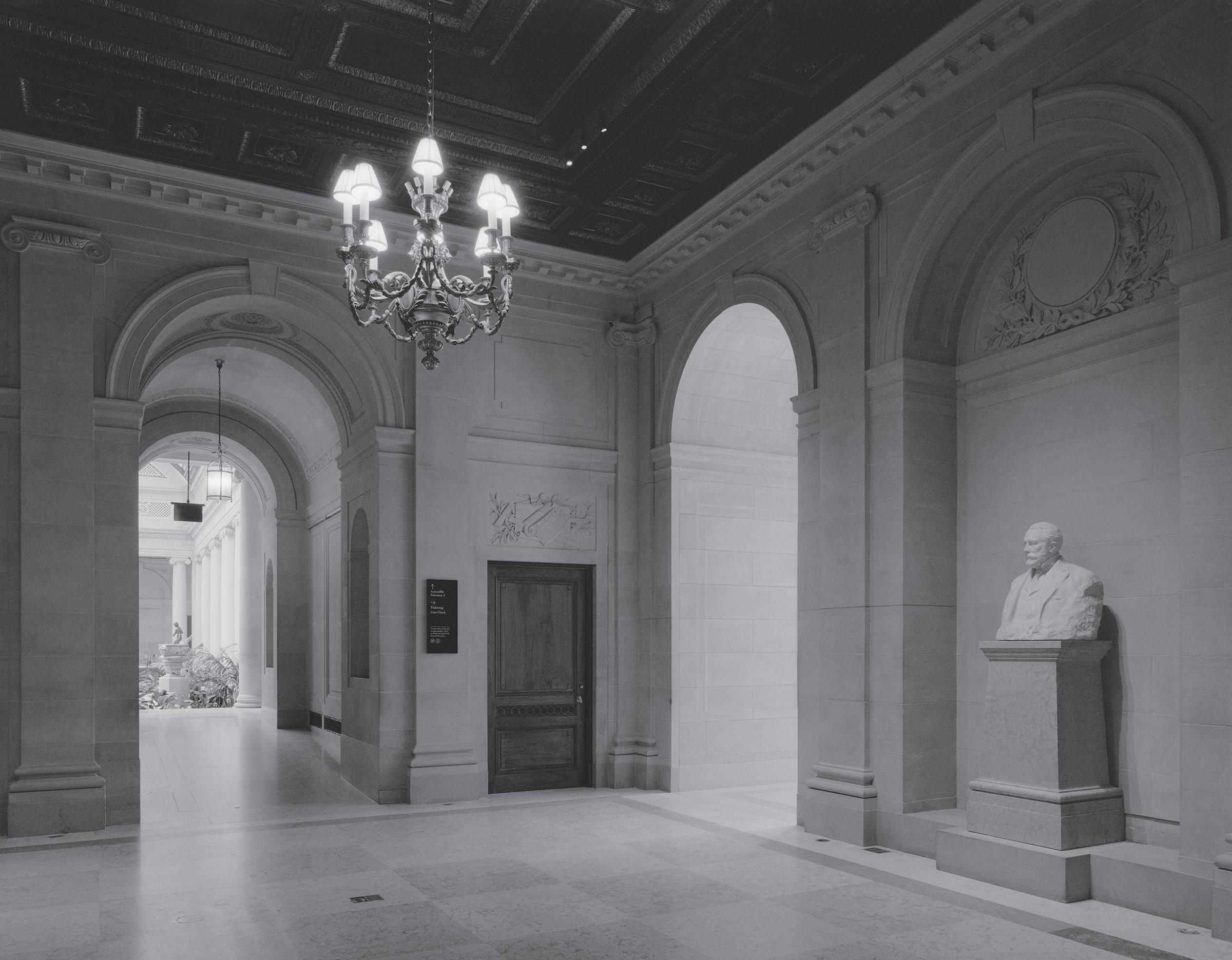
For instance, The Frick Collection in New York has completed its first comprehensive overhaul since opening in 1935, a top to bottom restoration that prepares the 112-year-old mansion for a new century of visitors. Across the Atlantic, London’s National Gallery is revitalising its iconic Sainsbury Wing, rethinking its visitor experience as part of a broader institutional transformation. In Paris, the Centre Pompidou has just closed for a major five-year renovation expected to reopen in 2030.
Together, these projects reveal a powerful global trend, institutions once defined by their permanence are increasingly future focused, investing deeply in accessibility, scholarship, and relevance. Their rejuvenations demonstrate that even the most historic museums must continually reinvent themselves if they are to remain vital, resonant spaces for the audiences of today and tomorrow. However, beyond the goal of increasing attendance there are many other layered motivations behind these changes and below we delve a little into the reasons these institutions have invested so much time (and money!) into refurbishing their spaces.
1. The Frick Collection, New York
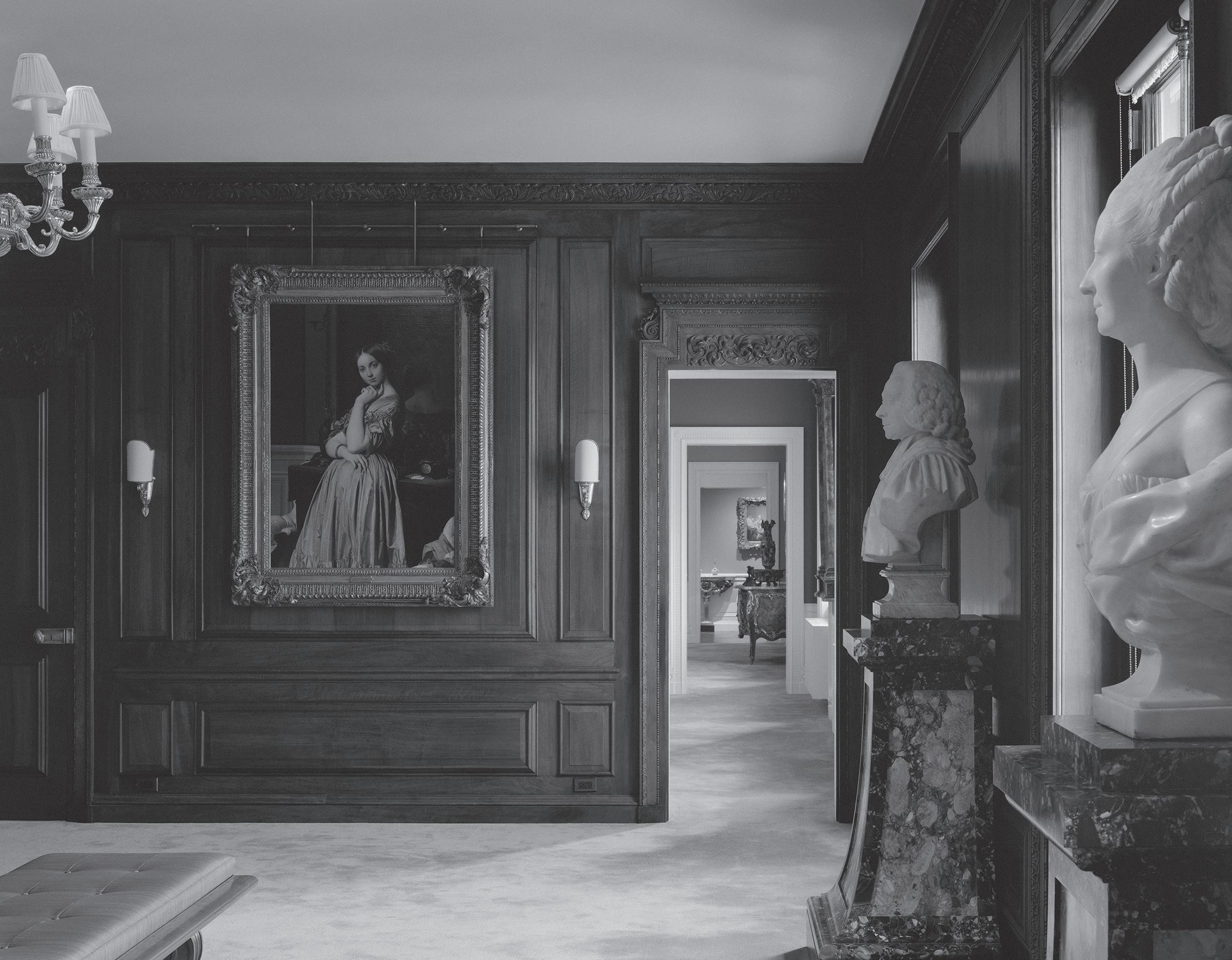
Re-opening on 17 April 2025, The Frick’s overhaul was driven by long standing infrastructural and functional needs due to the constraints of the original 1914 Carrère and Hastings mansion. Foremost in their requirements were improving accessibility, adding gallery space, modernising systems, and opening previously private areas. The project, undertaken by Selldorf Architects, took five years and cost $220 million to complete. However steep the cost though it appears to have paid off, the new construction has added 27,000 square feet, 30% more gallery space, the first ever onsite café and a new double-height reception hall. For the first time in its history, the Frick has also allowed visitors to the second floor (accessibility made possible by new elevators) where a series of 10 rooms are stocked with masterpieces. The public response upon completion was overwhelmingly positive with Artnet stating that they had seemingly managed to “nail every detail of the overhaul”.1
2. National Gallery, London (Sainsbury Wing)
Not long after the Frick unveiled their new look, the refurbishment of the Sainsbury Wing at the National Gallery in London reopened on 10 May 2025. The two-year renovation was also designed by the same architects used for the Frick renovation, Selldorf Architects. This renovation focused on visitor flow, accessibility, and a rethought entry sequence, modernising a 1991 building to better support 21st century expectations. While better orientation and facilities often lead to stronger attendance, the project’s main focus was to create a more thoughtful, welcoming visitor experience rather than simply growing numbers. Key features of the renovation were a larger and more welcoming foyer and entrance, replacing dark-tinted glass on the windows with clear, to afford a better view of Trafalgar Square, upgraded amenities, and double-height voids. The remodel, which was heavily criticised when it was first announced in 2022, cost £85 million and has been less well received than the Frick’s. Whilst generally praised for improved circulation, the project faced criticism for being a “bland” redesign that removed key architectural features. However, if we’re considering the renovation from the lens of the institution’s original goal of improved visitor flow and accessibility then it does appear to have been a success.
3. Centre Pompidou, Paris
Beginning its major transformation in late 2025, the Centre Pompidou’s overhaul was prompted by long deferred infrastructural and safety concerns stemming from the ageing structure of the iconic 1977 Renzo Piano and Richard Rogers building. Central to the project are the removal of asbestos, full modernisation of mechanical systems, upgraded fire safety measures, improved accessibility, and extensive repairs to the building’s corroded structural elements. The renovation, led by the architectural team Moreau Kusunoki in collaboration with Frida Escobedo, will unfold over five years and is estimated to cost approximately €460 million, reflecting the scale and urgency of the required works. Although the Centre officially closed to the public on 22 September 2025, preparations began much earlier with the staged shutdown of performance halls, the public library, and the permanent collection galleries, culminating in the complete removal of artworks by the end of that year. While the museum remains closed until its planned reopening in 2030, its cultural presence endures through the expansive Constellation program, which disseminates exhibitions and activities across partner institutions in France and abroad. Public sentiment has been marked by both nostalgia and anticipation, with officials expressing hopes that the revitalised building will recapture the same sense of shock and innovation that defined its opening nearly half a century ago.
1. Kinsella, E, “After Five Years and $220 Million, the Renovated Frick Feels Familiar. That’s the Point,” Artnet News, April 17, 2025, https://news.artnet.com/art-world/frick-reopening-april-2025-2631844. opposite
to bottom: The Frick Collection, New York
The Walnut Room, a gallery on the second floor of the Frick mansion, 2025
The Entrance Hall at The Frick Collection, looking northeast, 2025
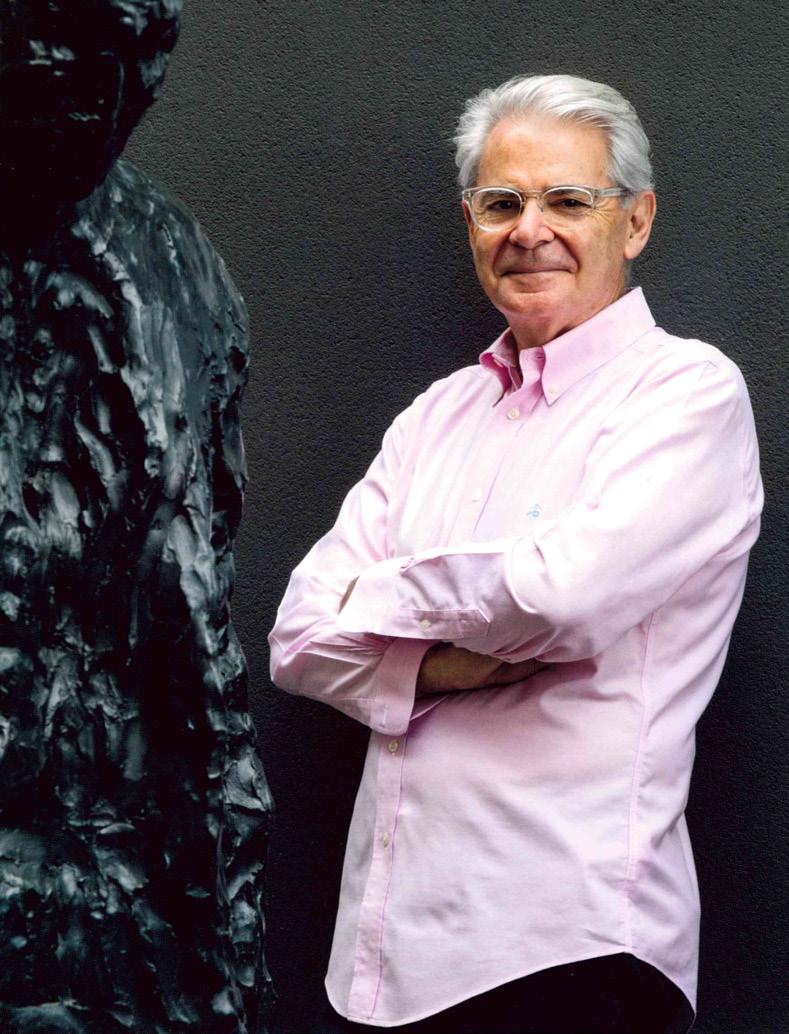
In Conversation: Fifty Years of Art Patronage with Richard Frolich
by wiebke brix, head of art
it has been a genuine pleasure meeting Richard through the consignment of several works for our contemporary art auction, Centum, and getting to know him more closely through that process.
I have rarely encountered someone so meticulous, organised, and deeply focused in all that they do. Rick’s approach to collecting is thoughtful and rigorous, and his dedication has seen him become an influential figure within the Australian art world.
Rick has not only been a passionate collector and a strong supporter of artists but has also taken this commitment further through his involvement with a number of important cultural organisations. He has served as a Board Director of the Biennale of Sydney, has been deeply involved with the Art Gallery of South Australia, and has contributed to the Melbourne Art Foundation before joining the Venice Biennale Committee for the Australian Arts Council.
Rick, you have been collecting for close to fifty years, how did your journey as a collector begin?
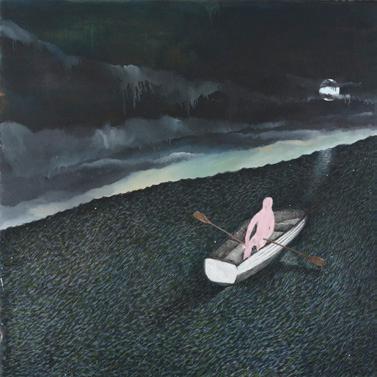
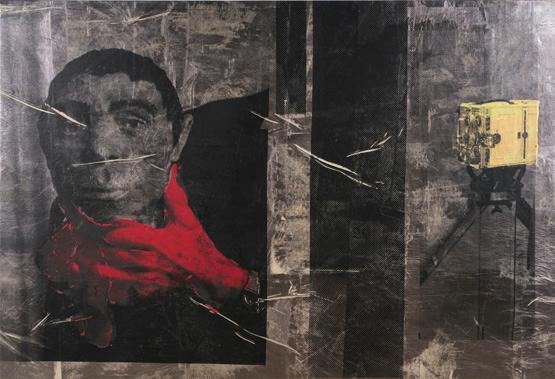
My journey began in childhood, reading the art books my musician mother collected, and was crystallised in 1971 when I fell in love with a small landscape painting. After buying my first home, I eagerly filled the walls with drawings by Australian artists such as Fred Williams and William Dobell, before a year spent reading, rather than buying, reshaped my eye and discipline as a collector. From the mid-1980s I began collecting artists including Rick Amor, Paul Boston, Euan Macleod, and Mike Parr, later expanding into photography after visiting the International Contemporary Art Fair (ARCO) in Spain, and then into New Zealand and broader Australian contemporary practice. Today, after donating more than 150 works to the Art Gallery of South Australia, I continue to collect selectively, including artists such as Jude Rae, Callum Innes, and Gary Fabian Miller.
I understand that you have had long-standing relationships with major private galleries, have those shaped the way you collect?
Securing trusting interaction with key gallerists like Jan Minchin, Paul Greenway, Bill Nuttall, and Anna Schwartz were a key practice to my collecting strategy. Those long-standing relationships have been a cornerstone to the journey, evolving into forty-year friendships based on mutual understanding and respect and a genuine love and appreciation for the artist collected. Their guidance has been invaluable in getting closer to artists’ practices and to the artists themselves.
Your involvement has extended well beyond collecting into leadership and philanthropy. Can you tell us about that journey, and what it meant to you personally?
The most dynamic aspect of my art journey has been serving at board level. After hosting Contemporary Collectors Board members from the Art Gallery of New South Wales during the Adelaide Festival in the 1990s, I was inspired to establish a similar group at the Art Gallery of South Australia (AGSA). Contemporary Collectors launched in 2003 with John Kaldor as a founding member, and twenty years on has grown to more than 500 members, contributing over $15 million in artworks and funds to AGSA’s contemporary collection. It remains one of my proudest achievements.
That success led to nine years on the Melbourne Art Fair Foundation board, helping steer Australia’s leading commercial art fair and serving as Treasurer, leaving the foundation in its strongest financial position to date. In 2012 I joined the Sydney Biennale board at the invitation of Luca Belgiorno-Nettis, gaining invaluable insight into the complexities of an international not for profit arts organisation. Around the same time, I joined the Venice Biennale Committee for the Australian Arts Council.
All these activities have enriched my soul and my understanding of how to grow and develop artists careers.
Has your philosophy of collecting evolved over time?
Great question. I must admit that I think I should have adhered more to good advice. I think as collectors we self-perceive to curate things around our identity, some of us like to steer our own boat and create a collection that truly talks to us. For me, the discovery is still the most exciting part. Waiting in a queue for an artist with limited output reaches a climax when your ‘turn’ arrives. My philosophy today is to reduce; prepare the collection for my children to enjoy if they choose to do that. Or for it to be what it is… a material possession of enjoyment for a person’s lifetime, before it passes on to become that for someone else.
Why does art matter?
Artists express life like no other art form. It sharpens perception, preserves aspects of culture, triggers imagination. It challenges assumptions, and I feel it deepens our understanding of this complex world. My interest and curiosity in art aligns with all these assumptions.
What advice would you offer to the next generation of collectors?
Read… read… read. Visit public and private galleries. Travel art fairs, major shows overseas, and start a list of artists that talk to you and why they resonate. Only acquire works that meet the mandate you are creating in your list.
With thanks to Richard for his time. opposite
$20,000-25,000
Artist Profile: Troy Emery
by amanda hayward (née north), senior fine art specialist
in the vibrant world of contemporary Australian art, few practices feel as tactile, whimsical, and conceptually layered as that of Melbourne based artist Troy Emery. Emery uses decorative materials to explore ideas of craft, spectacle, and the construction of nature within contemporary culture, blurring the traditions of high art and craft.
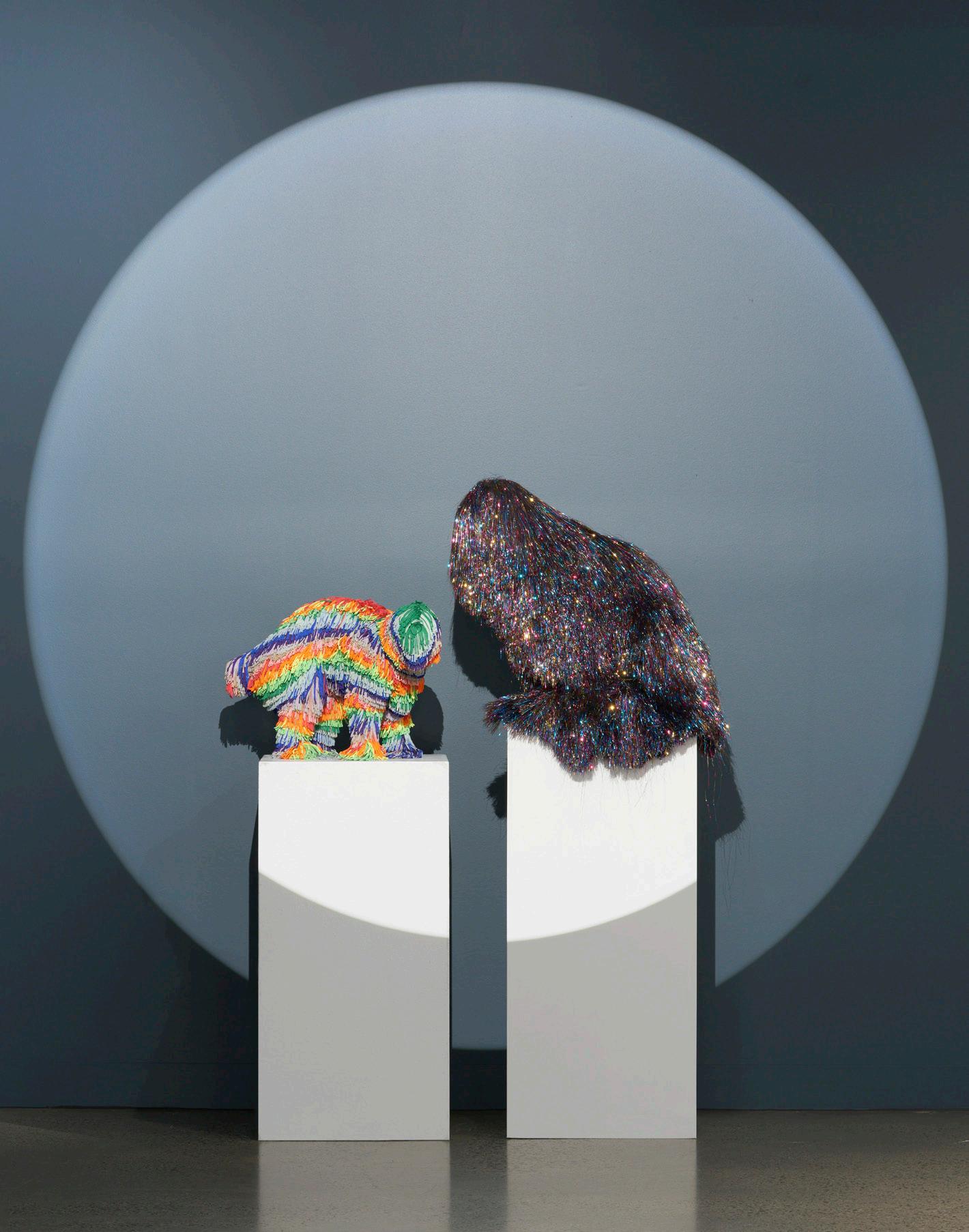
Emery creates sculptures that summon the familiar by constructing animal forms that recall beloved pets, soft toys, or decorative motifs from cultural artifacts. His sculptures are often described as faux taxidermy, as instead of real fur or feathers, he covers polyurethane and textile bases with layers of pom-poms, tassels, yarn, and tinsel, creating forms that sit somewhere between creaturely bodies and ornamented objects. There is a seductive allure to these surfaces he presents. The tinsel glints like imaginary fur against the light and the fabrics are layered like dense pelts, appearing simultaneously peculiar and mesmerically tactile. By taking mass-produced materials traditionally defined as craft and deploying them into sculptural forms (sometimes monumental in scale), Emery compels viewers to confront questions about aesthetics, value, and the boundaries of artistic practice.
Emery’s studio life and the intimate world he brings to his artworks is shaped by the companionship with his two cats, BaoBao and Stella who are inspirations for the affectionate creatures and curiosities that occupy his oeuvre. The thoughtfully constructed textile animal forms, featuring playful curled tails, readied stances, and slight titled heads, reflect Emery’s deep understanding of animals and celebrate the complex bond between humans and animals.
Two prime examples of Emery’s sculptural works include Black Opal 2019 and Wild Thing X 2011 in our upcoming contemporary art auction, Centum. In Black Opal, the polyurethane body is covered in shimmering tinsel creating a luminous and alluring surface. The iridescent strands change colour in the light, evoking the geological phenomenon of a black opal, while also referencing craft and costume. The animal’s form is partially obscured beneath the glittering layers of tinsel, denying the viewer a clear anatomical reading and this ambiguity destabilises the distinction between creature and object.
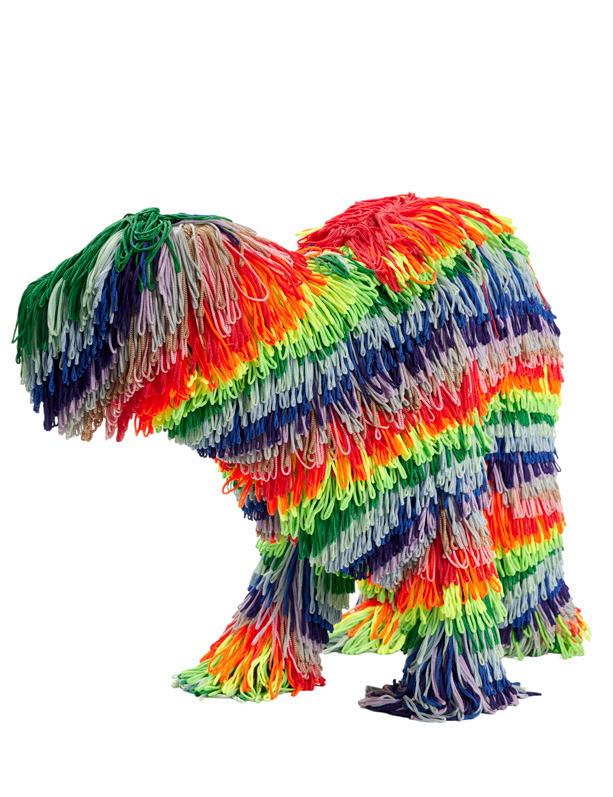
In contrast, Wild Thing X presents a more legible animal structure, built over a polyurethane mannequin and covered in cascading tassel fringing. The layered strands create a rhythmic, almost painterly effect of stripes and coloured bands, recalling fashion and theatrical costumes. Unlike the glittering surface of Black Opal, the tassels in Wild Thing X emphasise repetition and pattern, transforming the animal into a walking abstraction and this is further emphasised by the animal’s dynamic stance.
Emery’s artworks subvert traditional expectations of sculptures being solid and fixed. The surfaces appear soft and sensorial, inviting touch while simultaneously resisting reality. By using materials associated with decoration and performance, Emery challenges traditional hierarchies between fine art and craft, and between the natural and fabricated world. These sculptures operate in a liminal space; they are part animal, part costume, and part commodity, reflecting how contemporary culture constructs and consumes images of the natural world.
Troy Emery’s sculptures challenge the legacy of natural history museums, institutions that have historically framed animals as trophies or specimens, inert and frozen in time. By replacing fur and pelts with mass-produced and artificial craft materials in vibrant colours, he upends the familiar taxonomy of animal representation in natural history museum spaces and places them into the fine art object realm. The results are sculptures that are decorative, uncanny, and profoundly reflective, blurring the boundaries between fine art, museums, natural history, and craft.
The Centum Auction will take place on Monday 18 May in Melbourne. For viewing times and to see the full catalogue please visit our website.
Wild Thing X 2011 polyurethane mannequin, tassel fringing and glue
Fabergé’s Vanished Masterpieces: The Ultimate Easter Egg Hunt
by annie soust, head of fine jewels & timepieces, melbourne
the alluring bygone era of Imperial Russia brings to mind the beauty and decadence of the Fabergé egg. Initially an idea of Tsar Alexander III of Russia as an Easter gift to his wife Maria Feodorovna and later continued by Tsar Nicholas II for both his mother and his wife, the tradition became one of the most extraordinary artistic commissions in history. In all, fifty exquisite eggs were made by the Maison de Fabergé for the Russian Imperial family to gift.
Under the direction of Peter Carl Fabergé, the Maison de Fabergé had full creative licence over the eggs. Just one instruction, ‘it must be a surprise’. These Imperial eggs were far more than just Easter trinkets. They were opulent ornaments, triumphs of enamelling, and symbols for a dynastic power. Concealed in each was the ‘surprise’, perhaps a miniature carriage, a portrait, a mechanical bird, or a jewelled treasure so intricate it bordered on a feat of micro engineering.
From 1885 until 1917, these masterpieces marked Easter at the Romanov court with breathtaking splendour. Then, revolution swept the empire away, and along with it a significant portion of the imperial jewellery collection including the Fabergé eggs. With the fall of the House of Romanov in 1917, the eggs were confiscated and stored in the Kremlin Armoury. In the 1920s and 30s, the Soviet government, eager for foreign currency, sold many abroad. With incomplete records and secret deals to unnamed buyers, over time, seven Imperial eggs slipped from view, leaving a tantalising mystery.
The Vanished:
The Hen with Sapphire Pendant Egg (1886). Created the year after the first Imperial egg, this piece followed the “hen” theme but introduced refined enamel work with a suspended sapphire pendant. Surviving descriptions exist, but there are no clues about its location.
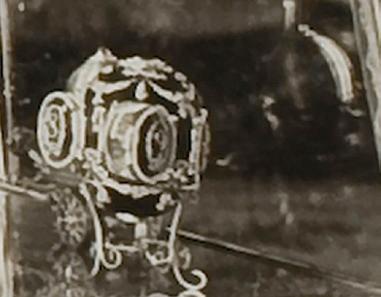
The Cherub with Chariot Egg (1888). Believed to contain a miniature cherub driving a chariot, typical of the theatre of ingenuity. This egg is identifiable from a reflection in a single archival photograph and imperial records but has disappeared without a trace.
The Nécessaire Egg (1889). Beautifully executed in the style of a Louis XV étui, this egg reportedly contained tiny cosmetic implements. Its elegance lay in understatement rather than spectacle. It was last recorded in the mid-20th century but has since vanished into the shadows.
The Mauve Egg (1897). In delicate enamel work, the Mauve Egg was made to celebrate the birth of Grand Duchess Olga and contained a surprise of miniature portraits of the imperial children. The sentiment about this piece makes its absence particularly noteworthy.
The Royal Danish Egg (1903). Honouring Empress Maria Feodorovna’s Danish heritage, this egg, like several others, likely included family portraits and the historic symbol of Denmark, the elephant. As with other eggs, it is documented in imperial inventories but has not surfaced in decades.
The Alexander III Commemorative Egg (1909). Nicholas II commissioned this egg in memory of his father. It is believed to have featured a miniature portrait of Alexander III.
The Karelian Birch Egg (1917). Perhaps the most symbolic of all eggs and crafted from Karelian birch rather than gold and gemstones, reflecting humble wartime austerity echoed by the ‘flamed’ pattern of the Nordic birch wood, this unfinished egg was created in the final year of imperial rule. It stands as a reminder of, or farewell to, an era.
The thrill of this hunt is that re-discoveries have happened before. In 2014 in the United States, a scrap metal dealer unknowingly purchased a small gold egg at a flea market. Intending to melt it down, a secondary thought with an online search revealed it to be a lost Imperial Fabergé egg worth millions. Saved from the furnace, it re-entered the canon of known masterpieces. If one egg can reappear after decades of obscurity, why not others?
Each of the missing eggs matter. It’s not just the priceless financial value; each egg embodies the height of Imperial Russia’s artistry with historical developments in the flawless guilloché enamel techniques, the invisible ingenuity of hinges and tiny mechanical components, the perfectly balanced miniature proportions, and the joy of concealed surprises made for members of the Imperial family.
Somewhere, perhaps in a safe, a private vault, or an unassuming collection, one of these masterpieces rests quietly, waiting to astonish the world again.
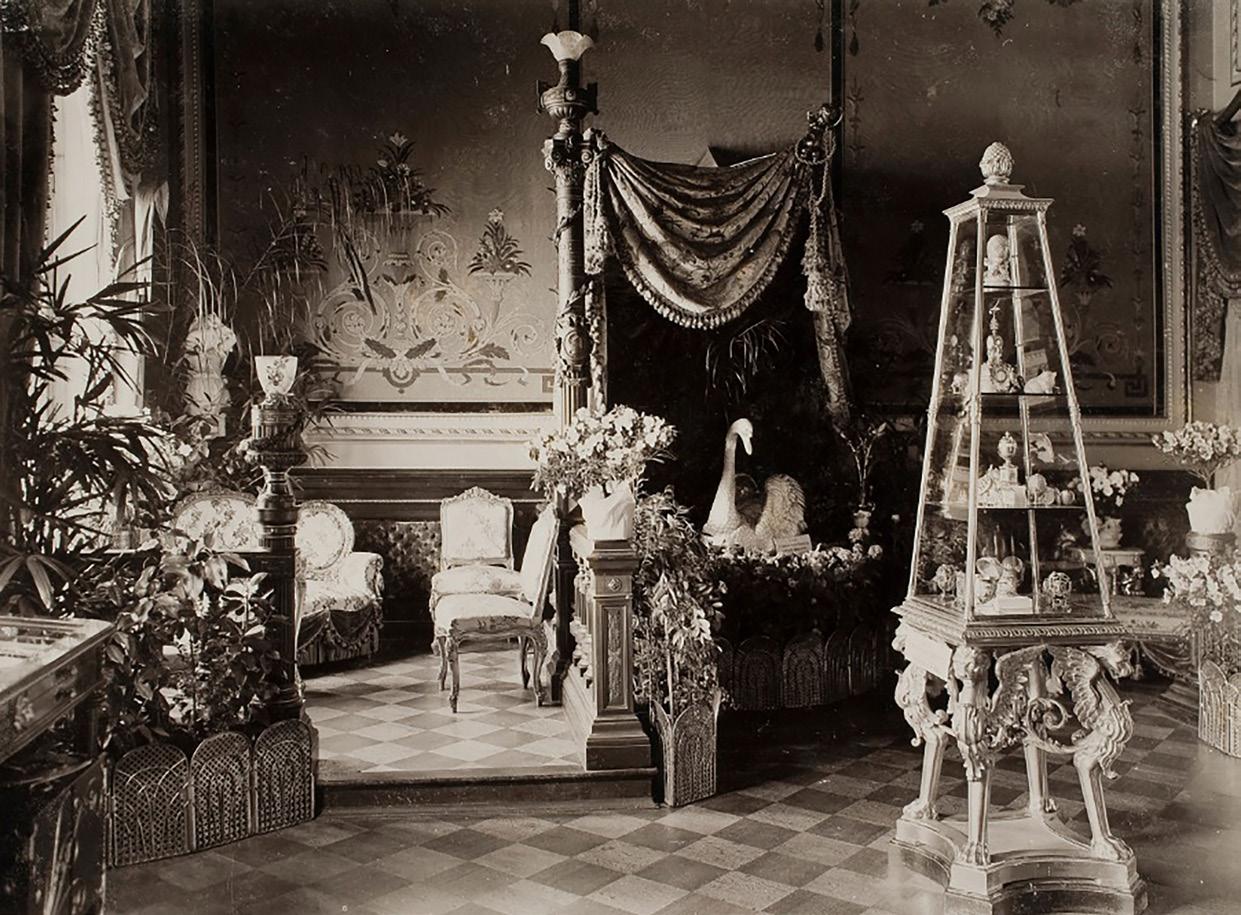
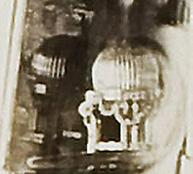
opposite & left details: Von Dervis Mansion Exhibition of the Russian Imperial Family's Faberge Collection in St. Petersburg, 1902. Visible in this picture (see details) is the third Imperial egg, believed lost and discovered at a flea market in 2014, and the reflection of what is believed to be the lost Cherub with Chariot egg. (Also visible is a wheel and other small parts of this egg, hidden behind another piece.)
right:
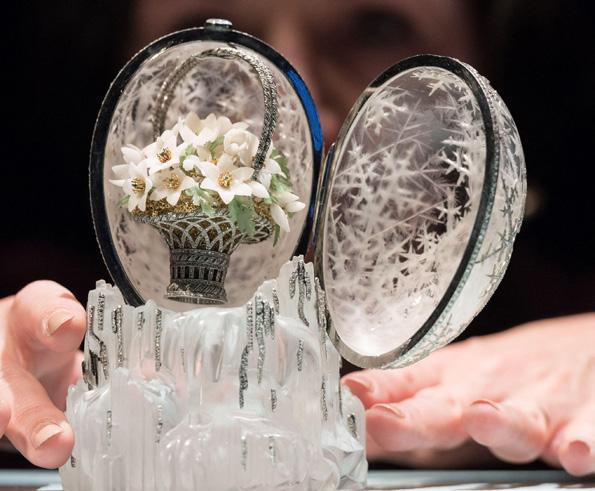
The Winter Egg, 1913. Believed to be lost for twenty years, this crystal and diamond egg resurfaced in 1994 and was most recently sold at Christie's for £22.9 million in 2025 / Alamy
Rewrite the Rules, Wear Your Jewellery
by lauren boustridge, head of fine jewels & timepieces, sydney
jewellery has adorned humanity for thousands of years, serving as one of the earliest forms of personal expression. From ancient civilizations crafting amulets of protection to royal courts displaying elaborate gemstones as symbols of power, jewellery has always carried meaning beyond beauty. It marks life’s great milestones such as engagements, weddings, anniversaries and births, whilst quietly commemorating moments that shape our personal stories. More than just an accessory, jewellery becomes part of who we are. It reflects our individual taste, our style evolution, and often our memories. A simple gold band, a treasured heirloom ring, or a carefully chosen pendant can speak volumes about identity and sentiment.
For much of history, jewellery was governed by strict social conventions. Diamonds, for example, were traditionally reserved for wear only after dusk, glittering beneath candlelight at formal dinners, balls, and grand occasions. Pearls were associated with refinement and daytime elegance, while certain gemstones were worn only in specific seasons. Etiquette dictated how pieces should be styled, layered, or even who was permitted to wear them. Jewellery was as much about adhering to societal codes as it was about adornment.
Today, as fashion has embraced fluidity and individuality, these rigid rules have softened. The casualisation of dress has reshaped how we wear our most precious pieces. Diamonds are no longer confined to gala evenings; they are layered effortlessly with a crisp white T-shirt or paired with denim to elevate everyday style. Fine jewellery sits comfortably alongside relaxed tailoring and trainers. This shift reflects a broader cultural change, one that celebrates authenticity over formality. Jewellery is no longer reserved for special occasions; it becomes part of daily life, adding polish and personality to even the simplest ensemble.
At the heart of building a meaningful jewellery wardrobe is the idea of creating a strong foundation. A thoughtfully curated collection begins with versatile, everyday pieces such as signature chain, elevated but wearable earrings, a bracelet, a ring worn daily without thought. These are the anchors, the pieces that integrate seamlessly into one’s life. From this base, a collection can evolve. Hero pieces, think bold cocktail rings, statement earrings, or dramatic necklaces are added to elevate and transform. The interplay between foundational staples and standout designs allows for versatility. With layering, mixing, and reimagining placement, a relatively small but carefully chosen collection can offer endless styling possibilities.
What may once have been considered excessive is now celebrated as refined creativity. Mixing metals like yellow gold with white or rose tones is embraced, while pieces from different design periods are styled together with intention: an heirloom ring paired with a minimalist contemporary band, or a classic tennis bracelet offset by a sculptural modern cuff. At the same time, playful placement has further expanded the language of jewellery. Traditional rules about where a piece “belongs” have softened. A brooch may be tucked into softly styled hair or used to fasten a sweater draped over the shoulders.
For me personally, like many collections, mine began with pieces that were inherited. Jewellery from my grandmothers and mother formed the foundation of what I wear today, and some of the simplest items have proven to be the most versatile. Gold chains in particular have become quiet staples, easily layered with more contemporary pieces I have purchased over the years. It was through experimenting with these combinations that I discovered one of my favourite pairings: my mother’s curved wedding band, originally designed to sit perfectly against her engagement ring, fits snugly beside an antique signet ring that belonged to my father. Worn together, they create a bold gold statement while carrying a deeply personal significance, allowing me to keep memories of them both close at hand.
In today’s world, the rule book has been rewritten. Jewellery is no longer confined by convention, occasion, or expectation, it is defined by the wearer. The opportunity now is to build a collection with intention: start with a strong foundation of timeless, versatile pieces that you reach for every day, then layer in statement designs that reflect your evolving taste and personality. Embrace heirlooms passed down through generations and allow them to sit confidently beside newly acquired treasures. Mix metals, blend eras, stack boldly, and place pieces in ways that feel instinctive rather than prescribed. Jewellery should not live in a box waiting for the “right” moment. It should move with you through daily life, elevating the everyday and marking your milestones as they happen. The freedom is yours, curate thoughtfully, style creatively, and above all, wear your jewellery.
Our Fine Jewels auction will take place on Tuesday 21 April in Sydney. For viewing times and to see the full catalogue please visit our website.
Spectacular fancy yellow-brown diamond ring
$70,000-80,000
Pair of diamond earrings
$9,500-12,000
Diamond necklace
$36,000-42,000
18ct rose gold collar
$10,000-15,000
Diamond ring
$1,800-2,400
Diamond solitaire ring
$3,800-4,500
18ct gold cuff, Italy
$6,500-8,500
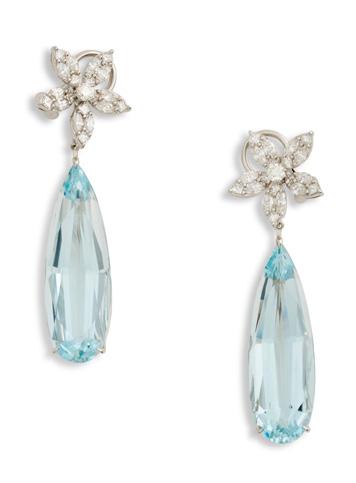
right: Aquamarine and diamond transformable earrings
$34,000-40,000
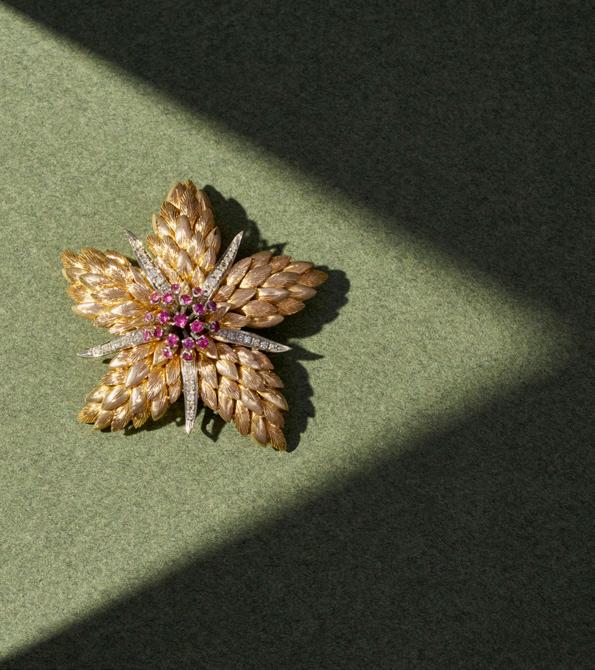
far right: Sapphire, ruby and diamond transformable pendant/brooch
$5,500-7,000
Contemporary Photography: Looking Twice
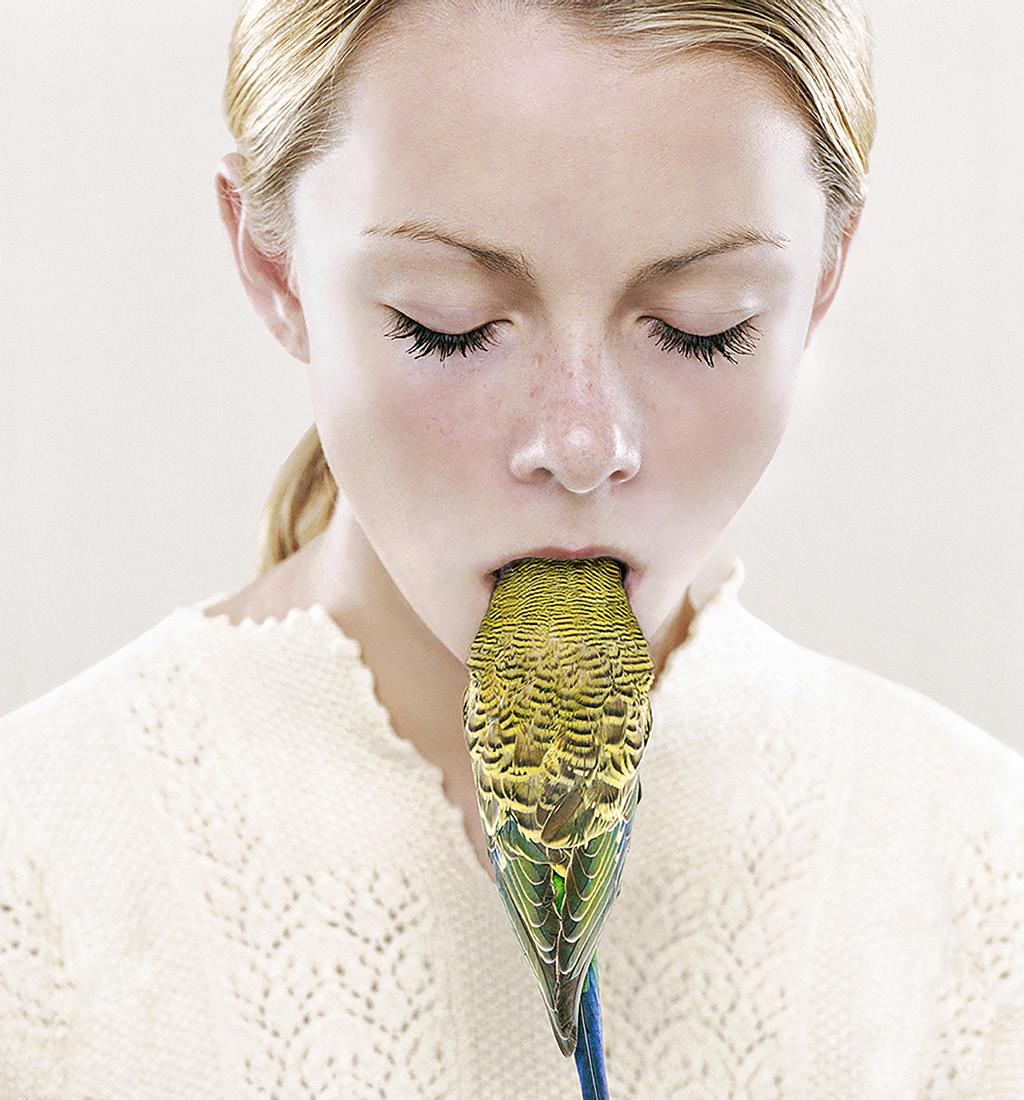
left: Petrina Hicks (born 1972) Shanae and Jade 2005
by hannah ryan, senior art specialist, manager of speciality auctions
australian contemporary photography doesn’t just ask to be seen, it asks you to look again. These are images that catch your eye with beauty, humour or polish, then quietly reveal something sharper underneath. Across very different practices, these artists show how photography can be seductive and strange, intimate and witty, all at once.
Petrina Hicks
Sydney artist Petrina Hicks makes photographs that feel suspended in time. Elegant, precise, and almost unnervingly calm, her images appear polished at first glance before something stranger begins to surface. Working with large format analogue photography, Hicks draws on mythology, fables, and art history to reframe the contemporary female experience through a distinctly Australian lens.
Originally trained as a commercial photographer, Hicks brings a sharp visual clarity to her practice. Her compositions are stripped back and meticulously controlled, where small details carry unexpected weight. Shells, animals, and bones recur throughout her work, creating tension beneath the surface of beauty. As she explains, “I am drawn to photographing humans and animals together, tracing the boundaries of each creature … I see the female alignment with nature and animal cycles as something powerful.”1
That balance between allure and discomfort sits at the centre of her practice. In Shenae and Jade 2005, a porcelain-like girl delicately holds a budgie in her mouth, producing an image that feels tender, surreal, and quietly confronting. Hicks has described the work as evolving intuitively in the studio, allowing the photograph to develop organically. The result is an image that feels familiar and unsettling all at once, a hallmark of her practice.
Dr Christian Thompson AO
Identity, memory, and place sit at the core of Dr Christian Thompson’s photographic practice. Working across photography, performance, and portraiture, he explores cultural identity as something fluid and evolving, challenging fixed ideas of gender, race and representation. His images are highly stylised yet deeply personal, balancing theatricality with intimacy.
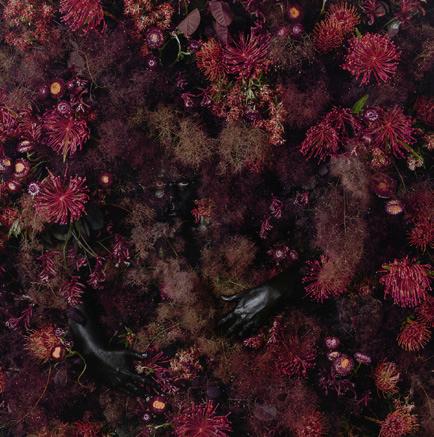
In his series Australian Graffiti 2007, Thompson draws on memories of growing up in the outback and the seasonal transformation of the landscape when desert flowers bloom. In these self portraits, his face is covered with bottlebrush, kangaroo paw and eucalyptus, at times almost disappearing beneath layers of colour. The figure merges with the landscape, suggesting identity as inseparable from place.
“When we were kids, my grandmother would always say ‘go out to the bush, all the desert flowers have come into bloom.’ The bush would really change at that time of year. All these beautiful flowers would bloom, and you would get muted purples and pinks and yellows, amazing colours. Australian Graffiti is really an expression of that.”2
Across his broader practice, Thompson adopts multiple personas through elaborate costumes and staged settings, expanding portraiture into something performative and shifting. Australian Graffiti remains one of his most recognisable bodies of work, combining softness and beauty with clear conceptual strength.
Destiny Deacon
Few artists reshaped Australian photography quite like Destiny Deacon. Since the 1990s, her work challenged how Indigenous identity is represented, using humour, satire, and discomfort to confront stereotypes head on. Playful, sharp, and deliberately provocative, her photographs sit somewhere between performance, storytelling, and social critique.
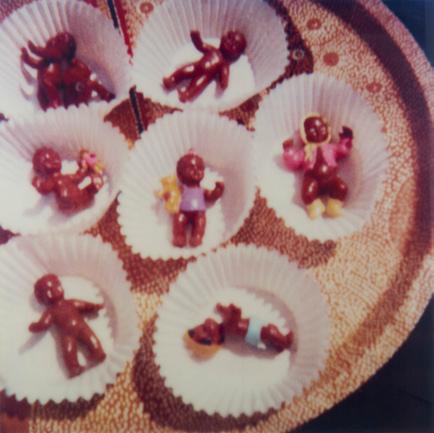
Deacon often staged theatrical scenes with friends, family, and herself as models, but some of her most recognisable works centre on black and brown dolls arranged among kitsch domestic objects. Limbs are removed, poses exaggerated, and familiar toys transformed into unsettling stand-ins for larger social narratives. Bold colour and intentionally awkward compositions give the images a surreal energy that feels both funny and confronting.
Her process often began with Polaroid photography, embracing blur and softness to heighten a dreamlike atmosphere. She later scans and digitally reworks the images, enlarging them while keeping the immediacy of the original moment intact.
“The thing is, you have got to make [the dolls] say something, to make them come alive, anyone can take a picture of a dolly. You have got to make them represent us with some issue, from my little heart of hearts.”3
Following her passing in 2024, Deacon’s work continues to resonate within contemporary Australian photography, remembered for its wit, honesty, and fearless perspective.
1. Petrina Hicks, quoted in Art Collector, issue 99, 2022, “50 Things | Curator’s Radar.”
2. Christian Thompson AO, quoted in House of Gold: Mediation Handbook, Museums & Galleries of NSW, exhibition education resource.
3. Destiny Deacon, quoted in conversation with Hetti Perkins, Art + Soul (television series), reproduced in Art Guide Australia, 28 May 2024.
Our Prints & Multiples auction will take place on Wednesday 22 April in Melbourne. For viewing times and to see the full catalogue please visit our website.
Rufus Bird is an independent art advisor based in the UK with over 25 years of experience in the commercial and charitable sectors of the art world. After graduating in History of Art from Cambridge University he joined the Furniture Department at Christie's in 1999 and later was appointed by HM Queen Elizabeth II as Surveyor of the Queen’s Works of Art, overseeing around 500,000 objects across 15 royal residences.
Are We Seeing a Resurgence of Interest in Historic Art?
by rufus bird, guest contributor
when i joined a major international auction house in 1997, my final round interview coincided with Sensation, the landmark exhibition that year at London’s Royal Academy of Arts of works from Charles Saatchi’s collection of ‘Young British Artists’ works by Tracey Emin, Jenny Savile, Mark Wallinger, Damien Hirst and others.
In the years which followed, especially after the turn of the millennium, sales of contemporary art grew and grew while comparatively, traditional art went into a slow decline. The centre of London’s art world, Bond Street was taken over by major international fashion brands and luxury jewellers. Long established art dealers - like Mallett, Agnew’s and Colnaghi’s - moved upstairs, relocated elsewhere, went online or closed down. Contemporary art galleries moved into prime property locations, occupied enormous spaces and entertained lavishly. Now, it seems that the tables may be about to turn, or at the very least the decades-long ‘bull run’ of contemporary art may have come to an end.
Today, many small and medium-sized contemporary art galleries are closing, auction sales of contemporary and modern art remain positive and successful, but prices are adjusted down and no longer do we see the runaway successes, year on year, which ran from the early 2000s until just a few years ago. What comes next is anyone’s guess of course. Change in the art world is gradual but tends to be long-lasting. In the post-war yearsthe pre-contemporary art boom years - the focus was firmly on Old Master pictures, which across all categories achieved the highest prices, many of which went to deep-pocketed US collectors or museums like the Getty. That historic, sometimes maximalist collecting and furnishing aesthetic was sidelined by a new one dominated by a clean, minimalist and often conceptual approach to art, collecting and interiors.
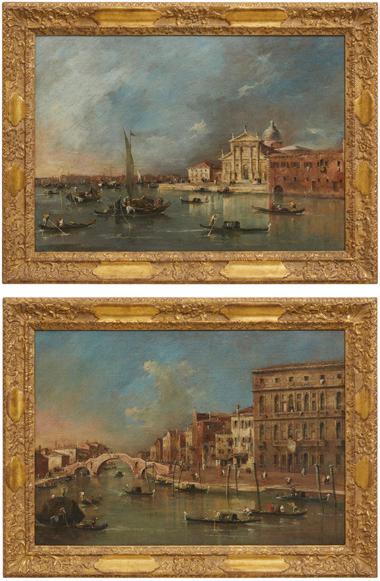
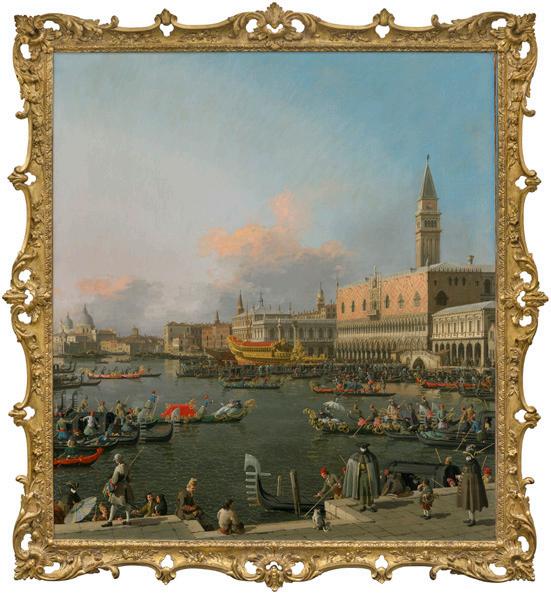
Recent art sale results may now be pointing in the other direction, back toward the historic, the traditional and classic. The major international sales in London in December and in New York in February demonstrated a strong demand for great historic works - a major auction house in New York has now sold two magnificent Venetian scenes by Canaletto for GBP£31.9m (last July in London) and US$30.5m (in February in New York). The US collector Thomas Kaplan recently sold a rare drawing of a young lion resting, by Rembrandt, for $17.8m at another auction house. Finally, a spectacular collection of almost 800 lots of English and French mostly 18th century pictures and decorative arts from the late Mrs Irene Roosevelt Aitken sold in February for a total of US$28.8m. Here in Australia, the sale of Old Master pictures collected by Robert Compton Jones shows that this shift in buying is indeed global: almost every lot sold within or above estimate, and the outstanding pair of Venetian scenes by Francesco Guardi, previously in Lord Rothermere’s collection, sold well above the high estimate for an astonishing AUS$1,062,500.
Some contemporary art can be difficult to interpret, many works challenge established notions of beauty, many are simply expensive and untested in the art market. I believe we are seeing collectors focusing increasingly on known ‘names’ with a solid track record of sales in the market, such as Monet, van Gogh, Cezanne, Kandinsky, Klimt, Canaletto, Rubens, Rembrandt, Reynolds, Gainsborough, Turner, Constable, Chippendale, Matthew Boulton, Stubbs, and Artemisia Gentileschi. Historic or classic art, has not only stood the test of time, the artist sits firmly within a known framework of aesthetic values, often has a body of published work and features in museums and collections worldwide, and examples (such as prints) can often be found priced attractively (but for how long?). Importantly, most works usually come with a track record of previous owners and sales (provenance), giving a tangible sense of monetary worth in the art market. Perhaps, at last, classic art is being valued once again.
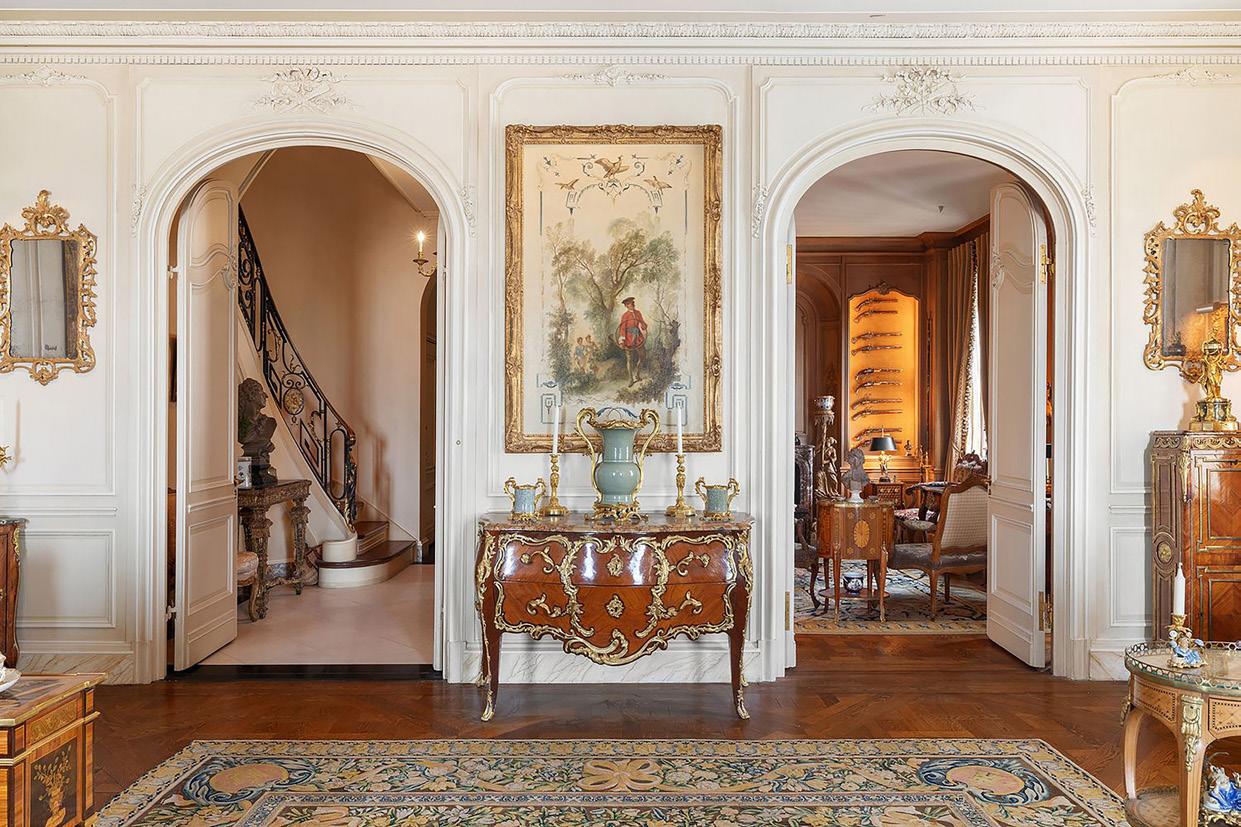
opposite: Interior from the Aitken apartment, New York
left: Francesco Guardi (Venice, 1712-1793) The Island of San Giorgio Maggiore from the West; and View of the Cannaregio, with the Ponte dei Tre Archi and the Palazzo Surian-Bellotto Sold for $1,062,500
right: Giovanni Antonio Canal, Il Canaletto (Venice 16971768) Venice, the Bucintoro at the Molo on Ascension Day Christie’s Images Ltd. 2025
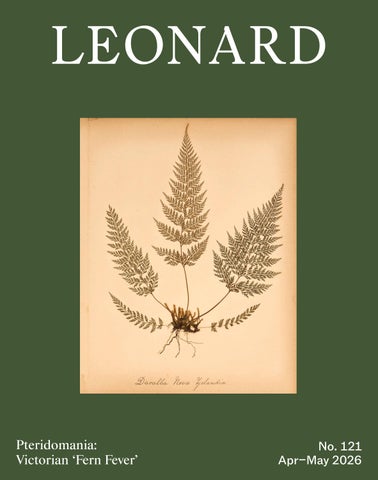
In 1830s England a new ‘enthralment with the [fern] frond came out of nowhere’.1 Suddenly, interest in ferns, a botanical family previously largely ignored by most, was in the ascendant –an interest that would continue and find liberal expression in art and design throughout the following half century.
by chiara curcio, head of decorative arts, design & interiors
Pteridomania: Victorian ‘Fern Fever’
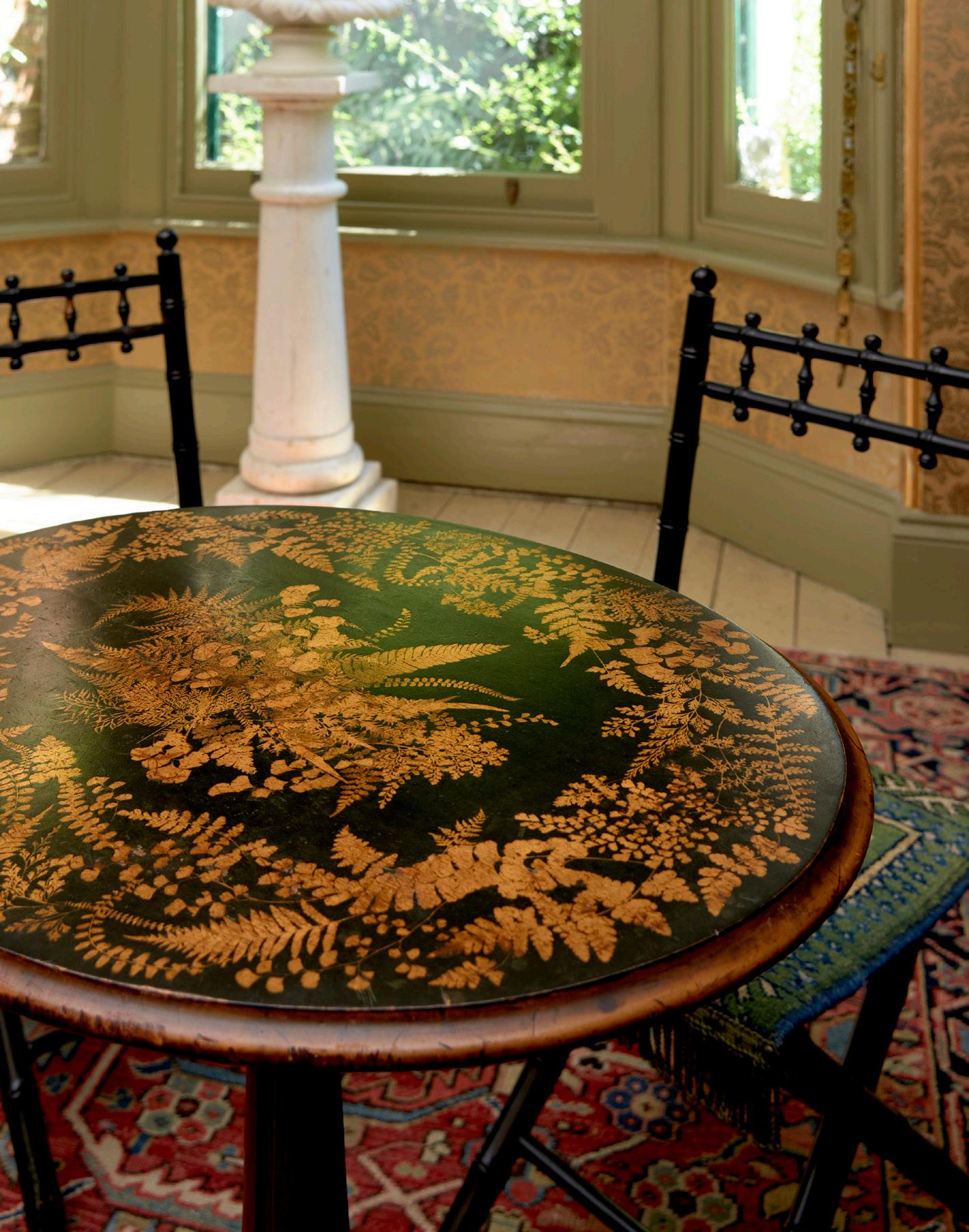
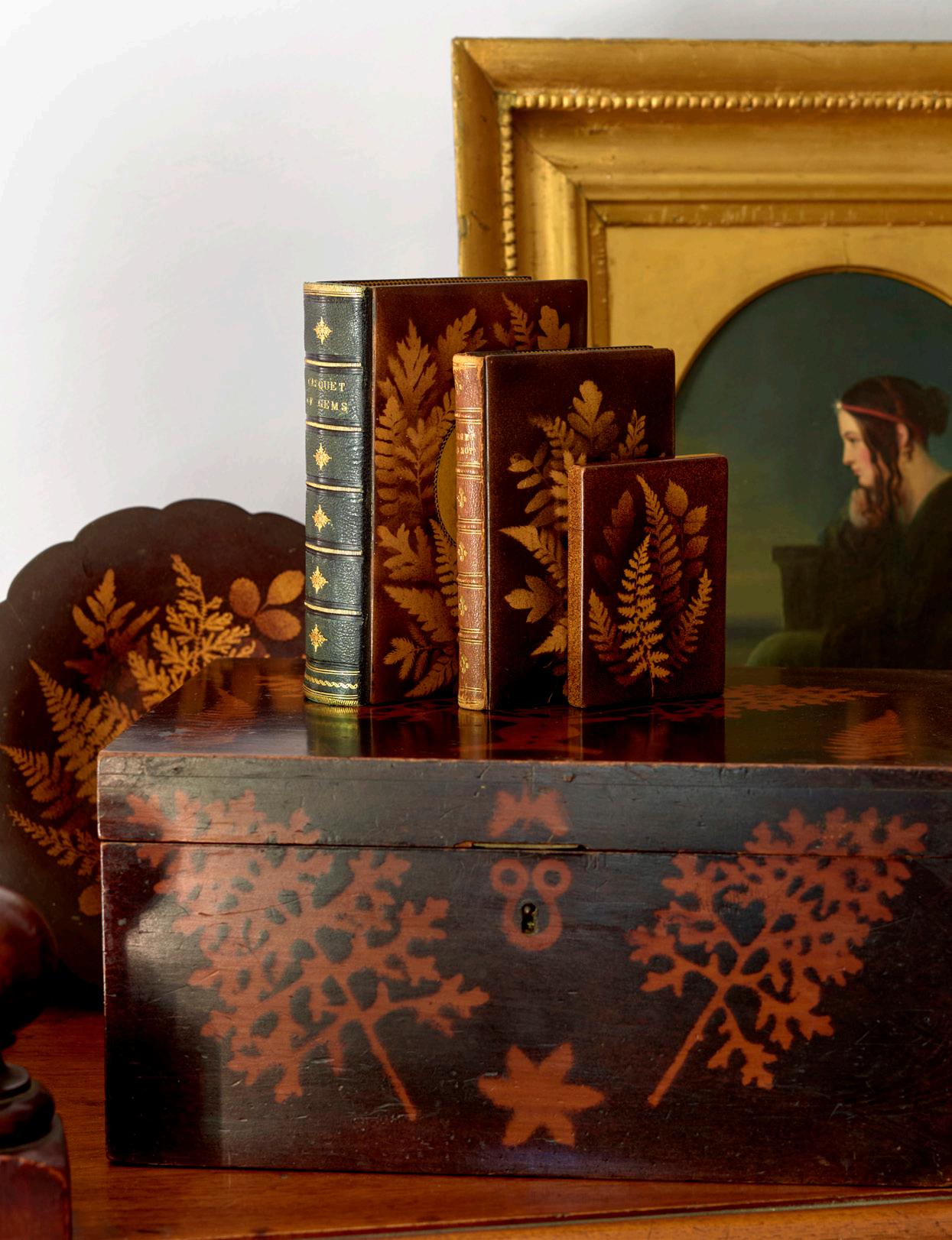
A Victorian spatterwork fern-decorated beech and walnut tripod occasional table, 1870s $400-600
the new interest in ferns arose as a sub-interest within the wider new appreciation of the English countryside prompted by the Romantic imagination turning away from the less appealing aspects of the burgeoning industrial revolution, spurred by the Romantic poets and the theorists of the ‘picturesque’. This interest was soon broadened and heightened by images in art and books of spectacular fern-dominated landscapes in Britain’s colonies, especially the tree ferns and fern gullies of Australia, New Zealand, India, and the Caribbean, these touching on other themes in the Romantic imagination – awe at nature at its most overwhelming, and fascination with exotic landscapes that supposedly preserved a link with man’s Edenic origins (a parallel to the conception of newly discovered indigenous peoples as being akin to Rousseau’s ‘noble savages’).
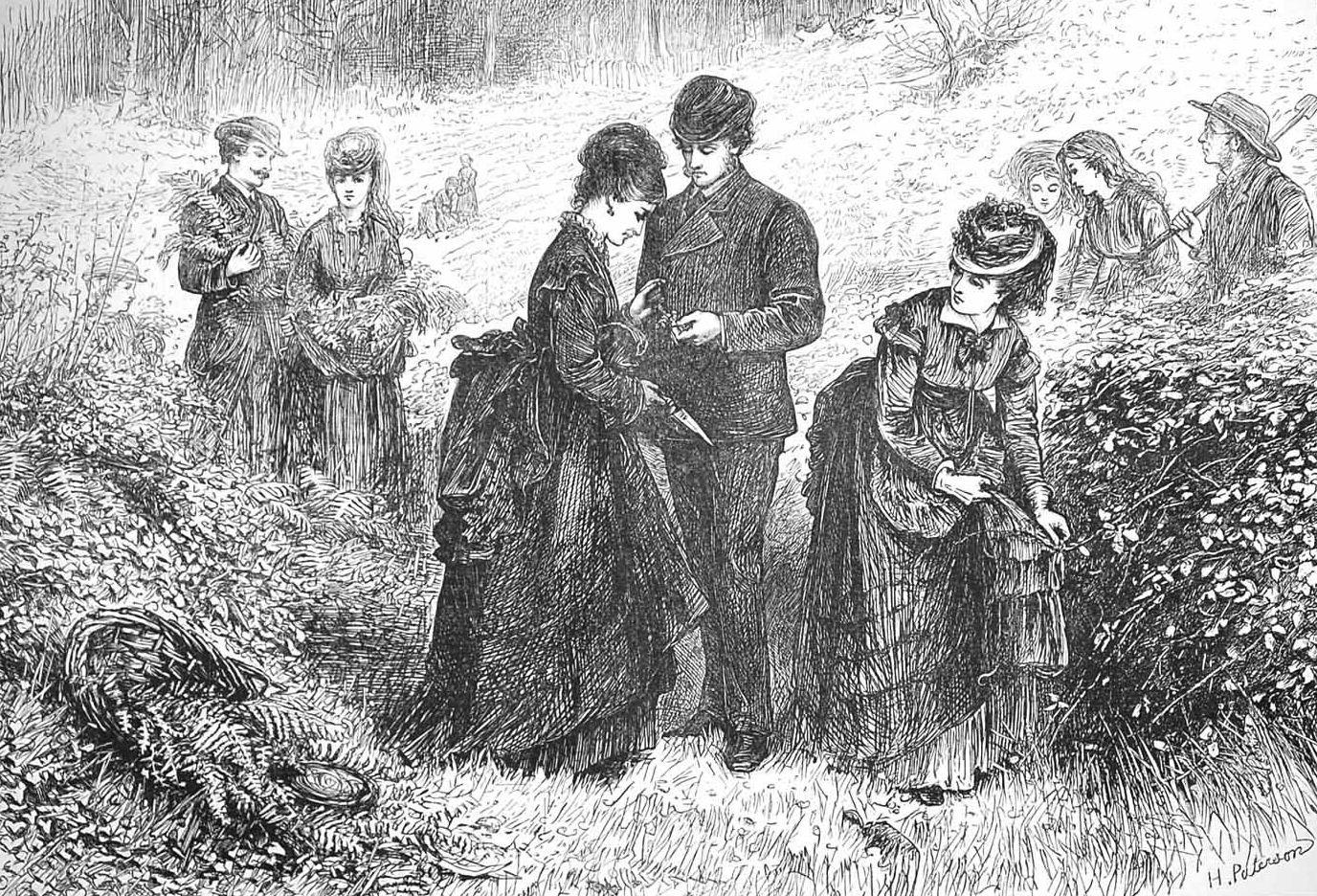
Before long, increasingly urban English society was pursuing its fascination with ferns in various ways. Enthusiasts were gathering in dedicated clubs to share their interest, hear lectures given by botanists, and organise excursions into the countryside to admire and collect their own specimens to enjoy at home – an early small-scale example of Victorian ‘rus in urbe’. This was facilitated by the rapidly-developed commercial availability of sealed glass terrariums, in which plants could be successfully transported – including across oceans – and maintained in an appropriate atmosphere, following experiments by various people during the 1820s and 1830s to develop these, most famously the ‘Wardian case’ designed by Nathaniel Bagshaw Ward and publicised in his books. Those of greater means could indulge in glazed conservatories attached to their houses or larger stand-alone glasshouses, which also began appearing in public gardens.
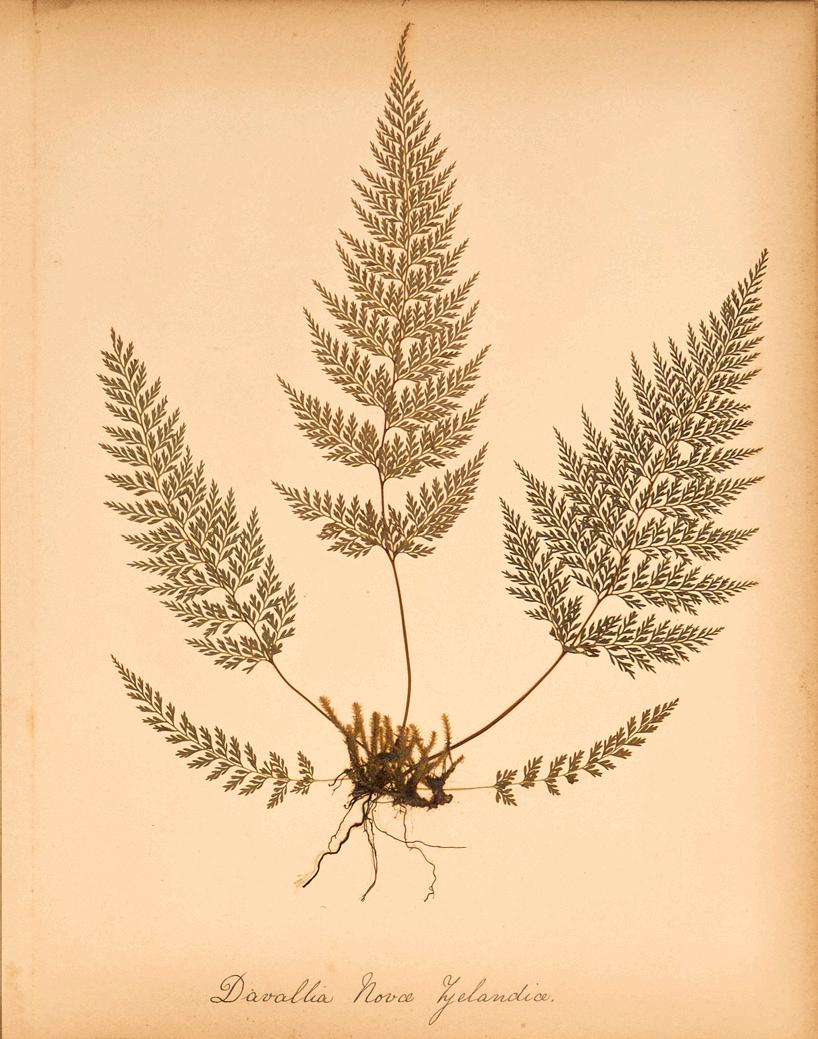
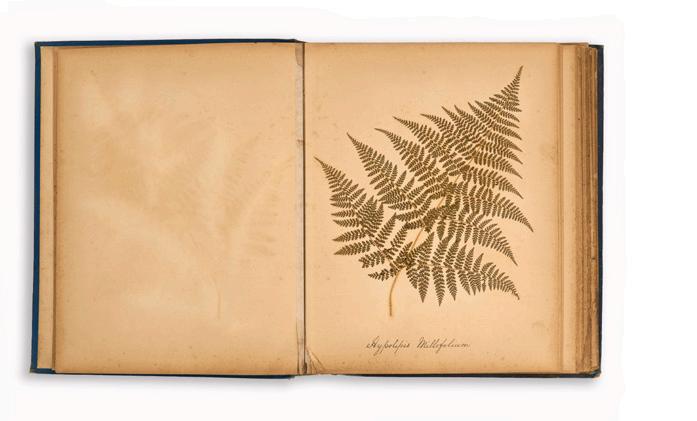
In the same period, advances in lithographic printing in colours allowed the publication in the middle decades of the nineteenth century of numerous books dedicated to ferns, accurately illustrating countless species. Relatedly, the pressing of fern specimens and artful arrangement of these in albums become one of the intelligent and artistic pastimes considered acceptable for gentlewomen to pursue. ‘Fern fever’ was not confined to this class, however, being shared by those of both sexes and of all classes and ages – and those further afield, particularly in Australia and New Zealand.
Thus, Charles Kingsley, in his 1855 book ‘Glaucus’ (which sought to encourage interest in other areas of natural history), coined a term for the fern ‘mania’ and lamented:
Your daughters, perhaps, have been seized with the prevailing 'Pteridomania', and are collecting and buying ferns, with Ward's cases wherein to keep them (for which you have to pay), and wrangling over unpronounceable names of species (which seem different in each new Fern-book that they buy) …
Kingsley’s lament and encouragement in other directions did little to contain pteridomania. To the contrary, its influence continued to broaden, inspiring the use of fern motifs across the decorative arts and interior design, both amateur and commercial, the latter being shown prominently at the great exhibitions of industrial arts of the 1860s and 1870s. At the height of pteridomania, fern designs appeared in various techniques and interior settings including carved details on furniture and architectural mouldings, on wallpaper and fabrics, sprigged and other decoration on ceramics, silver, and jewellery. Arguably, the most striking and successful uses of fern designs were in spatterwork decoration of furniture and other wood objects, using actual fern fronds for reverse stencil spray-painted decoration, and in cast iron designs, including Coalbrookdale’s famous 1858 ‘Fern and blackberry’ garden seat design, hallstands, and architectural lacework to balconies (many examples of which remain on Melbourne’s Victorian terrace houses).
Unsurprisingly, given its influence on Victorian design, pteridomania was a particular interest of Terence Lane, OAM (1946–2024), the esteemed historian of Australian interior design and former curator at the National Gallery of Victoria, whose collection Leonard Joel is honoured to be offering in two auctions in May. Examples of pteridomania in the first auction, which encompasses the main collection of furniture, objects, art, and a reference library, include a New Zealand-made album of pressed fern specimens, a fine spatterwork table, a cast iron stick stand after a Coalbrookdale design, a pair of finely modelled gilt wall lights, and ceramics.
1. Sarah Whittingham, Fern Fever – The Story of Pteridomania (London, 2012), p. 11.
The Terence Lane Collection, Part I auction will take place on Sunday 3 May in Melbourne. For viewing times and to see the full catalogue please visit our website.
Ferns'.
Paterson Allingham
TIME AND MONEY
by patricia kontos, senior timepieces & jewels specialist
Is it a Coin? Is it a Watch?
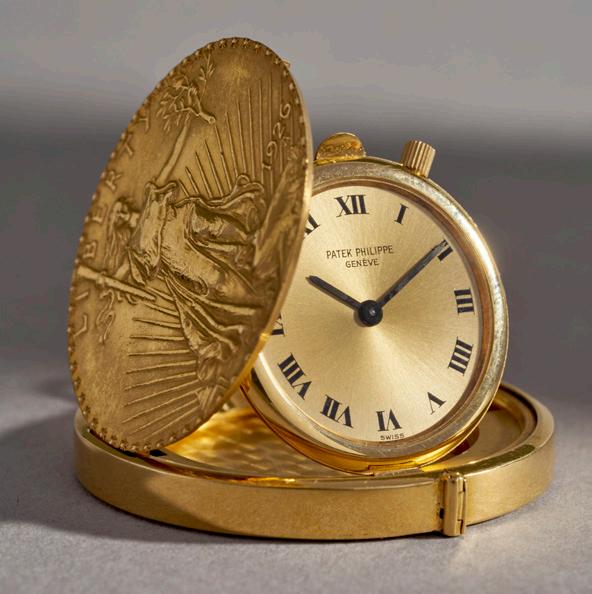
Surprisingly, the answer is yes to both. I first encountered these watches masquerading as coins many years ago whilst working at another auction house and upon seeing one for the first time it appeared to me an opulent magic trick; captivating, playful, and unforgettable.
Just at the very moment you might assume there is little left to surprise in watch design, a seemingly improbable collaboration between horology and numismatics overturns that assumption. Constrained by perhaps 35mm of dial real estate to work with and generally allowing for the non-negotiables of hands and hour markers on an analogue watch, there would be literally thousands of different watches out there and no matter how distinctive they might be they are recognisable as a watch by just about anyone. However, an inquisitive imagination and masterful technical skill merged to create an illusion where an object presents itself as an ordinary gold coin which encloses a near undetectable mechanical timepiece.
More often than not, these coins would begin as legal tender, it would require a skilled coin maker to dissect two sides, carve an interior to house the timepiece, and finally reconstruct the two sides in a hinged fashion. The gold coin, already an object laden with economic, political, and symbolic meaning, would now become currency for another system of value: timekeeping.
The coin watch genre reached its peak between the 1950s and 70s, a period often regarded as its Golden Age. All the leading Swiss manufacturers would go on to experiment extensively with the form. American $20 Double Eagles proved particularly suitable for case dissection and transformation due to their diameter and gold content. Today, we may look back and think of these watches as ‘stealth wealth’ accessories, outwardly an ordinary gold coin, inwardly a refined mechanical instrument.
Cartier, so often at the forefront of watch design, again played a pivotal role in refining the construction of the coin watch and defining its aesthetic parameters. Central to this development was Joseph Vergely, a salesman-turned-watchmaker whose technical ingenuity proved decisive. It was Vergely who devised the method whereby the coin was split into two sections and a cavity was carefully milled into one half to accommodate an ultra-thin movement, after which the halves were rejoined via a concealed hinge. The coin is divided with minimal material loss; the thinner obverse typically serves as the case back, while the reverse accommodates the movement. The incorporation of ultra-thin calibres, technologically advanced for their time, was essential to preserving the coin’s proportion.
As the coin watch gained prominence, other manufactures adopted and adapted similar constructions, Patek Philippe, Audemars Piguet, Vacheron Constantin, and Jaeger-LeCoultre would all produce their own variation on the numismatic theme. In the later twentieth century, Corum became particularly associated with coin watches, further popularising the form through consistent production.
Yet the enduring significance of the coin watch lies not merely in its brand association, but in its wildly conceptual duality. It embodies two systems of measurement, both treasured: time and money, within the world’s oldest currency and adds to yet another incredible chapter in the story of watchmaking.
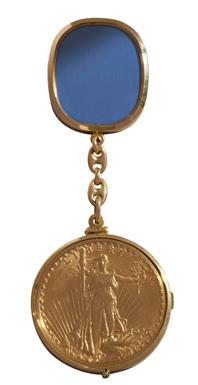
Offered in our forthcoming Timepieces auction on 17 August 2026 in Sydney is a rare and unusual Patek Philippe coin watch featuring a 35mm timepiece forged from a United States $20 Double Eagle gold coin, circa 1926, adorned on the obverse with Liberty’s composed grace, and on the reverse bearing the majestic bald eagle. The timepiece features a hinged bezel, triggered by a discreet thumbpiece revealing a satin-finished gilt dial with Roman numerals, all encased in an inner 18ct yellow gold dust cover that safeguards the ultra-slim construction. This watch is part of a small series of gold coin watches, given reference numbers 800 to 809, using the US$5 (Ref. 800), US$10 (Ref. 801), US$20 (Ref. 802 & 803), CHF100 (Ref. 804), Pesos 50 (Ref. 805) and others. No other coin watches have since been made by Patek Philippe.
REINTERPRETING HERITAGE
by julia gueller, luxury specialist
Looking Back is the New Looking Forward
Fashion rarely stands still, yet lately the industry seems to be moving in a distinctly circular direction, revisiting its own history as a new generation of designers takes the helm. Over the past year an extraordinary number of luxury houses, from Gucci and Balenciaga to Celine, Givenchy, and Bottega Veneta, have appointed new creative directors. Normally such moments suggest dramatic reinvention. This time, something rather more interesting appears to be happening; many of these designers are looking backwards.
Fashion has always moved in cycles, but what feels notable now is the industry’s willingness to acknowledge those cycles openly. Designers are no longer pretending the past does not exist. At Gucci, where Demna has taken the helm, the early signals suggest an unusually self-aware relationship with the house’s past. Speaking about his approach, Demna recently remarked, “Gucci is so many things. It went through many different aesthetic eras, so I needed to identify what meant Gucci for me the most and put it into my vision.” The sentiment feels telling. The appearance of Kate Moss on the runway, a figure closely associated with Gucci’s Tom Ford era, felt less like nostalgia than a deliberate reference point. These gestures remind us that a house’s most powerful visual language often emerges when its past and present meet.
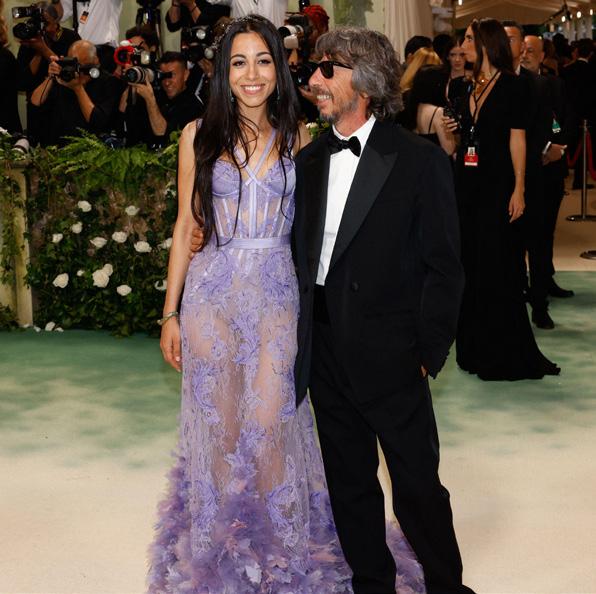
A similar dialogue between heritage and reinterpretation can be seen at Balenciaga, where Pierpaolo Piccioli now leads the house. Piccioli inherits a maison founded by Cristóbal Balenciaga, whose influence on twentieth century fashion was so profound that Christian Dior famously referred to him as “the master of us all.” Known for sculptural silhouettes and architectural precision, Cristóbal Balenciaga established a design language rooted in discipline and proportion. Piccioli’s reputation for refined couture and poetic structure suggests a renewed conversation with that legacy.
Elsewhere, new creative leadership is navigating equally rich histories. At Celine, Michael Rider steps into a house shaped by some of fashion’s most distinctive voices. His challenge will not be to erase those chapters, but to determine which elements of Celine’s restrained Parisian identity resonate most strongly today.
At Bottega Veneta, Louise Trotter inherits a brand that has quietly become synonymous with material intelligence and understated luxury. Bottega’s woven leather, sculptural accessories, and subtle design language reward close attention rather than overt spectacle. Those qualities feel increasingly appealing in today’s luxury landscape.
Meanwhile, Givenchy welcomes Sarah Burton, whose reputation for technical mastery and emotional precision positions her as a thoughtful custodian of the house’s couture heritage. Burton’s work has long balanced romance with structure, qualities that resonate strongly with Givenchy’s historical identity.
Even Versace, perhaps the most recognisable symbol of Italian glamour, has entered a new chapter with Dario Vitale stepping into the role of creative director. Versace’s visual language is bold, sensual, and unmistakable. It remains deeply embedded in fashion culture. Vitale’s appointment suggests not a departure from that legacy but an opportunity to reinterpret it for a new generation.
Taken together, these appointments reveal something interesting about the current mood in luxury fashion. Designers are no longer racing to erase what came before them. Instead, they are revisiting archives, re-examining silhouettes, and rediscovering the elements that gave each house its original authority.
This shift reflects a broader evolution within the luxury market. As global demand for luxury goods expanded over the past two decades, production inevitably scaled with it. Collections multiplied, markets widened, and the pace of fashion accelerated. In such an environment novelty often became the dominant currency. Today, the most compelling work frequently comes from designers who understand that innovation does not necessarily mean abandoning the past. When designers revisit archival ideas on the runway the original expressions of those ideas, whether a silhouette, material or handbag design, often attract renewed attention.
Few houses illustrate this continuity more clearly than Chanel. When Gabrielle Chanel introduced the 2.55 handbag in 1955 the concept was radical in its practicality. It was a shoulder bag designed so women could keep their hands free. Nearly seventy years later the design language she established continues to define the house. It is perhaps no coincidence that collectors continue to gravitate toward pieces whose identity remains unmistakable, regardless of the season in which they were produced.
Fashion may move quickly, but its strongest ideas rarely disappear. They simply return, reinterpreted for a new moment.
image: Pierpaolo Piccioli and his daughter Benedetta Piccioli arrive on the red carpet at the 2024 Met Gala at the Metropolitan Museum of Art, New York / Alamy, photo by John Angelillo
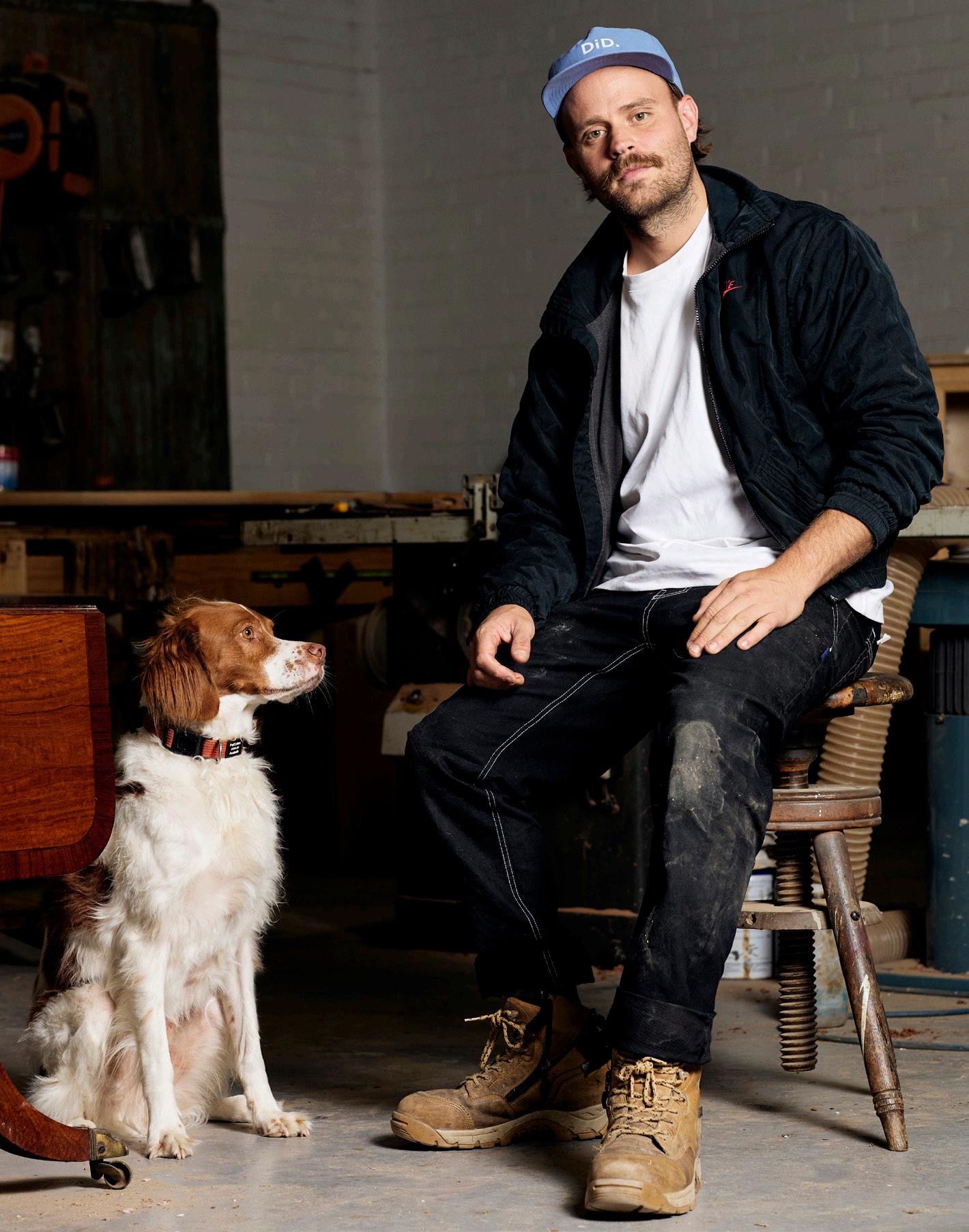
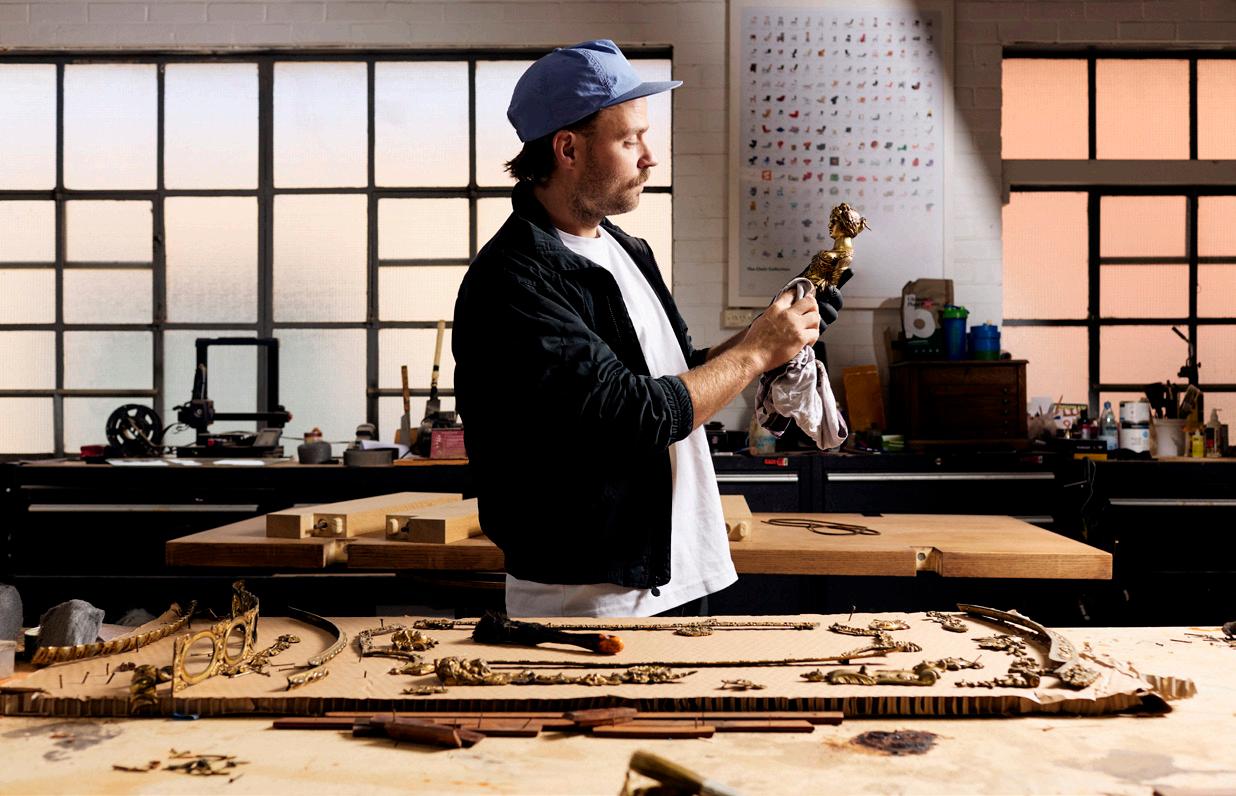
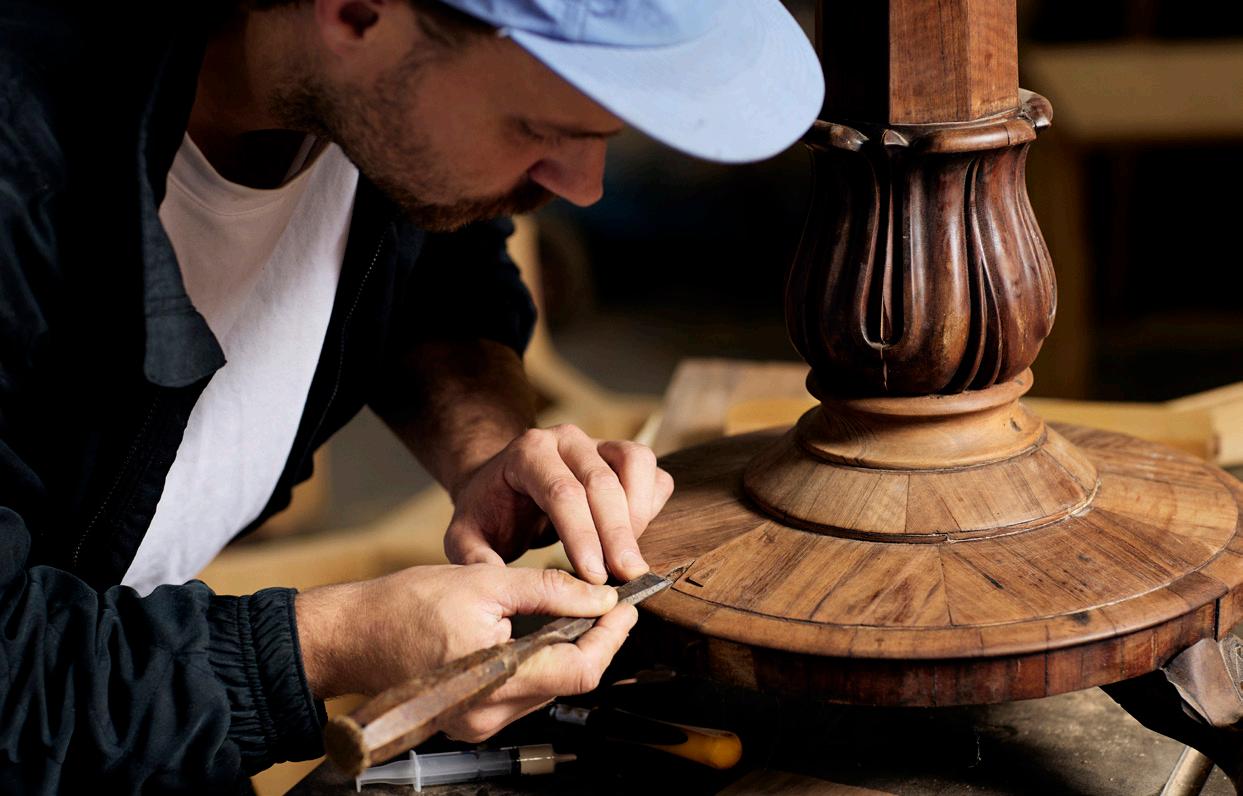
Restoring the Rare, with Jamie Neville-Young
In this new series of conversations, we visit the ateliers of skilled artisans to learn more about interesting, rare trades and crafts. This issue, we chat to expert furniture restorer Jamie Neville-Young of Dealing in Design at his Melbourne studio, with music playing and his dog, Lenny, napping in the corner. Working across antique furniture, decorative arts, and modern design, his workshop is full of pieces in various stages of restoration, from an opulent Boulle piece circa 1850 to a Spade Sofa by Finn Juhl.
What first drew you to furniture restoration, and how did you learn the craft?
When I was in high school, I transferred out of Web Design and into Design Technology for years 11 and 12. I was sitting at the computer, staring out the window, and all I could think about was, what’s going on inside that workshop? Luckily, Mrs Bourke, the Design Tech teacher, allowed me to join the course and with her help and support, I made a Japanese-style bed using only joinery, no fixings. From that moment on, all I wanted to do was make things and spend my time in a workshop environment. I couldn’t believe you could spend your days sticking pieces of wood to other pieces of wood.
When I left high school, the two things I loved were music and making. So, I played in a band, and I applied to every furniture maker in Melbourne. I approached Harlequin Antiques in High Street, Armadale. They had listed a position for an entry-level restorer. I had never been into a shop like Harlequin before, I had never been to Armadale before, and I had never seen this kind of furniture before. I was blown away. The day of the interview, hilariously, I wore a suit. I was 18, and I got hired. I worked there for eight years, doing 50 hours or so a week. I studied Furniture Making at Holmesglen every Wednesday, and I studied a diploma of Building Construction in the evenings.
However, I learnt everything I know about restoration from our foreman, John Atkinson. John was from the East End of London. To this day, he is the greatest restorer I have ever seen. He was in his mid-60s when I met him in 2009, and he had been restoring since he was 14. There are simply not enough hours in the day to drain the priceless knowledge from his incredible brain. I was very lucky, and I am so grateful I had the good fortune to learn from him.
Take us through a typical day in your workshop.
Well, it seems the modern woodworker or restorer must not only restore but also film the process and post it to social media for our sins. So, it is not as quaint as it may seem.
Most days start with a coffee, likely a meeting, and then I work on restoring furniture for eight to ten hours. Those hours are punctuated by phone calls, client drop-ins, deliveries, and any number of distractions.
I like to work on four or five projects at once, ping-ponging between them and trying to keep my brain engaged in new and exciting problems. I often do deep work late at night or on Saturdays and Sundays. I find I can work on difficult and complex restorations when no one is around and the phone doesn’t ring.
Are the techniques, tools, and materials used for antique restorations different to those required for mid-century pieces?
The tools are similar, the materials are similar. A chisel is a chisel, brass is brass. But there are differences in technique, products, and approach. I could riff on this for hours. However, I believe that to be an adequate furniture or decorative arts restorer, you must understand the chemistry of the products you’re using at a fundamental level. You must also understand what finishes and materials are period-specific.
For me, this was learnt over 16 years of working on pieces spanning 300 years of different designs, styles, and eras. You must know when to utilise shellac, oils, solvents, lacquers, water-based stains, spirit stains, varnishes, and more. You must understand how these interact, how they stack on each other, and when to deploy them on different pieces and materials.
How do you approach the balance between restoring a piece while still keeping it “original”? And when might something be beyond repair?
I could write the whole article on this question. Firstly, as a restorer, my goal is to retain as much of the original maker’s work as possible and retain all the stories the item has accumulated over its life. However, over a long enough time horizon, what is original?
My general opinion on this is that inaction is an action. If we were to leave the Mona Lisa and never perform restorations, it would soon cease to exist. Is it original? No. Is Da Vinci’s brilliance still on display? Yes.
This question is a real Ship of Theseus situation. If a ship leaves port and, over its life at sea, all its components are slowly replaced and repaired as necessary, by the time that ship is retired, after a long life on the ocean, not a single component is original. Is it the same ship? Is it original? That is the philosophical situation we find ourselves in as restorers.
In my opinion, when restoring an item, if there is a moment during the restoration process where that item will cease to exist, that is too far gone. At that point, you are out of the realm of furniture restoration and into the world of furniture alteration or upcycling.
Can you tell us about a particularly memorable restoration that you’ve worked on?
This one is difficult, because pieces are memorable for many reasons. I remember restoring a desk for a client that went on to sell for $250,000 at auction.
I remember when I was an apprentice, I worked on a remarkable sideboard with curved glass. I spent about 50 hours restoring it. It required veneer patching and polishing. When I reinstalled the curved glass, on the final fixing, I shattered it with the last pin.
Do you think there are any small fixes or care tips people should know how to do at home?
The most restored household item is a dining table. In my opinion, they are the most meaningful piece of furniture in the house. They are the soul of the home. Please keep tabletops dry! If you must wipe down your tabletop, wipe it down completely. Don’t perform little spot cleans. Wipe the tabletop with a damp rag from end to end, in the direction of the grain, then buff the timber off with a clean rag in the same manner. This ensures more even ageing and reduces the chance of a strange, uneven finish appearing years down the track.
Is there anything you wish more people knew about your trade?
Sometimes I wish clients understood more about timber, its colours, its properties, and what different timbers are suited to. But that is really too much to ask. There is a lot to learn, it simply is not general knowledge, and that is the restorer’s job to explain.
Other than that, it is an incredibly dusty and dirty profession that is so very rewarding. It takes a long time to get good at, and in this modern world I am unsure how many people will learn these skills in the future. Being able to have an impact on an item, and on a family’s life, in such a tangible way through their belongings is truly an incredible feeling. Every week, every day, you can see things improve, and it is very easy to feel valuable and like you are doing some kind of good.
With thanks to Jamie for his time.
See more at dealingindesign.com and follow along @dealingindesign
FIVE MINUTES WITH PATRICK CURTIS
This issue, we chat to our Art Assistant, Patrick, having recently moved from the UK and currently busy in our Art Salon.
favourite artist
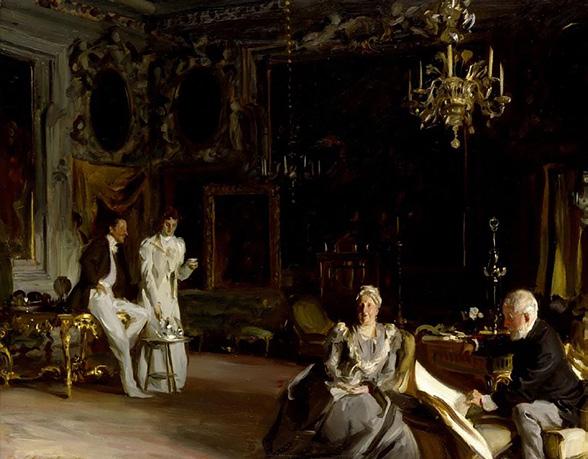
Purely for his work and the Uffizi being my favourite gallery in the world, Botticelli. However, including a bit of English bias it could be J.M.W Turner. A further mention would be John Singer Sargent on the basis that he is a distant relative, and he painted my several times over grandparents in his work An Interior in Venice, 1899 which can be seen in the Royal Academy today.
your ideal day in melbourne
Wake up early, go for a run, followed by an early visit to the Queen Vic market to do the weekly shop. Reward myself with a nice coffee (Mont Blanc at Good Measure preferably) and a pastry. Then followed by a trip to a gallery or museum exhibition or some outdoor activity (the beach hopefully). Then after a well-deserved nap, an evening out for dinner or at a pub with friends. All of this of course with my girlfriend (in case she is reading this).
favourite cocktail
I am a big fan of a negroni or if it’s sunny enough, my father’s strawberry daiquiris.
what’s on your “saved favourites” list from leonard joel at the moment?
That’s just for me to know!
favourite book
The Picture of Dorian Gray by Oscar Wilde. I love gothic literature and reading this book for the first time as a self-conscious teenager with particularly bad skin, I found the notion of trading one’s soul for a permanently beautiful facade rather appealing.
by ifaw
New Dogs Join Anti-poaching Unit to Protect Rare Rhino
Two dogs are undergoing training to join a team of canine conservationists tasked with protecting one of the most endangered animals on the planet.
The International Fund for Animal Welfare (IFAW) is working with partners Jakarta Animal Aid Network (JAAN) in Indonesia to train a team of dogs, specifically skilled to combat poaching and trafficking of the rare Javan rhino.
IFAW’s K9 Technical Director Frederic Chappée is leading the training of Jasper and Rocky, Belgian Malinois breed dogs, who are part of the IFAW-JAAN K9 anti-poaching unit. They will join Rimba in tracking poachers by following their movements and by detecting objects abandoned or hidden along their paths, such as snares or weapons.
The training is based on remote technical support combined with field sessions.
“They don’t wear capes. They just have a wet nose, a wagging tail, and an extraordinary talent for protecting biodiversity. These dogs represent a strategic asset in combating poaching, particularly in Ujung Kulon National Park, where the survival of the last Javan rhinos is at stake,” Mr Chappée said.
“Behind these dogs are their handlers. Day after day, they train, educate, and work hand in paw with these four-legged partners to combat poaching and illegal trafficking. These teams are true guardians of nature.”
Rimba has been part of the team since 2024 and is the most experienced, having helped to detect countless snares in that time. He is five years old and is described as “unstoppable”.
Rocky is the youngest dog in the team. Before joining JAAN, he suffered from kennel syndrome. He was terrified of leaving his kennel and was very unsure of the world outside. Months of dedication, patience and training from his handler and the team have resulted in Rocky transforming into a happy and confident dog.
Jasper is the newest dog to join the team and is showing great promise. He loves tracking and searching in the forest and has already had great success in finding the tracks of poachers.
“For the dogs, it’s a game. They love the search while they are rescuing and protecting one of the world’s rarest species,” JAAN co-founder Femke den Haas said.
“I am extremely proud of this unit. The team works under very rough conditions in the field and are so dedicated to form a strong anti-poaching unit. It’s the first anti-poaching unit in Indonesia and has already proved its importance with findings in the field.”
IFAW has been working with JAAN for more than a decade to disrupt wildlife trafficking networks, train law enforcement teams (including tracking dogs), and ensure animals confiscated from illegal trade receive the best care.
On 22 March 2017, the first industry briefing between IFAW (International Fund for Animal Welfare) and auctioneers and antique dealers from Australia took place, with the view to ending the auction and antiques trade in rhinoceros horn and ivory. That same year, Leonard Joel introduced a voluntary cessation policy and we are proud to no longer sell these materials. In the 22nd Report, IFAW share the latest news about their conservation projects.
top to bottom:
IFAW Technical Director of K9 Units Frederic Chappée visited our partners JAAN in October 2025 to train the K9 unit, including new dog Jasper.
With astute local market knowledge and extensive global experience, Leonard Joel offers the broadest range of specialist expertise in Australia. Scan the QR code and discover the value of your piece or collection with a complimentary online valuation, book an appointment with one of our specialists, or join us at one of our regular valuation days.
Now Consigning
Annie
Head
annie.soust@leonardjoel.com.au
Lauren Boustridge
Head of Fine Jewels & Timepieces, Sydney 02 9362 9045
lauren.boustridge@leonardjoel.com.au
t: (02) 9362 9045 sydney@leonardjoel.com.au
leonardjoel.com.au
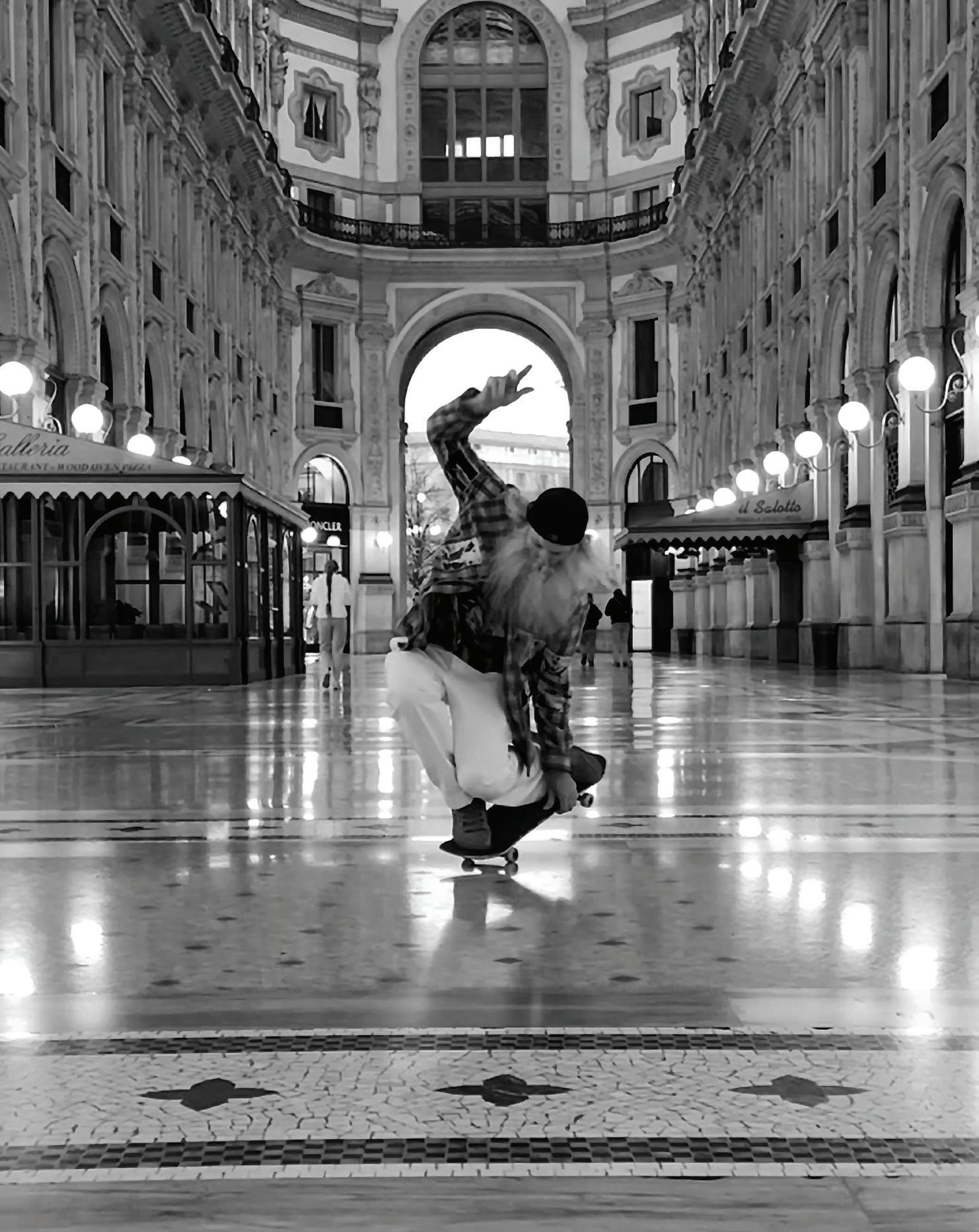
SHAUN GLADWELL Spazio Tarocchi (Galleria Vittorio Emanuele II, Milano) (detail), 2025 Production Still
Cinematography: David Clark Commissioner: Rinaldo Di Stasio
HANY ARMANIOUS, LOTTIE CONSALVO, SIS COWIE, ASHLEY CRAWFORD, SHAUN GLADWELL, PAT HOFFIE, AMY LAWRANCE, JESSICA MURTAGH, FIONA PARDINGTON, LORO PIANA, JOHN PRINCE SIDDON, JACKY REDGATE, EMA SHIN, DRIES VAN NOTEN, JEMIMA WYMAN & MORE
A LAST LOOK
In this feature, we revisit a handful of beautiful and extraordinary pieces that have passed through our doors since the last issue.
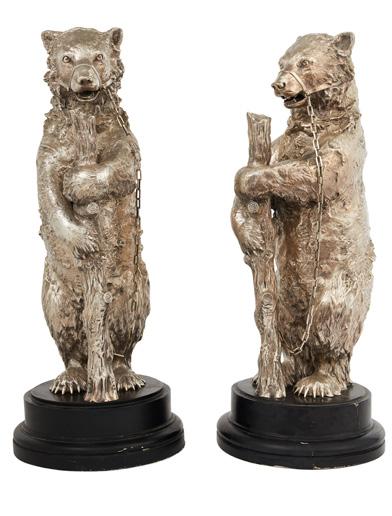
Recently discovered in the Sunshine Coast hinterland after being housed in Sydney for many years, is this pair of Victorian silver cast figures of circus bears from the collection of Sir William Butlin, the well-known entrepreneur and philanthropist. Butlin, the founder of the famed Butlin’s Holiday Camps in the UK, spent part of his childhood following his grandmother’s travelling fair around the country which exposed him to the skills of commerce and entertainment. It is tempting to think that these silver bears reminded him of these days in his early youth. / Troy McKenzie, Head of Private Collections, Queensland
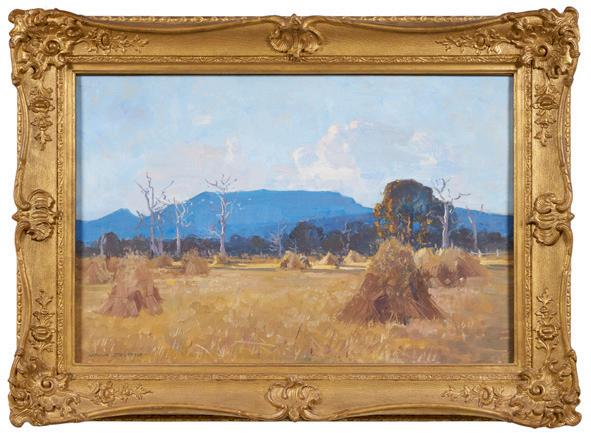
Arthur Streeton’s standout work ‘Harvest and Mt. William’ is a mature expression of the artist’s Western District vision. Streeton’s Western District works, produced during the 1920s, reflect a renewed engagement with Australian subject matter following his years in England and his service as an official war artist during the First World War. The work saw competitive bidding at auction, selling for $687,500 to a bidder on the phone.
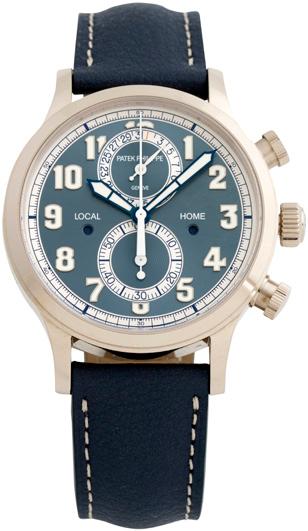
indication sold 2025 Sold for $100,000 Timepieces, March 2026
A pair of Victorian silver cast figures of circus bears Sold for $47,500
The Collector's Auction, Sydney, March 2026
Patek Philippe Calatrava Model Ref 5924g-001 an 18ct white gold fly back chronograph dual time wrist watch with date and dual day/night
Arthur Streeton (1867-1943) Harvest and Mt. William 1926 Sold for $687,500 Fine Art, March 2026
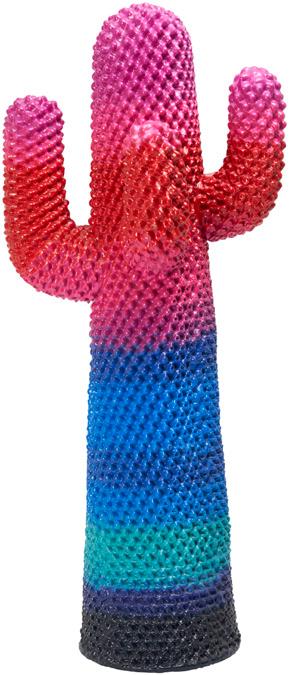
Guido Drocco and Franco Mello X Paul Smith 'Psychedelic Cactus' coat stand prototype for Gufram Sold for $8,750 Modern Design, March 2026
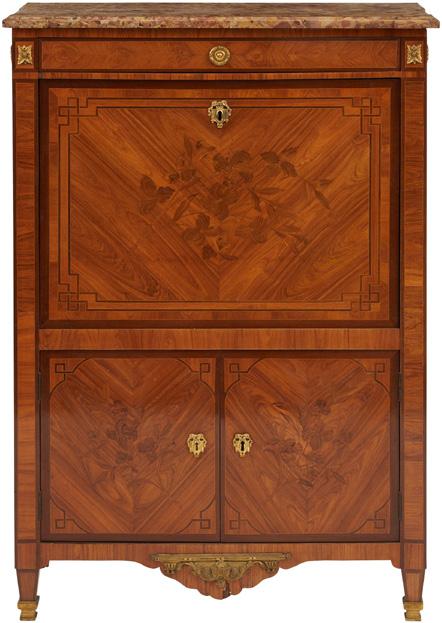
A Louis XVI Tulipwood Secretaire À Abbatant by Roger Vandercruse Lacroix Sold for $17,500 The Collector's Auction, Sydney, March 2026
Huang Yongyu (1924-2023) Ducks Know First When Spring Warms the River (detail) Sold for $42,500 Bridging Cultures: the Collection of Christine & James Liao, February 2026
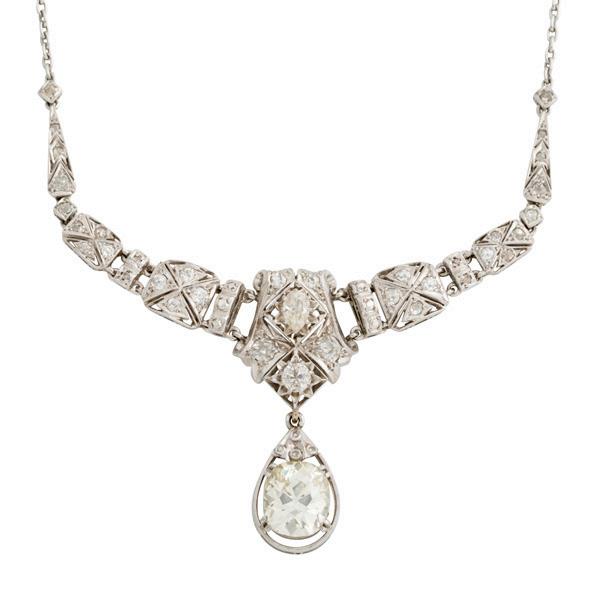
18ct white gold and diamond colliere with detachable diamond pendant Sold for $20,000 Fine Jewels, March 2026
With regular auctions in Fine Art, Jewels & Watches, Decorative Arts, Modern Design, Luxury and more, there’s something to suit every
taste at Leonard Joel.
browse
Browse our online auction catalogues or view in person at one of our salerooms.
bid
Create an account online and use it whenever you bid. You can also receive Lot alerts tailored to your interests.
Bidding is simple and you can do so in person, online, by phone or by leaving an absentee bid. Our team is always on hand to guide you.
now delivering
Get your auction purchases delivered straight to your door with Leonard Home Delivery (Melbourne only), our convenient, fast, reliable delivery service managed by our in-house team. Please visit our website for more information or contact delivery@leonardjoel.com.au
connect
Subscribe to our email newsletter through our website to stay up to date with news on upcoming auctions, special events, and industry insights. website leonardjoel.com.au instagram @leonardjoelauctions facebook facebook.com/leonardjoelauctions youtube youtube.com/user/leonardjoel1919
VALUE, SELL & BUY
Contact a Leonard Joel Specialist
managing director & head of important collections
John Albrecht 03 8825 5619 john.albrecht@leonardjoel.com.au
Auction Specialists
fine jewels & timepieces
Annie Soust
Head of Department, Melbourne 03 8825 5645 annie.soust@leonardjoel.com.au
Lauren Boustridge
Head of Department, Sydney 02 9362 9045 lauren.boustridge@leonardjoel.com.au
fine art
Wiebke Brix
Head of Department 03 8825 5624 wiebke.brix@leonardjoel.com.au
Amanda Hayward (née North) Senior Fine Art Specialist 03 8825 5644 amanda.north@leonardjoel.com.au
decorative arts
Chiara Curcio
Head of Department 03 8825 5635 chiara.curcio@leonardjoel.com.au
asian art
Luke Guan Head of Department 0455 891 888 luke.guan@leonardjoel.com.au