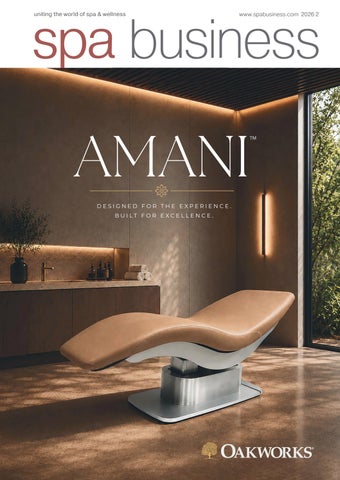
DESIGNED FOR THE EXPERIENCE. BUILT FOR EXCELLENCE.







Shares Guerlain’s global spa and wellness ambitions




The US$606 billion WELLZoomer market revealed War and























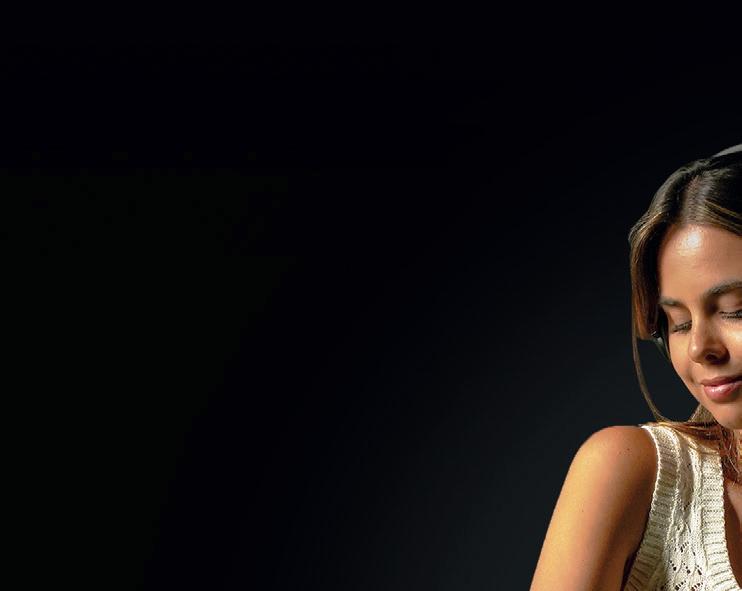
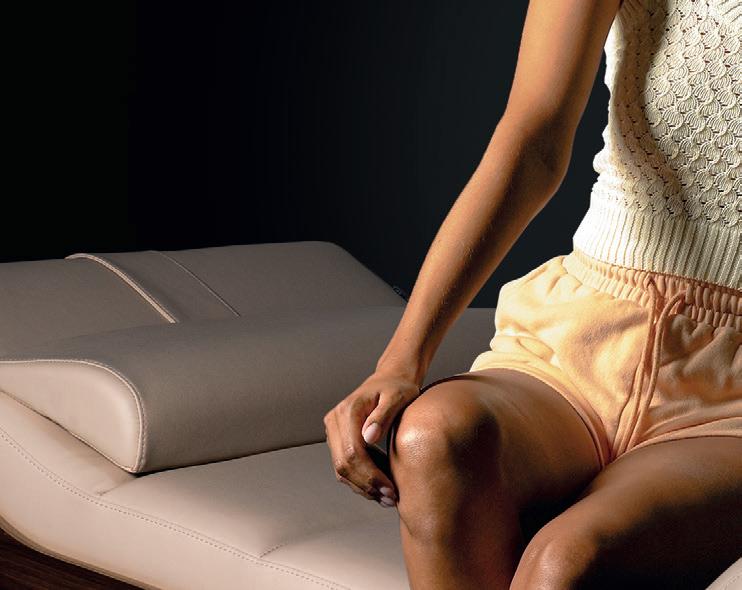
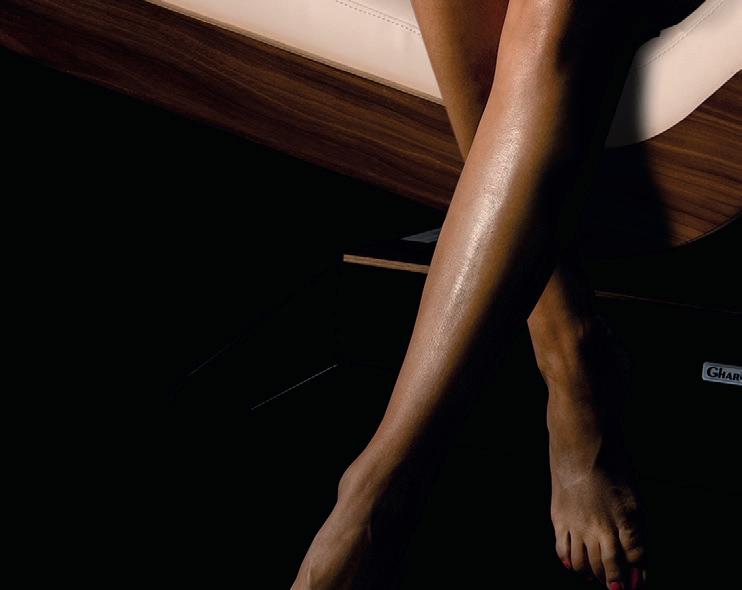
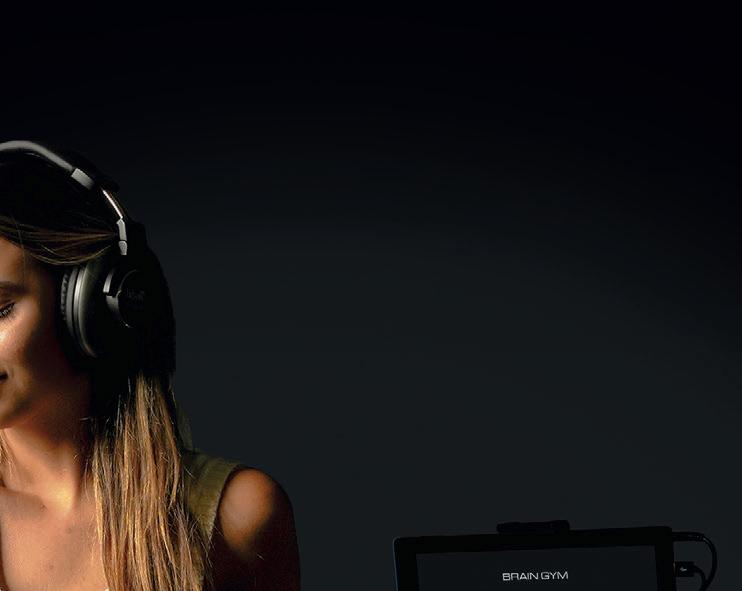
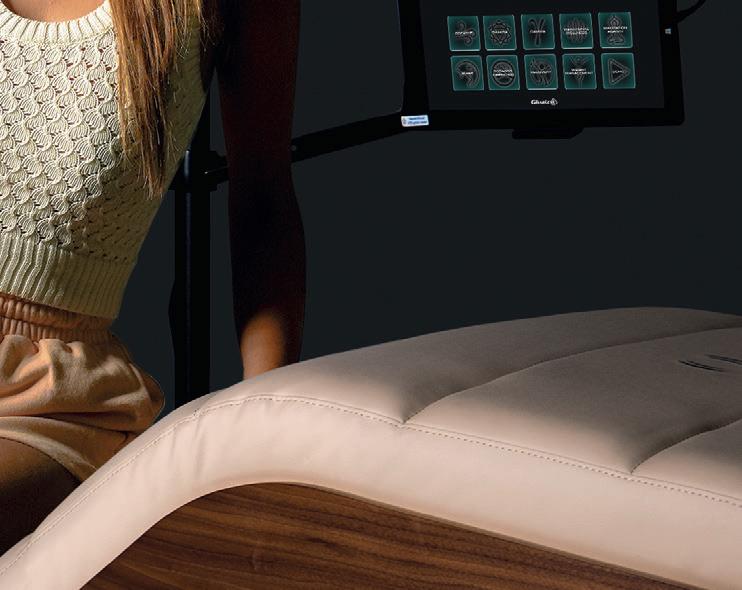

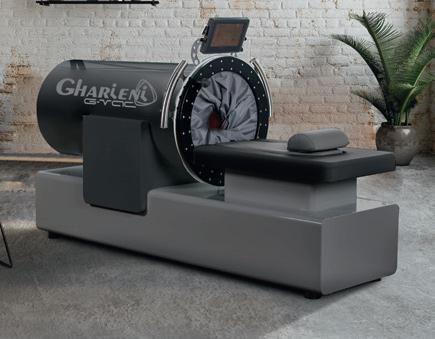
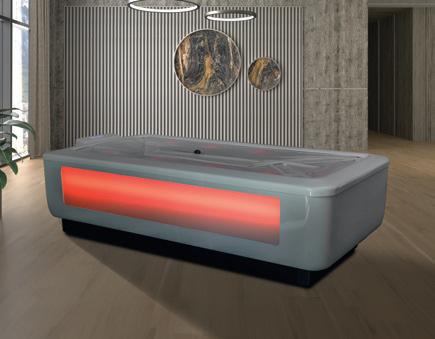
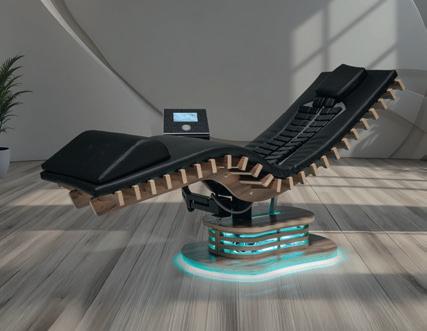





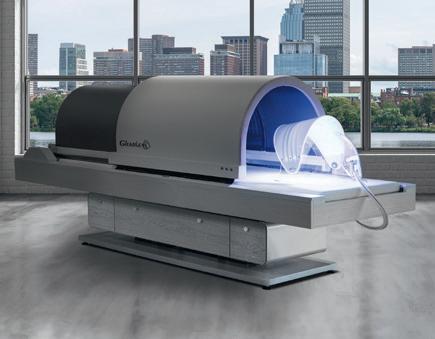

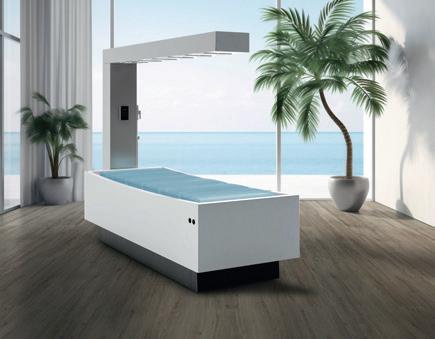

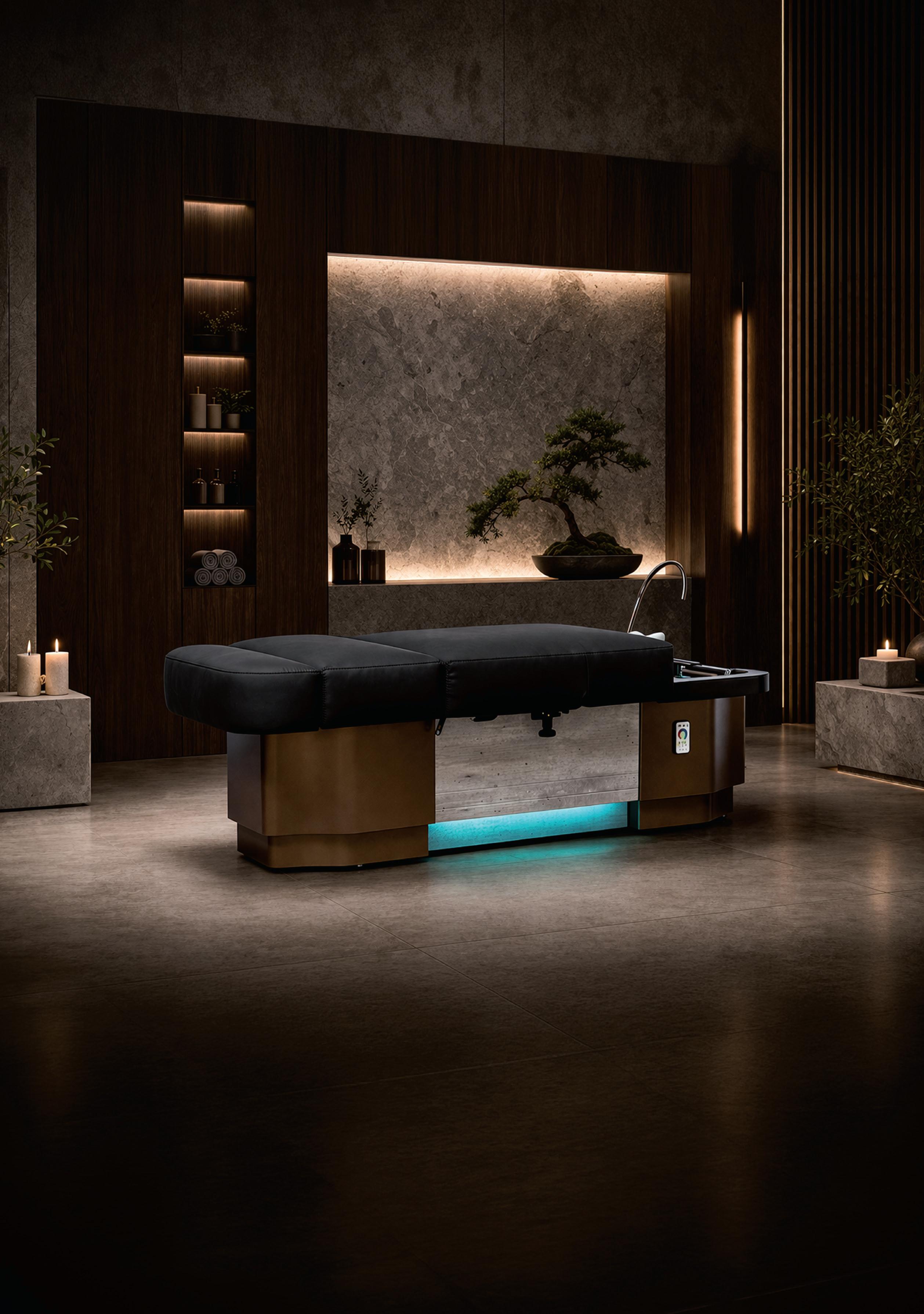



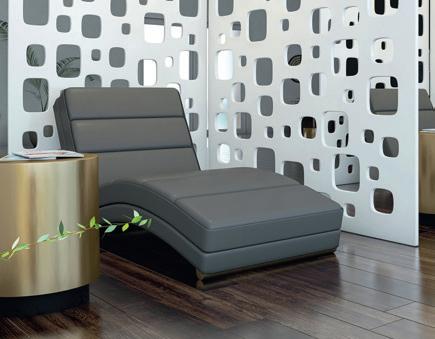
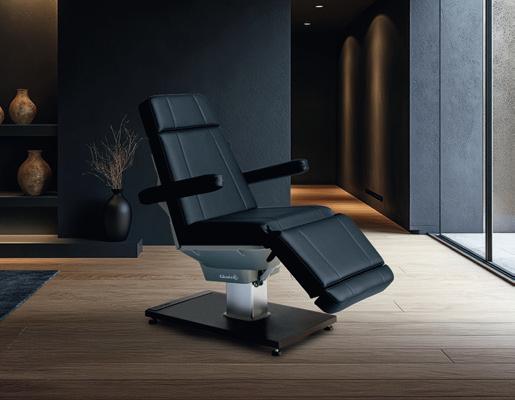
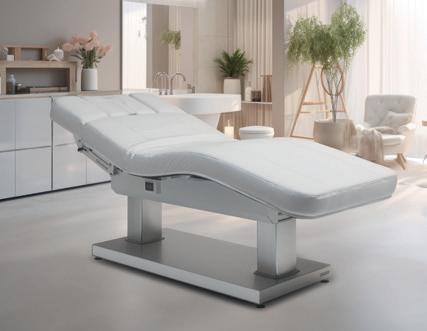
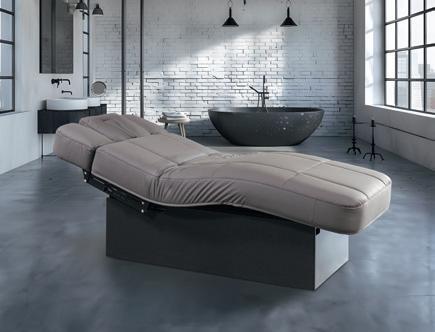
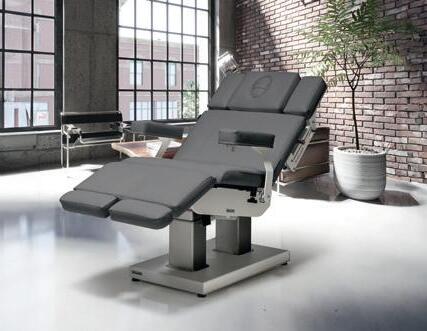
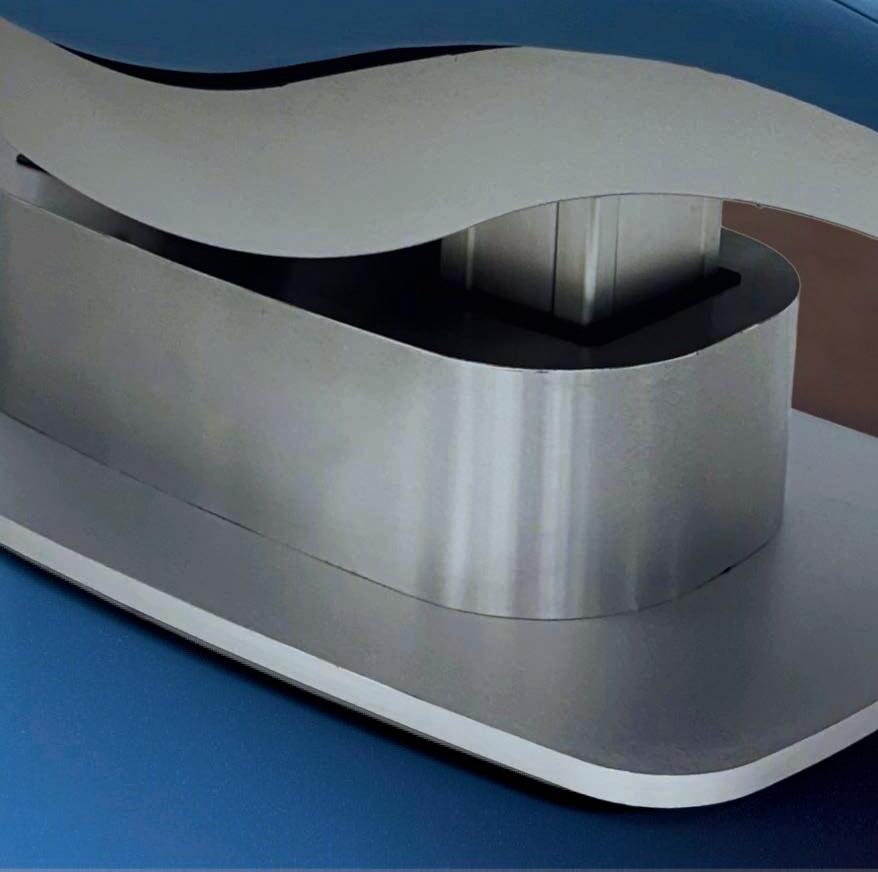
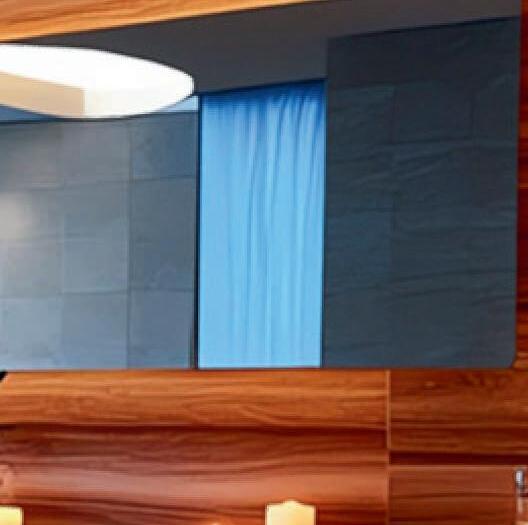
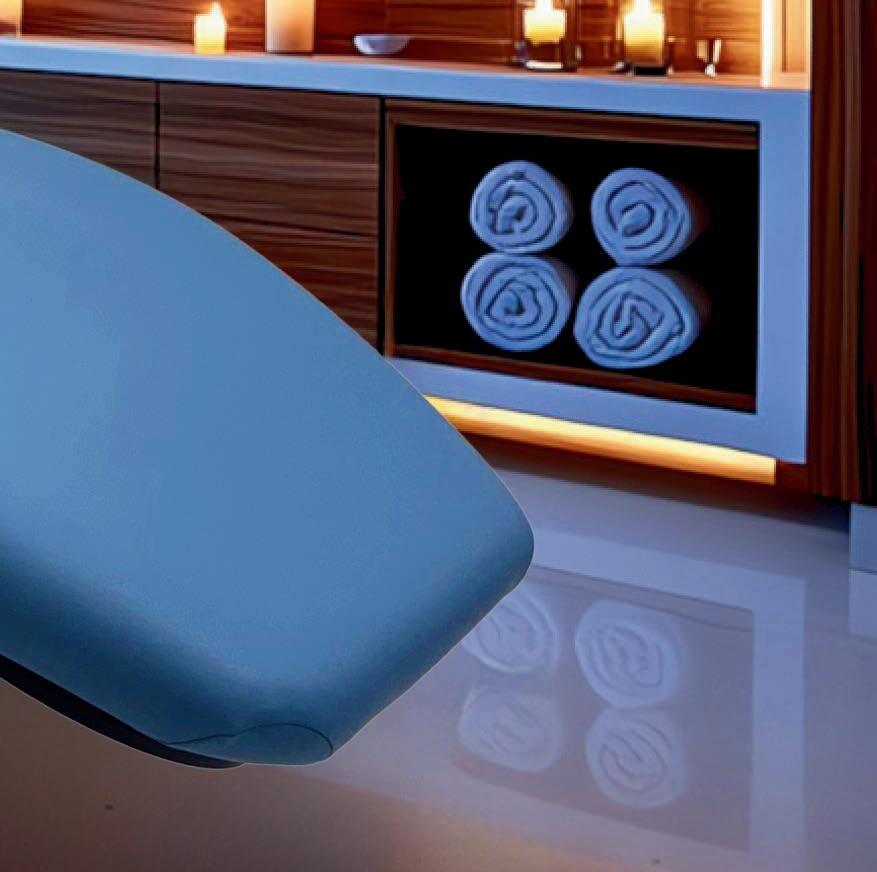
INTRODUCING A NEW DIMENSION OF ZEN — A BEAUTIFULLY ENGINEERED TREATMENT BED UNITING JAPANESE HEAD SPA AND FOOT SPA IN ONE DEEPLY RESTORATIVE, FULL-BODY RITUAL.




The legacy of a heritage brand devoted to beauticians for 80 years.
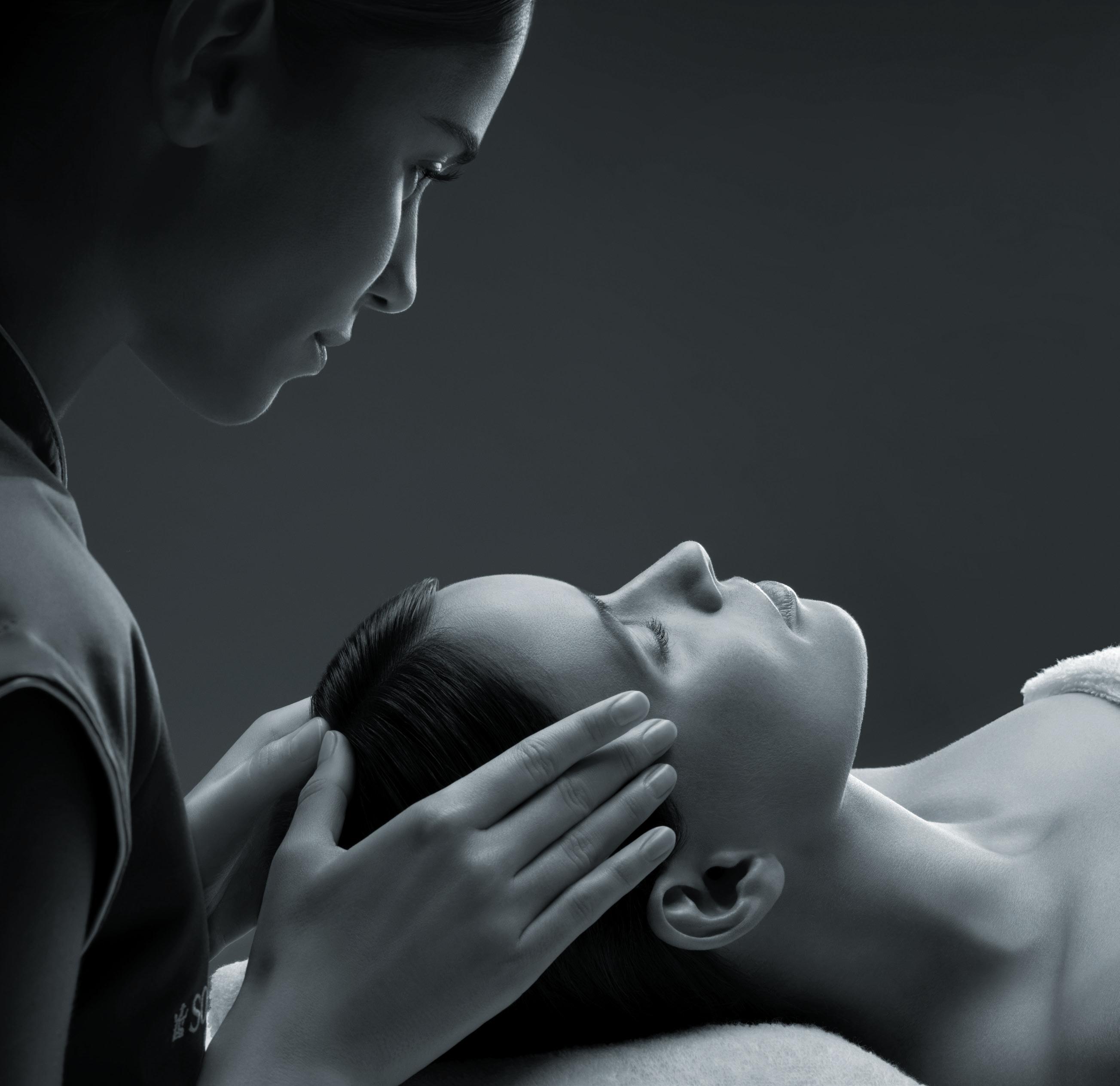
Since 1946, Sothys has been showcasing the art of French skincare around the world.
Choosing Sothys means choosing a unique skincare experience that blends science, sensoriality and expert technique.
As consumer interest in health and longevity accelerates, so too does scepticism. In a market increasingly shaped by greenwashing and competing claims, trust is emerging as the real currency of growth
reenwashing, exaggerated claims and an explosion of wellness products are converging with unprecedented consumer demand for health and longevity. The result is a crowded, complex marketplace where trust –not marketing – is becoming the decisive factor.
Against this backdrop, WELLZoomers, adults aged 25 to 44, have emerged as a defining consumer segment in WELLSurvey 2.0, a new report based on data from the US, the UK and Germany (see p68). This cohort represents a US$606 billion (€516.6 billion, £447.1 billion) global wellness revenue opportunity.
Yet despite this demand, the industry faces a striking challenge: differentiation. When WELLSurvey 2.0 respondents were shown 36 leading wellness resort brands and asked which they would choose for a future trip, 53 per cent selected “none of the above”. No operator stood out. Consumers are highly engaged in their health, but many still struggle to distinguish between brands.
That matters because they’re no longer seeking isolated treatments or occasional escapes. Instead, they’re building personal wellbeing ecosystems –combining therapies, diagnostics, fitness, nutrition and recovery practices into longer-term health strategies. This creates scope for operators to engage across the full journey: pre-arrival, in-stay and post-visit. Yet aftercare remains one of the most underdeveloped parts of the experience.
But the most important finding is trust. Eightythree per cent of respondents use social media for health information, yet fewer than half trust what they find. The language that carries most credibility
Out of 36 leading wellness resort brands, not one operator stood out Contact
is “clinically proven” (71 per cent), “recommended by a scientist or medical professional” (67 per cent) and “evidence-based” (66 per cent).
In a marketplace saturated with claims, trust is becoming the ultimate filter. Spas and wellness operators have a clear advantage: trained practitioners, deep expertise in human health and a service ethos rooted in care. The task now is to move beyond being one of many choices and instead become a trusted authority that consumers actively rely on l
Katie Barnes, editor, katiebarnes@spabusiness.com
7 Editor’s letter Trust
In a market increasingly shaped by greenwashing, trust is emerging as the real currency of growth, says Katie Barnes
12 SB Forum
Marc Cohen shares his profound views on the geopolitics of human flourishing
18 Zeitgeist
Study shows benefits of social sauna culture and famous nightclub swaps booze for wellness
22 Spa Business news
Global wellness real estate worth US$876bn and Miraval opens in Saudi
30 Spa Business buzz
Submersive confirms Austin debut on track for 2027 and Regent introduces spa concept in Bali ahead of international rollout
36 Spa Business collabs
Kimpton teams up with regenerative medicine clinic in Honduras and TheLifeCo confirms opening at A’ila longevity development in St Lucia
38 Spa Business people news
Jeremy McCarthy launches industry intelligence platform Leisure Alchemy and Eric Litman starts health optimisation company
42 Spa people Susan Magsamen
IAM Lab’s executive director reveals two neuroaesthetic reports exploring environments, wellbeing and nervous system restoration
46 Spa people Beth Gatonye
Giving blind people in Africa hope with Seeing Hands Rwanda
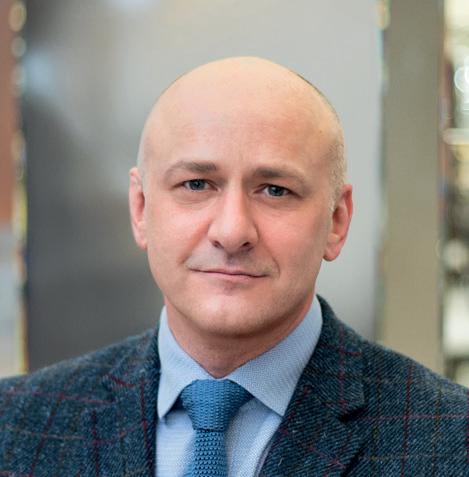
50 Interview Diane Davody
With 38 spas in landmark hotels, could Guerlain be the sector’s quiet powerhouse? Katie Barnes speaks to its international spa business director
60 Everyone’s talking about War
What the conflict in the Middle East means for the global spa industry
68 Research Decoding wellbeing
Distrust, limited brand differentiation and a market worth US$606bn are key findings from WELLSurvey 2 0 Kevin Kelly and Peter Yesawich report
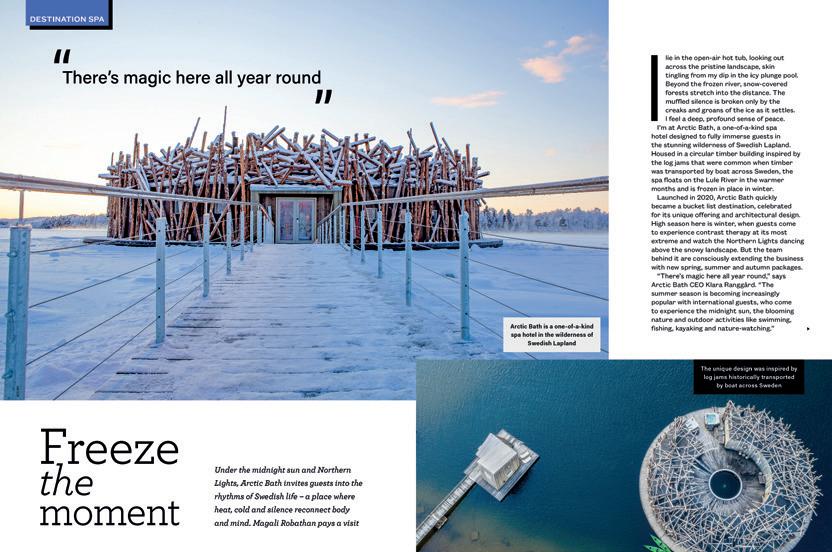
82 Destination spa Freeze the moment
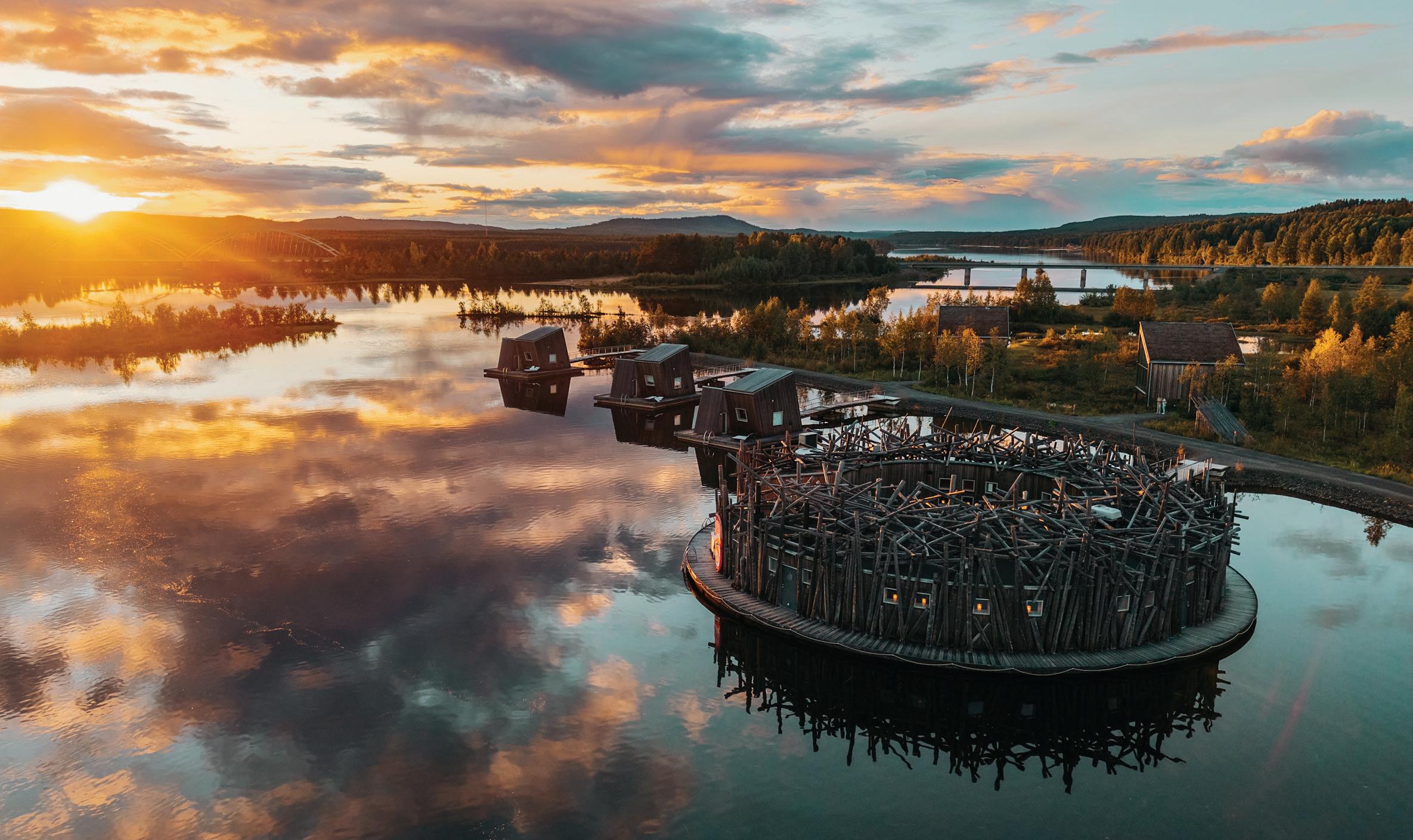
What started out as a small floating spa in Swedish Lapland has turned into a bucket-list destination rooted in contrast therapy and Nordic Living. Magali Robathan pays a visit to Arctic Bath
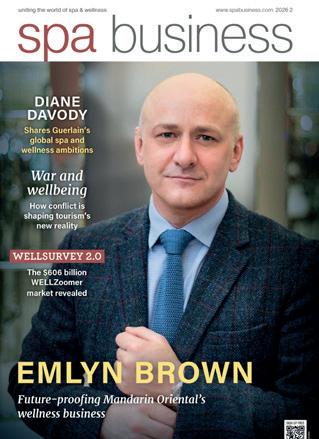
94 Interview Emlyn Brown
The group director of wellbeing for Mandarin Oriental talks about spa evolution and how its partnership with Simone Biles demonstrates its strength of intention
108 Thermal spa Betting on bathing
With hot springs bathing booming in Australia, Alba Thermal Springs and Spa enters a crowded market. Cassandra Cavanah explores the AU$160m investment
121 Product innovation
Spa product and equipment launches
130 Spa Business directory
132 Finishing touch Flexible friend
Comprehensive review confirms benefits of collagen on skin elasticity
For email, use contact’s fullname@spabusiness.com
Editorial director
Liz Terry +44 (0)1462 431385
Editor-at-large
Jane Kitchen
+44 (0)1462 431385
Contributor
Kevin Kelly
+44 (0)1462 431385
Publisher Astrid Ros
+44 (0)1462 471911

Head of news
Helen Andrews
+44 (0)1462 471900
Journalist
Magali Robathan
+44 (0)1462 431385
Choose how you read Spa Business
Spa Business magazine is available in print from www.leisuresubs.com
Spa Business digital
Read free online and enjoy extra links and searchability www.spabusiness.com/digital
Spa Business PDF
A PDF edition is available to read offline at: www.spabusiness.com/pdf
Editor
Katie Barnes
+44 (0)1462 471925
Contributor
Cassandra Cavanah
+44 (0)1462 431385
Contributor
Peter Yesawich
+44 (0)1462 431385
More resources
Sign up for free digital
www.spabusiness.com/signup
Spa Business insider
www.spabusiness.com/insider
Spa Business Handbook www.spahandbook.com
Spa Business Library www.spabusiness.com/archive
Buyer Search Engine
www.spa-kit.net
HCM magazine
www.HCMmag.com
Fit Tech magazine
www.fittechglobal.com
Customer service
+44 (0)1462 431385
Advertising
+44 (0)1462 471911
Subscriptions
+44 (0)1462 431385
Circulation
+44 (0)1462 471932
Finance
+44 (0)1462 471901
Credit control
+44 (0)1462 471901
Sign up for Spa Business at www.leisuresubs.com or email subs@leisuremedia.com.
Annual subscription rates are UK £48, Europe £65 , rest of world £94, students (UK) £25.
Copyright Spa Business is published four times a year by Leisure Media Global, PO Box 424, Hitchin, SG5 9GF, UK. The views expressed are those of the authors and do not necessarily represent those of the publisher. All rights reserved. No part of this publication may be reproduced, stored in a retrieval system or transmitted in any form or by means, electronic, mechanical, photocopying, recorded or otherwise, without the prior permission of the copyright holder, Cybertrek Ltd.
Print and distribution Printed by The Manson Group Ltd. Distributed by Royal Mail Group Ltd and Whistl Ltd in the UK and Total Mail Ltd globally.
© Cybertrek Ltd 2026
ISSN 1479-912X (print) 2397-236X (online)



https://www.livingearthcrafts.com/cascade.html









indoor.technoalpin.com
Challenge thinking. Share insight. Shape the conversation in the global spa and wellness industry. We’d love to hear from you. Write to theteam@spabusiness.com
Marc
The Middle East has always been a hotspot of human activity, where prophets walked the deserts, empires rose and fell and trade routes distributed spices, knowledge and culture across three continents. It’s also the birthplace of traditions that underpin the modern spa.
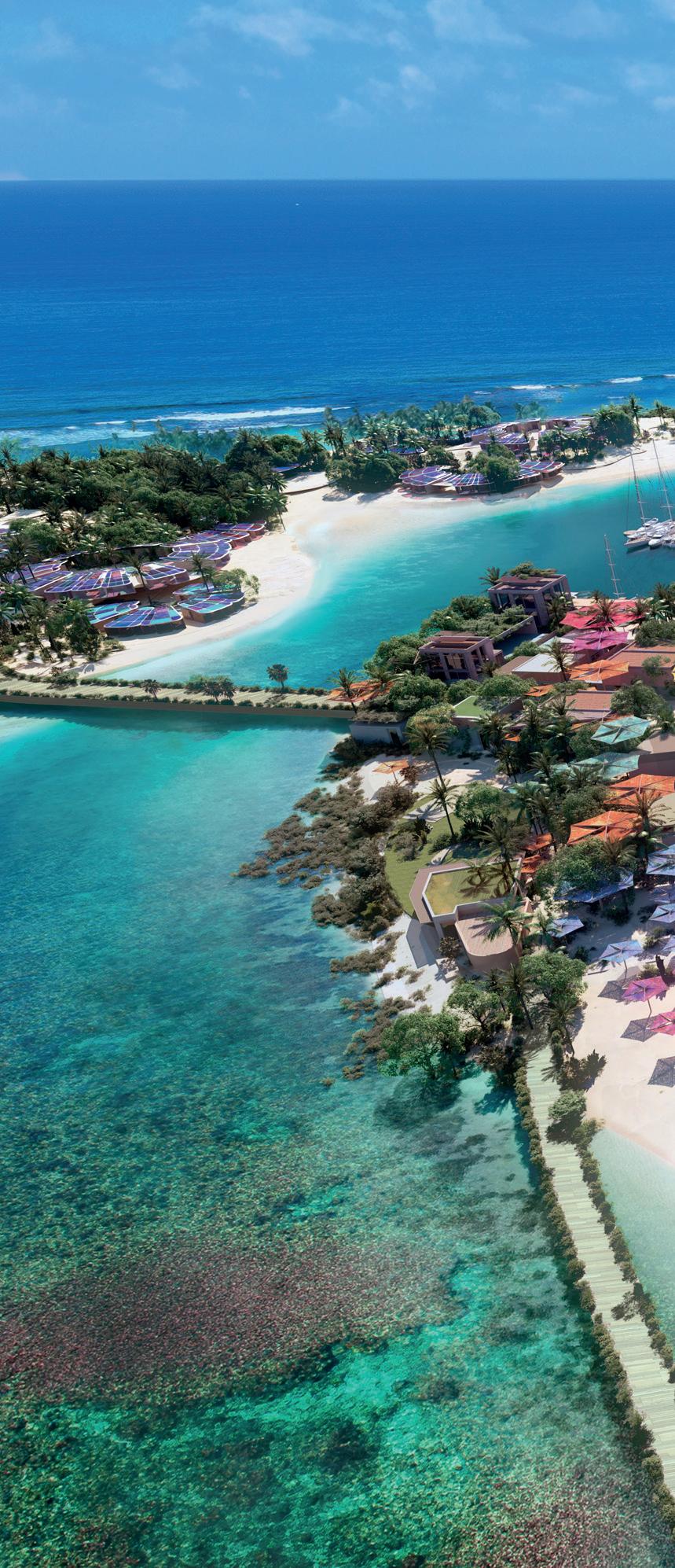
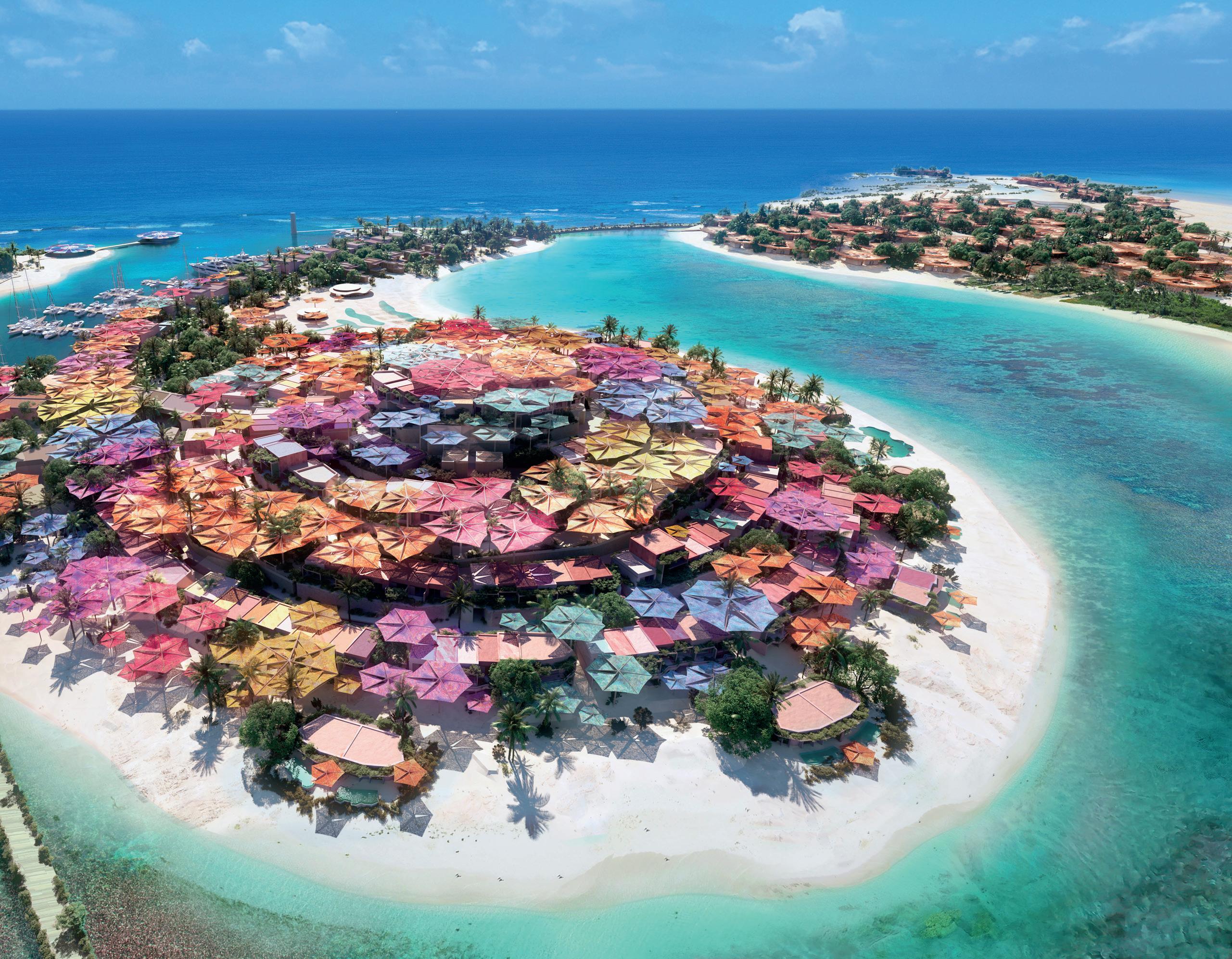
While visiting Saudi Arabia recently, I explored the vast construction sites
The world needs spa now more than ever, says Cohen
of Neom, just one of a collection of futuristic giga-projects designed to transform Saudi Arabia into a hub for global tourism with total projected investment over US$8 trillion (€6.8 trillion, £5.9 trillion).
Yet, while engineers and architects are constructing the cities of tomorrow, renewed conflict in the region raises a profound question: Will the future be shaped by war or by wellness?
Tourism or terrorism?
The currency of wellness is connection. Wellness thrives on openness, freedom of movement, cultural exchange and trust between people. Wellness, therefore, requires tourism and people crossing borders and experiencing new landscapes, cultures and healing traditions in the pursuit of human flourishing. War and terrorism operate in the opposite direction. Tourism requires open borders and investment in local infrastructure. War closes borders and creates technology that destroys infrastructure. The two are fundamentally incompatible. This tension is particularly evident in the Middle East, a region that’s been a centre of medicine, scholarship and wellness for millennia.
During the Islamic Golden Age, the Persian polymath Avicenna
described a holistic approach to health based on simple, repeatable lifestyle practices: contrast bathing, immersion in nature, and oxymels (tonics made from vinegar, honey, and herbs). These practices embody what modern biohackers and wellness practitioners are rediscovering today: that simple practices, when done consistently, create positive feedback loops with asymmetrical benefits.
The current Middle East conflict demonstrates that asymmetry is a defining feature of modern warfare. Low-cost technologies like drones are capable of causing damage worth billions. Wellness has the opposite logic. Many wellness practices are
asymmetric to the upside. This suggests the spa industry could become a powerful cultural force.
The wellness sector rarely sees itself as part of geopolitics. Yet it should. Unlike extractive industries that concentrate wealth around finite resources, wellness tourism is a service industry that depends on healthy ecosystems, cultural diversity and peaceful environments. A hot spring, mountain trail, or hammam
becomes more valuable when shared. Thus, wellness tourism does more than generate revenue; it cultivates the social conditions that make peace a rational economic choice.
The global wellness economy is now valued at approximately US$6.8 trillion (€5.81 trillion, £5.04 trillion); more than twice the global military economy of US$2.7 trillion (€2.3 trillion, £2 trillion). But scale alone is not sufficient.
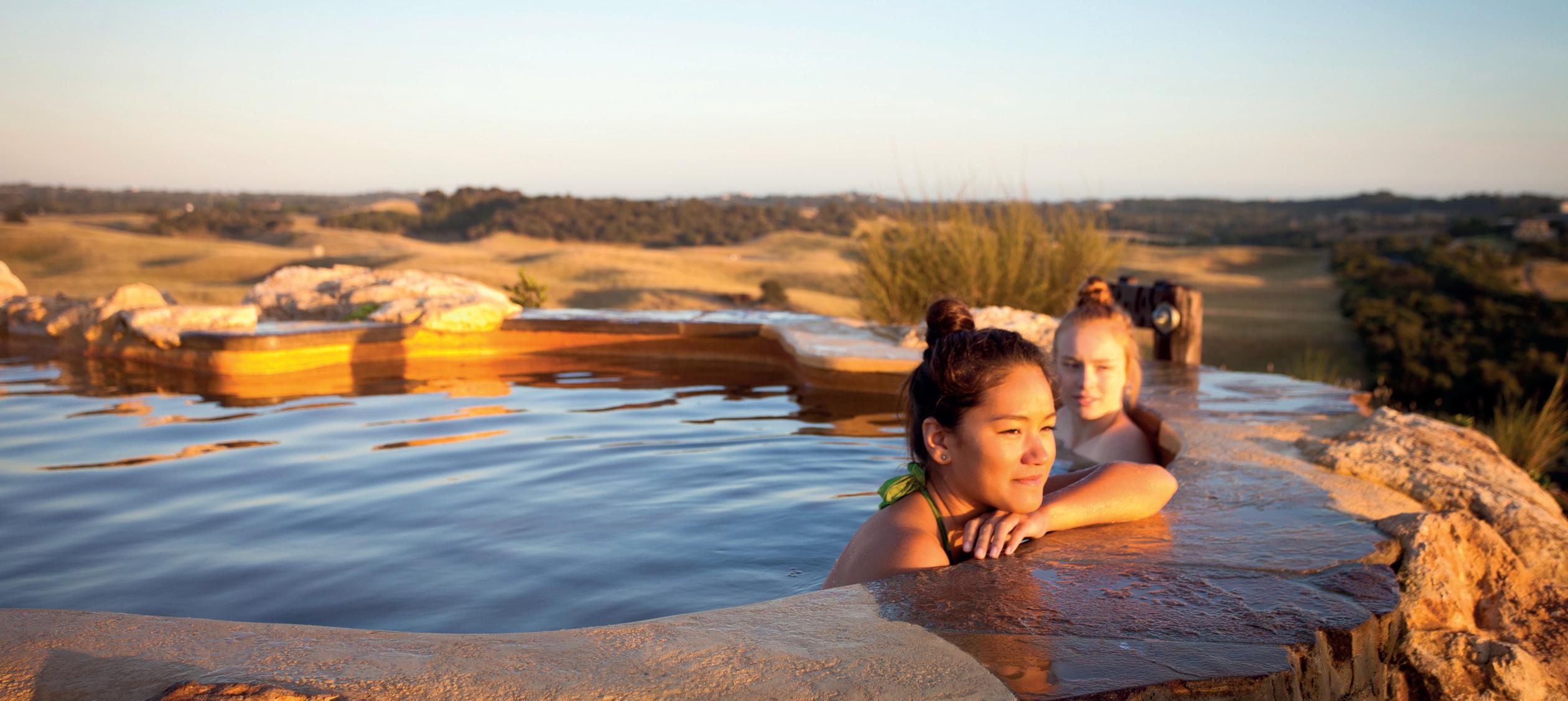
It’s important to examine where investment flows. Wellness developments concentrated on luxury urban destinations accessible only to the affluent don’t build the trust that makes peace durable. Yet, a wellness economy anchored in practices such as thermal bathing, immersion in nature and traditional healing practices available at almost every price point, fosters the conditions for peace and prosperity.
The goal then is not simply a bigger wellness industry. It’s a more distributed, culturally rooted and accessible one, in which the spa and thermal bathing sector plays a leading role.
The spa industry doesn’t have to be a passive spectator of world events. It can be an active participant in the choice between war and wellness. By creating beautiful, well-managed places where people feel truly alive, spas contribute more than revenue. They contribute to the social conditions that make peace a rational choice.
Every spa that invests in its natural surroundings, waters, botanicals and cultural heritage, creates an economic argument for protecting that environment. Every operator that trains staff in service and traditional healing practices helps keep living culture alive. Every wellness retreat that welcomes guests from different
nations, faiths and backgrounds is engaged in practical diplomacy.
A spa is not a luxury. It’s infrastructure for human flourishing. And the world needs that infrastructure now more than ever.
A choice for civilisation Humanity now faces an extraordinary choice. War or wellness? Will we continue to invest in weapon systems designed to degrade human life and infrastructure?
Or will we invest in places where people can genuinely flourish?
In the end, the most powerful infrastructure we can build may not be a mirrored megacity or a missile defence system, but a global wellness culture where we’re all so interconnected and invested in the pursuit of wellness that war becomes unthinkable.
Turn to p60 to read industry experts’ views on the likely impact of the war in Iran.
tourism is connection, trust and human restoration
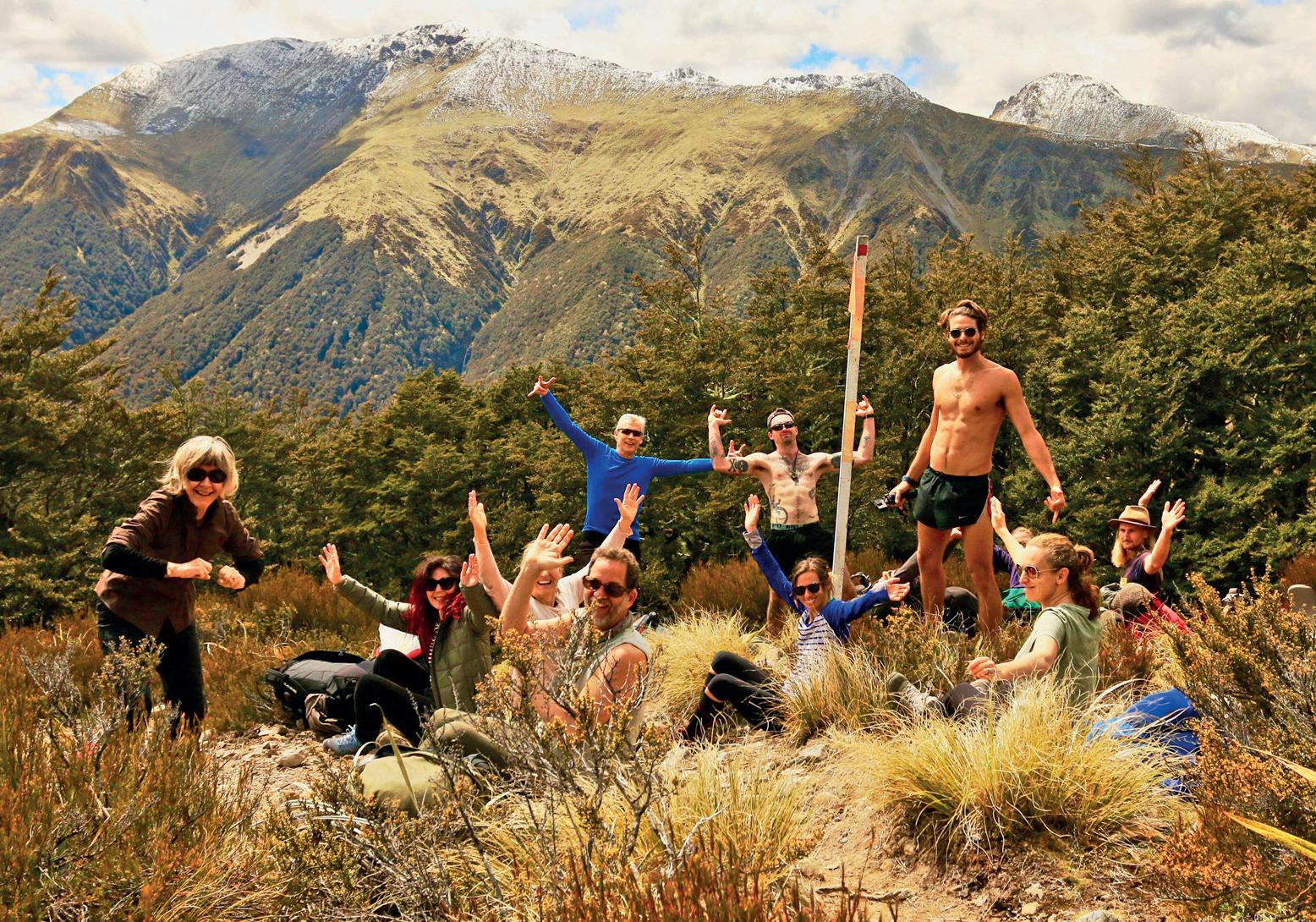
Immersion in nature shapes stronger, healthier societies, says Cohen






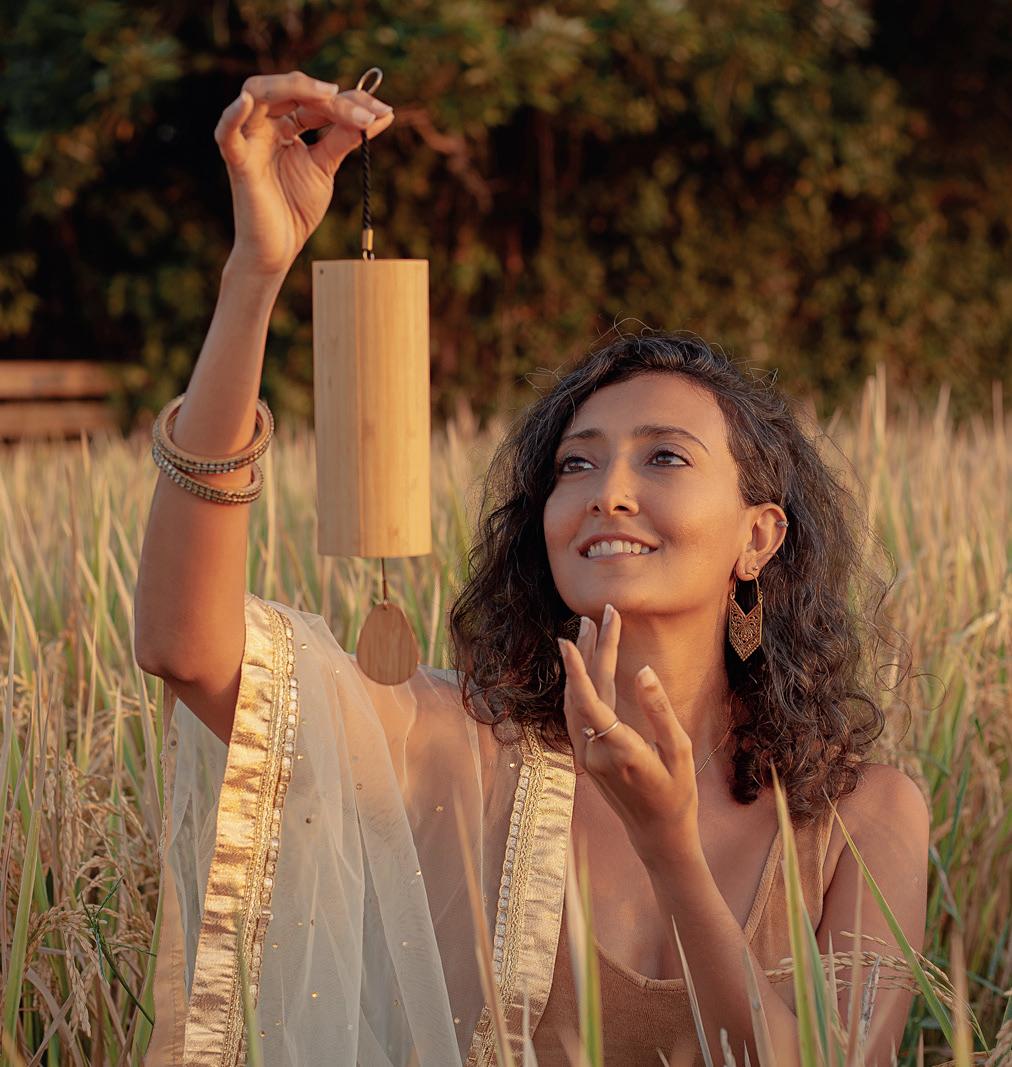
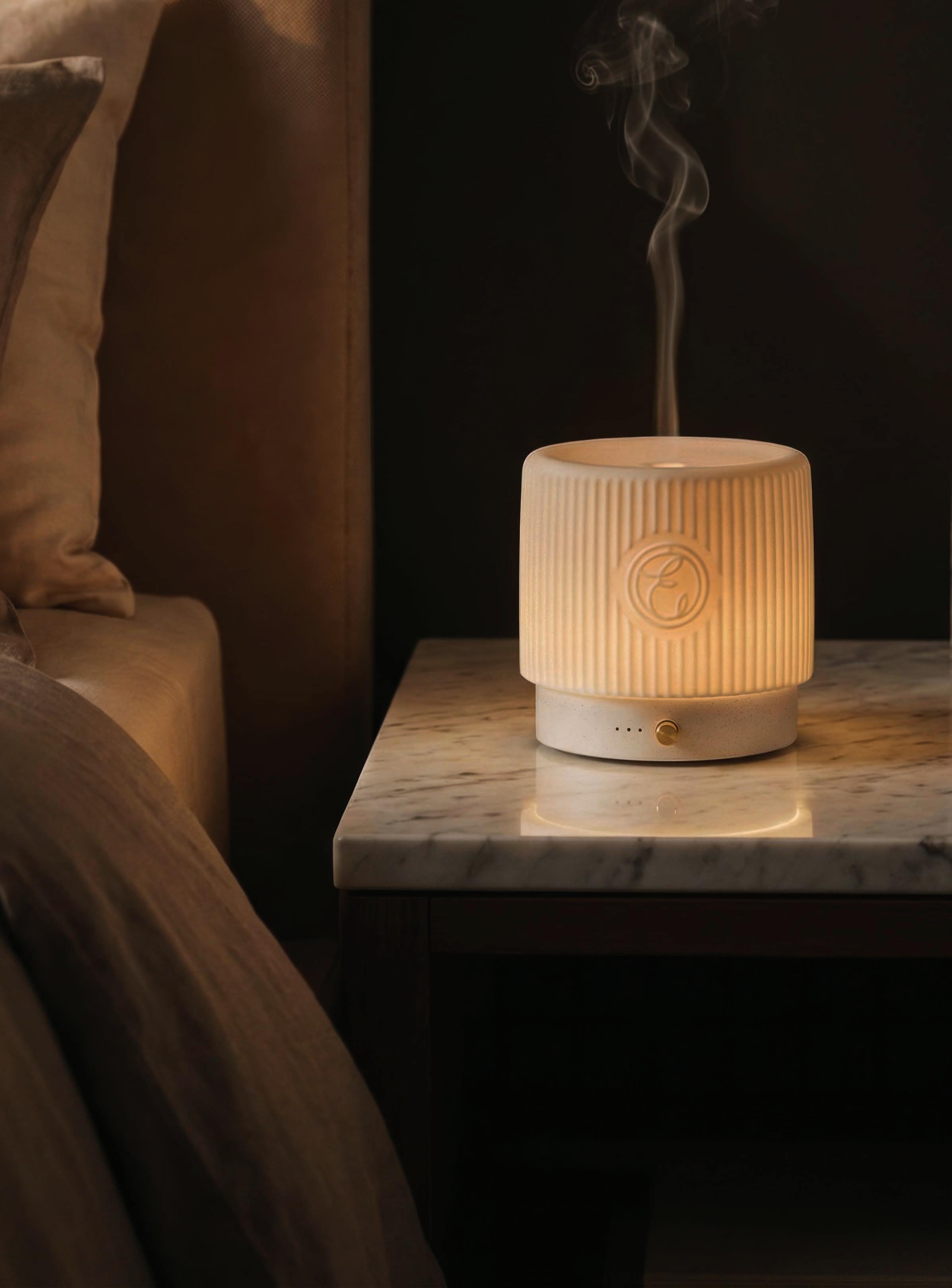
Fragrance oils are transformed into a micro-fine mist without heating to preserve the powerful aroma. Whisper-quiet, it invites calm and scent serenity to both home and spa settings at the press of a button.
M atch your mood and pair with an ESPA essential oil blend to elevate every moment, creating a tranquil atmosphere reminiscent of ESPA’s world-renowned spa treatments.


Humans will have more time to deliver expert hands-on care
Steve Porter, co-founder, Trybe
Here’s a statement that will make some spa managers uncomfortable: within five years, the highest-performing spas, the ones delivering the most exceptional guest experiences and the healthiest margins, will be run by artificial intelligence. Not assisted by it. Run by it.
Before you dismiss that as techindustry hyperbole, consider what’s already happening. AI agents are no longer experimental curiosities. They’re autonomous decisionmakers capable of processing vast operational datasets in real time, identifying patterns no human team could spot and acting on them instantly. The spa industry is ripe for this revolution and the operators who recognise it first will leave everyone else behind.
Let me be specific about what this looks like. The spa manager’s role, as we know it, is about to be fundamentally rewritten. The daily grind of scheduling, pricing, staffing, marketing and guest communications will be executed by AI agents making
managed
The spa manager′s role will fundamentally be rewritten
thousands of micro-decisions every hour. Dynamic pricing that shifts with real-time utilisation and demand trends. Therapist rotas optimised not just for coverage, but for revenue per room per hour.
The human isn’t removed from this picture. They become the strategist, the quality controller, the final green-button pusher. But the heavy lifting is delegated and the results will be transformational.
The forward-thinking software companies powering this shift will evolve into consultative partners. Operators will spend less time clicking through dashboards and more time delivering expert care and extraordinary hospitality. Platforms
will leverage their network data to define what ‘good’ looks like across the industry, then proactively suggest the changes needed to get there.
Imagine this: it’s a Tuesday morning and your AI has already repriced your afternoon slots based on local weather and a cancellation spike across your region. It’s tailored offers to past guests, flagged underbooked therapists and project revenue impact. You arrive, review and approve. That’s your management meeting. Done. This isn’t science fiction. The underlying technology exists today. The pace of change in AI isn’t linear. It’s exponential. And the spas that wait to see proof will be the ones scrambling to catch up. l
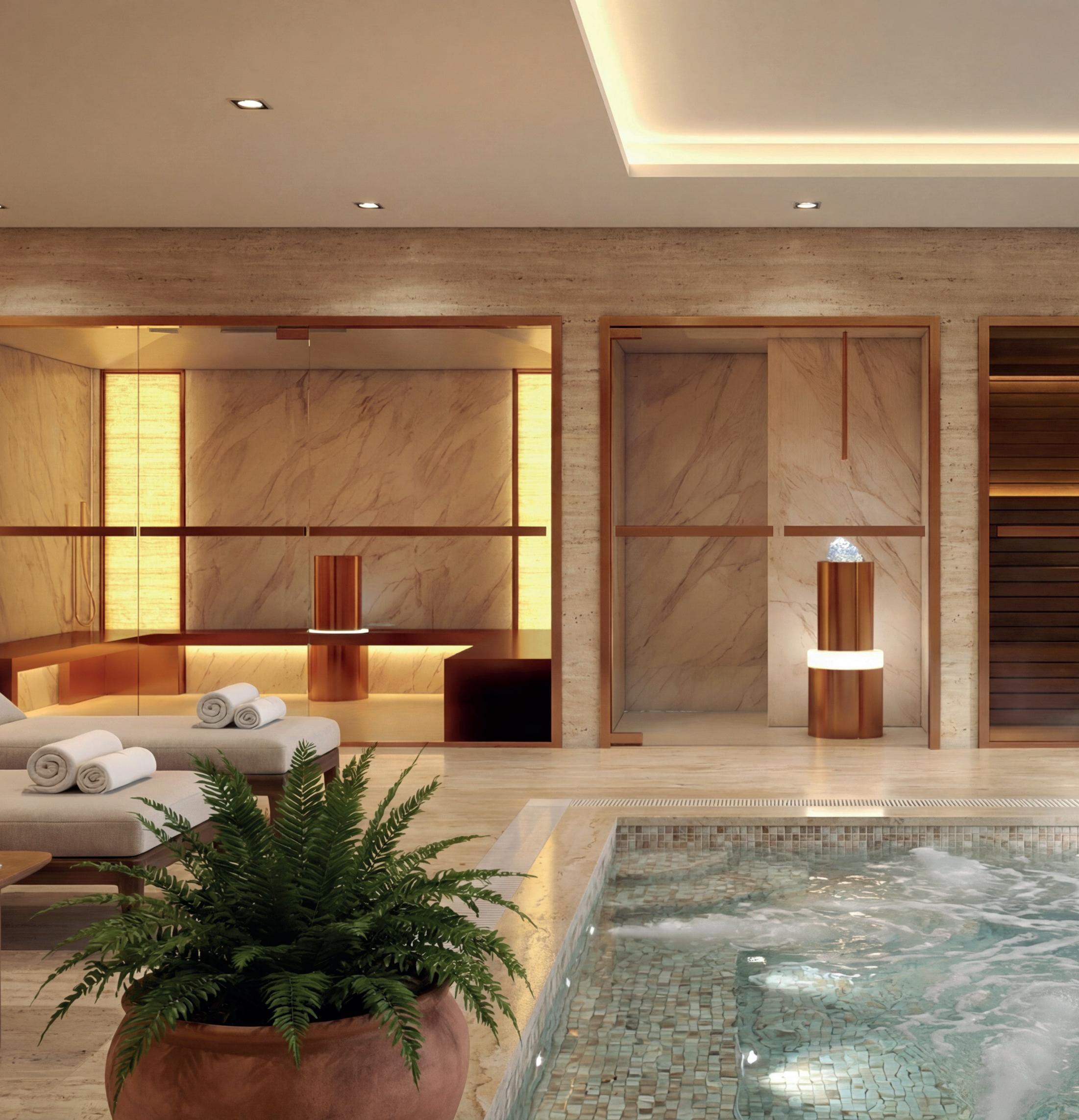
Created by architect Alberto Apostoli for Myrtha Wellness, WellGate blends refined materials, luminous surfaces and precision-engineered structure into a sculptural, above-ground thermal system. Available in exquisite finishes and fully customisable to the project and the architect’s vision, it transforms wellness into true contemporary architecture. WellGate. Tailored wellbeing. Redefined.
www.myrthawellness.com
Helen Andrews distills the essence of the latest Spa Business news to tap the trends driving the direction of the sector
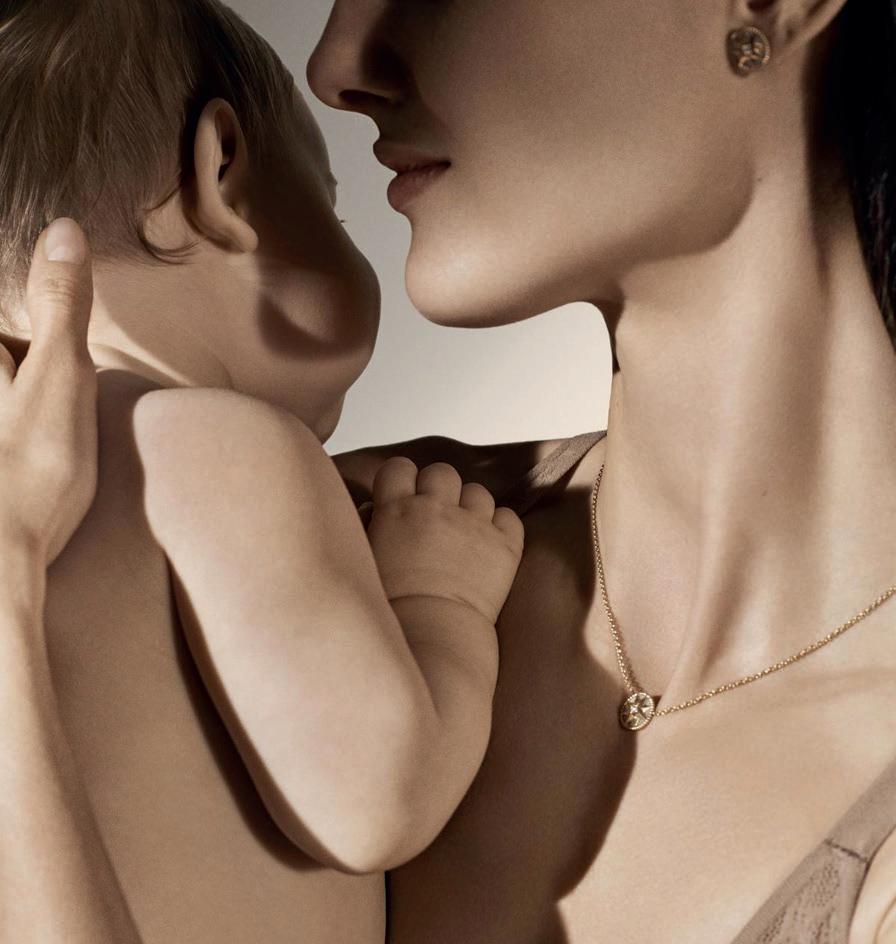
New mothers are being invited to receive support, treatments and advice on letting go of uncertainty during a postpartum wellbeing programme for women and their babies, called the Haute Motherhood Retreat at Dior Spa at Cheval Blanc Paris, France.
http://lei.sr/W7Z3q_B
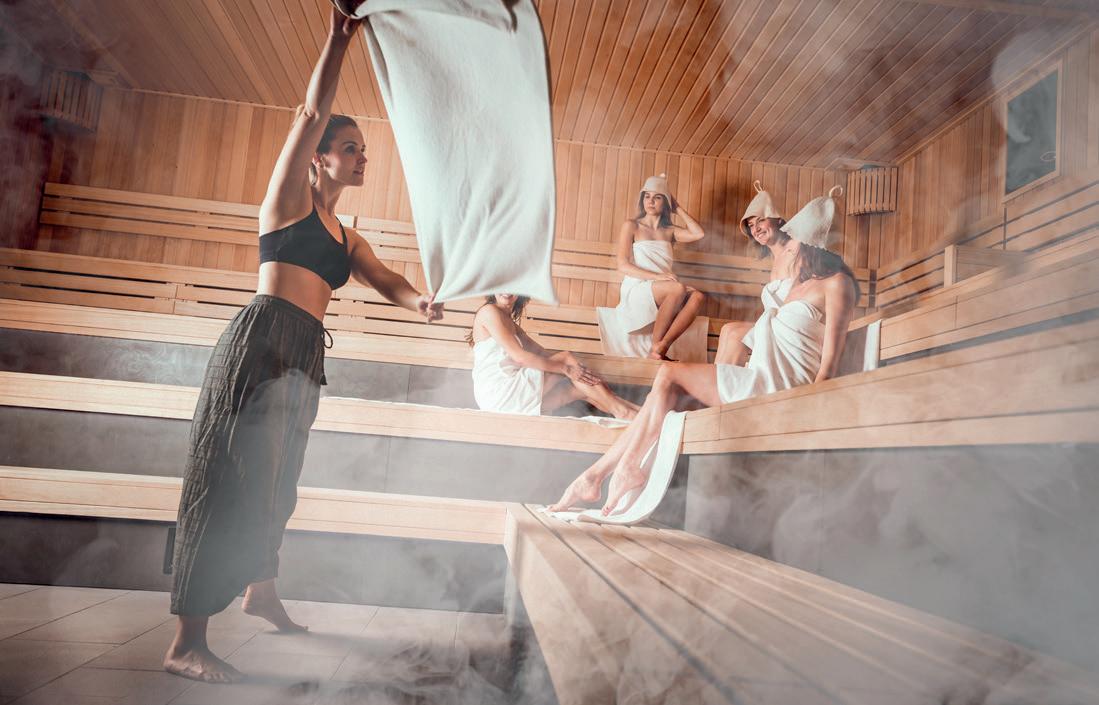
Doctors could start prescribing regular sauna bathing and rituals such as aufguss that provide emotional synchrony, improving wellbeing and feelings of belonging.
A new series of studies shows frequent sauna bathing can impact the identity of participants so they feel more connected to those around them – offering a potential social cure to rising levels of loneliness. The benefits to physical and mental health also increase with the frequency of sauna use.
http://lei.sr/8a8D4_B
interventions are under-deployed, says

Women can take part in the programme three months after giving birth
If society scales access to proven health interventions, people could gain nine years of healthy life, according to a new McKinsey study. Thirty-three million premature deaths could be prevented and the global economy could also be boosted by US$12.5 trillion (€11.5 trillion, £9.9 trillion).
http://lei.sr/c4x4J_B

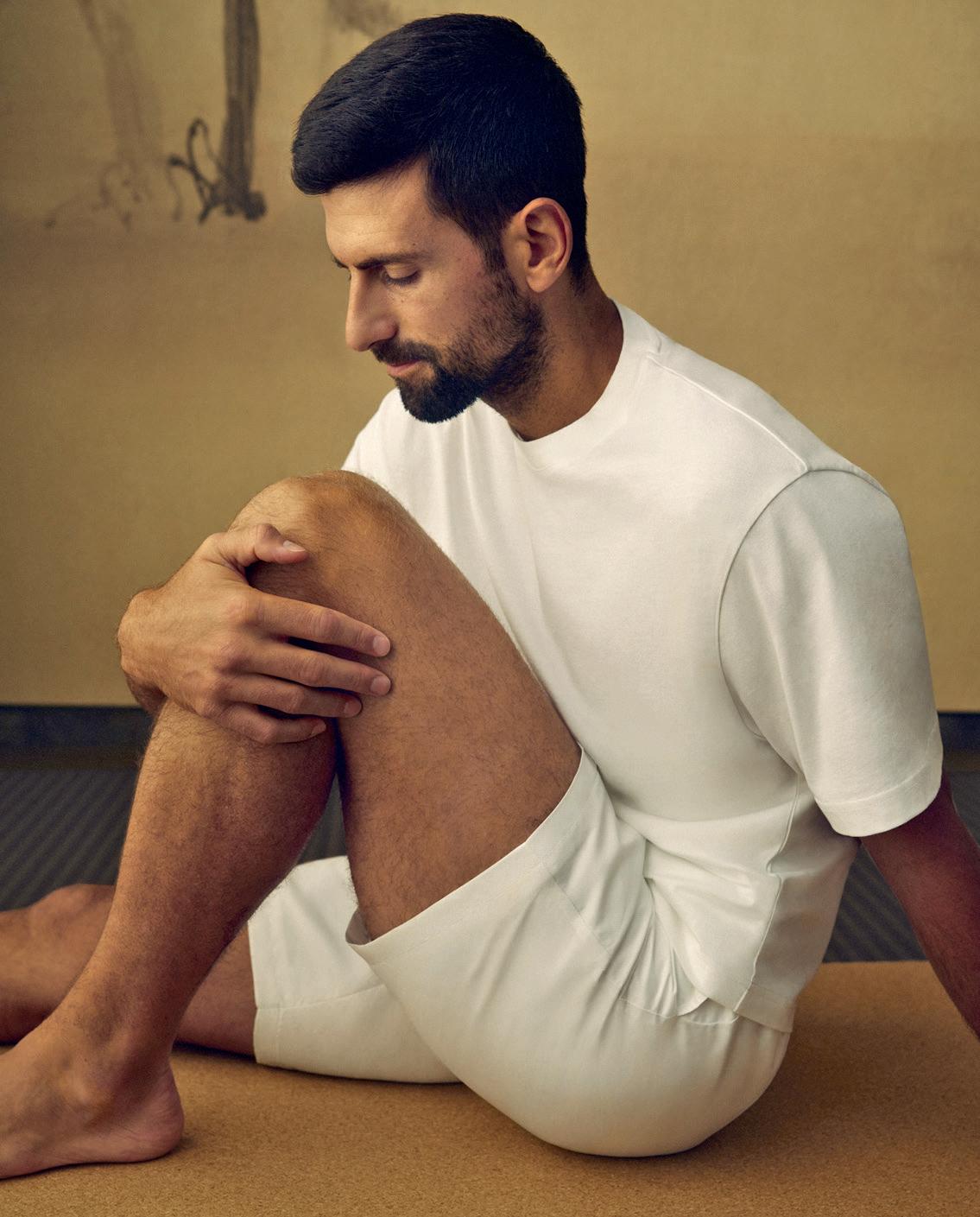
Novak Djokovic
Guests at five Aman destinations can learn about mobility training and mindful recovery during a new retreat, developed in partnership with tennis star and the brand’s wellness advisor and global ambassador, Novak Djokovic. This programme marks the second phase of Aman’s Longevity Pathways initiative, following the detoxification-focused retreat it launched last year.
http://lei.sr/F5Y8e_B
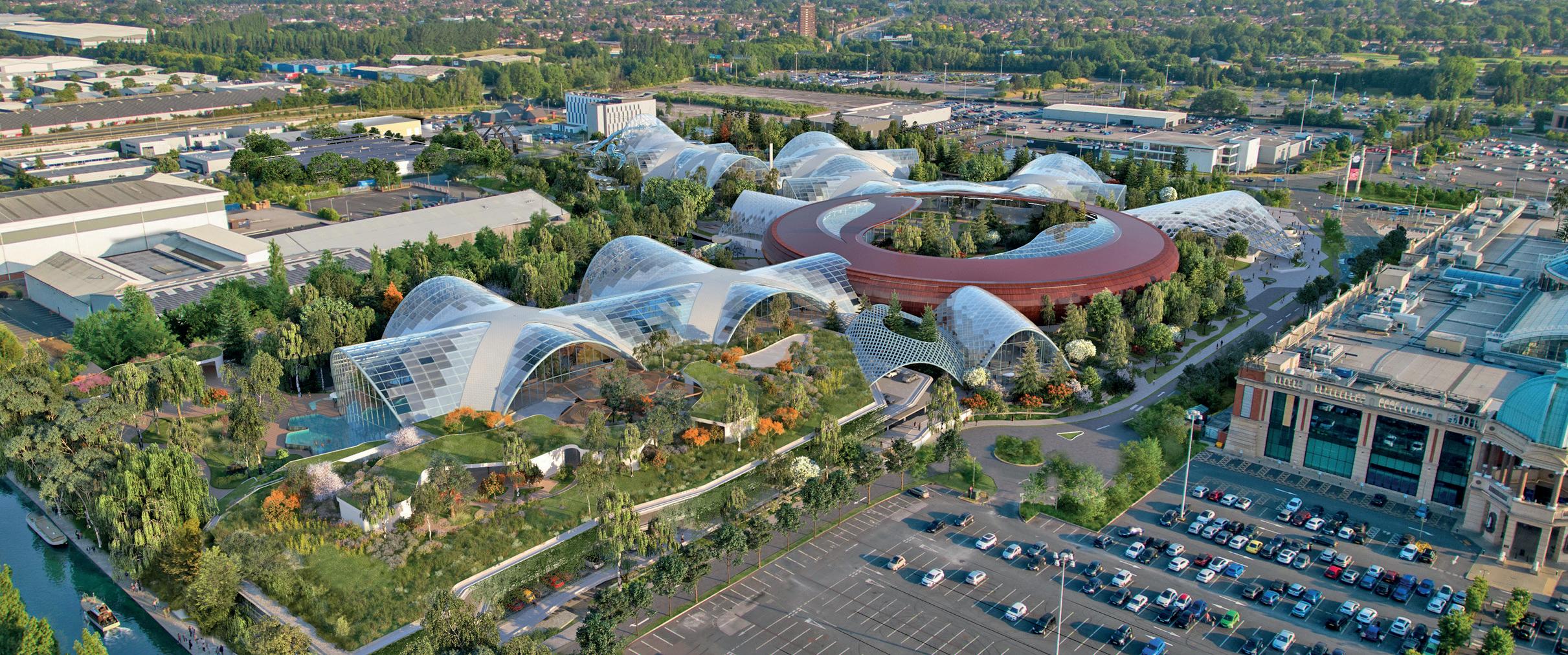
Therme Manchester will use 3D printers to build the £500 million (US$635 million, €585 million) site sustainably. Specialist company Fab.Pub will use a blend of bio-plastics and UV-resistant additives to print architectural partitions, walls, cladding, staircase balustrades, acoustic panels, plus planted walls and canopies.
http://lei.sr/U9n6Y_B
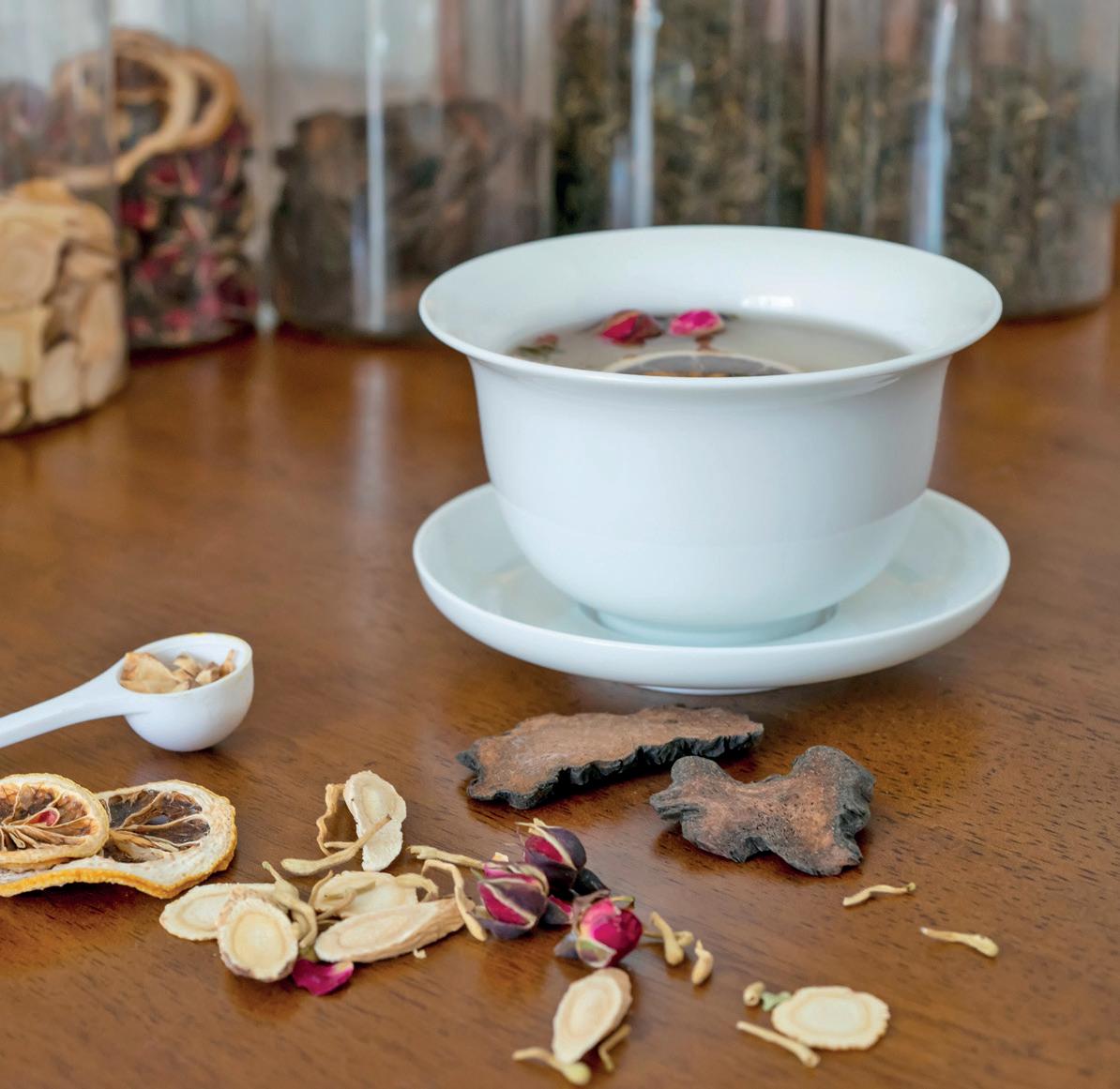
Overworked young people suffering burnout in China are going to bars that offer drinks that draw on TCM principles. In some bars, a TCM doctor takes a guest’s pulse, identifying any physical issues, before a mixologist creates a bespoke cocktail.

A wearable device under development will track blood flow and determine how well the brain copes with stress. The system, called Temple, will be worn on the side of the head, at the temple. It’s hoped that the data the device collects will improve insights into brain health.
http://lei.sr/4h5C6_B

Fifteen original compositions that reflect the water cycle anchoring evianSpa’s concept will be played during treatments at its facilities worldwide. Developed in partnership with consultant Patrick Saussay and French composer Romain Benitez, each tune runs for 45 to 180 minutes.
http://lei.sr/j3H2q_B
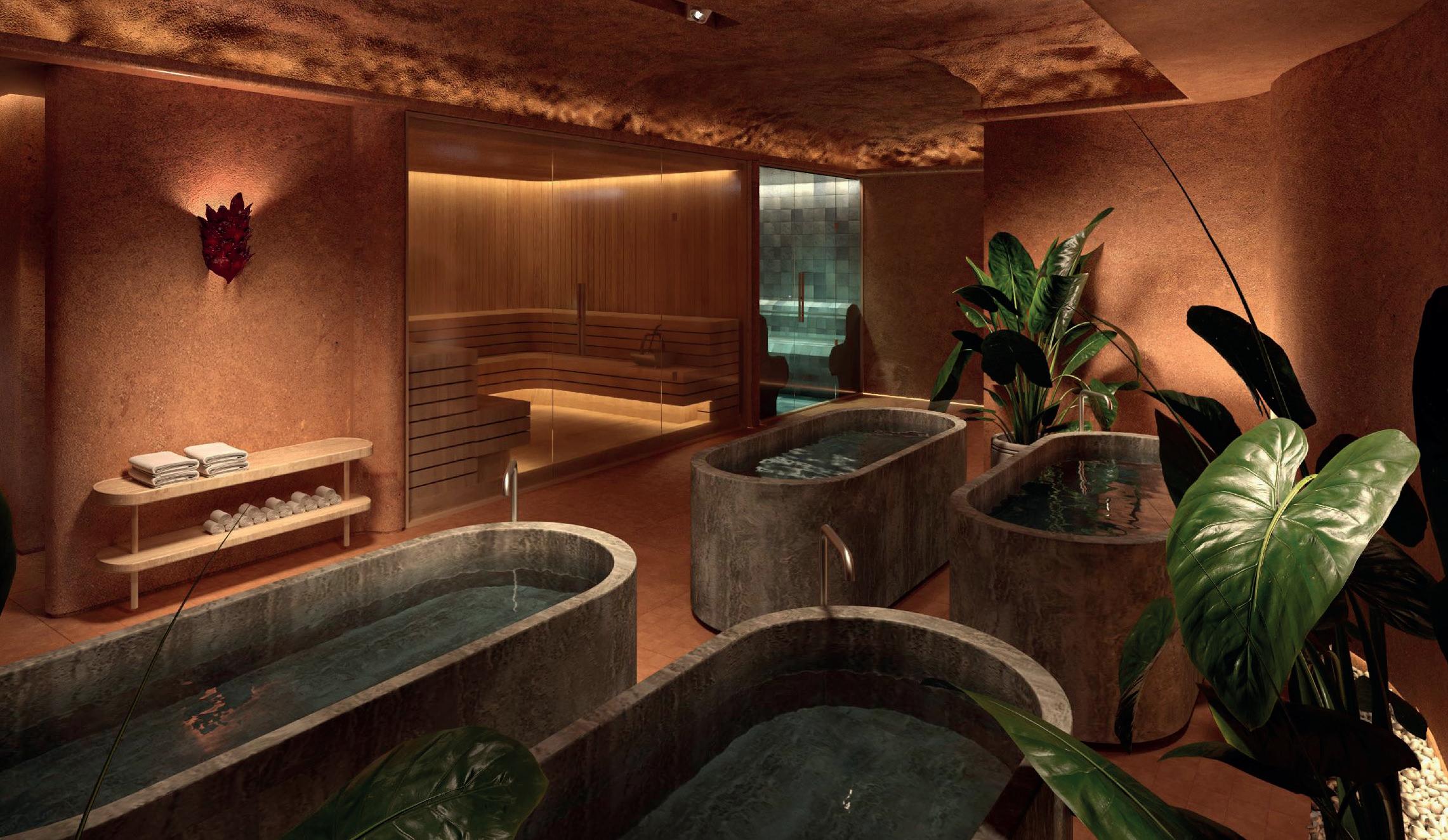
Luxury members’ club and nightclub Tramp has been transformed into a 16,000sq ft fitness and longevity studio called Tramp Health in London’s Mayfair. The new health club is now providing fitness, recovery, diagnostics, aesthetics and hospitality services – in a full departure from its previous nighttime offering.
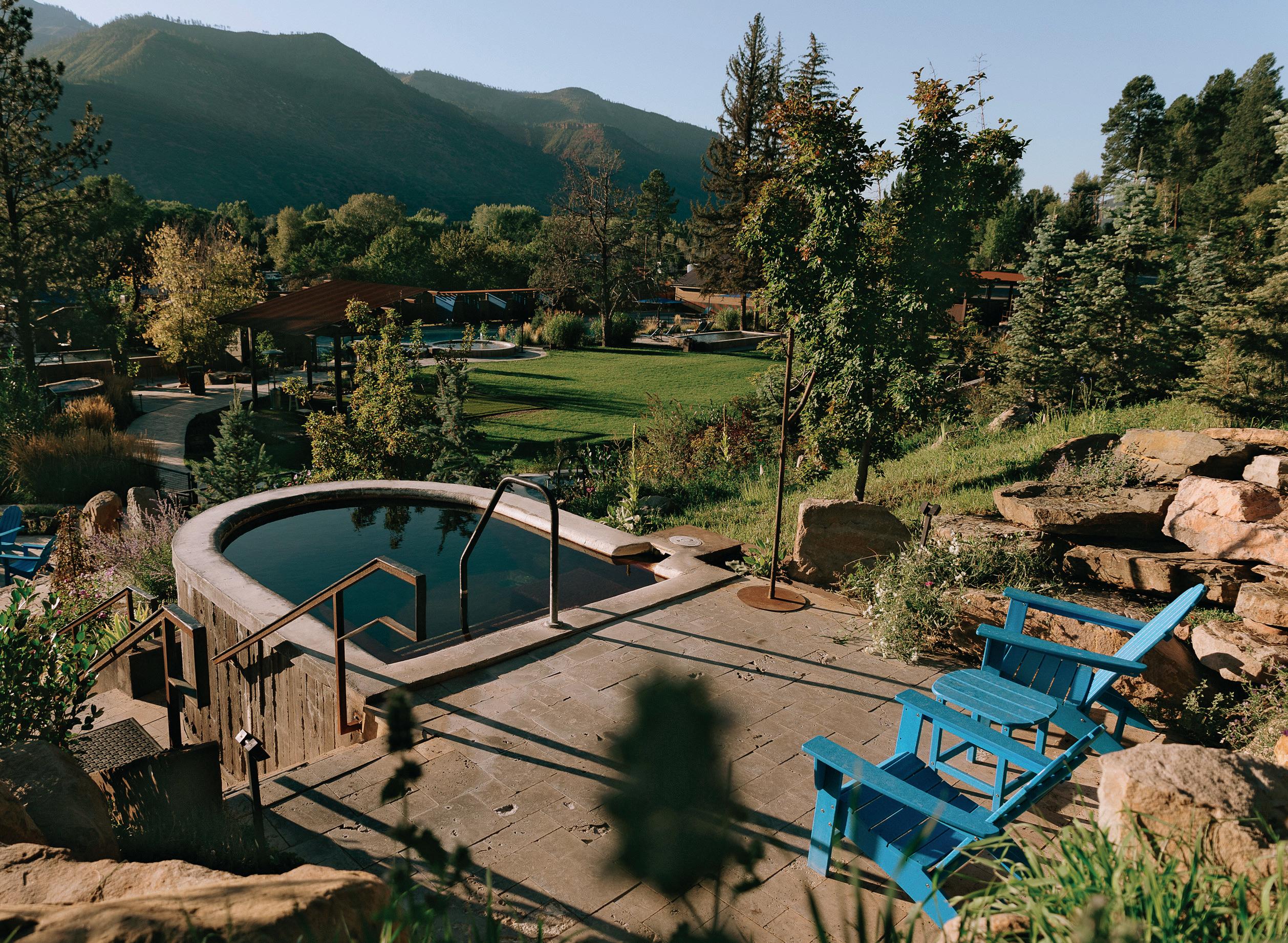
The microscopic bubbles remain suspended in the water to maintain increased oxygen levels

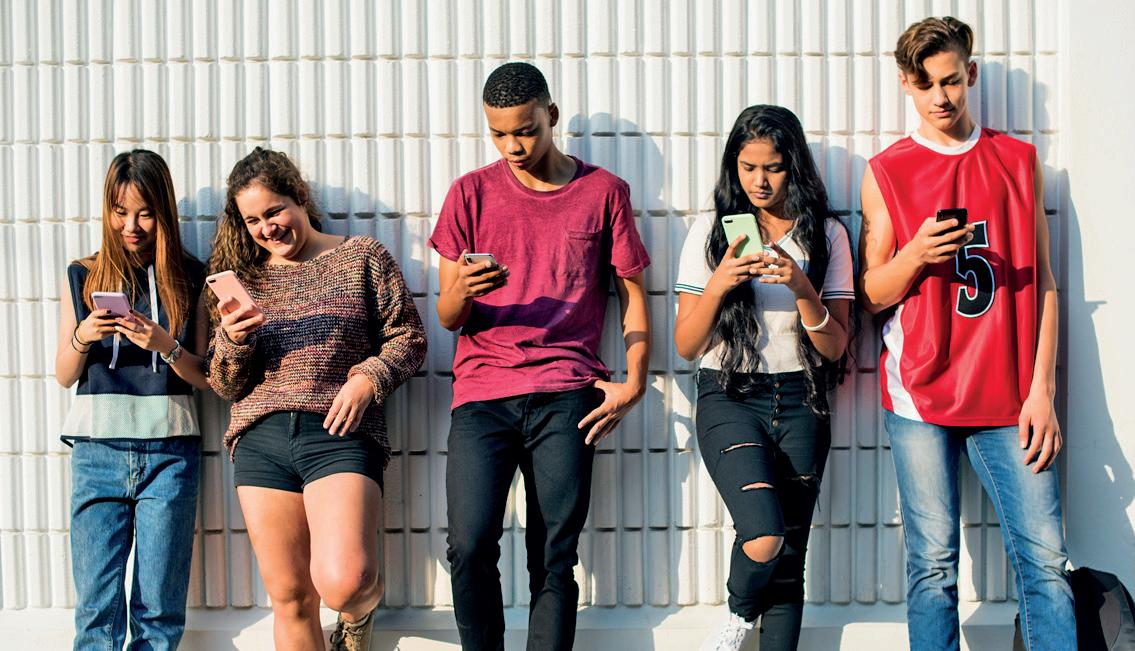
English-speaking young people under 26 have self-reported a lower evaluation of happiness over the past decade. Researchers link this drop to heavy social media use. Algorithmic feed platforms have a negative association with wellbeing, compared to those that enable social connections.
http://lei.sr/B3t5M_B
A system that diffuses medical-grade oxygen in water has been added to the 32 multi-level hot spring pools at Durango Hot Springs Resort and Spa in Colorado, US. The addition of the AquaGen system, manufactured by Pure Vision Technologies, is said to clarify the water without chemicals or altering the mineral content of the water.
Maybourne hotel guests all over the world can now enjoy a menu of food developed as part of the group’s longevity concept, Surrenne, at existing restaurants. The Surrenne Menu uses antiinflammatory ingredients and whole foods in a wide range of colours.
http://lei.sr/5s6X3_B

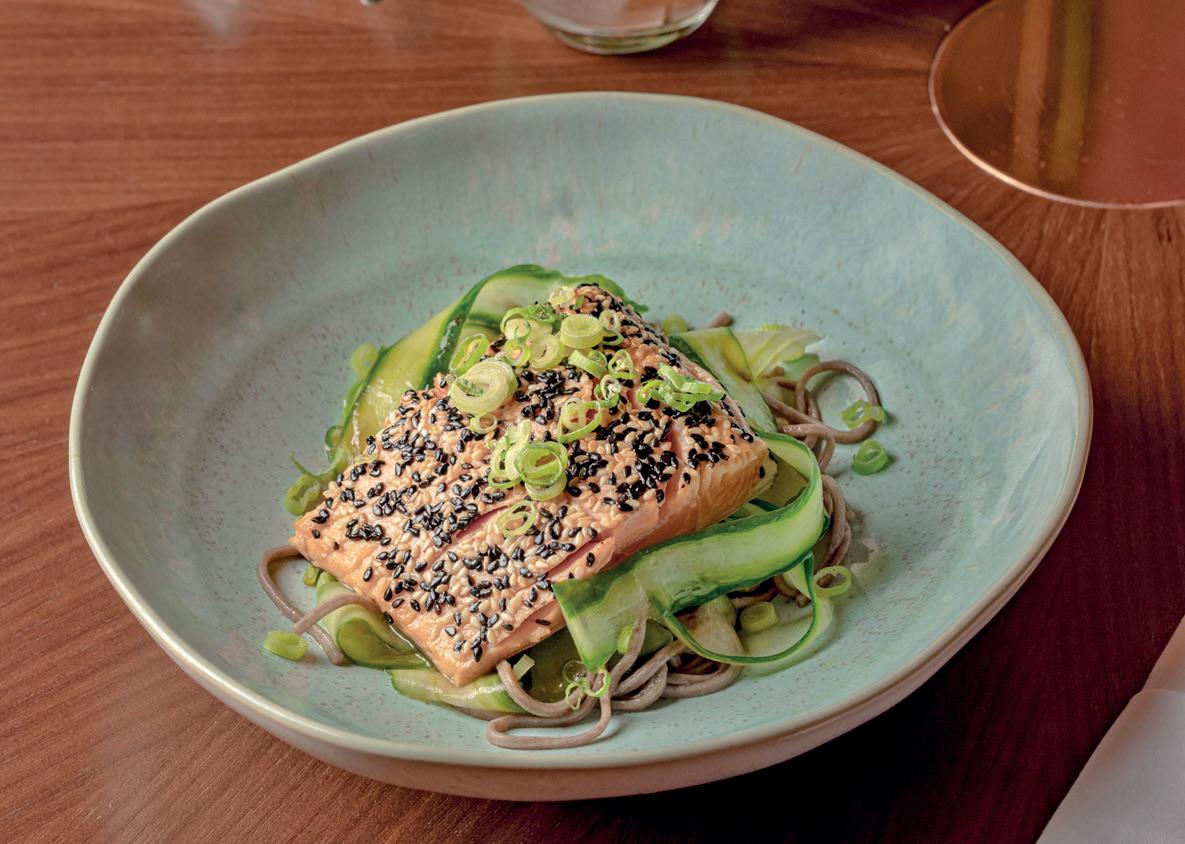
Real estate specifically designed to support the holistic health of occupants remains the fastestgrowing wellness sector worldwide, according to fresh research from the Global Wellness Institute (GWI), revealed on 12 May at the Wellness Real Estate and Communities Symposium in New York City.
The global wellness real estate market has expanded from US$151 billion (€139 billion, £118 billion) in 2017 to US$876 billion (€805 billion, £683 billion) in 2025.
It is expected to reach US$1 trillion (€920 billion, £780 billion) for the first time in 2027 and is projected to expand, on average, by 15 per cent annually to reach US$1.8 trillion (€1.7 trillion, £1.4 trillion) by 2030.
The top three national markets are:
l The US – US$254 billion (€234 billion, £198 billion)
l China – US$218 billion (€201 billion, £170 billion)
l The UK – US$51 billion (€47 billion, £40 billion)
UAE called Build Well to Live Well: Case Studies, Volume 2. This paper shows that Saudi Arabia’s annual real estate market growth between 2017 and 2025 was 85 per cent, which the GWI says is the highest growth rate in the world. Over the same period, the UAE’s real estate market grew by 21 per cent annually.
The GWI also published a report about eight wellness real estate projects in Saudi Arabia and the http://lei.sr/5r9W5_B
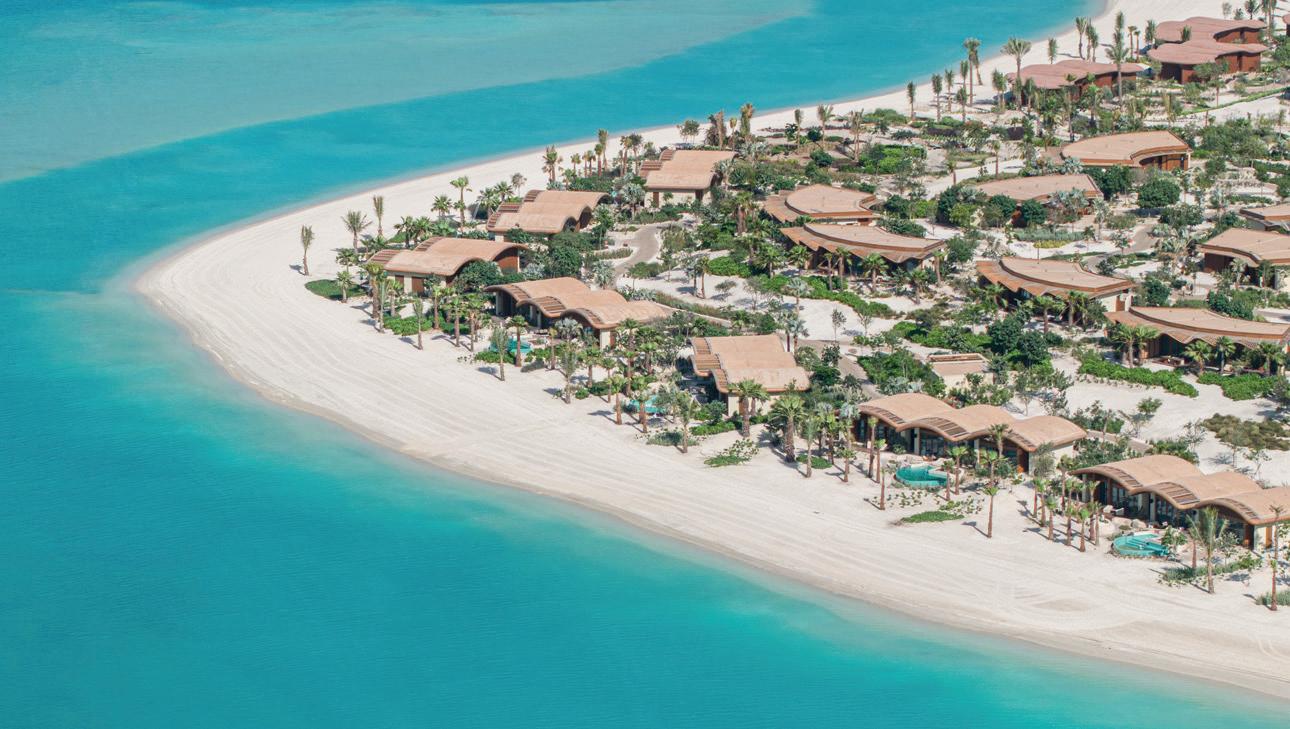
Miraval The Red Sea has opened on Shura Island in Saudi Arabia as part of The Red Sea Project. The development is the first Miravalbranded property outside the US.
This site is the fourth Miraval resort in the world and is included in the Red Sea Project, which
is being developed by Red Sea Global – a company owned by the Public Investment Fund of Saudi Arabia and chaired by Prince Mohammed bin Salman.
The 180-key adults-only allinclusive wellness resort has the largest spa on Shura Island. The
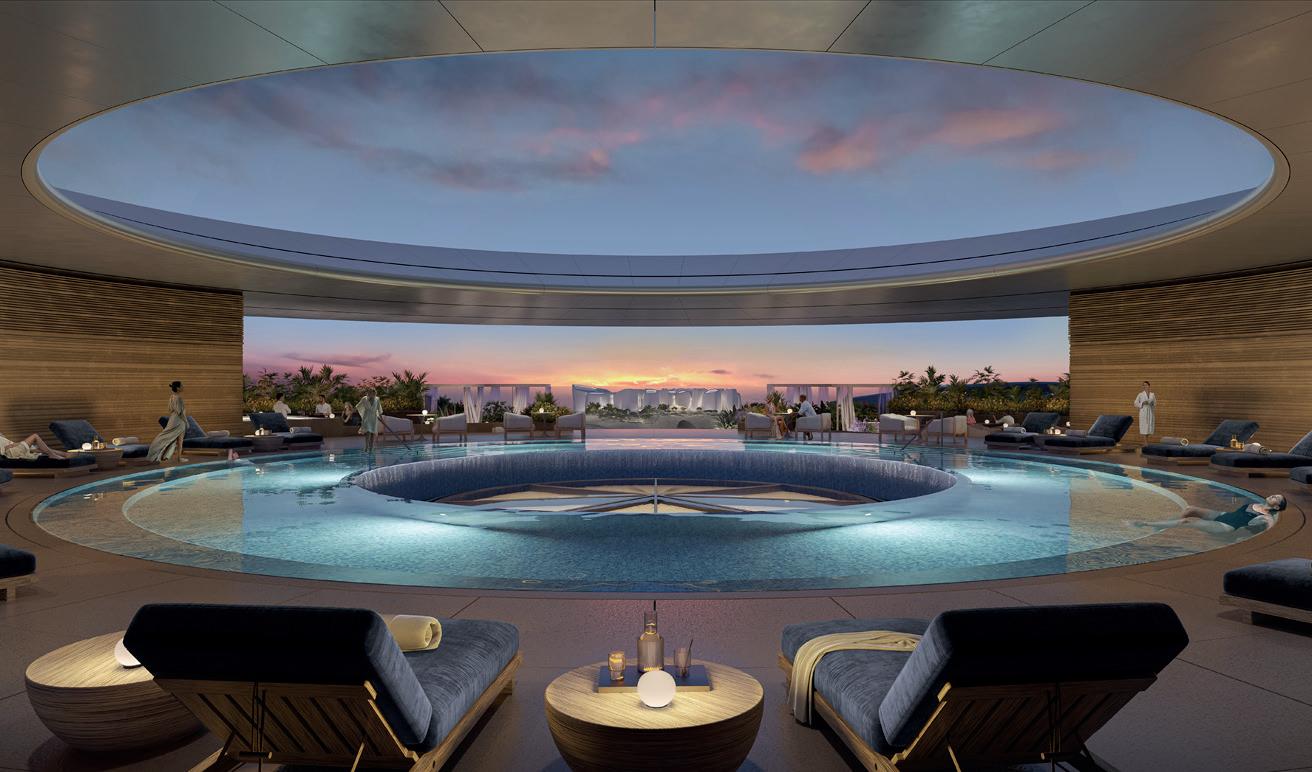
3,000sq m Life in Balance Spa has 39 treatment rooms. The thermal facilities include salt rooms, hydrotherapy pools, a vitality pool and sensory shower. There are also relaxation lounges, a reflection pond and a courtyard.
The spa is also home to a space called the Majlis Private Suite that honours the Saudi tradition of storytelling and shared experiences. Majlis means the heart of the home. Groups of up to eight people can seek rejuvenation together in this suite.
The Life in Balance Spa serves as the anchor for other wellbeing facilities at the property. These include a Serenity Centre, Body Mindfulness Centre, Miraval Challenge Course and Life in Balance Culinary Kitchen.
Building work has started on a new wellness destination in the Shenandoah Valley of Virginia, US, called The Shenandoah Nature Resort, which is due to open in January 2028.
The US$200 million (€184 million, £156 million) property has been designed to reimagine the traditional spa experience by blending ancient and modern wisdom in what is described as a “spiritually expansive and scientifically grounded approach”.
The resort has been created to address what the founding partners see as a “meta crisis” in the degradation of health, economic and environmental systems. The resort’s mission is to provide transformational experiences that serve the greater good.
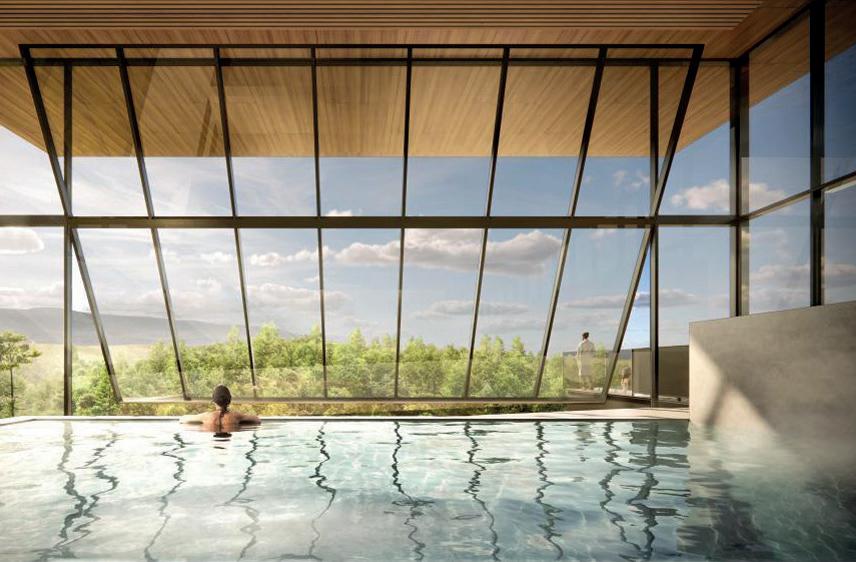
The guest programming will be based on four pillars: relax, release, connect and love.
Mike Marburg, founder of The Shenandoah Nature Resort, told Spa Business the development “was envisioned as a place where exceptional hospitality and meaningful impact coexist”.
The 640-acre property will have 120 rooms for accommodation with
a spa and aquatics centre. There will be an indoor-outdoor pool and 20 treatment rooms. Fitness and yoga facilities will also be on offer.
Guests will have the option to take part in more than 40 daily group activities as well as access to a retail space and a flexible space to host holistic experiences for groups.
Salter Brothers Hospitality (SBH) has revealed a new spa brand, Èliva, which it plans to roll out across four luxury properties in Australia this year.
The concept is based on the pillars of rest, recovery and invigoration. It focuses on restoring equilibrium through sensory-led environments, restorative treatments and evidence-based practices. Therapies will be enhanced with advanced technology, personalised movement sessions and mindful rituals.
Each location will feature a Herbal Ritual Bar for oil-blending workshops, thermal spaces, recovery lounges and PEMF technology.
Wellness consultant Jessica Kershaw worked on the concept alongside SBH’s creative director for brand and design, Kate Greenwood.
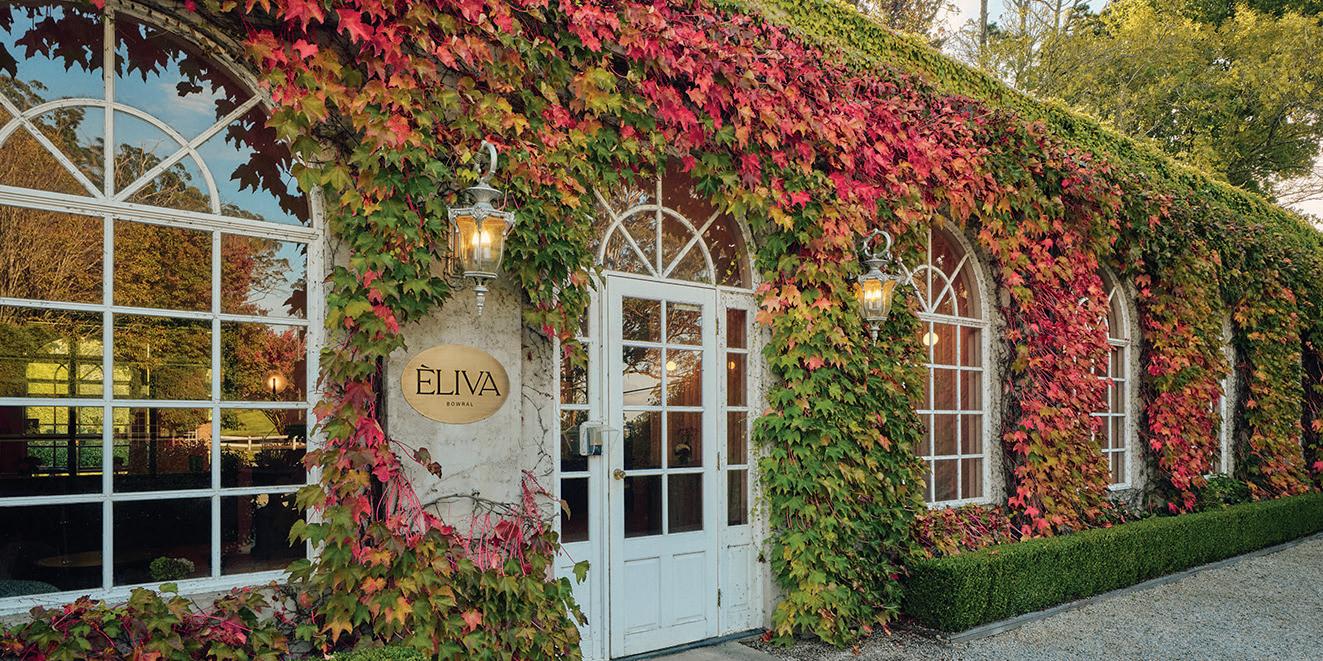
Greenwood told Spa Business: “Designed as a scalable, premium brand, Èliva responds to growing demand for meaningful, experiencedriven wellbeing, seamlessly integrating across resort, retreat, and urban hotel environments.”
The first of four Australian locations opening this year, Èliva Bowral, has made its debut at the SBH hotel called Ardour Milton Park Bowral, in New South Wales.
Mandarin Oriental has revealed plans to expand its presence in Egypt with the renovation and operation of two historic hotel properties and the brand’s first-ever luxury river cruise.
In 2022, Mandarin Oriental announced it would open its first Egyptian property, Mandarin Oriental Shepheard in Cairo. The hotel is undergoing a comprehensive refurbishment and is due to open in 2027.
Its three latest additions – the river cruise, Old Cataract hotel in Aswan and Winter Palace hotel in Luxor –are owned by KG Company for Real Estate and Tourism Investment, which is part of Egyptian hospitality company, Garranah Group.
The new portfolio of hotels and cruise forms an integrated journey between Cairo, Luxor and Aswan.
A wellness club is set to open imminently on London’s River Thames, offering luxury facilities and personalised wellness protocols focused on recovery and longevity.
Sæl Spa at Fulham Pier is set across four floors and has been conceived as a “modern British sanctuary”.
Inge Theron, founder of FaceGym and spa design studio ITANDA, who’s known for her work on the Surrenne wellness brand for the Maybourne Group, consulted on the longevity concept and wellness programming.
Facilities include a 15m heated rooftop infinity pool and sun terrace. There’s also a movement studio with integrated infrared technology hosting reformer
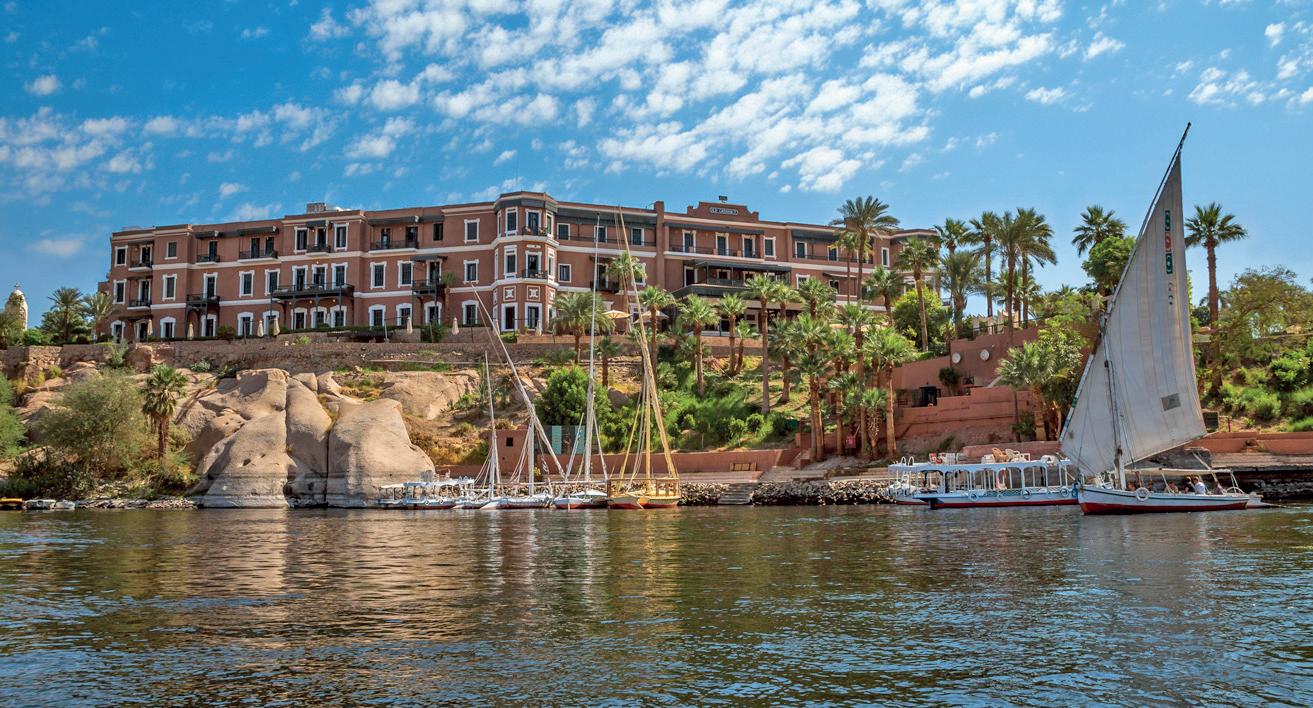
The two hotels, which have ceased to be operated under Accor’s Sofitel brand, are being reimagined by Egyptian real estate development conglomerate Talaat Moustafa Group (TMG Holding).
Laurent Kleitman, group chief executive of Mandarin Oriental,
said: “By uniting our first river cruise with truly iconic historic hotels in Luxor and Aswan, alongside the upcoming Mandarin Oriental Shepheard, Cairo, we’re introducing a seamless, end-to-end experience.”
http://lei.sr/U7X8W_B
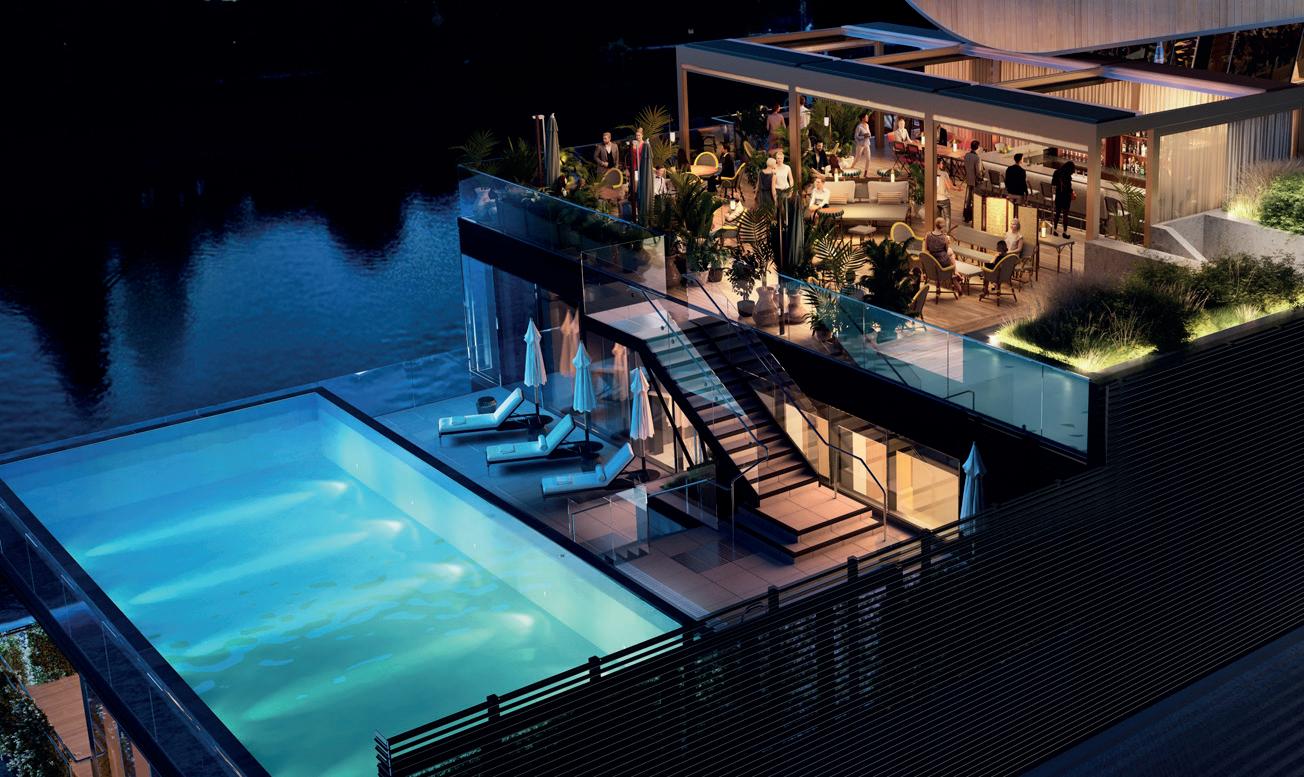
Pilates, personal training, yoga, breathwork and recovery practices.
The wet spa includes experience showers, a Finnish dry sauna, botanical steamroom, infrared sauna and cold plunge facilities.
Bon Charge red light therapy and PEMF tools feature in the Recovery Lounge, as well as IV infusions, compression therapy and vibro-acoustic relaxation beds.
3 Peaks Health is the diagnostics provider. Its programme includes blood analysis, microbiome mapping and targeted neurostimulation.
Annual memberships start at £3,000 (US$3,810, €3,510) and can be personalised to meet individual health goals. Expert talks and workshops will be on offer as well.
http://lei.sr/6n4j2_B





























The US spa industry is making steady, meaningful progress, with revenue reaching US$23.5 billion (€21.6 billion, £18.3 billion) in 2025, a 4.2 per cent increase on 2024’s figures.
The data comes from the 2026 US Spa Industry Study, commissioned by the International Spa Association (ISPA) and conducted by PwC. It was unveiled by longtime analysis collaborator Colin Mcilheney at the annual ISPA Conference in April.
Mcilheney outlined the latest Big Five statistics for the industry that provide a snapshot of the sector’s progress. He said: “The Big Five is designed as a clear, accessible benchmark and because it’s tracked consistently year after year, it gives spa leaders a reliable way
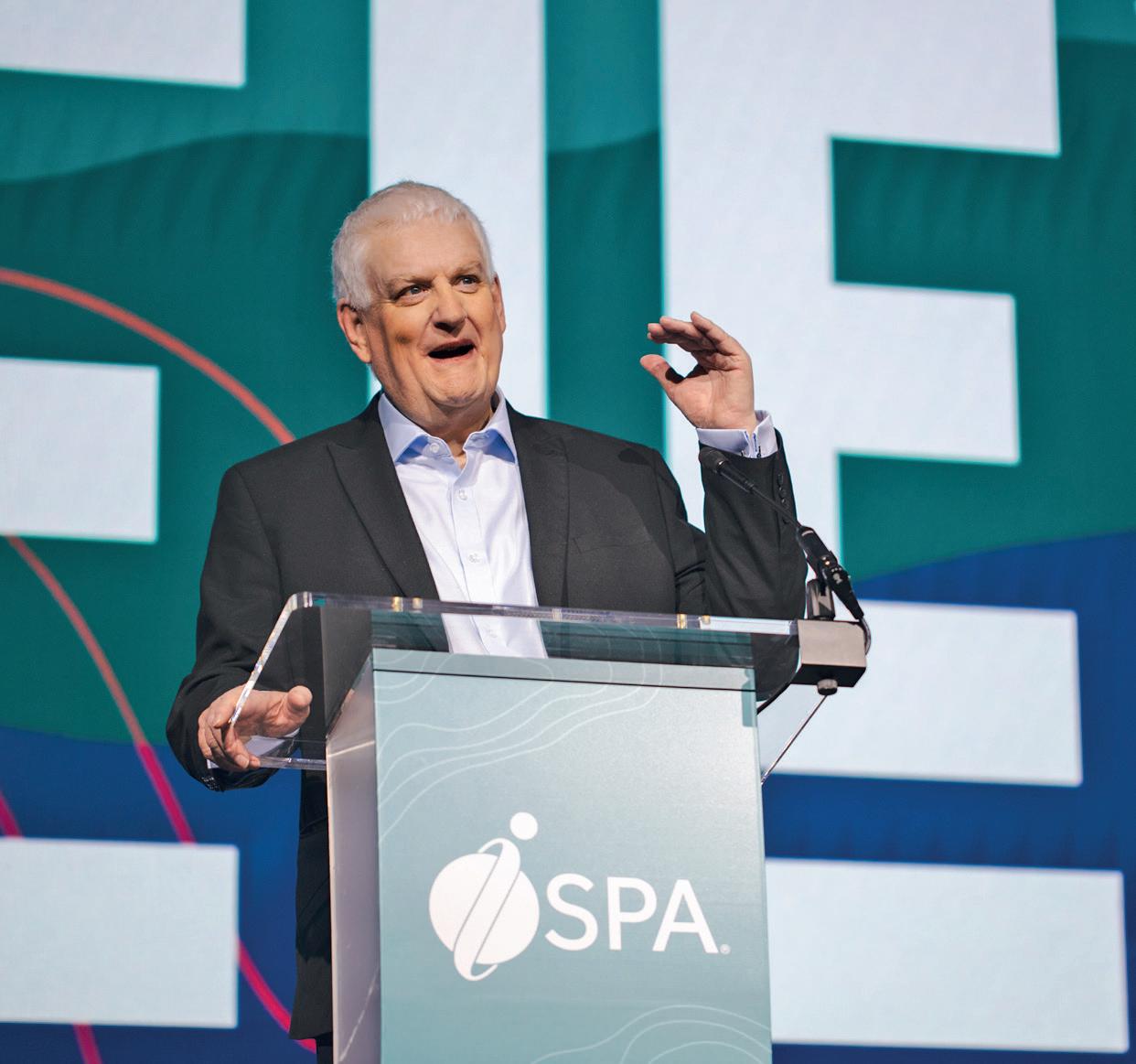
to spot trends and make smarter business decisions over time.”
As well as the increase in spa revenues, the Big Five statistics showed that spa visits across the country reached 191 million, up 1.8 per cent on 2024’s 187 million.
Revenue per spa visit also increased to US$123 (€113, £96), up 2.3 per cent from 2024’s US$120 (€110, £93).
Total employment went up by 0.2 per cent, to reach 376,900 in January 2026. Full-time roles remained steady, parttime employment slightly expanded and contract positions declined.
In addition, the number of spa locations grew to 22,060, representing a 0.4 per cent gain on the 21,980 facilities in 2024. http://lei.sr/b6W9r_B
The Leali family, founders of the respected wellness resort concept Lefay, are to enter into a joint venture to bring the brand into the Marriott portfolio.
Founded in Italy in 2006 by Domenico Alcide and Liliana Leali, Lefay is known for its immersive
resorts in natural settings and its Lefay Spa Method, which blends scientific research with holistic wellness traditions.
The Lefay portfolio features two luxury resorts in Lago di Garda and Dolomiti, Italy. It also has three properties under
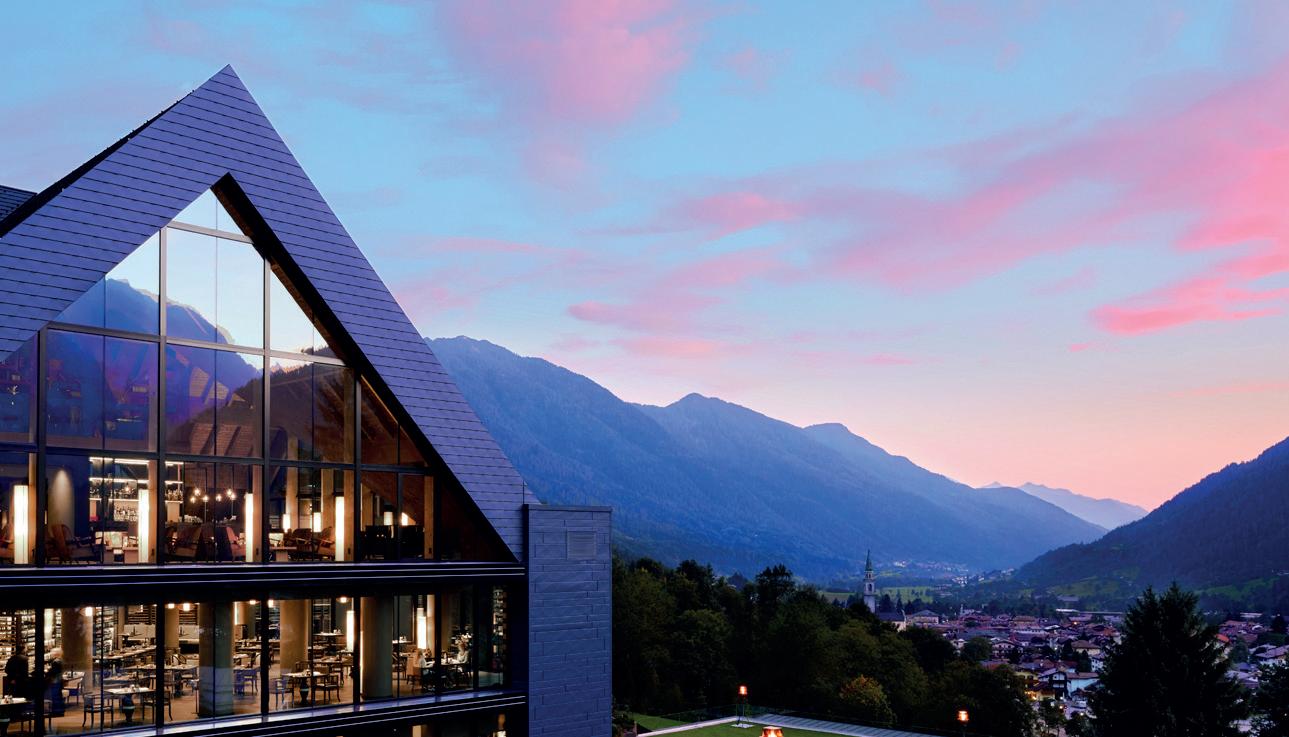
development in Tuscany, south Italy and the Swiss Alps.
Lefay’s existing and pipeline resorts will be managed by Marriott, while the Italian real estate assets will continue to be held by the brand’s founders. Together, the parties intend to grow the brand around the world.
Alcide Leali, CEO of Lefay, said: “Growth will be deliberate, destination-driven, and focused on long- term brand integrity.”
In May 2025, Marriott signed an agreement with CG Hospitality to convert another standout destination spa, The Farm at San Benito in Indonesia, into an Autograph Collection resort. The partnership sees Marriott operating The Farm, while CG Hospitality retains its ownership.
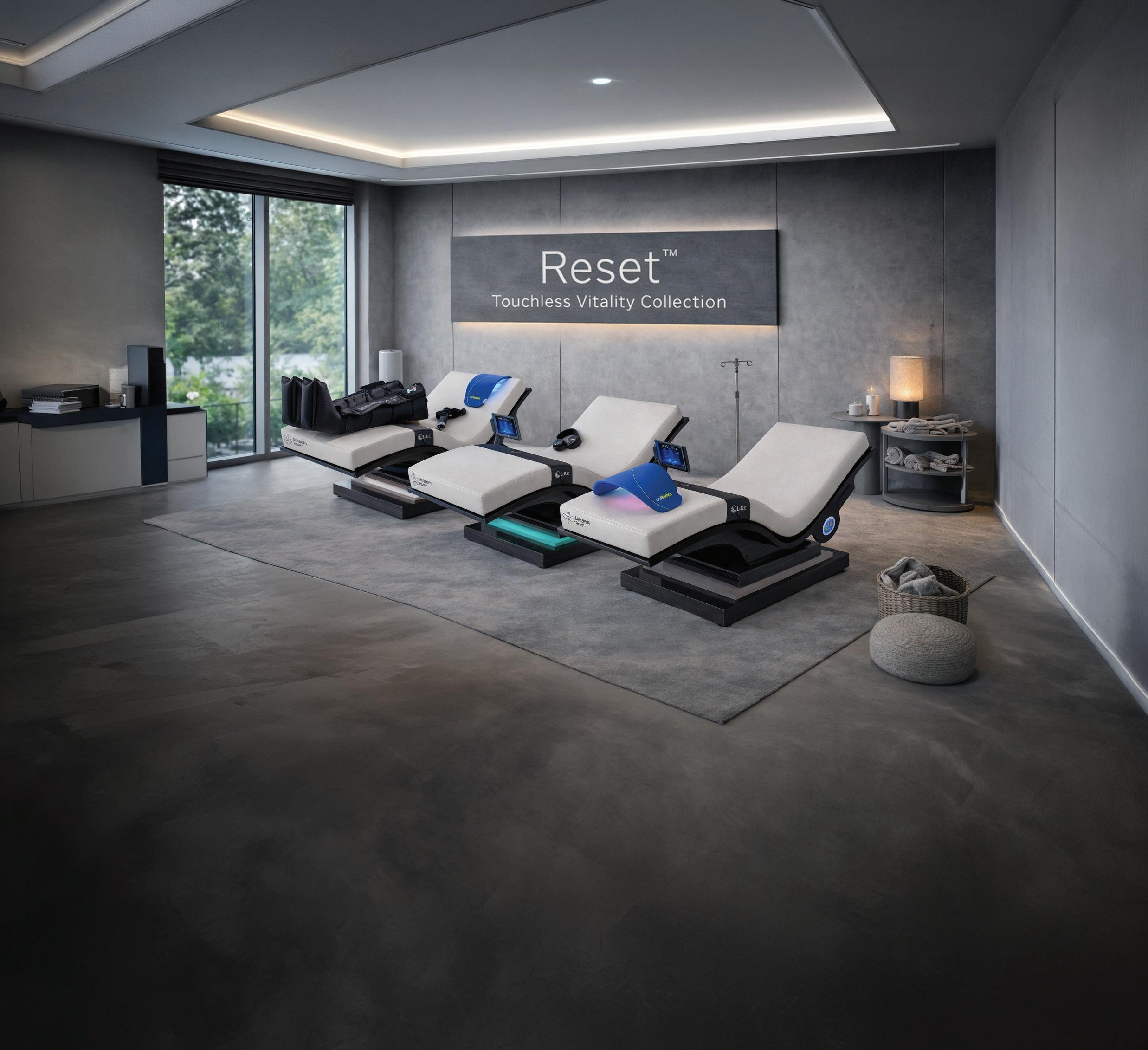
RECOVERY RESET ™
Built for elite athletes, biohackers, and performance-driven guests. Combines scientifically backed therapies like Normatec ® compression, Hypervolt ® 2 Pro massage, Celluma ® Pulsed Light Therapy for deep cellular recovery, grounding, and Relaxor ® to boost circulation, reduce inflammation, and accelerate recovery.
MIND-SYNC 2.0 RESET ™
Redefining mental recovery with clinically proven stress and anxiety reduction and sleep improvement content and advanced tech like grounding and Thermasoft ™ Dual-Zone warmth. Backed by over 13 years of research, including studies with the U.S. Military and Thomas Jefferson University.
LONGEVITY RESET ™
Designed to optimize healthspan and vitality. Features Mind-Sync 2.0 ™ vibrational wellness, FDA-cleared Celluma ® LED light therapy, optional IV integration, Thermasoft ™ Dual-Zone embedded warmer, and grounding for full mind-body rejuvenation.
9-11 June 2026
World Sauna Forum
Savututan Apaja, Finland
Spa professionals gather to network and experience the latest innovations in sauna manufacturing. www.worldsaunaforum.com
9-12 June 2026
W3Spa EMEA
Hotel Cascais Miragem
Health and Spa, Portugal
The EMEA edition of We Work Well connects spa and wellness suppliers and operators during dedicated meetings and networking activities. www.weworkwellevents.com
13 June 2026
Global Wellness Day
Worldwide
A not-for-profit social project run by volunteers to help individuals come together to explore how to live well. This year, participants will celebrate the healing qualities of simple gestures that spark joy. www.globalwellnessday.com
21-23 June 2026
Spa Life UK Convention
Whittlebury Hall and Spa, UK
An industry networking event with face-toface meetings, keynote speeches, discussions, an expo and a gala. www.spa-life.international
24-25 June 2026
Beyond Activ Europe
Novotel Madrid Center, Spain
An investment and business development-focused gathering for owners, operators and leaders in health, wellness, fitness and sports industries. www.beyondactiv.com
Despite the conflict in the Middle East, Six Senses is now taking reservations for September at its first property in the UAE, Six Senses The Palm, Dubai, which will have a 60,000sq ft spa and longevity clinic.
IHG, which owns Six Senses, plans to translate the brand’s ‘barefoot luxury resorts’ into urban contexts around the world.
Six Senses London, which launched in March, UK, was the first of these major projects.
The new Dubai beachfront property will be located on the West Crescent of Palm Jumeirah with 61 suites and 172 privatelyowned branded residences.
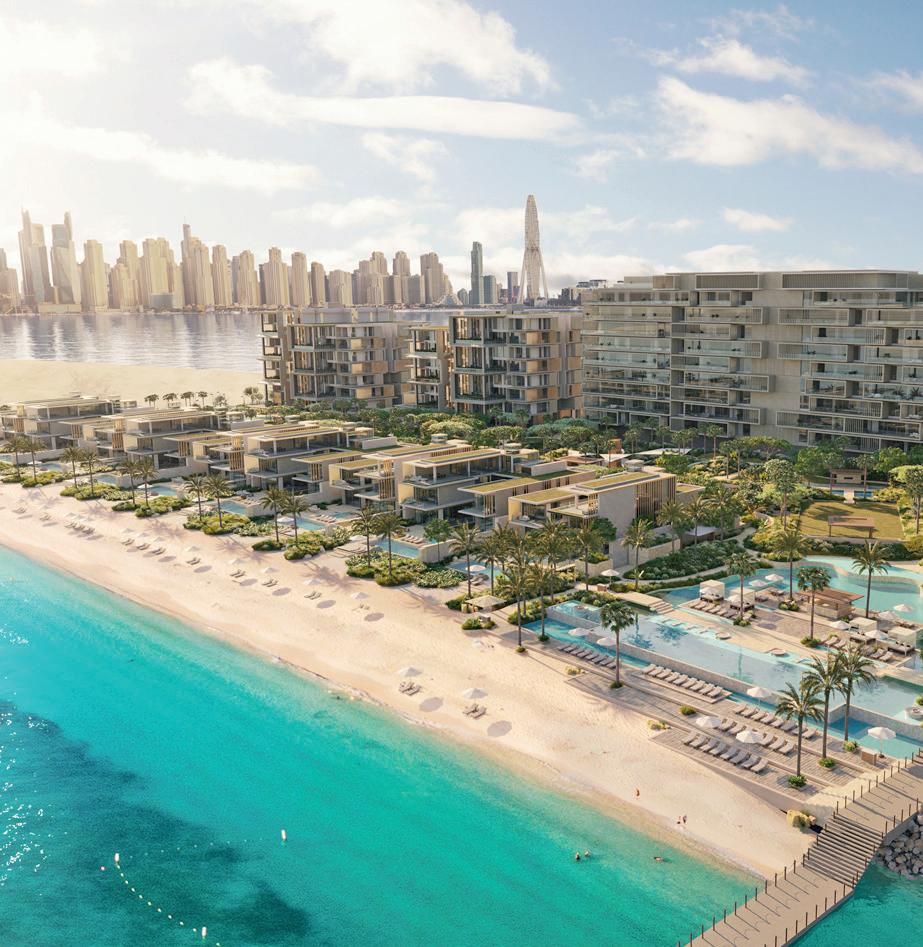
The wellness facilities include a longevity clinic, hydrotherapy areas and an alchemy bar. There will also be indoor and outdoor spaces for yoga and meditation.
The brand also plans to open the Six Senses Residences Dubai Marina, a residential tower, in 2028.
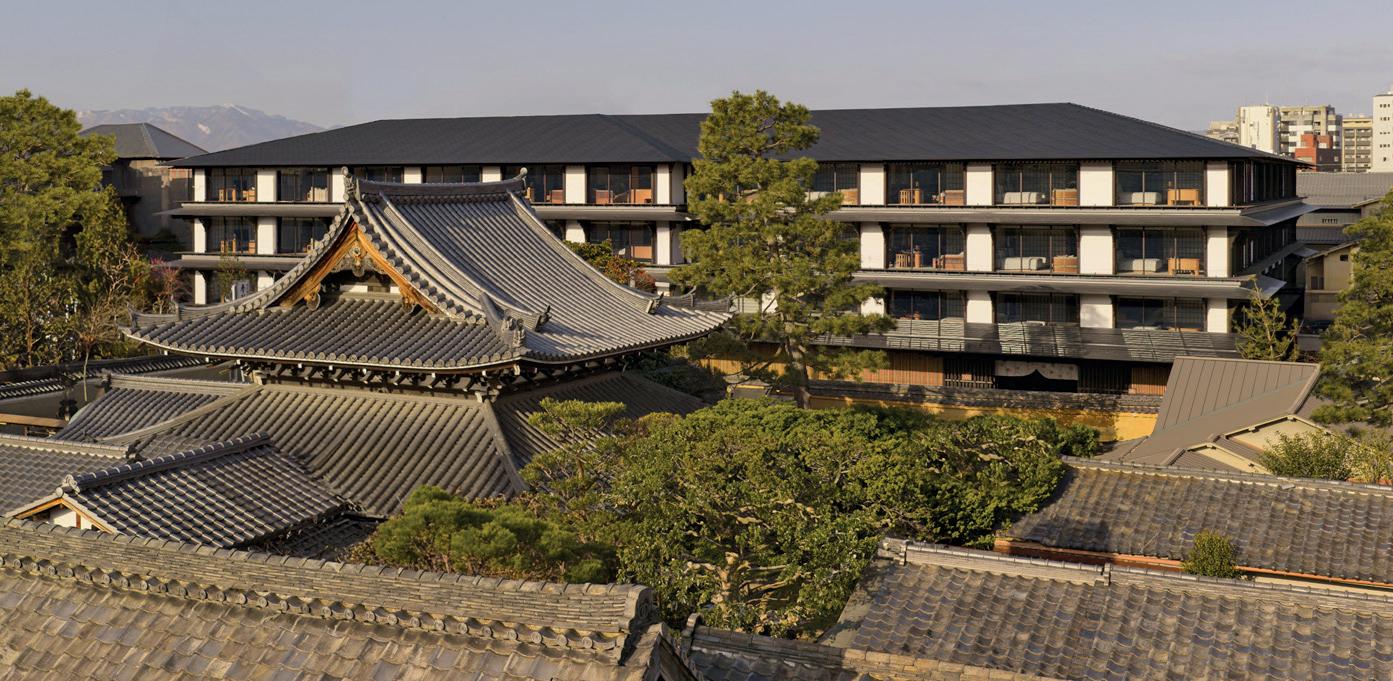
Capella Hotels and Resorts has launched its first hotel in Japan, Capella Kyoto, in the city’s historic Miyagawa-cho Kagai (geisha district) with an onsen spa rooted in national traditions.
The design of the 89-key hotel is by Kengo Kuma and Associates and Singapore-based Brewin Design Office. The aesthetic reinterprets the city’s traditional machiya townhouse.
The hotel is one third of a development alongside the city’s geisha training centre, Kaburenjo Theatre, and a new community centre.
Six of the hotel’s rooms have private hot spring baths.
The Auriga Spa at Capella Kyoto features three private onsen rooms with traditional ofuro soaking bathtubs, wet and dry saunas, four non-onsen treatment rooms and a fitness centre.
For treatments, Japanese beauty company Shiseido’s premium skincare brand The Ginza is the spa’s partner. These are The Ginza’s first spa therapies.











W3Spa North America
17–20 May • Florida
Connecting suppliers with buyers across North America.


W3Spa EMEA
9–12 June • Portugal
Connecting suppliers with buyers across Europe & the Middle East.




A hosted buyer event connecting leaders across the global spa, beauty, and wellness industry through pre-scheduled meetings, interactive education, and intentional networking. Contact Our Team Today! info@weworkwellevents.com www.weworkwellevents.com

W3Spa North America
25-28 October • California
Connecting suppliers with buyers across North America.
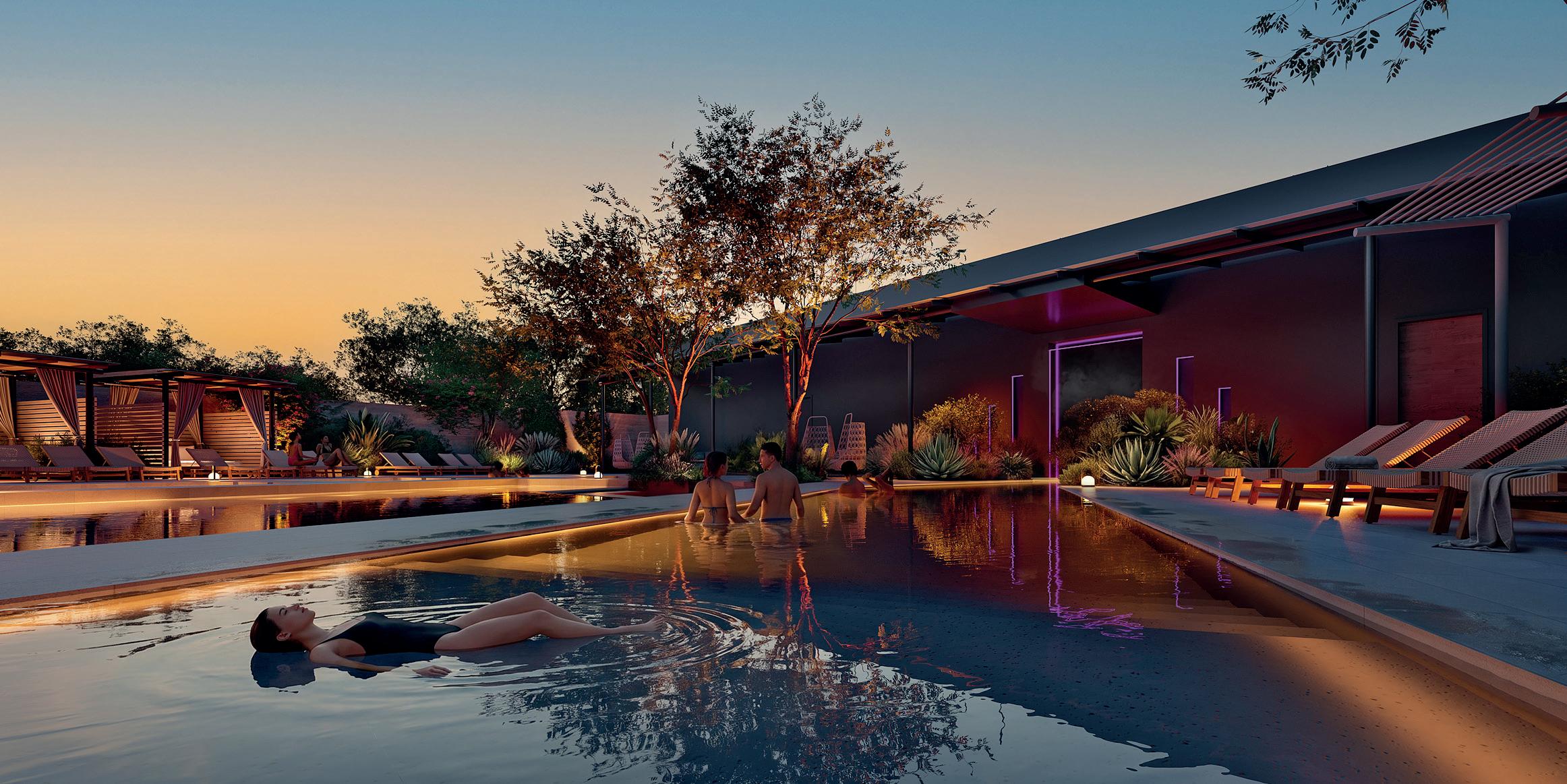
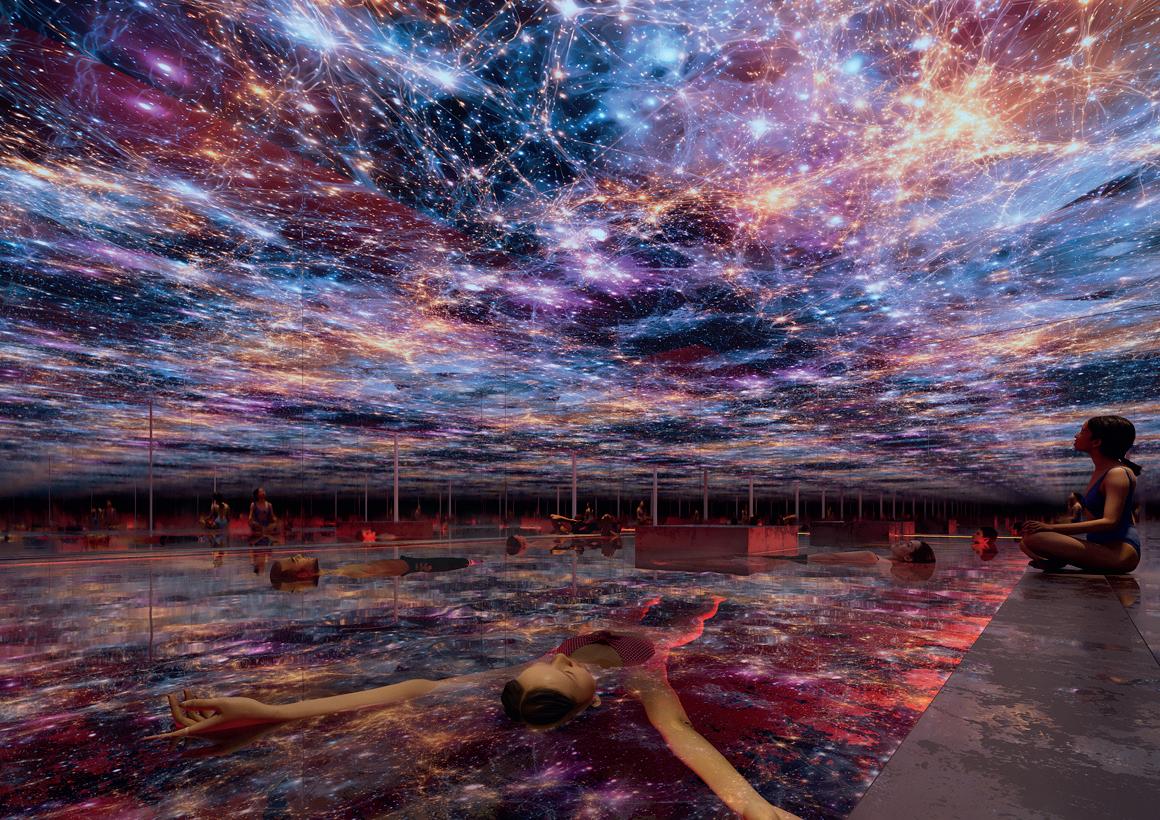
Submersive, an immersive art bathhouse concept by Corvas Brinkerhoff, co-founder of experiential art company Meow Wolf, will open in the Bouldin Creek neighbourhood in Austin, Texas, US.
The bathhouse, which is scheduled to launch in Q3 of 2027, will combine ancient hydrotherapy traditions with art installations, with the help of international artists. The space will also be created using the latest technology and neuroscience-informed sensory design to deliver transformative experiences.
The flagship 20,000sq ft indoor-outdoor property’s steam, mist, saunas, hot baths and cold plunges will merge with the artistic environments. There will be 12 distinct spaces for guests to move through, where the surrounding art is said to have been created to provide therapeutic benefits.
Brinkerhoff told Spa Business: “We’re deepening the well-established therapeutic benefits of thermal bathing with the unique power of immersive art to draw us into states of awe and wonder, which is known to deactivate the ‘default mode network’ and enhance
human openness – getting us outside of our referential thinking and into expansive states of consciousness.
“Over time, we’ll be integrating biometric feedback and other methodologies to study and refine the beneficial impact of our experiences to create the world’s deepest understanding of the therapeutic potential of multi-sensory environments,” he added.
Brinkerhoff added: “We’re not building a spa. We’re building a portal. The bathhouse has always been a place where people go to reset and reconnect. We’re taking that ancient impulse and giving it the full power of immersive art and modern neuroscience.
“Every traditional bathing modality, be it dry sauna, steamroom, hot baths or cold plunge has been reimagined in how it can be profoundly enhanced with the power of immersive design. We are creating not just an entertainment experience or a spa experience, but also access to an environment that takes people to an elevated state change.”
Industry figures involved in the project include spa consultant Garrett Riffle, a former partner of Bathhouse. Don Genders, founder and CEO of hydrothermal experience specialist Design for Leisure, is also on Submersive’s advisory board.
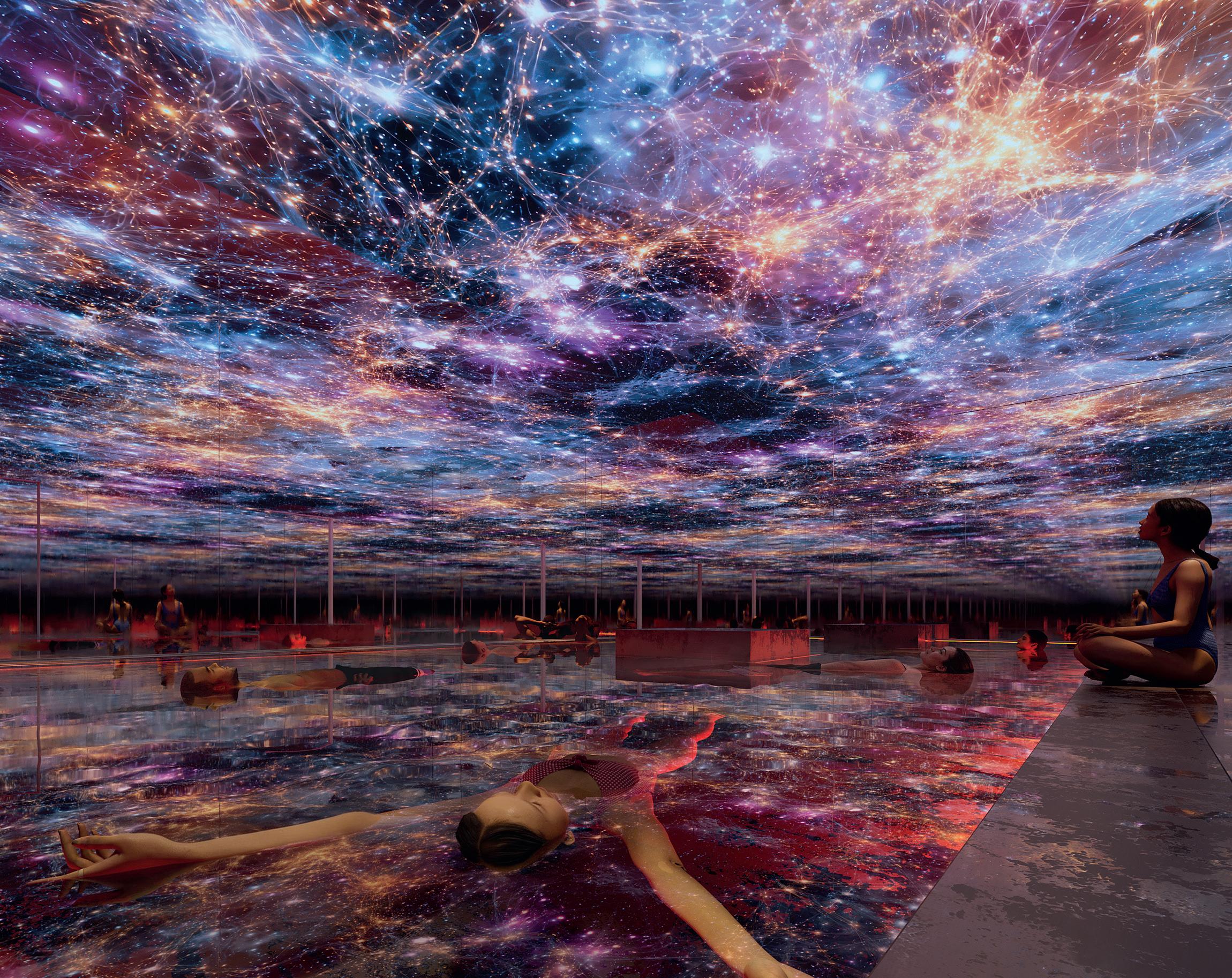
We are creating not just an entertainment experience or a spa experience, but access to an environment that takes people to an elevated state change
Submersive founder, Corvas Brinkerhoff
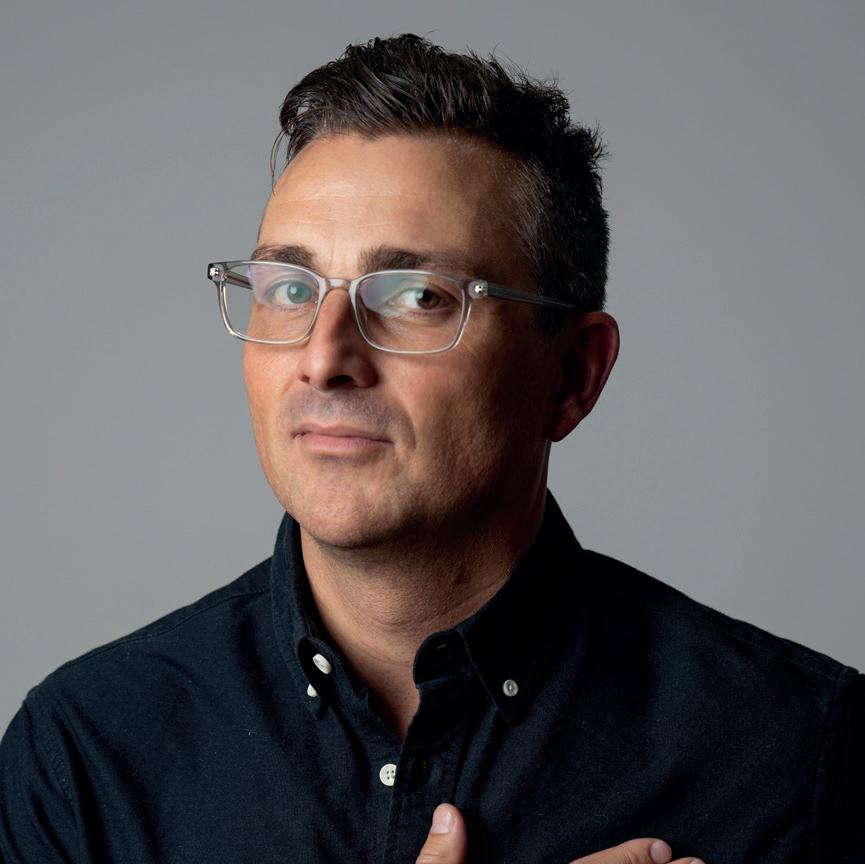
On the decision to base Submersive’s flagship location in Austin, Brinkerhoff said: “Austin appreciates that creative, powerful experiences sit at the intersection of art, community and wellness. It’s a hub for forward-thinking individuals who embrace new and world-changing ideas. Submersive was made for this city and this location, steps from Barton Springs, feels almost destined. We’re bringing something the world has never seen before to the heart of Austin.”
Brinkerhoff is inviting the local community to join Submersive’s founding membership waitlist. These early followers will have priority reservation benefits and pricing perks. l
InterContinental Hotel Group (IHG) has unveiled a spa concept for rollout across select Regent properties, beginning with its debut at Regent Bali Canggu in Indonesia. Conceived by wellness consultancy Raison d’Etre – acquired by IHG in 2019 – the vision reflects a broader evolution of luxury hospitality, where wellbeing is becoming integral to the guest experience.
The concept was led by Raison d’Etre MD Anna-Cari Gund, with input from Anna Bjurstam, the founder of Raison d’Etre and a longstanding strategic advisor to both the consultancy and Six Senses, which is also owned by IHG. Widely regarded in the sector, Bjurstam has played a significant role in shaping contemporary wellness thinking, reflected in Bali in a philosophy centred on immersive spaces that quiet the mind, awaken the senses and encourage meaningful transformation
Rollout locations confirmed
At Regent Bali Canggu, treatments, practices and spatial design have been created to help guests experience sensorial wellbeing that elevates them above the noise of daily life.
The Regent Spa and Wellness concept is also due to be integrated into Regent Jeddah, debuting in Saudi Arabia later this year; Regent Kuala Lumpur, Malaysia, in 2027; and Regent Kyoto, Japan, in 2028.
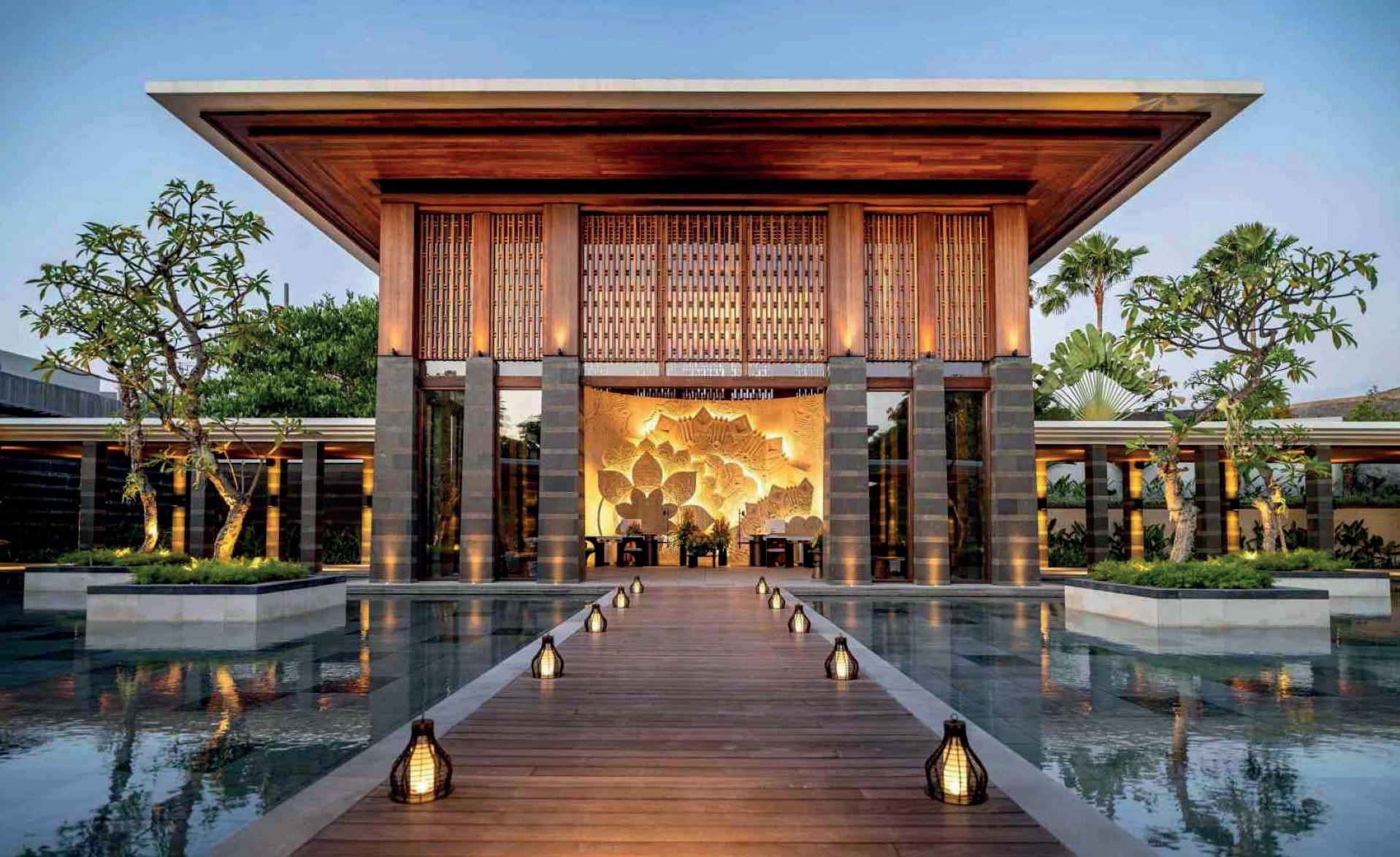
The signature entrance to the wellness facilities features octagons; whether in visual art or in the actual arrival space which will be shaped like one. This is because octagons are said to represent rebirth and eternal life. Spatial design principles say the shape maximises energy flow.
The new spa and wellness concept is underpinned by a three-step treatment protocol. It begins with The Reset, a signature meditative sound therapy that guests experience in their own pod-like private waiting areas. The sound encourages the body and mind to become still.
At Regent Bali Canggu, this practice takes place in traditional wooden Balinese-style cabanas and the sound experience is by OPO Studios.
The practice helps guests to relax and prepare them for the second step which includes a range of treatments that combine therapies including gemstones, aromas, light frequencies and crystal energies.
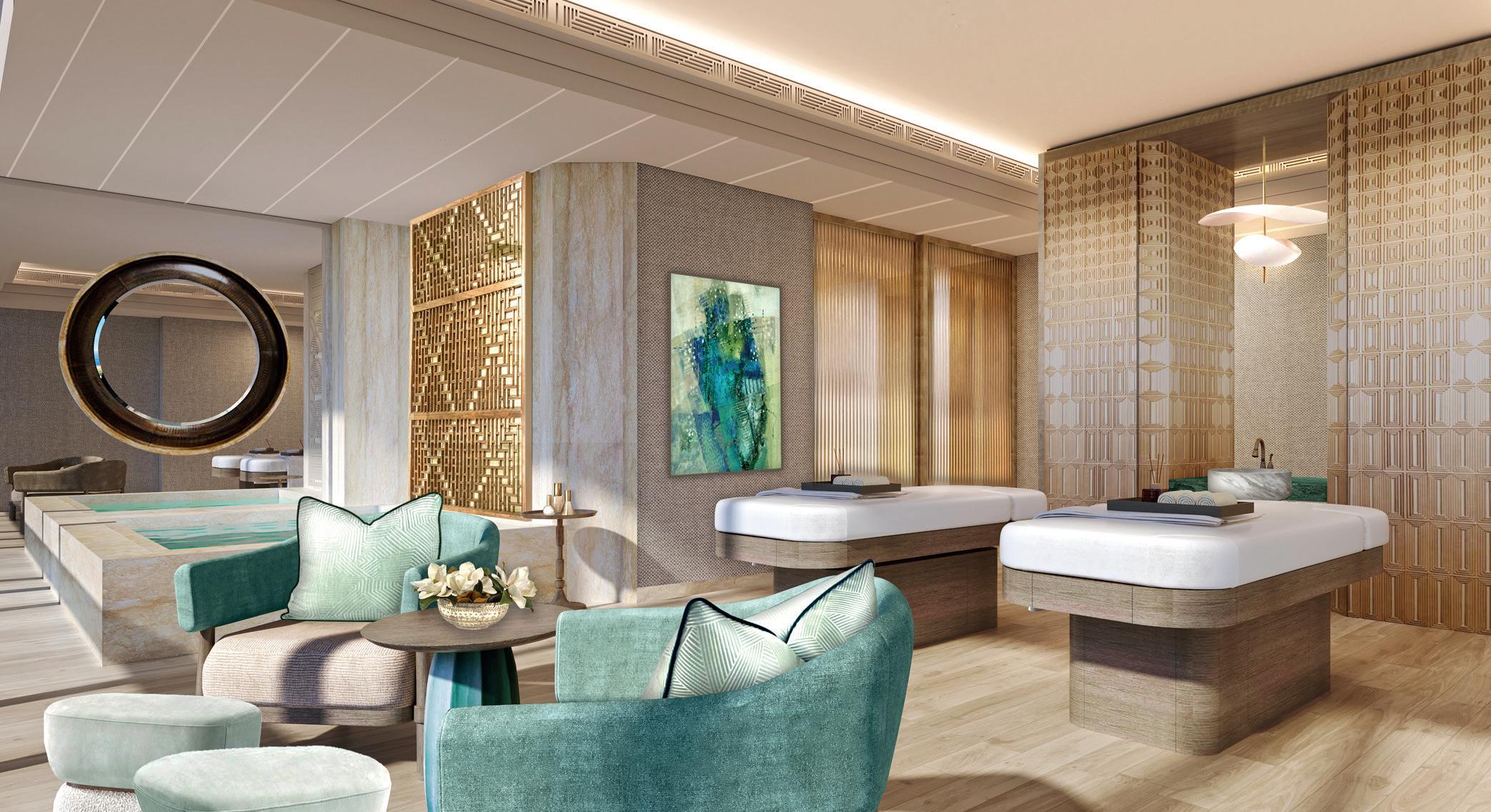
The Bali property has seven treatment rooms, including one for couples
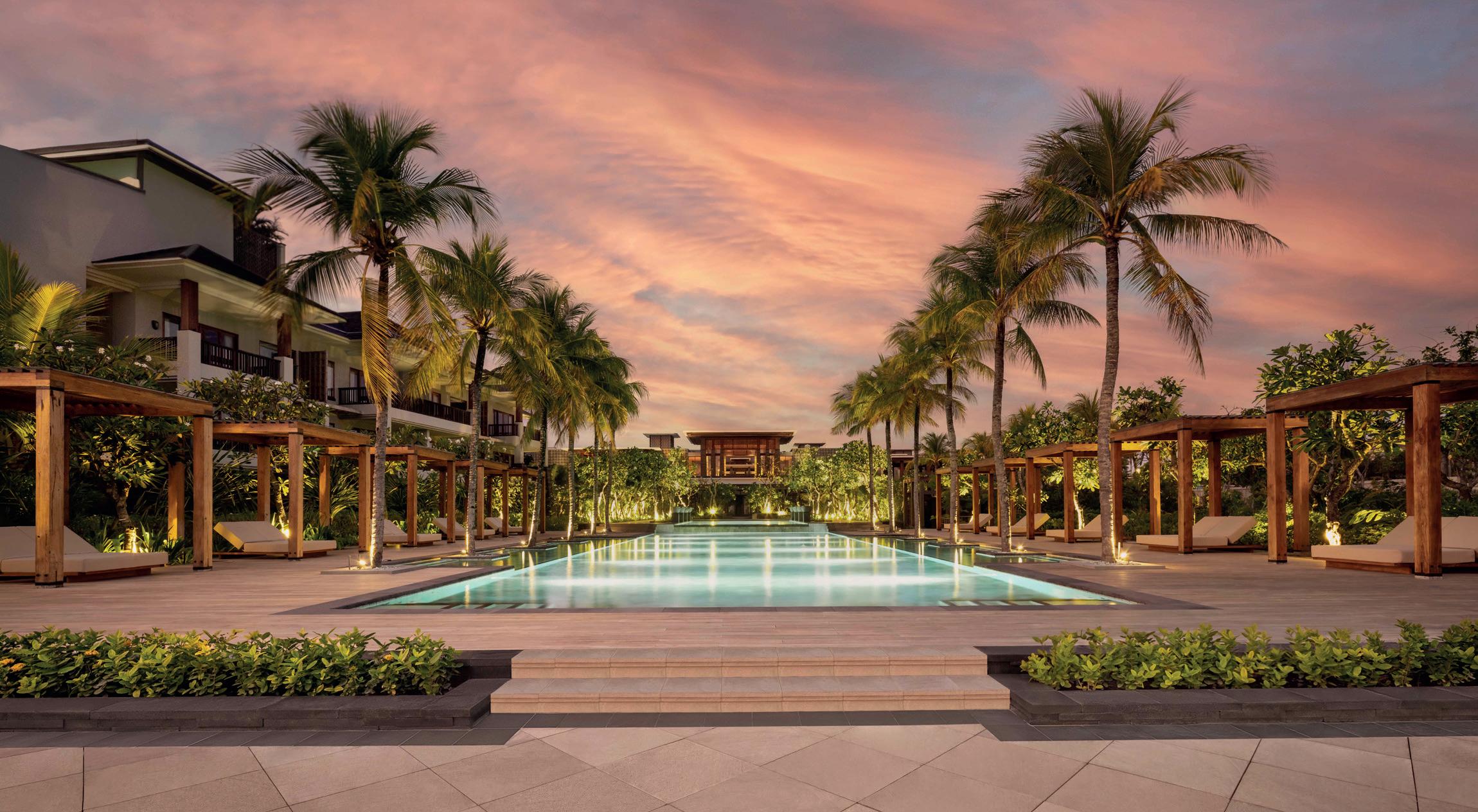
We want guests to feel as though they are entering a whole new dimension
Anna-Cari Gund, MD, Raison d’Etre
Following the treatments, the final step in the treatment journey is a transition into a Relax Dome, which is a post-treatment space designed to soothe guests. In Kuala Lumpur, the dome will be decorated with rich materials, soft forms and a central fire pit will anchor the space.
Raison d’Etre says the concept draws inspiration from what it calls ‘the beauty of contrasts’. Opposing yet complementary forces of Yin and Yang have been key to the programming, colours, materials and temperatures of the new facilities.
Gund said: “Regent Spa and Wellness turns traditional spas on their head. Gone are traditional neutral palettes, candle-lit corridors and run-ofthe-mill relaxation rooms and in their place we have colourful palettes, visual art paths and energy baths.
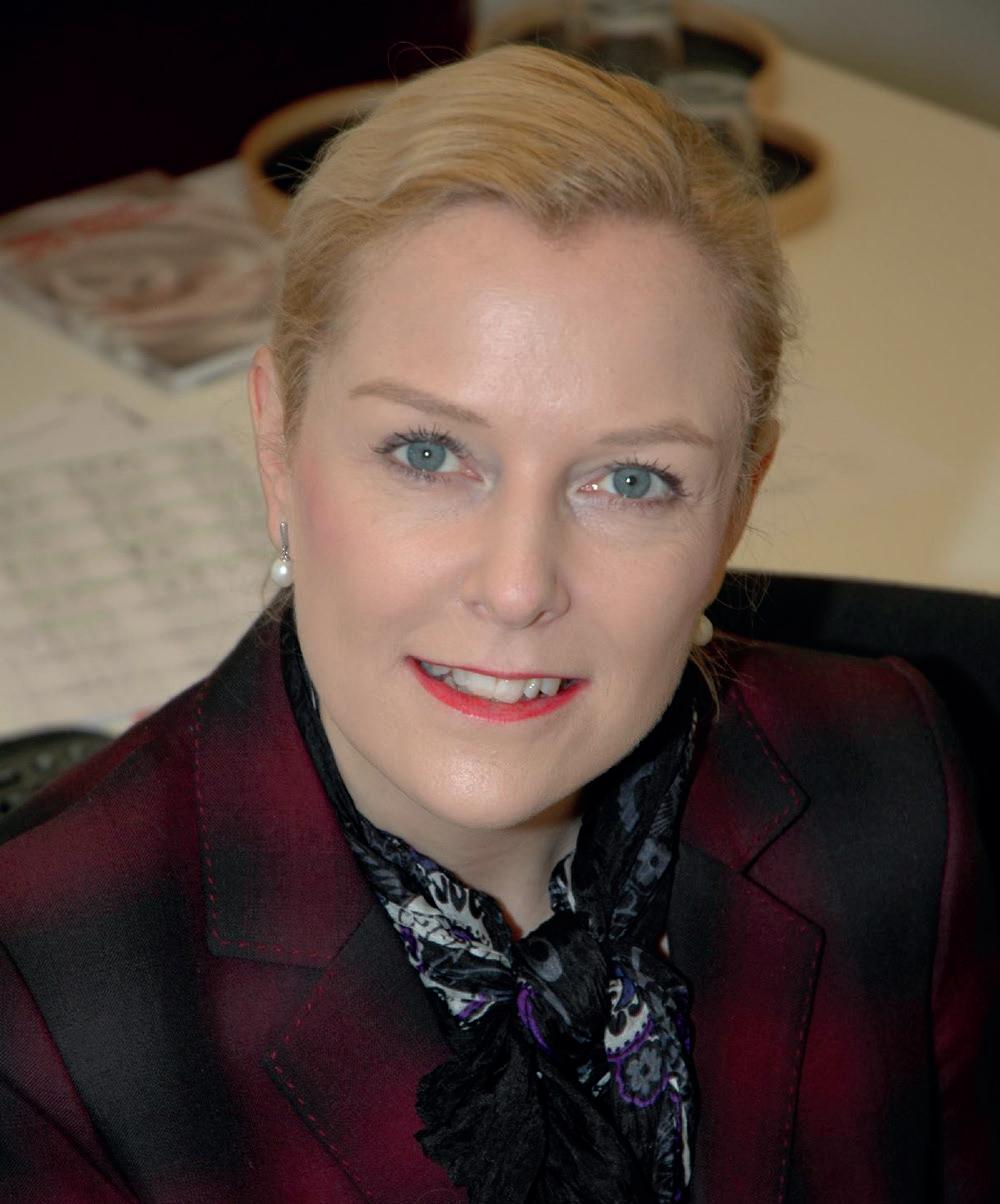
“Our aim is to bring energy to our guests that takes them to new personal heights, all within mystical, otherworldly spaces and through therapeutic experiences that follow an intelligent formula. We want guests to feel as though they are entering a whole new dimension which feels secretive, mystical and elegant. One where they feel more, sense more and experience more.”
The concept has been created in response to what Regent guests said they required: authenticity, privacy, emotional resonance and personalisation without interrogation.
Spa partnerships remain an owner preference and while not all Regent properties are retrospectively adopting the new concept, it is a long-term ambition for the concept to be a defining element of the brand.
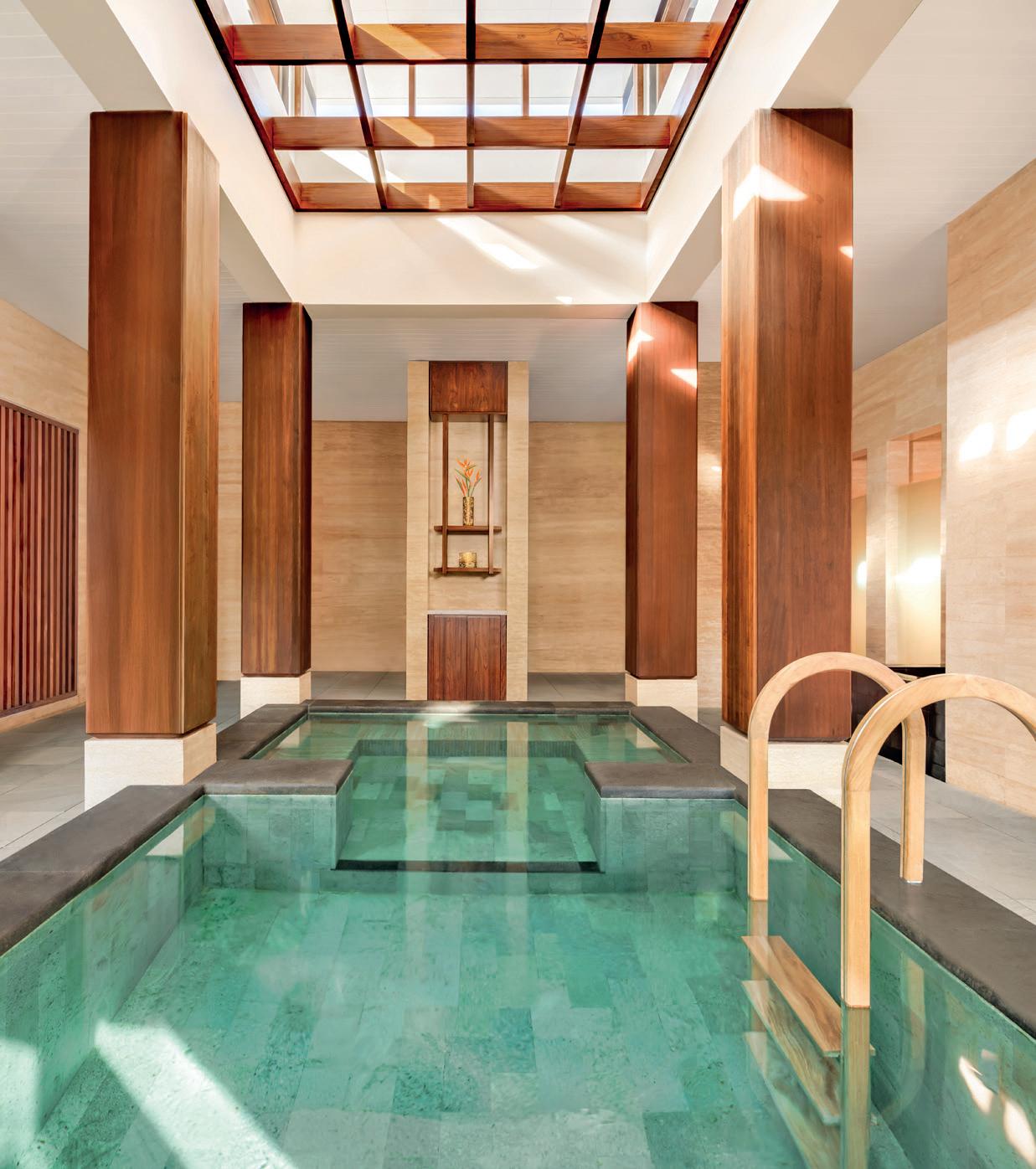
The Regent Spa and Wellness at Regent Bali Canggu – a 150-key resort between the Indian Ocean and terraced hills of Balinese rice fields – offers a range of therapies.
The spa has seven treatment rooms, including one for couples and another with a warm quartz sand bed by Gharieni. This bed is used for a signature treatment called The Massage Revolution, which involves cocooning the body as deep pressure and neroli essence is applied to calm the senses.
There is a vitality pool, ice baths, saunas and a 24/7 health club that has a gym and a mat-based studio.
Other body treatments include The Crystal Cure, which is a scrub and massage using crystal energy and essential oils and The Healing Zen – a therapy designed to relieve stress, involving rhythmic touch, conscious breath and warm stones.
Facial therapies include a ritual developed exclusively for the property in collaboration with Déesse Pro and Kerstin Florian called The Facial Revolution.
During the 90-minute therapy, botanical active
skincare is combined with LED light therapy and EMS and radio frequency technologies. The concept extends throughout the hotel and beyond the spa facilities, with a number of private hideaways for individuals to meditate and reset in solitude. l
http://lei.sr/d5U9K_B
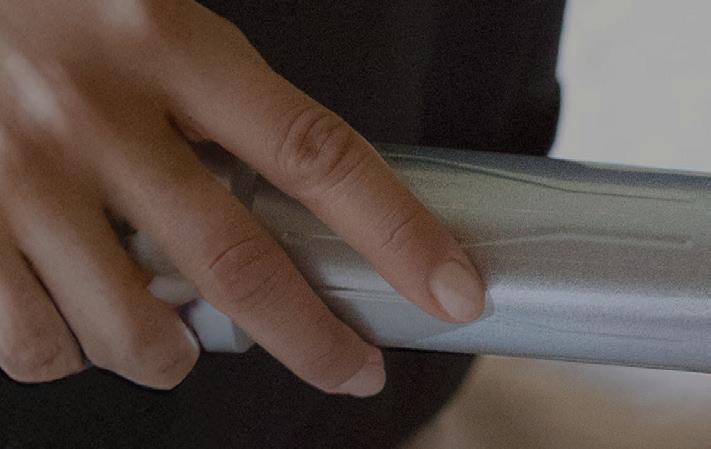






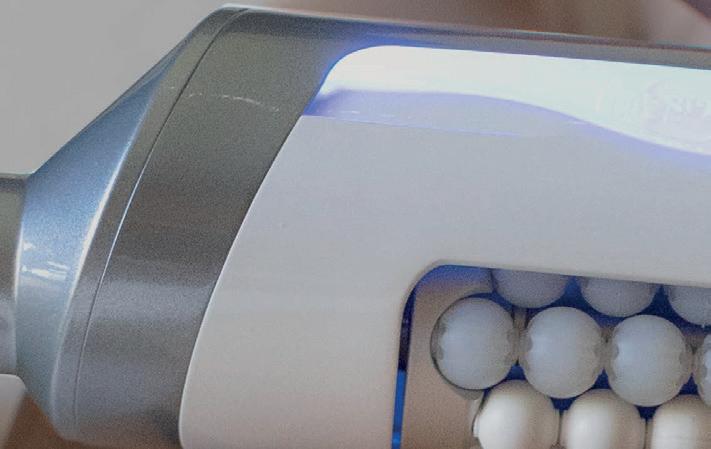





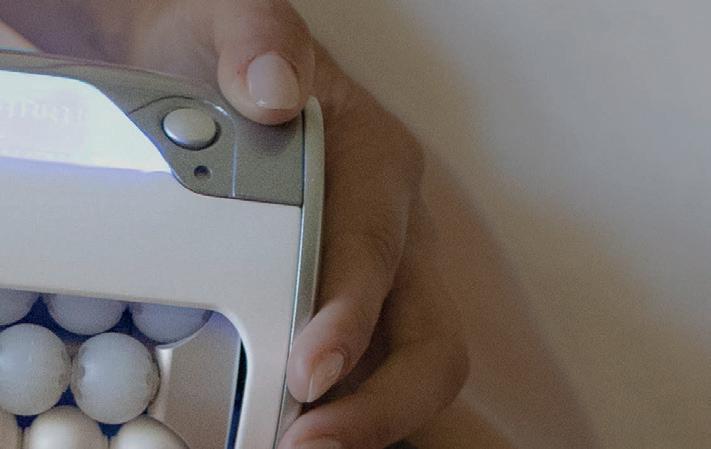
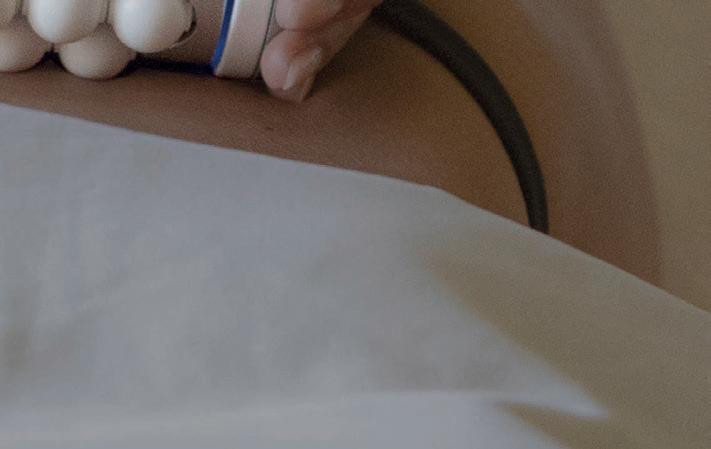








Alpine resort The Chedi Andermatt, in Switzerland’s Usern Valley, has partnered with longevity platform Humansa to offer guests a way to integrate health insights into their experience at the destination.
Humansa Suisse will be the first European venture by the wider Humansa group, which is a precision health provider that operates a network of health centres in Hong Kong and the Greater Bay Area of China and has more than 100,000 clients across Asia. It integrates advanced diagnostics and targeted therapies with lifestyle guidance to optimise healthspan.
The new Humansa Suisse offering, which will be delivered at the resort’s Chedi Spa and Health Club, aims to provide resort guests with early insights to improve
Non-invasive health assessments are now available at the Swiss resort’s spa
their healthspan, but in a more ‘gentle’ way, without the need for invasive longevity technologies.
Humansa Suisse sees this new partnership as a way to make longevity more accessible, rather than limiting it to clinical environments.
Spa services at the 119-key Swiss resort have been designed to improve guests’ recovery, resilience and balance. These services include TCM therapies and personalised lifestyle advice.
http://lei.sr/7R2k6_B
TheLifeCo, a holistic wellness retreat operator based in Turkey, has debuted its first Caribbean operation at the US$1.3 billion (€1.2 billion, £1 billion), multi-phase A’ila Resorts development in St Lucia.
Spanning 2.3 acres in the island’s Rodney Bay areas, A’ila is being designed as a Longevity Village. The project has the backing of two subsidiaries of the Texasbased private equity firm Atlas Group – Global Capital Caribbean LLC and USCEM Group LLC.
TheLifeCo St Lucia is a 100-key wellness tourism retreat and is the first out of three resorts planned at A’ila. The site is also set to feature 500 residences, 20 restaurants, retail locations, a medical and commercial district and a conference centre. .
Specialising in programmes focused on nutrition, exercise, mental and spiritual wellbeing, TheLifeCo first launched in 2005. Its newest resort in St Lucia is the largest location that the brand has operated so far, compared to its existing operations in Turkey, Egypt and Thailand.
TheLifeCo facility in St Lucia features a physician-led clinic, offering integrative medicine and biohacking technologies. On top of this, there’s a 15-treatment room spa, with two mineral pools, two infrared saunas, two steamrooms and two hammams. This location also debuts five new programmes, including one for guests experiencing burn-out.
The Kao Kamasa Spa at the Kimpton Grand Roatán Resort in Honduras has partnered with the Global Alliance for Regenerative Medicine Clinic, known as GARM.
The specialised medical clinic’s offering positions the resort as a player in Roatán’s medical tourism sector. The therapies include IV drips and aesthetic facial treatments.
In terms of operations, the clinic treatments take place within the spa’s existing treatment rooms and are administered by GARM’s medical team. The therapies are overseen by Glenn Terry, a US orthopaedic surgeon with over 40 years of experience.
Maureen Bankson, EVP for spa and wellness at Kimpton Grand Roatán Resort and Spa told Spa Business: “Our partnership with GARM represents a meaningful evolution of the wellness experience at Kimpton Grand Roatán and Spa.
“Integrating GARM’s medical aesthetics and advanced therapies allows us to bridge holistic wellness with clinical excellence in a seamless, elevated way,” added Bankson. “With this partnership, we’re confident we will attract discerning travellers
who prioritise proactive health, refinement and innovation as part of their luxury experience.”
The new therapies will include a variety of microneedling treatments using vitamins and IV drips.
http://lei.sr/6K8k5_B
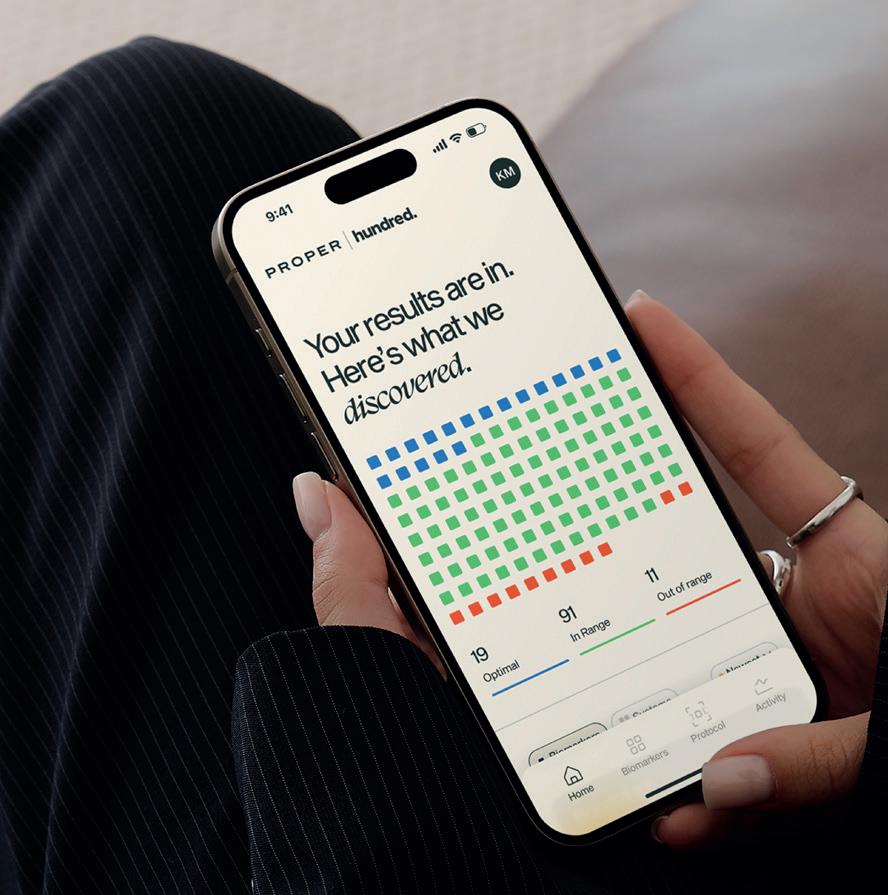
Proper Hospitality has introduced an extensive range of wellness programmes and retreats, including a partnership with health platform Hundred Health.
The collaboration will provide Proper Club members with a tailored 100-day action plan for movement, recovery and nutrition.
Brian de Lowe, president and co-founder of Proper Hospitality, told Spa Business: “Hundred Health’s diagnostic-led, highly personalised approach adds a new dimension to our programming and our retreats, giving guests and members the opportunity to engage with their health in a more intentional, informed and lasting way.”
The Proper Hundred plan starts with blood tests, data tracked from wearables and is followed by a protocol and recommendations – all of which are tracked on an app. The Proper Hundred programme costs US$42 (€39, £33) per month and is billed annually at US$499 (€459, £394).
Other Proper wellness upgrades include the addition of a Morozko Mineral Bath with Hydrogen at Santa Monica Proper Hotel in California, US. The Austin Proper Hotel in Texas has introduced OxyLight Facials by Raja Medical and select properties are offering three-day wellness retreats.
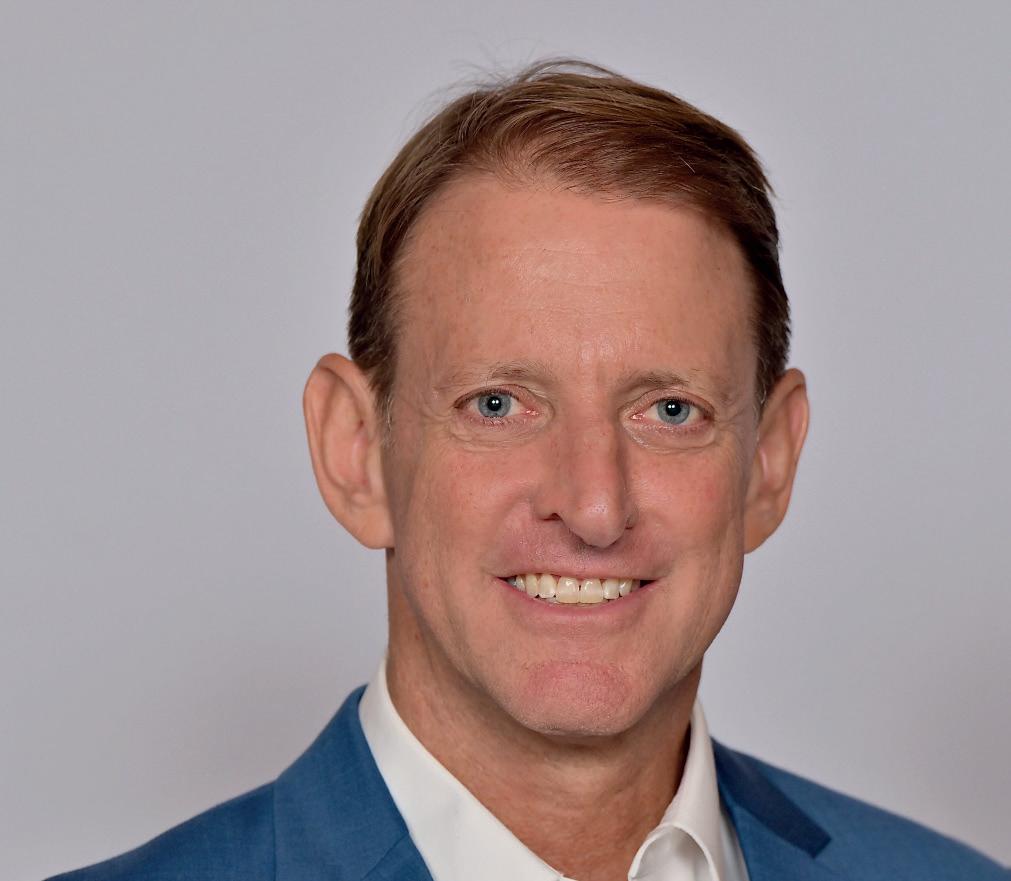
Respected wellness and luxury hospitality figure Jeremy McCarthy has launched Leisure Alchemy, a digital platform that will provide professionals with strategic guidance on how to build transformational leisure experiences that also drive profit.
McCarthy has more than three decades of experience in the wellness and leisure industries – including 11 years at Mandarin Oriental – and an academic background in applied positive psychology.
Leisure Alchemy is designed for C-suite executives, entrepreneurs and thought leaders across the leisure economy – including resort general managers, spa directors, private equity stakeholders and founders of specialised leisure and wellness concepts.
Leisure Alchemy was created to decode the science of transformational leisure experiences
– Jeremy McCarthy
Subscribers to the platform will receive access to content, including a weekly briefing called The Leisure Roundup.
This news report will reveal the trends and innovations shaping the leisure, wellness and hospitality sectors. The platform will also deliver a monthly deep-dive essay, written from the perspective of a seasoned operator, called The Alchemist’s Notes.
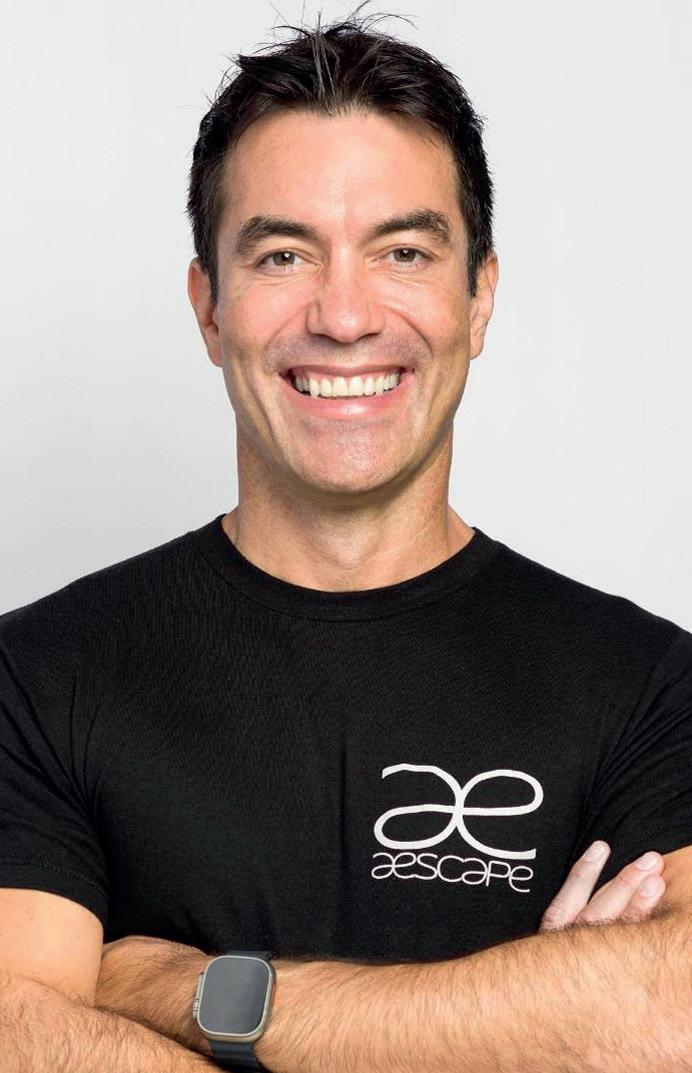
Eric Litman, previously CEO of New York-based lifestyle robotics company Aescape Inc, is starting a new company – Healthspanners – to focus on improving healthspan.
The news of Litman’s fresh venture was revealed just weeks before Aescape entered insolvency. The company’s automated massage technology is available in over 100 locations and it will now trade under a new name – Aescape Recovery Inc.
In his eight years at the helm of Aescape, Litman has been tracking his own health privately and learning how to make improvements, claiming he’s in the best shape of his life at 52.
He says he came to the conclusion that health optimisation is a lonely business of figuring out one’s own biological constraints and needs.
Healthspanners is designed to offer the solution, a curated health optimisation programme, led by experts in metabolic biology, cardiovascular science, sleep
Aescape changed how people recover. Healthspanners will change how long they thrive.
Eric Litman
medicine, cognitive performance and longevity therapeutics.
The membership will provide quarterly programming and a tightly-knit community to keep each other accountable and make sustained improvements to how they feel, perform and age.
It begins with assessing more than 200 baseline biomarkers and genetic data. A medical director then oversees personalised protocols which will be monitored and refined by clinicians as the research advances.










Anna Campbell, a professor specialising in clinical exercise science at Edinburgh Napier University, is launching a training programme for wellness professionals about cancer-aware protocols in Q3.
Campbell recently helped to update guidelines for cancer-safe heat therapies for the Standards Authority for Touch in Cancer Care, the organisation founded by Susan Harmsworth (see www. spabusiness.com/safeheat).
As director of CanRehab, an international provider of specialised training in exercise oncology, she’s now introduced the Cancer Confidence course to teach wellness teams how to become cancer-friendly.
Theme Rains, the founder of skincare brand Synthesis Organics, will host a seven-day experience at the Aro Hā Wellness Retreat in New Zealand.
Running between 24 and 30 May, the Revive and Thrive programme will see Rains teaching practices such as somatic awareness, energetic coherence exercises and aromatic journeys. There is space for a maximum of 20 guests.
The different activities have been curated to quiet internal mental noise and strengthen the mind-body connection for realignment. They draw on Rains’ experience in holistic
Together we’ll be exploring ways to reconnect with the intelligence of our body and heart
Theme Rains
health, psychotherapy, aromatherapy and bioenergetic skincare.
Aro Hā, which is known for its comprehensive rejuvenation programmes, will provide plantbased cuisine, mountain hikes, mindful movement and the setting for deep relaxation. There will also be breathwork, contrast hydrotherapy and guests will have a massage on each full day of the retreat.
Rains told Spa Business: “Long before Synthesis Organics, I was a facilitator – leading retreats, holding space and learning from the land. Being invited back into that world, at Aro Hā of all places, feels like coming full circle.
“Together we’ll be exploring ways to reconnect with the intelligence of our body and heart and deepen the embodiment of our true essence in one of the most breathtaking locations in the world.”
http://lei.sr/S4Y5k_B
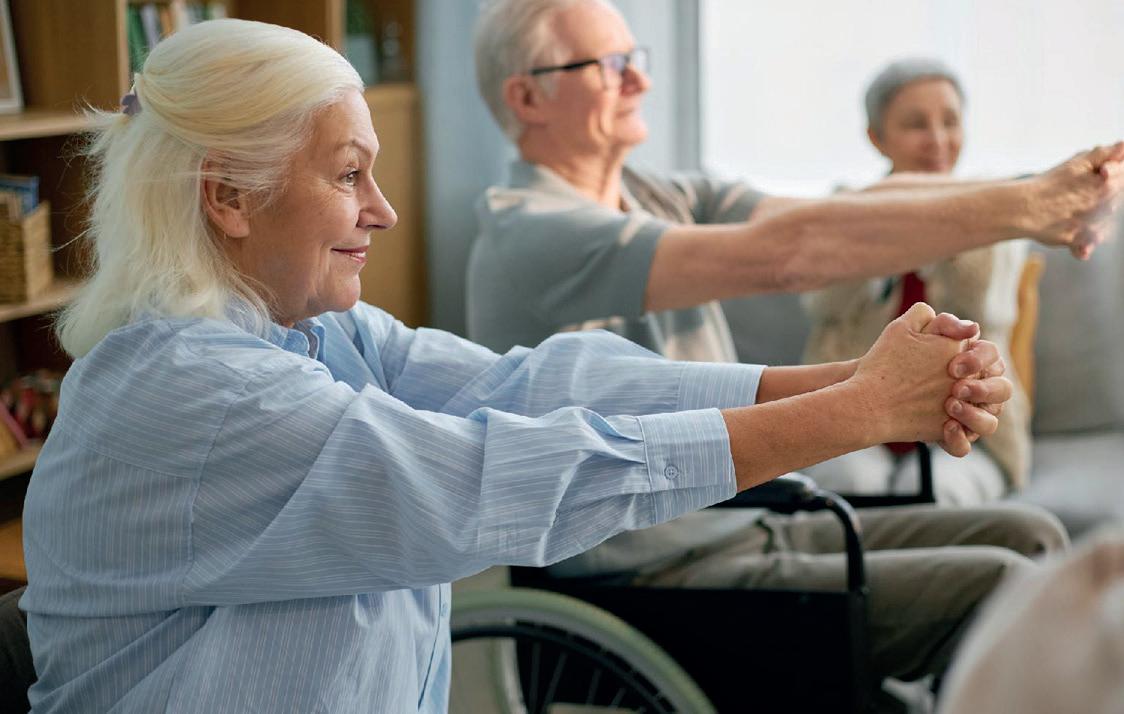
As part of the training, all employees – from receptionists and spa therapists to fitness professionals – will learn how to ask basic appropriate safety questions and how to adapt programmes for guests who’ve experienced cancer without making them feel ‘othered’.
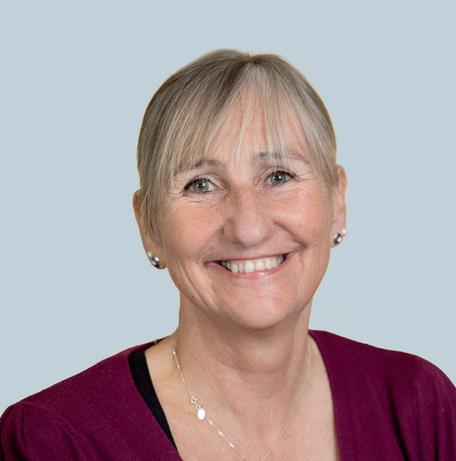
If we match people to properly qualified support, movement becomes a lifeline, not a privilege
Anna Campbell




































We want to make intentional, health-supportive design the default, not the exception
Susan Magsamen, executive director, IAM Lab
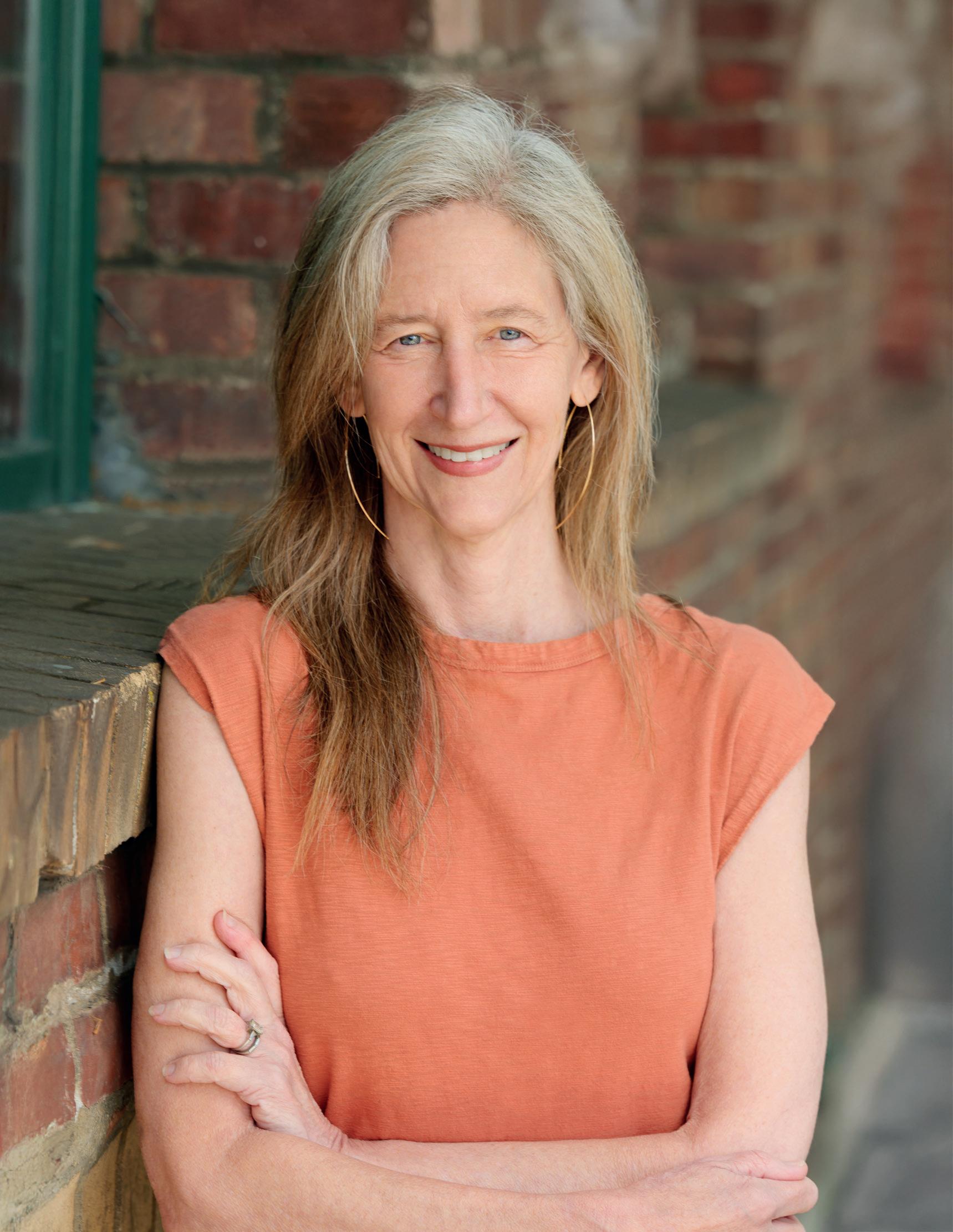
“Every environment is already influencing guests’ nervous systems – the question is: are you designing for stress regulation and health restoration?” This is a query posed by Susan Magsamen, executive director of the International Arts + Mind Lab Center for Applied Neuroaesthetics (IAM Lab) at Johns Hopkins University in the US.
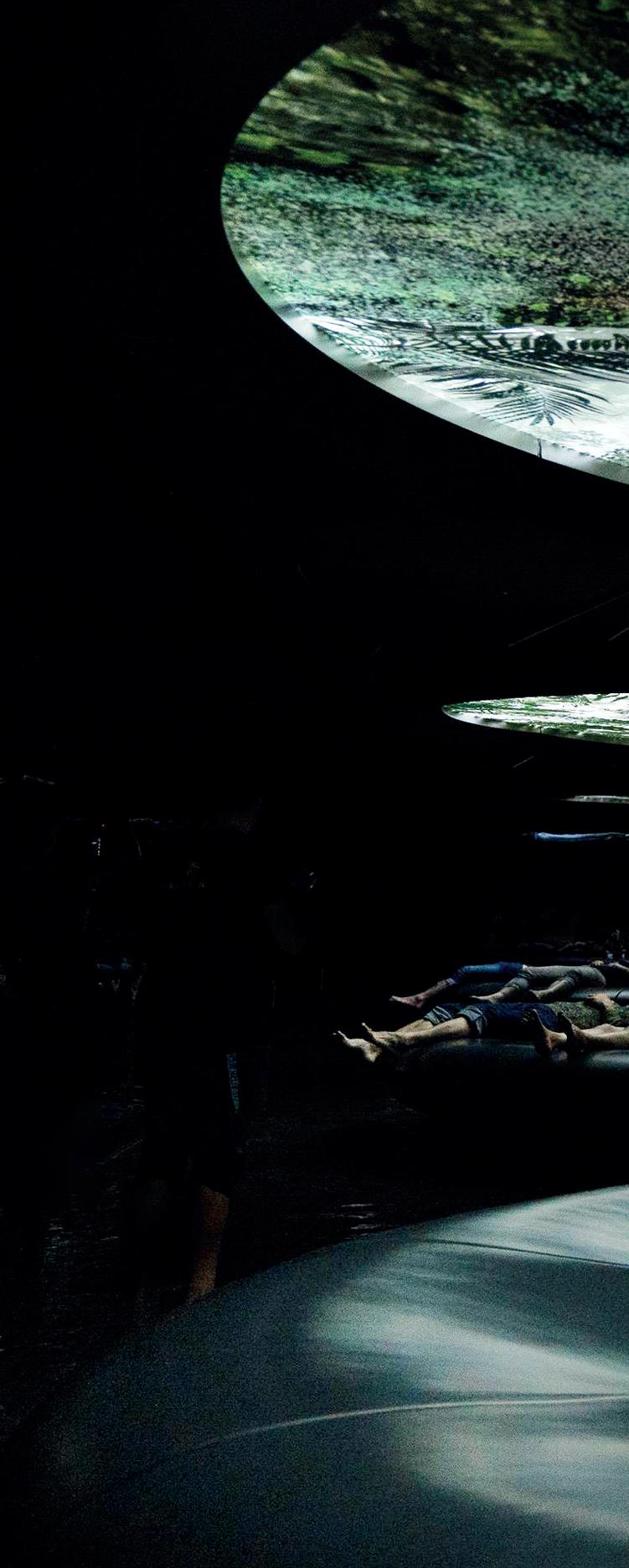
As the field of neuroaesthetics gains momentum, science is now validating what our industry has long believed: that environments are powerful drivers of wellbeing.
Here, Magsamen, who’s been at the helm of IAM Lab since it launched in 2010, reveals two new reports, which are designed to help translate this growing body of evidence into realworld spa and wellness environments.
Why does neuroaesthetics matter?
Underpinning the broader field of neuroarts, it’s the scientific study of how the arts and aesthetic experiences – what we see, hear, smell and touch – change the brain, body and behaviour.
From lighting and acoustics to materials, scents and spatial flow, these elements directly affect outcomes like cortisol levels, heart rate variability, mood and cognitive clarity. When you design with intention, what I call ‘aesthetic
The findings show how alignment across sight, sound, smell and touch is critical for regulation
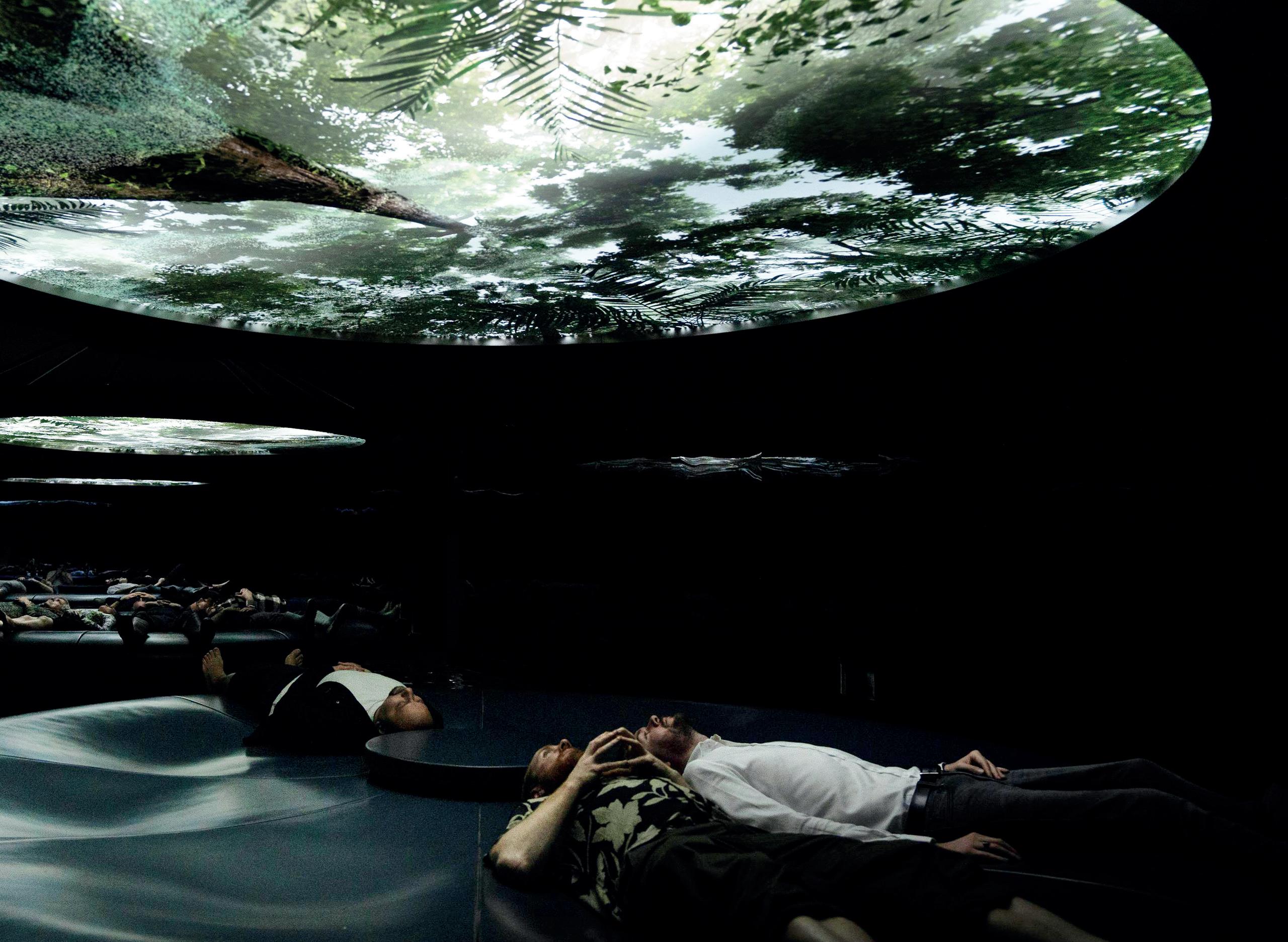
design’, you can improve client satisfaction and ultimately drive wellbeing and business performance.
Interest in the field is accelerating and we’re seeing healthcare, real estate, hospitality and workplace design all converge around the idea that environments are active agents in human health.
For the wellness sector, this is a pivotal moment. The industry has long understood the intuition of these ideas, but now we have the evidence.
How is it advancing?
This January, IAM Lab released two seminal reports – Intentional Spaces: The Power of Place Foundations and Intentional Spaces: The Power of Place Roadmap. They’re part of its Intentional Spaces Initiative, which has been running for five years and has seen IAM Lab engage with dozens of global experts across neuroscience,
architecture, design, psychology and the arts for key insights.
Foundations also draws from a study commissioned by Thermengruppe Josef Wund, the thermal spa operator now owned by Therme Group. It’s the scientific backbone which translates complex research into accessible insights about how environments impact the brain and body, with a particular focus on how the sensory experience shapes perception, regulation and overall wellbeing.
Roadmap is a strategic guide. It outlines how to integrate neuroaesthetic principles into practice, offering actionable pathways for sectors like wellness, hospitality, healthcare and real estate to begin implementing this work.
We’ve also published A Day in the Life, a narrative about how intentional design shapes a person’s journey through a space.
Together, these reports move from theory to strategy, to lived experience, offering the ‘why’ and ‘how’ of designing spaces that support wellbeing. The work of IAM Lab isn’t just about publishing research – it’s about activating it.
What are the key findings?
From our work, we know that:
l The brain is constantly scanning environments for safety versus threat
l Sensory coherence – alignment across sight, sound, smell and touch – is critical for regulation
l Small design shifts can produce outsized physiological effects
l Personalisation and cultural context matter deeply
We’ve also found that environments don’t just influence momentary experience – they can shape longerterm outcomes related to stress, resilience and overall wellbeing.
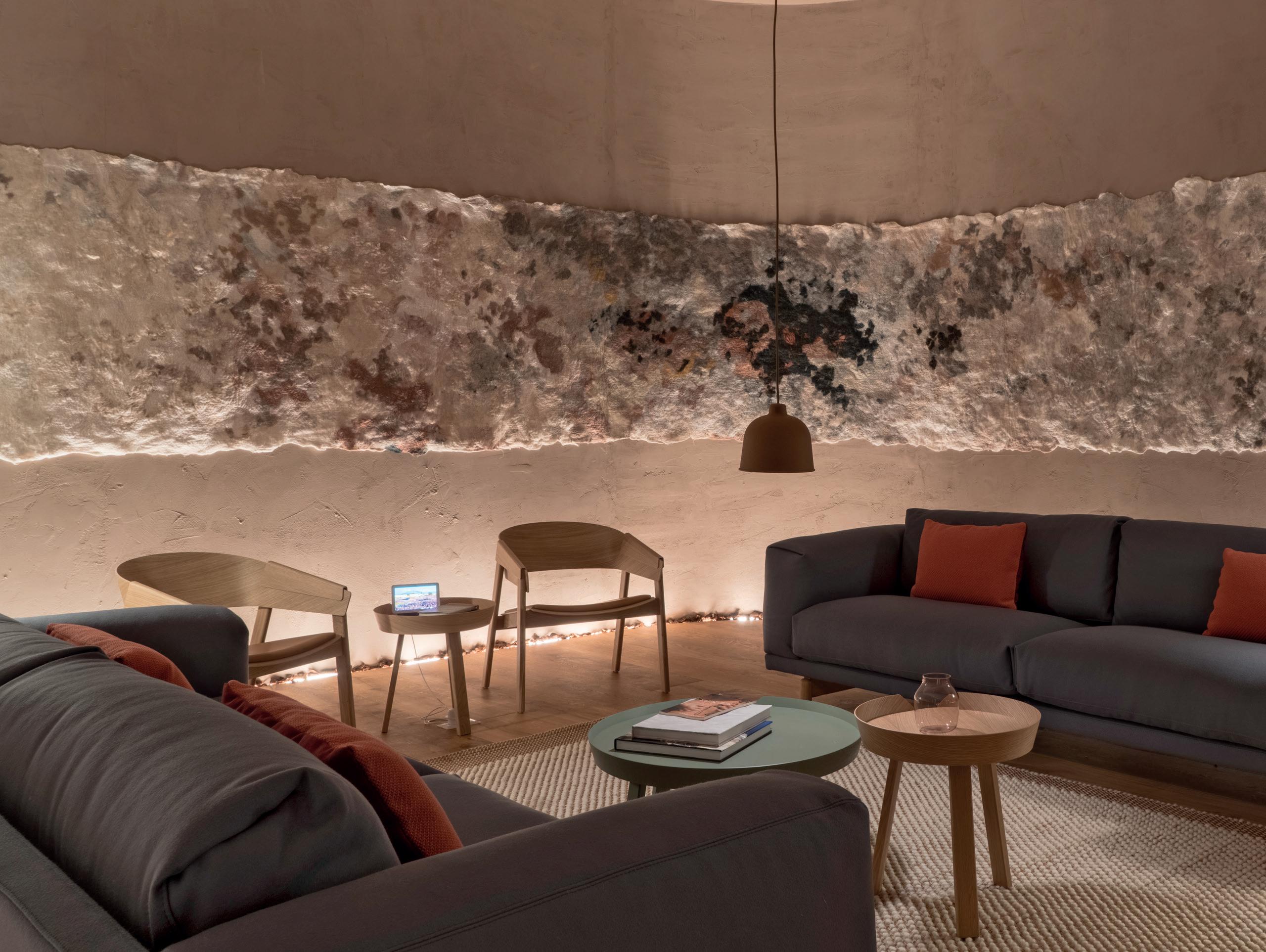
This has profound implications for spaces like spas, where the goal is not only relaxation, but restoration and lasting impact.
Is there anything that surprised you?
One of the biggest surprises was just how sensitive we are to microfeatures of environments – subtle lighting changes, textures, or soundscapes can significantly shift emotional and physiological states. Another revelation was how often these elements are considered in isolation. What matters most is how they work together as a system. When environments are designed with coherence and intention, they can support regulation and connection in a much more powerful way than any single feature alone.
Why launch Intentional Spaces?
To explore a critical question: How can we design environments that
actively support human flourishing? We knew that ‘place’ was one of the most underleveraged tools in health and wellbeing. While much attention is given to behaviours and treatments, the environments we move through every day quietly shape how we feel, think and function. This initiative was created to better understand that influence. Intentional Spaces is a subfield of neuroarts. In 2019, IAM Lab and global think tank the Aspen Institute launched the NeuroArts Blueprint Initiative to integrate the arts as science-based tools into mainstream medicine and public health.
What other research is there?
There are several emerging areas that are particularly relevant to spas: l Multisensory integration research. Showing how combining modalities (sound + scent + light) amplifies impact
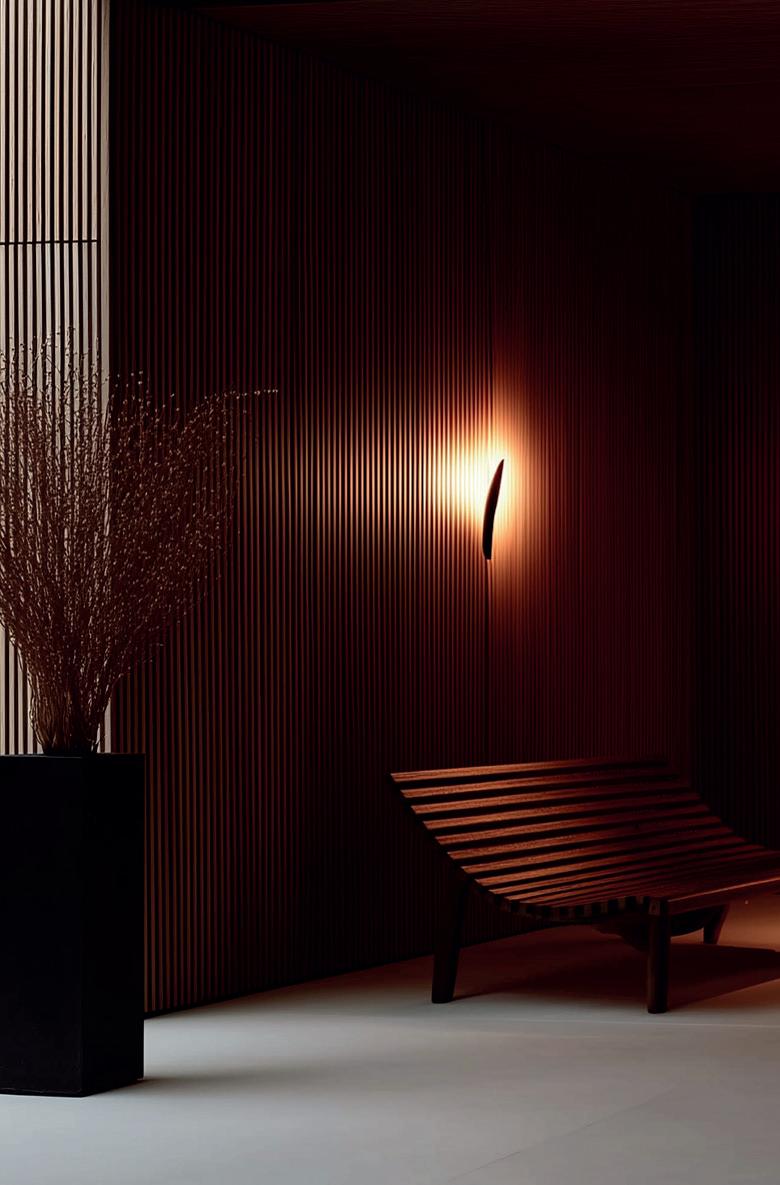
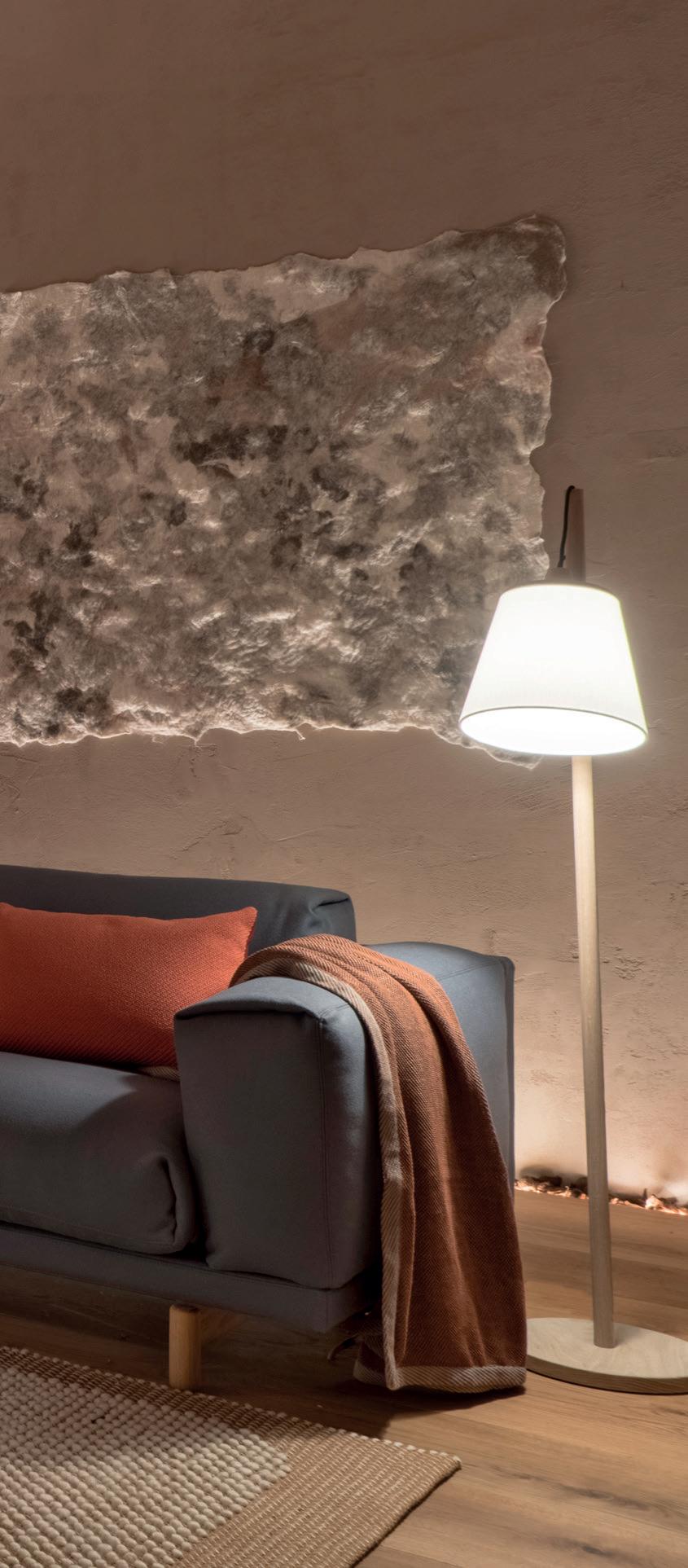
The industry has long understood the intuition of these ideas, but now we have the evidence
l Nature exposure and biophilic design. Demonstrating measurable reductions in stress and improved recovery
l Arts-based interventions in healthcare. Linking music, visual art and movement to pain reduction and faster healing
The takeaway? Wellness spaces can move from an amenity to evidence-based intervention environments.
What’s on the horizon for IAM Lab?
We’re focused on scaling – bringing neuroaesthetic principles into:
l Built environments (hotels, spas, urban design)
l Digital and hybrid experiences
l Policy and public health frameworks
We’re also beginning to translate this work into applied settings through pilot projects and collaborative design initiatives. As part of this, we’re working alongside partners to test how these neuroaesthetic theories can be implemented and measured in real-world environments. This will then feed back into the Roadmap, which is a living document that will grow and change as we implement its core principles.
What’s the long-term vision?
It’s simple but ambitious. To make intentional, health-supportive design the default, not the exception. l To access the Intentional Spaces reports, visit: www. spabusiness.com/iamf and www.spabusiness.com/iamr.
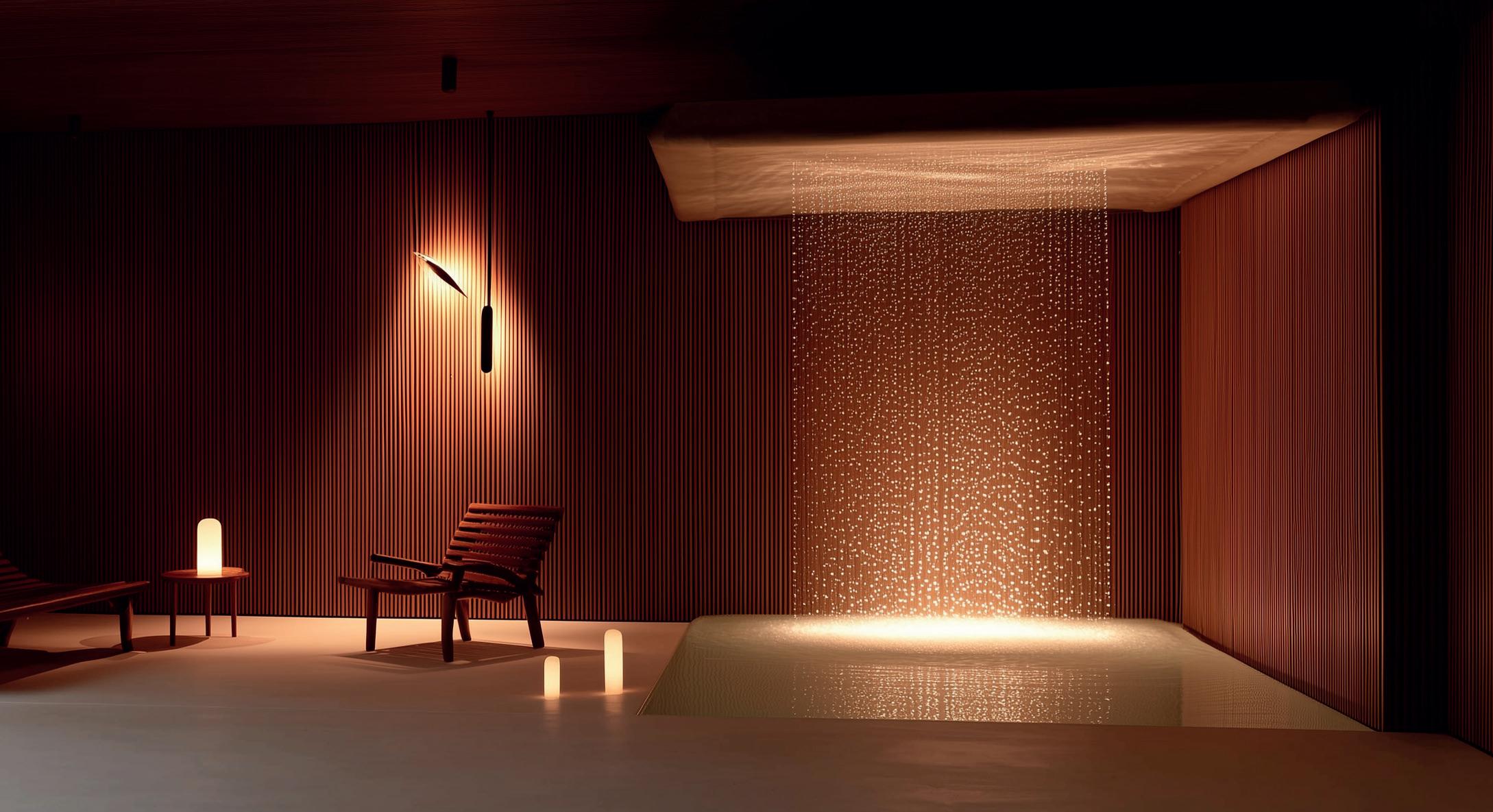
A
surprise finding was just how sensitive people are to subtle sensory design features



My work is about ensuring that people with disabilities are recognised for their abilities

Beth Gatonye, founder, Seeing Hands Rwanda

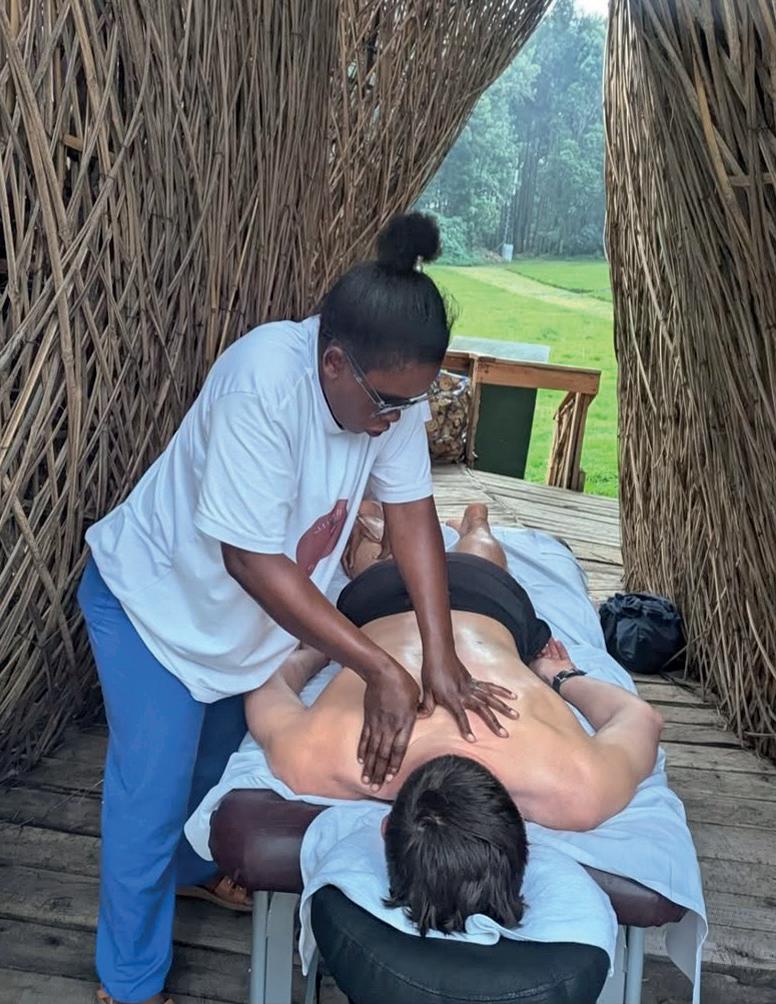
When Beth Gatonye opened a small spa at the Lemigo Hotel Rwanda in 2012, she soon found staff being lured away by competitors because of the scarcity of qualified therapists. That changed when she began training blind women because other hotels were reluctant to hire them.
Blindness in Rwanda affects just over 1 per cent of the population, mostly due to preventable causes like cataracts. Despite disability inclusion policies, blind and visually impaired people still face high unemployment rates, stigma and limited access to education tools.
By 2017, Gatonye founded Seeing Hands Rwanda, with a mission to provide free training for visually impaired people in massage therapy and inclusive technology and then connect them with jobs in spas.
“I’d never seen any blind or visually impaired people working anywhere, so I went looking for them,” says Gatonye. “What I found were individuals hidden away in villages, forgotten and without hope, unable to meet even their most basic needs. I started by training three

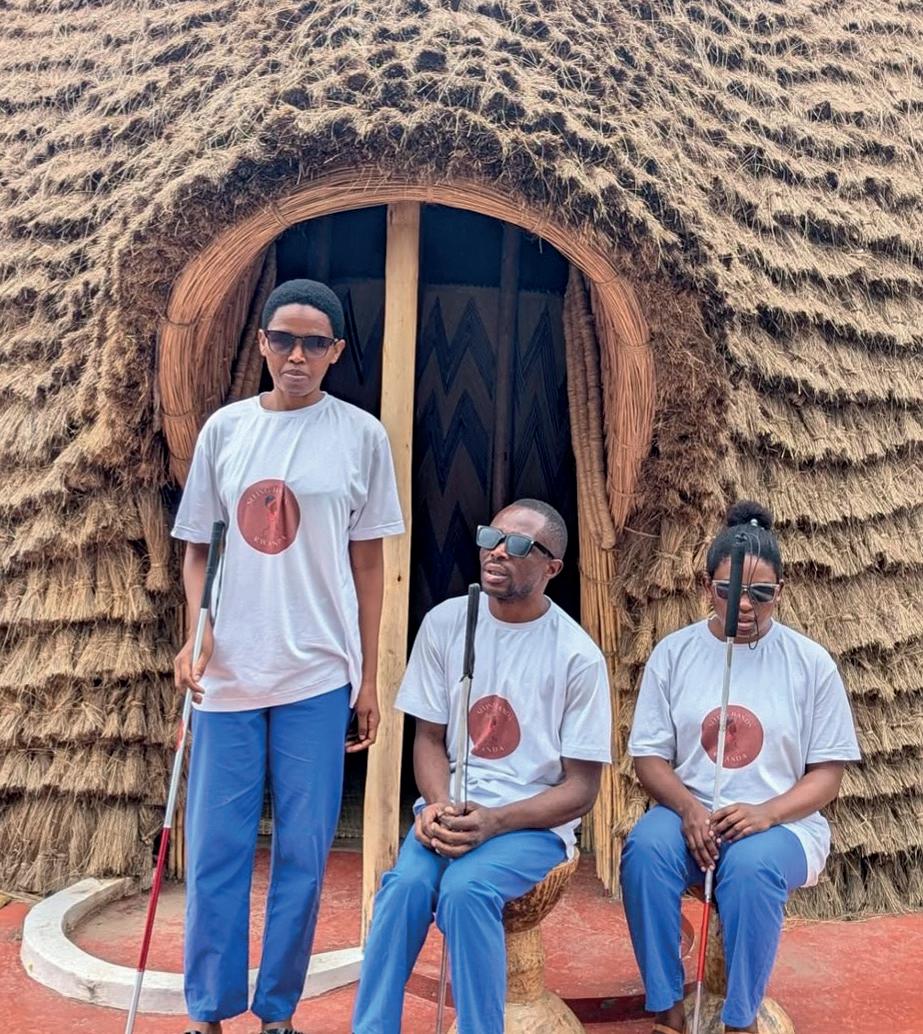
blind women. In about two months, more women and men kept coming, and I couldn’t turn them away.”
Since 2017, Seeing Hands Rwanda has trained more than 240 massage therapists, with about 80 per cent of them placed in jobs. That figure includes those employed in hotels and wellness centres, those who provide services directly at Seeing Hands Rwanda and others who now run their own businesses. Every year, the organisation trains around 30 new therapists, but beyond that, its different programmes have benefited more than 500 people with visual impairments and blindness.
“Massage is a profession where touch is everything,” Gatonye explains. “With heightened sensitivity in touch, visually impaired people often excel in this field. Their focus and skill quickly win over clients.”
Despite this, Gatonye says some employers believe hiring someone with a disability will harm their business image or reduce customer trust. “Disability is wrongly seen as a curse or punishment, leading to social rejection and exclusion,”
she says. “Even when trained, visually impaired therapists often struggle to find workplaces willing to give them a chance. When I began, some clients, after realising it was a blind person who would be giving them a massage, would get dressed and leave the room. That moment of rejection was painful. Although this doesn’t happen as often now, there are still some clients who refuse services once they notice the therapist is blind.”
The challenge isn’t limited to clients but extends to employers as well, unfortunately. “Some employers hesitate to hire blind therapists, focusing only on the disability rather than the ability,” Gatonye explains. “This kind of bias makes it harder for our trainees to transition into stable employment, even after they’ve proven their competence. But we’ve proven that inclusion is not only right – it’s actually good for business. Our therapists are capable, professional and bring value wherever they work.”
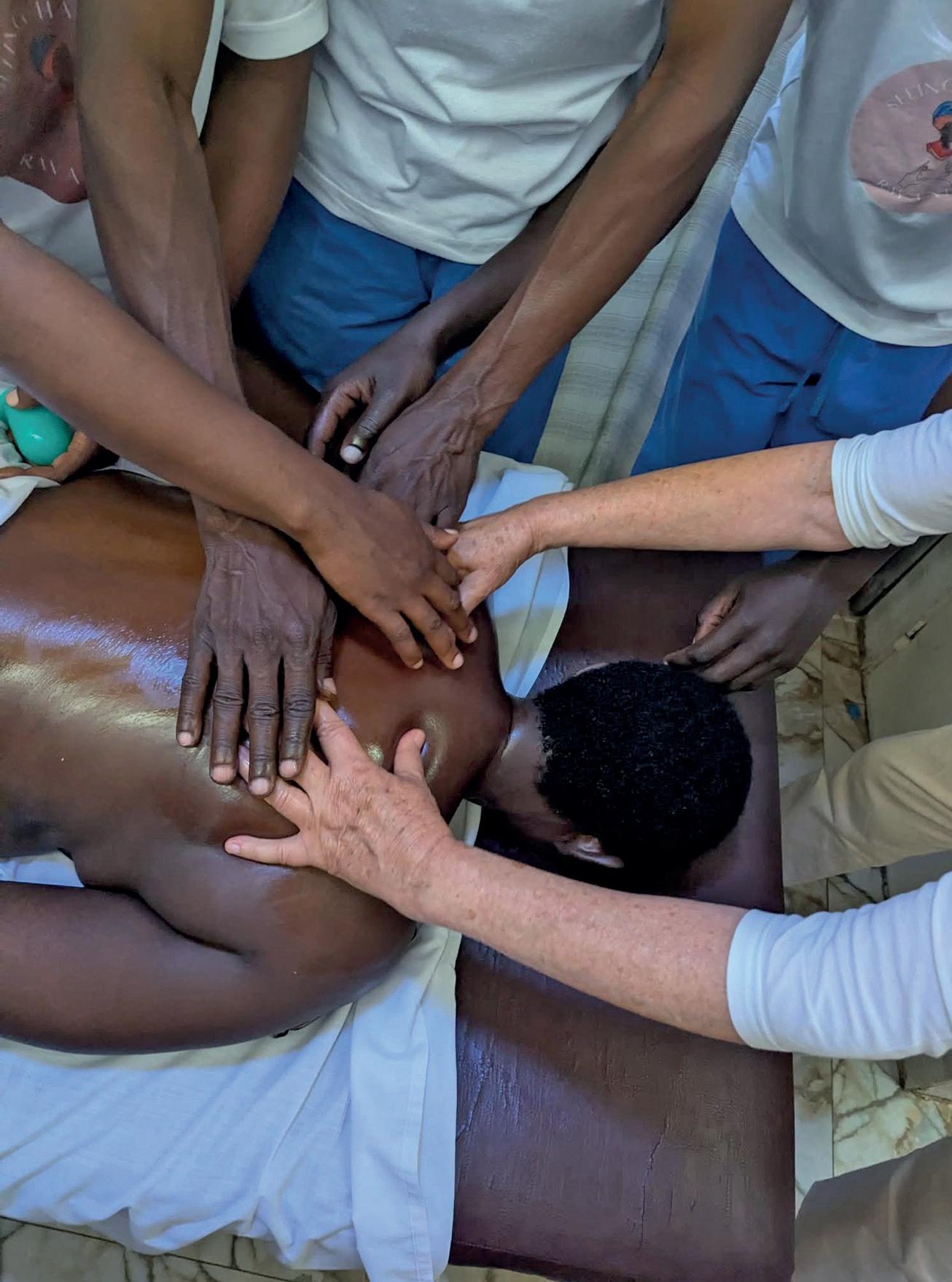
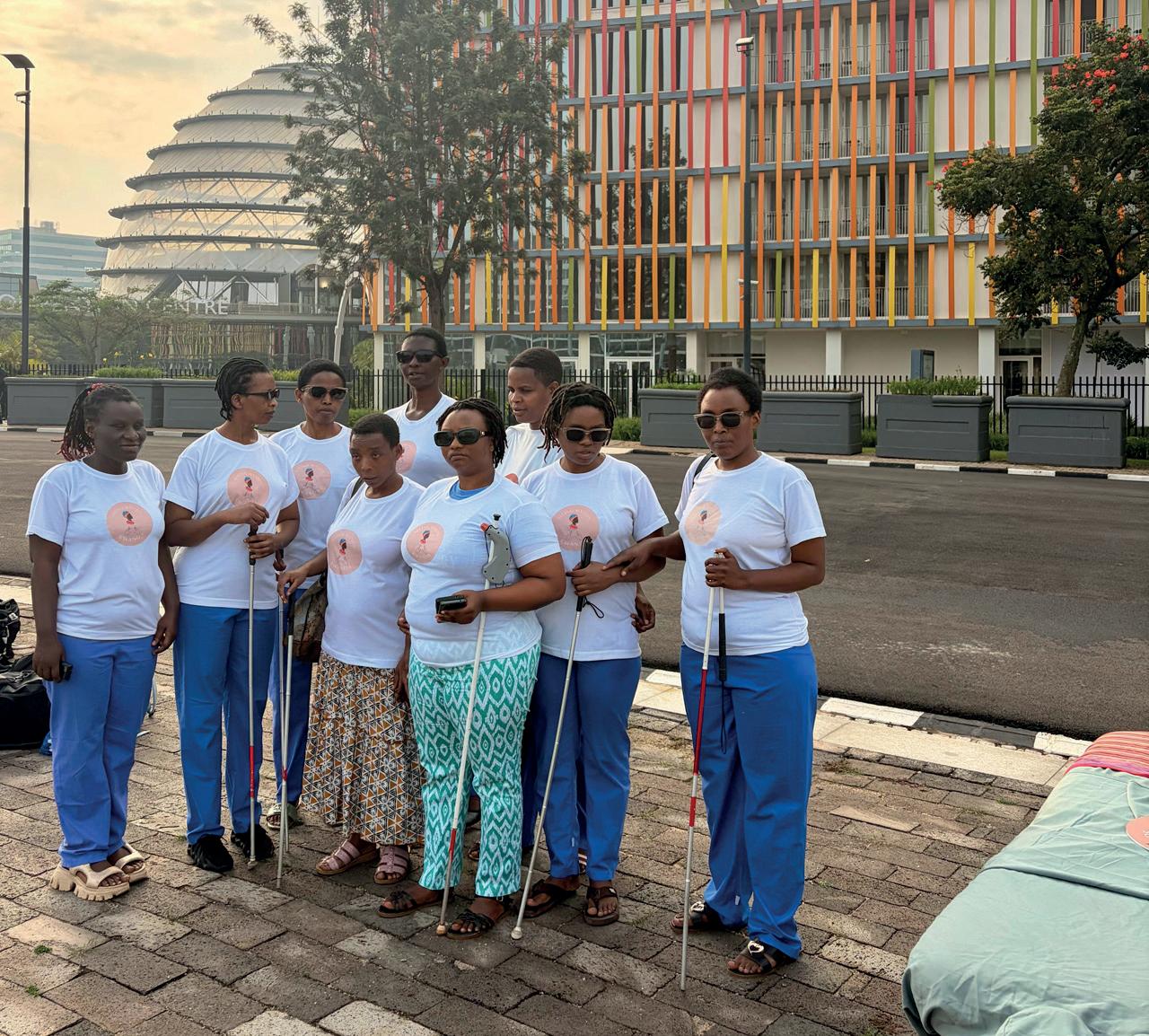
Therapists travel to corporate offices, sporting events and other high-profile functions in an effort to change perceptions and challenge stigmas. “Slowly,” Gatonye says, “perceptions are changing.”
Beyond discrimination, Seeing Hands Rwanda is also hindered by a lack of funds, which makes it difficult to support trainees from rural areas who cannot afford housing, food or basic living expenses during training. And while the demand for skills is high and many visually impaired people want to learn, Gatonye also has difficulty finding experienced trainers to volunteer their time.
“Despite these difficulties, our commitment remains strong,” says Gatonye. “We go into rural communities, bring visually impaired individuals to the city, train them for free and help them transition into meaningful employment.”
Gatonye says Seeing Hands Rwanda is often able to help single, visually impaired mothers in rural villages with no education and little hope of work transition to
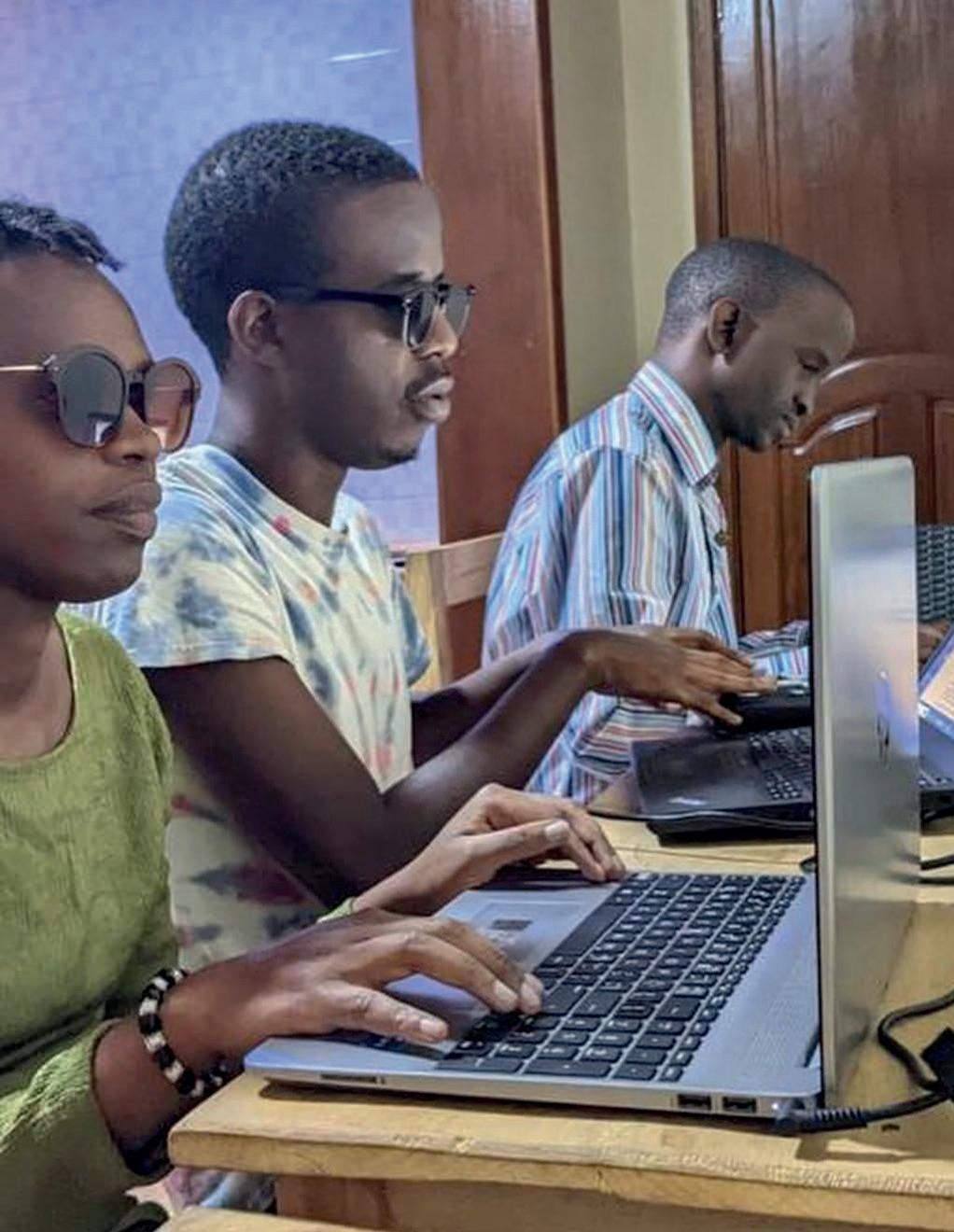
Training includes inclusive technology and pupils are transitioned into jobs
I found individuals hidden away in villages, forgotten and without hope
earning their own income, caring for their children and living with dignity. “We’ve also seen survivors of the genocide find healing and empowerment through this work – for them, massage therapy has provided not only employment but also restored confidence and a sense of belonging,” says Gatonye. “With the right support, visually impaired people can move from exclusion and poverty to independence and respect.”
Beyond employment, Seeing Hands Rwanda also focuses on community outreach, providing free massage therapy to those who cannot afford it but need it, including patients at Ndera Neuropsychiatric Hospital, female genocide survivors, children and adults with disabilities, and the elderly – groups that Gatonye points out often also face exclusion.
“My work is not only about creating opportunities but also
about challenging stigma, changing perceptions, and ensuring that people with disabilities are recognised for their abilities rather than defined by their limitations,” says Gatonye. “For me, this journey is about dignity, independence and hope. What began with three women in a small Kigali spa has grown into a movement that restores confidence and proves that blindness does not mean inability.”
That movement is not slowing down anytime soon; Gatonye is on a mission to change even more lives. “I have seen how our programme in Rwanda transforms lives, but the need is far greater,” she says. “In Kenya, for example, many visually impaired people face the same challenges of poverty and exclusion. With funding and partners, we can expand our free massage therapy training model there and eventually build a network of centres across Africa.” l



















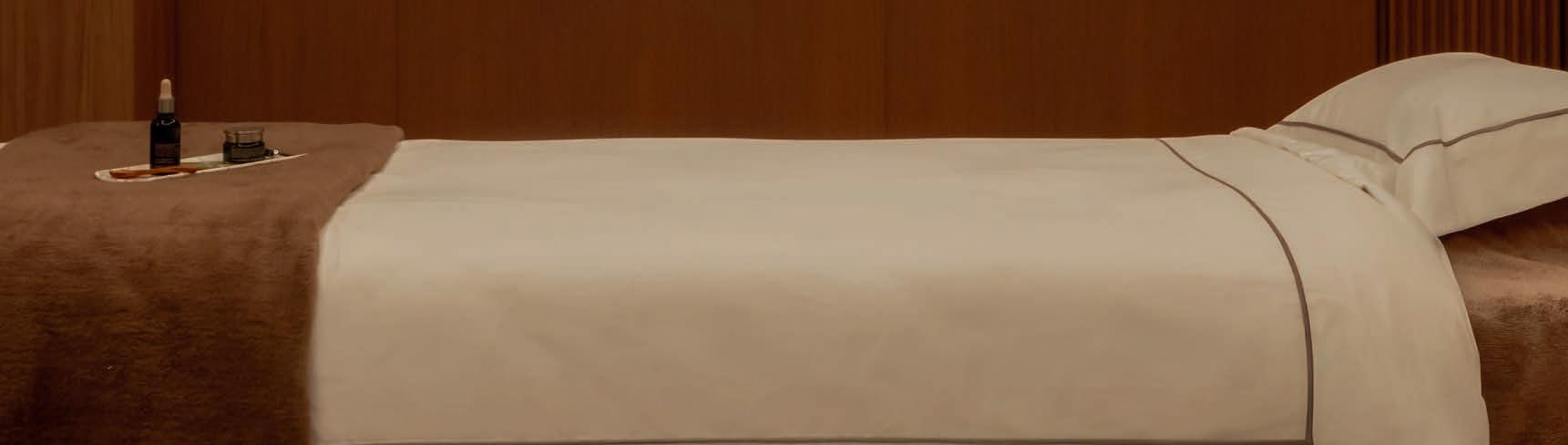










Guerlain is quietly establishing itself as a leading force in luxury hospitality. Its international spa and wellness director shares insights with Spa Business editor, Katie Barnes
What was your personal route into the sector?
I started nearly two decades ago with LVMH in London, working across its fragrance brands such as Acqua di Parma.
Working for Guerlain’s spas came about by chance, but I quickly realised how fascinating and strategically powerful wellness is sitting at the intersection of brand equity, guest experience and business performance. Our network of 38 landmark hotel spa partnerships has become one of Guerlain’s strongest assets (see p61).
What does your role entail?
I lead Guerlain’s global spa and wellness division. It’s about shaping strategy and vision while securing the right hotel partnerships and driving each project.
When I started in 2011, there were just two of us in the department. Now we have 14 team members across a range of areas – training, project development, devising aesthetic treatments and programmes, market development and equipment creation, architecture, communication and PR. Together, we set the standards and processes that ensure excellence across our global spa network, supporting our 900 beauty experts in delivering truly unforgettable experiences worldwide.
How many Guerlain spas are there?
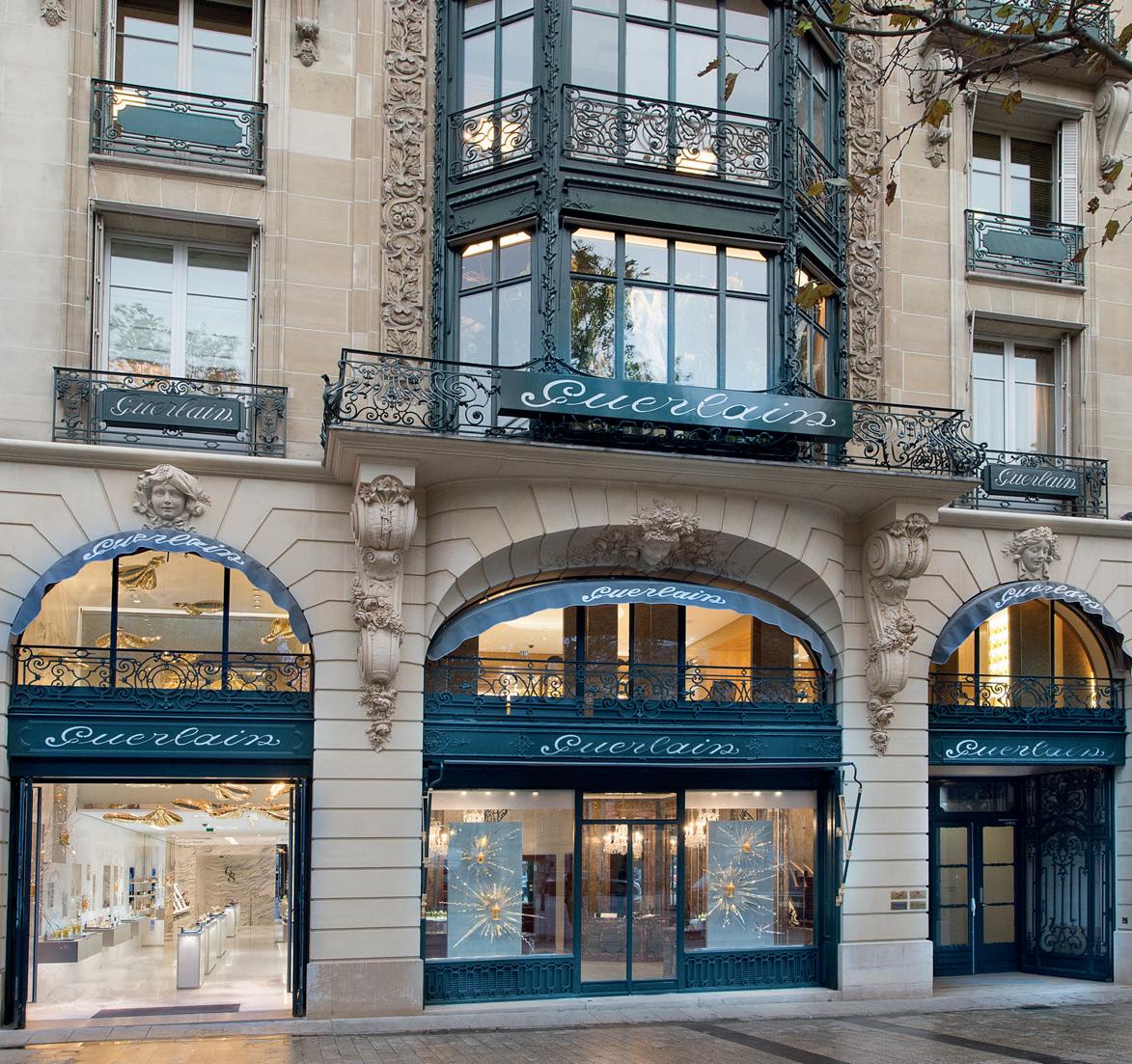
We have 38 hotel spas, which are the heart of our business, and 13 standalone institutes. Two of those – at 68 Champs-Élysées, Paris and in Hong Kong – are fully owned by Guerlain.



Our aim is to partner with the most spectacular and prestigious hotels in the world and we’re aiming to open four to five spas with partners a year.
Markets where we don’t already have facilities are of particular interest. We only have one spa in mainland China, at the PuXuan in Beijing, so that’s a country where we want to grow, for example.
We’re also focused on geographic diversification. Italy will be a key milestone in 2026, with openings at Belmond Villa San Michele and Les Airelles Venice.
You must be excited about Waldorf Astoria NYC Absolutely. It’s one of the most iconic hotels in the world, with an incredible legacy of elegance and prestige, which perfectly matches Guerlain’s own heritage.
The bidding process to secure the contract was incredibly competitive, so we’re very proud to have been chosen.
The size and scope. It’s a huge 22,000sq ft spa on the fifth floor with 16 treatment rooms, plus a dedicated wellness area reserved for Waldorf Astoria residents.
We’re ultra-selective. We want to open the most beautiful and most exclusive spas around the world
It marks a step forward for us, being a flagship for wellness and longevity (see p60).
Guerlain is constantly innovating its spa concept. We introduced our tailor-made offering and mindfulness, movement, sleep and nutritional focus 13 years ago and Waldorf Astoria New York brings all that together with our new cutting-edge longevity programmes, exclusive treatments, advanced aesthetic services and bespoke equipment.
For us, growth means pursuing the most exceptional projects in the world – in the most beautiful settings – with hotel partners who are a perfect match in values, standards and ambition.
I see so many potential projects each month, but we’re ultra-selective – we want to open the most beautiful and most exclusive spas around the world, making us the most desirable spa brand in the industry.
It’s also about embracing the unexpected: a spa carved into desert rock or hidden deep in
the jungle, for example, or one that’s created using formats that surprise and delight.
We love pushing the boundaries of where wellness can live, for example, La Ruche Hivernale at Cheval Blanc Courchevel – our 2026 winter pop-up on the ski slopes – created a buzz, with flash treatments inspired by repair, warmth and cocooning.
And this is only the beginning: some of our upcoming spa projects will be true statements of boldness and imagination.
Yes – absolutely. We collaborate closely with LVMH Hospitality brands. Cheval Blanc is one of our most long-standing and closest partners. I opened its first spa in Courchevel in 2011 and there are now five Cheval Blanc Spas by Guerlain globally. We also work closely with Belmond in exceptional wellness destinations.
Beyond hospitality, we also partner with other LVMH Maisons, including Louis Vuitton, creating exclusive wellbeing experiences for key events and top clients.
statements of boldness and imagination
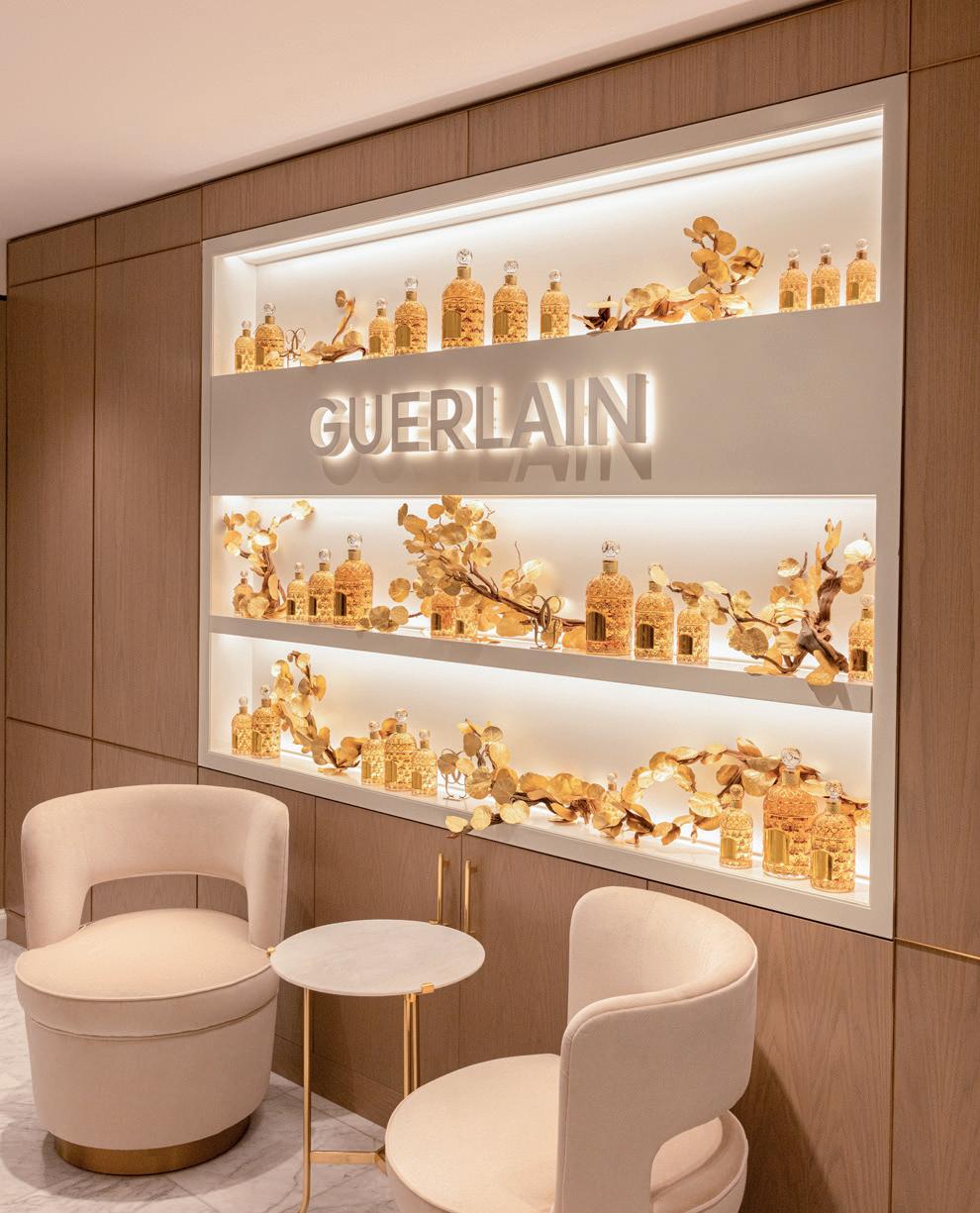
What’s Guerlain’s relationship with Orient Express Hotels?
LVMH and Accor are reviving the brand, so it’s an exciting new chapter and Guerlain will be a key partner.
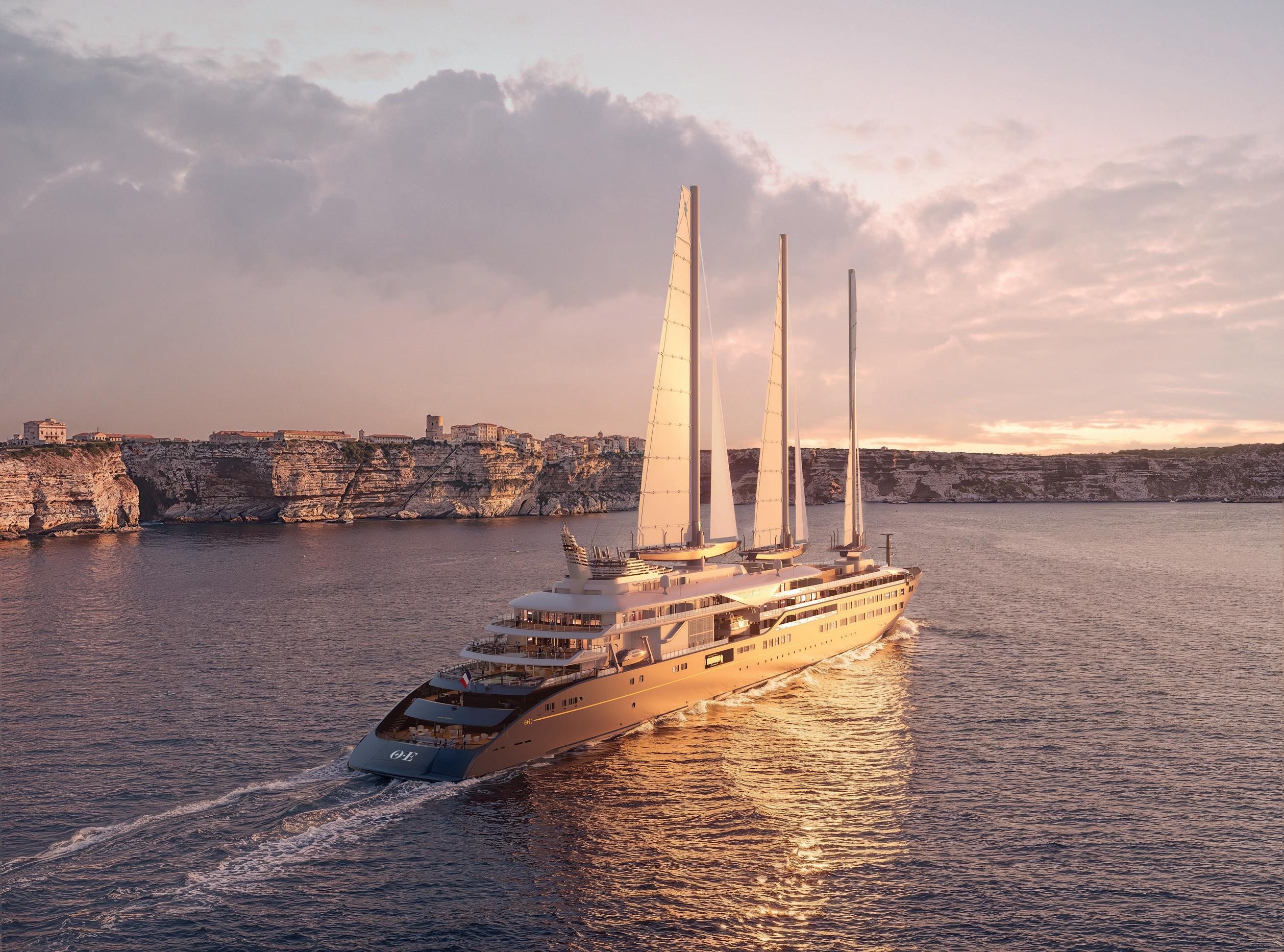
Our first project was on its superyacht, Orient Express Corinthian. It set sail in May [2026] and boasts a 500sq m Guerlain spa with four treatment rooms.
What’s your holistic approach?
In 2013, Guerlain created a board of wellness experts to advise us on integrative medicine, nutrition, mindfulness, movement and sleep.
Today, these four pillars are the root of our Art of Harmony concept and form the basis of retreats at places such as Cheval Blanc in the Maldives and the Seychelles. We also tap into them in bespoke ways for other spas.
Wellness isn’t new to Guerlain, is it?
No. We have an incredible heritage that other brands cannot copy. Wellness has actually been a part of our DNA for 175 years.
Our founder, Pierre-François-Pascal Guerlain, created a thermal wellness centre in Le Crotoy in Hauts-de-France in 1850, recognising the
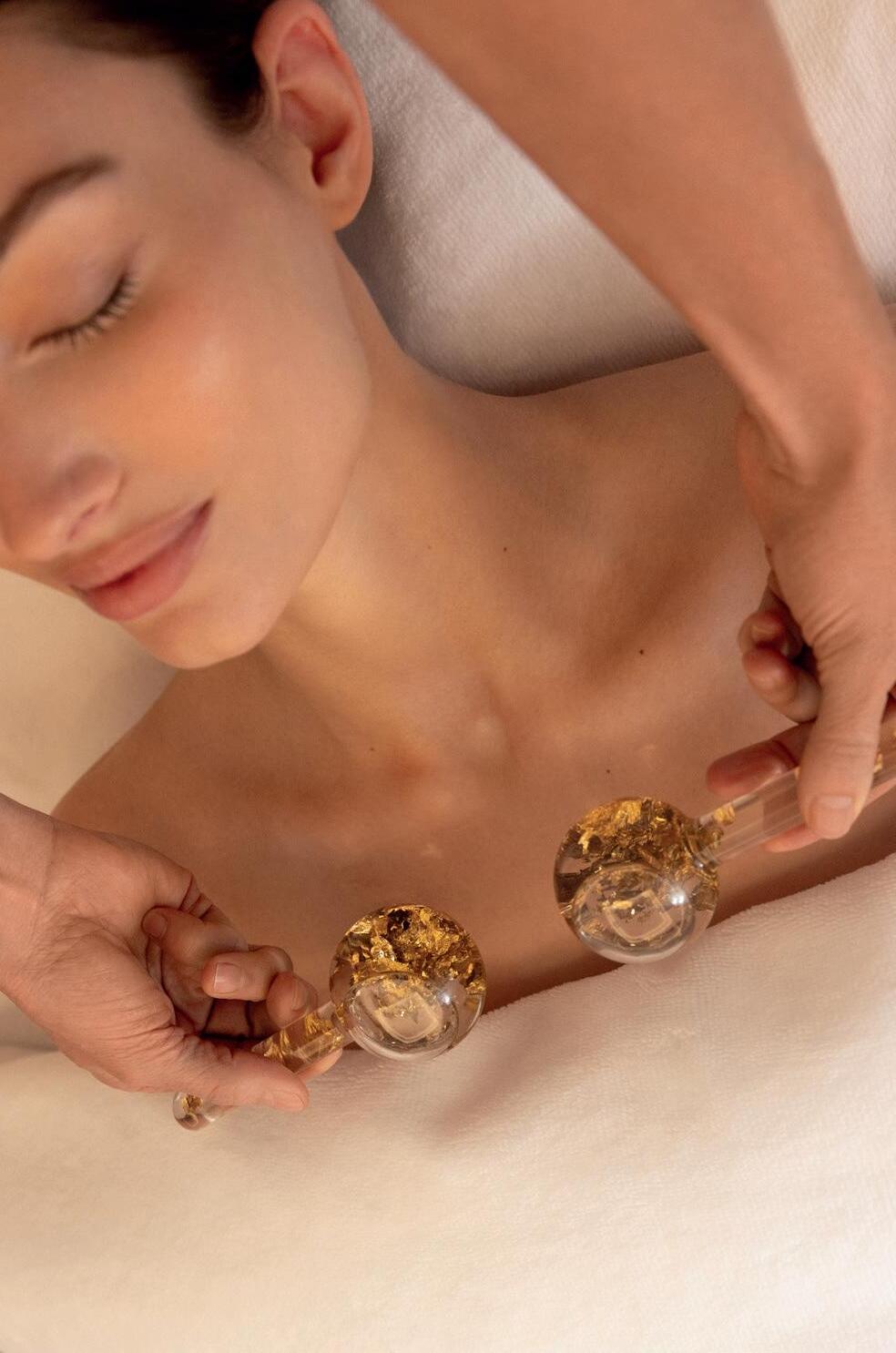
importance of water, breathing and a holistic approach to beauty, even back then.
A hundred years later, the Guerlain family converted their Parisian apartment at 68 Champs-Élysées into L’institut Guerlain – one of the world’s first dedicated beauty training institutes – and it’s still at the core of our portfolio.
Our manual expertise – what we call our Art of Touch – is important, with 200 facial and 300 body massage ‘techniques’ having been developed.
We also pride ourselves on our Art of TailorMade philosophy. Every experience begins with an in-depth diagnosis, so treatments are adapted to the face, the body and the expectations and needs of the moment.
This level of excellence is sustained through rigorous training via our Spa Academy and is widely recognised across the industry – our spas received 25 awards last year alone. Ultimately, what sets us apart is our Art of Care – the way we listen, nurture and genuinely look after each guest, and the emotion it creates. We design a sensorial journey where every touchpoint is crafted with empathy, authenticity and warmth. In short, we see wellness as an art.
How do you create a sense of place?
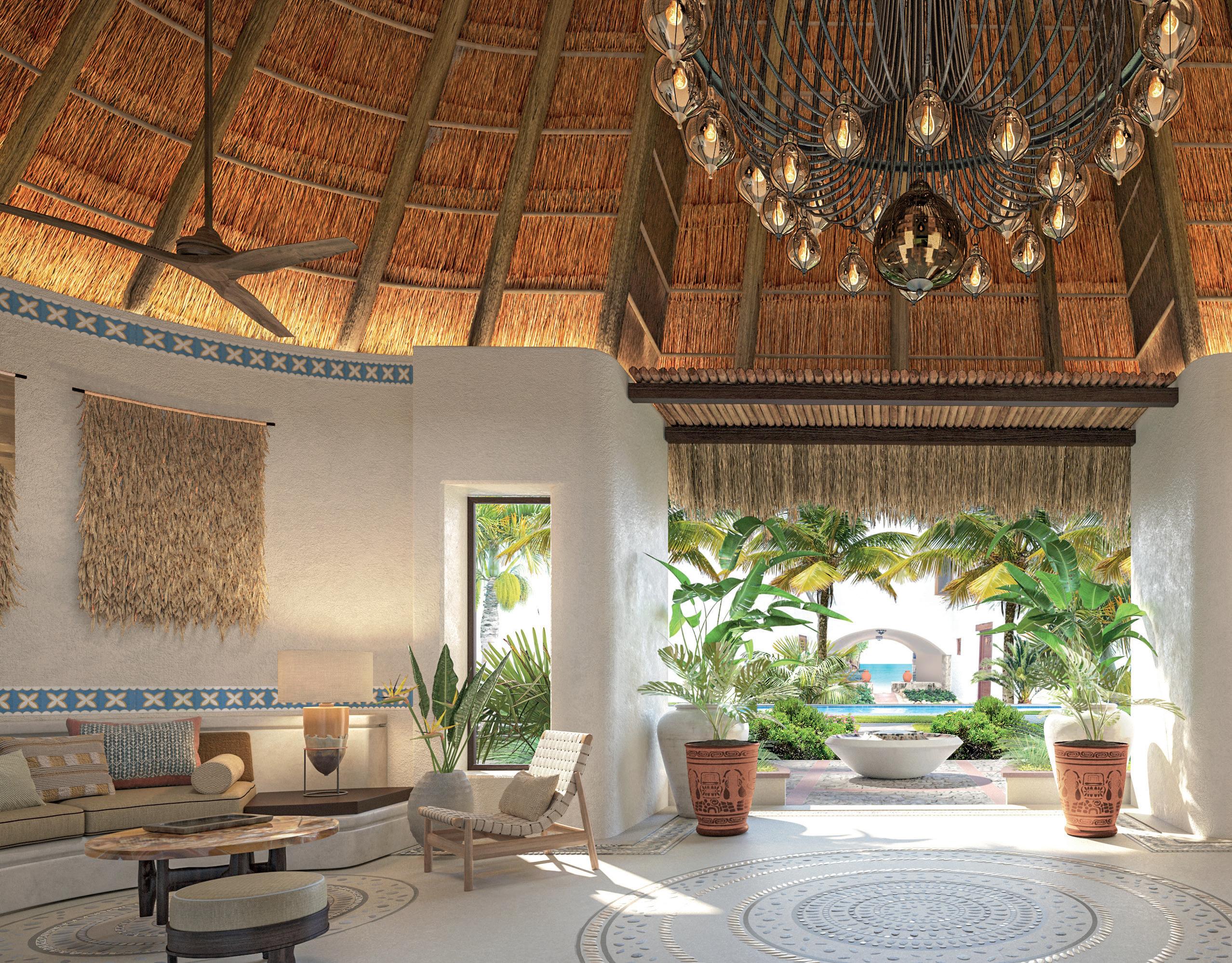
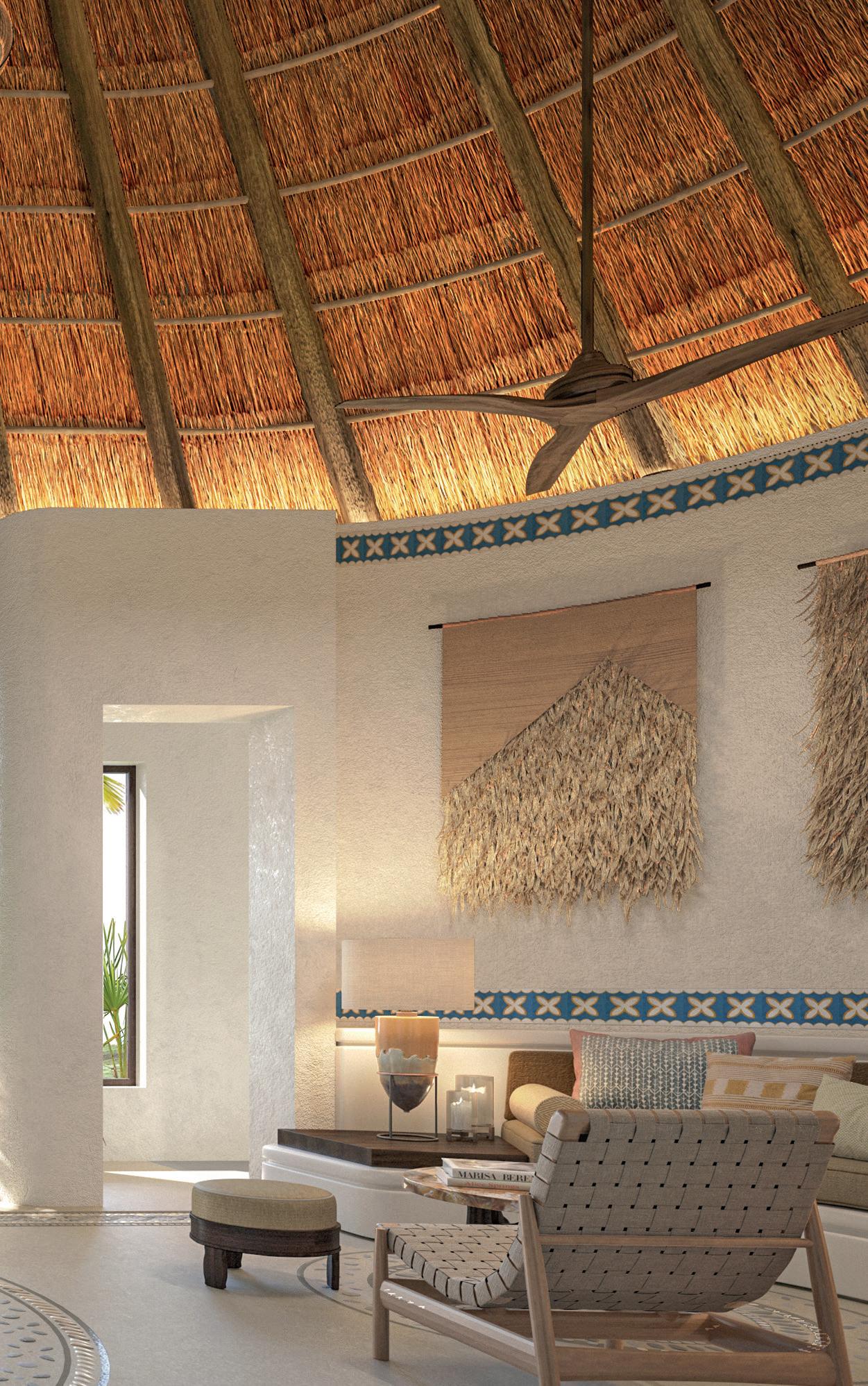
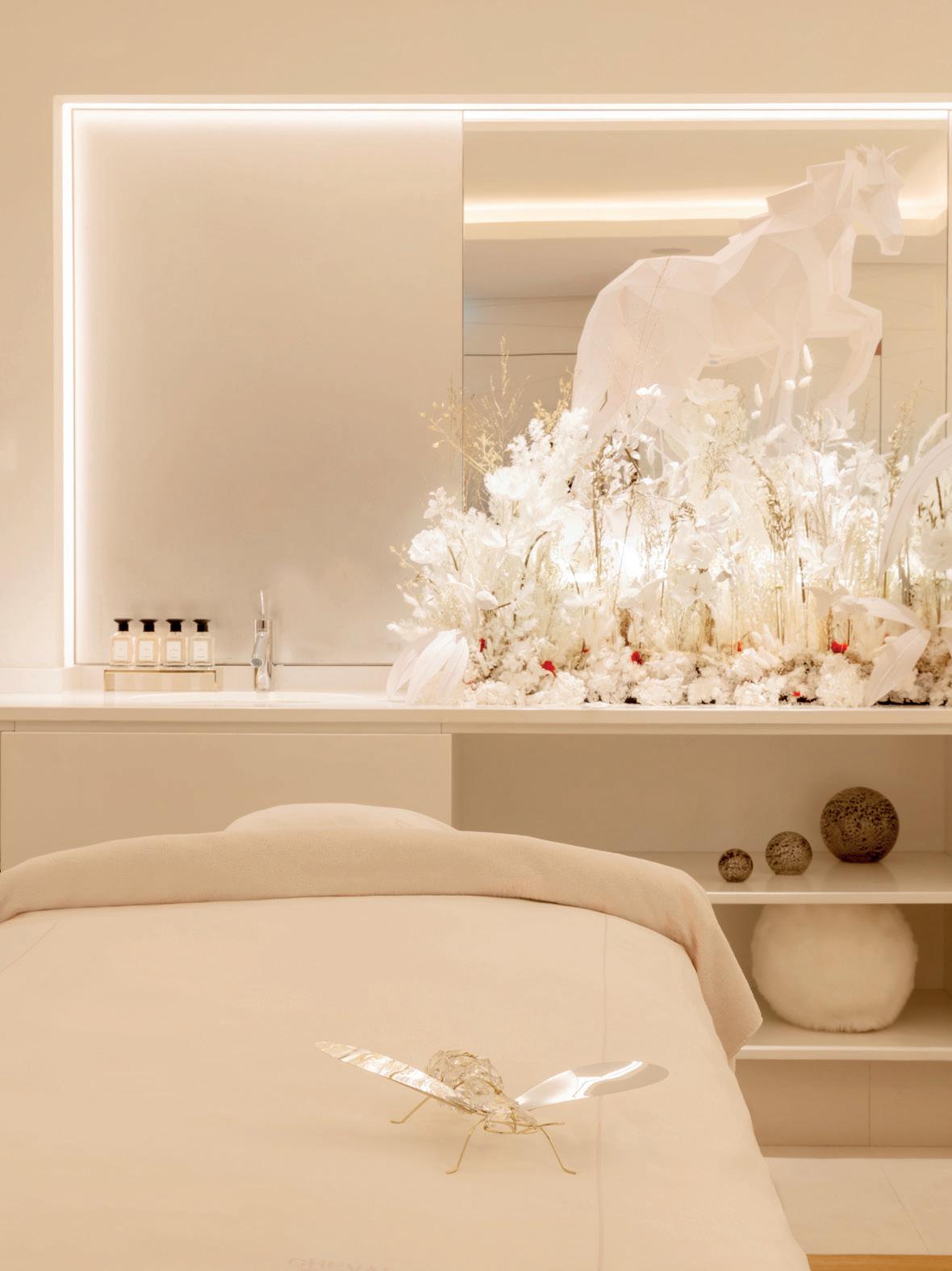
We never ‘copy and paste’ a Guerlain Spa, but instead take inspiration from the local culture, energy and background story of our hotel partners when it comes to developing concepts.
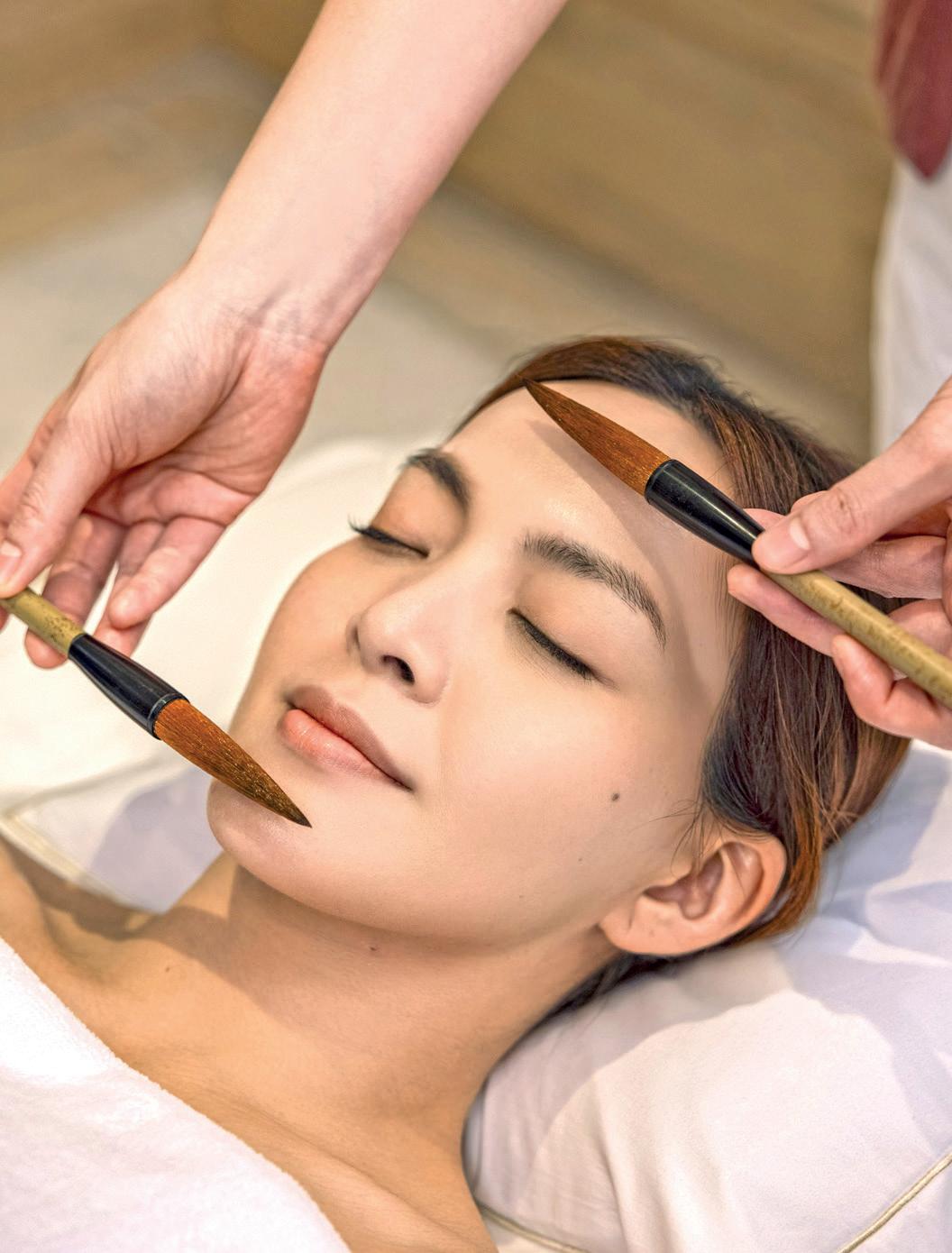
Firstly, we develop exclusive therapies – in Rosewood Hong Kong, for example, we offer the Spirit of Calligraphy facial, with precise, brush-inspired movements creating both a sensory ritual and an artistic experience.
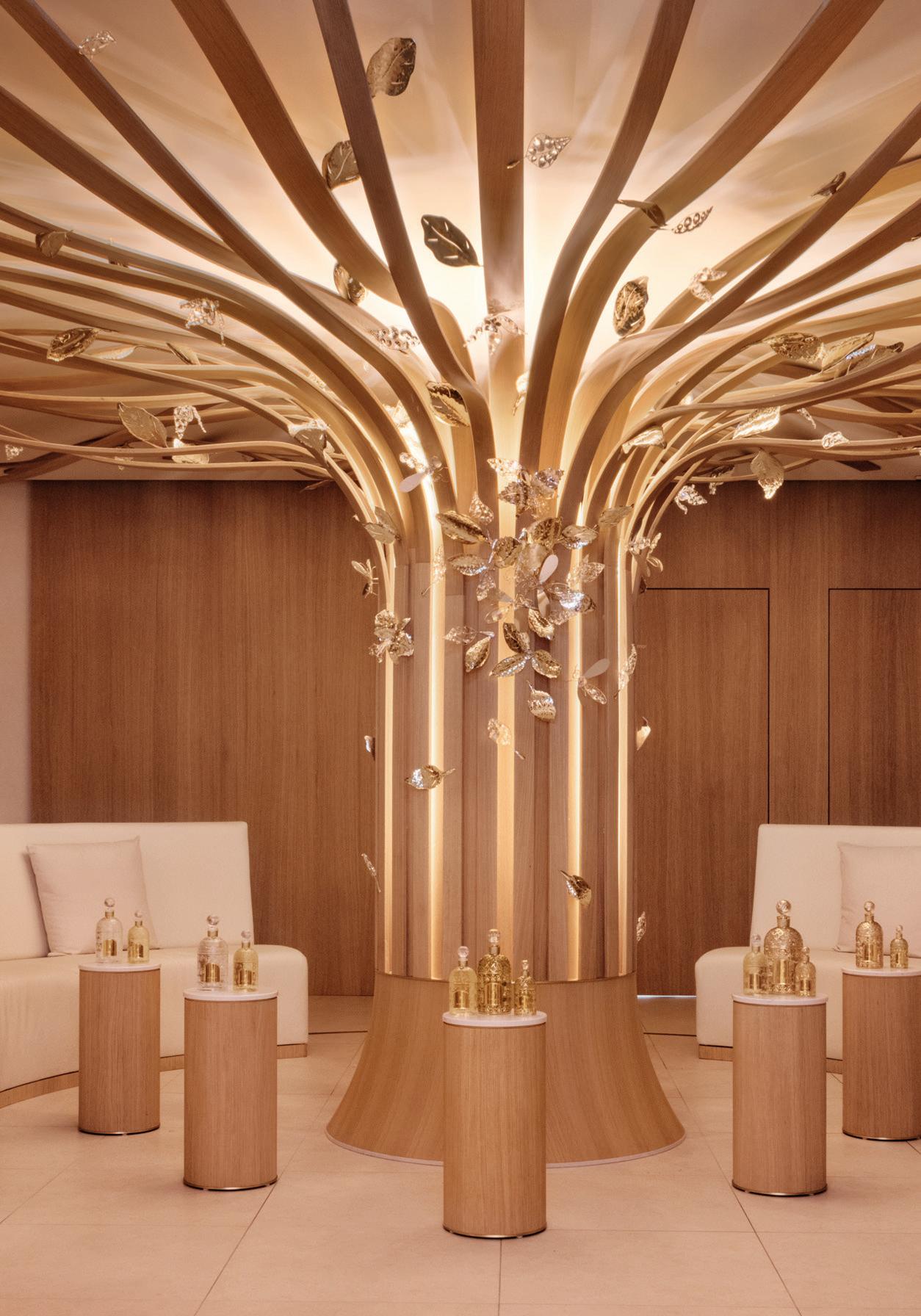
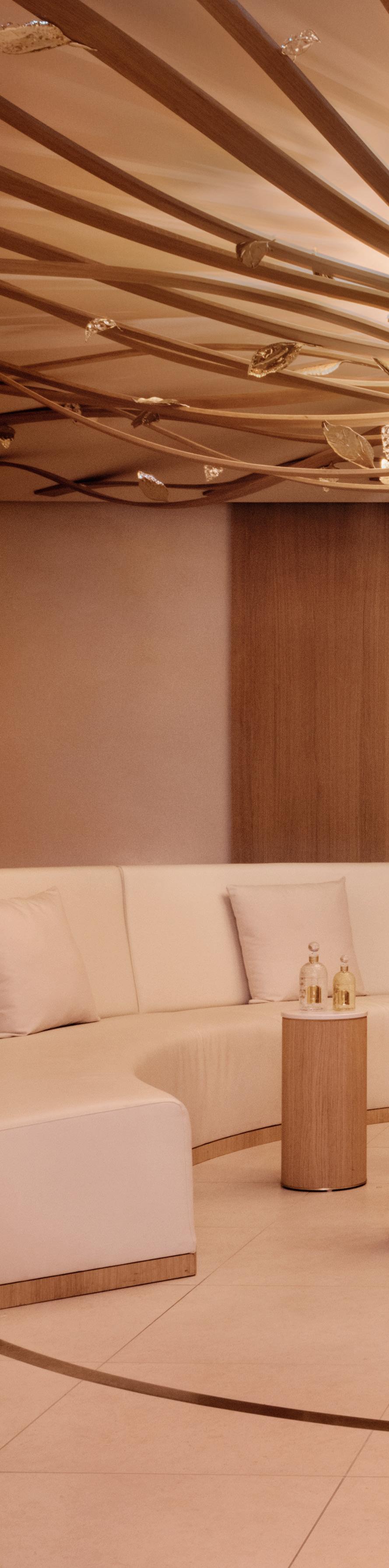
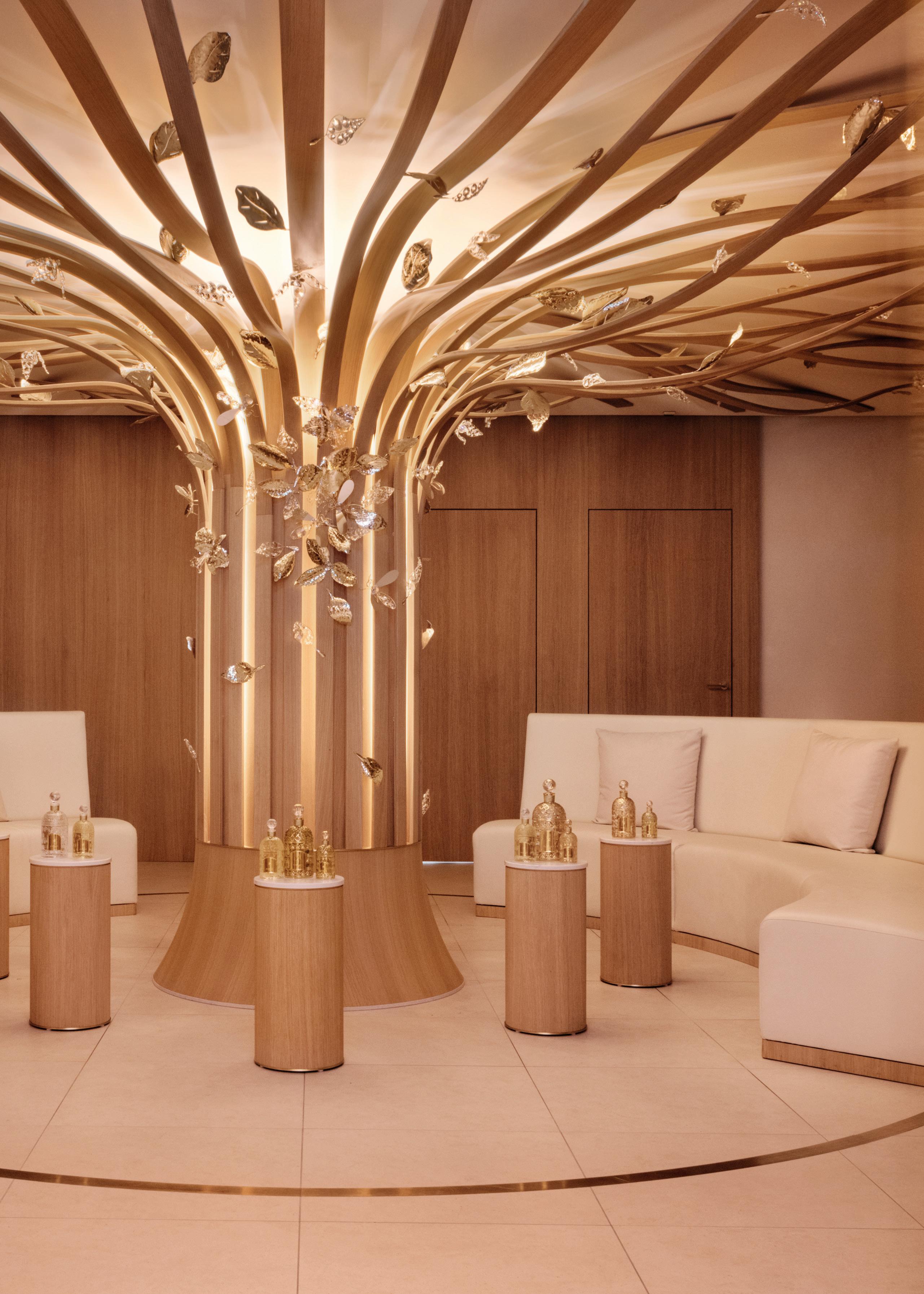
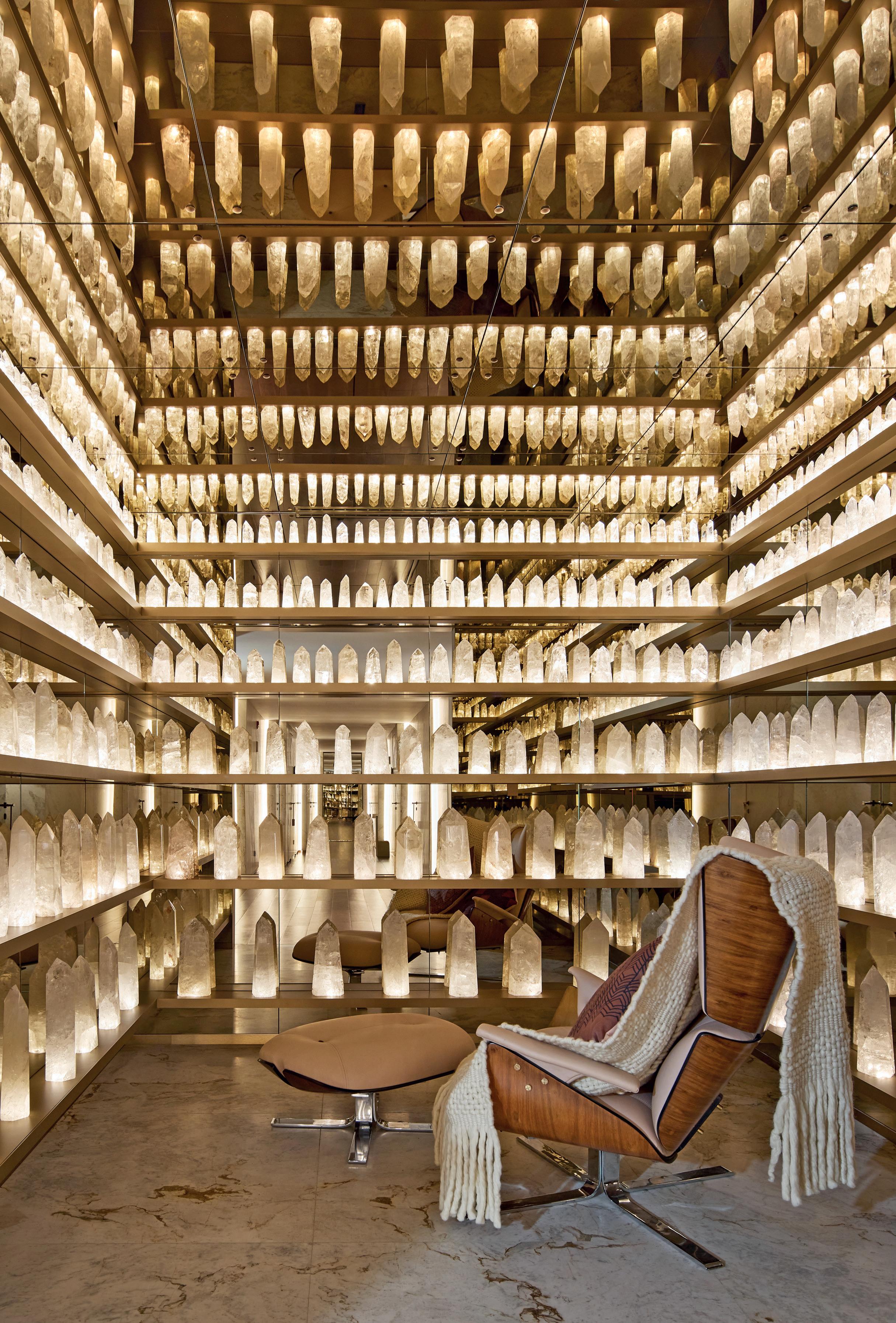
Secondly, we partner with local artists so each spa becomes a stage to bring their work to life. At Le Beau-Rivage Palace in Lausanne, for example, we have an incredible Tree of Life sculpture by Géraldine Gonzalez.
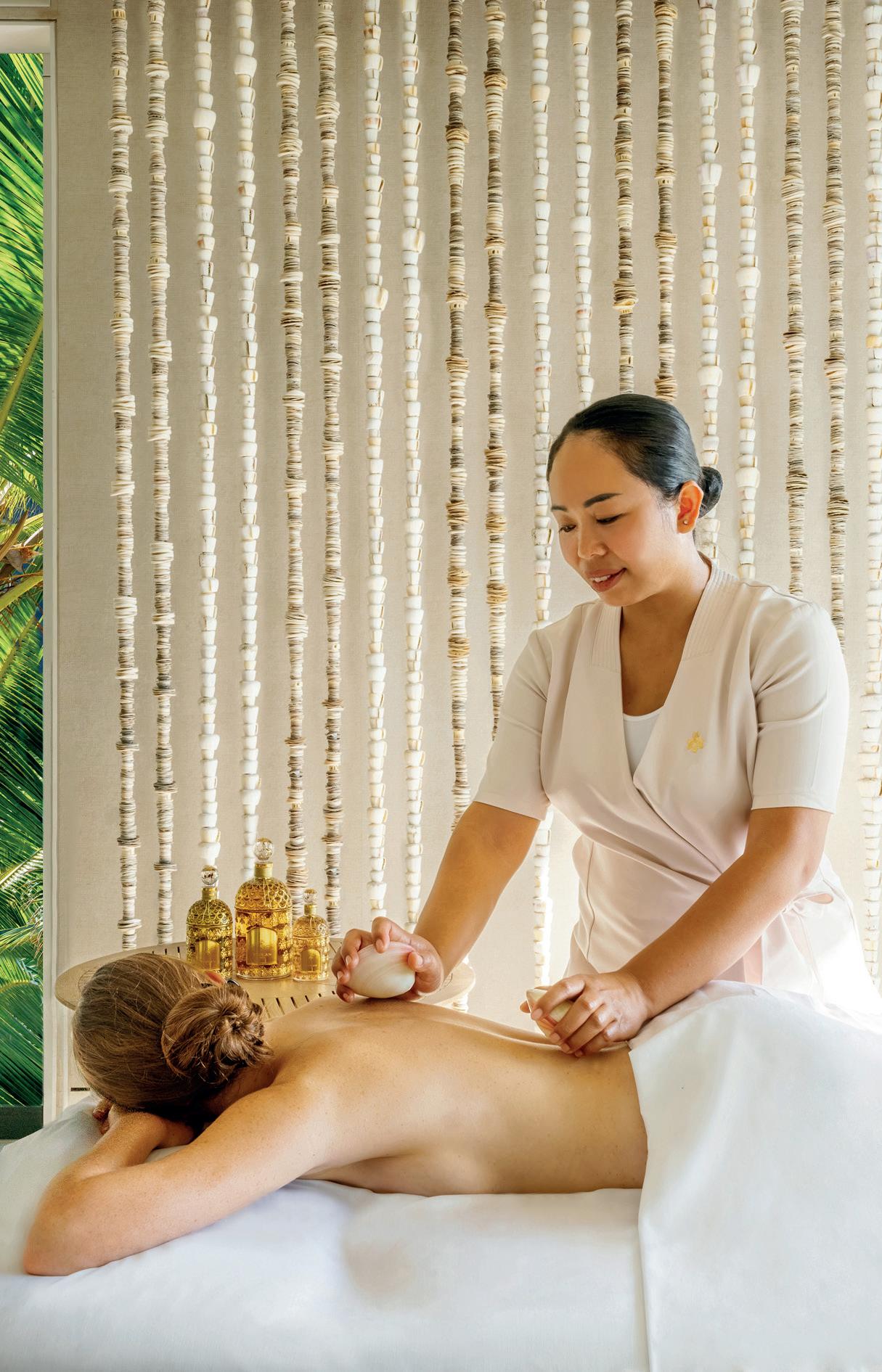
Thirdly, we include signature details and exclusive creations, such as the bespoke fragrance we created for Waldorf Astoria New York and the use of shells in the signature massage at Cheval Blanc Seychelles (see www.spabusiness.com/sey).
It’s the accumulation of these carefullycrafted details, delivered by expertly trained ‘Guerlain hands’, that creates a sense of place, while remaining distinctively Guerlain.
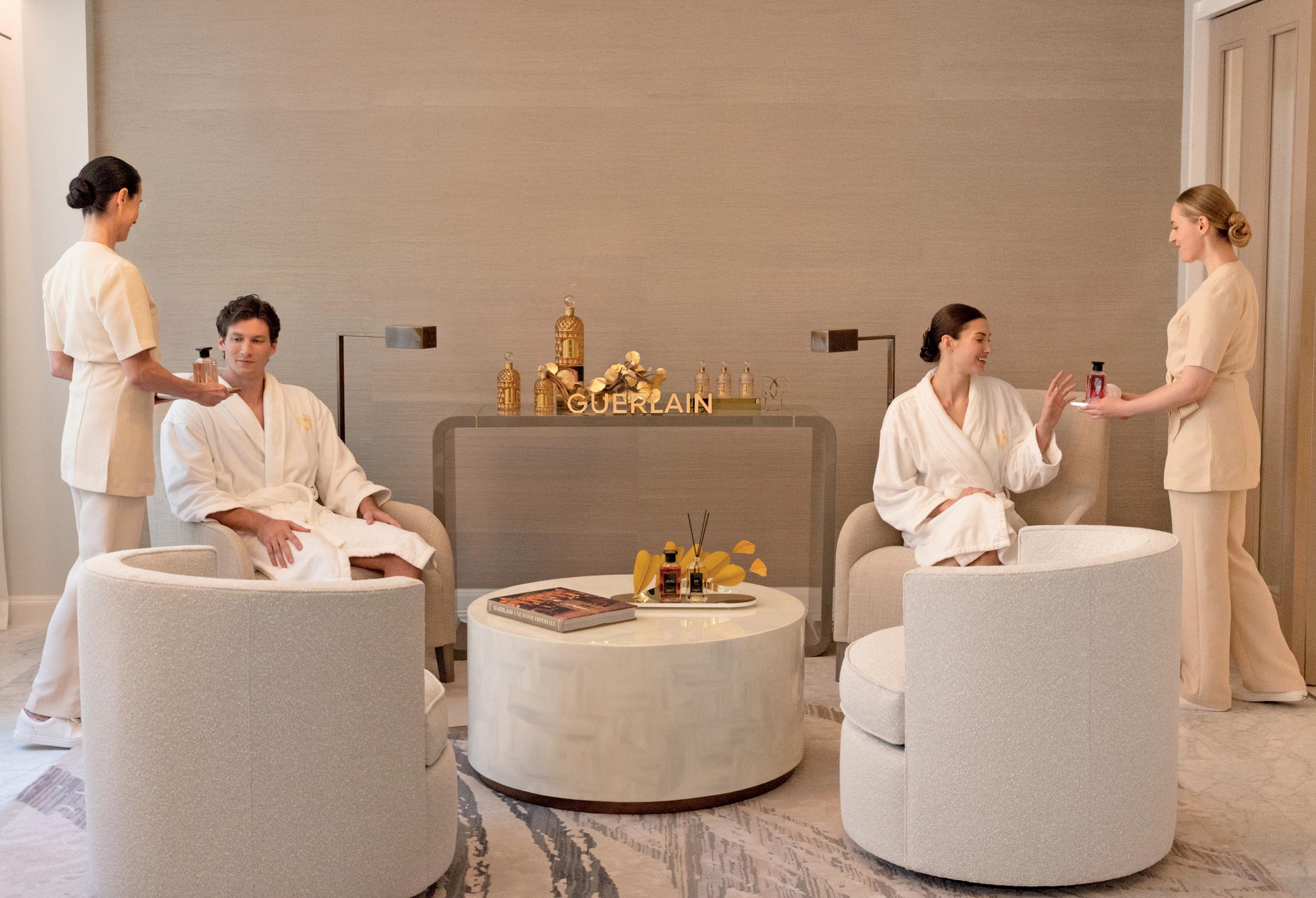
Our 38 landmark hotel spas have become one of Guerlain’s strongest assets
The reopening of Waldorf Astoria New York is pivotal for Guerlain, with the launch of its largest and most advanced wellness spa to date. The 22,000sq ft facility, operated by Trilogy Spa Holdings, signals a new level of integration between advanced aesthetics, longevity and retail. Diane Davody, international spa business director at Guerlain, says: “It’s a step further in everything we’ve been developing over the last few years.”
Guerlain has created an array of treatments inspired by the hotel’s history.
Signatures include Spirit of Achievement, named after the property’s iconic statue, that’s designed to channel strength and empowerment; Just Like Clockwork, a mindrelease massage referencing the hotel’s famous clock and delivered on Gharieni’s vibroacoustic Welnamis table; and Golden Hour, a redcarpet facial promising visible luminosity.
A deep muscular body treatment has also been developed in collaboration with
world massage champion Slav Marinov (see www.spabusiness.com/24_4marinov).
In addition to this, holistic packages – built around the pillars of nutrition, movement, sleep and mindfulness – range from three- to six-months, week-long retreats or one-hour power sessions.
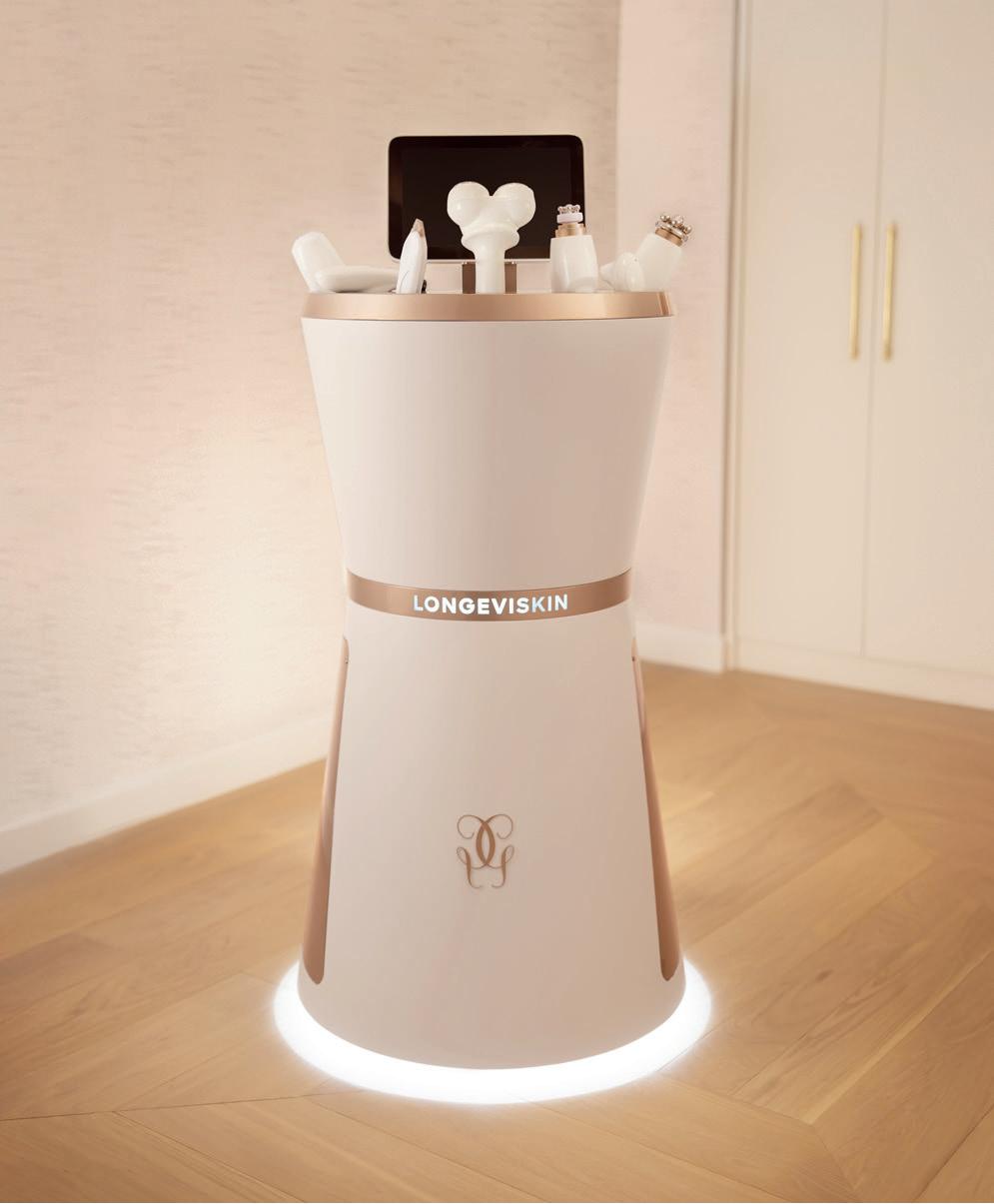
The New York spa is one of the first to offer Guerlain’s LongeviSkin device. Manufactured by aesthetic technology specialist ISI Spa to Guerlain’s requirements, it features seven modalities – LED, micropeel, radiofrequency, microcurrent, plasma, ultrasound and cryotherapy – within a single system.
“These technologies exist individually,” explains Davody, “but we combine them in one tool that assesses the skin and delivers only what is most efficient and bespoke.”
Together, all the offerings are “designed to deliver a dynamic balance of wellness, optimal harmony and radiance,” concludes Davody. Read more: www.spabusiness.com/oct25_wany
Hotels
● Guerlain Spa, One&Only Le Saint Géran, Mauritius
● Cheval Blanc Spa by Guerlain, Seychelles
ASIA
Hotels
● Asaya Spa by Guerlain at Rosewood, Hong Kong, China
● Guerlain Spa at The PuXuan, Beijing, China
● Cheval Blanc Spa by Guerlain, Randheli, Maldives
Institutes
● Guerlain Institute, Hong Kong, China
Esthétique Salons Guerlain in Japan
● Kobe
● Kyoto Hotel Okura, Kyoto
● Herbis Plaza Ent, Osaka
● Teikoku Hotel, Osaka
● Beauty Avenue Socie, Yokohama Bay Hotel, Tokyo
● Beauty Avenue Socie, Ginza, Tokyo
● Chinzanso Hotel, Tokyo
● Ginza Honten, Tokyo
● Sheraton Miyako, Tokyo
EUROPE
Hotels
● Airelles Spa by Guerlain, Gordes, France
● Airelles Spa by Guerlain, Val d’Isère, France
● Cheval Blanc Spa by Guerlain, Courchevel, France
● Cheval Blanc Spa by Guerlain, Saint Tropez, France
● Guerlain Spa at The Grand Hôtel, Bordeaux, France
● Guerlain Spa at Le Normandy, Deauville, France
● Guerlain Spa onboard Orient Express
Corinthian (superyacht), France
● Guerlain Spa at Waldorf Astoria Versailles, France
● Imperial Spa at Hôtel du Palais, Biarritz, France
● Relais Christine Spa, Paris, France
● Saint James Paris Spa, Paris, France
● Guerlain Spa at One&Only Aesthesis, Athens, Greece
● Airelles Spa by Guerlain, Venice, Italy
● Belmond Villa San Michele Spa by Guerlain, Florence, Italy
● The Spa Metropole by Guerlain, Monte Carlo, Monaco
● Guerlain Spa at Waldorf Astoria, Amsterdam, NL
● Guerlain Spa at Le Beau-Rivage Palace, Lausanne, Switzerland
● Guerlain Spa at The Woodward, Geneva, Switzerland
● Guerlain Spa at Raffles The Owo, London, UK
Institutes
● LʼInstitut Guerlain, Prague, Czech Republic
● LʼInstitut Guerlain, 68 Champs-Élysées, Paris, France
MIDDLE EAST
Hotels
● Guerlain Spa at Waldorf Astoria, Jerusalem, Israel
● Guerlain Spa at The St Regis Al Mouj Muscat Resort, Oman
● Guerlain Spa at The St Regis, Doha, Qatar
● Guerlain Spa at One&Only The Palm, Dubai, UAE
NORTH AMERICA
Hotels
● Belmond Cap Juluca Spa by Guerlain, Anguilla
● Guerlain Spa at Four Seasons, Montreal, Canada
● Guerlain Spa at Hotel X, Toronto, Canada
● Cheval Blanc Spa by Guerlain, St Barth
● Guerlain Spa at The Breakers, Palm Beach, Florida, USA
● Guerlain Spa at Raffles, Boston, USA
● Guerlain Wellness at Regent Santa Monica, California, USA
● Guerlain Wellness Spa at Waldorf Astoria New York, USA
SOUTH AMERICA
Hotels
● Asaya Spa by Guerlain at Rosewood, São Paulo, Brazil
● Maroma Spa by Guerlain, Riviera Maya, Mexico
*Source: Guerlain Spa website (not an official listing)

Everyone’s talking about...
The Iran war has shaken the world and will have long-lasting consequences for tourism. Industry experts share their views on likely impacts and how to navigate them with Liz Terry
Global travel flows and consumer confidence have been affected far beyond the Middle East
Operators and investors should use this time to think about what to do when things get better
Geoffrey Lipman, president, SUNx
The most rational thing operators can do is batten down the hatches, because nobody knows where the war in Iran is going or how long it will continue in its current form. It’s especially unpredictable because both sides have powerful reasons for not wanting to cave in.
The atmosphere around doing anything in the Middle East from origin markets is certainly going to shrink and the inclination for people wanting to travel is going to be dampened.
The longer it lasts, the greater the consequences on the normal way of living. The Strait of Hormuz is not just about oil supplies – it’s about the global supply chain, which goes into almost everything and reverberates.
The positive thing is for operators and investors to use this time to think about what they’re going to do when things get better, because all wars in history have had a beginning and an end and there will be an end.
This includes working out how to make operations more sustainable from an energy viewpoint. And planning for disruptions such as this war, building them into calculations, rather than treating them as exceptions.
We should also be rethinking the contribution we expect tourism to make to our society – is it realistic to expect year-on-year growth? What would we do in a world where tourism numbers are uneven or constrained for a period of years, because the underlying conditions do not always encourage steady growth?
Marc
Cohen, professor, integrative doctor, author and entrepreneur
The currency of wellness is connection. This is true for individuals, communities and nations.
Wellness thrives on openness, freedom of movement, cultural exchange and trust. Global wellness, therefore, requires a thriving tourism sector where travellers move easily across borders and experience new landscapes, cultures and healing traditions in the pursuit of human flourishing.
War and terrorism operate in the opposite direction. War closes borders, erodes trust and redirects resources toward security, defence and survival. Tourism and war are, therefore, fundamentally incompatible.
The Middle East conflict makes this tension impossible to ignore. As a nexus of civilisation, trade and a birthplace of many spa traditions, it’s once again a theatre of war. That contradiction
should matter to everyone in the spa and wellness industry.
Humanity now faces an extraordinary choice. War or wellness? Will we continue to invest ever greater resources in weapon systems designed to degrade human life and infrastructure, or will we invest in wellness tourism and create places where humans flourish?
The spa and wellness industry is uniquely positioned to influence that balance, not through politics, but through the power of what it builds and who it welcomes. Tourism builds bridges. Wellness builds resilience. Peace builds prosperity.
By creating beautiful, well-managed places where people feel truly alive,
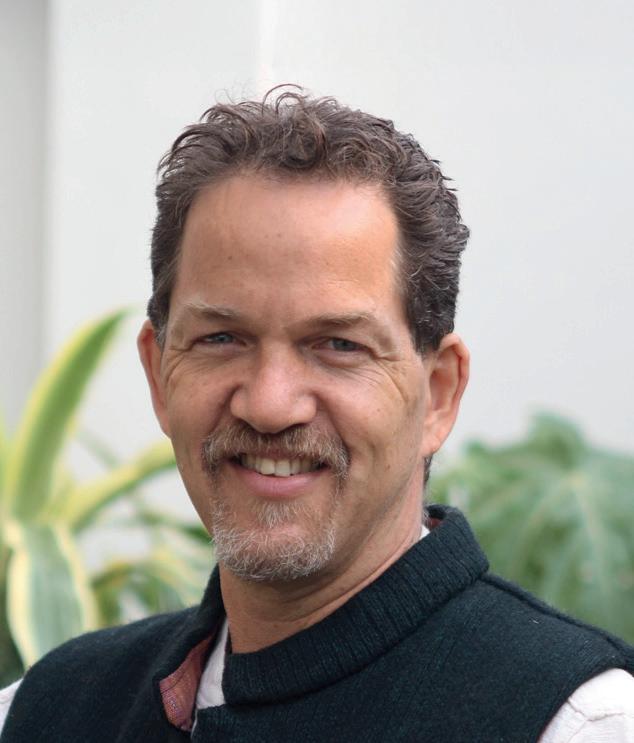
wellness businesses contribute to something larger than revenue. They contribute to the social conditions that make peace an imperative.
In the end, the most powerful infrastructure humanity can build may not be a mirrored megacity or a missile defence system, it may be a global wellness culture where we’re so interconnected and invested in the pursuit of wellness that war becomes unthinkable.
Read Marc Cohen’s insights in full on page 12.
By creating places that help people feel truly alive, the sector can make peace an imperative

The wellness industry is uniquely positioned to help humans flourish



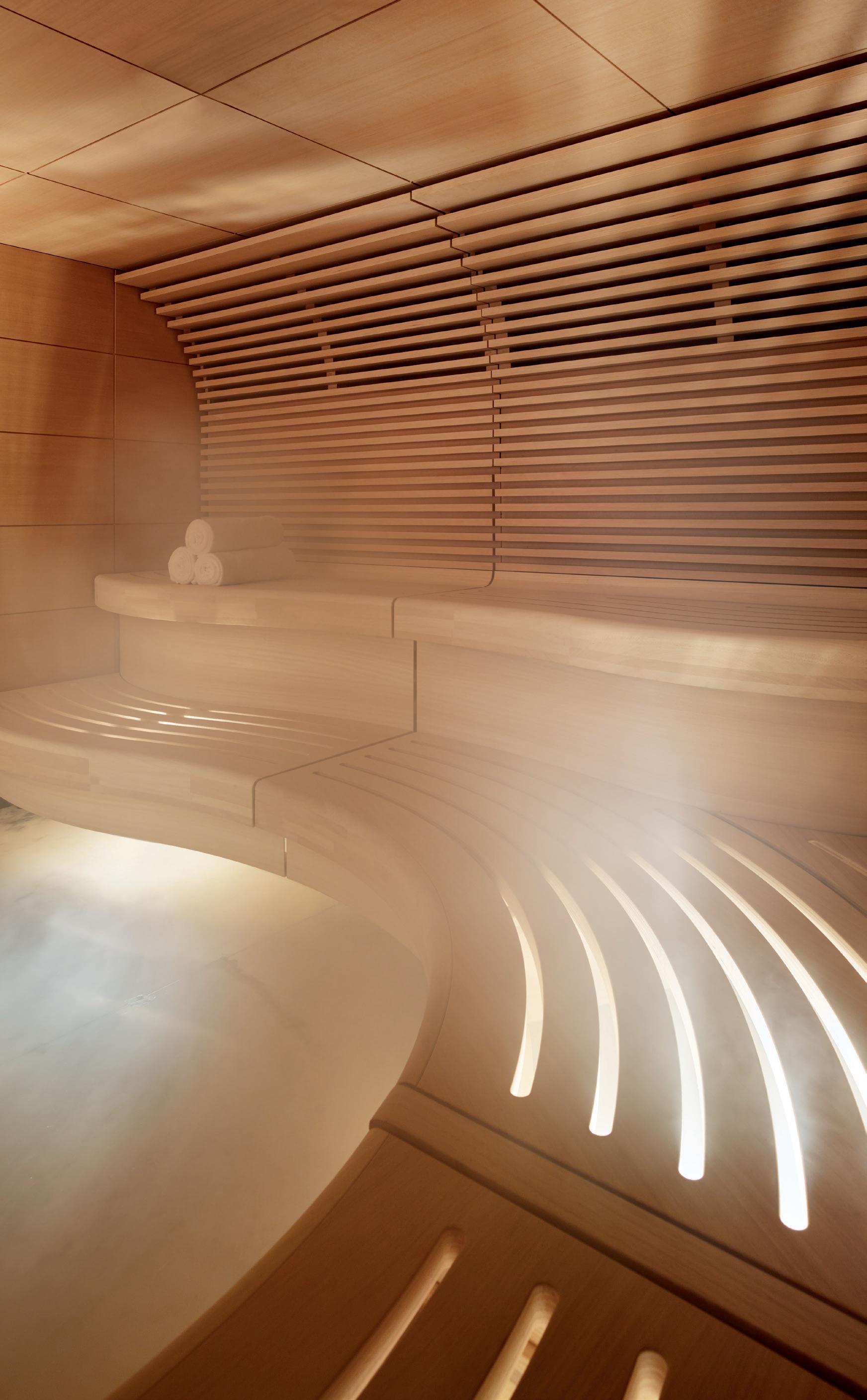
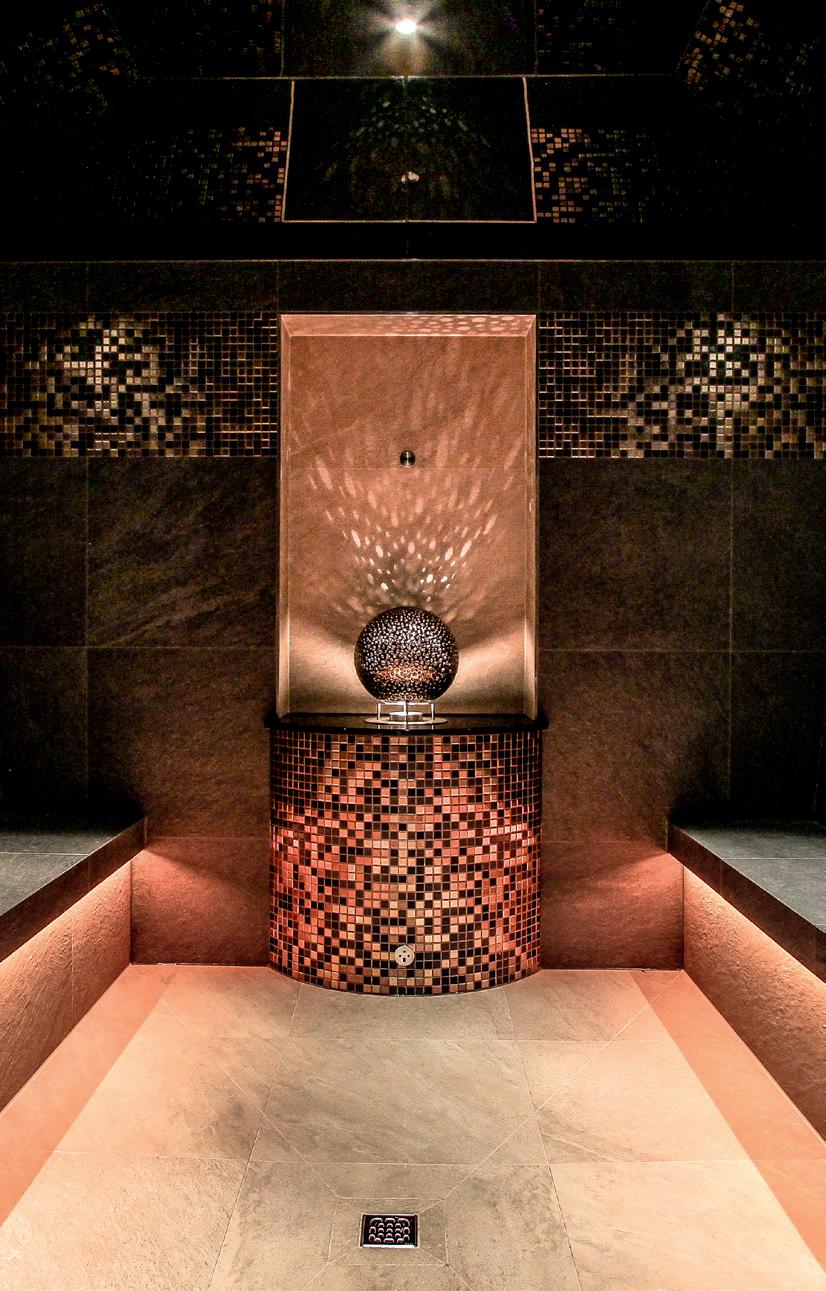
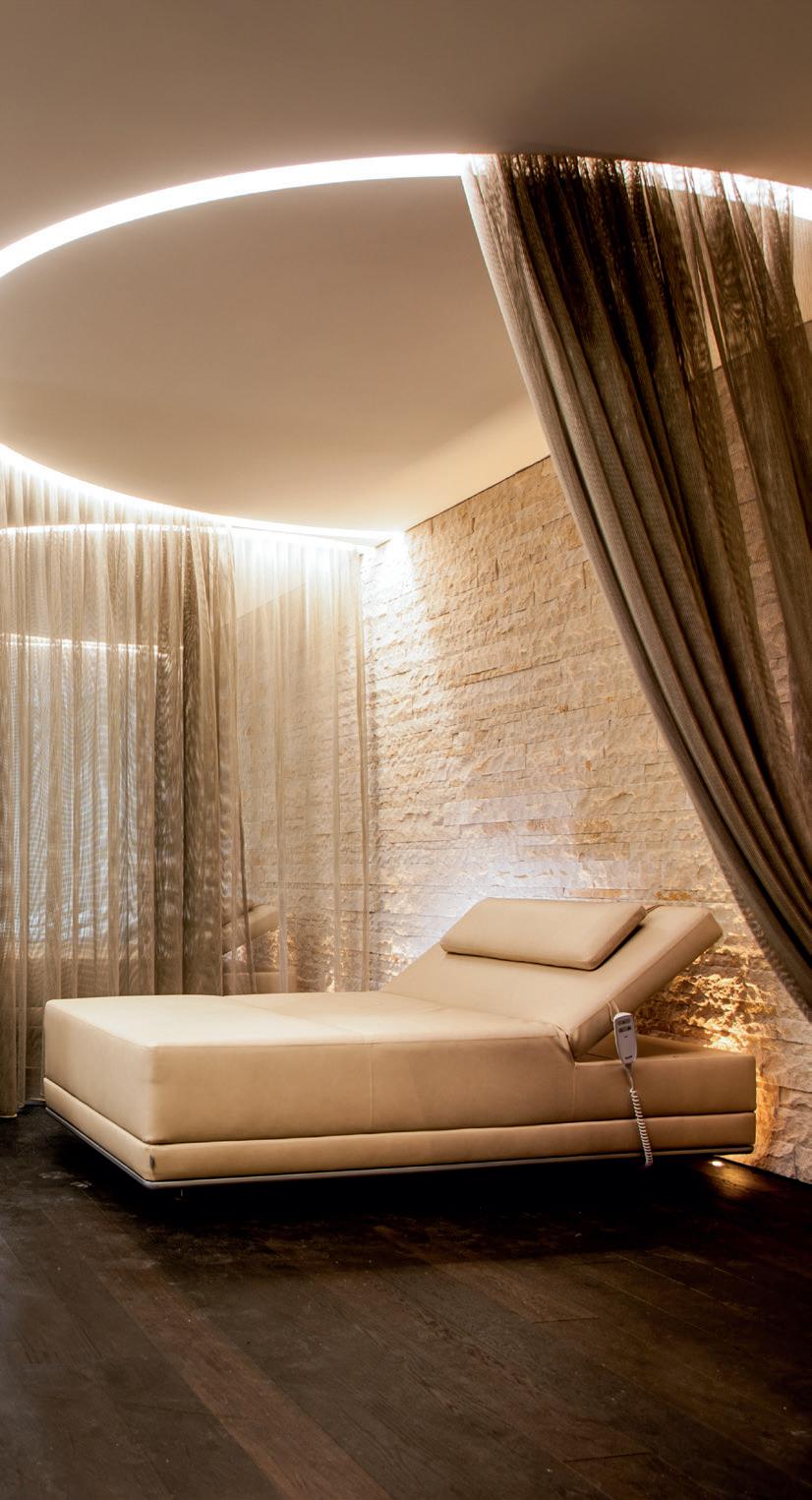
DEFINING SPA. SINCE 1928.
As a global manufacturer of exclusive saunas and bespoke spa experiences, we understand that true relaxation is an art, a harmony of exceptional comfort, uncompromising quality, and timeless design. Guided by passion and precision, we craft sanctuaries of wellbeing that awaken the senses, restore balance, and rejuvenate the body and the mind – offering your guests unforgettable moments of pure indulgence.
Terry Stevens, managing director, Stevens and Associates
There will always be ‘black swan’ events – wars, pandemics or economic crises – that heighten and accelerate existing trends. The spa and wellness industry is understandably nervous in the light of the war in Iran and for many, the only certainty is uncertainty.
The pandemic amplified a move towards wellness and we’re likely to see the same thing as a result of the war in Iran.
The first trend that will define the next decade is the proximity of business to local and neighbouring markets. We’ll see more focus on memberships and travellers staying closer to home, so operators need to refocus their marketing, products and pricing to align with this.
There will also be growing opportunities in local regions, with alliances between operators. We’ll see the middle European tourist destinations forming a region, for

The ripple effects of the Iran war are destabilising the Middle East and having consequences for every country in the world. It’s significantly disrupting travel, consumer behaviour, supply chains and overall business operations.
In times of stress and insecurity, people need to recharge themselves. This provides an opportunity for us in the wellness space. At last, spas are truly starting to deliver on physical, mental and even spiritual wellbeing and customers are seeking support for their health. Longevity clinics, social wellness clubs and many other wellness niche operators are spreading across Europe and the Middle East with a wide array of programmes and packages.
Businesses affected by the war must be agile. I was in Oman during the first Gulf War [in 1990]. Our location was as far away from the war as Rome is to Stockholm, but we still lost our international business. So we pivoted to the new wave of visitors from the countries affected
example, or Austrian operators refocusing on the Italian, German and French markets. During COVID-19, we saw people wanting to be more in touch with nature, with consumers drawn to operators offering walking trails and forest bathing activities. Now we’ll see more of this kind of programming being delivered through collaborations with partners who can bring different elements of the offering to the partnership. Infrastructure has been hit hard by the Iran war and this is likely to prompt longer-term investment in more robust transport links, such as high-speed train services and regional airports. Developments that aren’t yet open, or mature and those where local airports are closed could be mothballed and then reopened or completed when the time is right.
Alliances between operators in middle European tourist destinations will increase
In times of stress and insecurity people need to recharge themselves
by the conflict, attracting them by changing the terms and length of stay and creating a membership.
In countries around the GCC, there’s a natural resilience. Citizens may be anguished by persistent threats, but continue to live a normal life. While not necessarily able or inclined to travel far, they’re looking to escape reality. Wellness operators in the region can entice them by offering and increasing programmes that focus on mental health, short weekend breaks and relaxing treatments in a calm, serene environment.
For our European colleagues, the domestic market – which also extends to neighbouring countries – also provides opportunities. Short breaks
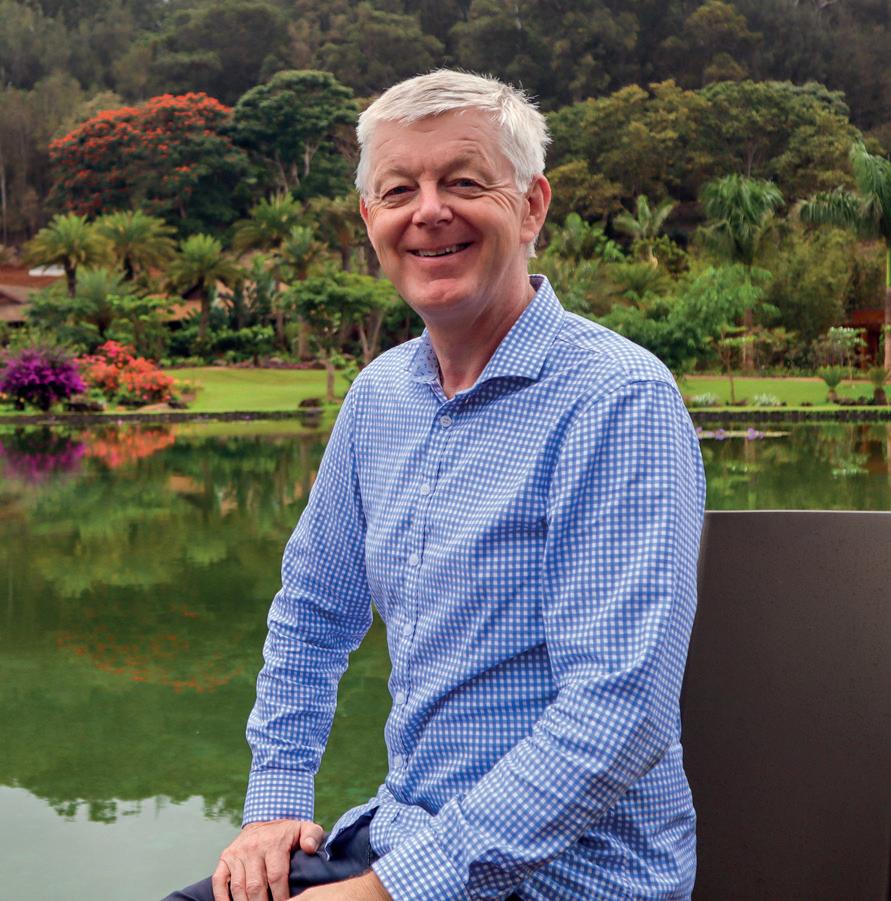
and wellness weekends are already rising as increasing fuel costs, travel disruptions and uncertainties about the future see people seeking something closer to home and something that includes wellness services.
Irrespective of operating within the GCC or Europe, this is a time to review your marketing and focus on the local market, highlighting community events and your safe, welcoming and supportive environment.
agree their skin looks more lifted* 94%
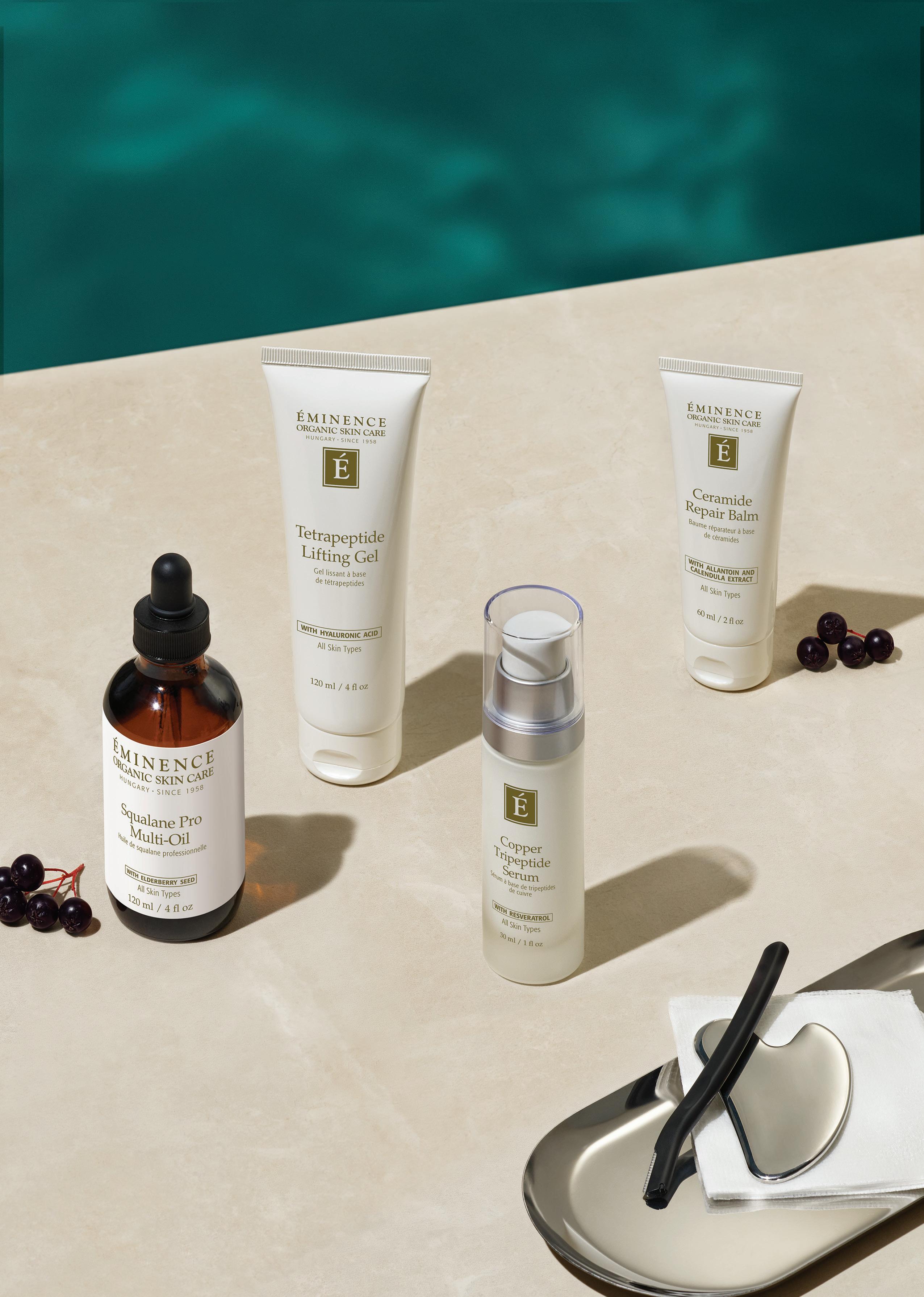
ENHANCED RECOVERY, PROFESSIONAL RESULTS
Discover the next level of post-treatment care. Formulated to extend the benefits of spa treatments, these performance-driven formulas leave the complexion looking hydrated, firm and calm.
Ready to partner with Éminence Organics? Apply here
showed a reduction in appearance of skin dryness1 97%
showed a reduction in appearance of skin redness* 97%
In times of geopolitical uncertainty that affect consumer confidence and travel patterns, it’s important to remember that spas have always been places of refuge and rejuvenation worldwide and the modern spa industry has always demonstrated resilience. Throughout ISPA’s three-and-a-half decades, the global spa sector has seen occasional short-term dips during major world events, but the long-term trend has continued to be one of steady growth.
Today, the industry is in its seventh year of strong recovery following the COVID-19 pandemic. The current crisis will prove no different. In the
near term, spa operators may see more people choosing domestic or regional travel, along with growing interest in experiences focused on stress relief, recovery, and mental wellbeing. During periods like this, spa leaders focus even more on serving their local communities while continuing to invest in their businesses for the long term. For example, the recent ISPA Conference in Las Vegas brought together spa professionals from 28 countries, reflecting the global spa community’s continued commitment to collaboration and moving forward together.
Periods of global complexity inevitably influence how and where people travel. Yet they also reveal the enduring relevance of wellness. Markets rarely fear negative news alone. They struggle with uncertainty, particularly how long difficult situations will last.
Across hospitality, one noticeable shift has been renewed emphasis on regional and short-haul markets, while continuing to nurture long-standing relationships with international clients and partners. This balanced approach allows operators and developers to maintain stability while adapting to changing global conditions.
Over the past 25 years, our industry has faced repeated disruptions – from 9/11 to the global financial crisis, from SARS to COVID-19. Each time, travel pauses briefly, but the human desire to explore and reconnect always returns.
In the 2020 pandemic, global travel came to a near standstill, with international tourist arrivals declining by more than 70 per cent. Yet recovery was swift. By 2024, many destinations were already reporting record visitor numbers and unprecedented demand for meaningful travel experiences.
Spa leaders will focus even more on serving local communities while continuing to invest for the long term
Wellness has become one of the most powerful and resilient segments of global tourism
COVID-19 accelerated an important transformation. Travel today is less about simply going somewhere. It’s about how a destination makes you feel.
Experiential travel, immersive destinations and purpose-driven journeys are shaping the future. Within that transformation, wellness has become one of the most powerful and resilient segments of global tourism.
The global wellness economy has grown to US$6.8 trillion (€5.81 trillion, £5.04 trillion), while wellness tourism alone is valued at US$894 billion (€764 billion, £662.2 billion) and continues to expand faster than the overall tourism sector.
In uncertain times, people look for spaces that offer restoration, clarity and emotional balance. Wellness resorts and retreats increasingly serve as sanctuaries.
For the wellness industry, this demand carries opportunity and responsibility. Hospitality must go beyond the ordinary. Guests are looking for empathy, awareness and genuine care.
Crises may interrupt travel, but they rarely diminish humanity’s desire for connection, discovery and wellbeing. If anything, they strengthen it. l
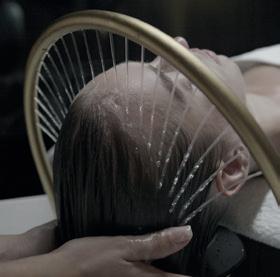



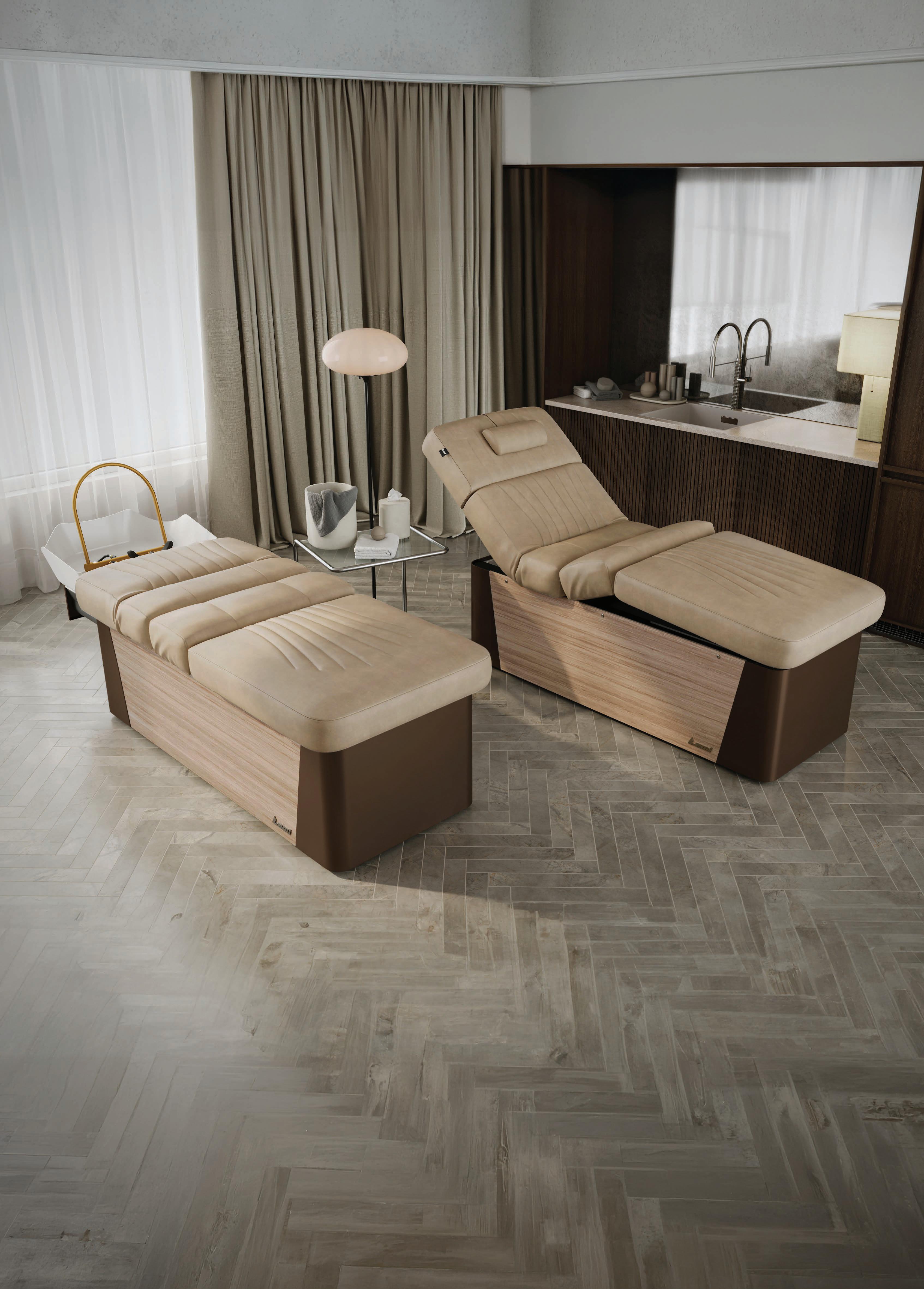
WELLSurvey 2.0 reveals rising distrust, limited brand differentiation and a US$606bn market opportunity. Authors Kevin Kelly and Peter Yesawich unpack the findings in this Spa Business exclusive

ELLSurvey 1.0*, conducted in January 2024, was the first national probability survey to examine how US adults understand the relationship between wellness, wellbeing and longevity. The survey polled a representative sample of 1,004 adults aged 25 to 74, drawn from the top half of all US households defined by annual income. The initial findings were reported in Spa Business in September 2024 (www.spabusiness.com/WS24).
The survey was inspired by the observation that many providers conflate the concepts of wellness and wellbeing and use the terms interchangeably. Brands, operators, service providers, retreats and resorts routinely blur the concepts in their marketing and fail to communicate the unique aspects and benefits of each properly.
Consumers recognise the concepts of wellness and wellbeing are related but describe different outcomes defined by the associated benefits. Wellness is seen as a set of activities people undertake to support their health, such as exercise, spa treatments and preventive practices. Wellbeing is understood to be a result of those activities viewed through the lens of emotional health: the way a person feels physically, mentally and emotionally. This distinction matters because it frames the appeal of the products, services and experiences consumers seek in the marketplace.

THE DISTINCTION BETWEEN WELLNESS, WELLBEING AND LONGEVITY FRAMES THE APPEAL OF THE PRODUCTS, SERVICES AND EXPERIENCES CONSUMERS SEEK
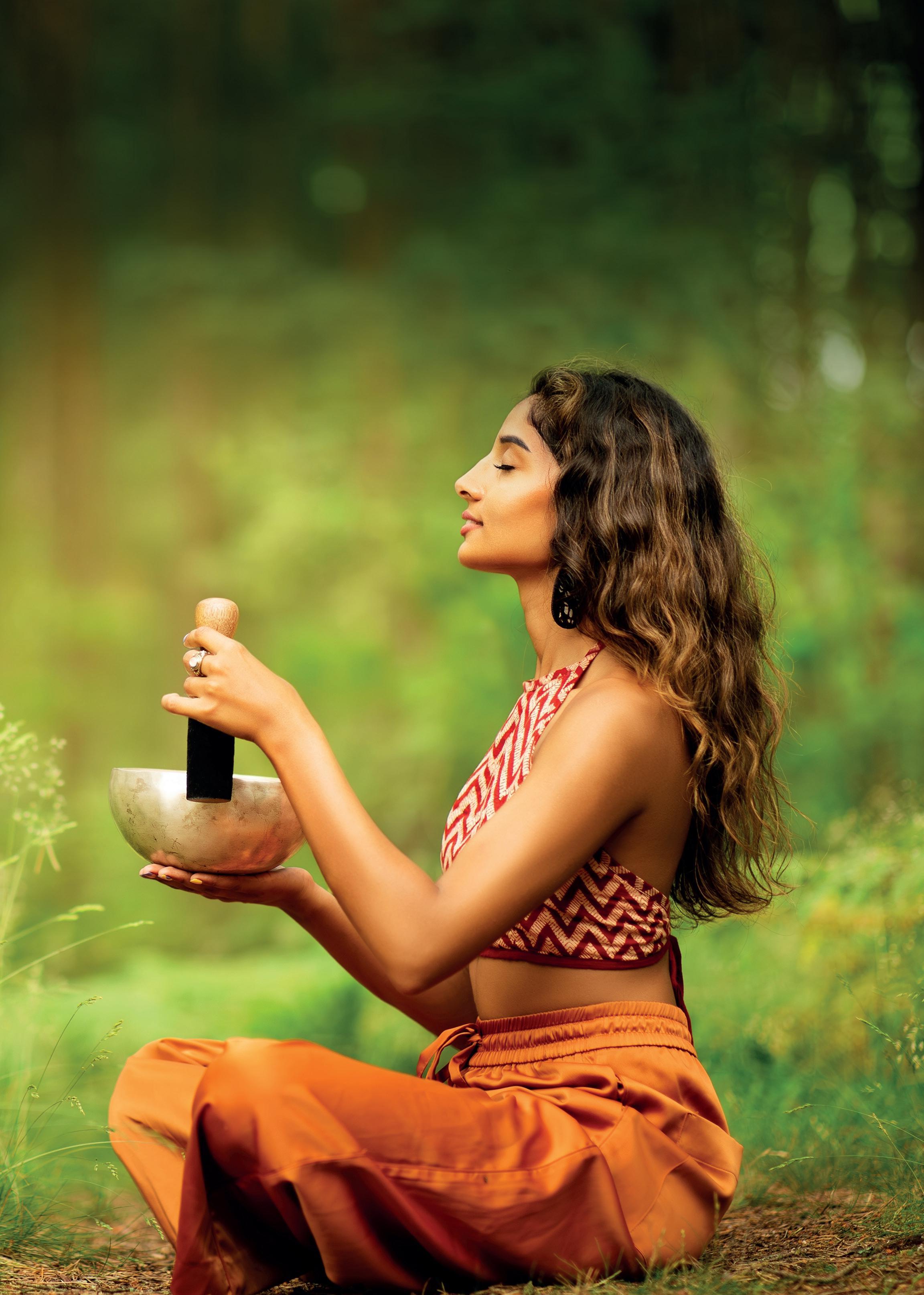
WELLSurvey 2.0 questioned 2,648 adults in the US, the UK and Germany
WELLSurvey 1.0 also revealed another very important insight for industry providers – there are more adults interested in enhancing their wellbeing than their wellness. Stated another way: the addressable market for wellbeing is larger than for wellness. But people drawn to each concept differ demographically and psychographically. Their values, attitudes, behaviours and beliefs vary in ways that filter the kinds of products, services and experiences they find meaningful and worth pursuing.
Collectively, the insights from WELLSurvey 1.0 revealed that wellness activities are inputs, wellbeing is the integrated outcome and longevity is a measure of whether that outcome is sustained over time.
These findings led us to ask whether adults in two other major markets think the same way. To answer that question, we conducted WELLSurvey 2.0 across the US, the UK and Germany.
WELLSurvey 2.0 surveyed 2,648 adults aged 25 to 74: 51 per cent were female and 49 per cent male. They lived in the top half of all households defined by annual income in their respective
view ‘wellness’ as active participation in healthsupporting behaviours
countries. The survey included 1,026 respondents in the US, 804 in the UK and 818 in Germany and was conducted online in November 2025.
Respondents were highly engaged in maintaining their health. More than 70 per cent rated their health as good or excellent. Ninety-one per cent reported taking part in some form of physical activity and 70 per cent collected and monitored their health metrics.
Across the three markets, interest in enhancing wellbeing was also high. Fifty per cent of respondents said they were interested in doing so, while 54 per cent reported they regularly used spa, wellness or preventive therapies. In Germany the incidence rose to 76 per cent of respondents, reflecting particularly strong engagement with integrative health practices there.
These figures reveal that survey respondents were active participants in health-related behaviour. This context is important because today’s consumers have unprecedented access to ways to improve their health. Fitness programmes, supplements, recovery technologies, nutritional plans, preventive diagnostics and longevity protocols are more widely available than at any other time in history.









Fragrances
Fragrances for steam baths,
Fragrances for steam baths, saunas, whirlpool, hot tubs and experience showers
Fragrances for steam baths, saunas, whirlpool, hot tubs and experience showers
Fragrances for steam baths, saunas, whirlpool, hot tubs and experience
Fragrances for steam baths, saunas, whirlpool, hot tubs and experience showers
Sauna, spa and wellness technology: Technology for experience showers, saunas, hammam, steam baths and rhassoul, dosage systems, inhalation systems, light technology
Sauna, spa and wellness technology: Technology for experience showers, saunas, hammam, steam baths and rhassoul, dosage systems, inhalation systems, light technology
Fragrances for steam baths, saunas, whirlpool, hot tubs and experience showers

Sauna, spa and wellness technology: Technology for experience showers, saunas, hammam, steam baths and rhassoul, dosage systems, inhalation systems, light technology
Sauna, spa and wellness technology: logy for experience showers, saunas, hammam, steam baths and rhassoul, dosage systems, inhalation systems, light technology
Sauna, spa and wellness technology: Technology for experience showers, saunas, hammam, steam baths and rhassoul, dosage systems, inhalation systems, light technology
Sauna, spa and wellness technology: Technology for experience showers, saunas, hammam, steam baths and rhassoul, dosage systems, inhalation systems, light technology
Sauna, and wellness technology: Technology for showers, saunas, hammam, steam baths and rhassoul, dosage systems, inhalation systems, light technology
Sauna, spa and wellness technology: Technology for experience showers, saunas, hammam, steam baths and rhassoul, dosage systems, inhalation systems, light technology
Cleaner / conditioner for sauna, spa and wellness facilities. Disinfectant and cleaner for whirlpools and Jacuzzis
Sauna, spa and wellness technology: Technology for experience showers, saunas, hammam, steam baths and rhassoul, dosage systems, inhalation systems, light technology
Sauna, spa and wellness technology: Technology for experience showers, saunas, hammam, steam baths and rhassoul, dosage systems, inhalation systems, light technology
Cleaner / conditioner for sauna, spa and wellness facilities. Disinfectant and cleaner for whirlpools and Jacuzzis
Kemitron , is manufacturer of high-quality products for the spa-, sauna-, and wellness market (technology, fragrances, cleaners, cosmetic). The company’s focus is on best quality and workmanship. All items are “made in Germany”.
Kemitron , is manufacturer of high-quality products for the spa-, sauna-, and wellness market (technology, fragrances, cleaners, cosmetic). The company’s focus is on best
workmanship. All items are “made in Germany”.
/ conditioner for sauna, and facilities. and cleaner whirlpools Jacuzzis
Cleaner / for sauna, spa wellness facilities. Disinfectant and cleaner for whirlpools and Jacuzzis Fragrances
Cleaner / conditioner for sauna, spa and wellness facilities. Disinfectant and cleaner for whirlpools and Jacuzzis
Cleaner / conditioner for sauna, spa and wellness facilities. Disinfectant and cleaner for whirlpools and Jacuzzis
Cleaner / conditioner for sauna, spa and wellness facilities. Disinfectant and cleaner for whirlpools and Jacuzzis
Cleaner / conditioner for sauna, spa and wellness facilities. Disinfectant and cleaner for whirlpools and Jacuzzis
Fragrances for steam baths, saunas, whirlpool, hot tubs and info@kemitron.com • Telefon: (0)
E-Mail: info@kemitron.com
Fragrances for steam baths, saunas, whirlpool, hot tubs and experience showers E-Mail: info@kemitron.com • Telefon:
Kemitron , is manufacturer of high-quality products the spa-, sauna-, wellness market (technology, cleaners, cosmetic). The company’s focus is on best quality and workmanship. All items are “made
Kemitron , is manufacturer of high-quality products for the spa-, sauna-, and wellness market (technology, fragrances, cleaners, cosmetic). The company’s focus is on best quality and workmanship. All items are “made in Germany”.
Kemitron , is manufacturer of high-quality products for the spa-, sauna-, and wellness market (technology, fragrances, cleaners, cosmetic). The company’s focus is on best quality and workmanship. All items are “made in Germany”.
Kemitron , is high-quality for the sauna-, and wellness market (technology, fragrances, cleaners, The company’s focus is on best workmanship. All “made in Germany”.
Kemitron , is manufacturer of high-quality products for the spa-, sauna-, and wellness market (technology, fragrances, cleaners, cosmetic). The company’s focus is on best quality and workmanship. All items are “made in Germany”.
Cleaner / conditioner for sauna, spa and wellness facilities. Disinfectant and cleaner for whirlpools and Jacuzzis
Kemitron , is manufacturer of high-quality products for the spa-, sauna-, and wellness market (technology, fragrances, cleaners, cosmetic). The company’s focus is on best quality and workmanship. All items are “made in Germany”.
Cleaner / conditioner for sauna, spa and wellness facilities. Disinfectant and cleaner for whirlpools and Jacuzzis
Kemitron , is manufacturer of high-quality products for the spa-, sauna-, and wellness market (technology, fragrances, cleaners, cosmetic). The company’s focus is on best quality and workmanship. All items are “made in Germany”.
Kemitron , is manufacturer of high-quality products for the spa-, sauna-, and wellness market (technology, fragrances, cleaners, cosmetic). The company’s focus is on best quality and workmanship. All items are “made in Germany”.
Kemitron’s products are sold on the international spa and wellness market and can be purchased via our webshop on our homepage. www.kemitron.com
Kemitron’s products are sold on the international spa and wellness market and can be purchased via our webshop on our homepage. www.kemitron.com
Kemitron’s products are sold on the international spa and wellness market and can be purchased via our webshop on our homepage. www.kemitron.com
Kemitron’s products are sold on the international spa and wellness market and can be purchased via our on our homepage. www.kemitron.com
Kemitron’s products are sold on the international spa and wellness market and can be purchased via our webshop on our homepage. www.kemitron.com
Kemitron’s products are sold on the international spa and wellness market and can be purchased via our webshop on our homepage. www.kemitron.com
Kemitron’s products are the international spa and wellness market and can be via our webshop on our homepage. www.kemitron.com
Kemitron’s products are sold on the international spa and wellness market and can be purchased via our webshop on our homepage. www.kemitron.com
Kemitron’s products are sold on the international spa and wellness market and can be purchased via our webshop on our homepage. www.kemitron.com
Kemitron’s products are sold on the international spa and wellness market and can be purchased via our webshop on our homepage. www.kemitron.com
info@kemitron.com • Telefon: + 49 (0) 70 / 9 50 • www.kemitron.com
Yet, the results of WELLSurvey 2.0 suggest access alone no longer defines the wellness category. What increasingly matters is how people judge the outcome of their participation in these activities.
WELLSurvey 2.0 also confirmed the central finding of the prequel. Again, wellness was understood primarily as a set of practical behaviours that supported physical and mental health. It covered activities linked to prevention, performance and maintaining the body and mind in working order. Wellbeing included those dimensions but also derived from the addition of other important components of contemporary life: emotional health, social relationships, sense of purpose, financial security, career path and environmental concerns. It was therefore more closely associated with quality of life and longevity than wellness.
The relationship between wellness and wellbeing is shown in Diagram 1 Visualisation of Wellness and Wellbeing, which also includes the three words (of 18 tested) most closely associated with each concept.
CONSUMERS ARE NOT SIMPLY BOOKING TREATMENTS. THEY’RE DECIDING WHAT TO INCORPORATE INTO THEIR LIVES TO SUPPORT LONG-TERM HEALTH
DIAGRAM 1
WELLBEING
Descriptive words: • Peacefulness • Joyfulness • Spirituality
Physical health + Mental health + Emotional health
Physical health + Mental health
WELLNESS
Descriptive words: • Physical strength • Energy • Vitality
*Source: The WELLSurvey © 2024, Civano Advisory Services, LLC
Emotional state emerged as a central factor in how individuals judge their overall health, with sleep disruption, anxiety and stress identified as key barriers to achieving wellbeing. Consumers no longer judge wellness activities solely by whether they improve physical strength, endurance or recovery. They increasingly judge them by whether these activities enhance emotional balance.
Social connection is seen as a key driver of wellbeing
Ninety-one per cent of respondents said they’re physically active
Across the three markets, 50 per cent of all respondents were interested in enhancing their wellbeing (68 per cent in Germany), compared with 38 per cent who were interested in enhancing their wellness. Fully 80 per cent agreed that “wellbeing increases your longevity”, while a statistically significant lower percentage (76 per cent) agreed wellness yielded a similar benefit. This difference suggests that consumers increasingly think in terms of outcomes rather than activities. Wellness matters, but wellbeing is the state they’re trying to achieve. Longevity, meanwhile, is not seen simply as living longer. It’s increasingly understood as durable health: the ability to sustain physical, mental and emotional balance, or wellbeing, over time.
The survey also explored what people see as the main drivers of wellbeing, as shown in Table 1 Drivers of Wellbeing. Respondents were asked to assess the relative importance of eight potential drivers and were required to allocate a total score of 100 points across all of them – forcing people to make trade-offs that revealed the relative importance of each.
A consistent hierarchy of influence emerged in all three countries. The top five drivers collectively represented three-quarters of the total weight: physical condition (18 per cent), financial security (16
per cent), mental health (16 per cent), emotional state (13 per cent) and social relationships (12 per cent).
A particularly revealing insight emerged when the eight drivers were consolidated into four related categories – Physical and Mental Health, Emotional and Relational Health, Economic Security and Environmental Factors. For all respondents, Physical and Mental Health and Emotional and Relational Health were weighted identically at 34 per cent, with Economic Security at 25 per cent and Environmental Factors at 7 per cent. Viewed in this manner, the ratings across all three countries reflect a consistent assessment of the relative importance of the eight drivers that’s obscured in the individual rankings.
But the results for respondents aged 25 to 44 were different: Emotional and Relational Health (35 per cent) exceeded Physical and Mental Health (32 per cent). These results suggest this younger cohort does not separate the physical-and-mental from the emotional-and-relational to the same degree older adults do. Rather, they treat both as contributors to a single integrated outcome – durable wellbeing – evaluated by their emotional state.
The survey results underscore the increasingly important role of emotional state in assessing overall health. In WELLSurvey 1.0, it was identified as a dimension of wellbeing, not wellness. In WELLSurvey 2.0, it moved closer to the centre of both concepts.
Consumers still recognised a distinction between wellness and wellbeing, but emotional balance played a much more influential role in how they judged their overall health. Emotional state therefore appears to function as a signal through which people evaluate whether the broader system of behaviours they pursue in support of their wellbeing is working. This also explains why wellbeing is more closely associated with longevity than wellness. Wellness behaviours may support health, but wellbeing describes a more integrated condition that combines functional health with the emotional and social quality of life. Longevity therefore reflects whether this integrated state is sustained over time.
As this broader understanding of health becomes more widespread, trust in claims about products and services intended to enhance wellbeing becomes more important. The marketplace is crowded with boastful claims about supplements, recovery devices, therapies and longevity protocols. Yet consumers are becoming very selective about which claims they believe.
WELLSurvey 2.0 examined the language consumers trust most in promotional messaging. Across all three markets, the most credible descriptors were “clinically proven” (trusted by 71 per cent of respondents), “recommended by a scientist or medical professional” (67 per cent) and “evidence-based” (66 per cent). At the other end of the scale, terms such as “naturopathic” (34 per cent), “advanced breakthrough” (38 per cent) and “recommended by an actual user” (43 per cent) were seen as far less reliable. Ratings of trust in information found on popular social media channels told a similar story. Social media has become almost universal as a source of
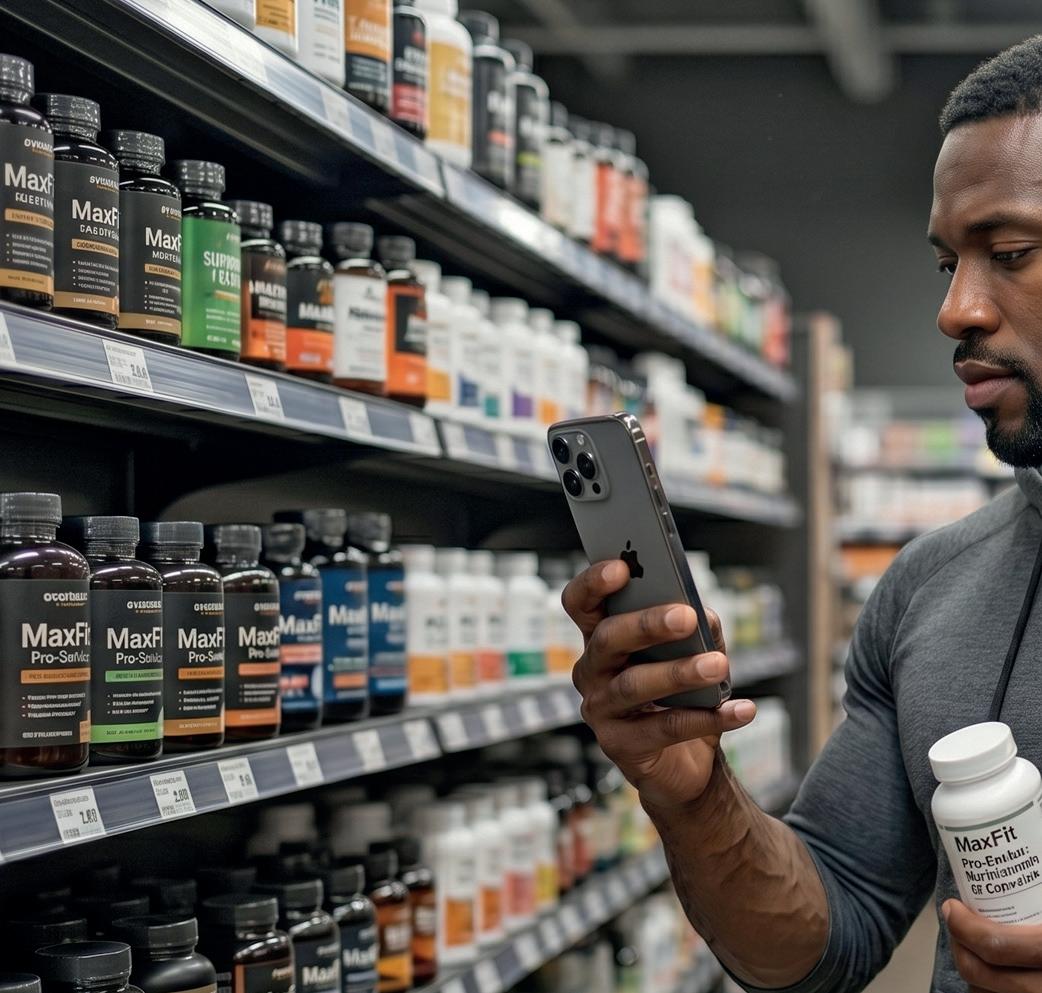
People think of ‘wellbeing’ in terms of how activities make them feel
exposure to health information. Across the three markets, 83 per cent of respondents said they used social media to access health-related information, rising to 90 per cent in Germany. Yet fewer than half of respondents considered the information on these platforms reliable. Among younger adults aged 25 to 44, perceived reliability rose slightly for platforms such as YouTube and podcasts, reaching just above the 50 per cent threshold, but trust remained limited for most other social media channels. Across all respondents, fewer than one-third said they were confident in the reliability of information found on social media platforms other than YouTube or podcasts.
Trust in claims about products and services is becoming increasingly important
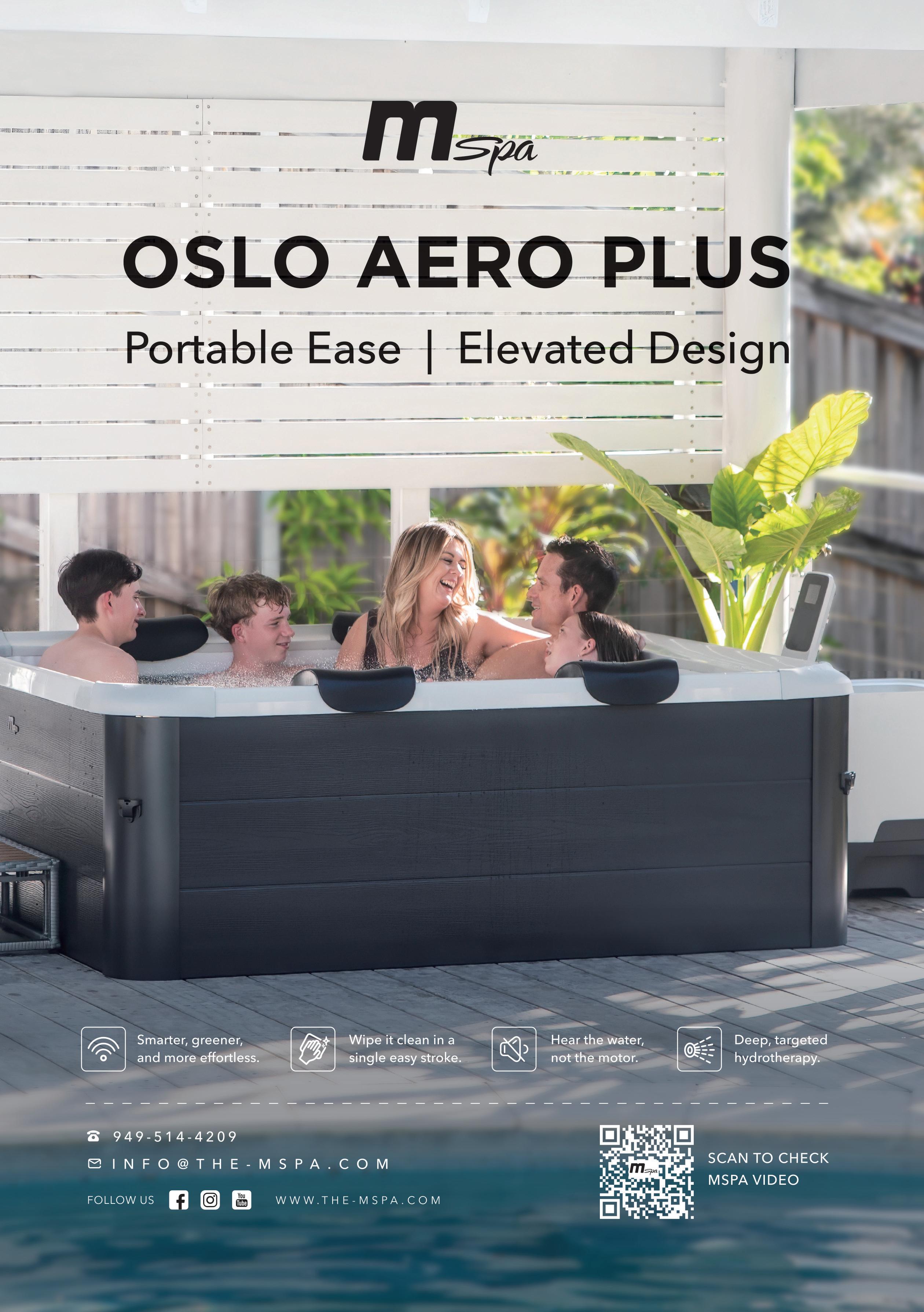
In other words, visibility does not necessarily confer credibility. Consumers encounter health claims frequently both offline and online, but that doesn’t mean they believe them. This distinction between exposure and trust is increasingly important. People are not simply buying products or booking treatments. They’re deciding which inputs they’re willing to incorporate into a personal system of wellbeing they hope will support their long-term health. Trust therefore functions as the gatekeeper to participation, while scientific validation increasingly serves as the filter through which that trust is earned.
Although the overall trends were consistent across the three countries, some cultural differences appeared. American respondents showed a greater willingness to experiment with different wellness activities. British respondents placed more emphasis on validation and evidence. German respondents showed particularly broad engagement with integrative health practices while also demonstrating strong trust in established institutions. Despite these differences, the broader direction was the same across all three markets. Consumers increasingly see health as something holistic and long-term, with emotional wellbeing playing a central role and longevity sought as the ultimate goal. These findings have important implications for providers of wellness products, services and experiences. Engagement with wellness behaviours is already high. But offering more treatments, devices or programmes alone is unlikely to create meaningful differentiation. Competitive advantage depends on how well a particular
Physical & mental health
Physical condition
Mental health
Emotional & relationship health
Emotional state
Social relationships
Spiritual beliefs Economic security
security
offering fits into the personal ecosystem through which a consumer manages his/her health, one that is coherent, credible and capable of supporting both functional and emotional benefits over time.
One of the most important discoveries in WELLSurvey 2.0 was the identification of a market segment we call WELLZoomers*, adults aged 25 to 44 who
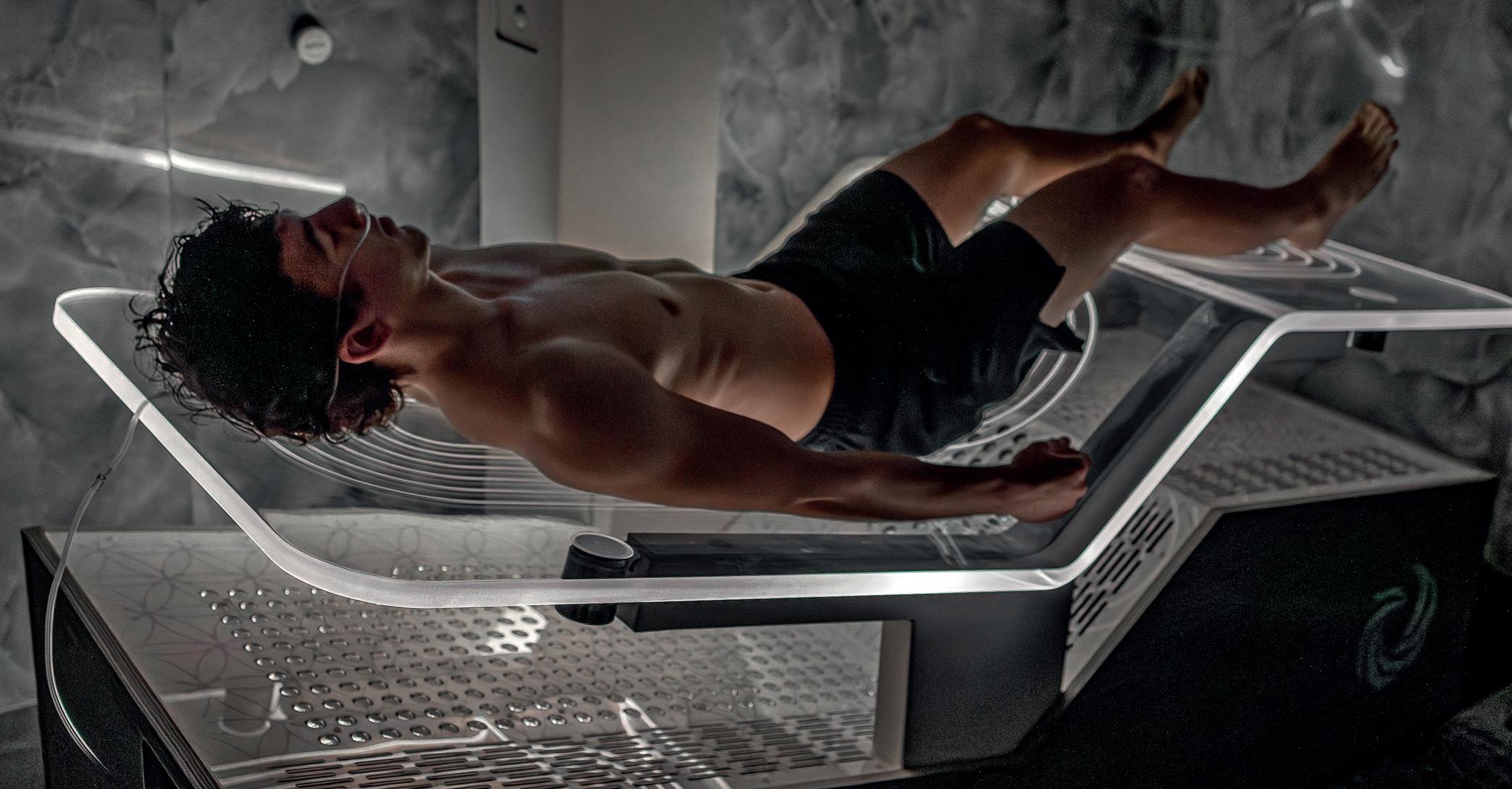
WELLZoomers evaluate their wellbeing based on how happy, joyful and energised they feel
display a unique psychological and behavioural profile. The survey included 857 respondents in this cohort across the three markets.
WELLZoomers displayed remarkably similar attitudes across the US, the UK and Germany. And their similarity across borders was greater than among the older cohorts within any of the three countries. They reported the highest levels of anxiety and emotional strain, as shown in Table 2 Key Stressors, yet this didn’t lead to withdrawal. Instead, it was associated with increased engagement in health practices.
They reported the highest interest in 14 of the 15 wellness practices measured, including massage, water therapies, breathwork, blood testing, Chinese medicine, red-light therapy, sound therapy and osteopathic care. And they’re technically savvy – 79 per cent used a wearable device to collect and monitor their health metrics, significantly higher than reported by older respondents.
They also expressed strong concern about geopolitical instability and environmental change. Yet despite these pressures they remained optimistic about their personal future. Eighty-three per cent agreed with the statement “Nothing is perfect, but you make the best of it”. Many also reported high levels of satisfaction with their achievements, appearance, energy and relationships.
For WELLZoomers, wellbeing is judged primarily through experience. Seventy-nine per
cent said they evaluated their wellbeing based on how “hopeful, joyful and energised they feel”, compared with 71 per cent of older respondents. When multiple wellness practices are used together, they form what may be understood as a personal wellbeing ecosystem. In this sense, much like the integrative digital technologies with which they grew up, WELLZoomers are no longer pursuing isolated wellness activities, or “wellness stacks”.
TABLE 2
WELLZoomers reported the highest interest in experiential therapies
Instead, they’re assembling personal systems of practices, technologies and experiences that function as an integrated ecosystem and together support their overall wellbeing.
The market opportunity presented by this cohort is significant. With a similar profile appearing across the three countries included in this transatlantic survey we estimate WELLZoomers in the US, the EU and the UK represent approximately 159 million engaged consumers today. Applying conservative assumptions about annual spending on health-related products, services and experiences, this market represents roughly US$298 billion (€254 billion, £219.9 billion) in value annually. Extrapolating the same behavioural participation patterns to emerging geographic markets, while applying lower spending and income filters, the estimated annual value of spending by WELLZoomers rises to approximately US$540 billion (€460.3 billion, £398.4 billion) and continues to grow. Given their similar demographic profile worldwide, WELLZoomers represent an estimated US$606 billion (€516.6 billion, £447.1 billion) global revenue opportunity. This cohort is also relatively easy to identify and reach. What remains underdeveloped is the coordinated delivery of products, services and experiences capable of meeting this demand.
WELLSurvey 2.0 also explored brand and destination preferences in wellness-related travel. Here, the results suggest a market that is active but fragmented. The wellness industry has expanded dramatically over the past few decades, spreading across hospitality, healthcare, fitness, nutrition and technology sectors. While this expansion increased access
and choice, it also created fragmented messaging with limited differentiation between brands.
When respondents were shown 36 prominent wellness resort brands and asked which they would prefer for a future trip intended to enhance their wellness or wellbeing, 53 per cent selected “none of the above”, revealing either a void in brand leadership, the absence of meaningful brand differentiation, or both.
Among respondents who expressed a preference, Six Senses and Canyon Ranch were cited most frequently, each by 10 per cent of respondents, positioning them as ‘reference brands’ rather than category leaders. One noteworthy variance was observed among WELLZoomers: Six Senses received the highest preference rating (17 per cent). While still modest, this suggests that Six Senses may have an early foothold with the generation that will shape future demand for much of the industry’s products, services and experiences, signalling a potential pathway to category leadership if it aligns with this cohort’s evolving expectations around integrated wellbeing.
Geographic travel preferences also followed expected patterns, with respondents tending to favour destinations closer to home. Table 3 Health Resort Venue Preferences shows that coastal locations were the preferred venue for wellness resorts, followed by mountain locations. Urban locations were least preferred.


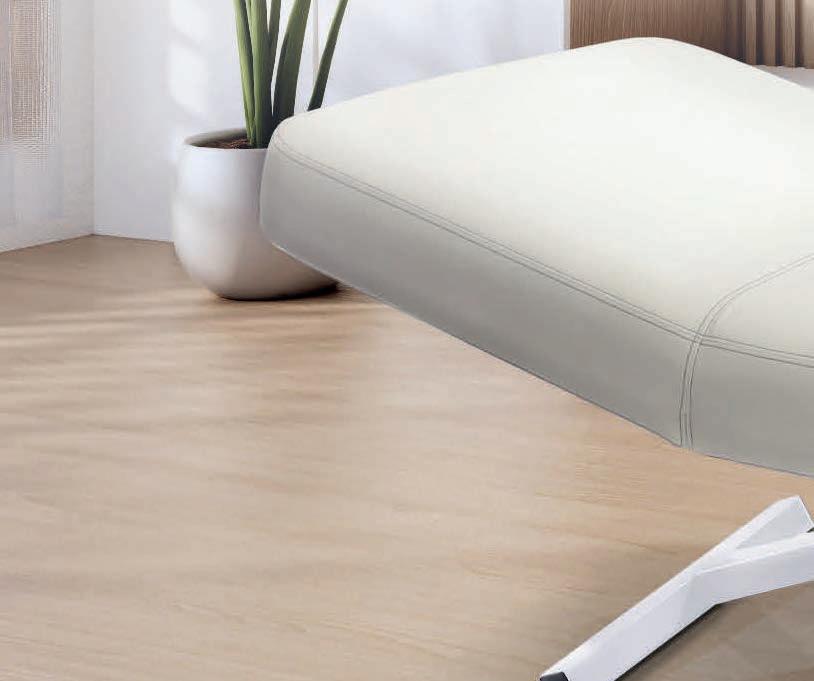
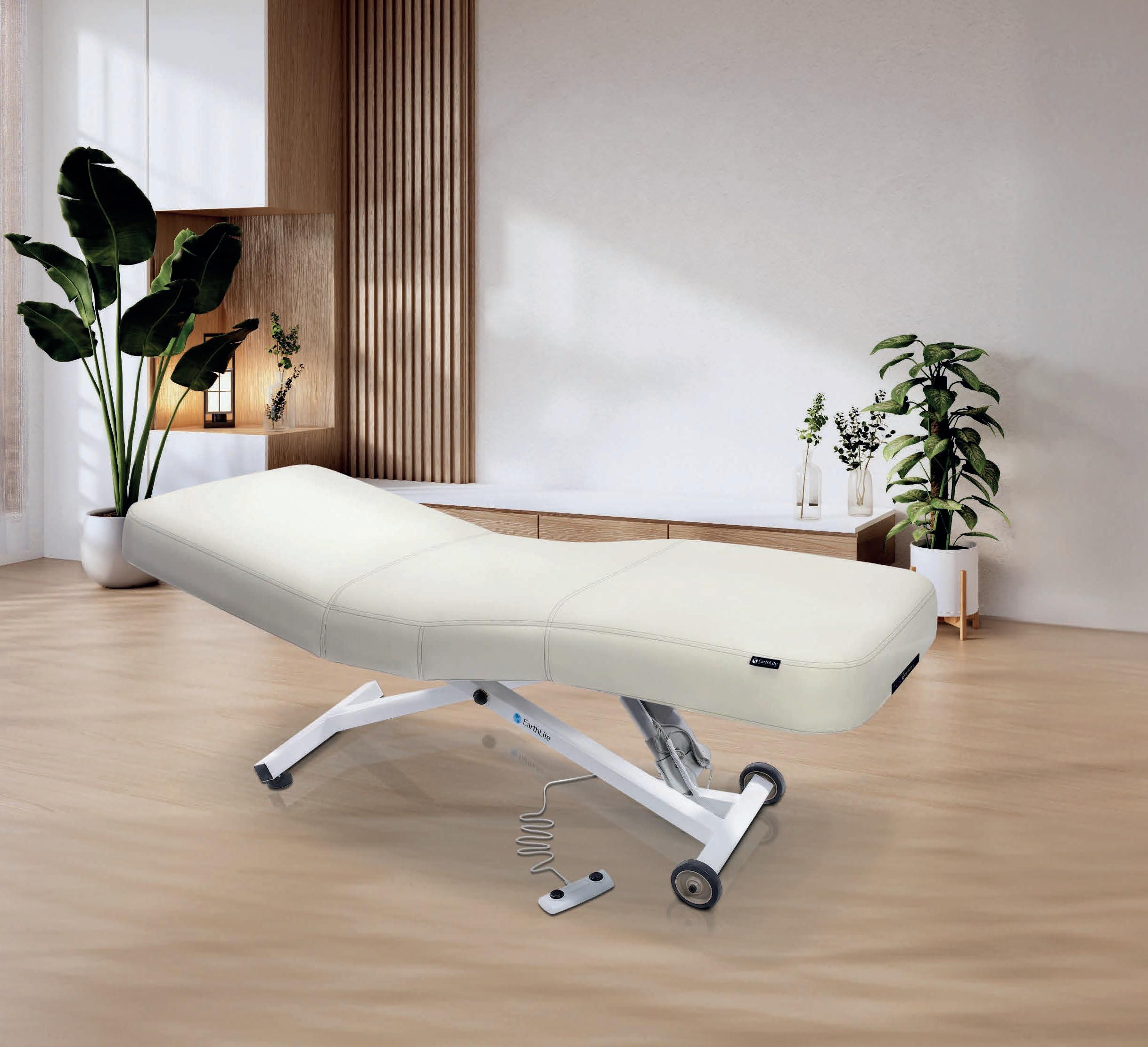

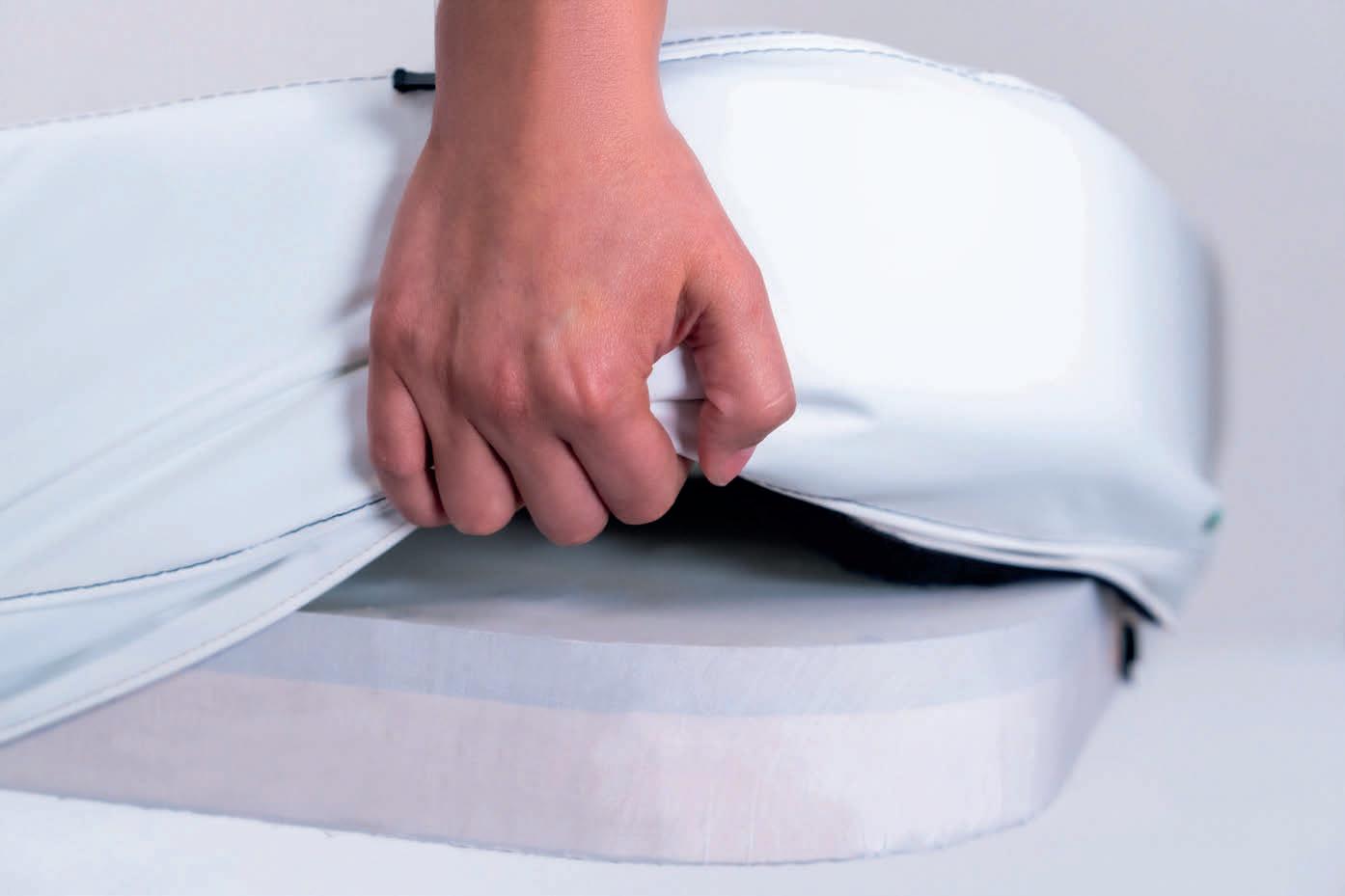
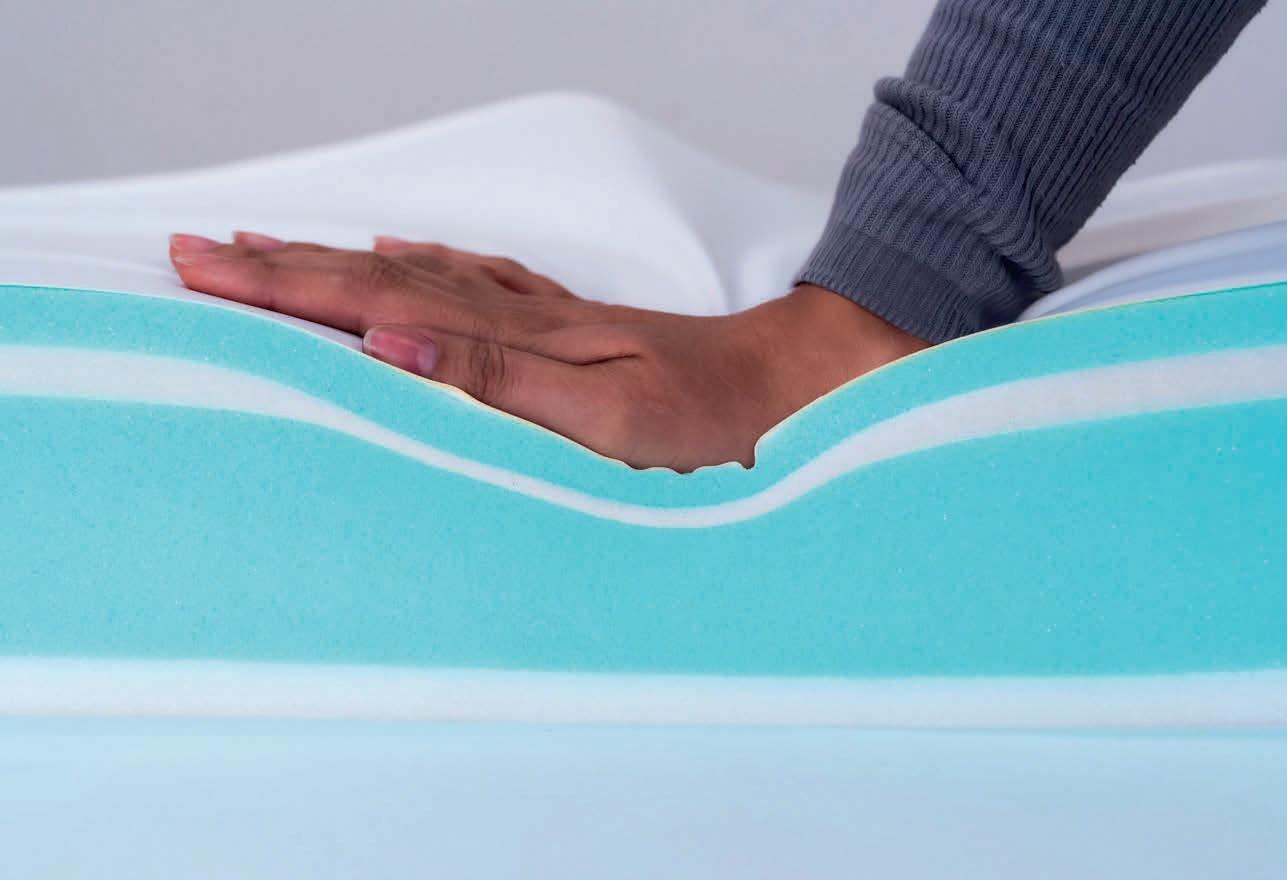
The roots of this fragmentation lie in the rapid expansion of the category. Early pioneers such as Rancho La Puerta, Golden Door and Canyon Ranch built immersive wellness environments combining fitness, spa therapies, nutrition and preventive health. As consumer interest in these offerings grew, luxury hospitality brands introduced similar programming. Access improved, but differentiation diluted. Consumers therefore navigate the category through personal research, peer recommendations, perceived scientific credibility, attractive locations and price rather than through strong brand distinction and loyalty.
As wellbeing becomes the central outcome engaged consumers seek, this situation creates both a challenge and an opportunity. The challenge is that episodic resort experiences alone are unlikely to engender lasting relationships with guests. The opportunity lies in moving beyond occasional stays and becoming part of the guest’s broader wellbeing ecosystem and journey.
To achieve this, wellness resorts need to connect pre-arrival engagement with the guest’s experience during his/her stay, after the guest departs and with the relevant data, metrics and services designed to enhance his/her wellbeing. Pre-visit assessments, immersive destination programming and post-visit continuity can together form part of the guest’s coherent wellbeing ecosystem. Very few resort brands currently integrate these elements fully. This helps explain why participation
in wellness behaviours is high while category dominance by one or more brands remains elusive. Traditional wellness resorts have operated successfully for decades, offering immersive programmes built around spa therapies, fitness, nutrition and prevention. These high-touch experiences helped establish the category and remain highly valued by participants. Yet, they are largely episodic – experienced intensively for a period of time but remain separate from the guest’s longer journey to achieve wellbeing. Much, if not all, of what was experienced or learned at the resort is soon abandoned or forgotten. So, competitive
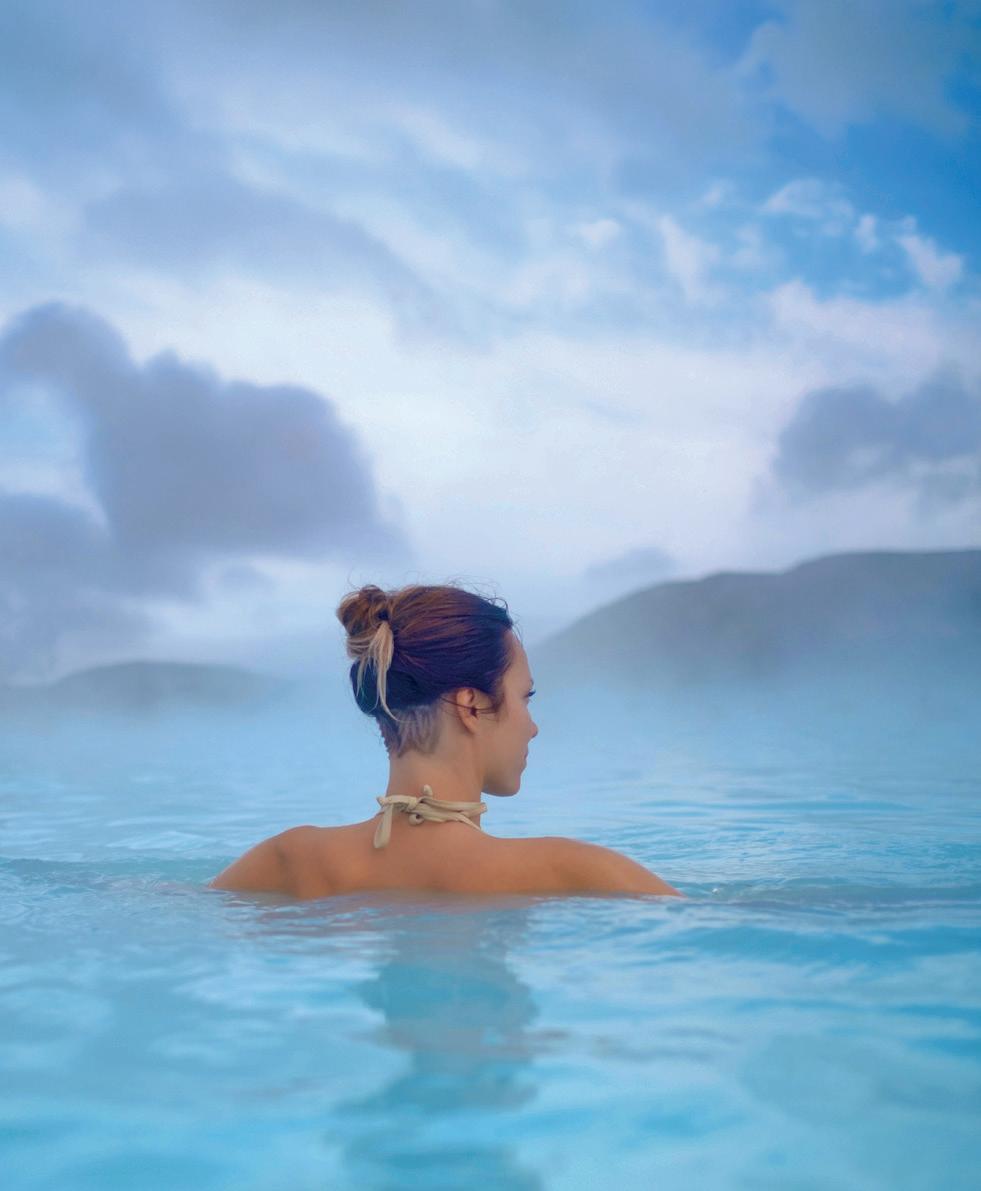
Among 36 wellness resort brands, 53 per cent expressed no preference
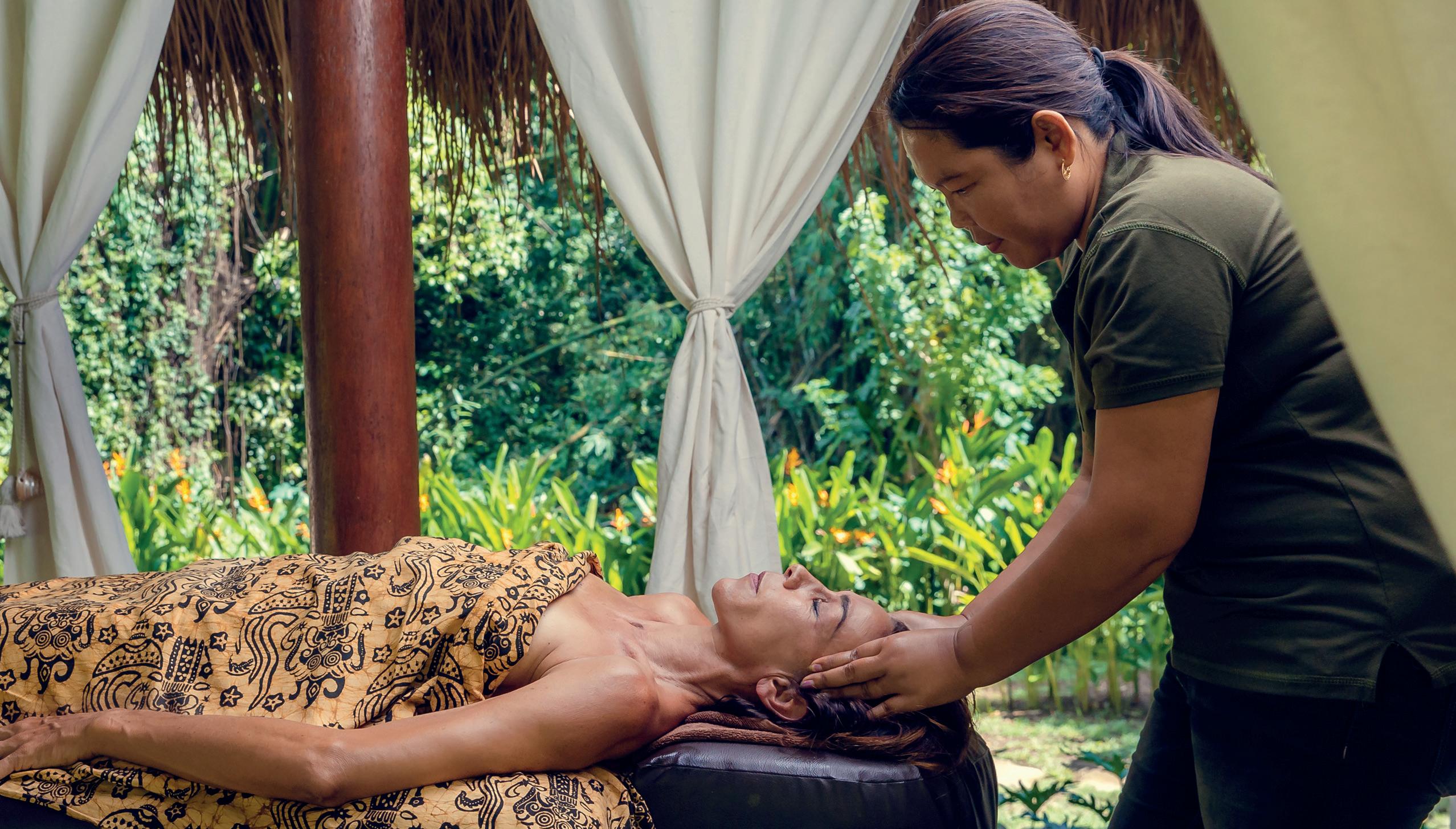
advantage no longer lies in simply offering more wellness programming, but in organising programmes into integrated ecosystems capable of supporting long-term wellbeing and longevity. With participation high and brand preference diffuse, wellness immersion destinations and hospitality brands are converging to create a new category of leisure travel, one we call WELLTravel*. But their operating models need to adapt to attract the growing share of the consumers who are interested in enhancing their wellbeing.
This is not a trivial shift. Hospitality operators already manage complex systems of reservations, staffing, programming, guest experience and luxury service delivery and their instinct is often to simplify by integrating wellness into existing hospitality service lines. Yet doing so risks the dilution of brand differentiation and the acceleration of commoditisation. Achieving category leadership will require more than delivering exceptional experiences during a hotel or resort stay. Guests must enlist the wellness hospitality brands they patronise to become part of the ecosystem that guides their journey toward wellbeing and longevity.
The insights revealed by WELLSurvey 2.0 confirm that the market – as defined in the US, UK and Germany – understands and appreciates the meaningful difference between the states of wellness and wellbeing. The results also suggest that the products, services and experiences promoted by industry providers must align with the personal ecosystems
*Top two box ratings on a 5-point scale; statistically significant differences with the lowest row value appear in bold
that strengthen the emotional health and wellbeing of consumers they serve to build enduring brand preference. Providers would also be well served to develop a deeper understanding of the attitudes, behaviours and intentions of the cohort that will reshape the wellness world as we know it today: WELLZoomers. Brands that adapt their strategies to reflect these collective insights will be rewarded with the spoils of category leadership – a greater share of consumers’ patronage and their loyalty.
Please visit https://civanoadvisors.com/wellsurvey/ for a copy of the survey or contact Kevin Kelly at kevin@civanoadvisors.com for more information. l
*WELLSurvey, WELLZoomers and WELLTravel are trademarks of Civano Advisory Services, LLC
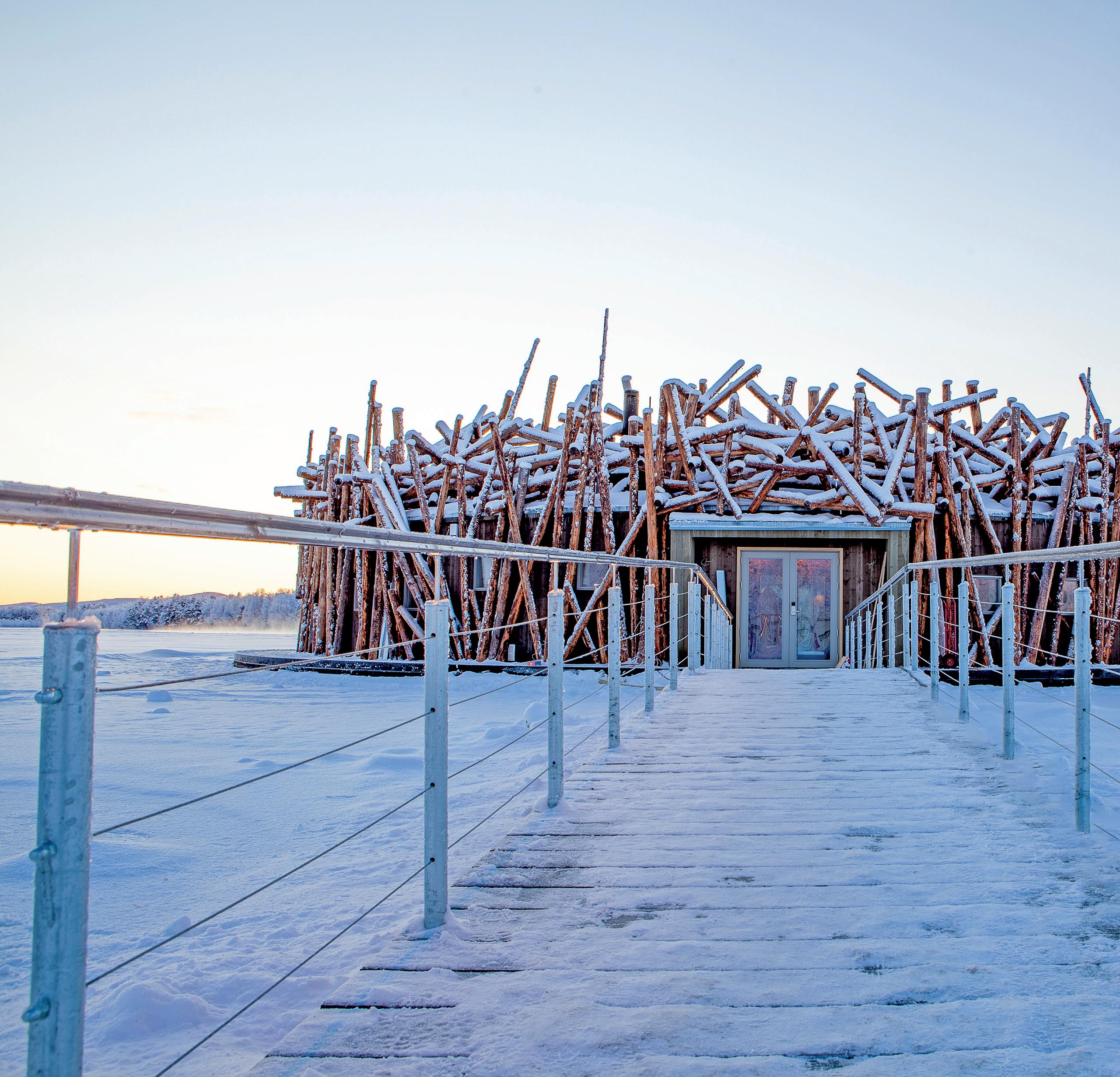
There’s magic here all year round “
Under the midnight sun and Northern Lights, Arctic Bath invites guests into the rhythms of Swedish life – a place where heat, cold and silence reconnect body and mind. Magali Robathan pays a visit
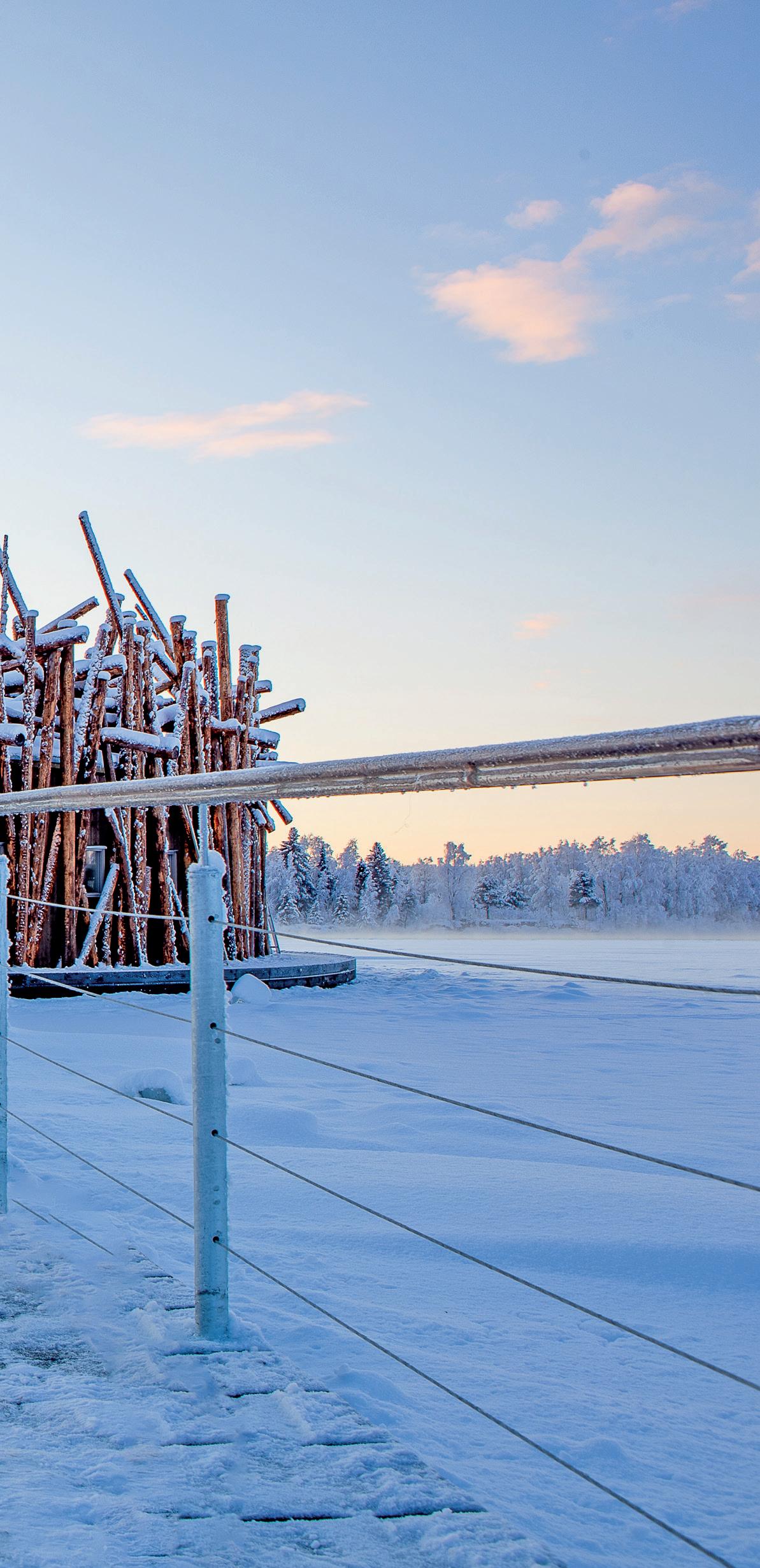
Ilie in the open-air hot tub, looking out across the pristine landscape, skin tingling from my dip in the icy plunge pool. Beyond the frozen river, snow-covered forests stretch into the distance. The muffled silence is broken only by the creaks and groans of the ice as it settles.
I feel a deep, profound sense of peace.
I’m at Arctic Bath, a one-of-a-kind spa hotel designed to fully immerse guests in the stunning wilderness of Swedish Lapland. Housed in a circular timber building inspired by the log jams that were common when timber was transported by boat across Sweden, the spa floats on the Lule River in the warmer months and is frozen in place in winter.
Launched in 2020, Arctic Bath quickly became a bucket list destination, celebrated for its unique offering and architectural design. High season here is winter, when guests come to experience contrast therapy at its most extreme and watch the Northern Lights dancing above the snowy landscape. But the team behind it are consciously extending the business with new spring, summer and autumn packages.
“There’s magic here all year round,” says Arctic Bath CEO Klara Ranggård. “The summer season is becoming increasingly popular with international guests, who come to experience the midnight sun, the blooming nature and outdoor activities like swimming, fishing, kayaking and nature-watching.”
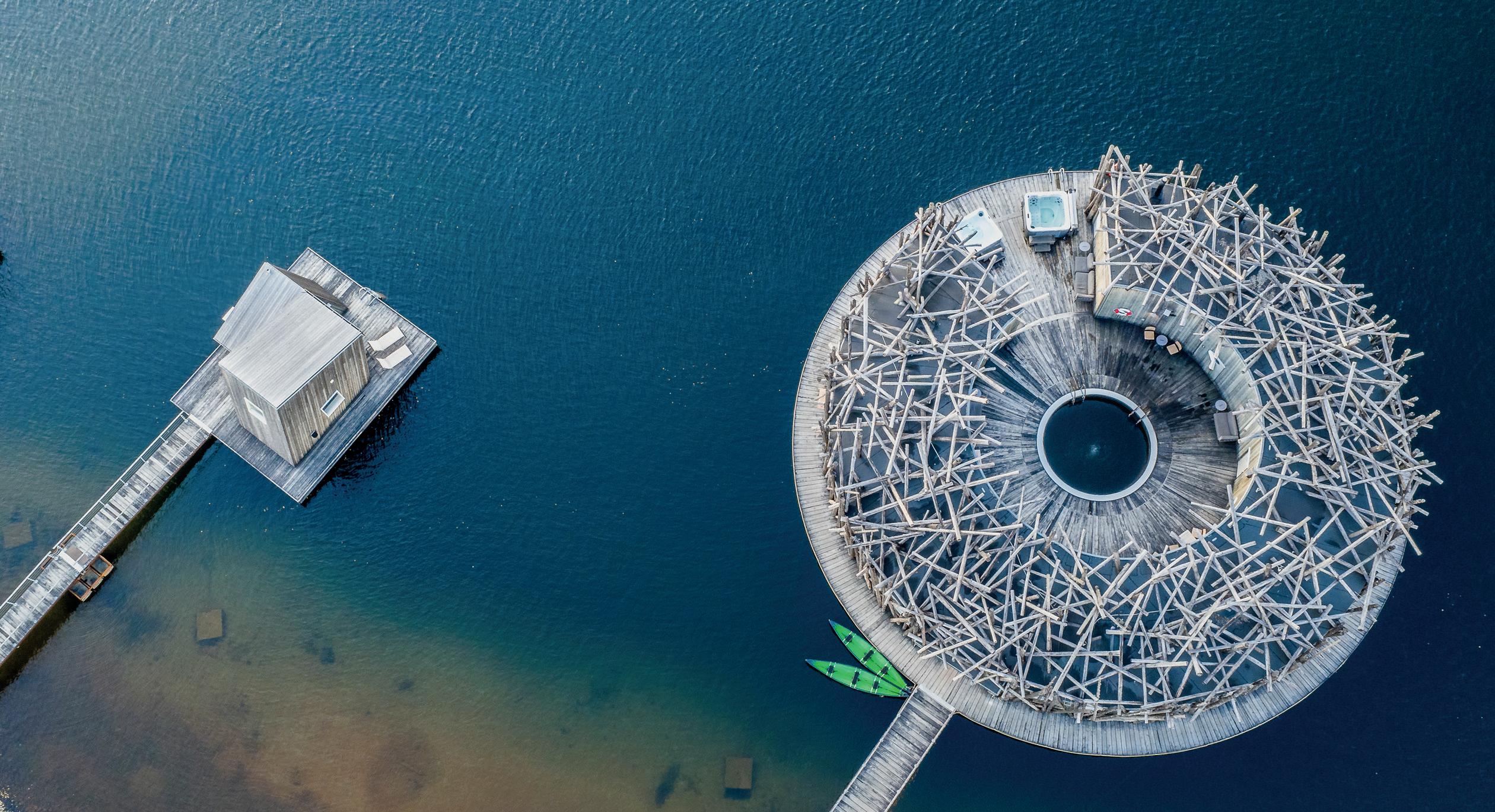
Following the 2010 opening of Treehotel – the design hotel that put the tiny Swedish village of Harads on the map – co-founder Per-Anders Eriksson realised it was missing a spa.
Knowing sauna culture was so deeply embedded in the Swedish way of life, he commissioned architect Bertil Harström – creator of the Bird’s Nest room at Treehotel –and designer Johan Kauppi to develop a floating wellness experience for the nearby Lule River.
The initial vision was for a small sauna. Instead, Harström and Kauppi came up with a large circular building with an outdoor plunge pool at the centre, surrounded by heat experiences.
After crunching the numbers, Eriksson realised that for the sauna to be financially viable, it was necessary to add six land cabins and six water cabins along with a restaurant to make it a destination in its own right.
Arctic Bath is a sanctuary that harnesses the peace and beauty of the Swedish wilderness to promote relaxation and a sense of awe.
“Arctic Bath is basically a floating spa with rooms,” explains co-owner Peter Engström. “It presents our everyday life to guests from all over the world, alongside excellent service.
“This is what we do here in the North: we sit by the fire, we take the sauna and cold bath, we live with nature. We live with
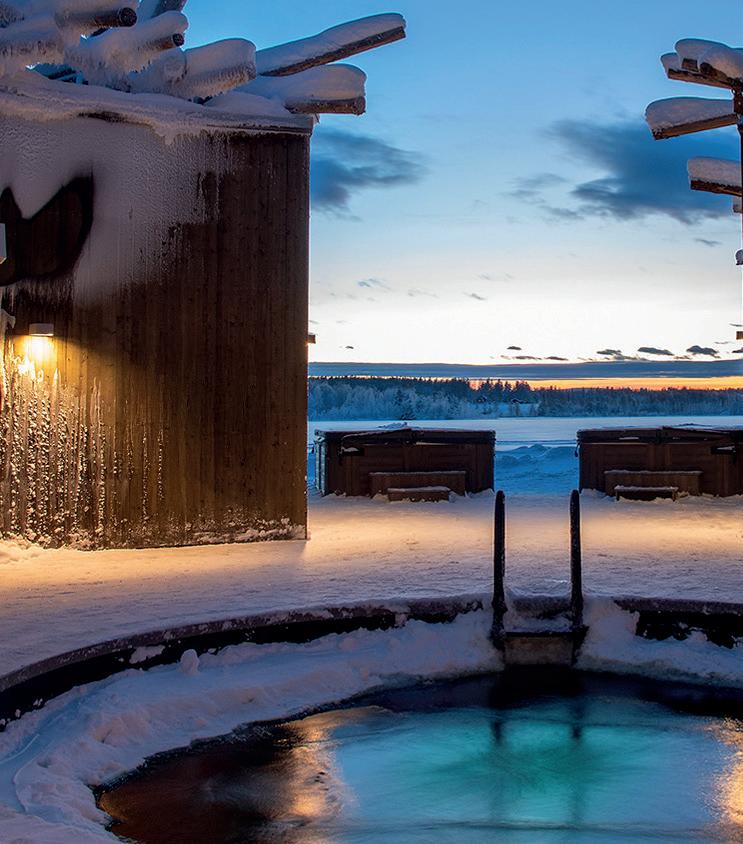
The whole spa is built around a plunge pool in the Lule River
the snow, the ice, the Northern Lights and the midnight sun. People come to experience our way of life – with a twist.”
The main spa building houses two large saunas, a steamroom, a treatment room, two outdoor hot tubs and the central open-air pool for bathing in the waters of the Lule River.
A free, 45-minute contrast therapy ritual is a spa menu staple
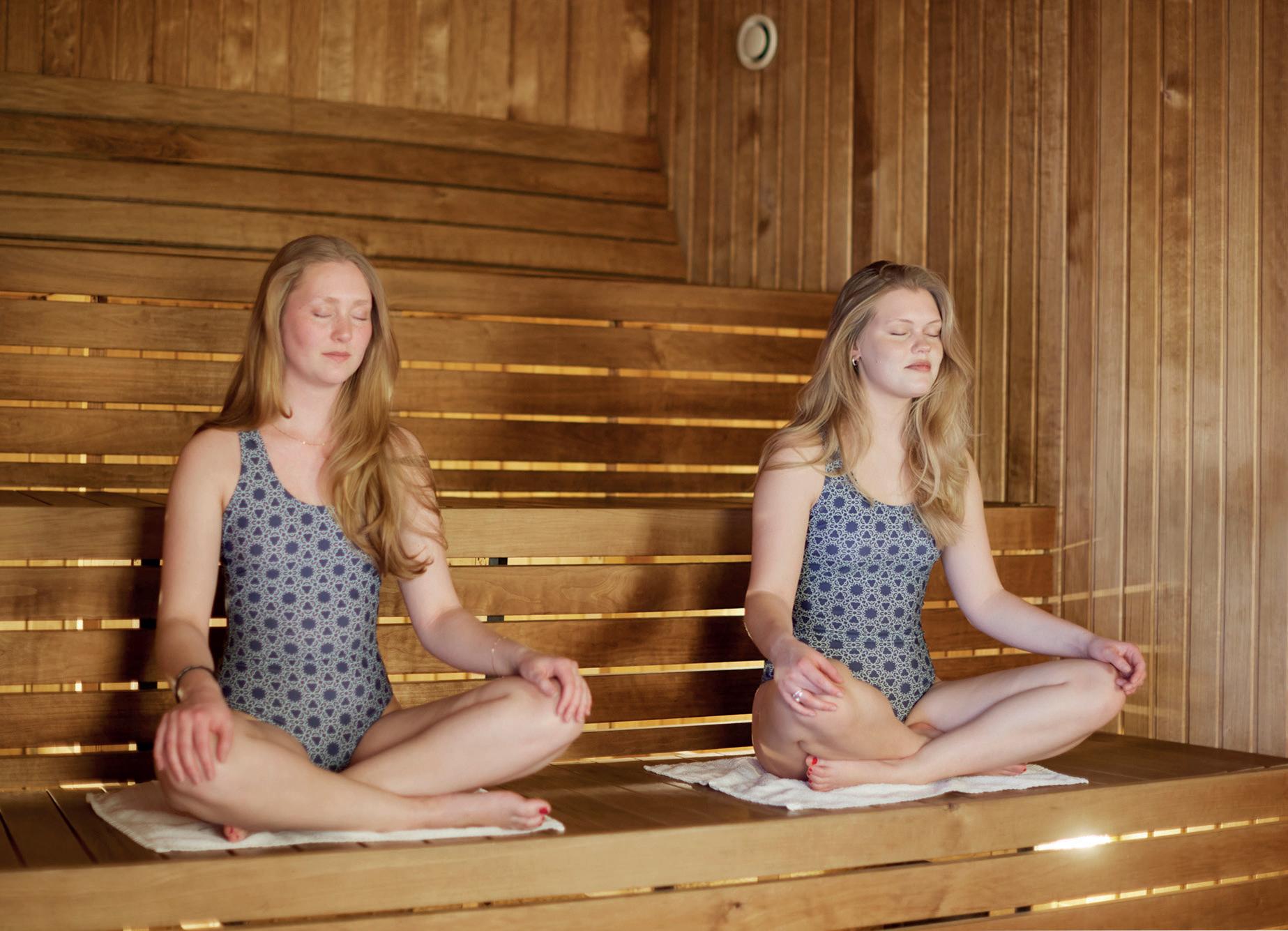
The core of the wellness offer is Julevädno, a contrast therapy ritual. The 45-minute experience includes sauna/cold plunge sessions incorporating local herbs, singing bowls and breathing techniques. “Guests are nervous before they take their first plunge, but once they’ve done it, they want to go in again and again,” says Ranggård. “You get a lot of natural energy from bathing in the river.” This is a complimentary ritual, however, the team is exploring the addition of dedicated morning and afternoon sauna rituals for a small fee of around SEK200 (US$22, €19, £16) per person.
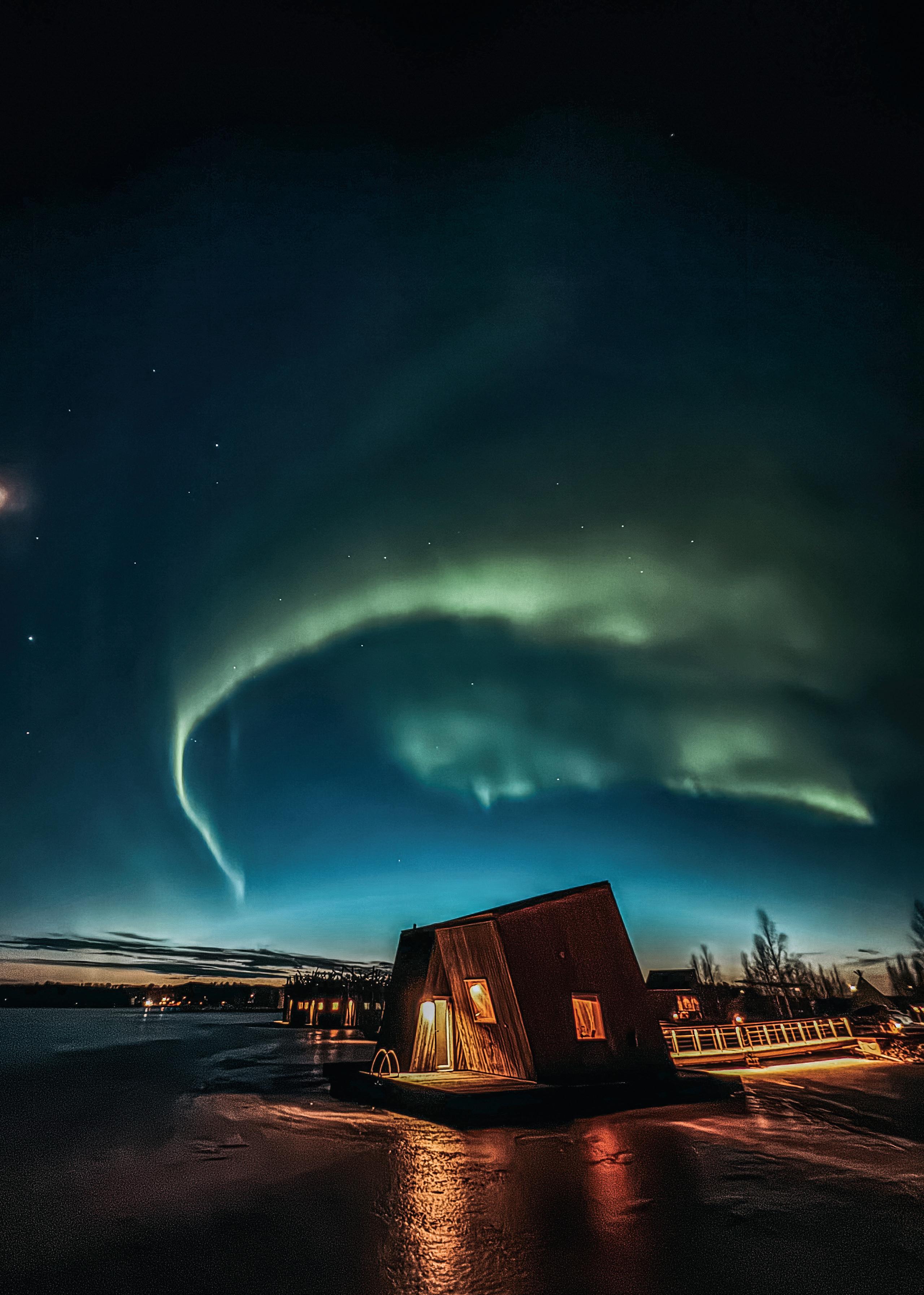
People come to experience our way of life in the North – with a twist “ “
Six land and water cabins were added to the spa to create a viable business
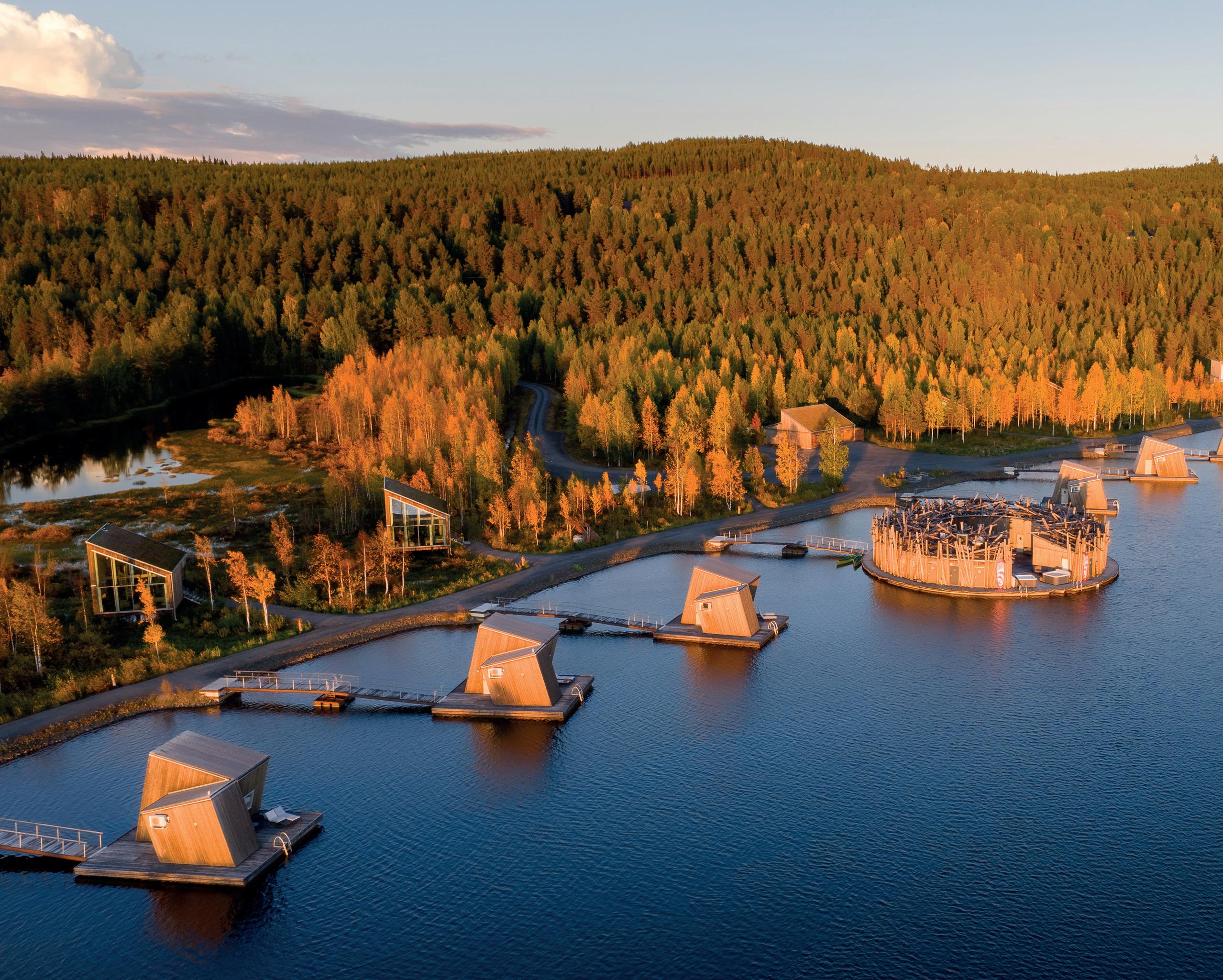
Other treatments include reiki, massages and a range of ayurvedic therapies. Products are by local firm C/O Gerd.
Guided nature activities such as bear watching, moose safaris, snowshoe walking and forest bathing are offered in partnership with local specialists, as well as experiences designed to teach guests about the culture and lifestyle of the indigenous Sami community.
Winter (late November to mid-April) is Arctic Bath’s busiest time of year and is dominated by international guests (70 per cent) staying for 2.8 days on average, estimates Ranggård.
Prices for a water cabin start from SEK6,995 (US$763, €649, £565) a night in summer and SEK11,995 (US$1,309, €1,113, £969) in the winter. With 12 cabins, the hotel’s capacity is 33 guests, although it usually only reaches 20-25 guests when fully booked. “That’s a perfect amount for the spa and restaurant,” says Ranggård. “It’s really important that we don’t overcrowd the facilities.”
Just 2-3 per cent of spa guests come from outside of the hotel at this time of year, rising to 25 per cent in the summer (mid-June to the end of October). A two-hour entry pass costs SEK1,295 (US$138, €120, £104).
During warmer months, the majority of hotel guests are Swedish, although Ranggård says international interest is increasing. "They often stay for longer – taking their main vacation with us and staying for up to a week."
A range of packages are being introduced this year to encourage more extended stays. Developed in collaboration with local wildlife adventure tour company Hide and See, A Journey to the North, is a four-day experience that includes Arctic fine dining, midnight sun excursions, wilderness tours, kayaking, hiking and the use of the spa. Priced from SEK20,995 (US$2,258, €1,941, £1,690), six retreats will run between June and September.
The hotel also runs its own three-night Fire and Ice Retreat at the beginning and end of winter. Super early-bird prices for November 2026 start at SEK21,225 (US$2,316, €1,969, £1,715) per person.
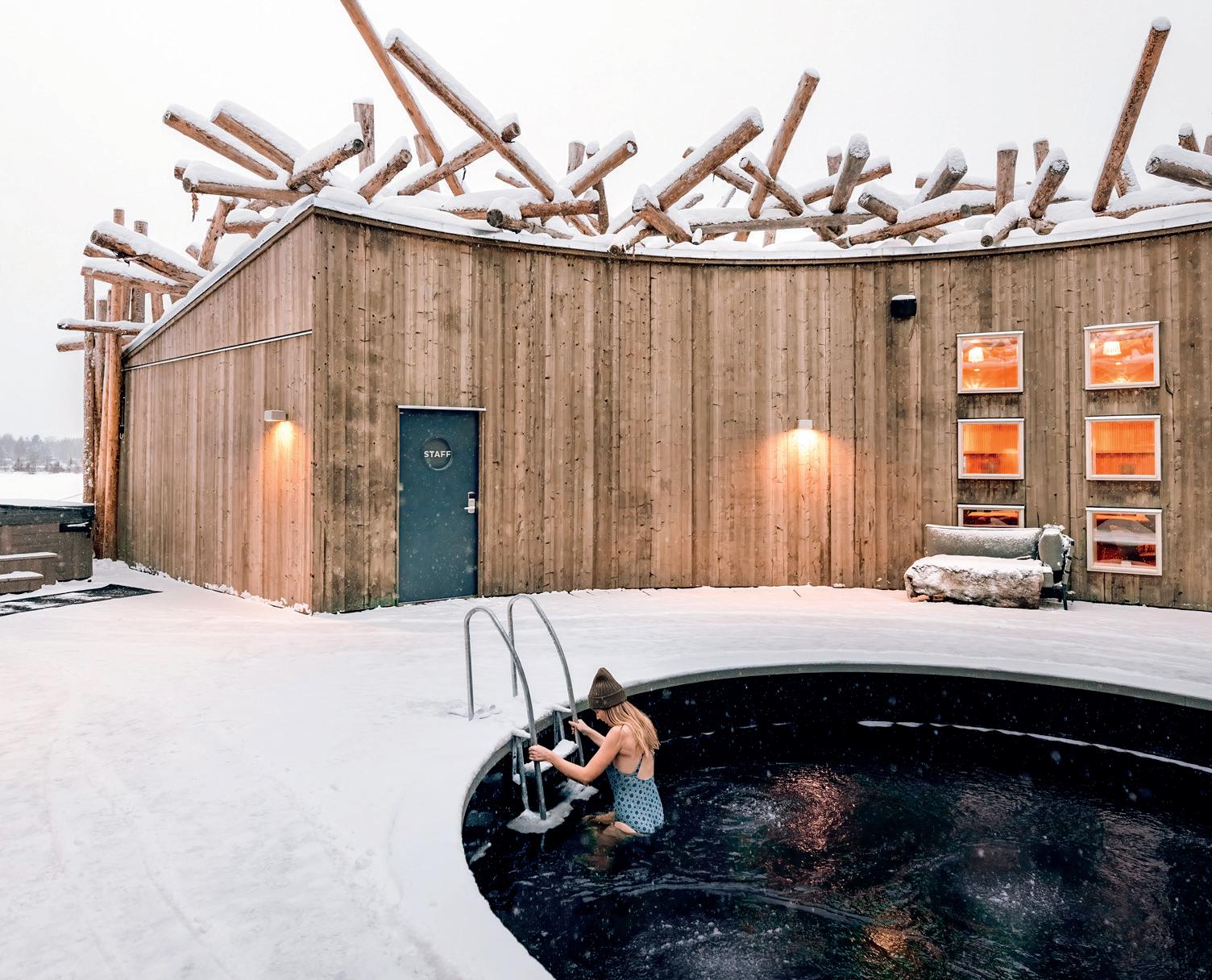
You get a lot of natural energy from bathing in the river “ “
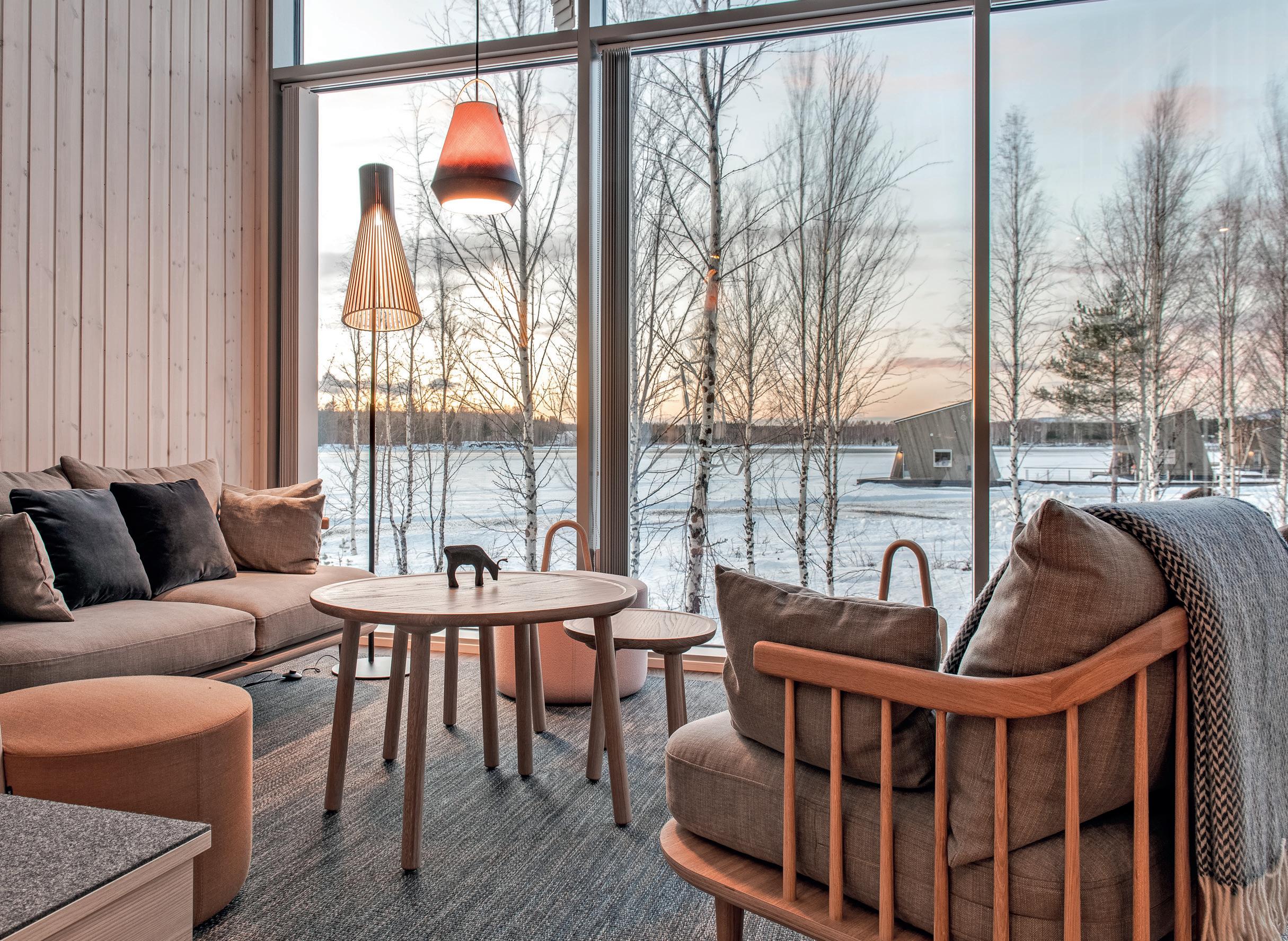
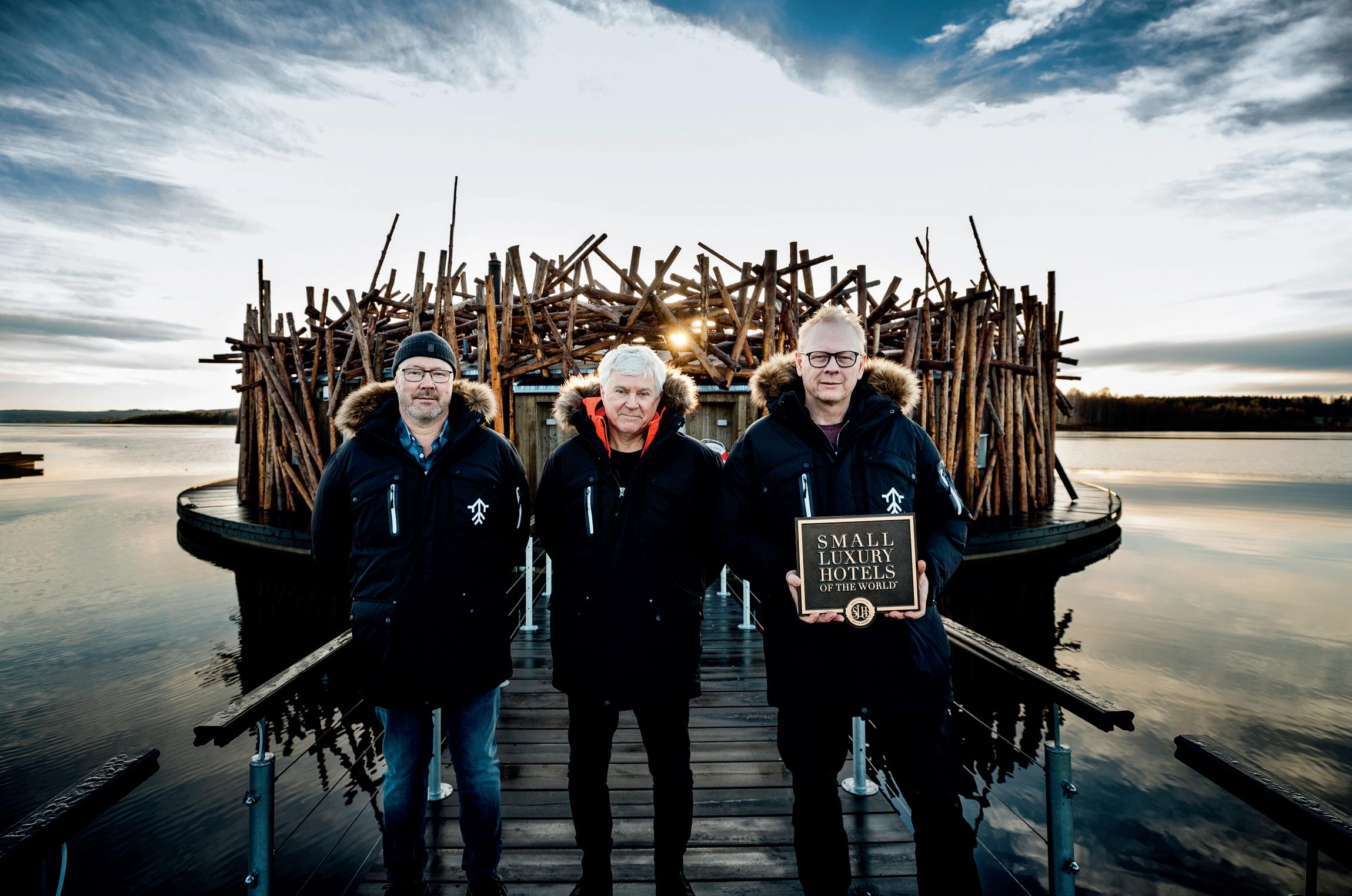
The success of Arctic Bath is inextricably intertwined with nature and the local community – and the sustainability of both is key. “It’s vital to ensure that we do not harm or overexploit them,” says Ranggård.
The hotel has been designed for minimal environmental impact, featuring sustainable timber construction, 100 per cent renewable energy use and using local contractors and suppliers as much as possible.
The team also works with other local tourism businesses, including Treehotel, Logger’s Lodge and Aurora Safari Camp, to create a combined tourism draw for the area. “We are not competing with each other, we’re completing each other,” says Engström. “Working together and bringing people to each other.”
This summer, the family who launched Treehotel are opening Villa Äng in Harads – a luxury villa with a sauna and hot tub that comes with a private chef and concierge. “It’s good for all of us when new businesses open here,” says Ranggård.
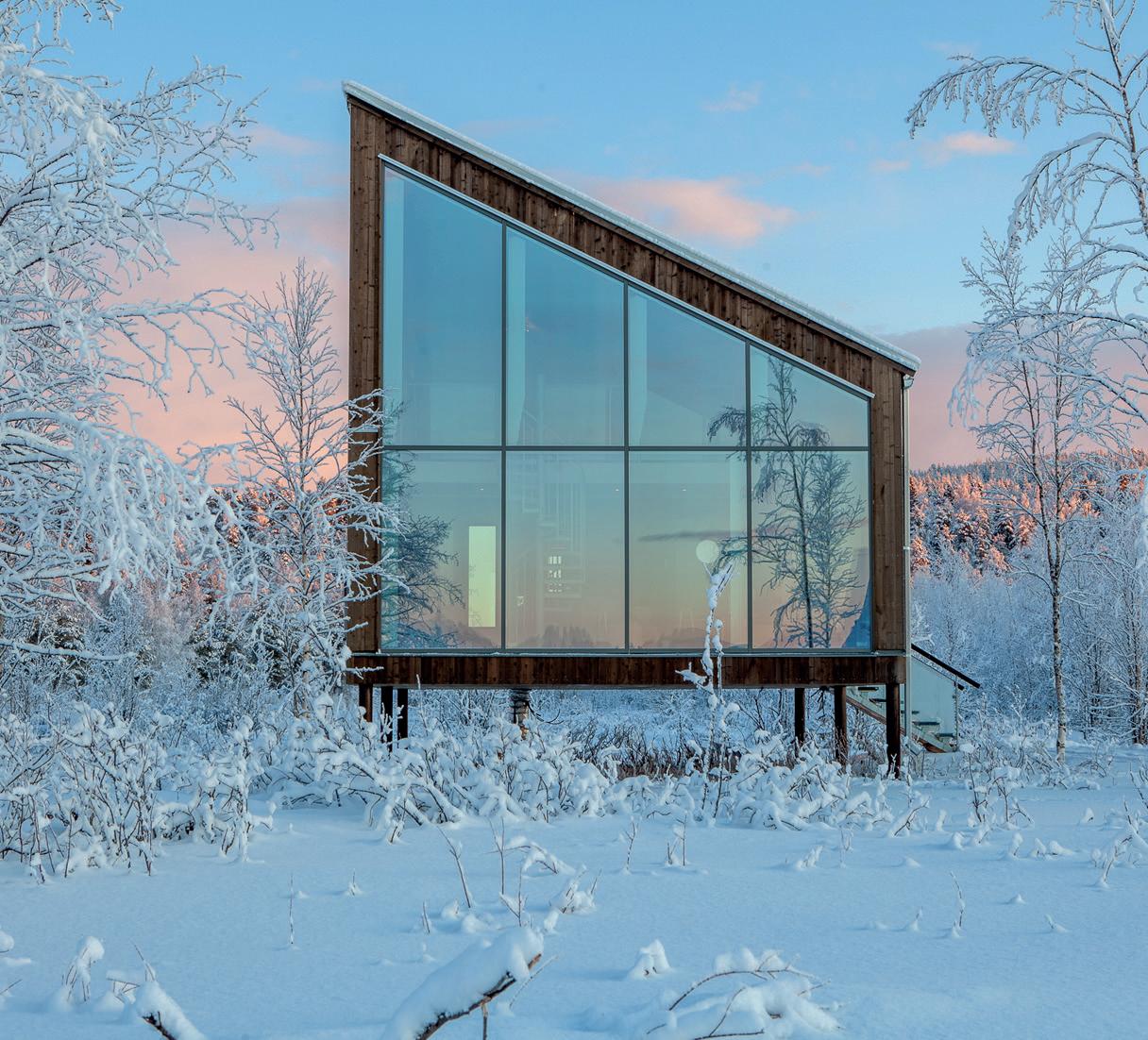
Looking ahead, the team is wrestling with the question of whether to expand, and if so, how to do it in a way that doesn’t negatively impact the existing offer or the land.
“We have a lot of requests from companies interested in coming here for conferences and activities,” says Engström. “We’re considering building a multi-purpose house, but not adding any rooms.
“We want to stay small, exclusive and with a really authentic offer. It’s important for us to stay true to our heritage – to the culture here and to nature.”



89% said this face cream leaves their skin feeling instantly smoother & hydrated*
90% said the aroma of the face cream is soothing*
71% said that the aroma of the face cream improves the quality of sleep*
*based on a panel size of 117


































It’s 1.30pm and the sun is already setting at Arctic Bath. The sky is a soft blue; the snow-laden trees are tinged with pink. I feel like I’m in a fairy tale.
I cross the bridge over the frozen river to the otherworldly-looking timber building topped with logs that houses the spa, lounge and restaurant. Inside, I’m welcomed by a roaring fire, pine-clad walls and limestone floors. Like everywhere in this extraordinary hotel, the views take centre stage; large windows look outwards towards the forest landscape, and inwards towards the central pool.
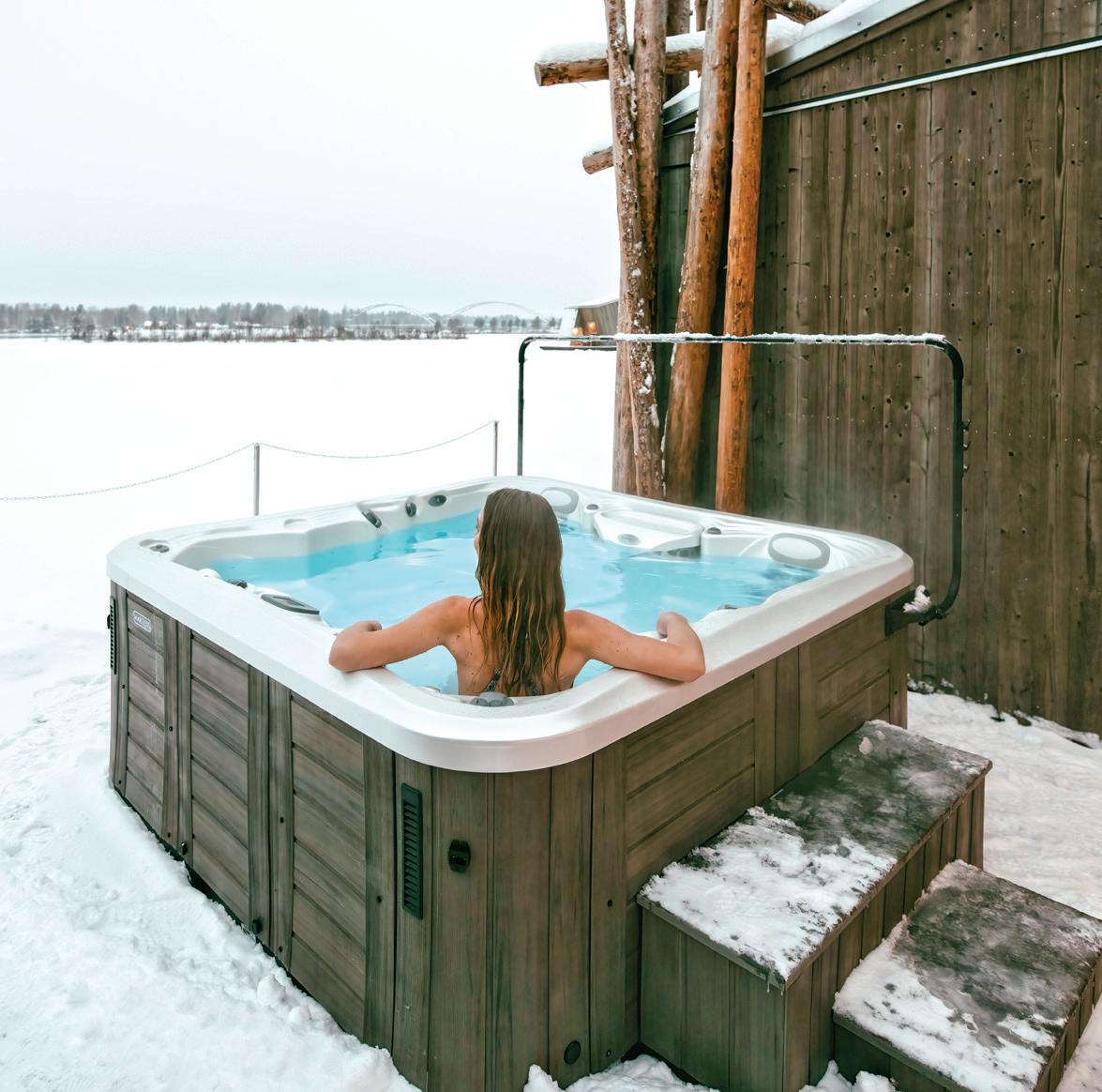
I feel more focused and alive than Iʼve been for a long time “ “
Armed with flip flops and an Arctic Bath swimming costume – to avoid river pollution – I head for the two saunas to start my contrast therapy ritual. Despite being advised on how to prepare for the cold plunge and being a seasoned cold-water swimmer, the dark, churning river water is daunting.
The air temperature is -24˚C and it’s only the constant circulation that keeps the pool from freezing solid. I slowly lower myself in and breathe through the shock. I manage 20 seconds, quickly warm up in the hot tub and want to try again. Energy courses through me – I feel more focused and alive than I’ve been for a long time.
Using the spa several times, there are never more than a handful of other people, making it feel very tranquil. Other guests include a Mexican couple on their honeymoon, a young American family and a French woman enjoying a solo break. I notice how the staff remember everyone’s names and what we like for breakfast. There’s no formality, but the service is warm and the attention to detail is plain to see.
That night, I have the utterly delicious three-course Arctic Light dinner, showcasing Nordic ingredients in highly inventive ways. Finishing dessert, a member of staff announces that the Northern Lights have appeared.
I stand outside with the other guests, marvelling at the shifting greens and pinks – and at my good fortune for discovering this unique destination.
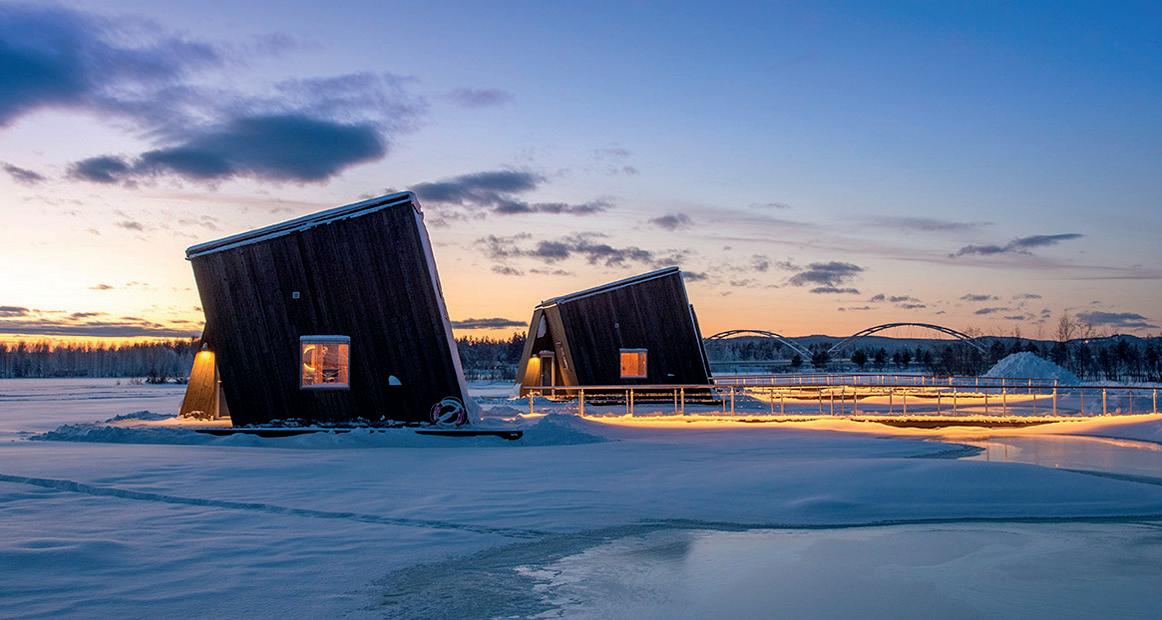
Arctic Bath is a place that reminds you that there’s nothing more healing than nature and nothing more luxurious than time and stillness. l

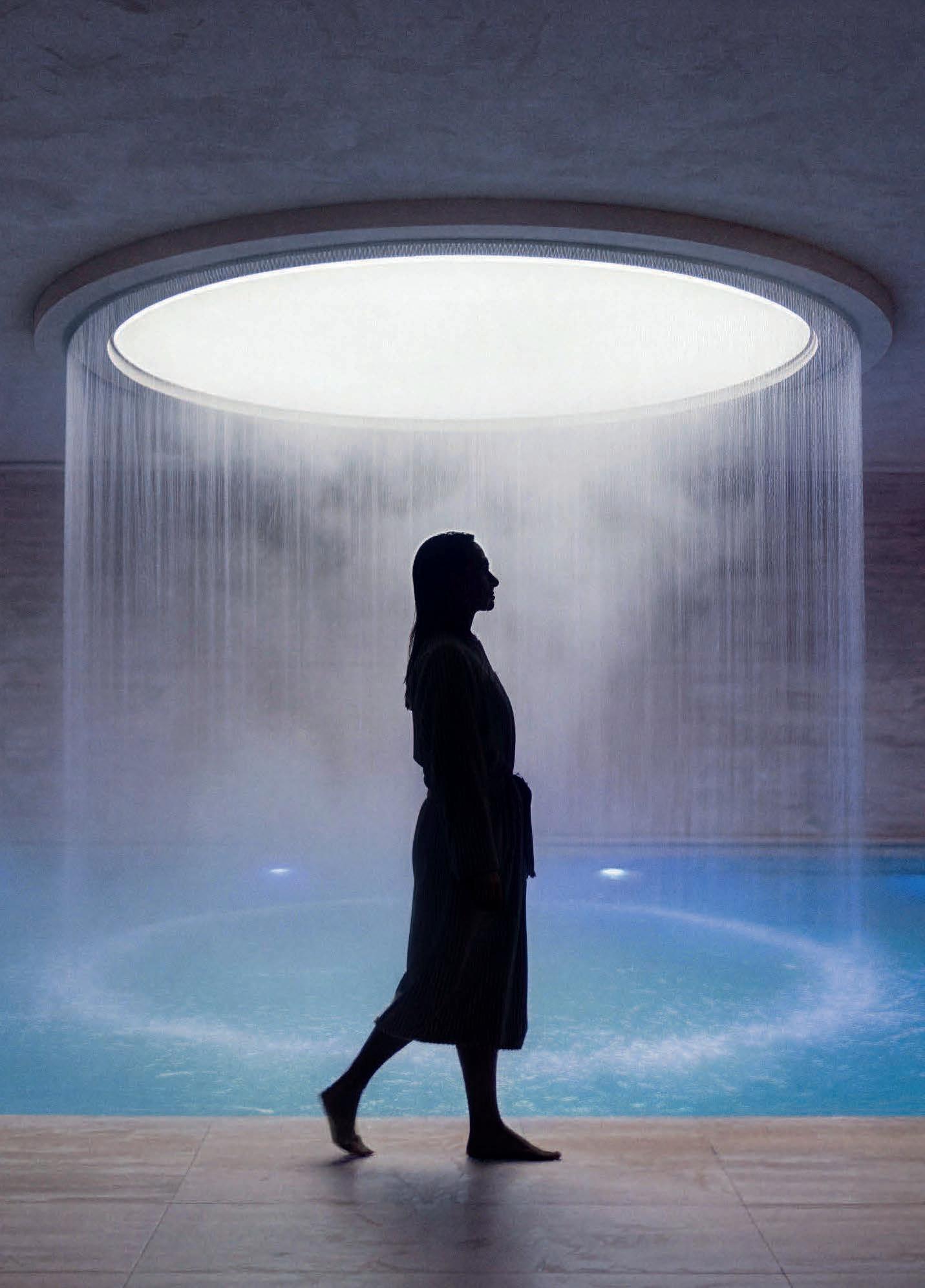
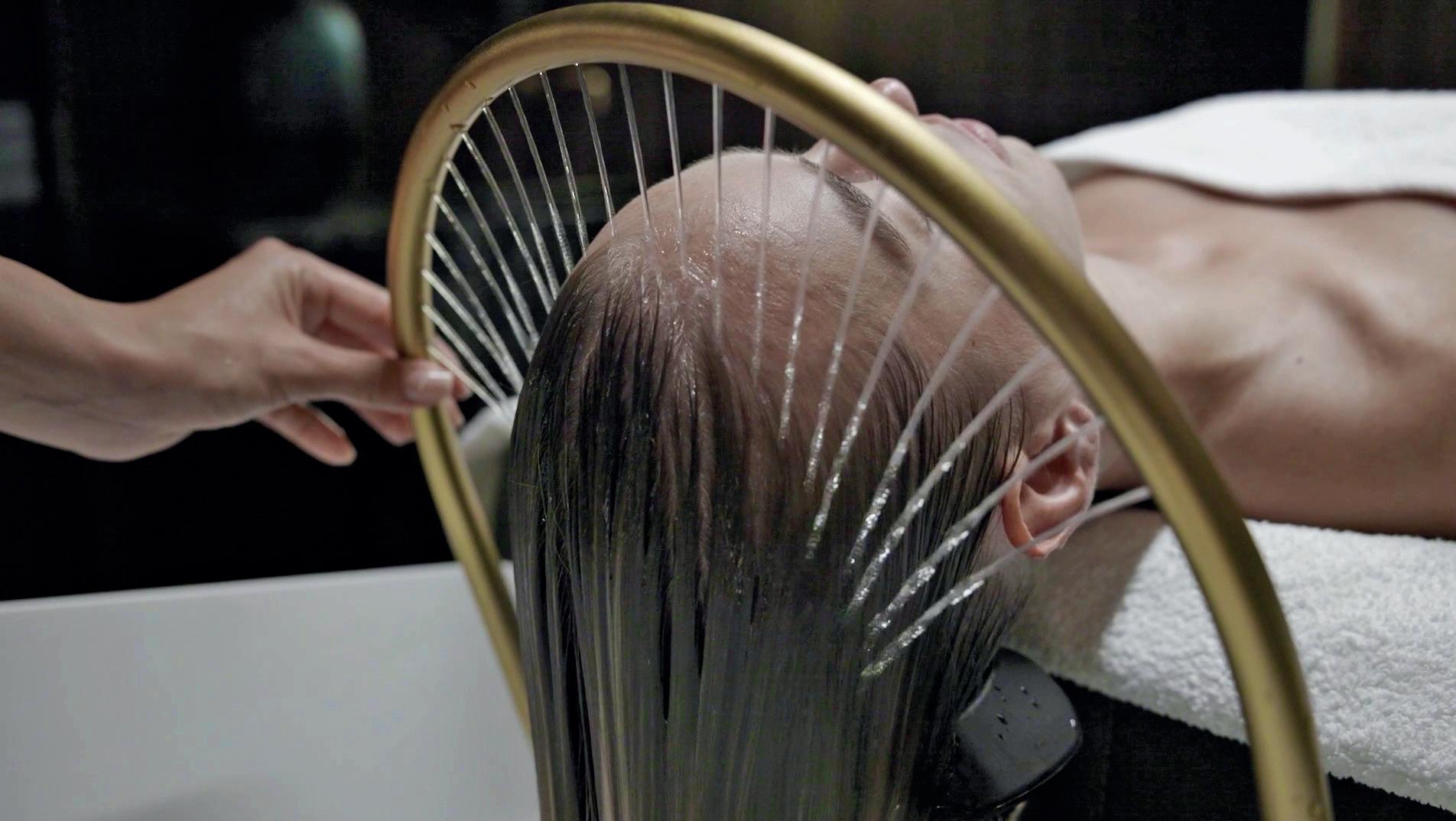
As the global spa market evolves, the integration of advanced technology with immersive wellness rituals is becoming increasingly important.
Responding to this shift, Lemi has introduced Venice Head Spa – a multifunctional treatment bed designed to enhance both operational efficiency and the guest experience.
“With Venice Head Spa, we wanted to go beyond functionality and create a solution that enhances both the guest experience and operational efficiency,” says Matteo Brusaferri, general manager at Lemi. “It reflects our vision of a more integrated, experience-led approach to spa design.”
More than a treatment couch, Venice Head Spa is a complete workstation combining three core functions in one solution: massage, manicure/pedicure and Japanese Head Spa treatments. This multifunctional approach enables operators to maximise space utilisation while maintaining high treatment standards and delivering a seamless, holistic guest journey.
At the centre of the concept is the retractable wash basin, inspired by the Japanese head spa ritual. Designed to create a continuous, flowing arc
It reflects our vision of a more integrated, experience-led approach to spa design
Matteo Brusaferri, general manager, Lemi
of water, it delivers a deeply immersive sensory experience. The gentle flow supports scalp stimulation, encourages circulation and promotes relaxation, helping to elevate the treatment beyond a standard service into a signature wellness ritual.
The unit also incorporates a pipeless pedicure basin, ensuring high hygiene standards while simplifying cleaning and maintenance processes – an important consideration for busy spa environments.
Client comfort and therapist ergonomics are central to the design. The mattress – developed using Lemi’s Memory Foam technology – evenly
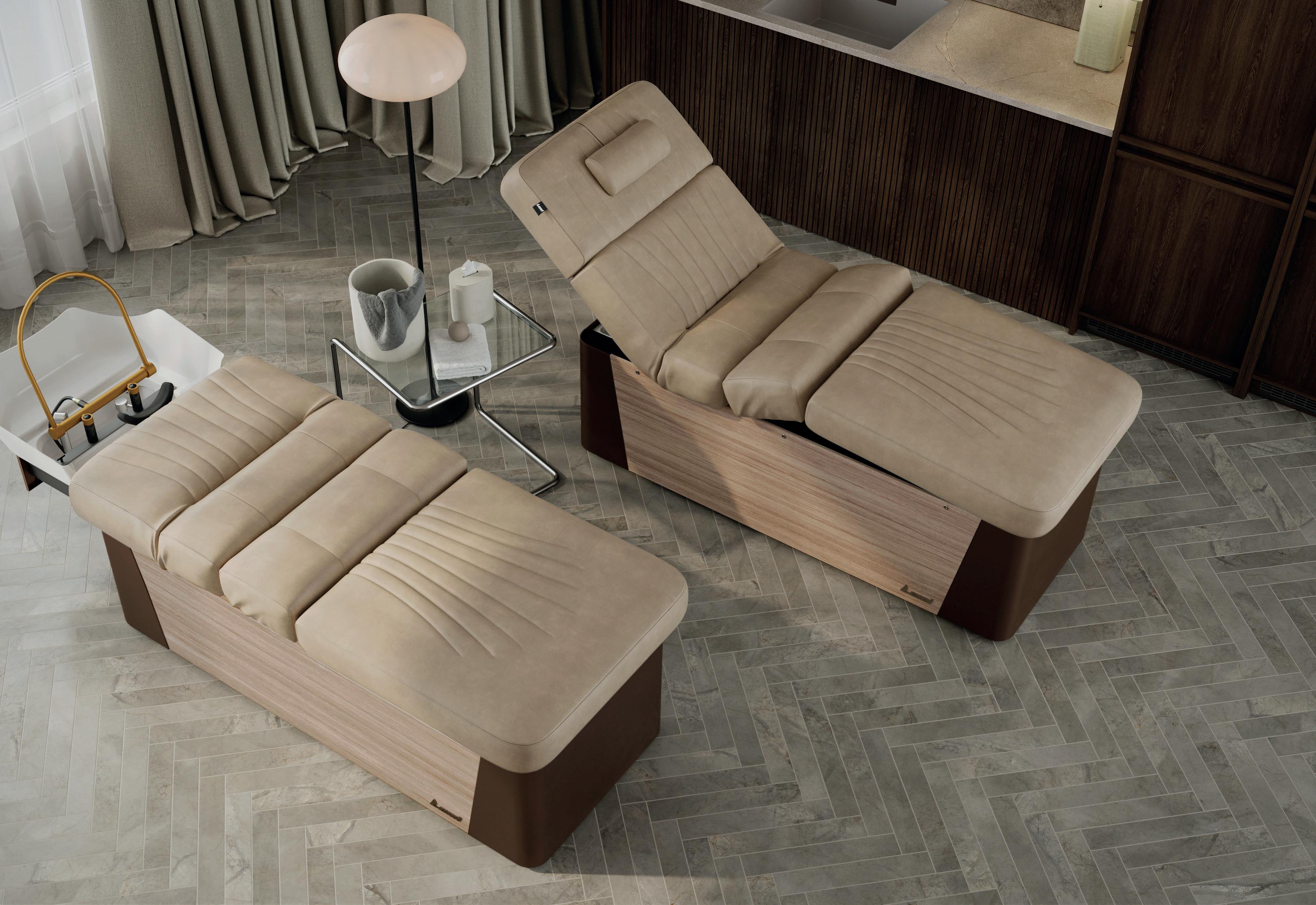
distributes body weight and reduces pressure points, supporting longer, more comfortable treatments. An adjustable, removable horseshoe headrest provides targeted neck and head support, adapting easily to different treatment types.
All movements – height, backrest and leg rest – are electric, allowing therapists to work with precision while reducing physical strain. Additional smart features include programmable memory settings for key positions, such as hair-wash mode, and an automatic ‘end’ function that returns the bed to its starting position, improving workflow efficiency.
Alongside functionality, Venice Head Spa has been designed to integrate seamlessly into high-end spa environments. Its compact footprint, clean lines and extensive customisation options allow it to complement a wide range of interior concepts. The use of eco-conscious materials, including FSC-certified wood, reflects a growing industry focus on sustainability without compromising on design quality.
Building on this concept, LEMI has also launched Sorrento Head Spa, a more streamlined version introduced in March. While Venice Head Spa offers a fully integrated, all-in-one solution, Sorrento Head Spa has been developed as a more focused option, dedicated specifically to massage and
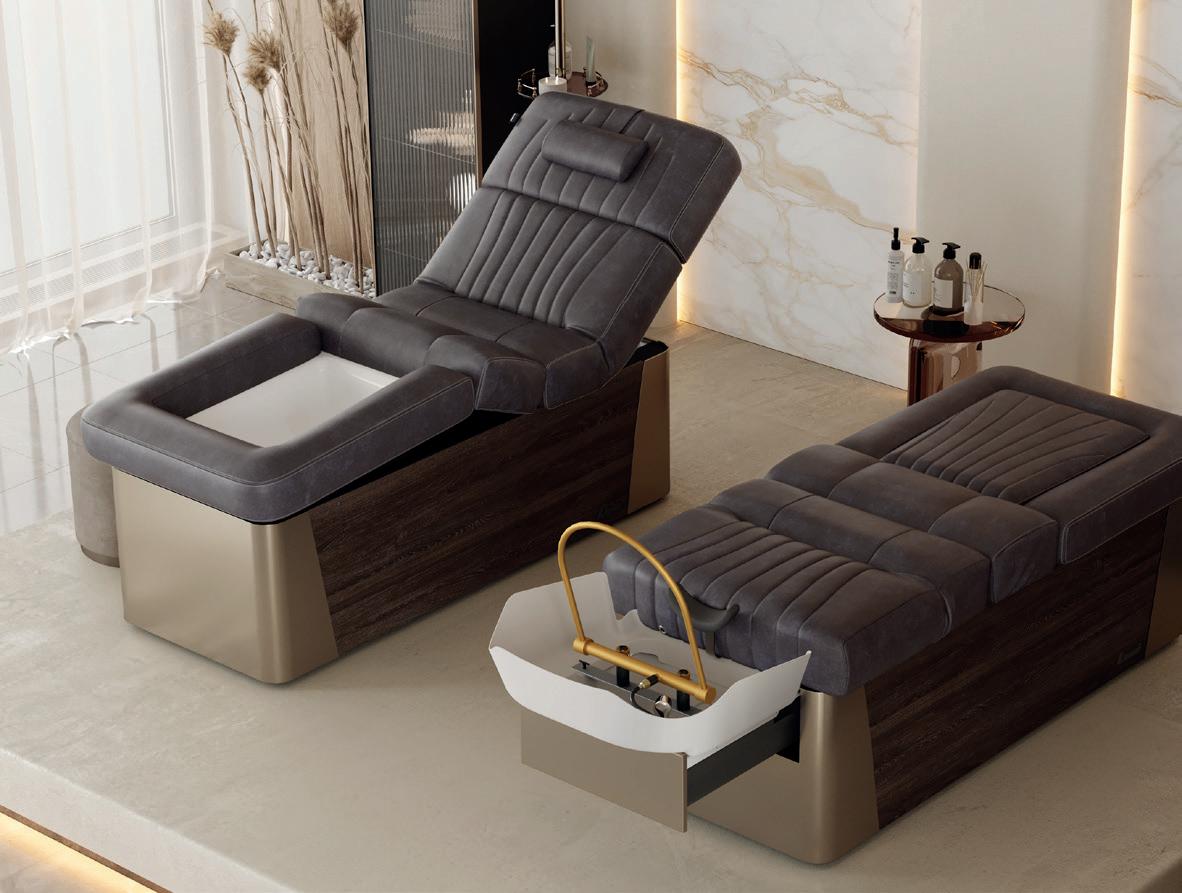
Japanese Head Spa treatments. This provides operators with greater flexibility, depending on space, concept and treatment menu requirements.
Both models combine Italian craftsmanship with advanced engineering, offering different interpretations with the same core objective: to deliver efficient, high-quality treatment solutions that enhance the overall spa experience.
With Venice and Sorrento Head Spa, Lemi continues to respond to the evolving needs of the wellness sector, creating equipment that supports both operational performance and experiential value. The result is a new generation of treatment solutions designed to help spas differentiate their offer, while optimising space, workflow and guest satisfaction. l
More: www.lemispa.com
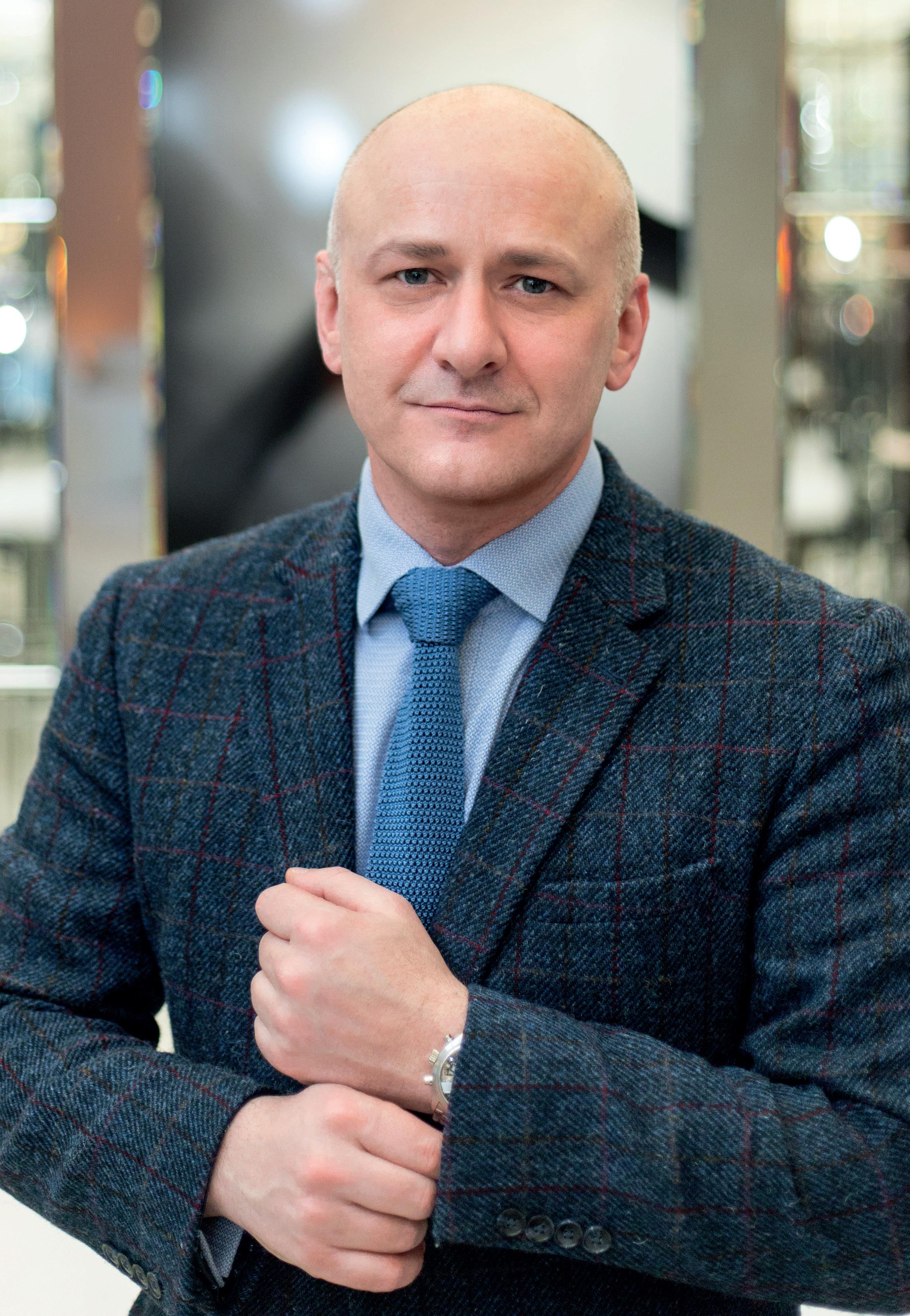
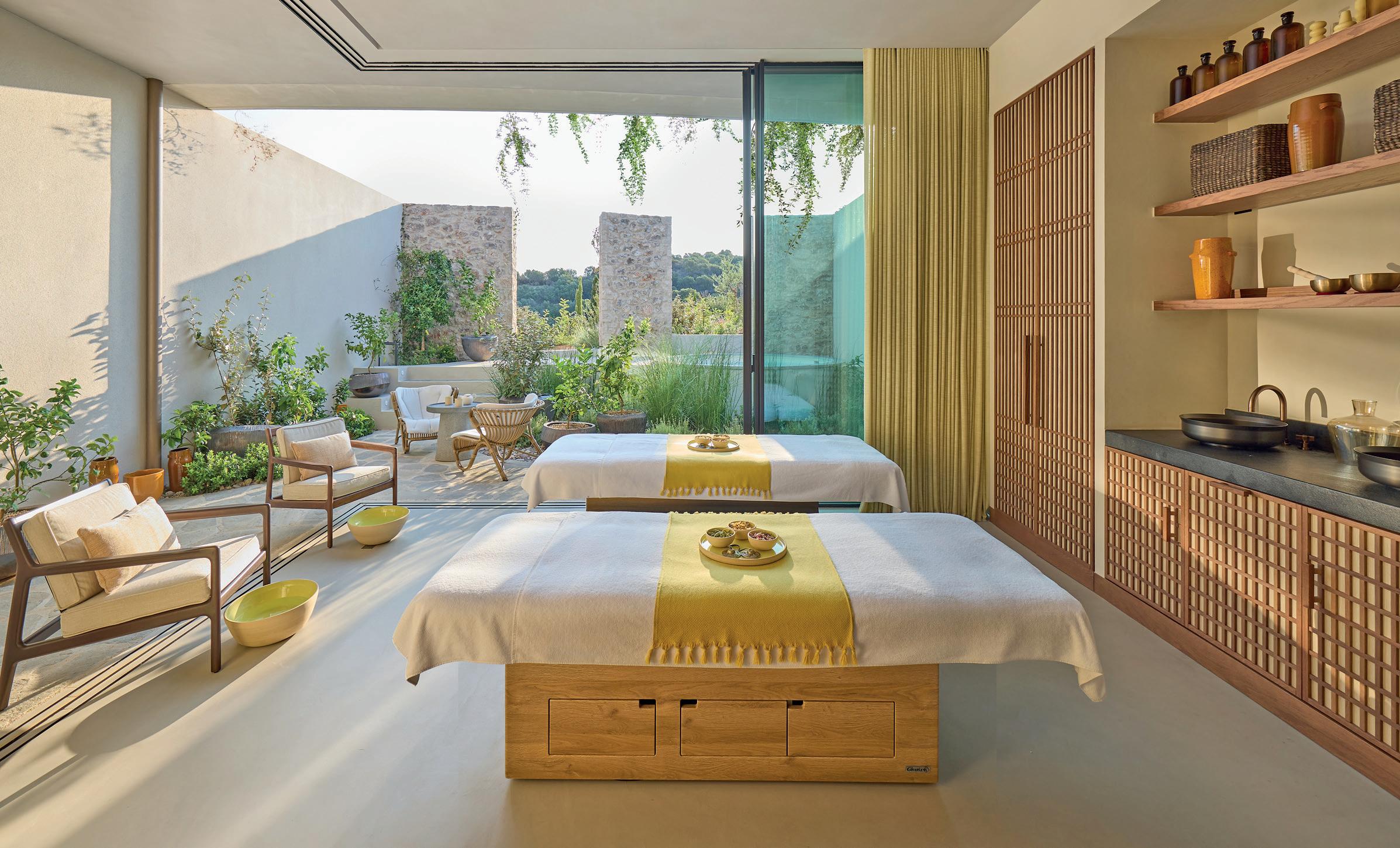
The group director of wellbeing for Mandarin Oriental talks about spa evolution with Katie Barnes and how the partnership with Simone Biles demonstrates its strength of intention
Sitting down with Emlyn Brown, eight months into his role as global head of wellbeing at Mandarin Oriental, he gets straight to the point. It’s the eve of the 2026 Winter Olympics in Milan and the brand is about to announce that Simone Biles will become its first global wellness ambassador, coinciding with her appearance as a spectator at the event. Staying, of course, in the Mandarin Oriental Milan and donning a custom-made robe.
The collaboration with one of the world’s most decorated gymnasts and vibrant personalities signals the calibre of the group’s ambition as it looks to cement its position as a worldwide authority in modern, holistic wellbeing.
In the late 1990s, Mandarin Oriental was one of the first hospitality brands to make spa a key differentiator in the luxury sphere and
has been influencing the industry ever since. Now, as it’s set to double its global footprint in the next 10 years, it’s applying that same intent to a far broader wellness agenda.
Brown, who’s been in the spa sector himself for more than two decades, tells us more about his personal journey and where he’s looking to take the brand.
I’ve been in the hospitality and spa industry for nearly 25 years. Originally, my career was in health clubs, working for brands such as Holmes Place. I then transitioned to hospitality and have held director and operations roles at Jumeirah, Six Senses, GOCO and Resense Spa. Prior to Mandarin Oriental, I led Accor’s 500 luxury spas globally (see www.spabusiness.com/eb_accor).
Spas will now deliver longevity and machinebased aesthetic treatments
It’s like the Real Madrid of spa! Mandarin Oriental was one of the first [luxury hospitality] brands to prioritise spa – offering Eastern, Western practices, fitness, yoga, tai chi, gyrotonics and Pilates. And it still remains at the forefront of that.
Coming to Mandarin Oriental was exciting because of the compelling vision presented by our group CEO, Laurent Kleitman. Working with Andrea Lomas-Gong, VP of spa and wellness operations, and the team, we’ve got 35 spas globally and can really get into the operational delivery of ‘say it, see it, do it’. I believe we can have a real impact and move the wellness needle in luxury hospitality.
I had an incredible seven years at Accor, however the scale of business was very different and my work was more focused on brand and marketing, thought leadership and wellness and spa design.
I’m as challenged as anybody else, particularly with all my travelling and being in my early 50s. I work with a personal trainer for accountability and to hit my daily movement goals. I keep my protocol simple. I do active breathwork and try to incorporate some form of exercise and movement every day. Ollie Patrick from Pillar Wellbeing says to ‘try to sweat every day in some way’ and I think that’s a great idea – whether that’s through yoga, exercise or something else.
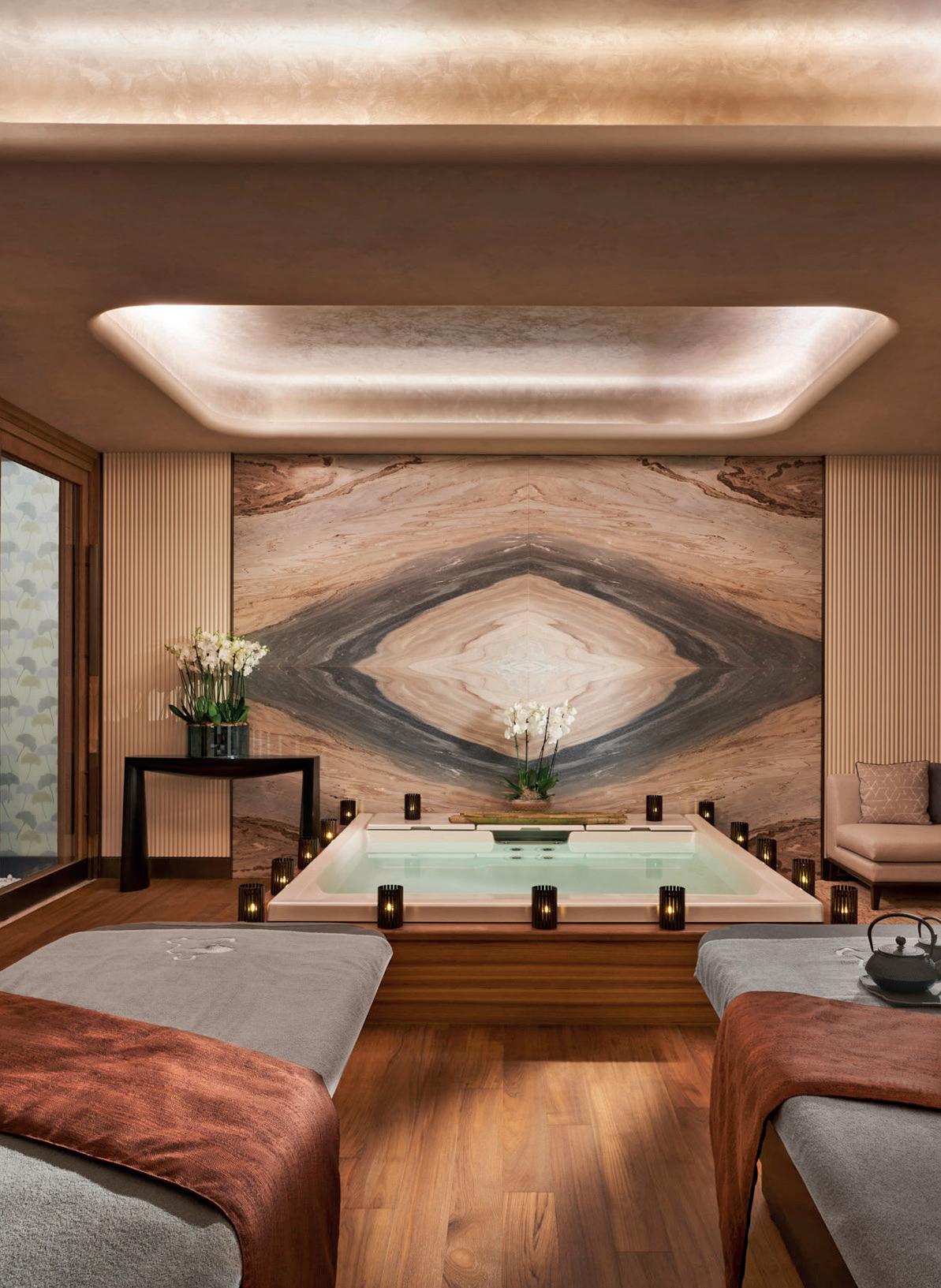
THIS IS AN EVOLUTION, NOT A REVOLUTION
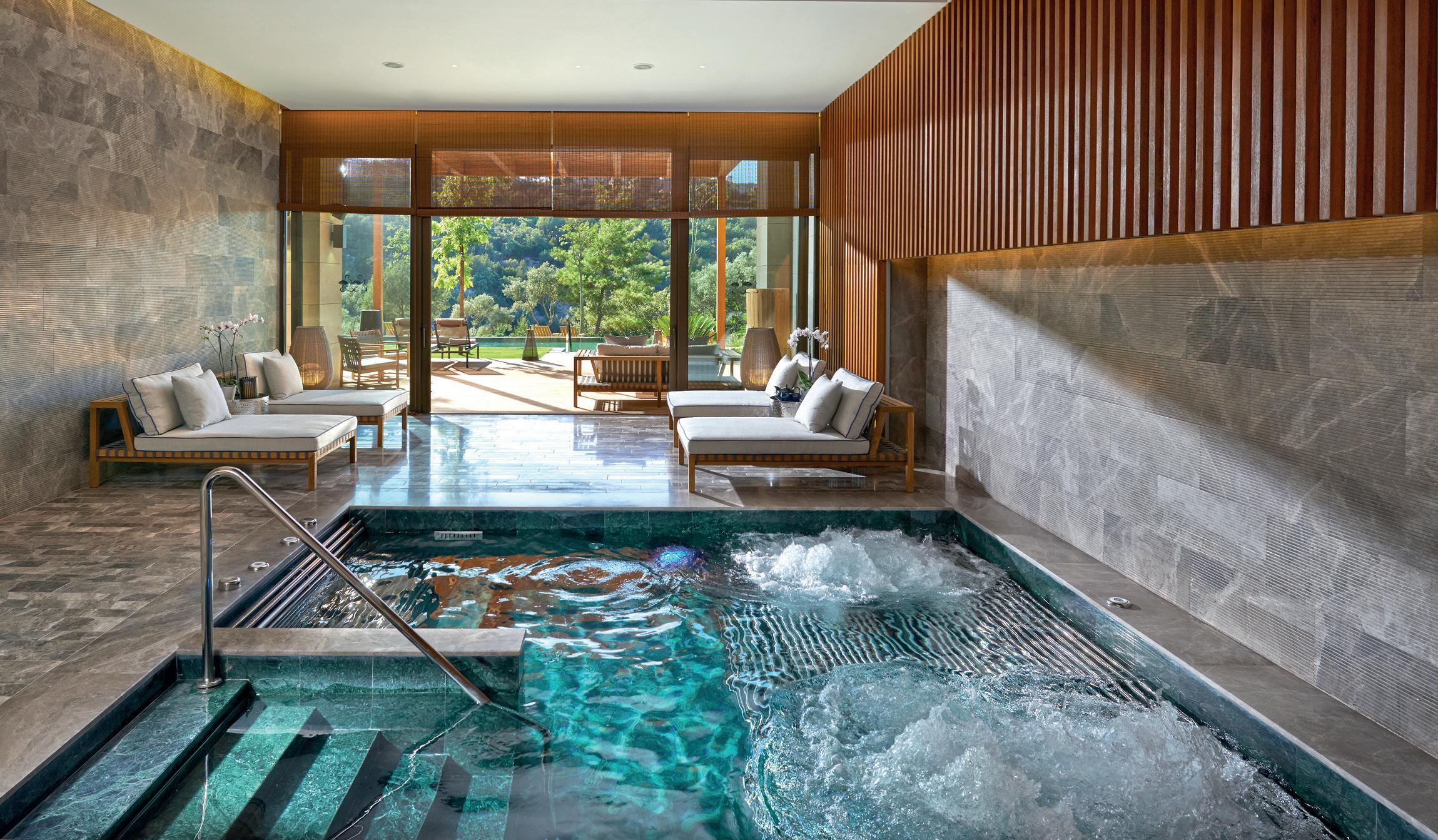
Brown is looking at how to expand or switch up bathing facilities
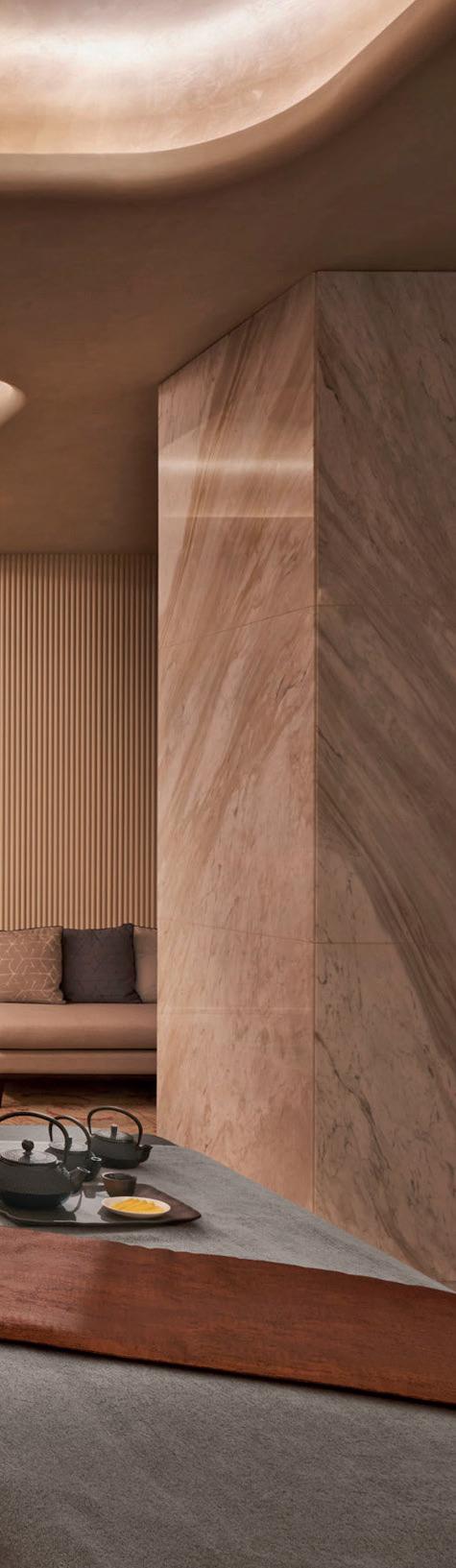
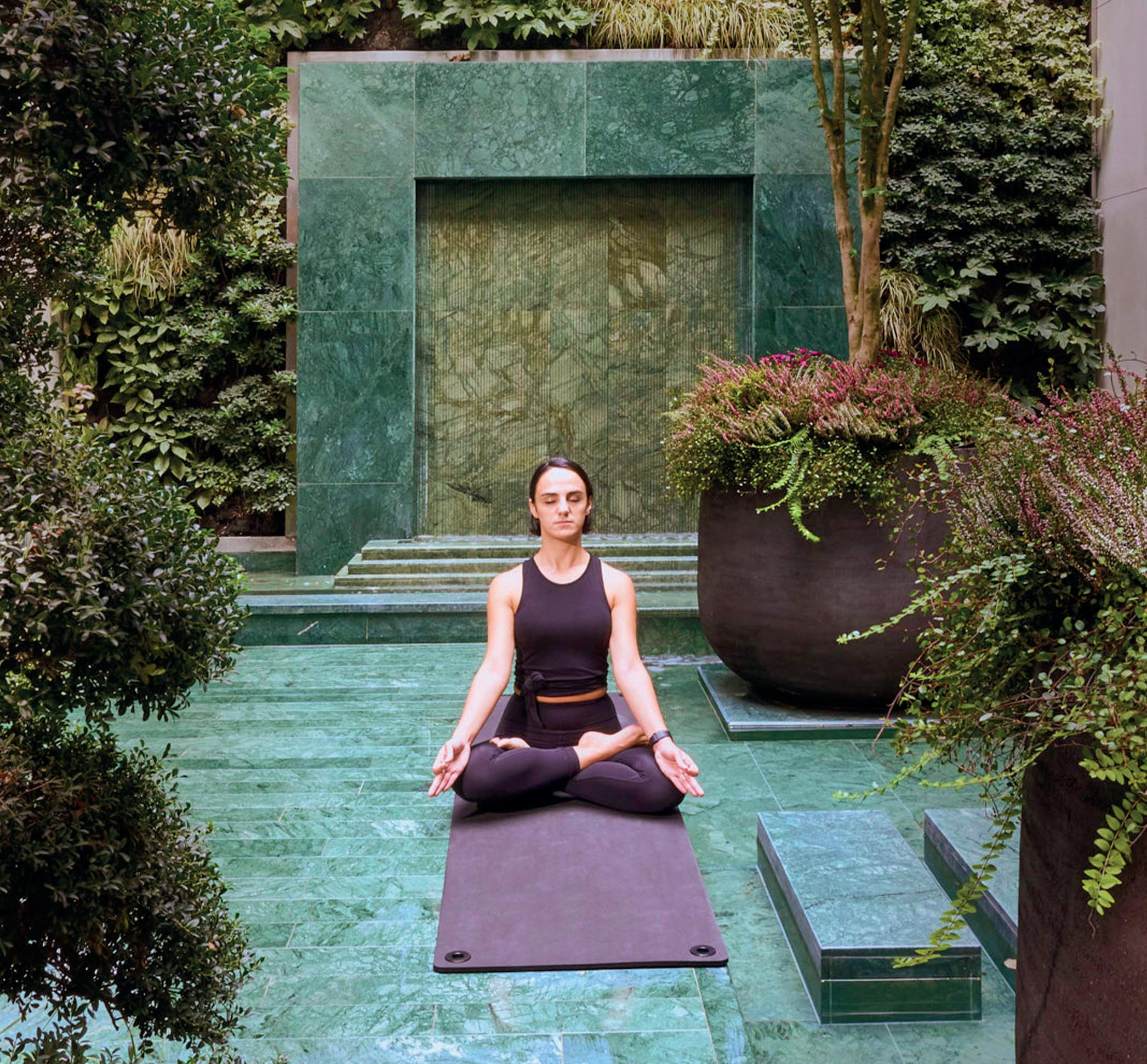
There’s a new type of wellness guest that is largely underserved, says Brown
WHAT BROADER AREAS OF WELLNESS ARE YOU LOOKING AT?
Mandarin Oriental’s spa heritage dates back 25 years and is iconic, but it was time to venture into other areas to give us a more robust and rounded offer. As part of our brand refresh, we’ve identified seven additional pathways to wellbeing which we’ll prioritise. These are nutrition, sport and leisure, movement and mindfulness practice, regeneration and aesthetics. However, it’s important to stress that this is an evolution, not a revolution in our approach. The spa experience remains absolutely fundamental.
WHAT WILL THESE NEW APPROACHES LOOK LIKE?
Regeneration is a good example. This is our take on longevity and we’re looking at what’s core and meaningful to support our guest’s health rather than following fads on social media. We’ll incorporate long-accepted technologies, solutions that have been in the marketplace for 30-40 years and are clinically proven, such as hyperbaric oxygen therapy, red light therapy and compression therapy. We may also partner with
local medical practices in some instances to offer services such as IV therapy. Does this mean we’ll be offering full-blown diagnostics with medical doctors to interpret the results? Probably not. Contrast bathing also comes into play and we’re looking to improve our hydrothermal experiences, because the resurgence of sweat culture is happening in every market globally. We’ll expand bathing facilities in resort locations, but we’ll also carve up thermal spaces differently where footprints are limited in urban locations. Rather than having a huge pool, can we have smaller hydrotherapy pools and fit in a sauna, steamroom and cold plunges as well to create a more effective circuit? Or instead of multiple saunas, can we have one big one with a high ceiling and then offer socially engaging aufguss ceremonies?
YOU’LL BE GETTING INTO AESTHETICS AS WELL?
Yes. We’ll be introducing equipment-driven face and body care in a considered way, working with specialists to offer resultsbased services, as that’s what our customers want – especially those in urban settings.
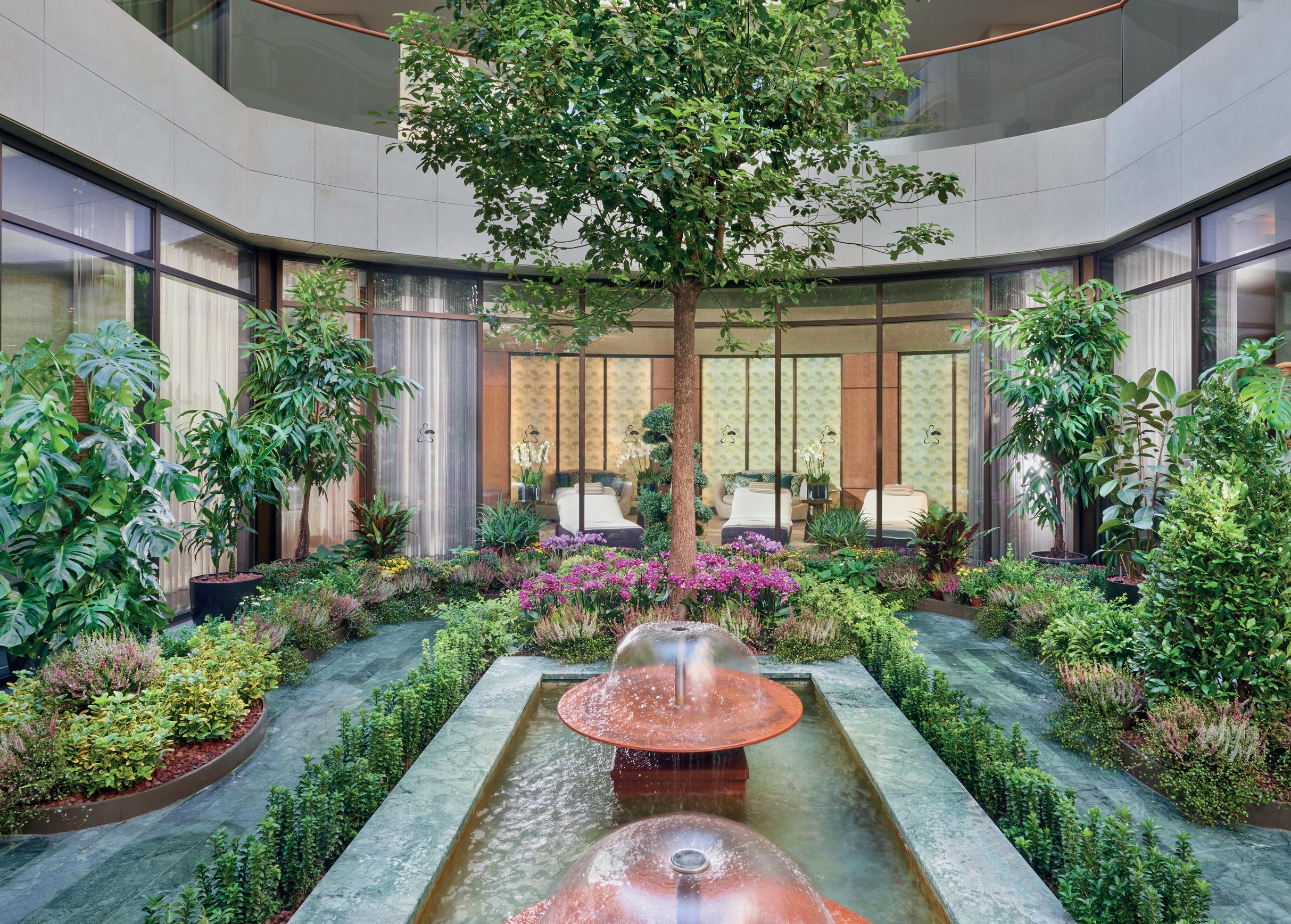
Hands-on spa delivery will always be our centre point, but aesthetic technology is getting better and better, so we’d be remiss not to incorporate it.
WHAT WELLNESS PATHWAYS EXCITE YOU THE MOST?
There’s a significant, growing appetite for more exercise and movement. People on holiday at our resorts want it, but there’s a particular demand for it in our urban locations.
In London, for example, 80-85 per cent of our spa guests are external and local clients who create a wonderful sense of community. Yes, you need to balance the hotel guests’ needs, but people are craving more dynamic and engaging elements – they want a gym where seven, eight, or 10 people are working out, as it creates a welcoming, comfortable atmosphere. Memberships also make a stronger business model because of the predictable revenues –and it’s becoming increasingly challenging to make money purely from spa treatments.
SO, YOU’LL INTRODUCE BRANDED MEMBERSHIPS?
No. While we do offer memberships at some properties, the Mandarin Oriental brand is already strong enough. There will be a notable
change in how we develop and design our exercise experience. From the size and scale, equipment selection, layout – you won’t see banks of cardio machines; we’ll offer free motion flooring, kettlebells and flexibility for ‘movement selection’. In certain locations, we’ll work with third parties to deliver boutique experiences – an incredible Pilates or Hyrox-style offering, something that’s flexible, because boutique fitness moves so fast.
WHEN WILL YOU ROLL OUT THE NEW PATHWAYS?
We’ll gradually introduce them over the next 12 to 18 months. Towards the end of this year [2026], there’ll be a significant number of openings that really showcase these new elements.
HOW INVOLVED WILL SIMONE BILES BE?
She won’t just be a figurehead. She’ll have an active role in shaping our wellness philosophy. Mandarin Oriental is famous for its fan campaign, highlighting international celebrity supporters including Morgan Freeman and Helen Mirren, and extending that to a board of wellness experts is a natural move. Simone is our first global wellness ambassador, our lead, and she’ll help select more experts to head up each of our seven pathways.











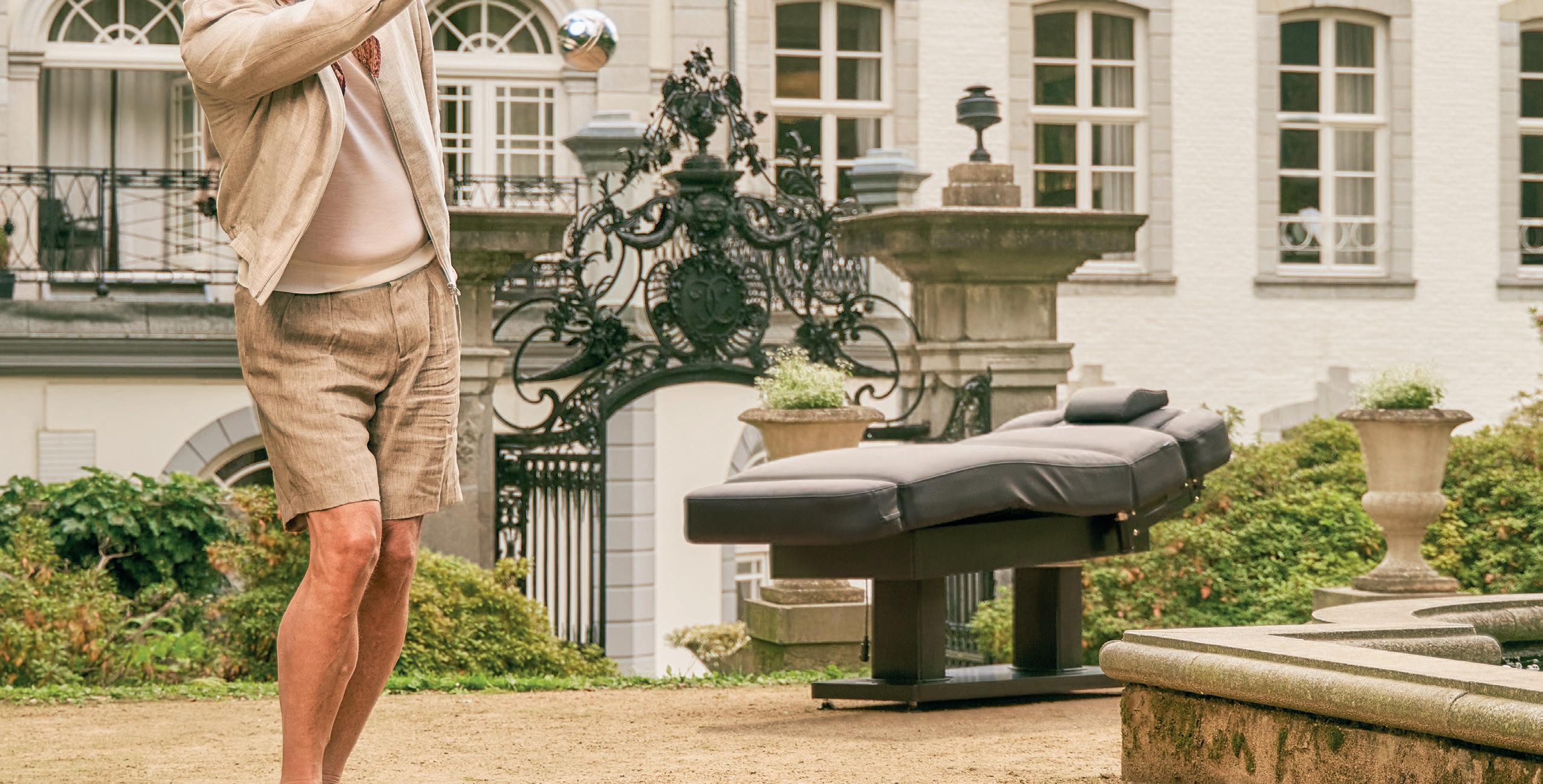










Mandarin Oriental is looking to significantly elevate its fitness offering
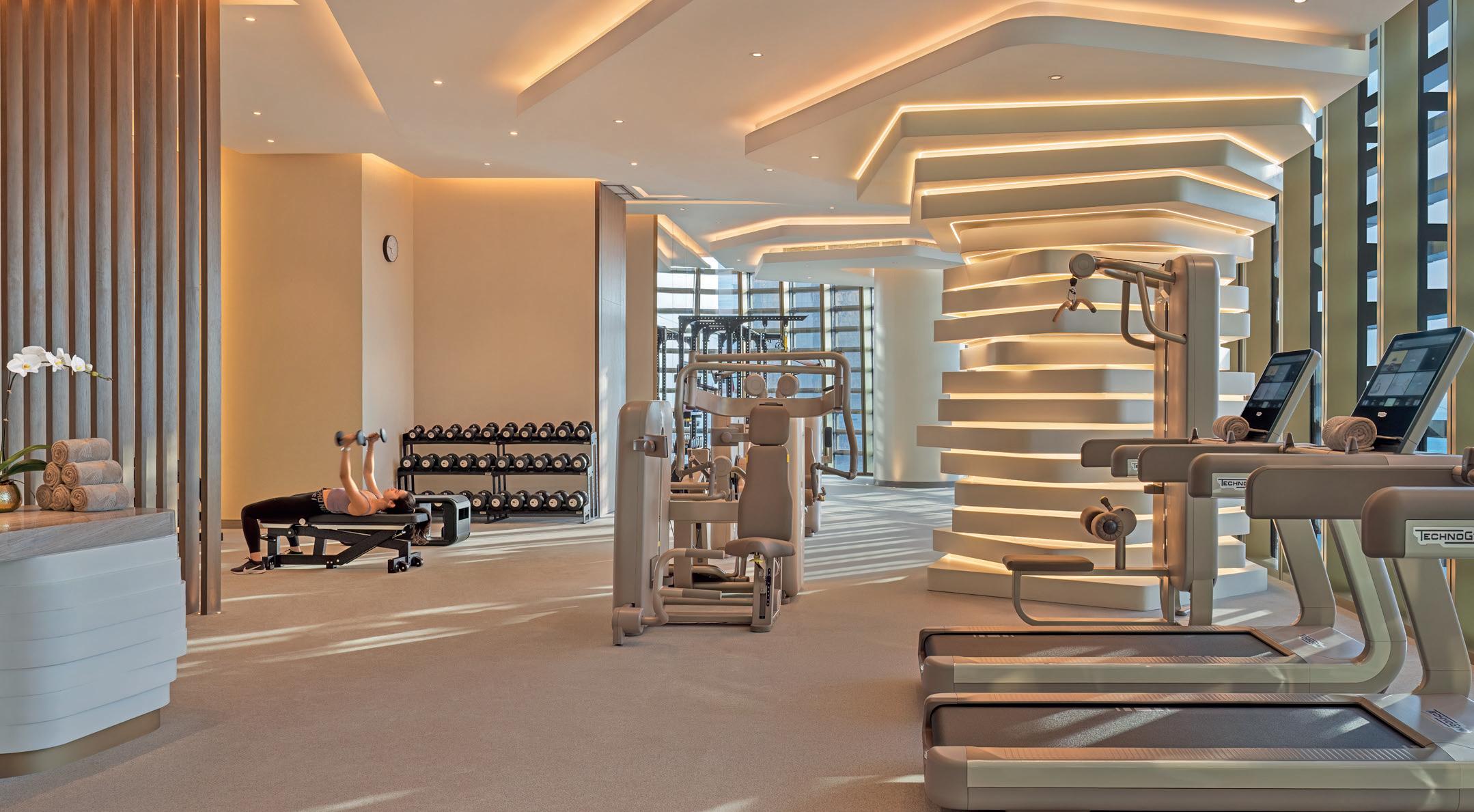
She’ll share her insights and perspectives to help shape future programmes and experiences – especially those that build on her strengths of movement. She’ll also support and participate in global storytelling, campaign activations and the development of wellness initiatives.
WHAT QUALITIES DOES SHE CONTRIBUTE?
Our new tagline is Strength in Motion, Grace in Poise and Simone epitomises that. Obviously, she demonstrates determination and grit, female empowerment and fitness. But she also openly discusses mental health for athletes and high performers, which is a vital conversation to be having. There’s also a sense of curiosity and fun to Simone, which makes her very relatable.
SO, WHERE DOES SPA FIT IN ALL OF THIS?
It’s still a vital element at Mandarin Oriental and we’re really doubling down on our spa experts in our hotels, because fundamentally, that power of human connection and exceptional treatment delivery is still what people want in the luxury segment. There’s no move away from that, we’re actually strengthening it – Andrea and the team have released a full menu and suite of new treatments and protocols to modernise and elevate our therapy delivery.
HOW IMPORTANT ARE SPAS TO THE BUSINESS?
At Mandarin Oriental, we have three main divisions – Rooms, F&B and Wellbeing –and wellbeing is viewed as a standalone division, not a sub-department. All of our spas are individual profit centres and successful businesses in their own right.
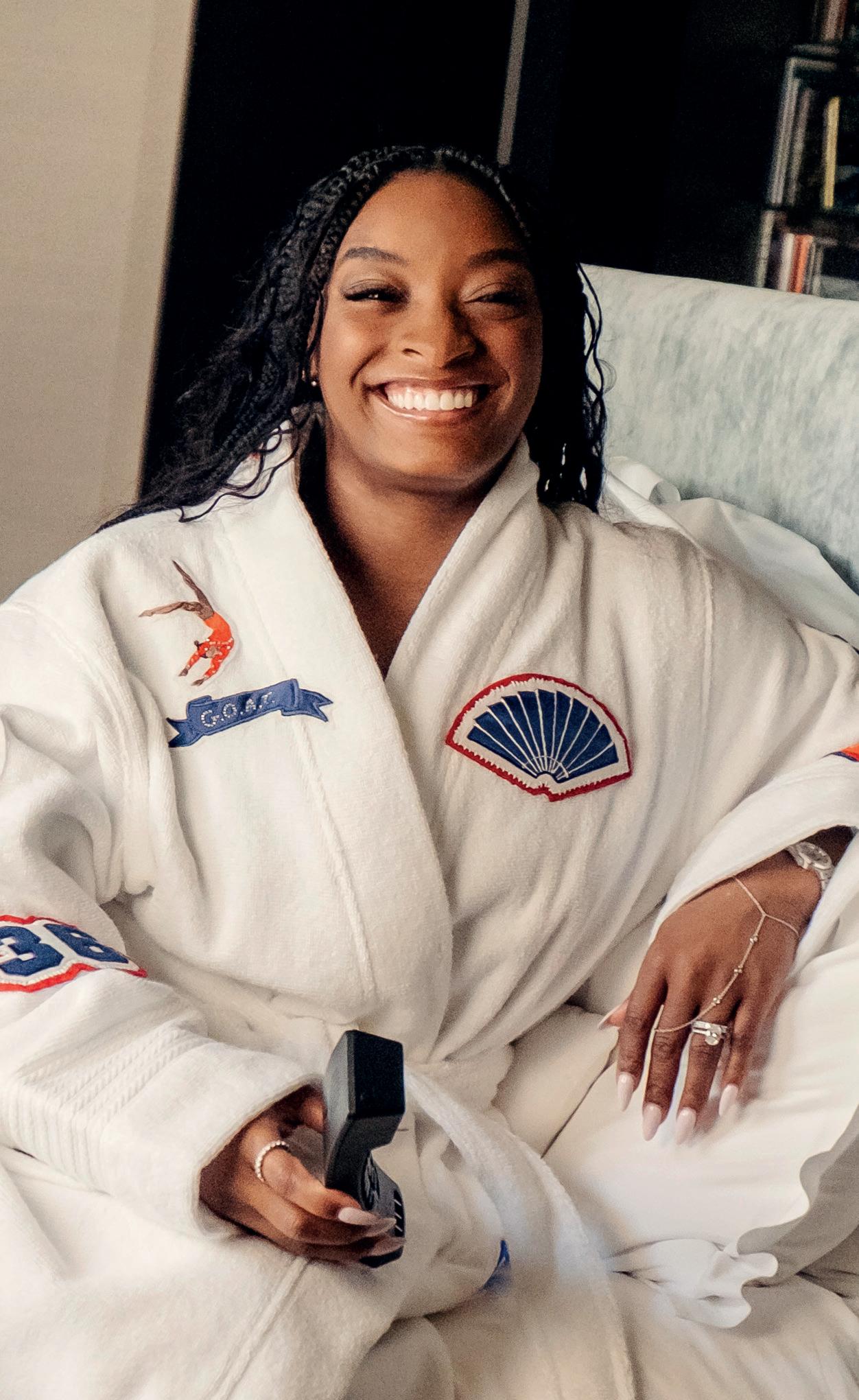

SIMONE WON’T JUST BE A FIGUREHEAD. SHE’LL HAVE AN ACTIVE ROLE IN SHAPING OUR WELLNESS PHILOSOPHY
All Mandarin Oriental spas are successful businesses in their own right, says Brown
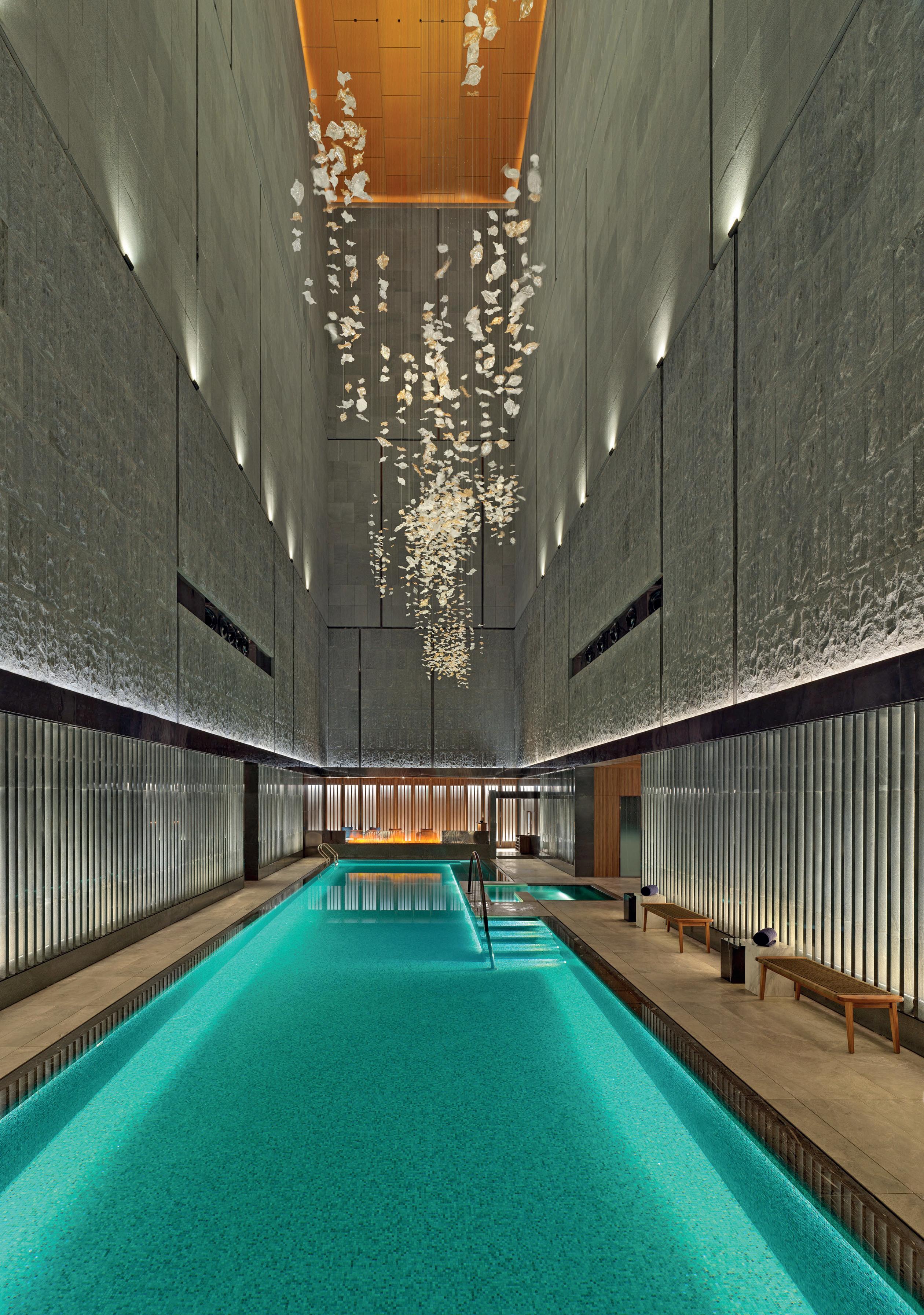
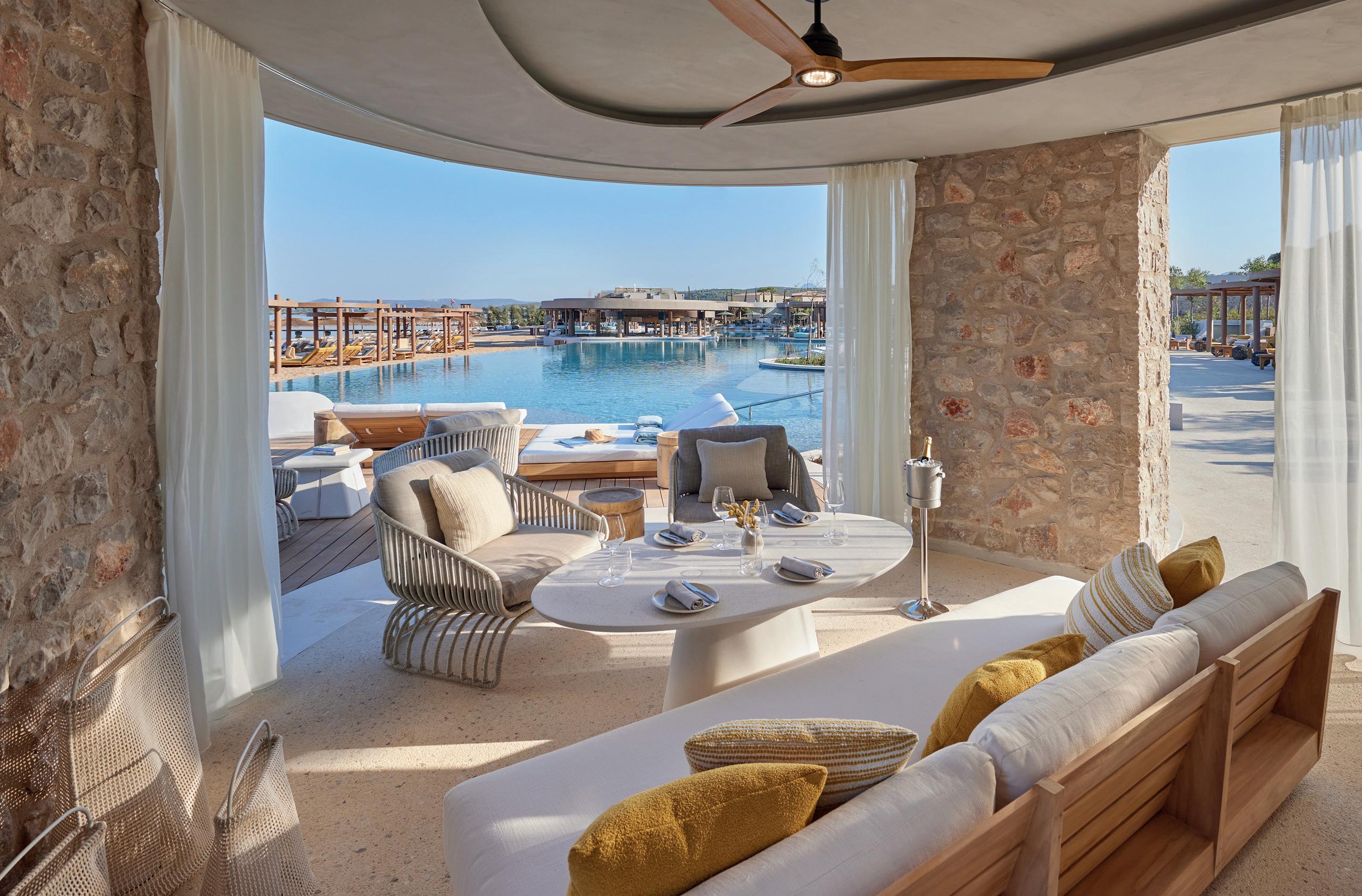
However, you also have to look at the wider value that these types of guests bring. Firstly, we know that a spa user in our properties spends more and stays longer.
Secondly, from our Mandarin Oriental Fans loyalty programme perspective, internal surveys show that wellbeing is the number one priority for our top 5 per cent of customers, who represent a significant part of our global revenues. And the higher their net worth, the stronger their bond is towards wellness, activation and activity.
Thirdly, we know that if a guest has a spa experience at a property, there’s a far higher likelihood that they’ll join our loyalty programme and that they’ll also refer to us positively in the marketplace.
Fourthly, spas link to the overall zeitgeist of wellness – a highly aspirational element from a marketing and brand perspective.
It’s what our guests want and in the hospitality industry, the idea of what a spa is, is significantly changing. Younger generations entering the luxury landscape are incredibly demanding and older generations are realising they need to do more.
I don’t know any other sector that has such a strong push-pull factor. The push factor is being
unwell, being overweight and job stress, which drives consumers searching for wellbeing. The pull factor is Erewhon’s US$45 Hailey Bieber smoothie, doing Pilates at Barry’s Bootcamp and celebrities posting online in their athleisure wear. You’ve got Dua Lipa doing yoga videos, Diplo doing running clubs, Kith launching a wellness club in New York with a restaurant, the Giorgio Armani spa and padel courts.
Mandarin Oriental was an early adopter of spa and wellness, so why wouldn’t we be absolutely poised to capitalise on this incredible movement that’s happening?
I’m not looking to claim it. I’m looking to serve our guests. Am I keeping an eye on competitors? Of course. But I’m also watching other industries to get ideas. I’m inspired by how restaurants and bars are fun, dynamic, thematic and spontaneous on socials, for example, and by experiences we’re seeing in the retail sector.
Mandarin Oriental will double its portfolio over the next 10 years – taking us up to 100 sites – so you can expect an incredible array of diverse locations around the world.
The new spa in Cortina, Italy, will have improved hydrothermal experiences (this pic and below)
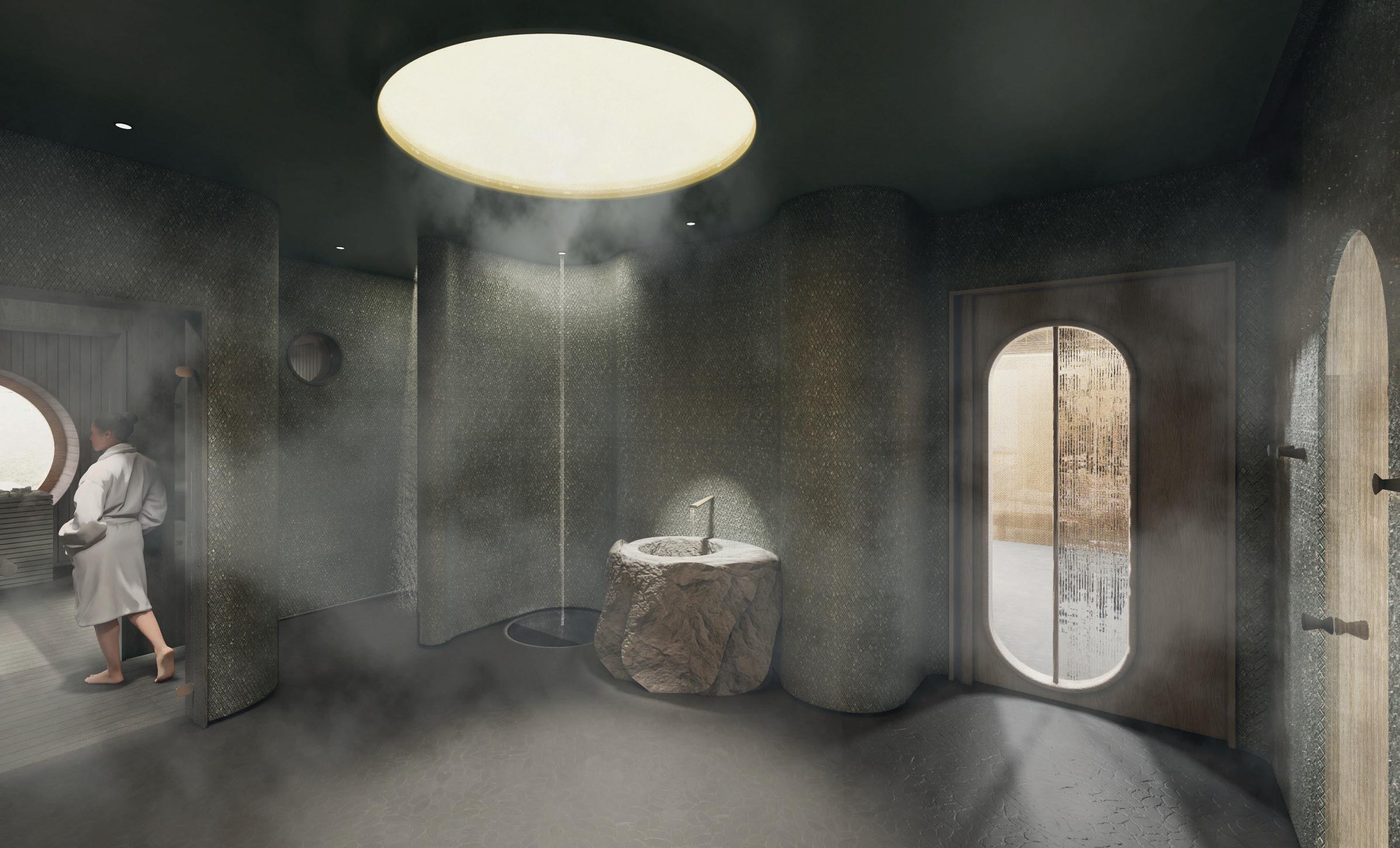
WE’LL INTRODUCE OUR NEW WELLNESS PATHWAYS IN THE NEXT 12 TO 18 MONTHS
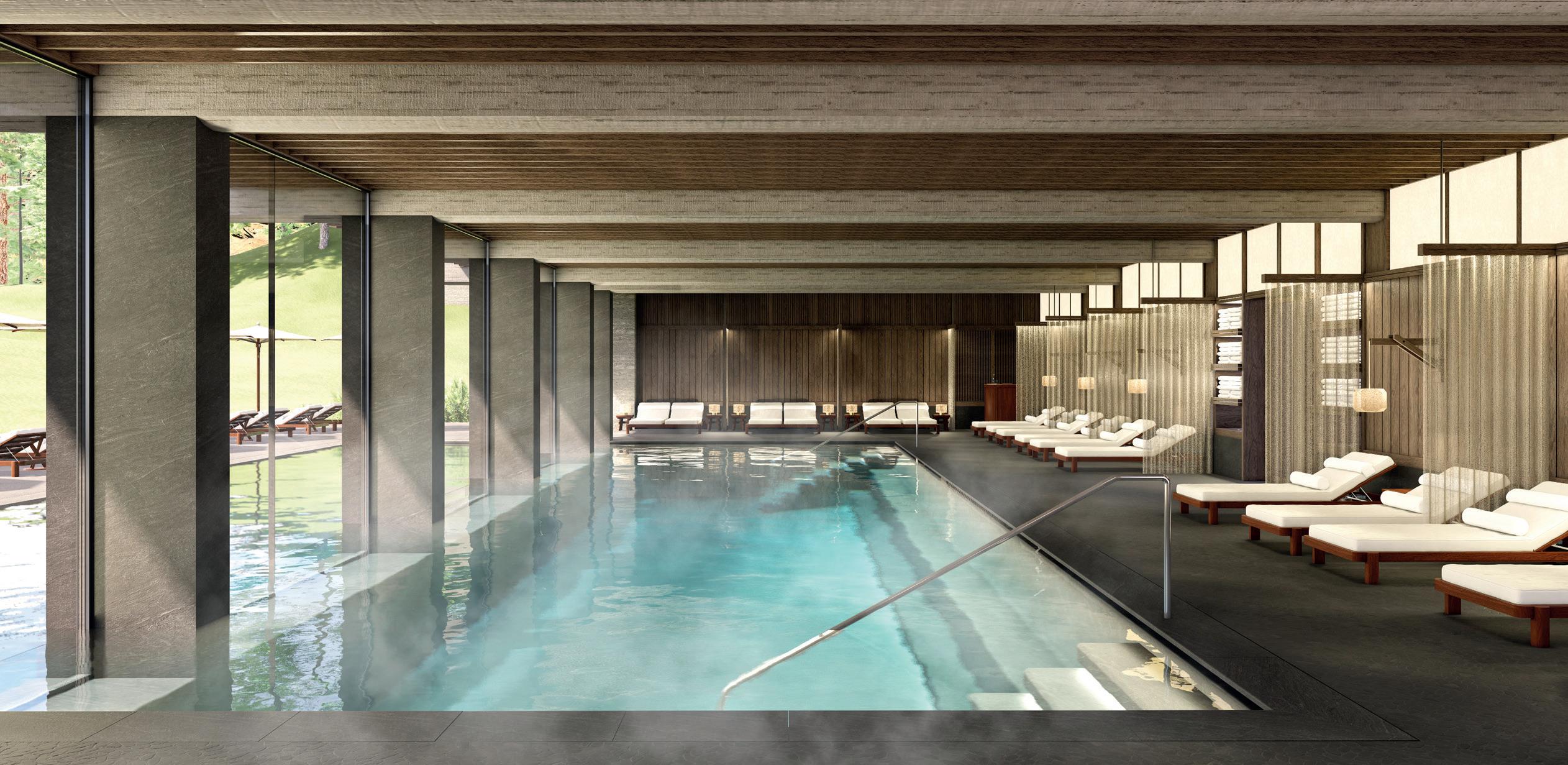
will double its portfolio in the next 10 years
Internal surveys show spa users spend more and stay longer
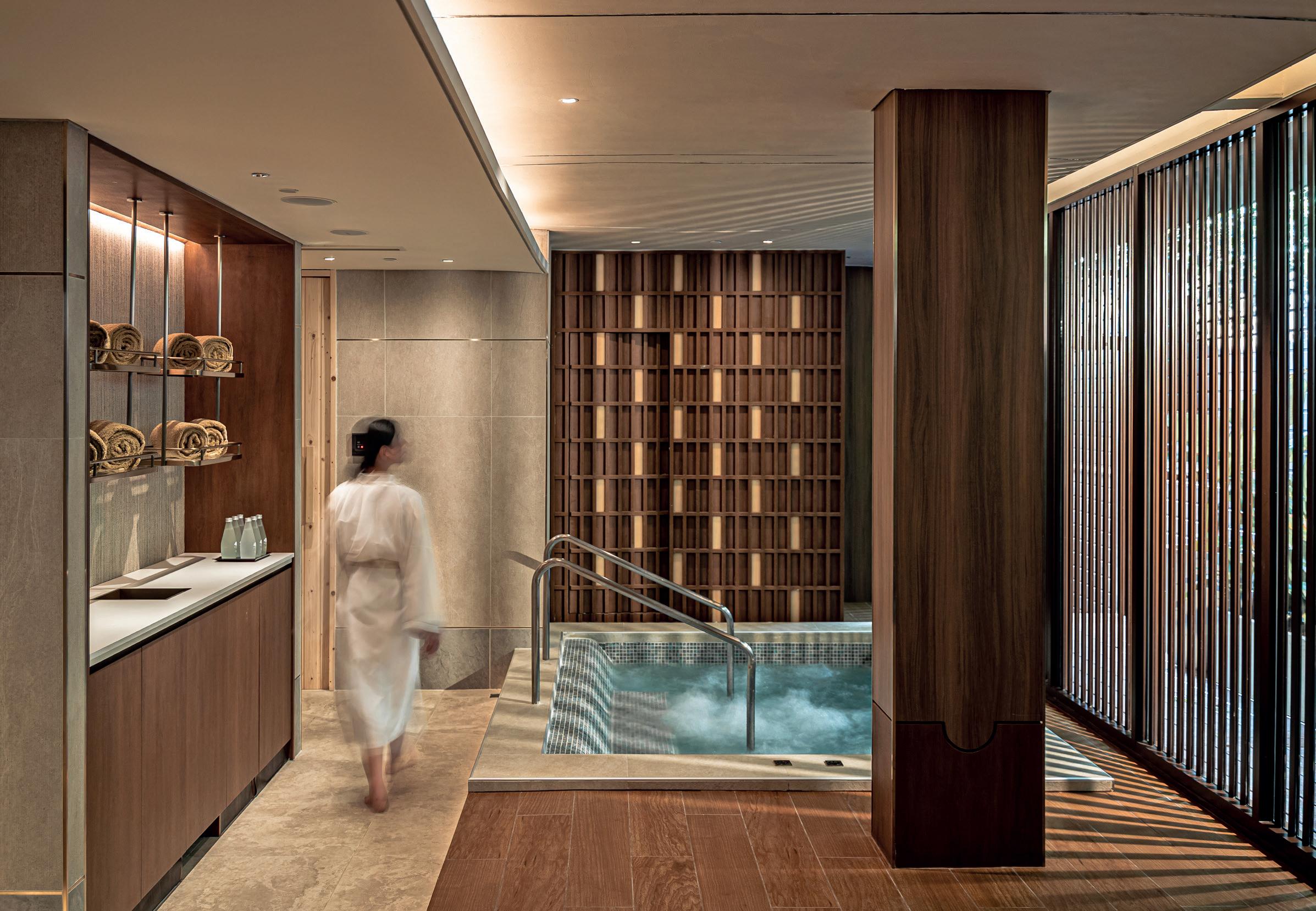
We’re scheduled to launch in Cortina in Italy, our first ski resort in the mountains, this year. This will have 1,500sq m spa, nine treatment rooms and elements of the new regeneration and aesthetics pathways we’ve talked about. Similarly wonderful openings are coming in Rome, the Maldives and Tel Aviv. Significant renovations are also underway at our landmark location in Hong Kong, with more to follow.
I want to future-proof our business model. Part of that will be introducing club concepts (see p98). But at a resort level, we need to service what I call the third guest profile. In wellness tourism, we talk about primary and secondary consumers. Primary being around the 8 per cent of guests who proactively seek wellness at places such as Lanserhof and Chenot. The other 92 per cent might take in some form of wellness when travelling. However, there’s a big chunk in the middle uncatered for – those who
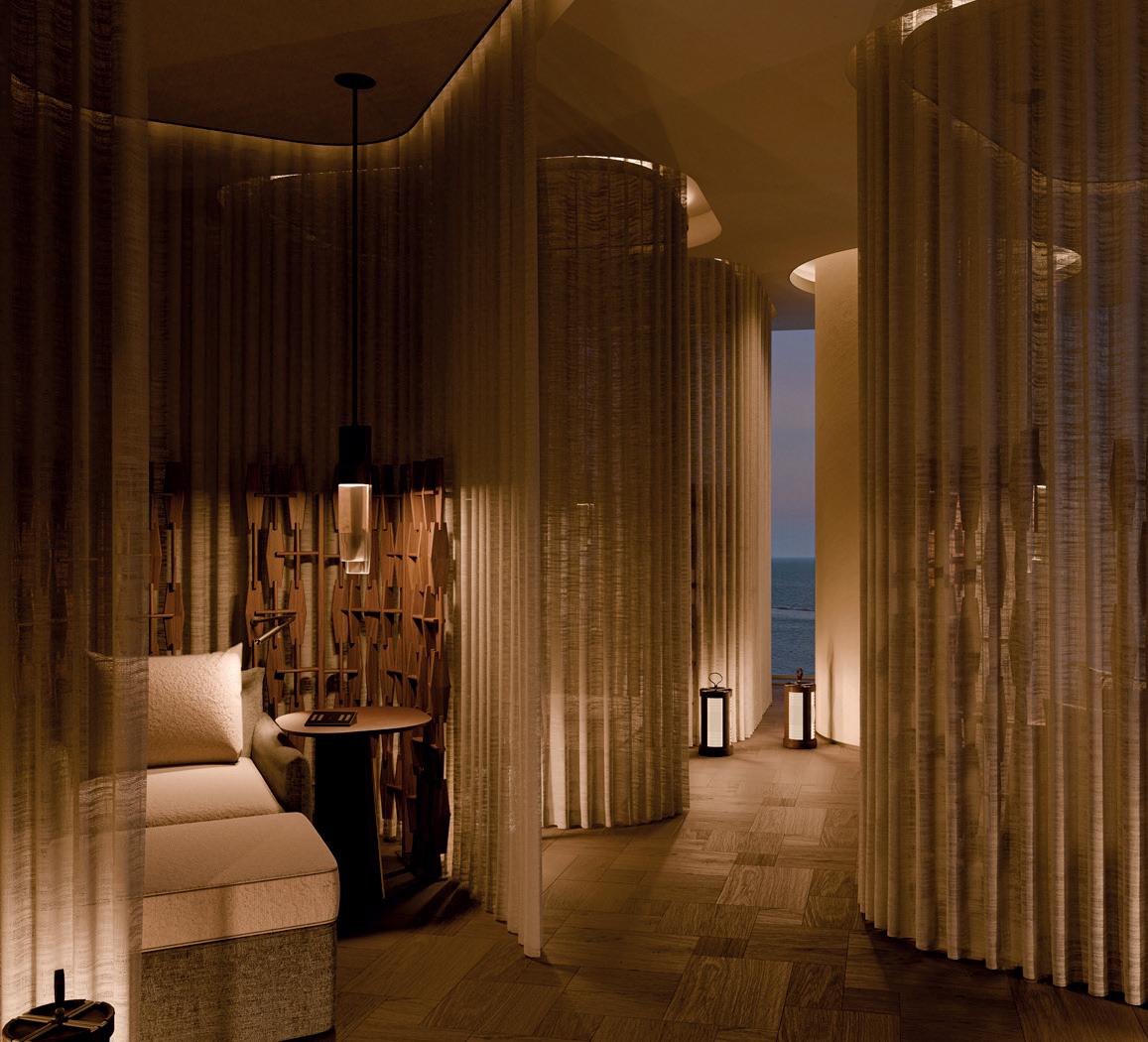
want extended services, maybe some detox programming, a juice fast or super healthy food, or great yoga. They might not stay for seven days, but they want deeper options. We’re already recognised as a market leader within wellness and luxury, but I want to build on that and lead the evolution – challenging norms and moving in new directions. l



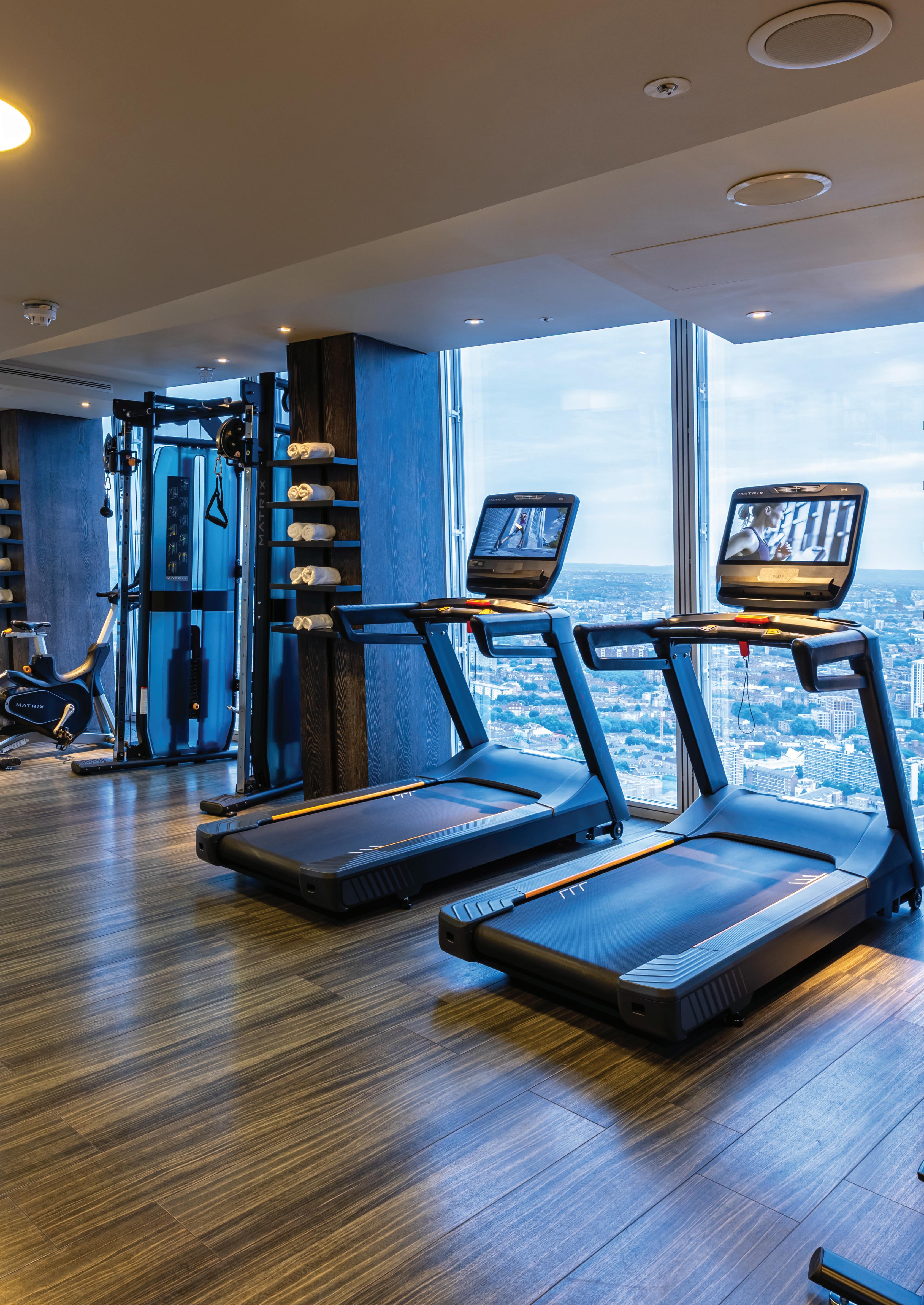
The Hurlingham Club is upgrading its fitness offering
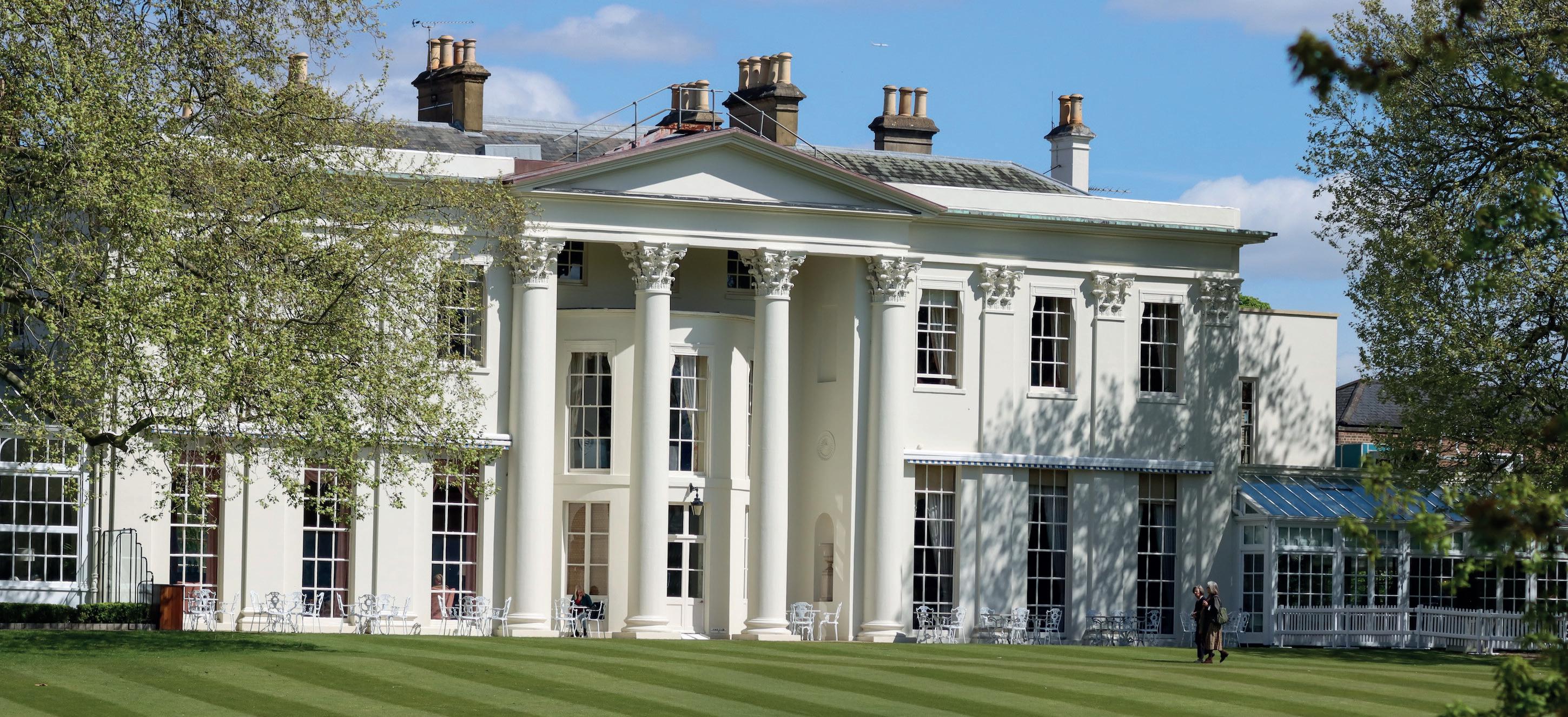
Matrix Fitness has completed a new cardio installation at the prestigious Hurlingham Club, creating a modern training environment that meets member expectations while integrating with the club’s existing EGYM digital ecosystem.
The project included the installation of Matrix’s premium Onyx smart cardio line, supporting the club’s commitment to maintaining high fitness standards.
The upgrade was driven by a need to improve reliability, refresh the gym’s aesthetic and keep pace with evolving technology and member expectations. With limited spare equipment available, minimising downtime and ensuring fast service response times were also key priorities.
“After many years of reliable use, our previous equipment was beginning to look tired and required more frequent maintenance,” says Lara Bunting,
head of swimming and fitness. “We wanted a premium aesthetic alongside the technology and reliability our members expect. The Onyx range delivered exactly that, and integration with our existing EGYM system was vital.”
Space efficiency was also important and with all cardio equipment located on the first floor, machine footprint played a crucial role. Matrix’s compact designs allowed the club to maintain a familiar layout while maximising space.
The installation was managed to minimise disruption, with Matrix coordinating the removal and installation within a tightly controlled timeframe so the facility could remain operational.
“The extraction and installation were seamless,” Bunting says. “The logistics were handled extremely well, and the timescale was adhered to. Bridget Kirwan, our Matrix Fitness account manager, provided excellent support.”
Members have responded positively since completion in September 2025, particularly to the enhanced digital interface, improved displays and access to personal entertainment platforms such as Netflix.
Usage remains strong, with equipment frequently in use during peak periods. A rear-entry cross trainer has also improved spatial flow, making the area feel more open.
Kirwan, who is regional area manager at Matrix Fitness, said: “The club has incredibly high standards and we’re delighted to deliver a solution that meets both aesthetic and operational needs.”
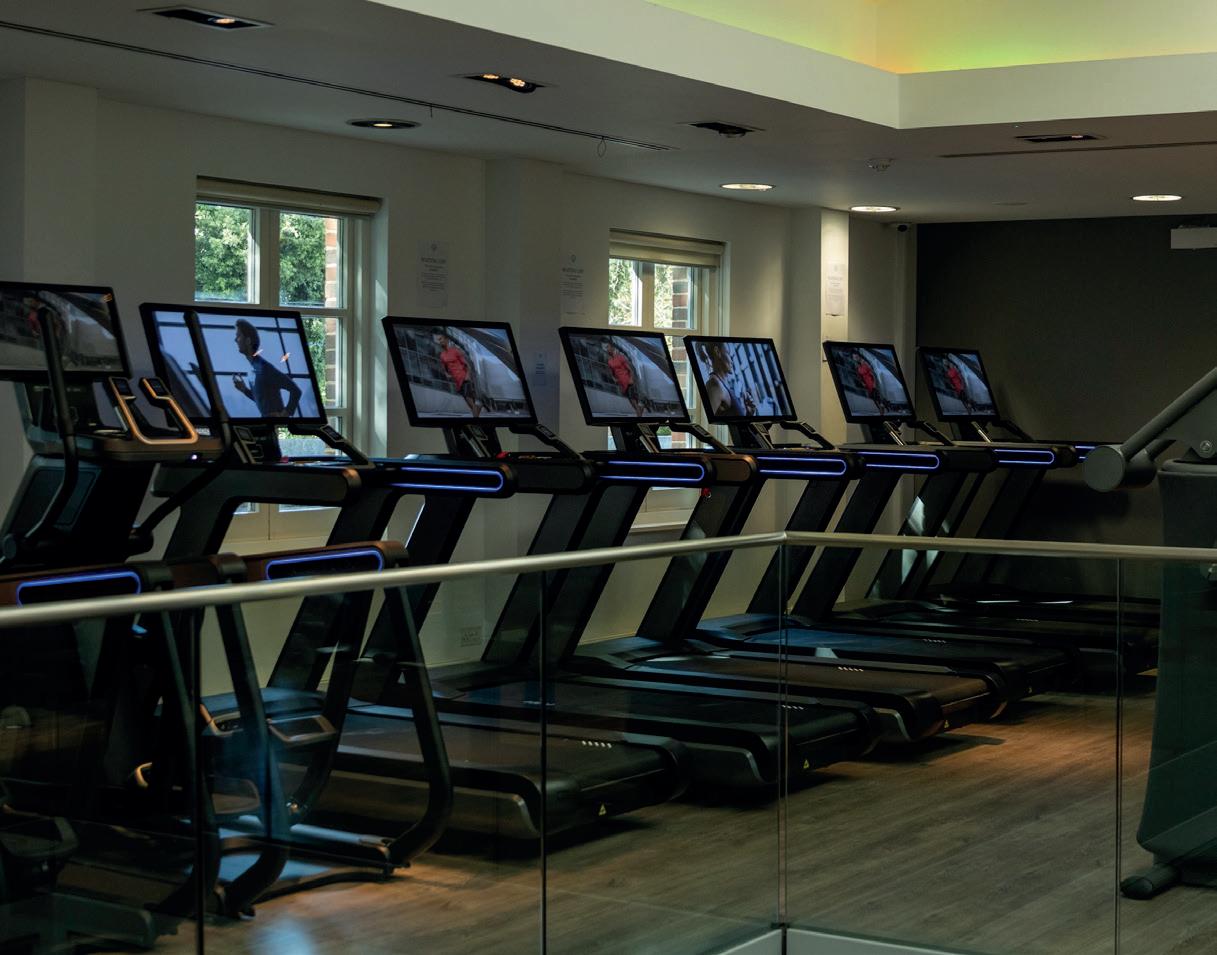
The club is now exploring further enhancements, reinforcing how thoughtful design and integration can elevate premium fitness environments. l
More: matrixfitness.co.uk
Although Alba can host up to 400 people a day, the goal is to expand yield over volume
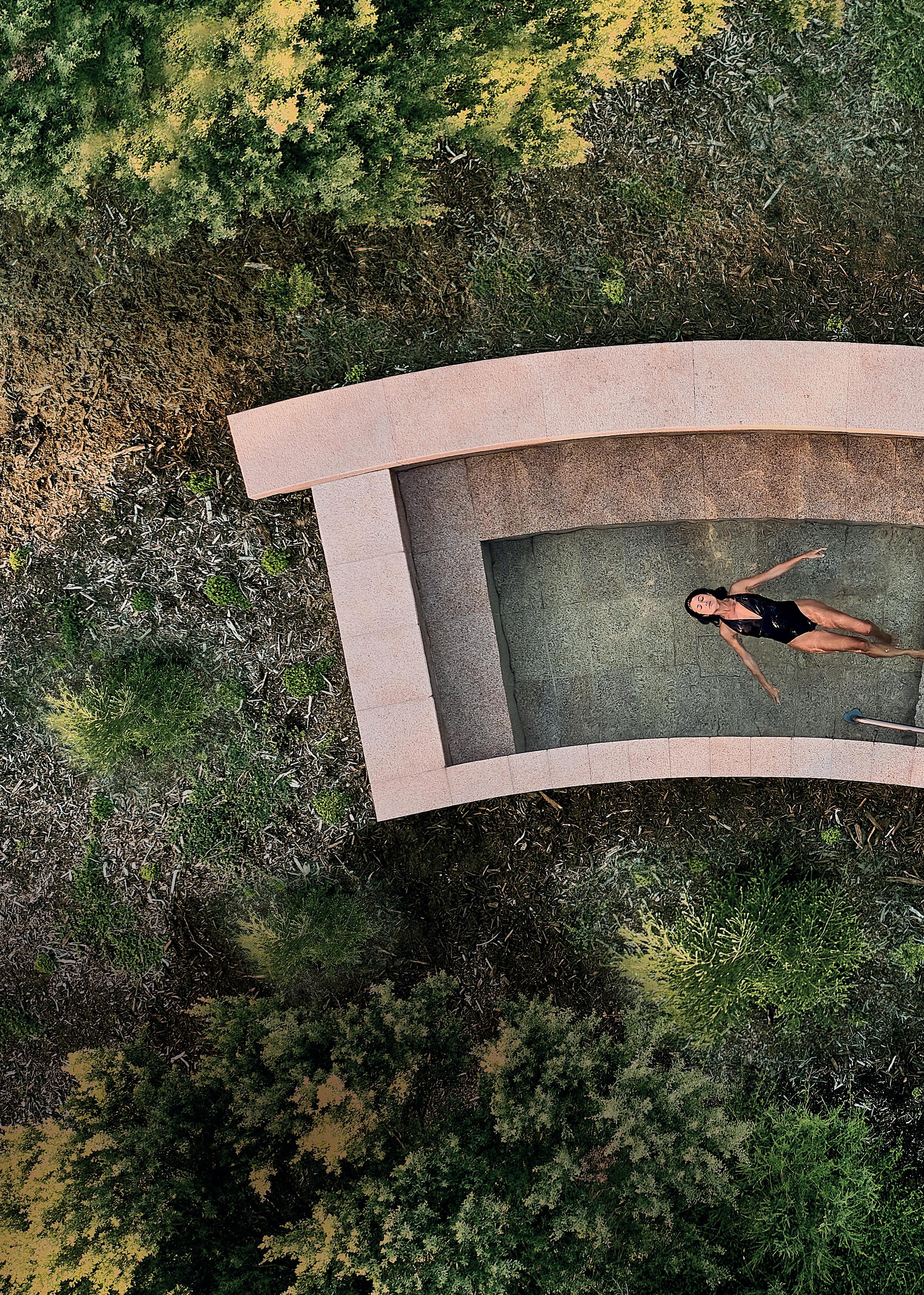
With thermal bathing booming in Australia, how is newcomer Alba Thermal Springs and Spa defying the odds in a crowded market?
Cassandra Cavanah talks to those backing the AU$160 million investment
Alba opened just down the road from the well-established Peninsula Hot Springs
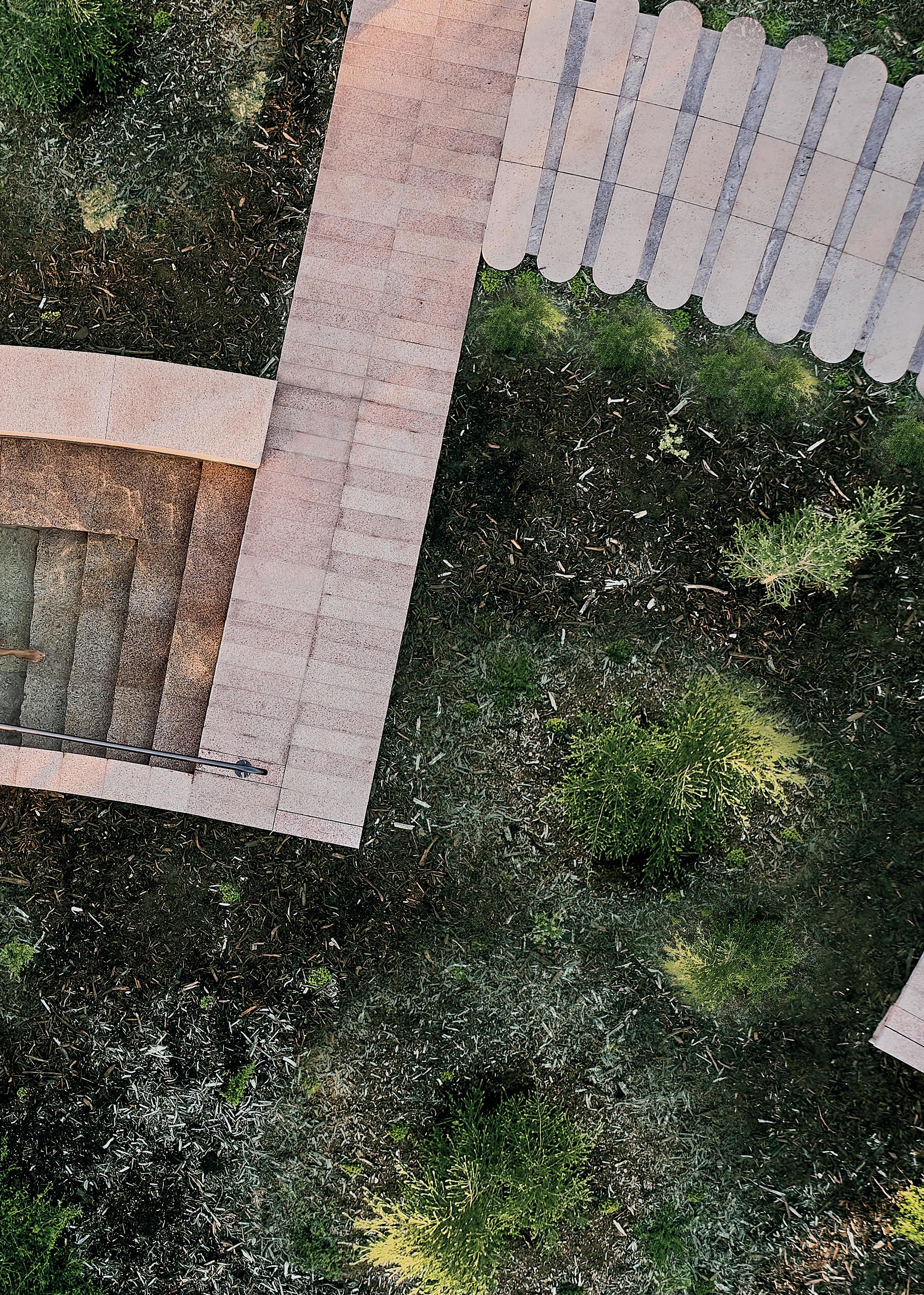
When Alba Thermal Springs and Spa opened on Victoria’s Mornington Peninsula in late 2022, it entered a market dominated by a very wellknown neighbour. Just minutes down the road sits Peninsula Hot Springs, one of Australia’s most established bathing destinations. Alba’s task was not simply to compete but to demonstrate that there was room for a different interpretation of thermal wellness.
Backed by a consortium of ChineseAustralian investors, Alba was conceived as a more contemporary, premium expression of geothermal bathing – one centred on design, curated guest experiences and a broader commercial ecosystem spanning bathing, spa, dining and, since mid-2025, luxury accommodation.
The numbers suggest the strategy is working. Total investment is approaching AU$160 million (US$113.7 million, €98.6 million, £85.2 million) and management reports year-on-year growth.
Although the site can host up to 400 people a day, the goal is to expand yield over volume. Spa Business delves further into the numbers with general manager Craig Dodd, spa and wellness director Kelly Adair and director of sales and marketing Kadi Morrison.
Submerged in a flowering meadow, gently cradled within drifts of waving grass, the 34 geothermal pools within Alba’s landscaped grounds are its star attraction. Alongside these is a 3,500sq m minimalist spa dominated by stone with 21 treatment rooms and an 80-seat destination restaurant with a fresh, wholesome seasonal menu.
The overall approach is thoughtful and considered. Think olfactory marketing and firebreathing displays while taking to the waters in winter. Plus an array of thermal bathing and spa crossover packages and a wider offering to suit different kinds of guests with different ideas of wellbeing, whether that’s stretching, bathing, having a healthy lunch or drinking champagne with friends.
“We offer an environment where guests can step away from what’s happening in their lives and immerse themselves in the whole experience of our beautiful property,” says general manager Craig Dodd.
Director of sales and marketing, Kadi Morrison, adds: “We debate what to call Alba, because it doesn’t fit neatly into one box. We’re not just a day spa and we’re not just a bathing facility.” Describing it as a wellness destination seems the most apt, she says, explaining that since opening, it’s introduced Springs Club, a membership offering priced at AU$1,500 (US$1,066, €923, £798) a year.
Only
Its most notable addition, however, is The Sanctuary, an enclave of five architecturally appointed villas and two studios which opened in June 2025. Perched on a high point, they offer sweeping views of rolling farms and coastland and interiors with soft, muted palettes commanding a nightly rate starting at AU$1,200 (US$853, €739, £639).
Although Alba’s consortium of owners has lived in Melbourne for many years, they have roots in China, which has a strong bathing culture. It’s that background, along with their “personal passion for bathing and a belief in its benefits” that drove investment, says Dodd. “In many ways, the vision proved prescient, coming nearly a decade before the bathhouse boom now unfolding across Australia.”
Morrison explains that it also made strong commercial sense. “Geothermal water this close to a major city is rare. Being one hour from Melbourne – particularly its affluent southeastern suburbs – creates a powerful day-trip market. Add in the peninsula’s existing drawcards – renowned golf courses, wineries and high-quality dining – and the region already had strong destination appeal.”
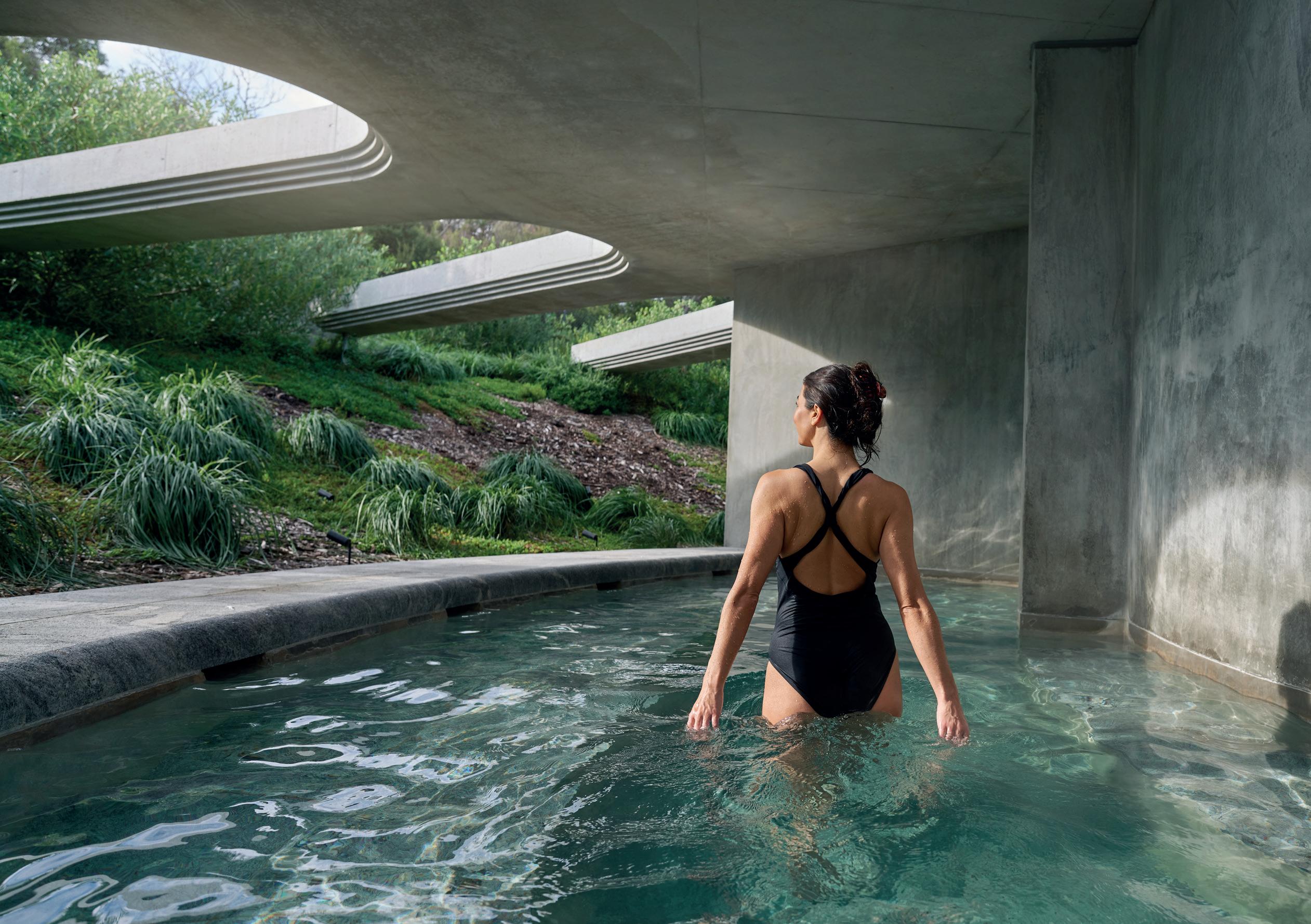
Interiors of the 3,500sq m minimalist spa are
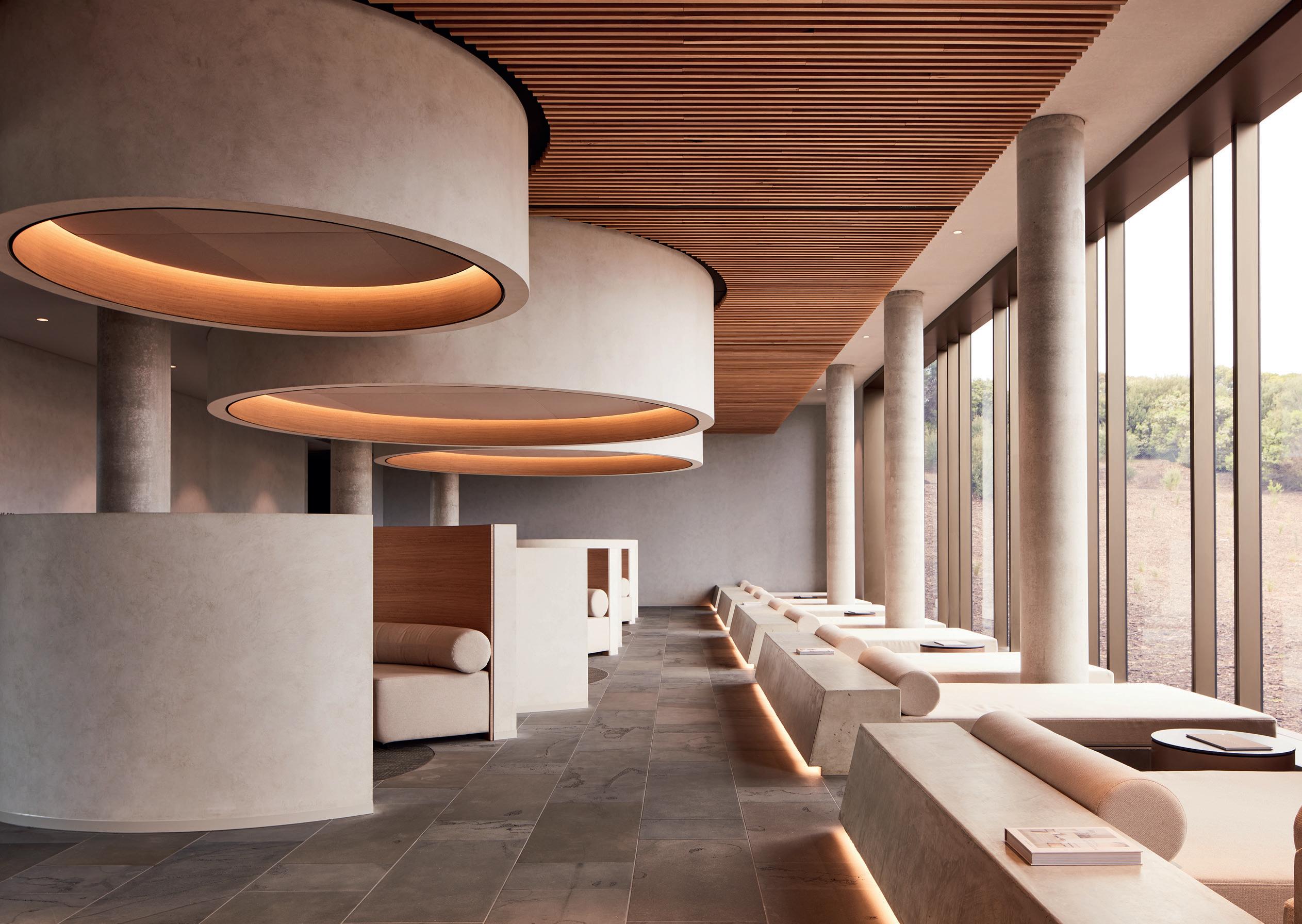
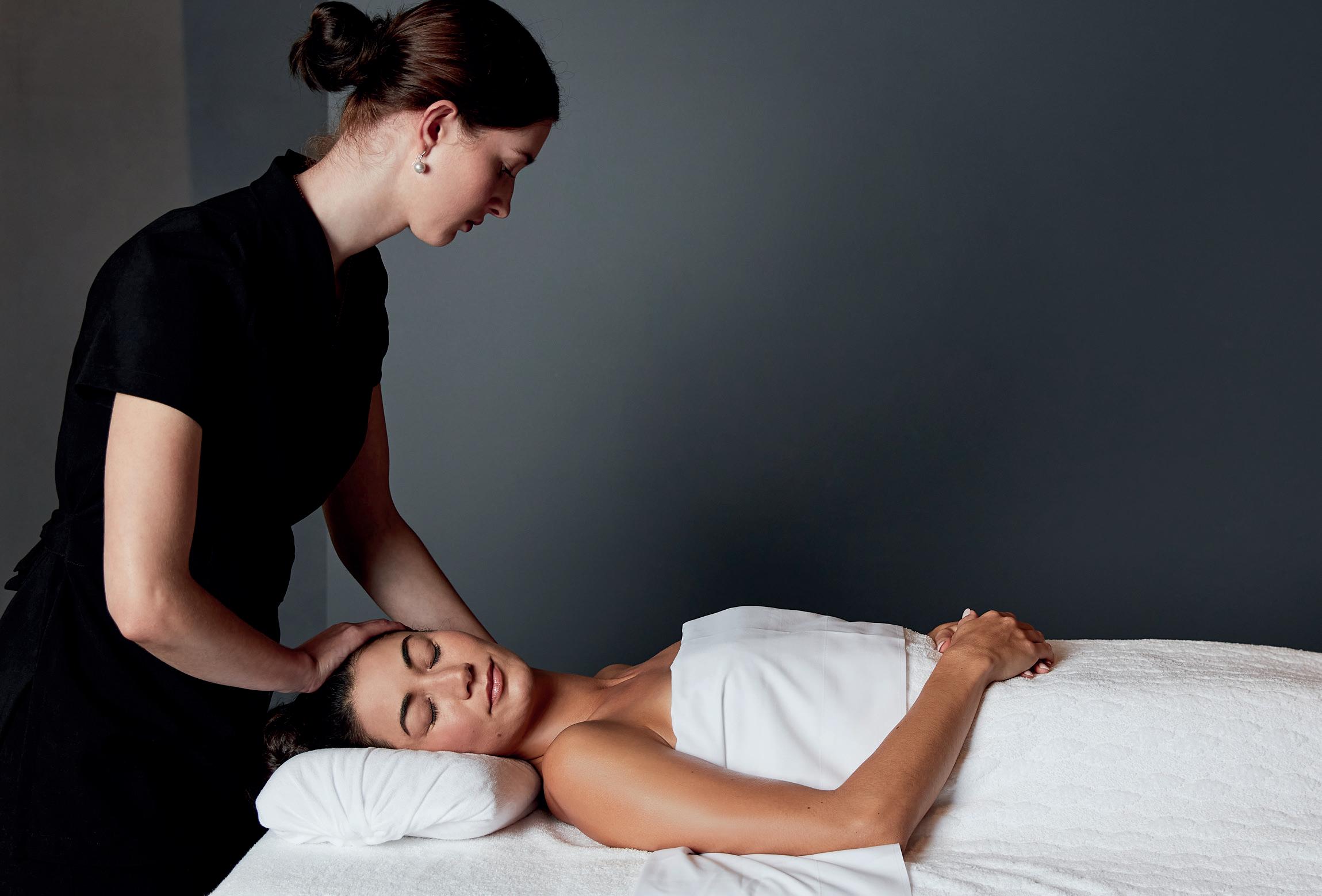
The spa welcomes up to 70 guests a day for treatments
Guests from Australia make up 85 per cent of clients
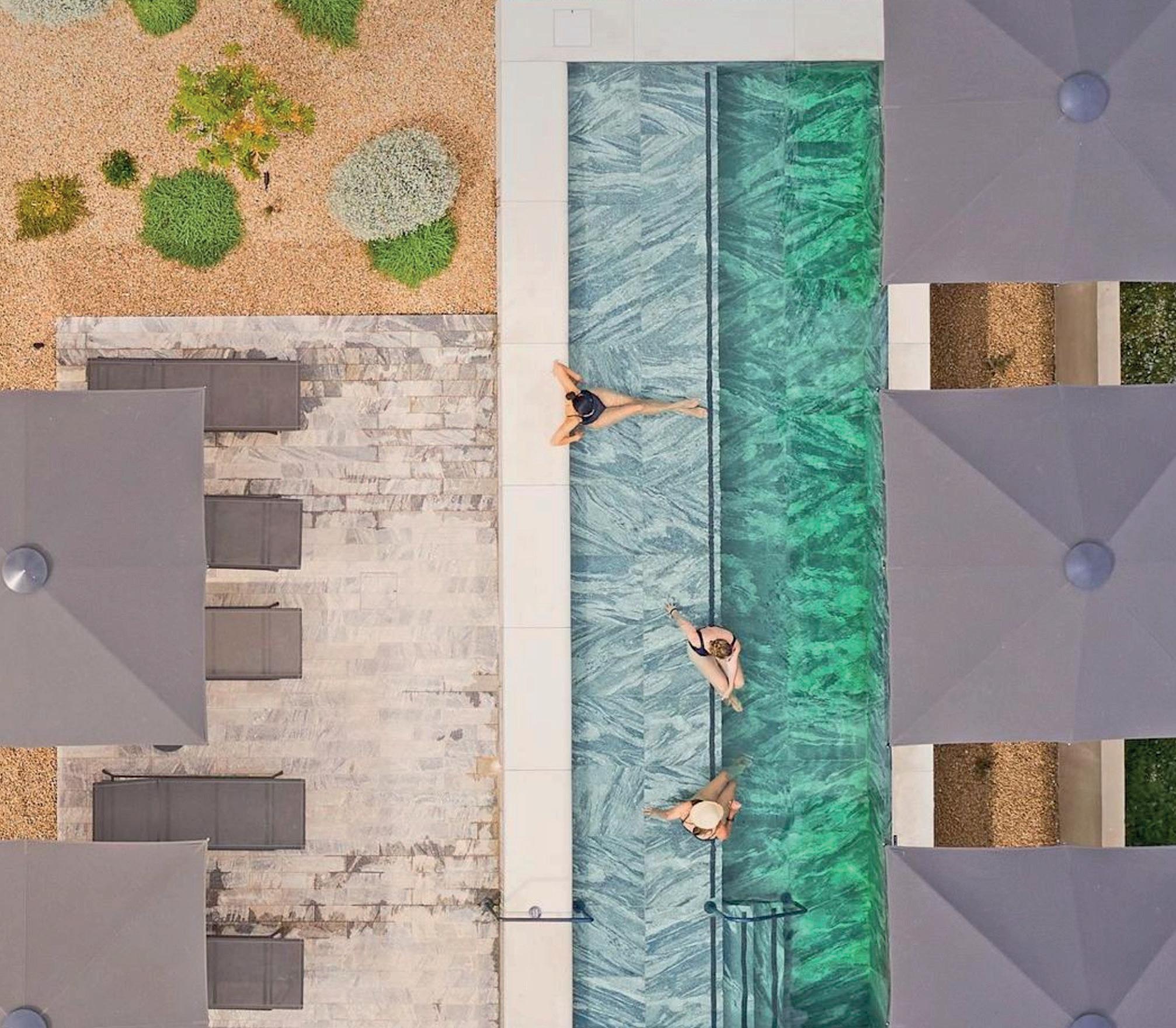
We’re regularly full on Saturdays and demand isn’t especially seasonal either
Open for just over three years, performance at Alba has surprised and delighted the management team. Dodd says: “Coming from a hotel background, I haven’t seen many businesses grow as strong as this,” explaining that it’s looking at double digit growth in both visitation and revenue over the last year.
Mornington Peninsula is considered the playground of Melbourne, like the Hamptons of New York, so that’s a key source market, as well as Sydney, and domestic guests make up more than 85 per cent of clients. There’s also a smattering of international visitors – Americans connected to golf, British travellers visiting friends and family, and returning student markets such as India and Singapore.
Morrison says: “We see a broad range of guests at Alba – young professionals, parents spending time away with friends and older guests whose children are independent and who are ready to spend on themselves. Children are allowed, but Alba hasn’t been designed as a family-focused attraction.”
The site, which can host 400 guests at a time, is regularly full on Saturdays, says Morrison and demand isn’t especially seasonal. “We assumed it might be, but our busiest months fall across January [summer], April [autumn] and July [winter].”
The spread reflects a broader truth about thermal bathing: it attracts people for different reasons throughout the year, from social summer visits to quieter, restorative winter escapes.
According to spa and wellness director Kelly Adair, a healthy 8-10 per cent of springs guests also have a spa treatment. “Most spa users visit the springs because access is built into the spa packages,” she says. “Occasionally, someone books just a treatment, which always surprises me, because why wouldn’t you bathe as well?”
The spa sees up to 70 guests a day for treatments and is often booked out several weekends in advance, with Adair noting that Fridays and Mondays have morphed into ‘new weekend’ days, reflecting flexible work patterns and the prevalence of holiday homes in the area.
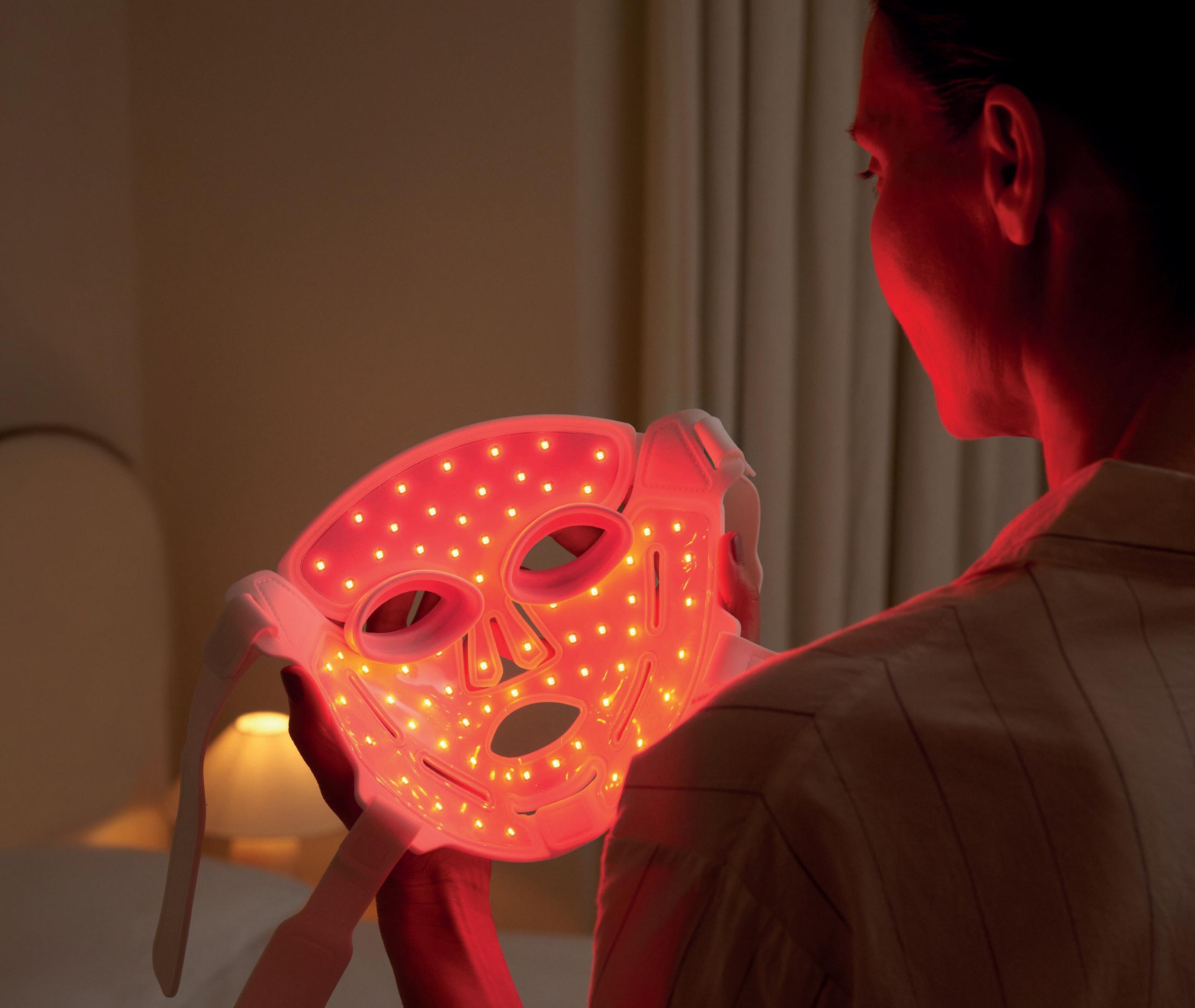
+51% improvement in the appearance of fine lines and wrinkles* +95% improvement in skin tone, texture and firmness**
Clinically proven to enhance brightness, smoothness and reduce redness**
Industry-leading tri-wave technology targets the most clinically recognised wavelengths to support deeper dermal activation, while precision-engineered design ensures optimal light coverage across the skin.
Scan to discover more or contact newbusiness@elemis.com

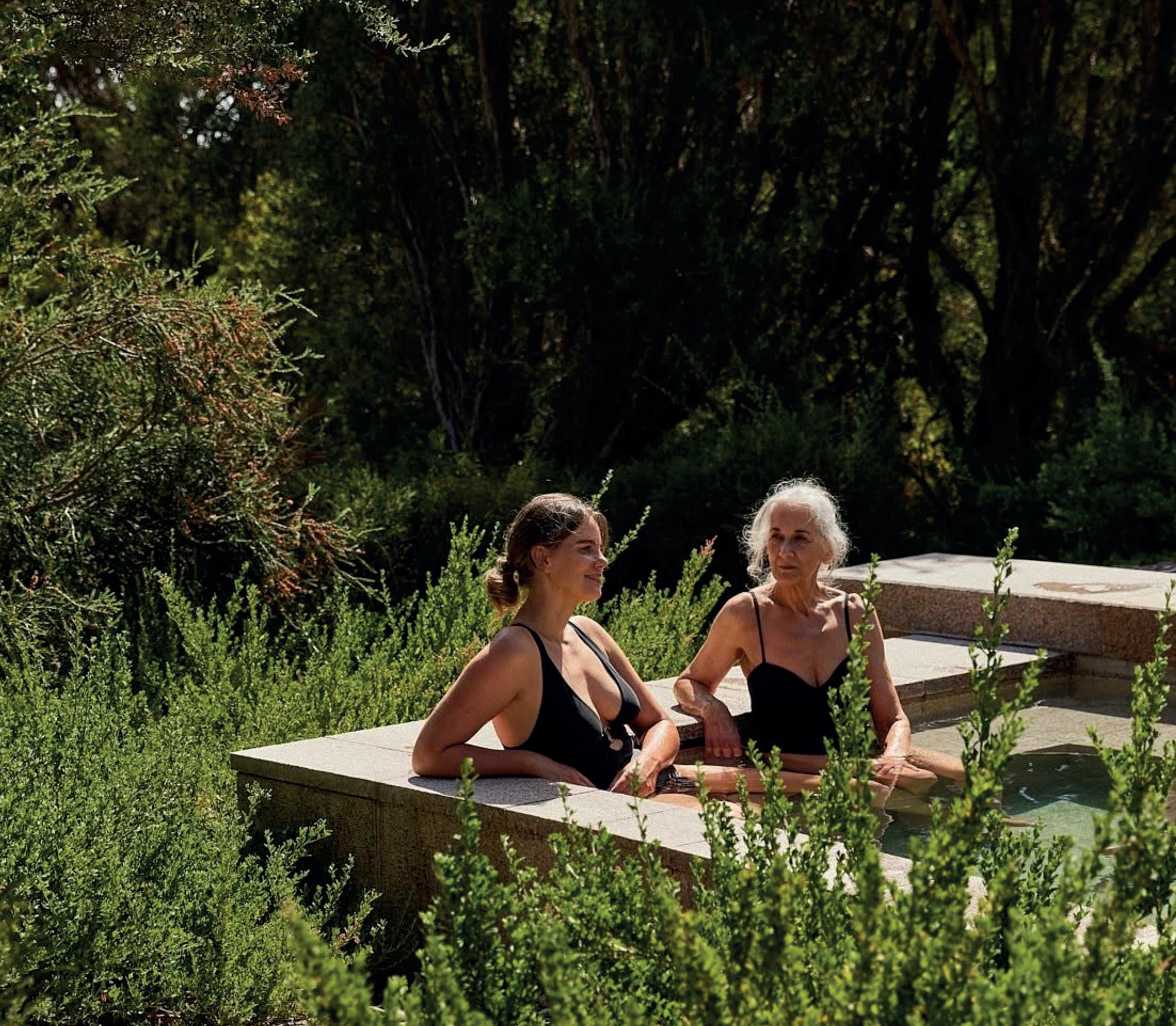
“Our spa treatments have been shaped specifically around the thermal experience,” she says. “Rather than focusing on clinical or corrective massage, they’re designed to calm the nervous system, which is what the body needs after bathing.”
Massage is still the strongest volume driver. Other top sellers include Alba Artisan, an AU$325 (US$231, €200, £173), 60-minute hot stone massage, and Breathe Easy, an AU$405 (US$288, €250, £216) 90-minute exfoliation, massage and facial. Both include access to the springs.
Other activities available are weekday stretching and water-based movement sessions, which typically attract eight to 18 guests. In addition, Alba offers guided facial parties, retreats and wellness collaborations, such as a partnership with a nearby winery where guests combine bathing with lunch and vineyard experiences.
“We’re always looking at what’s performing, what people are responding to and where
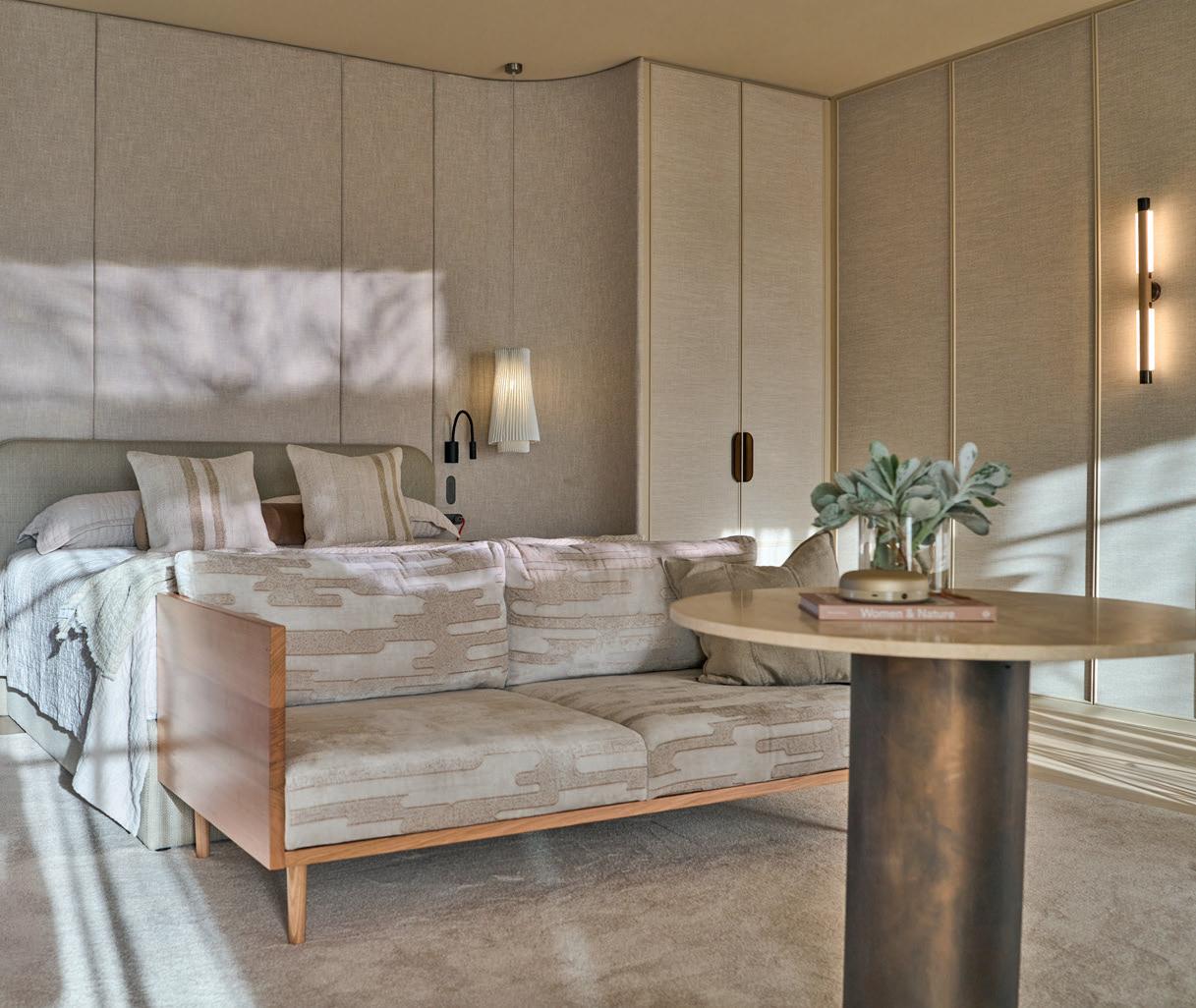
we can evolve,” Adair says. “But we’re also clear on what we’re not. IV drips and those kinds of things are for other places.”
Introducing accommodation to the mix has been beneficial in a number of ways, says Dodd. For one thing, demand has been better than expected, with occupancy growing month on month and reaching 78 per cent six months after launching.
Morrison says that being situated on a secluded part of the site offers a degree of privacy that few rivals can compete with. “That’s important for high-profile guests, but also for anyone wanting a truly self-contained wellness stay,” he says, adding that the villas are not simply premium bedrooms attached to a bathing attraction. “They offer a wellness experience in themselves with in-room bathing rituals, food, wellness programming and transport to and from the main facilities.”
Secondly, they support higher-value spa purchasing because they attract a more affluent clientele. On average, a Sanctuary guest will spend twice as much in the spa compared to a day guest. In anticipation of their expectations, Alba launched a premium treatment called The Jewel, an AU$800 (US$569, €493, £426), a 120-minute luxurious scrub, wrap, massage and facial.
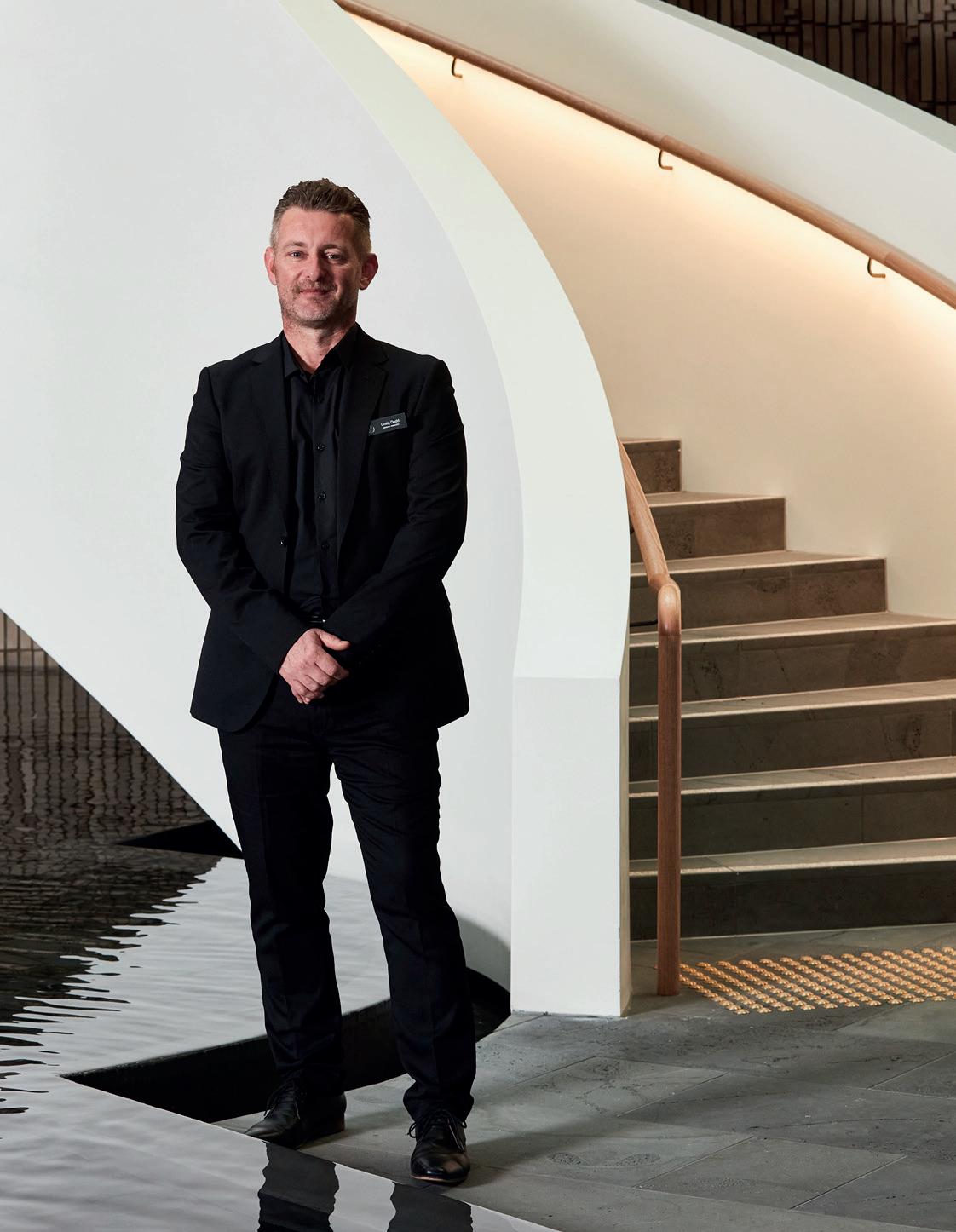
GM Craig Dodd is ‘surprised and delightedʼ at business performance
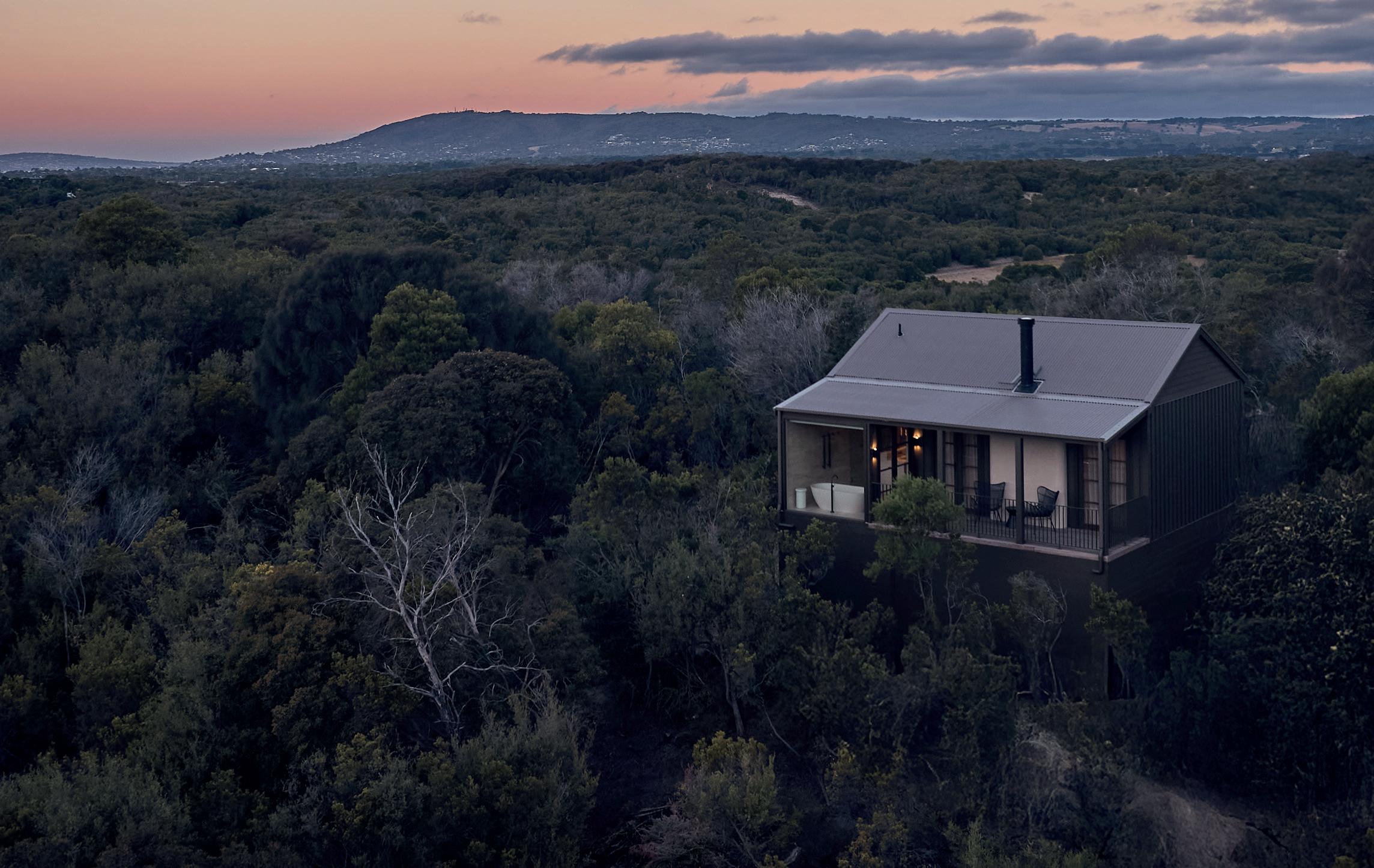
businesspeople always explore options, whether that’s another Alba, a smaller version or something in the city
While there’s no doubting Alba can host large numbers of guests, capacity is managed carefully. The Ridge – a new cluster of three pools for general access or private bookings – for example, has been added to improve the guest journey and boost spend potential rather than simply increasing footfall.
“It’s all about adding value,” says Morrison. “Food and beverage is very important. A large proportion of springs guests use the restaurant and the quality of the food means people return. Then, accommodation lifts the ceiling on what guests are prepared to spend. Spa is hugely valuable too, although that’s constrained by staffing and therapist availability.”
The future goal is to boost spend potential and deepen guest loyalty
The same goes for the Springs Club membership, which launched in late 2024. “We limit members to 100 people and that works well,” explains Morrison. “These are people who want thermal bathing as part of their regular routine. Some come very frequently, others much less, but many are using the site in off-peak times, which is a real benefit.”
Dodd is also clear that repeat visits can’t be overlooked. “Smart businesspeople are always exploring their options, whether that’s another Alba, a smaller version or something in a city. But for now, our focus is on deepening loyalty.”
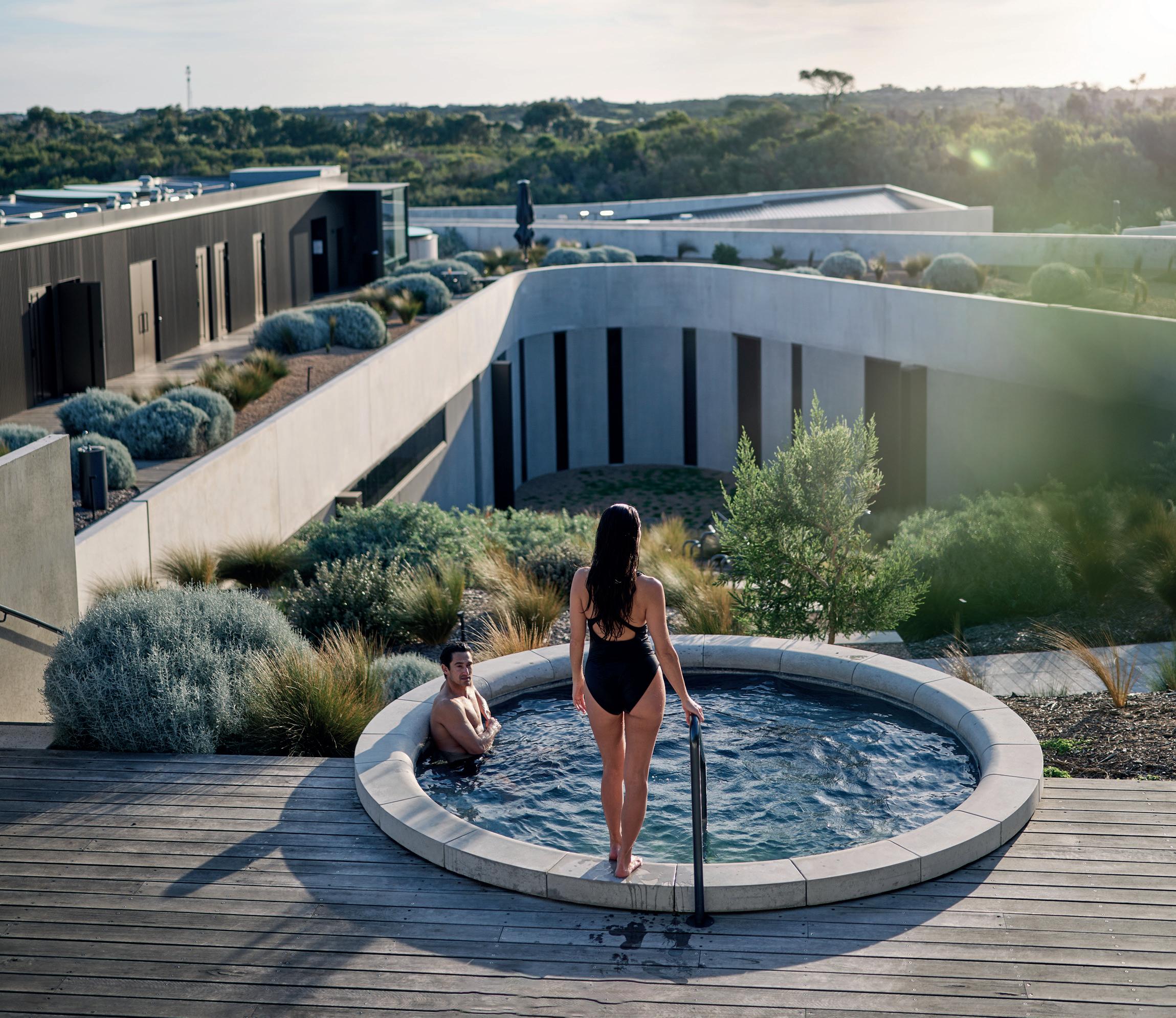
In a market where thermal bathing is no longer niche but increasingly mainstream, that may be the smartest play of all. l
Elevate your offering with a high-impact wellness solution.
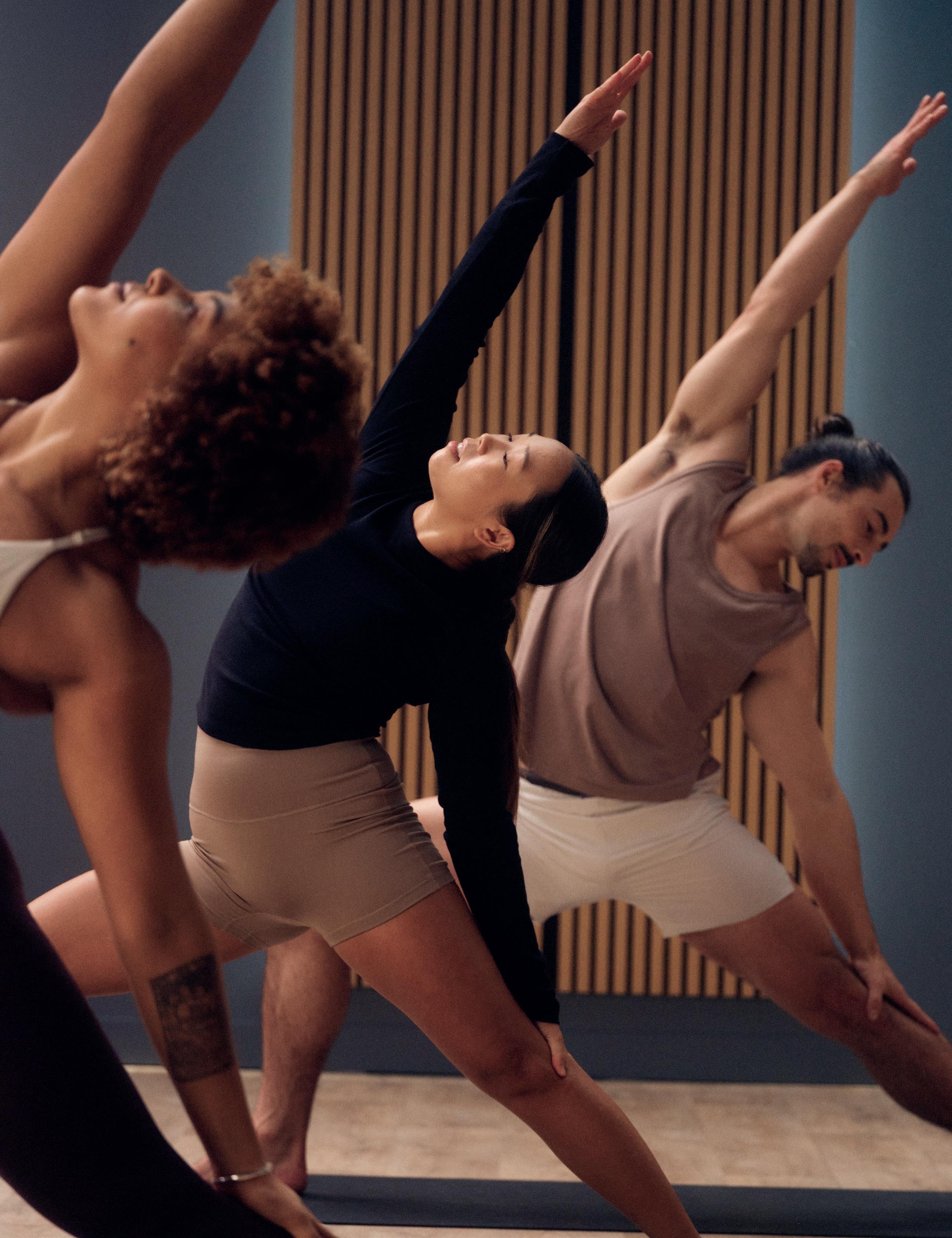
Erica Coble, vice president of sales at Living Earth Crafts, shares how the company is driving innovation in spa and wellness equipment.
For more than 50 years, Living Earth Crafts (LEC) has been at the forefront of spa and wellness equipment design, supplying premium, built-to-order furnishings to leading spas and resorts in over 160 countries.
Known for combining craftsmanship with innovation, the company has earned multiple industry accolades, including being named favourite treatment table manufacturer by readers of American Spa magazine on 14 occasions.
Today, LEC continues to evolve its offering in line with the changing needs of operators and guests, with a growing focus on integrated wellness technologies and performance-driven design.
A key recent launch is the Cascade multipurpose treatment table, featuring the VitaLymph Therapy System. This combines
FDA-cleared pulsed LED light therapy, pre-set Trendelenburg positioning, and embedded heat and vibration to support effective lymphatic drainage treatments. Designed with both therapist ergonomics and client comfort in mind, the Cascade is suited to post-operative care, detoxification and a wide range of wellness therapies.
Further expanding the portfolio, the Alhambra treatment table introduces electronic drop arms, enabling practitioners to adjust positioning seamlessly while improving access and workflow efficiency during treatments.
LEC is also embracing the convergence of wellness and automation through a strategic partnership with Capsix, a specialist in autonomous massage technology. This collaboration brings intelligent, customisable massage solutions into the spa environment, enabling consistent delivery while supporting therapists and enhancing operational flexibility.
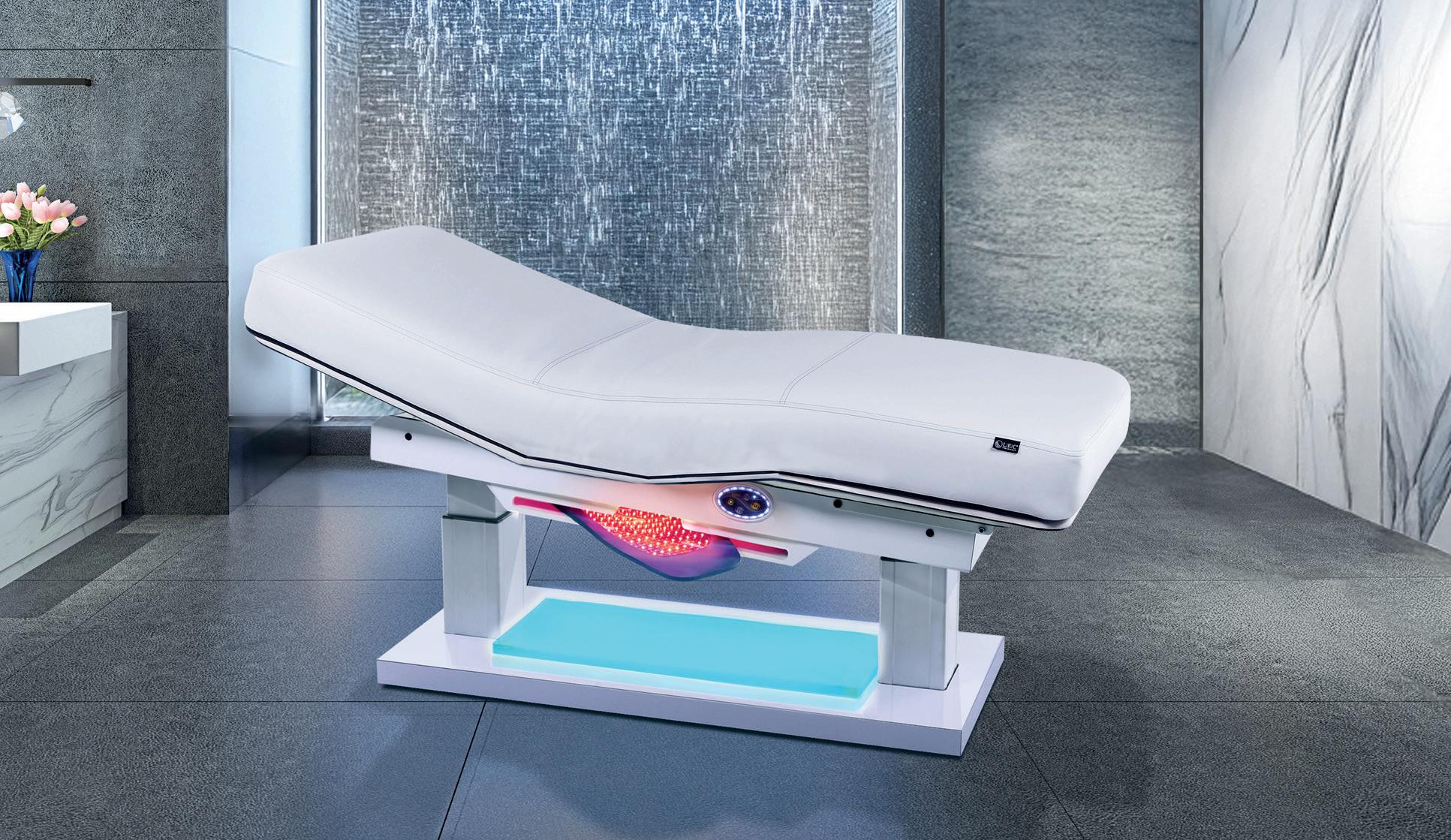
Another major area of development is LEC’s Reset Touchless Vitality Collection – a suite of immersive, hands-free experiences designed
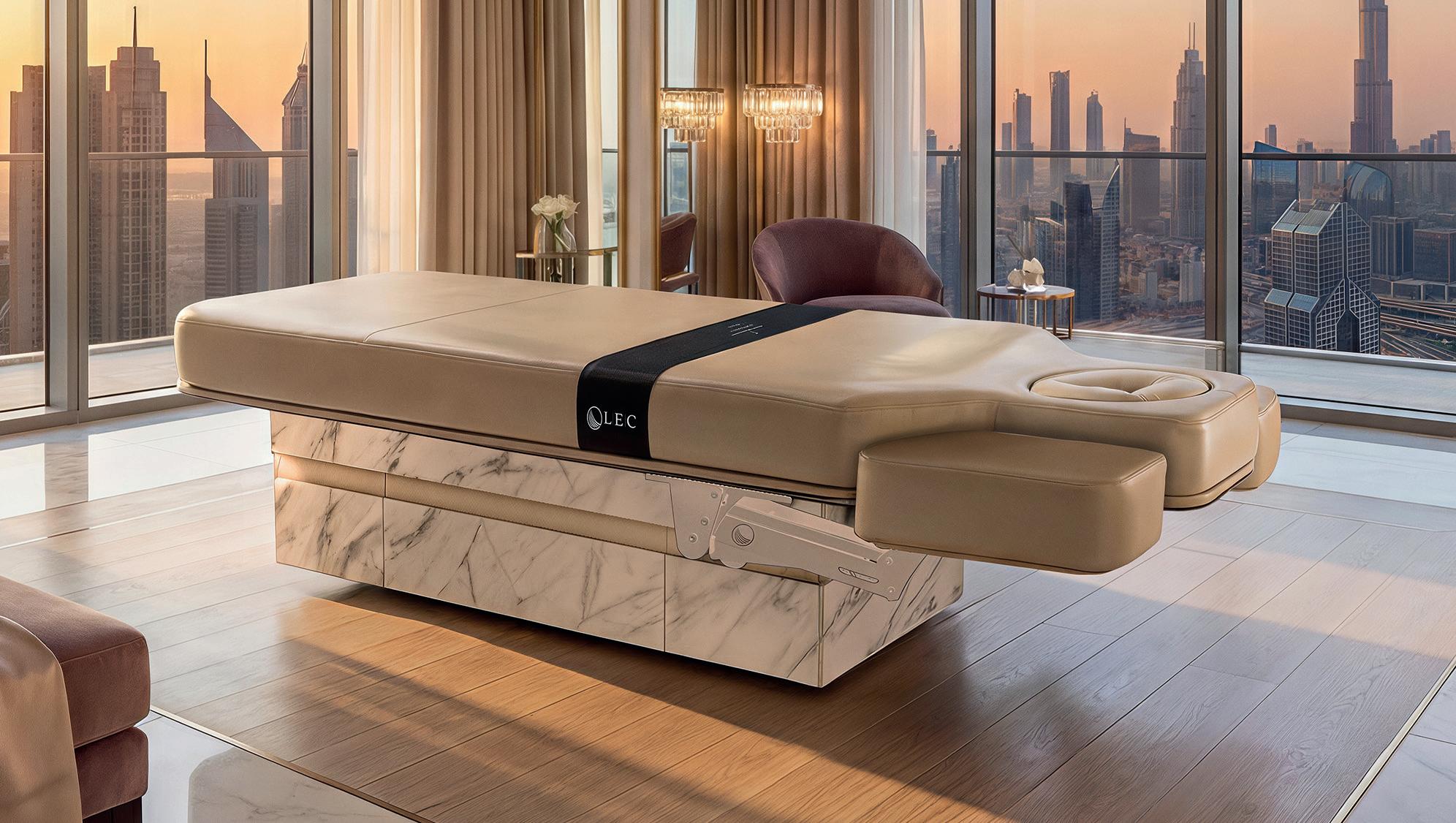
remains focused on delivering solutions that combine innovation and performance
to support both physical and mental wellbeing. The collection includes the Longevity Reset Lounger, which focuses on whole-body rejuvenation and circulation; the Recovery Reset Lounger, designed to support physical restoration and reduce muscle tension; and the Mind-Sync Reset Lounger, which integrates clinically proven technology to reduce stress, improve sleep and enhance mood.
“These innovations reflect a broader shift in the industry,” says Coble. “Operators are looking for solutions that not only enhance the guest experience, but also deliver measurable wellness outcomes and create new revenue opportunities.”
LEC’s product range also extends to spa and salon environments, including the Adapta modular pedicure and manicure system, a space-saving, flexible solution featuring retractable bowls and integrated workstations, designed to maximise efficiency without compromising on guest comfort.
Across all its products, LEC places strong emphasis on comfort, durability and usability. Proprietary features such as the Strata Cloudfill mattress, Conforma Lux adaptive chest system and Thermasoft dual-zone warming technology are designed to enhance the treatment experience, while practical elements – including low-height access, wireless controls and integrated storage – support day-to-day operations.
All equipment is built to order using high-quality materials and is backed by a global service network, with distribution centres across
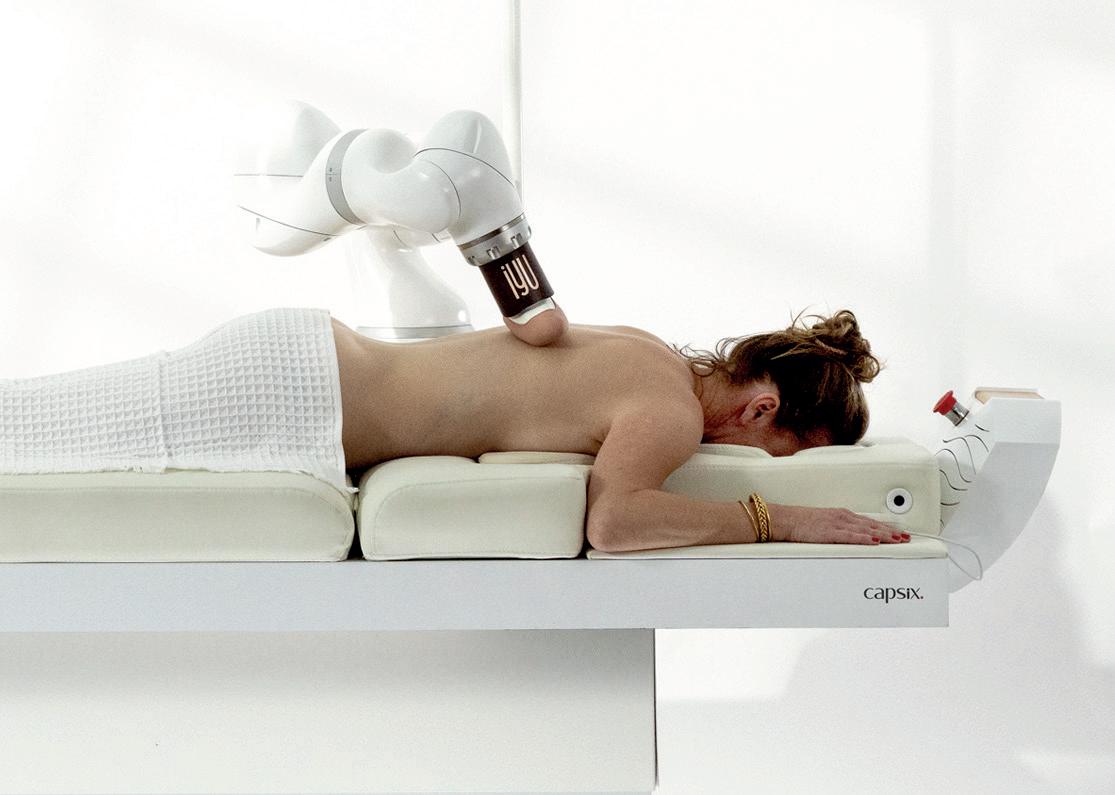
Europe, the US and Asia. A multi-language service platform further supports operators worldwide.
LEC’s client portfolio includes leading brands, such as Accor, Four Seasons, Mandarin Oriental, Ritz-Carlton and Rosewood – reflecting its position as a trusted partner in the premium spa sector.
Looking ahead, Coble sees the treatment table evolving into a more strategic asset, saying: “The treatment room is becoming a place where technology, design and wellbeing intersect more closely than ever, and by integrating advanced therapies directly into equipment, spas can expand their offering, improve efficiency and deliver more impactful guest experiences.”
As the industry continues to evolve, LEC remains focused on supporting operators with solutions that combine innovation, performance and long-term value. l
More: www.livingearthcrafts.com


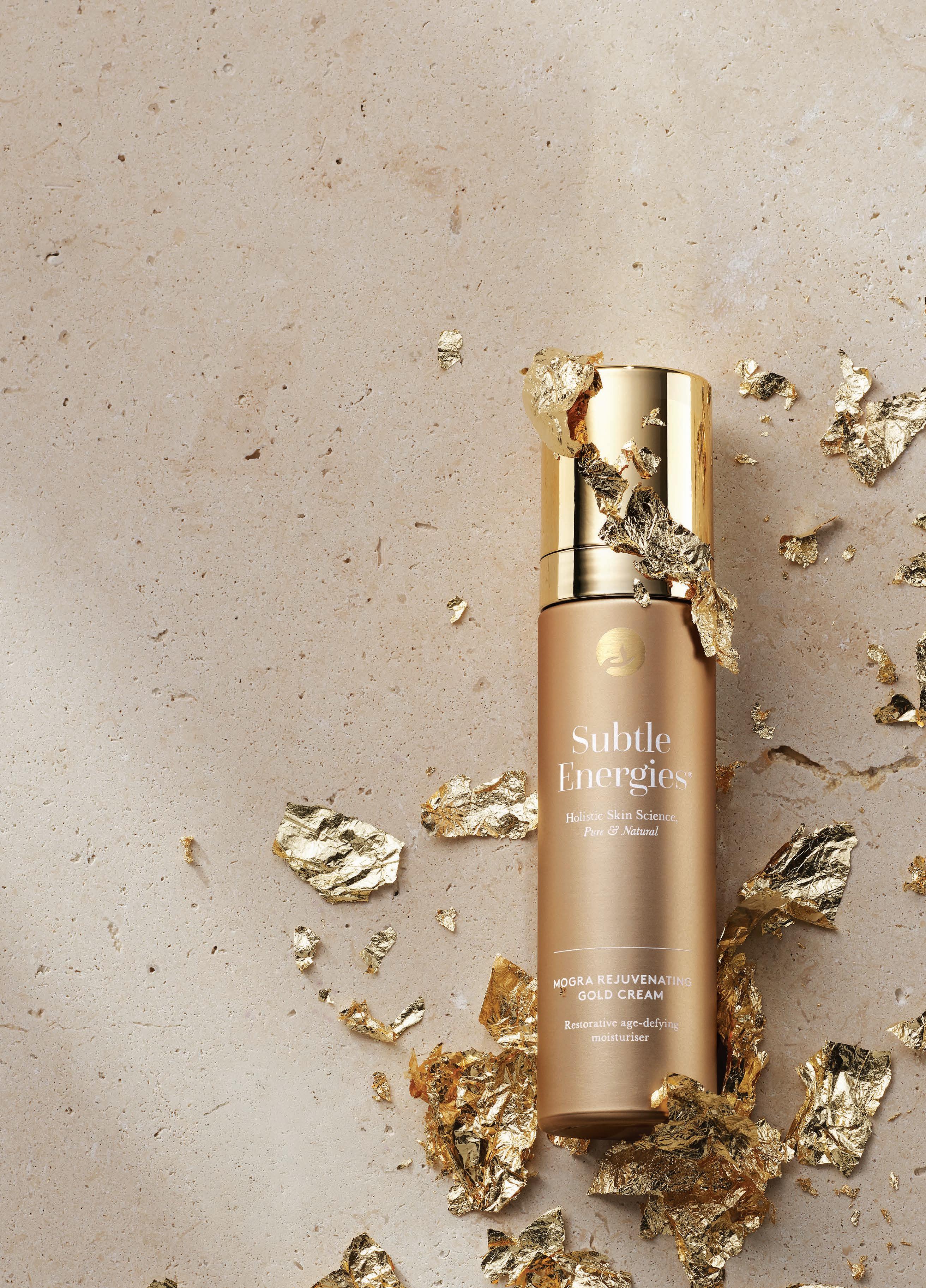

For more insight, or to get in touch with the companies featured, visit www.spa-kit.net and type in their keyword
Spa and wellness industry suppliers tell us about their latest product, treatment and equipment launches
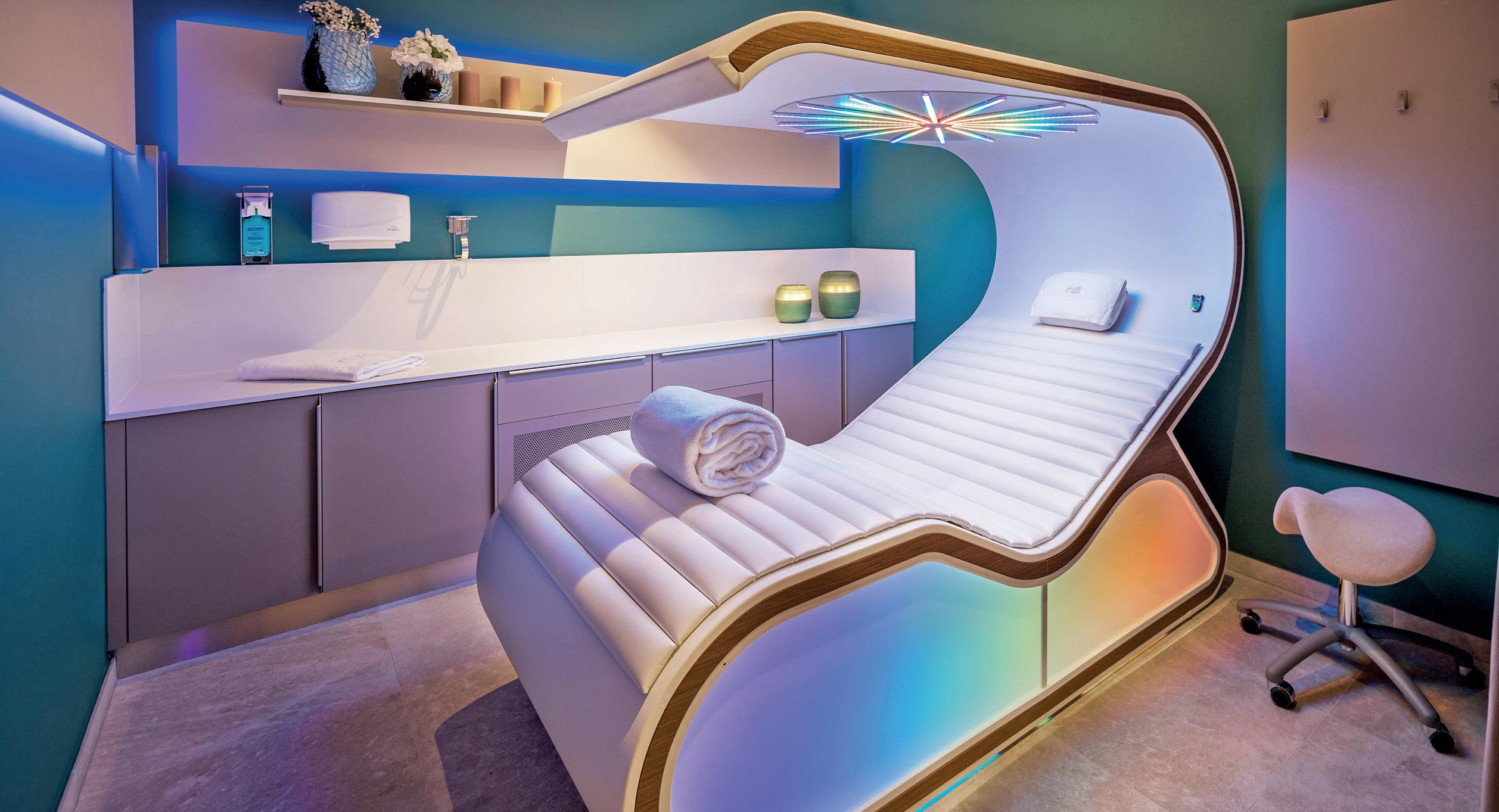
Synchromotherapy, a patented light protocol, is a key feature
Rebalance is ramping up rollout, says Corinne Klucik
Consumer desire for overall wellbeing is driving demand for Impulse, a multisensory bed by Rebalance Tech, according to distributor Spa Vision.
Originally developed to help elite athletes recover, the device is now being snapped up by brands such as Mount Med Resort in Austria, Revivo Wellness in Bali, Accor and Hilton to help guests with stress management, sleep, emotional support, pain management and mental clarity.
Impulse’s 30-minute sessions combine sound therapy, breathing exercises, mindfulness training and guided mental imagery. They also offer Synchromotherapy, a
patented light protocol using targeted wavelengths, pulses and iris patterns. For deeper insights, biofeedback and neurofeedback accessories can be used to monitor wellness indices.
“Rebalance Impulse is part of the wellness tech evolution, as spas move beyond relaxation into data-driven recovery, biofeedback and health optimisation,” says Rebalance COO and co-founder Corinne Klucik. She adds that clinical studies on its programmes have been published in scientific journals such as Frontiers in Psychology and the International Journal of Environmental Research and Public Health
“Spas are moving beyond relaxation into data-driven recovery, biofeedback and health optimisation”
Corinne Klucik
spa-kit.net keyword: Rebalance
http://lei.sr/9K9C9
Cobotics Innovations’ first product is a robotic treatment system
“Our goal is to empower therapists, not replace them”
Jens Schramm
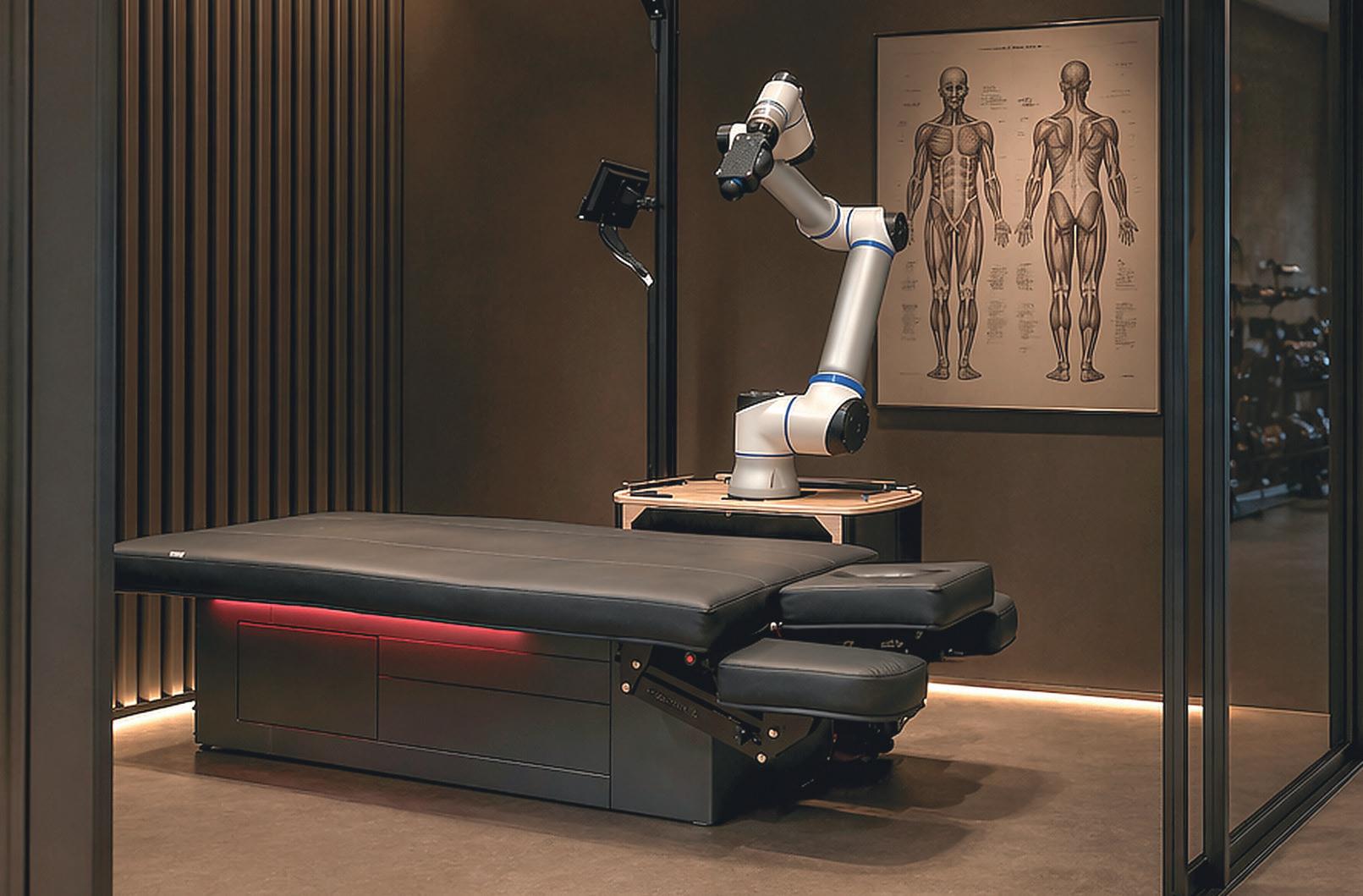
Cobotics is a new automated wellness company by Gharieni Group, says Jens
The Gharieni Group has launched a new company, Cobotics Innovations, to create automated wellness experiences.
The first solution combines a bed with precision robotics software to deliver a full-body percussive massage.
The system has been developed to provide clients with operational
Schramm
flexibility and ways to enhance wellness experiences alongside therapist-led treatments. It’s also intended to help maximise treatment room use, scale therapies and create robust commercial potential.
Cobotics Innovations’ CEO, Jens Schramm, says: “Our goal is not to replace therapists, but to empower them with tools that
The new Restorative Collection by Seed to Skin Tuscany has been created in response to a growing number of skin conditions linked to environmental stress and compromised skin barriers. It launches with two products to address skin redness, burning, dryness, flare-ups and rosacea-like sensitivity. Rescue Cleanse, which emulsifies on the skin when water is added, includes the brand’s proprietary hypericum and calendula macerated oil to lift away impurities while calming reactivity. While Recovery Cream has been formulated with ingredients such as reishi mushroom ferment to smooth the complexion.
Dr Anna Buonocore, company cosmetologist and co-founder, says:

“The Restorative Collection repairs weakened skin barriers and inflammation”
Anna Buonocore
“Compromised skin isn’t simply irritated – it reflects a weakened barrier and heightened inflammatory response. The Restorative Collection was designed to repair both.”
enhance precision, reduce physical strain and open the door to entirely new treatment concepts.”
Schramm, previously CEO of Robosculptor, says more Wellness Cobot Generation technologies are also in development.
spa-kit.net keyword: Gharieni
http://lei.sr/6a4D6
The two products aim to help skin conditions linked to environmental stress
http://lei.sr/n2o8t
spa-kit.net keywords: Seed to Skin
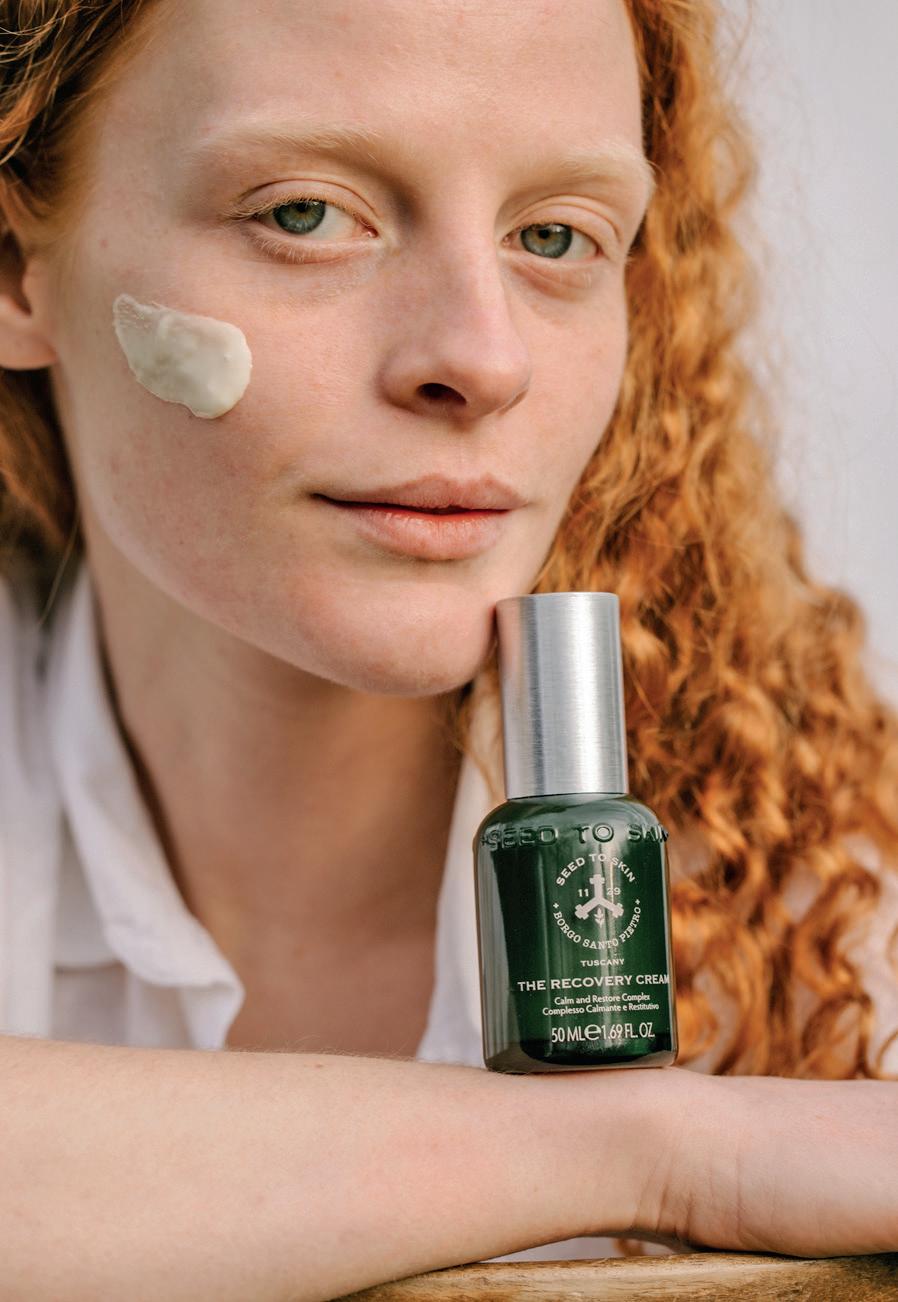
“I was inspired by a medieval bastion that looks outwards, but offers shelter within”
Patricia Urquiola
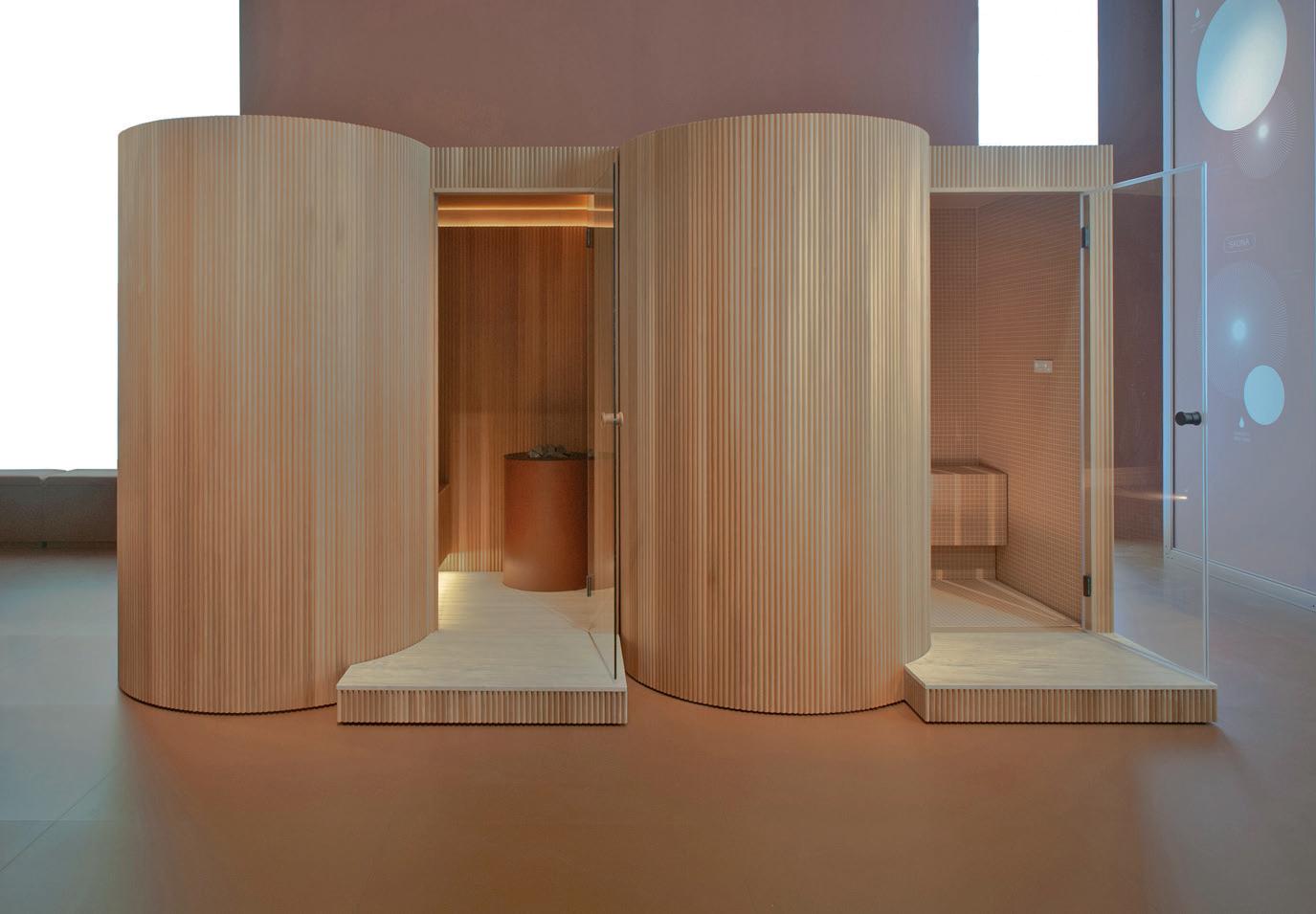
Baluar’s modular system can be adapted to available space
Patricia Urquiola creates sauna hammam combo for Effe
A sauna and hammam system channelling medieval architecture has been created for heat equipment specialist Effe by renowned creative Patricia Urquiola.
Urquiola is an international artist, specialising in industrial product design and architecture for hospitality, retail, residential and exhibitions.
Erin Lee and Iain De Havilland reveal NADairX
Wellness entrepreneur Erin Lee and Iain De Havilland, founder of IV therapy specialist, NADclinic, have teamed up to launch NADairX, a device designed to provide consistent exposure to NAD+.
A natural molecule found in every living cell, NAD+ (nicotinamide
“It offers a more accessible and scalable way for people to engage with NAD+ therapies”
Erin Lee
Baluar is a modular sauna and hammam design which can be configured in multiple ways depending on space.
Urquiola reveals: “Baluar is inspired by an ancient structure – the medieval bastion – that looks outwards but offers shelter within its walls. I wanted to transform it into a wellness space, a compact,
The device has been designed to provide consistent exposure to NAD+
almost archetypal space where you can relax and unwind.”
The system uses heat-treated lime wood cladding, in a dark or light tone, with narrow vertical grooving. The hammam interior finish features Conchiglia or Nocci mosaic.
http://lei.sr/8O0O3
spa-kit.net keyword: Effegibi
adenine dinucleotide) supports cellular energy production and promotes DNA repair.
NADairX has been created to deliver 60 mg of inhalable NAD+ to the lungs, allowing rapid absorption into the bloodstream while bypassing digestive barriers that can limit oral supplementation. Each capsule has a precise dose of NAD+ to support consistent and repeatable delivery.
The initial rollout phase of NADairX will target longevity
clinics, wellness operators, recovery centres and fitness facilities.
Lee says the goal was “to offer a more accessible and scalable way for people to engage with NAD+ therapies.”
De Havilland adds: “As interest in NAD+ therapies grows, it’s important to explore delivery methods that are practical and biologically credible.”
http://lei.sr/9s7A9
spa-kit.net keyword: NADclinic
Earthlite beds o ering AI massage will be available later this year
Spa equipment and treatment table manufacturer Earthlite has partnered with French robot massage technology company Capsix to co-develop and distribute integrated autonomous wellness experiences.
The partnership will see Earthlite’s massage beds incorporating Capsix’s iYU AI and robot massage platform and Earthlite CEO Rod Derifield confirms equipment will be available later this year.
He also reveals that Earthlite will be the exclusive distribution partner for the system in North America, Mexico and the Caribbean.
Derifield adds: “Nothing can replace the value of human touch, however,
“The iYU technology allows spas to offer additional services”
Rod Derifield
this technology will allow spas to offer additional services which haven’t been available in the past.”
http://lei.sr/2x5R8
spa-kit.net keyword: Earthlite
Amra’s Sue Jones introduces Chrononight sleep programme for spas
Amra Skincare has launched a threestep sleep treatment programme to deliver meaningful improvements to sleep health in spas, according to founder and CEO, Sue Jones.
Chrononight begins with a 90-minute consultation to identify biological and lifestyle sleep factors.
The company’s Molecules of Sleep skincare range, which has been clinically researched, is then prescribed to restore homeostatic balance and support natural sleep cycles.
The final step is Amra’s personalised treatment programme, which includes physical massage therapy and guided neurological sleep therapy recommendations.
Jones, who designed Chrononight herself, completed a master’s degree in sleep medicine and a post-graduate diploma in insomnia,
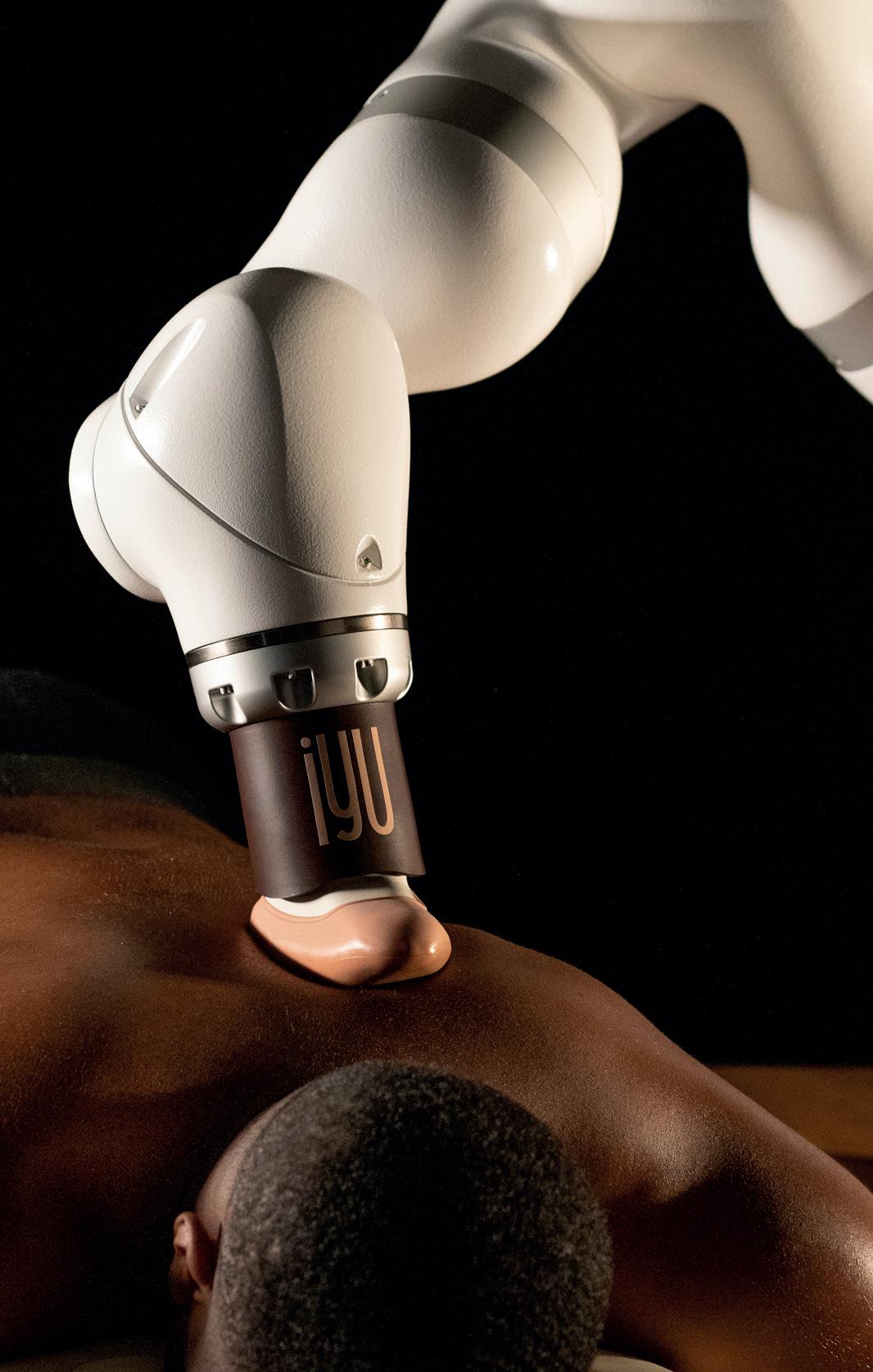
The Molecules of Sleep range aims to restore homeostatic balance and support sleep
circadian rhythm disturbances and hypersomnia in adults after facing early onset menopause.
She reveals: “Driven by a desire to understand what was truly happening within my body, I began searching for answers – not only for myself, but for the many others affected by similar challenges.”
spa-kit.net keyword: Amra
http://lei.sr/4S4b6
“We want to deliver meaningful improvements to sleep”
Anna Tsankova
Wellness specialist i-Tech Industries has unveiled the icoone Microfacial, a device for the face, neck, and décolleté featuring various programmes suited to every skin type for customised treatments.
Powered by patented Roboderm technology, developed by Dr Gianfranco Tudico, icoone Microfacial delivers 14,400 microstimulations per minute to fascia and connective tissue. Designed to work gently, even around delicate areas such as the eyes, neck and décolleté, it supports microcirculation, lymphatic drainage and collagen and elastin production, without discomfort, and for daily use.
The launch reflects growing demand from spa and wellness operators for treatments that deliver results from the first session while taking overall wellbeing into account.
This is part of the ‘wholistic’ approach that i-Tech promotes.
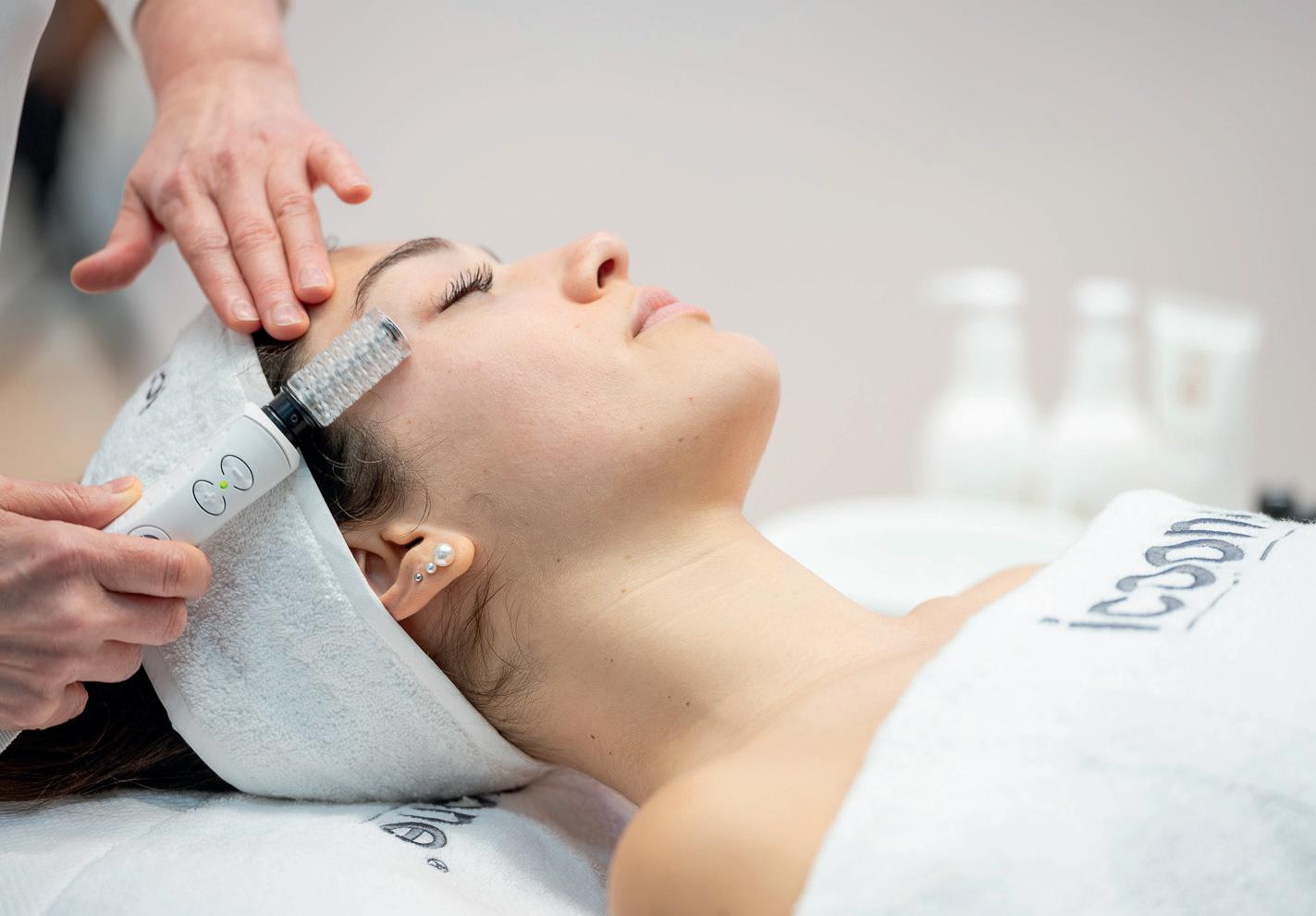
“At i-Tech Industries, innovation stems from a clear vision: using scientific research to deliver increasingly advanced, conscious and long-lasting wellbeing,” says Luca Gualdrini, GM and co-founder. “Today, talking about wellbeing also means talking about longevity, balance and quality of life. This is the direction in which we continue to invest.”
To support the launch of the icoone Microfacial, i-Tech has partnered with internationally recognised facialist, Anna Tsankova – the massage world
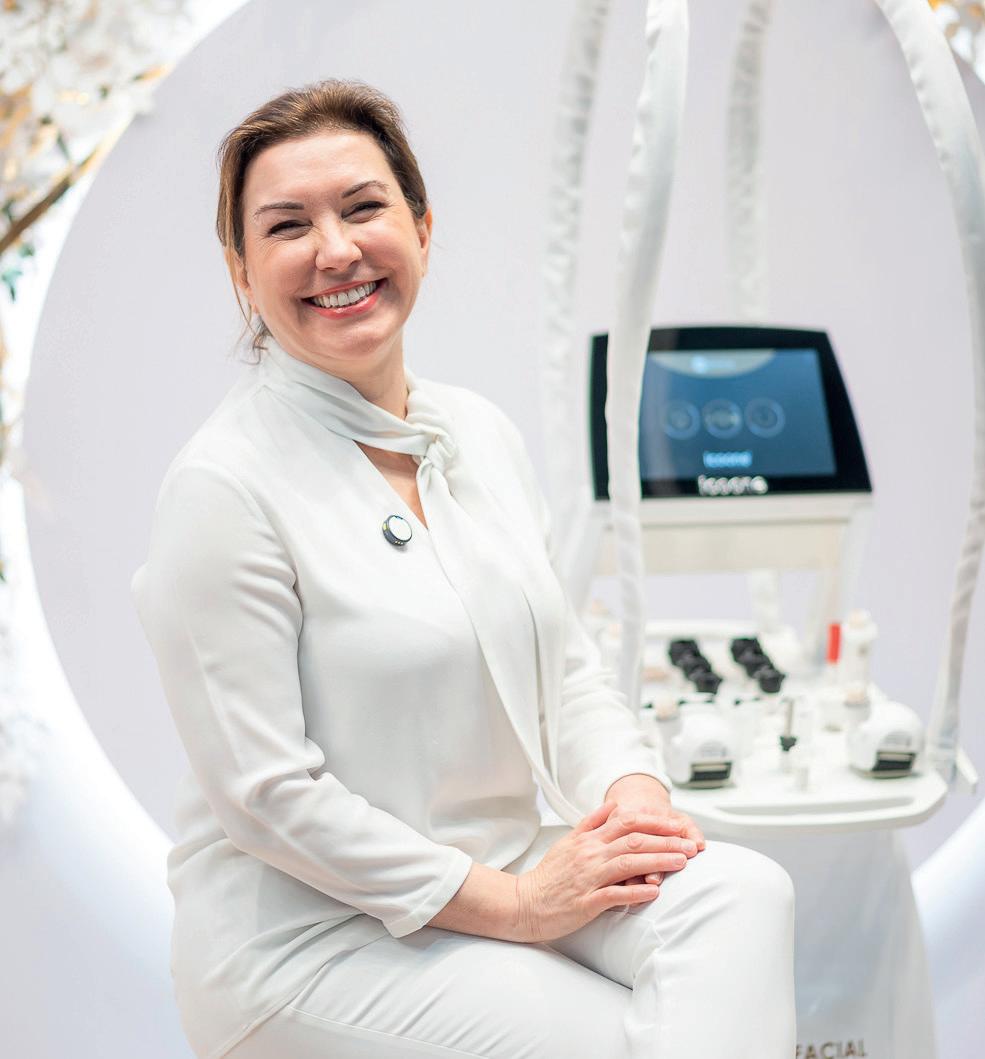

“At i-Tech Industries, innovation stems from a clear vision: using scientific research to deliver longlasting wellbeing”
Luca Gualdrini
champion – to develop a protocol that combines the benefits of icoone Microfacial technology with manual massage. The resulting treatment –called Signature Treatment by Anna Tsankova – integrates breathing rituals and lymphatic stimulation, exfoliation, photobiomodulation and icoone’s microstimulation technology to create a multi-sensory treatment journey focused on supporting skin quality and healthy ageing.
“Combining my advanced signature face massage techniques with the icoone Microfacial makes every move purposeful,” says Tsankova.
“Combining manual techniques with the device creates the best possible client experience and results.”
With 6,000 icoone installations in 40 countries, i-Tech Industries is promoting icoone Microfacial as an opportunity for spas seeking highperformance, non-invasive facials. More: https://icoone.com/
spa-kit.net keyword: i-Tech Industries
Prism’s red light pad enhances existing spa beds, says Karl Chen
Prism Light Pod has revamped its whole-body red light therapy portfolio with the Prism Light Pad FMT (For Massage Tables).
The new format is designed to fit tables by Lemi, Oakworks, Gharieni and Living Earth Crafts to offer a “premium cellular wellness experience” without investing in a standalone red light bed.
Company founder Karl Chen says: “We’ve always believed that cellular wellness should be as practical as it is powerful.”
In addition, the brand has upgraded its existing red light therapy pad. Prism Light Pad Gen-2 now has a light that’s 20 per cent more irradiant.
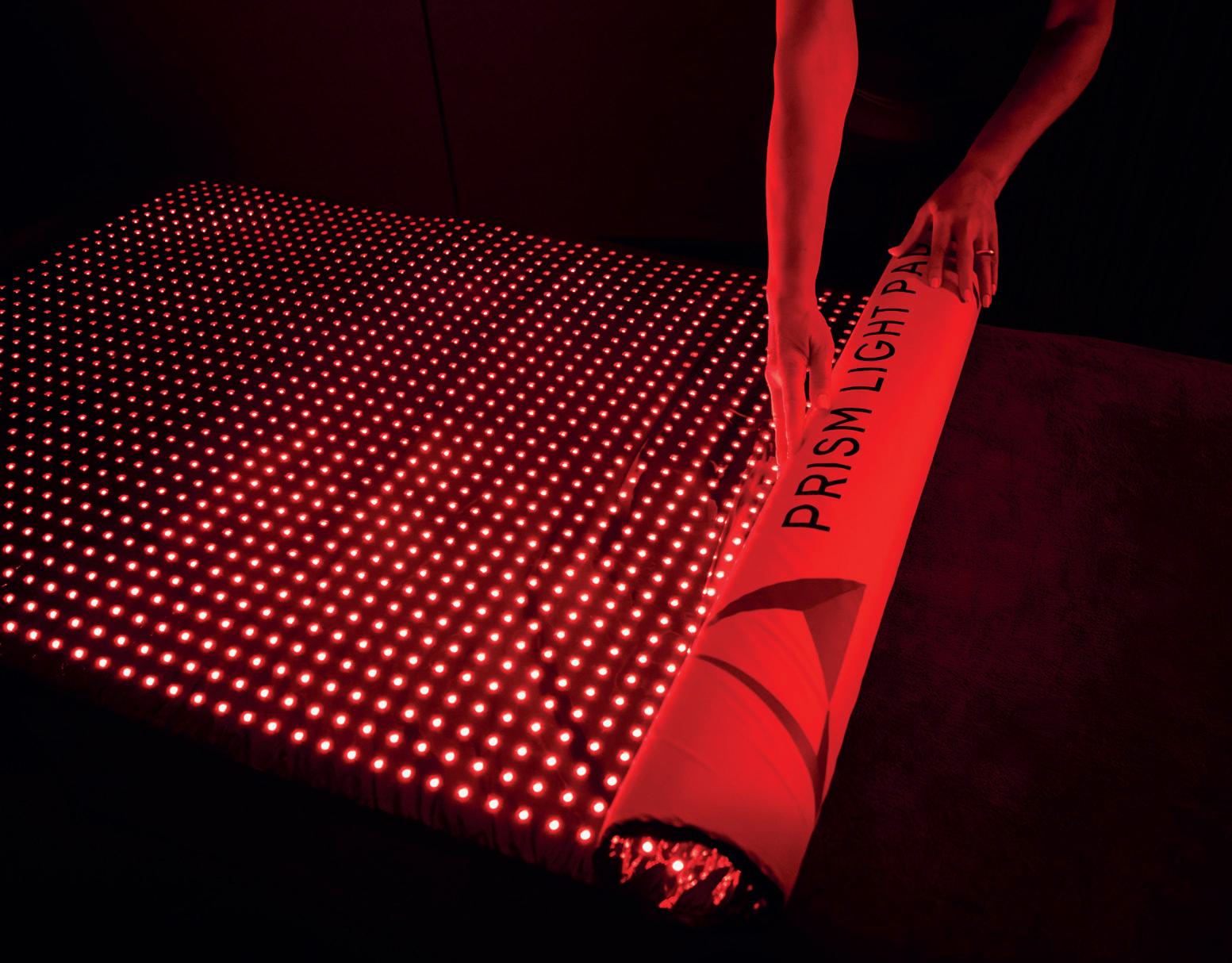
“Cellular wellness should be as practical as it is powerful”
Karl Chen
http://lei.sr/2O4C1
spa-kit.net keyword: Prism
Yon-Ka’s Magali Blum unveils
Retinol-Like Bi-Serum
Magali Blum, head of formulation at Yon-Ka, says its new retinol-inspired serum and ritual targets wrinkles and improves texture – but without the discomfort, redness and irritation that users with sensitive skin can experience.
Retinol-Like Bi-Serum boasts two complementary retinol-like actives. One is derived from a biomimetic microalgae and the other is a plant extract from the mastic tree.
The formula is said to work on both the dermis (smoothing wrinkles and supporting skin quality), and the epidermis (refining skin texture and creating a more even skin complexion).
Blum says the new serum “represents a scientific breakthrough in the retinol approach: visible effectiveness on wrinkles, skin texture, and pores, with remarkable tolerance.”
“Retinol-Like Bi-Serum represents a scientific breakthrough”
Magali Blum

spa-kit.net keyword: Yon-Ka
http://lei.sr/1q9B8
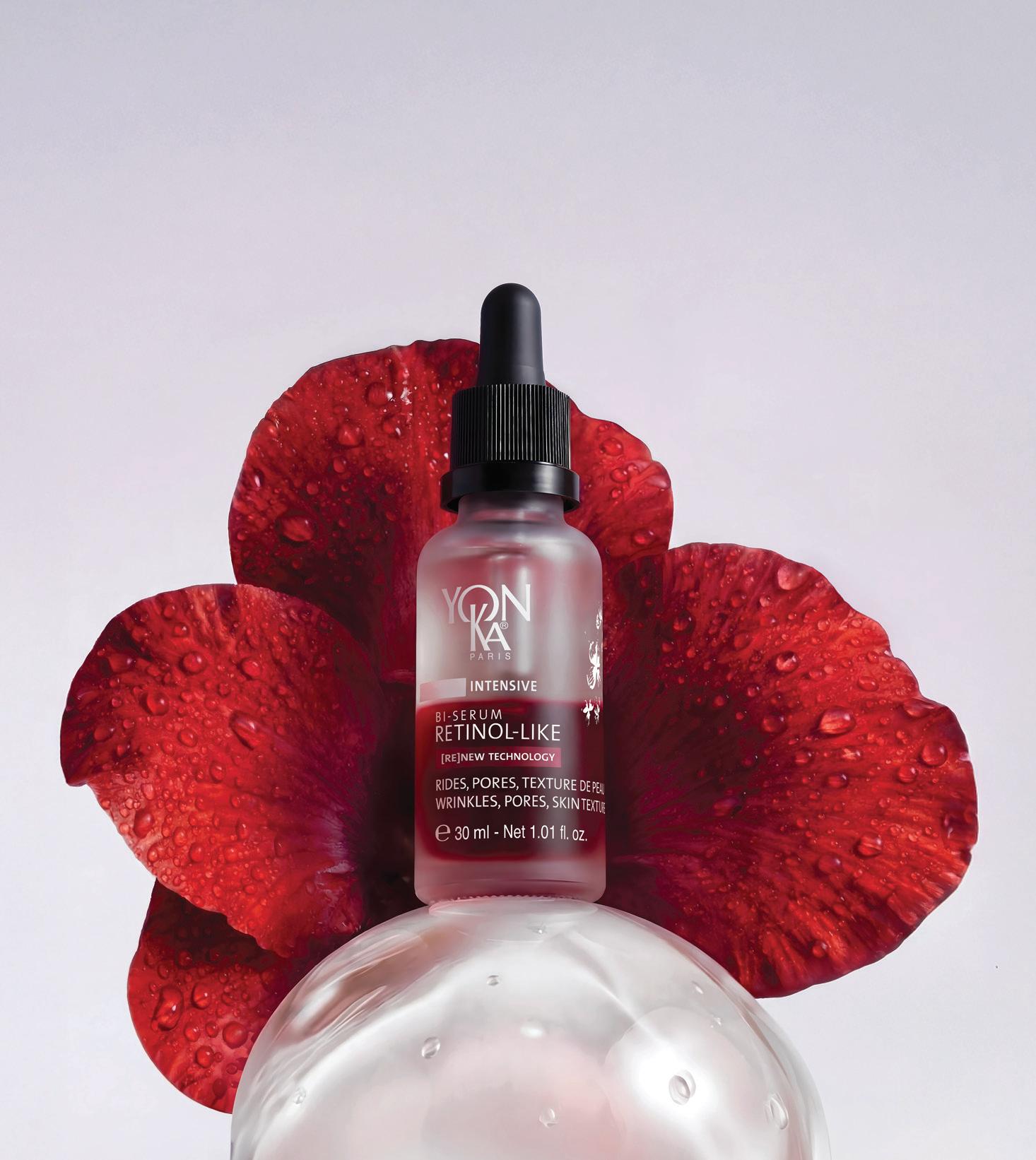
Contrast bathing can strengthen resilience, enabling people to thrive
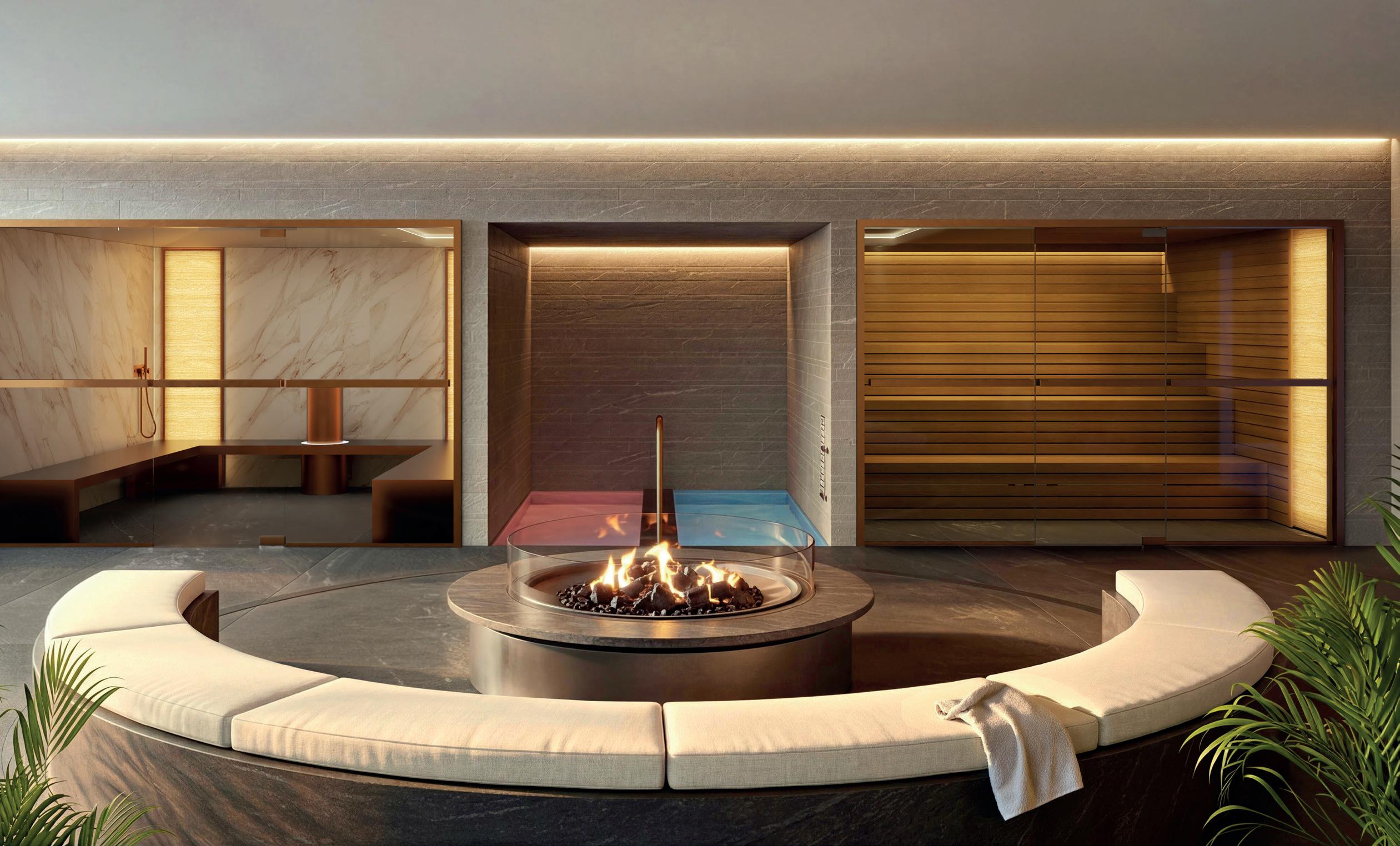
Myrtha Wellness is innovating to redefine the modern spa experience, says Stefano Cattaneo
The language of wellness is evolving and where spas were once centred on relaxation, today they’re becoming destinations for regeneration, prevention and long-term health.
At Myrtha Wellness, this shift is reflected in an approach grounded in premium design, technical precision and the science-backed benefits of thermal contrast.
Contrast bathing is far from a passing trend. Alternating between heat and cold exposure is one of the most widely studied protocols in preventive wellness, stimulating circulation, supporting recovery, reducing inflammation and encouraging cellular regeneration.
Practised consistently, it can help strengthen what longevity experts describe as physiological resilience – the body’s ability to recover, adapt and thrive over time.
Myrtha Wellness has developed an integrated response to this growing demand through two complementary product families. Its plunge pools, available in hot and cold
configurations, form the foundation of the contrast bathing journey.
Built using Myrtha’s patented modular technology, they combine precise temperature control, high hygiene standards and ergonomic comfort within a calm, refined environment.
“The next-generation spa brings together holistic thinking and longevity, evolving from a place of relaxation into a space that supports long-term health, prevention and quality of life,” says Stefano Cattaneo, director of Myrtha Wellness.
The plunge pools are designed to work in synergy with Wellgate, the company’s thermal cabin collection, which includes Finnish saunas, herbal and salt saunas, steam baths and ice rooms. Conceived as immersive sensory environments, the spaces combine generous glazing, tactile materials and atmospheric lighting to create experiences that are both emotional and restorative.
The result is an intuitive wellness circuit: heat opens and relaxes the body, cold re-activates and energises, while repeated exposure helps
“Next-generation spa brings together holistic thinking and longevity to support quality of life”
Stefano Cattaneo
consolidate the benefits. In Myrtha Wellness’ vision, this is more than a thermal journey – it’s a longevity ritual designed for modern wellbeing.
Founded in Italy in 1961, Myrtha Wellness works with leading hospitality and wellness brands including Six Senses, Mandarin Oriental, Rosewood and Four Seasons, integrating aquatic engineering, spa planning and thermal design into a single specialist offering.
Because the future of wellness is not simply about relaxation – it is about living better, for longer. l More: www.myrthawellness.com
spa-kit.net keyword: Myrtha Wellness
Comfort Zone is expanding its science-led hydration portfolio with a new generation of formulas and professional treatments, explains Eve Merinville
As environmental stressors intensify and consumer demand for highperformance skincare grows, hydration has become a critical driver of skin health and treatment efficacy.
Comfort Zone’s Hydramemory innovations take a biomimetic approach, inspired by desert plants, to deliver adaptive, multi-level hydration for both professional and home use. Hydration is increasingly recognised as a fundamental pillar of skin longevity, influencing barrier function, resilience and the visible signs of ageing, yet it remains underutilised in many treatment protocols. Responding to this gap, Comfort Zone’s Hydramemory range has been developed to support the skin’s adaptive hydration mechanisms. Inspired by the survival strategies of desert plants, the formulation combines macro hyaluronic acid with prickly pear extract from regenerative organic agriculture. Clinically tested results show an immediate hydration boost of up to 70 per cent and a tenfold strengthening of the skin barrier, supporting improved moisture retention in both extreme and everyday conditions.


“The secret to healthy skin is hydration and by mimicking nature’s textures, we can improve its ability to retain moisture”
Eve Merinville, Comfort Zone R&D Excellence and Innovation Director
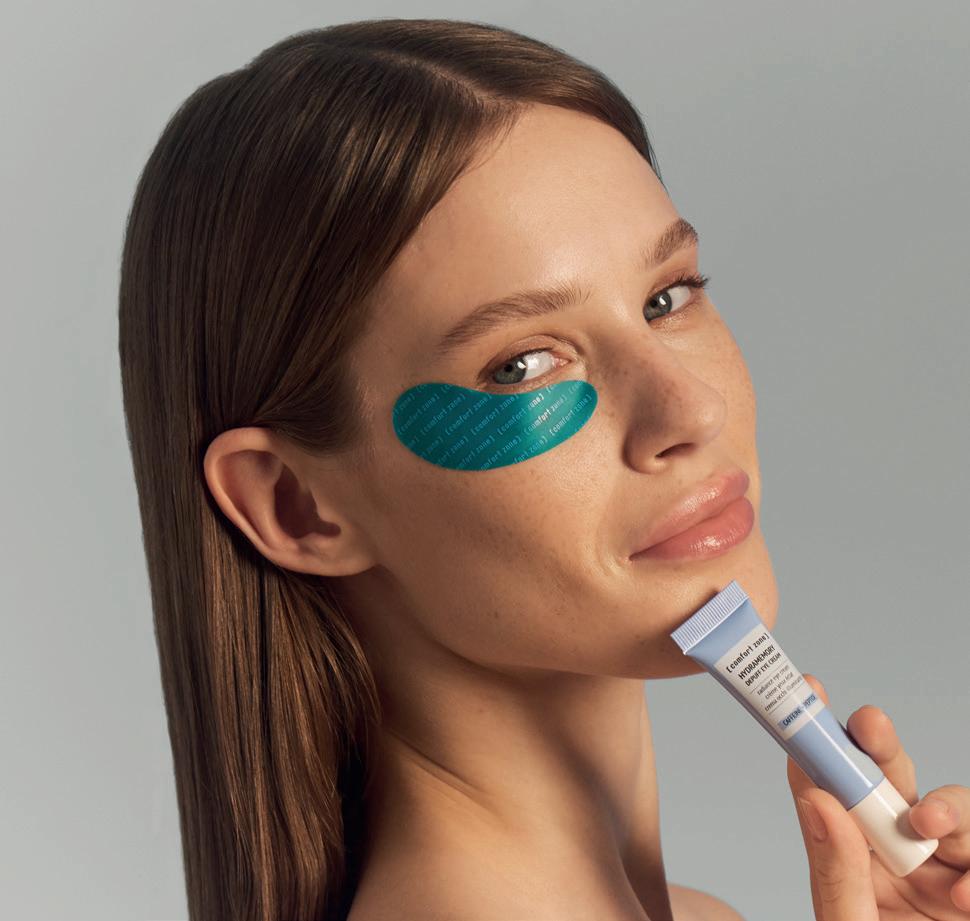
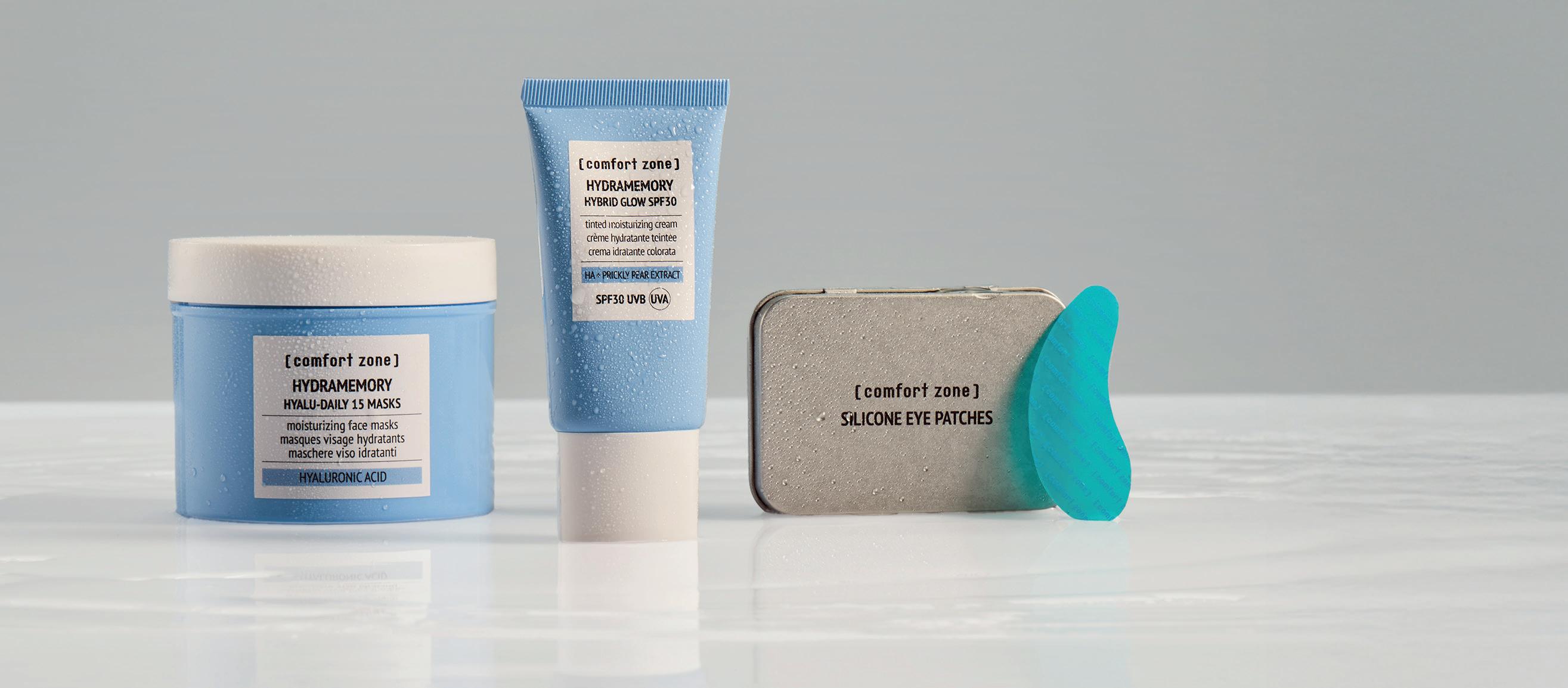
The Hydramemory range gives visible performance outcomes
The new Hydramemory Hydra Plump facial treatment delivers an intensive plumping moisturising experience through professionalgrade formulas and the power of touch inspired by Vietnamese techniques. Clinical evaluations report that 100 per cent of users felt improved hydration, 95 per cent observed increased glow and plumpness and 85 per cent reported a reduction in superficial wrinkles after a single treatment. With a multi-format approach to hydration, the range also includes Hyalu Daily 15 masks for instant radiance, reusable silicone eye patches designed to enhance active absorption while reducing waste and a de-puff eye cream, formulated with caffeine and peptides for visible fatigue reduction. Completing the collection, Hydramemory Hybrid Glow SPF30 offers three-in-one – daily protection, hydration and radiance – positioning it as a high-performance finishing step for both treatment rooms and retail conversion.
This product is a true beauty ally with a transformative texture that’s lightweight and comfortable. Its silky skin feel makes it perfect for everyday use.
SPF30 protection helps defend the skin against the damage caused by daily sun exposure, supporting a youthful and healthy-looking
appearance, while innovative encapsulated, colour-adaptive pigments activate on application, instantly enhancing radiance and creating a natural ‘bonne mine’ effect, or healthy glow.
The white formula transforms into colour, blending seamlessly with the complexion for an even, naturallooking finish. It’s made with 69 per cent ingredients of natural origin and has been enriched with prickly pear extract to help support the skin barrier, while hyaluronic acid delivers deep hydration, leaving the skin feeling fresh, soft and visibly healthier.
Together, the Hydramemory system reflects a shift in professional skincare: delivering hydration as a strategic tool for skin longevity, barrier health and visible performance outcomes. l More: www.comfortzoneskin.com











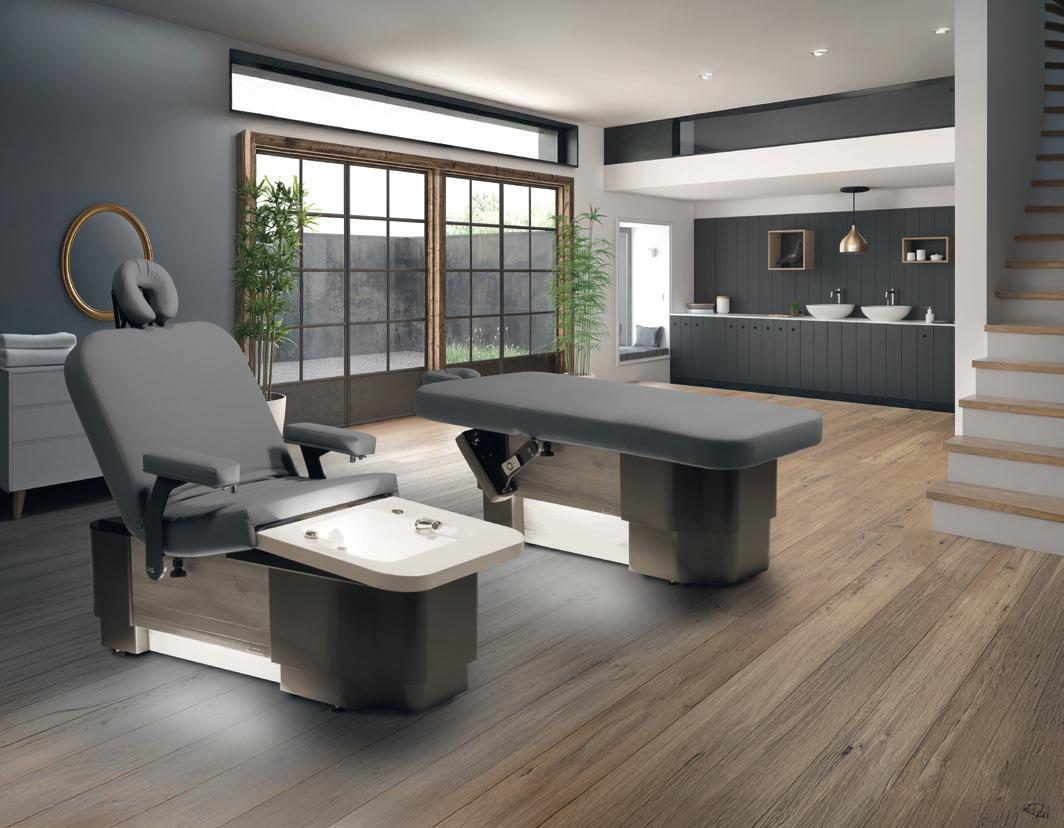


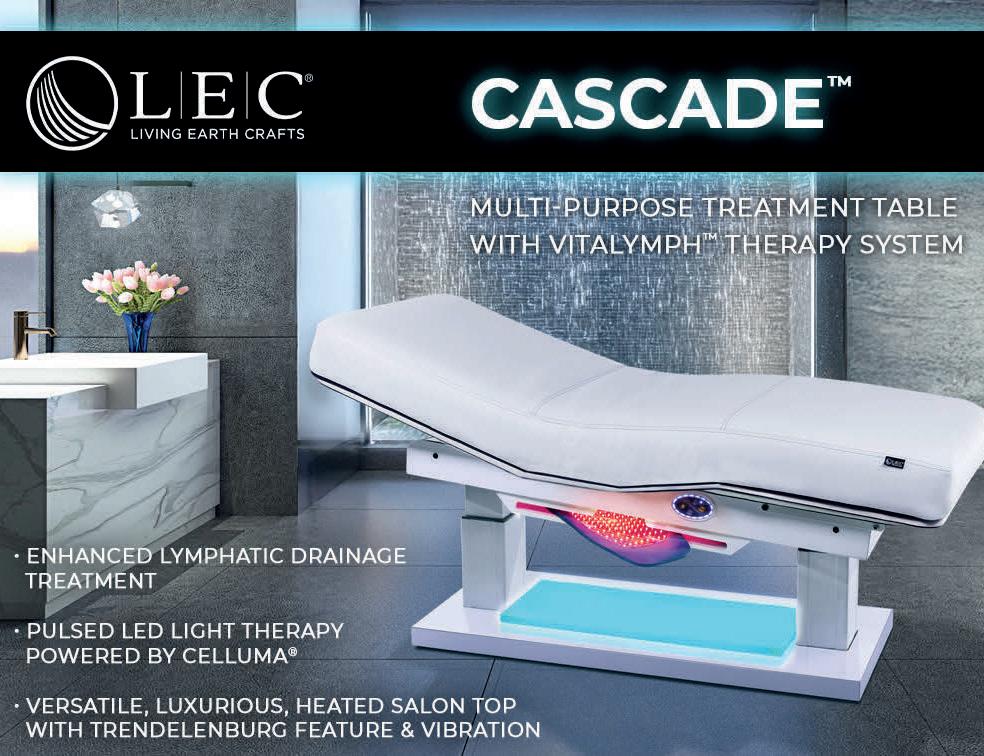
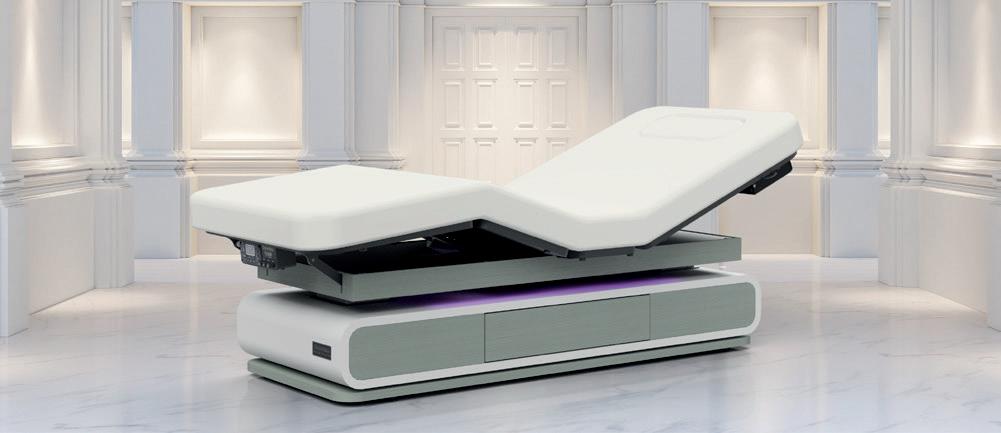








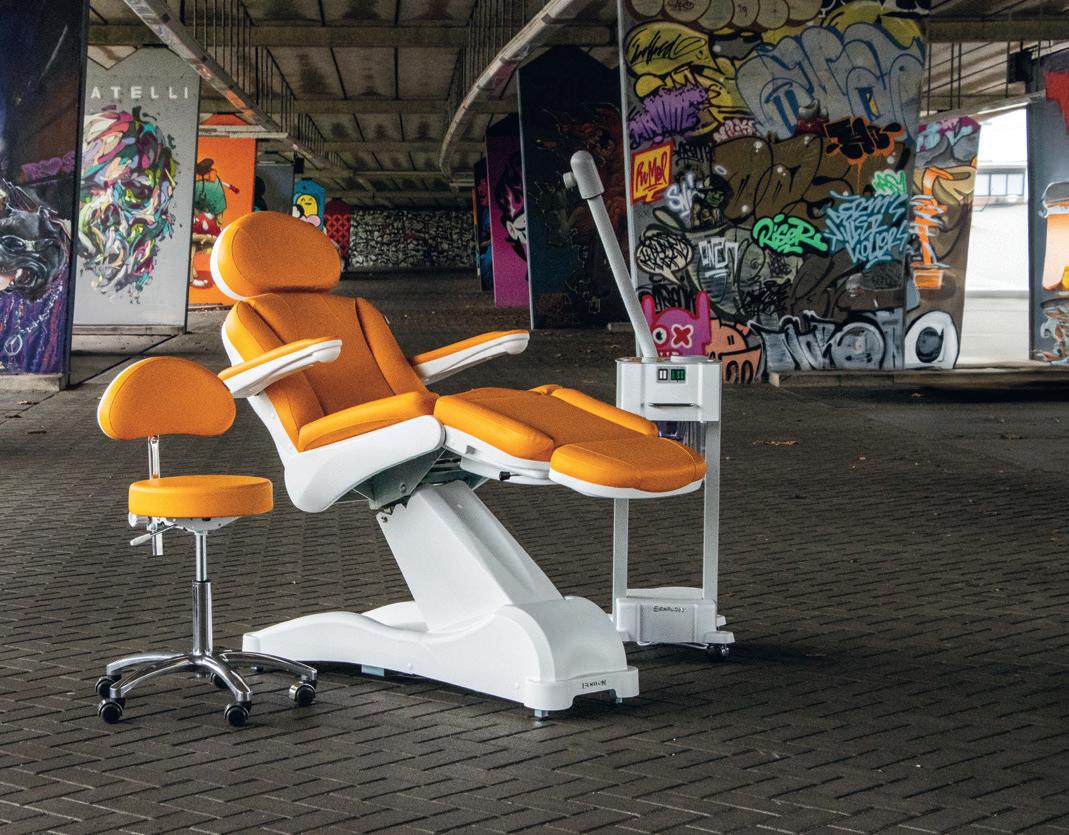






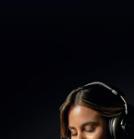










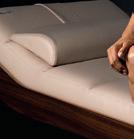
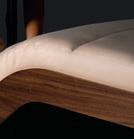
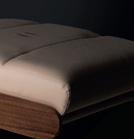


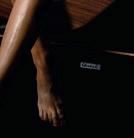



























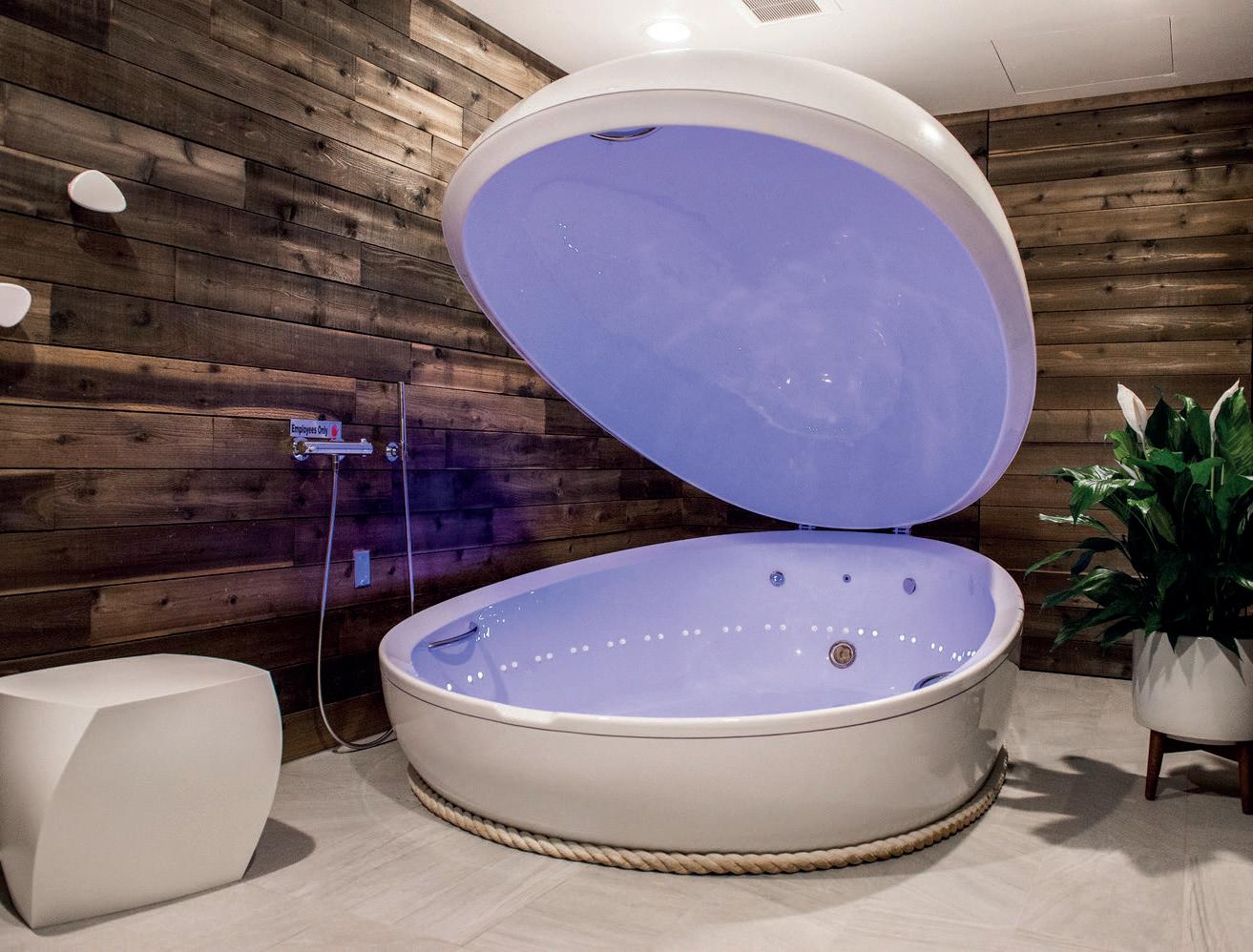










A new comprehensive review confirms that collagen supplements help skin elasticity
The review is one of the most robust studies examining the effects of collagen
Collagen supplements, known to offer relief from osteoarthritis symptoms and improve skin health, have seen a surge in popularity in recent years. Grand View Research valued the market at US$1.99 billion (€1.84 billion, £1.55 billion) in 2021 and predicts it will expand at a compound annual growth rate of 5.5 per cent from 2022 to 2028.
With this in mind, researchers from Anglia Ruskin University in the UK set about investigating the anti-ageing, beauty and wellbeing claims of collagen supplements, which have been unproven so far.
A team, co-led by Lee Smith, a professor of public health at Anglia Ruskin, looked at evidence from 16 reviews, 113 randomised controlled trials and nearly 8,000 participants around the world – making it one of the most comprehensive studies looking into the health benefits of collagen supplements to date.
The results, published in the Aesthetic Surgery Journal Open Forum*, showed that if taken consistently over time, collagen supplements are linked to greater improvements in skin elasticity and hydration outcomes. However, there were no statistically significant differences in skin roughness.
This means that collagen supplements provide sound foundational dermal support for holistic skin maintenance, because they improve turgor, tone
Collagen is not a ‘cure all’ but it does have credible benefits
and moisture, say the researchers. They should not, however, be seen as a ‘quick fix’ for wrinkles.
Smith says: “Collagen is not a cure-all, but it does have credible benefits when used consistently over time, particularly for skin and osteoarthritis. Our findings show clear benefits in key areas of healthy ageing, while also dispelling some of the myths surrounding its use.”
Additional study observations revealed that collagen supplements reduce pain and stiffness in people with osteoarthritis and they also provide modest benefits for muscle mass and muscle architecture.
However, no meaningful improvements were found in relation to post-exercise muscle recovery, soreness or tendon mechanical properties. l
*Smith L and Ravindran R et al. Collagen Supplementation for Skin and Musculoskeletal Health: An Umbrella Review of Meta-analyses on Elasticity, Hydration and Structural Outcomes. Aesthetic Surgery Journal Open Forum. February 2026