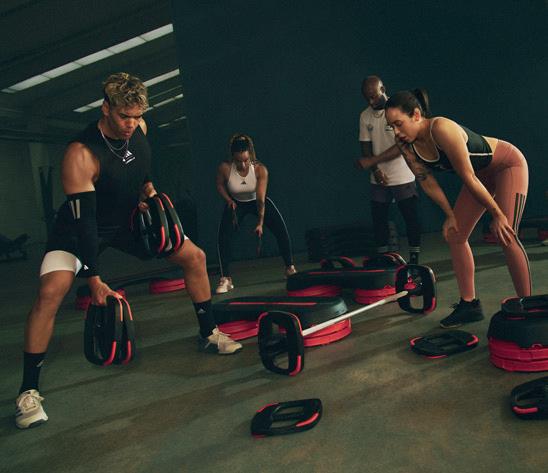
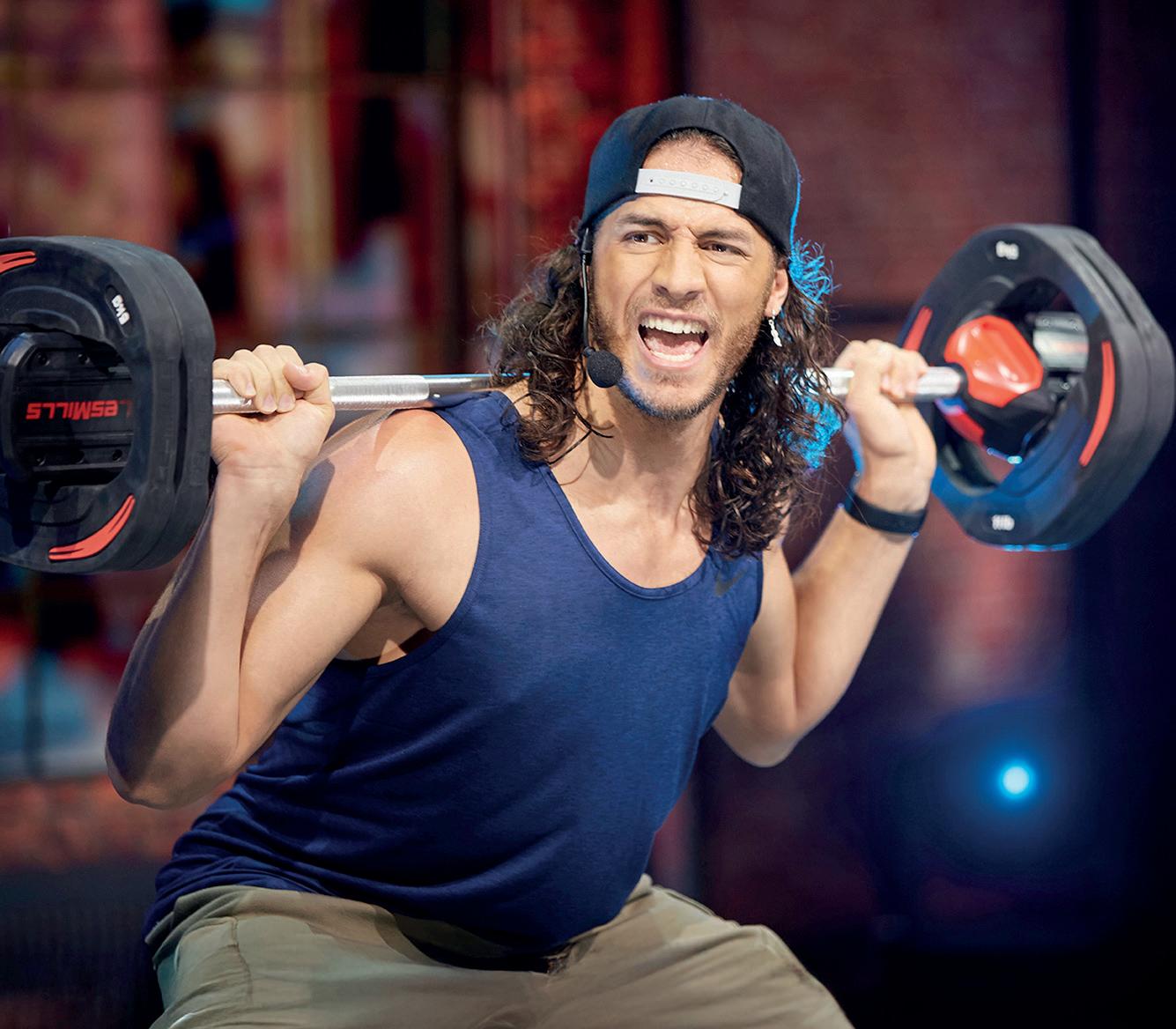
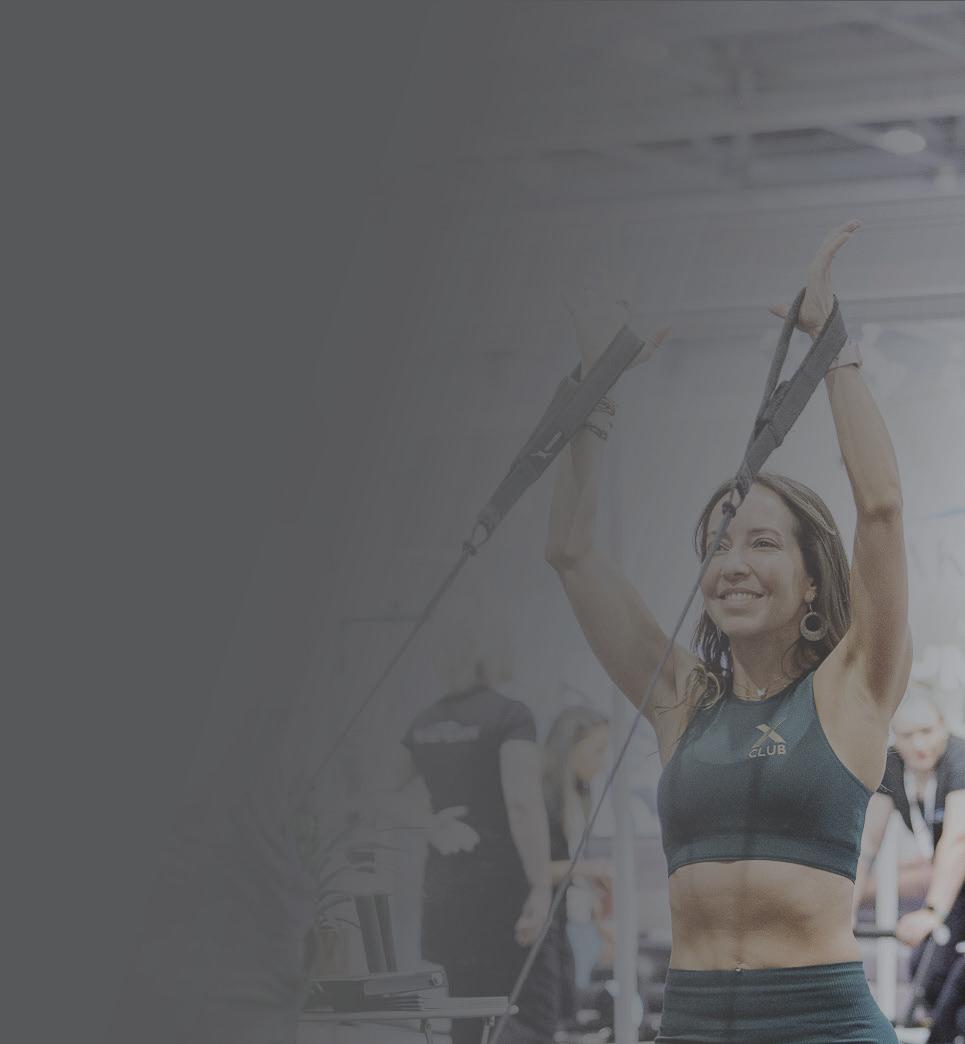
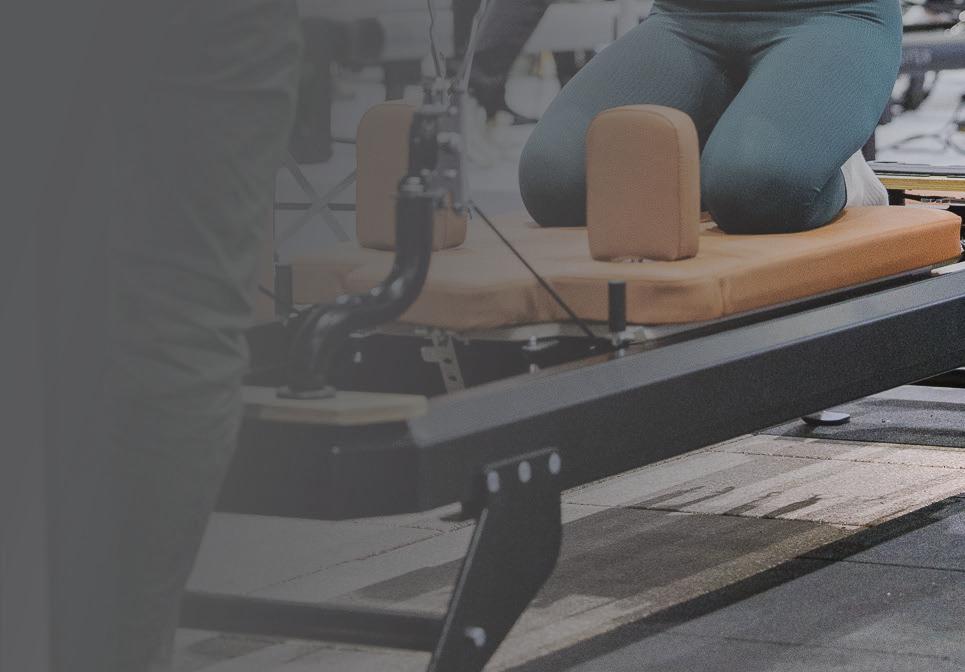
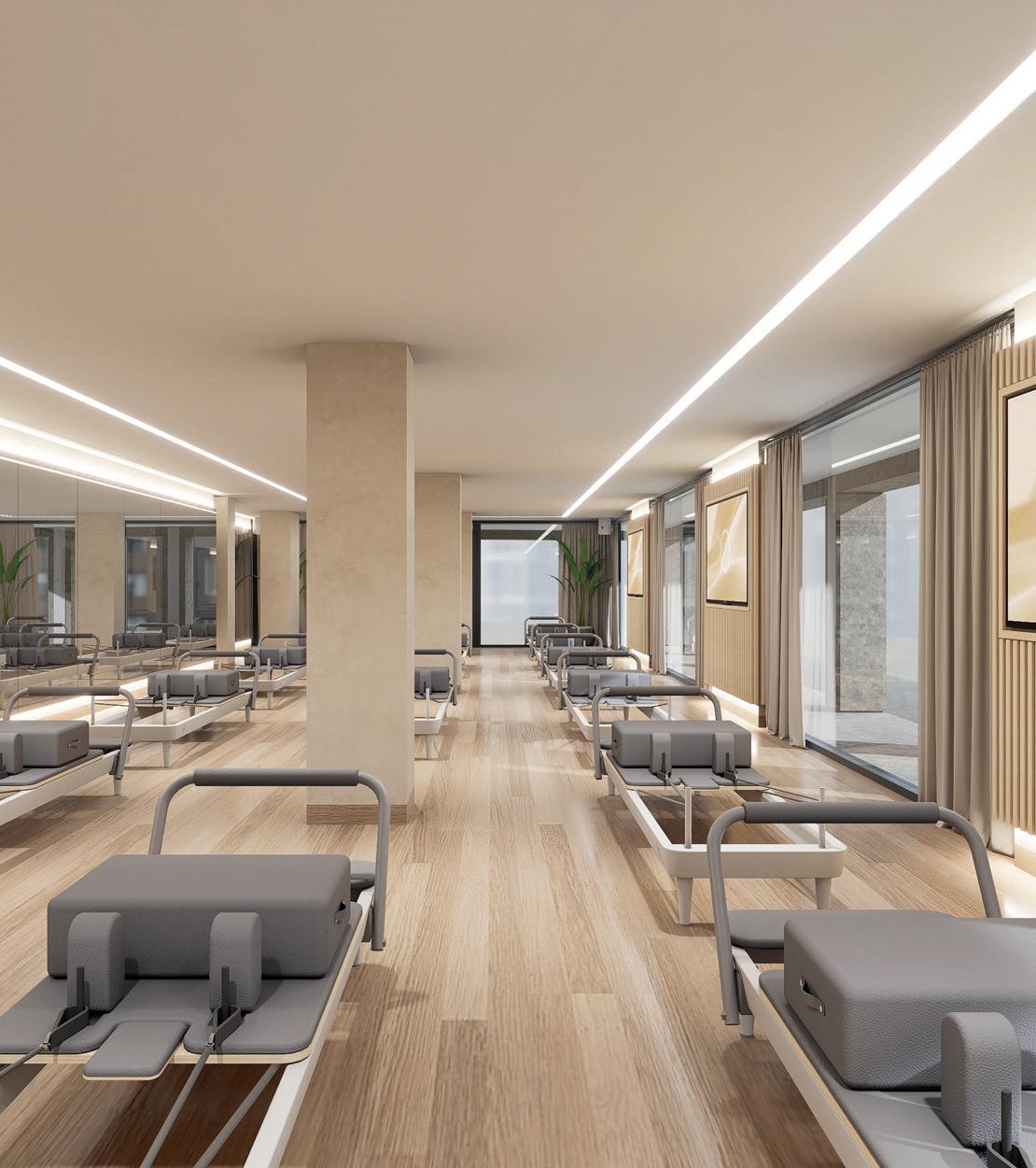
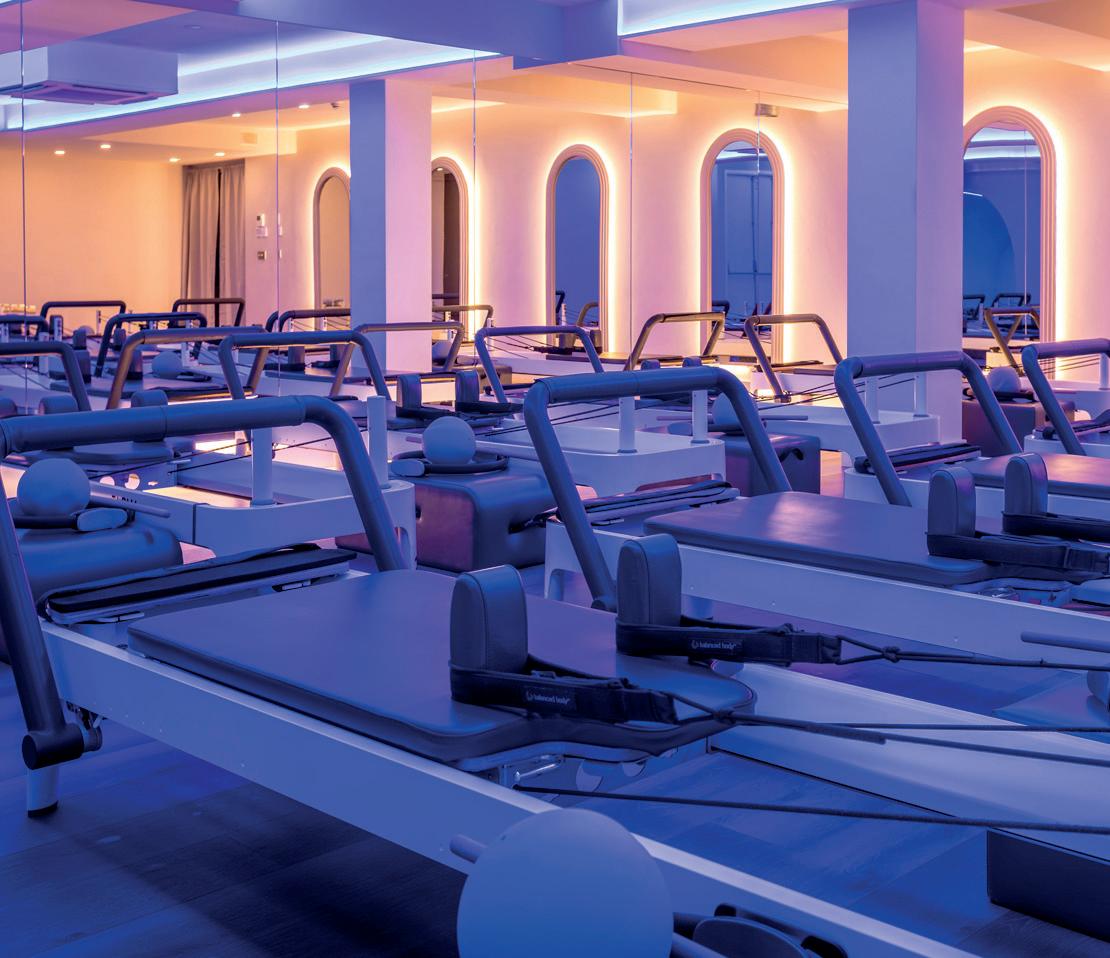
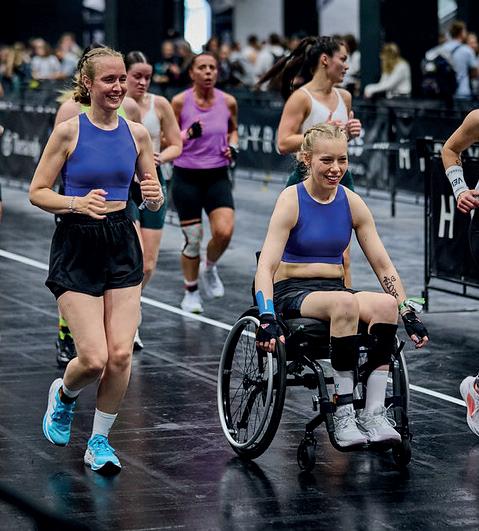
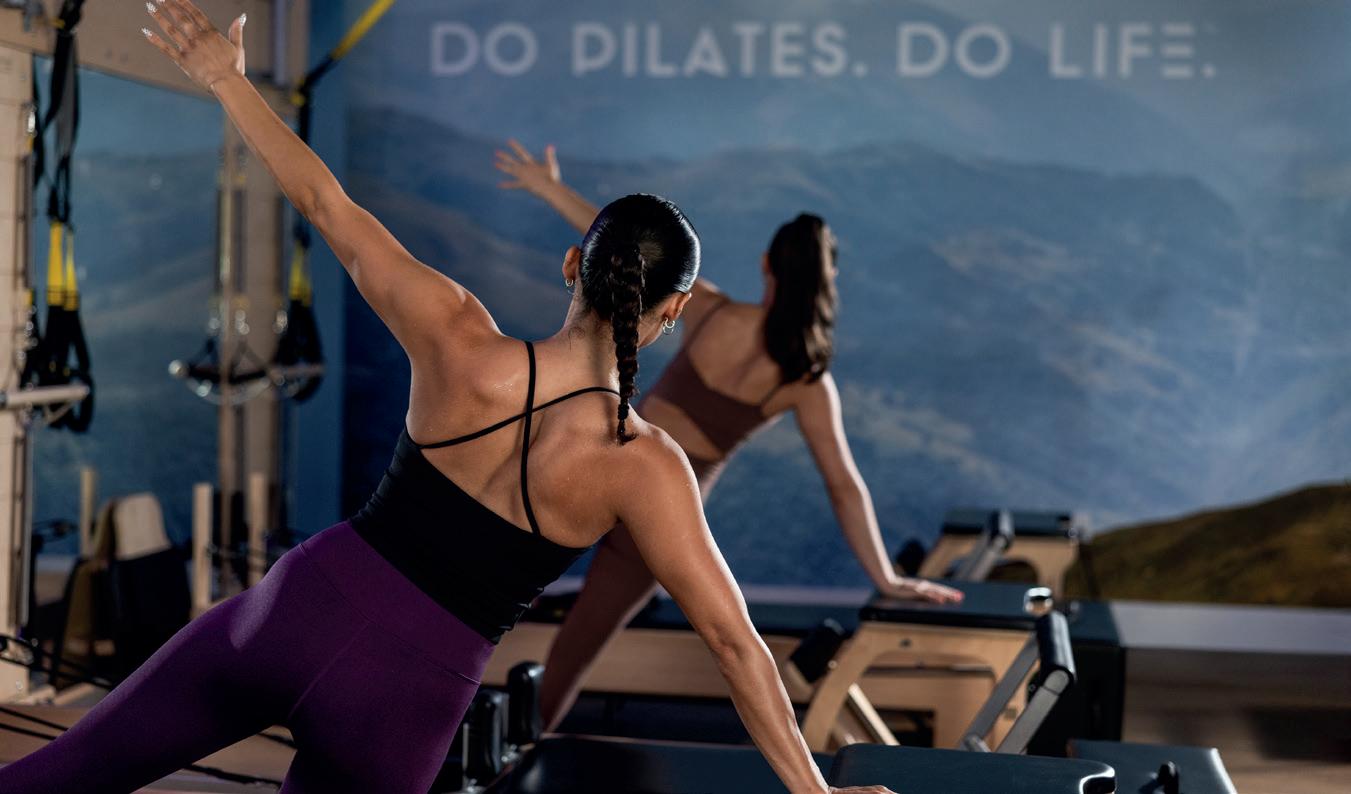
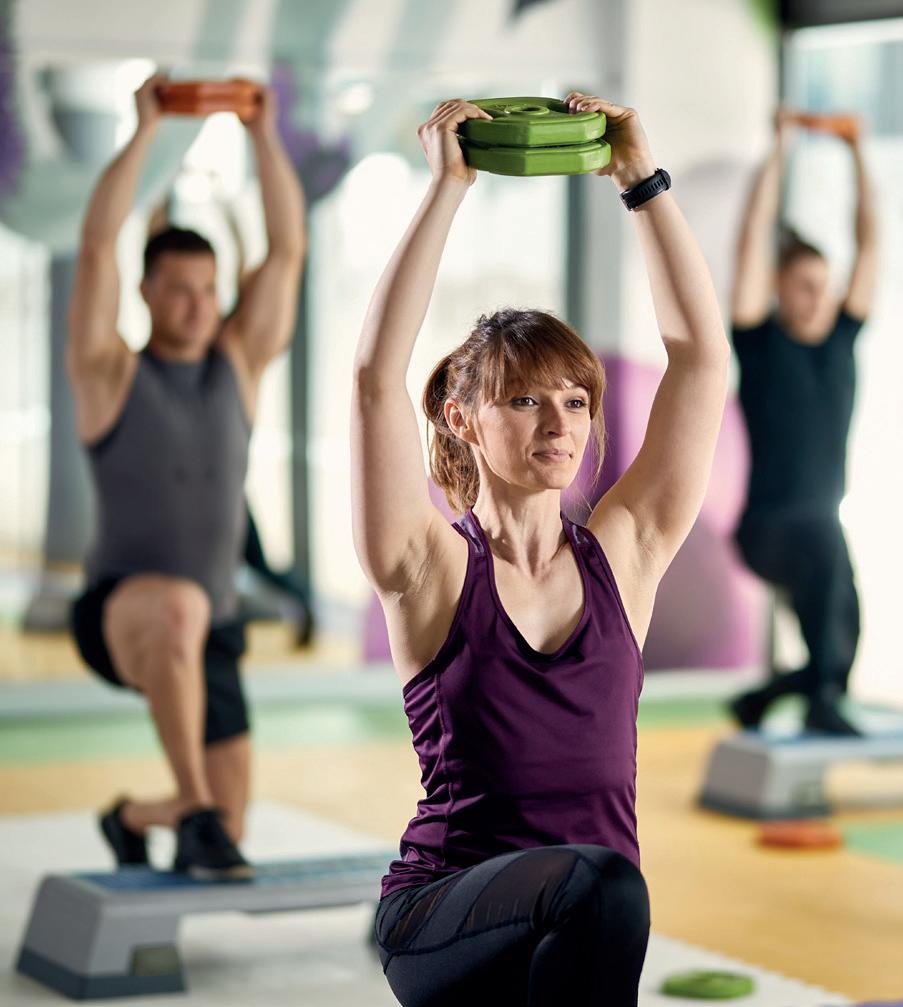
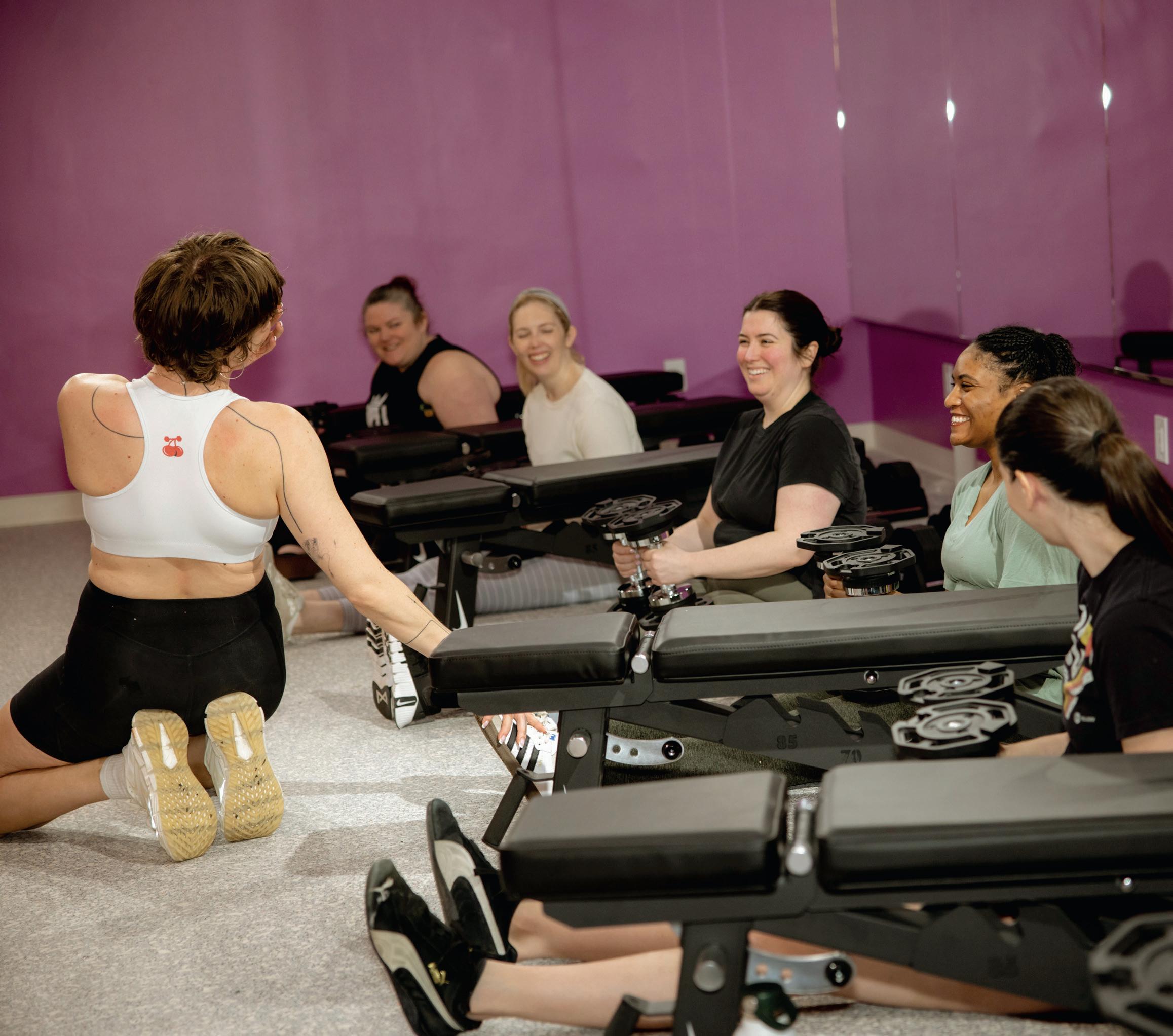
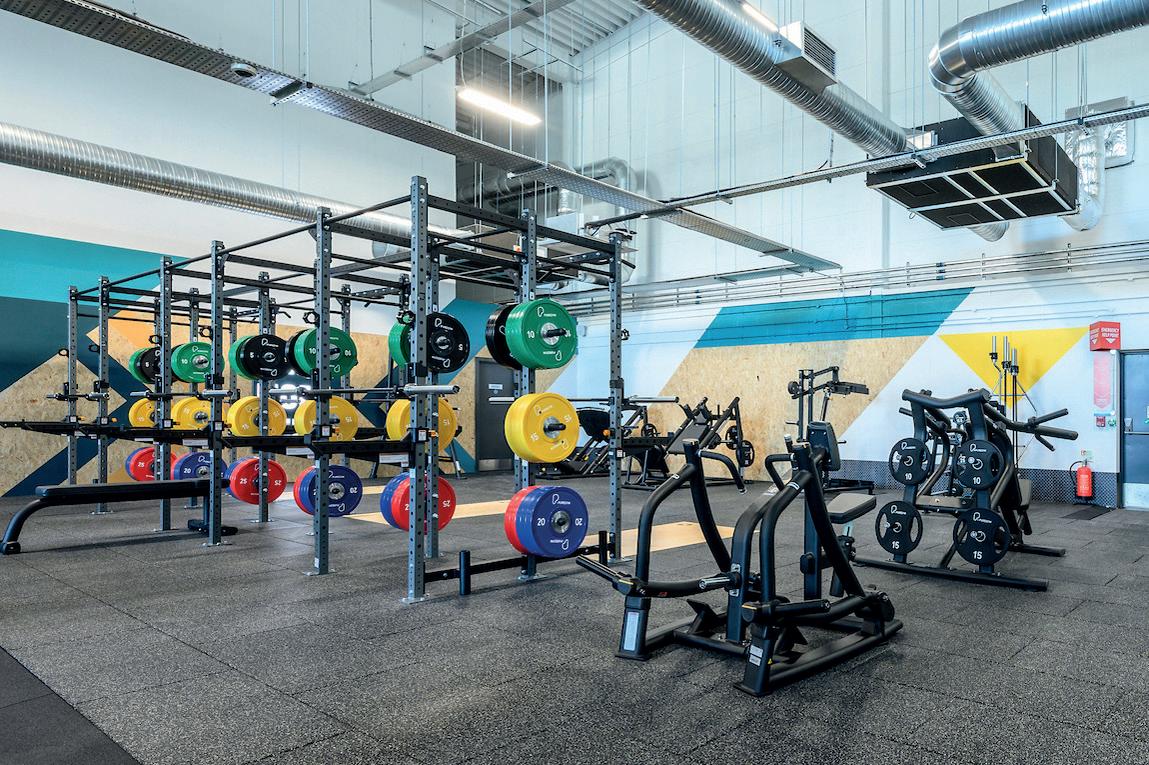
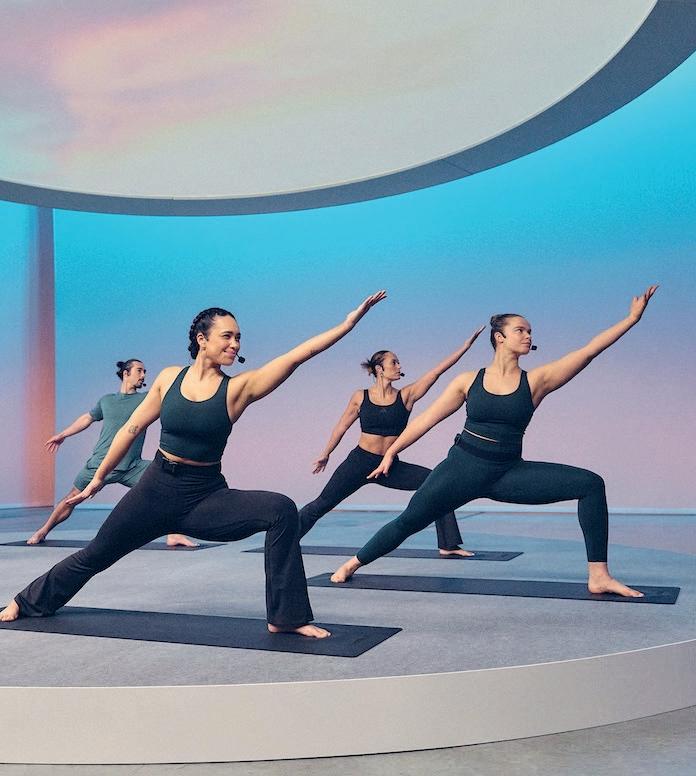
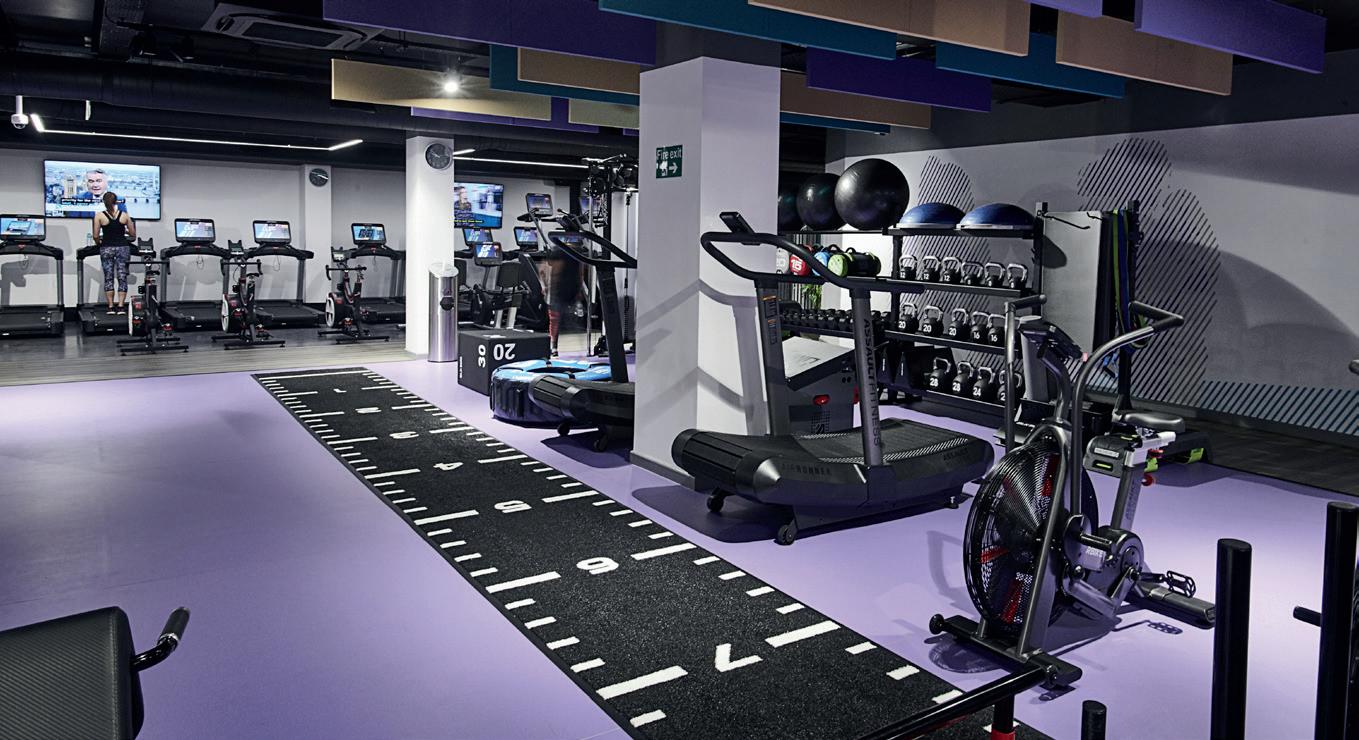
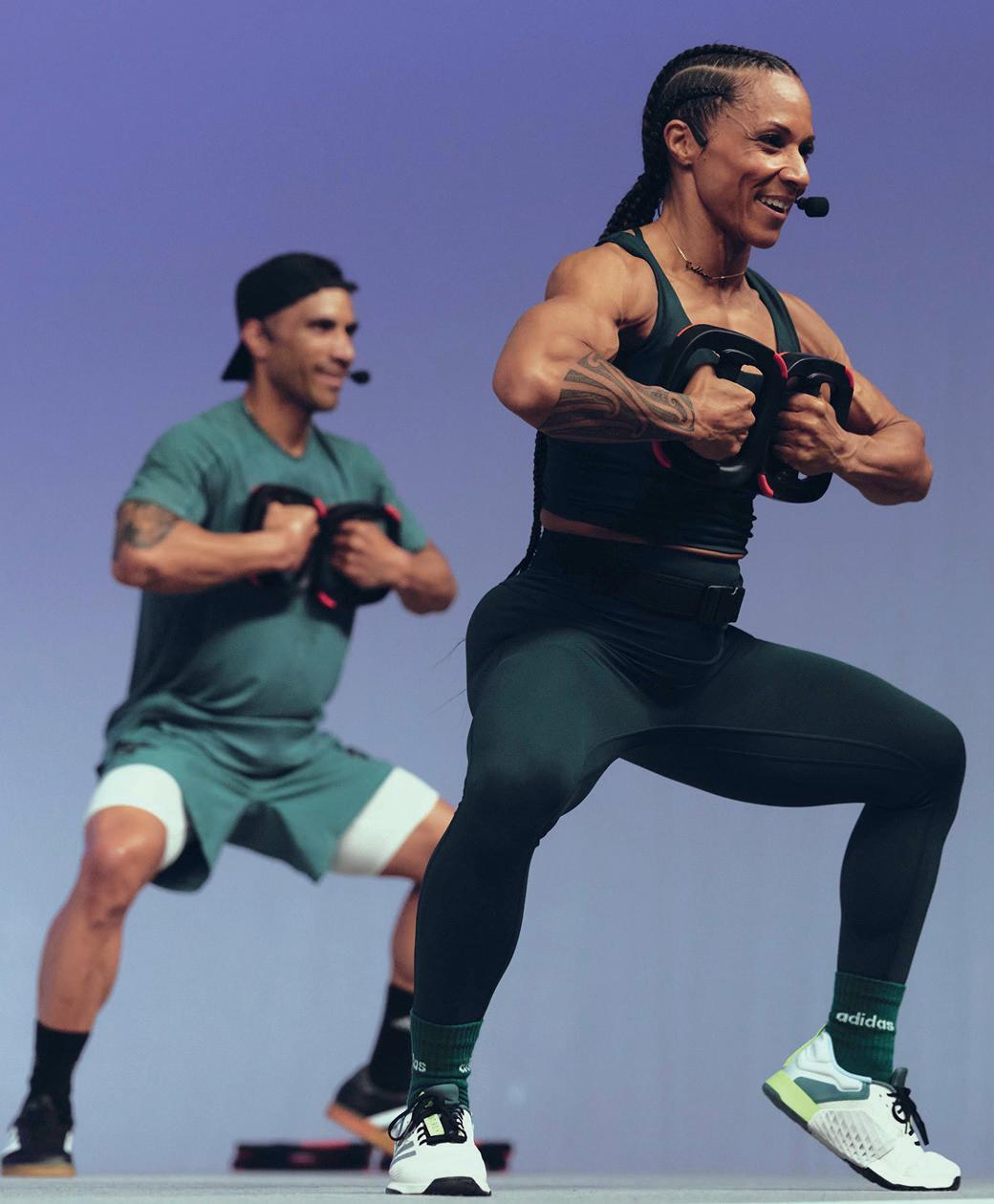
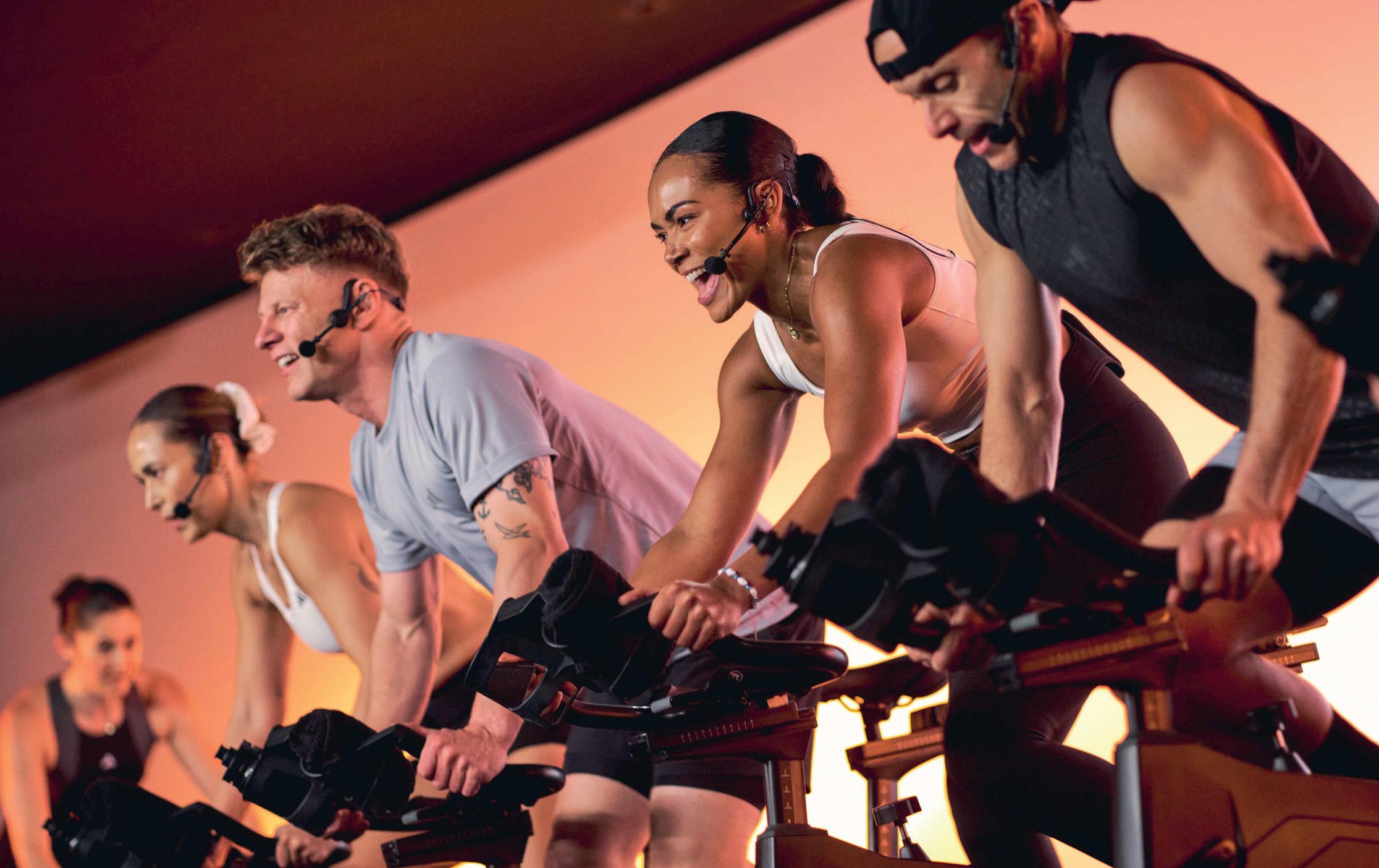
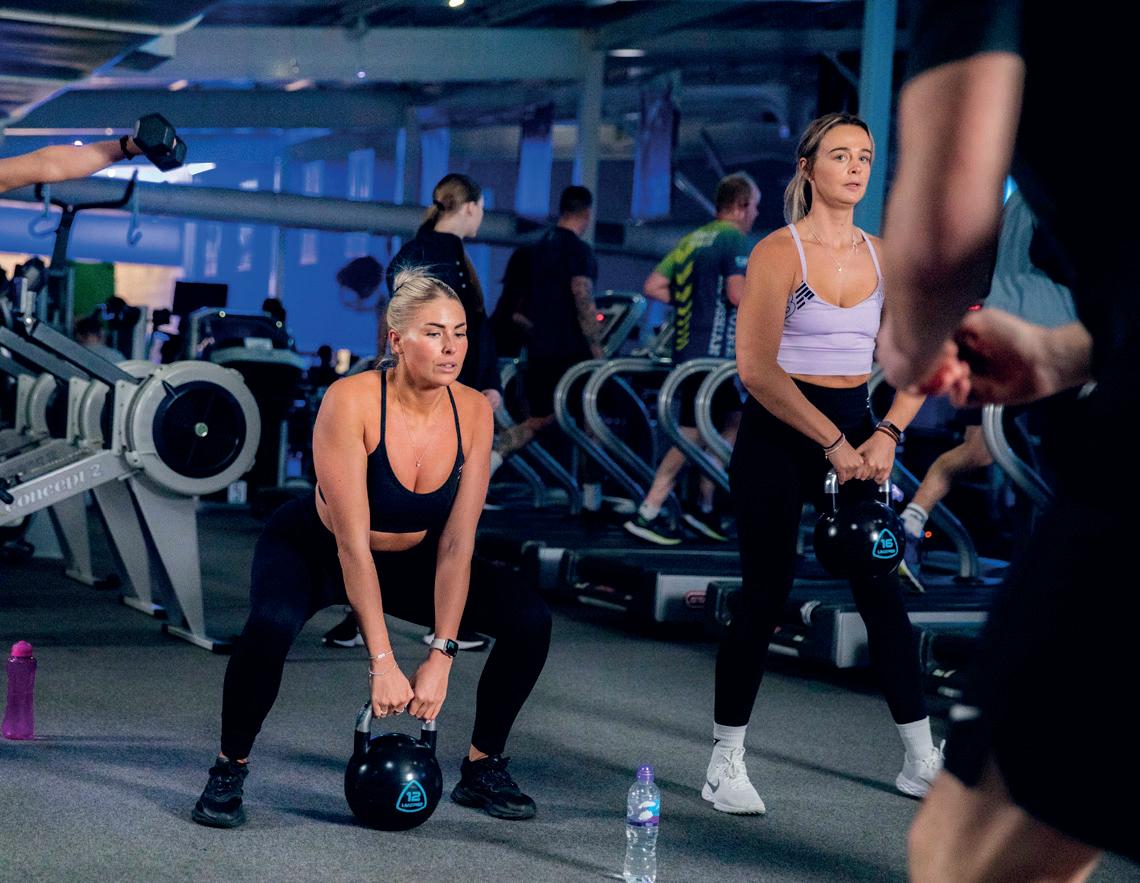
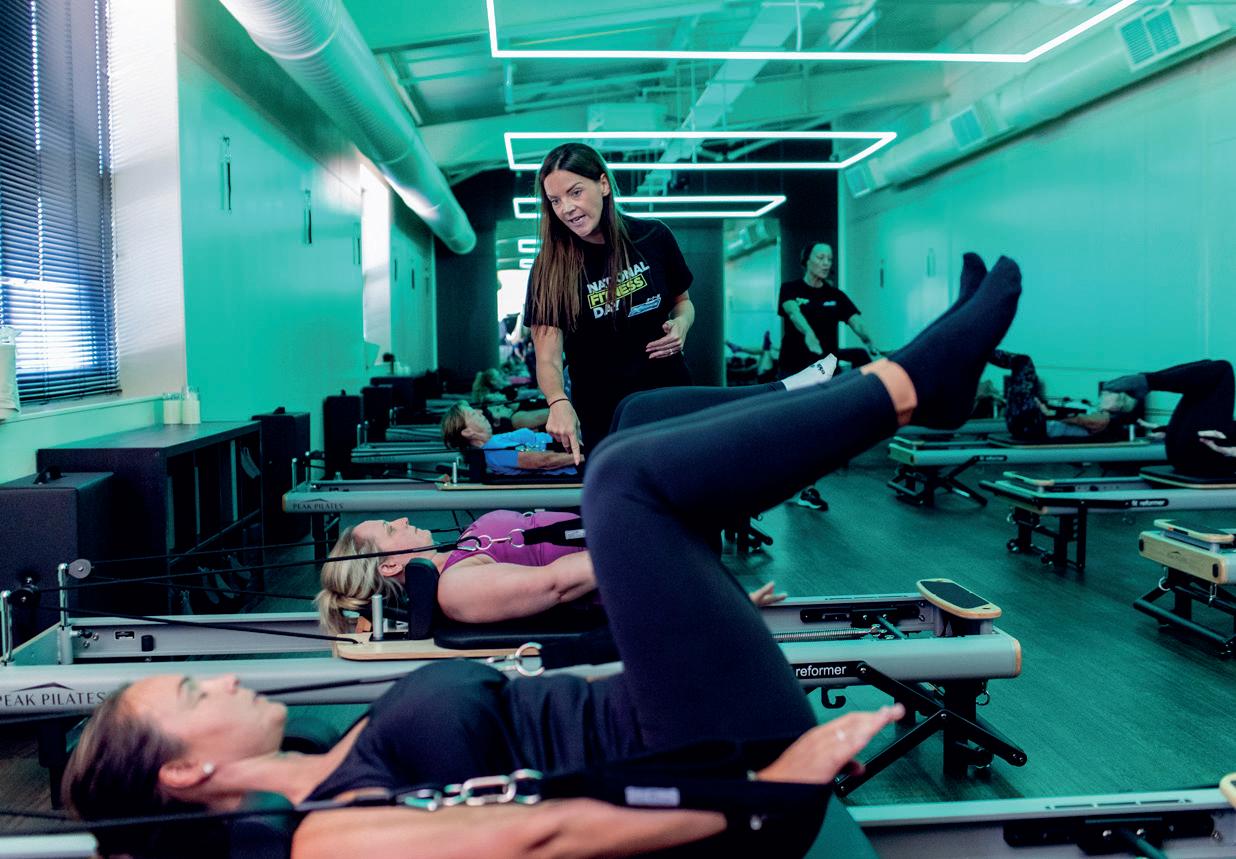
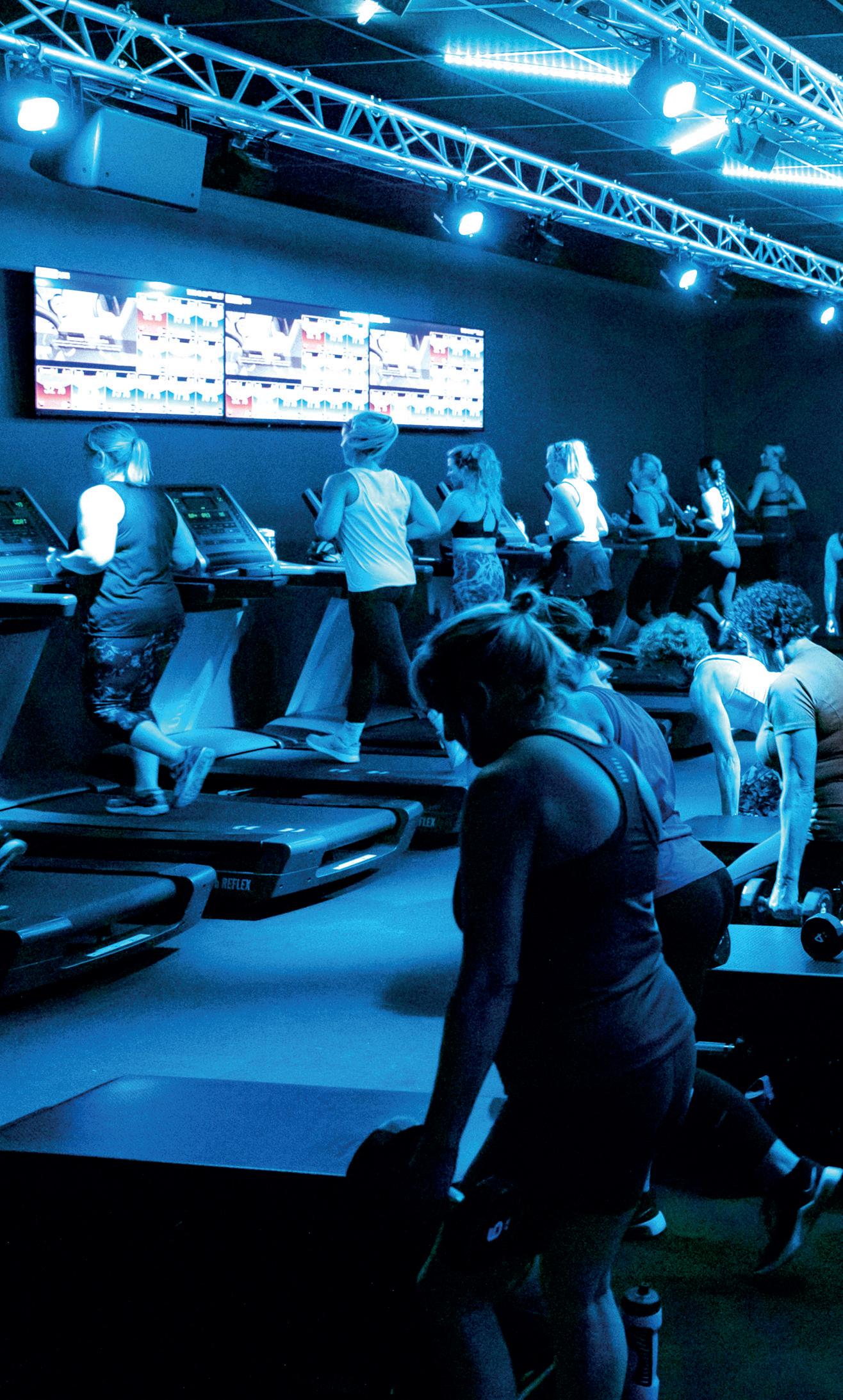
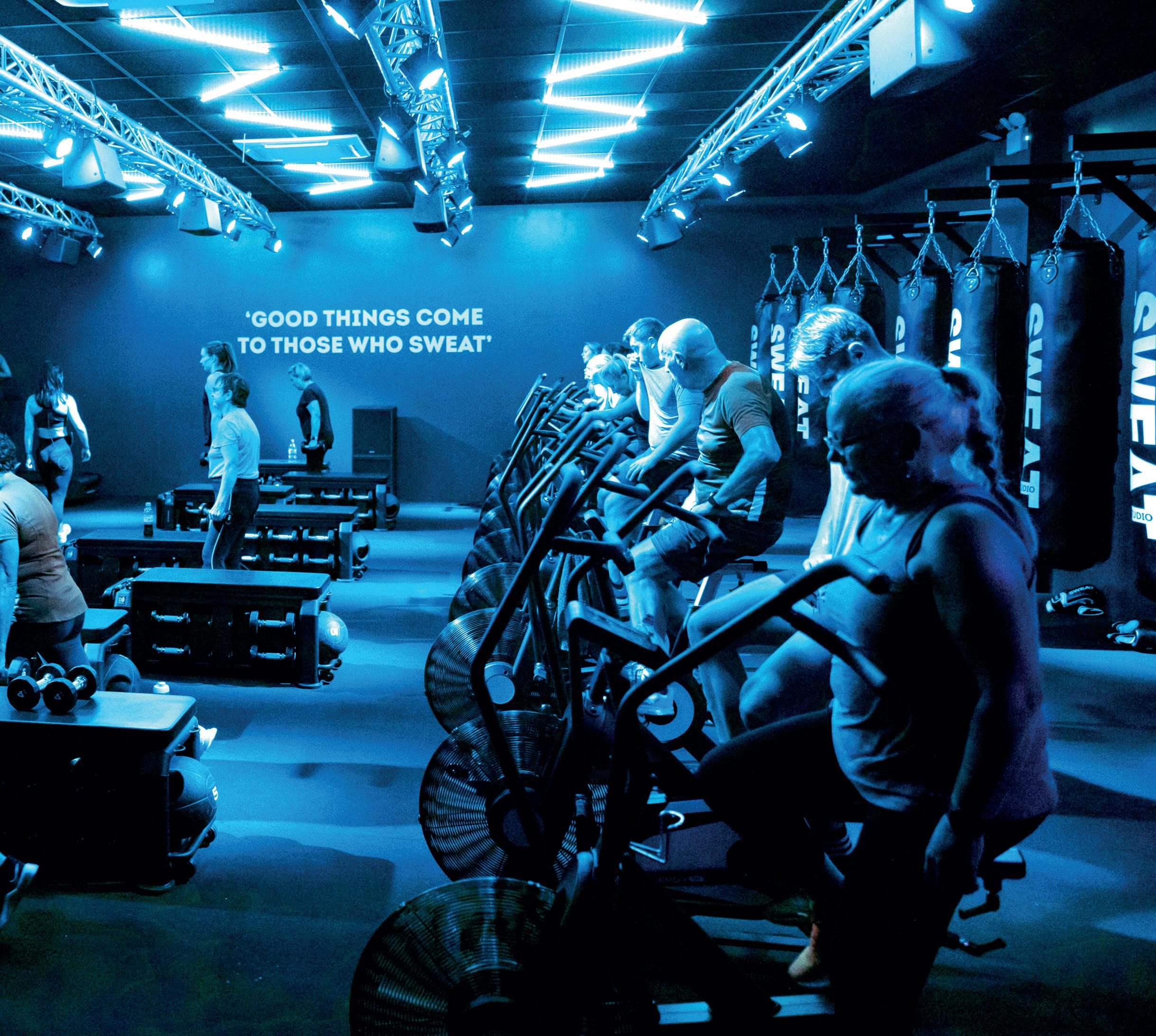
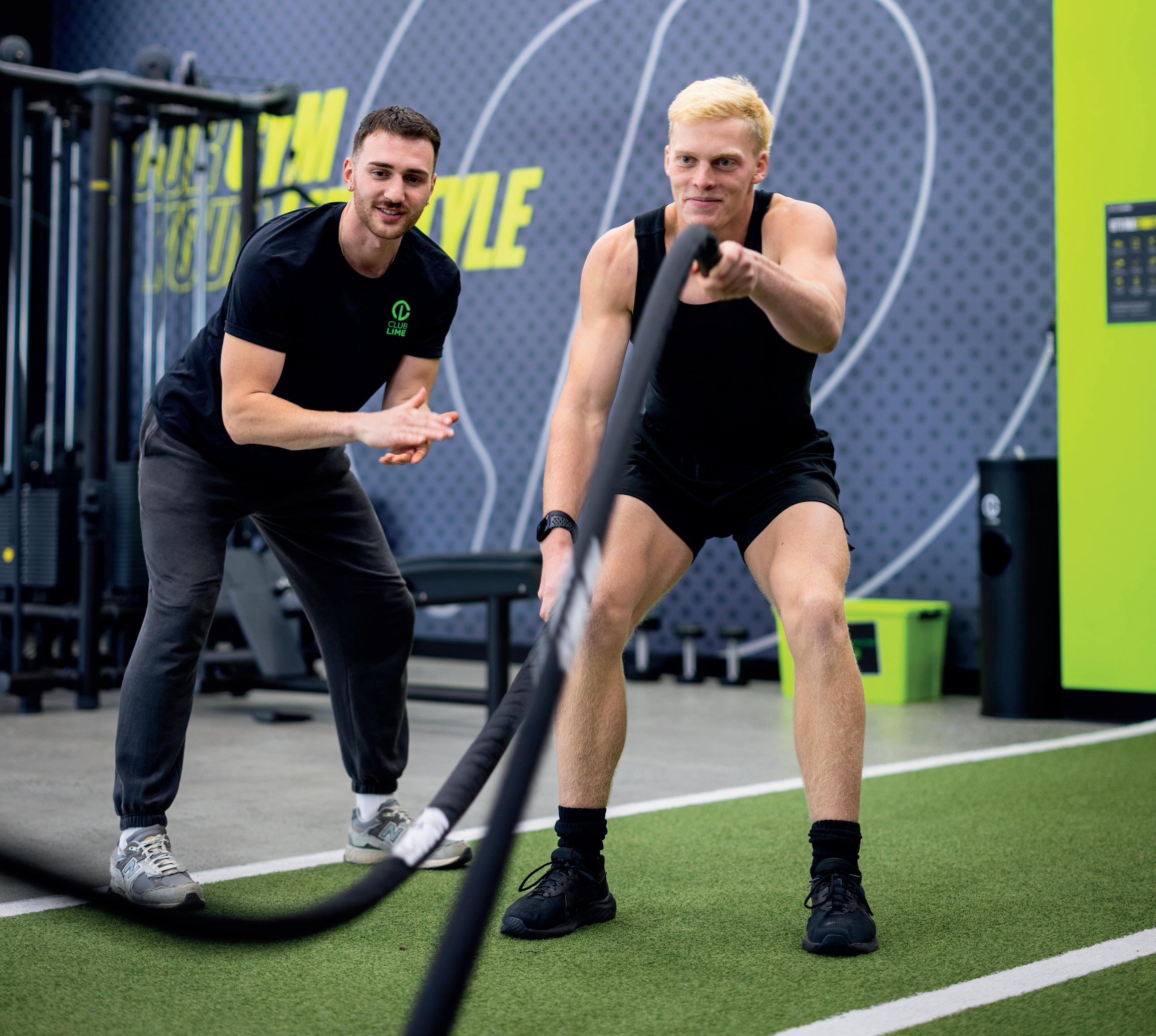
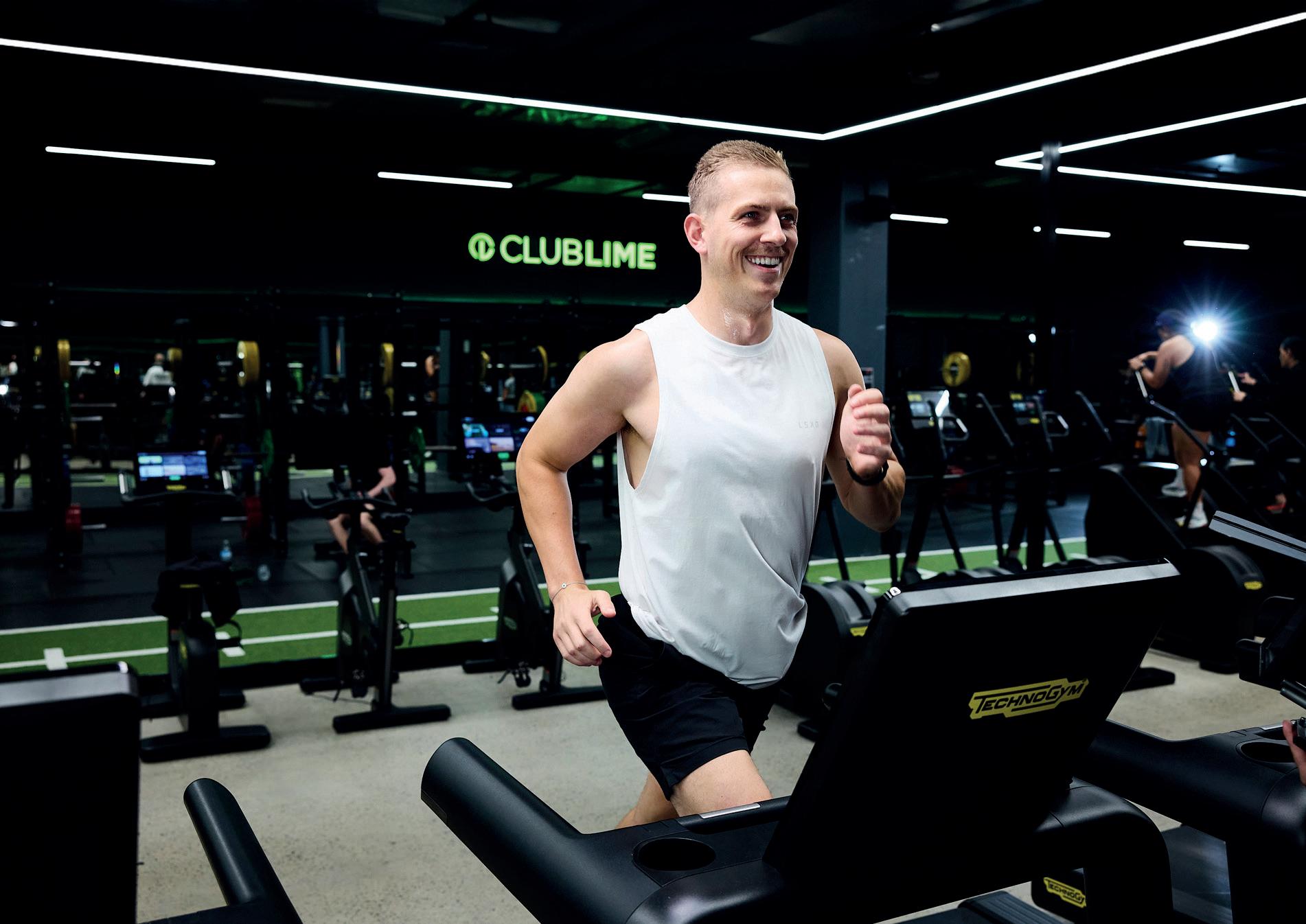
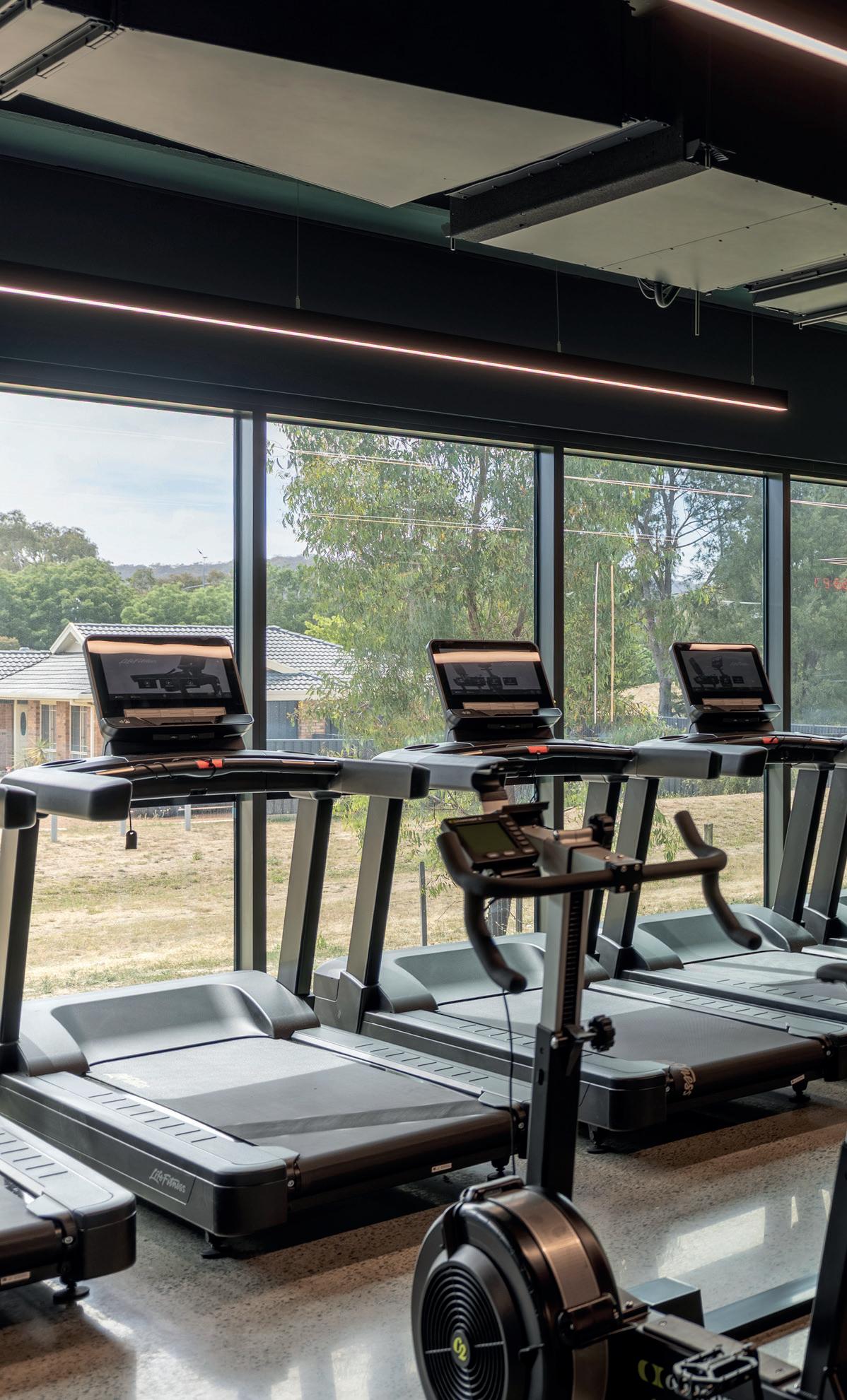
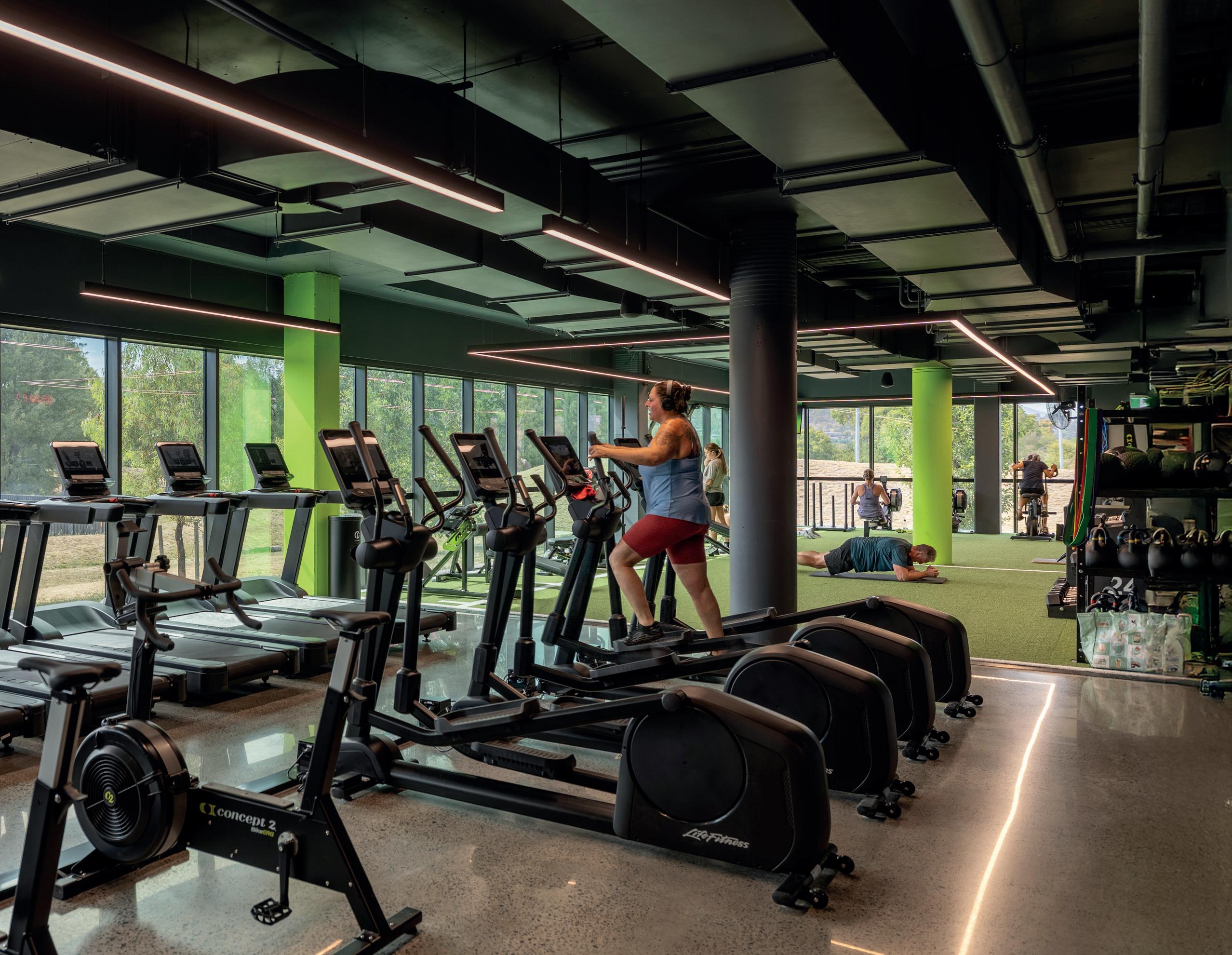
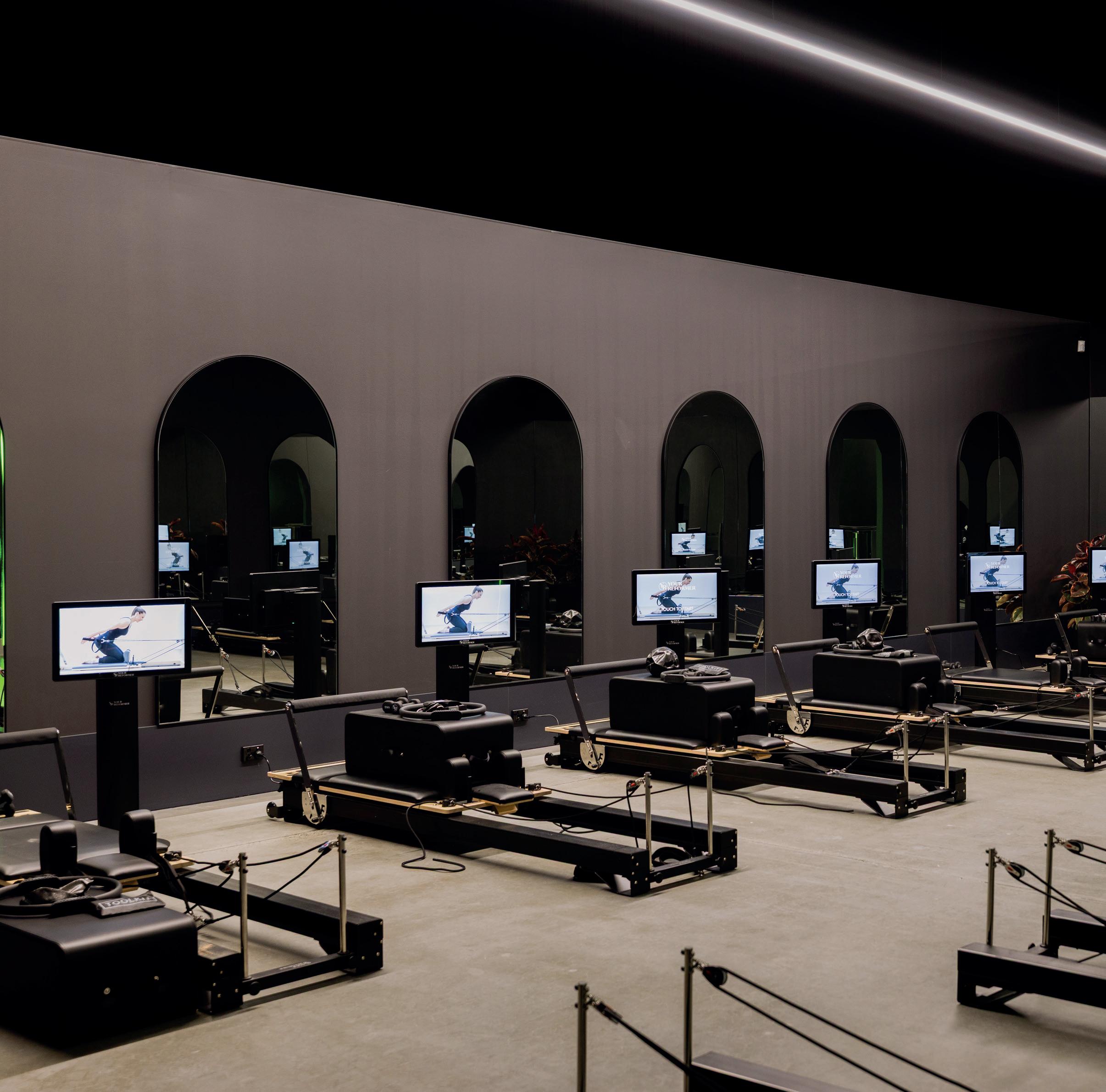
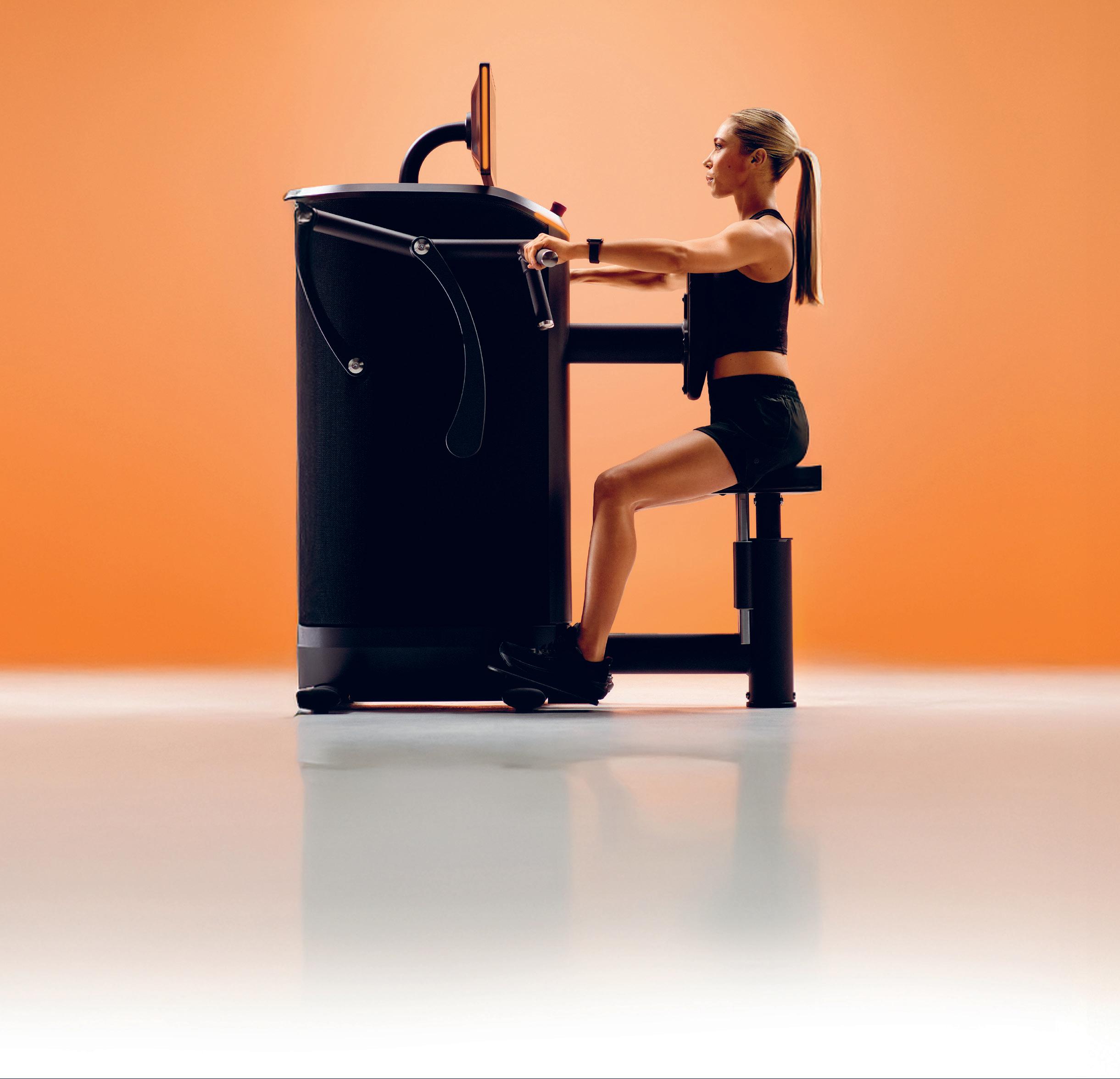
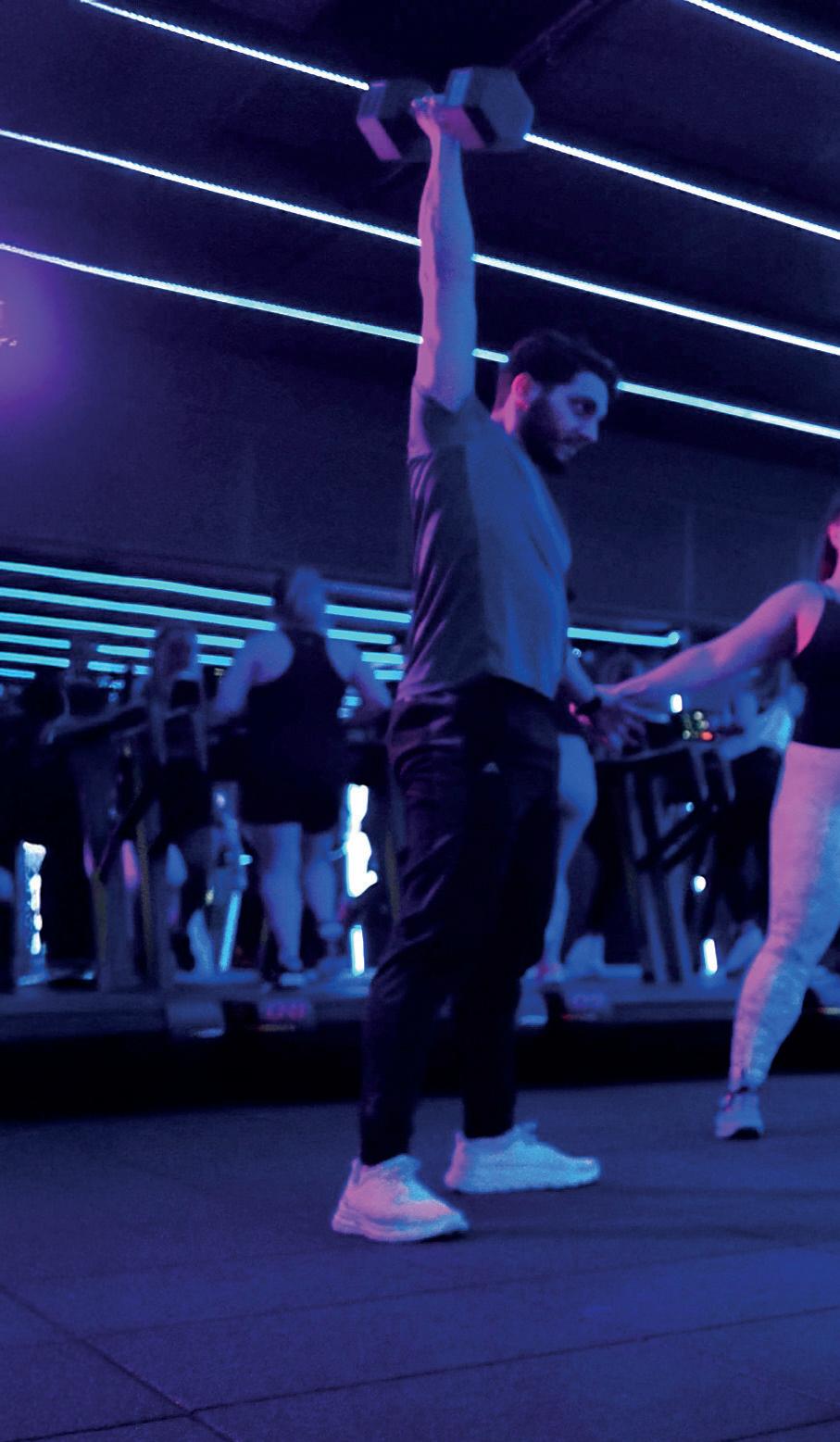
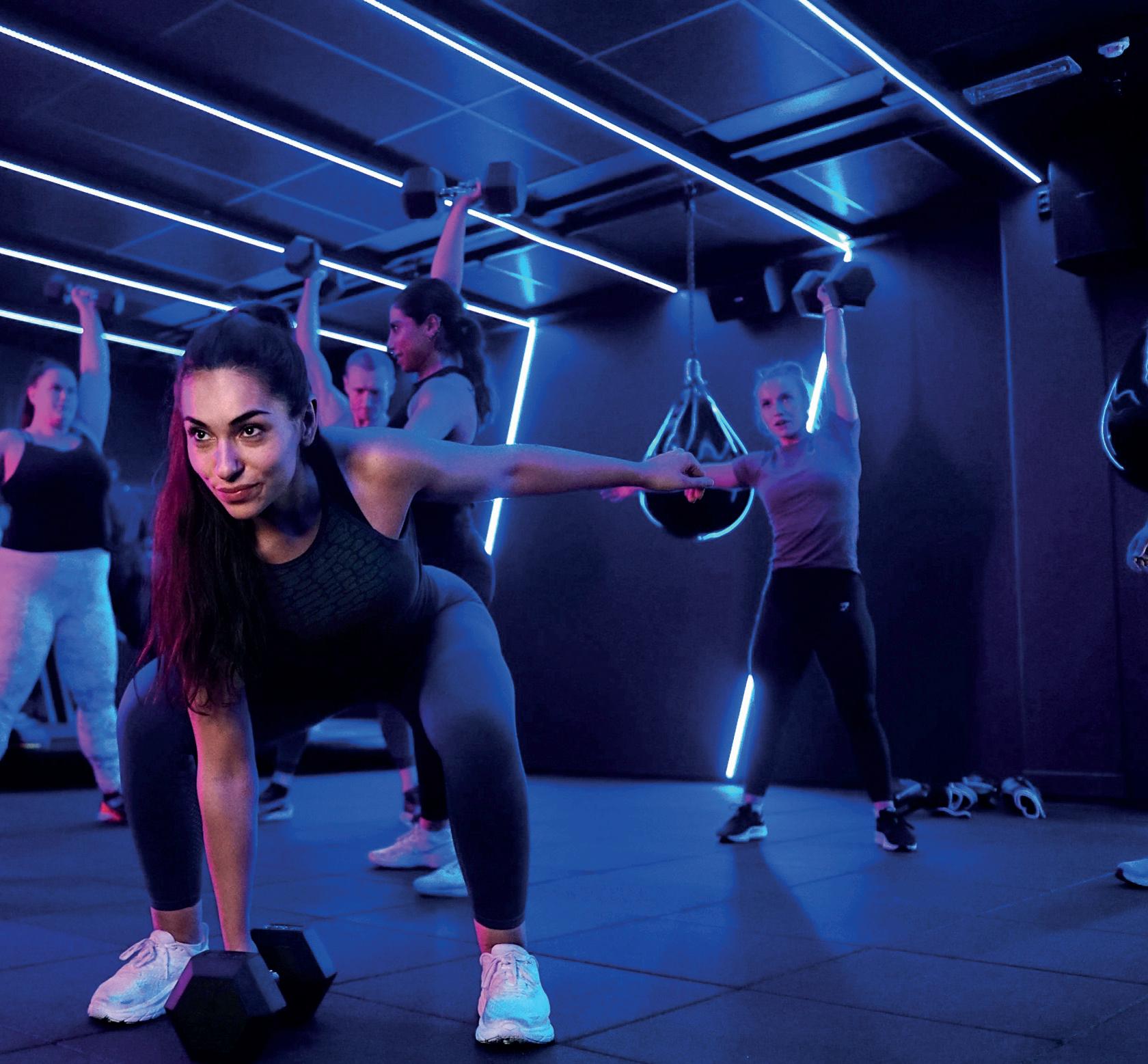
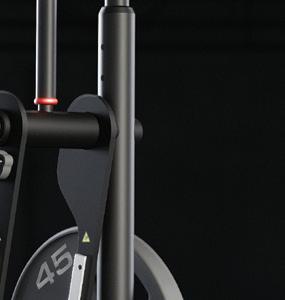
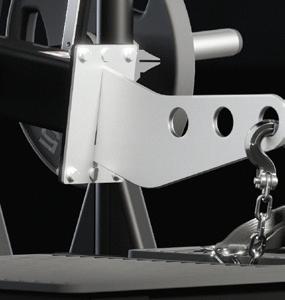
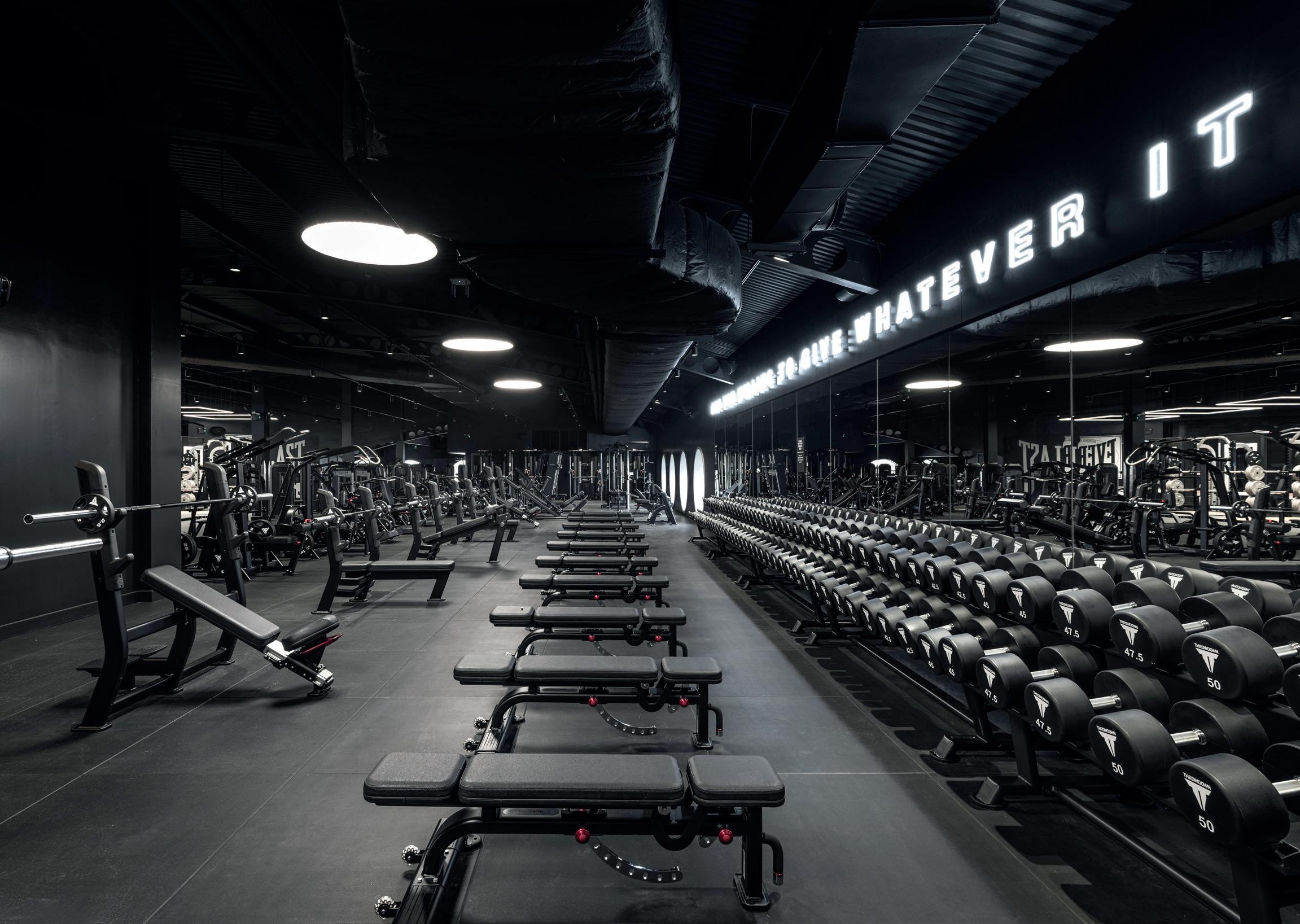
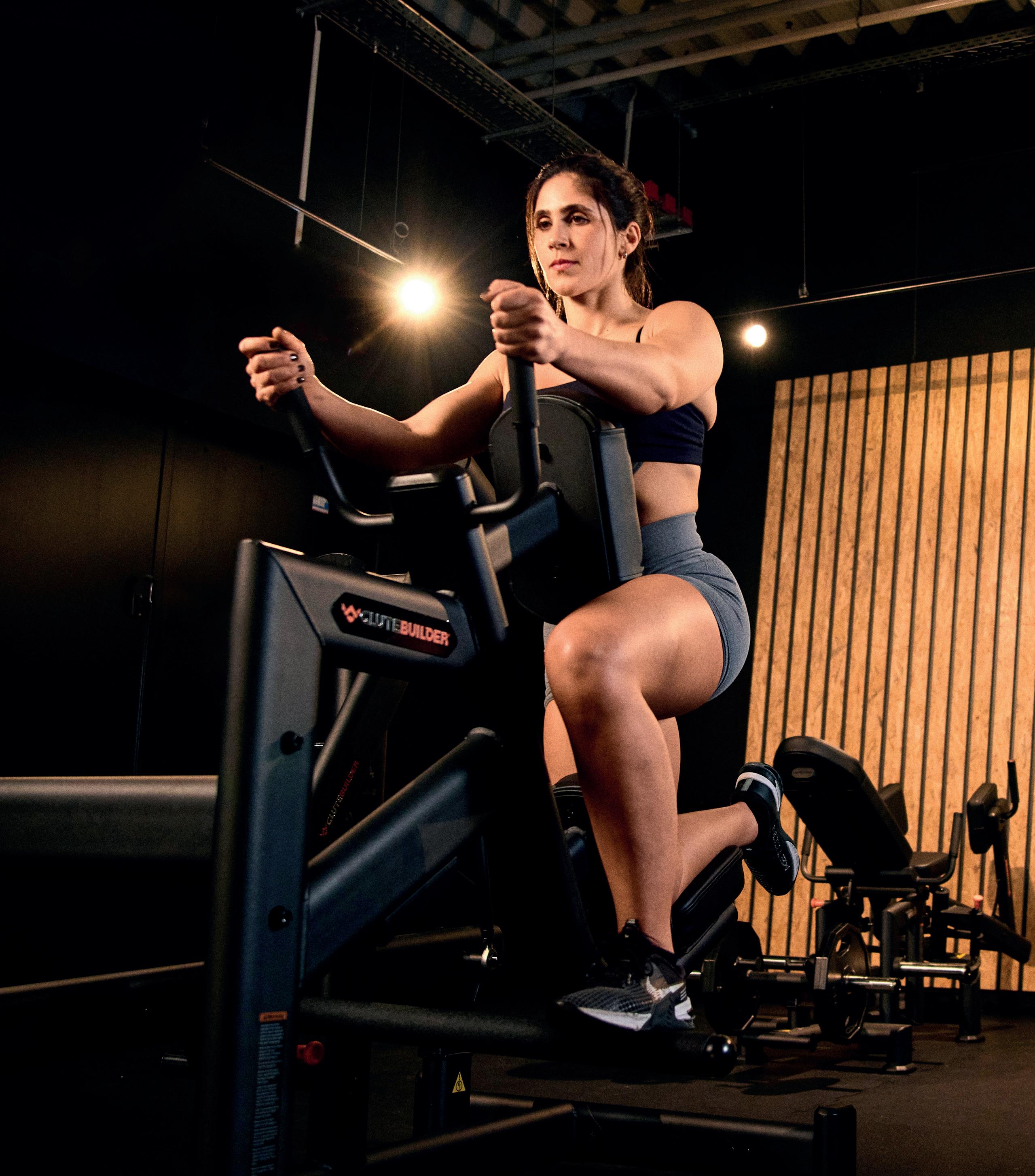
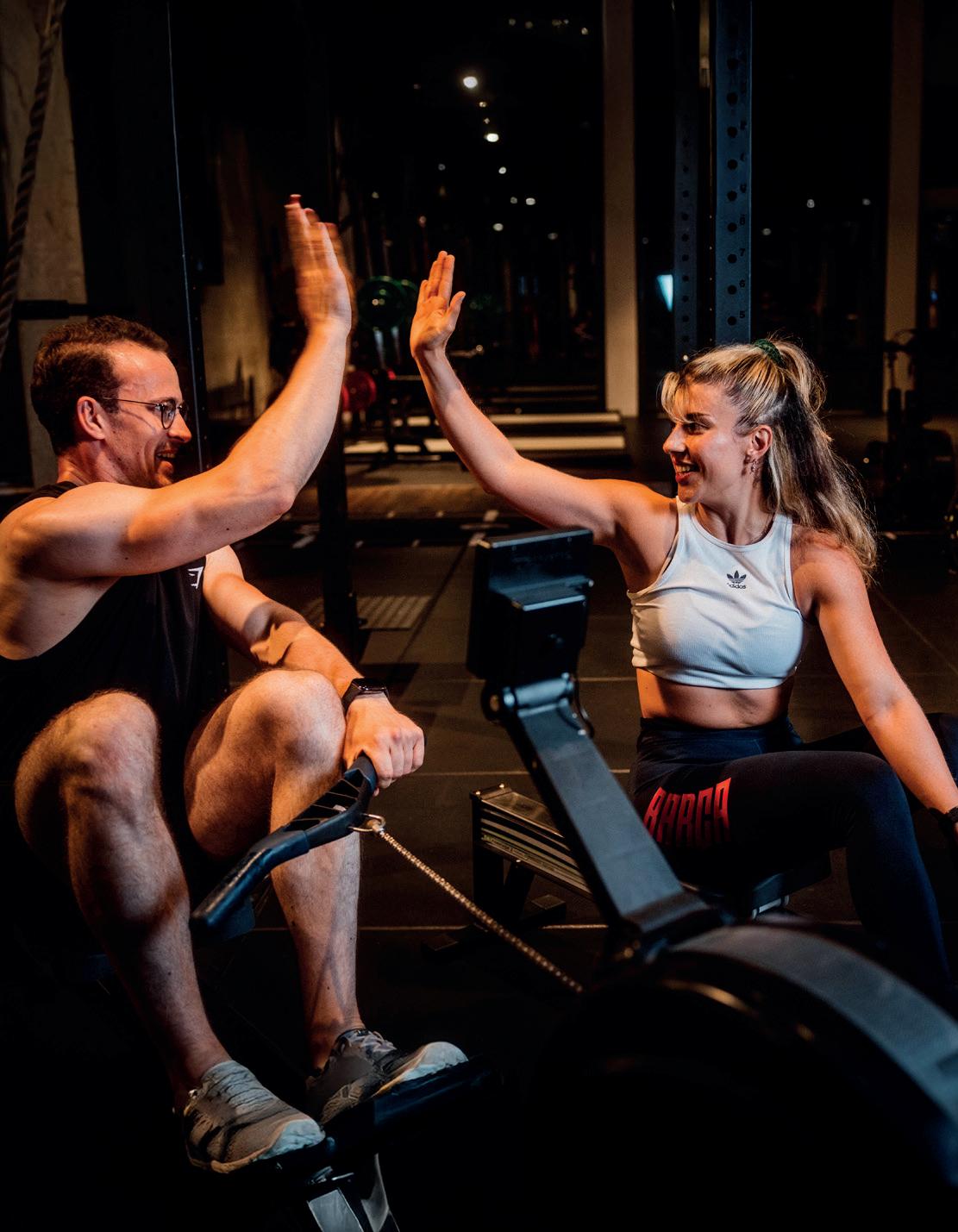
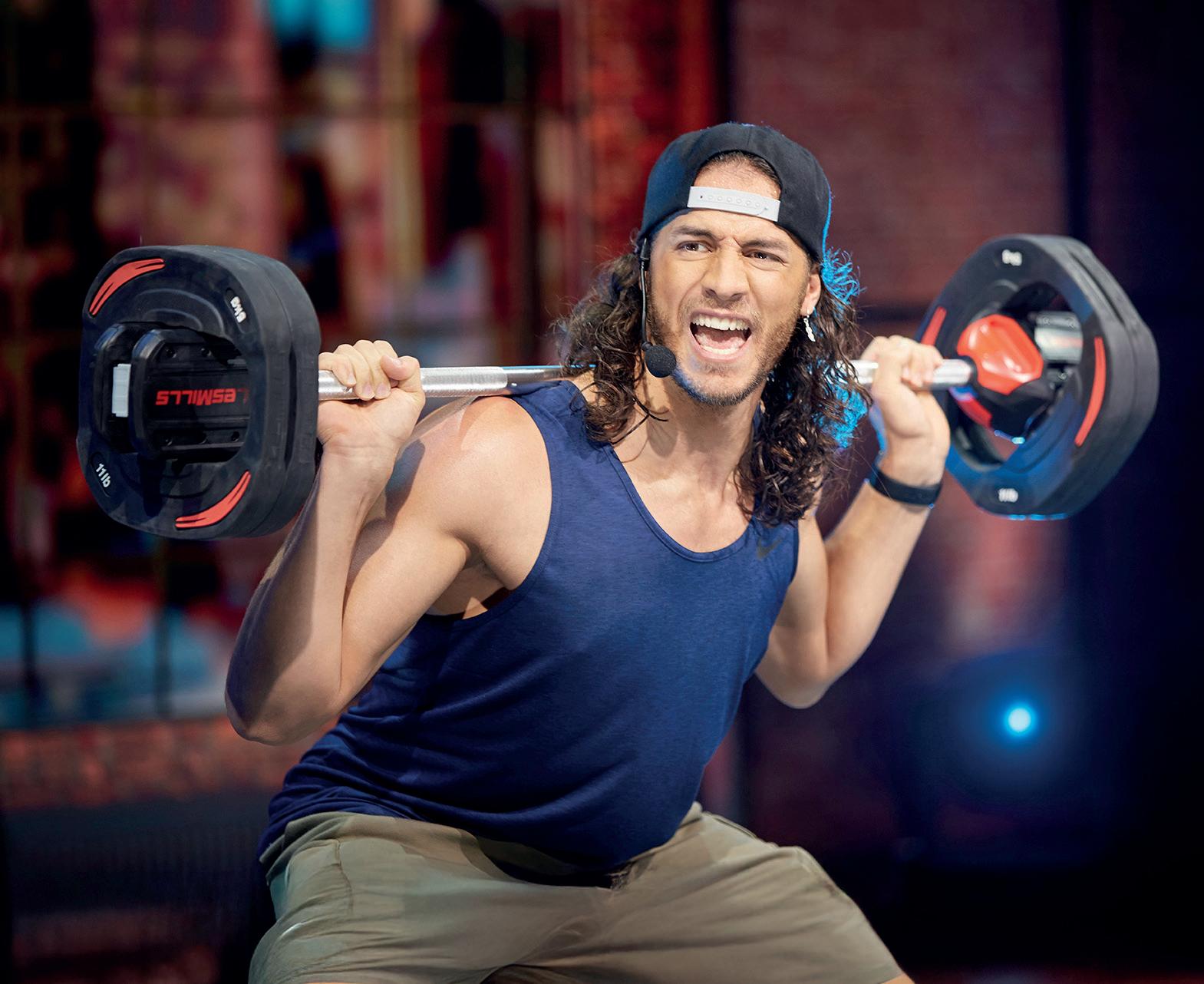
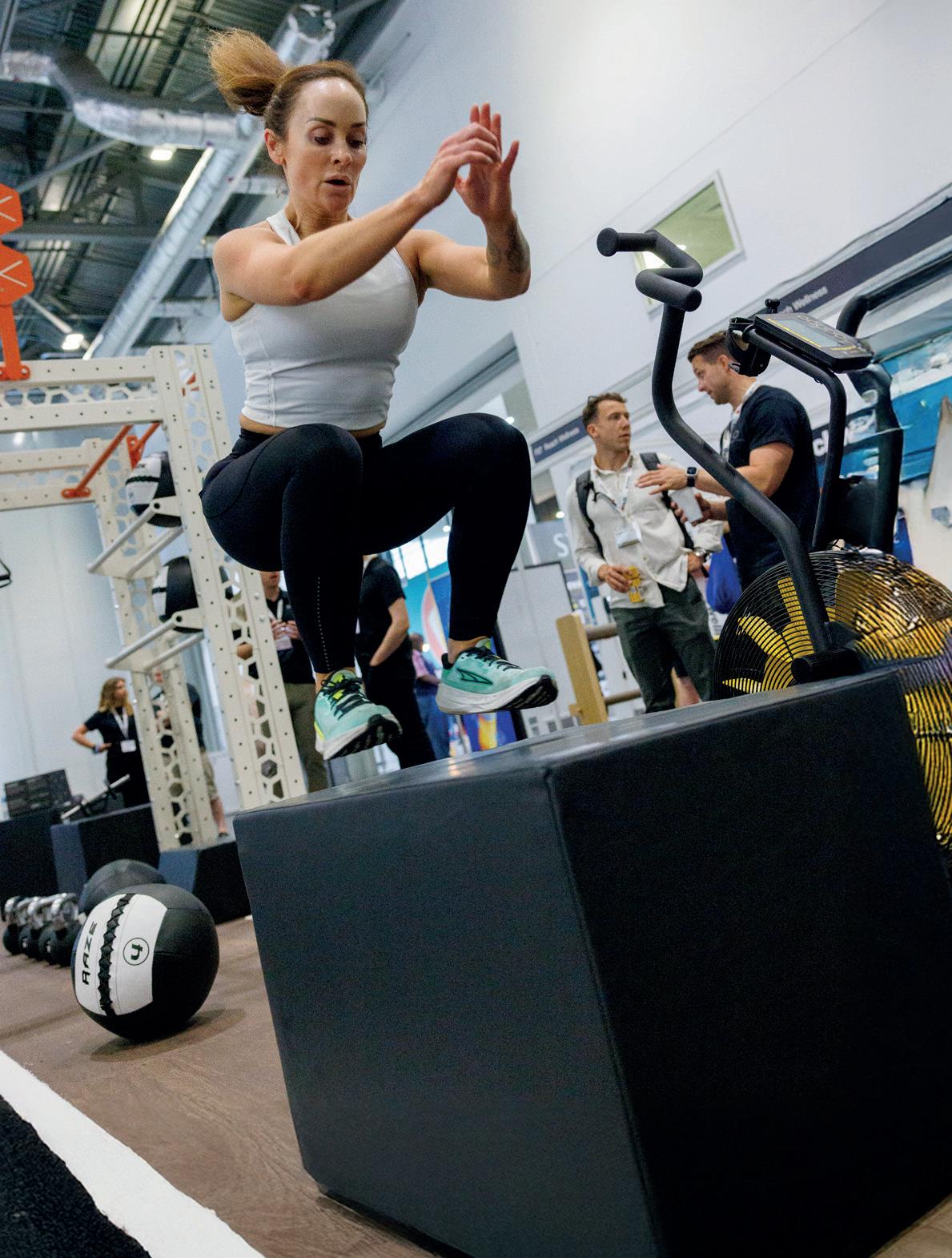
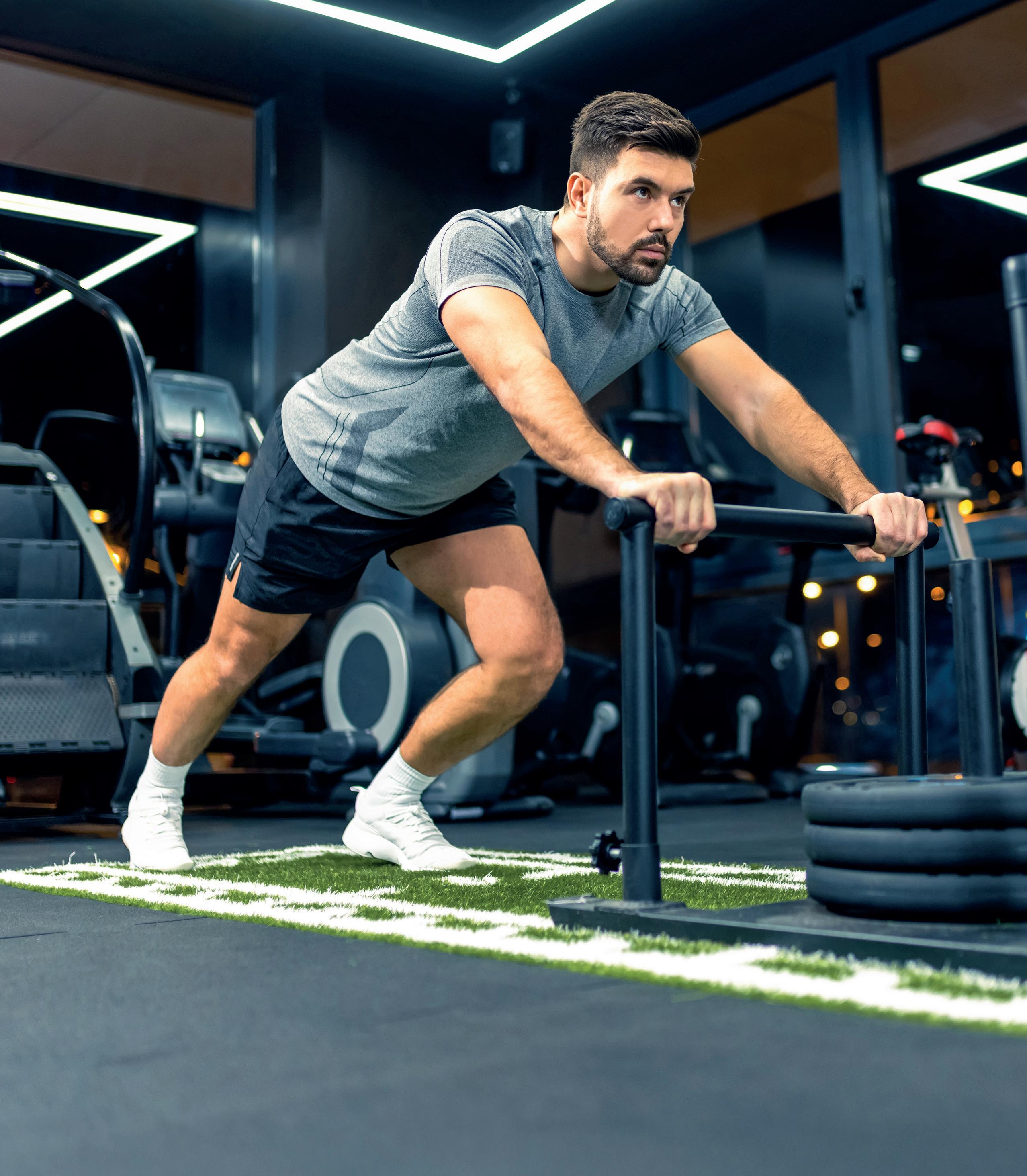
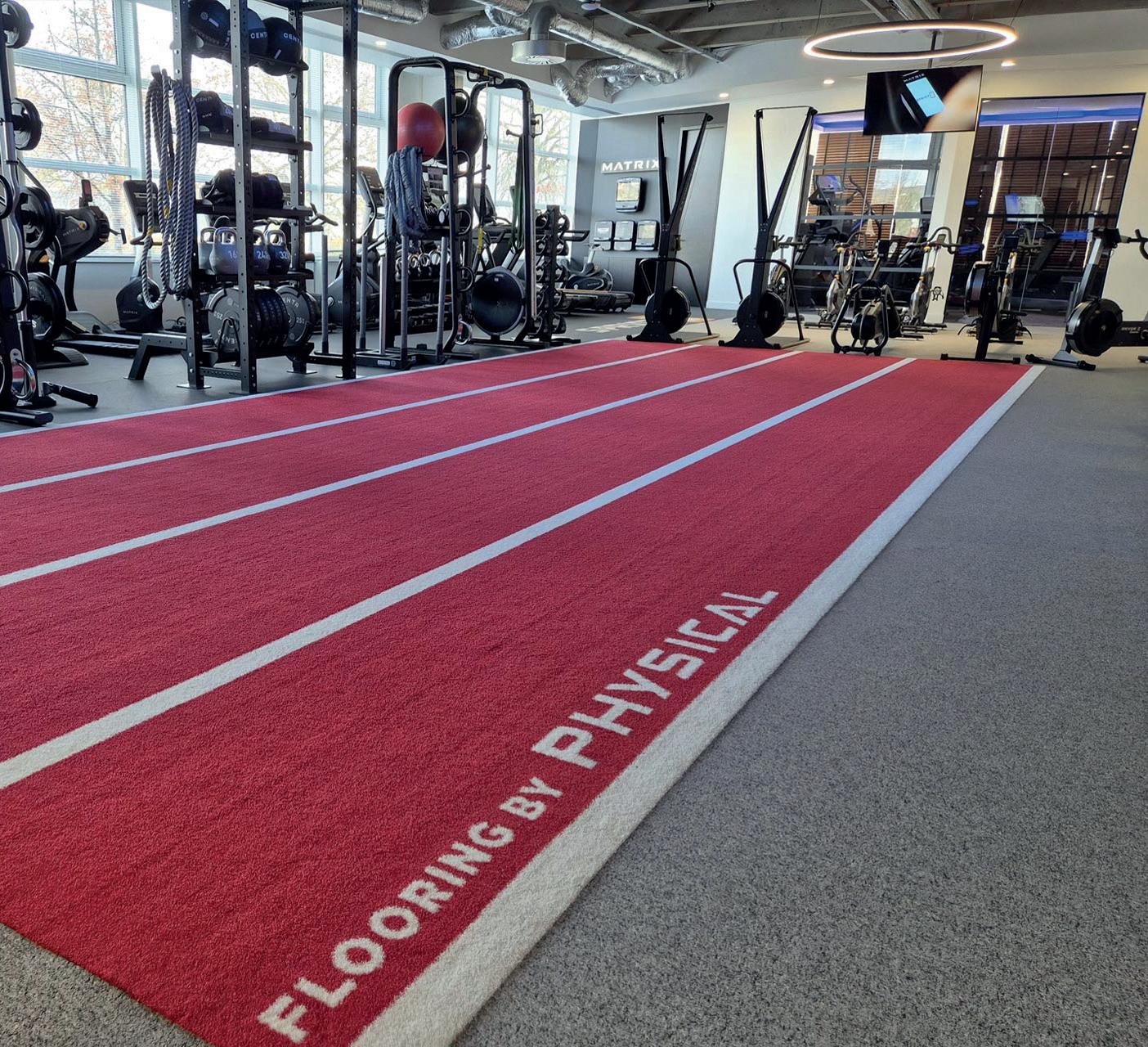
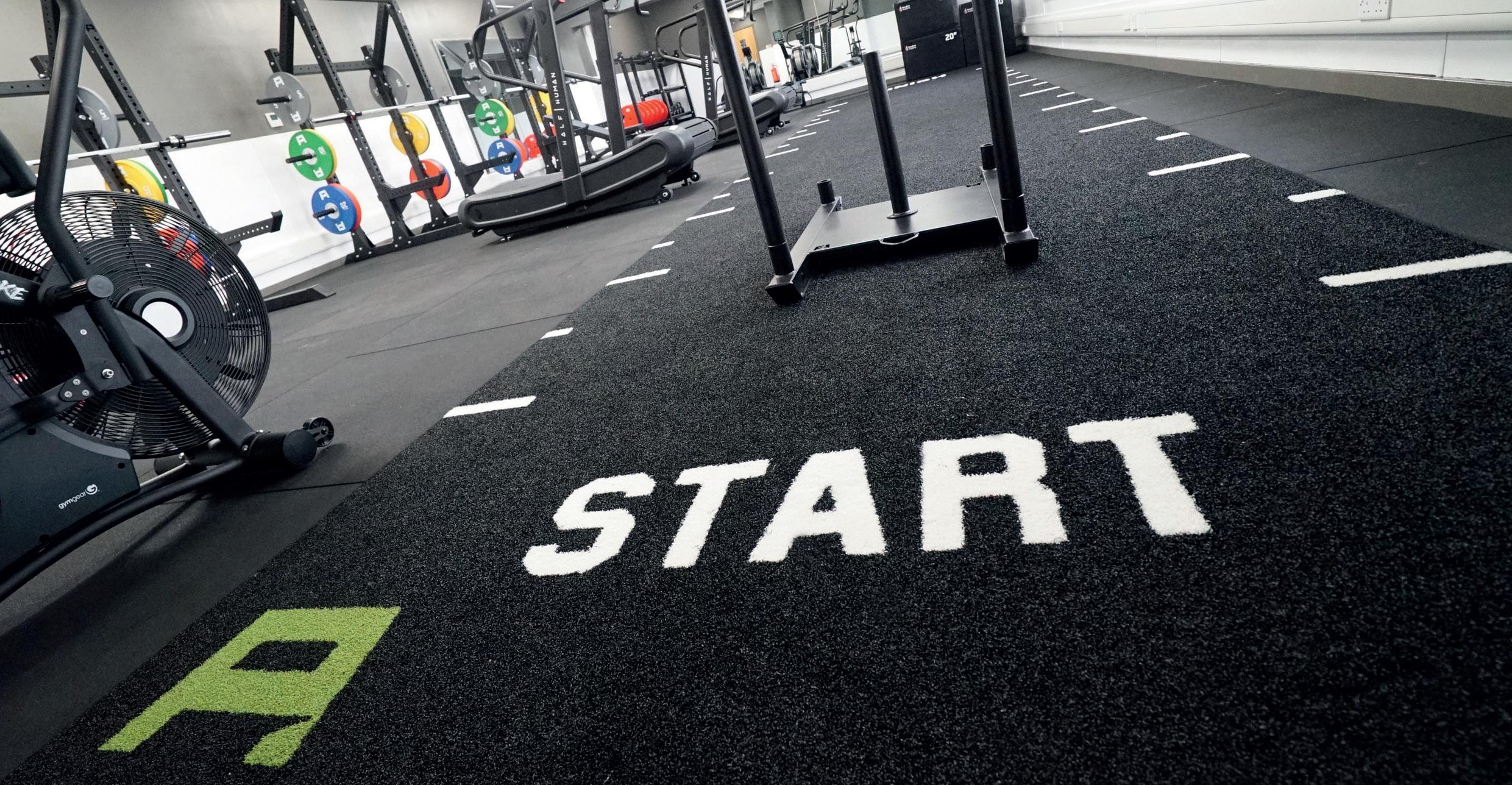
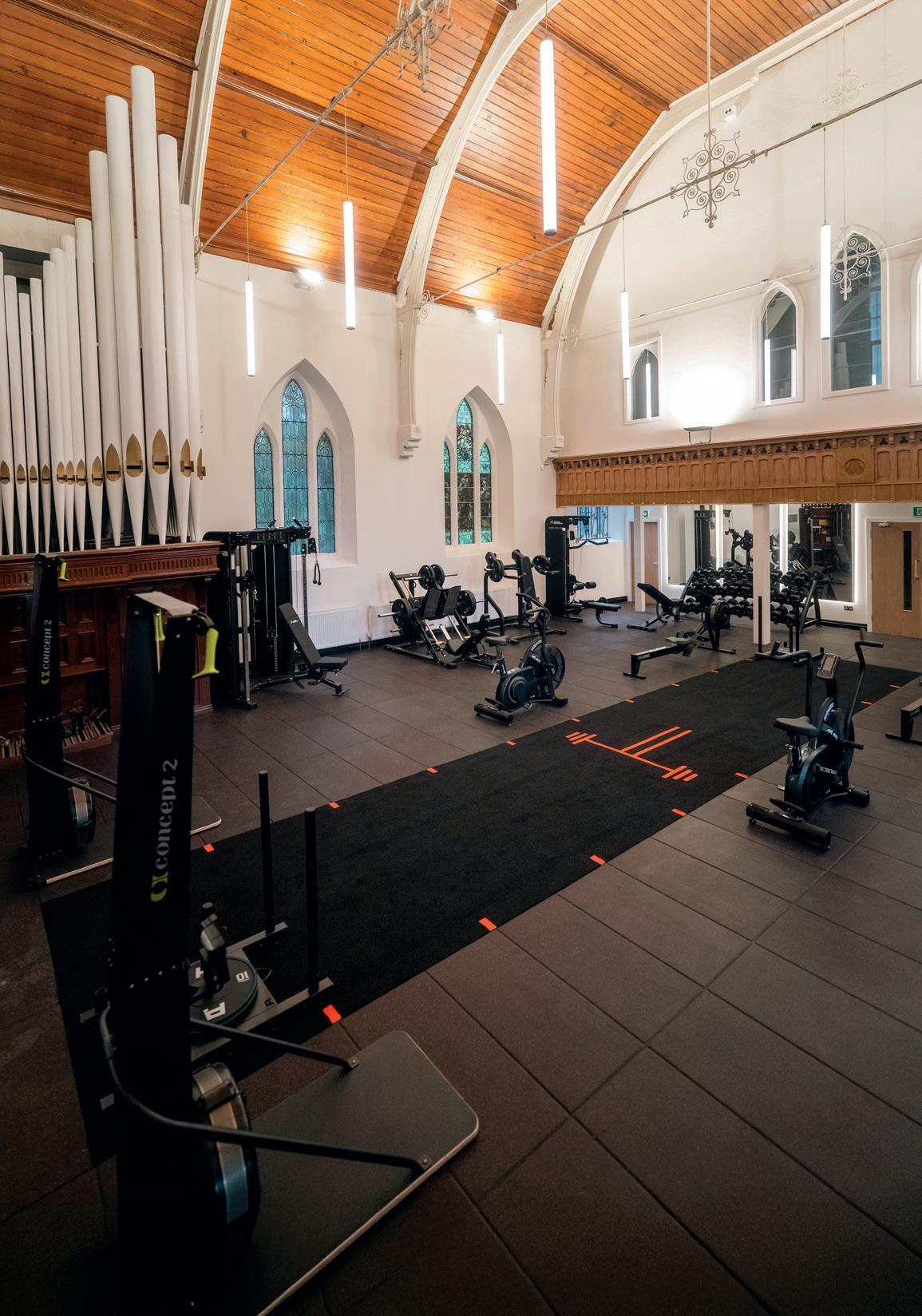
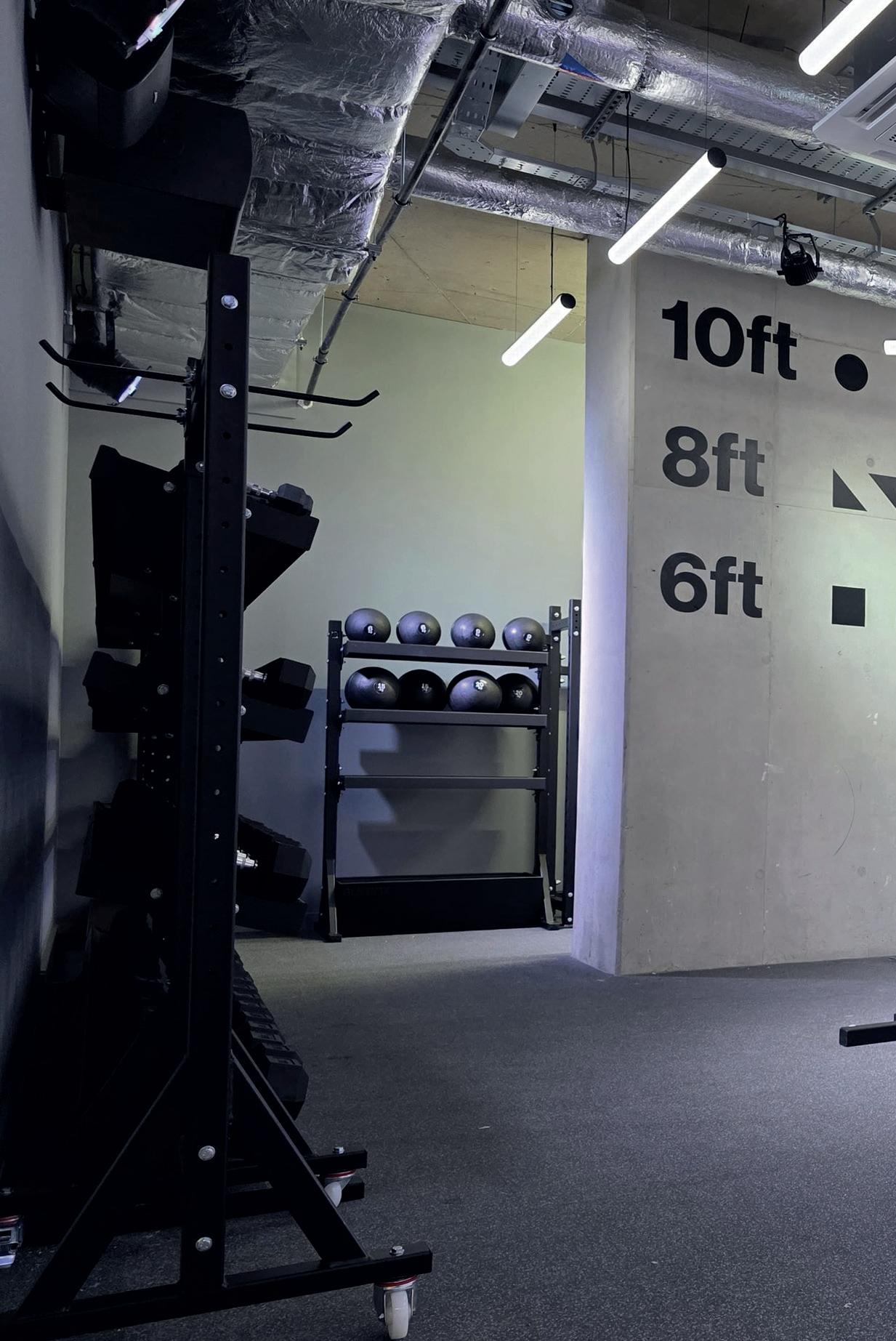
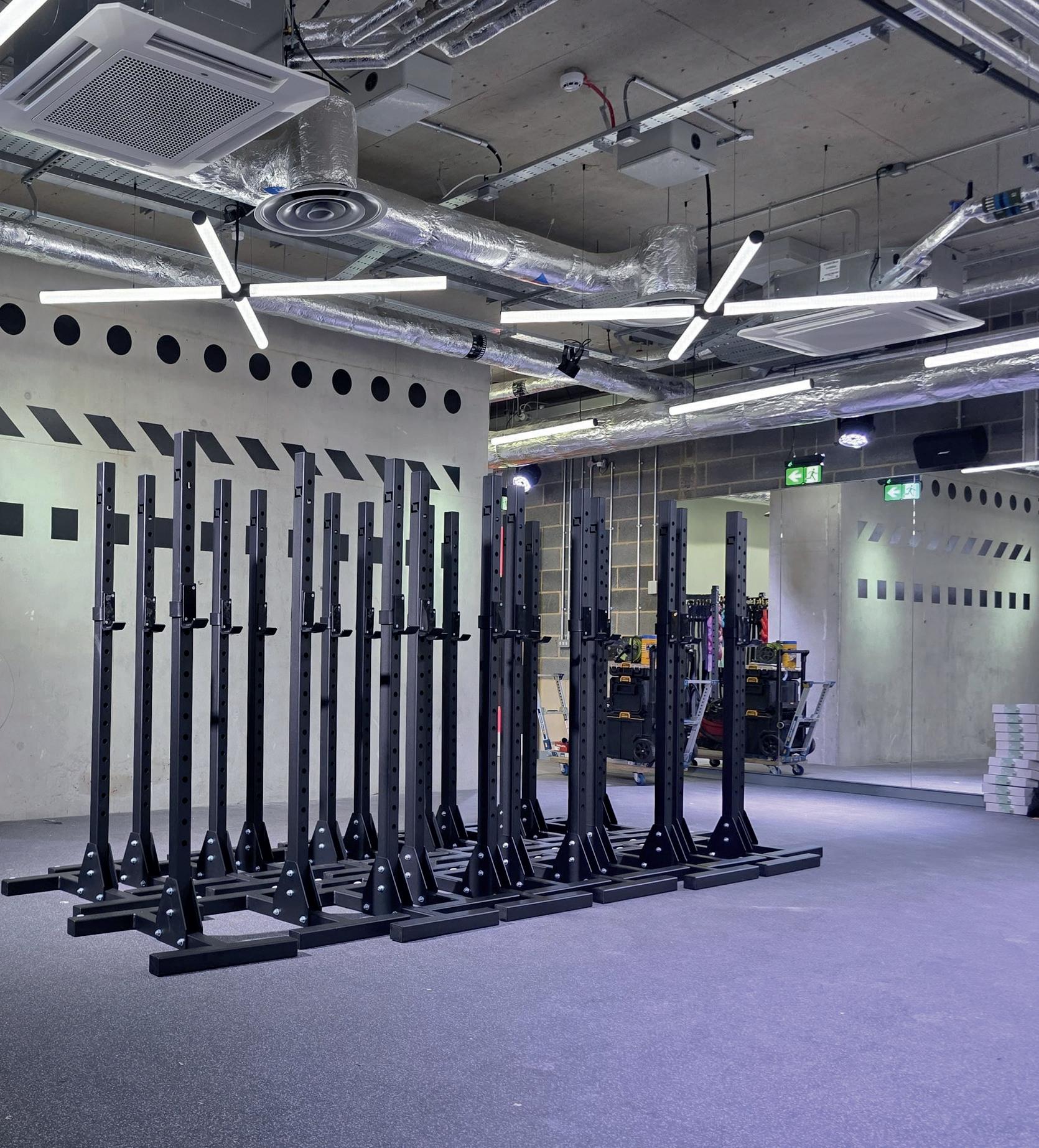
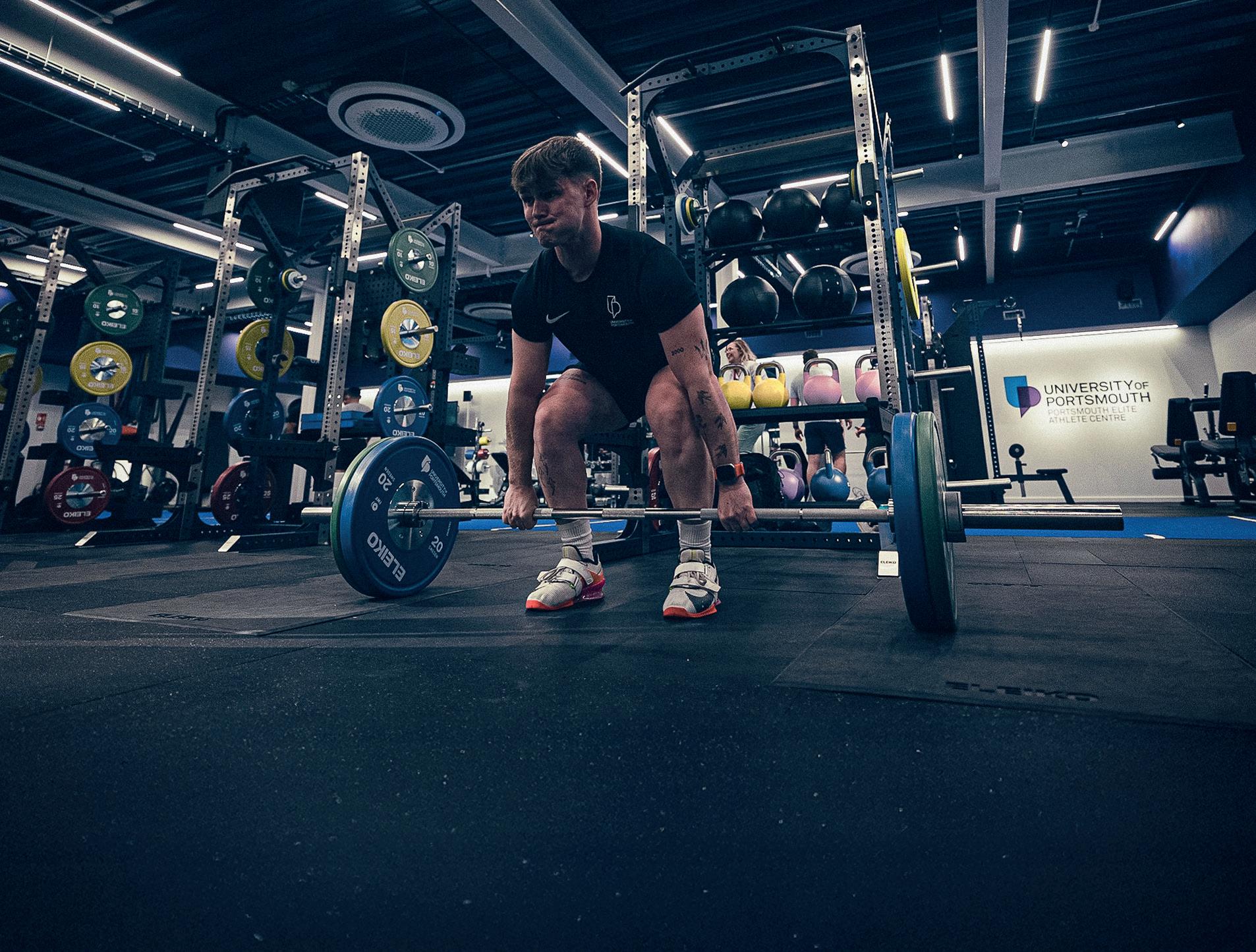
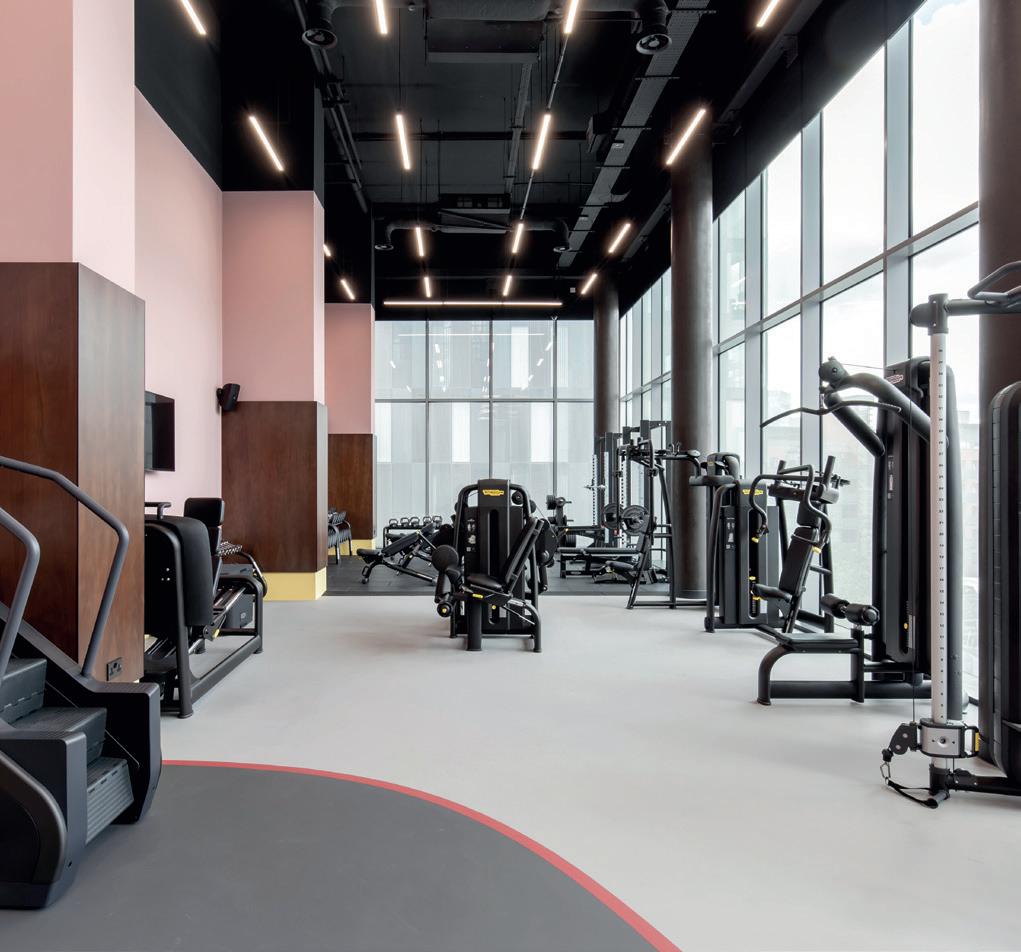
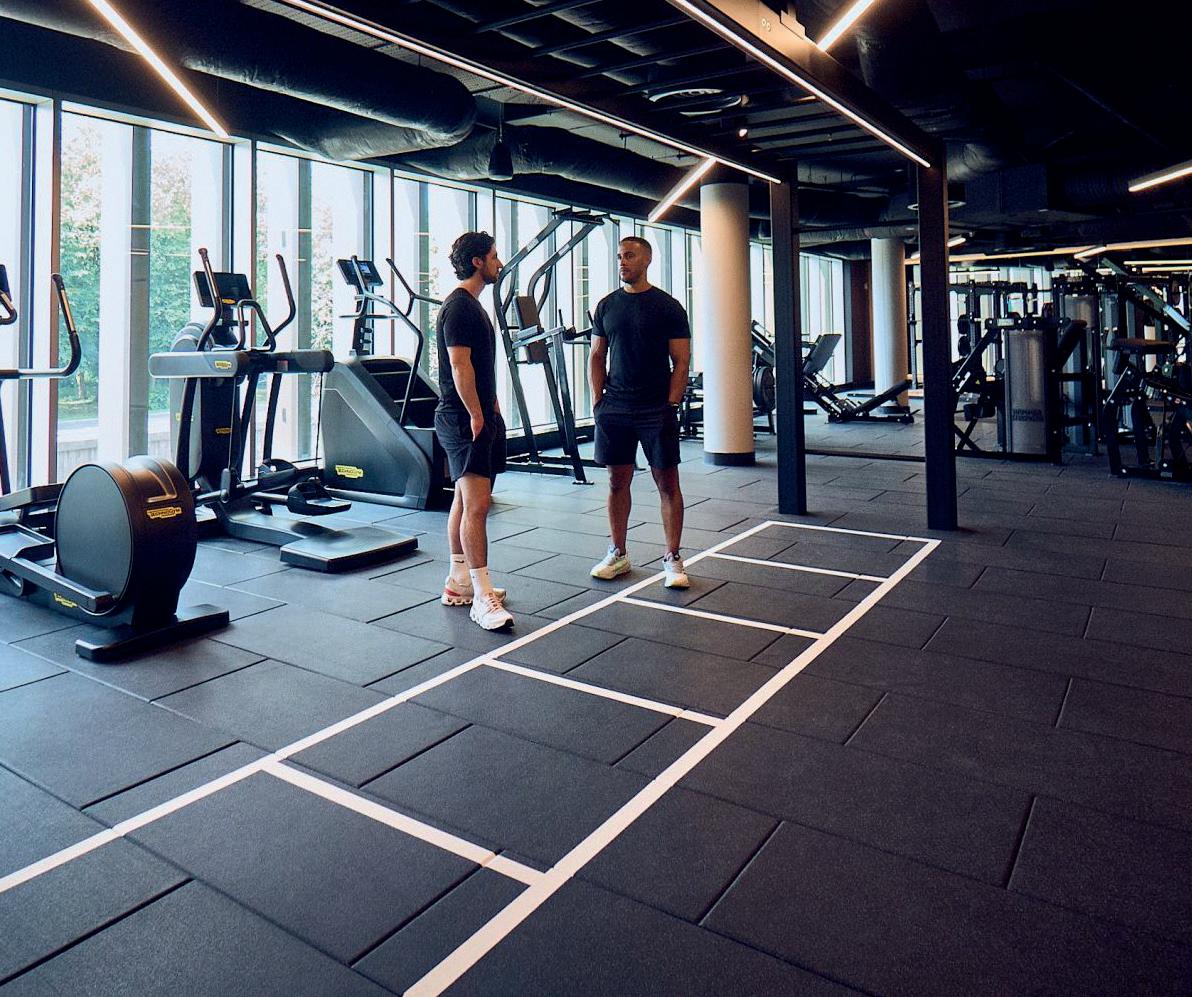
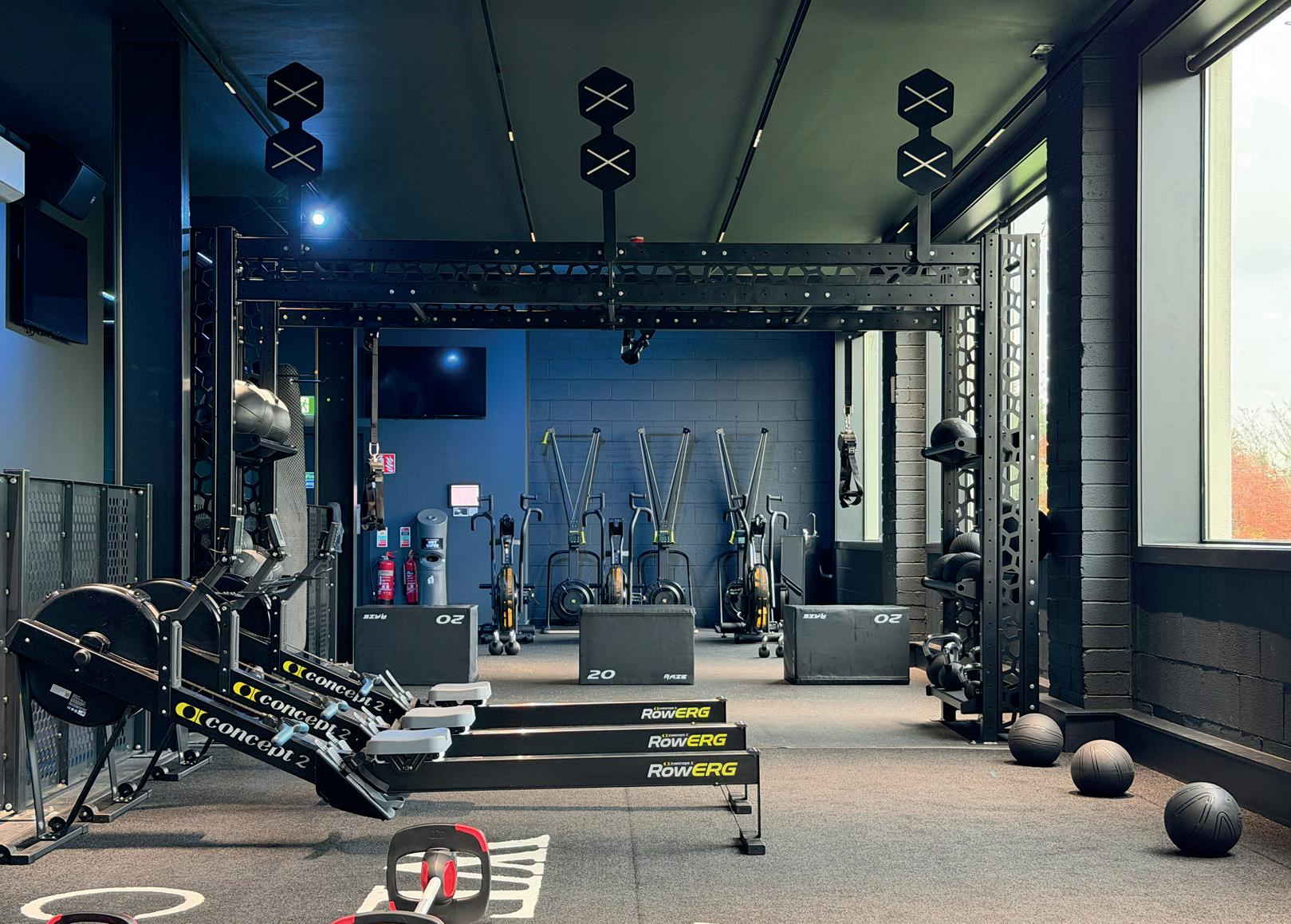
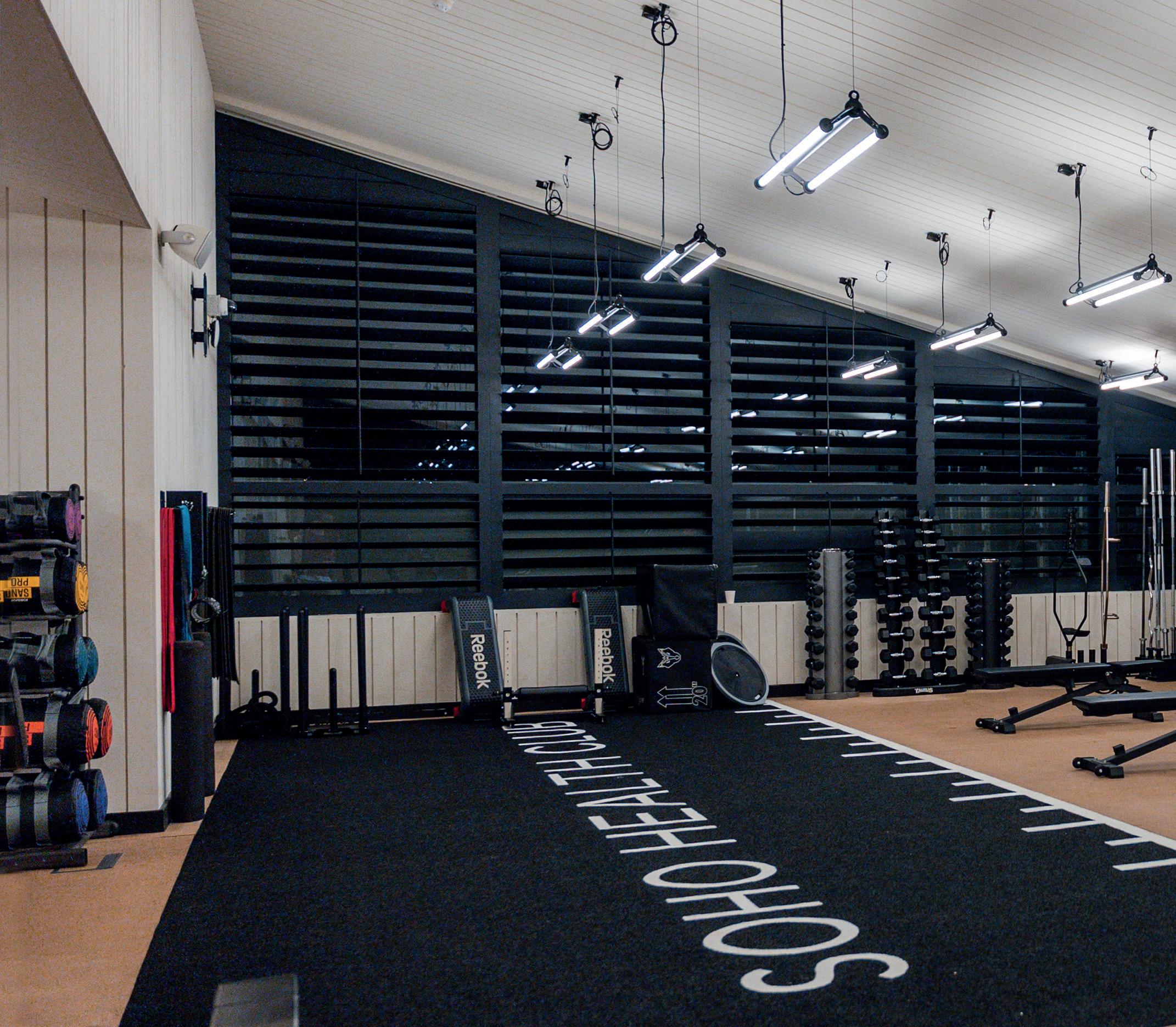
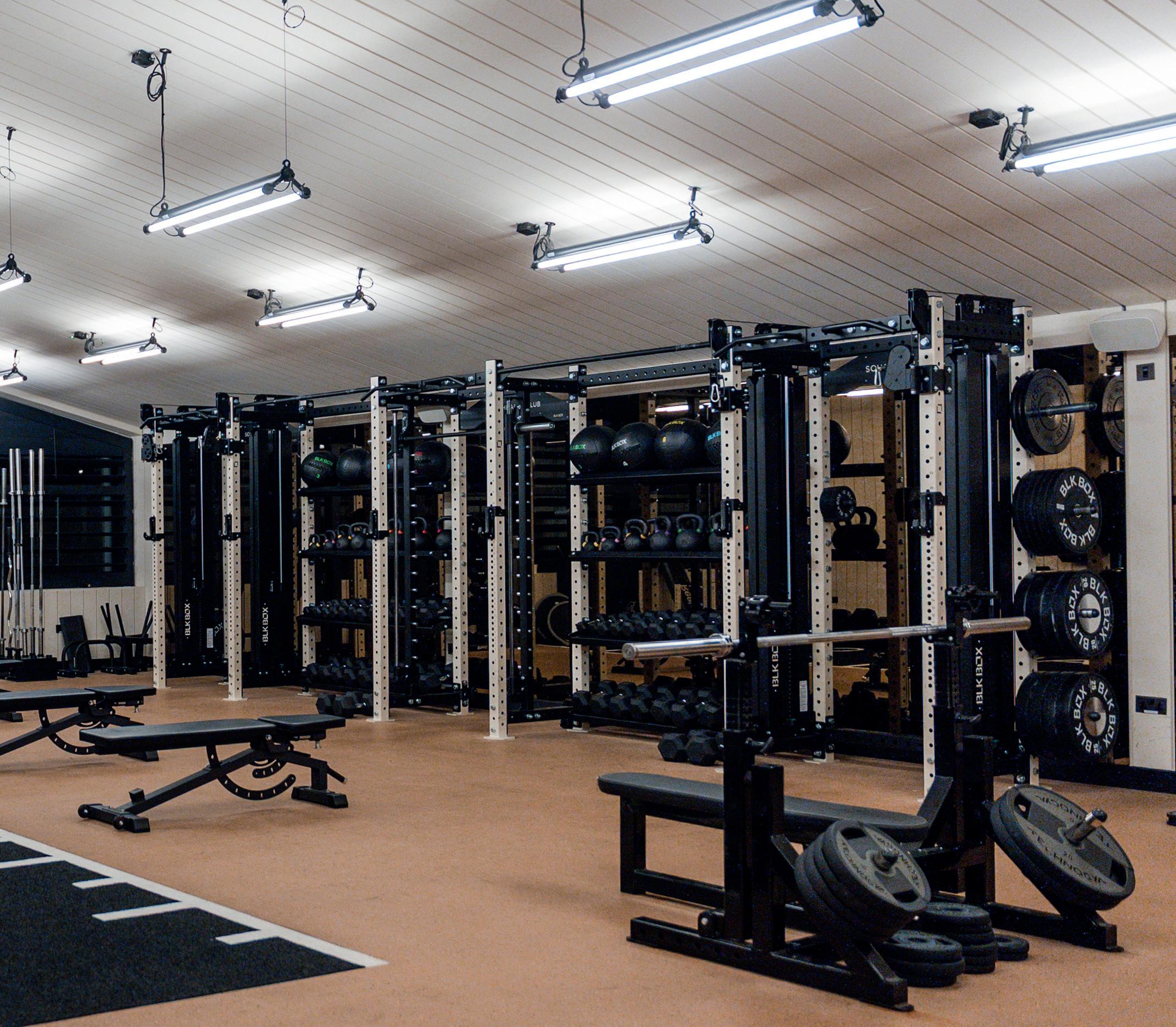
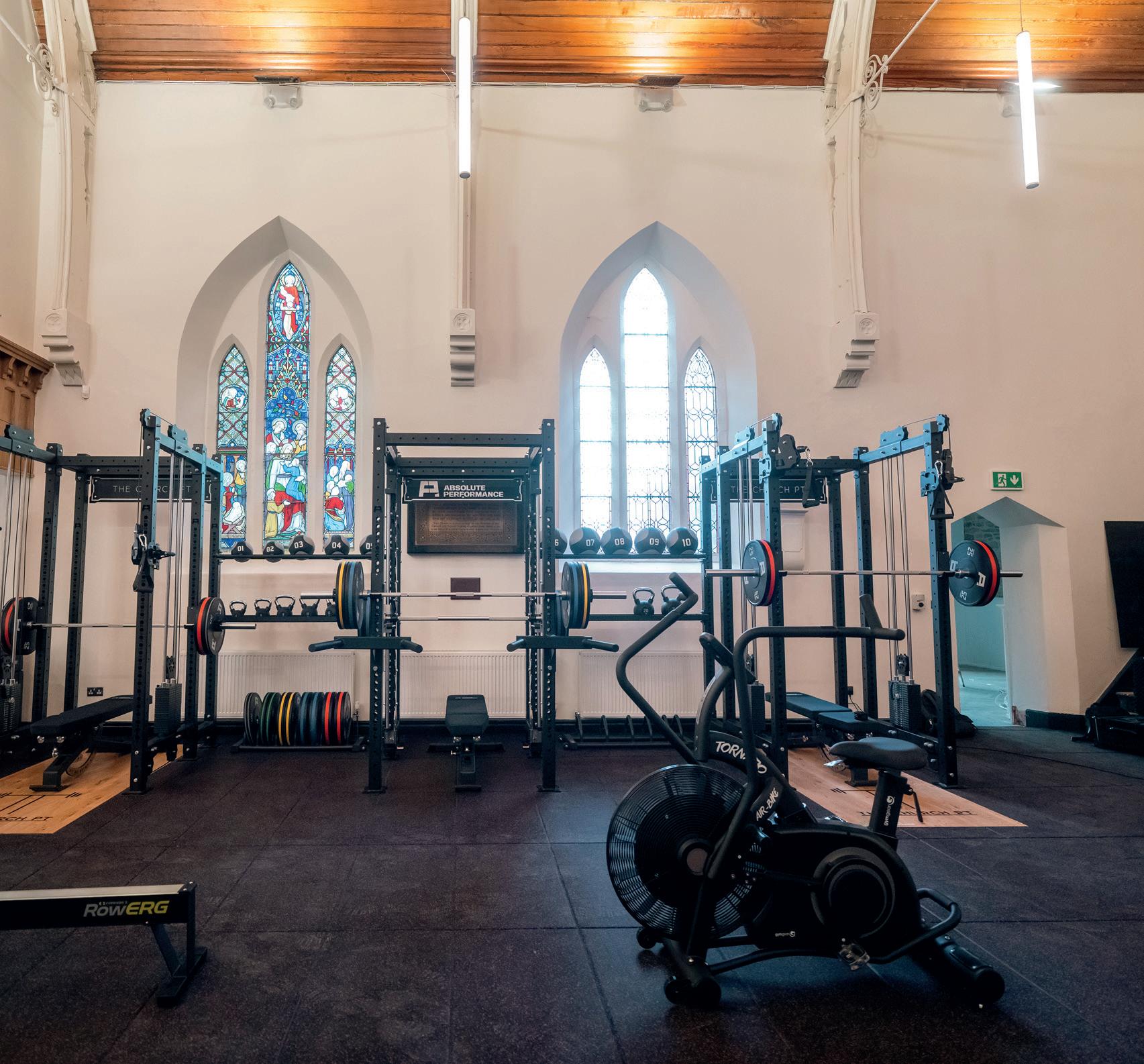
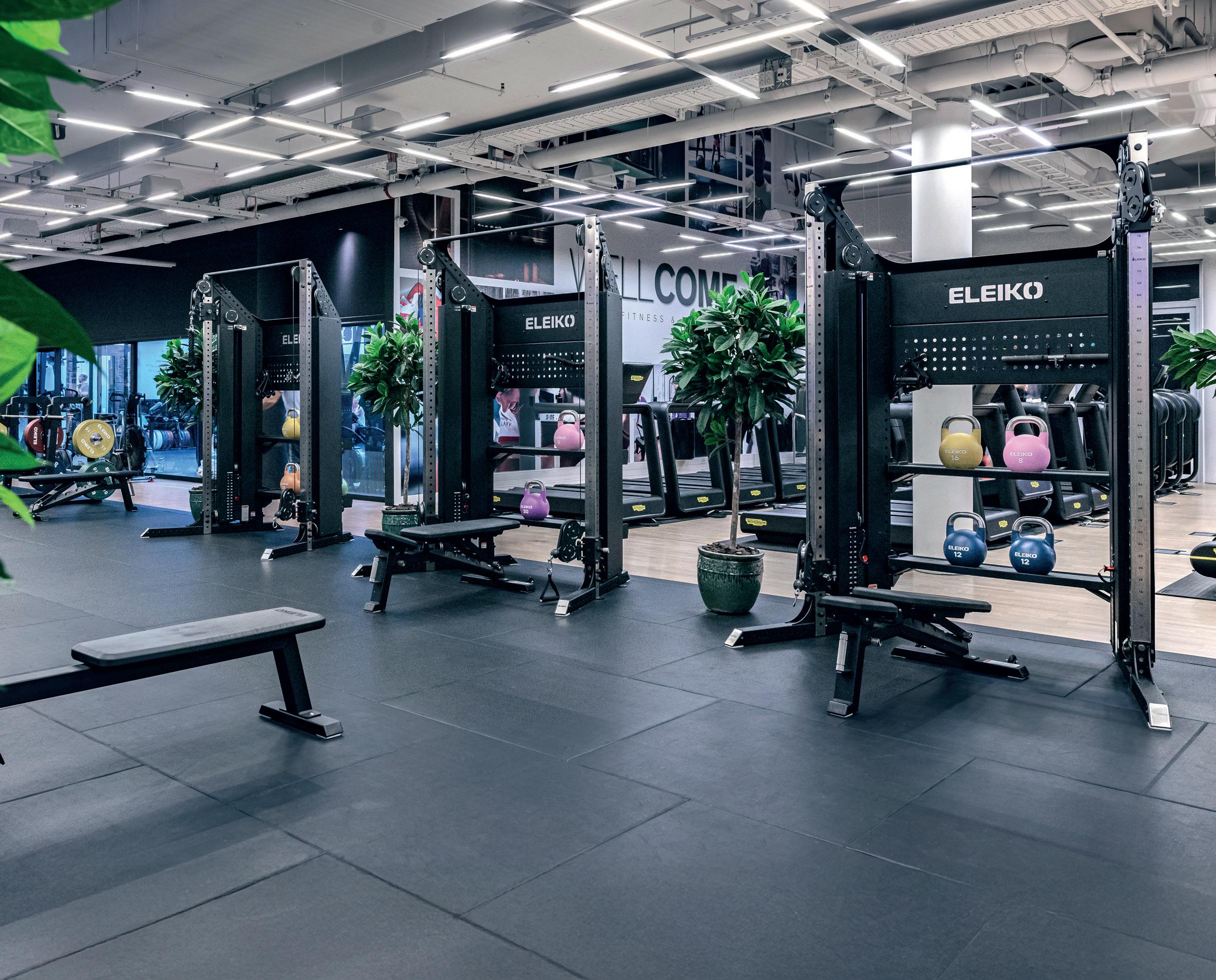
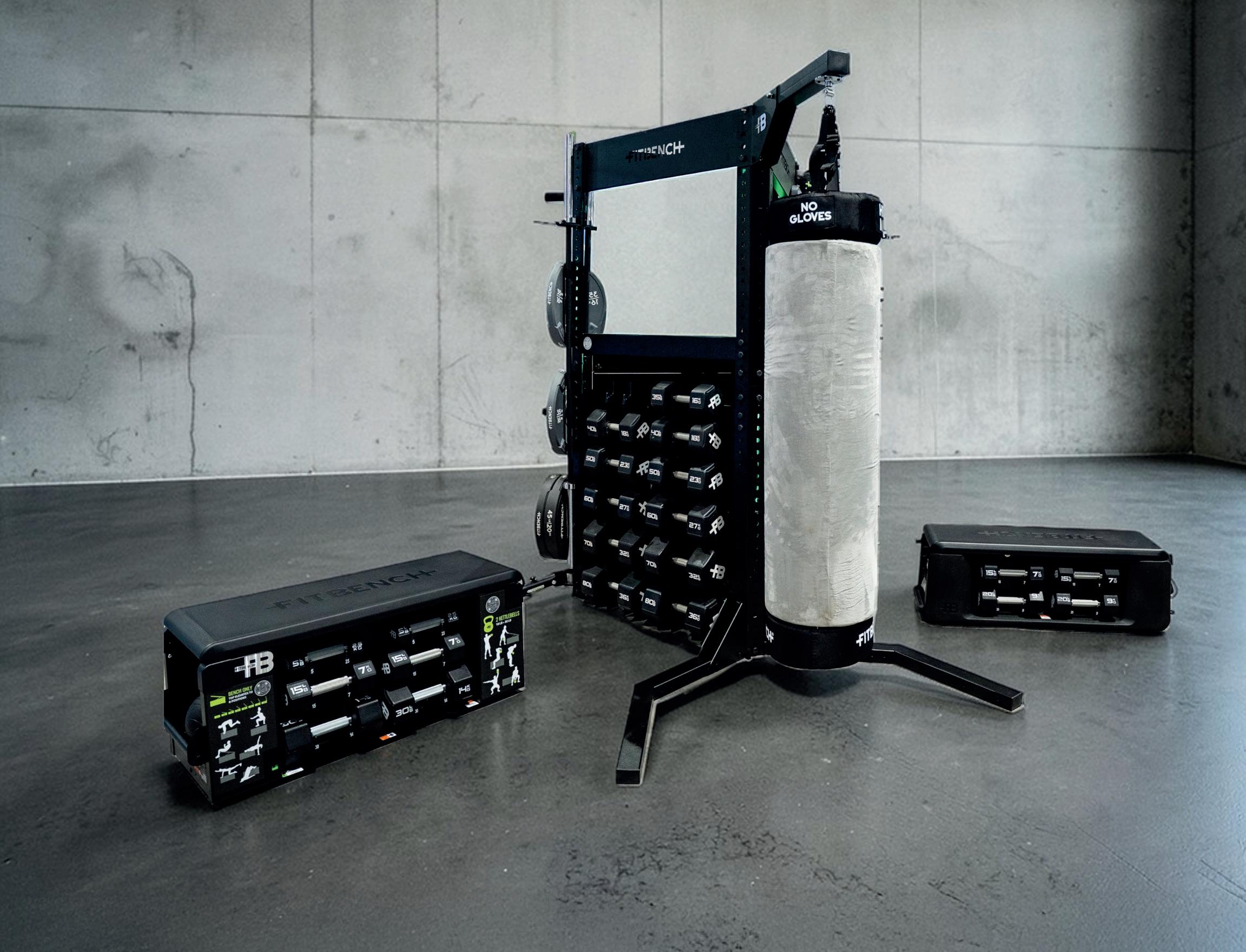
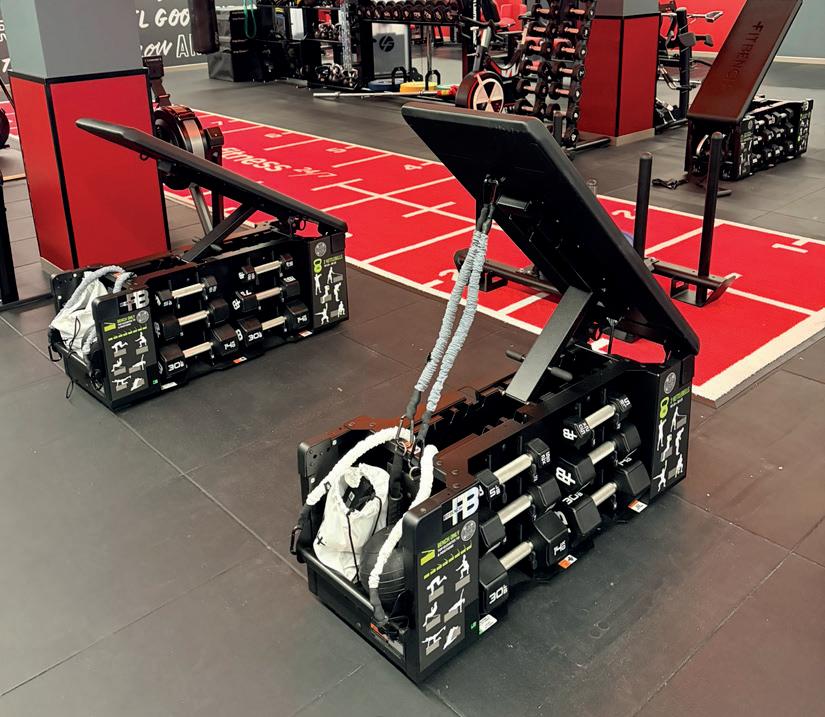
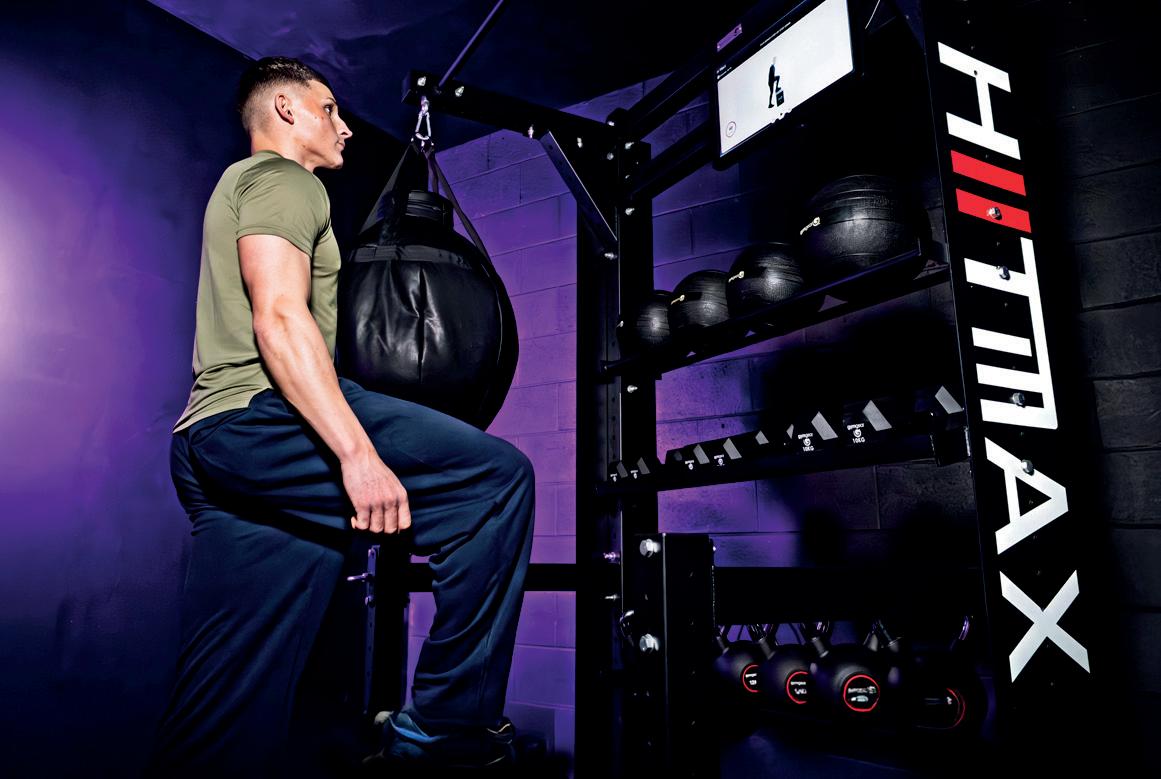
Designed to mirror the demands of race-style fitness, making it a powerful training ground for HYROX competitors. CEREMONY®
GRIT® STRENGTH
Thirty minutes of pure combustion. Muscles scream, seconds stretch, and you outlast yourself again.
Go further with Xplor Fitness & Leisure
Powering the businesses behind everyday life experiences
See what our software solutions can do for your business and members.
Highly scalable membership management platform for large enterprise fitness and leisure operators
Proven all-in-one leisure management software for leisure operators and universities of all shapes and sizes
Consumer-first booking and marketing automation platform designed for boutique fitness brands to scale with ease
Modern booking, marketing, and management software for fitness, wellness, and experience-based businesses
Branded, engaging member mobile app for gyms, health clubs, and leisure centres
Flexible, all-in-one gym management software with embedded payments for ambitious gym and fitness operators
AIntensity model
New insight from Deloitte and Grant Thornton shows record growth, but the real shift is towards identity and perceived value, revealing opportunities to deepen engagement with members
cross Europe, the market is at record highs, according to new research from Deloitte and Europe Active (page 62).
Revenues have hit €39.1 billion and memberships have passed 75 million.
In the UK, it’s a similarly positive picture, with penetration reaching 18 per cent –the highest rate recorded – as shown by insight from Grant Thornton and UK Active (page 86).
On paper, the growth trajectory looks clear, with more clubs, more members and more growth, but dig deeper and you find a more nuanced story – one that suggests the next phase of growth will not be driven solely by scale.
Usage is rising faster than membership, for example, with visitation in the UK up 10.3 per cent year-on-year – outpacing member growth.
This indicates a fundamental change in how value is created and will see the sector moving from a penetration model to an ‘intensity model’, where success is driven by how deeply members engage.
This evolution in the way consumers view our sector presents us with opportunities, but also exposes constraints, because as utilisation rises, ‘ceilings’ such as floor and class capacity could limit success. The question is no longer only about how to attract more members, but also whether the current model can accommodate them (page 52).
Affordability is often cited as a major barrier to participation, yet the data suggests something more complex is going on. Price matters to consumers, but perceived value matters more.
Pricing in the sector remains relatively unsophisticated and while other industries have embraced dynamic and localised pricing, fitness largely remains fixed, with only aggregators giving consumers any kind of flexibility – a factor that is likely to be driving their success. This indicates there may be untapped growth in pricing differently.
The next phase of growth will be more complex and depend on rethinking pricing and experience design
Alongside these changes is a cultural shift for younger generations, who report that fitness is no longer simply an activity – it’s part of their personal identity. Clubs are increasingly ‘third spaces’, used not only for training, but also for socialising, working and recovery. Yet many operating models remain anchored in a narrow view of ‘time spent exercising’, rather than broader patterns of use and engagement. Ultimately, the next phase of growth will be more complex and will depend on rethinking capacity, pricing, experience design and the psychology of members.
Liz Terry, editor lizterry@leisuremedia.com
Membership of a club is increasingly part of self-identity
SHUTTERSTOCK/ JACOB LUND
PHOTO: JACK EMMERSON
CONTENTS
Uniting the world of fitness
05 Editor’s Letter
New insights show the health and fitness market growing strongly across Europe, says Liz Terry
12 HCM Zeitgeist
Anytime Fitness opens Australia’s first airport gym and Wellfit gets set to launch its Abu Dhabi flagship
16 HCM news
The HFA seeks new CEO as Liz Clark departs and Xponential explores options, including a sale
20 Fit Tech news
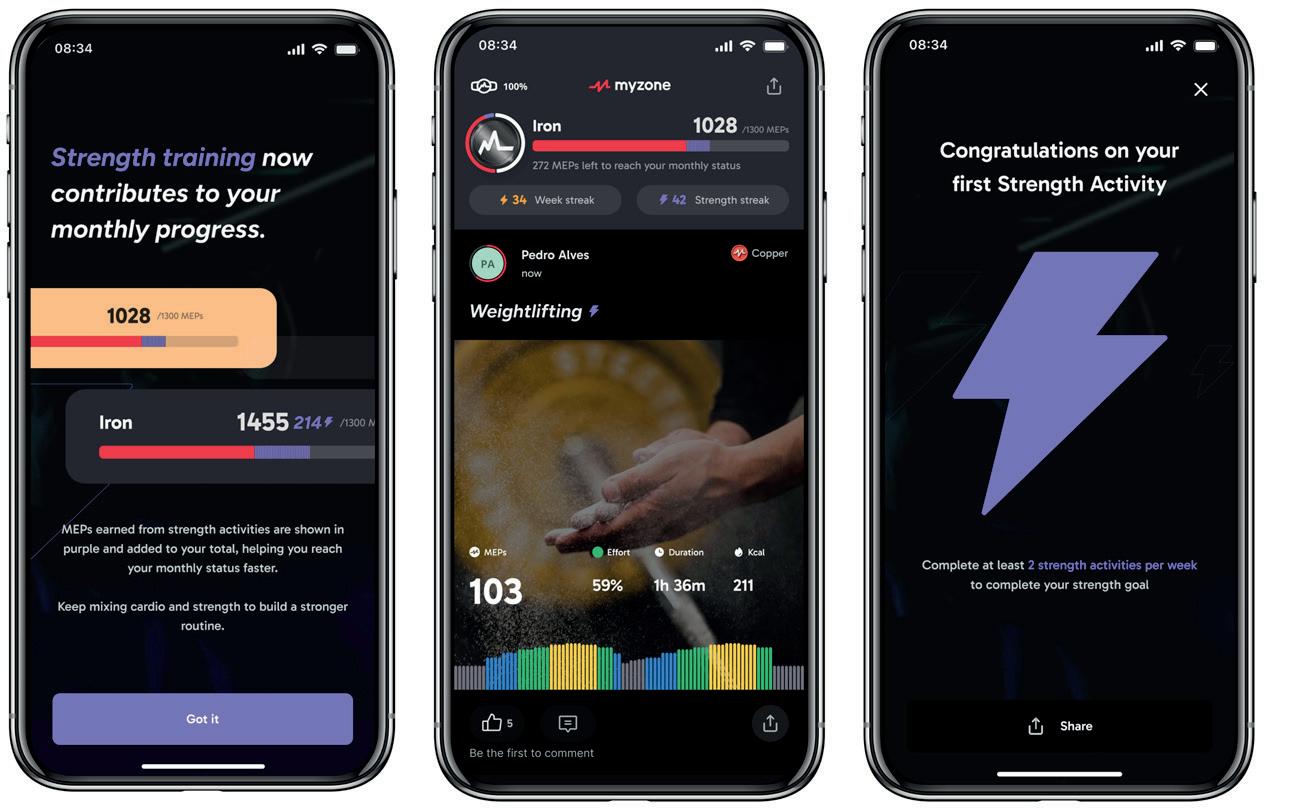
Myzone adds strength training to the mix and Polar launches a new sports watch
22 HCM Buzz
Everyone Active reveals Bedworth Activity Hub, a female-focused studio opens in Brooklyn and PureGym pilots recovery offer
28 HCM Collabs
Equinox Hotels offers a supplements bar, Humansa collaborates with The Chedi Andermatt and YPT partners with Anytime Fitness UK
30 HCM people
Phillip Mills
The CEO of Les Mills talks about partnering with Hyrox and the possibilities this ‘mass participation sport’ opens up for the industry
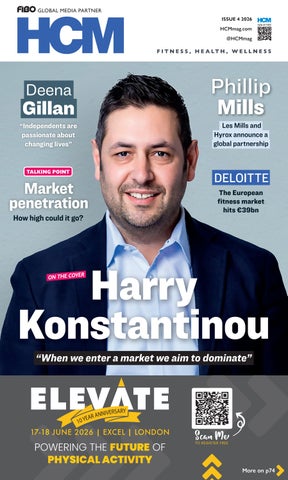
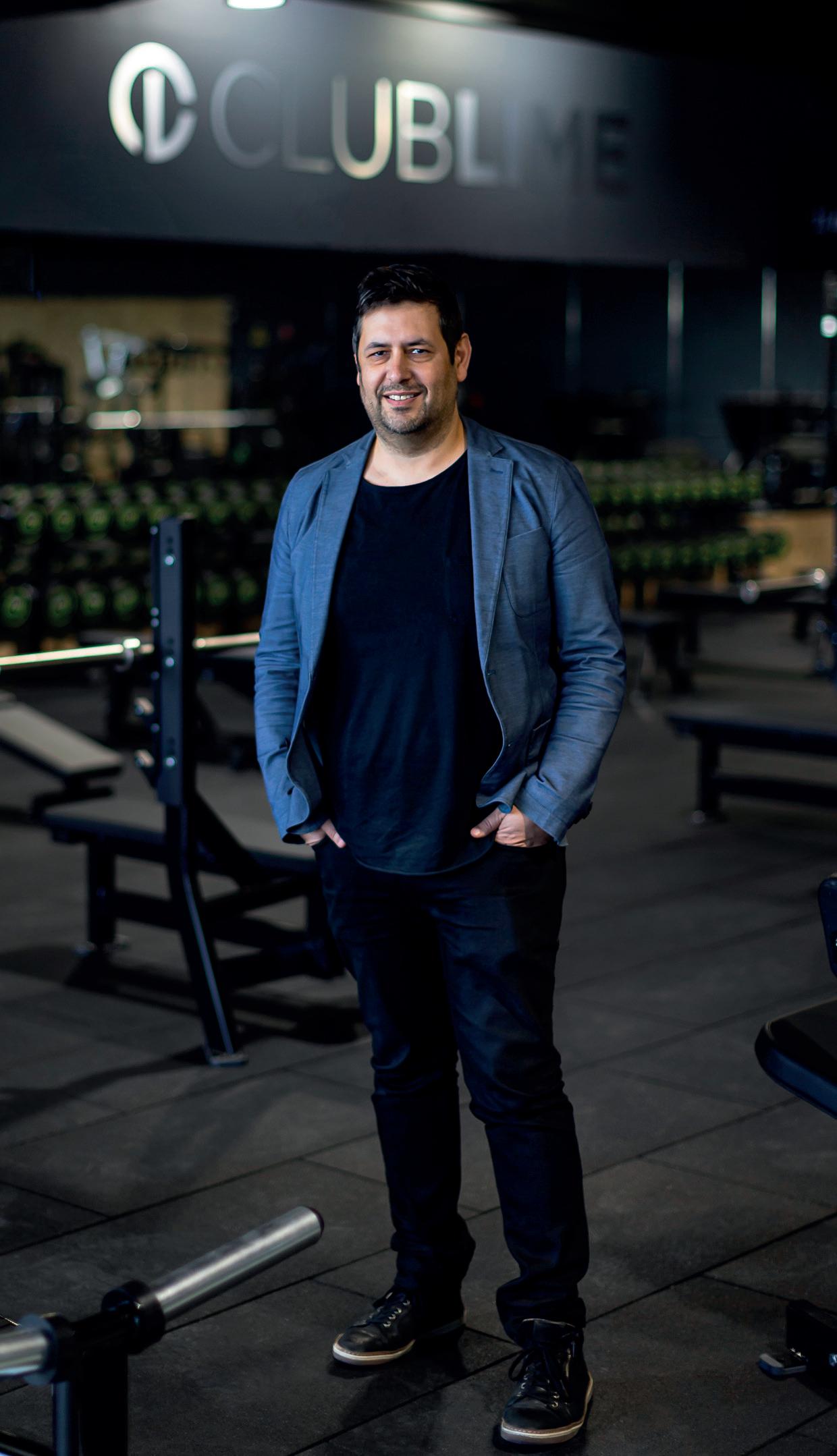
38 Harry Konstantinou on building Viva Leisure
34 HCM people
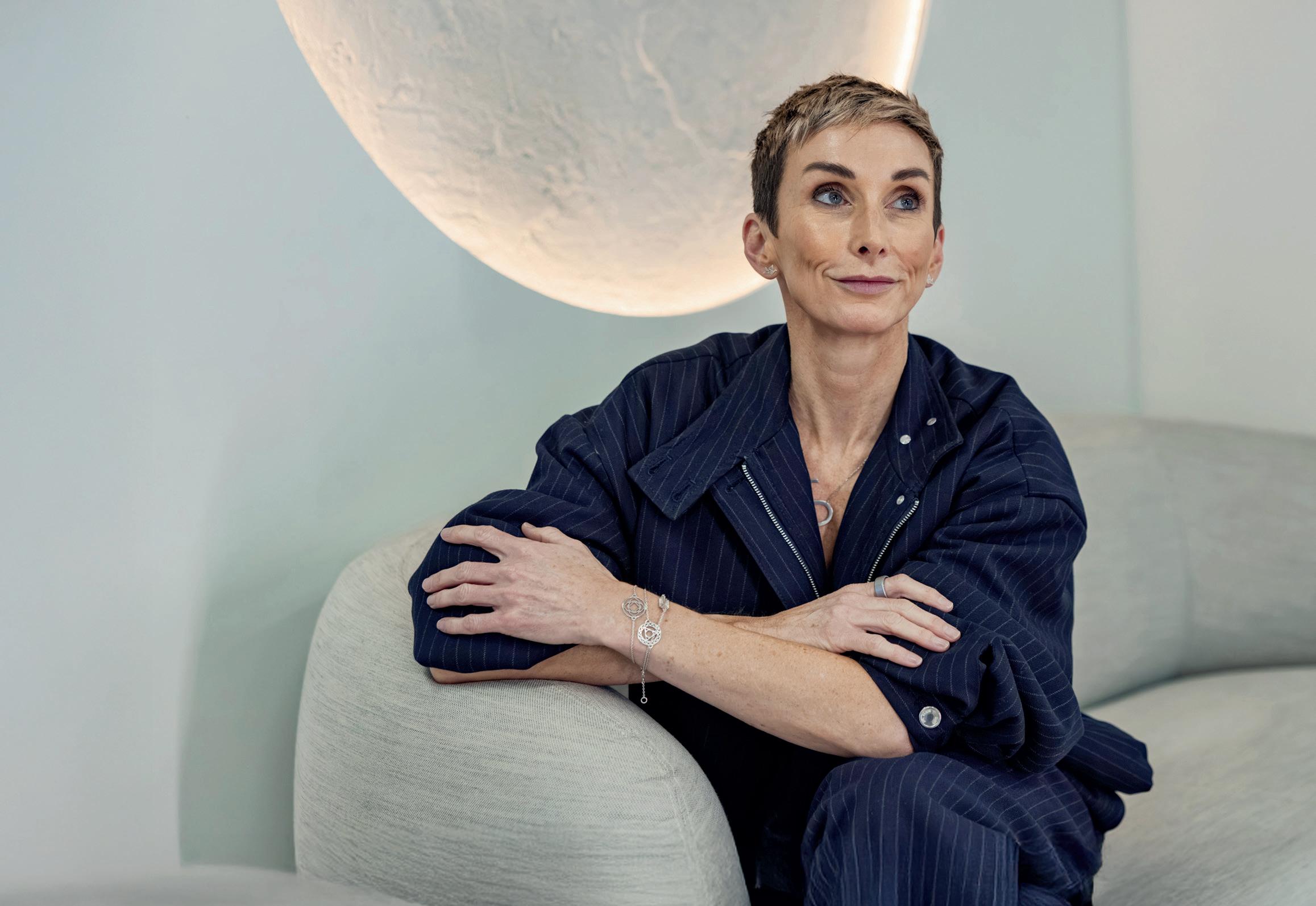
Deena Gillan
Kath Hudson talks to the new chair of UK Active’s Independent Council
38 Interview
Harry Konstantinou
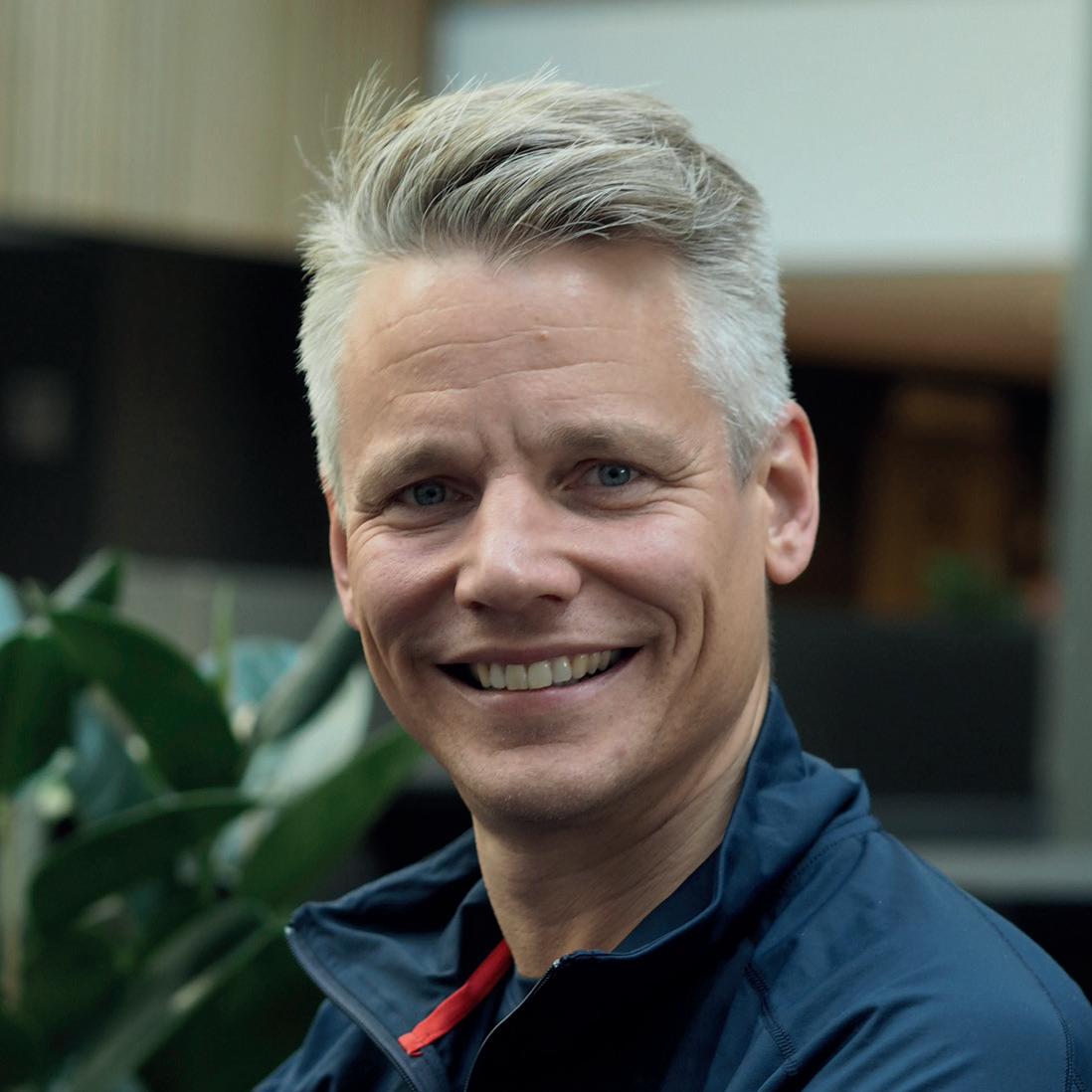
Viva Leisure’s CEO on global growth and redefining revenue generation
52 Everyone’s talking about
Market penetration
As UK market penetration hits 18 per cent, how much higher could it go?
62 Record highs
A report by Deloitte and EuropeActive reveals a reshaping of the fitness sector
10 years
86 Grant Thornton on the UK market
70 Class of 2035
How can clubs best serve Gen Alpha? Vicci Wells shares insights from the Youth Sport Trust study
74 Show preview
Elevate 2026
All the news from the show, as it gets set to mark its 10th anniversary
86 Value & identity
Record UK market penetration reveals a deeper shift in consumer engagement, a new report finds
94 Strong foundations
We look at the latest club flooring upgrades, as suppliers give their advice
102 Making space
How can clubs best ease bottlenecks at peak times? We look at the latest kit and inspiring case studies
110 Product news
Julie Cramer round up the latest, health, fitness and wellness kit
112 HCM Directory
The HCM Directory is part of a network of resources that includes www.HCMmag.com/CompanyProfiles
114 Research Brain power
A new study shows that the brain is able to programme endurance capacity
30 Phillip Mills
74 Elevate celebrates
Deena Gillan
www.HCMmag.com
MEET THE TEAM
theteam@leisuremedia.com
Editor
Liz Terry
+44 (0)1462 431385
Managing editor
Julie Cramer
+44 (0)1462 431385
Editor-at-large
Magali Robathan
+44 (0)1462 431385
Publisher Jan Williams
+44 (0)1462 471909
Head of news
Kath Hudson
+44 (0)1462 431385
Assistant editor Helen Andrews
+44 (0)1462 431385
Email us:
Customer service
+44 (0)1462 471901
Advertising
+44 (0)1462 431385
Subscriptions
+44 (0)1462 471910
Circulation
+44 (0)1462 471932
Finance
+44 (0)1462 471930
Credit control
+44 (0)1462 733477
Choose how you read
HCM digital
Read free online and enjoy extra links and searchability www.HCMmag.com/digital
Print
HCM magazine is available in print from www.leisuresubs.com
HCM PDF
A PDF edition is available to read offline at: www.HCMmag.com/pdf
Other resources from
Fit Tech magazine www.fittechglobal.com www.fittechglobal.com/archive
To subscribe to HCM in print (Health Club Management): log on to www.leisuresubs.com , email subs@leisuremedia.com or call +44 (0)1462 471930.
Annual subscriptions: UK £45, Europe £57, rest of world £80, students (UK) £22.
Style: HCM follows an editorial house style which precludes the use of marketing devices in body text and headlines when it comes to company names and registered trademarks. CamelCase and logical capitals are allowed. Contact the editor for more details – lizterry@leisuremedia.com.
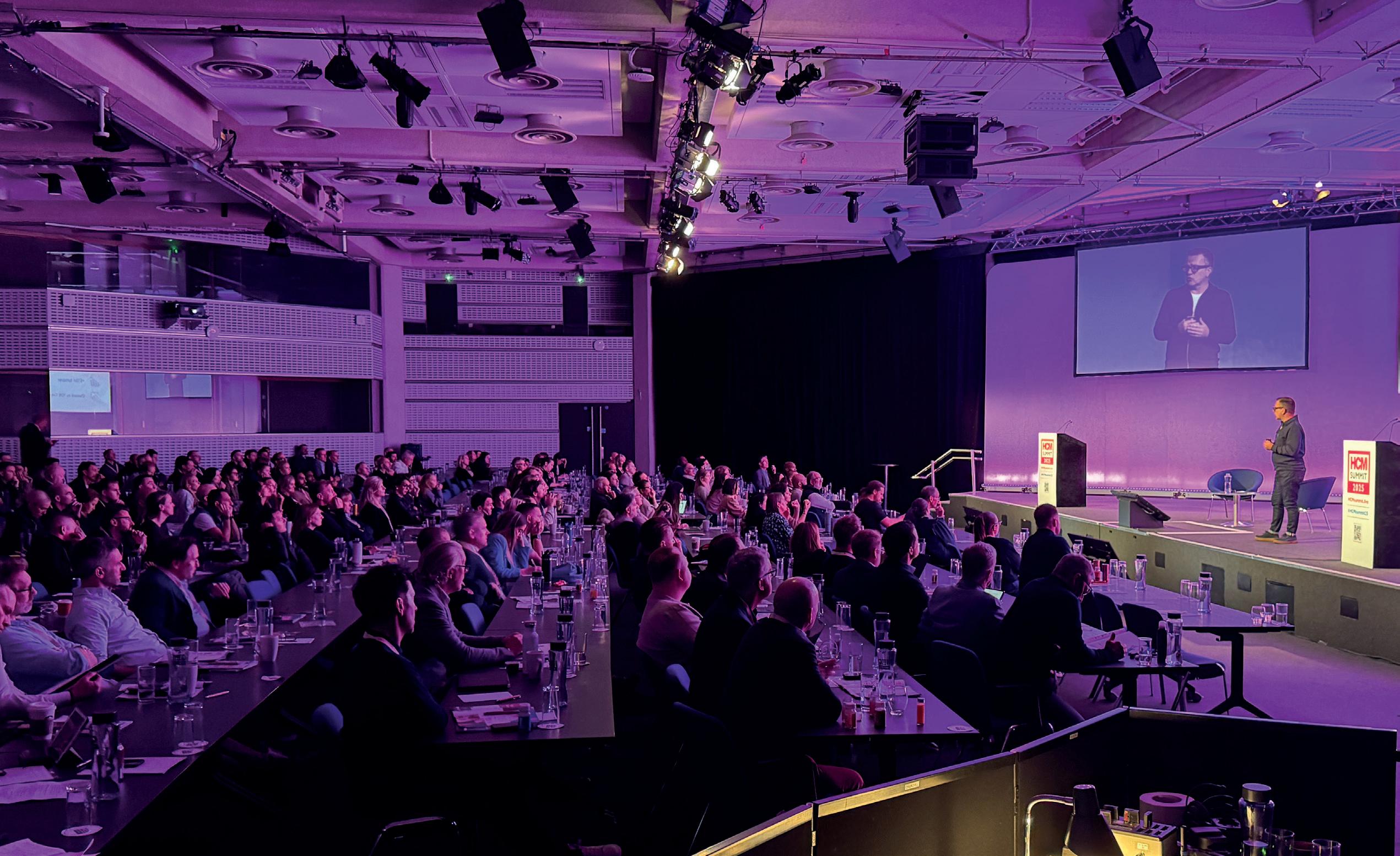
Excitement is building for the new all-keynote HCM Summit 2026 from HCM magazine and Spa Business magazine.
The event will bring together a powerful lineup of speakers to share insights and experience, with a focus on business success and innovation.
You’ll go away inspired and informed, with ideas to implement in your professional life, as well as valuable contacts and access to best practice to drive your success as we head into 2027.
In addition to the summit talks, a carefully curated exhibition will showcase the latest innovations, while summit networking events, including the After Party, hosted by Les Mills, will give the opportunity to make new contacts and do business.
All this, along with product sampling, book signings and activations make the summit a powerful and useful event for the sector.
Liz Terry HCM editor and CEO of Leisure Media
Zeitgeist
Kath Hudson distills the essence of the latest HCM news to tap the trends driving the direction of the sector
Anytime Fitness opens Australia’s first airport gym
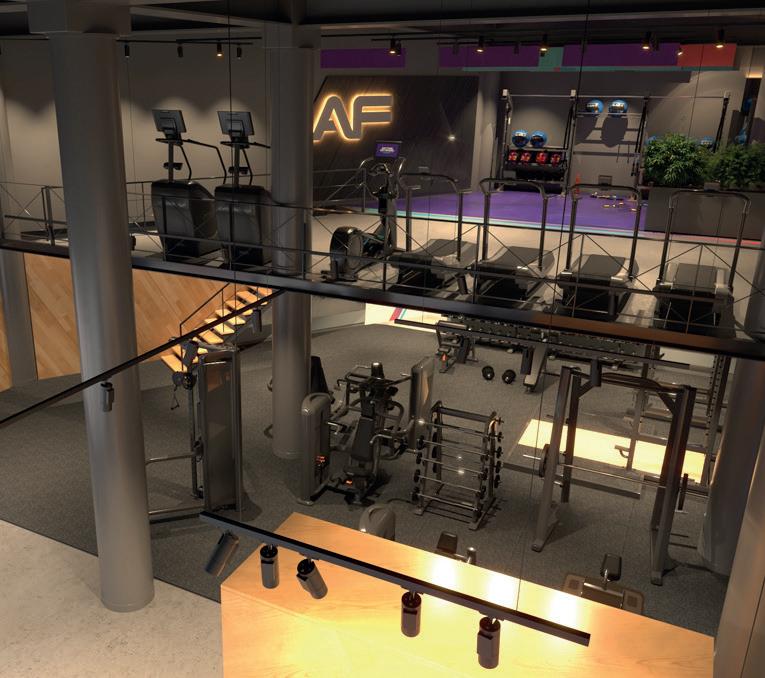
Anytime Fitness has opened a two-storey, 24/7 gym at Sydney Airport for travellers and colleagues.
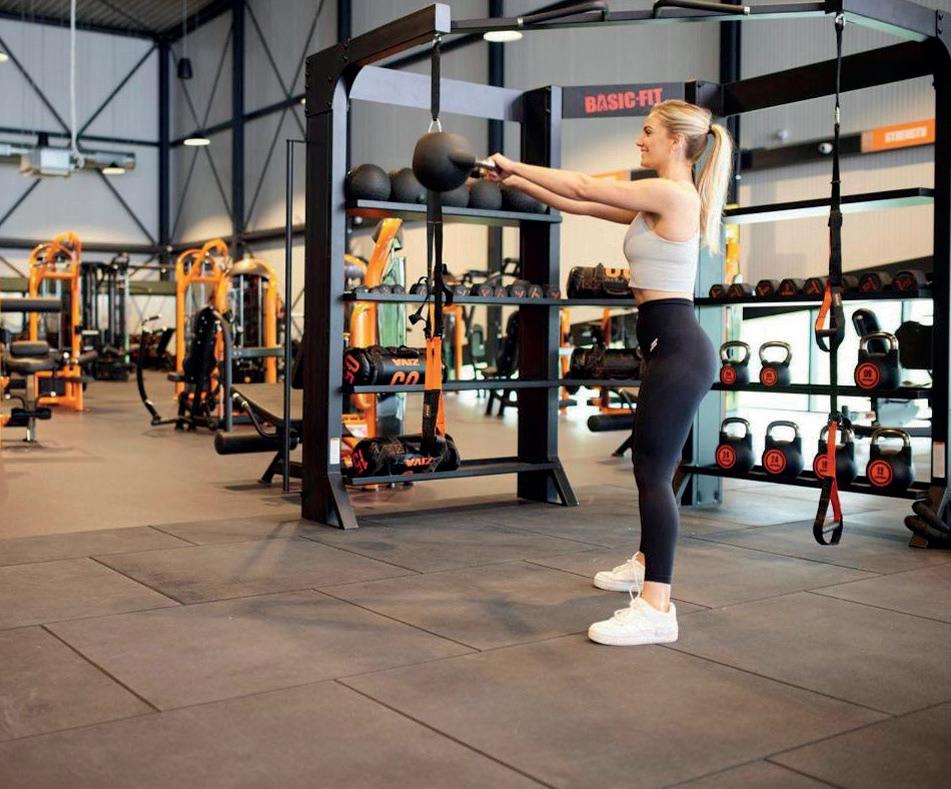
High-value, low-cost operator, Basic-Fit, is converting 200 of its French sites to a 24/7, staffless model which is expected to generate cost-savings of around €10 million a year.
The company, which issued a strong trading update for Q1, has announced a high-quality growth phase with organic expansion, a step up in franchising, and seeking M&A opportunities.
Anytime Fitness Australia managing director, Simon Thompson, says: “The launch of our club in Sydney Airport reflects our strategic commitment to delivering accessible fitness solutions wherever our members live, work and travel.”
Sta ess studios to drive Basic-Fit growth Manchester City Council announces free gym access
In an ambitious move, Manchester City Council is introducing free gym membership to 11- to 16-year-old secondary school pupils after May half term. Leader of Manchester City Council, Bev Craig, said: “Young people told us they wanted free things to do and they wanted to keep healthy. We’ve listened and made this really important investment.”
Those facing the biggest barriers will be supported with targeted interventions.
Sydney Airport’s new Anytime Fitness gym spans two fl oors
Manchester City Council invests in young people
TMActive tackles inequalities with studio
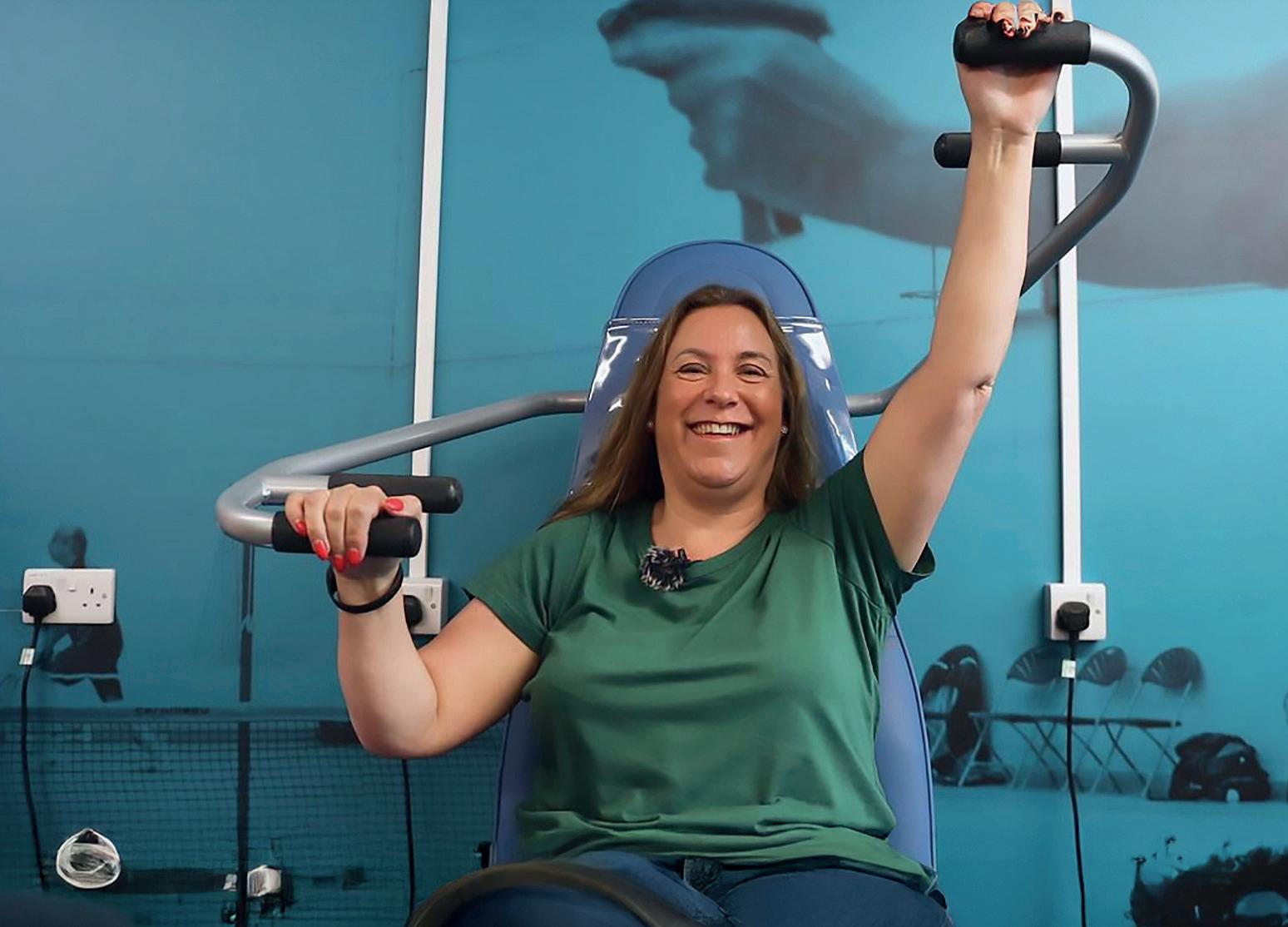
TMActive is broadening its reach with the launch of an Active Wellbeing Studio that includes a circuit of nine pieces of Innerva’s power-assisted kit. Jon Hymus, managing director, Innerva, said: “The creation of this fantastic new space reflects TMActive’s commitment to reaching further into local communities as they work to support those who are more deconditioned, physically inactive or face greater barriers to activity.”
Wellfit launching Abu Dhabi flagship
UAE operator, Wellfit, is opening its first site in Abu Dhabi this summer, which will offer an extensive gym, multiple studios and recovery facilities. COO, Bruce von Kaufmann, describes it as a health and wellbeing sanctuary: “This marks a significant milestone in our mission to become a hub for world-class experiences and the go-to community destination in Abu Dhabi.”
Soak rollout continues, with Melbourne site
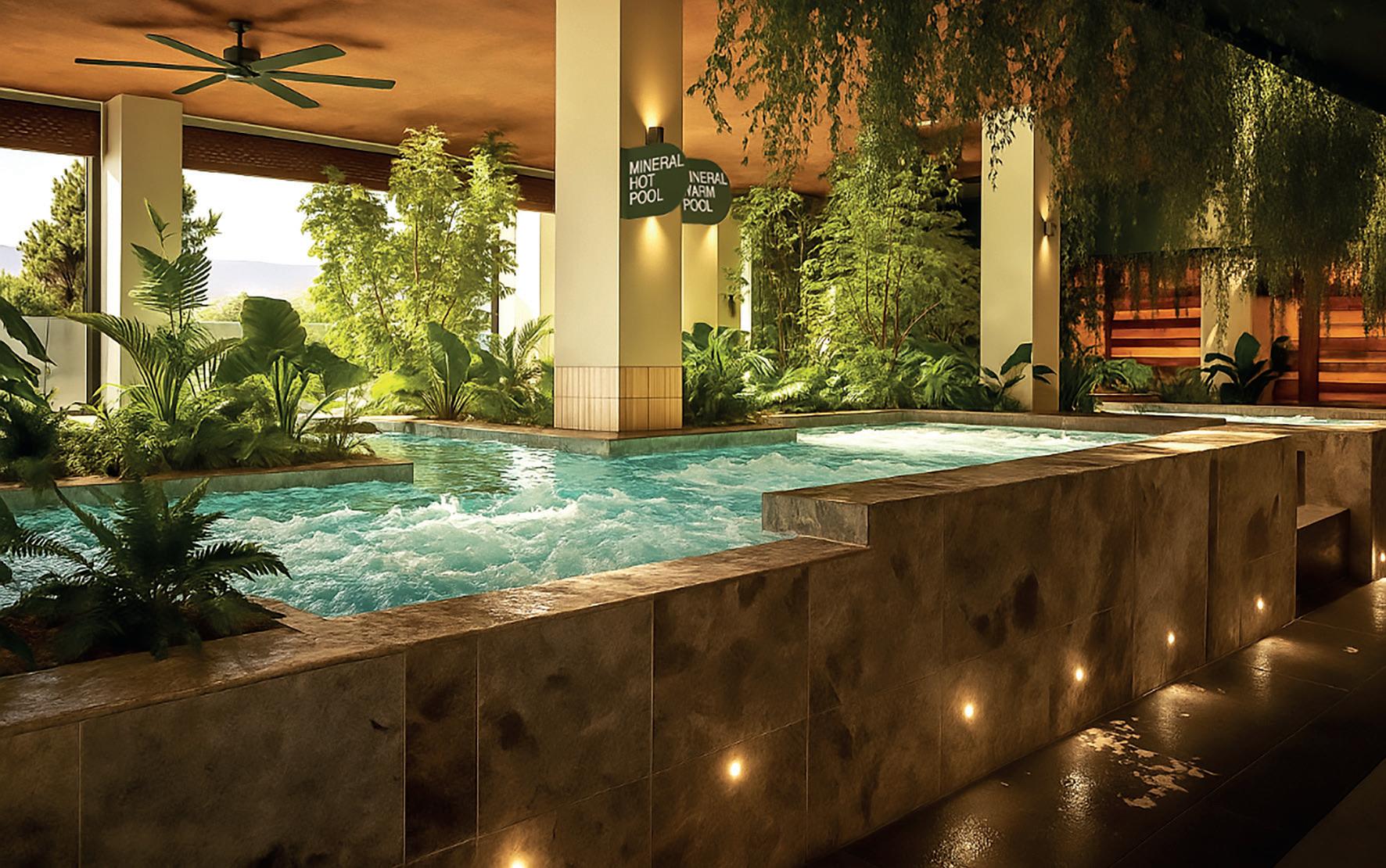
Australian wellness brand, Soak Bathhouse will launch its sixth site and the second in Melbourne this August. The 700sq m bathhouse will include hot and warm magnesium-rich mineral pools, a cold plunge, saunas, steamrooms, red light therapy and massage. Prices will start at AUS$39 (US$25, €23, £20). Co-founder, Alexis Dean, says it’s a space for wellness to be shared.
TAP OR SCAN
TAP OR SCAN
TMActive and Innerva have collaborated on an Active Wellbeing Studio
Soak Bathhouse South Melbourne features magnesium pools
Wellfi t Reem Island is the company’s fi rst site in Abu Dhabi
“Recovery goes beyond physical rest. In this programme, we work through my rituals to arm participants with the tools they need to sustain lasting vitality”
Novak Djokovic, Aman’s global ambassador and wellness advisor
Longevity, wearables, GLP-1s and Gen Z were themes of EHFF
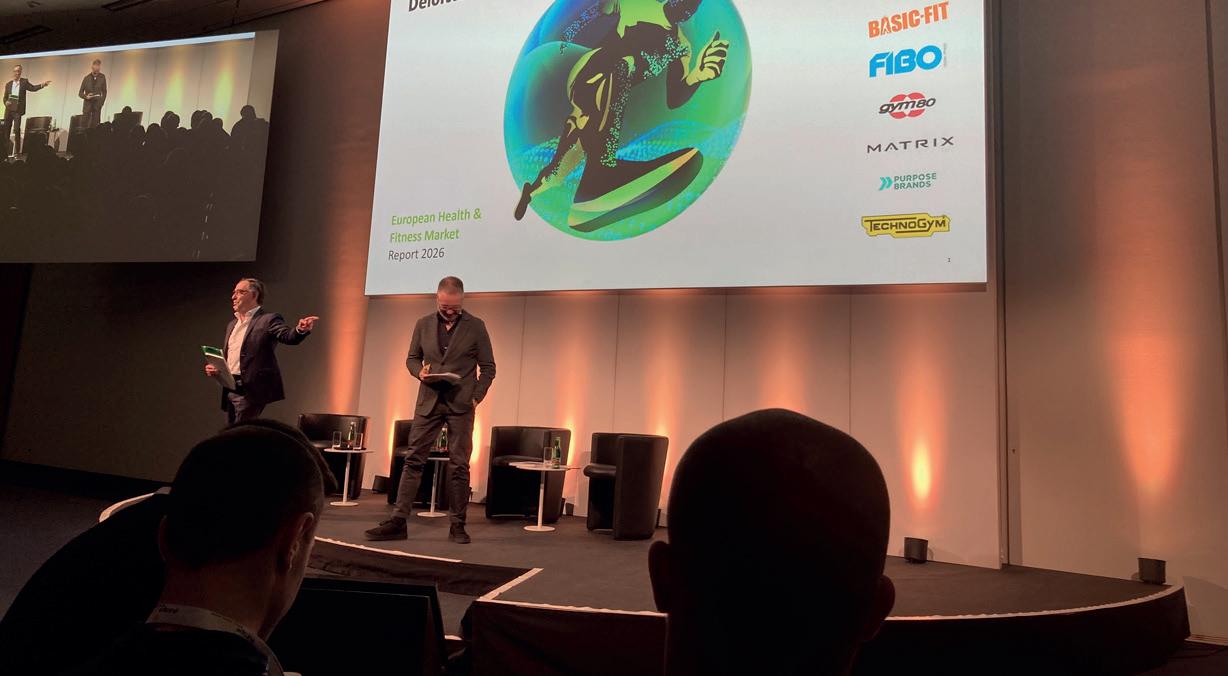
This year’s European Health and Fitness Forum took place in Cologne on 15 April and received one of the best turnouts ever with 585 attendees from 44 countries. The agenda included Deloitte unveiling the European Health & Fitness Market Report 2026 (see page 62).
http://lei.sr/9n2J6_H
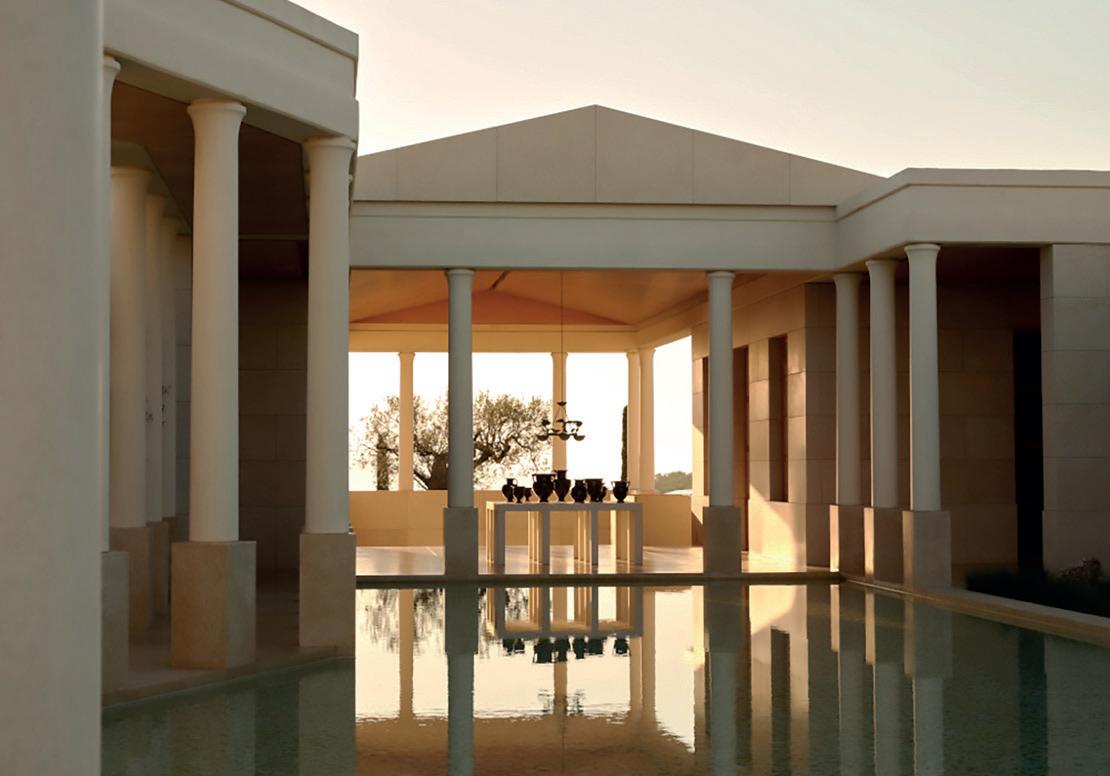
The new three-night experience will be available at fi ve Aman properties
Karsten Hollasch and Herman Rutgers unveil the Deloitte report
Novak Djokovic creates recovery programme for Aman
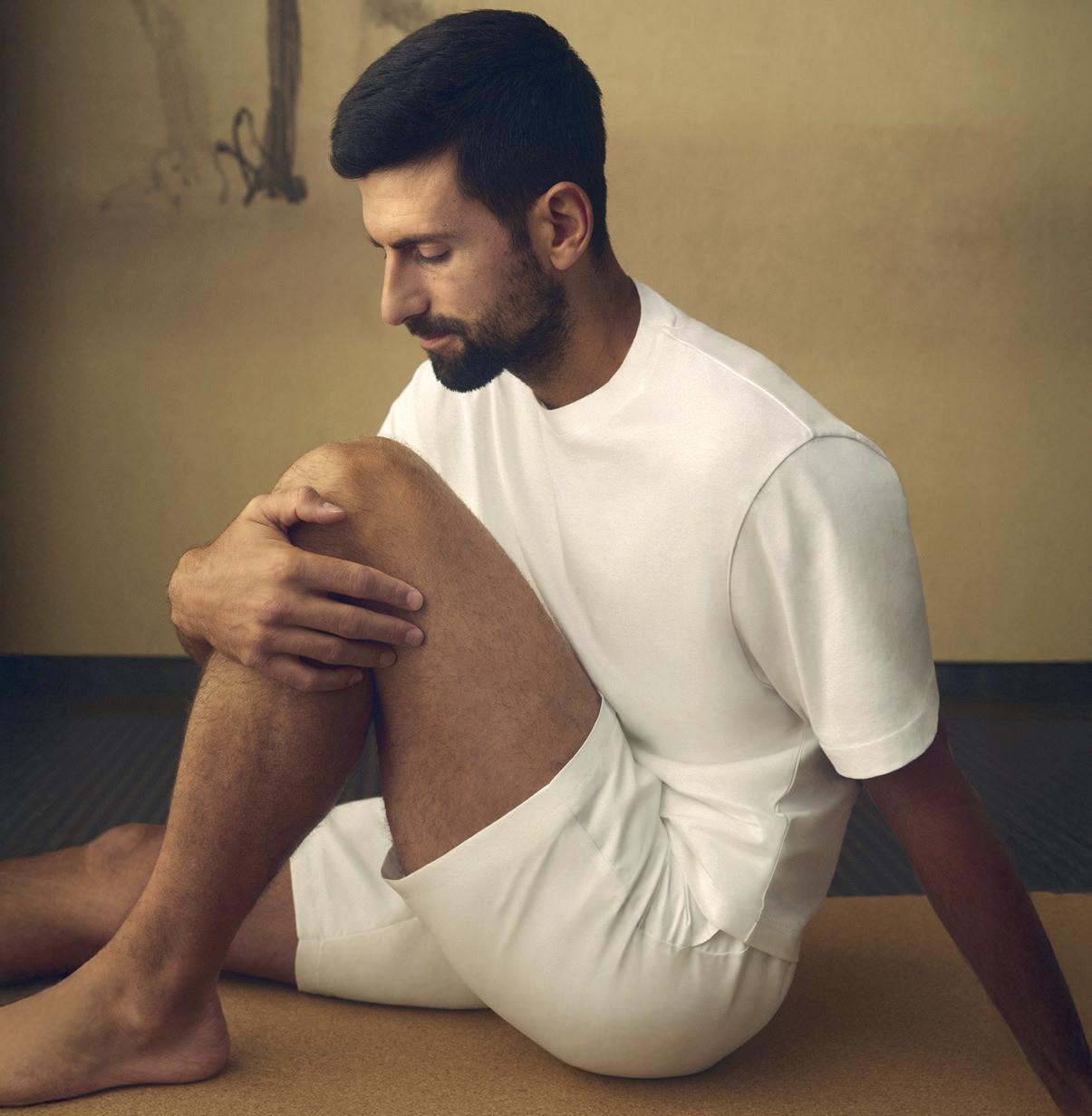
Tennis legend, Novak Djokovic – a global ambassador for the Aman Group – has worked with the company to create a three-day Mobility and Recovery Programme that includes movement, breathwork, tennis training, thermal practices and spa treatments.
Djokovic says this recovery goes beyond rest and this retreat will “arm participants with the tools they need to sustain lasting vitality”.
EuropeActive launches new award
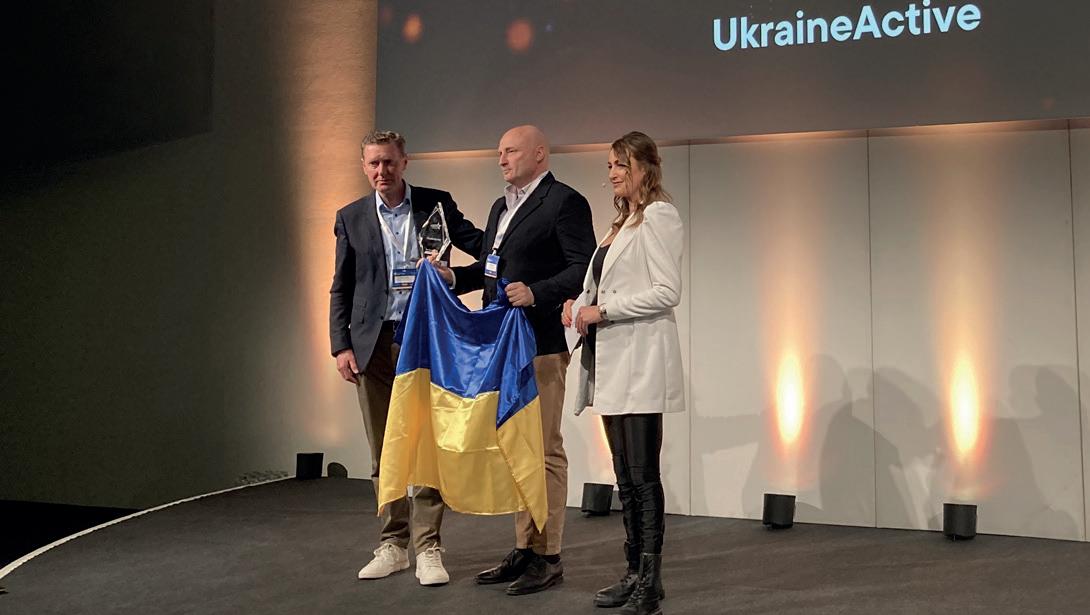
EuropeActive presented three awards at the European Health and Fitness Forum. A new category, the BeActive Award, was introduced this year and went to Ukraine Active for its success in keeping activities going during the war with Russia.
Andrii Boliak receiving an award for Ukraine Active
Sauna bathers who identifi ed most with their sauna community experienced the best outcomes
Tribute Brands goes to Switzerland
Boutique franchisor, Tribute Brands, has signed a deal with Let’s Go Fitness to open 20 PILAT3S reformer studios in Switzerland over the next five years. Jochen Müller, CEO of Let’s Go Fitness says: “PILAT3S stood out by solving the industry’s biggest bottlenecks: instructor availability, operational complexity and cost efficiency.”
Scientists link saunas with belonging
Studies showing the mental and physical benefits of sauna bathing, have prompted scientists to suggest bathing prescriptions should be looked into by the NHS. Studies show that weekly sauna use, especially aufgass ceremonies, improve feelings of wellbeing and belonging.
http://lei.sr/8a8D4_H http://lei.sr/5G9q8_H
Wellverse unites three boutique brands
Wellverse has launched in London, offering access to rowing and strength concept, Rowbots; reformer and yoga studio, Flow and the five Frame group exercise studios.
Wellverse co-founder, Greg Zimmerman, says: “Wellverse gives people one place to access everything.”
The fi rst studio will be in Marterey, Switzerland
Flow offers a mix of yoga and Pilates formats
TAP OR SCAN
TAP OR SCAN
HFA seeks a new CEO as Liz Clark departs
It has been confirmed that Liz Clark, CEO of the Health & Fitness Association, will be leaving the organisation when her contract ends in July.
Clark came to the role from the candy/confectionery industry during the pandemic, not realising that she was walking into an association that was almost bankrupt as a result of having to cancel the 2020 trade show.
“I knew things were bad when I accepted the role, but I didn’t know quite how bad they were, both financially and organisationally. The association was US$8 million in debt,” Clark told HCM. “It was 18 months of putting out daily fires. I wasn’t sleeping and lost chunks of hair.”
Now the organisation is back on track and Clark has left an organisation that is back on track, with increased advocacy and a rebrand from IHRSA to the Health & Fitness Association.
“Liz stepped into one of the most challenging periods in this industry’s recent history and helped lead HFA through it with real resolve,” board president Luke Carlson said in a statement.
“Because of her leadership, HFA enters this next chapter from a
position of strength – with growing momentum, a stronger policy voice and an industry that is increasingly recognised as essential to the nation’s health. We are grateful for everything she built and wish her well.”
Playlist and EGYM merger is finalised
Philipp Roesch-Schlanderer (L) and Fritz Lanman celebrate a merger
“ We’re now uniquely positioned to grow the entire industry by building a long-awaited bridge between fitness, wellness, and the healthcare market
”
Philipp Roesch-Schlanderer
Following the conclusion of a US$7.5 billion merger, EGYM is now a subsidiary of Playlist, alongside Mindbody, Booker and ClassPass.
The deal has created the world’s largest full-stack fitness and wellness operating system.
Playlist now includes more than 40,000 Mindbody-powered businesses, more than 88,000 venues listed on ClassPass, more than 20,000 EGYM Wellpass employer partners, more than 33,000 EGYM-powered fitness locations, millions of active users across 30+ countries and more than 3,000 employees globally.
There are plans to invest further in AI, personalisation, operator tooling and platform connectivity to help businesses grow more
efficiently and deliver more wellness experiences to consumers.
“With EGYM joining the Playlist portfolio, we can support the entire consumer journey end to end, from the first moment of inspiration, through booking and check-in to the physical experience on the gym floor,” said Fritz Lanman, CEO and co-founder of Playlist.
Philipp Roesch-Schlanderer, co-founder of Playlist and CEO of EGYM says they are establishing the first truly global wellness technology operating system that will redefine health and longevity: “We’re now uniquely positioned to grow the industry by building a bridge between fitness, wellness and the healthcare market.”
A nationwide search for Liz Clark’s successor is now on
HFA/ LIZ CLARK
FIBO 2026 pulls more than 175,000 visitors
The Cologne-based conference and exhibition, FIBO, took place from 16-19 April, attracting more than 175,000 visitors from 136 countries and more than 1,000 exhibitors from 54 countries.
FIBO event director, Silke Frank, described it as the compass of the industry: “Anyone who wants to understand where the global fitness market is heading will find the answers here. The interest from exhibitors and visitors from all over the world shows – what happens here sets standards far beyond the exhibition halls.”
Topics on the conference agenda included programmes for older adults – the debate spanned interactive offerings, new products and tips on sleeping better, reducing
stress and staying fit in the long term. Longevity was presented as something that everyone can directly integrate into their own daily lives.
The Women’s Leadership Summit was a full-day leadership event with a mix of keynotes which covered a variety of topics including leadership in times of change.
Glute machines featured strongly at the exhibition, as well as iconic pieces which provide an Instagram opportunity on the gym floor.
Wellness Space Brands’ dry cold plunge chair, the Polar Wave was causing a stir. Providing a convenient way of cold plunging, it is being adopted by many operators, including Urban Gym Group and Planet Fitness.
Around 20,000 athletes took part in the Hyrox at FIBO 26
Xponential explores options including a sale
Boutique franchisor, Xponential Fitness, has initiated a review of strategic alternatives to maximise shareholder value, which include a sale, merger or another strategic or financial transaction.
Independent directors on Xponential’s board, Rachel Lee and Lily Yang, say, “Our board is firmly focused on maximising value for shareholders, and we are confident that undertaking a thorough and disciplined review of the opportunities available to the company will determine the best path forward.”
“Xponential is a leading portfolio of boutique brands”
Mike Nuzzo, CEO of Xponential, said, “Xponential has built a differentiated platform with a leading portfolio of boutique fitness brands and an asset-light franchise model. While the board conducts this process, the Xponential team is continuing to execute our strategy to position our brands for success.”
The board has also appointed Wall Street veteran, Nicole Parent Haughey as an independent director, she is a seasoned public company director and former Fortune 50 executive.
Jair Clarke, Chelsea A. Grayson and Bruce Haase have stepped down.
JANNICK HAMMES FOTOGRAFIE
Club Pilates is the top performer of Xponential’s five remaining brands
TAP OR SCAN
TAP OR SCAN
http://lei.sr/5U8N5_H
http://lei.sr/w3C7q_H
Mike Nuzzo
HFA says US gym usage is at an all-time high
According to the latest insights from the Health & Fitness Association (HFA), 81 million Americans belonged to a gym, studio or fitness facility in 2025 – an all-time high.
The 2026 US Health & Fitness Consumer Report: Headline Trends found that membership increased by 5.2 per cent last year compared to 2024.
When including people who used gyms on flexible options,
“ Fitness facilities are part of the infrastructure that Americans rely on to manage their health, stress and sense of community ”
Anton Severin
Memberships among over-65s are growing faster than any other age group in the US
the number of gym-goers rises to more than 100 million.
While Gen Z had the highest penetration – at a huge 35.5 per cent – penetration rose across every demographic, all age groups, income brackets and genders, with the over-65s being the fastest growing cohort. Year-on-year membership in older age groups increased by 8.6
per cent. “What this data makes clear is that fitness facilities can no longer be considered a niche amenity, but rather part of the basic infrastructure that Americans rely on to manage their health, stress and sense of community,” says Anton Severin, vice president of research at HFA.
UK gym penetration reaches record 18 per cent
The newly-published UK Health & Fitness Market Report 2026 shows penetration has reached a remarkable 18 per cent of over-16s, with a record 12.2 million members.
The data represents a sample coverage of 74 per cent of private operators, 85 per cent of public operators and 88 per cent of independent operators.
The headline stats are impressive: total income has reached £6.5 billion, up from £5.7 billion in 2024.
Visits to clubs have risen by 10 per cent since 2024 – reaching 679 million and showing continued growth in demand from people of all ages. The sector is generating £7.5 billion in attributable social value.
Former CEO of UK Active, Huw Edwards, says: “This report provides
“ This report provides clear evidence that the UK is home to one of the strongest health and fitness sectors in the world ” Huw Edwards
clear evidence the UK is home to one of the strongest health and fitness sectors in the world, and a success story for UK plc. Consumer demand is growing and our members are rising to the challenge,” (For more, see page 86).
The UK Health & Fitness Market Report 2026 was published this month
Fusion Lifestyle calls in the administrators
After celebrating its 25th anniversary last year, Fusion Lifestyle has called in administrators after a “prolonged period of financial difficulty.”
The trust said it had not been able to identify a viable pathway to ensure its long-term financial stability, despite efforts to restructure and secure investment.
“The leisure sector has faced sustained financial pressures, including rising operational costs, particularly energy costs, reduced government funding and ongoing post-pandemic recovery challenges,” said a statement from Fusion Lifestyle.
Nadeem Sweiss and Adam Stephens of S&W Partners LLP have been appointed to oversee the organisation with the aim of securing
new operators for the leisure centres. Somerset Council has stepped in to protect its five facilities and is looking for a new operator to take over after the interim period.
Parkwood Leisure has taken over South Hams District Council and West Devon Borough Council. Charnwood Borough Council expects
Duncan Je ord is the new MD of
Duncan Jefford has been announced as the new managing director of Everyone Active.
Current MD, David Bibby, will retire in May after leading the organisation since 2006.
Under Bibby’s leadership, Everyone Active has grown its portfolio of facilities, invested in community health initiatives and championed the role of leisure services in supporting the nation’s physical and mental wellbeing.
“After many rewarding years in the sector, the time feels right for me to step back and begin a new chapter,” says Bibby. “I’m incredibly proud of what we’ve achieved at Everyone Active and the positive impact our teams make in communities every day.
“It has been a privilege to work with such dedicated colleagues, partners and stakeholders, and I’m confident the business will continue to thrive in the years ahead.”
to appoint a new operator in the coming months. Tunbridge Wells Borough Council has appointed Serco Leisure in partnership with Leisure Solutions Community Trust and Active Lambeth will take over the operation of Brockwell Lido.
Everyone Active
Jefford joined the organisation in 2007. As Everyone Active’s South-East regional director, he has overseen growth in both turnover and profitability. Paying tribute to Bibby, Jefford say he’s honoured to take up the role. “We’ve built an outstanding reputation for delivering high-quality leisure services that make
a real difference to communities across the country. I’m excited for the years ahead as we continue this strong period of growth, and I’m proud to be leading the way alongside our 14,000 colleagues to build on the solid foundations already in place.”
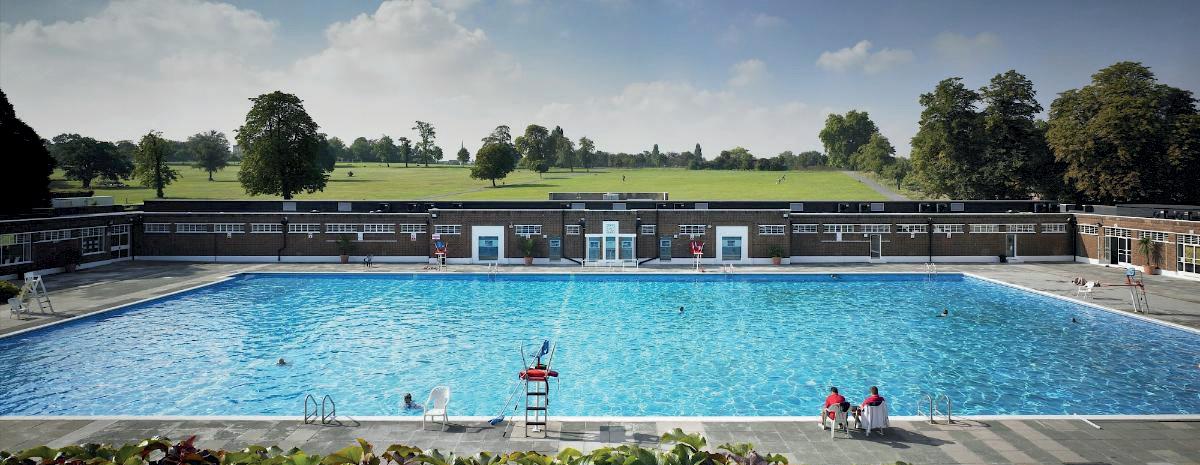
Brockwell Lido was one of Fusion Lifestyle’s contracts
David Bibby (centre) and Duncan Jefford (third from right) with Sporting Champions
Myzone adds strength training to the mix
Myzone has unveiled three product innovations that are in development as part of its expanding Motivation Technology (MoTech) ecosystem.
The new features – Strength Tracking, Garmin integration and Switch 2.0 – represent Myzone’s evolution beyond heart rate monitoring into a broader fitness ecosystem focused on motivation, engagement and consistency.
This reflects the broader strategy to provide support across a wide range of training types and wearable technology.
The Strength Tracking feature will allow members to earn effort points during resistance workouts. The mechanics of the actual delivery of this feature are still under wraps and will be revealed later this year, says Myzone.
The Garmin integration will allow smartwatch users to connect their workouts directly to the
Garmin integration will allow smartwatch users to connect their workouts directly to the Myzone ecosystem
Myzone ecosystem, expanding accessibility without requiring a dedicated heart rate belt.
Switch 2.0 allows users to wear their device on the chest, arm or wrist, while maintaining accuracy.
Jay Worthy, CEO of Myzone, says: “This represents the next step in
expanding our ecosystem. We’re recognising more types of effort, connecting with more wearable technology and making our platform more accessible as part of our mission to help people stay motivated to move.”
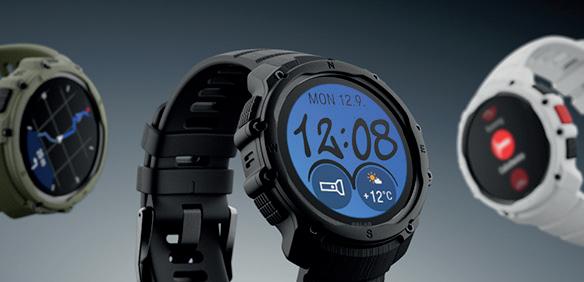
Polar’s new Street X supports 170 activities
Polar has launched a sports watch offering training and recovery features at a more affordable price point.
Designed for an urban market, Street X supports more than 170 sports and activities, covering
traditional activities, such as running and cycling, as well as modalities like strength training, functional training and calisthenics.
With recovery and sleep tracking tools, the watch also supports users in knowing when they are ready
to train again. The sleep tracking feature detects sleep duration, quality and stages. It also monitors nighttime heart rate, heart rate variability, autonomic nervous system activity and includes nightly skin temperature measurement.
“More than half of the world’s population lives in urban areas, turning cities into our everyday training grounds,” says Sander Werring, CEO of Polar. “With Street X, we responded to this demand by creating a rugged, designled watch that combines Polar’s training credibility with bold, everyday wearability and durability at a more accessible price, ready to handle gym sessions, street runs and daily life.”
Polar has launched Street X, aimed at health-conscious urban dwellers
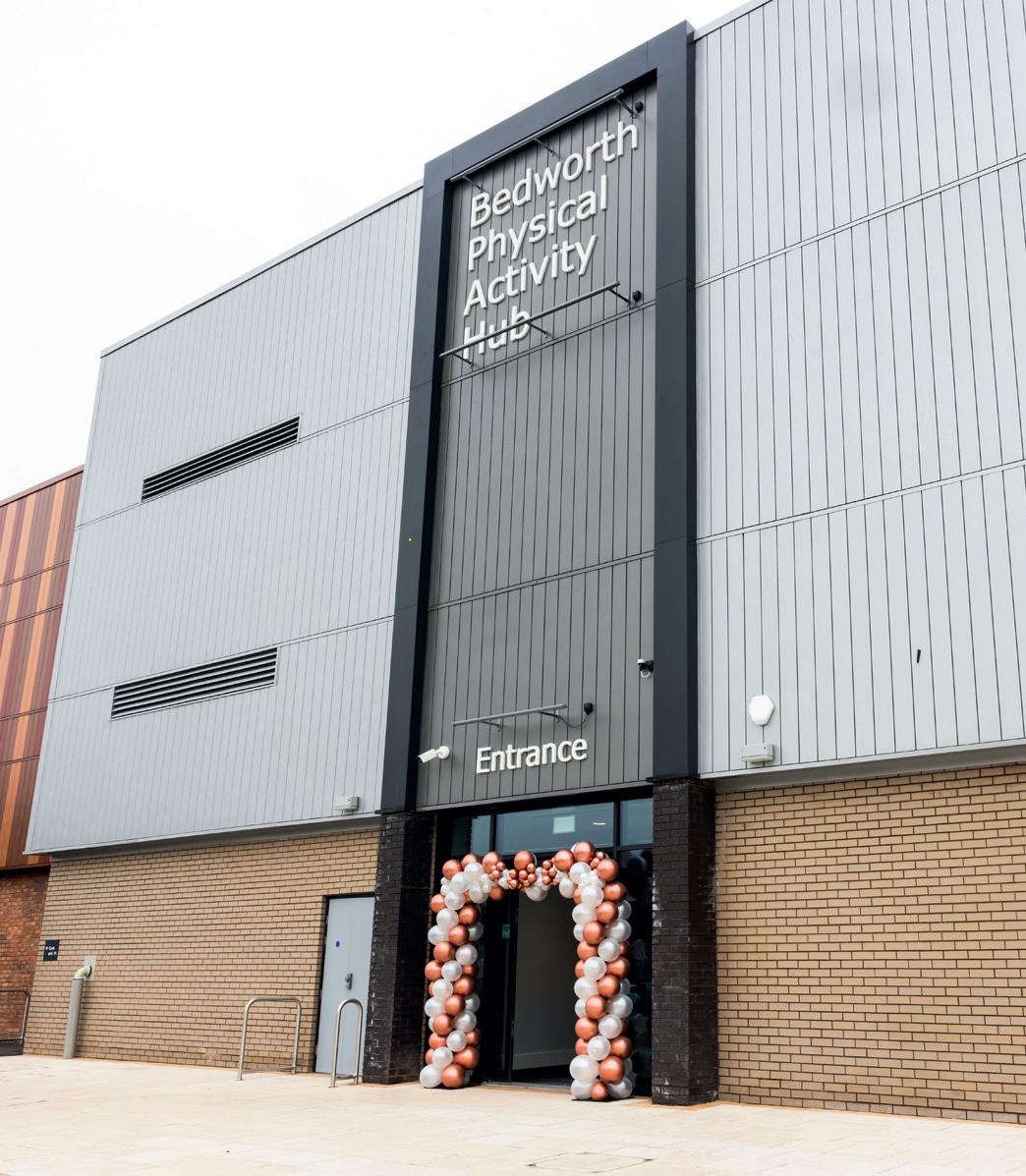
Everyone Active reveals Bedworth Physical Activity Hub with 100-station gym
The £30.6 million Bedworth Physical Activity Hub is now open, replacing a centre which dated back to the 1970s.
The new facility was funded by Nuneaton and Bedworth Borough Council, Ministry of Housing, Communities and Local Government and Sport England, in partnership with operator, Everyone Active.
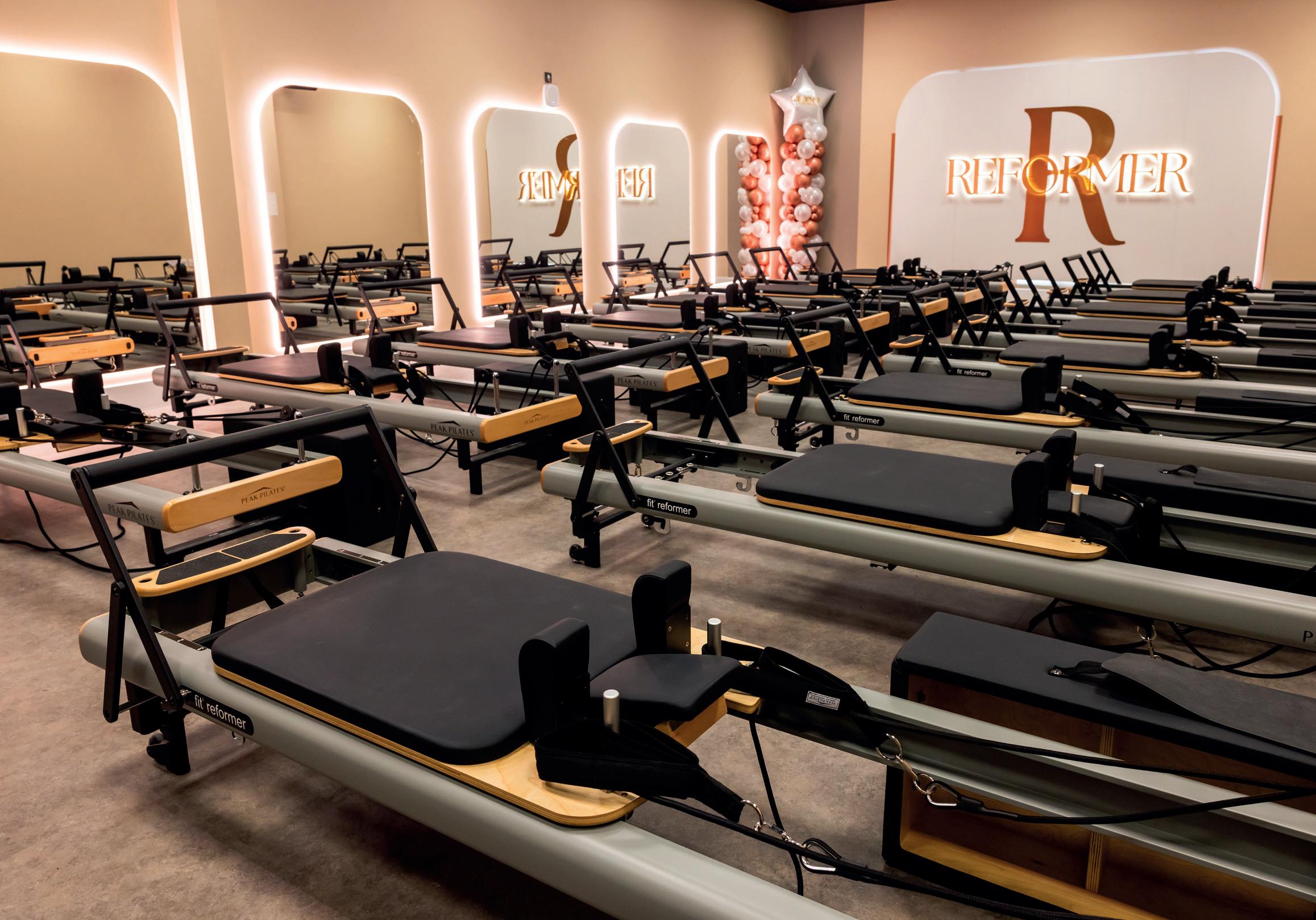
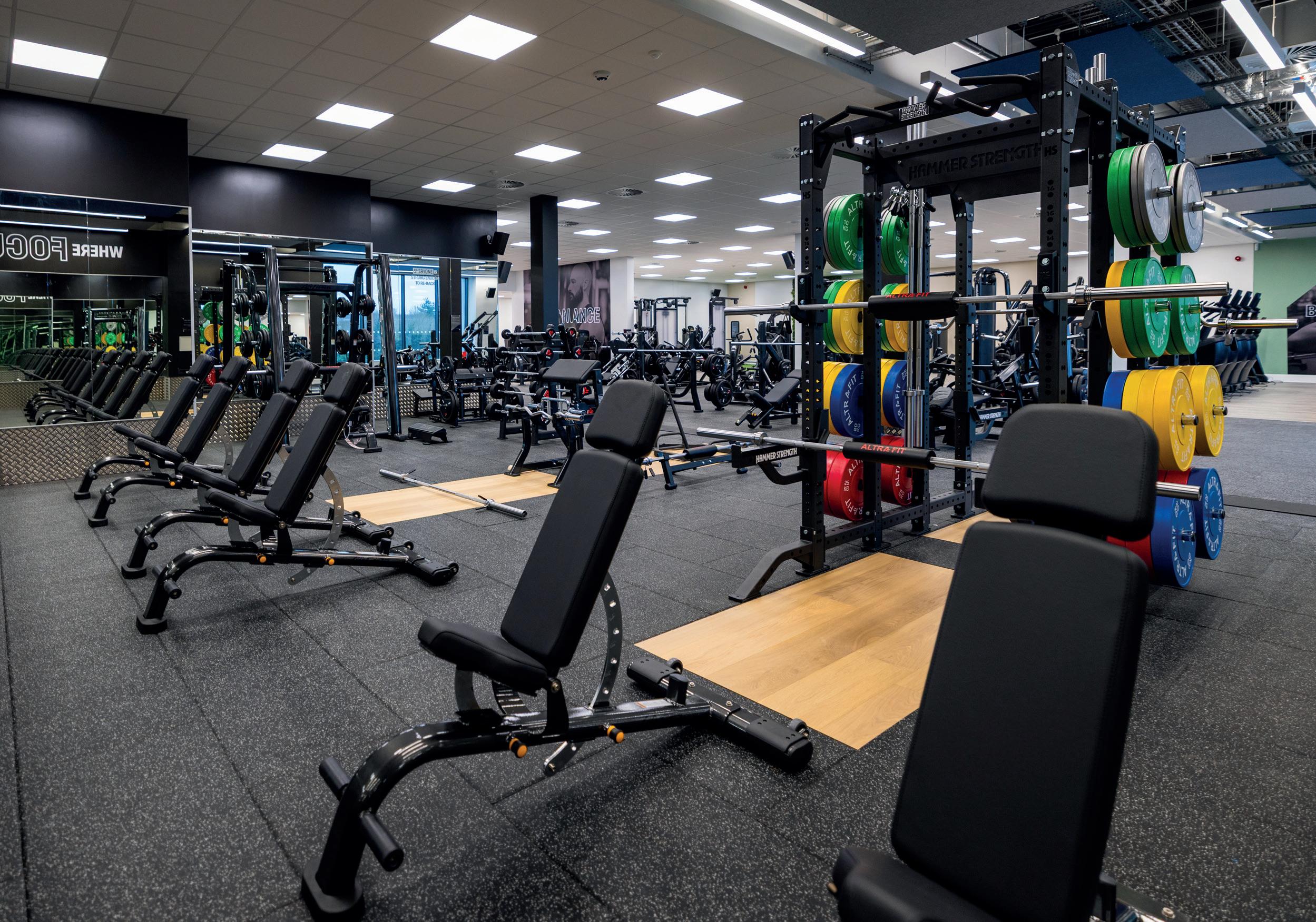
Facilities include a 25 metre pool and a learner pool with a movable floor. A 100-station gym with Life Fitness and EGYM equipment; a group exercise studio and a four-court sports hall.
This is the eighth Everyone Active facility to offer a reformer Pilates studio, which will be available as part of the You+ Ultimate wellness membership, which was designed with Oli Patrick. Other facilities include a wellness hub, meeting rooms and a grab and go cafe.
An external sports pitch is due to open in September, which will be followed later by a skate park and learn to ride facility.
Paul Dowling, Everyone Active’s regional director, said: “Bedworth Physical Activity Hub offers something for everyone, no matter what your age, interests or ability.
“This centre will serve the health and wellbeing of local people for many years to come and we’ve already had a fantastic response from the community. Customers have been able to try out new activities for the first time such as reformer and group exercise classes or benefit from our state-of-the-art gym and swimming pool.”
The facility supports the Passport to Leisure Scheme which gives eligible residents access to free or concessionary rates on a range of sports and leisure activities at the four Everyone Active centres in the area.
The centre also offers targeted swimming sessions such as women-only swims and adult and family quiet swims,
“ Bedworth Physical Activity Hub offers something for everyone, no matter what your age, interests or ability ”
Paul Dowling
which can provide additional support for neurodivergent individuals by reducing noise levels. A range of swimming lessons are on offer – including for babies with their caregivers; adult beginners and adult improvers.
Catering for the growing interest in training among Gen Alpha there are supervised gym sessions for 11- to 13-year-olds; gym introductions for 11- to 15-year-olds and parent supervised gym sessions.
Sustainability is at the heart of the new site’s design, with energy-efficient measures such as pool covers, air source heat pumps and rooftop solar panels.
The new centre replaces a 70s facility
Everyone Active is bringing reformer and an extensive gym offering to Bedworth
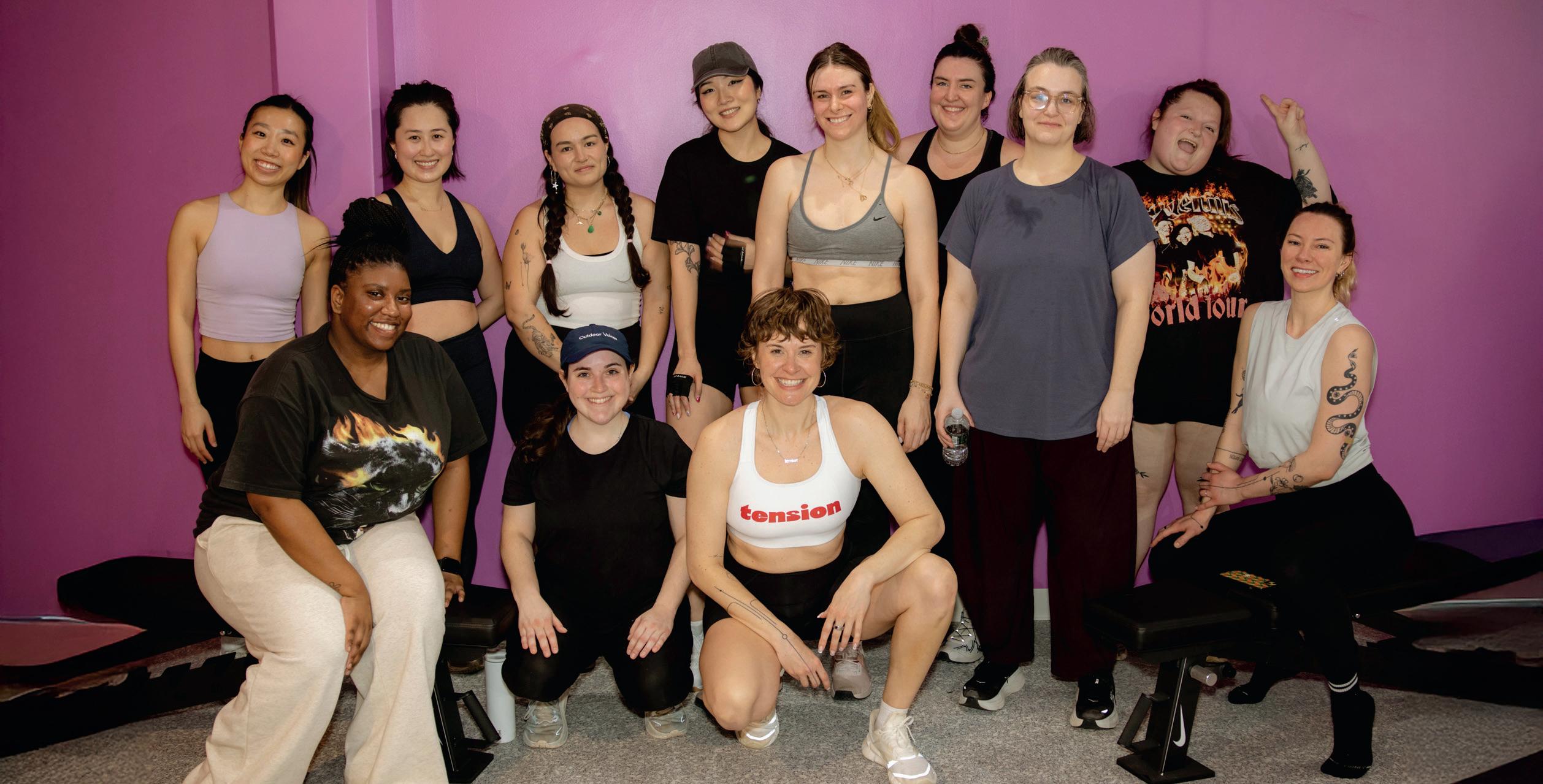
Female-focused strength studio, Tension, opens in Brooklyn
A1,000 square foot studio, women’s-only strength studio has been launched in Brooklyn, New York. Every component of Tension has been intentionally designed for women’s training.
With classes capped at 12 participants, founder, Kristie Larson, promises that every member will get real coaching attention. Each class follows the same structure: a stabilising warm-up, 10 rounds of strength work and a core finisher.
The progressive programme rotates through upper body, lower body and full-body days and builds each week. For this reason, it’s a membership model rather than a drop-in, Larson says the members who see results are the ones who show up repeatedly.
Cardio has been deliberately left out of the mix. Larson says women have been taught to chase cardio fatigue, being smaller and counting carbs for too long, but this studio offers a different approach.
“It’s a deliberate choice to leave out cardio, and it’s one I feel strongly about. We’re a strength training studio,” Larson told HCM. “The reason we don’t chase cardio fatigue is because we’re actually trying to build muscle. Adequate rest between sets allows for heavier weights and better form. That’s not a gap in our programming,
“ Women’s fitness has spent decades equating sweating with progress. We’re not interested in that. We’re interested in what actually works”
Kristie Larson
Tension is a new strength training concept for women
it’s the point of it. Women’s fitness has spent decades equating sweating with progress. We’re not interested in that. We’re interested in what actually works.”
The target market is women who know they should be lifting, but have never been taught how. “That’s a bigger group than people realise,” says Larson. “Only about 27 per cent of women meet federal guidelines for musclestrengthening activity, and the gap isn’t about motivation. It’s about access to real coaching and programming that was built with women in mind from the start.
Larson says having a female-only environment helps with progress and confidence: “Strength training is hard enough without the audience. In mixed facilities, women consistently report feeling watched, unsure and under-coached. That’s not a personal failing, it’s the environment.
“When the space is built around women’s experiences and led by coaches who understand
women’s physiology and the specific barriers women face in gyms, the dynamic shifts.
“The research is also worth noting here: women receive two to three times the mortality benefit from strength training compared to men, and they reach peak benefit from fewer sessions per week. The case for training environments built specifically around women is not just cultural, it’s physiological.
“The feedback from early members has centered on one thing: finally feeling like they understand what they’re doing and why. That clarity is what we built for.
“We’re building a proven model and programming approach that doesn’t depend on one location or one instructor. The goal is to make womencentered, evidence-based strength training accessible well beyond our flagship location in Brooklyn. there is huge demand for this type of training and I intend to meet it.”
http://lei.sr/z7u2X_H
TAP OR SCAN
PureGym pilots reformer Pilates, recovery and women-only spaces
Low-cost operator, PureGym is piloting reformer Pilates in its Danish clubs, considering the introduction of recovery zones and rolling out women’s spaces across its UK estate.
Speaking in the upcoming HCM Handbook 2026, chief operating officer, Rebecca Passmore, says that although a low-cost operator, PureGym is always looking to keep abreast of trends and add the best value for members.
“We’re always keeping an eye on the latest trends and have seen huge growth in demand for reformer Pilates and increasing awareness of the importance of recovery,” she says.
“Traditionally these services have been confined to premium operators but we’ve never been satisfied by sticking with the status quo so we’re now in the process of exploring how to offer new concepts for members in a cost-effective way.
“We’re exploring what Relax and Recover zones could look like and piloting reformer studios at a handful of Danish gyms too, providing a service that’s in high
demand at a more affordable price vs the market. It’s very early days, so we’ll continue to assess member feedback and feasibility before rolling out more widely.”
Women’s workout spaces are also being rolled out in larger gyms, providing a comfortable, welcoming, private area alongside the main gym, that gives female members more choice in how and where they work out. Currently, PureGym offers more than 50 women’s workout spaces across its 460 UK gyms.
Feedback from members has been overwhelmingly positive – many women have reported feeling more comfortable and confident in the gym environment, and some have said these spaces have been a deciding factor in whether they join and remain a member. PureGym has also seen good membership growth at these clubs.
In 2025 the company opened a record number 60 gyms, ending the year with 714 sites and 2.3 million members. CEO, Clive Chesser, says there is a significant opportunity for expansion in the US.
The gym floor at PureGym’s Bagshot club
/ JAMES MCCAULEY
“ We’re always keeping an eye on the latest trends and have seen huge growth in demand for reformer Pilates and increasing awareness of the importance of recovery ”
Rebecca Passmore
Harold Wood is one of six new gyms to open in Q1
PureGym has plans to broaden the offer of its low-cost model
PURE
Collabs
Equinox Hotels teams up with Longevity Rx
Equinox Hotels has teamed up with Longevity Rx to offer functional medicine-backed supplements in the guest rooms of its Hudson Yards, New York hotel.
Founded by functional medicine expert, Dr Will Cole, Longevity Rx focuses on optimising health at a cellular level through its formulations and proprietary technologies.
Equinox Hotel guests will have access to Longevity Rx’s core supplements that support mitochondrial energy
“Our RoomBar concept reflects a refined edit of high-quality, consciously-sourced products to support the way people live”
Ara Patterson
Equinox Hotels has teamed up with Longevity Rx to offer supplements in-room
production, metabolic function and gut regeneration.
Ara Patterson, VP of F&B + Spa at Equinox Hotels says: “Our RoomBar concept reflects a refined edit of high-quality, consciously-sourced products designed to support the way people live today. Within that curation, Dr Cole’s supplements are a natural extension of our
ethos: clean, effective and intentionally formulated.”
Cole says: “Real wellness isn’t something you do once, it’s how you live every day. Equinox Hotels understands that. It’s built an environment where taking care of yourself isn’t an interruption; it’s part of the experience.”
Humansa Suisse will o er precision health
Longevity platform, Humansa, has partnered with The Chedi Andermatt in Switzerland to help guests integrate health insights into their experience.
Humansa Suisse will be the first European venture for Humansa, a precision health provider that integrates advanced diagnostics and targeted therapies with lifestyle guidance to optimise healthspan. It has more than 100,000 clients across Asia.
This partnership sees it moving beyond dedicated health outlets into hospitality and destination settings.
The new Humansa Suisse offering, which will be delivered at the Swiss resort’s Chedi Spa and Health Club, aims to provide guests with early insights to improve their healthspan.
Aline Gärner, spa manager at The Chedi Andermatt, says: “At The Chedi Andermatt, our focus has always been on creating an environment where guests can
“At The Chedi Andermatt, our focus has always been on creating an environment where guests can restore, reconnect and feel at ease”
Aline Gärner
restore, reconnect and feel at ease. The collaboration with Humansa Suisse introduces a longevity-focused layer that complements our spa and health club and integrates seamlessly into the overall experience.”
http://lei.sr/7R2k6_H
Humansa is offering advanced diagnostics and targeted therapies
THE CHEDI ANDERMATT
Les Mills o ers classes through Zing Coach
Fitness platform, Zing Coach, has teamed up with Les Mills, in a partnership that gives its users access to group workouts, through its proprietary AI model.
The integration combines the motivation and structure of group training with individualised strength and conditioning plans that adjust to the individual’s goals, energy levels, recovery and available time.
“Our goal is to keep people motivated, engaged and training regularly,” says Marina Nola, chief digital distribution officer at Les Mills. “By bringing Les Mills programmes into Zing Coach, members get the motivation of human-led workouts and the flexibility of AI.”
Anton Marchanka, CEO at Zing Coach, says: “Les Mills’ structured
“ Our goal is to keep people motivated, engaged and training regularly ”
Marina Nola
strength, conditioning and progression-based workouts are empowered by Zing’s AI model, making them available in flexible formats that fit busy schedules, whether users train at home or in the gym, so consistency feels achievable.”
YPT partners with Anytime
Your Personal Training (YPT) has announced a new partnership with Anytime Fitness.
Under the partnership, YPT will help Anytime Fitness recruit self-employed PTs across its estate of 185 clubs in the UK and Ireland. The PTs will retain 100 per cent of their earnings while accessing structured business support. A limited number of PT licences per site will be offered.
James Lorey, director at YPT, says: “London remains one of the most competitive and opportunity-rich PT
“ London remains one of the most competitive and opportunityrich PT markets in the UK”
James Lorey
Zing Coach
Fitness UK
markets in the UK, but trainers need the right environment to succeed. This partnership is about creating that environment at scale, giving PTs access to high quality clubs, strong member bases and support to build long-term businesses.”
David O’Donnell, an Anytime Fitness franchise owner who has
seven locations in London, says: “Partnering with YPT enables us to invest further in our personal trainers, helping them grow their businesses, develop their skills and ultimately enhance the experience that we offer in our clubs.”
MILLS
LES MILLS
Les Mills workouts are now available on
Anytime Fitness is using the services of Your Personal Training in its UK and Ireland clubs
http://lei.sr/h3b5F_H TAP OR SCAN
HCM people
The Les Mills partnership with Hyrox is something I'm personally really excited about Phillip Mills
CEO, Les Mills
Why has Les Mills teamed up with Hyrox?
This is something I'm personally really excited about. The partnership first began when Liz Terry [editor of HCM] introduced me to Christian Toetzke [Hyrox founder] at the first FIBO Hyrox event in 2022. He's a former elite-level decathlete and I’ve got a track and field background, so we hit it off straight away.
Les Mills has always been involved with sports at our gyms in New Zealand, going right back to the jogging boom, then triathlon and also competitive aerobics. The communities built around fitness sports bring thousands of members to clubs – they form tightknit groups, stay a long time and get great results. We've still got thousands of triathlon members in our gyms who joined in the late 70s and early 80s.
Hyrox is going to be the biggest of them all, bringing millions of members to the industry. The Hyrox team is doing a great job at scaling events throughout the world very quickly and getting big numbers. The recent Chicago event had 75,000 competitors and London had 45,000, so already more than many of the world's biggest marathons.
It’s becoming a mass-participation sport and presents a tremendous opportunity for the industry, so I strongly advise clubs to grab the chance to engage.
Added to this, I believe circuit training and strength training classes will be two of the biggest of this decade. Circuit training has always been one of our most popular, going back to the early 80s, with Super Circuit which evolved to Body Circuit. In 2018, my son and his team started developing
Every quarter there will be four new releases of both Ceremony Hyrox and Ceremony Hyrox Max from Les Mills and Hyrox
Les Mills Ceremony as a modern functional training circuit and it has since become our biggest class.
What does the Hyrox partnership involve?
We're offering gyms a combined licence covering Hyrox and Les Mills Ceremony.
We've created two new classes – Ceremony Hyrox and Ceremony Hyrox Max, which is specific to the competition, like a mini Hyrox event. The classes offer two options – one uses functional equipment and is ideal for the gym floor. The other version can be done in the studio, using available group fitness equipment. Our training has been tested to get optimum results and deliver motivation, enjoyment and mix of music with movement. We spend three months crafting classes and every quarter, there will be four new releases for both of these Hyrox workouts.
Tell us about the new Les Mills docuseries, Rise: Search for the Ultimate Trainers
This is part of the campaign we launched at FIBO called, “the most important machine in your club has a heartbeat.” We believe that if you want to have a successful club, you need to focus on your instructors.
Les Mills is offering gyms a combined licence with Hyrox
LES MILLS
The hundreds of thousands of instructors around the world are so important to our industry. They create health and community and magic for millions of people every day.
Group fitness participants come more often, stay longer, bring more friends and pay more and a single great instructor brings and retains hundreds of members to a club – a team of them can be transformational. Yet not enough energy is put into recruiting rockstar instructors.
We believe they're probably already there in your club – the sports fanatics, the influencers, the dancers, the actors. You've just got to put in the time to look for them. We can teach operators how to find them, how to recruit them and how to look after them. So that’s the challenge we're putting to the industry and the docuseries is part of our passion to tell that story.
What does the series involve?
It follows the lives of eight wonderful group exercise professionals, who've been recruited from our 100,000 instructors globally. These instructors are at the top of their game, have loyal followings and they’re all vying for a sought-after place on the Les Mills global filming team.
We've filmed the series over a period of two years with production company, Tomorrowland. It follows the instructors around the world to big Les Mills Live events and also to their home cities and to their gyms and talks to them and their families.
These instructors are at the top of their game, have loyal followings and they're all vying for a sought-after place on the Les Mills global filming team
The show culminates in New Zealand, where the final shortlist of trainers must earn their place filming the Les Mills workouts that are enjoyed by 7 million people every week across 23,000 gyms around the world. It shows what it takes to earn your place at the top of fitness and also to keep it, as thousands chase your tail. You see the pride they have for their work, along with the pressure and the doubt.
Alongside the main docuseries, we're releasing a weekly vodcast called Rise Reactions , which is hosted by Les Mills presenter Bas Hollander, with guests from the show. This gives fans and instructors deeper insight into each episode and the performances. l l Les Mills Rise is available now on the Les Mills YouTube channel at www.youtube.com/@lesmills
The Les Mills Rise docuseries follows the lives of eight elite instructors LES
JOIN W3FIT 2026
A hosted buyer event connecting leaders across the global fitness industry through pre-scheduled meetings, interactive education, and intentional networking.
W3Fit North America
21-24 September • California
Connecting suppliers with buyers across North America.
W3Fit EMEA
13-16 October • Malta
Connecting suppliers with buyers across Europe & the Middle East.
Contact Our Team Today! info@weworkwellevents.com www.weworkwellevents.com
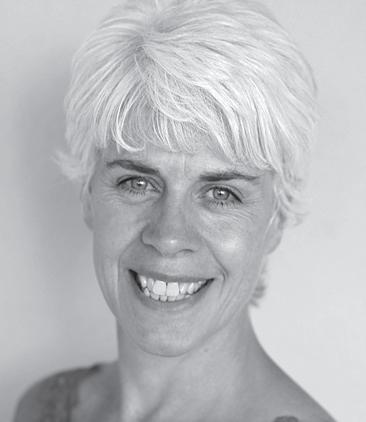
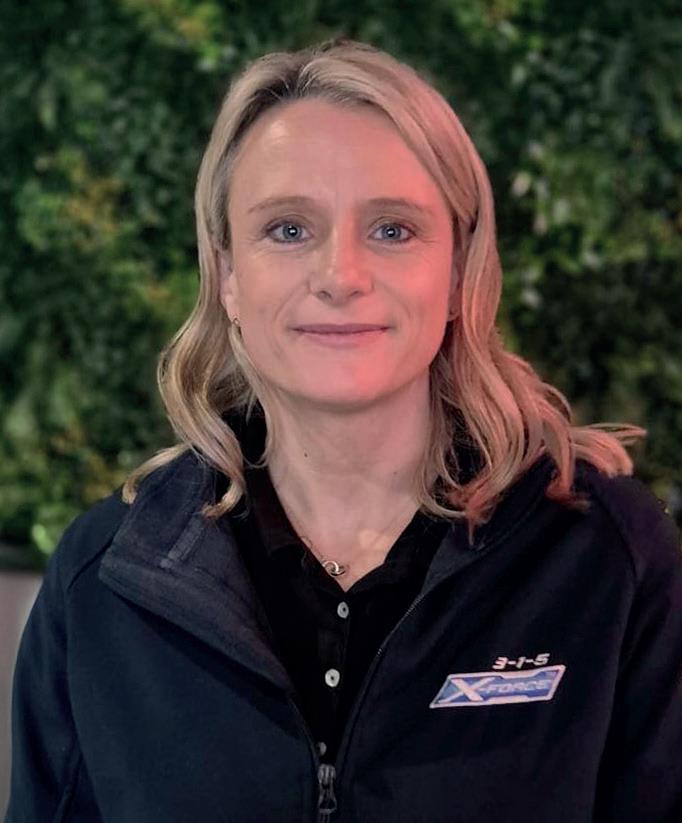
There are so many dedicated people in the independent sector – they work hard because they’re passionate about changing lives
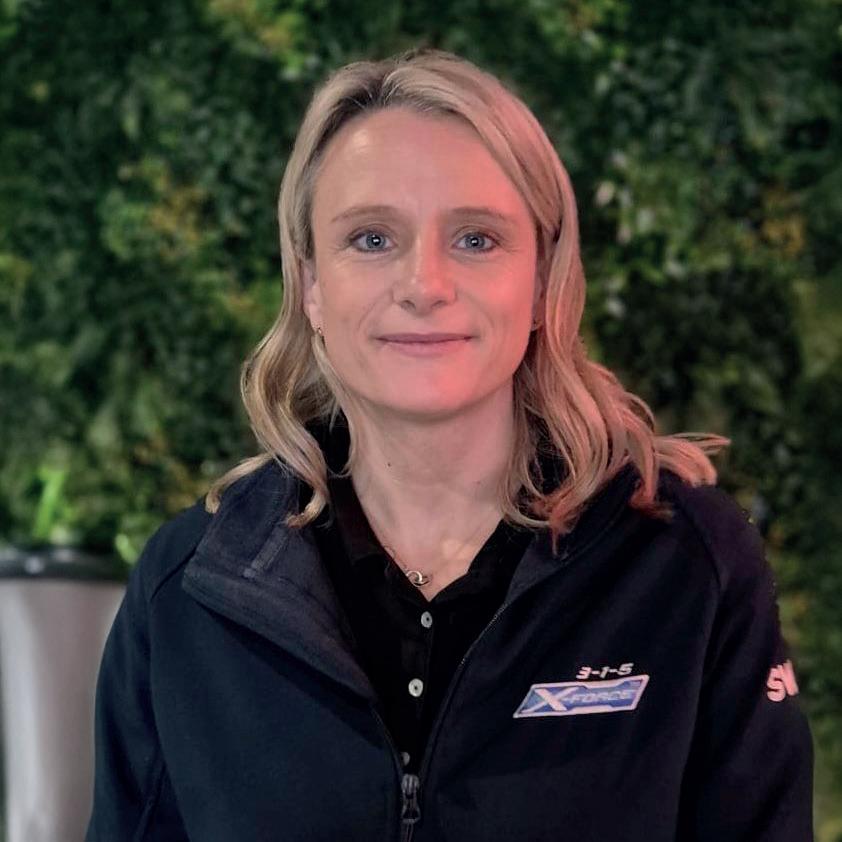
Deena Gillan
Chair of UK Active’s Independent Council and GM at 3-1-5
Congratulations on the appointment. How did it come about?
I joined the independent council in 2024, after meeting a representative from UK Active at the Physical Activity Forum in Scotland. I explained how I believed the trade association wasn’t representing independents very well, so they invited me to join the council to do something about it.
Until recently the council has been chaired by someone within UK Active, but they wanted to have a chair within the independent sector, to represent it at wider member councils and I was nominated.
What differentiates independent clubs?
The independent sector is so broad – there are large clubs such as 3-1-5 which have 8,000 members and there are small PT studios with 50 members – there’s so much variety, it can be difficult to represent us.
Reputational risk is far greater for independent clubs. In a small town or close-knit community, a single health and safety issue or perceived discrimination can be devastating.
Owners of independent gyms often have to juggle many business tasks
As independents we rely heavily on trust, word of mouth and our local reputations. Unlike national chains, smaller operators don’t have the scale to absorb reputational damage – one incident can seriously threaten the business.
Many independent operators, particularly the smaller ones, are both the business owners and the frontline staff, juggling everything from coaching and sales to marketing and health and safety, constantly challenging time and capacity.
This is why the work UK Active does on standards and risk management is so critical for the independent sector.
One of the problems that independents have is they don’t have the economies of scale that private chains and public sector operators have. My club recently had a Legionella risk assessment, at cost of over £2,000. That’s a huge amount of money for a single site business, whereas bigger chains requiring multiple checks will be able to negotiate better prices.
What were your concerns?
I felt the independents were being overlooked, while the bigger voices of the private and public sectors were always heard. For example, during COVID some
of the bigger chains and leisure centres got support that many of us in the independent sector didn’t get.
While 3-1-5 was closed, our outgoings every month totalled over £60,000 and our support was about £1,500 a month. We only survived because of the loyalty of our members who continued to donate a proportion of their fees and we sold some land.
Some of the lobbying seemed to be less relevant for independents – such as VAT relief for public sector leisure centres. So the membership seemed expensive for the perceived benefits.
Has your opinion changed?
Yes, once I started to engage I realised that there is a lot of work that UK Active does that can benefit independent clubs and save them money.
The Active Standard presents an excellent opportunity for independent clubs to prove their expertise to members, the NHS and local businesses.
Signing up to The Active Standard shows you’re compliant, your team is qualified, and your health and safety is up to the required standards.
The work around legislation is also invaluable, as is the risk and standards work, because it allows operators to spot risks early.
I felt the independents were being overlooked, while the bigger voices of the private and public sectors were always heard
Clubs big and small can benefi t from signing up to the Active Standard
3-5-1 / TOM MORBEY
These are all things that many independent club owners don’t have the time to research because they have so many other responsibilities, having UK Active there as a resource to provide information, advice and updates when legislation changes takes the guesswork out and saves time.
The organisation is also a valuable information resource when it comes to operational issues. For example, a few years ago I spent a substantial amount of time researching a transgender query before finding out that UK Active had published guidance note on it.
What are your aims while in the role?
I want to advocate for the independents. There’s so much expertise and so many dedicated people in the independent sector – they work hard because it’s their mortgage on the line and they’re passionate about changing lives. I want to raise awareness of the work UK Active is doing to benefit independents and how the membership adds value. I also want to get more independents onto the council – at the moment there are only a small number of us, but the sector is so broad that we need more
people to be engaged and allow us to represent the wide variety of clubs that are out there.
Then I want to speak to more people within the independent sector to find out their issues and do what I can to bring those to the forefront of discussions at UK Active. We want the sector to have one collective voice.
Another goal is to find a way to bring all the independents together to achieve collective buying power, so we can also benefit from economies of scale.
We’re already doing this with energy buying and now I’m working with UK Active to create a database of approved suppliers that will offer discounts to independent clubs.
There had been a blanket membership joining fee for independents, but a proposal is now before the UK Active board to make it more cost-effective for smaller operators to join.
Turning to your day job, what’s the 3-1-5 model?
3-1-5 opened in 2013, in Lancaster. The founder, Sean Thornton, was inspired by Joe Cirulli who said he was going to transform Gainesville
UK Active is considering a beneficial fee structure for independents
3-1-5
from one of the most unhealthy populations in America to one of the healthiest and Sean wanted to do the same for Morecambe Bay.
We’re 60,000sq ft and offer squash courts, table tennis, five studio areas – including a boutique HIIT studio and a reformer Pilates studio – and a large gym floor. We have three swimming pools and a swim school with about 1,700 children attending. With an additional 6,500 full members we see about 50,000 member visits a month.
Over the last couple of years we’ve been focusing heavily on wellness and longevity. We had Dr Hussain al-Zubadi train the team in GLP-1 meds recently. We’re seeing a lot of people joining who have taken GLP-1s on a self-prescribed basis. They come to us because they want to deal with the loose skin, or because having lost weight they feel confident enough to join a gym.
There are three different memberships. The standard (£69/month) for gym, classes, pool, squash and table tennis. The Club Plus (£94/month) membership that includes the boutique classes, regular body scans, small group strength training sessions, hydro massage and cryotherapy.
We’re looking at opening an external mini studio for children and young people outside the club
We also have strength programmes including Fearless Foundations – a six week beginner’s strength course. We offer glute-specific courses and introduction to lifting for both women and men.
Then there’s a third membership called Club Plus Re:Set (£194/month) which allows access to the sister recovery site, Re:Set Mind, Body and Soul. This is another business co-founded by Sean and Neil Spooner which has a hyperbaric chamber, red light therapy, EMS, a cryotherapy chamber, contrast therapy and flotation pods.
One of the things that we’re looking at now is how to improve our children and young person programme because we are seeing such a big influx in teenagers wanting to use the club. We’re looking at potentially opening an external mini studio for them outside the club. l
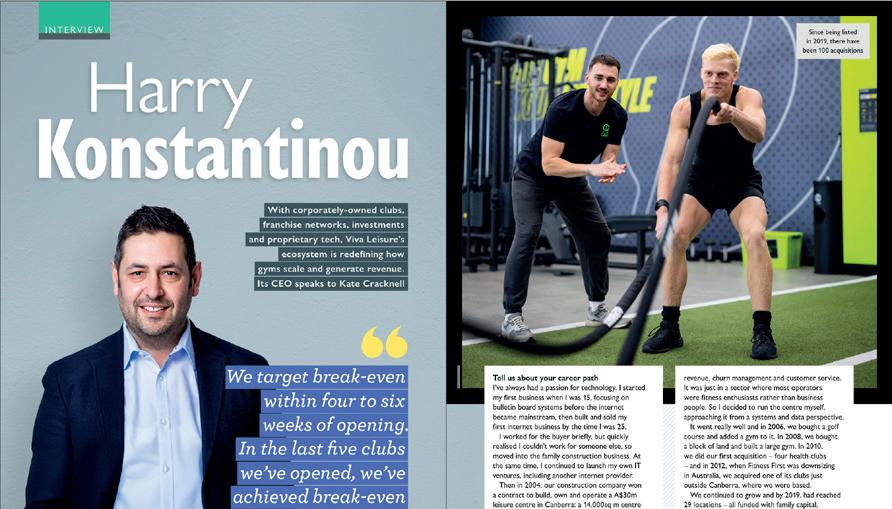
Harry Konstantinou
With corporately-owned clubs, franchise networks, investments and proprietary tech, Viva Leisure’s ecosystem is redefi ning how gyms scale and generate revenue. Its CEO speaks to Kate Cracknell
We target break-even within four to six weeks of opening.
In the last five clubs we’ve opened, we’ve achieved break-even during presale
Tell us about your career path
I’ve always had a passion for technology. I started my first business when I was 15, focusing on bulletin board systems before the internet became mainstream, then built and sold my first internet business by the time I was 25.
I worked for the buyer briefly, but quickly realised I couldn’t work for someone else, so moved into the family construction business. At the same time, I continued to launch my own IT ventures, including another internet provider.
Then in 2004, our construction company won a contract to build, own and operate a A$30m leisure centre in Canberra: a 14,000sq m centre with 50m and 25m pools, a 5,000sq m gym and indoor sports courts. The local government contributed A$10m and we put in A$20m.
When we were looking for operators, everyone wanted the gym but not the pool without a subsidy. We needed a return and when I looked at the business model I realised it was just a low-tech version of my internet businesses, with recurring
Since being listed in 2019, there have been 100 acquisitions
revenue, churn management and customer service. It was just in a sector where most operators were fitness enthusiasts rather than business people. So I decided to run the centre myself, approaching it from a systems and data perspective.
It went really well and in 2006, we bought a golf course and added a gym to it. In 2008, we bought a block of land and built a large gym. In 2010, we did our first acquisition – four health clubs – and in 2012, when Fitness First was downsizing in Australia, we acquired one of its clubs just outside Canberra, where we were based.
We continued to grow and by 2019, had reached 29 locations – all funded with family capital.
Is this when you listed on the Stock Exchange? Yes. With no other listed fitness group in Australia, we had to educate the investors, but when we showed them our technology and explained how ripe the industry was for consolidation, they realised we were the ideal horse to back and it happened quite straightforwardly.
We’d already built a full technology stack before we listed, with member management (Viva Hub), payments (Viva Pay) and access control (Viva Access).
We’d also launched a member app in 2014 and fully-automated online joining in 2015, removing the widespread issue of fob sharing by channelling all club access through mobile phones. We were capturing and analysing everything and knew so much about our members. We also had PCI DSS Level 1 certification, which is bank-level payments security.
If you look at our early ASX (Australian Stock Exchange) announcements, we described ourselves as a technology-focused health club group, rebranding from The Club Group to Viva Leisure to support that positioning. It
remains the case today, with 30 developers on our team coding new products all the time.
How has your estate grown since then? In the six and a half years since we listed – and despite COVID – we’ve completed 100 acquisitions. The largest was 13 clubs; most were between one and three sites.
That was achievable because we’d already removed the integration risks associated with acquisitions, namely membership software, billing and access control.
When we bought a club, members didn’t have to fill in a new membership form: we simply exported their data into our own membership software. There was no need to fill in a new direct debit form, because our PCI DSS Level 1
In the UK, we’ve signed a master agreement, with the first site opening in April 2026. When we enter a market, we aim to scale quickly and to dominate
Viva Leisure describes itself as a technologyfocused health club
certification meant we could exchange financial data direct with their banks. And there was no need to get a new fob, because we’d built our own access control boards that could integrate old fobs and cards with our new solution, all on one door. Our own existing members could roam to the new club, while incumbent members could still use their old access methods, although we did recommend they move to our app.
To put this into perspective, when we bought the Fitness First club in 2012, we integrated everything into our system and started to collect data one hour after settlement – all without asking anything of the members that might potentially have caused disruption or woken sleepers.
This was the tech focus that allowed us to do 100 acquisitions in six years.
Tell us about your current portfolio
Most of our 202 corporately-owned locations –135 of them – are branded as Club Lime. When we complete an acquisition, we upgrade the clubs as needed and bring them into this estate.
There was a point when we were opening a Club Lime site every nine days, but we’re now taking a step back and streamlining the estate, with network optimisation as our focus. In some cases we’re closing smaller locations that are in close proximity and reopening as one larger club. In others, we’re reviewing our facility mix: removing crèches from some sites, removing group fitness from others and replacing these with popular strength equipment.
Our second brand is the value-focused Plus Fitness franchise, which we acquired in August 2020 – an A$18m investment in the middle of COVID. As part of the deal, we have first right of refusal to buy sites from franchisees who want to exit. When you’re buying a franchise business but also own a competing business, you have to show the franchisees you’re invested – that any decision you make as franchisor affects you as a franchisee as much as it affects them. So we currently corporately-own 33 locations alongside the 170 franchised sites, most of which are in Australia, plus a couple in New Zealand and around 10 in India.
You also have boutiques?
We acquired Rebalance in 2021 and currently have eight of these mind-body studios and we’re in the process of rebranding them to Club Pilates.
Since 2024, we’ve been a 34 per cent shareholder in Boutique Fitness Studios,
VIVA LEISURE
which holds the Australia and New Zealand master franchise for the Club Pilates, CycleBar, StretchLab and Rumble brands.
We also have two organically-grown boutique brands: HIIT Republic and Ground Up, which is a premium Pilates and wellness boutique. We’re currently piloting a new wellness concept at Ground Up in Canberra. Providing exclusive, boutique access to infrared sauna, ice baths and so on – customers add it to their Pilates membership, buy a wellness-only membership or buy casual passes every time they want to use it.
Finally, we’re a 25 per cent shareholder in World Gym Australia, as well as owning three of our own World Gym clubs.
Overall, 202 of our 518 locations are corporately-owned and the remaining 316 – mostly Plus Fitness – are franchised.
What’s the benefit of a portfolio approach?
In contrast to operators who need a set footprint to be able to open a club, we have an option that works whether the site is 300sq m or 5,000sq m. We also open clubs in a ‘hub and spoke’ model – big clubs supported by little clubs around them – and draw on our data to understand what needs to go into which. We then configure them correctly and charge members extra to roam between them.
We have a really clear formula: two members per square metre. If the catchment supports 1,500 members – based on Australia’s 15 per cent penetration rate and the local competition, among other things – we’ll open a 700sq m club, not 2,000sq m just because that’s the standard model. In this industry, 70 per cent
Ground Up is a premium Pilates and wellness boutique
Grounds Up members can add different wellness options
of your costs are rent and wages. The latter we control with technology. Rent we control by not taking more space than we need.
If we then find there’s more demand than expected, we simply open another club in the area. We have some suburbs with three, four, five of our clubs – sometimes the same brand, sometimes multiple brands.
By perfecting this approach, we now target break-even within four to six weeks of opening. In the last five clubs we’ve opened, we’ve achieved break-even during pre-sale.
Across our 202 corporately-owned clubs, we run at 80 per cent utilisation. In some states, we’re at 100 per cent utilisation and are constantly having to open more clubs. In Canberra, for example, we have 62,000 members from a population – total, not adult – of 450,000. We have around an 80 per cent market share there.
Why did you want to get into franchising?
The option to buy back gives us a pipeline, but the primary reason was capital-light growth.
When we acquired Plus Fitness, it had 160-odd locations and was generating around A$2m a year in EBITDA. Last year, having grown to around 200 sites, it generated A$3.5m – but that isn’t the story. By overlaying our payments and technology,
In contrast to operators who need a set footprint to be able to open, we have options that work whether the site is 300sq m or 5,000sq m
we generated an additional A$6m last year for a total EBITDA of A$9.5m; we make more from processing payments and licensing our technology than from the franchise fees themselves.
The franchisees benefit too, paying less for their billing today than they did before we migrated them to our technology and payments platform, which is also a better, more integrated system
than they had before. The only way we could do all of this was by owning the franchise.
We then looked at Boutique Fitness Studios, which is rolling out quickly – with approaching 100 franchises across the four different brands – and realised we could do the same thing without necessarily having to own all of it. In our shareholder’s agreement, Boutique Fitness Studios franchisees now have to move to our technology provided it does everything they need and is cheaper than what they currently have, criteria we can easily achieve.
Again, we have first right to buy sites from franchisees who are exiting, but from technology licensing alone, we believe we’ll make our initial investment back very quickly.
World Gym is the same, with the only challenge being an existing contract for billing until April 2027. We’ve acquired 25 per cent of the business with a three-year option to buy the remainder and we’ll wait until we’re ready to turn on our billing. As soon as we do that, it’s an extra A$6m a year for Viva Leisure.
So you license your tech?
Only within our own ecosystem of brands at the moment, but we’ve just started licensing our access control to third party software companies. There’s nothing else like it. One little box and you can implement it into solutions, it works
with digital wallet, with any reader in the world, with any fob technology, with app access.
But to really understand our external perspective, you have to understand another vision of ours. Just as we bring franchisees together, giving them systems and buying power, so we want to bring independents together without them having to rebrand.
We want to create an Independent Fitness Group where we take care of everyone’s back office, website, access control, billing, legal and so on. We’ll enable members to roam to other Independent Fitness Group locations. Rather than being limited to a local market, a single independent club will be part of a nationwide network.
That’s our vision and the next phase of rolling out our tech: through white label licensing to large groups, including groups we create ourselves.
Our own franchise network shows just how well this can work. In the beginning, franchisees didn’t trust us – they thought we’d bought them to get their data and close them down – but by implementing our technology, they started
Franchisees can earn money by adopting Viva Signage (right)
Viva Leisure's tech ecosystem flows seamlessly across sites
We want to create an Independent Fitness Group where we take care of everyone’s back office,website, access control, billing, legal and so on
making more money. Every single franchisee is now making around 30 per cent more profit than when we bought them. So now, when we release new technology, they trust us – and they proactively ask us what’s coming next.
One product coming their way is Viva Signage – our in-club digital advertising screens. We have around 800 screens out there at the moment, making close to A$1m a year in profit. When we roll Viva Signage out to our franchisees, we’ll share the revenue with
them, sending them a cheque every month just for having the screens in their clubs.
Another product coming their way is Fling, which will drive more people to their clubs.
Tell us about Fling
Fling is one of two flexible access products already live in our ecosystem, the other being Flex.
Flex is currently Club Lime-only, although it will soon roll out to Plus Fitness. It allows casual users to buy instant passes via Apple Pay or Google
Pay and access a club without a membership. Linking to our tech, billing and access systems, the pass disappears from the phone once used.
In January 2026, we sold 7,200 Flex passes at A$25 each and the business is trending to around A$1.5m annually – all with no staff costs, just an app on the App Store.
Fling allows members to ‘have a fling’ with another club, paying a small premium to visit outside their home location. It’s currently live in Club Lime and about to go live in Plus Fitness, with plans to start rolling it out to World Gym locations later this calendar year.
Ultimately, we’d like to bring everything together under Fling, giving members access to our big box clubs, swimming pools, boutique studios and premium wellness in a way that acknowledges the different price points and compensates franchisees
for non-member visits. It’s complicated but not impossible within our Vivaverse – the ecosystem we build and control for our almost 700,000 members.
Any other tech innovations?
We recently launched hotel.fitness to fill the gaps for hotels with small or non-existent gyms. Hotels display a QR code in their rooms and guests scan it to buy a one-, two- or three-day pass to our portfolio of gyms and clubs. This is sent to them via digital wallet, with the whole process taking 30 seconds. It’s white-labelled to the hotel and costs the hotel nothing.
Launched with Club Lime, we’ll be adding Plus Fitness to the inventory as well. This will unlock 200+ locations initially, but there’s no reason why it couldn’t go worldwide: any gym is able to license our system and install our
The Vivaverse ecosystem serves 700,000 members
access control board without interrupting or removing their existing system.
On the personalisation side, we’re building out our AI coaching to enrich members’ programmes and build-in supplement recommendations and streamlined purchases. We’re also prototyping anonymous in-gym tracking –with consent – to deliver hyper-personalised prompts, without being intrusive.
Will tech overtake health clubs in your priorities?
Yes and no. Our technology, payments, licensing and retail division (TPLR) is where a lot of our investment is now being channelled, but our technology relies on having clubs and members – and our clubs are highly automated and straightforward to operate.
We reach beyond recurring membership revenues to create a robust ‘Vivaverse’ in which everything is firing
The goal is ecosystem growth. Whether the network expands corporately or via franchise, it doesn’t matter. As long as it grows, our technology, payments and licensing businesses grow alongside it.
Ancillary spend is also a major focus, including vending, supplements, roaming fees, digital advertising and other services. We currently generate around A$0.80 per member per week in ancillary revenue. Our target is A$2. So, we need the members, even if we don’t rely solely on membership revenue any more.
Tell us about your supplements.
Our vending business was already making A$3.6m in revenues a year and rising, with 50 per cent margin, so about two years ago we decided to move into supplements.
We now have an online supplement store, Supp Society, where we sell a range of products and brands. Our house brand – the product
Konstantinou says he's always had a passion for technology
VIVA LEISURE
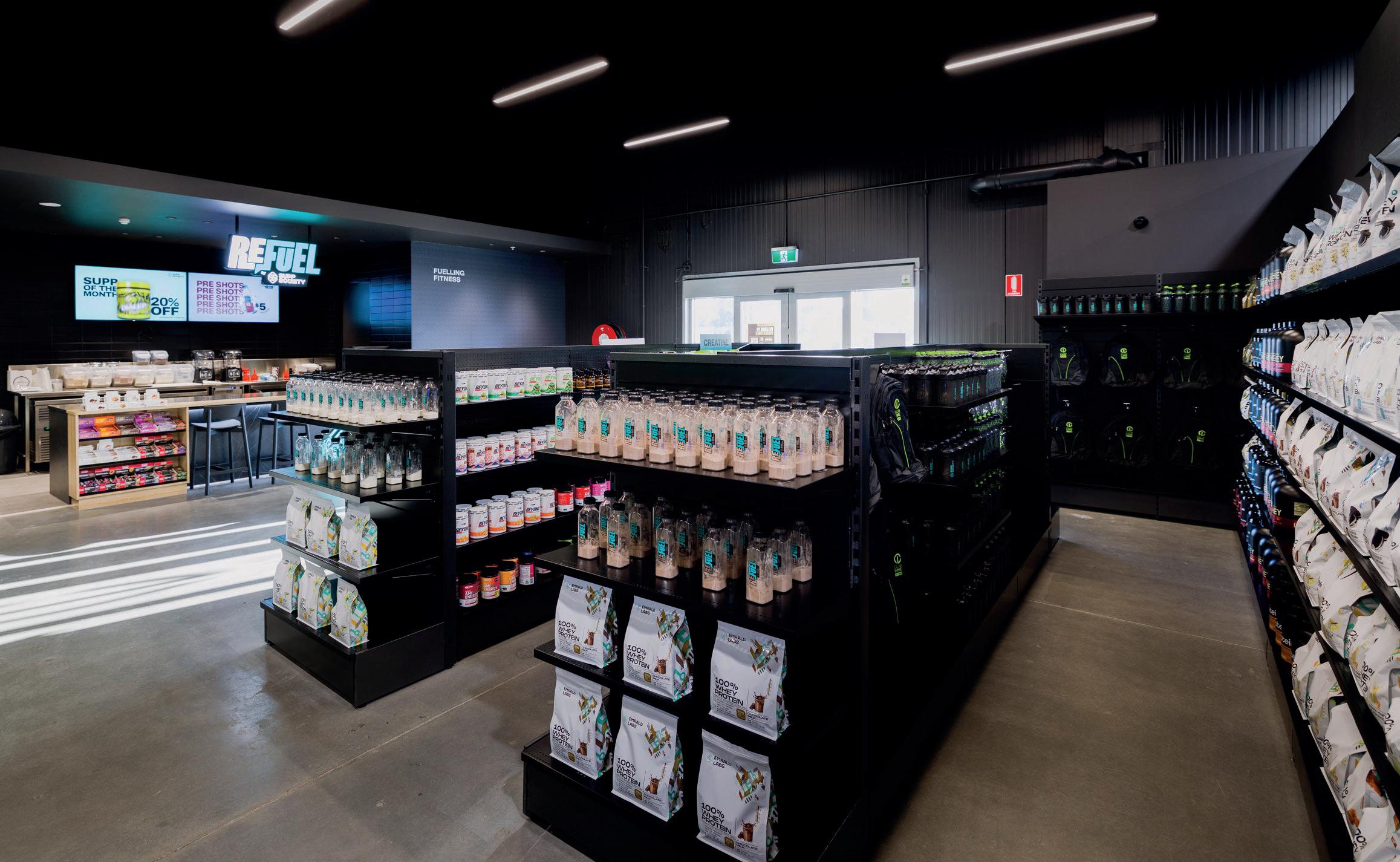
range where we drive the best margins – is created for us by Gorilla X Labs, a company we own 33 per cent of. In addition to the online store, we have four physical Supp Society stores inside Club Lime locations.
Our supplements business is only 18 months old, but we’ll do over A$1m this year just from the online store. With our four physical stores now open and more to come, we expect this to grow quickly.
Meanwhile, our target is to have 40 in-club stores operational within the next 12 months, which should make us the fourth or fifth largest supplement retailer in Australia. We’ll continue to grow that market.
We’re also on a path to acquire independent supplement stores located close to our health clubs, rebranding them to Supp Society, as an alternative to building in-club stores. We see an opportunity to consolidate this market just as we have the health club market. We can then start offering subscriptions that bundle together gym membership and supplements.
Let’s talk about your recent half-year results. For the half-year to 31 December 2025, revenue increased 17.6 per cent to A$116.5m. Statutory
Growth forecasts
>$237m
Revenue
FY2025: $211.3m
>$111m
Statutory EBITDA
FY2025: $99.0m
>$11.5m
Statutory NPAT
FY2025: $5.2m
>$53m
Underlying EBITDA
FY2025: $45.9m
NPAT rose 168 per cent to A$5.2m – last year it was $A5.1m for the whole year – and adjusted free cash flow increased 25 per cent to A$19.9m.
Our TPLR division grew 45 per cent and now represents 8.1 per cent of group revenue. It generated A$9.3m in the half-year and is on track for A$20m for the full year, growing around 40 per cent annually. That’s before we factor in supplement store acquisitions and upcoming tech launches, including hotel.fitness among others that I won’t share just yet. TPLR runs at extremely high margins, which helps the overall group performance.
What I’m most pleased about is that we achieved all of this with no club acquisitions and just one net new site, showing the impact of our network optimisation strategy. We added over 7,000
There are
members organically across our corporate network, driving around A$7m in additional annual revenue without any additional costs to the business.
I’m not saying our model is the best, but what we do, we do really well. We reach beyond recurring membership revenues to create a robust Vivaverse in which everything is firing, from tech to payments, corporate clubs to franchise clubs.
As the only listed fitness business in Australia, we hope to provide a benchmark that shows other operators what’s possible. We listed in 2019 with a target of A$7m EBITDA. We’ve just done A$54m in six months; achieved 60 per cent CAGR for the full year to June 2025; and are forecasting A$237m in revenues for the financial year ending June 2026.
What are your physical growth plans?
We have 171 franchise locations sold and in our pipeline, five corporate sites under construction and around 15 in negotiation. By June 2026, we will reach 689 sites, hopefully overtaking Anytime Fitness as the largest operator in Australia by site count.
The technology, payments, licensing
and retail
division
runs at extremely high margins, which helps the overall group performance
By June 2026, the business will reach 689 sites
We’ve sold 10 Plus Fitness territories in Singapore and expect corporate expansion in New Zealand. In the UK, we’ve signed a master agreement, with the first site opening in April 2026. Franchise rollout will follow and we’re expecting it to do well.
We are looking at other markets, but we aren’t interested in token international presence. If we enter a market, we aim to scale quickly and dominate.
The same applies in Australia. Our data shows 60 per cent of people join a gym based on convenience and location – specifically, being within 5km. We will go to South Australia and Tasmania, the only two Australian states we don’t currently service with corporate locations, but only when we can achieve density quickly.
Our track record speaks for itself: 100 acquisitions, 600-plus locations and a technology platform that’s now a revenue engine in its own right. But we’re not standing still. The roadmap is clear, the infrastructure is built and we’re executing. That’s what we do: we deliver first and let the results do the talking. l
THAT COUNTS PROGRESS
EGYM has opened a new HQ in Paternoster Square, London and revealed a range of new launches
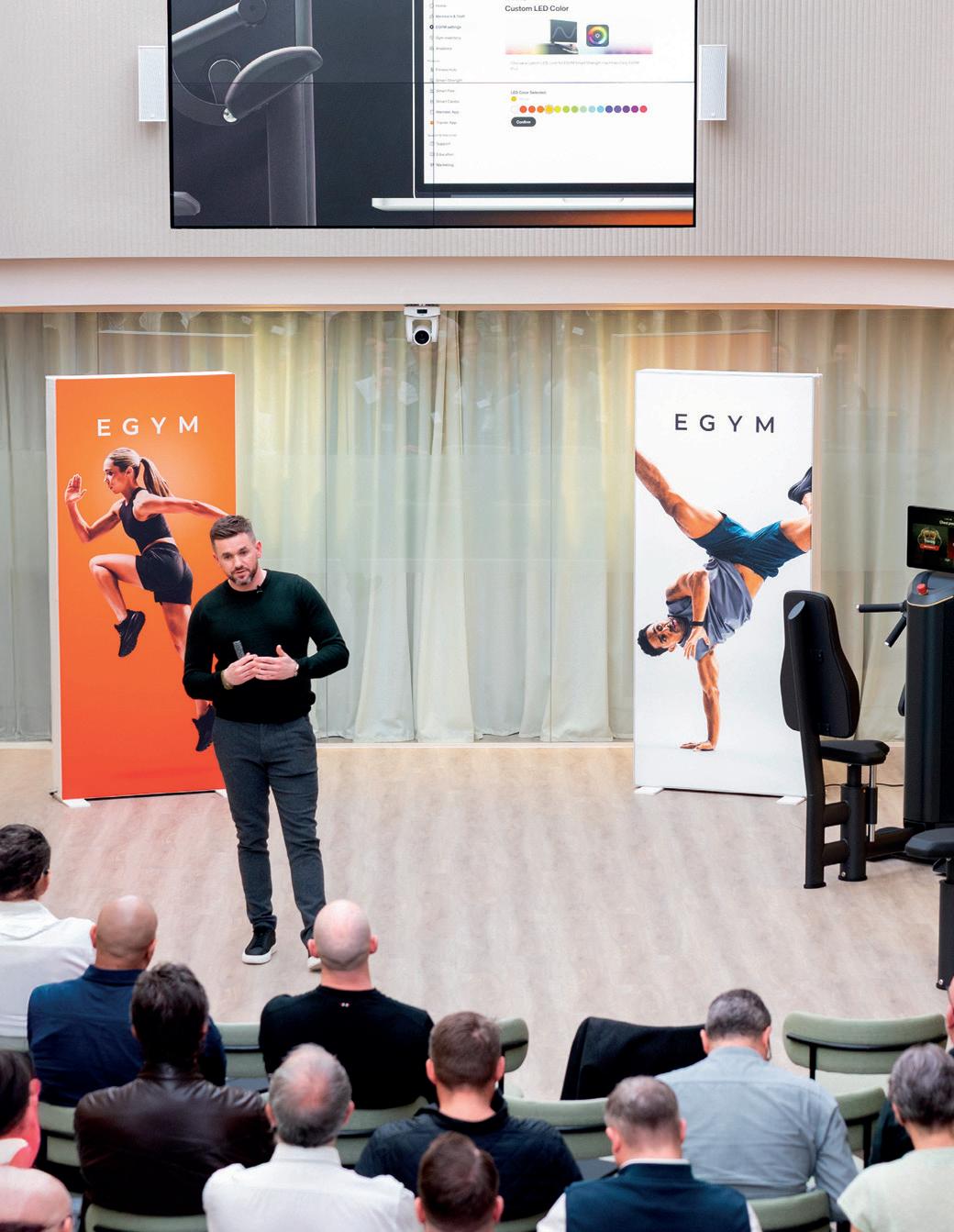
On March 5th, 2026, EGYM hosted its very first EGYM Innovation Congress at its brand-new showroom in central London. The atmosphere was electric, fuelled by a singular, guiding philosophy: progress only counts if it works for everyone. The congress marked the official launch of the showroom, EGYM’s new interactive, hands-on environment where operators can experience the EGYM Ecosystem in real-time.
Following this exciting event, the momentum is just beginning. Here is a look at the future of fitness technology and the innovations that are redefining the member experience, as revealed in London.
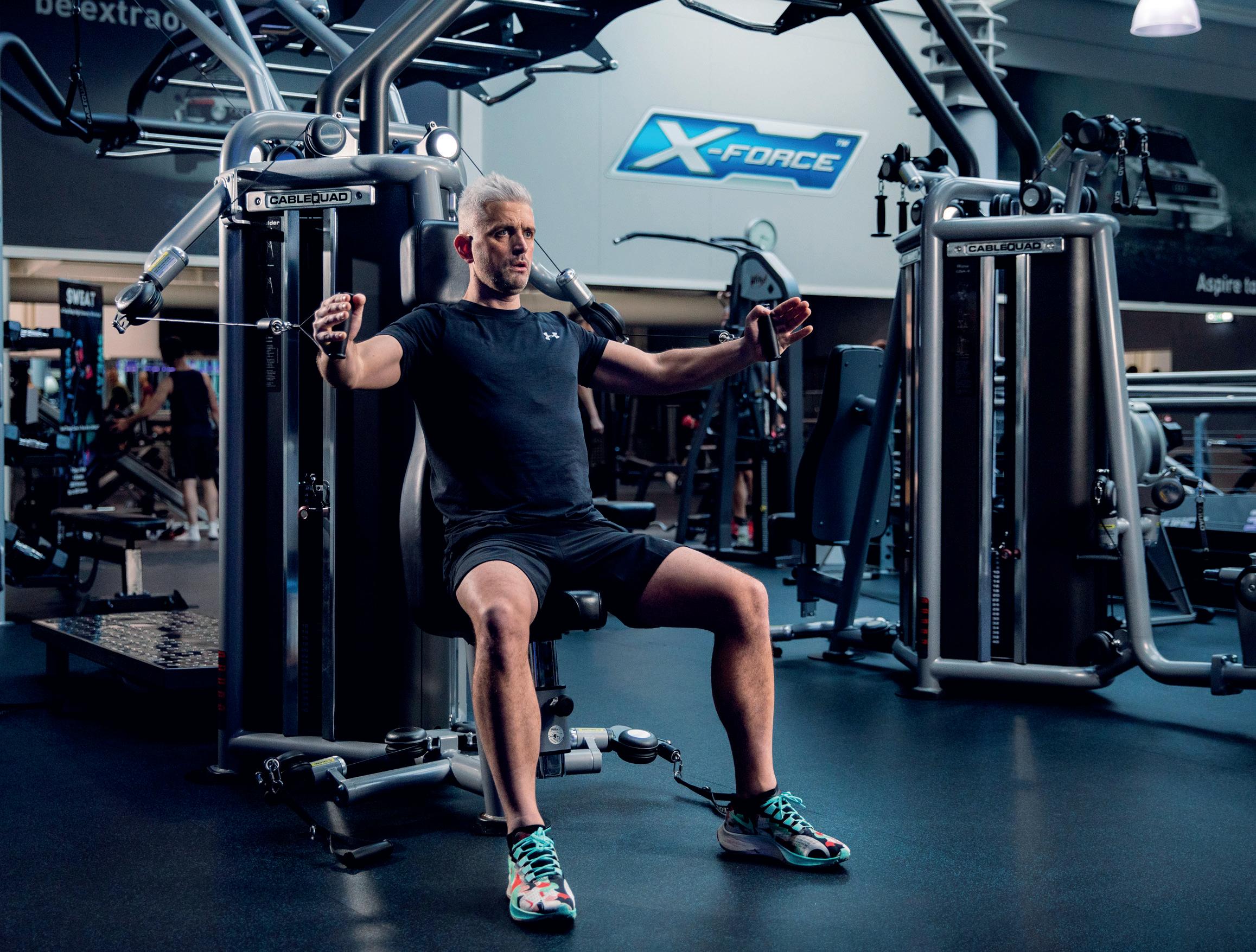
A new standard for strength training
Built to meet the needs of today’s members and operators, the all-new Smart Strength Series 3 features enhanced ergonomics, stunning design and even more intelligent software, transforming individual workouts into long-term training journeys. As part of the EGYM Ecosystem, Smart Strength adapts seamlessly to different floor concepts and training philosophies without compromising personalisation or control.
Whether it’s a guided strength circuit or an open, flexible training zone, it adapts seamlessly to unique businesses and redefines the gym floor for personalised, data-led training that’s standardised enough to scale, yet individual enough to deliver elite results.
Training for life
Healthspan is the new wealth and the Innovation Congress highlighted EGYM’s Longevity Training Programme, which is a direct response to the global shift toward proactive health management. This programme isn’t just a workout plan; it’s a data-driven roadmap designed to combat the biological markers of ageing. By focusing on muscle quality, metabolic health, and functional mobility, we’re helping operators move beyond fitness and into the holistic healthcare space, keeping members active and loyal for the long-term.
Smart Strength Series 3 was launched at the new EGYM HQ
EGYM Software Packs
EGYM is moving away from a one-size-fits-all approach, introducing Software Packs that allow operators to customise an EGYM experience to their specific business needs.
EGYM Software Packs unite smart training hardware with powerful digital solutions in one seamlessly-connected EGYM Ecosystem.
The EGYM Core Pack delivers everything needed to power the full member journey, while EGYM Success Packs unlock additional business opportunities. Together, these packs transform fitness facilities into data-driven, future-ready businesses designed to compete, grow and thrive in a rapidly evolving market.
Whether an operator focuses on growth, coaching or multi-site expansion, EGYM Software Packs ensure the tech evolves alongside the needs of customers.
The first true EGYM operating system
On top of these innovations sits the EGYM Ecosystem , the comprehensive operating system, which is built on three pillars:
■ Flexibility without fragmentation.
■ Efficiency that empowers staff through tech, rather than replacing them.
■ Retention that drives long-term success without the need for constant re-selling.
The EGYM Ecosystem isn’t just about completing workouts; it’s about facilitating longevity. By combining holistic training with data-backed guidance, it helps members stay healthy, capable, and engaged for life, not just in the short term.
Delivering powerful outcomes
The EGYM Ecosystem sits above individual tools, such as assessment systems and exercise equipment, coordinating them through five functional layers:
1. Training experience
Defining how members and trainers interact with the system for an elevated training experience.
2. Intelligence and data
Learning from every rep and result to automatically evolve training logic for every member.
Powered by EGYM Genius AI, this is where learning, adaptation and progress live.
3. Business insights
Giving operators total clarity on floor space optimisation and economic KPIs.
4. Integration and connectivity
Integrating effortlessly with external partners, such as other equipment suppliers, and removing technical friction for guaranteed flexibility.
5. Access and activation
Tapping into EGYM Hussle – the corporate fitness benefits solution – to drive new memberships. ●
Everyone’s talking about...
market penetration
UK market penetration has risen to 18 per cent – one of the highest globally, yet with 100 per cent of people seeing benefits when they exercise, how high could it go? Kath Hudson asks the experts…
We can find winning formats in new markets, says Lawler
We should be appalled at a sub-50 per cent penetration rate
Sophie Lawler
CEO
Total Fitness
Exercise is the wonder drug”. “Everyone can feel better if they move”. “There are benefits no matter the type of exercise”. If we believe these things to be true then – unlike any other industry I can think of – this is a consumer category with up to 100 per cent addressable market and we should be appalled at a sub-50 per cent penetration rate.
This poses a big question, and although it’s a complex picture, it needs to be addressed because the opportunity for fresh investment and supply is huge. The answer is not straightforward, but the starting point in identifying it is honesty and awareness.
The economics of success are nuanced. There’s strength in subscription businesses with stable fixed costs – once your costs are covered by revenue, it can be straightforward to expand margin by adding more customers. But that approach has a limit for gyms and that limit is capacity. Be it floor space, car parking, a fire certificate or studio spots, growth has a limit.
This can be a blocker for fresh investment so operators need to grip this issue and find creative ways to drive quality of earnings rather than simply member volume. At Total Fitness, 35 per cent of our revenue growth this financial year is attributable to quality rather than volume. This is where health clubs can really win from the middle ground, since the number of levers available to pull is greater with a wider cross-section of customers.
The flow of fresh investment – which in recent years has tended to come from private equity – has slowed significantly and the appetite for new investments is not what it was. It’s time for the investment community to look again at the sector and I believe it
will, but we need an industry-wide effort to advocate for the fundamental strengths of the proposition.
This is an incredible sector with tailwinds like no other in retail or hospitality and we need to stop positioning one model as better than another and advocate for the whole, because everyone can win.
With lower levels of fresh capital coming into all segments of the market, the pipeline of openings is not spreading to all areas of the country. I believe all models can work in the UK if we’re willing to adapt them to suit the market.
As operators we’re wedded to our macro market position – low-cost is priced low, middle market in the mid-range, and upper/premium at the higher end, but being rigid in our price proposition precludes us from adapting our models to work in new markets where property rents are higher, or market sizes smaller. The reality is that our market position doesn’t mean much to the customer. Customers understand value and price within their local context, not ours. We must grip this more local dynamic, so we can find winning formats in new markets.
Finally, exercise is hard. It can be scary. It can be unpleasant. That’s the customer reality. I admit to being guilty of celebrating exercise that is hard, scary and unpleasant and I think this is a deep sectoral paradigm that shuts out the 80 per cent of addressable market we need to reach.
Sondre Gravir CEO
The Nordics already have some of the highest gym penetration rates globally, but we still see significant room for growth.
The industry is supported by strong structural tailwinds. We’re riding a broader health and wellness megatrend, younger generations are increasingly fitness-orientated and tend to maintain these habits as they age, and at the same time physical inactivity remains a major global public health challenge. Together, these factors support long-term growth for the industry.
That said, this is a gradual structural shift rather than a short-term step change. Over the next five to 10 years, we expect growth to come from converting more people to be regular exercisers, improving retention and engaging population groups that historically have been less active.
Even in high-penetration markets such as the Nordics, several barriers remain. Some are economic, but many are behavioural or psychological. For many people the biggest hurdle is not access to gyms, but getting started and building a lasting habit.
Lowering these barriers requires making fitness more accessible and inclusive, through flexible pricing, welcoming environments, strong onboarding and digital tools that help people stay consistent.
There is also a broader societal opportunity. The least active groups often have the greatest health needs and closer collaboration between the fitness industry, employers and public health authorities could help position gyms as part of the preventive healthcare solution.
Operators need to evolve from being space providers to becoming long-term health partners for their members. This requires a stronger focus on onboarding and retention, as well as using data and
Sustainable growth requires balancing expansion with operational excellence and capital efficiency
digital tools to personalise the member experience and support long-term engagement. Community building and social training formats are also increasingly important in helping members stay motivated. Furthermore, there are significant opportunities in expanding reach through partnerships with employers and public sector actors, while developing offerings tailored to different stages of the member life cycle. Lastly, financial discipline remains crucial. Sustainable growth requires balancing expansion with operational excellence and capital efficiency. Every market is different, but there are a few elements from the Nordic experience that may be
relevant. First, accessibility and scale matter. Large and well-distributed club networks help lower the threshold for participation. Second, fitness has become part of everyday life. In the Nordics, exercise is widely normalised. It is not seen as extreme or elitist, but as a natural part of daily routines.
Finally, the industry has benefited from stable and professional operators with a long-term perspective, focused on sustainable growth rather than short-term gains.
Ultimately, gym penetration tends to increase when fitness is positioned as an accessible and integral part of everyday health, not as a niche lifestyle product.
Younger generations are increasingly fi tness-orientated
From a lending perspective, the health club and gym model has attractive characteristics
Stewart Haworth
Senior director of debt finance OakNorth
The health and fitness sector is one of the most compelling consumer-facing lending propositions in the UK today. What makes it particularly attractive is that demand is underpinned by a powerful structural shift: health and wellbeing is no longer discretionary in the way it once was. Fitness is also evolving into a social activity and that move towards experience and community creates stickier membership bases and stronger lifetime value per customer.
From a lending perspective, the model has attractive characteristics. Revenue visibility is relatively strong given the recurring membership structure, particularly for operators with a diversified membership base and disciplined pricing strategy. Once mature, clubs typically benefit from a largely fixed cost base, meaning incremental membership growth can drive attractive margins and operational leverage.
Well-run operators with strong site selection and a clear proposition can also generate robust cashflow profiles, which is what lenders ultimately look for.
The current penetration rate in the UK suggests significant headroom for growth. We believe
penetration can increase meaningfully over the medium term, driven by several factors – the UK has an ageing population that’s increasingly focused on active longevity, while younger generations view gym attendance as part of their identity and social life. Fitness is no longer purely transactional, it’s experiential and community-driven.
As public health systems face strain, there’s growing recognition of the role that strength training, cardiovascular fitness and general activity play in reducing long-term health costs. That cultural shift supports higher sustained participation. While it may not move overnight, penetration in the low-to-mid 20s over time does not feel unrealistic if operators
Operators need to make fitness feel accessible, inclusive and social
continue to innovate, differentiate and broaden their appeal across age groups and price points.
Affordability remains a barrier for some consumers, particularly in a cost-of-living environment where discretionary spending is under pressure. That said, the market has evolved to provide options across price points. Continued clarity around value, including what members receive relative to cost, will continue to be key.
Another barrier is confidence and accessibility. Operators that invest in onboarding, community-building, coaching support and building inclusive environments tend to perform better because they reduce psychological friction. The
growth of guided strength training, small group formats and personalisation is helping to address this.
Time is also a factor. Hybrid working has changed attendance patterns, but also created opportunities. Operators located near residential hubs who offer flexible access and integrate digital tools alongside physical membership are well positioned to remove convenience barriers.
The operators that will drive higher penetration are those that make fitness feel accessible, inclusive, socially engaging and not just a place to exercise. From a lender’s perspective, those are also the businesses that demonstrate stronger retention and more resilient long-term performance.
Deeper integration of physical activity into preventive healthcare would have the most structural impact
Anton Severin VP of research
Health and Fitness Association
The US member penetration reached 26 per cent in 2025, the equivalent of 81 million Americans.
When including non-member users, total consumer penetration was more than 33 per cent, or nearly 104 million Americans.
It’s hard to speculate how high penetration could go and in what timeline, because participation depends on a wide range of factors, including economic conditions, demographic trends, shifting cultural norms, pricing and public policy developments.
What would be likely to have the most structural impact over time is a deeper integration of physical activity into preventive healthcare. Exercise being systematically recognised and supported as part of the healthcare continuum – with fitness facilities positioned as key preventive health infrastructure – could materially expand penetration.
This shift is central to the Health and Fitness Association’s (HFA) mission and public opinion is aligned with it. In recent HFA polling, a large majority of Americans agreed that doctors should discuss physical activity with patients as part of routine care (88 per cent). Seventy nine per cent believe that exercise programmes should be prescribed in the same way as medication and 79 per cent also agreed referrals should be made to certified exercise professionals, when appropriate.
Non-members cite a range of barriers – gymtimidation, lack of time and preference for working out independently, but cost consistently tops the list in poll after poll.
In our December 2025 national survey, 42 per cent of non-members cited cost concerns as the primary barrier. Cost was also the most frequently cited obstacle in every market surveyed, from Canada and Germany to Saudi Arabia and Japan.
Affordability is not something the industry can solve unilaterally. Fitness facilities operate on relatively thin margins, so broad-based price reductions imposed at the operator level would likely result in facility closures, ultimately reducing access.
While consumers experience affordability as a personal financial question, the solution largely lies in policy. HFA’s price sensitivity research, published last year, indicates that a 10 per cent price reduction enabled through tax deductions, credits or similar policy tools could incentivise up to 17 million additional Americans to join a fitness facility.
Similar modeling in Europe shows comparable potential: a 10 per cent reduction in effective price could motivate up to 4.8 million in Germany, 2.7 million in Spain, and 250,000 in Ireland to begin using fitness facilities.
A price reduction via tax credits could incentivise millions of people
This is precisely the type of legislation HFA is advocating for at state and federal levels and such policies also enjoy broad public support. Seventy one per cent agree that people should receive tax incentives or tax credits to participate in physical activity programmes and 83 per cent say that health insurance plans should help cover the cost of fitness and exercise programmes.
While operators cannot solve affordability challenges, they can actively support the industry advocacy efforts that seek systemic solutions. That includes engaging with industry associations, participating in data collection efforts that underpin policy arguments, hosting lawmakers
in their facilities and helping to communicate the economic and public health value of the sector.
Operators also have a role to play in continuing to professionalise the industry, demonstrating high standards in training, safety, transparency and community engagement. That strengthens the sector’s credibility as a legitimate part of the preventive health ecosystem.
For countries with lower penetration rates – and in most markets – two universal priorities stand out. Firstly, build strong, unified industry representation to engage policymakers. Secondly, advance policies that improve affordability and recognise structured exercise as preventative health infrastructure. l
STRENGTH THAT NEVER COMPROMISES
The Nautilus Belt Squat unlocks powerful glute and quad activation, while the Standing Calf refines lower leg strength and symmetry with full-range calf development. Together, they deliver biomechanics, durability, and versatility that form a key component of any strength zone. Built to drive true performance and balanced aesthetics, this pairing supports member goals, boosts retention, and ensures lasting results for your facility.
Everlast’s fl agship club in West London spans 27,000sq ft
FUTURE-PROOFING
Everlast Gyms+ in Chiswick is working with Core Health and Fitness to raise the bar for fitness in London
As operators continue to redefine the modern fitness experience, the newly-opened Everlast Gyms+ Chiswick represents a bold step forward in delivering a holistic training environment for today’s members.
Located in West London and spanning 27,000sq ft, the flagship club showcases Everlast Gyms’ elevated concept, combining high performance training spaces with premium recovery and lifestyle amenities.
The facility features an expansive gym floor, group training studios and a Hyrox Performance Center, alongside a comprehensive recovery suite with a 20m swimming pool, sauna, steamrooms and ice baths. The result is a destination designed to support performance, recovery and community under one roof.
Dan Summerson, MD of Everlast Gyms, said: “Elevating our gyms is a critical part of our strategy for growth, and our supplier partners are essential to the success of this venture.
“We appreciate Core Health and Fitness for its reliability in supporting this work.”
Shaping the environment
For Core Health and Fitness, being part of this next phase in the Everlast Gyms journey goes far beyond equipment installation. Working closely with the Everlast team, the team helped shape a training environment that supports a wide spectrum of modern workout styles, from accessible strength training for everyday members to high performance conditioning for serious athletes.
By integrating signature brands Nautilus, StairMaster, Star Trac
“Elevating our gyms is a critical part of our strategy for growth”
Dan Summerson, Everlast Gyms
and Throwdown throughout the facility, the gym floor has been designed to deliver intuitive strength training, functional movement and cardio experiences that keep members engaged and progressing. Through collaborations such as this, Core Health and Fitness continues to work with leading operators to create training spaces that deliver lasting value, helping clubs attract new audiences, enhance the member journey and future-proof their facilities. ●
More: www.corehandf.com
Consolidation, specialisation and shifting consumer behaviours are reshaping the sector, say Deloitte and EuropeActive
Consumers’ engagement with fitness remains high across Europe
The European fitness market hit €39.1 billion in 2025, with growth driven by expansion, pricing and demand
The European fitness market has reached new highs, with revenues, memberships and club numbers all surpassing previous records, according to the latest report from EuropeActive and Deloitte.
The 13th edition of the European Health and Fitness Market Report 2026 provides a comprehensive annual analysis of developments in the European fitness industry and its wider ecosystem, drawing on insights from operators, consumers, intermediaries and suppliers across the region.
In addition to tracking market performance, the report offers detailed analysis of consumer fitness behaviour, including generational differences, the role of specialised facilities and evolving approaches to nutrition and supplementation. It also explores emerging themes such as weight-loss medications and longevity-focused lifestyles.
The findings are based on research conducted by Deloitte on behalf of EuropeActive, involving 11,250 consumers across 20 European countries, alongside analysis of operator performance and M&A activity over the past five years.
Growth accelerates
The European fitness market continued its strong growth trajectory in 2025, generating an estimated €39.1 billion in revenues, an increase of around 9 per cent year-on-year. This growth was driven by a combination of new club
openings, rising membership numbers and ongoing price adjustments across many markets.
By the end of the year, the market had expanded to more than 67,500 clubs, an increase of around 3 per cent, serving approximately 75 million members – up 6 per cent. This upward trend is reflected in improving operator sentiment, with 83 per cent of European operators rating their current business situation as “good” in January 2026 – a rise of 19 percentage points when compared to January 2024.
The sector’s largest operators continue to outperform the broader market and in 2025, the top 20 operators generated combined revenues of €7.96 billion, representing growth of 11 per cent year-on-year. All top 20 players reported revenue increases, supported by price adjustments and membership growth driven by both organic expansion and M&A activity.
In terms of membership, Basic-Fit strengthened its position as Europe’s largest operator, reaching 5.8 million members, followed by PureGym with 2.1 million and RSG Group with 1.8 million.
Collectively, the top 20 operators served 20.9 million members by year-end, an increase of 16 per cent compared to 2024, while their combined club networks grew by 15 per cent to 7,607 locations.
On the consumer side, engagement with fitness remains high. Around two-thirds of Europeans report exercising at least once per week, reinforcing the position of exercise as a routine part of daily life.
LifeFit Group sits in the top 10 by nunber of members
At the same time, preferences around how and where people exercise are becoming more defined. Fitness facilities have strengthened their role, gaining six percentage points since January 2023, while home-based and outdoor activity continue to complement weekly routines.
Traditional fitness clubs remain the dominant training environment, with three-quarters of regular facility users reporting that they exercise in a fitness club. However, specialised concepts – including Pilates, yoga and CrossFit studios – are attracting smaller but distinct user groups, contributing to a more diversified and segmented market.
Consumer behaviour varies significantly by age group. Younger consumers show higher engagement with digital fitness solutions and specialised studio
formats, and are more likely to view fitness as part of their identity. Older cohorts, by contrast, remain more focused on traditional club environments.
While awareness of the benefits of physical activity is high across all demographics – with more than 80 per cent agreeing that exercise is an important component of a healthy lifestyle – fewer consumers translate this awareness into consistent behaviour when it requires meaningful changes to daily routines.
Lifestyle convergence
The report also identifies a growing link between participation and health behaviours: consumers who exercise regularly are more likely to maintain consistent nutritional habits and to use supplements, both for general health and to support training.
Basic-Fit strengthened its position as Europe’s largest operator
Top 10 operators by members
Basic-Fit: 5,785
PureGym: 2,141
RSG Group: 1,785
All Inclusive Fitness: 653 2025
Fitness Park Group: 1,380
FitX: 990
The Gym Group: 923
DLL: 822
SATS: 755
LifeFit Group: 735
Basic-Fit...s, voluptas dera ab ipidem es el min comnis doluptio
Membership has surpassed 75 million across Europe, as fitness becomes embedded in everyday life for consumers
This suggests that, for engaged consumers, fitness is increasingly part of a wider lifestyle framework rather than a standalone activity.
Awareness of weight-loss medication is widespread, with 66 per cent familiar with the topic. However, usage remains low, at below 3 per cent.
Importantly, around two-thirds of those using such medications report exercising regularly, indicating that these treatments are generally being used alongside physical activity rather than as a replacement for it.
Growing interest in longevity
Longevity is emerging as a key theme shaping consumer priorities. When asked about the most important factors for maximising long-term health, respondents placed greatest emphasis on core lifestyle behaviours.
Regular physical exercise ranked highest among those people already engaged in fitness, while among non regular exercisers it ranked third. Across both groups, sleep quality and a balanced diet were also prioritised, while social, cognitive and preventative measures were seen as secondary contributors. Feature continues on page 68
Fitness clubs remain the dominant training environment
DELOITTE NUMBERS
Market size and growth
€39.1 billion
total market revenue (2025)
9 per cent year-on-year revenue growth
Market scale
75 million
total members
67,500+ total clubs
3 per cent club growth
6 per cent membership growth
The top 20 operators continue to outperform, using scale, pricing power and expansion to drive market leadership
Operator sentiment
83 per cent operators rating business as ‘good’ (Jan 2026)
+19 percentage points increase vs January 2024
Top 20 operators
€7.96 billion combined revenue
11 per cent revenue growth
20.9 million total members
16 per cent membership growth
7,607
total clubs
15 per cent club network growth
Leading operators
Basic-Fit
5.8 million members
PureGym
2.1 million members
RSG Group
1.8 million members
Intermediaries / aggregators
148,000 partner locations
14 per cent growth in partner locations Consumer behaviour
~66 per cent (two-thirds) exercise at least once per week
75 per cent (three-quarters) of facility users train in fitness clubs
Health, nutrition and GLP-1
66 per cent awareness of weight-loss medications
<3 per cent usage of weight-loss medications
M&A activity
27
total transactions (2025)
936 clubs transferred
30
transactions in 2024 (record year)
20
five-year average transactions
Major deals
493 clubs (clever fit acquisition by Basic-Fit)
121 clubs (MAC Group acquisition by Benefit Systems)
45 clubs (FIT/ONE acquisition by LifeFit Group)
PureGym is the second largest operator by members (2.1m plus)
EuropeActive’s target of 100 million members by 2030 is moving closer as the market continues to expand
Feature continued from page 65
M&A activity continues to reflect the sector’s consolidation trend. In 2025, a total of 27 transactions were recorded involving operators with at least four clubs and majority share transfers, resulting in a change of ownership for 936 clubs across Europe.
While this represents a slight decline from the 30 M&A transactions recorded in 2024, activity remains well above the five-year average of 20 deals per year.
The deal of the year
The acquisition of clever fit by Basic-Fit was by far the largest deal of the year, accounting for 493 clubs – more than half of all clubs transferred. Other notable transactions include the acquisition of MAC Group (121 clubs) by Benefit Systems and the acquisition of Fit/One (45 clubs) by LifeFit Group. Intermediaries and aggregators continue to play a central role in widening access to fitness services. While business models vary across Europe – from B2B partnerships to direct-toconsumer approaches – more operators are partnering with these types of platforms.
Trading year 2025
Top 10 operators by number of clubs*
Basic-Fit: 2,151
PureGym: 612
RSG Group: 292
Fitness Park Group: 403
FItX: 112
The Gym Group: 260
DLL: 137
SATS: 273
LifeFit Group: 214
All Inclusive Fitness: 172
This is reflected in the growth in the number of aggregator partner locations, which increased by 14 per cent to reach 148,000 in 2025, driven largely by the addition of fitness and functional training facilities.
The outlook for Europe
Looking ahead, the European fitness market is becoming increasingly complex as the boundaries between fitness, health and lifestyle continue to blur. Operators are refining their positioning and propositions in response to more segmented demand and intensifying competition, particularly in urban markets.
At the same time, the overall direction of travel remains positive. Participation is stable, market fundamentals are strong and consolidation continues to create scale advantages for leading operators. Against this backdrop, EuropeActive is maintaining its ambition of reaching 100 million members of health clubs across Europe by 2030 – a target that appears increasingly achievable as the sector continues to evolve. l Find out more: www.europeactive.eu
Lines between fitness and health continue to blur
We see engagement in programmes at its strongest when they’re co-created with young people
Vicci Wells shares insights from Class of 2035, the Youth Sport Trust study on physical activity in Gen Alpha
2035 CLASS OF
Generation Alpha is the first to grow up fully immersed in digital environments and as a result, technology is playing a major role in shaping their lifestyles. The Youth Sports Trust’s recent Class of 2035 report, produced in partnership with research agency Savanta, shows that more than a third of young people currently spend three hours or more per day on screens and – based on current trends – this is likely to grow. This screen time often replaces active play, reducing the time spent outdoors and limiting spontaneous movement. Compared with previous generations, Gen Alpha’s free time is increasingly
sedentary, meaning the traditional routes to staying active, such as playing outside, riding bikes and informal games with friends, are less popular. While not unique to their generation, common barriers we continue to see affecting girls’ physical activity levels include concerns around body image and self-consciousness.
Although our annual Girls Active reports continually finds that girls want to be active, as puberty hits, many report that enjoyment of PE drops significantly and their activity levels suffer as a result.
We’re also seeing growing disengagement among boys, often driven by a reduced sense of belonging and connection. Much of their
Vicci Wells
social world is now online, which can leave them feeling detached from real-life communities and activities. This lack of connection can dampen their motivation to get involved in physical activity, even when this could offer exactly the social interaction and positive connection they need. Other barriers include accessibility and a lack of inclusive options. Children who feel they’re not sporty or don’t fit into traditional structures of provision often disengage early, creating habits of inactivity that can persist into adolescence.
Successful engagement
To engage Gen Alpha, the key is to rethink old approaches. Simply doing things the way they’ve always been done won’t capture the attention of those young people who are already disengaged. Instead, we need to be trying new ways to make movement exciting, relevant, and fun.
We need to find ways to make movement exciting, relevant and fun
Simply doing things the way they’ve always been done won’t capture the attention of those young people who are already disengaged.
Despite some of the challenges it causes, technology can also provide powerful positive tools if we consider effective and healthy ways to integrate it. Gamified fitness apps, virtual challenges, progress tracking, and interactive experiences can harness Gen Alpha’s love of technology while promoting movement.
This generation is increasingly drawn to gamified, skill-based, and social forms of movement, and they respond particularly well to activities that feel like games, with goals, levels, challenges and visible progress built in.
Offering new and unconventional forms of movement, from immersive studio experiences to Parkour and obstacle courses and from dance sessions to mixed-reality activities, gives more children the space to find what they enjoy most and, crucially, something they want to come back to. It’s being active, not the activity, that matters most.
Alongside this, building supportive communities where all participants can feel included and valued is essential. Our Youth Sports Trust
programmes focus on creating environments where children of all abilities feel encouraged and able to take part and we would encourage all health and fitness operators to embed this ethos in everything they do for this cohort.
Engaging young people
Ahead of the Olympic Games in LA in 2028, at the Youth Sport Trust we’re now working with schools across the country, with Pentathlon GB and with British Obstacle Sports, to explore how obstacle-style activity can be introduced and trialled within their settings. The early signs are exciting and it’s clear that this type of activity could play a powerful role in engaging young people in movement over the coming years.
Members of Gen Alpha also care about the world around them. Many have grown up learning about climate change and sustainability and they see these values reflected online through influencers and campaigns. Offering outdoor activities, programmes in natural spaces, or initiatives that promote sustainable behaviour can
The best way to engage Generation Alpha is to listen to them. Don’t assume you know what they want
Gen Alpha have grown up learning about climate change
resonate strongly with them. For example, our work with Sail GP (www.sailgp.com) demonstrates the power of combining physical activity with environmental awareness, allowing children to feel connected to nature while also being active.
At the same time, each child and community has unique motivations. Understanding local interests and tailoring programmes accordingly is far more effective than a blanket approach.
The best way to engage Gen Alpha is to listen to them. Don’t assume you know what they want. Involve and empower them in shaping the activities you offer. This generation wants to be heard and they need to know that their ideas and opinions matter and that they can influence what happens.
In our own programmes, we see engagement is at its strongest when they’re co-created with young people. When they see that their input makes a real difference, they’re far more likely to get involved, stay motivated and enjoy being active. l Vicci Wells is assistant director of children and young people at the Youth Sports Trust
ENGAGING GEN ALPHA
Listen. Don’t assume you know what they want. Involve and empower them.
Rethink old approaches. Don’t do things the way they’ve always been done.
Try new ways to make movement exciting, relevant, and fun.
Use tech, such as gamified fitness apps, progress tracking and interactive experiences
Offer new and unconventional forms of movement, from dance to immersive studio experiences
Build supportive communities in your health club where all feel included and valued
Be aware that members of Generation Alpha care about the world around them.
Offer outdoor activities or initiatives that promote sustainable behaviour.
Understand local interests and tailor programmes
Together we’ll define the next decade of physical activity
ELEVATE 2026
Celebrating 10 years
Welcome to Elevate 2026
As Elevate marks ten years since its launch in 2016, the 2026 edition is both a celebration and a statement of intent for the future of physical activity.
What began as an ambition to bring together the fitness, sport, physical activity and therapy sectors has grown into a trusted meeting place for leaders, innovators and practitioners committed to improving the nation’s health and wellbeing.
A decade on, our sector looks very different. Collaboration is stronger, standards are higher, and the connection between physical activity and healthcare has never been more embedded. From community-based prevention pathways to rehabilitation programmes, our role in shaping
healthier communities is clearer and more influential than ever.
Elevate 2026 will honour this progress through dedicated Legacy Sessions that revisit key themes and speakers from our 2016 programme, reflecting on how far we’ve come and what lies ahead.
We’ll also be showcasing a 10-Year Exhibitor Trail recognising brands that have exhibited every year, alongside returning partners and first timers.
This anniversary isn’t just about reflecting, it’s about accelerating what comes next. Together we will define the next decade of physical activity.
Lucy
Findlay-Beale, show director, Elevate
David Stalker, chair of UK Active, will take to the stage
What is Elevate?
Elevate is the UK trade event for physical activity, fitness and sports therapy. Spanning two days, the show attracts 6,000 senior professionals from gyms, studios, sports clubs, universities, schools, health services and more, all driven by a shared mission to get more people moving and healthier.
At the core of Elevate 2026 is an exhibition of 200 suppliers, presenting the latest equipment, technology and services shaping the future of physical activity and performance.
Beyond the show floor, Elevate delivers a programme of education, with 200+ expert speakers sharing insight across multiple content theatres. Supported by 50 industry bodies, media partners and NGOs, Elevate remains an essential annual meeting place for professionals who want to network, stay informed and help shape the direction of the sector.
10-YEAR LEGACY PARTNERS
■ Active IQ
■ CIMSPA
■ DFC – now Xplor
■ Gantner
■ HCM Magazine
■ Inbody
■ Jordan
■ JPL
■ Myzone
■ Origin
■ RLSS
■ STA
■ The Hygiene Company
Elevate and Future Fit extend Education Partnership through to 2027 Future Fit has been Elevate’s Education Partner since 2022 and will again lead on content across Elevate’s education theatres. This year, Future Fit will host a lounge where speakers and VIPS will be invited to relax and prepare for meetings and presentations. Rob Johnson, founder and CEO of Future Fit, comments: “We’re proud to be part of its 10th anniversary and to continue working with the Elevate team on a partnership built around shared values, high standards and meaningful learning experiences for fitness professionals.”
Elevate Curated Theatres
Sarah Watts, CEO of Alliance Leisure, will speak at Elevate
The 2026 education programme will once again be free to attend and will give delegates access to 200 speakers in expert-led sessions across four curated theatres: Debate, Generate, Accelerate and Collaborate New for 2026, the education programme will be peppered with Legacy Sessions – a reappraisal of topics first tackled in the first Elevate in 2016 – some featuring the same speakers who addressed our audiences ten years ago, giving a chance to reflect on how far we’re come in the past decade and to share views on where the next ten years will take us.
The 2026 education programme will once again be free to attend and will give delegates access to 200 speakers in expert-led sessions
Speakers will include Sarah Watts (CEO, Alliance Leisure), Tara Dillon (CEO, CIMSPA), David Stalker (Chair, UK Active), Davina Deniszczyc (medical director, Nuffield Health) and Katherine Knight (director, Intelligent Health). These experts will be delivering content on a wide range of topics designed to spark conversation, share best practice and explore the ideas and trends influencing the future of physical activity.
The four Elevate theatres
1. The DEBATE Theatre
This headline stage features horizon topics; the discussions transcending public and private sector, operator and supplier. This year we explore everything from AI and systems leadership to active aging and the future of fitness education.Future Trends is back – and even better – and we also see the return of Routes to the C-Suite, looking at the career journeys of senior fitness execs.
Nuffield’s Davina Deniszczyc will keynote at the 2026 event
A VIP lounge will be supported by Elevate partners
2. The GENERATE Theatre
Day 1 morning
Building strong foundations
Exploring brand and identity, customer experience metrics and how to get your gym start-up right.
Day 1 afternoon
Exploring emerging opportunities
How to identify and monetise new opportunities, exploring everything from the padel boom to the impact of weight-loss medication.
Day 2 morning
People and purpose
Looking at workforce evolution and skills, corporate wellness and new metrics for examining consumer feedback.
Day 2 afternoon
Pricing and process
Identifying best pricing strategies, efficient membership journeys and what it takes to become a B-Corp.
3. The ACCELERATE Theatre
Day 1 morning
Enhancing performance
Exploring mindset and motivation, what we can learn from elite performers and snapshot insights on creatine, breathing and biomechanics.
Day 1 afternoon
Promoting recovery
What’s the next big thing in recovery, how wearables and AI are changing the recovery landscape and snapshot insights on sleep, nutrition and red-light therapy.
Day 2 morning
Lifecycle fitness
Understanding how hormonal fluctuations and life stage transitions impact exercise response, recovery and long-term health outcomes
NEW EXHIBITORS FOR 2026
■ Ambohr
■ BRP Systems
■ Poolpod
sdf
■ DK Way Sports
■ Everyreformer
■ Formlens
■ Hengchangsports
■ Marsden Weighing
■ Nutrable
■ Refreshment Systems
Day 2 afternoon
■ Repfitness
■ S&C Slatter
■ SofSurfaces
Europe
■ Summit Medical and Scientific
■ Swimasaurus.com
■ Swimsure
■ The Leisure Experts
■ Watson Gym Equipment
Introducing the Beyond Reps movement Moving beyond performance and building a human-centred wellbeing industry, these sessions consider what it takes to flourish as a human.
4. The COLLABORATE Theatre
Day 1 morning
Moving more
Insights into collaborative approaches to driving greater participation and engagement in physical activity.
Day 1 afternoon
Moving together
Innovation and sharing of best practice in effective partnership work.
Day 2 morning
The Power of Place
Exploring the impact of environment on participation and accessibility.
Day 2 afternoon
The Power of Tech
Examining how AI, digital tech and VR are reshaping engagement and reaching new audiences.
The trade show and networking areas give industry professionals the opportunity to do business
Elevate 2026 education partners
1. Active Aquatics
Active Aquatics will once again take centre stage with a dedicated theatre, curated in partnership with STA, RLSS and Swim England. The programme will deliver a blend of strategic perspective and hands-on learning, designed to support the development, safety and long-term sustainability of aquatic activity across the UK.
2. Third Space Academy
Now in its fifth year at Elevate, the Third Space Academy will continue to provide high-impact, practical education aimed at developing personal trainers and coaches at every stage of their professional journey.
3. Technogym
Returning for a third consecutive year, Technogym will share its expertise through a series of expert-led sessions hosted directly from its stand, highlighting innovation across movement, health and performance.
GET ACTIVE AT ELEVATE
Elevate will work with a team of partners to deliver mindfulness and movement breaks between education sessions. We all know it’s not healthy to sit for long periods so we’ll be encouraging people to take time out between sessions to focus on their physical and mental health.
EXHIBITION HIGHLIGHTS
■ Active IQ
An Ofqual-recognised awarding organisation for the physical activity sector, Active IQ offers 100 accredited qualifications from entry-level to Level 5.
Within the apprenticeship sector, it offers End-point Assessments across the leisure, education, facilities management and community sectors. Experienced assessors and a knowledgeable apprenticeship team support apprentices, employers and training delivery teams to achieve the best outcomes. www.activeiq.co.uk
■ Alliance Leisure
Alliance Leisure is a UK-based leisure development specialist. Working in partnership with local authorities and leisure operators, it creates engaging, place-based active environments that cater for everyone.
Over the last 25 years, Alliance Leisure has delivered more than 300 projects, from multi-site regeneration schemes and new builds to outdoor spaces, 3G pitches and leisure centre modernisations. These projects represent an investment value of £530 million.
www.allianceleisure.co.uk
■ Balanced Body
Balanced Body delivers group reformer Pilates equipment and instructor training, supporting studios, universities and premium fitness operators to deliver scalable reformer programmes.
In the UK, key accounts include Third Space, University of Nottingham and Ten Reformer.
Grounded in Joseph Pilates’ original principles, the company designs precision-engineered apparatus that enhances performance for both teachers and clients, while delivering comprehensive education programmes and certifications. https://balancedbodypilates.co.uk
■ CET CryoSpas
The CryoSpa Serena ice bath will launch at Elevate 2026.
Designed for the leisure and wellness market, it pairs patented jet technology for deeper, more penetrating cold with hydrostatic pressure depth, a stainless-steel interior and a wood exterior.
Alongside Serena, CET will show the Glacier Ice, its most popular ice bath for the sector. Featuring a stainless-steel interior, cedar cladding and a marble-style top, it is suitable for both indoor and outdoor installations.
Both systems have a chiller that provides consistent coldwater immersion down to 1°C. www.cetcryospa.com
■ CFM
Creative Fitness Marketing (CFM) is a specialist marketing agency dedicated to the health and fitness sector, with 36 years in business and experience supporting thousands of health clubs worldwide.
It helps clubs attract more members, improve retention and grow revenue through datadriven campaigns, creative services and measurable strategy.
CFM also handles the selling process without charging upfront service fees. www.cfm.net
■ CIMSPA
CIMSPA (The Chartered Institute for the Management of Sport and Physical Activity) is the professional development body for the UK’s sport and physical activity sector workforce.
The organisation is committed to supporting, developing and enabling professionals and organisations to succeed.
Its ambition is to inspire a more active nation and shape a vibrant UK-wide sport and physical activity sector with the highest standards of service delivery — one that everyone can be part of.
The recent launch of professional status, a defining moment for the sector, serves to equip CIMSPA members with a formal title, a digital accreditation credential and post-nominals, to allow them to demonstrate and showcase their status to employers, the public and professionals in other sectors. www.cimspa.co.uk
■ EGYM Hussle
EGYM Hussle partners with employers and private medical insurers to improve employee, customer and policyholder health by providing access to fitness and health facilities.
Founded in 2011 as a B2C business, Hussle pivoted postCOVID to focus on B2B markets, and has since been acquired by EGYM to form the UK arm of global corporate fitness specialists, EGYM Wellpass.
EGYM Hussle sends new members to clubs that wouldn’t otherwise visit, delivering true incremental value for operators. www.hussle.com
■ Gantner
From parking the car, entering the premises and putting gear in the locker, to booking classes and paying for a well-deserved treat afterwards. All parts of the customer journey are covered
with Gantner – the hardware, software and access specialist. www.gantner.com
■ Matrix Fitness
Matrix Fitness is known for delivering innovative, highperformance solutions to health clubs, corporate gyms, hospitality, education and public sector facilities. Offering facility design support, connected technology, training and education to enhance the member experience and maximise ROI, the team aims to be a trusted advisor.
Matrix will be showcasing a range of solution-based products, including for strength training, cardio, fitness racing, recovery and Reformer Pilates. www.matrixfitness.com
■
Merrithew
Merrithew, the supplier of Pilates equipment and creator of education programmes such as Stott Pilates, Zenga, Total Barre
Balanced Body will return to Elevate with its Pilates equipment and training
Technogym will show its equipment and tech
and Halo Training, has acquired Align-Pilates, supplier of Pilates equipment and accessories for professional studio and home use.
Merrithew Connect, a video streaming platform features Pilates, fitness and mind-body workouts. www.merrithew.com
■ Myzone
Myzone is the creator of Motivation Technology (MoTech), a new and dedicated category of FitTech that fuses technology with behavioural science to keep people moving for life. Its heart rate-based efforttracking platform – now enhanced by Myzone Go – builds lasting habits by rewarding effort and encouraging active communities both inside and outside the gym. www.myzone.org
■ Ojmar
The Ojmar OTS 40 Batteryless is the first battery-free smart locker lock designed for fitness and wellness spaces, delivering seamless access without the
Technogym will share its insights through a series of expert-led sessions hosted from its stand
burden of batteries, hard-wiring or ongoing maintenance.
Powered by Ojmar’s patented Push Power Technology, it generates kinetic energy, activating the lock and enabling operation online or offline.
Built for high-traffic locker rooms, it supports RFID and NFC credentials, from wristbands and fobs to smartphones, making it easy to evolve from wearables to app-based journeys.
With maintenance-free operation, operators eliminate routine battery changes and associated costs.
Managers can access the cloud for centralised control, real-time monitoring and access history. www.ojmar.com
■ Physical Co
Over a period of 30 years, Physical has evolved from a family-run business supplying hand weights and mats to become one of the best-known suppliers of highquality gym equipment in the UK.
Its catalogue contains 1,900 products, ranging from its growing
Physical range of commercial gym equipment – which is designed in-house to meet the ever-evolving needs of the sector – to cherrypicked items from strategic partners. www.physicalcompany.co.uk
■ Seca UK
Matrix Fitness and Seca have announced a partnership to develop an integrated solution that translates medical-grade body composition data into intelligent, guided training experiences.
Combining Seca’s measurement technology with Matrix’s AI-driven programming and connected fitness ecosystem, the collaboration aims to turn health insights into actionable directions on the gym floor.
As personalisation becomes an industry expectation, some operators and coaches struggle to apply complex data. This partnership addresses that gap by pairing measurement with adaptive training programmes, supporting consistent, outcome-focused experiences without adding operational burden. www.seca.com
■ Speedflex
Pioneers of ‘HIIT Without The Hurt’ training – meaning no joint pressure or pain during the workout, and minimal DOMS after it – Speedflex is one of the most inclusive workouts in the world. It offers safe and effective, high-intensity, low impact HIIT training in a variety of formats, from connected fitness on the gym floor to full studio solutions. With personalised resistance, the workout is suitable for every level of fitness. www.speedflex.com
■ STA
This year marks by the launch of STA’s newly regulated Level 2 Swimming Teacher Qualification. Developed in line with CIMSPA’s updated Professional Standard, the qualification sets a clear, futureready benchmark for swimming teacher training, shaped around how today’s workforce wants to learn. With blended study and a focus on practical, work-ready skill development, it supports swimming teachers, tutors and managers to
build connections with modern learners and strengthen longterm workforce development. Visitors to Elevate will also see how STA has modernised its delivery model with updated resources and digital tools, including AI-supported marking, providing simpler delivery, greater flexibility and reduced administration for training centres and tutors. www.sta.co.uk
■ Swim England
Swim England was the only governing body of swimming in the world when it was formed in 1869. It evolved into a national association as clubs from across England became members with responsibility for the development and regulation of swimming as a sport and now helps people learn how to swim, enjoy the water safely, and compete in all aquatic sports. www.swimming.org/swimengland
■ Tanita
Elevate will give a UK-first look at Tanita’s next step in body composition: the MC-800.
Designed for premium clubs and studios, it helps move beyond weight and towards more meaningful measures of progress. Built to integrate seamlessly into assessment and coaching workflows, the MC-800 delivers easy-to-read insights that support member conversations and retention, without adding friction. www.tanita.eu
Gantner is showcasing its access and customer journey tech
David Lennard (L). JP Lennard is a tenyear legacy exhibitor
ELEVATE / GANTNER
Operators, fitness professionals and suppliers converge on ExCel
■ Technogym
Technogym will introduce the RUNX World Treadmill Championship and share insights through a series of expert-led education sessions, highlighting innovation across the industry. www.technogym.com
■ TVS Group
TVS installs rubber, polyurethane, timber and vinyl surfaces for sporting and physical activities. This includes Sportec gym flooring, along with Euroflex impact protection flooring and playground accessories. The company is also an exclusive supplier of Robbins Sports Surfaces, enabling it to offer elite-level hardwood sports flooring systems.
TVS Group includes TVS Sports Surfaces, TVS Gym Flooring, TVS Play Surfaces and TVS Acoustics. www.TVS-Group.co.uk
■ The Wellness Tree
The Wellness Tree is a specialist recovery suite partner, helping gyms integrate proven recovery technologies into one offering. The company combines tech, including hyperbaric oxygen therapy, IHHT, red light therapy, infrared sauna, contrast therapy and targeted recovery tools to
At Elevate 2026, we’re showcasing how recovery can improve member retention and increasing secondary spend. www.thewellnesstreegroup.co.uk
■ Wattbike
At Elevate 2026, Wattbike will be showcasing how performance data can have real business impact.
Visitors will experience live VO₂ benchmarking with Healthspan alongside the Max Power Test, demonstrating measurable improvements in key health and longevity markers. On the stand, visitors will be able to ride both the Air-Pro and the new AtomX with PTS2 monitor, showing how Wattbike helps operators increase PT revenue, boost retention and evidence member progress. www.wattbike.com
■ WellnessSpace Brands
WellnessSpace Brands provides self-guided recovery solutions that help facilities deliver wellness experiences without adding staff or operational complexity.
With more than 36 years’ of innovation and 400 million sessions delivered worldwide, the
portfolio includes HydroMassage, CryoLounge+, RelaxSpace and the newest additions, RedZone Sauna and PolarWave Dry Plunge.
RedZone Sauna combines infrared heat and full-body red light therapy to provide relief from everyday aches and stiffness. PolarWave Dry Plunge delivers cold exposure to support post-workout recovery.
With clients in 50+ countries, customers include David Lloyd, Pure Gym, Everyone Active, Gym Box and Anytime Fitness. www.wellnessspace.com
■ Xplor
Today’s fitness and leisure brands need technology that powers standout fitness experiences and keeps pace with changing member expectations.
From independents to global franchises and chains, Xplor software is the operational backbone behind the member journey, making it easier to deliver seamless experiences, build lasting loyalty, and grow with intention.
The company’s main products are ClubReady, Clubware, Deciplus, Exerp, Legend, Mariana Tek, Membr, Momence, myFitApp, Resamania, TrueCoach and Xplor Gym. https://xplor.com
Dates: 17-18 June 2026
Filming at Elevate captures exhibitor and delegate feedback
Record market penetration in the UK fi tness sector masks a deeper shift around consumer engagement, according to a report from Grant Thornton and UK Active, as Liz Terry reports
IDENTITY & VALUE
The UK fitness sector has reached a new milestone, with penetration climbing to 18 per cent in 2025 (up from 16.9 per cent in 2024 and 16 per cent in 2023), marking the highest level recorded to date.
The numbers highlight a trend of sustained growth, with participation rising steadily across the three years, reinforcing the sector’s resilience and its increasing relevance to consumers.
This three-year trajectory points to solid momentum, but the drivers also show a shift in emphasis – this is not only about adding more members, it’s also about increasing engagement, delivering more value per user and broadening routes into participation.
One of the most striking indicators in the report is throughput and across multiple segments of the market, visitation is rising faster than membership. In the private sector, it grew by 12.8 per cent yearon-year, compared to 7.8 per cent membership
growth, suggesting members are not just joining, but that they’re using their memberships more frequently and driving more sustained engagement.
Across the whole sector, visitation increased by 10.3 per cent in 2025 when compared to 2024.
The market is evolving
Growth is increasingly being driven by this frequency of member engagement, as well as by how operators generate value-per-user and how effectively the sector aligns with broader health, lifestyle and societal trends.
This is significant, because increased usage correlates with stronger retention, higher secondary spend and greater perceived value – all of which underpin pricing power, with the 4 per cent increase in income per private-sector member reinforcing this.
Fitness is becoming less discretionary and more embedded in consumers’ lives, even in the face of cost-of-living pressures, meaning the industry is
This isn’t only about adding more members – it’s also about increasing engagement
well on the way to achieving its Vision 2030 target of engaging 20 per cent of the population by 2030.
Growth with opportunity
Beneath the headline growth lies a more complex story that raises questions about value, access and who the sector is serving.
The sector is increasingly looking beyond commercial success towards broader recognition from healthcare and government and this new data suggests there is an increasingly powerful case.
The report also shows improving customer propositions and a stronger perception of value among active users, as well as expanded estates,
diversified offerings and continued investment – particularly in public leisure – all of which are contributing factors, alongside seven M&A deals that highlight ongoing consolidation in the market.
However, the gains are not evenly distributed. Those on lower incomes remain the most impacted by inflation, with financial pressures still limiting participation.
Socio-economic divides are becoming more pronounced, with higher-income (ABC1) groups less affected by price increases, while lower-income (C2DE) consumers are more likely to downgrade, shift to pay-as-you-go or cancel altogether. This tension between
growth and accessibility is emerging as one of the defining challenges for the sector.
The value equation
Price alone does not determine participation, explains the report, saying: “Cost is not simply a question of price – it’s fundamentally a question of perceived value.” Members will accept price increases when value is clear – through wellmaintained facilities, reliable equipment, supportive staff and safe, welcoming environments.
On the flip side, even affordable memberships can feel too expensive if they fail to deliver on
KEY STATS 2023–2025
3. Age and membership
relevance. This is borne out by non-member sentiment in the report, with 46 per cent saying they don’t need to join a health club and 47 per cent saying they’re not interested in the activities.
Fear of judgement also remains a significant issue, with 35 per cent reporting concerns about this, while 19 per cent say they believe they would feel unsafe in a health club due to risks of harassment or intimidation and 46 per cent cite a lack of confidence as a barrier.
The implication is that growth will increasingly depend on the industry finding ways to reduce psychological as well as financial barriers.
Most members will accept price rises if value is clear
1. UK market overview
A shift towards more inclusive, human-led design is underway. Operators are rethinking layouts, programming and their onboarding protocols to create environments that are easier to navigate and more welcoming for new and less-confident users.
Beginner-friendly spaces, structured inductions and clearer guidance are all seen as essential to enabling consumers to embed long-term habits and the report says early experiences matter – poor first impressions can permanently deter people from coming back.
There’s also an evolution in facility design, with strength-first layouts, larger functional training
zones and more visible, confidence-building spaces for women and new users, while at the same time, recovery and healthspan services are moving into the mainstream, reflecting a broader shift in consumer priorities towards wellbeing.
Changing motivations
Perhaps the most significant cultural shift comes when considering why people exercise.
The industry is moving away from aesthetics-led messaging towards strength, wellbeing and healthy ageing. Appearance peaks as a motivational factor only among 35- to 44-year-olds, in which group
Visitation is rising faster than membership, suggesting members are using their memberships more frequently
KEY STATS 2023–2025
4. Activity vs membership
5. Income per member by sector
6.
Seniors represent a substantial untapped market
86 per cent rate it as important. This is the only age group where appearance matches ‘improving or maintaining strength’ and ‘fitness’ as a driver. Younger cohorts are redefining the role of the gym altogether. Membership levels are highest among 25- to 34-year-olds, showing an 11 per cent increase, closely followed by 16- to 24-year-olds.
These younger groups are also the most likely to attend a gym, health club or exercise class away from home at least twice a week, and are more likely to do so than engage in home-based activity. For many in this cohort, membership of a gym or health club is increasingly tied to their sense of self-identity and facilities are becoming ‘third spaces’ – places to train, socialise, recover and work.
In contrast, older adults are more likely to exercise at home and are less engaged with traditional membership models. Membership rates drop significantly from age 45 onwards, and nearly 60 per cent of those aged 65 and over have never held a membership, highlighting a substantial untapped market. Expense is a key reason for attrition, particularly among 45- to 54-year-olds, with this often linked to under-usage of facilities in this group, which undermines perceived value. As the market matures, competition is shifting. Rather than relying on discounting and churn, operators are focusing on differentiation and coexistence to grow the overall market.
Source: UK Active/Grant Thornton UK Health and Fitness Market Report 2026
At the same time, inclusivity will be critical. Broadening appeal to older adults, lower-income groups and underrepresented users will require clearer communication, flexible pricing and environments designed for psychological as well as physical comfort.
Provision for children and young people is also expected to grow, with new formats designed to build early engagement and lifelong habits. Independent operators are playing a key role in this evolution. They often trial new concepts at a smaller scale, refining them and paving the way for wider adoption. They also report some of the highest levels of member retention, driven by personalised communication and strong
Cost is not simply a question of price – it’s fundamentally a question of perceived value
Younger cohorts are redefining the role of the gym
SHUTTERSTOCK
Key opportunities lie in deeper integration with healthcare
Even affordable memberships can feel too expensive if they fail to deliver on relevance
community engagement, although they’re also the most exposed to rising costs, with tighter margins and less capacity to absorb financial shocks.
Across the sector, cost pressures remain – from energy to water and from National Insurance to minimum wage uplifts and business rates. These headwinds are forcing operators to continually sharpen their value propositions while also improving operational efficiency.
Technology – but human first
Technology adoption continues to accelerate, but the findings suggest a clear boundary, with digital tools most effective when they complement, rather than replace, human interaction.
Members still prefer personal trainers over AI-generated programmes, particularly for confidence-building and guidance in technique.
At the same time, social media is playing a growing role in shaping health behaviours – not always positively. This is increasing the pressure on operators to provide accurate, trustworthy information.
The integration of wearable data and digital ecosystems remains a challenge, particularly in public leisure, where fragmented systems can limit the user experience. The strongest retention outcomes are seen where technology and human support are combined into a seamless, personalised journey.
Looking ahead, the industry’s next phase of growth will be defined less by expansion and more by experience.
“Growth is no longer just about opening more clubs – it’s about creating experiences that people value, encouraging them to visit more often and broadening the services offered once they are inside,” says the report.
In summary, key opportunities lie in deeper integration with healthcare – particularly in weight management, rehabilitation and mental health – alongside emerging trends such as GLP-1 medications, which present both challenges and opportunities for engagement with a wide range of consumer groups.
Growth is no longer just about opening more clubs – it’s about creating experiences that people value
There is also increasing emphasis on social value, with calls for more consistent and comparable reporting across the sector.
The sector’s progress is relentless – participation is rising, facilities are busier and the offer is more diverse than ever, but the next challenge is more demanding, says the report – proving relevance to those who remain on the sidelines, while demonstrating value to policymakers and healthcare systems.
If the industry can meet that challenge, it will not only achieve its Vision 2030 targets, but also secure its place as a central pillar of public health. l More: www.ukactive.com
Floor options include a wide range of colours, textures and finishes
STRONG
Julie Cramer highlights recent health club flooring upgrades, as top suppliers give their advice
John Halls
Physical Company
Health clubs expanding into wellness, recovery and social spaces should start with a simple principle: one size does not fit all. Different zones demand flooring that’s fit for purpose, balancing aesthetics with performance factors such as impact absorption, acoustics, energy restitution and slip resistance.
Crucially, great design no longer requires compromise. Ecore’s ECOsurfaces range offers a wide palette of colours, textures and finishes, allowing distinctive interiors across all areas without sacrificing durability or comfort. Quality matters: you genuinely get what you pay for, which is why we partner with specialists Ecore, Polyflor and – for turf tracks – Custom Grass.
If integrating branding, ensure it lasts, with logos woven into turf at manufacture or water jet-cut into rubber rather than applied superficially.
Finally, always install flooring properly, otherwise even the highest quality products can degrade quickly, leading to premature replacement and additional costs.
More: www.physicalcompany.co.uk
Quality really matters: you genuinely get what you pay for
CASE STUDY
Johnson Health Tech recently-opened showroom features a full gym, training space and partner meeting room.
Physical provided all flooring, responding to a simple brief from MD Matt Pengelly, who said: “Install the flooring you’d choose if it were your own gym.”
The result is a zoned solution that accentuates distinct equipment ranges and training concepts, using Ecore’s ECOsurfaces range throughout. Different shades are used across the main gym, Vision and Sprint 8 zones, the latter also featuring a prominent Sprint 8 logo.
EcoMax tiles echo Johnson Health Tech’s red colour palette in the free weights zone, while Valera RXT creates a herringbone wood-effect floor in the hotel-style side room housing Onyx, Johnson Health Tech’s premium equipment range.
Finally, a four-lane custom grass track runs through the gym in bright red with white markings.
Training zones can be defi ned by different fl ooring surfaces
Tony Buchanan
Absolute Performance
We’ve seen a shift in expectations from members of health clubs and gyms in recent years. Individuals are taking more of a holistic approach to their fitness routine, not only prioritising intensity but also wellness, relaxation, recovery and social interaction. To accommodate these changes, start from the ground up.
Entrust a specialist, not a generalist. Not all gym flooring is the same; what is required in a heavy footfall gym will be completely different from a calming yoga studio. Make sure your flooring is fit for purpose, whether that’s durability, shock absorption, slip resistance or cleanability. Utilise your flooring to create clear zones for warm-ups, cool-downs, rest and recovery, to create smooth transitions throughout your space. Think about the atmosphere you want to create. Acoustic flooring reduces noise, creates less disruption and a calmer environment. Custom branding enhances the aesthetic of your space, creating continuity and a premium finish. More: www.aperformance.co.uk
CASE STUDY
Entrust a specialist, not a generalist. Not all gym flooring is the same
Absolute Performance recently transformed a Grade II listed former church in Bolton. The client had a vision of creating a meaningful gym space while keeping many of its impressive original features, including stained glass windows. The aim was to accommodate a wide range of activities in a memorable space that would keep clients coming back. In order to preserve the integrity of the building, we specified 40mm heavyweight flooring throughout to minimise impact and noise. The pilates reformer studio retained its original wood floor for a calming atmosphere, while a custom-branded turf and platform inserts embedded the Church PT brand throughout the space for a premium finish.
Custom branding enhances the interior aesthetic of a space
Good aesthetics and durability are a given, but creating atmosphere requires deeper consideration
Harry Tafota-Nash
CMS Danskin Acoustics
Health clubs are evolving beyond traditional workout spaces, expanding into wellness, recovery and social areas. Each of these zones deserves its own environment and flooring plays a critical role in defining how a space looks, feels and performs.
Good aesthetics and durability are a given, but creating the right atmosphere requires deeper consideration. Acoustics, impact noise and vibration all influence member experience, particularly where contrasting activities sit side by side.
A tranquil wellness studio demands sound absorption and isolation, while social or high-energy areas benefit from finishes that manage noise without feeling flat or clinical.
We guide our customers through the entire specification process, taking time to understand how each space will be used and what performance
is required. By adopting a holistic approach to floor design – considering adjacent areas, as well as the space itself – we help create environments that work. With a wide range of flooring finishes available in multiple colours, we deliver solutions that perform and look the part.
More: www.cmsdanskin.co.uk
CASE STUDY
At The Riverside Club resident’s gym at Berkeley Group’s Heron Wharf, London, we worked with installer Sport and Fitness Flooring – from specification to completion – to deliver a floor with the required visual appeal and performance.
Protecting apartments above and an adjacent cinema from sound transfer required the acoustics expertise and specialist products which are at the core of what we offer.
We supplied Regupol Everroll Ultimate floor covering and Impact Pad protection layer beneath to enhance the concrete jack-up floor.
For applications including CrossFit, cardio, free-weights, lifting platforms, yoga and spin studios, Everroll Ultimate comes in 27 colours to match branding, with bespoke branding close to launch. Everroll’s shock absorbing qualities make it easy on the joints and its anti-slip properties protect members during workouts.
Social and high energy areas need fi nishes that manage noise
BLK
Health clubs should ensure enough time, care, attention and budget is allocated to choosing the right flooring solution for the required function. Flooring is often an afterthought, and this can greatly limit options available, impacting quality and suitability. Don’t overcomplicate things. For many ‘spaces’, the same solution might be the most appropriate, which can save money and time. Specific areas can still be identified by finish or colour while maintaining floor level, quality and durability. This also can help from a cleaning and maintenance perspective and in many instances, preserve flexibility in layout longer-term. More: www.blkboxfitness.com
Don’t overcomplicate things – the same solution might be the most appropriate
Dan Savin
BOX
The acoustic solution is low profi le to maximise ceiling height
BLK BOX’s Dan Savin says make sure fl ooring isn’t an afterthought
BLK BOX
BLK BOX
The Gymbox floor provides stability underfoot for users
CASE STUDY
The flooring at Gymbox Finsbury Park provides a perfect canvas for all types of training. BLK BOX was tasked with supplying and installing an acoustic solution which met the requirements of independent testing, while maintaining flow and aesthetic throughout the 500sq m gym floor.
We maintained the same level of finish across the main gym floor and high intensity studio, while integrating our Fusion rolled rubber and Velocity Turf, including custom-branded, inlaid weightlifting platforms and a separate track-side lifting zone, identified with different colours.
BLK BOX acoustic systems are full-surface solutions, low in profile to ensure floor to ceiling height is maximised which is vital for functional training modalities. A key benefit to the systems is the stability they provide underfoot while not sacrificing acoustic performance. This enables the same multi-layered build-up to be used in all areas of a facility with no sacrifice to performance or functionality.
BLK BOX
The right solution supports safety, acoustics, equipment longevity and member confidence
Jayne Jones
Eleiko UK
When designing strength training areas, flooring should be considered a performance surface rather than simply a finish. The right solution supports safety, acoustics, equipment longevity and overall member confidence.
As strength training continues to grow across increasingly diverse member groups, operators are often balancing heavier lifting with adjacent wellness, recovery or social spaces. Managing noise and vibration becomes essential – not only to protect the building, but to create an environment where multiple activities can comfortably coexist.
We typically encourage operators to think about flooring early in the design process, alongside equipment layouts and traffic flow. Heavier lifting zones benefit from integrated drop areas that absorb impact and reduce barbell bounce, while still providing stable footing. Just as importantly, visual clarity helps members instinctively understand how to use the space safely. More: www.eleiko.com
CASE STUDY
A recent project at the University of Portsmouth demonstrates how flooring integration can shape function and aesthetics within a strength space.
Working with architects and installation partners, the brief was to create a lifting zone that felt integrated into the facility while supporting high-volume use. The area had previously been changing rooms, meaning the floor level was lower due to drainage – a constraint that required technical coordination during the build-up.
SVR insert platforms were incorporated into the floor, with precision cut-outs allowing them to sit flush with the surrounding surface. This created clearly defined drop zones for heavier lifts while maintaining a seamless floor.
Eleiko SVR inserts help reduce noise, vibration and barbell bounce and custom tile colours designated the lifting area, while the platforms were kept visually simple to balance the facility’s broader branding. The result is a cohesive strength zone that supports serious training while complementing the architectural intent of the space.
The fl ooring in the lifting zone supports high volume use
ELEIKO
Define your strength, fitness and functional training zones with one of our anti-slip rubber floor coverings or maybe utilise our bespoke, seamless polyurethane surfaces to transform your health and wellbeing spaces. Whatever your flooring requirements are we can help to create exceptional training environments for your members.
Making SPACE
Designing multi-functional spaces can lead to fewer bottlenecks at peak times. Julie Cramer investigates the latest kit and inspiring installations
Robbie Cuthbert
IndigoFitness
We’re seeing more operators struggle with congestion during peak times, particularly around free weights and high traffic functional areas. One of the most effective ways to address this is through well-designed small group training spaces that act as pressure release valves at the busiest points of the day.
Small
group
training
spaces act as pressure release valves at the busiest points of the day
West Wood Club
Using modular rigs, functional training equipment and clearly-defined layouts, operators can accommodate multiple members in a structured, coached environment, rather than relying solely on open gym floor space. This helps redistribute demand away from hotspots and improves overall flow.
What’s important is flexibility. These training spaces are designed to work hard all day, hosting coached small group sessions at peak, semi-guided workouts at shoulder times and open training during quieter periods. Clear zoning and defined participant numbers allow operators to increase usable capacity without the gym feeling overcrowded or restrictive.
Ultimately, small group training enables operators to get more from their existing footprint while maintaining a high quality member experience.
More: www.indigofitness.com
At West Wood Club Westmanstown, we worked with the team to transform an underused and challenging training area into a dual-purpose small group training studio designed to support both Les Mills Ceremony and Les Mills Conquer programming.
The brief was to create a high-performance space that could run two premium, high-intensity programmes within a single footprint, without compromising safety, flow or member experience. The existing room was dated and inefficient, so the solution required careful spatial planning and bespoke manufacturing.
We designed a flexible studio layout using custom-engineered rigs and equipment that allowed the space to transition between programme formats. Clear entry and exit routes were created using custom walkway screens to maintain intuitive member flow, even at peak times.
The result is a highly adaptable small group training space that significantly improved space utilisation, increased class capacity and supported a wider demographic of members.
The performance space is used for highintensity programmes
INDIGO FITNESS
Chris Hull BLK BOX
Operators facing peak-time congestion need solutions that increase training capacity without taking up additional floor space. In commercial gyms, cable and cable-based training stations are consistently among the busiest pieces of equipment and their role has only grown as hybrid strength training has become more popular. By incorporating cables into existing squat racks –such as the BLK BOX Nexus range – operators can expand the number of available cable stations per site without the need for additional floor space.
They work particularly well in functional training areas, PT zones and small group training spaces, where members want to move between cable exercises, barbell work and accessory training without waiting for multiple stations.
Integrated storage adds further efficiency by keeping plates and accessories close to the point of use, reducing clutter and improving flow. The result is greater usable capacity, smoother member journeys and a stronger return from the same square footage. More: www.blkboxfitness.com
The hybrid training space feels both premium and practical
Soho Farmhouse
CASE STUDY
The training space also aligns with the Soho House design aesthetic
Soho Farmhouse is an example of how operators can use BLK BOX products to create a flexible workout space. The brief was to deliver a gym that reflected Soho House’s premium aesthetic, while supporting strength, conditioning and mobility within one cohesive environment.
Our role was to fine-tune that vision into a layout that balanced flow, versatility and durability. We worked with the team to create clearly-defined zones that allow members to move easily between different training styles, while maintaining the clean, high-end feel expected from the brand.
The final solution combined custom 5
Series Nexus Compact Racks with Smith Machine attachments and integrated storage, alongside lifting areas, custom turf for sled work and conditioning, cardio equipment and a full range of functional accessories.
The result is a hybrid training space that feels both premium and practical, giving members the freedom to train with purpose, and enjoy a versatile and complete wellness experience.
Tony Buchanan Absolute Performance
We thrive on a challenge. Many operators come to us because they have minimal or complex spaces and need us to design a solution to maximise the use of their facility.
A practical option can be to install a pod of KingsBox CX37 Power Racks with connecting storage, integrated Smith Press and adjustable pulleys. This setup makes efficient use of space while supporting a wide range of full-body exercises with its features, which can include pull-up bars and other optional extras, such as dipping bars, jammer arms and core plates. The racks are linked by shelving and storage bins, providing a place to house equipment such as kettlebells, dumbbells, weight plates and slam balls.
Every space is unique and requires a bespoke solution and the Kingsbox CX series and its range of attachments and storage solutions deliver an integrated solution, allowing multiple members to work out simultaneously, helping meet demand at peak times. More: www.aperformance.co.uk
Many of our clients come to us because they have minimal or complex spaces
Our most unusual location to date is a Grade II-listed church near Bolton, UK. The building makes this project special and our team was tasked with creating a standout gym to accommodate a wide range of activities, whilst staying true to its identity.
The set-up complements the structure of the church, sitting alongside the original features such as the organ, pulpit and font.
A custom KingsBox CX37 Power Rack Pod forms the centrepiece of this installation, while the integrated storage, Smith Press and adjustable pulleys helps maximise the training area. This layout is ideal for small-group training. The central rack provides a shared focal point for lifts, whilst the surrounding equipment allows multiple people to train at the same time.
Integrated storage keeps the whole training area organised
The Church PT
Oskar Ragvald Eleiko Group
Effective capacity management in modern fitness facilities hinges on intelligent spatial design and equipment versatility.
Traditional gym layouts, often characterised by single-purpose stations, inherently create bottlenecks during peak hours, leading to underutilised floor space and member dissatisfaction. The Eleiko Prestera system directly addresses this by offering a modular, integrated strength solution designed for multi-user functionality and spatial efficiency.
This delivers diverse training modalities, such as barbell work, cable exercises, bodyweight movements and accessory training – within a compact, configurable footprint, allowing multiple members to engage in varied exercises simultaneously at one station, reducing the need for the movement of people across the gym floor.
Integrated storage solutions further mitigate congestion around equipment hubs, keeping essential tools immediately accessible. Prestera’s scalability, from wall-mounted units to freestanding rigs with integrated cable systems, also enables operators to dynamically reconfigure training zones, ensuring maximum throughput and a seamless member experience, even during high-demand periods. More: www.eleiko.com
Traditional gym layouts, often characterised by single-purpose stations, inherently create bottlenecks
operator, Well-Come Fitness, sought to elevate its strength and functional training zones to accommodate increasing demand and enhance the member experience.
The primary objective was to optimise a constrained footprint, alleviate peak-time congestion and facilitate dynamic programming for both individual training and group sessions.
A spatial transformation using the Prestera system saw the operator transition from traditional floor-mounted rigs to three wall-mounted solutions, liberating significant floor space. The integration of Prestera Cable stations and Eleiko Half Racks, complemented by SVR platforms, established distinct, acoustically-optimised training zones.
The configuration was engineered to enhance coach visibility and enable simultaneous, diverse training modalities without operational interference.
Danish
ELEIKOGROUP
Well-Come Fitness
CASE STUDY
Matt Bolam Speedflex
The Blade by Speedflex is designed to provide a flexible, space-efficient solution that helps remove common bottlenecks. Unlike traditional strength equipment, the Blade combines multiple training functions into a single, compact unit. This allows more members to train effectively within a smaller blueprint, reducing congestion around free weights and resistance machines.
Its adaptive resistance system removes the need for manual weight changes, keeping users moving continuously and minimising downtime between exercises, which is an important factor during busy periods. It also supports both individual and small group training, enabling operators to programme sessions that work for everybody without compromising on the quality of the workout.
Circuits can be run efficiently, helping to distribute members even more evenly across the gym, while the adaptive technology makes the machine accessible to a wide range of users, reducing reliance on staff support and easing pressure on busy gym environments. More: www.speedflex.com
Keeping users moving continuously and minimising downtime between exercises is an important factor during busy periods
Gym Possible CASE STUDY
Gym Possible, a UK-based charity gym dedicated to making fitness accessible for people with physical disabilities, gave us a clear brief: create a flexible, inclusive training space that works for wheelchair users without compromising on the quality of their workouts.
Our approach focused on the adaptability of our Speedflex technology. Because resistance is generated by the user’s effort rather than fixed weights, each individual can train at their own level safely and effectively.
Working with Gym Possible, we helped shape programming and layout to ensure the space could support both individual training and coached sessions, maximising flexibility and accessibility.
The machines also provide stable movement patterns and multiple points of contact that support upper body and core strength, cardiovascular conditioning and functional movement in a format that’s adaptable and that can be performed safely from a seated position.
The adaptable space helps wheelchair users train with confi dence
The result is better flow, fewer bottlenecks and more members training effectively in the same footprint
Tyler Danen Fitbench
Operators struggling with peak-time capacity are often facing a space and flow challenge, not just a lack of equipment.
Fitrack from Fitbench is designed specifically to solve this.
With a compact, patent-pending, triangular footprint, Fitrack transforms 16sq m into a training zone for up to 12 users. By consolidating multiple training modalities – strength, conditioning and functional into one organised system – it removes the need for members to move across the gym searching for equipment, significantly reducing congestion.
It also tackles one of the biggest bottlenecks –transition time. Everything is within arm’s reach, allowing for continuous movement, whether in coached small group sessions or open gym use.
Flexibility is key. During peak hours, operators can run structured small group training to maximise throughput and energy. Off-peak, the same space becomes a versatile, open-access functional area. The result is better flow, fewer bottlenecks, and more members training effectively in the same footprint, helping operators unlock capacity without expanding their space. ● More: www.fitbench.com
At Snap Fitness Chancery Lane in London, the brief was to create a space-efficient functional zone to support multiple training formats without adding clutter or complexity.
Working with the operator, we identified the need for a solution that could flex between open gym use, personal training and small group sessions, within a compact footprint.
Our approach was to position four Fitbench One units at the centre of the functional circuit, creating a multi-purpose training hub. By consolidating strength, conditioning and functional tools into a single platform, we reduced reliance on multiple standalone pieces and improved overall flow. The outcome is an adaptable space that remains busy throughout the day delivering improved capacity, better utilisation and a premium training experience.
FITBENCH
Snap Fitness
CASE STUDY
Fitbench units create a multi-purpose hub
For more insight, or to get in touch with the companies featured, visit www.fitness-kit.net and type in their keyword
Product innovation
Julie Cramer rounds up the latest health, fitness and wellness kit
The Fold Studio Reformer has been engineered with intention, says Tom McClelland
Fold’s new Studio Reformer has been engineered for everyday use in commercial environments.
At its core is Fold’s patented solid wood frame that delivers strength and stability.
“Resistance is calibrated to support progressive programming”
Tom McClelland
Measuring 25cm in length, 90cm in width and 39cm in height, the reformer has been built with wheels for easy repositioning.
Each is supplied complete with a colour-matched Pilates box and jumpboard, enabling easy transitions between strength, cardio and mobility work while maintaining a cohesive studio aesthetic.
Crafted from hardwoods, including Red Oak, Maplewood and Black Oak and finished with vegan-friendly upholstery available in Mocha and Black, the reformer has been created to complement stylish wellness
The heavy-duty footbar adjusts straightforwardly
interiors while supporting serious performance. “Every detail has been engineered with intention,” says Fold co-founder, Tom McClelland.
fitness-kit.net keywords
FOLD
HIITMax helps gyms create engaging functional training experiences in a compact footprint, according to Dave Bulcock
Gym Gear has introduced the HIITMax Training Station to help operators deliver structured high-intensity interval training from a compact, self-contained station. Combining functional training equipment with a 21.5-inch touchscreen and HIITMax training app, the station enables gyms
to offer guided workouts and progressive programming without requiring constant coaching supervision. On-screen workouts range from beginner to advanced. The station supports a range of strength and conditioning exercises, while training accessories stored on the
“Clubs can deliver structured HIIT sessions from a selfcontained station”
Dave Bulcock
HIITMax allow users to perform explosive conditioning, rotational strength work and upper-body training without moving between multiple pieces of equipment.
Director, Dave Bulcock, says: “HIITMax gives members clear guidance and progression when training independently, while helping gyms create engaging functional training experiences.”
fitness-kit.net keyword
Gym Gear
The Atom X bike is packed with fitness assessments, reveals Stephen Loftus
Indoor cycling brand Wattbike has launched the latest edition of the AtomX, its commercial smart bike, which has been designed to better meet the expectations of increasingly data-driven users. With its +/-1 per cent accuracy and ease of use with ergo mode, the AtomX is already established as a testing, training
“AtomX is a testing, training and rehab tool”
Stephen Loftus
and rehab tool in universities, sport science labs, healthcare operators and health clubs.
Now, with the integration of PTS2 – Wattbike’s latest touchscreen display – it delivers a more intuitive user experience.
AtomX can deliver a number of fitness assessments, including the HealthSpan VO2 Max Test, 6-Second Peak Power, 30-Second Test and FTP, along with structured ergo-mode workouts with automatic resistance changes and a time and distance interval builder.
Stephen Loftus, CEO, Wattbike, says: “The new AtomX enables everyone to benchmark their fitness and performance to ensure they can train to hit their goals.”
fitness-kit.net
keyword
Wattbike
The model features a ‘next-generation’ touchscreen display
The MC-800 delivers readings across muscle mass, fat distribution, visceral fat and metabolic health indicators, explains Jan Alderlieste
Tanita Europe has launched the MC-800, a next-generation segmental body composition analyser designed to advance usage in premium wellness settings – helping clubs focus on measurement accuracy, workflow integration and member-facing clarity.
Built on Tanita’s multifrequency, 8-electrode BIA technology – the same used in clinical and research settings worldwide – the MC-800 delivers
“Body composition is no longer just a nice to have”
Jan Alderlieste
up to 98 per cent correlation with the ‘gold standard’ of the four-compartment model, which divides body mass into fat, water, mineral and protein.
This translates into fast, reliable readings across muscle mass, fat distribution, visceral fat and metabolic health indicators, delivered in as little as 10 seconds.
“Body composition monitoring is no longer a nice to have, it’s a fundamental part of effective coaching, member retention and health-led intervention,” says Tanita Europe’s chief operational officer, Jan Alderlieste.
fitness-kit.net keywords
Tanita
WATTBIKE WATTBIKE
The device features the same technology used in clinical settings
FIND A SUPPLIER
Tap into HCM ’s comprehensive supplier directory and profiles to get in touch with the industry’s leading suppliers of products and services to power your business
CLICK HERE to search for a supplier on HCM’s Company Profiles Hub
CLICK HERE to visit the HCM Handbook Company Profiles
The brain is always in the driving seat
Brain power
Researchers have long known that the brain changes as a result of exercise. Now researchers believe this process is actually driven by the brain
Researchers at UT Southwestern Medical Center have identified a potential brain-driven mechanism behind the physical benefits of exercise, in findings that could reshape how the health and fitness industry understands training and performance.
The study shows that exercise stimulates neurogenesis, stronger neural connectivity and reduced neuroinflammation – changes that appear to play an active role in improving endurance and overall health.
The research suggests a shift away from the traditional model, where exercise is thought to condition the body first, with the brain responding secondarily. Instead, the team found evidence that specific brain pathways may help regulate physical adaptation, effectively coordinating how the body responds to training.
“Most people think of the body adapting to exercise through the muscles, heart, lungs and other tissues, but our study shows the brain can programme endurance capacity,” says Kevin Williams, associate professor of internal medicine and a senior author on the study.
The team identified neurons in the hypothalamus that appear to influence how efficiently the body adapts to exercise. Modulating these neurons altered endurance outcomes, pointing to a more integrated relationship between brain function and physical performance than previously understood.
The findings suggest improvements in fitness may be partly driven by central nervous system adaptations, rather than muscle and cardiovascular changes alone.
Most people think of the body adapting to exercise through the muscles, heart, lungs, and other tissues, but our study shows that the brain itself can programme endurance capacity
Implications for operators
For health club operators, the implications are significant. Framing exercise around brain health, cognitive performance and resilience – rather than purely aesthetics or strength – could broaden the appeal of exercise.
The research also supports the growing focus in the sector on recovery, stress reduction and mental wellbeing as core parts of the fitness offering.
More broadly, the study reinforces the idea of exercise as a whole-system intervention, with tightlylinked neurological and physiological benefits.
The findings could open up new avenues for both programming and positioning across the sector, while also leading to treatments that reproduce the benefits of exercise training when movement is limited. ● ● Exercise-induced activation of ventromedial hypothalamic steroidogenic factor-1 neurons mediates improvements in endurance , was published in the journal Neuron
More: www.HCMmag.com/brainbody
Power up your journey with Technogym Checkup-the gateway to precision training. This smart, holistic assessment measures six key physical and cognitive markers to reveal your Wellness Age. Technogym AI Coach then turns your data into a personalized training program on the Technogym App, so you can train for measurable results anytime, anywhere.