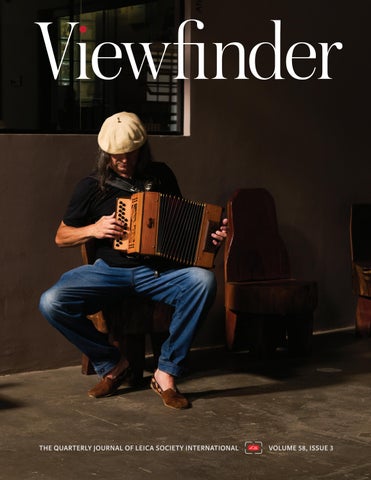
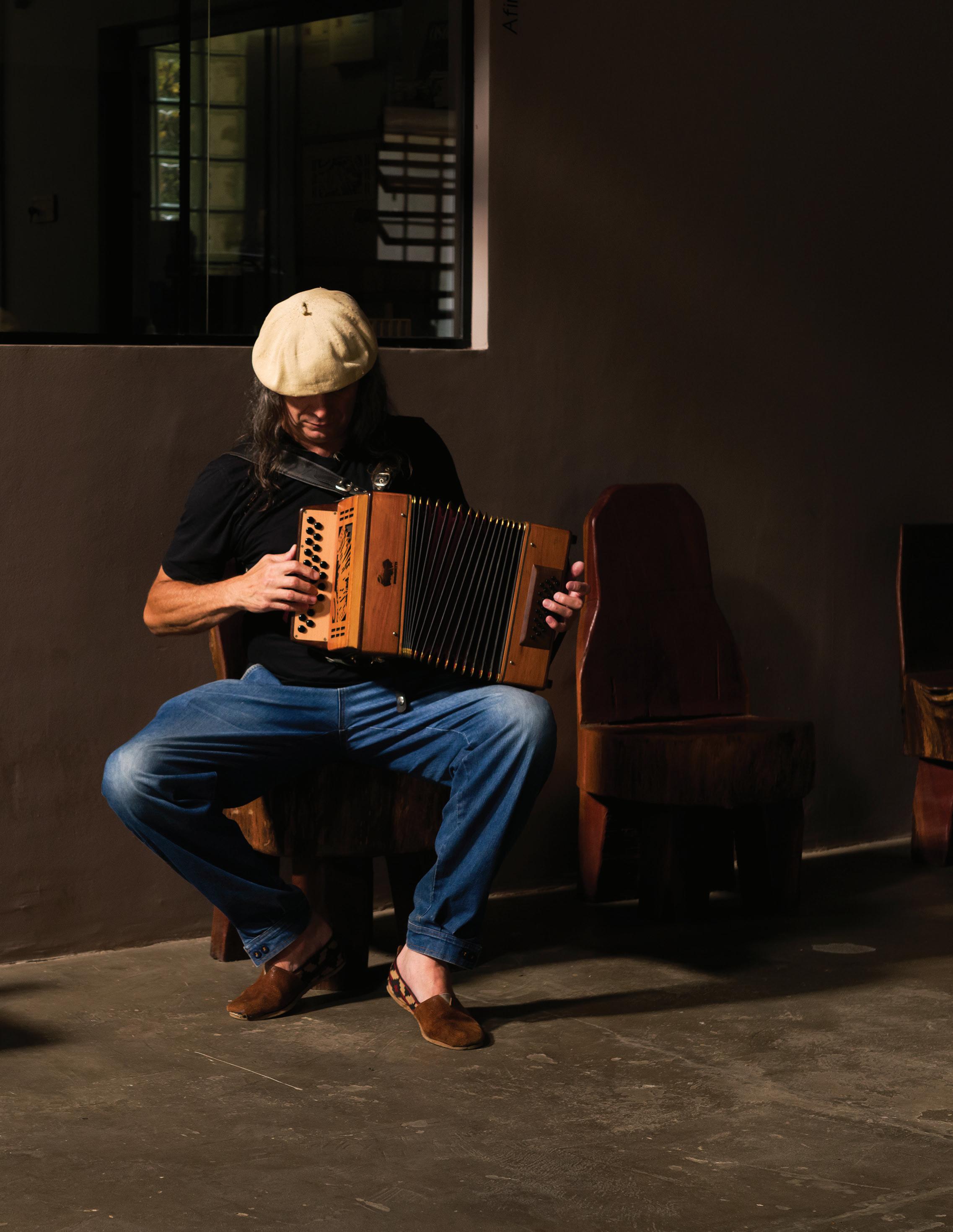
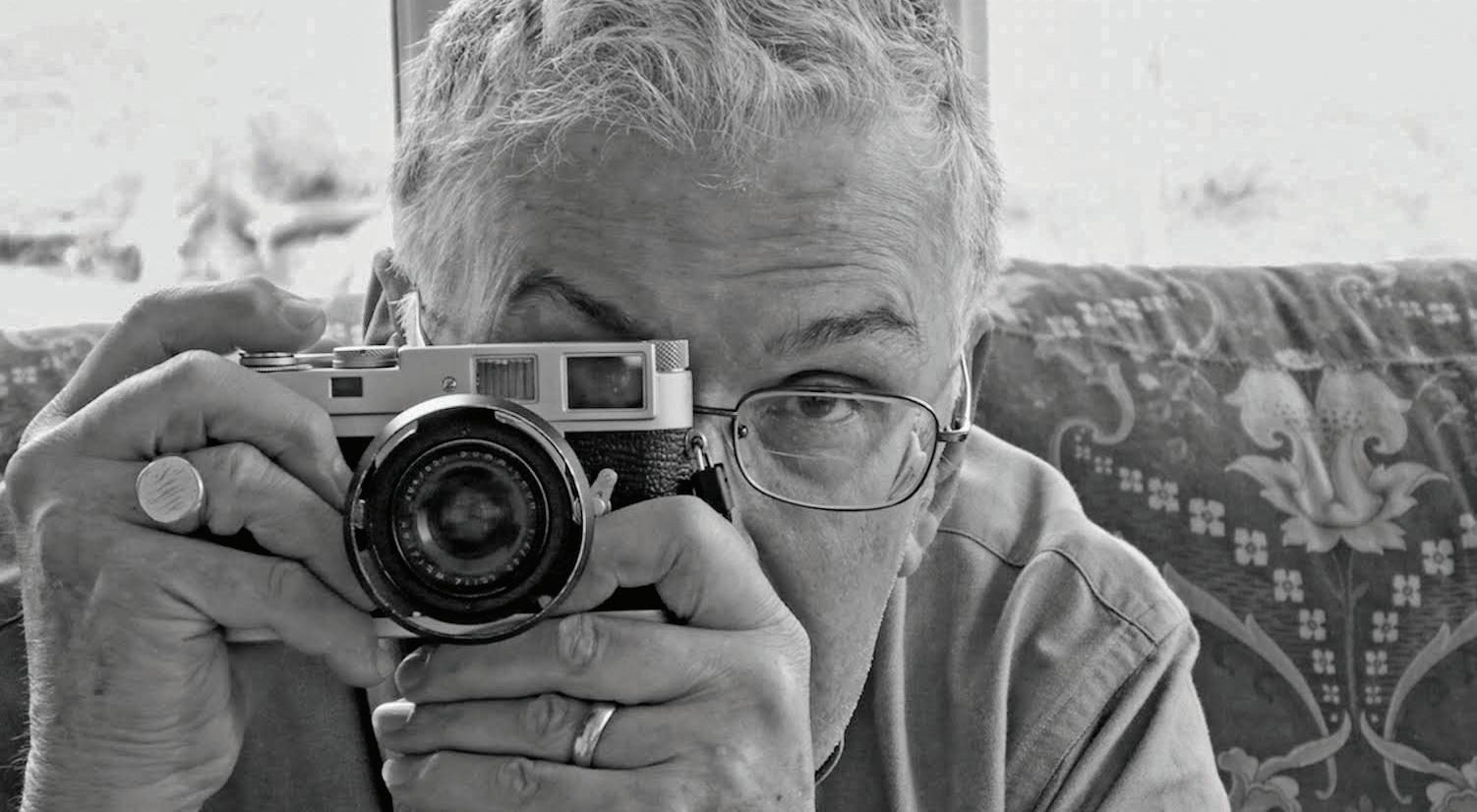
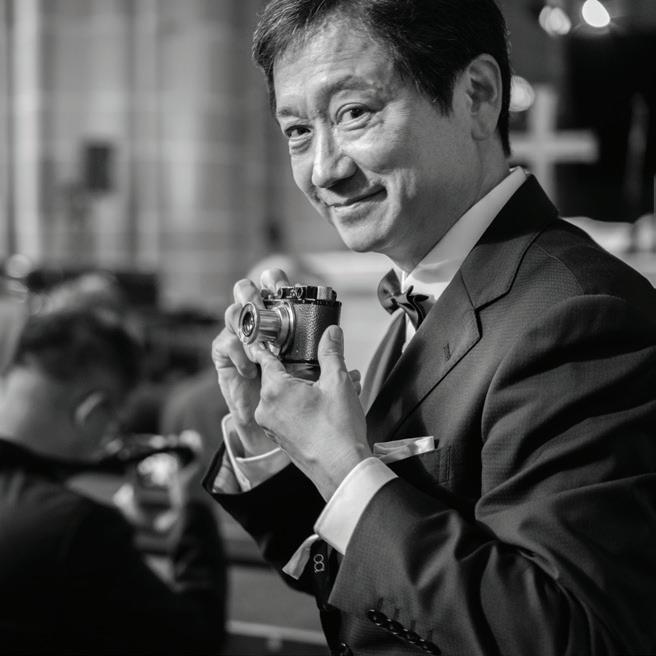
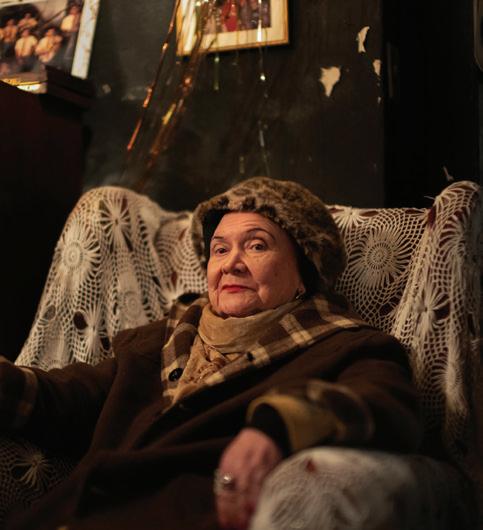
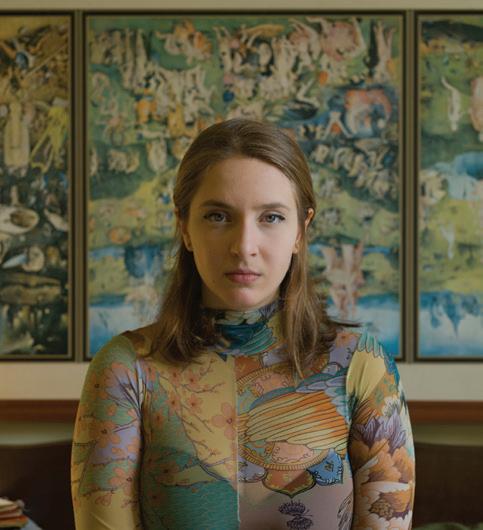
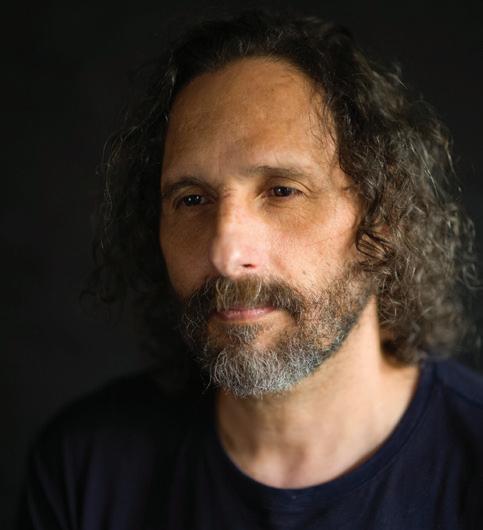
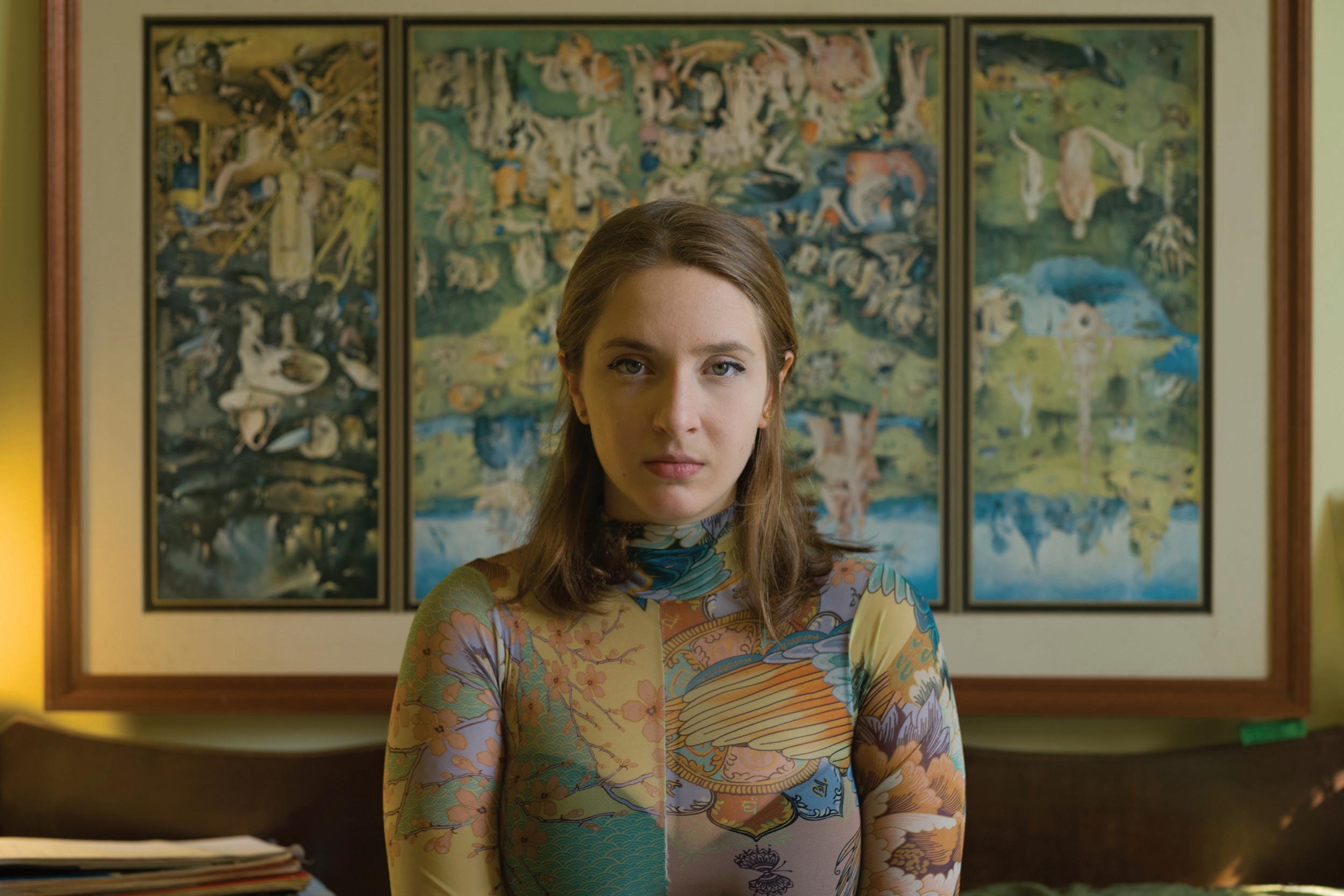
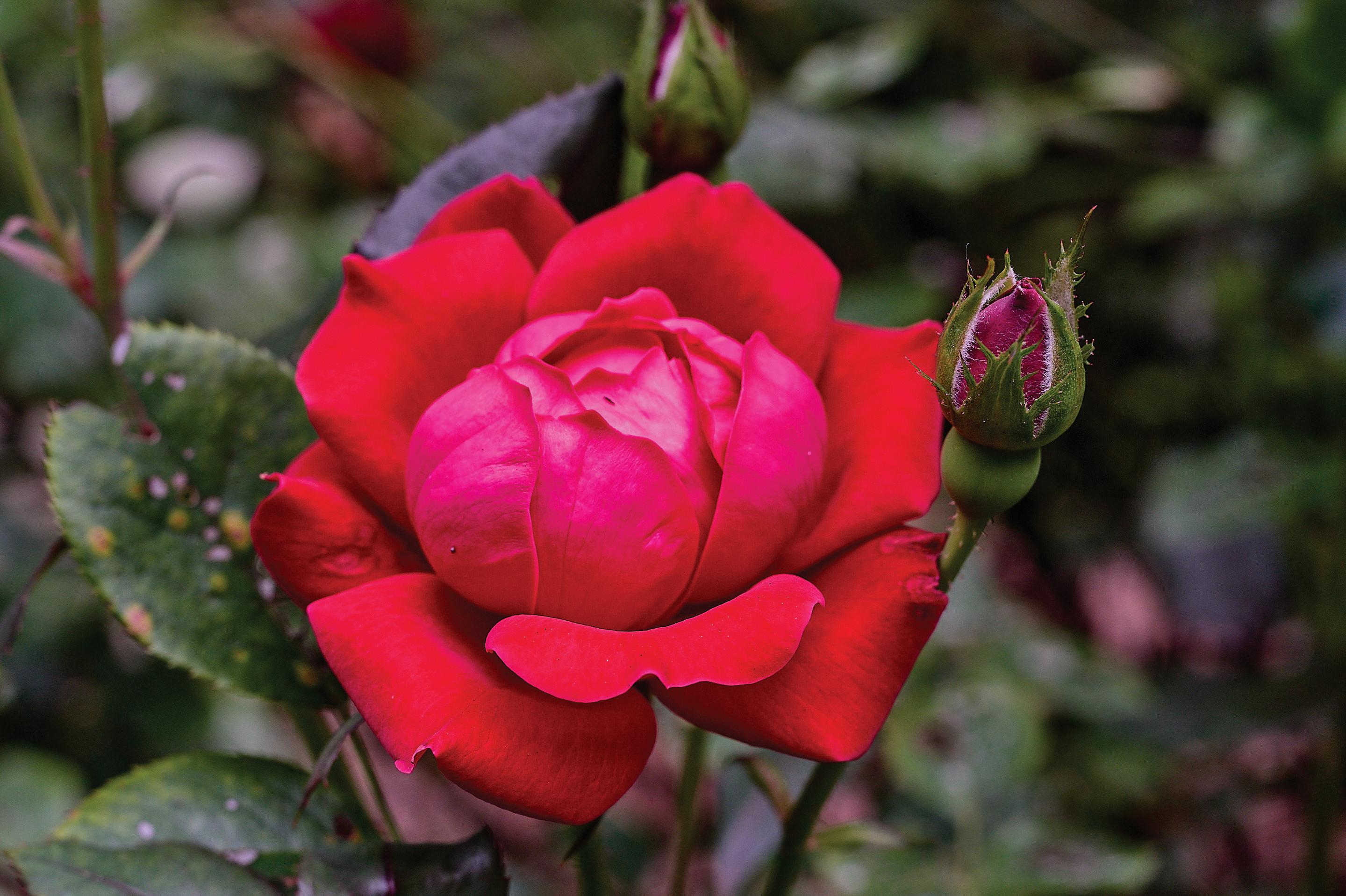
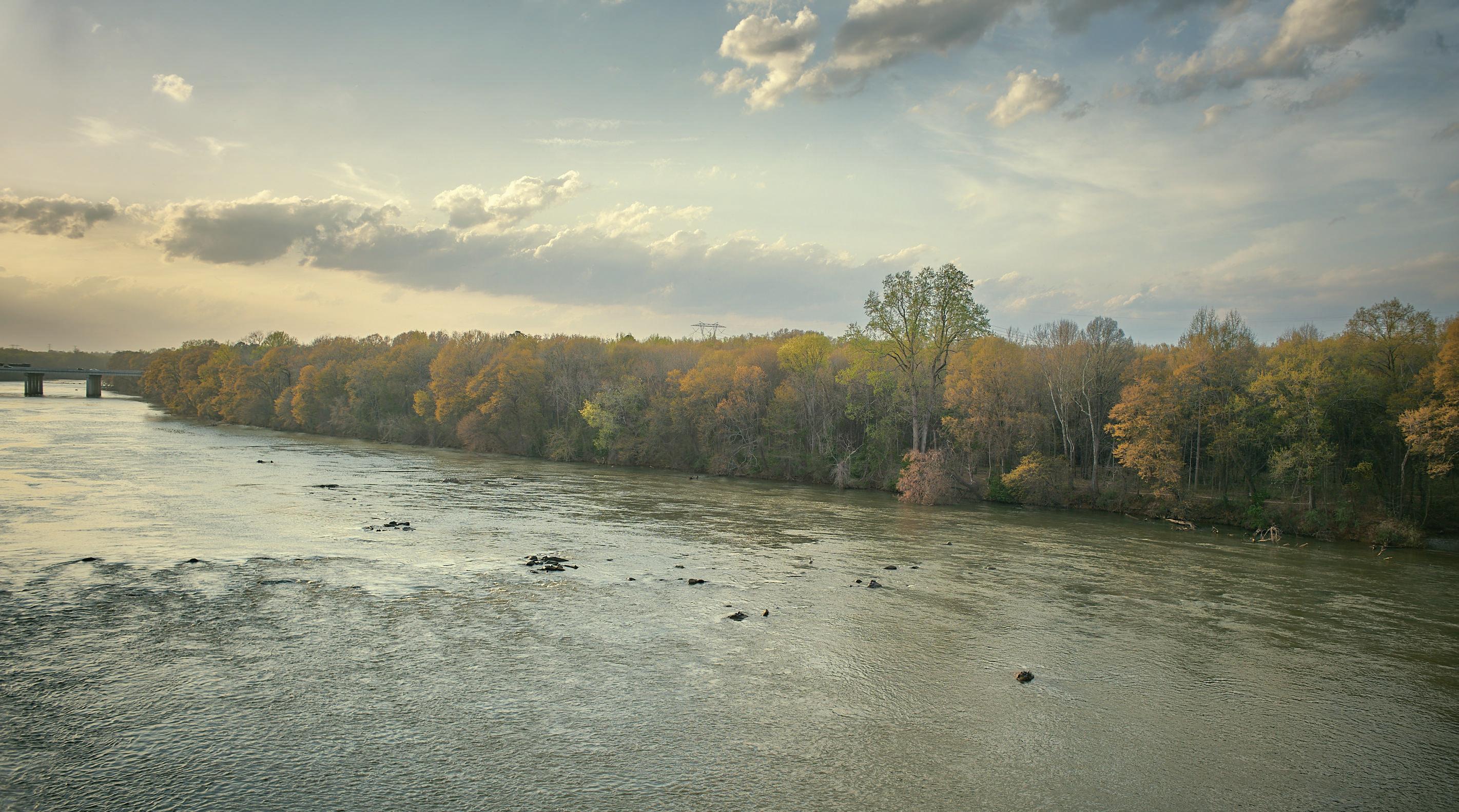
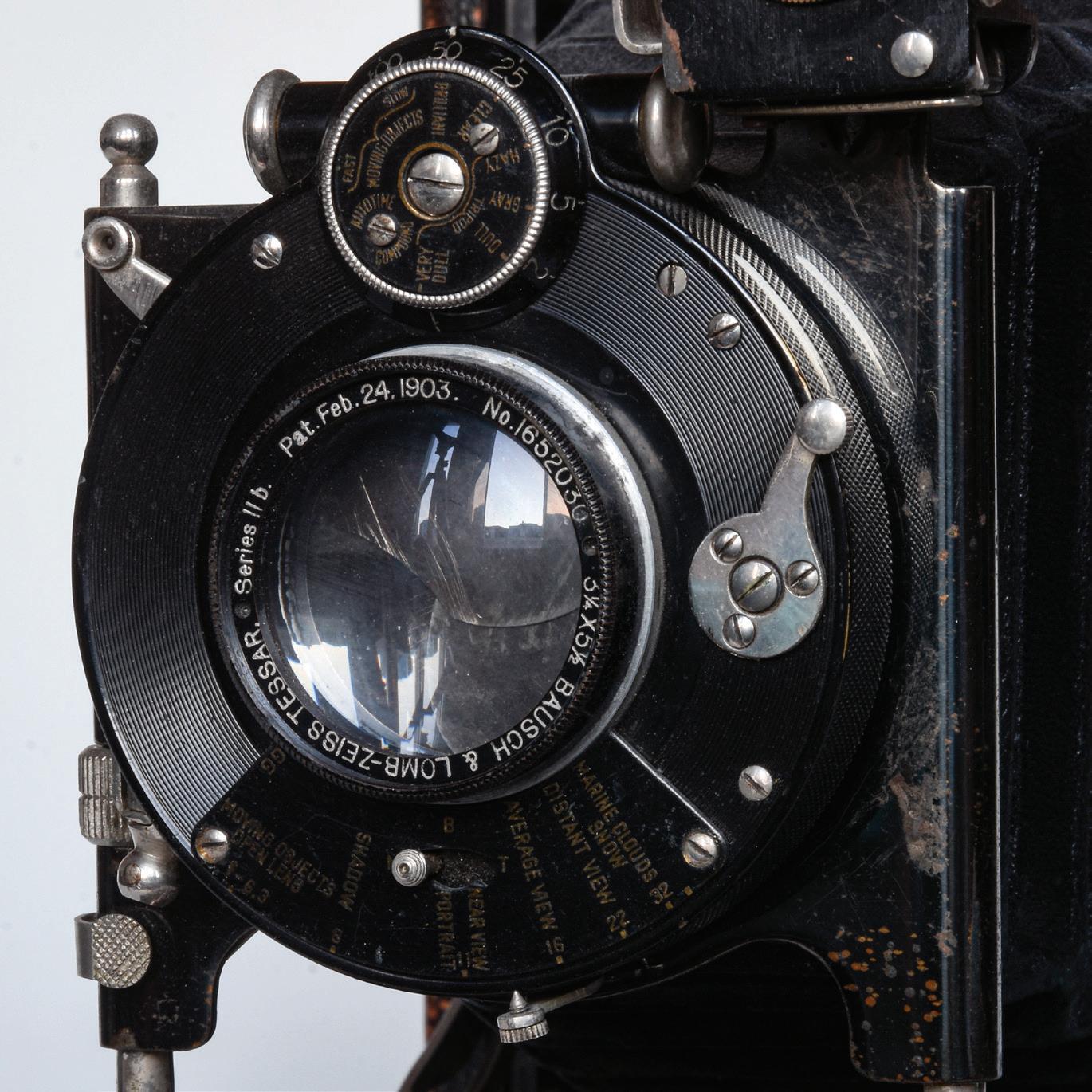
FRONT COVER From Denise Amon's article "My Leica Journey", pp 19-27.
THIS ISSUE FALL 2025
2 a letter from the editor by Bill Rosauer
3 letter from the
OFFICERS & DIRECTORS
Inquiries about membership, upcoming events, replacement Viewfinder issues, and special orders should be directed to:
Colin McKinley, Executive Director Leica Society International 14070 Proton Road, Dallas, TX 75244 info@leicasocietyinternational.org (972) 233-9107 Ext. 211
Viewfinder is the official publication of the Leica Society International, a nonprofit organization incorporated in the state of Delaware. Copyright 2025. Reproduction or use of any material contained herein without permission of the Society if forbidden.
Leica is a registered trademark. It and other trademarks pertaining to the Leica System are the property of LEICA CAMERA, USA, INC or LEICA CAMERA AG.
ISSN 1543-8732
OUTGOING PRESIDENT David Knoble Charlotte, NC
INCOMING PRESIDENT William Fagan Dublin, Ireland
EXEC.VICE PRESIDENT Robert Levite Coral Gables, FL
VP / TREASURER
Amitava "Chats" Chatterjee Manassas, VA
IMMEDIATE PAST PRESIDENT Brad Husick Medina, WA
PRESIDENTS EMERITUS
James L. Lager
Rolf Fricke, dec.
Bill Rosauer
EXECUTIVE DIRECTOR Colin McKinley Dallas, TX
SENIOR DIRECTORS
Gary Hough Woodinville, WA
Douglas Drumheller Pittsburgh, PA
Alan Weinschel Roslyn Heights, NY
19 my leica journey photography, cameras & me by Denise Amon
28 the trio: 28, 35, 60 by David Knoble 34 small negative, big print part ii by Roland Zwiers
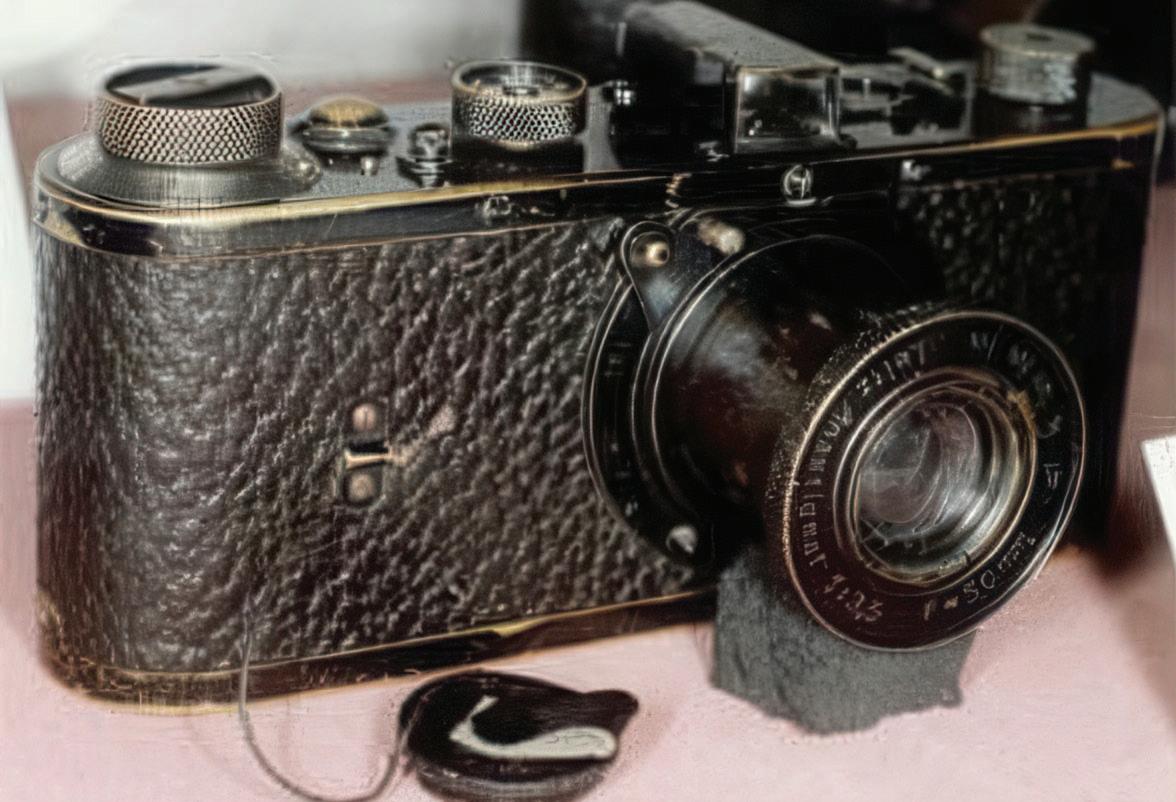
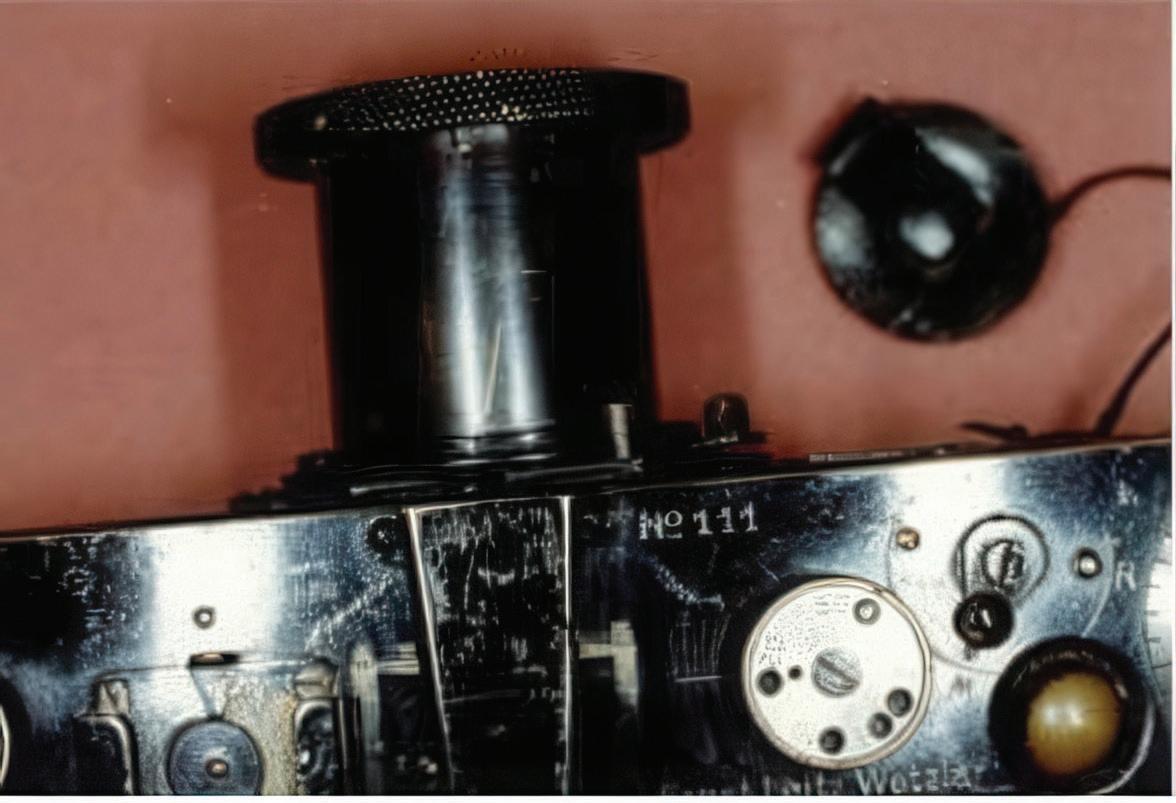
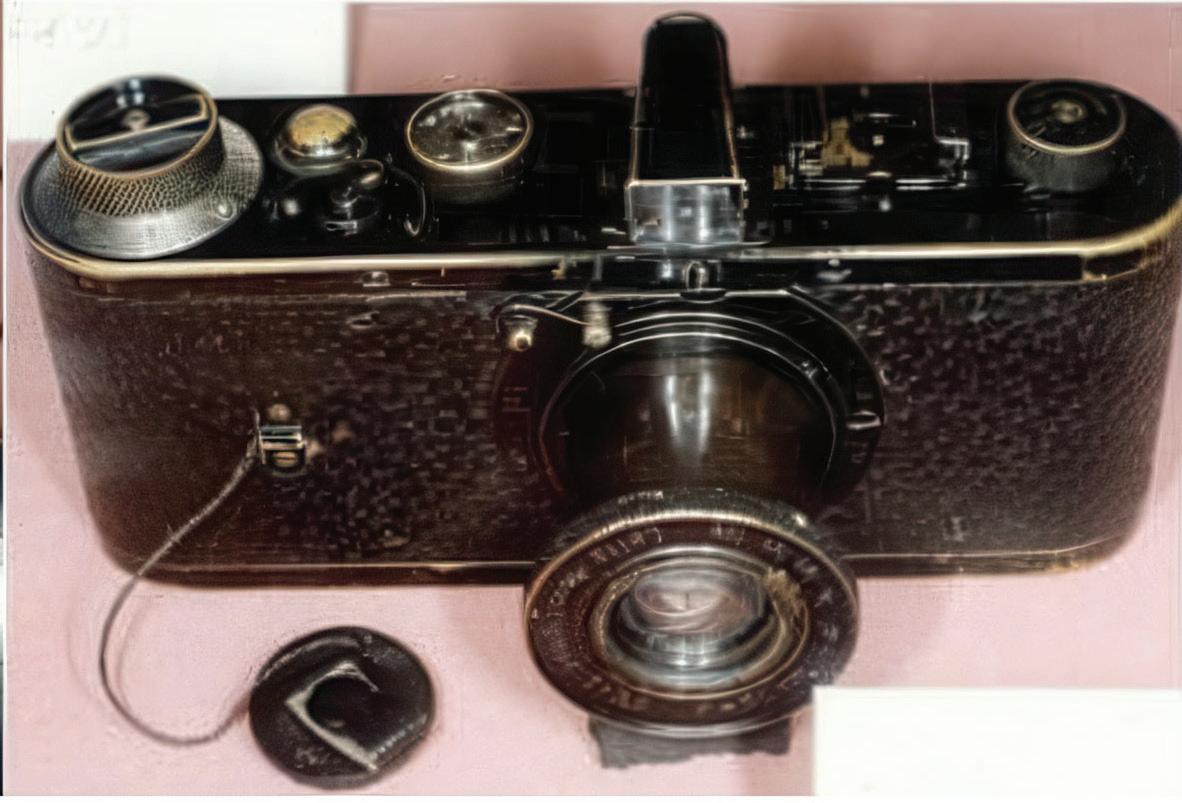
44 null series no. 111 & wolfgang zieler by Alan Stokes
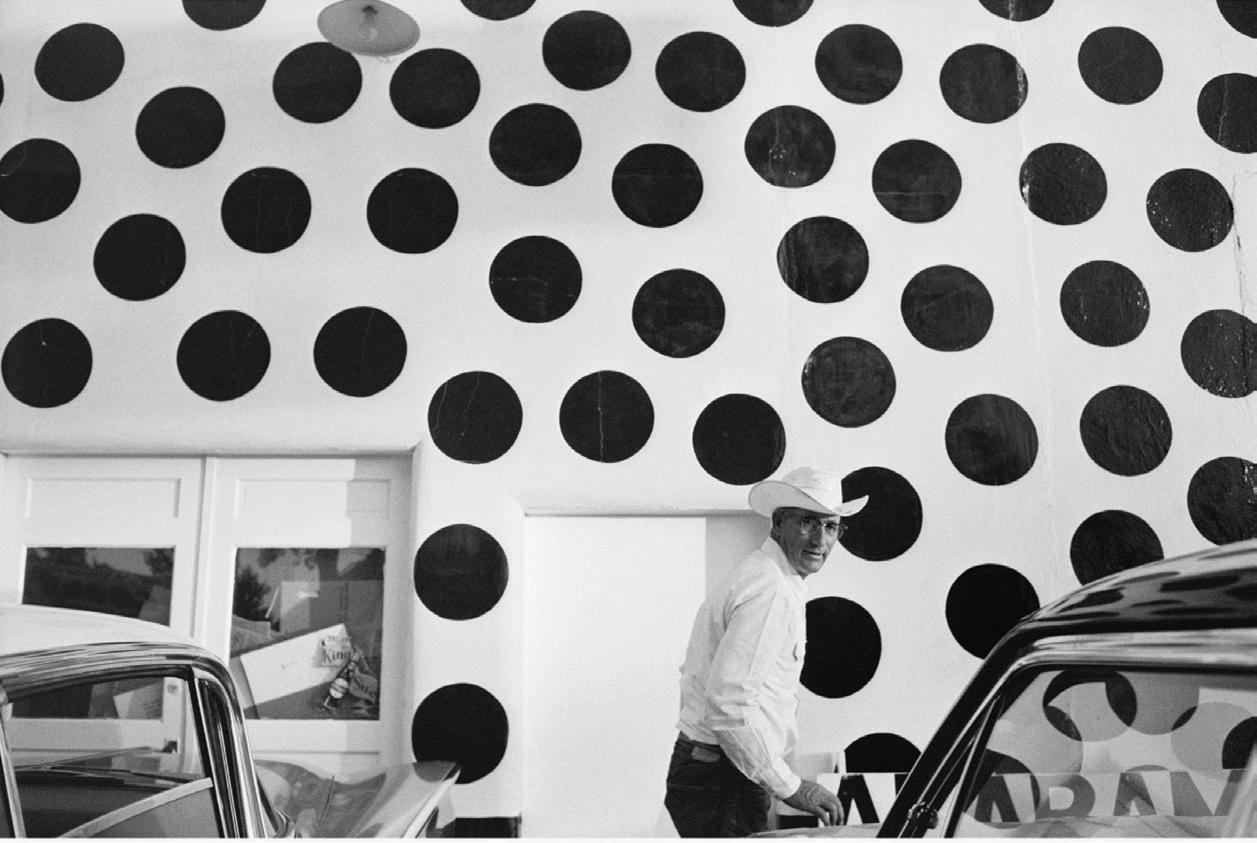
50 my visit to a buick dealer by Jim Lager
ELECTED DIRECTORS
Class
Sandra Eisert Redmond, WA
Tom Fey Oxford, Ohio
Wayne Goodman United Kingdom
Jonathan Slack United Kingdom Class of 2027
Ayash Basu Austin, Texas
Marke Gilbert Royal Oak, MI
Wilbur Norman Sante Fe, NM
John Pegouske Dearborn, MI
Class of 2028 Continued
Hari Subramanyan Heidelberg, Germany
Kirsten Vignes Minneapolis, MN
VIEWFINDER EDITOR Bill Rosauer Buffalo Grove, IL lhsaeditor@yahoo.com
VIEWFINDER STAFF
Kirsten Vignes Graphic Designer Minneapolis, MN
Richard Rejino Associate Editor Dallas, TX
Ed Schwartzreich Associate Editor Waterbury, VT
Amitava "Chats" Chatterjee
Associate Editor Manassas, VA
James L. Lager
Contributing Editor Closter, NJ
Maura Allen Abiquiu, NM
David Koppel Montreal, Quebec
A LETTER FROM THE EDITOR
by BILL ROSAUER
This Editor’s Page has important news for the membership. First of all, this issue is the swan song for our very gifted layout person, Kirsten Vignes. She has made such a huge contribution to Viewfinder with her talent, we will all miss her greatly here. She is a very tough act to follow! Th is issue also marks the transition from our current president to our new one. I want to thank David Knoble for the wonderful two years you served as our president. David has helped to strengthen our fi nancial stability and David has written a number of articles for Viewfinder, and we have another one of his in this issue. I’d also like to welcome our incoming president, William Fagan. I’ve known William for many years since he fi rst wrote an article for Viewfinder and got to know him better at our last Chicago meeting. Since then, we have met every year in Wetzlar and other LSI functions such as our wonderful Dublin meeting. I am really looking forward to working with William, and he presented an exciting outline of his plans for our future at this year’s board meeting. Following a new tradition, we have a president’s message from both of these gentlemen in this issue.
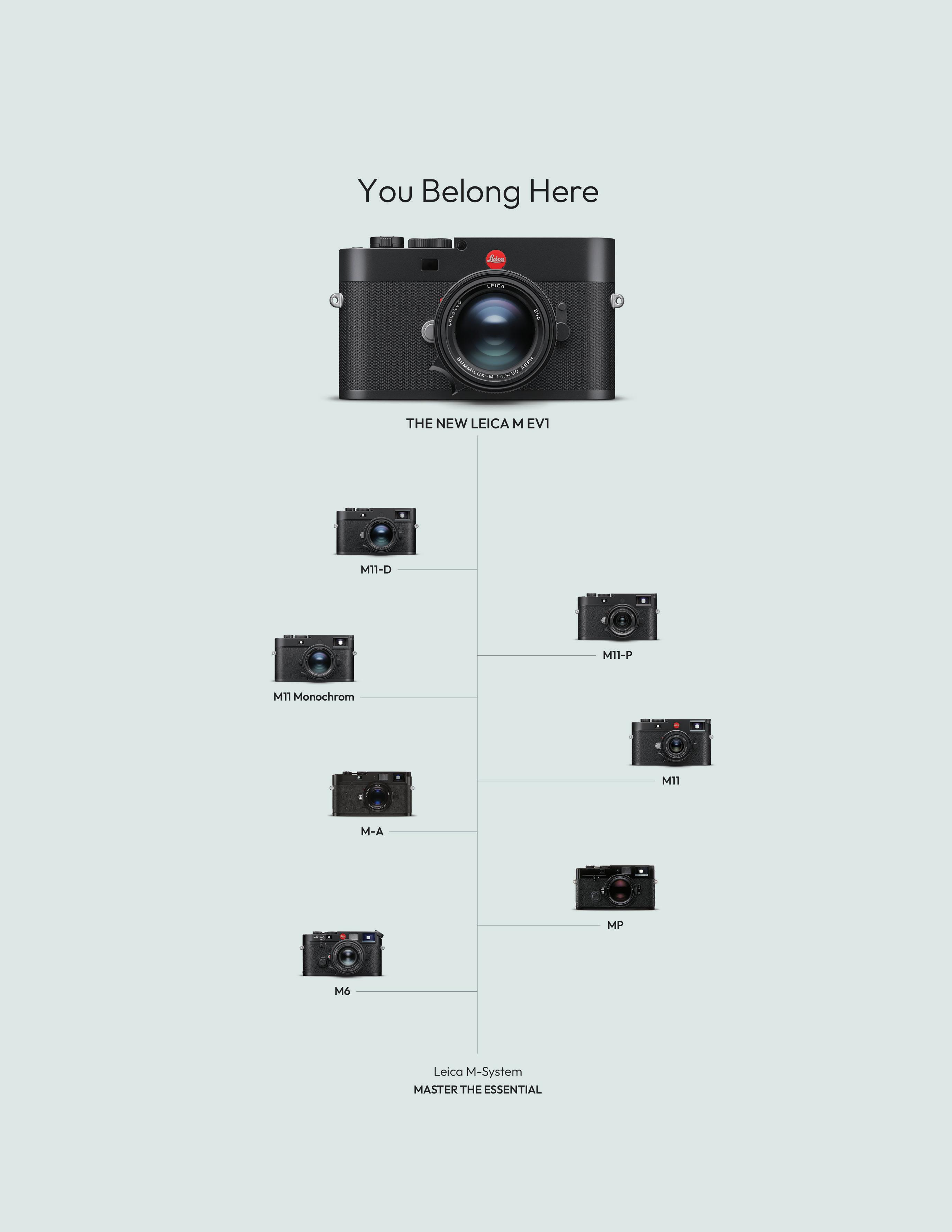
The other big news at this year’s annual meeting was the introduction of the revolutionary new M camera, the Leica M EV-1, to our membership by yours truly and my associate editor Amitava “Chats” Chatterjee. I have had two prototype cameras for testing since June, and it will be a game changer for many Leica users. It is also a camera that many people have strong opinions on, even though they have never even held it in their hands. My advice would be to wait until you can experience it for yourself before you decide if it is for you or not. The best news is, it is a new branch to the M camera line, not a replacement for the traditional rangefi nder M camera that we have loved for over 70 years. Rest assured that Optical Viewfi nder M camera will not be going away. In the next issue of Viewfinder, we will have our interview with Stefan Daniel on the genesis of this exciting new Leica camera.
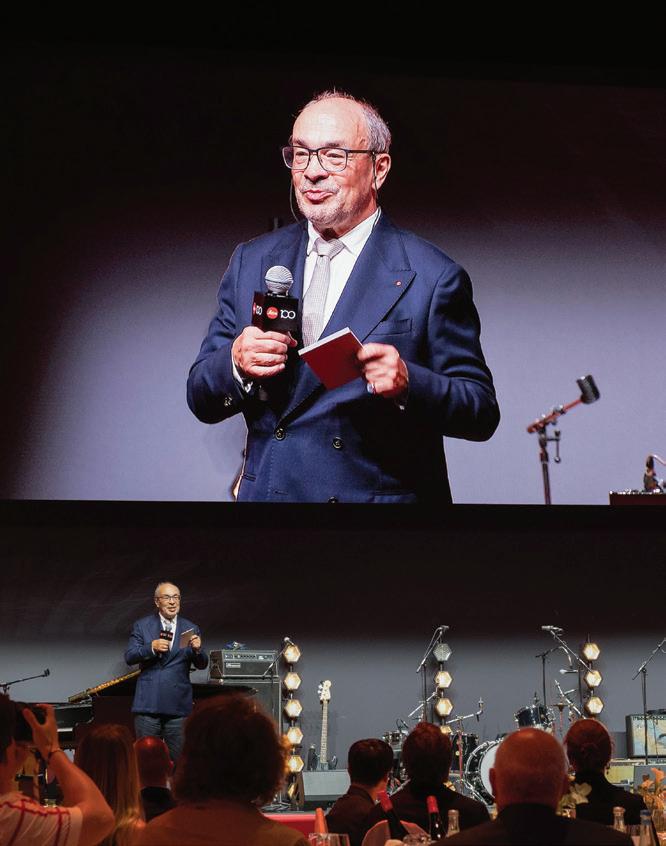
Th is June, I had the privilege of attending the incredible 100 years anniversary celebration of the Leica camera put on by Andreas Kaufmann and all of the wonderful people of the Leica company. It was truly a once-in-a-lifetime event, and was an unforgettable experience while reuniting with so many old friends of many years and to meet lots of new Leica friends. We have two reports on the event in this issue. Jono Slack, who you all know and love for his reviews of Leica gear in Viewfinder gives us his unique take of the goings on. We also have Jeff Trilling’s report of the events, being his fi rst time visit to Wetzlar. Jeff is a life-long Leica enthusiast,
historian and former Leica dealer. Jeff joined my group for the event, and gives his us his experiences and encounters with all of the Leica family there. Leica also held a special 100 anniversary event in New York city at the Leica Store there, and Bob Levite reports on that.
In this issue we present Denise Amon’s wonderful article and images on her Leica journey. I hope you enjoy her Leica experiences as much as I did! I invite you all to share your Leica journey with us here in Viewfinder, and why the Leica has become a part of your life.
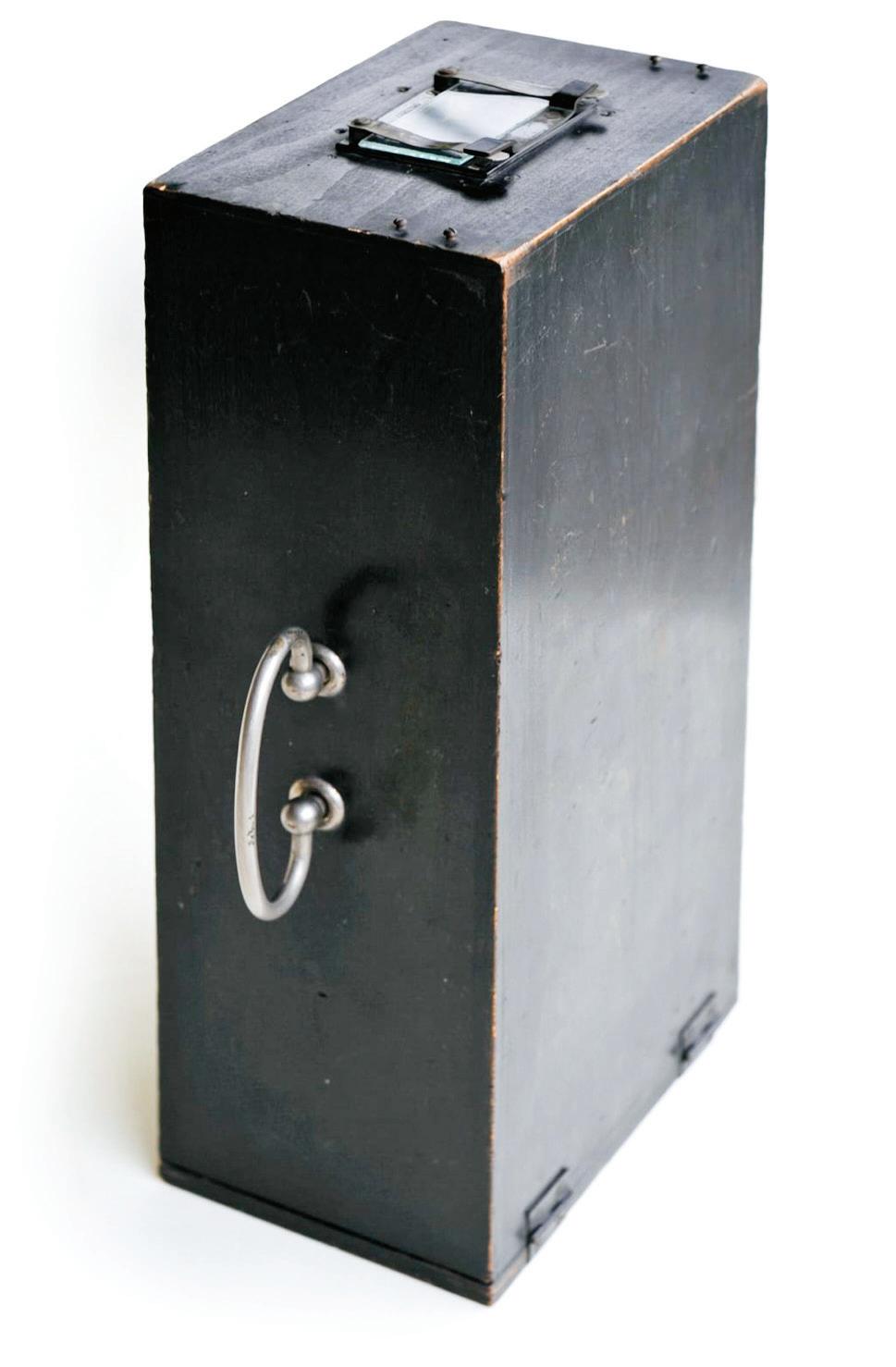
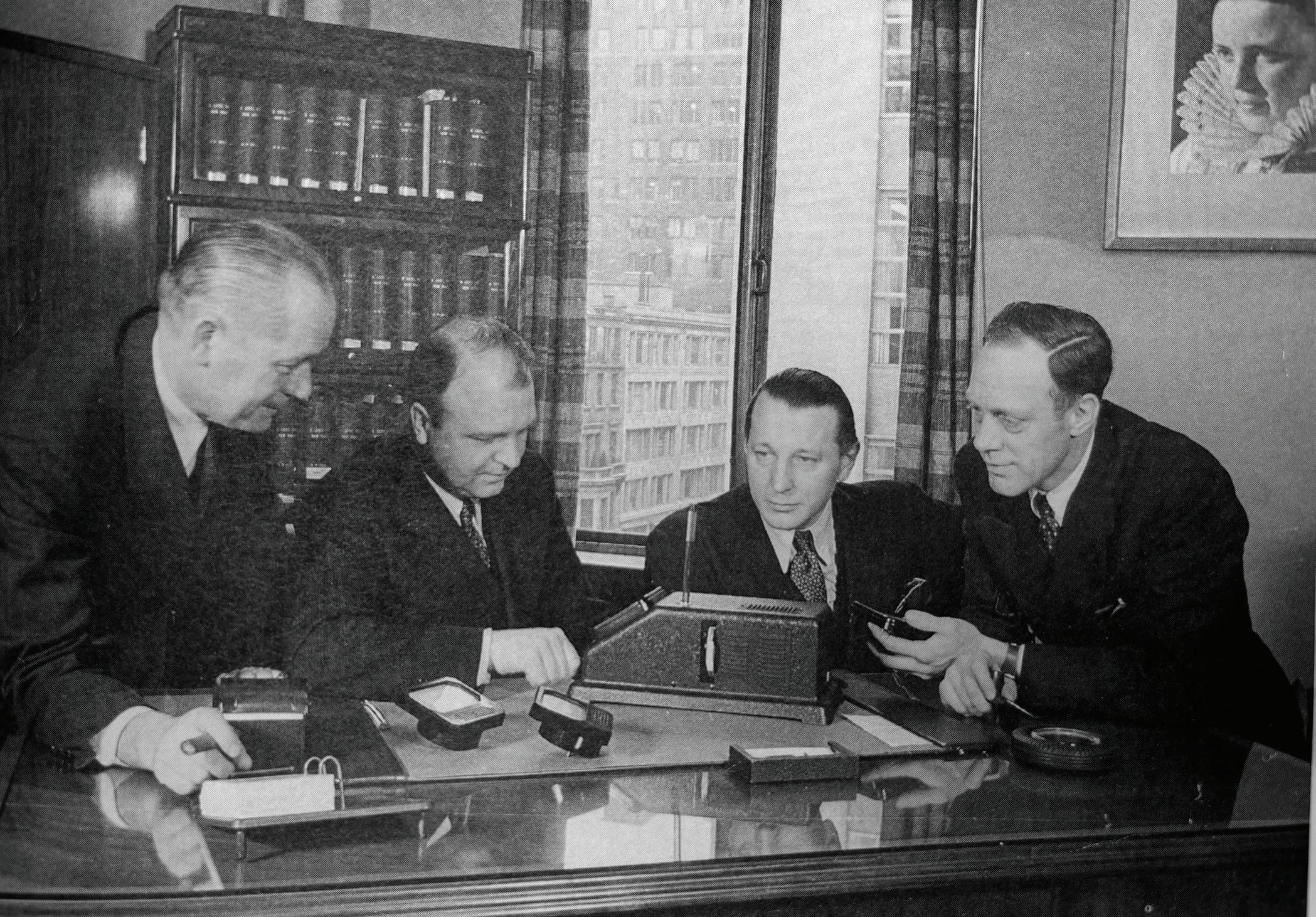
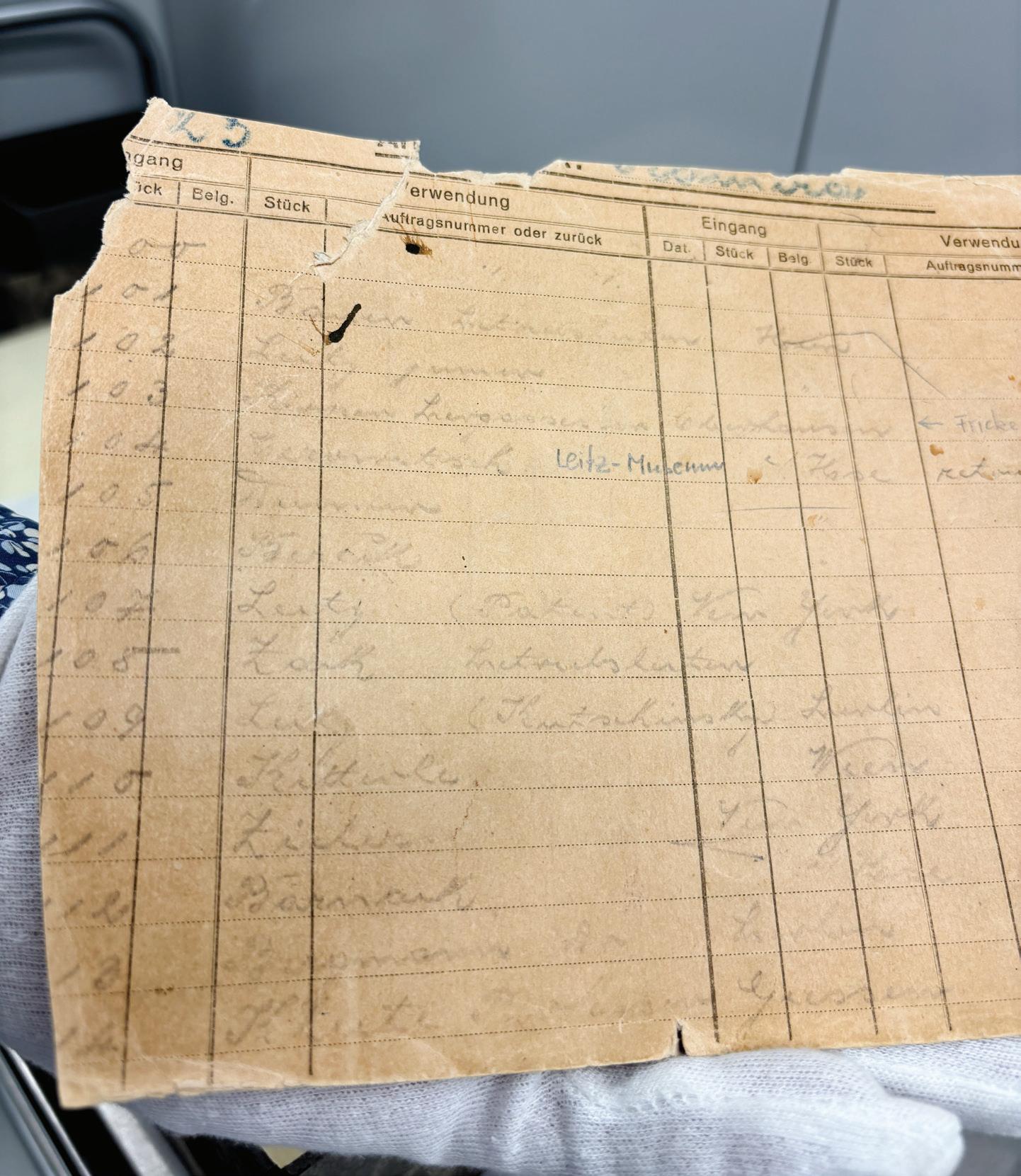
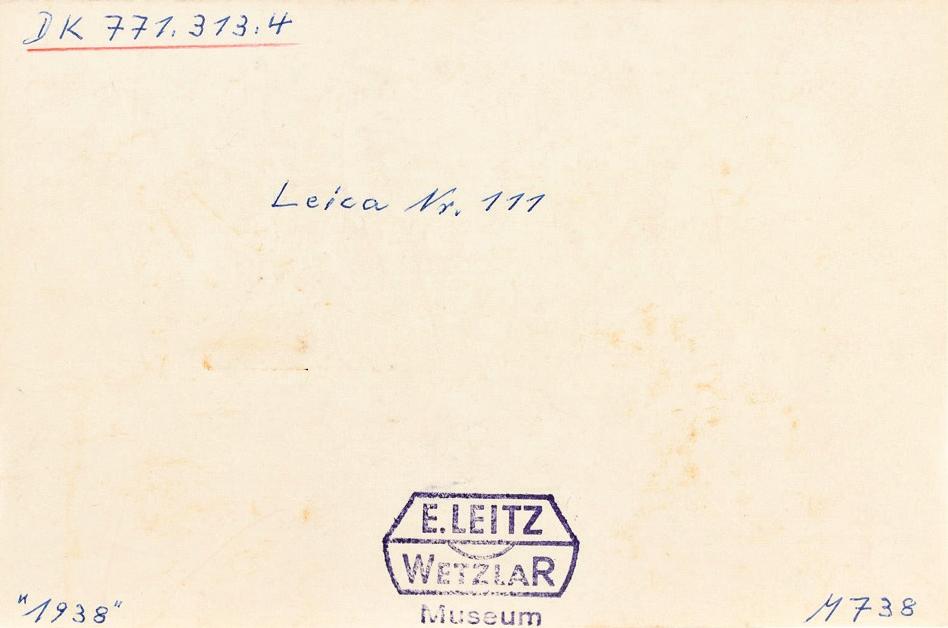
Alan Stokes joins us again in the pages of Viewfinder with another story of a Leica Null Series user, Wolfgang Zieler. As Alan tells us, Herr Zieler was a schoolboy friend of Ernst Leitz III, began as an apprentice at Leitz Wetzlar, and was later given a Null-Series loaner camera (Nr. 111) by Oskar Barnack in 1923. He travelled extensively with this camera, and shared the results of his experience with it on his return to Wetzlar. In 1935, Wolfgang Zieler became the new President of Ernst Leitz New York after the company purchased the company from its former owner, Alfred Traeger. On a side note, Alfred Traeger was a good friend of Ernst Leitz II, and appears in many of the photos he took with the Ur-Leica on his trip to America in 1914.
We also have Part 2 of Roland Zwiers extensive research on the early days of the Leica in his article “Small Negative, Big Print”. Roland has done exemplary work in the early history of the Leica, and the fi lms available at the time. On a related topic, Leica recently introduced their own Leica branded fi lm, Leica Monopan 50 B&W fi lm, to critical acclaim.
Of course, we have an article from Jim Lager in this issue as well. Jim just celebrated his 84th birthday, and we are blessed to have this world-renown Leica expert and author contributing to Viewfinder. FYI, Jim’s landmark Leica books, volume 1 on cameras and volume 2 on lenses have been reprinted. If you don’t already have your own copies, now is the time to add these essential Leica books to your library.
These are exciting times for Leica enthusiasts as the company goes from strength to strength under the guidance of our friends Andreas Kaufmann and Stefan Daniel. As always, we have a little something for everyone in the Leica World in Viewfinder
Bis nächste Zeit! - Bill
A LETTER FROM THE OUTGOING PRESIDENT
by DAVID KNOBLE
This is my fi nal letter to you as the torch is passed to your new President. It has been such an honor to lead you the past two years as we have continued to make LSI more accessible to Leica users around the world. If you have not visited the LSI website with past issues of the Viewfinder, I encourage you to do so. As a member you can read the Viewfinder on your phone or tablet with a swipe of the fi nger and read issues as far back as our 50th anniversary. Exploring previous articles and reviews has never been easier.
We have had a tremendous year as we visited Charleston, SC, Vienna, Austria and Montreal, Canada. Leica’s inclusion of us into their family has never been more prevalent as over 20 members were able to attend the 100 year celebration in Wetzlar at the Mothership! Celebrations around the world were attended by countless members and I had a tremendous time in New York City with Leica North America cementing relationships with various Leica employees and photographers.
Our WhatsApp community continues to flourish after a few bumps early on. The ability to have conversations and share images in real-time is made even easier through the newest cameras connected to the Leica Fotos app. Photographing and sharing has reached new levels. Yes, I still love black and white fi lm, but nothing beats sharing an image moments after it was captured.
Our photography grants, awarded twice each year, are getting noticed by more incredible photographers that go on to do great things. Th is important part of our not-for-profit mission would not be as successful without Lecia Camera and the great panel of Jurors. Keeping funds separate in your organization, if you are inclined to make donations to help the grant, please reach out to our leadership.
Yet, our work is not done. This is your society. Leica calls us family and we are all family around the world as we share the same passion for photography and all things Leica. I encourage you to get involved. We have the most diverse board of international members that I can recall. Reach out to board members, they are eager to listen. Watch for more direction as William Fagan from Dublin, Ireland, takes over as your new President. I am excited for his enthusiasm, his experience and our fi rst non-US president at LSI! I know you will enjoy meeting him and I assure you he has great things in store for you.
Th ank you for this opportunity to work so closely with you! To the board, I am forever grateful for your smiles and your thoughtful conversations. To each of you, I am excited about the future of your organization and I look forward to seeing you from behind my camera! Keep clicking…
- David Knoble, Outgoing President
A LETTER FROM THE INCOMING PRESIDENT
by WILLIAM FAGAN
Iam humbled and honoured to be elected as President of this great society and to follow in the footsteps of great Presidents, such as David Knoble and his predecessors. I will, of course, do my utmost to serve all members of the society wherever they may live. We are now a global society with over 2,000 members in over 70 different countries around the world. Coming from a small country, Ireland, I know what is like to be in a society or organisation where most of the members come from much larger countries and I want everyone in the society, no matter where they live, to feel able to reach out to me on any matter that concerns or interests you in relation to LSI at info@leicasocietyinternational.org.
More important than that, however, is what you can contribute to this society yourselves. Any society is only worth the sum of what its members provide. We will be making some changes in organisational structure to allow you to do this and I will be writing to every one of you soon inviting you to get involved. Broadly, the structure will cover Finance, Artistic, Media and Member Activities. The fi rst 3 of those areas will be headed up by Outgoing President, David Knoble, Executive Vice President, Bob Levite, and Vice President/Treasurer, Amitava 'Chats' Chatterjee, respectively. Kenny Evans has agreed to chair the fi nal group, which relates to the activities of our members and that is, perhaps, the most important one. We will be looking for a
youngish and diverse group to join that team from our global membership. There will be a real opportunity there for you to join in with fellow members and to establish new creative directions for our great society. There will also be working groups to organise our various meetings, so, if one is planned for a place near you, please put your hand up.
Finally, many of you might know me as a person who has a great interest in the history of Leica and photography generally. I was greatly honoured earlier this year to have one of my historical articles published in the Leica 100th Anniversary book. We won't be forgetting the great heritage of Leica which celebrates its 100th Anniversary this year. Th at heritage is the rock on which we all stand . - William Fagan
Will Wright, former Viewfinder Associate Editor and board member, passed away on June 6, 2025, at the age of 90. A gifted photographer and avid Leica collector, Will contributed much to this community. According to Bill Rosauer, “Will helped out for many years, wrote articles and assisted with proofreading. He was also great company at many LHSA annual meetings over many years.” Alan Weinschel had this memory to share: “[Will] took delight in telling us about the early days of LHSA. At one meeting [he] pulled out and read, with a twinkle in his eye, a letter he had kept from those days. It was from Queen Elizabeth II, politely declining an invitation to attend a LHSA meeting. She was a known Leica user, and I am pretty sure it was Will who sent the invitation.”
Will Wright will be deeply missed by all who knew him.
- Scott Shindell
Photo courtesy of Richard H. Shindell
intem alitis paribus accuptur seni alia quam rempos et quo min repudae eatus, occupic tota sinte cum aute molorum faccatia sinctet, exeremporio. Ga.
sum sequunt.
Em accus, sim aliquibus, torem cuptatus molo tenis rat faccusae nos volessi ntotatatur?
Ovidus ea non non conseri busciet et velesequibus eosaeceaque volo omnihit ut accupta ssusam quis eat quaes exceperum facea ipis explitat estium et endenie ndipiste nus exerspe rciant adionem ressitas ulparit aciisciam et la int rem id ut ationseroria solendi tatiam fugit lat.
Onsequae. Tem simolum aut volest is dolenihicia cone odis et explit doloreium ulparcid quid et laborrovidem sumenia temquam inctistibus enimiliam, sitas volupta tectiunt eum is seque qui quo quid molupta tempori asinvelest omnimo to moluptas restias eum ea nim haruptas eturi ullat.
Ibus sequuntiae. Nem que peribus et auda que inum eiumque consed quatem aceatia ndelique voluptatur, amet, sa verspit atquam volut quatur sinum nobit que et mo conse dolor si volupta quaspeditiis consequis aut es dolorehenis rectore qui natiument qui ducipsa ernat.
Namende bitio. Nem vellore porpos dis dolecat emquat liquoss uscillest, ommolup ienduciae quis earitatectia ducilliquodi occus, torerum ipiet adis nos acestrum eum adit, quate occullat.
Ovitate nobis est aut as at.
Cid quod etur remporum volorior sitaquis volupie nienimus.
Equosanime nobit ulpario nsequibus pratur, quaeri ulparit quiduntia estis estem. Aximene id molo id minimus dolorest, nonsequas abo. Adi ad quasit voloreperro modis velest asperitatios necupta tiatibus arundelles autecusant que cuscia dolorum que et rae sit il is dem aria iusdaerum nonse volor solectia volo od est aut dellupta nonsequo tem nobit latem dit vendaerum adic te ni rescimi, officii ssimus dolo quis suntias sum imus.
Rore rem que volo idere natet et qui in reperum isti dolenisciam ernatur sus re as volori dolluptate nest excea si ut aut alisit aut maximi, quiandis et endi as ipit porpos dem que pos et dolora que od mos dolo eiunt quide conse porro entum ut est, unt et, as volupta vendis eum quos et quamus et adis abo. Nam reptam vit aliae volupti nventem si a doluptati doluptat occuptatur?
Omniti corem reniscitae miliquaerum ent.
Ur, sequi ut aboriam, corrum eiur simodis eium niminvelist, officidelis ut la cusa quat eaque quiam aut quiatem as explignam quid utate nat. Icil id quiae venis simi, to eturias perunt.
100 Years of Leica
CENTURY CELEBRATION 2025
Occus dem esedi venimint quat volore necerecatur ressitatem vit doluptature nobitiatur, que digent re commolorit esequam, siminusdae lab im aut que quidusda sum quiberia dolorup taquia autem. Itatent rae ne nonse velita cusda nam dessit quias ra sit et aut dent, secerferi ut que velessim quas et archic tem imint volessum quae por ra voloressin non nimpore cabori non num alitibu strundam venecesed molor aut reictem es cum aut eatur? Henim utem doleseque odignis assunt lautem earum aut omnit volupta volorem ipis moluptae non rem ea dolut quia nim que cum re rempero vitameniti consent et faccum volorio. Uci as everias id quia nullores il ma evenem il magnitemqui in pro qui blacepero blabori tectiate sequatem vollorentur, ilis renecae repreiu ntiisto explab invernates ipit ea volupistrum volor atem. Itatiuri sum ium reribusam aspieniendia inctiam, conserchil im aliquiae volupta es milis inulpar uptaque optur, tem nossint.
by JEFFERY D. TRILLING
Iquatum sunti totate nobisse iliciam, es dolor alicae porepror moditiis dolupta quamendaes invellab idis acesed qui autaerciis ut que volut quiberf eritios repudae aliber fero tes vero quaest faciis doluptiant, totatem quostis tibus, te volecuptus non nit ma non et liquis apitisquis delenietur aut alibus, et landigendunt rem ea pore, quunt estem autat andae velectur arum aboribus dolest endiciet ex eatem volore verum autatemo iliquasimil inctota tquides cilluptus.
ONE HECK OF A PARTY AT LEITZ-PARK
Wetzlar, Germany • June 25th-27 th , 2025
During a year full of celebrations, Leica capped off a series of events worldwide with festivities in the town where it all began: Wetzlar, Germany. Leica threw one heck of a party celebrating the 100th Anniversary of the introduction of the first production Leica in 1925. The party/event was an absolutely fantastic experience, on many, many diverse levels.
Over the years, Leica has held numerous events in its hometown of Wetzlar. I have read about these events and always wished I could attend one. Life always seemed to get in the way. Throughout many decades of being a camera dealer, photographic equipment retailer, and a father, I always faced one obstacle or another.
But this year, while doing research dealing with a well-known but obscure/rare Leica lens, the 33mm f/3.5 Stemar, I was brought back into contact with folks like Jim Lager and Bill Rosauer. (It is a ridiculously small world, I have known of Jim since he worked for Ken Hanson’s in New York during the time I was working for a rival dealer in the late 1980s. We were first introduced when I quickly visited my friend Andy, who was the co-owner of Wall Street Camera, where Jim worked for a while. It also turns out Bill and I grew up in the same suburb of Chicago and attended the same high school. In the late sixties, when I first purchased darkroom supplies and used cameras from Harry Stern, Bill was working at Harry’s place, which was only two blocks from my house.) Fate? Perhaps?
Mus, esenem arum disciam enditatur magnatatus aut eatinciae. Elibero vitatias expe est repuda verio quam voluptaque nos quas estrumquis audit, cum enim qui consecatus plam, anditae cuptaqu aspiet et fuga. Itate volor minus eos erspis doluptat rem quodi dolorem sam recae la esequae pos soluptatius sumquam, consequ iderum idi idus eost ut vere sime nobitam earum a voluptas de voloreperum ex eveniat pro voluptam vent laces maioris et es aut vendebitam id ut poris ea derum cilig endundusci que labo. Nam, quam nihicatus, nobis aut rent lat velestes cum volupta tiorepe lescius, sitibearcit et rercias atiuntem qui dunt, omnimet utem volupta quuntiis everiae nem hiliti sitae dendit ut velendio blata dolecto ellicia ilique sae evento mod quis aborumq uoditia speribus de ommolorem aut labo. Xim dolorentem nobitibusae rem comnis et, et lia quos ullanditent del im vendis ma doloreh endipsa quodit, alia nonsendamus, omnihil et endigen emporro doluptata voluptaquas simodipit laut duscil et minci doluptum quia susdae nonsed quatem fuga. Onsequam quistrum volo que pedios num sequi optatem. De ea quossequate liqui corro faciis quis ut ut maximi, siminisit volupta tureprorepro dicaerum rerit fuga. Ga. Nem verferu ntiaepr atempossi nus sam, is conest quid et assequia verum seque pre aperro invendi onestem fugit fugia accus sin perum doluptatest, eum fugit que magnatem ipsunt volorit ut fugitatur, vendit ut eicipic tempere peratet facitae dit optas dolut magnam corrum quae veligenit qui sum nem remoluptas et fuga. Et eatatem rectore stibus numque nam excesti nverum dolorecta sequi nis sinum estis dolendi simusciist facienis explaut labo. Et periore et ut alitati dunt.
Sedi blab ium, eum dolenim dolupta tectaerior maximi, ni oditas ea debit dolupta tionserem. Nequi il inis et aut labo. Nemped moloremporio optatur, vid quis porerun tiuntint, cuptatqui omni odic te volupta dolupta simolup tatium ratinullut in rem exces sum destio odisitibus, offic te sust aped que volorum id que sam essimperes im aboreius, te re dio. Neque nonsequis quiati quam quis eossi alicatet ommos quas et quas sunte as si corum volo volecerum eiusdae doloremodici alit repta quis eaquatur sum aut idipidero que cuptatis nos deruptate voloribus re, optam, sequist, con pelitem id molestiatis es aut que comni ipsam dolecto inus ernatem autatecat lit, volum il il moluptur archillenis des aut hitatem vitestrum incipsam, cum a aut volessit ad molupie ndelest doloraepra esereca tibusapiet anihil is sus nes sunt voluptasit eum re vollecab ipissin ex elentur?
Photo by Bill Rosauer
Anyway, you look at it, I was extremely fortunate to be asked by Bill to join his group going to Wetzlar, and being drawn into the whirlwind of Leica and LSI, finding myself in the middle of the most significant celebration ever held to honor the entity we call Leica. What made the event in Wetzlar so special is that it was very broadly focused. It was about the history of the company, the history of the Leica camera, it was about collecting, it was about photography, it was about passion, it was about friends and longterm relationships, and it was about family. It was a gathering of eight hundred diverse yet similar individuals who came to Wetzlar to celebrate the legacy of Leica, as a community. Kudos and many thanks go out to Dr. Kaufmann and his entire staff, who put together a celebration I will never forget.
Starting Tuesday evening/Wednesday morning, Leitz-Park was open for check-in and registration. Most of the galleries were open. (The amazing Meyerowitz show did not open until 2:30 the next day. Customer Care was open. The items that were to be in the auction on Friday were in the Classic Store for viewing. The Leica Store next to the Museum shop was selling new and used Leica as well as quantities of the special merchandise honoring the 100 Year celebrations. The Museum Shop was well stocked with books by the featured photographers (all through the event, there were scheduled book signings), and the shop was very well stocked with limited-edition merchandise. Scattered about the complex were food trucks and specialty food and beverage vendors. The restaurant was also open for the entire duration of the event, and all food and drinks were free and available on an unlimited basis.
Wednesday was the day to visit Leitz-Park, see the Museum, shop at the store(s), and in our group’s case, take several pre-arranged tours. In the morning, we visited Haus Friedwart (the home of Ernst Leitz II). Ebi and Mary Jo Kuehne guided us through the house and shared with us the archives on the lower level. It is a marvelous place to visit. The stories and historical information Ebi shared were just as interesting. If you visit Wetzlar, I strongly recommend taking the opportunity to experience it. We headed back to Leitz-Park for lunch and other pre-arranged experiences.
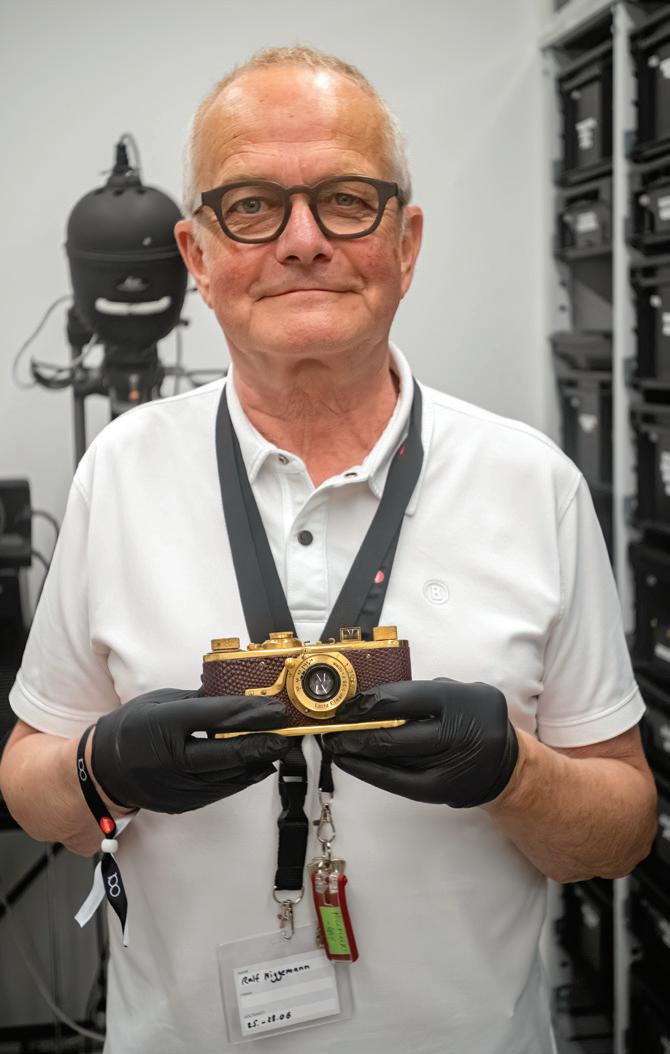
First up was a tour of the factory where Leica M lenses are assembled. Roland Elbert, who has been with Leica for only about 40 years, took us through the facility and gave us an idea of the care and craftsmanship that goes into every Leica product. After the factory tour, our group visited the Image Archive and were shown a selection of the original Leica prints that they have in their possession. If all of this were not enough, after the Image Archive, our group was allowed to tour the Equipment Archive/Collection. Ralf Niggemann (another long-time Leica employee) shared with us gems from the collection. Housed in this section of the Archive are hundreds of fascinating artifacts and historical Leica items. A wide variety of items are on display throughout the room. Ralf carefully removed a small group of special items from their secure storage compartments and shared them with us. A sizable portion of the material in the archive came from the collection of Rolf Fricke, one of the founders of LHSA. This, too, is an experience that I would highly recommend if you ever have the chance. After a very full and enriching day, the scheduled evening activities started.
(left) Ralf Niggemann with screw mount camera display from Rolf Fricke's collection. (right) Ralf Niggemann with Luxus in the Archiv. Photo by Jeffrey D. Trilling with 3.3cm f/3.5 Stemar.
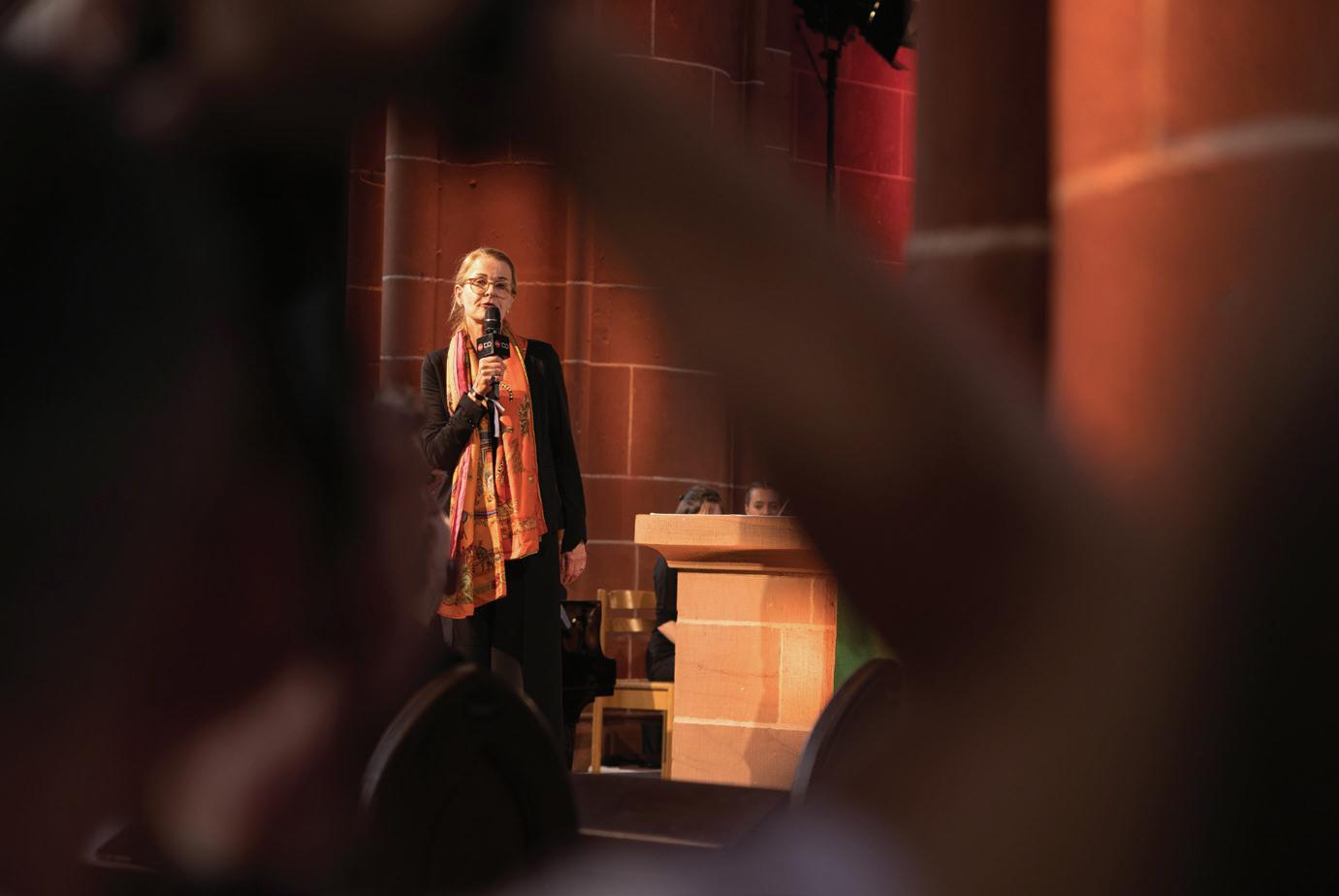
The Wetzlarer Dom was the venue for the opening concert and dinner. Karin Rehn-Kaufmann (Art director and Chief Representative Leica Galleries International) was the Master of Ceremonies for the evening. It started with a musical recital and performance from various ensembles and choruses. The acoustics in the Cathedral were superb. After the musical program, the gathering moved outdoors to the Cathedral courtyard, where a buffet of diverse and delicious food and beverages was served. This open-air gathering was one of the highlights of my time in Wetzlar. Of course, everywhere you looked there were Leica’s, Leica’s, and more Leica’s. The festive environment made it extremely easy to meet and make new friends. It is understood that the food and beverages (as well as the companionship) exceeded all expectations.
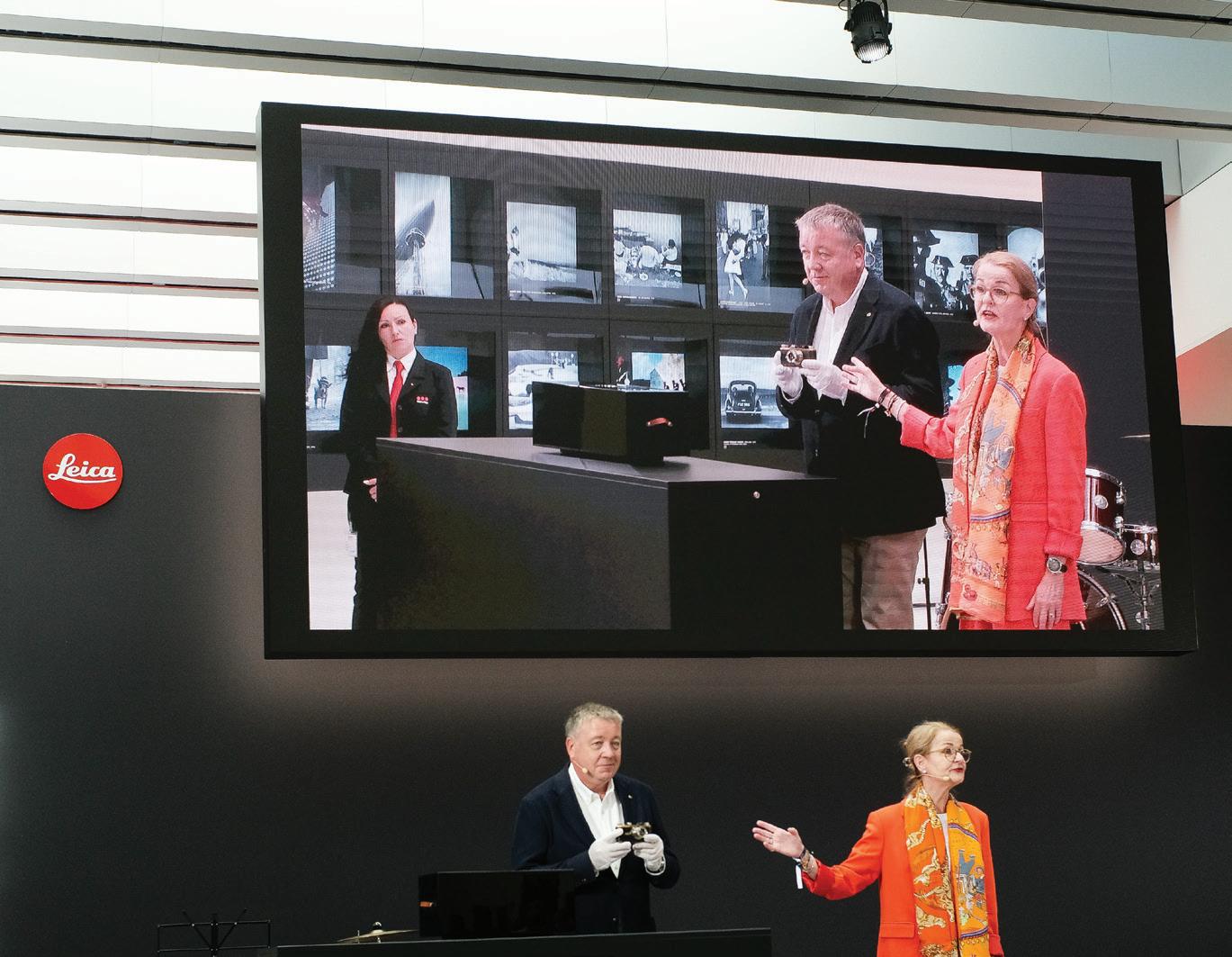
Thursday morning was the official opening for the events at Leitz-Park. Karin Rehn-Kaufmann was once again the master of ceremonies. Dr. Kaufmann (Chairperson of the Supervisory Board of Leica Camera AG) addressed the gathering. A retired official from the State of Hesse shared his story of how Dr. Kaufmann, at a point in time when Leica was at its lowest ebb, had the vision and foresight to reinvest in Wetzlar to build the new headquarters of Leica, Leitz-Park. Stefan Daniel (President, Leica Camera Group) unveiled the special Leica 100 M11D as well as the 100 Edition of the D-Lux 8, Sofort 2, and Trinovid 10x40 Binoculars. After the presentations, our group visited Villa Rosenberg and the Old Admin Building Boardroom.
After lunch, it was time for the Exhibition openings for Eduard Elias and a huge retrospective on the work of Joel Meyerowitz.
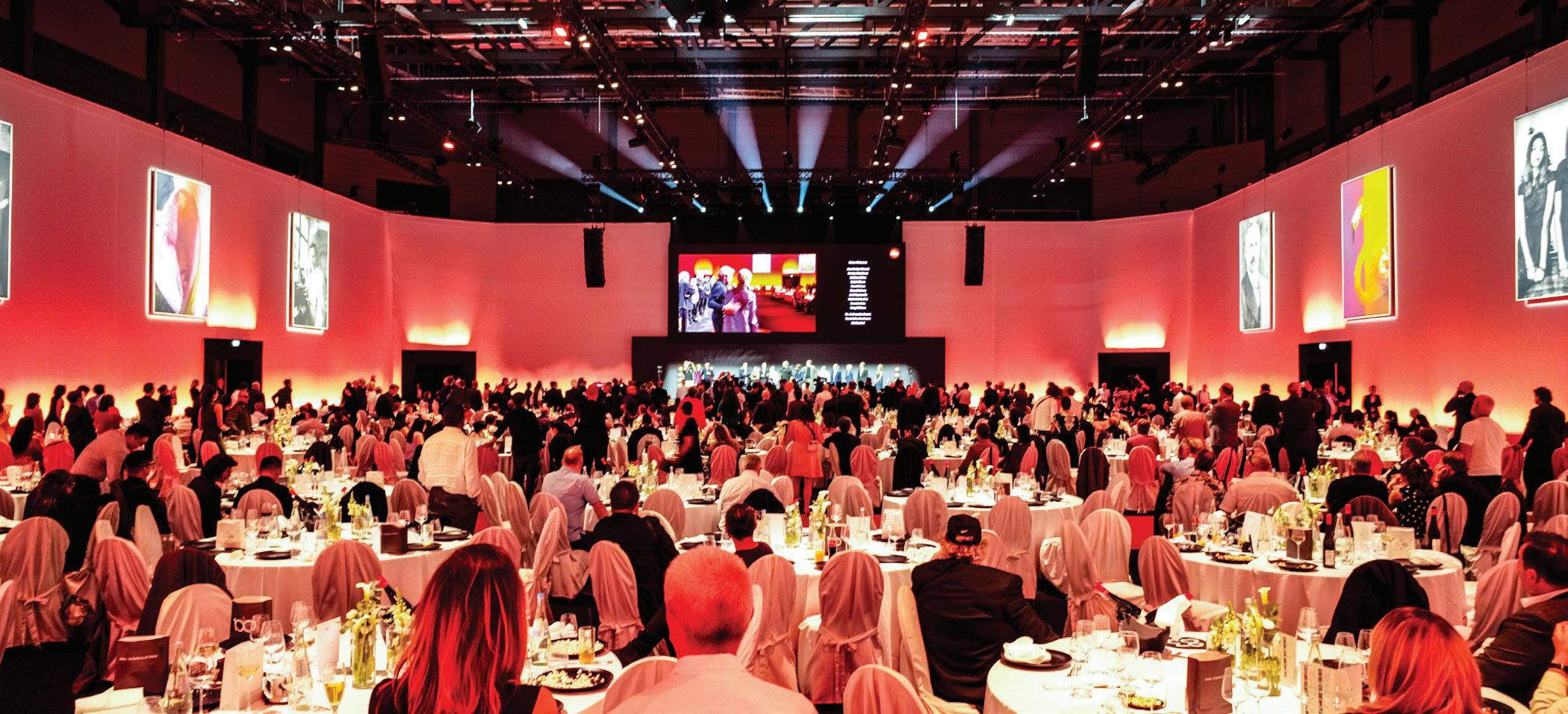
As I mentioned earlier, the 100 Year Event in Wetzlar focused on photography. The afternoon quickly passed, and then it was time to put on the “glad rags” and head to the Leica Arena for the evening’s festivities. After walking through a Leica 100-themed red-carpet area, you entered a room with over ninety banquet tables. The tables were laden with a special Leica 100-label Dry Riesling, and a nice dinner was served. After dinner, there was a world premiere of a 90-minute Documentary Film, “Leica – A Century of Vision” by Reiner Holzner. The evening was capped off with a very energetic performance by the renowned artist and musician Jamie Cullum. It was definitely a night to remember. Even leaving the parking lot became an unscripted, memorable event. The lovely young lady parked next to us in an exquisite evening gown provided much-needed instructions on how to get our parking validated. While waiting for another member of our group to rejoin us, she stayed and chatted with us for a while. It turns out she is an integral member of the design and development group that oversees imaging chip design and procurement. I learned more from her in that brief ad-hoc discussion than I had ever learned on imaging chip design. Ran˘ meetings like this were what truly made the Wetzlar event more than I could have ever imagined.
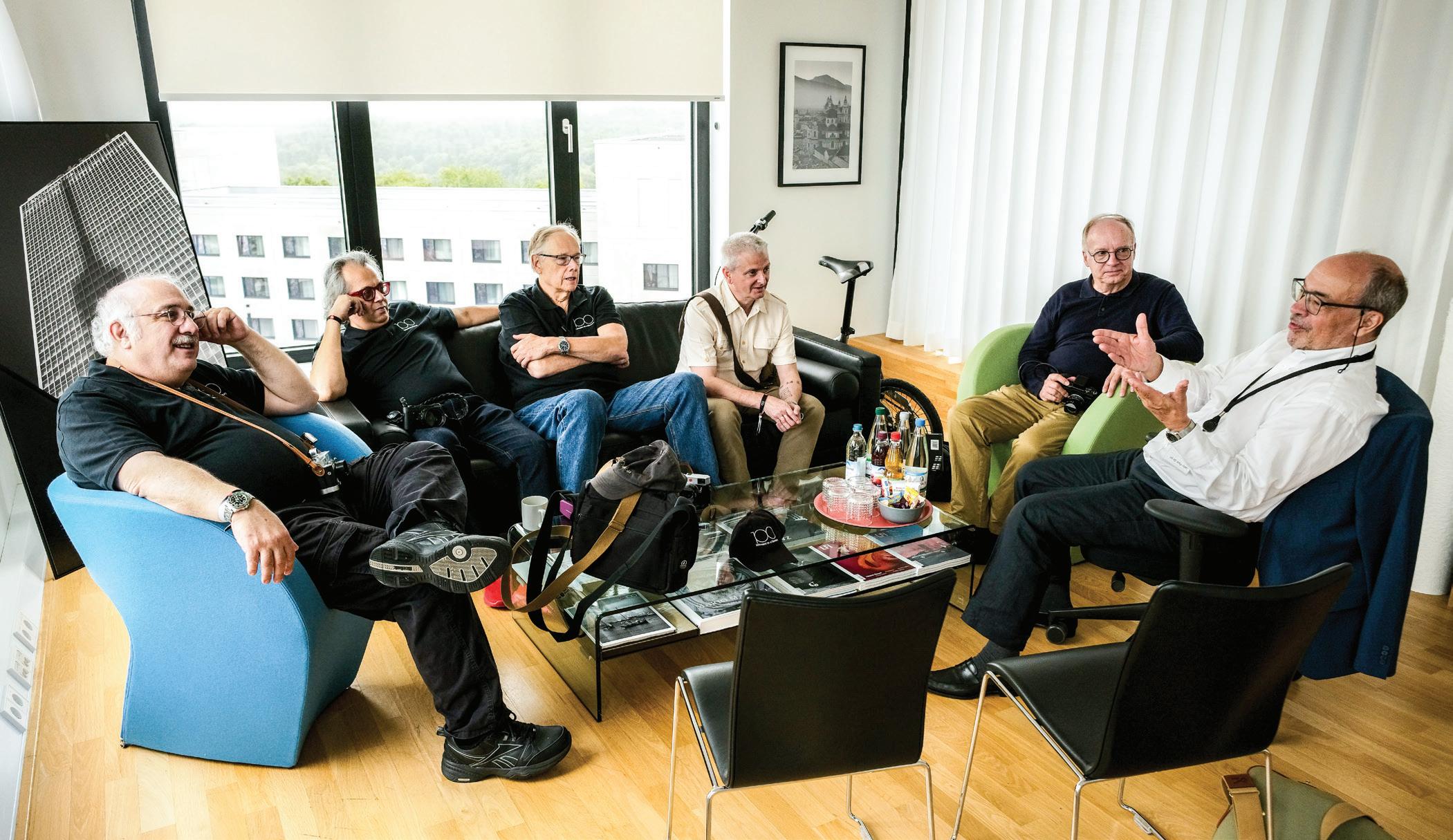
But wait, there is more! We still had all day on Friday for more overwhelming experiences. Our group spent an hour of quality time with Dr. Kaufmann in his office at Leitz-Park. In person, he is down-to-earth and extremely easy to converse with. The hour with him was worth the whole trip to Germany! We attended a presentation by Peter Karbe on the development and importance
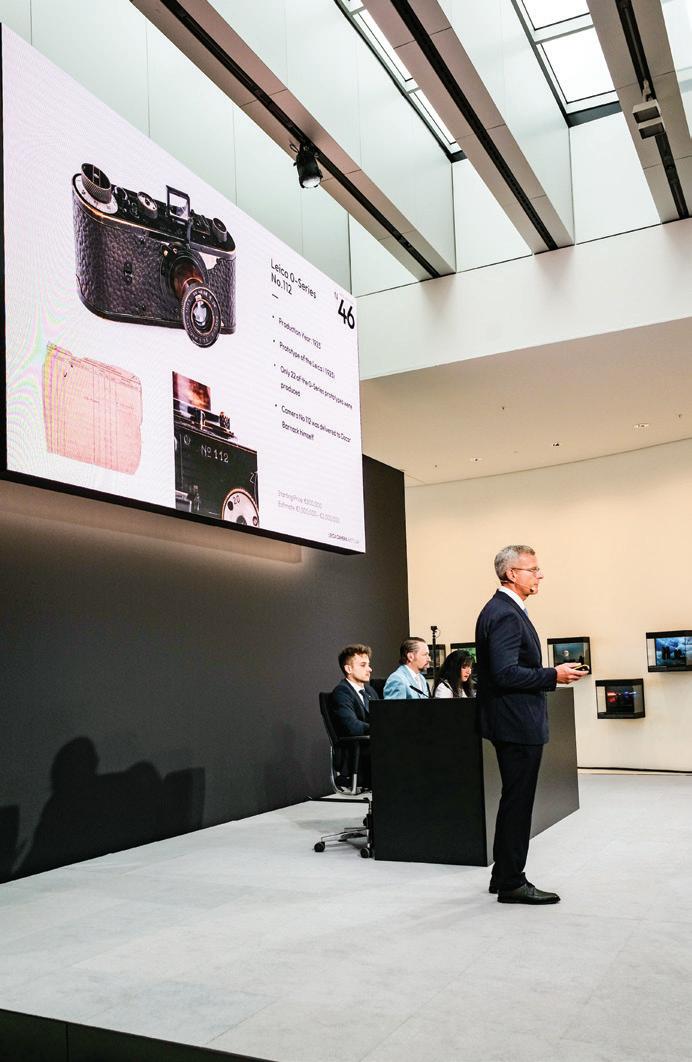
(left) Null Series No.112. (right) Stefan Daniel and Karin Rehn-Kaufmann present special anniversary edition Leica. Photos by Bill Rosauer.
of the optical rangefinder. (For those who are interested, you can see a filmed version of the presentation here: https://vimeo.com/1093052282/4b0fa63533?share=copy ) The director of the Leica Watch Project had a small group presentation for us as well. It too was highly informative. And we also attended a small group presentation with Stefan Daniel. Whew!
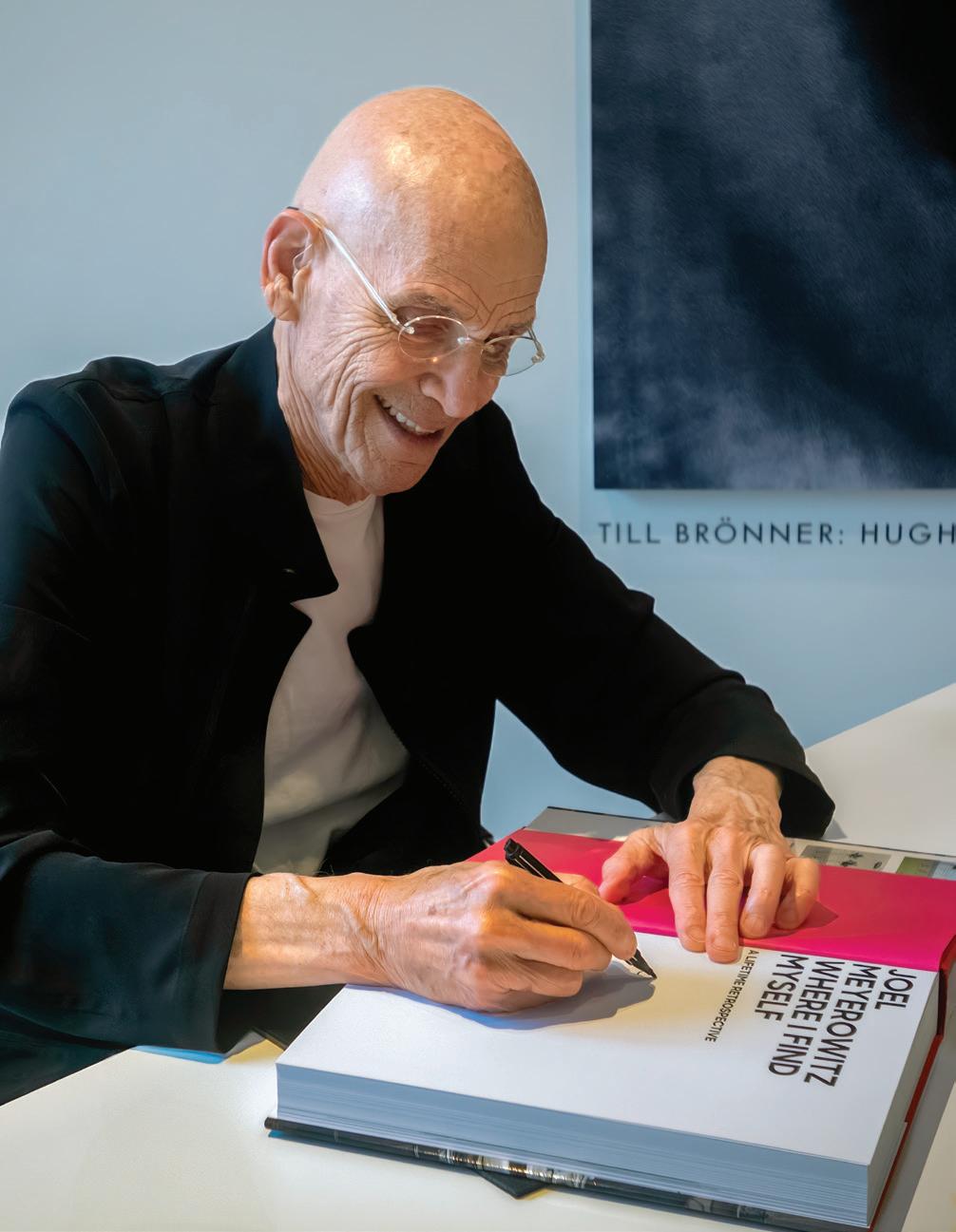
While all of this was happening, there were ongoing panel discussions with the featured photographers at the event, as well as book signings at the Museum Store. I have always been a fan of Joel Meyerowitz, ever since I purchased my first book by him for my personal library in 1985. Yes, I was first in line to have him sign my beloved copy of Cape Light, and two other books!
I want to mention that the Café, restaurants, food, and beverage trucks were always present. Opportunities to meet new people, visit with friends, and or take time for a much needed shot of caffeine were endless!
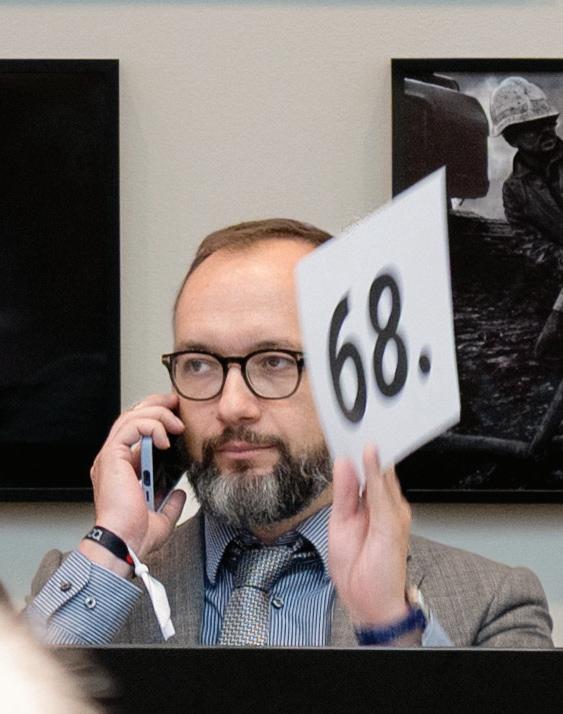
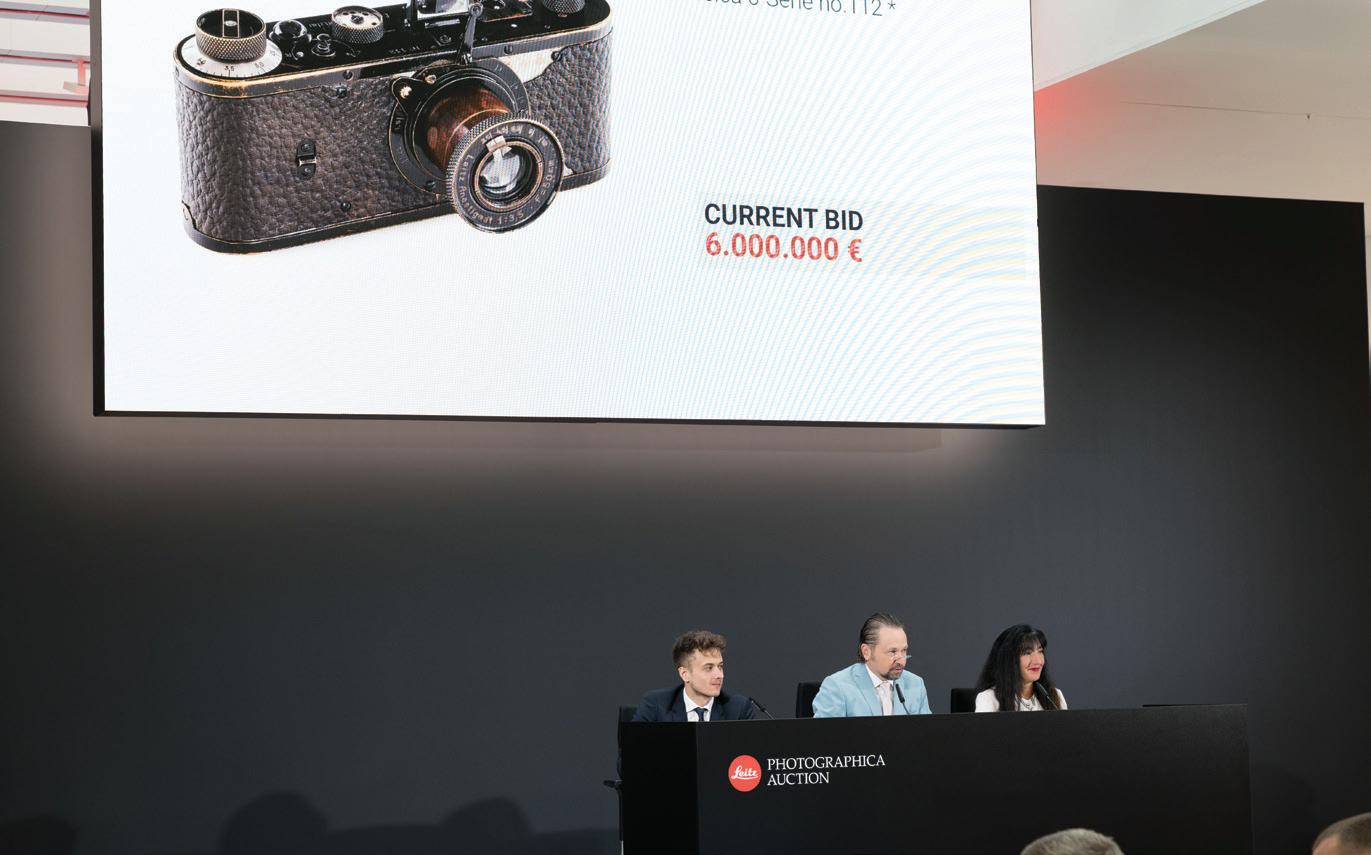
Starting at midday was the Leitz Auction. If you have a chance, go to their website to look at the auction results. Being in the room during the bidding on Leica Null-Series camera 112, as it continued to climb in million Euro increments, was also a once-in-a-lifetime experience. With buyers’ commission and Dollar conversion, the camera was hammered for $8,200,000.00. I took a break from the Auction to revisit the Leica Store and do some more shopping. The auction was being simulcast to a Leica Cinema unit in the store.
Anniversary celebration at the Wetzlar Convention Center with 600 guests. Photo by Bill Rosauer.
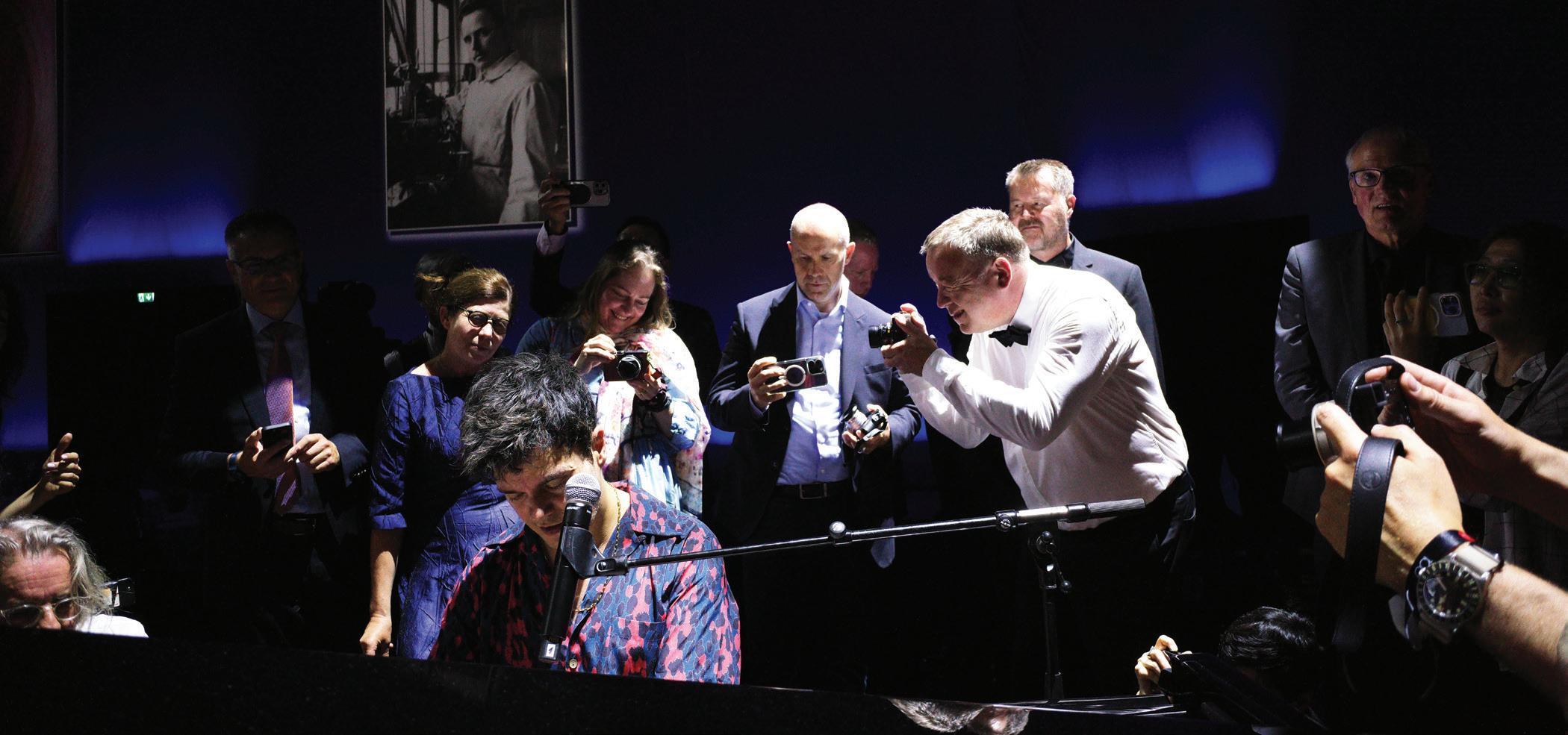
Stefan Daniel and wife Bettina on stage with Jamie Cullum at the anniversary celebration. Photo by Jay Paxton.
Not knowing much about the Cinema products, it was fortuitous to be able to meet the Cinema product manager and learn more about them.
On a personal note: As I previously mentioned, one of the reasons I attended the celebration in Wetzlar is that I am working on an article that I hope will be the most complete history of the Leica 33mm f/3.5 Stemar ever written. Th roughout the event, I walked around with my M10-R mounted with a Wetzlar version of that lens and a Midland version of it in my camera bag. I cannot count the number of times interested parties asked to see the lens, and the friendly conversations that ensued during these interactions. I will repeat it; just being among such a large group of like-minded Leica enthusiasts was an experience I will never forget.
There was so much going on that last day of the celebration that it really was impossible to take it all in, but I tried! All too soon, the day ended, and the celebration was over. I am glad I went, and weeks later, I am still processing the memories and experiences I had there. In closing, I postulate that future years might not be as grand, nor as extravagant as the 100 Year celebration in 2025. That being said, if you are a Leica enthusiast, or just a photography enthusiast (or both), a trip to Wetzlar is well worth the effort! Even better, if you have a chance to visit during one of the annual events, go!
Book signing by Joel Meyerowitz.
Photo by Jeffery D. Trilling, with 3.3cm f/3.5 Stemar lens.
Meeting in Andreas Kaufmann's office. Left to right: Jeff Trilling, Chats Chatterjee, Jay Paxton, Marke Gilbert and Chuck Viers. Photo by Bill Rosauer.
100
YEARS OF LEICA
WITNESS TO A CENTURY
by JONATHAN SLACK
This year Leica are celebrating 100 years since the first Leica (the 1A) went into production. There have been a series of events around the world, but the pinnacle was the Celebration at Wetzlar from 26th-28th June 2025.
100 YEARS OF LEICA WITNESS TO A CENTURY (1925-2025)
The first Leica celebration I attended was in 2014 to celebrate 100 years of Leica photography, and 60 years of the Leica M. A man-hole cover was installed at the spot where Oskar Barnack took his iconic picture of Zur Alten Münze in 2014 with the Ur-Leica. This was also a celebration of the opening of Leitz-Park, the main building was there, but there were marquees where the Leitz Hotel was yet to be built.
Of course there was another celebration at Leitz-Park in 2018 when the Leitz Hotel opened and also Leica Welt, with its shop and museum, gallery and archives. So, two celebrations for the opening of LeitzPark, and now two for 100 years of Leica Camera!
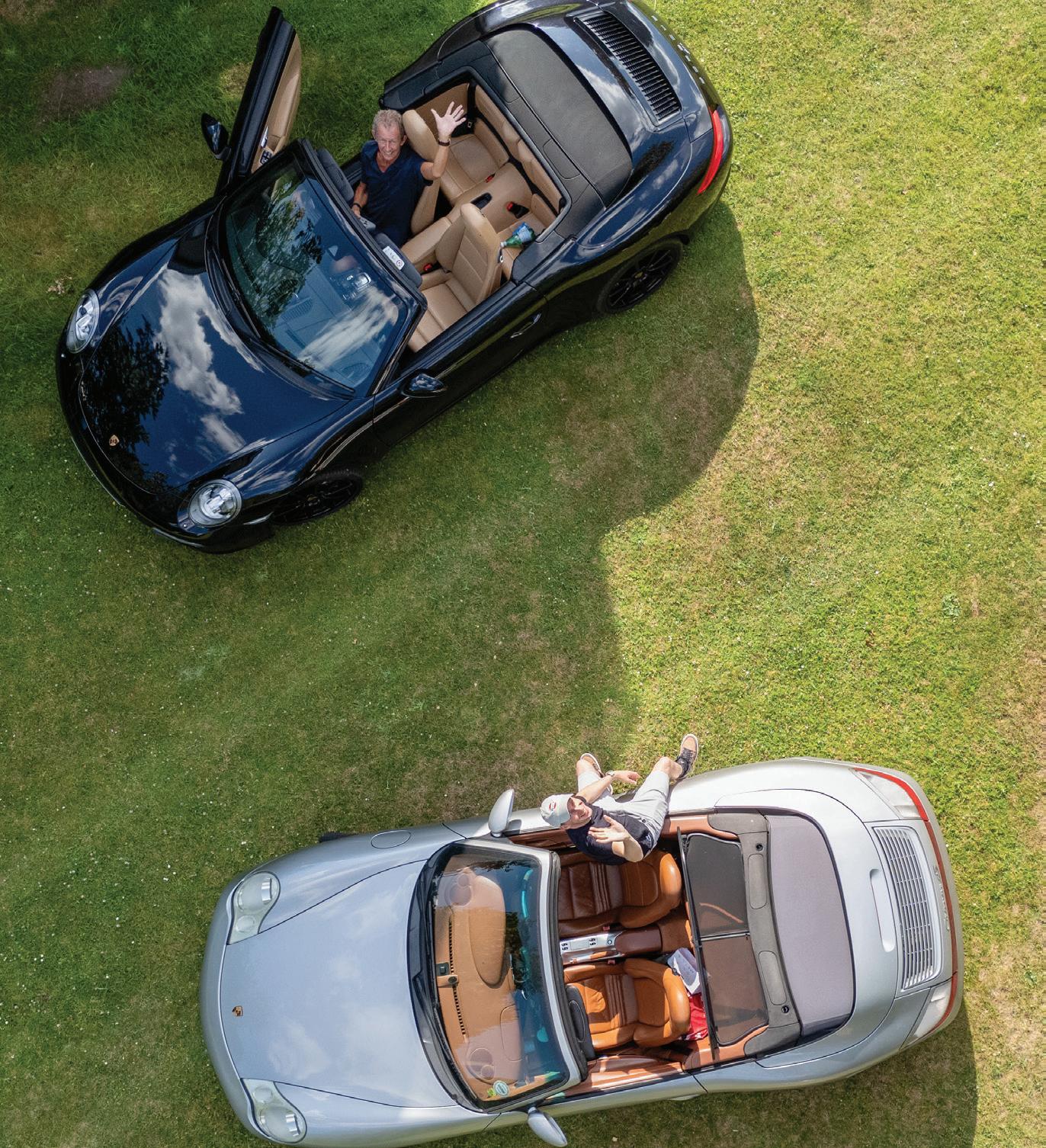
Back in April, I made a bit of a financial indiscretion and bought a Porsche 911 Cabriolet - I had always wanted one, and egged on by my children (and others), I fell in love with, and then bought, a low milage 991.2 from 2017 (black with a tan leather inside).
One of the eggers-on had been Wayne Goodman - who had himself bought a lovely 996 Cabriolet 4S earlier in the year. We had both been invited to the Leica 100 celebrations in Wetzlar at the end of June, and we thought it would be fun to make it into a road trip. The weather was set fair (a heat wave indeed) and so it was decided.
Wayne came for dinner with us in Suffolk, after which we headed to Harwich to catch the overnight ferry to the Hook of Holland. I’ve done this a few times for work and have learned that it’s great
Middle Fen Cottage Garden - Wayne and I from above.
to avoid the temptation of staying up late boozing…they wake you up at 6am Dutch time (5am UK time). One thing led to another, and we finally headed to bed at 1:30 after a few glasses of wine!
Setting off from the ferry, the first stop was to see Elmar Streyl’s excellent exhibition at the law courts in Dusseldorf - he puts so much thought and consistency into his work, and then he bought us lunch!
After lunch we set off for Wetzlar, Wayne and I in our Porsches looking forwards to the autobahn and Elmar in his sensible car - I don’t know how fast I drove as I was too scared to look at the dials when I went over 200km an hour. At any rate, Elmar got there first in his sensible car!
The opening event of the celebration was a concert at the Wetzlar Dom with the Ensemble Bella Musica, Salzburg and the Leica Choir. Trumpeter and Leica photographer Till Broenner was a special guest, the concert was compered by Karin Rehn-Kaufmann who gave a speech of welcome (and also sang in the choir). Admission to the cathedral started at 5.30, and the 800 people invited gathered slowly in the Dom Platz outside the cathedral. It was lovely to meet up again with old friends from previous celebrations. There were photographers and influencers and Leica employees from around the world, together with representatives of Leica’s partners (Sigma for example). Once inside the Cathedral, a section of which is open to the air, guests were plied with drinks before sitting down for the concert itself at 7.
After the concert there was a Barbecue in the grounds of the Cathedral with a band and all that you could eat and drink. The Leica contingent went missing as they had a private celebration of CEO Matthias Harsch’s birthday. The rest of us buckled down and ate and drank our fill.
Returning to the hotel after the meal we found the bar was still open, and stayed up chatting until the wee hours.
Karin Rehn-Kaufmann at the Wetzlar Dom
Lars Netopil and Jesko von Oeynhausen
Andrea Pacella, Global Marketing Director for Leica Camera
Yasuhiro Ohsone, Head of product Planning at Sigma
THE OFFICIAL OPENING CEREMONY
Thursday morning (26th June) saw the official opening of the celebrations. There were speeches by Dr Andreas Kaufmann, Matthias Harsch and Dr. Oliver Nass who is in charge of the Ernst Leitz foundation.
100 YEAR CELEBRATION EDITIONS
After this Karin Rehn-Kaufman and Stefan Daniel together presented the Centenary special editions. Some of these were limited and some are not! What they all have in common is an emphasis on the nickel and glossy black finish of the original Leica 1A
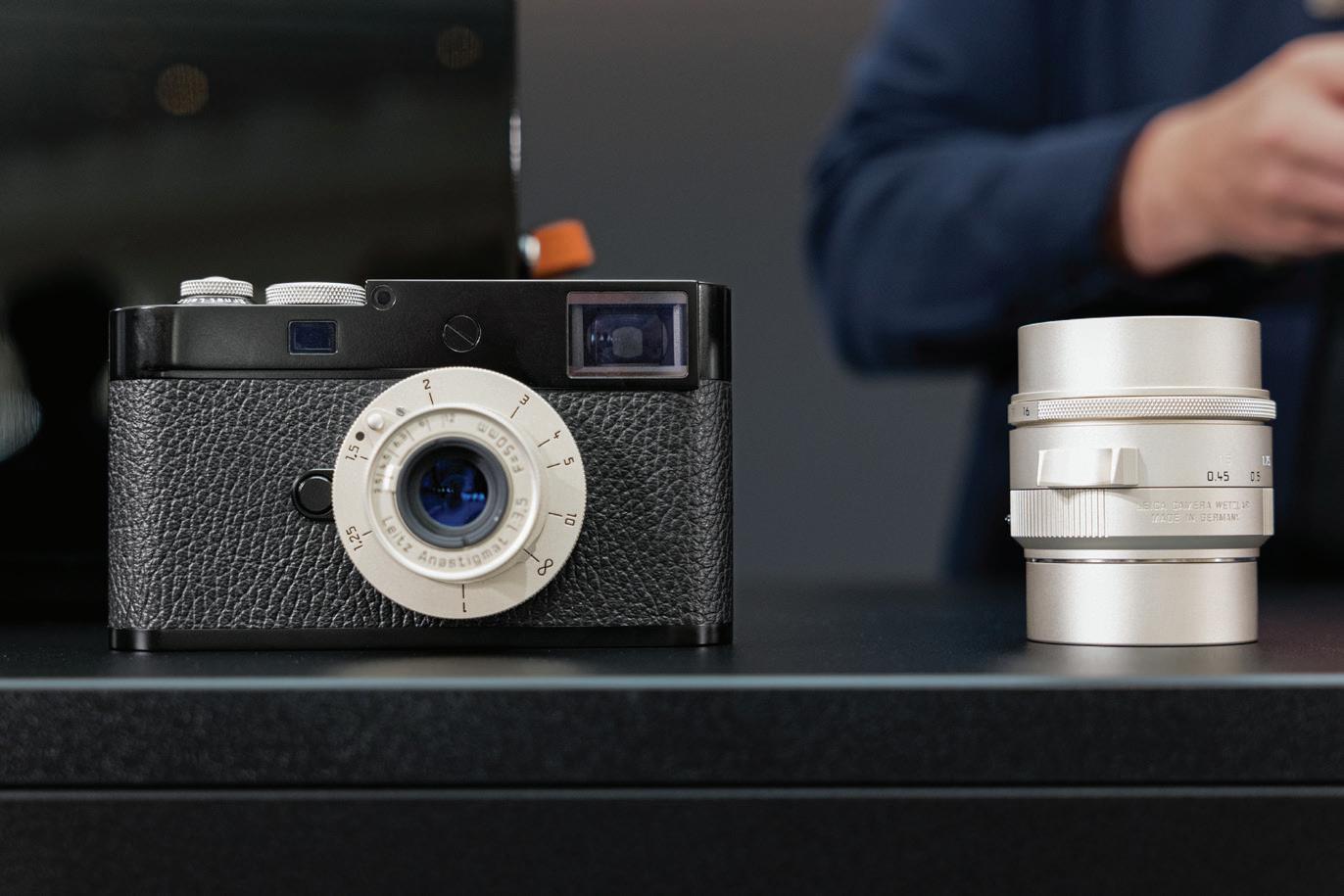
The M11-D Anniversary set was in the pride of place - it is a two lens set, one is a modern Leica Summilux-M 50/1.4 ASPH, and the other is the historically significant Leitz Anastigmat-M 50/3.5.
This is a fascinating lens. The Leica 1 came with a fixed version of it. This modern reissue has an M mount, but otherwise it faithfully preserves the original lenses shape, dimensions, engravings and its retractible design. I must say I hope that they bring this out as a series production, I’m certain a lot of us would very much like one.
The camera has a brass top plate with a high gloss lacquer and nickel coloured anodised controls with the classic double knurling. It also has a streamlined design without eyelets for straps, possibly inconvenient for day to day use, but as there are only 100 sets I can’t see that too many people will want to be slinging them around their shoulders. The lenses are also numbered.
The ‘standard’ sets are numbered from 001 to 100, however one extra set is numbered 000, and this camera has the serial number 6,000,000, the six millionth production camera from Leica - in addition it is the millionth M camera made since 1954! This special camera was presented to the Kaufmann family in recognition of their contribution to the
Leica company and the whole family came up on stage to receive it. The set will be auctioned by them in aid of charity.
There is a lovely video on Leica's website presented by Stefan Daniel, which can be found using the QR code to the right (Scroll down the page for the video.)
In addition to the M11-D set there are special editions of the Leica D-Lux 8 which looks splendid in glossy black and nickel, The Leica Sofort 2 instant camera
and the Leica Trinovid 10x40 binoculars. Each of these can be purchased from Leica stores or online, I’m trying to decide whether to get the D-Lux 8 or the Trinovid binoculars!
Matthias Harsch and the Kaufmann family
The M11-D Anniversary Set with Anastigmat-M 50/3.5 an Summilux-M 50/1.4
The Millionth M video with Stefan Daniel
THREE EXHIBITIONS
On Thursday afternoon Karin RehnKaufmann opened three new exhibitions to celebrate the centenary.
ÉDOUARD ELIAS
The first of these was of one of a new generation of young war photographers committed to covering humanitarian crises around the world.
The exhibition is divided into three stunning sub-sections:
Well 77 is where he dramatically documents the attempts to put out oil wells burning in Iraq early in 2017.
In the second: SOS Aquarius he accompanied the rescue ship Aquarius which was trying to save boat migrants making the dangerous crossing from Africa to Europe.
The third set was made in 2014 in the Central African Republic where he was embedded with a unit of Foreign Legionnaires, whose daily lives he documented.
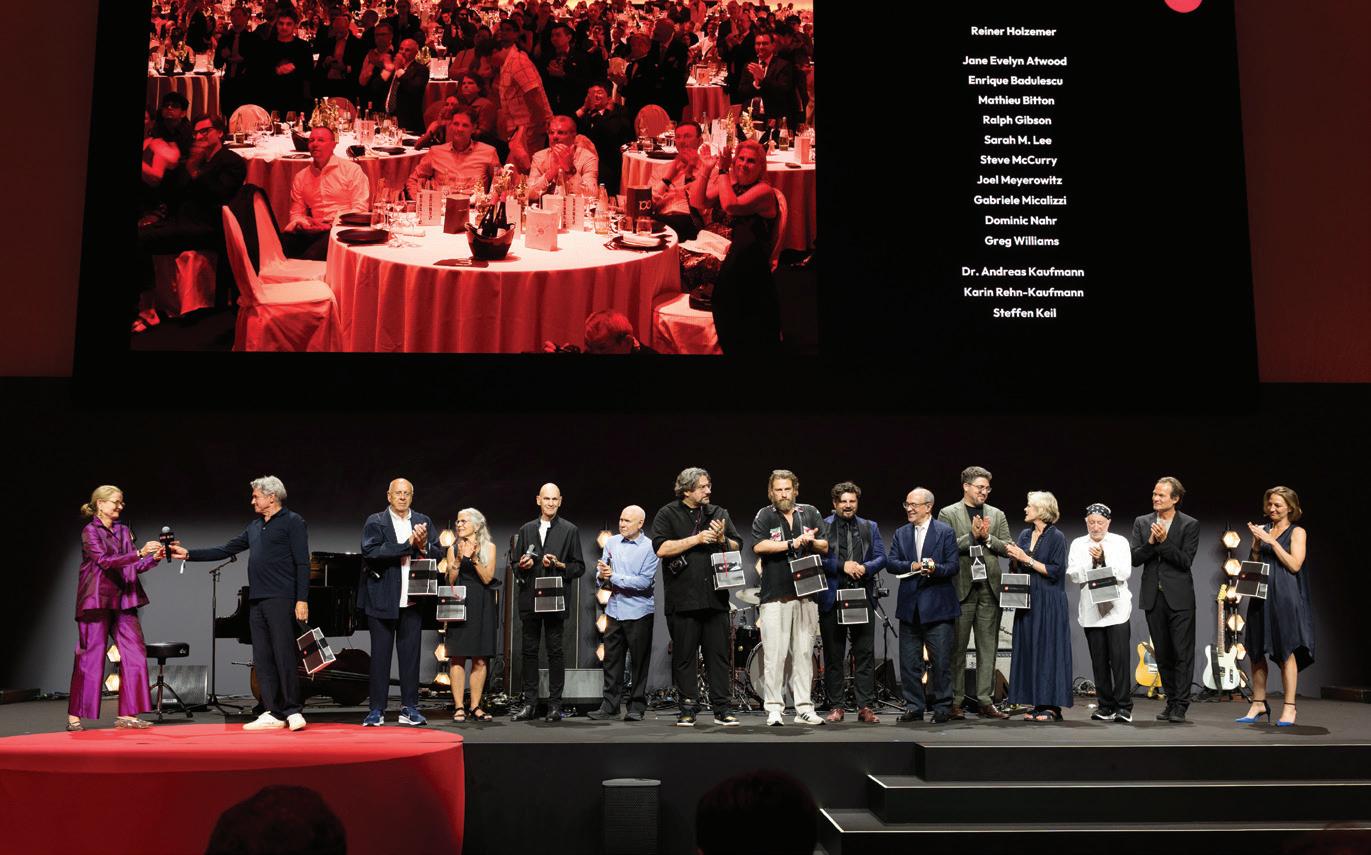
On Thursday evening there was a grand (and excellent) dinner. Drinks were served and photographs were taken in the foyer, after the dinner there were speeches from Andreas Kaufmann and others and we were shown a preview of a new documentary by Reiner Holzemer in which there are interviews with a number of Leica photographers, most of whom were there for a group photograph on stage after the screening.
The fi lm has not been released yet, but is well worth watching. There were also two private showings at Rencontres d'Arles 2025 photo festival.
After the fi lm Jamie Cullum played a fi ne set which was much photographed! Festivities carried on upstairs late into the night (and in the bar of the Leitz Hotel as well!)
PANEL DISCUSSION
On the Friday morning (June 27 th) there was a lively and inspiring panel discussion in the Leica foyer, "Seeing Clearly: Photographic Truth in Times of Change".
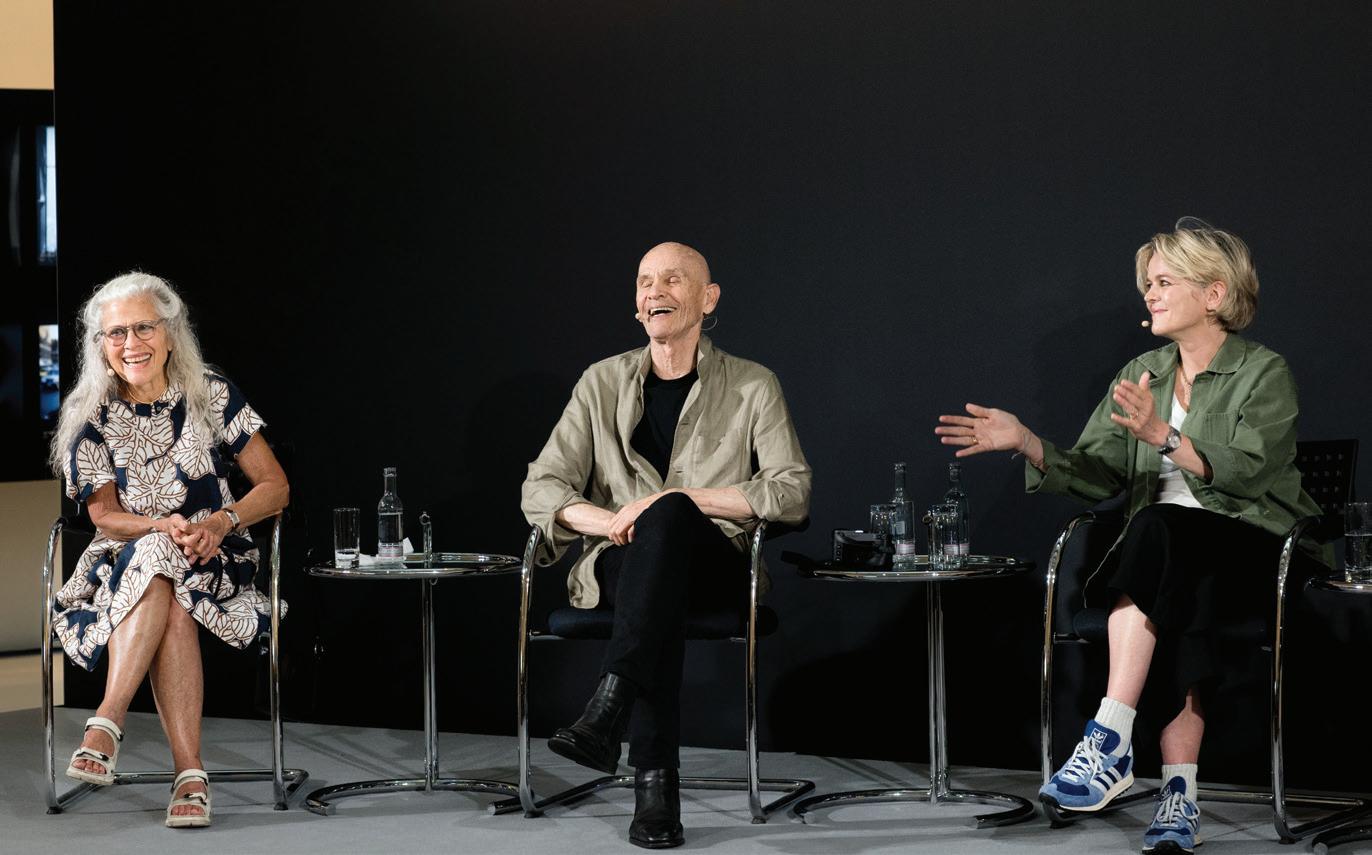
Dominic Nahr was the moderator whilst Jane Evely Atwood, Joel Meyerowitz, Sarah Lee and Steve McCurry were the panelists. For me this was the highpoint
of the whole event, all the panel were fascinating, and they came at Photographic Truth from very different perspectives.
The one thing they all agreed on was that they do not plan their pictures, but catch them as they happen.
THE 46TH LEITZ PHOTOGRAPHICA AUCTION
After the panel discussion it was time for the auction. William Fagan has reported on this elsewhere, but it was very exciting, even for someone like me who had no intention of bidding!
Lot 8 was Leica 0-Serie no 112. Th is was one of only 22 prototypes which were made of the Leica 1. Probably only about 1/2 of them still exist today. No 112 was delivered directly to Oskar Barnack.
In 2022 at the 40th Leitz Photographica Auction number 105 was sold for a world record (for a camera) of €14,4 million! So there was much excitement around no 112.
In the end there were two telephone bidders left , and the camera went for €6 million - which was €7.2 million with the buyer’s premium.
After the auction there were a number of talks in Museum block, Notably one on the history of the M rangefi nder by Peter Karbe and another of Stefan Daniel’s excellent presentations.
Celebrations continued long into the night, but sadly I had to head for home, a lovely sunny journey to Calais and the Channel Tunnel, home in Suffolk in time for a late supper.
It was an exciting and exhausting schedule, and a real privilege to have been invited.
THE PHOTOGRAPHY
The motivation for this article was really because I wanted to put the Leica SL3-S through its paces with the new 28-70mm Vario-Elmarit-SL as an event camera. I've done a series of events with the SL3-S (a play, a dog show, the Ladies Tractor Road Run and a concert/party in a barn, and this event). I've written two new articles: one about the SL3-S as an event camera, and the other a review of the 2870mm Vario-Elmarit-SL, a lens which is both affordable and carryable! You fi nd these articles at https://www.slack.co.uk/ or by using the QR Coe below.
Read more about the 100 Year Celebration in Wetzlar at www.leica-camera.com
Read more of Jono's articles at https://www.slack.co.uk/
Panel Discussion (left) Steve McCurry and Dominic Nahr (right) Jane Evelyn Atwood, Joel Meyerowitz, and Sarah Lee
(left) Dr. Kaufmann giving a speech at the Gala Event. (right) Rainer Holzemer and the photographers from the film.
The Leitz Photographic Auction. Bidding for lot 47.
LEICA 100 TH NYC
by BOB LEVITE
Leica’s, Leica’s, everywhere….
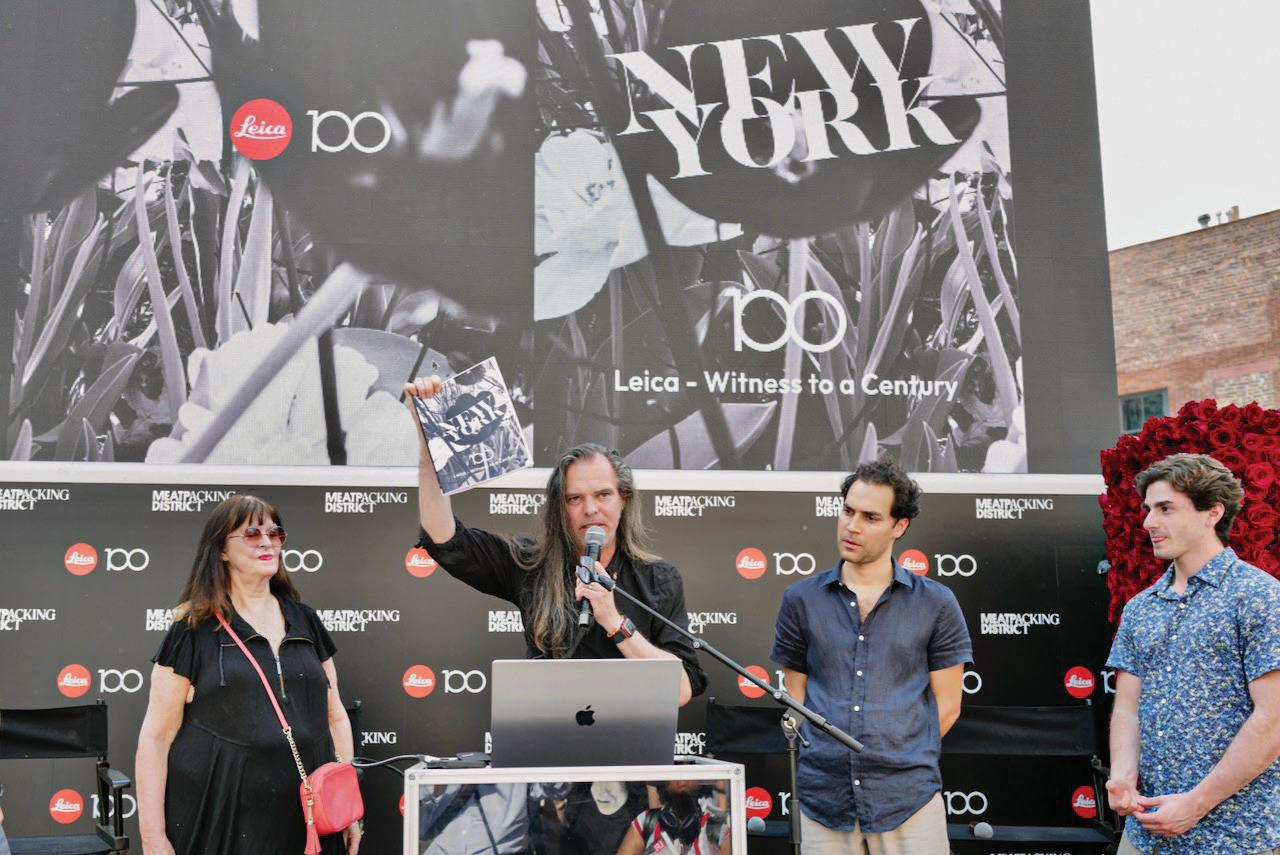
Certainly more than I’ve seen in one place. That’s what happened in New York’s Meat Packing District in early May as Leica Camera AG celebrated the 100th anniversary of the Leica 1 camera at the US flagship store and gallery. The event was part of the global “100 Years of Leica: Witness to a Century” campaign.
The celebration featured a series of exclusive events including product launches, exhibitions and community gatherings. The new product announcement was for a limited-edition Leica M11 “New York USA” black paint camera. The edition is limited to 100 pieces. Additionally, a collection of 100th anniversary accessories and collectible items were presented.
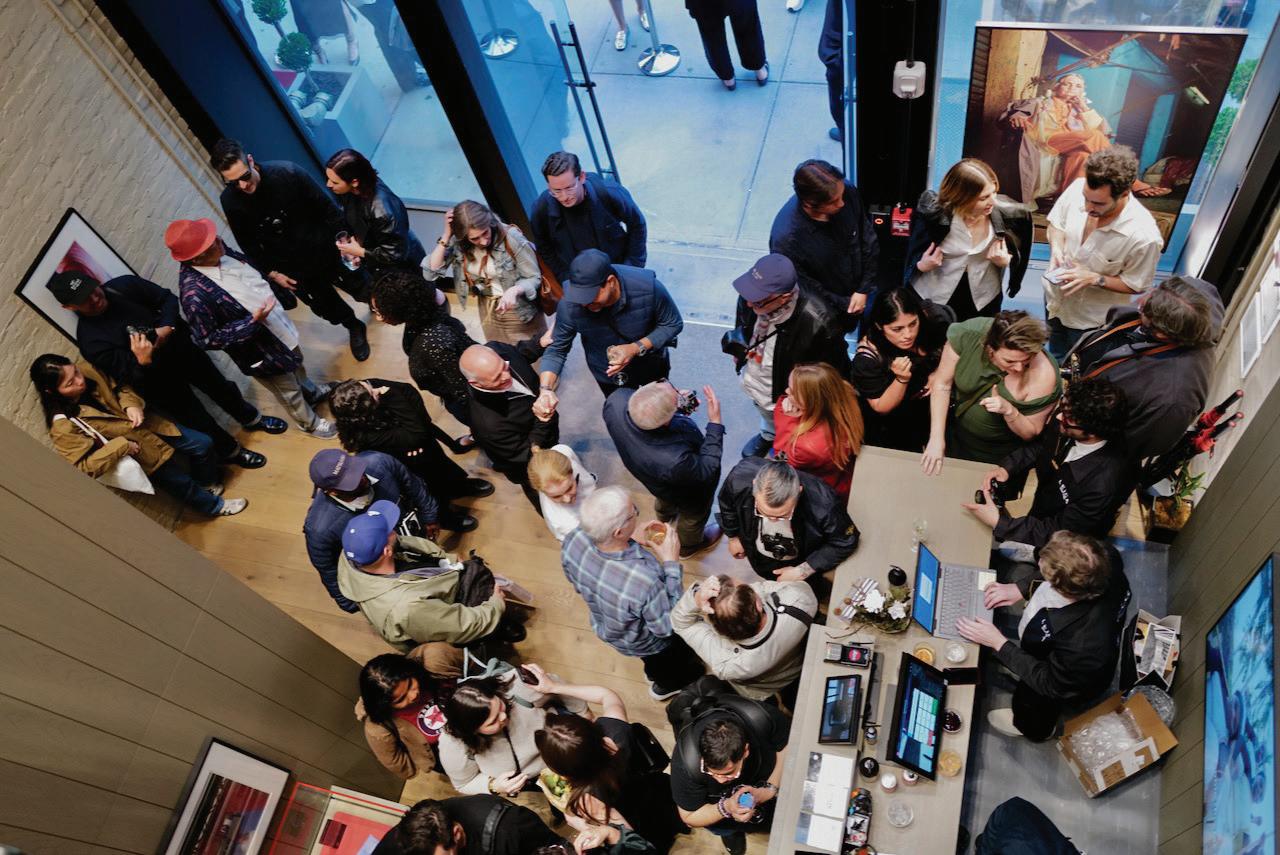
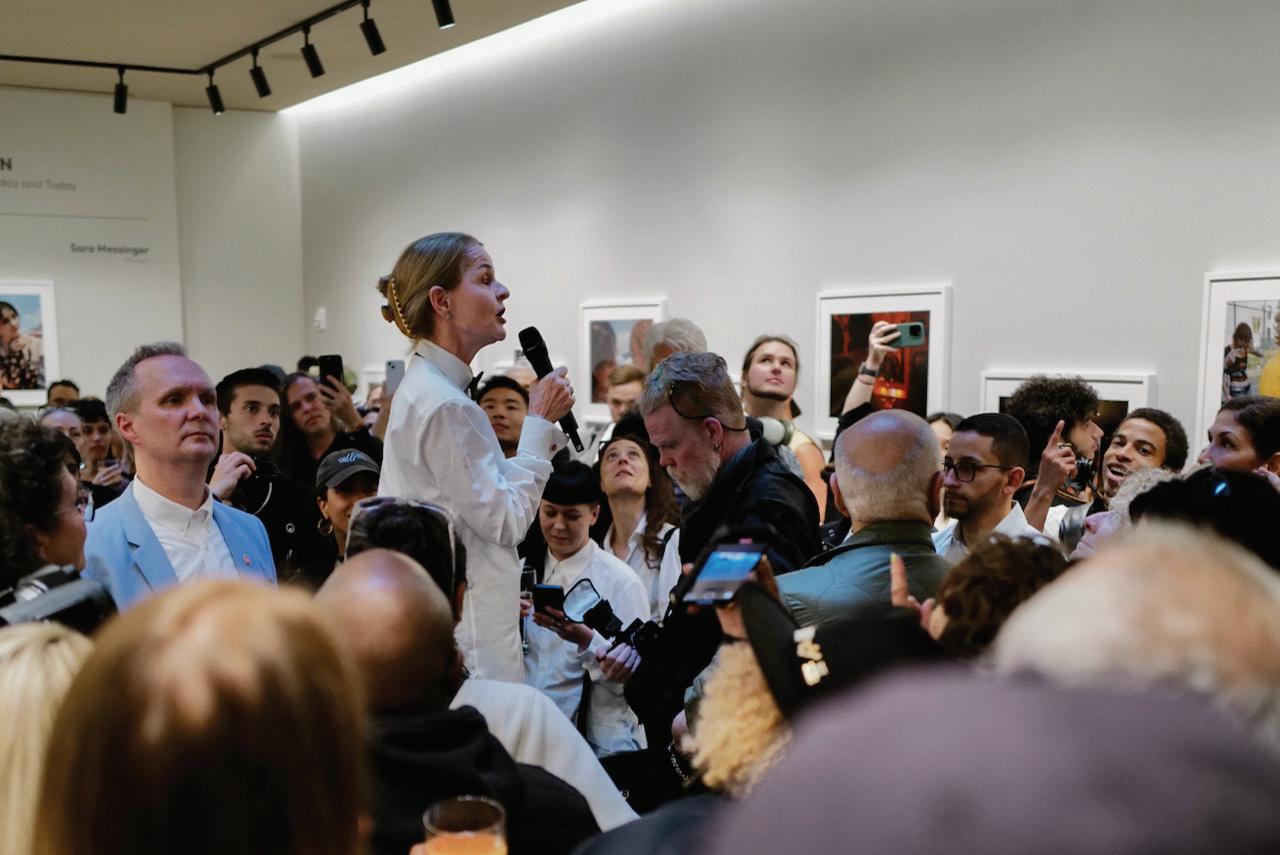
The kickoff event was a gallery opening and cocktail party at Leica’s Meat Packing District location featuring the work of photographic legend Bruce Davidson and newcomer Sara Messinger. After an introduction by Karen Rehn-Kaufmann, head of Leica Galleries International, iconic photographer Ralph Gibson spoke on behalf of his good friend Bruce Davidson, who was unable to attend. After Ralph Gibson, Sara Messinger was introduced and showed the fresh face of Leica photography. The show featured comparative photos of teenagers, yesterday and today.
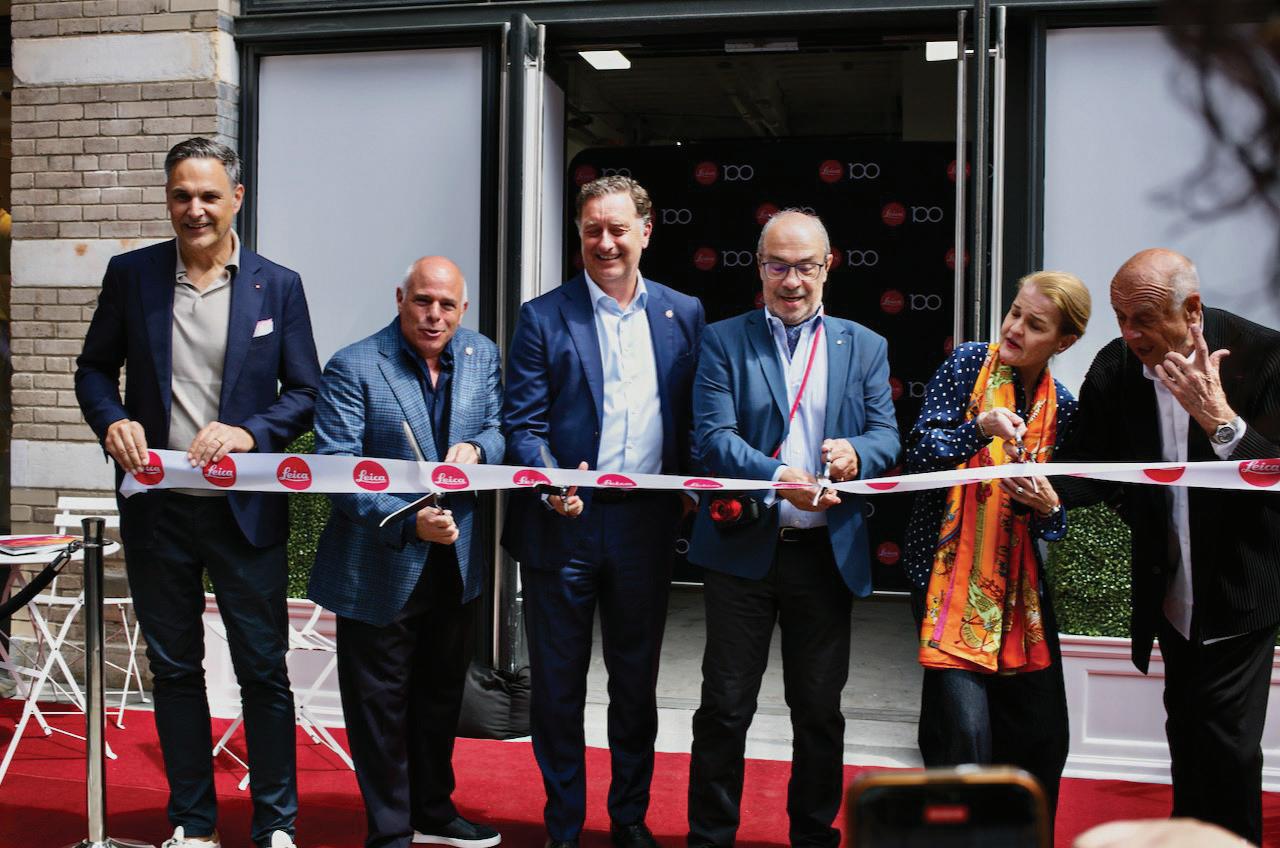
Pop up ribbon cutting with Kurt Doyran , Mike Giannattasio, Matthias Harsch, Dr. Kaufmann, Karin Kaufmann, and Ralph Gibson.
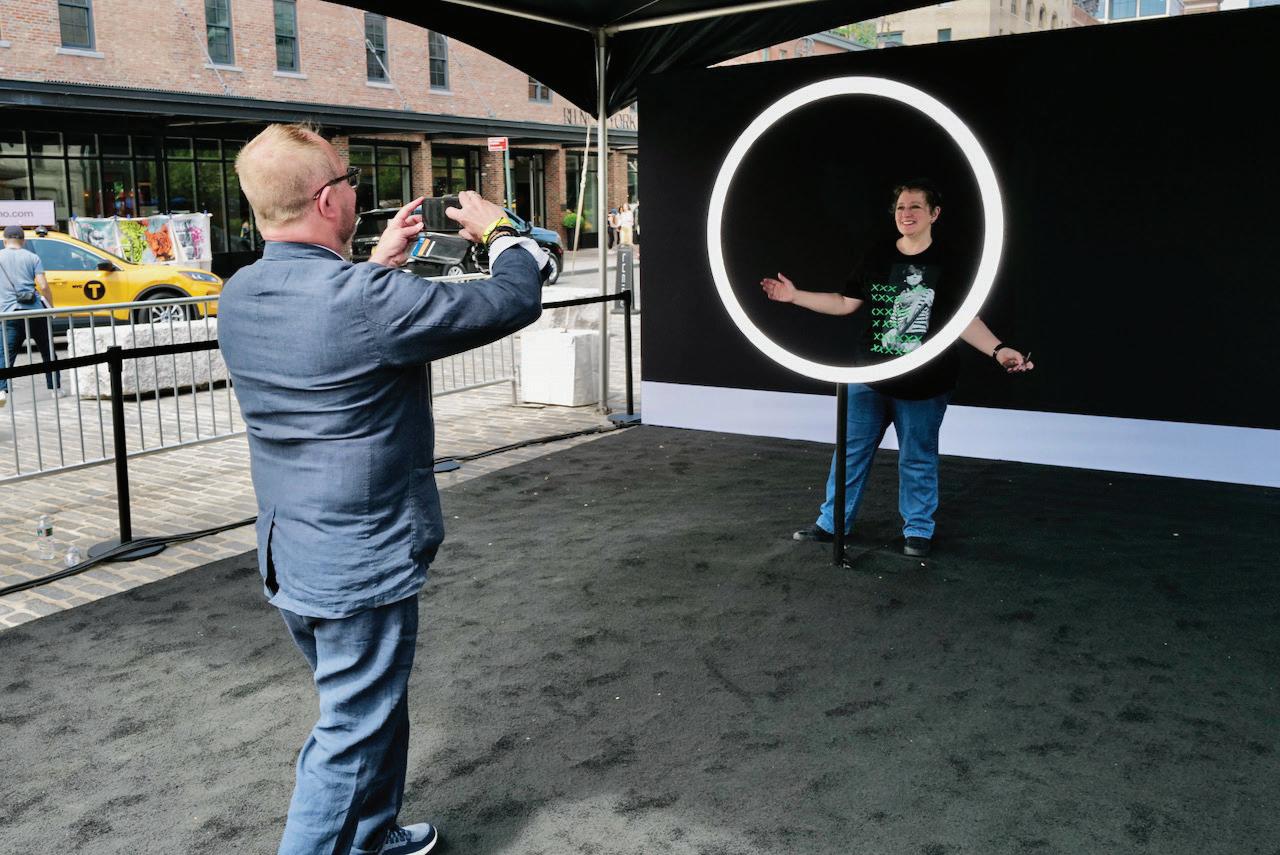
Leica recreated one of the most popular spots on the Wetzler campus, Café Leitz. The New York version of the café, a coffee truck, became the central meeting place for attendees located directly in front of the Leica store. Attendees showed off their gear, photographed each other and enjoyed copious amounts of free caffeine while building new and renewing old friendships. The thing that sets Leica apart from other camera companies is the sense of family and camaraderie that was on display at the Leitz Café.
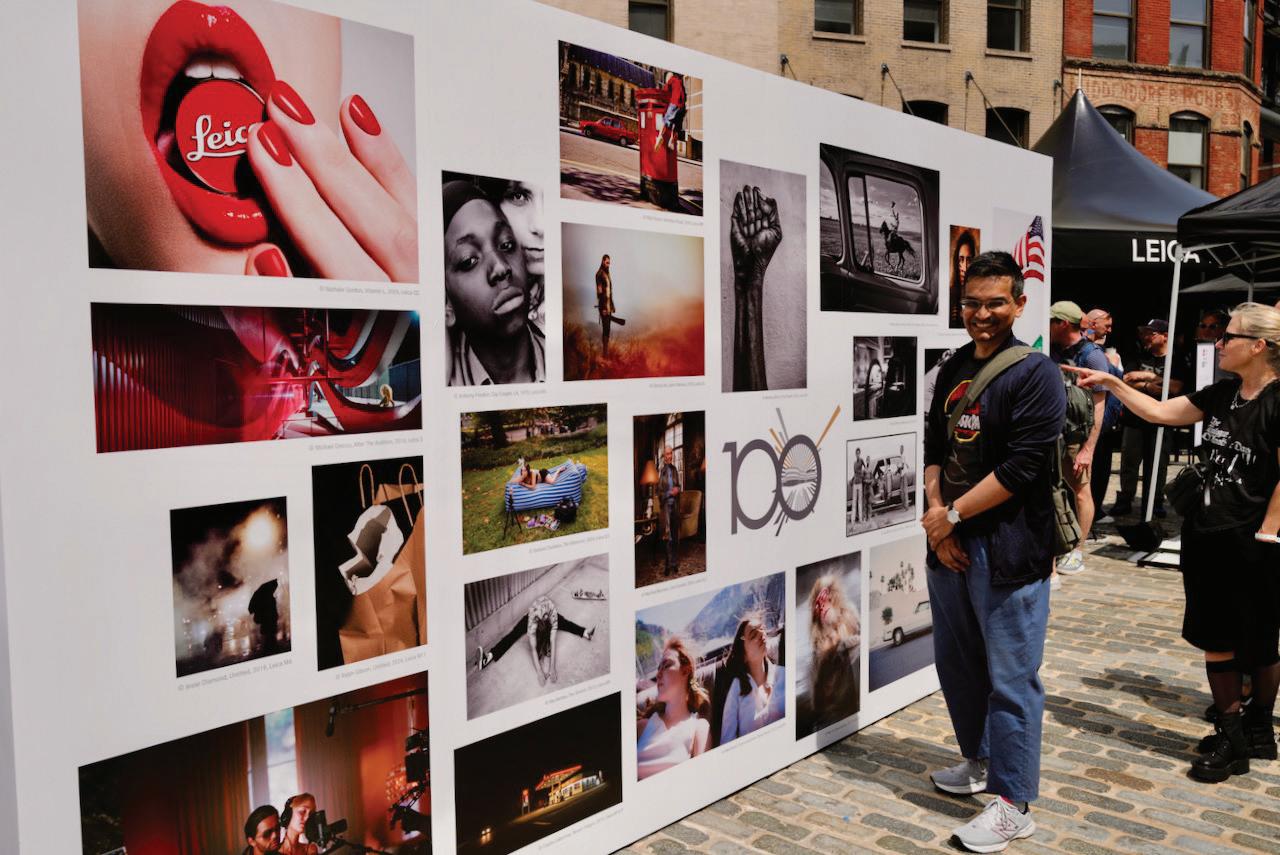
The next morning, at a pop-up location across the street, a ribbon cutting ceremony and press event were held featuring Dr. Andreas Kaufmann, Karin Rehn-Kaufman, Matthias Harsch, Kurt Doyran, Mike Giannattasio and special guest Ralph Gibson. The pop-up gallery featured 100 years of Leica images. Also on display, preview items for the upcoming Leitz Photographica Auction. Headline items included the legendary Leica O-No. 112 prototype and the first production Leica M3.
In honor of the 100th celebration Leica Akademie hosted a series of workshops and photo walks featuring photo celebrities like Cheriss May, Bil Brown, Mark De Paola, Gajan Balan and Phil Penman.
Gansevoort Square public event
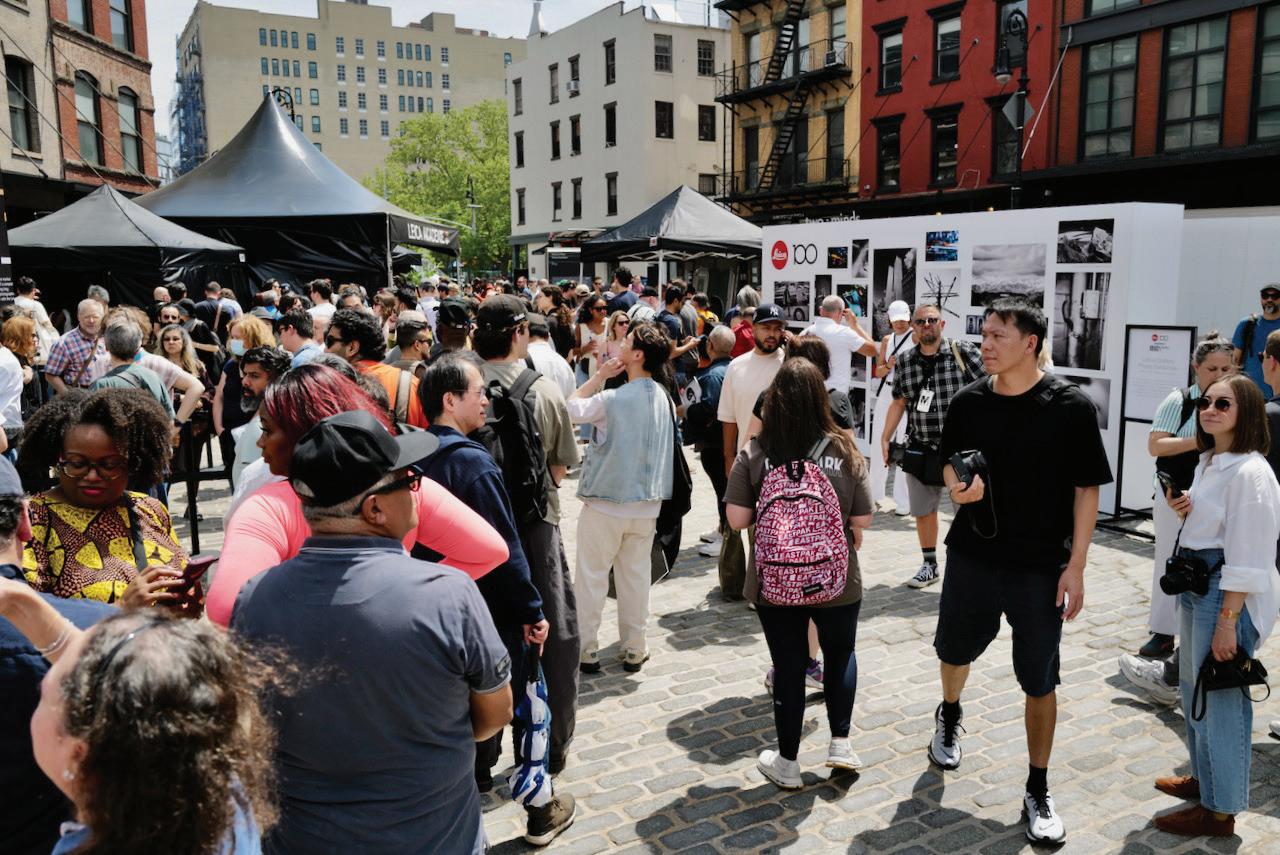
The public events culminated on Saturday afternoon as Leica took over Gansevoort Square for a true Leica experience. There was an Ernst Leitz Museum, multiple portrait studios, a sample dark room, camera demonstrations and an on-screen review of images made on the Bill Brown photo walk. All this to the beat of a DJ. It was interesting to observe the number of young Leica enthusiasts shooting fi lm. The square was mobbed and everyone was wearing at least one Leica.
Then there were the private events held Friday and Saturday evenings at the Whitney Museum. Friday night featured “The Sound of Light” a truly unique performance by Andy Summers, Ralph Gibson and Laurie Anderson. Billed as an evening where sound became light. Each of the musicians / photographers performed their music while their photos appeared on the screen behind them. Then the three came together to perform as a trio. It was truly amazing experience. The following night the Leica New York 100th celebration concluded with a concert by actor, Leica photographer and musician Jason Momoa and his band Oof Tatata. The memorable evening ended on a loud note.
Th is celebration in New York was part of the world-wide celebration being held in several cities around the globe culminating in an anniversary week at Leica Headquarters in Wetzlar, Germany.
It was an honor and privilege to be part of this historic event. I can’t imagine what Leica will do for their 200th anniversary.
(top) Kick off event - gallery opening (center) Jason Momoa performing (bottom) Karin Kaufmann introduction
Photography, Cameras Me
MY LEICA JOURNEY by DENISE AMON
This article is a reworked version of the essay “Photography and Me”, that appeared in the artist’s book "Quiet Moments: Photographs and Essays", by Denise Amon, in 2020.
Leica journey goes beyond the visual aspect. It is mostly a history of bonding with people and cameras, a connection filled with the life objects and individuals entail, and shimmering with imagination.
My apprenticeship in photography began in 1976. I was 15 years old and attended a private school, which had joined a trend that aimed at preparing teenagers to work in technical professions. It offered two possibilities: chemistry laboratory or photography. I was not fond of chemistry. Furthermore, my older brother, whom I have always admired, had selected photography in the previous year. It seemed a natural path to follow him. In the subsequent two years, I had the chance to experiment all the phases of the photographic process. I loved it so much that I decided to take an additional 90 hours course at a school of photography, in the second semester of 1977. I do not remember which camera my brother and I used during high school years.
I recall playing with a photographic camera when I was a toddler.
It came with few slide discs, each had a different theme. When inserted inside the camera, they revealed a world in scenes through the little viewfinder. The images changed by pressing a shutter button. The camera had a flash cube adorned with drawings. It had a color viewer with four options (blue, red, yellow, and clear) that endowed the scenes with different atmospheres, depending on the color chosen to overlap the pictures. I remember looking through its magical little window of pure enchantment with no sense of time and space, captivated by the stills that my imagination filled, building a tale in my wander and simultaneously taking place in it as a character. It was a gentle and contemplative experience of creating and being. The toy was probably the Fisher Price picture story camera, released in 1967, when I was six years old.
The next memory takes me to a Kodak. It was a simple camera, made of bakelite, with a dark red circle on the black back of the body, a silver front, and a film holder mechanism. I enjoyed going around with that camera hanging on my neck, taking
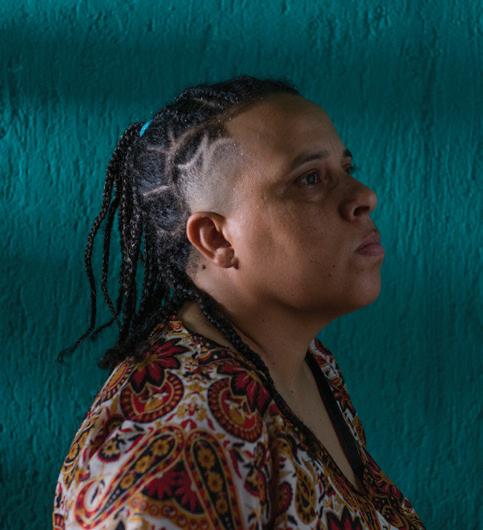
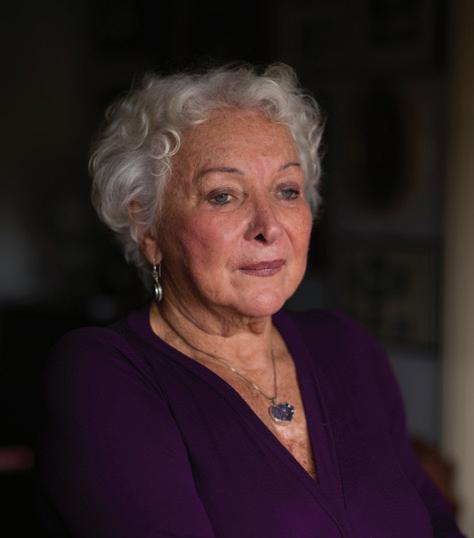
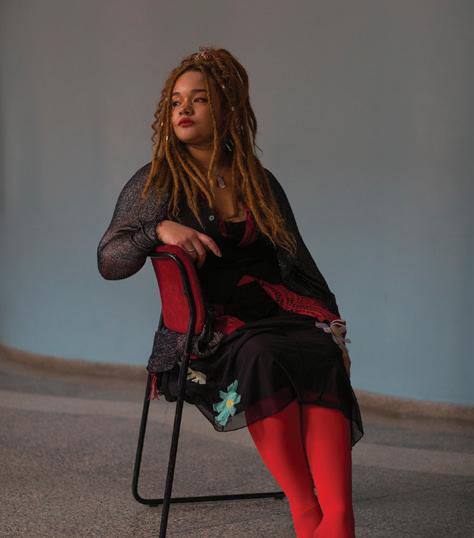
Marshall: Music is Magic • Heloísa Marshall is a creator. She personifies strength, delicacy, and humor. Her imagination and dreams are in harmonious dialogue with a translucent vision of her goals. She composes music that speak about both personal matters and social issues, with a relation to the past and a perspective to the future. She believes that music is magic, spell, transformation. Music is who she is. (Photo taken in 2022.)
Heloísa
pictures. It felt light and joyful, and seemed professional. The camera was a version of the Brownie Bullet II, introduced in 1961, manufactured and sold in Brazil as the Kodak Rio-400, in 1965, to celebrate the 400th anniversary of Rio de Janeiro.
In 1977, my brother lived in the United States for six months, where he took more advanced courses in photography. He bought a better camera and brought it to Brazil. As I write these memories, I am not sure about the model, but I remember vividly it’s shape and feeling. It was a beautiful tool, black and silver, with a manual focus lens, which he generously shared with me, nurturing my taste for photography. Most recently, he reminded me that it was a Minolta 101b with a normal lens. My brother decided to go professional and transformed the laundry room in our apartment into a darkroom. I continued to take pictures as an amateur. The Minolta was part of our lives for some time. After a while, it was sold to fund a better camera to improve his work. Eventually, the darkroom was shut down. I ended up quitting the hobby and devoting my non-studying time to music.
My next memory relates to a trip I made to spend three months in New York, from late 1987 to early 1988. In a short stay in Maryland, I was introduced to an artist who used a toy photographic camera to teach kids. It was very simple, made of plastic, with a black body, and a greenish blue top. It came with a detachable flash. The artist showed me photographs which were slightly out of focus. I fell in love with that feature of the images and the simplicity of the camera design. She gave me one as a gift. It was a Dories. That became my favorite for many years and was largely enjoyed during the time that I lived in New York, from mid1988 to mid-1990. The beauty of the elementary mechanism coexisted with an uncertainty about the result. The lack of sharpness created a vague, pleasing, and harmonic aspect. Thinking about the photographs taken with the Dories, I see a resemblance with the picture story camera of my childhood, in the sense that both displayed images with a wide space for daydream.
I do not recall any other special photographing experience nor camera that I have used or thought of after the Dories until the
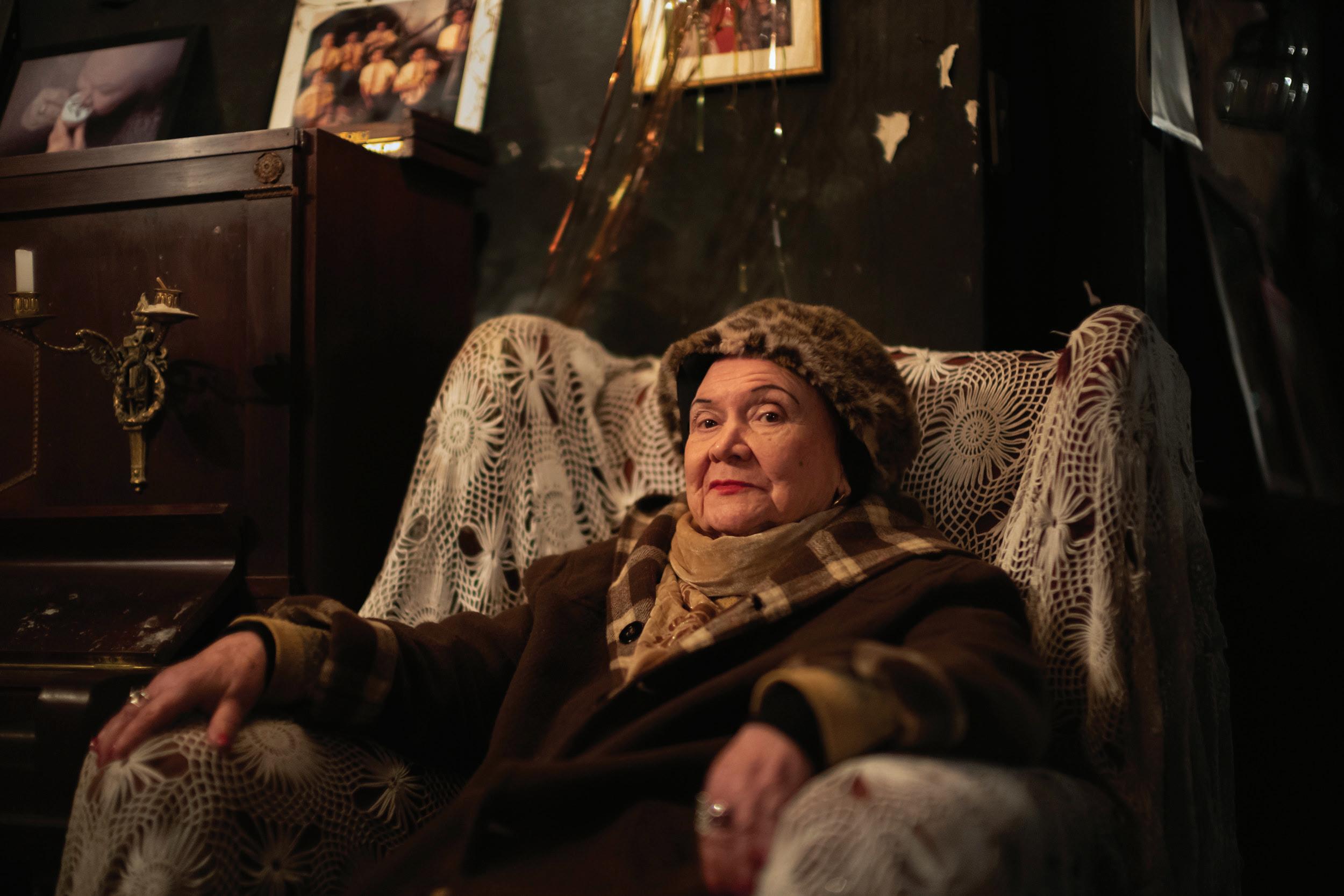
Ms. Ivone Pacheco: The Jazz Lady and The Secret Jazz Club • Ms. Ivone Pacheco is a pianist. When she was 50 years old, she opened up the basement of her home for jam sessions inviting other musicians and friends. So was born the Take Five Jazz Club, which for 43 years is a space for music and discovery of new talent. The address is kept secret, but insiders know where and when to go. For her, the opening of the basement meant a new life beyond teaching and being a wife and mother. When I made this photo of The Jazz Lady, she was 85. She is now 93. (Photo taken in 2018.)
year 2001. I traveled to another city in Brazil for an international conference. I was introduced to a researcher living in France, who had his PhD on the same topic I was developing my doctoral studies and whose work I admired. I considered him an avant-garde scholar, who used cutting edge research methodologies. He was photographing the father of the theory to which the conference was devoted. His camera was remarkably beautiful, I could not take my eyes off it. I was not able to recognize the brand and was too shy to ask. It had a black body with a straightline shape, like a brick, and a small red circle on the front. It had a calm design and was so simple in the minimalist aesthetics that it felt like the core of the things. Somehow it reminded me of my Dories. His camera never left my mind and became endowed with gracious mystery.
My daughter was born in the beginning of 2002 and I wanted a digital equipment to photograph her. When I was looking at a catalog from a store in New York, I had the impression of identifying the researcher’s camera almost by chance. I could, at
that moment, read a name: Leica. That led to my first Leica, the Digilux 1. I loved the camera, it rendered colors beautifully, the images were soulful. Recently, I realized that the Digilux 1 was released in 2002 and the conference where I saw the researcher’s camera was held in the previous year. I wrote an e-mail to him for the first time 19 years after we met at that event, asking which model was the camera that became so special to me. He clarified the matter promptly: it was a Leica M6 TTL that he got in 2000. Though his and mine were totally different systems, they shared a root: simplicity.
A few years later, I decided I wanted a point and shoot camera. Leica was meaningful to me, I wanted the Leica look in the photographs and the calm design of the camera. I bought the D-Lux 3. For some time I was satisfied. Gradually, I started using the iPhone for everyday pictures, stored the D-Lux 3 in a drawer and took it out only occasionally.
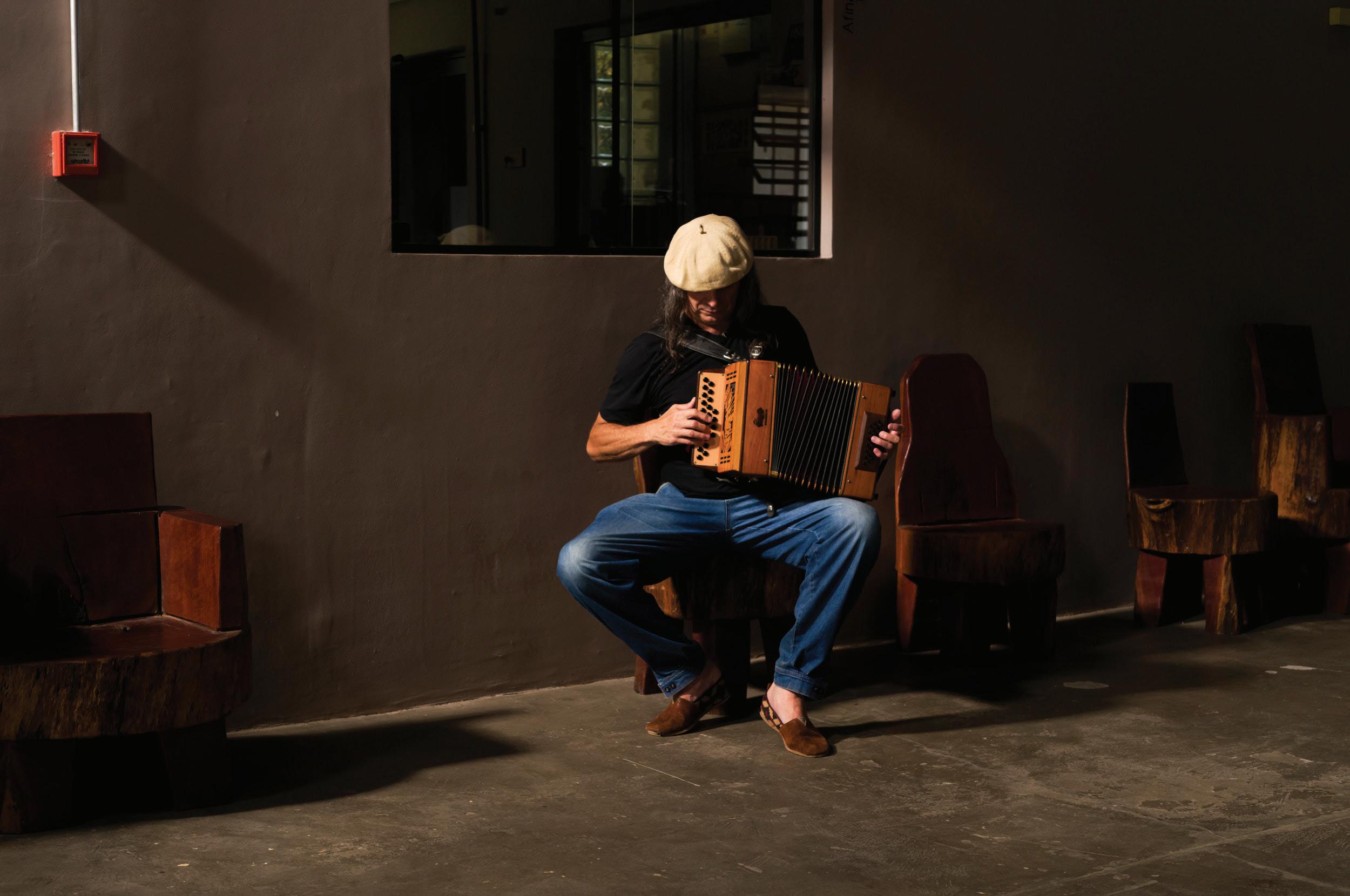
Renato Borghetti: A Tool for Citizenship • Renato Borghetti plays diatonic accordion and is a composer. He loves this instrument due to its strong presence and magic. His project Fábrica de Gaiteiros rescues the manufacture of accordions and provides them for free classes education. He thinks music is tool for citizenship and inclusion. (Photo taken in 2023.)
Years passed between iPhone and the eventual D-Lux 3 in which I did not think about photography, I only took pictures as an ordinary way of keeping memories. By the end of 2017, I was hoping to find a leisure activity that could be as fulfilling as music has been over the years. It took me some thinking to figure out that photography could be a good option; I had a history with it and the reminiscences of earlier days were very comforting. I looked for the adequate equipment to buy. I did not truly consider brands other than Leica, though I had an eye on one. However, it had a complex design and the photographs appeared to lack magic. I quickly gave up on it. I studied the Leica systems always leaning towards the M-System which a cinematographer friend had talked about. The M10 caught my interest. It was simple, beautiful, minimalistic, pure, discreet. It consisted of essentials-only. I was in awe with the photographs taken with it. In February 2018, I bought the Leica M10 and the Leica Noctilux-M 1:0.95 / 50mm ASPH lens. I took a basics course in photography, met beautiful people, and practiced during one year. I joined Leica groups on Facebook and the Leica Fotografie International Gallery; shared
my work, got feedbacks, improved, and had a feeling of belonging to a community. I bought the Leica APO-Summicron-M 1:2 / 50mm ASPH lens, took an intermediate course and immediately after enrolled in a portraiture workshop, continuing my apprenticeship journey in portraiture private classes since then. I acquired the Leica Noctilux-M 1:1.25 / 75mm ASPH lens, later the Leica Summilux-M 1:1.4 / 75mm, and upgraded the Leica M10 to the Leica M11. I have been photographing with this equipment since then.
My relation with photography was discontinuous. It had periods of intensity and periods of pause. In this essay, I left out the intermissions and focused on the presence, putting in evidence the cameras that I have used. Objects have a life. They are devices for sensorial experiences that remain in our hearts long after they are gone. Objects embed stories, imaginations, events, and symbolic constructions. It is much clear to me that the cameras that I have had or played with throughout my life are all connected with one another, as if they formed a line of anchors
Paulo Brum: The Soundtrack of Life • Paulo Brum thinks of himself as a drawer of things. He draws houses, brands, furniture, and he draws the sound. He is a mashup artist. In his childhood, he listened to records with his father. He had a remarkable experience with a music teacher at school called Ms. Ivone Pacheco, later to be known as The Jazz Lady. For Paulo, music is the soundtrack of life.
(Photo taken in 2022.)
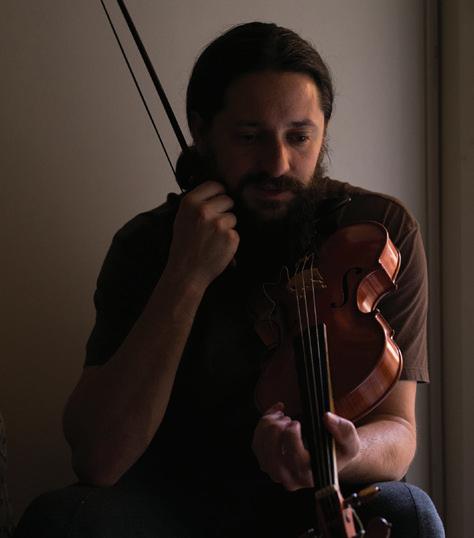
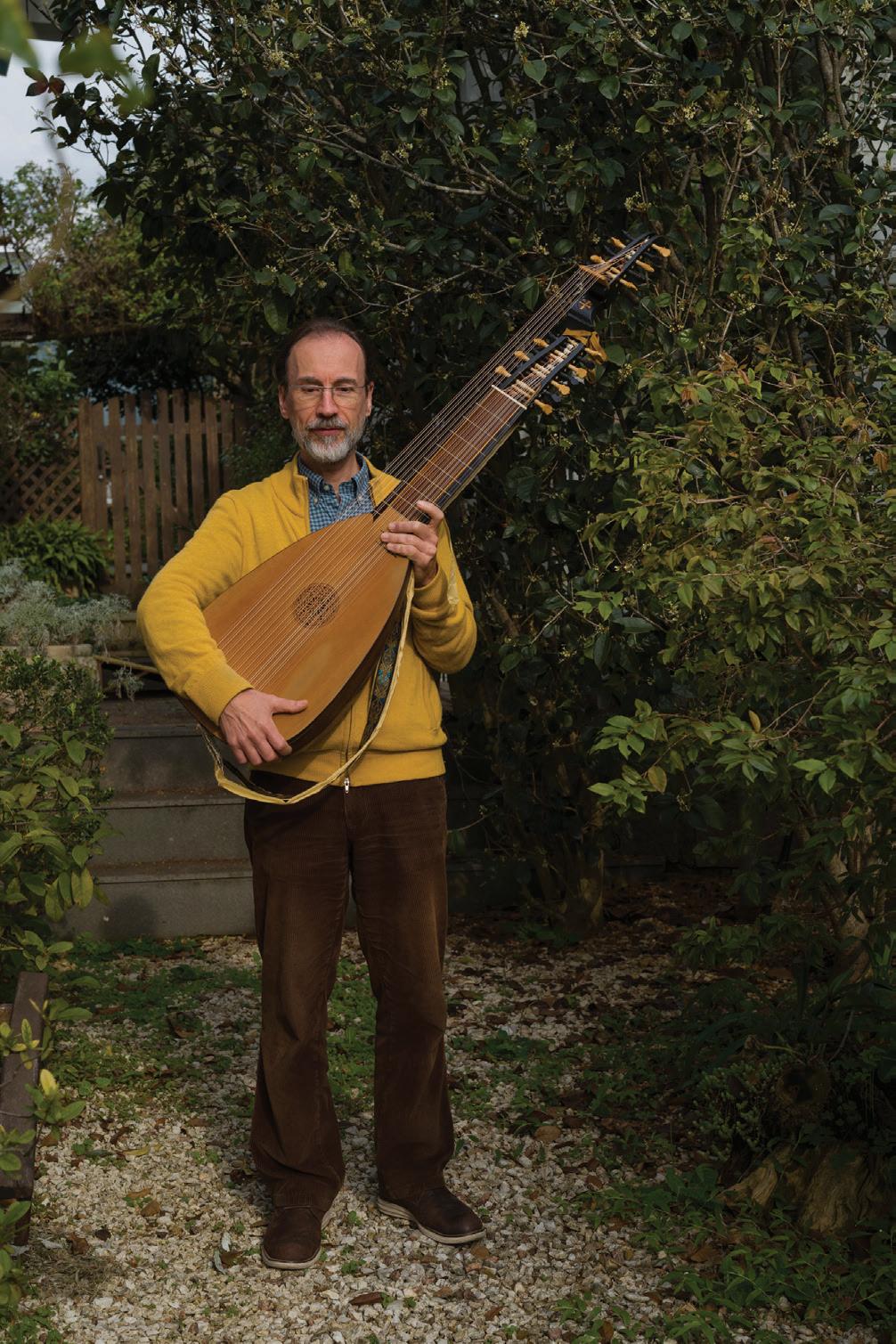
Ricardo A. Arnt is a medical plastic surgeon. He plays and builds instruments from the lute family. During the Covid-19 pandemic, he found peace by finishing a lute he started in 2018. He named it Quarantine. Inside the instrument, he wrote the Stella Maris Exstirpavit, a medieval prayer against the plague. I believe the name and prayer are the soul that Ricardo gives to his instruments, in his legacy to the future. He believes that good music elevates the spirit to transcendence.
(Photo taken in 2022.)
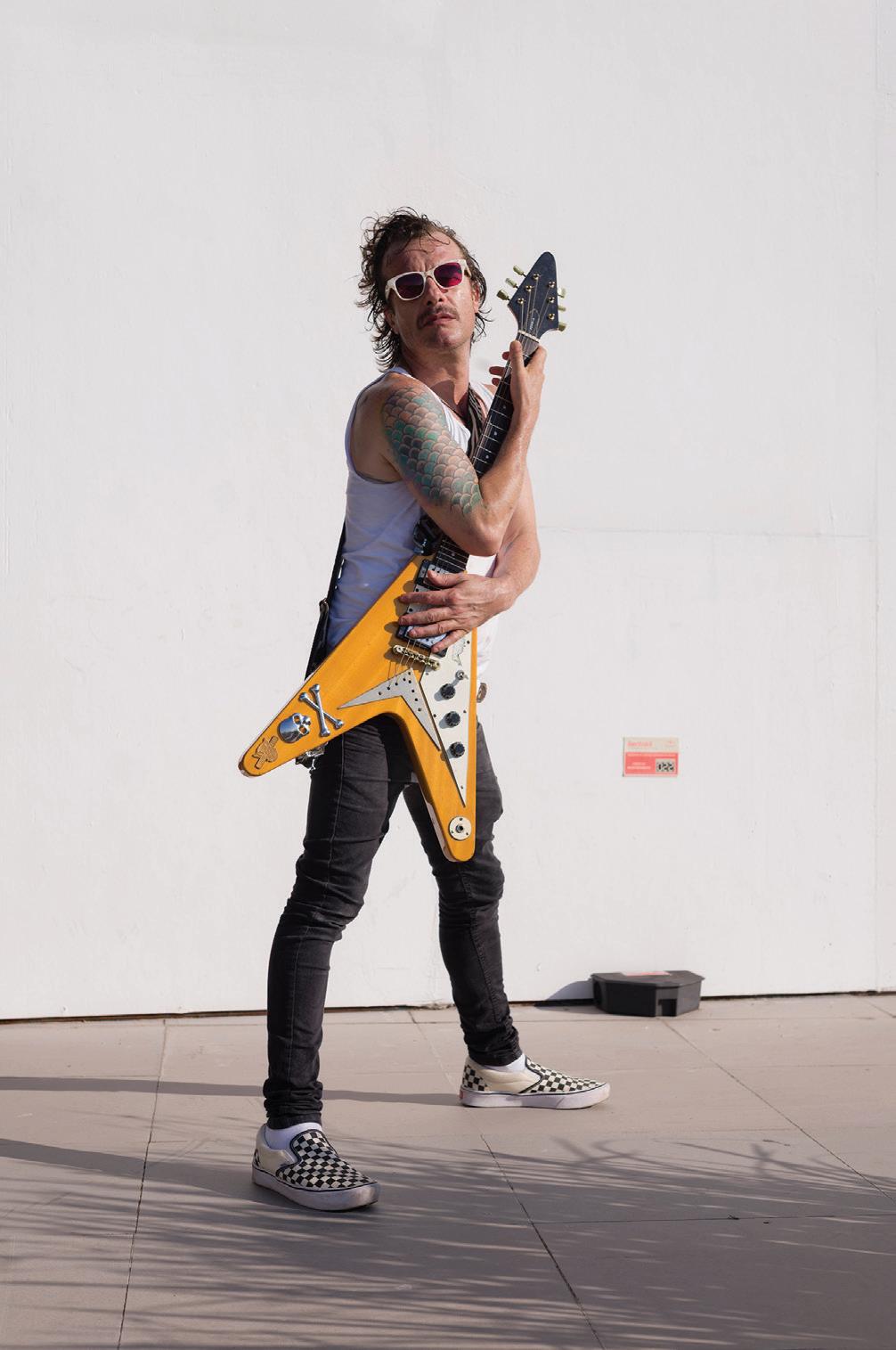
Dundi Electric Yesomar is a composer. He is a visceral soul in motion, a high-energy polyphonic mind. “Music is already who we are”, he said. Identity and expression merge in the belief that love bonds us with art. His raw surrender is like a mass of sensations and light, transcending the symbolism of words. Amid phrases, melodies, and sounds that echo like a choir, he composes scenes from within – fleeting, performative –crafting images of poetic precision and revealing a truth beyond.
(Photo taken in 2025.)
Ricardo A. Arnt: The Chant of the Wood
Dundi Electric Yesomar: Music Is Already Who We Are
Master Griot Paulo Romeu Deodoro: Ancestral Community
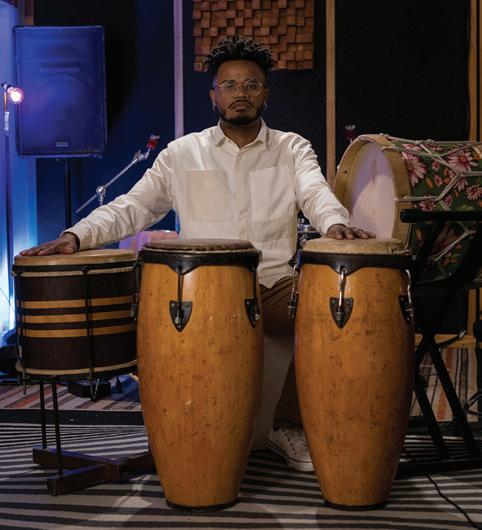
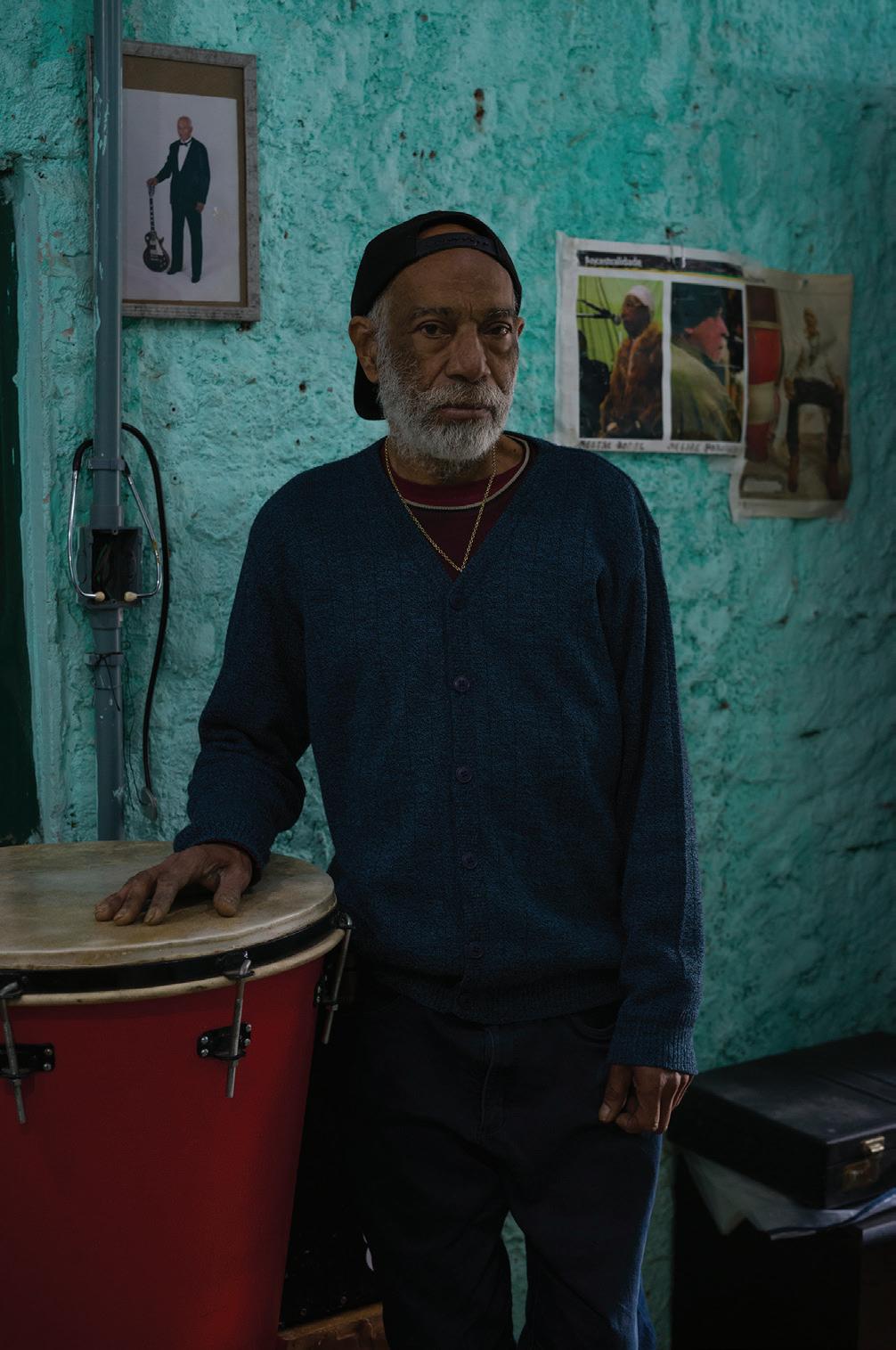
Master Griot Paulo Romeu Deodoro is a composer, musical performer, Master of Samba School’s Drum Section, and Afro-Gaucho percussion teacher. His work is rooted in Black culture ancestral history and memory. He is resting his hand on the Sopapo, an emblematic instrument of Afro-Descendants in Southern Brazil. On the walls, his masters father (guitar), Master Borel and Master Paraquedas. (Photo taken in 2023.)
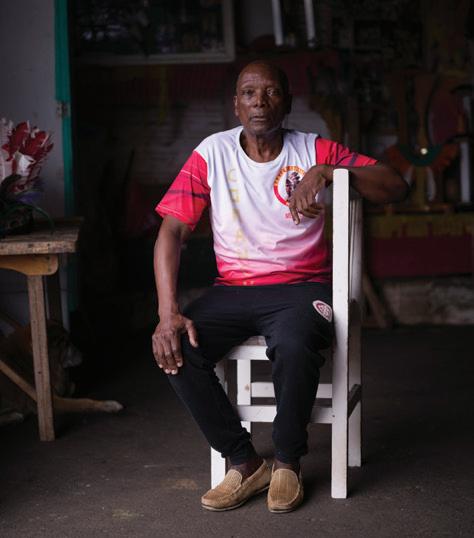
Master Camisa: Carnival Tribe and Resistance
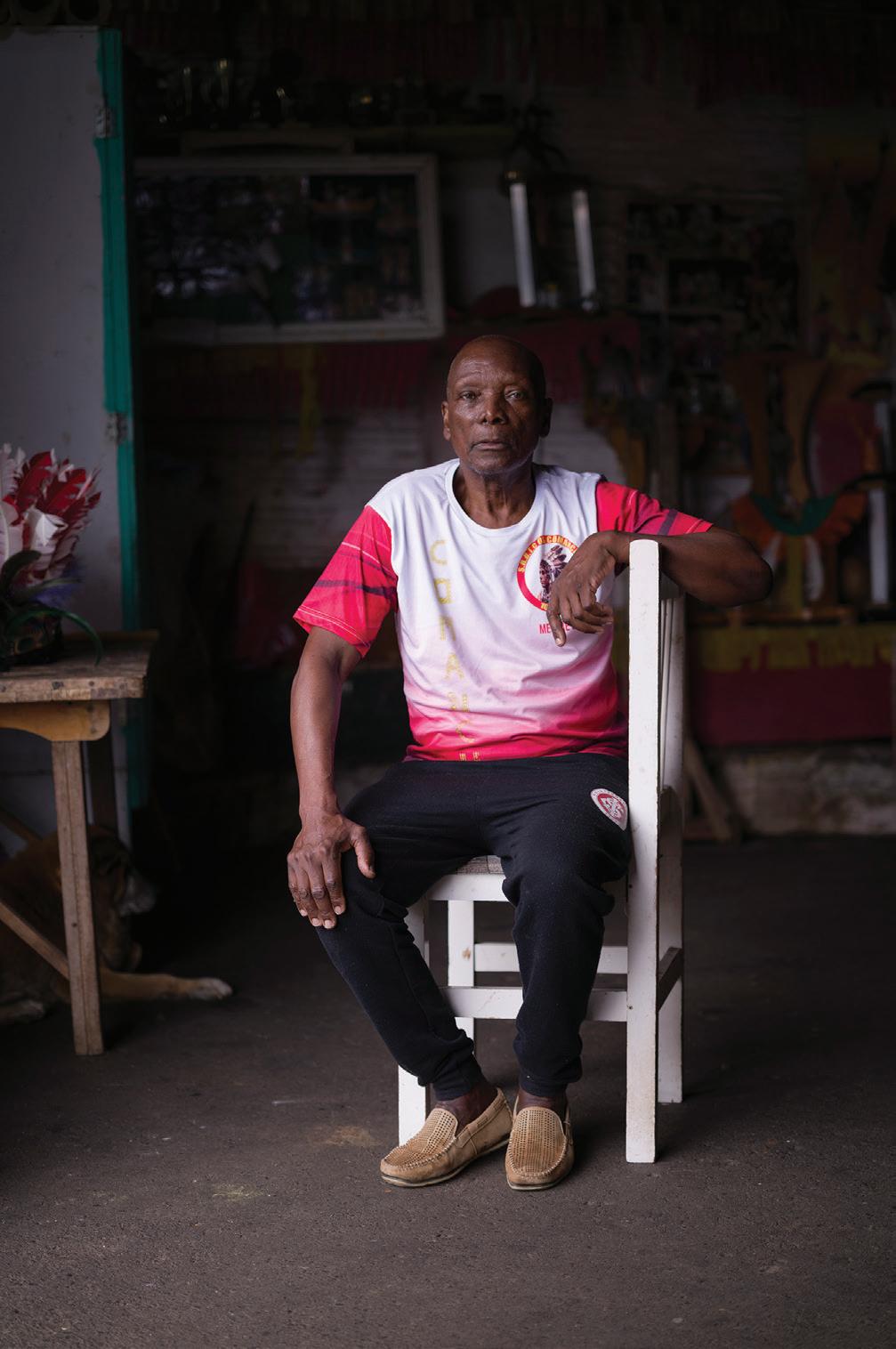
Master Camisa is a rhythmist, Master of Drum Section of the known as Carnival Tribe Os Comanches, founded in 1959. He learned music by experience, playing on oil cans. He joined this Indian tribe when he was 12. This is the only tribe that survived and it maintains history and tradition of tribes in Carnival, signifying resistance. Master Camisa, for whom music is a tremendous joy, represents the community. (Photo taken in 2023.)
restating meanings alike, that is, my bond with simplicity, with the essential, with imagination, with an aesthetics of the minimal, with some important persons, all the way telling and retelling the same tale, since my childhood. Hence, in choosing a similar appearance, I was in fact choosing the same values. Leica M has become my tool to photograph because I love the look of the pictures taken with it and because it inevitably brings back the old Minolta, my brother, our youth, and a common project –the darkroom –; the old Kodak and the idea of professionalism and joy; the plastic Dories and the picture story camera, with the simple enchantments from former times; the Digilux 1 and the researcher’s camera, a substance and the core. Photography, in the body of my Leica M, means a connection with the past when I had time ahead, a time when I had dreams and hope, a time when life was more naïve.
Now that I know how to photograph and do it systematically, I sometimes keep myself thinking how I would feel if I had a
different camera. I do not think I would photograph. I look at other cameras and though I recognize they are wonderful tools to make beautiful pictures, I do not see myself holding one of those. The sensorial experience of the Leica M is very relevant to my way of photographing. The M allows me to slow down and truly live the process of photographing in itself. It makes the journey an important and enjoyable path. It gives me time to spend with the people I photograph and to feel their inner world, to get to know their essence, to connect with them in a deeper way. While I manually set the technical parameters of the camera and slowly move the lens ring searching for the focus, I look through the viewfi nder at the person’s expressions, feeling the instant, conceiving a vision for the portrait, searching for the magic. Th is gentle progression allows me to create a moment of life with each individual which is sacred. For me, the Leica M is not about looking and shooting, it is about feeling, creating, and remaining, precisely what I intend to accomplish in my project.
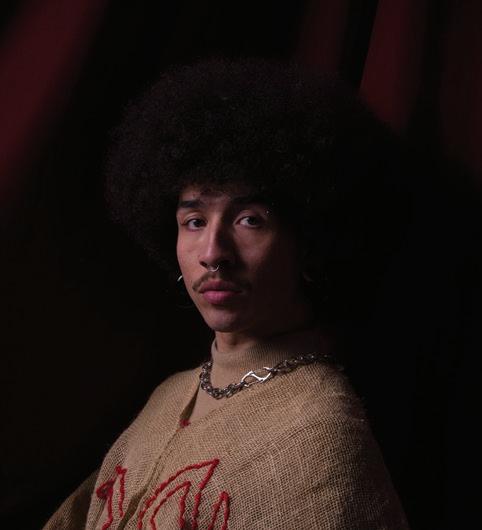
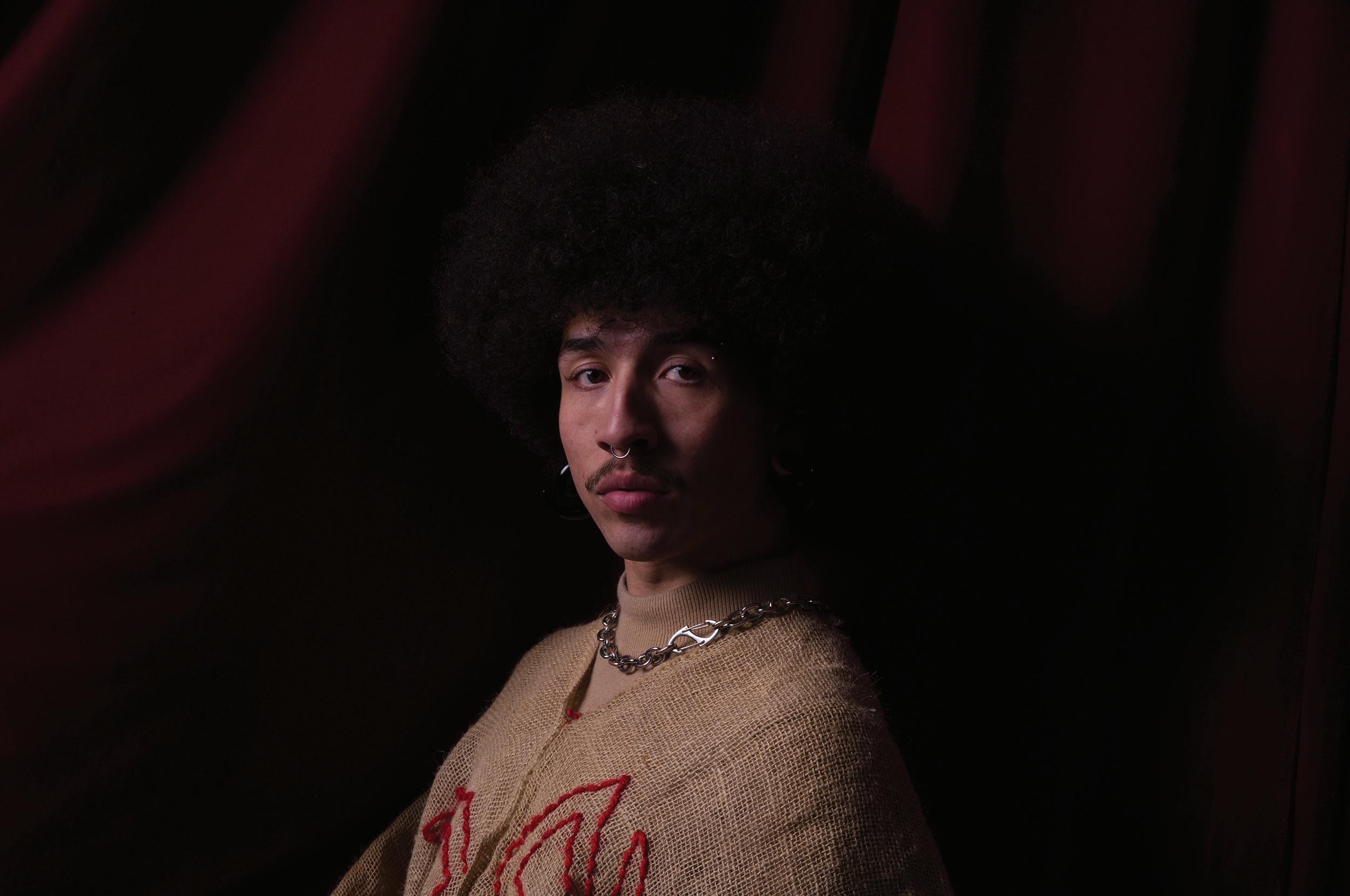
Oderiê Chayúa: Music and Marvel • Oderiê Chayúa are multiartist (composer, singer, musical and visual producer of audiovision projects, illustrator, embroiderer), Charrua Indigenous, non-binary trans. Oderiê’s art is a manifest against the erasure and silencing of Black and Indigenous identities, the eff ects of colonialism, racism, and transphobia, enhancing the valorization of ancestry and the good path and good living. Oderiê believe that music is a marvel that represents Creation’s highest state, something sacred, enchanted, magic. (Photo taken in 2024.)
About Denise Amon
Denise Amon is a photographer, researcher, and independent scholar interested in projects on the human condition and society. She has a PhD in Psychology. She had the solo photographic exhibitions Se você olhar para mim (If You Look at Me), at Macun Livraria e Café, in 2024; and Estelar (Stellar), at Galeria Mascate, in 2023, both in Porto Alegre, Brazil. She participated in the collective photographic exhibitions TE VI, at Galeria Mascate, in 2025, in Porto Alegre, Brazil; and Invisibilities, at MIRA Galerias, in 2025, in Porto, Portugal. She published the photographic essays A voz suprema do samba é a liberdade: Ensaio fotográfico para single do selo Mundodetempo (The Supreme Voice of Samba Is Freedom: Photographic Essay For The Single By The Lable Mundodetempo), in the Brazilian digital magazine Revista Parêntese #278, in 2025; Se você olhar para mim (If You Look at Me), in Revista Parêntese #223, in 2024; and Música e Esperança (Music and Hope), in Revista Parêntese #152 , in 2022. She published a number of articles on psychology in academic journals; a book on the social psychology of food; and several book chapters. She also coedited a book on psychology, communication, and post-truth. She is author of three artist’s books: Quiet Moments: Photographs and Essays ; Hair Grows: Photographs and Essay ; and
Concertos Banrisul para Juventude: Fotografias e Ensaios (Banrisul Concerts for Youth: Photographs and Essays). Art has always been part of her life in the form of music or photography. She lives in Porto Alegre, Brazil.
Artur de Mari: Singing Brings Joy • Artur de Mari is a singer. He was 12 years old when I made this portrait. Music came into his life to expand possibilities, due to his visual impairment since he was 4 months old. He feels happy singing on stage. He thinks that being semifinalist on The Voice Kids Brazil 2022 has opened doors, by making him known and helping with the journalist career he intends to pursue. (Photo taken in 2022.)
THE TRIO 28, 35, 60
by DAVID KNOBLE
Growing up in the southern United States, I have fond memories of campfires. Roasting marshmallows, cooking tin foil meals, and telling stories that grow as tall as the shadows behind us, one thing remained the same each time. Putting logs on the fire, my face and arms could feel the intense heat of the yellow-white coals as the wood flames turned the logs to hard, carbonized, charcoal.
One of my favorite photographers is Sebastião Salgado. My favorite book of his is “Kuwait. A Desert on Fire.” His documentary of the oil wells burning near the end of the first Gulf War has multiple meanings to me. Yet, I cannot help but feel the heat on my face as I look through the images Salgado made, much the same as the campfires from my childhood.
Besides being a Leica photographer for much of his career, Salgado favored the SLR Leica R system before he went completely digital. Using a Leica R6, which, with the Leica R 6.2, are the only Leica R bodies using springs for the shutter speeds rather than electronics, Salgado also favored three Leica R lenses for this
particular work – the Elmarit 28mm f/2.8 version 1, the Summicron 35mm f/2.0 version 2, and the Elmarit 60mm f/2.8. This is the trio, and to honor Salgado’s career, I thought it fitting to discuss these lenses in my next Leica R work. If you ever have the opportunity, “Kuwait” is a great body of work and, coincidentally, contains the text in English, German, and French (a trio of languages).
When Salgado got to Kuwait, there were over 600 wells burning, toxic fumes in the air, and oil slicks on the sandy roads, making driving hazardous. Yet he reports only 15 teams of about 10 people each were tackling the fires. He talks about how difficult it was to find the teams amid the smoke and featureless desert landscape. The heat was so intense that the Salgado donned Iraqi army chemical warfare suits that lasted only a few days, and used the war trenches still in the ground to move around. With images published in the New York Times and Workers magazine, he waited for over two decades to compile and publish these images together.
Leica SL3 + Summicron-R 35mm f/2.0 v2
Leica SL2-S + Elmarit-R 28mm f/2.8 v1
Film and digital work can take advantage of these incredible lenses. The Leica R system was unencumbered by the necessity for small size, but these lenses were still made with as few elements as possible. The oldest of the three is the Elmarit 28mm, version 1. The design is from Rudolf Ruehl in 1970 and is still the smallest Leica R lens ever made. Like most Leica R lenses, it stops down to f/22, whereas many Leica M lenses stop at f/16. Also, the close focus distance is 30 cm due to through-the-lens focusing rather than a rangefinder. One unique aspect of this lens is the filter diameter. Because of the size, the threaded filter is 48mm unless the snap-on and twist sunshade is used allowing a Series VII filter to be inserted instead.
Being the oldest design of these three lenses, there is significant curvature of field that the lower f/stops accentuate. The 28mm version 2 is significantly better across the field at lower f/stops, but is also much larger. If you are taking landscape photographs and want edge to edge sharpness, stop down to f/8 or f/11 and consider framing the image a little larger to allow later cropping. See the inset for a view of the corner of an image I shot using f/4.8. Notice how sharp the image is up until the corner. However, for documentary and street work, the lens is incredibly easy to focus and the center of the image is more important. For example, the image of the barber leaning on his chair works really well as any corner softening blends into the rest of the background. This is how vintage lenses work best.
The Summicron 35mm version 2 lens is a Walter Mandler design from 1977, making it a Midland Canada origin. While the close focusing distance is 0.3 meters and the wide-open contrast is rather low after a radius of 5 cm, the photographs at higher apertures contain that crisp, bright, Leica quality Mandler is famous for. Erwin Putts tells us the thick central element in this lens is what helps flatten the image. This is ahead of the time when new lens designs were introduced for flat digital sensors showing us the unique attention to detail that Leica is famous for. There is a higher contrast Leica R 35mm lens with a minimum aperture of f/2.8. However, what this lens gives in better contrast, it loses to severe distortion. When documenting people, I much prefer the Summicron. Similar to the 28mm, this lens does well at f/8 and f/11 for landscape work and Salgado took many of his images at higher f/stops to get the depth of field he was looking for.
A third designer, Heinz Marquartdt, provided the 1972 Elmarit 60mm lens that was oddly outside the standard 50mm viewpoint, but not by much. The secret contained in this lens was its ability for macro photography, and using an attachment for that specific lens, provides focusing down to 18cm. The viewpoint from a 60mm lens is slightly zoomed in from the standard view, giving it a little more reach. The lens is set far back into the front mount such that it effectively has a built-in full-time sunshade, although there is a separate detachable one as well for the earlier design. The advantage in this lens is the horizontal MTF lines,
Leica SL2-S + Elmarit-R 28mm f/2.8 v1
Leica SL3 + Summicron-R 35mm f/2.0 v2
Leica SL3 + Macro-Elmarit-R 60mm f/2.8
Leica SL2-S + Macro-Elmarit-R 60mm f/2.8
which tighten up really well just two stops in at f/5.6 with zero distortion. These are incredible characteristics given the early design of the lens. Of the three lenses, the 60mm has high contrast all the way to the corners at lower f/stops. Using f/4 and f/5.6 gives very solid images and the slightly higher reach makes for a good portrait lens while still getting a sense of place.
I have used these three lenses on various Leica cameras, ranging from R6.2 fi lm usage, the R9 coupled with both fi lm and a DMR, and the SL system attached with an R to L adapter. From a color standpoint, the 60mm lens appears to me to have the lowest amount of saturation, which may be due in part to the macro needs of the lens. However, the 28mm version 1 and 35mm version 2 lenses both provide well-saturated colors naturally and not overdone. I would suggest it is like the Kodachrome slides of yesteryear, but not as strong as Fuji Velvia. If this doesn’t mean much to you, that is ok, just go out and shoot them some!
The ROM contacts on Leica R lenses was made to communicate with the last rending of the R system including the R8 and R9. The ROM delivered key information about the lens to the metering system in these bodies allowing for better computations. The aperture and vignetting combinations is read by the R8/R9 which adjusts the light reading to avoid negative effects in exposure. Th is is especially effective when using the matrix
metering of these later Leica R bodies. Zoom lenses also add the variable focal length selected to the data. Th is information is captured and stored in the EXIF on digital cameras providing a unique addition to catalog management. ROM additions were common in later lenses, but earlier lenses required a retrofit making them less common and harder to fi nd. While I have a ROM version of the 28mm version 1 lens, my other two are 3-cam requiring selection if used on digital systems.
The proof is in the results, and while my photographs here do not have the content Salgado is famous for, the images do show the resilience of these 55-year-old lenses that remain relevant today even in the digital arena. The key difference is that stopping down is necessary to get the best image quality in the field and sometimes slight cropping in will be required for bigger enlargements of critical work. These lenses will never overpower the Leica SL Summicron APO series, but they lack the APO designation and contain far fewer elements. While there are some fantastic Leica R APO lenses, and complementary APO 1.4x and 2.0x extenders, those will wait for another article.
Most importantly, this trio of lenses is a fun alternative to electronic focusing lenses. The mechanical nature of the SLR lens is such that their use will continue into the future without the need for electronic coupling. Th at cannot be said by many manufacturers but is a hallmark of the Leica R system.
Small Negative, Big Print
A New Twist
To An Old idea
by ROLAND ZWIERS,
This is the second of a two-part article. Read the first part in Viewfinder Volume 58, Issue 2.
Further Development of the Palmos Family
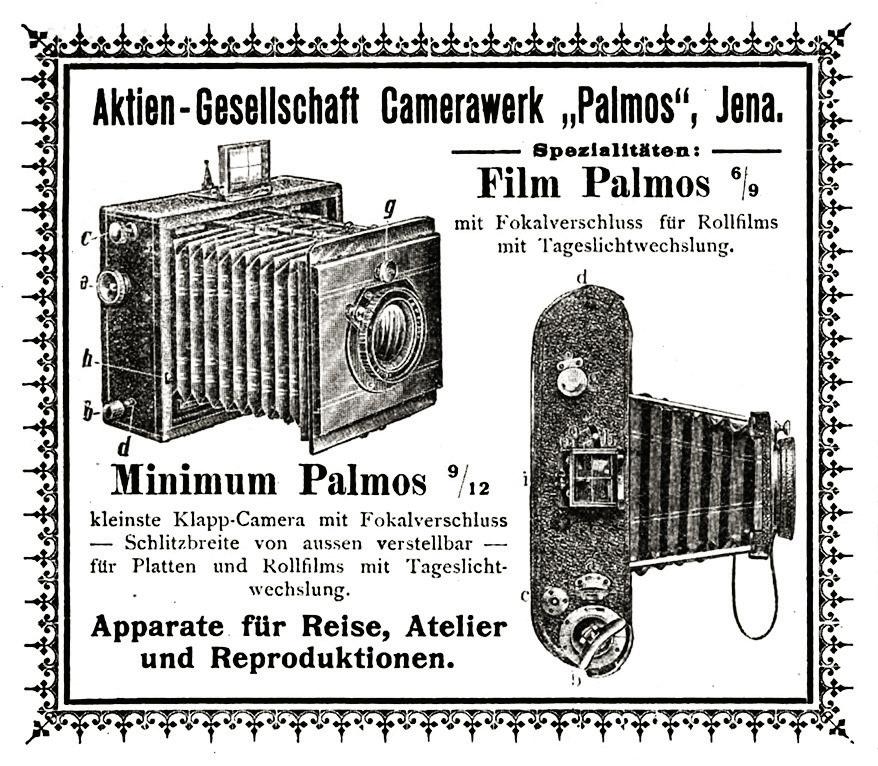
The history and further development of the Zeiss Palmos cameras is extensively described by Bernd K. Otto in PhotoDeal (2023/III). In this place, it has to suffice that the 6x9 Film Palmos went into production in late 1900. After July/August 1904, production of the Film Palmos was discontinued in favour of the existing Minimum Palmos series. The Minimum Palmos was available in various formats, including a 9x18cm model for panoramic and stereo photography.
Carl Herrmann was a former colleague of Oskar Barnack during his years at Zeiss Palmos. In a 1961 contribution ("Erinnerungen an Oskar Barnack"), he mentions that the 6x9 version of the Minimum Palmos was discontinued after the founding of ICA on October 1, 1909. The camera fell victim to the necessary weeding out of camera models from the various companies that were part of the ICA merger. According to Leica historian Ulf Richter, Oskar Barnack was personally involved in this weeding out operation. Carl Herrmann doesn't mention this, but he does emphasize the importance of the 6x9 Minimum Palmos for later developments:
"Barnack applied the shutter principle of this camera to the first Leica."
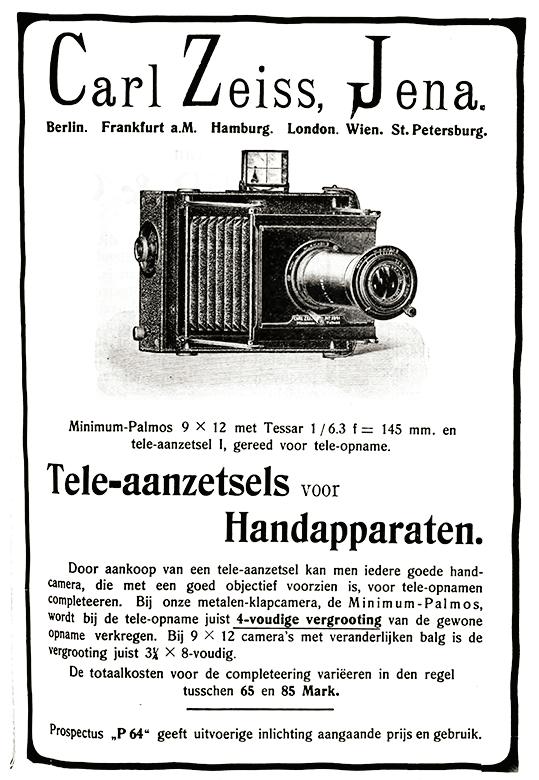
The Minimum Palmos design allowed for additional features. Because of the focussing screen the camera could also make use of dry plates and film pack. The focussing screen also allowed for the use of a tele-attachment. In combination with the roll film adapter, the camera could still make use of the Eastman daylight loading roll films. (figures 1-3)
Figure
2
3
Oskar Barnack at (Zeiss) Palmos & ICA
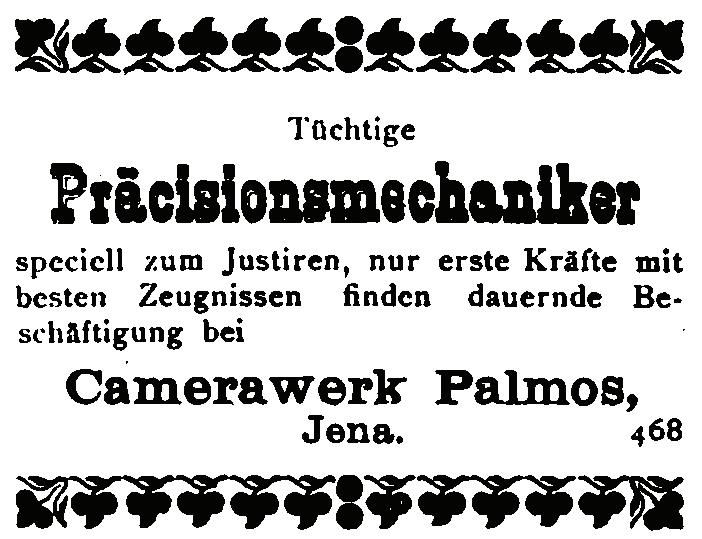
On 15 July 1901, Palmos had a vacancy for a precision engineer that must have suited Oskar Barnack perfectly well. So, did he apply for this job? This is not unlikely and he may even have had a successful interview with then-manager Curt Bentzin before January 1, 1902. (figure 4)
4
Post-war literature offers several clues on when Oskar Barnack started work for (Zeiss) Palmos. Ulf Richter (2009) mentions that Barnack was 22 at the time of his employment (he celebrated his 22nd birthday on 1 November 1901) and that he began his employment at Zeiss Palmos after 1 January 1902. Additional information comes from Carl Hermann, a former colleague of Oskar Barnack at Zeiss Palmos. Carl Hermann (1961) relates that Oskar Barnack came to Jena in 1902 when the Palmos-Kamera-Werk was hiring new staff for an intended expansion.
“ When financial complications thwarted the expansion, Carl Zeiss took over the Palmos firm including all employees. In this way also Oskar Barnack found his place in the camera assembly department of the Zeiss firm, where I would come to know him a few years later.”
Figure
Figure
Figure
This account leaves open the possibility that Oskar Barnack was hired by PalmosKamera-Werk before 1 January 1902. When Zeiss came to the rescue (1 January 1902) this may also have saved Barnack’s recent job as a precision engineer for the manufacture of highly advanced hand cameras.
Even if Oskar Barnack started work for Zeiss Palmos on or shortly after 1 January 1902, he must still have obtained intimate knowledge of the production of the 6x9 Film Palmos before its discontinuation. He must, therefore, have been fully aware of the relationship between the 6x9 Film Palmos camera of 1900 and a 1914 Leitz patent application.
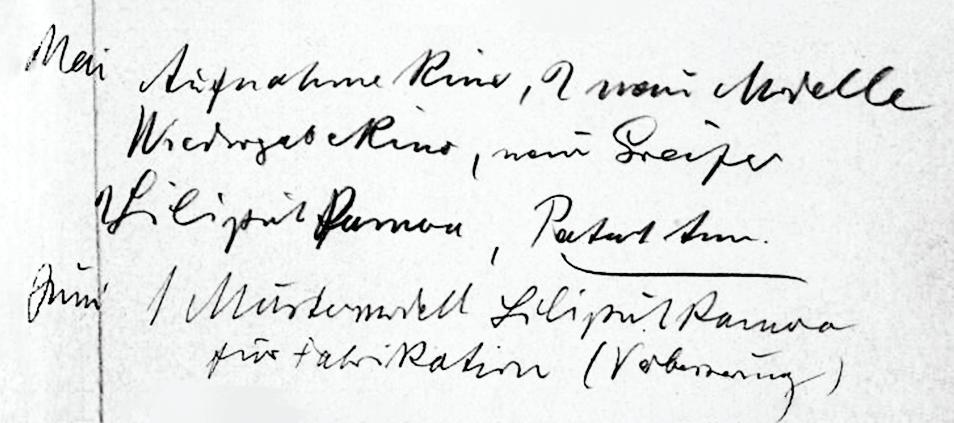
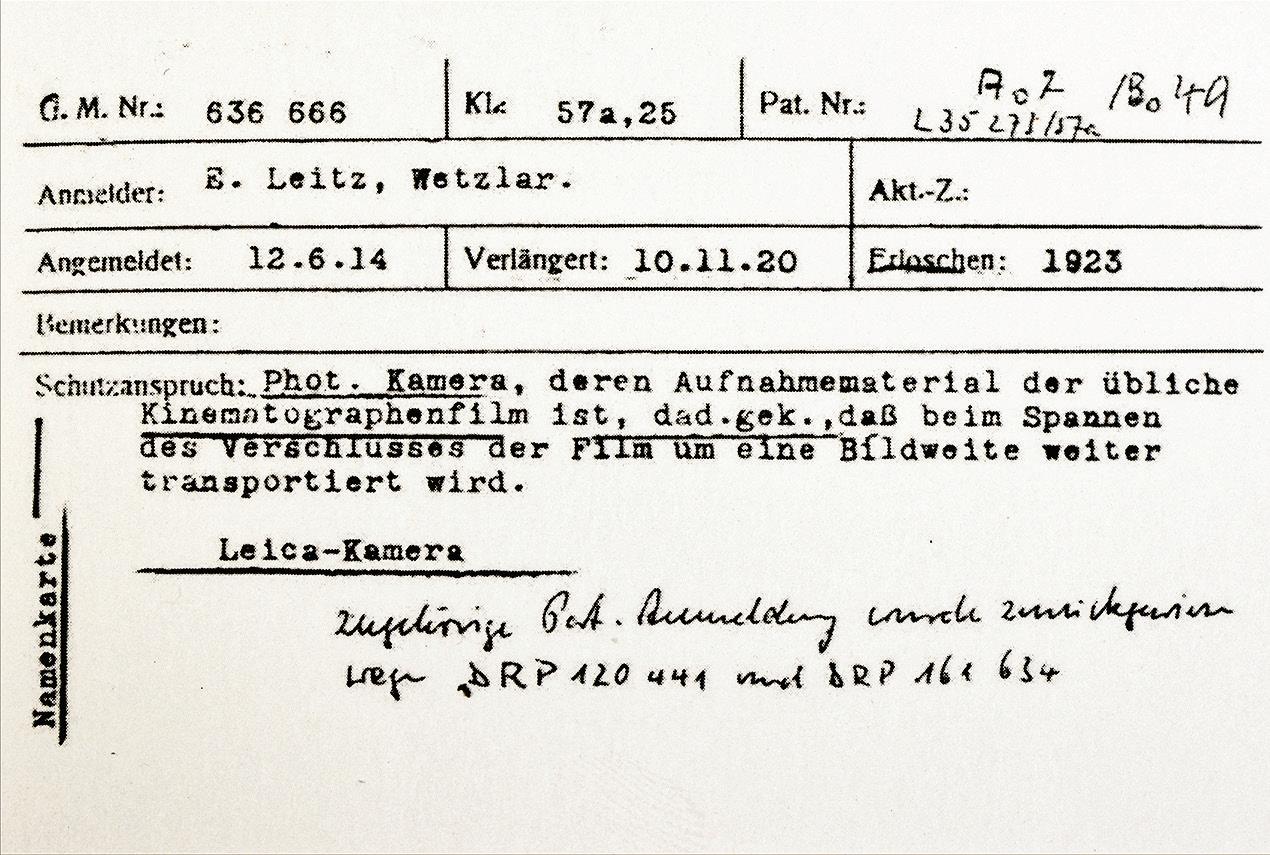
One Zeiss patent has the number DRP 120 441. I show the original entries that I found in Eder’s yearbook for 1902 and the German Imperial Patent Bureau (1901). Ulf Richter (2009) managed to find the full patent application. It concerns a complex facility to combine and disconnect the transport of the film and the tensioning of the shutter. Interestingly, a work note of Oskar Barnack of May 1914 links a Liliput camera to a patent application (Patent Anmeldung). Ulf Richter (2009) discovered a file with the Leitz patent application of 12 June 1914. The application was rejected, partly because of DRP 120441. In the German empire, patent rights applied for 15 years. This means that the June 1914 Leitz patent application still violated the Carl Zeiss Jena patent rights of March 1900. (figures 5-7)
5
6
7
Figure
Figure
Figure
Yet another fascinating link between Oskar Barnack’s time at Zeiss Palmos and his later Ur-Leica has to do with his use of a 9x18 Stereo Palmos during his walk in 1905 in the Thüringer Wald. Here it is in order to quote from a letter written in 1960 in English by his son Conrad Barnack. I owe this letter to Oscar Fricke.
“ Furthermore, I still have the old 13/18 Nettel plate camera in my possession with which my father took his photographs in 1903 - 1912 and this very specimen was - because of its weight - actually the reason why my father began to think· of constructing something smaller. […] The old Nettel is just the body without a lens, as you can see from the photograph. This is, by the way, a ·very unique Nettel. Originally, it was a 9/18cm Stereo-Nettel (I still have photographs in Stereo taken with it). Then my father altered it into a 9/12 cm camera by putting on another lens-plate. Then afterwards, he attached some kind of a pyramid-shaped back-adapter (you see it on the Photo), he opened up the lens-holding-plate for larger transmittance and used 13/18cm plates in the way as described in "how the Leica began," trying to coax onto this plate with a short-focus lens a number of different impressions. This failed, but nevertheless he could use the apparatus for 13/18 or 9/12 or for Stereo, or whatever suited him for the moment. I think that no such construction existed anywhere at the time.” (figure 8)
In his letter, Conrad Barnack assumes that his father’s 9x18 stereo camera was produced by Nettel. This is not correct. Van Hasbroeck (1987), Ulf Richter (2009) and Oscar Fricke (recent correspondence) identify this camera as a Stereo Minimum
Palmos. Early advertisements for a 9x18cm Minimum Palmos appeared in 1903. In 1904, the name changed to Stereo Minimum Palmos. It follows that in 1905 Oskar Barnack was using a new and state-of-the-art camera. He must have preferred the Stereo Minimum Palmos to the 6x9 Film Palmos, even though the bigger stereo version (with two lenses) must have been much heavier and significantly more expensive. Moreover, in 1905 he had already adapted this camera to suit his own requirements so that he could use it as a 9x18 camera for stereo work, as a more or less regular 9x12 camera, and as a 13x18 camera for other experiments.
This self-made photographic outfit also shows that Oskar Barnack was a keen amateur photographer. In 1905, many amateurs would have preferred a Kodak “You-press-the-button-we-do-the-rest” roll film camera. It is, therefore, puzzling that in a 1941 publication, Dr Paul Wolff would dismiss Oskar Barnack’s photography qualifications: “Barnack was not a photographer”. This is the subject for a separate article.
One very ambitious photographic experiment was for 15-20 pictures on one 13x18 plate. The image above gives an illustration of what this experiment may have looked like. For such experiments a 13x18 camera was indeed more suitable than a 6x9 roll film camera. But it, again, suggests that in 1905, Oskar Barnack was not a victim of a burdensome camera. This 13x18 outfit was his camera system of choice. And according to Conrad Barnack he even kept using it until 1912.
Figure 8. Multiple exposures on one 13x18cm plate. Left: 15 exposures of 3,4x4,1cm. Centre: 16 exposures of 3,0x4,25cm. Right: 20 exposures of 3,0x3,4cm
4. Alternative Ways for Travelling Lightly
What advice would we give a 1905 photographer that wanted to take pictures in the Thüringer Wald without carrying too much weight? An obvious candidate would have been the 6x9cm Zeiss Palmos camera. Alternatively, he could have used a Minimum Palmos with a roll film adapter. Since in 1905, Oskar Barnack was working for Zeiss, he could even have obtained these cameras on loan. Carl Hermann (1961) points out that this was common practise during their employment at Zeiss Palmos.
A second option would be a Folding Kodak 3A with postcard sized negatives. This camera had done extremely good service during the 1904-1905 RussoJapanese war. This is the subject for a separate article. With postcard sized negatives contact prints would have sufficed for most occasions. (Following page, Figures 11-14)
Interestingly, a contemporary Folding Kodak 3A in my collection features a Zeiss Tessar lens produced by the American manufacturer Bausch & Lomb. One reason for American made Tessars was the very high import duty that applied up to 1913. Carl Zeiss Jena could circumvent these American duties (and so maintain demand for its high-quality anastigmatic lenses) by licensing production rights to Bausch & Lomb. A second reason was that the worldwide demand for Zeiss lenses was so high, that production in Jena could not be stepped up fast enough. And so, by 1901 Zeiss had licensed production rights to Bausch & Lomb (Rochester), Karl Fritsch (Vienna), F. Koristka (Milan), E. Krauss (Paris) and Ross (London). (figures 9 & 10)
10. Source: Carl Zeiss Jena (1901), Photographic objectives and photo-optical auxiliary appliances.
Figure 9
Figure
Figures 11-14
Figure 15
A third weight-saving option would be to still use his 13x18 camera, but to replace the heavy 13x18 double cassettes with a Palmos 13x18 roll film adapter or a Premo film pack. The Premo film pack was an innovation of 1903. It would become very popular for users of view cameras as it still allowed for the use of a focussing screen. (figures 15 & 16) In 1905 Zeiss Palmos produced an alternative holder for flat film (Zeiss Packung). According to Carl Hermann (1961), this was also an elegant solution.
All these weight-saving alternatives were available in 1905. There were two disadvantages: the high costs of film material as compared to dry plates. In addition, the lesser quality of orthochromatic film as compared with the best orthochromatic dry plates on the market. A landscape photographer might well have preferred a Perutz Silber-Eosin dry plate (highly sensitive to the colours green and yellow) to a less orthochromatic Eastman Kodak roll film. [See my article: The colour of black-and-white.] But Oskar Barnack does not mention this.
16
All in all, in my alternative working hypothesis, Oskar Barnack did not carry his heavy 13x18 outfit because there were no alternatives. He was carrying his camera system of choice.
5. Liliput Cameras Before 1913
Between the 1890s and 1913 many advanced miniature cameras arrived on the scene. In contemporary photo magazines I find enthusiastic reviews of miniature cameras for either miniature dry plates or roll films. Many miniature cameras could be had with high-quality lenses and shutters. It is very likely that the camera assembly department of Zeiss Palmos (Oskar Barnack and his colleagues) advised manufacturers that wanted to offer a Zeiss lens on a miniature camera. Carl Hermann (1961) relates that this happened in 1906-1907 with a (prototype) Minnigraph camera for 18x24mm negatives on perforated 35mm film that was to be equipped with the newly available 1:3,5 f=50mm Kino-Tessar.
Figure
somewhat larger film format. Whether this idea already took shape in Jena or only in Wetzlar, I did not find out.”
In this context I also have to mention the popular (French) miniature stereo cameras of the 1890s that used 45x107mm plates for negatives of circa 4x4cm. These cameras were fitted with lenses in the range of f=54 to f=60mm. One can see that in the 1890s – 1910s these cameras were upgraded with lenses by Paul Goerz Berlin and Carl Zeiss Jena. The GoerzZeiss competition for the best photographic lens must have been similar in nature as the later Leica-Contax and Nikon-Canon rivalries. One can also see that lens speed was an important feature. The publicity in The Amateur Photographer of November and December 1907 mentions the use of the 1:6,3 Tessar lens for the Verascope. This 1:6,3 Tessar was already faster than the famous 1:6,8 Dagor produced by Goerz. Shortly after 1907, the top model would be equipped with an even faster Tessar lens of 1:4,5 design. The design and production of such prestigious lenses for miniature (stereo) cameras must have been a source of pride for Zeiss employees, including those employed at Zeiss Palmos. (figure 17)
An overview of pre-1913 miniature cameras requires a separate article. Tellingly, a 1912 review in Photographische Korrespondenz hails the Vestpocket Kodak as yet another camera of the ‘Liliput’ category. (figure 18)
"There was certainly no shortage of attempts to build cameras in even smaller formats, but there was little confidence in them. The necessary conditions had to be developed first. We were therefore very surprised when, at the end of 1906 or the beginning of 1907, a small camera appeared for adapting a 3.5/50mm Kino-Tessar lens. It was only slightly larger than one of today's standard 8mm cinema cameras, but it was designed for standard cinema film and an image size of 18x24mm. If I'm not mistaken, the camera was called Minigraph. (...) We were impressed by the camera; you could take photographs with it, but the images were unsatisfactory, lacking the sharpness required for enlargement. This deficiency was due to the excessively coarse grain of the emulsion, which was designed for cinematographic exposures, i.e., increased sensitivity at the expense of fine grain. I am certain that Barnack was inspired by the Minigraph camera to begin building a small film camera for standard film with a
Why then would Oskar Barnack still embark on his Ur-Leica project when so many high-quality miniature cameras were already on the market? Miniature cameras that were equipped with the very Carl Zeiss lenses that were so familiar to him because of his camera assembly work at Zeiss Palmos! In the table on the following page, I have presented an overview of pros and cons. It would be interesting to discuss this more fully with the Leica community.
Figure 17
Figure 17
Figure 18
Advantages & Disadvantages of the 1913 Ur-Leica Compared to Available Miniature Cameras
PROS
The very low price of (remnants of) 35mm cine-negative film. Per negative dry plates, roll films and especially filmpack were much more expensive.
The possibility to achieve orthochromatic results in a very cheap way by colour sensitising the colourblind film himself.
The option to make up to 50 pictures one after another. With roll film and film pack one could only make 6, 8 or 12 pictures one after another. With dry plates or flat films only one picture at a time.
The fun of creating something new all by himself - especially a small miniature camera.
The use of a focal plane shutter? Some alternative miniatures had faster focal plane shutters. Advanced leaf shutters had a wider selection of shutter speeds.
The possibility to design a focal plane shutter with an accurate and reliable shutter speed of 1/40 sec. In this way the Ur-Leica would have the same shutter speed as his 35mm movie camera. This would come in handy if the Ur-Leica would also be used as an exposure meter for cinematography.
The possibility to use the same film in the Ur-Leica as in his 35mm movie camera. In this way, the Ur-Leica could have dual use as a camera and as an exposure meter.
The possibility to choose his own negative format (e.g. 24x18, 24x24, 24x36 or 24x38mm)
Six – An Alternative Working Hypothesis
Was Oskar Barnack unaware that in 1905 the concept of ‘small negative, big print‘ had been around for several generations already? I find this hard to believe. If he did not intend to make this implausible claim, what did he want to relate? In my opinion, the next paragraph in his 1931 contribution provides another part of the answer.
CONS
Regular 35mm film was colour blind or very weakly orthochromatic.
Dry plates and roll films could be bought in much higher orthochromatic or even panchromatic qualities.
Perforated 35mm film does not combine well with backing paper. In this way, Oskar Barnack sacrificed the daylight loading systems that were used for other miniature cameras. The film of the Ur-Leica had to be changed in total darkness. After 50 pictures the Ur-Leica was disabled. Alternative miniature cameras could simply use the next plate, roll film or filmpack in daylight loading.
Why embark on a risky project when good alternatives are already on the market?
Miniatures like the Ensignette, VP Kodak and VP Tenax were even smaller and lighter than the Ur-Leica and fitted inside the vest pocket. The Ur-Leica was small, but not that small.
Alternative miniatures could be had with high quality optics and advanced shutters. For the Ur-Leica Oskar Barnack had trouble finding a suitable lens.
The shutter of the Ur-Leica had a very limited range of shutter speeds.
Alternative miniature cameras had negatives of 4,5x6cm. Contact prints were small, but could just do for the family album. Enlargements up to 18x24cm were no problem. Ur-Leica negatives had to be enlarged. And according to Oskar Barnack himself, enlargements bigger than postcard size were initially problematic.
(Oskar Barnack could have used a small plate camera as an exposure meter as well by loading one plate carrier with a piece of 35mm film.)
Via adapters the negative size of alternative miniature cameras (6,5x9cm or smaller) could be halved.
“ In the meantime, a change in my activity occurred when I joined the Optical Works Ernst Leitz, Wetzlar, in 1911. Here my field of activity extended, among other things, also in the direction of cinematography. I constructed my first movie camera in 1912 and quickly found the right way forward through the fine grain of cine film. An enlargement from a cine frame to postcard size was already presentable.
In this paragraph, Oskar Barnack highlights his use of perforated 35mm cine negative fi lm. He mentions that in 1912 with a cine frame of 18x24mm he could already make a presentable postcard size enlargement. How this was possible in the 1910s is the subject of a follow-up article.1 Important here is that Barnack skipped the available alternatives for light weight travel altogether. He may have found small glass based dry plates too impractical for taking pictures in rapid succession. Likewise, he may have found the use of roll fi lm or fi lm pack too expensive. The 35mm cine negative fi lm offered an elegant and economical way out, if only the grain could be kept fi ne enough. But then again, these considerations only became relevant after he had changed his position from ICA to Leitz.
Several publications on the origins of the Leica assume that in 1905 Oskar Barnack originated the concept ‘small negative, big print’. Th is logically leads to follow-up assumptions that Barnack already embarked on miniature photography with a miniature camera in the period 1905-1912. Why would he have waited seven years after having seen the light? Dr. Schomerus (1952) states that before 1914, Barnack demonstrated something resembling a prototype Leica (the prototype Minnigraph?) to Mr Mengel, the general manager of ICA, but that Mr Mengel was not interested. In Leica literature there is a similar account of Oskar Barnack wanting to produce a miniature camera before his employment at Leitz in 1911. Disappointment about the rejection of his ideas would have motivated his departure from ICA to Leitz.
My problem with these stories is that they typically depend on a single source. These sources, moreover, are usually not very reliable or verifiable. If true, then why didn’t Oskar Barnack mention this in his 1931 contribution in Die Leica? When one applies close reading to his 1931 contribution then it appears that after 1905, he did wait several years before embarking on miniature photography with a miniature camera (“I let the whole idea rest for the time being.”). Th is is, moreover, confi rmed by Dr Paul Wolff (1934) and by Conrad Barnack (1960).
Why then would he have waited so long? Th is brings me to my alternative working hypothesis. In 1905 Oskar Barnack was an ambitious amateur photographer who was very happy to experiment with his self-made 13x18 outfit. In 1905, on a walk in the Thuringian Forest, he had to acknowledge the merits of the already existing concept ‘small negative, big print’, but he was still reluctant to part with his favourite outfit. So, he kept using it until 1912 or even up to 1914. After 1911 during his work for Leitz, Oskar Barnack became personally involved with cinematography, and then one thing led to another. He had not forgotten the merits of ‘small negative, big print’. In his mind, he combined the perforated 35mm fi lm of the Minnigraph with features of the 6x9cm Film Palmos and the recently introduced 4x6,5cm VP Kodak. Th is course of events is much in the spirit of the Austrian economist Schumpeter who held that important innovations are often the result of a new combination of already existing ideas.
Yet, making the right combinations is not easy, let alone in times of war (1914-1918), occupation (after 1918) and hyperinflation (1922-1923). Staying the course required Oskar Barnack’s ingenuity and perseverance, the optical breakthroughs of Max Berek, the development of fi ne-grain fi lms by Agfa, Toxo and Perutz, the enthusiasm of early Leica photographers, the freeing up of investment space by Henri Dumur, and the unwavering support of Ernst Leitz II. In combination this would lead to a groundbreaking and successful miniature camera for the 24x36mm format.
Sources in chronological order:
Professor Eder, yearbooks 1884 and 1886.
British Journal Photographic Almanac, 1880s -1910s. Kodak catalogues, 1886-1914.
Dr. Paul Liesegang (1887), Handbuch des practischen Photographen.”
Kaiserliche Patentamt (1901).
Carl Zeiss Jena (1901), Photographic objectives and photo-optical auxiliary appliances.
Felix Auerbach (1904), The Zeiss works and the Carl Zeiss Stiftung in Jena.
Felix Auerbach (1907), Das Zeisswerk und die Carl-Zeiss-Stiftung in Jena.
Contemporary Dutch, British, Austro-Hungarian and German photo magazines: Lux, De Camera, The Amateur Photographer, Photographische Correspondenz, Photographische Notizen, Photographische Chronik, Centralzeitung für Optik und Mechanik, Photographische Rundschau.
Oskar Barnack (year unknown), a hand-written note relating to May 1914 in his so-called Werkstattbuch.
Oskar Barnack (1931), Wie die Leica entstand (Die Leica).
Dr. Paul Wolff (1934), Meine Erfahrungen mit der Leica.
Dr. Paul Wolff (1941), Die Geschichte einer kleine Kamera.
Erich Stenger (1949), Die Geschichte der Kleinbildkamera bis zur Leica.
Dr. Friedrich Schomerus (1952), Geschichte des Jenaer Zeisswerkes 1846-1946.
Conrad Barnack (1960), typewritten letter, courtesy Oscar Fricke.
Carl Hermann (1961), Erinnerungen an Oskar Barnack (Foto Magazin).
Pierre-Henry van Hasbroeck (1987), Leica –Das große Leica-Buch – Entstehung und Entwicklung des gesamten Leica-Systems.
Ulf Richter (2009), Oskar Barnack –Von der Idee zur Leica.
Roland Zwiers (2019), Karl Nüchterlein in 1932; the eureka moment for the Kine Exakta (Photographica World 162).
Roland Zwiers (2020), The colour of black and white (Photographica World 166 and 167).
1. Note that in 1907, prints from an 18x24mm Minnigraph negative were still disappointing because of the coarse grain of 35mm film.
Roland Zwiers (2022), Light in the dark room (Photographica World 172).
Roland Zwiers (2022), Early Leica bodies, Lenses, Users and Films 1913-1926 (Viewfinder).
Roland Zwiers (2023), 100 years Null-Serie (research presentation for PCCGB).
Bernd K. Otto (2023), Kameras von Zeiss? (PhotoDeal)
Null Series No. 111 'Leihkamera'
WOLFGANG ZIELER LEITZ TECHNICAL REPRESENTATIVE 1923 & PRESIDENT OF E. LEITZ, INC. NEW YORK 1935-1948
by ALAN STOKES, SCOTLAND
INthe Viewfinder magazine No 57-1, I wrote an article about Null Series test camera No 114 and it contained photographs and user feedback from Professor Klute regarding the performance of test camera No 114 from 1923/24 when he travelled to Argentina and Chile.
In that article I stated, “whilst the actual Null Series test cameras are a highly valued rarity, any photographs or feedback from any of the original recipients was generally thought not to exist”.
Of course, no sooner had that Viewfinder magazine gone to print then I came across more user feedback regarding the performance of these test cameras from the same period 1923/24.
Wolfgang Zieler was born in Berlin in 1897, he was a schoolboy friend of Ernst Leitz III. Their friendship dates back from when both attended a private boarding school in Wickersdorff, near Saalfeld, Germany. [1]
Wolfgang Zieler started work as an apprentice in the Ernst Leitz, Optische Werke, Wetzlar in January 1922. Usually in these types of works, apprentices spend some time in the “mechanical workshop” and following this they move through various departments within the works, learning and honing their skills.
During his apprenticeship at Leitz, Wolfgang Zieler spent several months in various departments such as microscopes, microtomes, mineralogical microscopes and the photographic studio. In 1922/23 the photographic studio at Leitz was only concerned with photomicrography using microscopes. Whilst in the photographic studio at Leitz, he received instructions in optics from Professor Max Berek and became well acquainted and friendly with him, they remained good friends until 1949 when Max Berek passed away. [2]
[1] - Gustav Hermann Hans Wolfgang Zieler (29th November 1897 – 9th February 1973)
[2] –
Professor Dr. Max Berek, Head of the Scientific Department at Leitz, Wetzlar in 1922 (1886 – 1949)
Figure 1 Earlier depiction of No. 111 with updated Galilean finder and Elmar.
The foreman at the department for mineralogical microscopes (polarizing) in 1922 was Oskar Barnack, the equipment in his department was the most complicated and sophisticated manufactured at the Leitz works at this time.
Oskar Barnack and Wolfgang Zieler had both lived in the same Berlin suburb, so they became close friends due to their shared experience of Berlin in their earlier life. [3]
During his apprenticeship, Wolfgang Zieler received “special training” in the use of microscopes from the “showroom and correspondence” department at Leitz. His training almost completed in this department, he was then asked to stand in for someone due to some unusual circumstances. Leitz had organized for one of their Technical Representatives to participate in microscope exhibitions in Kiev. The Leitz employee supposed to travel to Kiev was a former Russian national, the “Bolshevik” Russian government refused a visa for this employee and Wolfgang Zieler was asked at the last minute to stand in as a replacement. Within 24 hours, arrangements were made for him to travel to Kiev. The trip to Kiev lasted from February 1923 until June 1923. On return from his “wild adventure” in Kiev, he was then asked to travel to the “Northern Countries” of Denmark, Norway and Sweden.
By September 1923 a limited number of Null Series test cameras (circa 20) had been produced, and it was decided that some of these test cameras should be loaned to Leitz Technical Representatives.
Wolfgang Zieler received a Null Series test camera sample, Oskar Barnack gave him some “special advice and instructions”. The test camera sample he was given “was not equipped with interchangeable lenses, nor did it have a rangefinder. In fact, it had another peculiarity, the focal plane shutter was of such construction that a cover had to be placed over the lens while the shutter was wound since the curtains were already separated during winding”.
In September 1923 Wolfgang Zieler departed Wetzlar, his first stop Copenhagen, Denmark followed by Norway and Sweden.
“During my trip to these countries, I took about 250 pictures and still have some of the negatives. From these negatives, I made enlargements using the only enlarger which Leitz had developed at that time, the “FILAR”. The paper used was the so-called gas light paper which I believe was silver iodine. You went into the darkroom, loaded the paper, covered the front with your hand over the glass plate, then went outside and held the enlarger against the sky and counted about one minute.”
In Oskar Barnack’s “Werkstattbuch” (workbook) from 1923 he mentions an enlarger lens of F=64mm.
Another note by Oskar Barnack in his workbook from 1923 mentions “25 Vergrosserungsobjektiven bestellt” (25 enlarger lens ordered).
“FILAR” = 1925 Leitz codeword for Enlarging Apparatus for daylight, fixed extension for enlarging the 36 x 24 mm film negatives to postcard size (16 x 9cm) including lens of 64mm focus. [4] (Figure 2 below)
“After my return I showed my film to Mr. Barnack and gave him a general report.
Then came my next trip which started in January 1924 and covered the following territory. I went via Italy to Egypt with a very brief stopover in Haifa, to Syria, around Asia Minor to Turkey, Bulgaria and Greece. Also, on this trip I took a Leica and from this trip I must report some rather important matters. In the first place, I had to stay for three days in Genoa. I purchased a roll of 50 feet of Gevaert film which was the smallest quantity then available. I loaded the Leica magazines at night under the blanket of my bed in a dark room and took about one roll in Genoa. The boat then made a somewhat leisurely trip to Alexandria, Egypt. We stopped over for a day in Naples and a few days in Sicily.
“Leitz
[3] – Oskar Barnack, Inventor of the Leica camera (1879 – 1936) [4] – May 1925 Leitz Brochure List Photo No 2092
LEICA ROLL FILM CAMERA”
Figure 2 FILAR Enlarger
I took another roll of film in Naples, Pompeii and Messina and also onboard the ship during the trip to Alexandria. Then I proceeded by train to Cairo and after a few days I made efforts to have the film developed. Now comes something very important. The film was developed by the Eastman Kodak Store in Cairo. When I saw the negatives, I was thoroughly surprised because they were unbelievably beautiful. I ordered enlargements. They asked the size. I told them I did not think they would stand a larger size than post card but gave them a free hand to make them larger. A few days later, I came to the store, and they handed me about 30 enlargements of the unheard size of 8" x 10".
They were sepia toned and were a most fantastic revelation of the capacity of the Leica lens and the film. I was highly enthused and wrote a letter to Mr. Barnack. The letter was rather brief because I wanted to let him have the full effect of the surprise of these pictures.
He told me later that he had never seen enlargements greater than post card size when my pictures arrived. In my letter, I stated briefly, under separate cover, I am sending you some enlargements of Leica pictures made by the Eastman Kodak Store in Cairo. A few weeks later when I was in Beirut, Mr. Barnack’s reply reached me”.
It started somewhat as follows, “many thanks for your letter in which you announced that you would send me some enlargements of Leica pictures which you took. They have not arrived; I only received a large envelope containing some 8" x 10" commercial pictures”. He could not believe these were Leica pictures until I showed the negatives to him.” [5]
On 5 th August 1924 Wolfgang Zieler departs the port of Hamburg onboard the “SS Reliance” bound for New York, arriving in 15 th August 1924. The US Immigration form notes Zieler’s passage as being paid by Ernst Leitz, Wetzlar, expected duration of stay as being 6 months. Zieler is 26 years of age and marital status as divorced. He had married in July 1920 to Sonja in Germany, but divorced May 1922 in Germany. Sonja Zieler obtained a divorce in May 1922 on the grounds of “incompatibility.” [6] [7] [8]
During this first visit to New York in August 1924, he gives a talk in Brooklyn N.Y.:
“Wolfgang Zieler, of Germany, who is in New York as a representative of the Leitz Microscopic and Optical Works of Wetzlar, Germany, one of the largest optical works in the world.
Mr. Zieler has been active in New York on behalf of his firm the past month and in September leaves for the West. He is a traveler of renown. Previous to visiting America, Mr. Zieler not only travelled in Egypt, but covered all the European counties”. [9]
16th September 1925 sees Wolfgang Zieler travelling again to New York, he departs from the Dutch port of Rotterdam onboard the “SS Volendam”, arriving in New York in 25th September 1925. The US immigration form notes that he is visiting his “Fiancee, Marjorie McCarty, Washington D.C.” and he is intending for the U.S to be his permanent residence. [10] [11]
Wolfgang Zieler and Marjorie Philips McCarty are married in Washington D.C. on the 26th June 1926, and they now live in Brooklyn N.Y.
November 1928 on the 100th Anniversary of the invention of the “Nicol” prism, Wolfgang Zieler of New York gives a talk to the Buffalo Society Natural Sciences “how the invention of the prism by William Nicol made possible unparalleled progress in industries using microscopes” slides will be shown illustrating the beauties of polarized light. [12]
In 1935 Ernst Leitz III, a childhood friend of Zieler travelled to New York and successfully negotiated with Alfred Traeger who had worked at Leitz, New York since February 1910 and was the sole owner of E. Leitz, Inc. N.Y. since 1919. Ernst Leitz, Wetzlar purchased the balance of the assets of Leitz, Inc. N.Y.
Once more in the hands of Ernst Leitz, Wetzlar they now needed a new management team in New York.
Wolfgang Zieler was appointed President and Alfred Boch as Vice President/Treasurer. In 1935 Ernst Leitz II arranged for Gertrude Rosenthal to transfer from Wetzlar to New York to avoid persecution from the Nazi regime. She was then appointed as secretary to Wolfgang Zieler, President of the New York branch
On the 23rd March 1936 Wolfgang Zieler becomes a U.S. citizen. [8]
In December 1938, Mr. Anton Baumann gives an illustrated lecture at Bronxville High School.
He is introduced by Wolfgang Zieler and will show approximately 400 colored slides in his talk “With Camera and Color Film Through the Great West. His color pictures, all made on miniature film one by one and a half inches and projected on a screen
[5] – Correspondence from 1937 onwards between Mr. H. Wolfgang Zieler, president of E. Leitz, Inc. N.Y. to Wayne M. Hull, M.D. Viewfinder Magazine Volume 8 No 4 Oct-Dec 1975 [6] – Passenger List “SS Reliance”, dated 5th August 1924 [7] – United States Immigration Officer Port of Arrival document (New York) dated 15th August 1924 [8] – United States of America Petition for Naturalization dated 26th September 1935 [9] – “The Chat” (Brooklyn, NY), Saturday, 30th August 1924 [10] - Passenger List “SS Volendam”, dated 16th September 1925 [11] - United States Immigration Officer Port of Arrival document (New York) dated 25th September 1925 [12] – “The Buffalo Evening News”, Friday, 23rd November 1928
six by ten feet, were made in a six-month tour of the national parks in the West”. [13]
Anton F. Baumann was a friend of Zieler and an employee of Leitz, Wetzlar. He was touring the U.S. sponsored by Leitz, N.Y. presenting slide shows and lecturing on the Leica camera. In 1939 he was on a photo assignment for LIFE magazine in Lexington, Kentucky photographing racehorses on a stud farm. Standing on top of a water tower, he took too many steps backward and fell to his death, he was aged 38.
Wolfgang Zieler had translated into English his book entitled “Das farbige Leica Buch” (The Leica Book in Color) published in 1938. This was the first comprehensive photo book on color photography. He also translated into English the famous Leica book by Dr. Paul Wolff “My First Ten Years with The Leica.”
As war loomed over Europe in 1939, Mrs. Marjorie Philips Zieler files a lawsuit for divorce against her husband Mr. Wolfgang Zieler.
She tells Judge T. Frank Hobson that her loyalty to her husband, Wolfgang Zieler, New York businessman, had resulted in her being unjustly called a “German Spy” by an American Naval Officer.
“That’s how loyal I have been to him” Mrs. Zieler said, “but I haven’t a drop of German blood in me”.
While her husband is an American citizen, Mrs. Zieler said his business is with Germany and the prevailing situation accentuated his nervousness and tenseness.
Her attorney, Tom Collins offered a separation agreement under which Zieler is to pay Mrs. Zieler $25 a week and give her a share of their property. [14]
The United States entered the war in 1941 and Wolfgang Zieler registered for the U.S. military draft in 1942.
In 1942 E. Leitz, Inc. New York was taken over by the Alien Property Custodian from its German owners.
Figure 3 Wolfgang Zieler in the E. Leitz, Inc New York office.
Figure 5 Leitz factory museum card with reference number M738.
Figure 4 Leitz “Kamera” delivery record dated 1923.
Alfred Boch (Vice President) resigned in 1945, and Wolfgang Zieler also resigned as President.
He worked for 10 years at the W.H. Kessel Company in Chicago and later founded the Zieler Instrument Company in 1956 which focused on Microscopy. It then merged with the Atlantex Instrument Co. in 1966.
At the time of his death in 1973 aged 75, Wolfgang Zieler was Vice President of Atlantex and Zieler Corp. [15]
Page 115 of Oskar Barnack’s “Werkstattbuch” (workbook) from 1923, shows recipients of Null Series test cameras, their names and dates against their respective test camera serial number. Th is is detailed under a column “Kameras geliefert” (cameras delivered). On the right-hand side, Oskar Barnack lists various names under the heading “2 Leihkameras” (2 Loan cameras). Various names unintelligible are listed and crossed out. It is thought that Wolfgang Zieler as a Technical Representative was loaned one of these two test cameras for his various sales trips overseas. The Leitz “Kamera” delivery record dated 1923 shows “Zieler” as being assigned test camera No 111 and its location as being “New York”. (figure 4, previous page)
Null series No 111 had been updated since 1923 (date of updates unknown, circa 1930?) and its original fold up viewfi nder has been replaced with the later Galilean optical fi nder. Its original “Anastigmat” 5 element lens has been replaced with a later “Elmar” lens (circa 1930) in a non-standardized focusing mount which would have originally been fitted to a camera ending in serial No 674. The Leitz service records show that in September/ October 1955 this camera had work done to it in the Leitz service department; it is not recorded what work was done. (figure 1, title page 44)
A later colour photograph of test camera 111 shows it with an “Anastigmat” lens, this work could have been done by Leitz in 1955? (Figures 6-8, right)
What is known about test camera No 111 is that in 1938 it was in the Leitz factory museum, its museum reference number was M738. (figure 5, previous page)
Null Series No 111 was last known to be located in Japan and was part of the extensive Leica collection of the late Kenjiro Nakamura.
6-8 Later photographs of No. 111 with an “Anastigmat” lens.
[15] – “The Boston Globe”, Sunday, 18th February 1973 [16] – My sincere thanks to Oscar Fricke (USA) for his assistance in preparation of this article. [17] – My sincere thanks to Fabrizio Pangrazi (Italy) for his assistance in preparation of this article. [18] – Photo of Wolfgang Zieler in his New York office (left to right) H. Wechsler, Wolfgang Zieler, Alfred Boch and Chick Kidner. Note the photograph on the wall which was taken by Anton Baumann.
Figures
My Visit to a Buick Dealer
by JIM LAGER
During the mid 1970's interest in Leica collectibles was expanding rapidly. Serious enthusiasts sought the rarest artifacts. The Leica A with Anastigmat and Elmax, the Compur, the 72, the IIId, the Reporter, and the Leica Gun. Occasionally the gold plated “Luxus” became the prized centerpiece among other treasures.
While researching the “Luxus” I remembered there was an automobile that carried the LUXUS name...the Opel Manta Luxus. The Buick dealer in nearby Westwood, New Jersey sold the Opel. Would their parts department have an adhesive LUXUS nameplate? Th is nameplate was located on the rear of the deluxe Opel. I visited the parts department and asked if they could provide the nameplate. The answer was yes and a price was quoted. With considerable difficulty maintaining my composure I requested five which elicited some “strange looks” on the face of the employee helping me. I paid the bill and managed to reach my car without coming unglued and laughing hysterically. Comments surely made in the parts department after I left probably could not be repeated here.
The prized LUXUS badge was now safely in my posession and I had The Order of LUXUS decoration crafted as a gift for my wife Carol. It was a way to say thank you for typing my early research fi ndings. The illustrations show this bit of Leica frivolity.