Recent work (2024-2025)
Leela Sridhar
Recent work (2024-2025)
Collaboration: Virginia San Fratello Fall 2024, Faenza, Italy
The normalization of new technologies typically takes an average of 39 years. With sustainable 3D printing in ceramics first introduced in 2010, we can anticipate that 3D printed ceramic objects, interiors, and buildings will become commonplace by 2049.
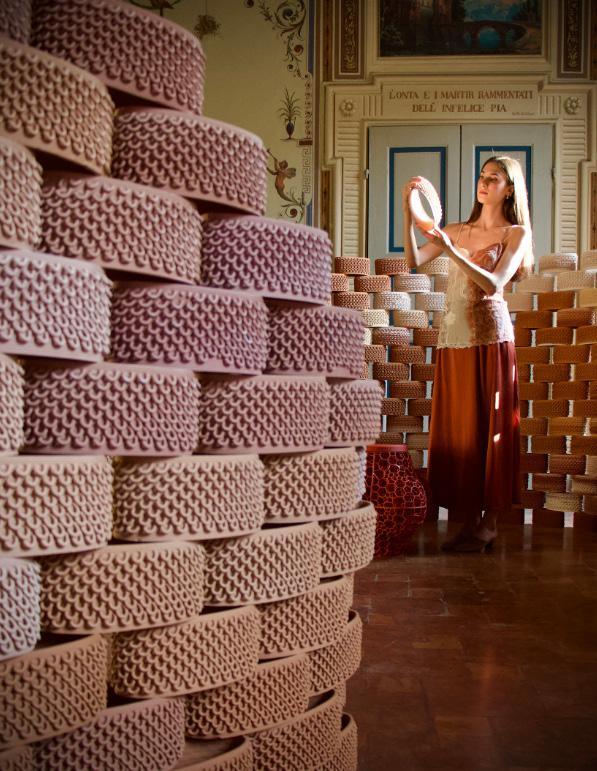
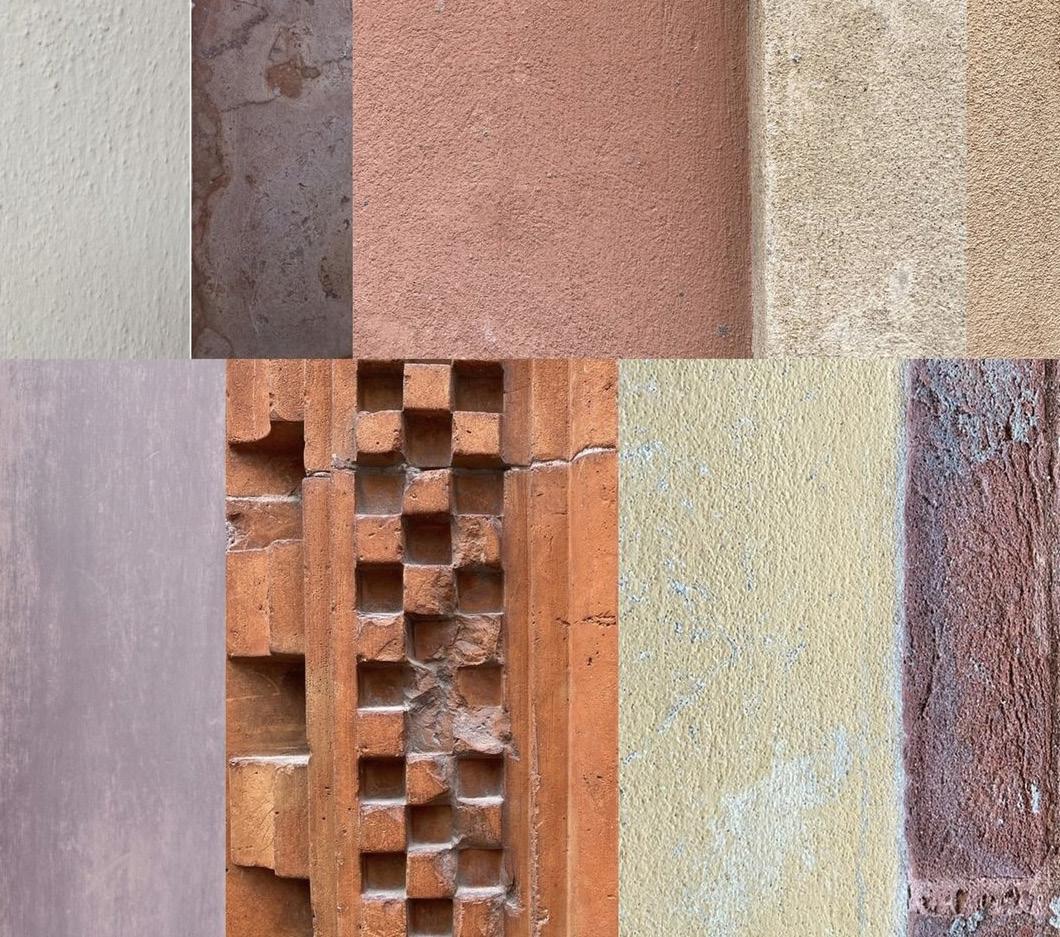
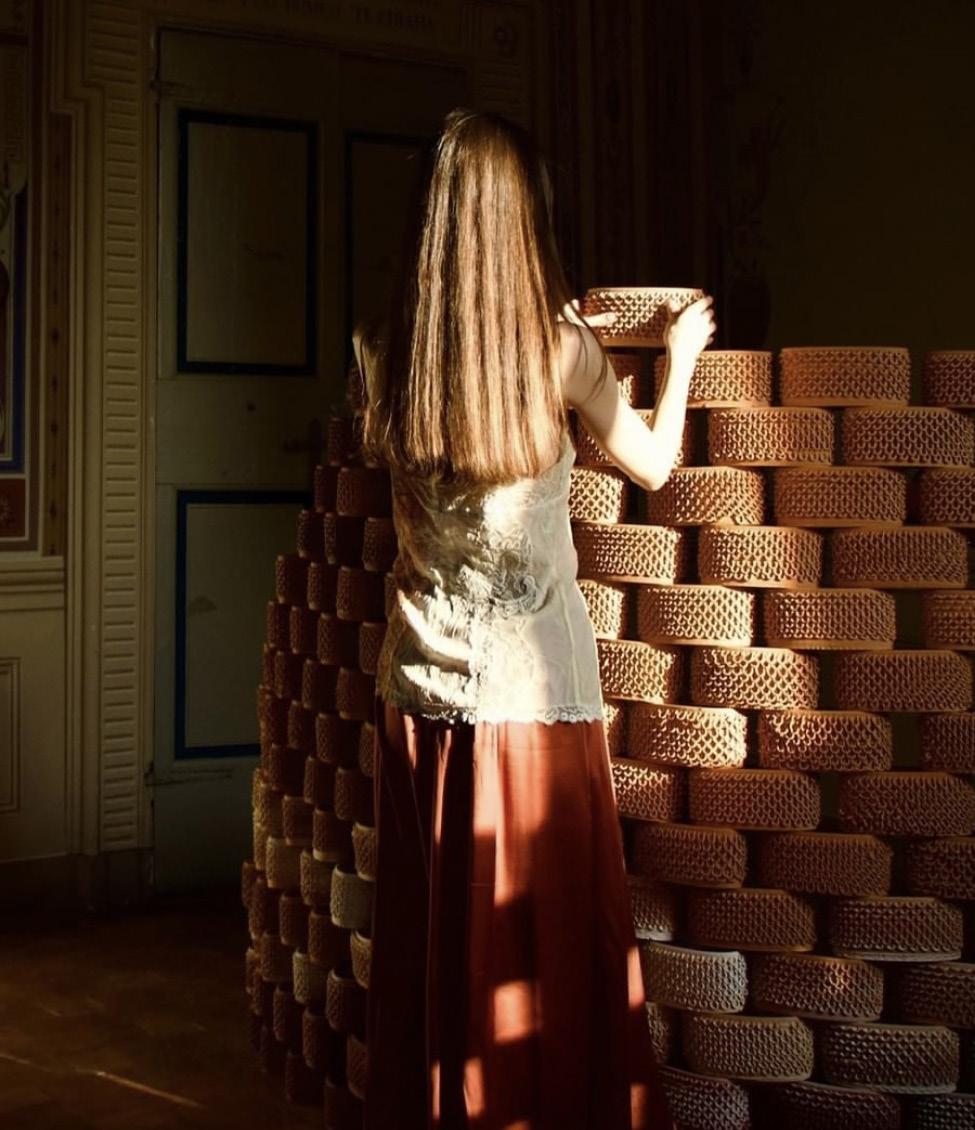
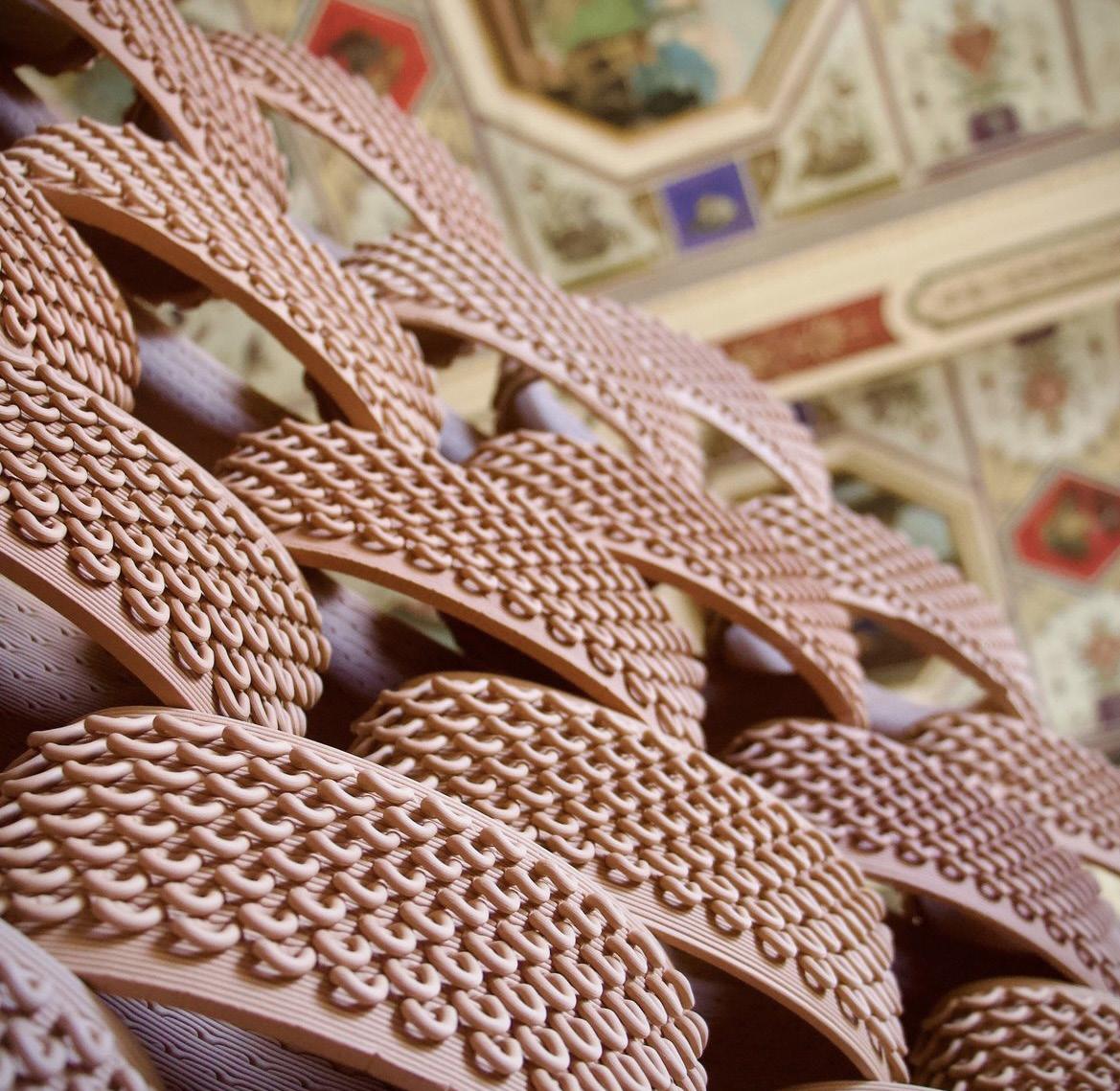
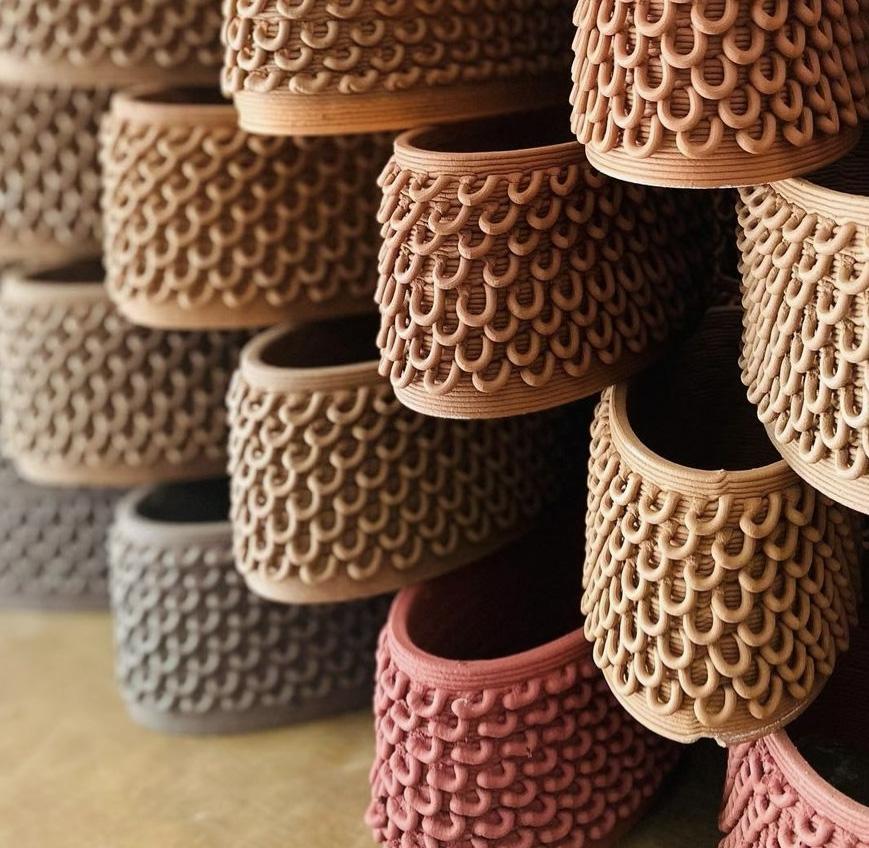
In the Future Archeologies 2049 exhibit, nearly 1,000 3D printed ceramic bricks embody this vision of the future while simultaneously drawing from the rich architectural traditions of Faenza, Italy. The majority of the clay used in these bricks is locally sourced from the Lamone River, and the vibrant colors of the purple, grey, and yellow bricks are inspired by the city’s traditional colorways. The final design was showcased in September 2024 at the art festival Argillá Italia, located in Faenza, Italy.
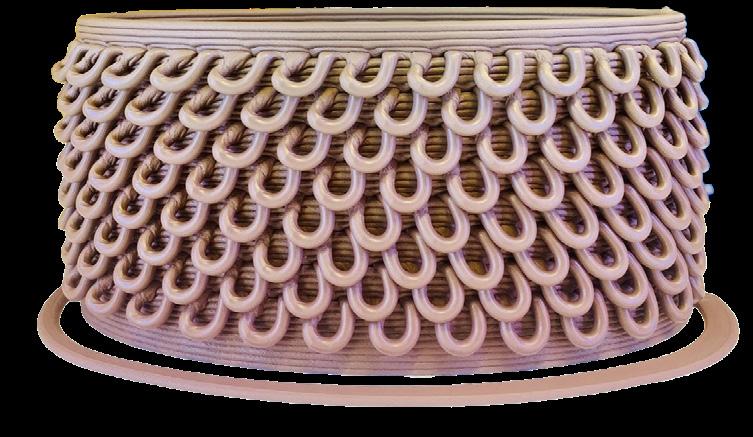
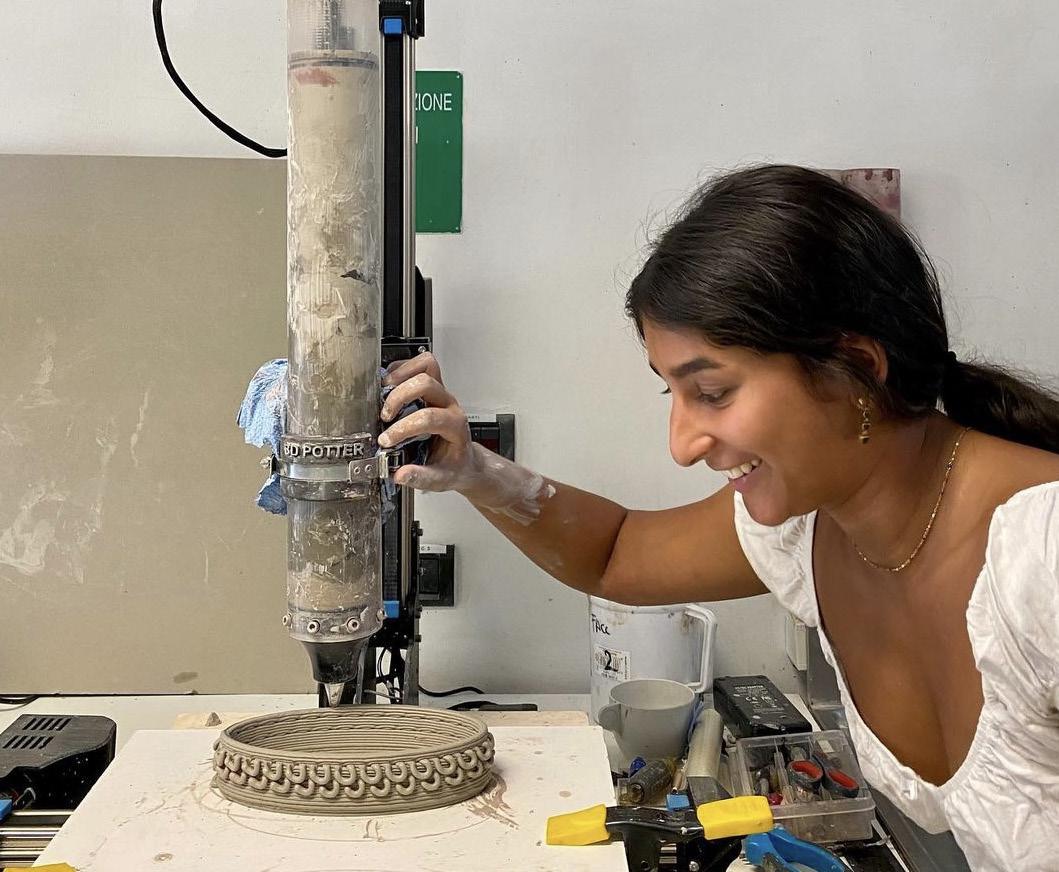
Bottom: Physical fabrication of one brick
Roughly 1,000 crafted bricks filled the exhibit, creating a display of color and form
Fall 2025, University of Texas at Austin, Prof. Nicole
Wiedemann
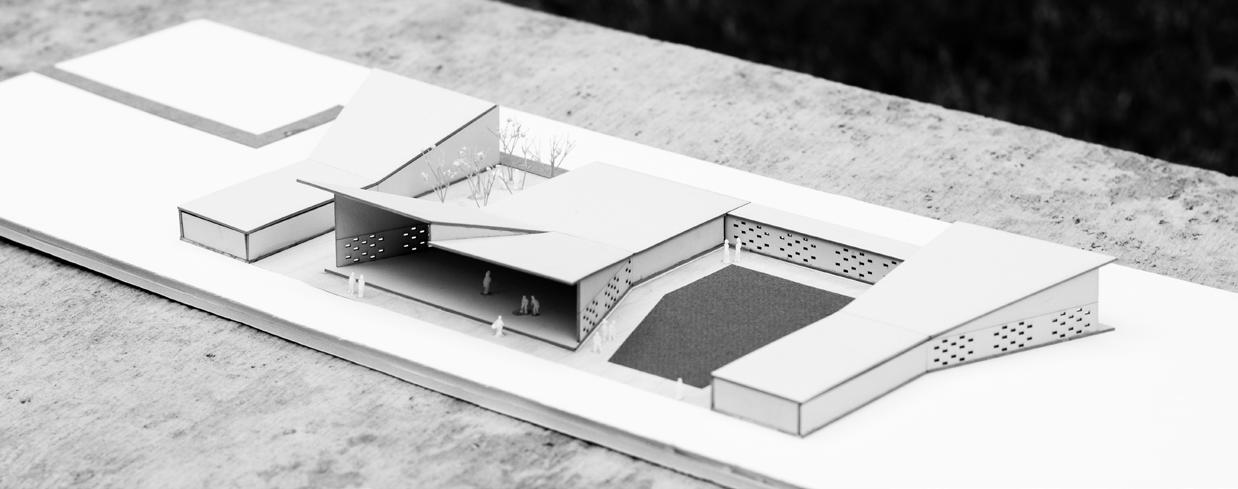
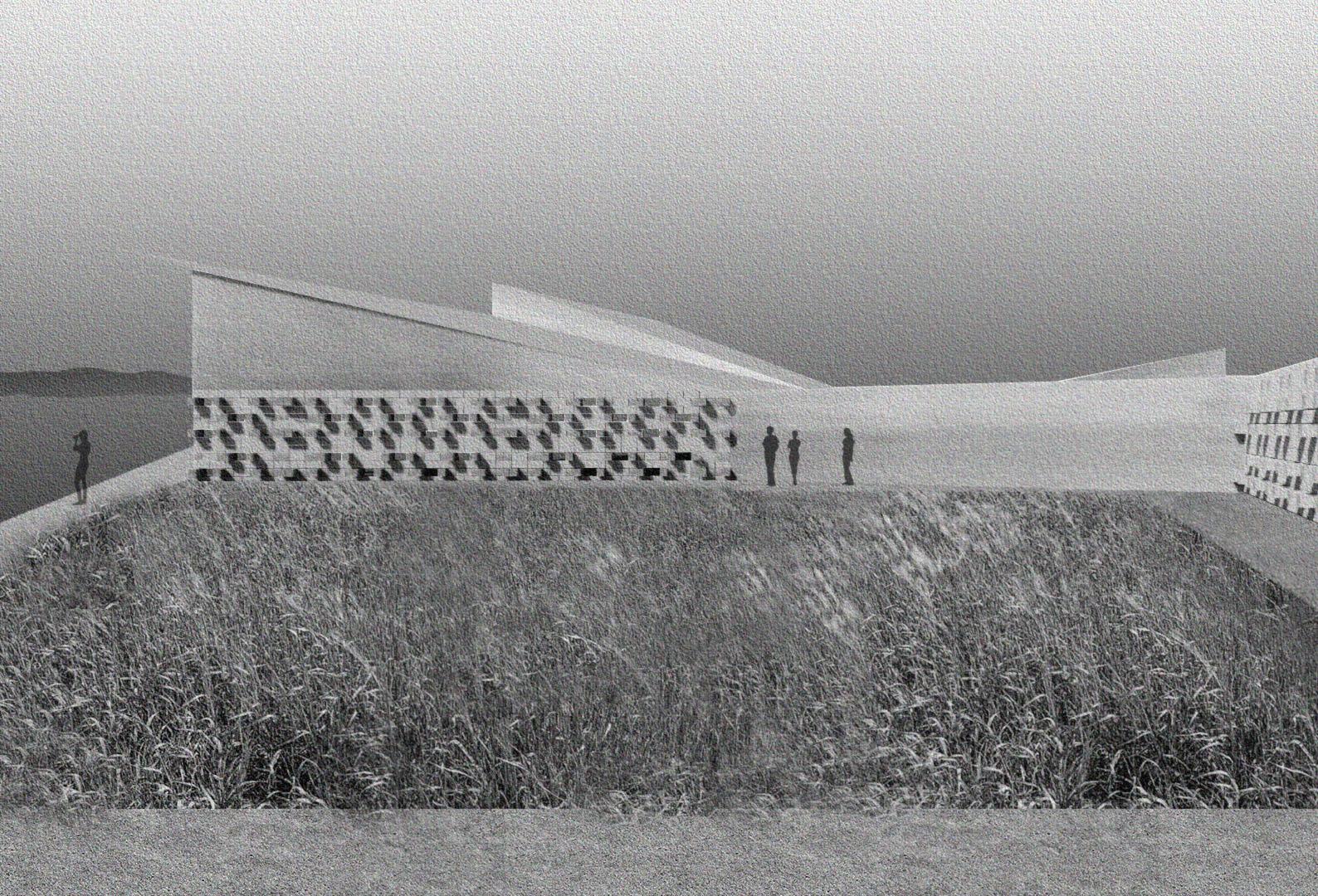
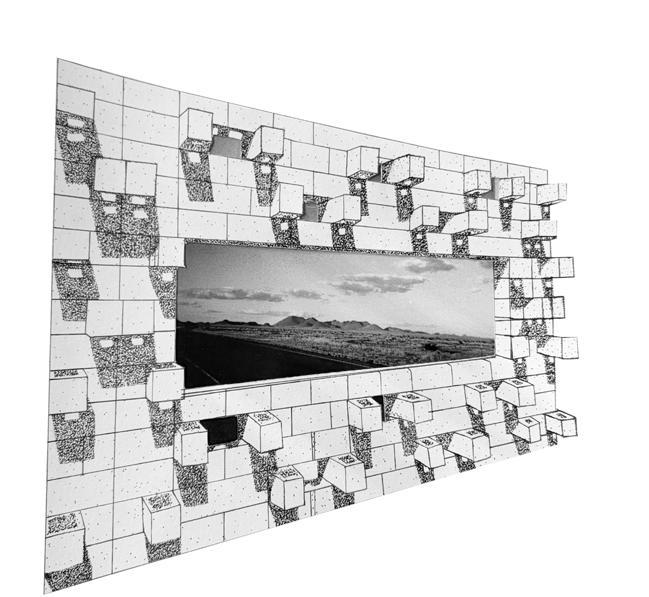
This final project presents a design for a Welcome Center in Marfa, TX, that explores the relationship between compression and release across three criteria: physical space, manipulation of existing views, and influence from Marfa’s contemporary art.
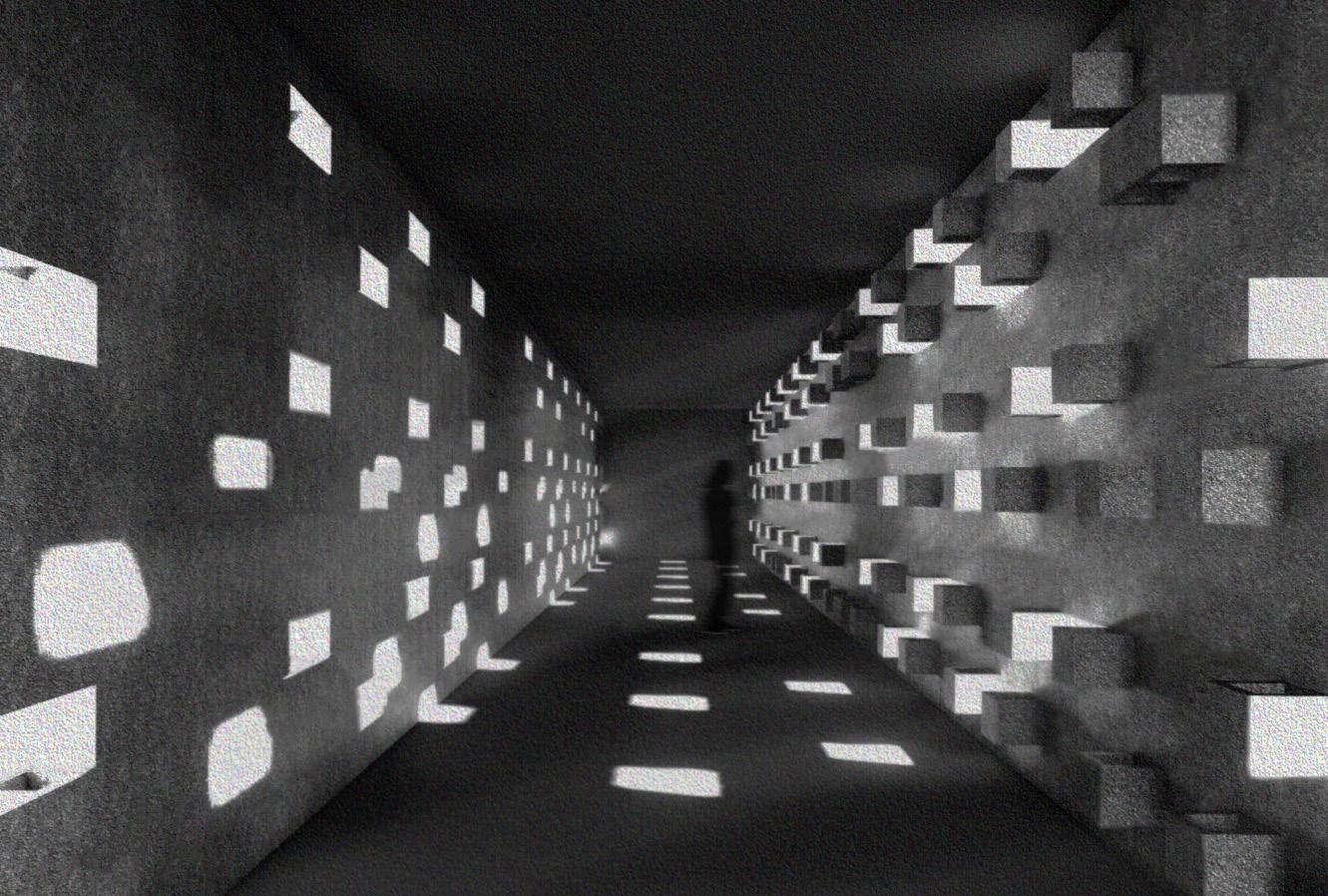
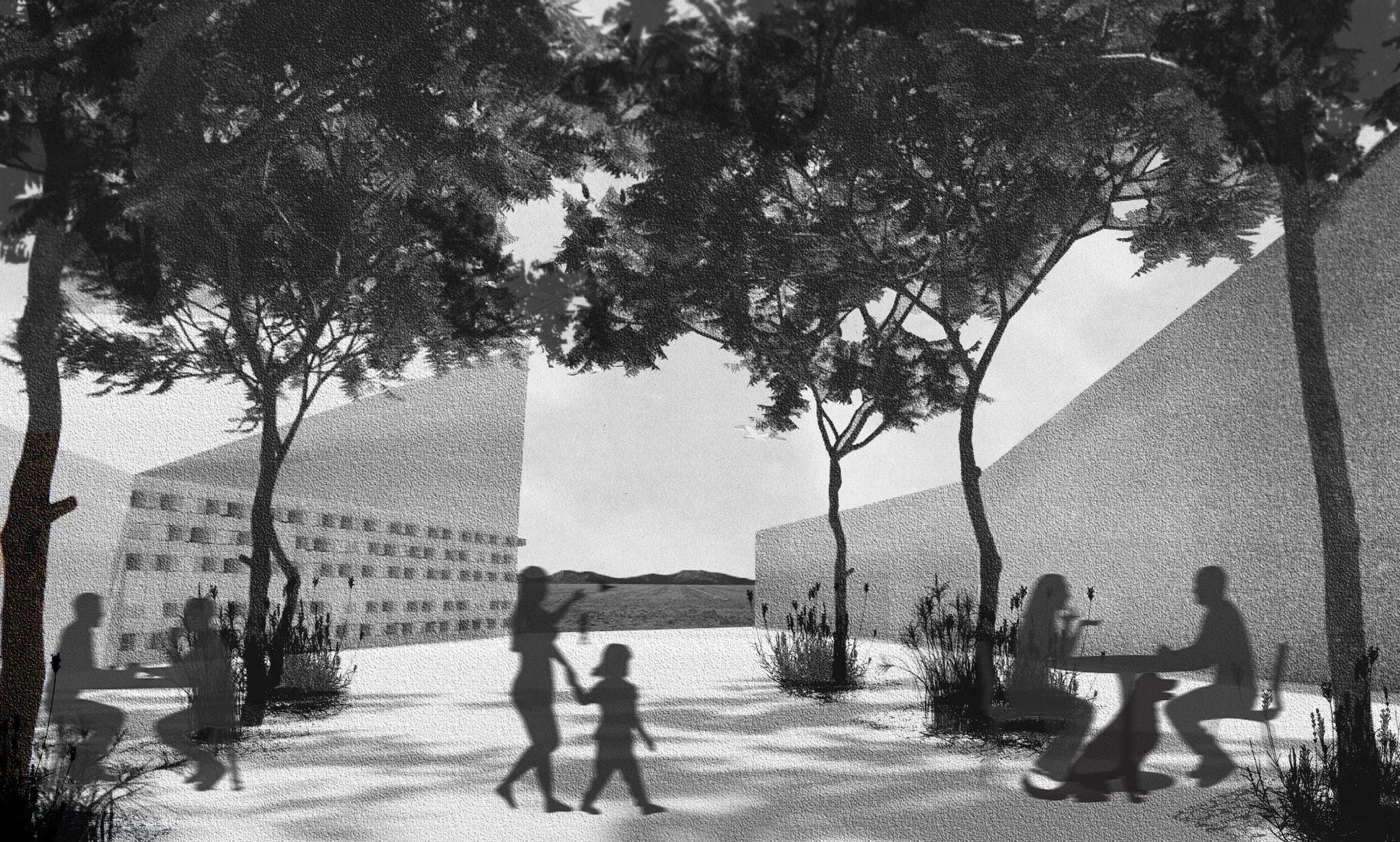
The building’s circulation deliberately alternates between constrained zones of compression and open, high-volume spaces of release. This intensifies the perception of scale. The design highlights the essential role of outdoor spaces by incorporating two distinct courtyards. The concept of a structured journey of light and discovery is important to this design, choreographing the visitor’s movement through spaces of confinement and expansion, and reflecting the idea that architecture is a “storyteller for the state, offering comfort, knowledge, and a sense of arrival”.
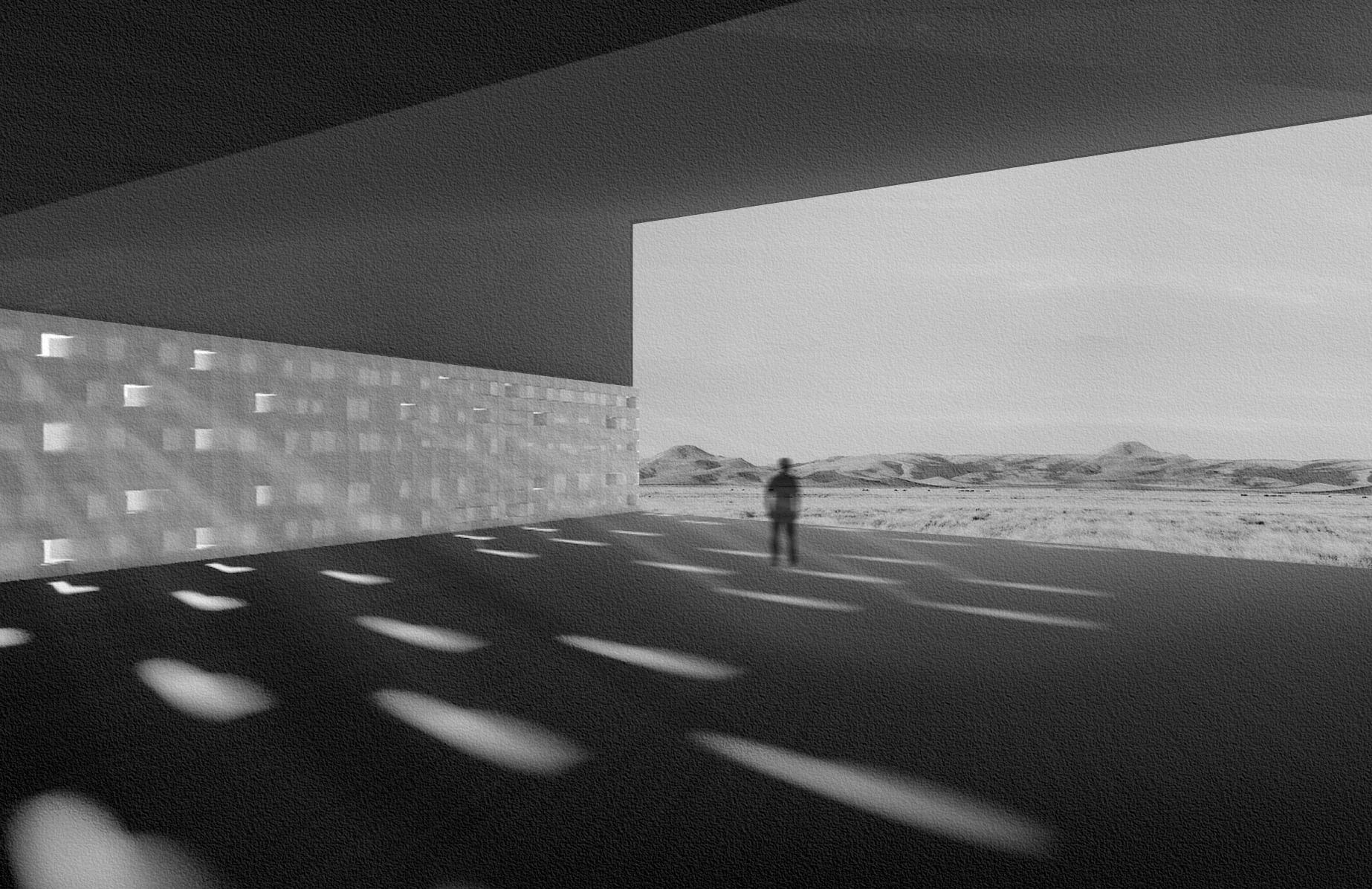
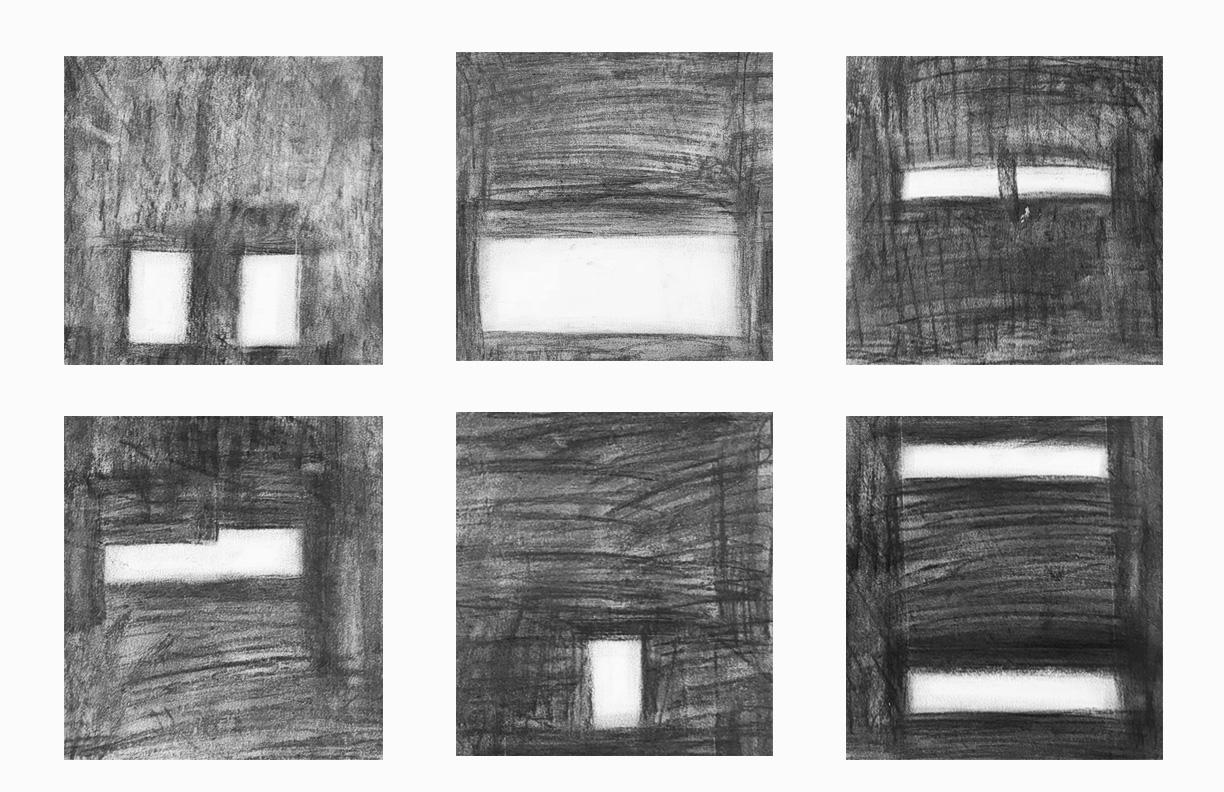
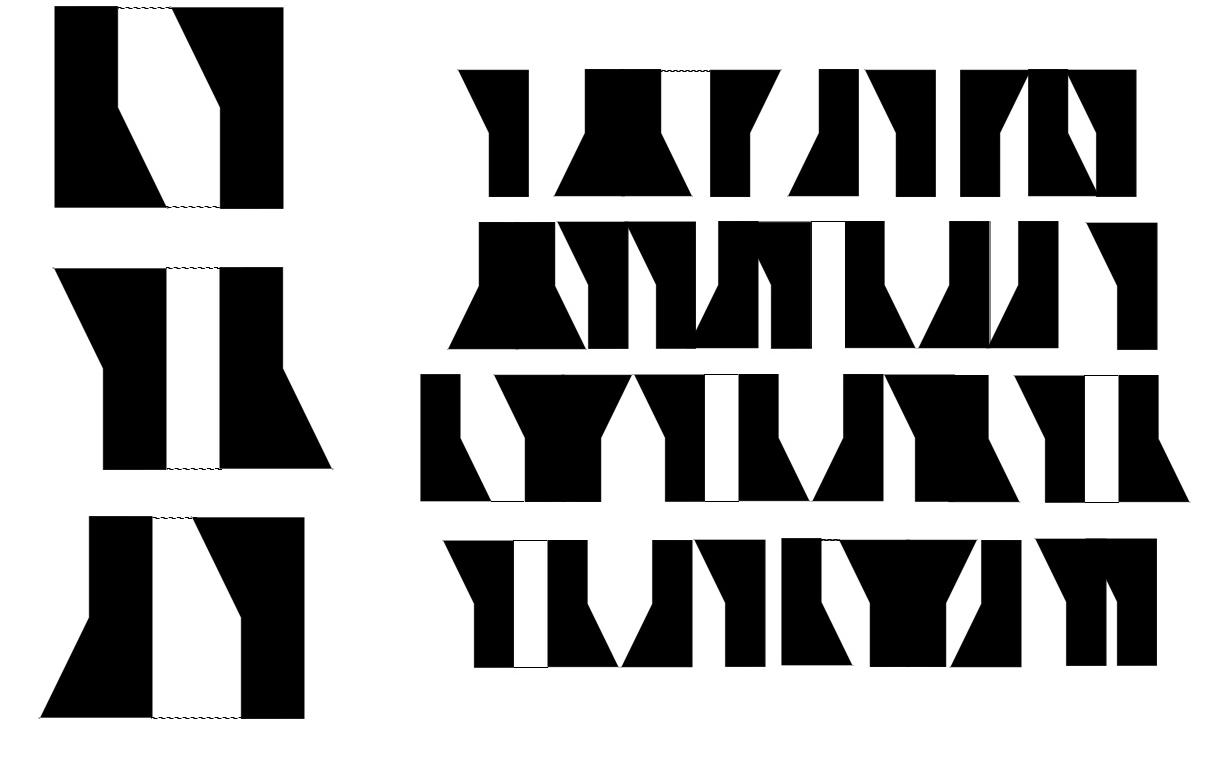
Top: Iterations of light refraction, compression, and release
Bottom: Courtyard iterations
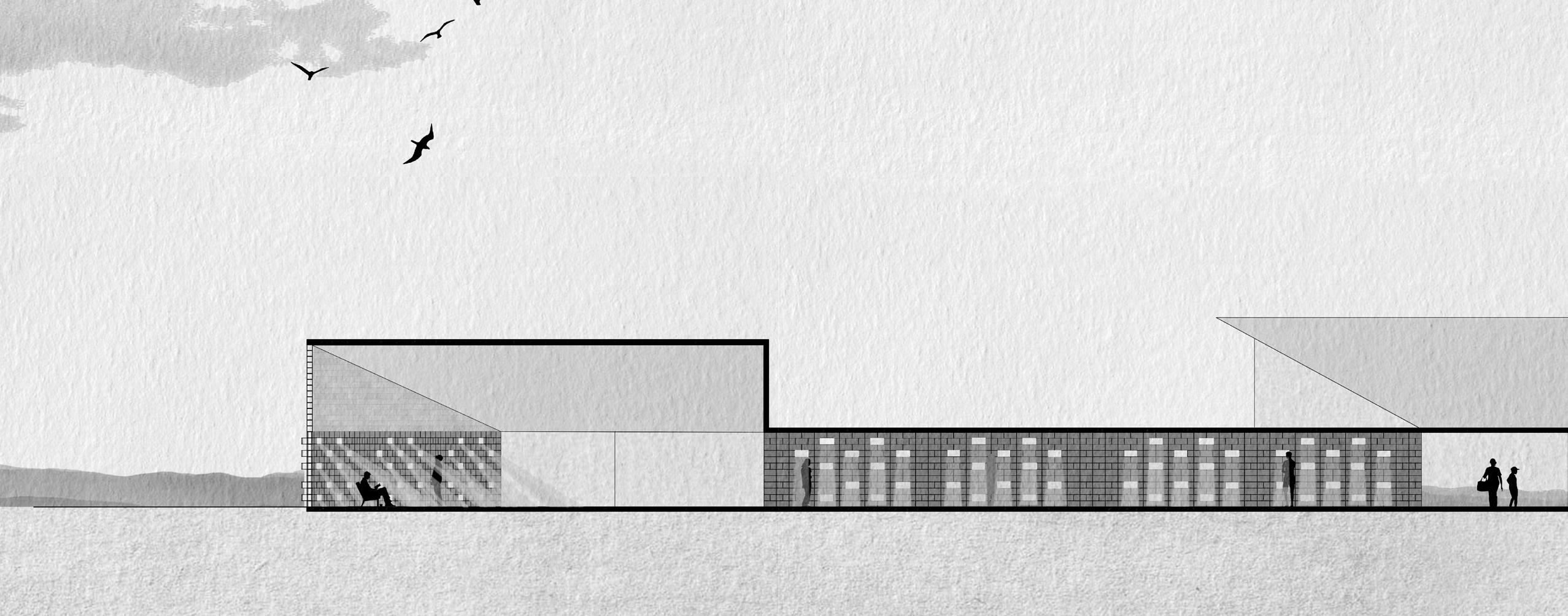
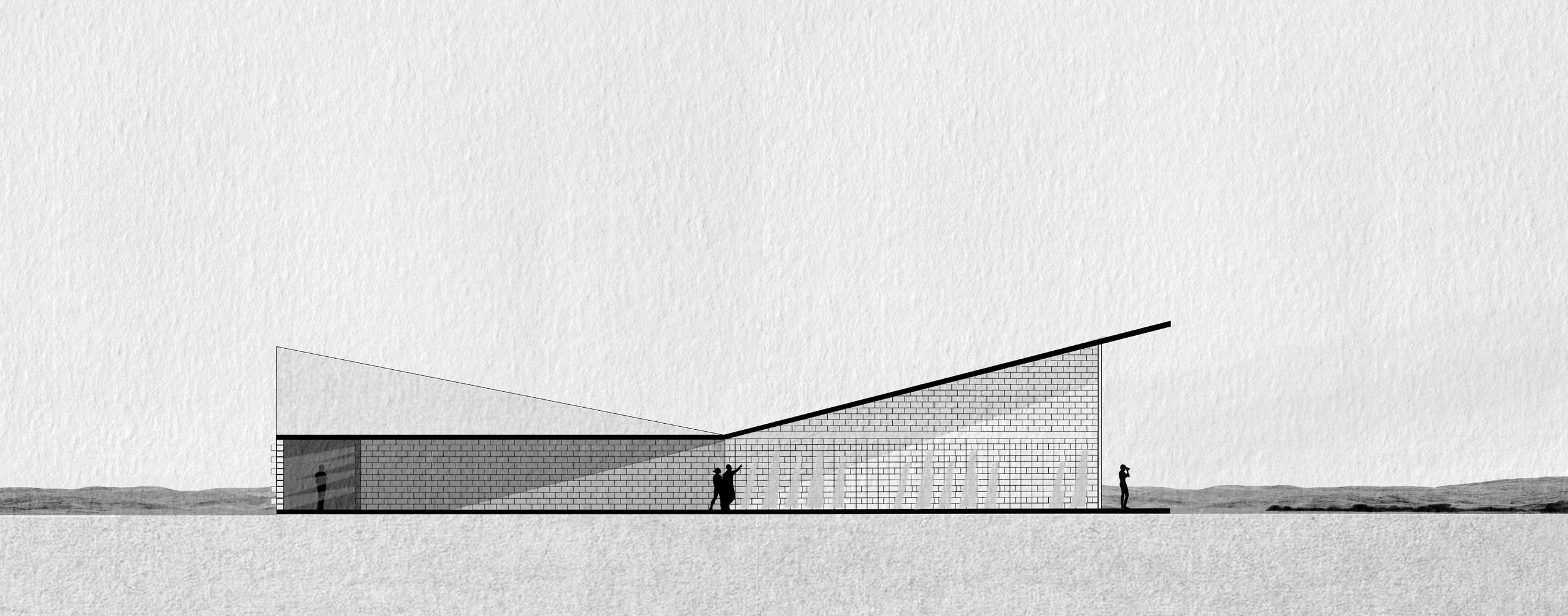
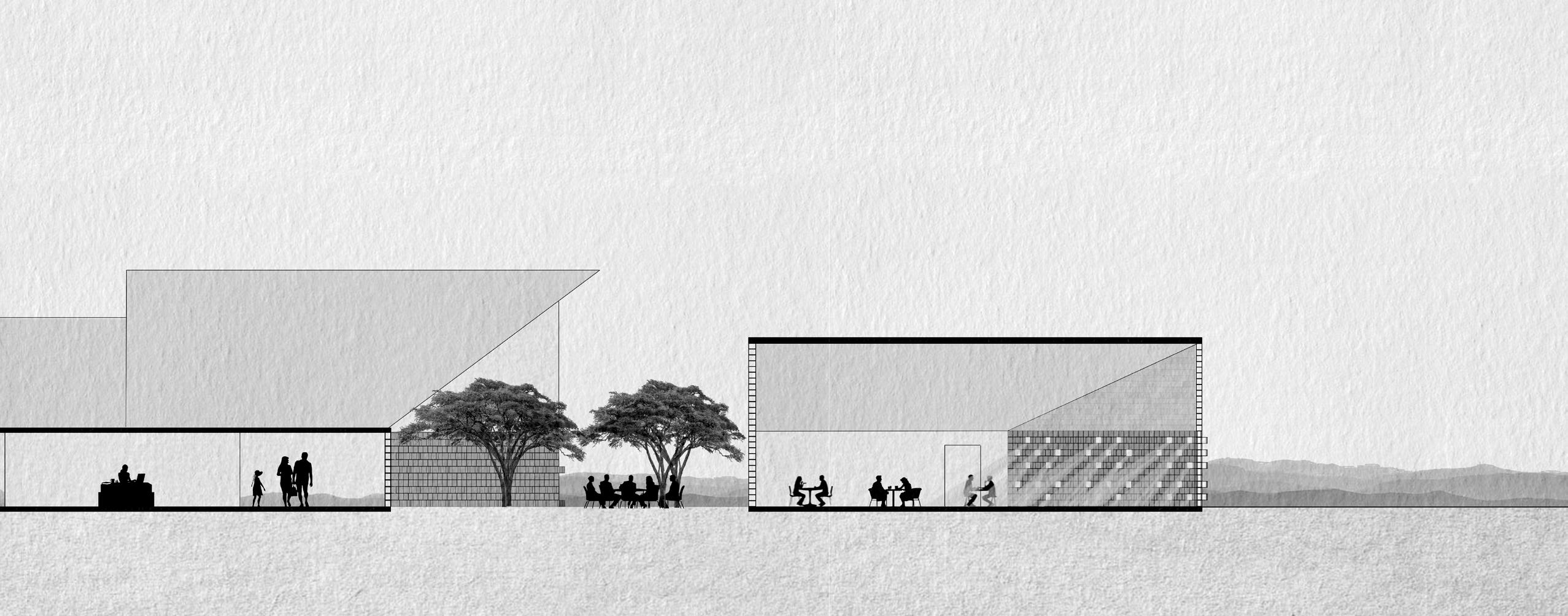
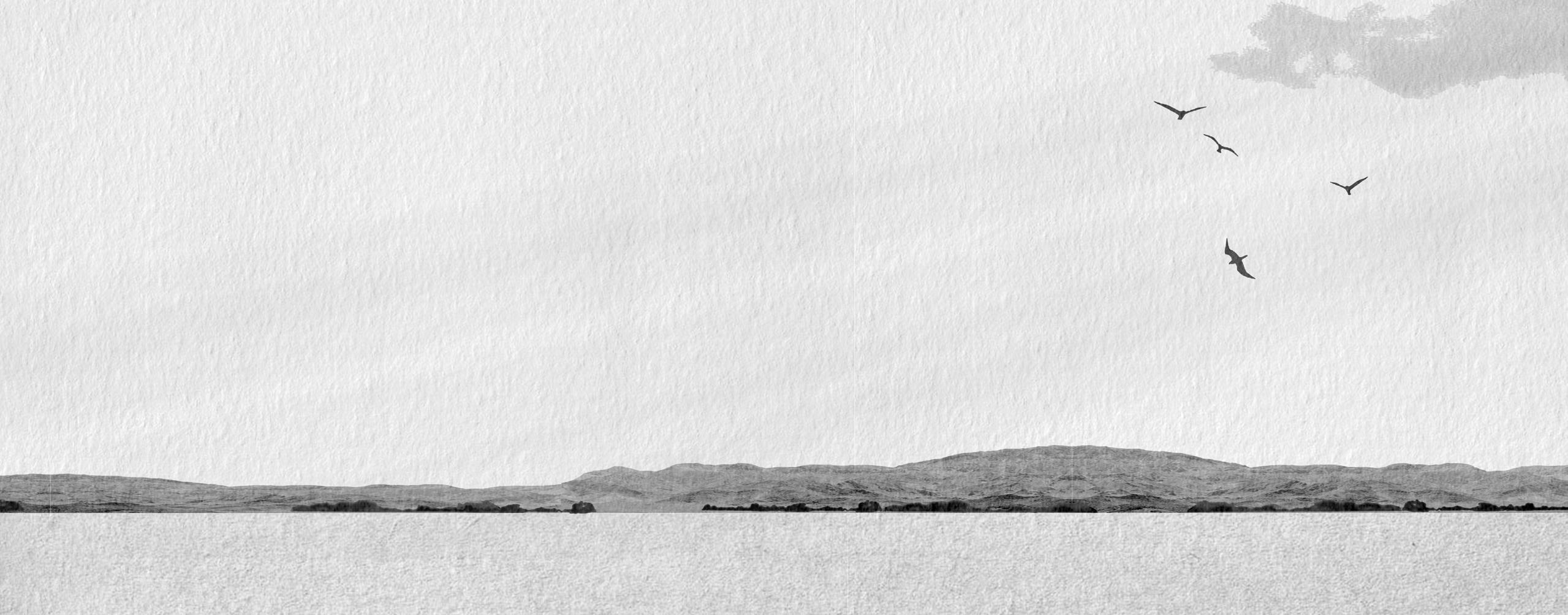
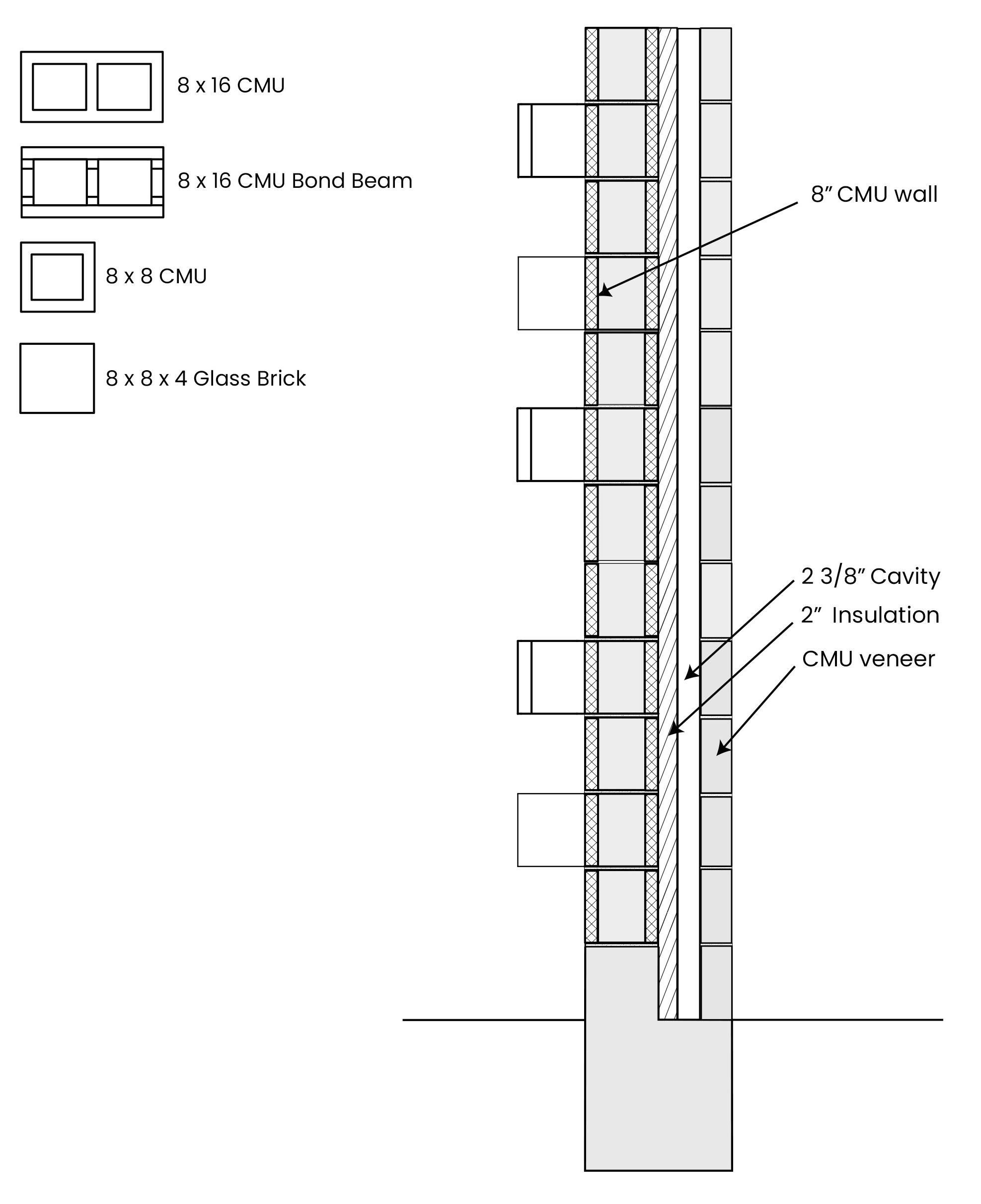
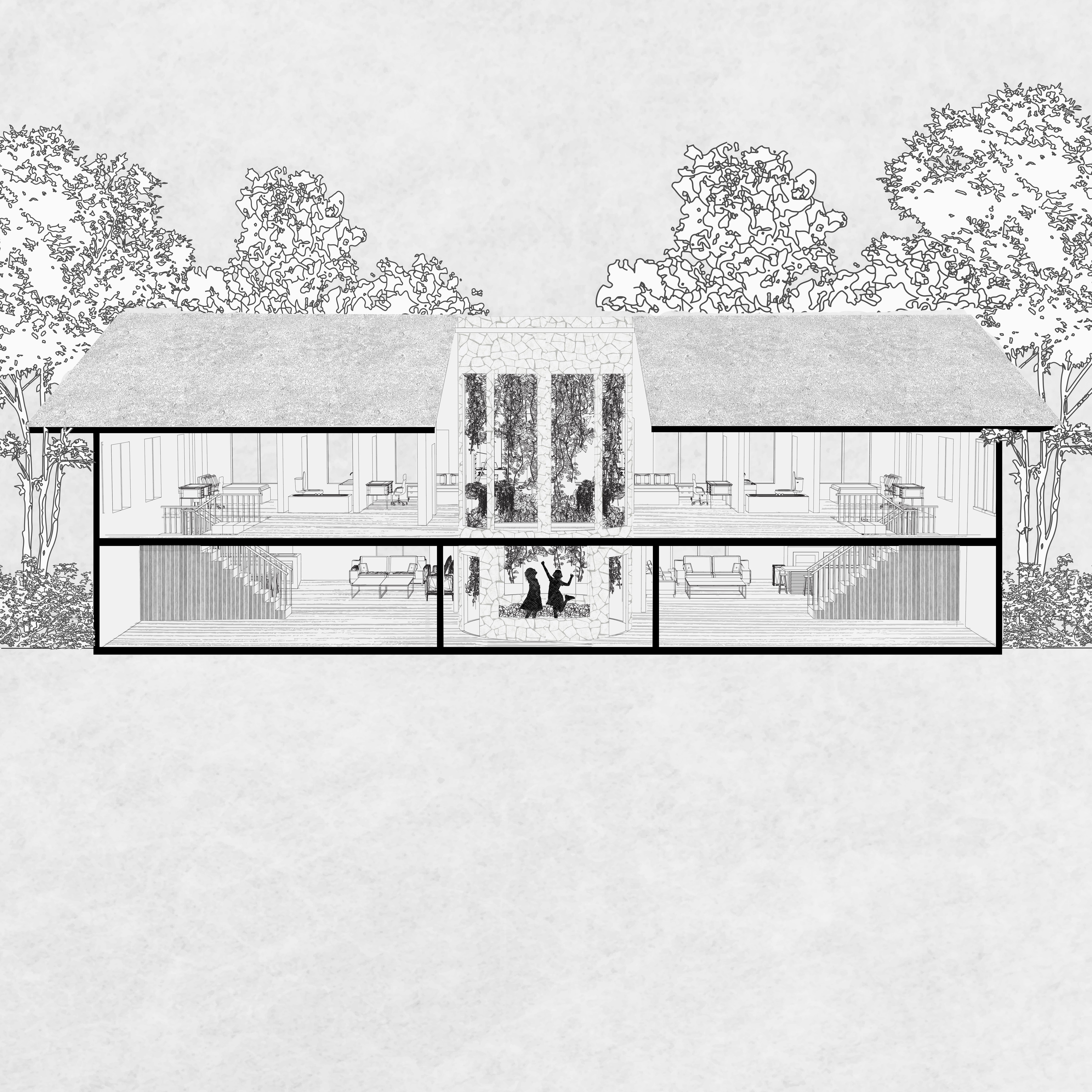
Sections 1/8th”= 1’-0”
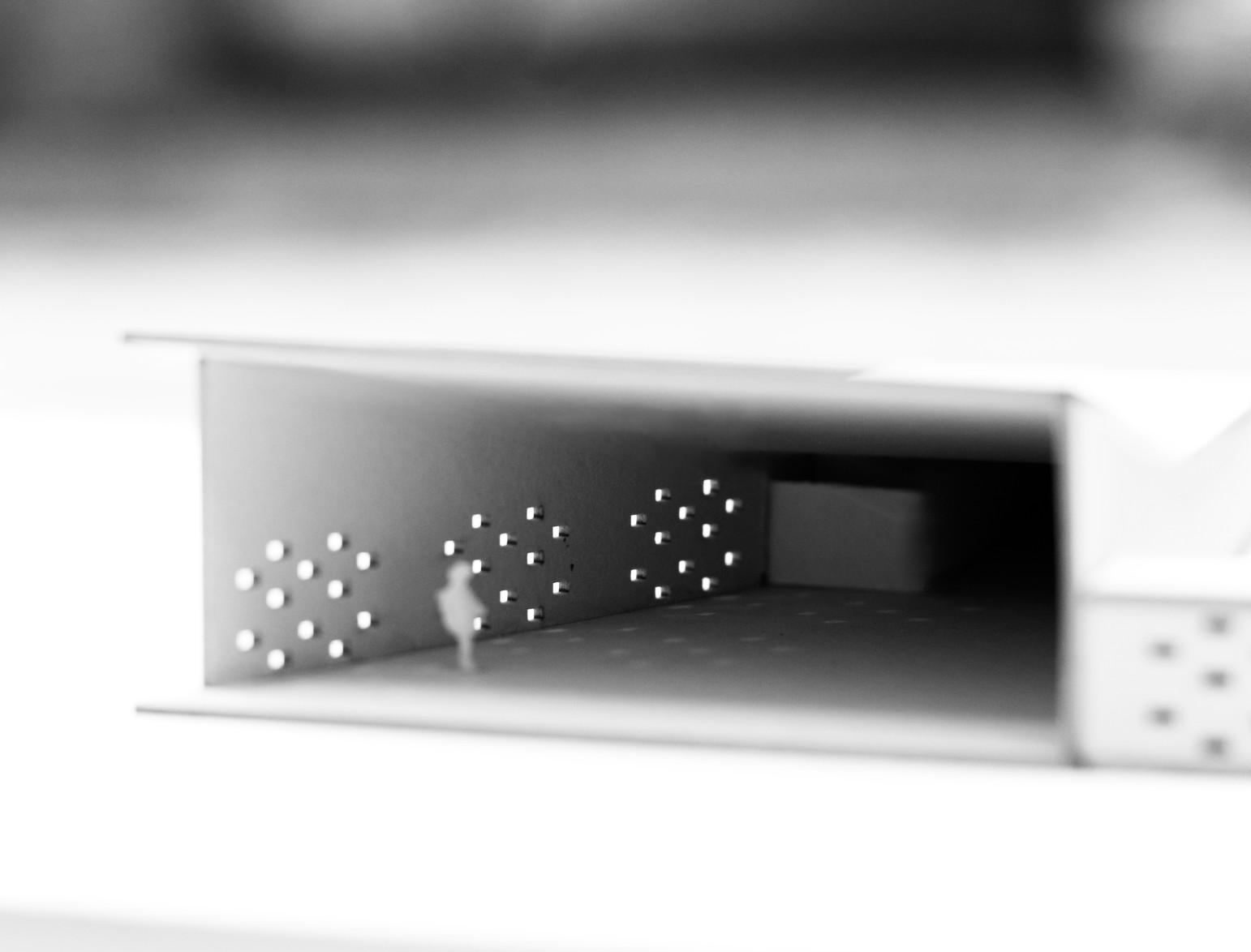
Physical model: gallery space
Top: CMU circulation path Bottom: Canopied courtyard
Fall 2024, Lehigh University, Prof. Wes Hiatt
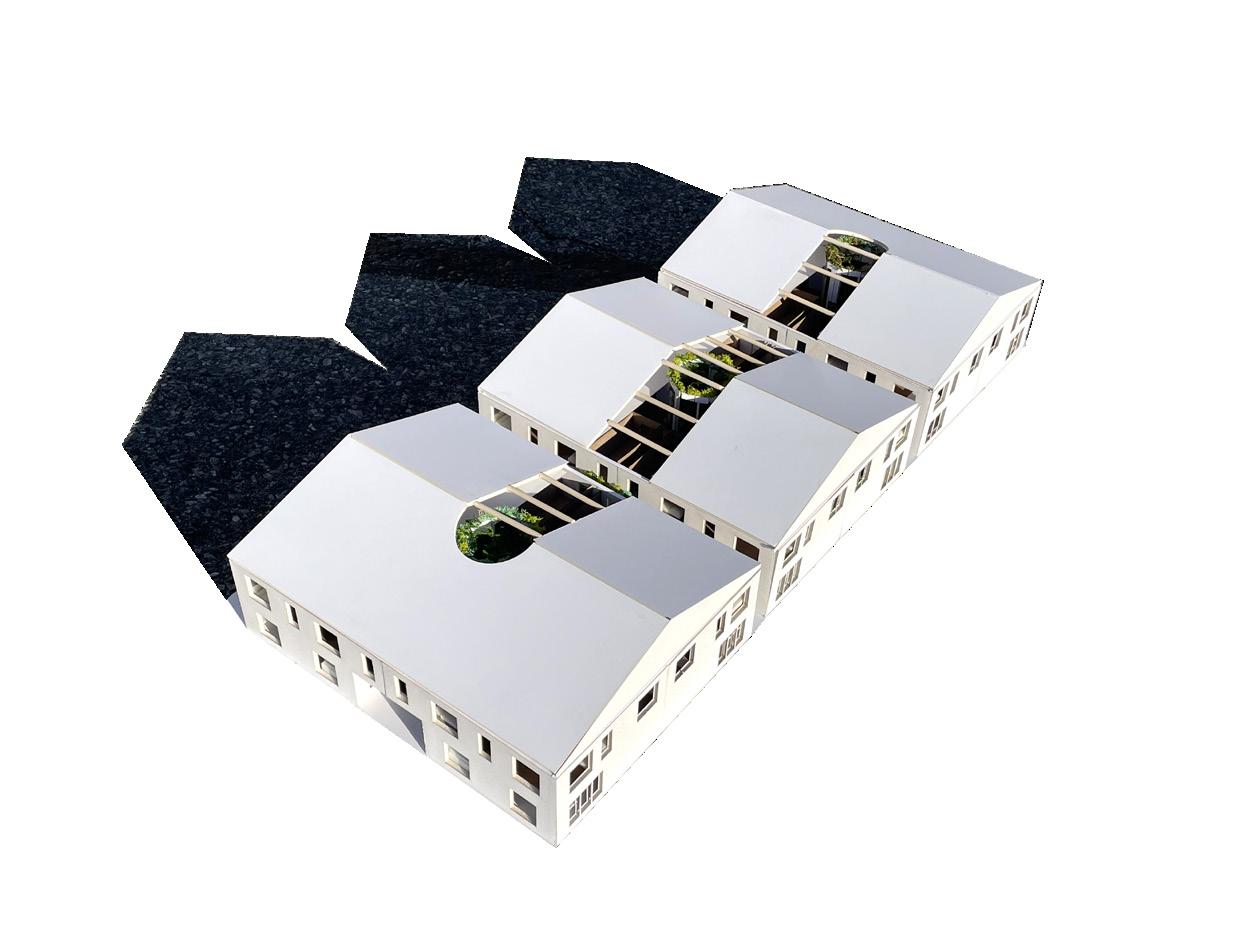
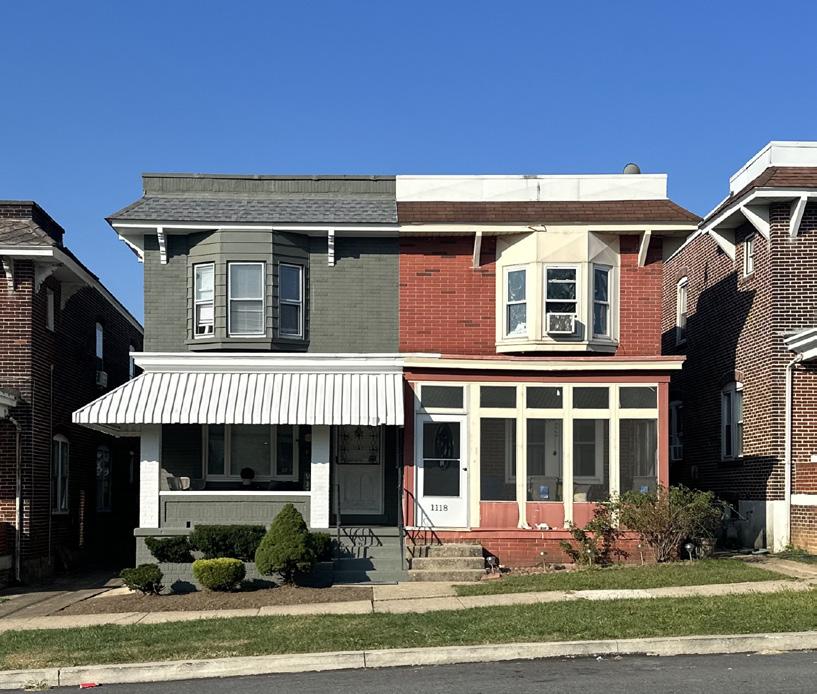
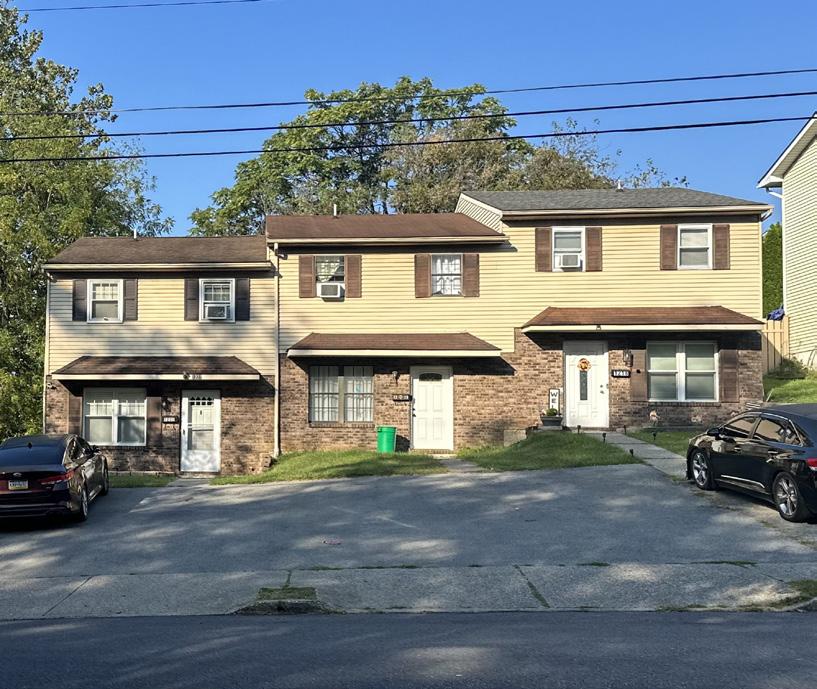
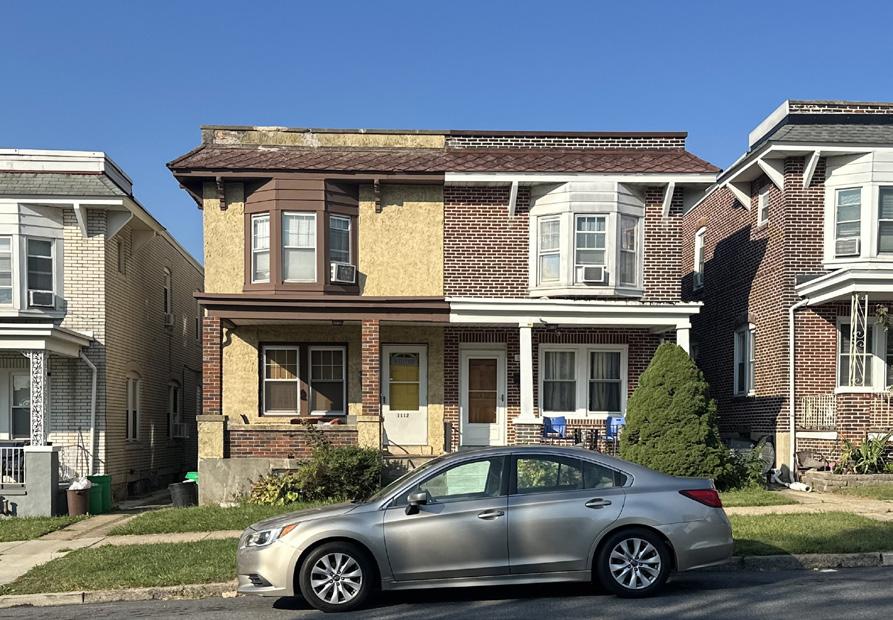
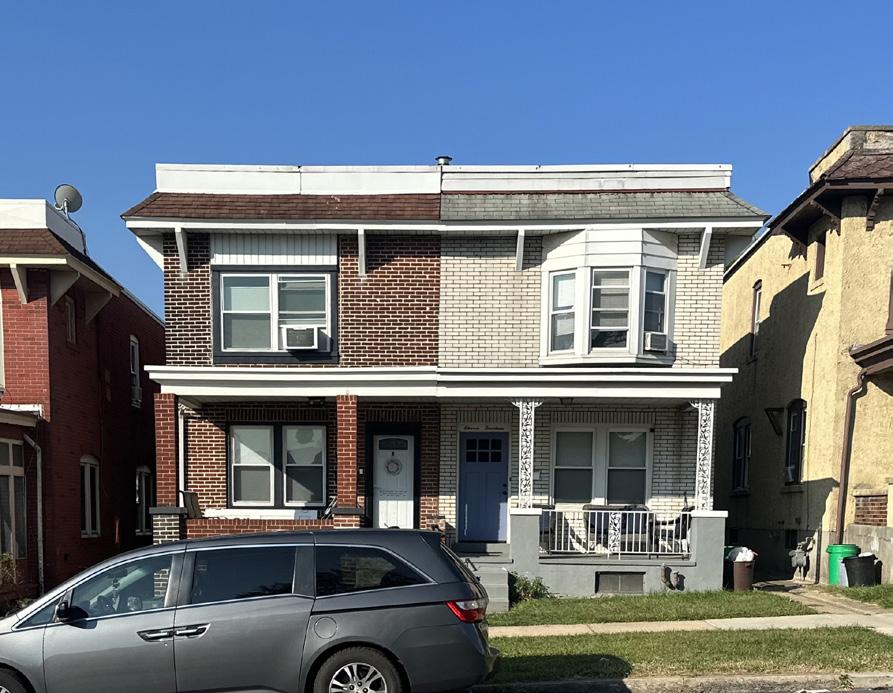
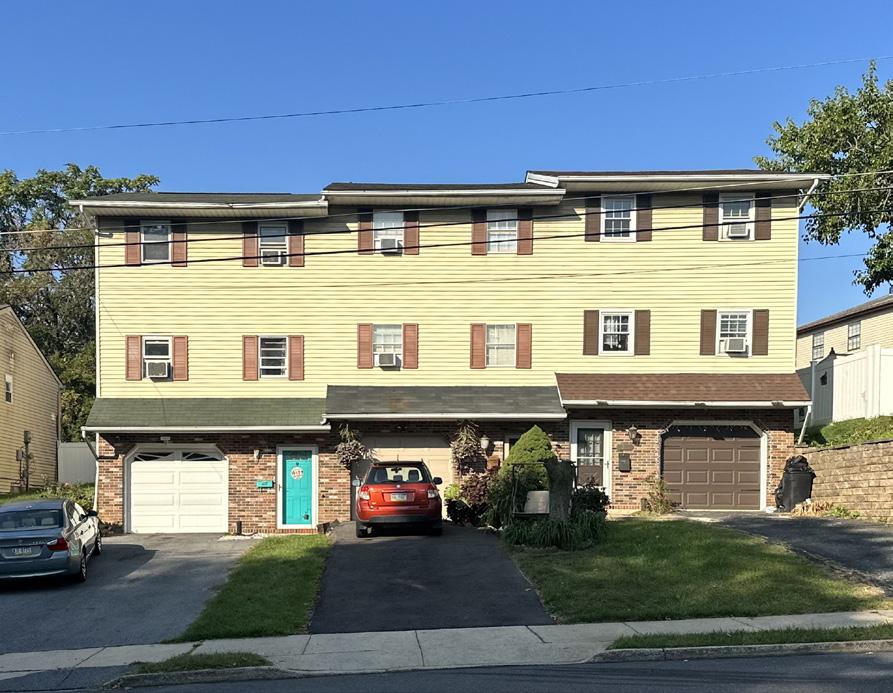
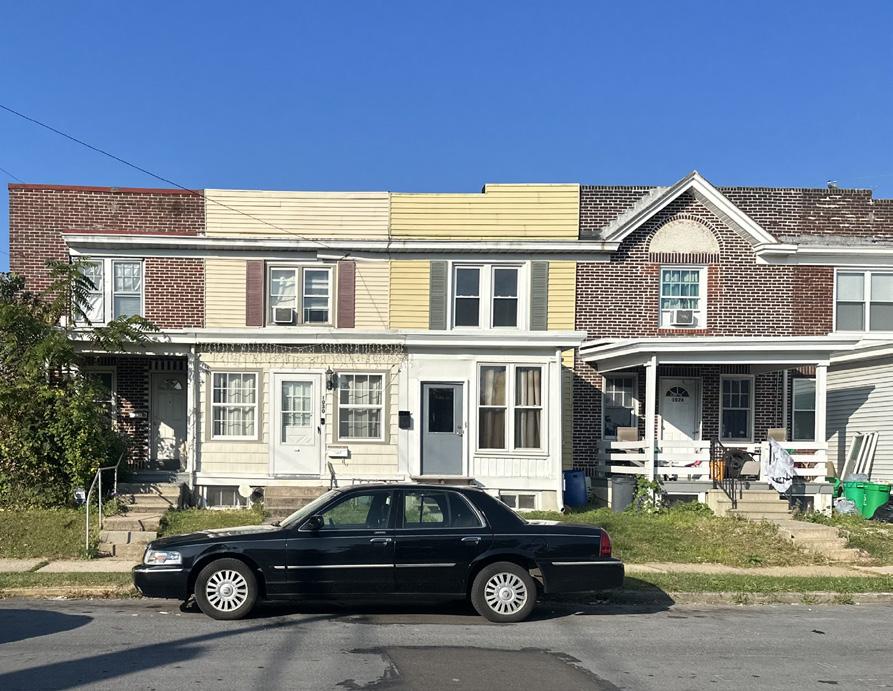
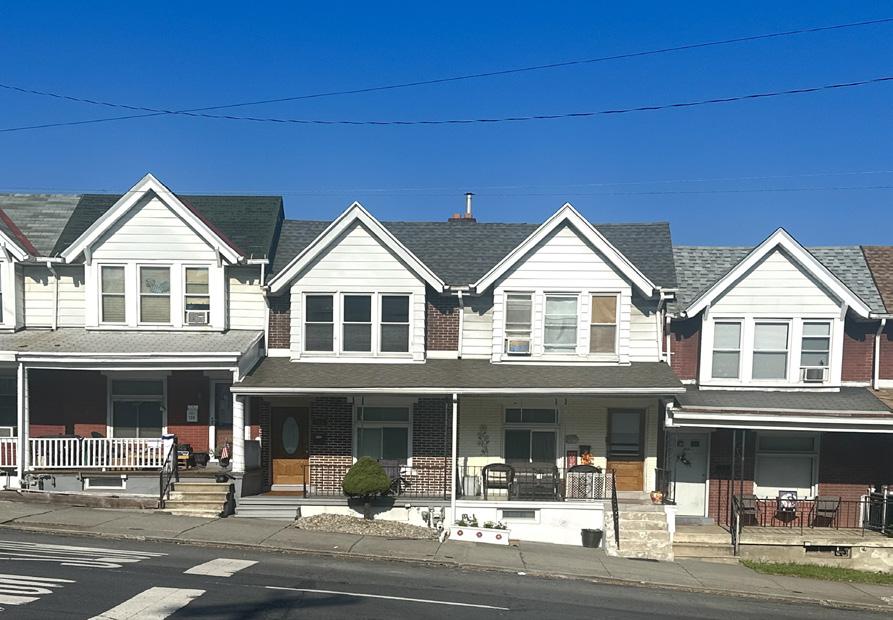
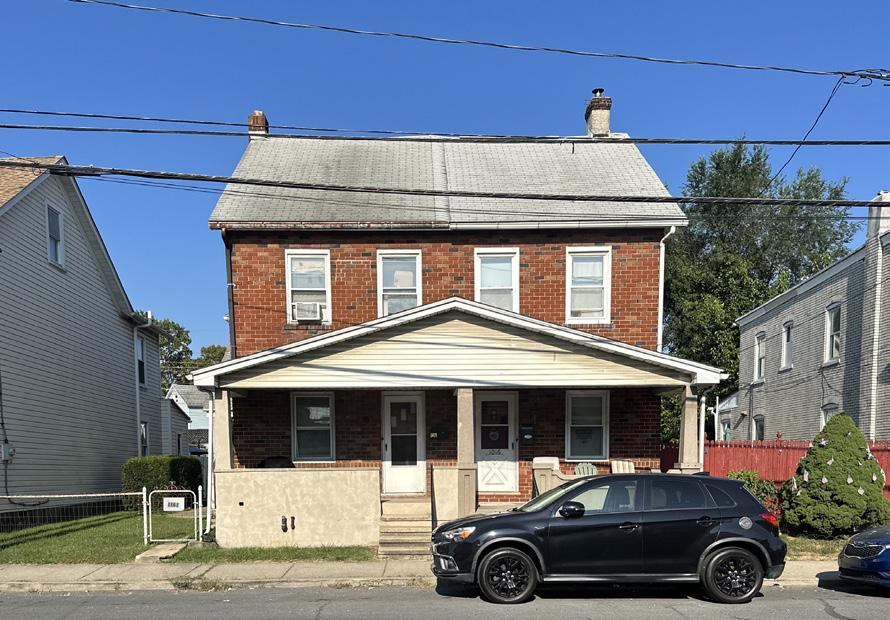
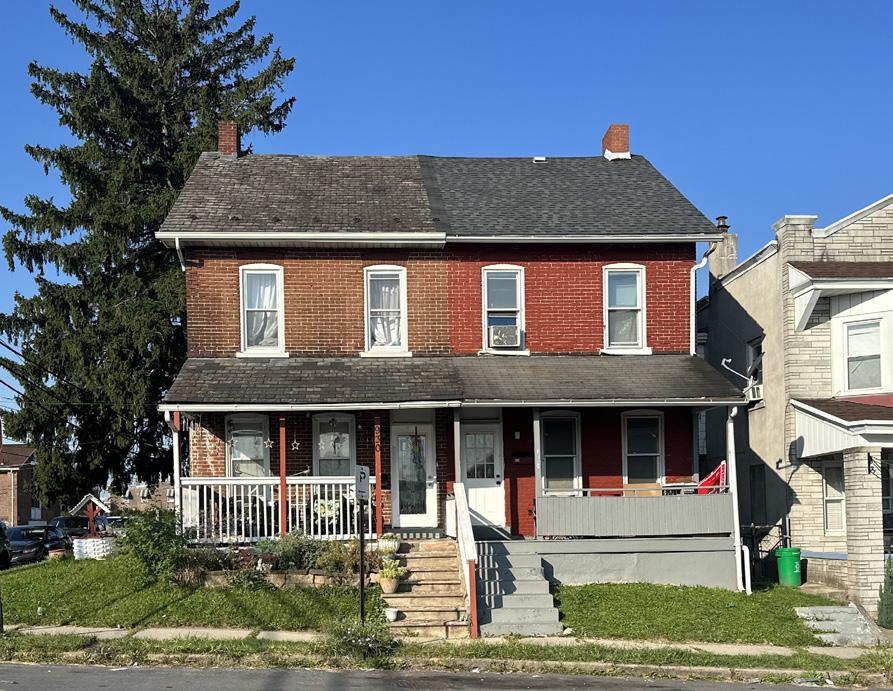
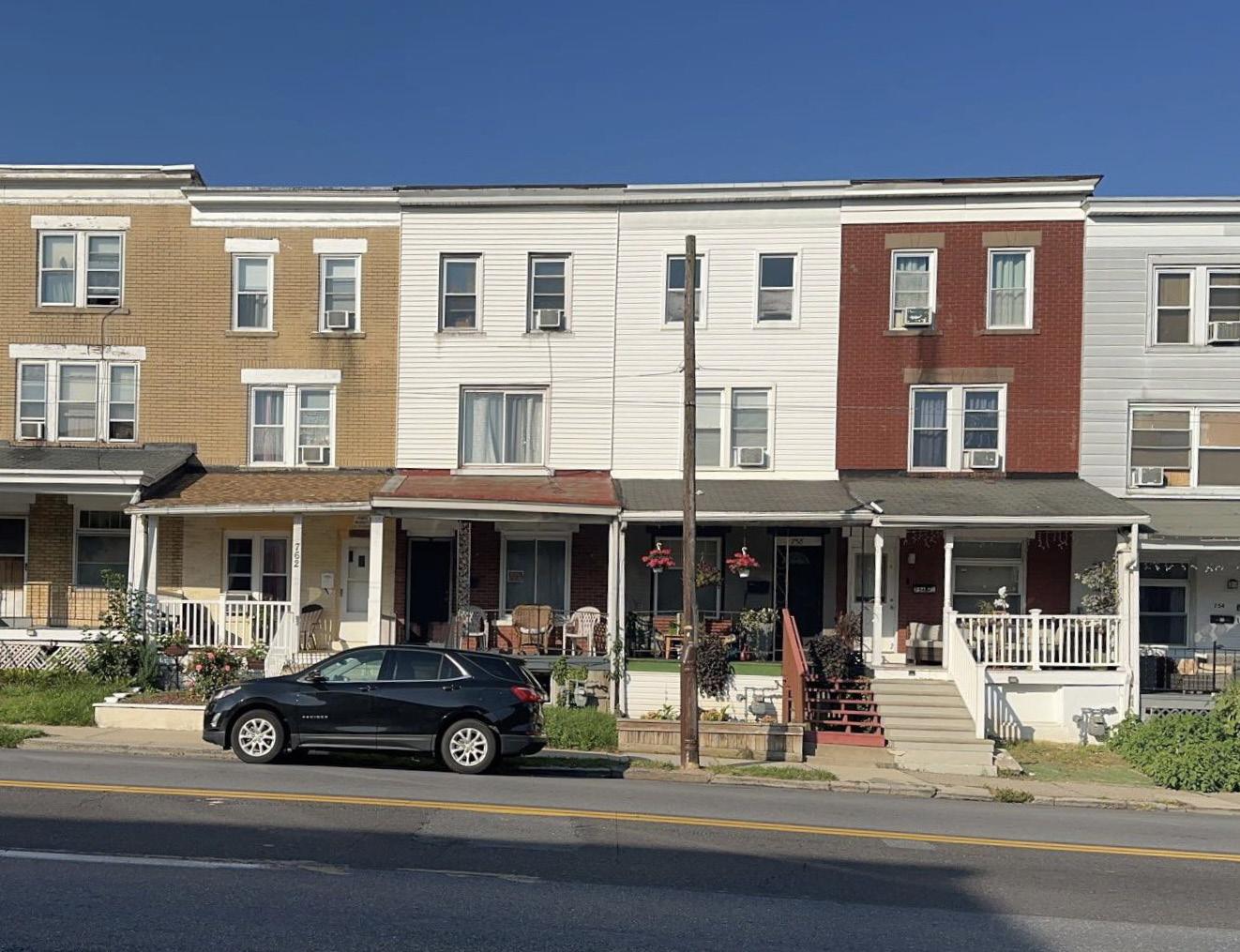
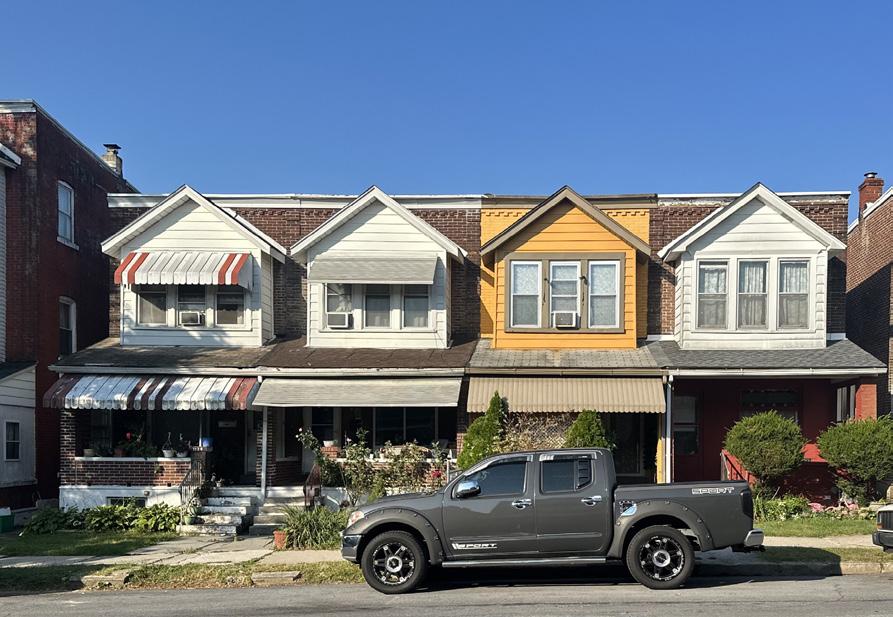
This project examines Lehigh Valley, focusing on density, zoning, and housing patterns. Through an in-depth study of Fairview, Allentown, the relationship between the built and social envi ronments informed a design for high density multi-family dwellings rooted in the area’s architectural fabric.
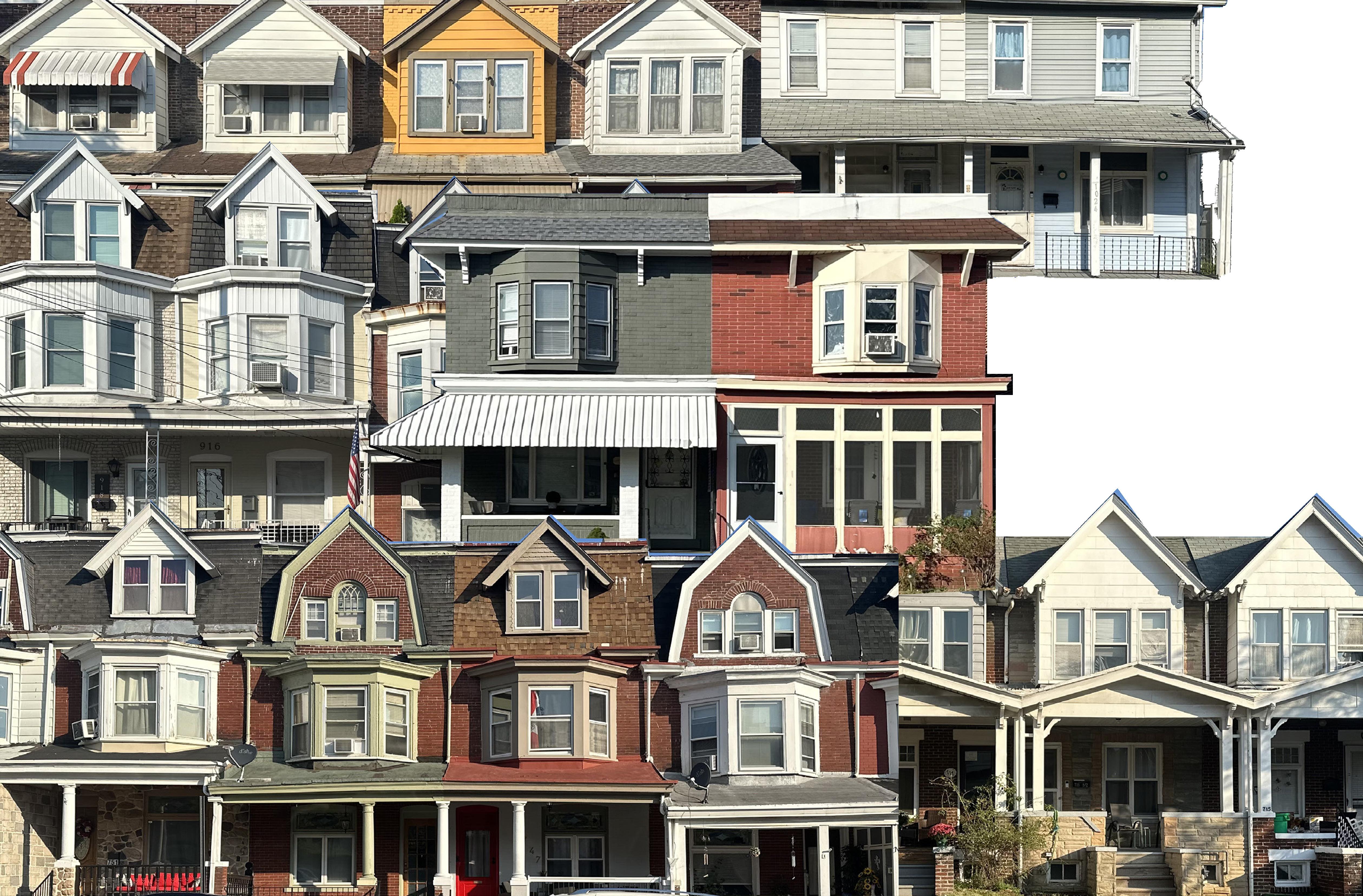
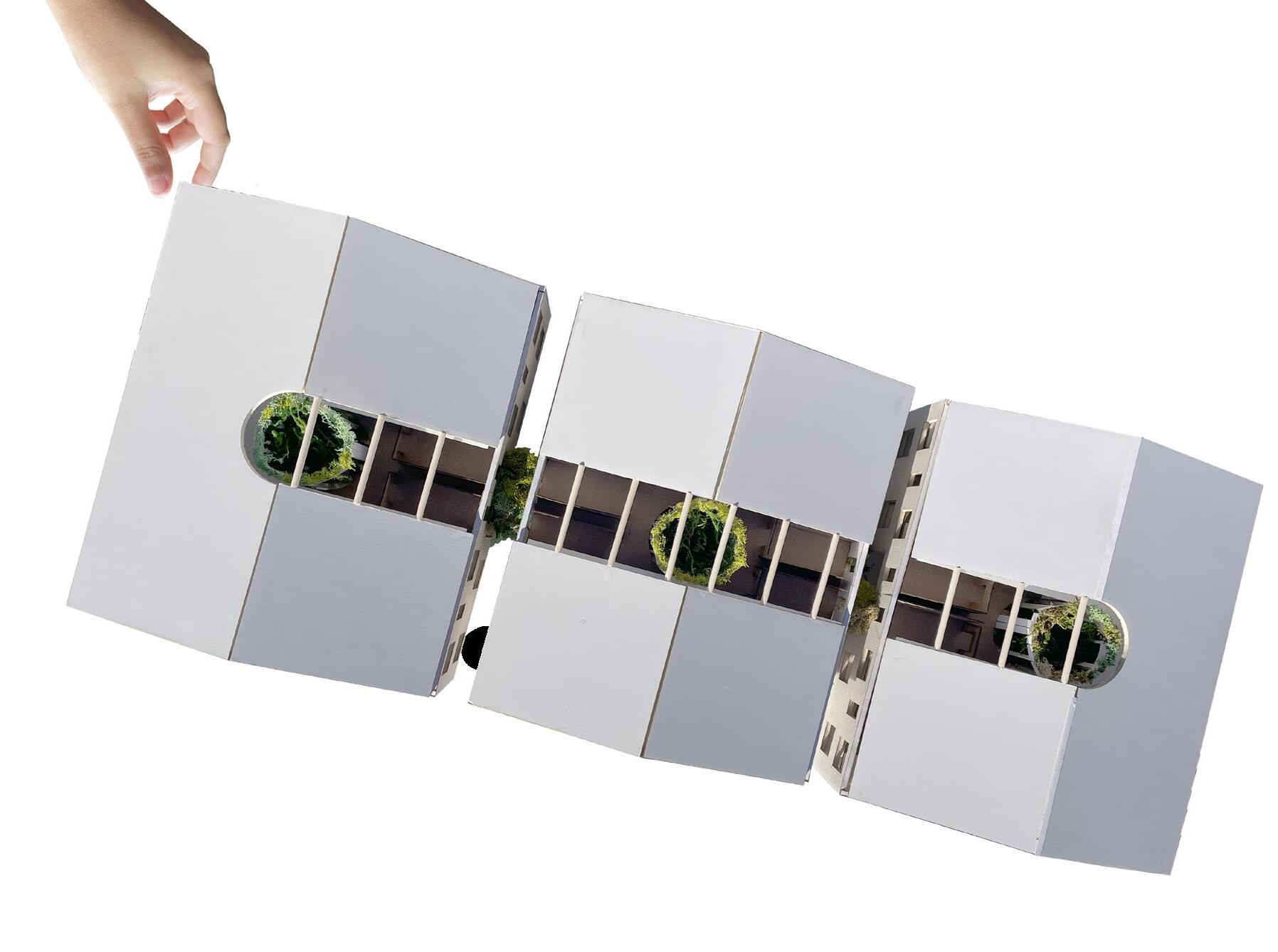
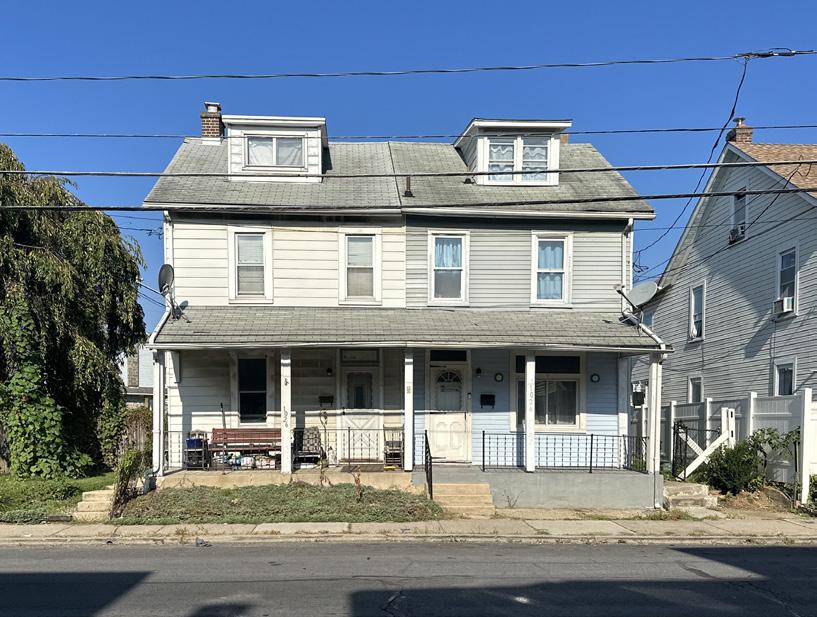
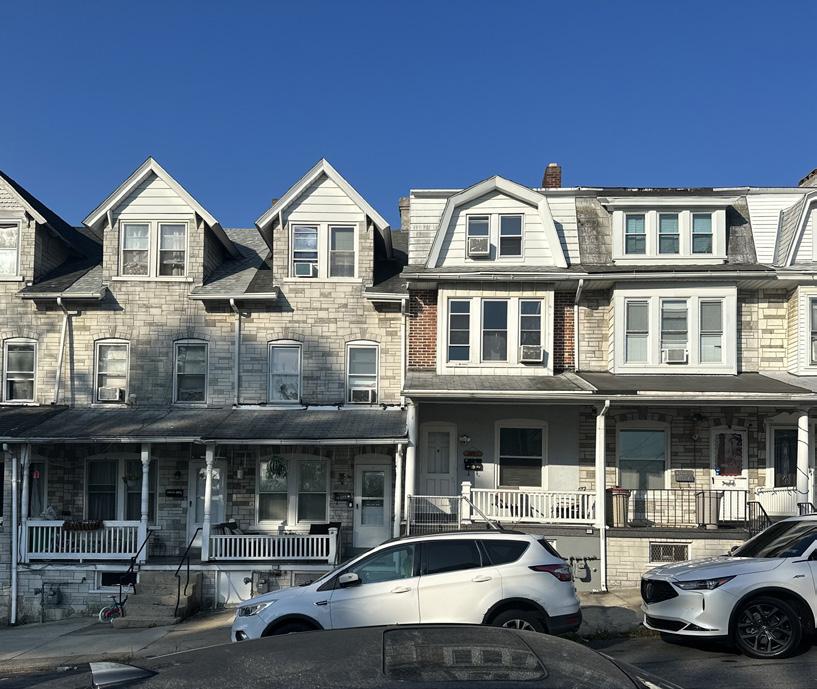
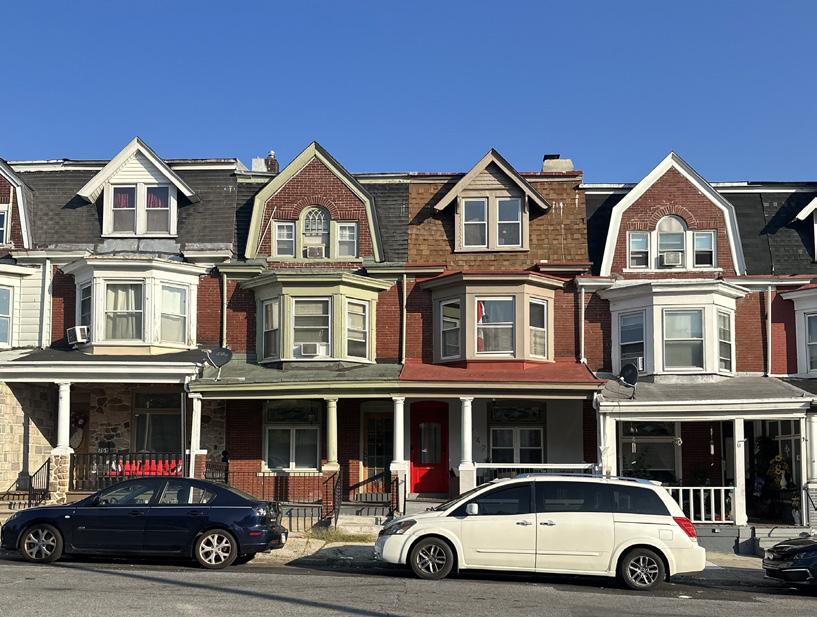
Fairview’s single-family row homes guided the exploration of parti walls, reimagining how homes can connect without direct physical contact. Instead of traditional parti walls, the design introduces communal gardens and a central pergola that acts as a horizontal “parti wall.” This pergola unifies the dwellings and integrates shared green spaces into the complex to enhance natural light. The final design accommodates 12 families within three interconnected structures. Each structure houses four families, creating community through shared gardens and interconnected spaces.
Single- family row homes, Allentown, PA
Neighborhood map of Allentown, PA
Site Plan: Fairview, Allentown

Spring 2024, Institute for Advanced Architecture in Catalonia (IAAC)
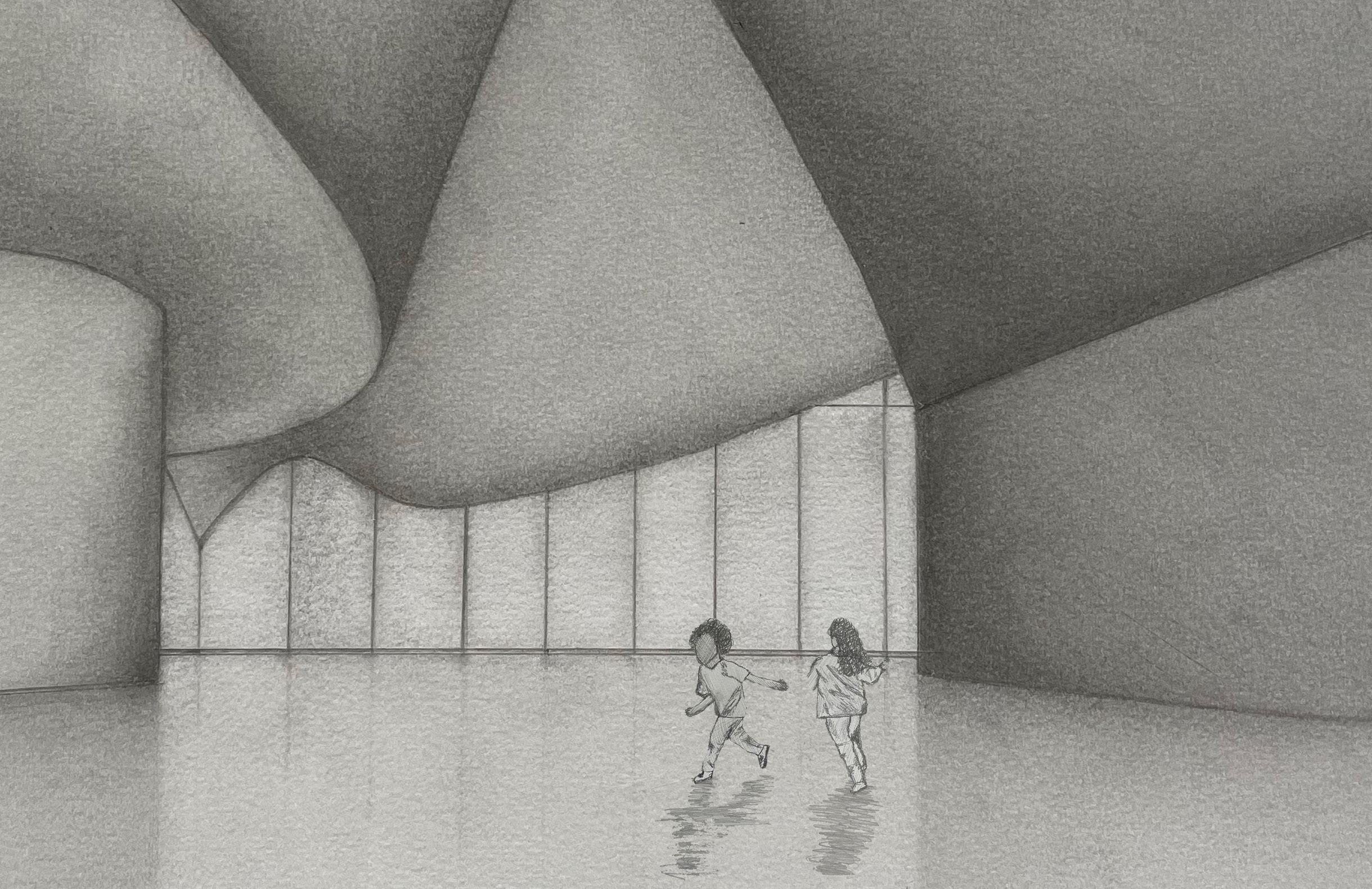
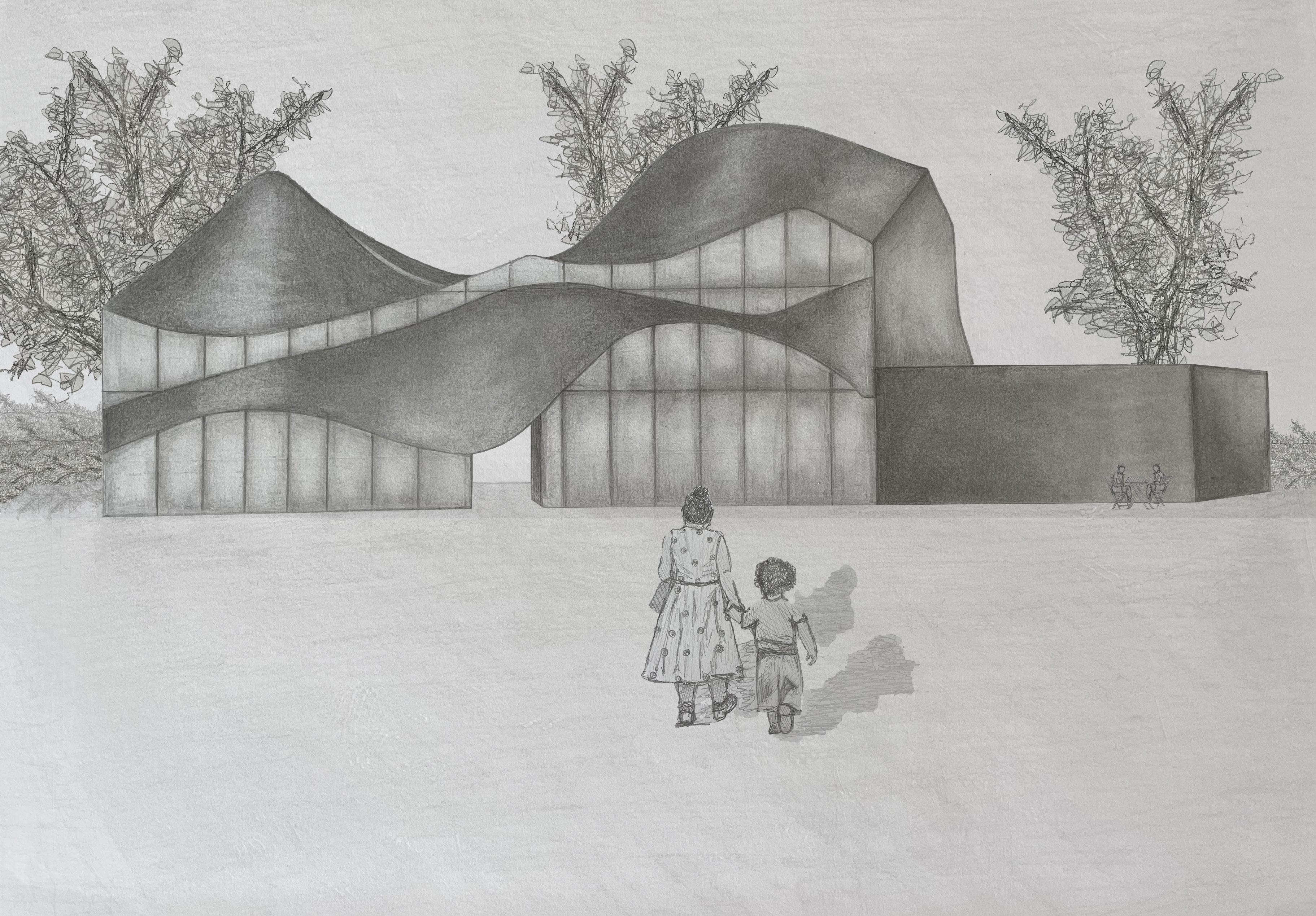
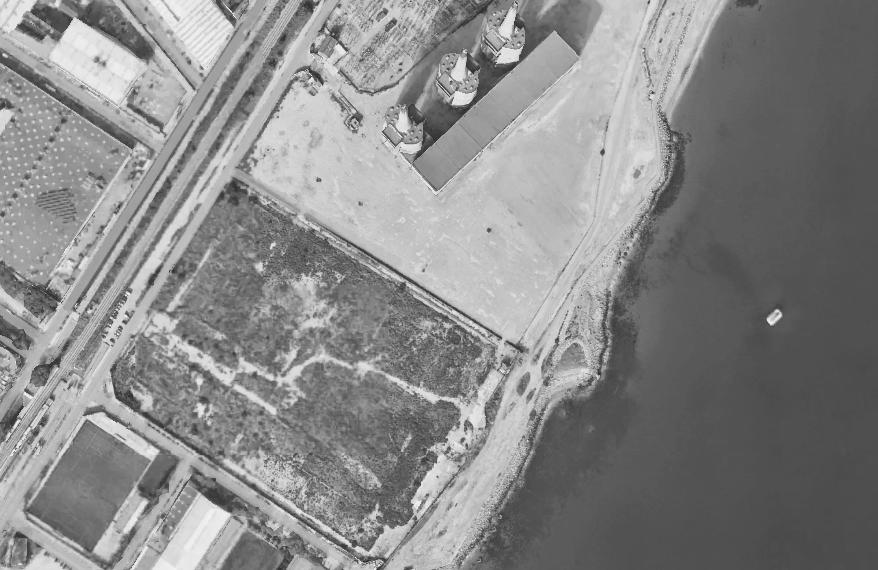
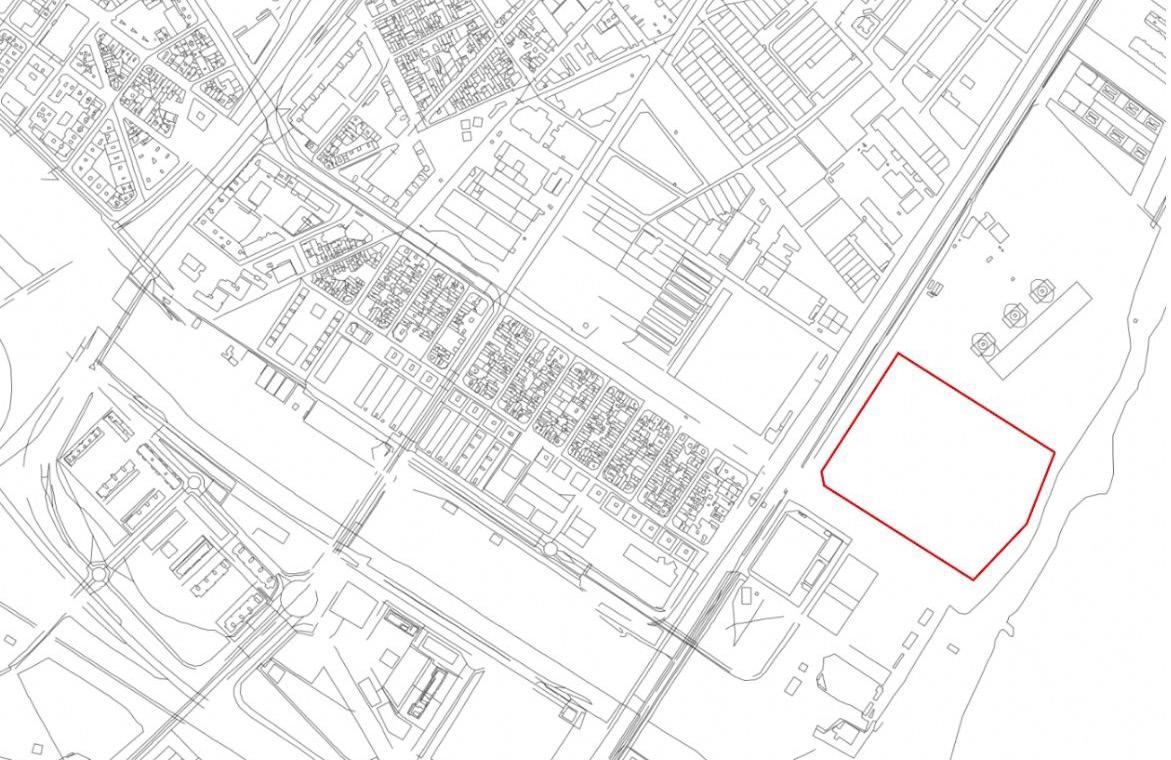
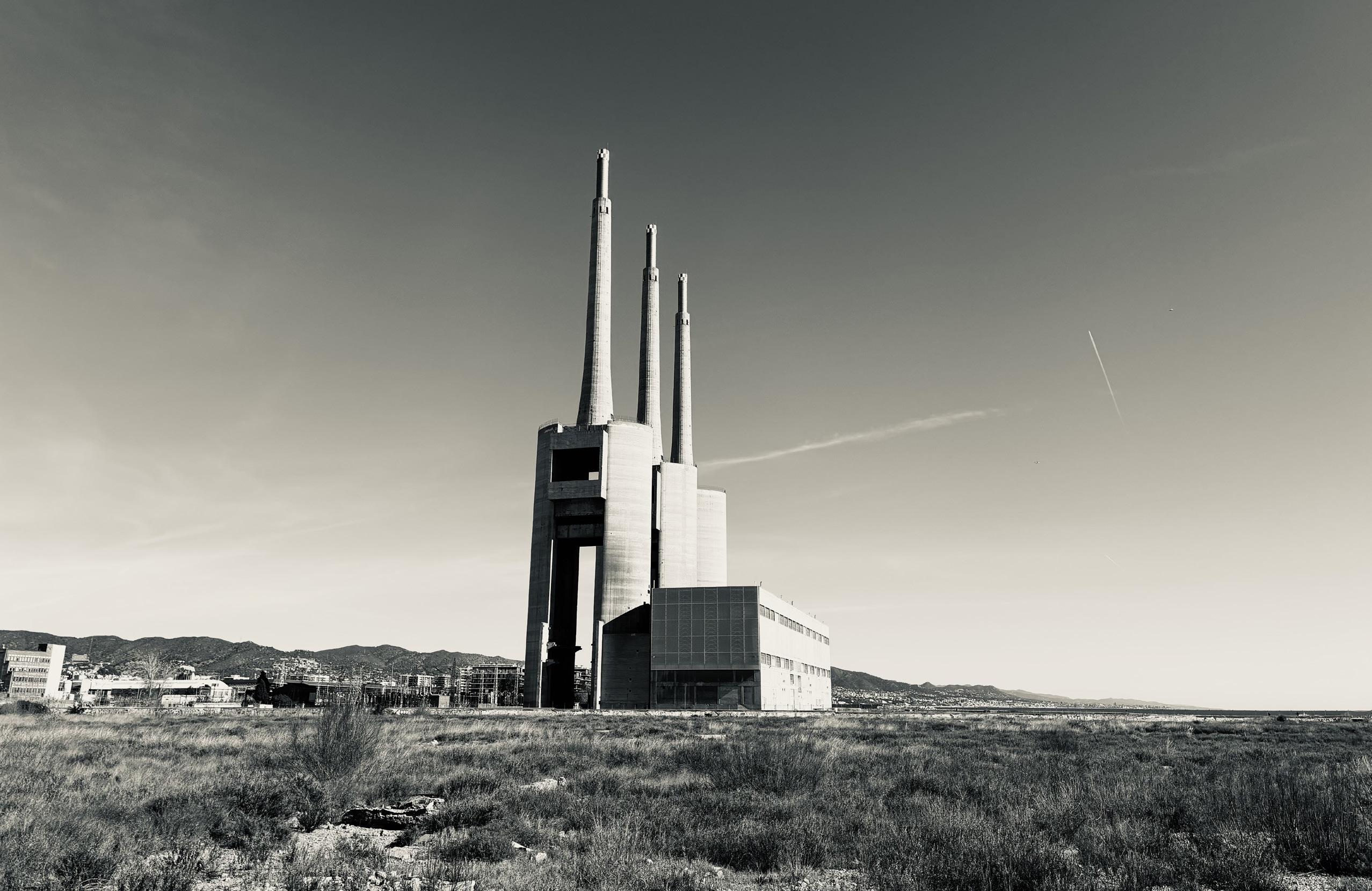
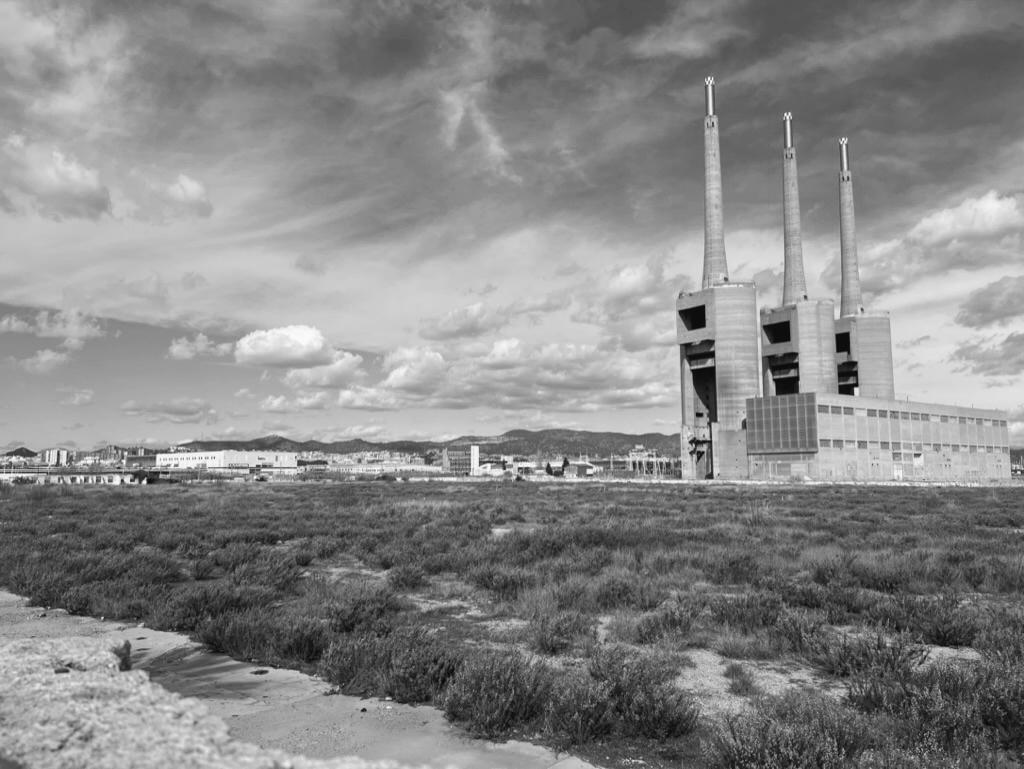
Alma Del Mar explores the relationship between cities, technologies, and citizens through speculative design and experimentation. Inspired by a study of the David S. Ingalls Rink in New Haven, CT, and an in-depth survey of Sant Adrià de Besòs—a highly industrial area 19 km from Barcelona—the project reimagines a 17-acre abandoned oceanfront site.
Catenary curves are analyzed by manipulating variables such as the number of spines, their height, and the distances between them. From the resulting curves, multi-layered surfaces were developed to connect these elements, assessing their ability to function as more than just “roof coverings.” The design identifies gaps and potential openings in the structure based on the sun’s path to maximize natural lighting. These multi-layered surfaces were generated using Grasshopper and sustainable plug-in Ladybug, integrating computational precision into the design process
Right Atmospheric hand drawings: graphite
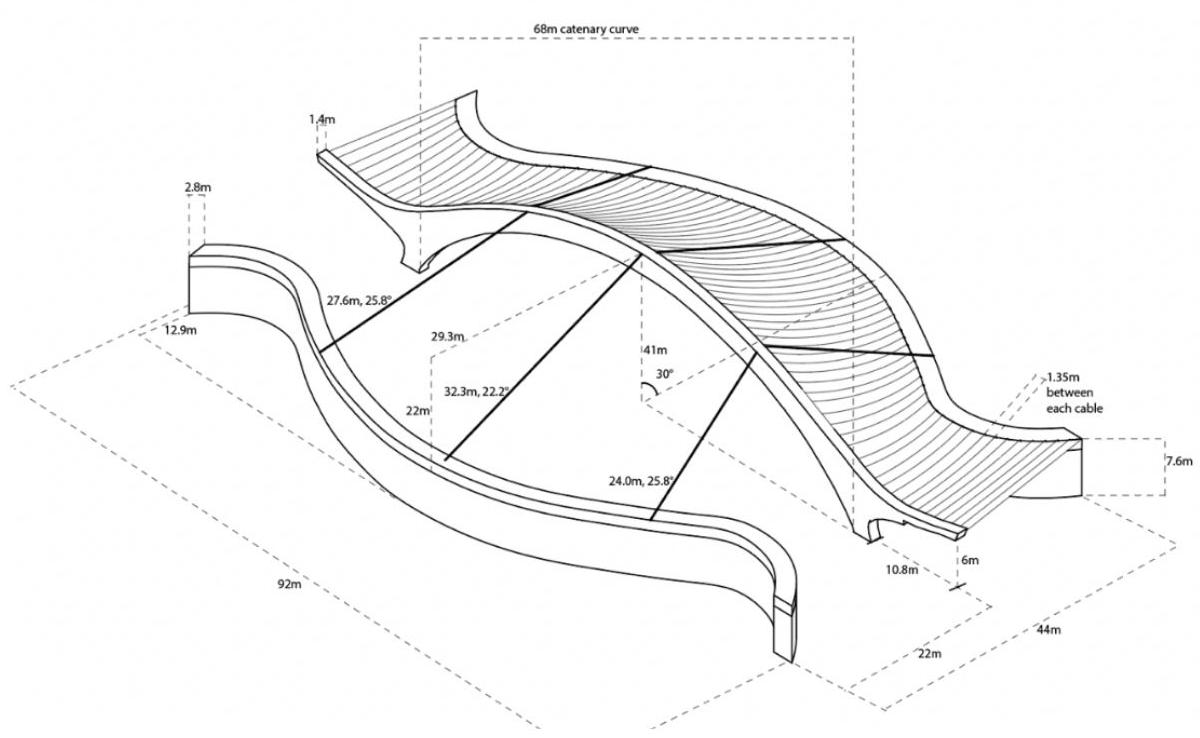
Structural analysis of precedent: David Ingalls rink. New Haven. CT
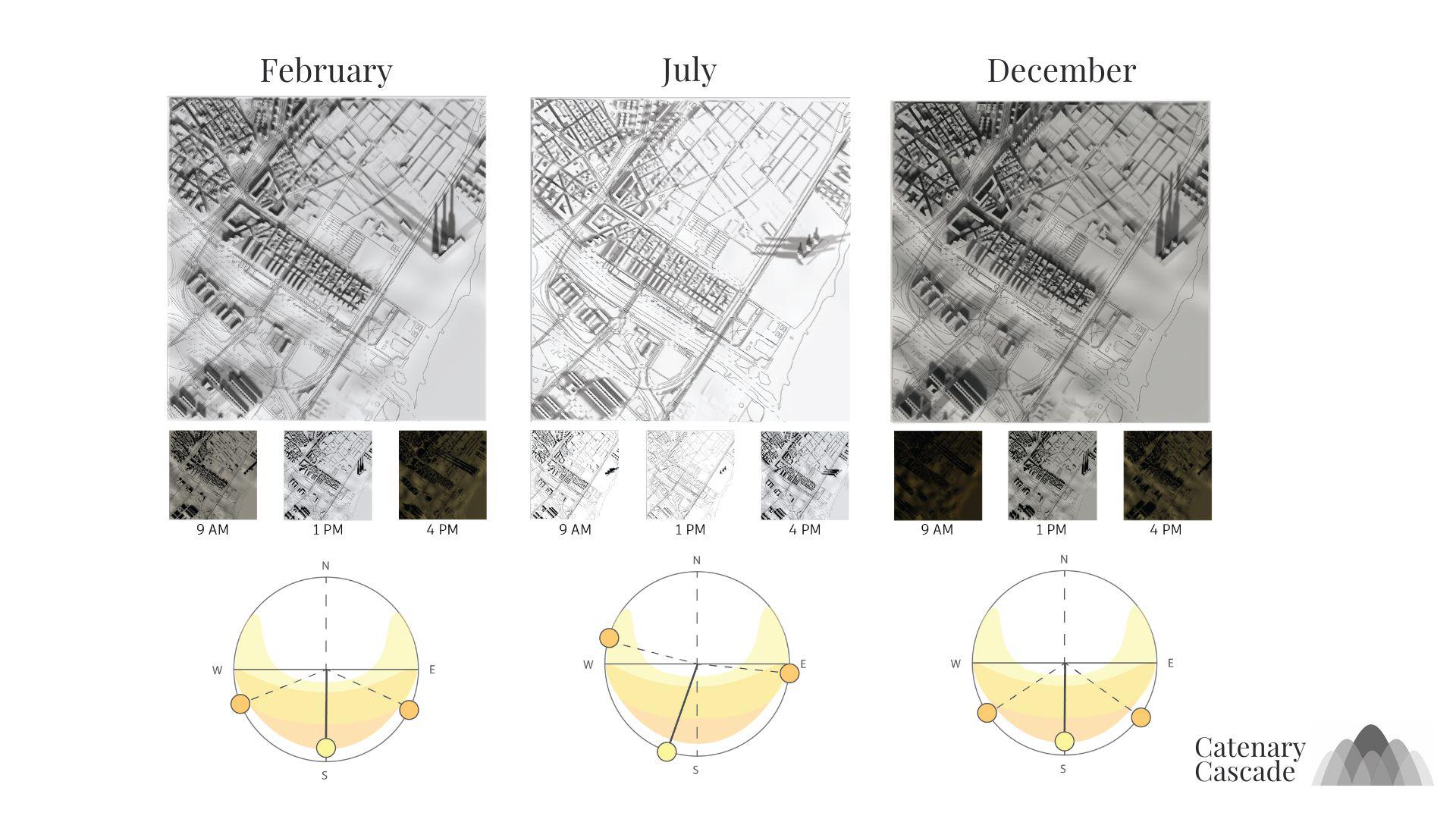
Left Sun path diagrams Right
person site visit: site area: 17 acres
KEY
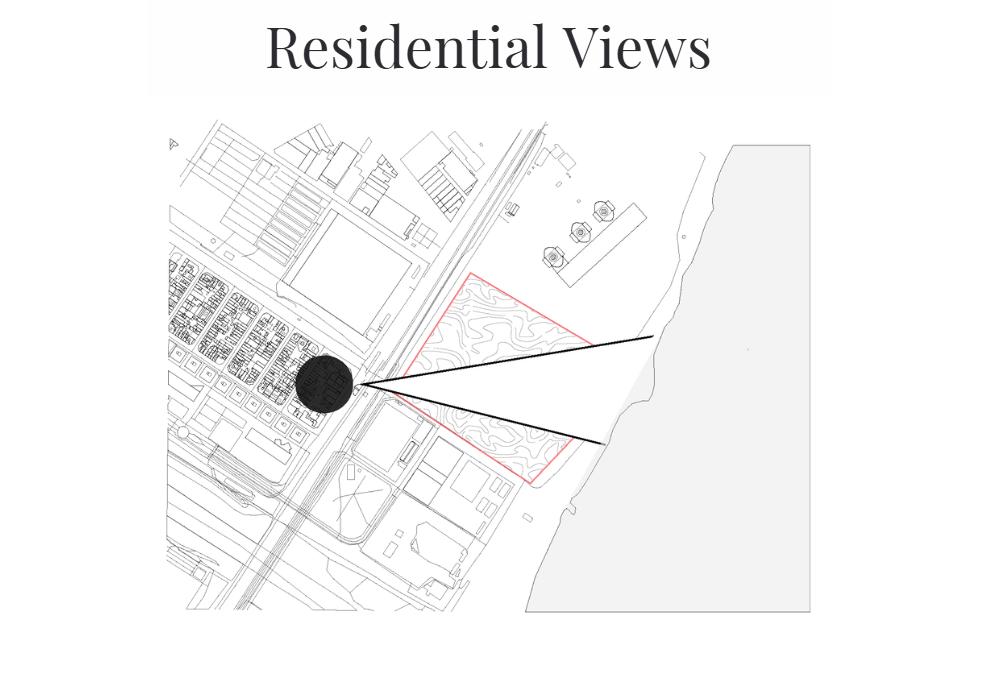
Maintain existing residential views to ocean
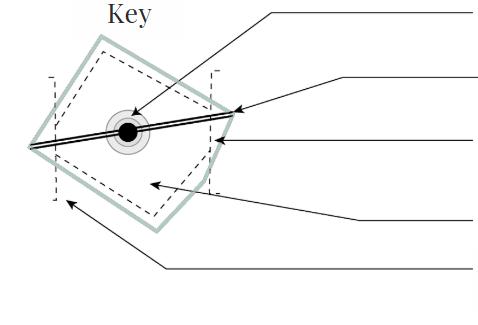
Central Point (Ideal Communal/ Recreation space
Central Divider, Main Circulation Path, Residential View
Beach Board Walk Begins
Developable Land
Eixample Corner Cut for Transportation
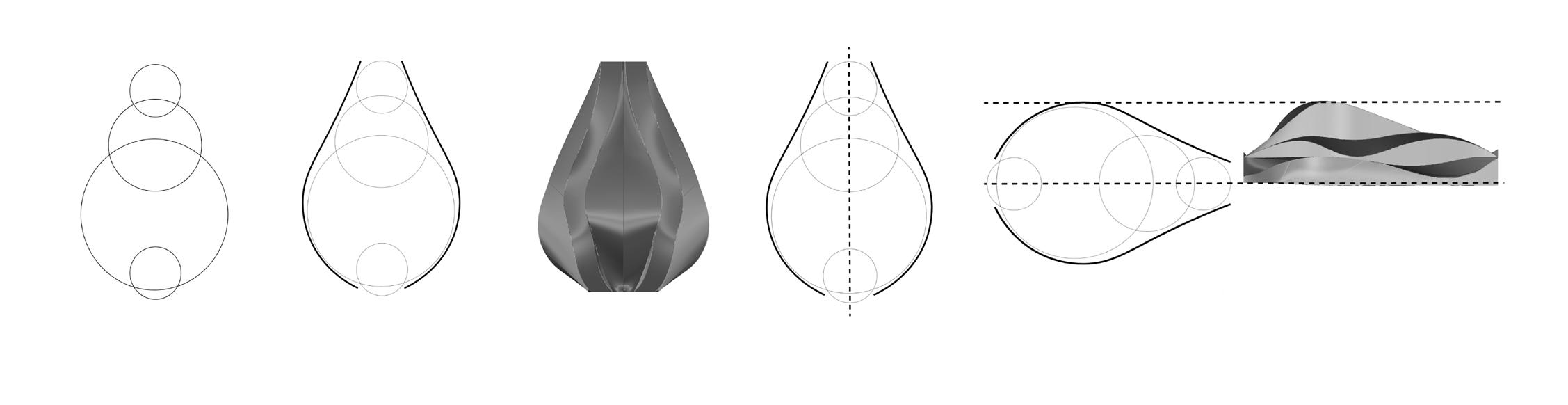
Left
Site rules for existing architecture and potential building site
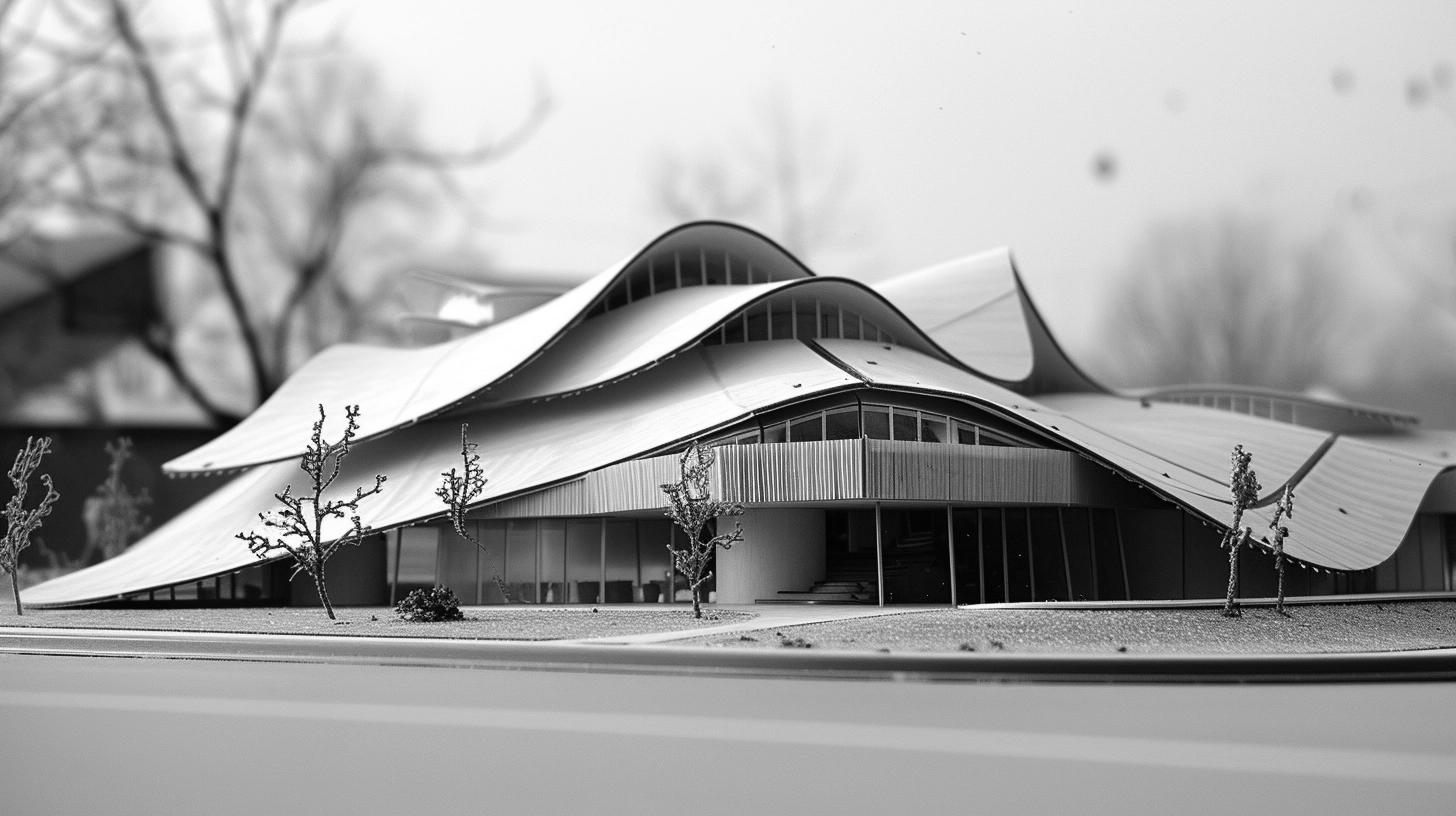
Right Top: Circle- packing diagram Bottom: Midjourney generated model