TAX MATTERS
tax strategies for you and your business
IN THIS ISSUE:
• 2024-25 Federal Budget Announcements
• Key Changes To Trust Administration To Affect Lodgements
• A Guide To Land Tax Across The States


• Take The Time To Get Your Return Right
• Warnings For Deductions Claimed On Rental Properties
2024-25 Federal Budget Announcements
The Federal Budget was handed down on 14 May 2024, and has outlined a number of changes that impact businesses, tax & superannuation.
Instant Asset Write-Off Extended
Small businesses with an aggregated annual turnover of less than $10 million will continue to be able to immediately deduct the full cost of eligible assets costing less than $20,000 that are first used or installed ready for use by 30 June 2025.
The asset threshold applies per asset so small businesses can instantly write off multiple assets. Assets valued at $20,000 or more (which cannot be immediately deducted) can continue to be placed into the small business simplified depreciation pool and depreciated at 15 per cent in the first income year and 30 per cent each income year thereafter.
Stage 3 Tax Cuts
From 1 July 2024, every taxpayer will receive a tax cut following changes announced by the federal government earlier this year. This means that
workers in every tax bracket will pay less income tax.
The reforms reduce the 19 per cent tax rate to 16 per cent, reduce the 32.5 per cent tax rate to 30 per cent, raise the threshold at which the 37 per cent tax rate applies from $120,000 to $135,000 and raise the threshold at which the highest rate of 45 per cent applies from $180,000 to $190,000.
Foreign Resident Capital Gains Tax Regime
The Government will strengthen the foreign resident capital gains tax (CGT) (cont. p2)
EDITION 2024
B UD GET
AUTUMN 2024
LEE & LEE ACCOUNTANTS
CENTRE SUITE
50-56 SANDERS
UPPER MT
QLD
FAX
8208 EMAIL info@leeandlee.com.au SERVICES Property Tax Specialists Accounting and Taxation SMSF Property Specialists Self Managed Super Funds Wealth Building and Strategy Business and Property Structuring Advice PARTNERS Tony Lee Peter Lee EMAIL info@leeandlee.com.au WEBSITE www.leeandlee.com.au
HEAD OFFICE: HYPER
5, GROUND FLOOR
STREET
GRAVATT
4122 TEL (07) 3103 8551
(07) 3349
regime to ensure foreign residents pay their fair share of tax in Australia and to provide greater certainty about the operation of the rules.
The amendments will apply to CGT events commencing on or after 1 July 2025 to:
• Clarify and broaden the types of assets that foreign residents are subject to CGT on
• Amend the point-in-time principal asset test to a 365day testing period
• Require foreign residents disposing of shares and other membership interests exceeding $20 million in value to notify the ATO, prior to the transaction being executed.
Enhancement To Commonwealth Government-Funded Paid Parental Leave
The Government will provide $1.1 billion over five years from 2023–24 (and $0.6 billion per year ongoing) to strengthen Australia’s government-funded Paid Parental Leave (PPL) scheme and improve women’s retirement outcomes. Eligible parents will receive an additional payment based on the Superannuation Guarantee (12 per cent of their PPL payments) as a contribution to their superannuation fund for births or adoptions after 1 July 2025. Small business employees will also be provided additional support in administering paid parental leave as part of the measure.
This measure aims to help normalise parental leave as a workplace entitlement, like annual and sick leave and reduce the impact of parental leave on retirement incomes.
Freeze Social Security Deeming Rates
The government will freeze social security deeming rates at their current levels for a further 12 months until 30 June 2025, to support Age Pensioners and other income support recipients who rely on income from deemed financial investments and their payment to manage cost of living pressures. This measure is estimated to benefit around 876,000 income support recipients, including 450,000 Age Pensioners.
The Fair Entitlements Guarantee Recovery Program
The Government will also recalibrate the Fair Entitlements Guarantee Recovery Program to pursue unpaid superannuation entitlements owed by employers in liquidation or bankruptcy from 1 July 2024.
Energy Bill Relief Fund
The Energy Bill Relief Fund is set to provide a $300 rebate to households, and a $325 rebate to eligible small business on 2024-24 bills. This measure partly extends the previous Budget’s measure, title Energy Price Relief Plan.
Commonwealth Rent Assistance
The maximum rates of Commonwealth Rent Assistance is set to increase by a further 10% from 20 September 2024, building on the 15% increase in September 2023.
The current maximum payment for a single person receiving rent assistance is $188.20 a fortnight, and $125.47 for a single person in a share house. That means the payment would increase by about $19 a fortnight for a single person before accounting for indexation.
HECS Debt Changes
Pending a legislative change that must be passed through parliament, student debts will grow each year at the rate of either the consumer price index or the wage price index — whichever is lower.
The Government will backdate this relief to all HELP, VET Student Loan, Australian Apprenticeship Support Loan and other student support loan accounts that existed on 1 June 2023. This means that the loans for that year will grow at the lower wage index rate or 3.2%, instead of the 7.1% inflation rate they were measured at.
Increasing the Medicare levy low-income thresholds
The Government has increased the Medicare levy low-income thresholds for 2023–24, ensuring more than one million lowincome taxpayers continue to be exempt from the Medicare levy or pay a reduced levy rate.
Impact of the Douglas Decision on Social Security Means Testing
The Government will provide funding to implement a social security means test treatment for the military invalidity payments affected by the Federal Court’s decision in Commissioner of Taxation v Douglas [2020] FCAFC 220.
This approach ensures the Douglas decision does not affect income support payment rates for veterans who receive an invalidity payment from the Military Superannuation and Benefits Scheme and the Defence Force Retirement and Death Benefits Scheme, compared to the pre-Douglas arrangements.
Tax Matters (Budget Edition) Autumn 2024 2
The Instant Asset Write-Off Re-Explained
With the latest Budget announcement, the Instant Asset Write-Off extends into another financial year, offering continued benefits for small businesses.
Businesses with an aggregated turnover of less than $10 million can immediately deduct the full cost of eligible assets priced under $20,000. This applies to assets first used or installed ready for use between 1 July 2023 and 30 June 2025.
Notably, the $20,000 threshold applies per asset, allowing small businesses to write off multiple assets instantly. Assets valued at $20,000 or more can still be placed into the small business simplified depreciation pool. This enables them to be depreciated at 15% in the first income year and 30% in subsequent years.
As for eligibility, businesses can claim an immediate deduction for the business portion of the asset’s cost in the year it is first used or installed ready for use. This applies to both new and second-hand assets. However, eligibility depends on factors such as aggregated turnover, purchase date of the asset, its first use, and its cost being below the threshold. Notably, businesses with an aggregated turnover of $500 million or more are not eligible for the instant asset write-off.
It’s important to note that if temporary full expensing applies to the asset, the instant asset write-off does not.
The measure, as it had been outlined in the 2023-24 Budget previously, has still not passed (with only seven weeks of the current financial year remaining). However, the Senate has amended the limit from $20,000 to $30,000, though a response from the lower house is still being awaited.
If you’re uncertain about your eligibility for the instant asset write-off, it’s wise to consult with our trusted team before making significant investment decisions. We can help determine if this strategy aligns with your business goals and circumstances.

Minding The Gap: Paid Parental Leave & Superannuation
Another significant announcement arising from the 2024-25 Budget involves integrating superannuation with governmentfunded parental leave.
To bolster Australia’s government-funded Paid Parental Leave (PPL) scheme and enhance women’s retirement prospects, the Government over five years has allocated $1.1 billion starting from 2023–24, with an ongoing annual commitment of $0.6 billion each year.
Under this initiative, eligible parents will receive an additional payment equivalent to 12% of their PPL payments based on the Superannuation Guarantee. This contribution will be directed to their superannuation fund for births or adoptions occurring after 1 July 2025.
Moreover, small business employees will receive supplementary assistance in managing paid parental leave as part of this measure.
The primary objective of this measure is twofold: to normalise parental leave as a fundamental workplace entitlement akin to annual and sick leave and to mitigate the impact of parental leave on retirement incomes. This initiative represents a proactive step towards fostering gender equality in the workforce and promoting financial security for families.
Tax Matters (Budget Edition) Autumn 2024 3
A Guide To Land Tax Across The States
Victorian businesses may see a larger tax bill this year if they own land in the business’s name, with new land tax thresholds in place in 2024.
Land tax is an annual tax paid to state and territory governments by land owners. If your business owns the property, you will likely need to or have paid land tax on it, depending on the value of the land.
Commencing this year, the land tax threshold in Victoria has been temporarily reduced to $50,000, while the $25,000 threshold for trusts remains unaltered. If the total taxable value of all your Victorian properties(excluding exempt ones) as of 31 December meets or exceeds this threshold, you’ll be issued a land tax assessment.
For some Victorians, this may be the first year they receive a land tax bill.
The amount of land tax you pay depends on the combined unimproved value of your taxable property. There may be different assessments, depending on how the land is owned (such as individual, trust, joint owner, etc).
In most states and territories, you don’t usually have to pay land tax on your main home (permanent residence). In some cases, land owned by some organisation types can be exempt from land tax.
There may also be a foreign investor land tax surcharge if you are not an Australian citizen or resident and own land that is not your primary place of residence.
How Is Land Tax Generally Treated On A Return
Land tax liabilities might be deductible, contingent upon when the obligation arises. The timing of your liability to pay land tax hinges on the applicable state laws.
Your obligation to pay land tax isn’t contingent upon filing a land tax return or the taxing authority issuing an assessment. In many states, the year in which the property is utilised for relevant purposes determines your liability, irrespective of whether an assessment is issued later.
The Australian Taxation Office (ATO) considers that the land tax liability was incurred for an incomeproducing purpose because it was based on the property’s use for income generation.
In the event of a property sale with a land tax adjustment, the seller
should declare the recovered amount as rental income.
When you receive land tax assessments in arrears, the land tax amount isn’t deductible in the income year when you pay the arrears. Instead, it’s deductible in the respective income years to which the land tax liability pertains.
If a landowner gets a land tax assessment for a year, and later in the same financial year either sells the property or begins using it as their residence, there’s no need to divide the land tax deduction.
Tax Matters (Budget Edition) Autumn 2024 4
Land Tax In Other States
Land tax is an annual state tax that applies to freehold land, whether vacant or built on (residential, commercial & investment properties), and occupied or not. It is a state tax calculated on the freehold land you own in Queensland at midnight on 30 June for the full financial year (July to June). ‘Freehold land’ is not state land or leased from the Queensland Government. You are liable when the total taxable value of your land is $350,000 or more—for absentees, companies and trustees of trusts and superannuation funds- or $600,000 or more—for individuals and trustees of special disability trusts.
Northern Territory
The Northern Territory does not have land tax.
Western Australia
You must pay land tax if you own land valued in excess of $300,000. Liability is assessed on land you do not use as your principal place of residence.
South Australia
Land tax applies to NSW properties that are not your principal place of residence The thresholds for land tax change each year. The general threshold for 2024 is $1,075,000, and the premium threshold is $6,571,000. The value of all land is determined on 1 July each year. If you are liable for land tax, you will receive an annual notice of assessment that will include a list of all NSW land you owned on 31 December of the previous year and how much land tax you must pay.
Land tax applies to ACT properties that are not your principal place of residence. This includes both rented properties and those that are vacant, properties owned as a trustee, and rented dwellings on the same property as your home (such as a granny flat). Land tax does not apply to commercial properties.
The property owner at midnight 30 June is liable to pay the land tax assessed for the forthcoming financial year. Where a property sells after 30 June, the vendor (seller) is still liable for the land tax. Land you hold on trust may be taxed at the trust land tax rates, which includes a surcharge of up to 0.5% on the general land tax rates and a lower threshold of $25,000. Land held on trust will be assessed separately from other land the trustees own. If held under a discretionary, fixed or unit trust it may be subject to the trust surcharge rates of land tax. There are other rules for corporations acting as trustees or beneficiaries of a trust that owns the land. In these instances, you should check with a registered tax agent about your potential tax liability.
Land tax liability can be a complicated subject, particularly if this is your first year having to report it. As your registered tax agent, we are only able to advise based on federal tax legislation and measures whereas Land Tax is a State Tax.
However, we can provide you with this information to help you further your knowledge and understanding. A legal professional may be better able to assist you with this specific area, such as a solicitor.
Land tax is an annual tax payable by the owner of land that has been classified as General Land as of 1 July each year. Taxable properties include vacant land, commercial properties, rental properties and shacks. Tasmania has a number of exemptions and concessions available depending on the use of the land, including organisation exemptions, home business concessions, special disability trust exemptions and more.
Tax Matters (Budget Edition) Autumn 2024 5
NSW
ACT
Queensland
Tasmania
How Can We Help?
Warnings For Deductions Claimed On Rental Properties
The Australian Taxation Office (ATO) is cautioning rental property owners about accurately claiming deductions on their tax returns this year, particularly with regard to maintenance claims.
With 9 out of 10 landlords being flagged for incorrect lodgments—whether due to oversight or intent—it’s crucial to ensure you understand what can and cannot be claimed in this year’s return.
Any deductible expense paid before 30 June can be claimed in the current financial year.
Rental expenses are deductible to the extent that they are incurred for the purpose of producing rental income.
Expenses may be deductible for periods when the property is not rented out, providing the property is genuinely available for rent – that is:
• the property is advertised in ways which give it broad exposure to potential tenants, and
• having regard to all the circumstances, tenants are reasonably likely to rent it.
You can claim a deduction for these expenses only if you actually incur them and they are not paid by the tenant.
You may be able to pre-pay some expenses for your rental property - however, take care when doing so.
Consulting with a tax professional beforehand could provide additional guidance for your situation or ability to do so.
What Can’t Be Claimed?
You are not able to claim deductions for certain expenses, such as those not incurred by you (e.g. water or electricity usage by your tenants), if the holiday home was not genuinely available for rent at the time of the expense or if the expense does not relate to the rental of the property (such as private use portions).
You also may not be able to claim a deduction for a decline in value of certain second-hand depreciating assets against your residential rental property income unless you meet certain criteria.
If you aren’t sure about how to treat the deductions you may be claiming against your rental property’s income, what may not be claimable or just need assistance, start a conversation with your trusted tax adviser. For

Tax Matters (Budget Edition) Autumn 2024 6
rental
deductible
pay
include: Repairs and maintenance Cleaning Gardening Pest control Smoke alarm review and maintenance
costs (e.g., air conditioner, pool) Advertising for tenants Body Corporate fees and charges June 30
properties, examples of
expenses that you might be able to
before 30 June
Servicing
Take Your Time: Getting Your Return Right
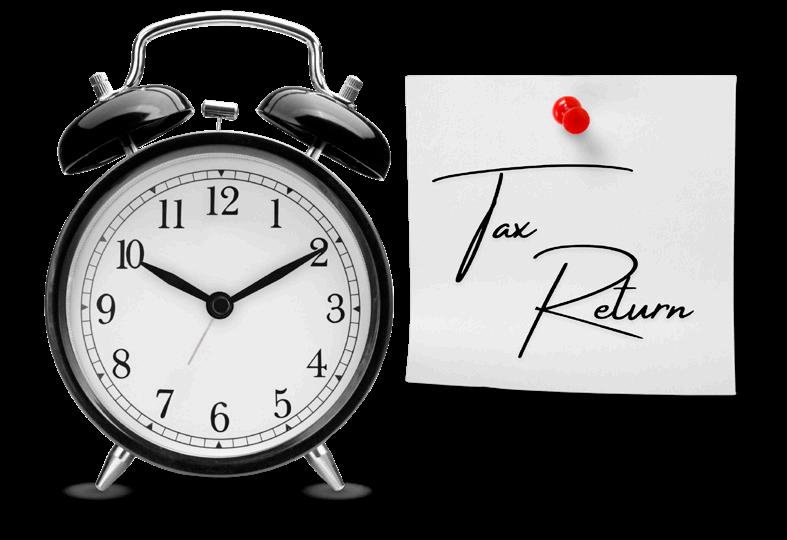
Did you know that if you lodge your tax return in early July, your tax return’s chances of being flagged as incorrect by the ATO are doubled?
While it might be tempting to hit submit immediately on 1 July 2024, making sure your 2023-24 tax return is correct and compliant may need more time.
Here is a list of the common mistakes the ATO is eyeing which could cause returns to be flagged this year.
Include All Reportable Income
Including all sources of income, such as interest from banks, dividend income, and payments from various sources, is crucial to avoid discrepancies and potential scrutiny from the ATO. Failing to include such income can increase the likelihood of errors being flagged by the tax office.
Sometimes, this information may not be immediately available in early July. Waiting until later in the tax season to lodge returns can help ensure that all relevant information is pre-filled, reducing the risk of errors or omissions.
Claiming Expenses, Offsets Or Deductions Correctly
Make sure that any offsets or deductions you claim can be made for the 2023-24 financial year.
Some deductions (such as for working from home) may have changed how they are calculated. Using the incorrect method could result in your return being flagged.
In others, eligibility, deadlines or specifications may have changed between when the measures were introduced and now.
It is advisable to be careful when claiming for deductions or expenses on your return for the following:
Rental property-related claims (especially relating to maintenance)
Car expenses and deductions
Self-education expenses
Working from home deductions
Depreciating assets
Superannuation
If you intend to claim a tax deduction for personal contributions to your super fund you MUST give them a notice of the amount you intend to claim, and they MUST acknowledge it before you lodge your income tax return. It is also important that you don’t roll your superannuation to a new fund before you have done this, or you will lose your ability to claim a tax deduction.
Making A Mistake (Deliberately)
In some cases, incorrect reporting can be deliberate. While many errors may be unintentional, it’s essential to avoid deliberately claiming expenses one is not entitled to. Such actions can result in serious consequences, including penalties and legal repercussions.
Be diligent during this tax return season to ensure that one of the most important documents they complete this year is filled out correctly.
By carefully reviewing records, understanding tax obligations, and seeking guidance, taxpayers can minimise errors and ensure compliance with tax laws.
Accuracy and honesty are paramount when dealing with tax matters, and taxpayers should strive to uphold these principles to maintain their financial integrity and avoid potential issues with tax authorities.
Want assistance with ensuring your tax returns are completed accurately and correctly? Start a conversation with us today about how we could help you.
Tax Matters (Budget Edition) Autumn 2024 7
Key Changes To Trust Administration To Affect Lodgements
Changes are being made to trust administration as a part of the Modernisation of Trust Administration Systems project, which will impact the way in which you lodge your trust tax returns this tax season.
These changes were first announced in the March 2022 Budget as the Digitalising trust income reporting and processing measure. These changes are to begin on 1 July 2024 and are set to encompass 2023-24FY returns and onwards, it’s critical to be aware of what is to come.
The MTAS project primarily aims to:
• Streamline the taxpayer lodgment experience
• Improve the quality, accuracy and integrity of annual income tax return information reported by trustees and beneficiaries
• Enable the ATO’s compliance activities to be better informed.
Of key importance is that the MTAS projects will deliver changes to annual tax return forms to simplify reporting for trustees, beneficiaries and the trust’s tax agents.
Here is a simplified guide of what to expect to change with your tax return this financial year in terms of trusts:
Beneficiaries
This year’s income tax return will look different if you are the beneficiary of a trust. A new form must be lodged this year with your income tax return, known as the trust income schedule. It replicates fields from your statement of distribution, which must be copied across.
The trust income schedule will now support the reporting of beneficiary trust income.
The new schedule:
• won’t replace any existing trust income labels in beneficiary income tax returns
• is intended to support existing reporting obligations
» for individual beneficiaries, and will be incorporated into the existing income details schedule
» for non-individual beneficiaries – via a new schedule lodged with each beneficiary income tax return.
This information for the income trust schedule should be obtainable from your trust, and a copy of the trust statement of distribution can be asked for from the trustee (as long as it relates to your entitlement to trust income).
If a distribution of trust income is received from a managed fund, it should be included in the new trust income schedule.
If you lodge your return via a tax agent, the new trust income schedule will be integrated into their existing lodgement software.
Trustees
A change is coming to the labels in the statement of distribution section of your trust tax return from 1 July 2024.
Four capital gains tax (CGT) labels are being added into the trust tax return statement of distribution, which should allow beneficiaries to be appropriately notified of their entitlement to income and assist with calculating their CGT amount in the return.
To support beneficiaries in correctly completing the trust income schedule, it is recommended that you provide them with a copy of the trust statement of distribution –so far as it relates to their entitlement to trust income.
If you are a trustee and a beneficiary of another trust, you must complete a trust income schedule.
It’s recommended that the information required to complete the trust income schedule be provided as early as possible to beneficiaries.
How We Can Help
As your registered tax agent, we may be able to assist you with the preparation and lodgement of your tax return, particularly with respect to the new changes being introduced from 1 July 2024. Start a conversation with us today to find out how we can be of service to you this tax season.
Tax Matters (Budget Edition) Autumn 2024 8 This publication is for guidance only, and professional advice should be obtained before acting on any information contained herein. Neither the publishers nor the distributors can accept any responsibility for loss occasioned to any person as a result of action taken or refrained from in consequence of the contents of this publication. Publication date May 2024.