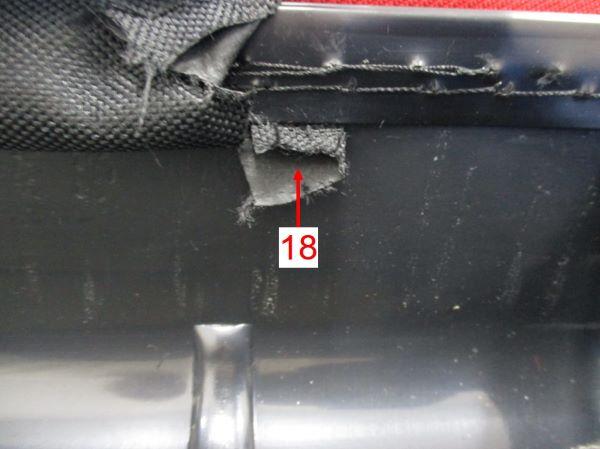
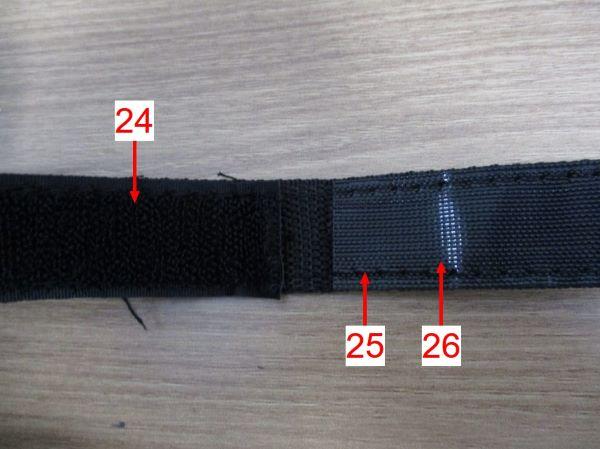
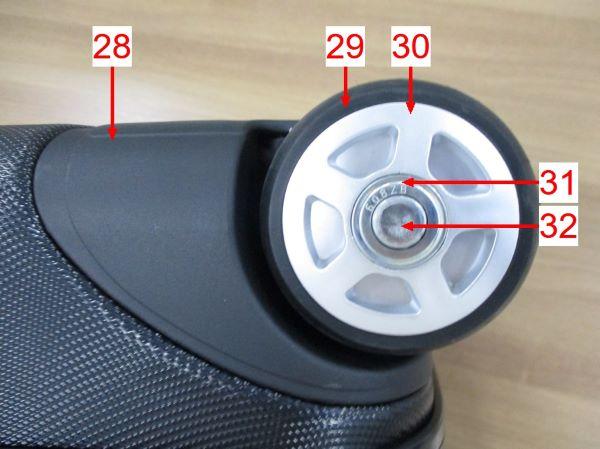
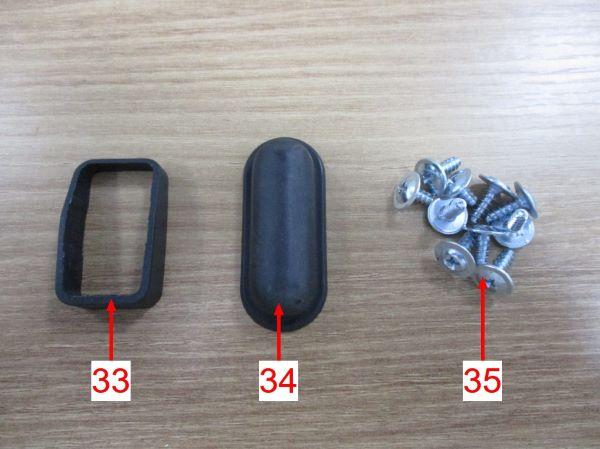
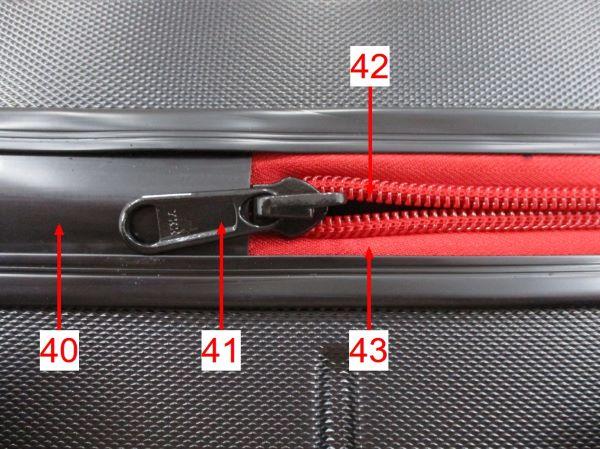
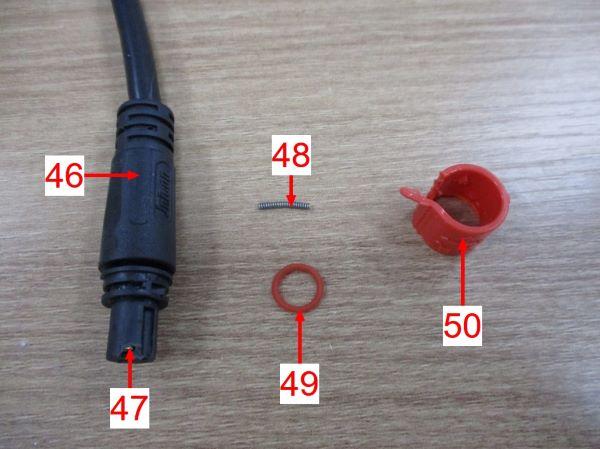
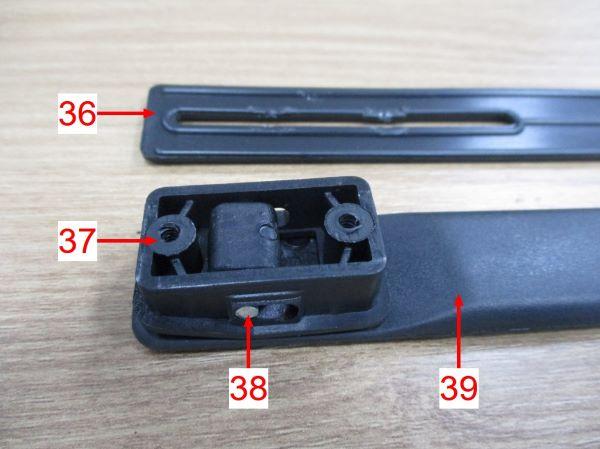
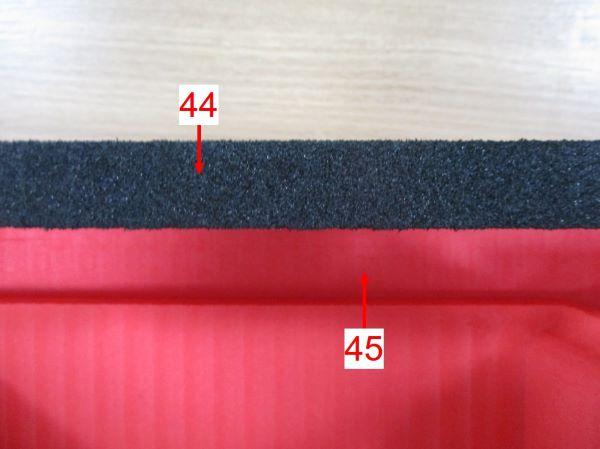
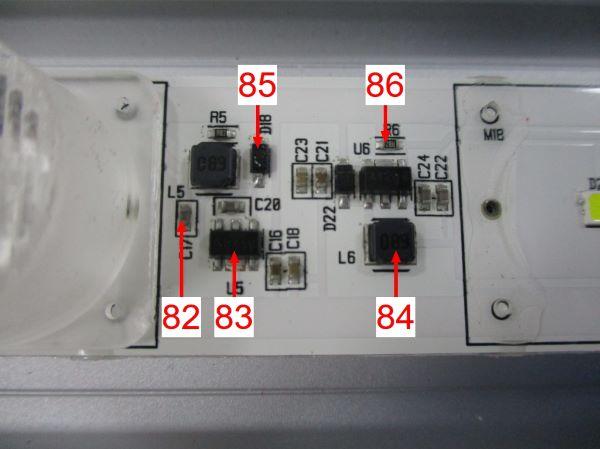
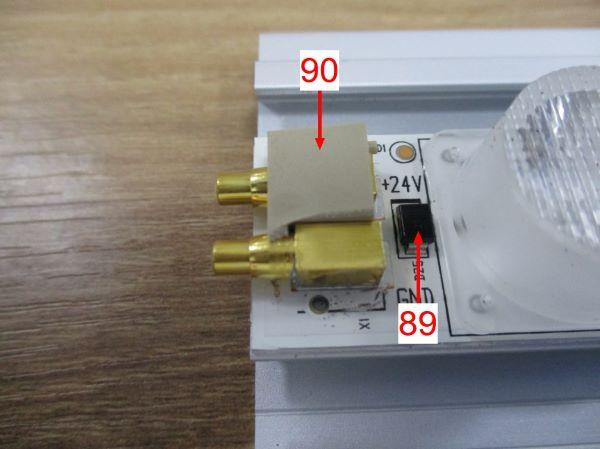
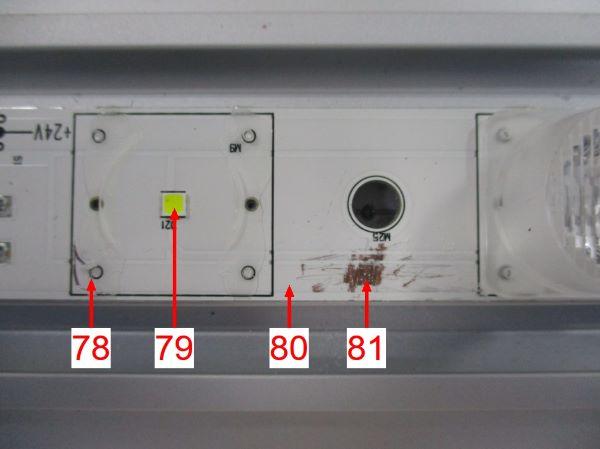
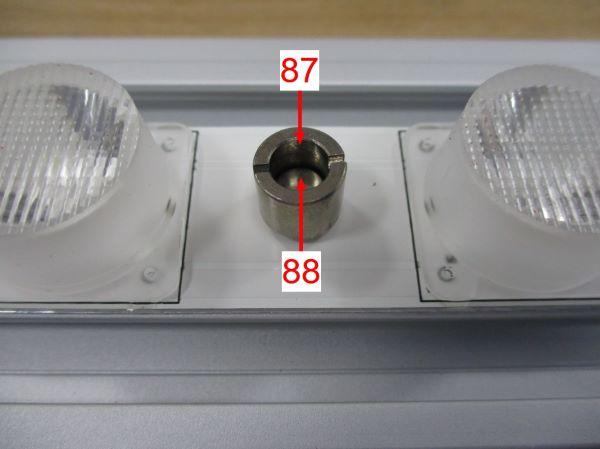
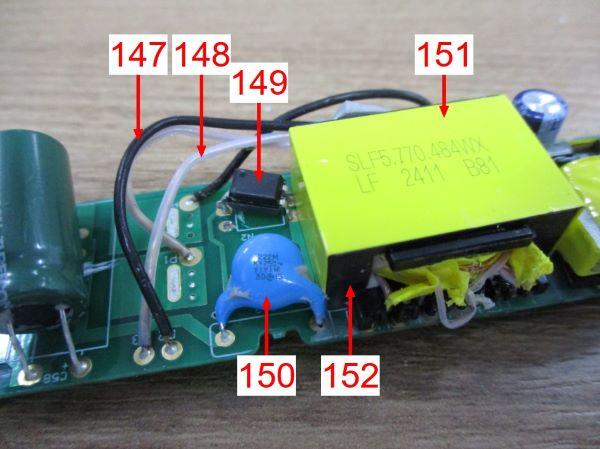
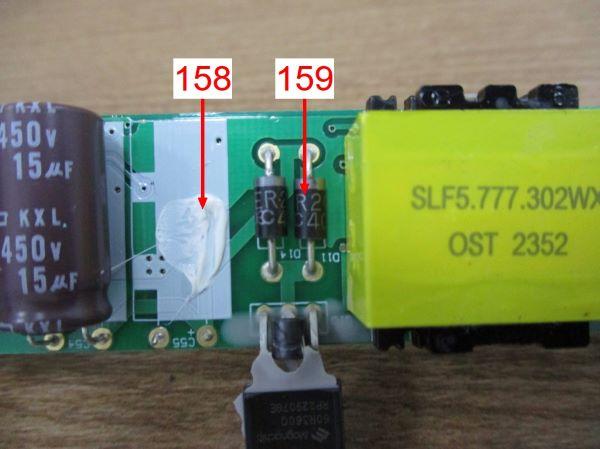
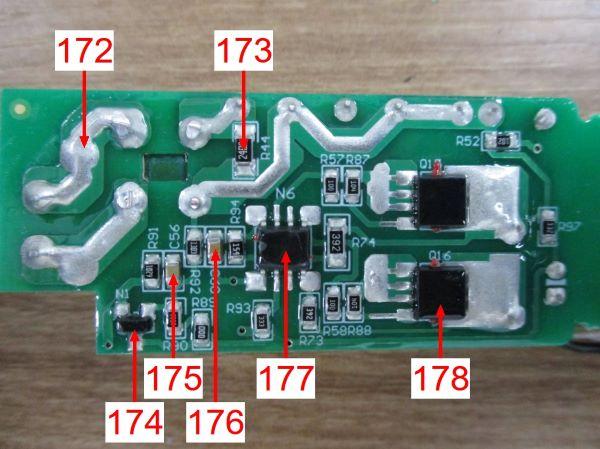
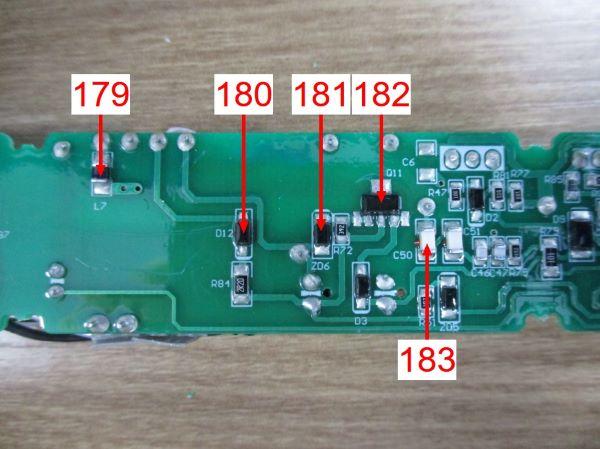
According to RoHS (recast): Restriction of the Use of Certain Hazardous Substances in Electrical and Electronic Equipment, 2011/65/EU Annex II and its amendment.
2. Screening of substances of very high concern (SVHC) subject to the candidate list by European Chemical Agency (ECHA) according to Regulation (EC) No 1907/2006 and its amendments
PASS
Please refer to result page
For and on behalf of TÜV Rheinland (Shanghai) Co., Ltd. 2025-04-07
(*1) The screening result was detected in the inconclusive region or over limits, thus the further wet chemistry tests are suggested.
(*2) Component(s)/ materials(s) with an area of less than 2 mm x 2 mm will not be selected for testing according to RoHS Directive 2011/65/EU due to technical reason.
For the test sample does not have detail materials information provided by client, visually identical materials (e.g. wire insulation, solder points, etc.) will be considered as the same material.
Solder points on a printing circuit board will be examined several times based on optical anomalies or discoloration of the solder point(s) unless the solder point(s) is obviously generated automatically during production.
All other materials will be sampled and tested at one test point representatively.
(*3) The Chromium (Cr) and Bromine (Br) in the above result table indicate the total chromium and total bromine by means of XRF screening. PBBs, or PBDEs content shall be further confirmed with reference to IEC 62321-6:2015.Chromium (VI) shall be further confirmed with reference to IEC 62321-7-1:2015, IEC 62321-7-2:2017 or EN ISO 17075-1:2017.
XRF Screening limits for different matrices :
Remark: The symbol X marks the region where further investigation is necessary.
Material No. Chromium VI content for other materials (%) RL: 0.01%
A024 <RL
A086 <RL
Abbreviation: Pb Cd
Cr Cr (VI) PBBs PBDEs < RL n.a. ^ %
Remark:
Chromium
Chromium (VI)
Total Polybrominated Biphenyls
Total Polybrominated Diphenyl Ethers
Less than Reporting Limit
Not Applicable
The total Chromium have been determined
Percentage
(*1) The Chromium (VI) content of metal sample in surface layer have been confirmed with reference to IEC 62321-7-1:2015 Annex.
Chromium (VI) concentration Qualitative result
Negative
<0.1µg/cm²
Inconclusive µg/cm² and µg/cm²
Positive >0.13 µg/cm²
The sample is negative (-ve) for Cr(VI). The Cr(VI) concentration is below the limit of quantification. The coating is considered a non-Cr(VI) based coating
The result is considered to be inconclusive. Unavoidable coating variations may influence the determination.
Recommendation: if additional samples are available, perform a total of 3 trials to increase sampling surface area. Use the averaged result of the 3 trails for the final determination.
The sample is positive (+ve) for Cr(VI). Concentration is above the limit of quantification and the statistical margin of error. The sample coating is considered to contain Cr(VI).
*6(c) Copper alloy containing up to 4 % lead by weight.
Test Report No.: 326094714a 001
BBP, DBP, DEHP, DIBP content
Test Method: ref. to IEC 62321-8:2017
Test Result:
T001 A014 + A026 + A029 + A036 + A040
T002 A051 + A052 + A053 + A054
T003 A113 + A114 + A147 + A148 <
T004 A009 + A049 + A106 + A115 + A116 <
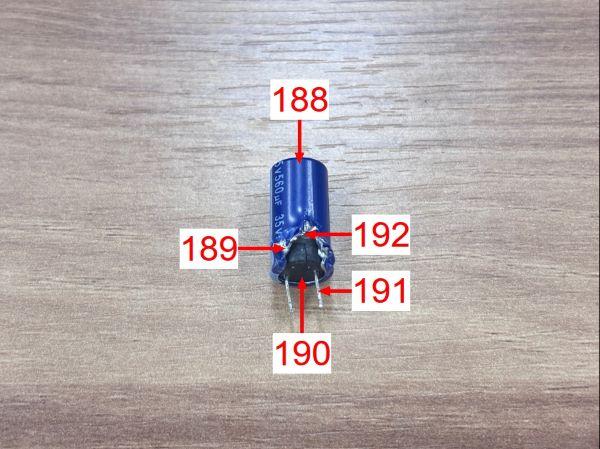
T005 A188 + A137 + A142 + A161
T006 A190 + A139 + A144
T007 A017 + A018 + A056 + A096 <
T008 A005 + A021 + A044 + A045
T009 A078 + A099 + A131 + A158 <
T010 A062 + A080 <
T011 A001
Abbreviation: BBP= Benzylbutyl phthalate
DBP= Dibutyl phthalate
DEHP= Bis(2-ethylhexyl) phthalate
DIBP= Diisobutyl phthalate < = less than RL = Reporting Limit %= percentage
Remark:
* The maximum permissible limit is required from the amendment (EU) 2015/863 of RoHS Directive 2011/65/EU.
2. Screening of Substances of Very High Concern (SVHC) subject to the Candidate List by European Chemical Agency (ECHA) according to Regulation (EC) No 1907/2006 and its amendments.
Obligation of Importer is necessary if the detected SVHC concentration in article level is >0.1%: To communicate information down the supply chain according to article. 33 of Regulation(EC) No 1907/2006. OR
1. Notification to ECHA, if the quantities of SVHC in the produced/imported articles are above 1 ton in total per year per company.
2. Provide sufficient information to ensure safe use of the article and, as a minimum, include the name of the substance, to their customers and on request to consumers within 45 days of the receipt of this request.
Test Method: 1) SVOC: organic solvent extraction, determination by GC-MS/ECD
2) VOC: organic solvent extraction, determination by GC-MS
3) VVOC: headspace-GC/MS analysis
4) non-VOC: organic solvent extraction, determination by LC-MS/MS.
5) inorganics: acid digestion, determination by ICP-OES
13 Lead chromate molybdate sulphate red (C.I. Pigment Red 104) (*2)(*3)
14 Lead sulfochromate yellow (C.I. Pigment Yellow 34) (*2)
17 Acids generated from chromium trioxide and their oligomers: Names of the acids and their oligomers: Chromic acid, Dichromic acid, Oligomers of chromic acid and dichromic acid. (*2)
18 Sodium dichromate (*2)(*3)
21
23 Formaldehyde, oligomeric reaction products with aniline (technical MDA) (*10)
36 1,2-Benzenedicarboxylic acid, dipentylester, branched and linear
37 Bis(2-methoxyethyl) phthalate
38 Dipentyl phthalate (DPP)
39 N-pentyl-isopentylphthalate
40 Anthracene oil (*6)
41 Pitch, coal tar, high temperature (*6)
42 4-(1,1,3,3-tetramethylbutyl)phenol, ethoxylated (OPEO) [covering well-defined substances and UVCB substances, polymers and homologues]
43 4-Nonylphenol, branched and linear [substances with a linear and/or branched alkyl chain with a carbon number of 9 covalently bound in position 4 to phenol, covering also UVCB- and well-defined substances which include any of the individual isomers or a combination thereof]
44 1,2-Benzenedicarboxylic acid, dihexyl ester, branched and linear
45 Dihexyl phthalate
46 1,2-benzenedicarboxylic acid, di-C6-10-alkyl esters; 1,2-benzenedicarboxylic acid, mixed decyl and hexyl and octyl diesters with of dihexyl phthalate (EC No. 201-559-5) 68515-51-5 / 68648-93-1
47 Trixylyl phosphate 25155-23-1
48 Sodium perborate,perboric acid, sodium salt (*2) (*5) -
49 Sodium peroxometaborate (*2) (*5) 7632-04-4
50 5-sec-butyl-2-(2,4-dimethylcyclohex-3-en-1-yl)-5-methyl-1,3-dioxane [1], 5-secbutyl-2-(4,6-dimethylcyclohex-3-en-1-yl)-5-methyl-1,3-dioxane [2] [covering any of the individual stereoisomers of [1] and [2] or any combination thereof]
Cyclohexane-1,2-dicarboxylic anhydride [1], cis-cyclohexane-1,2-dicarboxylic anhydride [2], trans-cyclohexane-1,2-dicarboxylic anhydride [3] [The individual cis- [2] and trans- [3] isomer substances and all possible combinations of the cis- and trans-isomers [1] are covered by this entry]
110
/ 13149-00-3 / 14166-21-3
Hexahydromethylphthalic anhydride (MHHPA) [1], Hexahydro-4-methylphthalic anhydride [2], Hexahydro-1-methylphthalic anhydride [3], Hexahydro-3-methylphthalic anhydride [4] [The individual isomers [2], [3] and [4] (including their cis- and trans- stereo isomeric forms) and all possible combinations of the isomers [1] are covered by this entry] 25550-51-0 / 19438-60-9 / 48122-14-1 / 57110-29-9
145 Silicic acid (H2Si2O5), barium salt (1:1), lead-doped [with lead (Pb) content above the applicable generic concentration limit for 'toxicity for reproduction' Repr. 1A (CLP) or category 1 (DSD),the substance is a member of the group entry of lead compounds, with index number 082-001-00-6 in Regulation (EC) No 1272/2008] (*2)
155 4-Nonylphenol, branched and linear, ethoxylated (NPEO) [substances with a linear and/or branched alkyl chain with a carbon number of 9 covalently bound in position 4 to phenol, ethoxylated covering UVCB- and welldefined substances, polymers and homologues, which include any of the individual isomers and/or combinations thereof]
165 Reaction mass of 2-ethylhexyl 10-ethyl-4,4-dioctyl-7-oxo-8-oxa-3,5-dithia-4stannatetradecanoate and 2-ethylhexyl 10-ethyl-4-[[2-[(2-ethylhexyl)oxy]-2oxoethyl]thio]-4-octyl-7-oxo-8-oxa-3,5-dithia-4-stannatetradecanoate (reaction mass of DOTE and MOTE) (*14) -
166 1,3-propanesultone (1,3-PS) 1120-71-4
167 Nitrobenzene
168 Perfluorononan-1-oic-acid and its sodium and ammonium salts
169 Benzo[def]chrysene (Benzo[a]pyrene)
170 4,4'-isopropylidenediphenol (bisphenol A) (BPA)
171 Nonadecafluorodecanoic acid (PFDA) and its sodium and ammonium salts
172 4-heptylphenol, branched and linear [substances with a linear and/or branched alkyl chain with a carbon number of 7 covalently bound predominantly in position 4 to phenol, covering also UVCB- and well-defined substances which include any of the individual isomers or a combination thereof]
174 Perfluorohexane-1-sulfonic acid and its salts (PFHxS)
175 Chrysene
176 Benzo[a]anthracene
177 Cadmium nitrate(*2)
178 Cadmium hydroxide(*2)
179 Cadmium carbonate(*2)
180 1,6,7,8,9,14,15,16,17,17,18,18- Dodecachloropentacyclo [12.2.1.16,9.02,13.05,10]octadeca-7,15-diene ("Dechlorane Plus"TM) [covering any of its individual anti- and syn-isomers or any combination thereof]
181 Reaction products of 1,3,4-thiadiazolidine-2,5-dithione, formaldehyde and 4heptylphenol, branched and linear (RP-HP) [with w/w 4-heptylphenol, branched and linear]
Tris (4-nonylphenyl, branched and linear) phosphite (TNPP)
Tris (4-nonylphenyl, branched) phosphite
Phenol, p-sec-nonyl-, phosphite
199
Phenol, 4-nonyl-, phosphite (3:1)
tris(nonylphenyl) phosphite
Phenol, p-isononyl-, phosphite (3:1)
200 2,3,3,3-tetrafluoro-2-(heptafluoropropoxy)propionic acid, its salts and its acyl halides (covering any of their individual isomers and combinations thereof)
Dioctyltin dilaurate, stannane, dioctyl-, bis(coco acyloxy) derivs., and any other stannane, dioctyl-, bis(fatty acyloxy) derivs. wherein C12 is the predominant carbon number of the fatty acyloxy moiety (*13)
212 2-(4-tert-butylbenzyl)propionaldehyde and its individual stereoisomers
Medium-chain chlorinated paraffins (MCCP) [UVCB substances consisting of more than or equal to 80% linear chloroalkanes with carbon chain lengths within the range from C14 to C17]
217 Phenol, alkylation products (mainly in para position) with C12-rich branched or linear alkyl chains from oligomerisation, covering any individual isomers and/ or combinations thereof (PDDP)
218 1,4-dioxane
219 4,4'-(1-methylpropylidene)bisphenol
220 tris(2-methoxyethoxy)vinylsilane
221 S-(tricyclo(5.2.1.0'2,6)deca-3-en-8(or 9)-yl O-(isopropyl or isobutyl or 2ethylhexyl) O-(isopropyl or isobutyl or 2-ethylhexyl) phosphorodithioate
229 Bis(2-ethylhexyl) tetrabromophthalate covering any of the individual isomers and/or combinations thereof -
230 Isobutyl 4-hydroxybenzoate
231
233 reaction mass of 2,2,3,3,5,5,6,6-octafluoro-4-(1,1,1,2,3,3,3-heptafluoropropan-2 -yl)morpholine and 2,2,3,3,5,5,6,6-octafluoro-4-(heptafluoropropyl)morpholine -
236 Oligomerisation and alkylation reaction products of 2-phenylpropene and phenol Phenol, methylstyrenated EC / List no: 270-966-8 | CAS no: 68512-30-1 -
(*2) The substances are tested and calculated in terms of its respective elements and to the worst-case scenario. The report states the theoretical value of SVHC substances without consideration of the actual occurrence in the article.
(*3) The substances are tested and calculated in terms of Cr (VI).
(*4) The substance is tested and calculated in terms of Tributyl tin.
(*5) The substances are tested and calculated in terms of boron element and the boron element may come from the compounds other than SVHCs.
(*6) The substances are UVCB (substance of unknown or variable composition, complex reaction products or biological materials), which are identified by its main constituents.
(*7) Individual concentrations to the constituent of UVCB with an amount of < 0.01% were not considered by the calculation of the sum.
(*8) The test results are based on microscopic and chemical evaluation.
(*9) The substances are quantified in terms of Michler's ketone and Michler's base by LC-MS, as Michler's ketone or Michler's base was found exceeds 0.01%.
(*10) The content oligomer is determined by Py-GC/MS.
(*11) The content of diazene-1,2-dicarboxamide is analyzed in terms of its breakdown product.
(*12) The substance is tested in terms of pentadecafluorooctanoate.
(*13) The substance is tested and calculated in terms of Dioctyl tin.
(*14) The substance is tested and calculated in terms of Monooctyl tin and Dioctyl tin.
(*15) The substance is tested and calculated in terms of Dibutyl tin
(*16) The tested material(s) was screened only for selected SVHCs. Selection of tests refers to the material type and application and the possibility of contamination during production & material specific contamination of the product.
(*17) The other SVHCs which are not mentioned in test result were either not subject to testing according to remark *16 or less than report limit.
(*18) The theoretical content of SVHC substances is calculated in terms of its respective elements.This material may contains the mentioned SVHCs, it is suggested to check the respective recipe if the theoretical content of the respective substance >0.1% in each article
(*19) Qualification is performed via determination of structural constituents. The result is reported as semiquantitative equivalent concentration, relative to a reference compound.