s
openinghours
mon - fri: 10:00 - 21:30 sat & sun: 10:00 - 22:00
introducing...
s
openinghours
mon - fri: 10:00 - 21:30 sat & sun: 10:00 - 22:00
introducing...
13— february 2026
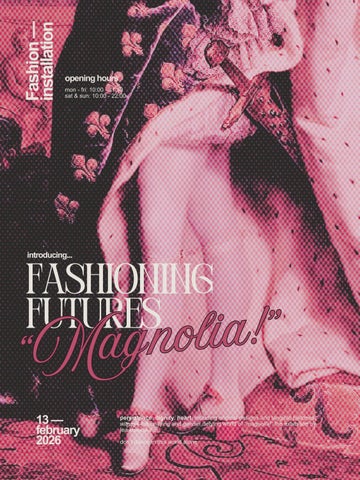
persistence. dignity. heart. including original designs and tangible histories, witness the unifying and gender defying world of “magnolia!” the exhibition by lea kulevska don’t dance in this world alone
introducing...
13— february 2026 openinghours mon - fri: 10:00 - 21:30 sat & sun: 10:00 - 22:00
persistence dignity heart including original designs and tangible histories, witness the unifying and gender defying world of “magnolia!” the exhibition by lea kulevska don’t dance in this world alone
F a s h i o n
s
openinghours
mon - fri: 10:00 - 21:30 sat & sun: 10:00 - 22:00
leakulevskaintroduces...
13— february 2026
persistence dignity heart including original designs and tangible histories, witness the unifying and gender defying world of “magnolia!” the newest exhibition by lea kulevska
don’t dance in this world alone
When looking at the future, it is just as important to look at the past. And that is exactly what “Magnolia” is. A look at past and the ways it can be adapted and molded into a more inspiring future, one without binaries or systemic divides between gender or class, rather, one that becomes subversive and turns gender performativity on its head. You want us to perform? Oh, we’ll perform!
You might be asking yourself, “Why the name Magnolia?” Interesting you ask that. When looking at the symbolism of Magnolia trees and its flowers, the answers are right there for you. Magnolia’s are known for their perseverance, their ability to adapt despite the climate or geography, and their beauty. When you really think about it, the Magnolia flower really just acts as a stand in for the gender binary, aggressive “fear of the feminine” rhetoric being upheld by contemporary society and the perseverance of those unwilling to subject themselves to heteronormative structures even in the face of uncertainty... or something like that.
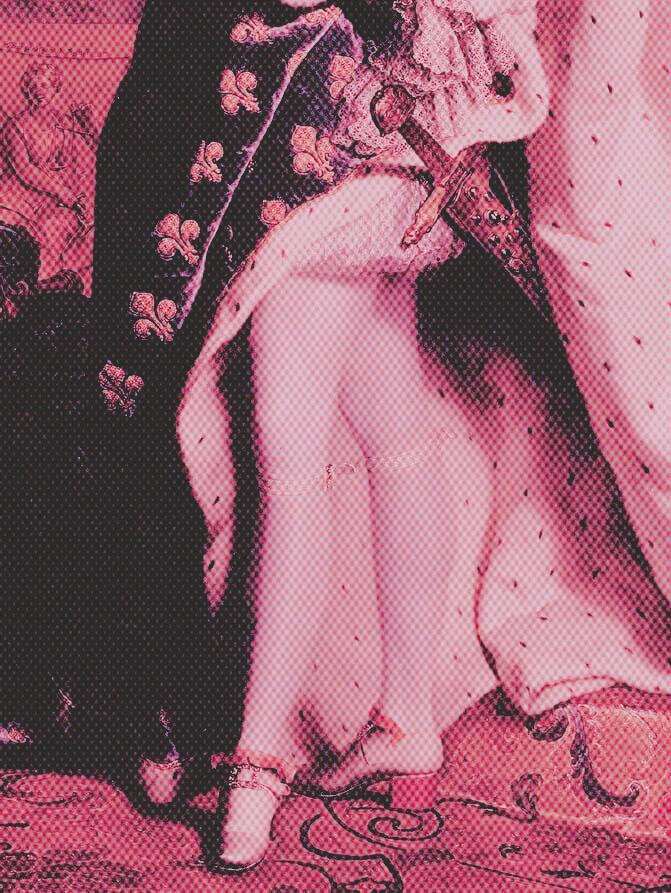
Through a 21 century look on femininity, we often associate it with restricting clothing like corsets and stockings, adorned in pearls and lace, wearing only velvet and silk, with long hair pulled back with bows. Well surprise! 16th-18th century men used to dress like this too. Like exactly like that. And no one batted an eye then, or gave a nasty look or called them a derogatory word. There was an innate femininity throughout every design during this time period, that our current society has become so fearful of. st
“Magnolia!” takes this idea and spins it on its head. Why does it matter if men wear it? Why does it matter if women wear it? Why does it matter? Looking at history of men and women’s fashion through silhouettes and textiles, film and media adaptations with similar themes and original designs created for the installation, visitors will be asking themselves just that Why does it matter?
Foundation for “Magnolia” was heavily inspired by 16-18 century garments and personal interests in literature and film set in those time periods, particularly those rooted in gothic themes. Visuals and costume design from films such as Frankenstein (2025) were big inspirations in the designs. While literature such as Orlando by Virginia Woolf, and respective adaptations, which was recently put on display for Vogue World’s 2025 runway which featured trans-model Hunter Schafer wearing Tilda Swinton’s Orlando costume, were one of the foundational inspirations. th
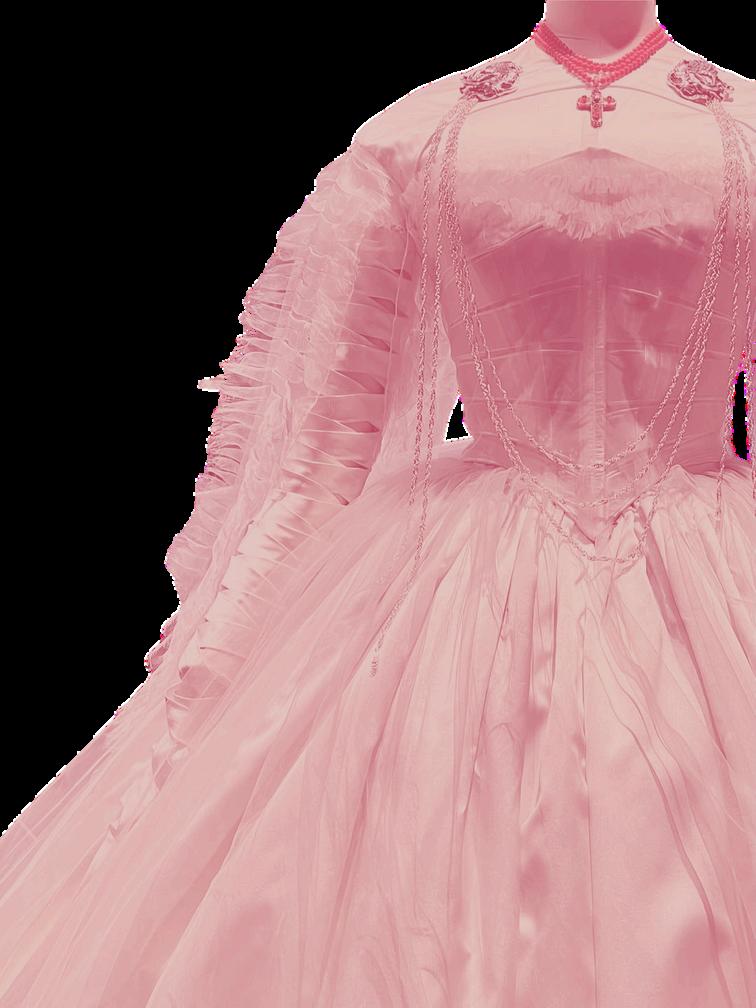
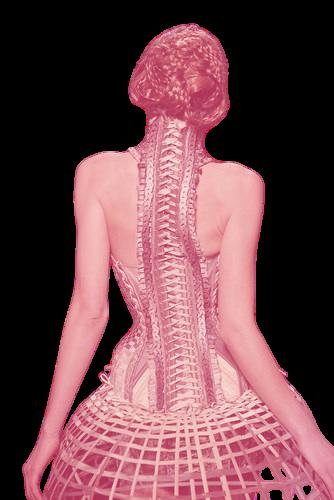
Big silhouettes such hoop-skirts, fan-laced corsets and male clothing and adornments obsolete in men’s contemporary fashion, such as ribbons, lace collars and pillowed sleeves, were large inspirations as well. Notably, nature and the human body are large inspirations for “Magnolia.” Particularly, the human skeletal design, with specific inspiration from Jean-Paul Gaultier’s S/S 2010 Haute-Couture line.
notes and highlights
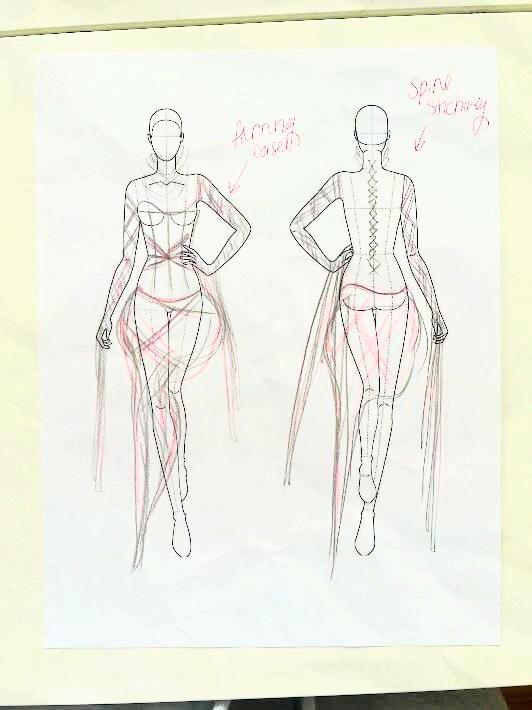
1; mix of fanning corsets and spinal stitching on the back, ballooned hips with silk ribbon on the arms, throughout bodice and lower skirt (dangle and drape as model walks)
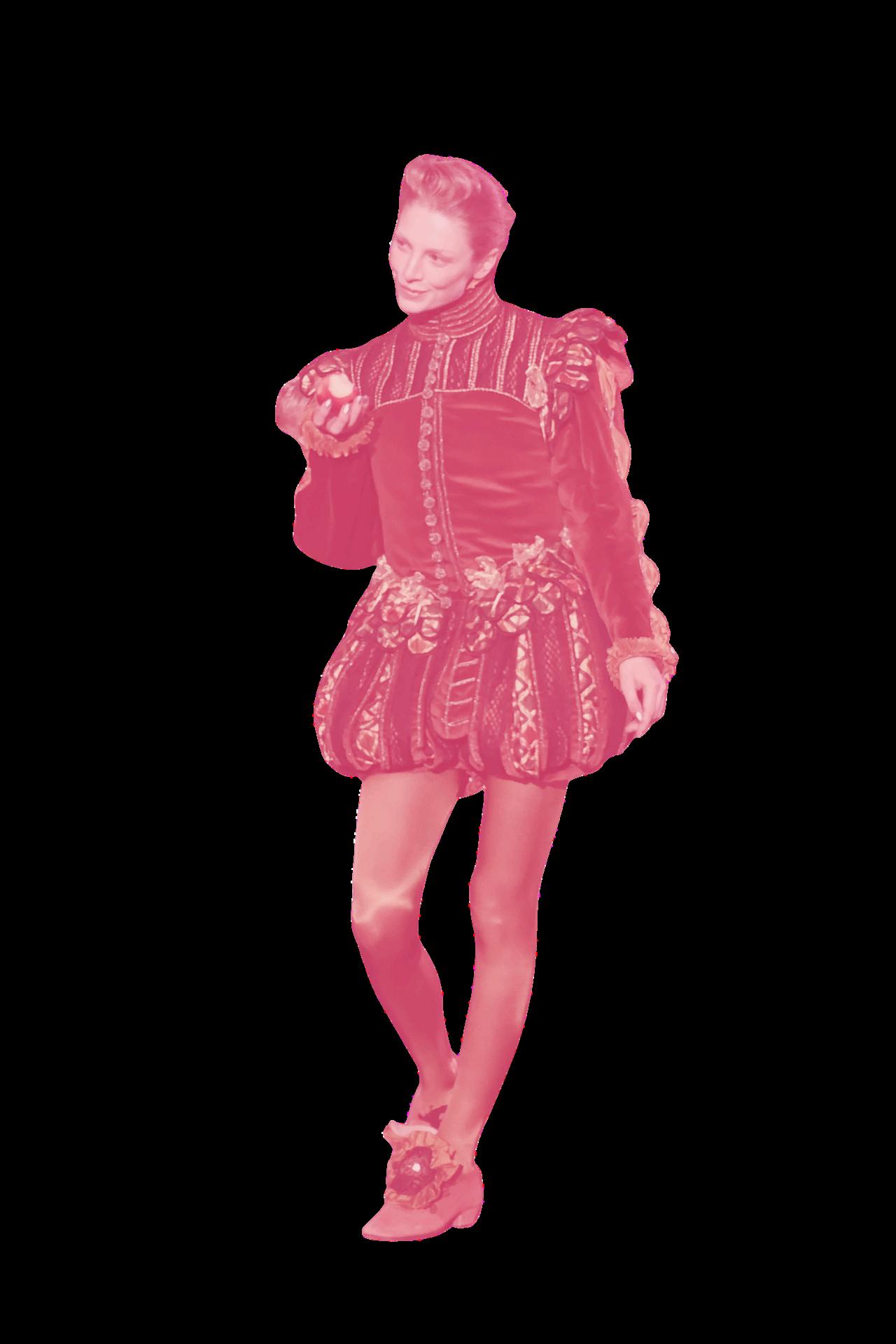
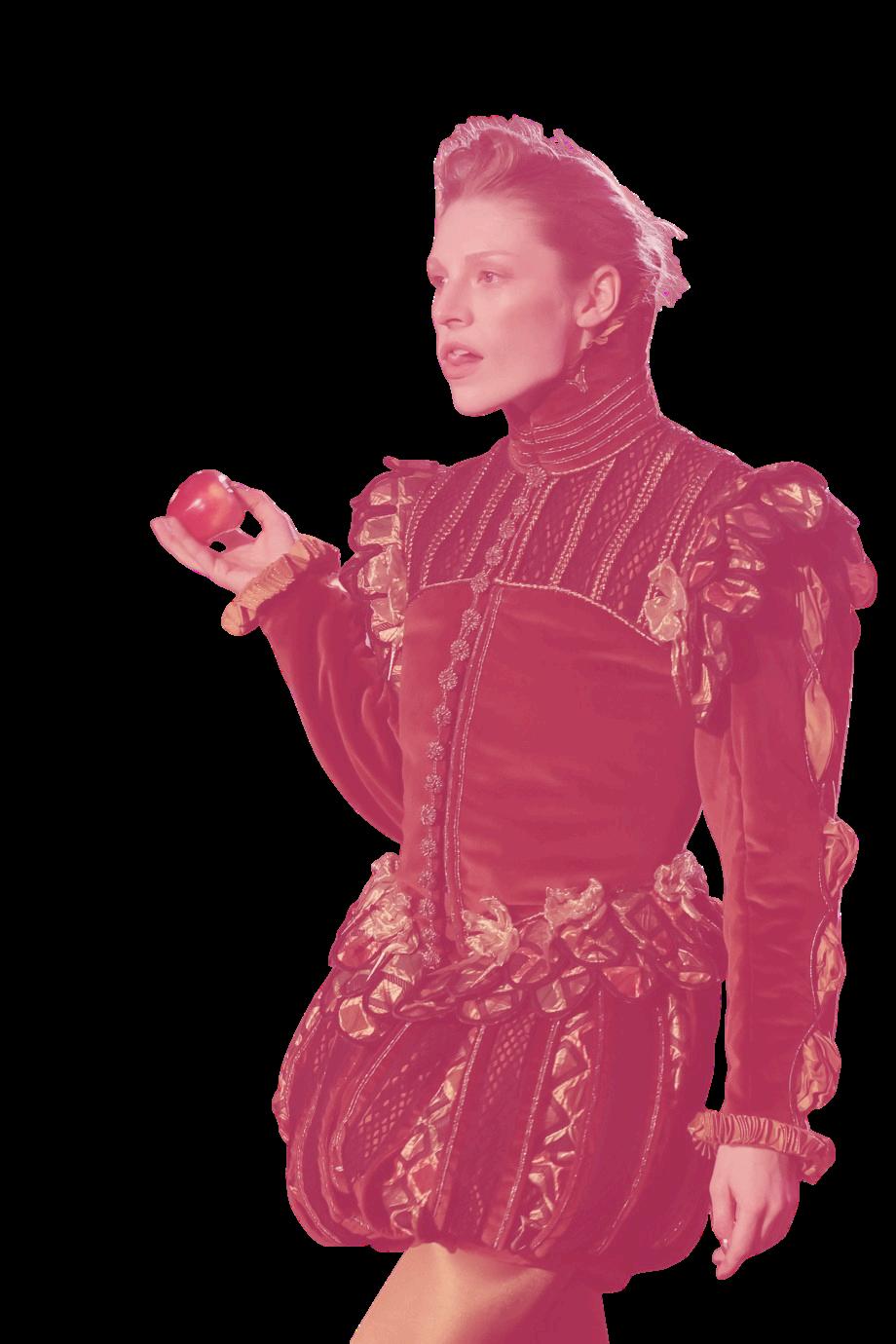
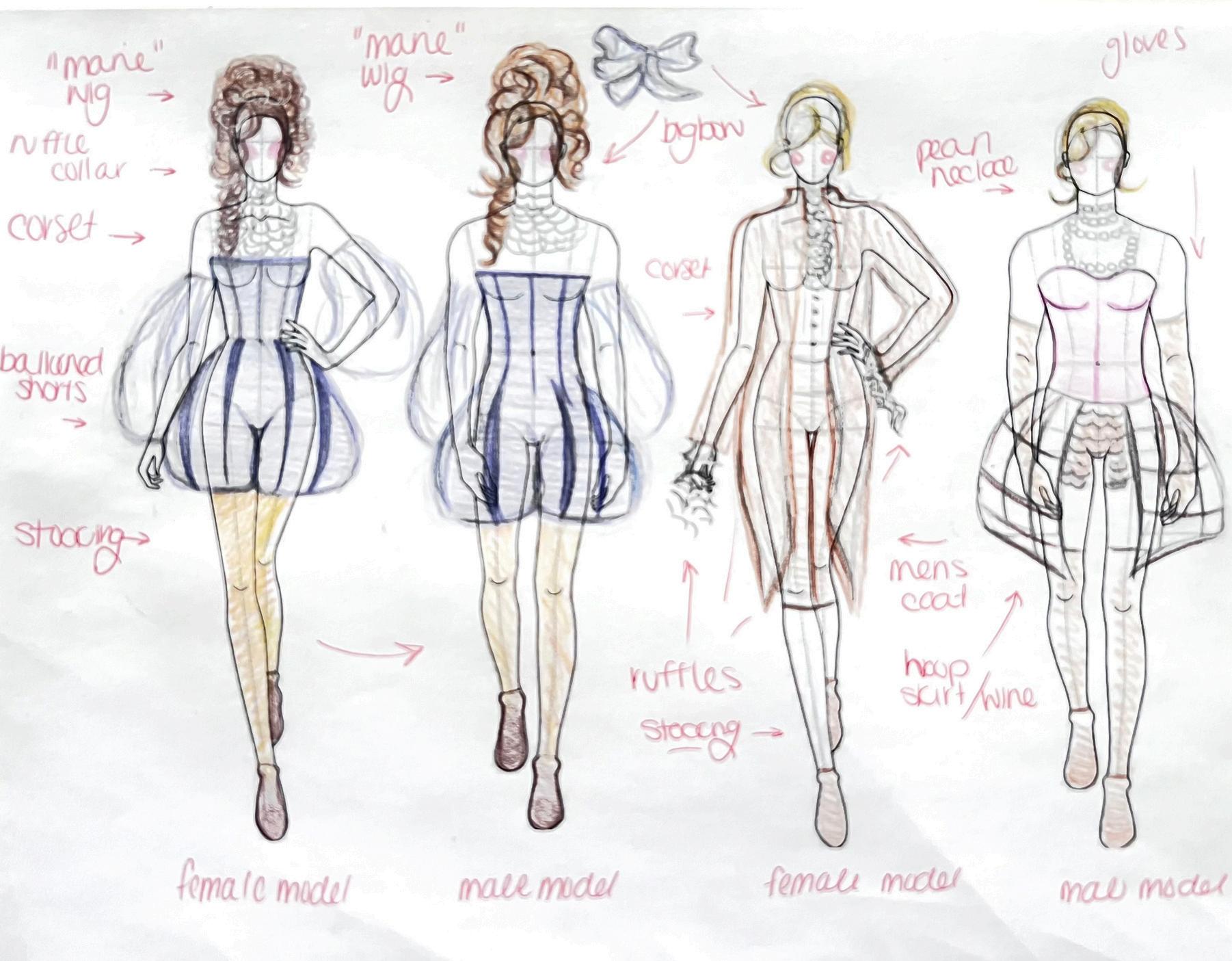
2 (a&b); “pluderhosen” (shorts worn with stockings; traditionally worn by men), frilly neck piece along with ballooned sleeves; yellow stockings
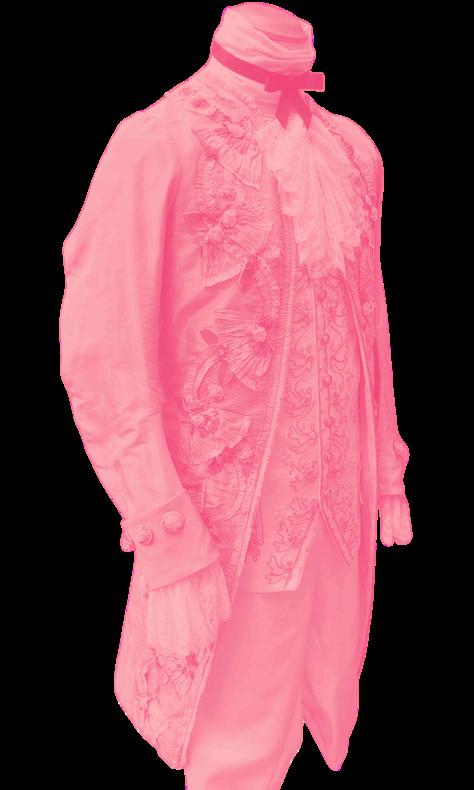
3; “stereotypical” men’s 16th-18 century attire, focus on dramatized lace collar, sleeves and spinal stitching on back; white stockings th
th
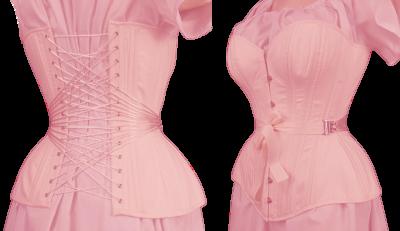
4; the base of “stereotypical” woman attire from 16-18 century, seeing the “bones” behind the inner-workings of what their attire would look underneath the large dresses; cream stockings, lace bloomers, hoop skirt and pearl-based accessories
*all looks are interchangeable, worn by both male and female models (demonstrated through designs 2 a and b; same look visualized on both male and female silhouettes)
A; original designs on display (light yellow circles indicating potential positioning) with the “making of” process on projected and televised display (indicated by teal highlight)
B; textiles [interactive; participants may touch and feel the material used for the designs]
C; historical archives*, including the inspiration behind “magnolia!,” use of film and media inspirations (i e , Orlando and Frankenstein)
*demonstration for potential archives shown in previous ‘inspiration’ page
Different though the sexes
are, they intermix.
In every human being a
vacillation from one sex to
the other takes place, and often it is only the clothes
that keep the male or female
likeness, while underneath
the sex is the very opposite of what it is above.