A handbook spotlighting women executives and their impact on the region’s technology landscape.








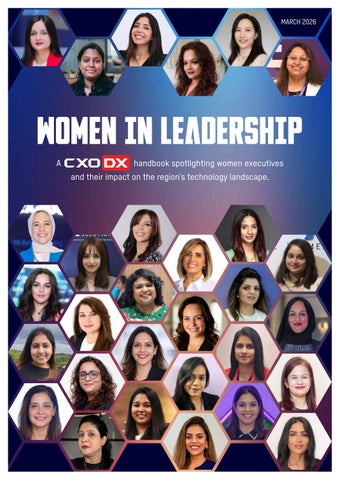
A handbook spotlighting women executives and their impact on the region’s technology landscape.
Over the past decade and more, the pace of technological change has been relentless, carrying us into an era where artificial intelligence is redefining how industries operate, innovate, and compete. Alongside this, various other technologies have matured and seen widespread adoption, fundamentally reshaping how organizations build, scale, and secure their digital operations.
Behind these tectonic technological shifts are people, leaders, strategists, engineers, and marketers, who are steering the pace of innovation and technology adoption across industries. Increasingly, women executives are playing a pivotal role in shaping that journey.
This special edition, by no means exhaustive, brings together the voices of several notable women leaders across the technology ecosystem, spanning cybersecurity, enterprise infrastructure, digital platforms, and technology marketing. Through their experiences and insights, this compilation of conversations highlights not only individual journeys but also broader themes around leadership, resilience, collaboration, and the evolving role of women in the technology industry.
What becomes clear across these interviews is that there is no single path into technology. Many of the leaders featured here have arrived at their roles through different starting points in their careers, eventually moving into strategic positions that increasingly connect technology with business outcomes. Some began in software engineering, while others transitioned from industries such as healthcare, finance, and advertising, discovering along the way how technology plays a pivotal role in modern business transformation. For many, what initially drew them to the sector was curiosity, an interest in how innovation can solve complex problems and reshape the way organizations operate.
That curiosity, by and large, continues to fuel their careers today. Technology is an industry where learning never truly stops. As one leader reflects, the landscape is never static; there is always a new challenge to solve or a new technology to understand. From AI-driven platforms to cybersecurity resilience, professionals across the industry must constantly adapt, evolve, and refine their approach to stay relevant.
Another theme that emerges strongly from these conversations is the importance of collaboration. In today’s enterprise technology environment, success rarely happens in silos. Marketing teams work closely with sales organizations, technical experts, and partner ecosystems to translate complex solutions into meaningful business outcomes. The ability to bridge these worlds, to connect technology innovation with market strategy, is a recurring strength highlighted

The ethos of leadership itself has also evolved. For many women in technology, leadership is less about hierarchy and more about influence, trust, and enabling others to succeed. Building strong teams, creating space for diverse perspectives, and encouraging open collaboration are common threads across their experiences. In a sector where innovation depends on constant experimentation, empowering people to contribute ideas and challenge assumptions is essential.
At the same time, these conversations do not ignore the structural realities that women in technology still face. While the industry has made meaningful progress, subtle barriers can remain, particularly around representation in leadership roles, access to mentorship and sponsorship, and visibility in decision-making instances. Encouragingly, there is also a strong sense that the industry is moving in the right direction. Organizations across the technology ecosystem are increasingly investing in inclusive leadership pathways, mentorship programs, and initiatives designed to support the next generation of women leaders.
What this supplement reveals is that women are not only participating in the technology industry; they are actively shaping its future. They are leading marketing strategy, driving cybersecurity awareness, building regional technology ecosystems, and translating complex innovation into practical value for businesses and communities.
As you explore the interviews in this special feature, you will encounter diverse perspectives, experiences, and insights. Together, they paint a compelling picture of women in technology today, leaders who are not only navigating a rapidly changing industry but helping define where it goes next.
Co-Founder &
+971-50-2908711 Ali Raza > Designer
Co-Founder
03 » OVERVIEW
05 » EMBRACING INNOVATION & EMPATHY
ADITI PRIYA, MARKETING SPECIALIST AT INGRAM MICRO GULF
06 » FROM CURIOSITY TO IMPACT IN THE DIGITAL ERA
AISHWARYA RAMESH, SENIOR MANAGER MARKETING, KISSFLOW
08 » BEYOND COMFORT ZONES
AMAL BOUGUERCH, MARKETING MANAGER, ANKABUT
10 » LEADING WITH EMPATHY
AMRITA NAG, COUNTRY MARKETING HEAD – ASUS BUSINESS (MEA)
12 » FOSTERING EMPATHY AND COLLABORATION
ANGELA HUA, MARKETING DIRECTOR, AGIBOT MENA & TURKEY
14 » A HOLISTIC APPROACH
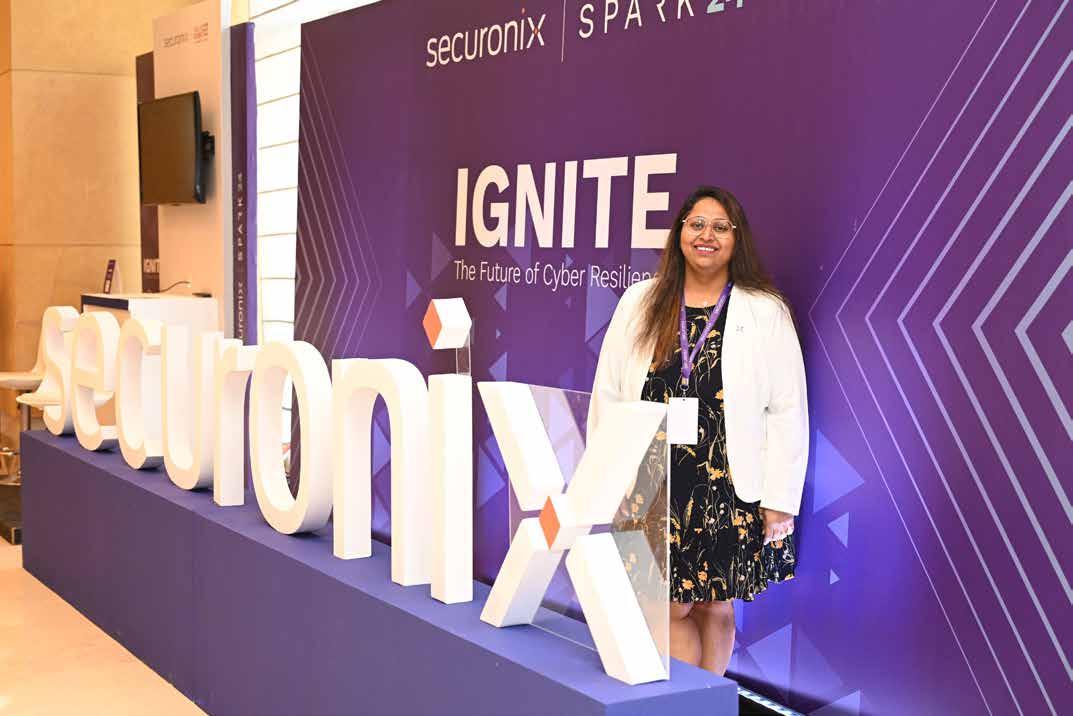
CLEANNE CAROL SERRAO, FIELD MARKETING LEADAPMEA, SECURONIX
16 » DRIVING MARKET IMPACT
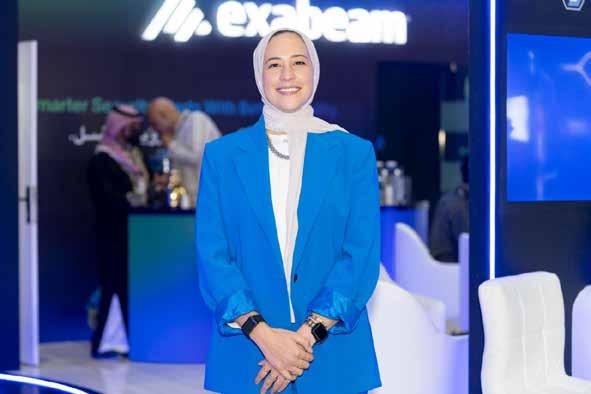
DINA BADRAN, IMETA MARKETING MANAGER, EXABEAM
17 » ALIGNING STRATEGIES WITH BUSINESS OUTCOMES
DALIA MANSOUR, GLOBAL MARKETING DIRECTOR, UNIFYAPPS
18 » RESILIENT LEADERSHIP
EKTA SHETTY, SENIOR SALES DIRECTOR, APAC , META & CIS, SHURE
20 » LEADING WITH CLARITY, TRUST, AND PURPOSE
FADWA ERAKY, SENIOR FIELD MARKETING MANAGER, INFOBLOX
21 » TURNING INNOVATION INTO BUSINESS VALUE
GADA LOPEZ, HEAD OF ALLIANCES FOR THE MIDDLE EAST AT NTT DATA
22 » STAYING ADAPTABLE
FRANCEA LOBO, MARKETING MANAGER FINESSE
23 » FOCUSING ON VALUE CREATION
HANEEN ABU OUDA, MARKETING & COMMUNICATION SPECIALIST AT GBM
24 » BUILDING TRUST, STAYING RESILIENT
JEEBA JAMES- DIRECTOR ENTERPRISE SALES, MINDFIRE TECHNOLOGIES
25 » FOCUSED ON CLARITY AND CONSISTENCY
KIARA ISRANI, MARKETING MANAGER FOR EMERGING EMEA AT SOPHOS
26 » ENABLING PEOPLE-CENTRIC LEADERSHIP
LAMA SHEIKH, CAO & DIRECTOR FINESSE
28 » A HANDS-ON APPROACH TO BUILDING MARKETS
MERIAM ELOUAZZANI, VP, META, CENSYS
30 » STAYING AHEAD OF CHANGE
LARA FAWZY, PRINCIPAL MARKETING MANAGER
–MEA, TENABLE
31 » IN PURSUIT OF STRONGER OUTCOMES
NIKITA KANDATH, MARKETING MANAGER, EMEA AT COMMSCOPE
32 » A PEOPLE-FIRST APPROACH TO TECHNOLOGY LEADERSHIP
NATASHA KASLIWAL, SENIOR ENTERPRISE MARKETING MANAGER, MEA, NUTANIX
34 » ENABLING STRONG ECOSYSTEMS AND PARTNERSHIPS
PRIYANKA KUMAR, FIELD & CHANNEL MARKETING MANAGER - MIDDLE EAST, INDIA & ANZ AT BARCO
35 » BALANCING GROWTH WITH SUSTAINABILITY
NEHAL SHARMA, SENIOR VP – GLOBAL PRODUCT & ALLIANCE, CLOUD & SOFTWARE AT REDINGTON
36 » CONNECTING THE DOTS THAT DRIVE IMPACT
PRIYANKA ROY, SENIOR TECHNOLOGY EVANGELIST, MANAGEENGINE
38 » FROM CAMPAIGNS TO GROWTH DRIVEN STRATEGIES
SONALI BASU ROY, MARKETING MANAGER AT BULWARK TECHNOLOGIES
40 » DRIVING GROWTH THROUGH COLLABORATION
SHABANA TAJASSUM, REGIONAL MARKETING MANAGER AT OMNIX INTERNATIONAL
41 » ALIGNING STRATEGY WITH BUSINESS OUTCOMES
UDARI PERERA - REGIONAL MARKETING MANAGER FOR MEA AT WSO2
42 » CONFIDENCE BUILT ON CONSISTENCY
SHRADHA SUBRAMANIYAN, ROUTE TO MARKET MANAGER, NUTANIX
43 » FROM CODE TO MARKET STRATEGY
UZMA YUSUFF, SENIOR FIELD & CHANNEL MARKETING MANAGER, SENTINELONE
44 » TRUSTING THE PROCESS AND STAYING ADAPTABLE
VIDYA SUBRAMANIAN, SENIOR MARKETING SPECIALIST, AMIVIZ
46 » CONNECTING INNOVATION WITH BUSINESS IMPACT
ZEINA HAGGAG - EMEA MARKETING DIRECTOR AT OPSWAT
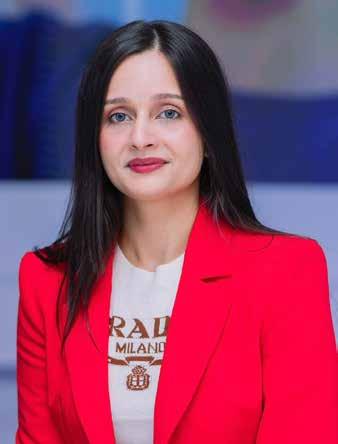
Aditi Priya, marketing specialist at Ingram Micro Gulf shares the lessons that have shaped her career, from embracing innovation to leading with humility and empathy.
What initially drew you to a career in the technology industry?
Has that early motivation sustained over the years? Interestingly, I never imagined myself working in the technology industry while growing up. It was an opportunity that came my way unexpectedly and turned out to be a turning point in my career. Over time, the industry grew on me—the pace of innovation and constant evolution make it incredibly exciting to be a part of. My motivation hasn’t just sustained over the years; it has continued to grow as I’ve learned and evolved within the ecosystem.
Which lessons across your career have had the greatest impact on how you contribute to your organization today?
One lesson that has stayed with me throughout my career is to never stop learning. The technology landscape evolves rapidly, and staying curious is essential. Keeping up with emerging marketing trends while staying true to the core principles of marketing and customer engagement has helped me contribute more effectively to my organization.
As the industry has shifted from legacy systems to cloud and AI-driven models, how have you evolved your own role to stay ahead?
The transition to cloud and AI-driven technologies has significantly changed how solutions are positioned in the market. For me, staying ahead means continuously understanding emerging technologies and focusing on the value they bring to customers. As a marketer in the distribution ecosystem, the role today is about communicating solutions and outcomes rather than simply promoting products.
What has been the biggest professional leap of faith you’ve taken, and what did it teach you about resilience?
One of the most challenging phases in my career was when I had to step away from a new opportunity within a month of joining due to a personal loss. At that time, it felt like a major setback. However, it also taught me resilience and reinforced my belief that difficult moments often lead to better opportunities. Soon after, I was fortunate to find an even better role, which reminded me that perseverance and faith can take you forward even in uncertain times.
Beyond the obvious challenges, do subtle structural barriers still exist for women in commercial technology roles?
The industry has made encouraging progress in creating more opportunities for women. While subtle barriers can still exist in some environments, organizations today are increasingly recognizing the importance of diversity and inclusive leadership. With greater awareness, mentorship, and representation, the path is becoming more accessible for women aspiring to leadership roles.
What strengths do you believe are particularly important for women to succeed in technology sales and marketing leadership?
Adaptability, confidence, and continuous learning are key strengths. Technology evolves quickly, so staying curious and open to change is essential. At the same time, strong relationship-building skills, empathy, and a collaborative mindset can be powerful assets in sales and marketing leadership roles.
When you look back on your career, what kind of
would you like to leave — professionally and personally?
If there is one value I hope my career reflects, it is humility. No matter where life takes you professionally, staying grounded and treating people with kindness and empathy is what truly matters. I would like to be remembered as someone who worked with sincerity, encouraged others, and believed in the power of humility and kindness
“If there is one value I hope my career reflects, it is humility. No matter where life takes you professionally, staying grounded and treating people with kindness and empathy is what truly matters.”
Aishwarya Ramesh, Senior Manager Marketing, Kissflow reflects on curiosity, ownership, and the mindset required to create meaningful impact in an evolving technology landscape.
What initially drew you to a career in the technology industry? Has that early motivation sustained over the years?
My entry into technology was fueled by a love for reading. Growing up, the Kindle was a revelation; the ability to access an entire library at my fingertips - rather than being limited by physical stock - showed me the democratization of information. I realized that the scale, reach, and variety I craved could only be delivered through digital technology. That sense of awe has never faded. It’s incredibly satisfying to witness global companies pivot, adapt to digital waves to gain business edge in competitive landscapes.
Looking back, what defining moments shaped your leadership approach in sales and marketing?
A key mentor once gave me the best advice I’ve received: "Be frugal with hiring, and once you have the right people, give them the autonomy to succeed." That shifted my focus from trying to be the "hero" to becoming a facilitator. I’ve found that my leadership is most effective when I hire well, trust the team to play to their strengths, and provide a safety net for them to experiment and even fail. Watching them solve a problem after a stumble is more valuable to the team's growth than any "hand-holding" I could have provided.
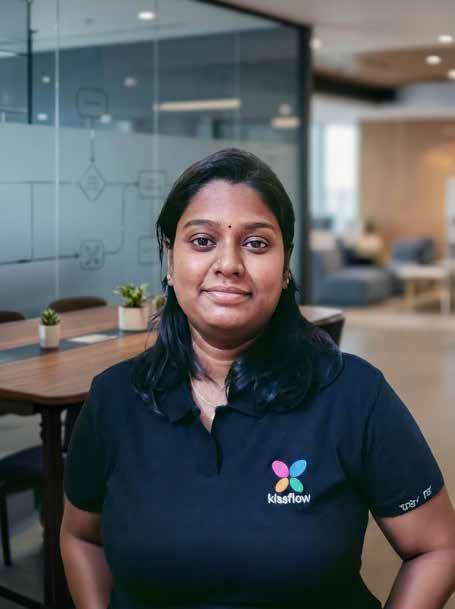
Aishwarya Ramesh Senior Manager Marketing, Kissflow
As the industry has shifted from legacy systems to cloud and AI-driven models, how have you evolved your own role to stay ahead?
Early in my career as a developer at TCS, I worked on the e-commerce engine for HPE. At the time, seeing a global titan prioritize a direct-to-consumer (D2C) model over traditional dealer networks was a lightbulb moment for me. It taught me that cloud adoption isn’t just an "IT upgrade" - it’s a fundamental business pivot. I learned early on to distinguish between "market noise" and "strategic shifts."
Today, at Kissflow, I apply that same mindset. I have evolved from the tactical, manual days of hand-sending emails to prospects, to architecting sophisticated tech stacks that leverage data and AI to drive engagement.
My role now is to bridge the gap between technical infrastructure and buyer experience - ensuring we deliver the right message to the right person at the right time, at scale. I don’t just "keep up" with the digital wave; I look for the underlying business logic it enables, which is how I ensure our marketing technology actually moves the needle.
What has been the biggest professional leap of faith you’ve taken, and what did it teach you about resilience?
Leaving a stable corporate role at TCS to jump into an early-stage startup as a junior biz-dev was my biggest leap. That experience taught me that the "unknown" is actually where the best growth happens. It taught me persistence - specifically, how to learn the buyer's language to build credibility in unfamiliar territory. I learned that if you remain curious and committed, you can arrive at stability regardless of how chaotic the business strategy or industry landscape becomes.
Beyond the obvious challenges, do subtle structural barriers still exist for women in commercial technology roles?
I believe that barriers exist as long as we allow the thought that "someone else" holds the keys to our growth. Whether you are a woman or in any other demographic, the moment you entertain the idea that your path to power is restricted by external forces, you’ve already limited yourself.
Which lessons across your career have had the greatest impact on how you contribute to your organization today?
My biggest realization is this: Curiosity without execution is just a hobby. You can be the most curious person in the room, but if you aren’t delivering value, you’re just renting space. I strive to translate every new thing I learn into a tangible, measurable impact on the work I own. Furthermore, I’ve learned that true growth is intrinsic. You don’t need constant external validation to know you’re
improving. When you hold yourself to a standard that exceeds what the organization expects, your growth becomes inevitable.
What strengths do you believe are particularly important for women to succeed in technology sales and marketing leadership?
The ability to own your seat at the table. It’s about communicating that you are listening, you understand the business challenge, and you are a partner in solving it. Whether you are talking to a vendor, an agency, or a prospect, shifting the dynamic from "vendor/client" to "business partner" is a superpower in this industry.
In high-value enterprise engagements, how critical is emotional intelligence alongside technical expertise?
It is non-negotiable. At the end of the day, enterprise sales is human-to-human. Technical expertise gets you into the room, but emotional intelligence allows you to look past the KPIs to see the person on the other side of the table. When you prioritize their specific goals and pressures, you stop selling and start collaborating. This helps in earning the buyer confidence.
If you could redesign how the technology industry develops its next generation of female leaders, what would you change?
I would emphasize the transition from "subject matter expert" to "business architect." Often, women in tech are encouraged to be the best doers. We need to encourage them earlier to think like owners - to look at the P&L, understand the macro strategy, and take the risks that move the needle for the entire company.
When you look back on your career, what kind of legacy would you like to leave — professionally and personally?
Professionally, I want to leave my "DNA" on the systems and processes I’ve built—the kind of transformations that thrive even after I’ve moved on. I don’t want to be missed but remembered for the kind of impact I have delivered. Personally, I grew up admiring how my mother handled her work and her priorities. I hope to be that same example for my own children - to leave them with stories not just of success, but of the wisdom and resilience it took to get there.
How do you navigate setbacks or unexpected challenges in high-pressure commercial environments?
I have a three-step rhythm: Pause, Reflect, and Own. I take the time to detach from the immediate emotion of the setback, then I reach out to mentors for perspective. Finally, I walk into the stakeholder’s room with transparency. I lay out the reality of the situation and the plan to navigate it. Being open about the challenge and inviting them into the solution - while being clear on the trade-offs - is the fastest way to regain trust and get back on track.
Amal Bouguerch, Marketing Manager, Ankabut shares how mentorship, hands-on engagement with technology, and a willingness to embrace uncertainty have shaped her leadership path.
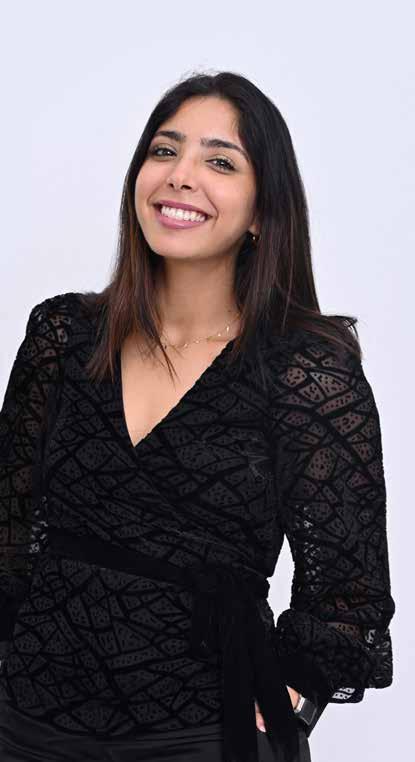
Amal
Bouguerch
Marketing Manager, Ankabut
What initially drew you to a career in the technology industry? Has that early motivation sustained over the years?
I have actually stumbled into the tech industry by a happy coincidence, and then it just made sense to stay in it. As time went by, that initial chance turned into genuine motivation when I realized this industry is perfectly suited for my personality and ambitions. Technology is fun, flexible, and refreshing. It moves at an incredible pace, which means you are quite literally never bored. The environment demands that you constantly evolve, and that dynamic suits me perfectly. I love being in tech!
Looking back, what defining moments shaped your leadership approach in sales and marketing?
Early on in my career, I was exposed to Global Leaders that were incredibly empowering, human, and hands-on, which naturally made me gravitate towards a blend of servant and situational leadership. But the true defining moments came from the women who guided me. My very first mentor took me under her wing like she would a daughter. She also recommended I lead key transformation projects at the time in our department and would guide me through them. Later, another incredible female leader who was our company’s site lead in North Africa and my direct manager believed in me enough to sponsor an expat assignment for me in our offices in Asia. That experience gave me massive exposure to the life-changing power of active sponsorship. It taught me that advocacy builds bridges the mind can only dream of. I decided then that I wanted to be that exact kind of empowering leader when I eventually managed my own team.
As the industry has shifted from legacy systems to cloud and AI-driven models, how have you evolved your own role to stay ahead?
You should never be shy about getting your hands dirty with technology. I place a massive emphasis on staying up to date, whether that means leveraging AI to curate my daily news, taking online training on the latest LLM updates, or personally figuring out the backend capabilities of a new EdTech platform before I even assign it to my team. Because of this hands on approach, my role has naturally evolved to focus heavily on AI driven use cases that genuinely improve our daily operations. AI is here to stay, and there is immense power to be harnessed if we treat it as the elevating, efficient tool it was originally built to be.
What has been the biggest professional leap of faith you’ve taken, and what did it teach you about resilience?
Without a doubt, it was moving to the Gulf, a foreign region with markets I knew very little about, while simultaneously stepping into a commercial role that was way outside my comfort zone with, what I then thought, limited technical skills. Suddenly, I was working with highly seasoned sales leaders and executives, some twice my age and more, who were looking to me for strategic advice, financial oversight, and major market decisions. I was absolutely petrified at first… but I decided to jump in anyway. I rationalized that the worst-case scenario was simply failing in this, then switching jobs to another more comfortable one; and the best-case scenario was that I would enjoy it, learn from it, and grow immensely. The choice was obvious, and I am happy to announce that I have not only lived to tell the tale but thrived and flourished throughout. This has taught me that taking a bold move and living in the discomfort zone beats living in regret and fear, hands down.
Beyond the obvious challenges, do subtle structural barriers still exist for women in commercial technology roles?
Sadly yes. Once you look past the obvious challenges like the wage gap or overt bias, the nuanced barriers become very clear. Having navigated the tech world in the Middle East, I see two distinct structural issues. The first is the “performance versus potential” double standard. Women are rarely given roles based on their potential –unlike their male counterparts; we usually only get the promotion after we have consistently over delivered on targets or flawlessly executed stellar campaigns for years. We call it a meritocracy, but it feels rather unfair.
The second barrier is what we’d call “upward credit-taking”. A woman will spend days working on a highly complex, strategic document, weighing every pro and con, polishing the framework, only to send it to a superior who presents it to leadership as their own. If you complain, you are flagged as “uncooperative”, “not a team player”. Women in tech are still constantly fighting to be trusted to present their own strategic work, in their own names, at the executive usually male dominated levels.
Which lessons across your career have had the greatest impact on how you contribute to your organization today?
The most impactful lessons have been entirely interpersonal. Very early on, I could see by being exposed to C-levels, that it was actually well perceived to treat my superiors, from my direct manager to the global CEO, as colleagues and human beings first, regardless of intimidating titles. We all deserve to be treated empathetically, and it is always better to speak to your manager with the same care you would use when advising a friend you trust. By consistently communicating from a place of facilitating business, you become known as a collaborative breath of fresh air, rather than someone who operates out of fear, hesitation, or corporate hypocrisy. Speaking my mind respectfully has opened countless doors for me. Most corporate barriers are completely self-imposed; if you let them, they will hold you captive of your own mind. Building relationships, while staying true to yourself, are the true key to your success.
What strengths do you believe are particularly important for women to succeed in technology sales and marketing leadership?
First, you have to believe in yourself and your capabilities, which sounds cliché, but it must be paired with the wisdom to know when
to introspect. Believing in yourself doesn't mean being blind to feedback or assuming you are always right. You must know how to trust your gut feeling while simultaneously questioning your own assumptions.
Second, you must aggressively upskill your knowledge, build a solid technical baseline. Become a subject matter expert in your field, not a “know-it-all” as no one will stand you, but so you can walk into any room with absolute confidence. When you know what you are talking about truly and precisely and not in vague terms, no one can step on you or gaslight you. Cover your baseline to build a strong foundation to your incredible Burj.
Lastly, I would say you have to put yourself out there. Start small. One encounter at a time, one small task at a time. If you are marked as “optional” for a face to face meeting with a key client or partner at their office you can take online, go anyway. If there is an important high visibility event but a long drive away, drive there still and mingle with people, talk about various topics. You truly never know where the opportunity lies, and by showing up repeatedly, something will manifest. Basic statistics.
When you look back on your career, what kind of legacy would you like to leave — professionally and personally?
Great question. My first instinct is to say a legacy of uplifting and empowerment, both professionally and personally. I hope to leave a profound impact on the humans I have had the greatest pleasure to work or interact with. I want a legacy where you leave a piece of yourself within other people, no matter how small or seemingly insignificant, so that when they look back at your time together, they hopefully think fondly of you.
"By consistently communicating from a place of facilitating business, you become known as a collaborative breath of fresh air, rather than someone who operates out of fear, hesitation, or corporate hypocrisy. Speaking my mind respectfully has opened countless doors for me."
Amrita Nag, Country Marketing Head – ASUS Business (Middle East & East Africa) reflects on resilience, the value of emotional intelligence, and the importance of creating opportunities for others to thrive.
What has been the biggest professional leap of faith you’ve taken, and what did it teach you about resilience?
It was when I accepted a role that I wasn’t ready for. I remember feeling anxious and uncertain because I wasn’t fully confident in doing the job. Taking on the role feels like jumping into water not knowing how to swim. Despite the initial slow and awkward phases, I ended up doing great on the job through a lot of learning. This experience taught me that it’s not about being fearless, but it’s when you showed up to do the work and ask for help. I always remind myself that growth will only happen when you try, it doesn’t matter if you’re ready or not. There’s a saying that goes, “stepping into the unknown opens doors you can’t see yet,” which is one quote I’ll always live by.
Which lessons across your career have had the greatest impact on how you contribute to your organization today?
Two lessons come to mind: first is taking initiative and letting everyone know what I’ve done. Earlier in my career, I would wait for someone to tell me that I was ready before I stepped up, but I soon learned that being proactive with work and offering help are traits that make the most difference. I make sure that any work I do is seen, because my efforts won’t matter if no one knows about them. These are the lessons that have had a major impact on my career. As a leader, I’m someone who takes ownership of my work and makes sure my team’s efforts are always recognized.
What strengths do you believe are particularly important for women to succeed in technology sales and marketing leadership?
In my experience, the strengths that matter most in tech leadership aren’t about following the usual industry playbook; they’re about bringing a human side to a very technical world. What helped me succeed is leaning into listening, creativity, and connection. Listening helps you understand customers and teams beyond the data. Being creative allows you to cut through the noise instead of doing what tech marketing usually does.’ Putting a human touch, along with choosing empathy over jargon, can help people relate to ideas that might feel complex. Collaboration ties it all together. These are the strengths that guided me, and they’re powerful tools for any woman leading in tech.
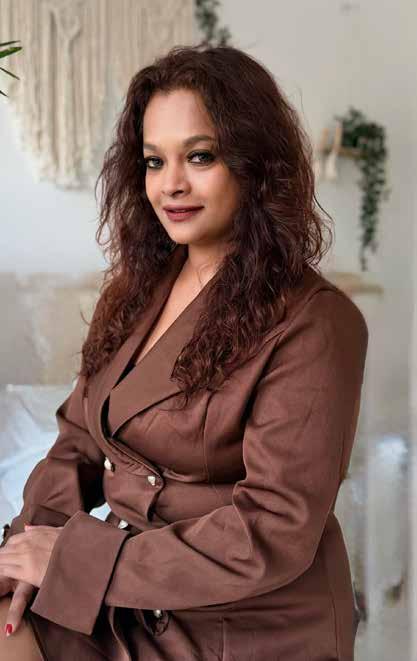
“Having technical expertise helps you design the right solution, but emotional intelligence can help you understand the people behind the decisions. It lets you read motivations, concerns or reactions.”
In high-value enterprise engagements, how critical is emotional intelligence alongside technical expertise?
Emotional intelligence is a real differentiator. Having technical expertise helps you design the right solution, but emotional intelligence can help you understand the people behind the decisions. It lets you read motivations, concerns or reactions. That’s why technical skills may win the meeting, but emotional intelligence wins the partnership, and partnerships are what drive real enterprise impact. As a marketing leader, I see this every day: emotional intelligence isn’t just shaping customer conversations, it’s shaping how we communicate, value and build relationships that last.
If you could redesign how the technology industry develops its next generation of female leaders, what would you change?
I’d say that the focus shouldn’t just be on improving technical skills, but on confidence, emotional intelligence and hands-on experience. Female leaders don’t need to adapt to traditional expectations, but companies should recognize that everyone has a different perspective and that itself can add value. When given the right opportunities and mentorship, women can grow and lead confidently in their own way.
When you look back on your career, what kind of legacy would you like to leave — professionally and personally?
I want to be remembered as someone who led with empathy and respect, and someone who gave a chance for my team to grow because I believe this is the most meaningful kind of impact. Mentorship is something I highly value, and my hope is that my team remembers me as the person who gave them the confidence and support to step into their own potential.
Moreover, I want to be known as someone who lived with integrity and authenticity, a woman who is confident and assertive. I want people to know that being a leader can be both bold and compassionate, and encourage other women to do the same.
How do you navigate setbacks or unexpected challenges in high-pressure commercial environments?
No one likes setbacks, but these things happen all the time, so it’s important that I’m prepared when they do. Right from the start, I
establish open communication and am transparent about any details so I can catch any issues before they arise. I believe communication and transparency are essential to keeping everyone aligned. I also lean on my team because I understand that challenges in environments like this can never be solved alone.
“I always remind myself that growth will only happen when you try, it doesn’t matter if you’re ready or not.
There’s a saying that goes, “stepping into the unknown opens doors you can’t see yet,” which is one quote I’ll always live by.”
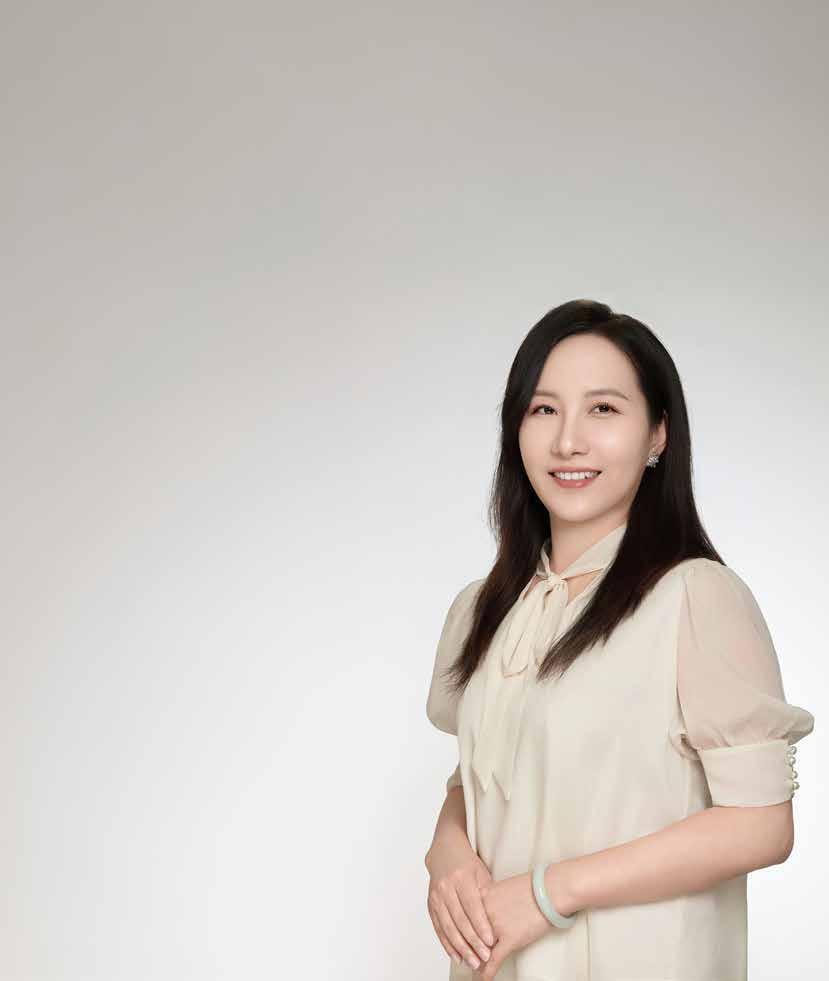
Angela Hua, Marketing Director, AGIBOT MENA & Turkey shares insights on leadership, resilience, and the role of mentorship in shaping the next generation of women leaders in tech.
What initially drew you to a career in the technology industry? Has that early motivation sustained over the years?
I entered the technology industry in 2011, largely because of my academic background in software programming and development. In many ways, technology was the natural path for me.
However, my deeper connection to the industry really started when I joined Alibaba Cloud. Working in a company focused on core technology infrastructure made me realize how powerful technology can be in shaping the future. What excites me most about this industry is that experience and knowledge compound over time— the longer you stay in it, the more valuable you become. That motivation has definitely stayed with me.
Looking back, what defining moments shaped your leadership approach in sales and marketing?
I’ve been fortunate to experience very different types of companies throughout my career—from late-stage startups to early-stage ventures, and also a global company like Alibaba Group.
These experiences shaped my leadership philosophy. I believe strongly in leading by example and moving forward together with the team. Sales and marketing, especially in technology, is never a solo effort—it’s a collective mission that requires trust, resilience, and strong collaboration.
As the industry has shifted from legacy systems to cloud and AI-driven models, how have you evolved your own role to stay ahead?
For me, staying ahead starts with staying curious. Technology evolves quickly, and the best way to grow with it is to continuously learn.
At the same time, I believe in focusing deeply on a chosen direction. When you combine focus with curiosity, new opportunities— whether cloud, AI, or other emerging technologies—naturally become part of your journey.
What has been the biggest professional leap of faith you’ve taken, and what did it teach you about resilience?
Without a doubt, the biggest leap I took was moving to the Middle East in 2018.
I left behind a stable career and professional network in China and decided to fully commit to building my future in a completely new market. Shortly after, COVID hit, and many companies withdrew from Dubai. Opportunities froze, and at one point I faced the real possibility of unemployment.
That experience taught me a very important lesson: sometimes survival comes before achievement. Once you learn how to navigate uncertainty and keep moving forward, resilience becomes part of who you are.
Today, the Middle East has become my home, both personally and professionally, so I truly believe it was the right decision.
Beyond the obvious challenges, do subtle structural barriers still exist for women in commercial technology roles?
The industry has made meaningful progress in diversity and inclusion, but subtle structural barriers can still exist, especially in leadership representation and access to strategic opportunities.
The encouraging part is that many organizations are now actively creating platforms, mentorship programs, and leadership pathways for women. The more visibility and opportunities women receive, the faster these barriers will disappear.
Which lessons across your career have had the greatest impact on how you contribute to your organization today?
The most important lesson I’ve learned is that technology is ultimately about people.
Whether it’s customers, partners, or internal teams, trust and collaboration drive long-term success. Technology may evolve rapidly, but strong relationships remain the foundation of sustainable business.
What strengths do you believe are particularly important for women to succeed in technology sales and marketing leadership?
Strategic thinking, resilience, and strong communication are essential.
But I also believe empathy and collaboration are powerful leadership qualities. In complex enterprise environments, the ability to connect people, align interests, and build trust is often what makes the real difference.
In high-value enterprise engagements, how critical is emotional intelligence alongside technical expertise?
Technical expertise builds credibility, but emotional intelligence builds trust.
Enterprise decisions involve multiple stakeholders and long decision cycles. Being able to understand perspectives, navigate conversations, and build relationships is often just as important as understanding the technology itself.
If you could redesign how the technology industry develops its next generation of female leaders, what would you change?
I would focus on three things: mentorship, visibility, and early leadership opportunities.
If women have access to mentors earlier in their careers, participate in strategic initiatives, and take on leadership roles sooner, it can significantly accelerate the development of future female leaders.
When you look back on your career, what kind of legacy would you like to leave — professionally and personally?
Professionally, I hope to contribute to building stronger technology ecosystems and helping organizations innovate and grow through technology.
Personally, I hope my journey encourages more women to pursue leadership roles in technology and believe they can shape the future of this industry.
How do you navigate setbacks or unexpected challenges in high-pressure commercial environments?
Challenges are inevitable in high-pressure environments.
My approach is to stay calm, focus on solutions, and move forward with the team. Every setback carries a lesson, and those lessons often become the foundation for the next success.
"Whether it’s customers, partners, or internal teams, trust and collaboration drive long-term success. Technology may evolve rapidly, but strong relationships remain the foundation of sustainable business."
Cleanne Carol Serrao, Field Marketing Lead- APMEA, Securonix says her approach centers on authentic, empathetic leadership that fosters trust, encourages collaboration, and aligns team efforts with long-term goals to drive meaningful innovation.
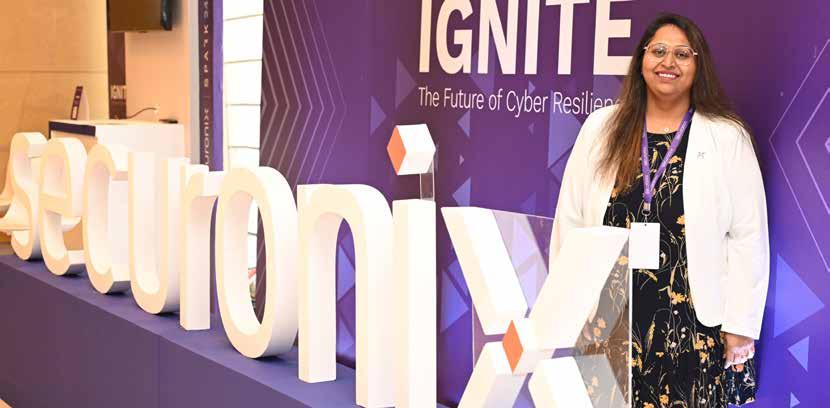
What initially drew you to a career in the technology industry? Has that early motivation sustained over the years?
From a young age, I was fascinated by how technology could solve real-world problems. I began my career in the IT security sector, where I gained foundational experience and witnessed firsthand the tangible impacts of security solutions on businesses. This initial role sparked a strong interest in the industry.
I then transitioned to the IT media space, where I worked closely with marketing leaders from Fortune 500 companies. This experience allowed me to engage with a variety of technologies, including data centers, cloud solutions, edutech, big data, and cybersecurity. Each interaction deepened my understanding of technology’s pivotal role in driving business success.
Eventually, I moved into leading marketing in the cybersecurity sector, where my journey continued to intertwine with cutting-edge technology. The opportunity to be part of innovations that improve efficiency and transform industries was incredibly motivating. Over
Cleanne Carol Serrao
Field Marketing LeadAPMEA, Securonix
the years, that initial spark has only grown stronger, especially with the transformative power of technology across sectors. Each new challenge represents an opportunity to drive meaningful impact, which keeps my passion alive.
As the industry has shifted from legacy systems to cloud and AI-driven models, how have you evolved your own role to stay ahead?
From the very beginning of my career, I embraced a mindset of continuous learning, understanding that growth is essential in a rapidly changing industry. As technology evolved, staying informed about emerging trends became a priority through courses and networking opportunities. This commitment to adaptability has not only enriched my understanding of the technology landscape but has also equipped me to leverage the latest innovations effectively.
This continuous learning approach enables me to respond to evolving business needs while contributing positively to the rapidly changing technology ecosystem.
What has been the biggest professional leap of faith you’ve taken, and what did it teach you about resilience?
One of the biggest leaps of faith was transitioning from the IT media agency space to an OEM, which was a significant shift. It required strong self-belief and a determined mindset to navigate the complexities of this new environment.
This experience taught me that resilience is not just about bouncing back; it is about embracing change with confidence and encouraging teams to align around a shared vision. I discovered that openness and vulnerability can strengthen collaboration. Each challenge has reinforced the importance of staying adaptable and open to new opportunities, ultimately shaping a stronger leadership approach.
Which lessons across your career have had the greatest impact on how you contribute to your organization today?
Throughout my career, several lessons have shaped my approach, but I focus on three key principles: authenticity, collaboration, and a holistic approach.
Embracing authenticity allows me to engage genuinely with my colleagues, fostering an environment of trust and openness. Authentic leadership encourages transparent communication and stronger team alignment.
Collaboration is equally important. Leading with empathy and valuing diverse perspectives enhances our team dynamic and inspires everyone to contribute their best ideas.
Finally, maintaining a holistic approach when managing projects or campaigns is essential. It is not just about ticking boxes; it is about understanding the long-term impact and aligning our efforts with overarching goals. By integrating these principles, authenticity, collaboration, and a holistic perspective, it becomes possible to create an environment where innovation thrives and teams feel empowered to succeed.
What strengths do you believe are particularly important for women to succeed in technology sales and marketing leadership?
Confidence and resilience are crucial strengths for women striving to excel in technology sales and marketing leadership. Belief in one’s capabilities enables leaders to take on challenges and seize opportunities with conviction.
Strong communication skills and the ability to cultivate relationships are also essential in our industry. Effective communication facilitates collaboration and strengthens connections with clients and stakeholders. Building trusted relationships ultimately plays a critical role in driving success in sales and marketing leadership.
If you could redesign how the technology industry develops its next generation of female leaders, what would you change?
Establishing dynamic mentorship programs connecting aspiring women with seasoned industry veterans would provide valuable guidance and help foster a culture of support and inclusion.
Additionally, creating networking opportunities would allow women to build strong professional communities. Encouraging collaboration and knowledge sharing can empower women to navigate
their careers with greater confidence and resilience in a rapidly changing industry.
When you look back on your career, what kind of legacy would you like to leave- professionally and personally?
The goal is to leave a legacy of empowerment where women feel valued, supported, and encouraged to grow. Building diverse teams that drive innovation and success while nurturing a strong sense of community remains a key priority.
Creating inclusive environments where individuals can thrive and contribute meaningfully would be a lasting professional and personal legacy.
How do you navigate setbacks or unexpected challenges in high-pressure commercial environments?
Setbacks are valuable learning opportunities. Maintaining calm and focus helps assess the situation carefully and develop a strategic response.
Collaborating with colleagues and drawing on diverse perspectives also strengthens problem-solving. This collective approach builds resilience and supports better decision-making. By approaching challenges with a growth mindset, obstacles can become stepping stones for innovation and progress in demanding environments.
"Confidence and resilience are crucial strengths for women striving to excel in technology sales and marketing leadership.
Belief in one’s capabilities enables leaders to take on challenges and seize opportunities with conviction."
Dina Badran, IMETA Marketing Manager, Exabeam highlights how collaboration, continuous learning, and clear communication play a critical role in driving growth in today’s evolving technology landscape.
What initially drew you to a career in the technology industry?
Has that early motivation sustained over the years?
My interest in technology actually began during my studies, where I majored in Management Technology, a field that focused on the intersection of business management and technological innovation. I was drawn to how technology could reshape the way organizations operate and create entirely new possibilities for growth and efficiency. When I started working in the industry, I realized that behind every major transformation in a business there is a technology story driving it. Over the years, that initial curiosity has only grown stronger. The technology landscape keeps evolving, and being part of that constant innovation continues to motivate me today.
What has been the biggest professional leap of faith you’ve taken, and what did it teach you about resilience?
Some of the biggest leaps in my career came from stepping into new environments where expectations were high and results mattered quickly. Moving between large global organizations and specialized technology companies required constantly rebuilding credibility and learning new markets requirements and technologies fast. What those experiences taught me is that resilience comes from trusting your ability to adapt! You may not always have all the answers on day one, but if you stay curious, work hard, and focus on delivering value, you’ll find your way forward!
Beyond the obvious challenges, do subtle structural barriers still exist for women in commercial technology roles?
I think the industry has made real progress, but subtle barriers can still exist, often not intentional, but embedded in the way some organizations and leadership structures are traditionally set up. In many commercial technology environments, leadership teams are still predominantly male.
What I’ve also seen, however, is that organizations increasingly recognize that diversity strengthens leadership and decision-making. When companies actively support inclusion and create opportunities for women to lead strategic initiatives, the entire organization benefits.
Which lessons across your career have had the greatest impact on how you contribute to your organization today?
One of the biggest lessons I’ve learned is that marketing must always stay connected to the business outcome. Creativity is important, but what truly matters is how marketing helps drive growth!
Another lesson is the power of collaboration. The most impactful initiatives I’ve been part of, whether large-scale events or strategic campaigns, happened when marketing and sales worked as true partners with a shared goal.
What strengths do you believe are particularly important for women to succeed in technology sales and marketing leadership?
Curiosity is incredibly important!
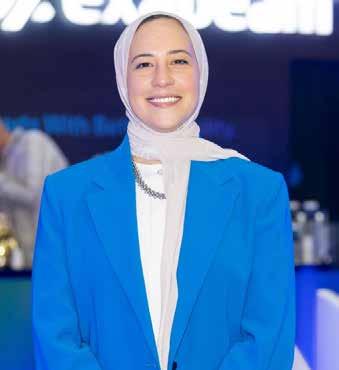
Dina Badran IMETA Marketing Manager, Exabeam
Technology evolves quickly, and the willingness to continuously learn is essential.
Confidence is also key, especially in environments where technical discussions and high-stakes business conversations are happening. Women bring tremendous strengths to leadership roles in technology, particularly when it comes to relationship-building, strategic thinking, and understanding the human side of business decisions.
When you look back on your career, what kind of legacy would you like to leave — professionally and personally?
Professionally, I would like to be remembered as someone who created meaningful impact.
I also hope to be known as someone who showed that humility and intelligence make a strong combination. In technology, being capable and knowledgeable is essential, but being a strong communicator and working well with others is just as important. The ability to simplify complex ideas and turn them into clear, meaningful conversations is something I’ve always valued and would like to be remembered for.
Personally, I hope my journey shows that there is space for women to thrive in technology leadership. If my experience encourages even a few women to pursue careers in this industry with confidence, knowing they can be capable, knowledgeable, and strong communicators while staying true to themselves, that would be something I’m truly proud of.
Dalia Mansour, Global Marketing Director, UnifyApps reflects on leadership, the importance of aligning marketing with business outcomes, and the evolving role of technology in driving enterprise transformation.
What initially drew you to a career in the technology industry?
Has that early motivation sustained over the years?
Technology drew me in because it is one of the few industries where innovation can reshape entire organizations. Early in my career I saw how the right technology platform could change how companies operate, how they serve customers, and how they scale. That motivation has absolutely stayed with me. Today we are witnessing one of the most significant shifts with AI, automation, and data transforming how businesses run. Being part of that journey and helping organizations turn technology into real business value continues to be incredibly energizing.
Looking back, what defining moments shaped your leadership approach in sales and marketing?
One of the defining lessons in my career was realizing that marketing must be directly tied to business outcomes. Marketing cannot exist in isolation. The most impactful programs are the ones that work in lockstep with sales, product, and customer teams.
Leading global field marketing initiatives and executive engagement programs across different markets reinforced this for me. It shaped my leadership approach to be highly collaborative, focused on pipeline and measurable results, and grounded in customer value rather than activity for the sake of visibility.
As the industry has shifted from legacy systems to cloud and AI driven models, how have you evolved your own role to stay ahead?
The role of technology marketing has evolved significantly. It is no longer about promoting products or features. It is about helping organizations understand how technology enables strategic transformation.
To stay ahead, I focus on staying close to customers and continuously learning how new technologies such as AI impact real business workflows. My role often sits at the intersection of technology and business leadership, translating complex innovation into clear strategic value for executives.
Beyond the obvious challenges, do subtle structural barriers still exist for women in commercial technology roles?
Yes, and many of them are subtle. They often appear in how opportunities are distributed rather than in formal policies. Who leads large initiatives, who owns revenue generating programs, and who receives executive sponsorship can significantly influence career progression.
Organizations that want to build strong leadership pipelines need to intentionally create opportunities for women to lead high impact initiatives and participate in strategic decision making.
What strengths do you believe are particularly important for women to succeed in technology sales and marketing leadership?
The ability to translate complexity into business value is critical. Technology leaders must connect innovation to outcomes such as growth, efficiency, and customer experience.

Dalia Mansour
Global Marketing Director, UnifyApps
Resilience is also essential. The technology landscape moves quickly and leaders must constantly adapt to new market dynamics. Finally, strong relationship building and influence are key strengths in enterprise environments where decisions involve multiple stakeholders across the organization.
In high value enterprise engagements, how critical is emotional intelligence alongside technical expertise?
Technical expertise builds credibility, but emotional intelligence builds trust. In large enterprise engagements, decisions are rarely purely technical. They involve risk, organizational change, and multiple stakeholders with different priorities.
Leaders who can navigate those dynamics, understand concerns, and align teams around a shared vision are far more successful in delivering meaningful transformation.
When you look back on your career, what kind of legacy would you like to leave professionally and personally?
Professionally, I hope to be known as someone who helped organizations embrace technology in a way that created measurable business impact.
Personally, I would like to contribute to creating more pathways for the next generation of women entering the technology industry. If more women see themselves shaping innovation and leading transformation in this space, that would be a legacy I would be proud of.
Ekta Shetty, Senior Sales Director, Asia Pacific ,Middle East ,Africa ,Turkey & CIS, Shure reflects on resilience, the evolving role of human insight in an AI-driven industry, and why building strong, empowered teams remains the foundation of lasting success.
What initially drew you to a career in the technology industry? Has that early motivation sustained over the years?
Initially, it was the speed. There was a love for the fact that tech is this wild, unfinished story where the rules change every day. But over time, the "gadgets" lost their shine. What kept the heart in this work was the people. It became clear that tech is just a massive, global bridge the language we use to solve human problems at scale. The "why" today isn't the software; it’s the legacy of connection left behind when the screen goes dark.
Looking back, what defining moments shaped your leadership approach in sales and marketing?
There was a time when leadership seemed to mean being the loudest voice , the one with all the answers. That was a mistake. The biggest lesson learned was that listening is a power move. The focus shifted from trying to "convince" people to trying to "unblock" them. If the path is cleared for the team, they will run faster than anyone could ever dictate. You don't lead from a pedestal; you lead from the trenches, with a heartbeat.
As the industry has shifted from legacy systems to cloud and AI-driven models, how have you evolved your own role to stay ahead?
Staying ahead doesn't happen by just reading manuals. It happens by realizing that in a world of AI, human context is the ultimate premium. Data is cheap, but empathy is rare. We’ve evolved into "architects of transformation," using tools to handle the noise so the team can focus on the soul of the business: relationships. No matter what the AI predicts, the gut instinct of a seasoned team is what determines why it actually matters.
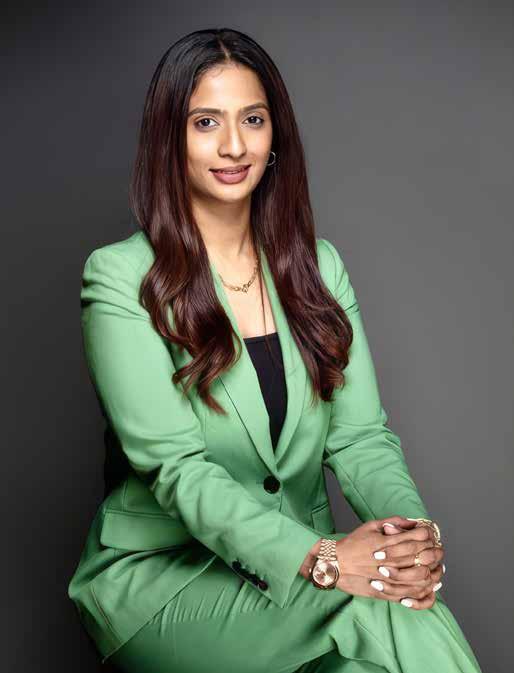
Ekta Shetty
Senior Sales Director, Asia Pacific ,Middle East ,Africa, Turkey & CIS, Shure
What has been the biggest professional leap of faith you’ve taken, and what did it teach you about resilience?
Leading through a total systemic collapse with zero playbook was the ultimate leap. It was terrifying, but it taught a vital lesson: resilience isn't "bouncing back" to who you were. It’s morphing forward. You don't survive the fire and come out the same; you come out forged. The only thing more dangerous than a crisis is the desperate urge to go back to "normal."
Beyond the obvious challenges, do subtle structural barriers still exist for women in commercial technology roles?
The most subtle barrier remains the "Authenticity Gap." There is often an unwritten expectation to adopt a rigid, archetypal version of strength to be perceived as competent. The real energy drain is performing a version of leadership that isn't your own. True progress isn't just about getting women into the room; it’s about evolving the room so that diverse expressions of authority become the new gold standard for business success.
Which lessons across your career have had the greatest impact on how you contribute to your organization today?
The most enduring lesson is that "The Team is the Product." If the internal culture is healthy and aligned, external success becomes inevitable. Contribution today isn't just about hitting a quarterly number; it’s about building a self-sustaining ecosystem of leaders. By prioritizing "ownership" over "assignment," we ensure that when people own the vision, they don't need to be managed they just need to be empowered.
What strengths do you believe are particularly important for women to succeed in technology sales and marketing leadership?
You need Unshakeable Resilience and Self-Confidence to stand firm when plans shift. True leadership is fueled by Radical Passion; you must believe in and love what you do. When you combine a driven heart with a sharp, fluid approach, you don’t just hit targets—you redefine the boardroom.
In high-value enterprise engagements, how critical is emotional intelligence alongside technical expertise?
Technical skills get you in the door, but Emotional Intelligence gets you the win. In high-value deals, we aren't just solving a math problem; we are managing human fear and the ego of change. If you can’t read the room, you’re just a vendor. If you can, you’re a partner. EQ is the bridge between a transaction and a transformation.
If you could redesign how the technology industry develops its next generation of female leaders, what would you change?
We need to move past the era of "advice" and into the era of "Access." The redesign would replace traditional mentorship with High-Stakes Sponsorship. We have enough mentors giving advice;
we need more sponsors willing to put their professional capital on the line to advocate for women in the rooms where decisions are made. We should stop "protecting" emerging leaders from the fire and start giving them the keys to "impossible" stretch roles, backed by unwavering executive support.
When you look back on your career, what kind of legacy would you like to leave—professionally and personally?
Professionally, the goal is to leave behind a "Culture of Ownership" a team so empowered and strategically aligned that the engine runs perfectly on its own. Legacy isn't about the doors we walk through; it’s about the doors we leave wide open for those who follow. It’s about ensuring the path is smoother for the next generation of experts.
How do you navigate setbacks or unexpected challenges in high-pressure commercial environments?
It’s about going back to basics. Strip away the drama and the noise and ask: "What is the one thing that is still true?" We don't play the blame game. We take the hit, own the gap, and pivot immediately. Radical honesty is the only way to survive high pressure. If you are transparent, the team will follow you through the storm. If you hide, you're on your own. Transparency is what keeps a team united during a storm.
"We’ve evolved into "architects of transformation," using tools to handle the noise so the team can focus on the soul of the business: relationships. No matter what the AI predicts, the gut instinct of a seasoned team is what determines why it actually matters."
Fadwa Eraky, Senior Field Marketing Manager, Infoblox shares how curiosity, empathy, and strategic thinking shape leadership in enterprise technology.
What initially drew you to a career in the technology industry?
Has that early motivation sustained over the years?
I was drawn to technology because it shapes how societies grow. Early in my career at PwC, I worked on digital transformation initiatives and saw how data and automation could redefine entire business models. At Honeywell, working around smart buildings and smart city infrastructure showed me how technology connects the physical and digital worlds. Today at Infoblox, in cybersecurity and network intelligence, I see how foundational technologies protect everything from banks to governments across GCC.
That evolution from proptech and smart cities to quantum innovation and AI driven cyber resilience keeps me curious and motivated. Technology never stands still, and neither do we.
Looking back, what defining moments shaped your leadership approach in sales and marketing?
Leading regional programs across Saudi Arabia, UAE, Bahrain, and Egypt taught me that alignment between sales, marketing, partners, and customers is everything. Whether launching smart city initiatives at Honeywell or cybersecurity campaigns at Infoblox, pipeline is a shared responsibility.
Becoming a mother also reshaped my leadership. It taught me empathy, discipline, and prioritization. I lead today with structure, clarity of goals, and respect for people’s time because strong teams are built on trust and purpose.
As the industry has shifted from legacy systems to cloud, AI, and quantum ready architectures, how have you evolved your own role to stay ahead?
I focus on continuous learning and practical experimentation. I use AI tools to improve campaign planning, measure funnel performance, and personalize outreach for enterprise accounts. In parallel, I invest time understanding emerging technologies from smart city platforms to quantum safe security so I can translate innovation into clear business value for customers.
In cybersecurity marketing, especially across GCC governments and large enterprises, staying ahead means combining data, storytelling, and deep industry awareness.
What has been the biggest professional leap of faith you have taken, and what did it teach you about resilience?
Moving into regional leadership roles managing high visibility enterprise programs was a leap of faith. From major GCC campaigns to executive events with strict pipeline expectations, the pressure is real.
What I learned is that resilience comes from preparation, transparency with your team, and the courage to adjust quickly. Not every initiative performs perfectly, but every experience strengthens judgment and confidence.
What strengths are particularly important for women to succeed in technology sales and marketing leadership?
Confidence with business metrics is important because understanding revenue impact builds credibility. Emotional intelligence matters because strong customer and partner relationships drive long term success. Strategic confidence is also essential so women feel
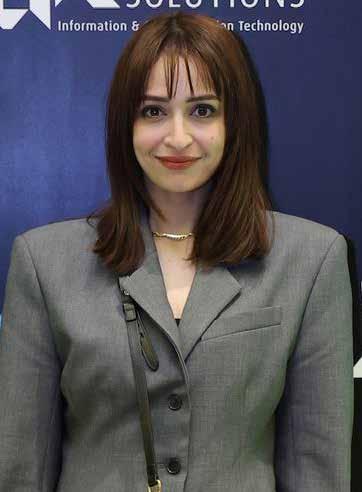
Fadwa Eraky Senior Field Marketing Manager, Infoblox
comfortable contributing ideas in technical and commercial discussions.
Women often excel at connecting people, ideas, and outcomes, and that is incredibly valuable in enterprise technology.
In high value enterprise engagements, how critical is emotional intelligence alongside technical expertise?
It is essential. In sectors like smart infrastructure, cybersecurity, and digital services, decisions involve long term transformation and trust. Technical knowledge opens the conversation, but emotional intelligence builds lasting partnerships.
Understanding a customer’s priorities, whether a government modernization program or a financial institution strengthening cyber resilience, is what turns meetings into meaningful outcomes.
When you look back on your career, what legacy would you like to leave professionally and personally?
Professionally, I hope to be known for helping organizations across the region adopt technology with clarity and confidence, while mentoring more women into leadership roles in commercial technology.
Personally, I want my children to see that curiosity, discipline, and kindness can exist together, that you can build a strong career, contribute to your community, and still stay present for your family.
For Gada Lopez, Head of Alliances for the Middle East at NTT DATA, leadership in technology is about translating innovation into meaningful business outcomes. She reflects on the evolving role of partnerships, the importance of emotional intelligence in enterprise engagements, and why confidence and collaboration remain essential for women aspiring to leadership roles in technology
As industry has shifted from legacy systems to cloud and AI-driven models, how have you evolved your own role to stay ahead?
The shift to cloud and AI has accelerated the pace of digital transformation. Staying ahead requires continuous learning and staying closely connected to both technology trends and customer needs. For leaders today, the key is translating innovation into real business value while helping organizations navigate change.
Beyond the obvious challenges, do subtle structural barriers still exist for women in commercial technology roles?
The industry has made meaningful progress in creating more opportunities for women in technology and leadership. Today, many organizations are actively investing in mentorship, sponsorship, and leadership development programs that support women’s growth.
Continuing to expand access to strategic projects, partnerships, and leadership visibility will further accelerate this progress.
What strengths do you believe are particularly important for women to succeed in technology sales and marketing leadership?
Success in technology leadership requires strategic thinking, resilience, and strong relationship building skills. Women leaders often bring a collaborative approach and a strong ability to connect technology with business outcomes.
Confidence, adaptability, and the ability to navigate complex stakeholder environments are also key to long-term success.
In high-value enterprise engagements, how critical is emotional intelligence alongside technical expertise?
Emotional intelligence is just as important as technical expertise in enterprise engagements. While technology builds credibility, trust and relationships are what drive long term partnerships.
When you look back on your career, what kind of legacy would you like to leave — professionally and personally?
Professionally, I hope to be remembered for driving growth, building strong partnerships, and contributing to innovation in the organizations I’ve worked with.
Personally, I hope to inspire more women to pursue leadership roles in technology and feel confident that they belong in shaping the future of the industry.
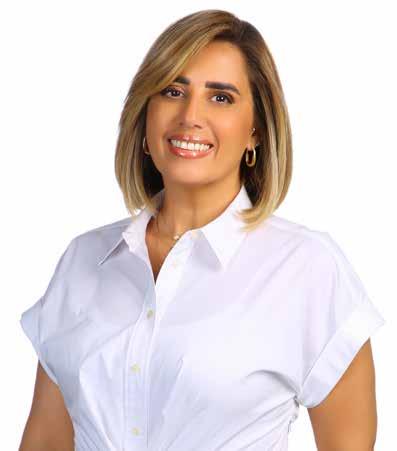
Gada Lopez Head of Alliances for the Middle East, NTT DATA
"Success in technology leadership requires strategic thinking, resilience, and strong relationship building skills. Women leaders often bring a collaborative approach and a strong ability to connect technology with business outcomes."
Francea Lobo, Marketing Manager Finesse highlights the importance of adaptability, trust, and creating collaborative environments where teams can thrive in this conversation.
What initially drew you to a career in the technology industry? Has that early motivation sustained over the years?
I was initially drawn to a career in the technology industry through marketing because I’ve always been curious about how technology shapes the way we live, work, and connect. Marketing felt like the perfect bridge between that curiosity and my love for storytelling—being able to translate complex tech concepts into real value that people and businesses can relate to.
That early motivation hasn’t just lasted; it’s grown stronger. Over the years, I’ve seen how technology, especially in areas like cybersecurity and AI, can truly empower organizations and protect what matters most to them. Being in tech marketing means I get to support innovations that solve real-world problems, while also helping customers understand and trust these solutions. It is especially meaningful to contribute to an industry that is constantly evolving and increasingly inclusive. I am glad I chose this path—it allows me to combine my passion for technology, creativity, and impact in a way that feels both purposeful and exciting every single day.
What strengths do you believe are particularly important for women to succeed in technology sales and marketing leadership?
I think adaptability, hard work, and good communication are really important for women to succeed in technology sales and marketing leadership. In the fast-paced tech world, it’s important to learn quickly, adjust plans, and handle challenges as they come. Building real relationships and influencing people across teams and clients also takes confidence. Having a strategic mindset along with empathy helps women leaders get results while supporting their teams and creating a positive, environment.
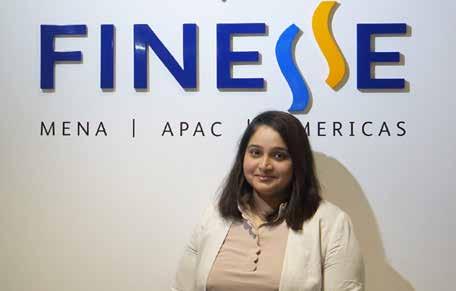
Francea Lobo Marketing Manager, Finesse
Which lessons across your career have had the greatest impact on how you contribute to your organization today?
Working in technology marketing has shown me how quickly the landscape can change. Strategies that work today often need to evolve tomorrow, which is why adaptability has become one of the most important lessons in my career. Staying open to learning and new ideas helps you remain relevant and effective.
Another lesson that has shaped the way I work is the importance of consistency and ownership. When you take responsibility for your work and follow through on your commitments, you build trust with the people you work with. Over time, that trust becomes the foundation for strong collaboration and better outcomes for the team.
As a woman in this industry, I have also seen how important it is to create environments where people feel supported and encouraged to share their ideas. When people feel confident speaking up and taking initiative, teams become stronger, more inclusive, and ultimately more effective.
When you look back on your career, what kind of legacy would you like to leave — professionally and personally?
When I reflect on my career, what matters most to me is the way I have contributed to the teams and people I have worked with along the way.
Professionally, I would like to be remembered as someone who approached her work with dedication, integrity, and a strong sense of responsibility. I hope my work reflects a commitment to collaboration and a willingness to go the extra mile to support shared goals.
Personally, I would like to be known as someone who helped create a positive and supportive environment for colleagues and partners. If my journey encourages others to grow in their roles, speak up with confidence, or feel more supported in their careers, that would be a legacy I would be proud of.
To me, a meaningful career is not only about the results you achieve, but also about the positive impact you have on the people you work with along the way.
Haneen Abu Ouda, Marketing & Communication Specialist at GBM says Technology is not only about innovation but about the impact it creates.
What initially drew you to a career in the technology industry? Has that early motivation sustained over the years? What initially drew me to the technology industry was witnessing its transformative power. I still remember attending my first GITEX — seeing global technology leaders shaping the future in one space made me realize that this industry is not just evolving; it is defining how we live and do business.
That experience shifted something in me. I didn’t just want to observe innovation — I wanted to contribute to it. That motivation has absolutely sustained over the years. If anything, the pace of change in technology has strengthened my curiosity and commitment to continuous growth.
Looking back, what defining moments shaped your leadership approach in sales and marketing?
One defining moment was working closely with sales teams in high-pressure environments. I learned that alignment between marketing and sales is not optional — it’s essential. Today, I lead with collaboration, accountability, and clarity of purpose.
As the industry has shifted from legacy systems to cloud and AI-driven models, how have you evolved your own role to stay ahead?
Technology evolves rapidly, and I’ve learned that adaptability is not a choice — it’s a professional discipline. As the industry shifted toward cloud and AI-driven solutions, I invested time in understanding not just the products, but the business outcomes they enable.
I moved from focusing purely on campaigns to positioning value propositions around transformation, efficiency, and ROI. Staying ahead means staying curious, continuously learning, and aligning marketing strategy with where the industry is heading — not where it has been.
What has been the biggest professional leap of faith you’ve taken, and what did it teach you about resilience?
The biggest leap of faith I took was resigning from a role where I felt misaligned with my long-term goals. Marketing is where I knew I could create the most impact.
Leaving stability without immediate certainty was challenging, but it taught me that clarity of direction builds resilience. That experience reinforced my belief that sometimes growth requires discomfort — and trusting your long-term vision over short-term security
Beyond the obvious challenges, do subtle structural barriers still exist for women in commercial technology roles?
Yes, subtle barriers still exist — not always in policy, but sometimes in perception. Women in commercial technology roles may have to work slightly harder to establish authority in traditionally male-dominated spaces.
However, I’ve also seen the industry evolve significantly. Organizations are increasingly recognizing that diversity drives performance. The key is not just representation, but inclusion — ensuring women are present in decision-making roles, not only supportive ones.
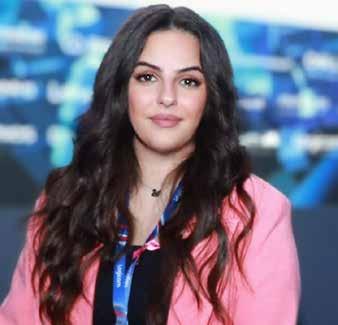
Haneen Abu Ouda Marketing & Communication Specialist, GBM
Which lessons across your career have had the greatest impact on how you contribute to your organization today?
The greatest lesson has been the power of ownership. When you treat your role as a business within the business, your mindset shifts from task execution to value creation.
I’ve also learned that productivity isn’t about being busy — it’s about being intentional. Today, I focus on strategic priorities, measurable outcomes, and aligning my work directly with commercial impact.
What strengths do you believe are particularly important for women to succeed in technology sales and marketing leadership?
Confidence, strategic thinking, and continuous learning are essential. While technology sales has traditionally been male-dominated, leadership today is less about dominance and more about influence.
Women often bring strong emotional intelligence, resilience, and collaborative leadership styles — which are powerful assets in complex enterprise environments. Being assertive while staying authentic is key.
In high-value enterprise engagements, how critical is emotional intelligence alongside technical expertise?
Technical expertise builds credibility, but emotional intelligence builds trust — and trust closes deals.
Enterprise engagements are complex, involving multiple stakeholders, competing priorities, and long decision cycles. Understanding motivations, reading dynamics, and navigating conversations strategically is critical.
At the end of the day, behind every corporate structure are people. And business remains fundamentally human.
From starting her career as a computer engineer to leading enterprise sales conversations across diverse markets, Jeeba James- Director Enterprise Sales, Mindfire Technologies emphasizes resilience, cultural connection, and the importance of bringing people and technology together.
What initially drew you to a career in the technology industry? Has that early motivation sustained over the years?
I started as a computer engineer because I loved solving problems with code; it felt like magic! That excitement is still there, even stronger now in sales. Helping companies use tech to grow, especially in a fast, exciting place like Dubai, keeps me smiling every day. The energy here, with people from everywhere, makes me love tech more than ever!
Looking back, what defining moments shaped your leadership approach in sales and marketing?
Switching from engineering to sales was a big moment; suddenly I was talking to people from different countries, cultures, and backgrounds. One time I closed a big deal while helping my girls with exams at home. It showed me that real leadership means caring about people, listening with your heart, and staying calm. Dubai's mix of cultures taught me to connect even more deeply.
As the industry has shifted from legacy systems to cloud and AI-driven models, how have you evolved your own role to stay ahead?
I keep learning — AI, cloud, everything new! I use my engineering mindset plus understanding people's feelings to explain tech in simple, exciting ways. With all the changes around the world, I've focused on safe, strong solutions that help clients feel secure. In Dubai, where everything moves fast, it feels thrilling to stay one step ahead.
What has been the biggest professional leap of faith you’ve taken, and what did it teach you about resilience?
Leaving a safe engineering job to lead sales was scary, especially with teenage girls and a busy husband who loves his work! But it taught me resilience is about believing in yourself, asking for help, and finding joy in small wins. We make it work as a family, and Dubai's positive vibe helps so much with the beaches, friends, and events that it keeps us happy and strong.
Beyond the obvious challenges, do subtle structural barriers still exist for women in commercial technology roles?
Yes, sometimes people assume you can't be "always on" because you're a mom, or they overlook your ideas in meetings. But emotional intelligence — understanding people — is a superpower many women have. In Dubai, things are getting better fast; I see so many strong women succeeding. I want my girls to grow up knowing they can do anything here.
What strengths do you believe are particularly important for women to succeed in technology sales and marketing leadership?
Listening well, adapting quickly, and building real trust helps.
James Director Enterprise Sales, Mindfire Technologies
Women are often great at this because we use heart and mind together. Being a mom and wife keeps me grounded; I make time for family first, but I'm always ready to help customers. In Dubai's colorful world, these strengths turn challenges into fun opportunities.
When you look back on your career, what kind of legacy would you like to leave — professionally and personally?
I want to be remembered as someone who built bridges, connecting tech with people, cultures with ideas, and showing my daughters that you can love your work, love your family, and still enjoy life. Professionally, helping teams and clients grow. Personally, being a happy, present mom and wife. Dubai has given us so much joy, the lights, the people, the dreams and I want to pass on that excitement.
"I want to be remembered as someone who built bridges, connecting tech with people, cultures with ideas, and showing my daughters that you can love your work, love your family, and still enjoy life. "
For Kiara Israni, Marketing Manager for Emerging EMEA at Sophos, modern marketing is no longer about visibility alone. It is about commercial impact, strategic alignment, and translating complex technology into measurable business value.
Looking back, what defining moments shaped your leadership approach in sales and marketing?
One defining shift was recognizing that marketing is not a support function, it is a growth engine. The moment you own revenue impact, everything changes: how you think about alignment, how you hold yourself accountable, how far ahead you plan. Leading through market uncertainty sharpened that further. What I learned is that clarity and consistency outperform volume every time. Teams do not just need targets, they need context. When people understand the why behind the strategy, they make better decisions faster, with less friction.
That experience shaped how I lead today. I build commercial strategies designed to be resilient, not reactive, grounded in transparency, driven by alignment, and built to hold up when conditions shift.
As the industry has shifted from legacy systems to cloud and AI-driven models, how have you evolved your own role to stay ahead?
The shift to cloud and artificial intelligence has required marketers to become far more strategic. It is no longer enough to communicate features. We must translate complexity into business value and risk mitigation.
I have evolved by deepening my understanding of technology trends while strengthening my commercial lens. In cybersecurity, trust and speed are equally important. My role today involves connecting innovation to board level priorities, ensuring that go to market strategies reflect both technological advancement and organizational risk realities.
Which lessons across your career have had the greatest impact on how you contribute to your organization today?
The most important lesson has been that alignment drives acceleration. When sales, marketing, and leadership share a unified vision, execution becomes more powerful.
I have also learned that credibility is built through consistency. In cybersecurity, trust is everything. Internally and externally, delivering on commitments and communicating transparently strengthens both brand and culture. Today, I focus on creating clarity, enabling collaboration, and ensuring that marketing is directly linked to measurable business growth.
What strengths do you believe are particularly important for women to succeed in technology sales and marketing leadership?
Strategic thinking is essential. Technology markets evolve quickly, and leaders must connect short term performance with long term positioning.
Equally important is confidence rooted in competence. Women in
Kiara Israni Marketing Manager for Emerging EMEA, Sophos
commercial leadership benefit from deeply understanding both the technical landscape and the business impact. The ability to influence across functions, build alliances, and remain composed under pressure creates credibility that endures beyond any single campaign or quarter.
When you look back on your career, what kind of legacy would you like to leave, professionally and personally?
Professionally, I would like to be remembered as someone who elevated marketing into a strategic growth function within cybersecurity. Someone who built teams that were commercially strong, collaborative, and future focused.
Personally, I hope my career demonstrates that leadership and authenticity are not mutually exclusive. If more women see that they can lead with intelligence, clarity, and purpose without compromising who they are, that would be a meaningful legacy.
How do you navigate setbacks or unexpected challenges in high pressure commercial environments?
Under pressure, I separate emotion from analysis. Reaction clouds judgment so before responding, I focus on understanding root causes. Setbacks to me is data. They surface gaps in strategy, communication, or market readiness that success tends to hide. Treating challenges as feedback rather than failure makes recalibration possible without losing momentum. Composure, transparency with teams, and decisive adjustment are essential in maintaining trust during uncertainty.
Lama Sheikh, CAO & Director Finesse discusses leadership through uncertainty, the importance of structured, people-centric environments, and why resilience and clarity are essential in today’s fast-changing technology landscape.
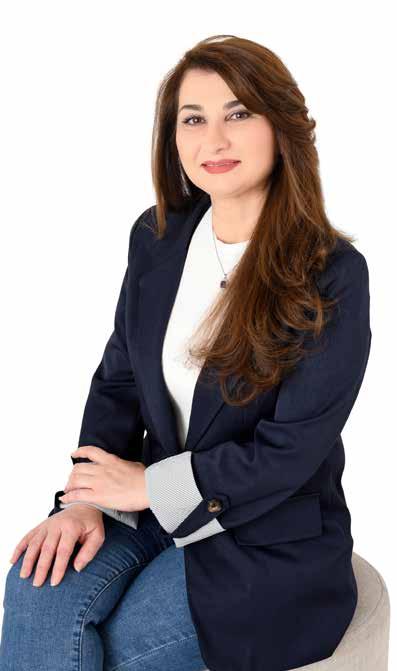
Lama Sheikh CAO & Director, Finesse
What initially drew you to a career in the technology industry?
I have always been motivated by a deep desire to empower people and enable meaningful change. Supporting someone in a way that helps them feel hopeful and capable is deeply fulfilling for me. I see technology as one of the most powerful tools to do exactly that—it creates meaningful experiences, improves how we live and work, and enables lasting progress at scale.
This naturally shaped how I viewed technology from a young age. Growing up, I was fascinated by how it could make the seemingly impossible achievable and transform the way organizations function. That early curiosity eventually guided me into this field. What began as interest quickly grew into a passion as I witnessed the real impact of technology on businesses and communities.
What attracted me to technology was its power to shape the future. It’s one of the few industries where ideas can quickly turn into solutions that transform how businesses and people operate. That sense of impact has kept me motivated throughout my career.
Over time, my focus has been on building structured, people-centric environments where innovation can thrive and organizations can grow sustainably. For me, technology isn’t just about systems or platforms, it’s about creating the right foundations so people, ideas, and businesses can reach their full potential.
Beyond the obvious challenges, do subtle structural barriers still exist for women in commercial technology roles?
Absolutely. While the most overt barriers may have fallen, it would be unrealistic to overlook the subtle yet persistent structural headwinds women still face. The conversation has thankfully shifted from why diversity matters to how we embed it into our organizational DNA. Diversity is no longer a 'nice-to-have'; it is a strategic imperative. Diverse teams consistently outperform homogenous ones because they dismantle echo chambers, challenge assumptions, and build products that resonate with a broader world.
Historically, the industry's pipeline and promotion pathways were not built with women in mind. The positive change we see now is a conscious effort by forward-thinking organizations to correct
this—not just by listening, but by actively creating programs that accelerate career growth. My advice to women entering tech is to own their space unapologetically. Be visible, be vocal, and recognize that your unique perspective is a competitive advantage for the business. Frame every challenge as an opportunity to demonstrate that value. Your viewpoint is not just welcome; it is essential.
What has been the biggest professional leap of faith you’ve taken, and what did it teach you about resilience?
One of the biggest leaps of faith in my career has been joining Finesse in its early growth phase and committing to its long-term journey. Over the past decade, I’ve witnessed the organization evolve along with a rapidly changing technology landscape. It wasn’t a single dramatic decision, but a sustained commitment to grow with the company, taking on new responsibilities, scaling functions, and continuously adapting our operating model.
A particularly defining chapter was the COVID-19 pandemic. Overnight, organizations had to pivot to remote work, maintain service quality, and ensure robust data security. It was a stress test for every system, process, and person involved. My role was to absorb that pressure, maintaining a calm front to give the team the psychological safety needed to solve complex problems. That period reinforced that resilience is built over time; adaptability is non-negotiable; and calm, steady leadership is critical when uncertainty is at its peak. It also highlighted the importance of empathy, supporting people through personal and professional challenges while safeguarding business continuity.
Ultimately, that leap of faith taught me that resilience is not about avoiding difficulties, but about developing the mindset, structures, and relationships that allow you to respond constructively when they arise.
How do you navigate setbacks or unexpected challenges in high-pressure commercial environments?
My approach is guided by a leadership compass that points toward calm, clarity, and continuous improvement. When a challenge hits, the first directive is to trade panic for perspective. I deliberately create a moment of pause to separate the signal from the noise, gather objective facts, and avoid the trap of rushed, reactive decisions.
Once the landscape is clear, I focus on what I call 'mission-critical triage'—identifying the absolute priorities for our clients, our people, and our operations. With that established, the focus shifts to communication. In a crisis, clarity is kindness. Transparent, consistent communication is the bedrock of trust, ensuring the team feels secure, informed, and aligned on the path forward.
However, a challenge isn't truly over until we have harvested the wisdom from it. We conduct a reflective analysis to understand the root causes and embed the lessons learned into our processes. This transforms a reactive moment into a proactive strength, building our collective resilience. Ultimately, this is about modeling the kind of leadership I want to see. It proves that you can be both empathetic and decisive, and that true resilience isn't about being unshake-
able, but about how gracefully you lead through the shake-up.
If you could redesign how the technology industry develops its next generation of female leaders, what would you change?
If I were to redesign how the technology industry develops future female leaders, I would take a strategic, company-wide approach. This would involve clear leadership paths, development programs and opportunities to work on high-impact projects to build skills and experience. I would also create inclusive policies and measurable diversity goals to ensure women feel supported and confident stepping into leadership roles. This approach helps grow female leaders in a way that aligns with the organization’s long-term goals
When you look back on your career, what kind of legacy would you like to leave — professionally and personally?
When I look back on my career, I want to be remembered for strong leadership and meaningful relationships. I hope people see me as someone who built great teams, helped others grow, and delivered results that made a real difference. On a personal level, I want to be known as a leader who earned trust, encouraged collaboration, and supported people to reach their full potential, creating a culture where success is shared and lasting. I also hope my work inspires others to pursue their goals with confidence and resilience. Ultimately, I want to leave a legacy that encourages continuous learning, growth, and positive impact for everyone I work with
"The conversation has thankfully shifted from why diversity matters to how we embed it into our organizational DNA. Diversity is no longer a 'nice-to-have'; it is a strategic imperative."
Meriam ElOuazzani, Vice President for Middle East, Turkey, and Africa, Censys discusses the leadership decisions that shaped her journey and why cybersecurity must now be positioned as a business enabler rather than a cost center.
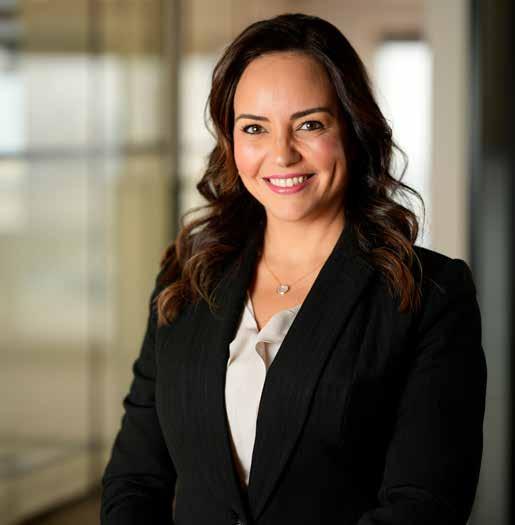
What initially drew you to a career in the technology industry? Has that early motivation sustained over the years?
I grew up in Morocco watching the region go through wave after wave of digital investment, but the security conversation was always an afterthought. That gap between ambition and readiness is what pulled me in. I started at HP, moved to Cisco, and spent the next decade in the Middle East, Turkey, and Africa building cybersecurity
Meriam ElOuazzani Vice President for META, Censys
markets where progress had started.
What sustained me was not the technology itself. It was the translation work. Sitting with a CPO in the United Arab Emirates or a CIO in South Africa and helping them see that cybersecurity is not a cost center but a condition for everything else they want to build. That conversation has never gotten old. The tools changed. The urgency changed. But the core of it, making technical complexity legible to the people
who make investment decisions, has been my work from the beginning. I’m proud that I get to do it today again with a great platform in hand, Censys, and an amazing team to support our customers in building stronger security practices.
Looking back, what defining moments shaped your leadership approach in sales and marketing?
Two moments stand out. The first was at Cisco, leading mobility sales across the Middle East during the period when the industry was still selling hardware appliances through traditional channel partners. I learned that you do not build a market by pushing the product. You build it by making your partners successful first. A partner that drives value and supports customers with technology and adoption is key. That lesson has shaped every go-to-market strategy I have built since.
The second was at VMware, where I built the META NSX practices from scratch. There was no team, no pipeline, no playbook. I had to recruit, establish channel relationships, and close enterprise deals simultaneously. I had talented extended team members who went the extra mile to support the practice and true leaders around me to help transform the vision into reality. The power of one team, a team that doesn’t stop at job descriptions and believes in the value that transformation and out-of-thebox ideas and initiatives bring. That experience taught me something you cannot learn in a structured environment: when you are building from zero, every decision compounds. You learn to trust your judgment faster because there is no one else's judgment to borrow. You also get to know the value of having the right people beside you supporting you every step of the way. Now at Censys, I’m learning from strong and smart people who learned a lot and stayed humble, lessons I encourage everyone to learn and apply.
As the industry has shifted from legacy systems to cloud and AI-driven models, how have you evolved your own role to stay ahead?
I have lived through many major inflection points in this industry. At Cisco, we sold firewalls and intrusion prevention systems as physical appliances. At VMware, the data center was being abstracted into software, and security had to follow workloads instead of sitting at the network edge. At SentinelOne, I watched AI-native platforms replace signature-based detection entirely. Now at Censys, the question is even more foundational: before you can secure anything, you need to know what you have exposed on the Internet. While you think you have the best technologies in your sock, remember that there is always a way to enrich alerts, expand indicators, and monitor attackers’ footprints, and that is our strength at Censys, and this is what I chose to invest in to help customers with the best technologies they can rely on.
Each of those transitions required me to unlearn something I was good at. The hardest was accepting that the channel-driven, appliance-based sales model I had mastered at Cisco was becoming obsolete. A new world around SaaS-based cybersecurity was opening to me. The META cybersecurity market is projected to reach $6.5 billion by 2031. Organizations across the region are demanding real-time visibility into their digital footprint. The leaders who do well in this next phase will be the ones willing to let go of what made them successful in the last one.
What has been the biggest professional leap of faith you’ve taken, and what did it teach you about resilience?
Joining Censys. After three years of building, leading, and growing. I made the decision to step into something new. Walking away from something you built is harder than walking toward something new.
I took the role because Censys is solving a problem I have watched organizations struggle with for two decades: they do not know what their own infrastructure looks like from the outside. At Censys, what we offer is a clear view of what your attack surface looks like, the same view an attacker already has. That matters more now than ever, with the region's rapid digitization under Vision 2030 and the UAE's smart city initiatives creating new exposure every day. What makes this move especially meaningful is the company itself. Censys has a clear vision, a disciplined path to execution, and
a solution portfolio that continues to expand. When your foundation is accurate and reliable data that security teams can build on with confidence, sustained growth becomes inevitable.
What this move taught me about resilience is simple. Resilience is not about enduring discomfort. It is about choosing discomfort deliberately when you believe the work matters.
Beyond the obvious challenges, do subtle structural barriers still exist for women in commercial technology roles?
No one in this industry is surprised by the imbalance. That is precisely the problem. It has become expected rather than unacceptable. I have spent twenty years walking into rooms where I was the only woman at the table. Boardrooms, government sessions, high-stakes negotiations. The pattern has barely shifted.
Women remain vastly underrepresented in cybersecurity leadership, both globally and across the GCC. Yet women in this field are consistently more educated than their male counterparts. The gap is not in preparation. It is in the architecture of progression: who gets sponsored, who gets seen, and who gets chosen when it matters.
The single most damaging barrier I have witnessed in this region is the absence of
structured sponsorship. Nearly half of women in the Middle East report having no mentor or sponsor in their workplace. Competence without visibility leads nowhere. That is not an individual failing. It is a systemic one.
Which lessons across your career have had the greatest impact on how you contribute to your organization today?
Three lessons. The first is that understanding regional market dynamics matters more than any global playbook. My experience across META has given me a deep understanding of how different this market is from North America or Europe. The buyer journey, the role of government mandates, and the channel structures are all different. You cannot copy-paste a go-to-market strategy from San Francisco to Riyadh.
The second is that security should be framed as a business enabler, not a barrier. The moment you position cybersecurity as something that slows innovation down, you have lost the conversation with the C-suite. I have found that the most effective framing is simple: this is what lets you move fast without breaking things.
The third is that your channel partners are your business. I learned this at Cisco, and it has held true at every company since. You scale through strong, on-the-ground partnerships. Full stop.
"You learn to trust your judgment faster because there is no one else's judgment to borrow. You also get to know the value of having the right people beside you supporting you every step of the way."
Lara Fawzy, Principal Marketing Manager –MEA, Tenable discusses the importance of adaptability, continuous learning, and the role of storytelling in translating complex technology into meaningful business value.
What initially drew you to a career in the technology industry?
Has that early motivation sustained over the years?
I was initially drawn to marketing and always knew I wanted to work for a large multinational organisation or for a large well-know brand. I studied marketing and began my career in the technology sector with a global company at a young age. From the beginning, I was attracted to the pace of the industry and the sense that technology was making a huge impact on how businesses and people operate.
Over time that motivation and experience has only grown stronger. Technology is constantly evolving and sits at the forefront of innovation, I feel I market something meaningful that’s impacts lives.
I have always been inspired by founders and visionaries in the industry, including Steve Jobs, whose ability to combine technology with creativity was unbelievably inspiring.
I have remained in the technology sector for the majority of my career, which now spans more than twenty years. Along the way I also co-authored a book on digital marketing, which allowed me to explore how technology and marketing continue to evolve together, it was published by Pearson FT Press.
Looking back, what defining moments shaped your leadership approach in sales and marketing?
Several moments shaped my leadership approach. Early in my career I was involved in major technology initiatives, including the launch of video conferencing and high-end telepresence solutions, which were radically transforming how organisations communicated globally.
While based in the UK, I was also part of the B2B launch of the iPhone 3G. It was a pivotal time in the industry and highlighted how quickly innovation could reshape markets and consumer expectations.
Witnessing the rapid growth of technology adoption across different regions, including the Middle East, reinforced the importance of staying adaptable and forward-looking in marketing.
Equally important has been the opportunity to work alongside exceptional sales leaders who mentored and supported my development. Their guidance helped shape my leadership style and reinforced the importance of strong collaboration between marketing and sales.
As the industry has shifted from legacy systems to cloud and AI-driven models, how have you evolved your own role to stay ahead?
Lara Fawzy Principal Marketing Manager –MEA, Tenable
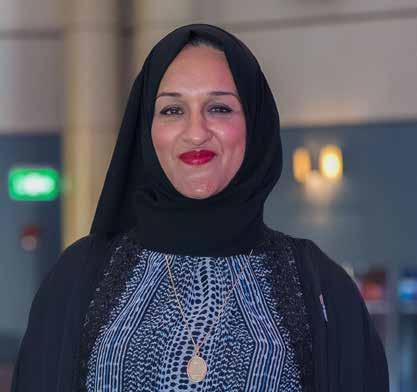
What has been the biggest professional leap of faith you’ve taken, and what did it teach you about resilience?
One of the biggest leaps of faith in my career was relocating across continents to pursue opportunities in technology marketing. I moved from the UK to Africa and later to the Gulf.
These experiences were challenging but extremely rewarding. They taught me resilience, adaptability, and the value of embracing change. Each move also allowed me to contribute to rapidly digitising markets and further develop my career in global technology, mnc environments.
Beyond the obvious challenges, do subtle structural barriers still exist for women in commercial technology roles?
The technology sector is still largely male dominated. I have attended many industry events where women remain significantly underrepresented.
Omar Akar Regional VP, Middle East & Emerging Africa, Pure Storage
The technology industry evolves quickly, and marketing must evolve alongside it. I have always had a strong interest in digital marketing, storytelling, and innovative ways of communicating complex ideas.
Today I continue exploring areas such as AI-driven marketing, social media and digital strategies that help organisations connect more effectively with their audiences. I believe the message should support the medium, and marketing must constantly adapt as technologies and customer expectations change.
I also make a point of continuously learning about cybersecurity technologies themselves. Understanding the solutions we promote helps ensure marketing remains credible, relevant, innovative and impactful.
That said, progress is being made as more women enter leadership roles across the industry. Ultimately, strong performance and expertise help break down barriers, but continued efforts around representation, mentorship, and opportunity are still important
In high-value enterprise engagements, how critical is emotional intelligence alongside technical expertise? Emotional intelligence is extremely important. Organisations are made up of people, and understanding those relationships is critical.
While technical expertise is essential, building trust, listening carefully, and connecting with people and colleagues determines the success of enterprise engagements.
Nikita Kandath, Marketing Manager, EMEA at CommScope shares how collaboration with sales teams and the ability to translate complex technology into business value have shaped her leadership approach.
What initially drew you to a career in the technology industry?
Has that early motivation sustained over the years?
I began my career in marketing across several industries, but I was always drawn to the technology sector because of its dynamic nature and the constant pace of innovation. What initially attracted me was the opportunity to promote solutions that don’t just support businesses but also have the potential to create meaningful impact in people’s lives.
The tech industry’s ability to evolve so quickly means there is always something new to learn and new challenges to solve. That environment of continuous change and innovation was incredibly appealing to me early on.
Over the years, that motivation has absolutely sustained. If anything, it has grown stronger. The opportunity to stay at the forefront of emerging technologies, work on solutions that enable digital transformation, and continually learn keeps me inspired and engaged in the field.
Ultimately, my journey into tech was driven by curiosity, a passion for problem-solving, and a desire to contribute to meaningful innovation and those same motivations continue to guide me today.
Looking back, what defining moments shaped your leadership approach in sales and marketing?
Early in my career, I realized that marketing and sales cannot operate in silos. One of my strengths has always been the ability to connect with people and lead with empathy, which helped me build strong relationships across supporting functions…particularly with sales. A defining moment for me was working on initiatives where close collaboration between the two functions directly translated into measurable business impact. It reinforced the idea that marketing must stay closely connected to the customer, the partner ecosystem, and the sales teams on the ground.
Another experience that shaped my leadership style was working with diverse teams across regions and cultures. It highlighted how much stronger outcomes can be when different perspectives are brought to the table. As a result, my leadership approach focuses on fostering collaboration, empowering teams, and ensuring that marketing strategies remain closely aligned with both customer needs and commercial success.
As the industry has shifted from legacy systems to cloud and AI-driven models, how have you evolved your own role to stay ahead?
With the changing landscape in the tech world, I’ve had to evolve from a traditional marketing role to one that is far more strategic and integrated with the business. Staying ahead means continuously upskilling by understanding new technologies, market shifts, and how they impact customer priorities.
A big part of that evolution has been focusing on storytelling that bridges technology and business outcomes. Our role in marketing is to simplify complexity, helping customers and partners see how
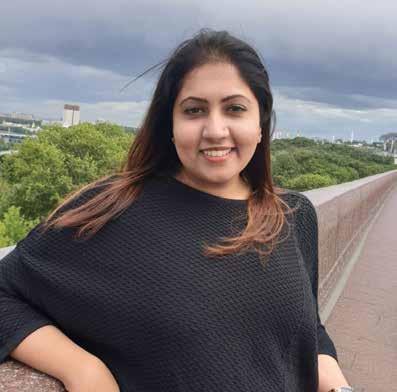
Nikita Kandath Marketing Manager, EMEA, CommScope
innovations in cloud, AI, and digital infrastructure translate into real value. It also means working more closely than ever with sales, product, and ecosystem partners to ensure our messaging reflects both market needs and future opportunities.
What has been the biggest professional leap of faith you’ve taken, and what did it teach you about resilience?
One of the biggest leaps of faith in my career was stepping into B2B tech marketing roles focused on digital infrastructure, an area where the technology is complex and the pace of innovation is constant. Early on, I found myself in rooms with engineers and architects discussing networks and connectivity at a very deep level. Rather than being intimidated, I chose to lean into learning and curiosity. That experience taught me that resilience isn’t about having all the answers, it’s about staying adaptable, asking the right questions, upskilling and confidently translating complex technology into meaningful business value.
Beyond the obvious challenges, do subtle structural barriers still exist for women in commercial technology roles?
Absolutely. Beyond the visible challenges, subtle structural barriers persist for women in commercial tech like underrepresentation in senior roles, gaps in funding, and work cultures where speaking up can feel risky. These factors can chip away confidence and make it harder to be taken seriously. Overcoming them requires self-advocacy, embracing flexible work models to balance life and career, and proactively seizing opportunities to align with one’s purpose. It’s about building both visibility and resilience in spaces that weren’t always designed for us
Natasha Kasliwal, Senior Enterprise Marketing Manager, MEA, Nutanix reflects on the importance of collaboration across sales and marketing, staying curious in a rapidly evolving cloud and AI landscape, and why supporting and uplifting women in the industry can create lasting impact.
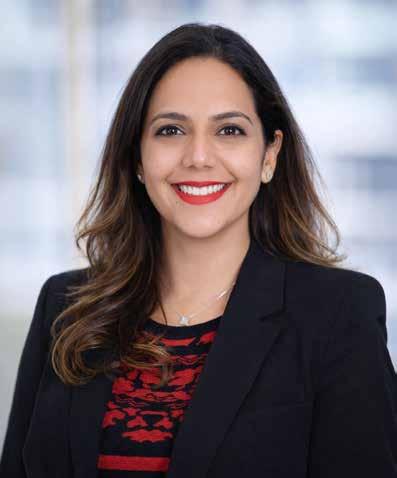
Natasha Kasliwal Senior Enterprise Marketing Manager, MEA, Nutanix
Looking back, what defining moments shaped your leadership approach in sales and marketing?
One of the biggest realizations in my career has been that success in enterprise environments is never a solo effort. The best outcomes happen when there is strong collaboration between sales, marketing, alliances and partners.
I’ve always seen myself as a team player. Some of the most defining moments in my career came from working in teams where everyone brought different strengths and perspectives. Those experiences taught me the value of listening, supporting one another and moving toward shared goals.
Seeing how marketing initiatives influence pipeline and customer conversations also helped me understand the bigger picture and the real impact marketing can have when closely aligned with the field.
As the industry has shifted from legacy systems to cloud and AI-driven models, how have you evolved your own role to stay ahead?
As technology has evolved toward cloud and AI-driven models, I’ve also evolved the way I work. Today, AI helps us work smarter , from analyzing campaign performance to understanding customer insights.
In enterprise marketing, it’s important to stay close to how customers are thinking about modernization, hybrid cloud and AI. I try to stay curious, continuously learn and explore how new tools can help us engage customers in more meaningful ways.
What has been the biggest professional leap of faith you’ve taken? One of the biggest leaps of faith in my career was stepping into roles where I had the opportunity to take on larger regional initiatives and responsibilities. At times the expectations felt daunting, but those moments pushed me to grow.
What initially drew you to a career in the technology industry?
Has that early motivation sustained over the years?
Coming from a family of doctors, with both my parents in medicine, I grew up hearing conversations about saving lives and improving patient care. What fascinated me was seeing how technology was increasingly becoming part of that impact, from medical equipment to the early rise of computers and mobile devices transforming how people worked and communicated.
That curiosity naturally stayed with me. As technology evolved, I became more interested in how innovation shapes industries and everyday life.
Today, working in enterprise marketing at Nutanix, I see that impact on a much larger scale. We are not just positioning technology solutions, we are helping organizations modernize, simplify complexity, and move forward with confidence.
Technology never stands still, and neither can we. Being part of an industry that constantly challenges you to learn and adapt is incredibly energizing.
Often you don’t have all the answers, but you move forward and learn along the way. Those experiences taught me resilience and the importance of trusting your instincts.
I’ve also been fortunate to work with inspiring women leaders who encouraged me to step outside my comfort zone. One of the things that continues to inspire me in this industry is seeing women lift each other up and create space for more voices at the table.
Do subtle structural barriers still exist for women in commercial technology roles?
I think the industry has made meaningful progress over the years, but there is still more to be done, especially in the IT sector. Today the conversation is not just about inclusion, it is about influence and visibility. Being part of strategic discussions, working on high impact initiatives and having a seat at important decision making tables makes a real difference in shaping careers.
I truly believe that when women support and uplift each other, it creates momentum for the entire industry. The more we encour-
age visibility, mentorship and sponsorship, the more we help open doors for the next generation of women in technology. Technology evolves every day, but what truly drives progress is people , and when women support and lift each other up, the entire industry moves forward.
Which lessons across your career have had the greatest impact on how you contribute today?
One of the biggest lessons I’ve learned is that the best results come from collaboration rather than working in silos.Working closely with sales, partners and cross-functional teams has shown me how powerful alignment can be. Technology evolves quickly, so staying curious and open to learning is also essential.
Most importantly, building strong relationships based on trust and respect creates lasting impact for both the organization and the people you work with.
What strengths are particularly important for women to succeed in technology sales and marketing leadership?
Strategic thinking is important, but equally important is the ability to collaborate and bring people together around a shared goal. Enterprise marketing and sales often involve navigating complex conversations, understanding business priorities and aligning multiple stakeholders. Being able to understand the side of the business while building strong relationships with teams and customers is incredibly valuable.
Teamwork plays a huge role in everything we do. Many women bring a natural strength in communication, empathy and relationship building, which helps create that alignment. And of course, women are often great multitaskers. Whether it is balancing multiple projects, managing different stakeholders or switching between strategic thinking and execution, that ability to juggle many things at once can be a real strength in fast paced environments like technology. When that is combined with commercial understanding and teamwork, it becomes a powerful way to drive meaningful impact.
In high-value enterprise engagements, how critical is emotional intelligence?
While technology and solutions are critical, decisions at that level are rarely purely technical , they involve trust and relationships.
For me, it has always been about a people-first approach. Behind every organization are individuals making important decisions, and understanding their perspectives really matters. When people feel heard and respected, conversations naturally become more collaborative and long-term partnerships begin to form.
Emotional intelligence helps bridge the gap between rapidly evolving technology and the human relationships behind business decisions.
If you could redesign how the technology industry develops future female leaders, what would you change?
I would encourage giving women more opportunities early in their careers to work on strategic initiatives and participate in important business conversations.
Confidence grows when people are trusted with responsibility and supported along the way. Mentorship and support networks also play a huge role.
When women collaborate, share experiences and lift each other up, it creates a stronger and more confident next generation of leaders.
What legacy would you like to leave — professionally and personally?
Professionally, I would like to be remembered as someone who made a meaningful difference in the business while always being a strong team player. Success for me has never been about individual achievements alone, but about contributing to shared goals.
On a personal level, I hope my journey shows my children , especially my daughter , to grow up believing that women have a voice, a place at every table, and the confidence to pursue anything they dream’s of.
I was fortunate to grow up with a strong role model. Seeing my mother pursue her career as a doctor taught me early on that women can achieve anything , that belief continues to inspire me every day. If my journey helps inspire even a few others to believe in themselves while making my family proud, that would be a legacy I would be very proud of.
How do you navigate setbacks in high-pressure environments?
In fast-paced environments, setbacks are inevitable. Over time I’ve learned to see them not as failures but as opportunities to pause, learn and come back stronger.
What helps most is staying grounded and focusing on solutions. Supportive colleagues and leaders also make a huge difference. For women especially, moments of doubt are part of the journey. What matters most is resilience, believing in yourself and continuing to move forward. And that is something I hope more women remember. Setbacks are not barriers, they are stepping stones that prove their voice, ideas, and ambitions truly belong in this industry.
"Today, the conversation is not just about inclusion; it is about influence and visibility. Being part of strategic discussions, working on high-impact initiatives, and having a seat at important decision-making tables makes a real difference in shaping careers."
Priyanka Kumar who leads regional marketing initiatives across the Middle East, India, and ANZ for Barco, has worked closely with global technology alliances, distributors, and enterprise customers to drive adoption of modern workplace solutions. She believes that collaboration, adaptability, and strong industry partnerships are key to shaping the future of work.
What initially drew you to a career in the technology industry?
Has that early motivation sustained over the years?
What initially drew me to technology was the pace of change and the impact it has on how people work and collaborate. Early in my career, I was fascinated by how the right technology could simplify communication and connect teams across locations.
Technology is one of the few industries where innovation constantly reshapes how we work. Being part of that transformation has always been incredibly motivating for me.
That motivation has stayed with me. Whether it’s through customer engagements, industry events, or partner initiatives, seeing organizations adopt modern collaboration solutions and transform how their teams work continues to be incredibly rewarding.
Looking back, what defining moments shaped your leadership approach in sales and marketing?
One of the biggest realizations early in my career was that marketing only becomes truly impactful when it is closely aligned with sales and the broader partner ecosystem.
The most impactful marketing doesn’t happen in isolation — it happens when marketing, sales, partners, and customers are all aligned around the same outcome.
Many of the most successful initiatives I’ve been involved in — from regional roadshows to collaborative partner events — worked well because different teams and partners came together around a shared objective of delivering value to customers.
As the industry has shifted from legacy systems to cloud and AI-driven models, how have you evolved your own role to stay ahead?
The industry has moved from product-led conversations to outcome-driven ones. Customers today want solutions that integrate seamlessly into their collaboration platforms and workplace ecosystems.
In today’s technology landscape, innovation rarely happens alone. The most meaningful progress comes from strong ecosystems and partnerships.
This has made ecosystem collaboration even more important. Working closely with technology partners, distributors, and industry stakeholders allows us to demonstrate how different technologies come together to create better workplace experiences.
What has been the biggest professional leap of faith you’ve taken, and what did it teach you about resilience?
Taking on regional marketing responsibilities across markets like the MEA, India, and ANZ was a defining step in my career. Each region has its own pace of technology adoption and unique market dynamics.
Managing initiatives across these diverse markets taught me the importance of adaptability and trusting local teams and partners who understand their customers best.
Beyond the obvious challenges, do subtle structural barriers still exist for women in commercial technology roles?
The industry has certainly made progress, but subtle barriers still ex-
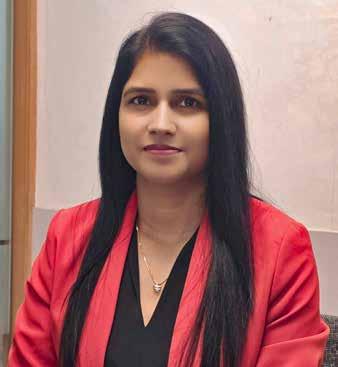
Priyanka Kumar
Regional Marketing Lead, Middle East, India, and ANZ, Barco
ist, particularly when it comes to representation in senior commercial roles.
Representation matters. When women see other women leading commercial and technology roles, it quietly changes what feels possible.
Creating visible role models and providing access to leadership opportunities can help ensure that more women see a clear path to senior positions in the industry.
What strengths do you believe are particularly important for women to succeed in technology sales and marketing leadership? Strong relationship-building skills and collaboration are incredibly valuable in technology leadership roles, especially in an industry driven by partnerships and alliances.
Women often bring a collaborative and relationship-driven leadership style, which is incredibly powerful in an industry built on partnerships.
Combined with confidence, strategic thinking, and adaptability, these strengths can help to navigate the fast-changing technology landscape effectively.
In high-value enterprise engagements, how critical is emotional intelligence alongside technical expertise?
Enterprise technology decisions involve multiple stakeholders — from IT leaders to business executives — each with different priorities.
Technical expertise may open the door, but emotional intelligence is what builds long-term trust with customers.
Understanding those perspectives and building trust is essential in developing long-term partnerships, particularly in enterprise environments.
Nehal Sharma, Senior Vice President – Global Product & Alliance, Cloud & Software at Redington, reflects on backing emerging technologies early, building strong partner ecosystems, and leading with a long-term perspective in the rapidly evolving technology industry.
What initially drew you to a career in the technology industry?
Has that early motivation sustained over the years?
I was drawn to technology because of its pace and its potential. It’s one of the few industries where you can see direct impact – how innovation transforms businesses, governments, and everyday lives. Early on, I realised that tech wasn’t just about devices or software; it was about enabling progress. That sense of building something larger than a balance sheet has absolutely sustained me. If anything, as the region has accelerated in digital adoption, my motivation has only deepened.
What has been the biggest professional leap of faith you’ve taken, and what did it teach you about resilience?
Championing the cloud business early in its lifecycle was a major leap of faith. At the time, recurring revenue models were unfamiliar, partners were cautious, and the commercial structure was evolving. It would have been easier to wait until the market matured. Instead, we chose to invest early – in people, capability, and ecosystem readiness.
It taught me that resilience is not about reacting to pressure; it’s about holding conviction when results are not immediate. Sustainable growth requires patience, structured execution, and the confidence to back long-term shifts before they become obvious.
Which lessons across your career have had the greatest impact on how you contribute to your organization today?
One key lesson is that markets move fast, but credibility compounds slowly. Staying close to partners, listening actively, and delivering consistently builds long-term trust. Another lesson is that capability drives scale. Investing in people – internally and across the ecosystem – creates far more durable impact than focusing purely on numbers. Today, I contribute with a long-term lens, always balancing growth with sustainability.
In high-value enterprise engagements, how critical is emotional intelligence alongside technical expertise?
It’s critical. Enterprise decisions are rarely based on technical specifications alone. They are shaped by risk appetite, stakeholder dynamics, and long-term strategic priorities. Emotional intelligence allows you to read context, understand concerns that may not be openly stated, and build trust across multiple decision-makers. Technical expertise opens the door – emotional intelligence secures the partnership.
Beyond the obvious challenges, do subtle structural barriers still exist for women in commercial technology roles?
I would prioritise structured sponsorship and early exposure to strategic responsibility. Many talented women are prepared, but not always positioned. Giving them earlier access to P&L ownership, complex negotiations, and executive decision-making environments accelerates leadership readiness. Real growth comes from real accountability – and that exposure should happen sooner, not later.
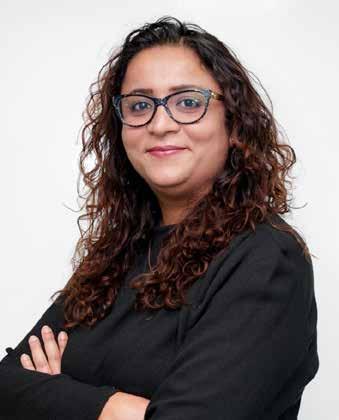
Nehal Sharma Senior Vice President – Global Product & Alliance, Cloud & Software, Redington
"One key lesson is that markets move fast, but credibility compounds slowly. Staying close to partners, listening actively, and delivering consistently builds long-term trust."
Priyanka Roy, senior technology evangelist, ManageEngine says that her role in technology marketing has allowed her to turn those trends into meaningful narratives, helping people understand why these technologies matter.
What initially drew you to a career in the technology industry? Has that early motivation sustained over the years?
What initially drew me to the technology industry was the realization that technology quietly shapes almost every aspect of how we live and work. Early in my career, I was fascinated by how innovations that seem highly technical on the surface, from cloud computing to AI, ultimately have very human implications. They influence how businesses operate, how people collaborate, and even how societies evolve.
Working in technology marketing has given me a unique vantage point to see how complex technological trends translate into real-world impact. It's also allowed me to turn those trends into meaningful narratives, helping people understand why these technologies matter. This has kept the work intellectually stimulating, and the early curiosity has definitely never left. If anything, it's grown stronger as technology becomes more deeply embedded in everyday life. Being part of an industry that's constantly evolving means there's always something new to learn, question, and communicate.
As the industry has shifted from legacy systems to cloud and AI-driven models, how have you evolved your own role to stay ahead?
The shift from legacy systems to cloud and AI-driven models hasn’t just changed technology, it’s changed how we talk about and perceive technology. Early on, much of the conversation was about infrastructure and functionality. Today, it’s increasingly about productivity, outcomes, agility, and trust.
For me, this meant evolving from simply communicating product capabilities to understanding the broader business and societal contexts in which these technologies operate. I’ve had to stay curious and constantly read about the latest developments, speak to experts across teams, and pay attention to how market and customer expectations are changing.
In marketing especially, staying ahead means being able to connect the dots between emerging technologies and their real-world impact. Whether it’s AI, security, or cloud adoption, my role has increasingly become about translating complexity into clarity and helping audiences understand not just what the technology does, but why it matters.
Beyond the obvious challenges, do subtle structural barriers still exist for women in commercial technology roles?
While the technology industry has made meaningful progress, sub-
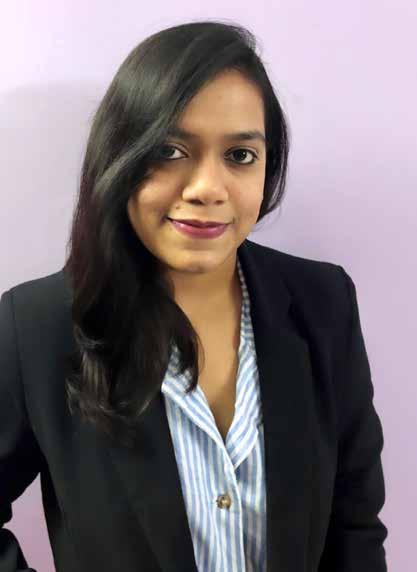
Priyanka Roy Senior Technology Evangelist, ManageEngine
tle structural barriers do still exist, particularly in roles where visibility, networks, guidance, and support often shape opportunities. These barriers aren't always explicit. Sometimes they show up in smaller ways, such as who gets invited into strategic conversations, whose ideas are amplified in meetings, and who's encouraged to take on crucial assignments. Over time, these small moments can influence how careers progress.
At the same time, I think the industry is becoming more aware of
these dynamics, which is a positive shift. Many organizations are making conscious efforts to build more inclusive leadership pipelines and mentorship networks.
Which lessons across your career have had the greatest impact on how you contribute to your organization today?
One of the most important lessons I’ve learned over the years is the value of curiosity. Technology evolves quickly and staying effective in this industry means constantly learning, whether that’s understanding emerging technologies, shifting market dynamics, or simply listening more closely to customers and colleagues.
I’ve also come to appreciate how important support and guidance are in shaping a career. Having people who are willing to share their perspective, offer feedback, or simply encourage you to think bigger can make a meaningful difference. It’s something I pay forward whenever I can.
Finally, I’ve learned that collaboration across teams is where the best outcomes emerge. Marketing doesn’t operate in isolation; it sits at the intersection of product, engineering, sales, and customers. The more you listen and learn from those perspectives, the stronger your contribution becomes.
What strengths do you believe are particularly important for women to succeed in technology sales and marketing leadership?
In leadership roles in technology sales and marketing, one of the most important strengths is the ability to bring perspective. Technology markets move quickly, but leaders must look beyond immediate trends to understand how innovations will shape business outcomes for customers.
Another critical strength is the ability to simplify complexity without oversimplifying it. Many enterprise technologies are sophisticated, and leaders need to translate that depth into clear, credible narratives that resonate with both technical and business audiences.
Resilience and confidence also play an important role for a leadership position. These positions can often be high-pressure and highly visible. Being able to hold your ground, advocate for your ideas, and navigate setbacks is essential.
Finally, strong relationship-building skills make a real difference. Technology adoption ultimately runs on trust between teams, partners, and customers.
In high-value enterprise engagements, how critical is emotional intelligence alongside technical expertise?
In enterprise engagements, technical expertise will always be important, but emotional intelligence is often what determines whether a conversation truly moves forward. Large technology decisions involve multiple stakeholders, competing priorities, and a fair amount of uncertainty. Being able to read the room, understand different perspectives, and respond thoughtfully can make a significant difference.
Emotional intelligence helps you listen beyond the immediate requirement and understand the underlying concerns a customer may have, whether it’s risk, change management, or a long-term impact on their teams. When those concerns are acknowledged, the con-
versation becomes more collaborative rather than transactional.
In many ways, successful enterprise engagements are built as much on trust and understanding as they are on product capabilities. Technology may start the discussion, but strong relationships are often what sustain it.
If you could redesign how the technology industry develops its next generation of female leaders, what would you change?
If I could redesign how the technology industry develops its next generation of female leaders, I would focus on creating more structured pathways to leadership earlier in careers. Often, women have the capability and ambition, but the opportunities that build leadership confidence, such as owning strategic projects, leading high-visibility initiatives, or participating in key decision-making forums, don’t come early enough.
Mentorship and guidance would also play a larger role. Having leaders who actively advocate for emerging talent can make a meaningful difference in helping women navigate complex organizations and step into leadership roles with greater confidence.
Finally, I would encourage organizations to normalize diverse leadership styles. Effective leadership doesn’t always look the same, and creating space for different perspectives ultimately makes teams and the industry stronger.
"Marketing doesn’t operate in isolation; it sits at the intersection of product, engineering, sales, and customers.
The more you listen and learn from those perspectives, the stronger your contribution becomes."
Sonali Basu Roy, Marketing Manager at Bulwark Technologies discusses how her journey from campaign execution to strategic marketing leadership has shaped her approach to driving business growth.
What initially drew you to a career in the technology industry? Has that early motivation sustained over the years?
I was drawn to a career in Technology industry due to the many reasons. The drive to understand things is a powerful pull. Technology lets you create something from nothing. This creative leverage is extremely motivating. Technology gives you the ability to solve complex problems. The Technology industry is evolving too: AI, Cloud Computing, Cybersecurity, Robotics, amongst others. Since I'm creative & love learning, this has helped me to stay motivated and grow in this field. Technology shapes how society works. So being a part of this transformation makes me feel meaningful & exciting.
Looking back, what defining moments shaped your leadership approach in sales and marketing?
There have been many defining moments that have shaped my leadership approach in Marketing. There were several successful marketing campaigns undertaken by me. The Campaign results clearly proved my creative & analytical marketing leadership ability. Optimum Marketing Budgets also helped me create sharper & result-oriented marketing strategies. Multiple interactions with Sales, Product & Finance Teams have enabled me to evolve from a Campaign Owner to a successful Marketing Strategist.
As the industry has shifted from legacy systems to cloud and AI-driven models, how have you evolved your own role to stay ahead?
My marketing strategies created and executed have also evolved over the years as per business requirement. The role evolves on what a particular product does & how it transforms decision making & business models. Marketing now is about revenue orchestration & not just brand awareness. The current marketing strategies devised by me includes Thought Leadership & Category Creation (not just brand awareness).
What has been the biggest professional leap of faith you’ve taken, and what did it teach you about resilience?
The biggest leap is moving from a Marketing Execution role to
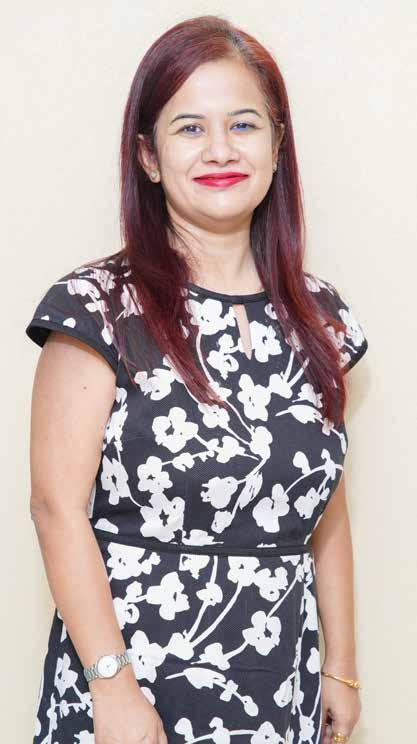
Sonali Basu Roy Marketing Manager, Bulwark Technologies
multi-tasking Field/Product/Growth Marketing Roles. It enabled me to run multiple marketing campaigns owning revenue, strategy and market perception. As marketers,we need to understand the objectives for multiple products in our portfolio & devise successful marketing strategies accordingly. This has taught me that a sound strategy builds growth, composure builds trust & trust builds longterm confidence.
Beyond the obvious challenges, do subtle structural barriers still exist for women in commercial technology roles?
Yes – structural barriers still exist for women in commercial technology roles. They are relatively less compared to the past, but they persist.
Which lessons across your career have had the greatest impact on how you contribute to your organization today?
Over the last 14+ years, I faced with unique opportunities in the form of either creating Brand awareness of new Cyber Security Technology players in the Regional Market or help create a brand equity of an organization as a Thought Leader in Cyber Security. For attaining both these objectives in totally separate scenarios, have successfully devised Marketing programs having a measurable mix of Direct channels (such as events/webinars etc.), Indirect Channels (such as website/blogs/Magazines/Interviews etc.) and Digital medium (such as social media/EDM etc.), collaborating at any given point of time with various partners like marketing agency/media houses/PR agencies/Printers etc. amidst an aggressive timeline to have the maximum impact. A planned approach towards the key objectives of the program, optimum utilization of resources and budget I had for disposal, the marketing mix and the market which we wanted to address, helped me very quickly achieve the desired results of the Marketing campaigns for the organization and channel community.
What strengths do you believe are particularly important for women to succeed in technology sales and marketing leadership?
Following are the strengths that consistently correlate with success in Technology Leadership in Marketing : Strategic Fluency, Executive Presence under pressure, influence without formal authority, data management, commercial credibility & emotional regulation amongst others.
In high-value enterprise engagements, how critical is emotional intelligence alongside technical expertise?
In high-value enterprise engagements, emotional intelligence (EQ) is as critical as technical expertise. Technical skill gets you in the room. Emotional intelligence determines whether you win, expand and retain your customers.
If you could redesign how the technology industry develops its next generation of female leaders, what would you change?
If I could redesign how the Technology industry develops its next generation of female leaders,I would redesign the entire system around them. Start fixing power access, replace mentorship with
structured sponsorship, redesign promotion criteria and normalize career paths. To develop the next generation of female leaders in Tech, we need to shift from training the individual to redesigning access to power,risk & visibility.
When you look back on your career, what kind of legacy would you like to leave — professionally and personally?
Personally, I would like to leave behind the human legacy: elevating people, not just brands. I would like to be known for my mentorship and create space at the table. I would like to build teams where performance & psychological safety exists. I would like to be known for my leadership skills & help others see themselves as leaders. Professionally, I would like to be known for creating the industry impact : raising the standard for marketing strategies, humanizing growth & redefining leadership in marketing.
How do you navigate setbacks or unexpected challenges in high-pressure commercial environments?
In volatile commercial environments, everyone experiences setbacks. I prefer to remain calm, decisive, accountable & forward-looking in such environments. This composure becomes a competitive differentiator.
"As marketers, we need to understand the objectives for multiple products in our portfolio & devise successful marketing strategies accordingly. This has taught me that a sound strategy builds growth, composure builds trust & trust builds long-term confidence."
Shabana Tajassum, Regional Marketing Manager at Omnix International highlights how collaboration across sales, partners, and marketing teams has shaped her approach to building campaigns that support measurable business outcomes.
What initially drew you to a career in the technology industry? Has that early motivation sustained over the years?
My career began in financial services, working closely with clients on banking and investment solutions. Over time, I realized that technology was becoming central to how businesses make decisions and operate.
Moving into technology and data-driven organizations exposed me to the power of digital platforms, cloud solutions, and data intelligence in transforming businesses. That curiosity has stayed with me. The pace of innovation in technology means there is always something new to learn and contribute to.
Looking back, what defining moments shaped your leadership approach in sales and marketing?
A defining part of my career has been working across sales, marketing, and client engagement roles. Managing regional campaigns, vendor alliances, and large partner events across the MEA region taught me how critical collaboration is in driving results.
These experiences shaped my belief that successful marketing leadership is about aligning teams, understanding customers, and creating engagement that supports real business outcomes.
As the industry has shifted from legacy systems to cloud and AI-driven models, how have you evolved your own role to stay ahead?
Technology marketing today is far more data-driven than it was a decade ago. To stay relevant, I focused on strengthening my understanding of digital marketing, CRM systems, and analytics-driven campaigns.
Implementing platforms like HubSpot and aligning marketing with revenue goals has been an important part of my work. Today, marketing leaders must combine creativity with data insights to deliver measurable business impact.
Do subtle structural barriers still exist for women in commercial technology roles?
The industry has made progress in improving diversity, but subtle barriers can still exist. Sometimes this appears in the form of limited representation in leadership roles or fewer opportunities for visibility in major business discussions.
Organizations that actively encourage mentorship, sponsorship, and leadership opportunities for women can make a significant difference in building more inclusive workplaces.
What strengths do you believe are particularly important for women to succeed in technology sales and marketing leadership?
Success in technology sales and marketing requires adaptability,
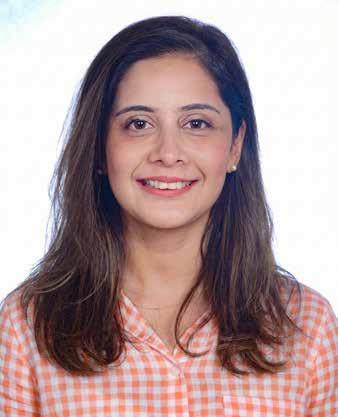
Shabana Tajassum Regional Marketing Manager, Omnix International
strong communication skills, and the ability to build trusted relationships with customers and partners.
Women often bring strong emotional intelligence and collaborative leadership styles, which are extremely valuable in complex enterprise environments where multiple stakeholders are involved.
In high-value enterprise engagements, how critical is emotional intelligence alongside technical expertise?
Technical expertise is important, but emotional intelligence plays a crucial role in enterprise engagements. Technology decisions involve multiple stakeholders with different priorities.
Understanding these perspectives helps build trust and enables more meaningful conversations. Emotional intelligence often helps turn technical discussions into long-term partnerships.
When you look back on your career, what kind of legacy would you like to leave?
Professionally, I would like to be remembered as someone who helped organizations grow through strong marketing strategies and meaningful partnerships.
Personally, I hope to inspire more women to pursue leadership roles in technology. The industry offers immense opportunities, and greater representation will only make it stronger.
Udari Perera - Regional Marketing Manager for MEA at WSO2 reflects on how aligning marketing with sales and technical teams, staying close to customer needs, and continuously evolving with cloud and AI trends have shaped her leadership journey.
What initially drew you to a career in the technology industry?
Has that early motivation sustained over the years?
What drew me to technology was its ability to solve real problems at scale. Early in my career, I saw how software could transform how organizations operate and deliver value to customers. That sense of impact has stayed with me. Today, the pace of innovation makes the industry even more exciting. What continues to motivate me is driving marketing strategies that support sales and technical teams who work with customers looking to harness technology to become more agile, connected, and customer-focused.
Looking back, what defining moments shaped your leadership approach in sales and marketing?
Early in my career, I realized that marketing only creates real impact when it’s closely connected to the business. Working alongside sales teams and partners across different markets showed me that the best marketing leaders think commercially and focus on outcomes, not just campaigns. That experience shaped how I lead today — with collaboration, curiosity, and a strong focus on growth.
As the industry has shifted from legacy systems to cloud and AI-driven models, how have you evolved your own role to stay ahead?
I’ve had to continuously evolve from being an execution-focused marketer to becoming a strategic partner to the business in the region. Staying close to customer needs, understanding new technologies like cloud and AI, and using data to guide decisions have been key. The technology landscape moves quickly, so constant learning is essential to be a more impactful marketer.
What has been the biggest professional leap of faith you’ve taken, and what did it teach you about resilience?
Taking on regional roles that required navigating new markets and cultures was a big leap for me. It pushed me outside my comfort zone, but it also taught me that growth often happens when you say yes to challenges, especially in a fast paced market like the Middle East where development is more frequent. It reinforced the importance of adaptability and trusting your ability to learn along the way.
Beyond the obvious challenges, do subtle structural barriers still exist for women in commercial technology roles?
Progress has definitely been made, but subtle barriers can still exist — sometimes in visibility, opportunities, or assumptions about leadership styles. What makes a real difference is organizations that actively encourage diverse voices and create space for women to grow and lead while managing personal life.
Which lessons across your career have had the greatest impact on how you contribute to your organization today?
One of the biggest lessons is that marketing doesn’t succeed in isolation. Real impact happens when marketing, sales, and technical teams are fully aligned. I’ve also learned how important it is to use data to guide decisions and continuously improve what we do.
What strengths do you believe are particularly important for women to succeed in technology sales and marketing leadership?
Confidence, adaptability, and the ability to build strong relation-
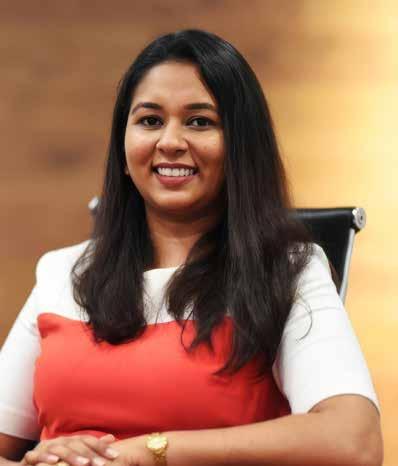
Regional Marketing Manager for MEA, WSO2
ships are incredibly important. Technology sales and marketing involve many stakeholders, so being able to connect people, communicate clearly, and stay focused on long-term outcomes is key.
In high-value enterprise engagements, how critical is emotional intelligence alongside technical expertise?
It’s essential. Enterprise engagements are not just about technology they’re about trust and relationships. Emotional intelligence helps you understand different perspectives, build credibility, and create stronger partnerships with customers and internal stakeholders.
If you could redesign how the technology industry develops its next generation of female leaders, what would you change?
I would focus on creating more visible pathways to leadership earlier in careers. Giving women opportunities to lead projects, make decisions, and be part of strategic conversations builds both confidence and experience. When organizations actively create those opportunities, it can accelerate the development of future leaders.
When you look back on your career, what kind of legacy would you like to leave — professionally and personally?
Professionally, I hope to be remembered for building strong teams and partnerships that made a real impact. Personally, I’d like to know that I helped encourage more young women to step into leadership roles and believe in their potential.
Shradha Subramaniyan, Route to Market Manager, Nutanix shares how confidence in one’s work, strong mentorship, and the ability to translate complex technologies like AI into real business value have shaped her leadership approach.
What initially drew you to a career in the technology industry? Has that early motivation sustained over the years?
My entry into the tech industry was actually a natural evolution of my marketing background. After moving to Dubai, I began working at an advertising firm where I managed several high-profile technology accounts. I became fascinated by the tangible ways tech was reshaping our daily lives, and I eventually landed a breakthrough role with Aptec, an Ingram Micro company.
Since starting that journey in 2013, my motivation hasn't just sustained, it has grown. Over the past 13 years, I’ve realized that because technology evolves so rapidly, the landscape is never static. There is always something new to learn and a fresh challenge to solve, which keeps the work as exciting today as it was on day one.
Looking back, what defining moments shaped your leadership approach in sales and marketing?
In my experience, the only true constant is evolution. Rather than one singular defining moment, my leadership style has been shaped by a continuous journey of learning and adaptation. However, if I were to pinpoint the pillars that define my approach today, two things stand out:
First is the realization that true confidence comes from trusting your own work rather than seeking external validation. In the fast-paced world of tech sales and marketing, it’s easy to get caught up in immediate praise or optics. By staying anchored in the quality of my output and my own professional integrity, I’ve been able to lead with more consistency and focus.
Second is the importance of a strong support system. I’ve been incredibly fortunate to have a foundation built by my family - my mom, my husband, and my sisters as well as brilliant mentors who have guided me throughout my career. This has taught me that leadership isn't a solo act; it’s about building an environment where others feel supported, mentored, and empowered to grow, just as I was.
As the industry has shifted from legacy systems to cloud and AI-driven models, how have you evolved your own role to stay ahead?
I view AI not merely as industry terminology, but as the foundational architecture of the future. It is fundamentally redefining the marketing landscape, moving us from reactive strategies to predictive, hyper-personalized engagement.
In my role, I’ve recognized that while AI is now a universal customer requirement, the challenge lies in the 'how.' My responsibility and my strategy for staying ahead is to act as a translator between technical capability and business necessity.
I aim to help customers navigate the noise to identify their specific pain points, ensuring that we aren't just deploying AI for its own sake, but using it to optimize their unique workflows. For me, staying ahead means maintaining a deep, hands-on understanding
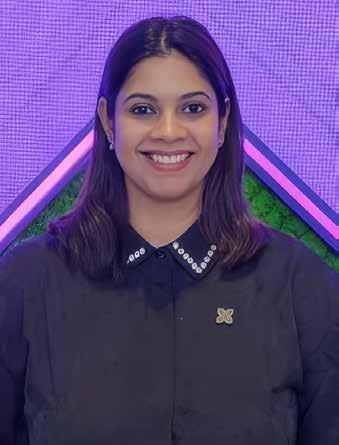
Shradha Subramaniyan Route to Market Manager, Nutanix
of how these models can drive tangible ROI, ensuring that technology always serves as a catalyst for the business, rather than a complication.
Beyond the obvious challenges, do subtle structural barriers still exist for women in commercial technology roles?
The most persistent barrier for women in commercial technology isn't a lack of talent or guidance; it is the gap between mentorship and sponsorship. While women are often 'over-mentored' receiving an abundance of advice on how to grow, we are frequently 'under-sponsored.'
In the high-stakes world of tech distribution, breaking into the 'inner circle' requires more than just professional excellence. It requires a sponsor: someone with a seat at the table who will advocate for your capability when you aren’t in the room.
Navigating this becomes even more complex when balancing a personal life and a career. For many women, these subtle barriers the informal networks and the lack of active advocacy remain a significant challenge. My approach is to bridge this gap by being an active sponsor myself. I believe leadership in this industry means moving beyond just giving advice and instead creating the structural openings that allow women to lead, thrive, and stay ahead of the evolution.
Drawing on her engineering background, Uzma Yusuff, Senior Field & Channel Marketing Manager, SentinelOne now focuses on connecting technical innovation with real customer impact in the cybersecurity landscape.
What initially drew you to a career in the technology industry?
Has that early motivation sustained over the years?
I started out as a software engineer because I enjoy creating things from scratch. I love the logic of code, but one of the first things I discovered about myself is that I did a better job at connecting the dots between complex engineering and market strategy. Moving from “build” to “position” gave me an opportunity to leverage my technical skill set to solve broader business problems and make sure that truly innovative ideas actually reach and help the people who need it most.
My early motivation has only grown stronger over the years. My engineering “north star” has evolved into a passion for cybersecurity resilience. I’m energized by the high stakes at SentinelOne to defend our world, and I’m inspired to speak for partners with real authority through that which began as my technical experience.
Looking back, what defining moments shaped your leadership approach in sales and marketing?
My career pivot from software engineering to marketing was an eye-opener that markets are won with trust and stories, not technical excellence. My new leadership style is centered on "technical empathy," which means being able to shape complicated architectures into stories that create value for our partners.
At SentinelOne, we can't keep playing it safe. We have to consciously collaborate to win. I team with SDRs, sales, and our global teams to keep up with the changing threat landscape. I see myself as a data-driven strategist and an authentic advocate, creating a safer digital future for our customers.
What has been the biggest professional leap of faith you’ve taken, and what did it teach you about resilience?
I think it was moving from a software engineering role to marketing. Taking into account the logic of code and moving to factors that include human behavior in field and channel marketing was a great change. It meant I had to go beyond my comfort zone and believe that the knowledge I have will be used in a completely different professional language.
This leap taught me that resilience builds from being capable enough to adapt. Things change overnight in a company. My experience has shown me that resilience is not just bouncing back but being confident to learn on the way, change directions and deal with uncertainty.
Beyond the obvious challenges, do subtle structural barriers still exist for women in commercial technology roles?
Other than the obvious barriers, there are subtle structural barriers that exist in the form of an invisible infrastructure that is optimized for conventional archetypes. The evaluation criteria are still Potential vs Performance, where only performance is considered for women and potential for men. Besides, Informal Networking, a social circle where deals and career moves are finalized, remains more accessible to men than to women.
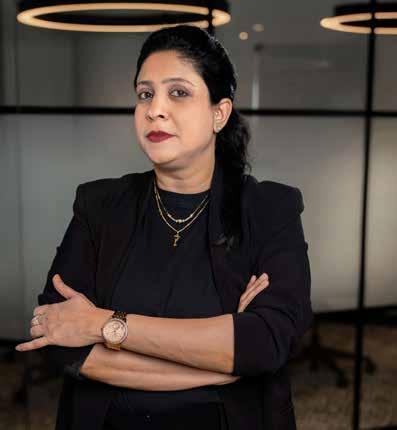
Senior Field & Channel Marketing Manager, SentinelOne
In commercial roles, women are paying a ‘Likability Tax’ and have to walk a narrow line between being seen as ‘too aggressive’ or ‘not tough enough’.
Finally, there is the Sponsorship Deficit, where women are over-mentored but lack the senior advocates who harness social capital on their behalf. To truly honor women in tech, we must evolve these systems to recognize diverse leadership as a competitive advantage.
Which lessons across your career have had the greatest impact on how you contribute to your organization today?
I feel the most impactful lesson has been about agility and adaptability. Being right is secondary to agility. I contribute by making sure that our strategies change and adapt as quickly as the technology shifts.
Also, I’ve learned that visibility is very important. Technical and market excellence is the foundation, but the actual impact needs shining and pulling as you climb. You need to amplify wins and make sure that voices are represented and get visibility. While we are data-based, relationships are the actual currency. The greatest contribution is in balancing thorough analytical planning and emotional intelligence to build long-term partnerships. These lessons help me lead with precision and purpose.
Vidya Subramanian, Senior Marketing Specialist, AmiViz highlights the importance of adaptability, emotional intelligence, and the courage to think boldly in shaping meaningful business impact.
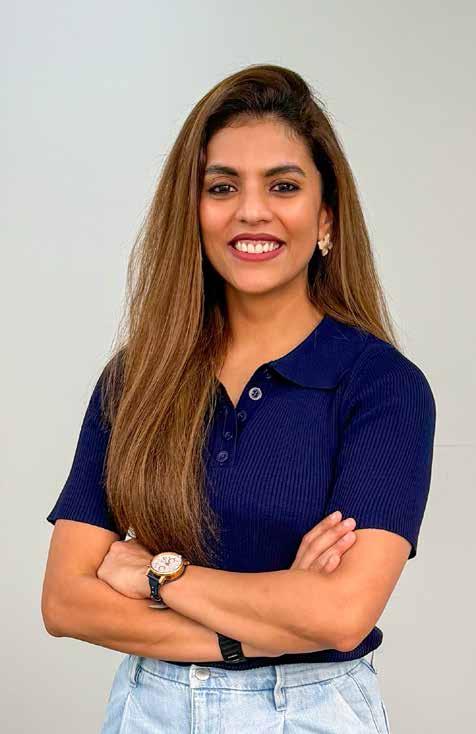
Vidya Subramanian Senior Marketing Specialist, AmiViz
What has been the biggest professional leap of faith you’ve taken, and what did it teach you about resilience?
Moving from a healthcare background to cybersecurity in a completely new country has been the biggest leap of faith in my professional journey. At the same time, I was pursuing a two-year master’s degree while working full-time, determined to expand my opportunities and build a career in an entirely new industry.
I started from scratch as a marketing intern with no prior experience, and over time that journey evolved into managing regional marketing across multiple markets, collaborating with vendors, partners, and internal teams to deliver high-visibility campaigns.
Much of the learning happened in real time. I didn’t have decades of experience to rely on, so I had to stay curious, adapt quickly, and figure things out along the way and it’s a mindset I continue to carry forward.
What this experience ultimately taught me about resilience is the value of trusting the process, staying adaptable, and being willing to step into opportunities even before you feel completely ready.
Beyond the obvious challenges, do subtle structural barriers still exist for women in commercial technology roles?
Although I haven’t experienced them personally, subtle structural barriers do exist, industry- and gender-agnostic. Opportunities often emerge through informal networks, long-standing relationships, or visibility in high-impact projects. If high-potential individuals are not consistently present in those circles, it can unintentionally limit access to strategic opportunities or leadership pathways. Exposure, therefore, becomes crucial.
Also, performance alone doesn’t always translate into recognition. In many organizations, visibility
in decision-making spaces matters just as much as capability, which is why it’s important to consistently build your personal brand and make your contributions visible. Impact must be visible, not just delivered!
Another subtle barrier can be the difference between mentorship and active advocacy. While many professionals receive guidance, career acceleration often happens when senior leaders actively advocate for individuals in strategic discussions and leadership opportunities. Equitable access to high-impact opportunities is more likely to build stronger and more diverse leadership teams.
However, the encouraging shift today is that more organizations are recognizing these dynamics and becoming more intentional about creating positive and inclusive environments.
What strengths do you believe are particularly important for women to succeed in technology sales and marketing leadership?
Although for centuries women have had to multitask and develop resilience, it has now somehow become a badge of honor for many. Hustling is something women have learned to do well - whether it comes naturally or has been imbibed through years of conditioning. In today’s professional landscape, women can recognize these traits as strengths and use them to their advantage. The ability to manage multiple priorities, stay resilient under pressure, and keep moving forward despite challenges can be a real asset in demanding roles like technology sales and marketing leadership.
As such, women naturally demonstrate high emotional intelligence and the ability to manage interpersonal dynamics effortlessly. When leveraged well, this becomes a significant advantage in understanding people, building trust with stakeholders, and navigating diverse teams and markets.
Ultimately, success comes from combining subject matter expertise, strong communication, and soft skills that are equally crucial to contribute meaningfully to conversations that shape business outcomes.
In high-value enterprise engagements, how critical is emotional intelligence alongside technical expertise?
Emotional intelligence is just as critical as technical expertise in managing work place engagements. While strong technical knowledge builds credibility, the ability to listen actively, read the room, manage expectations, and address concerns “thoughtfully” often determines how effectively an engagement progresses which is why EI becomes the differentiating factor.
How do you navigate setbacks or unexpected challenges in high-pressure commercial environments?
Being a mother to an almost five-year-old teaches you to expect the unexpected. It naturally builds the habit of always having a Plan B, which applies just as much in high-pressure commercial environments where things don’t always go according to plan.
Over time, I’ve learned to develop a solution-centric mindset rather than dwell on the problem itself - something I’ve strongly imbibed
from my parents and mother-in-law. The ability to stay composed, assess the situation objectively, and quickly identify the next best alternative can be a real game changer when navigating setbacks at work.
Also, one should never underestimate the power of clear communication and the ability to seek guidance if necessary. Being transparent about challenges while working collaboratively toward solutions helps maintain trust and momentum.
Which lessons across your career have had the greatest impact on how you contribute to your organization today?
I think one of the biggest lessons I’ve learned is the importance of context. Understanding the broader business objective behind any initiative helps ensure that efforts are aligned with outcomes that truly matter to the organization. What is it that you are doing this for? - that is the ultimate question that needs to be answered.
To stay relevant and add value, it’s imperative to remain open and engage in continuous learning. Ofcourse, networking and building strong relationships can never go out of syllabus.
And finally, as one of my mentors once told me: if you are a marketer, you have to be audacious. Having the courage to think boldly and execute with conviction makes all the difference!
"Hustling is something women have learned to do well - whether it comes naturally or has been imbibed through years of conditioning. In today’s professional landscape, women can recognize these traits as strengths and use them to their advantage."
Zeina Haggag - EMEA Marketing Director at OPSWAT shares how curiosity, collaboration, and a people-focused leadership approach continue to shape how she drives marketing impact across global markets.
What initially drew you to a career in the technology industry? Has that early motivation sustained over the years?
What drew me in was how dynamic and constantly evolving the technology industry is. Technology plays such a critical role in shaping how businesses operate and protect themselves in a digital world. Early in my career, I was fascinated by the idea that innovation could solve real problems and create meaningful impact. That curiosity has stayed with me throughout the years. Even today, what motivates me most is being part of an industry that is always moving forward and continuously challenging us to learn and grow.
Looking back, what defining moments shaped your leadership approach in sales and marketing?
One of the biggest realizations in my career was that leadership is not really about titles — it’s about influence, trust, and how you support the people around you. Some of the most defining moments in my career have come from working with diverse teams and seeing how collaboration and open communication lead to the best results. Those experiences shaped my leadership approach to be more people-focused; encouraging ideas, and empowering others to contribute confidently.
As the industry has shifted from legacy systems to cloud and AI-driven models, how have you evolved your own role to stay ahead?
The pace of change in technology makes continuous learning essential. I’ve always tried to stay curious and open to understanding new technologies, industry shifts, and evolving customer expectations. As the industry moves toward cloud and AI-driven solutions, marketing plays an important role in translating complex technologies into clear value for customers. That ability to connect innovation with real business impact has become a key focus in my role.
Beyond the obvious challenges, do subtle structural barriers still exist for women in commercial technology roles?
While there has been significant progress, subtle barriers can still exist, particularly when it comes to representation in leadership roles or access to mentorship early in a career. However, I also see many organizations becoming more intentional about creating inclusive environments and supporting women in technology.
As I often say, progress happens when women not only succeed individually but also support and uplift each other along the way.
What strengths do you believe are particularly important for women to succeed in technology sales and marketing leadership?
Adaptability, resilience, and strong communication skills are incredibly important. The technology industry evolves quickly, so being able to learn continuously and remain confident in your perspective is key. Building relationships and collaborating across
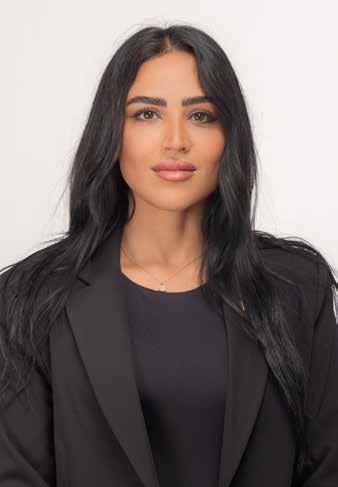
Zeina Haggag
EMEA Marketing Director, OPSWAT
teams also plays a major role in successful leadership within sales and marketing.
In high-value enterprise engagements, how critical is emotional intelligence alongside technical expertise?
Emotional intelligence is extremely important. While technical expertise builds credibility, strong relationships are what truly drive successful partnerships. Being able to listen carefully, understand different perspectives, and communicate with empathy often makes a significant difference in complex enterprise engagements.
When you look back on your career, what kind of legacy would you like to leave — professionally and personally?
When I look back on my career, I hope to have contributed to building strong teams and meaningful collaborations. Professionally, I would like to be remembered as someone who helped communicate the value of technology in a way that truly resonates with people and businesses. Personally, I hope to inspire more women to pursue opportunities in the technology industry with confidence and curiosity.