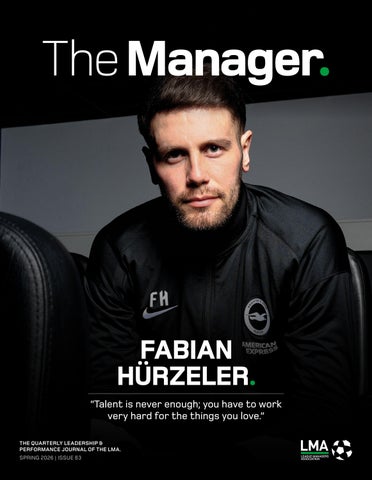
FABIAN HÜRZELER.
“Talent is never enough; you have to work very hard for the things you love.”
LMA Chief Executive
RICHARD BEVAN OBE.
In February, the LMA inducted Chair Martin O’Neill into its prestigious LMA Hall of Fame 1,000 Club, in recognition of an extraordinary managerial career in which he has managed more than 1,000 professional matches. He joins an elite group of just 40 managers to have reached this distinguished milestone.
Martin’s record is a testament to his talent and leadership. He guided Wycombe Wanderers into the Football League for the first time, led Leicester City to the Premier League and two League Cup triumphs, and took them into European football. In Scotland, to date, he has overseen a period of sustained success with Celtic, winning three Scottish Premiership titles, three Scottish Cups and a League Cup, and reaching the 2003 UEFA Cup Final.
On behalf of everyone at the LMA, I’m delighted to welcome him into the LMA Hall of Fame 1,000 Club, and we look forward to celebrating

his outstanding achievements formally at the LMA Annual Awards Dinner later this year.
Our valued Commercial Partners continue to play a vital role in driving the association’s growth and success. In March, for example, we delivered two key LMA learning initiatives, offering focused, professionally relevant and engaging development experiences. LMA LEAD Corporate is a new online short course for business professionals, which builds on the principles of the existing LMA LEAD programme. Designed to translate lessons from football management into the corporate environment, it maintains the
programme’s focus on leadership and team development.
We also hosted the second LMA Partner Residential Experience at St. George’s Park, following a successful debut in 2025. This immersive 24-hour event, built around the frameworks of the LMA PERFORM and LEAD short courses, combined expertled sessions from industry specialists and practitioners, networking opportunities, and insights from LMA members.
Each of these programmes is grounded in our holistic approach to leadership and personal development, and reaffirms our ongoing support for the growth
and career progression of our members and Partners.
As part of the LMA’s commitment to health and wellbeing, we are proud to offer world-class health screening to members through HCA Healthcare UK. This season, we have extended this benefit to include funded health assessments for members’ partners and spouses, recognising the important role they play in supporting the overall wellbeing of our members.
Finally, with the Men’s FIFA World Cup fast approaching, I would like to extend my best wishes to Thomas Tuchel and
the senior team ahead of the tournament in North America. Congratulations also to Sarina Wiegman and the Lionesses on beginning their qualification campaign for the 2027 FIFA Women’s World Cup in Brazil with consecutive victories. We wish every success to all LMA members working with national teams around the world as they embark on what promises to be an exciting and important year ahead, among them Steve Clarke (Scotland), Graham Potter (Sweden), LMA Committee member Roberto Martínez (Portugal), Mauricio Pochettino (USA), and Jesse Marsch (Canada).



At the 2026 Winter Olympics, 53 athletes competed under the Team GB banner, in 11 sports ranging from figureskating and bobsleigh to snowboarding and curling. Competing in small groups or as individuals, many came together only shortly before the Games commenced. Yet despite their differences, they competed as one team, Team GB.
Alice Hoey
FROM THE EDITOR.
In the same way, 60-plus athletes and para-athletes will vie for a medal this year at this summer’s Glasgow Commonwealth Games, not alone or in silos, but as Team England. As Team England’s chief executive, Mark Osikoya, explains in this edition, the power of a compelling and unifying brand goes far beyond a logo or a show of national pride; it’s about shared values, intentions and behaviours.
“We know that our athletes really appreciate feeling that they’re part of something bigger, something inclusive, while knowing that their individual needs and personalities are being recognised, respected and supported,” he says.
The importance of group unity and togetherness is something we explore further in this edition, looking specifically at the collective resilience that develops when the team environment and culture enables strong trusting relationships. The leader’s role in this is, of course, central.
“You have to create an environment where honesty, accountability and support coexist,” says Charlton Athletic Women manager Karen Hills on page 30. “In my team, honest conversations happen early and players feel safe to speak up, which prevents doubts from festering. There’s also clarity around effort, accountability and identity, which means a bad result doesn’t shake who we are.”
Wrexham’s Phil Parkinson agrees, saying that creating an environment where the players feel valued and free to be themselves starts with the manager. “Ultimately, you have to conduct yourself in such a way that you’re a positive role model and are setting the right culture in the football club,” he says in our interview on page 38. “Whether it’s the academy or the first team, it should be a culture that people will choose to follow.”
The League Managers Association, St. George’s Park, Newborough Road, Needwood, Burton upon Trent DE13 9PD
The views and opinions expressed by contributors are their own and not necessarily those of the League Managers Association, its members, officers or employees. Reproduction in whole or in part without written permission is strictly prohibited.
www.leaguemanagers.com
EDITOR
Alice Hoey alicehoey1@gmail.com
EDITOR FOR THE LMA
Sue McKellar sue.mckellar@leaguemanagers.com
ART DIRECTOR
Matt Draycott matt.draycott@leaguemanagers.com
CONTRIBUTING EDITOR
Luke Johnson luke.johnson@leaguemanagers.com
SENIOR WRITER
Marc Williams marc.williams@leaguemanagers.com
PUBLISHER
Jim Souter jim.souter@leaguemanagers.com
BUSINESS DEVELOPMENT
Adam Tarrant adam.tarrant@leaguemanagers.com
DESIGN
Luna Studio
PHOTOGRAPHY
Action Images, Alamy, Brighton & Hove Albion, Flex IT, Inpho.ie, iStock, Kuda Villingili Resort, LMA, Premier League, Reuters, Team England
PRINT PARTNER
Jellyfish Solutions Limited
LMA events and corporate activity
LMA Institute
LMA In the Game
LMA residential, St. Georges Park
Column: Mandeep Rai
Feature: Contactless, with Conor Hourihane
10 ideas: Gut health
Key takeaways: WSL athlete health
How to: Have an organised mind
Interview: Adrian Key, Flex IT
Feature: Kuda Villingili
HCA: Prostate cancer FAQs Arbuthnot
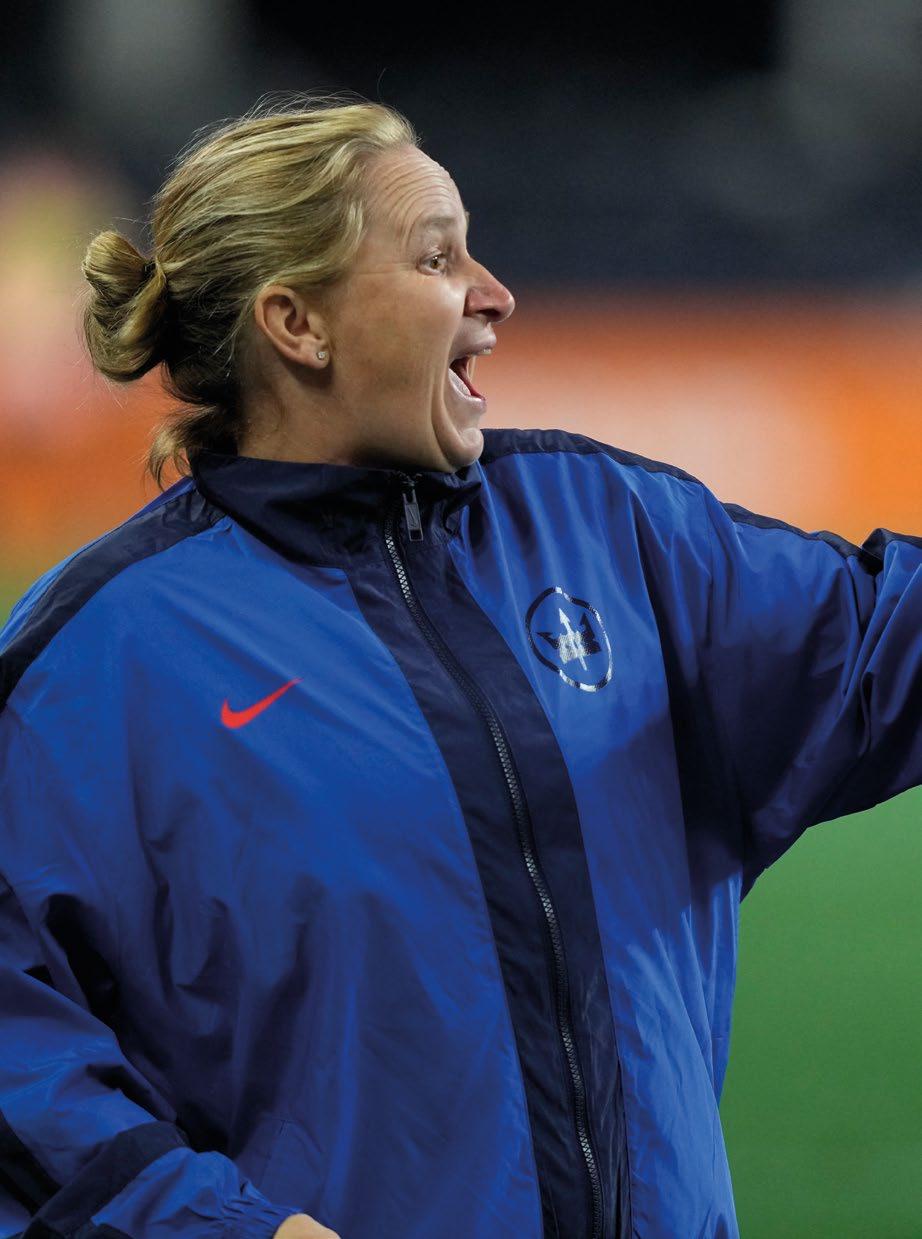
MARK OSIKOYA

THE LEADER.
LEADER COLUMN
Piers Martin
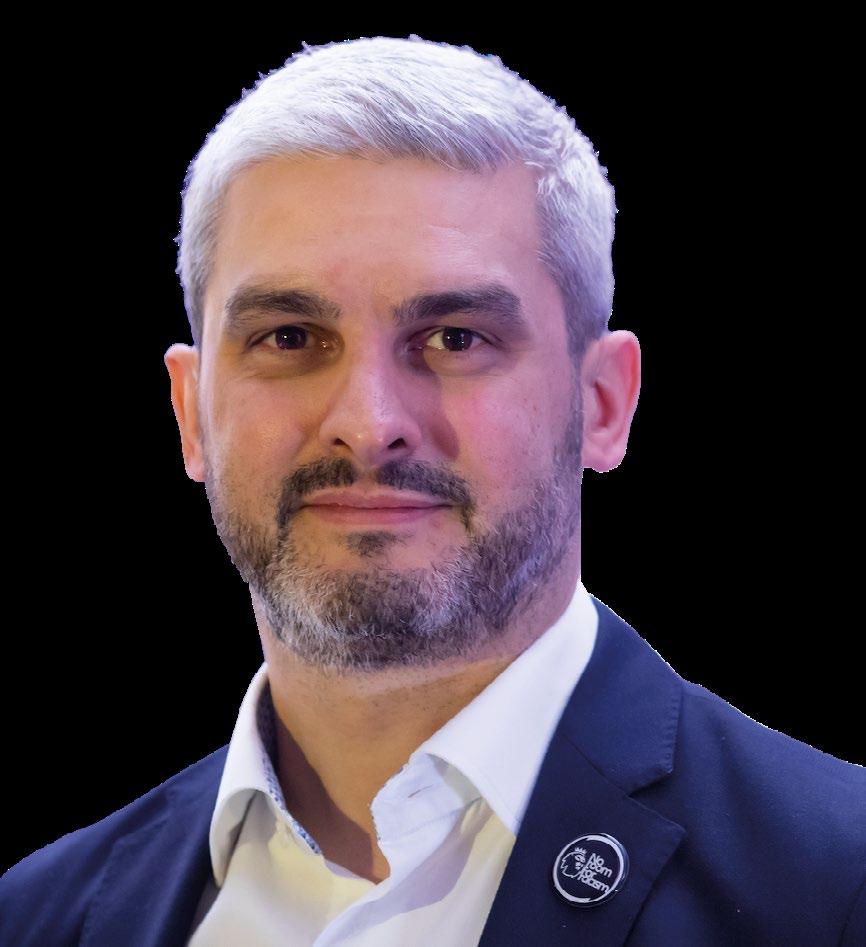
THE ART OF LEADERSHIP VERSATILITY.
More important than identifying or adopting a particular style of leadership is being able to adapt to the situation and people around you.
Developing self-awareness and an understanding of your leadership identity allows you to adapt your approach based on others and the changing environment.
A familiar discussion I have with leaders, in a range of highperformance environments, is centred on the question ‘when?’. When to step in and when to step back; when to be ruthless and when to be compassionate; when to be collegiate and when to be directive; when to be strategic and when to get into the detail.
There is often a belief that if we can answer these ‘when’ questions, it will somehow solve all our leadership ills. That is, however, rarely the case. In fact, adopting a balanced, flexible approach to leadership is likely to be more effective than a fixed model. Developing selfawareness and an understanding of your leadership identity allows you to adapt your approach based on others and the changing environment.
Many predict that knowledge will become obsolete within a decade, with AI taking over, making knowledge ubiquitous and readily accessible. Technical knowledge will therefore become less of a leadership differentiator, while understanding yourself, your interaction with others, and the impact of the changing environment or context will become ever more valuable.
One negative consequence of having instantaneous access to knowledge is an increased level of noise for leaders.
Academics, practitioners and commentators are seeking constantly to define leadership and we’re inundated with new concepts and theoretical approaches that promise to solve all our problems: authentic leadership, servant leadership, ethical leadership, followership, etc. However, more important than focusing on alternative leadership models is understanding how to adapt your own personal leadership to the ever-changing environment.
The concept of having a set leadership style has become obsolete in today’s volatile and sometimes ambiguous environment. It is now accepted that leaders can hold more than one ideal and adopt more than one approach at the same time. EY Lane4 researched this principle and presented the concept of ‘Paradoxical Mindsets’, proposing that leaders able to balance opposing approaches at the same time are more effective: ruthlessly caring, confidently humble, politically virtuous, ambitiously appreciative, responsibly daring, and so on.
A core principle of leadership versatility is taking an adaptive approach to problems and scenarios as they arise, and accepting that well-made plans rarely unfold without change and contingencies in
During their induction into the Elite Academy Manager Programme, leaders are put through high-pressure situations to see how they respond and what support they require.

the moment. We need to develop strategies for managing ourselves and others when we can sense that uncertainty, ambiguity or a period of sustained pressure is coming.
Applied self-awareness (i.e. receiving information about you and acting on it) is critical to the success of those strategies. Developing solid self-awareness centres not only on understanding your personality on a calm day, but also recognising where aspects of your personality could become overplayed strengths and derail you when under pressure.
This is where robust tools such as the Hogan Personality Assessment can be particularly useful. As well as standing up to scrutiny for reliability and validity, this views personality on a continuum, rather than designating people as a personality type, as many
commercial assessments do. Add to this a better understanding of your team, or those you work with closely, and this data is priceless, providing a blueprint to adapt your leadership approach as required.
We call this EQ3: developing a deep understanding of self, others (in your team, wider stakeholders or competitors), and the environment, and how they interact with each other, flex and change. When the environment shifts from calm to chaos, or at least becomes a little messy, ask yourself and your team what you notice about each other.
An individual’s personality, their lived experience and values form their leadership identity. Everyone is different, and has a unique approach to leadership. While you can, of course, copy elements of what
you view as good leadership from others, how someone reacts to a situation, their behaviours, are a choice, but those choices are heavily influenced by the pull of their leadership identity. These forces become harder to control when we’re not at our best, such as during periods of fatigue or intense stress. How we cope with that pull, what strategies we’re able to employ and how effectively we can do that will all impact on how we behave as leaders, and how well we are able to adapt to change and challenge.
As Head of Leadership and Academy Workforce Development at the Premier League, Martin’s role involves overseeing the development of elite academy managers and ensuring that the league’s leadership is well prepared to manage the next generation of talent. His expertise in leadership development is complemented by experience in sports management and consultancy.
Premier League












At Arbuthnot Latham, we understand the rewards and uncertainties of a career in football. That is why we work closely with players, managers, coaches, and their advisers to manage, protect, and grow their wealth – from first contract to retirement and beyond.
Private banking and wealth management that matches your ambitions.
Sam Green
Senior Private Banker
+44 (0) 7795 308180
SamuelGreen@arbuthnot.co.uk
arbuthnotlatham.co.uk/sportsmedia
FABIAN HÜRZELER
BLUE-SKY THINKING.

FABIAN HÜRZELER
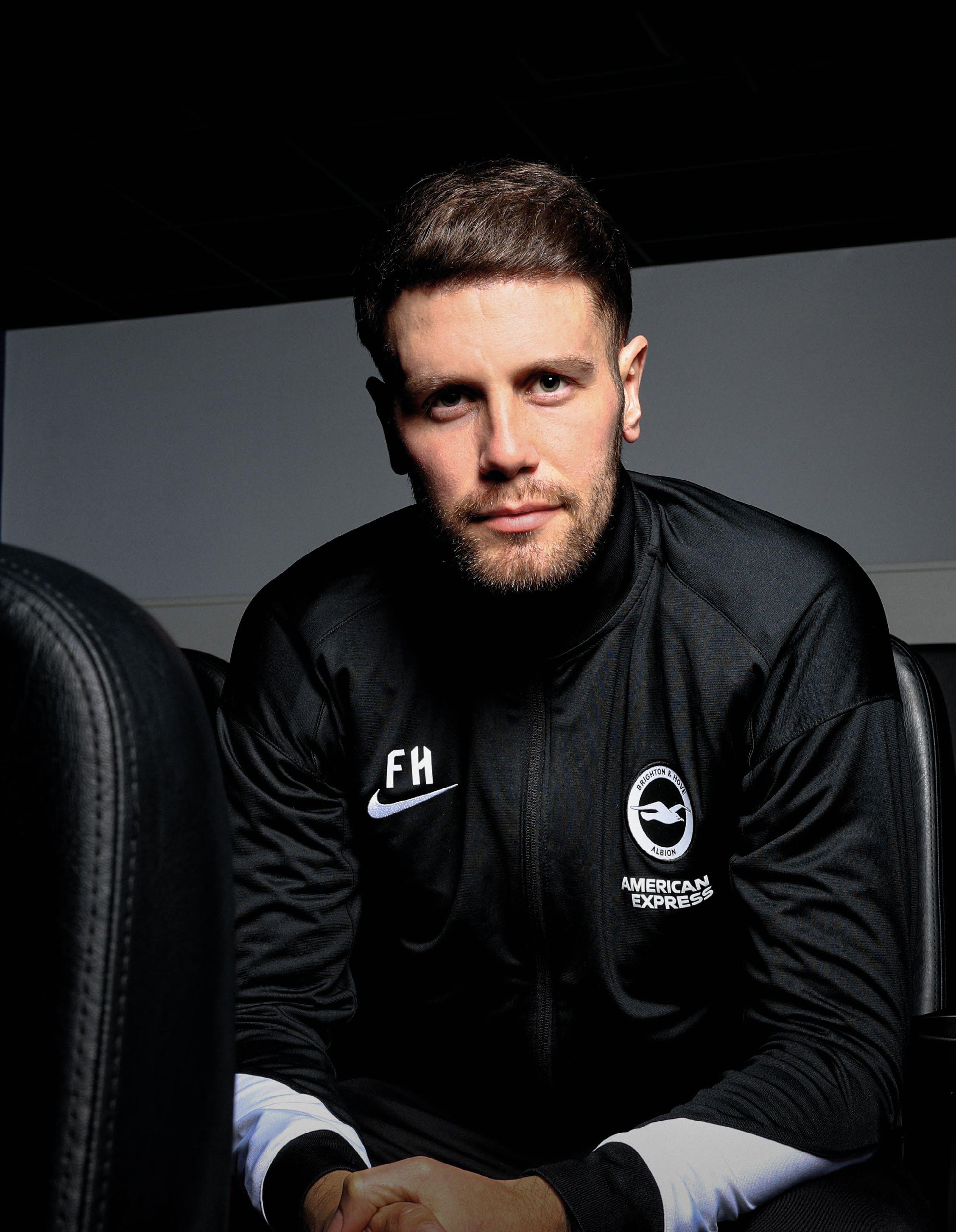
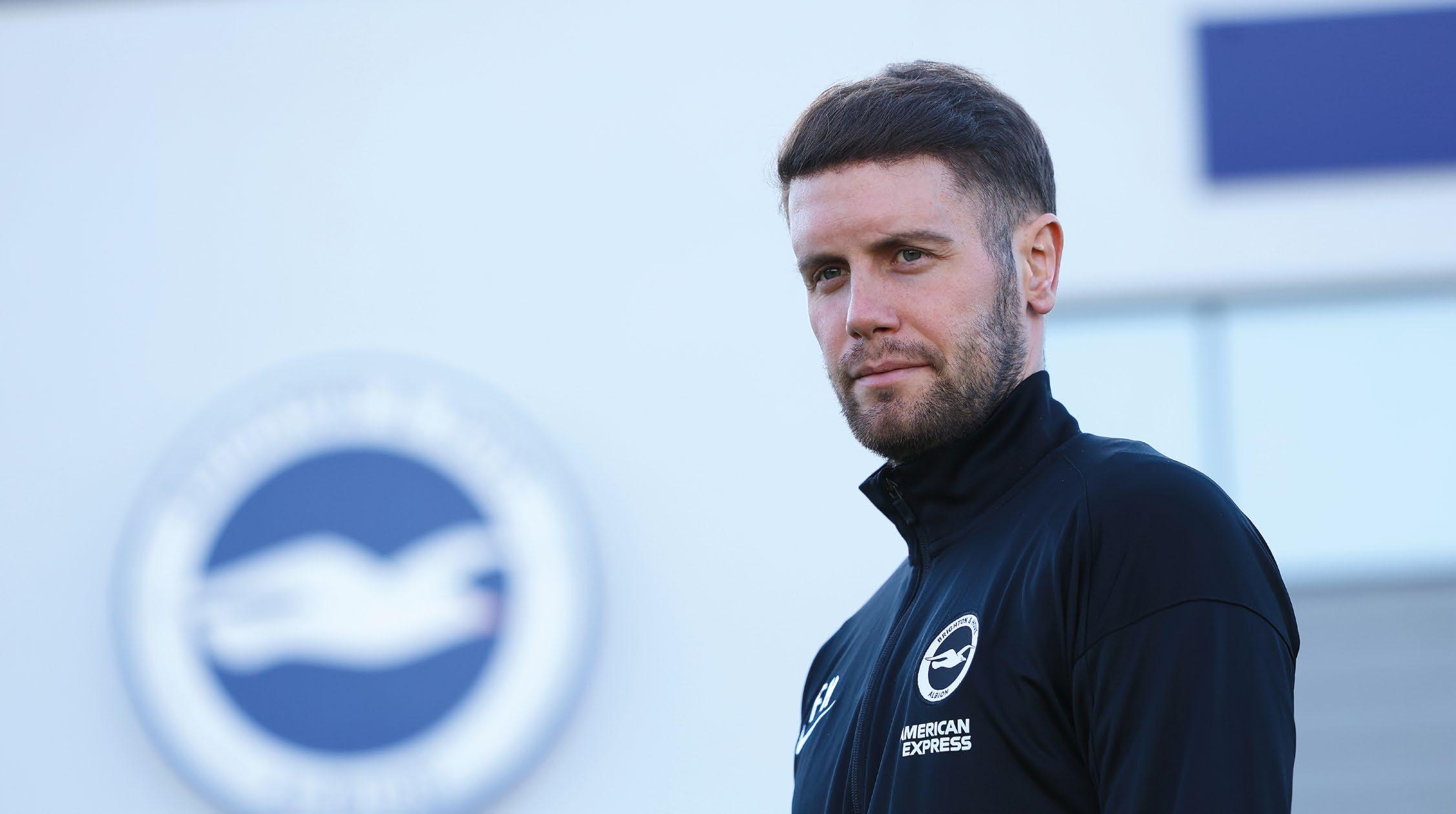
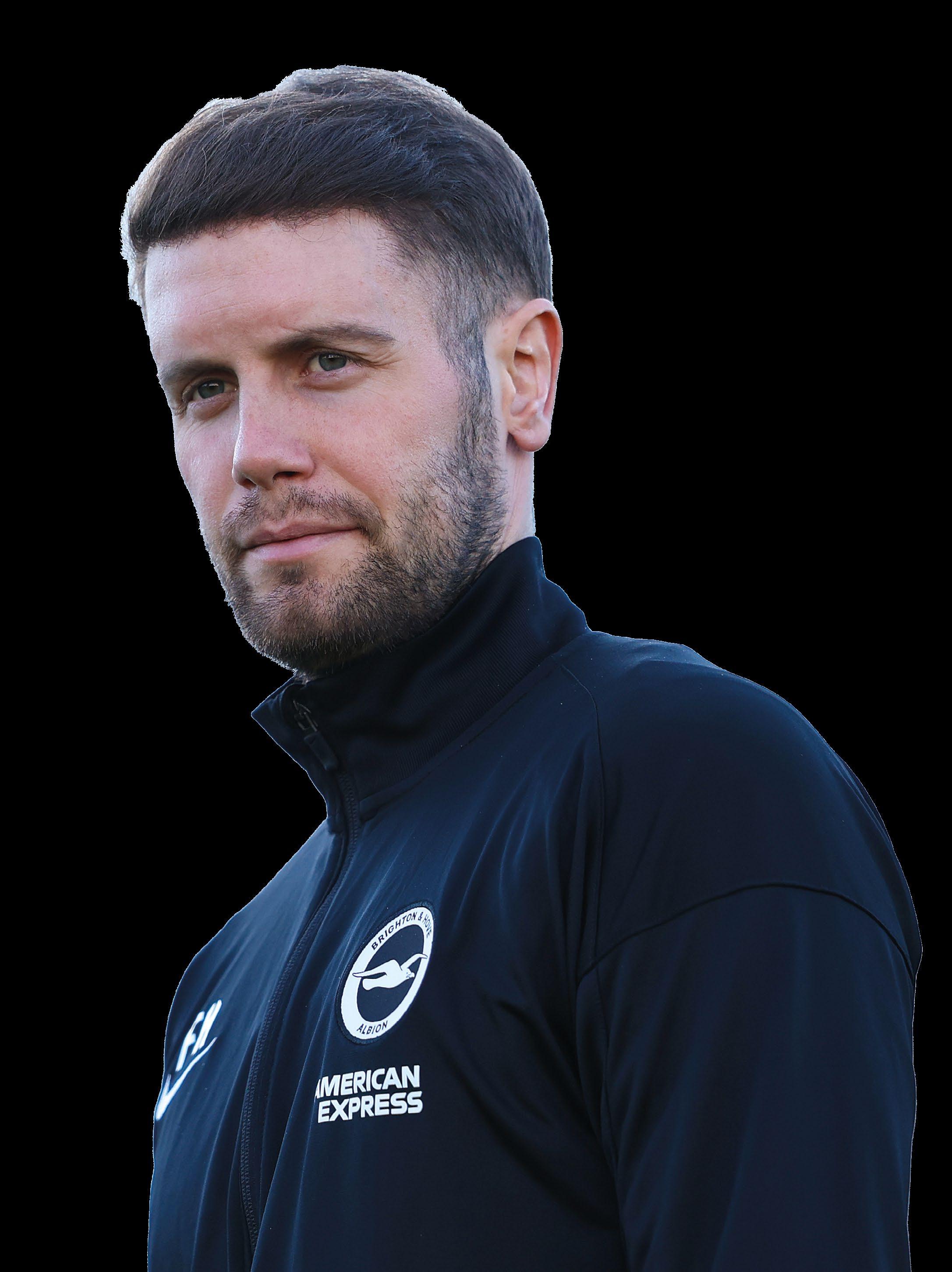
Brighton & Hove Albion’s Fabian Hürzeler may be the Premier League’s youngest ever permanent manager, but he has already achieved promotions with Pipinsried and St. Pauli in Germany, and instilled an impressive dynamism and adaptability at the Seagulls. Here, speaking with an eloquence that belies his years, Hürzeler reflects on his journey so far.
Interview: Sue McKellar
Photography: Reuters // Action Images // Brighton & Hove Albion // LMA
FABIAN HÜRZELER
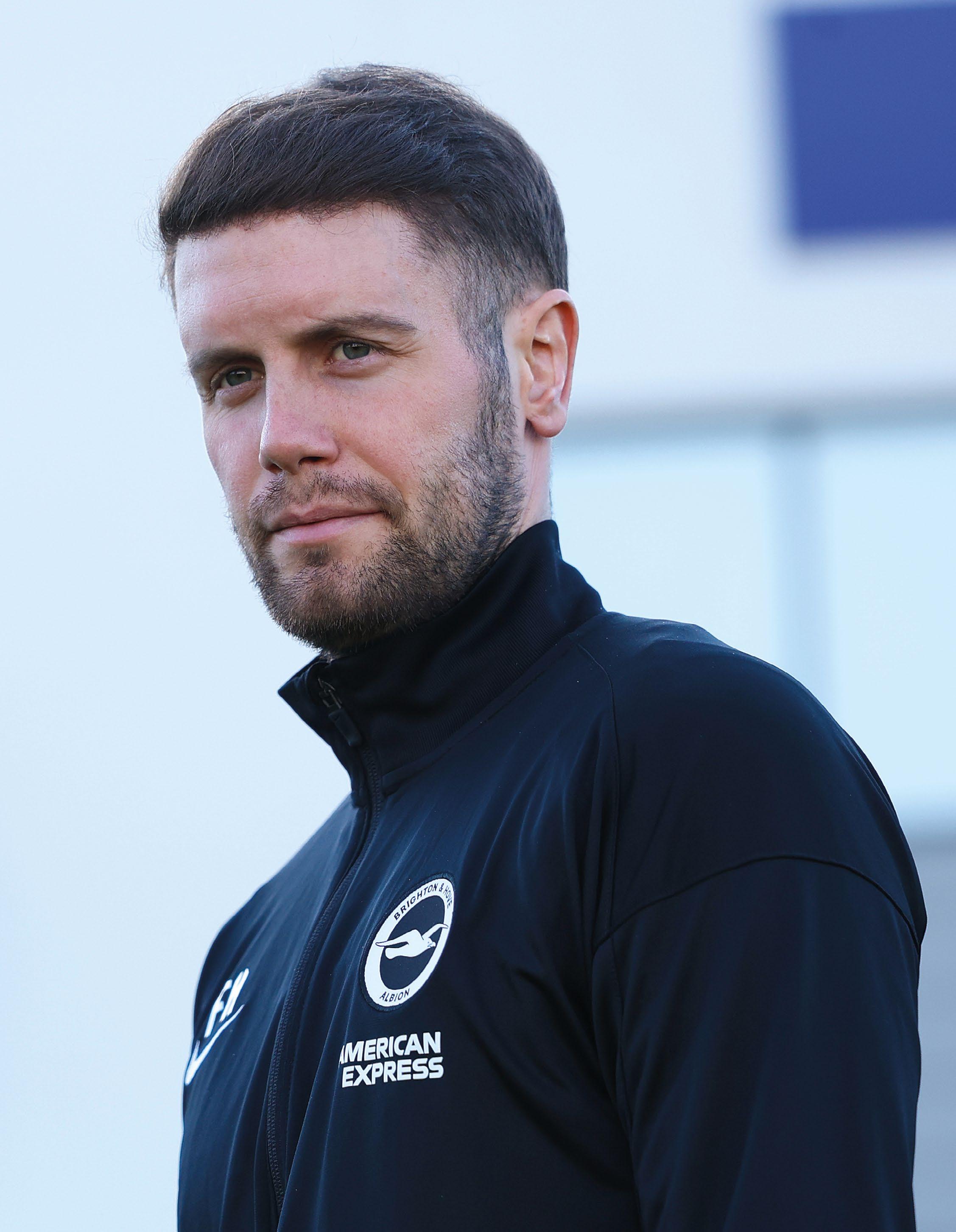
YOU HAVE TO WORK HARD TO ACHIEVE YOUR DREAMS.
From an early age, my parents instilled in me the importance of passion, hard work and sacrifice. My dad’s unwavering dedication to his job was inspirational. Every morning, come rain or shine, he would leave the house at 5am, get on his bike and cycle to work as a dentist. I learned from him that talent is never enough; you have to work very hard for the things you love. Certainly, it’s true for me. I may have talents and skills in certain areas, but ultimately, I’m where I am today through hard graft and a genuine passion for football. I love what I do and I do what I love.
I THINK I HAVE A CERTAIN CULTURAL FLEXIBILITY. Perhaps it comes from having moved around a bit as a child. When I was very young, my mum and dad decided to sell what little they had in Germany to move to the United States in order that
From an early age, my parents instilled in me the importance of passion, hard work and sacrifice.
they could pursue their careers as dentists. Starting out in a tiny apartment with their young family, they worked their way up, pushing through setbacks and disappointments to build their lives and achieve their goals. I find that truly impressive. I was born in the US and spent around three years there before we moved to Freiburg and then Munich. I think my personality draws both on the US’ open-mindedness (we returned often when I was growing up) and ideology of following your dream, and the Swiss and German heritage of my parents, who were very precise, structured and disciplined.
I SPEAK FOUR LANGUAGES.
I’m still taking lessons to improve my English, as well as Spanish, which I started studying three years ago. I also have a decent understanding of French, and of course German is my mother tongue. Nothing beats living in another country for improving your language skills. When you’re immersed in it, it comes more easily and naturally. I read

Hürzeler
aspires to
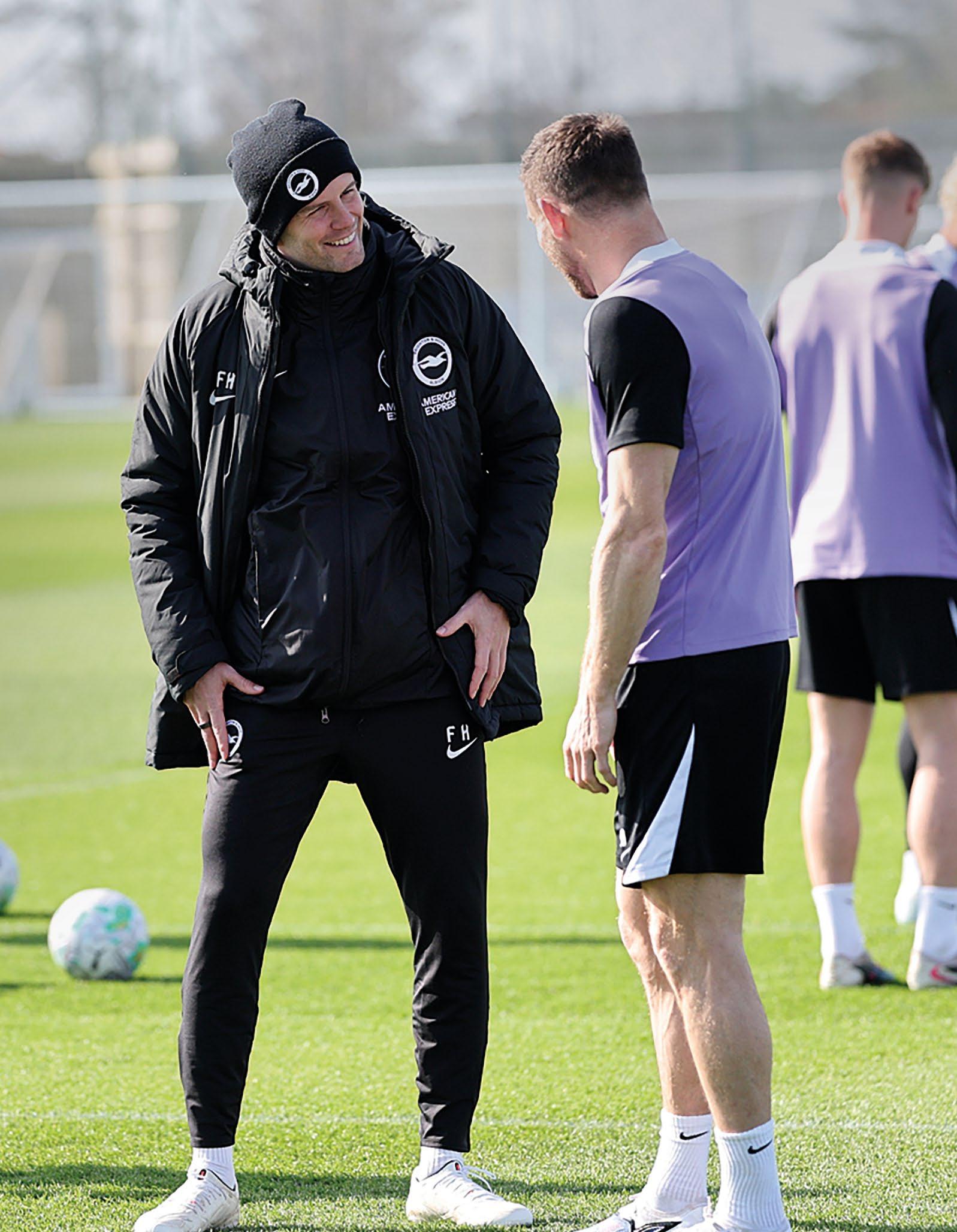
be a leader who is a good communicator and listener, and who takes care of those around him. Brighton & Hove Albion
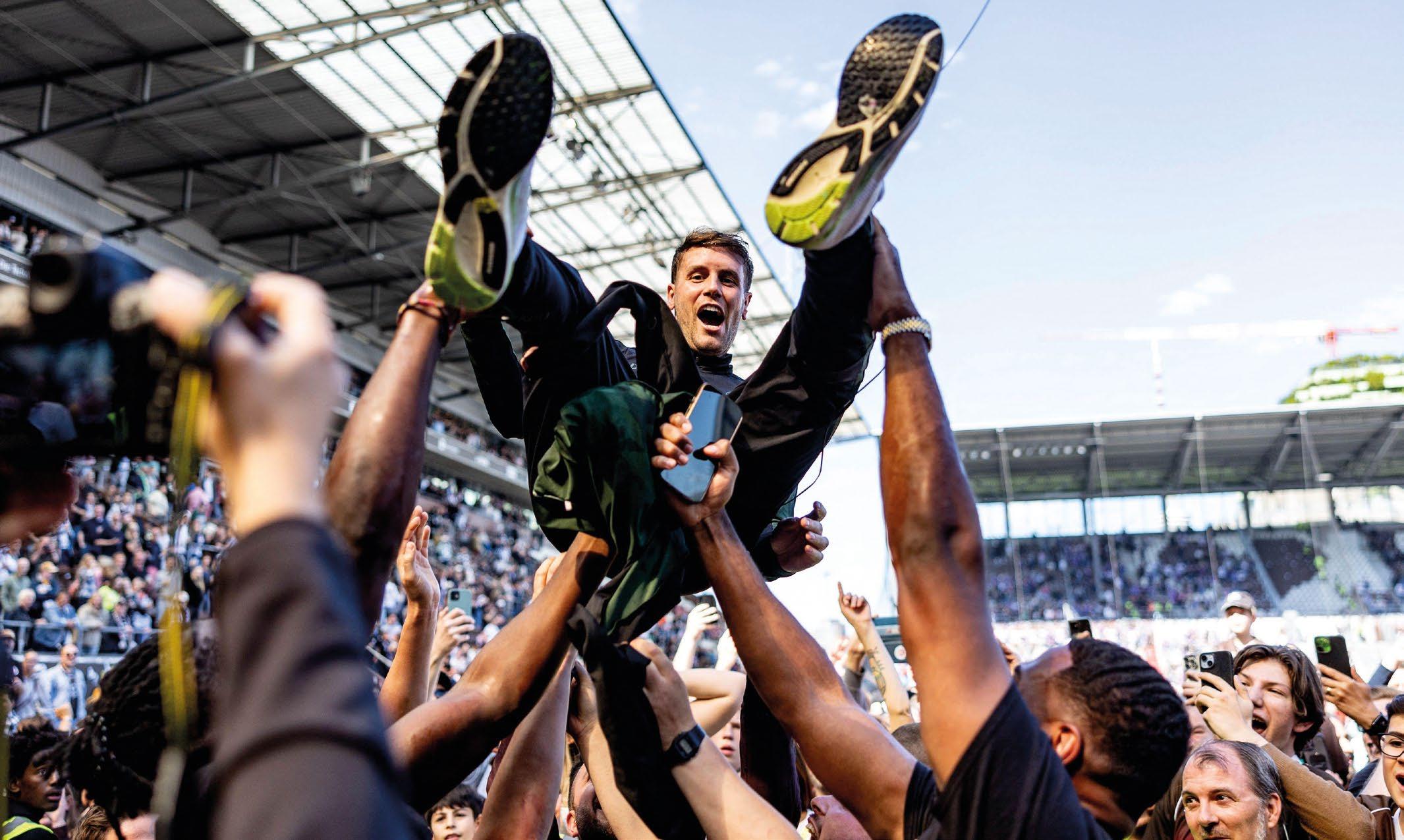
St. Pauli coach Fabian Hürzeler is celebrated after the side achieve promotion to the Bundesliga. Hamburg, May 2024.
Alamy
Alamy
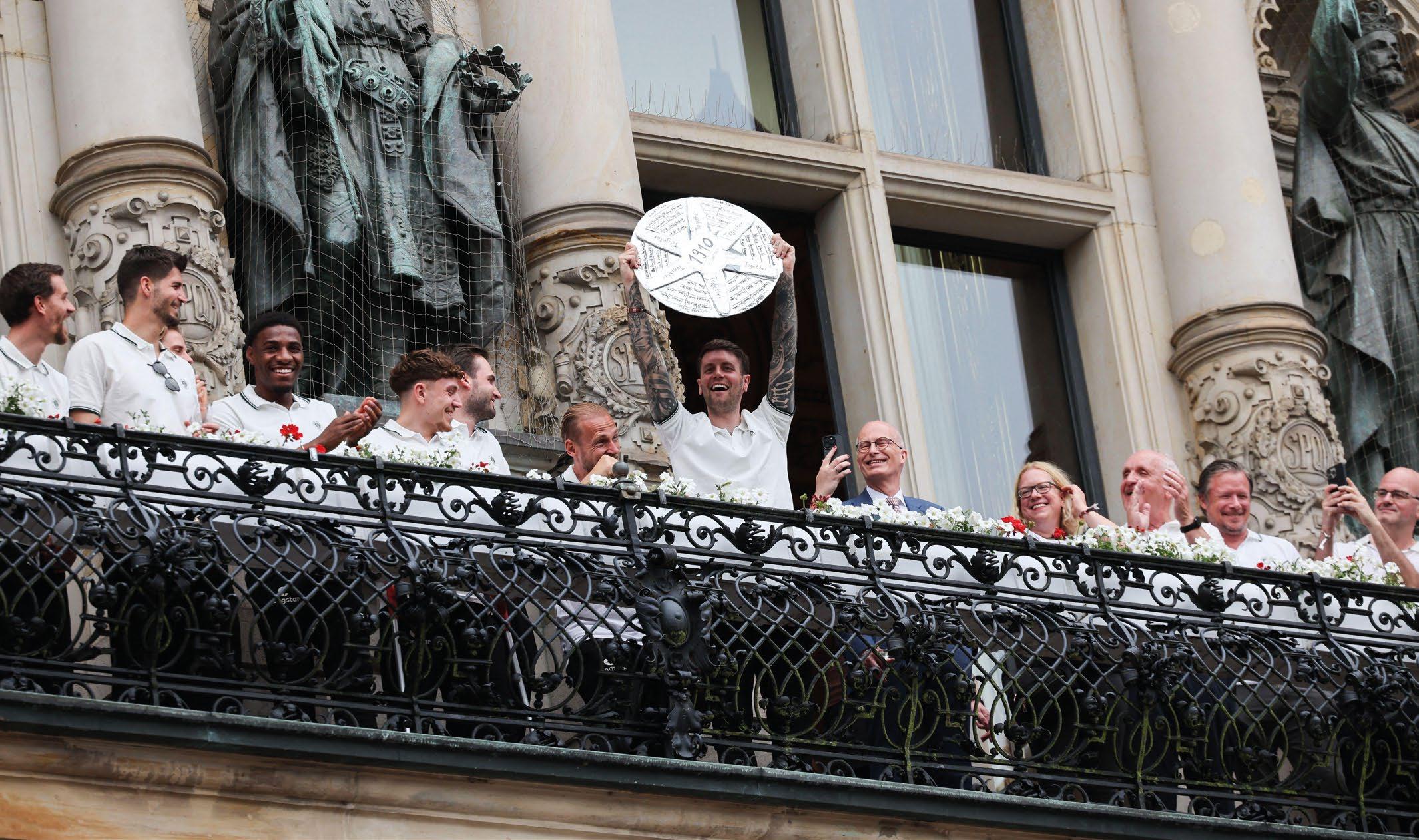
Fabian Hürzeler lifts a handmade championship trophy to celebrate the promotion of FC St. Pauli. Hamburg, May, 2024.
I believe there’s a lot we can take from what’s going on in rugby and other sports.
books, too, but often don’t have time to finish them, so podcasts tend to be the most useful. I can listen while I’m heading to the office or travelling. Being able to communicate in different languages is a valuable skill in football today given how multicultural teams are; at Brighton, our players represent 17 different cultures. I think that being able to speak someone’s language enables you to build a different kind of relationship with them, a deeper connection.
PEOPLE HAD THE COURAGE TO GIVE ME A CHANCE.
I have been fortunate to come across people who have seen my capabilities, had faith in them and been courageous enough to invest in me. This happened when I was just starting out and my head coach at St. Pauli, Timo Schultz, let me be his assistant at a very young age. Later, St. Pauli sporting director Andreas Bornemann had the courage to appoint me to be one of the youngest head coaches in the German Bundesliga 2, and again here at Brighton, where they entrusted me to be part of this special club.
FEEDBACK IS ESSENTIAL TO LEARNING.
I encourage it, from my player leadership groups, coaching staff, and anyone I work with and trust. I really value their
experience and insight. That doesn’t necessarily mean I go into meetings asking explicitly for feedback; it tends to come from good, honest and often spontaneous conversations. When you have a trusting relationship with someone, they will share their experience and suggest ways that you might do things differently. I’ve been an assistant coach in my career, so I understand how important it is to be appreciated in the role, and believe it’s really important to listen to them and to value their input.
THE GAME IS CHANGING; NEW IDEAS HELP US TO ADAPT.
I’m intrigued and impressed by the culture of rugby clubs like the All Blacks, where there is a very open-minded approach, and where players take a lot of ownership and responsibility. There’s also a real sense of togetherness, so people stick together, and it’s about the ‘we’ rather than ‘me’. I believe there’s a lot we can take from what’s going on in rugby and other sports, and look at how we might apply it in our own contexts in football. Former All Blacks high performance chief Mike Anthony is now Brighton’s head of player development and high performance.
I’VE ALWAYS APPRECIATED WHAT DATA ANALYSIS CAN ADD.
It helps to take some of the emotion out of the situation, which aids rational decision making. It can also provide greater context and detail on your performance, and valuable feedback about overall performance and that of individual players. The way that data is used at Brighton isn’t something I was used to, so it was a big change for me when I first arrived. However, I got used to it and I believe it has made me a better coach.
THERE ARE ADVANTAGES TO BEING A YOUNG MANAGER. There are many coaches and managers with more experience and wisdom than me, but I try not to dwell on any downsides of being a young manager. Instead, I focus on the advantages of being much closer in age to
the players. I feel I can relate to and really understand their perspective, where they are in their lives, and how they might be feeling in different situations.
I STAND BY MY DECISIONS. It’s important in life to not have regrets, so I make my decisions with conviction. There’s a big difference between making an emotional decision and making a rational decision with emotion. I think I’m quite good at regulating myself and not over-reacting, so I don’t make poor decisions because of big emotions. That doesn’t mean I always get it right, but I’m capable of being decisive and I know that’s important when you are a football manager.
I WANT TO CREATE LEADERS, NOT FOLLOWERS. I think that’s central to who I am as a leader. I hope that people view me as a good
communicator, who believes in clarity, is a good listener, shows people my appreciation and takes care of those around me. I also like to give people responsibility, because I believe that’s part of helping them to grow. I want strong personalities around me, not simply people who agree with me all the time.
LIKE MY FATHER, I CYCLE TO WORK.
Or, if the weather doesn’t allow that, I’ll go by car and have more time in the gym. Aside from having a workout each morning, I love to play paddle. Our CEO, Paul Barber, is also a big fan of the sport, and we had a paddle court built at the training ground. It has proven to be a great way to get people moving, and to help them switch off. But, perhaps even more importantly for me, it’s a game about togetherness that can help build strong connections.
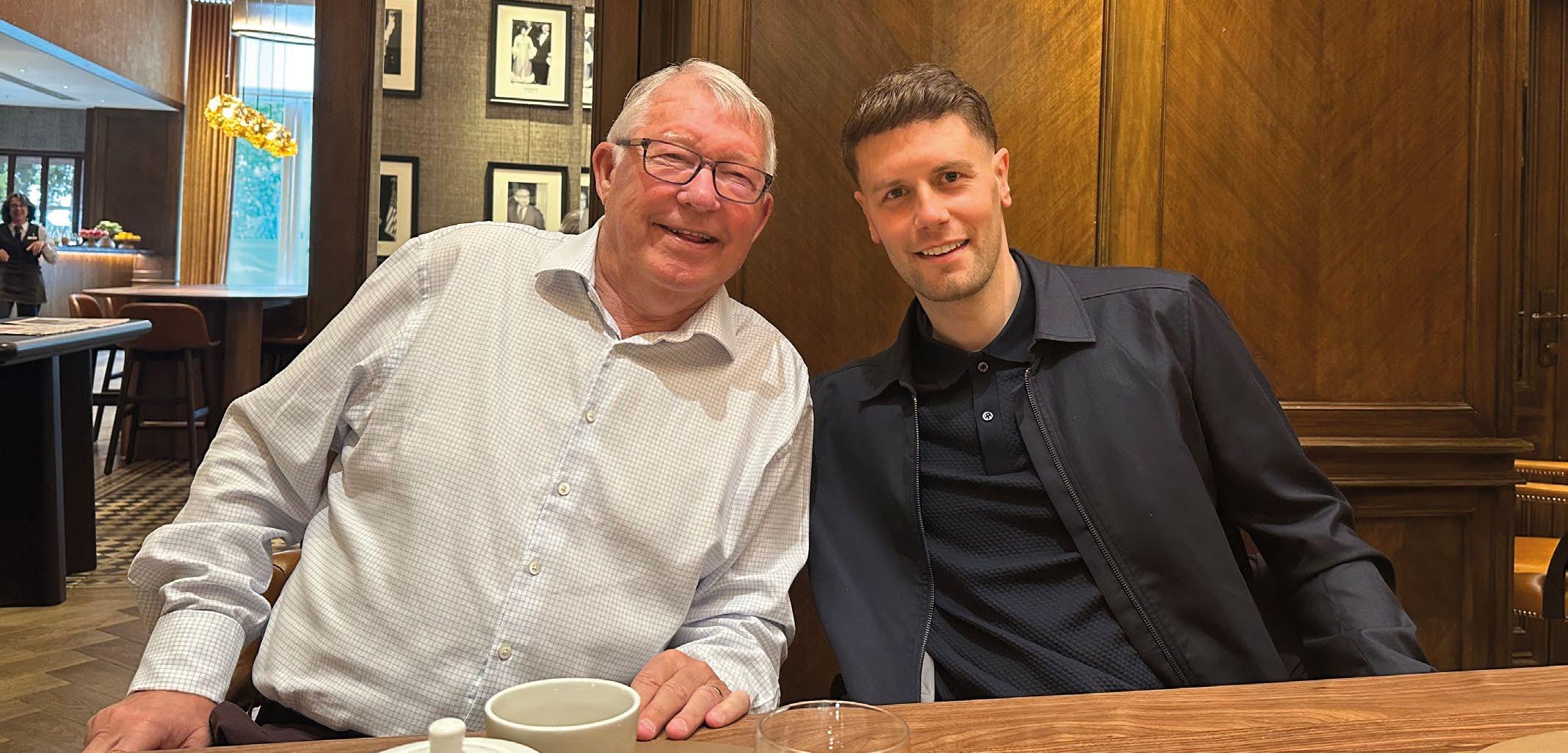
An avid learner, Hürzeler takes every opportunity to learn from senior managers such as Sir Alex Ferguson CBE. LMA
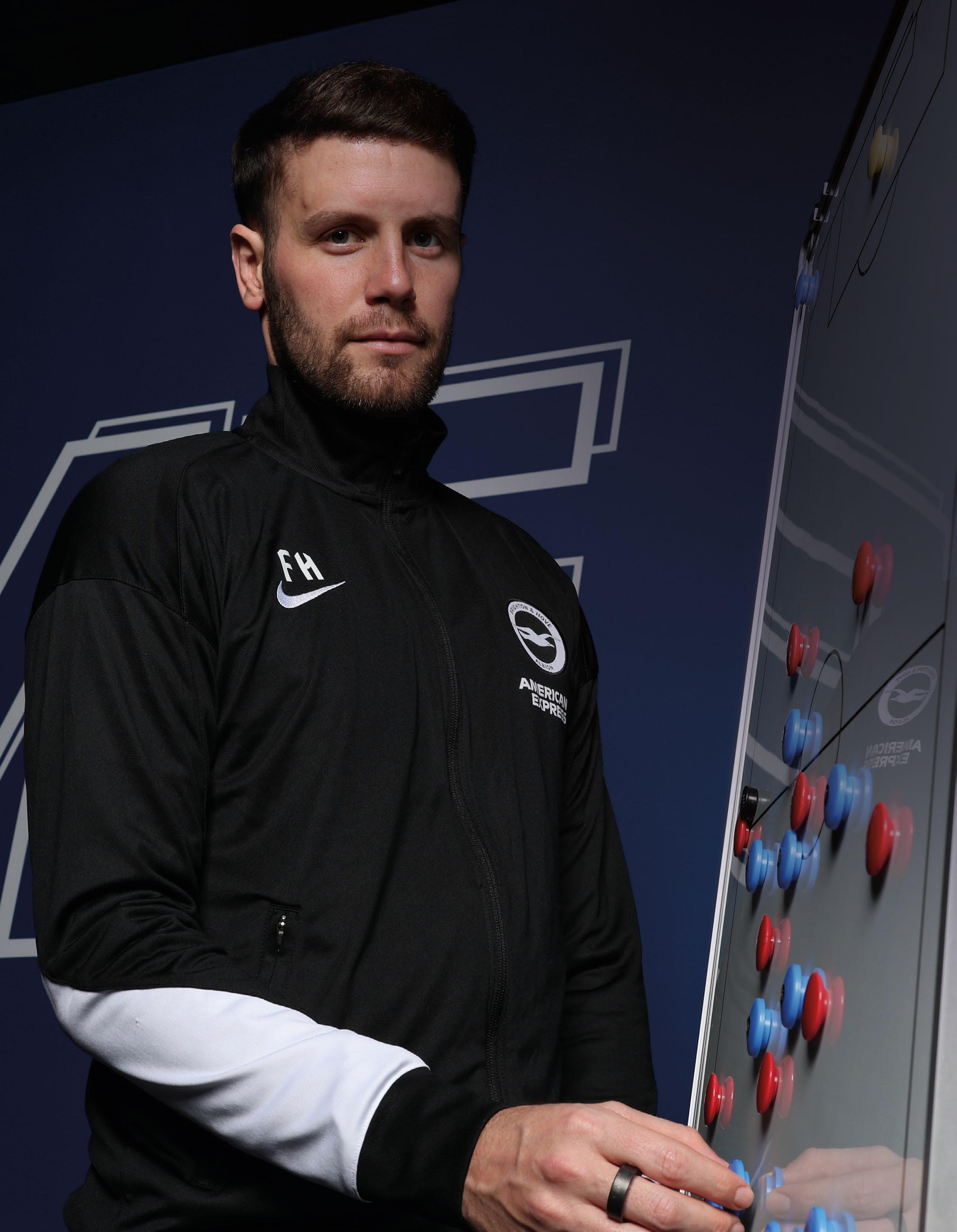
There’s a big difference between making an emotional decision and making a rational decision with emotion.
STRENGTH IN NUMBERS.
While we tend to think of resilience as an individual skill or trait, research shows that group resilience plays a central role in the performance, growth and healthy functioning of teams.
Words: Alice Hoey
Photography: Reuters // Action Images
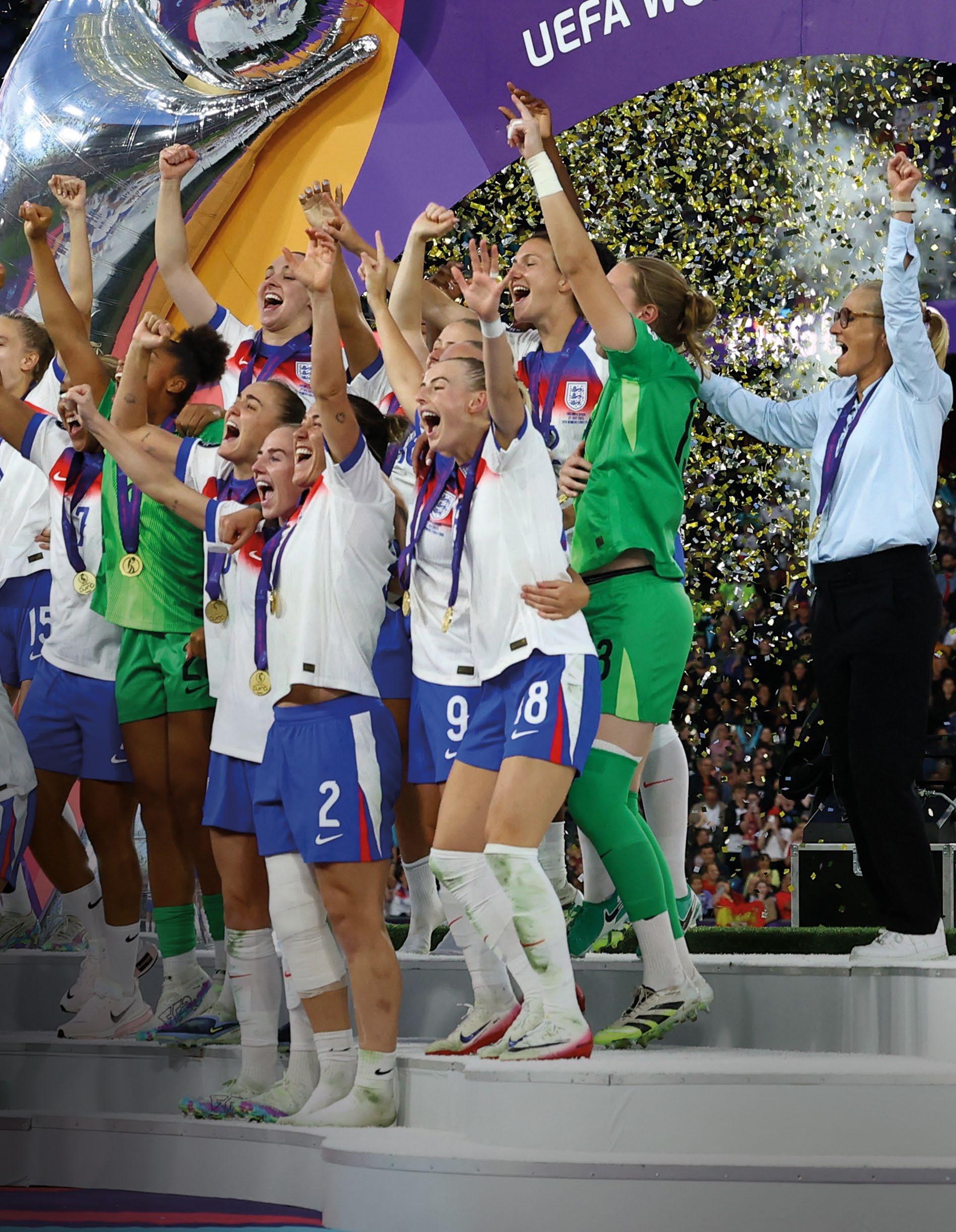
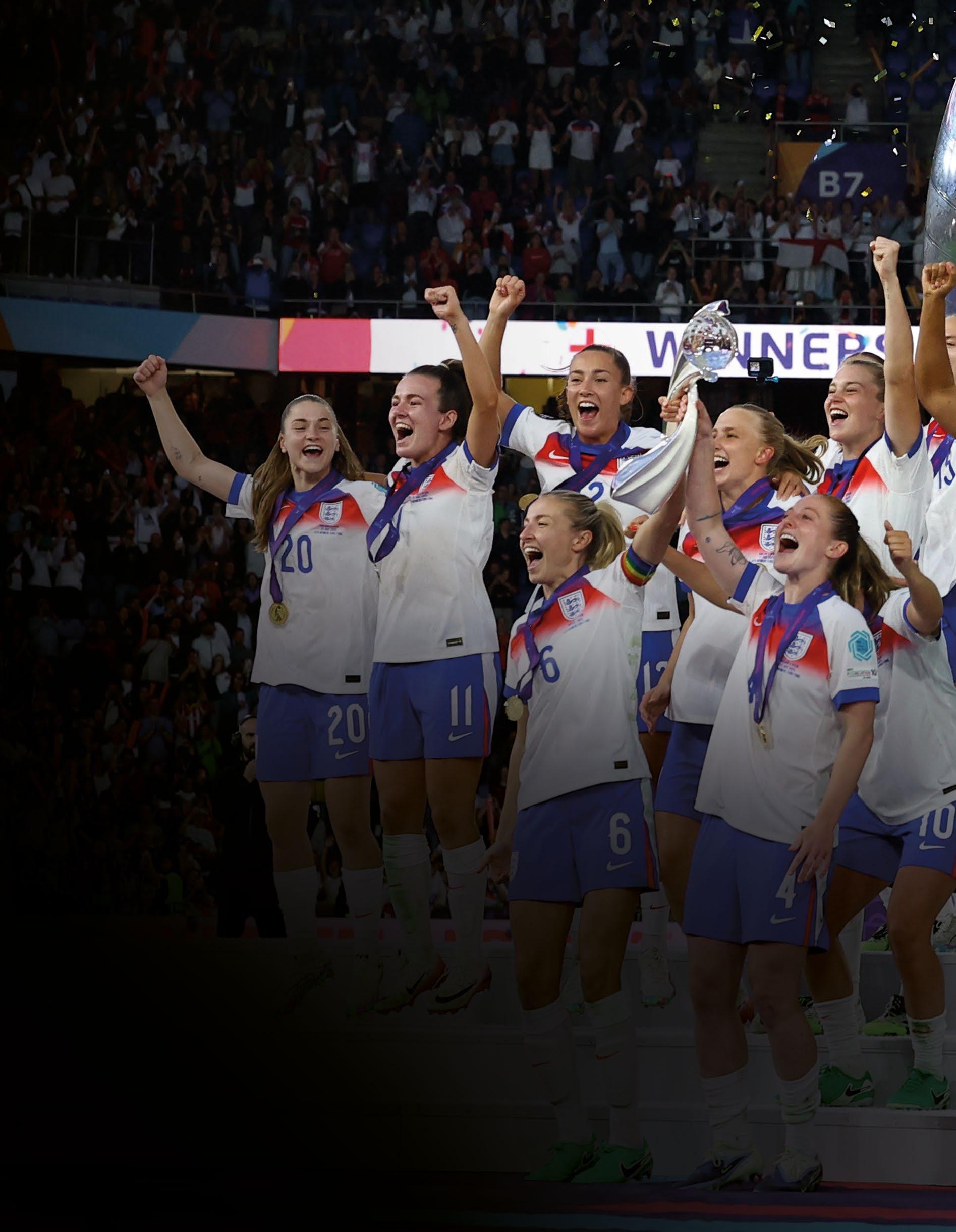
The strong cohesion and trust among the Lionesses enabled the team to achieve victory at the 2025 Euros, despite setbacks and criticism. Reuters // Action Images
Collective resilience is the strength that emerges from trusting relationships, shared challenges, collaboration and unified purpose.
Resilience is the ability to recover from adversity, adapt to change and learn from experience, and it’s fundamental to both wellbeing and performance development. Whereas individual resilience focuses on personal coping strategies, however, collective resilience is the strength that emerges from trusting relationships, shared challenges, collaboration and unified purpose. It is the invisible fabric that binds members together when challenges arise, enabling them to transform setbacks into opportunities for growth, as well as processing and harnessing successes.
“While individual resilience is very much dependent on psychological qualities, team resilience is psychosocial,” says Dr Mustafa Sarkar.
“It’s not about the individual characteristics that someone brings to the table, but more the collective resources that the whole group can draw upon.”
Research by Sarkar and co has shown that strong individual resilience doesn’t even guarantee team resilience.
good collective resilience,” he says. In other words, a team functions as an ecosystem, so all actions, communication and interpersonal relationships impact on the group’s response to an event.
LEADERSHIP AT THE CENTRE
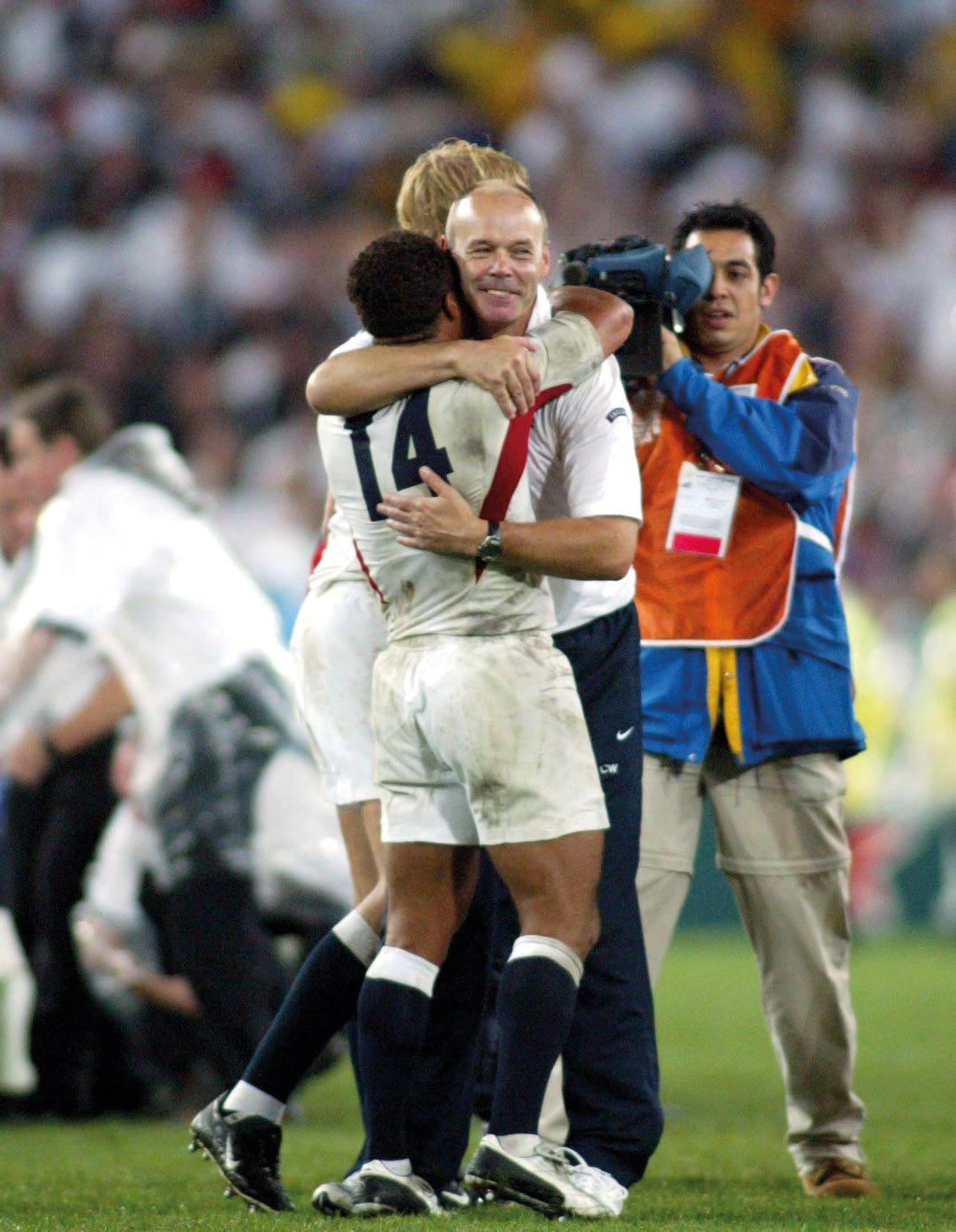
There is plenty of research to back up the impact of this collective force, says Sarkar, and while studies centred initially on businesses, they have more recently explored its importance in elite team sports. Among these was a 2003 case study by Sarkar and co on the World Cup-winning England Rugby Union team, which led to the identification of five key psychosocial processes behind collective resilience.
Clive Woodward and his World Cup-winning England rugby team were a central case study in Mustafa Sarkar’s research into resilience.
Reuters // Action Images
“You could have a team of people each with good personal resilience, but unless they’re able to develop and maintain high-quality relationships as a group there won’t be
“The first is to have an inspirational and transformational leader, someone who’s able to see the bigger picture,” says Sarkar. “That’s particularly important when the team is going through difficult or challenging situations, and we saw this in Clive Woodward, steering England through a particularly tough period before they went on to win the World Cup. In sport, especially, the focus can be quite short term, but when it comes to team resilience, uniting the team
around a long-term vision is really important.”
While having this transformational leader is key in the early stages of a team’s development, he adds, as the team progresses there’s a growing need for a shared leadership model, whereby responsibility and accountability are spread throughout the group. This is the second pillar.
SOLID FOUNDATIONS
Important also in collective resilience is having a strong social identity. “When the team is going through difficult or challenging situations, they can return to what they stand for as a group and what differentiates them from the competition,” says Sarkar. While the majority of athletes at the Commonwealth Games or Olympics will perform as individuals in a range of disciplines, for example, the creation of a strong Team GB or Team England identity affords them a sense of belonging, unity and support, ultimately improving their collective resilience.
Leaders, therefore, play a big part in developing a unique and authentic team identity, and then finding ways to bring everything back to the values, characteristics and story that this represents.
The fourth pillar of collective resilience is the enjoyment that can come from being part of a group, adds Sarkar, “because when you compete together and face high-pressure situations as one, it builds your ability to face difficult or challenging situations.” Collective resilience confers a kind of shared emotional regulation, whereby members help one another to stay calm and focused, balancing optimism with realism.
BOUNCE BACK HIGHER
Last, and perhaps most important, is the idea of team learning. Collectively, members interpret what has happened, identifying causes and implications rather than assigning blame. They ask, ‘what can we learn from this?’ instead of ‘who’s at fault?’ “We know that teams that demonstrate resilience have a great ability to learn collectively from experience,” says Sarkar, “because it isn’t automatic.
To learn and grow from our experiences, we need to reflect on them actively, and use that to shape future actions and behaviours.”
The leader, therefore, plays a key role in ensuring that open and honest group reflection is a central and strategic part of the performance process, and that the overall performance
environment is conducive to that. Because, while collective resilience depends heavily on high-quality relationships, says Sarkar, it’s also environmental.
“Our research shows that for team resilience, the ideal culture is one of high challenge and high support, whereby challenge involves everyone having high expectations of one another, and helps to instil accountability and responsibility. Support, meanwhile, refers to enabling people to develop their personal qualities, and helps to promote learning and build trust.”
So, while collective resilience is driven by psychosocial processes, the leader plays a central role in creating the framework and environment in which it can thrive, one where clear communication, a strong identity, psychological safety and shared responsibility are priorities. While this can take time, it more than pays off in terms of long-term sustainable team improvement from a wellbeing and performance perspective. Cultivating collective resilience should therefore not be merely a response to crisis, but rather a strategic investment in the longterm vitality and performance of the team.
To learn and grow from our experiences, we need to reflect on them actively, and use that to shape future actions and behaviours.
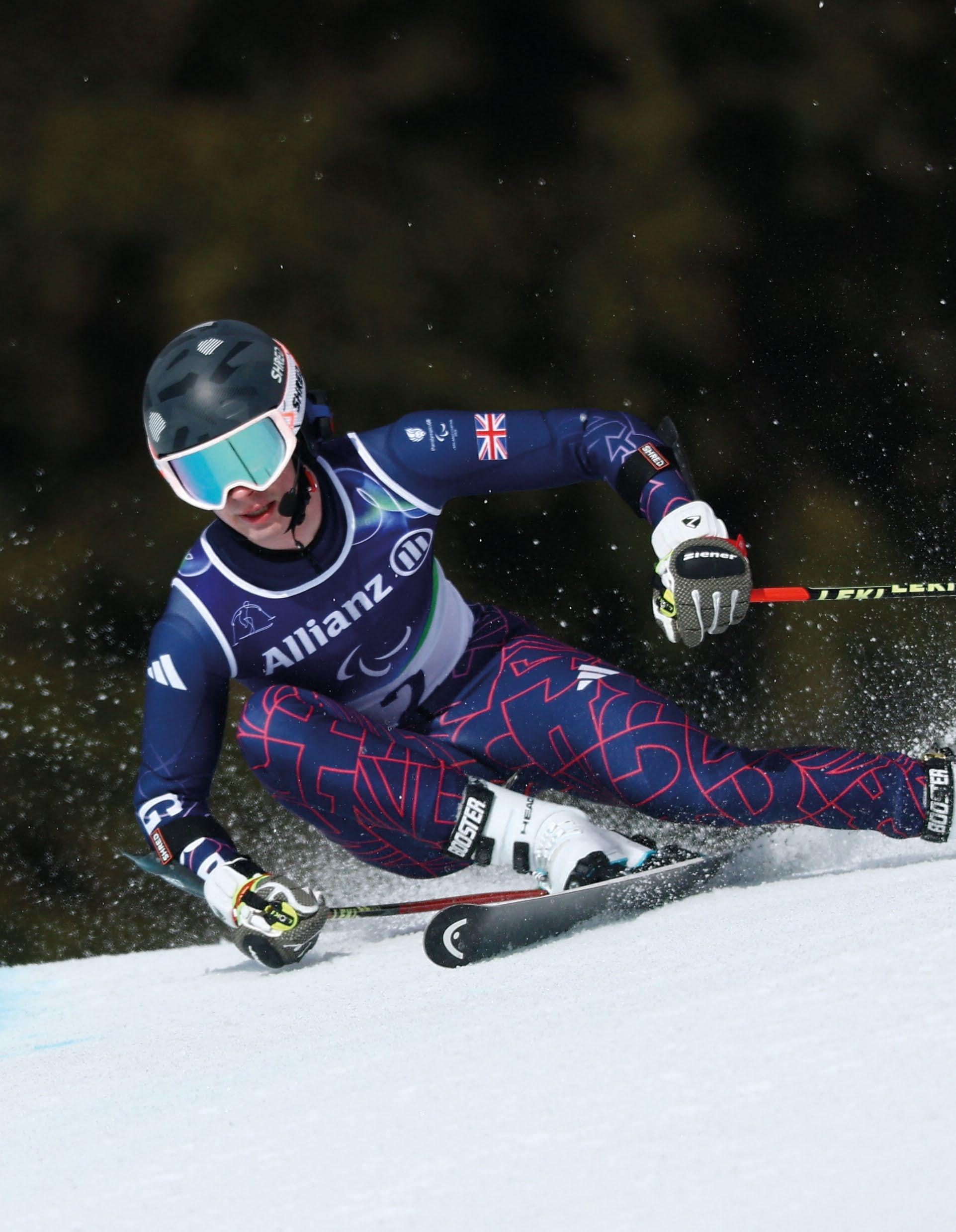
Athletes such as Neil Simpson (shown here in the men’s giant slalom vision impaired, Milano Cortina 2025) gain huge advantage by feeling part of Team GB, despite competing alone.
Reuters // Action Images
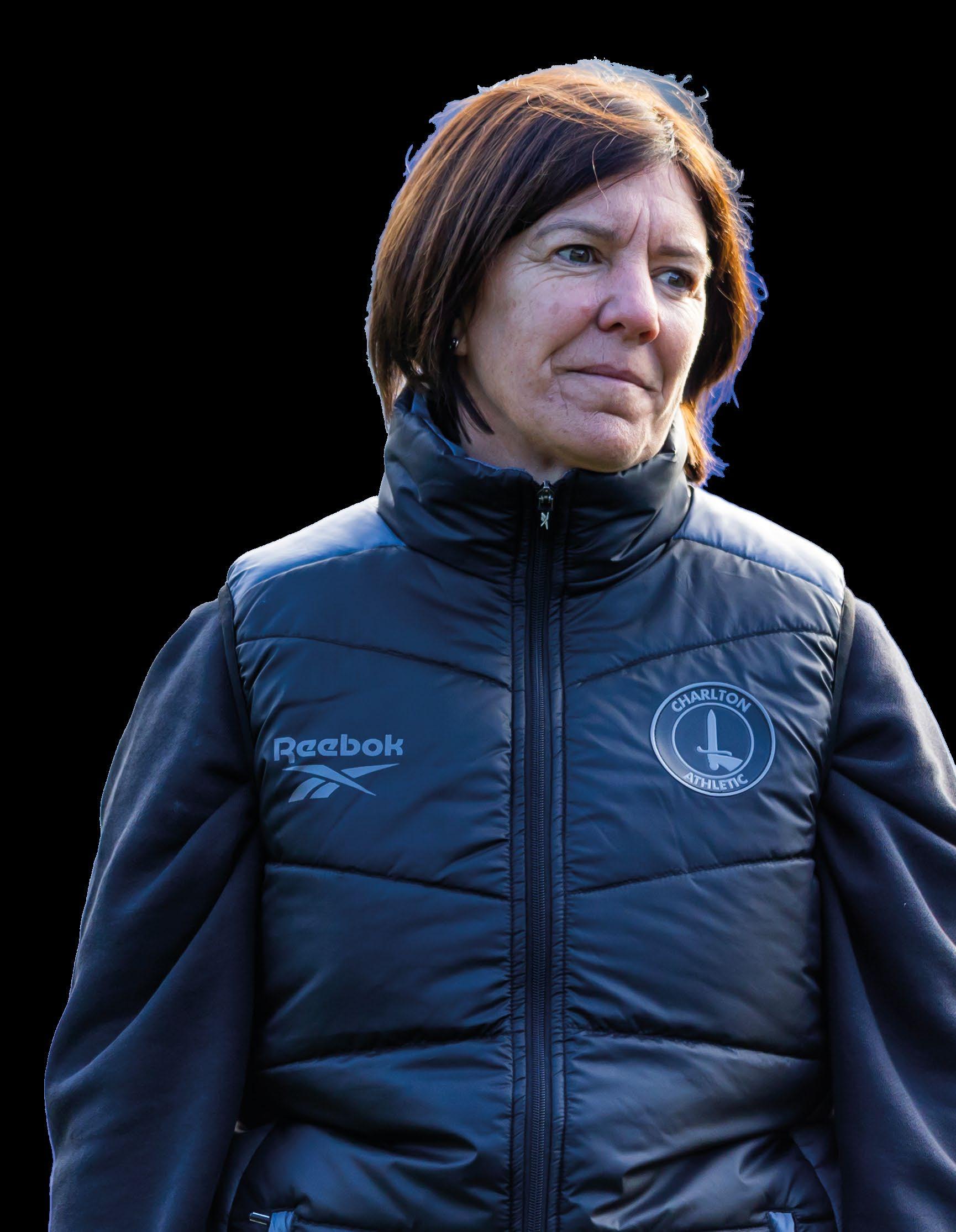
KAREN HILLS
MANAGER, CHARLTON ATHLETIC WOMEN
In women’s football, the quality of the relationships within the squad plays a huge role in performance. When the group is connected and aligned, it creates a strong foundation during difficult periods. Setbacks are inevitable, but if you have a united group, they respond together rather than individually.
What we see is a domino effect of positivity; when my senior players stay calm and solution-focused in the face of disappointment or challenge, it spreads through the squad, as does confidence. I see the players support one another more vocally, which helps to rebuild self-belief.
Conversely, small divisions can grow if you don’t reinforce standards and expectations. A strong leadership team helps here, because senior players and leaders model the right response in training and in the dressing room, setting the tone after setbacks.
Energy levels and performance can dip across the group if not managed, especially after a loss, so it’s my job to lift them, making sure training is enjoyable and competitive. I’m also mindful of my own behaviours, language and actions, ensuring they remain positive, and that I model the behaviours we expect – composure, honesty, accountability – especially in difficult moments.
As a manager, you have to create an environment where honesty, accountability and support coexist. In my team, honest conversations happen early and players feel safe to speak up, which prevents doubts from festering. There’s also clarity around effort, accountability and identity, which means a bad result doesn’t shake who we are.
Ultimately, while talent is important, it’s culture that drives resilience. When the group is aligned and unified, adversity becomes something you tackle collectively, and that’s often what separates good teams from great ones.

FROM ANOTHER SPORT:
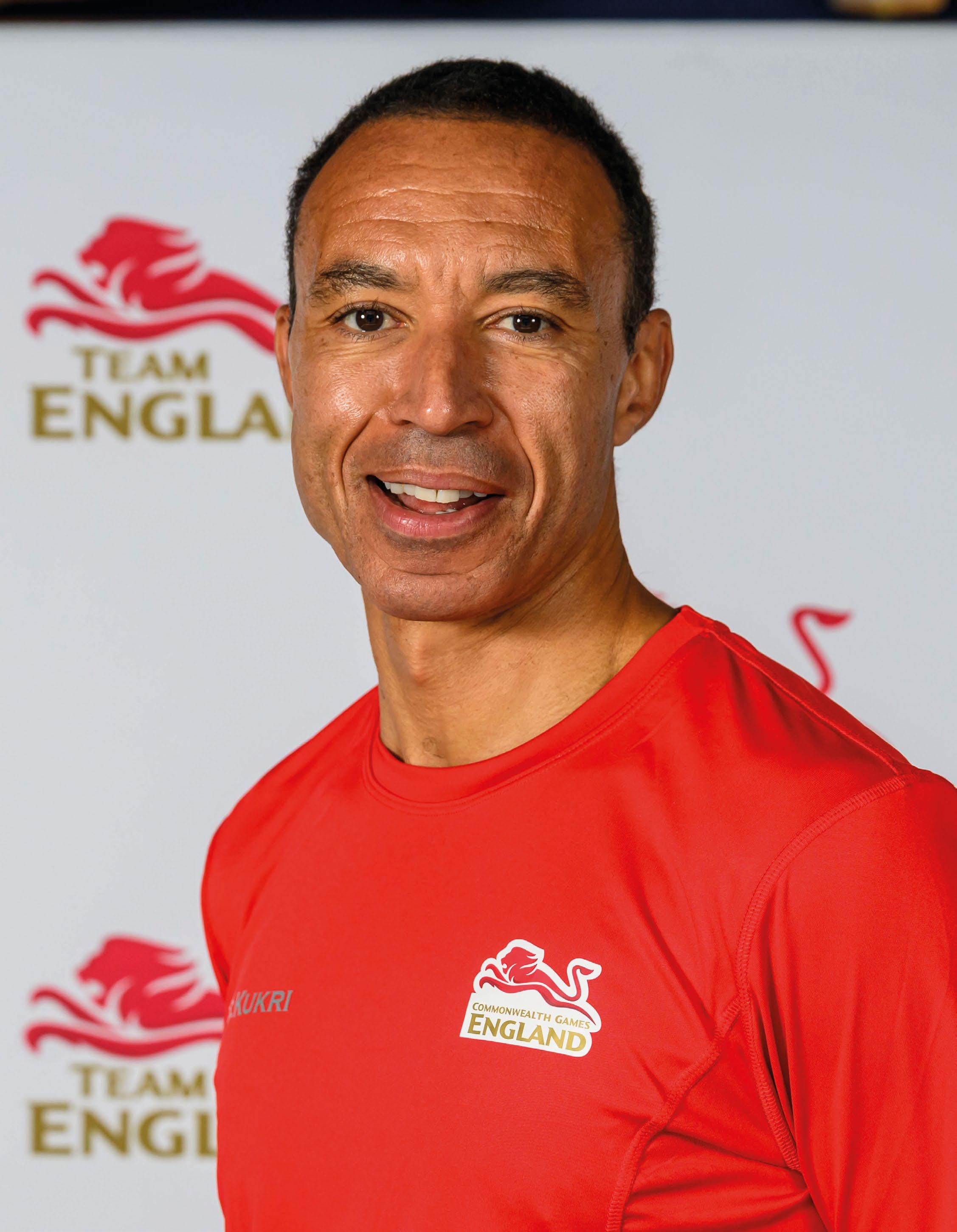
MARK OSIKOYA
AHEAD OF THE GAMES.
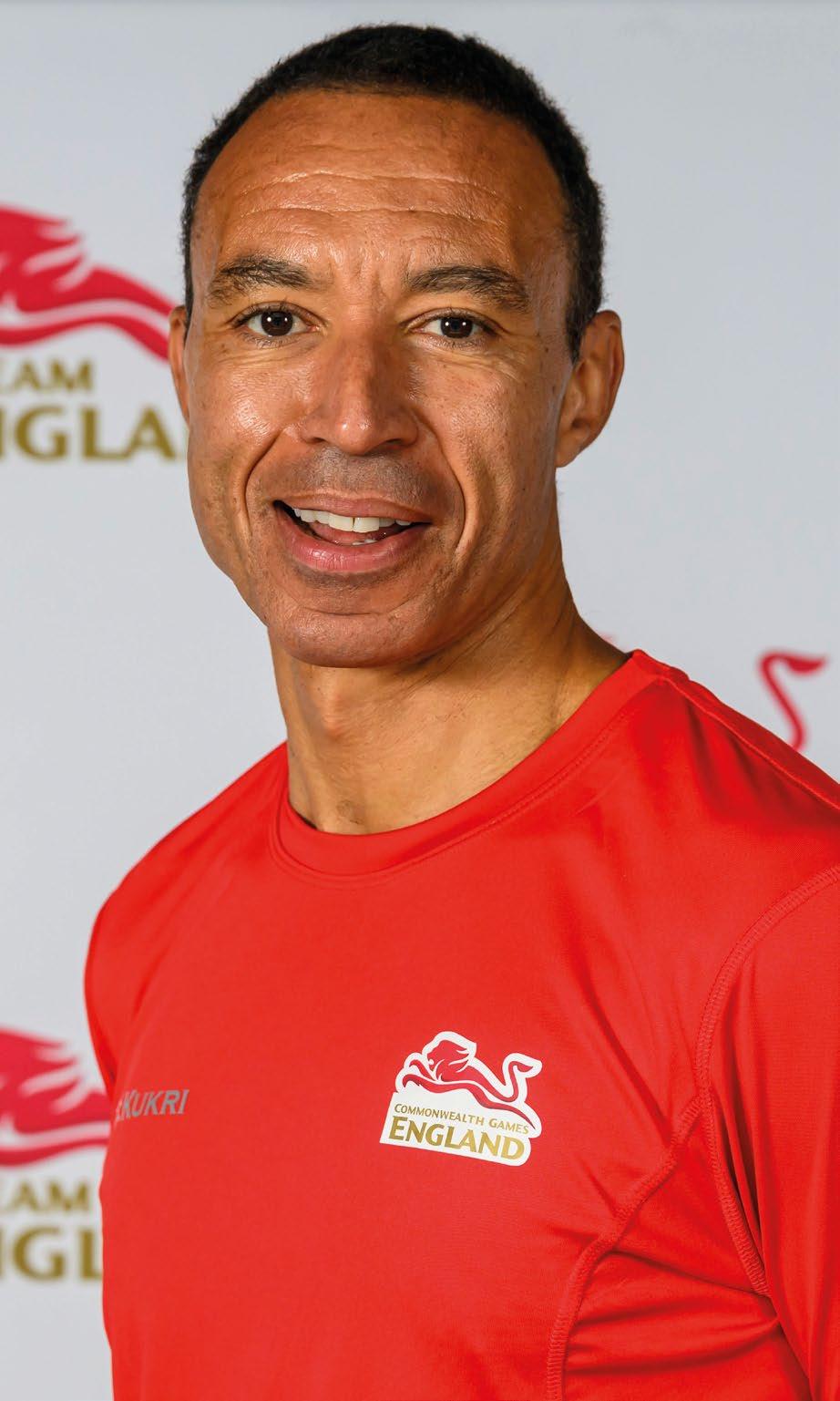
Currently steering Team England towards the 2026 Commonwealth Games in July, Chief Executive Mark Osikoya’s leadership is defined by adaptability, inclusivity and long-term vision.
Interview: Alice Hoey
Photography: Reuters // Action Images // Team England
There is a focus on meeting people’s emotional, social and psychological needs in a way that isn’t always present in the same way in other environments.
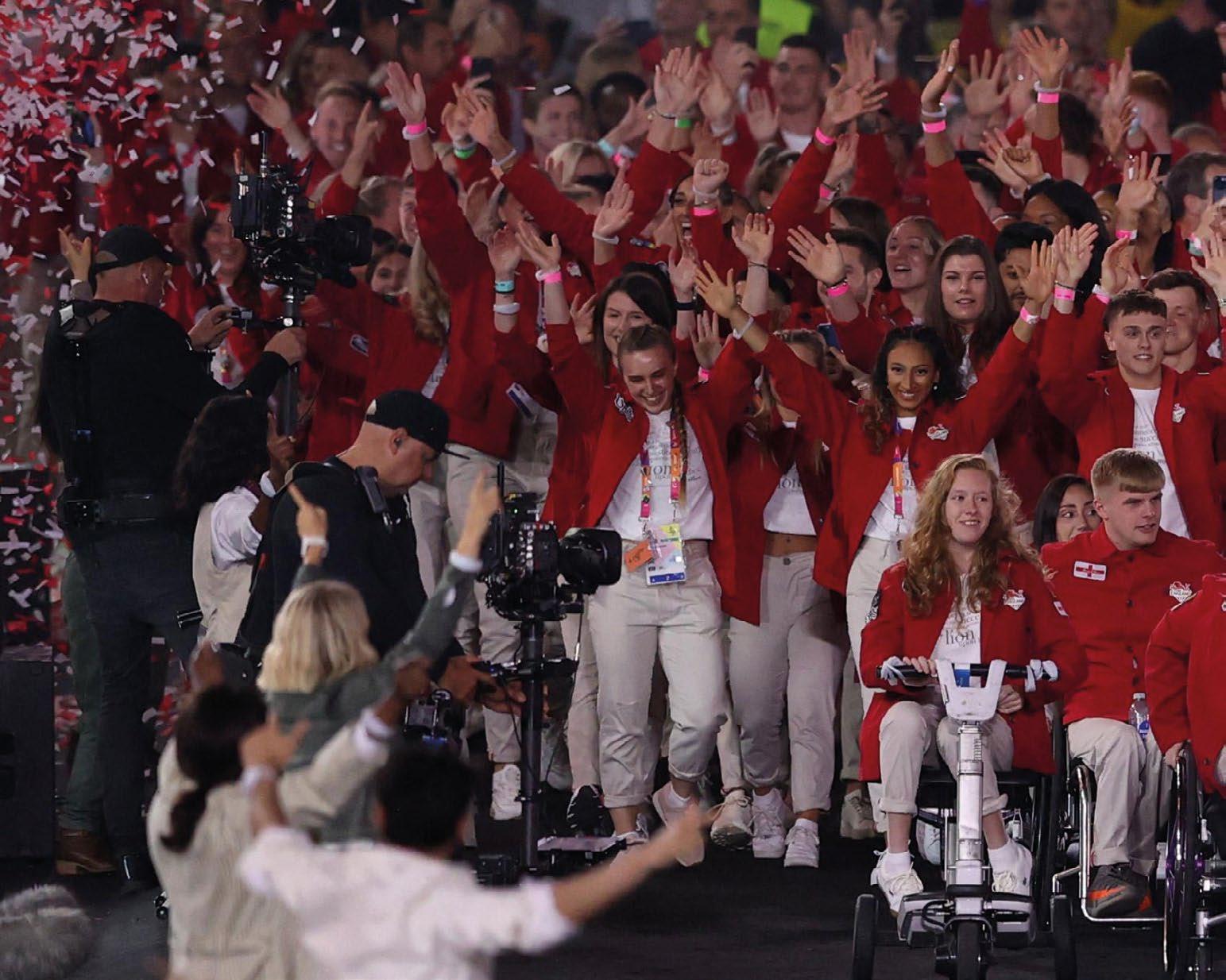
When Mark Osikoya stepped into his role as CEO of Team England in March 2023, he knew it would be a challenge. While he had headed up global partnership and sponsorship teams at the National Basketball Association, Barclays, Coca-Cola and The FA previously, this was his first chief exec position. What he did not expect was quite how quickly the ground would shift beneath his feet.
At the time of his arrival, preparations were well under way for the 2026 Commonwealth Games in Victoria, Australia, but just four months later, those plans collapsed.
“I was still finding my feet when Victoria pulled out and, with no confirmed host for 2026, there was a huge amount of uncertainty about what might happen and
what our role as an organisation might be,” says Osikoya. “That continued right through to October 2024, when Glasgow stepped in as the host city, so whereas we would normally have had a four-year cycle to prepare, we had only a two-year lead time into the next Games.”
While this has been a huge challenge, however, he says it also represented a big learning experience, a crash course in leadership under pressure. “It opened my eyes to the fact that you can go into a role with all sorts of expectations about what you’re going to face, but within a short space of time everything can be turned on its head,” he says. “I’m someone who likes to be prepared, but there are some things you can never prepare for and you need to be able to lead through that.”
TODAY AND TOMORROW
Alongside the shortened timeline to Glasgow 2026, Osikoya says the biggest ongoing challenge he faces as a leader is balancing the shortterm needs of the organisation ahead of this summer’s Games with longer-term planning and sustainability.
“Obviously, with Glasgow in less than six months’ time the pressure is intense, but we need also to look ahead to the 2030 Commonwealth Games in Amdavad, India, and to take a strategic view about where we might be heading as an organisation in the longer term,” he says.
At the heart of Team England’s strategy through to 2030 is a broad and inclusive definition of success, one that
As at the 2022 Commonwealth Games in Birmingham, athletes and
will come together at Glasgow 2026 under one Team England banner. Reuters // Action Images
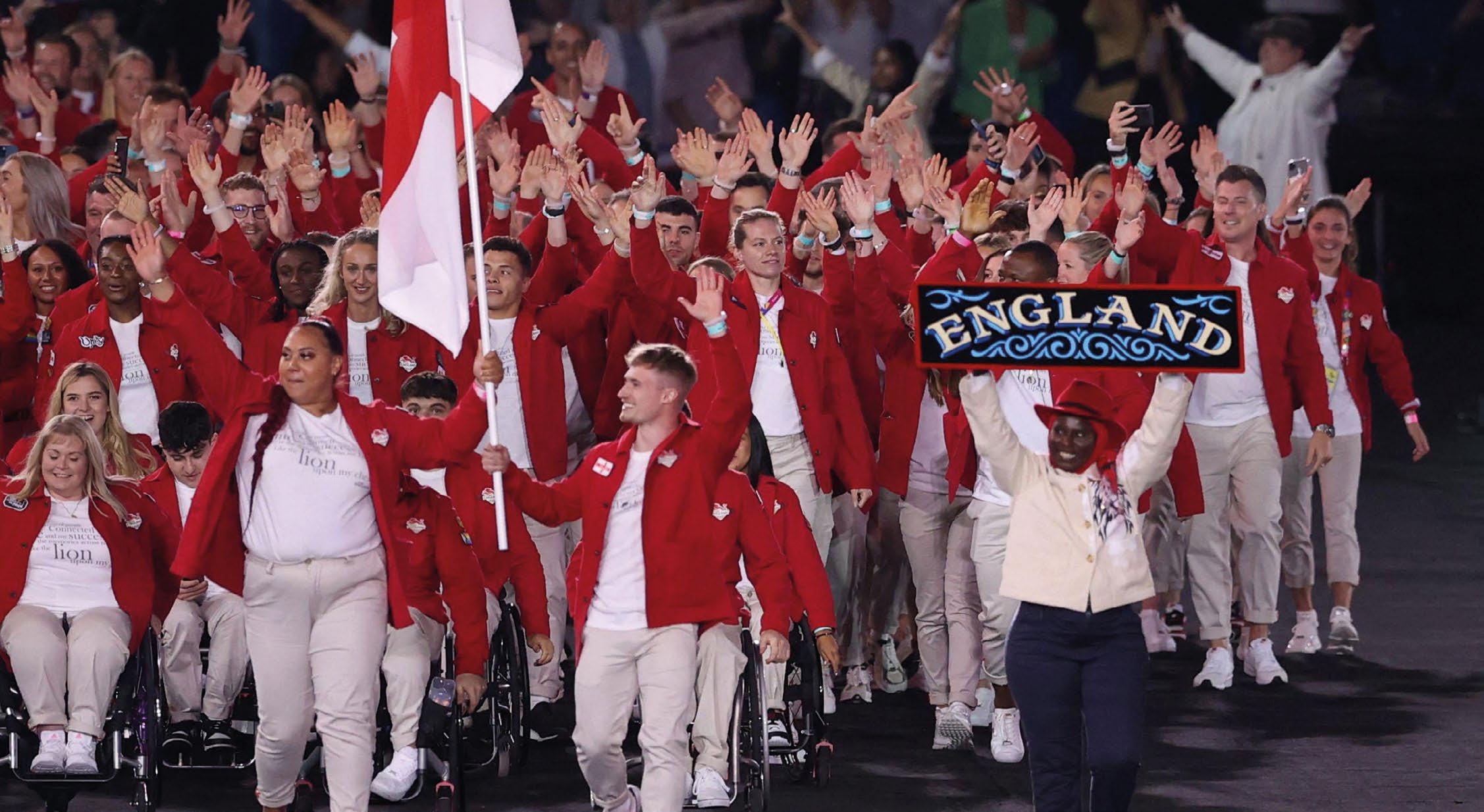
Osikoya says is focused around ‘representing England at our sporting best’. “By that, we mean whatever each individual’s best is, whether that is achieving a gold medal or beating a personal record,” he adds, because winning looks different for each individual. “If you’ve been out of your sport with a long-term injury, but have managed to get back on form to compete at Glasgow 2026, then that’s a huge win for you, just as winning a gold medal might be for a seasoned athlete.”
It’s important to understand what people’s individual targets are from the outset in order to fully recognise and celebrate those personal achievements when they happen, he explains. The aim, then, is to create the optimum environment for each athlete to deliver great
performances, working closely with the national governing bodies of the various sports that come together for Team England.
With Team England encompassing both para and non-para athletes and a wide range of sports, Osikoya is very conscious of the fact that each individual, their journey to the Games, and their needs are unique.
BUILDING BELONGING
“Inclusivity and diversity are central pillars of the Team England identity,” he says. “We’re an integrated team, which means we don’t treat our sports as silos or keep para sport separate from non-para sport. We’re one united team. We believe that’s really important, it’s part of what makes us who
we are, and is one of our key strengths. In fact, when we’re out talking to potential partners, it’s the thing that really resonates with them. It’s our point of difference.”
That diversity combined with unity also has a tangible impact on the athletes, he adds. “We know from the feedback we get from our athletes that they really appreciate feeling that they’re part of something bigger, something inclusive, while knowing that their individual needs and personalities are being recognised, respected and supported.”
Creating the right environment is about more than performance metrics, therefore; it’s about culture. “We focus a lot on trying to build a strong
para-athletes
Each individual, their journey to the Games, and their needs are unique.
Hockey is just one of the 10 sports that Team England athletes and para-athletes will compete in at the 2026 Commonwealth Games. Reuters // Action Images
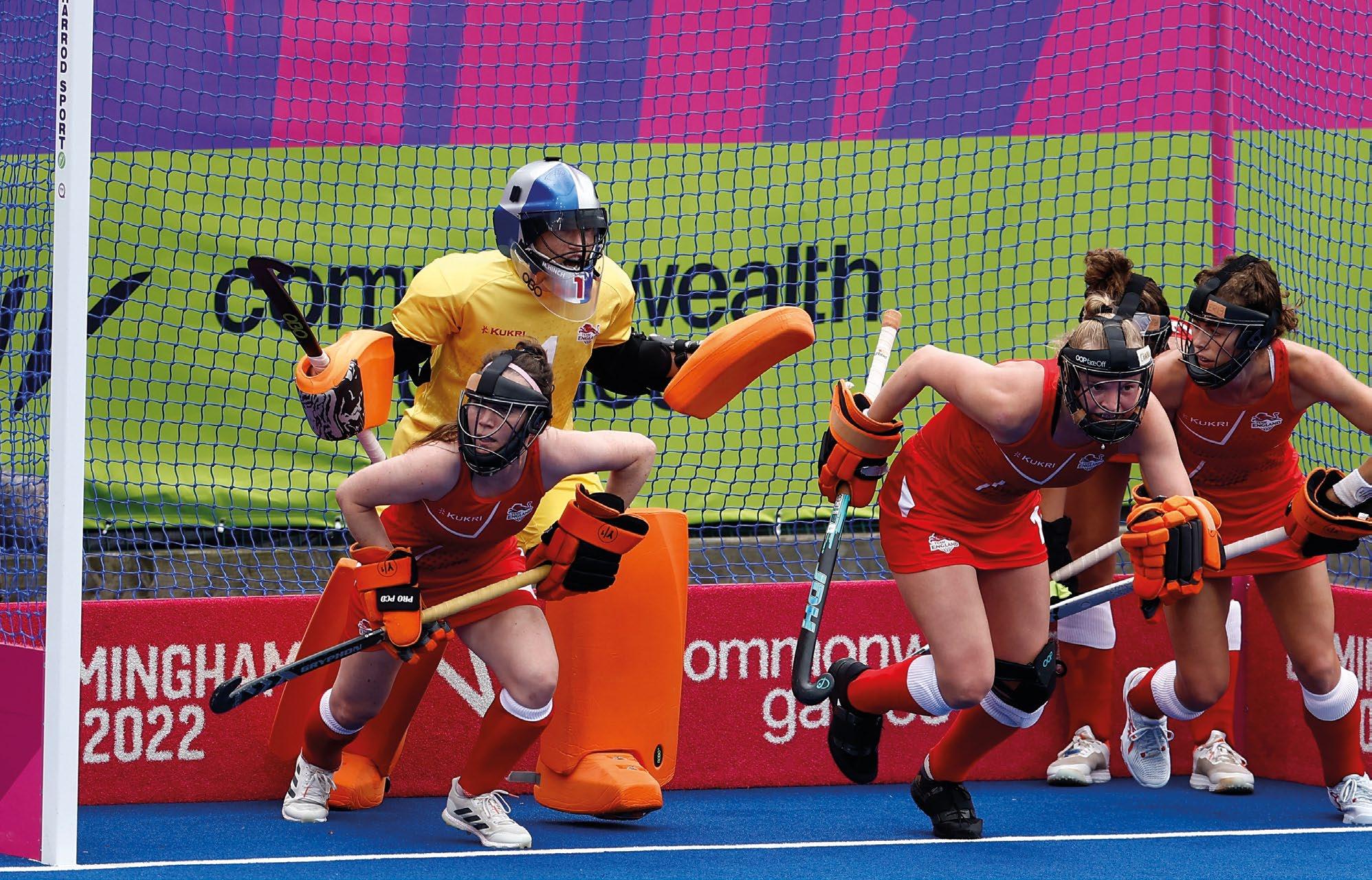
collective mentality in the lead up to the Commonwealth Games, and we’re really clear about what it means to be part of Team England, the values and behaviours that we expect,” Osikoya says. “That’s especially important given that many of our athletes and staff won’t physically come together until their selection is announced, which may only be a few weeks before the Games. It’s important, therefore, that we find ways to bring being part of Team England to life.”
Regular touch points to create a ‘Team Behind The Team’ in the run up to the Games, whereby everyone from medical specialists to volunteers and staff at Team England HQ come together, can prove really valuable, he says, because there’s
so much that they can learn from one another.
BEYOND THE PODIUM
While hopes of competitive success in July are high, Team England is equally committed to longer-term professional development and emotional and psychological wellbeing.
“People who have been part of Team England recognise that there is a focus on meeting people’s emotional, social and psychological needs in a way that isn’t always present in the same way in other environments,” says Osikoya.
That’s reflected also in some of the organisation’s programmes, designed both to nurture future talent, and respect and embrace past successes.
The Team England Futures initiative, for example, first run at Birmingham 2022 and delivered in partnership with Sport England and SportsAid, will return for Glasgow 2026.
“That’s about bringing the next generation of athletes, coaches and support staff – some 200 people – to the Games, to help inspire and prepare them,”
Osikoya explains. “It will give them valuable experience of the kind of environment they would face in competition.”
Meanwhile, a new alumni initiative, Team England Legends, ensures that past representatives remain part of the family. In Osikoya’s own words, “It’s all about ensuring that every athlete, coach and volunteer feels part of something bigger than themselves.”
CONTROL THE GAME. COMMAND THE ROAD.
ALL- NEW RAV4 PLUG - IN HYBRID WITH UP TO 62 MILES ELECTRIC RANGE *

All LMA members enjoy a preferential rate across our range of vehicles VISIT YOUR LOCAL TOYOTA DEALER TO DISCOVER OUR EXCLUSIVE LMA OFFERING
*Pure Electric Vehicle (EV) mode is only available when the car has sufficient charge. Electric range figures are the maximum official (WLTP) test values provided for comparison purposes, and can vary depending on factors such as selected grade and transmission, accessories fitted (post registration), driving style, weather conditions, speed, vehicle and battery age and vehicle load. Figures obtained after full battery charge. It is best to only compare electric range figures with other cars tested to the same technical procedures. These figures may not reflect your real life driving results.
PHIL PARKINSON
ENTER THE DRAGONS.

Modern leadership is about trust, empathy, communication and the ability to guide people through constant change, says Phil Parkinson, who has achieved an incredible three successive promotions at Wrexham, elevating the club from the National League to the EFL Championship.
Interview: Sue McKellar
Photography: Reuters // Action Images


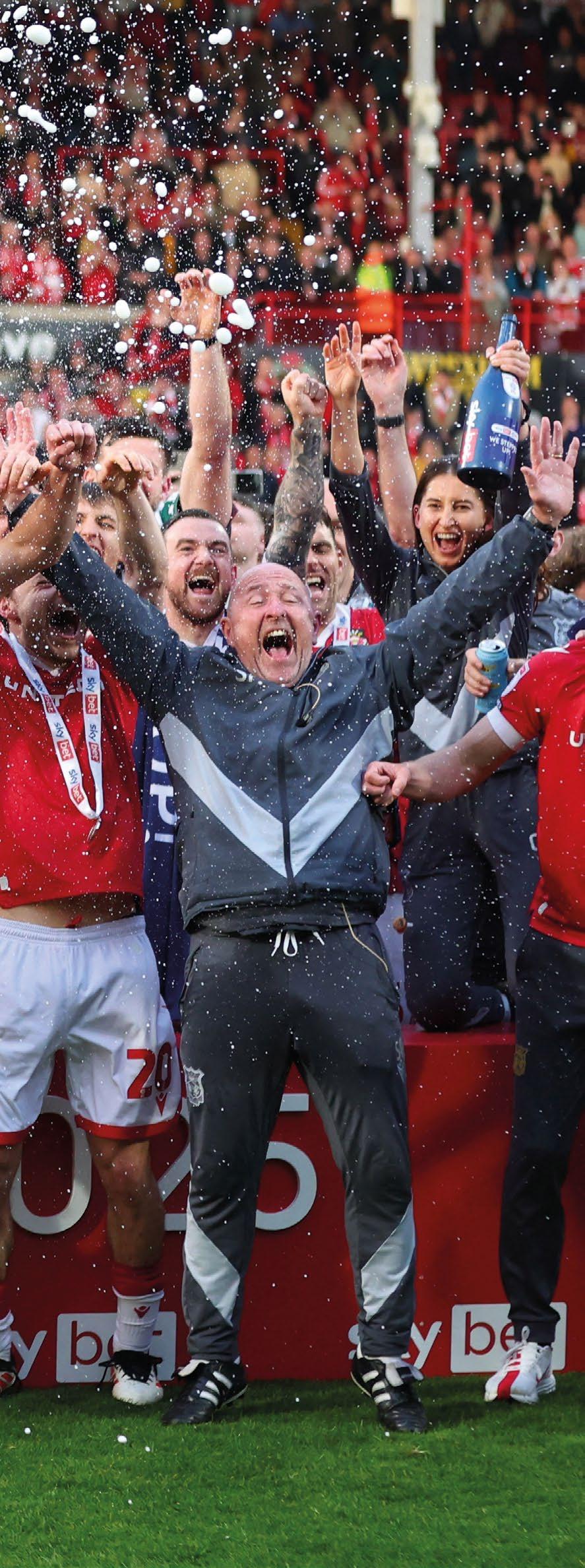
Wrexham celebrate after they secure promotion to the Championship, SToK Racecourse, April 2025.
Reuters // Action Images
OPEN AND HONEST
However, leading with empathy doesn’t mean avoiding difficult
Promotion to the Championship has led to one of the biggest periods of change that I’ve had to manage through.
conversations. In fact, Parkinson believes players respect and appreciate honest feedback when it’s delivered in the right way, in an appropriate setting. Straight talking, combined with understanding, helps individuals to improve without damaging morale, but this requires a skilled, active and strategic communicator. It’s something he believes underpins every aspect of great leadership.
Since the start of Parkinson’s managerial career, the early days at Colchester United and Hull City, through clubs including Charlton Athletic, Bradford City, Bolton, Sunderland and now Wrexham, he has favoured honesty and openness, not only with players,
but staff, owners and fans. This clarity reduces uncertainty and builds trust, particularly important during the kind of rapid growth and change that Wrexham has experienced under his guidance during its rapid ascent through the football pyramid.
Having joined Wrexham in July 2021, Parkinson made an instant impact, taking them to the FA Trophy final and narrowly missing out on promotion in the play-off semifinals. The next year, Wrexham went one further, finishing as National League champions and earning the right to compete in the English Football League for the first time in 15 years. Record points tallies in the following two seasons saw two further impressive promotions.
Whether it’s the academy or the first team, there should be a culture that people will choose to follow.
EMPOWERMENT BUILDS TRUST
Such success, though, comes with both ups and downs. “Any change can cause uncertainty and speculation, and may be unsettling and destabilising for the team,” says Parkinson. “Promotion to the Championship, for example, has led to one of the biggest periods of change that I’ve had to manage through. As a manager, you’re always going to have tough decisions to make, but for us experiencing three successive promotions, the rate of change and the need to make those decisions has come at an unprecedented pace.”
Again though, how you communicate with people is key to navigating such periods of flux, he says. Prioritising honesty and clarity means everyone is kept informed and knows that they’ll be treated fairly and with respect. “That means, for example, not only taking time to integrate new players into the squad, but also helping facilitate
someone’s relocation if they’re leaving the club,” he says. “We should always be proud of how we’ve conducted ourselves.”
Within the staff environment in general, open dialogue is actively encouraged at Wrexham, and Parkinson fosters a space where disagreement is welcome and different opinions can be voiced behind closed doors. This openness, he says, leads to better decisions and a healthier working culture. “It’s also important to delegate and trust people in their roles, so if you bring someone in to do a job, empower them, let them get on with it, and trust them every day,” he says.
Parkinson values highly the open, collaborative relationship that owners Rob McElhenney, Ryan Reynolds and the Wrexham board foster. He also appreciates the strong relationship that the club enjoys with its supporters, and highlights the value of communication, transparency

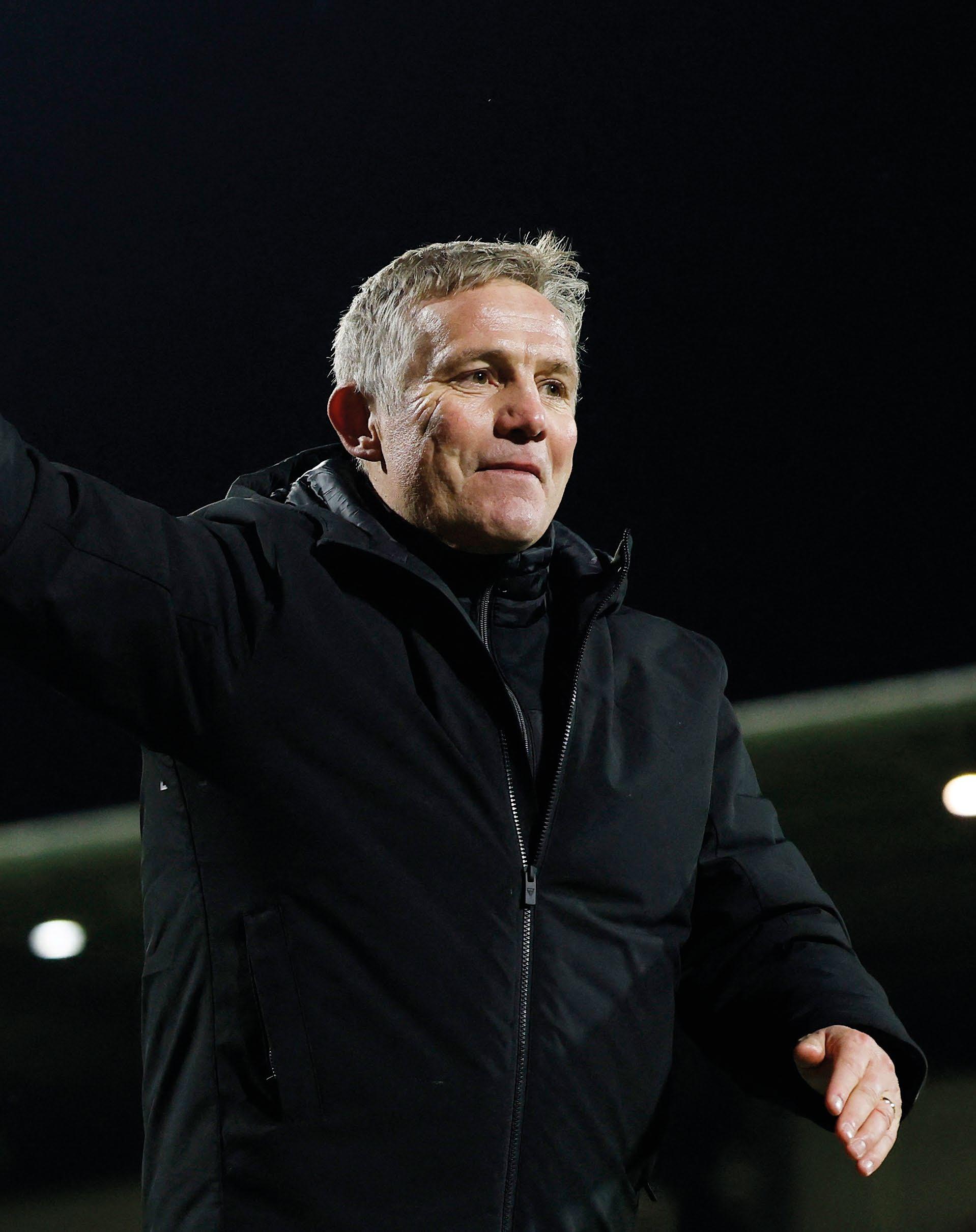
Wrexham’s Phil Parkinson celebrates after the side’s victory against Nottingham Forest in the 3rd round of the FA Cup, SToK Racecourse, January 2026. Reuters // Action Images
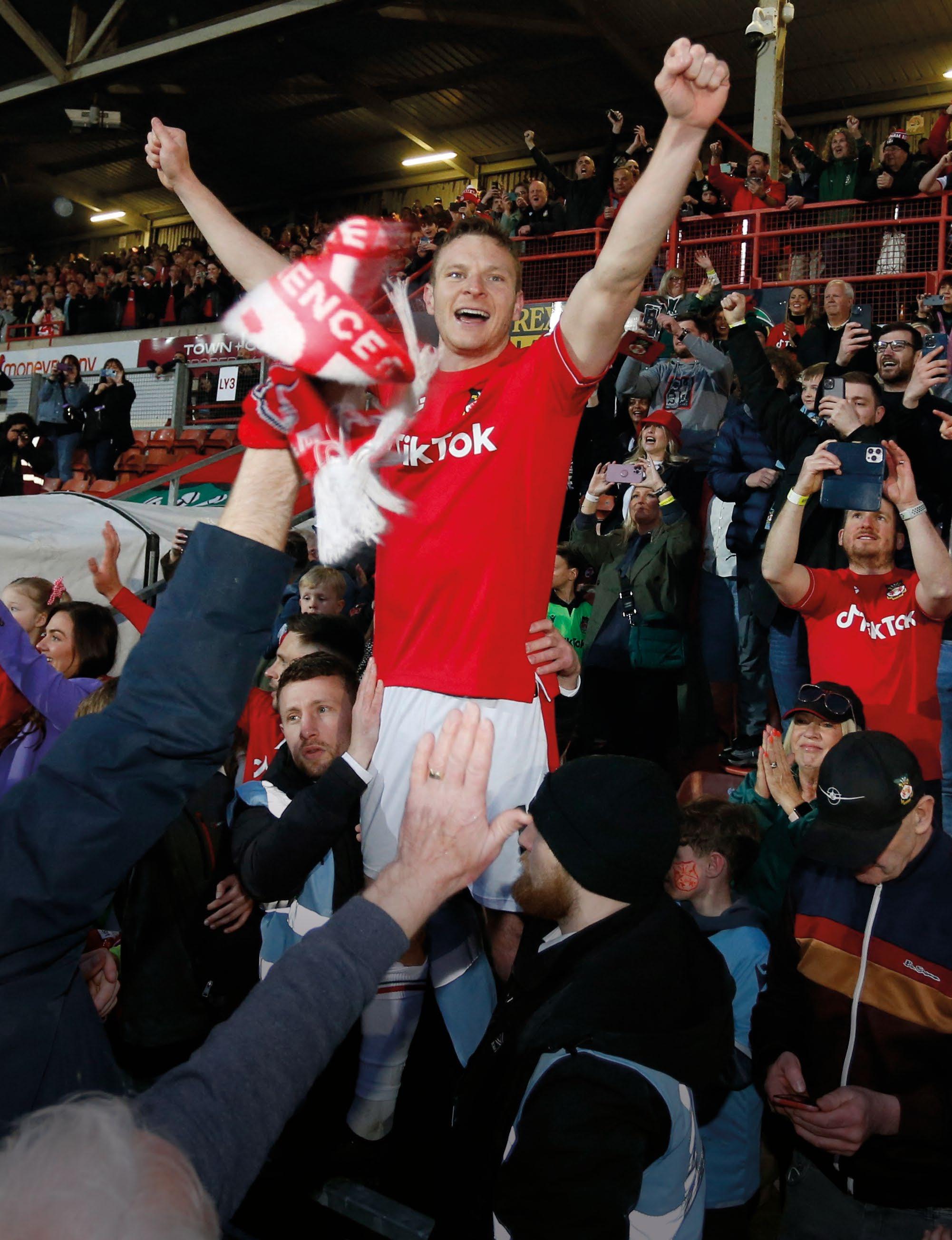
Fans surround Wrexham’s Paul Mullin in celebration after the side’s successful promotion to League Two, Racecourse Ground, April 2023. Reuters // Action Images
In an era of intense scrutiny and social media criticism, having the skills to support players through difficult periods is more important than ever.
and storytelling in building trust with fans and the wider community, particularly during periods of rapid growth and change. He points to the multiple Emmy-award-winning ‘Welcome to Wrexham’ documentary, which he says has been a particularly innovative way of sharing the club’s story and building the brand globally.
DISPERSED LEADERSHIP
With the players, meanwhile, Parkinson believes strongly in forging connections with them as people as well as performers. That means regular one-to-one conversations, and addressing issues privately and calmly once emotions have settled in order to preserve trust, while still allowing for honesty and accountability.
Senior players also play a vital role in facilitating communication. Parkinson regularly consults an
experienced leadership group, involving them in discussions and decisions on everything from travel arrangements to strategy. As well as providing valuable insight into the players’ thinking, this strengthens buy-in across the squad, as messages are reinforced peer-to-peer within the dressing room.
By showing a genuine interest in their views and in who they are as people, Parkinson also creates an environment where the players feel valued and motivated to follow his lead. “Ultimately, you have to conduct yourself in such a way that you’re a positive role model and are setting the right culture in the football club,” he says. “Whether it’s the academy or the first team, it should be a culture that people will choose to follow.”
That role-modelling is about more than showing respect
and empathy to his players and staff. The leader also needs to set an example through his or her resilience, bouncing back stronger after disappointment. “The truth is, no matter how long you’ve been managing for, a loss still hurts as much as your first game, but you learn to deal with those emotions, to flick a switch and start thinking forward and positively again,” says Parkinson. “That’s essential, not only for your performance and wellbeing, but for those around you.”
Maintaining some balance through exercise, time with family, and moments away from work is, he says, crucial in his ability to do that. “This job can be all-encompassing, so being able to disconnect from it all sometimes is really important, not only for your own health, but in order to regain some mental clarity and valuable perspective.”
THE VIEW FROM:
LAURA HARVEY
REIGN SUPREME.
When Laura Harvey arrived, in 2013, to manage Seattle Reign for the inaugural season of the NWSL, she was prepared for the usual challenges of a new job. What she found was something entirely different, a football club that didn’t yet exist.
Words: Alice Hoey
Photography: Reuters // Action Images
“The biggest challenge was that I’d left a club that was established,” Harvey explains, reflecting on her move from Arsenal, where she had been manager since 2010. There, she had won an impressive three consecutive league titles, two Continental Cups, and one FA Women’s Cup, and twice reached the UEFA Women’s Champions League semi-finals.
“Arsenal had all the working parts that a football club needs, and I honestly thought I was coming to that.” Instead, the reality was startling. “I discovered I was the first member of staff employed and we literally had nothing, no cones, bibs, nothing. We were ordering full-sized goals while I was still packing my bags to leave for the States,” she said. “It was crazy.”
CARTE BLANCHE
With no equipment and no systems in place, every process had to be created from scratch, which for Harvey meant stepping into a role that went far beyond coaching. It also meant adapting very quickly to her new environment, both in terms of settling into life Stateside and understanding the football culture. Harvey discovered key differences in the game, especially around player recruitment.
“In Europe, players have always had the choice of where they want to play,” she explains, “but for the most part that wasn’t the case here in the US. You were pretty much told what team you would be playing for.”
Harvey recalls when she called goalkeeper Hope Solo prior to her joining the Reign and asked her, ‘Do you want to play for us?’ “It was the kind of discussion I’ve had with numerous players, because I want to know if this is something that they’re excited about, whether they believe in what we’re trying to achieve, but she was like, ‘No one’s ever asked me that before.’ It really brought the contrast home.”
WHO AND WHY?
The fact that there were players in the side who hadn’t specifically chosen to be part of Harvey’s team added to perhaps the biggest leadership challenge that she faced in her first season in charge, team identity. How do you foster unity, belonging and cohesion in a team when there is no established culture, no heritage, traditions or past successes around which to weave a narrative?
“It was really hard,” she admits, “and, honestly, in that first season, in which our results were really poor, I don’t think we achieved it.” Instead of having
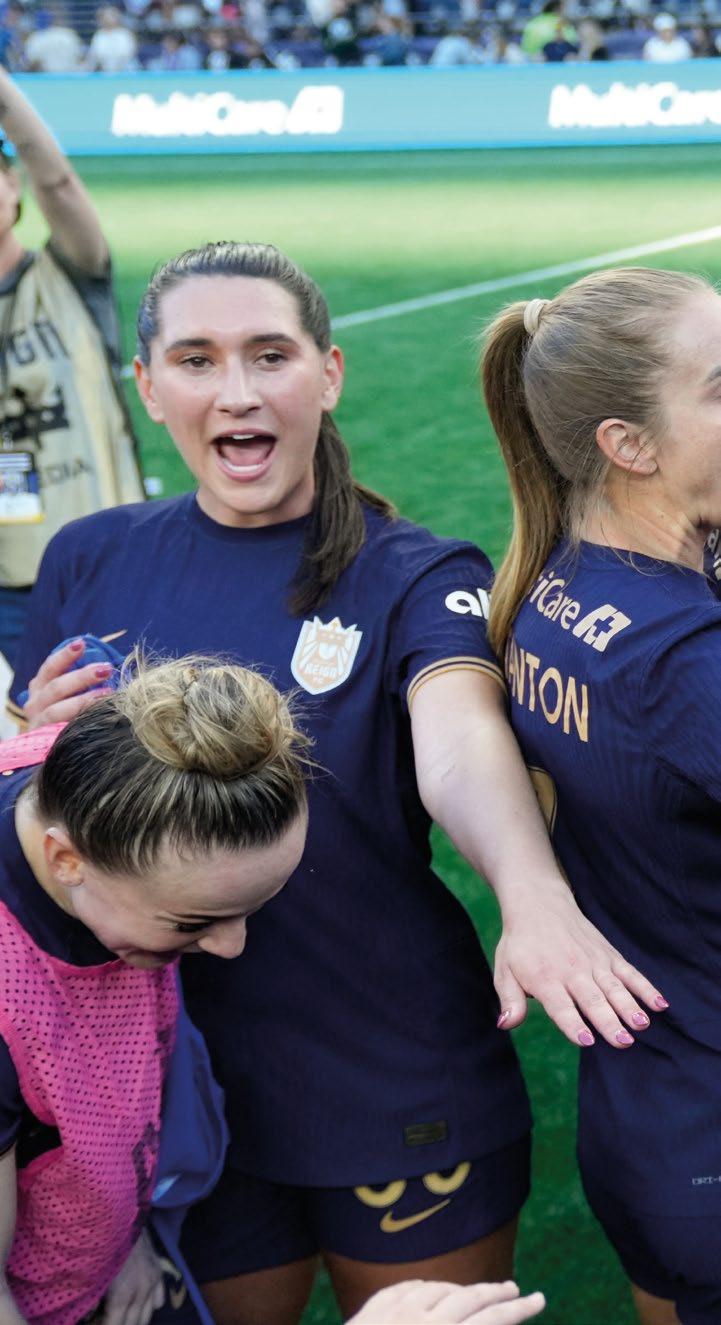
Coaching is fundamentally about people and finding the best way to support each individual in their personal journey.
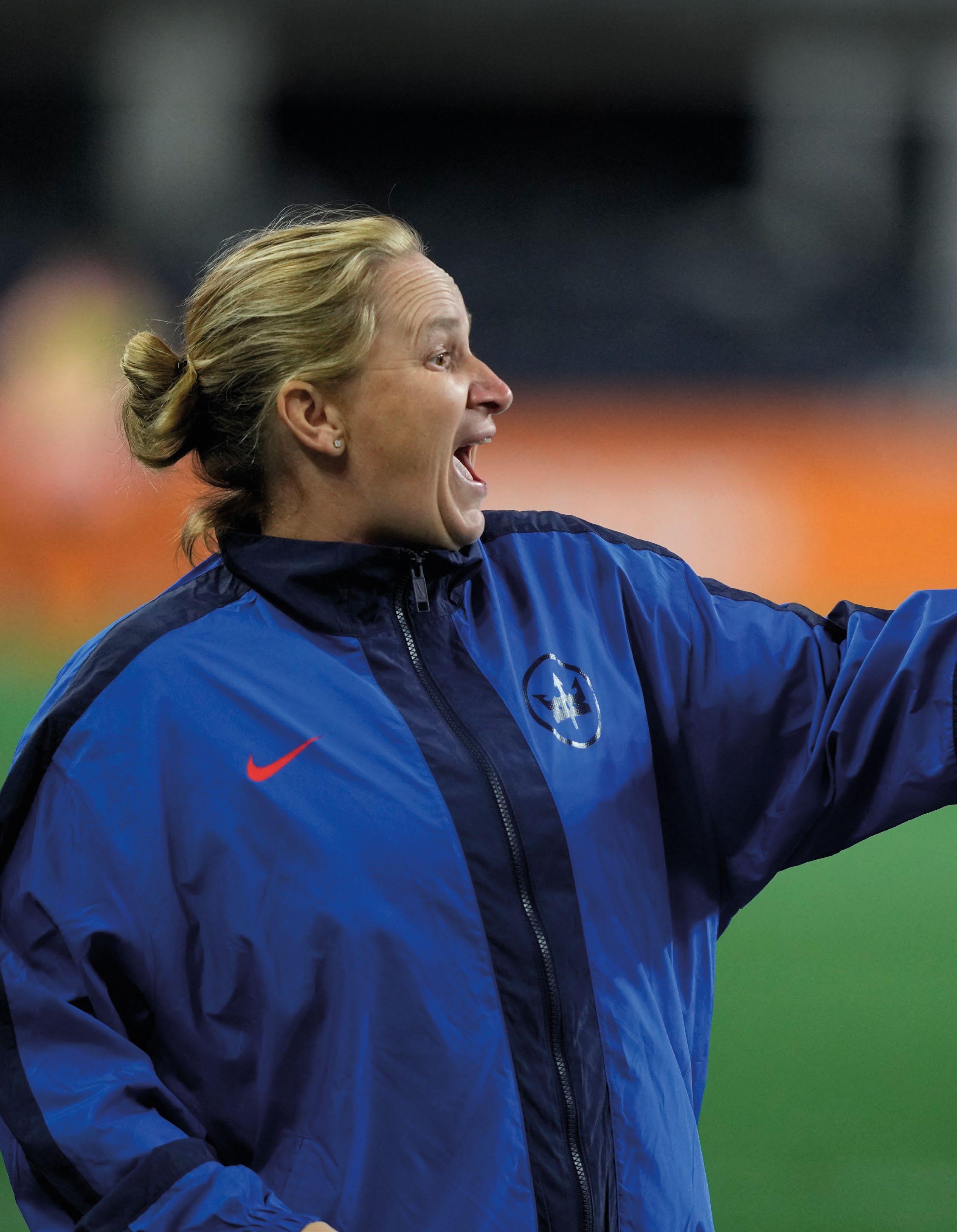
Harvey celebrates with the team after Seattle Reign’s victory against the Washington Spirit, March 2024.
Reuters // Action Images
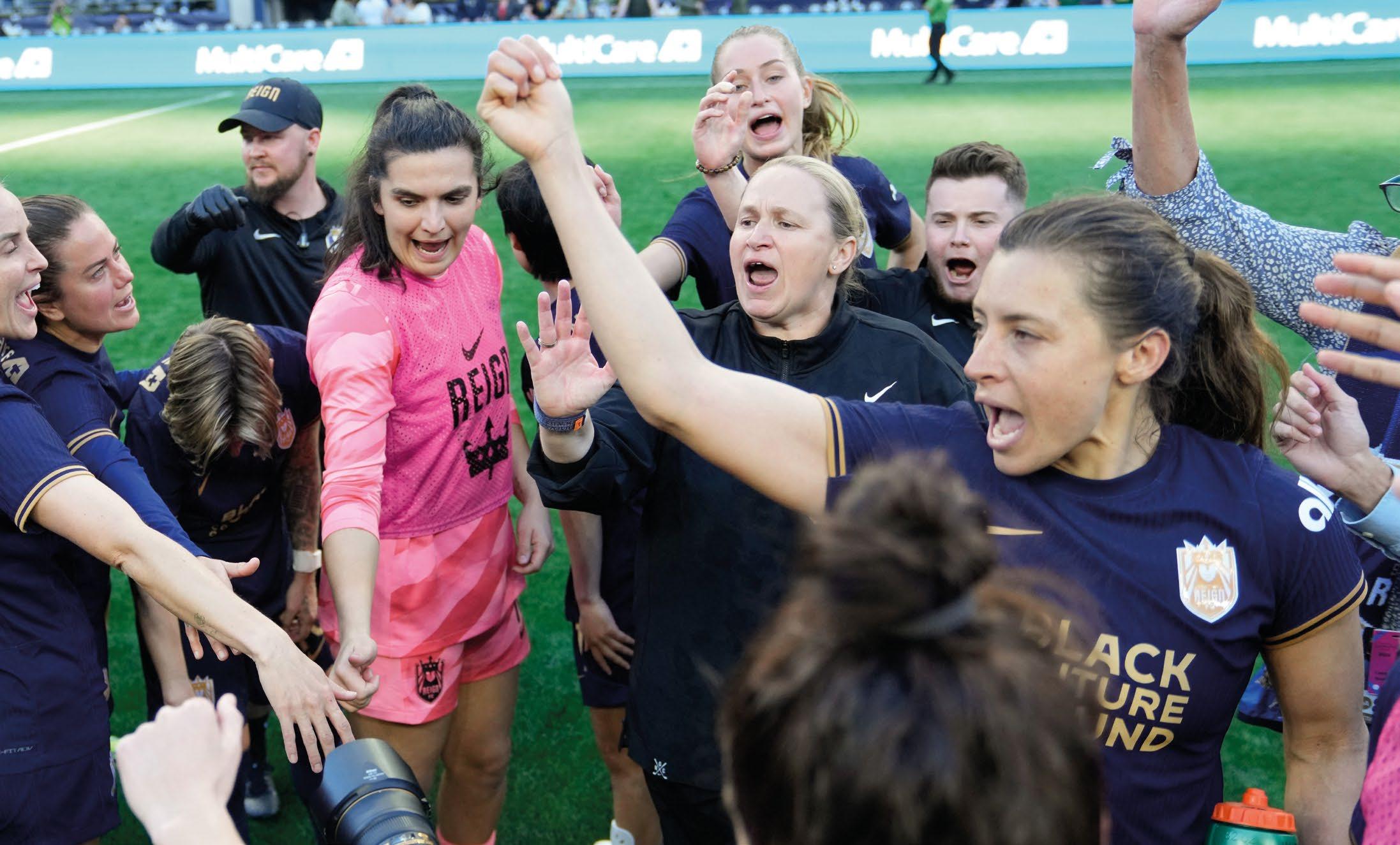
a strong ‘who’ however, they were guided by a bold ‘why’, thanks to the vision and belief of club owners Teresa and Bill Predmore.
“Bill would say to me right from the start, ‘I want us to be the best club in the world,’ and I’d be like, ‘What do you mean? We don’t even have a cone!’ But, while it seemed unrealistic, it became our mantra and guiding philosophy,” says Harvey.
It also demanded enormous sacrifice, with Harvey initially taking on responsibilities far beyond coaching. “I was painting lines on the field, doing the laundry, handling recruitment and pay checks,
everything just to get us into a position where we might one day have a chance of fulfilling our dream.”
TRUST AND VALUE
The support she received from the owners during that early transition period proved to be critical, she adds, saying they didn’t just employ her, they made her feel like part of the family. “That inaugural season was especially tough; it shaped me really. I remember in particular when we played local rivals Portland,” she recalls. “We’d lost the previous three times, so it really mattered to us, and we lost to them again. I sat on the steps outside the stadium and said, ‘I don’t think I can do this
anymore. I think I’m done.’.”
But those around her refused to let her give up, and even though she was wracked in the moment with self-doubt, they made it clear that she had their full support and confidence. “They could easily have pushed me aside at that point, but instead they continued to invest in me, not just as a coach but as a person,” she says. “I’ll be forever grateful for that.”
These experiences shaped Harvey’s own leadership philosophy and her approach to dealing with her players. Coaching, she says, is fundamentally about people and finding the best way to
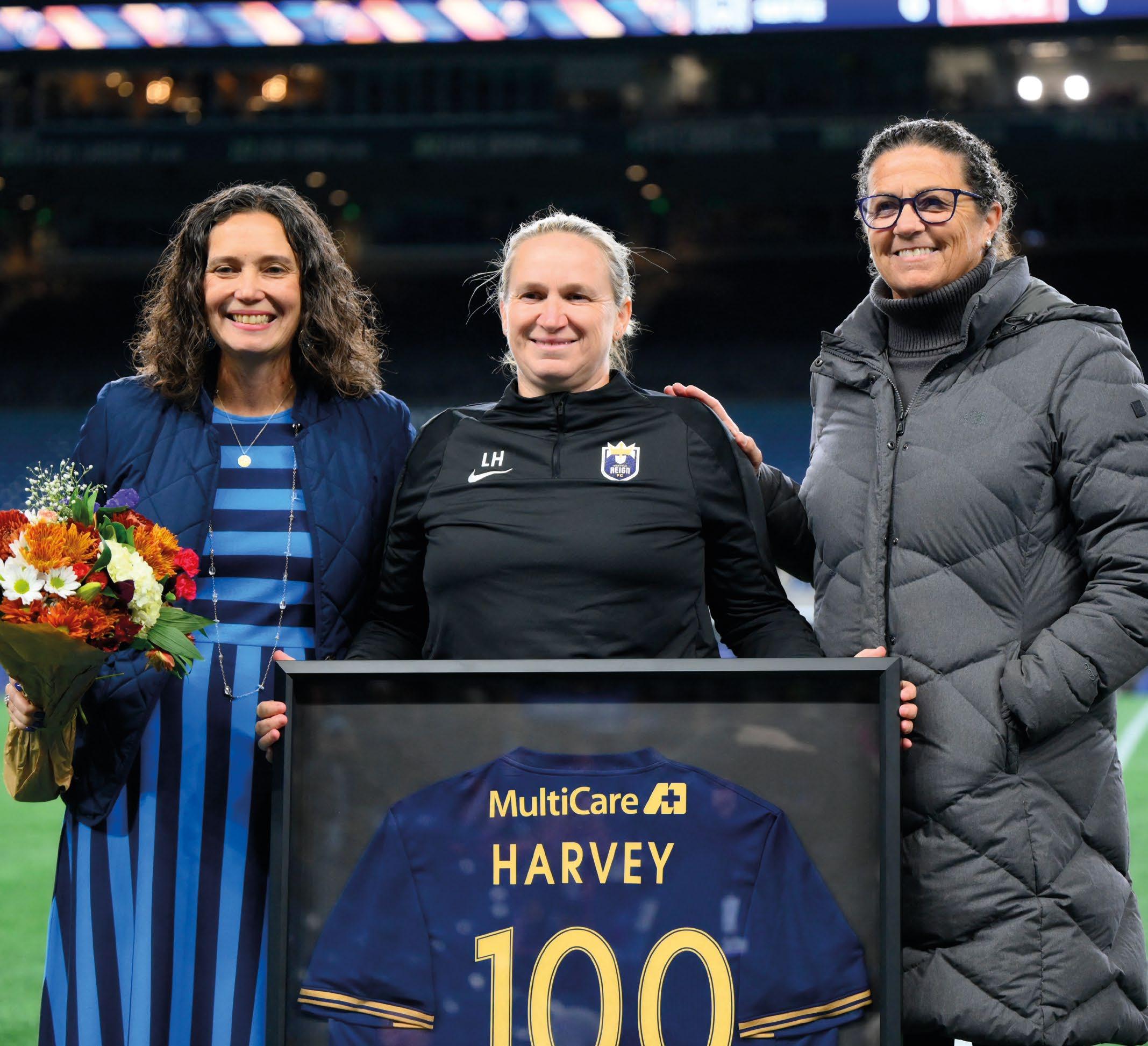
Prior to the Reign’s
against the
is celebrated for having reached the milestone of 100 wins, October 2024. Reuters // Action Images
The game is moving so fast with more opportunities for people to earn a living, and I want those opportunities to go to women too.
match
Houston Dash, Harvey
support each individual in their personal journey.
NO IMITATIONS
Authenticity, she adds, is a huge part of that, and it’s the one area in which she feels she has changed most since her early days as a coach for Birmingham City and Arsenal.
“I’m naturally not a very autocratic person, but when I got the head coach job at Arsenal, after having been assistant for a year and a half, I took on that kind of persona. That’s what I had seen around me, so I thought it was what was expected,” she says. “Within three or four weeks, though, a player came up to me and asked what I was doing. ‘This isn’t who you are,’ she said. ‘We want you, not whoever this is.’.”
The message stuck and Harvey vowed that from that day forward she’d be her authentic self. It still forms a major part of her leadership approach, and she says she openly embraces all kinds of personal development tools, from sports psychology and leadership coaching to therapy, in an effort to better understand and improve herself.
“This job’s really tough,” she says. “It’s lonely at times, stressful, volatile. Being yourself is important, and if you don’t
take time to invest in yourself you risk losing that.”
A LASTING LEGACY
Harvey is set to leave an incredible legacy at Seattle Reign and in the NWSL, making history as the first manager to coach 200 regular season games and breaking the record for the most wins. In the first of her two stints with the Reign (2013-2017) she clinched the NWSL Shield and won NWSL Coach of the Year for two consecutive seasons. Then, after a few years with the Utah Royals and US U20s, she returned to the Reign to achieve a second-place finish in 2021, before winning the NWSL Shield the following season.
While her sights are on future success with the Reign, Harvey also has other goals, including helping to open
doors for future female coaches. As such, she’s part of a FIFA mentor programme and frequently advocates for greater opportunities in the sport.
“I truly believe it’s an epidemic in our sport that there aren’t more female coaches,” she says. “It’s not that they’re not around and available. They’re there, they’re just not being hired, so we need to influence club boards and owners. The game is moving so fast,” she adds, “with more opportunities for people to earn a living, and I want those opportunities to go to women too.”
From building a club that started with nothing to shaping the future of the sport, Harvey’s journey shows how leadership, resilience and authenticity can transform both teams and careers.
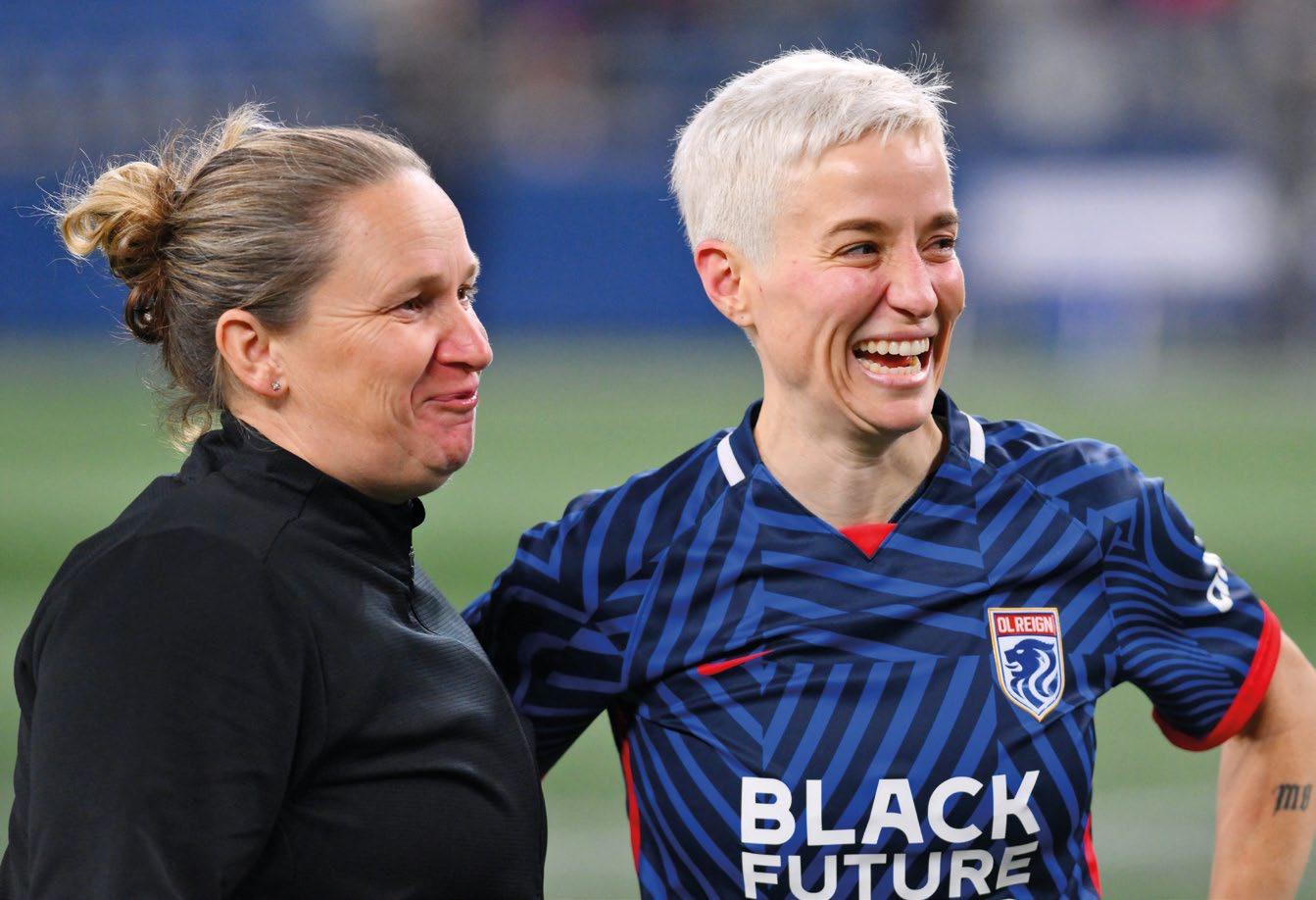
Megan Rapinoe is one of the top players with whom Harvey has worked at Seattle Reign. October 2023. Reuters // Action Images
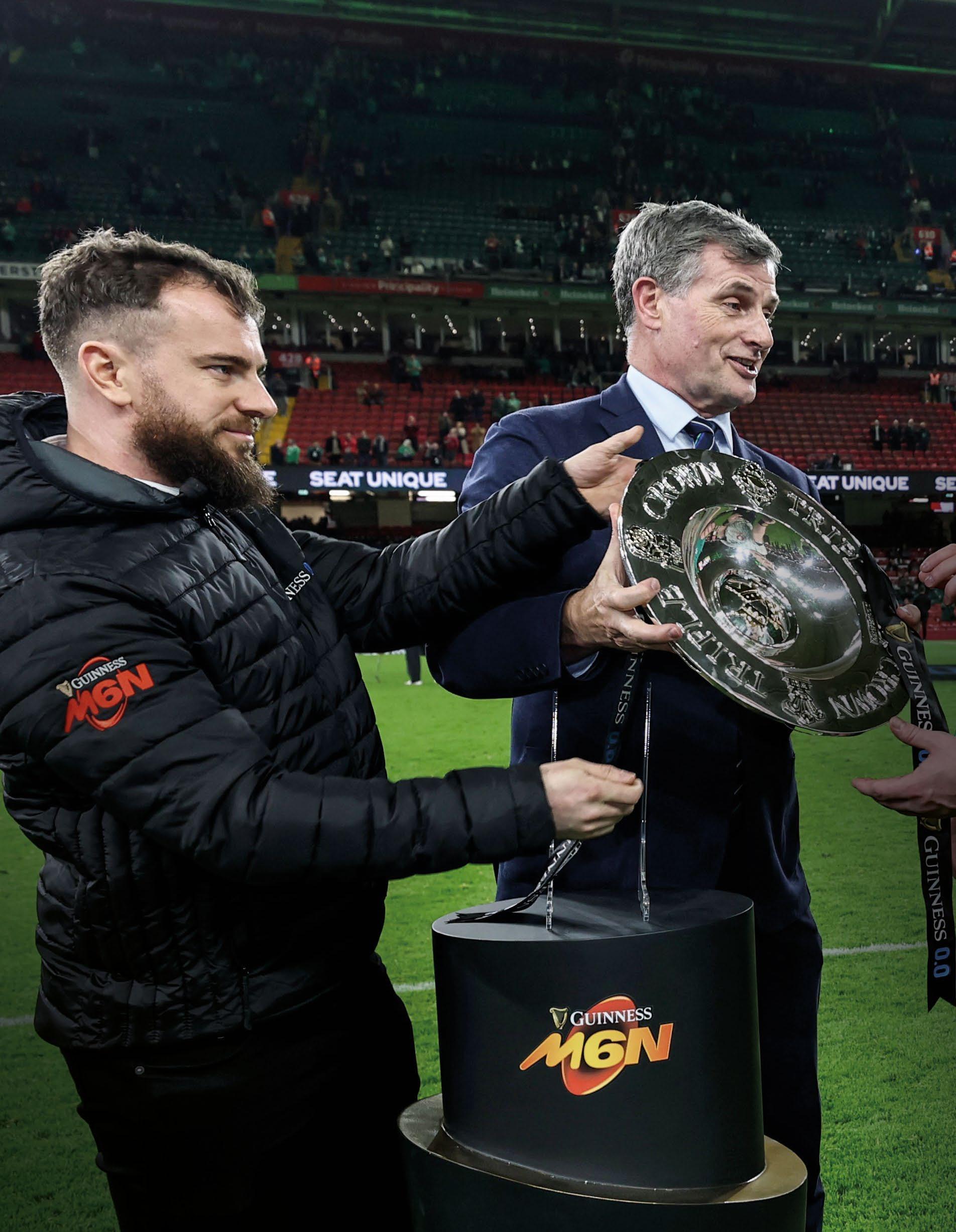
Paddy Carberry helps award the Triple Crown trophy to Ireland after they beat Scotland in the 2026 Six Nations.
Inpho.ie
PADDY CARBERRY INTERVIEW
COMMUNION, BELONGING AND FANDOM.
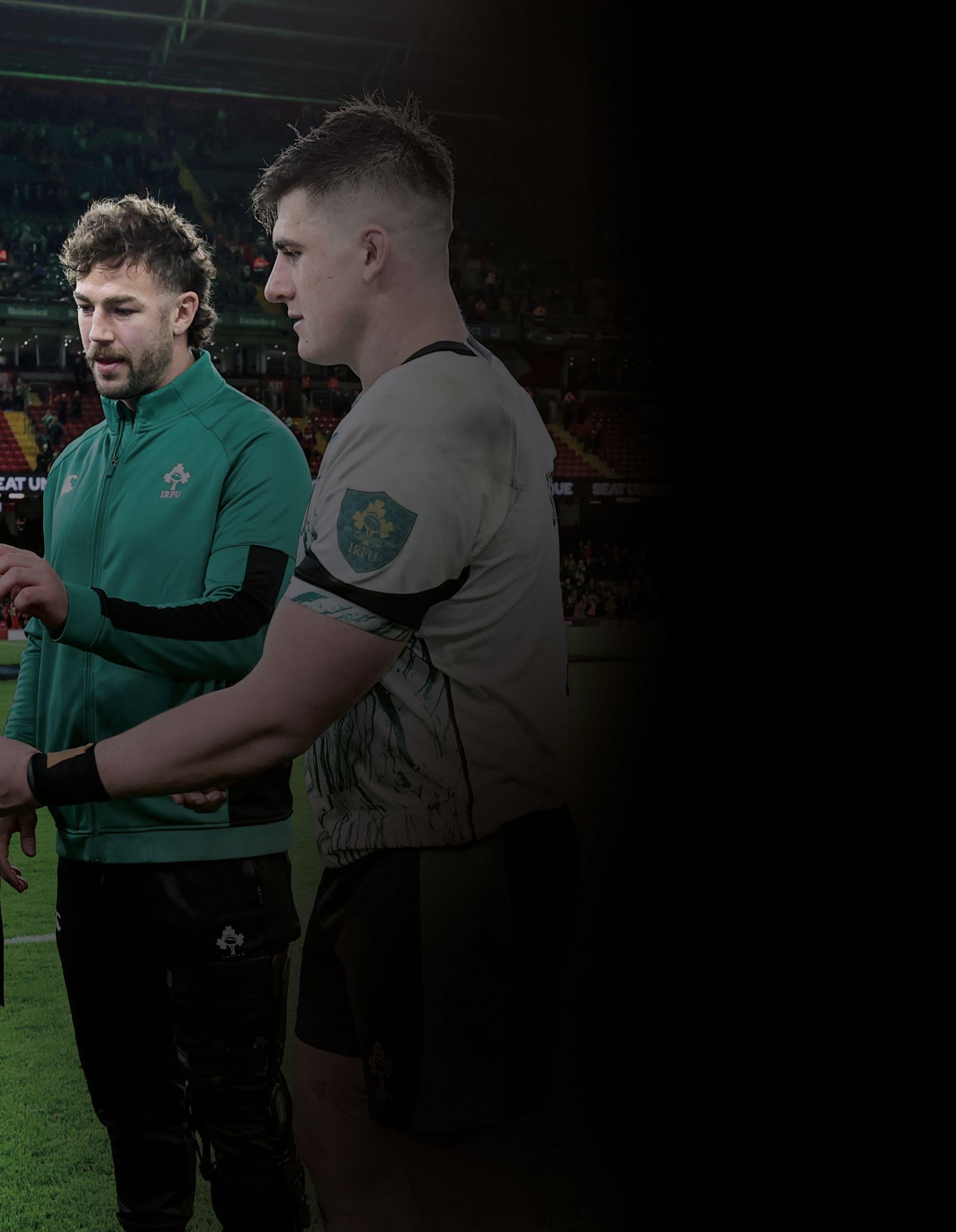
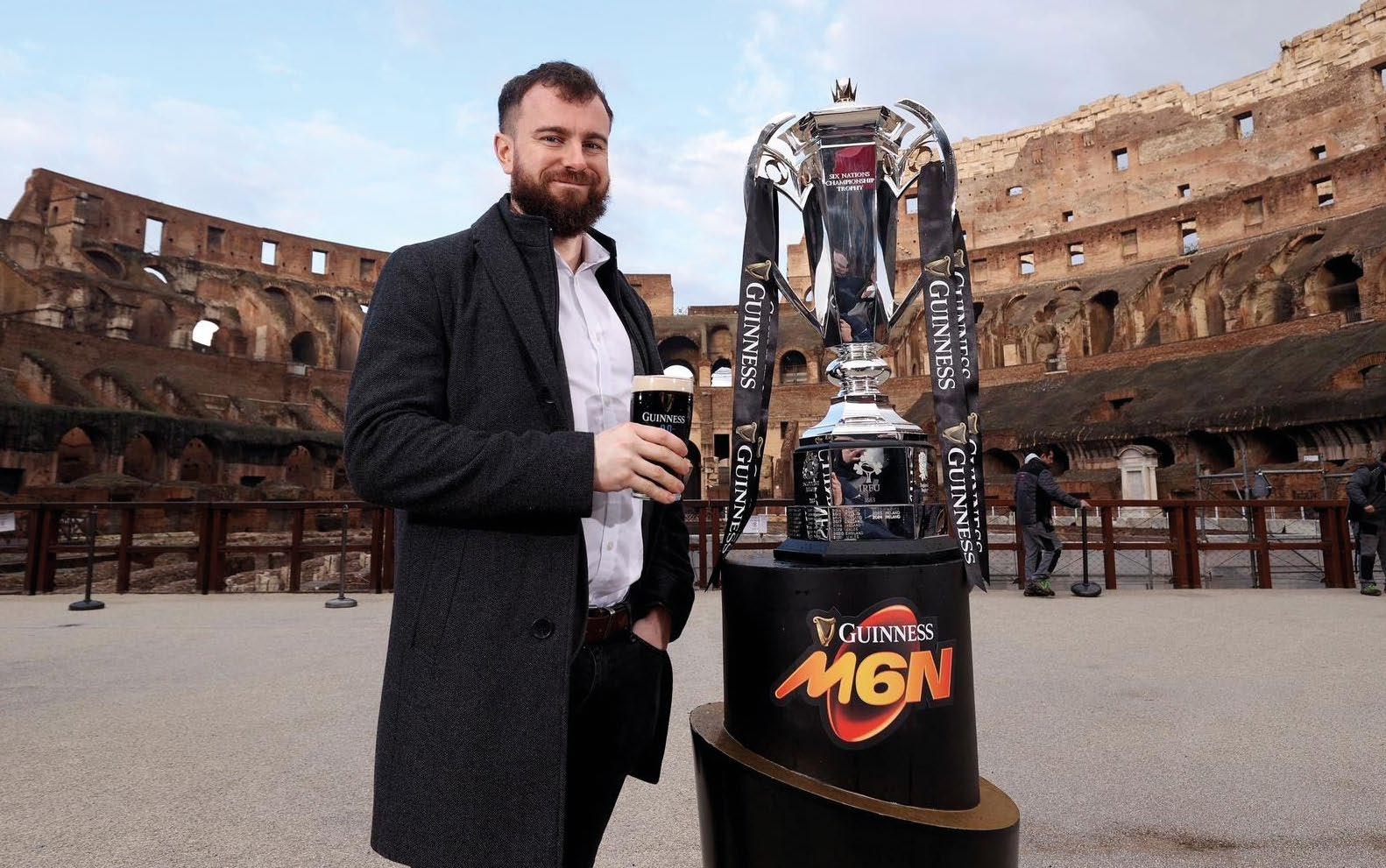
A global brand with a local heartbeat, LMA Partner Guinness has succeeded in broadening its market appeal, reaching out to a more diverse audience and finding new, meaningful ways to connect and tell its story. Here, Guinness’ Head of Sports, Paddy Carberry, talks evolution and innovation.
Interview: Alice Hoey
Photography: Inpho.ie
In 2018, Guinness became the title sponsor of the Men’s Six Nations and, several years later, the Women’s competition. Inpho.ie
OUR BRAND JOURNEY HAS BEEN A LONG-TERM STRATEGY.
Guinness’ DNA is deeply rooted in the power and goodness of communion, and we’ve really leaned into that idea in recent years. We recognised the need to democratise and open up the brand to as many people as possible, and as such introduced a myriad of colour into our communications, changing how we talk to our consumers.
Our various campaigns and sponsorship platforms, and in particular our movement into football on a global level through the Premier League, have allowed us even greater scope to tell stories of communion, belonging and fandom.
DISTINCTIVENESS AND AUTHENTICITY ARE KEY.
Part of what makes Guinness special is the whole ritual surrounding our product, the anticipation, the 119.5 second wait for the beer to settle before you top it off. We know that people really value these things and that they help us to stand out from the competition.
We’ve always innovated, but we’ll never do so for innovation’s sake; any change will be carefully planned and tested over years to ensure it’s right for the market and adds real value. When we developed widgets to enable consumers to recreate Guinness’ creamy top from a can, it was so popular it won the
Queen’s Award for Technical Achievement in 1991. The public voted it the most significant invention of the previous 40 years, ahead of the internet.
WE’RE A BRAND OF GREAT HERITAGE.
Guinness was founded in 1759 and I think everyone who works on the brand is incredibly proud of that long history and of their part in continuing the story. While there have been ups and downs for the brand over the years, certain values and standards have held true throughout. Back in the 1900s, when Guinness first started to advertise, our chairman said that the quality of our advertising had to be as good as the quality of
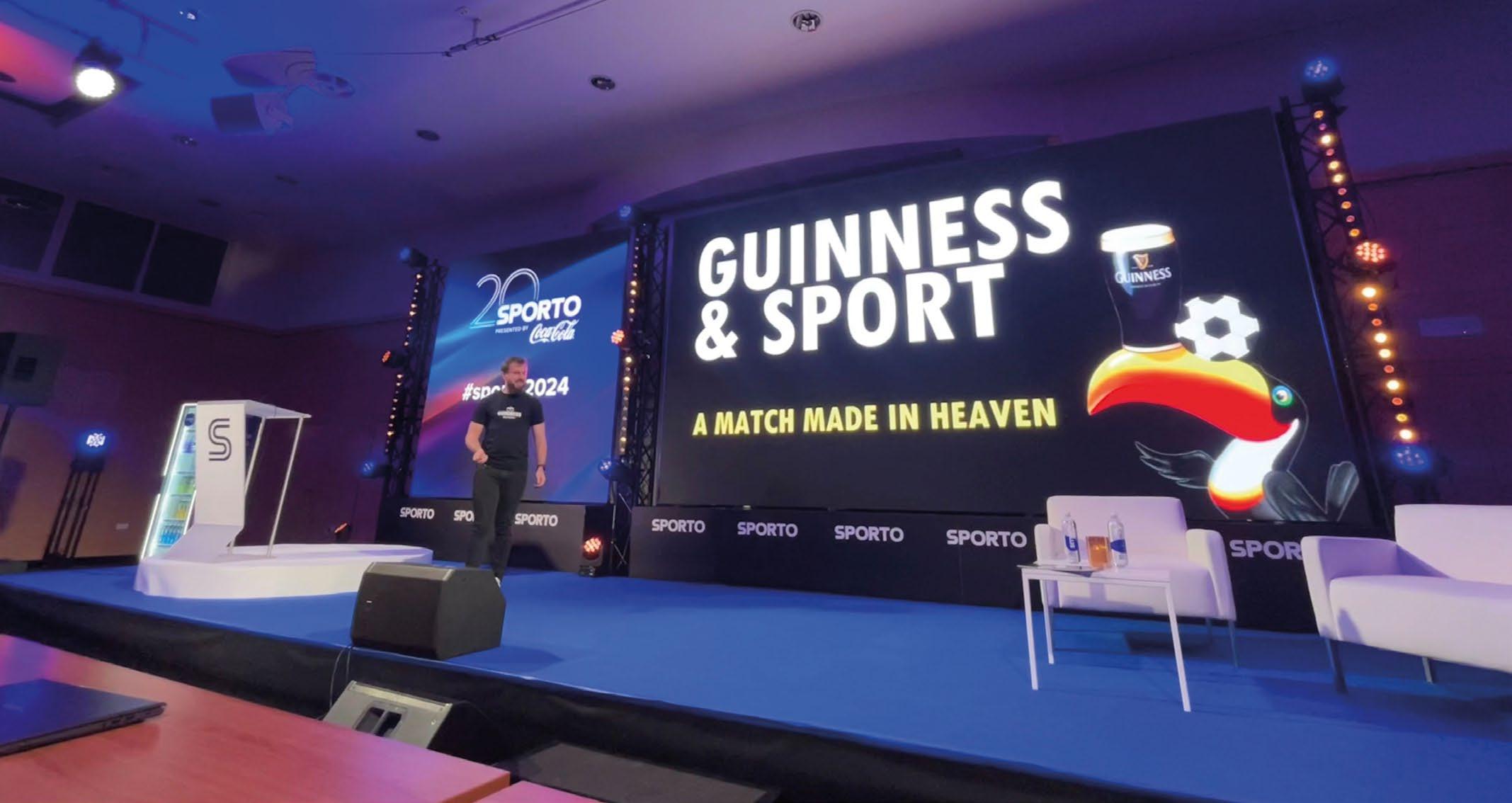
We’re actively looking for ways to grow our support of the game across the UK and further afield.
our beer. I think it’s a philosophy that we still apply today in every area of the business; everything has to be as perfect as what goes into our kegs.
OUR RELATIONSHIP WITH SPORT STARTED AT HOME. Guinness Rugby Club was originally founded in the Guinness brewery, Dublin, back in 1926, before the Guinness family acquired the Iveagh Grounds for the benefit of the whole community. The Guinness Swimming Club was also opened at the brewery, initially for the use of employees, and still serves the community to this day. On the walls of its reception area are plaques with the names of the hundreds of
Guinness employees who have represented their home country on an international stage. We were also the first title partner of the All-Ireland Hurling Championship, while over in England, with our Park Royal brewery not far from QPR, we became the club’s shirt sponsor in the 1983/84 season.
TEAM SPORTS REALLY RESONATE WITH OUR VALUES.
Sports like rugby and football tie in with our emphasis on performing at our best as a team, and on the ideas of representation and pride. In 2019, we became the title sponsor of the Guinness Six Nations and a few years
Carberry says sport is the perfect match for the Guinness brand, tying in with ideas of representation, excellence and pride. Inpho.ie
later, the Guinness Women’s Six Nations as well. We’re particularly proud to have been part of the incredible journey that women’s rugby has been on in recent years, and growing that relationship further is paramount.
We want to elevate and extend the feeling of belonging across sport, and there’s huge potential to grow the fanbase in both women’s rugby and football. We’re only at the beginning of what we can achieve in women’s football. We chose to partner with Arsenal, Aston Villa and Newcastle last year partly because of their strong strategy regarding the women’s game, and we recently announced a partnership with Bristol City Women. We’re actively looking for ways to grow our support of the game across the UK and further afield.
THE PREMIER LEAGUE HAS BEEN A UNIFIER.
When the opportunity arose two years ago to become the official beer of the Premier League, it enabled us to have one global narrative, a unifying campaign for all of our markets around the world. Previously, our most unifying brand campaign was St. Patrick’s Day, which reached out to Irish and expat Irish
communities in some 15-to-20 markets around the world. In comparison, we currently have the same campaign running in over 80 markets as a result of our sponsorship of the Premier League. Football is a universal language and a unifying passion, and the Premier League is the most diverse league in the world, which also ties in nicely with our values and global reach as a brand.
YOU CAN RESPECT DIFFERENCE WHILE BEING TRUE TO YOURSELF.
We have a strong brand identity, but we also believe it’s important that we allow each of our markets around the world to champion this in their own unique way. Whereas in Europe and the US we know Guinness as a creamy headed stout, in Africa and Asia you’ll find Foreign Extra Stout, a bottled carbonated version that has been exported around the world for hundreds of years. In the Caribbean, meanwhile, people often drink our beer as a punch, made with condensed milk and spices. There are different tastes, rituals and cultural preferences around the world when it comes to enjoying our product, and we will always celebrate and respect that, while remaining true to what we stand for as a brand.
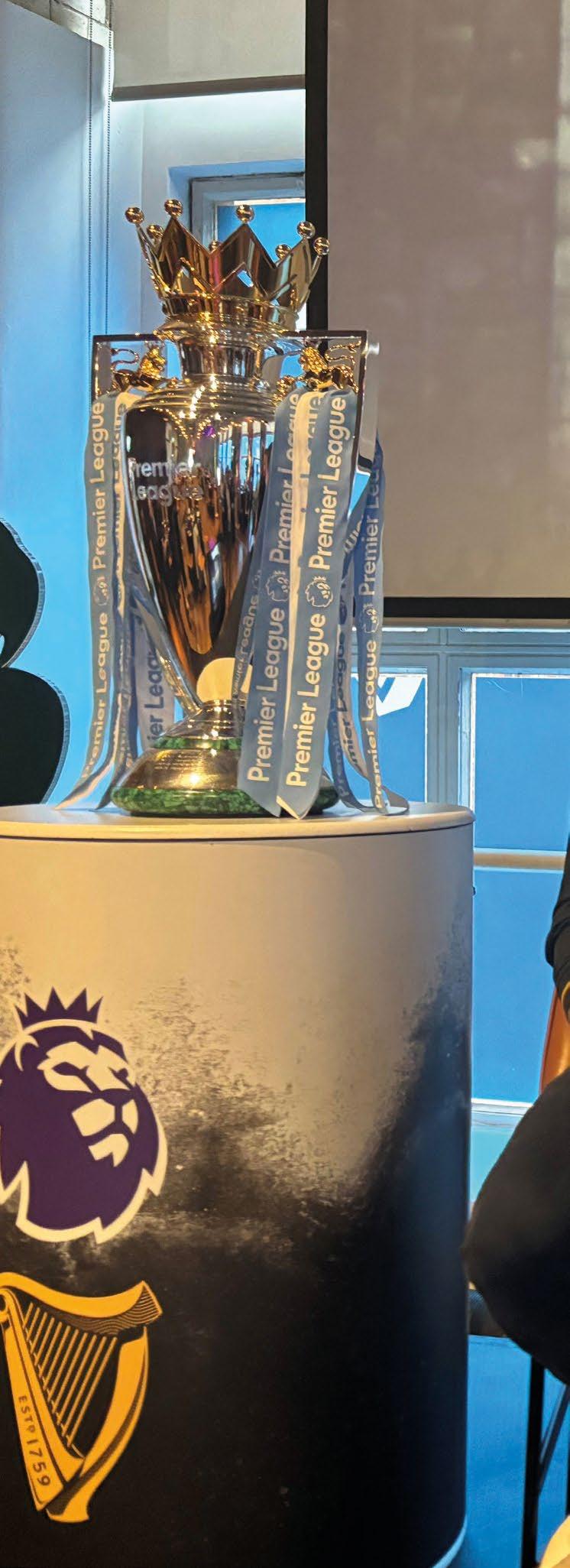
Guinness’ sponsorship of the Premier League has enabled it to reach out with a single campaign to over 80 markets globally. Inpho.ie
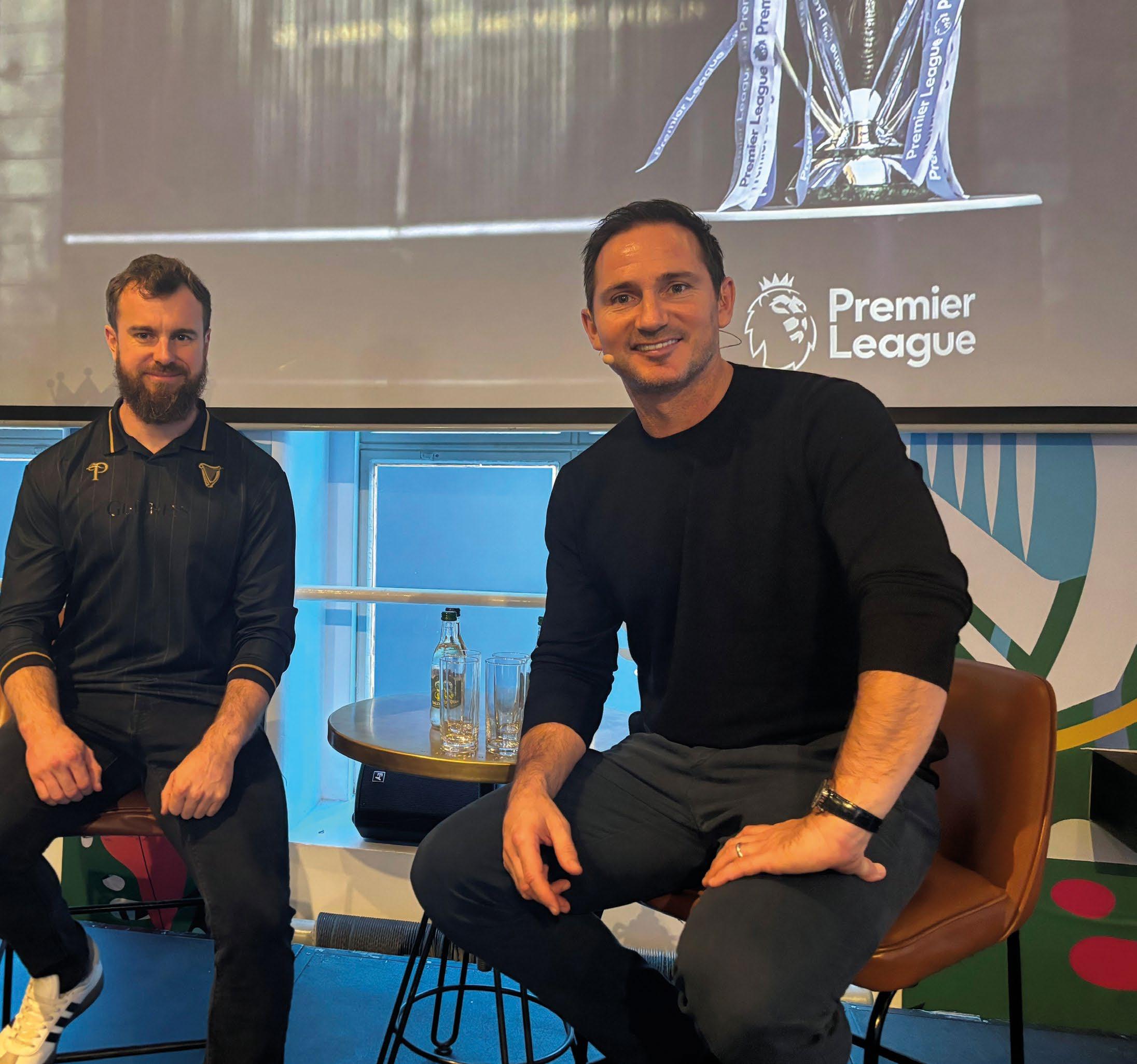
Sports like rugby and football tie in with our emphasis on performing at our best as a team, and on the ideas of representation and pride.
KEY TAKEAWAYS
DR MARTIN LITTLEWOOD
BENEATH THE MASK.
In a recent LMA Webinar, Dr Martin Littlewood, Associate Professor of Performance Psychology at Liverpool John Moores University, shared insight on how to develop deep confidence under pressure. Here are our highlights.
Words: Alice Hoey
Photography: Reuters // Action Images
EVERYONE HAS A STORY.
My starting point when working with people is always to get to know the person behind the performer. I need to understand their sense of reality, and what’s driving their expectations from an internal and external point of view. That’s important, because when the gap between expectations and reality widens it tends to cause frustration and disappointment.
CONFIDENCE IS NOT THE ABSENCE OF DOUBT.
In fact, it’s your ability to commit to something despite the presence of doubt, and to accept doubt as part of your identity and personality. Confidence is linked to physical, tactical and technical capability, so fundamentally it belongs to you, not anyone else or the environment. Rather than being high or low, it’s more useful to think of confidence as being surface level or much deeper.
PRESSURE IS PART OF THE ENVIRONMENT, NOT THE PROBLEM.
When the pressure on us increases, the solution is not to try to remove or reduce that pressure, but to increase the support we have available. That support can be internal or external and might involve building stronger routines, better teamwork or sharing the load. It’s important to recognise that when we’re under pressure, we tend to lose permission, permission to act freely and instinctively, to accept our mistakes and stay connected to who we are.
UNDER PRESSURE, THE MASK GOES ON.
Fear of making a mistake or losing face makes us wear a mask, and ego keeps it on. That mask serves to protect us when we feel fear and insecurity, while projecting what we want the world to see, so we’re no
longer being authentic. Both research and experience tell us, however, that wearing a mask for too long comes with costs; it creates a barrier between us and those around us, making it harder for us to be supported by them; makes us a prisoner of our own thoughts; and inhibits performance and potential.
QUESTION HOW YOU CAN MOVE TO A DIFFERENT MINDSET.
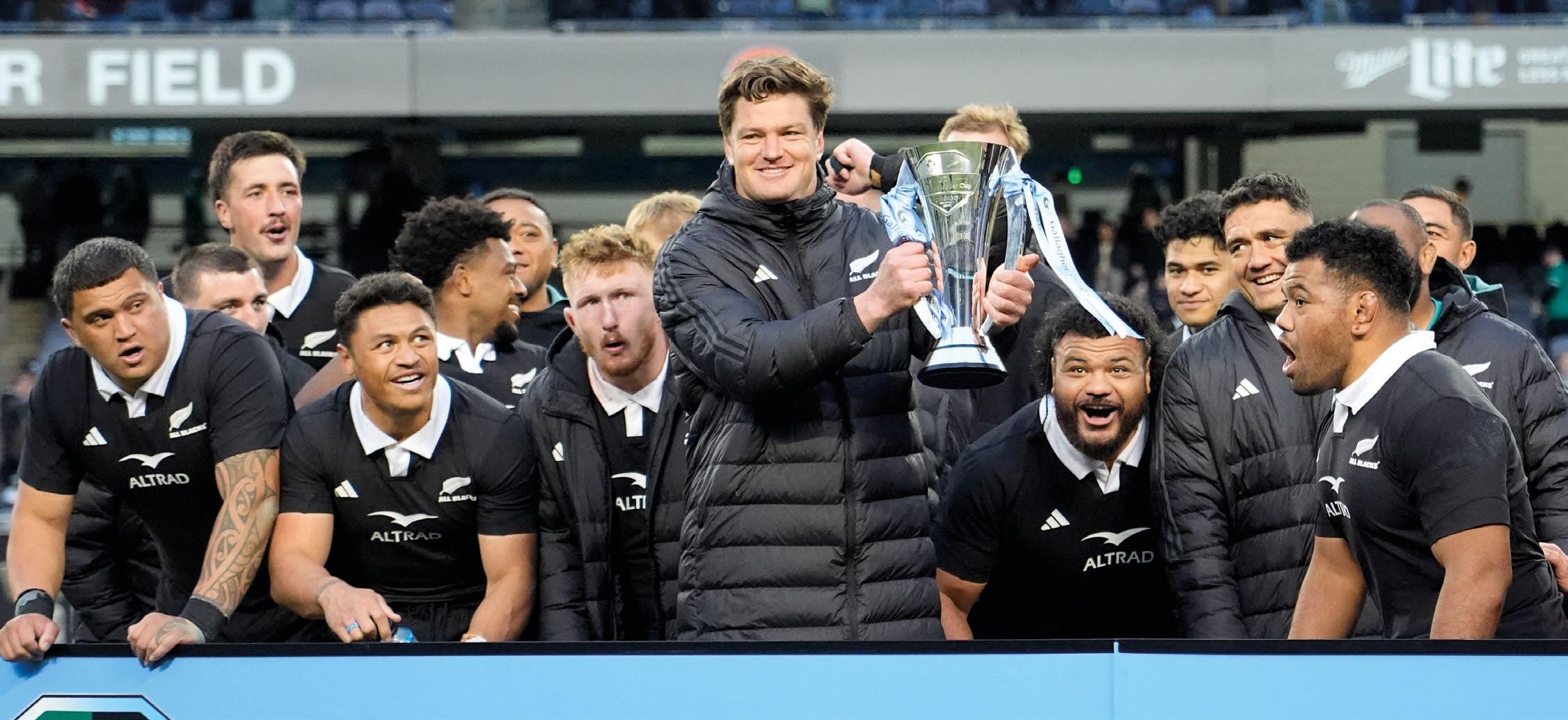
Ask yourself what it is that your mask is protecting you from, what triggers it going up, what the costs are of wearing it too long, and what it would take to lead without it. Teams such as the All Blacks have developed greater awareness and acceptance of their mental state and have adopted practices enabling them to move from a state of external expectation, scrutiny and consequence to a more internal space.
Elite teams such as the All Blacks have developed methods for recognising their emotions and moving between mental states. Reuters // Action Images
Rory McIlroy finds comfort in knowing he has rehearsed mentally all possible scenarios, including failure.
Reuters // Action Images
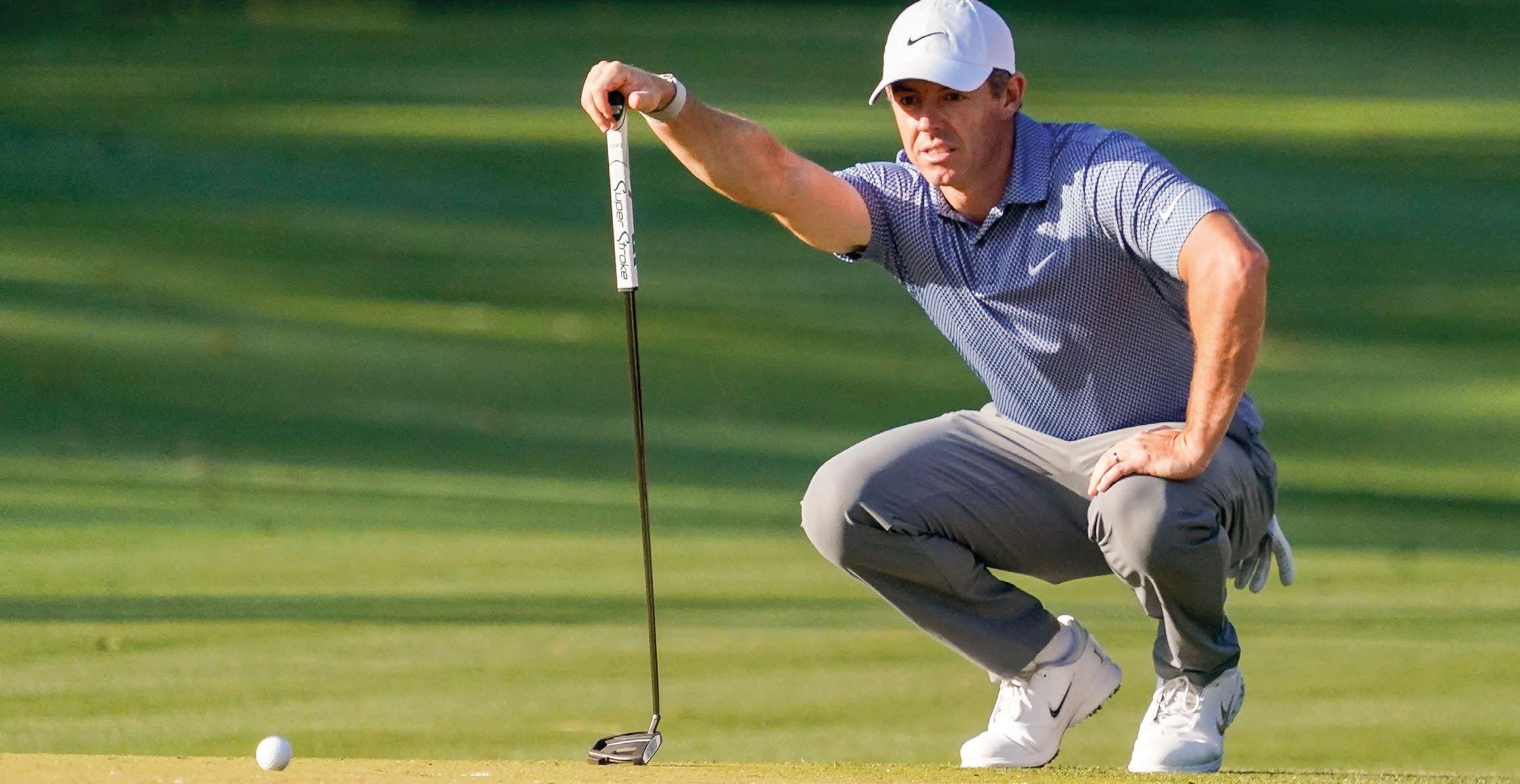
ADOPT ACTIVE PREPARATION, NOT PASSIVE OPTIMISM. Instead of simply hoping that nerves will go away, Rory McIlroy mentally rehearses how he would deal with potential failures and worst-case scenarios. He finds comfort in knowing there’ll be fewer surprises and what-ifs; it lends steadiness rather than panic. It’s important to embed mental resilience tactics such as this into daily work. They need to be the default, rather than something we deploy during competition or when the heat is on.
CONFIDENCE SITS WITHIN CONTEXT. We can’t tackle confidence alone without recognising that there are other competing psychological areas that we need to understand and address, such as anxiety and motivation. An individual sits, also, within
multiple environments, from the club or workplace to home and family, all of which will change over time. As a leader, you want your team to be intrinsically motivated, the conditions of which are relatedness, competence and autonomy. Your responsibility is therefore to invest in those three areas.
WHAT SHADOW ARE YOU CASTING AS A LEADER?
As a leader, you have a huge influence on those around you, so it’s important to have good self-awareness to understand what that is. Have you created an environment where people feel they can challenge truths and beliefs, be themselves, and reach out for the support they need to improve? Where that’s not the case, people are less likely to take responsibility, they’ll play safe and avoid risk, and while they’ll know what they need to
do to grow, they’ll be held back from getting there.
DEEP CONFIDENCE IS KNOWING WHO YOU ARE.
It isn’t about hype, positive thinking or believing in yourself. It’s about being connected to your identity and values, understanding how you make decisions under intense pressure and scrutiny, and what makes the mask go up. This self-awareness, coupled with an understanding of the systems you can embed into practice, support the development of deeper confidence under pressure.
About Dr Martin Littlewood
Dr Martin Littlewood is Associate Professor in Performance Psychology at Liverpool John Moores University, and has over 20 years’ experience working with football clubs as a performance psychologist or performance coach. You can contact him via c48consulting@gmail.com.



LMA NEWS.
LMA EVENTS & CORPORATE ACTIVITY.
Indeed Masterclass
> OLE GUNNAR SOLSKJÆR
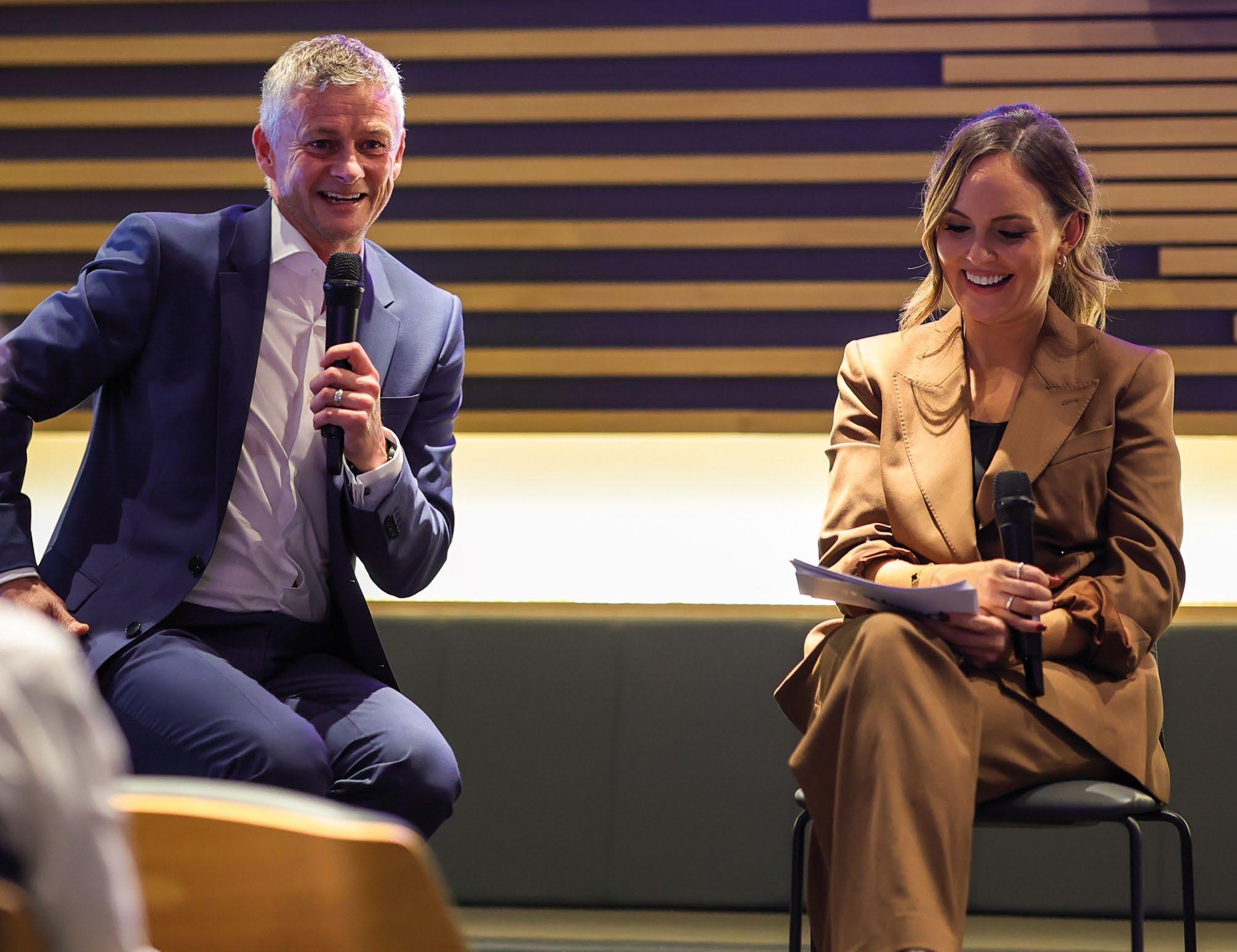
LMA member Ole Gunnar Solskjær and professional broadcast host Kelly Somers supported Indeed with an event at Brentford’s Gtech Community Stadium, focused on high-performance cultures. In the Q&A, Solskjær discussed his career so far, and shared some of the lessons that businesses can learn from football. Sports psychologist Jeremy Snape also presented on a winning mindset, providing insights and lessons from across his career, including his time as a professional cricketer.
Transfer Watch Live – Barclays and the Premier League
> GRAHAM POTTER
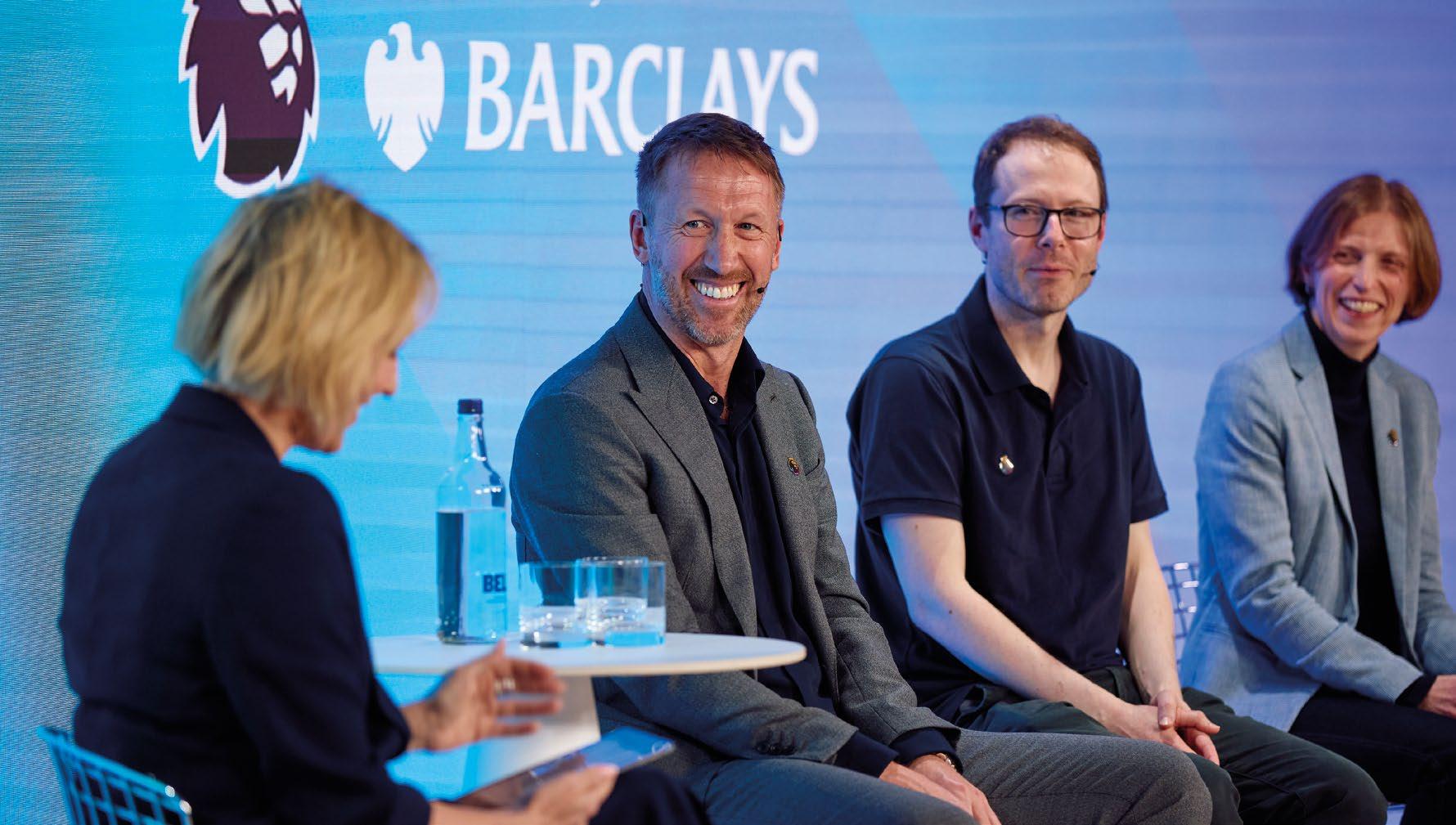
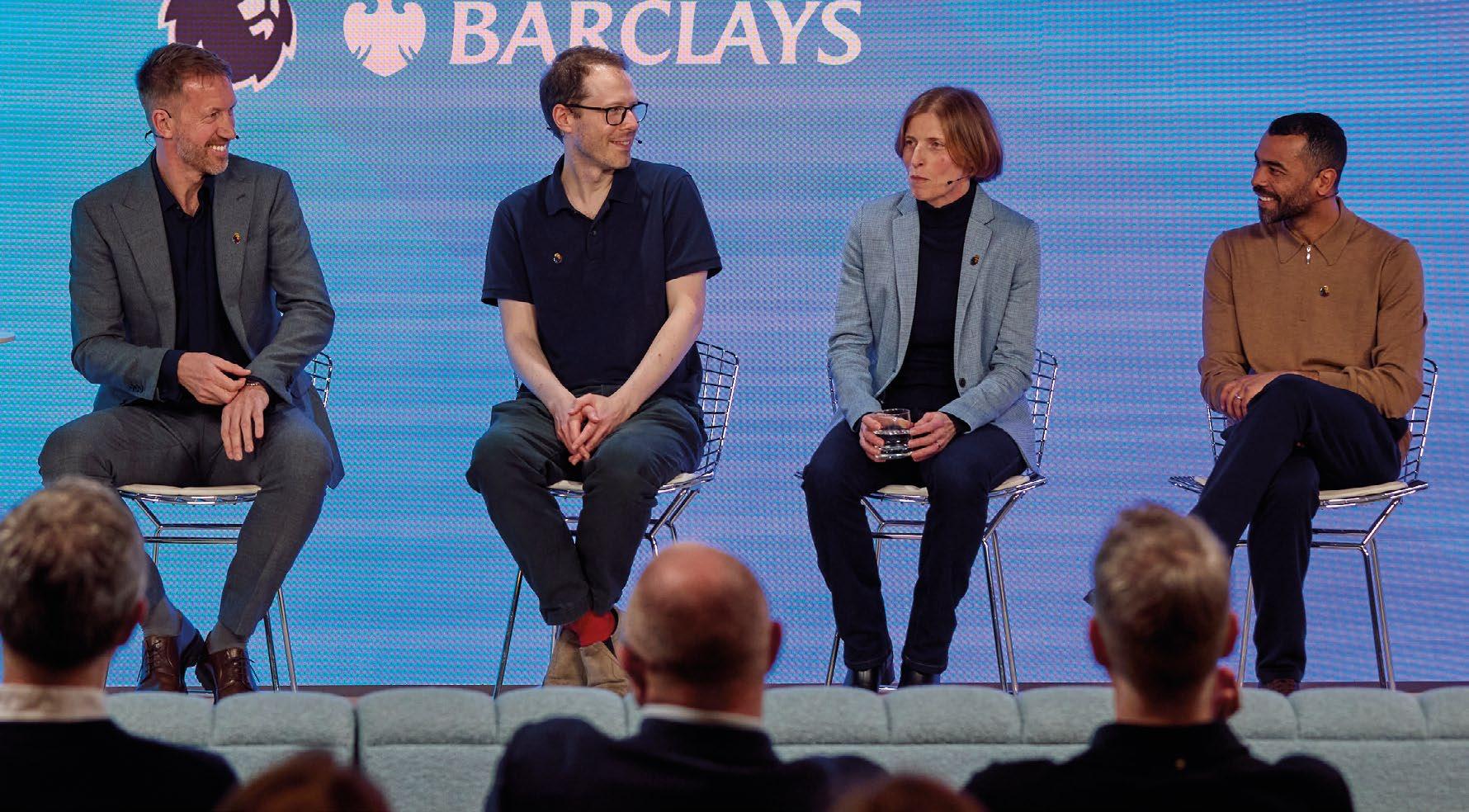
LMA member Graham Potter joined a panel including Ashley Cole, Rebecca Caplehorn and Dr Ian Graham as part of the Barclays and Premier League’s Transfer Watch Live event in London. The panel explored clubs’ use of data and statistics when considering signing players, and reviewed some of the most valuable January transfers in Premier League history.
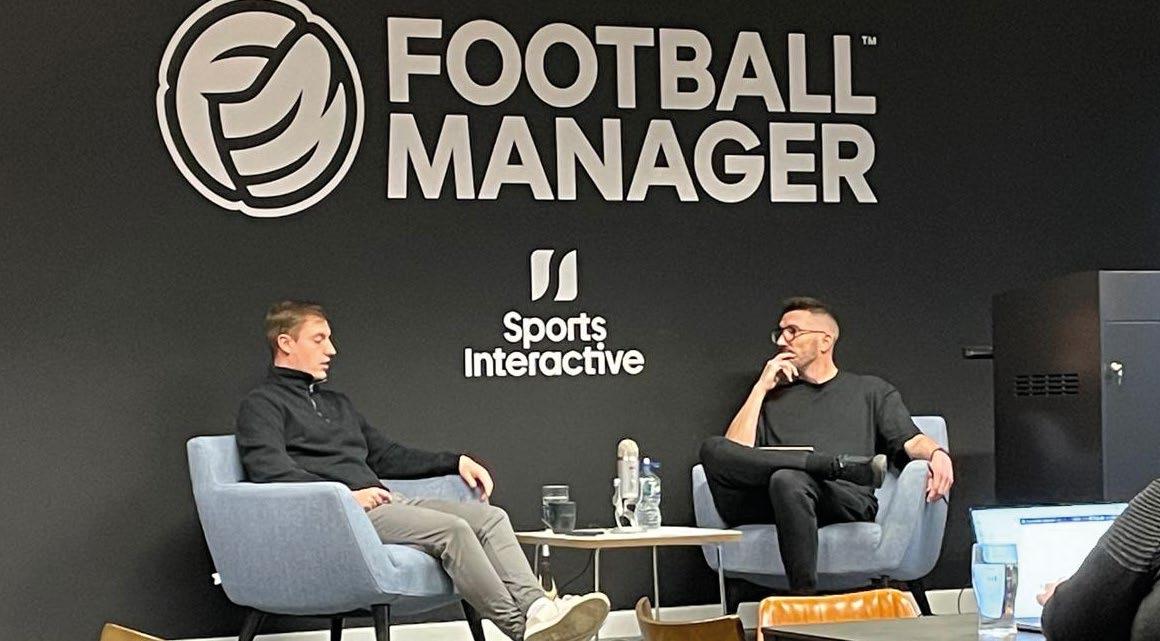
Sports Interactive
> AXL RICE
LCA member and Nottingham Forest first team coach/analyst Axl Rice provided Sports Interactive with an insightful Foot Talk. Rice discussed how his work as an analyst, and his work around set pieces in particular, has helped to inform the development of the Football Manager game.
T. Rowe Price
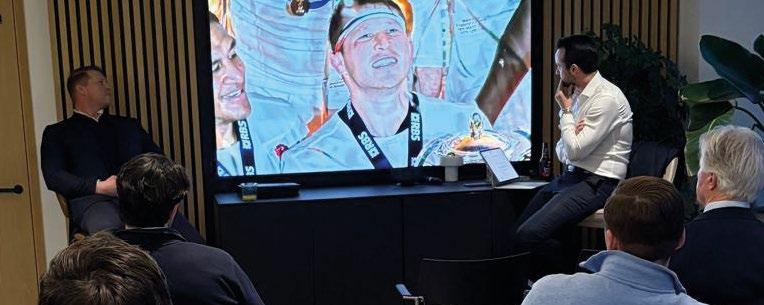
> DYLAN HARTLEY
LMA Ambassador and former England rugby captain Dylan Hartley supported T. Rowe Price, sharing his insight on leadership, team culture and performance. Drawing on his experiences leading the England national rugby union team and Northampton Saints, Hartley reflected on the principles that underpin high-performing teams and how they translate from elite sport to the corporate world.
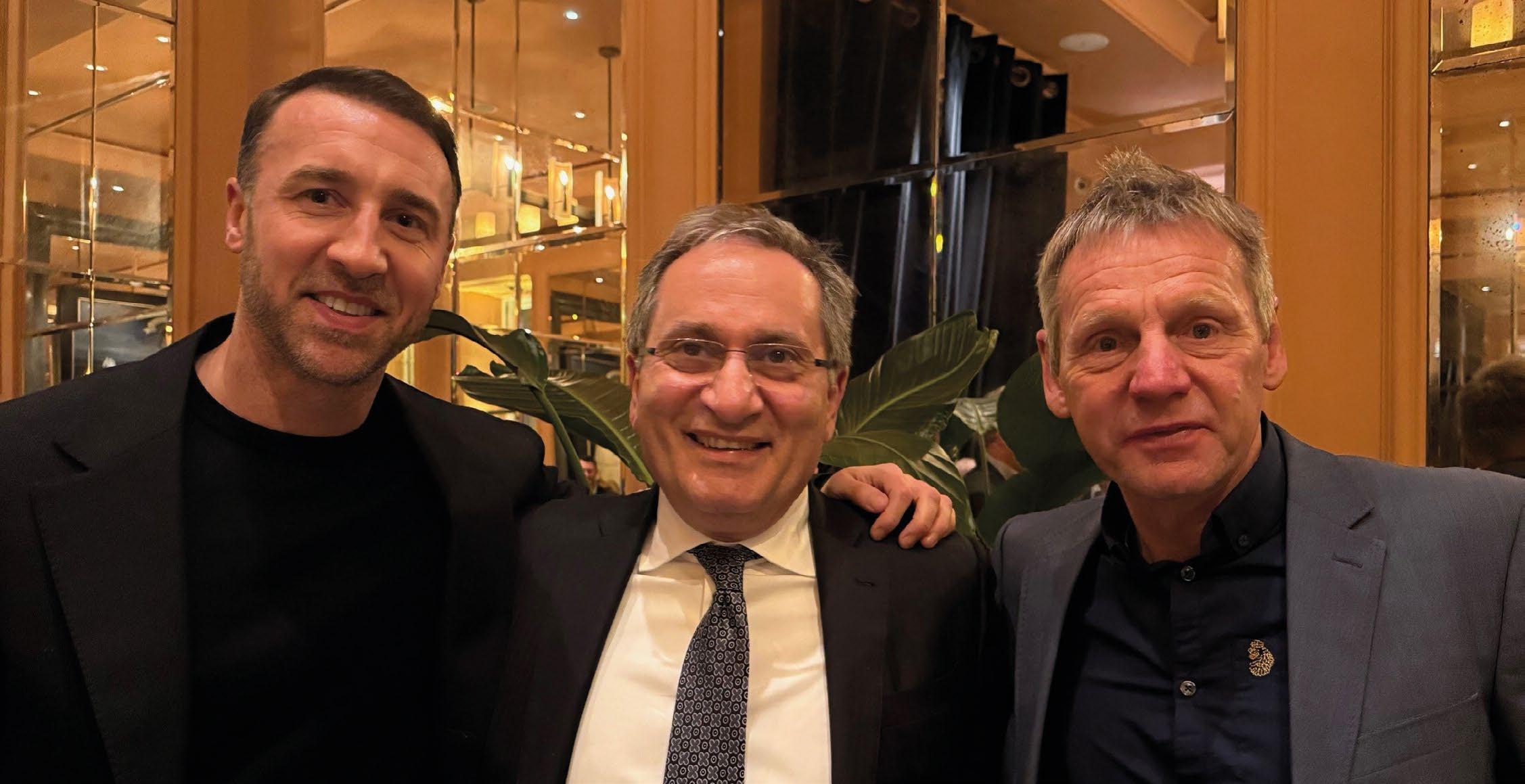
Gama Aviation
> STUART PEARCE, GLENN MURRAY
LMA member Stuart Pearce MBE, and Ambassador Glenn Murray provided support to Gama Aviation at a dinner at The Corinthia Hotel for colleagues and clients from the world of private aviation. Pearce and Murray discussed their careers and experience in the world of football, and the challenges of leadership shared by football and business.
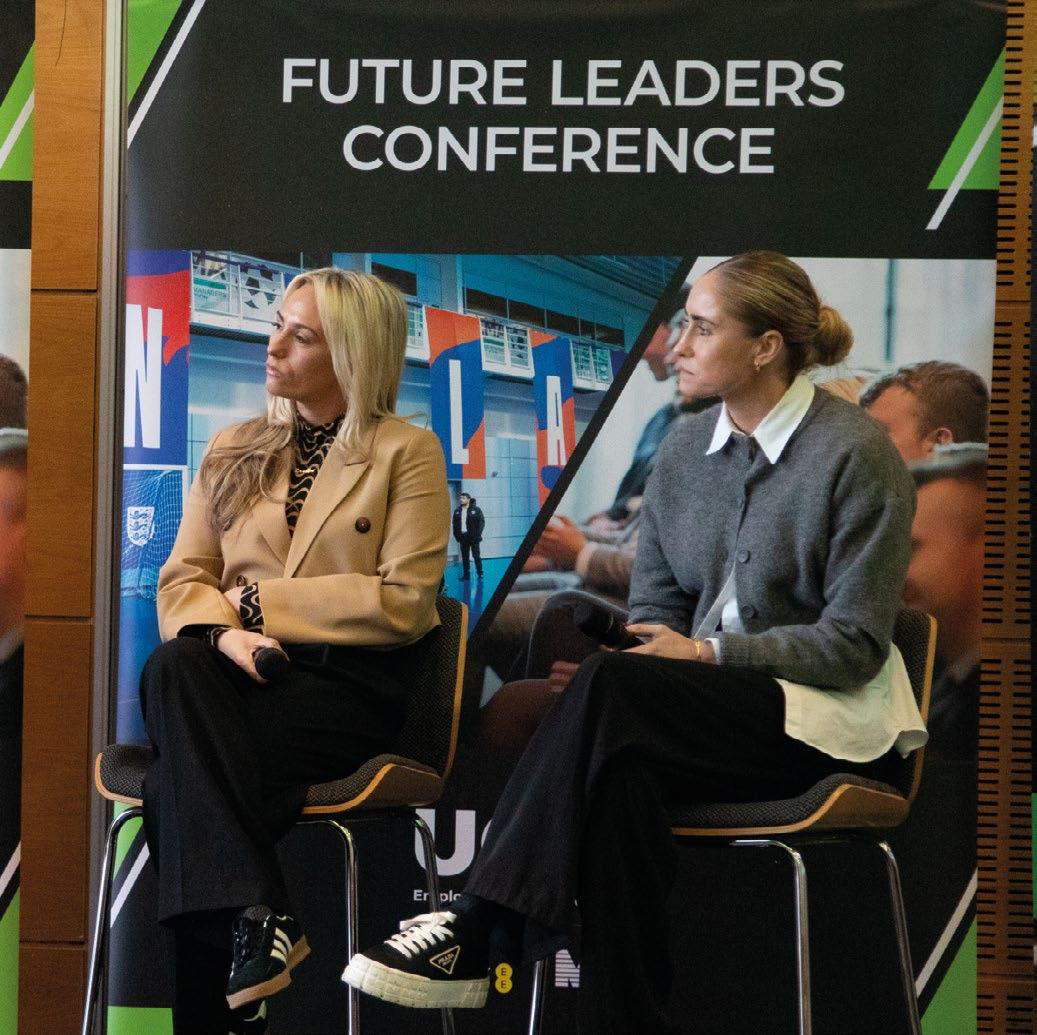
UCFB
> STEPH HOUGHTON, TONI DUGGAN
LMA Ambassadors and former Lionesses
Steph Houghton MBE and Toni Duggan supported the UCFB Future Leaders Conference at St. George’s Park, designed to provide postgraduate students with an insightful day of speakers from the world of professional football ahead of their graduation. Houghton and Duggan discussed leadership and the growth of women’s football, and provided advice to students entering the industry.
01 LMA and LCA
Regional Masterclass Series –Leeds United
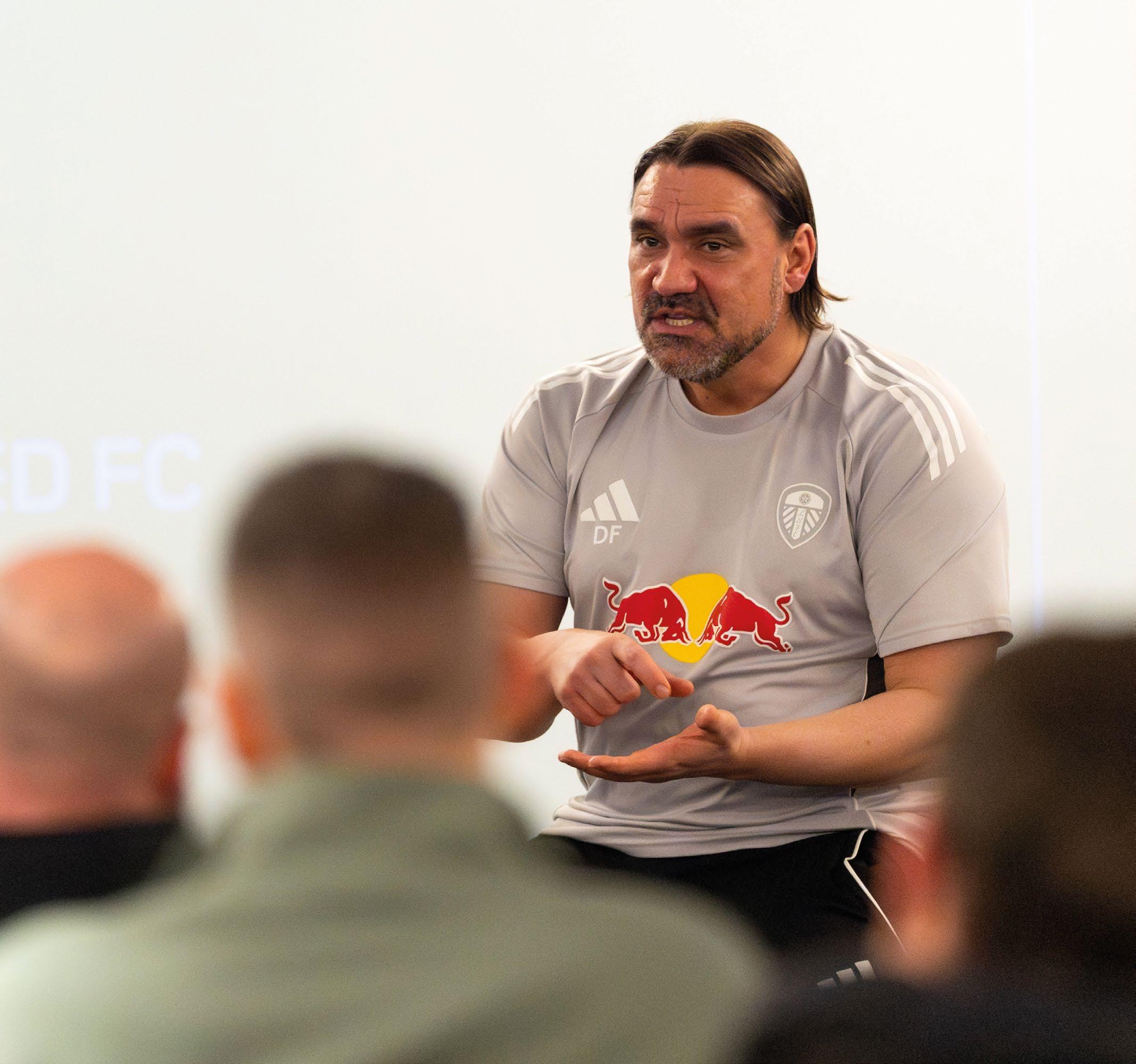
The third LMA and LCA Regional Masterclass Series of the season took place at Leeds United, focused on technical coach development, and highlighting the club’s close-knit, multidisciplinary approach. Assistant Coach Edmund Riemer outlined staff roles and the consistent MD-3 session structure, while Head of Performance Chris Domogalla explained how the team’s physical programme supports its identity.
The on-pitch session progressed through activation, technical and physical elements, showcasing player quality and intensity. Manager Daniel Farke then took part in an engaging Q&A, which emphasised the importance of passion and human connection.
02 LMA and LCA
Performance Visit –Olly Murphy’s Racing Yard
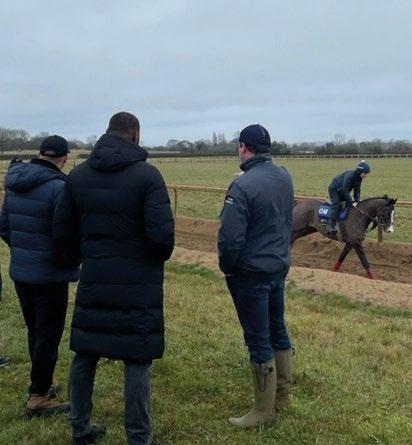
The LMA Institute held its first Performance Visit of 2026 in January at Warren Chase Stables, home to Olly Murphy’s Racing Yard, the training base for 141 winners in the 2024/25 National Hunt season, and champion jockey Sean Bowen.
During the visit, attendees gained an insight into the key processes and principles that underpin the management of a high-performance team, where both horse and jockey have the best possible chance of success.
03 LMA and LCA
Leadership Webinar
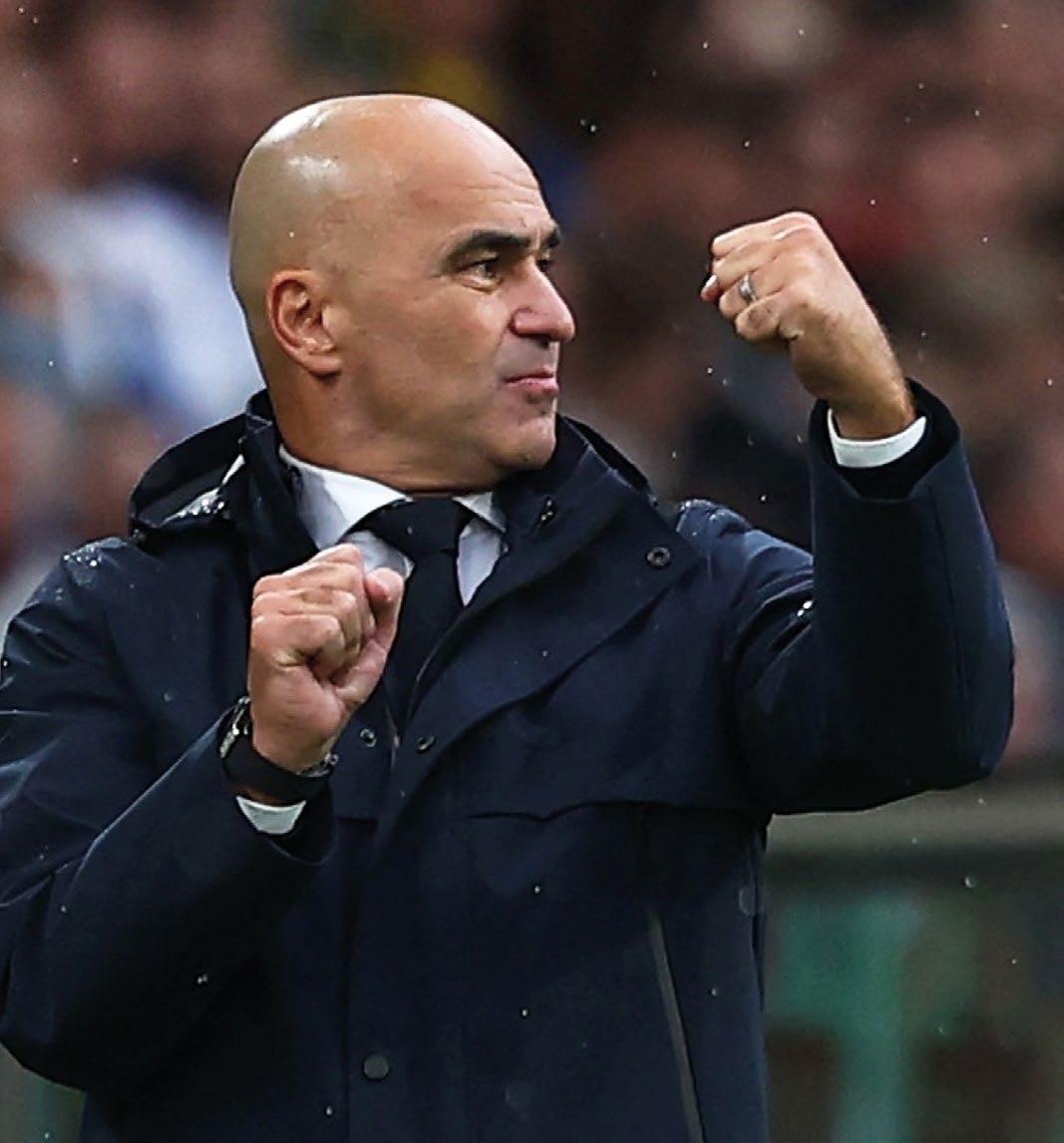
The final webinar of 2025 saw the LMA and LCA deliver a Leadership Q&A with Roberto Martínez, who shared his experience and philosophy around building and sustaining success at the highest level. Martínez discussed the importance of creating a winning culture founded on shared values, trust and accountability, and explained how effective leadership and clear communication under pressure are vital in guiding teams through demanding situations.
He also explored how strategic adaptability enables challenges to be turned into opportunities for growth, and how maintaining a mindset of continuous improvement keeps high-performance teams motivated and united. His reflections offered attendees practical lessons on leadership, resilience and the pursuit of excellence across all levels of the game.
IN THE GAME: CHARITABLE SUPPORT.
As part of its In the Game Charity activity, the LMA was delighted to assist in education, support, awareness and donations.
01 Shining a Light on Suicide
The LMA is pleased to announce that the joint LMA/ Shining a Light on Suicide campaign 2025 has been named as a finalist at the 2026 Football Business Awards. In partnership with Mayor of Manchester Andy Burnham and with the support of over 50 LMA members, across the men’s and women’s games, the suicide prevention video campaign has been shortlisted in the category of Best Football Community Scheme – Non-Premier League and Championship Clubs. The winner will be announced at the Football Industry Awards Ceremony on Friday 15 May 2026. Thank you once again for your ongoing support of this important initiative.
Scan the QR Code to view the Video.
02 David Flitcroft – 12-hour Coachathon
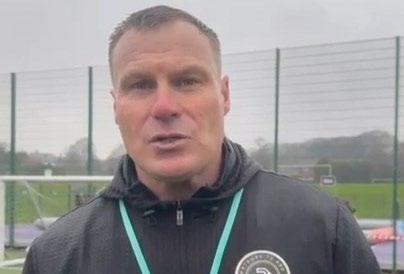
LMA member David Flitcroft brought the football community together in November for an inspiring grassroots coaching marathon in Bolton. The full-day event welcomed young players, coaches, parents and volunteers for high-energy training sessions, mentorship and shared learning, aimed at developing grassroots footballing talent, and strengthening the network that underpins community sport. A key element was also fundraising for the Safety Net, a digital wellbeing platform providing players, coaches and parents with accessible mental health support and suicide prevention resources.
LMA members played a key role in the day’s success, delivering sessions, offering guidance, sharing messages of encouragement and donating generously to the campaign. Their collective support reinforced the LMA’s ongoing commitment to both grassroots development and the wellbeing of those working throughout the game.
The coaching marathon served as a powerful reminder that football’s impact extends far beyond the pitch and highlighted how the game can bring communities together while safeguarding the people at its heart.
03 Prostate Cancer UK
The LMA is proud to continue its valued partnership with Prostate Cancer UK, working together to raise awareness and drive meaningful change around men’s health.
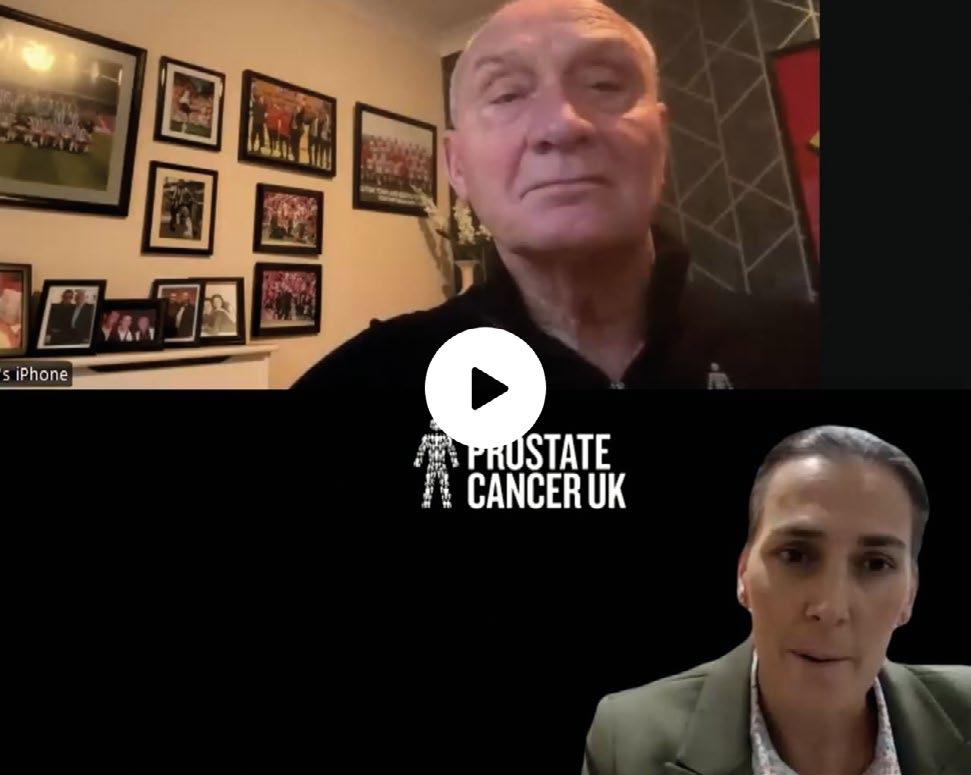
As part of this ongoing collaboration, LMA member Brian Horton talked to Prostate Cancer UK’s Chiara De Biase about his own experience of being diagnosed with prostate cancer following his annual LMA Health Assessment in 2023. The conversation highlighted the importance of understanding prostate cancer risk and how the charity is leading the push for a national screening programme, a vital step in improving early detection and saving lives.
Prostate cancer often presents with no symptoms in its early stages, which is why understanding your individual risk is so important. To find out your risk, complete the 30-second risk check www.prostatecanceruk.org/risk-checker.
To listen to the full conversation, scan the QR code

04 The Eve Appeal Badge
Campaign
The LMA is proud to have once again joined forces with The Eve Appeal to help raise awareness during Cervical Cancer Awareness Week in January. LMA members were encouraged to wear The Eve Appeal’s iconic red badge on the touchline. LMA Partnerships Manager Luke Johnson is running the London Marathon this year for the Eve Appeal.
05 Marie Curie Badge Campaign
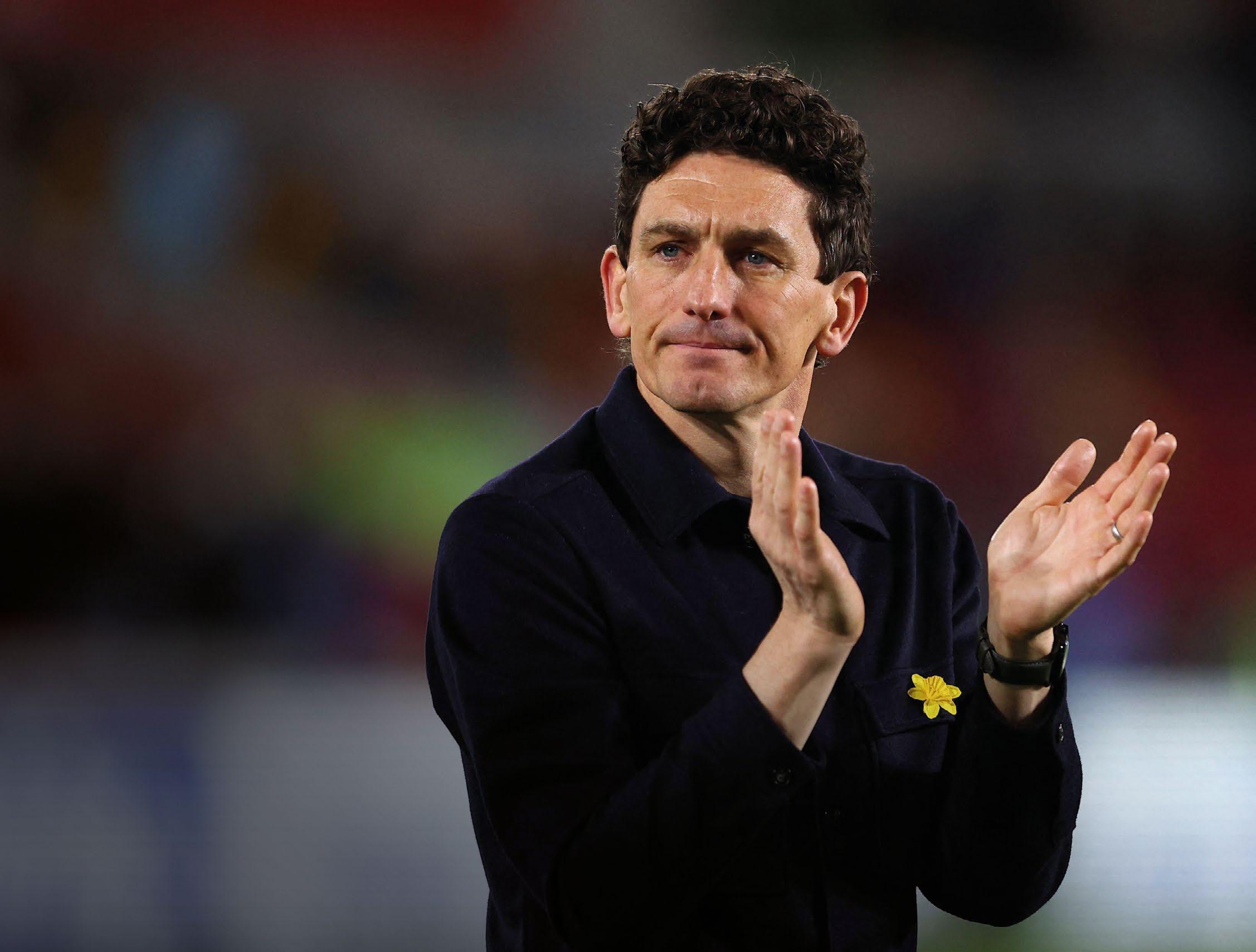
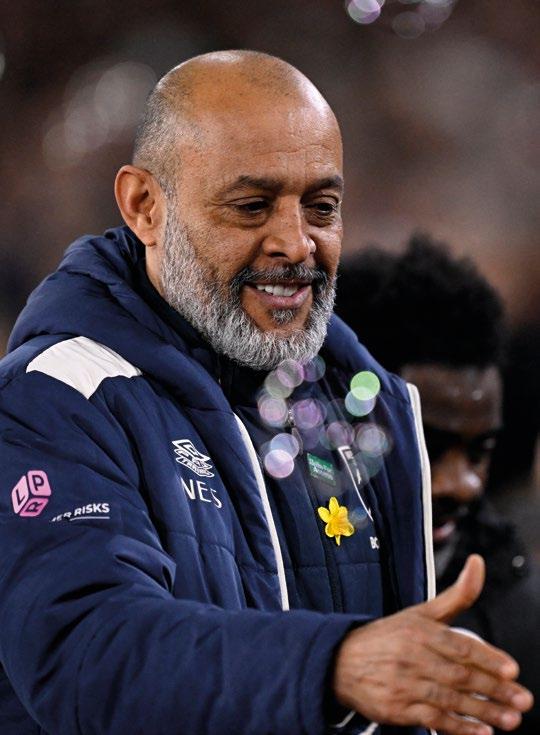
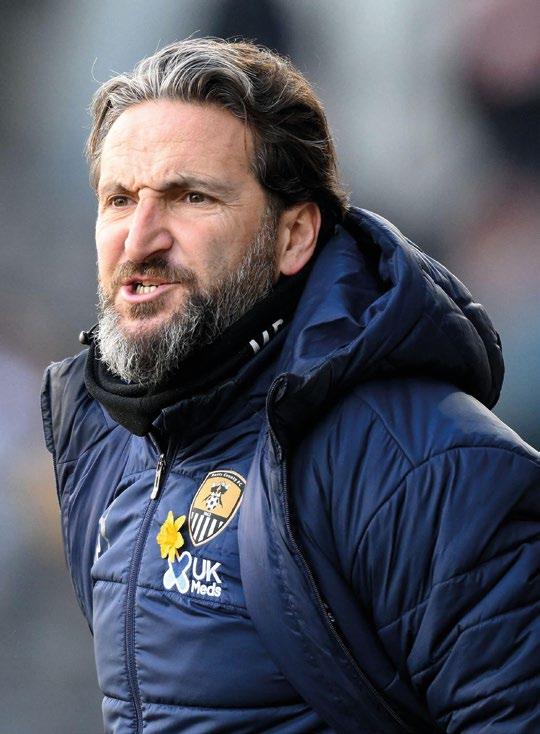
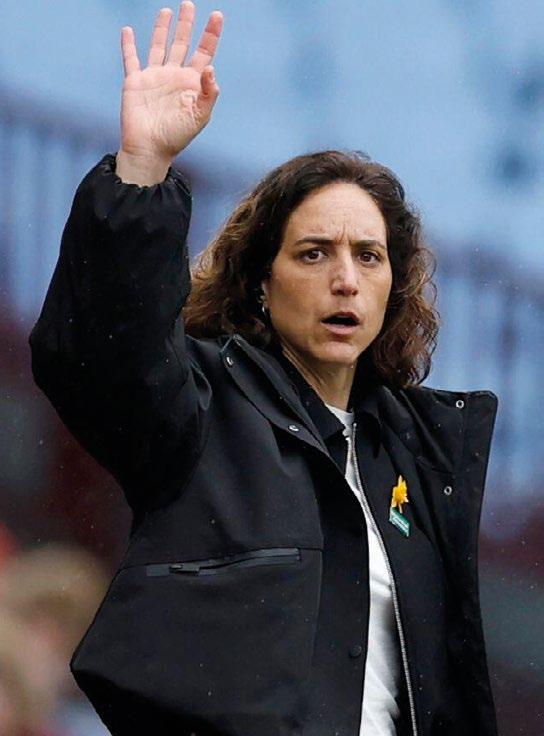
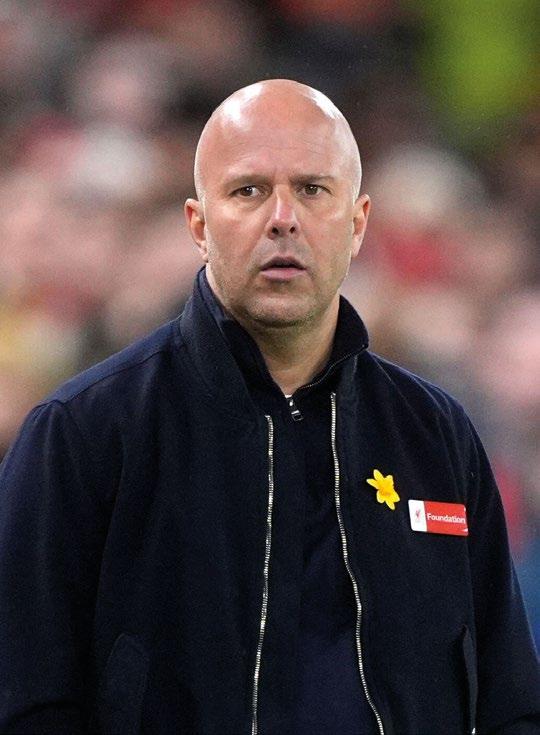
March saw the 40th Anniversary of the Great Daffodil Appeal, a campaign run by charity Marie Curie and supported by the LMA. To raise awareness, the LMA asked members to wear the Daffodil pin badge during matches and media conferences over the middle weekend of March.
The UK’s leading end of life charity, Marie Curie provides people with expert end of life care, as well as support for their families and friends. Last year, it provided direct care to more than 42,000 people across the UK, in Marie Curie hospices and in people’s own homes.
For further information about Marie Curie and the Great Daffodil Appeal please visit www.mariecurie.org.uk, or call the free Marie Curie Support Line on 0800 090 2309.




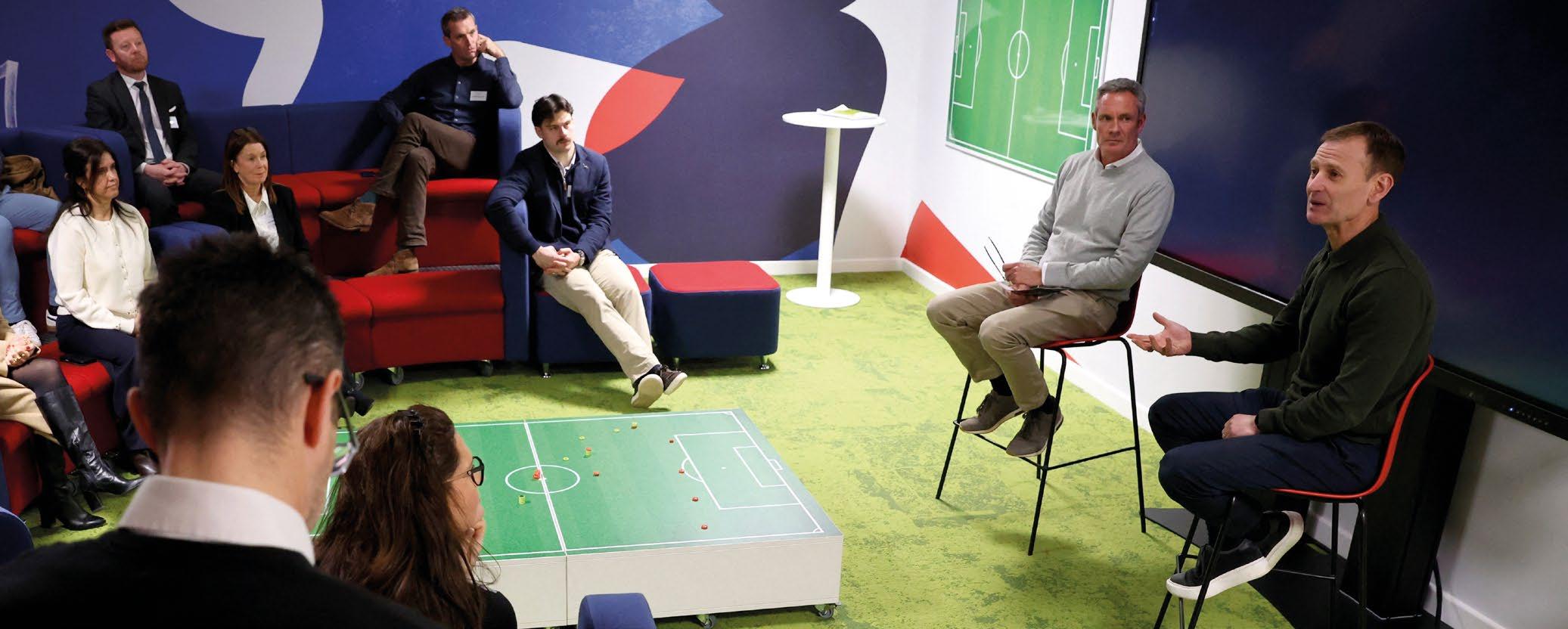
LMA RESIDENTIAL AT ST. GEORGE’S PARK .
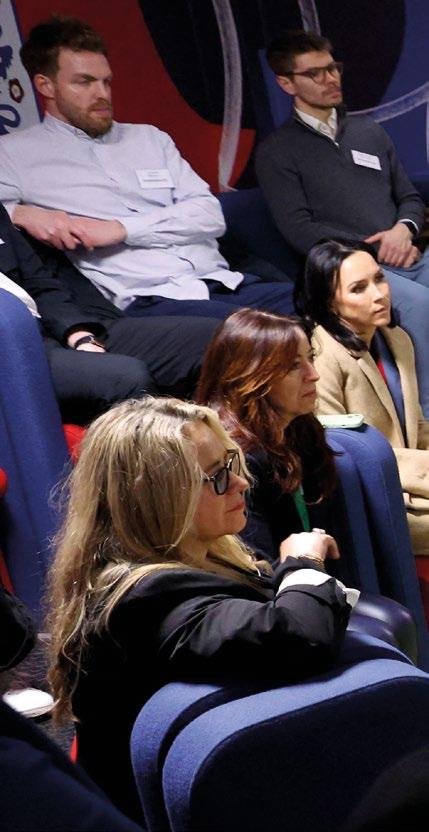
March saw the LMA’s second Leadership and High Performance Residential at St. George’s Park, a brilliant day and evening of learning, reflection and insight into leadership in high-performance environments.
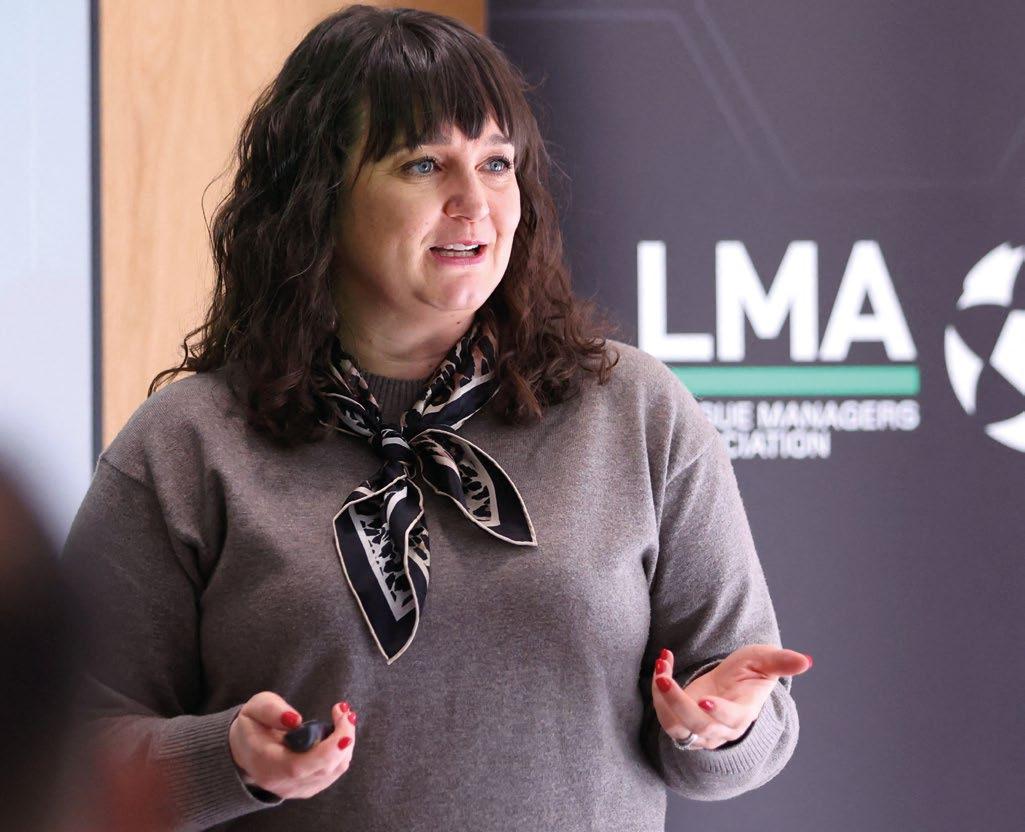
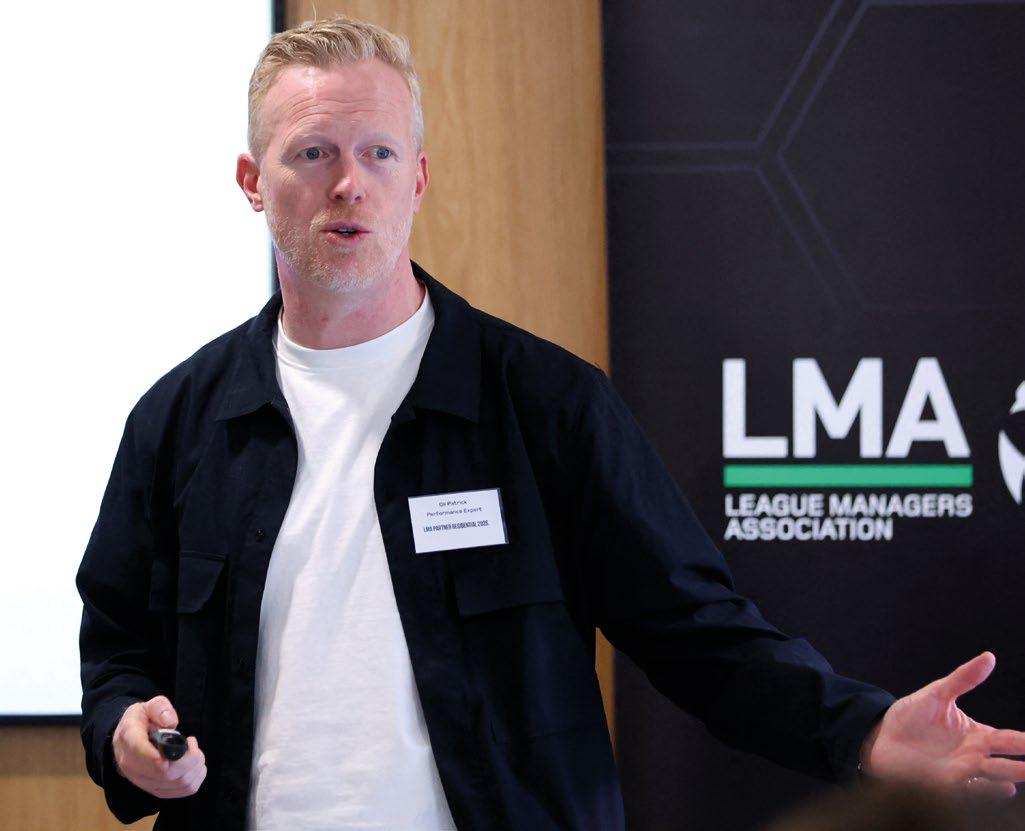
The event kicked off with a Leadership Masterclass with performance psychologist and executive coach Katie Mobed, followed by a Performance and Wellbeing Masterclass with Oli Patrick, physiologist and co-founder of Future Practice.
After lunch, the attendees, our LMA Partners, heard from FA Chief Football Officer Dan Ashworth, who shared his insight on the future of the England teams and the vision behind the elite environment at St. George’s Park. They then enjoyed an exclusive behind-the-scenes tour of the National Football Centre.
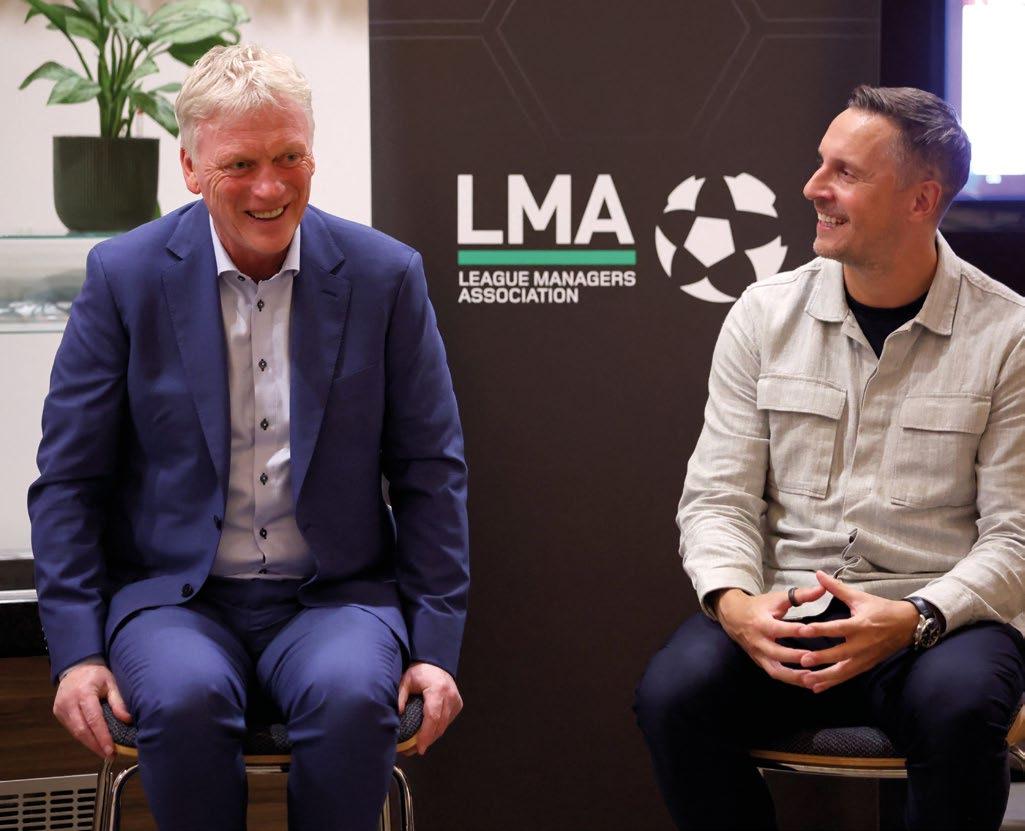
The evening concluded with a fantastic Q&A, hosted by Hayley McQueen, with LMA Committee
member and 1000 Club member David Moyes OBE and former Everton captain, Phil Jagielka. What stood out most, aside from the dynamic between the manager and captain, was the fact that leadership can look very different depending on whether you’re on the touchline or the pitch. The two roles are, however, inseparable; while the manager sets the vision and standards, it’s often the captain who carries those messages into the dressing room and onto the grass.
As Moyes and Jagielka reflected on their careers, we were also reminded that leadership is rarely about having all the answers. It’s about experience, trust, honest conversations, and sometimes showing vulnerability in order to bring people with you.
A special thank you to our Commercial Partners for attending the event, and to the speakers for making the day such an insightful and valuable experience for all involved.


Format unleashes the potential of your creative team - remove bottlenecks, reduce production time by 90% and eliminate mistakes.
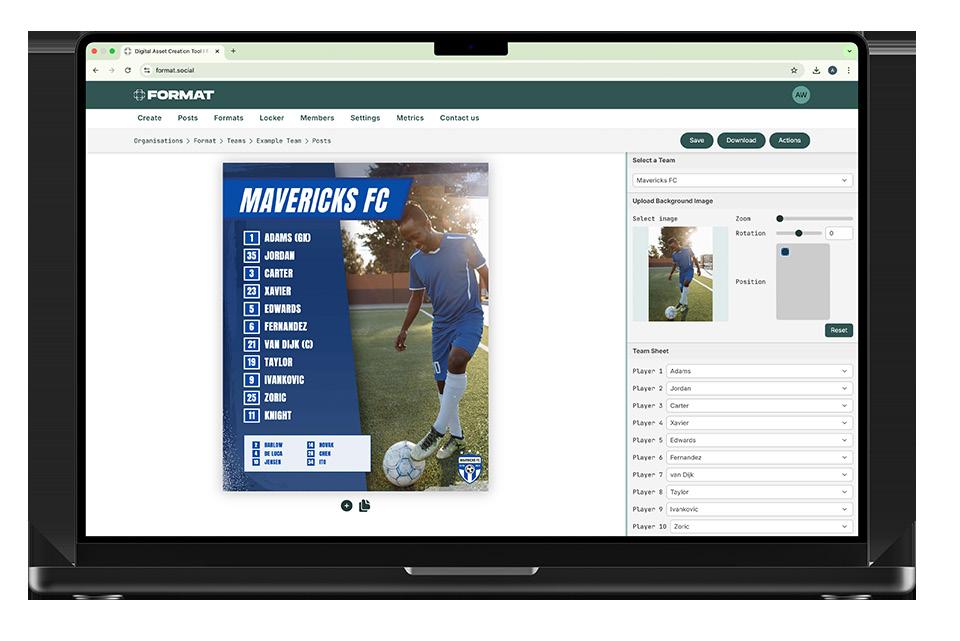
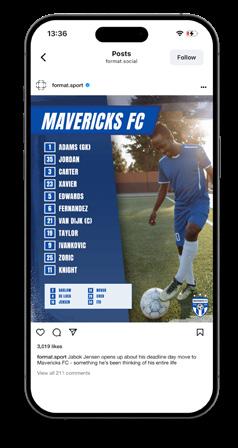
Design confidence for non-designers
Built to support your creatives
A productivity partner for busy teams
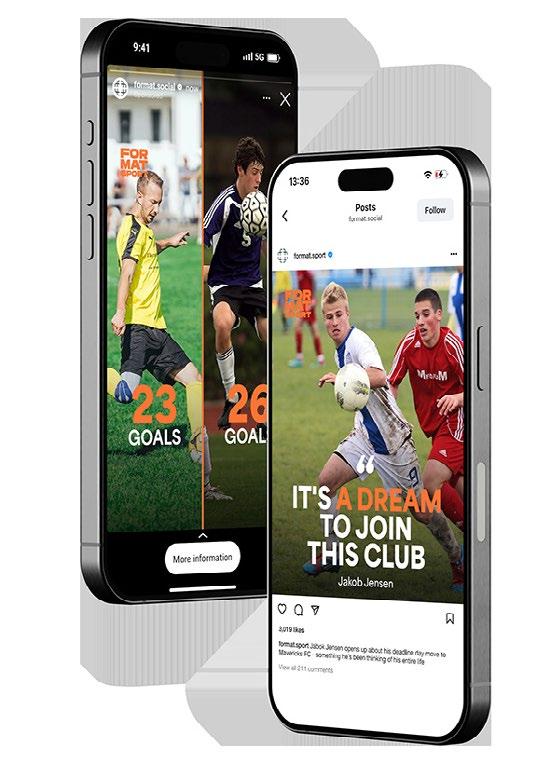
Book a demo to see how Format can help your team visit format.social
PERSONAL WELLBEING & PERFORMANCE.
PERSONAL WELLBEING & PERFORMANCE COLUMN
Dr Mandeep Rai

THE VALUES COMPASS.
In a recent LMA and LCA Webinar, Dr Mandeep Rai spoke to Jeremy Snape about the importance of defining five key personal values and how to do it.
All of the decisions that you make, from micro ones, like what to have for lunch, to macro decisions, such as whether to accept a job, are based on your values, albeit subconsciously. Few of us sit down and think too much about what those values are, but when we do so it makes those decisions much easier, especially in high pressure, high stakes situations. It also gives us better understanding of why we might be frustrated or why things aren’t sitting quite right.
How, then, do we go about defining what those values are? The first step is to strip away all the layers of the onion that influence you from day to day: what’s happening in the industry and in the world at the moment, your peers, team, even your family. None of that is important at this point, because this is an inner journey, it’s about being authentic and honest and uncovering what’s really important to you.
I advocate choosing five key values, as this tends to give a
Importantly, the values you choose don’t need to be static; they won’t stay the same forever.
sense of balance. Too many values and they may overlap, conflict or cast a shadow over one another. For that reason, also, it’s important to prioritise your values according to how important they are to you. It’s this that makes it a useful compass. Otherwise, you can end up flip-flopping between them or having to choose between honouring one value or another.
Importantly, the values you choose don’t need to be static; they won’t stay the same forever. You might choose five for this season or while you hold a particular job, but change them when your situation changes.
You might even remove a value because it has become so central that you no longer need to push the button. If, for example, health is a priority in your life, you might have habitualised things like eating well and exercising, so you can reprioritise to focus on something else for the period ahead.
To define what your core values are, one effective method is to imagine you’re in the later years of your life and you’re beaming with happiness as a friend or family member makes a big speech about you. Think about what you’d like them to be saying, because the legacy you want to leave behind will reveal a lot about what’s really important to you.
We can also determine our values from thinking about negative sources of emotion. Ask yourself, when was the last time something really annoyed you or made you feel violated or undervalued?
This can highlight the things that matter most to you, such as punctuality, politeness, hard work and respect.
In my book, The Values Compass, I visited 101 countries to discover the values at the heart of their cultures, and how they influence people’s lives, including sport. In Brazil, where a lot of football talent emerges from the favelas, it’s often not just skill they’re looking for but people’s
hunger for the game, and what they’ve sacrificed to play it. In Argentina, the passion for football is unbelievable; there’s a sense that people would put their lives on the line for the game. In Tonga, meanwhile, where more people go off to play rugby around the world than almost anywhere else, they play to represent their country, and the pride and honour in that is so strong.
When, as a leader, you take the time to learn what’s important in different countries it helps you to connect better with your people and to understand where their perspectives are coming from.
That isn’t to say, of course, that we don’t also have shared values that we can unite around. Despite the fact that we’re all raised with different perspectives on life, it’s possible to strip those cultural elements back to find out what people’s personal dreams and priorities are, and find shared values and goals.
In some teams, a bottom-up approach is the best way to do this, with everyone inputting what’s important to them. In others, particularly where there’s strong respect and reverence for the leader, a top-down approach is more effective, with the manager deciding on a set of values that the team engages with and gets behind.
Either way, what’s most important is that those values are actionable; they’re not just words. You need to be able to live them, breathe them, and reward them. That’s when they become your culture and shape your behaviour and actions over the coming months.
In an incredibly volatile world, rather than focusing on the short term, and getting pulled from pillar to post, we should seek to anchor ourselves in our values. It is when we are under pressure that those values will be most tested, but with the right compass we can weather the storm.
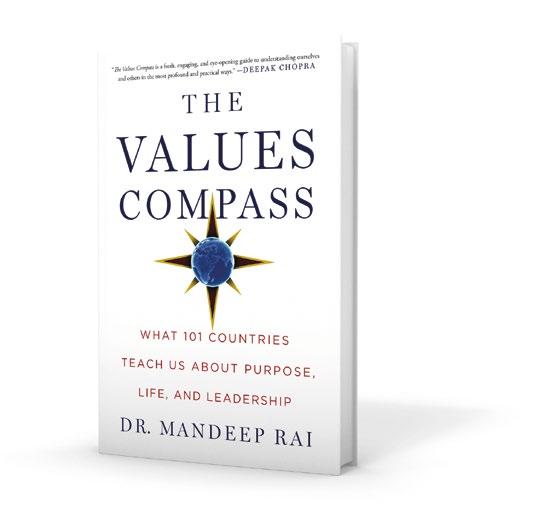
Dr Mandeep Rai is a global authority on values, working with companies, institutions and individuals around the world, and the author of The Values Compass: What 101 Countries Teach Us About Purpose, Life and Leadership. She has travelled to more than 150 countries and reported as a journalist for the BBC World Service and Reuters, among others.
In Argentina, the passion for football is unbelievable; there’s a sense that people would put their lives on the line for the game.







CONTACTLESS.

While remote tools are now an integral part of modern professional life, they will never match in-person contact in terms of meeting our psychological, emotional and professional needs. Balance is key.
Words: Alice Hoey
Photography: iStock // Reuters // Action Images

For many people, online tools are now indispensable, affording unparalleled flexibility and convenience in communication and learning, and enabling us to reach out to and connect with a dispersed audience, at the touch of a button. We can collaborate with multiple parties at once, share content in real time, and work to our own schedules, fitting webinars and lessons in and around our other commitments. Add to that the cost, time and carbon savings of not having to travel, and it’s little wonder that doing things remotely has become such an integral part of life.
The problem, however, is one of balance. Digital tools have become so useful, so easy and omnipresent, that they are rendering modern work and life increasingly contactless. This is not without its costs. Humans are inherently social creatures, and the quantity of our human contact and quality of our relationships have a considerable impact on our physical and mental wellbeing, not to mention our professional development.
THE ATTENTION DEFICIT
If your schedule is packed with VoIP calls, webinars, and conversations via email or SMS, you may well feel like you’re connecting constantly. However, in reality the quality and depth of those social interactions is likely to be relatively poor, and they may sometimes take you away from engaging in actual face-to-face human contact. Many of us, for example, will have pinged an email to a colleague on the other side of the office or sent an SMS to a family member upstairs for convenience’s sake.
One of the limitations of connecting with colleagues and associates virtually is that you’re far more likely to be distracted than if you were having a traditional face-to-face encounter. Sitting in a meeting room, it’s likely that there is just you, the other attendees, some notes and maybe a whiteboard, so while you might get lost in your own thoughts there’s precious little to divert your attention from the matter in hand. On a conference call,
however, which can be taken anywhere, the space around you may be populated with papers demanding your attention, unopened letters, to-do lists, or even a pile of washing up. All of this will prove to be a distraction even if it’s a subconscious one.
The computer itself can also be a major source of distraction, because the temptation is always there to open up the email that has just popped up in the corner of the screen, or to check your calendar for tomorrow, unseen by the other call participants.
In short, it’s possible to be passive in an online interaction in a way that isn’t in the physical world, and this is even reflected in the brain’s activity. Studies have demonstrated that neurotransmitters and neural activity differ significantly during online interactions when compared to face-to-face encounters, with greater neural synchronisation in the latter, which we know to be essential for social connections and relationship building.
Studies have linked the quantity and quality of social connections with lower rates of depression and anxiety.
EMOTIONAL CONNECTIONS
Studies have also found that people tend to feel more at ease during face-to-face interactions, possibly because we’re better able to pick up on non-verbal social cues that often get missed in a virtual meeting. When we’re relaxed, conversations flow and evolve more naturally and spontaneously, and there’s less of a tendency for people to blend into the background or cede to more vocal colleagues, as they may do in a VoIP meeting. As a result, all parties end up contributing more to the exchange, and getting more from it.
One upshot of all of this is that an online interaction is less likely to be memorable or to make an impact on us emotionally. When there is physical contact, and we can shake someone’s hand and look them in the eye without the barrier of a screen, the connection that is forged tends to be stronger and more profound. This, in turn, helps to build deeper understanding and trust between the two parties, essential in meaningful longterm relationships.
Social connection is the foundation of belonging, unity and trust, all of which are key in building team engagement, resilience and, ultimately, performance. When there are quality relationships between team members, and between the team and their leader it reduces feelings of isolation, anxiety and stress, and boosts self-esteem and overall mental wellbeing. Studies have linked the quantity and quality of social connections with lower rates of depression and anxiety, and even to physical benefits, such as improved immune and brain function.
It’s perhaps little surprise, therefore, that the shift towards remote and hybrid models of work, catalysed by the Covid pandemic, has correlated with a sharp increase in feelings of loneliness and isolation among employees. Such employees are more likely to feel emotionally fatigued or burned out, and less likely to put discretionary effort into their activities. Disengaged and disenfranchised, they’re also more likely to quit.

THE LEADER’S ROLE
Leaders play an important role in creating an environment that encourages and enables regular social contact, sharing and openness among team members and staff. That might include team-building activities or opportunities for people to communicate and collaborate in different settings, both inside and away from the workplace. It also means fostering a culture of psychological safely, where individuals feel confident in being their authentic selves, speaking out and voicing ideas and concerns without fear of retribution or ridicule.
But leaders can also lead by example, taking the time and
effort to speak regularly with each individual on the team, encouraging the limiting of screen time, and making the most of any opportunities for quality face-to-face contact.
No amount of presence on LinkedIn or other online networking platforms is as powerful as having a physical presence at industry or community events, or being visible, open and accessible in and around the organisation. It’s in these moments that new relationships are forged in an authentic, memorable and impactful manner, and experiences, challenges, solutions and advice are shared in real time.
Part of the joy and advantage of in-person networking is also its randomness. Online networking tools give us unparalleled scope, if we know what we’re looking for, but we still need to point the telescope, select and reach out. That often leads us to what’s familiar or comfortable. When we attend a conference, a charitable event or a dinner, it is often the chance meetings, the introductions to people in different industries or walks of life, that teach us the most. So, while online communication, social media and learning tools can be invaluable, it’s worth thinking about how we might use them to supplement, increase and enhance our face-to-face interactions.
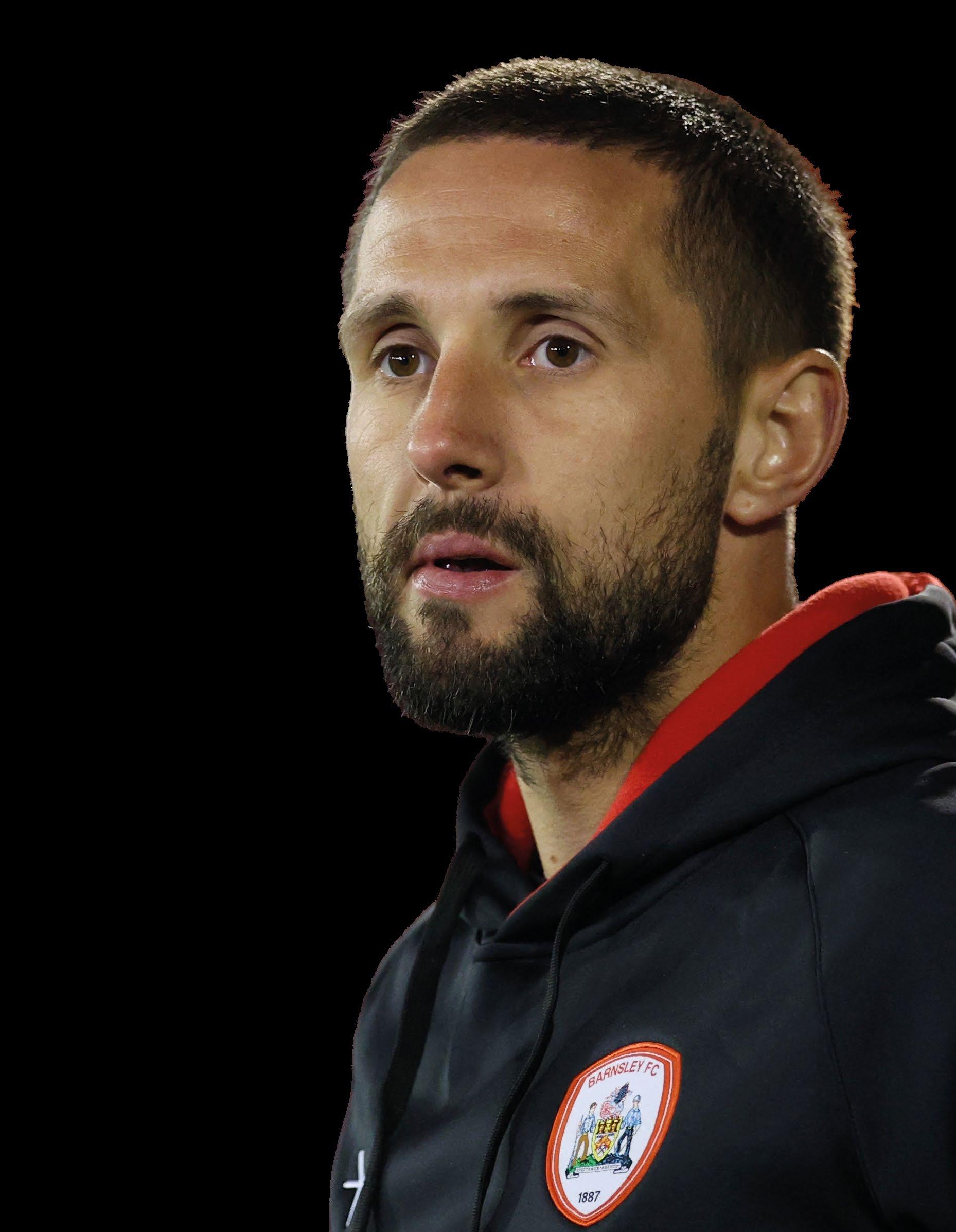
CONOR HOURIHANE
HEAD COACH, BARNSLEY
While I don’t post much on LinkedIn, I use it quite often to stay abreast of what’s going on in the industry, and in the loop when people move jobs or achieve qualifications.
Webinars and online classes can also be a great way to network. You might come across someone you used to play with or who you met once on a previous course, or make some new connections. Ultimately, it’s up to you to then take the next step, and ideally
that means meeting them in person, because that’s when you really get a sense of someone’s personality and energy.
Industry events can be a great way to stay in the loop, renew old relationships and meet people you might otherwise never have come across. I’ve just completed the LMA Diploma in Football Management, which was a fantastic way to meet and
share experiences with fellow coaches in the game.
Now as a head coach, it’s harder to find time to attend face-to-face meetings and events like these, and that’s where online tools really come into their own. However, it’s important to ensure there’s a balance. The more you can meet people in person, and really get to know them, the more you can connect on a deeper level.
10 IDEAS: GUT HEALTH.
With thanks to Dr. Premasundaram, HCA Healthcare UK.
UNSEEN HEROES.
Each of us has a unique microbiome, an ecosystem of trillions of bacteria, viruses and fungi that live primarily in the digestive tract. These microorganisms play an essential role in breaking down food, extracting nutrients and supporting immune function. They also contribute to the production of certain vitamins and interact with hormonal and neurological signalling pathways. Far from being passive passengers, these gut microbes are metabolically active and responsive to diet, stress and lifestyle, factors highly relevant in elite-performance environments.
THE BRAIN-GUT AXIS. 2 4 BARRIERS DOWN. 3 GUT FEELINGS.
The gut and brain are closely connected via the gut–brain axis, a bidirectional communication network involving the nervous system, immune system and chemical messengers. Although a large proportion of the body’s serotonin is produced in the gut, its influence on mood is indirect and complex. Rather than serotonin simply travelling to the brain, gut microbes appear to influence signalling pathways involved in emotional regulation, stress sensitivity and cognition. An imbalance in the microbiome, sometimes referred to as dysbiosis, has been associated with increased inflammation and may contribute to symptoms such as anxiety, low mood and reduced mental clarity.
The gut lining acts as a selective barrier, allowing nutrients to pass into the bloodstream, while preventing unwanted particles from entering. In certain medical conditions, this barrier can become more permeable, a process known as increased intestinal permeability. Research is exploring whether milder disruptions to this barrier may contribute to systemic inflammation. Chronic low-grade inflammation has been linked with fatigue, joint discomfort and impaired recovery, although this remains an evolving area of science.
Signals travel constantly between the central nervous system and the digestive system, influencing hunger, satiety, immune response, stress reactions and sleep patterns. This dynamic communication system helps explain why stress can trigger digestive symptoms, and why poor gut health may increase sensitivity to stress. For leaders operating in high-pressure environments, this interaction is particularly relevant.
STRESS.
During periods of chronic stress, cortisol levels rise. Persistently elevated cortisol may reduce digestive efficiency, alter appetite and influence microbial diversity within the gut. At the same time, research suggests that imbalances in the microbiome may heighten physiological stress responses. The relationship is therefore bidirectional: stress affects the gut, and the gut may influence how the body responds to stress.
CIRCADIAN
RHYTHMS.
Your microbiome follows a circadian rhythm, just as you do. Different microbial populations fluctuate throughout the day in response to sleep, light exposure and meal timing. Irregular sleep patterns, late nights, travel and inconsistent eating schedules can disrupt this rhythm. Emerging evidence links circadian disruption with impaired glucose control, altered immune response and changes in mood. For those in elite sport, protecting sleep and maintaining consistent meal timing where possible may support both metabolic and cognitive performance.
FEED YOUR MICROBIOME.
Diet is one of the strongest influences on gut health. Diets rich in fibre, including vegetables, fruits, pulses, legumes and wholegrains, help promote microbial diversity. Fermented foods such as yoghurt, kefir, sauerkraut and kimchi may also support a balanced microbiome. Conversely, diets high in ultra-processed foods and added sugars are associated with reduced microbial diversity and increased inflammation. For athletes, fibre intake may occasionally be adjusted around competition for gastrointestinal comfort, but long-term dietary diversity remains important.
SUPPLEMENTS.
Probiotics are live microorganisms taken to support the microbiome. Common strains include Lactobacillus, Bifidobacterium and the yeast Saccharomyces boulardii. Evidence suggests certain strains may be beneficial in specific situations, such as after antibiotic use or for some digestive conditions. However, effects are strain-specific, and routine supplementation is not universally necessary. Dietary quality remains the foundation of gut health, with supplementation best guided by qualified professionals.
SIGNS AND SYMPTOMS.
Digestive discomfort, bloating, diarrhoea, constipation and reflux may indicate disruption to gut health. Other potential signs can include recurrent illness, fatigue or unexplained changes in weight. Associations have also been observed between gut microbial patterns and certain inflammatory and autoimmune conditions, as well as mood disturbances. These relationships are complex and still being investigated.
As we age, digestive efficiency and nutrient absorption may decline. Certain gut bacteria contribute to the production of some B vitamins, although adequate dietary intake remains essential. Emerging research also suggests that microbiome composition may influence muscle metabolism and age-related muscle loss, though this field is still developing. While gut health is not a single solution to performance or wellbeing, maintaining a diverse, balanced microbiome may support resilience, recovery and long-term health, all critical in high-performance sport.
KEY TAKEAWAYS
DR ABOSEDE AJAYI AND DR EMMA ROSS
WOMEN’S HEALTH: A WHOLE-CLUB ISSUE.
In a recent LMA and LCA Insights Webinar, Dr Abosede Ajayi, Clinical Medical Governance Lead at the WSL, and Dr Emma Ross, Chief Scientific Officer, The Well HQ, discussed best practice around female athlete health in the WSL. Here are our highlights.
Words: Alice Hoey
Photography: Reuters // Action Images // iStock
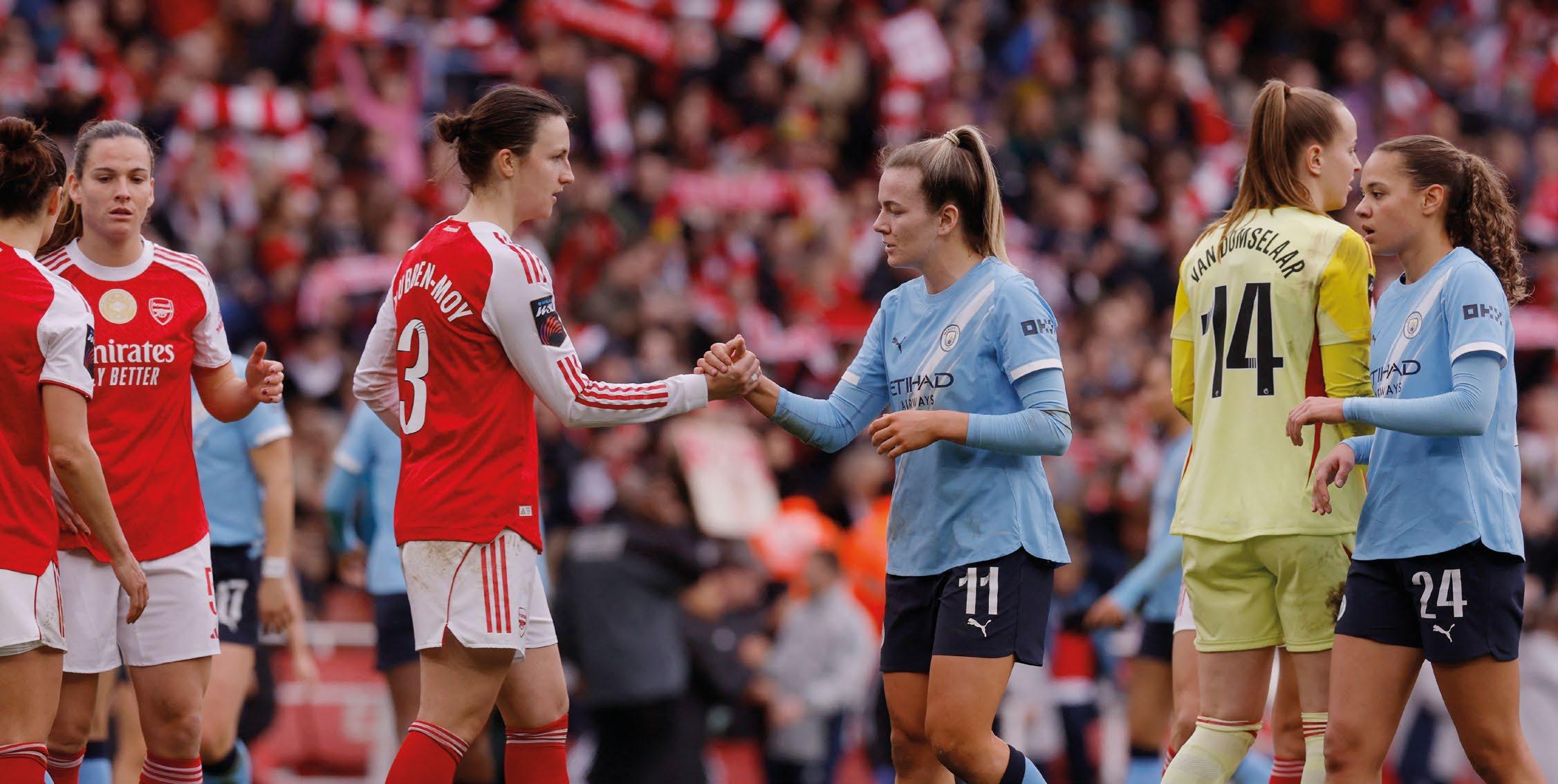
THERE’S A RESEARCH GAP IN WOMEN’S SPORT.
Around 95 per cent of sports medicine studies have focused on male athletes. However, female athletes are not small males, they experience unique physiological factors that directly influence their training, health and performance. In 2020/21, The FA and WSL recognised that players were asking some important questions about things like their periods, sports bras and health concerns, yet clubs often didn’t have the answers and lacked best practice. The Well HQ was then commissioned to better understand and support female athlete health, leading to the design of a comprehensive strategy.
IDENTIFYING THE STATE OF PLAY.
The review across the WSL and Women’s Championship included players, coaches, medical teams, kit managers and general managers. Key findings included the fact that 63 per cent of players found period symptoms impacted their training quality and, while many tracked their cycles, they didn’t know what to do with the information. There was no best practice and little knowledge around how the menstrual cycle might affect them as athletes. The research revealed not just knowledge gaps, but systemic cultural and structural shortcomings.
NUTRITION AND ENERGY MANAGEMENT ARE CRUCIAL.
Menstrual cycle symptoms can compromise training quality for several days each month, and this is not just a medical
issue, but also a performance management challenge. Players, even at the highest level, will often under-fuel during this time, increasing risk of illness, injury and longterm issues such as Relative Energy Deficiency in Sport (RED-S). This poor fueling can affect players’ long-term bone health, cognition and recovery, as well as their psychological wellbeing.
ATHLETE HEALTH IS NOT NICHE.
Breast support is particularly important, yet the research found that many players had chosen their sports bras without professional advice. It’s important to minimise breast movement because it’s the biggest performance impacting element, affecting stride length, acceleration and power. It changes the way women move,
The Well HQ’s review across the women’s leagues found little best practice around athletes’ menstrual cycles and little support. Reuters // Action Images
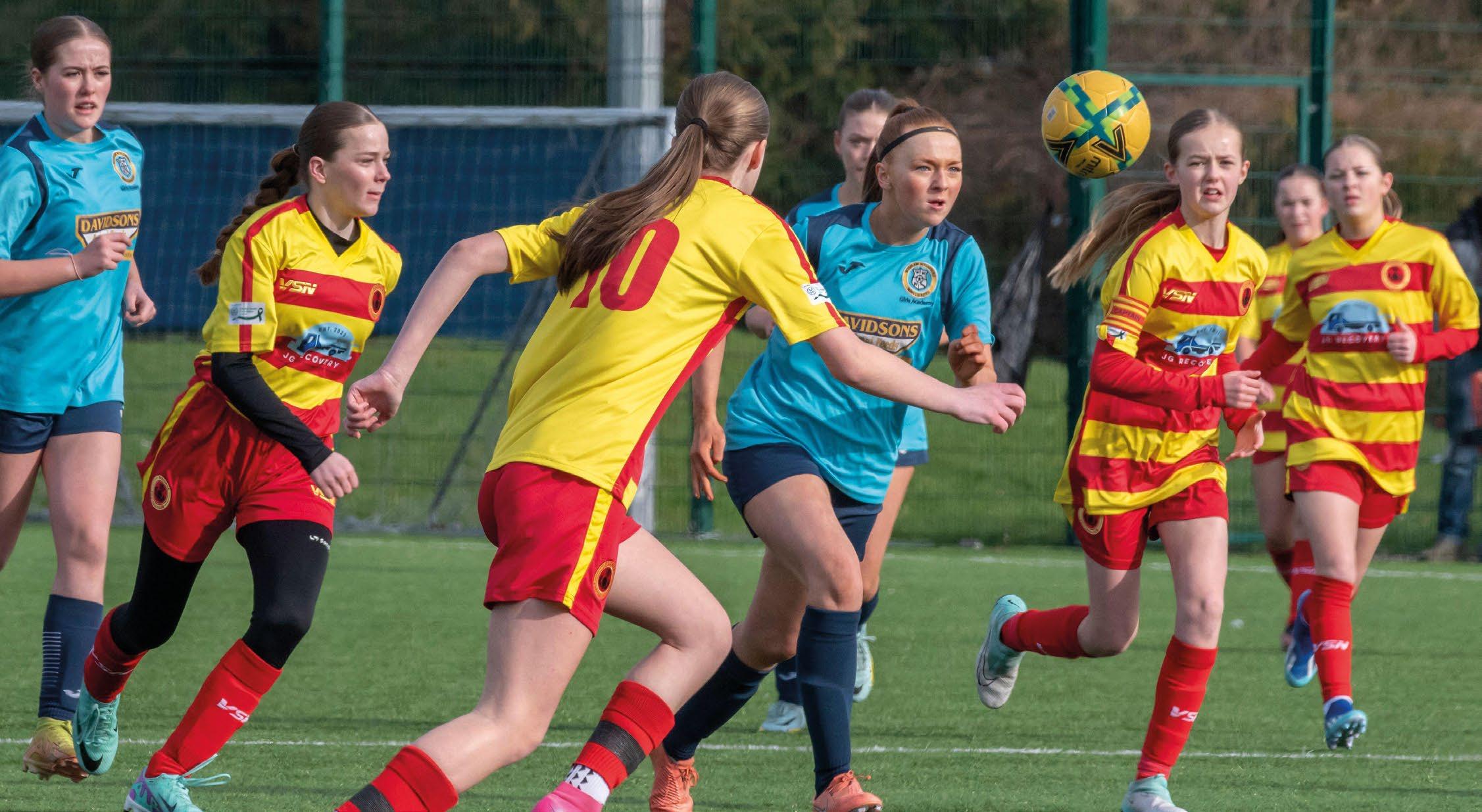
Female athlete health is not just the responsibility of the medical department; it is a wholeclub ecosystem issue, dependent on environment design and leadership culture.
with more movement meaning a greater likelihood of becoming fatigued or injured. Pelvic floor dysfunction is also common. Urinary leakage during training or matches impacts on sprinting, lifting, confidence, and psychological comfort.
A HOLISTIC APPROACH IS NEEDED.
Female athlete health is not just the responsibility of the medical department; it is a whole-club ecosystem issue, dependent on environment design and leadership culture. Supporting female athletes requires attention to: coaching education, strength and conditioning practices, kit design, catering and fueling access, bathroom availability near training pitches (directly affecting period and pelvic health management), pregnancy
return-to-play pathways, and equality of facilities.
THE WSL HAS IMPLEMENTED STRUCTURAL CHANGE. This includes each club ensuring that key staff complete certified education in female athlete health, and that they appoint a designated lead responsible for developing and embedding a strategic approach. Clubs are now required to submit a formal strategy as part of league regulations, and there is centralised guidance to ensure minimum standards across clubs, regardless of resource level.
The Well HQ is a women’s health and wellbeing consultancy that develops educational resources and strategic plans to embed female health and change the culture within sport, fitness and corporations.
Supporting female athlete health requires attention to everything from kit design and catering to coach education. Alamy


Words: Alice Hoey

HOW TO: HAVE AN ORGANISED MIND.
DELEGATE TO YOUR AGENDA
The advantages of a digital calendar or organiser, with notifications of upcoming tasks or events, might seem obvious, but there are benefits above simply ensuring you don’t miss something important. The brain has a lot going on, so not having to alert you to each upcoming obligation is one fewer ball to juggle, and can alleviate some of the stress and anxiety associated with a packed schedule.
PLAN ON PAPER
However useful digital organisational tools may be, something special happens when pen meets paper. Physically writing down events in a diary and making a paper to-do list of tasks commits them better to memory and enhances your commitment to achieving them. To plan and visualise the week ahead, prioritise tasks, noting down how long you anticipate each one taking.
UNSCRAMBLE YOUR THOUGHTS
Daily journalling is a great way to declutter the mind. When you write down your thoughts, feelings, ideas and concerns it can help you to better understand them, put them into perspective and extract what’s really important. Importantly, as this is for your eyes only, you can be free, honest and creative in your brain dump. Make bullet lists and draw diagrams or mind maps if it helps you to make sense of your thoughts.

TAKE A MOMENT
Before launching into another day, give yourself time to take stock and prepare, be it on your commute, during the morning run, or by arriving early for work. Mentally run through the day ahead, preparing for any hurdles or challenges, and visualising how you might deal with each potential scenario. What are your personal aims for the day, and what skills or support will you need to achieve them?
TIDY DESK, TIDY MIND
Clutter in your immediate environment is often a reflection of what’s going on in your head, and it goes both ways. Psychologists have found that messy environments increase stress, reduce focus and impact, and can impact negatively on sleep. Clutter and physical disorganisation causes ‘visual noise’, which competes for the brain’s attention. A weekly reset, where you clear your desk, inbox, voicemails and maybe even the car, can help to create a sense of calm and focus.
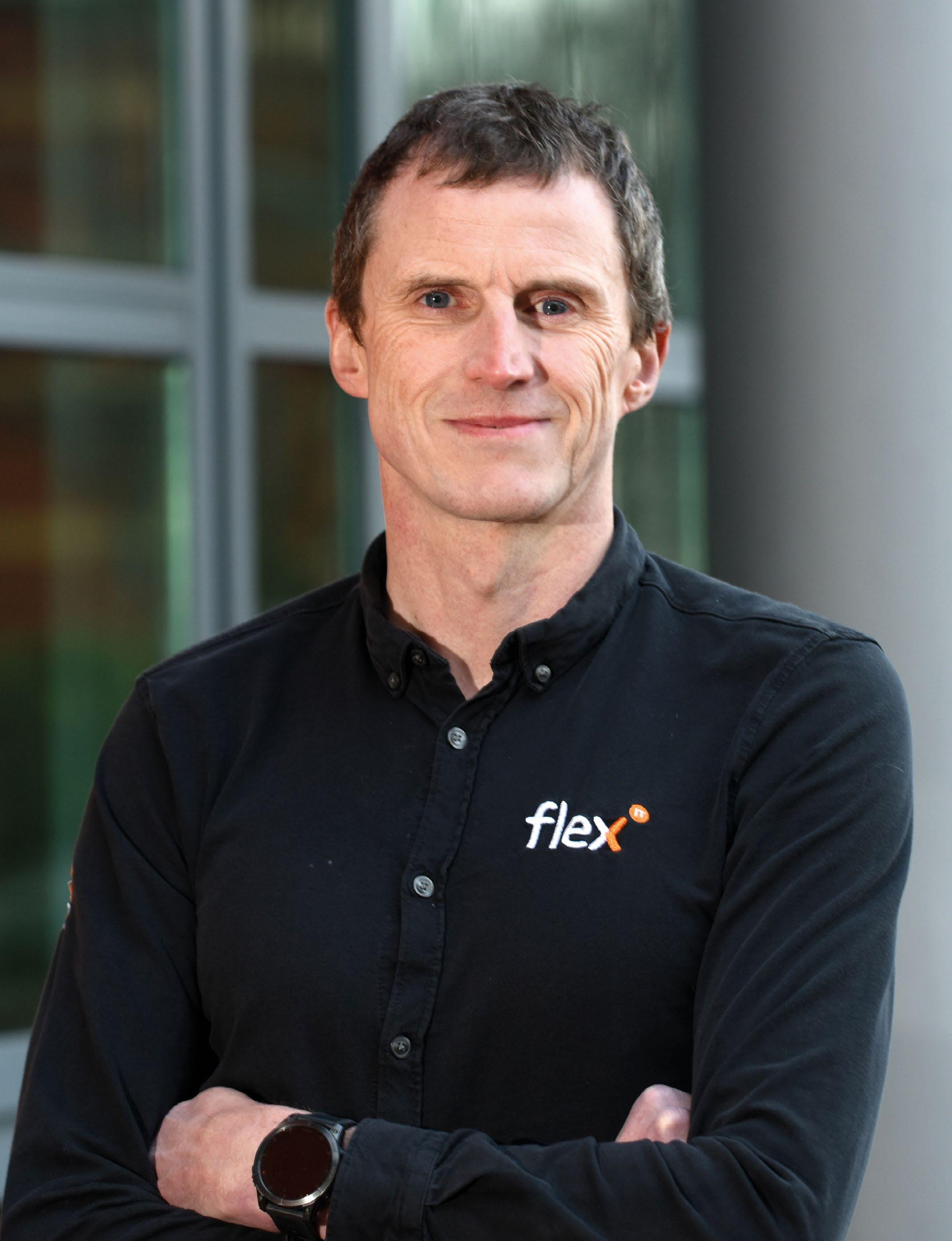
IN CONVERSATION WITH
ADRIAN KEY
CONNECTED.
While Flex IT provides IT services, security and support, its business model is built around strong client relationships. Alice Hoey met Director Adrian Key to find out more.
Interview: Alice Hoey
Photography: Flex IT
Alice: Why is it so important that you maintain close relationships with your clients?
Adrian: As an organisation grows or evolves, its needs change, as does the environment in which it operates, and in particular the security landscape. We need to stay abreast of their requirements, therefore, to understand their potential vulnerabilities and the consequences of implementing different services. We describe ourselves at Flex IT as being an IT partner rather than an IT provider, because we work with organisations to help them stay safe, secure and up to date.
Alice: That includes the LMA, of course…
Adrian: Yes. I’ve known Richard Bevan since his time with the PCA, as we provided their IT services. He brought us in at the start of his tenure at the LMA to upgrade the association’s IT systems, and we’ve looked after them ever since. We helped with the move to St. George’s Park, and over the years have upgraded and evolved the LMA’s systems as it has grown and its needs have changed. That includes, for example, the provision of a CRM system to enable the
association to better manage its client relationships.
Alice: How do you ensure your frontline staff are building those relationships in the right way?
Adrian: When we recruit new engineers, we don’t look only for great technicians. We need people who are also skilled communicators, who have the right attitude to customer service, and who are capable of advising clients in such a way that they provide the right level of detail, in plain English rather than technical jargon. If we can educate users they’ll be better able to resolve issues themselves in the future, which is a win-win for everyone.
We encourage two-way communication so, for example, if we’re running updates in an organisation, our engineers will walk the floor to better understand people’s common themes in terms of support and needs. We’re also currently upgrading our remote management toolset to enable clients to interact with us even more quickly if they have a question or a problem. They can raise a support request and then view its status simply by clicking an icon on their computer.
Alice: You’ve been with the company over 30 years. How has your role changed over that time?
Adrian: I started out as an accountant with Dyke Yaxley, but later retrained in IT and, importantly, also learned the techniques of how to learn. That’s essential in the IT industry, because it’s incredibly fast paced and always evolving, and you have to be able to move with that. Having become Dyke Yaxley’s IT Manager, I saw an opportunity to outsource the team’s IT skills, which led to the creation of Flex IT.
Moving from being part of a large organisation to having a relatively small team of my own was a new challenge; it was very much a case of leading by rolling up my sleeves and getting stuck in. Now I’m surrounded by people who are technically really competent, so my role is more one of guidance and less handson implementation. What’s important, therefore, is that I make myself available for the team, and that I work hard to foster communication and connection.
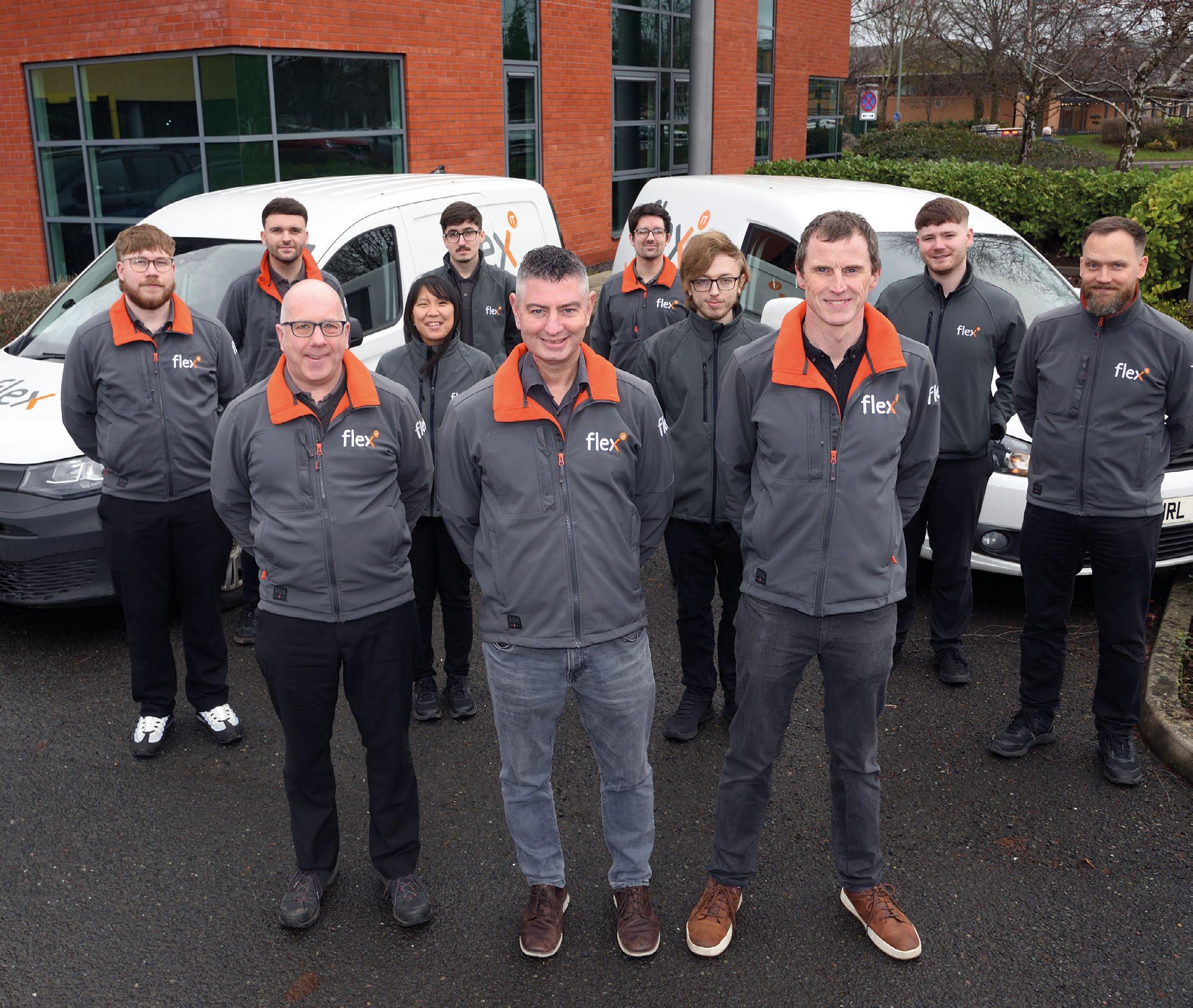
If we can educate users, they’ll be better able to resolve issues themselves in the future, which is a win-win for everyone.
About Adrian
Adrian joined Dyke Yaxley in 1994 and four years later had not only overhauled the company’s IT system, but identified opportunities to outsource his team’s IT skills. This company was rebranded as Flex IT, with Adrian as its director.
DEEPA MANUEL
OUT OF THE BLUE.
Surrounded by the turquoise waters of the Indian Ocean, the Kuda Villingili Resort, Maldives, offers the ultimate island getaway. We speak with General Manager Deepa Manuel about the ethos behind it and her own leadership approach.
Interview: Alice Hoey
Photography: Kuda Villingili Resort


“Kuda Villingili has a natural sense of calm that is unique to the island,” says General Manager Deepa Manuel. “It offers space, physical and emotional, allowing guests to move at their own pace. What makes it unforgettable,” she adds, “is not a single feature, but the feeling of freedom and ease that settles in the moment you arrive, an experience shaped by openness, nature and genuine human warmth.”
Certainly, this was the experience of LMA member Kit Symons, who was the lucky winner of a trip to Kuda at the 2025 LMA Dinner. “It was simply incredible,” he says. “Everything on the island is aimed at ensuring you have a relaxing stay and have complete peace and quiet, and it felt so private. But you can
also do various activities, such as setting out on a sunset cruise or snorkelling trip, or swimming in the huge pool [the largest in the Maldives], having a massage or doing yoga.”
True luxury, says Manuel, begins with understanding the needs of each individual guest. “While some seek carefully curated experiences, others simply want uninterrupted time and privacy. Our priority, therefore, is to read those needs intuitively, rather than impose a fixed idea of service,” she says. “When guests feel free to choose their own rhythm, whether that is engagement or complete stillness, they feel truly at home.”
Manuel believes in creating an environment where excellence
feels natural, and team members understand the purpose behind what they do. “When you have that culture, people deliver service with confidence and sincerity,” she says, “so my role is to guide, support and remain present, ensuring alignment without limiting individuality.”
Hospitality, she adds, is a collective effort, built on trust, respect and shared responsibility. “It’s essential that I listen, create an environment of open communication, and recognise all contributions, even those that happen quietly in the background. When people feel valued and supported they become deeply engaged, and that commitment is reflected in every guest interaction.”
Manuel and her team at Kuda Villingili see themselves not as
In our hotel there’s a collective ownership of problems, and people are empowered and equipped to solve them.


Deepa Manuel As General Manager, Manuel says her role is to guide and support her staff, creating an environment of open communication so that individuality is not limited.
owners of the island but as caretakers, and feel a genuine responsibility in that role. “That responsibility carries even greater weight here in the Maldives, where the effects of global warming, rising sea levels and ocean health are felt deeply,” says Manuel. “Sustainability is therefore woven into our daily operations, from responsible sourcing and waste reduction to the careful preservation of both marine and terrestrial ecosystems.”
A key part of this commitment is the resort’s investment in sustainable energy, with solar panels contributing around 40 per cent of the island’s energy needs. “By reducing our reliance on finite resources, we aim to protect the fragile environment
that surrounds us and honour our responsibility to the land and sea,” says Manuel.
“Today, guests are increasingly conscious of how their travel choices impact the world, and many seek destinations that align with their values,” she continues. “A stay at Kuda Villingili allows guests to feel part of something positive, knowing that their holiday contributes, in a meaningful way, to environmental preservation. We want people to feel a sense of connection, not only to the island, but to the future of the planet. Every decision we make is therefore guided by respect, balance and long-term care, so we can ensure this island remains resilient and beautiful for generations to come.”

STARTER FOR 10.

With one in eight men in the UK diagnosed with prostate cancer in their lifetime, Dr Niaz Khan, GP at HCA Healthcare UK, shares the 10 questions he’s asked most frequently by patients.
Photography: iStock
1. HOW OFTEN SHOULD I GET CHECKED?
If you’re over 45, then it’s recommended that you book to see your GP to discuss your prostate health and have a PSA test. As prostate cancer is more common among black men, PSA testing is recommended earlier in this group of patients. Also speak to your doctor if your father, brother or uncle has been diagnosed with prostate cancer, as the disease is linked to a familial risk.
2. WHAT IS A PSA TEST?
A PSA test is a blood test that measures the amount of prostate specific antigen (PSA) in your blood. A sample of blood is taken and sent to a laboratory to be tested. It is normal to have a small amount of PSA in your blood, and this amount rises slightly as you get older. When you book your PSA test, your GP may also suggest that you have a physical prostate examination, also known as a digital rectal examination (DRE), and a urine test to rule out a urinary tract infection (UTI).
3. DOES A HIGH PSA MEAN I HAVE PROSTATE CANCER?
A raised PSA level can be caused by many things, including a UTI, and an enlarged and inflamed or
injured prostate. PSA levels also rise naturally with age. However, as a raised PSA may mean you have prostate cancer, PSA tests are important to rule prostate cancer out.
4. WHAT ARE THE SYMPTOMS OF PROSTATE CANCER?
There may be none, but signs and symptoms can include: needing to urinate more frequently, often during the night, or urgently; difficulty in starting to urinate, and straining or taking longer; a weakened urinary flow; feeling that your bladder has not emptied fully; or having blood in your urine or semen. While in most cases these symptoms will not mean you have prostate cancer, it’s important to rule it out.
5. IS PROSTATE CANCER CURABLE?
The earlier the diagnosis, the more likely it is that the treatment will be successful. Prostate cancer survival has more than tripled in the past 40 years due to improvements in its diagnosis and treatment.
6. IS IT ONLY OLDER MEN THAT GET PROSTATE CANCER?
No, although it is much less common in younger men.
Prostate cancer mainly affects men over 50, and most diagnoses are in those of 65-to-69 years. Your risk increases with age, but as it can develop at a younger age it’s best to have any symptoms checked.
7. WHAT IS THE FAMILIAL RISK?
It is believed that around 5-to-10 per cent of cases are hereditary. The risk of developing prostate cancer is higher if you have a father or brother, or two or more close relatives on the same side of the family (father, brother, grandfather, half-brother or an uncle) who have had prostate cancer. If you have a strong family history of breast, ovarian or prostate cancer in your family, or have the BRCA1 or BRCA2 gene mutation, then you are also more at risk of developing prostate cancer. If you think these risk factors apply to you then speak to your GP. They may refer you to a genetics counsellor.
8. WHY ARE BLACK MEN MORE LIKELY TO GET PROSTATE CANCER?
Black men are twice as likely to be diagnosed with prostate cancer as other men, and are more likely to be diagnosed at a younger age. The reason for this isn’t yet clear, but it could be linked to genes.
The earlier the diagnosis, the more likely it is that the treatment will be successful.
9. WILL TREATMENT FOR PROSTATE CANCER END MY SEX LIFE?
It can do, but this depends on your individual diagnosis and treatment plan. Your consultant will talk you through the options, and the impact that each treatment can have. Some treatments can damage the nerves and blood supply needed to get and maintain an erection. Although this may sound daunting, there are many options post-treatment to reduce symptoms and allow you to maintain a healthy sex life.
10. WILL TREATMENT CAUSE URINARY INCONTINENCE?
Again, it can do, but it depends on the treatment and whether you had urinary problems beforehand. There are many ways to manage urinary incontinence, including: making lifestyle changes (e.g., cutting down on fizzy drinks, alcohol and caffeine); pelvic floor muscle exercises; maintaining a healthy weight; and cutting down or quitting smoking.
If you’re concerned about your prostate health or your risk of being diagnosed with prostate cancer, book an appointment with your GP.

FIVE TRAITS OF A SUCCESSFUL INVESTOR.
What does it take to succeed as an investor?
Sam Green, Senior Private Banker at Arbuthnot Latham, explains that while technical knowledge and financial literacy form an important foundation, they are far from the full picture.
Photography: iStock
Many of the world’s most effective investors share not just strategies, but mindsets – core traits that help them stay focused, resilient and forward thinking, especially during unpredictable market cycles.
1. DISCIPLINE: A STEADY HAND THROUGH VOLATILITY
Successful investors tend to set a clear approach that reflects their goals, tolerance for risk, and time horizon, and then remain committed to it. They resist the temptation to react to every market headline, trend or sudden shift. This discipline typically stops investors from chasing returns, and during downturns may prevent panic selling. By making decisions grounded in rational analysis, rather than emotion, disciplined investors typically foster stability and may improve their chances of achieving consistent outcomes.
2. PATIENCE: THE QUIET DRIVER OF LONG-TERM GROWTH
Patience may be the least glamorous trait, but it is widely viewed as one of the most powerful. Markets rise and fall in the short term, yet over longer periods many investors find that staying invested helps them participate in growth when it occurs. Patient investors understand that wealth accumulation takes time. They allow compounding to work
True investment success is built less on luck and more on the ability to navigate uncertainty with clarity and composure. Whether you’re taking your first steps or are well established on your investment journey, cultivating these qualities may
help you to avoid common pitfalls and position yourself for sustained, long-term growth.
Here, we explore five traits commonly associated with successful investors, and how developing them may elevate your approach.
in their favour, avoid kneejerk reactions and maintain perspective when conditions feel uncertain.
3. ADAPTABILITY: THRIVING AMID CONSTANT CHANGE
The investment landscape is dynamic. Economic cycles shift, new technologies emerge, and global events reshape industries with surprising speed. Successful investors recognise that what worked yesterday may not be enough for tomorrow. Adaptability can help investors to identify new opportunities, reassess assumptions and, where relevant, work collaboratively with their wealth manager so that portfolios remain aligned with changing circumstances. This blend of flexibility and strategic thinking can be valuable when navigating uncertainty and responding to evolving trends.
4. INFORMED DECISION MAKING: STRENGTH THROUGH KNOWLEDGE
Informed decisions tend to be more confident ones, so successful investors will seek to deepen their understanding
continually, whether by analysing market data, reviewing economic indicators or seeking expert guidance. Access to well-grounded insight can help investors remain proactive rather than reactive. It may also support a clearer interpretation of market movements and a more measured response to changing conditions. Working with an experienced adviser can provide additional perspective, particularly at moments when judgement and discipline matter most.
5. RISK MANAGEMENT: BALANCING SECURITY WITH OPPORTUNITY
Every investment carries an element of risk, but how that risk is managed can make all the difference. Successful investors balance the pursuit of returns with a thoughtful approach to protection. They may diversify to reduce exposure, prepare for a range of market scenarios, and maintain a clear understanding of how much risk they can comfortably accept. This balance supports both peace of mind and the potential for sustainable growth, ensuring their wealth is positioned securely for the future.
Developing these qualities can be challenging, especially for busy professionals who lack the time or desire to manage their own portfolios day-to-day. That’s where we step in. At Arbuthnot Latham, our investment management service is designed to embody these traits on your behalf. We build disciplined, evidence-based strategies tailored to your circumstances. We pursue patient, long term growth, while remaining adaptable to market changes. We leverage deep technical expertise to make informed
decisions aligned with your goals, and we always manage risk with care and precision.
In essence, we act as a partner in your financial journey, helping you to cultivate the mindset of a successful investor while ensuring your wealth is managed with diligence and foresight.
To find out more about how these traits can help you support your long-term goals, contact samuelgreen@arbuthnot.co.uk or call 07795 308180
We build disciplined, evidence-based strategies tailored to your circumstances.


THE GAME.

A new Premier League initiative aims to strengthen LGBTQ+ inclusion in football.
Photography: Premier League

The Premier League with Pride initiative has been developed in consultation with clubs, representatives from LGBTQ+ supporters’ groups and a wide range of stakeholders, and focuses on embedding three core themes throughout the League and clubs’ work: education, celebration and action.
New LGBTQ+ inclusion education resources were launched in February for children and young people taking part in community programmes, including Premier League Primary Stars, Premier League Kicks and Premier League Inspires. These resources aim to develop practical skills and spark meaningful conversation on topics such as respectful language and how to be a good ally.
Academy players from U9s to U21s receive education on identity and inclusion, and clubs are required to deliver mandatory EDI training for staff and players. The League continues to offer year-round LGBTQ+ training, which is a core part of staff development across clubs.
All Premier League clubs have, or are in the process
of establishing, an official LGBTQ+ supporters’ group, and clear processes are in place to challenge and sanction discriminatory abuse wherever it occurs. The Premier League Safety and Security Observer Programme operates at all 380 matches across the season, and enables the League to take a tailored and evidencebased approach to safety, security and service while developing further understanding of key risk issues and priorities at club and League-wide level. This includes all incidents of discrimination.
The League has a specialist team that proactively monitors social media platforms to identify abusive content directed at players and report it for removal. There is also an online abuse reporting system to support players, managers and their families who receive discriminatory abuse on social media.
Premier League Chief Executive Richard Masters said, “Premier League with Pride demonstrates our ongoing support for the LGBTQ+ community, and our commitment to ensuring that football is for everyone and inclusivity is embedded across all areas of the game.
“We want everyone involved in football to feel welcome, supported and comfortable being themselves. Education is important to help people develop a stronger understanding of LGBTQ+ inclusion, and the importance of showing support, challenging inequality and making the case for greater representation.”
As part of the new initiative, the Premier League is also collaborating with the national LGBTQ+ listening service, Switchboard. This will see Switchboard promoted across League and club channels, ensuring fans, staff, players and the wider public are aware of the free, confidential support that it offers.
Switchboard CEO Stephanie Fuller said, “Every now and then, we all need somewhere else to discuss things that can feel difficult to share. Through our collaboration with the Premier League, we will ensure LGBTQ+ people across the football community know they’re not alone.”
To report online discriminatory abuse visit: premierleague.com/reportdiscrimination. To find out more about the Switchboard’s service visit: switchboard.lgbt, call 0800 0119 100 or email hello@switchboard.lgbt
LEAVING A LEGACY.
Every individual to have represented the nation at men’s senior level now has their own unique place in the Three Lions’ legacy.
Photography: Reuters // Action Images
The FA is looking to make contact with former players and the close relatives of those no longer with us to help ensure each special velvet cap finds its rightful home.
Jarell
In November 2019, to coincide with the Three Lions’ 1,000th game, The FA introduced legacy numbers, a unique and chronological list of players to have played for the England men’s senior team.
Ahead of UEFA EURO 2020, these numbers were symbolised by a red legacy cap that has been presented to all debutants ever since. While the legacy cap has been presented on occasion to former players, including at a EURO 96 reunion at Wembley in March 2024, it was always the intention to formalise a rollout to willing
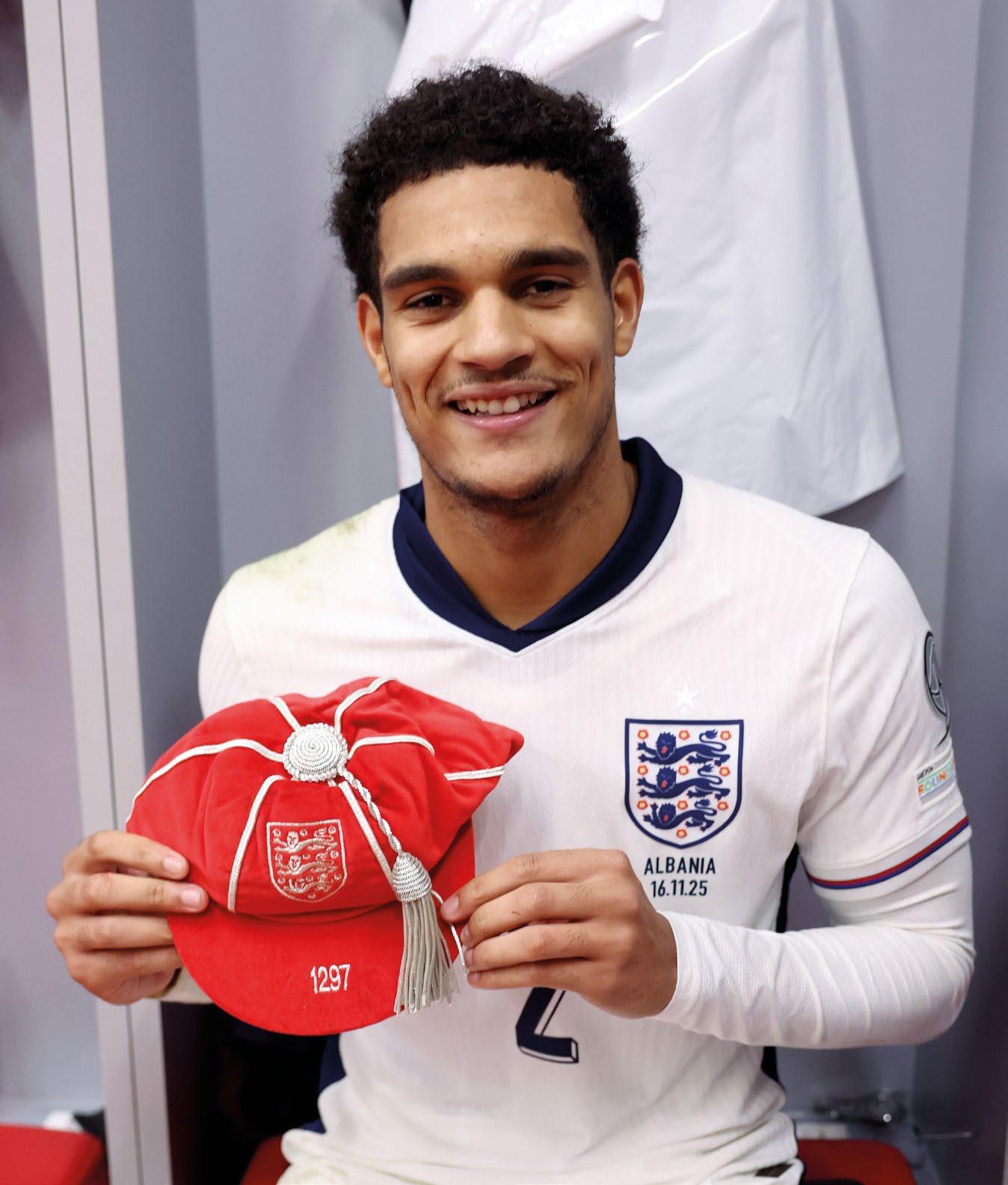
and appropriate recipients.
Over the last 154 years, there have been 1,297 senior men’s internationals, starting at No.1 Robert Barker, England’s goalkeeper in football’s first international match in 1872, all the way through to Jarell Quansah, the most recent debutant in November 2025. The FA is looking to make contact with former players and the close relatives of those no longer with us to help ensure each special velvet cap finds its rightful home.
This mirrors a similar approach
with the England Women’s squad, which launched a legacy number programme around their 50th anniversary in November 2022. The vast majority of the 240 players to have represented the Lionesses are now in receipt of their caps.
The legacy programme will be supported by the National Football Museum, with Toye, Kenning and Spencer continuing to produce all commemorative caps for The FA.
Any former players or relatives who are not currently in direct contact with The FA are asked to get in contact via threelionslegacy@thefa.com
Quansah – 1,297th player to be capped by the England men’s senior team. Reuters // Action Images
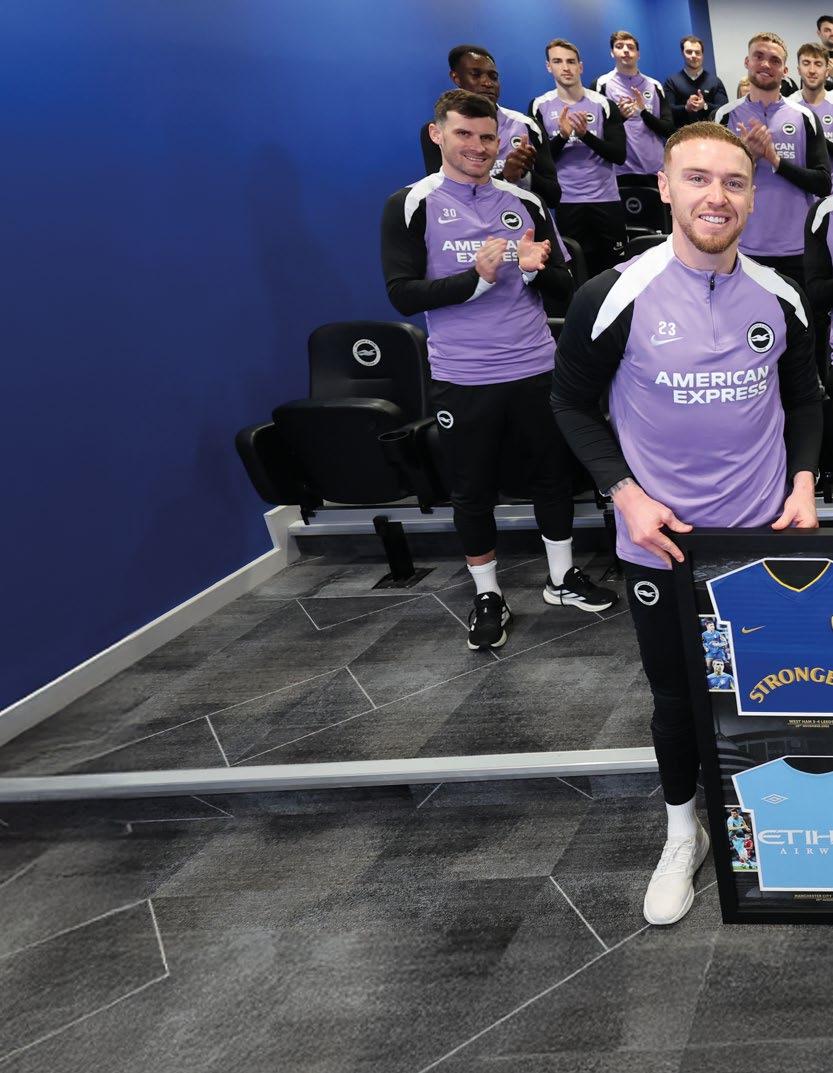
Brighton & Hove Albion’s game against Brentford on 21 February saw James Milner (centre) make his 654th appearance in a Premier League game. He broke the previous record of 653 games held by close friend and former teammate Gareth Barry. Reuters // Action Images