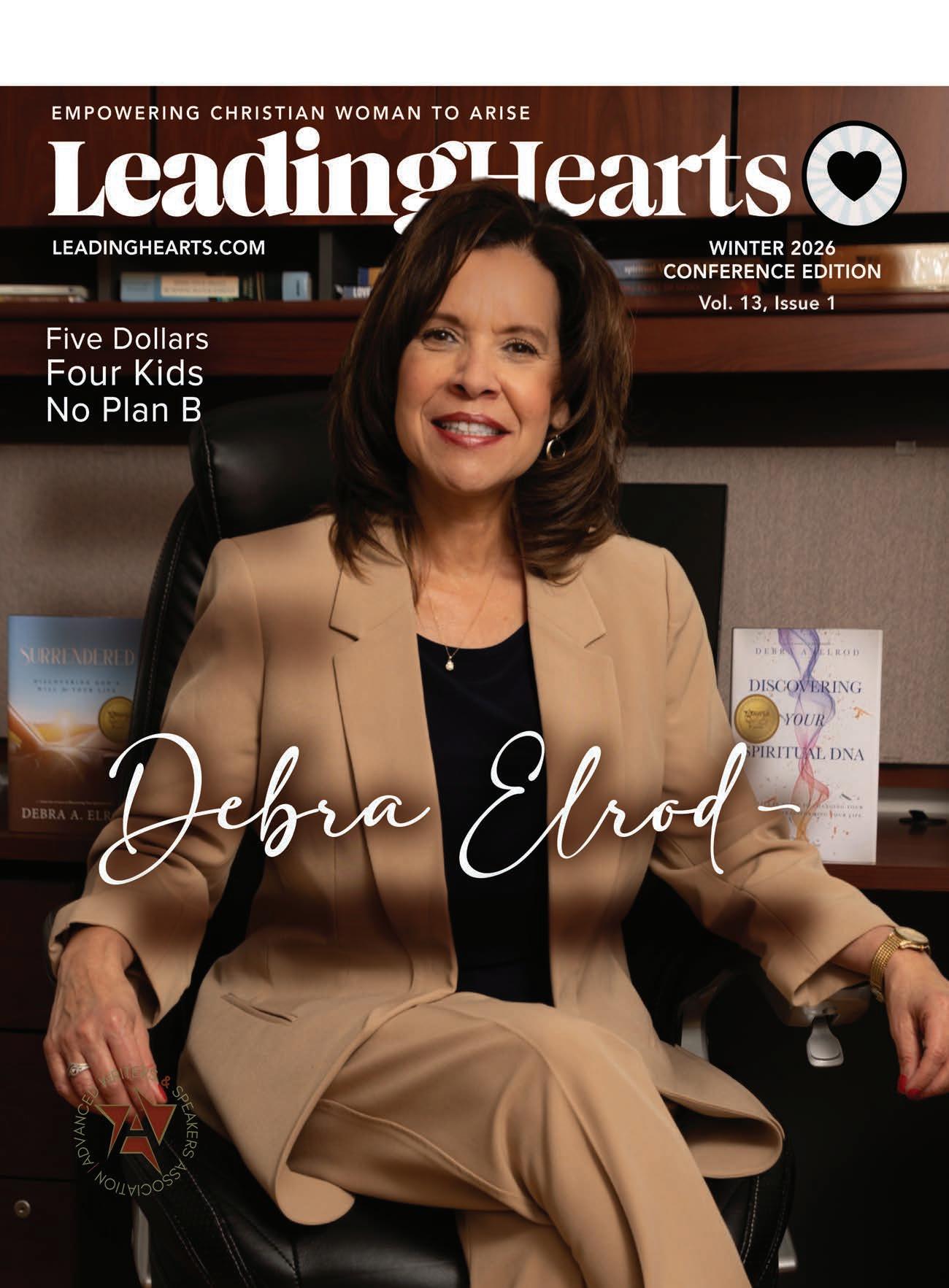





8. UNSTUCK: HOW ONE WOMAN’S STICKY NOTE PRAYER UNLOCKED SPIRITUAL DNA Debra Elrod had the American Dream—and lost it. What she found instead changed everything.
5. FROM THE PUBLISHER: STORIES SHARED. LIVES TRANSFORMED. Linda Evans Shepherd on the extraordinary power of testimony in God’s kingdom.
5. FROM THE EDITOR: SHUTTING UP YOUR INNER EEYORE Amber Weigand-Buckley asks: When people encounter your words, do they feel sunshine or did they just walk into a complaint convention?
8. LAMENT: A BATTLE CRY FOR HOPE discovers lament isn’t about giving up—it’s about fighting back with faith.
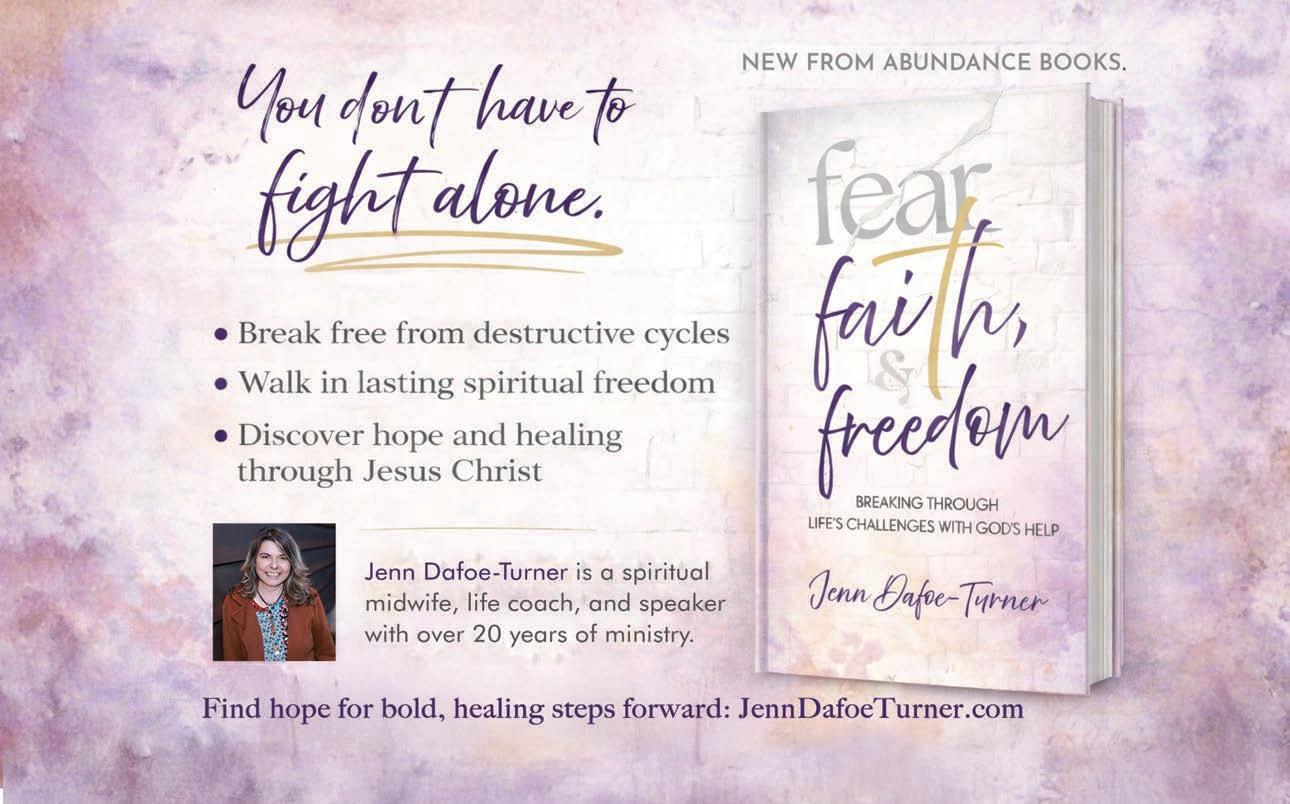
14. WHEN FEAR AND FAITH COLLIDE: THE FREEDOM ONLY GOD CAN GIVE Pastor Jenn Dafoe-Turner on the Cover Feature

NRB ISSUE 2026 | VOL. 13, ISSUE 1
PUBLISHER/ADVERTISING ............Linda Evans Shepherd
EDITOR/ART DIRECTOR .................Amber Weigand-Buckley
LAYOUT EDITOR ..............................Tom Young

CONTRIBUTING EDITORS .............Joy Dunlap, Rebecca White, Tom Young
PROMOTIONS ...................................Rebecca White
AWSA ADMINISTRATIVE ASST. ....Carla Wicks
CONTRIBUTORS ..............................Michelle Medlock Adams, Karin Beery, Terrie Hellard Brown, Victoria Chapin, Dr. Gladys Childs, Jackie Freeman, Katie Hornor, Janet Johnson, Angela Mackey, Maureen Miller, Linda Evans Shepherd, Jenn Dafoe Turner, Amber Weigand-Buckley, Karen Whiting, Lori Wildenberg
ARISE DAILY .......................................Dr. Mel Tavares, Editor
Linda Evans Shepherd (President), Dawn Scott Damon, Edie Melson, Linda Goldfarb, Sharon Norris Elliott, Karen Whiting and Joy A. Schneider
INFORMATION
Leading Hearts magazine for Christian Women is published bimonthly by Right to the Heart Ministries 2026. ISSN 2380-5455
ADVERTISING | Display rates are available at leadinghearts.com. By accepting an advertisement, Leading Hearts does not endorse any advertiser or product. We reserve the right to reject advertisements not consistent with the magazines objectives.
MANUSCRIPTS | Writers guidelines are available at leadinghearts.com.
Leading Hearts | PO Box 6421, Longmont, CO 80501 email: ReachOut2Linda@gmail.com

MEMBER | 2026 Evangelical Press Association. Award of Excellence 2014–2021, 2023 Evangelical Press Association Award of Merit Winner—Christian Ministry Digital | 2024 Christian Ministry Print Publication & 2022 Christian Ministry Digital Best in Class
Cover Photo Courtesy of: Chrissy (MagnifyU Photography)
Photos courtesy of: Adobe, Canva
Copyright ©2026 Right to the Heart Ministries. All rights reserved. Copyrighted material reprinted with permission.
All Scripture quotations, unless otherwise indicated, are taken from the Holy Bible, New International Version®, NIV®. Copyright ©1973, 1978, 1984, 2011 by Biblica, Inc.™ Used by permission of Zondervan. All rights reserved worldwide. www.zondervan.com The “NIV” and “New International Version” are trademarks registered in the United States Patent and Trademark O ce by Biblica, Inc.™
LINDA EVANS SHEPHERD LINDAEVANSSHEPHERD.COM
Welcome to this special NRB edition of Leading Hearts magazine.
As we gather with Christian communicators from around the world, I’m reminded of the extraordinary power of story.
Revelation 12:11 tells us that “they overcame him by the blood of the Lamb and by the word of their testimony” (NKJV). Testimony is heaven’s strategy— God’s way of magnifying His goodness through transformed lives.
As the leader of the Advanced Writers and Speakers Association, I have the privilege of guiding more than 1,300 women authors, speakers, podcasters, and media creators—each carrying a remarkable testimony of God’s faithfulness. Many of those stories fill this magazine.
“Testimony is heaven’s strategy— God’s way of magnifying His goodness through transformed lives.”
Some speak of miracles, others of restored hope, renewed purpose, or the gentle ways God meets us where we are. Together, these voices form a powerful witness to a world hungry for truth.
My own journey has been shaped by testimony. I watched God pull my daughter out of a long coma—an experience that showed me our stories are not incidental; they are divine appointments meant to encourage someone else.
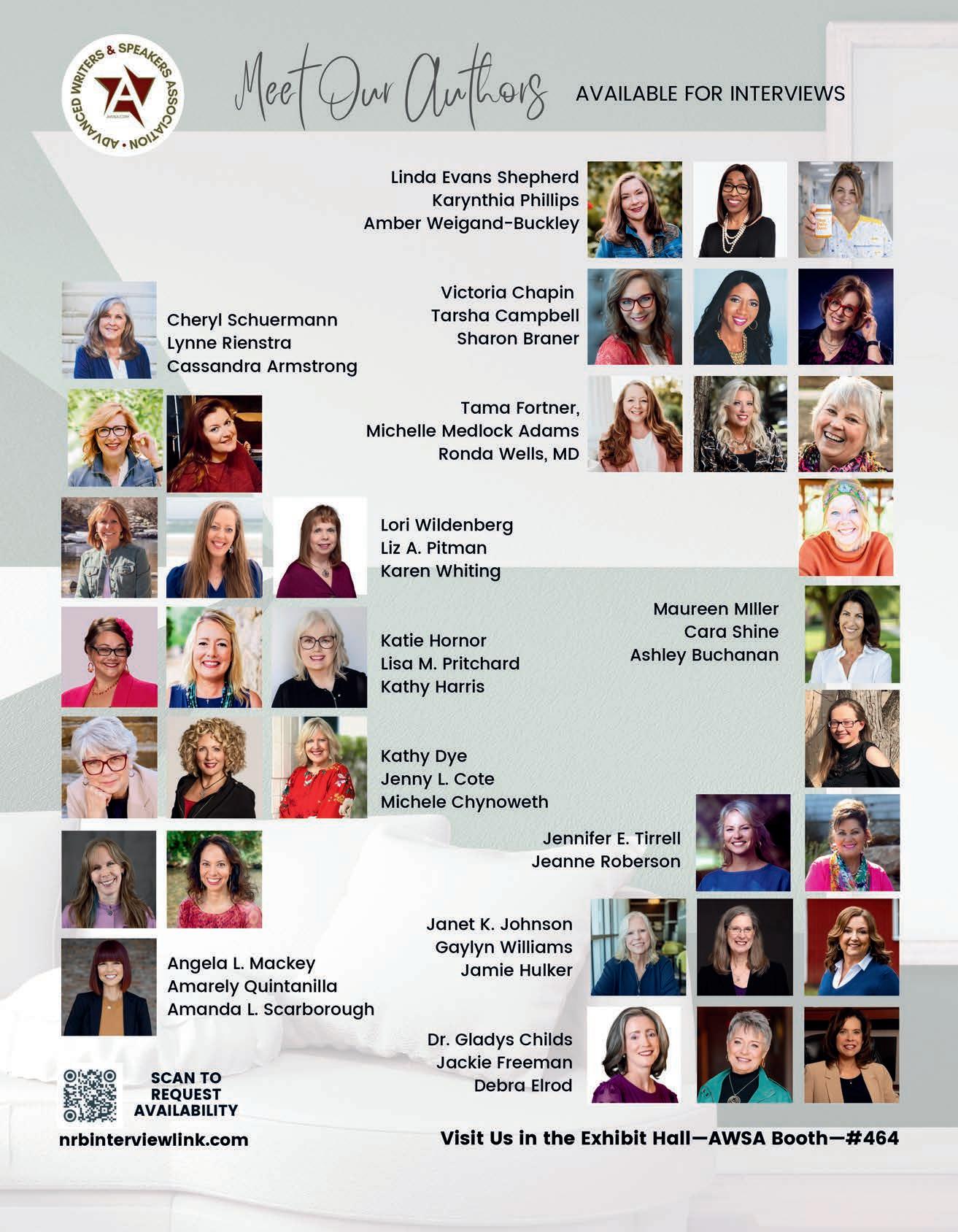
As you explore this NRB issue, I pray these stories inspire you and spark connections. If you’re looking for compelling guests for your media platform, you’ll find a list of AWSA members available for NRB interviews on the back page. We’d love for you to stop by our booth to meet our authors, enjoy our book giveaways, and pick up extra copies of Leading Hearts to bless your team.
With joy and expectancy,
“Thanks for noticing me.” Remember Eeyore? That gloomy donkey convinced everything was conspiring against him? I’m seeing his “everything’s raining on my parade” attitude showing up everywhere—life is constantly holding us down, holding us back. But here’s the hard truth: we create the atmosphere and we bring it with us.
As communicators—writers, speakers, influencers—we carry a sacred responsibility. When people encounter our words, what do they feel? Sunshine, joy, hope? Or do they feel like they’ve walked into a complaint convention?
Our words aren’t neutral; they are life-giving or toxic. Philippians 4:8 calls us to focus on whatever is true, honorable, pure, lovely, and praiseworthy. This is our assignment as communicators.
My challenge to you: Dig into these pages. Learn from leaders who project sunshine over rain clouds. Let their stories inspire you to bring light, truth, and hope through every platform you steward. We don’t have to wait for the grey clouds to part to make a di erence—we can bring the sun right where we are.
Praying Your Heart Feels the Reality of His Love for You This Day,
“When people encounter our words, what do they feel? Sunshine, joy, hope? Or did they just walk into a complaint convention?”
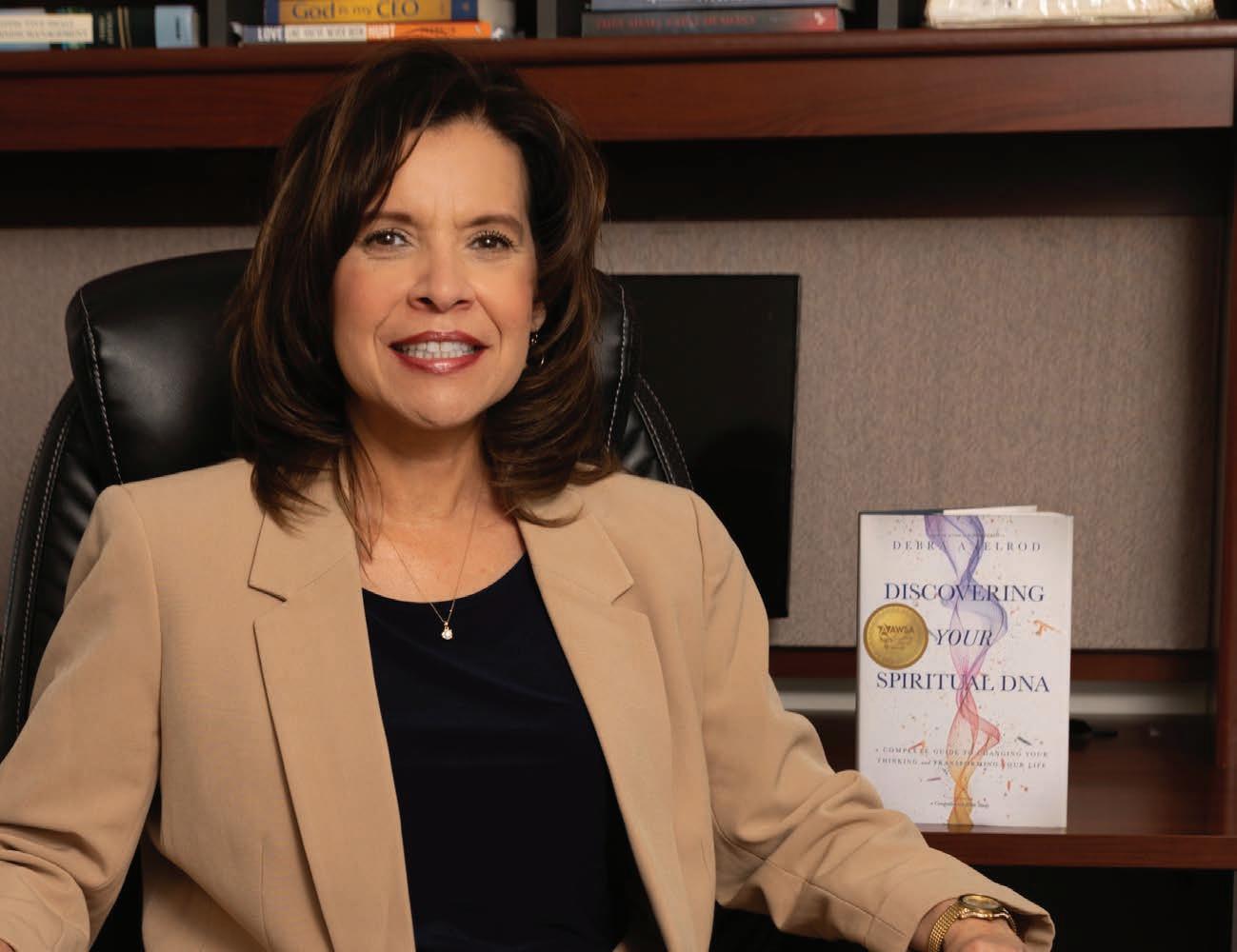
HOW ONE WOMAN’S STICKY NOTE PRAYER UNLOCKED SPIRITUAL DNA
Debra Elrod has lived the American Dream— the career, the house, the family. She’s also lost the American Dream.
Both experiences were needed to strengthen her relationship with God and lead her down a path of spiritual discovery.
On that path, she discovered spiritual DNA, and it’s a revelation she’s passionate about sharing with business and church leaders to help them not only find success at the o ce, but also in their personal relationships.
Debra grew up in a church denomination that stressed religion over relationship. “I thought I had a front row seat in heaven,” she said. “But when I got saved, I realized I was not even on my way to heaven.”
It was easy to think she had it figured out because life seemed good. “We were the GQ family,” she said
of her million-dollar business, family, and a house big enough to fit her childhood home in the great room.
But as she sat looking at her marble dining room table set, peace evaded her. Something was missing.
In February 2005, an aunt sent her a Bible. “I read it from beginning to end to find out if the answers for living were really in there,” she explained. And as she read, she discovered something about the Good Book. “When you read with an open heart and mind, God will meet you.”
“On
a yellow sticky note, I wrote ‘God, please get me unstuck.’”
The words she read led her to do something she didn’t realize she needed—she repented. “I drove to the o ce crying out to God for answers. I knew the Bible contained every answer, but until that year, I had never read them for myself. I prayed, I’m sorry, Lord. I need you to give me the answer. I’ll do whatever you tell me to do!”
And he did. As she drove, the Lord revealed himself in a new way, and a spiritual heaviness lifted. Whereas the Bible once read like a history book, it soon came to life, revealing God’s truths and goodness.
Despite the changes, however, something unsettling still lingered. Three years later, on her way to a family Christmas event, she couldn’t shake the feeling that even though life looked put together on the outside, something was still missing.
“What was wrong with me?” she asked. “How could I make good business decisions but when it comes to relationships I fall apart? I knew somehow I was stuck.” And despite her ability to command a boardroom and build a company from net zero to $1 million, she didn’t know how to fix it. With no other answers, she left it in God’s hands.
“On a yellow sticky note, I wrote God, please get me unstuck.”
For several weeks she read that sticky note as she continued to push on. Then, God led her to 1 Corinthians 13:11: “When I was a child, I spoke and thought and reasoned as a child. But when I grew up, I put away childish things” (NLT).
The Lord reminded her of a painful childhood memory from when she was only 3 years old. The pain from that event had endured until God reminded her of it and healed her heart.
That moment of healing sparked a new fire in Debra— if she had spent decades silently struggling with the weight of childhood trauma, how many other people experienced the same? She tackled this new question with the same ferocity and passion she used to build successful businesses.
Debra found answers as she studied what she refers to as spiritual DNA. In the same way a person’s natural DNA carries information necessary for physical growth and development, spiritual DNA carries information necessary for spiritual growth and development. It can also reveal the reasons why some people struggle to grow both spiritually and emotionally.
Her research introduced her to the three levels of the mind—the conscious, subconscious, and unconscious. The unconscious mind holds a person’s childhood trauma, which a ects all their relationships, personal and professional.
By understanding where the trauma lives and how the Holy Spirit can work at the unconscious level to heal old wounds, Debra has experienced and seen others delivered and set free from past events that hinder them in the present. It made clear to her the importance of being “born again.”
“We are born first to ‘survive’ then reborn to ‘thrive.’”
After years of research, Debra realized God had put her in a unique position to merge her corporate experience with God’s revelation to bring a new level of success and freedom to people who have often struggled alone.
“Many leaders have great success in business, but they struggle in relationships,” she explained. “As a leader, you don’t talk about it. You can’t.”
But now, thanks to Debra’s research and experience, all readers can start their own personal journeys toward wholeness and healing, starting at the spiritual DNA level.

Debra shares her discoveries in her book Discovering Your Spiritual DNA: A Complete Guide to Changing Your Thinking and Transforming Your Life. It lays out the basic principles of the mind’s and soul’s development, which can help readers discover their divine purposes and unique gifts as they work toward healing and growth in all areas.
Her book Surrendered, Discovering God’s Will for Your Life, shares her journey through the process. Learn more at www.narrowgatenow.com.

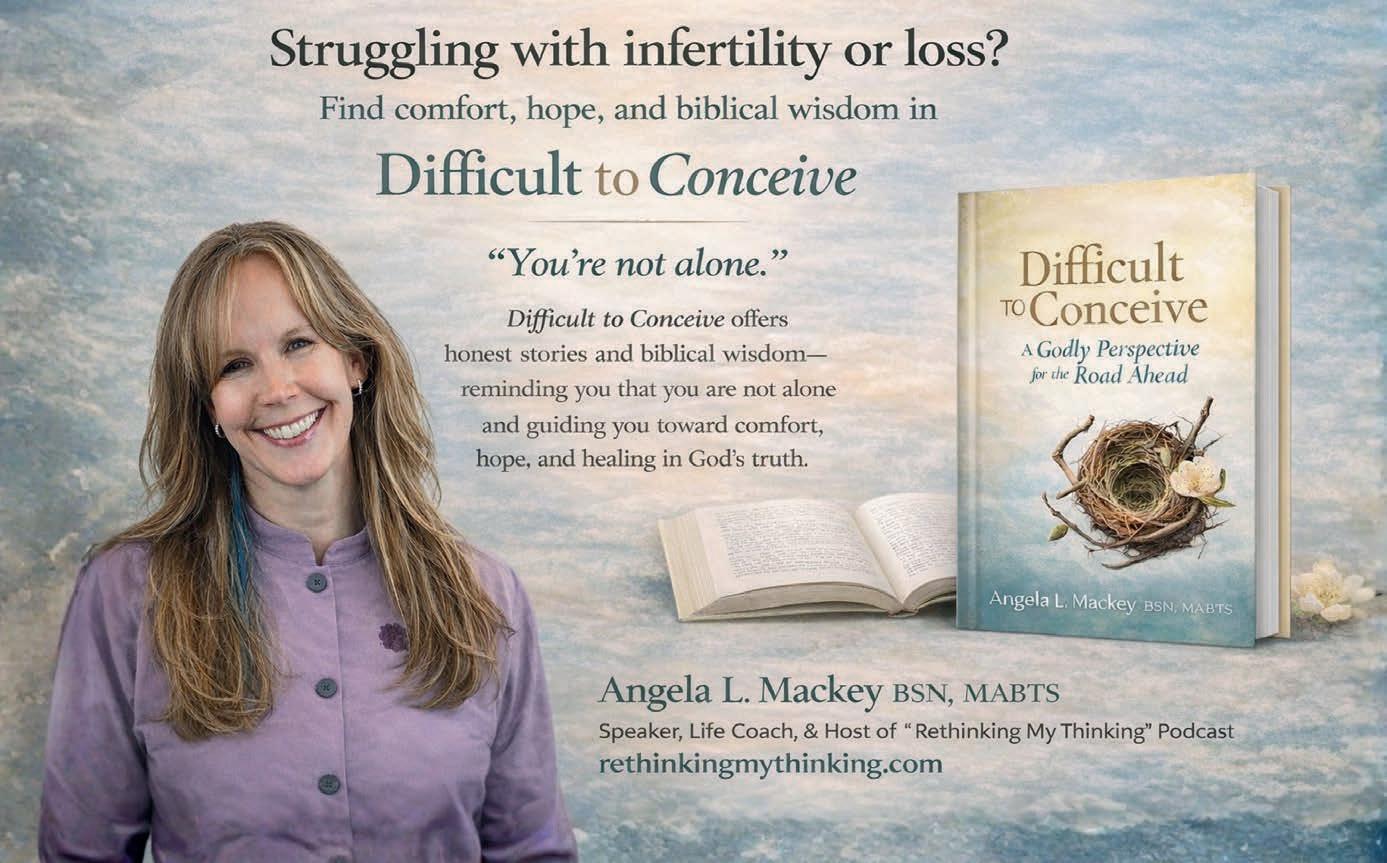
BY ANGELA MACKEY RETHINKINGMYTHINKING.COM
Unasked questions stuck in my throat, and what felt like a huge gulf opened between the God of all comfort and me. I had experienced the loss of two pregnancies and my fallopian tubes.
My heart shattered. God seemed far o . He could have saved the babies and kept my tubes from rupturing, but he did not. In my silence, I felt abandoned and betrayed.
It wasn’t until I discovered the rhythm of lament that I began to find hope in the darkness. When I cried out to God, asking hard questions, I also started listening to him. Through Psalm 42 and Lamentations 3, I discovered five ways lament can be a battle cry for hope.
In Psalm 42, the psalmist asks himself multiple times, “Why so downcast?” He is exploring the reason he feels so sad. When we examine our emotions, we can discover what is bothering our souls. It provides us with words and questions we can ask God about our hopes, dreams, and circumstances. It will also lead to other questions about what we are focusing on. Is it Jesus or our di cult season? Asking these questions helps us communicate with God in an honest way and helps us fix our eyes on Jesus.
2. Remember and Consider Di cult Times
The writer of Lamentations spends most of the book crying out about the horrific situation Israel is facing. As he recounts the di cult situation, he is processing the pain God has led his chosen people through. Too often, we believers want to pass over the di cult times and only speak of victory or God’s nearness. We do not sit in the pain and sorrow long enough to process it. Unprocessed pain will surface at some point. Allowing ourselves time to lament, remember, and ponder the hard things helps us to find a hope that lasts.
3. Recall God’s Character
In Lamentations 3:21 (ESV), the author writes, “But this I call to mind, and therefore I have hope.” What does he recall? God’s character. That God’s love is steadfast and never ending. He remembers that God is not done working, but he gives new mercies every day. As we cry out to God in lament, remembering God’s character and promises o ers us a glimmer of hope in the darkness.
4. Decide to Hope in God
After the psalmist in Psalm 42 asks his soul why it is so sad, he gives his soul a charge: “Put your hope in God.” Hope does not dawn simply because we
choose to put our expectations on God. But deciding to desire him helps us discover where we misplaced our dreams. I discovered that I had placed my hope for happiness in thinking, If only those babies had implanted in my womb and not my tubes, I would be satisfied. When our hearts begin to place our desire in anything other than God, lament helps us recalibrate our desires, reminding us that God is our portion and joy in life.
The defiant cry of the psalmist in Psalm 42:5 and 11 (NIV) is “I will yet praise [God].” Singing praise in di cult seasons is a battle cry for hope against the pain of this broken world. It reminds us of God’s goodness, the confidence of eternity with him, and he faithfully keeps promises even when we do not understand his ways. Lifting praises to God in lament allows our questions to draw us to the heart of God.
May lament be our battle cry for hope in this dark world, helping us draw near to the Lord, processing our pain, knowing God intimately, and experiencing his magnificent nearness.

Angela Mackey is a speaker, podcaster, and author who encourages people to rethink their thinking, considering Scripture, so they may live transformed. A seeker of joy, Angela loves cheese, butter, and running.

BY JACKIE FREEMAN | JACKIEFREEMANAUTHOR.COM
“Pickleball saved your life,” someone said to me recently, after I emerged from a frightening health crisis that included COVID encephalopathy and RABIDO.
I knew what they meant—that staying active had strengthened my body. But my heart whispered the deeper truth: Pickleball didn’t save me. Jesus did.
I discovered pickleball after my husband died. I wasn’t looking to play a sport. I was simply trying to breathe again—to find one small way to step back into a world that suddenly felt unfamiliar. A friend invited me to try pickleball “just once.” I came with hesitancy and a heart still wrapped in grief.
What Ifound surprised me. Somewherebetween the laughter, the movement, and the gentle encouragement ofpeople who didn’t know my story, something awakened Itwas the faint but steady reminder: you are stillhere ... and there is still life to be lived.
That little spark eventually became the reason I wrote my first children’s picture book, Bend Your Knees, Louise!
Years later, when my health emergency hit, the doctors said my survival was remarkable for “a woman my age.” They told me that because I had stayed active and had no underlying conditions, my body had reserve strength. I heard them—and I saw God’s fingerprints all over their words.
“You are never too old to begin again.”
“In him we live and move and have our being” (Acts 17:28 NIV).
Movement didn’t rescue me. My good health didn’t save me. Jesus did.
But I also believe he used pickleball—the friendships, the laughter, the discipline of showing up—to prepare me long before I knew I would need that strength. God often plants seeds long before the storm arrives.
Pickleball has taught me something I hope every woman reading this hears clearly: you are never too old to begin again. Learning something new in the “winter” of my life reminded me that renewal isn’t reserved for the young.
Scripture tells us: “Though outwardly we are wasting away, yet inwardly we are being renewed day by day” (2 Corinthians 4:16 NIV).
Newness is God’s specialty. He invites us into it again and again—through a hobby, a friendship, a ministry, or a creative spark.
Pickleball taught me truths I now carry into my faith: •Keep your knees bent: a posture of readiness— physically and spiritually.
• Stay centered: much like staying anchored in Christ. •Celebrate the small wins: because spiritual growth begins with small steps.
• Show up: even when you feel unsure, tired, or afraid. These aren’t just game strategies. They’re reminders that God works in the quiet, daily moments of our lives.
Maybe you’re facing something today that feels heavy. If so, may I gently invite you to consider trying something new? Not because it will save you—only Christ can do that. But because it may awaken something hopeful within you.
Whatever it is, allow God to meet you there. Sometimes the new thing you try today becomes the very tool God uses tomorrow.

Jackie Freeman is an author, speaker, and pickleball enthusiast who encourages women to embrace new beginnings at every season of life.

(Ephesians 3:20 KJV).
Seven months pregnant and carrying a toddler, my husband, Tap, and I crossed the Arizona border into Mexico on Friday, April 13, 2007, to live out our dream of being missionaries. After two years of raising support across the United States, we believed God had opened the door for us to serve at a Bible college in Mexico.
Two years later, God moved us again, this time to a children’s home near the Gulf Coast. It was a painful transition. We had to change mission boards, which brought deep emotional wounds, financial loss, and broken relationships. Friends we trusted spoke against us. Support we counted on vanished. Still, we believed God had called us there.
Nine months later, that door suddenly closed too. The leadership changed their minds, and we were asked to leave. In less than one year, we experienced two forced ministry exits. More supporters walked away. Around the same time, the U.S. economy crashed.
With four small children, we reached a terrifying place: $5 in the bank, no savings, no credit cards, no work visa, and no way to return to the States. All we could do was ask the Lord what he wanted us to do.
For years, we had lived under the fear of people. We worried who would approve, who would leave, and who would stop supporting us. Now, stripped of safety nets, God began to teach us what it meant to truly
follow his leading.
Slowly, as we stepped out in faith, God guided us into entrepreneurship. In 2011, he led us to start the first Spanish-language literature-based homeschool curriculum company in the world. For a decade, it was the only one of its kind. We also hosted the first online Spanish homeschool summit and created a membership community for Spanish-speaking homeschool moms.
“Now, stripped of safety nets, God began to teach us what it meant to truly follow his leading.”
In 2014, we began training Christian business owners to grow online courses and coaching programs for greater impact. God allowed us to pass on what we had learned, just as Scripture teaches. At the same time, the Lord was shaping my understanding of business from a biblical, God-first perspective. That message became the Doing Business with God course. We have now taught it more than 30 times to more than 500 people, and it remains the foundation of everything we do.
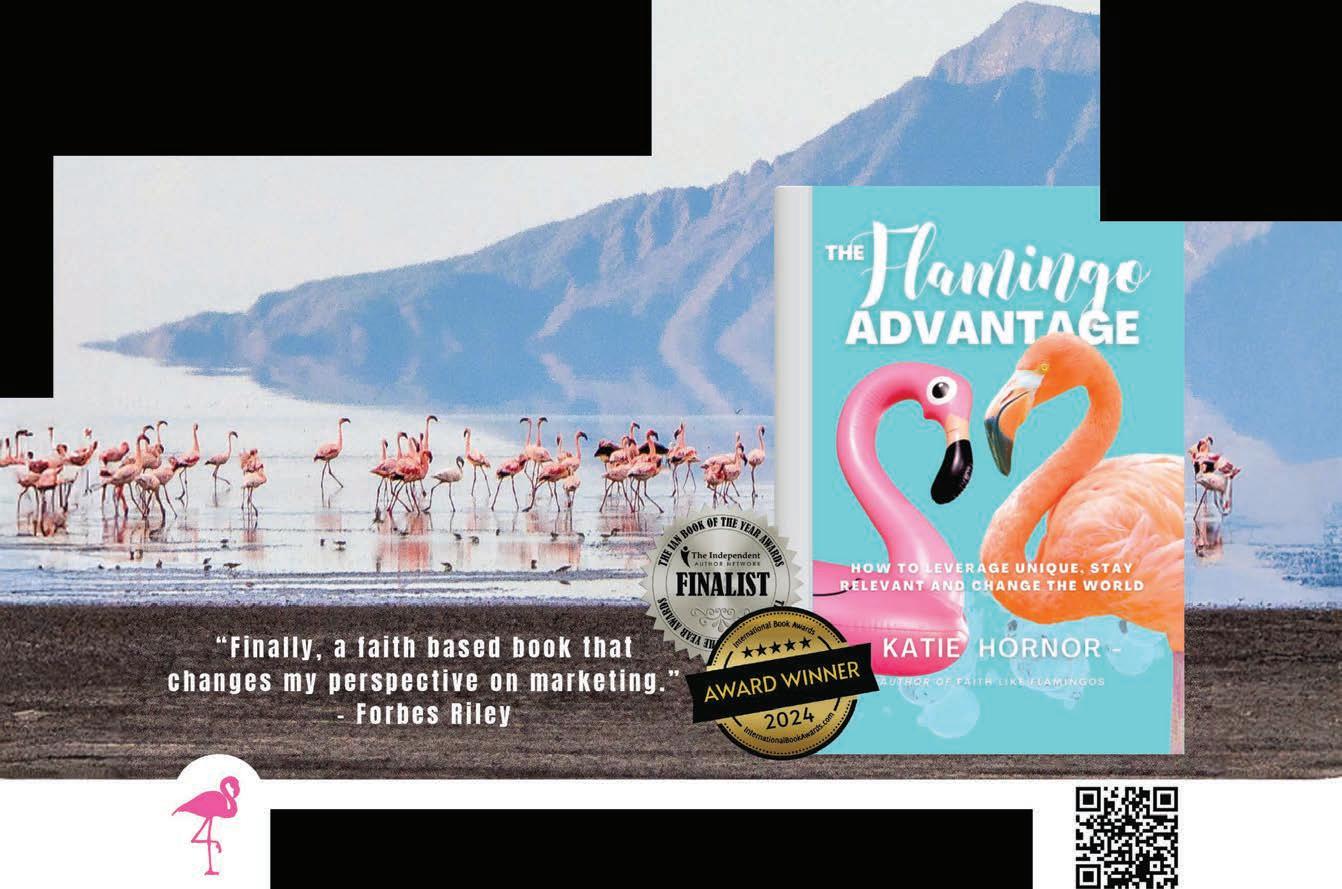
In 2019, after a family trip to see flamingos in the wild, I wrote Faith Like Flamingos and later The Flamingo Advantage. Those quirky pink birds became powerful tools God keeps using to teach bold faith, uniqueness, and purpose. The message opened doors across stages, screens, and nations.
Then in 2025, we said yes again to God’s leading, moved back to the USA and launched the National Christian Association of Professional Speakers. Through NCAPSpeakers.org, we now serve speakers, authors, and business leaders who carry the light and love of Christ onto stages in every industry.
Our story is proof that God truly can do more than we could ever ask or imagine. I pray it encourages you to trust his leading, embrace your God-given uniqueness, and boldly serve the people he places in your path so that, by the power of His Spirit, He can change the world through you!


Katie Hornor is a homeschooling ministry mom of five who rose from poverty to become a successful entrepreneur, award-winning coach, and the CEO of the National Christian Association of Professional Speakers.

match. I quietly decided I wouldn’t play their game and met with each dean one-on-one, and it worked.
I convinced myself that securing the job would resolve them. Instead, things unraveled.
I made it to the final three candidates. But then the whispering began—emails, hushed conversations, subtle glances. A tiny group of faculty orchestrated a quiet rebellion, spreading lies and threatening a noconfidence vote against the provost if I got the job. Suddenly, the path I had worked so hard to reach felt like a trap.
The provost called me in and said, “We need you to stay one more year as interim.” He promised the permanent role would be mine afterward. I sat in that o ce, the weight pressing down, and remembered the conversation with my husband: “If you don’t like it, you can walk away. You don’t need this.” So I calmly and simply said, “No.”
People were shocked. The president and provost were furious at me. A few genuinely couldn’t understand why I would step away from the position. But the moment the words left my mouth, a weight slid o my shoulders. A sense of peace resurfaced. And, the coup plotters celebrated.
Walking away taught me something I wish I’d learned sooner. Sometimes release is the holiest courage we will ever practice. Ambition can turn into an idol so quietly that we mistake its weight for purpose. But fullness waits in di erent places. As Jesus said, “Come to me, all who labor and are heavy laden, and I will give you rest. Take my yoke upon you, and learn from
me, for I am gentle and lowly in heart, and you will find rest for your souls. For my yoke is easy, and my burden is light” (Matthew 11:28–30 ESV).
“For
the first time,
I admitted to myself silently that I was miserable, and no, I didn’t want the job.”
Fullness didn’t wait at the top rung for me. It waited in the return, in remembering who I was and whose I was. I let go of the empty thing I was chasing and embraced the better thing God had for me. Saying no wasn’t failure; it was surrender. It was choosing the life God o ers over the hollow success I had been pursuing.
If you’ve ever pursued something that left you empty, take heart: proper rest and fulfillment come when we stop running and turn to God. Letting go of empty pursuits led me to become an author and host of the TV show Bare Faith, where I explore how God meets us in our hollow places. Now, I help others stop chasing emptiness and step into a life that truly fills.
Dr. Gladys Childs hosts the TV show Bare Faith, where raw faith and deep pain meet a relentless God. Known as the “Truth Doctor,” she names the lies that stand between people and God’s truth. Pastor’s wife, author, speaker, former religion professor, and boy mom, Gladys speaks with authority, heart, and real-life grit. Learn more at gladyschilds.com.

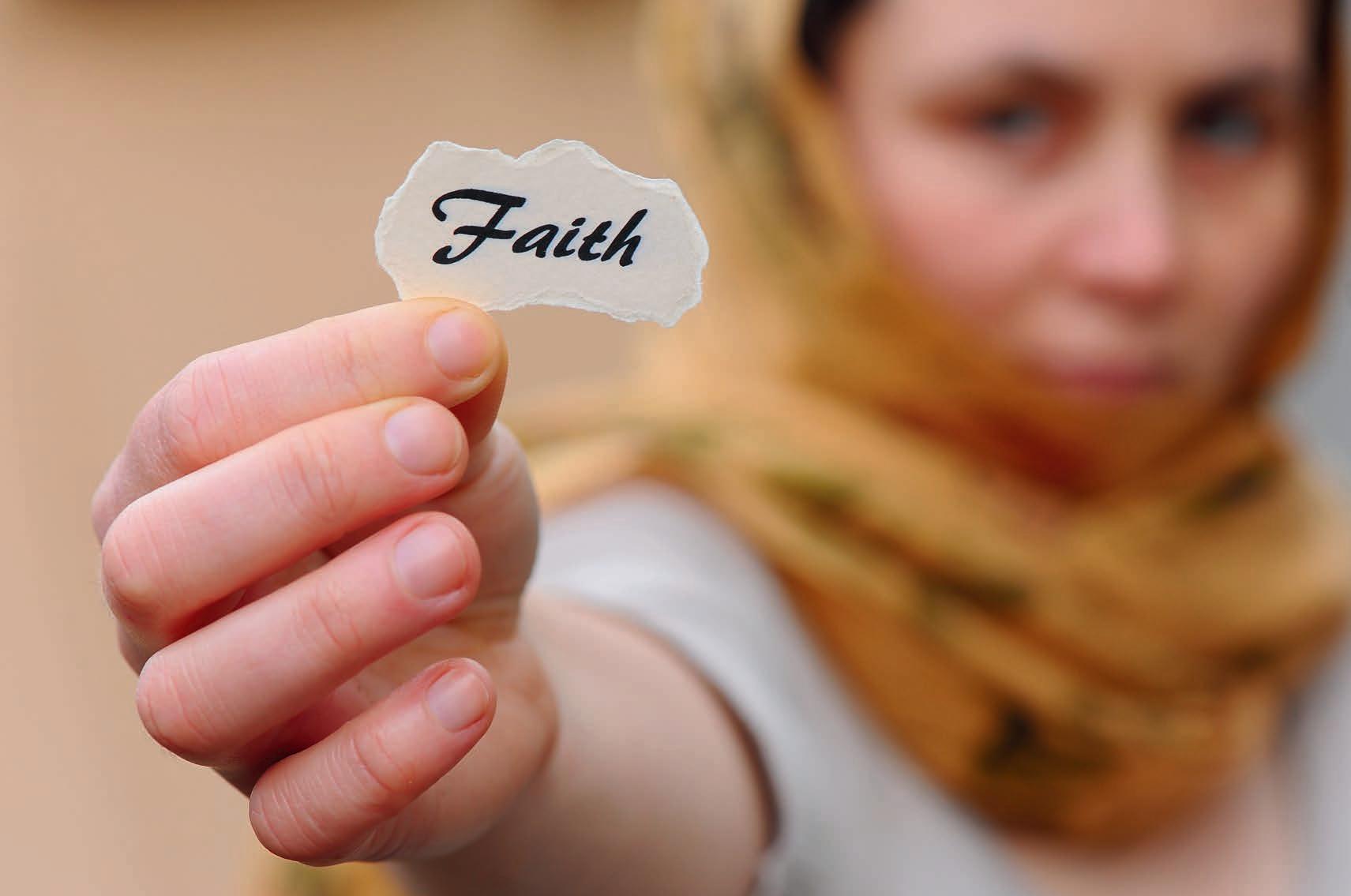
From Genesis to Revelation, God meets his people in moments where human strength fails and divine strength takes over. Moses trembled before a burning bush; Gideon hid in a winepress; Mary asked, “How can this be?”; the disciples panicked in a storm they could not control.
But in every story, God did not wait for his people to be fearless, he invited them to trust Him in the very place where fear lived. He invites us too.
“Faith does not erase fear; it confronts it. And in that collision, God births courage, clarity, and ultimately, freedom.”
Did you know faith does not erase fear; it confronts it. And in that collision, God births courage, clarity, and ultimately, freedom. This has been the pattern in my own life. I have experienced the kind of fear that steals your breath and makes your heart race. But I have
also experienced the peace that comes when the Holy Spirit whispers, “Do not be afraid, for I am with you.” Fear may shout loudly, but God speaks more loudly.
One of the most defining moments of my ministry happened the morning I was preparing to preach my first sermon as the newly installed pastor of my first solo church. I sat alone, overwhelmed by the weight of responsibility. Fear rushed in like a tidal wave. It felt too big. I felt too small. What am I doing? I have no business being their pastor. But right there, in that inner chaos, the Lord reminded me: I called you. I equipped you. I go before you.
My fear didn’t vanish instantly, but my faith stood up, and when they collided, freedom came. I stepped into the pulpit, not because I was confident in myself, but because I was confident in God.
This is why I am so passionate about encouraging women in their faith today. Not because I have mastered this journey, but because I have seen firsthand the faithfulness of a God who meets us right where fear tries to defeat us.
“God is not asking you to be fearless; He is asking you to be faithful.”
1. God reveals who he is. Fear clouds our vision, but faith clears it. In fear, we see our limitations. In faith, we
see God’s limitless power. We begin to understand that the Red Sea is not a barrier—it is a stage for God’s glory.
2. God strengthens what He placed in us. Courage is not self-generated. It is Spirit-breathed. Every time we choose faith in the middle of trembling, the Holy Spirit fortifies our inner strength and aligns our hearts with his truth.
3. God breaks chains we could never break on our own. Freedom isn’t the absence of struggle; it’s the presence of God in the struggle. When faith rises, fear loses its authority and the things once holding us captive begin to lose their grip.
Friends, if I could reach through the pages of this magazine and look you in the eyes, I would say this: “God is not asking you to be fearless; he is asking you to be faithful and to trust him in the place where you feel afraid. This collision is where freedom begins.”
So, whatever you are walking through in this season—uncertainty, transition, loss, calling, or new beginnings—may you experience the God who steps into trembling hearts and speaks peace. May you feel his steadying hand. May you sense his presence going before you. And may you discover the beautiful truth that freedom is not a destination but a person—and his name is Jesus.

As the Spiritual Midwife, Pastor Jenn Dafoe-Turner walks with women through seasons of transition, helping them hear God’s voice, embrace their identity, and step boldly into their calling.

BY LORI WILDENBERG | LORIWILDENBERG.COM
We know firsts; we do not usually know lasts. I knew this would be my last time with Becky. She spoke. I wrote.
Her words were filled with love, grace, and hope. Together we created five precious notes in all: one to her husband, one to each daughter and one for both of her grandchildren.
“When do you want me to deliver these letters?” “After ...”
I was on holy ground. Sacred thoughts were expressed. I was honored to be in this thin space between heaven and earth with my dear friend. Death clarifies things, doesn’t it? The important becomes the immediate. The unimportant tossed aside.
Each note was unique to the recipient. Encouragement and love flowed within the words. A challenge and charge to embrace faith was given to each person. These written words were a gift, a treasure. Last words are powerful.
“Words of life, eternal life, were the last words that came from my friend’s lips.”
In Joshua 23, we read Joshua’s last words to the leaders in Israel. He reminds them what God has done for them, what God has promised, and how they are to act. He warns them to hold fast to God. He cautions them about the consequences of not obeying the Lord.
Joshua declares, “Now I am about to go the way of all the earth. You know with all your heart and soul that not one of all the good promises the Lord your God gave you has failed. Every promise has been fulfilled; not one has failed. But just as all the good things the Lord your God has promised you have come to you, so he will bring on you all the evil things he has threatened, until the Lord your God has destroyed you from this good land he has given you. If you violate the covenant of the Lord your God, which he commanded
you, and go and serve other gods and bow down to them, the Lord’s anger will burn against you, and you will quickly perish from the good land he has given you” (Joshua 23:14–16 NIV).
In reading Joshua’s last words and hearing Becky’s heart, I noticed there are five critical messages our loved ones need to hear.
1. Our love is unconditional. We love and accept them no matter what. Even if we do not agree with certain decisions or views, we still accept.
2. God created each person on purpose. He intentionally designed each one’s external and internal qualities.
3. Each human is created by God for a purpose. Talk with your loved ones about their natural strengths and abilities and how they can be used for kingdom purposes.
4. Tied into purpose is capability. God has equipped each person with the ability to fulfill their purpose. Encourage your loved ones when they have persevered, exerted e ort, experienced success.
5. God is present with us. This is the most critical of all. Our loved ones need to embrace the message that God is with them. He is with them in the successes and challenges, in the heartbreaks and happy moments, in health and in sickness. God is with them always.
The messages of unconditional love, being purposely created, having a purposeful life, having capability, and the knowledge that God is with us will assist our children, in-laws, grandchildren, and spouses to step into life with confidence.
Like Joshua, Becky communicated her thoughts and hopes to her family and friends throughout her life. Like Joshua, she was able to reiterate them with her last words. Words of life, eternal life, were the last words that came from my friend’s lips. Her example of love and intentional messaging motivates me to speak words that reflect God’s love, grace, encouragement, and hope to my family.
We may not have the same opportunity to express last words. However, we can speak constant and consistent messages of faith, hope, and love to our loved ones.
And now these three remain: faith, hope and love. But the greatest of these is love. 1 Corinthians 13:13 NIV
Portions of this article have been taken from Lori’s best selling book Grandparents Make Grand Partners.
Lori is passionate about helping families build connections that last a lifetime. She’s a licensed parent-family educator, award-winning author, and national speaker. Lori and Tom have four adult children, three in-laws, and five grandkids. loriwildenberg.com

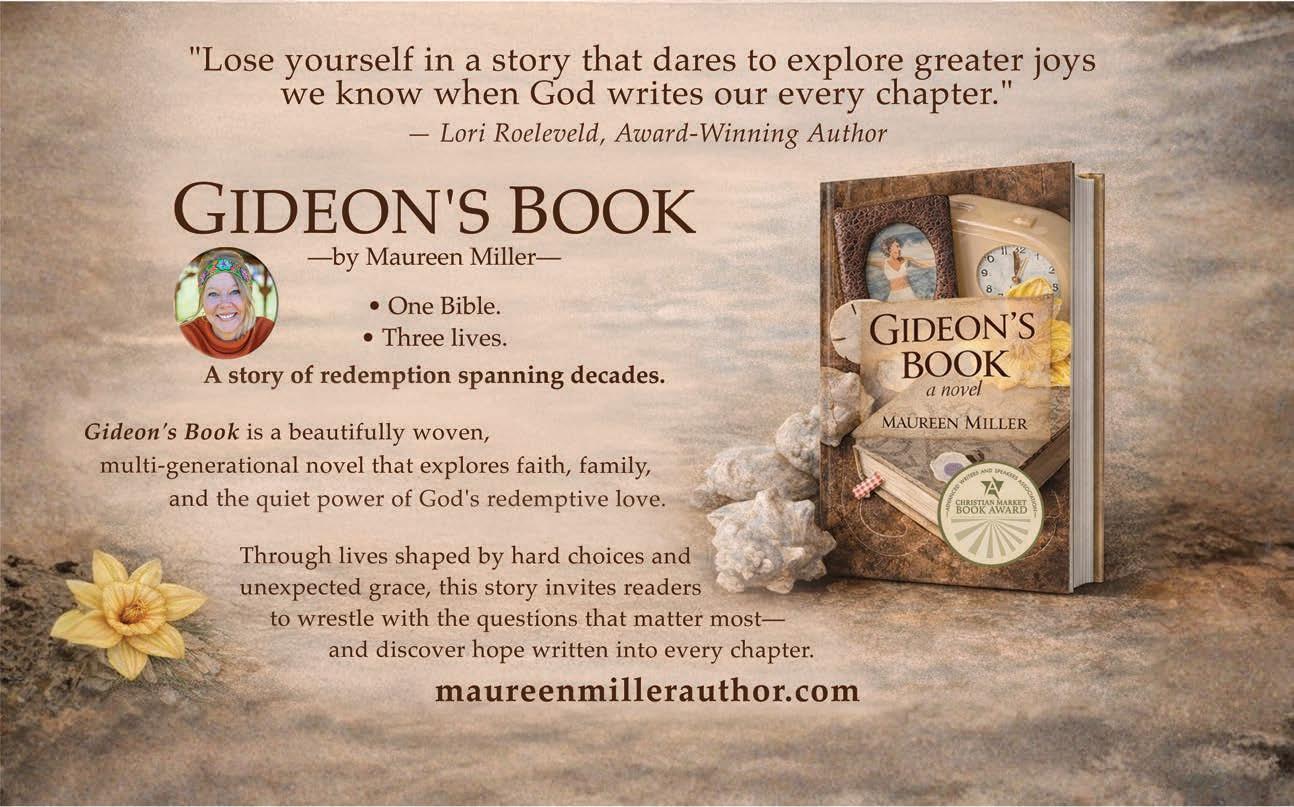
BY MAUREEN MILLER | MAUREENMILLERAUTHOR.COM
“I think I’m—” Overcome with emotion, my voice broke before I managed, “pregnant.”
My 17-year-old boyfriend released my hand, then raked fingers through his hair. The quiet space between us was weighty, my words seeming to work their way to cognition. After a beat of silence, Bill’s one-word response: “No.”
That was four decades ago. In the ensuing days, my suspicion having been shared, the word “abortion” was uttered more than I’d ever heard or said it before. “It’s the only answer,” I was told by a well-meaning person, someone I loved and trusted and knew to be a Christian professing a biblical worldview.
“Life is precious, and true love —God’s love—is eternal.”
Bill and I went back and forth with this notion, both of us believing abortion wrong but fearing what a baby would mean for our relationship. Our future.
When one thinks something life-altering has happened—something about which she’s proclaimed,
“Never me!”—she’s prone to ponder what she otherwise wouldn’t, coming face to face with her hypocrisy, her condemnation. Yes, her sin.
And though I wasn’t pregnant, this pivotal moment in our past shaped our worldview in powerful, transformative ways.
Though a teenager when I faced the possibility of an unplanned pregnancy, I’d already walked with Jesus many years and had made a commitment of sexual purity. Still, that proved di cult when, in junior high, I began dating Bill. “And besides, we’re gonna get married,” we justified, believing this to be true.
And it was. We married young, then faced infertility, something I once believed was the curse of our youthful transgressions—not merely premarital sex but our having considered abortion.
This experience brought me, time and time again, to a figurative mirror—begging me to take a good, long look at inconsistencies in my life. How I’d judged others in similar situations. How I could, for the sake
of convenience, consider taking the life of a child? As God’s Word a rms, “For you created my inmost being; you knit me together in my mother’s womb. I praise you because I am wonderfully and fearfully made” (Psalm 139:13–14 NIV).
Honestly, I didn’t often like my reflection. But, as God worked on my heart—softening it, creating contrition, with mercy and grace—I learned valuable lessons.
Were we pro-life? That question niggled, begging for an answer. I’d always thought so, but—truth was, we were. After all, by the time I really wrestled with this, we’d been married for several years, had matured in more ways than mere age. We’d grown in our faith, and with this spiritual maturity came a desire to know and act upon the things that please God.
We believed—still believe—life begins at conception, even when an embryo is a minuscule clump of cells. Why? It’s how we interpret God’s Word—our anchor, our comfort. Indeed, our standard for life, that which shapes our worldview.
But we’ve come to believe there’s more to being prolife than simply paying lip service. It’s putting action to words—like supporting pro-life organizations, yes, but what else?
What about: volunteering at a crisis pregnancy center?
O ering to support birth moms—those women, despite di cult circumstances, who choose to carry to term, and often place babies with loving families? Fostering? Adopting?
“And though I wasn’t pregnant, this pivotal moment in our past shaped our worldview in powerful, transformative ways.”
Truth is, we haven’t done this perfectly, but Bill and I are learning. We still stand at the mirror of truth and ask, “Are we living what we say we believe according to God’s Word?” When the Lord brings to our attention a discrepancy, we prayerfully consider change. More, he reminds us—it’s not our job to judge others but, rather, to pray for them.
And what do we firmly believe? Life is precious, and true love—God’s love—is eternal. We’ll spend our remaining days aiming to live—and love—this out, in both words and actions. And maybe, we’ll change— even help save—some lives along the way.

Maureen Miller is a wife, mother, and grandmother who writes about faith, family, and the transformative power of God’s grace in everyday life.





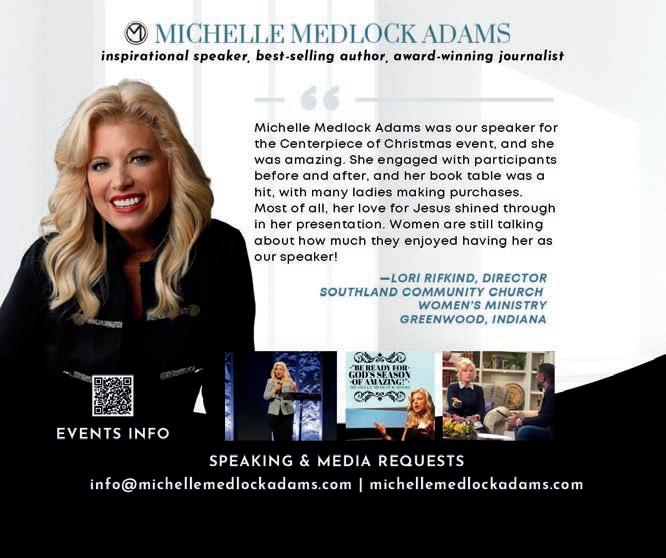
Just as I was finishing up my book signing at the International Christian Retail Show 25 years ago, I locked eyes with a woman waiting at the edge of the Guideposts booth.
She’d been there for quite some time. I wondered why she hadn’t moved into my line to get a signed copy of my latest children’s book ... but she hadn’t.
“We just ran out of books,” I explained, as I walked over to her, “but I’d be happy to mail you a copy from my personal stash at home.”
“Oh, that’s OK. I’m not here for a book,” she said. “I just want to talk to you.” I smiled but I was actually worried that maybe I’d met her previously and didn’t remember her. Just as I was about to ask if we’d met before, she took my face into her hands, looked me square in the eyes, and said, “Quit saying you’re not a speaker. Stop saying that you’re only a writer. Did God tell you that you’re only a writer and not a speaker?”
I shook my head no, trying to keep my composure. “Then stop saying it. Only say what God says. Let God define you.”
With that, she removed her hands from my face,walked away, and I never saw her again.
The Night Before
How could she have known? I wondered.
Just the night before, in the privacy of my hotel room, I had said to my husband, “I think I’ll call my sister and see if she wants to speak at that women’s conference that invited me to keynote. After all, she’s the speaker in the family. I’m just a writer.”
“Let
The invitation had come because I’d been featured on a Christian television show alongside another author who pastored a large church in Arizona. I was promoting my devotional for moms, and he was discussing his book for dads. We’d talked about the importance of godly parenting and shared some fun banter.
After the interview, he stopped and handed me his card, saying, “You’re fun! I think my wife and the ladies of our church would love you. Would you come and speak?” Not wanting to o end him, I accepted his card with a smile, but I had no intention of contacting him regarding the ministry opportunity. Speaking in front of hundreds of people was way outside of my comfort zone.
I planned to call him when I returned from ICRS and
give him my sister’s contact information, but apparently God had other plans. It was a turning point in my journey. It was the day I stopped defining myself and started allowing God to define me.
I did call that pastor back, but not to give him my sister’s information. Instead, I called him back and said, “Yes, I’ll do it.” And I’ve been saying “yes” ever since.
“God will call you, equip you, and even give you the ‘want to’ to walk in your calling.”
I can look back now and see that God was preparing me to be both a speaker and a writer—even as far back as my college days at Indiana University when I ended up minoring in speech communication. I thought I was just minoring in speech because many of its requirements overlapped with my journalism major, but it was all a part of God’s plan for my life.
He had been guiding my steps all along, and I am so thankful to be on this journey with him. I love speaking at women’s conferences, churches, universities, writers conferences, philanthropic events and more, encouraging others and glorifying the name of Jesus. Best gig ever! See, God will call you, equip you, and even give you the “want to” to walk in your calling.
So, how have you been defining yourself? Are you letting God define you or are you letting your fears define you? Or maybe you’re letting others tell you who you are and what you’re called to do.
Listen, it’s time to walk in the calling that God has for your life. Don’t let your insecurities or someone else’s opinions keep you in a box, limiting your vision and outreach. God has a plan for your life, and you’re going to love it!


BY JANET K. JOHNSON
Piecrust on the ceiling? I stood there staring at the clumps of dough now clinging to the ceiling above me.
Having arrived there by accident, the clumps clung tightly out of place. They told the story of ingredients, stirred over and over, creating the perfect mashup of loss, tragedy, and loneliness.
The results had lived in a heart torn apart with grief. As the feelings and emotions of anger and loss gained traction, they were kneaded into the piecrust which flew upward from the bowl when I picked it up and slammed it down again. They told me I had failed. Again. Failing was not usually an option for me, yet the piecrust clumps told a di erent story.
“I am a special creation made with purpose.”
Having heard the thumping of the metal pie pan against the marble countertop, my husband was soon in the kitchen. “Are you OK?” were the words I heard, but they prompted tears to flow like a late winter sleet on spring morning flowers. While the tears might have given away my pain, it wasn’t until I pointed at the ceiling and the now-dented pie pan that my husband realized the situation would require carefully spoken words of encouragement. Was there anything he could say to make things less disastrous?
Through sobs sounding like hiccups with gasps for breath in-between, I tried to explain the anger and grief that had torn my heart into pieces like the clumps on the ceiling. Except I couldn’t. My rage over the piecrust that wasn’t working as it should was symbolic of what I felt inside. Those emotions clung onto my broken heart like the clumps gripping the ceiling.
What started out with an expectation of having a
beautiful lemon meringue pie for dessert reminded me I was not like the pie I had anticipated. It told me I was a lemon; useful when squeezed, allowing what was special to me to be disguised by everything else around me.
Later, as I stood on the ladder, scraping o the clumps of pie dough, my viewpoint shifted. I began to see each one as a part of my journey. Some were big, some small. I could see bits of butter held together by the dough.
I began to realize my life held many stories, each one making me what I was. The grief, the disappointing moments, the times of failure were all there. But so were the wonderful moments that filled the pages of my life—my children, friends, spouse, and years of finding joy in the most unexpected places.
The unfinished piecrust would be reformed with new ingredients to start over—just like I am determined to do with those things that had crushed my spirit. The clumps of the past were part of me but not all of me. Walking forward I will face new challenges but now with the vantage point of the ceiling discovery.
I can face them with more courage because I am confident I am not a victim. I am a special creation made with purpose.
The clumps left tiny marks on the ceiling just like they did in my heart. But, with hard work and a new perspective, the days ahead looked much brighter. Yes, lemons are a part of my life but so are sugar and all the moments I cherish as wonderful.

Janet K. Johnson is an award-winning author and speaker who helps others grieve well as they discover tools to live out their losses in life-giving ways. She is a joy-sprinkling lover of Jesus.


































to Read



















this Book) ion



















I want to begin this book with an impossible tangle of caut tape: if you’re looking for something that resembles a classically-defined memoir, where everything ties up neatly with a bow, you might want to visit the return desk. And if discussions of mental health crises, trauma, and suicidal thoughts are distressing for you, this might not be the book for you. This book is a lot of things at once. In some ways, it’s more like a scrapbook made by someone with a plethora of inside- the-head knots and questionable organizational systems. Don’t expect a comprehensive map of how mental illness manifests in my life (let alone your’s). Think of this as a #relatable post stretched into 250 pages. Or better yet a comedic memoir-adjacent walk through a world strangely familiar to yours. But honestly, it could be nothing like yours Either way, you’re welcome here. I’m not going to tell you my life story from birth to now in neat chronological order. That’s not how brains like ours work. You’ll







book f m insideof #relatable a













meet people when they matter. You’ll learn backstory when it’s relevant. You’ll see my chaos and hopefully recognize your own. If you picked up this book expecting perfectly structured sentences and grammatically correct prose, you’re in the

you’re the rules. I’m breaking them on purpose.








This book has: • Run-on sentences (because that’s how ADHD brains process) • Made-up words (you know what “aggressing”

• Parenthetical tangents (every thought comes with three side




• Topic jumps without warning (associative leaps are our






• Sticky notes to self with sometimes questionable “wisdom” • Zero apologies for the chaos If you’re neurotypical: This might messy. It is. Welcome to how we think. If you’re neurodivergent: Oh hey, you’re home. Strap in! Fair warning: I have faith, and I’m honest about it because that’s my experience. But this isn’t a religious book in disguise. This is a book about being gloriously, messily human. If you share my beliefs, great. If you’re questioning everything, that’s okay. If you find your hope somewhere else entirely, we’re jumping in the deep end together. I write with humor because sometimes
means even if Webster doesn’t) •thoughts) without •superpower) feel







BY AMBER WEIGAND-BUCKLEY | SHORTYELLOWPENCILRX.COM
There’s a PTSD-inducing flashback in my brain that keeps showing up in the most inconvenient moments.
Picture this: My senior year of high school. The ACT. A No. 2 pencil. A Scantron sheet full of little bubbles just begging to become something other than test answers.
So I short-yellow-penciled my way through that test with neurodivergent flair—avoiding doing any actual work by making dot-to-dot flowers, a random smiley face that could be built in Minecraft, words that looked like Morse code. I guess I got bored. Or maybe I didn’t have all the answers and they were trying to force me into little boxes and my brain said, “Nah, let’s make a meadow instead.”
Final score: 19.
That’s not a brag. That’s a paradox I’ve been living my whole life—the tension between what I was trained to be and who I actually am. Between the rules I know and the people I’m called to reach.
The PTSD-inducing part? Actually ending up paying tuition money for that “we’re not sure you should have a high school diploma” Study Skills class.
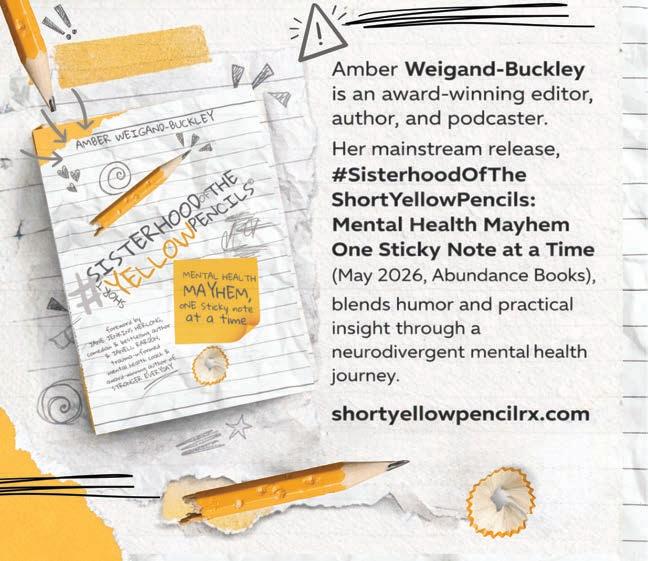
Fast forward to the final stretch of writing my book #sisterhoodoftheshortyellowpencils—Mental Health Mayhem, One Sticky Note at a Time, an extremely loose-leafed defined memoir for the brain that runs like squirrels on espresso.
I found myself in what I can only call procrastinative contemplation—that muddy space where you’re half paralyzed, half processing, fully convinced you could actually be losing your mind.
Every copyedit became a theological crisis. My neurotypical editor would flag something, and I’d have to ask: Is this where I need to grow as a communicator, or is this where I’m being asked to shrink my message to fit a mold that was never built for the people I’m trying to reach?
I had to chew on every single edit like I’d never chewed before—in the framework of heaven, in the context of my calling, in the reality that my audience thinks in hashtags and parentheses because their thoughts run together and refuse to stay in one place.
Here’s the thing: I almost gave up. Not because I didn’t know what I wanted to say, but because I got stuck between wanting to be teachable and knowing I had a mission that didn’t fit the template.
It felt like sinking into a mud bath—uncomfortable, a little dirty, and I wasn’t sure if I was being cleansed or su ocated.
But I had to sit there. I had to type out the conversations in my head. I had to let the discomfort do its work.
Because somewhere in that muck, I realized: We can sit in the posture of teaching more than we sit in the posture of listening. We can focus on educating people into our way of speaking rather than asking, When does education mean we need to re-evaluate how we’re communicating to the people meant to receive it?
“Maybe
the faithful thing is to recognize that different instruments write different stories—stories that God is authoring one divine rulebreaker at a time.”
For me, it meant keeping the parentheses. The dashes. The metaphorical hodgepodge. Not because I couldn’t learn to write di erently—I have the degree, I know the rules, I’ve won awards for honoring other people’s voices—but when it came to MY book, MY voice, MY mission? Following those rules would have wrapped my message in a format that never reaches the people wandering outside, convinced they’ll never have the chops to come in.
Jesus didn’t enter culture as a classically trained scribe. He told stories about lost coins and wayward sons—parables that probably sounded neurodivergent to the religious establishment. Bouncing from subject to subject. Landing truths in metaphors that made the learned scratch their heads while the masses said, “Oh! I get it!” He broke Sabbath conventions to heal. He ate with the wrong people. He learned how people spoke, then built frameworks they could walk in.
That’s what I was wrestling with. The message was worth saying—but only if I said it in a way that the people who needed it could actually receive it.
Here’s where I have to be honest: My goal in life isn’t to reach everyone. God wired me to reach the one—the person sitting in the field who’s been told their whole life that if they’d just focus better, organize more, try harder, they’d be fine. The person who thought, I should be over this by now, only to discover they didn’t outgrow it.
If I can show one person they’re part of a greater community—a #sisterhoodofshortyellowpencils who travel together because we don’t do this alone—then I’ve done my job.
• You’re seeking to understand the people outside the room more than you’re worried about being understood by the people already in it
• You stop watering down your message to make everyone happy—because that just makes it weak for the person who actually needs to hear it
• You trust that your voice, exactly as it is, writes the story someone else desperately needs to read
We have to be OK with being misunderstood if it means reaching the person God called us to reach. We have to be OK with critics and people who think we’re breaking too many rules.
Because here’s the truth: I am a divine rule-breaker. I was designed to meet a certain community where they are, and some of those traditional rules just don’t apply when you’re trying to go where God’s called you to be.
That doesn’t mean chaos for chaos’s sake. It means good trouble—intentional rule-breaking with the goal of wrapping arms around the overlooked and saying, You’re not alone. Welcome to the sisterhood.
Short yellow pencils. No erasers. Very little surface left to chew on. But still instruments. Still writing stories that need to be told.
Maybe the faithful thing isn’t to sharpen everyone into No. 2 pencils. Maybe it’s to recognize that di erent instruments write di erent stories—stories that God is authoring one divine rule-breaker at a time.


BY VICTORIA CHAPIN
Several years ago, I found myself with a simple prayer on my lips: “Lord, reduce me to love.”
I had been serving, speaking, writing ... and grieving the loss of my daughter. But God gently interrupted me with a question that pierced deeper than the pain.
“Why do you do what you do?”
The question stayed with me for weeks. But the Lord was inviting me to something greater. He wanted me to understand that ministry isn’t just built on gifts, platforms, or conferences. It’s built on loving his people.
Like many in ministry, I had walked through valleys— losing a child, navigating toxic relationships, and facing a rare cancer diagnosis. Through every season, I clung to Romans 8:28, believing God was weaving something redemptive.
Was I called to grief ministry? Cancer ministry? Prayer ministry? I prayed for clarity. And God showed me— through something beautifully simple.
God impressed on me to place a locked prayer box outside our home. Every day, I checked it, and every day my heart softened. Inside were handwritten notes filled with sorrow, fear, longing, and expectancy. People in my own community were carrying wounds I never knew existed.
“My calling was not just about sharing my story—it was about loving His people deeply.”
In time, some requests turned into praises. One day, I
found a note: “God bless you. We are praying for you, too.”
Through that prayer box, God showed me: My calling was not just about sharing my story—it was about loving his people deeply and discipling those he would place in my path.
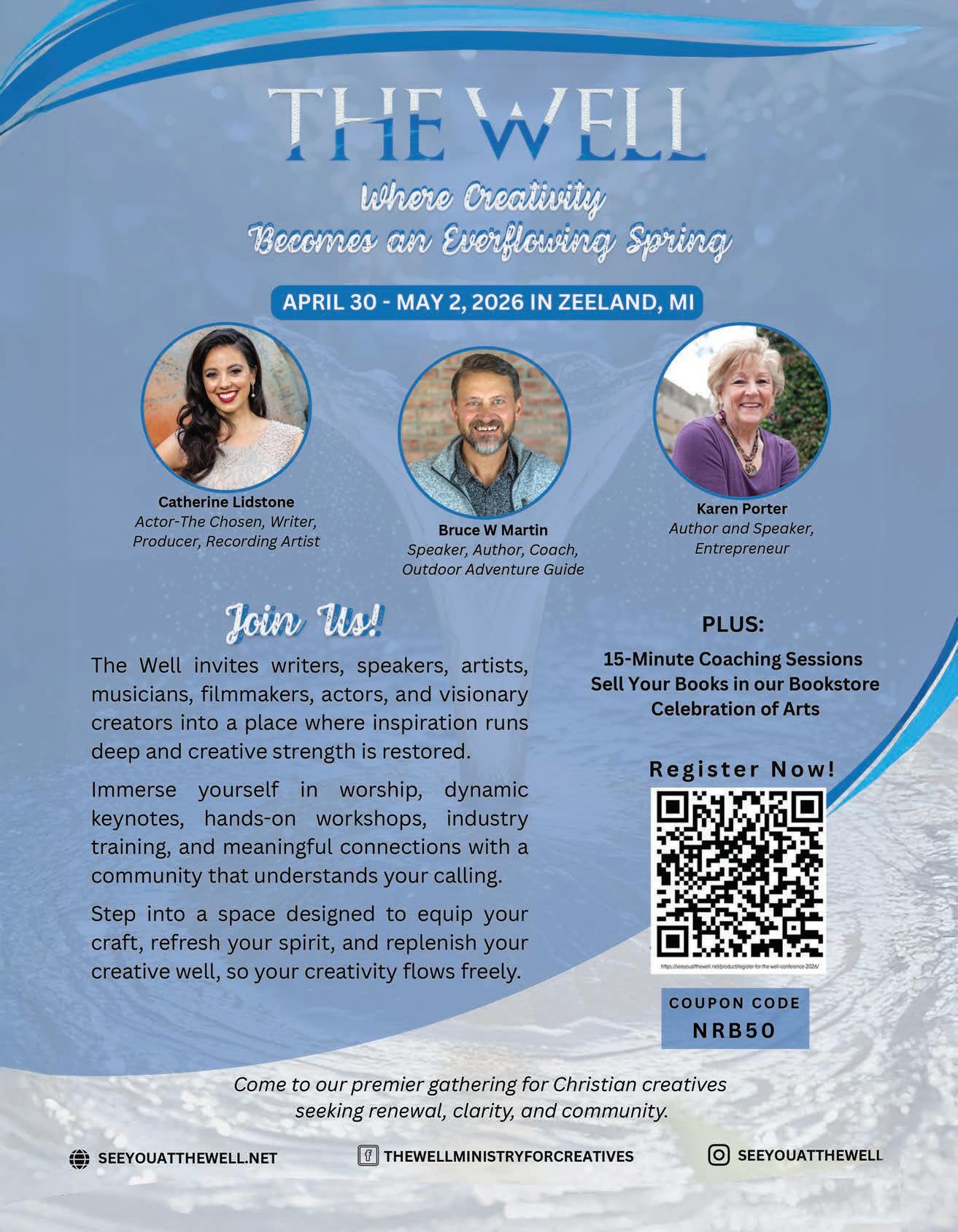
In 2018, I attended the very first gathering of The Well, a retreat for Christian creatives. I was a grieving mama trying to learn how to tell her daughter’s story.
I walked in carrying grief and questions. I walked out having discovered a community: creatives who love Jesus and long to use their gifts to share His truth Today, I serve as executive director of the very ministry that first helped me find my voice.
Through The Well, God showed me the people I was called to love: creatives carrying the message of Christ into the world. Writers, speakers, podcasters, actors, filmmakers, artists, musicians.
And if anyone is going to share truth with the world, who better than God’s creatives?
They, too, experience grief, cancer, spiritual warfare, and adversity. The Lord’s given clarity that I’m to disciple them—to help them drink deeply from Jesus, the Living Water, so they can pour out truth, love, and salvation through their work.
Ministry is not about a microphone, a book, or a platform. It’s about being faithful to the people God puts across our paths.
So as you navigate your next season, may I ask the same questions God once impressed on me?
Why do you do what you do? What is the heartbeat of your ministry? Who is God inviting you to love?
Let those questions penetrate your heart. The calling becomes clearer when the love grows deeper. And come to The Well. We hope to see you there.

Victoria inspires others to find jewels in adversity and full life in Christ. She directs The Well Conference for Christian creatives and is co-founder of Do Life 2 The Full Ministries alongside her husband. She loves everything co ee, especially when shared with friends.





BY LINDA EVANS SHEPHERD LINDAEVANSSHEPHERD.COM
A surprising number of people are afraid to pray. They love God, but when it comes to talking to him, they freeze.
They worry about praying “wrong,” stepping outside his will, or somehow offending him—as though God is scoring their performance. Out of fear, they offer him something he never asked for: prayerlessness.
But prayerlessness is its own kind of silent treatment. We were designed for connection with God, created to walk with him and lean into his presence. When we sit on our hands instead of lifting them in prayer, our souls grow quiet in all the wrong ways.
The truth is, God delights when we seek him. Prayer isn’t a test; it’s a relationship.
It’s how we reach toward him—and how he reaches back with comfort and grace.
One of the greatest breakthroughs of my spiritual life came when I discovered the power of praying God’s Word. Scripture is aligned with his will and full of his presence. When we pray his Word, we pray in agreement with his heart and leave fear behind.
But I didn’t start out confident. As a young mom, I loved God, yet didn’t know how to talk with him or recognize his whispers. Prayer felt awkward, like leaving messages on heaven’s answering machine.
One day, desperate for help, I opened my Bible and decided to pray the Scripture back to God.
“Praying Scripture didn’t just change my prayers. It changed me.”
The moment I began, something unexpected happened: God’s living voice in his Word blended with my shaky voice—like stepping onto ice. I waited to slip, but I didn’t.
Praying the Word became a steady place beneath my feet. My timid prayers gained traction, and God responded—sometimes with reassurance, sometimes with direction, and often in loving, surprising ways.
One of those moments came last summer. A gondola hit me at a Colorado ski resort, and the first scan showed three crushed ribs. The next morning, in terrible pain, I prayed God’s Word: “By Your stripes I was healed.” By that afternoon’s follow-up X-ray, only one minor crack remained—and my pain dissolved.
The more I prayed Scripture, the more I realized God wasn’t asking me to be eloquent—he was inviting me to trust him. His Word became both my anchor and doorway into deeper conversation.
Praying Scripture didn’t just change my prayers. It changed me.
Here are five Scriptures (NLT) with short, Scriptureechoing prayers to help you step into the beauty of praying God’s Word:
1. Anxiety—Philippians 4:6–7
Verse: “Don’t worry about anything; instead, pray about everything ... Then you will experience God’s peace.”
Prayer: Lord, You tell me not to worry but to bring
everything to you. I place every anxious thought in your hands. As you promised, let your peace guard my heart and mind in Christ Jesus.
2. Financial Provision—Philippians 4:19
Verse: “And this same God ... will supply all your needs.”
Prayer: Father, you said you would supply all my needs through Christ. I trust your promise today. Provide in the way only you can, and let my heart rest in your care.
3. Healing—Psalm 30:2
Verse: “O Lord my God, I cried to you for help, and you restored my health.”
Prayer: Lord, as your Word declares, when I call to you for help, you bring healing. Restore my health and strengthen me according to your promise.
4. Peace—John 14:27
Verse: “I am leaving you with a gift—peace of mind and heart.”
Prayer: Jesus, you said you have given me your peace. I receive that gift now. Let your calming presence settle over my mind and heart.
5. Breakthrough—Isaiah 45:2
Verse: “I will smash down gates of bronze and cut through bars of iron.”
Prayer: Lord, you declare that you go before me to smash down barriers. Do that now—open the way, cut through every obstacle, and lead me forward by your power.
“Prayer isn’t about perfection. It’s about connection.”
If you feel unsure of how to pray, begin here: take one Scripture a day and pray it back to God. Let his Word become your words. Over the next week, watch what emerges—peace, clarity, boldness, and a growing awareness that God has been waiting to speak into your heart all along.
Prayer isn’t about perfection. It’s about connection. And praying God’s Word opens the conversation.
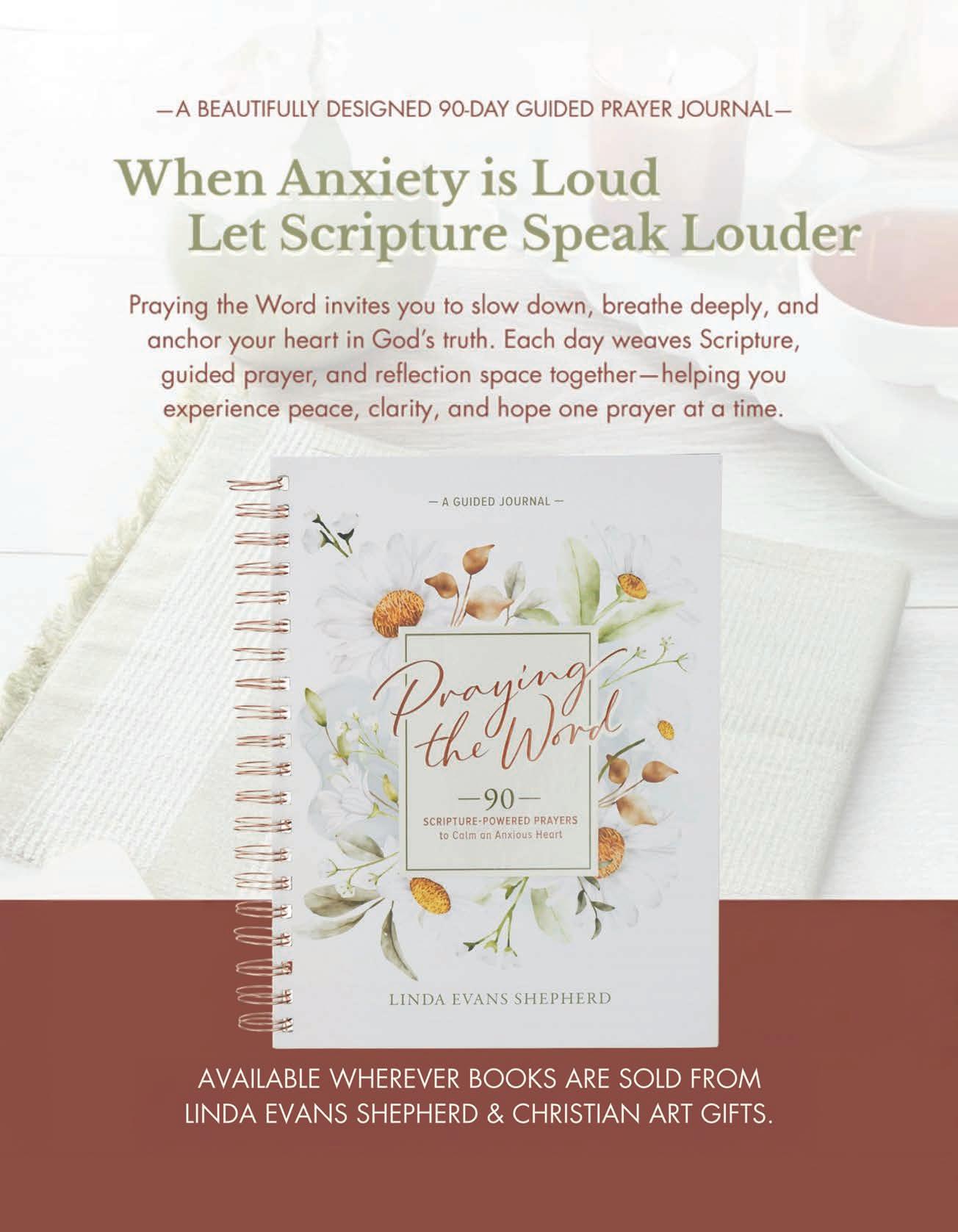
Linda Evans Shepherd is the CEO of Right to the Heart Ministries, home of the Advanced Writers and Speakers Association (AWSA). She is the author of Praying the Word: 90 Scripture-Powered Prayers to Calm an Anxious Heart from Christian Arts Publishers. Learn more at www. GotToPray.com.


BY RONDA WELLS | RONDAWELLSBOOKS.COM
While researching for my historical romance
The Christmas Cherub, I discovered doctors in World War II used “battle fatigue” for what is now called post-traumatic stress disorder (PTSD).
The latter may be the proper medical term, but I relate to the older term, especially fatigue.
The Apostle Paul uses martial imagery in his letters. He compared our God-given protections to a suit of armor.
We face many ordeals as Christians spreading the gospel to a world that often refuses to listen. Paul encouraged us in Galatians 6:9—”Let us not become weary in doing good, for at the proper time we will reap a harvest if we do not give up” (NIV). He knew what a genuine battle with Satan entailed, listing them in 2 Corinthians 11:
• Five times, 39 lashes from the Jewish leaders
• Three times beaten with rods
• Stoned once
• Shipwrecked three times
• Spent an entire night and day adrift at sea
His remarkable attitude is to put his head down and keep going. “I have traveled on many long journeys. I have faced danger from rivers and from robbers... then, besides all this, I have the daily burden of my concern for all the churches” (2 Corinthians 11:26-28 NLT).


BY KAREN WHITING | KARENWHITING.COM
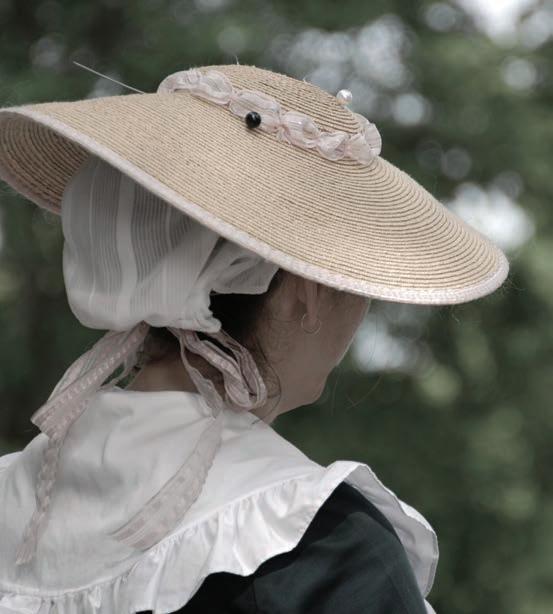
As we celebrate America’s 250th anniversary, we should remember and honor the courageous and faithful women who made a di erence.
These include women who went undercover as spies at the peril of their lives and those who supplied funds, cared for soldiers, defended their homes, and ones who communicated to help shape public opinion.
Quaker Mary Lindley Murray saved a large portion of the Continental Army, according to Dr. James Thacher, a surgeon for General Washington. Mary knew General Putnam’s troops were within a mile of her home in New York, retreating, while the British troops had halted nearby. She cleverly diverted General Tyron, a friend of her loyalist husband, who came to her home for tea.
“She stalled them with entertainment, cakes, tea, and wine until Putnam’s troops escaped.”
General Howe took over Quaker Lydia Barrington Darragh’s house, but allowed her family to remain. She pretended to sleep but actually eavesdropped on plans to attack Washington and his forces at Whitemarsh. She wrote the plans out, received permission to get flour, dropped o her flour sack at the mill and then managed to boldly pass on her note to a soldier in the Continental Army. When Howe’s
troops marched to battle they found Washington prepared, and they were forced to retreat.
Esther De Berdt Reed and Sarah Franklin Bache (daughter of Ben Franklin) founded the Ladies Association for Philadelphia, collecting hundreds of thousands of dollars for the troops. However, Washington wrote, “I would, nevertheless, recommend a provision of shirts in preference to anything else.” So they mobilized women to make 2,200 shirts for soldiers.
Mary Drape, whose family owned a large granary on the Boston Post Road, set up a roadside eatery as a supply point, providing bread and cider for Continental soldiers passing by. She also melted their pewter and made bullets to give to soldiers. When her supplies ran low she enlisted neighbors to donate bread.
Mary Kathryn Goddard took over her brother’s work, publishing Baltimore’s first newspaper, to keep the public informed with patriot-leaning news. She also managed the postal system during the war.
Abigail Adams, struggling to pay taxes when she gave much of the food from their farm to soldiers, started a business. She persuaded her husband to send fashionable goods and luxuries that she sold. These included handkerchiefs, fabric, ribbons, and artificial flowers.
Kerenhappuch Norman Turner refused to allow a doctor to cut o her son’s leg after his injury at the North Carolina Battle of Guilford Court House. He insisted he would die from gangrene. She moved him to a nearby log cabin and had tubs suspended from rafters, and drilled holes in the tubs. She poured in cool water that dripped on the wound, lowered his fever, and saved his leg. She also nursed other soldiers and served as a spy.
Much of the impact of women cannot be measured, but the boycotts of tea that women promoted hurt the British East India Company. Tea import dropped from 869,000 pounds of tea in 1768 to 108,000 pounds by 1770. They lost 40,000 pounds a year.
These women and others who made a di erence inspire us to be courageous, loyal, and faithful.
Karen Whiting’s knowledge from research on her award-winning book Stories of Faith and Courage From the Home Front (AMG publishers), of American Women’s History, makes her an excellent media guest.


He shared his story—a terrifying situation, finding himself a hostage in a robbery by gang members. His story was vivid, and we felt his pain, his fear. But it ended there. It was like walking out in the middle of a movie, never knowing how it ended.
She shared her story—taken into a Satanic cult, married o to a man, and later forced to abort her baby when she was only 12. When she finally walked into a church and talked to the pastor, she told him, “Jesus doesn’t want someone like me.” The pastor assured her she was exactly who Jesus died for.
“We need to wait until the Lord has done his work in our situation, so we can share the full story of redemption.”
I have never been a hostage or involved in a Satanic cult, but I can relate to the second story more than the first. Why? Because every person who has come to know Christ understands we don’t deserve salvation, and we can’t help but feel gratitude, sorrow and joy
when we understand we too are exactly who Jesus died for.
The di erence between the two stories is time. My first friend survived, but he hadn’t yet come to the point of sharing God’s redemptive work through his experience. My second friend had healing, and she pointed us to Christ and the hope she found in him.
Sharing our story is like sharing fruit: when it’s picked before it’s ripe, the full flavor and nutrition have not yet developed. If we wait, we are blessed. We need to wait until the Lord has done his work in our situation, so we can share the full story of redemption.
When we wait until we have healed and seen how God is working through our story, we have more freedom to share in ways that bless our audience—vulnerable yet controlled—pointing hearts toward God rather than toward us.
Being vulnerable is imperative for connecting with people in an audience. At the same time, we do not
want to overshare. Vulnerability is a delicate place where we risk our reputation to share our hearts, but, as one teacher once said, “We don’t want to throw up on our audience.”
Admittedly, there are real risks. Sharing vulnerably means exposing not just ourselves but sometimes others. It can invite criticism. But we cannot let fear of cancel culture or the noise of hostile voices distract us from our real calling: to point people toward Christ’s redemption. Being wise means considering our audience and protecting those in our stories. Being brave means telling the truth anyway.
“We need to be bold, brave, yet still wise and trustworthy.”
Your story is important. God’s work and you sharing about it bring honor to God and can draw people to Him. As Christ followers, we aren’t just sharing stories to entertain (though that’s valid). We want God to use our lives to help draw people to himself. If that is our heart, to see God’s kingdom brought to our audience, then we must be willing to do the work of learning to share our stories in redemptive, God-glorifying ways.
Emotional Barometer:
• Do you see humanity and divine activity in your story?
• Can you share without losing emotional control?
The “So What?” Test:
• What is your “so what”?
• What do you hope your audience will take away?
The Mentor Test:
• Have you shared your story with a trusted mentor?
• How did your story impact them?
The Hard Questions:
• Have you asked why you need to share your story?
• Is fear holding you back anywhere?
you
• Are you oversharing out of selfishness, hurt or sensationalism?

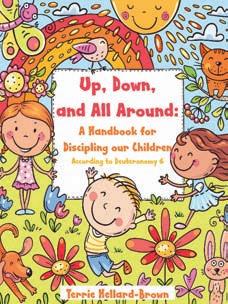
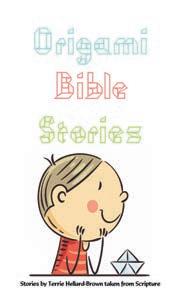
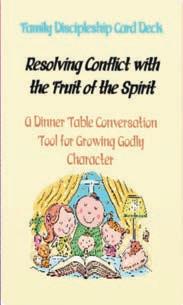
Terrie Hellard-Brown is a writer, speaker, podcaster and missionary. Her podcast is “Sparking Everyday Discipleship.” Terrie writes children’s books and materials to help parents disciple their children.






Bare Faith isn’t your typical faith show. No clichés. No easy answers. Just honest conversations that face real struggles and uncover hope in God’s truth. Each episode includes study and leader guides, making it perfect for individuals, small groups, or churches. Watch Bare Faith Wednesdays at 9:00 p.m. CDT on the OBBM Network or stream anytime at www.obbmnetwork.tv