
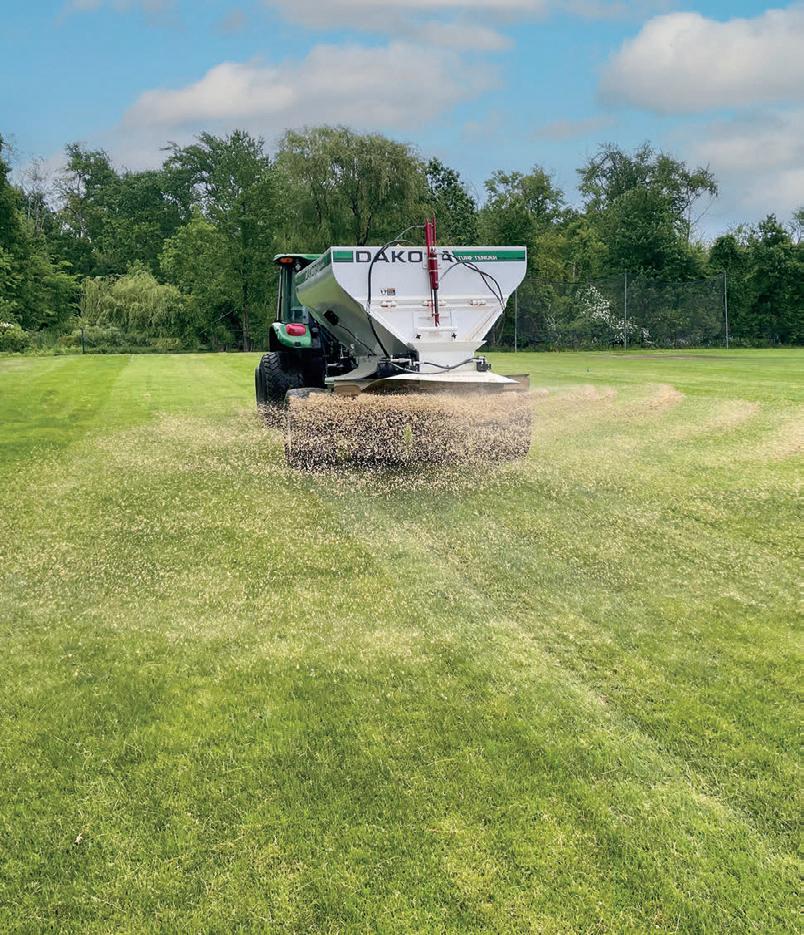
For nearly 30 years, POLYON® controlled-release fertilizer has been used with confidence for its predictable performance and labor-saving benefits. Industry proven, trusted by sports turf managers everywhere. If your goal is safe, durable and beautifully playable turf – season in and season out – no fertilizer feeds your success like POLYON® fertilizer.
Choose POLYON® fertilizer and you will get guaranteed results backed by our POLYON® Guarantee.
For more information, visit www.polyon.com or contact your Territory Manager today!




JIM FAVREAU MASSACHUSETTS jfavreau@harrells.com (978) 227-2785
MIKE KROIAN RI, MA mkroian@harrells.com (401) 265-5353
TOM LOPEZ CT tlopez@harrells.com (860) 488-2649
JIM WIERZBICKI CT, RI jwierzbicki@harrells.com (860) 424-7250


KENT LEMME WESTERN MA, VT, NH klemme@harrells.com (413) 281-8087
TOM HOFFER CAPE COD thoffer@Harrells.com (401) 871-2916
IAN WILLIAMS SE MASSACHUSETTS iwilliams@harrells.com (781) 664-4519
LANCE BLASS NE MASSACHUSETTS lblass@harrells.com (570) 956-0974

CONNOR CINQUE NH, MAINE ccinque@Harrells.com (603) 930-1861
JIM STUDLEY RHODE ISLAND jstudley@harrells.com (401) 743-7316




The official publication of the New England Sports Field Managers Association (NESFMA), the New England Blade is dedicated to educating, advising, and informing members of the profession and furthering the goals of the Association. The New England Blade carries news and features related to the sports field management profession. Publisher is not responsible for unsolicited material and reserves the right to edit any article or advertisement submitted for publication and to refuse advertising not in keeping with the goals of the Association. Publisher assumes no responsibility for the validity of claims in connection with items appearing in the New England Blade. Mention of a commercial product does not imply endorsement by the New England Blade, NESFMA, or Leading Edge Communications, or preference over similar products not mentioned. The New England Blade is published quarterly. Subscriptions are complimentary to members of NESFMA. Presorted standard postage is paid at Jefferson City, MO. Printed in the U.S.A. Advertising: For display and classified advertising rates and insertions, please contact Leading Edge Communications, LLC, 206 Bridge Street, Suite 200, Franklin, TN 37064, (615) 790-3718, Fax (615) 794-4524.
Officers
President Art Goodhind Town of Natick Natick, MA
President Elect
Ryan Bjorn Gillette Stadium Foxborough, MA
Treasurer Andrew Carlisle, CGM Worcester Technical High School Worcester, MA
Past President Chris McGinty
Framingham Parks Department Framingham, MA
Directors
Tom Barry, CSFM Greens Farms Academy Greens Farms, CT
Bryan Conant Nashua Parks & Recreation Nashua, NH
Brendon Connor Holy Cross Worcester, MA
Adam Ferrucci
Read Custom Soils Wareham, MA
Scott Lagana Turf Products Corp. Holden, MA
Christopher Lilly
Blackstone Valley Regional Technical Vocational High School Upton, MA
Michael Malvoso
Needham Parks & Forestry Needham, MA
Scott Vose
Tom Irwin Advisors Tyngsborough, MA
Board of Trustees
Mike Lueders Medfield, MA
Edward Olsen Needham Parks & Forestry Needham, MA
Victoria Wallace University of Connecticut Storrs, CT
Management Team
Virginia Wood
Executive Director
Charissa Sharkey
Membership Manager
Peggy Benjamin Bookkeeper
New England Sports Field Management Association, Inc.
67 West Street Medfield, MA 02052 (508) 653-1241 NE-SFMA.org

“It took me seventeen years to get three thousand hits in baseball. It took one afternoon on the golf course.”
– Hank Aaron
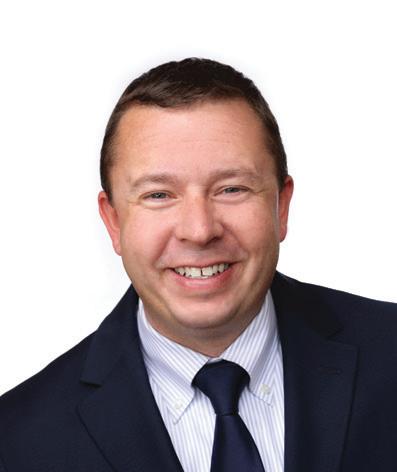
Hello members and friends,
I hope you’re doing well this growing season and that you enjoy this issue of The Blade. As I write, the turfgrass has quickly broken dormancy with temperatures in the 80s and tomorrow’s forecast calls for snow showers. In our town of Natick, MA, we just celebrated the 130th running of the Boston Marathon. I once heard it’s the only marathon where you can get frostbite on one side of your face and a sunburn on the other: a fitting adage for New England weather.
As temperatures rise, our Association begins its own marathon for 2026. We started strong with the NE-SFMA Annual Meeting at the New England Regional Turfgrass Conference in Providence, RI. Thank you to everyone who attended, and congratulations to those we honored. The genuine, heartfelt stories shared were truly inspiring and continue to rejuvenate me each year as a member. We’re grateful to the New England Regional Turfgrass Foundation for hosting this important regional event and are proud to be part of it.
Our June 3 ballfield renovation at the Yawkey Boys and Girls Club of Roxbury, in partnership with Project Evergreen, was a rewarding experience. Thank you to all who supported this effort to improve athletic experiences and opportunities for young people in this historic New England community.
Looking ahead, please mark your calendar for the Annual Mark DeWolf Memorial Golf Tournament on July 23 at Brookmeadow Country Club in Canton, MA. Your support helps fund scholarships and grants that support the mission of our Association. Even if you’re not a golfer, show up for lunch, and maybe a little friendly heckling.
Then, on October 7, join your colleagues at the Sports Field Forum at Rentschler Field in East Hartford, CT, home of the UConn Huskies. This Stadium has an exciting, diverse calendar of events. We’ll learn how these events affect the sports field conditions and the strategies used to provide memorable events in tandem with high quality turfgrass conditions.
See you in July,
Art Goodhind NE-SFMA President
(As of 5/7/2026)
These companies support NE-SFMA with their membership investment and involvement. Please be sure to thank them for their support of our industry as you do business with them throughout the year.
A.R. Plante Materials & Earthworks, LLC arplantematerials.com
Activitas, Inc – activitas.com
Aquatrols Company – www.aquatrols.com
Athletic Turf Care – Athleticturfcare.com
Atlantic Golf and Turf – atlanticgolfandturf.com BASF – basf.com/us/en
Brock USA – brockusa.com
Corbett Irrigation – corbettirrigation.com
Covermaster Inc. – covermaster.com
Finch Turf – finchturf.com
G.P.S. New England – Greg Albanese
Game Ready, Inc – Gamereadyfields.com
Genesis Distribution – genesisdistribution.com
Greenhaven Turf Care – greenhaventurf.com
Harrell’s – harrells.com
Hayner Swanson Inc – hayner-swanson.com
Heritage Professional Products Group heritageppg.com
Liberty Landscapes, LLC libertyathleticfieldcontractors.com
MJ Cataldo Inc. – mjcataldo.com
Mountain View Landscapes & Lawncare mountainviewinc.com
MTE, Inc. – mte.us.com
New England Pro Greens & Turf – turfinstaller.net
Northeast Nursery Inc – northeastnursery.com
H.M. Nunes & Sons Construction, Inc – Ludlow, MA
Nunes Connecticut, Inc – Bloomfield, CT
Osborne Organics, LLC – osborneorganics.com
PBI Gordon – pbigordon.com
Pioneer Athletics – pioneerathletics.com
PJC Organic – pjcorganic.com
R.A.D. Sports – radsports.com
Read Custom Soils – readcustomsoils.com
Replay Maintenance USA – replaymaintenanceusa.com
S & D Landscapes, LLC facebook.com/LandscapeVermont
Sherwood Sportsturf – Chuck Sherwood
Silico Turf LLC – silicoturf.com
SiteOne – siteone.com







Smith Ridge Turf Installation, LLC – smithridge.net
Specialized Turf Services, Inc. sportsturfspecialties.com
Sports Fields Inc. – sportsfieldsinc.net
Sports Turf Specialties, Inc sportsturfspecialties.com
Syngenta – greencastonline.com
The Charles C. Hart Seed Co. – HartsTurfPro.com
Tom Irwin, Inc. – tomirwin.com
Tuckahoe Turf Farm – tuckahoeturf.com
Turf Products Corp – turfproductscorp.com
Turf Robotics – turfroboticsllc.com
US Playground Surfacing – USPlaygroundSurfacing.com
Welch Mechanical – Welchmechanical.com

Join fellow sports field professionals for a day of golf, camaraderie, and giving back at the annual DeWolf Memorial Golf Tournament.
Held in honor of the late Mark DeWolf and his lasting impact on the industry, this event raises funds for the NE-SFMA scholarship and benevolence programs, helping support both future and current members of the profession.
This year’s tournament will take place at Brookmeadow Country Club in Canton, MA, featuring an 8:00 a.m. shotgun start on the club’s scenic and challenging 18-hole, par-72 championship course. Following play, participants and guests are invited to enjoy lunch, team prizes, and scholarship presentations.
We extend sincere appreciation to our commercial partners whose continued support helps make this event possible, along with the many golfers already registered to participate. Not a golfer? You’re still welcome to join the fun — come cheer on the players and enjoy the barbecue lunch and festivities.
Every registration and sponsorship helps strengthen the future of the sports field management profession. Proceeds from the tournament provide educational scholarships and professional development opportunities for students, while also assisting industry members facing unexpected hardships through the benevolence fund.
Join us for a memorable day dedicated to friendly competition and supporting a great cause. Register today at NE-SFMA.org
Ryan Bjorn — Gillette Stadium
Brendon Connor — College of the Holy Cross
Adam Ferrucci — Read Custom Soils
Scott Lagana — Turf Products Corp.
Chris Lilly — Blackstone Valley Regional Tech
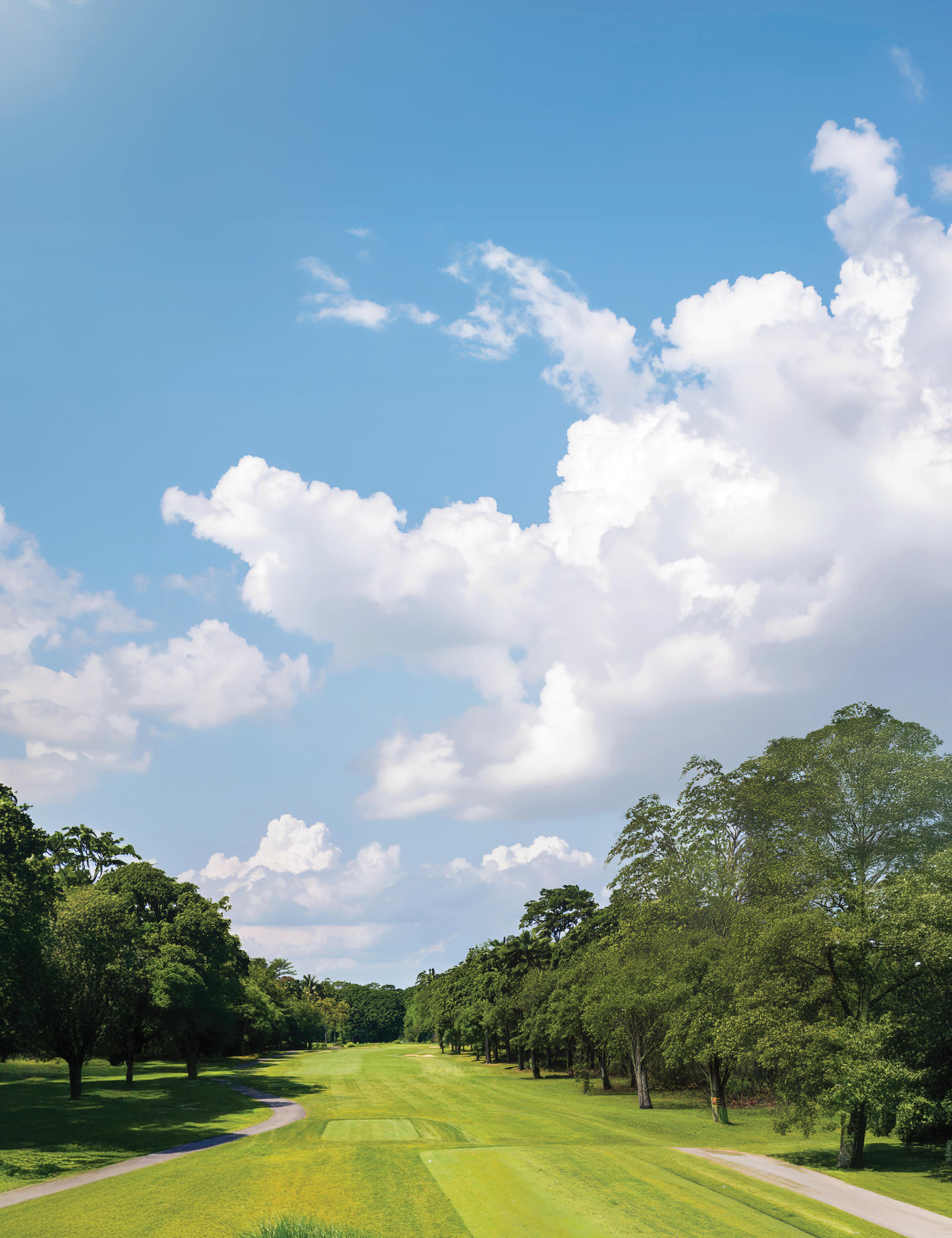
Join fellow NE-SFMA members for a golf outing where everyone who plays can take pride in knowing that their contributions directly impact the next generation of sports field professionals. Limited support opportunities available at NE-SFMA.org
THANK YOU SPONSORS (As of 06/04/26)



Where did your turf management education begin?
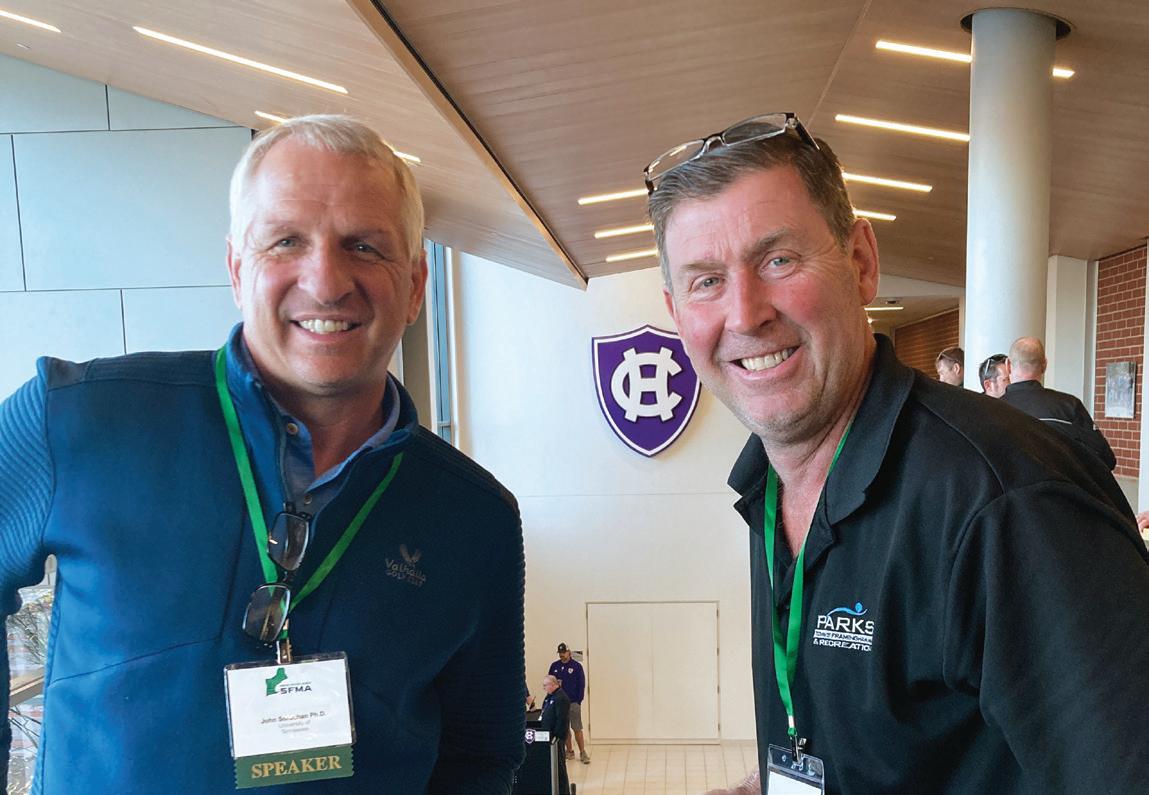
I received a B.S. in Outdoor Recreation and Environmental Studies at Springfield College, followed by Forestry at University of New Hampshire, and I have a Certificate of Sports Turf Management from the University of Georgia.
How did you get your start in sports field management?
I began with the Massachusetts State Parks System and then took a position with the Town of Framingham as the Superintendent of Parks and Cemeteries in 1991. During my 35 years in Framingham, my job has evolved from Park Properties to all Sports Facility and Grounds for the city.
What do you like best about your current position?
The ability to provide the best experiences for the many different users of city-owned recreational facilities in our community.
What is the biggest change you’ve seen in the sports field industry?
The use of technology for so many aspects of our jobs including irrigation, lighting, and the introduction of robotics.
Who are your mentors in the sports field management profession?
Former Groundskeeper Skip Vigarolo in Belmont, MA; Ron Morrel at MDC Golf Courses; Bob Leblanc at Boston College; and Mary Owen of UMass.
What is the best business advice you’ve ever received?
Being able to accept that in the municipal arena, others can, and will, take credit for all the hard work you have put into a project or event.
What is the next gamechanger you see on the horizon for the sports field industry?
The expanded use of robotics and improved synthetic turf surfaces.
What’s your favorite / most useful:
Equipment? Chainsaw and Zamboni
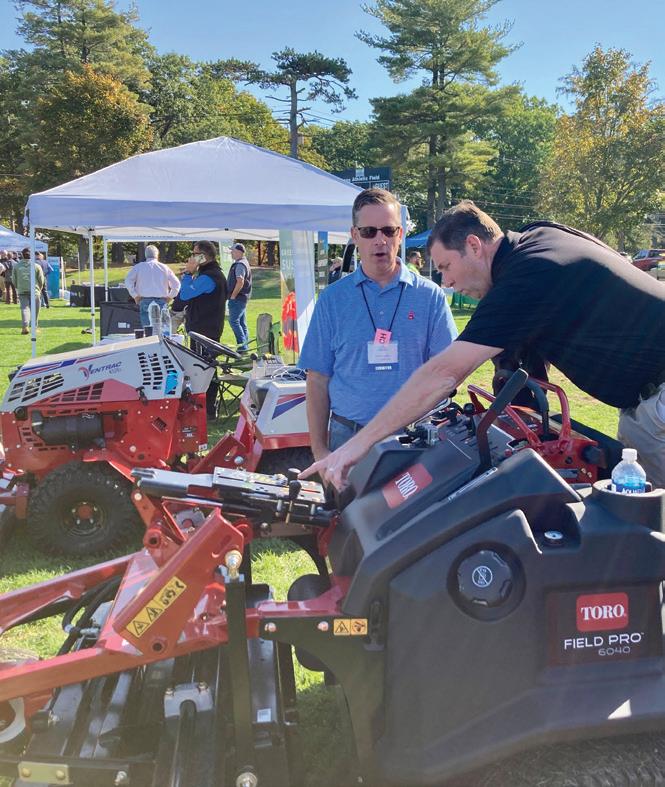
Product? Toro Machines
Technology? Musco Control Lighting
What advice would you share with people starting out in sports field management today?
Enhance your career path and increase your knowledge with as many licenses and certifications as possible (i.e., CSFM, hoisting, CDL, pesticide applicator).
Any industry-related volunteer service?
In addition to my tenure on the NE-SFMA board of Directors, I am head of the Landscape Program Advisory Board at Keefe Tech Vocational High School and run an annual Arbor Day of Service event in the City of Framingham.
Can you share a bit about your family and what you enjoy doing in your free time?
Maryann and I have been married since 1989. We have two children: a son who is a police detective in Framingham, and a daughter who works in Human Resources. In my free time I try to play a lot of golf, travel, read, and work on old vehicles – muscle cars and antiques.
What have you found most beneficial about being a NE-SFMA member?
When I started, I had very little sports turf knowledge and I went to many seminars, programs, and talks on the subject. When I joined the NE-SFMA, I began to interact with a lot of different people in our industry. This is when I realized that there were so many people in our organization who have diverse talents and are willing to share ideas and advice at any point. I credit my interaction with different board members through the years as helping me make a successful career here in the City of Framingham. •
(As of 5/7/2026)
Craig Boland
Athletic Turf Care East Hartford, CT
Bill Brenner
Town of Wilbraham Parks Dept Wilbraham, MA
Trae Brown Genesis Distribution Glen Rock, PA
Jonathan Charwick Activitas, Inc. Dedham, MA
Liam Elwell
City of Newburyport Parks Department Newburyport, MA
Michael Hennessey
City of Newburyport Parks Department Newburyport, MA
Bernhard Kohler
Wolfeboro Area Recreation Wolfeboro, NH
Cole Lamkin
Longwood Cricket Club Chestnut Hill, MA
Griffin LaPosta Worcester Red Sox Worcester, MA
James Lappetito
Pratt and Whitney Stadium (Rentchler Field) East Hartford, CT
Jeff Lesniak
City of Lowell Parks & Cemeteries Lowell, MA
Dan McColl City of Worcester Worcester, MA
Matt Piersanti
Hartford Yard Goats Hartford, CT
Paul Poulin
Westport Community Schools Westport, MA
John Pozzi
Swansea Parks and Recreation Swansea, MA
Corey Robinson City of Worcester
Joe Townsend
Freeport School Department Freeport, ME
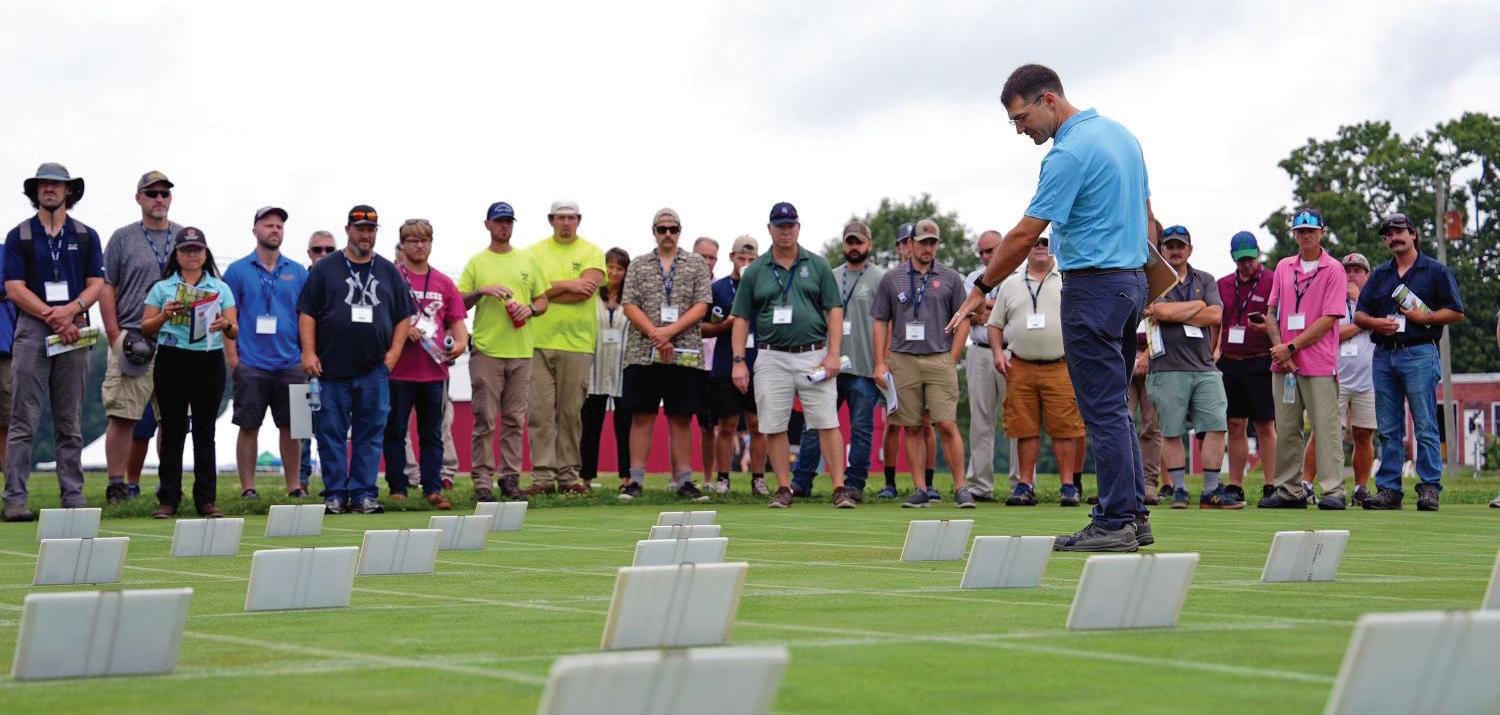
July 22 hundreds of industry professionals will join researchers and Extension educators for UConn’s biennial Turfgrass Field Day. At this unique event, faculty from the Department of Plant Science and Landscape Architecture and UConn Extension share their latest projects with members of the sports field management community who directly benefit from this work.
The research conducted by UConn’s turfgrass faculty is designed to address real-world problems turfgrass professionals face daily, as well as find solutions to make turfgrass more sustainable by reducing the amount of water, fertilizer, and pesticides sports field managers need to use.
“It’s an exciting Extension and outreach activity where we get to directly share our research with stakeholders. They leave the day with practical information that helps them in their jobs,” says John Inguagiato, associate professor of turfgrass science. Inguagiato works closely with members of the turfgrass industry throughout the year and helps prepare students for specialized jobs after graduation.
In addition to research talks, there are numerous self-guided research stations and many exhibitor booths featuring local vendors at the event.
Beyond discussions of the latest innovations, Turfgrass Field Day provides a networking event that supports lasting connections between researchers and those working in all corners of the industry.
Pictured above: John Inguagiato leads research discussion at UConn’s Turfgrass Field Day. Photo credit (University of Connecticut).
For additional details contact John Inguagiato at john.inguagiato@UConn.edu
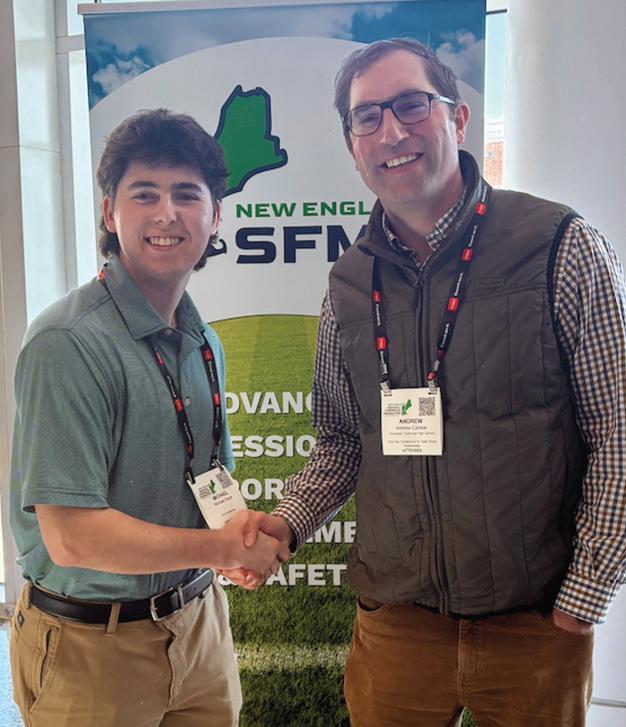
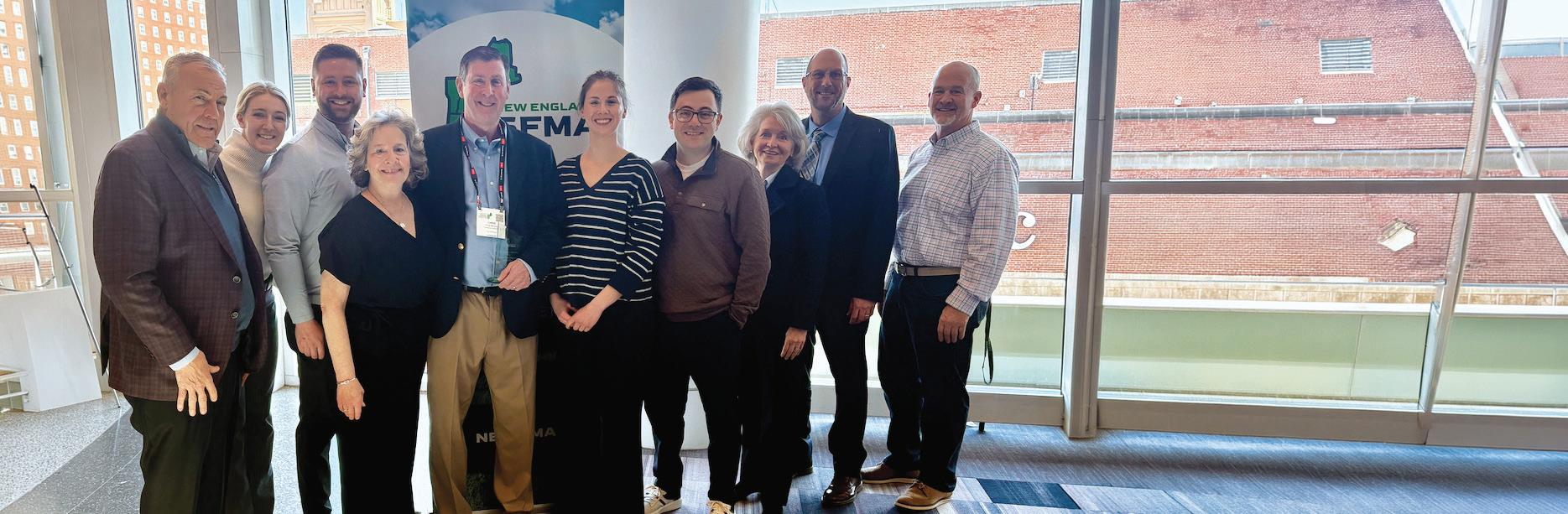
This year’s NE-SFMA Annual Meeting and Awards Luncheon, held at the NERTC in Providence, brought members together for an engaging meeting centered on connection, recognition, and the continued growth of our association. With more than 100 attendees, the event provided a valuable opportunity to reconnect, celebrate achievements, and reflect on the evolving landscape of the sports field industry.
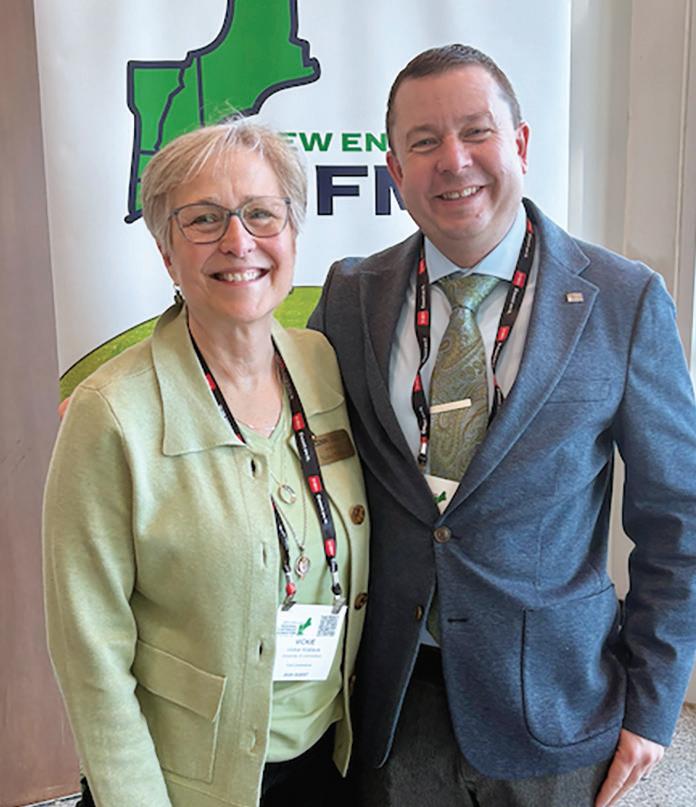
President Art Goodhind opened the program by welcoming attendees and expressing appreciation to Tom Irwin for their ongoing support in hosting the meeting. He also acknowledged the efforts of the board members, trustees, and NERTF representatives whose dedication plays a vital role in advancing NE-SFMA’s mission. Special recognition was given to Vickie Wallace in honor of her decades of service to both NE-SFMA and the industry, as she prepares for her retirement from UConn.
During his remarks, Art outlined the association’s forward-looking priorities, emphasizing four key areas of focus:
• Providing meaningful educational and networking experiences
• Encouraging and supporting the next generation of sports field professionals
• Highlighting excellence within the industry
• Strengthening connections across the membership community
One of the standout moments of the year was the continued success of the DeWolf Memorial Golf Tournament, which generated critical funding for scholarships and grants. In 2025, NE-SFMA awarded three $1,500 DeWolf Outdoor Education Scholarships along with a $1,000 Mruk Scholarship to students throughout New England. Additionally, the UMass Turf Club received a $500 Green Education Grant to assist with travel expenses for the National Collegiate Landscape Competition.
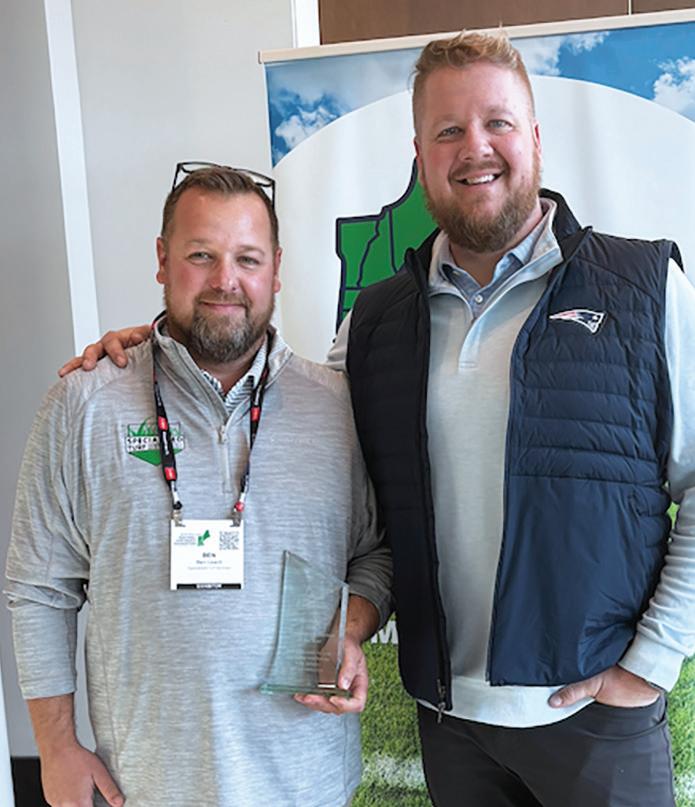
The luncheon concluded with the presentation of this year’s top honors. Chris McGinty of the City of Framingham, MA, was recognized as the 2026 Sports Field Manager of the Year, while Ben Leach of Specialized Sports Turf was named Commercial Partner of the Year. Both recipients exemplify the professionalism and dedication that drive our industry forward. •
$1500 Mark DeWolf Outdoor Education Scholarship
Deadline: June 10
Named in honor of the late Mark DeWolf, an avid outdoorsman and life-long sports field manager, this scholarship is awarded annually in July at NE-SFMA’s DeWolf Memorial Golf Tournament.
$1000 Charles K. Mruk Scholarship
Deadline: December 10
Named in honor of the late Charles K. Mruk, a dedicated member of the turf industry in New England, who believed in the importance of education and professionalism in our field, this scholarship is awarded annually in March at the New England Regional Turfgrass Conference in Providence, RI.
$500 DeWolf Direct Tool Kit Award
Deadline: June 10
These grants are available to high school students who are planning to go directly to work in a turfgrass related field after graduation. The award will be in the form of an industry supplier gift card that will be used to help with new job-related expenses (e.g. tools, safety gear). It will be given to recipients in July.
$500 DeWolf Green Student Program Grants
Deadline: December 10
These grants are available to public school programs (elementary, middle, and high schools, as well colleges and universities). The intention of the grant is to help support projects, equipment, educational programming, or transportation costs related to turfgrass management or environmental studies.
Sports Field Manager of the Year: Congratulations Chris McGinty
Learn more at NE-SFMA.org and spread the word about these opportunities!
By Gary Sykes, NERTF Executive Director
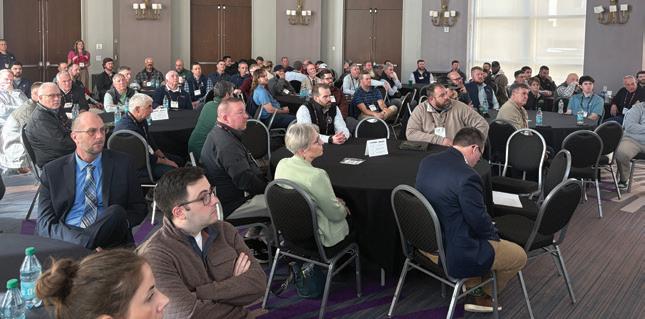
The New England Regional Turfgrass Conference and Show recently completed its 29th annual event, continuing a strong tradition of success since 1998. This year, we narrowly avoided a major weather disruption when Providence was hit with 37 inches of snow on February 23, just eight days before the show. Memories of 2015, when a 22-inch storm struck during the event, had many of us bracing for the worst. Fortunately, by the time I arrived at the convention center Monday evening, the city was remarkably clear. The cleanup crews deserve tremendous credit. Their work brought a great sense of relief to everyone involved.
Weather is always a concern for show management, especially knowing that many attendees, particularly those traveling from the north and west, have responsibilities at their facilities. As we often say, “Mother Nature is in charge.” Despite the recent storm, we were encouraged to see strong attendance right from the start Tuesday morning. Early numbers for 2026 looked very promising, with 747 seminar seats sold, including 121 attendees for John Inguagiato’s Fungicide Programming session. These are outstanding figures, and we thank everyone who made the effort to attend and support the program.
Wednesday brought excellent preregistration numbers and a noticeable energy throughout the building. Educational sessions were well attended across the board, particularly in Golf, Sports/Grounds, and Equipment Technicians. The Equipment Technicians session likely benefited from the appearance of Brean Schoultz of Hot Springs, Arkansas, widely known for
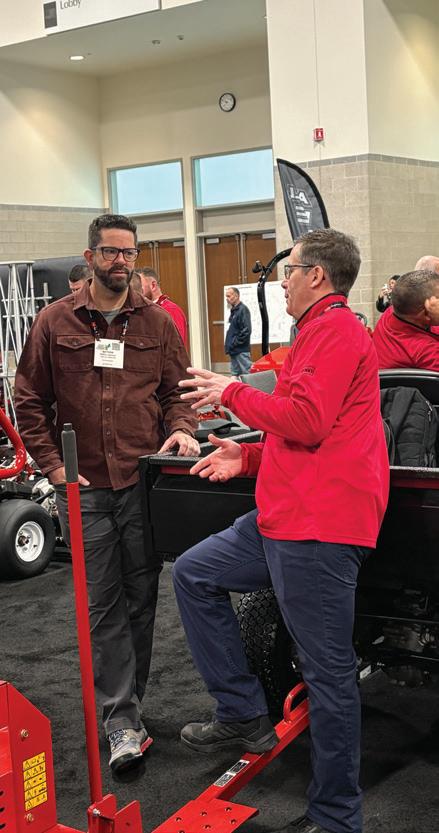
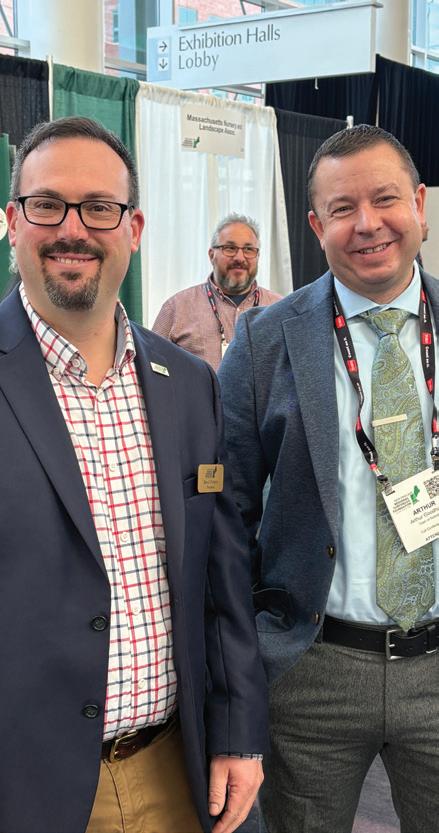
her Chickanic podcast. With more than 800,000 subscribers, Bre’s expertise in diagnosing and rebuilding small engines drew strong interest. Her engaging and informative presentation was a highlight for many attendees.
By midday Wednesday, the trade show floor was buzzing with activity and conversation—always a reliable indicator of a successful event. Booth participation has grown steadily over the past three years, thanks in large part to David’s efforts, and we are nearing full capacity. We hope that trend continues. Afternoon sessions remained strong, and feedback on the education program was overwhelmingly positive. Many attendees specifically praised Jason Lanier and the education committee for assembling such high-quality speakers and topics.
The day concluded with our annual live auction, featuring 52 donated items, products, and services. Led by Chris Ward of Ward Auctions, the event was both efficient and entertaining, raising $32,295 for the Research Trust. The lively bidding and friendly competition added to the fun, and we are grateful to all the companies that contributed. These funds play a vital role in supporting turfgrass research.
Following the auction, many attendees gathered for the Conference Reception on the fifth floor, enjoying a well-earned break, complete with bowl of Ben & Jerry’s, before heading out for the evening. It was a fitting end to another successful day.
Thursday began with 8:00 a.m. education sessions that drew solid attendance for the final day. The trade show opened at 9:00 a.m. and maintained a positive atmosphere, though, as expected, attendance tapered early in the afternoon. Weather forecasts calling for freezing rain conditions likely influenced some attendees to depart early - a decision we certainly understand. Those who stayed, however, continued to express strong appreciation for the day’s programming.
As we wrap up another successful conference, we extend our sincere thanks to all exhibitors, sponsors, and donors who contributed to making the event both enjoyable and impactful. Looking ahead to our 30th anniversary in 2027, we are excited not only to celebrate this milestone but also to continually improving the conference: expanding educational offerings, engaging new speakers, and supporting turfgrass programs across New England.
As always, the show must go on—and we look forward to it doing so for many years to come. •
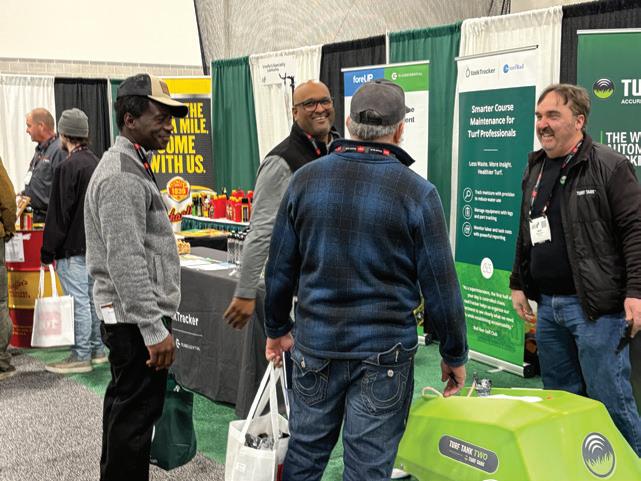
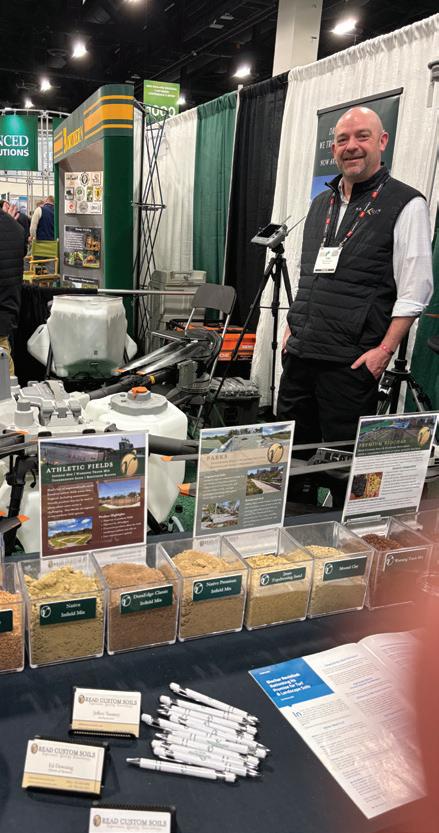
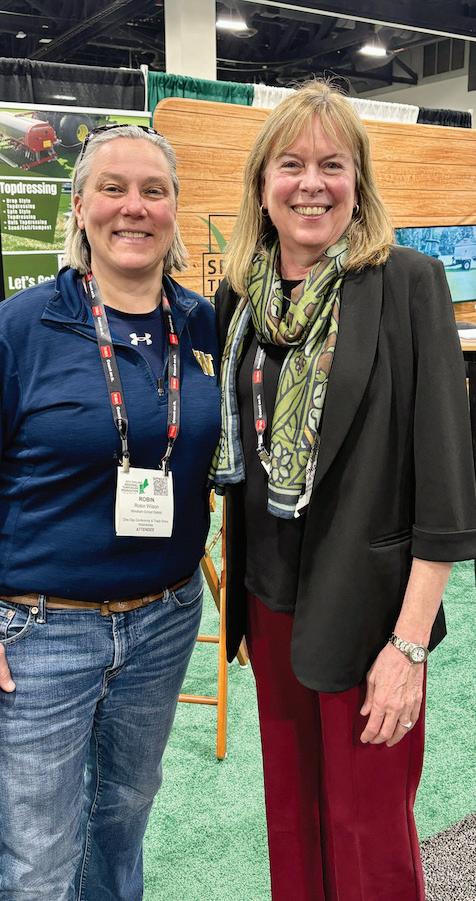
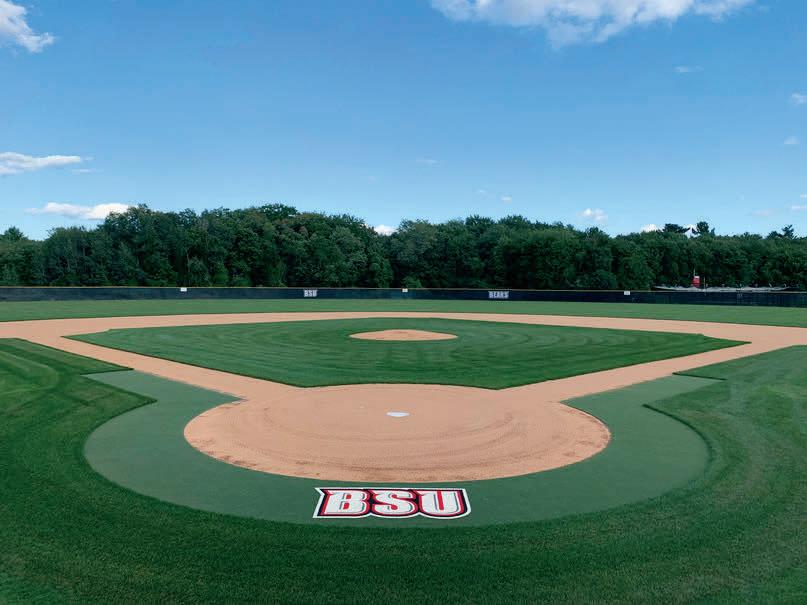
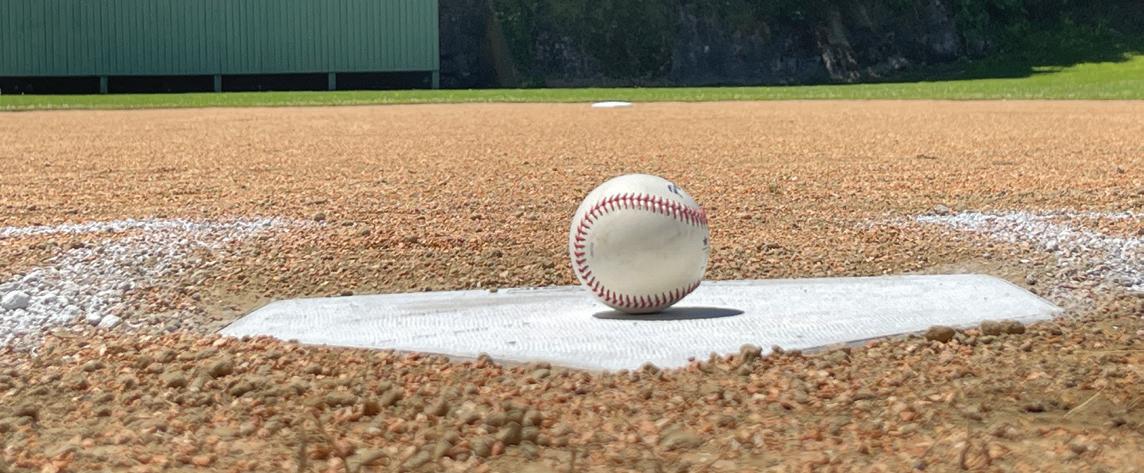
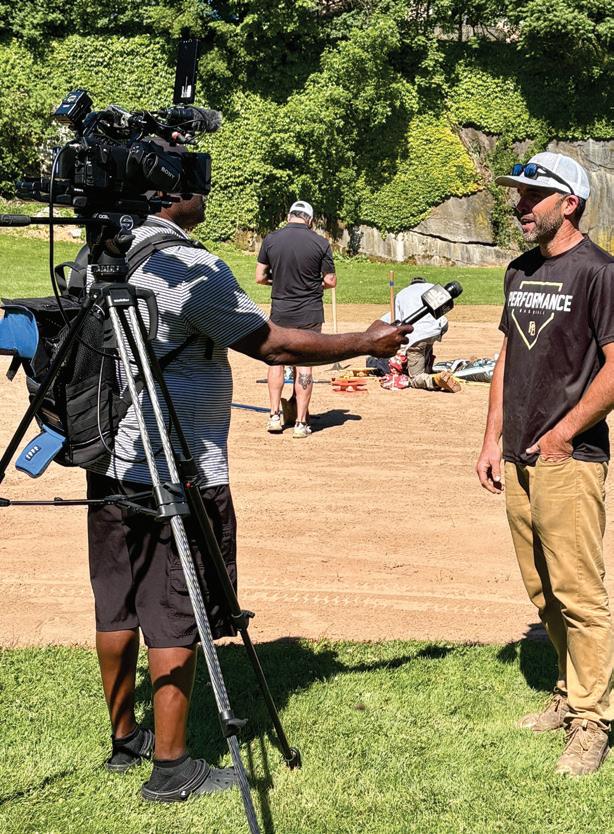
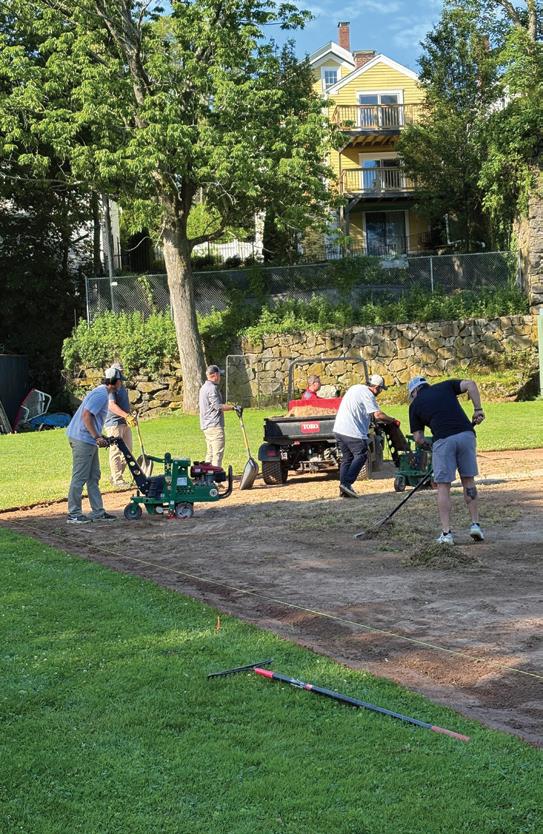
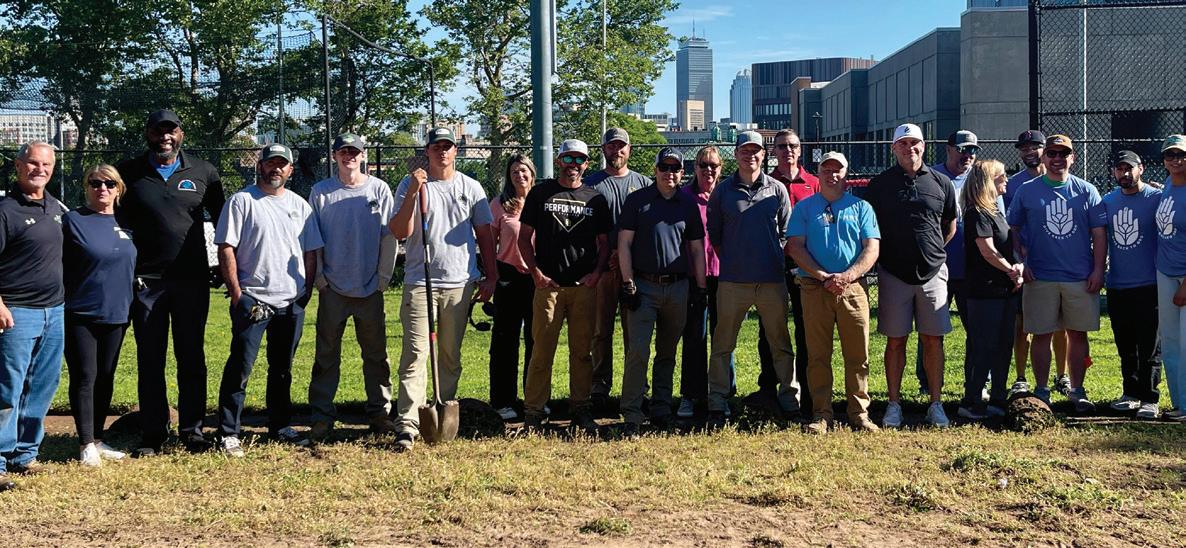
Play ball! The baseball field at the Yawkey Boys & Girls Club of ready for summer games. NE-SFMA partnered with Project Evergreen for a day of giving back. It was a team effort highlighted by generosity, hard work, and camaraderie. Thank you to our volunteers, partners and donors who made this day possible. Let’s do it again next year! •

By Dr. Scott Ebdon Emeritus Professor, University of Massachusetts – Amherst Mike Buras
Director
Kentucky bluegrass Perennial ryegrass Bentgrass (Agrostis)
Fine fescues (as a mixture)
Keeneland Karma 007 (creeping) Bridgeport II (Chewings fescue)
Rubix Wicked Puritan (colonial) Villa (velvet) Barcrown (creeping red fescue)
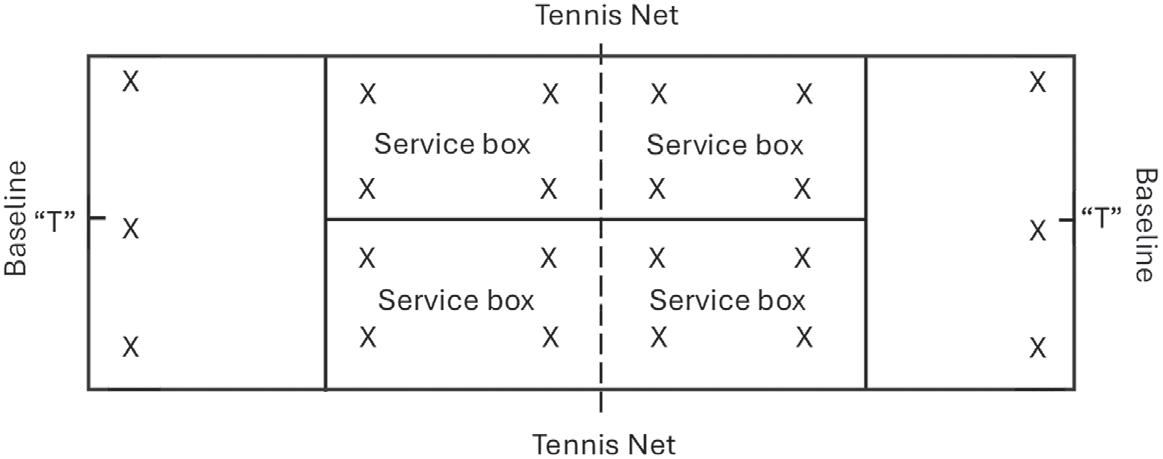
Figure 1. Single court showing approximate locations for measurement of tennis ball bounce. Other measurements including surface hardness, firmness, and soil moisture are taken from these approximate locations. The “T” area identified above is a reference area that is the hardest and most worn surface on the grass court.
There are 26 million tennis players in the USA, and these numbers have increased by 33% since the COVID years. Less than 1% of tennis courts are grass with most grass courts found in the Northeast region.
Sports grass managers may not truly appreciate the intensity of traffic (wear) observed along grass court baselines. Previous research has shown that the intensity of traffic along court baselines is 6 times the intensity of elite soccer (Newell and Wood, 2000).
The term “pace”’ in tennis is the speed that tennis play (and the ball) moves and is determined largely by the vertical height of the bounce off the court. The higher the vertical bounce, the slower the play. Slower play is preferred by players. Pace on grass is notoriously fast.
In 2016 several studies were initiated at the Troll Turf Research Center (South Deerfield, MA). The two main objectives were (i) wear tolerance or carrying capacity (hours of play) along court baselines and (ii) the factors affecting tennis pace.
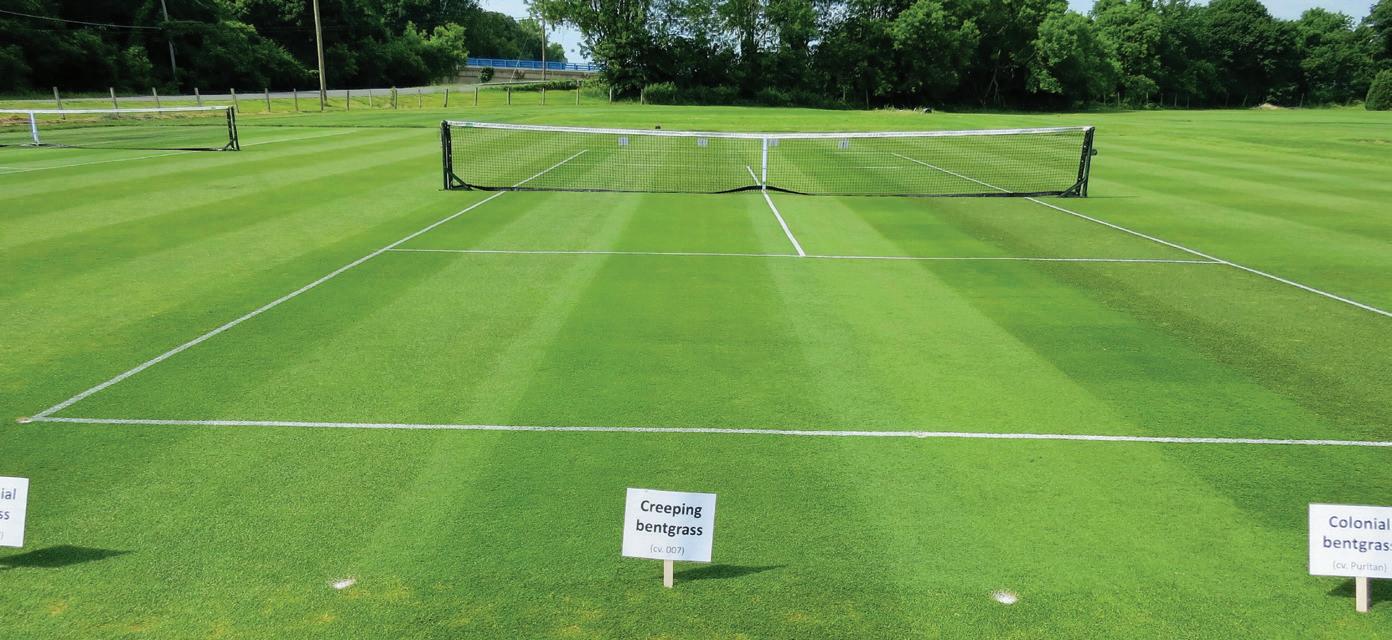
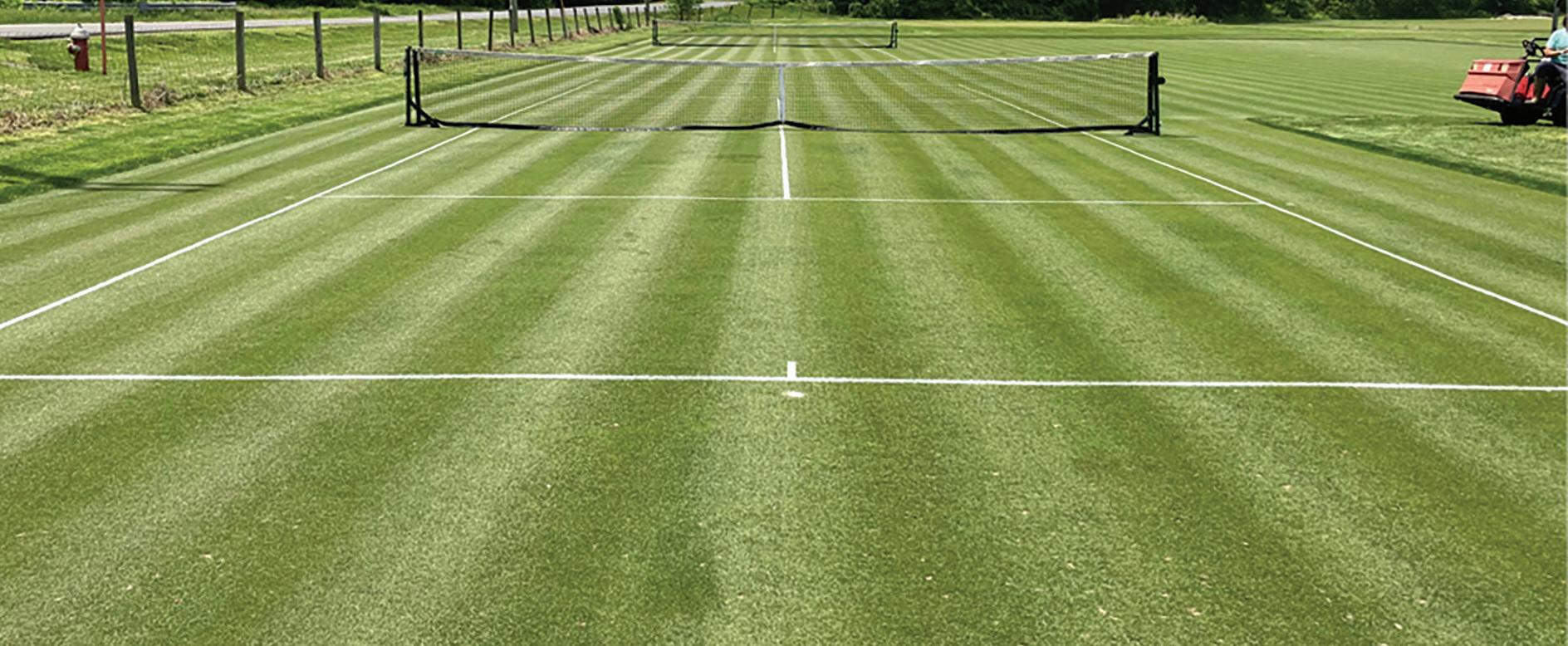
Eight turfgrass species were compared within each of three single courts (planted as replicates). The eight speciescultivars were shown to have superior wear tolerance. The grasses were planted as pure stands (Table 1, Photo 1). The Troll Center was open to the public for daily play from 2017 to 2024. Play averaged 125 hours during the tennis season (June 1 to September 1).
The maintenance of grass courts at the Troll Center used a daily mowing schedule at 5/16 inches (clippings collected), rolling 4 to 6 times per week with a 2,200 lb. roller, sprayable fertilizers (spoon-feeding) on a 2 to 3-week schedule to apply 3.15 lb. N per 1,000 ft2 per season, and sprayable (preventative) fungicides. Heavy rolling and daily mowing was especially important to promoting consistent (uniform) tennis ball bounce and play. Weekly measurements were scheduled after significant soil drying – irrigation was used sparingly to prevent any visible turfgrass dehydration.
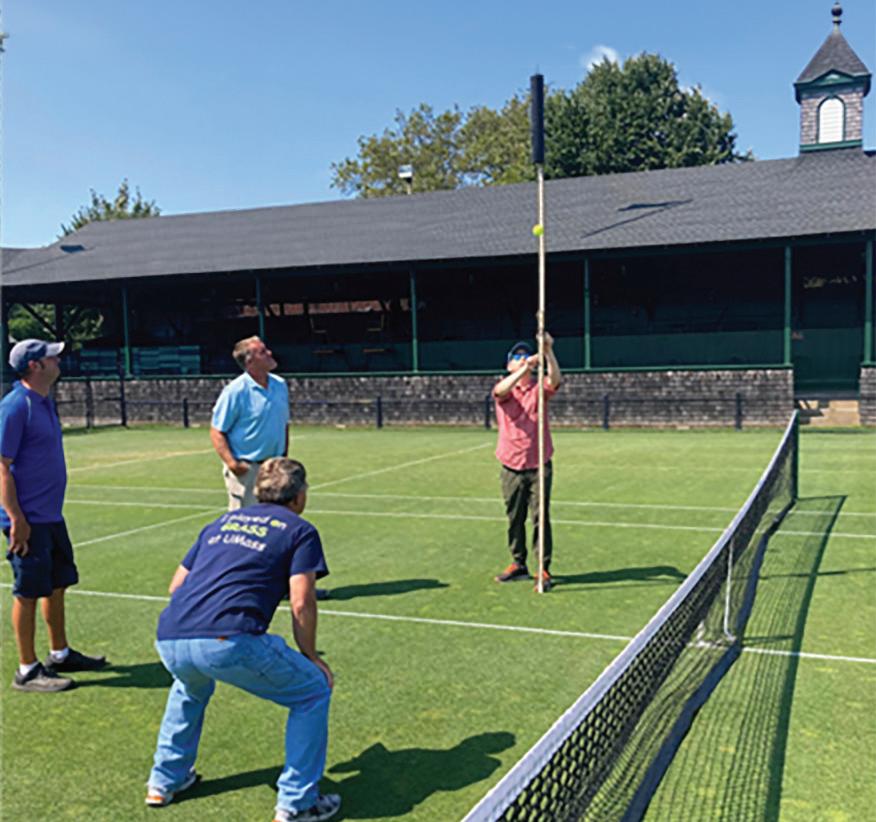
The rules for measuring vertical ball bounce were established in 1925 (Miller, 2006) and are outlined in Table 2. Higher ball bounce (slower pace) on a tennis surface is due to greater velocity of the ball in the vertical direction. Soft grass absorbs more energy indicated by greater surface deformation – less energy is available for ball bounce in the vertical direction.
Ball bounce must be uniform-consistent and representative of ball bounce across the entire court surface (Figure 1).
Hardness is measured with the Clegg impact soil tester and has been used on grass courts since the mid-1980s (Holmes and Bell, 1986) and used currently to predict tennis ball bounce (Ebdon et al., 2025). Surface hardness is measured as gravities (g , also referred to as “Gmax” in the literature).
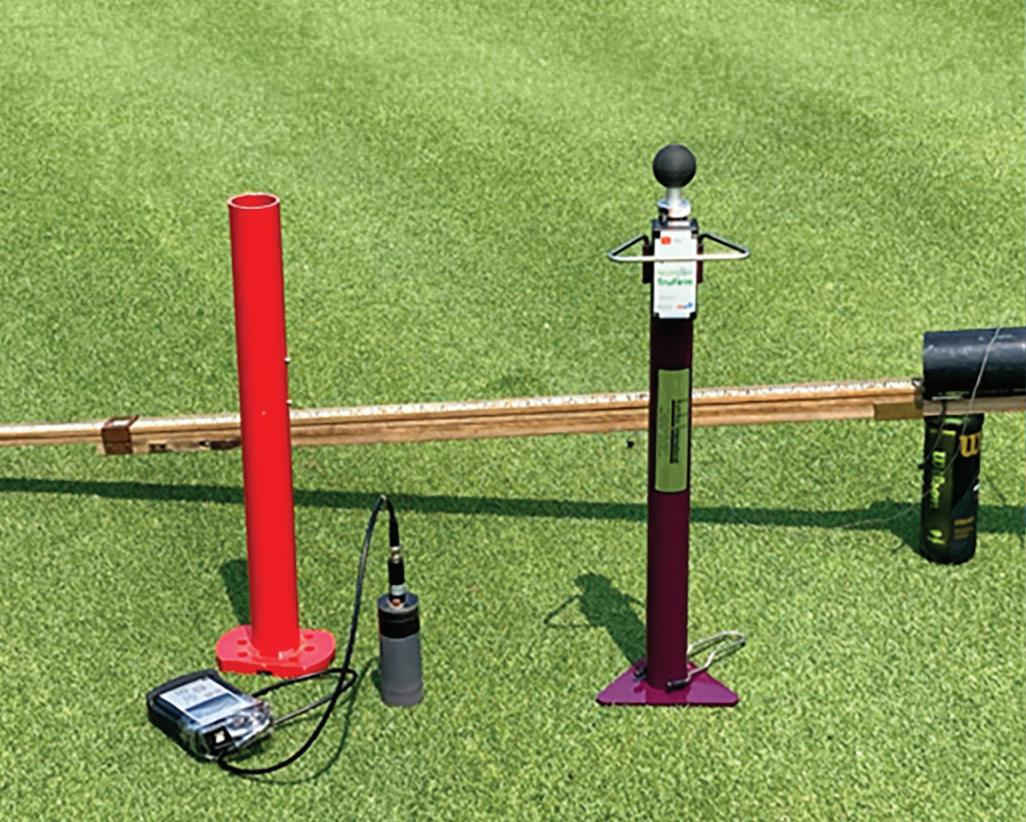
The energy of impact using the 0.5-kg Clegg (30 cm drop height) conforms closest to the tennis ball bounce test (Table 2). The 0.5-kg Clegg and the tennis ball bounce test are highly correlated compared to heavier Clegg devices used in sport grass (2.25-kg Clegg, 45 cm drop height) or devices used in golf (USGA TruFirm, 1.95-kg, 48 cm drop height). These heavier devices are not as effective for tennis (Ebdon et al., 2025).
Over the course of this 10-year study some 3,200-ball bounce impacts and hardness measurements were taken on various grass court surfaces. The results presented in Table 3 for the different surfaces are comparable because accepted (standard) methods were used (Table 2, Fig. 1).
Wimbledon center court (perennial ryegrass courts) for the 2011 Championship were bouncing at 52 inches or 91% of concrete (Table 3). All of the perennial ryegrass courts at the Troll Center and the Tennis HOF satisfied the minimum standard of 70% concrete. Kentucky bluegrass courts at the Troll Center were bouncing near 70% (69%) of concrete.
The fine leaf fescue mixture (Table 1) was among the highest in BB averaging 76% of concrete (Table 3). This species, however, is the least tolerant of tennis traffic, discussed below. Traditional golf species such as creeping bentgrass-Poa grass courts were bouncing below the 70 to 80% concrete standard (< 60% of concrete, Table 3).
Consistent BB across the tennis surface (Figure 1) is important for uniform play. Smooth-hard concrete is the most unform and consistent surface. All other surfaces are compared to the BB consistency of smooth concrete. The concrete surface has an average hardness of 865 g compared to Wimbledon hardness of 260 g (Table 3). Smooth concrete has a BB uniformity of “1.” Wimbledon BB uniformity for the 2011 Championship was measured at “2.1” – twice the variability of concrete (Table 3).
Player perception of BB uniformity (relative to concrete) is interpretated as “an odd bounce.” One consistent trend observed in Table 3 indicates that increasing surface hardness promotes uniform ball bounce and the chances for odd bounces decrease. Therefore, selecting species such as perennial ryegrass affording harder surfaces and higher BB (slower play) have a tendency for more consistent (uniform) play. Many bentgrass courts (or greens) and Poa annua courts (Table 3) that are prone to thatch are the least consistent surfaces with BB uniformity of “7” and higher relative to concrete.
Table 2. Turfgrass species-cultivars evaluated for wear tolerance and ball bounce under tennis play. Troll Turf Center – South Deerfield MA.
3 The vertical bounce normal (perpendicular) to the surface is measured to the bottom of the ball.
4 Ball bounce must be measured off a standard (reference) surface (i.e., smooth concrete, Troll Center garage floor). Approved International Tennis Federation (ITF) “fresh tennis balls” must rebound off concrete between 53 to 58 inches (53 to 58% of its drop height).
5 All ball bounce is expressed relative to concrete (the reference surface) as: relative ball bounce (%) = [ball bounce off grass (inch)/ball bounce (inch) off concrete] × 100.
6 ITF minimum standard for ball bounce is 70% of concrete –80% of concrete and higher is preferred (ITF, 2019).
Table 3. Tennis ball bounce (BB) using the rules of tennis ( Table 2, Figure 1 ) measured off various grass courts, concrete reference surface, and non-grass court surfaces. Tennis BB uniformity is a measure of the consistency of BB off a court surface relative to concrete. Surfaces are ordered according to BB from highest to lowest. Hardness (gravities, g ) was measured using the 0.5-kg Clegg.
surfaces
Table 4. Tennis ball bounce (BB) satisfying 80% of concrete standard measured at various tennis facilities. All grass courts are perennial ryegrass.
Research at the Troll Center indicated 150 to 170 g of surface hardness is needed for tennis balls to bounce to standards –70% (40 inches) to 80% of concrete (46 inches) (Ebdon et al., 2025). Tennis BB of 80% concrete is not easy to achieve (Table 4). To that end, surface soil moisture is extremely important, discussed below.
Table 5. Surface hardness comparing the soil properties of the Troll Center and Wimbledon soils during soil drying.
Sand-silt-clay (texture) 24-64-12 (silt loam) 52-25-23 (sandy clay loam)
Soil moisture, field capacity
Soil moisture, 38% soil drying
Gain in hardness with soil drying
Gain in hardness per 1% soil
Study Ebdon et al. (2025) Newell and Wood (2000)
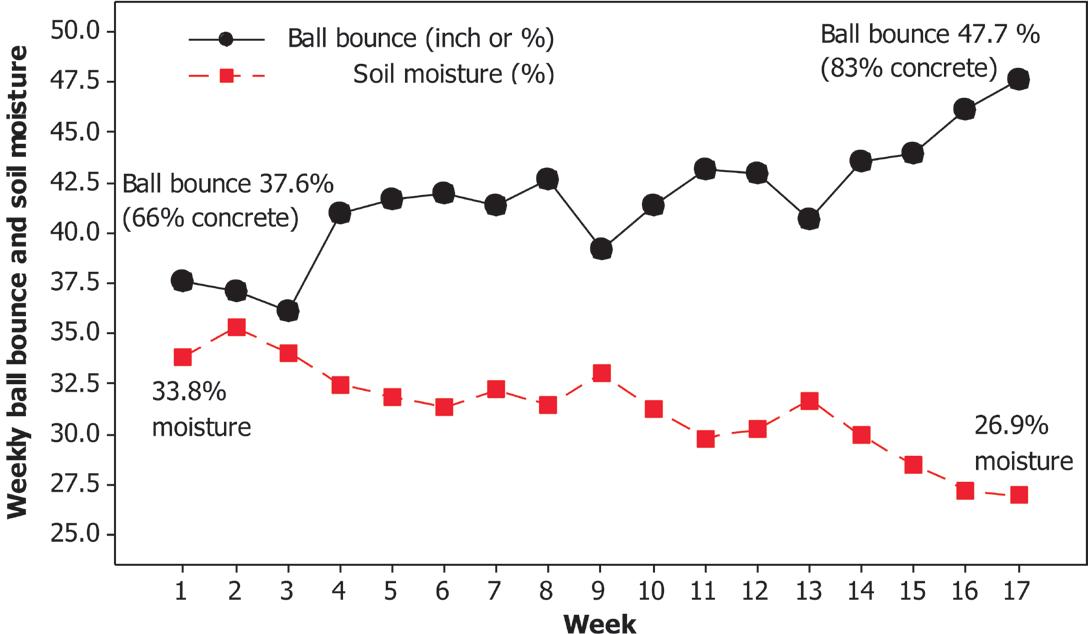
Figure 2. Weekly soil drying promotes harder surfaces, higher vertical ball bounce and slower pace. Soil drying to 26.9% soil moisture was sufficient on the Troll Center silt loam to promote ball bounce of 47.7 inches (83% concrete). Weekly soil moisture and ball bounce were highly correlated (r = -0.96, p ≤ 0.001, n = 1122). Values are the average of three perennial ryegrass courts and 22 impacts per court (n = 66).
For the 2011 Wimbledon Grass Court Championship, 100% of all BB impacts were at 80% of concrete (Table 4). At the Troll Center and the Tennis HOF approximately 16 to 18% of all impacts satisfied the 80% concrete standard. Following uniform drying of the Wimbledon soil, 24% of all BB impacts exceeded the minimum standard for concrete (53% BB, Table 4). Tennis play at Wimbledon is ideal for the Grass Court Championships because of the slow pace and consistent BB (Table 3).
Tennis Ball Bounce –Surface Soil Moisture
Soil moisture using TDR (3-inch probes) was measured weekly during the tennis season concurrently with surface hardness and ball bounce (Figure 1). In tennis, the ball bounce test is a surface phenomenon. This is the main reason why the low energy impact of the light weight (0.5-kg) Clegg (Photo 2) is more effective in predicting tennis ball bounce than heavier devices (2.25-kg Clegg or 1.95-kg TruFirm) (Ebdon et al., 2025). Similarly, longer TDR (5-inch) rods are not as effective as 3-inch probes – it is the immediate surface moisture that matters in tennis ball bounce.
Soil drying will promote harder surfaces but this depends on the soil texture and the mineralogy (clay content) of the soil. Table 5 compares soil drying and surface hardness between the Troll Center and Wimbledon soils.
The gains in surface hardness from 38% soil drying are very different between the Troll Center soil (silt loam, 12% clay) and Wimbledon soil (sandy clay loam, 23% clay). At the same soil moisture deficit (38% soil drying), 60% greater surface hardness is observed on Wimbledon soil (77 g increase – Wimbledon vs. 48 g increase – Troll Center). The Troll silt loam increases in hardness only 3.2 g with 1% soil drying compared to 5.5 g with 1% drying for Wimbledon soil (Table 5). For most soils it is believed that soil drying (Figure 2) is more important in providing a hard tennis surface than soil compaction by rolling.
Any natural soil drying will promote higher ball bounce (Figure 2). Recent research indicates that soil drying to 40% soil moisture depletion causes minimal turf dehydration with fine textured soils (Bruan et al., 2022). Figure 2 presents 1122 pairs of vertical ball bounces and soil moisture (3-inch TDR) measured on Troll Center perennial ryegrass courts during a 17week period. Prior to soil drying (week 1), tennis ball bounce was below standards (66% of concrete) while after progressive soil drying (week 17) ball bounce exceeded standards (83% concrete) (Figure 2).

Table 6. Species-cultivar grass cover and carrying capacity (hours of play to wear baselines to 70% cover). Species-cultivar are ordered by wear tolerance (grass cover) from highest to lowest (Ebdon et al., 2020).
Perennial ryegrass, Wicked 73a†
Perennial ryegrass, Karma 67a 74ab
Kentucky bluegrass, Rubix 66a 70ab
Kentucky bluegrass, Keeneland 65a 71ab
Velvet bentgrass, Villa 60a 58b
Colonial bentgrass, Puritan 35b
Creeping bentgrass, 007 32b
Fine fescue mix 24b
† Values followed by the same letter within the same column are not statistically different (error rate of 5%).
Table 7. Tennis ball bounce, TDR-soil moisture and surface hardness comparing different areas of the court. Areas of the court and associated measurements are ordered according to traffic intensity (high-to-low). Values are the average of three perennial ryegrass courts, four years and 13 week playing season.
–
Service
–
Grass cover after tennis play ended is presented in Table 6 along with the carrying capacity (hours of play) to wear baselines to 70% grass cover. Following 2-years of study perennial ryegrass and Kentucky bluegrass exhibited significantly better wear tolerance (≥ 65% grass cover) and greater carrying capacity (≥ 70 hrs. of play to 70% cover) compared to bentgrass and fine fescue species (Table 6).
Traditional golf species (bentgrass) are comparatively less tolerant of tennis traffic compared to improved cultivars of Kentucky bluegrass and perennial ryegrass – providing the cultivars are tolerant of 5/16-inch mowing heights. Of all the species-cultivars tested (Table 1), the fine fescue mixture was the least tolerant of tennis traffic (24% grass cover) with the lowest carrying capacity (20 hours) (Table 6).
Interestingly, the fine fescue mixture used in the tennis study was the same mixture used on the golf greens at the 2015 US Open (Chambers Bay, WA). This is further evidence as to the intensity of the traffic that is often underestimated in tennis.
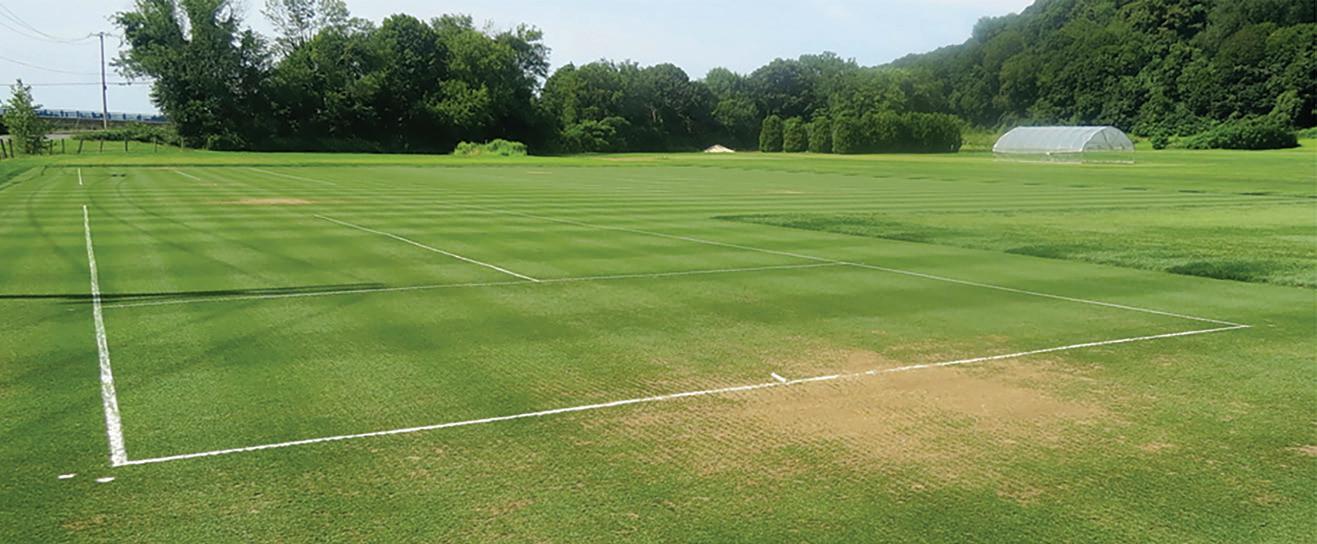
The highest priority should be given to planting wear tolerant grasses adapted to tennis play. Grasses with significantly lower carrying capacity will wear-down faster under the same hours of play (Table 6). The loss of grass cover during the tennis season has a significant impact on tennis play (pace) and the uniformity (consistency) of ball bounce (Photo 3, Table 7).
Table 7 summarizes approximately 3000 measurements on perennial ryegrass courts at the Troll Center. Perennial ryegrass represents the most wear tolerant species (Table 6) with the highest capacity for surface hardness for satisfying ball bounce standards (Table 3) – ideal for tennis. All areas of the court satisfied ball bounce standards (≥ 70% of concrete). However, the T-area approached 80% concrete with an average surface hardness of 143 g and BB of 45-inch.
Surface moisture was 4.4% drier at the T-area (less grass – more exposed soil for surface drying, Photo 3). It is the soil drying at the worn T-area and baselines that promotes an increase in hardness and ball bounce under tennis play – consistent with soil drying presented in Table 5. These worn areas will play different (slower) because of the increase in the vertical height of the bounce compared to the less trafficked service box. The soil-water relations presented in Table 7 are consistent with golf greens and sports grass under heavy play (McClements and Baker, 1994; Straw et al., 2017).
Soil drying promotes harder surfaces (Table 5) and the uniformity of ball bounce approaches the uniformity of concrete (Table 3). At week 1 before soil drying (Figure 2), BB uniformity relative to concrete was “3.7.” At week 17 following soil drying (Figure 2), BB uniformity across all three courts was “2.6” – approaching the BB uniformity of hard courts Table 3).
The measured results reported here are consistent with player perceptions. As eight-time Wimbledon Grass Court Champion, Roger Federer, lamented:
“This new, fresh grass, we’re not quite used to it…as you go deeper in the tournament, the grass court becomes more clay-courty, hard-courty with a bit of grass on it...the ball bounces a bit higher”
How fast (low bounce) or slow (high bounce) or consistent (uniform) a grass court plays is dependent on the tolerance of the species-cultivar to traffic and to the properties of the underlying soil and its plant-soil-water relationships. •
Braun, R. C., Bremer, D. J., Ebdon, J. S., Fry, J. D., & Patton, A. J. (2022). Review of cool-season turfgrass water use and requirements: I. Evapotranspiration and responses to deficit irrigation. Crop Science, 62, 1661–1684. https://doi.org/10.1002/csc2.20791
Ebdon, J. S., Lu, J., and DaCosta, M. (2025). Comparison of Clegg and TruFirm surface hardness for predicting tennis ball bounce standards on grass courts under match play. Crop Science, 65, e70109. https://doi.org/10.1002/csc2.70109
Ebdon J.S., James I., DaCosta M., and Lu J. (2020). Interspecific comparisons of C3 turfgrass for tennis use: I. Wear tolerance and carrying capacity under actual match play. CropScience. 2021;61:750–762. https://doi.org/10.1002/csc2.20270
Holmes, G., and Bell, M. J. (1986). Playing surface hardness and tennis ball rebound resilience. Journal of the Sports Turf Research Institute, 62, 207–210.
ITF. (2019). Approved tennis balls, classified surfaces, and recognized courts: A guide to products and test methods. International Tennis Federation. https://www.itftennis.com/media/2016/2019-itftechnical-booklet.pdf
McClements, I., and S. W. Baker. (1994). The playing quality of natural turf hockey pitches. J. Sports Turf Res. Inst. 70:p. 13-28.
Miller, S. (2006). Modern tennis rackets, balls, and surfaces. British Journal of Sports Medicine, 40, 401–405. https://doi.org/10.1136/ bjsm.2005.023283 Medicine, 40, 401–405. https:// doi.org/10.1136/bjsm.2005.023283
Newell, A. J., and Wood, A. D. (2000). Selection of grass species, cultivars and mixtures for lawn tennis. Journal of Turfgrass Science, 76,53–65.
Straw, C. M., Bowling, W. J., and Henry, G. M. (2017). Rainfall versus irrigation influences penetration resistance and surface hardness on a recreational sports field. Int. Turfgrass Soc. Res. J. 13: p. 1-5.

By Gary Sykes
Spring has arrived, Rory is now a superstar, and we’ve just wrapped up the 2026 Tee-Up New England Online Auction for rounds of golf. This year, the New England Turfgrass Research Foundation (NERTF) featured 109 items from across New England, as well as New Jersey and New York. Offerings ranged from rounds at Mass Links and Button Hole to premier destinations like Old Sandwich Club in Plymouth. Courses represented a wide geographic range—from Stowe, Vermont at 1,600 feet elevation to sea-level coastal layouts.
Over the years, Tee-Up New England has built a loyal following. Some bidders even reach out in late winter to confirm that we’ll open bidding the day after the Masters. To expand our reach, we continue to promote the auction through NBC Sports Radio, WEEI, and iHeartRadio in New Haven and Hartford during auction week, helping remind returning participants and attract new buyers.
Tee-Up New England is designed to raise awareness about the value of turfgrass research and its direct impact on the courses golfers enjoy. Every course in the region benefits in some way from the research, diagnostics, and education provided by our local universities. This initiative continues to grow as a meaningful way to support the longterm health of our industry.
We recognize that golf courses must carefully manage the number of donated rounds each year. However, supporting turfgrass research is an investment that ultimately benefits every facility. In 2025, the combined efforts of the Foundation and Tee-Up New England generated more than $188,000 in funding, with an additional $10,000 contributed by RIGCSA to support an Aggressive Dollar Spot research project.
Sustained funding sends a strong message to university administrations about the importance of these programs. Continued support helps ensure their longevity. Tee-Up New England plays a key role in that effort, and we encourage courses to consider donating a foursome with carts for the 2027 auction. •
Gary Sykes is Executive Director of the New England Turfgrass Research Foundation. He can be reached at gary@NERTF.org .
SiteOne is the Official Landscape Supply Partner of the United Soccer League (USL). From the local pitch where dreams begin to the stadiums that light up on game day, we’re proud to help create the surfaces athletes and communities can count on. And we’re bringing the same professional-grade products and expertise to your next job— whether it’s a backyard refresh or a championship-level field. Look for SiteOne at a USL League game near you and check out SiteOne.com to find a branch near you.