Success of the USDA-Funded Resist Poa Project

6 Ways TCNC Can Support You in 2026


Success of the USDA-Funded Resist Poa Project
6 Ways TCNC Can Support You in 2026



The Turfgrass Council of North Carolina (TCNC) serves its members in the industry through education, promotion and representation. The statements and opinions expressed herein are those of the individual authors and do not necessarily represent the views of the association, its staff, or its board of directors, North Carolina Turfgrass, or its editors. Likewise, the appearance of advertisers, or TCNC members, does not constitute an endorsement of the products or services featured in this, past or subsequent issues of this bimonthly publication. Copyright © 2026 by the Turfgrass Council of North
bi-monthly. Subscriptions are complimentary to members of TCNC. Presorted standard postage is paid at Jefferson
Submissions: North Carolina Turfgrass allows reprinting of material published here. Permission requests should be
unsolicited freelance manuscripts and photographs. Contact the managing editor for contribution information.
rates and insertions, please contact Leading Edge Communications, LLC,


Each new year brings new opportunities and responsibilities, especially for those who care for North Carolina’s landscapes, fields, and facilities. I’m thankful to be part of a community that brings skill, steady leadership, and a strong commitment to learning.
Our year is set to get off to a strong start with the 2026 Turfgrass and Technology Conference at John Deere in Cary. Events like this matter because they bring practical solutions and industry insight together in one place. Thank you to everyone who has supported the program and helped make it possible.
What I value most about TCNC is how we make room for members to share what works, ask good questions, and leave with ideas they can use right away. This only happens because our members, sponsors, speakers, and volunteers put in the time and effort to strengthen our association.
As we begin the new year, I am excited to introduce a new learning resource: More Than Grass Talk with Alpha Jones, CSFM. This leadership-focused podcast was created specifically for TCNC members to complement the technical resources you already rely on.
As the first in a series dedicated to leadership within the turfgrass industry, the debut episode is currently available on our website for all listeners. Starting in February, we will begin posting exclusive companion resources through the members-only portal. These simple tools are designed for you to listen, review, and share with your crews to drive better team results throughout 2026.
Thank you for supporting TCNC. I look forward to what we’ll accomplish together this year.
Wilson Sutton President Turfgrass Council of North Carolina

North Carolina Turfgrass is the official publication of the Turfgrass Council of North Carolina
P.O. Box 641
Wake Forest, NC 27588
984.301.5460
www.turfgrasscouncilnc.org
CHIEF STRATEGY OFFICER
Marcy Cottle
info@turfgrasscouncilnc.org 984.301.5460
Published by:
Leading Edge Communications, LLC 206 Bridge Street Franklin, TN 37064
615.790.3718
Fax 615.794.4524
info@leadingedgecommunications.com
TCNC OFFICERS
PRESIDENT
Wilson Sutton
Walnut Creek Country Club Goldsboro, NC
VICE PRESIDENT
Greg Harris Leap Frog Land Care, Inc. Fuquay-Varina, NC
TREASURER
Jonathan Richardson, NCCTP NCCTP Chairman Green Resource Dunn, NC
PAST PRESIDENT
Kevin Herrmann
Green Group, the Division of Turf Masters Brands Raleigh, NC
DIRECTORS
Alpha Jones
Duke University Durham, NC
Spencer Thomas
Keith Hills Country Club Lillington, NC




Turfgrass Council of North Carolina is excited to introduce a new way to learn, reflect, and stay connected to leadership in the green industry: More Than Grass Talk with Alpha Jones, CSFM. Alpha is noted for his leadership in Duke University’s sports field management and his role as the 2026 SFMA President. This podcast brings practical wisdom to a format you can take to the field or the road.

The first episode is now live on our website, and it marks the start of an ongoing series designed to support members who lead teams, manage pressure, and make daily decisions that affect people and performance. Each episode will focus on leadership topics that translate directly to the realities of turf and grounds work.
As a TCNC member, you receive exclusive access to the full audio, along with related educational opportunities available through the association. This podcast is one more way TCNC is investing in member development by making learning accessible and relevant to your work every day.
You can listen to the first episode now on our website at turfgrasscouncilnc. org. We hope you will tune in, share it with your team, and keep an eye out for future episodes as the series grows.
Companies wishing to support TCNC with multiple members can join as Deluxe Members. Deluxe Memberships can be purchased in one of three tiers: 1–5 employees; 6–10 employees; or 11+ employees.
If you'd like to learn more about the Deluxe Membership, please contact the TCNC office at 984.301.5460 or info@turfgrasscouncilnc.org.
Barefoot Lawn Care and Landscaping Services
Canopy Lawn Care
Carol Woods Retirement Community
Carolina Green Corp
City of Asheville Parks and Recreation
City of Raleigh Parks and Recreation
Duplin Sod
Edison Landscaping
Emerald Green
ETM Coastal
Fairway Green of Charlotte
Fairway Green of Raleigh
Fayetteville Tech
Gates Four Golf and Country Club
Green Resource
JRM Inc.
Keith Hiils Golf Club
Leapfrog Landcare
NaturaLawn of America (Raleigh)
Nature's Select
McConnell Golf
Morehead City
Quality Turf Sod Solutions Southern Ag
Southern Garden
Southern Seeds, Inc.
The Biltmore Company
The Sunrock Group
Tillery Country Club
Town of Cary Public Works
Town of Garner
Triangle Chemical Company
Turf Mountain Sod, Inc.
UNC – Chapel Hill
Wake Forest University Weed Man
Renewal as of June 2025
Don't see your company's name?
Renew today at www.turfgrasscouncilnc.org
Dr. Travis Gannon Assistant Professor 919.515.2647 travis_gannon@ncsu.edu
Navdeep Godara Assistant Professor Turf & Forage Weed Science ngodara@ncsu.edu
Emily Erickson Crop Science Lecturer 919.513.2034 emily_erickson@ncsu.edu
Ray McCauley Extension Associate 919.515.2647 rkmccaul@ncsu.edu
Dr. Susana Milla-Lewis Professor & University Faculty Scholar 919.280.3443 susana_milla-lewis@ncsu.edu
Dr. Grady Miller Professor & Extension Specialist 919.515.5656 grady_miller@ncsu.edu
Dr. Rob Richardson Associate Professor & Extension Specialist 919.515.5653 rob_richardson@ncsu.edu
Dr. Wei Shi Professor 919.513.4641 wei_shi@ncsu.edu
Dr. Qiyu Zhou Assistant Professor 313.782.2892 qzhou9@ncsu.edu
Dr. Terri Billeisen Extension Associate 919.515.7464 tlhoctor@ncsu.edu
Lee Butler NC State Turf Diagnostics Lab 919.513.3878 ebutler@ncsu.edu
Dr. James Kerns Professor and Extension Specialist 919.513.4820 jpkerns@ncsu.edu
Dr. Danesha Seth Carley Director, Southern IPM Center & Associate Professor 919.513.8189 danesha_carley@ncsu.edu
www.turffiles.ncsu.edu/people/





North Carolina Turfgrass allows you to get your message directly in the hands of your customers across North Carolina. The magazine is a key benefit of TCNC membership – providing valuable research, education and industry information. Readers can also access the Digital Edition through The Turf Zone website. Archived issues will ensure that your advertising will continue to be seen indefinitely, for long-ranging impact. The Turfgrass Council of North Carolina are:
Lawn Care Operators Golf Course Superintendents Parks & Recreation Supervisors Landscape Contractors Sports Turf Professionals Commercial Grounds Managers Equipment Suppliers Sod Producers

sales@leadingedgecommunications.com Contact us today to learn about effective and unique advertising strategies that target turf industry professionals.
linkedin.com/company/theturfzone
x.com/theturfzone

facebook.com/theturfzone
TheNorth Carolina Certified Turfgrass Professional (NCCTP) program is a comprehensive program developed to enhance the technical competency of turfgrass professionals, while elevating their professional image, that of your business and of the turfgrass management industry. Administered by the Turfgrass Council of North Carolina, the NCCTP designation confirms your expertise in turfgrass management to prospective customers and your peers.
The NCCTP program increases and enhances your turfgrass industry knowledge, career, and business development through a course of study of in-depth coverage of the science of turfgrass management.
The NCCTP designation offers immediate confidence and credibility of turfgrass management practices to customers and prospective employers.
Promote and market yourself as a North Carolina Certified Turfgrass Professional.
• Use the NCCTP logo on your business materials.
• Use NCCTP pins, uniform patches, and vehicle decals.
• Your TCNC Member Directory listing is distinguished with the NCCTP designation.
The NC State Turfgrass Professional Short Course, a comprehensive turfgrass education program, is offered at select NC State Extension offices and at NC State University.
This Short Course offers a full curriculum of the science of turfgrass management as well as Continuing Education Credits for NCDACS Pesticide and NCLCLB Landscape Contractors’ license holders, and it will help you prepare for the NCCTP exam.
This Short Course is recommended but not required to take the NCCTP exam.
Hold a current TCNC membership. If not currently a member, go to www.turfgrasscouncilnc.org and click ‘JOIN NOW’ to join online or download an application. Have a minimum of one full year of work experience in the turfgrass industry.
Agree to the Certified Turfgrass Professional Code of Ethics as detailed on the application form.
Submit:
• A current and valid NC Pesticide Applicators license
• A completed NCCTP application (current TCNC members may apply online).
• NCCTP Program Application: $150
• Self-Study Materials: $50
• Exam Fee: $50
Curriculum covers nine core areas: Turfgrass Characteristics; Establishing Turfgrass; Soils & Nutrient Management; Cultural Practices; Pests & Integrated Pest Management; Pesticides & Plant Growth Regulators; Landscape Safety & Pesticide Use; Calculations & Calibration; Turfgrass Business & Economics.
Candidates have six months from the date of their enrollment acceptance to complete the NCCTP exam. Candidates have six hours to complete the exam and must score 80% or more on each section to receive the NCCTP designation.
Exams can be taken at the TCNC office in Raleigh during normal business hours, or arrangements can be made at your local NC State Extension location.
Exams will not be graded if any application information is missing or if TCNC membership status cannot be confirmed. Please allow two to three weeks for exam grading and reports. Upon successful completion of the exam, candidates will receive communication with their results and either next step options or their graduation packet.
Maintain a current TCNC membership as a means of demonstrating ongoing support for the industry.
Submit an annual $50 renewal fee, which supports the NCCTP program and related promotional activities. Designation year is the same as the TCNC membership year, from July 1st to June 30th.
Hold a current NC Pesticide Applicator’s License. Subscribe to, actively support and uphold the TCNC Certification Code of Ethics.
The NC Certified Turfgrass Professional designation (NCCTP), the NCCTP logo and related programs materials are the trademarked property of the Turfgrass Council of North Carolina and cannot be used without TCNC’s written permission. For additional information, contact TCNC at 984.301.5460.
Harry Archer Fairway Green
Joseph Bailey
Lawn & Order Landscaping
Shay Brickhouse Landscaping Unlimited, Inc.
Joe Brown Great Expectations
Lawn and Landscape
Scott Caskie S Caskie
Brian Dawson
Magnolia Turf Farm
Stephen Edwards Reedy Creek Golf Course, Inc.
Ryan Hagerman Davis Landscape
Jeff Johnson River Golf
Jeremy King Ewing Outdoor Supply
Elliott Linstrum Ewing Outdoor Supply
Kellan McDiarmid Triangle Home Services
Gilberto Mendiola Rubio Landscape and Lawn Maintenance LLC
AJ Nunnery Ewing Outdoor Supply
Andrew Pait Final Touch Landscaping
Tuesday, March 10th
Caldwell County Regional Turfgrass Conference
8 am – 12 pm
https://www.turffiles.ncsu.edu/event/5532688734/caldwell-countyregional-turfgrass-conference
Tuesday, March 17th
New Hanover County Morning
Regional Turfgrass Conference
8 am – 12 pm
https://www.turffiles.ncsu.edu/event/5532688736/new-hanovercounty-morning-regional-turfgrass-conference
Tuesday, March 17th
New Hanover County Afternoon
Regional Turfgrass Conference
1 pm – 5 pm
https://www.turffiles.ncsu.edu/event/5532688737/new-hanovercounty-afternoon-regional-turfgrass-conference
Tuesday, April 7th
Pesticide CEU Lunch and Learn –Invasive Weed Identification and Control
12 pm – 1 pm Iredell County Center
https://www.ces.ncsu.edu/event/4979501481/pesticide-ceu-lunchand-learn-invasive-weed-identification-and-control
Guilford County Regional Turfgrass Conference
Wednesday, March 25th
8 am – 12 pm
https://www.turffiles.ncsu.edu/event/5532688735/guilford-countyregional-turfgrass-conference
Wednesday, August 12th
Turfgrass Field Day – Raleigh
7:30 am – 2 pm
https://www.turffiles.ncsu.edu/event/5532747676/turfgrass-fieldday-raleigh


Anew year in turf management brings familiar expectations from clients, players, boards, and supervisors, along with ongoing challenges like weather and labor. What can change is your goals, and we’re dedicated to helping you achieve them. In 2026, TCNC will continue to prioritize practical education and industry connections tailored to professionals in sports turf, lawn care, landscape, and grounds.
1. The Turfgrass and Technology Conference sets the tone for 2026. TCNC brings members together for timely education, approved continuing education credits, and practical sessions that strengthen on-the-job decision-making and professional development.
TCNC’s event programming helps members keep pace with changing standards, evolving best practices, and the business side of running a team or operation. Keep up with all our events at: turfgrasscouncilnc.org/events
2. Continuing education remains a strong TCNC advantage. In fact, we offer more credits than we have in years, backed by expert discussions that help solve real field challenges. Our mission is to promote the turfgrass industry in North Carolina through continuing education. In practice, this means conferences, regional education opportunities, and programs that include CEUs or pesticide credits when available.
If your license, role, or employer requires documentation of training, TCNC events often include credit details in registration information, including business and landscape hours where applicable. The best habit you can build this year is simple: check our events calendar regularly and plan ahead, especially if you need credits by a specific deadline.
As a TCNC member, you may attend any NC State CALS event for $15, which helps us continue expanding education opportunities.
3. Education is one of the strongest retention tools we have because it helps employees grow in confidence and skill while staying connected to a professional network. To support onboarding, TCNC offers online resources that give new team members practical training that help them succeed faster.
NCCTP certification is an attractive milestone for you or your staff. For many professionals, 2026 is the year to formalize training, strengthen client credibility, or build a clearer career path for staff. TCNC’s North Carolina Certified Turfgrass Professional program offers a way to do that.
Our self-paced course offers a comprehensive turfgrass management curriculum, provides continuing education credits, and helps prepare participants for the NCCTP exam. The program also has transparent costs associated with registration, the exam fee, and study materials.
Operationally, this can be a smart investment in your bench strength. A certified team member can help raise standards across mowing, fertility programs, pest management, and stakeholder communication. For your career, it signals that you take the craft seriously and have put structure behind your expertise.
4. We’re continuing to invest in the future. Turfgrass Scholarships Workforce development goes beyond hiring, it’s building a pipeline. TCNC is committed to cultivating the next generation of industry leaders through strategic scholarship support. In partnership with the NC Agricultural Foundation, we provide dedicated scholarships to graduate students within the NC State University College of Agriculture and Life Sciences (CALS).
By funding advanced research and academic excellence through the Eagle Foundation, TCNC ensures a robust pipeline of highly skilled professionals ready to advance the North Carolina turfgrass industry.
5. We are expanding member education with More Than Grass Talk with Alpha Jones, a green industry leadership podcast for TCNC members. Mr. Jones is an Athletic Field Specialist at Duke University, and is known for expertise in sports turf management and leadership initiatives.
6. The association also supports member visibility and connection in ways that are easy to overlook during a busy season. TCNC highlights promotional options, including website and magazine advertising, conference sponsorships, and exhibits, as part of its member benefits. TCNC also offers partnership opportunities that provide year-round promotional features based on partnership tier.
For contractors and service providers, this can support lead generation and brand credibility. For managers and decisionmakers, it creates an easier path to find vendors, suppliers, and qualified professionals through TCNC networks and directories. You can learn more at turfgrasscouncilnc.org/ about-tcnc/become-a-partner
TCNC was created to promote the turfgrass industry in North Carolina. Today, that mission shows up through education, connection, and professional development. If your year is already moving fast, use TCNC as a steady resource you can depend on, whether that means a conference, a certification goal, or a podcast episode you can queue up on a long drive.
Southern Agricultural Insecticides, Inc. is a distributor of pesticides, fertilizers, potting soils, and horticultural supplies with locations in Florida and North Carolina.
MANUFACTURERS OF… DISTRIBUTORS FOR…
Blue Colorant
Chelated 5% Iron
Chlorpyrifos 2.5% G
Chlorpyrifos Mole
Mole Cricket Bait
Defoamer
Latron B–1956
Methylated Seed Oil
Snail Bait
Soil Acidifier
Soil Wetting Agent

Soluble 10–30–20
Soluble 30–7–14
Soluble 20–20–20
Spreader Sticker
Surfactant for Herbicides
Tank Cleaner
Turf Green
Tweak
12–0–0–6% iron
GOLF COURSE SALES STAFF
Jim Wells — West Central Florida (941) 720–2712
Roger Welker — East Coast Florida (772) 260–0282
Kevin Downing — South Florida (561) 427–4501
Jeff Strother — Southwest Florida (941) 270–0470
Andrew Wampler — Western Carolinas (828) 674–2594
Brandon Hicks — Central North Carolina (336) 906–0803
Nathan Biggs — North Carolina...................... (704) 996–5125
AMVAC Andersons
Aquatrols
BASF
Bayer
BioSafe Systems Bioworks
Certis
Corteva Agriscience
Envu
FMC
Gowan
LebanonTurf
Milliken
Milorganite Nufarm OHP
Old Castle PBI / Gordon
Quali-Pro
Rightline
SePRO
Sipcam Agro
Solo
Sunniland
Syngenta UPL Yara
Boone, NC (828) 264-8843
Hendersonville, NC (828) 692-2233
Palmetto, FL (941) 722-3285
By J. Scott McElroy Professor, Turfgrass Management and Weed Science, Auburn University
and James D. McCurdy Professor and Extension Specialist, Turfgrass Management, Mississippi State University
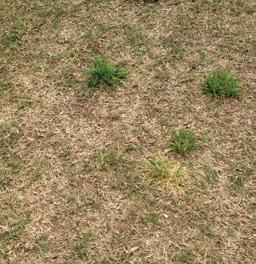
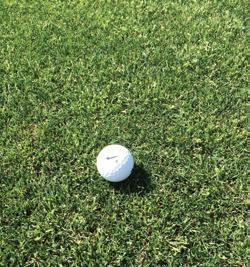
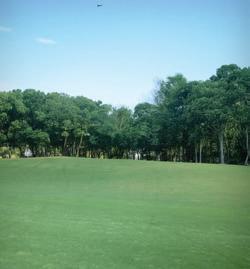
Given the current climate surrounding federal funding discussions, we want to provide detailed information about research outcomes from the ResistPoa project. Our goal is transparency about what taxpayer dollars accomplished when this project received funding. For information regarding this project, please see http://resistpoa.org/
ResistPoa launched in 2018 as a nationwide initiative to tackle the growing problem of herbicide-resistant annual bluegrass (Poa annua) in turfgrass systems. This four-year, $5.7 million project, funded by the USDA Specialty Crop Research Initiative brought together 16 scientists from 15 universities across the country.
The project had clear objectives: develop better management practices for annual bluegrass control, map the extent of herbicide resistance nationwide, and create decision-support tools for turf practitioners. Essentially, we needed to understand how bad the resistance problem really was and give golf course superintendents, sports field managers, and other turf professionals the tools to fight back.
Annual bluegrass might seem like a small problem, but it’s not. This weed costs the turfgrass industry millions of dollars annually in control measures and lost playability. When herbicides stop working, managers face expensive reseeding, overseeding, and intensive maintenance schedules that strain budgets and resources.
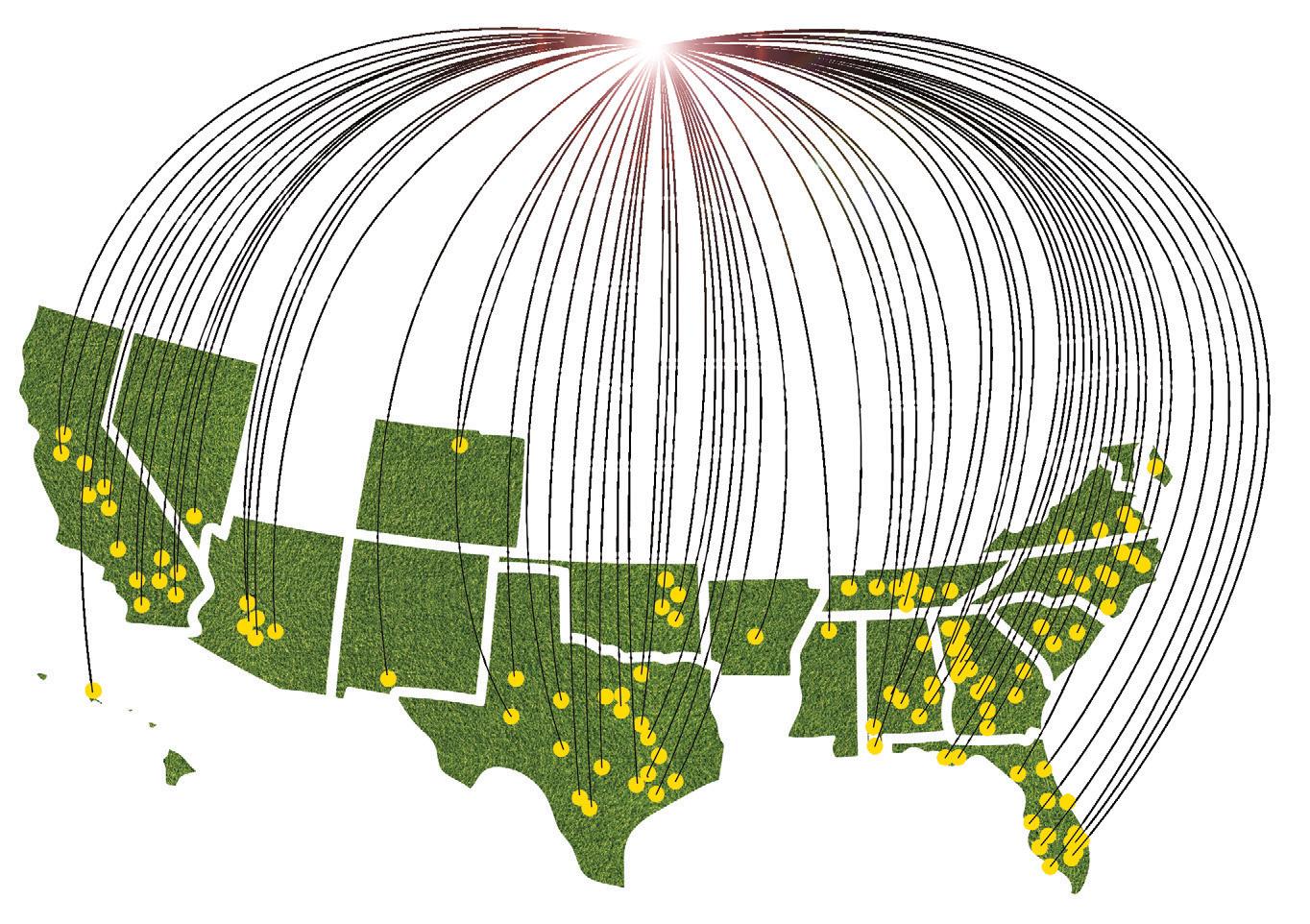
Our team’s biggest accomplishment was conducting the first comprehensive national survey of herbicide resistance in annual bluegrass. We collected and tested over 1,300 populations from turf sites across five different climate zones. The results were sobering—by 2023, we documented populations resistant to up to nine different herbicide modes of action.
This wasn’t just academic research. These findings gave turf managers concrete data about what to expect in their regions. Instead of guessing whether an herbicide might work, superintendents could now reference our maps and data to make informed decisions about their control programs.
We dug deep into the science behind why annual bluegrass develops resistance. Through molecular analysis of dozens of populations, we identified specific genetic mutations that allow the weed to survive herbicide treatments. For example, we discovered a novel mutation in the β-tubulin gene that helps annual bluegrass resist popular pre-emergence herbicides like prodiamine.
But genetics wasn’t the whole story. We also found that annual bluegrass uses other tricks—enhanced metabolism and reduced herbicide uptake—to survive treatments. These non-target-site resistance mechanisms were particularly common with ALSinhibiting herbicides like foramsulfuron (Revolver) and trifloxysulfuron (Monument).
Research is only valuable if people can use it. Our team tested alternative control methods that don’t rely solely on herbicides. We demonstrated that aggressive fraise mowing (essentially shaving the turf surface) could dramatically reduce annual bluegrass infestations in bermudagrass turf. While this technique isn’t suitable everywhere, it gives managers another tool in their arsenal.
We also examined how cultural practices affect the weed’s competitiveness. Studies in Oregon showed that adjusting irrigation frequency and phosphorus fertilization could influence how well annual bluegrass competes with desirable grasses. These findings are being incorporated into our best management practice guidelines.
What makes ResistPoa unique is that we have included social scientists to study the human side of weed management. Through surveys and interviews with turf managers, we identified real barriers to adopting better practices: budget constraints, risk aversion, and simple lack of awareness about resistance.
We developed a user-friendly decision support tool—essentially a calculator that helps superintendents visualize the long-term benefits of diversified management versus short-term cost savings. This economic modeling helps justify upfront investments in integrated approaches rather than relying on the same herbicide year after year.
From day one, we emphasized getting information to the people who needed it. The project created ResistPoa.org as a central hub for resources, now hosting about 70 educational documents that users can filter by turf system and control method.
We produced a best management practices poster explaining herbicide modes of action and effective rotation strategies. This poster was distributed to over 2,000 stakeholders in print and downloaded more than 1,000 times online.
Our team organized field days, workshops, and webinars across the country. These weren’t just presentations—they were hands-on demonstrations where turf managers could see control trials in action and ask questions directly.
Perhaps most importantly, we trained the next generation. At least 22 graduate students, 25 undergraduates, and roughly 10 postdoctoral researchers received training through ResistPoa. These students are now professors, consultants, and golf course managers, multiplying the project’s impact.
The real test of success is whether the turf industry is actually using our findings. Early indicators are positive. Golf course superintendents are referencing our resistance maps to make proactive decisions about herbicide rotations. Instead of waiting for a product to fail, they’re switching to different chemistries based on what our survey showed in similar conditions.
We worked closely with industry advisory panels from the beginning, including golf course superintendent associations, sod growers, and lawn care companies. This collaboration ensured our research reflected real-world conditions and that recommendations fit industry needs.
When preliminary results showed certain populations surviving standard herbicide rates, industry partners helped us quickly alert practitioners so they could adjust rates or tank-mix with other products. Seed producers worked with us to test for annual bluegrass contamination and resistance in turfgrass seed lots.
The project generated over 20 peer-reviewed publications in journals like Weed Science, Crop Science, and Weed Technology. This wasn’t just about meeting academic requirements—these papers ensure the knowledge is archived and accessible to guide future research and management decisions. Our management guides are “Open Access”—you can download them from the Crop, Forage & Turfgrass Management Journal.
Our investigators delivered dozens of conference presentations at weed science and turfgrass meetings, sharing results throughout the project’s duration rather than waiting until the end.
ResistPoa created lasting benefits beyond its four-year timeline. The network of scientists, Extension agents, and industry professionals formed during the project continues to collaborate on turf challenges. We’ve seen the power of coordinated research, and that collaboration model is being applied to other problems. The students and researchers trained under ResistPoa have spread throughout the industry, carrying this knowledge into their new roles. This multiplier effect means the project’s impact extends far beyond the original $5.7 million investment.
Turfgrass represents a $100 billion industry encompassing millions of acres of golf courses, sports fields, and maintained landscapes. ResistPoa demonstrated how targeted federal investment in specialty crop research can protect this industry and the green spaces Americans value.
Annual bluegrass remains a formidable opponent, but the collective action marshaled by ResistPoa has given the industry evidence-based tools to manage this weed sustainably. The project exemplified how integrated approaches—combining science, education, and industry partnership—can tackle complex agricultural challenges effectively.
Bagavathiannan, M. V., McCurdy, J. D., Brosnan, J. T., & McElroy, J. S. (2018). National team to use $5.7 million USDA award to address annual bluegrass epidemic in turfgrass. Texas A&M AgriLife News.
Grubbs, B., McCurdy, J., & Bagavathiannan, M. (2019). Poa annua: A plan of action. Golf Course Management Magazine.
Rutland, C. A., Brosnan, J. T., McElroy, J. S., & Zuk, J. W. (2023). Survey of target site resistance alleles conferring resistance in Poa annua. Crop Science, 63(5), 3110-3121.
McCurdy, J. D., and others (2023). Developing and implementing an integrated weed management program for herbicide resistant Poa annua. Crop, Forage & Turfgrass Management, 9(1), e20225.
Allen, J. H., and others (2022). Herbicide resistance in turf systems: insights and options for managing complexity. Sustainability, 14(21), 13399.
USDA-NIFA. (2020–2022). ResistPoa Project Extension and Training Outputs. USDA-NIFA Annual Reports.
This article was originally published in Alabama Turf Times, Summer 2025 and is reprinted with permission.
One of the biggest challenges in zoysiagrass breeding lies just above the ground. Seed production remains a primary barrier to the broader adoption of lower input zoysiagrass cultivars. Although zoysiagrass is prized for its quality, durability, and adaptability to the southeastern United States, producing sufficient seed at scale has proven difficult. A major bottleneck is the accurate measurement of reproductive traits—particularly seedhead number—across large breeding populations. At the center of the problem is a deceptively simple question: how many seedheads does a plant produce?
Seedheads are tiny, highly variable, and easy to miss. Traditionally, breeders have relied on visual scores—broad categories such as “low,” “medium,” or “high”—instead of direct counts. While practical, these approaches are subjective, inflate measurement error, and limit the ability to detect genetic differences among breeding lines. Manual counting is more precise but is slow, labor-intensive, and impractical for the thousands of plants evaluated in breeding programs. As a result, valuable genetic information is often lost in the noise.
That is where a new technology called high-throughput phenotyping (HTP) comes in.
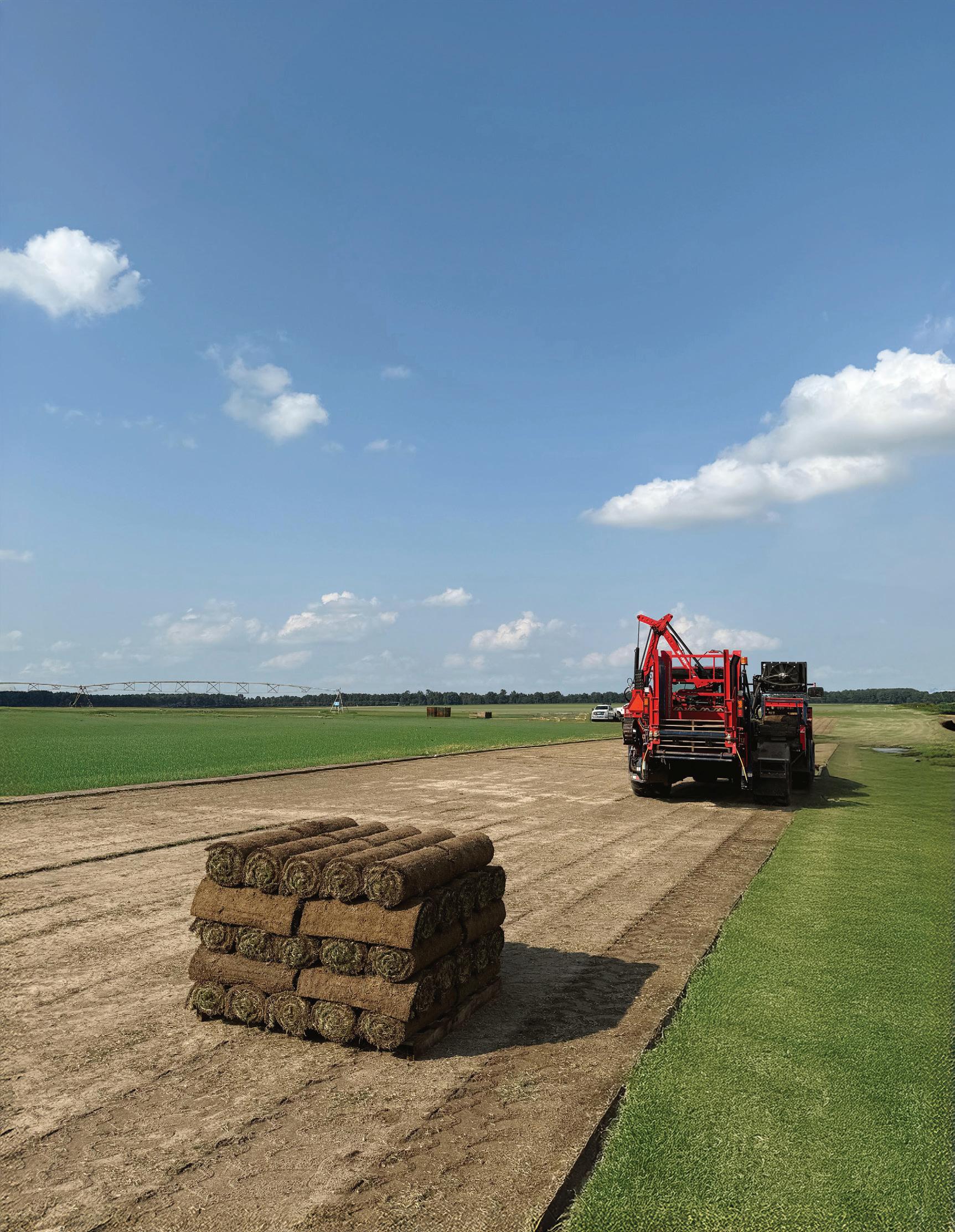
DMG Turf is a family owned and operated business, serving North Carolina with cool and warm season grasses. From residential projects to large commercial jobs including golf courses, athletic fields, and more, our commitment to customer satisfaction has been our top priority since 1999. Our friendly and knowledgeable staff are ready to serve you with delivery to your location, or you can schedule a pickup at our sod farm in Angier, NC.
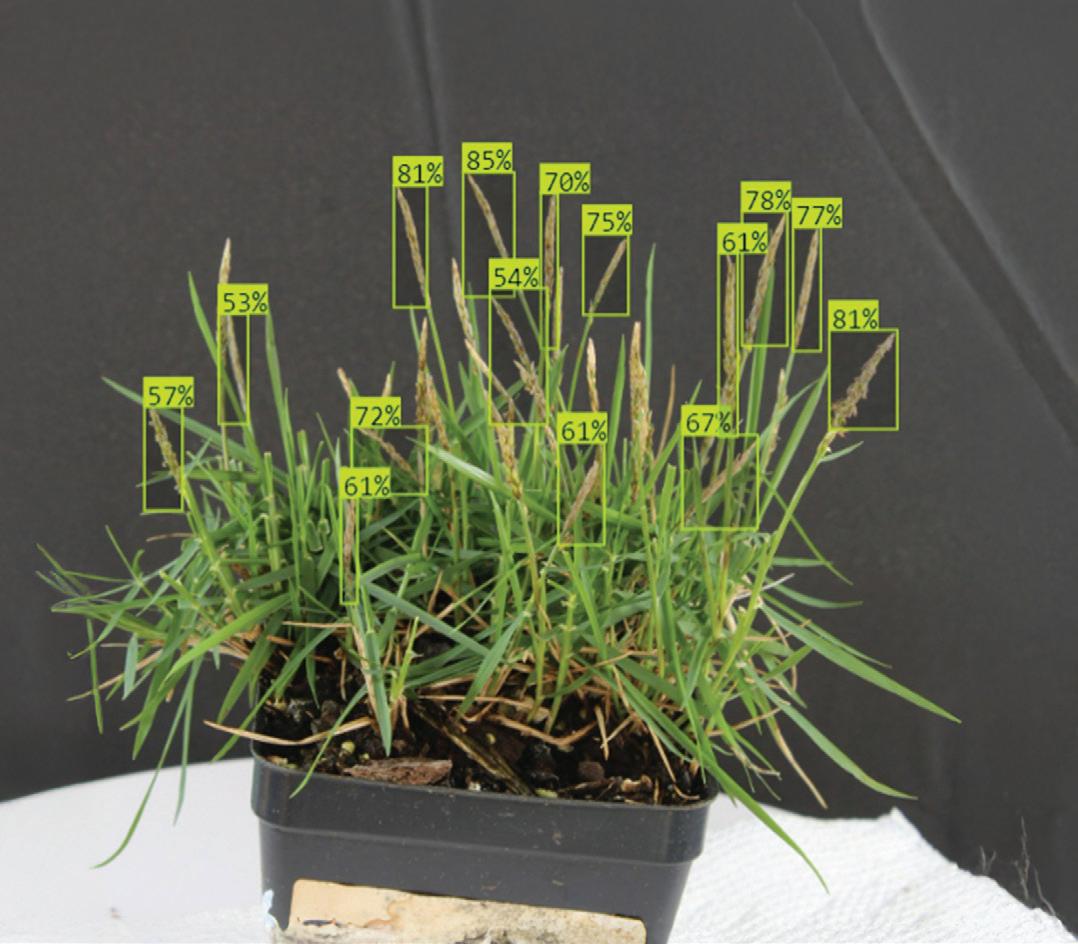



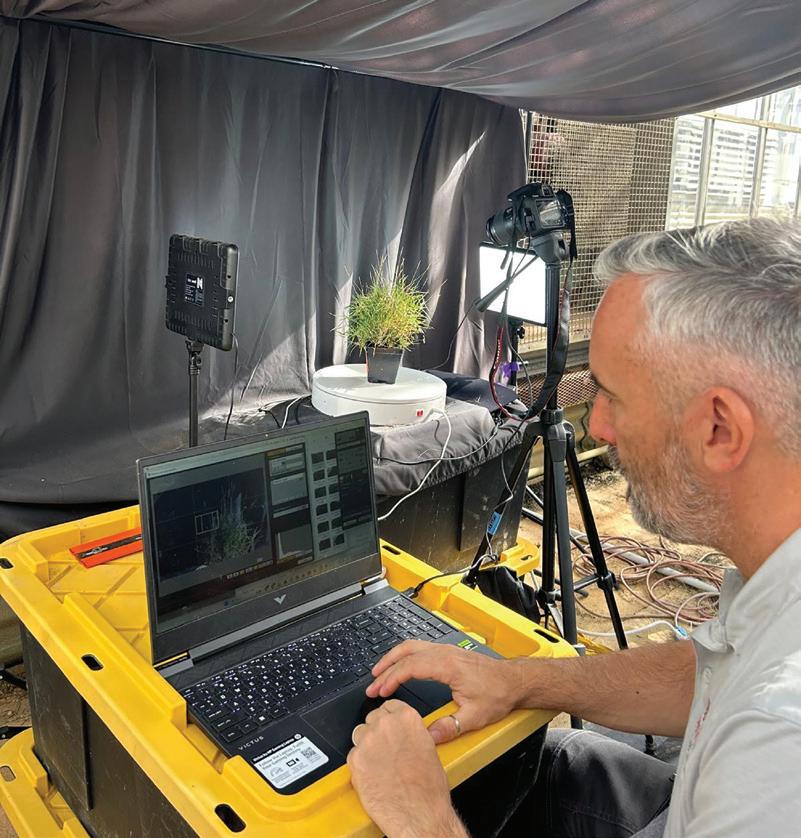
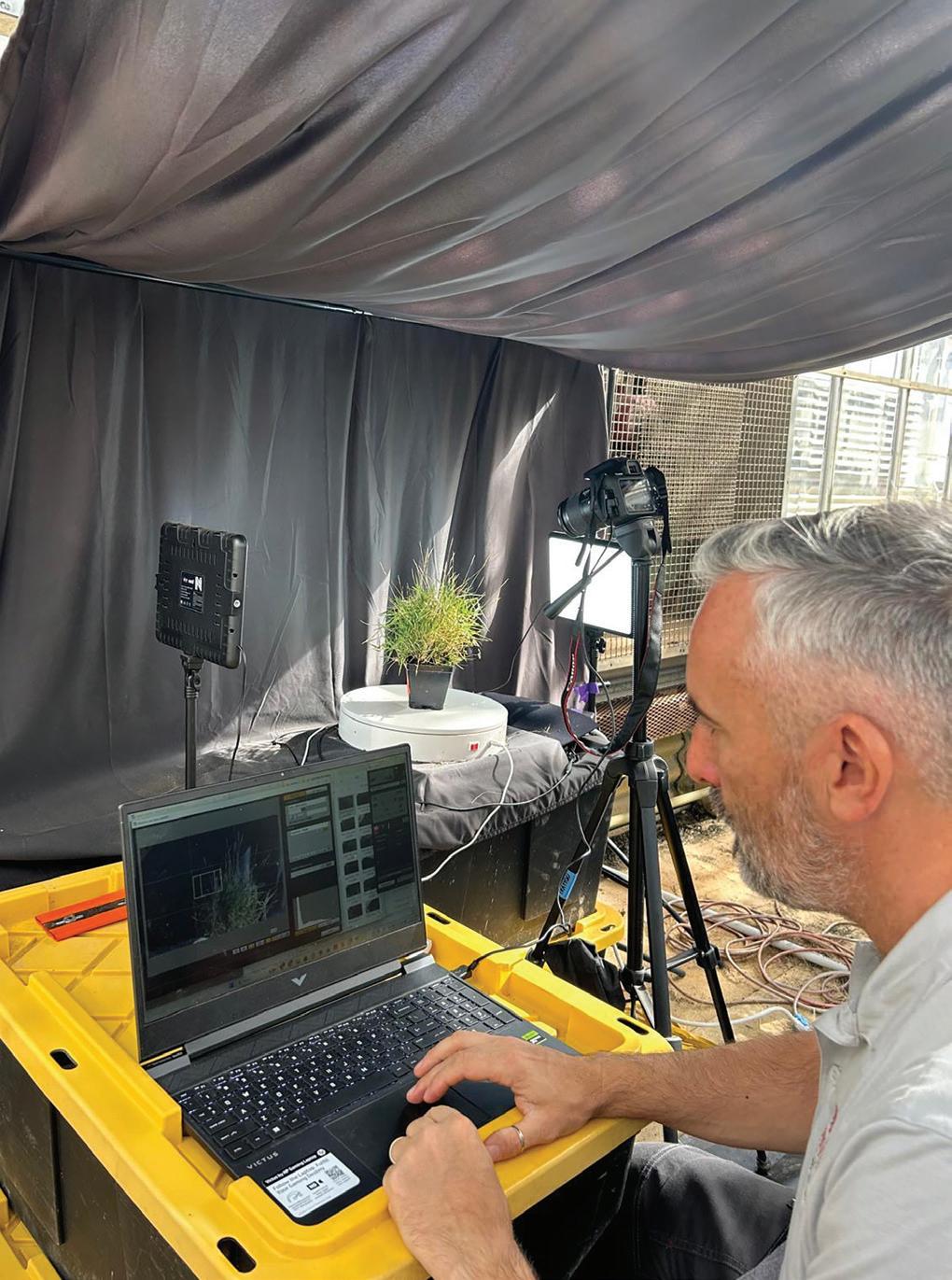
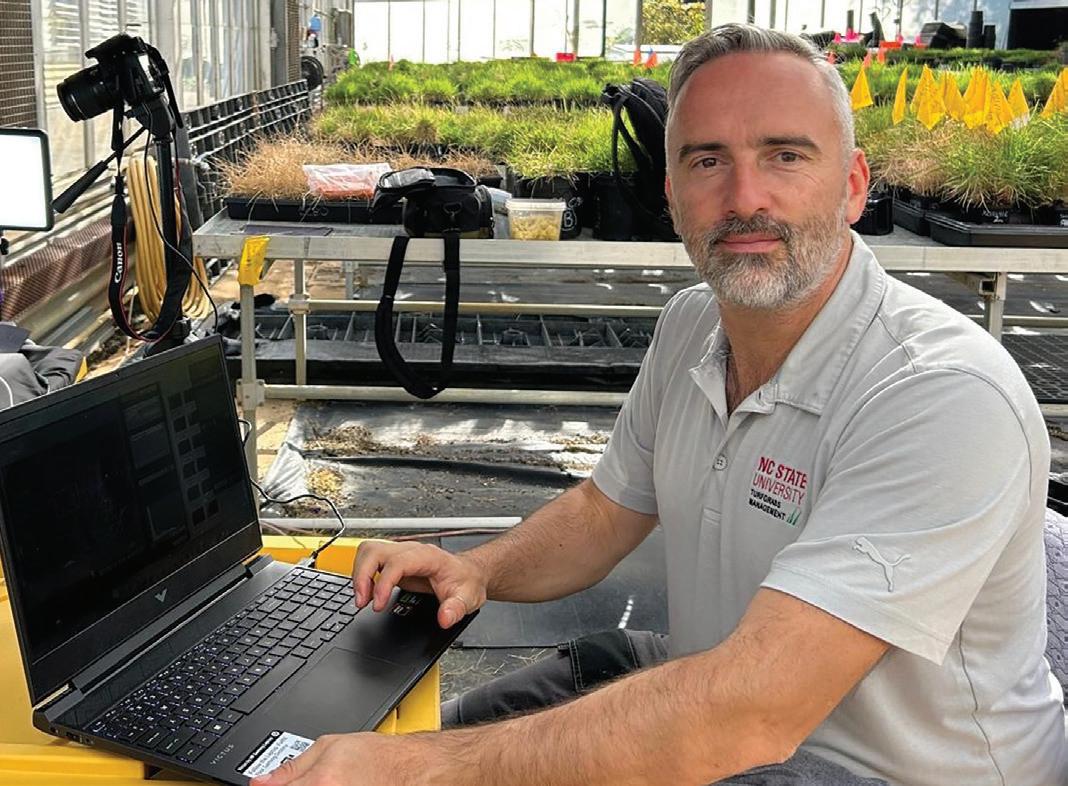
Stefano Fratton, a PhD student in the NC State University Turfgrass Breeding and Genetics Program, is developing tools that combine imaging and artificial intelligence (AI) to generate fast, objective, and scalable measurements of seedhead abundance. Initial efforts have focused on controlled greenhouse environments, where lighting and background conditions can be standardized to reduce environmental noise. Using simple cameras, plants are imaged from multiple angles to capture variation in seedhead position and visibility, and the resulting images are analyzed with deep learning models trained to detect and count individual seedheads—tasks that are difficult to perform consistently by eye.
The results are promising. Automated counts closely match manual measurements, but with far greater consistency and speed. Beyond efficiency gains, the key advantage of this approach lies in the quality of the data that is generated. AIbased HTP generates continuous, repeatable phenotypes rather than broad visual scores, reducing nongenetic error and allowing traits to be analyzed directly within quantitative genetic models. In breeding terms, this is a game-changer: reducing measurement error improves the ability to detect genetic differences, accelerating selection and improving long-term genetic gain. What once felt like guessing is becoming measurable.
As turfgrass breeding programs face increasing pressure to deliver improved cultivars more efficiently, tools that enhance phenotyping precision are becoming essential. By making difficult-to-measure traits both visible and quantifiable, AIdriven high-throughput phenotyping is helping breeders move faster, smarter, and with greater confidence. In zoysiagrass, improved seedhead phenotyping represents a critical step toward determining whether seeded systems can truly scale, supporting the long-term sustainability of turfgrass production in North Carolina and beyond.
Beard Equipment. Back Cover www.beardequipment.com
Carolina Green Corp.......................... 15 www.cgcfields.com
Carolina Turf Farms, Inc. 8 www.carolinaturffarms.com
Divots, Inc. ......................................... 15 www.divotssand.com
DMG Turf, Inc. 21 www.dmgturf.com
Greene County Fertilizer Co. 22 www.greenecountyfert.com
Leading Edge Communications 12 www.LeadingEdgeCommunications.com
Progressive Turf Equipment Inc. 3 www.progressiveturfequip.com
Quality Turf, Inc. ................................ 23 www.qualityturfnc.com
Smith Seed Services 23 www.smithseed.com
Smith Turf & Irrigation ......................... 5 www.smithturf.com
Southern Agricultural Insecticides, Inc. 17 www.southernag.com
Southern Specialty Equipment 23 www.ssequip.net
Super-Sod 7 www.supersod.com
The Turf Zone .................................... 13 www.theturfzone.com
The Turfgrass Group Inside Front Cover www.theturfgrassgroup.com
Trimax Mowing Systems ...................... 3 www.trimaxmowers.com
Turf Mountain Sod, Inc. 23 www.turfmountain.com