PROMOTE YOUR BUSINESS IN THE

PROMOTE YOUR BUSINESS IN THE


Arkansas Turfgrass allows you to narrow the focus and get your message directly in the hands of your customers. The magazine is a key benefit of Arkansas Turfgrass Association membership – providing valuable research, education, and industry information. Readers can also access the Digital Edition through The Turf Zone website. Archived issues ensure that your advertising will continue to be seen indefinitely, for long-ranging impact. ATA Members Include:
Lawn Care Operators Golf Course Superintendents

Parks & Recreation Supervisors Landscape Contractors
Sports Turf Professionals Commercial Grounds Managers Equipment Suppliers Sod Producers
Contact us today to learn about effective and unique advertising strategies that target turf industry professionals.
sales@leadingedgecommunications.com
Did anyone else enjoy the World Cup? Some people think it’s slow moving, boring, etc. How can 0-0 be exciting? I gotta tell you, I love it. I’m not a fan of the faking nor the “hydration breaks”! But the sport, the fans, the atmosphere, the skill, sign me up! Some games come down to one player making one extraordinary play. Some games come down to a split-second mistake, and it’s over just like that. What’s not to like?
Another thing that is so cool about the World Cup is that outside of the players, the countries represented, and the stadiums, the turf is really one of the biggest parts of the game. FIFA takes the field quality ridiculously seriously, and for us it’s easy to recognize. Every time a player delivers a pass to its exact intended target, it only happens because every blade of grass and grain of sand are precisely where they’re meant to be.
I recognize and marvel at the greatness of the turf, but for the most part it goes unnoticed. That’s it’s job — don’t be the story.
Let the players be the story. Let the condescending referee that can’t stop blowing his whistle be the story. Let the fans wrapped in their country’s flag be the story. If the turf becomes the story, we’ve got problems.
Some turf manager out there is pure greatness, and his or her job is “don’t be the story”.
That’s kind of all of us in the industry. If you work for homeowners, you probably hope your phone never rings, because that means there are no problems. Heaven forbid one of your employees gets caught on a door camera doing something stupid. Don’t be the story.
If you manage fields for a municipality, there are not many people in line to say thank you after hundreds of games on your soccer fields. But… when that six-year-old twists his ankle after stepping in a hole, by golly, where’s that field manager now!
Who set these pins! It’s Wednesday. What is this, Sunday at the US Open? What made that dead line all the way across the green on #11? Don’t be the story.
When our clientele or “bosses” only see our mistakes, it can be a lonely profession. Likely the folks that notice your “greatness” are in the trenches with you, your employees, colleagues, friends in the industry. When you get the chance, don’t hesitate to remind them of their greatness! Just like you, their job is often “don’t be the story” and they can use a reminder of what a great job they are doing!
Josh Landreth ATA-Vice President
Arkansas Turfgrass Association P.O. Box 1862 • Lowell, AR 72745 Tel: 479-301-5534
Published by:
Leading Edge Communications, LLC 206 Bridge Street, Suite 200 Franklin, TN 37064 Tel: 615-790-3718
Email: info@leadingedge communications.com
ATA OFFICERS
Richard Covert, President Baptist Health Systems Richard.covert@baptist-health.org
Kyle Sanders, Immediate Past President Sanders Ground Essentials 501-315-9395 kylesanders@sandersground.com
Courtney Landreth Executive Director ataturfgrass@gmail.com
Wendell Hutchens, Ph.D., Educational Chair wendellh@uark.edu
Seth Dunlap Arkansas State Plant Board seth.dunlap@agriculture.arkansas.gov 501-225-1598
Daniel Baxley Parks & Recreation Director of Mountain Home dbaxley@cityofmountainhome.com
Brandon Bradley Picture Perfect Lawns brandon@pictureperfectlawns.com
Rodney Fisher Agra Turf, Inc. • 501-268-7036 agrarod@yahoo.com
Josh Landreth, Vice President Ace of Blades • 479-530-7001 aceofblades@cox.net
Jay Randolph
Sebastian County Park Admin. & Golf Course Superintendent jrandolph@co.sebastian.ar.us
Ricky Self Cypress Creek r.self@yahoo.com • 501-605-8000
Mike Richardson, Ph.D. Professor
479-575-2860 mricha@uark.edu
Wendell Hutchens, Ph.D.
Assistant Professor of Turfgrass Science
University of Arkansas, Department of Horticulture
Cell: 276-952-8186
Office: 479-575-6205 wendellh@uark.edu
X / Twitter: @HutchensWendell
John H. McCalla Jr. Program Technician III
479-575-5033 jmccall@uark.edu






By Jay McCurdy

larger turfgrass and landscape industry has a labor issue—mainly that there’s not a reliable pipeline for accessing young and capable employees. I have this conversation almost weekly when discussing the state of the industry and how my role in a “turfgrass program” relates. I’m now in my 12th year at Mississippi State University, so I no doubt have some ownership of the problems. But I also wanted to relay to a wider audience just what some of the solutions might be to solve this problem. Yes, higher industry pay might help, but there’s more to the story than just that.
Our landscape management industry includes a broad range of job titles, but most of us reading this magazine are either bootson-the-ground landscape managers (ex. superintendents, lawn care professionals, sports field managers, sod producers, equipment managers, etc.) or are somehow involved in the industry/ supply side (sales, accounts, research and development, chemical, equipment, etc.). We know the technical mastery and skill required to do this job. We know the rewards and challenges. Nevertheless, I find the perspective from academia is often a little different from what it was when I was a practitioner.
We are all concerned about a shrinking pipeline of new professionals entering our field. Turfgrass academic programs are often criticized for producing too few graduates, and those graduates are said to be underprepared for the demanding, multifaceted roles that await them. The same is said for students fresh out of high school. There’s always a debate about whether it’s generational or whatnot. Maybe there’s something to that, but what, pragmatically, can we do to figure all this out?
The issue is more complex than a simple academic shortfall. The challenges facing turf programs reflect deeper structural and cultural dynamics within the larger society, as well as within the green industry and our academic institutions. I think we need to embrace a new model of mutual investment between academia and industry in order to restore vitality and sustainability to the profession. Whatever the model, it must redefine recruitment, enhance the talent pool, and demonstrate that green-industry roles are both professionally rewarding and personally sustainable.
This essay outlines a vision for such a partnership, built on five key principles: shared recruitment, broader inclusion, job-quality reform, experiential learning, and a mutual commitment to long-term workforce development.
Turfgrass academic programs are too often viewed as workforce development pipelines. In this paradigm, universities are expected to “turn out” graduates who are job-ready, immediately employable, and long-term loyal to the industry. These are ambitious goals that can only be achieved through industry partnerships. Universities cannot solve structural labor shortages in isolation. For starters, the looming demographic cliff, where student enrollment drops due to fewer babies having been born ~18 years ago, is self-evident. We have to reframe the relationship as a two-way street: industry leaders and employers must engage as co-investors in the success of the next generation.
The declining number of turfgrass students is not solely a turf problem—it mirrors trends across many science, technology, engineering, agriculture, and mathematics (STEAM) disciplines. Yet in turf, the impact is more acute. Fewer students are entering, and those who do are frequently drawn away by careers with higher salaries, greater mobility, and more stable work-life balance—fields like wildlife biology, ecology, food science, and agricultural engineering. If return on investment (ROI) for college interests you, I highly recommend Preston Cooper’s Is College Worth It? A Comprehensive Return on Investment Analysis article.
If the green industry wants to retain talented, committed professionals, it must work with academic programs to create clearer, more appealing, and more stable career pathways for students entering the field.
One of the most common critiques from green industry professionals and hiring managers is that turf programs are not doing enough to recruit students into the field. In truth, recruitment cannot be the sole responsibility of faculty or universities. Few high school students grow up dreaming of becoming a golf course superintendent, especially if they’ve never been exposed to the role or the science behind it. Lots of kids grow up mowing lawns, but do they view that as a stable profession? How many golf course superintendents leave the industry for better working hours or more stable family lives? The stories of our profession are not always positive. How do we improve that?
Meaningful recruitment requires visibility, storytelling, and early engagement. That means:
• Hosting and organizing Golf Course Superintendents Association of America’s (GCSAA’s) STEAM program, First Green.

• Industry professionals visiting high schools, FFA programs, and 4-H events to talk about careers in turf and to give hands-on help managing facilities.
If we want to build a workforce that reflects the broader demographics of our society, the turfgrass industry must actively recruit from historically underrepresented communities, including women, students of color, and first-generation college students. Many turf programs sit within land-grant institutions with a mission to serve all citizens of their state. Partnerships with historically Black colleges and universities (HBCUs), tribal colleges, and community colleges offer promising avenues for talent development.
Additionally, the industry must take steps to ensure that students from diverse backgrounds are not only recruited but also retained. That means:
• Paid internships with real mentorship, not just summer labor. This is something our industry does well. Though pay and working conditions could always be improved, I understand the financial realities for most businesses— margins matter, and you can’t pay a 20-year-old more than your loyal long-time employees.
• Hosting youth days, career shadowing, or field trips in coordination with FFA, agricultural teachers, 4-H, and Extension educators.
• Alumni sharing their stories, not just of agronomic challenges overcome, but of career development, family stability, and lifelong learning.
Academic programs can support these efforts with marketing materials, introductory coursework, event production, and advising. Industry partners can develop their own materials, and my academic colleagues and I would be happy to collaborate. But unless the industry is willing to support or do the work, recruitment will remain a leaky pipeline. The Golf Course Superintendents Association of America has promoted its First Green program and has invested heavily in promoting the profession to kids in FFA. This is a good example of how we might target youth to entice them into our profession.
A second issue compounding recruitment challenges is the profession’s lack of demographic diversity (this isn’t a DEI discussion!). This is not simply a turfgrass issue; it reflects broader underrepresentation across many STEAM fields. However, the profession’s visual and cultural homogeneity isn’t always inviting to those from different socioeconomic or cultural backgrounds. That’s to say very little of the lack of female representation—it’s improving. Still, it lags considerably behind many other attractive career fields for the same candidate pool we are competing for.
• Scholarships and travel support to attend GCSAA and regional turfgrass conferences. GCSAA and our regional events have done a great job supporting our students. Our state and regional associations have covered almost all the costs for our students attending events like Deep South. GCSAA allows students and academic advisors to attend the Golf Show for free. They allow students to be members for free. We just have to cover flight and meal costs—sell more hats and pullovers!
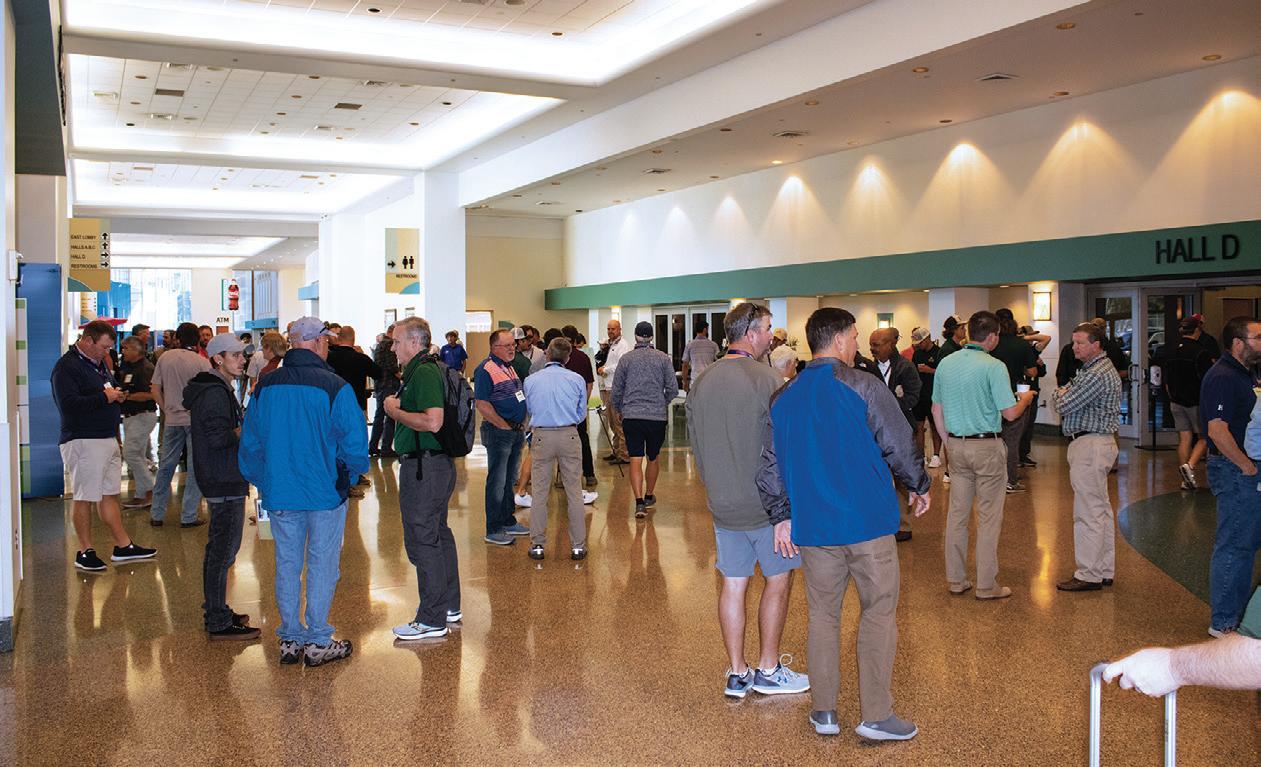
• Storytelling campaigns that highlight successful professionals in our industry. Barry Stewart hosts MSU Turf Seminar speakers, and I’m sure he’d love to hear from those of you who can share your secrets to success and happiness.
If the profession remains perceived as culturally insular or exclusionary, we will continue to miss out on a generation of bright, capable professionals who simply chose other welcoming fields.
Recruitment efforts alone are not enough if the jobs themselves are perceived as undesirable. One of the most pressing challenges facing the green industry is career sustainability and burnout Even for students who graduate from turf programs and enter the profession, the early-career reality can be discouraging.
Starting roles are often physically demanding, geographically isolating from home, and poorly compensated relative to the skill and responsibility required. I won’t disagree: early careers are hard in many professions, and ours has a history of heartiness and resilience that we pride ourselves on. And that’s great, but let’s face it, positions frequently involve long hours, especially in golf and sports fields, weekend shifts, and high turnover. Relocation is common, placing strain on young professionals with families or community ties. Burnout is not only likely, but it’s also all too often expected.
In many cases, internships play a decisive role. While some students have transformative experiences, others emerge disillusioned. Internships are often where students determine whether they see a long-term future in the profession. Unfortunately, too many internships treat students as temporary labor rather than future colleagues.
Our profession must take a hard look at its entry-level roles and ask:
• Are we investing in mentorship or extracting labor?
• Are we helping build careers or merely filling seasonal gaps?
• Are we creating a profession that values work-life balance and career advancement?
Until the industry addresses these questions honestly, retention will remain low, and turf programs will struggle to retain students who see more stable options elsewhere.
To ensure that students are prepared for professional success, universities must evolve as well. Turfgrass programs must incorporate not only plant science and weed control, but also:
• Business management and budgeting
• Communication and conflict resolution
• Human resources and leadership
• Sustainability, data analytics, and emerging technologies
Faculty must engage in continuous dialogue with industry professionals to align curricula with real-world expectations.
This can happen through advisory boards, curriculum reviews, and co-developed experiential learning opportunities.
Meanwhile, the industry must treat internships and co-ops as educational experiences, not just temporary employment. Golf courses that offer structured mentorship, performance feedback, and leadership development will not only see better short-term productivity, but they’ll also help shape the long-term workforce of the profession.
The Sports Field Management Association (SFMA), GCSAA, and other professional landscape associations have a unique opportunity to lead systemic change. Many in the industry look to them for guidance, advocacy, and professional standards. But as organizations, they can:
• Develop and promote best practices for internship mentorship
• Recognize organizations that invest in student development
• Partner with academic programs on workforce development grants
• Support early-career professionals through networking and continuing education
Just as importantly, associations must continue to help shift cultural expectations within the profession. That means promoting superintendent and field manager roles as executive leadership positions, not just agronomic technicians. It means celebrating the intellectual and managerial skills required to succeed in this career, and advocating for compensation, stability, and respect commensurate with those demands.
Much can be learned from adjacent fields. Engineering, for example, has long faced similar challenges: rigorous academic programs, intense internships, and high attrition. Yet leading companies and associations in that field have invested heavily in university partnerships, student engagement, and early-career support.
Top manufacturing and technology firms fund campus recruiting, sponsor capstone projects, offer paid site visits to facilities, and offer career ladders with clear promotion timelines. These students, like our own, are not afraid of hard work. They are attracted by clear career outcomes and structured support along the way.
There is no reason the green industry cannot offer the same. But doing so requires a shift in mindset: from “you have to earn your place” to “we will invest in you as the future of our profession.”
In many places, these goals are already occurring, but here are just a few to imagine as being widespread:
• High school students attend “turf career days” hosted by their local superintendent and Extension agent.
• Universities and employers codesign internships that develop not just technical skills, but leadership and confidence.
• Interns feel welcomed and valued from their first day on a golf course.
• Assistant superintendents are mentored, paid fairly, and see clear paths to advancement.
• Associations and turf programs work side by side to tell the story of a modern, rewarding profession.
This future is not only possible but also essential. The alternative is the status quo, or worse, decline: fewer students, fewer assistants, more burnout, and an aging workforce with no one ready to take the reins.
The challenges facing the profession are real, but they are not insurmountable. What is required is not blame, but shared responsibility. Universities must modernize curricula and deepen student support. Turfgrass managers must invest in mentorship and help reshape early-career roles. Our industry associations must lead with vision, coordination, and advocacy.
Ultimately, this is about stewardship of the profession itself. The same care, foresight, and commitment that turfgrass managers bring to managing turf must now be brought to cultivating the future of the workforce. •
The author would like to thank Barry Stewart for his suggestions and edits to this article.











Brooke Heikkila,1 Navdeep Godara2 and Pawel Petelewicz3
1 Graduate Research Assistant,
2 Assistant Professor of Turfgrass & Forage Weed Science, Department of Crop and Soil Sciences, NC State University, Raleigh, NC 27695,
3 Assistant Professor of Turfgrass Weed Science, University of Florida, Institute of Food and Agricultural Sciences (UF/IFAS), Agronomy Department, Gainesville, FL 32611
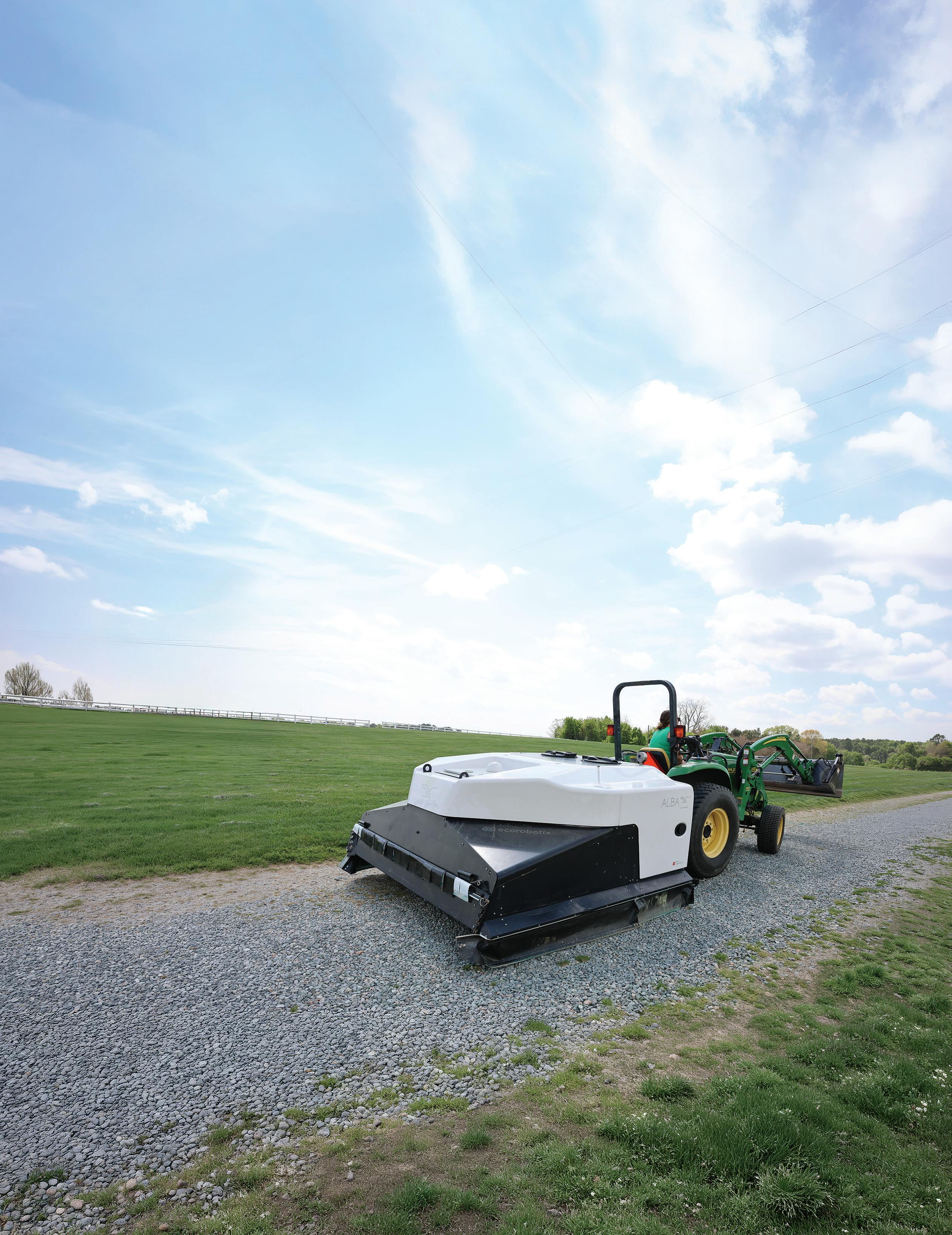
Figure 1. The first commercial machinevision guided targeted sprayer (ALBA™, Ecorobotix Inc.) evaluated for targeted applications to annual bluegrass by NC State Turfgrass Weed Science Program.

Turfgrass managers are facing increasing weed challenges due to evolving regulatory framework and growing incidence of herbicide-resistant weeds. The release of the first turfgrass-specific commercial machine vision-guided sprayer (ALBA™, Ecorobotix Inc.) enables automated and localized herbicide applications in turf. Although often referred to as “spot spraying” in marketing materials, “targeted spraying” is a more accurate description as it distinguishes this system from manual spot treatments and other existing precision weed management approaches. Such targeted application systems have already been successfully deployed in other crops using platforms such as the John Deere See and Spray™, Agritech America WEED-IT™, Verdant Robotics Sharp Shooter™, Ecorobotix ARA™. Using See and Spray™ technology, comparable weed control was observed between the broadcast and targeted spraying methods, but the targeted spraying reduced the treated acreage by up to two-thirds. In turfgrass, this technology not only offers significant herbicide savings but also opens the door for practitioners to combat herbicide-resistant weeds by incorporating alternative chemistries, including nonselective herbicides or herbicide tank mixtures combining multiple modes-of-action which are not typically feasible in broadcast applications.
Overall, spot spraying is not a new concept, as many turfgrass managers already employ it to control weed escapes following broadcast herbicide applications or where selective chemistries are not an option. Manual spot spraying involves individuals walking the golf course or other turfgrass areas with a sprayer loaded with herbicide to make localized applications directly to weeds. Traditional spot spraying is labor-intensive, time-consuming, and requires applicators to accurately identify weeds, necessitating additional training and expertise. It ultimately increases application costs and is also prone to human error, often resulting in overapplication and missed weeds. However, targeted spraying systems such as ALBA™, utilize artificial intelligence combined with machine vision to detect problematic weeds within turfgrass canopy in real-time to apply herbicides only to those small areas where individual weeds are present. ALBA™ is a tractor pull-behind unit that can operate at speeds up to 4.5 miles per hour and uses an enclosure to block ambient light and to create consistent lighting conditions to continuously scan the turfgrass canopy with its cameras to detect weeds (Figure 1). When a weed is spotted, an individual nozzle – one out of 108 – activates to directly target the weed with a 1.2 × 1.2-inch spray resolution per nozzle. As targeted application systems continue to advance and competing platforms emerge, it is critical to understand how to effectively integrate and leverage these sprayers within turfgrass weed management programs. Several preliminary field experiments using ALBA™ and its ARA™-based predecessor research platform were conducted by the NC State Turfgrass Weed Science Program and the UF/IFAS Turfgrass Weed Science Program to understand the applications of this technology. Preliminary studies showed that machinevision guided targeted spraying substantially reduces herbicide usage and treated acreage while maintaining weed control efficacy, offering both economic and environmental benefits while targeting wide variety of problematic weeds with high accuracy.
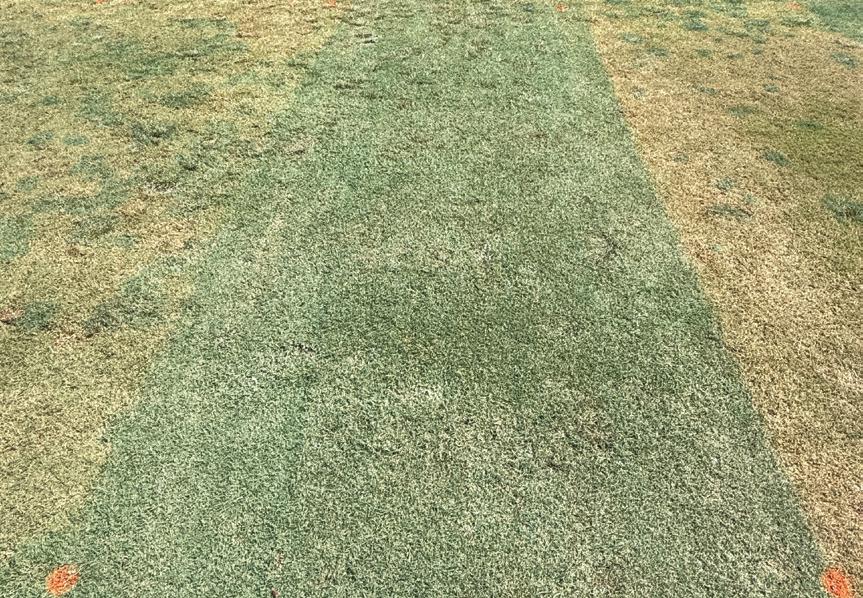
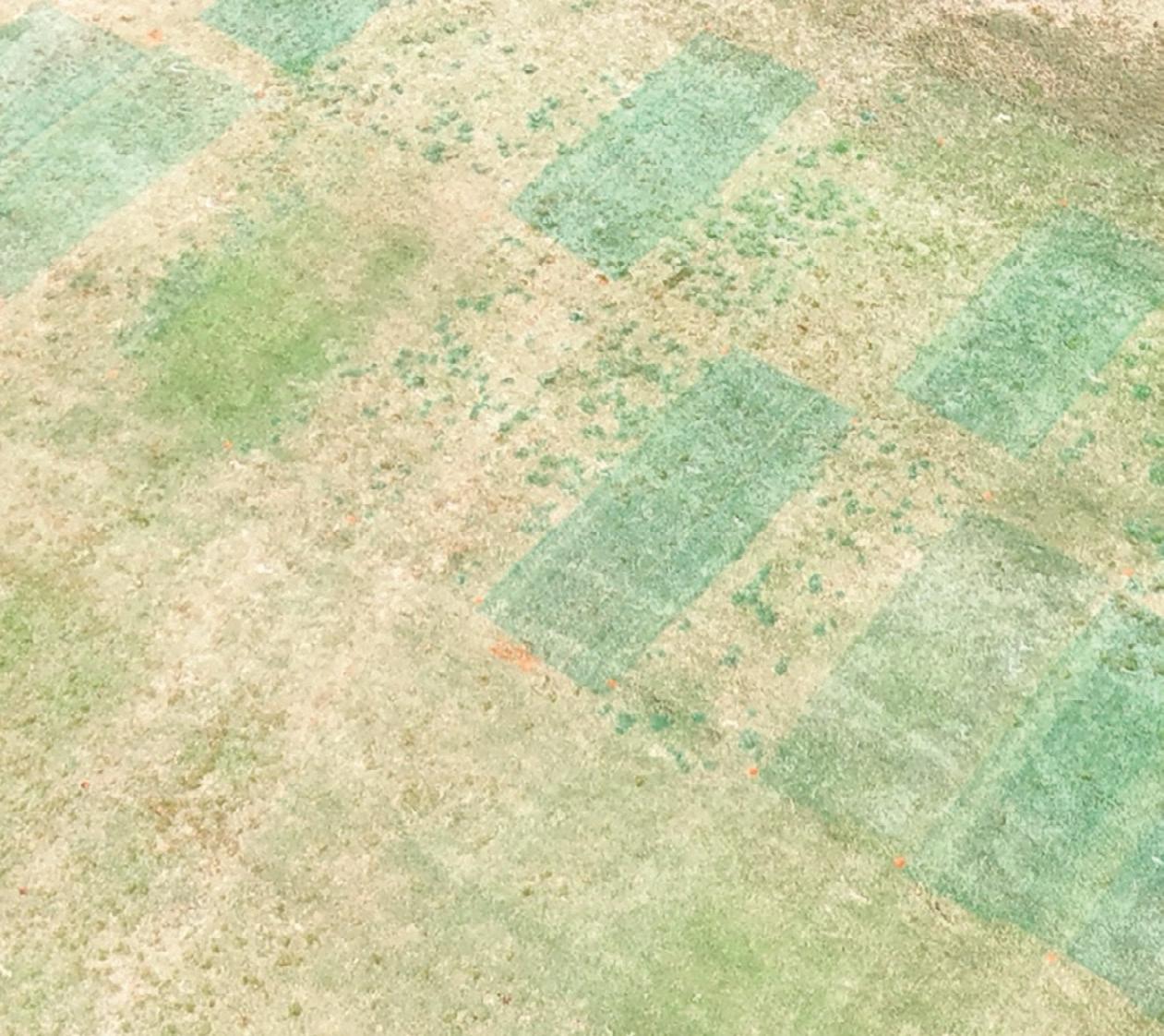
Reduction in Herbicide Volume Used – In a study focused on controlling false-green kyllinga in bermudagrass fairways, machine vision-guided targeted spraying with ALBA™ reduced herbicide spray volume by 77% compared to broadcast treatments. False green kyllinga cover was 17% at the experimental sites during study initiation, triggering significant savings due to the weed-specific, localized targeted treatments compared to broadcast herbicide applications (Figure 2). Broadcast applications of standard kyllinga control products typically cost around $190 to $240 per acre, but targeted treatment can lower the cost by more than $145 per acre even when dealing with moderate level of weed infestation (~15% weed cover). Similarly, in another ongoing study, when annual bluegrass weed cover was 10% in bermudagrass fairways, targeted applications achieved a 66% reduction in herbicide spray volume compared to conventional broadcast treatments. Sulfonylurea herbicides for postemergence control of annual bluegrass cost around $140 to $185 per acre and targeted spraying can reduce the cost by at least $92 per acre when weed cover is 10% or less.
Practitioners can expect greater savings at turfgrass sites with lower weed infestations, which are typical of intensively managed surfaces and when applying expensive herbicides such as PoaCure or organic herbicides during winter dormancy of warm-season turfgrasses. Targeted application system was also evaluated for control of broadleaf weeds, dallisgrass, smooth crabgrass, and tropical signalgrass in studies conducted independently or in collaboration between Mississippi State University, NCSU, Virginia Tech and UF IFAS, and observed a 53% to 95% reduction in spray volume. In all the aforementioned cases, weed control levels achieved with targeted spraying were no different from broadcast applications. Thus, these studies demonstrate that, across various problematic weed species, this novel application system can substantially reduce the herbicide volume required, lowering costs without compromising weed control efficacy.
Lower Treated Acreage – During broadcast herbicide applications, substantial areas without weeds are often treated unnecessarily. Targeted applications can reduce the treated acreage, enabling practitioners to use herbicides such as MSMA, which are currently restricted to spot treatments on less than 25% of the total golf course acreage per year. Targeted spraying systems are particularly useful for herbicides with limited or no residual activity, as it allows localized treatments to weed instead of broadcast applications to turfgrass. Targeted spraying for false-green kyllinga control (17% weed cover) in bermudagrass fairways resulted in 85% reduction in treated acreage compared to broadcast spraying (Figure 3). In a similar study, an 80% reduction in
treated acreage was found when only treating annual bluegrass in dormant bermudagrass at 10% weed cover.
A study conducted by UF/IFAS Turfgrass Weed Science Program using circular, non-overlapping targets of varying patch sizes (4-10 cm diameter) to simulate random different weed densities and dispersions within the 1-20%, 21-40%, and 41-60% coverage, indicated total spray deposition of approximately 40%, 64%, and 74%, respectively. This corresponded to estimated herbicide savings of 60%, 36%, and 26%. Spray deposition increased with rising weed pressure, while the non-sprayed area, directly reflecting herbicide savings declined accordingly. These results confirm that variation in herbicide savings with targeted applications is driven primarily by weed density, with dispersion playing a secondary role, exerting stronger effects at low weed densities but negligible influence at higher densities.
The reduction in treated acreage can potentially diminish the environmental impact of herbicides by minimizing overall pesticide load released into the environment, limiting off-target movement, reducing the risk of groundwater contamination, and lowering the risk of human exposure associated with pesticide applications. Targeted approaches permit treatment to a limited portion of turf, enabling the effective use of chemistries with area-use limitations.
linkedin.com/company/theturfzone
x.com/theturfzone

facebook.com/theturfzone
Effective reduction in area treated with targeted spraying will become increasingly important as new regulations come into effect, particularly in the context of upcoming Endangered Species Act-imposed changes. Therefore, research projects funded by the Turfgrass Council of North Carolina will focus on investigating the agronomic and environmental benefits of targeted application systems for managing problematic weed species.
Alternative Herbicide Options for Resistance Management –Targeted spraying also enables selectivity at the sprayer level rather than relying only on selectivity of the herbicide used. This potentially allows turf managers to use nonselective herbicides that were previously not an option for broadcast treatment due to severe injury to actively growing turfgrasses. Broad spectrum herbicides like glyphosate, glufosinate, or flumioxazin are highly effective against a wide variety of weeds, but practitioners often wait for turfgrass to go dormant before spraying nonselective herbicides, while in some geographies, such as Florida, achieving full dormancy is not even possible. However, with this new technology, practitioners will have the option to incorporate nonselective herbicides year-round with minimal collateral damage to turfgrass.
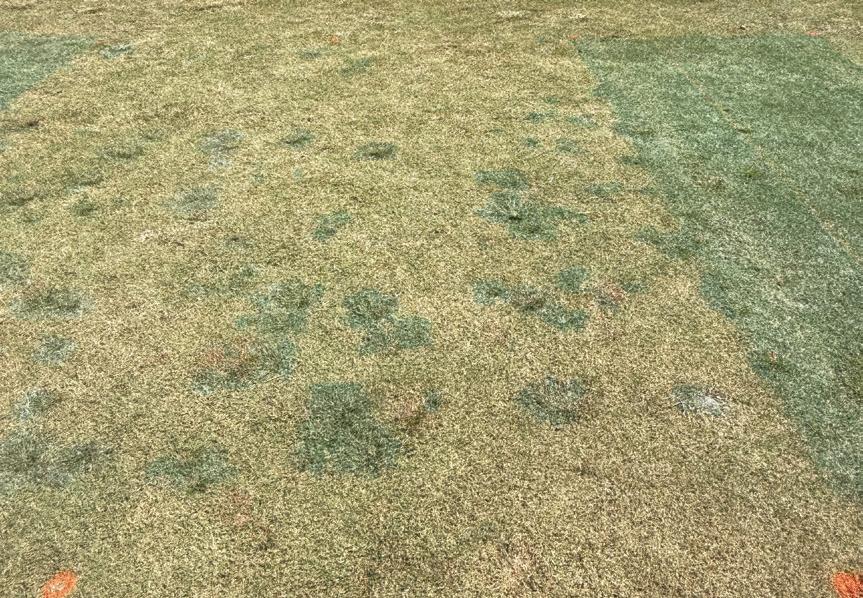
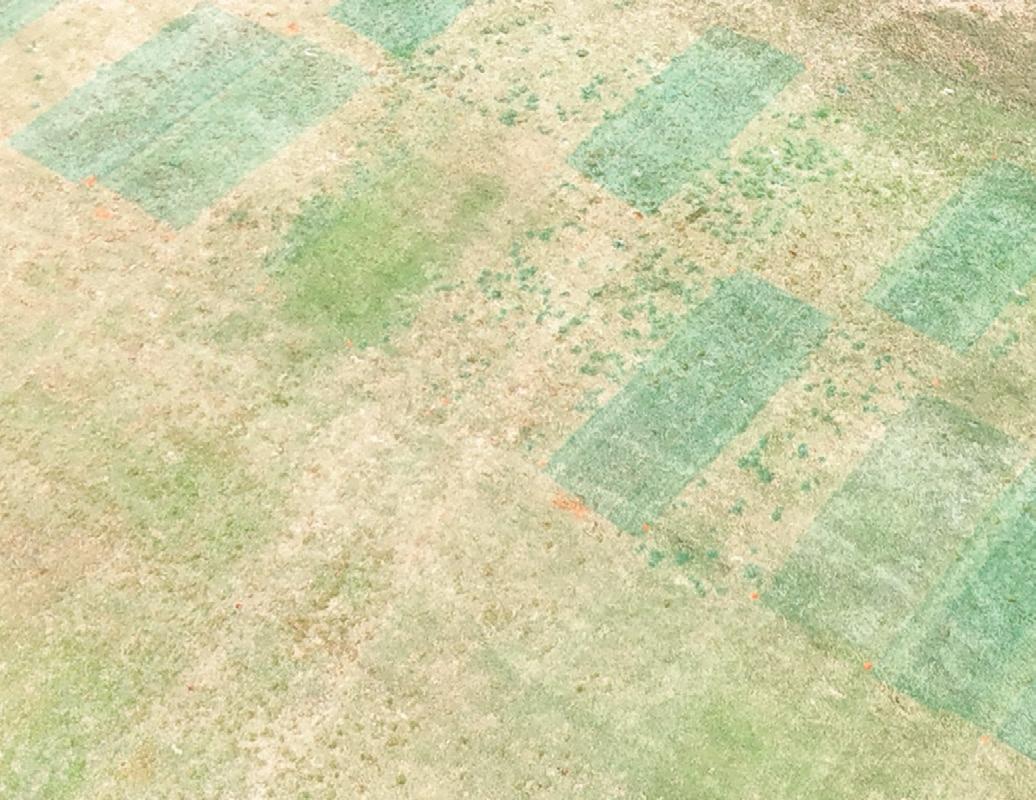
Glyphosate (Roundup Pro® Concentrate) applied via broadcast application at 12 fluid ounces per acre rate reduced bermudagrass green cover significantly, but targeted spraying had similar level of green cover as nontreated plots as documented in our recent study. Likewise, glufosinate applied at 41 fluid ounces per acre (as Finale® XL T&O) reduced bermudagrass cover drastically after broadcast application but had minimal effect on turfgrass after targeted spraying (Figure 4).
Targeted spraying technology also allows use of novel admixtures that are not currently being used during regular turfgrass maintenance. Rotating or tank mixing herbicide from different modes of action are crucial for sustainable turfgrass management, as selection pressure for herbicide resistance continues to increase. For instance, practitioners can use tank mixtures of herbicides like pyridate + sulfentrazone or bentazon + halosulfuron + sulfentrazone for targeted spraying without compromising efficacy on false-green kyllinga. These novel admixtures contain multiple modes of action in a single application that could reduce selection pressure and combat herbicide-resistant kyllinga. Similar admixtures should be explored for the management of other herbicide-resistant or difficult-to-control weeds.
Limitations – Like with any new technologies, there are limitations to consider when adopting a machine vision-guided sprayer. Currently, only one commercial unit (ALBA™ by Ecorobotix Inc.) is available, providing managers with a single option for this turfgrass-specific targeted spraying technology. Additional machine vision-guided sprayers need to be developed specifically for turfgrass systems, as interest in these technologies among turfgrass managers continues to grow and the needs across different turfgrass industry segments will vary. The cost of the equipment and the annual model subscription will be a major barrier for many turfgrass managers. Offering incentives, such as reduced subscription fees for the first few years, could help increase adoption of this technology. Alternatively, with ALBA™ being an example of a high-end solution maximizing performance and system sophistication, other developers may consider trade-offs to reduce equipment production and maintenance costs to improve accessibility. Although ALBA™ seems to demonstrate high detection accuracy on key problematic weeds, further research is needed to understand its year-round performance, considering changes in visual characteristics of weeds and turfgrass across growth stages and under varying environmental contexts. In our preliminary work, a few false positives occasionally led to herbicide applications to weed-free turfgrass. Also, we observed that in situations where weed presence (particularly grassy weeds) in the camera’s path exceeded that of turfgrass, the detection system became confused, effectively reversing target and background and treating turfgrass instead of the weed. However, developers are actively addressing these shortcomings and performance of targeted applications systems by continuing to improve imagery databases, training and validation across diverse geographical regions and management contexts.
There is no doubt that machine vision-guided sprayers will have a transformative impact on the turfgrass industry, however, extension efforts will be critical for adoption. Also, as this technology is still novel for turfgrass systems, ongoing research and development is critical to improve performance, reliability, and to meet industry needs. Among others, further research is needed to evaluate performance under varying travel speeds, expand applications to targeted residual treatments, and refine application thresholds to maximize herbicide savings. •
Authors acknowledge the Turfgrass Council of North Carolina for sponsoring ongoing research projects focused on leveraging targeted application devices for weed management in NC turfgrass systems. The authors also thank Ecorobotix Inc. for providing a commercial unit for evaluation.