
Dear Cattlemen,

Dear Cattlemen,
If you’re looking for bulls that will move the needle on profit this year, this Buckeye offering is one you don’t want to miss.
Sales Manager
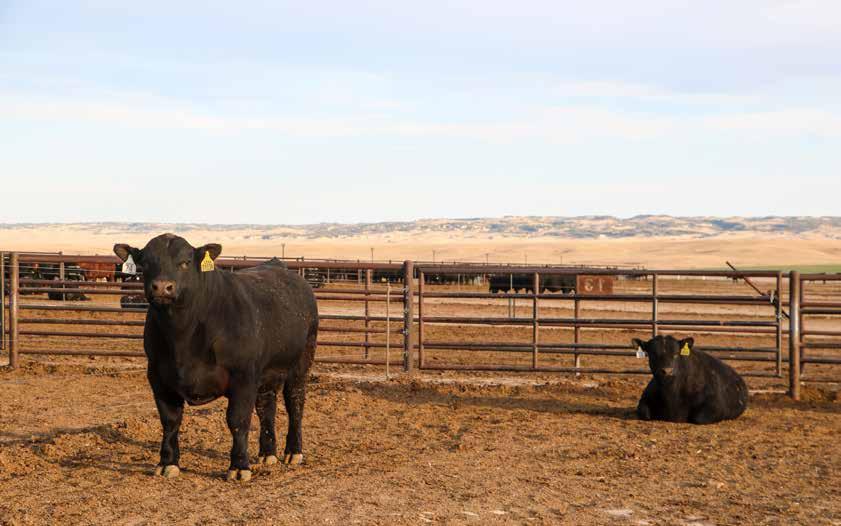
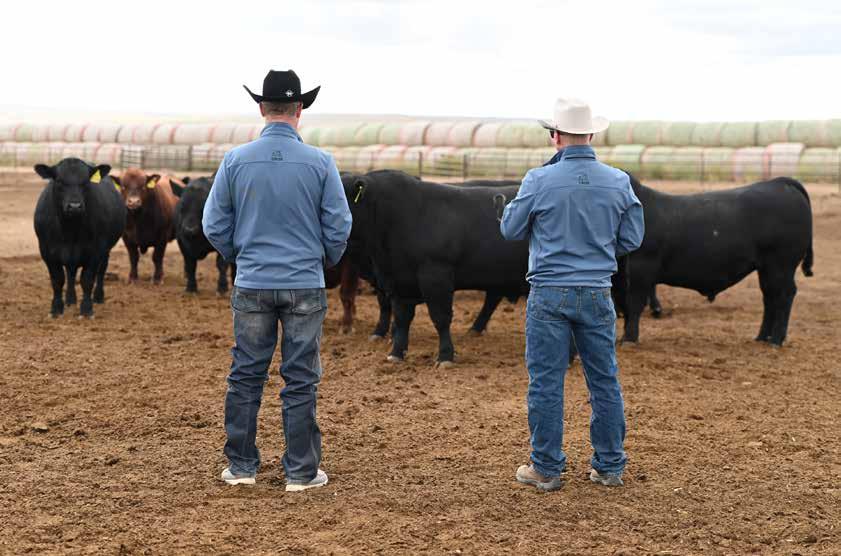
We’re bringing 28 high-powered Stabilizer® bulls to Ohio—right where grass is green and it’s time to turn out cattle that work. These bulls were hand-selected by Kurt Schenkel and myself specifically for this region, with a focus on cattle that fit your environment and deliver real-world performance.
This set averages over $28,000 $Profit®, with $131 $Ranch® and $212 $Feeder®, backed by real efficiency (-0.07 F:G, 25 Intake). Add in 22 bulls at 3-Star Calving Ease or higher and a 4.25 Fertility star average, and you have a group built to deliver from day one.
The sale kicks off at 4:00 PM ET on April 23rd in a racehorse-style format. The entire sale stays open until bidding stops— closing 5 minutes after the last bid—so if you get outbid, you still have time to jump to another bull and get one bought.
The bulls are available for viewing in Ohio with Scott Rittenhouse. Give Scott a call to look through them, and reach out to Kurt or any of us on the team—we’re ready to help you sort, select, and make the right investment.
Don’t wait until turnout and wish you had better bulls—get them bought now.
Bulls That Build Better Cow Herds. Better Cows for a Better World.
Sincerely,
Russ Princ Leachman Cattle
Leachman Cattle is offering a 90 day breeding season guarantee, starting the first day of turnout, on all bulls that we sell. This guarantee will cover your purchased bull(s) against death, injury, infertility, and loss of use. If, during the first season, you lose the use of your Leachman bull for whatever reason, we will give you a credit towards the purchase of a new bull. We only ask that your herd veterinarian provide a written statement describing the death, injury, or infertility. If the bull in question can be salvaged, we would like you to keep the salvage value, and a credit will be issued, less the salvage amount you receive for the bull. If the bull is turned out for breeding, then the credit will be given at 75% of the original purchase value (less any salvage value). All claims must be made within 1 year from the date of purchase and cannot exceed the greater of 2 bulls per invoice or 15% of the total invoice.
Example 1: Your $5,000 bull dies before you turn him out to breed. You receive a full credit of $5,000. (Purchase Price - $0 Salvage - $0 Use).
Example 2: Your $5,000 bull injures his scrotum after you pull him from the cows. You sell him for $1000 in salvage. You receive a credit of $2,750 ($5000 purchase - $1000 salvage - $1250 usage).
Requirements for claims:
1. All claims must be made within 365 days of purchase.
2. A veterinary statement regarding the circumstances is required.
3. A verbal agreement from Leachman Cattle is required prior to a bull being sold for salvage. Documentation of the salvage value of the bull, including identification of the bull on the sale barn ticket, that corresponds to the bulls Leachman identifications (visual ear tag or EID) is also required.
This credit can be used for the purchase of bulls, females, semen, and/or embryos from Leachman Cattle. If the credit is not used within 24 months of the date of issuance, then it will expire.
Note: Guarantee will be revoked on all bulls that are not paid for within 5 business days of invoice date.

28 Bulls Sell Online April 23rd.
• These sell Racehorse Style.
• Videos and Data at: www.leachman.com/sales
• See page 3 for your local Sales Rep
Fertility Star System:
Fertility is the new EPD from Zoetis that predicts which bulls’ daughters will be more fertile. It was developed based on actual production records from the cattle in our 1.3 million head Leachman database. Bulls with more stars will produce daughters that produce more calves in their lifetime.
Udder Star System:
Based on thousands of cow udder scores and DNA analysis, we can now predict the udder quality of a yearling bull’s daughters. More stars means better udders.
Semen Interest:
Leachman Cattle is retaining 100% Semen Revenue Interest on all bulls unless otherwise announced.
Terms and Conditions:
The cattle will sell under the terms and conditions at http:// www.leachman.com/terms
Bid on our Online Platform See page 5 for more info.
Bid from Anywhere on the new online Bidding PlAtform httPs://leAchmAn.com/sAles/
All bulls selling have passed a breeding soundness exam. Every bull sells with the Leachman Uncondi tional Breeding Season Guarantee.
We are bull experts and we will give you personal service to make sure that you get the bull or bulls that you want. We will listen to your needs and help you pick the bull that will ensure that you achieve your goals. Buy sight-unseen and we will guarantee your satisfaction 100%! We will organize delivery to a central location near you. If you don’t like the bull(s) when they get off the truck, we will take them back.



Our dedicated team at Leachman Cattle is




Russ
Cell: 970-413-0993 russ.princ@leachman.com
Craig Hays Director of Genetics & Product Dev. 660-373-1897
craig.hays@leachman.com







Todd Stegall Colusa, CA 530-713-8755 tmstegall@gmail.com
J. Kyle Larsen Wellsville, UT 435-770-1432 jkliphone555@icloud.com
Matt Mellema Dalhart, TX 806-316-0004 mattmellema@hotmail.com


Rick Collins Calistoga, CA 707-803-3334 collinscxlivestock@gmail.com
Cassidy Johnston Canon City, CO 303-921-3531 cassidy.a.johnston@gmail.com
Aaron Pitts Roland, OK 918-208-6572 a-pitts@sbcglobal.net


Dr. John Pollard Hawi, HI 740-275-2822 jpollard@therionscience.com
Bobby Robertson Tahlequah, OK 918-822-0020 robertsoncattle@icloud.com
James Reed Sanford, CO 719-298-2774 vheartranch@gmail.com

Matthew Jones Midland, SD 605-515-4294 ropeonthecorner@yahoo.com

Jerry Kusser Highmore, SD 605-870-1790 klazykcattle@gmail.com

Sam Rempe Superior, NE 402-879-5034 sam.rempe@leachman.com

Kevin Unger Oberlin, KS 785-470-1131 ungercattleco@gmail.com

Matt Goold Meriden, WY 307-359-3363 matt.goold@leachman.com


Isaac Detweiler Creston, IA 641-202-9800 isaacrd1998@gmail.com
Josh Wegner Rosholt, WI 715-310-9988 shortywegs@gmail.com
Bob Wilson Hillsburgh, ON, Canada 519-831-0962 bob@leachman.com

Jeff Liston Lovilia, IA 641-891-1270 jliston@iowatelecom.net


Scott Rittenhouse New Carlisle, OH 937-408-4402 srittenhouse@uproducers.com
Brian Pogue Guelph, ON, Canada 519-830-1274 bdpogue@rogers.com

Lucas Grubl Meriden, WY 605-206-1043 lucas.grubl@leachman.com


Zach Meinders Buffalo Center, IA 515-320-3835 meinders2@hotmail.com
Jason Botts Glasgow, KY 270-308-5224 jbotts1974@yahoo.com
Bruce Staton Magazine, AR 479-675-6531 lazysranchchar@gmail.com

Choosing the right bull starts with choosing the right balance of traits. Leachman delivers MORE data and BETTER data than any other bull program.
Most catalogs can identify terminal sires with indexes like $Beef, TI or TSI. Few can accurately identify elite maternal bulls. That’s why we built the $RANCH® index, and strengthened it with Udder Stars and Fertility Stars.
We also introduced AllAround Bulls, sires that excel in both maternal and feed/carcass traits. These bulls earn four stars or more in both categories and rank high for $RANCH®, $FEEDER® and $PROFIT®.
The Leachman sale offers more 4-Star and higher AllAround Bulls than any sale in the country because we purposefully select for them.
AllAround Specialist Levels:
• 5-Star AllAround – five stars in both Maternal and Feed/Carc.
• 4.5-Star AllAround – five stars in one category and four in the other.
• 4-Star AllAround – four stars in both Maternal and Feed/Carc.
AllAround Bulls deliver the most valuable balance in the beef industry. They give you flexibility to keep heifers, sell calves, feed out or market on a grid. They may cost a little more, but they return more.
Better data. Better bulls. That’s the Leachman advantage.
First choose your trait emphasis. Then buy as much $PROFIT® as you can afford.
NOTE: AllAround bulls can also be used as either Maternal or Feed/Carc Specialists.
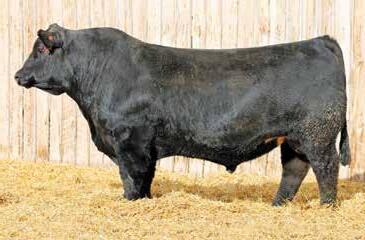
This 5-Star Accuracy, 5-Star Maternal Senior AI Herd Sire showcases the power of our system to build a commercial cow herd that lasts. With $PROFIT®, $RANCH® and $FEEDER® all ranking in the top 1% or better, he drives bottom-line improvement no matter your breeding goals.
CATTLE
Bid from Anywhere on the new online Bidding PlAtform
httPs://leAchmAn.com/sAles/
To access the auction, go to leachman.com/sales and click the Leachman Bid From Anywhere logo in the middle of the page.
Registration
To view the auction and/or place a bid, you must first register for the auction.
• At the top right corner of the page, click REGISTER and enter your information.
• Be sure to click YES to receive both email and text alerts (used only to notify you if you are outbid).
• After completing your information, click the green Complete Registration button.
• You will also have to verify with a CREDIT CARD. While this is only for verification you may also use this to pay for your purchase (A 3% CC fee will apply at payment).
• You will receive both a text and an email from S3 One Goal. Open both and follow the instructions to verify your email and phone number.
• Once verified, a Bidder Number will automatically be assigned to you.
Browsing and Viewing Lots
Once registered, click on AUCTION ITEMS. Click on “3.22.26 Leachman Cattle Spring Female Sale“ or the “3.23.26 Leachman Cattle Spring Bull Sale” to view the offering prior to sale day.
• Click on any lot to see details, EPDs, photos and videos.
• Use the arrows on each side of the information to scroll through lots quickly.
Bidding on Sale Day
On sale day, click on the sale name under Auction Items to watch the sale in real time.
• You will see the lot information and hear the auctioneer live.
• To bid, click the green Bid (Current Bid Price) button.
• If you are done bidding, click the red I’m Done Bidding button. You can re-enter bidding anytime by clicking Bid again.
• If you are bidding from a computer, hovering your pointer over the green Bid button will show the auctioneer that you are interested in bidding.
After the Sale
At the close of the online auction, you will receive an email invoice for your purchases. Invoice must be paid prior to shipping.
For assistance with registering or bidding, please contact: Russ Princ – 970-413-0993 | russ.princ@urus.org Brice White – 970-629-8858 | brice.white@leachman.com
1. Reg#: the registration number of the animal. NotReg means the animal is not registered. Pending means that a registration number has been applied for, but was not issued at the time of catalog printing.
2. Brd: breed of the animal if two breeds or less are involved. If more than two breeds are in the animal, then the composition shows the percent British and the percent Continental, i.e. 58B 42C means 58% British and 42% Continental.
3. DOB: date of birth
4. P = polled. S = scurred. H = horned. PP = Homozygous Polled. PH = Heterozygous Polled, PHS = Heterozygous Polled & Scurrs.
5. Cooperator herd where the bull was raised.
6. Color: BBK=homozygous black, BLK = black, BWF = black white face, BBF = black brockle face, RED = red, RWF = red white face, WHT = white, BRC = black red carrier, BBW = Homozygous black, white faced, BRW = Black red carrier, white faced.
7. Pen where the bull is located.
8. Genetic Defect codes - a C appended to the end denotes carrier and an F denotes tested free and P denotes possi ble but untested.
NH - Neuropathic Hydrocephalus
AM - Arthrogryposis Multiplex
CA Contractural Arachnodactyly
OS - Osteopetrosis
DD -Developmental Duplication
PA - Pulmonary Ataxia
Phenotype Scores to Make Bull Buying Easier:
9. CE: Calving Ease is the predicted calving ease if you use the bull on heifers. If there is a number in the brown box, this indicates the breed calculated calving ease di rect EPD. In addition, we provide our Leachman estimat ed calving star system.
***** The easiest calving bulls in the industry.
**** Use on smaller heifers with minimal assistance needed
*** Use on larger heifers with some assistance ex pected.
10. Maternal: This is an estimate of maternal efficiency, NOT milk. It includes $Ranch, Udder EPD and Fertili ty EPD as the basis for the Star system. The bulls are
scored from one star to five stars. Five Star bulls will produce some of the most profitable, good uddered cows in the industry.
11. Fertility: Predicts the number of calves that a bull’s daughters will have in the first 8 years of their life. As Fertility stars go up we would expect you to have a high er % weaned calf crop.
12. Udder EPD: This EPD assesses the bag attachment and teat size of the bull’s daughters. Bulls with 5 & 4 stars should sire females with exceptional udder quality.
13. Growth: This is a score from one star to five stars, where five stars means maximum growth. Even the one star bulls are as growthy as any bull in America 20 years ago.
14. Feedlot: This looks at all of the post weaning traits including gain, conversion, carcass weight, and carcass merit. Scored from one star to five stars, where five stars would produce maximum overall value in your feeder calves.
15. Feet: Is an estimate of the claw shape of an animal’s feet. The bulls are scored on a 1 to 5 scale. Bulls that are 5 and 4 Star for Feet should improve your herds feet and have a low incidence of claw issues himself. One star bulls should be used in a terminal breeding program.
16. Disposition: Our traditional score of 1 – 5 on disposition. Score 5 bulls are bulls you can walk up to and touch. Score 3 is about average historically for Leachman bulls. However, we are making a concerted effort to improve disposition, so most bulls score 3 or higher. The bulls scored 2.5 or 2 are nervous and do not like to be in close quarters with people on foot – but they are great for big range operations.
17. Phenotype: A combination of eye appeal and overall kind. Scored from one star to five stars. Five star bulls are the best phenotypic bulls in the sale (in our opinion)! Two star bulls are less attractive visually than average.
18. $Ranch EPD: This Leachman profit index that predicts weaning profitability based on calving ease, weaning weight, maternal milk, cow cost, and FERTILITY. Based on producing 100 calves. This EPD assumes a slide on calf prices of $10 / cwt.
19. $Feeder: This number is expressed in terms of the bull’s added value to the sale price of your feeder calves. It is expressed in dollars per head. Thus when comparing a +100 bull vs. a +50 bull, we expect the first bull to sire calves worth $50 per head more at weaning (regardless of their weight).
20. $Profit™ EPD: One, simple, proven number that gives each trait a weight according to its impact on profit.
Breed Association EPDs (Expected Progeny Differences) are listed for all registered animals. Leachman ABCs (Across Breed Comparisons) are listed for all un-registered animals. All ABCs are on an Angus base and can be compared across breeds within this catalog. EPDs are appropriate association EPDs without any adjustments.
21. Birth weight EPD/ABC expressed on an Angus scale (or breed scale for Red Angus, and Charolais).
22. Weaning weight EPD/ABC expressed on a breed scale. The Stabilizers are expressed on an Angus scale.
23. Yearling EPD/ABC expressed on a breed scale. The Stabi lizers are expressed on an Angus scale.
24. Milk EPD/ABC expressed on a breed scale. The Stabiliz ers are expressed on an Angus scale. This is the best pre dictor of a bull’s daughter’s ability to milk. It measures the difference in weaning weight that will be produced between one bull’s daughters and another bull’s daugh ters due solely to milk.
25. MWT is the predicted mature weight of daughters that you will get if you use the bull on a 1250 pound cow. If your cows weigh 1350, add 100 to this predicted weight. If your cows weigh only 1150, subtract 100 from this predicted weight. This EPD is the best indicator of daughter size -- far better than frame score or yearling height.
26. YHT is an EPD, expressed as frame score, predicting the yearling frame score of a sire’s progeny, compared to that of other sires.
27. IMF is the ultrasound based EPD/ABC for marbling ex pressed on a breed scale. The Stabilizers are expressed
on an Angus scale.
28. REA is the ultrasound based EPD/ABC for ribeye area ex pressed on a breed scale. The Stabilizers are expressed on an Angus scale.
29. F:G is the pedigree estimated feed to gain EPD that predicts the feedlot efficiency of the bulls offspring. A negative number means that the bull’s progeny will feed more efficiently. Example: -0.50 means that the bulls progeny will require ½ pound less feed per pound of gain.
30. Intake: is an estimate of the amount of feed that the bull’s progeny will consume over a 112 day feeding period. It is expressed in pounds. Animals with higher intake will consume more throughout their life. Animals with lower intake will consume less.
31. SC is an EPD, expressed in centimeters, predicting the yearling scrotal circumference of a sire’s progeny, com pared to that of other sires.
32. PAP: PAP EPD. If there is a number in the green box, this is the actual PAP score of the animal. If there is a circle around the score, this indicates that the score was col lected above 8500 ft in Walden, CO.
Key to bull comments:
• Any reference to % rank is the percentile rank within that bull’s breed. Top 1% means the animal ranks better than 99% of the population on that trait.
• Reference to the number rank (i.e. #2 $Profit) is the bulls rank within his breed within the sale bulls for that trait. So, #4 F:G ST means the 4th best Feed:Gain Stabilizer bull in the sale.
• Other abbreviations used in the comments include:
• Dam 5@101 NR – indicates that the bull’s dam has five calves with an average weaning ratio of 101
• WR & NR = weaning or nursing ratio. How the calf ranked within herd on their adjusted weaning weight.
• YR = yearling ratio. How the calf ranked within herd on adjusted yearling weight.
• AWW = adjusted 205 day weaning weight. AYW = adjusted 365 day yearling weight.
• REA & IMF = either adjusted data or ratios for ultrasound ribeye area and inter-muscular fat (marbling).
• ADG = average daily gain on test. WDA = weight per day of age at a year.
• Stay = the Red Angus EPD for Stayability. This predicts the likelihood that a bull’s daughters stay in the herd. +14 means that 14% more of this bull’s daughters will be in the herd at age 6.
Leachman Cattle’s $PROFIT® index stands as one of the most innovative and effective tools in modern beef production. Designed to help cattle producers maximize their profitability while improving the efficiency of their herds, the $PROFIT® index has gained recognition across the beef industry as a game-changing resource. By focusing on long-term sustainability and optimizing genetic potential, Leachman’s $PROFIT® system empowers producers to make informed decisions that benefit both their bottom line and the future of the beef industry.
At its core, Leachman Cattle’s $PROFIT® index is a genetic selection tool that calculates the expected profitability of beef cattle based on specific genetic traits. It is a comprehensive program that goes beyond the typical focus on individual traits like weight gain or carcass quality and instead integrates a range of factors that affect overall production costs and returns. The system evaluates 22 traits such as growth rates, feed efficiency, reproductive success, and carcass merit, assigning each animal a profitability score that reflects its overall potential for long-term profitability.
In the cattle business, you have to balance all of the traits that impact profitability. This is nearly impossible for anyone to do without understanding the tradeoffs and economic impact of each trait. Simply put, $PROFIT® does this work for you. By selecting for $PROFIT®, your cowherd will become more profitable (Cows that Work) and your feeder calves will make more money (Steers that Pay).
Leachman’s $PROFIT® index utilizes a powerful algorithm to consider the various inputs that contribute to profit, including both direct and indirect costs associated with production.
This allows beef producers to select animals that not only perform well in traditional areas, such as weaning weights
or ribeye area, but also in more complex aspects like feed efficiency and herd longevity. As a result, the program offers a more holistic view of genetic potential and provides a roadmap for selecting the bulls and cows that will yield the best financial outcomes.
The $PROFIT® score is calculated by taking into account a variety of economic factors. These include:
Reproductive Performance: Since the production of each calf is a major source of income, reproductive efficiency is critical. Bulls that produce cows with higher reproductive performance contribute to the overall profitability of the herd by ensuring higher calf crop percentages.
Longevity and Durability: Cows that live longer and continue to produce calves effectively contribute to longterm profits, reducing replacement and depreciation costs for herds.
Feedlot Performance: The $PROFIT® system incorporates expected performance data for animals as they enter feedlots, taking into account how efficiently they will gain weight and how well they will grade once processed.
Carcass Merit: Factors like carcass weight, marbling, ribeye size, and yield grade are all considered to predict how well the animal will perform in the marketplace. Higher carcass quality leads to higher premiums at the packing plant, increasing profitability.
$PROFIT® is generated from a combination of industry standards, genomic testing, and performance records from Leachman Cattle and the broader cattle industry. By assigning a dollar value to each trait, the $PROFIT® score provides a numerical representation of the expected profit an animal can generate across its lifetime.
Beef producers who use high $PROFIT® bulls from Leachman Cattle are investing in the future success and sustainability of their operations. These bulls are specially selected based on their genetic potential to maximize profitability through superior performance in a variety of traits. Here are some reasons why producers should consider using these bulls:
Increased Profit Margins: Bulls with high $PROFIT® scores contribute to higher-quality offspring that are more efficient in converting feed, grow faster, and produce better carcass quality. These traits all lead to reduced costs and increased returns for producers.
Reduced Production Costs: Feed is one of the largest costs in beef production. Bulls with high feed efficiency can help reduce feed costs by producing more weight per unit of feed. Additionally, selecting for reproductive success and longevity means fewer replacement animals are needed, reducing overall herd management costs.
Adaptability to Market Shifts: The $PROFIT® index helps producers select bulls that are not only profitable in the present but are also adaptable to future market trends. Whether it’s responding to changing consumer preferences for beef quality or meeting sustainability demands, high $PROFIT® bulls are a smart investment for navigating future industry challenges.
The $PROFIT® index is essential to the future of the beef industry because it helps producers to adopt more sustainable and efficient practices. As the global population grows and demand for beef increases, the industry must find ways to meet that demand while reducing resource use and maintaining profitability.
By using genetic selection tools like the $PROFIT® index, beef producers can improve the efficiency of their operations. The focus on feed efficiency, reproductive success, and animal longevity helps produce more beef with fewer resources, which is crucial as the industry faces pressure to produce sustainably in a world of limited resources.
Moreover, the system helps producers align their operations with consumer expectations for high-quality, responsibly produced beef. By selecting for superior carcass merit and growth efficiency, producers can meet market demands for premium beef while improving their bottom line.
Leachman Cattle’s $PROFIT® index is an invaluable tool for modern beef producers who want to maximize profitability and sustainability. By choosing high $PROFIT® bulls, producers can improve herd performance, reduce costs, and contribute to the long-term health of the beef industry. The system offers a clear path forward in an increasingly competitive and resource-conscious market, ensuring that the beef industry remains strong and profitable for generations to come.
The $Ranch® index represents a groundbreaking approach to improving your cow herd. No other index builds cows that excel at all of the drivers of cowherd profitability. $Ranch® will reduce cow feed intake, increase cow fertility and longevity, and increase weaning weights. The $Ranch® index stands as a strategic tool that helps producers optimize their herds for long-term success. By focusing on ranch-level profitability, this system is designed to help cattlemen and women produce better replacement females.
The $Ranch® index is a comprehensive genetic evaluation tool that helps beef producers select bulls that will maximize the profitability and sustainability of their cowherd. The system uses a robust economic model that integrates both the direct and indirect factors that influence the profitability of a cow/calf operation that sells calves at weaning. These include feed costs, reproductive performance, longevity and calf weaning weight. By taking all of these into account, the $Ranch® index calculates a dollar value for each cow that reflects its annual contribution to the overall profitability of a ranch. Herds that use $Ranch® will improve the profitability of their cowherd.
The $Ranch® score is derived from an intricate calculation that factors in a wide range of economic and biological variables. $Ranch predicts relative profit per cow on the daughters of a bull. In simple terms, higher $Ranch® bulls will generate cows that make more money each year. The index considers:
Cow Size and Feed Requirements: The $Ranch® estimates a cow’s annual feed cost using both the cow’s size and its feed intake predictions. Selection for $Ranch® will reduce per cow feed requirements. This will allow both heavier stocking rates and reduced supplemental feed per cow.
Reproductive Performance: Fertility is #1 driver of $Ranch®
The Cow Fertility EPD predicts the number of calves that a bull’s daughter will have in her lifetime. Ultimately, higher Cow Fertility herds will have higher calf crop percentages and lower
replacement rates. This positively impacts revenue per cow exposed to the bull and also reduces the depreciation cost per calf. The combined impact on increased revenue and reduced depreciation make reproduction the most important single trait to cow/calf operations that sell calves at weaning.
Maternal Weaning Weight: The $Ranch® index favors cows that wean bigger calves. However, the impact of weaning weight is less significant that either cow feed cost or reproduction. Nonetheless, selection for $Ranch® will increase herd weaning weights over time.
By evaluating these various factors, the $Ranch® index provides a profitability score that reflects the expected long-term success of a cow. This enables producers to select bulls that will make more profitable cowherds.
$Ranch is profit from birth through weaning. Includes: fertility, milk, growth, cow feed intake and mature size
The $Ranch® will help producers change the trajectory of their cowherds. The 40-year pursuit of increased growth rates has built cows that are too big and eat too much. This has made it increasingly difficult to generate high calf crop percentages. It has also reduced longevity and driven up supplemental feed costs.
The future of profitable cow/calf operations will be to find the females that are more efficient with higher fertility and longevity By using high $Ranch® bulls, herds will generate more cows that make it to nine years of age by producing a calf every year. In an era of changing market dynamics, ranches that utilize this program will be well-positioned for future success.
The $Ranch® index is an essential tool for modern beef producers who are looking to optimize their operations for profitability and sustainability.
The $Feeder® Index is an innovative genetic evaluation tool that focuses on maximizing the profitability of cattle once they enter the feedlot. With the increasing demand for high-quality beef and ever-tightening margins in the industry, it’s more important than ever for beef producers to focus on the entire production cycle. From conception to the feedlot, the $Feeder® index provides a clear, data-driven way to select genetics that will yield the highest returns for producers at the feedlot level. By optimizing cattle performance in terms of feed efficiency, weight gain, and carcass quality, the index ensures that feeder cattle will be more valuable and generate more profit.
The $Feeder® index is a genetic selection tool designed to enhance the performance of cattle once they enter the feedlot phase of production. It calculates the potential profitability of cattle by evaluating a range of traits that influence how well they will perform in the feedlot. These traits include feed conversion, growth rates, and carcass traits like marbling, ribeye size, and yield grade. The goal is to select bulls whose genetics will produce feeder calves that are efficient, fast-growing, and highyielding, thus maximizing returns during the feedlot phase.
Unlike traditional genetic programs that may focus solely on individual traits, the $Feeder® index combines various factors into a comprehensive score that provides producers with an accurate, bottom-line-focused metric for evaluating bulls. This ensures that each animal’s contribution to profitability is fully understood, allowing producers to make smarter breeding decisions for optimal feedlot outcomes.
The $Feeder® score is calculated using a combination of genetic factors that are proven to impact the performance of cattle in the feedlot. The primary factors included in the $Feeder® index calculation are:
Feed Efficiency: This is one of the most critical components in the feedlot phase. Cattle that convert feed into weight gain efficiently cost less to feed and require less time to reach market weight. Bulls that pass on genes for high feed efficiency can significantly reduce overall feed costs, which make up a large portion of the feedlot’s expenses.
Average Daily Gain (ADG): Cattle that grow faster are more profitable because they reach market weight sooner, reducing feed costs and labor. The $Feeder® index calculates how quickly an animal can gain weight based on its genetic predisposition for growth.
Carcass Quality: The $Feeder® index also takes into account marbling score and how it will impact grid premiums. In
particular, the index targets the production of higher quantities of Prime and high Choice. Higher marbling carcasses are highly desired by consumers and packers, ensuring the cattle generate more premiums.
Fat Cover and Yield Grade: The amount of fat and muscle on an animal influences its market value. A proper balance is essential—too much fat can lower the quality of the carcass, while too little can result in lower yields. The $Feeder® index evaluates these factors to ensure that cattle reach the ideal weight and fat levels for optimal market prices.
Carcass Weight: The goal of all feeder indexes should be to produce carcasses that can reach maximum weights efficiently. This requires having the growth potential to produce 1,000 pound carcasses. High $Feeder® bulls will produce steers that can reach the highest acceptable carcass weights.
By combining these traits, the $Feeder® index assigns a dollar value to each bull based on how likely their offspring will be to perform efficiently and profitably in the feedlot. This provides a clear indication of the economic return producers can expect from selecting a particular bull for their breeding program.
$FEEDER® is the profit from weaning to harvest. Includes: feed conversion, carcass value and carcass weight.
The $Feeder® index is crucial for the future of the beef industry because it helps producers meet the ever-growing demand for high-quality beef while improving feedlot efficiency and overall profitability. $Feeder® will improve feed conversion faster than any other feeder index available in the industry. By utilizing genetics that optimize feedlot performance, producers can help ensure that cattle reach market weight faster, with fewer resources. This contributes to greater overall efficiency in the beef supply chain, from the ranch to the packer. The $Feeder® index also helps producers adapt to shifting market demands by selecting for high carcass quality traits that are in increasing demand by consumers.
The $Feeder® index offers a powerful, economically focused approach to cattle breeding. By selecting high $Feeder® bulls, producers can optimize feedlot performance, reduce costs, and improve profitability. The program not only enhances the financial outcomes of individual ranches but also plays a critical role in ensuring that the beef industry remains competitive and efficient in the face of future challenges.
CALVING EASE: The predicted calving ease if you use the bull on heifers.
The easiest calving bulls in the industry
Use on smaller heifers with minimal assistance needed
Use on larger heifers with some assistance expected (If no stars are shown, the animal is recommended for use on cows only)
GROWTH: A formula combines WW and YW to predict how much performance the sire will pass on to their progeny.
Most growth
MATERNAL: An estimate of the maternal efficiency of the daughters this sire will produce. It includes cow size, milk, udder quality, fertility/longevity, growth, feed efficiency/intake and calving ease.
Keep these heifers! They will make the most profitable females in the business.
FEED/CARCASS: A formula that combines: gain, conversion, carcass weight and carcass merit to predict post weaning performance.
Maximum overall value in your feeder calves
UDDER: An estimate of the daughter’s udder quality. Excellent teat size and tight bag suspension
FERTILITY: An estimate of the number of calves the daughters will have in their lifetime.
Daughters will produce about two more calves in their life time than daughters of a one-star sire.
DISPOSITION: An observation of the sires disposition.
Average – respects flight zones and handles well, but is not a pet
$RANCH®: Profit from birth through weaning. Includes:
• Fertility, Milk, Growth
• Cow feed intake and mature size
$FEEDER®: Profit from weaning to harvest. Includes:
• Feed conversion
• Carcass value
• Carcass weight
$PROFIT®: $RANCH® + $FEEDER® Puts it all together.
• One number that predicts your bottom line!
FEED:GAIN: Difference in the amount of feed a bull's progeny will consume to produce one pound of gain.
Example: A -0.50 F:G EPD means this animal's progeny will consume 1/2 pound less feed per pound of gain than would progeny of a 0.00 F:G EPD sire.
FEED INTAKE: Difference in feed consumption of each of a bull's progeny in a 112 day feeding period.
Example: A steer whose sire has a -100 Intake EPD will eat 100 pounds less feed in 112 days than one whose sire had a zero Intake EPD.
You can’t afford to make mistakes in your breeding program. Choosing to use sires with incomplete or low-value data can unknowingly make your herd less profitable. Same work, same cost, poor results — unacceptable.
Leachman ABC’s are the most reliable and comprehensive EPDs in the industry. They are backed by a large (nearly a million), long-standing (over 30 years), multi-breed (over 15 breeds) database. Using this system assures you of making sound breeding decisions with minimal risk of failure.
• Built on Science: First designed in the 1970’s by USDA ARS scientists at the Meat Animal Research Center as the Marc II composite: ¼ Red Angus, ¼ Hereford, ¼ Simmental, ¼ Gelbvieh.
• Privatized: A private herd was developed by Pat Vinton, Gordon, NE and later sold to the Tessari family in Babb, MT – thus becoming the foundation for the Leachman Stabilizer® herd.
• Modernized: From 1988 – 2003, Leachman modernized the Stabilizer® composite:
▪ Reduced birth weight
▪ Solid colored, polled cattle
▪ Increased post weaning gain
▪ Improved disposition and udder quality
▪ Added black lines to original red lines
▪ Injected top hybrid and purebred sires from the Angus, Simmental, and Gelbvieh breeds
• Moved to Colorado: In 2003, Leachman Cattle of Colorado was formed with a nucleus of cooperators that included the Tessari herd and several other Stabilizer® cooperators.
• Selected with $PROFIT®: Leachman Cattle began selecting the Stabilizer® using $PROFIT® with significant results:
▪ Lower birth weight + higher yearling growth
▪ Increased marbling
▪ Improved feed efficiency
▪ Huge annual progress on $PROFIT®
• Expanded Internationally: In 2016, Leachman offered genetic analysis services to Stabilizer® breeders in the UK, New Zealand and Australia. This expansion increased the total Stabilizer® herd being selected for $PROFIT® to over 20,000 breeding females. Genetics are now flowing to and from each of these herds – increasing the rate of global selection improvement.
• Enhanced by DNA: In 2020, we partnered with Zoetis to build the largest, most accurate composite DNA database in the world. This nearly doubles the accuracy of yearling EPDs, allowing even more rapid genetic improvement.
• URUS Partnership: In 2023, URUS purchased a majority interest in Leachman Cattle. At that time, the ranch was also moved to Meriden, WY. The URUS collaboration has accelerated genetic progress to produce sustainable beef.
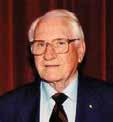
Dr. Keith Gregory
Excerpts from a 2001 letter written by Dr. Keith Gregory, Research Geneticist at U.S. Meat Animal Research Center (MARC) to Jim Leachman:
“Your contributions to beef cattle breeding are unmatched in the history of beef cattle breeding. No one has had a greater impact on beef cattle breeding on a global basis. I have stated on several occasions that no one is implementing more of the available beef cattle breeding technology than Leachman Cattle.”
you use this bull on heifers?
eeeee Easiest calving bulls in the industry.
eeee For use on smaller heifers with Minimal assistance.
eee For use on larger heifers with some assistance.
Are you concerned about Feet, Disposition or Phenotype?
eeeee These bulls excel in the trait and are trait improvers.
eeee These bulls are at the top of the class and very solid for the trait.
eee You will not go backward on the trait. Use to maintain the trait in question.
eeeee These will make the most Profitable, bullet proof heifer replacements in the industry.
eeee For use in herds that need to improve maternal traits.
eee For use in above average maternal herds to maintain maternal strength.
eeeee These will produce industry leading genetics in the Feedlot. Highly sought after feeder calves.
eeee For herds that want to improve Feedlot performance in their herds.
eee Used to maintain Feedlot performance and premiums in your herd.
Nt Reg 3/16/25 GRU Pen:
Groomsman S029G
Leachman Kingpin S350K
Rempe Stabilizer 9255
Stabilizer ZX043
C. Ease Maternal Cow Fert Udder Growth Feed/Carc Feet
eeeea eeeee eeeaa eeeaa eeeaa eeeaa eeeca eeeec
$Ranch $143 3% $Feeder $184 3% $Profit
4 Star Maternal -- Build a Better Cowherd.
Nt
Stabilizer 1355
C. Ease Maternal Cow Fert Udder Growth
Feet Dispo Pheno eeeee eeeca eeeea eeeea eeeaa eeeee eeeca eeeca eeeea
$Ranch $135 4% $Feeder $196 2% $Profit $27,570 1% Elite Calf Revenue Creator --
LCHMN LAZARUS U725N
5
Specialist!
LCHMN LAZARUS S343N
7
C. Ease Maternal Cow Fert Udder
eeeee eeeaa eeeaa eeeaa eeeaa eeeee eeeaa eeeea eeeea $Ranch $97 13%
LCHMN KADOKA U293N
2
Calf Revenue Creator -- Average
LCHMN KINGPIN U378N
4
8
LCHMN LAZARUS S359N
eeee eeeaa eeeca eeeaa eeeea eeeaa eeeec eeeca eeeea
LCHMN FORT KNOX S210N
C.
eee eeeca eeeec eeeca eeeea eeeaa eeeec eeeea eeeec
$130 5% $Feeder $220 0.6% $Profit $28,812 0.6% 4-Star Growth Bull!
LCHMN JUDGE K014N
13
14
LCHMN JAXON S286N
15
Nt Reg 2/17/25 GRU
43C PP BRC
SRR Control 9191G
Jaxon M398J
HSF Miss Imperial 157E 102G
Docs Remedy U683E
JS432
GRU Stabilizer FS794
C. Ease Maternal Cow Fert Udder Growth Feed/Carc Feet Dispo
eee eeeca eeeea eeeca eeeee eeeaa eeeea eeeca eeeee
$116 8% $Feeder $178 3%
5-Star Growth Bull!
Karson S335K
Rempe Stabilizer 7173
C. Ease Maternal Cow Fert Udder Growth
4 Star Maternal -- Build a Better Cowherd.
Stabilizer JU705
Stabilizer FU195 C. Ease Maternal Cow Fert Udder Growth Feed/Carc Feet Dispo Pheno eeeee eeeee eeeee
LCHMN JUDGE
20 LCHMN LIMITLESS
Sire Lineup sets a new standard.
Featuring the highest $PROFIT®, $RANCH®, and $FEEDER® sires ever offered, this lineup delivers the most reliable, economically driven performance data in the beef industry.
Breed with confidence. Breed for profit. Breed Leachman.

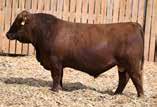
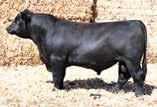
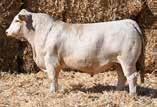
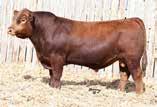
A 1,250 lb. Top 1% $RANCH® five-year-old Stabilizer® cow calved at 23 months, has bred and calved in the first cycle four times with a 365 day calving interval, and has weaned an average of 698 lbs. per calf.
pictured at cooperator,
Most profit minded ranchers increasingly see the key to profitability as controlling costs while still increasing performance. For them, the key cow herd profitability factors are:
• Moderating feed intake so you can run more cows on the same land.
• Improving longevity to reduce the costs of turnover and depreciation.
• Increasing fertility so that more cows bring in a calf every year.
• Adding hybrid vigor to increase pounds weaned per cow exposed.
Buying high growth, high carcass, purebred bulls that have been selected for maximum output will not build a low cost, high profit cowherd.
• Leachman’s $RANCH® index will move your herd in the right direction on all of these factors.
• The $PROFIT® index will help you improve your cows and make steers that earn premiums.
• Using Leachman Stabilizers® is the simplest crossbreeding strategy you can use: Retain 75% of the original F1 Hybrid vigor, while creating a uniform calf crop.
With today’s strong cattle markets, there has never been a better time to invest in elite genetics. Build more profitable cow herds by starting with Leachman Elite AI sires, which in 2026 average $34,184 $PROFIT ®, $162 $RANCH® and $252 $FEEDER®.
Take your program one step further by backing up those matings with a Leachman cleanup bull from the 2026 offering, averaging $28,134 $PROFIT ®, $132 $RANCH® and $209 $FEEDER®.
From AI to cleanup, Leachman genetics are designed to work together; delivering realworld performance, proven profitability and long-term value for your operation.
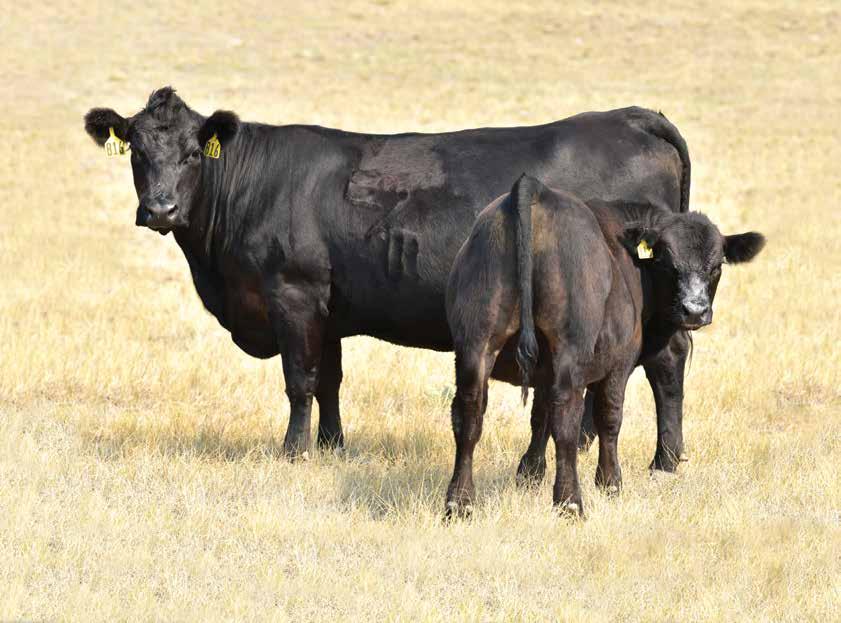
For Mike Inglish of Grandview Ranch in Senatobia, Mississippi, incorporating Leachman Stabilizers ® into his breeding program has made a measurable difference. Here’s what he’s seeing in his herd:

Better performance and prices for my calf crop “ ”
Leachman bulls have more muscle and mass, and it shows in their offspring ” “

real world. Just ask Mike Inglish.
“ I get paid more for Leachman-sired calves — it’s all about
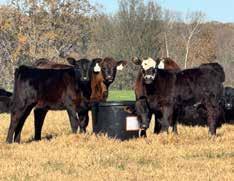
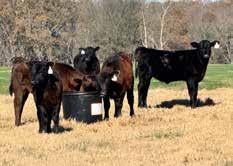
When the calves go to the sale barn, they bring a premium compared to the conventional run.
”
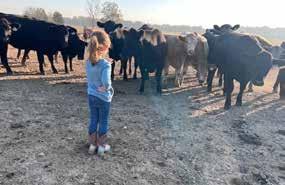

Mike’s granddaughter, Harper, trusts Leachman genetics too.



Purchase Inherit Select® through a Leachman representative and unlock $PROFIT®, $RANCH®, and $FEEDER® indexes for your herd at the best test price available.

Together, we are building the
Thanks to these $PROFIT® Share Partners for their top-quality data and their commitment to improving the profitability of their seedstock.




for $PROFIT®
















Kelly Noble of Lightning Bar Ranch in Amalga, Utah, uses Leachman genetics and the Star System to drive real world progress in his herd. For Kelly, the decision to move to Leachman genetics came down to two things: data he could trust and people who stand behind their program.
The Leachman Star System is simple. The way it’s laid out in the catalog just makes sense.
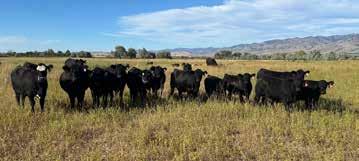
Since switching to Leachman bulls, my calves are fleshier and my cows are deeper bodied and broodier. You can see the difference.
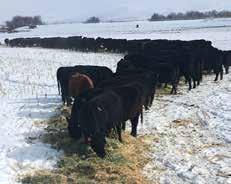
My weaning weights have gone up 50 pounds in the last five years since using Leachman bulls exclusively.
Moving to Leachman has made my life easier. Choosing bulls is easier, and I’m making more money. ”


TR Richards of Diamond T Land & Livestock
LLC in Tropic, Utah, shares the three biggest mistakes he wishes he’d fixed sooner.
My first big mistake I made was not buying Leachman Stabilizer® bulls sooner.
My second mistake was not picking up the phone and talking to the Leachman sales team sooner. “ ” 1 2 3
My third mistake was not DNA testing my heifers sooner.”
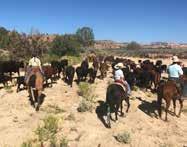
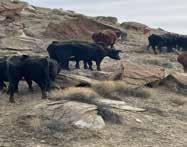

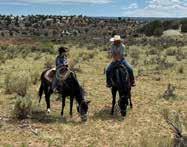
TR sums it up plainly:
“If I had done those three things sooner, I’d be much further ahead today. That’s the honest truth.” ”