

Grace Chan
Partner | San Francisco
Casey Williams
Partner | San Francisco
Jordan Carman
Associate | San Francisco
Hannah Dodge
Associate | San Francisco
Christopher Fallon
Partner | Los Angeles
Stephanie Lowe
Senior Counsel | San Diego
Madison Tanner
Associate | San Diego
Joshua Sarsfield
Associate | San Diego

On May 14, 2026, the California Supreme Court issued its decision in J.M. v. Illuminate Education, Inc., addressing the circumstances under which education technology vendors may be subject to liability under the Confidentiality of Medical Information Act (“CMIA”) and the Customer Records Act (“CRA”).
The Court held that not every entity that stores or processes medical information qualifies as a “provider of health care” under the CMIA, and not every individual whose information is maintained by a business qualifies as a statutory “customer” under the CRA. The Court also clarified that a plaintiff asserting a CMIA confidentiality claim need not allege that confidential medical information was actually viewed by an unauthorized person.
The decision reverses a prior Court of Appeal ruling that had interpreted both statutes broadly and allowed the plaintiff’s claims against Illuminate Education, Inc. (“Illuminate”) to proceed.
The case arose from a class action lawsuit filed by J.M., an 11-year-old student, through his guardian ad litem, against Illuminate, an education consulting and technology company that provides data management and student assessment services to school districts and county offices of education.
According to the complaint, Illuminate received J.M.’s personal and medical information from his school and county office of education to assist in evaluating his educational progress. Illuminate’s platform allegedly maintained student medical records and monitored student performance, including “social-emotional behavior.” Illuminate later experienced a data breach but allegedly did not notify affected individuals until approximately five months after the incident.
J.M. further alleged that, after the breach, he began receiving third-party solicitations at an address that had only been provided through educational records shared with Illuminate. Based on these allegations, J.M. asserted claims under the CMIA and CRA, alleging that Illuminate negligently maintained its database and failed to provide timely notice of the breach.
Illuminate demurred, arguing that it was not subject to either statute and that the complaint failed to state viable causes of action. The trial court agreed, sustained the demurrer without leave to amend, and entered judgment in Illuminate’s favor.
The Court of Appeal reversed. It concluded that Illuminate fell within the scope of the CMIA because the statute broadly applies to entities that maintain medical information, provide related software or hardware, receive medical information, or otherwise handle protected health information. The court held that J.M. sufficiently alleged a CMIA claim by asserting that Illuminate had a duty to safeguard medical information, breached that duty through negligent data security practices, and failed to timely notify affected individuals of the breach.
The Court of Appeal also held that Illuminate could be subject to the CRA, which requires businesses maintaining personal information to disclose data breaches “in the most expedient time possible and without unreasonable delay.” The court concluded that J.M. adequately stated a claim because his personal information was disclosed to Illuminate for educational purposes and allegedly compromised in the breach.
The California Supreme Court reversed the Court of Appeal’s decision and adopted a narrower interpretation of both statutes.
The Supreme Court held that the Court of Appeal interpreted the CMIA too broadly by extending the statute to entities that merely possess or store medical information for educational purposes. The Court concluded that Illuminate was not sufficiently alleged to be a “provider of health care” under Civil Code section 56.06 because its platform primarily supported educational functions, including dyslexia screening, student progress monitoring, and educational planning for school districts and educators, rather than medical diagnosis, treatment, or patientcontrolled health record management.
The Court also rejected alternative arguments that Illuminate qualified as a covered entity under other CMIA provisions, finding that the complaint did not sufficiently allege that Illuminate received medical information pursuant to a qualifying authorization or otherwise fell within the statute’s coverage.
The Court similarly concluded that the Court of Appeal interpreted the CRA too expansively. The Supreme Court held that J.M. was not a statutory “customer” under the CRA because the Ventura County Office of Education, not J.M., contracted with Illuminate and provided the student information at issue. As a result, J.M. lacked standing to pursue a CRA claim against Illuminate.
Although the Court narrowed the scope of entities and individuals covered under the CMIA and CRA, it also clarified the standard for pleading a CMIA confidentiality violation under Civil Code section 56.101.
Rejecting prior appellate decisions that required plaintiffs to show confidential medical information was “actually viewed” by an unauthorized person, the Court held that a breach of confidentiality may occur when medical information is exposed to a significant risk of unauthorized access or use, regardless of whether anyone actually viewed the information.
The Court explained that relevant considerations may include:
the nature, duration, and extent of the breach;
whether the data was specifically targeted;
the likelihood of unauthorized access or misuse; and
mitigation efforts undertaken following the incident.
The Court further emphasized that negligent loss of possession alone is neither automatically sufficient nor automatically insufficient to establish liability, and that courts must evaluate the totality of the circumstances.
J.M. v. Illuminate Education, Inc. (May 14, 2026) ___Cal.5th___ [2026 Cal. WL 1340681].
Note:
Although the Supreme Court narrowed the categories of entities and individuals that may pursue claims under the CMIA and CRA, the decision also clarified that plaintiffs need not allege confidential medical information was actually viewed by an unauthorized person to state a CMIA confidentiality claim. Whether a school, educational institution, or thirdparty vendor falls within the scope of these statutes may depend on the nature of the services provided and the entity’s role in collecting, maintaining, or using medical information. Schools, school districts, and organizations that contract with educational technology providers should continue to protect confidential medical information and comply with applicable breach notification requirements. Educational institutions should also ensure that contracts with third-party providers expressly require compliance with applicable data privacy laws, including the CMIA and CRA, and clearly allocate responsibility for data security, incident response, and breach notification obligations.
Kerin Morataya, a disabled former law student, sued volunteer law professor Marco Fortades under California’s Unruh Civil Rights Act after he allegedly revoked an accommodation allowing her to keep her camera off during remote classes and examinations.
Morataya attended Peoples College of Law, an unaccredited nonprofit law school in Los Angeles staffed largely by volunteer faculty. According to the complaint, Morataya disclosed during the admissions process that she suffered from bipolar and anxiety disorders and required an accommodation permitting her to attend videoconference classes and examinations with her camera turned off because appearing on camera could trigger severe panic attacks. The School instructed her to seek accommodations directly from her professors, and Morataya’s torts professor Fortades initially approved the request.
The relationship between Morataya and Fortades allegedly deteriorated during the school year. Fortades reportedly complained to another professor that Morataya was making the class “miserable” through “rude and disrespectful comments.” After receiving a D+ in her second quarter of torts, Morataya was placed on academic probation.
The day before the third-quarter torts final examination, Fortades emailed students announcing that cameras would be required during the exam and that grades would be reduced by 20 percent for noncompliance. This effectively revoked Morataya’s previously approved accommodation. Although the School’s admissions chair attempted to intervene and instructed Fortades to permit Morataya to keep her camera off, Fortades allegedly refused. Morataya ultimately completed the exam with her camera off, after which Fortades declined to submit a grade for
her, resulting in a zero on her transcript and academic disqualification.
Morataya sued both the law school and Fortades under the Unruh Civil Rights Act, which prohibits discrimination by “business establishments” in California. Before trial, Morataya settled with the School, leaving only her claim against Fortades individually.
On the day trial was scheduled to begin, the trial court raised on its own the question of whether Fortades, as an unpaid volunteer professor, could be liable under the Unruh Act. The trial court ordered expedited briefing, giving each side one day to submit five-page briefs on the issue. After receiving the briefs, the trial court dismissed the case before trial began, concluding that Fortades was not a “business establishment” subject to the statute because he was merely a volunteer.
The California Court of Appeal reversed. The appellate court explained that the trial court had analyzed the wrong legal question. The relevant issue was not whether Fortades himself was a “business establishment,” but whether discrimination allegedly occurred within a business establishment (i.e., the law school) and whether Fortades could nonetheless be individually liable for discriminatory conduct committed while acting on behalf of that institution.
The Court noted that California authority recognizes that employees and agents of business establishments may, in some circumstances, face individual liability under the Unruh Act for discriminatory conduct. Although the Court declined to decide whether that principle extends to unpaid volunteers, it concluded that the issue required factual development regarding Fortades’s role, authority, duties, and relationship to the School.
The Court also criticized the procedure used by the trial court. It held that Morataya was not provided meaningful notice or a fair opportunity to respond before the court effectively terminated her case on
the first day of trial. The appellate court emphasized that dispositive rulings require procedures that allow parties adequate notice, evidentiary development, and an opportunity to be heard.
Accordingly, the Court reversed the dismissal and remanded the matter for further proceedings.
Morataya v. Fortades (May 11, 2026) ___Cal.App.5th___ [2026 WL 1284011].
Note:
The decision suggests that individuals acting on behalf of a private organization may, in some circumstances, face potential liability for discriminatory conduct even where they are unpaid volunteers. The case also serves as a reminder of the importance of consistently implementing approved accommodations and maintaining clear processes for handling disability-related requests. LCW will continue monitoring this case for further developments.
In March 2019, three UC Berkeley students reported that, in separate incidents occurring in November 2017, November 2018, and March 2019, an intoxicated student engaged in increasingly aggressive conduct and forced them to participate in sexual activity without consent. Following the complaints, the University placed the student, referred to as John Doe, on interim suspension and initiated administrative proceedings under its sexual violence and sexual harassment policies. At the same time, the Alameda County District Attorney filed criminal charges, and two of the complainants testified at a preliminary hearing over several days, where they were extensively cross-examined by Doe’s counsel. The criminal matter concluded in February 2021 with a plea agreement.
The University conducted an investigation that included interviews of the complainants, the accused student, and multiple witnesses, along with review of documentary evidence such as text messages, photographs, and transcripts from the criminal proceedings. The process culminated in an administrative hearing before a hearing officer in August 2021. The complainants did not testify at that hearing, but Doe testified, presented witnesses, and submitted arguments, including proposed questions he would have asked the complainants. The hearing officer issued a detailed written decision finding
violations as to two complainants, based on credibility determinations that credited their prior statements and testimony and found Doe’s account was not credible. The University imposed the sanction of dismissal. Doe appealed internally, arguing procedural error, lack of evidence, and excessive delay, but the University denied the appeal and upheld the dismissal.
Doe then filed a petition for writ of administrative mandate against the Regents of the University of California, seeking to set aside the disciplinary decision. He argued the University denied him due process because he could not cross-examine the complainants at the administrative hearing. Doe further argued that the University’s delay in completing the investigation prejudiced him. The Regents opposed the petition. The trial court denied the petition, concluding the procedures satisfied due process and that no prejudicial delay occurred. Doe appealed.
The appellate court reviewed the administrative decision for procedural fairness and abuse of discretion. On the due process issue, the appellate court held that the student was not denied a fair hearing despite the absence of live cross-examination at the administrative hearing. Relying on the California Supreme Court’s decision in Boermeester v. Carry, the appellate court emphasized that due process in university disciplinary proceedings is flexible and does not require trial-like procedures or live cross-examination in all cases. The appellate court found significant that the complainants had already testified under oath in the criminal hearing where they were subject to extensive cross-examination, and that those transcripts were available to the hearing officer. Doe also had the opportunity during the investigation to propose
questions for the complainants but declined to do so. The appellate court concluded that these procedures provided a sufficient opportunity to challenge credibility and that due process did not require the complainants to appear at the administrative hearing.
On the delay issue, the appellate court held that the length of the investigation did not constitute error. The University had good cause for extensions, including the complexity of multiple allegations, the number of witnesses, the pendency of related criminal proceedings, and disruptions caused by the COVID-19 pandemic. The appellate court further held that the student failed to demonstrate prejudice, as he did not identify specific unavailable witnesses or explain how any alleged delay affected the outcome. The appellate court upheld the judgment.
Doe v. Regents of University of California (2026) 118 Cal.App.5th 1245.
Note:
Although this case involves a public university, the fair process standard outlined in Boermeester v. Carry applies to private schools as well. Under Boermeester, students facing discipline should be provided with fair procedure, which is less stringent than due process and includes notice of the charges against them and an opportunity to respond.
A.B.F. attended The St. Paul’s School for Girls (“SPSG”), a private Episcopal day school in Maryland. Shortly after enrolling as a freshman in 2017, A.B.F.’s parents informed the School that she had an anxiety disorder and learning disability, and the School implemented accommodations through an Individualized Education Program (“IEP”).
Although SPSG is a private school, the Court assumed for purposes of the litigation that it was subject to Section 504 of the Rehabilitation Act because it had accepted a federal Paycheck Protection Program (“PPP”) loan during the COVID-19 pandemic. The Court noted that any obligations arising from receipt of federal financial assistance would exist only during the period in which the School received those funds.
According to the complaint, A.B.F.’s junior year was marked by a deteriorating relationship with a classmate, K.P., and several other students. A.B.F. and her parents alleged that the students engaged in a pattern of bullying that included mimicking her gait and mannerisms,
making comments about her weight, exchanging malicious text messages, excluding her from social activities, and otherwise targeting her because of her social anxiety and disability.
A.B.F.’s parents complained to the School about the alleged bullying, and in response, the School conducted an investigation. The investigation found insufficient evidence to substantiate the bullying allegations. The parents strongly disagreed with that conclusion and alleged that the investigation was flawed because certain students were not interviewed until after the investigation was supposedly completed.
Following the School’s findings, A.B.F.’s parents requested modifications to her IEP, explaining that the alleged bullying targeted her because of her known disability and asking that the accused students be removed from her classes to prevent retaliation. Rather than moving the accused students, the School proposed moving A.B.F. to different classes.
The relationship between the family and the School continued to deteriorate. The parents alleged that School officials, the School’s attorney, and others minimized their concerns by characterizing the situation as ordinary “social dynamics” rather than bullying. They further alleged that the School created a hostile educational environment by making them feel unwelcome at school
events, excluding A.B.F.’s mother from participating in a school book sale, and failing to protect A.B.F. from further mistreatment.
Although A.B.F. ultimately graduated from SPSG in 2021, the family alleged that the bullying and the School’s response caused her to miss more than twenty days of school, negatively affected her academic performance, and deprived her of leadership opportunities.
The family filed suit asserting claims under Section 504 of the Rehabilitation Act, along with numerous state law claims. Their federal claims alleged that the School retaliated against them after they requested disability-related accommodations and that the School created a retaliatory hostile environment.
The Court dismissed both federal claims. With respect to retaliation, the Court acknowledged that requesting modifications to A.B.F.’s IEP constituted protected activity under the Rehabilitation Act. However, the Court found that the alleged retaliatory conduct did not rise to the level of a materially adverse action. For example, statements by the School’s attorney that A.B.F.’s parents were interfering with the “healing” of the accused students, and statements that the bullying allegations lacked merit, were viewed as disagreements regarding the dispute rather than actionable retaliation.
The Court also rejected the family’s argument that the School’s handling of the bullying complaints amounted to deliberate indifference to pervasive, severe disability-based harassment under Section 504. The Court emphasized that the School investigated the complaints, communicated its findings, and attempted to separate A.B.F. from the students involved by moving her to different classes. While the family strongly disagreed with the adequacy and conclusions of the investigation, the Court explained that disagreement with an investigation’s outcome did not establish disability discrimination or deliberate indifference.
The Court similarly dismissed the hostile educational environment claim, concluding that allegations that the family felt unwelcome at school events or that A.B.F.’s mother was excluded from participating in a school activity did not constitute the type of severe or pervasive retaliatory harassment required under the Rehabilitation Act. Having dismissed the federal claims, the Court declined to exercise jurisdiction over the remaining state law claims, including breach of contract, defamation, negligent supervision, and tortious interference claims, leaving those issues for state courts to resolve if the family chose to pursue them further.
Bennett v. St. Paul's Sch., Inc. (D.Md. May 8, 2026) 2026 WL 1261953.
Note:
This case serves as a reminder that private schools that accept certain forms of federal financial assistance may become subject to Section 504 obligations, even if they otherwise would not be covered. Careful documentation of investigations and responsive measures are particularly important where schools are navigating allegations of peer-on-peer bullying.




Dennis McConkey, a 63-year-old gay man, worked as an art teacher at The Churchill School and Center, a New York private K-12 school serving students with language-based learning disabilities, from 1992 until his termination in October 2022. Over the course of his three decades at the School, McConkey became deeply involved in student life, serving as a mentor, advisor, and leader of the School’s LGBTQ+ affinity group.
At the same time, the record reflected longstanding concerns from school leadership regarding McConkey’s temperament and interactions with students and colleagues. Beginning as early as 2017, administrators documented incidents involving angry outbursts, confrontational behavior, and inappropriate comments to students. In December 2017, the School suspended McConkey for five days following several incidents, including confrontations with students and staff, and required him to complete an anger management program. The suspension letter warned that future incidents involving anger or intimidation could result in termination.
Although later performance reviews praised McConkey’s teaching abilities and support for LGBTQ+ students, they also repeatedly referenced continuing concerns regarding professionalism and anger management. In 2021, his supervisor issued another written warning regarding negative interactions with colleagues and students and advised that continued issues could result in immediate termination. McConkey also had a tenuous relationship with his supervisor, Upper School Principal Jason Wallin. McConkey alleged that after a 2001 incident in which someone wrote a homophobic slur referencing him on a classroom whiteboard, Wallin repeatedly referenced the incident during annual evaluations and described feeling intimidated by McConkey’s reaction at the time. McConkey believed these repeated references
amounted to harassment tied to his sexual orientation. He also alleged that Wallin made various insensitive comments and microaggressions over the years and that the School fostered a “good old boys club” culture. In June 2022, McConkey emailed the School’s Assistant Head of School complaining that Wallin’s repeated references to the whiteboard incident constituted harassment and discrimination based on sexual orientation, age, and body type.
In October 2022, the incident leading directly to McConkey’s termination occurred. After noticing that students were missing from his classroom, McConkey went looking for them and opened the girls’ bathroom door either using his foot or leg. Students later reported that the door opened forcefully, striking one student and causing her to stumble backward. Other students reported that McConkey yelled at them afterward and failed to apologize. The School immediately suspended McConkey and conducted an investigation that included interviews with students and staff, review of surveillance footage, and a meeting with McConkey himself.
Following the investigation, the School terminated his employment, citing the bathroom incident together with his history of prior warnings regarding anger and professionalism. The termination letter stated that the School could no longer tolerate his “failure to control [his] temper and maintain appropriate decorum with both students and staff.”
McConkey filed suit alleging discrimination and retaliation under Title VII, the Age Discrimination in Employment Act, and state law. He alleged discrimination based on sexual orientation and age, as well as retaliation for complaining about harassment and discrimination.
The Court rejected McConkey’s discrimination claims. Title VII prohibits employers from discriminating on the basis of protected characteristics, including sexual orientation. The Court concluded that the School had articulated legitimate, non-discriminatory reasons for termination and that McConkey failed to raise a genuine issue of fact that those reasons were pretextual.
McConkey argued that the School’s investigation suggested that the reasons for his termination were pretextual, but the Court found that the School’s investigation into the bathroom incident was not so flawed or irregular as to support an inference of discriminatory motive. Multiple students and staff corroborated key aspects of the incident, and the administrators reviewed video footage and interviewed McConkey before reaching their decision. The Court emphasized that it was not tasked with determining whether the School reached the “correct” conclusion, but whether the School honestly believed the conduct violated workplace expectations.
McConkey also pointed to a series of allegedly discriminatory incidents over the years for his discrimination claim, including Wallin’s repeated references to the 2001 whiteboard incident, comments suggesting McConkey would “like” newly hired teachers who were gay, and statements that McConkey’s physical presence was “intimidating.” The Court concluded that this conduct was too remote, vague, or attenuated from the termination decision to support an inference of bias. While some comments may have been insensitive or unprofessional, the Court found insufficient evidence that sexual orientation discrimination played a role in the termination decision.
The Court similarly dismissed McConkey’s retaliation claims. Although the Court acknowledged that McConkey’s June 2022 complaint about harassment constituted protected activity, it found insufficient evidence that the complaint caused his termination. The Court emphasized that concerns about McConkey’s conduct predated his complaint by many years and that temporal proximity alone was insufficient to establish retaliation in light of the School’s documented concerns and investigation findings.
Finally, the Court denied McConkey’s request for sanctions relating to surveillance footage that had not been preserved in its original format. The School did not make effort to preserve the surveillance footage but instructed a staff member to preserve the clips of the footage that she filmed on her cell phone. The Court found that the School should have preserved more of the footage once litigation became reasonably foreseeable, but it concluded that McConkey failed to establish prejudice or intentional destruction of evidence.
McConkey v. Churchill Sch. & Ctr. (S.D.N.Y. May 13, 2026) 2026 WL 1328605.
Note:
This case illustrates the importance of consistent documentation and follow-through when addressing employee conduct concerns over time. It also highlights the need to take complaints regarding harassment or discrimination seriously, even where the employee raising the complaint has an extensive disciplinary history.

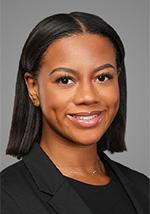
Welcome Moriah Denton to Liebert Cassidy Whitmore’s Los Angeles office as an Associate! She brings experience representing employers and companies in complex litigation matters involving labor and employment, antitrust, product liability, and class actions.
Andrea Tumbleson, an art teacher with the Lakota Local School District in Ohio, spent decades teaching despite living with Usher syndrome, a rare genetic condition that has progressively caused her to lose both her hearing and vision. By the time of the events at issue, Tumbleson was completely deaf and relied on cochlear implants to hear, while her vision continued to deteriorate. Despite these challenges, she remained a highly regarded teacher who consistently received positive evaluations and had never been disciplined.
Over the years, the District provided various accommodations, including additional classroom lighting, specialized computer equipment, and accessibility software. As her vision worsened, however, Tumbleson decided that she needed a guide dog to help her navigate daily life safely.
Obtaining the guide dog required Tumbleson to attend a mandatory three-week training program in Michigan during the school year. She requested permission to use approximately thirteen (13) days of accrued paid sick leave to attend the training, explaining that the program was medically related and necessary because of her disability.
The District denied the request for paid sick leave, concluding that the training did not qualify as a “personal illness, injury, or exposure to contagious disease” under Ohio law, the collective bargaining agreement, or the District’s sick-leave policy. At the same time, the District approved unpaid leave as a reasonable accommodation under the Americans with Disabilities Act (“ADA”), allowing Tumbleson to attend the training and obtain her guide dog.
After successfully completing the program and receiving her guide dog, Henry, Tumbleson sued. She alleged that the District violated the ADA by discriminating against her based on her disability and by failing to provide a reasonable accommodation. She also asserted that the Family and Medical Leave Act
(“FMLA”) entitled her to use accrued paid sick leave during the training period.
The Sixth Circuit rejected all of her claims.
With respect to her ADA discrimination claim, the Court explained that disparate treatment claims require evidence that similarly situated non-disabled employees were treated more favorably. Although Tumbleson argued that other employees routinely received sick leave without scrutiny, she could not identify any non-disabled employee who was permitted to use paid sick leave for an absence that did not otherwise qualify under the District’s policy. Without evidence of a comparator, the claim failed.
The Court also rejected her failure-to-accommodate claim. The ADA requires employers to provide reasonable accommodations to an otherwise qualified individual with a disability, unless doing so would unduly burden the employer. The Court noted, however, that the ADA does not require employers to provide an employee’s preferred accommodation if another reasonable option is available and permits the employee to perform their job. Here, the District allowed Tumbleson to take unpaid leave so that she could attend the training and obtain her guide dog. Because that accommodation enabled her to achieve the same objective, the Court held that the District satisfied its obligations under the ADA.
The Court emphasized that the ADA does not require an employer to address every financial consequence associated with an accommodation. While Tumbleson argued that unpaid leave created financial hardship for her family, the Court concluded that those concerns arose outside the workplace and therefore did not determine whether the accommodation was reasonable under the ADA.
The Court likewise rejected Tumbleson’s FMLA claim. Although it declined to definitively decide whether the guide dog training qualified for FMLA leave, it held that the FMLA is presumptively treated as unpaid leave. FMLA only entitles employees to substitute paid leave when the employer would normally provide paid leave under its existing policies. The District had concluded that attending guide dog training did not constitute a
“personal illness” under its sick-leave policy, and Tumbleson failed to meaningfully challenge that interpretation on appeal.
Accordingly, the Court affirmed summary judgment in favor of the District.
Tumbleson v. Lakota Loc. Sch. Dist. (6th Cir. May 13, 2026) __ F.4th __ [2026 WL 1328618].
Note:
This case provides useful guidance on providing reasonable accommodations to employees, especially when the accommodation is not an employee’s preferred accommodation. Under the ADA, where multiple accommodations would effectively address an employee’s functional limitations, employers generally retain discretion to choose among reasonable options. This case also highlights the importance of consistency in the application of leave policies, especially sick leave where permissible purposes for sick leave are dictated by both legal requirements and policy language. Had the District not consistently permitted the use of sick leave only for permissible purposes, the result of this case could have been different.
Dr. Kristine Yoder, an Associate Professor in the Cancer Biology and Genetics Department at Ohio State University’s College of Medicine, filed suit alleging sex discrimination, unequal pay, hostile work environment, and retaliation under Title VII and the Equal Pay Act. She claimed that she was paid less than male colleagues, subjected to dismissive treatment by department leadership, and retaliated against after raising concerns about pay disparities.
Dr. Yoder began her career at OSU in 2004 as a postdoctoral researcher and was promoted to Assistant Professor in 2012 and Associate Professor in 2020. During her tenure, she received both annual merit-based increases and a significant off-cycle raise in 2018, when her salary increased from approximately $109,000 to $130,000 after concerns were raised that her pay was below market. By 2025, her salary had increased to approximately $188,800.
Her primary comparator was Dr. Vincenzo Coppola, a male Associate Professor, who at one point earned approximately $220,000 while she earned about $159,000. Dr. Yoder argued that she outperformed him
in grant funding and publications and that the disparity reflected sex-based discrimination. The University explained that Dr. Coppola’s higher pay was attributable to his additional administrative role as Director of the Genetically Engineered Mouse Modeling Core, which carried a substantial salary supplement. When that program ended in 2022, his salary was reduced, and by 2025 he earned less than Dr. Yoder.
Dr. Yoder also pointed to other incidents as evidence of discrimination and a hostile work environment, including being interrupted during meetings, receiving dismissive responses from the department chair, and experiencing delays in hiring support staff. She further alleged that after she filed internal complaints about pay disparities in 2020 and 2021, she was retaliated against, including receiving a 4% merit increase instead of a 5% increase awarded to a male colleague in 2021 and initially receiving a rating of “good” on her annual performance review.
The Court granted summary judgment in favor of the University on all claims.
With respect to the Title VII sex discrimination claim, the Court applied the McDonnell Douglas framework and found that, even assuming Dr. Yoder established a prima facie case, the University articulated legitimate, nondiscriminatory reasons for the challenged actions. The difference in merit increases was tied to specific performance metrics, including that Dr. Yoder did not
perform departmental services and that the publications she submitted were of lesser scientific impact. The Court found no evidence that these reasons were false or a pretext for discrimination.
The Court likewise rejected the Equal Pay Act claim. It concluded that Dr. Yoder and Dr. Coppola did not perform substantially equal work during the relevant period because of his additional administrative responsibilities, including his role as the Director of the Mouse Core, which required significant time and effort. The Court noted that Dr. Coppola’s employment offer letter delineated that he was being hired for two separate positions, each of which carried a separate salary. The Court also held that, even if a prima facie case had been established, the pay disparity was justified by a “factor other than sex,” namely the additional role and responsibilities.
Her hostile work environment claim failed because the alleged conduct, while arguably unprofessional, was not shown to be based on gender. The Court emphasized that Title VII does not prohibit general workplace friction or discourtesy, but only conduct motivated by discriminatory animus.
Finally, the Court rejected Dr. Yoder’s retaliation claim, finding no evidence that her protected activity was the cause of the alleged adverse action. The Court noted that the merit increase decision was supported by documented performance considerations and that temporal proximity alone was insufficient to establish causation.
Accordingly, the Court granted summary judgment for the University on all claims.
Yoder v. Ohio State University (S.D.Ohio Mar. 16, 2026) 2026 WL 730275.
Note:
This case underscores the importance of clearly documenting compensation decisions and tying them to objective factors such as administrative responsibilities, performance metrics, and institutional service. Even relatively small pay differences can be scrutinized, and well-supported, consistently applied criteria are critical in defending against discrimination and equal pay claims.

Tony Parrish, proceeding without counsel, filed suit individually and on behalf of his minor child, J.P., against The Hudson School, a private school in New Jersey, along with administrators and board members, asserting a sweeping set of claims arising out of concerns regarding student data privacy and an allegedly retaliatory report to New Jersey child welfare authorities.
According to the complaint, Parrish began receiving communications from Apple in October 2024 concerning suspected unauthorized access to his child’s digital information through educational software called IXL Learning, Inc., allegedly used by the School. Parrish claimed that Apple representatives expressed concern about possible third-party interception of data inconsistent with Apple’s privacy standards. He further alleged that he discovered indications of spyware or intrusive software on both personal and School-issued devices used by his child.
Parrish requested information from the School regarding third-party software vendors and data privacy safeguards. According to the complaint, School administrators responded defensively and directed him to contact the educational software providers directly. Parrish later informed the School that he was revoking consent for data sharing relating to his child.
The complaint alleged that days after Parrish revoked consent, School administrators filed a report with the New Jersey Division of Child Protection and Permanency (“DCPP”) alleging concerns about the child’s tight-fitting clothing and Parrish’s “mental decline.” Parrish contended that the report was retaliatory and intended to punish him for questioning the School’s technology and data practices. He further alleged that DCPP ultimately found the allegations “Not Established.”
Parrish asserted more than twenty claims against the School, administrators, and trustees, including claims under 42 U.S.C. Section 1983, Title VI, FERPA, COPPA,
the New Jersey Civil Rights Act, the New Jersey Law Against Discrimination, the New Jersey Consumer Fraud Act, negligence theories, emotional distress claims, and claims relating to student privacy and educational discrimination.
The Court granted the defendants’ motion to dismiss. A central aspect of the ruling was the Court’s conclusion that The Hudson School, as a private school, was not a “state actor” for purposes of constitutional claims brought under Section 1983 or the New Jersey Civil Rights Act. The Court explained that even extensive regulation or receipt of public funds does not convert a private school into a governmental actor. Because constitutional protections such as due process and equal protection generally apply only to state action, the Court dismissed with prejudice the constitutional claims asserted against the School and its administrators.
The Court also held that Parrish, as a non-lawyer parent proceeding pro se, could not represent his child in federal court. The Court explained that while individuals may represent themselves, non-attorney parents cannot litigate claims on behalf of minor children. The Court therefore directed Parrish either to obtain counsel for J.P. or face dismissal of the child’s claims without prejudice.
In addition, the Court dismissed the majority of the complaint because it improperly lumped together seventeen defendants without specifying which individual allegedly engaged in which conduct. The Court characterized the pleading as impermissible “group pleading,” explaining that the allegations failed to place each defendant on notice of the claims against them.
The Court separately dismissed claims against the School’s board members for negligent hiring and supervision, finding that the complaint failed to plausibly allege that the Board knew of any specific dangerous propensities or that any board action proximately caused Parrish’s alleged injuries.
Ultimately, the Court dismissed some claims with prejudice, dismissed the remaining claims without prejudice, and permitted Parrish an opportunity to amend the complaint to address the deficiencies identified by the Court.
Parrish v. Hudson Sch. (D.N.J. May 13, 2026) 2026 WL 1328364.
Note:
As schools increasingly rely on educational technology and third-party learning platforms, parents are raising more questions regarding data collection, student privacy, and consent. This case underscores the value of maintaining clear disclosures regarding software vendors, privacy protections, and data-sharing practices.
In American Council of Learned Societies v. National Endowment for the Humanities, a federal trial court invalidated what it described as the largest mass termination of grants in the history of the National Endowment for the Humanities (“NEH”). The case arose after the Trump Administration terminated more than 1,400 previously awarded grants, representing over $100 million in congressionally appropriated funds, issued to scholars, writers, universities, museums, and humanities organizations.
The challenged terminations followed a series of executive orders directing federal agencies to identify and eliminate programs associated with diversity, equity, and inclusion (“DEI”), environmental justice, and what the Administration characterized as “gender ideology.” NEH staff initially reviewed grants awarded during the Biden Administration and categorized them based on their perceived relationship to those topics. The review process then shifted to personnel from the U.S. Department of Government Efficiency (“DOGE”), who independently reviewed grants and developed lists of projects they believed should be terminated.
The Court devoted significant attention to the methods used during the review process. According to the opinion, DOGE personnel created spreadsheets identifying grants as “DEI” or “non-DEI” and used keyword searches for terms such as “BIPOC,” “native,” “indigenous,” “tribal,” “gay,” “melting pot,” “social justice,” and “immigrant.” The Court found that DOGE personnel also used ChatGPT to generate short explanations, referred to in the opinion as “DEI Rationales,” for why particular grants allegedly
related to DEI. These AI-generated rationales were incorporated into the spreadsheets used to identify grants for termination.
The opinion describes numerous examples of grants identified for cancellation, including projects involving Holocaust history, Indigenous history, African American history, Asian American experiences, women’s history, and preservation of cultural archives. The Court noted that many grants were classified as “DEI” simply because they involved minority communities, women, or historically underrepresented groups. The Court also found evidence that grants awarded during the Biden Administration were treated as presumptively subject to review and potential termination.
The Court granted summary judgment in favor of the plaintiffs and held that the mass termination violated the First Amendment, the equal protection clause of the Fifth Amendment, and the governing federal statute establishing the NEH. First, the Court concluded that the grant cancellations constituted impermissible viewpoint discrimination because grants were terminated based on perceived support for disfavored ideas and subject matter. The Court reasoned that NEH grants fund private expression rather than government speech, and that the government may not withdraw previously awarded grants because it disagrees with the viewpoints reflected in the funded work.
Second, the Court found that the process violated equal protection principles because the review system expressly relied on classifications involving race, ethnicity, religion, sex, sexual orientation, and national origin. The Court concluded that the government could not justify terminating grants based on those characteristics, even under the Administration’s stated goals of promoting merit or reducing wasteful spending.
Third, the Court held that DOGE acted ultra vires (i.e., beyond its legal authority). The Court explained that Congress vested grantmaking authority in the NEH Chairperson and established a detailed statutory process for awarding and administering grants. The Court found that DOGE personnel effectively controlled the grant termination decisions, overrode recommendations from NEH leadership, and exercised authority that Congress had never delegated to them. According to the Court, neither the governing statute nor the relevant executive orders authorized DOGE to decide which NEH grants would be terminated.
The Court certified a class of affected grantees, permanently enjoined the government from enforcing the mass terminations, ordered the government to rescind the termination notices, and declared the terminations unlawful, unconstitutional, and without legal effect.
Am. Council of Learned Socies. v. NEH (S.D.N.Y. May 7, 2026) 2026 WL 1256545.
Note:
This case is a significant judicial decision addressing the Trump Administration’s efforts to eliminate programs perceived as connected to DEI. The opinion underscores that governmental decisions affecting funding, programs, or opportunities may still be subject to constitutional scrutiny when they are based on viewpoint, protected characteristics, or criteria that exceed the authority granted by statute.
In an article published in CPA Practice Advisor's Financial Reporting, LCW Senior Counsel Andrew Dorado discusses the expansion of Internal Revenue Code Section 4960 under the One Big Beautiful Bill Act and the resulting implications for nonprofit organizations. The expanded rules broaden the reach of the 21% excise tax on compensation paid by tax-exempt organizations, creating new considerations for nonprofit employers and their advisors. Read more here.

•The EEOC recently proposed eliminating the longstanding EEO-1 reporting requirement, which currently requires private employers (including private schools) with 100 or more employees and certain federal contractors to submit annual workforce demographic data. The proposal has been sent to the White House for approval.
•The U.S. Supreme Court recently declined to hear a case brought by the U.S. Conference of Catholic Bishops that sought to expand the First Amendment’s “church autonomy” doctrine, which is a legal principle that generally limits courts from becoming involved in internal religious matters such as doctrine, governance, and certain ecclesiastical decisions. The underlying lawsuit alleges that donations made through Peter’s Pence, a Catholic charitable collection, were used in ways that differed from donors’ expectations, and the bishops argued that requiring the case to proceed would improperly entangle the courts in church affairs. By declining review, the Supreme Court left in place a lower court ruling requiring the organization to continue litigating the claims and postponed consideration of broader questions about whether religious organizations can immediately appeal adverse church-autonomy rulings or avoid litigation altogether based on those constitutional protections.
•The U.S. House recently advanced two education bills that would codify portions of President Trump’s executive orders addressing “gender ideology” and “discriminatory equity ideology.” One bill would prohibit certain federally funded civics and history programs from using grant funds for instruction involving gender ideology and DEI. The other bill would require public schools to obtain parental consent before changing a student’s gender designation or sex-based accommodations in school records.
By June 30, 2026, complete training for all current mandated reporters under SB 848. Moving forward, develop a process for all mandated reporters to complete the training within the first six weeks of each school year, within the first six weeks of that person’s employment, or within six weeks of commencing volunteer services.
Conduct exit interviews:
• Conduct at the end of the school year for employees who are leaving (whether voluntarily or not). These interviews can be used to improve the organization and can help defend a lawsuit if a disgruntled employee decides to sue.
Update Professional Boundaries Policy.
• Effective July 1, 2026, schools must adopt a written policy applicable to employees, volunteers, and contractors addressing appropriate conduct in adultstudent, student-student, and adult-adult interactions, including electronic communications.
Adopt Facilities and Supervision Plan:
• Effective July 1, 2026, schools must adopt a written plan designed to promote visibility, ensure adequate supervision, and reduce the risk of unsupervised contact between students and adults.
Update Employee and Student/Parent Handbooks:
• The handbooks should be reviewed at the end of the school year to confirm that the policies are legally compliant, consistent with the employment agreements and enrollment agreements that were executed, and current with the latest best practice recommendations. The school should also add any new policies that it would like to implement upon reflection from the prior school year and to prepare for the upcoming school year.
Conduct review of the school’s Bylaws (does not necessarily need to be done every year).
Review of insurance benefit plans:
• Review the school’s insurance plans, in order to determine whether to change insurance carriers. Insurance plans expire throughout the year depending on your plan. We recommend starting the review process at least three months prior to the expiration of your insurance plan.
• Workers Compensation Insurance plans generally expire on July 1.
• Other insurance policies generally expire between July 1 and December 1.
Conduct staff trainings, which may include:
• Sexual Harassment Training:
A school with five or more employees, including temporary or seasonal employees, must provide sexual harassment training to both supervisory
Each Month, LCW presents a monthly timeline of best practices for private and independent schools. The timeline runs from the fall semester through the end of summer break. LCW encourages schools to use the timeline as a guideline throughout the school year. and nonsupervisory employees every two years. Supervisory employees must receive at least two hours and nonsupervisory employees must receive at least one hour of sexual harassment training. (California Government Code Section 12950.1.)
• Mandated Reporter Training:
Effective July 1, 2026, all mandated reporters to complete the training within the first six weeks of each school year, within the first six weeks of that person’s employment, or within six weeks of commencing volunteer services.
Prior to commencing employment, all mandated reporters must sign a statement to the effect that they have knowledge of the provisions of the Mandated Reporter Law and will comply with those provisions. (California Penal Code Section 11166.5.)
• Maintaining Professional Boundaries
• Risk Management Training such as Injury and Illness Prevention and CPR.
Conduct Board / Governance Training, which may include:
• Fiduciary Duties
• Legal Compliance & Risk Management
• Governance Best Practices
Distribute Parent/Student Handbooks and collect signed acknowledgement of receipt forms, signed photo release forms, signed student technology use policy forms, and updated emergency contact forms.
• The U.S. Department of Justice recently issued a findings letter concluding that UCLA’s David Geffen School of Medicine violated Title VI and the Supreme Court’s 2023 Students for Fair Admissions decision by continuing to consider race in admissions decisions for the incoming classes of 2023, 2024, and 2025. According to the DOJ, internal admissions materials, diversity-focused guidance distributed to admissions personnel, application questions designed to elicit information about applicants’ membership in marginalized groups, and statistical disparities in MCAT scores and GPAs among admitted students demonstrated intentional race-based decision-making. The DOJ also criticized the School’s use of “holistic review,” arguing that it functioned as a mechanism to uncover and consider applicants’ race despite the Supreme Court’s decision, and has invited UCLA to enter into a voluntary resolution agreement to bring its admissions practices into compliance.
• The Louis D. Brandeis Center recently filed a complaint with the U.S. Department of Housing and Urban Development alleging that Williams College violated the Fair Housing Act by failing to accommodate an Orthodox Jewish student’s religious observance in campus housing and dining. According to the complaint, the student was repeatedly denied a physical key to access his residence hall during the Sabbath, when his faith prohibits the use of electronic key cards, leaving him dependent on others for entry and, at times, waiting outside in harsh winter conditions. The complaint further alleges that Williams failed to provide adequate kosher dining options through its mandatory meal plan and that a dining administrator told the student that if he could not “deal with” the available options, he “should not come to Williams College.” The complaint asks HUD to investigate whether the College’s housing and dining practices constitute religious discrimination under the Fair Housing Act.
• A former resident assistant has filed a proposed class and collective action against Seton Hall University, alleging that the University violated federal and New Jersey wage-and-hour laws by failing to pay resident assistants minimum wage and overtime. The lawsuit alleges that resident assistants performed extensive operational duties, including enforcing University policies, responding to emergencies, conducting security rounds, staffing front desks, mediating student disputes, and attending mandatory training programs, while receiving only free housing, meal plans, and limited campus spending credits. According to the complaint, resident assistants regularly worked 18 to 24 hours per week during the academic year and as many as 50 to 60 hours during training periods, move-in, and move-out weeks.
LCW has four private education consortiums across the State! Consortium members enjoy access to quality training throughout the year, discounts on other LCW products and events, and unlimited, complimentary telephone and email consultation with an LCW private education attorney on matters related to employment and education law questions (including business & facilities questions and student issues!) We’ve outlined a recent consortium call and the provided answer below. Client confidentiality is paramount to us; we change and omit details in the Consortium Call of the Month.
A Human Resources Manager reached out to LCW with a question about AB 692, California’s ban on “stay-or-pay” provisions. In this situation, the School has a Parent Association that offers grants to faculty to pursue professional development outside of what the School can ordinarily afford. There are criteria (e.g., the faculty member must have a minimum tenure of 3 years to apply) and an application process where proposals are evaluated by the Parent Association and some of the School’s administrators in light of available funding. The HR Manager explained that most faculty whose proposals are funded end up taking their professional development over the summer.
One stipulation the School has is that, if someone accepts the funding, and then does not return the next school year, they must refund the School for any funds that were paid out to them for their project. The HR Manager asked whether this was likely to be a violation of CA law under AB 692.
Answer:
The LCW attorney advised that, in light of California’s new AB 692, unfortunately this arrangement does present risk. Effective January 1, 2026, AB 692 broadly prohibits “stay-or-pay” provisions, which include contractual terms that require an employee to repay money, incur a fee, or otherwise suffer a financial consequence if their employment ends. The statute is intentionally broad and is aimed at arrangements that may deter employee mobility.
The attorney advised that the School’s current provision appears to fit within the type of arrangement AB 692 is targeting because the faculty member receives funds connected to employment, repayment is triggered if the employee does not return the following school year, and the repayment obligation effectively conditions receipt of the benefit on continued employment.
The attorney noted that the fact that the program is discretionary, competitive, and funded through the Parent Association rather than directly through payroll might be an important distinguishing factor, but the law is new and it is not clear. The statute applies broadly to obligations requiring repayment of money or “employment-related” or “education-related” costs upon termination of employment.
The LCW attorney noted that AB 692 does include an exception for repayment of tuition costs associated with a transferable credential. The law defines a transferable credential as a degree offered by a third-party institution that is accredited and authorized to operate in the state, is not required for the employee’s current position, and is transferable and useful for employment beyond the employee’s current employer. Employers and employees can agree to repayment of those tuition costs so long as the agreement meets the requirements set out in the statute, which include required provisions such as the right to consult with counsel, at least 5 business days to review the agreement, proration of any repayment obligation and others.
This exception applies to degrees from institutions that are accredited and authorized to operate in California. It would not extend to other types of professional development that do not result in a degree, such as conferences, travel, or short-term workshops. Based on what the HR manager described, the LCW attorney advised that it does not sound like much of the PD that is usually funded would fall into this category of resulting in a transferable credential/degree.
The IRS has announced the adjusted 2027 penalty amounts for violations of the Affordable Care Act’s employer shared responsibility provisions (otherwise known as the “ACA Employer Mandate”). The ACA Employer Mandate authorizes the Internal Revenue Service (“IRS”) to assess a penalty on applicable large employers under one of the following two circumstances:
A.Penalty A: The applicable large employer fails to offer “substantially all” of its full-time employees and their dependents the opportunity to enroll in minimum essential coverage and any full-time employee receives a subsidy for coverage through Covered California (26 U.S.C. Section 4980H(a)(1)); or
B.Penalty B: The applicable large employer offers coverage to full-time employees and their dependents that is “unaffordable” or does not offer “minimum value” and a full-time employee receives a subsidy for coverage through Covered California. (26 U.S.C. 4980H(b)(1).)
The amount of the penalties changes year-to-year. For plan years beginning after December 31, 2026, Penalty A will be $3,780 per year ($315 per month) multiplied by the number of full-time employees employed by the employer less 30. Penalty B will be $5,670 per year ($472.50 per month) multiplied by the number of full-time employees who obtain subsidized coverage through Covered California. These penalty amounts for 2027 are higher than the amounts currently in place for 2026 ($3,340 per year for Penalty A and $5,010 per year for Penalty B).
Here are some examples of how Penalty A and Penalty B are calculated based on the penalty amounts for 2027:
Penalty A Example: If an applicable large employer has 300 full-time employees and fails to offer “substantially all” of its full-time employees and their dependents the opportunity to enroll in minimum essential coverage, and at least one of those employees receives a subsidy for coverage through Covered California for 12 months, then the IRS could assess a Penalty A at $3,780 multiplied by 270 (300 minus 30 full-time employees), which is $1,020,600.
Penalty B Example: If an applicable large employer has 300 full-time employees and fails to offer coverage that is affordable and provides “minimum value”, and 10 of those employees receive a subsidy for coverage through Covered California for 12 months, then the IRS could assess a Penalty B in the amount of $56,700 ($5,670 multiplied by 10 employees who obtain the subsidy).
While employers who intend to offer full-time employees and their dependents affordable minimum essential coverage hope to never face these penalties, it helps to be aware of the adjusted amounts year-to-year as part of staying up to date on the ACA. For more information, see IRS Revenue Procedure 2026-22.
IRS Updates Sample Educational Assistance Plan and FAQs to Reflect Recent Legal Updates.
The past 12-months have brought a number of legal updates to educational assistance plans (“EAP”) under
Section 127 of the Internal Revenue Code. In April 2026, the IRS updated its Frequently Asked Questions webpage about EAPs. Employers that provide educational assistance benefits to help employees pay for tuition, fees, books, supplies, equipment, and qualified student loans may exclude the payments, up to the annual limit, from employees’ gross income if the benefit complies with Section 127. The IRS’s FAQs describe and clarify the benefit. Here are the highlights from the IRS’s FAQs:
Updated Sample EAP Plan: To qualify as a valid EAP, the plan must be written and must meet certain other requirements. The IRS released an updated sample plan to assist employers with establishing EAPs that comply with Section 127. (See IRS Publication 5993 for the sample EAP plan.)
Educational Assistance Plan (Section 127 Plan) Cap Increase: Starting in 2026, the $5,250 annual cap for Section 127 educational assistance benefits will be adjusted for increases in the cost of living. The IRS will announce what the new amount will be. Unused amounts cannot be carried forward to subsequent years.
Repayments to Qualified Education Loans: Employer-provided student loan repayments are now a permanent benefit available through a Section 127 educational assistance plan. The benefit includes principal or interest payments on certain qualified education loans incurred by the employees paid directly to a third party (such as an educational provider or a loan service) or directly reimbursed to the employee. Generally, EAP benefits for qualified education loans are only available if the employer amends the terms of its EAP plan to include the benefit.
No Educational Assistance Benefits for Spouses or Dependents: EAP benefits only apply to employees. An employer cannot provide EAP benefits for the spouse or dependent of an employee.
For more information, please see the IRS’s EAP FAQ’s webpage: https://www.irs.gov/newsroom/updates-to-frequently-asked-questions-about-educational-assistance-programs.