


In February 2023, the California State University (CSU) adopted Executive Order 803, which revised its student vaccination policy. The new policy required only hepatitis B vaccination for students under the age of 19, recommended but not required other vaccinations, permitted medical and religious exemptions, and applied to students entering in or after the fall 2023 semester. The California Faculty Association (CFA), which represents CSU faculty, learned of the policy within two weeks and demanded to bargain over its health and safety effects.
CSU responded that the policy was not a mandatory subject of bargaining because it applied to students. However, it offered to meet so CFA could explain why it believed the policy had effects within the scope of representation. CFA declined and filed an unfair practice charge with the Public Employment Relations Board (PERB), alleging CSU violated the Higher Education Employer-Employee Relations Act (HEERA).
After a hearing, an administrative law judge concluded that although the decision itself fell outside the scope of representation, the 2023 policy had reasonably foreseeable health and safety effects on faculty, and CSU violated HEERA by implementing the policy without bargaining over those effects. PERB largely affirmed. It agreed the policy was subject to effects bargaining and found that CSU began implementing the policy in February 2023 without affording CFA notice and

an opportunity to bargain. PERB declined to order rescission but directed CSU to bargain and to reimburse CFA for wasted or diverted resources and other harm. CSU filed a petition for writ of review.
The Court of Appeal first analyzed whether substantial evidence supported PERB’s conclusion that the 2023 policy had reasonably foreseeable effects on faculty health and safety. It held that substantial evidence supported that determination because testimony established that reducing vaccination requirements could lower community immunity and increase risk to immunocompromised faculty.
The Ninth Circuit then considered whether substantial evidence supported PERB’s finding that CSU violated HEERA by implementing the policy or refusing to bargain before CFA filed its unfair practice charge on March 8, 2023. It held that no substantial evidence showed CSU had taken concrete steps to implement the 2023 policy before CFA filed its unfair practice charge; adoption alone did not constitute implementation. The Ninth Circuit also held that CSU did not refuse to bargain. CSU offered twice to meet to clarify CFA’s effects demand, which satisfied its obligation to seek clarification before declining to negotiate.
The Ninth Circuit affirmed PERB’s determination that the 2023 student vaccination policy is subject to effects bargaining under HEERA, set aside PERB’s finding that CSU violated HEERA, and vacated PERB’s make-whole remedy.
Trustees of California State University v. Public Employment Relations Bd. (Jan. 26, 2026, No. B340818) ___Cal. App.5th___ [2026 Cal. App. LEXIS 38].
In 1972, the Idaho Legislature enacted Idaho Code section 18-1514, which defined the term “harmful to minors” for Idaho’s obscenity laws. In April 2024, the Idaho Legislature amended that definition and also enacted H.B. 710, the Children’s School and Library Protection Act. H.B. 710 prohibited schools and public libraries from making “harmful” content available to minors, as it is defined in section 18-1514. The law made doing so a civilly enforceable offense and created a private right of action authorizing a minor, parent, or legal guardian to recover statutory damages, actual damages, and injunctive relief, and it authorized the State to seek injunctive relief. Section 18-1514’s definition of “harmful to minors” incorporates prurient-interest and patent-offensiveness elements and provides that nothing in the definition proscribes material that, taken as a whole and “in context in which it is used,” possesses serious literary, artistic, political, or scientific value for minors.
In July 2024, the Northwest Association of Independent Schools and two of its member schools filed a preenforcement action under 42 U.S.C. section 1983 against the Idaho Attorney General and two county prosecutors. The plaintiffs alleged that H.B. 710 violated free speech rights under the First and Fourteenth Amendments. They sought a statewide preliminary injunction to enjoin the enforcement of H.B. 710 statewide.
The district court dismissed certain plaintiffs for lack of standing and denied the preliminary injunction, concluding that plaintiffs failed to demonstrate a likelihood of success on the merits. The private school plaintiffs appealed to the Ninth Circuit Court of Appeals.
The Ninth Circuit applied the three-step overbreadth analysis used in obscenity cases. Under this analysis, a court determines the statute’s scope, assesses whether it covers protected expression, and decides whether the law can be construed in a limited way that would avoid the constitutional issue.
The Ninth Circuit first construed the reach of the statute. It acknowledged that section 18-1514(6)’s use of “includes” is expansive on its face. It then analyzed the
definition in the context of the entire statutory scheme. The statute defines “harmful to minors” only as material that (1) appeals to the prurient interest of minors and (2) depicts specified sexual content in a patently offensive way, and it excludes material that, taken as a whole, possesses serious literary, artistic, political, or scientific value for minors. Because material only falls within the definition when all those elements are present. Therefore, the Ninth Circuit concluded that the provision can be construed narrowly to cover only sexually explicit material that satisfies those requirements.
The Ninth Circuit applied the same structural reading to the definition of “sexual conduct,” which includes “any act of . . . homosexuality.” The Ninth Circuit noted that although the phrase is broad if read in isolation, it triggers liability only within the “harmful to minors” framework and only when the additional prurient-interest and patent-offensiveness elements are met. In that context, the Ninth Circuit construed the phrase to reach only sexually explicit conduct between persons of the same sex, but not non-erotic or innocuous depictions.
The Ninth Circuit’s analysis ultimately turned on the serious-value clause, which excludes material that, taken as a whole and “in context in which it is used,” possesses serious literary, artistic, political, or scientific value for minors. The parties disputed whether that “context” language permits age-based determinations among different groups of minors. Accepting the State’s proposed age-based reading for purposes of the overbreadth analysis, the Ninth Circuit concluded that the clause allows evaluators to assess serious value differently depending on the age of the minor audience.
The Ninth Circuit held that this construction imposes a variable, age-based standard tied to the reviewer’s view of what is appropriate for particular age groups, rather than an objective standard. The statute provides no objective criteria for determining how “context” should operate, and its private enforcement mechanism amplifies the risk for schools and libraries. In combination, these features risk restricting access to non-obscene material, particularly for older minors, and encourage self-censorship by schools and libraries.
The Ninth Circuit held that the context clause is likely facially overbroad because it threatens to regulate a substantial amount of protected expression and is not
readily susceptible to a narrowing construction. It reversed the denial of the preliminary injunction and remanded for the district court to determine the appropriate limited scope of injunctive relief focused on that clause.
Nw. Ass’n of Indep. Sch. v. Labrador (9th Cir. Jan. 29, 2026, No. 25-2491) 2026 LX 24215.
The Trump administration has agreed not to condition federal education funding on state compliance with its interpretation of diversity, equity, and inclusion (DEI) requirements, resolving a lawsuit brought by nearly 20 states in the U.S. District Court for the District of Massachusetts. In a joint motion to dismiss, the U.S. Department of Education and the plaintiff states stipulated that the challenged agency action “creates no obligation, responsibility, or condition” on the states or their education agencies. The lawsuit, filed April 25, 2025, alleged that the Department unlawfully attempted to withhold federal funds by requiring state education agencies to certify that they would not engage in certain undefined or “illegal” DEI practices, based on what the states described as vague and incorrect interpretations of Title VI of the Civil Rights Act. Title VI prohibits
discrimination based on race, color, or national origin as a condition of receiving federal financial assistance.
According to the states, on April 3, 2025, the Department’s Office for Civil Rights emailed state education agencies directing them to sign and return certifications affirming that they and their local education agencies would not engage in certain DEI practices, report on whether local agencies had signed the certification and complied with the Department’s position, and develop plans to align local agencies, all within a matter of days. The joint dismissal follows an August 2025 decision by a federal judge in Maryland vacating and setting aside the same agency directive in a separate lawsuit. The federal government subsequently withdrew its appeal of that ruling to the U.S. Court of Appeals for the Fourth Circuit on January 21.
State of New York et al. v. U.S. Dep’t of Educ. et al., No. 1:25-cv11116, Joint Mot. to Dismiss (D. Mass. filed Feb. 6, 2026).
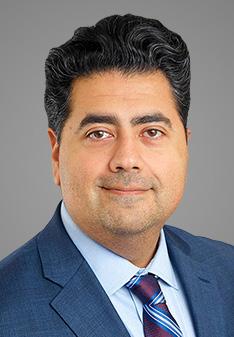


Andrew Dorado joins LCW as Senior Counsel, bringing extensive experience in employee benefits, fiduciary compliance, and advising public and nonprofit organizations on complex regulatory and employment-related issues.
Corrigan Lewis brings experience in state and federal courts, advising and litigating on behalf of individuals with disabilities, and supporting compliance with state and federal civil rights laws. Her practice focuses on complex litigation, civil rights, and disability law.
High-profile U.S. Immigration and Customs Enforcement operations across the country underscore how rapidly moving and emotionally charged immigration enforcement actions can be. Planning can help public agencies navigate how to respond if federal agents contact or involve employees in an enforcement action. LCW has published a blog post describing key legal principles and best practices to consider as your district develops its action plan.
There are additional rules for school districts, community college districts, and the CSU regarding immigration. LCW’s blog post on SB 98 describes how current and recent laws affect the responsibilities of California public education institutions.
LCW has developed customized training to support districts in preparing for and responding to these types of interactions. We can assist your district with staff training, policy development, and preparation if immigration enforcement activities occur at your district.
The US Department of Justice has issued a final rule under Title II of the Americans with Disabilities Act requiring state and local governments to ensure that their web content and mobile applications are accessible to individuals with disabilities. The rule applies to state and local governments, including public schools, community colleges, and public universities. Local government and institutions with 50,000 or more persons have until April 24, 2026, to comply. Those with 0 to 49,000 persons have until April 26, 2027. You can find more information in our Special Bulletin: https://www.lcwlegal.com/news/new-ada-title-ii-web-content-and-mobile-accessibility-deadlines/.
On January 22, 2026, the U.S. Equal Employment Opportunity Commission (EEOC) voted to rescind its 2024 Enforcement Guidance on Harassment in the Workplace, with the repeal taking immediate effect. The 2024 Guidance had consolidated prior agency materials and addressed modern workplace issues, including digital harassment, the impact of the #MeToo movement, and discrimination based on sexual orientation and gender identity following the Supreme Court’s decision in Bostock v. Clayton County. Although the Commission withdrew the guidance in its entirety, the rescission does not alter federal anti-harassment law because the document was non-binding and did not carry the force of law.
The 2024 Guidance had previously been partially vacated in May 2025 by the U.S. District Court for the Northern District of Texas, which concluded that the EEOC exceeded its authority in certain interpretations relating to LGBTQ issues and misapplied Bostock. Now the EEOC has repealed the guidance as a whole.
Notwithstanding the repeal, Bostock remains the controlling precedent holding that Title VII prohibits discrimination based on sexual orientation and gender identity. However, the Supreme Court in Bostock expressly stated that it was not addressing issues such as bathrooms, locker rooms, pronoun usage, or similar matters, describing those as questions for future cases. In the years since Bostock, courts have reached differing conclusions regarding the scope of its protections. Additionally, state and local anti-discrimination laws remain fully operative, and private plaintiffs may pursue Title VII claims after exhausting administrative requirements, regardless of the EEOC’s enforcement guidance.
On January 28, 2026, the U.S. Department of Education announced that its Student Privacy Policy Office (SPPO) found the California Department of Education (CDE) in violation of the Family Educational Rights and Privacy Act (FERPA). The finding stems from a March 2025 investigation into California’s Support Academic Futures and Educators for Today’s Youth (SAFETY) Act and related state policies that prohibit school employees from disclosing a student’s sexual orientation, gender identity, or gender expression to parents without the student’s consent, unless otherwise required by law. SPPO concluded that by enforcing these laws, CDE effectively interfered with parents’ federal right under FERPA to inspect and review their minor child’s education records. The Department also identified the use of undisclosed “gender support plans,” maintained separately from cumulative files, as inconsistent with FERPA’s requirement that parents be granted access to education records directly related to their child.
SPPO has offered CDE the opportunity to voluntarily resolve the violations by issuing statewide guidance clarifying that “gender support plans” constitute education records subject to parental inspection; notifying districts that there is no “unofficial records” exception under FERPA and that state law cannot override federal requirements; providing assurances that local educational agencies (LEAs) may comply with FERPA, including with respect to parental notification practices; obtaining LEA certifications of compliance; and incorporating SPPO-approved FERPA training into required LGBTQ cultural competency programs. The finding follows ongoing federal efforts to challenge California’s parental notification restrictions.
Pilar Morin and Chase Booth represented a California community college district in a faculty termination matter involving a tenured department chair. Following multiple student and employee complaints, the District placed the faculty member on paid administrative leave and retained an independent investigator. The investigation substantiated serious misconduct, including allegations of alcohol use while teaching, misuse of district resources, and unsafe behavior toward a student during class.
The record also reflected a sustained decline in the faculty member’s performance and professionalism, repeated failures to meet curriculum and administrative deadlines, conduct implicating integrity and compliance concerns, and dishonesty during the investigation.
After the employee’s Skelly meeting, LCW secured the faculty member’s resignation along with a full waiver of claims. This outcome underscores the importance of consistently and promptly addressing concerns, conducting a timely and thorough investigation, and preparing a well-documented statement of charges.
In August 2017, Sinedou Tuufuli worked as a collector and customer service representative for West Coast Dental, an entity that manages the business operations of affiliated dental practices and provides those practices with support and administrative services.
When Tuufuli was hired, she electronically signed an arbitration agreement, which required that any disputes with West Coast Dental relating to her employment must be resolved by final and binding arbitration. The arbitration agreement stated that the parties agreed to arbitrate claims based on any federal, state, or local law, including the California Fair Employment and Housing Act (FEHA), the California Labor Code, the California Unfair Competition Law, and the California Wage Orders. It further stated that the arbitrator would not have the authority to preside over class, collective, or other representative proceedings. The arbitration agreement said it would be governed by the Federal Arbitration Act (FAA) and, “to the extent permitted by such Act, the laws of the State of California.”
In April 2023, Tuufuli filed a complaint against West Coast Dental, asserting eight individual and class claims for violations of the Labor Code and the Business and Professions Code. West Coast Dental moved to compel arbitration and dismiss her class claims. It also argued that the arbitration agreement was governed by the FAA.
In March 2024, the trial court granted West Coast Dental’s motion to compel arbitration and dismissed Tuufuli’s class claims. The trial court relied on the evidence West Coast Dental supplied, showing it operated in multiple states and on provisions within the arbitration agreement that said it was governed by the FAA. The trial court dismissed the class claims because the arbitration agreement prohibited Tuufuli from litigating or arbitrating class claims against West Coast Dental. Tuufuli appealed.
The Court of Appeal explained that the FAA reflects a liberal federal policy favoring arbitration agreements. The FAA preempts state laws that “require a judicial forum to resolve claims which the contracting parties agreed to resolve by arbitration.” The FAA applies if the parties expressly agreed that it will. Arbitration under the FAA is a matter of consent, and parties may voluntarily elect to have the FAA govern enforcement of their arbitration agreement.
The Court of Appeal agreed with the trial court that the FAA governed the arbitration agreement between Tuufuli and West Coast Dental because they expressly agreed that it would. The Court of Appeal therefore affirmed the order compelling arbitration and dismissing the class claims.
Tuufuli v. West Coast Dental Administrative Services, LLC (Jan. 13, 2026, No. B338584) ___Cal.App.5th___ .
Note:
This decision confirms that Federal Arbitration Act governance may be established by express agreement. Districts that use arbitration agreements should be aware that express FAA language may be sufficient to establish FAA governance.
The One Big Beautiful Bill Act (OBBBA) created a new, federal overtime tax deduction that non-exempt employees can claim on their federal tax returns. Please see LCW’s blog post describing the OBBBA’s deduction of qualified overtime compensation here and blog post describing the IRS notices on the deduction located here.
The OBBBA does not provide a deduction on all qualified overtime premiums for every non-exempt employee; it is subject to caps and limitations. NonExempt employees should understand the two types of limitations on the deduction amount. First, the OBBBA caps the amount of the qualified overtime deduction at $12,500 ($25,000 for joint filers). Second, the OBBBA further limits the amount of the deduction if the nonexempt employee’s modified adjusted gross income (MAGI) is over $150,000 ($300,000 for joint filers). The deduction is phased out by $100 for every $1,000 of MAGI above $150,000 ($300,000 for joint filers).
For example, a non-exempt employee who is a single filer with a MAGI of $140,000 is subject to a deduction cap of $12,500. This means that the highest qualified overtime compensation deduction this employee can receive is $12,500.
In comparison, a non-exempt employee who is a single filer with a MAGI of $170,000 makes $20,000 more than the $150,000 MAGI threshold. $20,000 divided by $1,000 equals 20. For each set of $1,000 above the $150,000 MAGI, the deduction is lowered by $100. As a result, the deduction cap is lowered by $2,000 ($100 x 20). This employee’s deduction cap is $10,500 ($12,500 initial cap - $2,000 phase out amount). This means that the highest qualified overtime compensation deduction this employee can receive is $10,500.
Employers are not responsible for calculating or advising employees on the exact deduction cap that applies to the individual employee. It is ultimately up to the nonexempt employee (and their tax preparer) to determine the applicable cap.
With the Affordable Care Act (ACA) reporting on the horizon, districts that are applicable large employers under the ACA must ensure they have designated the person who is responsible for the reporting. The Treasury Regulations require governmental agencies to prepare a written designation identifying the person who is responsible for furnishing and filing IRS Form 1094-C and Forms 1095-C on behalf of the agency. The written designation must:
• Identify and appoint the designated person as the person responsible for furnishing and filing IRS Form 1094-C and Forms 1095-C on behalf of the agency;
• Identify the category of full-time employees for which the designated person is responsible for reporting. This could be all full-time employees of the agency, or a particular job category of full-time employees, as long as the specific employees covered by the designation can be identified;
• State the name, address, and employer identification number (EIN) of the agency;
• State the name, address, and EIN of the designated person;
• Contain language that the designated person agrees and certifies that they are appropriately designated and acknowledge responsibility for the ACA reporting on behalf of the agency and subject to the requirements of the ACA; and
• Signed by the governmental agency and the designated person.
The district must make the written designation before the furnishing deadline (March 2, 2026).
The written designation can be prepared as a resolution passed by a district’s governing body, a policy, a memo, or a designation letter prepared by executive leadership
(e.g., a City Manager, County Administrator, General Manager, etc.). If a third-party administrator (TPA) handles an agency’s Form 1095-C filings, the service agreement between the agency and TPA should designate the responsible person. The designation does not get submitted to the IRS, but the agency must maintain the designation under the record-retention rules of Internal Revenue Code section 6103.
IRS Increases Standard Mileage Rate To 72.5 Cents For 2026.
On December 29, 2025, the IRS announced that the standard mileage rate for vehicles driven for business purposes will increase to 72.5 cents per mile effective
January 1, 2026. This is 2.5 cents greater than the 2025 rate. The standard mileage rate applies to fully-electric and hybrid vehicles, as well as gasoline and dieselpowered vehicles. Please see IRS Notice 2026-10 for more information.
If your agency contributes the Public Employees’ Medical and Hospital Care Act (PEMHCA) minimum for your group health plans, the new PEMHCA minimum contribution amount is $162 per month, effective January 1, 2026. This is $4.00 more than the PEMHCA minimum contribution for 2025.
Each month, LCW presents a monthly benefits timeline of best practices.
• Prepare for the Monday, March 2, 2026, deadline to furnish Form 1095-C to employees. Retain a record of your agency furnishing the forms to employees. See LCW’s Special Bulletin regarding an optional exception where employers may skip furnishing Form 1095-C and the complexities with using the exception. Also, ensure that vendors who conduct filings are doing so correctly, as the agency will ultimately be responsible for errors.
• Prepare for the Tuesday, March 31, 2026, deadline to e-file Forms 1094-C and 1095-C. Retain a record of the forms and proof of the e-filing. To the extent a vendor performs these filings on behalf of the agency, the agency should secure copies of the filings from the vendor. In the event of a potential future assessment, the agency will need to see the details of exactly what was filed.
• If the agency would like an automatic 30-day extension to file Forms 1094-C and 1095-C, the agency must submit Form 8809 on or before the due date of the returns.
Members of Liebert Cassidy Whitmore’s consortiums are able to speak directly to an LCW attorney free of charge to answer direct questions not requiring in-depth research, document review, written opinions or ongoing legal matters. Consortium calls run the full gamut of topics, from leaves of absence to employment applications, student concerns to disability accommodations, construction and facilities issues and more. Each month, we will feature a Consortium Call of the Month in our newsletter, describing an interesting call and how the issue was resolved. All identifiable details will be changed or omitted.
A CCD client asked LCW what the statute of limitations is to collect overpayment to employees based on District errors.
A LCW attorney informed the client that, according to California Code of Civil Procedure 338, the statute of limitations to reclaim overpayment is three years. Subsection (d) states that in the case of “[a]n action for relief on the ground of fraud or mistake,” “[t] he cause of action in that case is not deemed to have accrued until the discovery, by the aggrieved party, of the facts constituting the fraud or mistake.”