BUILDING A NEIGHBORHOOD, BUILDING A LEGACY
We begin the musical Ragtime in 1902 and we’re taken through to 1915. While the musical covers so much history in New York City at the time from immigration to class to police brutality, there’s a city bustling from scratch in the background that goes unseen. During this period, Harlem was in the midst of transformation. The first ragtime song published by an African American was “Harlem Rag” by Tom Turpin in 1897 (though it was already written in 1892 by the time of its filing). “Harlem Rag” is a signifier of Harlem’s rich history. Despite Harlem being a
destination for wealthy white New Yorkers looking for summer homes in the 19th century, African Americans were already living in Harlem as early as 1880. However, it took drastic economic and political shifts to see the concentrated population of Black people in Harlem in the coming century.
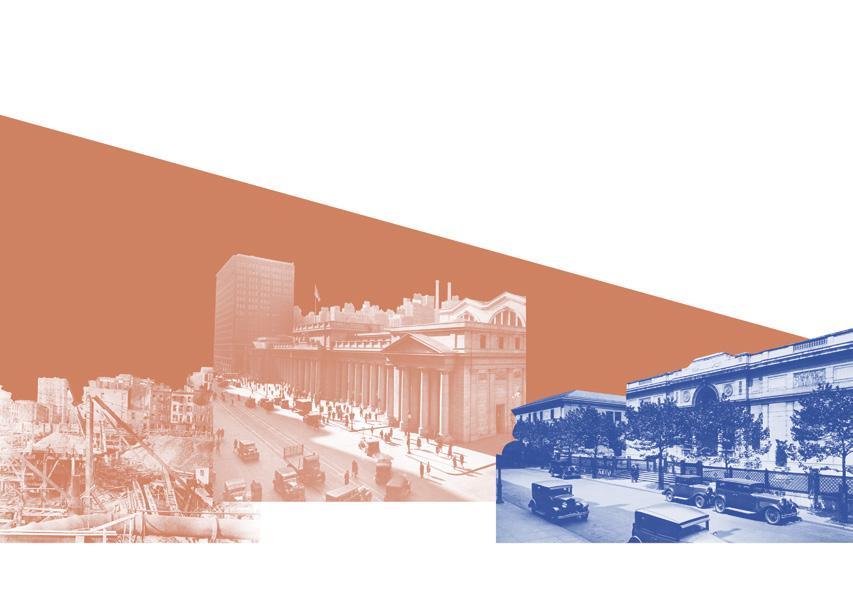
The African American migration to Harlem was two-fold: Firstly, they were forced to relocate in 1904 when construction on the original Penn Station began. Secondly, the real estate market crash of 1904 left real estate agents unable to find white renters. Philip A. Payton, a Black real estate broker, shaped Harlem to be the Black mecca we know it as now. His company, the Afro-American Realty Co., led the Black residential boom in Harlem, leading Black New Yorkers to vacant properties. Between the Great Migration and the burgeoning Harlem Renaissance, which both budded in the 1910s, Harlem became a cultural hub.
With Black people moving to Harlem, ragtime traveled uptown with them, too.
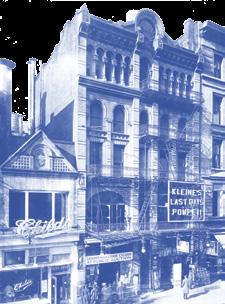
Hines’s Professional Club at 118 West 27th Street soon occupied new addresses at 235 West 135th Street and 23 West 134th Street. Wilkins’ brother, Leroy
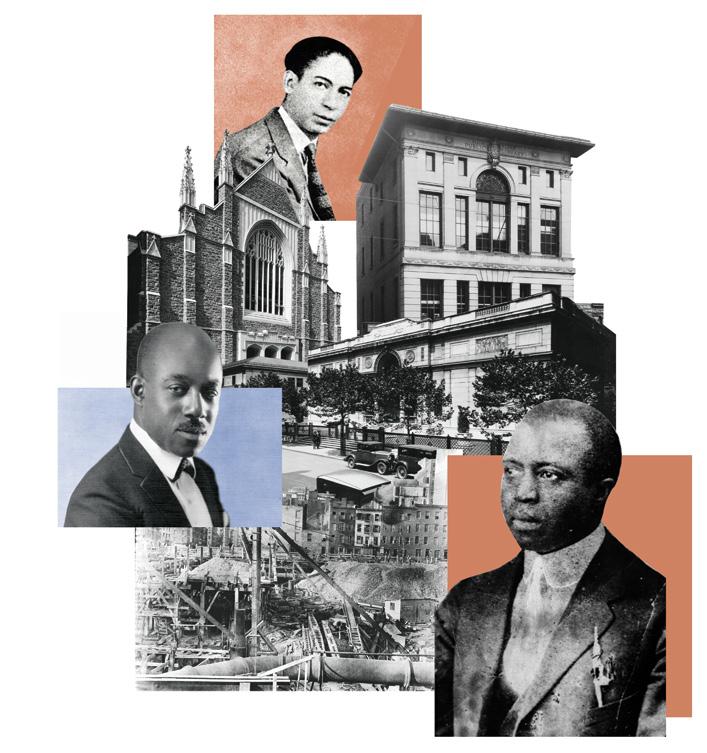
CONSTRUCTION OF THE ORIGINAL PENN STATION; RIGHT: THE MORGAN LIBRARY
Wilkins, established a new cabaret for Black people in Harlem at 135th Street and Fifth Avenue. There were other architects whose handiwork perfectly captured a changing New York at the turn of the century. Ragtime, the musical, mentions Stanford White early on. White was a prolific American architect and a partner in the architectural firm McKim, Mead & White (formed with Charles Follen McKim and William Rutherford Mead). From the Washington Square Arch to the Cable Building to St. Paul Apostle Church, White and his firm have been foundational to this city. Ironically, White and his firm helmed the original Penn Station, which began construction in 1904 and was completed in 1910.
Even theater is touched by White’s contributions. He designed The Players, a social club for artists that holds a repository of theater artifacts and hosts notable theater events in New York. The firm’s fingerprint can be found in Harlem as well. Amid Harlem’s changing landscape, the community insisted on a library uptown. Charles McKim designed the 135th Street Public Library, a landmarked, limestone building, in 1905. The original building features an Italian Renaissance-style palazzo. In 1925, the New York Public Library opened the Division of Negro Literature, History, and Prints, which is what we now regard as the renowned Schomburg Center for Research in Black Culture. White’s footprint can be cherished throughout Ragtime: New York’s
original underground (and later elevated subway system) that the citizens traveled out of, was likely run by the Interborough Rapid Transit Company Powerhouse (IRT); White and his firm designed the IRT Powerhouse in 1901. There’s also the historical Morgan Library, featured in a major scene towards the end of the musical; White and his firm designed the library in 1902.
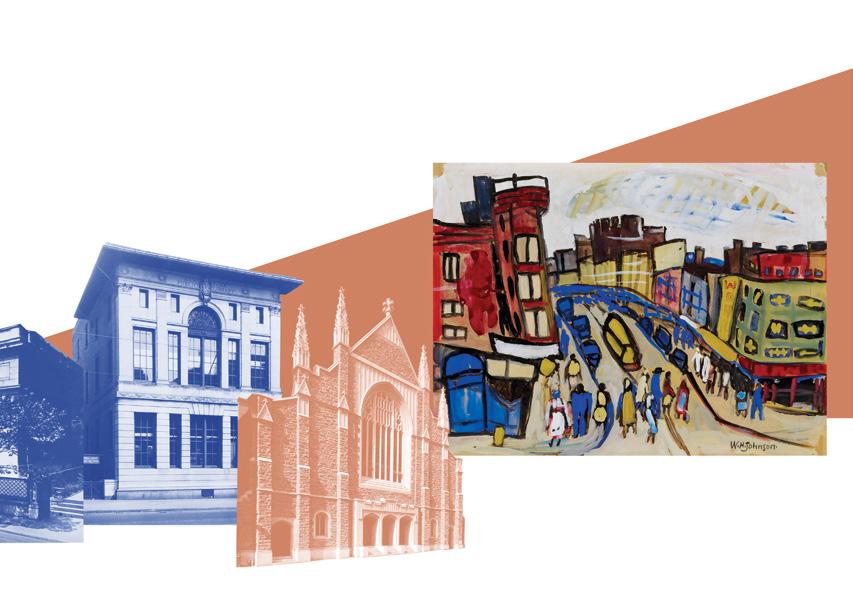
White architects weren’t the only ones shaping New York — Black architects designed buildings in Harlem, too. Vertner Tandy and George Foster, two Black architects, opened their firm, Tandy & Foster, and grew in popularity across the state. Tandy was the first registered African American architect in New York State. In 1911, Vertner Tandy designed St. Philip’s Episcopal Church — the oldest Black Episcopal parish in the city. In 1923, George Foster designed Mother African Methodist Episcopal Zion Church. These buildings weren’t just religious havens, they were community centers disseminating information and providing necessary social services.
THE BRICK KEEPS THE SCORE
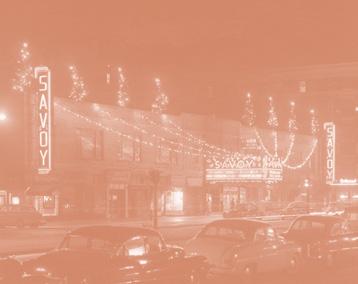
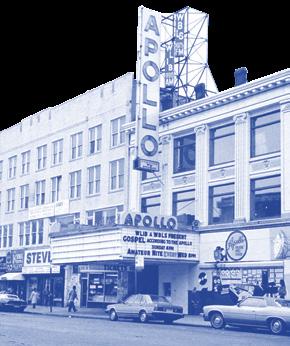
As the ‘20s roared on, the lines between ragtime and jazz blurred. The term “ragtime” faded, and jazz became a new catchall phrase for the still rugged music. The Cotton Club, The Savoy Ballroom, and Minton’s Playhouse were popular venues during the Harlem Renaissance. Many historic buildings have long been demolished or repurposed. However, the famous Apollo Theater is a great example of a building that’s endured New York’s changing cultural
HARLEM STREET, CA. 1939-1941, BY WILLIAM H. JOHNSON, TEMPERA WITH PENCIL ON PAPER, SMITHSONIAN AMERICAN ART MUSEUM, GIFT OF THE HARMON FOUNDATION/ART RESOURCE
135TH STREET BRANCH NEW YORK PUBLIC LIBRARY
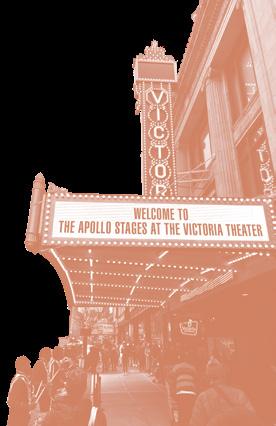
landscape. The theater originally opened in 1913 for white patrons only, but by 1934, it was acquired by Sidney Cohen, and it became a venue for Black performers. Today, it’s part of a larger cultural uptown revival with the expansion at Harlem’s Victoria Theater (which has a different architect and developer from the hotel which is housed at the same location).
Today, other historic Harlem venues that have hosted iconic talents like Bessie Smith and Billie Holiday have grown decrepit due to neglect and mismanagement. The Alhambra Ballroom, a famous vaudeville venue built in 1905, was a foundational site during the Harlem Renaissance. Unfortunately, from the 1920s to the 2000s, the building remained closed and has weathered rugged financial situations.
(I remember going bowling at the now-gone Harlem Lanes for the first time and oh! the fun I had!) But today, the stunning Alhambra operates with a more scaled-back operation, sharing space with a muchneeded neighborhood supermarket and other businesses. Other historic Harlem establishments like The National Black Theater, the longest-running Black theater in New York City, are also undergoing renovations. The founder, Dr. Barbara Ann Teer purchased the original building in 1969. The newly
renovated building is set to open in 2027 and is designed by Frida Escobedo Architects in collaboration with Handel Architects and Marvel Architects. This is one of the few buildings in Harlem built by women, particularly by women of color.
While ragtime has since faded, its roots can be felt in jazz, hip-hop, R&B, funk, and the blues. The breadth of the music can be heard downtown at sites such as The Village Vanguard and Blue Note; or uptown at Bill’s Place and Harlem Nights. Many of Harlem’s historic venues are now mixed-use — housing entertainment, apartments, retail, food, and hospitality spaces all in one building. That’s a good thing, as we, collectively, are all calling for more “third places” in our community. Whether they were located uptown or downtown, those renowned venues were always so much more than a place to perform — they were home.
Ashley M. Thomas was born and raised in Harlem, New York. A writer and dramaturg, she has dramaturged classical works, plays in development, and solo shows through organizations such as Rattlestick Theater, Utah Shakespeare Festival, and National Queer Theatre. Ashley is an alumna of the First Wave Urban Arts Scholarship at the University of Wisconsin–Madison where she graduated with her Bachelor of Social Work. She also graduated with her M.F.A. in Dramaturgy and Dramatic Criticism from Yale School of Drama. This essay is published in partnership with 3VIEWS ON THEATER
THE APOLLO AND THE VICTORIA
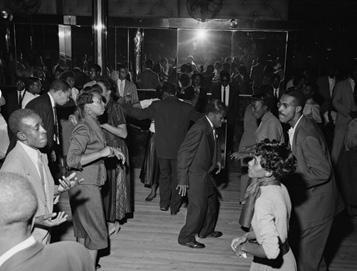
THE SAVOY BALLROOM
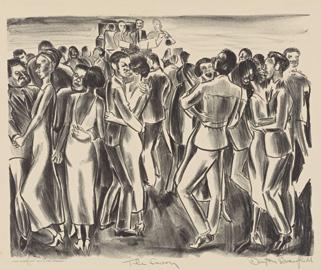
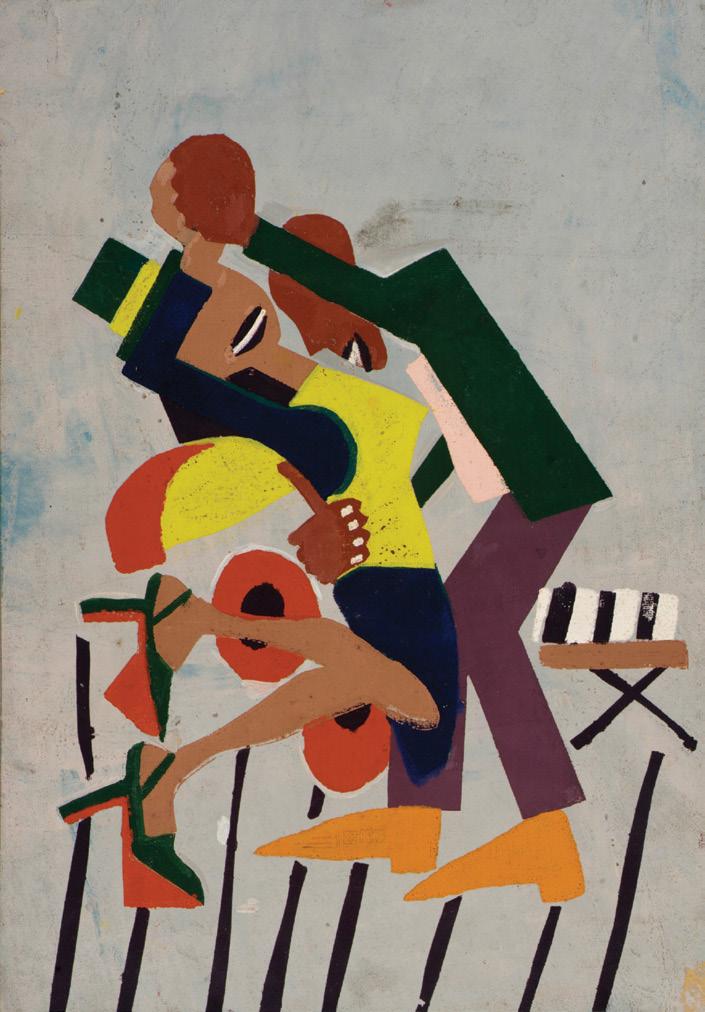
JITTERBUGS (III), CA. 1941, BY WILLIAM H. JOHNSON, SCREENPRINT ON PAPER, SMITHSONIAN AMERICAN ART MUSEUM, GIFT OF MRS. DOUGLAS E. YOUNGER/ART RESOURCE
AN INTERVIEW WITHBen and Leo Sidran
At the heart of Ragtime lies the story of America in motion — immigrants, dreamers, and revolutionaries shaping a nation through culture and music. Few people understand this dynamic better than Ben Sidran, a musician, historian, and author whose work explores the Jewish contribution to American popular music.
In this interview, Ben sat down with his son, Leo Sidran, a noted interviewer and musician in his own right, to reflect on the intersection of Jewish identity and the evolution of American entertainment. Their conversation delves into the Jewish role in shaping Broadway, Hollywood, and the music industry, revealing how history, storytelling, and cultural adaptation fueled the development of American popular culture as we know it today.
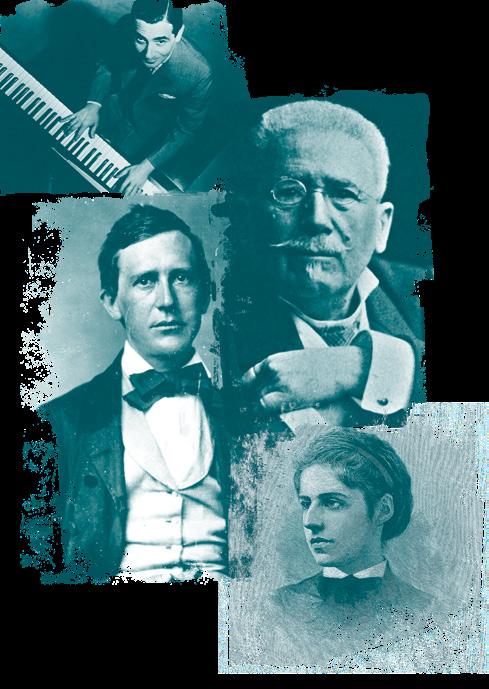
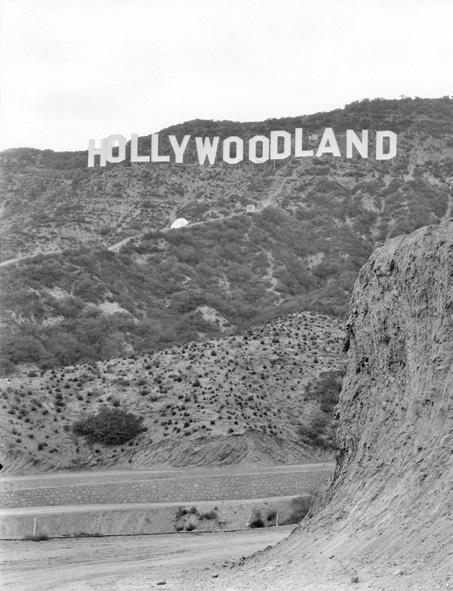
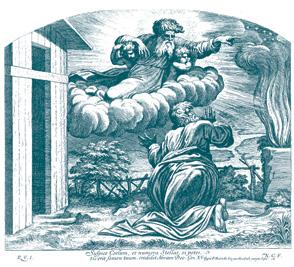
IRVING BERLIN © SOIBELMAN SYNDICATE/VISUAL STUDIES WORKSHOP/GETTY IMAGES; STEPHEN FOSTER/ALAMY; EMMA LAZARUS ENGRAVED BY T. JOHNSON; PHOTOGRAPHED BY W. KURTZ. COURTESY OF THE LIBRARY OF CONGRESS; TEXTURE © GARETH DAVID/UNSPLASH; © TEXTURELABS; SURVEYING HOLLYWOODLAND, CIRCA 1923, SECURITY PACIFIC NATIONAL BANK PHOTO COLLECTION/LOS ANGELES PUBLIC LIBRARY; GOD APPEARS TO ABRAHAM, 1649, BY NICOLAS CHAPPRON. COURTESY OF KUNSTHALLE BREMEN. PHOTO: DIE KULTURGUTSCANNER
Leo Sidran: You have spent 25 years of your life really devoted to the question of the Jewish contribution to American music and popular culture. What led you to explore this, and what are we talking about when we talk about this subject?
Ben Sidran: Initially, the study came from a course I taught at the University of Wisconsin that raised the question of what is popular culture in America and how did the Jews shape it. When I started to teach the course, I pulled together a lot of different sources that were out there. But there was no cohesive source that put together [everyone] — the songwriters, the publishers, the promoters, the booking agents, the people who own the venues — that [also] painted a global picture of the Jews coming to America at the turn of the 20th century and establishing a music business.
LS: Did the story tell itself to you in a way that surprised you?
BS: It wasn’t a surprise because I wasn’t expecting anything in particular, but what really came to the fore was the importance of narrative, of storytelling, and how that drives so much history, and particularly Jewish history.
You know, monotheism is referred to as “the greatest story ever told.” In order to look into the idea of Jews and popular music, I felt that I had to go back to the root question: What is Jewish music? But, of course, there are no Jewish notes on the piano, so it’s not so easy to determine what is or isn’t Jewish music. That led me to an even more fundamental question: Who’s a Jew? It’s not strictly about religion, culture, or belief. It covers everything from food and humor to ethics and myth. One thing led to another, and eventually that led me back to thinking about Abraham in the desert and the fact that an ordinary man reportedly had a conversation in the desert with God. God spoke to an ordinary man. That is at the heart of this great story.
It occurred to me that if God exists, it is truly a miracle. But if God doesn’t exist, perhaps it’s even a greater miracle that this story about God — this narrative — has been alive for thousands of years and has moved so much history. Millions have given their lives in support of a story. This truly shows the power of narrative in human society.
The idea of context proved to be true up through the 20th century and the story of the Jews and popular music in
America. One of the things that we see is just how the Jews came to America at a particular time in terms of industry, technology, the expansion of a middle class, modernism, the confluence of so many forces. All these elements came together. That context propelled the idea of popular culture in America as a vehicle for social justice, for the celebration of the common man, the everyday man, which echoed the story of Abraham in the desert.
LS: Jews are known to be obsessed with identifying one another. “Did you know he’s Jewish? Do you know she’s Jewish?” And I think often the question that is asked is, is it true that Jews make up a disproportionate amount of entertainers in the industry, and if so, why?
BS: Well, it’s clearly true. I recognized it when I got into the record business myself in the 1960s. Most of the major executives were Jewish. Later on when I wanted to do this study, I interviewed many of them and asked them the same question: Why do you think there are so many Jews in this business?
To a man — and they were all men — they deflected the question by saying, well, there’s no particular reason for the Jews to thrive, it was just a chance occurrence, an opportunity. Nobody wanted to talk about the relevance of being Jewish. It reminded me of something that Irving Berlin said when asked what being Jewish had to do with his success as a songwriter. He said, “Absolutely nothing, I’m an American.” George Gershwin said
Nice Work If You Can Get It
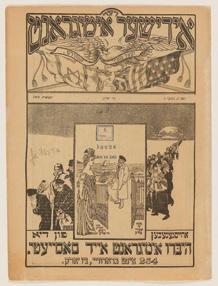
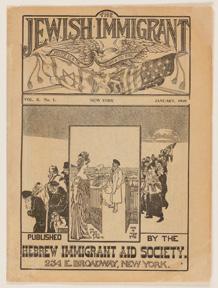
Facing discrimination in established professions, Jewish immigrants in turn-of-the-century New York turned to self-employment for opportunity and independence. Many opened small shops or worked in the garment industry or entertainment. Entrepreneurship allowed them to bypass prejudice, support their families, and build thriving community networks within the growing immigrant economy.
The Yiddish Theater
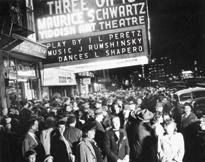
Yiddish theater thrived in New York City’s Lower East Side in the early 20th century, becoming a cornerstone of immigrant Jewish culture. With packed houses on Second Avenue, it blended tradition and modernity through musicals, dramas, and comedies, shaping American theater while preserving Yiddish language, identity, and storytelling.
something similar when asked what being a Jew had to do with his success. And it dawned on me that this was probably the most Jewish thing you could say: “Being a Jew has nothing to do with it.” Jews are always hiding in plain sight because they are always being singled out. This is a buried reality to the Jews’ success in America.
The Jews don’t want to talk about themselves because they’re targets historically. They were driven from country to country and were ultimately ostracized everywhere. In Eastern Europe in the 18th and 19th centuries, they were not allowed to own businesses, or to be citizens, to vote. Their movement was restricted. They were hounded and hunted, held as outsiders. They lived for hundreds of years like this, isolated, developing their own populist narrative through the Yiddish language, one of the first modern street languages
LS: So by the time they got to the United States, they had a relationship with popular entertainment that they brought with them.
BS: Yes. During the 19th century, a man named Abraham Goldfaden founded the first professional Yiddish theater. It was in Odessa. People would come to the theater, spend the day; they’d bring their kids, they’d bring their lunch. It was rooted in everyday life — with jokes, songs, spontaneous skits — it was a structured production but a lot of it was improvised, and it was community-involved to say the least. There was very little separation between the performers and the audience. True populist theater. And years later, when Broadway bloomed in New York, it was primarily the Jews who were writing the music and attending the performances.
LS: So there’s something actually kind of democratic about this process.
BS: Completely democratic. That’s exactly the point. When you have this kind of major cultural immigration,
you pretty much have the setup for a democratic movement because when a lot of people are displaced and they have to find a new way and place to call home, all the basic tenets of democracy are called into question. Who are we? Where are we? What access do we have?
The Jews came to America — two million of them between 1880 and 1920 — determined to become Americans, whatever that meant, because they couldn’t go back. They had no choice. The intersection of Yiddish theater and minstrelsy is really the founding story of American popular music. It gave rise to Jewish songwriters, publishers, performers, you know, people who were not afraid to be in a “pennies business.” A kind of “common man’s” business.
LS: The business that they were able to get into or create for themselves was not a very big business. Because despite being in a more or less democratic country, they were still somewhat locked out of the major industries.
BS: Completely. Because the Jews at the turn of the 20th century quite simply were not considered the same as the average American: they were not considered to be “white.” This was a period of “eugenics,” a form of scientific racism that swept the globe at the time and, among other things, stated that Jews were a separate race.
This imposition might be part of their affinity for Black American culture. And so, for example, when the Jews came to the United States and they read about the lynchings of Black people in the south, they referred to those lynchings as pogroms. “Pogroms” was the word for what the Jews had experienced back in Eastern Europe.
Significantly, they identified with Black Americans. And that was a dramatic difference from, for example, what the Irish [immigrants] did. The Irish identified [to the White Anglo class], and they created minstrelsy as a way to put distance between themselves and Black America. Not the Jews. It’s not necessarily that the Jews chose to develop this democratic impulse.
It just was part of their context and their narrative.
An example of how this played out can be seen in the clothing business. In the Pale of Settlement [in Russia], Jews weren’t allowed to own clothing stores; they couldn’t sell new clothing. So they became skilled at repairing used clothing, tattered clothing. When they came to the United States, they brought that skill with them. It was called the rag business. But it was at a period when, as I mentioned, technology played a major part.
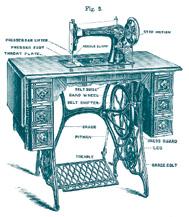
Because coincidentally, sewing machines had just been invented. In the United States, Jews were able to open up their own shops, and with the aid of these new machines, they started making exact-size clothing. Up until then, you couldn’t have bespoke, handmade clothing unless you were wealthy. So by creating exact-size clothing, the Jews not only democratized the clothing business, they accelerated the rise of a middle class. It’s not that they set out to do that. It was just part of the context they brought with them.
But that’s not all.
Around the same time, Thomas Edison patented moving pictures and Nickelodeons became all the rage. These were machines that were placed in commercial areas and people would pay a nickel to watch a short film strip. Jewish merchants put them into their clothing stores as an added attraction. But the Nickelodeons became so popular and so successful that eventually the shopkeepers were making more money charging people to see a film than they were selling clothes. And the next thing you know, they were in the film business.
When they approached Edison for the rights to produce more films, he refused to give it to them. So several of these men moved to California, as far away from Edison as possible, and by the 1920s, all the major Hollywood studios were owned and run by Jews who had come from within 100 miles of Warsaw, Poland.
This democratic impulse we are speaking about — the transition from the rag business to exact-size clothing to film production — was a result of the coming together of many elements: the new technology, the story of the common man, the historic opportunity that presented itself. Context.
But equally as important was the fact that in Jewish tradition, when you pray to God, if you do not pray with song or melody, it is said that God cannot hear you. In the Torah, above the writing there are these little marks: cantillation marks called Ta’amim. They’re suggestions for the correct way to sing the text that had been passed down for hundreds, probably thousands of years. But, of course, we no longer know what those marks referred to originally. So historically, the prayers evolved to reflect the melodies of wherever the Jews were.
Some of the melodies that were brought to America by the Jews from Europe in the 1800s were based on popular local songs, even German
drinking songs. The Jews took the popular music of the day from wherever they were and applied it to their spiritual disciplines. The elevation of the common person to a spiritual calling is all there.
LS: This points to one of the big questions. The Jews had been in diaspora for thousands of years moving all over the world and were accustomed to setting themselves up in any number of cultural contexts and borrowing from whatever the host culture was, wherever they were. In the case of the prayers, they might change the melody to resemble more closely whatever the popular melodies are where they landed, be it Germany or Poland or Spain.
So that was a familiar pattern that they brought with them to America. But something that emerged in your research and your thinking about the Jews in America was why this place was different for the Jews than everywhere else they had ever been.
BS: Well, one of the main reasons was there was very little indigenous popular music in America at the time. The previous immigrants from Europe had little interest in the culture of the Native Americans, and of course, while [there was music of Black American enslaved peoples, that music wasn’t] popular within the majority of society.
The first printed Torah with cantillation marks appeared in Naples in 1488, a major breakthrough in Hebrew typography. Likely produced by printers connected to the Soncino family, it included vowels and ta’amim, preserving pronunciation and chant traditions in printed form.
In the 19th century, popular culture in America was mostly borrowed from England and Europe. America looked across the ocean for their notion of culture, and this was during the Victorian era, with a politesse as different from the American frontier experience as could be. So, for example, minstrelsy was purely American. It was loud and noisy and trashy and built on the institution of slavery; it was like proto rock and roll, the opposite of Victorian culture.
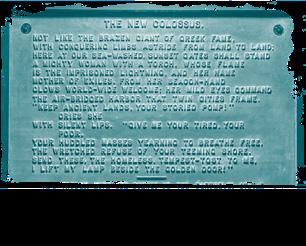
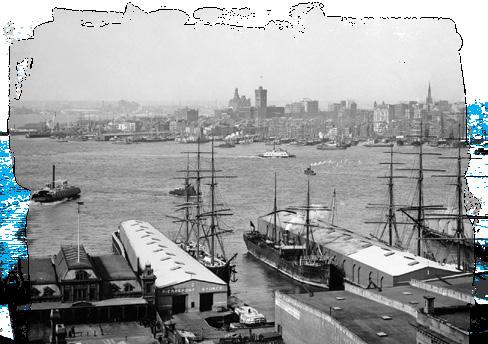
One of my favorite examples of how the Jews redefined American popular culture is the story of Emma Lazarus. She was a bit of an anomaly because she came from a well-to-do Jewish family, she was educated, she was a poetess, she had advantages. In the 1880s, she happened to be walking along the docks in New York when she saw thousands of bedraggled Jewish immigrants with all their belongings, and she had this insight that “there but for the grace of God go I.”
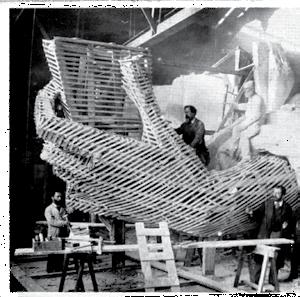
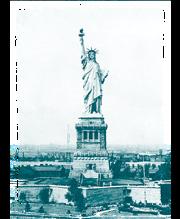
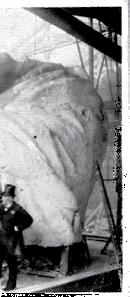
At the time, the Statue of Liberty, as it’s called now, was being sent from France to America in four hundred separate crates, but there was no place to assemble it. There was no giant pedestal in the harbor, nobody had prepared for that. The people of New York had to raise the money to build the pedestal, which is now the base of the Statue of Liberty. And to raise money to build this, people contributed what they could, dimes, quarters, nickels, whatever. And Emma Lazarus, to raise money, wrote this poem called “The New Colossus” about America.
She died before the pedestal was built, and people who wanted to celebrate her life and work had this poem inscribed on the base of the statue in the harbor. And this poem — which says,
“Give me your tired, your poor, your huddled masses yearning to breathe free, the wretched refuse of your teeming shore. Send these, the homeless, tempest-tost to me”
— in those few lines she defined the American dream, and the nation as the home of social justice. It may have been lurking there beneath the surface of the American experience, but she made it explicit. The Jewish narrative made the American dream explicit.
So even while the Jews were searching for America, a place where they could be free, America was searching for the Jews, for a coherent explanation of the democratic ideal, this redefinition of who it was and where it was. And there was no other country in the world like that. So it was a very different context for the Jews to arrive in America at that time.
LS: “At that time” is exactly right. Because it sounds like the perfect confluence of all of these elements. One wonders what would American popular culture look like were it not for that period of 40 years when the Jews just happened to be flooding out of the Pale of Settlement into the Lower East Side, if the technology hadn’t
developed the way it did, and if the territory wasn’t still opening. Because within the space of a generation, you have all of these Jews who move from Europe to New York and then from New York to the west coast and invent an industry in Hollywood, a place where they could totally create, out of whole cloth, whatever they wanted to create.
BS: Right. And don’t forget the importance of the relationship between Jews and Blacks in America. It’s key to understanding what American popular culture is all about.
Take, for example, Irving Berlin’s song “Alexander’s Ragtime Band.” It was an international hit that sold millions of copies of sheet music, which was the item of sale at the time.
Berlin (originally Israel Baline) was a young, self-taught, Jewish songwriter who really had nowhere to go but up because he had absolutely nothing when he started. Ragtime was sweeping the nation at the time, a form of syncopated piano music that came out of the cities pioneered by Black musicians. It was dramatically different from the indigenous Black music — the chants and field hollers, as it was a very educated form of piano playing, one of the first signs of American cultural modernism, favoring the off-beat, the unexpected, the language of the street, the sophistication of New York.
Berlin wrote “Alexander’s Ragtime Band” based on several African American conceits that disguise the relationship of Blacks and Jews. One of them is the name Alexander itself, which was a code word for a Black man. So, embedded in the title of the song is the idea of syncopated music, Black music.
Irving Berlin himself didn’t know how to syncopate, but he knew enough to recognize it was unique to American street culture and his motto was “The mob is never wrong.” He was smart enough to know that ragtime was a code word for modernism.
And he did something else that was particularly interesting. He quoted an image from Stephen Foster’s bucolic song “Old Folks at Home,” furthering the connection of modern America to the image of a rural Black South.
LS: It was a whole redefinition of what popular culture and American entertainment could be. It elevated street culture to a new form of high art. The way people speak on the street could be the way you sing a lyric. The other innovation was in finding a way to make that into a business.
Because, you know, you talk about Stephen Foster. You often tell the story of how, as important as Foster was to American song, he died broke because there was no publishing business at the time.
BS: That’s true.
LS: Because the Jews had not yet established the publishing business.
BS: Stephen Foster was unfortunate to write his hit songs before there was a publishing business to collect the pennies that were owed to him and that would have added up to millions of dollars. So, for example, back in the day, you could buy a copy of the sheet music to Foster’s song “Oh Susanna” and Foster, the writer, would get nothing.
Ben Sidran is a musician, author, and cultural historian. Best known for his book There Was A Fire: Jews, Music and the American Dream, Sidran examines the profound influence of Jewish artists on American popular music, weaving together history, personal narrative, and cultural analysis. As a recording artist, Sidran has released dozens of albums blending jazz, blues, and spoken word, while also working as a producer and collaborator with artists like Mose Allison, Diana Ross, and Van Morrison.

People were buying a lot of sheet music back then because of another technological innovation. A revolution in the manufacturing of pianos. They were more plentiful, they were cheaper, and they were the first item that Americans could purchase on credit. Suddenly, every middle-class family had to have a piano. And if you had a piano, you needed sheet music for your daughter to learn so she could entertain her boyfriend in the parlor. Ultimately, the Jews created the publishing business for popular music.
It was a “pennies business.” You got a penny or two as a royalty. But you know the Jews, who started out in one or another “pennies business,” whether it was the rag trade or ragtime itself, had no problem with that. They built whole industries on pennies.
Leo Sidran is a musician, producer, and interviewer whose work bridges the worlds of storytelling and song. As a recording artist and producer, Leo has released his own acclaimed albums and worked with an array of artists across genres. In his role as creator and host of The Third Story podcast, he explores the creative process and the intersections of music, culture, and identity.
STATUE OF LIBERTY BY THEODOR HORYDCZAK. HORYDCZAK PHOTOGRAPH COLLECTION/LIBRARY OF CONGRESS; PORT © CLASSICSTOCK/ALAMY; ONE CENT COINS © CLAUDIODIVIZIA/ISTOCK/GETTY IMAGES; CONSTRUCTION OF STATUE OF LIBERTY © THE HISTORY COLLECTION/ALAMY; THE NEW COLOSSUS COURTESY OF NATIONAL PARK SERVICE/STATUE OF LIBERTY NATIONAL MONUMENT; © TEXTURELABS