MARCH



PUBLISHERS
Diane Benaroya & Laurie Miller
EDITOR-IN-CHIEF
Alanna Maya
CREATIVE DIRECTOR
Laurie Miller
CONTRIBUTORS
Barbara Birenbaum, Franklin Felber, Donald H. Harrison, Jacob Kamaras, Stephanie D. Gittleman, Salomon Maya, Jana Mazurkiewicz Meisarosh, Mimi Pollack, Rachel Stern, Eva Trieger, Deborah Vietor, Cheri Weiss
ADVERTISING & SALES
Diane Benaroya: dianeb@lchaimmagazine.com L’CHAIM SAN DIEGO, LLC (858) 776-0550 P.O. Box 27876, San Diego, CA 92198
EDITORIAL editor@lchaimmagazine.com
Copyright ©2026 L’Chaim San Diego LLC. All rights reserved. No part of this publication may be reproduced, distributed or transmitted in any form or by any means, including photocopying, recording, or other electronic or mechanical methods, without the prior written permission of the publisher, except in the case of brief quotations embodied in critical reviews and certain other noncommercial uses permitted by copyright law. For permission requests, write to the publisher, addressed “Attention: Permissions Coordinator” to: publisher@lchaimmagazine.com
Published in San Diego, CA • www.lchaimmagazine.com

Nichola stood at the podium poised and confident, ready to begin her Bat Mitzvah ceremony. Over the previous months, she had studied hard. We had engaged in profound conversations on a variety of topics including Torah, mitzvot (commandments), and what it meant to her to be a young Jewish adult in today’s world. She had selected some of the prayers for the morning’s service from those I had shown her, opting for those that spoke to her heart.
The Torah verses she read aloud from the open scroll were also of her choosing. Nichola had read and analyzed her Torah portion ( parsha), Shemini, writing and presenting a brilliant Dvar Torah (interpretation of her reading). Her pervading theme was mindfulness: How a lack of mindfulness led to the death of Aaron’s sons, Nadav and Avihu. How the laws of keeping kosher (kashrut) are meant to keep us mindful of what we eat. Expanding on this theme, Nichola emphasized the importance of being mindful of the resources we need to live, cautioning us not to consume or even purchase more than we really need. Conservation, compassion, and sharing were ideas she imparted to those of us fortunate enough to be present to hear her words of wisdom.
This beautiful ceremony took place in the family's backyard, where trees stood tall, the sun was glorious, and birds chirped sweetly. A small group of relatives and friends watched as Nichola was called to the Torah for her Aliyah, recited the appropriate blessings and selected Torah verses, and officially became a Bat Mitzvah, a daughter of the commandments.
While there is no Biblical commandment specifying the age at which a child takes on the obligation of observing the mitzvot, the rabbis of the Talmud determined that for boys the age is thirteen, and for girls it is twelve. This is when children were believed to have the capacity to understand morality, conscious choice, and reason. Until those ages, parents bore the responsibility for their children’s actions.
The transition to Jewish adulthood does not actually require a ceremony to mark the occasion. Sometime in the Middle Ages, however, this rite of passage (for boys) began to take hold. It began with a father’s single prayer thanking God for relieving him of responsibility for his son’s actions. Over the centuries, a young man’s participation in the ritual increased, and he began to read from the Torah, chant the corresponding
portion (Haftarah) from the Prophets, present a teaching, and lead some parts of the service. In 1922, Judith Kaplan (daughter of Rabbi Mordecai Kaplan, founder of Reconstructionist Judaism) was the first young lady to have a Bat Mitzvah ceremony in the United States. This opened the door for other young women to celebrate this milestone with a Bat Mitzvah ceremony of their own.
A Bar/Bat Mitzvah ceremony may take place anywhere: a synagogue among the congregation, or in a more intimate setting with only family and close friends such as a private home or outdoors in nature. However a family chooses to honor this milestone, offering children the opportunity to accept this mantle of Jewish adulthood is a beautiful gift, one they will carry with them for the rest of their lives. In these sacred moments, families pass along Jewish values, traditions, and spirit L’dor vador —from one generation to the next.
RABBI-CANTOR CHERI WEISS IS AN INDEPENDENT LIFE-CYCLES OFFICIANT. LEARN MORE AT WWW.SANDIEGO-RABBI.COM
"BE OUR GUEST, BE OUR GUEST" (THE PASSOVER VERSION)
The candles flicker. The Manischewitz wine bottle glows. Suddenly the dish of saltwater cries out as a dark shadow will “Pass Over” the dining room. All eyes on the seder plate as it spins dramatically (with choreographed flourish) before clearing its throat. “Jewish People! It is with deepest pride and greatest pleasure we invite you to grab some pillows and lean to the left as the dining room proudly presents … Your Pesach!
Be our guest! Be our guest: Put your freedom to the test! Dip the parsley, spill some wine, on those cushions you’ll recline! We’ve got symbols, we’ve got plagues, we’ve got questions no one begs! (And it’s not Easter, but we’ve got eggs!) So unfold your Haggadah, hope you’re not in much of a rush! We’ve got four cups waiting, and a story we will gush! Be our guest, be our guest, it’s tradition at its best. Bubbie’s kugel is a wreck, cuz there’s 40 years we’ve gotta trek!
Matzah Trio (Jazz Hands in Harmony): Crisp and flat and slightly dry, we don’t rise and we don’t try! No more Pharaoh, no more fear, and no bagels with a schmear! We’re unleavened. We are proud. We crunch boldly, we crunch loud! Sure we taste like a little cardboard square, and we’re not gluten free … cuz we don’t care!
Maror (Bitter Herb Solo): I’m the bite you can’t ignore! I’m oppression’s metaphor! Yes, I burn just a bit, but that’s what freedom’s really for! Dip me deep in charoset, balance
tears with joy and yet… Life is bitter, life is sweet, your ears turn red from all my heat!
Charoset (Belts Out Soprano): Apples, nuts, and cinnamon, Mortar never tasted oh so fun! I represent the bricks they did lay, and I might be tonight’s dessert … Oy Vey! Yes, I’m history in a bowl, but I’ve got a deeper role, if suffering was the goal, at least I’m sweet and will console!
Four Cups of Wine (Slightly Tipsy Quartet): We are poured, and then refilled, we are sipped and sometimes spilled. By the fourth, you’ll start explaining why your kinder are complaining. Raise us high, and drink us slow (Or don’t! We know how this will go!) By Dayenu, you’ll be swaying, like you’re at a Broadway show!
The Afikoman (Sneaky Tap Dance Number): Hide me well, I disappear! Children seek me, I’m right here! Matzah hunting, their new career! You put me in the same spot I was in last year!! They want Venmo! They want cash! They want things with glitz ‘n flash! Freedom’s nice, but tell the truth, capitalism’s why they sleuth!
Elijah (Grand Entrance Spotlight): Save a seat, pour a cup, open doors, the night’s lookin’ up! Yes, I’ve been visiting through the ages, and I’m wiser than the sages! I am real! Yes it’s true! And I’ve got opinions, just like you, To this wine, I say boooo. Kadem brand? Not what Prophets do!
Grand Finalé (Entire Dining Table Crescendos): Sing of plagues and parted sea!
Sing of brisket recipe! Sing of questions asked by children, who won’t sit down properly! From our bondage to release, from the matzah to the feast! Every crumb and every cup, shouts that hope has not decreased! Be our guest! God will bless, argue loudly, nonetheless! You survived another Seder, that alone makes it success! Be our guest! Be our guest! Pass the gefilte, do your best! Next year in Jerusalem and may it be before midnight when we fress!
Bonus: After Bows Encore (The Frog Chorus Kick-Line): You thought we were subtle, thought we were small? Clearly, you’ve never had frogs croaking in your hall! We’re in your oven, we’re in your bed, we’re inside the royal headdress on your head! We hop in rhythm, we leap in line, we synchronize in perfect slime! Ribbit, Ribbit! We’re on the trivet! From palace wall to laundry pile, we’ll even decorate the Nile! He hardens hearts, we soften floors, when Pharaoh said no, we came indoors! Green and proud, we are loud! Amphibian activists, hey that’s allowed! (Disclaimer: In tonight’s performance Moses was blatantly absent due to rehearsals in a competing venue … Mount Sinai Amphitheatre which will present, Les Miserables—The Shavuot Version in May.)
STEPHANIE D. GITTLEMAN WILL INJECT HUMOR INTO ANYTHING YOU HIRE HER TO WRITE. EMAIL HER AT THEQUOTEGAL@YAHOO.COM.
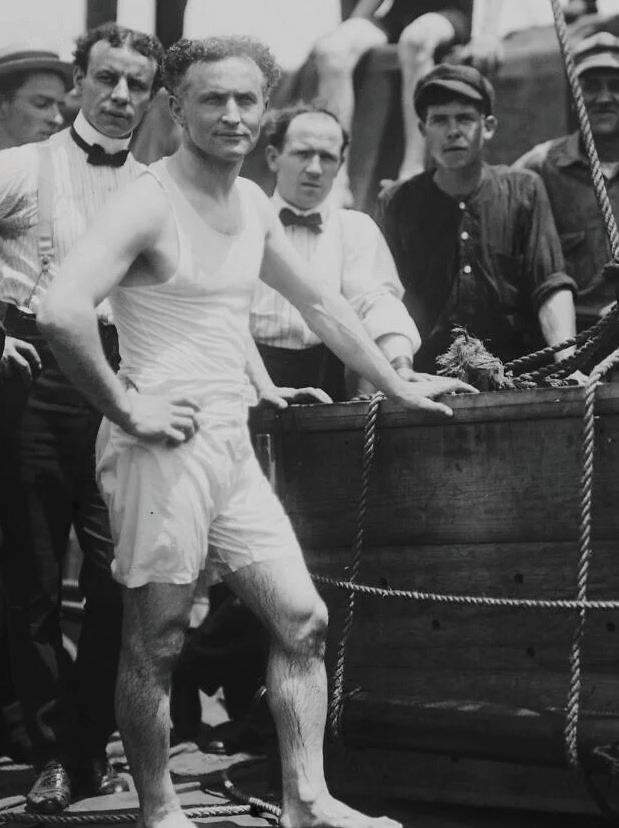
In 1899, before he was Harry Houdini, Ehrich Weiss walked into an Omaha, Neb., police station and asked officers to tie him up, lock him down and see if he could escape. Minutes later, the young Jewish immigrant was free, and the handcuffs were off—a feat that would propel him into a life of stardom.
Nearly a century after his death, the same handcuffs, shackles and other apparatus Houdini owned and used are on display in the new exhibit “Mystery and Wonder: A Legacy of Golden Age Magicians in New York City” at the New York Public Library for the Performing Arts, a research library at Lincoln Center.
The exhibition features more than 300 artifacts from New York’s “golden age” of magic, including objects tied to many of the Jewish magicians who helped define the field in America.
Jews made up a significant share of the world’s most successful magicians during the rise and peak of the field’s popularity, from roughly the 1870s to 1940. The reason, according to exhibit curator Annemarie van Roessel, was tied in large part to their immigrant status.
“Magic really gave the Jews a way to succeed,” van Roessel said at a preview of the show, which opened Feb. 12 and is on view until July 11. “It was a way to reinvent themselves.”
For many Jewish immigrants facing discrimination, limited privilege and restricted access to education and professional opportunities, entertainment, including magic, offered a path forward, van Roessel said.
“Entertainment, not just magic but singing and theater, was an incredibly important way for a lot of immigrant families, especially Jewish immigrant families, to find a foothold and potentially become incredibly successful,” she said.
The exhibit centers on the collection of Dr. Saram Ellison, a New York physician and co-founder of the Society of American Magicians, whose 1,500-volume library of rare magic books was donated to the public library system around the time of his death in 1918.
Ellison’s collection included ephemera, illusion models, magic wands and the first magic book published in the United States.
Van Roessel, who began working on the exhibit in 2020, said that the show is centered on New York because the city was the hub of
popular entertainment when magic was coming into its own.
As the capital of music, dance and theater, she said, New York became both a home base for magicians and a launching point for the tours and connections that defined the field.
Jewish immigrants were an integral part of the New York theater scene in the early 20th century, according to Jeffrey Gurock, professor of Jewish history at Yeshiva University.
“As far as music and theater and things of that sort are concerned, there was a tradition among secularized Jews in Eastern Europe,” Gurock said. “There was a Yiddish theater in Eastern Europe, and they transplanted it here. But to some extent, their embrace of these types of activities was part of their becoming Americanized.”
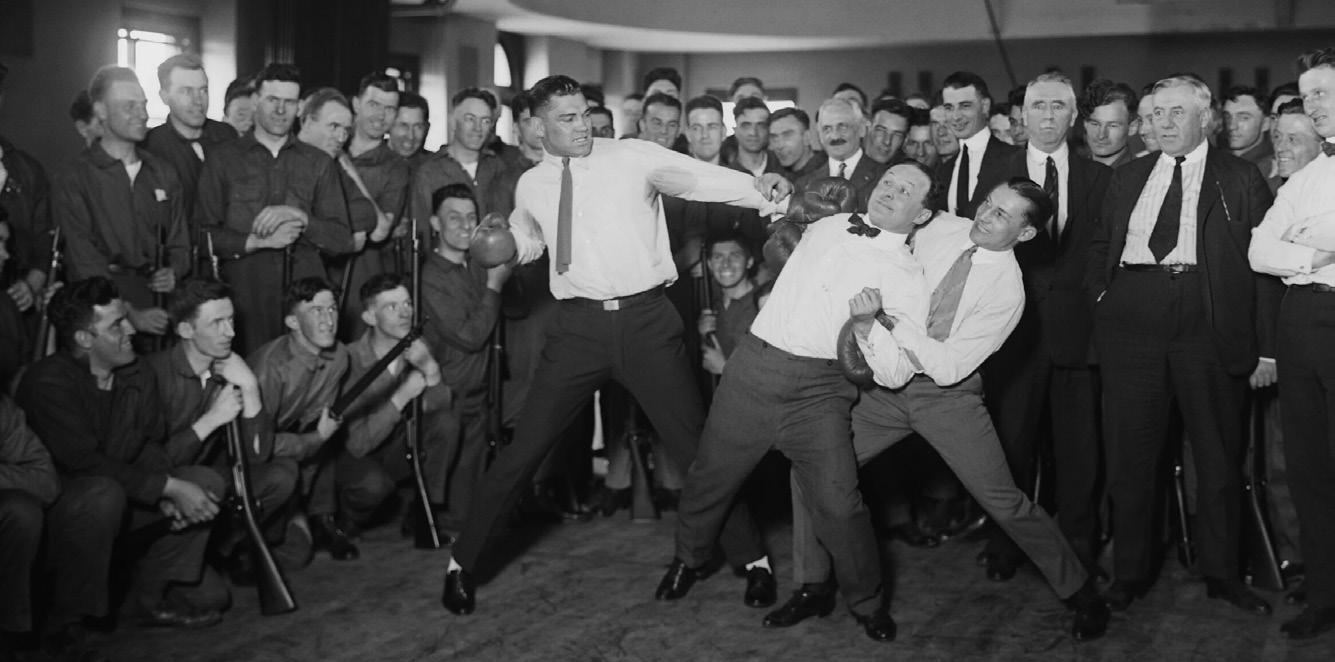
Many performers changed their names to blend more fully into American culture, van Roessel said. The most notable example was Houdini, who was born in Budapest, moved with his family to the United States as a child and later settled in New York as a teenager.
He modeled his stage name after the French magician RobertHoudin.
“Many, many of these magicians were from immigrant families, were first- or second-generation immigrants, immigrants themselves, and they almost all changed their names to sound more American or also just to create stage presence,” she said.
Gurock said that widespread name-changing was not primarily a response to antisemitism.
“It wasn’t so much overt antisemitism, but the pressure to look and sound like an American led Jews to change their names,” he said. “Italians changed their names. Irish changed their names. All those groups wanted acceptance. It wasn’t a uniquely Jewish phenomenon.”
Joshua Jay, a New York-based Jewish magician who has performed in more than 100 countries, offered a different explanation.
He said that for much of magic’s golden age, Jewish immigrants were shut out of many conventional career paths and had trouble finding employment in non-Jewish-owned businesses.
One of the “great, wonderful exceptions,” Jay said, was the theater, much of which was Jewish-owned.
“The theater was somewhere where you could excel and go out on your own,” he said. “It was somewhere where you didn’t have to feel
antisemitism and being closed out.”
Houdini talked about this explicitly, according to Jay.
“He saw somebody onstage, and it was the first time that he felt he could look up to somebody because of their career,” he said. “That’s the moment he decided he wanted to be a magician.”
When Jay first began practicing card tricks with his father in Canton, Ohio, he did not know he was stepping into a tradition shaped in no small part by Jewish performers. Today, the 44-year-old spends much of his time lecturing across the country on the subject.
“There are things in the Kabbalah, and there are mystic aspects of Judaism that touch on magic,” he said. “But for me, it came from a much more rational place.”
Jay said the subject of Jews in magic began to interest him only later in his career, over the course of which he has performed for two U.S. presidents and at halftime shows, thrown out a ceremonial first pitch with a magic trick, helped the U.S. Postal Service create its magic stamp series and consulted on magic for “Game of Thrones” and other television and film projects.
Now, he said, he spends much of his time outside of performing lecturing on why so many magicians were Jewish—a discovery he said he made almost by accident.
“I guess you could say I developed an expertise in a very arcane subject matter, which is all of the magicians and spectators and assistants who have been killed in the line of magic,” he said.
“There are lots of them: people who’ve been accidentally shot, purposely shot to look like an accident, framed murders, burned alive, buried alive, and I noticed even many of those people were Jewish,” he said.
A second reason so many Jews were drawn to magic was the value Jewish culture places on entertainment, according to Jay.
In his view, many Jewish families saw performance not as frivolous but as a meaningful skill tied to joy and community life.
“Being raised in a Jewish family, in my family, it was never frowned upon to be a performer,” he said. “It was never frowned upon to say, ‘I want to entertain people for a living,’ whereas so many people I meet to this day say, ‘Oh, you’re a magician. Can you make a living doing that? Do you get paid to do that?’”
“That’s just such a—to be frank—such an un-Jewish line of inquiry,” he said.
Jay’s work on Jewish magicians offers context for several of the figures featured in the exhibit, among them Max Malini (born Max Katz Breit in Poland), Horace Goldin (born Hyman Elias Goldstein in Vilnius) and the Bamberg Dutch Jewish family that performed as magicians for generations.
Jay, who is a member of the Society of American Magicians that Ellison founded, said that the magic community is similar to the Jewish one.
“Our community is unbelievable,” he said. “It’s like the Jewish community. These people, I feel like they are from my tribe— magicians. And it’s amazing.”
He especially enjoys performing for Jewish audiences.
“I think Jewish audiences are quite discerning in what they like in their entertainment,” he said. “I certainly hope my shows offer a very sophisticated kind of entertainment and cater to somebody not who wants to feel wonder and not know how it’s done, but somebody who really thinks rationally about something and is still fooled.”
“That’s what’s so beautiful about magic,” he said. “Not that we willingly suspend our disbelief, but that it’s an unwilling suspension of disbelief.”

SINGING & SHARING a variety of traditional Jewish music
We welcome new members!
Email Rita for more info: rheller8@gmail.com

1. Which of these is the most widely cited reason for the tradition of the Jewish groom breaking glass at his wedding ceremony?
a. Hellenists
b. Druze
c. Baha’i
d. Nomads
a. To commemorate the destruction of the First and Second Temples
b. To symbolize the commitment to face both joy and sorrow together
c. To scare away evil spirits that might try to interfere with the couple’s happiness

d. To ensure a sense of solemnity and holiness even amidst great joy
2. Which of these is an Israeli slang expression meaning utter, complete nonsense?
a. Nonsense to the heavens
b. Nonsense above and below
c. Nonsense in tomato juice
d. Nonsense beyond boundaries
3. What miraculous creature is said to have cut the stones for King Solomon’s Temple, as it was forbidden to use metal tools, which are associated with warfare?
a. A lion
b. A hoopoe
c. A ram
d. A worm
4. During the 12-day war between Israel and Iran in 2025, which Israeli government-linked hacker group struck Iran’s largest state-owned bank, erasing banking data, rendering systems inoperable, and causing a run on all banks?
a. Predatory Sparrow
b. Rial Stew
c. Bank Shamir
d. Bank Hawk
5. Which distinctive ethnoreligious community in the Middle East combines Judaism, Shia Islam, Christianity, Greek philosophy, and Eastern philosophy, and, like those living in Israel, is loyal to the country in which it lives?
6. What Yiddish word refers to one’s family, and can be generalized to include all relatives, close and remote, close friends, and even all ancestors or all Jews?
a. Bais
b. Chumash
c. Kuzin
d. Mishpocha
7. Whose sons were Shem, Ham, and Japheth?
a. Adam
b. Noah
c. Ishmael
d. Esau
8. According to Rashi, the tablets on which the Ten Commandments were written were made of what material?
a. Granite
b. Clay (earthenware)
c. Sapphire
d. Iron
9. Complete the following quotation on the commandment to judge others favorably: “When looking for faults in others, …” a. “ … keep one eye shut.”
b. “ … use a mirror not a telescope.’
c. “ … don’t be so diligent.” d. “ … remember that the faults you see are the faults you own.”
10. When King Solomon in a dream was offered any wish, what wish did he request?
a. Great honor
b. Great wealth
c. An understanding heart d. All of the above
Answers on page 25.
©2026 Felber, Starmark, Inc., all rights reserved.
ON THE
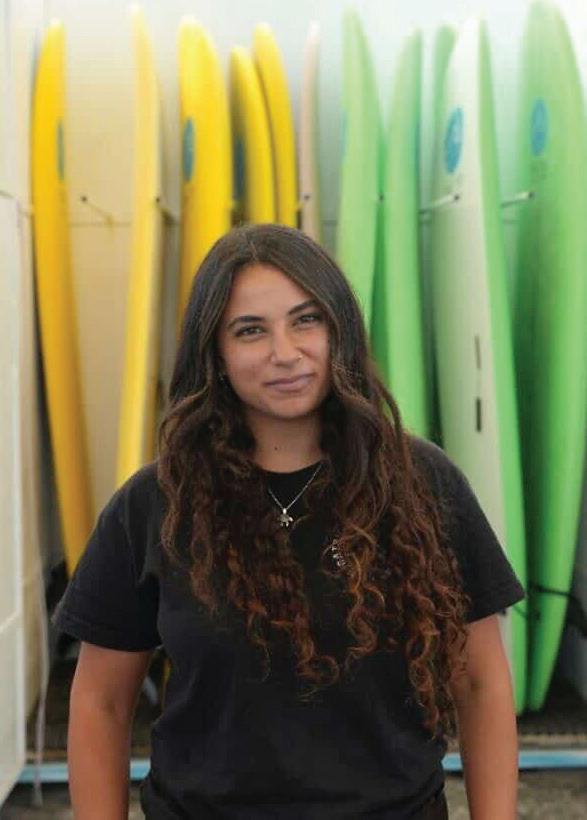
ARE LEARNING TO SURF THEIR WAY BACK TO NORMAL LIFE
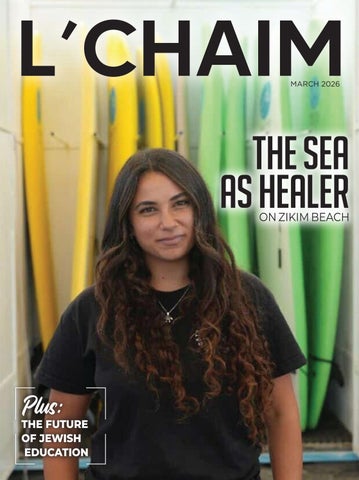
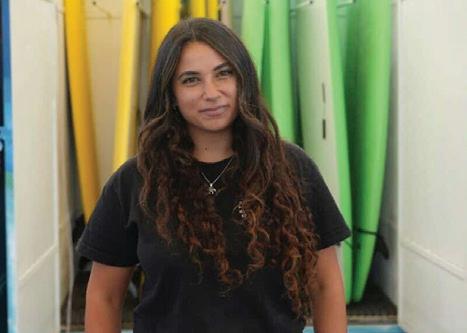
For nearly a year and a half, Michal Richter stared at the Mediterranean Sea from her first-line beach home in her southern Israeli agricultural community, but dared not approach.
“The sea is my home, but I would not agree to come near it,” said the 46-year-old resident of Kibbutz Zikim, three miles north of Gaza.
The trauma of the Oct. 7, 2023, Hamasled attacks—still fresh in her mind even after nine months of being evacuated from her home in southern Israel—simply overpowered her.
Now, the same sea that she so feared is healing her fears.
‘A BEACH OF REBIRTH’
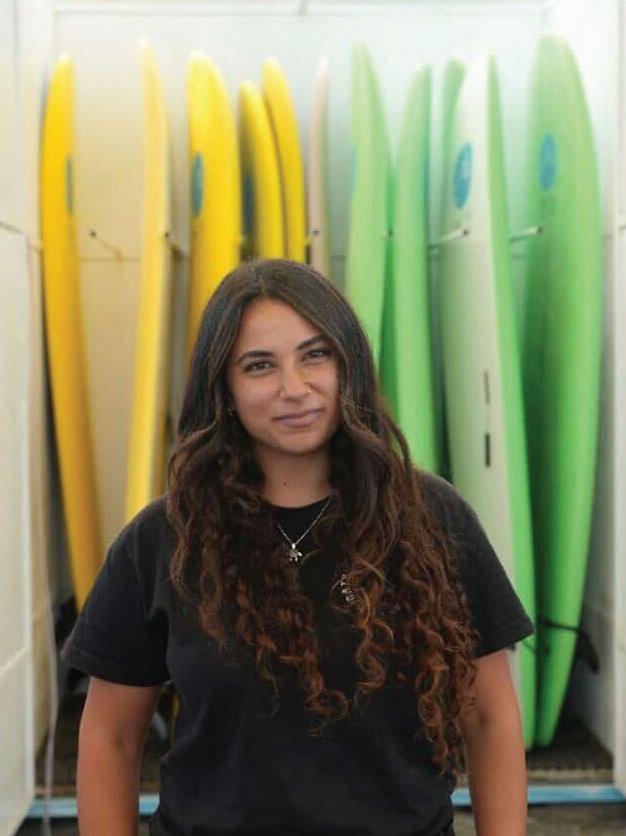
It was three months ago that her community’s welfare department connected Richter with HaGal Sheli (Hebrew for “My Wave”), a 12-year-old Israeli nonprofit organization that was once known for healing at-risk youth through surfing, but which post-Oct. 7 began dealing primarily with helping southern Israel residents traumatized by the attack, which triggered the two-year war in Gaza, recover through the sport.
The beach at Zikim had been declared a closed military zone and was shuttered for two years following the Oct. 7 attack when 38 Hamas terrorists in seven speedboats set out from the nearby Gaza Strip, murdering 17 civilians and one soldier on the beach. They were repelled by Israeli security forces and the community’s rapid response team from entering the adjacent kibbutz, where residents were holed up inside safe rooms.
Israel’s southernmost beach reopened last October with the ceasefire in Gaza, and with it a new surfing center run by the nonprofit constructed during the war so that it would be ready timed with the beaches’ reopening.
“This is going to be one of the major centers of rehabilitation in southern Israel,“ said Yaron Waksman, founder and CEO of HaGal Sheli, whose college-time idea with a friend a decade and a half ago of combining their passions of educating at-risk youths and surfing led to the creation of the organization.
After more than a decade of dealing with complex trauma in thousands of at-risk youth, about 60% of their current activity is now devoted to acute trauma caused by the attack, he said. Some 1,500 participants, including residents, bereaved family members and reservists, are expected to attend the program at this site alone this year, one of 12 such centers across Israel.
The group receives a third of its $7 million annual budget from the government, one-third from selling services and onethird from donations.
“We wanted the beach to be a beach of rebirth for the residents and not one of destruction,” said Shir Ariel, 28, who manages the new surf center at the beach for the nonprofit.
Ariel, a social worker and avid surfer herself, said that the group, which sprang into action in the very first days after the Oct. 7 terrorist attacks, assisting evacuees with therapy and free

surfing lessons to help them ease their trauma, had no idea just how great the demand would be, with some even on waiting lists to join.
“We know that in the coming decade, we are going to be very much in need,” she said. “I have seen this place cure souls.”
“This has changed me completely,” said Richter, the kibbutz member who long struggled with the memory of being stuck in an unlocked safe room with her two children for 13.5 hours as the sound of gunfire whisked outside their window while the kibbutz security force fought off the terrorists. “It took me a long time, but I fought with myself, and I told myself I have to fight to overcome this fear.”
It is a fight still in progress.
“Even when I am in the water, I see Gaza with my eyes,” she said. “I am frightened; I am under pressure, but I am here.”
Other residents and program participants told a similar story.
“I came with tremendous fear, and this is the best thing I have done for myself,” said Maya Gantz, 47, of Zikim, who was home alone with her four children at the time of the Oct. 7 attack, her eldest teen armed with knives while her husband was fighting outside with the first response team. “The staff here is able to cause you to discover your own strength in a way that a psychologist does not succeed in doing.”
The 15-week course, running over three-and-a-half months, integrates trauma-focused therapy with surfing. Each session is guided by a professional team of psychologists, social workers and expert surf instructors.
“I got on the surfboard without any knowledge, and even if you fall in the water, it fills you up with a tremendous drive,” she said.
“I have seen how much the sea can cure and does good for the participants, and I am filled with positive emotions from them,” said Omri Negev, 37, an electrical engineer at Ben-Gurion International Airport who is one of the volunteer surf teachers at the site. “The sea healed me, and I know it will continue to heal others.”
By Stephanie Wells
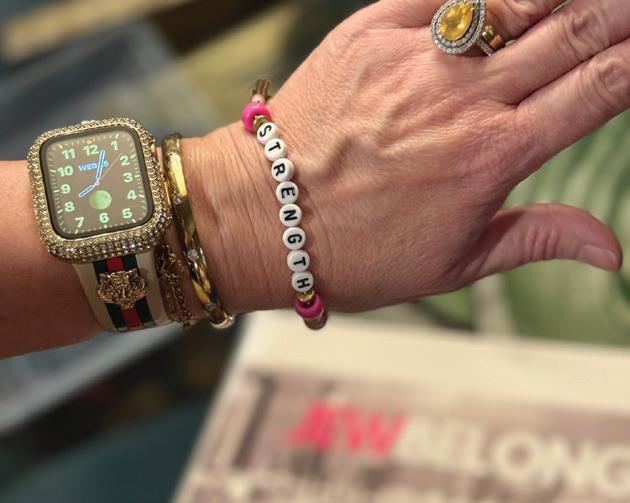
Have you heard of JewBelong?
This July 2026, when the world turns its eyes to San Diego for Comic-Con, I am working to bring JewBelong’s bold, hot-pink billboards to our city. This is not about politics, nor protest. This is about presence. Presence is protection. Presence is power. Presence makes us stronger.
Founded in New York City by advertising visionary Archie Gottesman, JewBelong fights antisemitism through high-visibility billboards with messages that are clear, courageous, and impossible to ignore:
It does not take a Jew to protect a Jew. I need to be able to tell my children I did not stay silent.
This works because of neuroscience. What we see repeatedly shapes perception. What feels familiar feels safer. A bold, public message of Jewish pride at Comic-Con can shift understanding at scale.
When our children can stand in front of something visible and proud and say, “We were part of this,” it restores dignity. It models courage. It shows the next generation; we did not shrink back.
I started this campaign, not as a professional fundraiser, but as a Jew, a Jewish mother, and a child of the Holocaust. And this is a community-powered effort. Donations of $18 and up allow anyone to participate. Larger sponsorships secure premium placement during Comic-Con week. I’m also hosting bracelet-making, creative gatherings, and speaking across San Diego to bring people into the story—because this isn’t just about funding a billboard. It’s about ownership.
In a world where antisemitism is again rising in alarming ways, let us show the world we refuse to be bystanders in our own history. San Diego can model something stronger—visible courage, collective dignity, unapologetic presence.
If you believe silence is not the answer, join us.
Donate, sponsor, or get involved. Let’s lead with presence. Contact jewbelonginsd@gmail.com.

With over 2 decades of Real Estate expertise, Kris Gelbart is no stranger to today’s ever changing market. With countless awards, recognitions, and certifications, Kris is your one-stop-shop for everything Real Estate.
Kris Gelbart Cal DRE 01345809 858-395-0761 gelbartrealtygroup.com Whether

critically important family decisions in the aftermath of emotional life changes can be extremely difficult. Our dedicated family law attorneys can help you navigate the complex divorce process with clarity.
ivorce, high conflict child custody, alternative dispute resolution, and more.




BY TAMAR ROTHENBERG, MS, RDN; AUTHOR, CANCER DIET FOR
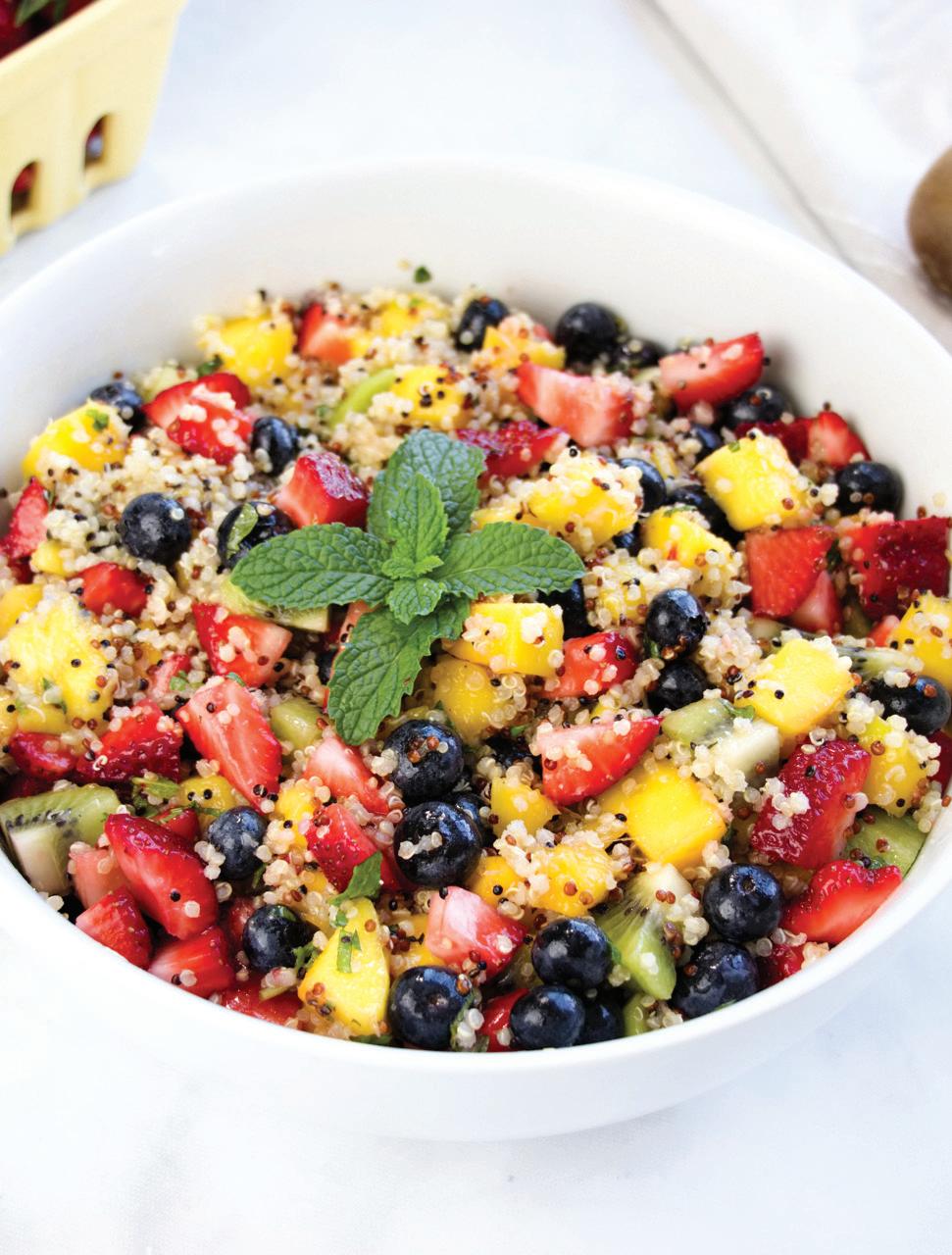
Did you know that quinoa can be used in both savory and sweet recipes? You can eat quinoa on Passover since it is a seed rather than a grain. Prepare this versatile dish for breakfast or dinner with this 20-minute recipe. And, while you may be suffering digestive symptoms (ahem, constipation), this fiber-rich salad contains 10 grams per serving to keep your gut happy. This passover recipe will set you free. Tip: You can use any seasonal fruit!
QUINOA FRUIT SALAD WITH GINGER HONEY DRESSING
Serves 6
Ingredients
1 cup quinoa
2 cup water
Dash salt
2 mangoes, peeled and cubed
1 qt strawberries, chopped
4 kiwis, peeled and chopped
2 pints blueberries
1/4 cup mint leaves, chopped
For the dressing
Juice of 2 lemons
1 tsp honey
1/4 cup olive oil
1 tsp ginger, ground
1/4 tsp salt
Black pepper, to taste
Directions
1. Prep quinoa: Wash the quinoa thoroughly using a mesh strainer under cold running water. In a medium size saucepan, combine the rinsed quinoa, water, and a pinch of salt. Place the saucepan over medium heat and let it come to a boil. Allow the quinoa to boil gently for about 5 minutes. Reduce heat to its lowest setting and let the quinoa simmer for about 15 minutes. Once all liquid is absorbed, remove from heat and fluff with a fork. Set aside to cool or store in the refrigerator until ready to assemble the salad.
2. Make dressing by adding all ingredients to a mason jar and shake to combine. You can also whisk to incorporate ingredients.
3. Toss cooled quinoa with fruit and dressing. Stir in mint just before serving.
Tamar Rothenberg, MS, RDN, is a registered dietitian who specializes in breast and ovarian cancer in her private practice in Los Angeles. She has a Certificate of Training in Vegetarian Nutrition and Herbal Formulations in Cancer Care; and co-led the clinical study, Coping with Cancer in the Kitchen, published in Nutrients. Tamar lends her expertise to Sharsheret Thrivers through nutrition education. Check out Tamar’s other recipes in her book, Cancer Diet for the Newly Diagnosed: An Integrative Guide and Cookbook for Treatment and Recovery. Visit Tamar’s website at https://www.tamarrothenbergrd.com/ for more information.
THIS RECIPE WAS SUBMITTED BY THE NON-PROFIT ORGANIZATION, SHARSHERET: THE JEWISH BREAST CANCER AND OVARIAN CANCER COMMUNITY. IF YOU OR SOMEONE YOU LOVE HAS BEEN IMPACTED BY BREAST OR OVARIAN CANCER OR HAS ELEVATED GENETIC RISK, CONTACT SHARSHERET FOR FREE SUPPORT AND RESOURCES. FOR MORE INFORMATION, VISIT SHARSHERET.ORG OR CALL (866) 4742774.
BY DR. SHAYNA KAUFMANN
Ilooked to my left and saw the sign, “Faith Over Fear.” This was eight months ago, as a nurse was habitually wrapping a blood pressure cuff around my arm. I was at my first oncology appointment, still stunned from being diagnosed with Stage 4 metastatic cancer, and from learning that the average life expectancy for my diagnosis is seven months.
Fear was gushing through me. Faith, on the other hand, was not even on the radar. And yet, I couldn’t stop staring at those words.
Faith over fear. In that room, at that moment, they felt absurd, and at the same time, like a beckoning north star.
Little did I realize that faith was already my modus operandi. Thirty minutes later, my oncologist told me that I needed to begin chemotherapy immediately. I could choose between a protocol involving three drugs or a more aggressive one involving four, which had statistically better outcomes.
“Four,” I said without hesitation. He looked at me. “Most people
choose three.”
“Why?” I asked.
“Fear,” he replied. “Of the drugs’ intensity, of side effects, of whether it will work.”
As treatment and months went by, I faced countless junctures of choice: faith or fear. The most striking was when another oncologist insisted on telling us my prognosis - something I asked not to know.
“Less than a year,” he said objectively. My husband and I emotionally collapsed and cried the entire weekend. Sorrow, and yes, fear, took the reins. For a few days, the weight of that timeline squeezed the breath out of my chest. And then something shifted. I decided to reject his prognostic destiny. Not out of denial, but out of my quest for possibility. I became determined to heal. I locked into Faith, and never looked back.
At Passover time, I am reminded that Exodus was a journey of faith over fear: The midwives who defied Pharaoh’s order to kill the Israelite baby boys. Moses, who argued with G-d at the burning bush about his inadequacy, went to Pharaoh anyway. The Israelites who fled Egypt without knowing their destination, who walked into the Red Sea before it split and who gathered manna daily rather than hoarding it, trusting that tomorrow’s nourishment would come.
These were existential acts of faith—bold, terrifying, life-altering ones which often carried the real prospect of death.
Choosing faith does not mean the path is easy. In fact, it is often harder because the course and the consequences are unknown. Choosing faith does not mean fear disappears. It means we move forward anyway, towards a hoped-for outcome. And choosing faith does not insure a happy ending. But this much I know for sure: faith can open doors that fear seals shut.
Eight months after that terminal diagnosis, following surgery on February 18, my faith blossomed into a medical miracle: “no evidence of disease.” That is as good as it gets with Stage 4 cancer.
On this holiday of Liberation, I ask you: where is fear sealing a door you haven’t tried to open? Choosing faith offers no guarantees. Life may not unfold as we hope. But faith expands possibility. When we remain frozen in fear, we limit what might be. When we choose faith, we allow for what could be.
Wishing you a joyful, meaningful Pesach and a gradual liberation from whatever fears may be limiting your life.
DR. SHAYNA KAUFMANN IS A CLINICAL PSYCHOLOGIST, AUTHOR, CERTIFIED MINDFULNESS MEDITATION TEACHER, DECADESLONG ZEN PRACTITIONER, AND FOUNDER OF EMBRACE THE MIDDLE—A COMPANY DEDICATED TO SERVING WOMEN IN MIDLIFE. LEARN MORE AT EMBRACETHEMIDDLE.COM.
BY MINDY GREENSPAN
Each spring, as families gather around the Seder table to retell the story of the Exodus, the theme of freedom feels both ancient and immediate. Passover reminds us that liberation is not a single dramatic moment, but an ongoing journey, one requiring preparation, courage, and vision. For Ara Freedman, that idea extends well beyond the holiday.
As Vice President and Wealth Manager at Lucia Capital Group in Rancho Bernardo, Ara has spent more than 20 years helping families and business owners move from financial uncertainty toward clarity and confidence. With an MBA in Financial Planning and decades of industry experience, he brings technical expertise to his work but it is his values that define it.
Ara grew up locally and celebrated his Bar Mitzvah at Ner Tamid. Raised in a family grounded in strong Jewish principles, he learned early that service comes first. “At the core of what I do is helping people,” he says. “If you help people, the money will follow.” That philosophy shapes his role as a fiduciary, always putting a client’s best interests first.
“For me, that commitment is rooted in values,” he explains. “It means recommending what is right, not what is profitable. Having honest conversations, even when they are difficult. Designing strategies that prioritize both present and future needs. And serving families and business owners with the understanding that I am here to help them, not sell to them.”
Sometimes, he adds, the most meaningful fiduciary decisions aren’t
flashy. They don’t “part seas.” But doing what is right can change the trajectory of a client’s future.
Because Ara lives and works in the same community as many of his clients, accountability is built in. Trust is formed not just through performance, but through proximity, shared values, and long-term relationships.
“You’re not just managing portfolios,” he says. “You’re serving neighbors.” While he works with clients nationwide, most are local families and business owners who value both his expertise and accessibility.
Over the years, Ara has seen how meaningful fiduciary work often happens quietly. A client once asked him, as a favor, to speak with a grieving mother whose daughter had recently passed away unexpectedly. Neither mom nor daughter was a client. The mother simply did not know where to begin. She had no idea whether retirement accounts existed or how to locate them. With no business incentive, Ara stepped in anyway. After reviewing documents and tracking down former employers, he uncovered a 401(k) and additional retirement assets totaling nearly two million dollars. Nothing could ease the loss of her daughter. But in the midst of grief, clarity brought stability. The financial security changed her life.
Ara also challenges a common misconception: that retirement planning is simply about reaching a number. “It’s about designing a life and knowing how to sustain it,” he says.
Retirement planning, he explains, means creating income that supports freedom rather than fear. Financial planning is not just math; it is clarity and confidence. And it is never too early to begin. “Hope is not a financial strategy,” he says. “You need a plan.”
The message echoes the spirit of Passover. During Passover we reflect on what enslaves us. Today, financial anxiety including market volatility, uncertainty, endless “what ifs” can feel like a modern form of bondage. Freedom, whether spiritual or financial, rarely happens by accident. It requires preparation, guidance, and a willingness to take the first step.
Through trust, transparency, and long-term thinking, Ara helps families make decisions from a position of strength rather than stress. In this community he calls home, that work is more than a profession. It is his life and is personal.
BY STEVE LINDE | JNS.ORG
At a time when many Diaspora communities worry about rising antisemitism and long-term continuity, Naomi Kovitz believes the primary challenge is ensuring that every Jewish child feels they belong.
Speaking in an interview at the JNS Media Hub in Jerusalem on Feb. 12, the chief operating officer of the Jerusalem-based Yael Foundation summarized the philanthropic organization’s mission in a single sentence: “No Jewish child should feel alone in the Jewish story.”
For Kovitz, that idea lies at the heart of the Yael Foundation’s work across continents, languages and educational systems.
“The work itself speaks for itself,” she said. “Wherever you live and wherever you see your Jewish community, hopefully we’re there also giving support. Some communities are thriving on their own—and that’s wonderful—but in others, we’re necessary.”
The Yael Foundation focuses on strengthening Jewish identity through education, leadership development and immersive
experiences in communities large and small. Over the past several years, the organization has expanded rapidly, supporting educational initiatives in more than 40 countries across Europe, North America and Israel.
Kovitz, who has spent over a decade in nonprofit leadership and holds degrees in business management and Israel-Diaspora relations, oversees the operational strategy behind that growth. She holds a bachelor’s degree in business management and a master’s degree in American Jewry and Israel relations, and joined the leadership team as the organization expanded its worldwide grantmaking and Jewisheducation programs.
Quoting Yael Foundation co-founder Uri Poliavich, she described the organization’s mindset simply: “We are overachievers. Our vision is to overachieve in everything—in standards of excellence, meaningful Jewish experiences and careful investment in Jewish education.”
Founded in 2020 by Cyprus-based Uri and Yael Poliavich, the foundation, whose motto is “No Jewish Child Left Behind,” is a leading philanthropic initiative currently impacting some 20,000 Jewish students in 45 countries.
This mission was highlighted at its recent 2026 Yael Awards event in Vienna, where the foundation recognized excellence across its network of over 100 educational institutions with awards honoring innovation and academic leadership.
Rather than impose a single educational model, the foundation adapts to each community’s needs. In established communities, funding may strengthen existing schools and teacher training. In smaller or isolated communities, the focus may be basic infrastructure—curriculum, staffing or leadership support.
Kovitz said one of the organization’s guiding principles is respect for local leadership.
“We don’t come in to replace communities,” she explained. “We come to empower them so they can succeed long-term on their own.”
That approach, she believes, is essential in an era when Jewish identity is shaped simultaneously by global culture and local pressures—from assimilation in some regions to security concerns in others.
While social media connects young people instantly across continents, she said, many still grow up unaware how large the Jewish world really is.
“Children sometimes think they’re the only Jewish kid in their country,” she said. “When they discover there are others like them— in Finland, Iceland or elsewhere—it changes their sense of identity completely.”
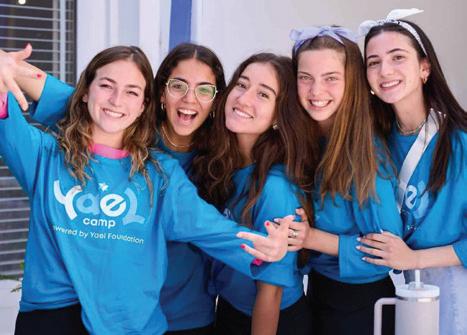
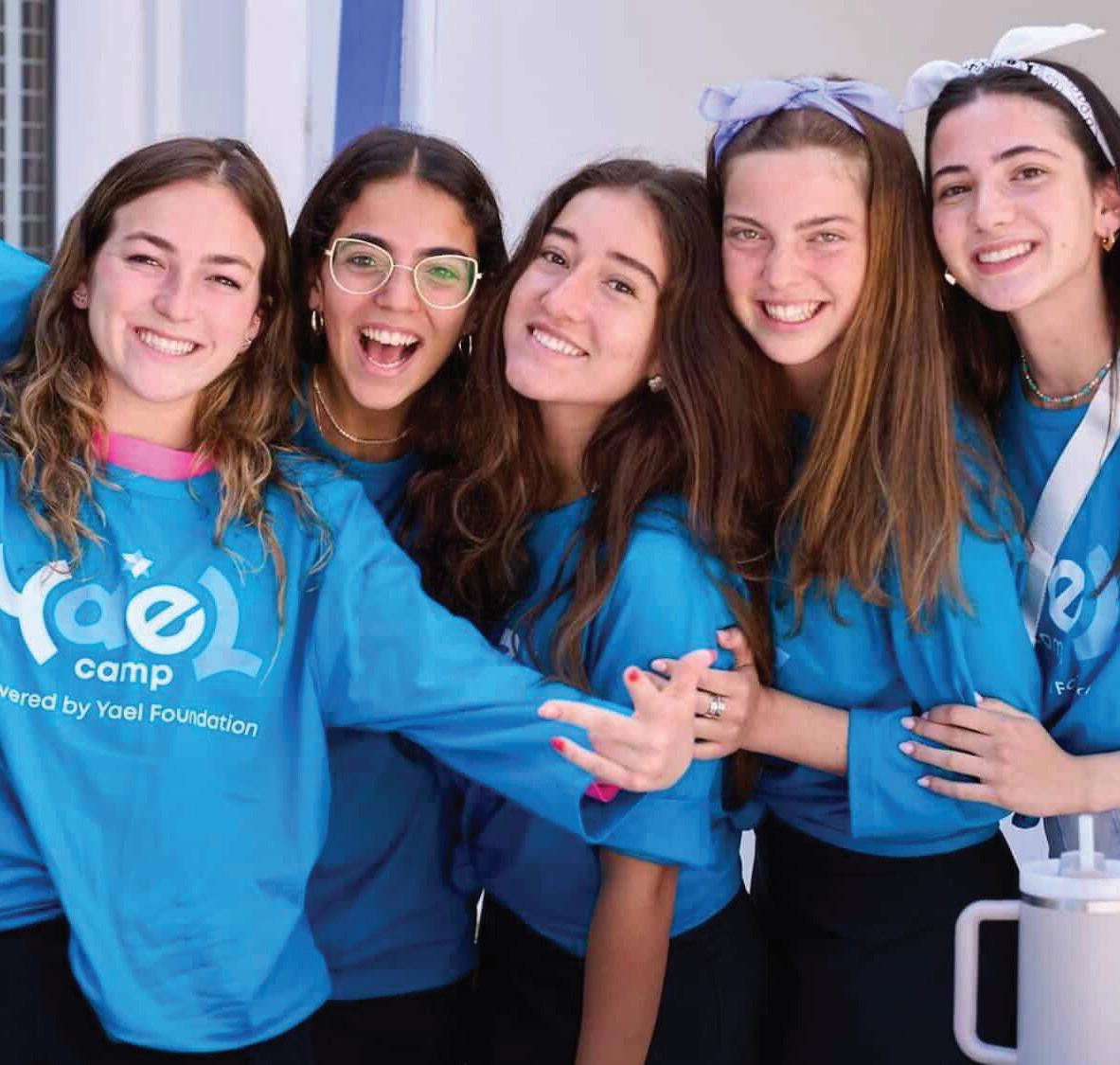
That discovery is most visible at Camp Yael, one of the foundation’s flagship programs.
Each year, the foundation rents a different site and brings together hundreds of students from around the world for a heavily subsidized summer experience centered on Jewish learning, leadership and community building.
Last summer, about 500 participants from 19 countries attended— with no single shared language.
“Camp happens in four languages simultaneously,” Kovitz said. “There’s no one unifying language, but there is a unifying story.”
Participants return home, she added, transformed—not only personally but communally.
“The schools that send students see the impact immediately. The kids come back with leadership and ownership. It strengthens the entire community.”
For youth from small or isolated Jewish populations, the experience can be especially powerful.
“They suddenly understand they’re part of something much larger,” she said. “They don’t feel alone anymore.”
While public discussion about Jewish continuity often focuses on politics or security, Kovitz argues that education is the decisive factor.
"If a child feels part of the Jewish story, everything else follows."
Investment in schools, teachers and immersive experiences, she said, produces lasting identity rather than temporary engagement.
“We measure success long-term,” she said. “Not just attendance at an event—but whether someone builds a Jewish home, becomes a leader or stays connected years later.”
That philosophy guides the foundation’s grantmaking strategy, which emphasizes depth over visibility. Programs are often developed quietly in partnership with local educators rather than through highprofile campaigns.
Still, the organization has begun holding larger gatherings to unite partners and supporters. A major international event scheduled for March will bring together educators, community leaders and donors to share results and plan expansion into additional communities.
Kovitz sees such meetings less as fundraising opportunities and more as strategic planning forums.
“The goal is to learn what works in one place and adapt it elsewhere,” she said. “Jewish communities differ—but the core needs are similar.”
Since its founding just five years ago, the Yael Foundation has built a broad network of schools, camps and leadership programs. Much of its work focuses on communities without strong institutional backing, where even modest support can transform sustainability.
Kovitz described its mission as both operational and moral.
“It’s a huge privilege,” she said. “But also a tremendous responsibility.”
Despite the scale of the project, she returned to its simplest objective—belonging.
For her, Jewish continuity depends less on ideology than on emotional connection formed early in life.
“If a child feels part of the Jewish story,” she said, “everything else follows.”
And if not? “They drift away,” she said quietly. “That’s what we’re trying to prevent.”





1. b. Although all of these are cited as reasons for breaking glass, most common is the commemoration of the destruction of the Temples and the longing for the ultimate redemption of the Jewish people.
2. c. The slang expression, nonsense in tomato juice (shtuyot b’mitz agvaniot), is itself nonsensical, deriving from the similar German expression, nonsense in sauce.
3. d. The shamir, a worm about the size of a barleycorn, that eats stone, iron, and even diamond, is said to have been one of the ten wonders created the eve of the first Shabbat.
4. a. The Predatory Sparrow hackers also destroyed $90 million of Islamic Revolutionary Guard Corps (IRGC) cryptocurrency, halted salary and pension payments, crashed the Tehran stock exchange, and caused the rial, Iran’s currency, to drop 12 percent after the first day of war.
5. b. The 150,000 Druze living in Israel contribute significantly to the military and public life there. In 2025, Israel helped protect the Druze community in Syria from attacks by government forces and related groups by conducting airstrikes on Syrian military targets and by providing medical, humanitarian, and financial aid.
6. d. “All Jews are mishpocha” means that all Jews are one family. In biblical Hebrew, mishpachah is the technical term for a “clan,” a social unit larger than a household but smaller than a tribe.
7. b. Jews are descended from Noah’s son, Shem. Abraham was Shem’s ninth-generation patrilineal descendent. The word “semitic” is derived from Shem.
8. c. Sapphire, see Rashi to Exodus 34:1.
9. b. But give yourself a point for any of these answers.
10. c. King Solomon wished for an understanding heart. This wish was so pleasing to his Creator that he was made the wisest man in the world and also given great honor and great wealth (1 Kings 3:513).
0 – 2
3 – 5
6 – 8
Talmid/Talmida (Student)
Melamed/Melamedet (Teacher)
Talmid Chacham/Talmidat Chacham (Scholar)
9 – 10 Gaon/Gaona (Genius)
BY JAMES SPIRO | JNS.ORG
In northern Israel, a few kilometers from the industrial parks of Yokne’am, a small business in Kiryat Tivon looks more like a backyard gathering than a boardroom.
Six of us sit and discuss familiar topics: supply chains, export markets, climate adaptation, irrigation and ag-tech.
Only this time, the founder is pouring wine—his own.
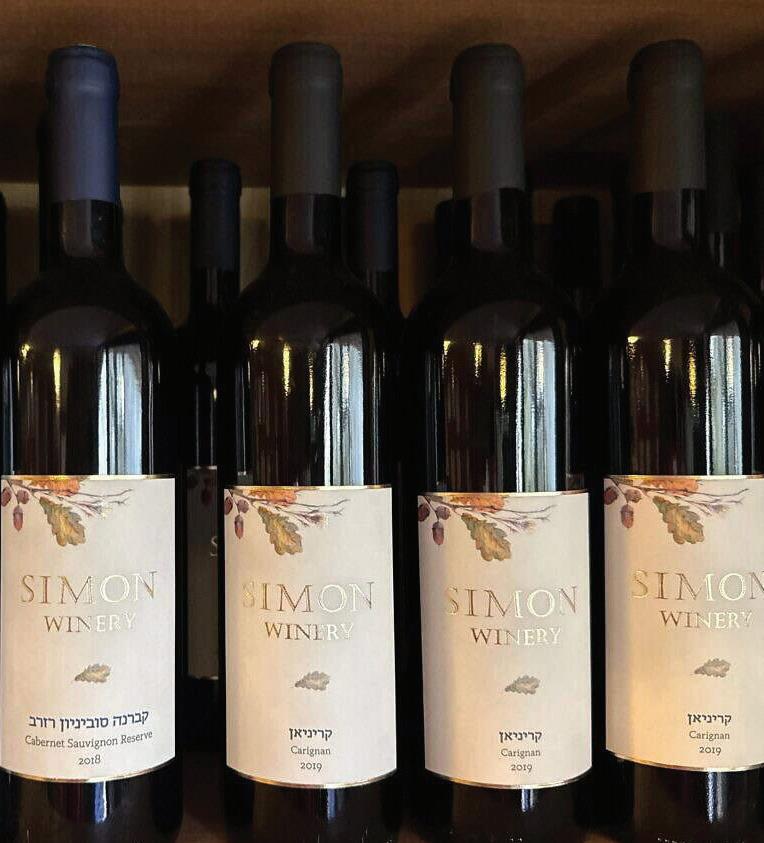
The “startup” is Simon Winery, established in 2010 by Zeevi Simon. A civil engineer and business owner by trade and a winemaker by choice, his boutique operation is one of hundreds of small vineyards that have quietly appeared across Israel over the past two decades.
Simon is part of one of Israel’s oldest national projects—and one of its most overlooked economic stories: a steadily growing wine industry.
Kiryat Tivon has recently drawn attention from global technology companies such as NVIDIA, which is building a new hub nearby. Yet long before semiconductors arrived, another economic ecosystem was already thriving: wine.
At Simon Winery, Israel’s characteristic blend of innovation and tradition is unmistakable. Many wineries here are not centuries-old
estates but ventures founded by engineers, reservists, immigrants and mid-career professionals.
Simon explains how he sources Shiraz grapes from the Ben Zimra vineyard in the north, and Cabernet Sauvignon, Merlot, Carignan and Malbec from vineyards in Binyamina and the Kadesh Valley. The grapes are hand-harvested and aged for a year in French oak barrels.
Production has grown from 4,000 bottles annually to about 9,000.
We taste reds, whites and rosés with cheese and conversation overlooking greenery. Couples, families and friends pass through—a leisurely ritual many Israelis embraced after the Oct. 7 attacks as a way to support local businesses and reconnect with normal life.
Israel’s wine culture is both ancient and new. Archaeological evidence shows winemaking here more than 3,000 years ago, yet the modern industry largely emerged in recent decades as trained winemakers returned from France, California and elsewhere.
Like the tech sector, Israel’s wine production is small globally but influential for its size. In 2025, Israel unveiled its first official national wine map, identifying seven regions: the Galilee and Golan, Carmel, Judea, Samaria, the coastal plain, the Negev and the valleys.
Most of Israel’s 300-plus wineries produce fewer than 50,000 bottles annually. Overall production is about 45 million bottles per year, exported to roughly 40 countries.
Despite the war in Gaza, Israel exported $65.1 million in wine in 2024 (the most recent reporting year), mainly to the United States, ranking 26th worldwide among exporters, according to the Observatory of Economic Complexity.
Unlike countries such as France or Georgia, Israel’s wine tradition is defined less by uninterrupted continuity than by reinvention. Winemakers often arrive from different professions, bringing entrepreneurial instincts to an ancient craft.
Wine in Israel is not only agricultural; it is civilizational. Rituals such as kiddush connect it directly to Jewish identity.
For many Jews, wine is first encountered not in restaurants but at Shabbat tables, weddings and holidays. It functions as both a beverage and a religious object.
When Israeli winemakers speak of “terroir,” they often mean two things at once: soil and climate, and historical belonging.
New wineries continue to merge past and present. In 2025, Gal Pauker opened Pauker Winery using grapes grown by his grandfather, Gideon, in Nir Oz before Hamas terrorists murdered him on Oct. 7, 2023.
Wine in Israel is not only agricultural; it is civiliational. Rituals such as kiddush connect it directly to Jeiwsh identity.
At Simon Winery, conversations drift from tannins to travel plans for the next vineyard visit. The country known for speed—startups, apps and acquisitions—is also investing in patience.
I sip the wine and discuss the tannins with my friends. One prefers the oaky taste of the previous bottle, another wants to return to the white that had the grapes from a different part of the country. The founder, however, sits on, embracing the energy of the crowd he has gathered in his garden—the meeting spot for his latest creation.
Leaving the winery, already planning the trip to my next one, I consider the difference between Israel’s tech sector and its wine industry—two areas of the country I have gotten to know well during the war. I can see how a country that, for many, is known for its speed—its apps, product deployments, acquisitions—is also investing in its slowness. Foundations today are designed to be enjoyed for decades to come.
The success of Israel’s growing wine industry represents a significant return to a people’s historic ties to a country and a commitment to build on its past for its future. The barrels and vineyards will be around long after these founders retire, which may be exactly why they do it.
In a nation defined by urgency, wine may be the Jewish state’s most deliberate act of continuity.
At the end of the Passover Seder, the final words are spoken almost instinctively. Around tables filled with family, friends, and generations of tradition, Jews everywhere say the same phrase: L’shanah haba’ah b’Yerushalayim, next year in Jerusalem. For centuries, those words have carried deep meaning. They hold memory and hope in the same breath, reminding us that the story of the Jewish people stretches across generations and continues to unfold.
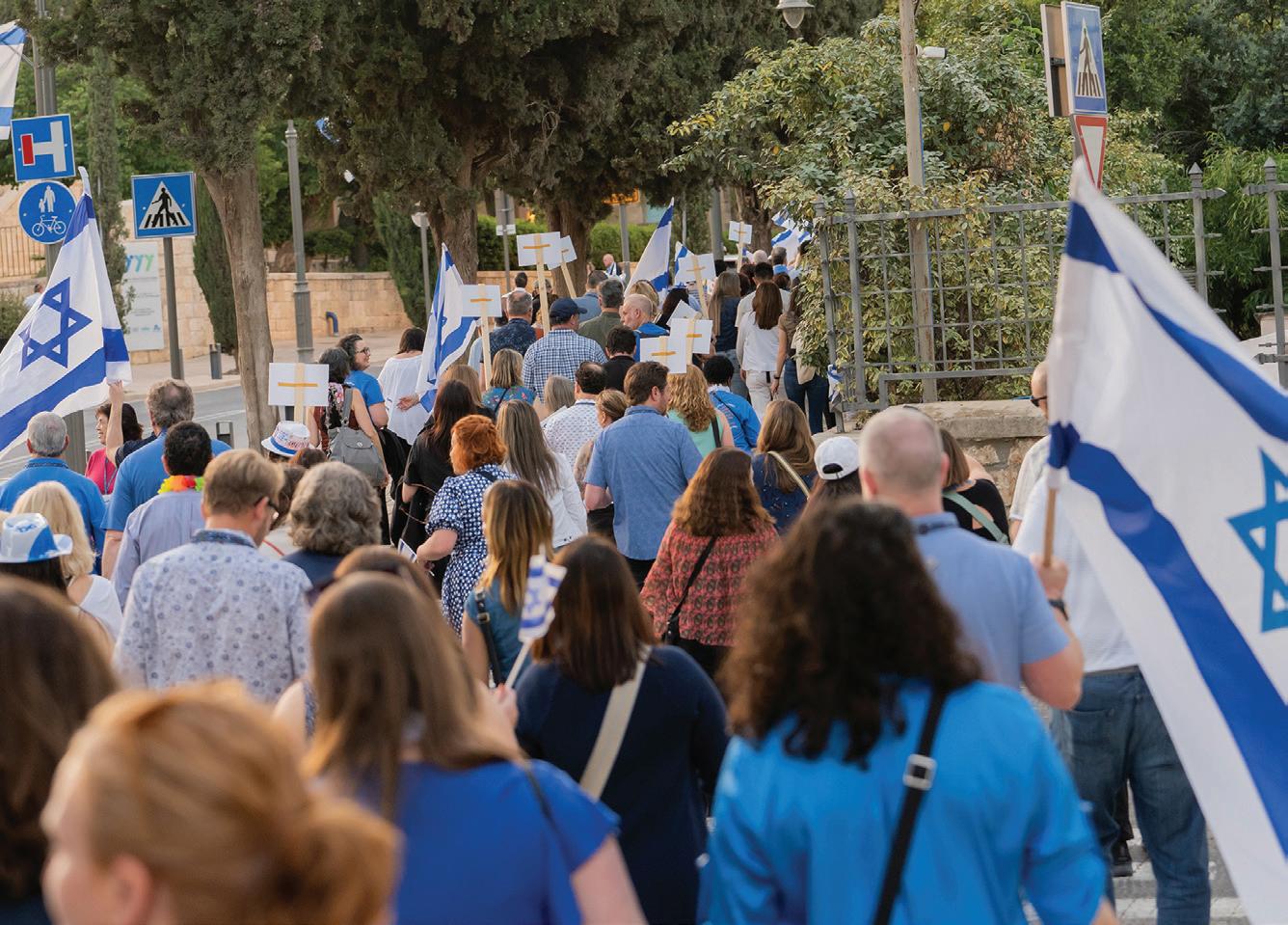
Since October 7, 2023, those words have taken on added meaning. Israel is not the same, and neither is the global Jewish community. Across San Diego and around the world, many Jews have felt a renewed urgency to stand closer to Israel and to one another. The phrase “next year in Jerusalem” now carries not only longing, but also a deeper desire to return, reconnect, and show up for our people.
Next year, members of San Diego’s Jewish community will have the opportunity to do exactly that.
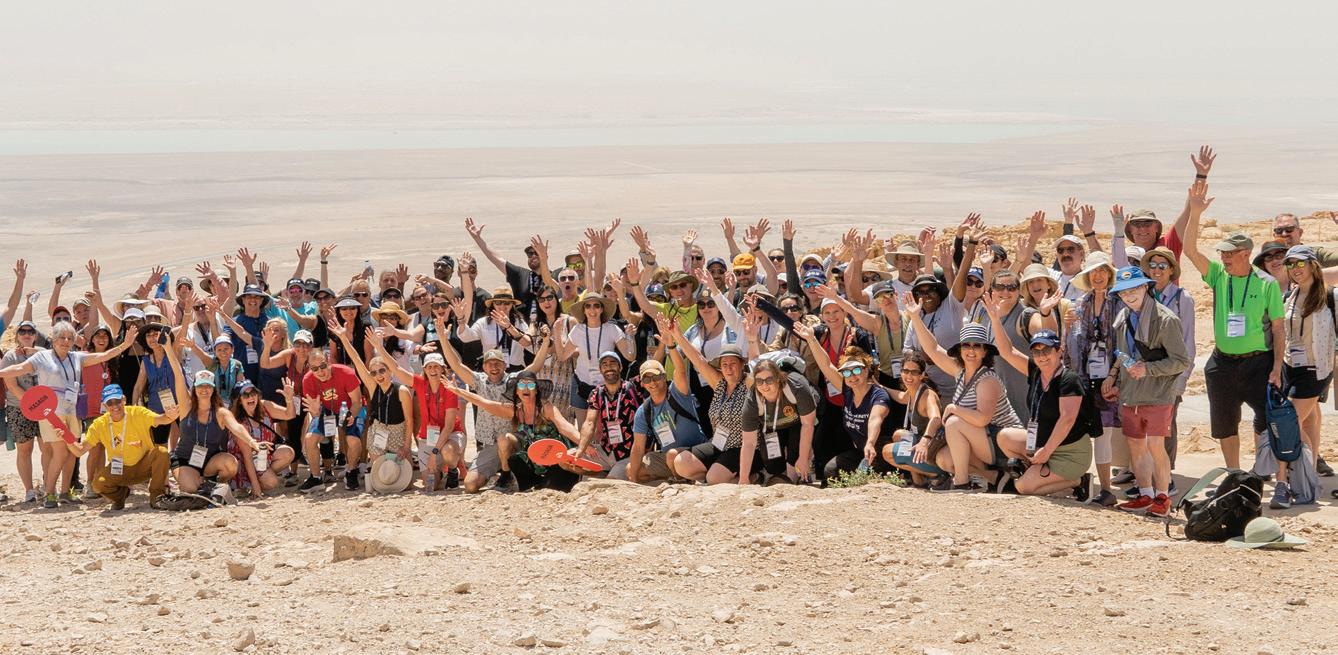
Jewish Federation of San Diego will bring 250 San Diegans for The Community Trip to Israel from May 18–25, 2027, with an optional post-trip extension to Budapest, Hungary from May 26–30. Open to adults ages 18 and up, the once-in-a-lifetime trip welcomes both firsttime visitors and those who’ve traveled to Israel many times.
Because this shared journey is more than a trip. It is a communal experience—an opportunity to explore Israel alongside neighbors, friends, and fellow San Diegans who share a deep connection to Jewish life and the future of our people.
Each Passover, the Seder invites us to see ourselves as part of a
much larger story. Generation after generation gathers around the table to retell the journey of the Jewish people and to reflect on the responsibility of carrying that story forward.
The Community Trip reflects the same idea. Traveling together offers the opportunity to explore Israel not simply as individual visitors, but as a community connected by shared history and purpose. Conversations that begin during a bus ride, over coffee in a café, or while walking ancient streets often grow into friendships that last long after the journey ends.
Participants will experience Israel through many lenses. In Tel Aviv, travelers will explore vibrant neighborhoods filled with art, technology, music, and culture. The city’s Mediterranean coastline, lively markets, and creative energy offer a glimpse into the modern spirit of a country constantly renewing itself.
Jerusalem presents another rhythm entirely. Layers of Jewish history reveal themselves in every stone pathway and ancient wall. One of the most memorable moments of the week will come as the group welcomes Shabbat in the city. As evening approaches, participants will gather for Kabbalat Shabbat before walking toward the Western Wall alongside thousands of others. The plaza fills with prayer, singing, and celebration as Jews from around the world greet the day of rest together in one of Judaism’s most sacred spaces.
A particularly meaningful part of the journey will take place in Sha’ar HaNegev, San Diego’s long-standing partner region in southern Israel.
For many years, Federation and communities of Sha’ar HaNegev
have built a close partnership rooted in mutual support and enduring relationships. Since the events of October 7, that partnership has taken on even deeper meaning. Through Federation’s Israel Emergency Campaign, San Diego has helped fund recovery efforts, restore community spaces, and support initiatives focused on healing and resilience.
Visiting the region brings those connections into powerful focus. Travelers will meet residents and local leaders, gaining insight into daily life and the remarkable resilience that continues to shape the community. Participants will see firsthand how donor support from San Diego has helped restore beloved gathering places and launch new initiatives designed to help the region rebuild.
The itinerary includes visits to revitalized spaces such as Beit Melachah, a creative hub for therapeutic healing; BarKatze Pub, once a popular community gathering spot that has reopened as a symbol of resilience; and the inspiring “Youth Cooking for a Future” food truck initiative. These experiences offer travelers a powerful glimpse into how communities rebuild and move forward together.
Partnerships like these reflect Federation’s commitment to strengthening the bonds that connect San Diegans to Israel and Jewish life around the world.
For participants who choose to continue to Budapest, the optional extension offers another perspective on the global Jewish story. Once home to one of Europe’s largest Jewish populations, Budapest today features a dynamic and evolving Jewish community. Encounters with local leaders, cultural institutions, and historic sites illuminate both the challenges and the remarkable renewal of Jewish life in the region.
Journeys have always been part of the Jewish story. From the Exodus retold each year at the Seder table to the countless paths Jewish communities have taken across the world, every generation
adds its own chapter.
For San Diego’s Jewish community, The Community Trip will offer the chance to write one of those chapters together—returning not only to places that hold deep historical meaning, but to people who continue to shape the Jewish story today.
When the words L’shanah haba’ah b’Yerushalayim are spoken at the end of the Seder, they carry both memory and hope. For those who take part in this journey, they will also carry something more personal: the memory of standing with Israel at a moment when showing up for one another matters more than ever.
REGISTRATION FOR THE COMMUNITY TRIP IS NOW OPEN! LEARN MORE AND RESERVE YOUR PLACE AT JEWISHINSANDIEGO.ORG/ THECOMMUNITYTRIP2027.