Symphony in AC Major
RÓISÍN MAGEE, Office of the Attorney General



RÓISÍN MAGEE, Office of the Attorney General
3 NET GAINS IN NETWORKING
The Law Society’s launch of an essential six-part audio series with Platforum9, a social audio app for lawyers.
3 GAME, SET AND MATCH: A SEARCH CONSULTANT KEEPS CAREERS ON THE BALL
A game-changer for your career whether you are an employee or on the lookout for the best talent.
4 SYMPHONY IN AC MAJOR
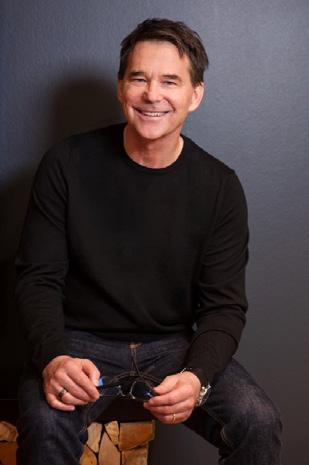
Advisory Counsel at the Office of the Attorney General Róisín Magee on the many strings to her bow – not just in her work as a solicitor but in how she orchestrates her free time.
6 ACROSS THE PONDER: STATESIDE VIEW ON THE LEADERSHIP PARADOX
Matt Fawsett, General Counsel-CLO and Chief Strategy Officer at DXC Technology, breaks down the leadership paradox – and how the best way to connect is to stop trying to connect.
8 DATES FOR THE DIARY
Your guide to upcoming Law Society events and courses, as well as library resources you need to know about.



9 OFF-PISTE TO IN PRACTICE
General Counsel at HSBC Ireland Ian Martin on his brilliant team, developing stakeholder relationships – and that time he gave up law to work in a ski resort!
10 FRACTIONAL COUNSEL: A CAREER THAT ADDS UP FOR LAWYERS WITH MULTIPLE SKILLSETS
An interview with Fractional Counsel Emily Ennis on an engaging career path for in-house lawyers.
12 AI WILL DISRUPT LAW FROM THE CLIENT SIDE OUT
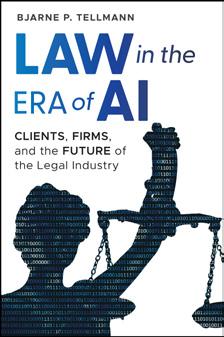
A fascinating extract from Bjarne P. Tellmann’s forthcoming book Law in the Era of AI: Clients, Firms and the Future of the Legal Industry
14 CAREER OPPORTUNITIES
A selection of in-house legal vacancies.
Patricia Gannon, Founder and CEO Platforum9
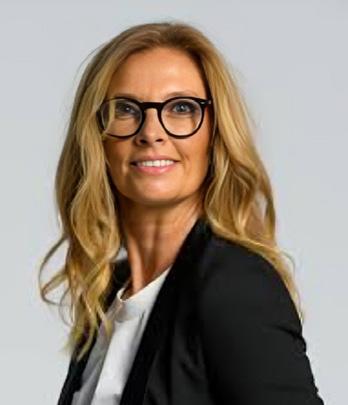
The Law Society launched a six-part live audio series exploring technology and innovation in international legal departments on 24 March last. It’s in collaboration with Platforum9, a social audio app for lawyers founded by Patricia Gannon. This invite-only series is exclusively available to in-house lawyers.
Each episode features an insightful conversation with a General Counsel. Our guest speakers discuss how technology is shaping their legal department and share lessons learned on leading people in times of change. These will be interactive sessions and, as an in-house lawyer, you can join in by asking a question or contributing to the discussion.
Please email solicitorservices@lawsociety.ie to receive an invitation.
By Sandra Quinn, Founder of Quinn & Associates Executive Search Partners
In today’s competitive job market, having a search consultant by your side can be a game-changer. Whether you’re an employer seeking to hire the best talent or a candidate searching for the perfect job, search consultants provide invaluable support.
Access top talent Search consultants have extensive networks and tap into passive candidate pools that are not actively looking. This means you get access to high-calibre candidates you will not find through traditional job postings.
Gain market insights They provide up-to-date information on salary trends, skill demand and industry shifts, helping you stay competitive and make informed hiring decisions.
Time and cost efficiency The hiring process is time-consuming and costly. Search consultants streamline this process so you focus on your core business activities.
Know your company reputation A search consultant can provide feedback on your company’s reputation in the market. This is crucial to see how potential candidates view your organisation.
Deep understanding The better a search consultant knows your business, the more effectively they can match you with candidates who fit your company culture. A search consultant who understands your needs is an invaluable partner in finding the right talent.

HELPING CANDIDATES ACE IT
Exclusive opportunities
Many top jobs are not advertised publicly. Search consultants connect you with exclusive opportunities.
Career guidance Search consultants offer personalised advice on CV building, interview preparation, and career progression. They help you present your best self.
Market knowledge With deep insights into various industries, search consultants inform you about market trends, salary expectations, and the skills in demand.
Feedback to progress Search consultants provide constructive feedback. This continuous improvement loop helps you refine your approach and increase your chances of landing the desired role.
Long-term partnership A good search consultant is not just for immediate job searches. They can be a long-term career partner.

Interview with
Advisory Counsel at the Office of the Attorney General Chair of the In-House and Public Sector Committee, Law Society of Ireland
TELL US ABOUT YOUR BACKGROUND.
I’m a Dubliner. I get my love of language and education from my mother, who is a retired English teacher. My father was a radio officer in the merchant navy, then ran his own radio sales and repair business. He was a people person and always told us stories of the colourful characters in his shop on Capel Street. I have two older brothers, one of whom is a solicitor.
WHY DID YOU BECOME A LAWYER? Chance and instinct. I studied business and politics in Trinity, then a postgraduate diploma in law in DIT. It made sense to do the FE1s and I started working in my uncle’s law firm, Frank Ward & Co. Solicitors, where I trained and qualified. That firm gave me opportunities to work for many clients from political parties, ambassadors, jockeys and people in the film industry to victims of childhood abuse and medical negligence.
TELL US ABOUT YOUR CURRENT ROLE AS ADVISORY COUNSEL AT THE OFFICE OF THE ATTORNEY GENERAL.
I joined the Office last June, after working in the Department of Agriculture, Food and the Marine as a legal advisor for a decade. Advisory work in the Office is divided between six groups of lawyers, each headed by one at Assistant Secretary level. Each group has its own area. The group I work in advises on health and civil liability. We also deal with Article 267 preliminary references to the Court of Justice of the European Union and cases before the European Court of Human Rights. The work is wideranging, politically and legally sensitive and interesting. It’s also really important.
“Put your hand up for opportunities that come your way, even if you think you’re not ready. Learning to trust yourself and your ability to learn is a skill that takes practice.”

As an Advisory Counsel, I provide legal advice in these areas to the Government and to Ministers, managing litigation and liaising with external counsel through the Chief State Solicitor’s Office. We work closely with our Parliamentary Counsel colleagues, who are responsible for drafting legislation.
Finally, the people are brilliant. There are so many creatives here –I’m not the only musician, and there are singers, dancers, theatre directors, even comic writers!
WHAT DOES LEADERSHIP MEAN TO YOU?
Listening, kindness, inclusivity and clarity of direction. My favourite people to work for have been excellent lawyers who have led by example, with a kindness and flexibility of approach that inspires loyalty.
YOU ARE THE CHAIR OF THE IN-HOUSE AND PUBLIC SECTOR COMMITTEE. WHAT ARE YOUR PLANS FOR 2026?
We have an active committee of 24 solicitors working across insurance, banking, fintech, food and drink, construction and the public sector. We have a hard-working support team, with Louise Campbell as Secretary, and Sarah-Jane Clifford as Vice Chair.
The committee’s theme for the year is Navigating Regulation in Ireland: Balancing Competition, Innovation and Compliance. Regulation is where both sides of our committee meet – the
public regulators and private sector-regulated industries.
The committee is running two panel events in conjunction with Law Society Professional Training, one in Dublin on 29 April and one in Cork on 27 May, called The Future Ready Lawyer. We’ll soon start planning for our annual conference too, which will be on 7 October.

Elsewhere, members of our committee are active in the Ireland for Law project, and the European Company Lawyers Association, which is an umbrella organisation of law associations for in-house lawyers.
WHO HAS BEEN YOUR GREATEST INFLUENCE?
My friends. I have a wonderful group of friends who inspire me. People who leave you thinking about something significant after every conversation are my favourite.
HOW DO YOU RELIEVE STRESS?
Downtime with my family. I have two little girls full of mischief, adventure, creativity, fun and curiosity and I love nothing more than the days when we have no set plans.
WHAT DO YOU DO IN YOUR SPARE TIME?
I play flute with the Hibernian Orchestra. It’s conducted by John Finucane, volunteer-run and plays three concerts a year. We get to play a

wonderful repertoire and meet people from all walks of life. Music performance has taught me so much about handling stress in pressured situations. I also play the cello. I plan to spend my retirement playing string quartets with friends!
WHERE’S ON YOUR TRAVEL BUCKET-LIST?
Japan. There are so many aspects of Japanese culture that are fascinating – literature, film, art and food. Closer to home, I’d love to explore the wilder parts of Scotland.
WHAT IS THE BEST PIECE OF CAREER ADVICE YOU HAVE BEEN GIVEN?
Put your hand up for opportunities that come your way, even if you think you’re not ready. Learning to trust yourself and your ability to learn is a skill that takes practice.
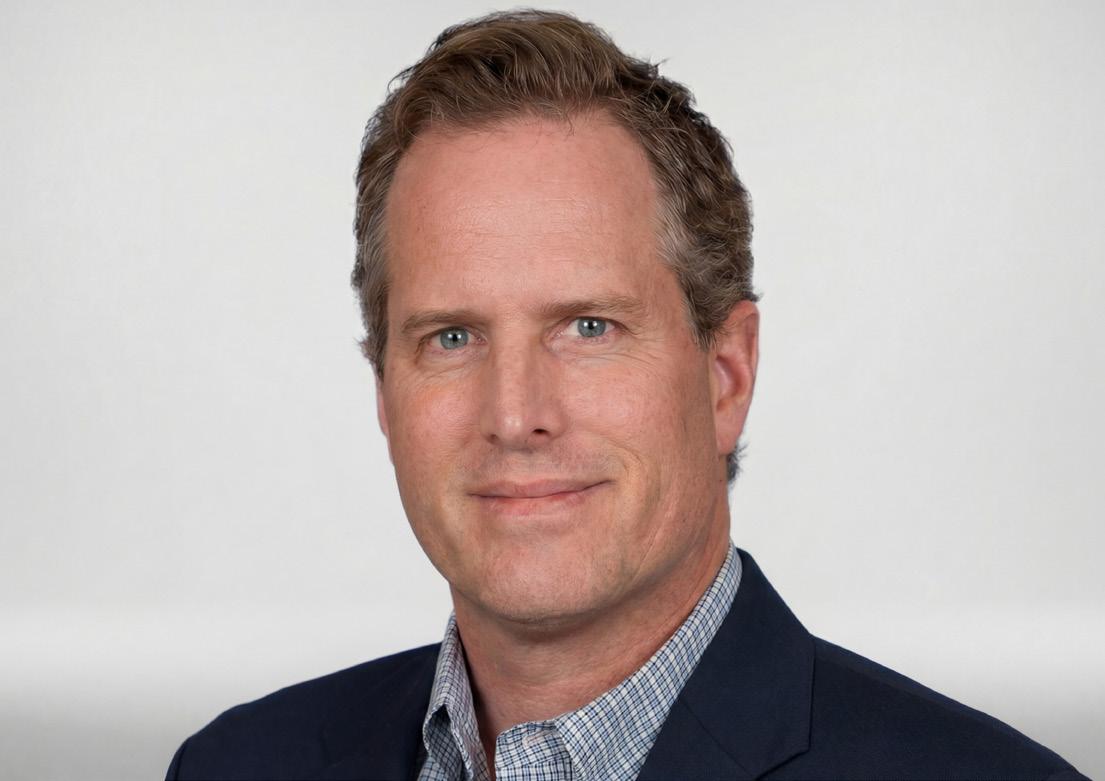
by Matt Fawcett, General Counsel-CLO, Chief Strategy Officer at DXC Technology
Why growing bigger means connecting less
Here’s a truth that catches many leaders off guard: the larger your role or your organisation becomes, the fewer people you’ll engage with on a meaningful level.
More people should mean more connections, more conversations, more opportunities to engage. But that’s not how it works. Failing to adapt to this reality will leave you (and your team) frustrated, disconnected, and less effective.
The unavoidable math of scale
When you lead a team of ten people, you can have regular one-on-ones with everyone. You know their projects, challenges, and career aspirations. You’re in the details because the details are manageable. Scale that to fifty people, and something must give. Scale it to two hundred, five hundred, a thousand? The math becomes brutal. There aren’t enough hours to maintain individual relationships with everyone.
But it’s not just about time. Managing scale requires structure and layers to
make the organisation functional. In a well-run organisation, each layer serves a purpose, but it also creates distance between you and the people doing the work. That distance isn’t a failure of leadership. It’s a feature of organisational design.
Shifting from people to functions
As you grow, your job fundamentally changes. You evolve from managing people to managing functions. This isn’t a decision to become cold or distant. It’s about operating at the
appropriate level of abstraction for your role. Your job is to ensure the systems, processes, and culture are in place so that all layers of the organisation can be effective.
Leaders struggle when they refuse to make this shift. With the best of intentions, they can try to stay connected to every individual, every project, every detail. It’s admirable in spirit and inherently human, but destructive in practice. They become bottlenecks. Decision-making slows. Direct reports feel micromanaged. The organisation suffers because the leader won’t let go of a role s/he may have already perfected (and thus is reluctant to relinquish) but has now outgrown.
But this is not a problem without a solution.
Making the transition
Starting with mindset and agency, there are good approaches to meeting leadership challenges successfully. Make the deliberate choice to operate at the right altitude. When you’re managing functions rather than individuals, you’re not being less human – you’re being more intentional and strategic. You’re ensuring that your attention goes where only you can add value.
If you’re spending your time solving individual contributor problems, who’s solving the leader problems? Who’s thinking about organisational design, culture, resource allocation, strategic direction? These aren’t things that happen automatically. They require intentional focus from someone operating at altitude.
The best part? When you manage functions effectively, you enable better individual relationships too: just not with you. You create space for your managers to develop their people. You build systems that support individual growth. You design a culture where people feel valued, even if they never sit across from you in a one-on-one.
“Make the deliberate choice to operate at the right altitude. When you’re managing functions rather than individuals, you’re not being less human – you’re being more intentional and strategic.”
1
Redefine what ‘connection’ means. You can’t know everyone individually, but you can know your organisation deeply. Spend time understanding patterns, trends, and systemic issues. Make decisions that show you grasp the collective experience even if you don’t know every individual story.
2 Invest heavily in your management team. They are your multipliers. The quality of their relationships with their people becomes the quality of your organisation’s culture.
3
Create channels for authentic feedback. Because you cannot be in every room where problems surface, you need mechanisms to ensure you’re not operating in a bubble. Skip-levels, surveys, town halls, ask-me-anything sessions all help create feedback loops.
4 Be strategic about your finite attention. Use your limited time wisely. Focus on high-leverage connections: High-potential people going through transitions, individuals working on strategic initiatives.
5
Let go of the guilt. This is the hardest one. Many leaders feel like they’re failing because they can’t maintain the same level of individual connection they enjoyed (and loved) before. That guilt is misplaced. You’re not failing. You’re evolving into the leader your organisation needs.
The leadership paradox isn’t a problem to be solved. It’s a reality to be embraced. Managing functions and systems doesn’t make you distant. It makes you effective. Effectiveness at scale separates leaders who grow from leaders who become obstacles to growth. So, embrace the paradox. Lead at the right altitude. And trust that the best way to connect with everyone is to stop trying to connect with everyone!
31 MARCH 2026
Burn Out to Resilience – Ronan Harrington (Webinar)
CPD: 1.5 hours professional development and solicitor wellbeing (by eLearning)
20 APRIL 2026
The Intellectual Property and Data Protection Law Committee Conference 2026
CPD: 3 hours General (by group study)
22 APRIL 2026
Introduction to AI for In-House Solicitors - Morning Workshop
CPD: 3 hours professional development and solicitor wellbeing (by group study)
29 APRIL 2026
In-House and Public Sector Panel Discussion: The Future Ready Lawyer (Dublin)
CPD: 2 hours professional development and solicitor wellbeing (by group study)
MAY/JUNE 2026
General Counsel Summit
Our next General Counsel Summit will take place in May / June 2026. More details to follow.

A full list of diplomas/ certificates is available on the Law Society website.
The Law Society’s Library and Information Service offers many resources to support the research and information needs of in-house lawyers. These include the In-House Lawyer Subject Guide, LawWatch newsletter and access to the new Thomson Reuter’s eBook platform, ProView. Feel free to email the Library’s Enquiry Desk with any legal research queries, precedent or book loan requests.
General Counsel at HSBC Ireland
WHERE DOES YOUR STORY START?
I’m from Cork and studied Law and French in UCC before moving to Dublin in 2006 to do the LLM in Trinity and the FE1s. I was offered a traineeship with Arthur Cox, which I started in July 2007 – after the obligatory few months travelling South-East Asia.
WHY DID YOU BECOME A LAWYER?
Honestly, I couldn’t think of anything that I wanted to do and law seemed like a solid degree to get. Doing Law and French meant I hedged a bit as I’ve always loved French. There are no lawyers in my family and I had no knowledge of the legal market in Ireland. I was quite naïve.
TELL US ABOUT YOUR CURRENT ROLE AT HSBC. I’m the General Counsel for HSBC Ireland, managing a small team of three lawyers. We operate two primary businesses in Ireland – corporate banking and securities services and, while I’m a banking specialist, I’m responsible for both businesses. I also cover all the other GC matters like employment law, litigation, data privacy and procurement. Never a dull moment!
WHAT IS YOUR LEADERSHIP STYLE?
I have a brilliant team in which I have complete trust so I take a light-touch approach. My (imaginary) door is always open and I’m happy to work through a problem together, to give a steer or escalate an issue when necessary.


constant open dialogue where issues are headed off at an early stage. It helps in developing those stakeholder relationships. Going to social events and being in the office with other people is also important for me in building those relationships.
HAVE YOU EVER TAKEN A CAREER RISK – AND HOW DID IT WORK OUT?
I quit my job in 2013 to spend a season working in a ski chalet in the French Alps, which was risky. It’s one of those things I would have regretted if I’d never done it. Leaving law to work in hospitality in the mountains and ski at every available opportunity wasn’t part of my career plan. But sometimes taking a diversion can be invigorating and I was happy to return to law.
WHAT IS THE BEST PIECE OF CAREER ADVICE YOU HAVE BEEN GIVEN?
My boss used to say ‘It’ll still be there in the morning’ when she’d be passing my desk on her way home in the evening – a nice way of telling me to go home.
WHAT WAS THE GREATEST PIECE OF LIFE ADVICE YOU RECEIVED?
WHAT HAS HELPED YOU DEVELOP RELATIONSHIPS WITH YOUR KEY STAKEHOLDERS?
Longevity. I’ve been with HSBC for over ten years. When you’re with a firm that long you earn trust. The legal team, along with the other functions, sit in and amongst our business colleagues so you have a
‘This too shall pass’ has always stuck with me. If things are hard, they won’t always be that way and if things are good, enjoy it – because it won’t always be that way either.
WHAT DO YOU DO IN YOUR SPARE TIME?
I sing in a choir, and I love to grow vegetables. I keep bees and hens too, which is really rewarding.
FAVOURITE PLACE IN THE WORLD?
Probably Allihies, on the tip of the Beara peninsula. I went there as a child and now I go there with my own children which is wonderful. A wild place with wild people. I love it.
WHAT’S ON YOUR TRAVEL BUCKET-LIST?
I’d love to go interrailing as a family around central Europe.
A career that adds up for lawyers with multiple skillsets
‘Twenty years from now you’ll be more disappointed by the things you didn’t do than by the ones you did do. So, throw off the bow lines. Sail away from the safe harbour. Catch the trade winds in your sails. Explore. Dream. Discover.’ - Mark Twain

SO WHAT EXACTLY IS FRACTIONAL COUNSEL?
Fractional counsel is a senior lawyer who provides strategic legal support to organisations on a flexible basis.
A fractional counsel is engaged by a client as an independent contractor or secondee to provide extra legal resourcing support to cover the Head of Legal/GC desk for an interim period, or to cover a specific project.
A fractional counsel can act as a ‘twin’ to the usual General Counsel or lawyer to boost legal capacity in an organisation. For example, where there is an M&A deal, major litigation, transformation or strategic project, where counsel’s time is consumed with that matter and an extra pair of hands is needed for day-to-day legal work. A fractional counsel could also be engaged for a set time each month to lead a specific project, like a sustainability initiative, due diligence or repapering exercise.
A FRACTIONAL COUNSEL?
Skills honed building a successful in-house career are foundations for this career: strong technical skills, business acumen, practicality and emotional intelligence are musts. Relational and networking skills, leadership capability and an entrepreneurial spirit are key ingredients too.
As a fractional counsel, you are engaged to provide strategic oversight, advice and decision-making. You provide business-centred input, look around corners, horizon scan and connect the dots for your organisation, as well as run a legal function.
Typically, a lawyer will have built up a few years’ experience both in private practice and in-house, as a Head of Legal or General Counsel. Their in-depth knowledge will have benefitted business-centred projects and they will have gained exposure to the commercial drivers and dynamics so important within a business.
Leadership and change management knowhow gleaned in non-legal areas, or leading cross-functional projects are a key part of the fractional counsel toolkit. What makes them succeed is their ability to manage and influence a diverse range of stakeholders, build relationships, and exert influence cross-functionally as a valued partner within a business. The leadership experience GCs/ in-house lawyers gain from steering business projects such as entering a new market, setting up a new line of business, a major transformation, transition project or merger or acquisition, or from extracurricular activities where they hone these skills, are hugely transferable skills.
ANYTHING ELSE?
You should enjoy networking. If you decide to work independently, time needs to be spent on business development to build your brand. Self-confidence, self-discipline and drive to run a business are also essential.
A willingness to learn is a prerequisite. You are learning all the time as a fractional counsel. It is not just the process of embedding in a new role with each assignment, of meeting new people, learning about the company and your role within it. You are the business and must both work within it, and work on the business. Initially, or until you can outsource them, you are the IT department, the CFO, the marketing lead, sales director, PR team, as well as the lawyer/ CEO. Strong time management discipline is critical. For lawyers who understand and enjoy business dynamics, as well as contributing your legal nous, it’s an awesome combination to exert your business acumen and legal skills.
WHAT ARE THE BENEFITS?
Independence and autonomy to choose the type of work and who you’d like to work with. Having control over your diary day-to-day. The personal fulfilment of focusing on work and people you enjoy is a massive motivator and reward. It helps to have a particular sectoral niche or expertise, such as energy, banking or AI to name a few, to generate more work.
THE DOWNSIDES?
It’s not for the faint-hearted and comes with important caveats. You will need to make friends with continual uncertainty. You may not know who you will be working with, what work you will be doing, or how you will make ends meet in three months’ time. This is both exciting and daunting but it is a fundamental mindset shift if you are used to your salary arriving into your bank account every month.
WHAT MOTIVATES YOU AS A FRACTIONAL COUNSEL?
I became a lawyer to help people. I was intrigued by law and its impact
on people and society, influenced by legal hotshot lawyers on TV. From an early age, I knew I wanted to figure it out and help people navigate through the law.
As a fractional counsel, I am grateful, as I get to live this every day with a wide portfolio of in-house clients. My work ranges from advising large companies on the sale of their business or leading them through a period of change, or how to integrate compliance with new legislation into their business processes and systems. I regularly advise and support startups through obtaining funding from investors, or at other times a Government agency on protecting IP, or developing their joint venture agreements.
SO IS FRACTIONAL COUNSEL A ‘FLASH IN THE PAN’ – OR AN EMERGING TREND?
Some lawyers initially explore this career path to allow them to prioritise family time, whether it’s caring responsibilities or simply for personal pursuits as you determine when you work and where you work. Others
might experiment with fractional counsel through a law firm when they want to transition from one industry to another or build up experience. This creates a perception that fractional counsel is for those between jobs.
I believe the fractional counsel model is here to stay. In-house counsel can find themselves stretched, dealing with competing demands or increasing workload without an agile solution to alleviate the pressure.
A fractional counsel steps in quickly, embeds themselves within the business and provides surge capacity for a finite period – thereby helping in-house lawyers manage increasing workload more effectively and with budget certainty.
Fractional counsel offers a distinct third path between hiring in-house and outsourcing to a traditional law firm. I see it as a structural evolution in how legal services are delivered. For senior lawyers, practising as a fractional counsel offers a compelling next chapter. It’s a ‘third way’ of lawyering that blends embedded strategic leadership with the autonomy of running your own practice.


By Bjarne P. Tellmann, CEO, FjordStream Advisors
History is replete with moments when technological innovation transforms society and work. Artificial intelligence (AI) is one such moment. It is not simply making the delivery of legal services more efficient; it is fundamentally reshaping what legal work is, how it is delivered, and who is best placed to deliver it.
I have spent three decades as a corporate lawyer, working across major law firms and multinational corporations, including as General Counsel of two large public companies. Over that time, I have watched the legal profession evolve –from the early adoption of email and document management systems to the rise of legal operations teams and the growth of Alternative Legal Service Providers (ALSPs). Yet nothing compares with the scale, speed and
implications of the transformation now underway.
Today, technology is rapidly reshaping competitive dynamics in law – and clients are the primary force driving that change.
AI is what economists call a generalpurpose technology: a breakthrough with broad applications that sparks complementary innovation across entire industries. Like steam power or electricity, it does not merely improve existing processes – it reshapes how organisations are structured, how they operate, and how they create value.
Over the coming decade, nearly every business will reengineer core workflows around AI. Companies are transforming themselves into ‘AI factories’, building digital platforms that power data-driven decisionmaking, and rapid scaling. Automation
and feedback loops will accelerate innovation, while AI augments human judgement.
Legal departments will evolve in parallel. As in-house teams retool around AI operating models, they will handle ever more work once routinely outsourced. For work that remains externally sourced, clients will expect greater efficiency, innovation, and integration with their own technologyled workflows. Transformed clients will demand transformed providers, who can operate at the speed of AI and deliver services tailored to an evolving context.
This shift is already redefining what General Counsel (GCs) need from outside counsel. Two pressures dominate. The first is risk: traditional compliance-focused models are giving way to more dynamic, enterprise-wide
“Competitive advantage, for both legal departments and law firms, will increasingly lie in how well they integrate people, processes, data, and technology –not merely in hiring the best lawyers.”
judgement under uncertainty, prompting GCs to demand deeper, more integrated advice. The second is the perennial more-for-less challenge: delivering more work, faster and with greater efficiency, at lower cost. AI is accelerating both dynamics, and law firms will be expected to respond.
As corporations evolve, legal clients will become more sophisticated, agile, and digitally fluent. Technology will give them greater visibility and bargaining power. AI-enabled in-house teams will handle more complex work themselves, at greater speed and near-zero marginal cost. One recent study estimates that up to 20% of legal services could become commoditised. Billable hours for such services could reduce by up to 50%. Clients will expect firms to refine and integrate work that increasingly originates inside the legal department, rather than start from scratch.
Given these dynamics, law firms could soon face a perfect storm of disruption. Negative inflection points are difficult for dominant players to spot. Even iconic incumbents such as Nokia and Kodak have missed them. Many firms are currently enjoying record profitability, supported by long-standing competitive advantages and high barriers to entry. But those very advantages can mask early signals of disruption and make adaptation difficult.
The traditional law firm model is structurally misaligned with evolving client needs. The billable hour and pyramid leverage model have been lucrative, but dissatisfaction with cost,
delivery, and operational fit is growing. AI will intensify these pressures. Many firms may be approaching their own ‘Kodak moment.’
Competitive advantage, for both legal departments and law firms, will increasingly lie in how well they integrate people, processes, data, and technology – not merely in hiring the best lawyers.
How will traditional law firms adapt?
One response will be to retreat to the ‘high tower’: bespoke, partner-led advisory work less vulnerable to automation. This may suit a small elite, but it will not scale, and even these firms must adopt technology and automation to reduce execution costs.
ALSPs themselves are not immune. As more work moves in-house, corporate legal departments may become their largest competitors in high-volume work. Providers that remain narrowly focused on legacy transactional support will struggle, while those that embed into evolving client ecosystems will thrive.
Other firms may move toward corporate structures, with shareholders, empowered executive leadership, access to external capital, and the ability to invest strategically in technology and multidisciplinary services. Regulatory constraints remain formidable in many jurisdictions, but reforms such as Alternative Business Structures in the UK and elsewhere are creating space for experimentation.
Hybrid models will grow, combining legal advice with risk analytics, operations expertise, and technology. Platforms may also emerge to orchestrate legal work, routing matters across providers while managing performance.
Finally, lawyers will require new skills. Law schools must evolve to equip graduates for an AI-powered environment that demands technological fluency, creativity, business judgement, and interpersonal leadership, alongside doctrinal expertise.
The legal profession stands on the cusp of profound transformation. For those who adapt, the AI era offers exciting opportunities. For those who hesitate, it may prove unforgiving.
This is an edited extract from Law in the Era of AI: Clients, Firms, and the Future of the Legal Industry by Bjarne P. Tellmann (due to be published by Wiley in April 2026).
The in-house legal job market is strong, with lots of opportunities. We have published over 40 in-house legal vacancies since 1 January. A selection of in-house legal vacancies is listed below:

• MANAGING SOLICITOR Legal Aid Board
• LAWYER The Health Product Regulatory Authority
• SENIOR LICENCING SOLICITOR Dolby
• IN HOUSE SOLICITOR KDP Ireland (Keurig Dr Pepper Global)
• IN HOUSE SOLICITOR Pepper Group
• LEGAL COUNSEL Supermacs Group
Additional in-house legal opportunities are listed on the Law Society website: lawsociety.ie/legalvacancies
As an in-house lawyer, your perspective is invaluable. As we prepare the next quarterly newsletter, let us know what features you would like to see more of.
Email: solicitorservices@lawsociety.ie