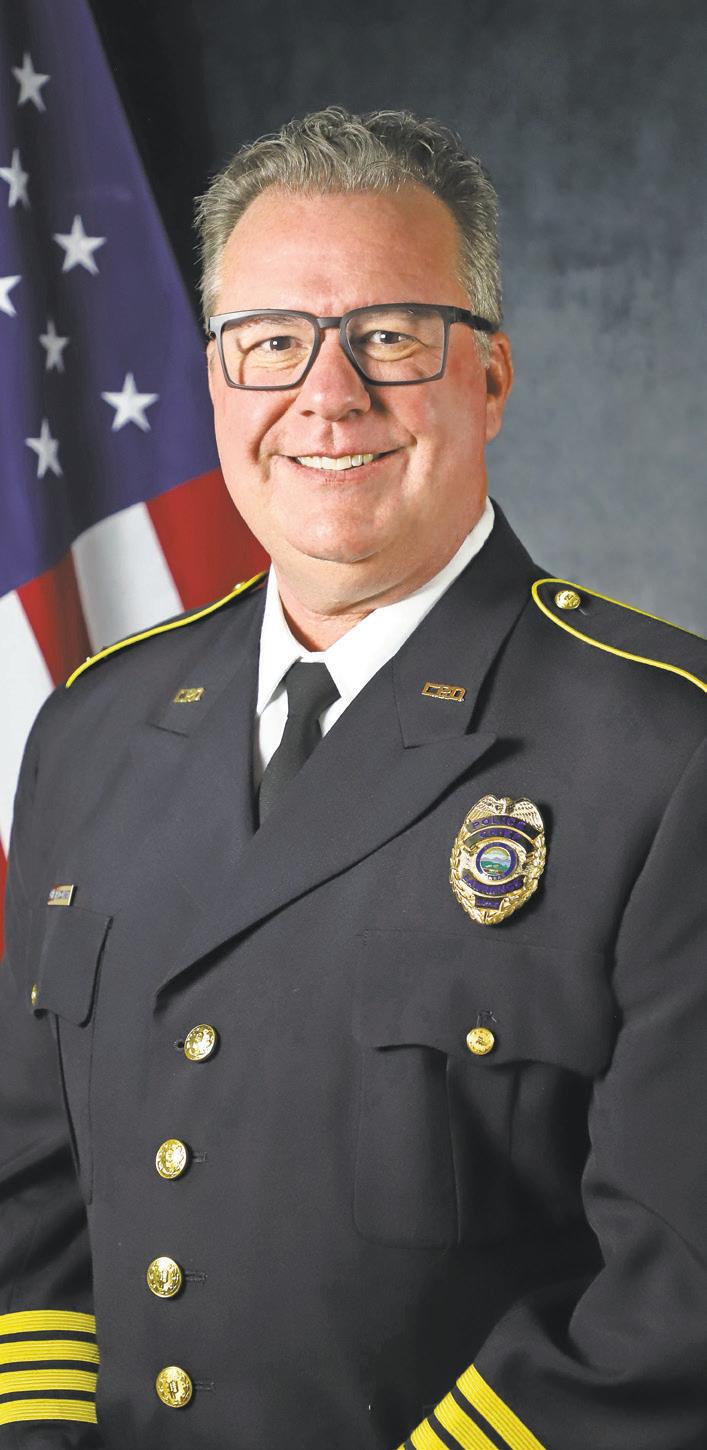
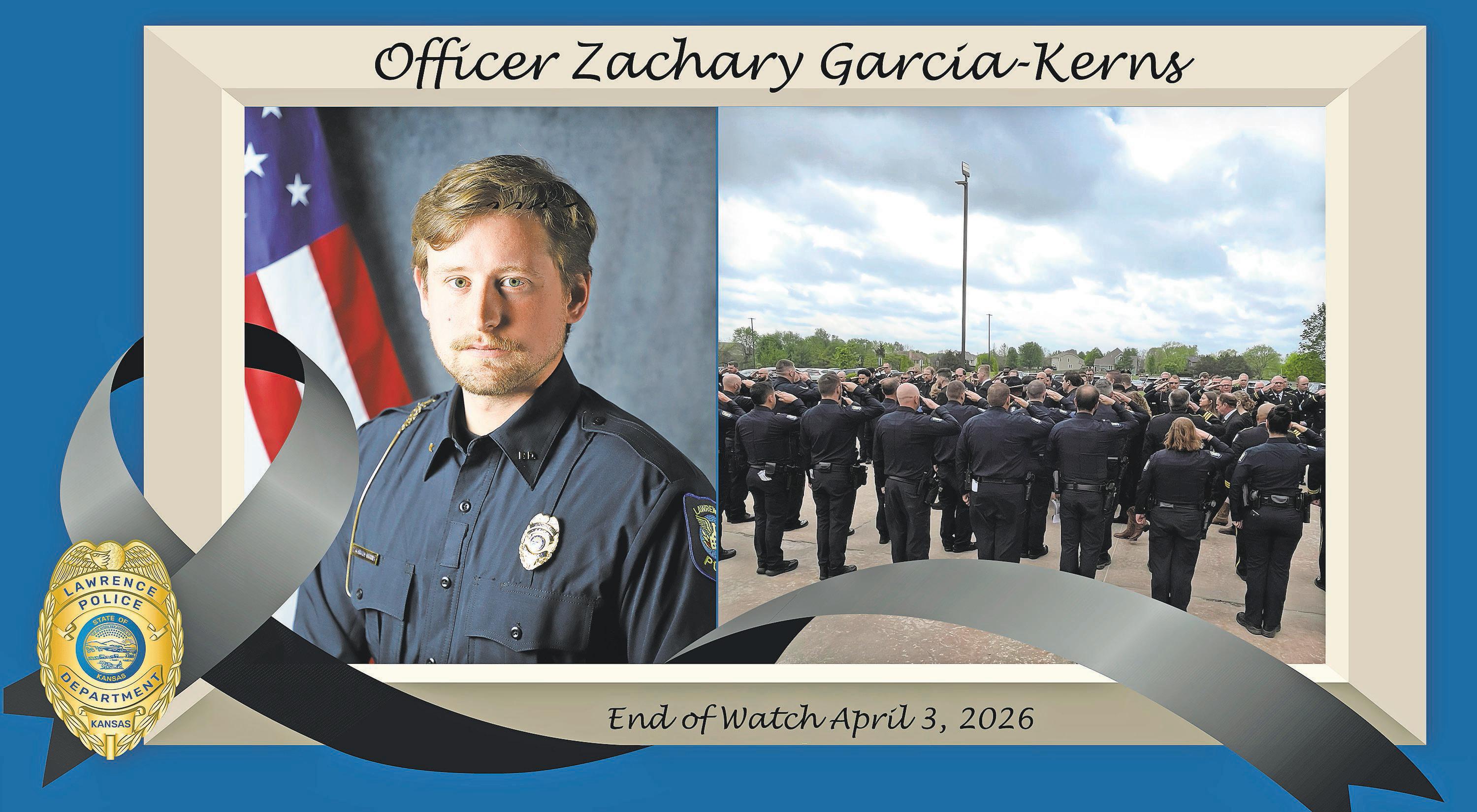
Welcome to the April edition of The City Beat. We have some incredible stories for you about your police department. First, I need to start with the sad news of the passing of one of your officers, Officer Zachary Garcia-Kerns.
Officer Garcia-Kerns was appointed to the Lawrence Police Department in November 2023 after serving with the University of Kansas Police Department. Officer Garcia-Kerns was a steady performing officer who loved being a police officer. He was 28 years old at the time of his death. As a final act of service, his gift of life donation will save the lives of as many as 75 others. I want to personally thank all the members of our community who supported us during this difficult time.
We have a true crime thriller for you that occurred right here in Lawrence. A member of our community was the victim of an online scam, and it is a true cautionary tale for all of us. Just remember, if you are ever asked to do something unusual with your money, call us first.
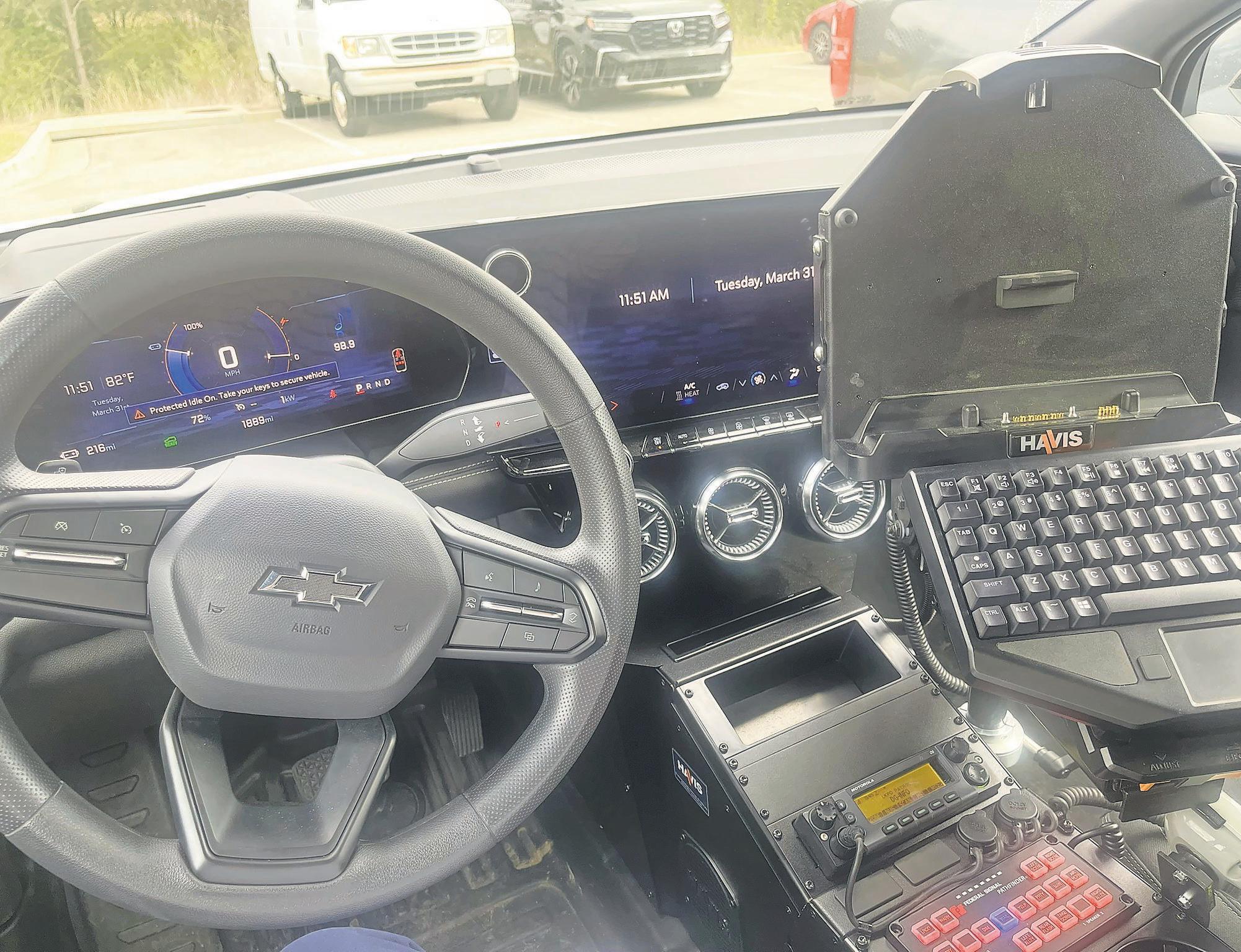
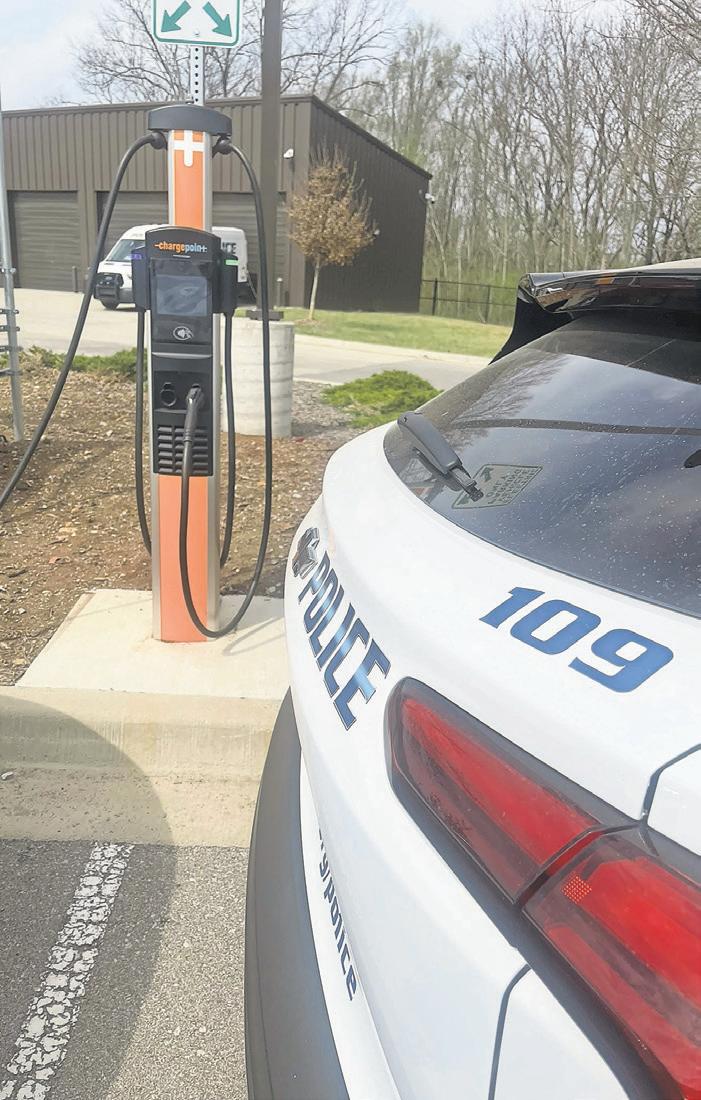
You may see an unusual police vehicle on our streets. The 2026 Chevrolet Blazer is the first all-electric vehicle in our patrol fleet. It joins the Mustang Mach E that is being tested as a detective vehicle. Electric vehicles provide some significant benefits to your police department, especially when gas prices go up.
Who is ready for some football? No, not the Patrick Mahomes kind of football but the kind that is actually played with your feet. Your police department is ready to welcome the World Cup to Lawrence along with our base camp team, Algeria. You can read about all the preparations that are going into this important sporting event.
“Where
is Your Hitman?”: A 79-Year-Old Lawrence Widow’s Story of Fear and
By Laura McCabe LKPD Communications Manager
It began with a frozen computer screen and a fake technical support alert. It ended in the back of a liquor store, with a 79-year-old widow feeding $17,000 in cash into a Bitcoin machine while fearing for her life.
The victim, who asked to remain anonymous, hopes sharing her story may prevent another neighbor from falling into the same trap.
“I just feel so violated,” she said, her hands still shaking days after the incident. “I’m living in this limbo feeling that I’m still being watched. I didn’t leave the house for two days.”
Scam
How it happened
As with many scams, it began with psychological manipulation. After her computer locked up, a woman named “Elena,” claiming to be from Microsoft, told the victim her IP address was linked to child pornography. The call was then “transferred” to a man claiming to be with the FCC.
The scammers used a “fear and rescue” tactic – telling her the authorities were going to come arrest her without asking questions or allowing her time to tell the truth. The woman gave her another number to call claiming she would be talking to authorities with the Federal Communications
Continued on page 5
“Shocking”
Update: LKPD Tests its First EV Patrol Vehicle
By Laura McCabe LKPD Communications Manager
If you see a patrol vehicle zoom by but don’t hear the traditional roar of an engine, you might be one of the first to notice LKPD’s new electric patrol vehicle in action.
The department has officially added a Chevrolet Blazer EV to its fleet, launching a test and evaluation phase to determine if it’s suitable for the constant demands of patrol work.
Lt. Rob Murry manages the department’s patrol fleet and says even if the department considers adding more, “We don’t want to run it 24/7, because that’s not how we would actually use them.”
Right now, patrol vehicles get “hot swapped”, meaning most run nearly 24 hours a day, 7 days a week – just like police services.
Instead, the department is testing a staggered schedule: running the vehicle one shift, then giving it time to charge before re-deployment.
Perception vs. Performance
For those wondering if an electric vehicle can keep up with the challenges of high-performance work, Lt. Murry has a clear answer: “That EV Blazer is pursuit rated and it is quite capable of doing anything any other patrol car we have can do.”
Technology-wise, the Blazer is not quite “Priority 1” call ready. Its in-car computer system isn’t installed.
In the meantime, you might find it at the courthouse, around town doing follow up investigations, or at community engagement events.
The Blazer joins the Investigation Unit’s Mustang Mach-E and represents a “who knows?” moment for the department. As infrastructure
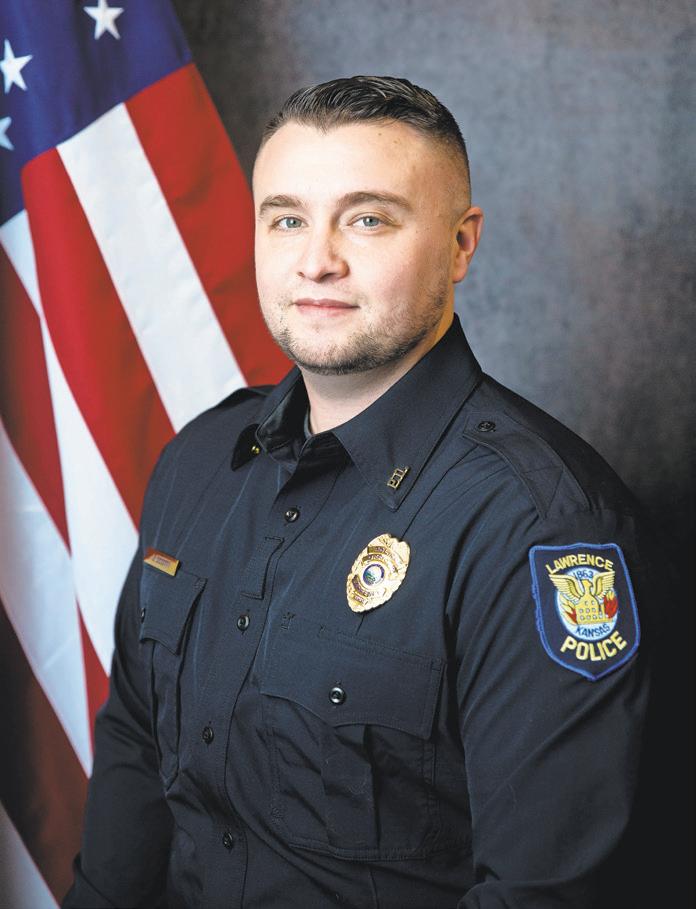
Officer James Scotti
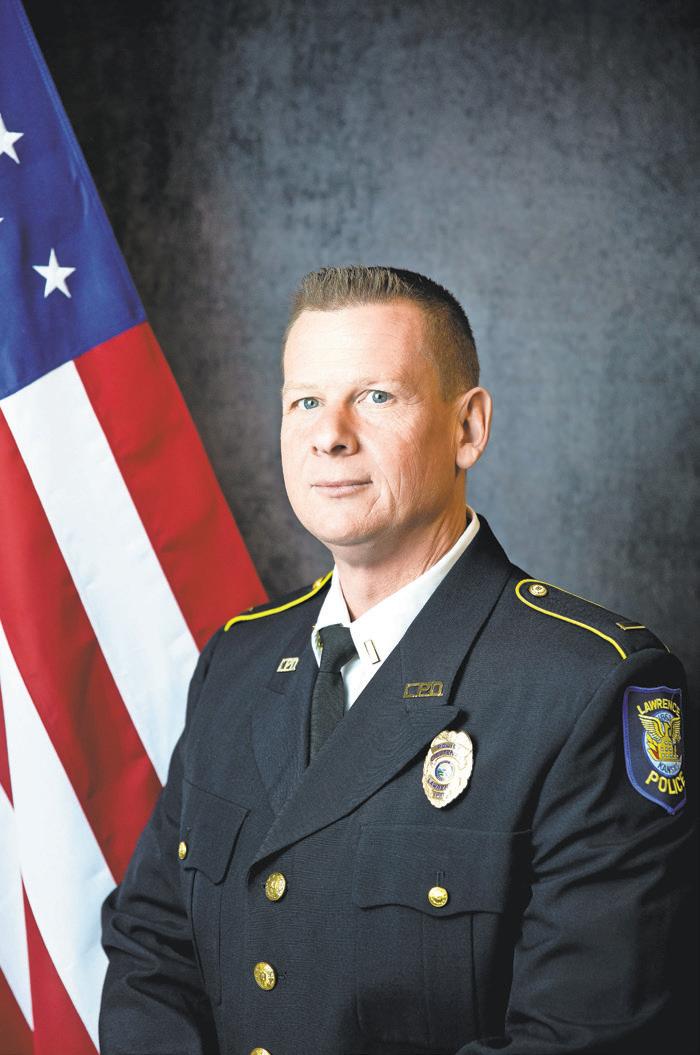
Lt. Rob Murry
The Digital Footprint and AI: Staying Ahead of Criminal Behavior
By Laura McCabe LKPD Communications Manager
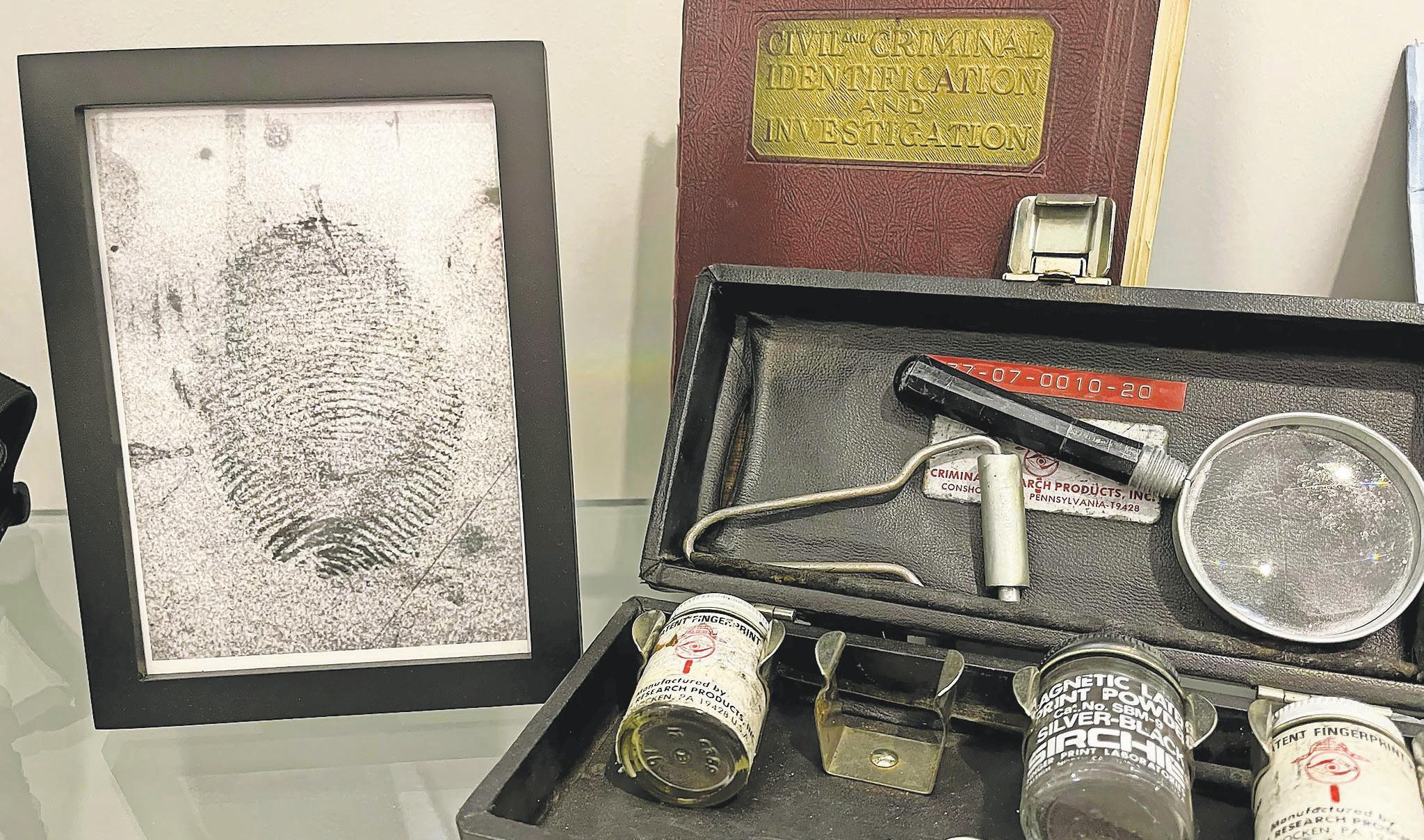
For decades, the images of a major criminal investigation were defined by a specific set of tools: the dusting brush for fingerprints, the magnifying glass, and the yellow crime tape. But the landscape of policing has shifted. As society moves further into a world defined by artificial intelligence, technology, and constant connectivity, the Lawrence Kansas Police Department is ensuring it stays current with the most up-todate investigative tools.
Investigations Major Casey Cooper knows technology is no longer a niche element of crime—it is the bedrock of nearly every case. To meet this challenge, the department is announcing the launch of the Technical and Forensic Services Unit (TFSU).
A New Standard for Evidence
Major Cooper recognizes that the department can no longer rely solely on outside agencies and part-time efforts. “Every case, in some form or fashion, has technology attached to it,” Cooper explains. “Along with that, every day I was witnessing our detectives doing dual roles. They were doing digital media downloads, re-
views and analysis that are time-consuming and at the same time, they are working to connect and understand the personal nuances of every case.”
The solution was to allow detectives who specialize in technology-based investigations to focus on the rapid evolution of digital crime. “The days of only brushing for fingerprints are done,” Cooper says. “I feel like where we’re at now, specifically when I’m talking about AI... it’s kind of where
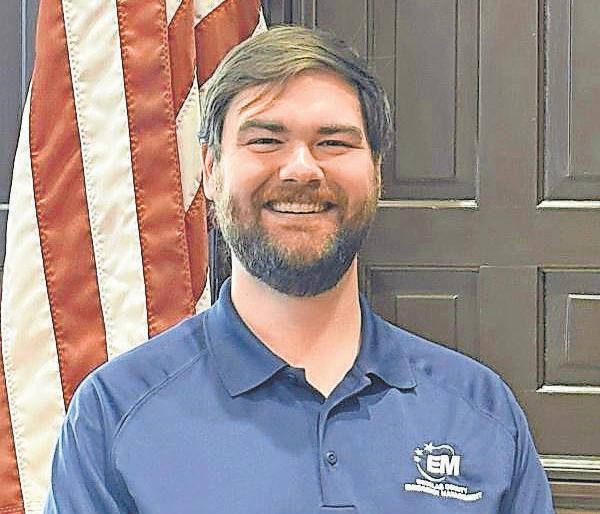
By John Stipetich, Deputy Director Douglas County Emergency Management
Tornadoes in KS are highly common and while many safety tips are commonly known, it is always a good idea to review them. Ensuring all weather alerts are activated on phones, having access to a weather radio, and staying weather aware through local channels is imperative to a safe season. When a warning is issued through sirens, radio, or phone, seeking shelter is critical; more specifically, underground or fully enclosed, and away from windows. While sheltered, use your arms or a helmet to protect your head from potential debris.
Lightning and Thunderstorms, although taken less seriously, can cause a lot of damage to one’s life or property. Remaining indoors in a substantial and enclosed building is important, as well as staying away from electronics and plumbing.
i.e. a home, schools, churches, hotels, grocery stores, etc...
“Severe weather is nothing new to Kansans, but don’t let that catch you off guard,” said Deputy Emergency Management Director John Stipetich, “Whether you’re new to the area or a long-time townie, stay aware and be prepared for thunderstorm risks before the danger arrives.”
Photo by Brad Goddard
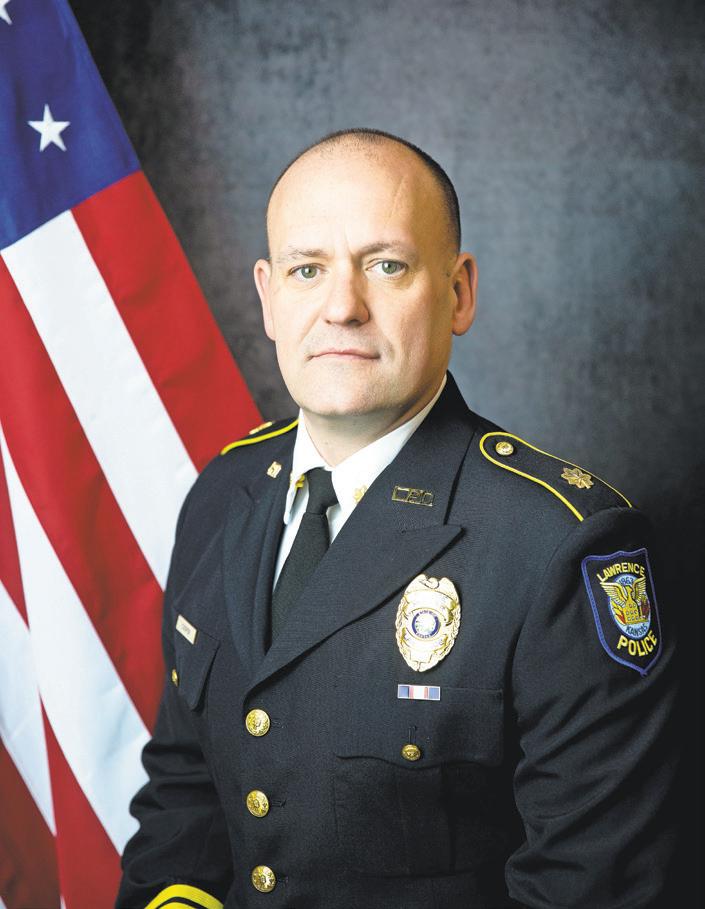
Major Casey Cooper
This outdated fingerprint brushing kit sits in a display case at LKPD HQ.
Crime Technicians use a laser light to view fingerprints on a weapon.
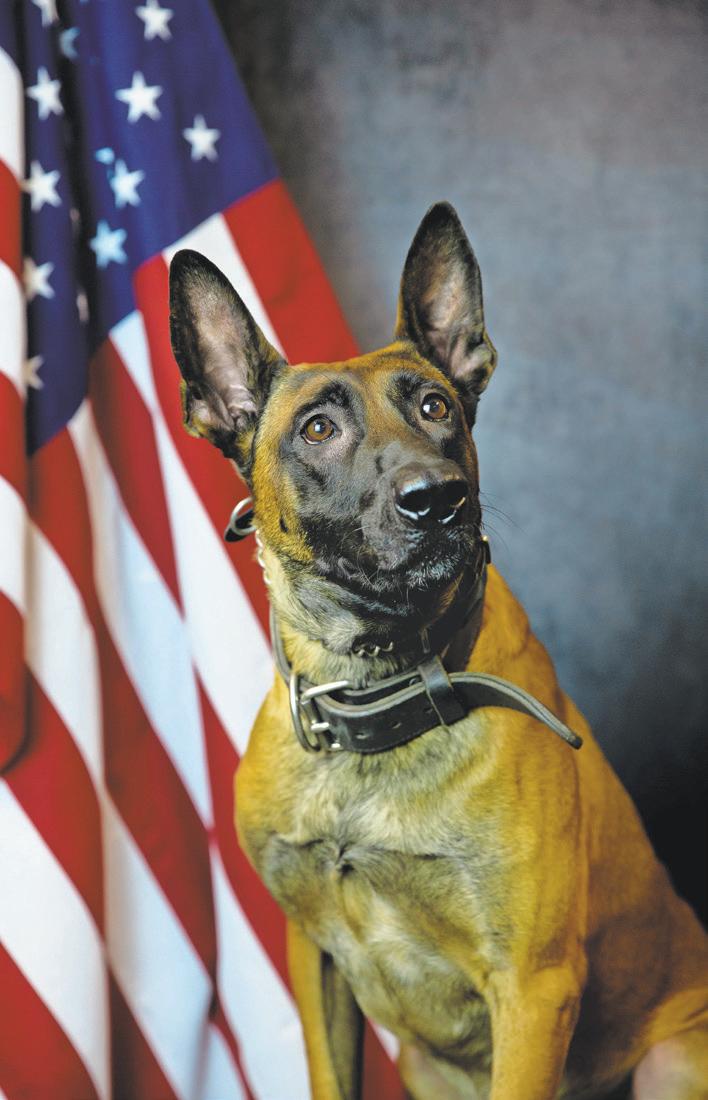
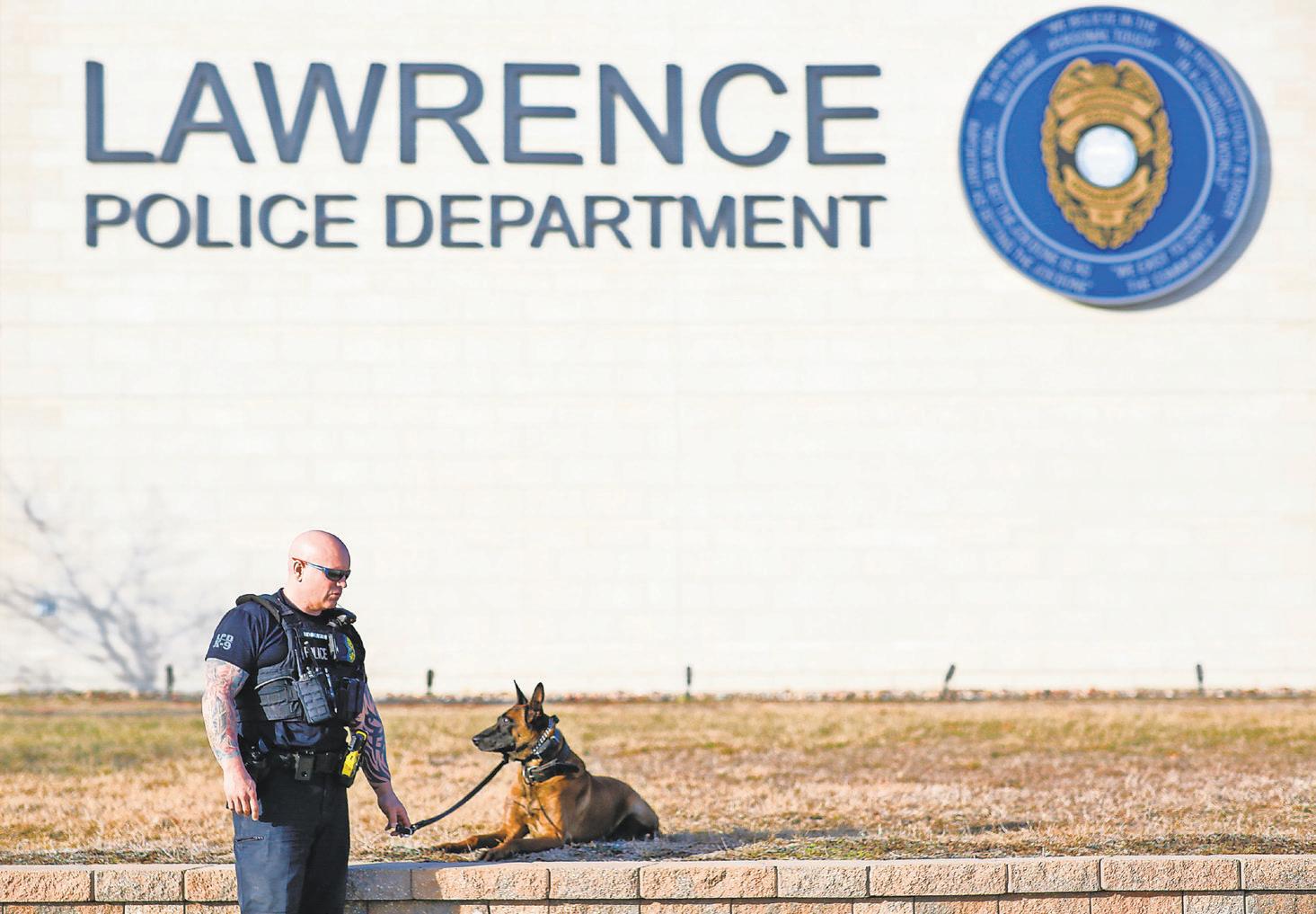
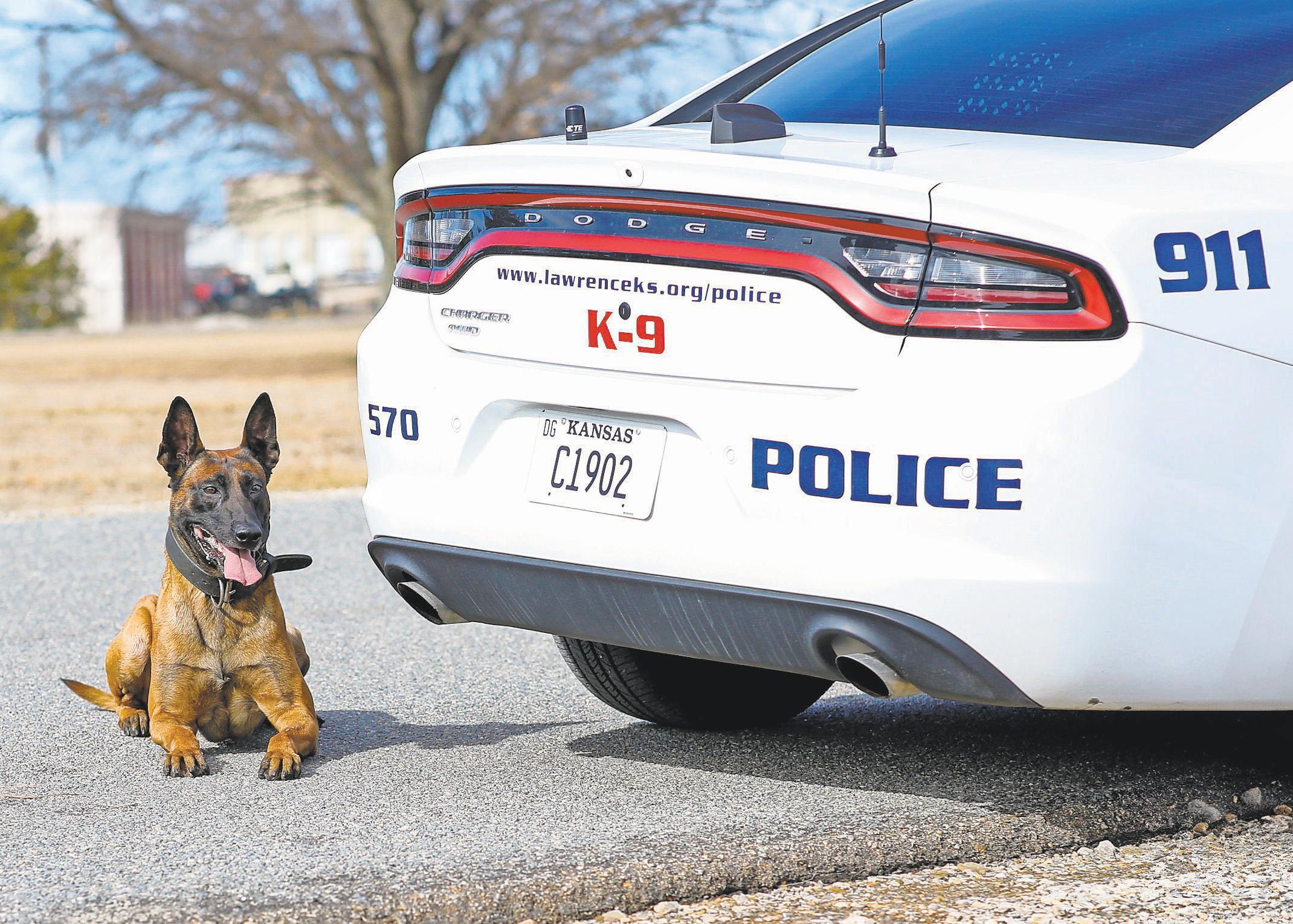
K9 Mack
By Laura McCabe LKPD Communications Manager
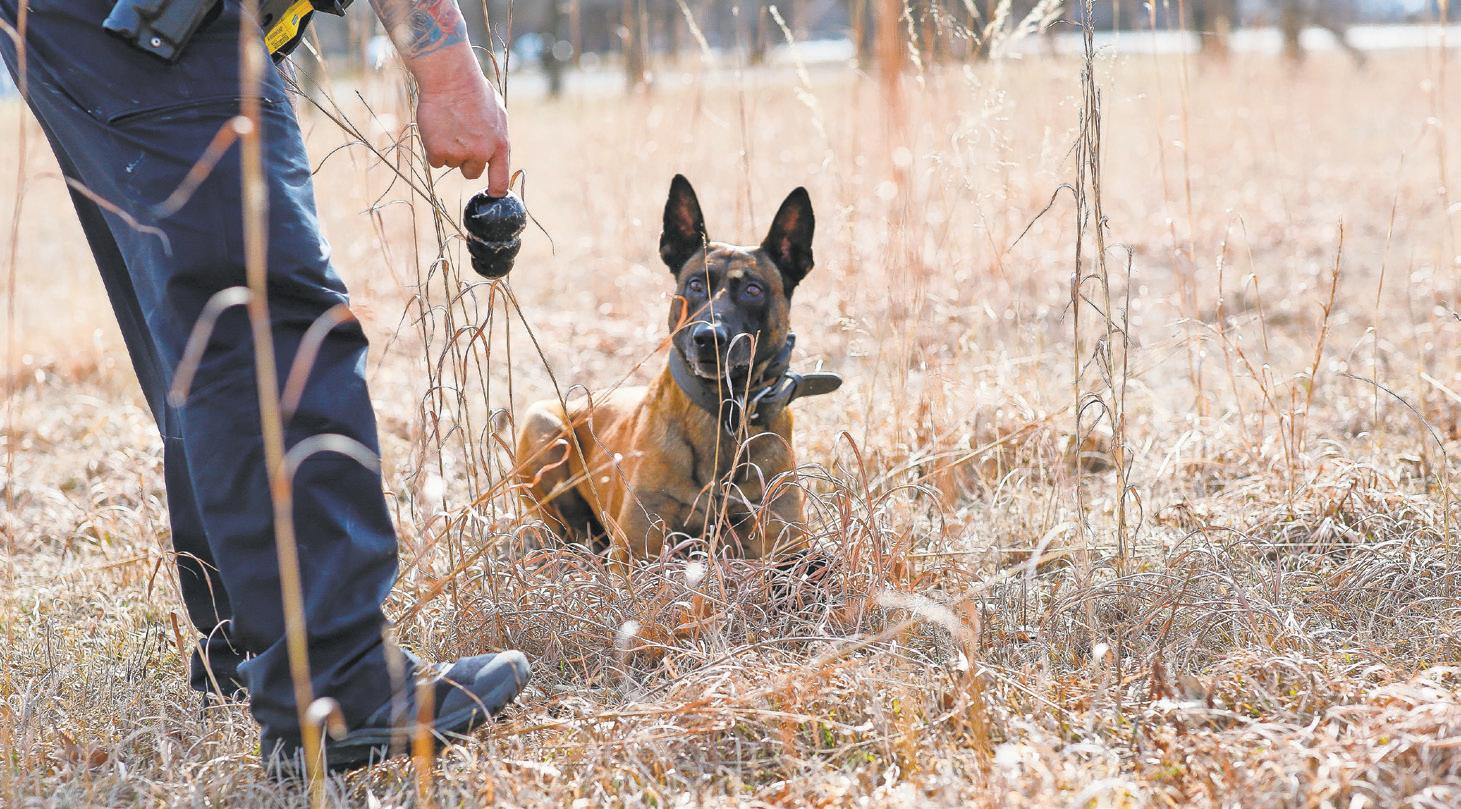
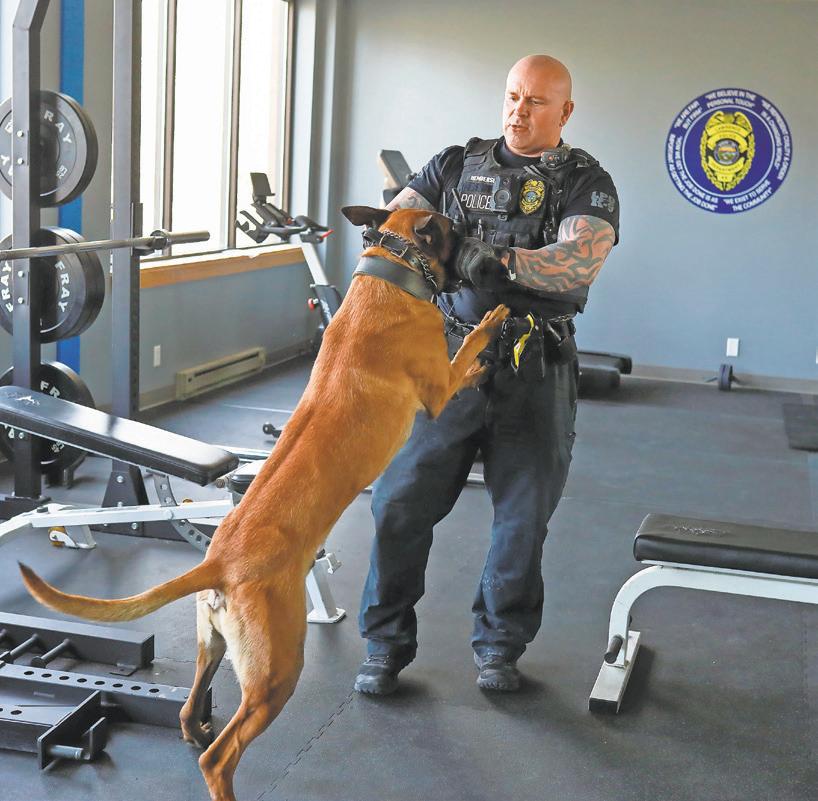
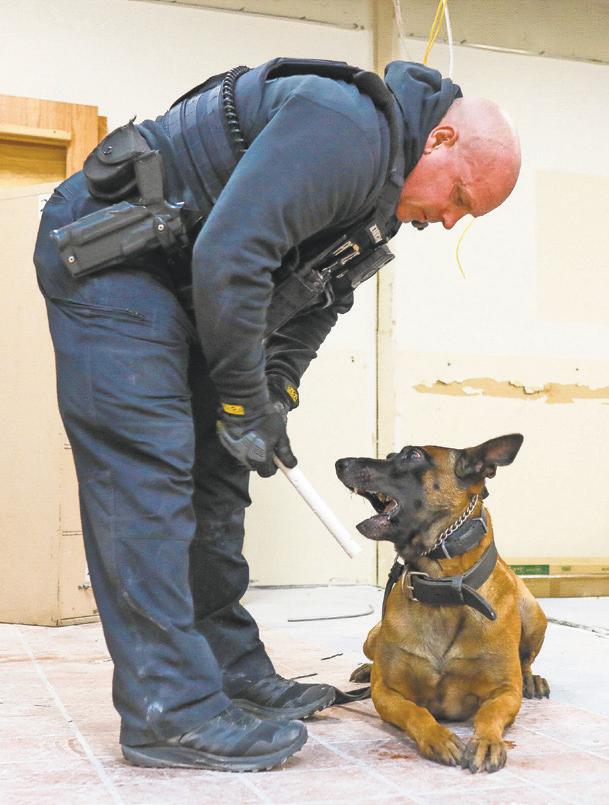
Meet K9 Mack. In the high-stakes world of law enforcement, few K9’s command as much immediate respect as Mack. Weighing in at more than 90 pounds, K9 Mack can be quite intimidating. Many Belgian Malinois are nearly half his size. Mack isn’t interested in a typical canine life. He loves his work and is very good at it. As dual-purpose powerhouse, Mack specializes in narcotic detection and patrols the streets, just like the rest of his human counterparts.
It makes sense that Mack is partnered with his handler, Kevin Henderson, an award-winning Corporal, who judges and trains K9’s throughout the state and is responsible for implementing the K9 Unit at LKPD more than a decade ago.
Mack’s focus is unbreakable, especially when it comes to ensuring dangerous narcotics are removed from the streets of Lawrence. When he begins a sweep, his demeanor shifts from a sto-
ic patroller to a high-speed sniffer who won’t stop until the job is done.
If you meet Mack on the street, he loves a kind “good-boy”, but will likely return it with a skeptical glance, then continue on with what really matters: Keeping Lawrence streets safe and secure.
Douglas County First Responders Join Forces to Better Respond to Special Needs
By Aleena Martindale LKPD Communications Intern
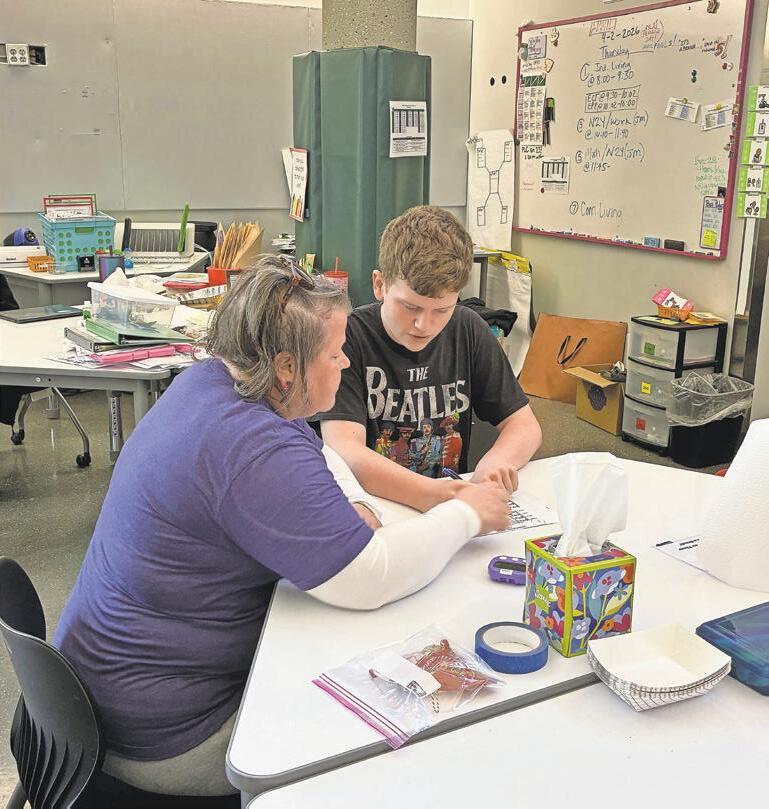
“I get terrified when an officer is behind me, and I have no reason,” says a Lawrence mom who worries about her autistic son’s potential panic at just the sight of an approaching uniform and badge.
Officers at LKPD understand that reality and learn during the academy how to approach people with a variety of emotional reactions.
A new program will help officers and all first responders throughout the county do that more effectively.
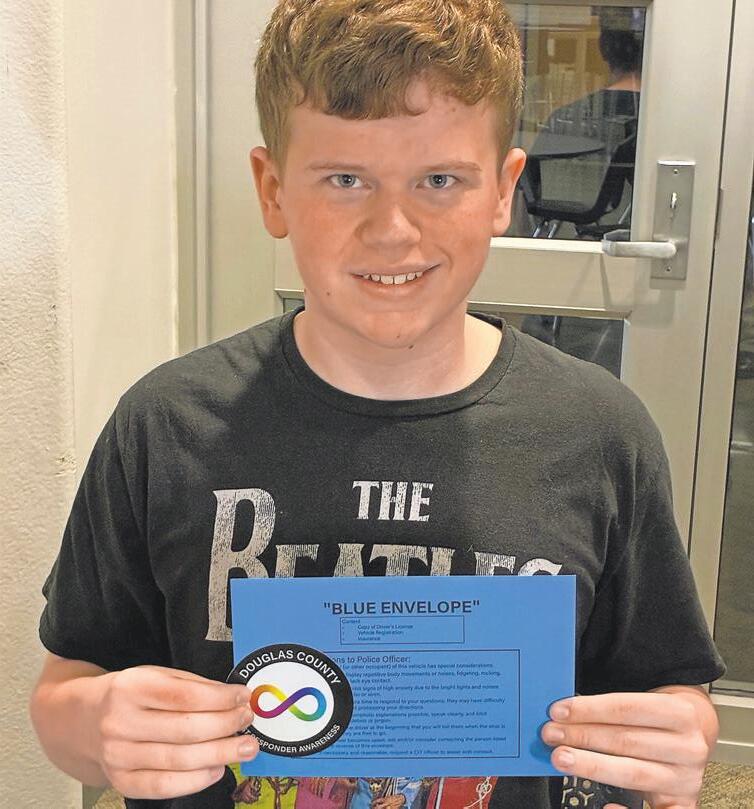
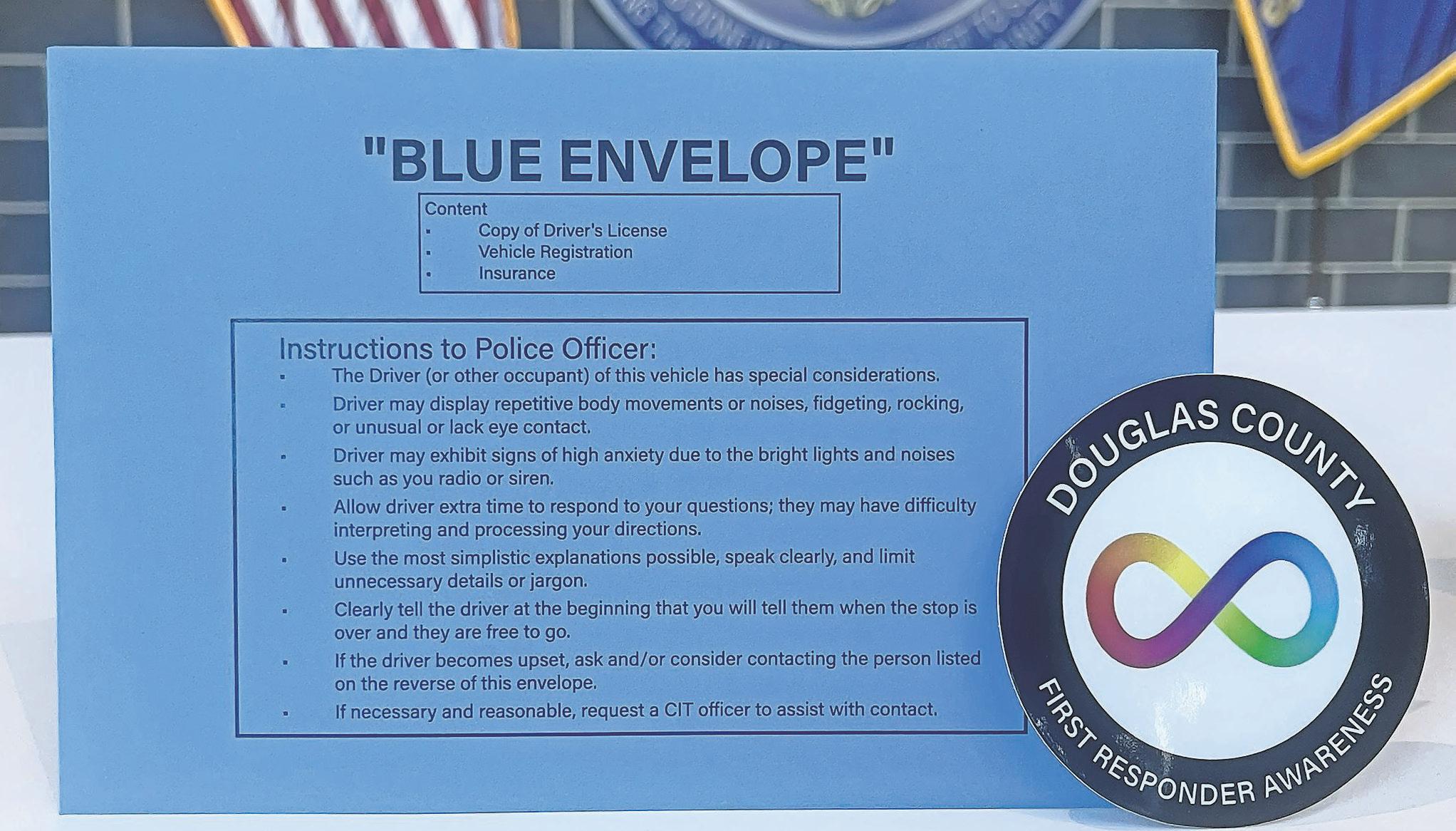
The “Blue Envelope” program is a simple idea with proven impact.
Individuals who may need additional support during any stressful encounter can participate.
“I do have some anxiety about meeting new people,” says Erin Campbell’s son Aiden, a sophomore at Free State High School. Aiden is at the age where he naturally strives for more independence.
The Blue Envelope holds all the documents needed, such as a license, registration, and insurance, in one place, while also making everybody aware of the medical or developmental conditions that could affect behavior during an unfamiliar situation.
LKPD School Resource Officer
Bailey Salsbury learned about the program and worked to coordinate the effort county-wide. “That kind
of information can make a big difference in how the situation is handled. It helps turn what could be a tense or confusing interaction into something calm and controlled. We can talk with people as individuals, with their specific needs in mind, once concerns are eliminated,” says Salsbury.
Aiden says, “Sometimes when you’re diagnosed with autism, it’s pretty difficult,” explains Aiden “We can’t always socially get where we need to be, sometimes it kicks in… makes you shut down.”
Erin says behaviors like shaking, avoiding eye contact, or struggling to communicate could easily be misunderstood, noting that officers
“are going to assume that something else could be wrong” such as drugs or alcohol impairment.
Aiden already knows the drill.
“Just hand them your blue envelope,” he says, continuing with, “try my best not to let my social anxiety kick in.”
And that’s already calming mom,
“I’m more comfortable saying, ‘hey, go to the store,’ and know he can make it there and back,” says Erin.
The envelopes also come with awareness decals, which can be placed on cars or homes.
Blue Envelopes and decals can be picked up at all participating
Douglas County Agencies or from your LKPD School Resource Officer.
“I get terrified when an officer is behind me, and I have no reason.”
Erin Campbell
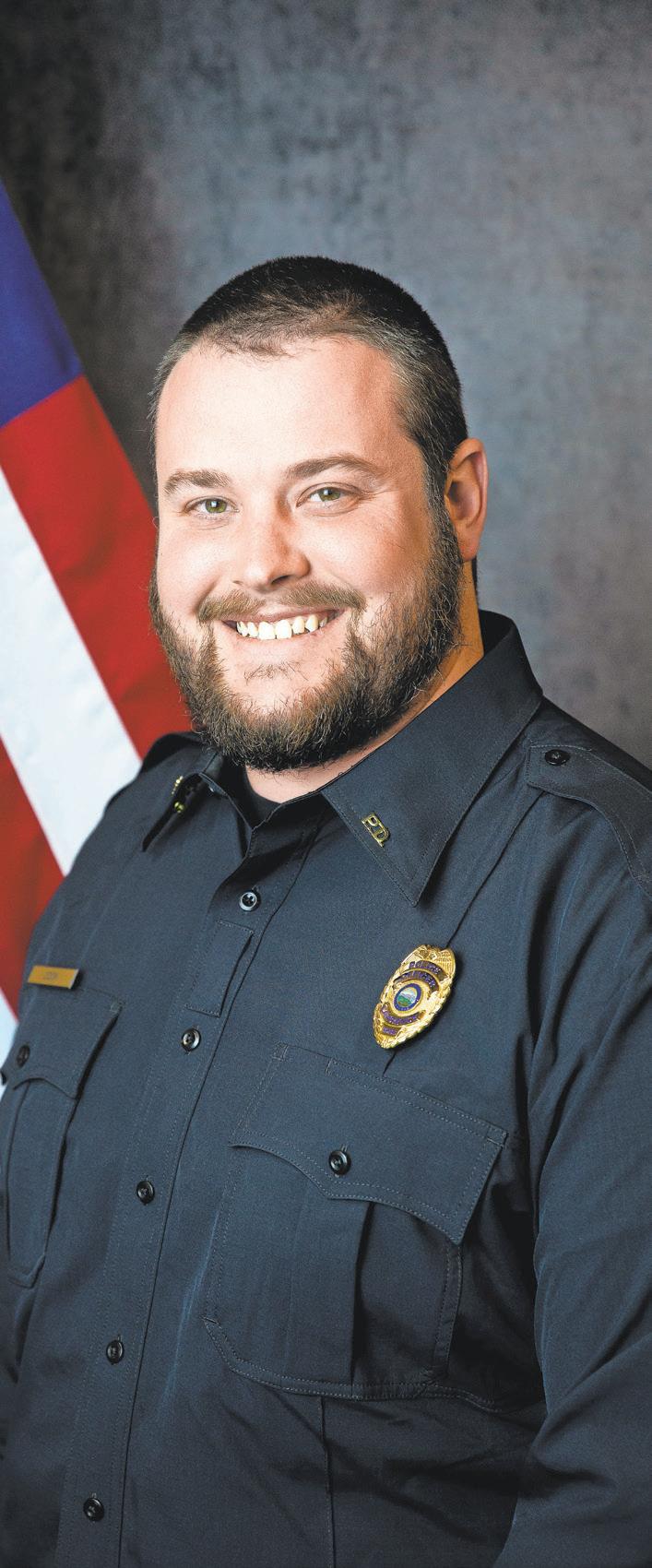
Officer Taylor Zook
Radio: 549
Hired: Nov 2020 (Prior Service at DGSO since 2013)
Assignment: Downtown Patrol Unit
What is your superpower?
Over my career I have developed a pretty good Spidey sense and I can usually tell when things are going to go wrong or aren’t what they seem.
Tell us a weird fact you happen to know for no reason.
In the 1800’s there were almost no trees in Douglas County, and it’s estimated maybe only 5% of Douglas County was forested in the mid 1800’s.
What would be your walk-up song?
At First Light- Bolt Thrower
What is your favorite place in Lawrence?
This is a toss-up between the Granada and The Bottleneck. I love seeing live music and I’ve made a lot of great memories seeing cool bands with my wife and my friends.
What do you enjoy most about your job?
I enjoy training other officers. I’m involved in the Police Training Officer Program, and I’m a member of our firearms instructor cadre and it’s very rewarding to help my coworkers succeed, especially new officers at the department.
Protecting Those Who Protect Lawrence: Former LEO Turned Physician Brings Wellness Program to Lawrence
Contributor: Sigma Tactical Wellness, a TeleMed2U Company
Heart disease is the leading cause of death for American law enforcement, yet the risk remains dangerously under-recognized. While officers dedicate their lives to community safety, the profession’s inherent demands—chronic stress, shift work, and repeated adrenaline surges—accelerate cardiovascular decline. Consequently, officers suffer heart attacks at an average age of 46 (nearly 20 years earlier than civilians) and face a life expectancy roughly 22 years shorter than the general public.
A Program Built on Experience
To combat these sobering statistics, the Lawrence Police Department launched the SIGMA Tactical Wellness Program in early 2026. The initiative was developed by Dr. Jonathan Sheinberg, a board-certified cardiologist with over 30 years of experience as a police officer. His unique background allows him to bridge the gap between medical science and the specific health hazards of law enforcement.
Moving Beyond Basic Checkups
Traditional medical screenings often fail law enforcement. Standard risk calculators, which rely on age, blood pressure, and basic cholesterol, miss over 90% of officers with underlying heart disease. Many officers labeled “low risk” by routine exams actually have
significant arterial plaque buildup.
The SIGMA program shifts the focus from estimating risk to direct detection. Key components include:
• Inflammatory Biomarkers: Identifying arterial inflammation before symptoms occur.
• Carotid CIMT Ultrasound: A painless scan that visualizes early plaque formation. Since plaque develops systemically, its presence in the carotid arteries is a primary indicator of coronary artery disease.
These tools allow clinicians to identify issues years before a catastrophic event, enabling early intervention through lifestyle changes and medical therapy.
Saving Lives and Tax Dollars
The benefits of the SIGMA program extend to the taxpayers of Lawrence. A single officer heart attack can cost between $500,000 and $750,000 due to emergency care, disability, and the high cost of recruiting and training replacements. Preventive screening costs a fraction of that amount while preserving the department’s institutional knowledge and operational readiness. Ultimately, this initiative is an investment in the stability of the department and the safety of the neighborhood. By “protecting those who protect us,” Lawrence ensures its officers remain healthy enough to serve their community and, most importantly, return home to their families.
FOOTPRINT
Continued from page 2
DNA was when it first started. We really didn’t understand it and had to advance as quickly as science. We will now have the resources in place to remain on pace.”
The “Surgeon” Approach
Cooper compares the need for the unit to the medical field: “We talk about surgeons—don’t get the person that does it once a month, get the person that does it every day,” says Cooper. While all investigators are trained and have a basic comfort level in modern forensics, Cooper notes that the “advanced steps” required in modern forensics are complex. “Every day somebody’s learning that AI can do something for you... we have people in place who understand how to use it, interpret it, and get the information extracted that we need to make a solid prosecutable case,” Cooper explains. “It’s about using our resources efficiently and effectively.”
The Focus on People
The unit isn’t just about new tools; it’s about people. LKPD is home to investigators who are internationally known experts in video analysis. Detectives (and bothers) MT and Dean Brown travel nationally and internationally to train other officers in their specialty. Cooper’s goal is to allow other in-house experts to advance with emerging technologies. “Having this talent in-house, rather than sending evidence away to regional labs, changes the pace of justice,” says Cooper.
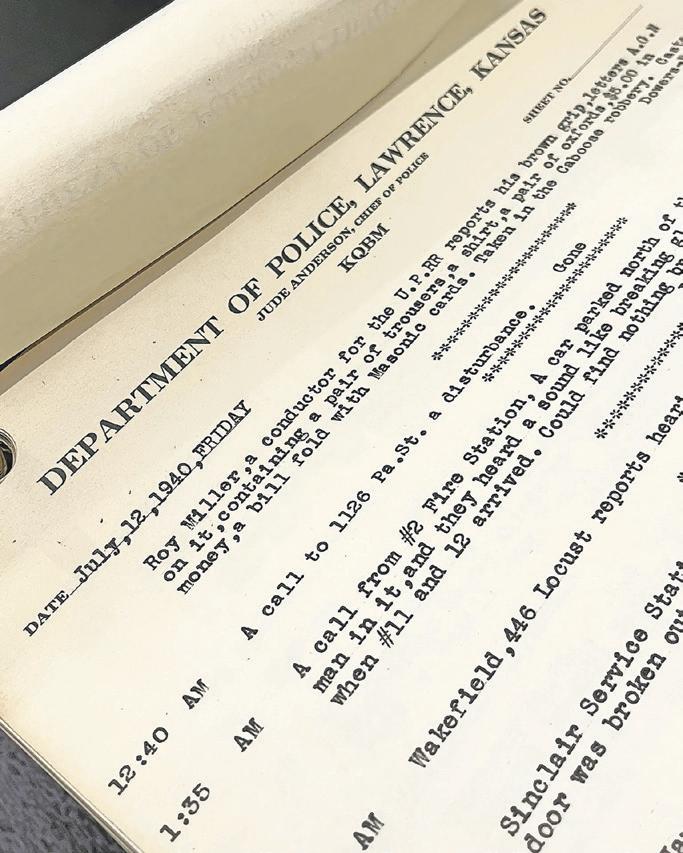
www. lawrenceks.gov/police or in the “About” section of our Facebook page, unlike in the 1940’s.
“Having folks here that sit right next to their case investigators... we can share that information quickly,” Cooper says. “It’s more embedded with the investigation and allows the investigators to work together on the case.”
Ultimately, the goal is to provide certainty in the courtroom and closure for victims. Cooper concludes, “I would really hate for a case to go to trial and somebody who is guilty of a crime be found not guilty because of whatever the jury may or may not believe that we have,” says Cooper. “Having experts that can both coach the DA’s office through how to introduce this information, and clearly help members of the jury understand it, helps everyone. If there is evidence, we want to be able to provide the best evidence we can to help victims find justice.”
Question:
What are some of the biggest misconceptions about a police officer’s daily activities?
Answer: People assume when they see an officer in a parking lot, they aren’t doing anything. That’s probably not true. Being a police officer involves an enormous amount of paperwork. If you see a cop in a parking lot, they might be writing reports, eating lunch, or making a phone call. All safer to do while not driving.
Question: I follow LKPD on Facebook and
HITMAN
Continued from page 1
Commission (FCC). The man on the other end offered her a “way out” by moving her money into a “secure government [FCC] locker” via a Bitcoin machine.
The terror was so visceral that while driving to the bank, the victim believed she was being followed by assassins.
“I got out to my car and he was still on the phone with me,” she recalled. “I drove around the back of the bank, stopped my car, and said, ‘Okay, where is your hitman? When are you going to shoot me?’”
Despite her gut feeling that something was wrong, the urgency of the scammers pushed her forward. She withdrew $17,000 from her bank.
The LKPD Response
In recounting the incident, responding officer James Scotti saw several missed opportunities for intervention.
“The bank didn’t question the amount or why she was withdrawing it,” Officer Scotti said. “Usually, the bank will call us when an elderly person is making a large withdrawal while on the phone. It’s unusual that no one raised an eyebrow.”
The victim eventually ended up at a machine she’d never heard of inside
Protecting Yourself
Instagram and it seems crime is getting bad in Lawrence, is that true?
Answer:
Things aren’t “getting bad” in Lawrence. Generally speaking, violent crime in Lawrence is down over the last few year. It’s likely that people are just more aware of what’s going on around town thanks to social media and our efforts to let people know where we are and why. We know when people see police lights, they have a natural curiosity, or even concern, about what might be going on. We get it. We want to help you understand what you’re seeing - but we can’t possibly share everything. We normally respond to over 400 calls per day, so we try to share the big ones. Lawrence is a safe city to live. Many officers live here too. Follow us on Facebook to get regular updates about the incidents in town.
Question: What’s the difference between the Lawrence Kansas Police Department, Kansas University Police, and the Douglas County Sheriff’s Office?
Answer:
It’s all about Jurisdiction. The Sheriff’s Office has jurisdiction over the entire county, and we have jurisdiction anywhere in the city limits. Kansas University Police are a state agency – they generally stick to the campus but have jurisdiction all over the state. What’s jurisdiction? It means where a law enforcement officer has the legal authority to take enforcement action, but it’s not totally restricted. For instance, if the Sheriff’s Office is working an incident outside city limits and ask for our help, just like that, we have the jurisdiction to assist.
a liquor store, where she spent more than an hour feeding in bills. They had her do it in groupings then go sit in her car after each deposit and wait for instructions. The machine even required her to take a photo of herself and her driver’s license.
“I can’t believe I gave them all of that information,” she said. “I thought, if I don’t deposit this, the man watching me is going to do something to me.”
Targeting the Vulnerable
The woman knows her life circumstances right now may have contributed to her vulnerability. Within the last year, she lost her son to a sudden heart attack, followed by her husband of nearly 60 years.
“She’s had a really tough year,” Officer Scotti remarked, “and these scammers are very good at what they do, recognizing susceptible people. It was heartbreaking.”
When Officer Scotti arrived at her home, the victim was so distraught he asked to console her. “She cried, and I just sat there with my arm around her,” he said. “She reminded me of my grandmother.”
“I’m so ashamed,” the victim said, wiping away tears. “But I told the police because I don’t want this to happen to anyone else. If one person hangs up because of my story, then it was worth it.”
While the Attorney General’s office is looking into the case, the chances of recovering the money are slim. “It’s completely anonymous,” says Scotti. Bitcoin is favored by scammers because it is nearly impossible for law enforcement to track account holders, who usually aren’t nearby. Officer Scotti and the LKPD offer the following advice to the public:
• Trust Your Instincts: If a situation feels “outlandish” or illogical, it is likely a scam.
• Government Agencies Don’t Use Bitcoin: No legitimate agency will ever ask for payment via Bitcoin, gift cards, or wire transfers
• The “Freeze” Tactic: If your computer freezes with a “Call Microsoft” pop-up, do not call the number. Manually restart your computer or take it to a local professional.
• Call the Police First: If someone threatens you with arrest, hang up and call non-emergency dispatch at (785) 843-0250 or 911.
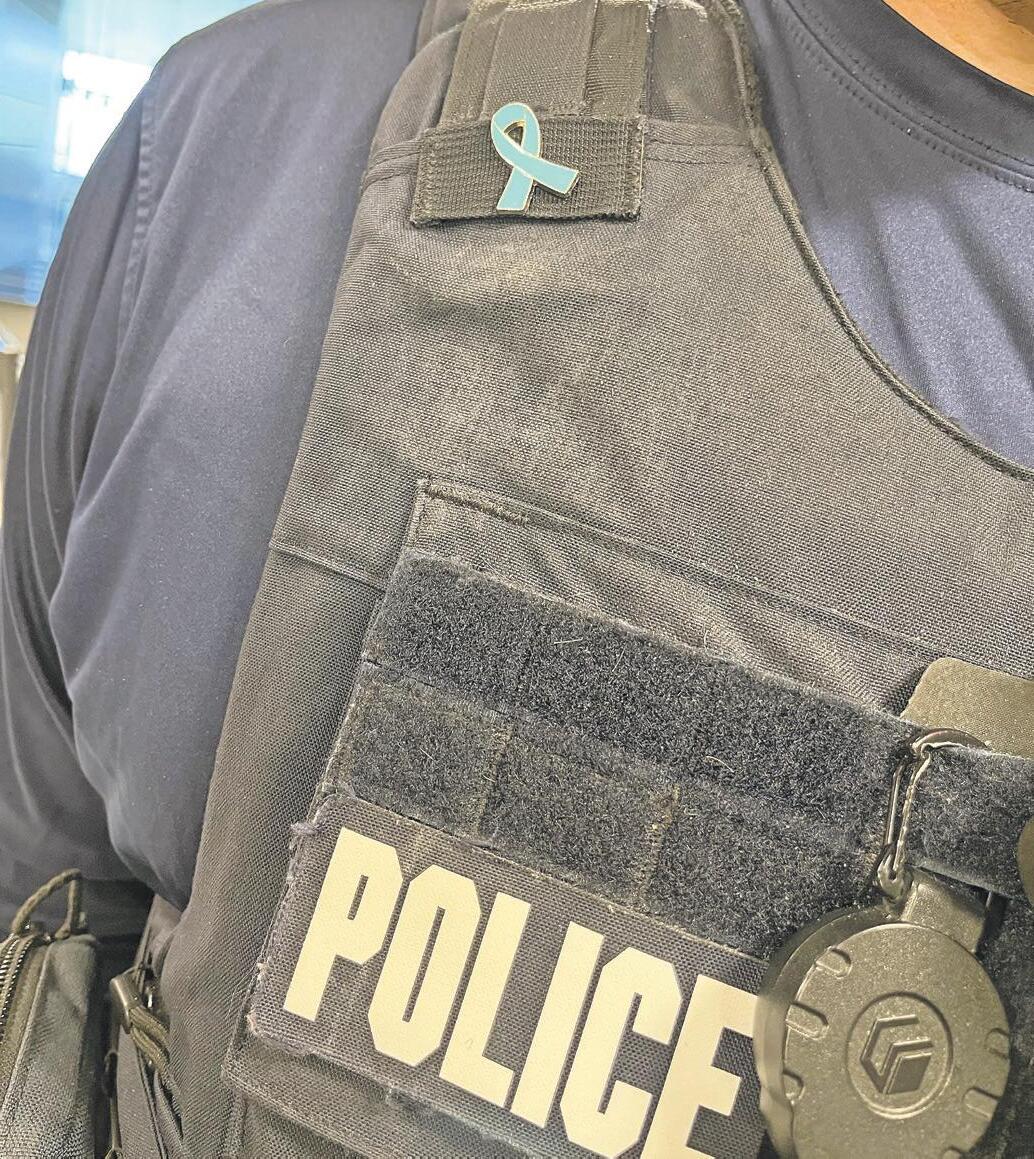
If you see an officer with this teal ribbon shaped lapel pin on his/her uniform, it’s because April is Sexual Assault Awareness Month. The Sexual Trauma and Abuse Care Center provided law enforcement with the pins to help raise awareness that “sexual violence is not just an individual issue, but it is a community issue that requires collective responsibility, compassion, and sustained commitment.”
Pinwheel Planting
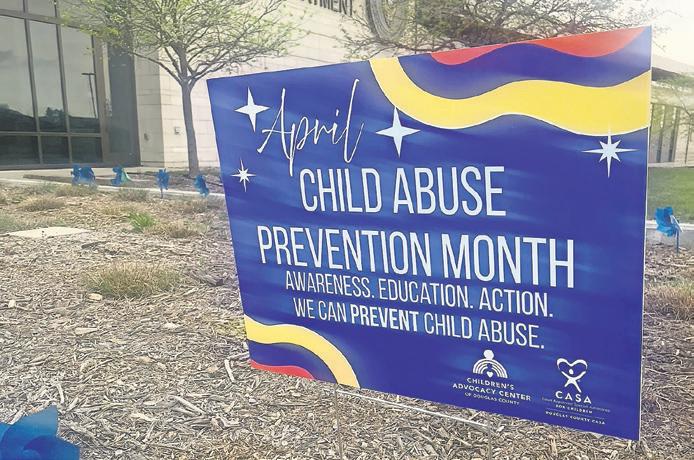
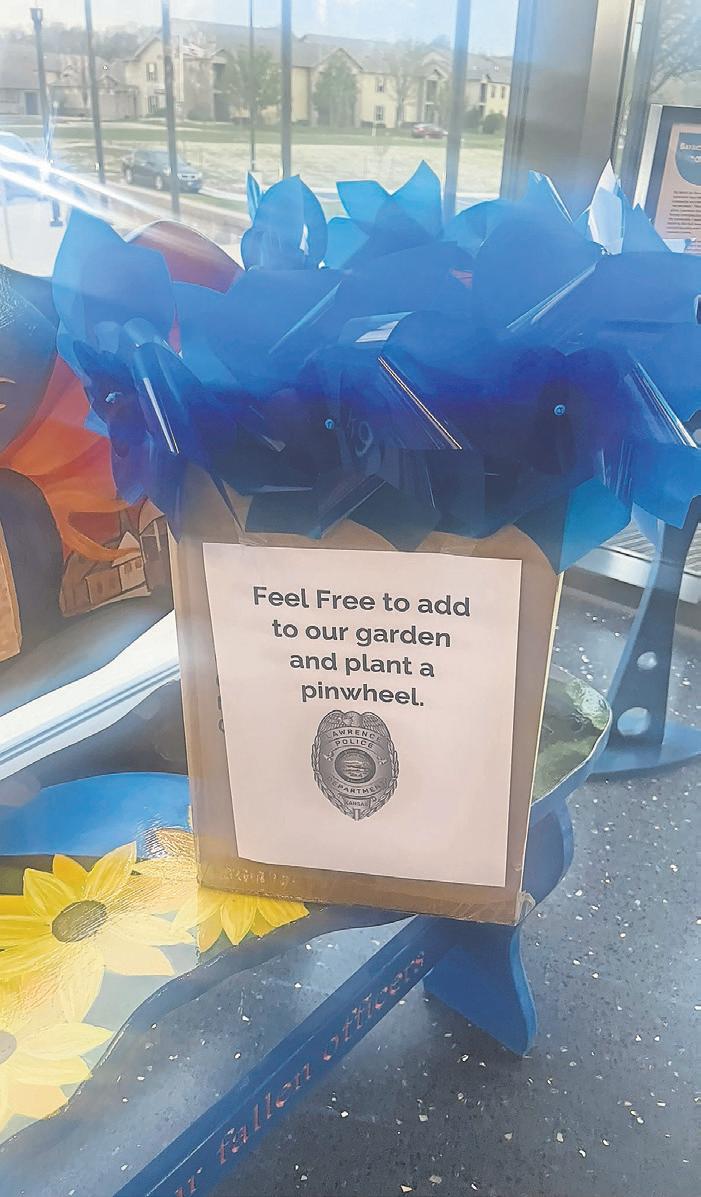
April is Child Abuse Prevention Month and LKPD is providing an opportunity for you to support the cause. Along with their partners at the Children’s Advocacy Center of Douglas County, members of the department planted pinwheels on the front lawn of their headquarters earlier this month. There are extra pinwheels in the front lobby at 5100 Overland Drive for you to come plant your own. They’ll be available throughout April as a reminder to make the safety and well-being of children and families a priority.
Lawrence Kansas Police Department Advances World Cup Readiness
By Laura McCabe LKPD Communications Manager
Safety planning for the 2026 FIFA World Cup started nearly a year and a half ago and, with the first kick-off less than 2 months away, the countdown has begun.
Lt. David Ernst, with the Lawrence Kansas Police Department, has been fully entrenched in every intricate detail to prepare for a safe and secure environment during the influx of visitors who will call Lawrence their home-awayfrom-home.
“This is a big deal, the biggest sporting event ever to occur in the world,” says Ernst, who serves as LKPD’s point person for coordinating with FIFA, KC2026, and local, regional, and state law enforcement professionals.
LKPD leaders recognized early on that having a dedicated presence during all planning meetings was critical. “My job, as a law enforcement professional, is to be laser-focused on security so people can safely enjoy all Lawrence will offer,” says Ernst.
LKPD Commanders believe supporting a fun atmosphere is a strategic way to enhance civility and reduce risk.
“NCAA tournament planning gives us a lot of experience with large celebratory crowds and working with local and outside law enforcement partners,” says Ernst. “Those trusted partnerships will benefit this event of worldwide notoriety,” he continues.
As team Alegria’s host, Douglas
County law enforcement will also be responsible for security at the hotel, practice field, and during any team movement.
To maintain strong daily operations, LPD has limited days off and built what Ernst described as “robust staffing” for the duration of the tournament.
Throughout the tournament, LKPD will be in continuous communication with regional partners. “We’ll have a system in place so that if something happens here and we need additional resources, they’ll be sent—and vice versa,” Ernst said.
While the event is massive, the goal remains simple. “We’re all excited for the fun,” Ernst said. “Our role is to make sure it stays fun. We want fans and team Algeria to have a good time, and we want everyone feel welcomed and safe while they’re here.”
To sign up for emails about the World Cup or learn about various news and events planned in Lawrence, visit ScoreLawrence.com
Lt. David Ernst
Answered by: Sgt. Drew Fennelly
Spring Trends and Effective Response Strategies
By Adam Heffley LKPD Deputy Chief
As the frost thaws and the weather begins to warm, a familiar pattern emerges for local law enforcement: an uptick in calls. Warmer weather gets more people out, more interaction, and oftentimes, more conflict and illegal behavior. It’s nothing new in Lawrence or other cities with similar climates.
The numbers show it. January 2026 calls for service were 6,619 and March hit 7,154. (see Calls for Service Chart) The good news, so far, is that March of 2026 calls were lower than March 2025, which were 7,449. The bigger picture shows some decrease as well (see Crime Statistics 2020-2025). Since 2020, calls to report Crimes Against Property decreased significantly. We’ve also seen a slight decrease in Crimes against Persons, while Crimes Against Society – which includes drug crimes, obscene material, gambling, weapons violations, etc., -- have gone up from 527 to 714. As a whole, the first quarter numbers for Crimes Against Property, Persons, and Society, however, have
increased. (see Group A Crimes First Quarter Comparisons 2025-2026)
LKPD Commanders watch these trends and have strategies in place to effectively react, knowing a rise in reported crime may not necessarily mean an increase in criminal activity.
LKPD’s Proactive Reaction to Recent Crime Trends.
To serve the public efficiently and effectively, the department has expanded its team of Community Service Technicians (CST’s). These technicians offer a “low-barrier” way for residents to report non-emergency incidents where no immediate suspect is present, such as:
• Criminal damage to property
• Theft and Larceny
• Vandalism
• Criminal Use of a Financial Card
Community members are encouraged to use the Lawrence Crime Reporting App “See Click Fix”, the corresponding website, or speak directly with a Community Service Technician by calling non-emergency dispatch at (785) 843-0250. These civilian professionals are trained in LKPD policy and
Safe and Secure Key Progress Indicator 7:
Percentage of Investigations resolved with an arrest, notice to appear, or referred to prosecutor for charging.
LKPD measures the number of investigations resulting in an arrest, notice to appear in court, or referral for prosecution as a progress indicator in equity and inclusion. The numbers include cases with no possible law enforcement action such as death investigations, cases where victims choose not to participate in the judicial process, or missing persons investigations where the person returns home, etc.
They are not clearance rates. To move closer to the goal, the department will identify demographically disproportionate numbers and provide community-based education and solutions. Partnerships and collaboration with community organizations will assist in this work along with officer training efforts such as de-escalation training and fair and impartial police training.
Mentors Needed Apply Today
By Laura McCabe LKPD Communications Manager
The Lawrence Police Department is a proud supporter of the Douglas County Veterans Treatment Court (VTC), which is currently seeking volunteer mentors. Founded in 2025, the VTC is a collaborative program designed to help veterans overcome mental health and substance abuse challenges while promoting public safety.
LKPD Major Casey Cooper serves on the committee dedicated to helping the program and its participants succeed.
“They dedicated so much during their service,” says Major Cooper, a veteran of more than 20 years. “Once that service ends, they often feel isolated. It’s time for us to give back,” he says.
How the Program Works Over a 15-18-month period, participants work through five program milestones. This comprehensive recovery path is supported by a community-wide partnership, including:
• Legal & Law Enforcement: LKPD, Seventh Judicial District of Kansas, Douglas County Sheriff’s Office, and KU School of Law’s Veterans Legal Services Clinic, contracted defense counsel.
• Health & Support: Eastern
procedures. They’ll ensure incidents are documented without the need for a traditional officer dispatch. This system streamlines the process for citizens and frees up sworn officers to focus on higher-priority incidents.
The impact of this program is already visible. In February, CSTs handled 195 reports; that number grew to 226 completed reports in March. LKPD Commanders analyze these trends regularly and shift resources as needed to better serve the community. While seasonal increase in activity is expected, the department remains focused on balancing
enforcement with accessibility.
Through the years, experienced law enforcement professionals have learned to combine data -- calls for service, reported crimes, staffing levels, and more -- to get a more accurate picture on illegal activity.
Increases can reflect proactive policing and increased reporting avenues. By leveraging technology and specialized personnel, like the Community Service Technicians and Mental Health Units, LKPD will continue to adapt its response to the changing needs of our community.
KS VA Health System, Bert Nash CMHC, and DCCCA. Upon successful graduation, the VTC judge may dismiss the participant’s original charges, offering a fresh start to those who served.
Safe and Secure KPI 1:
Residents who perceive Lawrence as safe or very safe
The Lawrence Kansas Police Department is committed to openly communicate information to help everyone feel more safe and secure. Total calls for service and top call location measurements help guide our work.
Total calls can assist in appropriate staffing, proactive education, and determining the most efficient and effective use of resources.
During the first quarter of 2026, Officers responded to a total of 9,740 calls from citizens and initiated 10,822 calls for a total of 20,562 calls
Top 5 Call Locations Initiated by Citizens
Knowing where officers are repeatedly called to assist community members, can help department leaders work to address issues before crimes occur, educate community members on how to prevent becoming a crime victim, provide resources and services, and encourage community partners to get involved in providing solutions to address potential underlying problems.
January 2026
1. Lawrence Community Shelter, 3655 E 25th St. = 66 Calls for Service
2. Union At the Loop, 3250 Michigan St. = 65 Calls for Service
3. Lawrence Memorial Hospital, 325 Maine St. = 25 Calls for Service
4. Prairie Ridge Place, 2424 Melrose Ln = 34 Calls for Service
5. The Rockland, 1301 W 24th St. = 28 Calls for Service
February 2026
1. Lawrence Community Shelter, 3655 E 25th St. = 73 Calls for Service
2. Union At the Loop, 3250 Michigan St = 50 Calls for Service
3. Links at Kansas, 5400-5800 Rock Chalk Dr = 25 Calls for Service
4. 700 Blk Vermont St., Edgewood Apts. on Haskell Ave., Prairie Ridge Pl. on Melrose, Tamarind Apts. on W 9th St. = 22 Calls for Service for Each
March 2026
1. Lawrence Community Shelter, 3655 E 25th St. = 64 Calls for Service
2. Union At the Loop, 3250 Michigan St. = 59 Calls for Service
3. Tamarind Apartments, 15151517 W 9th St. = 39 Calls for Service
4. Lawrence Memorial Hospital, 325 Maine St. = 26 Calls For Service
5. Links at Kansas, 5400-5800
Safe and Secure Key Progress Indicator 5:
The Lawrence Kansas Police Department, along with county partners, continue to provide alternative responses to calls for service. The data is a key performance indicator of LKPD’s commitment to community members to use resources efficiently and effectively.
In 2023, the Lawrence Kansas Police Department and Douglas County emergency response agencies were selected to participate in the Harvard Kennedy School’s Government Performance Lab. It’s a consortium designed to support city and county leaders in developing, improving, and expanding alternative responses to 911 calls.
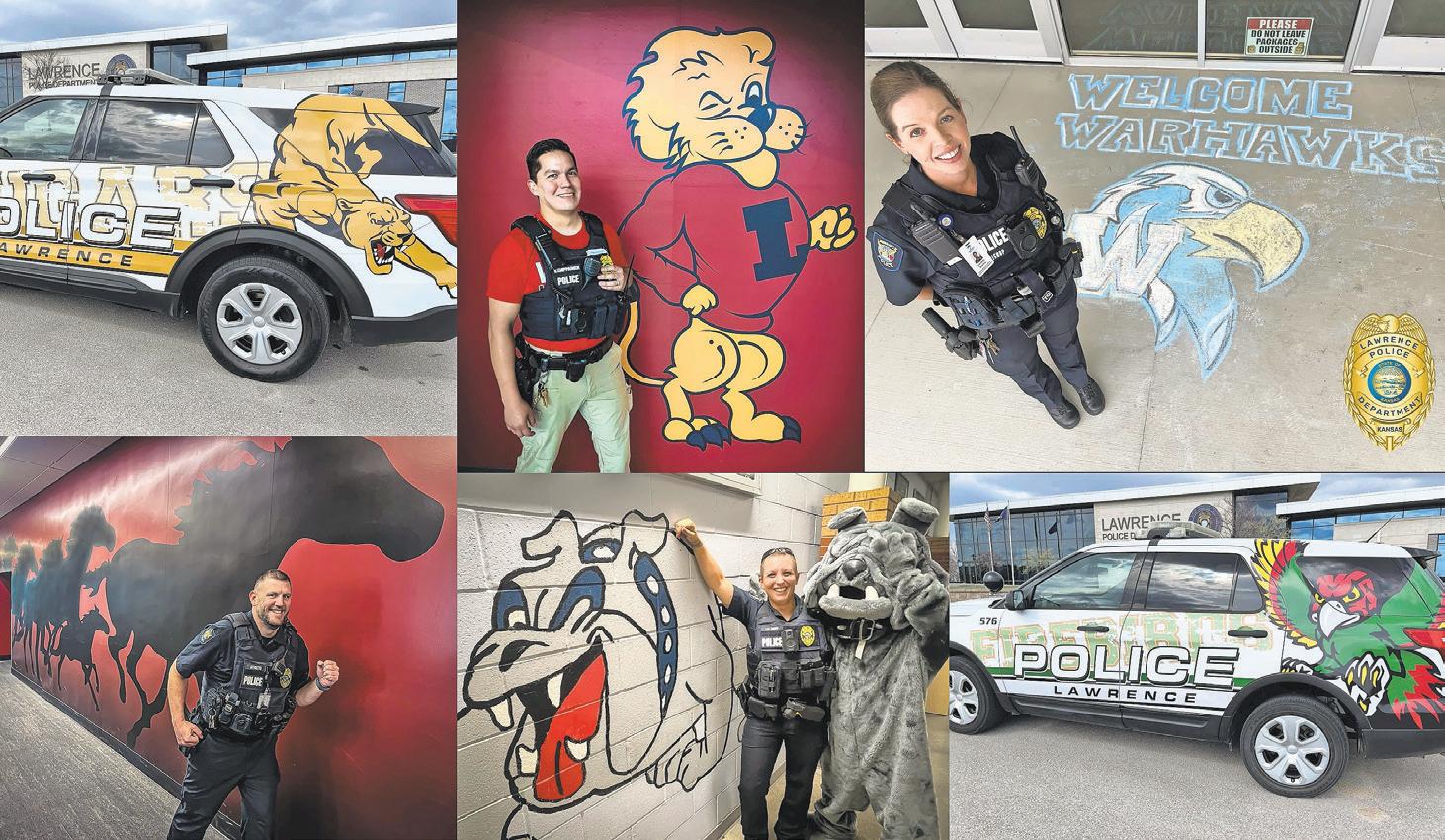
Lawrence Police & USD497
By Officer Dan Affalter II
The Teams: The Lawrence Kansas Police Department partners with USD497 to ensure student safety. Police officers are stationed at the two high schools, while the remaining School Resource Officers serve the middle and elementary schools as needed.
How it works: Officers engage with students by teaching personal safety classes and mentoring them on making safe choices. They adhere to the NASRO principles, which emphasize the “Triad Model” of being educators, informal counselors, and law enforcement officers. This approach focuses on proactive policing and relationship-building.
• Key pillars: Officers function as educators, mentors, and law en -
forcement officers, bridging gaps between youth, law enforcement, and the school community.
• Restorative justice & de-escalation: Officers prioritize restorative justice practices and de-escalation, staying separate from routine school discipline.
Why it matters: This partnership provides a proactive approach to student safety, emphasizing education and mentorship rather than punishment.
• Students gain valuable life skills in personal safety and decision-making.
• The presence of officers helps foster a safer school environment.
The outcome: Through this collaboration, risky behaviors are mitigated, creating a safer and more supportive school environment for all students.
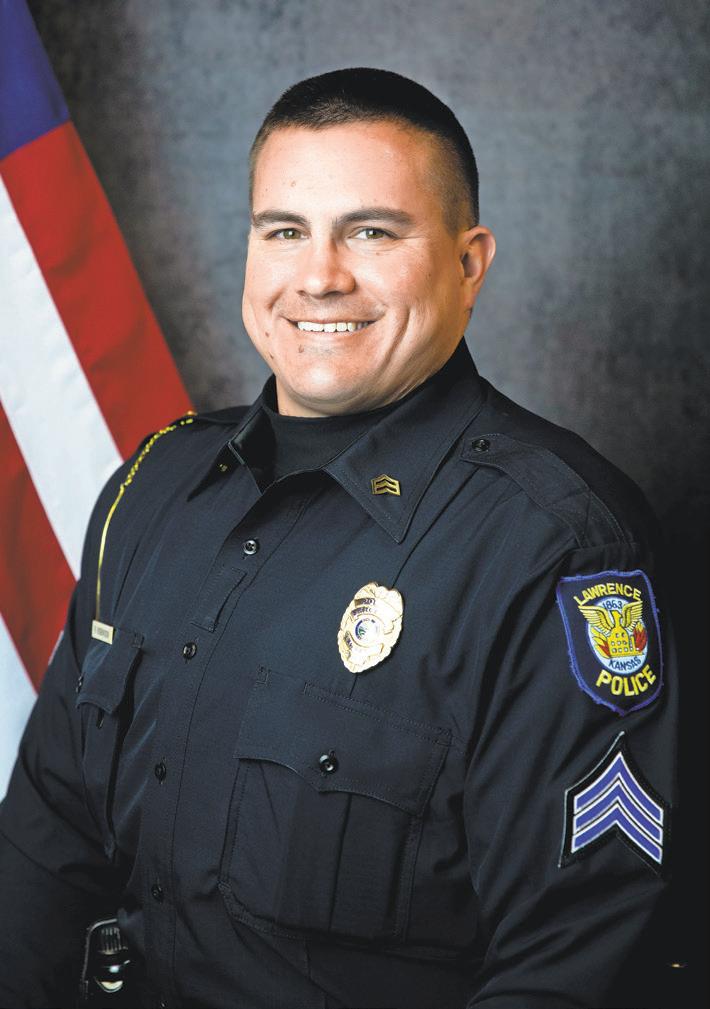
For many in Lawrence, Kansas, Ryan Robinson is a familiar face—a fifteen-year veteran of the police department, a sergeant currently overseeing “late swings,” and a steady presence in the community where he grew up. But when the uniform comes off and the shift ends, Robinson isn’t just a supervisor; he is a husband, a father, a restorer of vintage tractors, and a proud member of the Osage Nation.
For Robinson, the transition from the patrol car to his home in the country isn’t just a change of scenery—it’s a necessary return to his roots.
A Vested Interest in Home
Robinson’s mission has always been local. A graduate of Lawrence High and Haskell Indian Nations University, his policing philosophy is deeply tied to his neighbors.
“I was not put on this earth to be a police officer,” Robinson admits candidly. “I know my role in this life is to be a father and a husband. But I always thought it was noble to serve my home -- a community that has been so good to me and my family.”
He views every interaction, from a routine traffic stop to a high-stakes emergency, through the lens of the “butterfly effect.” He believes that treating someone with respect today prevents a tragedy tomorrow.
“I have no interest in being a police officer in Topeka or Johnson County,” Robinson says. “I have a vested interest in this community being safe. A way I can give back is by taking the risk of being a police officer. Every decision I make is: ‘Will the community be better at the end of my shift than it was at the start?’ That’s the basis,” he says.
The Sacred Rhythm of the In-Lon-Schka
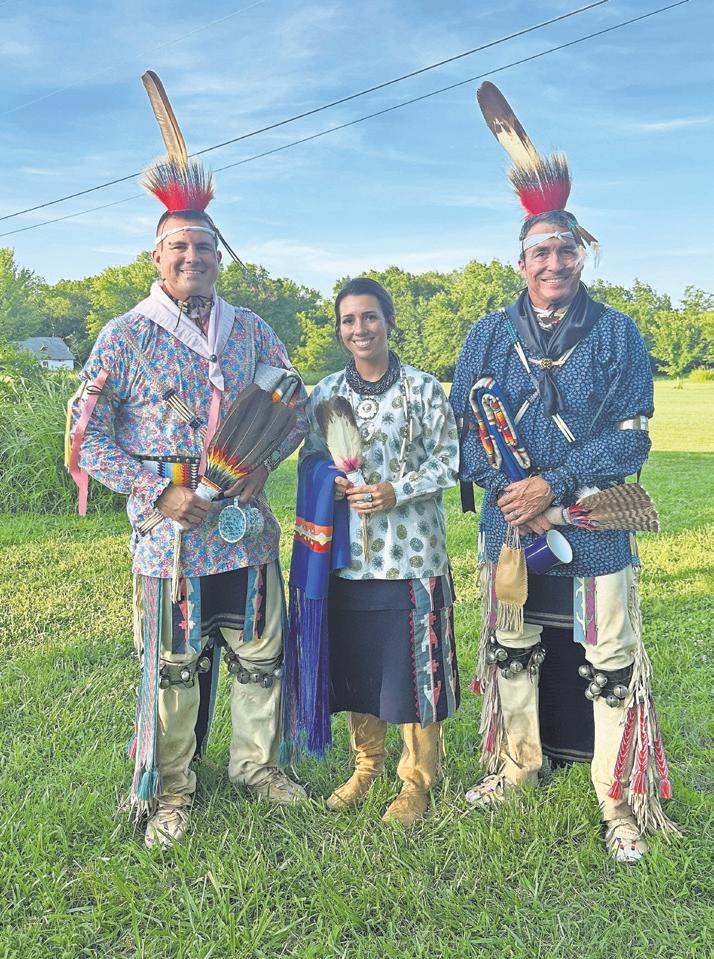
While his nights are spent patrolling city streets, Robinson’s soul belongs to the country and the traditions of his ancestors. A member of the Osage Nation, Robinson, whose Native name is Heska-Moi, has participated
in the In-Lon-Schka—the “dance of the eldest son”—for as long as he can remember.
“It’s not a pow-wow,” Robinson clarifies, noting that it isn’t a competition. “It is a ceremony. It’s a time for families and the people to gather and pay homage to our ancestors.”
Literally translated “Playground of the Eldest Son,” the ceremony is held over three weekends in June across three Oklahoma districts: Pawhuska, Hominy, and Grayhorse. The fourday event features traditional drumming, singing, and dancing to celebrate Osage culture and traditions.
The dance was gifted to the Osage by the Ponca and Kaw people more than 100 years ago. Photography and electronic devices are strictly prohibited during dances.
The regalia Robinson wears is a living history of his family. His great-grandmother was a nationally renowned seamstress whose ribbon work once graced the Smithsonian. Today, his aunt continues that legacy, having made most of the suit he wears to dance. His wife has even recently taken up the craft, making handmade moccasins for their son.
For Robinson, the dance is more than a tradition—it is a survival tool for the soul.
“It grounds me. After fifteen years of seeing what we pack around as police officers... being a part of that ceremony refocuses and recenters me. It puts everything into perspective.”
Tractors and Tradition
When he isn’t in Oklahoma for the dances, Robinson finds peace in the soil of his rural home. A major priority for him and his wife – junior high school sweethearts -- is raising their children away from the noise and chaos of screens.
One of his most prized possessions is a vintage International Harvester tractor. The machine has a storied history: it belonged to a rancher in Montana. Robinson worked for him in his youth, during the summers. After the rancher passed away, Robinson hauled the non-running, rusted tractor back to Kansas.
Alongside his father-in-law, Robin-
son spent two years tearing the tractor down to the last bolt. Today, the gleaming red machine is a regular at local tractor pulls and shows. While he occasionally uses it to mow the pasture, it mostly serves as a rolling tribute to the people and places that shaped him before he ever wore a badge.
Person-Centered Policing
Robinson credits much of his path to his time at Haskell Indian Nations University, where he earned his bachelor’s degree in 2010. He views the institution as a “crown jewel” of Lawrence, a place that brings the global native community to a “little old” Kansas town.
Because of Lawrence’s relatively
large Native population, his identity as an Osage man can help support his person-centered policing values.
“It sheds the uniform,” he explains. When a student at Haskell feels misunderstood, Robinson can share his own experience and tell them, “’I’m a member of the Osage Nation... I go down and dance every summer.’ All of a sudden, it’s okay that I’m there. They realize I’m a person whose area of expertise just happens to be policing.”
“I’m still Ryan under there,” he says. At the end of the day, whether he’s within the drum in Pawhuska, under the hood of a tractor, or patrolling the streets of Lawrence, Ryan Robinson is defined by the same core principle: leaving things better than he found them.
Sergeant Ryan Robinson
Heska-Moi, known as Sgt. Robinson at LKPD, alongside his father and sister.
The restored tractor showing off its shine and strength.
This is what the tractor looked like when Sgt. Robinson picked it up.