Lavender Magazine 800

Page 1


EVERY LAKE IS IMPORTANT TO SOMEONE.

The Science Museum of Minnesota is a leader in freshwater research.

SCIENTIST

ANGLER

ADAM

Spring Arts & Culture

20 Meet Denzel Belin, Mr. Twin Cities Leather 2026!

22 Humming along: an interview with Dar Williams

26 Minneapolis Comic Artist’s newest release ‘Leo Rising: Queer Spaces, Sexuality, and Fame’ Makes a Splash in Queer Spaces

28 Singing Queer Joy into Southeastern

30 Holding out for a ‘Hero’: an interview with Julia Jackman

Photo by Carly Rae Brunalt,
Photo by Joey Amato,
Photo by Andrew Bertke, 26: Photo courtesy
Bongiovanni

EDITORIAL

Managing Editor Noah Mitchell (612) 461-8723

Editorial Assistant Linda Raines (612) 436-4660

Editor Emeritus Ethan Boatner

Contributors Lakey Bridge, E.B. Boatner, Bianca Caputo, Stacy Dahl, Natasha DeLion, Alyssa Homeier, Terrance Griep, Shane Lueck, Elise Maren, Jen Peeples-Hampton, Linda Raines, Aspen Rush, Gregg Shapiro, Allie Skarda, Randy Stern, Susan Swavely, Natalie Trimble, Sommer Wagen, Carla Waldemar, Todd P. Walker, Emma Walytka, Spencer White

ADVERTISING

Vice President of Sales & Advertising

Barry Leavitt (612) 436-4690

Account Executives

Nathan Johnson (612) 436-4695

Richard Kranz (612) 436-4675

Sales & Event Administration

Linda Raines (612) 436-4660

National Sales Representatives

Rivendell Media (212) 242-6863

CREATIVE

Creative/Digital Director Mike Hnida (612) 436-4679

ADMINISTRATION

Publisher Lavender Media, Inc.

President & CEO Stephen Rocheford (612) 436-4665

Senior Vice President & Chief Financial Officer Doug Starkebaum (612) 436-4664

Administrative Assistant Michael Winikoff (612) 436-4660

Distribution Metro Periodical Partners (612) 281-3249

Founders George Holdgrafer, Stephen Rocheford Inspiration Steven W. Anderson (1954-1994), Timothy J. Lee (1968-2002), Russell Berg (1957-2005), Kathryn Rocheford (1914-2006), Jonathan Halverson (1974-2010), Adam Houghtaling (1984-2012), Walker Pearce (1946-2013), Tim Campbell (1939-2015), John Townsend (1959-2019), George Holdgrafer (1951-2024), Julie Dafydd (1951-2025)

editor@lavendermagazine.com. For our Privacy Policy, go to LavenderMagazine.com/resources/ privacy-policy

If you’ll forgive me for a basketball metaphor — as I write this, the Unrivaled season featuring four Lynx players plus Paige Bueckers just tipped off a couple of days ago, and the Timberwolves just delivered an impressive win on Pride Night against the Cleveland Cavaliers — this Spring Arts & Culture issue is a real three-level scoring threat. We have stories from here in the Twin Cities, from Greater Minnesota, and from across the country.

First, from outside Minnesota — beyond the three-point line, if you will — we have Q&As from Gregg Shapiro with New York-based singersongwriter Dar Williams, who will be performing at the Cedar Cultural Center in Minneapolis on March 6, and Canadian film director Julia Jackman.

Then, in the midrange — greater Minnesota — we have a feature on the Rochester Rainbow Choir from Shane Lueck.

Arts & Culture Spring Off the Court

As someone who grew up in Rochester, I’m excited to get to feature my hometown in Lavender. The Rochester Rainbow Choir is one of many great LGBTQ+ stories from Greater Minnesota — in my short time as Lavender’s managing editor, I’ve already had the opportunity to publish stories on a mental health-focused art exhibition led by Jean Prokott, Rochester’s poet laureate, and Dance TV, a live theater experience in Duluth.

If you live in Greater Minnesota (or western Wisconsin, northern Iowa, eastern North or South Dakota, southeast Manitoba? Anywhere the light (of the North Star State) touches, as Mufasa would say) and have anything you’d like to see covered in Lavender, please do reach out and let us know! I’d love to cover more outside the Twin Cities metro.

Finally, as any well-coached team should, we score most of our points in the paint — here in the Twin Cities. While she hails from Madurai in southern India, drag artist Silukku has brought

her talents to Minneapolis, and did us the honor of gracing our cover.

We also feature Denzel Belin, Mr. Twin Cities Leather 2026, Queermunity and FairPlay Entertainment’s “Mic Check” concert series, and Minneapolis comic artist Archie Bongiovanni’s new graphic novel, “Leo Rising: Queer Spaces, Sexuality, and Fame.” I had the privilege of seeing Denzel speak at Twin Cities Quorum’s National Coming Out Day Luncheon last year, and after watching him command that stage, I can imagine how he would’ve captivated the judges at Mr. TCL. I haven’t yet caught a “Mic Check” concert or read “Leo Rising” (I’ll cut myself some slack on that one, it’s not yet out at time of writing), but I hope that I can correct those errors soon.

I hope that you, too, dear reader, get the chance to experience as much of the wonderful art in this issue as possible — wherever on the court you happen to find yourself. 

Photo courtesy of BigStock/yobro

What Apartheid Couldn’t Achieve…

The cover of Lavender’s 300th issue was bright with promise. Against a bright red background was a circle of beaded figures made by HIV-positive women from Gugulethu, South Africa, who worked from home, learning and using ancestral skills that enabled them to earn a living while tending their children.

The craft had died out during Apartheid, when the prices of beads made them inaccessible to the poor. When two ceramists saw a figure made by an assistant who’d used some of their pearls, they envisioned a possible financial future. Sidestepping prohibitive restrictions, they provided the women with free beads, then bought the finished product from them, returning the sale money as cash for food, medical care and other needed services.

Monkeybiz was in town at the invitation of the Women’s Club of Minneapolis. The club was hosting the premiere of the film documentary “Bigger than Barbie,” directed by Norwegian filmmaker Tina Davis, who had followed the lives of several of these women. The following day was the third annual beadwork sale on the Skyway Level in City Center. Buyers snapped up some 1,200 pieces, from 3-inch angels to 3-foot dolls, with all proceeds from both events going to benefit Open Arms of Minnesota’s HIV/AIDS programs.

Kevin Winge, then Executive Director of Open Arms, recalls, “I was seeing similarities between the lack of a global response to HIV/ AIDS when it was impacting poor Black people in Africa and how our government failed to respond

to HIV/AIDS in the 1980s, when it was gay men and IV drug users being impacted.

“To learn more, I went to the International AIDS conference in Durban, South Africa, in 2000. Before the conference, I spent a week with AIDS activists working in Gugulethu to see what was (actually, what was not) happening with AIDS in South Africa in those days.

“Since then, I’ve been to South Africa at least 25 times. Through Open Arms, we began providing meals and food to HIV-positive people in Gugulethu, starting in 2001. I met the women in Monkeybiz in 2003 — just three years after they started the organization.”

Word spread through advertising and friends spotting the unique pieces in friends’ homes. Sales grew, and the artists, the women themselves, grew in talent and self-confidence. Popularity, and even placement in fashionable boutiques like Donna Karan in New York, were proliferating artwork from Gugulethu.

It’s the way good works spread, and it gave the artists collectively a sense of pride and a heretofore undreamed-of independence, the ability to buy food and a little something beyond, and access to better medical treatment for overall health and strength. Small children could remain under their mothers’ care throughout the day, lessening physical and mental drain on the women’s already taxed energy.

It would be pleasing to report that this routine continues, but the recent punitive 30% tariffs our president has leveled against South Africa have

curtailed sales of their beadwork in the United States. It’s simple math.

For example, Winge explains, “If a Monkeybiz piece wholesale cost is $50, it is now $65 with the tariff. Then, there is a shipping cost of $20, so the cost to a US retailer is now $85 for a relatively small piece. If they add 50% for profit, that puts the retail cost at $127. That is cost-prohibitive. Trump’s tariffs on South Africa are the highest of any country. Net result: the tariff is taking food out of children’s mouths in South Africa.”

Winge, recently returned from South Africa, found the women’s lives now markedly different.

“At the highest, Monkeybiz had 450 beaders. When I met with them on this recent visit, I tried to learn how many were still employed, but it didn’t seem to be a conversation they wanted to have,” Winge says. “Most of the beaders live in one of South Africa’s largest townships, Khayelitsha. Wikipedia says it’s ‘one of the top five largest slums in the world.’”

The hopes displayed on Lavender’s cheerful 2006 World AIDS Day cover have dimmed for these women and their children — collateral damage like many others caught up in global ego/power squabbles beyond their ken.

On a brighter note, ImageHaus Creative Director Jay Miller, an advocate of Open Arms and the South African beadwork, will be opening a pop-up store, One-of-a-Kind, featuring a selection of vintage and new Monkeybiz pieces on February 7 in Golden Valley. 

Kevin Winge can be contacted at kevin.winge@gmail.com.

Bienvenue, Bellecour

Bistro mania! For my previous dining column, I wrote about Thérèse, superchef Daniel Del Prado’s latest lovechild, new to the 50th & France neighborhood. This time, another kitchenmeister, Gavin Kayson, stakes his own claim to the art form in the city’s North Loop. It’s called Bellecour, in homage to that epicenter of treasured, anti-fancy grandma fare in Lyon, France. And, in case you haven’t the time or patience to read all the details, the takeaway is this: it’s a winner.

The cozy, two-room setting feels like it’s been there for ages: invitingly warm, dark and clubby, scattered with wooden tables spared the standard starched whites. Service is just as down-to-earth, underlined with deep knowledge of what’s going on behind the kitchen doors. And the menu’s short and simple, calling on the classics you’d enjoy in those unpretentious but reliably rewarding bistros you might have enjoyed in France. And, just as in French bistros (but rare these days on our local dining scene), the meal begins with a complimentary basket of sliced baguette and a ramekin of sweet butter. Nice touch!

The menu leads off with a raw bar selection, which we skipped, drawn by the lure of the list of nine apps ($10-17): classic must-haves like escargot, onion soup, beef tartare and deviled eggs. (But deviled eggs with a twist, like crispy chicken skin.) And, of course, pâté.

The pâté grand mère proved straight-ahead simple, and fine: two slices rimmed in pearly-white fat yielding to a pink, pistachio-dotted slab rich with a brighter, zingier flavor punch than most. It’s served (of course!) with bitty, sweet-tart cornichon pickles and a dab of sweet, seed-rich mustard to layer onto thin slices of dark, seeded toasts.

Our second app was a new one to me, and one that’ll star in my dreams from now on: a trio of supersized duck wings, rich, juicy and deeply flavored, adorned in a light but potent, alluringly sweet yet far from cloying sauce a l’orange. Next time: the squash velouté, presented with spiced crème fraîche. (Who knows? Sounds like an outlier but a possible winner.)

The well-edited list of six mains ($19 for a burger to $30 for roast chicken) stars, of course, steak frites. The slender flat-iron cut proved tender and mildly beef-y in flavor, dressed with a classic sauce au poivre (peppercorn), classically rich and abetted by a haystack of slim-as-a-knitting-needle fries. Those tender, crisp spuds came dusted with parsley and rosemary, a subtle but nice addition.

Next, the cod. The ivory square of fish — super-fresh and mild — is served with a heap of tiny lentils dressed in a hint of curry and spritz of parsley oil: That’s all. And that’s fine. Next time, I’d go for the ocean trout, coutured with cauliflower, almonds, raisins, brown butter and capers. Vegetarians can savor the kitchen’s version of gnocchi, dressed with mushrooms, broccoli and parmesan.

The menu lists a veggie add-on, which I’d intended to summon, but — true confession — forgot to do: a composition of roasted brussels sprouts, pears, radicchio, walnuts and triple cream brie. More is more, all right.

Four desserts are on offer ($16): opera cake with espresso sherbet; crème brûlée with honeycrisp apples; crème fraîche ice cream; and our choice, a magnificent profiterole.

It’s a cream puff for the ages, plump with deeply-flavored orange Cointreau ice cream and topped with warm chocolate sauce, poured tableside. Our server, far more talented with a knife than I, graciously split the work of art in two.

My Between the Sheets cocktail (bourbon, rum, lemon and curaçao) warmed me throughout the evening, while my companion enjoyed the French 75 — a martini-like sipper (all cocktails $15). Wines BTG begin at $12. Plenty of non-alcoholic creations, too.

Bravo — no, let’s make that bravissimo — to the newest bistro on the block: a real winner. 

Bellecour

107 N. Third Ave.

(612) 452-6700

bellecourmn.com/north-loop

Pride Journey Walla Walla: A Hidden Gem for LGBTQ Food, Wine and Adventure Seekers

Nestled in southeastern Washington, the charming town of Walla Walla is a destination that combines rich history, award-winning wines and an emerging culinary scene. With its picturesque vineyards, welcoming small-town atmosphere and impressive gastronomic offerings, Walla Walla is an ideal getaway for food and wine lovers alike. During my recent visit, I had the pleasure of experiencing some of the best this town has to offer, from cozy accommodations to must-visit dining spots and vineyards. What made this adventure even more fun was that I got to experience it with fellow LGBTQ content creators Matt of Michael & Matt, Mikah Meyer and Adam Dupuis.

My journey began at The GG, an elegant bed and breakfast in the heart of Walla Walla. This historic property exudes warmth and hospitality, offering a perfect blend of old-world charm and modern comforts.

The innkeeper took the time to give me a tour of the beautifully restored home, detailing its history and unique features. The decor strikes a perfect balance between classic elegance and contemporary convenience, with tastefully furnished rooms featuring plush bedding, vintage details and modern amenities. In the evenings, guests can unwind in the cozy salons, which feature fireplaces and an impressive collection of Louis Vuitton trunks. The outdoor spaces, including a charming garden, provided a serene escape to enjoy my morning coffee before heading out to explore.

Whether you’re in town for a romantic retreat, a wine-focused getaway or simply a relaxing escape, The GG provides an unparalleled experience. Its personalized service, attention to detail and charming ambiance make it a top choice for travelers seeking a memorable stay in Walla Walla.

Visiting in February turned out to be a delightful decision, as Walla Walla hosts its annual Restaurant Month, an event that showcases the best of local cuisine. Participating restaurants offer prix fixe menus highlighting seasonal ingredients, creative dishes and the region’s renowned wines. This is an excellent opportunity for visitors to sample a variety of flavors at an affordable price.

The GG bed and breakfast, dining at Passatempo Taverna, Joey at The GG, Joey with Matt of Michael & Matt. Photos by Joey Amato

For my first dinner in town, I made my way to Passatempo Taverna, an Italian eatery renowned for its handmade pasta and inventive cocktails. The ambiance was warm and inviting, perfect for a relaxed evening out. We ordered a variety of appetizers to share, including garlic and rosemary focaccia, marinated olives, and burrata and caponata panzanella, which was my favorite of the three. For entrees, we shared a few of their specialty pasta selections, including rigatoni Bolognese and gnocchi. Each was made from scratch and was delicious. I wasn’t expecting to have homemade pasta in Walla Walla, so this was an unexpected treat.

No visit to Walla Walla is complete without indulging in a satisfying brunch at LGBTQ-owned Bacon & Eggs. This lively café serves up farmfresh breakfast and brunch options with a focus on high-quality ingredients and bold flavors. I opted for their signature crab cake benedict, which comes with two large crabcakes made daily with celery and green and red peppers and seasoned with Old Bay. Other selections that looked interesting were the huevos rancheros and chilaquiles. Their locally sourced coffee provided the perfect morning pick-me-up, setting the tone for a day of exploration.

To truly appreciate Walla Walla’s world-class wines, I booked a tour with another LGBTQ-owned business, True North Wine Tours, a company known for crafting personalized wine experiences. The knowledgeable guide curated an itinerary featuring some of the best wineries in the region, allowing me to taste an impressive range of varietals while learning about the area’s winemaking history. The convenience of having a professional guide meant I could fully immerse myself in the experience without worrying about logistics. Whether you’re a novice or a seasoned wine enthusiast, True North Wine Tours offers an unforgettable way to explore Walla Walla’s renowned wine country.

In between wine tastings, I stopped by Sweet Bee Honey, a delightful shop offering locally sourced honey and handcrafted products. The friendly owners were passionate about their work, and I enjoyed learning about the honey-making process and the importance of supporting local beekeepers. Of course, I had to purchase a few jars of honey to enjoy back home.

One of my favorite wine stops was Rotie Cellars, a winery specializing in Rhône-style wines. The tasting room’s modern yet cozy design provided the perfect setting to enjoy their expertly crafted blends. The panoramic views from the tasting room made the experience even more memorable, providing a picturesque backdrop to an exceptional tasting session. They produce a Stonewall rosé with proceeds going to local LGBTQ organizations.

For an elevated tasting experience, Caprio Cellars delivered in every way possible. From the moment I arrived, I was greeted with warm hospitality and a curated wine and food pairing experience that highlighted the winery’s commitment to excellence. The estate-grown wines were exquisite, with the Cabernet Sauvignon and Bordeaux-style blends standing out as my personal favorites. The thoughtful food pairings enhanced the flavors of each wine, making for an indulgent afternoon of fine dining and sipping.

Continued on page 14

The region is also known for its LGBTQ winemakers, including August Forest and TruthTeller Winery. Our group had a chance to sample their delicious wines at a reception at The GG later that evening, where we had the opportunity to speak with the proprietors.

For those looking to add outdoor adventure to their Walla Walla itinerary, Bluewood is a must-visit. Located just a short drive from town, this ski resort offers some of the best powder in the Pacific Northwest. With its family-friendly atmosphere, well-groomed runs and stunning forested scenery, Bluewood is perfect for both seasoned skiers and beginners. Hop on a snowmobile for a ride through the mountains. Our guide zoomed us through the rugged terrain at nearly 30 mph, offering breathtaking views of the surroundings along with providing an exhilarating experience. As someone who doesn’t love heights or speed, the snowmobile adventure was a bit outside of my comfort zone, but sometimes you need to venture outside your comfort zone when you travel. It will provide the most memorable experiences.

Walla Walla is a destination that seamlessly blends small-town charm with world-class culinary and wine experiences. The town’s dedication to quality food, wine and hospitality makes it a hidden gem that deserves to be on every traveler’s radar. Whether you’re a food enthusiast, a wine lover or simply seeking a relaxing escape, Walla Walla, Wash., is a place that will leave you eager to return. With its welcoming atmosphere, stunning landscapes and vibrant food and wine scene, this charming town is sure to capture your heart — one sip and bite at a time.

Film lovers should consider visiting during Movie Crush, a short-film festival taking place July 10-12, while those looking to meet other LGBTQ locals should visit during Walla Walla Pride, which is typically held during the first week in June. I hope you discover the magic of this wonderful Pacific Northwest destination.

Enjoy the Journey! 

Outdoor adventures in Bluewood. Photo by Joey Amato

South Indian Drag Artist Silukku Paves Her Path in the Minnesota Drag Scene

For South Indian drag artist Silukku, the path to the stage began in secret. Inspired by a beloved actress she lost too soon, Silukku grew up navigating gender expectations, caste barriers and cultural contradictions.

Now, after nearly two decades in the arts and a rebirth in Minnesota’s drag scene, she performs in honor of the woman who first taught her how to move.

When asked about the inspiration behind her stage name, she explains, “There was once an actress from South India named Silukku. She was a dancer and performer who could captivate all kinds of people with her movement.”

“As a child, I used to watch her on television, and I would secretly try to dance like her,” she continues. “But whenever I danced like a woman at home, I would get scolded and beaten. I was told to ‘dance like a boy.’ Even after all those beatings, I continued dancing like Silukku.”

It was in the fifth grade that Silukku learned of her hero’s passing.

“When she died by suicide, I cried so much,” Silukku shares. “I felt heartbroken knowing I would never again see her dance. To honor her spirit, I chose ‘Silukku’ as my drag queen name.”

Born and raised in the South Indian state of Madurai, it was common in traditional theater for men to perform female roles. Silukku used to admire and practice like them.

“People celebrate artists, but they do not like someone from their own home becoming an artist,” Silukku explains. “India is a male-dominated society. Even though men can play women on stage, a man from one’s own family dressing as a woman is considered shameful. This contradiction always confused me.”

According to Silukku, the caste system, which limits social and economic mobility, also limits artistic opportunities.

“People from marginalized castes or religions often can’t dream of becoming artists,” she says. “Yet I’ve spent nearly 18 years in the arts, breaking through those barriers.”

“There was no space to dance freely,” she says. “If I danced in public, people mocked me for ‘dancing like a girl.’ So, I practiced inside a small bathroom at home, staring at the wall. A single bulb cast my shadow on the wall, and I imagined it was a mirror. That is how I trained myself.”

Silukku has acted in 1,200 shows, written and directed 30 plays, and directed two documentaries, two short films and an independent feature. Even with all these accomplishments behind her, it was the chance to dance again that awakened something deeper. For Silukku, it became a journey of self-rediscovery.

The performance collective “Queer Circus” gave Silukku her first drag opportunities. Producers Stella, Martina and Midnight welcomed her with open arms and gave her a space to perform.

“If I am preparing a dance for a song, I listen to it continuously,” Silukku explains. “I memorize the verses and look up their meaning. I dance to songs in many languages.”

She also enjoys spending time choosing the right outfits and ensuring the colors, jewelry and accessories to match the theme.

Silukku has performed at a variety of venues throughout Minnesota, including LUSH Lounge & Theater, Can Can Wonderland, Open Stage, Minnehaha Falls and the Parkway Theater. It was here in Minnesota that Silukku deserved overwhelming support.

“The first moment I stepped onto the stage, people cheered, whistled and welcomed me with so much love,” she shares.

“Minnesota gives me confidence that any talented artist can thrive here,” she continues. “Here, I am simply myself. I live as myself. Queer people’s feelings are respected deeply, and audiences celebrate performers with loud cheers and love.”

Proudest Moments

“Every stage feels like a moment of pride for me, Silukku says. “My first performance here was to a Hindi song. The audience watched with deep interest — my costume, music, movements, everything was new to them. Their applause gave me such dignity.”

“Even though I do not know the [English] language well, audiences in the Twin Cities respond with such respect and appreciation,” she continues. “They understand the emotions behind my performances.”

Another special moment for Silukku was the recent “Rocky Horror Picture Show” 50th Anniversary Spectacular Tour stop at the Parkway. Silukku performed in the pre-show, where more than 500 people stood up, cheered, whistled and applauded for her.

Biggest Challenges

In the first seven years of her career, Silukku began as a theatre actress. From there, she became a director and trained many young artists. After nine years, when the opportunity to dance again came, Silukku was afraid and wondered whether her body could still move like before.

Divya, the director of SAATHMN and a talented choreographer, gave Silukku the confidence and support she needed.

“I showed her my dance, and she guided me,” Silukku says. “She helped me connect with Queer Circus and gather people to support my first drag performance.” 

Photos courtesy of Silukku

Mic Check: FairPlay and Queermunity Unite to Champion LGBTQ+ Artists in the Twin Cities and Each Other

What started with an outreach email from Queermunity, asking “how can we help you,” sprouted into an idea reflecting the Twin Cities music scene: a rich crop of local talent composed of emerging queer, trans, and BIPOC artists. Yet embedded within both the music industry and the walls of our own city is an omnipresent, systemic barrier, one that consistently denies queer artists of color exposure and the resources to success.

When Minneapolis hip-hop artist Nur-D (Matt Allen) and producer and turntablist DJ Hayes (Ryan Hayes) first visited Queermunity, an event venue and gathering space for LGBTQ+ and BIPOC communities and their allies, they had no idea that their time in the space would spark something entirely new through their own creative vision.

Nur-D and DJ Hayes’ partnership, based on their passion for music and advocacy, started as a friendship. They first met at an “Get up and Vote” event, and eventually both became involved in the Marches for Justice in May 2020 following the murder of George Floyd.

“During that time, we were pretty much going from the streets to the studio, back to the street to the studio,” Nur-D says. “We were not getting much sleep, but we saw a vision for what we wanted the music industry to look like with community at the forefront.”

Four years later, they co-founded recording studio and artist collective FairPlay Entertainment with the intention of creating “fair play” where “everyone gets a shot.”

Though FairPlay started as an artist mentor program out of a closet that DJ Hayes’ dad helped transform into a recording studio, it now offers procuring services, event bookings, and coaching for LGBTQ+ and BIPOC artists locally, Nur-D says.

Photos courtesy of Hilary Otey/Queermunity

Young, emerging artists frequently stop in to have seasoned artists at FairPlay listen to their work, provide feedback and have conversations about their future in the industry, according to Nur-D. They have expanded their offerings even further after touring the Queermunity space.

Queermunity: Why continued support matters not just for music, but for us

Queermunity opened its doors on election day in 2024. Despite their own cause for celebration, co-founder Hilary Otey says the day was “a hard day for a lot of us,” as it also ushered in a new era that would prove to be difficult for the queer community.

Before Queermunity was established, the Twin Cities were the only major metropolitan area in the U.S. that did not have an all-ages-friendly community gathering space, Otey says.

“If you think about where folks go in the community, it’s like 95% bars, which is fine, there’s nothing wrong with that. I love a good drag show, and I love going to the bar just as much as anyone else,” Otey says. “But — there just has to be more to develop the community and strengthen our community.”

Queermunity was opened to provide not only a gathering space and event venue for all members of the community, but also a place to converse over food and drinks. So, while alcohol and specialty drinks are served, Queermunity strives to balance, embracing the “all or nothing” mentality in their space.

While they offer wine, beer and cocktails, it’s not a “drinking vibe place,” and Tuesdays are designated as sober days for various recovery groups, Otey says. Most of the time, half of the cafe is drinking a latte while the other is drinking a glass of wine.

According to Otey, accessibility was always at the forefront when creating the space, as sound masking and blocking equipment are embedded throughout the space to keep conversations private and dampen echoes to reduce sensory overload.

One element in particular shone through for Otey: the lighting. They recall a community member tearing up upon entering the space, remarking, “This is the first time I’ve been in a space where they didn’t hide us in the dark.”

Since opening their yellow room to FairPlay in November to host monthly Mic Check concerts, the first artist to perform was the founder of the series, Nur-D. He was even able to create his own drink to serve at the event: a strawberry lavender seltzer.

Artists can also choose what time of day to have their events, having the ability to further their own atmosphere and artist identity. The space may only be around 200 square feet, but it is large enough for a DJ setup and has room for dancing.

Though Otey says the first two concerts featuring Nur-D and rø have been an incredible asset to Queermunity, their reality as an LLC could be cut short.

“We have been open for a year, and we will not be open for another year if people don’t start coming and supporting Queermunity and keeping us going,” Otey says. “A reason why third spaces like these do not exist is that people tend to take them for granted and not invest back.”

From colder Minnesota winters causing a lack of motivation to leave the house, Otey says turnout has decreased.

“You have to show up even when it’s cold,” Otey says. “You have to throw in your five or 10 bucks into the hat to help pay the artists. We have to invest our time, our treasure, and our resources back into each other to keep this going.”

Otey said the community is thriving creatively, with strong collaborations, new ideas, and growing offerings, but added that financial support is critical.

“The community has to show up to support fair pay, entertainment, and community,” Otey says. “If not, we won’t be able to continue doing this.”

Mic Check Born from a Nationwide Tiny Desk

If you consider yourself to be even a casual fan of music or a baseline pop-culture informee, then you know NPR’s intimate “Tiny Desk” concert series. It features live music from emerging to seasoned artists from a cluttered desk in a small room in NPR’s Washington, D.C. office.

What makes the Tiny Desk concerts so appealing is the visuality and authenticity each performance holds, highlighting raw, unedited talent (no auto-tune, air horns, or trapezes are allowed), fostering a unique connection with audiences.

So, when Nur-D and DJ Hayes entered the space, a concept was born: to take the unused office space and create a Tiny Desk concert series, Minnesota style. The series, named “Mic Check,” has one goal: to create an equitable launch pad that serves emerging, queer and BIPOC artists while eliminating barriers to entry.

That’s why all of the shows in the series are not only intimate with 30 people or fewer, but also pay what you can.

“We don’t want the intimacy of it to only be associated with wealth and exclusivity,” Nur-D says. “We want everyone, regardless of financial situation, to be able to enjoy music.”

When asked what his own strengths are, Nur-D turns the direction, saying, “Let me just gas up Ryan,” and recalls what it was like starting FairPlay, and the guidance and industry knowledge of DJ Hayes.

“Ryan has been deeply involved in the Twin Cities music industry for years; his expertise, his knowledge, his wisdom on how things worked, was really helpful to us, like making plans and making decisions, not to mention technical expertise that I will never achieve,” Nur-D says.

DJ Hayes says that what makes the duo work so well together is Nur-D’s ability to look at big picture ideas and see the long-term vision in projects.

“Now more than ever, in the world we live in, and amid what is being said, many people feel that simply being themselves or walking down the street can put them in danger,” Nur-D says. “Having access to an intimate, safe space to express those feelings is imperative for the queer community, and especially queer people of color — the more we can do that, the better off we are.” 

Meet Denzel Belin, Mr. Twin Cities Leather 2026!

The 32-year-old Black bisexual bombshell from the Twin Cities shares his deep commitment to the Twin Cities leather community and excitement for what’s to come

Denzel Belin’s goal by the end of 2025 was to own his own condo, then he would focus on running for Mr. Twin Cities Leather, the longest and largest continuously produced leather title based in Minnesota.

But when he got the keys to his place in Lowry Hill at the beginning of the year, he recalls thinking, “I guess this is the year!”

Come November, he would be sashed as Mr. Twin Cities Leather 2026, the Man of the Year of the Twin Cities leather community, after only his first time running for the title.

The 32-year-old self-described “Black bisexual bombshell” writer, performer, director and actor discovered Twin Cities Leather upon moving to Minneapolis post-graduation from St. Olaf College. Belin lived within walking distance of Twin Cities Leather & Latte, the organization’s brickand-mortar location until 2019. There, he says he would sit in the corner and observe, thinking to himself, “There’s something here.”

For the uninitiated, queer leather subculture traces its origins to soldiers returning from World War II, many of them gay men who felt ostracized from mainstream culture and more conservative corners of the gay community, according to queerconnect.org. These men started wearing leather as a sort of armor, with some joining motorcycle clubs. Later, leather bars emerged, and leather “became a symbol of unapologetic queer masculinity,” Queer Connect says.

“Leather culture wasn’t just about sex. It was about respect. It was about chosen family. It was about surviving a world that tried to make us feel small and coming out stronger,” the site says.

Today, leather is considered an umbrella term encompassing a myriad of kink and special interest communities serving all gender identities and expressions. Twin Cities Leather maintains as its key principle: “Community First!”

Twin Cities Leather itself first began in 2012 and is now housed in the Umbra Arts Building on West Lake Street in Minneapolis.

“The leather community in the Twin Cities stands apart from other major cities … the smaller scene fosters intimate connections across subcultures,” writes Aspen Rush for Lavender Magazine.

The initial loss of TCLL in 2019 ironically marked Belin’s first official step into leather. During their liquidation sale, he spotted a red paisley bulldog harness in the shop window. He asked if even that was for sale. With a resounding yes, he became the owner of his first piece of leather gear.

Two years later, in 2021, after, in his words, a “Shonda Rhimes-level breakup,” Belin says he acutely felt the desire to be in community. In 2023, he went to his first Minnesota Leather Pride Meeting, which he says “combined community with actionable support.” He later joined the MNLP Board, hoping to increase its number of BIPOC members. Belin also later became the president of Twin Cities Spectrum, the local BIPOC leather club.

A self-described people person who loves to chat (indeed, he has a bubbly presence even over video call), Belin says he feels “cooler, nicer and more interesting” by being involved with the aforementioned groups. He emphasizes his advocacy for intersectionality as a Black bisexual man, as well as how allyship is a verb, requiring concrete action.

“If I feel like I’m doing my part, I feel better about navigating the world,” Belin says.

The title of Mr. Twin Cities Leather is more than just pageantry — it denotes the vanguard of the Twin Cities leather community, the man doing the most to support and uplift it, and who looks the best doing it. Winners collaborate to strengthen community ties, with Belin choosing to work with the Aliveness Project and Clare Housing, two Twin Cities organizations that support people living with HIV/AIDS.

Given his commitment to his community, Belin seems like a shoo-in for the title. He gives his fellow competitors their flowers, but still admits how much he wanted the title.

“I felt so amazing. I felt like I presented myself at such a high level,” he says.

Taking time off from performing at Brave New Workshop Comedy Theatre in Minneapolis, Belin spent 14 hours at The Saloon the day of the competition. He was judged on his leather look, a private interview, written responses and a showcase of his chosen talent of standup comedy, which he has been doing professionally for a decade.

This year’s competition also introduced the TC Fetish title, a category of equal weight to Mr. Twin Cities Leather that welcomes participants of all genders and orientations. This year, Rev. Dominic Trix became the title’s inaugural winner.

Belin says he felt honored to participate in the inaugural year of the TC Fetish title.

Overall, Belin says he’s thrilled to be representing his community as himself, even though he couldn’t have predicted winning Mr. TCL. He describes how he considered leaving the Twin Cities while saving up for homeownership, but that every time he considered it, the Cities showed themselves to him in brand new ways.

“I couldn’t have predicted this, but it feels like the correct place to be,” he says.

Belin will be representing the Twin Cities at the International Mr. Leather competition in Chicago this May. He says he won’t be going in order to win, but rather to show his undeniable self.

Belin highly encourages those interested in leather to join in by walking into Umbra, searching up MN Leather Pride, attending organization parties, meetings, etc. and reading books. He even offered up his email, dwbelin@gmail.com, for those who want to connect directly (“Emails don’t scare me,” he says.)

Ultimately, he says it’s what an individual is looking for that matters most, even if leather doesn’t provide that for them.

“This journey is yours and how you want to shape it,” he says. 

Humming along: an interview with Dar Williams
BY GREGG SHAPIRO

“Hummingbird Highway” (Righteous Babe) is the new album by beloved singer/songwriter, and longtime LGBTQ ally, Dar Williams. Her first new studio recording in four years, “Hummingbird Highway,” ranks with the best of her musical work, from “Mortal City” through “Promised Land.” An amazing and varied sonic experience, ranging from the contemporary Americana of the title track to the stunning pop of “All is Come Undone,” the jazzy bossa nova of “Tu Sais Le Printemps,” the raucous rockabilly of Williams cover of “I Want to See the Bright Lights Tonight” and the exuberant “Maryland, Maryland,” this is a harmonic highway worth traveling repeatedly. Dar was gracious enough to make time for an interview shortly before the album’s release, and she is performing on March 6 at the Cedar Cultural Center in Minneapolis.

Gregg Shapiro: Your splendid new album, “Hummingbird Highway,” is being released on Ani DiFranco’s Righteous Babe Records label. How did this come to be?

Dar Williams: We were looking for a label. Even if Ani and I were as close as we are now in the ‘90s, I never would have asked about being on the label because you don’t do that to your friends. You don’t put them on the spot. But the truth is, she has this wonderful relationship with her label, where she has a lot of artistic control and a lot of artistic say, but at the same time, a lot of the business and the day-to-day is run by a handpicked, fabulous team. My team could reach out to her team and, in case it wasn’t a fit, she and I didn’t have to have an awkward conversation [laughs]. It’s a very admired business team.

But then, in my heart of hearts, I love everybody on the label. I love the ethos of the label, which is that we all kind of look out for each other, which is very much an echo of the music community that we’re part of. The idea that I’m a part of something where we all sort of check in with each other in terms of how we can share some frequencies was also really appealing. It felt like a homecoming when we got the thumbs-up quickly that this was a fit. There’s a part of me [laughs] that would like to say they’re really good business people [laughs]. There’s also Ani, and the love in the room, as people say.

GS: With the new record and new label comes, I dare say, a new Dar Williams. To my ears, you are doing things that feel super fresh, including the new single “Tu Sais Le Printemps,” which sounds like the jazziest tune you’ve ever written. Would you agree that, in some way, this album represents a new you?

DW: No, it’s the old me that’s always worked with people, like Righteous Babe, who say, “Whatever you’re doing, keep doing it. If you’re writing a jazzy song or a blues song or a disco song.” I lead a songwriting retreat, and it’s what I say to the retreaters. If you’re starting a song, and it’s interesting to you, and it’s new territory, just keep exploring the new territory. That’s something that I say to people creatively. The fact that I’ve been able to work with teams who encouraged me to do that professionally, at this point, it’s a habit. I thought, “I’m writing a song. It’s very bossa nova, and it’s in French. Let’s see what happens!” Then it was all in French, and I was like, “Girl, you have high school French. This isn’t working.” So, I just accented with French.

GS: The rousing title song, “Hummingbird Highway,” features guest vocals by Amy Ray, and I love the way your voices complement each other. How did this collaboration come to pass?

DW: I always heard her voice there. I also, frankly, wanted the voice of a friend who has experienced all the excitement and ups and downs of a very fast-moving, beautiful career. Who also had a personal life. Down in Atlanta, there’s a whole community of friends and family that I know about around the Indigo Girls. I know that she has this very rich personal life. She and I have seen each other in Montana. We toured together down the West Coast. She has her own band, and we did co-bills with her band in 2024 that were astoundingly …

GS: … coast to coast.

DW: Exactly, literally! She seemed to me to have the spirit of the song, and also her voice. We sang together on the road. Sometimes you can love a person, but the voices are not there. We were there, so I knew that would work.

GS: You do have a lengthy history of recording with great guest vocalists, including Ani, Amy, Gail Ann Dorsey, Shawn Colvin, Suzanne Vega, Marshall Crenshaw, Patty Larkin, Alison Krauss and others. How do you choose your guest vocalists, and how do you know that they are the right ones for the song?

DW: I do hear voices in my head, so as not to get too attached to one outcome or another. I hear a certain kind of voice in my head, and then I look at the Rolodex of friends and think, who will say “yes” [laughs]. I didn’t know John Popper (of Blues Traveler), but we became friends because he sang and played harmonica on a song, and it was fantastic. I wrote to Shawn (Colvin) and said, “There’s a voice that I’m hearing, of a person that I know, and I can ask this person, but I don’t think that they would get it. I just want you. Is that OK?” She said, “Sure!” and she did it. Basically, you ask and hope that people say yes. And if they’re busy, that’s cool, too. But these are all friends, and I just thought they would get it, and that our voices would go, too.

GS: You’re also known for including cover tunes such as “Whispering Pines,” “Comfortably Numb,” “Midnight Radio,” “Everybody Knows This Is Nowhere” and “Better Things.” The new album is no exception with the inclusion of Richard Thompson’s “I Want to See the Bright Lights Tonight.” Why did you choose to cover that song?

DW: We have two versions of the song. Richard is a radical, from what I can tell. His heart is so huge, and he’s so compassionate. But I have always heard “I Want to See the Bright Lights Tonight” as a very tongue-in-cheek celebration of really crass consumerism [laughs]. To me, it has a very funny, couple of drunken nights, roll-

Continued on page 24

Photos by Carly Rae Brunalt

ing on the floor; the chaos of going out on a Saturday night, and I need to spend money [laughs]. I thought it sounded like a raucous rockabilly song. I brought it in, and these guys … working with professional musicians, you toss a few names around of songs that you love that you think fit that, and they say, “How about this?” and the next thing you know, they dial it in. All of them knew how to dial it in. Rich Hinman has a lot of electric guitar things that he was able to infuse into the song. It was off and running pretty fast.

GS: You also include more of your trademark “persona” songs. What can you tell the readers about “Maryland, Maryland,” for example?

DW: (Congressman) Jamie Raskin is a friend of mine. They were retiring the Maryland state song because it’s racist. He said, “This is great! Let’s write a new state song. I’m gonna send you a list of all of the things I love about Maryland.” [Laughs] It was crazy! It was Obergefell (vs. Hodges), very difficult to rhyme, of course. Billie Holiday lived there, and also Rachel Carson. Jamie loves two historical figures deeply: Abraham Lincoln and Frederick Douglass. So, Frederick Douglass had to be in there. The Freedom Train was very important to him. But then he was like, Cal Ripken … [laughs] and I couldn’t do it. Then he wrote a song with the Labor Chorus, which was wonderful. It was beautiful and had many verses, like a sprawling, beautiful history of Maryland. I was like, “Jamie, I failed.” Then I thought, “Wait, what if I write a song about Jamie. The line where it all came together was, “Maryland was where I dreamed I’d be a force of good, for all.” Because his dream is to create a beautiful world for everybody. It’s so much from the ethos of marching with his parents and marching with and knowing Thurgood Marshall. So, my Maryland song that I wrestled with for years became a Jamie song and wrote itself.

GS: Does he love it?

DW: He does! I don’t know if you’ve met him, but he’s a very enthusiastic person. I could probably have written something really crap-o, and he would be pleased. He’s just very positive.

GS: Finally, you have also established yourself as an activist throughout your career, and we need activism now more than ever. What kinds of events have you been involved in, and what recommendations are you able to make to fans who also want to have their voices heard at this critical moment?

DW: I was sitting down to write a song recently, and I felt so alive. I think feeling alive counts. My friend Fr. John Deare, he’s one of those priests who gets arrested for pouring blood on torpedoes…

GS: …you thanked him in the liner notes.

DW: Yes! I love him and he’s a very dear friend. He has a podcast called “The Nonviolent Jesus Podcast.” He had a woman (on) named Michelle Dunn, who’s part of the lay Franciscan order. They were talking about why we go to protests, why we show up. She said, “It’s about doors.” You show up and you feel the community around you. You feel the energy of your beliefs and your cause. Then you see the next door. Maybe the next door is you go home and start a letter-writing group, or the next door is running for office. By showing up together, it shows us the next door.

I think that explained to me why sitting down to write a song and feeling so alive and feeling what it is to be alive on a living planet, shows me the next door. When I lead the songwriting retreat, it’s a very safe space for a lot of different kinds of lives that we live. Being together, writing songs together, lets us be alive and creative together. A lot of people, I felt, could see the next door, which is feeling that support and love, and maybe taking that to the streets. I’ve always been a person who believes that the music is the thing for a lot of people. But gathering to create and make music together or experience music together is also a lever of social progress. Because you’re in a place with harmony and softened hearts and the strength of your human beliefs.

I’m an advocate for that on any level, even if you’re singing the French song, which I wrote in the middle of a really terrible time politically. (Singer/songwriter) Beth Nielsen Chapman said, “I would love nothing more than a sentimental bossa nova French song about the blush of the moon. Do it, do it! [laughs].” I love songs with messages that we can bring into our politics. I don’t call them political songs, but they speak to the human scale and the human order. They critique these human creations of war and government within the political realm. I think that’s a wonderful education for young people; to see the human element in society. Feel alive, be alive, feel strong in the love around you and then look for the next door. I think music is a way that we remind ourselves to look for and then find the next door. 

Minneapolis Comic Artist’s newest release

‘Leo Rising: Queer Spaces, Sexuality, and Fame’ Makes a Splash in Queer Spaces

Finding one’s way in the world is a lifelong journey and generally, pardon the pun, not a straight one. With all of the intersections and facets of a person’s identity, it might seem overwhelming to find a space that feels just right in this day in age, especially with lots of media working to make it seem like everyone should fit perfectly into a neat little box. Archie Bongiovanni’s stunning new graphic novel, “Leo Rising: Queer Spaces, Sexuality, and Fame,” is here to challenge that stereotype with a fresh and exciting voice.

Bongiovanni is a Minneapolis-based comic artist with a hearty body of work behind them. As a comic artist, their work is “gay and good,” and consists of titles like: “A Quick and Easy Guide to They/Them Pronouns,” “His-

tory Comics: The Stonewall Riots,” “Teleportation and Other Luxuries” and “Mimosa,” among the most notable. And now, their newest graphic novel, “Leo Rising: Queer Spaces, Sexuality, and Fame,” is shaking up the queer graphic novel scene again!

“In ‘Leo Rising,’ I wanted to write a character whose chosen ‘safe space’ isn’t a queer space, and when they start exploring it, feels really awkward and out of place,” Bongiovanni says. “I think that feeling is really common for folks, but isn’t seen much in the media. I also wanted to examine online queer spaces, as a lot of folks find refuge there, but [they] can also be a catch-22.”

“Leo Rising” tells the story of Laura, a part-time owl researcher, lesbian influencer, and self-proclaimed “celesbian” living in Alaska, who has it all figured out. That is, until an old friend introduces her to queer parties and sex apps she’s never experienced before, and she realizes … maybe she

Photos courtesy of Archie Bongiovanni

doesn’t know exactly who she is yet. A journey of self-discovery ensues, both of Laura’s gender and sexuality, as her new secret internet identity creates some real-world consequences.

“‘Leo Rising’ was a challenge to write, as I felt like I was asking more from my readers than previous books to really examine its themes and characters,” Bongiovanni says. “I wanted to write a sort of coming out book where the character didn’t really come out, where there wasn’t a neat conclusion, and I wanted something that featured yearning but didn’t feature romance.”

“There was a lot of fear when I started plotting this graphic novel. However, if it feels scary, it’s probably worth exploring, so I dived into it and sometimes struggled through it,” Bongiovanni says. “It took over four years to create, from conception to publication. I had to remind myself many times that vulnerability is literally the point of what I do.”

“Leo Rising” was an extremely vulnerable project for Bongiovanni for many reasons, including that it takes place in a fictionalized version of their hometown in Alaska, which isn’t something they had ever planned to explore in their art.

Even though they are from Alaska, Bongiovanni has called Minneapolis home for almost 17 years. They first came to Minneapolis to study art, but say they “quickly fell in love with the city.”

“Minneapolis and the queer community here [have] influenced how I want my art to depict being queer,” Bongiovanni explains. “I want to mirror the joy, messiness, complexity and celebration that I see locally and in my own circles … I want my comics to reflect my own life and experiences, but in a fictionalized way with a lot of humor and heart.”

Bongiovanni works mostly from their apartment studio in Minneapolis but can occasionally be found tucked away in a corner with a delicious coffee at Code Blu Coffee.

“I hope my readers enjoy the book, first and foremost!” Bongiovanni says. “I also want the book to feel like permission: permission to be contradictory, to outgrow previous versions of yourself, to get out of your comfort zone, as well as permission to not have it all figured out.”

If you’re interested in checking out Archie Bongiovanni’s new graphic novel, “Leo Rising: Queer Spaces, Sexuality, and Fame,” it is now available online at abramsbooks.com. And check out their other projects, art and merch on their website, archiebongiovanni.com.

Don’t worry about having everything figured out just yet. Part of life is enjoying the ride as you go. And it doesn’t hurt to have a good graphic novel to read while you do it! 

Singing Queer Joy into Southeastern Minnesota

When the Rochester Rainbow Choir first gathered, it looked nothing like a traditional choral ensemble.

“It started off with six friends, kind of bopping around a piano a little bit,” director Dylan Starr recalls.

Three seasons later, that informal beginning has grown into something much bigger: Rochester’s first and only LGBTQ+ choir, now more than 60 members strong and preparing to tour across southeast Minnesota.

For Starr, who stepped in as director after the choir’s first few months, the group fills a gap that had long existed in the region. While Rochester has other volunteer choirs, Starr notes that many are “pretty traditional,” leaving little room for varied gender expression, vocal ability or identity.

“The idea was to create a space for people to feel comfortable in any gender expression, and any ability, really, to be able to get together and sing,” Starr says.

That sense of belonging is not theoretical; it’s felt week after week.

“It is like the bright spot of my week,” Starr says of leading the choir.

His approach prioritizes joy over perfection, an ethos that resonates in a group spanning generations, identities and musical experience.

“I tell the choir we are not going to be the best choir in Rochester,” he laughs. “But I will tell you that we’re the most fun choir in Rochester.”

Photos courtesy of Katherine Klaus

From the outset, the choir’s growth has mirrored its increasing visibility. Its first concert took place at Peace United, the church community that hosts the ensemble.

“It was great because the community at Peace is so welcoming and inviting,” Starr recalls.

That same season, the choir was invited to headline Rochester Pride.

Artistically, the choir has come into its own. Early programming, Starr admits, was more instinct than intention.

“It’s just whatever I could find that seemed like a good fit for the size group that we had,” he says.

Over time, that approach evolved into something more deliberate, creating a repertoire that spans genres while carrying a consistent throughline.

“I tried to find music that would kind of share our message of acceptance and positivity and community and relationship building,” Starr says.

Now, that message is traveling beyond Rochester. This season marks the choir’s first tour, with performances scheduled in surrounding towns like Zumbrota and Plainview. For Starr, this tour is also deeply personal.

“I grew up in Zumbrota … people that are in Zumbrota still love and care about me,” he says. “This type of group, like a queer choir, isn’t necessarily something that would start in Zumbrota, but we’re bringing it to [them].”

The stakes of that visibility are real.

“There can be a stigma around being queer and how it may be different from what you’re expected to become,” Starr explains. “And I think that bringing these concerts to these communities goes to show that we are not maybe who you expected us to become, and we’re still successful, proud people.”

In places where queer-centered spaces are limited, the choir’s presence alone can be transformative. Each performance functions as both a concert and a quiet act of visibility that invites audiences to experience queerness as their neighbors, teachers and friends standing together on stage.

That same spirit shapes the choir itself. Rochester Rainbow Choir operates less like a traditional ensemble and more like a chosen family, fostering individual growth in its members that Starr is proud of.

“I’ve seen some people grow in their confidence, for sure,” he says. “I’ve seen some singers that came in really just wanting to blend in. And then, last season, they were auditioning for solos.”

For Starr, those moments capture the essence of queer joy.

“When you hear about pride, I think it gets a little bit overdone,” he says. “And now I’m really understanding what that means for so many different people to see them in the choir and proud of who they are and proud of the thing that they’re doing, which is singing in this choir.”

As the Rochester Rainbow Choir takes its message on the road, Starr hopes its reach continues to grow.

“It would be amazing if the choir’s presence could grow and expand beyond Rochester,” he says. “To share this message of positivity and acceptance with more people — that’s how I hope that we make an impact in Greater Minnesota.”

For tour dates, contact information and ways to support the choir, visit rochesterrainbowchoir.com. 

Holding out for a ‘Hero’: an interview with Julia Jackman

Sometimes the arrival of a movie into our lives is so perfect, it feels like a wish coming true. Such is the case with queer filmmaker Julie Jackman’s “100 Nights of Hero” (IFC). A fantastical romance with potent queer and feminist messages, the movie is as entertaining as it is enlightening, equal parts hilarious and heartwarming. The primary cast, including Emma Corrin as the titular Hero, along with Maika Monroe and Nicholas Galitzine (who has more than a few shirtless scenes — swoon!), look as though they had as much fun making the movie as audiences will have watching it. Writer/director Jackman was kind enough to make time for an interview before it opened in theaters.

Gregg Shapiro: Julia, I’d like to begin by saying how much I enjoyed your sweetly queer feature film debut, “Bonus Track.”

Julia Jackman: Thank you so much!

The movie is based on a story co-written by actor Josh O’Connor. How did that project come about?

JJ: That was actually during a particularly bleak lockdown. My agent wrote to me and said, “There are these lovely producers,” who I also ended working with on (“100 Nights of Hero”), “Erebus Pictures, and this actor Josh O’Connor, and they would like to meet with you to talk about this film, ‘Bonus Track.’” I read it, and I wished I’d had more stuff like that when I was going through my own first experiences. I felt really drawn to the warmth of it. Of course, there’s a certain element of wish fulfillment in all romantic comedies, but I felt like I wanted more of that. I was intrigued because I’d never made a romantic comedy. Having met Josh now, it makes sense. But I was like, “Why me?” I was very intrigued. I guess we all were 16 at that exact time, as well, and it was this massive nostalgia trip for all of us.

GS: You go from present day in “Bonus Track” to a fantasy world set in an unnamed time period with “100 Nights of Hero.” What was that transition like for you?

JJ: It was definitely interesting. I think that it was tempered by the fact that while “Bonus Track” had been brought to me, I had adapted this one

actually before I made “Bonus Track,” (and) put it in a drawer for later and had had time to sit with the challenge of that. It was still fast, surprising and challenging. Weirdly, it didn’t feel as different as I thought it would. It made me feel so old that the kids in the film (which is set in 2006) were calling it a period film. That obviously made me feel absolutely ancient. There was still some world crafting, like what phones, what clothes, someone would use at that time. Building a fantastical world in “100 Nights,” I felt like I had to pick some epic details, but then lean into the intimacy because it’s an indie film. The three moons did a lot of heavy lifting of the parallel universe. Because it was mostly unfolding in a castle, costumes and moons did the heavy lifting. I’m really indebted to the crew.

GS: It does look great! When did you first come upon Isabel Greenberg’s graphic novel “The One Hundred Nights of Hero,” the basis for your film, and did you discover it on your own, or was it recommended to you?

JJ: A friend of a friend, not in film, recommended it to me. I just loved it. I really enjoyed the playfulness of it. Again, it was the kind of thing I would have enjoyed when I was growing up. I liked films that had their own oddity to them, but still a hopefulness and funniness, like “The Princess Bride.”

GS: Good example.

JJ: The idea of getting to do a queer iteration of the fairy tales and myths that I so enjoyed growing up, and the feeling of being transported to another world instead of staying in social realism, felt like freedom and really exciting.

GS: Would you say the story’s pro-woman message was also something that appealed to you?

JJ: It was hugely appealing. It’s interesting to me because, and definitely something I tried to bring forward, is that certainly the patriarchy hurts women. But I think it was really important to me that, while not excusing the actions of some of the men in this, it’s not a women versus men issue. No one’s having fun. Even if they think they’re benefiting from it, as soon as they want something that deviates from it, it’s such a slippery slope. No

Photo by Shane Anthony Sinclair/Getty Images for BFI

one’s gonna adhere to those rules for their whole lives. No one’s going to be able to keep that up. It’s not fit for purpose for anyone. I wanted to show the pressure. Obviously, it’s not fair, and it’s not balanced, but it puts an enormous amount of pressure on absolutely everybody and creates this painfully rigid environment.

GS: Seeing Emma Corrin as Hero, Nicholas Galitzine as Manfred and Maika Monroe as Cherry was one of those moments when you realize how perfectly cast a movie is, that no other actors could have possibly played those characters. Would you agree?

JJ: I was so lucky with the cast. Because it’s such a big ensemble piece, I had an amazing casting director called Olivia Grant, who was wonderful. The core trio was something I had to think about before we even brought a team on board, because that was going to be the way that the film got made, since I’ve been sitting with it. I hadn’t gone through a traditional development process. I had optioned it on my own. It was developed first and then brought on producers down the line. It was all done in a less traditional way. To be honest, I was absolutely thrilled. I think those three all met properly for the first time on set. Indie film, again. I thought they would all have good chemistry, but I was delighted to see that that was the case.

GS: Being a filmmaker who identifies as a member of the LGBTQ community, how important is it for you to bring stories featuring queer characters to audiences?

JJ: Really important! But, also, I think it’s only in hindsight do you realize just how intrinsically that’s what you gravitated towards. When I was growing up, my first crush was Frank-N-Furter in “Rocky Horror” [laughs]. Child me was like, “There’s just something I find incredible about this person!” I would just watch that song, again and again.

GS: “Sweet Transvestite”?

JJ: Yes, yes! That was the whole film for me. I also remember my babysitter, whom I also idolized, when she was 16, and I was 8, putting on “Velvet Goldmine,” and telling me to hide during some of the parts. These are things that I remember because there was something about those that made me pay very close attention. When I was a teenager, my friends joked that every time I liked a character or a thing in a film, they’d end up being gay, even if they weren’t out. My entire friend group when I was a teenager, now everyone is out. There was a time when I was the only out person. It’s what you gravitate towards. I don’t even necessarily intend to do it, but I’ve noticed that a lot of times the things that I can find my way into the most or that excite me or that I come across just are queer.

GS: Without giving away too much, “100 Nights of Hero” has a kind of “Thelma and Louise” moment, but one that is more hopeful.

JJ: Hopeful was really important to me, even though I know sincerity sometimes can invite eye rolls a little bit more. But that was a sincere part of the graphic novel that I gravitated towards: hopeful anger, basically, which I think is a tone that a lot of people in marginalized communities feel. We’re angry, but we’re hopeful. It was also the fact that they were never going to let them go. They love to dangle a choice: this feeling of defiance and living life on your own terms and that being an expression of hope, this idea that when people offer you a false choice or try and take something away from you, all you can do is say, “I know what’s happening here, and you’re not going to make me feel like you control me.”

GS: Have you started working on or thinking about your next film project?

JJ: Yeah. I’m developing a couple of things. I’ve got some stuff that it’s too early to talk about. There are a couple of things that I’m excited about. I only delivered the film (“100 Nights of Hero”) a few months ago. I’m still in that frazzled state. But, yes, watch this space. 

Community Connection brings visibility to local LGBTQ-friendly non-profit organizations. To reserve your listing in Community Connection, email advertising@lavendermagazine.com.

ANIMAL RESCUE

Second Chance Animal Rescue

Dedicated to rescuing, fostering, caring for, and adopting out dogs and cats into forever homes.

P.O. Box 10533

White Bear Lake, MN 55110 (651) 771-5662 www.secondchancerescue.org

BUSINESS ASSOCIATIONS

Quorum

Minnesota's LGBTQ+ and Allied Chamber of Commerce working to build, connect, and strengthen for a diverse business community.

2446 University Ave. W., Ste 112 St. Paul, MN 55114 (612) 460-8153 www.twincitiesquorum.com

ENVIRONMENT

The Nature Conservancy

TNC is an environmental nonprofit working to create a world where people and nature thrive. 1101 W. River Pkwy., Ste. 200 Minneapolis, MN 55415-1291 (612) 331-0700 minnesota@tnc.org www.nature.org/minnesota

EVENT VENUES

Landmark Center

A classic venue, with a grand cortile and beautiful courtrooms, accommodates celebrations of all sizes.

75 W. 5th St. St. Paul, MN 55102 (651) 292-3228 www.landmarkcenter.org

FOUNDATIONS

University of Minnesota Foundation

Connecting passion with possibility to transform the future through philanthropy. 200 Oak St. SE, Ste. 500 Minneapolis, MN 55455 (612) 624-3333 giving@umn.edu www.give.umn.edu

GRANTMAKERS/FUNDERS

PFund Foundation

PFund is the LGBTQ+ community foundation that provides grants to students and grants to non-profits. PO Box 3640 Minneapolis, MN 55403 (612) 870-1806 www.pfundfoundation.org

HEALTH & WELLNESS

Aliveness Project

Community Center for individuals living with HIV/AIDS – on-site meals, food shelf, and supportive service. 3808 Nicollet Ave. S. Minneapolis, MN 55102 (612) 824-LIFE (5433) www.aliveness.org

COMMUNITY CONNECTION

MEDIA & COMMUNICATIONS

Radio K

Radio K is the award-winning studentrun radio station of the University of Minnesota.

330 21st. Ave. S. Minneapolis, MN 55455 (612) 625-3500 www.radiok.org

MEDICAL SERVICES

Red Door Clinic

HIV and STI screening, treatment, education, and referrals. Doxy PEP, nPEP, PrEP, and Reproductive Health. 525 Portland Ave., 4th Fl. Minneapolis, MN 55415 (612) 543-5555 reddoor@hennepin.us www.reddoorclinic.org

MUSEUM

Bell Museum, University of Minnesota

Discover Minnesota’s rich natural history through engaging exhibits, wildlife dioramas, and an exciting planetarium experience!

2088 Larpenteur Ave. W. St. Paul, MN 55113 (612) 626-9660 bellinfo@umn.edu www.bellmuseum.umn.edu

Minnesota Historical Society

Create your own adventure at MNHS historic sites and museums around Minnesota. www.mnhs.org

Minneapolis Institute of Art

Home to masterpieces from around the world and through the ages. Always free.

Everyone welcome.

2400 3rd Ave. S. Minneapolis, MN 55404 (612) 870-3000 www.artsmia.org

Science Museum of Minnesota

Mississippi Riverfront Museum featuring dinosaurs, hands-on exhibits, Omnitheater films, and interactive science performances. Café onsite. 120 W. Kellogg Blvd. St. Paul, MN 55102 (651) 221-9444 www.smm.org

PERFORMING ARTS

ARENA DANCES

ARENA DANCES presents innovative contemporary dance, fostering community, dialogue, and inclusion through performance and education

711 W. Lake St., Studio 308 Minneapolis, MN 55408 (612) 804-0238 www.arenadances.org

Chanhassen Dinner Theatres

The nation's largest professional dinner theater and Minnesota's own entertainment destination.

501 W. 78th St. Chanhassen, MN 55317 (952) 934-1525 www.chanhassendt.com

Children’s Theatre Company

Children’s Theatre Company excites the imagination with world-class family-friendly theatre for kids, teens, and adults.

2400 3rd Ave. S. Minneapolis, MN 55404 (612) 874-0400 www.childrenstheatre.org

Guthrie Theater

Open to the public year-round, the Guthrie produces classic and contemporary plays on three stages. 818 S. 2nd St. Minneapolis, MN 55415 (612) 377-2224 www.guthrietheater.org

Minnesota Opera

World-class opera draws you into a synthesis of beauty; breathtaking music, stunning costumes & extraordinary sets. Performances at the Ordway Music Theater - 345 Washington St. St. Paul, MN 55102 (612) 333-6669 www.mnopera.org

Minnesota Orchestra

Led by Music Director Designate Thomas Søndergård, the Minnesota Orchestra, one of America’s leading symphony orchestras. 1111 Nicollet Mall Minneapolis, MN 55403 (612) 371-5656, (800) 292-4141 www.minnesotaorchestra.org

Ordway Center for the Performing Arts

Leading performing arts center with two stages presenting Broadway musicals, concerts & educational programs that enrich diverse audiences. 345 Washington St. St. Paul, MN 55102 (651) 224-4222 info@ordway.org www.ordway.org

Twin Cities Gay Men’s Chorus

An award-winning chorus building community through music and offers entertainment worth coming out for! 1430 W. 28th St., Ste. B Minneapolis, MN 55408 (612) 339-SONG (7664) chorus@tcgmc.org www.tcgmc.org

RELIGIOUS & SPIRITUAL

All God's Children Metropolitan Community Church

A welcoming, inclusive, safe place to explore and discover God's love for ALL God's children. 3100 Park Ave. Minneapolis, MN 55407 (612) 824-2673 www.agcmcc.org

Hennepin Avenue United Methodist Church

Everyone is welcome at Hennepin Church! Vibrant Worship. Authentic Community. Bold Outreach. 511 Groveland Ave. Minneapolis, MN 55403 (612) 871-5303 www.hennepinchurch.org

Plymouth Congregational Church

Many Hearts, One Song; Many Hands, One Church. Find us on Facebook and Twitter. 1900 Nicollet Ave. Minneapolis, MN 55403 (612) 871-7400 www.plymouth.org

Spirit Garage

A Christian community of creative, quirky, curious folx where All Means ALL. Sundays, 10:30am.

100 W. 46th St. Minneapolis, MN 55419 bigdoor@spiritgarage.org www.spiritgarage.org

St. Anthony Park United Church of Christ

We are an Open & Affirming, Progressive Christian Community. Real Church. Real People. Real Life. 2129 Commonwealth Ave. St. Paul, MN 55108 (651) 646-7173 www.sapucc.org

Westminster Presbyterian Church

An open and affirming congregation, welcoming persons of all sexual orientations, gender expressions and identities. 1200 Marquette Ave. Minneapolis, MN 55403 (612) 332-3421 www.westminstermpls.org

SENIOR LIVING

Lyngblomsten

Offering caregiver education, resources, support groups, and The Gathering (daytime respite, memory-loss enrichment program). 1415 Almond Ave. St. Paul, MN 55108 (651) 632-5320 caregiving@lyngblomsten.org www.lyngblomsten.org/CServices

SOCIAL SERVICES

Friends & Co

Fostering meaningful connections for older adults for 50+ years. Offering quick drop-in chat line, phone & visiting companionship services.

2550 University Ave. W., Ste. 260-S St. Paul, MN 55114 (612) 721-1400 www.friendsco.org

Lutheran Social Service of Minnesota

Serving all Minnesotans with individualized services that promote full and abundant lives.

lssmn.org | (651) 642-5990 | (800) 582-5260

Foster Care and Adoption | chlss.org | (651) 646.7771

PICS (Partners in Community Supports) | (651) 967-5060

Pooled Trust | (888) 806-6844

Supported Decision-Making | (888) 806-6844

SPORTS & RECREATION

The Loppet

Minneapolis nonprofit connecting people to the outdoors through experiences that grow community.

1301 Theodore Wirth Pkwy. Minneapolis, MN 55422 (612) 604-5330 www.loppet.org

TRAVEL DESTINATIONS

Westopolis

Minnesota’s Sweet Spot! St. Louis Park & Golden Valley offer exceptional dining, attractions, shopping, hotels and event space.

1660 Hwy 100 S., Ste. 501 St. Louis Park, MN 55416 (952) 426-4047 www.westopolis.org

GUN SHOPS

My Guilty Pleasure

I know you’re used to picking up this column expecting some hard-biting political analysis, a sharp critique of the latest injustice, or the occasional suggestion about what our community should or sometimes shouldn’t do next. You might even imagine that I spend every waking minute turning these issues over in my head. And, truth be told, sometimes I do. But even I need a break now and then.

During the COVID era, many of us discovered small comforts that helped us escape, even briefly, from the weight of the world. Some people baked bread. Others learned languages or dove into yoga. I discovered something far simpler — and far more fun. It became my way to shut out the noise, forget the headlines and just breathe for a moment.

I’ll call it what it is: a guilty pleasure. And the good news is, it’s one you can enjoy right along with me, and it’s now streaming on HBO Max.

“Heated Rivalry” — originally from Canadian streaming service, Crave — is proudly billed as “a steamy gay romance series.” On the surface, you might expect a basic love story: boy meets boy, boy falls for boy and they ride off into the sunset together. Not quite.

Try this instead: two star players on rival professional hockey teams, both deeply closeted, both fighting battles far bigger than what happens on the ice. One is the all-American golden boy.

The other is a Russian player whose father is a high-ranking military official, carrying his own heavy load of family pressure and personal struggles.

When they manage to sneak away and see each other, the world seems to melt. But their secrecy, their teammates and their families keep them from ever fully being themselves, even with one another. Oh, and did I mention that one of them might have a girlfriend? That’s just one of many twists that keep you hitting “Next Episode.”

This all reminds me of something from those early pandemic days. You may recall that my husband Jason and I did a daily Facebook livestream to help all of us stay connected. We’d share news, lighter stories and moments that made us smile. One day, we covered a lively debate happening in the U.K. among gay men who were devouring what were called “M/M romance novels.”

The big debate wasn’t the content, which readers loved, but the authors. Most of them

were straight women. I found the whole thing both humorous and understandable. For years, most gay romance novels written by gay men were heavily sexualized. Meanwhile, these new books leaned into romance first, letting the sex arrive later, sometimes much later. I used to joke to Jason: “It’s a good book if the sex doesn’t happen until after page 100.”

But the truth is, I became a fan. These novels and now the series inspired by them offer stories of connection, longing, tenderness and hope. Today, you can find an M/M romance for almost any interest: Amish farmhands, baseball players, boyhood friends, enemies-to-lovers, assassins, detectives, even full-blown sci-fi universes. Think of it as Harlequin for gay men.

And if you’re tempted to explore this world yourself, it’s as easy as an Amazon search: just type in “M/M romance,” and you’ll see more titles than you could ever imagine.

In a world that can feel heavy, divisive and exhausting, there’s something wonderfully human about stories that remind us of romance, possibility and the simple joy of getting swept away, even for an hour. So go ahead, find your own guilty pleasure. Trust me, you’ve earned it. 

Turn static files into dynamic content formats.
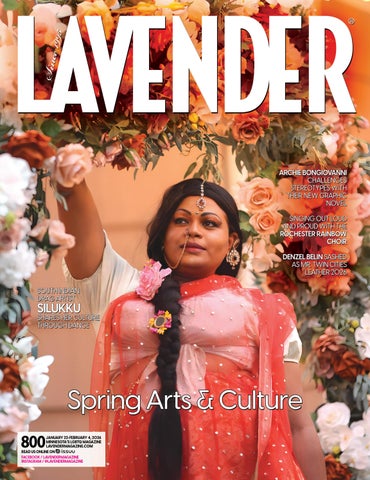
Create a flipbook
Issuu converts static files into: digital portfolios, online yearbooks, online catalogs, digital photo albums and more. Sign up and create your flipbook.