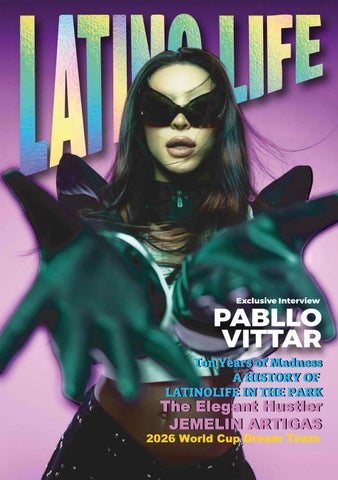
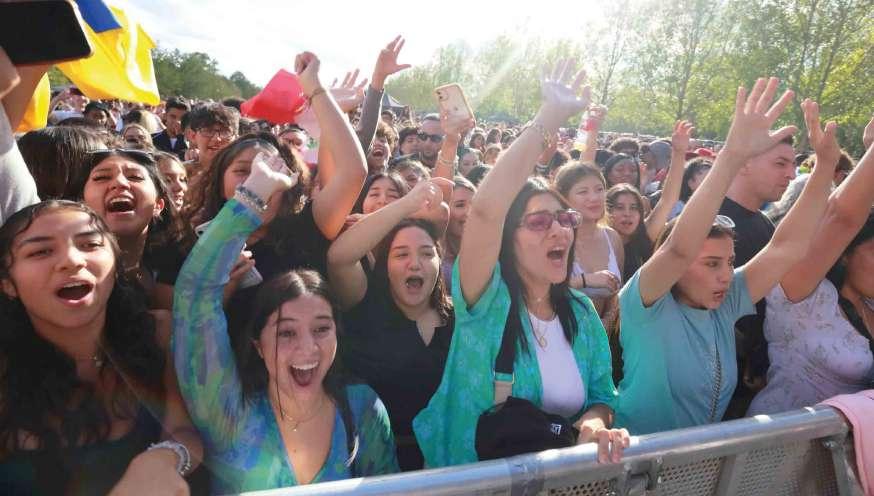
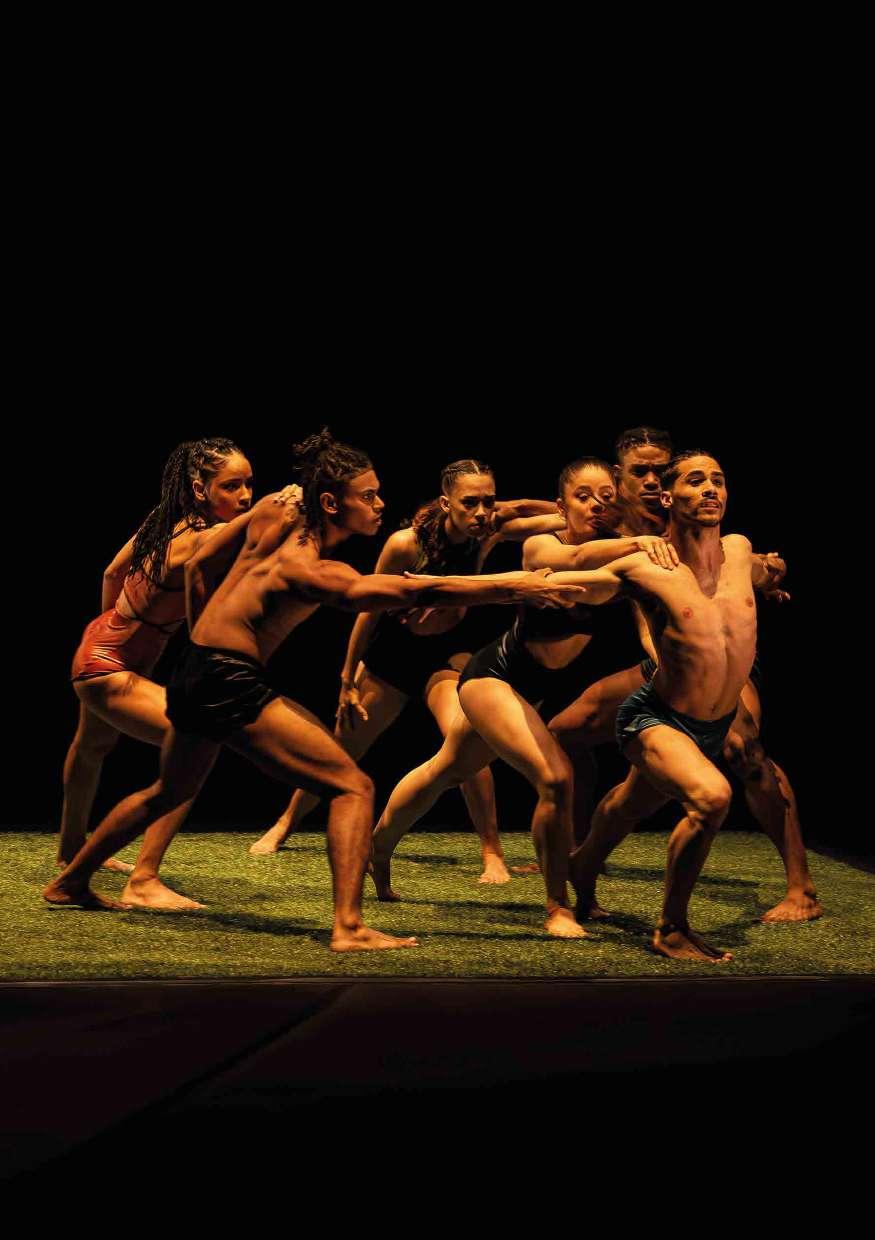
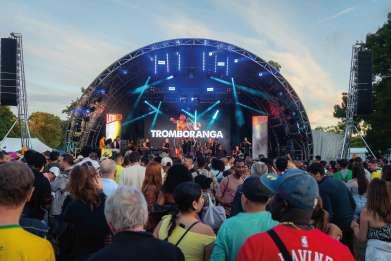
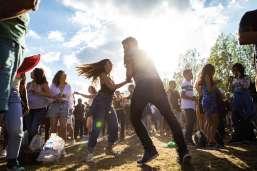
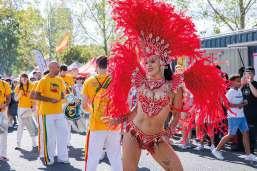
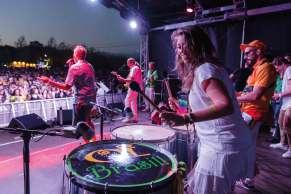
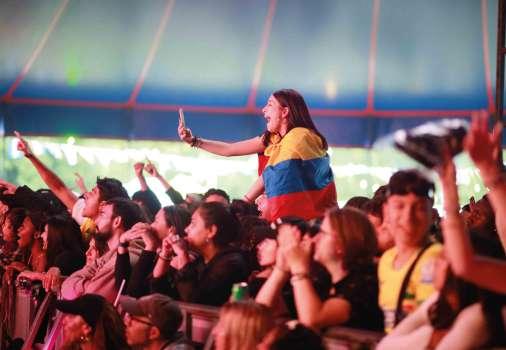
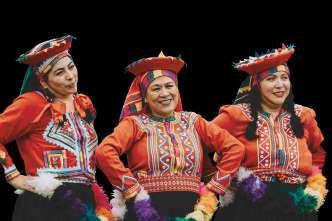
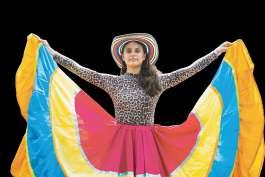
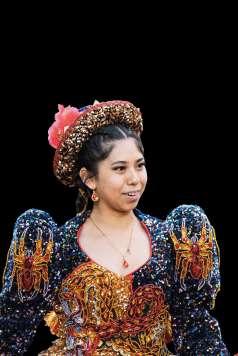
Summer has finally arrived in London and, with this bleary heatwave, pub gardens are calling, heralding the city's long-awaited return to festival season. With As One in the Park (Sat 18th July) and LatinoLife in the Park (Sun 19th July) just around the corner, this edition celebrates our beautiful LGBTQ+ and Latin communities.
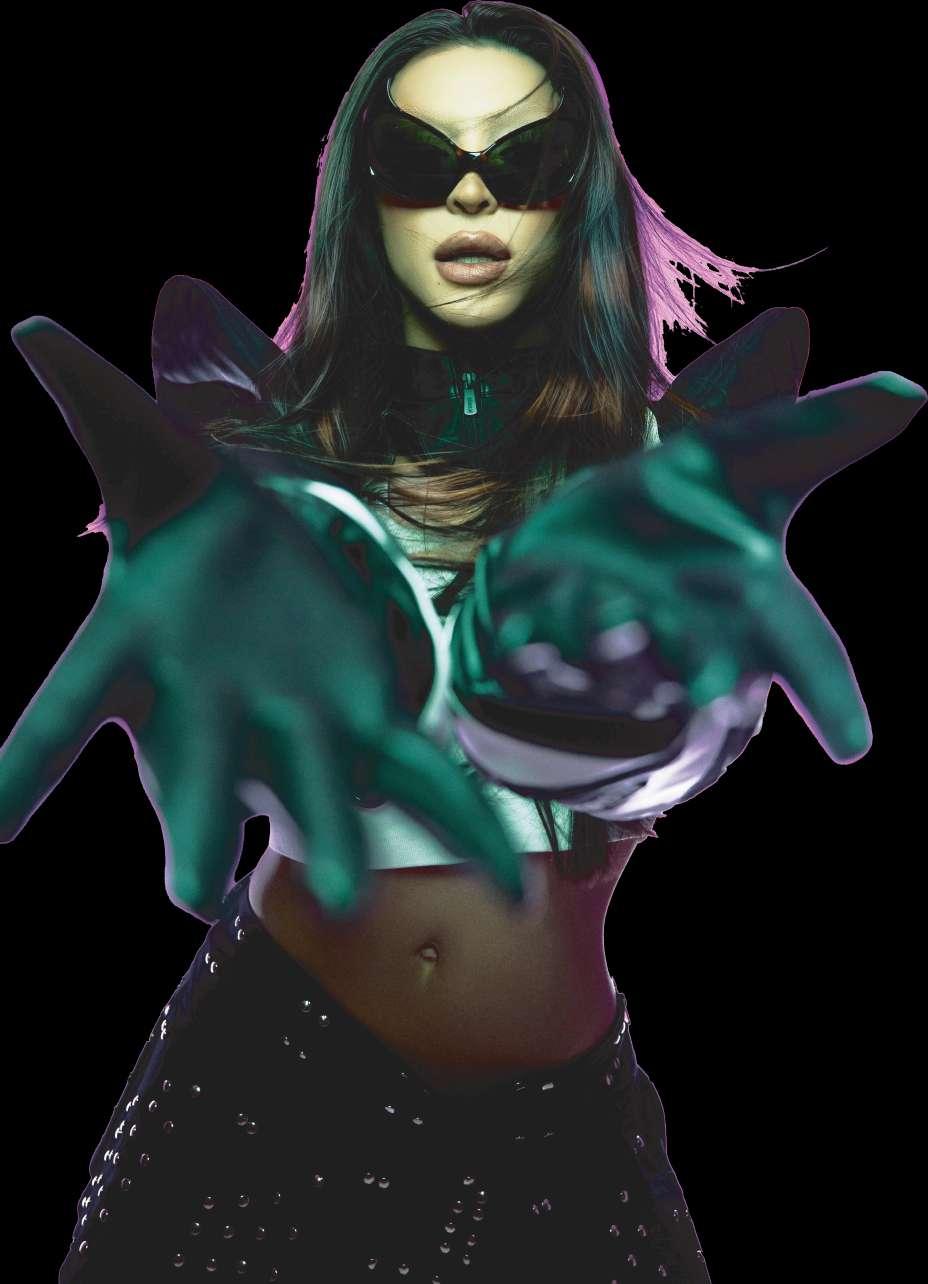
Pabllo Vittar, Brazilian drag queen, pop sensation and one of America’s biggest Infuencers, re�lects on activism, visibility, and reclaiming Brazil's colours, ahead of her headline show at As One. With Latinolife in the Park celebrating 10 years the following day, we trace its journey from a humble community event to the UK's biggest Latin music festival.
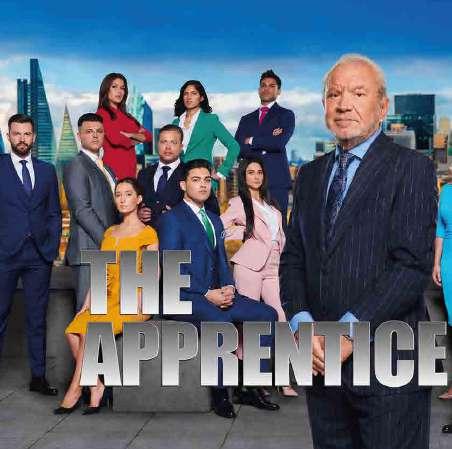
On socials this month we’ll be bringing you stories from the people who made LatinoLife what it is today. One of these is in�luencer Jemelín Artigas, who recounts here incredible journey from poverty in Venezuela to BBC Apprentice to the business mentor and London Latina IT girl she is today. We dive into the surreal beauty of Flamingo, the breakout film from Chilean unknown Diego Céspedes, whose depiction of the AIDs crisis in a small town in Atacama, has captivated audiences this awards season.
We hope you enjoy this LatinoLife’s LGBTQ+ and Latin crossover edition. The only question remaining is which of our amazing festivals will you go to?
How a Drag Queen Restored a Nation's Pride
ver since conquering the Brazilian market with her 2017 debut album, Vai Passar Mal, Award-winning Brazilian pop icon and drag queen Pabllo Vittar has exploded into an international sensation, becoming the most-followed drag queen on social media with 35+ million followers across all platforms. With her feel-good pop anthems, Vittar has released scores of hit albums and collaborated with legions of international acts, including Major Lazer/Diplo, Lady Gaga, Anitta, Charli XCX, Sevdaliza, Thalia, Rina Sawayama, Sofi Tukker, as well as performed all over the world at major festivals, including Coachella, Lollapalooza. But in this interview with LatinoLife, ahead of her performance at As One in the Park festival this summer, Guilherme Arruda Aranha finds more than just a superstar, but a brave activist who has never shied from defending her principles and community, even when it has meant a threat to life.
Phabullo Rodrigues da Silva has the same surname as Lula, the centre-le�t current president of Brazil, and he was one of the
main attractions at Lula’s third inauguration concert on 1st January 2023. No, sorry, that is not quite accurate. Who was on stage was actually Pabllo Vittar, Brazil’s most famous drag queen and Phabullo’s public persona. While Phabullo is a shy gay man who preserves his private life from public scrutiny, Pabllo Vittar is his alter ego — the saucy and naughty star who doesn’t hesitate to �lirt with any handsome man she fancies.
As you may have noticed, Phabullo doesn’t mind being referred to as he. “I feel like a boy,” he told the New York Times in July 2024, adding that gender is a societal construct and that he is indi�ferent to pronouns. But when Pabllo Vittar arrives painted to the gods, things are di�ferent: Pabllo is a she, “for God’s sake!”, she says with conviction.
As a little boy (now 1.88 metres tall) with delicate and e�feminate gestures, Phabullo encountered very early the two opposing sides of mankind: hate and love. Outside of his house, life was di�ficult: “I su�fered a lot of prejudice and bullying, but it made me stronger”, he assured us. But at home, he received unconditional love and support from his mother and siblings. His twin sister Phamella, on a Brazilian TV show, remembers: “He was always messing with my makeup, and when I went to use it, it was gone”, she laughs. “He would practice his makeup techniques on me, and then do his own makeup. For me, it’s nothing extraordinary to see him as a drag because I grew up seeing it.”
“I used to sing at home, in church, imitating artists... It has always been my refuge and my way of expressing myself.”
Phabullo was born to a working-class single mother in São Luís, the capital of Maranhão, the poorest state of Brazil, in the north-east of the country. Despite the financial struggles his family faced, he tells Latinolife he is very proud of his origins: “It was there that I learnt how to be strong and to hold on to big dreams, even with scant opportunities.”
His mother, in turn, said on the same program: “When he came to me and said what he wanted to be, I already knew. Many people today accept their children because of what Phabullo says and does. He put himself out there, and I, as his mother, am proud.” Phabullo himself concludes: “That’s why I say: embrace, love, and give all your support to your LGBT children.”
Music entered his life early, he continues: “I used to sing at home, in church, imitating artists... It has always been my refuge and my way of expressing myself.” He would later sing at small parties and nightclubs for several years, and when faced with scepticism, he kept believing in himself. As with several contemporary artists, the internet was a game-changer, but that tells only half the story.
On his 18th birthday, Phabullo tried drag for the first time and felt incredibly liberated and empowered. Three years later, already embodying Pabllo Vittar, she went viral in Brazil singing I Have Nothing, a Whitney Houston song, and caught the attention of a music producer and manager. Three years on, she took Brazil by storm in 2017 with her good-humoured hit Todo Dia (Every Day), and a catchy chorus that goes “Eu não espero o carnaval chegar pra ser vadia, sou todo dia, sou todo dia” (I don’t wait for carnival to be a bitch / I’m one every day, and every stitch.”)
From that point on, she rocketed. Pabllo Vittar performed alongside Madonna at her biggest concert ever on Copacabana
Beach, sang at the United Nations for Queen Elizabeth’s 93rd birthday, featured in a Calvin Klein global ad campaign, launched her own fashion collaboration with Adidas, and her songs have been streamed more than 1.8 billion times. Having released six studio albums, she has received multiple gold and platinum awards and several diamond discs.
Pabllo Vittar’s appeal derives from several qualities: she moves e�fortlessly between humour, vulnerability, and glamour; she can sing and dance; her choreography is sophisticated and intense; her performances are technically controlled, yet dazzling, intense and emotionally unruly. Furthermore, she managed to transform Brazilian regional music (tecnobrega, forró, arrocha among other rhythms) into legible global pop without falling into the trap of folkloric exoticism.
With all that in her portfolio, comparisons with RuPaul, the in�luential American drag performer and TV host who turned drag into a global mainstream entertainment format through RuPaul’s Drag Race, were inevitable.
“RuPaul may still be the queen of queens,” the New York Times suggested, “but the heir to the global crown has arrived.” RuPaul, for his part, refused any rivalry and publicly tweeted his love and support for Pabllo Vittar in 2022.
This public show of solidarity was wise and elegant. Why encourage friendly fire when the LGBTQI+ community already faces so much misunderstanding, homophobia and violence, especially in Brazil, one of the most dangerous countries in the world for gay and trans people? Indeed, where the former president, Jair Bolsonaro (now in jail for attempting a coup d’état), proudly declared: “I would be incapable of loving a homosexual son, I’m not going to be a hypocrite: I’d rather my son die in an accident than show up with a moustachioed man. For me, he’d be dead anyway.”
“Just by existing and occupying these spaces, I am already performing a political act. My music, my image, everything carries this message of freedom and representation.”
16 - 29 June 2026
Iask Phabullo, given this context, if it was inevitable that his pop music and activism would become
completely intertwined: “Just by existing and occupying these spaces, I am already performing a political act,” he replies. “My music, my image, everything carries this message of freedom and representation.”
But Phabullo went further, engaging directly with the most powerful person in Brazil at the time, even when the former Brazilian President’s words directly put his life in danger by saying, “The son starts acting a little e�feminate, he gets a beating, and his behaviour changes.” Phabullo responded with rainbows and glitter: “I strongly believe in joy as a form of resistance. We already face so much violence. Celebrating, laughing, and dancing are also political acts. We deserve to be happy and live life to the fullest.”
“Those who come to my show can expect a night of great celebration, freedom, and music to feel in their bodies.”
It is no surprise, then, that Pabllo Vittar was performing at Lula’s inauguration concert, showing her support for a political agenda that sits within the democratic spectrum and places tolerance and diversity at its core. A few months later, just as Brazilians had become accustomed to seeing the green and yellow colours as a symbol hijacked by the far-right, she didn’t hesitate to reclaim the narrative. Wearing the traditional yellow jersey of the five-time World Cup champions, Pabllo Vittar cried: “It is so beautiful to see you in yellow and green!”. It was her turn to encourage people to wear the national colours without being associated with those who desired the death of democracy.
Coincidences aside, Pabllo Vittar will perform in London for the first time the day before the World Cup final this year. “Those who come to my show can expect a night of great celebration, freedom, and music to feel in their bodies,” she assures. I would love to see her wearing my national team’s jersey and celebrating our sixth World Cup title. But, to be honest, it doesn’t matter whether the eleven Brazilians manage to li�t the Cup or not: this time, my hero is a drag queen. Thanks to her, I can also wear my yellow jersey with no fear of being mistaken for someone who wants the end of democracy.
Pabllo Vittar will perform at As One in the Park festival. Saturday July 18th, Walpole Park, London W5
10 YEARS OF MADNESS A History of LatinoLife in the Park
From their 25 years together, Venezuelan-born José Luis Seijas and Argentine Amaranta Wright have been part of the rise of Latin music, from a marginalised genre to the world’s most streamed. The couple had already been creating clubnights, magazines, concerts, showcases and awards ceremonies when they launched their festival in 2016. Now the UK’s only Latina-run National Portfolio Organisation and its only Latin Music Talent Development Partner, LatinoLife in the Park has grown into the UK’s largest single-day Latin festival. Amaranta Wright recounts the journey, as the festival celebrates its 10th anniversary, with the focus, today as ever, on putting UK Latin music at the heart of that global narrative.
Istarted LatinoLife with my husband twenty-five year) ago. He is from Venezuela and I am from Argentina. I grew up in London from the age of seven and José came from Caracas when he was 19. We met in 2001, upstairs at Bar Lorca in Islington, a popular salsa club at the time. I had spent my twenties being a journalist in Latin America, then a market researcher for Levis and, when I met Jose, who was running a Latin music record store, I was writing a book.
From the day we met we’ve been inseparable. We joined forces in life and in work, building a family and a cultural institution at the same time. Soon a�ter we met, José, who had always been a salsa fan, came back from his record store with a CD, Tego Calderón’s El Abayarde, now a seminal reggaetón album. “This is the future of Latin music,” he said.
José soon began running London’s first reggaetón clubnights. He really pioneered the urban Latin music scene in London with his La Bomba nights at Ministry of Sound, which he then took to Europe. At the time no Latin music curators nor media pundits in the UK were playing reggaetón. Many dismissed it, if they were taking notice of it at all.
While José was promoting reggaetón nights, I began a Latin culture magazine, carrying an unfulfilled dream of my dad who, back in the 1980s, got money to do a pilot before his project was dropped. From then on, we began doing so many things. José couldn’t stop coming up with ideas, and I would take up each baton and run.
It would be like:
José: “Oh you know there’s no such and such for Latinos in London.”
Me: “Yeah you’re right, we should do it.”
The next thing we knew, on top of the club-nights and the media, we launched The LUKAS (Europe’s only Latin Entertainment Awards) in 2012 - in an e�fort to give more visibility, recognition and profile to Latin American artists in the UK - a brilliant VIP red-carpet gala, one that everyone wanted to be at.
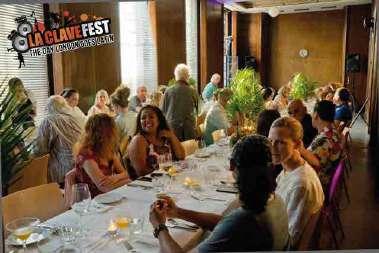
It wasn’t until 2016, that we launched LatinoLife in the Park (initially called La Clave Fest). We’d been running The LUKAS successfully, attracting celebrities such as David Gilmore and Vivienne Westwood, who would tell us it was the best awards ceremony they’d ever been to. But even a�ter the amazing party, and us exhausted, festivals were still not booking our award-winning artists. For The LUKAS to have some kind of legacy, we decided we had to do a festival ourselves, one that showed o�f our unique UK Latin identity rather than just rely on international names.
In addition, neither of us felt represented by the Latin music events at the time, because of the type of acts on o�fer and the absence of our community in them. We wanted to tell our own story, as opposed to what was o�ten clichéd, low-quality o�ferings we saw (say salsa dancing on Strictly ) or have us lumped together, out of context as World Music. We wanted to present our own version of ourselves and reclaim the narrative about us. We wanted a festival Made by Latinos, for Everybody.
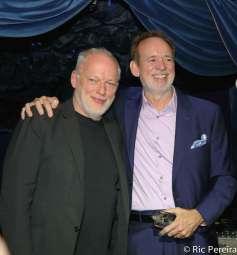
Rock legends David Gilmore & Phil Manzanera
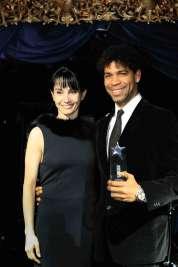
Ballet dancers Carlos Acosta & Tamara Roja
17 - 20 June 2026
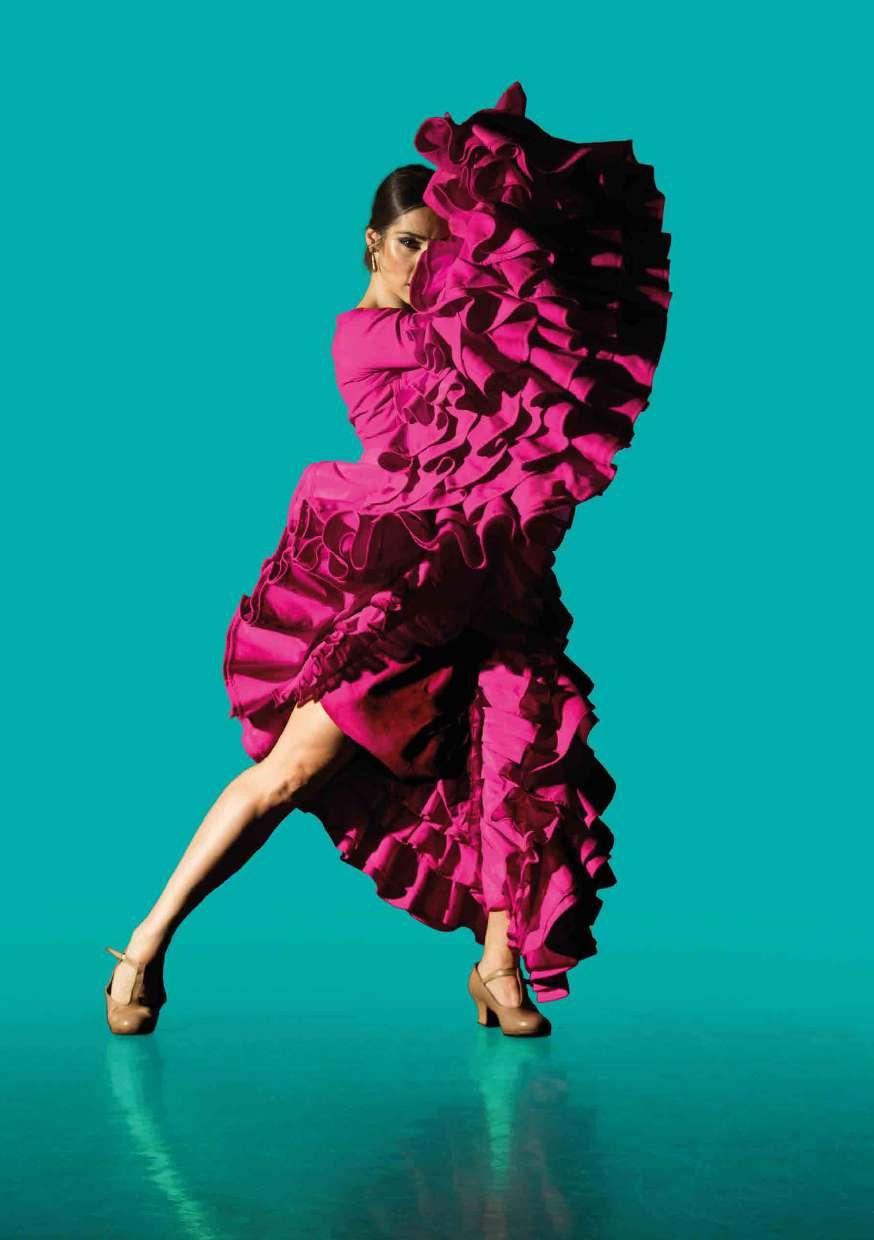
Dance to the beat of the Caribbean with Carlos Acosta’s latest graduates
The last 10 years have been a whirlwind of ideas and frenetic activity as we’ve attempted to put them into action,
mostly as a two-person show. One year, we had 40,000 people in Finsbury Park, and it was literally just José and I and a few helpers. That was the year José ended up in hospital, such was the strain of the juggling act.
The following year, when we finally did get a production manager, he jokingly asked if José would be stage managing, whilst filling in for the drummer, grilling sausages at one of the food stalls AND refereeing the kids football tournament that we’d decided to put in the middle of the two stages (utter genius or complete madness),
When I think of us, I think of a bullfighting scene: José in a ring provoking me with his red cape of ideas, me charging at them like they are actually possible and stubborn enough not to stop until proved right or wrong. We are both idealists and naturally entrepreneurial (or suckers for punishment) and have more than once ended up collapsed in a bundle, wondering “what are we doing and why and who started it”.
Now LatinoLife in the Park is the UK’s largest one day Latin music festival, the only Latina-run major park festival, voted the UK’s most inclusive festival (FestSpace). And yet it is just one in a whole ecosystem of LatinoLife activity that includes weekly nightclubs, showcases, concerts, film screenings, supper clubs, conferences, incubators, mentoring, outreach and talent development programmes, even a record label. It is our �lagship event that literally takes ‘into the park’ everything we do all year round and says to the public: this is who we are.
We’ve made mistakes, su�fered several failures and enjoyed relief at somehow pulling o�f our mad ideas against all the odds. It’s been a roller coaster of intense highs and lows. Most of all, a lot of gra�ting, and a lot of running around like headless chickens. And yet, something has always driven us forward; the exhilaration, the joy, the energy we get from the crowd, the appreciation from artists, the a�firmation from the community, the thrill of seeing others love our o�fering (even the haters), and the sense that this is simply what we have to do. I guess you have to be crazy or stubborn or both to even get close to building something from scratch, especially if you have no money. Here’s how it happened, year by year.
British Latin talent Yxng Dave
2016 - The Beginning
The best piece of advice I’ve ever been given was when I interviewed the mayor of Curitiba, a city in Southern Brazil. I had
been sent there by a US magazine as part of a series on Cities that Work. By implementing a revolutionary public transport system, the mayor had transformed his city into one of the most socially integrated in Latin America. How did he do it? “The most di�ficult thing of all,” he said, “is to begin.”
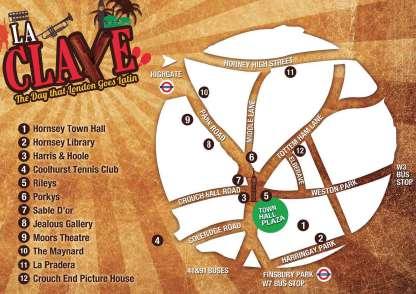
With no money, our only option was to start local and start small. We were living in Hornsey in North London at the time, which happened to have its own festival centred around the plaza in front of an amazing Art Deco listed building that was the Hornsey Town Hall. It was a lovely community event, only that the full diversity in Haringey wasn’t represented. We figured it could definitely do with an injection of Latin joy and so approached the organisers about us taking over a day.
Of course, we were never going to start small. True to our nature, we wanted to do EVERYTHING; a proper cultural take over. And so we approached art galleries, small venues all around the area, and ended up in over 20 venues. We had poetry readings in cafes (Leo Boix and Leila Segal), intimate Jazz concerts (Ahmed Dickinson and Luiz de Almeida), a pub gig by Katy Prado, even two theatre pieces, one by our LUKAS-winning theatre director, Tasmine Clarke.
5-11PM 13.06.26 EARLY DOORS. CLASSIC TUNES. GROWN-UP ENERGY. NO FILLERS• JUST REGGAETON THE WAY YOU REMEMBER IT. 100% OLD SCHOOL REGGAETON OLD SCHOOL VIBES SATURDAYREUNION OPEN AIR GRADEN PARTY!!
Inside the town hall, we had Spanish sing-a-longs and choral sessions by Camilo Menjura, film screenings and talks by Latin
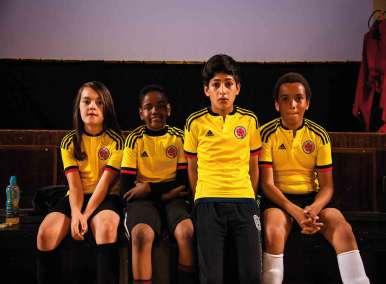
American Bureau, DJ workshops, piñata making, samba drumming and a ‘Copa America’ tournament involving eight local schools. We hosted four films in local cinemas, literature readings, an art installation and three exhibitions.
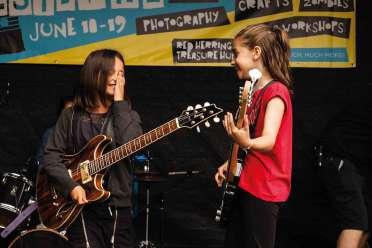
The main stage in the square, included performances of all ages and genres; including The Purple Dads led by a 9-yr-old UK-Bolivian prodegé, 16-yr-old UK-Colombian Paloma and 18-yr-old UK-Mexican Maria Jose. Then we had the professionals: Gerardo de Armas (Cuban Rumba) Mike Kalle (Urban Latin), La Explosion (Flamenco), Alex Etchart (Folk), Ahmed Dickenson (Classical) and Luiz de Almeida (Jazz).
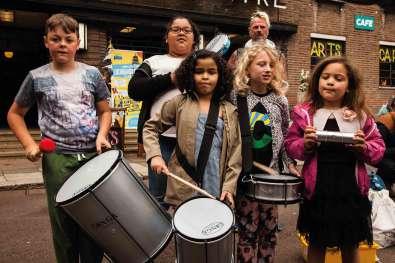
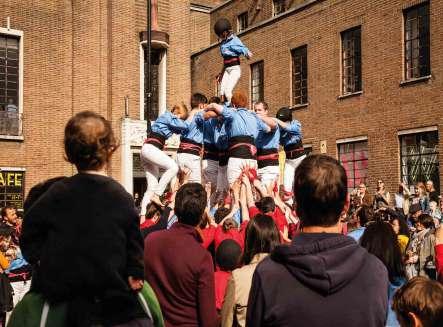
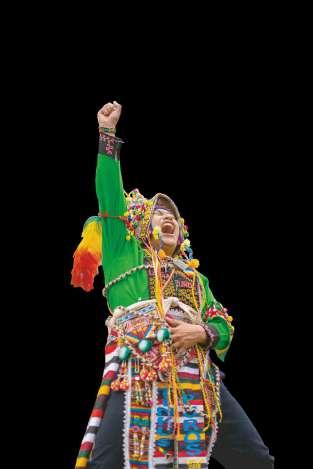
If that wasn’t enough we had a human tower competition courtesy of the London Castellers vs. Paris Castellers, a street parade by Morenada Bloque Kantute Bolovian dance troupe and Marco Santana’s samba batucada, who marched down Crouch End Broadway to the amazement of locals doing their shopping. This was the start of what is today the Big Dance Extravaganza of 500 dance groups that kicks o�f the festival.
In the 6 weeks leading up to the day of the festival, we infused the neighbourhood with Latin culture, via workshops and talks in schools and community centres. We sent salsa teachers into schools, organized a free school trip to Lin Manuel Miranda’s ‘In the Heights’, and organised a school assembly talk by the Colombian ambassador.
It was all crazy, and way too much, but it was worth it just for the reaction we got and to see how what we proposed really resonated with Latinos and non-latinos alike. Families were blown away by the colour and creativity, and it was when we realised that everything is about the experience, who needs Shakira when you have mythical Bolivian monsters?
2017 - Expectations to Live up To…
The following year, expectations were high but we still had no money. The public wanted us back. Hornsey had never seen so many Latinos, who came from all over London. Our applications to the Arts Council had failed but there was still pressure to deliver as much as we had the previous year. We were London’s only multi-arts festival dedicated to Latin culture, with an emphasis on supporting home-grown UK-Latin talent and the new bi-cultural generation. Luckily the Mayor of London came up with some dosh, and at the last hour, we were able to go ahead.
We kicked o�f with a Copa America. 10 schools representing di�ferent Latin American countries. Royal Ballet dancer, Fernando Montaño, the first ever Colombian dancer to become principal at the Royal Ballet, had spent 6 weeks in a school teaching kids his ‘Foot-ba’ choreography, based on the moves of famous footballers, to inspire more boys to take up ballet and led the kids to perform it in the square
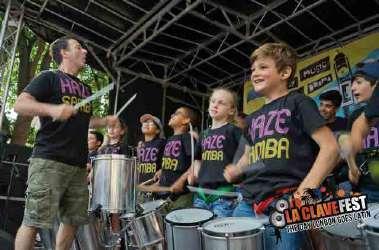
Time for a Samba extravaganza with Romero’s dancers, then 30 drummers from Haze Samba kids (ages 8 to 14), followed by Tribu samba drummers with the children of Rokesly primary school.
On the main stage, Venezuelan singer song-writer Luzmira Zerpa, was followed by Juanita Euka and a Latin rock band headed by Ecuadorian Carlos Paul, René Alvarez and his salsa band before Grupo Lokito took to the square..
Back inside the Hornsey Town Hall the dance classes began, while upstairs an older crowd enjoyed Esnayder Cuartas’ fine Latin dining experience. They emerged onto the balcony, like Evita looking down on the spectacle in the main square, before finishing the evening with two a�ter parties inside the Town hall.
2018 - Going South
By now we realised that the beauty of the festival was in the engagement with our audience.Before even it was a thing, an immersive experience was really the best
way of summing up what we were doing. We were both representing our community, and also immersing people in Latin culture, who maybe wouldn’t normally go to a Latin event.
Word was spreading that we were doing something special, and despite the huge e�fort and sacrifice, and always being skint, this was giving us a massive buzz. We were on a high speed train, going where we didn’t know, but we couldn’t get o�f.
The problem was, with Latinos coming from all over London, crowds spilling out into the streets, we were fast growing out of Hornsey. A�ter months looking for another venue, (everything we looked to was too expensive) the Mayor of London kindly o�fered us the Scoop, which was the stunning bowl scooped out of the ground under the then Town Hall, the egg-shaped building between London and Tower bridges. We were sold; with the beautiful towers on the Thames as backdrop, this was perfect, and closer to much of our core audience. Yup, it was time to go South.
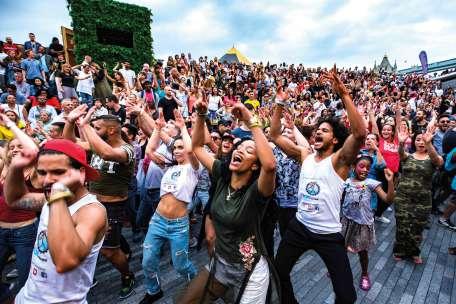
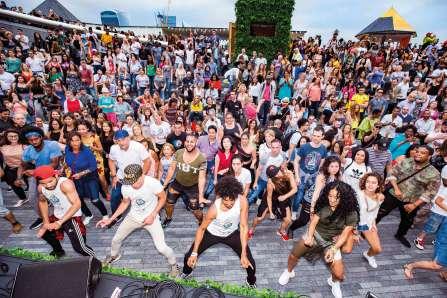
Being in central London attracted people from all over the capital, and our audience doubled. This was the year that the crowd really took over. Omar Puente jumped among the people with his violin and sent everyone crazy, Latin Fun Machine and Yanet Fuentes got the whole 5,000 plus audience line dancing, and the day turned into a full on salsa rave in the middle of the city. It was the only free festival of its nature in the city of London, ever being taken over by commercial events. Never had The Scoop been so alive.
2019 - The Year we became a Major Park Festival
With the amazing experience of The Scoop, we were more than hoping to return. Alas, again, we had become a victim of our own success; we’d brought so many people that the bowl was over�lowing, and they were scared that even more people would come the following year. We were told we would have to find somewhere else.
Homeless again, where could we go? With councils now making big bucks hiring their parks out to major festival promoters, pickings were slim. Ah but a stroke of luck…back in Haringey, the Friends of Finsbury Park had told us they were in talks with Haringey Council about being given a day to celebrate the park’s 150th anniversary, could we help them? The very organisation complaining about major events in Finsbury Park wanted LatinoLife in the Park - a free event, accessible to all and loved by those who attend - to help restore the park’s original intention as ‘The People’s Park.’
Only having done 3 years, and still just two of us, we weren’t ready to be a park festival. But o�fers like this didn’t come every day, surely we couldn’t refuse? And so we went from small community event to major park festival. What an opportunity for us, and more so for our artists, it was what we had worked for, for UK Latin talent to reach audiences they would never normally reach. London was finally to get its first Latin major park festival for years, and for the first time ever, it was UK Latin artists that were headlining.
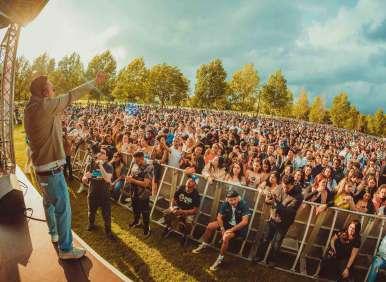
At 11am on Saturday 1st August 2019, I was standing in an immense empty field, thinking no-one would turn up. By 4 pm I climbed onto stage to witness a sea of people as far as my eyes could see. We had brought together Latinos from all over London, even if this meant putting two warring food stalls at opposite ends to stop them fighting!
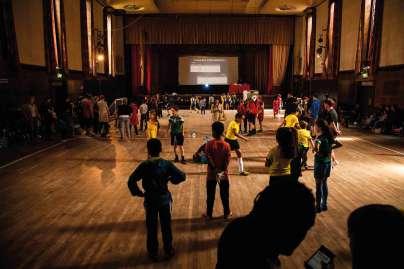
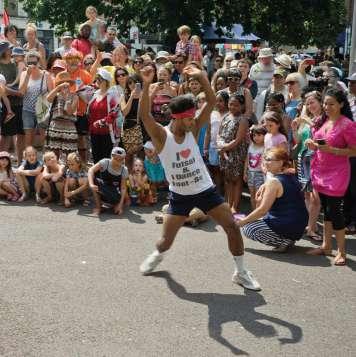
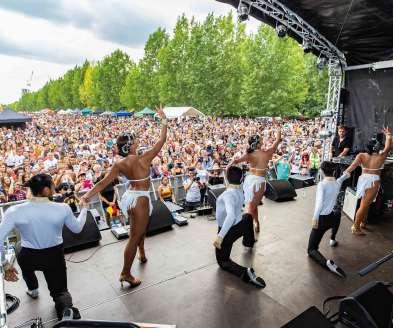
The best thing was seeing the diverse audiences we were attracting; entire South London Colombian families, abuelos incluídos, picnicking alongside Essex eccentrics in 70s outfits and Hawaiian �lowers. We actually put the kids football tournament in the middle of the two stages; toddlers and teenagers battling to the death, while salsa blared and skimpy-clad Brazilian dancers samba-ed around the sidelines.
We saw how audiences embraced the diverse line up…the tango orchestra followed by Latin grime crews were loved and cheered in equal measure. Hungry for exposure, we were delighted and relieved to see how our young urban artists seized the opportunity we’d given them and had the audience eating out of their hands with their energy and swag. We had been coaching many of them in the weeks before to make sure they were performance ready and they did us proud.
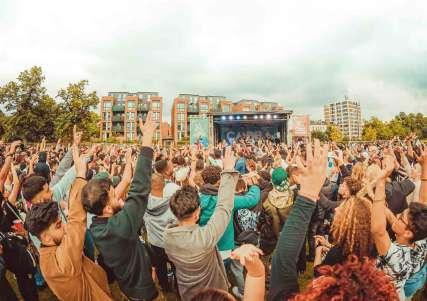
For the first time, young Latinos were performing to almost 40,000 people throughout the day. Nobody wanted to leave; long a�ter the festival was over, security was having to disperse a�ter- parties in the park. Needless to say, this was also the year José ended up in hospital.
2021 - The Year Youth Took Over (and we became 3 stages)
2021 was a really special year for us. Lockdown had given us a welcome break and, finally, the Arts Council was beginning to recognise the work we’d been doing. With a year to come to terms with the fact that we were now a major park festival, we were ready to come back with a bang, and so was London.
Coming out of lockdown, our weakness became our strength. Not relying on international talent meant that, while most festivals were out for another year, we could produce the festival at short notice. In 2021 LatinoLife in the Park was the only large-scale event happening in London. That was a very special feeling.You could feel the joy of people coming out of their homes.
Ambitious as ever, we added an extra stage. One thing that had become clear from 2019 was that the kids representing UK-Urban Latin sound had killed it and were hungry for more. We had drawn a whole new audience of young people. What had been just an Urban Latin showcase within the lineup, now became the first UK festival stage to exclusively feature UK Urban Latin talent. The Candela Stage gave an unprecedented platform to 25 young artists and their unique homegrown genre - fusing UK grime, drill and urban with Latin beats all in our very own London-Spanglish.
The crowd’s reaction was unbelievable, giving the festival a whole new energy. We could see what a buzz it gave young Latinos both on stage and o�f. Latin urban artists were on the big stage, like their Afro-Caribbean peers, bringing their communities with them. And the next generation in the audience could see themselves in the future. The kids raved, while mum and dad were at the main stage enjoying René Alvarez’ London Latin Allstars salsa band, a 21-piece band we put together of London’s finest Latin musicians.
This year was the first time we had a proper production team and everything started to feel more professional. No hospital visits this year, only a long drive across London with a car load of stinking garbage, thanks to some misbehaving traders. As we paid the dodgy geezer at his processing plant, it was a reminder that, feeling on top of the world a�ter hosting a 40,000 people rave, there was still the rubbish to take out!
2022 - The Biggest Latin Show Ever
Having a massive festival within five years was never part of the plan. High o�f the success of 2021, we got carried away and went for broke…four stages over two days!
There was a new energy that was taking centre stage, and it belonged to young people. This was the future and we responded. Candela Stage became Saturday’s Main Stage. Everyone knew what that meant.
Kids were going to have to grow up. Young gun Angelo Flow was our main man, we’d been nurturing this young Venezuelan rapper and, having gained traction in the club scene, he invited established dancehall and grime artists like J Spades, Sav 12 and Lisa Mercedes, to share the stage.
The crowd re�lected this natural alliance between Black British and Latin British; word had spread into deepest Tottenham and the vibe went mental by 7pm. Knowing we would need to calm things down by 10pm, we threw afrobeats Cuban funk band Alvarez Funk onto the stage, which was the perfect combination of Afro-Latin �lavours for all ages to enjoy.
2022 also meant a Brazil Stage for the first time, a wave of Spanish talent featuring Queralt Lahoz, and a dedicated DJ party stage. The result was another milestone - a two day Latin park festival. By now the LatinoLife in the Park had been voted most inclusive festival in the UK and the Arts Council had invited us to become the UK’s first ever Latina-run National Portfolio Organisation, recognised for bringing artistic excellence to the British public.
Other crazy stu�f? Oh yes, Warner studios doing a casting in the middle of the field. They ended up casting the entire warring scene for the Marvel cinematic universe from the festival, including our cleaning sta�f who pretty much all ended up in the movie.
2023 - The Year the Heavens Opened…and we
This was the year it didn’t just rain, it poured. While Storm Antoni raged on Saturday 5th August, our amazing public accompanied us in the baptism of fire that was our first ever mudfest.
By 2023 we’d moved from Finsbury Park to Walpole Park, due to Haringey telling us that numbers had got too big and we could no longer do an unfenced event. This meant fencing, structures and security that we couldn’t a�ford as a free event. Ealing in West London came to the rescue with a contribution towards fencing, but it meant our first year as a ticketed event and charging a small fee.
As it poured and we were about to open gates for the first time, we were sure it was going to be a catastrophe. But then we saw people, yes, actually queuing in the rain, with their umbrellas. Not only did people turn up, we learned there and then that we had the best audience in the world; loyal, resilient and ready to party no matter what.
What we thought would be a disaster turned into one of the most beautiful experiences of all our 10 years. From welly-clad festival veterans to the sandal-wearing newbies, salsa-dancing in the mud regardless, our beloved Latin ravers did it in style, high on the pure fun of it.
It was as if someone upstairs was looking out for us; not only was it the first ticketed year, which helped save us, it was also the first year we had a big top tent. Love in the rain became drying o�f dancing apretadito in the tent, just in time for another first…female headliner Lucy Calcines, who sang Selena, salsa tunes and even had her mum on stage. Oh yeah this was the year of the parents on stage, with Adrian Garcia’s bolero singing dad, I mean…it was all so emotional, we had so much fun, and had never seen so much kissing!
The two chance changes, and our incredible audience, helped make one of our most memorable festivals and le�t us full of gratitude. What started as despair in the morning, ended up making us feel that nothing can stop us now. Having passed this rite of passage, we really could say that we’d made it as a UK festival!
2024 - A Mature Version of Us
As Ealing embraced us, we improved our o�fer; more stages, more food stalls, more experiences. Now a paid, yet still accessible, festival (with many free and £5 tickets),sales allowed us to prepare better, pay better and deliver an ever more sophisticated and streamlined event.
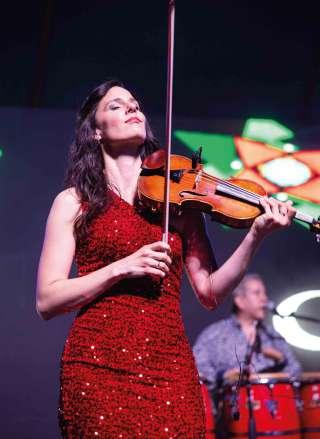
Falling on Colombian Independence Day, that year we celebrated London’s largest Latin community with Pacific salsa star Jimmy Saa. For me, musically, this was the best show we’d ever had at the festival. But everyone seemed to talk about Classico Latino’s sexy violinist in the red dress who enamoured the audience with her classical take on Latin music, in between the non-stop dance party, fuelled by London's finest reggaeton DJs. We love these kinds of contrasts at LatinoLife in the Park.
This was the year we added our “immersive experiences”, which showed o�f the culture of a particular country. 'Cuba Linda', hosted by Yanet Fuentes and Lázaro López, transported festival goers to the Latin Caribbean with live rumba music, Cuban percussion and dance workshops. At ¡Viva Mexico! guests soaked up the sounds and spirit of the Mayan nation with mariachis, Lucha Libre wrestlers and folk dancers. That little Mexican bubble in the field was rocking all day long!
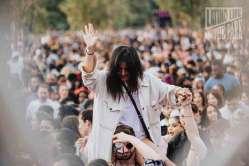
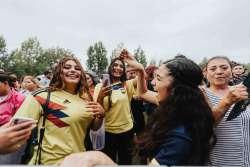
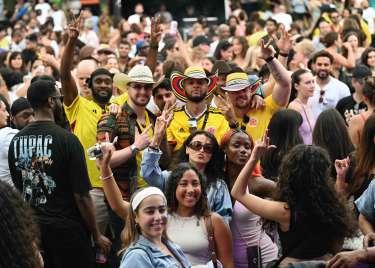
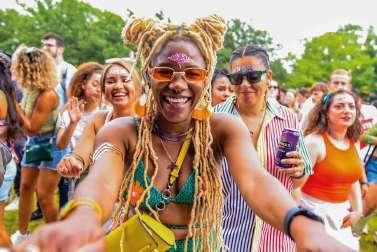
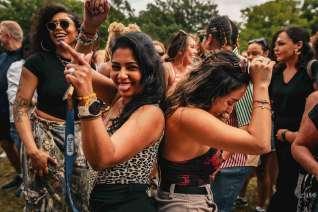
It was also the year we really saw how diverse the festival had become. We saw Afro-Caribbean women in traditional head gear, others in head scarves, men in turbans, others baring torsos, dancing to Mexican pop hits. We saw Mexicans and Bolivians dancing to salsa, Argentines and Cubans dancing to samba. The festival had become a joyous gathering of all ages, colours and creeds, making us proud to have one of the most diverse festival audiences in the UK. Seeing the glowing, smiling, laughing crowd dance through the day and night makes all the hard work worthwhile. It was our best festival to date.
2025 - The Year the Dance Parade exploded and
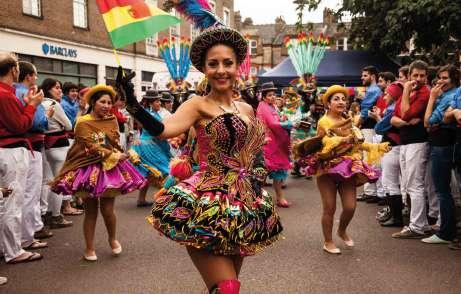
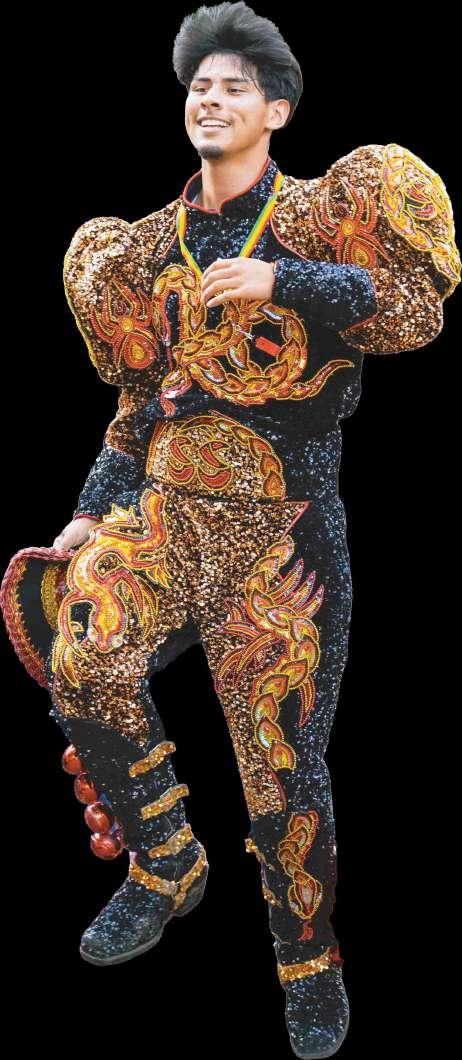
This was the year that the Big Dance Extravaganza dance parade exploded. Over 500 dancers of all ages kicked o�f the festival in a kaleidosco peof colour, sound and movement, their pride and passion re�lected in their incredi ble costumes.
While every year, we had invited dozens of folk dance groups, this year the combined Andean immersive experience, together with the added folk groups amounted to our biggest dance parade ever.
What struck us was how many young people formed part of the parade. In an era when everyone is trying to be cool, these teenagers, dressed up as mythical Inca gods, dared to be di�ferent, finding a meaningful sense of identity in their roots and heritage.
This was our most ambitious and successful festival to date - we truly felt we’d matured as a festival, in terms of organisation, having created a great partnership with our friends LGBTQ+ veterans Orange group, who run the logistics and bars (and the Saturday).
place to come in London to eat Latin street food at its finest.
Since it began 10 years ago, LatinoLife in the Park’s growth has mirrored a global cultural phenomenon: Latin Music has gone from being a niche genre to the most consumed music genre in the world, LatinoLife in the Park has grown from an obscure community festival to the UK’s largest Latin Music Festival. We feel we’ve played a little part in something important.
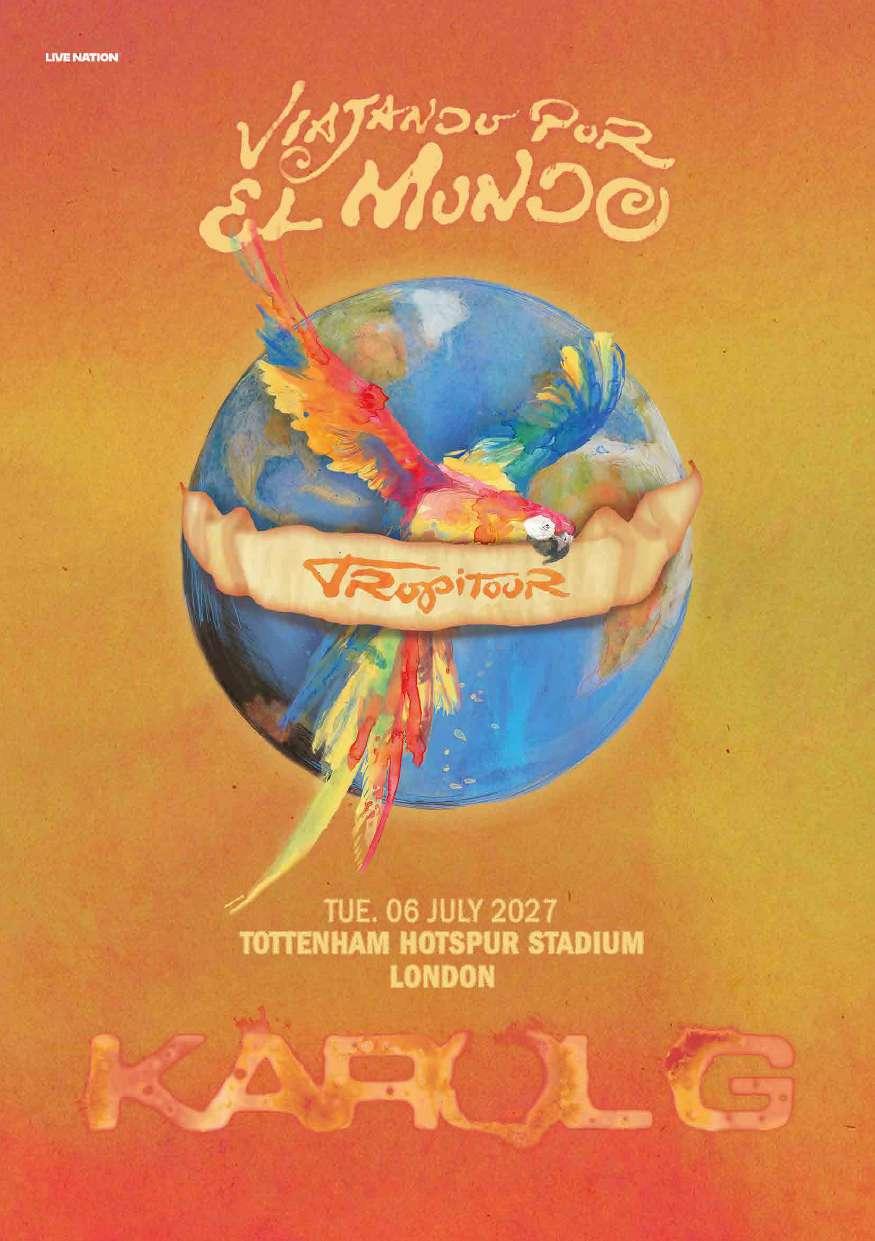
2026 is the biggest year in history for Latin Music. On the global stage, for the first time, a Spanish-language artist is the world's most streamed, performs in Spanish at the Super Bowl, takes the Grammy for best album. In the UK, that same Bad Bunny became the first Spanish-language artist to sell out a stadium, with Karol G becomes the first Latina stadium artist next year, while Pitbull becomes Hyde Park Festival’s first ever Latin headliner. As for us, as the UK’s only Latina-run NPO and the UK’s only Latin Music Talent Development Partner (TDP), we’ve been given the task of helping to ensure UK-based Latin artists are part of this narrative.
LatinoLife in the Park is not only the best place to discover authentic Latin music, it’s the best place to discover unique homegrown Latin talent right here in the capital. 'British-Portuguese-Angolan rapper Broken Pen performed at Feira Preta in Brazil, and British-Colombian rapper Broken Pen collaborated with local artists at Colombia's famous Communa 13. Performing again at LatinoLife in the Park in 2026, they prove that our festival is not only the best place to discover authentic Latin music, it's the best place to discover unique homegrown Latin talent.'
At the same time, as we travel internationally with our UK artists and build collaborations in Latin America, we are now bringing more global artists to our festival. This year we have Puerto Rican salsa Legend Rafu Warner whose career spans decades, shaped by his time with Bobby Valentín’s orchestra in New York’s golden era. From Mexico's Compañía Folklorica de Bernal's 30 person dance and music extravaganza, bringing to life the country's rich cultural heritage, to Argentina's Hernan Jacinto, who revisits the songs of Tango legend Carlos Gardel in jazz format.
This year you’ll find a mature festival as we enter into the international terrain of facilitating collaborations, building bridges and connecting cultures. Who knows, perhaps one of the UK artists you’ll see at LatinoLife will be the international headliner of tomorrow. The di�ference is that they’ll be singing in Spanish.
LatinoLife in the Park 2026 celebrates 10 years on Sunday 19th July in Walpole Park, London W5 www.latinolifeinthepark.com
Latin American rock is not only a musical genre, it is a language that we use to speak about social realities, cultural revolutions, and shared feelings in all the continent. From the melancholy in the south to the rhythm explosion
of Mexico and the Caribbean, all our bands reshaped global in�luences into something distinctly Latin American. In this article, we will talk about 10 important bands that, with their lyrics and sounds, became the soundtrack of Latin America. By Mar Ziller
LStereo (Argentina)
ed by Gustavo Cerati, Soda Stereo is the most in�luential and widely recognized Spanish-language rock
band of all time. They helped break barriers in Latin American rock thanks to their music evolution and a level of production that defined the sound of the 80's and 90's across the continent.
TEl Cuarteto De Nos
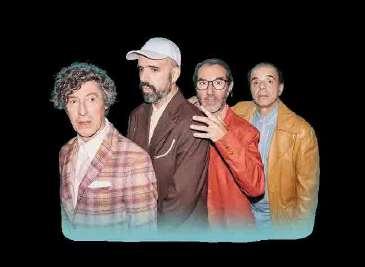
They distinguished themselves through their fusion of Mexican folklore and alternative rock. Their artistic direction
celebrates their mestizo cultural identity, known for their constant experimentation and unmatched energy.
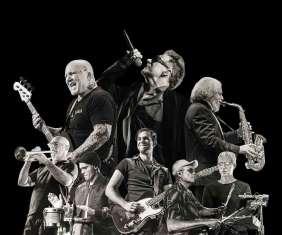
The band that reinvented alternative rock with lyrical brilliance. Their lyrics with complicated rhymes, (Argentina)
hey started out as one of the leading bands of the ska movement in Argentina and they finished blending rock with wordplay and irony, let them win a massive crowd in the new generations.
reggae, salsa, tango and folklore. They show that latin rock can be danceable, festive, and at the same time politically committed.
Soda
Café Tacvba (Mexico)
Los Fabulosos Cadillacs
OAterciopelados (Colombia)
Seru Giran (Argentina)
ne of the most in�luential bands in Colombian alternative rock. They found an iconic sound mixing
distortion guitars with tropical rhythms and prehispanic roots. Their speech stands out for ecological activism, feminism and a peace message.
TCaifanes (México)
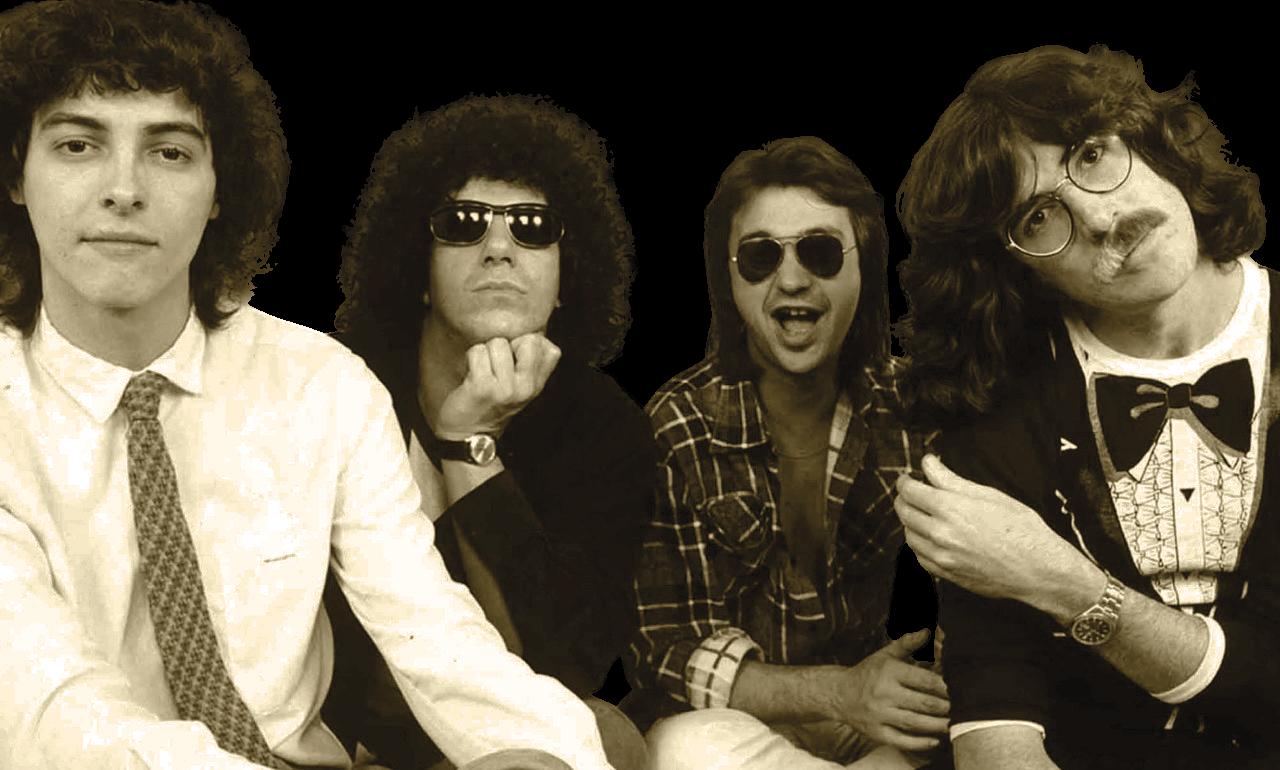
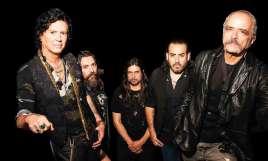
One of the best Argentinian band composed by Charly Garcia, David Lebon, Pedro Aznar and Oscar Moro
Their technical virtuosity and metaphor-rich
he masterminds behind a mythical rock legacy in Mexico. They blend Mexican folklore and British
post-punk, creating a sound that is majestic and poetic, marking a turning point in the Aztec scene.
MPatricio Rey y los Redonditos de Ricota
(Argentina)
ore than a band in Argentina. They achieved massive popularity while maintaining a strictly independent
Tin�luenced by punk and synth-pop,
they were the soundtrack of teenagers during the military dictatorship. Their
stance. Their sharp-edged rock sound and cryptic lyrics gave birth to the ‘misas ricoteras,’ massive concert gatherings unlike anything else in Latin America. With their song “Ji Ji Ji”, they did “el pogo más grande del mundo” (the biggest pogo of the world), defining rock passion in Argentina.
T(Mexico) from purists, their in�luence on the
industry cannot be denied. Their music combined melodic sounds, with rock ballad and reggae in�luence.
Sing along to your favourite Latin Rock tunes at LatinoLife in the Park on Sunday 19 July www.latinolifeinthepark.com
LATINOLIFE’S WORLD CUP DREAM TEAM 2026
As the 2026 FIFA World Cup arrives, South America once again comes armed with a generation capable of dominating football’s biggest stage. From serial Champions League title holders and World Cup 2022 winners to emerging talent hoping for a place in the history books, this Latin American XI re�lects a footballing continent’s combined talent, sustained excellence, statistical dominance, and performances under pressure, that carry our expectations this summer. By Rafael Seijas
Vinícius Júnior (Brazil)
Julián Álvarez (Argentina)
Federico Valverde (Uruguay)
Piero Hincapié(Ecuador)
Gabriel Magalhães(Brazil)
Lionel Messi (Argentina)
Enzo Fernández (Argentina)
Moisés Caicedo (Ecuador)
Marquinhos (Brazil)
Daniel Muñoz (Colombia)
Alisson Becker (Brazil)
TGoalKeeper: Alisson Becker (Brazil)
he resume is peerless. A Champions League and Copa América winner, Alisson has consistently claimed the "Best FIFA Goalkeeper" and Yashin Trophy honors. His achievement lies in his consistency; he has been the bedrock of a Brazil side that remained top of the FIFA rankings for years, underpinned by his record-breaking clean sheet tallies in the world's toughest league.
WCentre Back: Marquinhos (Brazil)
ith nearly 100 caps for Brazil and a staggering collection of over 30 domestic trophies, Marquinhos is the most decorated defender on this list. An Olympic Gold medalist and Copa América champion, his career is defined by his longevity at the absolute summit of the sport, having captained both club and country through multiple World Cup cycles.
Le�t Back: Piero (Ecuador)Hincapié
Hincapié is already a history-maker. At just 22, he was a vital component of the "Invincible" Bayer Leverkusen side that shattered European records. He has already amassed significant World Cup experience and remains the youngest leader of an Ecuadorian "Golden Generation" that has become a fixture in the FIFA top 30.
MRightBack: Daniel Muñoz (Colombia)
uñoz’s rise from the Colombian league to becoming a standout in the Premier League is a testament to his grit. A key architect in Colombia’s impressive unbeaten streaks and their deep 2024 Copa América run, he has established himself as one of the most productive attacking defenders in South American qualifying, consistently delivering goal involvements from the �lank.
Centre Back: Gabriel Magalhães (Brazil)
Gabriel has transitioned from a promising prospect to a cornerstone of one of the stingiest defenses in Europe. His achievement is found in his remarkable goal-scoring record for a defender and his role in revitalizing a historic English giant, proving he has the big-game temperament required to anchor the Seleção.
TCentreMidfield: Enzo Fernández (Argentina)
he 2022 World Cup Young Player of the Tournament. That achievement alone cements his place. Since li�ting the trophy in Qatar, Enzo has become one of the most expensive players in history, carrying the mantle of Argentina’s midfield transition with a Copa América title already added to his burgeoning collection.
Striker: Julián Álvarez (Argentina)
a Araña" has quite literally won it all. By the age of 23, he became one of the few players in history to hold the World Cup, the Champions League, and the Copa Libertadores simultaneously. His trophy-per-game ratio is unmatched by any contemporary, making
him the ultimate winner to lead the line in 2026.
CentreMidfield: Moisés Caicedo (Ecuador)
aicedo’s achievement is measured by his meteoric impact. He broke the British transfer record for a reason: his ability to dominate elite midfields is statistically unmatched. He has been the primary catalyst for Ecuador’s recent resurgence, leading them to consecutive major tournaments as the nation’s youngest-ever midfield general.
TRight LionelWing: Messi (Argentina)
he argument is over. 44 trophies, 8 Ballon dꞋOrs, and the 2022 World Cup. Messi enters 2026 not looking for validation, but as the defending champion of the world. Every appearance is now a victory lap for the greatest to ever play the game, having finally unified a nation through his historic run in Qatar.
Honorable Mentions:
Copa América Golden Boot winner and 2025 Premier League champion with Liverpool, "Lucho" remains one of the most feared 1v1 specialists in Europe following his high-profile move to Bayern Munich.
CentreMidfield: Federico Valverde (Uruguay)
l Halcón" is a serial winner. With multiple Champions League titles and La Liga trophies to his name, Valverde has transitioned from a utility man to the undisputed leader of Uruguay’s post-Suárez era. His ability to perform on the biggest stages in club football has made him the most valuable South American midfielder in the world today.
T A T A A
he beating heart of Newcastle’s modern era, Bruno’s achievements include an Olympic Gold and a 2025 EFL Cup, establishing him as one of the most statistically dominant all-around midfielders in England.
Le�t ViníciusWing:Júnior (Brazil)
he new king of the Bernabéu. Vinícius heads into 2026 having scored in two di�ferent Champions League finals and winning the 2024 "The Best" FIFA Men’s Player award. He is no longer just a prospect; he is the most decisive attacker in world football, boasting three La Liga titles and a growing reputation as the man who thrives when the lights are brightest.
vital cog in Argentina’s "Trinity" of trophies (World Cup, Finalissima, and Copa América), his tactical intelligence secured him feared 1v1 specialists in Europe following his high-profile move to Bayern Munich.
(Argentina)
two-time FIFA "The Best" Goalkeeper and two-time Yashin Trophy winner. With a Golden Glove from both the 2022 World Cup and 2024 Copa América, he remains the most formidable penalty-stopper on the planet.
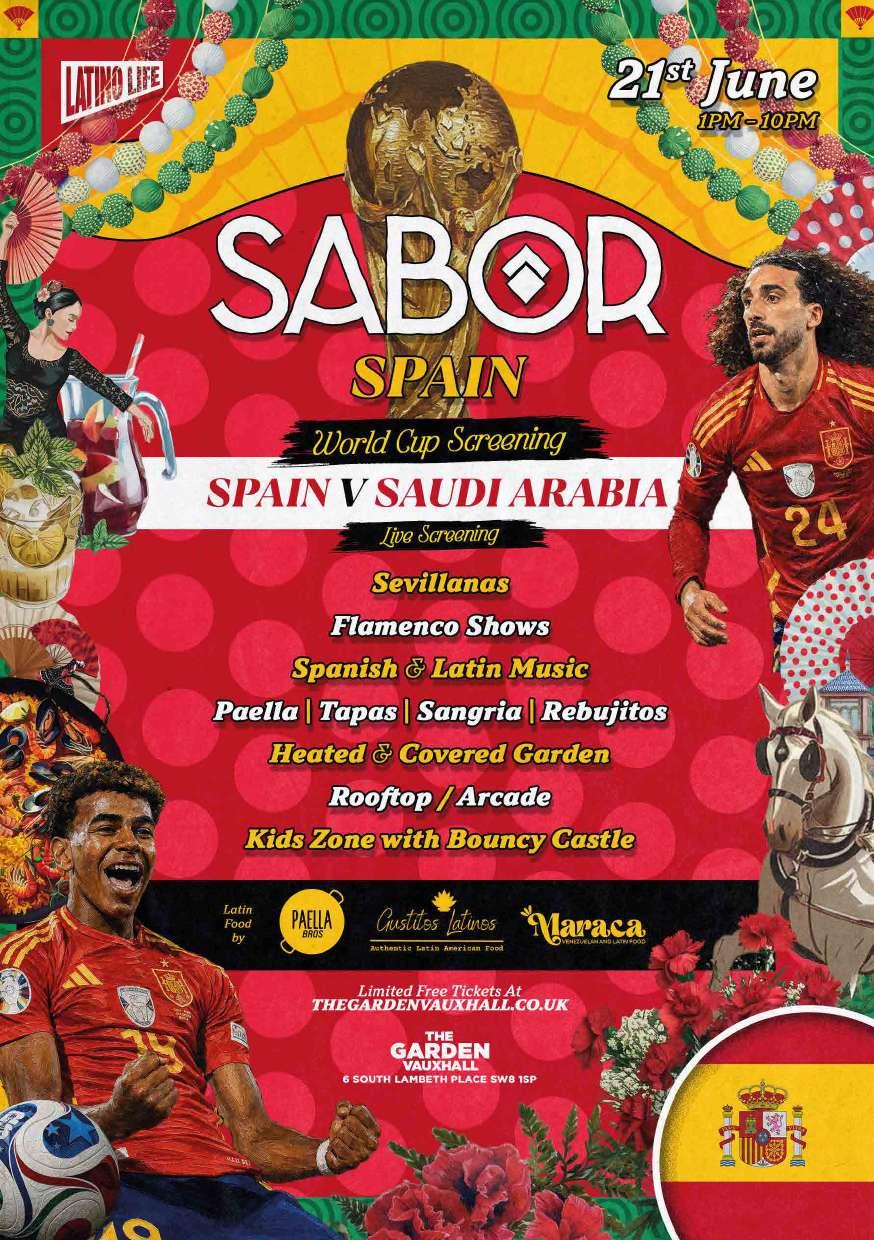
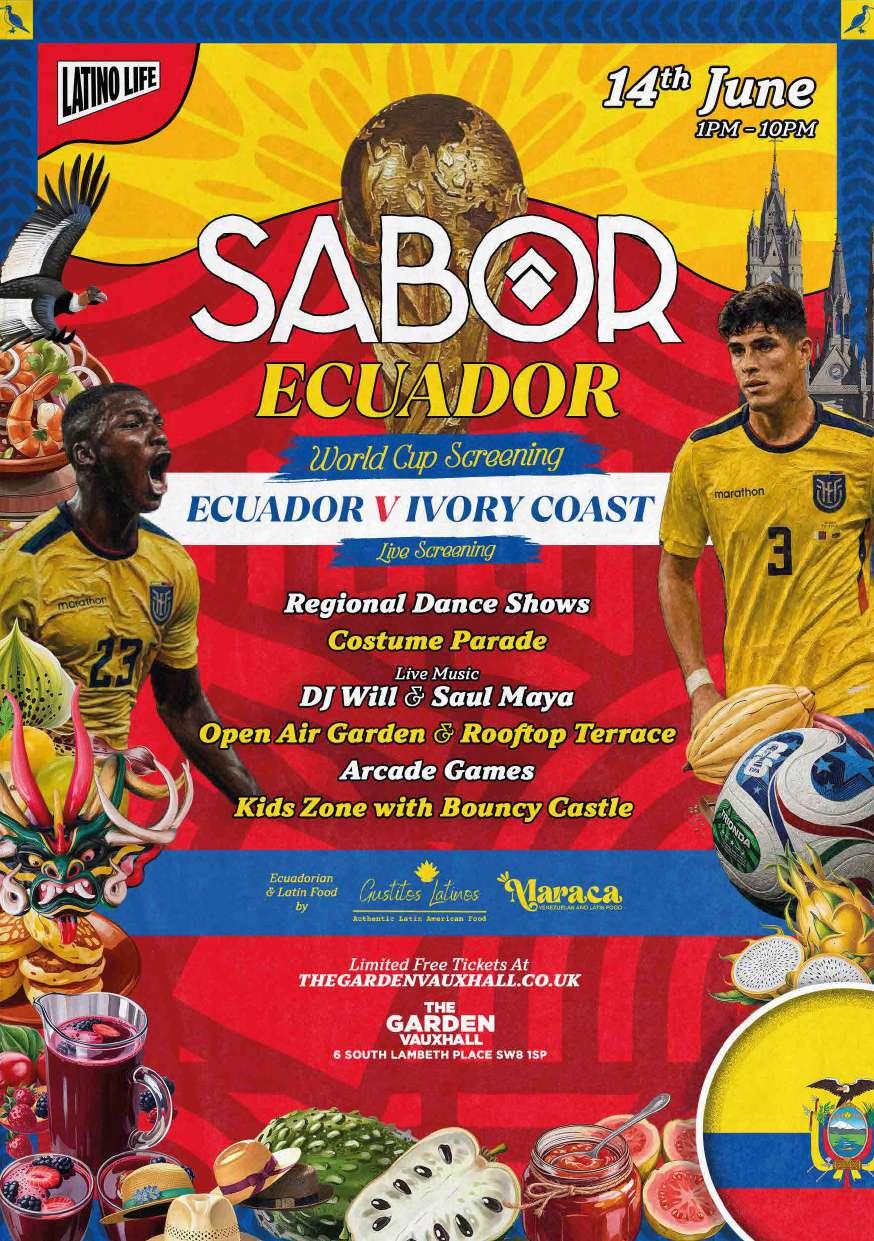
Enjoy all the Latin American World Cup matches at LatinoLife’s World Cup Fiesta in Vauxhall Garden from Thursday 11th June. https://www.thegardenvauxhall.co.uk/latino-life-world-cup-fiesta
Luis Díaz (Colombia)
Alexis Mac Allister (Argentina)
Bruno Guimarães (Brazil)
Emiliano "Dibu" Martínez
Acircuit, and he is making his mark. Corina Poore praises Chilean writer/ director Diego Céspedes whose feature debut explores the lives of margina lised souls with sympathy and depth.
Already with his previous short film 'Children Melt under the Sun' (2022), Diego Céspedes has explored alternative family relationships and groups that are marginalised and do not feel they belong anywhere, as they search for their survival through love.
"I wanted to understand how a mother-daughter relationship in which there are no blood ties, can become much deeper than an idealised love story," he says
This also applies to his debut feature movie 'The mysterious gaze of the �lamingo' (La Misteriosa Mirada del Flamenco) which won the 'Un Certain Regard' Award at the 78th Cannes Film Festival. It also carried o�f the Special Jury Prize, Honourable Mention and Best Debut Film at the 2025 Lima Film Festival, and then picked up the San Sebastian International Film Festival Drama Youth Award. With seven awards and had 16 nominations, this is good going for a director with little feature film experience.
"Es el enigma de tus ojos, la razón que anima causa de mis ser! ( The enigma of your eyes are the reason that arouses my very being) the lyrics of the bolero track in the bar tells the story in a sentence.
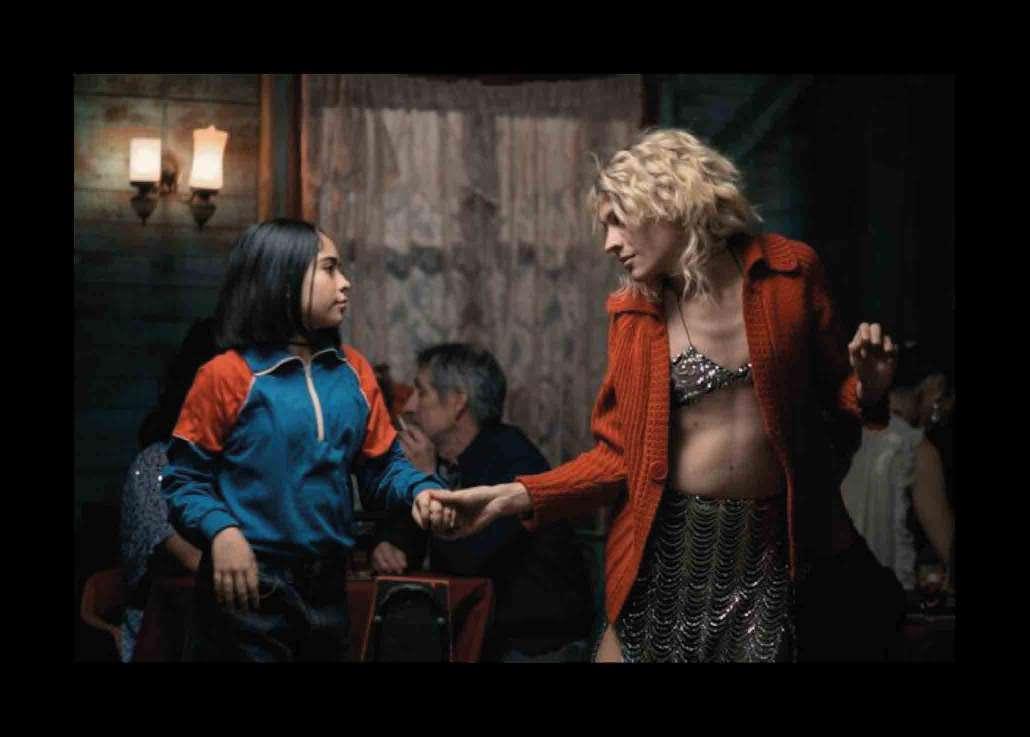
A little in the mould of 'Priscilla, Queen of the Desert', The Mysterious Gaze is a Queer Western,marked by the poetic intimate voice of Céspedes and his desert-dry surrealism.
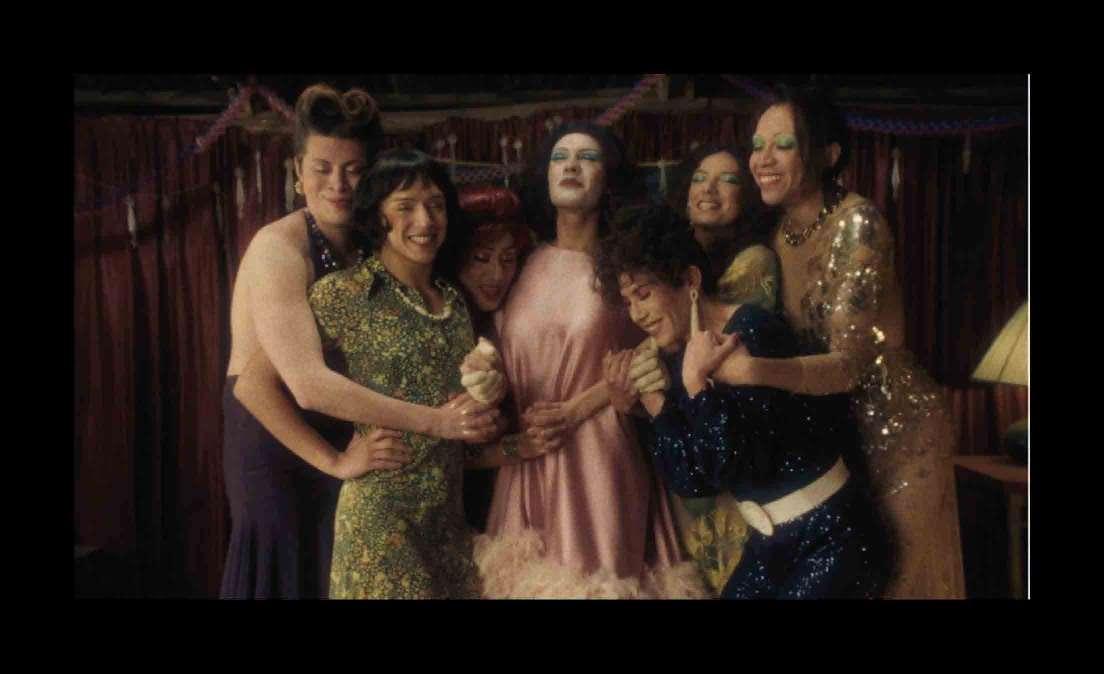
This film challenges bigotry in a dusty, unyielding and otherworldly remote village in the isolated depths of the Atacama Desert - one of the driest and most forbidding areas on the planet. Imbued with the shadow of a ghost town, it is home to only a few lost souls, miners, and those who retired but having nowhere to go. Among them, a motley group of transvestites and trans women who survive running a small café bar o�fering some entertainment and warmth to those who want it.
The story unfolds mainly through the eyes of orphaned 11-year-old-girl Lidia (the talented
Tamara Cortés) who is rescued and cared for by the vibrant queer household led by drag performers and trans women, in particular Flamingo, who becomes her mother.
The film is set in 1982, just as an unknown and misunderstood plague (HIV) was beginning to infect people one by one. Having no idea how this deadly disease is transmitted, the locals become hysterical and obsessed with the belief that it’s transmitted by the homosexual love gaze from a trans woman or a gay man. So falling in love could be a death sentence. This belief focuses all their resentment on the group of queers and transvestite entertainers who run the small café-bar.
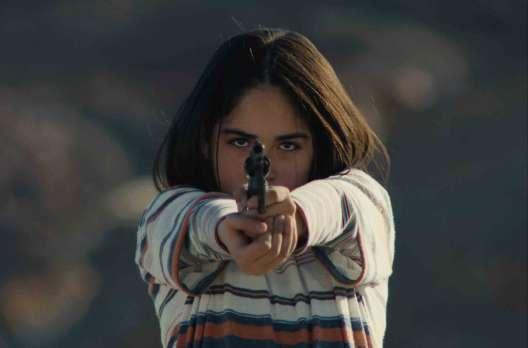
Lidia is determined to find out the truth, but can you shoot a dead man? In this other worldly universe, all humanity survives on the edge. There are no rules other than those made by themselves.
With humour and empathy, Céspedes’ astounding debut film encompasses a deep humanity expressed by the people who inhabit this community, threatened more and more dangerously, as this unknown disease gradually begins to a�fect more people.
“I could be a whore, I could be a thief, I could be a liar but never a deserter” (Flamingo)
Diego Céspedes grew up in the fairly marginalised area on the edges of Santiago city that sits at the foot of the Andes, the great wall dividing the continent of South America. He did not come from established stables, such as that of the Larraín brothers, who have successfully dominated the Chilean film industry output for some time, bringing it firmly onto the world stage.
This haunting fable, unreal and surreal, harbours no illusions and, although people can be loving, it reveals they can also be violent and cruel. The colourful characters have all been baptised by the imposing matriarch Mama Boa, a thoroughly captivating Paula de Dinamarca.
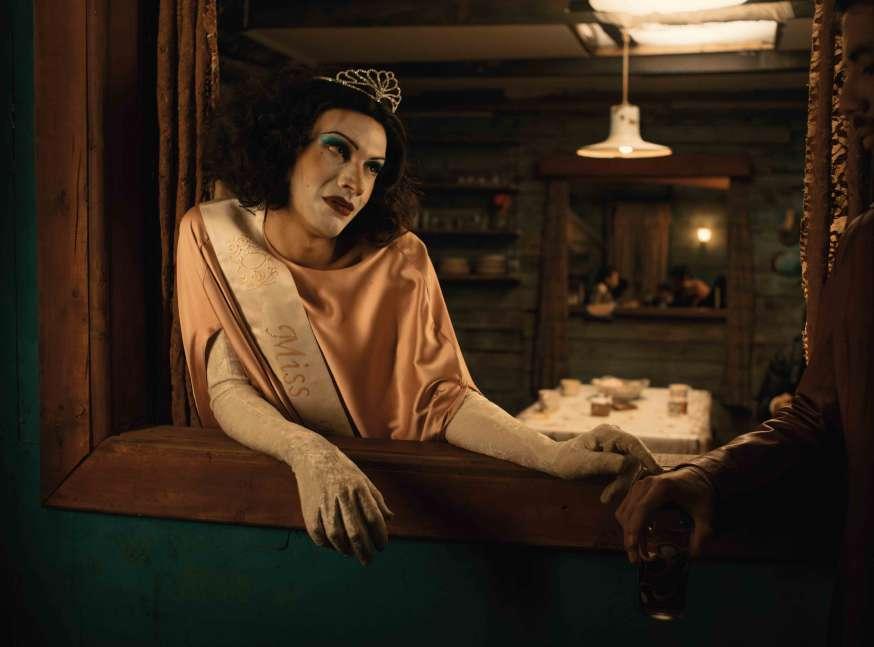
So, we have Flamingo (Matías Catalán), the lead performer in their ‘Miss Alaska Show’, we also have Leona, (the Lioness) (Bruna Ramírez), Águila (Eagle) (Alexa Quijano), Piranha (Francisco Díaz) and Estrella (Star) (Sirena González). Everything is turned upside down when Yovani (Pedro Muñoz) a miner, who has fallen for Flamingo, falls sick, and his despair knows no limits.
Leader of the local vigilante posse is retired miner Clemente (Luis Tato Dubó), but their attack on the bar, does not turn out quite as they had expected.
Céspedes fought hard to get his film made and participated at every opportunity including the Producers Summit at the Sundance Institute in 2020. He has brought his talent and personal voice to the Chilean film industry and it will be interesting to see where this remarkable debut will lead to, in future productions.
THE MYSTERIOUS GAZE OF THE FLAMINGO is available on MUBI
The Elegant Hustler
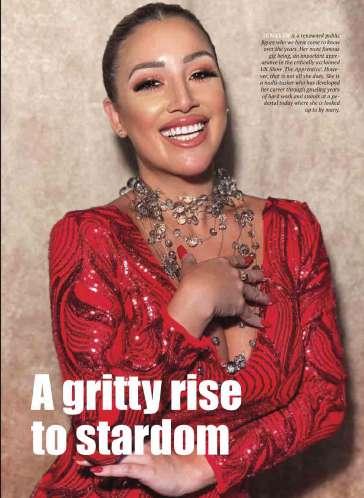
emelín Artigas first leapt into the limelight on BBC Apprentice as a glamorous saleswoman back in 2019. But her rise to success was anything but easy. Now a Business mentor, In�luencer and Presenter, not least for LatinoLife in the Park, the Venezuelan beauty reveals her Cinderella story, from an abusive childhood in Venezuela, a homeless teenager in London, and finally making it as a successful entrepreneur. Her latest venture Twinora - an AI content creation app - she hopes will train and employ fellow abuse survivors as virtual assistants. Here she talks candidly to Isabel Ritchotte about homelessness, depression and never giving up.
Perched on a chair, sunlight shining on her �lawless blow-out and impeccable white suit as we sit outside and enjoy
the warm weather, you would never guess that Jemelin was ever anything other than a confidence-oozing suited and booted businesswoman. But the Venezuelan mentor and in�luencer wasn’t always the bold, glamorous woman in front of me now. Her story begins in the small beach town of Puerto La Cruz, on the Caribbean. She was a shy kid with two little sisters to look a�ter, bullied in the playground, and secretly dealing with an abusive stepfather.
“I think that was the beginning of my spark. It came from hiding, in a way,” she re�lects. “My mum le�t my dad and we went to live with her and my stepdad. I had really horrible stepsisters, like really really terrible. They hated me and would be so mean. I just kind of hid away. We didn't have phones or computers but I remember there were these books around, grown-up books, some of them were about entrepreneurship or, you know, mindset. I was about nine or ten and remember reading them because I was hiding for such a long time. That's when I started seeing how my mom works. My mom is really, really hard working.”
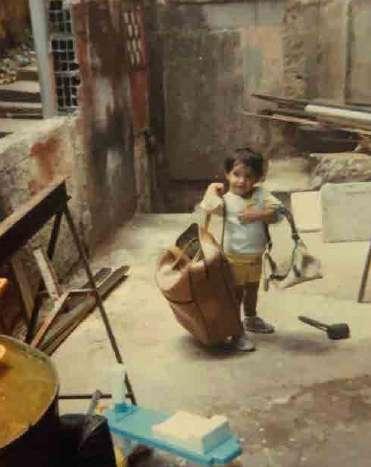
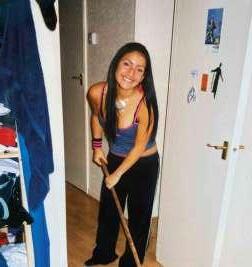
Jemelin’s mother provided for her family, while Jemelín took on the household chores.
“She used to say to me, it doesn't matter what you choose to do, even if it's cleaning the streets, make sure you are the best street cleaner. So, I think a combination of reading books, having a mom that is super ambitious and hard working, who never puts limitations on me, really helped.”
At seventeen, Jemelin’s mother supported Jemelin’s move to the UK, where several of her friends, and her then-boyfriend, lived at the time.
“I think my mom at the time was kind of like, you know, Jem’s lived a very adult life. My mom had to work, so I looked a�ter my sisters and my stepdad. I was cooking, cleaning, doing everything, plus I was dealing with a stepdad who was abusive. Not that I told my mom, but
“I was dealing with a stepdad that was abusive. Not that I told my mom, but she knew that it was di�ficult.
she knew that it was di�ficult. So I think it was her way of saying, ‘you know what, you've done enough. Go to London for a year.’”
Jemelin arrived in London in September 2002 with a plan to learn English, and return to Venezuela, and £800 for the whole year.
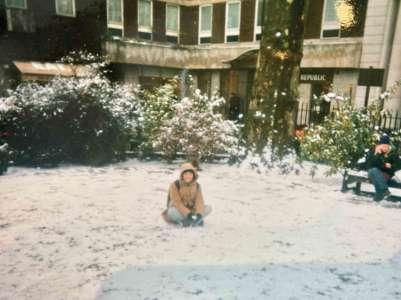
“I remember being cold, and I spent some silly money, like maybe £300 bucks on a beautiful fake fur jacket.” And so to work, to support herself while studying, first as a �lyerer for the language school she studied at. “That was so bad. It was freezing. And they caught me throwing the �lyers in the bin!” She laughs. A�ter that, a stint as a cleaner in a restaurant.
“I was making £500 a month working full time, but because it was in the warm I didn't even care. I listened to my headphones and danced salsa while I was working.” The brief period of relative stability came to an end when she discovered her then-boyfriend was cheating on her. She had nowhere to go but she had to move out.
“Ihad no money, I didn't even have a phone. And I remember one day I started crying in the street before I looked up and there was this building there, and I saw all these people start coming out of the building with briefcases. And I thought ‘one day, I'm going to be like them. I'm going to have an amazing career, and I'm going to make it. I don't know what I'm gonna do, but I'm gonna make it work.’”
From that moment on Jemelin decided she wasn’t going back to Venezuela. She was determined to do things on her own.
“I did not want to go back to live with my stepdad. I think that was probably the biggest factor, because I'd been su�fering abuse from him since I was nine years old. So it was like, you know, this is hell, but that is a worse hell,” Jemelin tells me. For her, there was no option. “I just thought, no, I'm not going to go back to Venezuela. So, I decided to carry on fighting. And that was kind of like the moment where my life just took a whole di�ferent turn.”
It was only a�ter a motorcycle accident le�t her hospitalised for a night, that she realised she needed to change something.
“I don’t remember anything, only that I woke up in hospital thinking, oh my god this is amazing, I'm in a warm bed. I hope I broke something so I can stay here until I can figure things out. When the doctor came in he said, ‘This is a miracle. You rolled over 20 times apparently and you �lew and you hit your head on the pavement. You have nothing broken, just a few scratches. You're so lucky to be alive.’
That near-scrape with death gave Jemelin a new sense of focus to seize every moment. A�ter recovering, Jemelin began working as a waitress, and found a permanent place to stay. Eventually, she was promoted to head waitress. But she still wasn’t satisfied. So, she decided to become a beautician.
“Ever since I was a little girl, I did my mom's makeup and hair. Everybody used to come to me. So, I was like, why don't I just become a beauty therapist? They make good money and that could help me with my English.”
She studied at Croydon College for two years, and landed her first job, despite not having enough experience on paper.
“My mum used to say to me, it doesn't matter what you choose to do, even if it's cleaning the streets, make sure you are the best street cleaner.
That day Jemelin searched for pounds on the street so she could go on the bus and avoid the cold. She scrounged food from a place called Benjy’s that used to throw away food.
“I used to dance every single night at a club called Havana where you could get in for free before 9pm. I would get invited to a�ter parties and wash up in strangers’ bathrooms.”
“My thought process has always been, ‘Never say I can't do it. Say you can and then along the way, work it out.’ And that's got me to where I am today. I've been in places where they ask, ‘Can you present?’ Yes. I have no idea. I have no clue, but yes. But inside me, I'm like, I have no idea, but I'm going to work it out. But you also have to be disciplined. You can't say, ‘Oh yeah, I can do this,’ but then not actually apply yourself.’”
“We live in an era where everybody wants to half-ass it. And unfortunately, that attitude usually gets you nowhere. I've always gone the extra mile. I've always become indispensable.”
She takes a pause to sip her drink and, smiling, admits she has been fired two times. Once from a restaurant, “which was fair, because I was partying too much”. And once from The Apprentice. She laughs, “Which is not too bad because it’s a big job.”
Even a�ter becoming a successful beauty therapist, working in a high-end salon frequented by clients like Kate Moss, Jemelín wanted more. A chance encounter introduced her to the world of lead generation.
“Somebody who used to come in to get massages said to me, ‘Jem, you have such a nice, bright personality. You should do events. You should be a presenter'".
“As soon as she said that, I was like, ‘What, you get paid to talk?’ And then she's like, ‘Yeah.’
“I'm like, ‘Oh my God, this is brilliant. This is my dream job.’”
“It was tough. I wasn't getting much work because, in this environment, you have to be in it all the time. My son was about six. I was just at home, on Jobseeker’s Allowance and thinking, what is gonna happen with my life? That was my lowest point. I thought about suicide a lot. I used to take a lot of sleeping pills. And I remember my son coming one day and said, ‘Mommy, what is wrong with you? Why are you sad all the time?’ And I was like, oh my God, this is gonna a�fect him. I'm gonna mess up my son. I need to get my shit together.”
Determined to make a change, Jemelin opened up her laptop and saw an ad for the Apprentice. “I used to watch The Apprentice all the time. I was obsessed with The Apprentice.”
Jemelin applied, pitching an app connecting trade show exhibitors directly with lead generators. She got the call for the interview and was instructed to wear a suit.
“I didn't even have a suit. But got someone to lend me a blazer.’”
As she walked towards the building on Tottenham Court Road for her interview, Jemelin realised it was the same place that had inspired her to become a businesswoman while homeless years earlier.
“My thought process has always been, ‘never say I can't do it. Say you can and then alongthe way, work it out.’ And that's got me to where I am today.”
Travelling around trade shows and exhibitions, using her language skills, was a dream come true. Jemelin went to New York, Barcelona, Amsterdam. She helped a company close a multimillion-dollar deal with BT. In an industry known for its volatility, she was fully booked for an entire year. A�ter her pregnancy, however, things slowed down and Jemelin went into a deep depression.
LA RUTA GASTRONOMICA
ARE YOU READY TO
a c r o s s L o n d o n w i l l s e r v e e x c l u s i v e s i g n a t u r e d i s h e s
E v e r y w e e k , a d i f f e r e n t c u l i n a r y r e g i o n .
E v e r y n e i g h b o u r h o o d , a n e w j o u r n e y . i
J u s t i n c r e d i b l e f o o d , c u l t u r e a n d s t o r i e s w a i t i n g t o b e d i s c o v e r e d . JUNE 1ST - JULY 12TH
T h e F i r s t I b e r o a m e r i c a n G a s t r o n o m i c R o u t e i n L o n d o n
I B E R O A M E R I C A N A E N L O N D R E S N o f l i g h t s . N o p a s s p o r t . @ r u t a g a s t r o n o m i c a . l o n d r e s
h t t p s : / / l a - r u t a - l o n d o n . j u n t o s h u b . c o m
“Icould see my eighteen year old self in that corner, crying, looking at people in that same building coming out with suits and me saying, ‘That's gonna be me one day and my life is gonna change.’ So that's when I knew, this is it. This is my destiny.”
Even though The Apprentice opened huge doors for her, including more international travel and public recognition, her mental health struggles lingered in the background.
“Deep down, I hadn't dealt with my depression. It was just go, go, go,” she says. “When I le�t The Apprentice, I was like, I'm not okay. Because I can't constantly be thinking I want to die when I have a beautiful son and everything to live for. So I got help.”
“I think when you're going through depression, you don't want to burden people with your problems. But if people only knew how much easier it gets once you speak about it - oh my God. If you don't want to bother your friends and family, call Samaritans, call somebody. Find counselling. There is so much help out there. But it really helps to speak.”
A�ter seeking help, things looked up again. The Apprentice brought a new world of opportunities.
“I was on a high. My story had gone in the papers, and I was being called to speak in universities, go to movie premieres. I had an investor for my app. He was ready to give me £275,000 for 30% of the company. I had brand deals. I was getting paid four and a half thousand from one, another five thousand from another per month.”
“I've always gone the extra mile. I've always become indispensable.”
And then the pandemic happened. Trade exhibitions stopped. It was back to zero. She went back to waitressing, in her partner’s bar, with depression looming again.
“I was angry with the world. I was angry with the universe. I felt cheated.”
Still, Jemelin decided to try selling marketing courses online, and found that people would actually pay for her expertise. She reinvested the money into developing her skills, paying for a mentor and working with coaches to build her own business. Then, the idea for her next app struck, a�ter she saw people cloning themselves with AI, spotting a gap in the market.
“Ifigured that so many business owners get caught up creating content when they just want to be visible, to grow the
business without having to got bogged down creating content. They never signed up to create content. And if I can build an app where you can just upload a selfie, and let the app do the rest? So then I built Twinora, which is my new baby.”
A�ter six months of working on the app, Jemelin’s ready to launch. “We've got global distribution forecasts and we want to reach people in rural areas,” she says, explaining how she plans to share her success with people like her, by training young women and survivors of abuse as virtual assistants. She’s already hired her first employee from the Philippines.
“If you don't want to bother your friends and family, call Samaritans, call somebody. Find counselling. There is so much help out there. But it really helps to speak.”
What would Jemelin do with all the free time she has if an AI clone did all her content? Acting, of course. Something she’s dabbled in for the last twenty years, outside of all her other accomplish ments. If resilience and confidence are things you build through struggle, hard work and hustle, then it’s no surprise that Jemelín Artigas has those things ꞌin spades’.
Jemelin launches her cloning content engine app on 7th June @jemelinartigas and will present LatinoLife in the Park on Sunday 19th July www.latinolifeinthepark.com