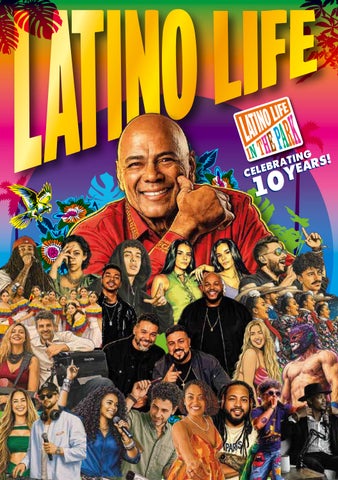
When I was a little girl, growing up in North London in the 1980s, having arrived from Buenos Aires, if you had mentioned the word ‘Latin’, people thought you were talking about ancient Rome. This July, with Bad Bunny giving Latin music its first ever UK stadium concert, Pitbull becoming the first Latin artist to headline Hyde Park and LatinoLife one the Park, celebrating 10 years as the UK’s biggest Latin music festival, everyone knows what Latin means. In these pages, we tell many stories; our personal story building LatinoLife and the story of a community that has spent years building cultural infrastructure, creating opportunities and refusing to be invisible to pave the way for the explosion of Latin music in the UK. We tell the story of our headliner Rafu Warner, who, as one of the few remaining Puerto Rican legends of salsa’s golden era, represents what made Bad Bunny and finish with the tale of the Costa Rican twins, who a�ter opening for Bad Bunny, went on to break the glass ceiling and become one of its biggest DJ outfits in the male dominated urban Latin music world. We hope you enjoy our collective story and, more importantly, live, breathe and dance it at our festival this year.
Editor, Amaranta Wright amaranta@latinolife.co.uk
The Age of Elegance
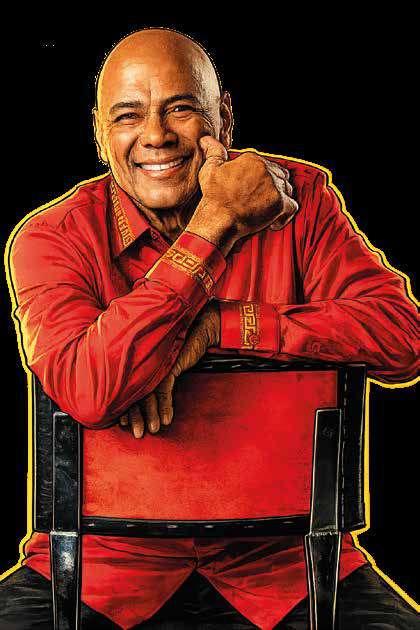
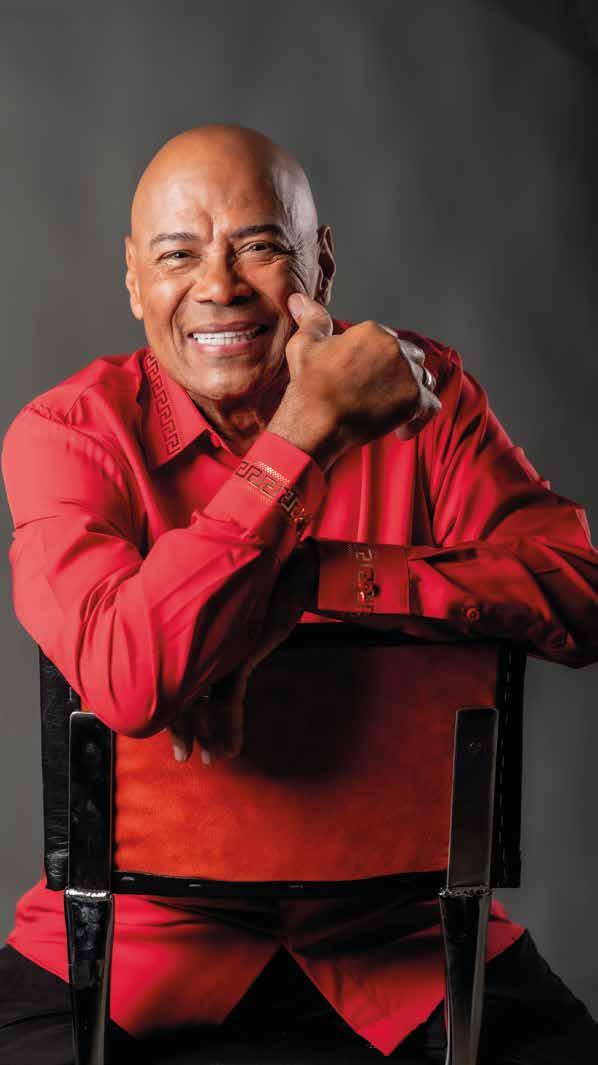
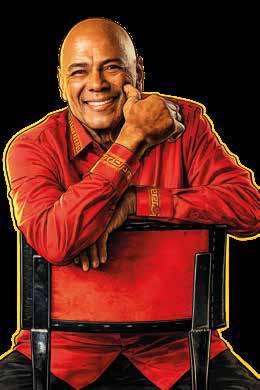
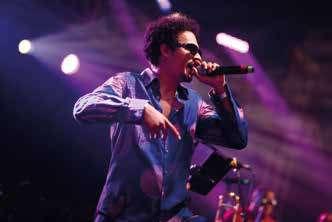
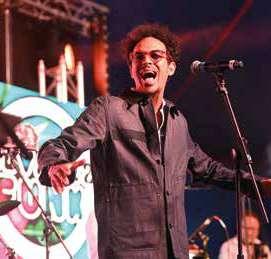
s the lead singer of Bobby Valentín’s orchestra, Rafu Warner is one of the few survivors remaining from salsa’s golden era. Part of the Puerto Rican generation that made the superstars of today, Bad Bunny included Warner's 1985 track Justo Ahora to his personal Spotify mix and Amor a Medio Tiempo is a classic that still fills dance �loors in any Latin club today. Ahead of his headline performance at LatinoLife in the Park, the boricua legend talks to Isabel Ritchotte about the style, substance and personalities of Latin music’s most iconic period and the love story that inspired his latest Latin Grammy–nominated album Cueste lo que cueste.
Wearing a white polo and dark glasses, there is a class to the handsome man on the screen infront of me that belongs to
another time. Timeless. Classic. Refined. Whatever you call it, the elegance comes from a di�ferent mindset.
“Dressing well is a form of respect,” Rafu Warner tells me. “That’s my view. I always maintain my way of dressing - elegant, or at least I try. Imagine being ugly and badly dressed….”
Being very much not on the ugly side, he’s lucky enough to be able to joke about it. But his style is enough to make me re�lect on my own outfit, and be thankful the interview is taking place over Zoom.
Anyone who’s been to the Latin Caribbean knows that men and women of a certain age dress well there. Perhaps it is out of fear of the poverty they witness or respect for the culture that surrounds them. Growing up in Santurce, Puerto Rico, the birthplace of modern salsa, Rafu was naturally drawn towards the rich tradition of music and dance around him.
“When I was a child, I used to walk along Ponce de León Avenue to a radio program that Rafael Cortijo and Ismael Rivera had at noon where orchestras played,” he says. “We could enter the theatre for free.”
Rafu began singing at home, copying the masters.
“Music felt natural to me. But I never saw it as a profession. I did it because I enjoyed it, because that's how we grew up in my neighbourhood. I'd hang out with the guys on the corner, playing rhythms on tin cans and anything else we could find, because we didn't have real instruments back then. We'd sing harmonies together and make all kinds of noise. At Christmas we'd form little groups and go from house to house serenading the neighbours.”
“When I was a child, I used to walk along Ponce de León Avenue to a radio program that Rafael Cortijo and Ismael Rivera had at noon where orchestras played. We could enter the theatre for free.”
At sixteen, a family friend encouraged Rafu to audition for La Traviesa, led by Pipo Rosario. He soon recorded two of his own compositions with the group while also performing with friends in Conjunto Vironay.
“Some wonderful musicians were part of that group, including Jimmy García and my dear friend Lucy Tron, who today is still the musical director of my orchestra.”
As opportunities in music gathered pace, adulthood arrived much faster than expected. At just eighteen, already the father of a young son, Rafu swapped college to work in a kitchen to help support his family.
“My dad took me out of college and told me, you have to go to work because you have a son, ‘ you have to be responsible for him.’ And I went to work in a cafeteria. I could make rice and fry the meat, but I didn't know how to make beans. So my mom made the beans for me at night, and I took it to the cafeteria the next day and served it for lunch.”
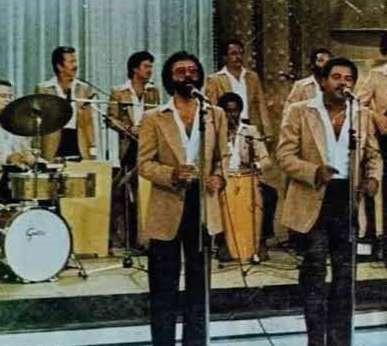
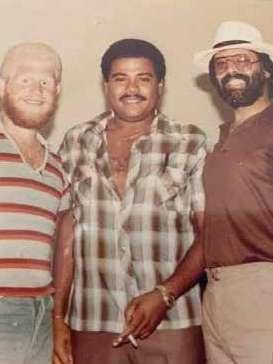
Cano Estremera, Rafu Warner,Johnny Vazquez Bobby Valentin
The kitchen sparked a lifelong love of cooking, but music continued to pull him back. He joined another orchestra called Impacto
Crea. Created for people in rehabilitation programs, the orchestra always needed members for when people completed the program and returned to their lives.
“We weren't paid anything. We did it purely for the love of music and because we wanted to help the organization,” he says. “It also gave me the chance to gain more professional experience. It was a far more organized orchestra than the ones I'd played with before, with a much longer history and more experienced musicians. The standards were higher, and the level of competition demanded more from me.”
“I also spent a lot of time with Franky Hernández, and I had the opportunity to learn a great deal from him. Franky was a very clever, playful character - a real rascal. Honestly, I feel incredibly fortunate and blessed to have had those opportunities.”
Instead Rafu sang the bolero “Tus Ojos’ by Santito Colón and Tito Puente
“Thankfully, Bobby liked what he heard. Then I looked over toward the stage and realised that El Gran Combo happened to be there and began applauding me. I thought, Well... I guess I've been given their blessing.”
“And that was it. We never signed a contract. We never discussed legal terms or anything like that. Everything was based on a handshake and mutual trust. Back then, a person's word carried just as much weight as a written contract. So, I began working with Maestro Bobby. The pay was excellent, among the best in the business at the time.”
“The first thing Bobby Valentín asked me was, 'Which of our songs do you know? Sing one so I can hear your voice.'”
When financial di�ficulties forced Impacto Crea to fold, the musicians refused to let the project die. They regrouped under a new name: Nuestro Impacto.
“One day we appeared on a television program, and that's where Danny Thompson and Tito Rodríguez, the percussionists from Bobby Valentin's Orchestra, saw me perform.”
That television appearance changed everything. That a�ternoon, Bobby Valentín called, asking him sing that same night, at one of the orchestra’s performances.
“The first thing he asked me was, 'Which of our songs do you know? Sing one so I can hear your voice.”
Rafu looks at me with a mischievous expression, gleeful brown eyes brimming with joy as he fights to supress a deep laugh: “I had to tell him the truth. ꞋI don't actually know any of them.’ And Bobby looked so surprised. 'What do you mean you don't know any?'”
By the following evening, he was wearing a grey-and-blue uniform, performing at the Caribe Hilton.
Joining Bobby Valentín's orchestra transformed Rafu's career overnight. Over the next decade he would record classics including Justo Ahora, Brujería, Cantaré con una orquesta and Amor a Medio Tiempo, joining the musical institution that was salsa's Fania records heyday.
Cano Estremera, Rafu Warner Y Johnny Vazquez
The schedule was relentless, remembers Warner: “Sometimes we played 28 or even 32 gigs in a single month. When we le�t one
place, we had to go to another - sometimes two or even three shows in a day, changing uniform because we would get so sweaty, so we show up fresh again at the next stage.”
But while the work was hard, Warner loved every minute of it. “Salsa was at its absolute peak. For me, it was like going from earth to heaven. It completely changed my life, ” he remembers fondly. “There was good camaraderie - the guys got along really well. Being together so long, you spend more time with them than with your own family, you know? You go through many beautiful experiences, and you learn a lot from everyone.”
Four decades later, those classics remain staples of his live performances, even as his career has increasingly centred on his own material.
His first attempt at a solo career, when he le�t the orchestra in the late 1980s, nearly ended before it had truly begun. The production company behind his first two albums unexpectedly collapsed, draining his enthusiasm for music altogether.
“I got disillusioned, and stopped recording for a while. Then I came back, because my passion for music was too strong. And I could stop playing music for a while, but not for life. So, I reinvented myself.”
Music proved impossible to leave behind. He returned to music again in 2003 and released his latest album Cueste lo que cueste just last year. The Latin-grammy nominated album is also his most personal record. Nearly every song traces some part of the relationship that has shaped his life for more than four decades – with his life partner, Myrna Panell.
“We've known each other for 41 years, but we've been married for 35. When we met, we didn't like each other. A friend introduced her to me, and I said, nice to meet you. And she acted like I hadn’t said anything,” Rafu laughs.
“We never discussed legal terms or anything like that. Everything was based on a handshake and mutual trust. Back then, a person's word carried just as much weight as a written contract. So, I began working with Maestro Bobby. The pay was excellent, among the best inthe business at the time.”
He lets out a hearty laugh recounting the recording of Cantaré con una orquesta, which has an unusually high note.
"During the recording I sang it even higher than expected. What I didn't realise was that I had just created a huge problem for myself… because a�ter the song became a hit, I had to sing it every single night…” he laughs. “Many singers tell me that not just anyone can sing it. That's something I'm proud of. But at the same time... it's also given me plenty of headaches."
A�ter dedicating a song to her from the stage at a performance with Bobby Valentín, she finally agreed to a date. Today she manages both his performances and their businesses.
She also inspired the album's title track - a love song, about surviving the decades together - from raising a family to rebuilding their lives a�ter hurricanes devastated Puerto Rico.
“That song was inspired by her, written for her, because our relationship hasn't been one of the simplest, sometimes it’s been a hard road.”
When Hurricanes Hugo and Georges tore through Puerto Rico, they ripped the roof from Rafu and Myrna's apartment in Carolina, leaving them exposed to the storm.
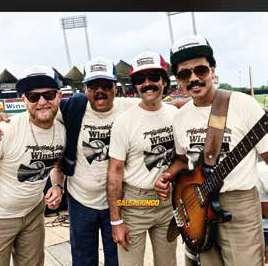
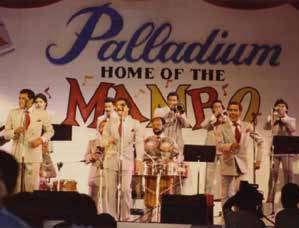
Rafu Warner, Johnny Vazquez y Luisito Carrion in New York’s Palladium.
Bad Bunny’s London Legacy
What did the record breaking concerts mean for London’s Latin community?
ad Bunny’s concerts at Tottenham Hotspurs this month became the largest Spanish-language shows in UK history. For the first time ever in London, the route from Seven Sisters to the stadium became like the streets of Spanish Harlem, alive with the Latin carnival feel. It heralded a new dawn in both the UK’s relationship with Latin music, and in relations between the Latin community that surrounds the North London venue, one of the country’s strongest, and Haringey Council, a�ter years of acrimony. Amaranta Wright explores what Bad Bunny’s record-breaking weekend means for London’s Latin Americans who have spent decades creating cultural spaces in the shadows of mainstream culture yet are still denied o�ficial recognition on the National Census.
There was a time when Latin music in the UK existed in the shadows: salsa nights in church halls, community festivals in local parks, small venues willing to take a chance on Spanish-language acts, independent promoters working with tiny budgets and DJs carrying entire scenes on their shoulders. Bad Bunny’s visit to London changed all that.
The most in�luential Spanish-language artist of his generation, not only was Bad Bunny the first ever artist to perform a stadium tour in the UK, without singing a word in English the Puerto Rican superstar has transcended the language barrier that previously defined which music was cool. For the first time in history, music in Spanish has almost the same market share as English-language music, whose global consumption has dropped to an all time low of 54% according to Billboard magazine, compared to 80% in the 2000s.
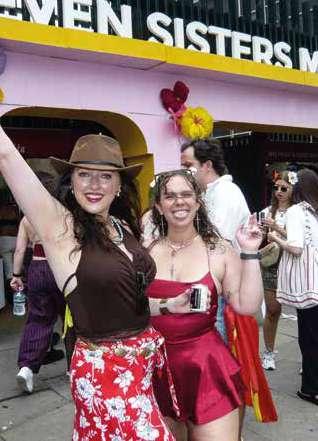
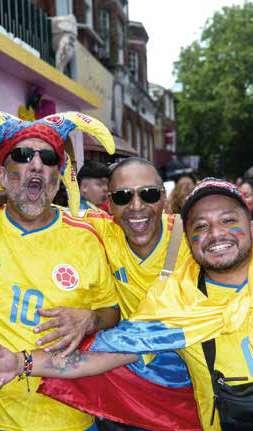
Londoners �locked to the stadium to see the Latin artist, first stopping at Seven Sisters market, one of the hubs of Latin London, which had built its own casita. Lauren, from Brighton, who goes to salsa classes and learns Spanish on Duolingo explained that she had found out about the pre-concert casita on social media and said, “I’ve never been to Seven Sisters before, who knows? It might be my new place!”
Londoners �locked to the stadium to see a Latin artist, first stopping at Seven Sisters market, one of the hubs of Latin London, which had built its own “casita”. Lauren, from Brighton, who goes to Salsa classes and learns Spanish on Duolingo explained that she had found out about the pre-concert ‘casita’ on social media and said, “I’ve never been to Seven Sisters before, who knows? It might be my
For one weekend, Bad Bunny placed Latin culture at the centre of one of the world’s most in�luential music capitals. The visit even got the Mayor of London excited: “With Bad Bunny as first Latin American artist to headline a major UK stadium,” said Sadiq Khan, ”it’s going to be a fantastic summer to celebrate Latin American music and culture, as
For London’s Latin community, Bad Bunny’s record breaking visit is not simply entertainment. It is recognition of a creative culture and community that has been brewing under the surface ready to explode. But what will the legacy be for UK Latin Americans, who have spent decades making moments like this possible, yet are still not recognised as
For one weekend, Bad Bunny placed Latin culture at the centre of one of the world’s most in�luential music capitals. The visit even got the Mayor of London excited: “With Bad Bunny as first Latin American artist to headline a major UK stadium,” said Sadiq Khan, ”it’s going to be a fantastic summer to celebrate Latin American music and culture, as we build a better London for everyone."
For London’s Latin community, Bad Bunny’s record breaking visit is not simply entertainment. It is recognition of a creative culture and community that has been brewing under the surface ready to explode. But what will the legacy be for UK Latin Americans, who have spent decades making moments like this possible, yet are still not recognised as an ethnic category in the UK census?
Photo by Alicia Colarusso
Photo by Alicia Colarusso
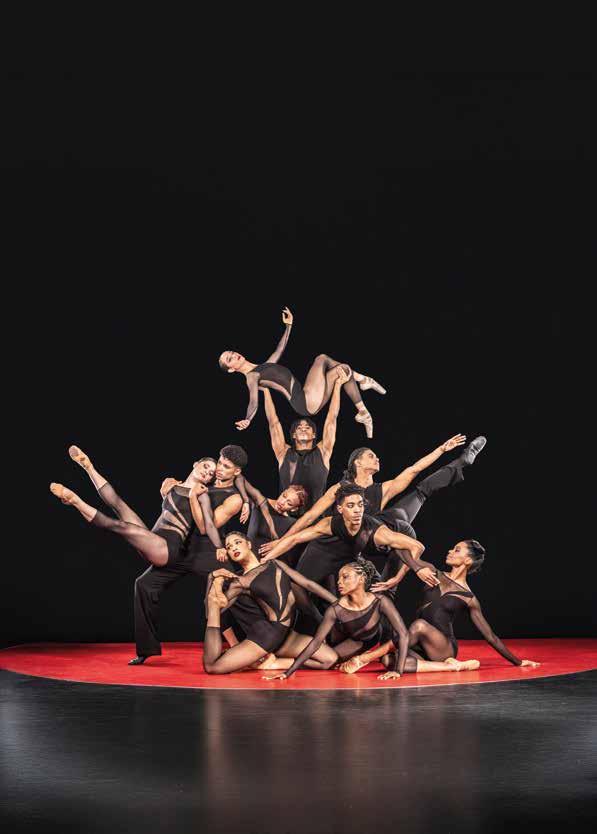
Acosta Danza Cuban Baroque
Leap into breathtaking grandeur, curated by Carlos Acosta.
It is notable that Bad Bunny’s show took place in Haringey, a borough which has both one of the the UK’s largest A Community Finally Visible?
Spanish-speaking populations, and a tumultuous history with it. Between 2018 and 2022, relations were at an all time low as Haringey’s Latin American community, were engaged in a fierce battle with Transport for London (TFL) to save its thriving Latin market in Wards Corner, the building above Seven Sisters station, which TFL had sold to developers.
At the same time, our own festival, LatinoLife in the Park, which took place in Haringey’s Finsbury Park between 2019 and 2022, despite being named the UK’s most inclusive festival (FestSpace), was treated so badly by the Council, that we were forced to find a new home in Walpole Park, Ealing.
Today, with bridges being mended, it is as if Bad Bunny’s visit hails a new era for the Latin community that surrounds the stadium. Just as Latin music has earned the respect of an industry that once dismissed it, it was the tenacity of the Save Latin Village Campaign that finally caused Grainger to withdraw in 2021.
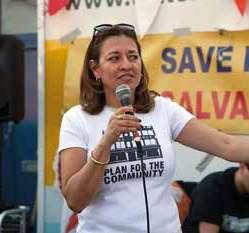
“You’d be stretched to find a better example of people power than what happened in Ward’s Corner,” says Jacobo Belilty, Director of the Coalition of Latin Americans in the UK (CLAUK), now installed at the previously contested site. “The resilience that the community showed was extraordinary. There is no other way to describe it than a victory.”
“You’d be stretched to find a better example of people power than what happened in Wards Corner”
Traders at the “Latin Village” as it is known, claimed they were not supported by Haringey Council as they faced intimidation, harassment, even racial abuse by the then management firm appointed by site developer Grainger and TFL. Those who spoke out against the redevelopment received sudden utility charge increases, targeted evictions, as Grainger’s market facilitator, Jonathan Owen, boasted he would wage a "f***ing war" and "get rid of 90 per cent of [the traders]” whom he referred to as "bloody illegal immigrants.”
Accepting their errors, Haringey Council embarked on several years re-building positive working relationships that continue on today, including o�ficially recognising Latin Americans as an ethnic group in their monitoring forms and establishing a partnership between itself, Places for London (PfL, the TfL subsidiary and site’s freeholder) and the community-led organisation Wards Corner Community Benefit Society.
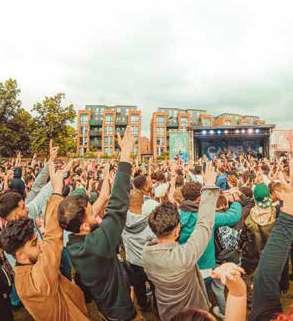
LatinoLife in Finsbury Park in 2019
Today, there is a new vitality and hope as they wait for the brand new building opposite, which will
be the new home. LatinoLife in the Park, meanwhile, was invited back to Haringey in 2027. ”We were delighted to have supported the reopening of the Seven Sisters Market and are working hard to bring the LatinoLife festival back to Haringey as part of our London Borough of Culture in 2027,” confirmed Jess Crowe, Director of Culture, Strategy and Communities at Haringey Council.
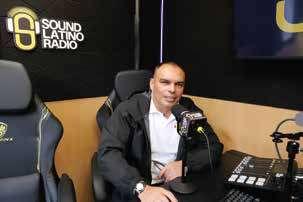
The Bad Bunny ‘casita’ installation at Wards Corner that became such a magnet over the weekend of Bad Bunny’s visit, was built with the support of PfL. As if mirroring the sparkle of Latin music’s global success, the refurbished premises has a new energy. Visibly rejuvenated faces like that of entrepreneur Manuel Pelaez who ran a cafe there, have been invited back, whilst projects like Sound Latino radio by Cesar Gamba are finding new homes.
“These spaces have been transformed from places of pain to positive spaces of creativity and this is something very powerful.” says Victoria Alvarez, who once headed the Save Latin Village campaign and is now Board Trustee of the Wards Corner Community Benefit Society.
Indeed, the very people who were having to use their resources to fight for survival, are now applying their talents to building business and creating culture.
"In January, a�ter our final meeting with the directors, we were approved for the space, which we now rent as the home of Sound Latino Radio," said Gamba extatically. "Being given a home at Wards Corner gave Sound Latino Radio a space where Latin culture, music and voices could be heard, and shared from the heart of the community.”
Trickle Down vs Community Building
The sight of tens of thousands of Latinos and non-Latinos gathering to celebrate Latin music challenges outdated assumptions about what role Latin Americans play in contemporary British culture. For entrepreneurs such as club promoter Felipe Cano, who was raised both in the UK and Colombia, visibility matters, representation matters and he hopes the economic impact extends well beyond the concert itself.
“This concert opened up the most exciting opportunity we’ve had to connect with new audiences,” says Cano, who will host a Bad Bunny a�ter-party at Seven Sisters. “Many Bad Bunny fans may never have attended my parties or events before, and this gave me the chance to introduce them to the Latin nightlife experience and build lasting connections with people who share a passion for Latin music and culture.”
Across London, in the lead up to 28th June, tribute nights, club events, themed parties and a�ter-parties were organised. Venues, DJs, promoters, production crews, caterers, media outlets and hospitality businesses all stand to benefit from the increased activity.
Bad Bunny’s success in London, however, did not emerge in a vacuum. The packed stadium that welcomed Bad Bunny is, in many ways, the culmination of decades of collective work carried out by thousands of people who have been advocating for Latin culture long before it became commercially fashionable.
Victoria Alvarez
Cesar Gamba
For years, organisations, promoters, artists and cultural leaders have been steadily building audiences for Latin music across Britain. Our own festival, the UK’s only Latina-run park festival, is just one of many LatinoLife initiatives, including club nights, conferences, awards ceremonies, talent development and mentoring programs and much more, that have been raising the profile of Latin culture and developing the UK Latin music industry.
Our work over the last 25 years, has ensured the increased presence of Latin artists on stages at major events such as SXSW London. In other parts of the country, organisations such as Luma Creations in Liverpool, have helped cultivate audiences, create professional opportunities and demonstrate that there is a genuine appetite for Latin American culture throughout the UK.
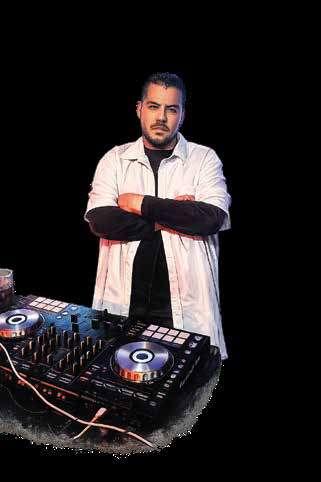
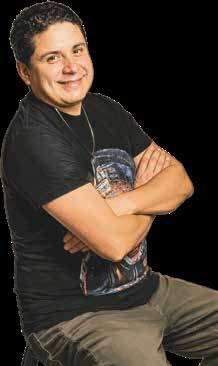
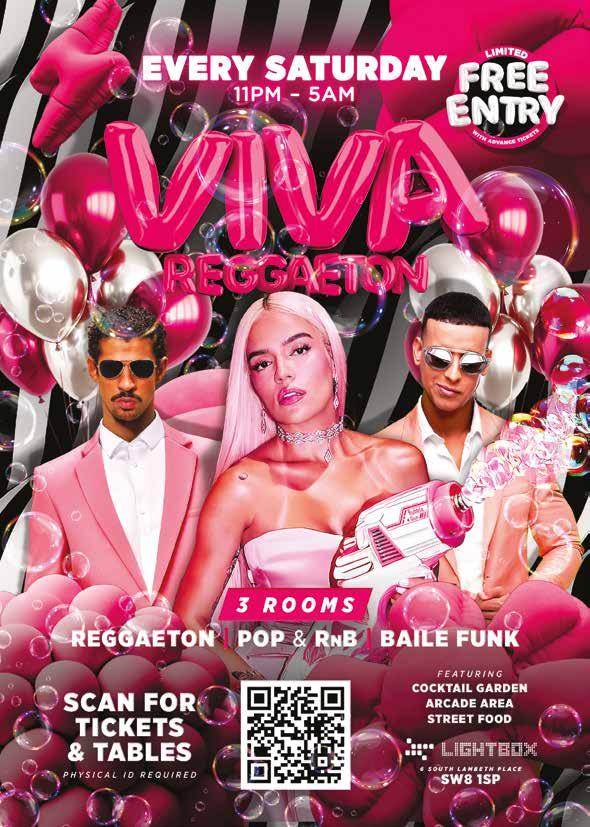
“When we started out, there were two things that were missing in the Latin festival o�fering, which was curated almost exclusively by non-Latinos who had no lived experience of our culture. One was the absence of urban Latin music, and the second was the absence of British-born talent,“ says Venezuelan-born Jose Luis Seijas, who pioneered the reggaeton scene back in the early 2000s, now runs the country’s most successful weekly latin club night, Viva Reggaton, and is musical director of LatinoLife in the Park, “This was why I started doing events, because myself and my Latino friends in London, didn’t see ourselves re�lected in what
For decades, these artists struggled to access industry networks, media coverage and mainstream exposure. Promoters struggled to convince venues. Festivals rarely included Latin acts outside specialist programming. Media coverage remains limited despite growing audiences. Yet, true to the resilience in the community they belong to, artists continue creating, recording and performing because they believe in the future of the scene.
Fuel for the Next Generation
But what about long term benefits of Bad Bunny’s visit? For young British Latinos growing up in the UK, seeing an artist perform in Spanish before tens of thousands of people can be transformative. It reinforces the idea that their language, heritage and cultural identity are strengths rather than obstacles. The growth is undeniable.
At the same time, hundreds of tracks by UK-Latin artists are released in Britain every year. Every sold-out stadium sends a signal to those artists that growth is possible. That their audience exists. That their moment may lie ahead.
Until recently, UK generated Latin music occupied a strange position within the UK music industry. The cultural contribution was there. The talent was there. Yet investment, infrastructure and recognition lagged behind. This is one of the reasons why our festival chose to base its o�fering on featuring the plethora of first generation British-born Latino kids who were fusing London sounds with Latin rhythms, rather than solely bringing artists from abroad.
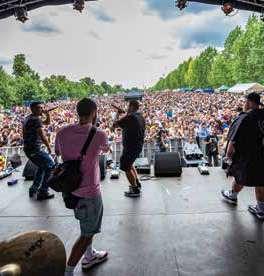
LatinoLife’s urban Latin music showcase in Finsbury Park
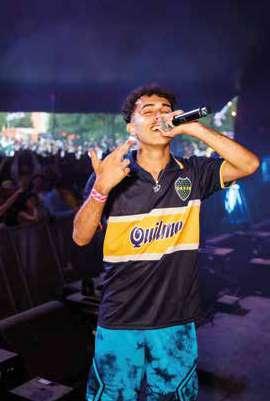
Angelo Flow and Sav 12 at LatinoLife
Meanwhile, British-Colombian artist Sasha Keable is the UK’s most successful Latina artist. Hot o�f her Tiny Desk performance the Brit and MOBO Award nominee may not yet singing in Spanish, but she inevitably will.
Jose Luis hopes is that, from an artistic perspective, as the talent develops, the UK industry responds: “that promoters book more Latin artists, that festivals create more opportunities, that labels invest more seriously. And that the next generation does not have to fight quite as hard for visibility as the last one did.”
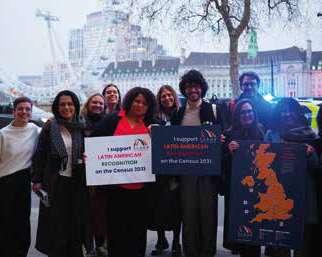
For Jacobo Belilty from CLAUK, cultural visibility is more than just about artists on stage. “The recognition of Latin Americans in the UK census has the potential to unlock solutions to the many barriers faced by this community,” he urges.
While Bad Bunny may have been the headline in London summer of 26, the real story is much bigger. It is the story of a community that has spent decades building cultural infrastructure, creating opportunities and refusing to be invisible.
Sasha Keable
Yxng Dave
Broken Pen
The UK's Latin Music
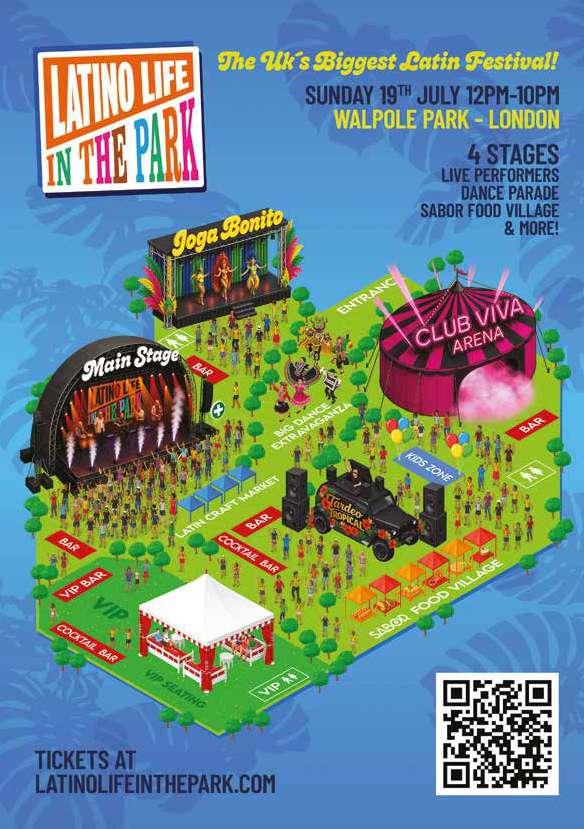
our vibrant stages of salsa, reggaeton, samba, bachata, baile funk, live bands, DJs, dance shows and nonstop summer energy!
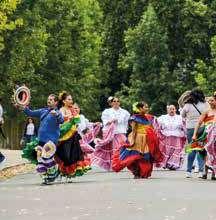
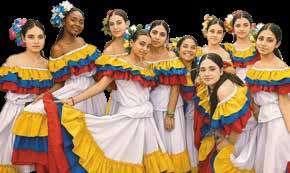
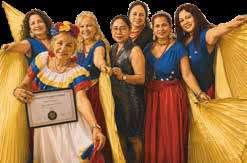
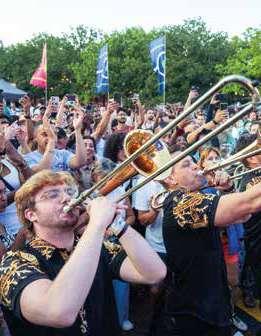
Voted the UK's most inclusive festival, Latinolife has developed a reputation for creating unique experiences with quality and diverse artists, taking you on a journey through salsa, reggaeton, samba, jazz, susion, folk, funk, bolero, tango, hip-hop and more, culminating in a party you won't want to leave. Our 4 fantastic stages and immersive experiences showcase the best Latin American international talent as well as UK-based Latin artists. Whether it’s enjoying our parade of 500 strong folk dancers, our food from all over the continent, or losing yourself in our sounds and rythmns, there is something for everyone.
Largest Music Festival
In 2026, LatinoLife Festival celebrates 10 years as London’s festival made by Latinos, for everybody. Not only are we the UK’s only Latina-run major park festival, our organisation is the UK’s first Latina-run NPO, and we are also the UK’s first PRS Latin Music Talent Development Partner. This means we are funded to help build the careers of young UK Latin artists, and this festival is the place where you can discover London’s unique Latin music identity. 10 years on, we stand by the pledge we started with: to use our lived experience, knowledge and understanding to present our diverse genres within their cultural contexts, allowing their glory and quality to shine. We love what we do and we hope you will too!
Main Stage
The heartbeat of the festival with Puerto Rico's legendary salsa orchestra culminating a journey through tango, jazz, folk, hiphop, Latin rock & fusion magic.
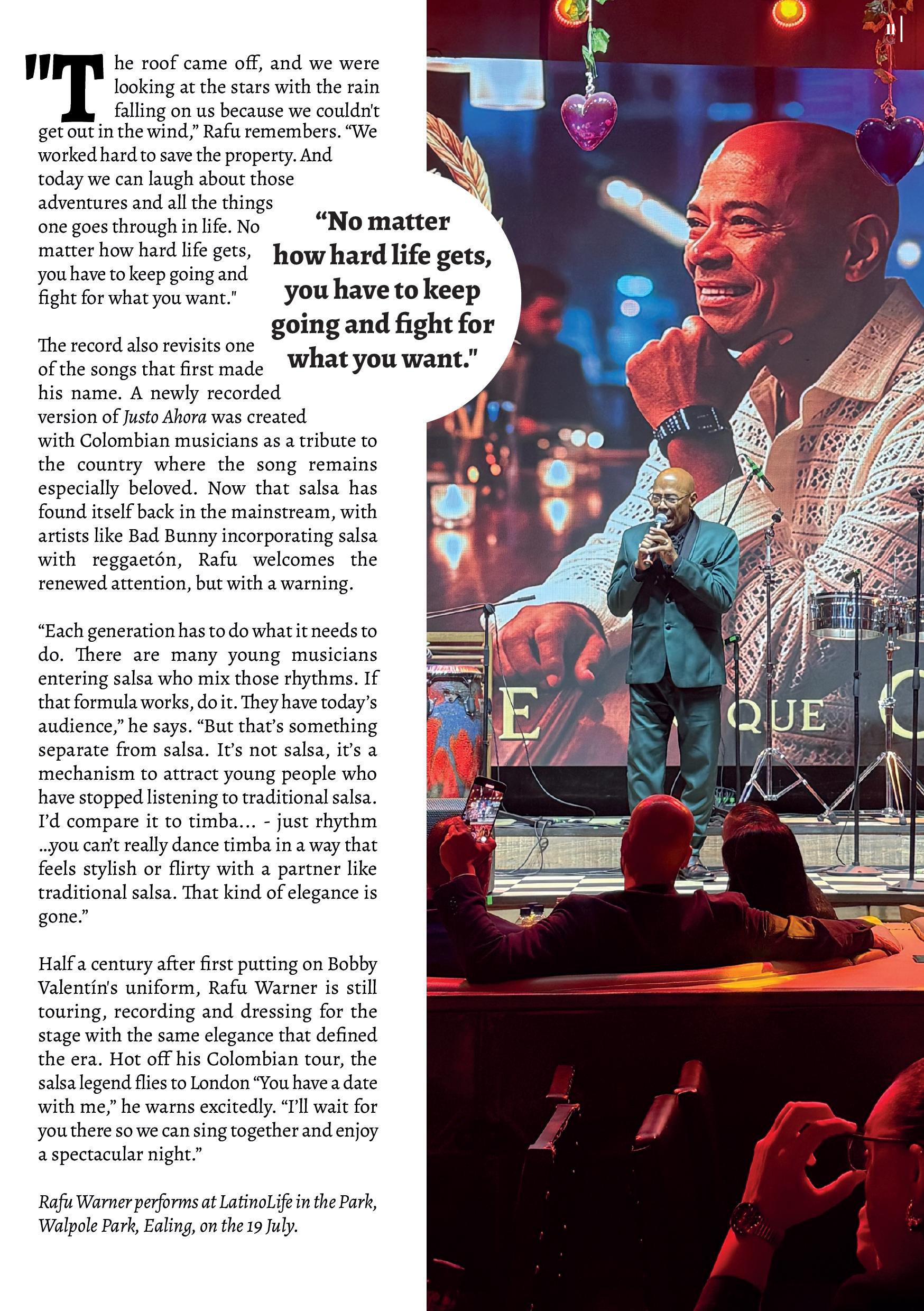
Rafu Warner And His Salsa Orchestra
haped by his time with Bobby Valentín's orchestra, the legendary Puerto Rican salsa singer's career spans decades. As Puerto Rican salsa surges back onto big stages, Rafu Warner is one of few remaining icons from salsa's original Golden Era, bringing the sound, the presence and the catalogue to match, with enduring tracks like Justo Ahora and "Part Time Lover."
Compania Folklorica De Bernal
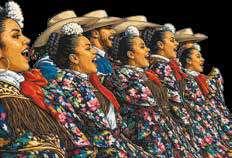
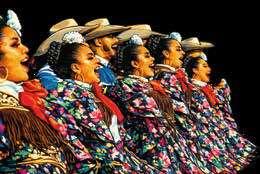
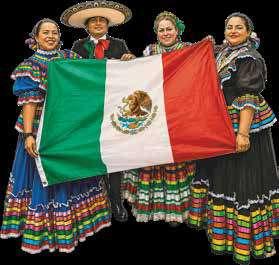
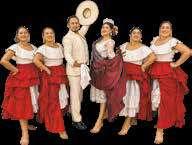
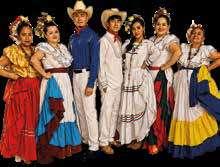
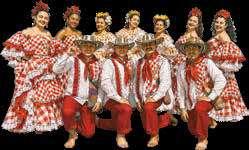
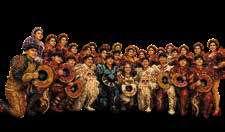
This group of over 30 world class musicians and dancers brings Mexico's rich cultural heritage to global audiences through pure entertainment. Their curated repertoire recreates iconic celebrations such as Day of the Dead, Guelaguetza, carnivals, and traditional weddings, delivered through a feast of sound, colour and dance.
Carlos Paul’s Tribute To Latin Rock
Ecuadorian Rock frontman Carlos Paul brings together an all-star lineup for a full-throttle tribute to Latin rock. Moving from Soda Stereo and Aterciopelados to Los Prisioneros and Maná, the set is built around the anthems that defined a generation—loud, familiar, and made to sing along to. This is a high-energy throwback designed to turn any crowd into a chorus.
Hernán Jacinto Trio
Hernán Jacinto is one of Argentina's most respected jazz pianists, known for blending technical precision with a deep sensitivity to melody. Performing in a trio format, he revisits material from his acclaimed album Gardel, reworking iconic tango repertoire through a contemporary jazz lens. The result is a set that moves between subtlety and intensity, o ering a fresh take on familiar themes while keeping a strong connection to their roots.
Broken Pen
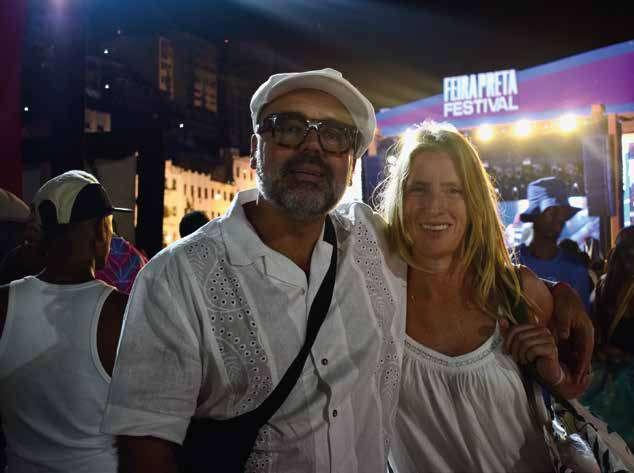
Broken Pen is a bi-lingual British-Angolan-Portuguese rapper and lyricist who fuses spoken word, rap, and Afro-conscious storytelling. Recognised as one of the leading PALOP voices in British hip hop, a technically sharp and disciplined writer, he first came to national attention on Britain's Got Talent, where his lyrical control and live presence distinguished him from conventional rap acts. A�ter his performance at Feira Preta, in Brazil, LatinoLife invited Broken Pen onto its Talent Development Programme. Since then, he has performed at SXSW London.
Grupo Luma
Led by Chilean brothers Francisco and Oscar Carrasco, Grupo Luma blend contemporary Latin American roots music, from cumbia and son to chacarera and joropo, combining rhythms that carry the spirit
of the continent. Built for the stage, their set brings together original material and well-known classics in a vibrant,high-energy performance.
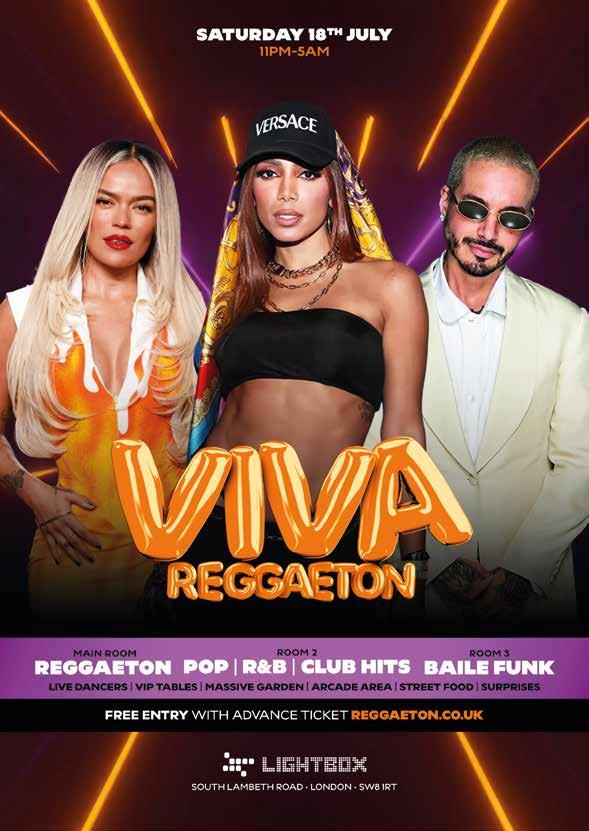
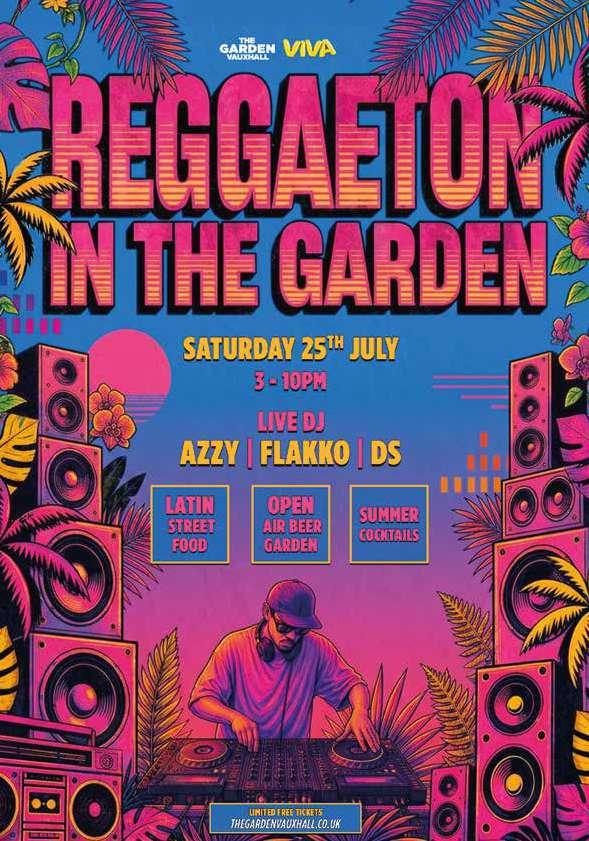
London's #1 Latin clubnight goes outdoors with huge reggaetón, baile funk, afro house and dembow energy all day long
Cano
C Fuego
Keyko
In Betwin
Padrino
Deoh
Baile Da Silva
BLACK ON THE SQUARE
12:00PM - 6:00PM free, family-friendly festival celebrating Black culture, LatinoLife brings a vibrant Afro-Latin show of reggaetón, baile funk, merengue, bachata, salsa and much more
WWW.LONDON.GOV.UK/EVENTS/BLACK-SQUARE-2026
Our tribute to the sounds of the Latin Caribbean - salsa, merengue, bachata, cumbia, bomba y plena - from start to finish.
Dj Will
Erika Vibez
Jorge Andre & Jj Latino
Mc Manny Torres
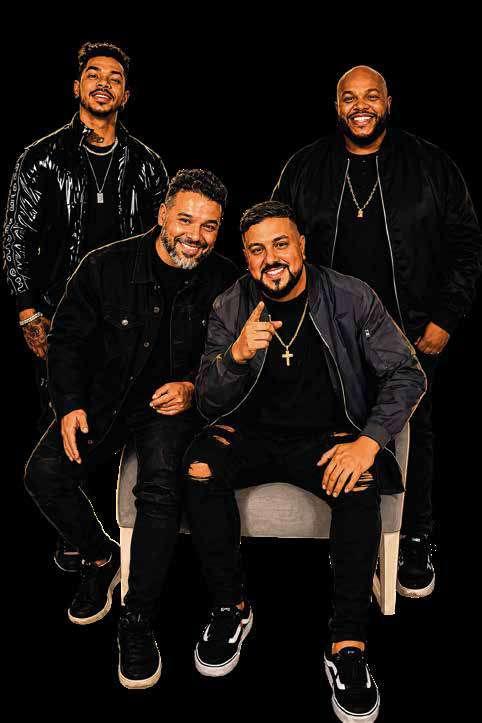
Latín Brotherz
Julian 'El Moro'
Dj Frank
Manny Castillo
Oscar Ivan
Daniel Carbonero
Brandy Colores
Brazilian music and movement - samba, pagode, baile funk, forró, capoeira, freestyle football, dance shows and drummers.
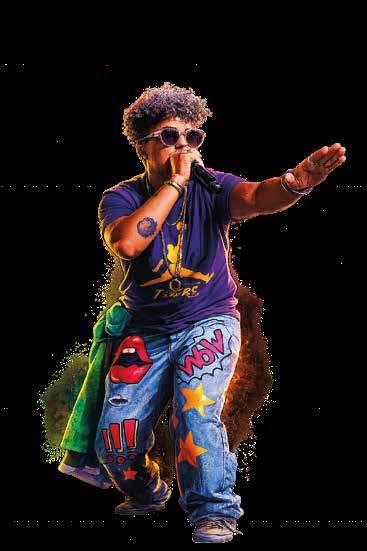
Loora
Galak
Oopsy
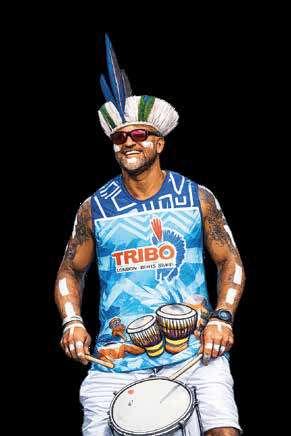
Tribo Band
Balladeux
Shinzee
Udm Samba
Capoeira
Filomena
Samba Delas
Jordan Os
Samba Dancers
Quintal Do Samba
2026 - 27
mentoring programme supports creatives of Latin American or Spanish origin (either born or residing in the uk) who have embarked on a career in the UK but need guidance, expertise and help to develop themselves professionally.
Talentos School Of Dance Cic
Orgullo
Caporales San Simón Sucre Costa Rica In The Uk
Artperuk Cic
Venezuela Dance Art Uk
Obas Del Rosario
Catufa Uk Cic
Cofochilex Uk
Grupo De Danza Folklórica
Catracho
Honduras Uk
Sumak Llacta Uk
Caporales San Simon Cochabamba Filial Londres
Diablada Pillarena Londres
Tinkus Puros Miskis
Mestizo Mexican Folklore Group
Festival from Scratch How to Start a Music
A Couple’s Story
Ever since Jose Luis Seijas and Amaranta Wright met in a salsa club in 2001, they've been inseparable, in life and in work. Their brain-child, LatinoLife, is the UK’s only Latina-run National Portfolio Organisation. With a Latin music festival, weekly clubnights, monthly showcase events and a talent development programme, the Venezuelan-Argentine couple have been creating cultural experiences that connect the Latin American community with wider British society, whilst representing its culture authentically and putting UK Latin music at the heart. Amaranta Wright recounts her journey as part of London’s Latin music explosion, from arriving from Argentina as a child to the day she met her partner and co-founding LatinoLife in the Park, now the UK’s largest single-day Latin music festival.
As tens of thousands of Londoners walked towards Tottenham Hotspurs stadium from Seven Sisters Latin market earlier
this month, Haringey became irrecogniseable to the place I landed in, forty-five years ago, from Buenos Aires. Back then, if you had mentioned the word ‘Latin’, people thought you were talking about ancient Rome. In 2026, with reggaetón blaring from local shops selling Puerto Rican pava straw hats, everyone on Tottenham High street knew what Latin means. With Bad Bunny at Spurs, then Pitbull becoming the first Latin artist to headline Hyde Park, and LatinoLife one the Park, the UK’s largest Latin Music festival celebrating 10 years, Latin music is well and truly planted in British culture, and it’s here to stay.
“That experience made me feel for the first time that what made me di�ferent, at times embarrassed, was something I wanted to be part of.”
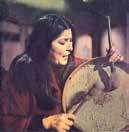
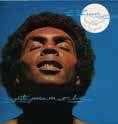
I still thank the �laky babysitter, whoever she was, who failed to turn up that night, forcing my parents to sneak me into my first ever concert on a cold winter’s night. It was Gilberto Gil who cemented my love of music forever. More importantly, that experience made me feel for the first time that what made me di�ferent, and at times embarrassed, like when my mum waited for me in the playground in that dreaded poncho, was suddenly something I wanted to be part of.
Growing up in Hornsey in the 1980s, I didn’t know any other Latin Americans outside my parents circle of friends. But I do remember the dinner parties at home, with long dark-haired, poncho-wearing folk, and the fierce political debate of a more intense splinter group on the smoky top �loor, plotting revolutions in far o�f places.
The soundtrack to these events were the likes of Cuba’s Pablo Milanes and Silvio Rodriguez, Chile’s Victor Jara, Argentine Mercedes Sosa and Panama’s Rúben Blades, their protest songs giving voice to a region battling against repressive regimes. But I remember the exact moment when the music from this other place I belonged to really hit me…
It was 1981 and I was 9 years old, squeezing through what seemed like a forest of �lared jeans, to get to the stage at what was then called the Hammersmith Palais. When I got to the front, my eyes fell on a beautiful man on stage, who filled my ears with a playful, sweetly percussive sound that I'd never heard before; so rich yet with an easy simplicity, joyful, yet so so tender. Overwhelmed with emotion I didn't know whether to dance or to cry.
From then to now, and the road in between
Twenty years later, in 2001, Jose and I met, upstairs at Bar Lorca in Islington, a popular salsa club at the time. I had just come back from Latin America, where I had spent most of my twenties, as a journalist, like my dad. Jose was pretty much fresh o�f the boat from Venezuela. He was a massive music fan, who was running a Latin music record store, and I was writing a book. Even though we met dancing salsa, Jose was most impressed with my collection of Argentine rock, Spinetta, Charly Garcia, Soda Stereo, who he was crazy about (though I was more ricotera).
From the day we met we’ve been inseparable, joining forces in life and in work, building a family and a cultural institution at the same time. About a year a�ter we met, Jose came back from his record store with a CD: Tego Calderón’s El Abayarde, the 2002 seminal reggaetón album. “This is the future of Latin music,” he said. That was saying something for a die-hard salsa fan.
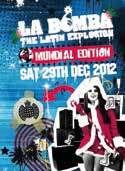
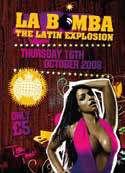
Jose soon began running London’s first reggaetón clubnights. He pioneered the UK urban Latin music scene with his La Bomba nights at Ministry of Sound, which he then took to Europe, and produced the UK's first ever Reggaetón Festival in 2004. At the time few music curators or media pundits in the UK were taking notice of reggaetón, those that were inclined towards disparaging.
While Jose was promoting reggaetón nights, I began a Latin culture magazine, determined to fulfil an unfinished dream of my dad who, back in the 1980s, started a Latin news magazine in English, before his Venezuelan investors pulled out. Jose couldn’t stop coming up with ideas (“there is no Latino this or that, we should do it”) and I would take up each baton and run.
“About
a year a�ter we met, Jose came back from his record store with a CD: Tego Calderón’s El Abayarde, the 2002 seminal reggaetón album. ‘This is the future of Latin music,’ he said.”
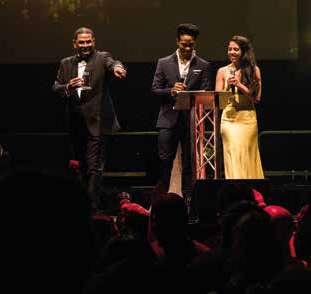
The next thing we knew, on top of the club nights and the magazine, we started The LUKAS (Europe’s only Latin Entertainment Awards), a red carpet event inspired by the MOBO Awards, celebrating Latin achievement in the UK. It wasn’t till 2016, however, that we launched LatinoLife in the Park (initially called La Clave Fest).
La Bomba in 2008
By then, LatinoLife magazine and the LUKAS Awards were going strong. Jose’s club nights were giving a platform to first generation UK-Latin rappers and The LUKAS was our e�fort to give more visibility, recognition and profile to Latin American artists in the UK. But it felt like we weren't really making an impact. While The LUKAS was a brilliant VIP red-carpet gala, no festivals would book our award-winning artists. For The LUKAS to have some kind of legacy, we decided we had to do a festival ourselves.
DWith no money, our only option with the festival was to start local and start small. We were living in Hornsey, which happened to have its own community festival centred around the plaza in front of an amazing Art Deco listed building that was the Hornsey Town Hall. We figured it could definitely do with an injection of Latin joy and so approached the organisers about us taking over a day.
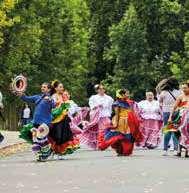
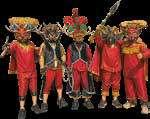
Of course, we were never going to start small. We wanted a proper cultural take over. And so we approached small venues, ending up with over 20 events; poetry readings, jazz concerts, pub gigs, theatre pieces, even a human tower competition, and a street parade with Bolivian monsters, drumming troops and samba dancers marching down Crouch End Broadway, to the amazement of locals shoppers. That parade is today the ever-popular Big Dance Extravaganza of 500 dancers that kicks o�f the festival every year.
“While The LUKAS was a brilliant VIP red-carpet gala, no festivals would book our award-winning artists. For The LUKAS to have some kind of legacy,
we decided we had to do a festival ourselves.”
The Most Important Thing is to Begin promoters, because of the type of acts (not always most popular with Latinos) and the absence of our community in them. We wanted to tell our own story of Latin music, away from the “World Music” framing of it. We wanted a festival Made by Latinos, for Everybody.
spite both being massive music lovers, and now working in Latin music, neither of us felt represented by the Latin music events being put on by UK
Not surprisingly, with crowds spilling out onto the streets, by 2018 were told that we were getting too big for Hornsey. A�ter months looking for another venue, the Mayor of London, who had now started funding us, kindly o�fered us The Scoop, the stunning bowl scooped out of the ground beside the then egg-shaped City Hall, between London and Tower bridges.
The best piece of advice I’ve ever been given was when I went to the southern Brazilian city of Curitiba to interview its mayor, Jaime Lerner. I had been sent by a US magazine as part of an article on ‘cities that work.’ By implementing a revolutionary public transport system, Lerner had transformed his city into one of the most socially integrated in Latin America. How did he do it? “The most di�ficult thing of all,” he told me. “is to begin.”
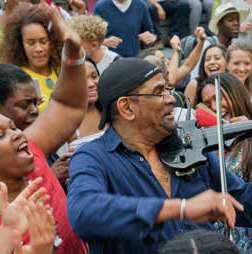
Omar Puente at The LUKAS
Omar Puente at Latinolife in the Park
Being in Central London doubled our audience and the day turned into a full on salsa rave in the middle of the city. I remember how Cuban violinist Omar Puente jumped into the public with his violin and sent everyone crazy, and at one point the whole 5,000 plus audience was line dancing.
Alas, again, with The Scoop over�lowing we were told we would have to find somewhere else. Homeless again, where could we go? With Councils now making big bucks hiring their parks out to major festival promoters, pickings were slim. Ah but a stroke of luck…back in Haringey, the Friends of Finsbury Park told us they were in talks with Haringey Council about being given a day to celebrate the park’s 150th anniversary, could we help them? The very organisation complaining about major events in Finsbury Park wanted LatinoLife in the Park - an accessible, independent festival - to help restore the park’s original intention as ‘The People’s Park.’
Still a two person show, we weren’t ready to be a park festival. But o�fers like this didn’t come every day. What an opportunity; London was finally to get its first major Latin park festival for years, and for the first time ever, it was UK Latin artists who would be headlining.
And so it was that in three years, we went from being a tiny community festival to a major park festival. In 2019 we had 40,000 people in Finsbury Park, and it was literally just Jose, me and a few helpers. That was the year Jose ended up in hospital.
When, in 2021, we did finally get a production manager, he jokingly asked if Jose would be stage managing, whilst filling in for the drummer, grilling sausages at one of the food stalls and refereeing the kids football tournament that we’d, for some insane reason, decided to put in the middle of the two stages. There were no hospital visits this year, only a long drive across London at dawn, with a car load of stinking garbage, thanks to some misbehaving traders. As we paid the geezer at his processing plant, it was a reminder that, feeling on top of the world a�ter pulling o�f another festival, there was still the rubbish to take out!
By 2022 it became clear that there was a new energy that was taking centre stage, and it belonged to young people. As we pushed the reggaetón artists to centre stage, we’d drawn a whole new audience. We were the first festival to feature UK Urban Latin talent, singing their very own London-Spanglish. The crowd’s reaction was unbelievable, and we could see what a buzz it gave young Latino artists. They were on the big stage and the next generation in the audience could see themselves in the future.
Now LatinoLife in the Park is the UK’s largest one day Latin music festival, the only Latina-run major park festival, voted the UK’s most inclusive festival
(FestSpace). And yet it is now just one in a whole ecosystem of activity, events media and talent development to push forward the Latin music industry in the UK.
When I think of us, I think of Jose provoking me with his red cape of ideas, and me charging at them with the stubbornness of a mad toro. We are both idealists and naturally entrepreneurial, or suckers for punishment, and have more than once ended up collapsed in a bundle, wondering what are we doing and why and who started it.
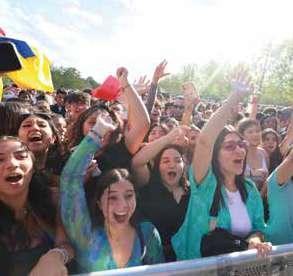
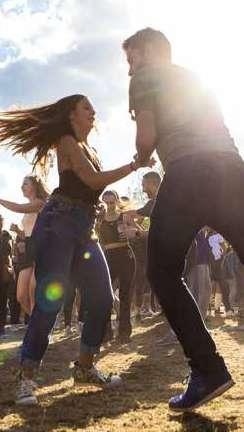
But the gratification of seeing what a diverse audience real Latin music has come to attract. We see Afro-Caribbean women in traditional gear, women in head scarves, men in turbans, others baring torsos, dancing together to Mexico pop hits or Brazilian samba
This year, with Bad Bunny just having produced a fever over in Tottenham, with the British media talking about the joy and warmth of his music, it feels like the country I call home has finally understood the music that I fell in love with as a child.
“We wanted to tell our own story of Latin music, away from the World Music framing of it. We wanted a festival Made by Latinos, for Everybody.”
This month, 45 years a�ter that concert in Hammersmith ignited my love of Latin music, Gilberto Gil gave his farewell concert, in Camden’s Roundhouse, not far from where I grew up. The next evening, in the same venue, Rúben Blades, who Jose and I named our first son a�ter, also said goodbye. It feels like the end of an era, and the start of a new one. I never dreamed that I’d somehow be part of this exciting new chapter. Almost 25 years a�ter Jose and I first met and started working together, LatinoLife’s growth has mirrored a global cultural phenomenon: Latin Music has gone from being a niche genre to the most consumed genre in the world. And on its 10th anniversary, LatinoLife in the Park has grown from an obscure community festival to the UK’s largest Latin Music Festival.
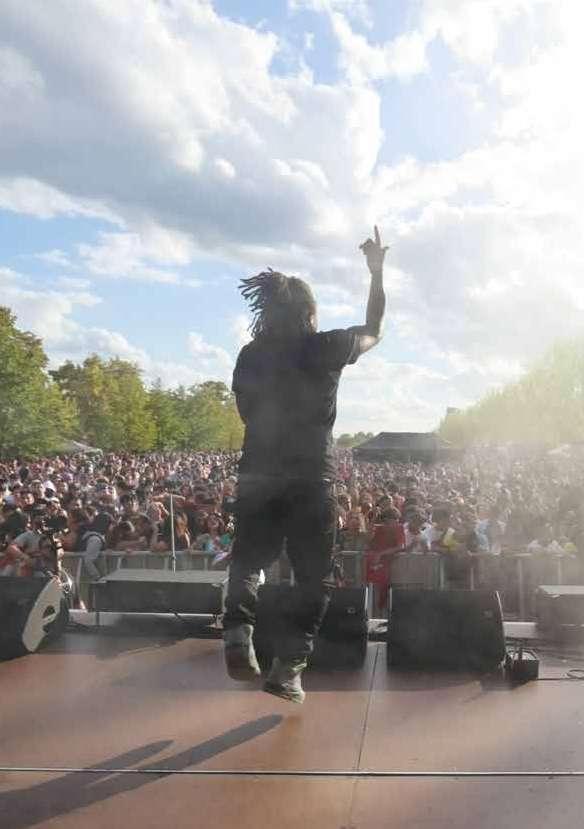
LatinoLife in the Park is not only the best place to discover authentic Latin music, its the best place to discover unique homegrown Latin talent right here in the capital. As the single biggest employer of Latin talent, contracting over 700 performers, it is the launchpad that has helped build the careers of young bi-lingual UK Latin artists, in the hope that some will find their way to the forefront of a global music industry, where music in English is no longer dominant. Who knows, perhaps one of the UK artists you’ll see at LatinoLife will be the International headliners of tomorrow. The di�ference is that they’ll be singing in Spanish and Portuguese.
Follow @latinolifeuk for updates on all things Latino in the UK
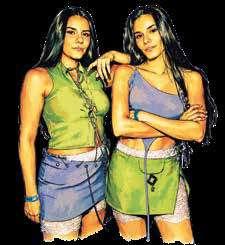
The Twin DJs Putting Women at the Heart of Reggaeton
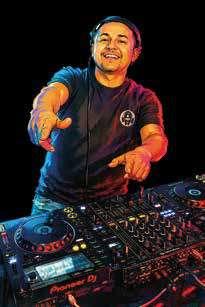
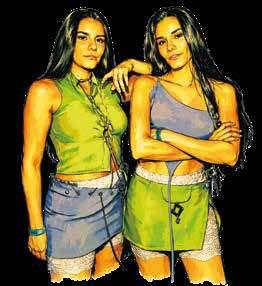
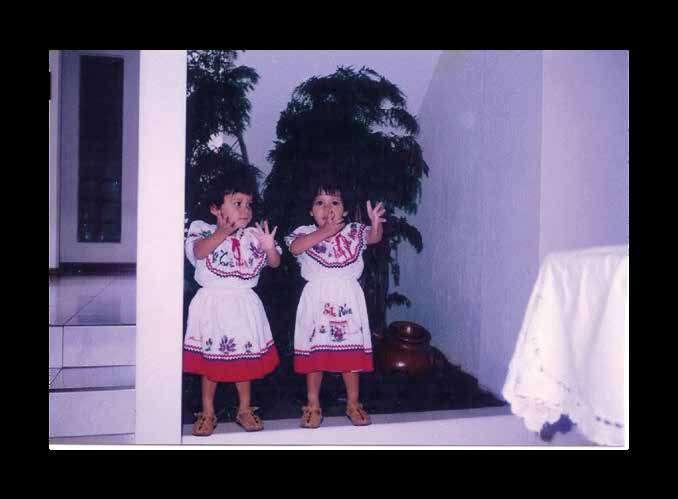
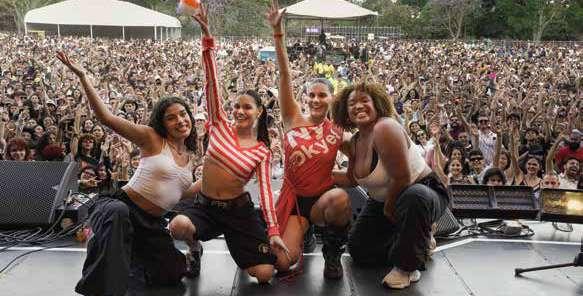
osta Rican twins Ana and Lucía Barrantes fell in love with reggaeton as children, before noticing something missing from the scene they loved: women. Now as In Betwin, they are among Latin America’s most recognisable reggaetón DJs with a massive social media following and travelling around the world. Ahead of their debut UK perfor mance at LatinoLife in the Park, we speak to DJ In Betwin about building a career from scratch, and the importance of having each other in order to break into a male-dominated urban DJ world.
By Isabel Ritchotte
in Brazil, before heading back out to continue their international journey. Known as DJs In Betwin, the project they created just six years ago has since taken them from small local performances to international stages. Today, the twins are becoming two of Costa Rica’s most recognisable DJs, performing around the world and opening for artists including Bad Bunny.
But their relationship with music began long before they ever imagined making it their career.
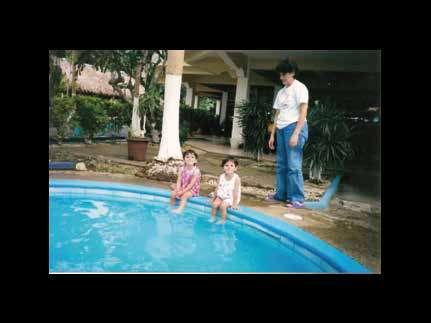
“I think it started when we were maybe 6 or 7 years old, because we always loved music and used to listen to the radio in Costa Rica called Vox FM, and at our house we lived with a woman from Panama, and since we lived with her for so long, she taught us a lot about Panamanian reggaeton and that’s also how our love for reggaeton started.”
Despite their early passion for music, the twins initially followed a more traditional route. Both studied at the University of Costa Rica, Ana studying production and Lucía public relations. It was during those years, while attending parties and working in the local music scene that they began noticing something missing.
“When we grew up and were in college, we started going to bars and parties, and we always noticed that, even though the dance �loor was full of girls, there were always men in the DJ booth. So, it was like, ‘Why don’t we turn this around?’ At that time, in Costa Rica, at least in the urban, Latin scene, there were no female DJs.”
A�ter university, the girls began working at a record label, behind the scenes with the artists, in
“And that’s when my sister discovered a place where they taught how to mix right here in Costa Rica,” said Ana. ‘And I thought to myself, why don’t we give it a try? Just, come on, let’s try it, and see what happens. And obviously it started as a hobby, but from there it just took o�f.”
A�ter a year, they made the decision to leave their o�fice jobs behind and dedicate themselves fully to their own project: DJ In Betwin.
“We both quit on the same day because it wouldn’t have worked for one of us to keep going while the other didn’t, since we needed both of our time for the project to work.”
Leaving a stable career path was not the easiest decision, but has definitely paid o�f.
“Our family has actually never really been into art,
“And especially the typical talk that comes from parents,” agrees Lucia “like, ‘How can she be out so late at night?’ It’s kind of a male-dominated industry.’”
“I understand that they’re well-intentioned - but at the end of the day, those little acts of sexism made us doubt a little about whether we should quit our o�fice jobs and dedicate ourselves 100%,” remembers Ana. “Eventually, when we quit our jobs, everything was fine and they understood — but yes, it definitely was a process.”
While they were inspired by female artists who had already broken barriers in reggaeton, there were few female DJs in their own scene to guide them.
“Obviously Karol G, Ivy Queen, who was a pioneer, Tempra, but when we started out, unfortunately, at least in Costa Rica, we didn’t have other women reggaeton DJs to turn to or ask for advice,” says Ana. “We didn’t really know anyone in the industry. We didn’t know any other DJs. It was really like starting from scratch, building connections from scratch, and making a name for ourselves from scratch.”
“Our parents didn’t approve. It was the typical ’how can girls be out so late at night?’”
As I observe the twins over Zoom, I enjoy their ability to interrupt and complete each other’s sentences e�fortlessly, a re�lection of the closeness they share. It suddenly makes me realise the power of two and I ask whether being two rather than one, helped them break the macho barriers of the reggaeton world. Having each other as allies, having power in numbers, did is make it easier to challenge the state quo?
“Yes definitely, it’s not like working alone.” Says Lucia. “I think my favourite thing is that when we have a problem, there’s always another person there supporting us. Even though I imagine there are advantages to working alone, because you really make decisions on your own, I think it’s nice to know that you have that support, especially during a crisis. At some points if I feel like I’m not giving enough, then my sister can support me.”
The sense of sisterhood and community they extend to other artists seems like a natural re�lection of the partnership they have built together as twins.
“If we’re having a problem, we can empathise with each other, we feel like someone understands your situation 100%. At the same time, when we have an opportunity, or something really exciting is happening to us, then we have a person to share it with.”
It’s also clear from their massive instagram engagement that In Betwin successfully built a brand around their striking sibling identity, by generating lots of interesting content on social media. As well as being great DJs, their unique look has become their selling point.
“When we started out, there were no examples of women DJ examples to copy, no path to follow, but at the same time, we tried to use it to our advantage, because having no point of comparison can also be liberating. I think that also helps you achieve things in your own way, at your own pace, without comparing yourself.” Says Lucia.
“It’s still an issue, women have a hard time breaking into those spaces in general as DJs, and especially as DJs playing urban music or reggaeton.” Adds Ana. “Hopefully now the next generation of aspiring female DJs, at least in Costa Rica, can see us as a reference. It’s still a long way from being 50-50 split, but hopefully someday we’ll reach that.”
For now, however, these girls are living the dream, travelling the world and doing what they love, showcasing and honouring Latin culture, and of course, giving a great set.
“When we do these kinds of tours, most of the people who come to our shows are Latinos living in other countries, who really miss their culture and want a night that reminds them of their roots.”
“I feel like part of the spirit behind our shows, is reminding people where they’re from and giving them a moment of nostalgia. I feel like it’s an honour, especially because it’s the music we connect with. It’s the music we love. It’s the music we feel represents us, our culture, our continent and our people. For us it’s a dream come true, this huge opportunity to travel the world and really show a little piece of yourself.”
That sense of connection is also at the centre of their performances. So, what can audiences expect from a DJ In Betwin set?
“The shows are always really energetic, and we do try to mix it up a lot, with changes in genre and rhythms, to keep the crowd engaged and make sure everyone is always excited about what’s coming next. We go through a huge selection of songs, but we’re definitely going to cover a little bit of everything. Whatever gets people dancing is what interests us, and we’re really excited to be in London for the first time.”
DJ In Betwin performs on the VIVA CLUB ARENA stage