WELCOME

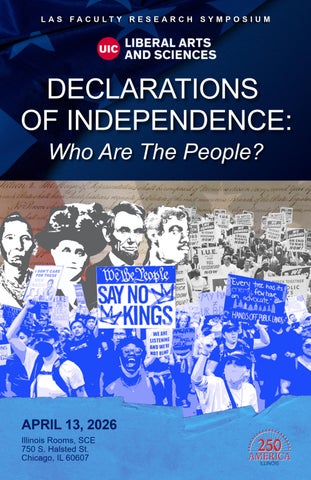
Declarations of Independence: Who Are The People? is an interdisciplinary, day-long public program that will highlight the scholarship, creative production, and teaching of UIC’s faculty and graduate students as we grapple with the myriad meanings of the 250th anniversary of the signing of the Declaration of Independence on July 4, 1776. Many consider this event and the subsequent revolution a defining moment for the creation of the United States, an expression of the nation’s democratic ideals, and a model for revolutionary movements around the world. For the 250th anniversary, UIC’s College of Liberal Arts and Sciences will host notable historians, legal scholars, and political theorists to join our colleagues in robust conversations about who constitutes the nation and the state of Illinois, and how freedom has been understood and experienced since the eighteenth century. The symposium will also feature interactive activities and opportunities for students and community members to contribute to the discussion.
Several themes guide this LAS Faculty Research Symposium:
• Declarations in history—at the time of the Declaration of Independence, what was the impact on the sovereign nations that inhabited the land? Who was a citizen or non-citizen? How did migrants and settlers understand what it meant to be an independent nation? How did the American declaration influence those beyond the U.S.?
• Declarations in perspective—what is the role of memory and commemoration today? Who is the “we” in “We the People”? How do we understand challenges to freedom and independence in the current national context? How do we teach through differing theoretical and methodological lenses?
This event is affiliated with IllinoisAmerica 250, “an inclusive, statewide commemorationthat uplifts local stories, places and programs, builds pride and showcases howIllinoisians bringthe ideals ofDeclaration ofIndependenceto life.”
PROGRAM

9:00 AM Land Acknowledgement
Welcome from Lisa A. Freeman
Address from Gabrielle Lyon and Dick Simpson, Illinois 250
The People: Law, Citizenship, State
9:15 AM Keynote Conversation: Martha Jones & Desmond King
10:30 AM Coffee Break
10:45 AM UIC Faculty Panel: Annette Martin, Michael Pasek, Atef Said, Cindy Tekobbe, & Yann Robert (moderator)
12:30 PM Lunch
Whose Land? Workshop
Document Exploration courtesy of Heritage Auctions
The People: Sovereignty, Land, Revolution
2:00 PM Keynote Conversation 2: Christy Pichichero and Doug Kiel
3:15 PM Coffee Break
3:30 PM UIC Faculty Panel: Mario LaMothe, Hayley Negrin, Akemi Nishida, Kumar Ramanathan, Elizabeth Todd-Breland (moderator)
4:45 PM Break
5:00 PM Keynote Address: Jelani Cobb
6:15 PM Reception
7:00 PM Program ends

Land Acknowledgement

SPEAKER BIOS

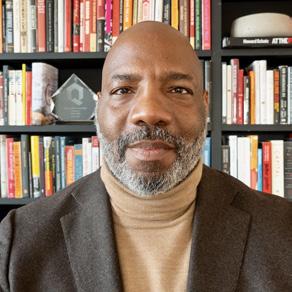
Jelani Cobb is a staff writer at The New Yorker and the Dean of the Columbia Journalism School. He received a Peabody Award for his 2020 PBS Frontline film Whose Vote Counts? and was a finalist for the Pulitzer Prize in Commentary in 2018. He has also been a political analyst since 2019. He is the author of The Substance of Hope: Barack Obama andthe Paradox ofProgress,Tothe Break ofDawn:AFreestyle onthe Hip Hop Aesthetic and most recently, Three Or More Is a Riot: Notes on How We Got Here: 2012-2025. He is the editor or co-editor of several volumes including The Matter of Black Lives, a collection of The New Yorker’s writings on race, and The Essential KernerCommission Report. He is producer or co-producer on a number of documentaries including Lincoln’s Dilemma, Obama:AMore Perfect Union, Policingthe Police and THE RIOT REPORT.
Dr. Cobb was educated at Jamaica High School in Queens, NY; Howard University, where he earned a B.A. in English; and Rutgers University, where he completed his M.A. and doctorate in American History in 2003. He is also a recipient of fellowships from the Ford Foundation, the Fulbright Foundation and the Shorenstein Center at Harvard University’s Kennedy School of Government.
He currently serves on the Board of Directors of the American Journalism Project and the Board of Trustees of the New York Public Library. He received an Honorary Doctorate for the Advancement of Science and Art from Cooper Union in 2022, and an Honorary Doctorate of Letters from Rutgers University in 2024. York College / CUNY and Teachers College have honored Dr. Cobb with medals. Dr. Cobb was elected to the American Academy of Arts & Sciences in 2023.
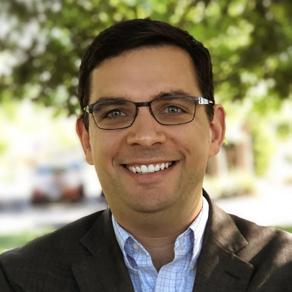
E.J. Fagan is an associate professor in the Department of Political Science at UIC. He earned his PhD from the University of Texas at Austin in 2020. His research explores how political institutions process information and make decisions about public policy. His work focuses on the role of expert information, interest groups, and political parties in influencing decisions by policymakers, particularly in the U.S. Congress.
Dr. Fagan is the author of The Thinkers: The Rise of Partisan Think Tanks and the Polarization ofAmerican Politics (Oxford University Press, 2024). His work has been published in numerous political science journals, including PolicyStudies Journal, PartyPolitics, Legislative Studies Quarterly and the Journal ofEuropean Public Policy. He is a co-director of the U.S. Policy Agendas Project.

As a Collaborating Scholar at the University of Illinois Institute for Government and Public Affairs, Dr. Fagan directs the Illinois Policy Agendas Project. The project is building a database of the policy content of outputs from the Illinois state government. He is an active public scholar, frequently appearing in Illinois media to discuss contemporary political debates.
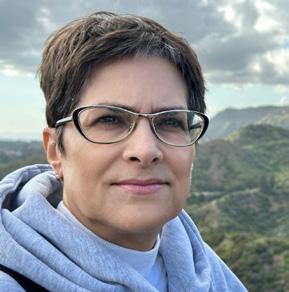
Martha Jones is a writer, historian, legal scholar and public intellectual whose work aims to understanding the politics, culture, and poetics of Black America. Her latest book –TheTrouble ofColor:AnAmerican FamilyMemoir (2025) – recounts her family’s encounters with race and color through the story of five generations. She is the author of prize-winning histories that survey the vast American past, from slavery and the founding, the Civil War and Reconstruction, women’s suffrage and Jim Crow, on through modern Civil Rights and present day race and identity, including Vanguard: HowBlackWomen BrokerBarriers,WontheVote, and Insisted on EqualityforAll, and Birthright Citizens:AHistoryofRace and Rights inAntebellumAmerica.
For the New York Times, she has written on culture and travel; her opinion columns have appeared in the Washington Post, the Atlantic, Politico,Talking Points Memo, and USAToday. You can see and hear her outlets such as NPR’s Here & Now and 1A, CNN’s Amanpour, and MSNBC’s the Rachel Maddow Show and podcasts such as the Ezra Klein Show and the 19th*’s Amendment. Her work has enjoyed generous recognition including book prizes from the American Historical Association, the Organization for American History, the American Society for Legal History, and the Los Angeles Times and fellowships Berlin’s Institute for Advance Study, the National Humanities Center, the American Council of Learned Societies, the Library of Congress Kluge Center, and the American Historical Association. She was most recently awarded a Guggenheim Fellowship and was elected to the American Academy of Arts and Sciences. At Johns Hopkins University, Dr. Jones teaches for the Department of History and the SNF Agora Institute and is the Society of Black Alumni Presidential Professor. She also directs the Hard Histories at Hopkins Project where my lab investigates the history of slavery and racism connected with Johns Hopkins University and Medicine.

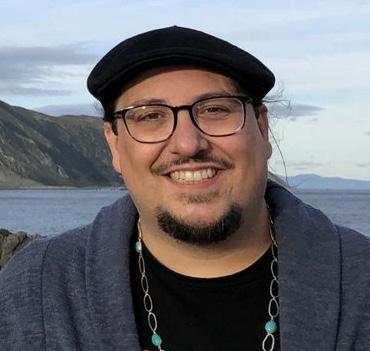
Doug Kiel is an Associate Professor in the Department of History at Northwestern University. He is a citizen of the Oneida Nation and studies Indigenous histories and settler colonialism, primarily in the American Midwest, with an emphasis on law and policy. Kiel is the author of Unsettling Territory: The Resurgence of the Oneida Nation in the Face of Settler Backlash, published by Yale University Press. He received his PhD from the University of Wisconsin–Madison in 2012.
Kiel is a recipient of the Andrew W. Mellon Foundation’s New Directions Fellowship (2025–2027) and is currently working on a book entitled Power over the Land: A New History of the American Midwest. Their work in museums has included co-curating Indigenous Chicago at the Newberry Library (September 2024 to January 2025), and Native Truths: Our Voices, Our Stories, a permanent exhibition at the Field Museum that opened in 2022. Additionally, they serve on the scholarly advisory committee for the new Wisconsin History Center, opening in September 2026. As an advocate, Kiel has testified before the U.S. House of Representatives, Committee on Natural Resources, and submitted an expert witness report in regards to Oneida Nation v. Village of Hobart (2020).
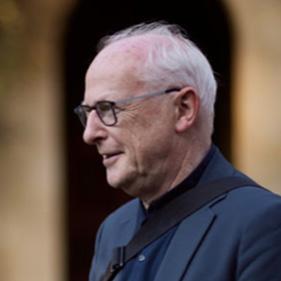
Desmond King holds the Andrew W Mellon Professorship of American Government at the University of Oxford, where he is also a Fellow of Nuffield College. He holds a DLitt from Oxford and is an elected fellow of the Royal IrishAcademy, the American Philosophical Society, the BritishAcademy, the NationalAcademyofSciences, and the American AcademyofArts and Sciences. King is a scholar of American political development and comparative political economy and his publications include: The New Right: Politics, Markets and Citizenship (Dorsey 1987); co-ed. The Changing CharacteroftheAmerican RightVols 1 & II (Palgrave, 2025); In the Name of Liberalism: Illiberal Social Policyinthe US and Britain (OUP, 1999); Separate and Unequal:AfricanAmericans andthe US Federal Government, (OUP 1995/2007 2n ed); MakingAmericans (Harvard UP 2000); The LibertyofStrangers (OUP 2007); with Stephen Skowronek and John Dearborn, Phantoms ofa Beleaguered Republic (OUP 2021); ActivelySeekingWork:The Politics ofWorkfare inthe USA and Britain, (Chicago 1995); with Larry Jacobs, Fed Power: How Finance Wins (OUP 2021); and with Rogers M Smith, America’s New Racial Battle Lines: Protectversus Repair, (Chicago 2024). King’s op-eds have appeared variously in Le Monde Diplomatique,the NewYorkTimes and the Financial Times, including most recently his piece in the FT on 16 September 2025.
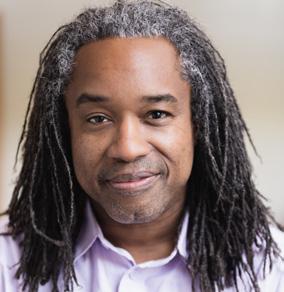
Mario LaMothe is Assistant Professor at UIC, specializing in Black Studies and Anthropology. His research involves embodied and affective pedagogies of Afro-Caribbean religious rituals, performance practice, and queer lifeworlds. His forthcoming monograph Vodou Rich: Haiti, Dancemakers, and Dedoublaj is a Haitian Performance Studies experimentation that illuminates how Haiti, Haitians, and their embodiments continue to haunt circum-Atlantic social and cultural histories, through the embodied continuation of Vodou and African Diaspora humanity. Mario’s writing is featured in various peer-reviewed and commercial publications. In addition, he co-organizes Afro-Feminist Performance Routes, the Queer/ Sexualities Working Group for the Haitian Studies Association, and the Un/Commoning Pedagogies Collective.
A performance artist and curator, Mario is inaugurating Kafou Lespri, a live and digital platform of art, activations, and activism that is a creative home for Haitians and their interlocutors to celebrate the lived experiences of transnational Haiti.
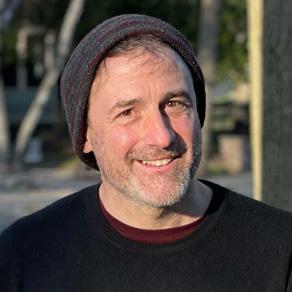
James Levy is the founder and Executive Director of the Race and Place Coalition and the Whose Land? public history project. A scholar trained in African American history, Dr. Levy was Associate Professor of History at the University of Wisconsin-Whitewater for eleven years where he directed several award-winning community-engagement initiatives. His projects employ oral history and collaborative community research to foster public dialogue about the connections between race and geography. At Whitewater Levy founded the Wisconsin Farms Oral History Project which explores the intersections of race, land, farming, and Wisconsin history. The project sponsored a traveling exhibit and community conversation tour in 2018-19 called The Lands We Share which reached over one hundred thousand Wisconsinites through in-person events and broadcast media.
Dr. Levy also served as lead curator for the critically-acclaimed national exhibition at the Schomburg Center for Research in Black Culture in Harlem, New York, titled, Black Suburbia: From Levittownto Ferguson.
Dr. Levy has received wide recognition for his work including a national Whiting Foundation Public Engagement Fellowship in 2021-22 for his current Whose Land project, excellence awards from the Oral History Association, the American Association for State and Local History and the Wisconsin Historical Society and grant awards from such foundations as the National Endowment for the Humanities, Wisconsin Humanities and the Baldwin “Wisconsin Idea” Fund. Dr. Levy’s current book project, forthcoming from the University of Wisconsin Press, is titled The Color of Farming in the Heartland: A History of Land and Race in Wisconsin since 1800.
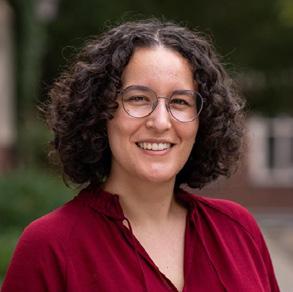
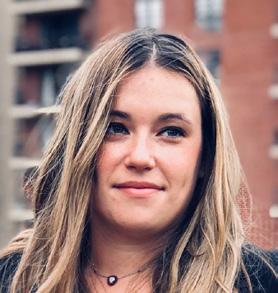
Annette Martin is an Assistant Professor in the Department of Philosophy at UIC. She was previously a faculty fellow at Princeton’s University Center for Human Values (20242025), and completed her PhD in Philosophy at New York University in 2020. She works on social ontology and social epistemology, primarily under the umbrellas of feminist philosophy, philosophy of race, and intersectionality theory.
Hayley Negrin is a historian of early America and the Atlantic world with a focus on Indigenous history and slavery. She is a non-Native researcher who works with contemporary Native people to research, write, and teach Indigenous history.
Her book manuscript in progress Fugitive Lands: Sovereignty and Slavery in the Early American South is forthcoming with the University of Pennsylvania Press. Fugitive Lands charts the relationship between sovereignty and racial slavery in American History. The book explores how European conceptions of Black and Indigenous sovereignty shaped the development of the early American plantation complex and Black and Native people’s resistance to dispossession.
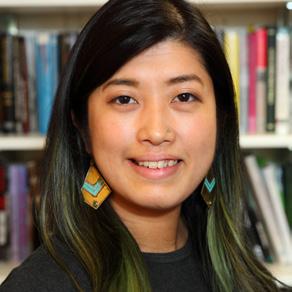
Akemi Nishida is an associate professor in the Department of Disability and Human Development and the Program in Gender and Women’s Studies at UIC. She uses research, education, and activism to investigate the ways in which ableism and saneism are exercised in relation to racism, sexism, and other forms of social injustices. She also uses such methods to work towards cross-community solidarity for the liberation and celebration of community power. In her research and teaching, Nishida brings together disability studies, critical race theories, transnational feminist studies, and immigration studies, among others. Prior to joining The Disability and Human Development and the Women’s and Gender Studies Program at University of Illinois at Chicago as an assistant professor, Nishida earned her PhD in Critical Social Psychology from the City University of New York. She has investigated the aforementioned theses in the context of the neoliberal political economy, using cases from the U.S. public health care system, higher education, and the activist community.
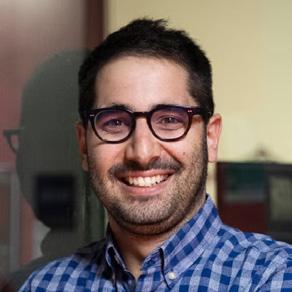
Michael H. Pasek is an assistant professor of psychology at UIC, where he directs the Belief, Identity, and Group Relations Lab. As a social psychologist, Dr. Pasek studies intergroup relations, with a particular focus on the ways in which religion, as a both a group membership and a system
of beliefs, affects moral decision-making, social attitudes, and behaviors in intergroup contexts. He also studies group relations along racial, political, and sexual orientation lines, with an emphasis on how social psychological theory can be leveraged to reduce conflict, advance social change, and promote equality. He received his PhD and MS, both in Social Psychology, from the Pennsylvania State University, and his BA in Political Psychology with a minor in religious studies from Bates College.
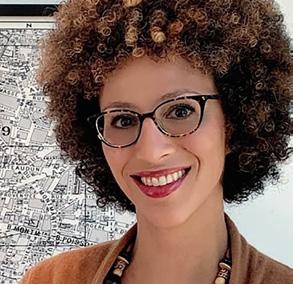
Christy Pichichero is a public intellectual and Associate Professor of History, French, and African and African American Studies at George Mason University. She earned her A.B. in Comparative Literature at Princeton University, her B.M. in Applied Music (Voice - Opera) from the Eastman School of Music, and her Ph.D. in French Studies from Stanford University. She is the Special Advisor to the President on Internationalism at GMU, the Vice President the International Commission on the History of the French Revolution, President of the Board of Trustees of Tudor Place, and Past President of the Western Society for French History.
In her scholarly work, Dr. Pichichero is an interdisciplinary expert in the study of war, slavery, empire, colonialism, race, afro-feminism, and diaspora. She combines these interests with her training in critical theory, literary studies, performing arts, philosophy, and archival research to interrogate and contribute to multiple fields of inquiry. These include the Caribbean, the Enlightenment, the American, French, and Haitian Revolutions, the Napoleonic wars, and contemporary France.
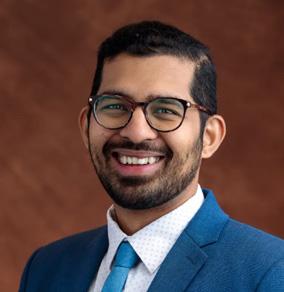
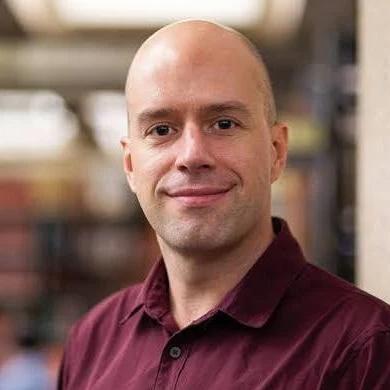
Kumar Ramanathan is a Bridge to Faculty Scholar in the Department of Political Science at UIC. He earned his Ph.D. in political science at Northwestern University, and previously held positions as a Doctoral Fellow at the American Bar Foundation and Postdoctoral Scholar at the University of Chicago.
Dr. Ramanathan’s research explores how the politics of law and public policy shape inequality in the United States. This includes projects on civil rights and social welfare policies, urban politics, immigrant politics, and democratic accountability. His work has been published in Urban Affairs Review, the Journal of Race, Ethnicity, and Politics, Studies in American Political Development, and Political Research Quarterly.
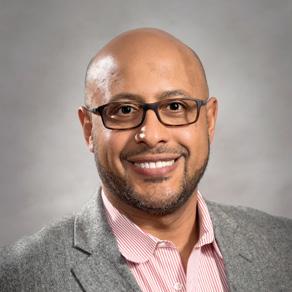
Yann Robert is an Associate Professor in the Department of French and Francophone Studies at UIC. His book, Dramatic Justice: Trial by Theater in the Age of the French Revolution, was recently published by the University of Pennsylvania Press. In 2018, he was awarded UIC’s Rising Star Award in the Humanities, Arts, Design and Architecture. His research examining the interaction between theater, justice, and politics in Enlightenment and Revolutionary France has received support from the Andrew W. Mellon Foundation, notably through a two-year postdoctoral fellowship at Stanford University and a one-year research fellowship at the Newberry Library, as well as from the Jacob K. Javits and the Mrs. Giles Whiting Foundations.
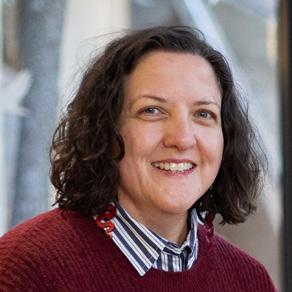
Atef Said is an associate professor of sociology at UIC. He is passionate about politics, revolutions, and social change. His scholarship engages with the fields of sociological theory, political sociology, historical sociology, sociology of the Middle East, and global sociology.
Before he transitioned to academia, he worked as a human rights attorney and researcher in Egypt, from 1995 to 2004. He received a Master’s degree in Sociology and Anthropology from the American University in Cairo, as well as a Master’s degree and doctorate in Sociology from the University of Michigan, Ann Arbor.
Cindy Tekobbe is an assistant professor in critical feminist science & technology at UIC. She is dually appointed in Gender and Women’s Studies and Communication. Her work investigates the digital lives, identities, and activism practices of traditionally underserved and erased peoples and communities. She has published in journals such as Present Tense, Enculturation, the Journal of Multimodal Rhetorics, First Monday, Information, Communication & Society, and Social Media + Society. Her book, published by the University Press of Colorado, is titled Indigenous Voices in Digital Spaces. She serves as the co-chair of the Indigenous Caucus of the Conference on College Composition and Communication (CCCC) and the National Council of Teachers of English (NCTE). She is an ICQCM Scholar. Cindy was born and raised in the Sonoran Desert of Arizona, graduating from Arizona State University with degrees in English and Rhetoric, Writing, and Linguistics. Before arriving at UIC, Cindy researched and taught in the Composition, Rhetoric, and English Studies (CRES) program at the University of Alabama. She is a citizen of the Choctaw Nation of Oklahoma.
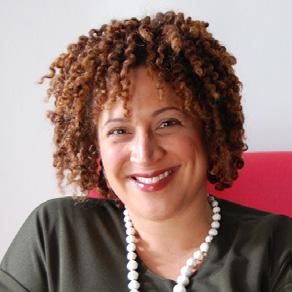
Elizabeth Todd-Breland is an associate professor of history at UIC. In her research and teaching, Professor Todd-Breland focuses on 20th-century United States urban and social history, African American history, and the history of education. Her work also explores interdisciplinary issues related to racial and economic inequality, public policy, neighborhood transformation, education policy, and civic engagement. Her first book, A Political Education: Black Politics and Education Reform in Chicago since the 1960s (University of North Carolina Press, 2018), analyzes transformations in Black politics, shifts in modes of education organizing, and the racial politics of education reform from the 1960s to the 2010s. She is also co-author of the book I Didn’t Come Here to Lie: My Life and Education (Haymarket Books, 2025), the memoir of the late Chicago Teachers Union President Karen Lewis—an educator, labor leader, political force, and staunch defender of students, teachers, and public education. Professor Todd-Breland’s writing has appeared in the Journal of African American History, Souls, and scholarly edited volumes. She has also contributed to popular outlets, including NPR, ESPN, the Washington Post, and local radio, television, print, and online media.
SPECIAL THANKS TO THE ORGANIZING COMMITTEE:
Jane Rhodes Associate Dean for Research in the Humanities, Social Sciences, and Interdisciplinary Programs & Professor of Black Studies
Jennie Brier
LAS Distinguished Professor Gender & Women’s Studies and History
Alexandra Filindra Professor of Political Science and Psychology
Ellen McClure Director, Institute for the Humanities, Professor, Departments of French & Francophone Studies & History
Kevin Schultz Professor and Chair of History
Joseph Jewell Professor and Head of Black Studies
Lilia Fernandez Professor of History and Latin American & Latino Studies