1
Thursday, November 5, 2026 6:00 P.M. 11:00 P.M. Romesco Mexiterranean Bistro, 4346 Bonita Rd, Bonita
&2-3(40,+-.(560/7-*7+0( + special guest chefs
Tickets from $195 per person https://romescomexmed.com/
!"#$%&"
Public positioning one extraordinary menu, exceptional wines, one night only
''()**+,-./0.1
2
1
EDITOR’S LETTER Dear Readers, There is something magical about Fall. It arrives with a change in the air, the warmth of cinnamon and cloves, the aroma of pan de muerto, the colors of marigolds, and the unmistakable feeling that a year filled with stories, challenges, accomplishments, and memories is beginning to come full circle. For us at La Revista Binacional, Fall is also a reminder of who we are and what we celebrate. Día de Muertos is Mexico sharing one of its most beautiful traditions with the world. It is not simply about remembering those we have lost. It is about honoring their lives, preserving their stories, gathering around the table, and understanding that memory is one of the strongest bridges between generations and cultures. From Mexico to the world, the colors, flavors, music, aromas, and symbolism of Día de Muertos continue to inspire. The marigolds, candles, photographs, papel picado, traditional foods, and family recipes remind us that culture is something we carry with us. It travels across borders. It evolves. And it becomes even more meaningful when we share it. This Fall issue also invites us to look toward something equally important: our health and the growing world of medical tourism, particularly in Mexico. For those of us who live along the U.S.-Mexico border, healthcare does not always stop at an international line. Mexico has become an important destination for medical, dental, wellness, and specialized healthcare services, offering opportunities that deserve to be understood carefully and responsibly. Medical tourism is much more than finding a lower price. It is about researching credentials, facilities, physicians, accreditation, follow-up care, insurance considerations, and the complete patient experience. As this industry continues to grow, being informed is essential. Our binational communities are uniquely positioned to understand both sides of this conversation, and we believe knowledge is the first step toward making better decisions. And then there is the calendar. Fall is our last great season before the holidays take over. Soon, the invitations will arrive, the celebrations will multiply, the end-of-year events will fill our calendars, and suddenly we will be asking ourselves how another year went by so quickly. Before we get there, I want to encourage you to pause. Remember the excitement you felt in January when the year was brand new and anything seemed possible. Remember the goals you wrote down, the ideas you dreamed about, the people you wanted to meet, the places you wanted to go, and the changes you promised yourself you would make. Keep that energy. Successful leaders do not wait for January to find their motivation again. They finish strong. They remain curious. They continue learning. They celebrate their teams, their families, their communities, and even the difficult lessons that shaped them. And perhaps most importantly, leaders who are thriving are thankful. Gratitude changes the way we see success. It reminds us that behind every accomplishment there are people who opened doors, offered advice, believed in us, challenged us, supported us, and walked beside us. No one builds anything meaningful alone. As we enter this beautiful season of remembrance, gratitude, and celebration, let us honor where we come from while remaining excited about where we are going. Let us celebrate our cultura, our communities, our businesses, our families, and the incredible connections that exist between Mexico and the United States. Let us keep learning. Let us keep growing. Let us keep opening doors for others. And most of all, let us finish 2026 with the same excitement, optimism, and deterWmination with which we began it. Because there is still time to make this year extraordinary. Happy Fall, and welcome to another season of La Revista Binacional. With gratitude, Gina Dewar Co-Founder & Editor in Chief La Revista Binacional
2
Escucha en EspaÒol
3
Special Acknowledgements FALL 2026 SAN DIEGO • • • • • • • • • • • •
4
Adriana Reid Arnulfo Manriquez Cynthia Lavandera Dr. Hassan Kafri Dr. Michele Dewar Jeffrey Czajka Julisa Arias Llesenia Aispuro Olga Trujillo Rosalina Alvarado Sylvia VillasenorOrtiz, LCSW, NPTC Veronica Rodriguez
Special thanks to Amanda San Martin Photography for capturing the amazing photos of our cover
5
Table of Content PRESENTED BY:
08 More than a celebration
¡Viva La VIda!
10 Horoscope Fall 2026 16 The Fourth Quarter Mindset 20 Procrastination 22 Who do you become when life changes?
SEPTEMBER 25, 2026
24 The California i had never tasted
Join Lifeline to Celebrate our Event Honorees
30 Kathia Bustillos 32 The age that matters in not the one you 36 Fall Brunch Ideas 40 Dr. Lennor 44 Professional Image Color
Página 44 Professional Image Color
Página 46
Spirit of Lifeline
Beacon of Hope
Dr. fabiola bagula
Rockette Ewell
Superintendent, San Diego Unified School District
VP of Community Affairs, U.S. Bank
Día de Muertos
46 Día de Muertos 48 Tijuana Sin Hambre 54 The gratitude advantage 58 La Raza Lawyers
Página 36 Fall Brunch Ideas
60 From memory to action 64 Breast and prostate cancer awareness 66 Melatonin 68 Dr. Kafri Article
lifelinecs.org/vivalavida
6
7
C U CP E CI P P U the nation to celebrate the history, culture, and achievements of Latinos across the United C U U CNU fNN N E US C U UE NU organize cultural events, and communities proudly display the colors, music, and traditions that connect generations. While these celebrations are meaningful, they tell only part of the story. 7C P N ICE U P E PfP F C single month on the calendar. It is present every day in the businesses we build, the neighborhoods we strengthen, the innovations we create, and the families we nurture. It is a legacy of resilience, determination, generosity, and vision that continues to shape America’s future. For centuries, Latinos have contributed to the cultural and economic fabric of the United States. Today, those contributions are more visible than ever. Latino entrepreneurs are opening businesses at one of the fastest rates in the country, creating jobs and revitalizing local economies. Latino professionals are N CF PI U CNU ENCUU U NC f U fPCPE CN PU PU CPF E P N I companies. Artists, scientists, military veterans, educators, public servants, and community advocates are transforming industries while remaining deeply connected CN U C F fP E P U
More than a celebration: The Latino Legacy That Moves America Forward By: La Revista Binacional 8 6
Perhaps the most remarkable characteristic of the Latino experience is the ability to honor tradition while embracing change. We celebrate family gatherings, recipes passed from grandparents, and holidays rooted in our heritage. At the same time, we adapt, innovate, and pursue opportunities that previous generations could only imagine. This balance between honoring the past and building the future has become one of the greatest strengths of our community. F EC P E P P U P U NF U U N ICE C 7C P U F P U E fU I P C P college graduates, earning degrees in medicine, engineering, business, education, law, and countless other professions. Their accomplishments represent more than U PCN U EE UU g E UCE fE U of parents who worked long hours, often
P F hE N E E U CPE U N PI C education would open doors for the next generation. That same spirit can be found in Latino owned businesses across the country. Behind every successful company is a story of perseverance. Many began with limited resources but unlimited determination. Small family businesses have grown into regional employers. Local restaurants have become community landmarks. Startups founded around a kitchen table have expanded into national brands. These stories remind us that P P U UP U N C f is about creating opportunity for others. Leadership within the Latino community has also evolved in meaningful ways. Today’s leaders understand that success carries responsibility. They mentor PI UU PCNU U P P f organizations, advocate for equitable opportunities, and invest in neighborhoods where future generations will live and work. They recognize that true leadership is measured not only by personal achievement but by the number of people they inspire to succeed. The Latino legacy also shines through our commitment to family and community. In many households, several generations remain closely connected, sharing wisdom, traditions, and unconditional support. Grandparents preserve language and customs. Parents model resilience through CF CPF UCE fE NF P PI U perspectives while carrying forward the values they inherited. This intergenerational bond creates communities that remain strong even during periods of uncertainty. As America becomes increasingly diverse, 7C P Pg PE E P P U I CE UU every sector. Our voices help shape public policy, our purchasing power strengthens the economy, our creativity enriches the arts, and our cultural traditions foster greater PF U CPF PI C PI N Fe P backgrounds. Diversity is no longer simply an aspiration. It is one of America’s greatest competitive advantages, and the Latino community plays an essential role in that success.
The future will undoubtedly bring new challenges. Technology will transform PF U U fE CN P NN I PE NN F fP careers. Global markets will continue to evolve. Yet one thing remains certain. Communities built on resilience, adaptability, and collaboration will continue to thrive. U S CN U C CN C U F fP F Latino experience. For younger generations, the message is both simple and profound. Never underestimate the power of your story. Your bilingual voice is an asset. Your multicultural perspective is a strength. Your heritage is not something to leave behind as you pursue success. It is the very foundation that allows you to see the NF F e P N CPF E P P PS ways. U CP E CI P e U CP P g E E N C CPF recognize those who came before us. But the I C U ECP e U E P P NF PI P UCE fE U U P UU launched, every student who graduates, every family supported, every neighborhood improved, and every act of service adds another chapter to a legacy that continues to move America forward. This is more than a celebration. It is the story of millions of people whose dreams, work, and determination continue to shape the nation every single day. That is the Latino legacy. And its greatest chapters are still being written.
Escucha en EspaÒol 9 9 7
HOROSCOPE FALL 2026
Aries (March 21 – April 19)
Libra (September 23 – October 22)
This fall rewards your courage. Career opportunities appear when you least expect them, but patience will be your greatest strength. Financially, think long-term instead of chasing quick wins. Romance becomes more meaningful as honest conversations deepen important relationships.
Happy Birthday, Libra! This season encourages balance between ambition and personal happiness. Relationships become clearer, and your natural charm opens doors professionally. Don’t underestimate the power of saying “no.”
Lucky Color: Crimson Red Lucky Number: 9
Taurus (April 20 – May 20)
September • October • November By HEAVENLY As the leaves begin to change, so do we. Fall 2026 is all about embracing transformation, strengthening relationships, and finding the courage to pursue the life you’ve been dreaming about. Astrologically, this season encourages fresh starts, honest conversations, and bold decisions, while reminding us to slow down and appreciate the journey. Enjoy your forecast and remember, the stars may guide you, but you write your own story.
Your hard work finally begins paying off. September encourages organization, October brings financial stability, and November reminds you to celebrate your accomplishments. Love blossoms when you allow yourself to be more vulnerable. Lucky Color: Emerald Green Lucky Number: 6
Gemini (May 21 – June 20)
Your social calendar will be full this season. New friendships may lead to exciting professional opportunities. Avoid overthinking and trust your instincts. Someone you’ve admired may become an important part of your future. Lucky Color: Yellow Lucky Number: 5
Cancer (June 21 – July 22)
Home and family take center stage. This is the perfect season to reconnect with loved ones and heal old wounds. Professionally, your creativity earns recognition. Take time to recharge before saying yes to every opportunity. Lucky Color: Silver Lucky Number: 2
Leo (July 23 – August 22) You’re impossible to ignore this fall. Your confidence attracts success, admiration, and unexpected opportunities. Just remember: listening can be just as powerful as leading. Romance shines brightest in late October. Lucky Color: Gold Lucky Number: 1
Virgo (August 23 – September 22)
Escucha en EspaÒol
This is your season to reset. Organize your goals, simplify your schedule, and trust that small improvements lead to major victories. Financial decisions made this fall will benefit you well into next year. Lucky Color: Navy Blue Lucky Number: 8
Lucky Color: Rose Pink Lucky Number: 7
Scorpio (October 23 – November 21) Transformation is your specialty, and this fall proves it. Let go of what no longer serves you and embrace the next chapter. Career growth may come through an unexpected partnership. Your intuition is stronger than ever. Lucky Color: Burgundy Lucky Number: 11
Sagittarius (November 22 – December 21) Adventure is calling you. Whether through travel, a new course of study, or a different project, this autumn will broaden your horizons. Stay open to learning from people who think differently. Love will arrive when you least expect it. Lucky color: Purple Lucky number: 3
Capricorn (December 22 – January 19) Your discipline continues paying dividends. Fall is an excellent time to negotiate, launch projects, or seek promotions. Don’t forget to celebrate milestones along the way. Someone close appreciates you more than you realize. Lucky Color: Charcoal Gray Lucky Number: 10
Aquarius (January 20 – February 18) Innovation becomes your superpower this season. New technology, creative collaborations, or fresh business ideas may change your path. Stay flexible, and don’t be afraid to stand apart from the crowd. Lucky Color: Turquoise Lucky Number: 22
Pisces (February 19 – March 20) Trust your heart this fall. Your intuition guides you toward meaningful connections and exciting creative opportunities. Protect your energy by focusing on what truly matters. November brings a welcome surprise. Lucky Color: Sea Blue Lucky Number: 12
A Final Message from the Stars
Fall reminds us that change isn’t something to fear, it’s something to celebrate. Just as trees let go of their leaves to prepare for new growth, we too are invited to release old habits, welcome fresh opportunities, and move forward with confidence. Whether you’re starting a new business, growing your family, chasing a dream, or simply finding more joy in everyday moments, may this season bring abundance, gratitude, and beautiful new beginnings.
10
If it feels exciting and a little scary—you’re on the right path.
11
BARRIO STATION
A Legacy Worth Carrying Forward
12
13
=)7),58'9.00"*),:' $03.-$%)*7'-.0$*' !"#$!%$!"!&$'()%$*+!'',*"-.'() /$!-#,0!'()-"1).!-1!$') 59%.&&',2$'>;?; !"#$%$&'("&)*$&&'+$,-.%/!"#! $!0$01$%&2)3415&$6!6)7),58' 9.00"*),:!%&$%!'())*'%#+! *,-(.*/#+!$)0!*1*2$%*#!.(,*)! %&/(34&!)*%.(/5")4+!*03'$%"()+! 2"#"6"1"%7+!$)0!'(11$6(/$%"()8 You don’t need more contacts, You need the right connections!
Build meaningful connections and expand your community Connect with likeminded women and create authentic relationships that fuel your growth.
Turn connections into opportunities
Learn from experts
Share your story, your brand, and your business to stand out and reach more people.
Open doors, generate collaborations, and turn opportunities into real results.
Access events, workshops, and resources with leaders and experts who inspire you.
FOR WOMEN WHO WANT TO CREATE REAL IMPACT
Join as a Member Today! 14
Grow with purpose
Increase your visibility
CONNECT • GROW • ELEVATE • THRIVE
Develop your potential, strengthen your vision, and grow with purpose every step of the way.
More Information: <0"#$%$&1"&)*$&&*$,-.%/
0"#$%$&1"&)*$&&*$,-.%/;9.0
!"#$%&''$())*#
Together We Grow
15
The Fourth Quarter Mindset: How Successful Leaders Finish the Year Strong BY: La Revista Binacional
Teams can experience significant fatigue during the final months of the year. Strong leadership means recognizing that reality and creating an environment where people can stay productive without burning out. Celebrate progress. Recognize contributions. Communicate clearly. Give people permission to prioritize. Sometimes the most powerful leadership move is simply saying, “Thank you. I see what you’re doing.” Finish Strong, But Start Preparing Early
The final quarter of the year has a way of exposing what leadership is really made of.
The best leaders don’t wait until January to think about the next year.
By October, the excitement of January has faded. The goals written on whiteboards are no longer new. Budgets are tighter, deadlines are closer, teams may be tired, and the pressure to deliver results is real. Yet this is precisely where strong leaders distinguish themselves.
The fourth quarter provides valuable information about what should come next. It is the time to evaluate new opportunities, identify emerging challenges, review budgets, strengthen relationships and establish priorities for the year ahead.
The fourth quarter is not simply about finishing the year. It is about finishing with intention.
But planning for tomorrow should never become an excuse for neglecting today.
Shift From Activity to Priorities
Finish what needs to be finished. Learn what needs to be learned. Then use those lessons to build what comes next.
Successful leaders understand that not everything that matters can be accomplished before December 31. Instead of trying to do more, they identify what matters most.
Lead With Confidence
What three outcomes would make the biggest difference to the organization? What projects must be completed? What opportunities should be pursued now, and which ones can wait until next year?
Perhaps the most important fourth quarter mindset is confidence.
Clarity creates momentum. A focused team will accomplish more than an overwhelmed one. Look at the Numbers, Not Just the Calendar The fourth quarter is the perfect time to take an honest look at performance. Leaders should examine revenue, expenses, customer growth, employee performance, unfinished initiatives and other key indicators. But the goal isn’t simply to review what happened. It is to understand why. What worked? What didn’t? Where did the organization lose time or money? Which decisions created the greatest impact? Great leaders don’t fear the numbers. They use them to make better decisions.
16 16
One of the biggest mistakes leaders make at the end of the year is focusing so intensely on results that they forget the people producing them.
Protect Your People
Not the confidence that everything will go according to plan, but the confidence to make decisions when things don’t. Markets change. Plans change. People change. Unexpected challenges appear. Leadership is not about controlling every variable. It is about remaining steady when the variables change. As the year draws to a close, successful leaders don’t panic. They focus.
Because finishing the year strong isn’t about doing everything. It’s about doing what matters most, doing it well, and giving your team a clear vision for what comes next. into action, pressure into focus and unfinished goals into meaningful results. Because finishing the year strong isn’t about doing everything. It’s about doing what matters most, doing it well, and giving your team a clear vision for what comes next.
They don’t chase every opportunity. They choose the right ones. They don’t measure leadership by how busy they are. They measure it by the progress they create. The fourth quarter is your opportunity to turn reflection into action, pressure into focus and unfinished goals into meaningful results.
Escucha en EspaÒol
17 17
Escucha en EspaÒol
Congratulations to the
California Hispanic Chambers of Commerce
on a successful convention in Oakland!
A heartfelt thank you to the Los Angeles Latino Chamber of Commerce for honoring LA REVISTA BINACIONAL with the 2026 Breaking Down the Barriers Award.
An inspiring gathering that celebrated leadership, entrepreneurship, and the strength of California’s Hispanic business community.
¡Gracias por creer en nuestra misión! SCAN TO READ SPECIAL EDITION CHCC
18 18
19
!"#$%&$'($)*+$&,$*-+./$+&0&11&'$ '"2+$'($3"&*/%$%&$+&%2#4$
Escucha en EspaÒol
Sylvia VillasenorOrtiz, LCSW, NPTC “Don’t put off until tomorrow what you can do today.” Although we know this saying well, we often postpone tasks, responsibilities, and even important personal activities simply to avoid the effort involved. Procrastination means voluntarily delaying an important task in favor of simpler or more enjoyable activities. We have all said at some point, “I’ll do it tomorrow.” However, when that “tomorrow” becomes a habit, procrastination can affect our productivity, increase stress, and even distance us from our personal and professional goals. Although many people confuse it with laziness or a lack of discipline, it is actually often linked to deeper factors, such as fear of failure, anxiety, insecurity, or the pursuit of perfection. Procrastination is nothing new. Our ancestors conserved energy and acted only when necessary; similarly, the brain today tends to choose rest over effort. This tendency has a neurological basis: the limbic system—associated with pleasure and immediate reward—often resists delaying gratification. At the same time, it competes with the prefrontal cortex, which is responsible for functions such as awareness, intelligence, maturation, and decision-making. In this internal conflict, the limbic system frequently ends up dominating. Studies identify three types of procrastinators: • The Arousal Type (or “Activator”): seeks last-minute pressure and believes they work best under stress. • The Avoidance Type: delays tasks out of fear of making mistakes or being judged. • The Decisional Type (or “Indecisive”): struggles to organize and start projects due to insecurity. How can we reduce procrastination?
Postponing a responsibility every now and then is normal. To prevent it from becoming a habit that affects our mental stability, experts recommend these strategies: 1. Break large tasks into small steps: A complex project becomes more manageable when you work on it in stages. 2. Start as soon as possible: Don’t wait to feel motivated; it often appears only after you’ve already begun. 3. Sort out your priorities: Identify which tasks are most important and tackle them first. 4. Minimize distractions: Silence notifications, close unnecessary apps, and find a quiet space to work. 5. Accept that not everything has to be perfect: Perfectionism can hold you back; making progress is usually more beneficial than waiting for an ideal outcome. 6. Identify the root cause of your procrastination: Understanding whether it stems from fear, disorganization, or a lack of interest will help you address it more effectively. In conclusion, procrastination does not have to dictate our lifestyle. Understanding why we put off certain tasks is the first step toward breaking the cycle and developing healthier habits. Mastering and overcoming procrastination doesn’t require waiting for the perfect moment; instead, it involves learning to act with intention. Completing a task boosts confidence, reduces stress, and brings us closer to our goals. Today could be the best day to start—not with perfection, but with determination. If you try but do not achieve your goal, I encourage you to consult a licensed mental health professional.
Sylvia Villasenor-Ortiz is a licensed psychotherapist, writer, consultant, and speaker with a private practice in Tustin, California. 20
21
Who do you become when life changes? Transitions transform much more than our circumstances: they also challenge our identity, our well-being, and the way we relate to the world around us.
By Adriana Reid In the workplace, we talk constantly about change: new organizational structures, new responsibilities, promotions, job loss, leadership transitions, and adaptation. What we talk about less often is what happens inside the person going through those changes. Because transitions don’t only happen around us. Our emotional infrastructure shifts as well. When life as we know it, changes, we experience discomfort as a natural response. From a neuroscience perspective, our brains tend to favor familiar patterns because they provide predictability and generally require less cognitive effort than navigating the unknown. That is why even a change we genuinely want can bring resistance, or a sense of losing control due to uncertainty.
About the Author
Through my work in human software reprogramming focused on conscious leadership, I have seen the importance of understanding the psychoneuroemotional process that accompanies a transition.
Adriana Reid is the founder and CEO of Be2Be-Coaching, and author of Decoding Corporate Wellness Through Human Software Reprogramming.
A conscious leader does not need to solve their team’s personal lives. They do need to recognize that the different dimensions of our lives interact with one another and influence how we think, feel, decide, and act.
With over two decades of experience in bicultural leadership and human development, Adriana writes about emotional infrastructure as the foundation of conscious leadership through the integration of being into doing.
Addressing holistic well-being does not mean taking our attention away from performance. It means understanding the human conditions that make performance possible. And this is where we find the other side of transition. Where a familiar responsibility ends, an unfamiliar kind of freedom begins.
A good example is what we commonly refer to as empty nest syndrome. For years, many parents build part of their identity around caring for, supporting, driving, organizing, solving problems for, and worrying about someone else. When their children grow up and build lives of their own, it is not only the family dynamic that changes. Our perception of who we are can change as well.
Very few of us are taught how to be free. We learn how to fulfill expectations, produce, care for others, and respond. We are not necessarily taught what to do when our responsibilities change and we once again have the opportunity to choose.
This question can also emerge after a promotion, retirement, separation, migration, loss, or the closing of a professional chapter. -Notice change as the common denominator.
~Adriana Reid
properly processed, it can affect well-being and show up in lack of concentration, relationship conflicts, excessive doubting during decision-making processes, and impact motivation, and performance.
And when our relationships, responsibilities, or roles change, our sense of self can shift as well.
Who am I now that they don’t need me in the same way?
“A transition doesn’t ask you to return to who you were. It invites you to consciously choose who you’re becoming.”
Interested in exploring conscious leadership workshops or coaching for your organization? Write to info@be2be-coaching.com with the subject “Interest/La Revista Binacional Fall 2026.” For more reflections on personal and organizational development, request to subscribe and receive exclusive content from Be2Be Coaching.
Perhaps the real lesson of a transition is not to hold on to the identity we have built at all costs, but to discover that we are much more than the role we have been playing. What part of you is coming to an end, and what part of you is asking for room to start a new? Perhaps, in your next transition, you can dare to live without permission.
The reality is that we continually evolve. However, some transitions confront us with the need to distinguish between who we are as human beings and the roles we have played.
Because when life changes, it is not always about finding your way back to who you were.
And this matters in the workplace, too.
Sometimes, it is about giving yourself the opportunity to consciously choose who you want to become.
Escucha en EspaÒol
It is expected that people adapt to change and keep functioning. Yet when a transition is not understood or
22
23
The California I Had Never Tasted How wine education changed the way I experienced the state where my wine journey began. By Arnulfo Manriquez
W
ine has a way of bringing us back to places we think we already know. This road trip reminded me that we return with a different palate.
California introduced me to wine when I was 21. For many years, those were the bottles I knew best. In 2015, my attention shifted to Valle de Guadalupe, where I discovered Mexican winemakers whose wines became part of my travels and my table. Everything changed when I began my wine classes. Over the next three and a half years, my wine education took me through wines from France, Italy, Spain, Germany, Austria, Portugal, Australia, New Zealand, Argentina, Chile, and beyond. I studied appellations, viticulture, terroir, and the traditions that shaped many of the world’s great wine regions. Somewhere along the way, California slipped into the background. I paid closer attention to wines that expressed their place of origin with minimal intervention and reflected the vineyard as much as the winemaker. As my studies became more advanced, I realized that California had never disappeared. It was me who had changed. Beyond the familiar labels are hundreds of producers whose focus is farming, terroir, and allowing each vineyard to express its own identity. I decided it was time to experience California again through a different lens. The opportunity came when my son finished his second year at UC Davis. Rather than driving straight from San Diego to pick him up, I left several days early and turned the trip into a personal wine journey. The route carried me through AVAs such as Santa Ynez Valley, Ballard Canyon, Paso Robles, Santa Cruz Mountains, and finally Lodi. Each stop reinforced how diverse California really is, offering its own distinct expression of place. To simply say “California wine” as if it were a single region falls short of what we truly have here. The first stop almost happened by accident. Three days before leaving, I met my friend Enrique for a glass of wine. As I looked through the wine list, one bottle immediately caught my attention: La Cuadrilla from Stolpman Vineyards. A year earlier I had visited Mondragón, in Spain’s Basque Country, where I learned about the tradition of the cuadrilla, a close circle of friends who support one another throughout life. My own group of friends across the country had adopted that name, so seeing it on a wine label immediately made me curious enough to change my driving route and visit Stolpman. The visit turned out to be one of the highlights of the trip. I learned that La Cuadrilla honors the vineyard crew whose work makes every vintage possible, and I learned about Rubén Solórzano, the viticulturist industry people call the Grape Whisperer. Since Solórzano is also my mother’s family name, I felt an immediate connection to his story. I left with several bottles to share with my own cuadrilla and an even greater appreciation for the people behind every bottle. From Stolpman I continued to Beckmen Vineyards, where biodynamic farming and Rhône varieties thrive in Ballard Canyon. My final stop that afternoon was Brave & Maiden, without a reservation and almost
24
Escucha en EspaÒol
at closing time. Summer, in the tasting room, welcomed me with several tastes so I could better understand their wines. The Syrah was my favorite. Aromas of blackberry and black plum, intertwined with savory spice, gave way to an earthy character that reminded me of damp soil, leather, and the inside of a stable. Summer described it as a “cowboy wine,” and immediately I understood exactly what she meant. It was rustic without being rough, powerful but grounded in the earth. We talked about vineyards, wine education, and hospitality. I left with another bottle and another memorable conversation. The next morning, in Paso Robles, Tablas Creek showed another side of California. Across the tasting I kept finding freshness and minerality, with beautifully balanced acidity and fruit ranging from red berries to riper plum. The wines had concentration while preserving their sense of place. Laura, a San Diego native now at Tablas Creek, generously extended my tasting as we talked about the wines, the vineyard, and the philosophy behind their work. Lunch at Halter Ranch followed, where the food and the view were as good as the wines. My next destination was Ridge Monte Bello in the Santa Cruz Mountains. Although the tasting room normally welcomes guests by appointment, a conversation about wine, WSET, and my travels turned a single glass into an unexpected tasting that included one of Ridge’s celebrated Monte Bello wines. High above Silicon Valley, surrounded by mountain vineyards, I gained an even deeper appreciation for one of California’s most historic wineries. Before arriving in Davis, I made one final stop in Lodi. My wine instructor in Tijuana, Romina Mendoza, knew I would be passing through and suggested I visit the Lodi Wine Visitor Center and taste the wines of Anaya Vineyards if they were available. At the visitor center, Paul’s pour of Anaya’s carbonic Tempranillo stopped me. It was vibrant and incredibly fresh, filled with red cherry, strawberry, and raspberry, with bright acidity and soft tannins. It was the kind of red that almost asks to be served slightly chilled on a warm California afternoon. I also spent time talking with Markus Niggli of Markus Wine Co., who had recently sat for a WSET Diploma unit. We talked about viticulture, continuing education, and the lifelong pursuit of learning in wine. Before I left, Paul insisted that I take a couple of bottles with me to continue discovering Lodi at home. It was a fitting conclusion to three days spent meeting people whose passion for wine matched the quality of the wines they produce. Thursday morning arrived, and I picked up my son at UC Davis. Less than two weeks later, I sat for my WSET Level 3 examination. I walked into that exam with a much deeper appreciation for California and a renewed respect for the producers who quietly allow their vineyards to speak for themselves. California never changed. My understanding of California changed. The lesson was that rediscovering something familiar takes better knowledge, more curiosity, and time spent with the people whose passion gives each bottle its story.
25
CARLOS DÍAZ !"#$%&'%()#*$+*,-$"'.#('#* -/+0*1*-223 En un mundo donde la estabilidad financiera y familiar es prioridad, Carlos Díaz y su agencia de seguros y bienes raíces se posicionan como un recurso integral para la comunidad latina. Con una trayectoria basada en el compromiso, la educación y el servicio, ofrecemos asesoría experta para ayudarte a proteger lo que más valoras y a crecer tu patrimonio, ya sea a través de un seguro adecuado o una inversión inmobiliaria inteligente. Seguros que protegen lo que amas Nuestro enfoque comienza con la protección: contamos con una amplia gama de seguros, desde seguros de vida, autos, propiedades, hasta seguros comerciales como General Liability y Workers Compensation. Entendemos lo crucial que es para un emprendedor o jefe de familia estar respaldado correctamente, por eso te explicamos con claridad cada cobertura y te guiamos hacia la mejor opción para tu situación. Bienes raíces con alcance binacional Además, ofrecemos un servicio completo de bienes raíces con enfoque binacional, que te acompaña en tu proceso de compra o venta tanto en Estados Unidos como en México. Ya sea que busques tu hogar ideal, una propiedad de inversión o vender al mejor precio posible, nuestro equipo de agentes —estratégicamente ubicados en San Diego y aliados en México— está preparado para ayudarte en ambos lados de la frontera.
Información que empodera Sabemos que tomar decisiones informadas marca la diferencia. Por eso, hemos creado un boletín informativo semanal totalmente gratuito, con las últimas noticias del mercado inmobiliario, actualizaciones importantes del mundo de los seguros y consejos prácticos para propietarios, inquilinos y emprendedores.
CADOI Lic #0L60964 CADRE Lic #02092952
¿Quieres saber cuánto vale tu casa hoy? También ofrecemos una evaluación gratuita de tu propiedad, sin compromiso, para ayudarte a entender su valor actual en el mercado y explorar tus opciones con confianza.
Seguros: cdiaz2@farmersagent.com Bienes Raíces: carlos.diaz@newjourney.com
Carlos Díaz y su equipo están aquí para servirte con ética, experiencia y un enfoque humano. Nuestra misión es clara: ayudarte a tomar decisiones inteligentes para proteger tu presente y construir tu futuro. Contáctanos hoy y descubre cómo podemos ayudarte a avanzar, con seguridad y visión.
26
Llámenos al 619-425-0079 Oficina y mensaje de texto
27
28
29
Kathia Bustillos Iturralde
KATHIA BUSTILLOS’ INTERVIEW BY LA REVISTA BINACIONAL
Kathia Bustillos Iturralde was born in Mexico City and studied in the United States and Switzerland before earning a Bachelor’s degree in Business Administration— with a double major in Finance and Marketing—from the Universidad Iberoamericana in 1981. Subsequently, Kathia attended the United States International University, where she obtained a Master’s degree in Business Administration in 1987, with a special emphasis on Strategic Management. For 23 years, she served as Sales Director for Televisa Tijuana and Ensenada, where she championed initiatives supporting health, culture, and sports, as well as various community-benefit programs. Facing significant challenges to stand out in a field traditionally led by men—starting with her early roles in 1982 as Information Assistant to the Vice President of Expansion for the Televisa Group in Mexico City and as Information Director at DIGISAT (a Televisa subsidiary)—Kathia made it her daily goal to succeed. This determination allowed her to break barriers by becoming the first woman to head a regional Televisa station. From 2012 to 2016, she served as General Director of Televisa Tijuana (Channel 12) and Televisa Ensenada (Channel 23). In 2014, due to the excellent results achieved at these two stations, she was also assigned responsibility for Televisa Mexicali (Channel 4). She thus became the first director in Televisa’s history to manage three local stations, along with three repeaters for Mexico’s Channel 2, three for Channel 5, and one for Galavisión in Baja California. After 32 years of service at Televisa, she decided to retire to pursue other projects where she could contribute her knowledge and extensive experience. Kathia has always been involved in causes important to the community and has volunteered at the Children’s Hospital of the Californias (Hospital Infantil de las Californias) for 30 years. She also
3. The Foundation for the Children of California has impacted thousands of lives over the years. Is there a particular story about a child or a family that changed the way you view the organization’s purpose? There are many stories that stay with me, but they all share one thing in common: the immense power of hope. I have seen parents arrive full of uncertainty and leave with the peace of mind that comes from knowing their children will receive the care they need. I have seen children return months later fully recovered—playing, smiling, and living a childhood that once seemed impossible. Those moments remind us that behind every consultation, surgery, or therapy session, there is an entire family whose life is changed forever. It is impossible not to be transformed when witnessing such everyday miracles. That is when we realize our work goes far beyond funding medical services: we are helping to change the course of a life.
“She broke barriers, made history, and became a leader who opened doors for women in media.”
4. This October, you will be holding the “Celebration for the Children: Together, , , , , , message do you hope to convey to the community and to those who choose to support this cause?
served as the hospital’s General Director from February 1, 2019, to February 28, 2021. She ran as a citizen candidate representing the Baja California PBC party for the office of Mayor of Tijuana in the June 6, 2021, elections. In 2022 and 2023, Kathia worked as General Director of ZONA MX, a media outlet producing high-impact digital content, where she implemented technology and new visual techniques alongside experienced journalists and thought leaders. Kathia arrived in Tijuana in 1985 and has done exceptional work ever since. Her vision has been to build lasting relationships with institutions, organizations, and individuals. Her extensive international experience and academic background made her an effective binational
liaison between the United States and Mexico. She served as General Director for the Tijuana office of Nuffer, Smith and Tucker PR, a San Diegobased public relations agency with over 40 years of experience. Her company, Kathia Bustillos PR—an agency specializing in public relations, corporate strategy, and communications—counts among its clients the Toros de Tijuana Baseball Club, AudiCo, Asombro Marketing, CODET Vision Institute, SENTRE, Calimax/Aprecio, Farmacias Roma, Grupo Aries, Fideicomiso Tijuana, Tecnovision Digital, and Cinemex, among others. Other projects in which she has participated include: Chair of the Board of Directors, Foundation for the Children of the Californias (FCC) (current) Executive Director, Foundation for the Children of the Californias (current) Secretary of the Executive Board of Directors, Foundation for the Children of the Californias (2022–2023) hair of the Board of Directors, Fundación para los Niños de las Californias (2015–2018)
, , , personal experiences inspired you to dedicate your life to improving the well being of children and families through the Foundation for the Children of the Californias?
The name “TOGETHER, WE LIGHT THE WAY” embodies exactly what we believe as an organization: no one can change the world alone, but when a community unites, it can light the path for thousands of children toward a healthier future. We want people to understand that every sponsor, donor, volunteer, and attendee becomes the light that makes a diagnosis, a surgery, a therapy, or a lifechanging opportunity possible for a child who otherwise would not have access to it.
I have always believed that true success in life is not measured by what we achieve for ourselves, but by the positive impact we leave on others. Throughout my life, I have had the opportunity to meet families facing enormous challenges simply because they lack timely access to healthcare services for their children. Witnessing the anguish of parents unable to provide the treatment their child needs completely changes one’s perspective on what truly matters.
This is not just a gala; it is an invitation to join a community committed to building a more hopeful future for families in our binational region.
A P P F PFC P NF P CN P CU Ch F the understanding that we are not merely supporting a hospital—the *Hospital P CP N F NCU CN P CU aCPF PC PCN F C E CN P C U. C restoring hope. Every child who regains their health represents a family smiling again. That possibility of transforming lives is what inspires me every day and reminds me that there is still much work to be done.
F NNC C U F F PI c N C P NF Pd CPUNC U P F ECN care for the children who need it most. These resources support pediatric health programs, nutrition, specialized diagnostics, surgeries, preventive care, and other UU P CN U E U C CP C N U E NF P Ce F P P
As President and CEO, what do you consider the greatest challenge you have faced while leading the organization, and what achievement brings you the most pride? The greatest challenge has been helping the community understand that children’s health knows no borders. The children of the San DiegoTijuana megaregion share the same needs, and the solutions must be shared as well. Building binational partnerships, strengthening donor trust, and ensuring the sustainability of the PFC P NF P CN P CU CU S F U P U CPE and tremendous teamwork.
Public Relations Board Member, ANP (National Advertising Association) (2018–2019) Northwest Section
5. Beyond being a night of celebration, how do the funds raised during this event contribute to transforming children’s lives, and what are the Foundation’s current priorities?
PN UC E P P U PI P PI CEE UU E PU medical care, fostering binational collaboration, and addressing the most urgent needs of children in our region. We are committed to ensuring that no child’s opportunity to live a healthy life is limited by economic, geographic, or social factors. 6. For those who are not yet familiar with the work of the Foundation for the Children of the Californias, what would you say to invite them to participate in “Celebration for the Children: Together We Light the Way” and become part of this mission to light the future for the children of the Californias? lives.
NF NN
C
U CP
P
U
f U CPF C U N FC
N E CPI U
A P U PFC P NF P CN P CU C P just making a donation; you are investing in a child’s health, present, future, and dreams. You are demonstrating that our community has the power to come together to transcend borders and provide opportunities where they are needed most.
Board Member, Tijuana Boys and Girls Club
Board Member, Tijuana Red Cross
P P UP PFC E c N C P NF P Together, We Light the Way.” It will be a night to celebrate generosity, share stories of hope, and remember that when we work together, we can truly light the path toward a better future for thousands of children and their families.
Founder of Perros Urbanos, “ UN LADRIDO DE AYUDA” (“A Bark for Help”)
Kathia THANK YOU AGAIN!
Board Member, Pasitos Psycho-pedagogical Center
30 22
CE P C PIU U F U C PI U N F f F CU CP organization capable of uniting individuals, companies, and institutions around a common cause. Every new partnership, every program that expands, and every E NF E U F ECN EC CP U C E NN E e E Pf U C are building something far greater than just an organization: we are creating opportunities for thousands of children.
Escucha en EspaÒol
31 31
23
CP F U C F PC E U U U PE PCN U C F U P CN C U E U PF NC U F U PE P N I ECN CI U C f F C C N C E FU ECN PFC CU N I ECN CI P CPF U C S CP C U C CE CN U N I ECN E PF P UU U CPF ICP U U U a CPF U CU P U PU P U U IP fECP CF CPE U P P F E P CPF N PI UE PE FC F e PE P U C C N U U P U CP E U EN P ECN PF F CNU UC E P N I ECN CI ECP U P CF ECNN F e P E ECN fN U F E U P CPF PgC C C U a F e PE U C CPUNC P F I P EC F CUE NC C N E CPF P N I ECN U F P PI C IC CPCN ECN EU P U fU U P CP F PE CU F N PI P P P CPF U E P CN C U F N F C % 7 PI 7C c
N UC E P N I ECN CI ECP EC C N I ECN IC P CN F ECF U C F e PE U P P C N a U CU C N CPF CE PC N d
The analysis begins with the calculation of phenotypic age P I CP CNI E F NF N F 7 P CN CPF NU F P 7 FEP % P IC U PP U CPCN U a CU PI IN E U CE P E C PP U CN P CN CN P U C CU CP E UE NC N F E NN F U P F C U N N E E P CPF CN N E E P a I P C C U C U ECN U C PF F CNbU N I ECN CI E C U P P U N PI P E CI CPF C P bU E P N I ECN CI E PU U C indicator of acceleration or deceleration of biological aging.
When phenotypic age is lower than chronological age, the E ECN fN U E PU U P CI PI UN N CP NC P C CI C CI I A P E FU fPF PIU C E C N CP CEE N C F CI PI E UU C C CP U F E F EN P ECN CN C P CPF N CE CN P P P U U N F U P E PU C F U CU F CIP U U P F U NCE C E PU F ECN CUU UU P a U U C PI C P C C C U E PF E P P U NC F N I CF UU E PgC C UC U F P UE P fE N C CU PgC CI PI U CUU UU P PEN F U F PC P I U PU CE P U P N P CPF U P PF P E U EN P ECN PgC C P U C F E P F C U N I ECN E CP U P CEE N C P UU FC CI PF N CN dysfunction, and insulin resistance — a silent process that CF CPE U CU E N U U CPF CU C F E CE P ECNE NC F N I ECN CI
The age that matters is not the one you celebrate Cynthia Lavandera, M.P.H. Master of Public Health | Epidemiology SOY360 Longevity Lab · @soy360longevitylab
“Your biological age is not your destiny. Science is showing that how you age can change.” The integrated interpretation of these four indicators — P E CI PgC C U C U PF E PU N P fN CPF F E U Pa F U C PI U E CP C EU N I ECN CU N P F P f U CN P C U N I ECN E CP U U CPF U UC EU P P P P F E CPCN ECN NN F PE P CI PI I P EU F E PU C U CC UC F fC N I U U CP F P P PU P U ECN CE F C C PU CPF UN S CN U N N I ECN CI U P C U a U C fPF PI N EC F CE UU N N P PC PCN E U C % 7 PI 7C CPUNC U P C N F EN P ECN protocol.
F PF EC F PU P P I C NU IN E F 7 E N U N C U F CU CP PF E C CN PU N P U U CPE CN U C % P U CP E 7C P ECP NC PU C CUU E C F P N U F F PE CP CF U C NE P IC FN UU CU PI IN E U N NU U EN P ECN N CPE N U P UC N F E C N E CN C PU C U CI U E P P PCN F CIP U E E Ca P P P P PF U CF CPF E U C C N E P P EN U U CPCN U U U E CN PU P CI PI NC U N CN UEN CUU P F N S PE N E ECN FCPE I UU UEN N UU a E IP F A NF CN ICP C P CU CP PF PF P C CN CPF C N E U a F E N Ce E U IN E U C PgC C CNCPE CPF C N I ECN CI PI U E CU P E PP E U E F PI E ECN fPF PIU PE PCN CN C P bU F F F
Escucha en EspaÒol
33
CL P
ANÚNCIATE CON LA REVISTA BINACIONAL Cruzando fronteras, compartiendo historias
Publicidad
CH 5PL H ; SSH 4O SH P H 6S 4HQ H P HS 4P 5LS H CH P
2 2P H
H LS 2 4H P D O 9 TL 4H L H HL P L TLL LL P O TWH P H W ML P HSP T
CW P HSSL LH P L 6 P H L H ;H TIH
L 2 LW
PSP H
2 L H L
HT
H L 0
#DL T 4H L
H L
7 LL CL P SH LTL CL P L 2 P L P P LT 4H L
, / ) HL M
#& (. O
T
CL P L ( #9 9 TL 4H L CL P 9 TL 4H L L HS 9 TL 4H L CL P L 4 TWH P 4H L H 9 TL 5LTL PH 9 TL 4H L CL P L CL P SH LTL CL P L 3L P L 4H L 2 C 4H L
Participación en eventos
BL W
Crece tu red de contactos asistiendo a nuestros eventos de networking
C HMM - H A HSP 4H L H H 2MM
L 2 LW
LLR HISL BH L
#DL T 4H L
, / ) HL M 94
H L
OL OL LL H 2 4H P D O 9 TL 4H L H L P L ( - Q H ML O H H L H L OL L OLSW CL P L W P H L MSL PISL H TP HISL H P WL PMP P H P
PIPSP
C H L P L L BL P H P 4 PTP HS 3H R 4OL R D3 C LL P ML P HS BLML L L D HP P 5P L P L L 2 H L 3 L H L RTH a 4 TW H L
ESCANEA AQUÍ
rafael@larbmedia.com
PH L H 4 H BH O 3L H TWL PHS 3LH O P P HSSL H 3 PH
2 4H P D O 9 TL 4H L , ,& P P 8 L B H C P L (&, CH 5PL 42 /( (& O L0 , / ) #& (. 94 )- -&&& )
Promueve una causa, un proyecto o comparte tu propia marca personal
RAFAEL GARCÍA (619) 942-0461 34
P S P 0
4
Visibilidad y Reconocimiento
PARA VER TODOS NUESTROS SERVICIOS
4
LLH
Llega a la audiencia binacional a través de la revista
PARA MÁS INFORMACIÓN
HSS M CH 5PL
P P
2 2 4H P D O 9 TL 4H L TP P P LTW L SP L O O TWH P H L H RP HL P P W P P H TM P O OH L L IL L P L LTI H L LH O P P P HS H H HS L TLTIL M L L L MHTPS L H L TTP L M L P H L P TL OL L OL W P PWSL M H L HL L P L P L LTWH O L P OH L L WL L L L L WL PL L OL H T O H WW OL L L L L P HP L LSSL L P LMSL L P OL H L W P P P L OL LSS#ILP H TM M O LL L H LH W T L S WO P HS OLHS O I HS LT P HS H WP P HS OH T 2 4H P D O 9 TL 4H L P T L OH H L P L W P L 1 L H L H MHTPS P L I OL TT HS M L OH P OL SP L M OL POH L P L H LTW L P O
#& (. O
)- -&&& )
T
35
The Best
Fall Brunch:
Thanksgiving Leftovers, Mexican-Style and American Favorites BY: Recetas Familiares
T
Make four small wells in the hash and crack an egg into each one. Cover the skillet and cook until the eggs reach your preferred doneness. Sprinkle with cheddar during the final minute. Serve hot with leftover cranberry sauce as a sweet-tart condiment.
Mexican Turkey Chilaquiles
Give leftover stuffing a Mexican-inspired makeover by turning it into a warm taco filling.
he day after Thanksgiving calls for a brunch that is cozy, creative, and easy on the cook. Instead of reheating the same holiday plate, transform leftover turkey, mashed potatoes, stuffing, cranberry sauce, and roasted vegetables into a festive fall brunch featuring both Mexican-inspired flavors and classic American comfort food. These recipes are hearty enough for a late breakfast and colorful enough to make leftovers feel brand new.
Chilaquiles are perfect for leftover turkey because crispy tortilla chips soak up a flavorful salsa while keeping some of their crunch.
Ingredients:
Ingredients:
•
2 cups leftover stuffing
•
1 cup shredded turkey
•
4 cups tortilla chips
•
6 small corn or flour tortillas
•
2 cups shredded leftover turkey
•
4 eggs
•
2 cups red or green salsa
•
1/2 cup shredded cheese
•
1/2 cup shredded Monterey Jack or Mexican cheese blend
•
1/2 avocado, diced
•
2 eggs per person
•
1/4 cup salsa
•
1/2 avocado, sliced
•
2 tablespoons chopped cilantro
•
1/4 cup chopped cilantro
•
1 tablespoon butter or oil
•
1/4 cup diced red onion
•
Sour cream or Mexican crema
•
1 tablespoon vegetable oil
Directions: Heat the salsa in a large skillet over medium heat. Add the turkey and warm for 2–3 minutes. Gently fold in the tortilla chips and coat them with the salsa, leaving some pieces crisp. Sprinkle with cheese and cover the skillet for about 2 minutes, until the cheese melts. Meanwhile, fry the eggs in a separate pan with a little oil. Divide the chilaquiles among plates and top each serving with a fried egg, avocado, red onion, cilantro, and a spoonful of crema. For a Thanksgiving twist, add a small spoonful of cranberry sauce on the side. Its tart sweetness pairs surprisingly well with the spicy salsa.
Whisk the eggs and scramble them in a separate skillet with butter or oil. Warm the tortillas directly in a dry skillet for about 20 seconds per side. Fill each tortilla with stuffing, turkey, scrambled egg, cheese, avocado, salsa, and cilantro. A Sweet Finish: Cranberry French Toast Ingredients: 8 slices of brioche or challah bread
•
1/2 cup cranberry sauce
•
2 eggs
•
1/2 cup milk
For an American-style brunch, turn mashed potatoes, turkey, and roasted vegetables into a golden skillet hash.
•
1 teaspoon vanilla extract
•
1/2 teaspoon cinnamon
Ingredients:
•
2 tablespoons butter
•
3 cups leftover mashed potatoes
•
2 cups chopped turkey
•
Powdered sugar and maple syrup, for serving
•
1 1/2 cups leftover roasted vegetables
•
1/2 onion, diced
•
2 tablespoons butter
•
1 teaspoon dried thyme
Whisk together two eggs, 1/2 cup milk, 1 teaspoon vanilla, and a pinch of cinnamon.
• • •
Salt and black pepper 4 eggs 1/2 cup shredded cheddar cheese
Dip the stuffed bread into the mixture and cook in butter over medium heat until golden brown on both sides. Serve with powdered sugar, warm maple syrup, and extra cranberry sauce.
Directions: Melt the butter in a large cast-iron skillet over mediumhigh heat. Add the onion and cook for 3–4 minutes. Stir in the turkey and roasted vegetables and cook until heated through.
36 28
Directions: Warm the stuffing and turkey together in a skillet over medium heat. Add a splash of water or broth if the stuffing is dry. Cook until hot and lightly crisp around the edges.
•
Thanksgiving Leftover Breakfast Hash
Escucha en EspaÒol
s
Add the mashed potatoes in large spoonfuls. Press the mixture firmly into the pan and let it cook undisturbed for 5–7 minutes, allowing the bottom to become crisp and golden. Break it into sections, turn portions over, and continue cooking until browned. Season with thyme, salt, and pepper.
For something sweet, spread leftover cranberry sauce between slices of brioche or challah before dipping them into a classic French toast batter.
Together, these dishes turn Thanksgiving leftovers into a relaxed fall brunch that feels completely different from the holiday dinner. With crispy potatoes, savory turkey, spicy salsa, creamy avocado, buttery French toast, and bright cranberry flavors, the morning after Thanksgiving may become one of the tastiest meals of the entire holiday weekend.
37
29
: = # "
. 2157/'*2 % & -6635 ).6'5 54+ ,2( 08
'5 ).6'5 5+ '(4+1 62*25 /25 # ! 3'4' /25 5.,7.+16+5 64?0.6+5
Enroll Your Child at CVESD Today! , , -,
-
, -
-
-
,- , ,
-
-
-
-
-
-
,
, - ,
,
-
-
- ,
.
! " ! " < # ! !# ! $ " $ ! ! > ! & " !" " ! # ! " ! !" $ !" " 4+)+3).@1 *+ *2)70+1625 " ;
" "
% "!
! ! !
# !
Learn more at cvesd.org/enrollnow. 84 East J Street Chula Vista, CA 91910 • (619) 4259600
!" ! ! #
MEET
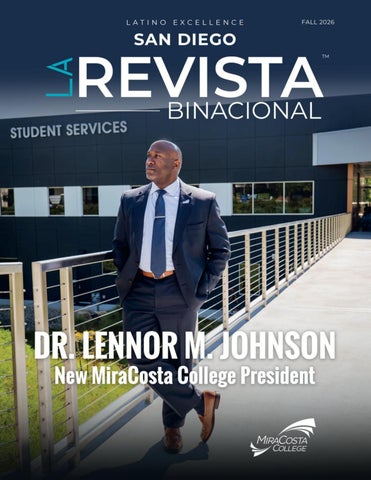
DR. LENNOR M. JOHNSON
O
n June 25, 2026, the MiraCosta Community College District Board of Trustees voted unanimously to approve the contract of Dr. Lennor M. Johnson as the institution’s next Superintendent/President. Following a comprehensive national search, Dr. Johnson will succeed Dr. Sunny Cooke and officially step into his new role on August 3. Dr. Johnson brings more than 28 years of educational leadership, a deep commitment to student equity, and a clear track record of removing barriers to academic and career success. “On behalf of the Board of Trustees, it is with great excitement that we welcome Dr. Johnson to MiraCosta College,” said Frank Merchat, President of the Board of Trustees. “The Board is confident that his collaborative approach, passion for equity, and dedication to community partnerships make him the ideal leader to build upon the solid foundation Dr. Cooke has established. “Dr. Johnson joins MiraCosta College from Imperial Valley Community College District, where he served as Superintendent/President. Under his leadership, the district earned the prestigious Aspen Prize for Community College Excellence, a national recognition highlighting his ability to build environments where student success thrives. His broad career spans multiple facets of higher education, including roles as Vice President of Student Services, Dean, Campus Director, Graduate Curriculum Chair, and Professor. Throughout his career, Dr. Johnson has championed the needs of diverse student populations, including first-generation students, foster youth, veterans, and system-impacted individuals. He possesses conversational and professional proficiency in Spanish, enabling him to engage meaningfully with students, families, employees, and community members throughout the region. This ability will further support MiraCosta College’s mission as a proud Hispanic-Serving Institution (HSI). His strategic focus on enrollment growth, fiscal health, and curriculum alignment has consistently earned national recognition for institutional excellence and student retention.
40
The pairing of Dr. Johnson and MiraCosta College brings together a leader recognized for institutional excellence with a college that holds a distinguished national reputation. Additionally, Dr. Johnson’s appointment marks a historic milestone for the district, as he becomes the first African American Superintendent/President in MiraCosta College’s 92-year history. MiraCosta College is widely recognized as an Achieving the Dream Leader College for its efforts to close equity gaps. It has also consistently been named to the Aspen Prize Top 150 Community Colleges and is recognized regionally and nationally for its pioneering bachelor’s degree programs in biomanufacturing. Outside of his academic roles, Dr. Johnson is a proud veteran who served honorably for four years in the United States Marine Corps. He has dedicated much of his personal time to advocating for educational reform and economic development in minoritized communities, earning the Stone of Hope Award for his efforts. He is also a founding board member for several youth-focused nonprofits and actively mentors individuals to help them realize their full potential. Dr. Johnson holds a Bachelor’s degree in Business Administration from Robert Morris University, a Master’s degree in Business Administration from Governors State University, and a Doctorate in Education from Argosy University. With his contract officially approved, the college community looks forward to beginning this new leadership chapter in August. Dr. Johnson and his wife, Michelle, look forward to becoming part of the MiraCosta College community and engaging with students, employees, and community partners throughout the district.
Escucha en EspaÒol 41
A New Era at MiraCosta College Dr. Lennor M. Johnson’s Vision for Opportunity, Equity and Community By: Gina Dewar | La Revista Binacional
Certain conversations stay with you long after the interview is over. My conversation with Dr. Johnson, the new President of MiraCosta College, was one of them. I have visited the MiraCosta campus before, but walking through it this time felt different. There is a beautiful balance between the institution’s history and its modern evolution. New construction blends naturally with the older buildings, creating a campus that feels both established and ready for what comes next.
In Imperial County, students who entered housing programs with extremely low Grade Point Averages were able to dramatically improve their academic performance after their basic needs were addressed. Some went on to graduate and transfer to universities. That experience reinforced something Dr. Johnson clearly believes: you cannot separate student success from the circumstances surrounding the student.
Technology has changed how we communicate, but relationships still matter. Dr. Johnson believes colleges need to intentionally incorporate those skills into education and provide students with opportunities to practice them. I couldn’t agree more.
Education is not just about what happens inside a classroom.
Some of the greatest opportunities in my own career have come because of people I met, relationships I built, and conversations I had.
It is also about having somewhere to sleep, having something to eat, feeling safe, and having the ability to focus on tomorrow.
You cannot always text your way into a relationship.
When I asked him how he felt about beginning this new chapter in San Diego, his answer was immediate: energized.
The Community in Community College
Getting to Know Dr. Johnson
He sees MiraCosta as an institution that already has the ingredients to be one of the best colleges in the country. His goal is to build on that foundation and, most importantly, to help even more students succeed.
There was another phrase Dr. Johnson used that I loved.
Of course, I couldn’t interview a new college president without trying to get to know the person behind the title.
“Community” is embedded in the name community college.
And perhaps that is the best way to describe Dr. Johnson himself: deeply connected to where he comes from but clearly focused on where he wants to go.
Preparing Students for the Future One of the things that immediately stood out to me was Dr. Johnson’s emphasis on preparing students for the world they are actually entering. MiraCosta has already introduced programs in areas such as artificial intelligence and biotechnology, while also exploring additional bachelor’s degrees. For Dr. Johnson, these aren’t simply new programs to add to a catalog. They are part of a larger strategy to connect education with the needs of students and the workforce. MiraCosta was one of the first community colleges in California to offer a bachelor’s degree, and Dr. Johnson believes there is an opportunity to expand that path. For families, that can make a tremendous difference. As a parent of college students myself, I understand the value of having an affordable first step that can eventually lead to a four-year university. MiraCosta students transfer to institutions including CSU San Marcos, UC San Diego, UCLA, UC Berkeley, and Stanford. Dr. Johnson proudly points out that MiraCosta consistently ranks among the top institutions in California for transfer outcomes. That matters. A community college is no longer simply the place a student goes because they couldn’t attend a four-year university. It can be the strategic first choice. More Than a Classroom But perhaps the most meaningful part of our conversation was when we talked about the barriers that exist outside the classroom.
For him, serving the community means much more than educating the students who walk through the doors of MiraCosta. With over 31,000 students, he wants the college to look beyond its existing enrollment and ask bigger questions: How many people in North County have an associate degree? How many have a bachelor’s degree? How many want to continue their education but haven’t found a way to do it? MiraCosta, in his vision, should be reaching those people, too.
From College to Career
I saved my favorite question for last.
As someone who has interviewed countless business and community leaders, I was especially interested in hearing Dr. Johnson discuss the transition from education to employment.
I asked Dr. Johnson to imagine that I was interviewing him again five years from now.
Five Years From Now
A degree is important. But what happens after graduation?
What would he want me to discover that he had accomplished at MiraCosta?
His answer was that colleges must be aligned with industry.
His answer was powerful.
MiraCosta works with businesses to understand employers’ needs and then develops programs accordingly. The biotechnology program, for example, was created with input from the biotech industry.
Eliminate equity gaps.
But Dr. Johnson wants to go further. Internships and apprenticeships give students the opportunity to gain practical experience, build relationships, and, ideally, secure employment before they graduate.
What happens when a student doesn’t have stable housing?
The Lost Art of the Conversation
What happens when they don’t have enough to eat?
Our conversation then took a very personal turn.
What happens when they are working two jobs while trying to attend school?
I told Dr. Johnson that, when I was a student, I would have loved to have had more training in interviewing, networking, and simply feeling confident about what I had to offer.
Dr. Johnson previously served for five years as superintendent in Imperial County, after spending a decade working in the Imperial Valley. His experience there gave him a firsthand understanding of what it means to lead an educational institution in a border community.
He and his wife have four children, all of whom are in college. One plans to become a firefighter. And he says proudly that his family shares something important: they are all committed to public service and giving back. That philosophy of service seems to follow him into everything he does.
Dr. Johnson knows those barriers personally. A first-generation college student himself, he understands that academic ability is only one piece of the equation.
Those concerns can make it almost impossible to concentrate on obtaining an education.
But perhaps the most telling thing he shared was about his family.
That philosophy also explains the college’s involvement with nonprofits and community organizations. The institution sees itself as a partner in the broader community, not an isolated campus.
His goal is ambitious: he doesn’t want students walking across the graduation stage wondering where their first job will come from. He wants them to already have the experience, the connections, and, hopefully, a job waiting for them.
And what happens when a student is worried about the safety and security of their family?
Dr. Johnson was born in Chicago. He is a White Sox and Chicago Bears fan, and, despite his continued loyalty to the Chicago Bulls, admits he wishes they were a little more like the Lakers.
We talked about something that I believe is increasingly important: soft skills. How do you introduce yourself? How do you shake someone’s hand? How do you carry on a conversation with an adult?
He wants first-generation and nontraditional students to enroll at high rates, graduate, transfer to the universities of their choice, or enter their chosen professions and earn a strong, livable wage. That is a big vision. But listening to him, I didn’t get the feeling that he sees it as an impossible one. Dr. Johnson spoke about his nearly 30 years in education and his desire to give people, particularly those who faced economic, social, or other barriers, access to the same opportunities he had, despite the trials and tribulations along the way. His philosophy is ultimately about removing barriers. And perhaps that is what makes this new era at MiraCosta College so interesting. This is not simply about new buildings, new programs, or new degrees. It is about creating more opportunities for more people. It is about recognizing that students bring their entire lives with them when they enter a classroom. It is about connecting education with the workforce, making college more accessible, strengthening the community, and ensuring that students feel that they belong.
He spoke openly about the fear and uncertainty that many families experience and about his commitment to making MiraCosta a safe place for students.
How do you interview for a job? How do you network at an event?
As I left the MiraCosta campus, I kept thinking about something Dr. Johnson said during our conversation: “Community” is embedded in the name community college.
His message was simple: students need to know that they belong, that they are safe, and that they have an opportunity to succeed.
How do you dress appropriately for a professional setting?
Under his leadership, words seem set to mean even more.
MiraCosta already provides emergency funding and housing assistance, and Dr. Johnson wants to continue looking for ways to eliminate the obstacles that keep students from reaching their goals. Housing Is Part of Education Our conversation about housing particularly caught my attention. North County San Diego is expensive, and housing can be a significant challenge for college students. Dr. Johnson knows this because he has already seen the impact that stable housing can have on academic performance.
These may sound like simple things, but they can make an enormous difference. Dr. Johnson acknowledged that today’s students are often extremely comfortable communicating through technology but may be less comfortable with face-to-face interaction. And yes, we both laughed about our children and the familiar parental command: Pick up the phone and call! But behind the humor is a serious point.
Escucha en EspaÒol
$ % & ' " ( ) * !&" & , - * By Rosalina Alvarado
e, e a g s
Warm colors are his best choice; given his naturally golden complexion, emerald green and earth tones serve to enhance his olive skin tone, while bright cool colors— such as blue and p u r p lBy e —Rosalina a l s o Alvarado flatter him.
THE IMPACT OF COLOR This is one of his IMAGE ON PROFESSIONAL greatest strengths:
% & ' " ( ) * !&" & , -*
n s of s s d c s
s al s, s, d ll a
the present day, now that she is a married woman.
Warm colors are his best Carlosgiven takeshistrends to another level; choice; he can effortlessly pair a sage-colored naturally golden blazer with a floral-print shirt and complexion, still look both emerald green professional and and earth tones contemporary. serve to enhance his olive skin It is crucial to tone, while bright consider what cool colors— message you such as blue and wish to convey purple—also and to utilize flatter him. your image as a tool that reflects you level; are and Carlos takes trends to who another your lifestyle; he can effortlessly pair a sage-colored f u r tshirt h e r mand ore, blazer with a floral-print your image serves as an indicator still look both of your qualities and strengths. professional and
contemporary. We see Carlos as a deeply devoted father—always attentive daughter, It isto his crucial to Alexis—building cherished memories consider what and sharing quality time with her,you from message the days she was a little up to wishgirltoright convey
and to utilize your image as a tool that reflects who you are and 30 44 your lifestyle; furthermore, your image serves as an indicator of
Listen en Escucha inEspaÒol English
being a good father
By: Rosalina Alvarado who has successfully
balanced his professional career Personal image is the most eloquent form of non-verbal with his personal life. communication. Consider that you can communicate without saying a word.Discipline, integrity, drive, and courage are The color of your clothing impacts your look enabled by qualities thatnow have him to achieve his thethepresent day, highlighting your natural beauty when you wear shades goals. that she is a married that harmonize with your skin, eye, and hair tones; woman. conversely, wearing a palette clashes your natural to the fact Carlosthat stands as with a clear testament coloring can make youthat appear pale or aged.man is one who is in perfect This isa well-dressed one of his harmony with his own personality. greatest strengths: Color has a proven influence on human mood. being a good father who has successfully Scientific studies have confirmed that specific colors tend balanced his to evoke similar feelings in most people. professional career with his personal life. Warm colors project approachability. Discipline, integrity, Cool colors (those with a higher blue content) convey drive, and courage are seriousness, detachment, confidence, and distinction. the qualities that have enabled him to achieve his goals. As a strategic choice, I recommend wearing cool colors for professional attire. Carlos stands as a clear testament to the fact that a well-dressed man is one who is in perfect NAVY BLUE: Projects authority and is associated with harmony with his own personality. reliability and order. This is why police uniforms in most countries are this color. PURPLE: Suggests an imaginative, intuitive, and original person. It is an excellent color for situations requiring diplomacy or when proposing a new solution to an old problem. GRAY: Across all its shades, gray conveys a neutral, respectable, discreet, and balanced image. In business, it is the safest color choice.
It creates an impression of high professionalism, making it ideal for moderators of discussions or ROSALINA ALVARADO debates. CONSULTORA DE IMAGEN INTEGRAL rosalinaalvarado_image BLACK: A symbol of power. It is the right color Rosalina Alvarado when you want to project respect and seriousness. Rosalina Alvarado rosalina.imagenyestilo@gmail.com
You can add a chic touch to professional attire: women can incorporate pops of color through shoes, scarves, handbags, and interesting accessories; can opt for creative Special thanksmen to RONI PHOTOGRAPHY 54 for the ties, socks amazing photography and creative vision behindwith these trendy with subtle patterns, and watches straps.
ROSALINAALVARADO ALVARADO ROSALINA
CONSULTORA DE IMAGEN INTEGRAL rosalinaalvarado_image Rosalina Alvarado Rosalina Alvarado rosalina.imagenyestilo@gmail.com
Special thanks to RONI PHOTOGRAPHY 54 for the amazing photography and creative vision behind these CREDITS:
MODEL: OLGA TRUJILLO MAKEUP ARTIST: LLESENIA AISPURO Escucha PHOTOGRAPHS: VERONICA RODRIGUEZ
en EspaÒol
31 45
Día de los
Muertos:
From Mexico to the World
By: LA REVISTA BINACIONAL There are celebrations that belong to a place, and then there are traditions that somehow find their way into the hearts of people everywhere. Día de los Muertos, one of Mexico’s most beloved cultural traditions, has done exactly that. What began centuries ago as an expression of Indigenous beliefs about death, remembrance and the continuity of life has become a global celebration of family, memory, art and love. Recognized by UNESCO in 2008 as Intangible Cultural Heritage of Humanity, Día de los Muertos is not simply a Mexican holiday. It is a living tradition that continues to evolve while maintaining its deepest purpose: remembering those who came before us. Observed primarily around October 31 through November 2, the celebration varies significantly from one region of Mexico to another. Its roots reach into the traditions of Indigenous peoples, including the Mexica, Mixtec, Zapotec, Tlaxcaltec and other communities. Over time, these traditions blended with Catholic observances brought by the Spanish, creating the rich cultural expression we know today. At the heart of Día de los Muertos is the ofrenda, or altar. But calling it simply an altar does not capture what it represents. An ofrenda is an invitation. Families create a special space where photographs of loved ones are displayed alongside candles, flowers, food, drinks and personal objects that remind everyone of the person being remembered.
Escucha en EspaÒol
The brilliant orange cempasúchil, or marigold, is one of the celebration’s most recognizable symbols. Its petals are often arranged in paths leading toward the altar, symbolically guiding the spirits home. Candles illuminate the way, while photographs and favorite foods help transform remembrance into something personal and intimate.
may never have met. In this way, memory becomes a bridge between generations. That message has resonated far beyond Mexico. Today, Día de los Muertos is celebrated throughout the United States and in Latino communities around the world. Museums, schools, cultural organizations, cities and families have embraced the tradition, creating their own ofrendas, artistic installations, community celebrations and educational programs. The Smithsonian, for example, has hosted Día de los Muertos programming that brings together traditional art, performances, food and educational activities. Its growing international presence is especially meaningful for Mexicans and Mexican Americans living outside their homeland. For many, Día de los Muertos offers a powerful connection to heritage. It allows a child growing up in Los Angeles, San Diego, Chicago, New York or anywhere else in the world to understand that their family story did not begin with them. It began generations before. And perhaps that is why this celebration has traveled so successfully. In a world that often encourages us to move quickly, Día de los Muertos asks us to stop. To remember. To tell stories. To look at old photographs. To cook the food our loved ones enjoyed. To teach our children where we come from. It also reminds us that death does not erase a person’s place in a family. Their voice remains in our memories. Their recipes remain in our kitchens. Their expressions become part of our own. Their stories become family history. From the cemeteries of Michoacán and Oaxaca to community celebrations across the United States, Día de los Muertos continues to cross borders without losing its soul. That may be its greatest gift. Mexico gave the world a celebration that does not ask us to forget death, but to face it with love. A celebration where grief can coexist with joy, where remembrance becomes beautiful, and where the distance between generations seems to disappear, if only for a moment. Día de los Muertos is Mexico telling the world: We remember. We celebrate. We carry them with us.
And then there are the calaveras: colorful sugar skulls, painted faces, skeleton figures and the elegant image of La Catrina. Far from representing death as something frightening, these symbols often approach mortality with humor, beauty and even a little irreverence. La Catrina, in particular, has become one of the most recognizable images associated with Mexican culture around the world. Her elaborate dress, skeletal face and unmistakable elegance have inspired artists, fashion designers, filmmakers and communities far beyond Mexico. But beneath the color and artistry is something much more profound. Día de los Muertos reminds us that remembering someone is another way of keeping them present. In Mexican families, stories are told. Favorite meals are prepared. Music is played. Cemeteries are visited. Children learn the names and stories of grandparents, great-grandparents and relatives they
46 28
29
Stronger Starts Together. OneSD brings together leaders and organizations across San Diego to:
Rebuild trust
Bridge divides
Solve real community challenges
40+ organizations. One shared commitment to San Diego. Scan to learn more and get involved:
MC TAX SOLUTIONS Helps in the preparation of individual and business taxes
Accounting Payroll Setup for your business’s accounting Translations Apostilled Documents Birth Certificates Double Nationality
better service: 52
590 G ST, STE A CHULA VISTA CA 91910 713 BROADWAY STE A CHULA VISTA CA 91910
53
(619)420-5763
They acknowledge effort before expecting results. Ironically, these leaders often earn the greatest respect.
<!DOCTYPE html>
During uncertain times, whether economic downturns, public health challenges, or periods of social change, gratitude becomes even more powerful. Fear isolates people. Appreciation reconnects them. A simple acknowledgment can restore confidence, reduce stress, and remind individuals that they are part of something larger than themselves. Science supports what many cultures have practiced for centuries. Research has linked gratitude with lower stress levels, stronger emotional well-being, improved physical health, better decisionmaking, and healthier workplace relationships. Leaders who regularly express appreciation also tend to experience greater optimism and resilience—qualities essential for navigating today’s rapidly changing world. Perhaps gratitude’s greatest strength is that it costs nothing. It requires no budget approval.
existed, and the community leaders who continue working quietly without expecting applause. Their contributions deserve more than acknowledgment. They deserve continuation. Every act of gratitude plants the seeds for future leadership. When young professionals witness leaders giving credit instead of seeking it, they learn humility. When children see adults expressing appreciation, they develop empathy. When communities celebrate collective achievements rather than individual recognition, they become more united and resilient. Leadership, after all, is not measured by how many people serve us. It is measured by how many people we inspire to serve others. This fall, as leaves change colors and families gather around dinner tables, perhaps the greatest opportunity before us is not simply to count our blessings—but to share them. A handwritten note.
<html lang=”ja” xmlns=”http://www. w3.org/1999/xhtml”> A No strategic plan.
No expensive technology.
The Gratitude Advantage: Why Thankful Leaders Create Strong Communities By Gina Dewar
s autumn arrives, nature quietly reminds us that every season has its purpose. Trees let go of their leaves without fear, families gather around tables to celebrate gratitude, and communities prepare to support one another through the holidays. It is fitting that during this season of reflection, we examine one of the most underrated leadership qualities of all: gratitude.
economic development. They are built through relationships. Every volunteer who stays late after an event, every teacher who inspires a student, every healthcare worker who comforts a patient, and every entrepreneur who mentors the next generation is strengthened by knowing their efforts are seen.
In today’s fast-paced world, leadership is often measured by profits, influence, titles, or social media followers. Yet history repeatedly proves that the leaders who leave the greatest legacy are rarely remembered only for what they accomplished. They are remembered for how they made people feel.
One sincere expression of appreciation often inspires another act of kindness. Before long, individual gestures become a culture.
<head>
Grateful leaders understand a simple truth: people flourish when they feel valued. Gratitude is not merely saying “thank you.” It is an intentional way of seeing others. It acknowledges contributions, celebrates effort, and reminds people that their work matters. Whether leading a Fortune 500 company, a nonprofit organization, a small business, or a neighborhood initiative, gratitude creates an environment where trust grows naturally.
Gratitude multiplies generosity.
Only intention.
Imagine the ripple effect if every business owner personally thanked one employee each day. If every community leader recognized one volunteer every week. If every family ended the day by sharing one thing they appreciated about each other. The cumulative impact would be extraordinary.
A sincere compliment.
A public acknowledgment. A quiet “thank you.”
Small gestures often create the biggest transformations. Because grateful leaders don’t simply build successful organizations. They build stronger people.
And stronger people build stronger communities.
As we enter the season of Thanksgiving, gratitude should not remain confined to a single holiday. It can become a leadership philosophy that shapes organizations year-round.
For those of us committed to building stronger Hispanic communities, gratitude also means recognizing the shoulders upon which we stand. We honor the immigrants who took courageous risks, the educators who challenged us to dream bigger, the entrepreneurs who created opportunities where none
That culture is contagious. The Hispanic and Latino communities understand this instinctively. Across generations, we have built businesses, churches, cultural organizations, and community groups rooted in mutual support. Family has always extended beyond our homes. It includes neighbors, mentors, colleagues, and even strangers who become lifelong friends. Many of our greatest success stories began because someone opened a door.
<! Global site tag (gtag.js) Google Analytics > Studies in organizational psychology consistently show that employees who feel appreciated are more engaged, more productive, and significantly more loyal. They are also more willing to collaborate, solve problems creatively, and remain resilient during difficult times. While competitive salaries and benefits are important, genuine appreciation often becomes the deciding factor between simply keeping a job and feeling committed to a mission. Communities function much the same way.
Strong communities are not built solely through policies or
12 54
Someone offered advice.
Someone made an introduction.
Someone believed in us before we fully believed in ourselves. Gratitude honors those moments.
It reminds us that success is rarely achieved alone.
Today’s most effective leaders are shifting away from commandand-control management toward servant leadership. They recognize that leadership is less about receiving recognition and more about giving it away. They celebrate team victories before individual accomplishments. They listen before speaking.
Escucha en EspaÒol
13
We Focus on the Next Generation of Law Students( !"#$%&'$()#*+$,&$-&.&$,&/0#12$322+4)&5)+'$ %4"+6&12")7$89':$)';)5#2$5"#$6#*&6$&':$%&'$ ()#*+$4+<<9')50$5+$)52$3''9&6$=&6&$()''#1
B
ehind every attorney who has ever fought for a family, a worker, or a neighbor, there was once a law student wondering how they would pay for it all. For nearly two decades, the San Diego La Raza Lawyers Association Scholarship Fund has answered that question — and this year, its board invites the legal and San Diego community to help write the next chapter. The Fund is a nonprofit charitable corporation with a singular mission: to open the doors of the legal profession to students who have given back to the Latino and Spanish-speaking community. Since 2007, it has awarded more than $650,000 in scholarships.
Tickets and Gala info
More Than a Scholarship Awards go to students who meet a demanding standard: community service, financial need, and academic achievement. They are not limited to students of Latino or Latina background — they recognize law students from every background who share one commitment: advancing the Latino/a and Spanish-speaking community. With law school debt climbing higher every year, these scholarships help students bear the burden of tuition and living costs so they can focus on their studies rather than their bills. The Gala: A Night for the Next Generation The Annual Gala Dinner is the Fund’s largest fundraiser of the year and the engine behind the scholarships themselves. Every ticket, every table, and every sponsorship matters and enables the Fund to raise money and place a scholarship in the hands of deserving law students. It is an evening dedicated to celebrating those recipients and the community that makes their success possible. As board members, we see the impact of this work up close — because many of us lived it. Most of us once sat where today’s students sit: recipients of this very scholarship at a pivotal moment in our own journeys. We know what that support meant, and we know that the generosity of one gala evening carries a student through an entire year of law school. This year, we are focusing on the next generation of law students, and we invite you to join us:
Escucha en EspaÒol
Friday, October 16 Gaylord Pacific Resort & Convention Center — Chula Vista Your presence ensures that talented law students can achieve their dreams. Together, we can keep the doors of the profession open for those who will use it to lift others up just as they were once opened for us.
58
The Board of Directors Agustin Peña, Deputy District Attorney, County of San Diego, President Angela H. Santamaria, Deputy Public Defender, County of San Diego, Secretary Lara Deitz, Senior Trial Attorney, Gomez Trial Attorneys, Treasurer Jessica Lujan, Associate, Jackson Lewis, Immediate Past-President Brenda Lopez, CFLS, Founding Partner, Patterson, Lopez, Banuelos, Khiterman, LLP, Director at Large Hector J. Tamayo, Hector J.Tamayo Law, President of San Diego La Raza Lawyers Association David Arreguin, Managing Attorney, CA-MX & Partnerships, Gomez Trial Attorneys, Director at Large Carmen G. Espinosa, Senior Associate, Wilson Turner Kosmo, LLP, Director at Large Andrea T. Ramos, Senior Associate, Sheppard, Director at Large Alejandro D. Echeverria, Associate, Cherry Johnson Siegmund James PC, Director at Large
59 59
Josh. Diane. Steve. Anna. Kathe. Kevin. Luke. Matthew. Peter. I will always remember their names. Each of them, in their own special way, have touched my life in a profound way. However special that group is, they are not the only names I know. There are many others I only casually knew, and even more that I have never met. They are all part of a group that includes an estimated 40% of Americans. They are people who have experienced a cancer diagnosis. While each experience ECPE U F e P Ce E U person diagnosed, their family, friends, and even others they barely know in PF C U P CN ECPE Ce E U all of us.
Escucha en EspaÒol
While some people debate whether lifestyle, environment, knowledge of the disease, or some other factors are to cause for the growing number of people Ce E F ECPE C P I PI debate that. We are going to focus on one thing; action. Things we can do that both honor the legacy of those we know who were diagnosed and address how ECP CE U Ce E F ECPE What actions can we take to honor their legacy? If you are like me, the names you recall conjure up memories that C fNN F I C PE U N U of laughs, and some really good life lessons. Thinking of the nine names I remembered at the top brings to mind three common traits amongst all of them; Joy, Respect, and Work ethic.
From Memory to Action: How We Can Make a Difference By Jeffrey Czajka From: Jeffrey Czajka 60 18
fU C CNN C P E P is Joy. I was taught early on that joy is a choice. We make that choice every single day. Sometimes multiple times per day. These people all made the room more joyful just by walking into it. We can honor their legacy by doing the same thing. Take care of you, so you can be a better person. Grow, develop, make choices that improve your environment. That way when you walk into the room, you bring joy. The second trait they all share is respect. No matter how good or bad things got, all people deserve respect. Respect is felt, it’s how you talk to or about people, it’s a decision you make. Unlike cancer,
Respect gives life to others. We are a national community in need of this lesson. It starts with the simple choice, giving respect to the person in front of you. Finally, each of these people has taught me the value of work. Professionally, they were dedicated to their craft. Personally, they worked hard to love and support the people in their life. They F FPb U C CPF fNN U CE sought to do the best work they could do. They worked to improve their skills/ knowledge. That same commitment to giving it their all, gave each of them PFC P fI ECPE ECP honor those you remember by showing up and giving fully of yourself. All three traits, make the person taking the action better. They make the people receiving the action better. And maybe the best part is they are all free. Economically speaking, it won’t cost you a penny to choose joy, give respect, and have work ethic. These are three traits we all can do. And in many cases, we can do more. Albert Einstein is famous for saying, “The world will not be destroyed by those who do evil, but by those who watch them without doing anything”. Although cancer is not a person, his quote is C N EC N fI PI F U CU S U P U ECP fI ECPE U it does not destroy our world? Now let’s discuss how we can impact U Ce E F ECPE U CU P become those who subtly standby watching without doing. There are three small actions you can take to have CP U F CE P fI CIC PU cancer. For many of us, these will be small adjustments to what we already do.
Match Maximization – Many employers P e C E PI F PC PU employees. If you work for one of those E CP U fPF NE works and use it. Make every dollar you I I C e U by using these kinds of programs and encourage your coworkers to use them. C e U PI P who matches donations. Support “Cause Marketing” – There are many companies that pledge a certain percentage of sales to support causes. Although not cancer focused, one of the most popular Cause Marketing campaigns is the General Mills Box Tops for Education. Whether it’s your grocery budget, business budget, or professional development CNN CPE fPF U P I U normal spending goes further. They say, actions speak louder than words. Often, our memories of people C fNN F N PIU F E F their actions. Take action today. In your own way, honor the legacy of those you know who have experienced a cancer diagnosis and support the cause to health the whole person. You too can bring Joy, give Respect, and do good Work – it’s a choice you make.
Here is my choice:
Volunteer – Find a local organization C U U U Ce E F ECPE There are many great national and location organizations that focus on F e P CU E U ECPE P N N e U CU PI U join you. 61 61 19
COMING SOON
The first binational health magazine, bringing Mexico and the United States together through health. For more information contact: RAFAEL GARCIA (619) 9420461 62
63
Breast Cancer and Prostate Cancer Awareness Prevention as a bridge between physical health and emotional health
Escucha en EspaÒol
BY: Julisa Arias also become a barrier when it leaves us alone and pulls us away from prevention. Epidemiological evidence confirms that breast cancer is the most common cancer among women in 164 of 186 countries (IARC, GLOBOCAN 2022). However, it also occurs in men, although less frequently: between 0.5% and 1% of global cases occur in the male population (WHO, 2026). This reality is often made invisible, which increases stigma, shame, and delays in seeking care. Naming it with respect opens a door—to dignity and timely care, without judgment. 2. The Importance of Early Detection Global figures show the magnitude of the problem: In 2024, an estimated 2.4 million women were diagnosed with breast cancer and there were 694,000 deaths worldwide (WHO, 2026). In the United States, 288,494 new cases in women and 43,402 deaths were reported in 2023–2024 (CDC, 2025–2026). Each fall, conversations about breast and prostate cancer return to the center of community health. And while the numbers matter, so does what is sometimes left unsaid: the fear of “finding out,” the shame of asking for a checkup, distrust of health systems, and the cultural weight that affects families alike. At its core, prevention also touches grief: saying goodbye, even if only for a moment, to the belief that “it won’t happen to me,” and holding uncertainty with dignity. Talking about prevention is talking about emotions, silences, support, and care. 1. The Emotional Impact of “What if…?” Cancer doesn’t only affect the body; it affects identity, a sense of safety, and our relationship with our own body. In multicultural contexts like ours, many people carry learned messages: “better not to know,” “don’t make a big deal,” “tough it out,” or even “I don’t have time to get sick.” That’s why we often hear: “I don’t want to know,” “What if they find something?”, “I’d rather not think about it.”64 That fear is not weakness—it’s humanity. It can 34
Projections indicate that by 2050, cases will increase by 38% and deaths by 68%, especially in less-developed countries (Nature Medicine, 2025). Early detection not only improves prognosis; it can also reduce the emotional impact of facing a diagnosis at advanced stages. Getting ahead of it allows us to process, step by step, the grief that can sometimes be activated: the loss of a sense of control, physical changes, uncertainty, and fear of what’s next. Prevention is a form of self-care and a way to hold life with dignity. Women: annual mammograms starting at age 40, or earlier if there is a family history.
can make the difference between postponing out of fear or moving forward with care. In a multicultural community, we also support people through different experiences with the health care system (language, treatment, costs, immigration status, wait times). Some tools that are often helpful: Psychoeducation: understanding the process and the concrete steps reduces anxiety and catastrophic thinking. Support as a couple or family: care is easier to sustain when it isn’t lived in isolation; prevention is also communal. Normalizing fear: feeling afraid does not mean you are at risk; it means you are human, and it deserves respect and support. Self-care rituals: incorporating breathing, pauses, music, prayer, or intentional silence can help regulate the body before going in for a checkup. Thanatological support: to work through delayed and anticipatory grief, and to hold with dignity what shifts when health is at stake. 4. The Global Dimension of Access to Health Care
Talking about cancer in our region means recognizing real barriers: language, costs, transportation, wait times, fear of results, and cultural differences around the body, modesty, and the idea of “being strong.” Awareness is not only individual—it is social. When a community accompanies, supports, and makes access easier, it also reduces suffering. Thanatological support can be a powerful tool for the patient and for the family. AUTHOR’S MESSAGE: If you made it this far, perhaps something in your body or your story is asking for your attention. Maybe you’ve felt that “what if…?” in your chest, your stomach, your throat. I want to tell you something with great clarity and great tenderness: you don’t have to go through it in silence, or alone. Taking care of yourself is an act of self-love… and also a way of caring for those who love you. If you feel afraid to schedule a checkup today, that makes sense. Fear doesn’t make you weak; it makes you human. And precisely because of that, prevention can be a very dignified way to accompany you: step by step, with clear information, with a hand nearby, with someone to support you emotionally while you do what needs to be done medically.
Lifetime risk of developing breast cancer:
May this fall be a gentle reminder: your physical health and your emotional health are not in competition—they hold each other. If you need to do it at your own pace, do it at your own pace. But don’t leave it for “when it’s possible.” May the “what if…?” not turn into loneliness, but rather into a loving signal to move closer to your medical checkup and, if you need it, to thanatological support that helps you hold whatever moves within you.
10.37% in very high-development countries
Psychologist and Thanatologist Julisa Arias
In regions like Tijuana–San Diego, many people navigate between two health systems, two cultures, and two ways of naming illness. For some Latino families, making an appointment can mean translating, negotiating time, costs, and fears; for others, it means moving through previous experiences of cold or impersonal treatment. Global statistics show clear inequalities:
Men: PSA tests and digital rectal exam as recommended by a clinician, especially after age 50.
4.42% in high-development countries
3. Psychological Support in Prevention
2.91% in low-development countries
Prevention is emotional, too. Supporting what we feel before, during, and after medical tests
(Cancer Biology & Medicine, 2026)
2.96% in medium-development countries
65 35
Melatonin:
The Truth Behind the Sleepy Little Gummy By Dr. Michele Dewar
ELet’s talk about something many of us have on our nightstand, in our medicine cabinet or hiding in the kitchen drawer next to the vitamins: melatonin. It comes in gummies, tablets, capsules and even sprays. And for many people, it has become the answer to that frustrating question we ask ourselves at midnight: “Why am I still awake?” But how much do we really know about it? There are plenty of myths surrounding melatonin, so let’s separate fact from fiction. MYTH: Melatonin is a sleeping pill. TRUTH: Melatonin is actually a hormone. Your body naturally produces melatonin in response to darkness. It helps regulate your circadian rhythm, which is basically your body’s internal clock telling you when it is time to sleep and when it is time to wake up. Think of melatonin as a messenger telling your brain, “Hey, it’s nighttime.” It is not the same thing as a traditional sleeping medication. MYTH: The more melatonin you take, the better you will sleep. TRUTH: More is not necessarily better. This is one of those situations where our logic can get us into trouble. If one gummy does not work, it can be tempting to take another. But taking more melatonin does not automatically mean better sleep. Higher amounts may also increase the chance of side effects such as
66
headaches, dizziness, nausea or feeling sleepy the next morning. ( NCCIH)
TRUTH: It is more about timing than knocking you out.
With melatonin, bigger is not necessarily better.
Melatonin helps signal that darkness and nighttime have arrived. That is why timing can matter, especially when someone is trying to adjust their sleep schedule.
MYTH: Because melatonin is natural, it is completely safe. TRUTH: Natural does not automatically mean risk free. Your body makes melatonin naturally, but that does not mean supplements are right for everyone. Melatonin can interact with certain medications, and there is still limited information about the long term safety of taking supplements regularly. People who take medications, are pregnant or breastfeeding, or have certain medical conditions should talk with a healthcare professional before using it. ( NCCIH) MYTH: Melatonin is a cure for insomnia. TRUTH: Not necessarily. This is an important one. Research has not established melatonin as a reliable treatment for chronic insomnia. In fact, experts often recommend other approaches, including cognitive behavioral therapy for insomnia, as an initial treatment. ( NCCIH) Melatonin may be more useful when the problem involves your body clock, such as jet lag or certain circadian rhythm disorders. ( NCCIH) MYTH: Melatonin will knock you out.
And let’s be honest, taking melatonin while watching television, scrolling through your phone and answering emails at midnight is probably sending your brain some mixed messages. Your body clock likes consistency. MYTH: Melatonin gummies are harmless. TRUTH: Treat them like a supplement, not candy. This is especially important if you have children at home. Melatonin supplements are regulated differently from medications in the United States, and studies have found that some products do not contain exactly what their labels claim. Gummies can also be particularly attractive to children. ( NCCIH)
The bigger lesson is that good sleep is not simply about taking something before bed. A consistent bedtime, exposure to natural light during the day, limiting bright light at night, watching your caffeine intake and creating a relaxing sleep environment can all help your body understand when it is time to wind down. And if you are constantly struggling to sleep, waking up exhausted or finding yourself dependent on melatonin night after night, it may be time to look beyond the gummy and figure out what is really keeping you awake. Because sometimes the best sleep solution is not sitting in a bottle. It is listening to what your body has been trying to tell you. This article is for educational purposes only and is not intended to replace medical advice. If you have persistent sleep problems or questions about melatonin, consult a qualified healthcare professional.
So yes, keep those gummies somewhere safe and out of reach. So, Should You Take Melatonin? Maybe. For some people, melatonin can be a useful tool, particularly when the issue involves sleep timing or jet lag. For others, it may not do much at all.
Escucha en EspaÒol
67
Nuevas restricciones de Medi-Cal sobre medicamentos
Más allá de la báscula: para laHeart, obesidad Your Yourpara Kidneys, and Your Weight Are All Una nueva era la salud cardíaca femenina cardiovascular de nuestra comunidad? Connected — And Medicine Finally Has a Name for It
Por el Dr. Hassan Kafri, Cardiólogo
By Dr. Hassan Kafri, M.D. Maybe una you recognize this story. Cuando mujer se sienta en mi consultorio en Chula Vista, la conversación suele empezar con el peso. Lede han dichopara queunbaje kilos, reduzca Una señal alerta Someone in your family —médico a 9parent, an uncle,los a carbohidratos ejercicio.aLo quethings no le han cousin — hasy haga beenmás managing few for Como cardiólogo en Chula Vista, he acompañado a miles de pacientes dicho esTheir que su corazón estáisregido porenfermedades fuerzas que sugar “a little “ Their en suyears. lucha contra lablood obesidad, la diabetes y las high. noblood tienen que el número endoctor báscula: cardíacas. En pressure losnada últimos años, loscon medicamentos para lalaobesidad is ver “borderline. “ Their aprobados por la FDA, como la semaglutida (Wegovy) y la sus hormonas, suskidneys patrones sueño e tirzepatida incluso el mentioned their at de the last visit but said (Zepbound), han transformado mi práctica médica. Para muchos de estrés que soporta al compaginar el trabajo y la they were “okay foraquellos now.de“ nuestras They are carrying mis pacientes, especialmente comunidades familia. Después demedicamentos 20 años he latinas e inmigrantes, estos no hancardióloga, sido un simple extra weight, but they have como been carrying it for tratamiento estético, sinoproteger que les hanel salvado la vida.de una mujer aprendido corazón so long it que just feels like who they are. significa comprender qu lo hace diferente. Por eso, la noticia de que Medi-Cal dejará de cubrir los medicamentos para la obesidad basados en GLP-1 el 1 de enero de 2026 es Then one day, something happens. A heart profundamente preocupante. cardíacas En mi consulta, ya veosiendo el temor la Las enfermedades siguen attack. stroke. failure. the perder familyel is reflejado en losA rostros de Kidney mis pacientes. ParaAnd muchos, principal causa de muerte en mujeres en Estados acceso medicamentos solowe significa perder progreso lefta estos wondering: hownodid not see thisel coming? unael control de cada cinco. en Unidos: la pérdida deaproximadamente peso, sino también perder de la presión arterial, aumentar los niveles detiempo, azúcar en lo sangre y aumentar el Durante demasiado que sabíamos I see this storycardíacos inprovenía my cardiology practicerealizados in Chula riesgo de sufrir y accidentes cerebrovasculares. sobre el ataques corazón de estudios
Vista more often than I want to. The warning
Eso finalmente est cambiando. Estoen no eshombres. solo un cambio de política. Es una emergencia de equidad signs were always que therese—publicarán the blood en sugar, they en salud. Las investigaciones 2025
bloodnos pressure, the kidneys, the weight. They 2026 han brindado nuevas herramientas para ¿Qué estánever exactamente? were separate problems. lo They the ayudar acambiando las mujeres a desarrollar quewere yo llamo same problem, speaking inpara different nd resiliencia la capacidad devoices. los vasos El presupuesto delvascular: gobernador Newsom el período 2025-2026 when sit with a de patient connect those propone que IMedi-Cal cubrir losand medicamentos para bajardots dede sanguíneos de deje mantenerse sanos en cada etapa peso aprobados por time, la FDA,es incluidos Wegovy Zepbound, partir theLafirst the response Iyhear often lafor vida. comida medicina, pero no most lo esa todo. del 1 de enero de 2026. is: “Why didn’t anyone tell me this before?” Creo firmemente la estos dieta mediterrsenea. La cobertura continuará solo en cuando medicamentos receten n paraimportante la diabetes, no estudio para la obesidad. este the añomedical realizó That question is publicado exactly what uncommunity seguimiento a más deto105.000 is estiman finally trying answer. Funcionarios estatales que recortar la cobertura mujeres le ahorrará y descubrió seguían estrictamente esta a California hastaque $680quienes millones para 2029. Pero hay un factor que faltadieta en el tenían cálculo: los costos atención a largo plazo de unThings 18 % de menos demédica riesgo deSeparate accidente Why These Are Never Really la obesidad no tratada son mucho mayores. Importantes grupos cerebrovascular. El aceite de oliva, las verduras, el médicos, incluida la Sociedad de la Obesidad, se han opuesto pescado los cereales no solo públicamente alyrecorte, señalando que las proyecciones dereducen costos The new guideline isintegrales built around one idea: del el estado no incluyeron los ahorros de la nprevención deen colesterol “malo”, sino derivados que tambi uyenThe catch earlier, before it reaches a incrisis. la diabetes, lathis reducción de hospitalizaciones y la disminución de las los complejos cambios lipídicos que se producen enfermedades cardiovasculares. earlier in the chain you intervene — with lifestyle durante la menopausia. changes, with medication when needed, with Para una comunidad donde 18 millones de adultos en California coordinated care across doctors — athe more you tienen obesidad, esta decisión afecta todos los Estosobrepeso esconocemos. lou que muchas mujeres nocasisaben: al hogares canque change the outcome. acercarse a la menopausia, el cuerpo suele más demedicamentos ciertas partículas (ApoB Porproducir qué estos nogenéticas son solo un y For the first que time, the guideline formally Lipoproteína(a)), tratamiento estético son pegajosas y resistentes a GLP-1Semedications forperfectamente patients with larecommends dieta por sí sola. puede comer La obesidad es un defecto carácter. Es una afección médica 2nodiabetes andde cardiovascular riskdonde — and y type aun así tener niveles elevados. Aquí es el crónica, de origen biológico, que aumenta drásticamente el riesgo supports their broader use for obesity treatment de:ejercicio se convierte en una intervención clínica, of CKM syndrome. are noacross solo all enstages una sugerencia de estiloThese de vida. the investigación same drugs presentada now becoming Una en la accessible Asociación through at $50 mericanathe del new CoraMedicare n confirmGLP-1 que,Bridge en el caso de a mujeres, month. The also for a single las una guideline combinación decalls entrenamiento de resistencia y cardio la “Zona mejora coordinating pointconstante of care,en rather than2”leaving lapatients calidad to demanage estas partículas the gaps lipídicas, between reduciendo specialists laon probabilidad dedeque semano adhieran las paredes Como cardiólogo, he visto primera cómo losamedicamentos their own. GLP-1 y los agonistas duales protegen corazón. Los ensayos arteriales, incluso si los nivelesel se mantienen altos. clínicos demuestran: TuInreloj importa más obesity, de lo quediabetes, crees and our interno community, where high blood pressure are all more common than conUno sobrepeso u obesidad. los hallazgos de este the de national average,más thissorprendentes framework matters. año provino de la cronobiología, el — estudio Not as an abstract medical concept but asde a nuestros relojes internos. Las mujeres numbers que se way of explaining why the “borderline” Paraidentifican muchos decomo mis pacientes, estos medicamentos “noct mbulas” tienen un han sido m s your family been ignoring fora years fundamentales para member recuperar suhas salud. Quitarles el acceso ellos de probabilidades de tener una mala salud cardíaca. agravará desigualdades hemos luchado durantetogether, décadas are las worth taking que seriously right now, se trata de dormir lo suficiente. Se latinas trata yde para o superar. Qué solo significa para nuestras poblaciones before they stop esto being borderline. beneficiarias de Medi-Cal la alineación. Cuando tu ritmo interno choca con el ciclo día-noche, tuencuerpo desencadena respuestas Las comunidades latinas California enfrentan is the simplest version of mayores what I tasas tell demy inHere amatorias se acumulan el tiempo. obesidad, inseguridadque alimentaria y acceso con limitado a atención El patients: if you have been told that any one of especializada. a esto le suman lospuede bajos ingresos y laimportante inscripción momentoSi de tu sedescanso ser tan en Medi-Cal, las probabilidades se reducen aún más. 68 36como la duración.
things is creeping Elthese estrés deja huellaup — your weight, your blood sugar, your blood pressure, your kidney
Muchos de mis pacientes tienen dos empleos, cuidan a familiares y function — tiempo ask your doctorreciente about all the others. Quizás más profundo cuentan con el pocodescubrimiento o recursos para recibir apoyo especializado And whether they are atlasino the full enes el control peso. Para los medicamentos para obesidad queask eldeestrés no ellos, es solo unalooking sensación, que no picture son una solución a veces son intervención orhuella just rápida; one piece ofcorazón. it. la primera deja una física en el Investigadores efectiva a la que han tenido acceso.
de la Universidad McGill utilizaron imágenes de First, recognize the signs yourdemostrar body may resonancia magnética avanzada para que Recortar la cobertura ahora significa: already sending. people early las mujeresbeque enfrentanMost un alto estréswith psicosocial CKM syndrome something explain it presentan signos feel tempranos de inbutamaci n del away.cardíaco. Watch for:Sorprendentemente, los hombres tejido sometidos a un estrés similar no mostraron los mismos cambios. Para after las amujeres, apoyo • Feeling tired even full nightelof sleep y el ankles bienestar mental lujos. Son •verdad Swollen ortratamiento feet bynothe of the Laemocional es simple: cuando el deson laend obesidad se convierte en un lujo, los más vulnerables las consecuencias. componentes esenciales de pagan la prevención de la day insuficiencia cardtoaca. • Needing urinate frequently at night Qué muestra la nueva investigación de Enara • Shortness of breath climbing stairs or Health El papel de los GLP-1 walking shortmedicamentos distances Este• año, Enara Health publicó que aborda Headaches thatuna arenueva hardinvestigación to explain directamente el impacto de decisiones políticas. El para estudioel Estamos entrando en estas una era más accesible • Blood pressure that stays high no matter comparó a pacientes de Medicaid y pacientes con seguro privado en metabólico. Muchas de mis pacientes what you dola obesidad. untratamiento programa médico para conocen las inyecciones semanales de GLP-1, pero ahora también contamos versiones orales Estos fueron los resultados: None of these alone meanscon disaster. But several eficaces. ara las mujeres j venes que padecen of them together — especially alongside extra el síndrome de (que es una señal perdieron entrerising un 5ovario %blood y un 7 poliquístico %sugar, menos de que sus contrapartes weight, orpeso kidney changes — deseguro alerta cardiovascular, no solo un problema con privado. is your body asking you to pay attention. reproductivo), estos medicamentos pueden ayudar a solo restablecer el entorno metabólico y reducir el pero hen, si tienen a lassmismas herramientas. bringacceso these ecific uestions to your riesgo de cardiopatías precoces. next doctor’s visit:casi el doble de peso que los pacientes perdieron consistentemente
Listen in English
de Medicaid.
Pero quiero ser clara: los medicamentos son solo • “My blood sugar, blood pressure, and
unainvestigación pieza deldemuestra rompecabezas. Bajar peso loses Esta con precisión qué de agravarán have all entre beenlaquienes creeping up.costear Could recortes a weight Medi-Cal: la brecha pueden ely importante porque reduce tensión mecánica tratamientothese y quienes beno.connected?”
2. Hable con su médico ahora sobre alternativas. Existen otros medicamentos y terapias combinadas aprobados por la FDA que podrían estar cubiertos.
he asociado coneliminan programas especializados enunael Cuando los legisladores estos medicamentos, no toman • financiera, “Havedesino you checked my kidneyen function decisión decisión detrabajando equidad. tratamiento launa obesidad, estrecha
3. Priorice las intervenciones en el estilo de vida con apoyo médico. La nutrición, la actividad física y la orientación conductual siguen siendo esenciales, y muchas de ellas están cubiertas por Medi-Cal.
metabólica del corazón. Por eso, en mi clínica me
recentlycon — and howHealth does itpara look ofrecer alongside colaboración Enara un Historia real de una paciente: El dilema de Rosa controlmy de heart peso health?” integral que incluye supervisión médica, apoyo Rosa (nombreorientación ficticio) es unanutricional madre de tresyhijos de 52conductual. años de San Ysidro. Trabaja y hafor luchado contra el sobrepeso durante El• objetivo una solución rápida. Es una guía “Amenno Ilimpieza atesrisk something called CKM años. Cuando vino a verme por primera vez, tenía la presión arterial personalizada que respeta la complejidad de la vida syndrome? Where would I fall on that descontrolada, prediabetes y presión en el pecho con muy poca de cada mujer y le garantiza las herramientas para actividad física. spectrum?” proteger su corazón en cada etapa de su vida. Cuando Medi-Cal aprobó su medicación a principios de este año, todo MostBajó doctors welcome questions. And cambió. 12 kilos, will su presión arterial these se normalizó y su colesterol Siif loyours está lista para tomar eltocontrol dethem su fully, salud bajó suficiente como para evitar recetarle otro medicamento. Me doesn’t have time address dijcardiovascular, o: “Doctor, por primerami z pequipo uedo caminen oKafri n mis nieHeart tos sin parand ar”. that is a sign youvemay need aar cmore coordinated Vascular Clinic está aquí para ayudarla. approach toRosa your care. La semana pasada, regresó llorando. Había oído la noticia: Medi-Cal dejaría de cubrir su medicación el you are San Diego area, mycasiteam at añoIfque viene. Mein hizothe la pregunta que ahora escucho a diario: “¿Qué me pasará que dejar de tomarla?”. sabe la Kafri Heartcuando and tenga Vascular Clinic worksEllaclosely respuesta, y yo también. La mayoría de los pacientes que interrumpen with Enara Health to provide exactly this kind la terapia recuperan la mayor parte o la totalidad del peso perdido en of comprehensive, care — looking at el plazo de un año. La presiónconnected arterial aumenta. Los niveles de azúcar en sangre se disparan. El corazón sufreyour las consecuencias. your heart, your weight, blood sugar, and
your not in isolation. Visit kafri. A Rosa nokidneys le preocupatogether, subir de peso. com or enarahealth.com to learn more.
Le preocupa volver al hospital.
Dr. Hassan Kafri is an interventional cardiologist Si usted está inscrito en Medi-Cal, ¿qué puede in Chula Vista, California, specializing in hacer? cardiovascular prevention and metabolic health. EstaKafri política aún no definitiva. Todavía hay tiempo, y nuestra Heart andesVascular Clinic has partnered Listen comunidad aún tiene voz. Esto es lo que les aconsejo a mis pacientes: with Enara Health to provide comprehensive, in English personalized cardiometabolic care in the greater 1. No interrumpa su medicación antes de tiempo. Si se está beneficiando del tratamiento conat GLP-1 o agonistas duales, San Diego area. Learn more kafri.com. continúe con su cobertura actual.
4. Defienda sus derechos. Llame a sus legisladores estatales. Dígales lo que significaría para su salud o la de sus seres queridos perder el acceso a este tratamiento. La salud familiar. Las historias de los pacientes transforman las políticas. 5. Obtenga apoyo estructurado. En la Clínica Cardiovascular Kafri, colaboramos con Enara Health para ofrecer atención cardiometabólica integral, que incluye nutrición, salud mental, apoyo para el ejercicio y supervisión médica. Estos programas ayudan a mantener el progreso incluso cuando cambia el acceso a los medicamentos.
Un camino a seguir para nuestra comunidad El tratamiento de la obesidad no debe ser exclusivo de los ricos. Cuando restringimos el acceso a la atención basada en la evidencia, ampliamos todas las brechas existentes en enfermedades cardíacas, diabetes, discapacidad y esperanza de vida. California tiene la oportunidad de liderar no solo en innovación, sino también en compasión y equidad. Como profesionales de la salud, tenemos la obligación con nuestros pacientes de alzar la voz. Como comunidad, tenemos la obligación mutua de exigir soluciones basadas en la ciencia, no en el temor a los costos a corto plazo.
Escucha en Español
He visto demasiados corazones fallar prematuramente en mis 20 años de práctica. Me niego a ver cómo aumenta el sufrimiento prevenible porque se ha negado el acceso a tratamientos comprobados. Juntos, podemos insistir en políticas que protejan, no que pongan en peligro, la salud de nuestra comunidad. Y sin importar lo que decida el estado, mi equipo y yo seguiremos luchando por cada paciente que depende de nosotros.
Chula Vista 429 Broadway Chula Vista, CA 91910 T:619.434.0204 I F:619.337.0191
El Cajon 328 Highland Ave #200 El Cajon, CA 92020 T:619.930.9404 I F:619.930.9426
69 37
70
71
On a mission to
end dead zones TSatellite provides coverage even in the most remote locations where tower signals can’t reach—all to keep you connected in places T S
T • Free 911 texting, even if you’re not a TMobile member • Texting and live location sharing • Satellite compatible apps including Google Maps, Accuweather, Overwatch & Rescue, All Trails, and more
TSatellite seamlessly works with most modern phones from the last four years, so there’s no need for new devices, apps, or interfaces. It just works.
TMobile.com/Satellite Texting & select satelliteready apps with compatible device in most outdoor areas in the U.S. where you can see the sky. Satellite service, including text to 911, may be delayed, limited, or unavailable. Included with Experience Beyond plans or $10/mo.; auto renews monthly. Cancel anytime in TLife App. Alltrails iOS availability anticipated December 2025.
72
73
74
The Community is What Counts Join One of Our Health Plans! Call 1-800-224-7766 Medi-Cal CommuniCare Advantage (D-SNP) Community y Más (C-SNP)