![]()


The Schmersal Group has designed a new safety light barrier especially for hygiene-sensitive uses in the food processing industry, such as milk and meat processing.
This version has evolved with the demands of standard cleaning operations in the industry as the sophisticated design helps to ensure IP69 degree of protection (protection against the ingress of water from high-pressure of steam cleaning).
The protective enclosure with external gaskets satisfies stringent standards and is designed to cope with frequent cleaning with water, foam, lyes, high-pressure or hot steam.
SCHMERSAL | Enigma Business Park Malvern, Worcestershire, WR14 1GL
www.schmersal.co.uk
uksupport@schmersal.com


Editor
Paul Attwood editor@mpemagazine.co.uk
Senior Editorial Assistant
John Reynolds editorial@mpemagazine.co.uk
Features Editor
Harry Peters editorial@mpemagazine.co.uk
Production/Design
Laura Whitehead laura@lapthornmedia.co.uk
Sales Manager
Charlotte Chapman charlotte@mpemagazine.co.uk
Accounts
Richard Lapthorn accounts@lapthornmedia.co.uk
Admin Assistant
Jade Still jade@lapthornmedia.co.uk
Circulation Manager
Leo Phillips subs@mpemagazine.co.uk
Publishing Director
Maria Lapthorn maria@lapthornmedia.co.uk
Lapthorn Media Ltd 5-7 Ozengell Place, Eurokent Business Park, Ramsgate, Kent, CT12 6PB
Phone: 01843 808 106


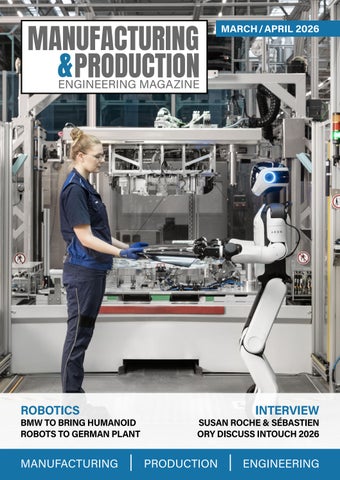
BMW Group to deploy humanoid robots in production in Germany for the first time The Strategic Advantage of Owner Controlled Insurance Programs (OCIPs)
Chlorine filtration in dialysis – how advanced sensing is raising the bar How AI is rewriting the rules on the factory floor - By Andrew Sherlock, NMIS Guhring to Premiere New Innovations at MACH
Welcome to the latest issue of Manufacturing & Production Engineering Magazine. Across the manufacturing landscape, the pace of innovation continues to accelerate, with digitalisation, automation and sustainability reshaping how industries operate.
In this edition, we explore how emerging technologies—from artificial intelligence and humanoid robotics in production to advanced automation in logistics—are redefining efficiency and flexibility on the factory floor.

Alongside these technological advances, manufacturers are also addressing wider challenges including decarbonisation, supply chain resilience and the need for smarter quality management systems. Throughout the issue, our features and industry insights highlight practical solutions and forward-thinking strategies that are helping businesses remain competitive in a rapidly evolving global market.
We hope you enjoy this edition, and if you have news to share, please contact editorial@mpemagazine.co.uk.
The BMW Group is consistently advancing the digitalisation and use of artificial intelligence in production. A key element in this effort is “Physical AI”, which combines digital artificial intelligence (AI) with real machines and robots. This enables intelligent systems such as humanoid robots to be integrated into real-world production processes.


For the first time, the BMW Group is now bringing Physical AI to Europe and launching a pilot project with humanoid robots at the Leipzig plant. The project aims to integrate humanoid robotics into existing series production of cars and to explore further applications in the production of batteries and components.
“Digitalisation improves the competitiveness of our production – here in Europe and worldwide. The symbiosis of engineering expertise and artificial intelligence opens up entirely new possibilities in production,” said Milan Nedeljković, Member of the Board of Management of BMW AG, Production.
Last year, the BMW Group successfully implemented a pilot project with humanoid robots at its Spartanburg plant in the United States. The insights gained from this project are being leveraged to further develop and scale Physical AI applications.
Artificial intelligence is already an integral part of the BMW Group’s production system. From the virtual factory with digital twins and AI enabled quality controls to intralogistics with autonomous transport solutions, intelligent systems are used in almost all production steps.
A prerequisite for the effective use of artificial intelligence in production is a unified IT and data model across the entire production system. The BMW Group has consistently transformed isolated data silos into a unified data platform in its production system meaning that all data is consistent, standardised, and available at all times. This enables digital AI agents to take on increasingly challenging tasks autonomously and in complex environments while continuously learning and becoming available for additional areas of application. The introduction of intelligent and autonomous decision making agents marks a paradigm shift in production. In combination with robots, these digital AI agents are what make up Physical AI.
“Our aim is to be a technology leader and to integrate new technologies into production at an early stage. Pilot projects help us to test and further develop the use of Physical AI – that is, AI enabled robots capable of learning – under real-world industrial conditions,” said Michael Nikolaides, Senior Vice President Production Network, Supply Chain Management at BMW Group.
Digitalisation and artificial intelligence are core elements of BMW iFACTORY and are the foundation for future proof, flexible, and competitive production.
The BMW Group is strategically expanding its automation portfolio to include Physical AI and humanoid robotics. Humanoid robots are viewed as a value adding complement to existing automation. Particularly, they demonstrate potential in monotonous, ergonomically demanding, or safety critical tasks. The goal is to relieve employees and further improve working conditions.
Our aim is to be a technology leader and to integrate new technologies into production at an early stage.
- Michael Nikolaides
Its consistent data platform in production makes the BMW Group an attractive partner for technology companies seeking to test the possibilities of Physical AI –particularly humanoid robotics – in an industrial environment under real-world conditions. By setting up the new “Center of Competence for Physical AI in Production”, the BMW Group is taking the next step in consolidating its expertise and ensuring that the full range of knowledge can be leveraged across the organisation.
The BMW Group is following a clearly structured approach. Technology partners are evaluated according to defined maturity and industrialisation criteria and tested in pilot projects
under real-world production conditions. Following a theoretical assessment, an evaluation is carried out at the manufacturer’s site in the laboratory using real use cases from the BMW production system to test integration capability. If this phase is successful, it is followed by an initial test deployment under real-world production conditions at a BMW Group plant and subsequently the actual pilot phase.
In collaboration with Hexagon, a long standing, established partner of the BMW Group in the field of sensor technology and software, the first pilot project in Europe is now underway.


Hexagon’s organisational unit located in Zürich, Hexagon Robotics, specialises in Physical AI and presented its first humanoid robot, AEON, in June 2025. Following an initial theoretical evaluation phase and successful laboratory tests, there was an initial test deployment at BMW Group Plant Leipzig in December 2025. A further test deployment is planned from April 2026 to ensure full integration for the actual pilot phase starting in summer 2026.
The deployment in Leipzig is focusing on testing a multifunctional application of the robot. It is based on AEON’s design, whose human like body allows a wide range of hand and gripper elements or scanning tools to be flexibly attached and enables dynamic use on wheels. During testing and later in the pilot phase, the robot will be used in the assembly of high voltage batteries and in component manufacturing.
Successful pilot at BMW Group Plant Spartanburg provides key insights for use of humanoid robots in production
The world’s first deployment of humanoid robots at a BMW Group plant took place at the Spartanburg
plant in the United States in 2025, in collaboration with the technology company Figure AI. The results demonstrated that Physical AI can deliver measurable added value under real-world conditions. Within ten months, the robot Figure 02 supported the production of more than 30,000 BMW X3, working ten-hour shifts daily from Monday to Friday. Figure 02 handled the precise removal and positioning of sheet metal parts for the welding process – a task that is particularly demanding in terms of speed and accuracy while also being physically exhausting. In total, it moved more than 90,000 components and covered approximately 1.2 million steps in around 1,250 operating hours.
The pilot confirmed that humanoid robots can safely perform precise, repetitive work steps – such as positioning components with millimetre precision – and provided important insights for the further deployment of Physical AI in production.
During the initial test phases with Figure 02, it was essential to involve all areas of the production IT infrastructure, occupational safety, production process management, and shop floor logistics at an early stage.
One key finding was that the transition from the laboratory to the actual
production environment was faster than expected. Motion sequences trained in the laboratory could be quickly transferred into stable shift operation. To ensure smooth coexistence with existing systems, integration into the BMW Smart Robotics ecosystem was implemented via standardised interfaces.
The body shop was deliberately selected for the test phase in Spartanburg, as it already has a high degree of automation. BMW Group employees in this area have extensive experience in integrating new technologies and processes. For example, material supply on the line is already carried out almost exclusively via automated smart transport robots (STR). The project team’s early communication ensured transparency from the outset and promoted acceptance. The deployment of humanoid robots was met with great interest among employees and quickly became a natural part of everyday work during the course of the project.
The BMW Group and Figure are currently evaluating additional use cases for deploying the Figure 03 robot.


New carbon prepreg material made with recycled carbon fibre nonwoven mat
Groundbreaking prepreg tooling technology
Standard and fire-retardant snap cure systems –including the new RFA570 adhesive film for core bonding applications
Providing technical innovation, exceptional quality, lowering cost-per-part and offering improved sustainability. Kit cut to our customers’ requirements, with standard products available from stock.
In manufacturing, large-scale construction projects—whether for new facilities, expansions, or retrofits—are vital for driving growth and improving operational efficiency. However, these projects come with risks that require careful management. An Owner Controlled Insurance Program (OCIP) is an effective solution, offering comprehensive coverage for all contractors and subcontractors involved in a project.
While manufacturers often rely on contractors to arrange insurance, taking control of this aspect provides significant advantages. As Tracy Keep, Managing Director of Gallagher’s National Construction Practice Group, UK Retail, explains: “At Gallagher, we believe that tailored insurance solutions are the cornerstone of successful projects. Our goal is to empower manufacturers with the coverage they need to thrive.”

Tracy Keep - Managing Director, National Construction Practice Group, UK Retail

By purchasing an OCIP, manufacturers—referred to as the “Employer”—can unlock several strategic benefits:
• Control Over the Policy: Employers retain full authority over the insurance policy, ensuring alignment with their specific needs.
• Tailored Coverage: Gallagher’s expertise allows manufacturers to customise policy wording to suit their unique requirements, rather than relying on a contractor’s preferences.
• Direct Claims Payment: Claims are paid directly to the Employer, avoiding delays caused by contractor involvement.
• Protection Against Contractor Insolvency: Unlike contractorarranged insurance, which ceases if the contractor goes bankrupt, an OCIP remains in force, safeguarding the Employer against risks associated with incomplete projects.
• Inclusion of Additional Stakeholders: OCIPs can incorporate other parties, such as lenders, security agents, and future tenants, ensuring compliance with contractual obligations.
An OCIP is tailored to a specific construction project and typically includes:
• Contract Works: Coverage for physical damage to the works during construction.
• Terrorism: Protection against damages caused by acts of terrorism.
• Property Owners Liability: Safeguards the Employer against third-party claims unrelated to the construction project.
• Public Liability: Covers liability for injury or damage caused to third parties during construction.
• Delay in Start-Up: Protects against financial losses due to project delays caused by insured perils.
• Latent Defects: Long-term protection (up to 10 years) against structural damage caused by hidden defects.
• Non-Negligent Liability (6.5.1): Coverage for damage to neighbouring properties caused by construction activities, even without contractor negligence.
Construction projects are critical to operational growth. By partnering with Gallagher, manufacturers gain access to a specialised practice group that ensures the OCIP is comprehensive, transparent, and tailored to their needs. This partnership protects both the project and the manufacturer’s long-term interests, making Gallagher a strategic investment in the future of your business.

Gallagher’s experienced brokers design OCIPs that provide comprehensive protection and peace of mind.
Scan the QR code above to connect with us.


Gallagher offers the strength and positioning of a global insurance group, combined with the personalised care and attention of a local UK broker. With a rich history dating back to 1927, we believe we have the expertise and experience to meet your manufacturing insurance and risk management needs. For further information, please scan the QR code. CONNECT WITH A SPECIALIST TODAY.

By Chris Potts, Marketing Director, ANT Telecom

The UK’s utility sector is full of an array of complicated challenges. Ageing infrastructure, rising demand, climate resilience and regulatory scrutiny are often in the spotlight. At the same time, the sector suffers skills shortages, and operational risk just continues to increase. To tackle these problems, though, billions of pounds are being committed towards strengthening the UK’s energy and water networks. As part of this, there is often a focus on digital transformation to provide some of the answer. However, investment alone here will not deliver the resilience regulators and customers expect today. And, neither will some aspects of digital transformation.
This is because many digital transformation programmes succeed on paper and fail where it matters most: on the frontline. This failure is often not because the intent of the investment or transformation aspirations are completely wrong. It is because the tools introduced to these teams do not match up to the environments that utilities actually operate in. Chris Potts, Marketing Director, ANT Telecom explains why improving frontline mobility, safety and collaboration is essential if future investments are to succeed.
Utility engineers, technicians and contractors often operate across vast estates, remote locations and hazardous environments. Many also operate alone and frequently under time pressure. In addition to this, site rules vary, risk profiles change, and work is carried out across a mixture of environments. This includes confined and safety-critical environments.
Yet many digital initiatives still assume consistent access to systems and simple workflows is straight forward for these kinds of staff members to access and use. It actually is not the case, and in reality, frontline teams are often expected to navigate many fragmented platforms, paper-based processes and multiple standalone devices while delivering safer working, faster response times and improved customer outcomes.
Eventually, this can result in people bypassing processes because they have not been well-designed for frontline teams. So, digital transformation does not stall because of a lack of ambition. It stalls because systems become harder to follow than the risks they are designed to manage. So they need to be developed and streamlined for staff using them in the field on a daily basis.
The scale of infrastructure investment now planned across utilities is significant. In the energy sector, the National Preparedness Commission has warned that ageing assets and increased demand are placing the UK’s system under strain unless resilience improves. In response, Ofgem has announced £28 billion of investment across gas and electricity networks, a figure expected to rise to around £90 billion by 2031.
The water sector faces similar scrutiny. Ofwat’s 2024–25 performance report highlights ongoing challenges, with pollution referenced as a major problem. Consequently, this has resulted in the approval of £104bn upgrade; to accelerate delivery of cleaner rivers and seas and secure long-term drinking water supplies for customers.
In the energy sector, the National Preparedness Commission has warned that ageing assets and increased demand are placing the UK’s system under strain unless resilience improves.
- Chris Potts, Marketing Director, ANT Telecom
The success or failure of these investments, though, will not be found during the various procurement cycles and strategy documents that have been designed to deliver them. Instead, success or failure depends on the capabilities of frontline teams operating in complicated, high-risk environments to execute their daily work effectively, safely and efficiently. Why mobility strategy is now a safety decision
Broadly speaking, regulators increasingly highlight digitisation as a way to improve productivity, compliance and service delivery. However, digitisation only works when it functions correctly in the field. Therefore developing and executing a mobility strategy is no longer an IT consideration for the sector, it is an operational risk decision.
For instance, when mobile solutions fail to reflect the real working conditions of staff — including lone working, hazardous tasks and the need for rapid escalation — they create issues rather than improving efficiency. Workarounds emerge, processes are bypassed and visibility is lost precisely where it is most needed. And, in high-risk environments, complexity is not neutral. It actively increases risk.
For many utility organisations there is a perception that smartphones represent the future of frontline
working. In reality, smartphones are already present in the present. They are carried by default by staff, who often bring their own devices to work, and so many people are familiar with how smartphones operate. In addition to this, many smartphones can run multiple applications; that evolve through software updates, rather than repeated hardware refresh cycles. So, when staff are provided smartphones, they are already familiar with using them.
Despite this familiarity, many utilities continue to rely on a combination of tablets, dedicated lone worker devices, standalone gas detectors and traditional, dated paper-based processes. This increases the number of devices and processes that workers must carry and manage, making consistent adoption of various devices harder instead of easier. However, smartphones, when deployed as part of a considered mobility strategy, offer an opportunity to consolidate rather than add to the device burden.
So, communication, lone worker protection, job management and reporting can all be delivered through a single platform and single device, provided the right safety and governance controls are in place.
ATEX environments demand flexibility, not blanket approaches
Hazardous environments add another layer of complexity and the utility sector has no shortage of these. ATEXrated devices are essential in certain situations like this, but a one-size-fitsall approach to their deployment and usage is rarely effective. Additionally, ATEX tablets are often used here. And, while powerful, are expensive and often cumbersome for everyday tasks, typically costing between £2,300 and £3,200 per unit. In comparison, ATEX smartphones offer a sufficient screen size and functionality for most required field activities today at around half the cost, while supporting safer, more practical ways of working too.
More importantly, not every worker requires the same equipment either. Some lone workers need ATEX smartphones alongside gas detection. Others require lone worker protection without gas monitoring.
Many operate in non-ATEX environments; but they still need safety oversight. Further, contractors and infrequent visitors typically require controlled, temporary access rather than permanent device allocation.
Therefore, flexibility, rather than standardisation, is what enables mobility strategies to scale across diverse estates. This is because there is no one-size-fits all approach towards delivering mobility effectively.
Utilities rightly place strong emphasis on lone worker safety. However, standalone lone worker devices are often underused for a simple reason: people already carry too much equipment. A safety system that relies on an additional device is vulnerable to being forgotten, left in a vehicle or left in a locker.
Embedding lone worker protection into devices that workers already rely on changes behaviour though. Smartphones used for communication, collaboration and job management are far more likely to be carried consistently and remain active throughout a shift. So making use of these devices to support safety is key.
The most effective mobility strategies are not those that deploy more technology, but those that simplify how technology is used. Consolidating communication, lone worker protection, alarm management and safety data into a single, coherent platform reduces reliance on memory, paperwork and manual handovers.
It also delivers something increasingly important: clear accountability. Knowing who is on site, who is responding to an incident and what action has been taken is essential in environments where risk is dynamic and response time matters.
Utilities are entering a decade of unprecedented delivery. Infrastructure investment is necessary, but it is not sufficient. The organisations that succeed will be those that design digital strategies around how work is actually done, not how it is assumed to be done.
Smartphones, deployed intelligently within a wider mobility and safety strategy, provide a pragmatic way to bridge that gap. When integrated with
Utilities are entering a decade of unprecedented delivery.
- Chris Potts, Marketing Director, ANT Telecom
existing gas detection systems and lone worker platforms, they enable alarms, exposure data and incidents to be managed centrally while remaining accessible to those closest to the risk. At the same time, smartphones give frontline workers access to collaboration tools such as Microsoft Teams and Zoom, as well as emerging AI-driven support that can help them interpret information, access guidance and make better decisions in the moment.
By consolidating communication, gas detection integration, lone worker protection and collaboration into a coherent mobile strategy, utilities can reduce device overload, improve compliance and respond more effectively in high-risk environments. Digital transformation does not fail because utilities lack vision. It fails when frontline reality is treated as an afterthought.


MSc - 1 year full time
time part time Certificate for CPD
MSc - 1 year full time
MSc - 2 or 3 year part time
PG Diploma • PG Certificate
MSc - 2 or 3 year part time
Short Courses for CPD
Designed
Designed


Award-winning sustainability consultancy Tunley Environmental has announced a new partnership with the Cast Metals Federation (CMFED), a leading organisation representing the interests of the UK metals industry.
The Cast Metals Federation has a long-standing track record of championing sustainability, net zero and the circular economy through its policy work and industry leadership. As manufacturers face increasingly complex requirements around carbon reporting, environmental transparency and EU trade regulations, this
partnership is intended to support CMFED members with practical, science-based sustainability expertise.
Through the collaboration, Tunley Environmental will support CMFED members across a range of sustainability challenges, including carbon footprinting, product-level environmental disclosures and supply chain reporting. This support is designed to help organisations respond to growing customer, regulatory and market expectations, while strengthening the quality and credibility of sustainability data.


The partnership builds on Tunley Environmental’s wider partnership programme, which has seen the consultancy work alongside a diverse range of industry bodies, technology providers and specialist organisations.
Commenting on the partnership, Ellis Clark, Head of Marketing at Tunley Environmental, said: “The metals sector has an important role to play in the UK’s transition towards circular manufacturing.
“Through this partnership with CMFED, we’re focused on providing members with practical, sciencebased support that helps them navigate increasingly complex carbon reporting, product disclosure and supply chain requirements with confidence.
“By strengthening the credibility of sustainability data, we can help organisations respond to regulatory and market expectations while making informed, commercially sound decisions.”
Stargate Hydrogen has announced a partnership with Seacht Group, marking its first partnership in the United Kingdom. The agreement is a key step in Stargate Hydrogen’s expansion into the UK and signals the start of its business development efforts in the region.
The collaboration brings together Stargate Hydrogen, a European developer of ceramicbased electrolysis technology, and Seacht Group, a UK-based energy and engineering group. Together, the companies aim to gain market share of the green hydrogen projects
across the UK, a market with growing demand for low-carbon energy solutions.
The partnership will make its first public appearance at the Hydrogen UK Annual Conference & Awards in Birmingham, where companies will jointly engage with industry stakeholders, project developers, and policymakers.
“This partnership strengthens Stargate Hydrogen,” said Marko Virkebau, CEO of Stargate Hydrogen: “The UK is a strategic market for us, and we need strong local partners with the experience needed to
support project development. This agreement reflects our intention to establish a long-term commercial presence in the UK.”
Stargate Hydrogen plans to build on this first agreement by forming strategic alliances with engineering companies and EPC-s in the UK in the coming years, as part of its wider European growth strategy. They see the UK as a market with strong potential for decarbonisation through green hydrogen, particularly across industry and energy systems.
“Green hydrogen is expected to play a growing role in the UK’s

Alloyed Ltd, the worldleading developer and manufacturer of advanced metallic components for aerospace and electronics, has secured funding from the ATI Programme for an ambitious £1 million project to accelerate the development of ‘ABD®1000AM®’, a nextgeneration nickel-based superalloy designed for additive manufacturing.

transition to lower-carbon energy,” said Robert Kelly COO of Seacht Group: “By partnering with Stargate Hydrogen, we are combining advanced electrolysis technology with local market knowledge to help move hydrogen projects forward.”
The collaboration supports Stargate Hydrogen’s broader objective of establishing a solid presence across Europe and surrounding regions, while contributing to the UK’s efforts to reduce emissions through scalable green hydrogen production.
The project, undertaken in collaboration with aircraft engine and component maker ITP Aero and Cranfield University, aims to enhance the capabilities of ABD®1000AM®, a material specifically engineered to withstand the laser powder bed fusion printing process without cracking.
3D printed ABD®-1000AM® components will be vital for the ultra-efficient jet engines of the future, which will require parts that can manufactured in intricate geometries from materials capable of surviving the high temperatures and harsh conditions of combustion.
With the support from the ATI Programme, this initiative will drive innovation in the aerospace sector by advancing the adoption of 3D-printed high-performance components.
Dr David Crudden, Chief Metallurgist and Head of New Market Development at Alloyed, spoke to the value of the ATI in catalysing innovation in UK Aerospace: “Alloyed have been fortunate to have the opportunity to partner with the ATI in several key technology areas ranging from design of new materials to the development of digital software platforms to support adoption of additive manufacturing in the aerospace industry.”

Hire Purchase is a great way to get what you need because you get to choose, use and manage the assets you need for your business over an agreed period, typically up to five years.
The regular instalments you pay as part of your agreement will cover:
• The asset’s depreciation
• interest on the cost of the asset
At the end of the term, you get to choose to buy the asset and own it outright.
Refinancing/Sale and HP back
Refinancing uses the value of assets you already own to help your business.
You sell your equipment to us, and we lend you the money you need to invest in your business. You pay us back in line with what the equipment earns for you. Once you’re done paying us back, you own the equipment again.
This works whether you own the equipment outright or are already financing it with someone else.
The full value of the equipment is repaid to the finance company, plus interest, over the lease period. At the end of the term, you can choose to:
• continue to use the asset by entering a secondary rental period
• sell the asset and keep a portion of the income from the sale
• return it
An Operating Lease lets you rent the asset from us for the duration you require it. The main difference lies in the fact that an Operating Lease covers only a portion of the asset’s total useful life meaning you pay a lower rental fee because it’s calculated based on the difference between the asset’s initial purchase cost and its residual value at the agreement’s end.
You enjoy complete access to the asset for your required duration, without the obligation of managing its disposal or recovering its residual value.


More than 11,000 logistics, warehousing and supply chain professionals are expected to attend IntraLogisteX 2026 at the NEC Birmingham on 18-19 March, as the UK’s most established warehousing and logistics exhibition returns with its most ambitious edition yet.
Organised by Akabo Media (the publisher of Logistics Manager) and now in its 11th year, IntraLogisteX is evolving beyond a traditional warehouse show to become a central, all-inone platform for the UK logistics, supply chain and warehousing community.
The 2026 edition will unite every major segment of the modern logistics journey under one roof – from warehouse automation and robotics to fulfilment, freight forwarding, last-mile delivery and end-to-end supply chain visibility.
End-to-end focus under one roof
Reflecting the scale and complexity of today’s logistics operations, IntraLogisteX 2026 will showcase solutions from more than 350 exhibitors spanning:
• Warehouse automation, robotics and intralogistics systems
• Fulfilment-floor technology, picking and packing
• Supply chain digitisation, data and analytics
• ESG tracking, energy efficiency and sustainable infrastructure
• Freight forwarding, transport management and last-mile delivery
It is the only UK event that brings together this breadth of solutions in a single location and on a single set of dates, making it a practical platform for teams looking to benchmark

options and make investment decisions quickly.
Co-located with Robotics & Automation, the Sustainable Supply Chain Exhibition and the newly launched Fulfilment & Last Mile Expo, the 2026 edition will connect C-level strategists, supply chain directors and operations leaders with technology providers and implementation partners across the full logistics lifecycle.
Together, the four shows form a holistic supply chain and logistics management event designed around real-world business outcomes.
Built around real business challenges
The 2026 event comes at a time when UK logistics and supply chain operations are under intense pressure from e-commerce growth, labour shortages, rising energy costs, tightening ESG expectations and ongoing supply chain volatility.
Against this backdrop, IntraLogisteX is positioned as a practical forum where logistics leaders can see technology in action, pressure-test ideas with peers and build roadmaps for implementation. Visitors will be able to explore:
• Robotics and automated systems designed to increase throughput and improve ergonomics on the warehouse floor
• ‘Warehouse of the future’ concepts, including space-optimised mezzanine solutions, high-density storage and IoT-enabled, real-time inventory management
• Sustainability-driven infrastructure such as low-energy conveyors, advanced lighting and eco-efficient storage systems
“IntraLogisteX is more than just a trade show,” said John Thornton, editor-inchief of Logistics Manager.
“What we are building is a national platform for the logistics community to come together, solve practical problems and shape the future of the industry. Whether you are wrestling with labour constraints, throughput bottlenecks, rising operating costs or the transition to more sustainable operations, IntraLogisteX is designed to connect you with credible, actionable solutions.”
Conference content and live demonstrations
Alongside the exhibition floor, IntraLogisteX 2026 will feature a conference programme and seminar theatres aimed at helping visitors understand how to deploy innovation safely, profitably and at scale.
More than 60 sessions will include case studies and insights from brandowner retailers, manufacturers and logistics operators who are already rolling out automation, digital tools and new fulfilment models.
Live demonstrations across the show floor will enable visitors to see technologies operating in realistic intralogistics environments, speak directly with engineers and solution specialists, and compare competing approaches side by side.
What’s more, networking zones will provide further opportunities for peer-to-peer learning and partnership building.
IntraLogisteX 2026 takes place on 18-19 March 2026 at the NEC Birmingham.
For exhibitor information and visitor registration, visit the official event website at www.intralogistex.co.uk
the uk’s largest EVENT FOR WAREHOUSE AND LOGISTICS TECHNOLOGY AND AUTOMATION
11,000+ aTTENDEES

60+ speakers

300+ EXHIBITORS

featuring all THE LATEST innovations in MATERIALS HANDLING, PACKAGING, ROBOTICS & automation,, STORAGE, WAREHOUSE management, BARCODE & labelling, picking & sortation, Mobile scanning, warehouse automation, transport management, safety solutions, and much more
REGISTRATION IS OPEN AND TOTALLY FREE
Visit our website to GET YOUR TICKET NOW:
EXHIBITING BRANDS INCLUDE:

KNAPP is inviting IntraLogisteX visitors to rise to new dimensions of innovation, efficiency and sustainability in production and warehouse environments.
The company will present its broad portfolio of automation and software solutions, many of which harness the power of robotics and AI to drive performance. Taking pride of place on stand 410 will be a display case featuring one of KNAPP’s award-winning AeroBot

rack-climbing bots. Moving in three dimensions to store, retrieve and transport loads, these bots work independently to access all areas, providing a reliable and scalable solution.
KNAPP will showcase its full range of technologies for handling totes, trays, cartons, pallets and single items. Key solutions include the Pick-it-Easy Robot fulfilment system, the Evo Shuttle storage system and the Open Shuttle autonomous mobile robots (AMRs). Suitable for handling containers, cartons, stillages and pallets, KNAPP’s Open Shuttles optimise transport processes, using AI-powered navigation to link production and warehouse areas seamlessly and safely.
Left: AeroBot from KNAPP
KNAPP is renowned for its customer service, which forms the basis of its successful long-term partnerships with clients including Continental, Fronius, Garmin, Magna, Nord Drivesystems, Sick and Würth.
KNAPP UK
Tel: 01865 965 000
sales.uk@knapp.com www.knapp.com
Below: KNAPP’s Open Shuttle AMRs


Discover how bots are shaping the future of logistics at IntraLogisteX 2026. Our award-winning AeroBot system features intelligent, rack-climbing robots that move in three dimensions to provide an efficient, reliable and scalable solution.

A change in management is taking place at the UK subsidiary of the Vollmer Group. After many successful years, Martyn Cross will step down from his role as Managing Director of VOLLMER UK Ltd in April 2026 and retire.
Martyn Cross has played a key role in shaping the development of VOLLMER UK and has significantly strengthened the company’s market position in Great Britain. Through his strong commitment, extensive expertise and close ties with the Vollmer Group, he has made a substantial contribution to the company’s success.
In April 2026, Christopher Hellyer will assume the role of Managing Director of VOLLMER UK Ltd. After completing his apprenticeship, he began his professional career as a service technician before moving into sales, where he gained more than 33 years of extensive experience in senior sales management positions. He will take on his new responsibilities gradually
and will work closely with Martyn Cross over the coming months to ensure a smooth transition.
With his long-standing industry experience and in-depth market and sales knowledge,
Christopher Hellyer brings excellent qualifications to continue the successful development of VOLLMER UK.
The Vollmer Group considers itself well-positioned for the future with this management change and looks forward to continuing its successful collaboration with the team in Great Britain.


Normanton-headquartered industry-leading specialist in drive technology, SEW-EURODRIVE UK, has appointed a new managing director.
Andy Turner, operations director, has taken on the role after 17 years with the company in various sales and operations roles following the retirement of former MD, John Pickup.
Andy joined the company in 2008 as an external area sales manager and quickly rose through the ranks before becoming operations director in April 2025. Having started in the industry as an apprentice and graduating as a mechanical engineer, Andy
has extensive knowledge and experience of the entire drives and control process and supply chain.
John Pickup has worked with SEW-EURODRIVE UK for 31 years in various finance and management roles. He held the role of finance director before being promoted to managing director in 2022.
In his role as managing director, Andy will be responsible for the overall leadership of the company and performance of SEW’s UK division. This includes defining strategy in line with global group objectives and overseeing operations and financial performance.
Simon Francis, group quality director of G&P, discusses the critical role of quality management in decarbonising the manufacturing industry, explaining how ‘zerodefect’ ambitions can drive sustainability without compromising operational and financial performance.
In June 2025, the UK government published its Advanced Manufacturing Sector Plan as part of the wider Modern Industrial Strategy. The policy paper was developed to position the UK’s manufacturing sector at the forefront of global economic competition and security, while subsequently helping to accelerate towards net zero and clean energy goals.
To align with the government’s rejuvenated approach to sustainable manufacturing and supply chains, manufacturers are increasingly seeking new ways to decarbonise without compromising performance or cost. Indeed, managing sustainability with economic growth can often be viewed as a difficult balancing act when, in reality, they usually go hand in hand.
Reducing waste, improving energy efficiency and eliminating unnecessary
material consumption – all key tenets of sustainable manufacturing – are perfect examples of decarbonisation pathways that also provide long-term financial benefits.
One process that has a central, but sometimes untapped, role to play in decarbonising manufacturing supply chains is quality management. However, by reducing process variation and improving product conformity, it’s safe to suggest that effective quality systems are proving to be one of the most powerful enablers of sustainable manufacturing.
At its core, quality management is about doing things right first time. It fundamentally exists to eliminate errors, rework, alleviate waste forms and ensure consistency. In highvalue sectors, such as automotive, aerospace and defence, even small


defects can lead to a significant waste of correction incurring unnecessary consumption of additional resources, materials and energy. By embedding quality early and consistently across the manufacturing supply chain, companies can prevent the need for activities that consume resources without adding value and can achieve operational, financial and sustainable benefits.
The advantages of operational excellence have been particularly visible in the UK automotive sector. According to data from the Society of Motor Manufacturers and Traders (SMMT), UK vehicle manufacturers have reduced CO₂ emissions per vehicle by 61% since 1999, while also cutting water use per vehicle by around 47% .
Even more impressively, in 2024 less than 1% of residual material generated by automotive manufacturing was sent to landfill. These improvements were not the result of a single sustainability initiative, but of widespread adoption of lean manufacturing, process control and quality discipline, supported by strong Quality Management Systems.
Similarly for the aerospace and defence sectors, quality management systems require organisations to take a risk management approach to quality and integrate supplier oversight, process monitoring and corrective action frameworks into their operations. In doing so, these frameworks help firms reduce non-conformance rates, avoid excessive inventory and prevent the
need for high carbon logistics or remanufacture.
Digital technologies like AI, the internet of things (IoT) and virtual reality (VR) are helping accelerate the shift towards zero-defects. Real-time quality analytics platforms, IoT sensors and machine learning are enabling earlier detection of process anomalies and quality drift. These systems give manufacturers the ability to intervene before defects are produced and prevent unnecessary resource use.
Predictive analytics, another datadriven application, can identify the likelihood of future outcomes, reduce unplanned downtime and ensure optimal efficiency. High-speed, AIsupported vision inspection systems, like those utilised by G&P, further support quality control by detecting non-conformities at high levels of reliability and repeatability, reducing the likelihood of defective parts progressing further down the value chain.
Manufacturers are increasingly using digital twin models and virtual manufacturing tools to optimise assembly processes before physical production even begins, improving factory efficiency and reducing both emissions and costs associated with wasteful operations.
However, technology alone is not enough. Without clear operating procedures and defined quality checkpoints, even the most advanced technologies can quickly become ineffective. True gains are made when quality thinking becomes embedded across the product lifecycle, from product design engineering, through supplier development, into a manufacturing process and finally through lessons learned from warranty.
At G&P, our own experience reinforces the need to embed quality throughout the product lifecycle. Through engineering, inspection and supplier development services, we support manufacturers in preventing the creation of defects or by efficiently controlling and reworking nonconforming products, preventing costs and carbon content associated with

The advantages of operational excellence have been particularly visible in the UK automotive sector.
- Simon Francis
the additional materials, inventory, production and transport needed to replace them.
Our QTrak platform provides real-time visibility of inspection results, defect trends and supplier quality, enabling early intervention and data-driven decision-making. We also help to stabilise quality upstream through engineering support, reducing the flow of NOK parts into customers.
Where NOK components cannot be reworked, G&P’s deconstruction service provides efficient dismantling and recycling of sub-components. This enables manufacturers to accurately segregate materials and maximise resource recovery while minimising landfill disposal.
The sustainability benefits of this fullpipeline approach are measurable. Manufacturers working with a trusted quality partner can reduce scrap and rework activities, resulting in not just cost savings but significant reductions in energy and raw
material consumption. When applied consistently across suppliers and production lines, these savings can scale rapidly, reinforcing sustainability as an outcome of operational excellence.
As UK manufacturers increasingly pursue low-carbon strategies, the role of quality mustn’t be understated. It’s not simply a compliance exercise, but a strategic solution to enable resource efficiency, reduce waste, enhance reliability and deliver lasting value. Government policy may provide the external motivation, and digital tools the means, but quality management provides a framework help bring these strategies to fruition.
For manufacturers looking to embed sustainability at the core of their operations, now is the time to assess whether the right quality systems, tools and expertise are in place.
Partnering with a trusted quality management specialist can provide the independent perspective, technical capability and data-driven strategies needed to accelerate progress –turning quality into a powerful driver of long-term, sustainable growth.
For more information about G&P and its drive towards zero defects through best-in-class quality management solutions, visit www.gpqm.com
KnitMesh Technologies is proud to announce the launch of PyroCore® Pyrotechnic Actuator Mesh, a new high-performance knitted wire mesh solution developed for use in demanding pyrotechnic actuation systems.
PyroCore® has been introduced as a natural extension of KnitMesh Technologies’ established actuator and airbag filter products, building on decades of expertise in knitted

Rollon, a global leader in linear motion solutions, announces the launch of CLTA, a modular beltdriven circular system designed to deliver reliable performance in applications involving moderate loads and speeds. Developed from the proven CLT track, CLTA enables the creation of oval and rectangular trajectories using standardized components that can be combined without special machining or complex assembly steps.
At the core of the system is a three-level base that hosts the pulleys and belt, providing a stable and rigid foundation.
wire mesh for safety-critical applications. The new product line is designed to provide controlled gas flow, effective filtration, heat dissipation, and reliable energy management in extreme operating environments.
Developed to support modern pyrotechnic devices, PyroCore® helps regulate shock waves, reduce temperature peaks, and capture particulates during activation. This ensures both predictable and repeatable performance where conventional filter media or components may fail.
Headquartered in the UK, KnitMesh Technologies operates additional manufacturing facilities near New Delhi in India, allowing the company to support customers globally from the prototype stage to high-volume production.

KnitMesh Technologies works closely with customers across automotive, aerospace, defence, and many other industrial sectors to design, manufacture, and supply bespoke knitted wire mesh products. Each PyroCore® solution can be tailored to specific system requirements, including material selection, mesh density, geometry, and integration with customer assemblies.
PyroCore® Actuator Mesh is available now, with full customisation options and scalable supply to support development programmes through to full production. For more information, visit knitmeshtechnologies.com.
This architecture supports high structural integrity while allowing users to configure the system with ease. CLTA can be supplied as individual components for integration into existing machines or as a fully assembled unit, helping reduce lead times, simplify customization, and provide costefficient implementation.
Ideal applications include test and inspection lines, bottling and packaging systems, high-speed conveyors, medical equipment, and multi-station assembly processes, where consistent motion, long service life, and flexibility are key performance drivers.
CLTA integrates several design features that help ensure smooth, durable operation. The raceways are ground to minimize friction and vibration, promoting quiet and consistent motion. They undergo nitriding heat treatment, increasing surface hardness and resistance to

wear and corrosion. This contributes to long-term performance stability, even under demanding operating conditions.
Carriages can be equipped with lubricated wipers for environments exposed to dust or contaminants. For more dynamic applications, an automatic lubrication system can be integrated through transverse holes that deliver lubricant directly into the raceways, reducing maintenance requirements and supporting optimal performance over time.
For applications requiring precise repeatability, optional carriage indexing provides accurate, controlled positioning along the motion path.
Sustainability rarely makes headlines in manufacturing when it is done properly.
There is no single breakthrough moment. No silver bullet material. No dramatic pivot that transforms environmental impact overnight. Instead, progress usually starts in places few people notice: replacement cycles, supplier audits, waste streams, and the quiet question of whether something really needs replacing at all.
Yet it is exactly this unglamorous side of sustainability that is delivering the most meaningful results across production and engineering environments.
In industrial settings, products are judged first on performance. If they fail, wear prematurely or compromise safety, sustainability claims quickly become irrelevant and quite simply, a Green Wash!
Durability is one of the most underestimated sustainability levers in manufacturing. Products that require frequent replacement generate unnecessary waste, increase transport emissions, and inflate total cost of ownership. This is particularly visible in workplace environments, where products are often replaced not because they have reached the end of their functional life, but because they were never designed for the conditions they were placed in.
At COBA, sustainability begins at the design stage, with a focus on matting and the environment as a complete system rather than a single product. By engineering matting to withstand demanding industrial conditions,


replacement cycles are extended, waste is reduced at source, and environmental impact is lowered over time.
In sustainability terms, this is the first and most effective step of reduce, reuse, recycle. Reducing unnecessary replacement has a far greater impact than managing waste after failure.
Product design alone is not enough to deliver credible sustainability. Manufacturers are increasingly being held accountable not just for what they produce, but for how and where it is produced.
COBA carries out annual sustainability checks across its supplier network, covering both raw materials and finished products. These assessments help ensure suppliers continue to meet defined sustainability criteria, reducing risk and providing customers

with confidence that the products they specify are responsibly sourced and consistently manufactured.
This supplier-level due diligence is rarely visible, but it plays a critical role in quality, compliance and long-term sustainability.
Waste remains one of the most uncomfortable conversations in manufacturing. Packaging, offcuts, damaged stock and end-of-life products all contribute to landfill, often because systems have evolved faster than disposal infrastructure.
By implementing a structured waste management approach focused on segregation, recycling and landfill reduction, COBA has demonstrated how practical operational changes can deliver measurable improvement without disrupting production.
Here, recycling becomes meaningful only after reduction and reuse have been addressed.
Each year, Global Environment Day on 5 June reinforces that sustainability is not a destination, but an ongoing responsibility. As part of Manufacturing for a Greener Future, COBA continues to focus on practical, evidence-led improvements across design, sourcing, logistics and waste management.
This thinking is echoed in COBA’s white paper, Beyond Unit Cost: How Logistics, Technology, Innovation and Reliability Drive Real Value in 2026, which explores how long-term value is built through resilient supply chains and dependable partnerships, not short-term price competition.
Sometimes, the most sustainable progress is simply doing the basics better, and doing them consistently.
In 2022, more than 30,000 people in the UK were undergoing kidney dialysis. For every one of those patients, water quality is not a background consideration but a frontline safety issue. Dialysis machines rely on large volumes of treated water, and any trace contaminants that remain can pass directly into the bloodstream. Among the most critical of these contaminants is chlorine.
Chlorine is essential for the disinfection of drinking water, protecting public health by controlling microbial growth. However, what is beneficial at the municipal supply level becomes dangerous once water is used for haemodialysis. Even trace levels of free chlorine or chloramines can damage red blood cells, cause haemolysis and lead to serious patient harm. As a result, dialysis water treatment systems must reliably remove chlorine and continuously verify that removal is effective.
Granular activated carbon (GAC) filters are the established solution for removing chlorine in dialysis plants. Installed upstream of reverse osmosis (RO) membranes and dialysis machines, these filters adsorb chlorine and in most cases chloramines too, protecting both patients and sensitive downstream equipment, helping to ensure a continuous supply of purified water.
However, GAC filters are consumable assets. Their performance degrades over time depending on inlet chlorine concentration, water flow rates and total throughput. If a filter becomes saturated with chlorine without detection, chlorine breakthrough can occur suddenly. For dialysis centres and hospitals, this makes effective monitoring essential.
Best practice requires chlorine to be measured both before and after the carbon filters. At the inlet, operators need to understand the incoming chlorine load and track trends over time. At the outlet, they must confirm “zero chlorine” conditions continuously. Any delay in detection increases the risk of exposure, which is why response time and measurement reliability are so critical.
Historically, chlorine measurement has relied on either amperometric sensors with electrolyte buffers or colourimetric analysers. While both technologies are well established, neither is ideally suited to highcriticality healthcare applications.
Traditional amperometric probes typically have T90 response times of two to three minutes and require frequent maintenance. Electrolytes must be replenished, membranes cleaned and electrodes manually serviced to remove scaling. Measurement accuracy is also sensitive to pH drift, often necessitating offline verification.
Colourimetric analysers offer good accuracy but at the cost of speed and complexity. Reagents must be handled and replaced, and while full reaction times can be completed in 2-3 minutes, sampling frequency is often reduced to once every 15 minutes to an hour, to save on costly reagent consumption. For dialysis water systems, where rapid response to chlorine breakthrough is essential, these delays can compromise safety margins.
This is where Bürkert’s MS02 Chlorine Cube sensor offers a new solution. Originally developed for demanding pharmaceutical and drinking water applications, the MS02 has proven particularly well suited to monitoring GAC filters in dialysis water treatment systems.


The MS02 uses an innovative amperometric-on-chip design protected by an immobilised membrane, eliminating the need for electrolyte buffers. This allows it to achieve a T90 response time of around 30 seconds, dramatically faster than conventional technologies. For dialysis applications, that speed means faster alarms, quicker intervention and reduced risk to patients.
Crucially, the MS02 is sensitive enough for zero-chlorine measurement, making it ideal for monitoring the
outlet of carbon filters. Its stable floating zero point avoids polarisation effects and removes the need for artificial chlorine dosing, simplifying system design and validation. With no reagents and minimal maintenance requirements, the sensor supports long service intervals – users have reported continuous operation for over two years without recalibration.
Chlorine monitoring is only one part of the dialysis process, and Bürkert’s involvement goes far beyond sensing. The company works closely with dialysis machine manufacturers through its global network of Systemhaus locations, supporting projects from concept development through to full-scale production.
This systems-level expertise is increasingly important as dialysis treatment evolves. With more patients opting for home haemodialysis or overnight therapies, manufacturers
face growing demands for compact, reliable and user-friendly equipment that does not compromise on safety.
As the global incidence of chronic kidney disease continues to rise, the pressure on dialysis infrastructure will only increase. Ensuring that every litre of water used in treatment is free from harmful chlorine is a non-negotiable requirement.
By combining proven carbon filtration with fast, accurate and low-maintenance chlorine sensing, dialysis users can significantly reduce risk while improving operational confidence.
Bürkert’s MS02 sensor, alongside its broader expertise in fluid control and medical system integration, demonstrates how innovative engineering can translate directly into safer outcomes for patients and greater assurance for clinicians and operators alike.

Titan Enterprises highlights six practical steps to minimise the engineering challenges associated with integrating sensor technology into existing systems.
Integrating flow sensor technology into an existing system is rarely a plug-and-play exercise. Most engineering challenges arise not from the sensor itself, but rather how it interfaces with the process, the control architecture and the long-term operating environment. A disciplined, engineering-led approach, supported by early specialist involvement, can significantly reduce cost, commissioning time and operational risk.
1. Define the measurement requirement first
Successful integration starts by understanding why the measurement is required. Is the goal real-time
monitoring, totalising for reporting or billing, or closed-loop process control? Is the requirement permanent, or only needed for commissioning, diagnostics or short-term verification? Avoid overspecification that adds unnecessary complexity and cost.
In many cases, engineers default to complex solutions when simpler approaches would suffice. For example, finding a flow switch to fit system dimensions can be problematic and expensive, whereas a low-cost flow sensor feeding the customer’s existing processor can perform the same function reliably. Similarly, applications linked to dispensing or batching may be better served by volume-based measurement with simple on/off
control, rather than continuous closed-loop flow control.
Where measurement is temporary, clamp-on ultrasonic meters or even timed collection methods can provide sufficient data without permanently modifying an established system.
One of the most common integration failures occurs when sensors are treated as an afterthought. Systems are often fully designed - complete with IoT connectivity, AI machine learning and visual polish - only for it to become clear that there is no physical space, straight pipe length or access to install the required sensor.

When system design engineers talk openly about the requirements as they see them, the supplier can assist with advice on the best available technology and the limitations of that technology, from a measurement, maintenance and integration level...
- Neil Hannay, Titan’s Senior Development Engineer
Bringing sensor specialists into the design process early avoids costly redesigns and compromises. Even in long-established systems, understanding sensor constraints early clarifies what can realistically be integrated and how. Early engagement also helps answer key questions: can one sensor serve multiple systems, or does each loop require its own device?
“When system design engineers talk openly about the requirements as they see them, the supplier can assist with advice on the best available technology and the limitations of that technology, from a measurement, maintenance and integration level,” says Neil Hannay, Titan’s Senior Development Engineer.
“Titan is able to provide CAD models to allow engineers to draw up the installation correctly,” adds Neil, also noting the following key support areas expected from a flow sensor supplier:
• Is the supplier able to assist with clear installation and connection instructions for your system?
• Will the sensor arrive preconfigured and wired to your requirements?
• What form of on-going support can the supplier provide?
From an engineering standpoint, initial purchase price is a poor indicator of true cost. Low-cost mechanical meters may appear attractive, but wear, contamination sensitivity and frequent recalibration can introduce disproportionate operational risk in established processes.
Non-intrusive technologies - such as ultrasonic flowmeters - eliminate moving parts, pressure loss and routine recalibration. Although the upfront cost may be higher, reduced maintenance, downtime and intervention often result in a lower total cost of ownership. Meter selection should therefore reflect service life, accessibility and process criticality, not just capital cost.
Flowmeters are often specified for nominal operating conditions, yet many integration problems arise during start-up, shutdown or cleaning cycles. Engineers must consider flow range, pressure and temperature alongside transient conditions such as pulsation, entrained air, temperature excursions and cleaning-in-place procedures.
Equally important is compatibility with existing PLCs, SCADA systems and legacy instrumentation, which may have limited signal conditioning or communication flexibility.
Regardless of technology, correct installation remains critical. Adequate straight lengths, thorough system flushing, controlled commissioning and sound electrical practice eliminate many apparent “sensor faults” before they occur.
Physical and chemical compatibility is a common root cause of premature system failure. All wetted components - seals, bearings, magnets and internal materials - must be suitable for the process fluid and operating conditions over the full operating life.
Beyond the sensor itself, the wider system must be considered. Hydraulic shock, over-range events, temperature variation and future process changes can all compromise performance and life expectancy. Engineering appropriate margins at the sensor stage is often far simpler than modifying pipework, controls or software later and much cheaper than managing process failures.
6. Choose technology pragmatically and read installation instructions!
No single flow technology suits every application. Coriolis meters offer exceptional accuracy but may be hard to justify in low-flow or costsensitive systems. Electromagnetic meters depend on fluid conductivity, thermal meters can respond slowly, while ultrasonic meters often provide a balanced mix of performance, ease of integration and long-term stability.
Regardless of technology, correct installation remains critical. Adequate straight lengths, thorough system flushing, controlled commissioning and sound electrical practice eliminate many apparent “sensor faults” before they occur.
Ultimately, reliable flow measurement is achieved not through smart communications or advanced analytics alone, but through a correctly specified, well-integrated sensor. An engineering-led approach, supported by experienced suppliers, clear installation guidance and realistic lifecycle planning, remains the most effective way to minimise integration challenges in existing process systems.
More information can be found at www.flowmeters.co.uk
As digital transformation accelerates across the industrial landscape, the role of intelligent software platforms has never been more critical. At the forefront of this evolution is the next generation of InTouch 2026, the world’s most trusted SCADA and HMI platform—now smarter, faster, and reimagined to meet the demands of modern operations.

AVEVA solutions have been a major force in shaping the industrial software landscape — how would you describe the company’s current strategic priorities?
Sébastien: ‘Our mission is to help organisations navigate the complexities of intelligent, low-carbon industrial operations. We do this by unifying data, digital twins, and AIdriven analytics with human expertise to empower operators to act faster, anticipate disruptions, and streamline the performance of energy-intensive assets. The dynamic integration of data-driven insights enhanced with industrial AI and human expertise is what we call at AVEVA “Industrial Intelligence”. We are committed to growing Industrial Intelligence as this is what helps industry become more sustainable, move faster, operate smarter and adapt in real time in the face of volatility.’
More than £78 billion has been invested in the UK’s AI sector since the current government took office...
- Susan Roche
Susan: ‘As the UK & Ireland distributor of AVEVA technologies, we get to see how its solutions are making real measurable change, for example by increasing availability and enabling predictive maintenance. Now, 40 years since SolutionsPT’s founding, our priority is to extend our support to the industrial ecosystem and place an increased emphasis on artificial intelligence, sustainable operations, and cyber security for both IT and OT environments.’
Sebastien, partnerships and channels are central to your role — how is AVEVA evolving its partner ecosystem to drive innovation and customer success?
Sébastien: ‘Adopting the “digital platform” mindset is today the best way to drive innovation and customer success. As AVEVA provides CONNECT, a customer centric and innovative leading AI-enriched industrial data platform, it is critical to have an ecosystem of partners committed to following the pace of our technology and likely to enrich the value of CONNECT platform by proposing advanced and fit-forpurpose CONNECT ready solutions to our customers.
‘We empower our partners with on-demand online or in-person trainings and our annual channel & partner seminar called “Enable”. Each upskilling session is designed to provide our channel partner ecosystem with use cases and success stories that demonstrate the value of our software. Once they master our digital platform, partners can develop solutions on CONNECT, as it’s also a marketplace, leveraging ready-to-consume data from it.’
With the release of InTouch 2026, what key enhancements or capabilities are you most excited about?
Sébastien: ‘InTouch is the world’s most trusted SCADA and HMI platform. The 2026 version will include advanced tools for managing, analysing, organising, and acting on industrial data as well as enhanced ease of use. In one feature, integrators and end users can create custom data processing routines in the widely adopted Python. Additionally, generative AI will enable automated content creation to deliver faster results.’
platform” mindset is today the best way to drive innovation and customer success.
- Sébastien
Ory
Susan: ‘InTouch 2026 brings exactly the kind of innovation our customers have been asking for, with a strong focus on security by default, adhering to upcoming regulatory requirements like the EU Cyber Resilience Act (CRA). Compliance with the Advanced Encryption Standard (AES) for SNMP (Simple Network Management Protocol) will help ensure that
Sébastien Ory, EMEA VP Partners & Channels at AVEVA
sensitive operational data is protected across connected networks.’
How do you see AI and data analytics transforming operations in industrial environments over the next few years?
Sébastien: ‘AI is already transforming industry. In our software, predictive maintenance, real time monitoring and autonomous operations are all informed by artificial intelligence. With the speed of technological evolution in constant acceleration, new technologies like AI come with new threats and opportunities.
‘Channel partners have a strategic role to play in identifying relevant AI capabilities to guide in the best possible way their customers in need of solutions involving new digital technologies. Channel partners must maintain their skills up to date in these fields to meet the new expectations of industrial companies.’

Susan: ‘More than £78 billion has been invested in the UK’s AI sector since the current government took office and, on the ground, AI is already enabling operators and engineers to work more confidently and efficiently. Large language models (LLMs) and AI tools are providing wider teams with greater access and understanding of operational data. Moving forward AI will transform monitoring and control in many sectors, with one example from energy being forecasting renewable sources and adjusting grid distribution to ensure stability.’
Sustainability and efficiency are increasingly linked — how is AVEVA supporting customers in achieving their ESG goals through digitalisation?
Sébastien: ‘CONNECT, our open neutral cloud-based and AI-infused digital platform spans the entire industrial lifecycle in real time, and offers native data services, visualization services, modelling and analytics capabilities, application development services, as well as service and usage management. It brings together data, the digital twin technology, industrial artificial intelligence, and deep domain expertise. By combining remote assets, applications from AVEVA and 3rd-party data sources into one single, secure platform, CONNECT enables industrial enterprises to make the most of their technology investment as it drives enhanced efficiency, productivity, and sustainability for companies and their ecosystem.’
Susan: ‘Sustainability is a key priority across all of our customers and rising energy costs means that efficiency is always front of mind. Replacing old equipment with new assets can improve efficiency but often comes
In 2025, SolutionsPT celebrated its 40th anniversary, which served as
a
great milestone to reflect on what has brought us this far.
- Susan Roche
Our roadmap will focus on deeper integration across IT and OT, expanded cloud capabilities, and AI-powered optimisation.
- Sébastien Ory
at an unrealistic cost. Instead, AVEVA’s digital solutions enable manufacturers to gain granular insight into the performance, energy use, and process efficiency of existing assets. Operators can use this data to identify quick wins without the disruption of rip-and-replace. For example, optimising variable speed drives, rescheduling high-energy processes to off-peak periods, and prioritising predictive maintenance can all reduce energy waste.’
Susan, what role does collaboration with AVEVA play into delivering SolutionsPT’s vision to industrial markets?
Susan: ‘Industry is living through a time of rapid change. We aim to help industrial companies anticipate and react to these changes so that they can continue to thrive. Because this varies for every organisation, it’s essential that the solutions we provide are scalable, flexible and can be updated without large-scale reinvestment. To achieve this, we combine AVEVA’s world-leading software with our knowledge and experience from decade-long customer relationships to deliver operational excellence across many applications.’
The industrial sector is undergoing rapid change — how are you helping businesses adapt to skills shortages and the need for digital upskilling?
Sébastien: ‘Much of the industrial workforce is ageing. While the incoming generation is tech-savvy, it has less industry knowledge. Hence, it is critical to bridge this gap. Industrial organisations need their digital environment to support skills development, knowledge sharing,
and collaboration between workers across their enterprise. Specialist cloud-based solutions such as AVEVA Teamwork are designed to connect workers and provide a platform for sharing the once-siloed knowledge of industry experts into a digital environment. This is key to empowering the next generation of the industrial workforce.’
Susan: ‘One of our key focus areas here is cyber security. Widespread digital transformation means that responsibilities that were previously in the domain of IT must now also be managed by OT as cyber threats are increasingly targeting OT systems. Our NCSC-assured courses can train a whole engineering team at once in their own environment, offering a cost-effective way to ensure every employee is equipped with the knowledge and tools to implement cyber security and OT best practices.’
Finally, what’s next for AVEVA and SolutionsPT in terms of product development or strategic focus as we look at 2026 and beyond?
Sébastien: ‘Our roadmap will focus on deeper integration across IT and OT, expanded cloud capabilities, and AI-powered optimisation. For instance, Agentic AI will be integrated into AVEVA’s Industrial AI assistant to enhance analytics capabilities. Our goal is to support dynamic queries and analysis for users to perform easily a wide variety of tasks. We will soon see Agentic AI monitoring systems that identify issues and send alerts when something goes out of tolerance, adding immense productivity and efficiency benefits. This will drive innovation and profit as well as ensure a responsible use of the world’s resources.’
Susan: ‘In 2025, SolutionsPT celebrated its 40th anniversary, which served as a great milestone to reflect on what has brought us this far. The tools to transform industry are here for us, the priority now is providing support so that customers to take full advantage of this technology and its commercial benefits.’
For more information visit: www.aveva.com www.solutionspt.com


Delivering rapid 7 hour sterility testing with sensitivity comparable to compendial methods, RiboNAT™ targets rRNA for broader, more sensitive contaminant detection, and degrades residual DNA to minimise false positives.


By Gerard Bush, engineer at motion specialist INMOCO
Electric linear actuators are increasingly preferred over hydraulic and pneumatic systems for applications requiring precise, repeatable linear motion, even in extreme environments. Fully sealed housings protect internal mechanics and electronics from dust, moisture, corrosion, and shock, while maintaining consistent force and precise positioning. With the right specification, electric linear actuators are well suited to highforce, heavy-duty industrial operations, as well as hygienically sensitive applications such as food & beverage production.
When an application requires linear motion, electric linear actuators are the prime choice when precise and repeatable performance is required. Compared to rotary motors and their required mechanical linkages, electric linear actuators minimise the
The durability of electric linear actuators mainly results from the design and materials involved with the housing, materials, and seals.
- Gerard Bush, engineer at motion specialist INMOCO
challenges of backlash, friction, and variability. Instead, contrasting with hydraulic and pneumatic actuators, electric linear actuators remove the maintenance problems associated with traditional designs, while still being capable of high force, as well as improved control precision.

Even when traditional hydraulic and pneumatic actuators have been preferred for harsh environmental conditions, today’s designs of electric linear actuators are often more robust and longer lasting. Situations that test extreme temperature resistance, debris and moisture ingress, corrosion, as well as shock and vibration, are critical to a range of linear motion requirements. These applications often take place in outdoor settings exposed to the elements and involving high loads. However, indoor applications can demand the strongest resilience to harsh conditions, whether that’s the durability demanded by heavy industry, or ensuring critical factors are met, such as hygiene standards essential to the pharmaceutical and food & beverage sectors.
The durability of electric linear actuators mainly results from the design and materials involved with the housing, materials, and seals. These designs can exert forces up to 294 kN (66,000 lbf), comparable to a hydraulic or pneumatic system yet occupying a significantly more compact footprint. Shock loads can also be managed with features such as steel heads with integrated trunnions, allowing the mechanical connection to pivot.
However, a key advantage is that electric designs keep working in harsh conditions when the performance of hydraulic and pneumatic systems starts to fail. Electric linear actuators from brands like Tolomatic can operate in temperature extremes above 100°C and below 0°C thanks to specially prepared motor windings, as well as
sealed bearings with temperatureappropriate lubrication. Thermal limitations of pneumatic systems include condensation and freezing, while high temperature can impact performance if pressure isn’t precisely and reliably regulated. For hydraulic systems, the impact of temperature extremes on oil viscosity and seal life can also present performance challenges, which requires attention in regular maintenance.
A common challenge of extreme environments is protecting against the ingress of dust and moisture. Pneumatic designs can be susceptible to dust ingress where the rod exits the actuator, and protective boots are often needed to protect this area, particularly in wet environments. Hydraulic systems can also require additional protection around seals, and while seal wear leads to oil leaks, damage to this barrier also exposes vulnerabilities for ingress.
Tolomatic actuators are rated up to IP69K, suitable for high-pressure, high-temperature wash downs required in hygienic applications. These designs can also be configured with stainless steel and hygienic hardware that prevents corrosion from moisture, chemicals, or washdown processes.
- Gerard Bush, engineer at motion specialist INMOCO
Alternatively, an advantage of electric designs is that sealed housings protect internal mechanics and electronics, whereas hydraulic and pneumatic actuators are primarily designed to contain internal pressure, hence the need for coverings to protect exposed areas. The sealed body of the electric actuator also carries a standardised ingress protection rating, presenting straightforward identification of its capabilities. Tolomatic actuators are rated up to IP69K, suitable for high-pressure, high-temperature wash downs required in hygienic applications. These designs can also be configured with stainless steel and hygienic hardware that prevents corrosion from moisture, chemicals, or washdown processes.
Looking at electric linear actuators in real use cases, the moulding operation of an automated sand casting line in a steel foundry replaced its hydraulic actuators with two Tolomatic RSX15 Extreme Force Rod-Style Actuators. Generating 66 kN (15,000 lbf) force to move steel castings from their moulds, the electric designs eliminated the cost and downtime required to maintain the hydraulic system.
A further example of a typical heavyduty environment involved a highspeed train carriage manufacturer aiming to find a solution to wheel wear, where a key challenge was meeting the regulations required by the rail industry for fire, smoke, and vibration. To steer the carriage wheels through curves and reduce friction, Tolomatic worked with the manufacturer to develop a customised version of its IMA44 integrated linear servo actuator. This design met the required shock, vibration, and fire standards, which no other actuator available on the market at the time could achieve.
Meanwhile, in battery manufacture, a key challenge is corrosion, particularly for applications such as acid bottle handling. To combat this challenge, as well as preventing elastomer seals from degrading, Tolomatic provided a battery manufacturer with its RSH series actuator, specifically developed for use within corrosive environments. Constructed from high-grade 316 stainless steel, compared to the lower resilience 300 series steels common to other actuator designs, the RSH actuator also features PTFE seals, providing increased resilience
...an advantage of electric designs is that sealed housings protect internal mechanics and electronics...
- Gerard Bush, engineer at motion specialist INMOCO
against corrosive chemicals compared to nitrile or other elastomeric seal materials.
Using linear actuators in harsh environments can also mean protecting manufacturing produce, as well as ensuring the lifetime of the actuator, which is particularly the case in food production. A cheese manufacturer that wanted to replace the hydraulic cylinders on its cutting application with electric designs to eliminate the contamination risk from leaking hydraulic fluids. To achieve this, Tolomatic provided its all-stainless steel RSH30 Hygienic Electric Actuator with IP69k protection and integrated motor to provide a hygienic, long-lasting solution.
Motion control specialist INMOCO distributes Tolomatic actuators in the UK and can provide support in specification, as well as advising on the customisation options available to OEMs. To create a complete linear motion solution for harsh environments, INMOCO can also specify gearboxes, servo drives and motors, as well as ruggedised controllers.
While hydraulic and pneumatic linear actuators are still an option for applications demanding the very highest forces, increasingly OEMs and end users are replacing these systems with electric designs. For new projects, the advantages of precision, reliability, and cleanliness, mean that electric linear actuators are the favoured choice for virtually all industrial applications.
More information can be found at inmoco.co.uk
New materials and finishing capabilities help engineers reduce risk, maintain continuity, and accelerate the path from design validation to production.
Quickparts, a global leader in advanced manufacturing solutions that scale from prototype to production, today announced the launch of DuraKor™ and ThermaKor™, two high-performance plastic materials, along with the addition of vapour smoothing as a core surface-finishing capability. Together, these offerings strengthen Quickparts’ ability to support customers across multiple stages of product development—empowering customers to innovate with confidence and scale without switching partners, from a single prototype to production runs in the millions.
As products move from design to market, engineering teams often face discontinuities between materials, processes, and suppliers that introduce risk and delay. The introduction of DuraKor, ThermaKor, and vapour smoothing provides new options to help teams validate designs in performance-capable materials, refine surface quality, and transition more smoothly between manufacturing methods as volumes increase.


DuraKor™: ProductionCapable
DuraKor is a high-performance engineering plastic mechanically similar to polypropylene, and superior for applications where toughness, chemical resistance, and environmental durability are critical. Its properties include:
• High impact resistance and damage tolerance
• Strong resistance to fuels, oils, solvents, and industrial fluids
• Naturally watertight, lowpermeability behaviour
• Suitability for functional, enduse, and production-oriented applications
DuraKor can be used for direct digital production as well as for validating designs that may later transition to moulded resins. Additionally, DuraKor allows users to scale to high-volume production with confidence, knowing the material properties are mirrored in production resins.
When paired with vapour smoothing, DuraKor parts achieve improved sealing performance and a refined surface finish, supporting applications such as fluid-handling components, enclosures, and ruggedised housings across automotive, industrial, aerospace and defence, medical, robotics, and electronics markets.
ThermaKor is a high-temperature nanocomposite material engineered for applications requiring dimensional stability, stiffness, and thermal resistance. It is well suited for:
• Wind tunnel models and aerodynamic testing components
• Composite layup tools and curing fixtures
• High-temperature test fixtures and manufacturing aids
• Mould inserts, gauges, and checking fixtures
• Robust, heat-resistant tooling for urethane and silicone
• Rapid iteration of mould designs before committing to highvolume tooling
ThermaKor supports rapid tooling and bridge production workflows, enabling faster iteration of tools and fixtures before committing to longlead production tooling.
Vapour Smoothing: Enabling Production-Quality Surface Performance
To complement these material launches, Quickparts is introducing vapour smoothing as a standard finishing option for additively manufactured and cast plastic parts. Vapour smoothing enhances both functional and aesthetic performance by:
• Reducing surface porosity and improving sealing
• Enhancing fit and finish for assemblies and housings
• Delivering a consistent, production-quality appearance
This finishing capability helps close the gap between early functional parts and end-useready components, supporting applications where surface quality, cleanliness, and consistency are critical.

Gundrilling and BTA deep hole drilling for highly productive shops.
Whether your shop needs on-center or off-center holes, specialized job shop work or fully automated production, UNISIG has a deep hole drilling solution with the accuracy and performance you need.
Take your shop’s production further - learn more at UNISIG.COM.
One of the UK’s leading foundries has reinforced its commitment to the Black Country, with the purchase of the Moxley Industrial Estate.
Alucast, which provides high pressure, low pressure, sand and gravity casting services, has spent £1.8m on the site in Wednesbury, protecting the future of the three units it currently operates from and supporting estate neighbours Kingfisher Enamelling Company and BES Group Testing.
Located just a few miles from the M6 and M5 motorways, the 5-acre site is well-known in the local manufacturing community and has been home to the casting expert for nearly 65 years.
Tony Sartorius, Chairman of Alucast, commented: “The Moxley Industrial Estate has been our base for as long as I’ve been with the company and has given us a great location to expand our high-pressure diecasting operations and our machine shops, which now boast 25 CNCs.
“The opportunity arose to purchase the site, which means we now have full control of our future. Black Country is and always will be our home and, by securing ownership, it means we have the opportunity to ringfence our expansion ambitions.”
There are plans in place to look at how we can make the buildings greener, helping boost sustainability and reducing energy costs at the same time for our business and our tenants.
- Tony Sartorius, Chairman of Alucast
He continued: “There are plans in place to look at how we can make the buildings greener, helping boost sustainability and reducing energy costs at the same time for our business and our tenants.”
Alucast is the only company in the UK that has the four main casting processes on one sitesand, gravity, high-pressure and low-pressure casting.
Its ability to add a comprehensive machining capability to the mix has seen it build a global client base spanning OEMs, tier 1s and primes in automotive, defence, construction products and, increasingly rail.

Francis Sullivan, ResponsibleGlass Chair

Glass Futures has become the latest organisation to join ResponsibleGlass, the international coalition working to accelerate low carbon, transparent, and responsible practices across the global glass value chain.
ResponsibleGlass, the newly formed international multi-stakeholder notfor-profit standards and certification programme for the responsible lowcarbon production of glass, is looking to help drive down carbon emissions, increase supply chain transparency and accelerate the shift toward more responsible practices across the entire glass industry.
Glass is essential to modern life—from buildings and solar panels to vehicles and packaging—but its production is energy-intensive and contributes 95 million tonnes of CO₂ emissions globally each year. However, unlike steel or timber, the glass sector lacks a unified sustainability framework and certification system.
Glass Futures is a global centre of excellence for glass R&D, innovation and training, which opened in 2022, bringing together industry, academia and government to accelerate decarbonisation, circularity and technological innovation across the glass and foundation industries.


A 20% increase in 3D printing hardware sales has helped a UKbased technology specialist claim ‘Number 1 Partner Status’ for Stratasys across Europe, Middle East and Africa (EMEA).
SYS Systems, which is part of Derby-based Carfulan Group, has seen revenues for its additive manufacturing solutions hit over £4m for the first time and this, when combined with outstanding customer service and technical expertise, has seen it secure the prestigious honour from the leading industrial 3D printer brand in the world.

Matt Fulton, joint Managing Director of SYS Systems

After nearly two decades supporting engineering and advanced manufacturing businesses worldwide, Kensington360 has completed a major brand evolution, rebranding from Kensington Additive to Kensington360 to
The company currently works with companies in twelve industries across the UK and Ireland, providing access to technology that can help companies with rapid prototyping, medical modelling and low to medium-volume manufacturing.
It has been delivering access to FDM, Polyjet, P3, Saf and medical printers since 2009 and these machines have supported customers to achieve cost and time savings, as well as manufacturing innovations in sectors, including aerospace, defence, education and dentistry.
Matt Fulton, joint Managing Director of SYS Systems, commented: “We have represented Stratasys since 2009, so to achieve this global recognition means the world to our business. It’s a real testament to the knowledge and commitment of our amazing team.
“The 3D printing giant spends $multimillion on R&D, bringing out new products and materials that - through our business and contacts - are helping UK and Irish manufacturers push the boundaries of innovation.”
He continued: “The Number 1 Partner status in EMEA will hopefully raise awareness among other companies to come and partner with us on their manufacturing journey.”
better reflect the full breadth of Industries it already serves across the Industry 4.0 landscape.
The business became the world’s first recruitment agency to specialise in additive manufacturing in 2014, building a global reputation within 3D printing and advanced manufacturing.
Alongside this specialism, Kensington has consistently supported clients across Additive Manufacturing, Robotics, Automation, Machine Tools, MedTech, Calibration and Metrology, Advanced Materials, Energy, and Aerospace and Defence, expertise that is now formally represented within the Kensington360 brand.
By Chloe Hirst, Belzona
At a run-of-river Hydro Plant in France, the spillway on a Kaplan turbine was repaired and protected in situ with a combination of epoxy composite and coating systems. Despite three flooding events occurring during the repair procedure, the application team was able to overcome this, successfully repairing the spillway and protecting it against future erosion and corrosion damage for the long term.
The Hydropower Station was experiencing generalised erosion and corrosion, covering approximately 40 sq metres (430.6 sq ft) on one of its spillways with 15mm (0.6 in) metal loss recorded in some areas. This was caused by continuous exposure to high-velocity water, turbulence and abrasive particles. An intervention was required in order to rebuild the damaged profiles, restore hydraulic geometry and provide long-term protection against further wear in this challenging environment.
The Plant produces almost two billion kWh of electricity per year — enough to supply roughly 815,000 households
Spillway in need of erosion and corrosion protection
with electricity annually. Given the critical role the plant plays in providing renewable energy to the local area, it was imperative that the application was carried out promptly, with minimum downtime being incurred.
Following an inspection by Authorised Belzona Distributor, Protecmo, a combination of epoxy coating and composite systems were specified.
For the severely corroded and eroded areas, Belzona 1311 (Ceramic Metal) was chosen. This is a 100%-solids, ceramic-filled epoxy repair composite, specifically designed to repair metal surfaces subjected to high levels of erosion and corrosion. Following a successful erosion resistance test carried out by the Client, the epoxy coating, Belzona 1331, was
Custom-made formers used to apply Belzona 1311 (Ceramic Metal)


further specified. This system will provide outstanding erosion and corrosion resistance under immersed conditions, such as those found in the aqueous environment of the spillway. As this polymeric technology is cold curing, this helps to mitigate the health and safety concerns that can otherwise arise when hot work is involved.
Firstly, a fully sealed containment airlock was installed; incorporating air


treatment, dust extraction and vacuum recovery systems to ensure safe and controlled working conditions.
All surfaces were then grit-blasted using corundum abrasive to provide a surface compliant with Sa 2.5 cleanliness in accordance with ISO 8501-1. Unfortunately, three flooding events occurred during the surface preparation stage. In order to adapt to these unforeseen events, the team had to grit-blast the substrate three times.
In areas with material losses of up to 15 mm (0.6 in), custom-made formers were used to apply the two-part system, Belzona 1311 (Ceramic Metal). This technique ensured that the substrate could be accurately restored to its original hydraulic profile.
The two-part epoxy coating, Belzona 1331, was then applied in two coats of approximately 300 μm (11.8 mil) each, achieving a minimum total dry film thickness of 600 μm (23.6 mil). Throughout the application process, careful control of material impregnation, overcoating intervals and curing times and conditions was maintained to ensure the long-term durability of the repair.
The combination of Belzona systems, combined with an efficient and adaptive application carried out by Protecmo’s team, ensured that the
Efficient
Individual

spillway was successfully repaired and protected against future damage with minimum downtime being incurred. In turn, by prolonging the lifespan of this critical hydropower asset, this supports the Hydropower Station’s contribution to renewable energy generation.
For more information visit: www.Belzona.com www.Protecmo.com
Gentle solution for demanding applications without mechanical or thermal stress on components –easily reproducible and cost-effective
Comprehensive solutions for additive manufacturing, especially 3D post processing equipment


By Dan Gowland, Sales Director at Anglo Scottish Finance
Once the transition is fully costed, attention then turns to transitioning staff to new responsibilities, facilities and the benefits of smart tech.
- Dan Gowland
Dan Gowland, Sales Director at Anglo Scottish Finance
As revealed in a recent report, British manufacturing is now the European leader in smart tech adoption, but with smart tech integration coming at a high-cost entry point, more are turning to finance to ease the monetary burden of transition, with the hopes of boosting growth and productivity within the sector.
There’s been an increasing appetite for “Industry 4.0”: the name given to the digital transformation of manufacturing. This is particularly evident in the scale by which manufacturers’ borrowing has increased to offset the cost of

adopting AI, smart tech and automation in the UK.
While the benefits are clear – reduced inefficiencies, less waste, increased customisation, predictive maintenance and more – there is a hesitancy when it comes to making the transition for smaller firms. This cautiousness is often down to capital, a lack of knowhow when it comes to implementing smart tech in the areas best-suited to their sector and how to reap the greatest return from their investment.
Here’s what other manufacturers can learn from the leaders of the UK’s smart tech transition, with insights gained from helping countless manufacturers join the world of AI, automation and smart tech.
Whether it’s through a UK government grant, such as the Made Smarter Adoption Grant or Innovate UK Smart Grants, or UK-accessible European grants, including Horizon Europe and the EIC Accelerator, manufacturers can leverage grants for investment in smart tech or to offset R&D costs.
For the manufacturers we’ve worked with, securing a funding grant is often the catalyst that makes a large-scale smart tech transition ‘bankable.’ It’s essentially an equity buffer that lenders look for, making it significantly easier to secure supplementary commercial finance, asset finance and general business loans at more favourable rates to cover remaining costs.
Once the transition is fully costed, attention then turns to transitioning staff to new responsibilities, facilities
and the benefits of smart tech. As it stands, 51% of UK manufacturers have implemented AI in their factories; however, this pace isn’t matched in terms of upskilling workers to make the most of new smart technologies.
In the tech industry, recent reports reveal 52% of UK leaders admit facing an AI skills gap, as well as only 37% of firms offering AI training to staff.
To avoid the smart element of newly transitioned factories becoming an under-performing asset, the most successful manufacturers have costed for the time to train employees in specialised AI and smart tech skills. This training covers everything from learning how to interpret new predictive maintenance tools to analysing data.
As UK manufacturing is currently struggling with a skilled applicant shortage, with 48,000 live vacancies as of January 2026, successful manufacturers have accompanied their smart tech transition with internal training suitable for a factory ready for Industry 4.0.
Over the last couple of years, the goal for business-savvy manufacturers has been to achieve ‘fiscal elasticity’ – by which we mean the ability to scale production without becoming overleveraged.
As of early 2026, the data shows that the manufacturing sector is continuing this strategy, which we can personally attest to with an influx of hire purchasing and leasing inquiries for manufacturing and renewables.
According to the Finance & Leasing Association, new asset finance lending to the manufacturing sector grew by 7% in the final months of 2025, with SME lending on track to reach record highs in 2026. This confirms what we already know: that forward-thinking manufacturers are moving away from the ‘buy and hold’ model so that they can scale with sophisticated, sustainable growth strategies.
From a broker’s perspective, the choice between Hire Purchase (HP)
For modern manufacturers, AI has become a primary driver of margin expansion.
- Dan Gowland
and Leasing is usually a question of capital efficiency and tax strategy.
Hire Purchase has remained the go-to for many UK manufacturers because it allows for eventual ownership. In 2025 alone, business finance leases and Hire Purchase products accounted for over £20.6 billion in new business lending.
This approach has been particularly effective for manufacturers who need new core machinery with smarttech functionality that also has a long operational lifespan, allowing manufacturers to spread the VAT and total cost over several years, while still claiming capital allowances.
For expensive, foundational manufacturing changes to make the move to smart tech systems – such as AI servers and compatible plant machinery – leasing is often seen as the most sustainable route, seeing 19% and 5% growth in November 2025 respectively.
Successful British manufacturers have been using leasing to protect their businesses against obsolete smart tech investment, allowing for regular upgrades and ensuring the factory remains at the cutting edge without the risk of owning a depreciated asset that no longer meets Industry 4.0 standards.
While much of the early talk around Industry 4.0 focused on the hardware, the last couple of years have seen a decisive shift towards AI, which has been turbocharged since the government announced billions in AI investment to boost innovation and business last year.
For modern manufacturers, AI has become a primary driver of margin expansion. In fact, recent research from Tata Consultancy Services
found that 75% of manufacturing leaders expect AI to be a top-three contributor to their operating margins by the end of 2026.
Britain’s smart tech trailblazers are using AI to maximise ROI quicker than traditional investment in their factories, such as on new machinery, vehicles or other infrastructure projects that can have long bedding-in periods.
In practice, this ROI is already being seen and believed by UK business leaders. 52% of UK business leaders report that AI delivers a Return on Investment faster than any other technology. Current data shows that the average UK business is already realising a 17% return on its AI spend, a figure that is forecast to nearly double to 32% by 2027.
In our experience, the manufacturers seeing the greatest gains are those moving beyond basic automation and into Agentic AI: systems that can autonomously manage supply chain disruptions or shop-floor exceptions without human intervention.
Make UK’s Executive Survey supports this, citing that manufacturers have rapidly adopted AI for predictive maintenance and further suggesting that the announcement of the UK’s industrial strategy in 2025 may have eased speculation, encouraging other manufacturers to follow suit. This year, 22% of manufacturers expect significant improvement in deploying new smart tech and AI technologies, with a further 47% expecting moderate improvement.
As UK manufacturers push further into Industry 4.0, the leaders are proving that smart tech success isn’t just about innovation – it’s about how that innovation is funded, deployed and supported.
With the right mix of grants, finance and skills investment, smart technology becomes a commercial advantage rather than a financial strain. The manufacturers getting this balance right today are the ones shaping a more productive, resilient and globally competitive UK manufacturing sector tomorrow.
By Andrew Sherlock, director of data-driven manufacturing, National Manufacturing Institute Scotland (NMIS)
Artificial intelligence (AI) is rapidly becoming a defining topic across the manufacturing sector. While much of the public debate focuses on large language models (LLMs), such as OpenAI’s ChatGPT, AI’s impact in industry extends far beyond its role as a digital assistant or content generator.
A new wave of sector-specific applications is beginning to emerge, shaping how manufacturers design processes, make decisions, and unlock value from the data running through their operations.
The shift comes at a time when production systems are becoming more complex, supply chains more demanding, and expectations around efficiency and quality higher than ever. Traditional tools are struggling to keep pace, prompting manufacturers to examine how AI can support activities that have long relied on intuition or manual monitoring.
Across the sector, projects are demonstrating how targeted AI models can improve accuracy, strengthen process control, and provide clearer visibility on the factory floor. As momentum builds, the question is no longer whether AI will influence manufacturing, but how deeply it will permeate engineering practice and what foundations are required to unlock its full potential.
Data access is central to that progress. At the National Manufacturing Institute Scotland, our researchers are developing new AI capabilities while also generating

the datasets needed to make them viable in real-world settings. Even the most sophisticated software relies on robust training data – without it, its value quickly diminishes.
Practical examples are already emerging. NMIS is working with a major aerospace company to model how a component behaves during forging – a highly complex process in which some of the underlying physics are still not widely understood. By combining machine learning with targeted trials, the team is producing datasets that help predict changes in material properties, giving engineers the insight they need to design and optimise processes with greater precision – reducing the number of trials, cutting waste, and improving overall efficiency.
Innovation is also accelerating across the wider ecosystem, with more companies developing AI tools for design, simulation, and factory-level decision-making. One UK software developer, for example, is helping engineers extract value from Computer-Aided Design (CAD) data through its HOOPS AI platform – a framework that integrates access, preparation, and training of machine-learning models using 3D geometry.
Elsewhere, an emerging engineering platform is slashing traditional simulation times from days to seconds with AI-powered models trained on existing simulation data. Engineers can refine designs in real time, speeding up development and reducing reliance on lengthy physical or computer-based testing.
NMIS is also working with academic partners, including colleagues at the University of Strathclyde and researchers at the University of Edinburgh, to apply AI to factory operations. By capturing raw data streams from equipment such as forklifts, new algorithms can track parts, identify inefficiencies and bottlenecks, and highlight opportunities to improve flow and minimise downtime within production areas.
Despite the progress being made, AI adoption on the factory floor is still at an early stage. Through its Data-Driven Design and Manufacturing Colab project, part of the Glasgow City Region Innovation Accelerator programme and funded through Innovate UK on behalf of UK Research and Innovation, NMIS is working with organisations to bridge the gap between manufacturing and digital technologies, giving engineers the skills and confidence to apply data-driven methods within their own businesses. So far, more than 120 projects – spanning aerospace, energy, food and drink, construction, and electronics – have already demonstrated how dataled approaches can cut emissions, improve component accuracy, and enhance reliability.
AI is already influencing how manufacturers design processes and make decisions. As targeted tools continue to mature, the opportunity now lies in embedding them more deeply into engineering operations and ensuring the workforce has the capability to use them effectively. This shift –from broad debate to practical integration – is where AI will deliver its most tangible impact, helping manufacturers unlock greater resilience and value from the data that underpins modern production.
NMIS is operated by the University of Strathclyde and part of the High Value Manufacturing (HVM) Catapult.
Molex, a global electronics leader and connectivity innovator, has set an industry benchmark for Test and Measurement (T&M) with the introduction of Molex Cardinal Multi-Port High-Frequency Coaxial Assemblies. Supporting frequencies up to 145 GHz, this product represents a strategic expansion of the Cardinal family, evolving its proven mechanical integrity into the high-bandwidth spectrum required to validate the next generation of AI-driven architectures and 6G wireless infrastructure.
“The expansion to 145 GHz represents a natural evolution of the Cardinal product line, which was built to solve the growing need for increased port density without compromising signal integrity,” said Roman Buff, general manager, RF, Molex. “This new high-speed solution integrates high-frequency contact technology in the Cardinal multi-port housing, empowering engineers to bridge the gap from AI to 6G and test the silicon of tomorrow using the infrastructure of today.”
While 110 GHz has been the benchmark for high-performance
This highdensity PCB connector minimizes board real estate, allowing smaller evaluation boards to further reduce costs.
testing, the surge in 6G research and AI backhaul demands a raised ceiling. The new 145 GHz Cardinal product from Molex characterizes signals that were previously beyond the reach of standard coaxial interfaces. The new assemblies deliver phase-matched, highprecision connections up to 145 GHz, optimized for minimal insertion loss and superior return loss at extreme frequencies.
This latest Cardinal solution also supports data characterization rates up to 448 Gbps, enabling use with next-generation devices and systems. By pushing the measurement envelope, this versatile product helps engineers meet today’s standards while validating the silicon and networking protocols that will define the next decade of global connectivity.

The multi-port design of the Cardinal assemblies supports simultaneous, high-density testing in a compact footprint, accelerating research and development cycles. Designed for seamless integration across the Cardinal product ecosystem, the new assemblies provide a highperformance connectivity solution for a broad spectrum of industries, encompassing next-gen AI clusters, 5G/6G infrastructure, satellite communications, mmWave radar and the emerging requirements of terahertz imaging.
Molex consolidates multiple RF connectors into a single, multiport housing, reducing testing cycles and total cost of ownership (TCO). The high-performance RF connectors and compressionmounted, solderless Printed Circuit Board (PCB) attachment elevate testing flexibility while reducing installation and rework time. The integration of high-frequency contact technology into the multiport assemblies provides engineers with a smooth upgrade path and trouble-free transition from 110 GHz testing to 145 GHz capabilities.
A hallmark of the Molex Cardinal assemblies is connector repeatability, which is crucial in test environments where connectors are mated and unmated frequently. Cardinal Multi-Port High-Frequency Coaxial Assemblies are rated for reliable performance over 500 cycles. Most important, however, is that Molex uses highly precise connectors for greater repeatability, assuring consistent, repeatable performance from the first to the 500th measurement.
This high-density PCB connector minimizes board real estate, allowing smaller evaluation boards to further reduce costs.

Guhring will showcase a wide selection of new and established cutting tool solutions at the MACH exhibition, running from 20th to 24th April. Visitors can find Guhring at Stand 362 in Hall 20, where the emphasis will be firmly on practical enhancements in CNC productivity, reliability, and day-to-day machining efficiency. Rather than using technology for technology’s sake, the tools on display are designed to help CNC users machine faster, reduce downtime, and achieve more consistent results shift after shift.
As aluminium components continue to increase in significance across
sectors such as e-mobility, aerospace, and transportation, Guhring will use MACH as the UK platform to launch its new RF 100 AL solid carbide end mills. The RF 100 AL range has been developed specifically for high-speed CNC machining of aluminium and other non-ferrous materials, enabling users to push cutting parameters confidently. In practical terms, this means significantly shorter cycle times, material removal rates up to 76% higher than conventional end mills, cleaner surface finishes that help reduce secondary polishing, and better burr control, supporting smoother part flow and automation.
The standard RF 100 AL range covers diameters up to 25mm, while the RF 100 AL Micro offers tools from

0.5 to 3.0 mm diameter and cutting lengths of 2.5XD and 5XD.
For micro-machining applications where tool failure is not an option, the RF 100 AL Micro combines an ultrathin Carbo+ coating with Guhring’s GühroJet internal coolant system. This ensures reliable chip evacuation, improved tool life, and greater confidence when operating machines unattended.
For shops looking to maximise output from modern machining centres, Guhring will introduce the GHM high-feed milling system at MACH. Available in diameters ranging from 16 to 80mm, the GHM range is designed to remove metal quickly while keeping cutting forces.
From a production perspective, the benefits include higher feed rates without sacrificing stability, lower vibration which helps protect spindles and prolong machine life, and reduced tooling costs thanks to double-sided inserts with four cutting edges per side. The GHM cutters are available in Weldon shank, shell mill, and screw-in versions, making them easy to integrate into existing setups. With two insert geometries and a choice of HiPIMS-coated grades, the range covers everything from steel and stainless steel to cast iron, titanium, and superalloys.
Additionally, the new GMD indexable drilling range will be on display, designed for users who require consistent hole quality in high-volume production. Covering diameters from 14 to 60mm and drilling depths from 2XD to 5XD, the GMD drills provide reliable centring and hole precision, even at higher feed rates, along with long tool life supported by sturdy, nickel-plated bodies and HiPIMScoated inserts. The range also offers lower inventory costs thanks to the use of indexable inserts instead of solid tools. This makes the GMD range well-suited to CNC drilling operations in steel, stainless steel, cast iron and more demanding alloys.
Guhring will also present the latest generation SC™Z SP full-profile thread mills, designed to enhance both productivity and thread quality.
For shops looking to maximise output from modern machining centres, Guhring will introduce the GHM high-feed milling system at MACH.
Covering sizes from M3 to M20 with thread depths up to 2.5XD, the range allows complete threads to be machined in just two revolutions. The unequal flute spacing and spiral design help to reduce vibration, enabling higher cutting parameters while maintaining precision.
Made from a wear-resistant carbide grade and finished with Guhring’s Sirius coating, the SC TM Z SP tools provide consistent threads and reliable tool life – especially important in automated CNC environments.
Alongside the standard product ranges, Guhring engineers will be available to discuss special tooling and applicationspecific solutions. Designed and manufactured at Guhring’s Birmingham facility, these tools are typically aimed at reducing cycle times, improving consistency and lowering overall cost per part. Visitors can also explore Guhring’s PCD and micro tool portfolios, covering everything from high-volume non-ferrous machining to ultra-precision CNC applications.
Guhring at MACH Stand 362 Hall 20


With the new Drion·tec® D-Spade D5142 exchangeable-tip drill, Walter is launching the world’s first drill of its kind with a double-sided indexable insert. The special feature is the flank face of the first cutting edge. This serves as a support surface for the second cutting edge that doubles the service life of the exchangeable tip and significantly reduces the costs per metre of drilling.
Designed for maximum cost efficiency, the drill is designed for diameters from 12 to 32mm and cutting lengths from 3 to 8XD. Four lands and the self-centring point geometry ensure high precision and impeccable surface quality of the hole. Furthermore, exact centring, straightness and unsurpassed diameter tolerance are guaranteed.
Ground and polished chip clearance spaces optimise chip evacuation and increase process reliability. Six coolant outlets ensure precision cooling on the cross-cutting edge, main cutting edge and circumference on both teeth. The combination of fine-grain substrate and the gold-coloured HiPIMS coating of the DS42 indexable insert enables excellent wear resistance and easy wear detection.
The symmetrical design of the double-use exchangeable tips not only doubles tool life, but also reduces the amount of carbide used per cutting edge by 45% compared to conventional drills on the market. Walter is therefore positioning the Drion·tec® D-Spade D5142 as the new standard for both cost-conscious and sustainable holemaking. This is particularly suitable for mass manufacturers machining steel and cast-iron materials, such as in the automotive industry, the energy sector or the rail industry.
Leading tooling experts MAPAL will be attending MACH 2026 highlighting their latest and most innovative 2026 products and solutions.
Over the week MAPAL will provide customers from the Aerospace, Automotive, E-mobility and Fluid Power sectors with pioneering solutions for a wide range of challenging machining processes.
Visitors can experience a powerful lineup of advanced tooling solutions designed to meet the growing demands of modern manufacturing. The spotlight will be on several new innovative tools that have been engineered for higher productivity across a wide range of applications.
Among the many highlights to expect is the OptiMill-UniHPC, the third generation of the MAPAL solid carbide milling cutter. Optimised for automated manufacturing environments, this high-performance tool delivers outstanding cutting efficiency, making it ideal for demanding machining operations.
Also to be featured is the new milling cutter NeoMill16-Finish, developed and designed to meet the toughest requirements for surface finish and dimensional accuracy in the series production of steel and cast materials.
The new NeoMill-16-Face proves an economical tool for pre-machining milling applications, ideally suited for machining cast and steel parts. Equipped with 16 cutting edges on the indexable insert, it enables exceptionally low costs per part while maintaining stable and reliable machining processes.
Also on show is the NeoMillAlu-Rough, a powerful milling solution developed specifically for roughing aluminium components. Tailored to the requirements of

the automotive and aerospace industries, this tool delivers maximum effectiveness and productivity, even at very high chip volumes.
A focus within fluid power and hydraulic manufacturing sectors will be two new spool bore solutions. A pilot drill with three or five cutting edges for different casting properties, enabling efficient and highly economical component piloting, reducing machining steps and saving tool changes. While the three-lipped core drill is used for stable raw parts, the option with five cutting edges offers precise results at high feeds in unstable casting conditions.
Like the pilot drill with three cutting edges, the solid carbide boring tool with three cutting edges is based on MAPAL’s patented multi-chamfer technology. This ensures clean chip removal and no ring formation in the cavities due to special bore geometry – including at drilling depths up to 10xD. Targeted internal cooling also achieves a long tool life and increases process reliability. The fine boring solution to finish the bore can remove the need for any subsequent honing operations saving both time and cost for the customer.
Both spool bore tool solutions are optimally tailored towards subsequent fine machining. Coordinated processes, reduced scrap rates and maximum costeffectiveness help create innovative solutions for fluid power – with measurable added value for the customer.
MAPAL’s latest 2026 solutions and developments demonstrate a strong commitment to delivering improved performance, efficiency, and precision — providing manufacturers with reliable solutions for today’s competitive production environments and methods.


In a bid to tackle the nation’s £90bn lending gap, the UK’s first online alternative finance platform has launched today to help SMEs in the manufacturing sector manage their true debt position and navigate the costly pitfalls of commercial borrowing.
Debeo aims to provide vital support to the thousands of SMEs across the sector that currently struggle to understand their debt situation and run into cash flow difficulties, encounter higher borrowing costs and even face bankruptcy as a result.
The fintech platform holds the company’s hand throughout the lending process, by uniquely equipping them with the real-time data and insights to help them independently find the right lender and solution. It then assists them with preparing and structuring an application to both increase the likelihood of approval and accelerate the speed with which they receive the working capital.
Debeo will also support the wider UK economy by addressing the growing lending gap that is hindering SMEs in the manufacturing sector and preventing them from accessing funding to drive growth. By providing clearer risk profiling and greater clarity around their true financial position, the platform makes firms more ‘lendable’ and broadens their access to capital beyond high-street banks.
The company is the brainchild of Alex Beardsley who owned a commercial finance brokerage for over 12 years and used her knowledge and experience of running SME-size businesses to recognise the gap in the market and develop the platform.
Alex commented: “With many manufacturing firms confused by taking out multiple loans, overdrafts and asset finance agreements across different lenders, our new
By providing clearer risk profiling and greater clarity around their true financial position, the platform makes firms more ‘lendable’ and broadens their access to capital beyond high-street banks.
platform uniquely uses the latest data and insights to empower better business debt management and financing decisions.
“Most companies of this size unfortunately go into applying for commercial finance without seeing the whole picture, will then operate from a position of desperation and face immense risk as a result. We’re addressing the needs of those firms that simply don’t have clarity over their finances, struggle to access the right funding and don’t have the information at their fingertips to apply for a working capital agreement that meets
their business needs and financial situation.
“It can be a minefield and so vital that SMEs in the manufacturing space understand their borrowing capabilities and are much more informed in advance about the affordability, complexity, covenant risks and potential pitfalls of the alternative finance available.
“I believe Debeo will be a real game changer for many manufacturing businesses that are unfortunately making poor commercial finance decisions due to a lack of accurate, accessible data and are running into financial difficulties as a result.
“It will also streamline the entire application process by putting borrowers more in control and equipping lenders and intermediaries with the data and insights needed to deliver the best possible outcome. The wider economy and manufacturing sector will be in a stronger position as a result, the lending gap will be significantly reduced and SMEs will start to achieve greater financial stability and unlock growth.”
SME-size manufacturing firms can find out more about Debeo by visiting debeo.app.


Change is on the horizon, and our renewable, recyclable paper-based multipacks can help you meet evolving consumer preferences and impending legislation.
Prepare for tomorrow today with our wide range of Better Planet Packaging solutions.